Gorilla and Chimpanzee Safari in Uganda & Rwanda – The Ultimate Primate Adventure

Gorilla and Chimpanzee Safari Uganda: Imagine standing just a few metres away from a family of endangered mountain gorillas as they peacefully feed, groom one another, and care for their young in the heart of an ancient rainforest. Later in the same journey, picture yourself walking beneath the towering canopy of Kibale Forest as the echoes of wild chimpanzees fill the air before you witness them swinging effortlessly through the trees, communicating with one another in remarkable ways. Few wildlife experiences on Earth compare to the excitement, emotion, and privilege of encountering our closest living relatives in their natural habitat.

A Gorilla and Chimpanzee Safari combines two of Africa’s most sought-after wildlife experiences into one unforgettable adventure. It offers travellers the rare opportunity to track endangered mountain gorillas and wild chimpanzees while exploring some of East Africa’s most spectacular landscapes, including mist-covered mountains, tropical rainforests, volcanic highlands, scenic lakes, and wildlife-rich savannahs. Whether you are a wildlife enthusiast, photographer, conservation supporter, honeymooner, family, or first-time visitor to Africa, this safari promises memories that will last a lifetime.

Uganda is widely regarded as one of the world’s finest destinations for primate safaris. The country is home to more than half of the world’s remaining mountain gorillas, over 5,000 chimpanzees, and an incredible diversity of other primates, birds, mammals, and reptiles. Gorilla trekking takes place in the UNESCO World Heritage-listed Bwindi Impenetrable National Park and the scenic Mgahinga Gorilla National Park, while chimpanzee tracking is best experienced in Kibale National Park, often referred to as the Primate Capital of the World. Additional chimpanzee trekking destinations include Kyambura Gorge, Budongo Forest, and Kalinzu Forest, each offering unique forest ecosystems and memorable encounters.

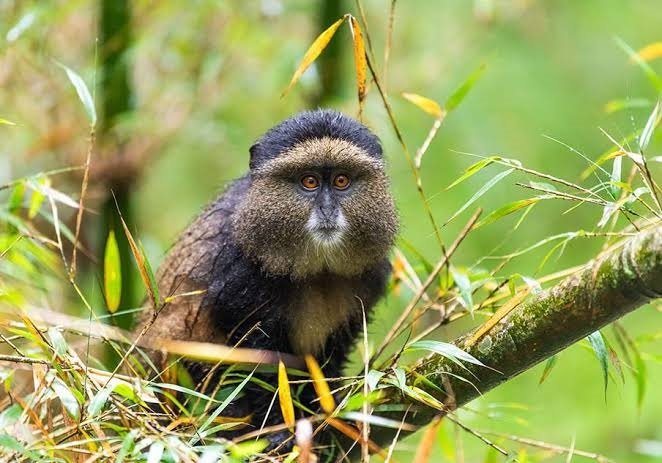
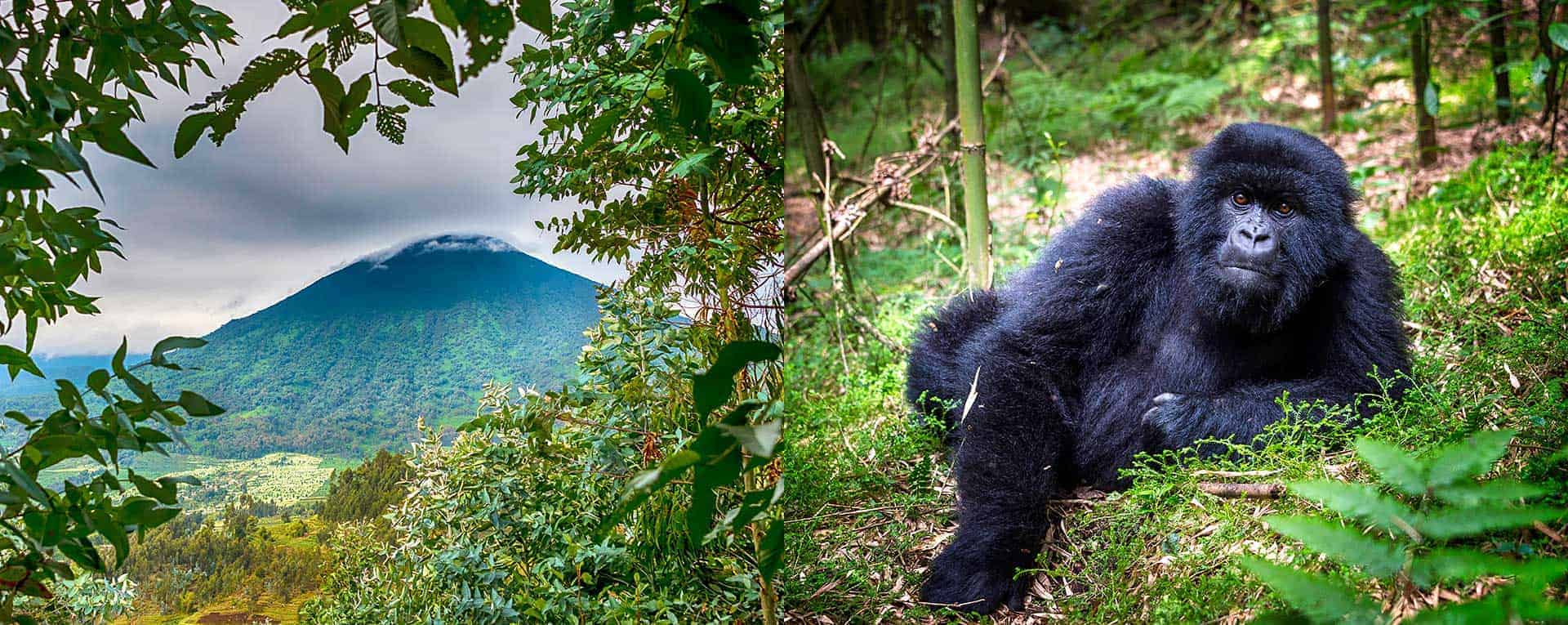
For travellers wishing to explore both Uganda and Rwanda, the safari can easily be extended to include Volcanoes National Park, famous for its mountain gorillas and golden monkeys, allowing visitors to experience the best of both countries in a single itinerary.

Beyond the unforgettable primate encounters, a Gorilla and Chimpanzee Safari can also include thrilling game drives in Queen Elizabeth National Park and Murchison Falls National Park, boat cruises along the Kazinga Channel or the Nile River, golden monkey trekking, cultural experiences with local communities, coffee farm tours, birdwatching, nature walks, and relaxation by the beautiful shores of Lake Bunyonyi or Lake Kivu. This combination creates one of the most complete wildlife holidays available anywhere in Africa.

Every safari is professionally planned to maximise your chances of successful gorilla and chimpanzee sightings while ensuring comfort, safety, and flexibility throughout your journey. Experienced local guides, comfortable 4Ă—4 safari vehicles, carefully selected lodges, and expertly organised trekking permits all contribute to a seamless travel experience from arrival to departure.

At Safari Vacations and Travel Services Ltd, we specialise in creating tailor-made Gorilla and Chimpanzee Safaris that match every traveller’s interests, budget, and travel style. As a trusted local Ugandan tour operator, we take pride in our in-depth destination knowledge, personalised service, transparent pricing, and commitment to delivering exceptional safari experiences. Whether you are looking for a short three-day gorilla trekking adventure, a week-long primate expedition, or a luxury safari combining gorillas, chimpanzees, wildlife, and cultural encounters, our experienced team will design an itinerary that exceeds your expectations.

Your journey into the heart of Africa’s rainforests is more than just a holiday—it is an opportunity to witness extraordinary wildlife, support conservation efforts, connect with local communities, and create memories that will stay with you forever.

Quick Facts About Gorilla and Chimpanzee Safaris

Quick FactDetails
Mountain Gorilla PopulationUganda is home to more than half of the world’s remaining mountain gorillas.
Gorilla Trekking DestinationsTrack endangered mountain gorillas in Bwindi Impenetrable National Park and Mgahinga Gorilla National Park.
Chimpanzee PopulationEncounter more than 5,000 wild chimpanzees living in Uganda’s tropical rainforests.
Top Chimpanzee DestinationExplore Kibale National Park, widely known as the Primate Capital of the World.
Safari CategoriesChoose from luxury, mid-range, and budget Gorilla and Chimpanzee Safari options.
Trekking PermitsGorilla and chimpanzee trekking permits can be arranged before your arrival.
Best Travel PeriodSafaris are available throughout the year, including during the popular dry-season trekking months.
Professional RangersEnjoy close-up wildlife encounters guided by experienced Uganda Wildlife Authority rangers.
Additional Safari ActivitiesCombine primate trekking with Big Five game viewing, boat cruises, birdwatching, volcano hiking, and cultural experiences.
Safari Starting PointsStart your safari from Entebbe International Airport in Uganda or Kigali International Airport in Rwanda.
Suitable TravellersSuitable for solo travellers, couples, families, photographers, honeymooners, and small private groups.
Safari TransportTravel in comfortable 4Ă—4 safari vehicles accompanied by professional local driver-guides.
Responsible TourismSupport wildlife conservation and local communities through responsible tourism.
Tailor-Made ItinerariesCustom itineraries are available to suit your interests, travel dates, schedule, and budget.
Local Tour OperatorSafaris are organised by Safari Vacations and Travel Services Ltd, your trusted local expert for unforgettable gorilla and chimpanzee safaris in Uganda and Rwanda.

Why Choose a Gorilla and Chimpanzee Safari?

A Gorilla and Chimpanzee Safari is more than just a wildlife holiday—it is an extraordinary journey into some of Africa’s oldest and most biologically diverse rainforests, where you come face-to-face with two of humanity’s closest living relatives. Unlike traditional game drives where animals are observed from a distance, primate trekking places you in the heart of the forest, allowing you to experience the sights, sounds, and emotions of wildlife intimately and unforgettably. It is this rare opportunity to walk among ancient forests and witness mountain gorillas and chimpanzees behaving naturally that makes a Gorilla and Chimpanzee Safari one of the most rewarding travel experiences in the world.

Mountain gorillas share approximately 98% of their DNA with humans, while chimpanzees share almost 99%. Watching a silverback carefully protect his family, seeing playful juveniles tumbling through the vegetation, or observing a mother gently caring for her infant creates an emotional connection that few wildlife encounters can match. Chimpanzees are equally fascinating, displaying remarkable intelligence as they communicate through vocalisations, facial expressions, and gestures while swinging effortlessly through the forest canopy or foraging on the forest floor. Every encounter is unique because these animals are completely wild, making each safari a genuine adventure.

One of the greatest advantages of choosing a Gorilla and Chimpanzee Safari in Uganda is the opportunity to experience two completely different rainforest ecosystems in a single journey. Gorilla trekking takes place in the mist-covered mountains of Bwindi Impenetrable National Park and Mgahinga Gorilla National Park, where dense vegetation, towering trees, and rugged terrain create an atmosphere of true wilderness. Chimpanzee tracking, on the other hand, is typically conducted in Kibale National Park, a magnificent tropical rainforest renowned for its exceptional primate diversity. Experiencing both environments gives travellers a deeper appreciation of East Africa’s incredible biodiversity.

A Gorilla and Chimpanzee Safari also offers exceptional value because it can easily be combined with many of Uganda’s other world-famous attractions. After trekking through pristine forests, travellers can enjoy classic African game drives in Queen Elizabeth National Park, where elephants, lions, buffaloes, leopards, and antelopes roam the savannah. Boat cruises along the Kazinga Channel provide close encounters with hippos, crocodiles, elephants, and hundreds of bird species, while optional activities such as golden monkey trekking, nature walks, volcano hiking, coffee experiences, Batwa cultural encounters, and relaxation at Lake Bunyonyi or Lake Kivu create a diverse and well-balanced itinerary.

Unlike many wildlife experiences that depend heavily on luck, gorilla trekking boasts an exceptionally high success rate. The habituated gorilla families visited by tourists are monitored daily by experienced Uganda Wildlife Authority rangers and trackers, making sightings extremely reliable. Chimpanzee tracking in Kibale National Park is equally rewarding, with one of the highest chimpanzee sighting success rates in Africa. This gives travellers confidence that their investment will result in truly memorable wildlife encounters.

Photography enthusiasts will find endless opportunities throughout the safari. The dramatic scenery of Uganda’s mountain forests, the lush green landscapes of Kibale, and the expressive behaviour of gorillas and chimpanzees provide some of Africa’s most captivating photographic subjects. Whether you are using a professional camera or a smartphone, every day offers remarkable moments worth capturing, from mist-covered forest trails to intimate wildlife encounters and breathtaking panoramic views.

A Gorilla and Chimpanzee Safari is equally appealing to a wide variety of travellers. Couples seeking a romantic honeymoon adventure, families with older children, solo travellers, photographers, wildlife enthusiasts, conservation supporters, and small private groups all find something special in these experiences. With flexible itinerary options ranging from three-day express tours to comprehensive two-week adventures, every traveller can find a safari that matches their interests, budget, and available travel time.

Beyond the adventure itself, booking a Gorilla and Chimpanzee Safari directly contributes to the protection of endangered wildlife and the livelihoods of local communities. A significant portion of gorilla and chimpanzee permit fees supports national park management, anti-poaching initiatives, veterinary care, habitat conservation, scientific research, and community development projects surrounding the parks. By participating in these experiences, travellers become active contributors to the long-term survival of mountain gorillas, chimpanzees, and their fragile rainforest ecosystems.

At Safari Vacations and Travel Services Ltd, we believe that every Gorilla and Chimpanzee Safari should be carefully designed around the traveller rather than following a one-size-fits-all itinerary. Our local knowledge, personalised planning, professional safari guides, comfortable 4Ă—4 vehicles, and commitment to outstanding customer service ensure that every journey is seamless from the moment you arrive until your departure. Whether you dream of a luxury fly-in safari, a family holiday, a photography expedition, or an affordable adventure, our experienced team will create a tailor-made itinerary that allows you to experience the very best of Uganda and Rwanda’s extraordinary primate destinations.

A Gorilla and Chimpanzee Safari is not simply another holiday. It is an opportunity to stand in the presence of some of the world’s rarest animals, explore ancient rainforests that have remained untouched for centuries, support meaningful conservation efforts, and return home with memories and stories that will stay with you for a lifetime.

What is a Gorilla and Chimpanzee Safari?

A Gorilla and Chimpanzee Safari is an immersive wildlife adventure that combines two of Africa’s most extraordinary primate experiences into one unforgettable journey. Rather than observing animals from the comfort of a safari vehicle, this adventure takes you deep into ancient tropical rainforests where you search for wild mountain gorillas and chimpanzees on foot under the guidance of experienced park rangers. It is a unique opportunity to witness the daily lives of our closest living relatives in their natural habitat while exploring some of the most spectacular protected forests in East Africa.

In Uganda, gorilla trekking takes place in Bwindi Impenetrable National Park and Mgahinga Gorilla National Park, while chimpanzee tracking is most commonly enjoyed in Kibale National Park, although excellent experiences are also available in Kyambura Gorge, Budongo Forest, and Kalinzu Forest. Rwanda offers gorilla trekking in Volcanoes National Park, making it possible to combine both countries into one exceptional primate safari.

Unlike a traditional wildlife safari that mainly focuses on viewing animals such as lions, elephants, giraffes, and buffaloes from a vehicle, a Gorilla and Chimpanzee Safari is an active adventure that requires walking through dense forests, following fresh animal trails, listening to calls from the canopy, and searching for signs left by the primates. Every trek is different because the gorillas and chimpanzees move freely through their natural environment. This unpredictability is part of what makes every encounter so exciting and rewarding.

The experience begins early in the morning with a briefing at the respective national park headquarters. During the briefing, Uganda Wildlife Authority or Rwanda Development Board rangers explain the trekking rules, safety guidelines, expected behaviour around the animals, and what to expect during the hike. Visitors are then assigned to small groups, usually consisting of a maximum of eight people for gorilla trekking. Each group is accompanied by armed ranger guides and experienced trackers who monitor the movements of the habituated primate families every day.

Once the briefing is complete, the adventure begins. The trek may involve walking through thick vegetation, crossing streams, climbing hills, or descending into valleys depending on where the animals were last located. Some gorilla families can be found within an hour, while others may require several hours of hiking. Chimpanzees are generally more mobile and active, making their tracking experience slightly different, as visitors often follow them through different parts of the forest while observing their energetic behaviour.

When the gorillas or chimpanzees are finally located, visitors are rewarded with one of the most remarkable wildlife encounters on Earth. Gorilla trekking allows one unforgettable hour with the gorilla family after they have been found. During this time, visitors quietly observe the gorillas as they feed, rest, groom one another, care for their young, or interact within the family group. Watching a dominant silverback calmly oversee his family or seeing curious young gorillas playing nearby is an emotional experience that few people ever forget.

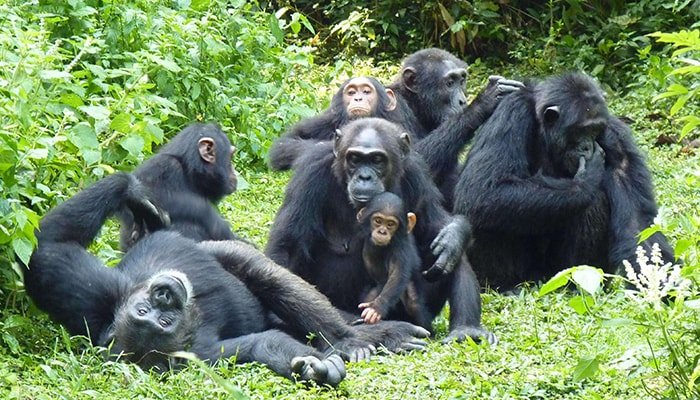
Chimpanzee tracking offers a completely different perspective. Chimpanzees are highly energetic, intelligent, and social animals. Visitors may watch them swinging through the forest canopy, feeding on fruits, calling to one another, hunting, building nests, or interacting within their community. Their human-like behaviour, expressive faces, and constant movement create an exciting and dynamic wildlife experience unlike any other.

One of the greatest attractions of a Gorilla and Chimpanzee Safari is the opportunity to experience two distinctly different rainforest ecosystems. Bwindi’s ancient montane forest is characterised by steep hills, dense vegetation, giant ferns, and towering hardwood trees that provide a dramatic backdrop for gorilla trekking. Kibale National Park, by contrast, features lush tropical rainforest with a rich diversity of primates, birds, butterflies, and plant species, making every walk through the forest an incredible nature experience.

The safari is not limited to primate encounters alone. Most itineraries combine gorilla trekking and chimpanzee tracking with other exciting activities, including game drives in Queen Elizabeth National Park, boat cruises on the Kazinga Channel, golden monkey trekking in Mgahinga or Volcanoes National Park, nature walks, birdwatching excursions, coffee experiences, Batwa cultural visits, crater lake tours, and relaxation at scenic destinations such as Lake Bunyonyi and Lake Kivu. This combination creates a perfectly balanced safari that showcases the incredible diversity of Uganda and Rwanda.

A Gorilla and Chimpanzee Safari can be tailored to suit different travel styles and budgets. Short three-day gorilla trekking tours are ideal for travellers with limited time, while five- to seven-day itineraries allow visitors to experience both gorillas and chimpanzees comfortably. Longer safaris of ten to fifteen days can include multiple national parks, Big Five game viewing, cultural experiences, and cross-border adventures between Uganda and Rwanda. Accommodation options range from budget lodges and comfortable mid-range camps to world-class luxury safari lodges offering exceptional comfort and breathtaking forest views.

Physical fitness is an important consideration, but a Gorilla and Chimpanzee Safari is suitable for most travellers with a reasonable level of mobility. Trekking distances vary according to the location of the animals, and park authorities often allocate gorilla families based on visitors’ fitness levels where possible. Porters are available to assist with carrying backpacks and providing support on difficult sections of the trail, making the experience more comfortable and accessible for older travellers or those requiring additional assistance.

Safety is one of the highest priorities during every Gorilla and Chimpanzee Safari. All treks are led by professionally trained rangers who understand animal behaviour and ensure that visitors maintain the required viewing distance while respecting strict conservation guidelines. Mountain gorillas are naturally peaceful animals that have undergone years of habituation to human presence, while chimpanzee tracking is carefully managed to minimise disturbance to the animals and their habitat.

Every Gorilla and Chimpanzee Safari also plays an important role in conservation. Permit fees directly support the protection of endangered mountain gorillas and chimpanzees, fund anti-poaching patrols, contribute to veterinary care, preserve fragile rainforest habitats, and provide income for communities living around the national parks. By choosing this safari, travellers not only experience two of the world’s most incredible wildlife encounters but also contribute to ensuring these remarkable species survive for future generations.

With expert planning by Safari Vacations and Travel Services Ltd, every Gorilla and Chimpanzee Safari is carefully designed to provide the perfect balance of adventure, comfort, wildlife encounters, and cultural experiences. From securing trekking permits and selecting the best lodges to arranging professional guides and comfortable 4Ă—4 safari vehicles, every detail is managed to ensure your journey through Uganda and Rwanda becomes an unforgettable African adventure.

Why Uganda is the Best Destination for a Gorilla and Chimpanzee Safari

Uganda has earned its reputation as the Primate Capital of Africa and is widely recognised as the best destination in the world for travellers seeking a complete Gorilla and Chimpanzee Safari. Few countries can match Uganda’s incredible diversity of primates, breathtaking natural landscapes, excellent conservation efforts, and exceptional value for money. From the mist-covered mountains of Bwindi Impenetrable National Park to the lush rainforests of Kibale National Park, Uganda offers an unrivalled opportunity to experience both mountain gorillas and wild chimpanzees within a single safari.

One of Uganda’s greatest advantages is that it is home to more than half of the world’s remaining mountain gorillas. These endangered great apes are protected within two spectacular national parks—Bwindi Impenetrable National Park and Mgahinga Gorilla National Park. Together, these parks provide visitors with access to numerous habituated gorilla families, significantly increasing permit availability and giving travellers more flexibility when planning their safari. With multiple trekking sectors and family groups to choose from, visitors can select the experience that best matches their itinerary, fitness level, and preferred accommodation.

Uganda is equally famous for its remarkable chimpanzee population. The country is home to more than 5,000 wild chimpanzees, making it one of the best destinations in Africa for chimpanzee tracking. Kibale National Park alone protects approximately 1,500 chimpanzees, representing one of the highest concentrations of these intelligent primates anywhere in the world. The park’s exceptional success rate, often exceeding 95%, makes it one of the most reliable places to encounter chimpanzees in their natural environment. Beyond Kibale, Uganda also offers chimpanzee tracking in Kyambura Gorge, Budongo Forest, and Kalinzu Forest, giving travellers several outstanding options depending on their route and budget.

Another reason Uganda stands out is the opportunity to combine primate trekking with an extraordinary variety of other safari experiences. A single itinerary can include mountain gorilla trekking in Bwindi, chimpanzee tracking in Kibale, game drives in Queen Elizabeth National Park, boat cruises along the Kazinga Channel, tree-climbing lions in Ishasha, golden monkey trekking in Mgahinga, birdwatching, Batwa cultural encounters, crater lake tours, coffee experiences, and relaxation on the beautiful shores of Lake Bunyonyi. Very few countries offer such an impressive diversity of attractions within relatively short travelling distances.

Uganda also provides exceptional value for money compared to other gorilla trekking destinations. Gorilla permits are generally more affordable than those in neighbouring Rwanda while offering the same unforgettable one-hour encounter with a habituated mountain gorilla family. Accommodation options are equally diverse, ranging from comfortable budget lodges and charming mid-range properties to luxurious forest retreats with panoramic views of the rainforest. This allows travellers to experience world-class primate encounters regardless of their budget.

Accessibility is another major advantage. International visitors can begin their Gorilla and Chimpanzee Safari from either Entebbe International Airport in Uganda or Kigali International Airport in Rwanda. Many travellers choose to fly into Kigali because of its proximity to Bwindi Impenetrable National Park, reducing driving time to approximately four to five hours. Others prefer beginning their journey in Entebbe to enjoy additional destinations such as Murchison Falls National Park, Ziwa Rhino Sanctuary, or Lake Mburo National Park before continuing to Uganda’s famous primate destinations. This flexibility allows travellers to design itineraries that best suit their available time and interests.

Uganda’s landscapes are among the most diverse in Africa. During a Gorilla and Chimpanzee Safari, visitors travel through rolling green hills, fertile agricultural terraces, volcanic mountain ranges, ancient tropical rainforests, papyrus wetlands, scenic crater lakes, and vast open savannahs teeming with wildlife. The country’s varied ecosystems support an astonishing diversity of plants and animals, making every day of the safari different from the last. Whether hiking through the dense vegetation of Bwindi, walking beneath the towering trees of Kibale, or watching elephants along the Kazinga Channel, travellers are constantly surrounded by spectacular scenery.

Uganda is also internationally recognised for its rich biodiversity. The country hosts 13 species of primates, including mountain gorillas, chimpanzees, golden monkeys, black-and-white colobus monkeys, red colobus monkeys, blue monkeys, L’Hoest’s monkeys, grey-cheeked mangabeys, olive baboons, vervet monkeys, red-tailed monkeys, bush babies, and pottos. In addition, Uganda is home to over 1,090 bird species, representing nearly half of Africa’s birdlife, making it one of the world’s premier birdwatching destinations. Mammals such as elephants, lions, leopards, buffaloes, giraffes, zebras, hippos, crocodiles, hyenas, giant forest hogs, and numerous antelope species can also be encountered during a well-planned itinerary.

Uganda’s commitment to conservation has played a crucial role in the recovery of mountain gorilla populations. Through the combined efforts of the Uganda Wildlife Authority, conservation organisations, researchers, veterinary teams, local communities, and responsible tourism operators, mountain gorilla numbers have steadily increased over the past several decades. Every gorilla and chimpanzee trekking permit purchased contributes directly to wildlife protection, anti-poaching patrols, veterinary interventions, habitat conservation, scientific research, ranger training, and community development programmes surrounding the parks. Choosing Uganda for your safari therefore supports both conservation and the livelihoods of local people.

Safety and professionalism further strengthen Uganda’s reputation as Africa’s leading primate destination. Gorilla and chimpanzee trekking activities are conducted under strict conservation guidelines by highly trained Uganda Wildlife Authority rangers and trackers. Visitors receive comprehensive briefings before each trek and are accompanied throughout the experience by knowledgeable guides who prioritise both visitor safety and animal welfare. The country’s tourism infrastructure has also improved significantly, with excellent safari lodges, reliable transport networks, domestic flights, experienced local guides, and professional tour operators ensuring a comfortable and well-organised journey.

Another important advantage is the flexibility of Uganda’s safari options. Whether you are looking for a three-day express gorilla trek, a five-day Gorilla and Chimpanzee Safari, a luxury fly-in adventure, a family holiday, a honeymoon, a photography expedition, or an extended wildlife journey through Uganda and Rwanda, there is an itinerary to suit every traveller. This flexibility makes Uganda an ideal destination for first-time visitors as well as experienced safari enthusiasts.

At Safari Vacations and Travel Services Ltd, we have spent years helping travellers discover the very best of Uganda’s extraordinary primate destinations. Our local expertise, personalised service, guaranteed permit assistance, carefully selected accommodations, professional driver-guides, and comfortable 4Ă—4 safari vehicles ensure that every Gorilla and Chimpanzee Safari is carefully tailored to your interests, travel dates, and budget. As a trusted Ugandan tour operator, we are passionate about creating authentic experiences that not only exceed expectations but also contribute to the long-term conservation of Uganda’s incredible wildlife.

For travellers seeking the ultimate African primate adventure, Uganda offers an unmatched combination of mountain gorillas, wild chimpanzees, exceptional biodiversity, spectacular landscapes, outstanding value, and unforgettable wildlife encounters. It is a destination where every journey into the rainforest becomes a life-changing experience and where every safari contributes to protecting one of the world’s greatest natural treasures.

Gorilla Trekking vs. Chimpanzee Tracking: What’s the Difference?

A Gorilla and Chimpanzee Safari Uganda offers the unique opportunity to experience two of Africa’s most extraordinary primate adventures in a single journey. Although gorilla trekking and chimpanzee tracking are often combined into one unforgettable Gorilla and Chimpanzee Safari Uganda, they provide two completely different wildlife experiences. Both involve walking through protected rainforests in search of endangered primates, but the behaviour of the animals, the nature of the trek, the forest environment, and the overall experience differ significantly. Understanding these differences will help you appreciate each adventure and decide which experience best matches your interests—or better still, why combining both creates the ultimate Gorilla and Chimpanzee Safari Uganda.

Mountain gorillas are calm, gentle, and largely terrestrial animals that spend most of their time on the forest floor. During a Gorilla and Chimpanzee Safari Uganda, once a habituated gorilla family has been located, visitors remain in one area while quietly observing the group as they feed, groom one another, play, or rest. The encounter is peaceful, intimate, and deeply emotional, allowing travellers to appreciate the remarkable social bonds within the family. Every movement is deliberate, and there is usually plenty of time to observe individual gorillas, from playful infants to the powerful silverback that leads and protects the family. This unforgettable encounter is often regarded as the highlight of a Gorilla and Chimpanzee Safari Uganda.

Chimpanzees, by contrast, are highly energetic, intelligent, and constantly on the move. A Gorilla and Chimpanzee Safari Uganda introduces visitors to these fascinating primates as they climb towering trees, leap effortlessly between branches, communicate through loud pant-hoots, forage for food, use simple tools, and interact continuously with one another. Instead of remaining in one location, visitors often move alongside the chimpanzees as they travel through the rainforest. This creates a dynamic, fast-paced experience filled with excitement, movement, and constant discovery, offering a completely different perspective from gorilla trekking during a Gorilla and Chimpanzee Safari Uganda.

The trekking environments also differ considerably. Gorilla trekking during a Gorilla and Chimpanzee Safari Uganda usually takes place in mountainous rainforests characterised by dense vegetation, steep hillsides, giant ferns, thick bamboo, tangled vines, and muddy trails. The terrain can be physically demanding, especially during the rainy seasons, but the reward of standing face-to-face with a family of mountain gorillas makes every step worthwhile. Chimpanzee tracking generally takes place in tropical rainforests such as Kibale National Park, where wider forest trails, towering hardwood trees, and relatively flatter terrain make walking easier for many visitors. Experiencing both environments during a Gorilla and Chimpanzee Safari Uganda allows travellers to appreciate Uganda’s remarkable ecological diversity.

The duration of each activity also varies. Gorilla trekking during a Gorilla and Chimpanzee Safari Uganda can last anywhere from one to six hours before the gorillas are located, although longer hikes are occasionally necessary depending on the gorilla family’s movements. Once the gorillas are found, visitors are allowed exactly one unforgettable hour with the family. Chimpanzee tracking usually lasts between two and five hours, including the search and observation period, while chimpanzee habituation experiences allow visitors to spend considerably more time with the chimpanzees and gain deeper insight into their behaviour. Combining both experiences creates a more comprehensive Gorilla and Chimpanzee Safari Uganda.

Photography opportunities are exceptional during both activities, but each presents different challenges. Gorilla photography is generally easier because the animals spend much of their time on the ground and often remain relatively still, allowing photographers to compose stunning portraits and behavioural images. Chimpanzees, however, move rapidly through the forest canopy, often requiring faster shutter speeds, continuous autofocus, and greater patience to capture sharp photographs. Wildlife photographers frequently choose a Gorilla and Chimpanzee Safari Uganda because it offers two completely different photographic experiences within a single safari.

The emotional connection visitors experience also differs greatly. Gorilla trekking during a Gorilla and Chimpanzee Safari Uganda is often described as peaceful, humbling, and profoundly moving. Looking into the eyes of a mountain gorilla and witnessing its remarkably human behaviour leaves an unforgettable impression on most travellers. Chimpanzee tracking is characterised by energy, curiosity, excitement, and constant movement. Their playful interactions, loud vocalisations, problem-solving abilities, and complex social relationships provide endless fascination while offering remarkable insight into the evolution of humanity’s closest living relatives.

Many travellers planning a Gorilla and Chimpanzee Safari Uganda ask which experience is better, but the truth is that neither replaces the other. Gorilla trekking and chimpanzee tracking complement one another perfectly. Gorillas represent strength, gentleness, patience, and close family bonds, while chimpanzees demonstrate intelligence, agility, communication, adaptability, and social complexity. Experiencing both during the same Gorilla and Chimpanzee Safari Uganda provides a far deeper appreciation of Africa’s incredible primates and creates one of the world’s most rewarding wildlife holidays.

The table below highlights the major differences between gorilla trekking and chimpanzee tracking, helping you understand why combining both activities into a single Gorilla and Chimpanzee Safari Uganda offers the ultimate primate adventure.

FeatureGorilla TrekkingChimpanzee Tracking
Primary SpeciesMountain gorillasEastern chimpanzees
Main DestinationsBwindi Impenetrable National Park, Mgahinga Gorilla National Park, and Volcanoes National Park (Rwanda).Kibale National Park, Kyambura Gorge, Budongo Forest, and Kalinzu Forest.
HabitatMontane rainforests, bamboo forests, and high-altitude mountain slopes.Tropical rainforests, riverine forests, and woodland ecosystems.
TerrainSteep, mountainous, muddy, and physically demanding depending on the gorilla family’s location.Generally flatter with established forest trails, though some sections may be hilly.
Trek DurationUsually between 1 and 6 hours before locating the gorillas, depending on their movements.Usually between 2 and 5 hours depending on the chimpanzees’ location and activity.
Viewing TimeStrictly one hour with the habituated gorilla family.Approximately one hour observing the chimpanzees after they are located.
Animal BehaviourCalm, gentle, social, and mostly ground-dwelling.Highly active, vocal, playful, intelligent, and frequently moving through the forest canopy.
PhotographyExcellent opportunities as gorillas often remain relatively still for extended periods.More challenging due to constant movement, dense canopy, and changing light conditions.
Difficulty LevelModerate to strenuous depending on elevation, terrain, and gorilla location.Easy to moderate, making it suitable for most visitors.
Group SizeMaximum of 8 visitors per habituated gorilla family per day.Group size varies depending on the destination and permit allocation.
Success RateVery high due to daily monitoring of habituated gorilla families by park trackers.Very high in Kibale National Park and generally excellent in other chimpanzee tracking destinations.
Best ForTravellers seeking intimate wildlife encounters, conservation experiences, and exceptional photography.Travellers interested in primate behaviour, wildlife research, and active forest adventures.
Minimum Age15 years.12 years in most Ugandan chimpanzee tracking destinations.
Permit RequirementA valid gorilla trekking permit is mandatory before participating.A valid chimpanzee tracking permit is required before the activity.
Overall ExperiencePeaceful, emotional, humbling, and considered one of the world’s greatest wildlife encounters.Energetic, exciting, educational, and filled with constant movement and vocal communication.

While each experience is extraordinary on its own, combining gorilla trekking and chimpanzee tracking during one safari offers the perfect balance of adventure, wildlife, conservation, and unforgettable memories. At Safari Vacations and Travel Services Ltd, we recommend including both activities in your itinerary to fully appreciate the incredible diversity of Uganda and Rwanda’s primates while making the most of your African safari.

Gorilla Trekking Experience: What to Expect

Gorilla trekking is widely recognised as one of the world’s greatest wildlife adventures and is the highlight of every Gorilla and Chimpanzee Safari Uganda. Very few experiences compare to standing quietly in an ancient rainforest while observing a family of endangered mountain gorillas living freely in their natural habitat. Every Gorilla and Chimpanzee Safari Uganda is unique because the gorillas are completely wild, yet each encounter is carefully managed to protect both the animals and their fragile rainforest ecosystem. From the early morning briefing to the unforgettable one-hour encounter, every stage of a Gorilla and Chimpanzee Safari Uganda is filled with anticipation, excitement, and lifelong memories.

Early Morning Briefing

Your Gorilla and Chimpanzee Safari Uganda begins early in the morning at the Uganda Wildlife Authority headquarters. Depending on your trekking sector, you will report to the visitor centre in Buhoma, Ruhija, Rushaga, Nkuringo, or Ntebeko in Mgahinga Gorilla National Park. Registration usually starts at around 7:00 a.m., followed by a comprehensive briefing conducted by experienced Uganda Wildlife Authority ranger guides.

During the briefing, visitors are welcomed and introduced to the day’s programme. Rangers explain the importance of mountain gorilla conservation, describe gorilla behaviour, outline trekking regulations, and provide essential safety guidelines. Visitors are reminded to maintain the recommended viewing distance, avoid sudden movements, keep noise to a minimum, and never eat or drink in the presence of the gorillas. Anyone showing symptoms of contagious illnesses such as flu or cough may not be permitted to participate in order to protect the gorillas, making responsible tourism an important part of every Gorilla and Chimpanzee Safari Uganda.

The rangers also introduce the habituated gorilla families available for tracking that day. Visitors are assigned to groups of no more than eight people, with allocations often based on age, fitness level, and personal preferences whenever possible to ensure an enjoyable Gorilla and Chimpanzee Safari Uganda.

Hiring a Porter

Before entering the rainforest, visitors have the opportunity to hire a local porter. Although hiring a porter is optional, it is one of the best decisions many travellers make during a Gorilla and Chimpanzee Safari Uganda. Porters assist by carrying backpacks, cameras, drinking water, and walking sticks while also providing valuable support on steep, muddy, or slippery sections of the trail.

Beyond the physical assistance, hiring a porter directly benefits communities living around the national parks by creating sustainable employment opportunities and reducing dependence on forest resources. For many families, tourism provides an important source of income that encourages continued support for gorilla conservation, making porters an important part of a responsible Gorilla and Chimpanzee Safari Uganda.

Porters carrying gear on a trail.

Entering the Rainforest

After the briefing, visitors travel a short distance to the trailhead where the real adventure of a Gorilla and Chimpanzee Safari Uganda begins. Guided by experienced Uganda Wildlife Authority rangers and trackers, the group enters the dense rainforest in search of the assigned gorilla family.

The journey through the forest is an adventure in itself. Ancient trees tower overhead while thick vines, giant ferns, colourful wildflowers, and moss-covered branches create an enchanting environment. Along the way, visitors may encounter black-and-white colobus monkeys, blue monkeys, red-tailed monkeys, colourful butterflies, rare orchids, and numerous bird species. Every step during a Gorilla and Chimpanzee Safari Uganda reveals another fascinating aspect of Bwindi or Mgahinga’s extraordinary biodiversity.

Following the Gorilla Trackers

Long before visitors begin their Gorilla and Chimpanzee Safari Uganda, specialised trackers enter the forest at dawn to locate the gorilla families. These highly skilled professionals monitor the gorillas’ movements, nesting sites, feeding areas, and travel routes. Using radio communication, they provide regular updates to the ranger guides, allowing trekking groups to follow the most efficient route to the gorillas.

Even with this expert assistance, every Gorilla and Chimpanzee Safari Uganda remains unpredictable because mountain gorillas are wild animals that move freely throughout their natural habitat. Depending on where the gorillas spent the previous night or where they are feeding, the trek may last anywhere from one to six hours, with occasional longer hikes for families that have travelled greater distances.

The Journey Through the Forest

The trek itself is one of the highlights of a Gorilla and Chimpanzee Safari Uganda. Visitors hike through dense vegetation, cross small streams, climb forested hillsides, descend into valleys, and occasionally navigate thick bamboo or tangled undergrowth. The terrain varies considerably between trekking sectors, with some gorilla families located on relatively gentle slopes while others inhabit steeper mountain terrain.

Although the hike can be physically demanding, the pace is generally slow and adjusted to suit the group. Rangers make regular stops for rest, photography, and explanations about the rainforest ecosystem. Throughout the journey, visitors gain a deeper appreciation of the remarkable environment that supports one of the world’s rarest mammals, making every Gorilla and Chimpanzee Safari Uganda both educational and inspiring.

The First Glimpse of the Gorillas

One of the most unforgettable moments during a Gorilla and Chimpanzee Safari Uganda occurs when the ranger quietly signals that the gorillas have been located. Visitors are asked to leave unnecessary belongings behind and approach the family slowly and quietly.

The first sight of a massive silverback sitting peacefully among the vegetation is often overwhelming. Nearby, females may be feeding on leaves or caring for young infants, while playful juveniles tumble through the undergrowth, climbing branches and interacting with one another. The tranquillity of the rainforest, combined with the gentle behaviour of the gorillas, creates an emotional experience that defines every Gorilla and Chimpanzee Safari Uganda.

One Magical Hour with the Gorilla Family

Once the gorillas have been located during your Gorilla and Chimpanzee Safari Uganda, visitors are permitted exactly one hour in their presence. This carefully controlled viewing period minimises disturbance while providing ample opportunity to observe the gorillas’ natural behaviour.

During the hour, visitors may witness the silverback protecting his family, mothers nursing their babies, juveniles wrestling playfully, family members grooming one another, or the group feeding on leaves, shoots, stems, and wild fruits. Every gorilla family displays its own unique personalities and social dynamics, ensuring that no two Gorilla and Chimpanzee Safari Uganda experiences are ever exactly alike.

The hour often passes surprisingly quickly, with many visitors describing it as one of the most emotional wildlife encounters of their lives.
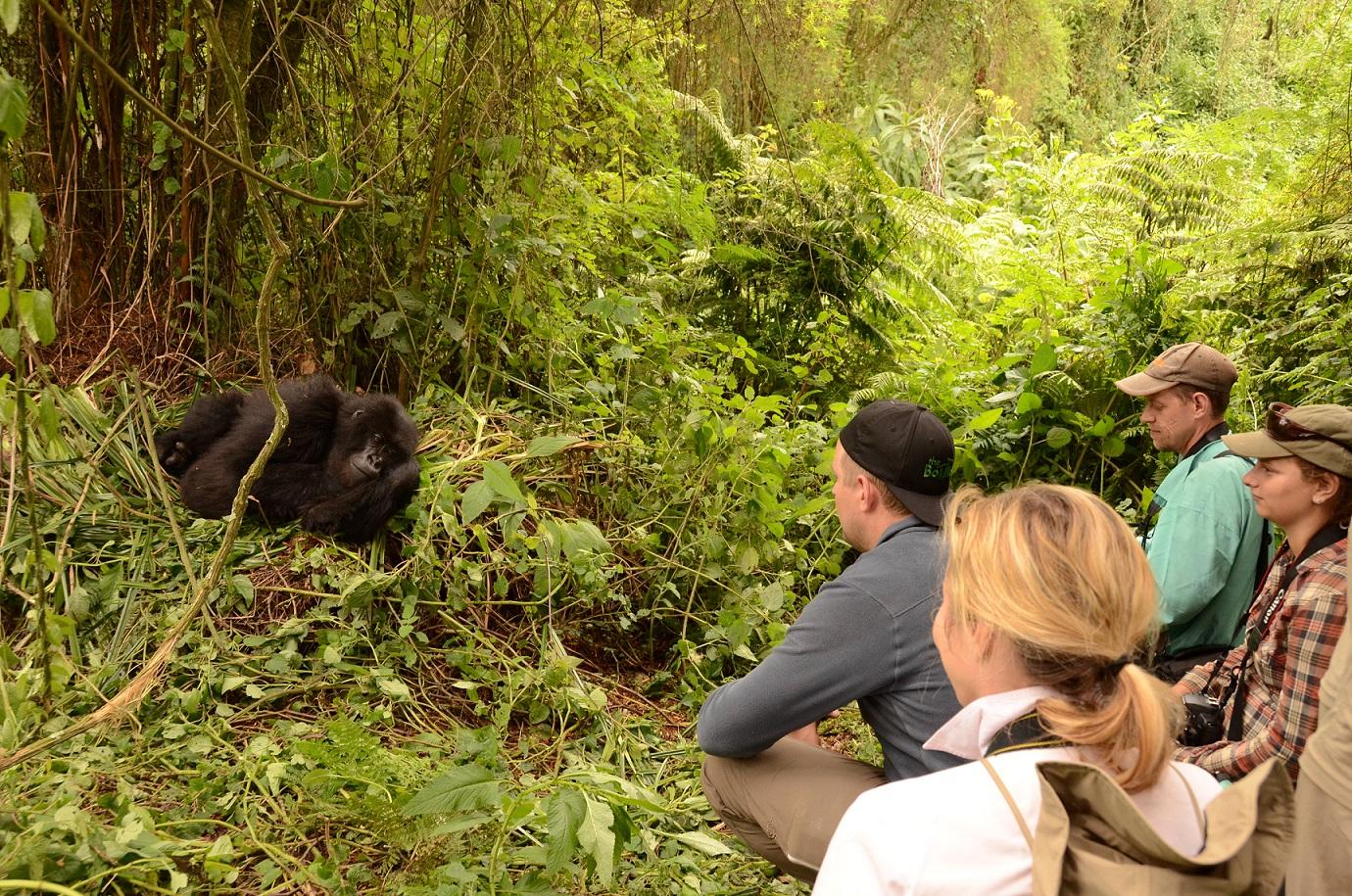
People observing a gorilla in nature.

Photography and Videography

A Gorilla and Chimpanzee Safari Uganda offers exceptional opportunities for wildlife photography. Because mountain gorillas are generally calm and spend much of their time on the ground, photographers have excellent chances to capture close-up portraits and remarkable behavioural interactions.

Flash photography is strictly prohibited because it may disturb the animals. Visitors are encouraged to use natural light, higher ISO settings, and fast lenses when photographing within the rainforest. Even smartphone cameras can produce impressive images thanks to the relatively close viewing distance.

Beyond photography, visitors are encouraged to spend time simply observing the gorillas without constantly looking through a camera lens. Many describe these quiet moments of direct eye contact as the most memorable part of their Gorilla and Chimpanzee Safari Uganda.
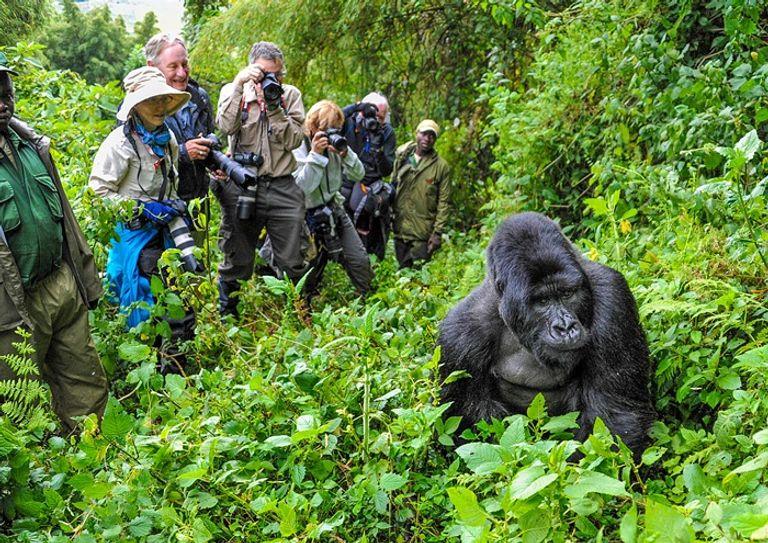
Tourists observing a gorilla in nature

The Return Hike

After the one-hour viewing period, the ranger quietly signals that it is time to leave the gorilla family. Visitors slowly retrace their steps through the rainforest, often reflecting on the extraordinary encounter they have just experienced during their Gorilla and Chimpanzee Safari Uganda.

Although the return hike may feel easier, it provides another opportunity to appreciate the incredible biodiversity of the forest, enjoy spectacular scenery, and ask guides questions about the park’s wildlife, plants, and conservation efforts.

Receiving Your Gorilla Trekking Certificate

Upon returning to the park headquarters, visitors receive an official Gorilla Trekking Certificate in recognition of their successful participation in a Gorilla and Chimpanzee Safari Uganda. For many travellers, this certificate becomes a treasured souvenir representing one of the greatest wildlife experiences of their lifetime.

Many visitors also take time to interact with local communities, purchase handmade crafts, or celebrate their achievement before returning to their lodge for a well-deserved rest.

Four people holding gorilla trekking certificates together.

Our Clients Receive Gorilla trekking Certificates After trekking

Why Gorilla Trekking is a Once-in-a-Lifetime Experience

Gorilla trekking is much more than simply seeing a rare animal. A Gorilla and Chimpanzee Safari Uganda allows you to step into one of Africa’s oldest rainforests, witness the remarkable intelligence and social bonds of mountain gorillas, and contribute directly to the conservation of one of the world’s most endangered species.

Every trekking permit purchased for a Gorilla and Chimpanzee Safari Uganda helps fund wildlife protection, veterinary care, anti-poaching patrols, habitat conservation, ranger training, scientific research, and community development projects that ensure mountain gorillas continue to thrive for generations to come.

At Safari Vacations and Travel Services Ltd, we carefully organise every Gorilla and Chimpanzee Safari Uganda—from securing permits and selecting the most suitable trekking sector to arranging comfortable accommodation, professional driver-guides, and reliable 4Ă—4 safari vehicles. Our goal is to ensure your encounter with Uganda’s magnificent mountain gorillas becomes one of the most unforgettable experiences of your African journey.

Chimpanzee Tracking Experience: What to Expect

Chimpanzee tracking is one of Africa’s most exciting wildlife adventures and perfectly complements gorilla trekking during a Gorilla and Chimpanzee Safari Uganda. While mountain gorillas are calm and generally remain in one area after being located, chimpanzees are energetic, highly intelligent, and constantly on the move. Their lively behaviour, remarkable communication skills, and human-like social interactions make every Gorilla and Chimpanzee Safari Uganda unique and unforgettable.

Uganda is one of the best places in the world to track wild chimpanzees, with Kibale National Park standing out as the country’s premier destination. Often referred to as the Primate Capital of the World, Kibale protects approximately 1,500 chimpanzees and boasts one of the highest chimpanzee sighting success rates in Africa. Other excellent destinations for a Gorilla and Chimpanzee Safari Uganda include Kyambura Gorge in Queen Elizabeth National Park, Budongo Forest near Murchison Falls National Park, and Kalinzu Forest Reserve, each offering distinctive rainforest environments and memorable chimpanzee encounters.

Early Morning Briefing

Your chimpanzee tracking adventure during a Gorilla and Chimpanzee Safari Uganda begins early in the morning at the visitor centre of your selected tracking destination. Most visitors arrive by 7:00 a.m. for registration before attending a detailed briefing conducted by Uganda Wildlife Authority rangers or experienced forest guides.

During the briefing, visitors learn about chimpanzee behaviour, rainforest safety, conservation efforts, and the rules that must be followed during the tracking experience. Rangers explain how chimpanzees communicate, why maintaining a respectful distance is important, and how visitors should behave once the animals are located. Since chimpanzees share nearly 99% of their DNA with humans, they are vulnerable to many human diseases. Anyone displaying symptoms of flu, cough, or other contagious illnesses may not be permitted to participate, ensuring that every Gorilla and Chimpanzee Safari Uganda follows responsible conservation practices.

The guides also explain the expected trekking conditions, estimated walking distances, and the equipment visitors should carry during the excursion.

Entering the Forest

Following the briefing, visitors enter the rainforest in small guided groups accompanied by experienced ranger guides and trackers. The atmosphere changes immediately as towering tropical trees create a cool canopy overhead while birds sing from every direction and colourful butterflies flutter through shafts of sunlight filtering into the forest.

Unlike gorilla trekking, chimpanzee tracking during a Gorilla and Chimpanzee Safari Uganda often begins by listening rather than looking. Rangers pause frequently to listen for distant pant-hoots, screams, drumming on tree trunks, or rustling leaves that reveal the chimpanzees‘ location. These distinctive sounds are often the first indication that the troop is nearby.

Following the Trackers

Professional trackers enter the forest long before visitors arrive for their Gorilla and Chimpanzee Safari Uganda. Their role is to locate habituated chimpanzee communities by following fresh nests, feeding signs, footprints, vocalisations, and previous movement patterns. Once the chimpanzees are found, trackers communicate their location to the ranger guides, allowing visitors to begin following the troop.

Unlike gorillas, chimpanzees rarely remain in one place for long. They travel continuously while searching for fruits, leaves, insects, and other food sources. As a result, chimpanzee tracking during a Gorilla and Chimpanzee Safari Uganda often involves walking through different sections of the rainforest while observing the troop’s movements from one location to another.

The Excitement of Finding the Chimpanzees

The moment the guides quietly signal that the chimpanzees have been found is one of the most exciting parts of a Gorilla and Chimpanzee Safari Uganda. Visitors often hear loud vocalisations before seeing the animals themselves. As the rainforest comes alive with calls echoing through the canopy, chimpanzees begin appearing among the branches above or on the forest floor below, creating an unforgettable wildlife encounter.

Unlike the peaceful atmosphere of gorilla trekking, chimpanzee encounters are dynamic and energetic. Individuals may swing effortlessly between trees, leap across branches, chase one another through the forest, or descend briefly to the ground before climbing back into the canopy. Their speed, agility, and constant movement make every minute exciting.

Observing Chimpanzee Behaviour

Visitors are allowed approximately one hour with the chimpanzee community once it has been located. During this time, guides help interpret the fascinating behaviours unfolding around you.

Chimpanzees live in highly organised societies with complex social structures. Visitors may observe dominant males displaying their strength, mothers carrying infants on their backs, juveniles playing energetically, individuals grooming one another, or family members communicating through facial expressions, gestures, and a remarkable range of vocalisations.

Chimpanzees are among the few animals known to use tools in the wild. Depending on the season and the activities taking place, visitors may witness them using sticks to collect insects, cracking nuts, or employing leaves as sponges to drink water. Their intelligence and problem-solving abilities provide remarkable insights into human evolution.
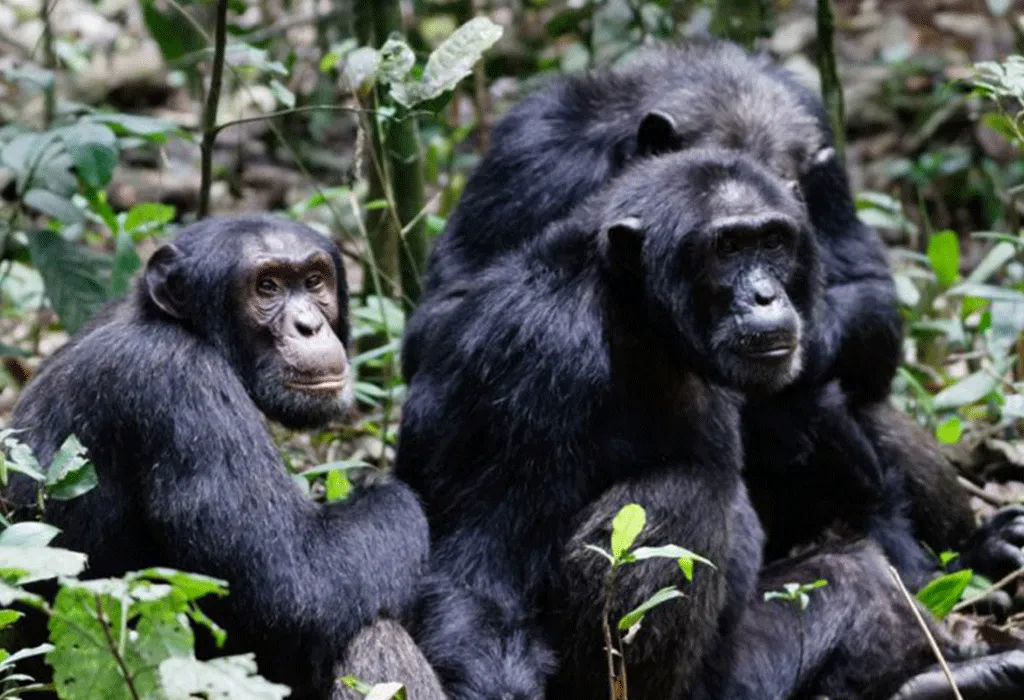
Three chimpanzees in a forest

A Paradise for Wildlife Lovers

Chimpanzee tracking is about much more than the chimpanzees themselves. Uganda’s tropical rainforests are among the most biologically diverse ecosystems in Africa and offer outstanding wildlife viewing throughout the trek.

While searching for chimpanzees, visitors may also encounter red colobus monkeys, black-and-white colobus monkeys, L’Hoest’s monkeys, blue monkeys, red-tailed monkeys, grey-cheeked mangabeys, olive baboons, bush babies, forest elephants, bush pigs, colourful butterflies, reptiles, and an extraordinary variety of birds. Kibale National Park alone supports hundreds of bird species, making every trek rewarding even before the chimpanzees are located.

Photography During Chimpanzee Tracking

Photographing chimpanzees requires patience, quick reflexes, and the right camera settings. Because the animals move rapidly through varying light conditions beneath the forest canopy, photographers often need faster shutter speeds and continuous autofocus to capture sharp images.

Although photographing chimpanzees can be more challenging than photographing gorillas, the rewards are exceptional. Images of chimpanzees climbing trees, interacting socially, caring for infants, or displaying expressive facial expressions often become some of the most memorable wildlife photographs from an African safari.

Visitors using smartphones can also capture remarkable moments, especially when chimpanzees descend closer to the forest floor.

The Return Walk

After the observation period, visitors slowly begin the return walk through the rainforest. The journey back provides another opportunity to appreciate the incredible diversity of Kibale or the chosen forest reserve while discussing the chimpanzees’ behaviour with the ranger guides.

Many visitors describe the return walk as a time to reflect on the remarkable intelligence and social complexity they have just witnessed.

Conservation and Community Benefits

Chimpanzee tracking plays an essential role in protecting Uganda’s forests and wildlife. Every tracking permit contributes directly to chimpanzee conservation, habitat protection, ranger salaries, scientific research, anti-poaching patrols, veterinary programmes, and community development initiatives surrounding the protected areas.

Responsible tourism has become one of the most effective tools for ensuring the long-term survival of wild chimpanzees while providing sustainable income for local communities living near the forests.

Why Chimpanzee Tracking Complements Gorilla Trekking

While gorilla trekking offers quiet moments of reflection with gentle giants, chimpanzee tracking delivers excitement, movement, and constant surprises. Together, these two experiences showcase the incredible diversity of Africa’s great apes and provide travellers with a deeper understanding of primate behaviour, intelligence, and conservation.

Many visitors who initially travel to Uganda primarily for gorilla trekking later describe chimpanzee tracking as an equally rewarding highlight of their safari. The contrasting behaviours of these remarkable primates create a balanced wildlife experience that few destinations in the world can offer.

At Safari Vacations and Travel Services Ltd, we carefully plan every chimpanzee tracking experience to maximise your chances of successful sightings while ensuring your comfort throughout the journey. From securing permits and recommending the best tracking destinations to arranging experienced guides, quality accommodation, and comfortable 4Ă—4 safari vehicles, we ensure that every detail is professionally managed, allowing you to focus on enjoying one of Africa’s most fascinating wildlife encounters.

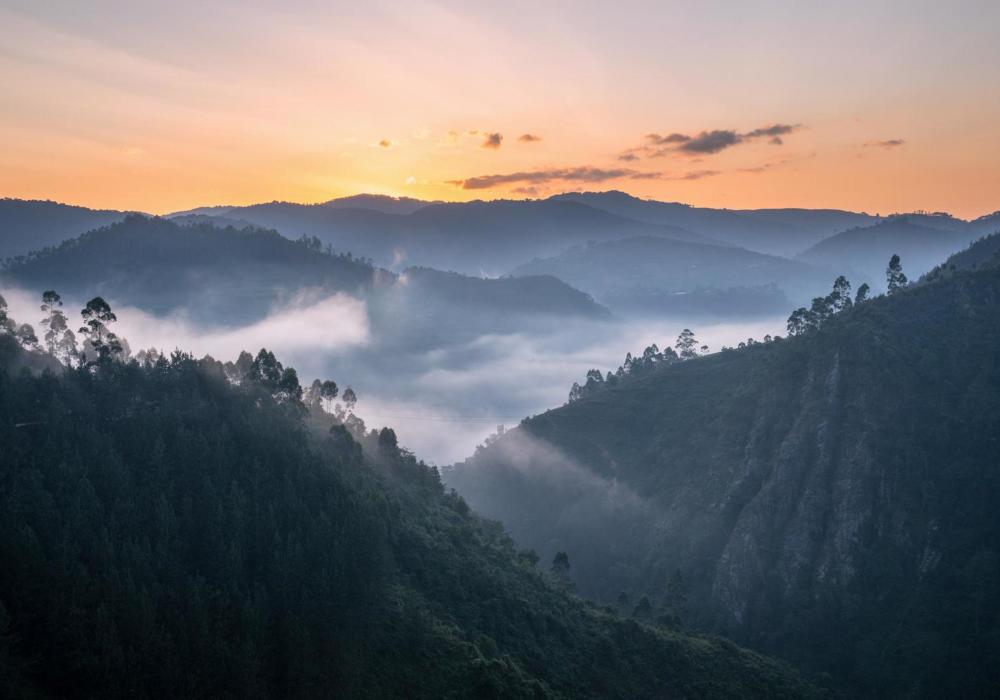
Gorilla Habituation Experience: Spend Four Unforgettable Hours with Mountain Gorillas

For travellers seeking a deeper, more exclusive, and immersive wildlife encounter, the Gorilla Habituation Experience is considered the ultimate mountain gorilla adventure. Unlike standard gorilla trekking, which allows visitors to spend one hour with a habituated gorilla family, the Gorilla Habituation Experience offers an extraordinary opportunity to spend up to four hours observing a semi-habituated gorilla family alongside researchers, scientists, veterinarians, and expert Uganda Wildlife Authority rangers.

This unique conservation activity is only available in Bwindi Impenetrable National Park in southwestern Uganda, making the country the only destination in the world where visitors can actively participate in the gorilla habituation process.

For photographers, wildlife enthusiasts, conservation supporters, filmmakers, and travellers who want more than a standard trekking experience, Gorilla Habituation is widely regarded as one of the greatest wildlife adventures on Earth.

What is Gorilla Habituation?

Gorilla habituation is the gradual process of helping a wild mountain gorilla family become comfortable with the presence of humans without changing its natural behaviour. This process is carried out by experienced researchers, conservationists, veterinarians, and Uganda Wildlife Authority trackers over a period of approximately two to three years.

Mountain gorillas are naturally shy and cautious animals. When a newly discovered family is identified, the habituation team spends time following them every day while maintaining a respectful distance. As the gorillas gradually learn that humans do not pose a threat, they become more relaxed, allowing researchers to study them and eventually making them suitable for responsible tourism.

The habituation process plays a vital role in mountain gorilla conservation because it enables researchers to monitor the health, behaviour, population dynamics, and movements of gorilla families while generating tourism revenue that supports long-term protection of the species.

Tourist observing a mountain gorilla family during the Gorilla Habituation Experience in Bwindi Impenetrable National Park, Uganda.

Where Does Gorilla Habituation Take Place?

The Gorilla Habituation Experience is conducted exclusively in the Rushaga Sector of Bwindi Impenetrable National Park.

Rushaga is located in the southern part of Bwindi and is famous for having the highest number of habituated gorilla families in Uganda. The area is characterised by spectacular mountain scenery, dense rainforest, deep valleys, and excellent biodiversity.

Because Gorilla Habituation is only offered in Rushaga, many travellers choose to stay in nearby lodges before and after their experience. The sector is easily accessible from both Entebbe International Airport and Kigali International Airport, making it convenient to combine with other safari destinations.

How is Gorilla Habituation Different from Gorilla Trekking?

Although both experiences involve walking through the rainforest in search of mountain gorillas, there are several important differences.

During standard gorilla trekking, visitors track a fully habituated gorilla family that is already accustomed to human presence. Once located, visitors spend one hour quietly observing the family before returning.

During Gorilla Habituation, visitors accompany researchers and rangers as they interact with a gorilla family that is still becoming familiar with humans. Visitors witness the conservation process first-hand while spending up to four hours observing gorilla behaviour.

This extended viewing period allows for much deeper observation of feeding, communication, parenting, grooming, play, dominance displays, movement through the forest, and interactions between individual family members.

Your Gorilla Habituation Adventure Begins

Like standard trekking, the Gorilla Habituation Experience starts early in the morning with registration and a detailed briefing by Uganda Wildlife Authority rangers.

The briefing covers:

  • Gorilla behaviour
  • Safety procedures
  • Conservation guidelines
  • Photography regulations
  • Trekking expectations
  • Health protocols
  • Responsible tourism practices

Visitors are introduced to the research team and informed about the specific gorilla family they will be following during the day.

Because Gorilla Habituation is a premium conservation experience, only four visitors are allowed to participate each day with a particular gorilla family. This creates a far more private and exclusive experience than regular gorilla trekking.

Hiking Through Bwindi’s Ancient Rainforest

After the briefing, visitors begin hiking through one of Africa’s oldest surviving tropical rainforests.

Bwindi Impenetrable National Park is estimated to be more than 25,000 years old, making it one of the continent’s oldest forest ecosystems.

The journey itself is unforgettable.

Visitors walk beneath towering mahogany trees, giant tree ferns, hanging vines, moss-covered branches, orchids, and bamboo forests while listening to the sounds of birds, monkeys, insects, and distant waterfalls.

Along the way, visitors may also encounter:

  • Black-and-white colobus monkeys
  • L’Hoest’s monkeys
  • Blue monkeys
  • Red-tailed monkeys
  • Forest elephants
  • Giant forest hogs
  • Colourful butterflies
  • Rare birds
  • Beautiful forest plants

Every step through Bwindi reveals another remarkable aspect of this UNESCO World Heritage Site.

Spending Four Hours with Mountain Gorillas

Once the gorilla family has been located, visitors spend up to four hours observing their daily lives.

This extended period allows visitors to witness behaviours that are rarely seen during a standard one-hour trek.

Depending on the day, you may observe:

  • Silverbacks defending their families
  • Mothers nursing infants
  • Juveniles wrestling and climbing trees
  • Family members grooming one another
  • Feeding behaviour
  • Nest building
  • Communication through vocalisations
  • Dominance displays
  • Movement through the forest
  • Playful interactions between young gorillas

Because there is no need to rush, visitors can simply relax and absorb the incredible atmosphere of the rainforest while learning directly from researchers and rangers.

Learn from Gorilla Researchers

One of the biggest advantages of Gorilla Habituation is the opportunity to spend time with the experts responsible for protecting mountain gorillas.

Throughout the experience, researchers explain:

  • Gorilla family structure
  • Individual personalities
  • Feeding ecology
  • Reproduction
  • Social behaviour
  • Infant development
  • Conservation challenges
  • Veterinary interventions
  • Habitat protection
  • Population monitoring

This educational aspect makes Gorilla Habituation far more than simply a wildlife encounter—it becomes a fascinating insight into one of Africa’s greatest conservation success stories.

A Photographer’s Dream Experience

For wildlife photographers, Gorilla Habituation offers exceptional advantages.

Spending four hours with the gorillas provides enough time to wait for ideal lighting conditions, changing weather, different behaviours, and better photographic compositions.

Instead of rushing to capture images within one hour, photographers can patiently observe the gorillas as they move naturally through the forest.

The longer viewing period also increases opportunities to photograph:

  • Eye contact
  • Family interactions
  • Infant behaviour
  • Feeding
  • Portraits of silverbacks
  • Environmental images
  • Wide-angle rainforest scenes
  • Behavioural sequences

For documentary filmmakers and professional photographers, this experience is often considered one of Africa’s finest wildlife photography opportunities.

Conservation Benefits of Gorilla Habituation

Every Gorilla Habituation permit contributes directly to mountain gorilla conservation.

Permit revenue helps fund:

  • Ranger salaries
  • Veterinary care
  • Anti-poaching patrols
  • Scientific research
  • Gorilla monitoring
  • Habitat protection
  • Community development projects
  • Environmental education
  • Infrastructure around Bwindi National Park

Tourism has become one of the most important reasons the mountain gorilla population continues to increase, making every visitor an active partner in conservation.

Who Should Choose Gorilla Habituation?

The Gorilla Habituation Experience is ideal for travellers who want a deeper connection with mountain gorillas than standard trekking provides.

It is especially recommended for:

  • Wildlife photographers
  • Professional filmmakers
  • Nature enthusiasts
  • Conservation supporters
  • Repeat gorilla trekkers
  • Wildlife researchers
  • Birdwatchers combining multiple experiences
  • Luxury safari travellers
  • Visitors seeking exclusive wildlife encounters

If your schedule and budget allow, Gorilla Habituation is widely regarded as one of the most rewarding wildlife experiences available anywhere in Africa.

Why Book Your Gorilla Habituation Experience with Safari Vacations and Travel Services Ltd?

At Safari Vacations and Travel Services Ltd, we specialise in organising professionally planned Gorilla Habituation Safaris tailored to your interests, travel dates, and budget.

We assist with securing the limited Gorilla Habituation permits well in advance, recommend the best lodges in the Rushaga sector, arrange comfortable 4Ă—4 safari vehicles, provide experienced local driver-guides, and design personalised itineraries that can easily be combined with chimpanzee tracking, classic wildlife safaris, golden monkey trekking, cultural experiences, and visits to Uganda’s most spectacular national parks.

With our local expertise and commitment to exceptional service, we ensure that your Gorilla Habituation Experience becomes more than just another safari it becomes a once-in-a-lifetime journey into the heart of one of Africa’s greatest conservation success stories.

Chimpanzee Habituation Experience: Spend an Entire Day with Wild Chimpanzees

For travellers who want to experience chimpanzees beyond the standard one-hour tracking excursion, the Chimpanzee Habituation Experience (CHEX) offers one of the most immersive primate adventures in Africa. Instead of spending a brief period with an already habituated chimpanzee community, this unique experience allows you to spend almost an entire day following chimpanzees alongside researchers, scientists, Uganda Wildlife Authority rangers, and experienced trackers as they continue the long process of becoming accustomed to human presence.

Unlike ordinary chimpanzee tracking, the Chimpanzee Habituation Experience begins before sunrise and continues until evening, giving visitors the rare opportunity to observe nearly every aspect of chimpanzee life. From watching them leave their overnight nests at dawn to seeing them build new nests before sunset, the experience provides remarkable insights into the behaviour, intelligence, and social structure of one of humanity’s closest living relatives.

For wildlife enthusiasts, photographers, birdwatchers, conservation supporters, and travellers seeking a more in-depth rainforest experience, the Chimpanzee Habituation Experience is one of Uganda’s most rewarding safari activities.

What is the Chimpanzee Habituation Experience?

Chimpanzee habituation is the gradual process of helping wild chimpanzees become comfortable with the presence of humans without altering their natural behaviour. Unlike chimpanzee tracking, where visitors observe a fully habituated community for approximately one hour, habituation allows visitors to accompany researchers as they work with chimpanzees that are still adapting to human observation.

The process can take several years and requires patience, consistency, and strict conservation practices. Researchers visit the same chimpanzee community daily, gradually earning the animals’ trust while collecting valuable information about their behaviour, health, feeding ecology, social interactions, and movements.

Visitors become part of this conservation journey, gaining an authentic understanding of how Uganda protects one of Africa’s most intelligent and endangered primates.

Where Does the Chimpanzee Habituation Experience Take Place?

The most popular destination for the Chimpanzee Habituation Experience is Kibale National Park, the Primate Capital of the World.

Kibale protects approximately 1,500 chimpanzees and is home to one of Africa’s highest densities of primates. Its extensive tropical rainforest provides an ideal environment for chimpanzees and offers exceptional opportunities for observing their natural behaviour.

The experience takes place within carefully managed sections of the forest where selected chimpanzee communities are undergoing habituation under the supervision of Uganda Wildlife Authority researchers and conservation teams.

How is Chimpanzee Habituation Different from Chimpanzee Tracking?

Although both experiences involve searching for wild chimpanzees in the rainforest, they are very different in terms of duration, depth, and overall experience.

During standard chimpanzee tracking, visitors spend approximately one hour with a fully habituated chimpanzee community after locating them.

The Chimpanzee Habituation Experience allows visitors to spend most of the day with a chimpanzee community that is still becoming accustomed to human presence. Instead of observing a single moment in the chimpanzees’ daily routine, visitors witness an entire sequence of behaviours throughout the day.

This extended experience provides a much deeper understanding of chimpanzee ecology, communication, feeding habits, territorial behaviour, parenting, grooming, hunting, and nest-building.

Beginning Before Sunrise

The Chimpanzee Habituation Experience starts much earlier than ordinary tracking.

Visitors leave their lodge before sunrise and arrive at the park headquarters for registration and a detailed briefing by Uganda Wildlife Authority rangers and researchers.

During the briefing, participants learn about:

  • Chimpanzee conservation
  • Forest safety
  • Responsible wildlife viewing
  • Research activities
  • Photography guidelines
  • Behaviour around chimpanzees
  • Health precautions

Once the briefing is complete, visitors enter the forest with the research team while the chimpanzees are still resting in their overnight nests.

Watching Chimpanzees Wake Up

One of the most remarkable moments of the experience occurs at dawn when the chimpanzees begin waking up.

As sunlight filters through the forest canopy, visitors quietly observe the chimpanzees leaving their sleeping nests high in the trees before beginning their daily activities.

This early morning period offers fascinating opportunities to witness behaviours that are impossible to see during ordinary chimpanzee tracking.

Visitors may observe:

  • Morning vocalisations
  • Grooming between family members
  • Mothers caring for infants
  • Juveniles playing
  • Social greetings
  • Feeding immediately after leaving the nests

The forest slowly comes alive with calls echoing through the canopy as the chimpanzee community begins another day.

Following the Chimpanzees Throughout the Day

Once active, the chimpanzees travel continuously through the forest in search of food.

Visitors accompany researchers while following the community across different sections of Kibale National Park.

Unlike gorillas, chimpanzees rarely remain in one place for long. Their constant movement makes every hour different.

Throughout the day, visitors may observe:

  • Feeding on fruits, leaves and flowers
  • Climbing towering trees
  • Running across the forest floor
  • Swinging through the canopy
  • Territorial displays
  • Grooming sessions
  • Infant development
  • Social hierarchy
  • Dominance behaviour
  • Conflict resolution
  • Courtship behaviour
  • Cooperative feeding

Researchers explain each behaviour in detail, allowing visitors to understand the remarkable complexity of chimpanzee society.

Witnessing Chimpanzee Intelligence

Chimpanzees are widely recognised as some of the most intelligent animals on Earth.

During the habituation experience, visitors often witness behaviours demonstrating remarkable problem-solving abilities.

Depending on the season, chimpanzees may be seen:

  • Using sticks to extract insects
  • Selecting specific fruits
  • Breaking open food
  • Communicating through gestures
  • Solving social conflicts
  • Teaching young chimpanzees
  • Sharing food
  • Recognising individual relationships

These observations provide extraordinary insights into the evolutionary similarities between chimpanzees and humans.

Exceptional Wildlife Viewing

Although chimpanzees are the main attraction, Kibale National Park supports incredible biodiversity.

Throughout the day, visitors frequently encounter other wildlife including:

  • Red colobus monkeys
  • Black-and-white colobus monkeys
  • L’Hoest’s monkeys
  • Grey-cheeked mangabeys
  • Blue monkeys
  • Red-tailed monkeys
  • Olive baboons
  • Forest elephants
  • Bush pigs
  • Duikers
  • Colourful butterflies
  • Hundreds of bird species

This makes the Chimpanzee Habituation Experience one of Uganda’s finest rainforest wildlife excursions.

A Dream Experience for Wildlife Photographers

Because visitors spend almost an entire day with the chimpanzees, photographers enjoy countless opportunities to capture behaviours rarely seen during standard tracking.

The extended time allows photographers to wait for ideal lighting conditions and observe a much wider range of activities.

Excellent photographic subjects include:

  • Close-up portraits
  • Mothers with infants
  • Grooming behaviour
  • Feeding sequences
  • Playful juveniles
  • Vocal displays
  • Tree climbing
  • Environmental rainforest images
  • Social interactions

For documentary photographers and filmmakers, the Chimpanzee Habituation Experience is one of Africa’s finest wildlife photography opportunities.

Watching the Chimpanzees Build Evening Nests

As the afternoon draws to a close, visitors continue following the chimpanzees as they prepare for the night.

One of the most fascinating behaviours occurs when individuals begin constructing fresh sleeping nests high in the trees using carefully selected branches and leaves.

Watching this daily ritual provides a fitting conclusion to an extraordinary day in the rainforest and is something that visitors on standard chimpanzee tracking rarely experience.

Conservation Benefits of Chimpanzee Habituation

Every Chimpanzee Habituation permit directly supports the conservation of Uganda’s tropical rainforests and wild chimpanzee populations.

Tourism revenue contributes to:

  • Scientific research
  • Ranger training
  • Anti-poaching patrols
  • Forest protection
  • Veterinary care
  • Community development
  • Environmental education
  • Habitat restoration
  • Wildlife monitoring

Responsible tourism ensures that chimpanzees continue to thrive while local communities benefit economically from protecting their forests.

Who Should Choose the Chimpanzee Habituation Experience?

The Chimpanzee Habituation Experience is highly recommended for travellers seeking a deeper understanding of chimpanzee behaviour and rainforest ecology.

It is particularly suitable for:

  • Wildlife photographers
  • Documentary filmmakers
  • Birdwatchers
  • Wildlife researchers
  • Conservation enthusiasts
  • Nature lovers
  • Repeat safari visitors
  • Luxury travellers
  • Anyone interested in primate behaviour

For those with enough time, many visitors choose to combine both standard chimpanzee tracking and the habituation experience to enjoy two completely different perspectives of Uganda’s fascinating chimpanzees.

Why Book Your Chimpanzee Habituation Experience with Safari Vacations and Travel Services Ltd?

At Safari Vacations and Travel Services Ltd, we organise professionally planned Chimpanzee Habituation Safaris that allow you to experience Uganda’s remarkable primates in the most authentic way possible.

We assist with securing the limited habituation permits, recommend the best lodges near Kibale National Park, provide comfortable 4Ă—4 safari vehicles, arrange experienced local driver-guides, and customise your itinerary to include gorilla trekking, wildlife safaris, boat cruises, cultural experiences, birdwatching, and other unforgettable attractions across Uganda and Rwanda.

With our local expertise, personalised service, and commitment to responsible tourism, we ensure that your Chimpanzee Habituation Experience becomes one of the most educational, exciting, and memorable highlights of your African safari.

Best Gorilla and Chimpanzee Safari Destinations in Uganda and Rwanda

One of the greatest advantages of choosing a Gorilla and Chimpanzee Safari in East Africa is the remarkable diversity of destinations available. Uganda and Rwanda are home to some of the world’s most spectacular rainforests, volcanic mountains, savannah parks, and protected ecosystems, each offering unique wildlife experiences. Whether your dream is to come face-to-face with endangered mountain gorillas, follow wild chimpanzees through ancient forests, photograph tree-climbing lions, or enjoy relaxing boat cruises surrounded by hippos and elephants, these destinations combine to create the ultimate African safari.

Uganda is widely recognised as Africa’s premier primate destination because it offers both mountain gorilla trekking and chimpanzee tracking within relatively short travelling distances. Rwanda complements these experiences with its world-famous Volcanoes National Park, providing travellers with additional options depending on their preferred itinerary, arrival airport, travel time, and budget.

Below are the most important destinations that make a Gorilla and Chimpanzee Safari truly unforgettable.

Bwindi Impenetrable National Park

Bwindi Impenetrable National Park is Uganda’s most famous wildlife destination and one of the world’s greatest conservation success stories. Recognised as a UNESCO World Heritage Site, the park protects more than half of the world’s remaining mountain gorillas and offers one of the most extraordinary wildlife encounters anywhere on Earth.

Located in southwestern Uganda along the edge of the Albertine Rift Valley, Bwindi covers approximately 331 square kilometres of ancient rainforest believed to be more than 25,000 years old. Its rugged hills, mist-covered valleys, dense vegetation, and exceptional biodiversity create the perfect habitat for mountain gorillas and countless other species.

Today, Bwindi is home to numerous habituated gorilla families spread across four trekking sectors—Buhoma, Ruhija, Rushaga, and Nkuringo. Each sector offers a unique trekking experience, different landscapes, and carefully selected accommodation options ranging from budget lodges to luxurious forest retreats.

Beyond gorilla trekking, Bwindi is also a paradise for birdwatchers with more than 350 bird species, including many Albertine Rift endemics. The park is home to numerous primates, colourful butterflies, reptiles, and forest mammals, making every walk through the rainforest a rewarding wildlife experience.

For most visitors, Bwindi represents the highlight of their Gorilla and Chimpanzee Safari and remains one of Africa’s most iconic natural destinations.

Bwindi Impenetrable Forest National park

Mgahinga Gorilla National Park

Situated in Uganda’s far southwestern corner, Mgahinga Gorilla National Park offers a quieter and more intimate gorilla trekking experience surrounded by spectacular volcanic scenery.

Although smaller than Bwindi, Mgahinga forms part of the larger Virunga Conservation Area shared by Uganda, Rwanda, and the Democratic Republic of Congo. The park protects the famous Nyakagezi Gorilla Family, renowned for its stability, playful juveniles, and impressive silverbacks.

The landscape is dramatically different from Bwindi. Visitors trek through bamboo forests, volcanic slopes, giant lobelias, and open montane vegetation with breathtaking views of the Virunga Volcanoes.

Mgahinga is also Uganda’s only destination where visitors can enjoy golden monkey trekking. These rare and colourful primates inhabit the bamboo forests and provide another exceptional wildlife experience often combined with gorilla trekking.

Cultural experiences with the Batwa people, volcano hiking, birdwatching, and stunning mountain photography make Mgahinga an outstanding addition to any Gorilla and Chimpanzee Safari.

Golden monkey sitting on bamboo branch

Kibale National Park

Known as the Primate Capital of the World, Kibale National Park is the finest destination in Africa for chimpanzee tracking.

Located in western Uganda near the foothills of the Rwenzori Mountains, Kibale protects approximately 795 square kilometres of tropical rainforest and is home to around 1,500 chimpanzees, representing one of the highest concentrations found anywhere in the world.

In addition to chimpanzees, Kibale supports 13 primate species, including red colobus monkeys, black-and-white colobus monkeys, L’Hoest’s monkeys, blue monkeys, grey-cheeked mangabeys, olive baboons, vervet monkeys, red-tailed monkeys, bush babies, and pottos.

Chimpanzee tracking in Kibale offers one of the highest success rates in Africa, making it an essential destination for every primate enthusiast.

Visitors can also enjoy the famous Bigodi Wetland Sanctuary, renowned for exceptional birdwatching, monkey sightings, butterflies, community tourism, and scenic nature walks.

Because of its central location, Kibale is easily combined with Queen Elizabeth National Park and Bwindi Impenetrable National Park to create a complete Gorilla and Chimpanzee Safari.

Chimpanzee sitting in lush greenery

Queen Elizabeth National Park

Queen Elizabeth National Park is Uganda’s most popular savannah wildlife destination and perfectly complements the rainforest experiences of gorilla trekking and chimpanzee tracking.

Covering nearly 2,000 square kilometres, the park supports one of Africa’s highest levels of biodiversity, with more than 95 mammal species and over 600 bird species.

Game drives regularly produce sightings of elephants, buffaloes, Uganda kobs, waterbucks, warthogs, hyenas, giant forest hogs, and, with some luck, leopards and lions.

The southern Ishasha Sector is internationally famous for its unique tree-climbing lions, while the spectacular Kazinga Channel boat cruise offers close encounters with hippos, Nile crocodiles, elephants, buffaloes, and countless waterbirds.

Chimpanzee tracking is also available in Kyambura Gorge, a dramatic forested valley often referred to as the “Valley of Apes.”

Queen Elizabeth National Park serves as the ideal connection between Bwindi and Kibale, making it one of the most important destinations on a Gorilla and Chimpanzee Safari itinerary.

Lion resting on a tree branch.

Kyambura Gorge

Hidden within Queen Elizabeth National Park, Kyambura Gorge is one of Uganda’s most remarkable natural wonders.

Often called the “Valley of Apes,” this spectacular forested gorge stretches for approximately 16 kilometres and cuts dramatically through the surrounding savannah plains.

The isolated rainforest supports a habituated community of chimpanzees as well as several monkey species, birds, butterflies, and unique plant life.

Tracking chimpanzees in Kyambura offers a completely different atmosphere from Kibale. Visitors descend into a lush tropical forest surrounded by towering cliffs before searching for chimpanzees within this extraordinary hidden ecosystem.

The dramatic scenery alone makes Kyambura Gorge worth visiting, even before encountering its famous primates.

Two chimpanzees in lush greenery.

Kalinzu Forest Reserve

Kalinzu Forest Reserve is one of Uganda’s best-kept secrets for chimpanzee tracking.

Located near Queen Elizabeth National Park, Kalinzu provides a more affordable alternative to Kibale while maintaining excellent chimpanzee sighting success.

The reserve protects approximately 147 square kilometres of tropical forest and supports hundreds of chimpanzees alongside numerous monkey species, colourful butterflies, reptiles, and over 370 bird species.

The forest’s relatively gentle terrain makes tracking suitable for many visitors, while fewer tourists create a peaceful and less crowded experience.

Kalinzu is an excellent choice for travellers looking to combine chimpanzee tracking with game drives in Queen Elizabeth National Park.

Group of chimpanzees in nature.

Budongo Forest Reserve

Budongo Forest Reserve is Uganda’s largest natural mahogany forest and one of East Africa’s most important chimpanzee research sites.

Located within the greater Murchison Falls Conservation Area, Budongo is internationally recognised for long-term chimpanzee research and conservation.

Visitors can enjoy guided chimpanzee tracking, forest walks, birdwatching, butterfly observation, and educational experiences focusing on tropical forest ecology.

Budongo is often included in longer Gorilla and Chimpanzee Safaris that also visit Murchison Falls National Park for game drives, boat cruises, rhino tracking at Ziwa Rhino Sanctuary, and visits to the powerful Murchison Falls themselves.

Path through Budongo forest with a tourist vehicle

Volcanoes National Park (Rwanda)

Volcanoes National Park is Rwanda’s premier gorilla trekking destination and one of Africa’s most iconic conservation areas.

Situated within the magnificent Virunga Mountains, the park protects several habituated mountain gorilla families and is internationally recognised for the pioneering conservation work of the late primatologist Dian Fossey.

The park’s volcanic scenery, bamboo forests, giant lobelias, and dramatic mountain landscapes create an unforgettable setting for gorilla trekking.

In addition to gorilla trekking, visitors can enjoy golden monkey tracking, the Dian Fossey Tomb Hike, volcano hiking, birdwatching, and cultural experiences at nearby communities.

Because Volcanoes National Park is located only a few hours from Kigali International Airport, many travellers choose to begin or end their Gorilla and Chimpanzee Safari in Rwanda before continuing into Uganda.

Mountain gorillas in Volcanoes National Park Rwanda

Volcanoes National Park offers unforgettable gorilla trekking experiences.

Which Destination is Best for You?

The ideal Gorilla and Chimpanzee Safari usually combines several of these remarkable destinations rather than visiting only one.

For first-time visitors, an itinerary including Bwindi Impenetrable National Park, Kibale National Park, and Queen Elizabeth National Park offers the perfect balance of mountain gorillas, chimpanzees, classic African wildlife, spectacular scenery, and cultural experiences.

Travellers with additional time may also include Mgahinga Gorilla National Park, Kalinzu Forest, Budongo Forest, or Volcanoes National Park to enjoy even greater diversity.

At Safari Vacations and Travel Services Ltd, we help every traveller choose the destinations that best match their available time, interests, fitness level, budget, and travel style. Whether you are planning a short gorilla trekking escape or a comprehensive two-week primate and wildlife adventure, we design personalised itineraries that showcase the very best of Uganda and Rwanda.

Bwindi Impenetrable National Park – Home of the World’s Largest Population of Mountain Gorillas

Bwindi Impenetrable National Park is the crown jewel of Uganda’s tourism industry and one of the most celebrated wildlife destinations in the world. Nestled in the rolling hills of southwestern Uganda along the edge of the Albertine Rift Valley, this extraordinary rainforest is internationally renowned for protecting the largest population of endangered mountain gorillas on Earth. Every year, thousands of travellers journey from every corner of the globe to experience the once-in-a-lifetime opportunity of trekking through its ancient forests in search of these magnificent great apes.

Recognised as a UNESCO World Heritage Site since 1994, Bwindi is far more than just a gorilla destination. It is one of Africa’s oldest surviving tropical rainforests, estimated to have existed continuously for more than 25,000 years. This remarkable age has allowed an incredible diversity of plants and animals to evolve, making the park one of the richest ecosystems on the African continent. Dense vegetation, towering hardwood trees, bamboo forests, waterfalls, deep valleys, and mist-covered mountain ridges combine to create an environment unlike anywhere else in the world.

For visitors embarking on a Gorilla and Chimpanzee Safari, Bwindi represents the highlight of the entire journey. The emotional experience of standing quietly before a family of wild mountain gorillas, observing their social interactions, playful young, and protective silverbacks in their natural habitat, is often described as one of the greatest wildlife encounters on Earth.

Where is Bwindi Impenetrable National Park?

Bwindi Impenetrable National Park is located in southwestern Uganda, spanning the districts of Kanungu, Rubanda, and Kisoro. The park lies along Uganda’s border with the Democratic Republic of Congo and forms part of the greater Albertine Rift, one of Africa’s most important biodiversity hotspots.

The park covers approximately 331 square kilometres of montane and lowland rainforest at elevations ranging from approximately 1,160 metres to over 2,600 metres above sea level. This variation in altitude creates a wide range of habitats that support hundreds of different plant and animal species.

One of Bwindi’s greatest advantages is its accessibility. Travellers can reach the park either by road from Entebbe or Kampala or by taking a domestic flight to nearby Kisoro or Kihihi airstrips. Many international visitors also choose to begin their safari in Kigali, Rwanda, before driving across the border to Bwindi, significantly reducing travel time.

Its strategic location allows visitors to easily combine gorilla trekking with chimpanzee tracking in Kibale National Park, wildlife viewing in Queen Elizabeth National Park, relaxation at Lake Bunyonyi, or golden monkey trekking in Mgahinga Gorilla National Park.

The History of Bwindi Impenetrable National Park

Bwindi’s conservation story is one of Africa’s greatest environmental success stories.

Long before becoming a national park, the forest was home to indigenous Batwa hunter-gatherers who depended on its resources for food, medicine, and shelter for thousands of years. Their deep cultural connection with the forest remains an important part of Bwindi’s heritage today.

Recognising the ecological importance of the rainforest, the Ugandan government first designated the area as forest reserves during the twentieth century before officially gazetting Bwindi as a national park in 1991. Three years later, UNESCO recognised the park’s outstanding universal value by declaring it a World Heritage Site.

Since then, conservation organisations, Uganda Wildlife Authority, researchers, veterinarians, local communities, and responsible tourism operators have worked together to protect the mountain gorillas and the unique biodiversity of Bwindi.

Today, tourism plays a vital role in financing conservation efforts while providing sustainable livelihoods for thousands of local people.

Why is Bwindi Famous?

Although Bwindi protects extraordinary biodiversity, it is best known for one remarkable species—the endangered mountain gorilla.

The park protects more than half of the world’s remaining mountain gorillas, making it the single most important conservation area for the species. Numerous habituated gorilla families are available for tourism, allowing visitors to safely observe these gentle giants while contributing directly to their protection.

Bwindi is also famous for its dense rainforest, spectacular scenery, exceptional birdlife, remarkable plant diversity, and rich cultural heritage. Few places in Africa combine so many outstanding natural attractions within one protected area.

For wildlife photographers, conservation enthusiasts, birdwatchers, botanists, and adventure travellers, Bwindi represents one of the continent’s ultimate destinations.

The Mountain Gorillas of Bwindi

Mountain gorillas are among the rarest mammals on Earth and are found only within the Virunga Mountains and Bwindi Impenetrable National Park.

Bwindi protects dozens of habituated gorilla families spread across its four trekking sectors, allowing thousands of visitors to experience gorilla trekking every year while maintaining strict conservation standards.

Each gorilla family has its own unique history, personalities, and social structure. Every group is led by a dominant silverback whose primary responsibilities include protecting the family, resolving conflicts, and guiding daily movements through the forest.

Visitors often observe mothers nursing infants, juveniles playing together, family members grooming one another, and the silverback calmly supervising the group. These intimate moments demonstrate remarkable similarities between gorillas and humans and create lasting emotional memories for visitors.

The gorillas feed mainly on leaves, shoots, vines, bark, roots, bamboo, and seasonal fruits, spending much of the day foraging quietly through the rainforest.

Exceptional Biodiversity

Although mountain gorillas are the park’s biggest attraction, Bwindi’s biodiversity extends far beyond its famous primates.

The rainforest supports:

  • More than 120 mammal species
  • Around 350 bird species
  • Over 220 butterfly species
  • Approximately 27 frog species
  • Numerous reptiles
  • More than 1,000 flowering plant species
  • Hundreds of tree species
  • Countless medicinal plants

Among the mammals found within the park are forest elephants, giant forest hogs, bush pigs, black-fronted duikers, bushbucks, and ten additional primate species, including black-and-white colobus monkeys, blue monkeys, red-tailed monkeys, and L’Hoest’s monkeys.

This incredible diversity makes every forest walk rewarding, even before encountering the mountain gorillas.

Why Bwindi Offers the World’s Best Gorilla Trekking Experience

Several factors make Bwindi the world’s premier destination for gorilla trekking.

Firstly, the park protects the largest number of habituated gorilla families available for tourism, providing greater permit availability than any other destination.

Secondly, its four trekking sectors—Buhoma, Ruhija, Rushaga, and Nkuringo—allow visitors to choose experiences based on fitness level, accommodation preferences, scenery, and travel itinerary.

Thirdly, Bwindi offers accommodation for every budget, from comfortable guesthouses to internationally recognised luxury eco-lodges overlooking the rainforest.

Finally, every gorilla trekking permit contributes directly to conservation, ensuring that tourism benefits both mountain gorillas and neighbouring communities.

Climate and Weather in Bwindi

Bwindi enjoys a cool mountain climate throughout the year due to its high elevation.

Average daytime temperatures generally range between 18°C and 25°C, while evenings and early mornings can become significantly cooler.

Rainfall occurs throughout the year, helping maintain the lush rainforest ecosystem that supports mountain gorillas and hundreds of other species.

Although gorilla trekking is available year-round, many visitors prefer the drier months from June to September and December to February, when trails are generally easier to navigate.

However, the wetter months provide beautiful green landscapes, fewer visitors, and excellent photography opportunities.

A Destination That Changes Lives

Few wildlife experiences compare to standing quietly in the ancient forests of Bwindi while a family of mountain gorillas peacefully feeds only a few metres away.

The silence of the rainforest, the gentle gaze of the silverback, the playful curiosity of young gorillas, and the privilege of witnessing one of the world’s rarest animals in its natural habitat create an experience that remains with travellers forever.

At Safari Vacations and Travel Services Ltd, we have helped travellers from around the world experience the magic of Bwindi Impenetrable National Park through carefully designed Gorilla and Chimpanzee Safaris. From securing gorilla permits and recommending the ideal trekking sector to selecting comfortable lodges and providing experienced local guides, we ensure that every visitor enjoys a seamless, memorable, and conservation-focused adventure in one of Africa’s greatest natural treasures.

The Four Gorilla Trekking Sectors of Bwindi Impenetrable National Park

One of the unique features that makes Bwindi Impenetrable National Park the world’s leading gorilla trekking destination is its four well-established trekking sectors. These sectors—Buhoma, Ruhija, Rushaga, and Nkuringo—are spread across different parts of the park, each offering its own landscapes, gorilla families, accommodation options, hiking difficulty, and visitor experience.

Although every trekking permit guarantees one unforgettable hour with a habituated mountain gorilla family, choosing the right sector can greatly enhance your safari depending on your fitness level, travel itinerary, preferred lodge, photography interests, or desire for a quieter trekking experience.

All sectors are managed by the Uganda Wildlife Authority, and each provides professional ranger guides, experienced trackers, and well-organised trekking operations. The mountain gorillas are equally remarkable in every sector, meaning there is no “better” gorilla family. Instead, each area offers a different perspective of Bwindi’s incredible rainforest.

Buhoma Sector

Buhoma is the oldest and most famous gorilla trekking sector in Bwindi Impenetrable National Park. Located in the northern part of the park, Buhoma was the first area where gorilla tourism began in Uganda in 1993, making it the birthplace of gorilla trekking in the country.

Its long history, excellent tourism infrastructure, and scenic surroundings have made Buhoma one of the most popular choices for first-time visitors.

The sector features magnificent tropical rainforest, wide forest trails, cascading streams, and spectacular viewpoints overlooking the surrounding valleys. Many visitors appreciate Buhoma because some trekking routes are considered slightly less demanding than those found in the southern sectors, although the actual difficulty always depends on the location of the assigned gorilla family on the day of the trek.

Buhoma is also known for its excellent selection of accommodation, ranging from budget guesthouses to luxury forest lodges with breathtaking views of the rainforest canopy.

In addition to gorilla trekking, visitors staying in Buhoma can enjoy guided forest walks, birdwatching excursions, community visits, the Batwa cultural experience, waterfall hikes, and village tours.

For travellers combining Bwindi with Queen Elizabeth National Park, Buhoma is often the most convenient sector because of its proximity to the Ishasha Sector, famous for its tree-climbing lions.

Why Choose Buhoma?

  • Uganda’s original gorilla trekking sector.
  • Excellent road connection with Queen Elizabeth National Park.
  • Wide range of luxury, mid-range, and budget lodges.
  • Beautiful rainforest scenery and waterfalls.
  • Ideal for first-time gorilla trekkers.
  • Easy to combine with wildlife safaris.

Ruhija Sector

Located in the eastern part of Bwindi, Ruhija is renowned for its spectacular mountain scenery, peaceful atmosphere, and exceptional birdwatching opportunities.

Situated at higher elevations than most other sectors, Ruhija offers visitors panoramic views of mist-covered hills, rolling valleys, and ancient rainforest stretching across the Albertine Rift.

The cooler climate makes hiking pleasant throughout much of the year, while the surrounding forest supports some of Bwindi’s rarest bird species, making Ruhija a favourite destination for birdwatchers from around the world.

Compared to Buhoma and Rushaga, Ruhija generally receives fewer visitors, creating a quieter and more exclusive trekking experience.

Several habituated gorilla families inhabit the Ruhija sector, and the trekking routes vary from moderate to challenging depending on where the gorillas are feeding.

Ruhija also serves as an excellent destination for travellers interested in combining gorilla trekking with forest walks, birdwatching, photography, and community experiences.

Why Choose Ruhija?

  • Peaceful and less crowded trekking experience.
  • Outstanding birdwatching destination.
  • Incredible panoramic mountain views.
  • Cool mountain climate.
  • Excellent photography opportunities.
  • Ideal for nature lovers seeking tranquillity.

Rushaga Sector

Rushaga, located in southern Bwindi, is the largest and busiest gorilla trekking sector in the park.

It is particularly famous for having the highest number of habituated gorilla families available for tourism, giving visitors greater permit availability and increased flexibility when planning their safari.

Rushaga is also the only sector where the exclusive Gorilla Habituation Experience takes place, allowing visitors to spend up to four hours with a semi-habituated gorilla family alongside researchers and conservation teams.

The landscape is characterised by steep hills, lush valleys, dense rainforest, and breathtaking views extending toward the Virunga Volcanoes.

Because of the large number of gorilla families, Rushaga is an excellent choice during peak travel seasons when permits in other sectors may already be fully booked.

Accommodation options are plentiful, including luxury lodges overlooking the forest, comfortable mid-range properties, and budget-friendly guesthouses.

Rushaga is easily accessible from Kigali International Airport, making it one of the most popular sectors for travellers beginning their safari in Rwanda.

Why Choose Rushaga?

  • Largest number of habituated gorilla families.
  • Home of the Gorilla Habituation Experience.
  • Excellent permit availability.
  • Spectacular mountain scenery.
  • Wide variety of accommodation options.
  • Convenient for safaris starting in Kigali.

Nkuringo Sector

Nkuringo is located in the southwestern corner of Bwindi Impenetrable National Park and is widely regarded as the park’s most scenic gorilla trekking sector.

The area overlooks the dramatic Virunga Volcanoes, the Great Albertine Rift Valley, and the rolling hills of southwestern Uganda, creating some of the most breathtaking landscapes in East Africa.

Nkuringo is best suited to travellers seeking a quieter, more exclusive experience combined with spectacular scenery and luxury accommodation.

The trekking routes here are often considered among the most physically demanding because of the steep terrain, but the breathtaking views throughout the hike make every step worthwhile.

Luxury eco-lodges in Nkuringo offer exceptional comfort, personalised service, and panoramic forest views, making this sector particularly popular with honeymooners, photographers, and travellers looking for a premium safari experience.

Beyond gorilla trekking, visitors can enjoy community walks, coffee experiences, cultural encounters, guided nature walks, and birdwatching excursions.

Why Choose Nkuringo?

  • Some of the most spectacular scenery in Bwindi.
  • Luxury eco-lodges with panoramic views.
  • Quiet and exclusive trekking experience.
  • Ideal for photographers and honeymooners.
  • Excellent cultural and community experiences.
  • Perfect for travellers seeking a premium safari.
Gorilla Trekking SectorLocationMain HighlightsTrekking DifficultyRecommended For
BuhomaNorthern Bwindi Impenetrable National ParkUganda’s original gorilla trekking sector, rich history, scenic rainforest, waterfalls, nature walks, Batwa cultural experiences, and convenient access to Queen Elizabeth National Park’s Ishasha Sector.ModerateFirst-time visitors, families, wildlife enthusiasts, and travellers combining gorilla trekking with a Big Five safari.
RuhijaEastern Bwindi Impenetrable National ParkExceptional birdwatching, breathtaking mountain scenery, peaceful atmosphere, fewer visitors, forest nature walks, and panoramic viewpoints.Moderate to ChallengingBirdwatchers, photographers, hikers, and travellers seeking a quieter gorilla trekking experience.
RushagaSouthern Bwindi Impenetrable National ParkLargest number of habituated gorilla families, Gorilla Habituation Experience, excellent permit availability, spectacular scenery, and easy access from Kigali.Moderate to ChallengingTravellers looking for greater permit availability, Gorilla Habituation Experience, private safaris, and visitors arriving through Rwanda.
NkuringoSouthwestern Bwindi Impenetrable National ParkLuxury eco-lodges, dramatic views of the Virunga Volcanoes, exclusive trekking experience, cultural encounters, coffee tours, and breathtaking landscapes.ChallengingLuxury travellers, honeymooners, photographers, adventure seekers, and visitors looking for a premium gorilla trekking experience.

Which Bwindi Sector Should You Choose?

The truth is that there is no single “best” gorilla trekking sector because every traveller planning a Gorilla and Chimpanzee Safari Uganda has different interests, fitness levels, budgets, and travel plans. All four sectors provide professionally guided treks, experienced trackers, and unforgettable encounters with mountain gorillas, ensuring that every Gorilla and Chimpanzee Safari Uganda delivers an extraordinary wildlife experience.

If you are visiting Uganda for the first time and plan to combine your Gorilla and Chimpanzee Safari Uganda with a wildlife safari in Queen Elizabeth National Park, Buhoma is an excellent choice. If you are passionate about birdwatching and prefer fewer crowds, Ruhija offers a peaceful rainforest experience that perfectly complements a Gorilla and Chimpanzee Safari Uganda. Rushaga is ideal for travellers looking for greater permit availability or wishing to participate in the Gorilla Habituation Experience, while Nkuringo is perfect for those seeking breathtaking scenery, luxury accommodation, and a more exclusive Gorilla and Chimpanzee Safari Uganda.

At Safari Vacations and Travel Services Ltd, we help every traveller choose the most suitable trekking sector for their Gorilla and Chimpanzee Safari Uganda based on permit availability, preferred accommodation, fitness level, arrival airport, travel route, and overall safari itinerary. Our local expertise ensures that every Gorilla and Chimpanzee Safari Uganda is carefully planned to maximise your time in Uganda while creating an unforgettable gorilla trekking experience.

Wildlife in Bwindi Impenetrable National Park

Although Bwindi Impenetrable National Park is internationally celebrated for its mountain gorillas, a Gorilla and Chimpanzee Safari Uganda offers far more than gorilla trekking alone. The park is one of Africa’s richest biodiversity hotspots, supporting an astonishing variety of mammals, primates, birds, reptiles, amphibians, butterflies, and plant species. Every Gorilla and Chimpanzee Safari Uganda through this ancient rainforest presents opportunities to encounter fascinating wildlife, making each trek a complete rainforest safari rather than simply a search for gorillas.

The park’s exceptional biodiversity is largely due to its ancient age, varied altitudes, abundant rainfall, and diverse vegetation. These factors have created a wide range of habitats that support species found nowhere else in the world. As visitors enjoy a Gorilla and Chimpanzee Safari Uganda alongside experienced Uganda Wildlife Authority rangers, every sound, movement, and rustle in the undergrowth may reveal another remarkable animal.

Whether you are a wildlife enthusiast, photographer, birder, or nature lover, a Gorilla and Chimpanzee Safari Uganda in Bwindi offers an extraordinary opportunity to experience one of Africa’s most biologically diverse ecosystems.

Mountain Gorillas

The mountain gorilla is undoubtedly Bwindi’s greatest attraction and the primary reason why thousands of travellers book a Gorilla and Chimpanzee Safari Uganda every year.

Bwindi protects the world’s largest population of endangered mountain gorillas, with numerous habituated families available for tourism and research. These gentle giants live in close-knit family groups led by a dominant silverback, whose role is to protect and guide the family.

Watching mountain gorillas interact in their natural habitat is the highlight of every Gorilla and Chimpanzee Safari Uganda. Visitors commonly observe mothers caring for infants, playful juveniles wrestling with one another, family members grooming each other, and massive silverbacks quietly monitoring the group.

Despite their immense strength, mountain gorillas are generally peaceful animals that spend much of their day feeding on leaves, shoots, vines, bark, roots, and other vegetation. Their calm nature, expressive eyes, and striking similarities to humans make every Gorilla and Chimpanzee Safari Uganda a deeply emotional and unforgettable experience.

Other Primate Species

A Gorilla and Chimpanzee Safari Uganda is not limited to mountain gorillas alone. Bwindi is home to more than ten species of primates, making it one of Uganda’s premier destinations for primate enthusiasts.

Although mountain gorillas are the stars of the park, visitors on a Gorilla and Chimpanzee Safari Uganda frequently encounter other fascinating primates while trekking through the rainforest.

These include the black-and-white colobus monkey, recognised by its striking long white tail and graceful movements through the canopy. Blue monkeys are commonly seen feeding among the treetops, while red-tailed monkeys are known for their agility and colourful appearance.

L’Hoest’s monkeys, one of the Albertine Rift’s most sought-after species, inhabit the dense forest undergrowth and are occasionally spotted during a Gorilla and Chimpanzee Safari Uganda. Olive baboons are also found in parts of the park, often travelling in large troops.

These primates enrich every Gorilla and Chimpanzee Safari Uganda and provide outstanding opportunities for photography and wildlife observation beyond the mountain gorillas.

Forest Elephants

Hidden within Bwindi’s dense rainforest lives one of the park’s most elusive mammals—the African forest elephant. Although rarely seen, these remarkable animals add another dimension to a Gorilla and Chimpanzee Safari Uganda.

Smaller than the familiar savannah elephant, the forest elephant has adapted perfectly to life within dense tropical forests. Its straighter tusks and more compact body allow it to move through thick vegetation with relative ease.

Forest elephants are naturally shy and avoid human activity. However, visitors on a Gorilla and Chimpanzee Safari Uganda occasionally discover fresh footprints, broken vegetation, dung, or feeding signs while trekking.

Although sightings are uncommon, knowing that these magnificent animals inhabit the same rainforest adds another layer of excitement to every Gorilla and Chimpanzee Safari Uganda.

Giant Forest Hogs

Bwindi is one of the few places in East Africa where visitors on a Gorilla and Chimpanzee Safari Uganda may encounter the impressive giant forest hog.

As Africa’s largest wild pig species, the giant forest hog possesses a powerful body, coarse dark hair, and distinctive facial growths. These animals typically forage through the forest floor searching for roots, fruits, bulbs, insects, and other vegetation.

They are generally shy and most active during the early morning and late afternoon, making sightings relatively rare but highly rewarding during a Gorilla and Chimpanzee Safari Uganda.

Bush Pigs and Duikers

Several smaller forest mammals inhabit Bwindi’s undergrowth, including bush pigs and various species of duikers that visitors may encounter during a Gorilla and Chimpanzee Safari Uganda.

Bush pigs are nocturnal animals that spend much of the day hidden within dense vegetation before emerging to feed after sunset. Although visitors rarely observe them directly, ranger guides frequently identify their tracks and feeding signs.

Duikers, small forest antelopes perfectly adapted to dense rainforest habitats, are more commonly seen crossing forest trails during early morning Gorilla and Chimpanzee Safari Uganda treks. Their quick movements and secretive behaviour make every sighting especially rewarding.

Carnivores of Bwindi

Although Bwindi is not known for large predators in the same way as Uganda’s savannah national parks, a Gorilla and Chimpanzee Safari Uganda also introduces visitors to several elusive carnivore species.

African golden cats, African civets, servals, genets, mongooses, and other small carnivores inhabit the rainforest, although they are rarely encountered because of their nocturnal and secretive lifestyles.

Leopards are also believed to inhabit parts of the park, but sightings are exceptionally rare due to the dense vegetation and the animals’ elusive behaviour. These predators play an essential role in maintaining the ecological balance that makes every Gorilla and Chimpanzee Safari Uganda so remarkable.

Why Bwindi is One of Africa’s Best Birdwatching Destinations

Several factors make Bwindi Impenetrable National Park one of the finest birding destinations on the African continent.

The park protects one of the oldest surviving tropical rainforests in Africa, providing stable habitats that have allowed many bird species to evolve over thousands of years. Its location within the Albertine Rift, one of the world’s most important biodiversity hotspots, supports numerous endemic species that attract birdwatchers from every continent.

Unlike many birding destinations that focus on open savannah species, Bwindi specialises in forest birds. This makes every birding excursion exciting, as visitors search for colourful turacos, secretive forest robins, elusive flycatchers, sunbirds, and spectacular hornbills hidden among towering trees and thick vegetation.

The park’s network of well-maintained forest trails allows birdwatchers to explore different habitats while experienced local guides help identify birds by both sight and sound.

Albertine Rift Endemic Birds

One of Bwindi’s greatest ornithological treasures is its impressive collection of Albertine Rift endemic birds.

These species occur almost exclusively within the Albertine Rift mountain forests, making Bwindi one of the few places on Earth where they can be reliably observed.

Some of the most sought-after endemic birds include:

  • African Green Broadbill
  • Shelley’s Crimsonwing
  • Grauer’s Rush Warbler
  • Handsome Francolin
  • Regal Sunbird
  • Purple-breasted Sunbird
  • Blue-headed Sunbird
  • Archer’s Robin-Chat
  • Red-faced Woodland Warbler
  • Mountain Masked Apalis
  • Grauer’s Warbler
  • Strange Weaver
  • Rwenzori Batis
  • Short-tailed Warbler
  • Dusky Crimsonwing
  • Kivu Ground Thrush
  • Rwenzori Nightjar
  • Collared Apalis
  • Grauer’s Broadbill
  • Mountain Yellow Warbler
  • Neumann’s Warbler
  • Rwenzori Turaco
  • Stripe-breasted Tit

For serious birdwatchers, observing many of these species in a single visit represents an extraordinary achievement.

Colourful Forest Birds

Beyond the Albertine Rift endemics, Bwindi is home to an incredible variety of colourful forest birds that brighten the rainforest with their striking plumage and melodious calls.

Visitors frequently encounter the magnificent Great Blue Turaco gliding gracefully through the canopy with its brilliant blue wings and distinctive crest. Black Bee-eaters flash vibrant colours as they hunt insects, while African Emerald Cuckoos add shimmering green brilliance to the forest.

Numerous species of barbets, woodpeckers, shrikes, flycatchers, bulbuls, robin-chats, and orioles inhabit the rainforest, creating a constantly changing spectacle for bird enthusiasts.

The diversity of colours, songs, and behaviours ensures that every walk through Bwindi reveals something new.

Sunbirds of Bwindi

Bwindi is particularly famous for its remarkable diversity of sunbirds, often described as Africa’s equivalent of hummingbirds.

These tiny nectar-feeding birds display dazzling metallic colours that shimmer in the sunlight as they move rapidly between flowering plants.

Among the most impressive species found in the park are the Regal Sunbird, Purple-breasted Sunbird, Blue-headed Sunbird, Variable Sunbird, Bronze Sunbird, and Collared Sunbird.

Photographing these energetic birds requires patience and quick reflexes, but the results are often spectacular.

Raptors and Birds of Prey

Although Bwindi is primarily known for its forest birds, several impressive birds of prey also inhabit the park.

Visitors may occasionally observe African Crowned Eagles soaring above the canopy in search of monkeys and other prey. These powerful raptors are among Africa’s most formidable forest hunters.

Other birds of prey recorded within the park include African Goshawks, Cassin’s Hawk-Eagles, Mountain Buzzards, African Harrier-Hawks, and Palm-nut Vultures.

These magnificent predators play an essential role in maintaining the ecological balance of the rainforest.

Hornbills, Woodpeckers and Barbets

A Gorilla and Chimpanzee Safari Uganda offers exceptional opportunities to observe some of Bwindi Impenetrable National Park’s most fascinating forest birds, including hornbills, woodpeckers, and barbets. The towering rainforest trees provide ideal habitats for these remarkable species, making every walk through the forest a rewarding birdwatching experience.

Black-and-white Casqued Hornbills are among the park’s most recognisable birds, often moving noisily through the canopy in search of fruit. Woodpeckers can frequently be heard tapping tree trunks as they search for insects beneath the bark, while colourful barbets fill the rainforest with their distinctive repetitive calls.

These birds play an essential ecological role by dispersing seeds, controlling insect populations, and maintaining the health of the rainforest, adding even greater value to every Gorilla and Chimpanzee Safari Uganda.

Birdwatching During Gorilla Trekking

One of the greatest advantages of a Gorilla and Chimpanzee Safari Uganda is that birdwatching naturally complements gorilla trekking.

While searching for mountain gorillas, visitors regularly encounter numerous bird species along the forest trails. Experienced Uganda Wildlife Authority ranger guides often pause to identify unusual bird calls or point out colourful species hidden within the dense vegetation.

Although gorilla trekking remains the primary focus of a Gorilla and Chimpanzee Safari Uganda, many visitors return home with impressive bird lists that greatly enrich their overall safari experience.

Photography enthusiasts also appreciate capturing birds during breaks in the trek, when the soft rainforest light creates ideal conditions for outstanding wildlife photography during a Gorilla and Chimpanzee Safari Uganda.

Dedicated Birdwatching Excursions

For travellers with a special interest in birds, a Gorilla and Chimpanzee Safari Uganda can easily be combined with dedicated birdwatching excursions led by highly experienced local bird guides.

These guided walks usually begin early in the morning when bird activity is at its peak. Visitors explore specialised birding trails through different forest habitats while expert guides identify birds using both visual characteristics and vocalisations.

Popular birdwatching routes include the Mubwindi Swamp Trail in Ruhija, the Buhoma Waterfall Trail, the Bamboo Zone, and various community forest trails surrounding the park.

These excursions provide excellent opportunities to search for some of Africa’s rarest forest birds while learning about their ecology, behaviour, and conservation, making them a valuable addition to any Gorilla and Chimpanzee Safari Uganda.

Best Time for Birdwatching in Bwindi

Birdwatching can be enjoyed throughout the year during a Gorilla and Chimpanzee Safari Uganda because Bwindi’s resident bird species remain present in every season.

However, many birdwatchers consider the period between May and September particularly rewarding because numerous birds are actively breeding and displaying vibrant breeding plumage.

The months from November to April are equally rewarding as migratory birds from Europe and Asia supplement the park’s resident species, creating even greater diversity for visitors enjoying a Gorilla and Chimpanzee Safari Uganda.

Early mornings offer the highest levels of bird activity, with birds singing, feeding, and moving through the forest before temperatures rise later in the day.

Essential Birdwatching Equipment

To fully enjoy birdwatching during a Gorilla and Chimpanzee Safari Uganda, visitors should carry a few essential items that improve both comfort and wildlife observation.

A quality pair of binoculars is perhaps the most valuable piece of equipment, allowing visitors to observe distant birds high in the forest canopy. A camera equipped with a telephoto lens is highly recommended for bird photography, while a field guide or bird identification app can help identify the many species encountered throughout a Gorilla and Chimpanzee Safari Uganda.

Comfortable hiking boots, neutral-coloured clothing, a waterproof jacket, insect repellent, drinking water, and a notebook for recording sightings are also highly recommended.

Conservation of Bwindi’s Birdlife

The survival of Bwindi’s extraordinary birdlife depends entirely on the continued protection of its ancient rainforest. Every Gorilla and Chimpanzee Safari Uganda contributes directly to safeguarding this exceptional ecosystem.

Habitat conservation, scientific research, anti-poaching patrols, sustainable tourism, and community involvement all play crucial roles in protecting the park’s bird populations.

Revenue generated through every Gorilla and Chimpanzee Safari Uganda directly supports conservation initiatives while creating employment opportunities for local communities, encouraging the long-term protection of Bwindi’s rainforest.

Every visitor who chooses a Gorilla and Chimpanzee Safari Uganda contributes to preserving one of Africa’s most important bird habitats for future generations.

Experience World-Class Birdwatching with Safari Vacations and Travel Services Ltd

At Safari Vacations and Travel Services Ltd, we design unforgettable Gorilla and Chimpanzee Safari Uganda itineraries that combine the incredible birdlife of Bwindi Impenetrable National Park with Uganda’s other world-class birdwatching destinations.

Whether you are a dedicated birder searching for Albertine Rift endemic species or a wildlife enthusiast hoping to enjoy birds alongside gorilla trekking, our experienced team creates personalised Gorilla and Chimpanzee Safari Uganda itineraries that maximise your chances of memorable sightings.

From securing expert bird guides and comfortable accommodation to arranging seamless transport and combining birdwatching with gorilla trekking, chimpanzee tracking, wildlife safaris, and cultural experiences, we ensure every Gorilla and Chimpanzee Safari Uganda showcases the remarkable avian diversity that makes Bwindi one of the world’s greatest rainforest destinations.

Activities in Bwindi Impenetrable National Park

While mountain gorilla trekking is undoubtedly the highlight of a Gorilla and Chimpanzee Safari Uganda, it is only one of many remarkable experiences available within and around Bwindi Impenetrable National Park.

The park offers a wide variety of activities that allow visitors to immerse themselves in breathtaking landscapes, extraordinary biodiversity, vibrant cultures, and world-renowned conservation efforts. Whether you are spending two days or an entire week in the region, a Gorilla and Chimpanzee Safari Uganda provides countless opportunities to create unforgettable memories.

From guided forest walks and birdwatching to cultural encounters with the Batwa people, community experiences, waterfall hikes, coffee tours, mountain biking, and conservation visits, every Gorilla and Chimpanzee Safari Uganda offers activities that enrich your journey while supporting conservation and sustainable livelihoods for the communities living around the park.

Gorilla Trekking

Gorilla trekking is the signature activity of every Gorilla and Chimpanzee Safari Uganda and remains one of the world’s greatest wildlife experiences.

The adventure begins early in the morning with a briefing from Uganda Wildlife Authority rangers, who explain trekking rules, safety procedures, and conservation guidelines. Visitors are then assigned to one of the habituated gorilla families based on fitness levels and group size before entering the rainforest with experienced guides and trackers.

The trek can last anywhere from one to several hours depending on the location of the gorilla family. Along the way, visitors enjoy the beauty of Bwindi’s ancient rainforest while encountering birds, butterflies, monkeys, and other wildlife that make every Gorilla and Chimpanzee Safari Uganda even more rewarding.

The unforgettable highlight comes when the gorillas are found. Visitors spend one magical hour observing these gentle giants as they feed, groom, rest, play, and interact naturally in their forest home, creating memories that define every Gorilla and Chimpanzee Safari Uganda.

Gorilla Habituation Experience

For travellers seeking a more immersive Gorilla and Chimpanzee Safari Uganda, Bwindi offers the exclusive Gorilla Habituation Experience in the Rushaga sector.

Unlike standard gorilla trekking, which allows one hour with a habituated gorilla family, this extraordinary experience gives visitors up to four hours with a family still undergoing the habituation process.

Accompanied by researchers, trackers, veterinarians, and Uganda Wildlife Authority rangers, participants gain valuable insights into gorilla behaviour, conservation, and scientific research while enjoying one of the most exclusive experiences available during a Gorilla and Chimpanzee Safari Uganda.

This rare opportunity allows visitors to observe a wider range of gorilla behaviours while learning about the years of work required to prepare a gorilla family for responsible tourism.

Luxury Lodges in Bwindi Impenetrable National Park

For travellers seeking exceptional comfort, personalised service, gourmet dining, and breathtaking rainforest views, Bwindi offers a collection of world-class luxury lodges.

These properties combine elegant accommodation with warm Ugandan hospitality while maintaining a strong commitment to conservation and sustainable tourism. Spacious cottages, private verandas, fireplaces, spa treatments, fine dining, and spectacular forest panoramas make these lodges ideal for honeymooners, photographers, luxury travellers, and anyone celebrating a special occasion.

Many luxury lodges also provide massage services after gorilla trekking, complimentary laundry, private butler service, guided nature walks, and beautifully landscaped gardens where guests can relax while listening to the sounds of the rainforest.

Some of the most highly regarded luxury lodges include:

  • Buhoma Lodge
  • Gorilla Forest Camp
  • Sanctuary Gorilla Forest Camp
  • Mahogany Springs Lodge
  • Nkuringo Bwindi Gorilla Lodge
  • Clouds Mountain Gorilla Lodge
  • Four Gorillas Lodge
  • Gorilla Leisure Lodge
  • Volcanoes Bwindi Lodge

These lodges consistently receive excellent reviews for their comfort, service, cuisine, and proximity to gorilla trekking starting points.

Mid-Range Lodges

Mid-range accommodation provides an excellent balance between comfort, quality, and affordability, making it the most popular choice for many international travellers.

These lodges typically offer spacious ensuite rooms, comfortable beds, hot showers, reliable electricity, delicious local and international cuisine, beautiful gardens, and welcoming hospitality.

Many mid-range properties are located only a short drive from the Uganda Wildlife Authority headquarters, allowing visitors to reach the morning briefing with ease.

Several lodges also organise cultural visits, community walks, birdwatching excursions, and coffee experiences for guests wishing to explore beyond gorilla trekking.

Popular mid-range lodges include:

  • Ichumbi Gorilla Lodge
  • Bakiga Lodge
  • Engagi Lodge
  • Silverback Lodge
  • Lake Mulehe Safari Lodge
  • Rushaga Gorilla Camp
  • Agandi Eco Lodges
  • Gorilla Mist Camp
  • Lake Mutanda Resort

These lodges provide excellent value while ensuring visitors enjoy a comfortable and memorable stay.

Budget Accommodation

Travelling to see mountain gorillas does not necessarily require a luxury budget.

Bwindi offers numerous budget lodges, guesthouses, camps, and community-owned accommodations that provide clean rooms, friendly service, hearty meals, and convenient access to gorilla trekking.

Budget accommodation allows travellers to spend more of their safari budget on experiences while still enjoying comfortable overnight stays.

Many budget properties are operated in partnership with local communities, meaning your stay contributes directly to employment, education, healthcare, and conservation initiatives within neighbouring villages.

Popular budget accommodation includes:

  • Broadbill Forest Camp
  • Bwindi Backpackers Lodge
  • Nshongi Camp
  • Gorilla Valley Lodge
  • Wagtail Eco Safari Camp
  • Ride 4 a Woman Guesthouse
  • Ruhija Community Rest Camp

These accommodations are particularly suitable for backpackers, students, solo travellers, and anyone seeking affordable gorilla trekking holidays.

Accommodation in Buhoma Sector

Buhoma is the most established tourism centre in Bwindi and offers the widest variety of accommodation.

Visitors can choose from luxurious forest lodges, charming boutique properties, comfortable mid-range lodges, and affordable guesthouses located close to the park headquarters.

Its convenient location also makes Buhoma an excellent overnight stop for travellers combining gorilla trekking with wildlife viewing in Queen Elizabeth National Park.

Accommodation in Buhoma is known for its beautiful rainforest views, excellent customer service, and easy access to nature walks, cultural experiences, and birdwatching.

Accommodation in Ruhija Sector

Ruhija offers a quieter atmosphere with fewer lodges than Buhoma, making it ideal for travellers seeking tranquillity.

Most accommodations here enjoy spectacular mountain scenery and easy access to some of Bwindi’s finest birdwatching trails.

The cooler climate and peaceful surroundings create an ideal environment for relaxation before and after gorilla trekking.

Several lodges also specialise in birdwatching safaris and guided forest walks.

Accommodation in Rushaga Sector

Rushaga has experienced rapid tourism growth due to the large number of habituated gorilla families and the Gorilla Habituation Experience.

Today, visitors can choose from an excellent selection of luxury, mid-range, and budget accommodation.

Many lodges offer panoramic views of the Virunga Volcanoes while remaining only a short drive from the Uganda Wildlife Authority briefing point.

Rushaga is particularly popular among travellers entering Uganda through Kigali because of its relatively convenient road access.

Accommodation in Nkuringo Sector

Nkuringo is renowned for its spectacular scenery and premium safari lodges.

Luxury eco-lodges dominate this sector, offering exceptional service, elegant cottages, fine dining, and breathtaking views across the Virunga Volcanoes and the Albertine Rift Valley.

Although fewer accommodation options exist compared to Buhoma or Rushaga, the exclusivity, tranquillity, and scenery make Nkuringo one of the most desirable places to stay in Bwindi.

Many honeymooners and luxury travellers specifically request accommodation in Nkuringo because of its peaceful setting and high standards of hospitality.

How to Choose the Right Lodge

Selecting the right accommodation depends on several important factors.

The first consideration should always be your gorilla trekking permit. Your lodge should ideally be located within the same trekking sector indicated on your permit. This minimises travel time on the morning of your trek and ensures a more relaxed start to the day.

Your budget is another key factor. Bwindi offers accommodation suitable for every traveller, from affordable guesthouses to luxury safari lodges.

The type of experience you are looking for also matters. Some visitors prioritise luxury and privacy, while others prefer community-owned lodges where their stay directly supports local conservation and development projects.

You should also consider the activities you plan to enjoy in addition to gorilla trekking. If you are interested in birdwatching, cultural experiences, coffee tours, or guided forest walks, choosing a lodge that offers these activities can greatly enhance your stay.

Finally, travellers arriving through Kigali International Airport often prefer accommodation in the southern sectors of Rushaga or Nkuringo because these areas are reached more quickly from Rwanda than the northern sectors.

Why It Is Important to Book Accommodation Early

Bwindi Impenetrable National Park receives thousands of visitors every year, particularly during the peak travel seasons between June and September and December to February.

During these periods, the best lodges often become fully booked several months in advance, especially those located closest to the gorilla trekking briefing centres.

Booking your accommodation early provides greater choice, better room availability, and ensures your lodge matches the gorilla trekking sector assigned on your permit.

This is particularly important for luxury lodges and travellers planning to visit during holiday periods.

Let Safari Vacations and Travel Services Ltd Select the Best Lodge for You

At Safari Vacations and Travel Services Ltd, we carefully match every traveller with accommodation that suits their budget, travel style, preferred trekking sector, and overall safari itinerary.

Because we work closely with a wide network of trusted lodges across Buhoma, Ruhija, Rushaga, and Nkuringo, we can recommend the best options based on location, comfort, service, and value for money. Whether you are planning a luxury honeymoon, a family adventure, a photography expedition, or a budget-friendly gorilla safari, we ensure that your accommodation perfectly complements your experience in Bwindi Impenetrable National Park.

From securing your gorilla permits to reserving carefully selected lodges and arranging comfortable transport throughout Uganda and Rwanda, our experienced team handles every detail so you can simply relax and enjoy one of Africa’s most extraordinary wildlife adventures.

How to Get to Bwindi Impenetrable National Park

Reaching Bwindi Impenetrable National Park is an adventure in itself. Located in the scenic highlands of southwestern Uganda, the park is well connected by both road and air, making it accessible to travellers arriving through either Entebbe International Airport in Uganda or Kigali International Airport in Rwanda. Over the years, improved road networks and domestic flight services have made travelling to Bwindi more convenient than ever before.

The journey to Bwindi is much more than a transfer between destinations. It is an opportunity to experience Uganda’s diverse landscapes, from bustling towns and fertile farmlands to tea plantations, rolling hills, volcanic mountains, and picturesque villages. Every route offers its own unique scenery and memorable stops that enrich the overall safari experience.

The best way to reach Bwindi depends on your arrival airport, available travel time, preferred trekking sector, budget, and whether you plan to combine gorilla trekking with other destinations such as Kibale National Park, Queen Elizabeth National Park, Lake Bunyonyi, Mgahinga Gorilla National Park, or Volcanoes National Park in Rwanda.

Travelling to Bwindi by Road from Entebbe or Kampala

Most visitors beginning a Gorilla and Chimpanzee Safari Uganda travel to Bwindi Impenetrable National Park by road from either Entebbe or Kampala. This scenic journey is one of the most rewarding parts of a Gorilla and Chimpanzee Safari Uganda, offering travellers an opportunity to experience Uganda’s breathtaking countryside before reaching the home of the endangered mountain gorillas.

The drive covers approximately 460 to 520 kilometres, depending on the gorilla trekking sector and the route taken. The journey typically takes between 8 and 10 hours, including stops for refreshments, sightseeing, and photography. Although it is a full day’s drive, travelling by road allows visitors on a Gorilla and Chimpanzee Safari Uganda to appreciate Uganda’s spectacular landscapes and vibrant rural communities.

Travellers pass through lush banana plantations, tea estates, cattle farms, forests, rivers, and terraced hillsides that create constantly changing scenery throughout the journey. Most Gorilla and Chimpanzee Safari Uganda itineraries include a stop at the Uganda Equator in Kayabwe, where visitors can take memorable photographs, enjoy refreshments, and browse local craft shops before continuing southwest towards Bwindi.

As the journey progresses, the scenery becomes increasingly mountainous, offering magnificent views of the Kigezi Highlands, often referred to as the “Switzerland of Africa” because of their rolling green hills and beautifully terraced slopes. This picturesque drive is one of the reasons why many travellers consider the road journey an important part of their Gorilla and Chimpanzee Safari Uganda experience.

Travelling from Kigali, Rwanda

Many international travellers choose to begin their Gorilla and Chimpanzee Safari Uganda in Kigali because it significantly reduces travel time to the southern sectors of Bwindi Impenetrable National Park.

Kigali International Airport is located only about four to five hours by road from the Rushaga and Nkuringo sectors of Bwindi, depending on border crossing times and road conditions. This shorter transfer makes Kigali one of the most convenient gateways for a Gorilla and Chimpanzee Safari Uganda.

The drive passes through Rwanda’s famous “Land of a Thousand Hills,” offering spectacular views of terraced farmland, volcanic landscapes, and vibrant rural communities before crossing into Uganda through either the Cyanika or Katuna border posts.

This route is especially popular with travellers who have limited holiday time or prefer to avoid the longer drive from Entebbe. Because of its convenience, many luxury Gorilla and Chimpanzee Safari Uganda itineraries begin in Kigali and conclude in Entebbe, or vice versa, allowing visitors to experience both Uganda and Rwanda during the same safari.

Domestic Flights to Bwindi

Travellers wishing to minimise driving time during their Gorilla and Chimpanzee Safari Uganda can choose scheduled domestic flights from Entebbe International Airport to airstrips located near Bwindi Impenetrable National Park.

The two main airstrips serving the park are:

Kihihi Airstrip

Kihihi Airstrip serves the northern sectors of Bwindi, particularly Buhoma and Ruhija. After landing, visitors continue by road to their lodge, with transfer times generally ranging from one to two hours depending on the location of the accommodation.

Kihihi is an excellent option for travellers undertaking a Gorilla and Chimpanzee Safari Uganda while staying in the northern part of the park or combining gorilla trekking with Queen Elizabeth National Park.

Kisoro Airstrip

Kisoro Airstrip serves the southern sectors of Bwindi, including Rushaga and Nkuringo. Road transfers from Kisoro Airstrip to most lodges usually take less than two hours, making it the preferred choice for visitors undertaking a Gorilla and Chimpanzee Safari Uganda in southern Bwindi or combining their safari with Mgahinga Gorilla National Park.

Domestic flights dramatically reduce travel time while providing spectacular aerial views of Uganda’s lakes, forests, mountains, and countryside, making them an increasingly popular option for luxury Gorilla and Chimpanzee Safari Uganda itineraries.

Which Route Should You Choose?

The ideal route for your Gorilla and Chimpanzee Safari Uganda depends on your itinerary, available time, and travel preferences.

Travellers planning an extended Uganda safari that includes destinations such as Kibale National Park, Queen Elizabeth National Park, or Murchison Falls National Park often prefer driving from Entebbe because it allows them to experience Uganda’s diverse attractions along the way.

Those focusing primarily on gorilla trekking or travelling on shorter itineraries frequently choose to arrive through Kigali because of the shorter road transfer to southern Bwindi. Visitors seeking maximum comfort and minimal travel time during their Gorilla and Chimpanzee Safari Uganda may opt for domestic flights followed by short road transfers to their lodge.

There is no single best route because every Gorilla and Chimpanzee Safari Uganda is unique, and each travel option offers different advantages depending on your overall safari plans.

Road Conditions

Uganda’s major highways connecting Entebbe, Kampala, Mbarara, Kabale, Kisoro, and Kanungu are generally in good condition, making road travel during a Gorilla and Chimpanzee Safari Uganda comfortable throughout most of the year.

The final approach roads leading into Bwindi vary by sector. While many have been upgraded over recent years, some sections remain gravel roads with steep gradients and winding mountain curves. During the rainy seasons, these roads may become muddy and slippery, making four-wheel-drive vehicles highly recommended for any Gorilla and Chimpanzee Safari Uganda.

Professional safari vehicles are specifically designed to handle these conditions safely while ensuring passenger comfort throughout the journey.

Why a 4Ă—4 Safari Vehicle is Recommended

The mountainous terrain surrounding Bwindi makes a four-wheel-drive vehicle the ideal mode of transport for a Gorilla and Chimpanzee Safari Uganda.

Professional safari vehicles offer higher ground clearance, greater stability, and improved safety on steep or uneven roads. They also provide comfortable seating, large windows for sightseeing, and ample luggage space for longer journeys.

Travelling with an experienced driver-guide during your Gorilla and Chimpanzee Safari Uganda allows visitors to relax while learning about Uganda’s culture, wildlife, history, and landscapes throughout the journey. For self-drive visitors unfamiliar with local roads, hiring a professional guide is strongly recommended.

Combining Bwindi with Other Destinations

One of the greatest advantages of a Gorilla and Chimpanzee Safari Uganda is that Bwindi Impenetrable National Park is located within Uganda’s premier safari circuit.

Many travellers combine gorilla trekking with several other outstanding destinations, creating a comprehensive Gorilla and Chimpanzee Safari Uganda filled with wildlife, primates, culture, and breathtaking scenery.

Popular combinations include Queen Elizabeth National Park for game drives, the Kazinga Channel boat cruise, and tree-climbing lions; Kibale National Park for chimpanzee tracking and the Chimpanzee Habituation Experience; Lake Bunyonyi for relaxation, canoeing, and scenic island tours; Mgahinga Gorilla National Park for golden monkey trekking and volcano hiking; Volcanoes National Park in Rwanda for gorilla trekking, golden monkeys, and the Dian Fossey Trail; Lake Mburo National Park for walking safaris, horseback riding, and zebra viewing; and Murchison Falls National Park for the Big Five, boat cruises, and the spectacular Murchison Falls.

Combining these remarkable destinations allows visitors to enjoy a complete Gorilla and Chimpanzee Safari Uganda while experiencing the incredible diversity of Uganda and Rwanda.

Best Time to Travel to Bwindi

A Gorilla and Chimpanzee Safari Uganda can be enjoyed throughout the year, and road access to Bwindi remains possible in every season.

The dry months from June to September and December to February generally provide easier driving conditions and drier forest trails, making them particularly popular for gorilla trekking. During the rainy seasons, the landscapes become exceptionally green and vibrant, waterfalls flow more strongly, and visitor numbers are often lower.

Although some roads may occasionally become muddy, experienced safari drivers safely navigate these conditions, ensuring your Gorilla and Chimpanzee Safari Uganda remains comfortable and enjoyable.

Regardless of when you visit, travelling during daylight hours is recommended to fully appreciate the spectacular scenery that makes every Gorilla and Chimpanzee Safari Uganda so memorable.

Travel Tips for Visiting Bwindi

Careful preparation can make your Gorilla and Chimpanzee Safari Uganda more enjoyable, comfortable, and stress-free.

It is advisable to begin long road journeys early in the morning to avoid arriving after dark. Carrying drinking water, snacks, a camera, sunglasses, sunscreen, and a light jacket will help ensure a comfortable journey throughout your Gorilla and Chimpanzee Safari Uganda.

Motion sickness medication may be useful for travellers sensitive to winding mountain roads, particularly in the Kigezi Highlands. Visitors should also keep their passports and travel documents readily accessible if crossing the Uganda–Rwanda border during their Gorilla and Chimpanzee Safari Uganda.

Most importantly, allow sufficient travel time in your itinerary so you can fully enjoy every moment of your Gorilla and Chimpanzee Safari Uganda rather than rushing between destinations.

Let Safari Vacations and Travel Services Ltd Handle Your Journey

At Safari Vacations and Travel Services Ltd, we ensure that every Gorilla and Chimpanzee Safari Uganda begins with a smooth, comfortable, and well-organised journey to Bwindi Impenetrable National Park. We believe travelling to Bwindi should be just as enjoyable as the unforgettable wildlife experience awaiting you.

Whether your Gorilla and Chimpanzee Safari Uganda begins through Entebbe International Airport or Kigali International Airport, we arrange reliable airport transfers, comfortable 4Ă—4 safari vehicles, domestic flight bookings, experienced English-speaking driver-guides, border crossing assistance, and carefully planned itineraries that maximise your time in Uganda and Rwanda.

Our local expertise allows us to recommend the most efficient routes, the best overnight stops, and the ideal travel plan based on your gorilla trekking sector, accommodation, and overall Gorilla and Chimpanzee Safari Uganda itinerary. From the moment you arrive until your departure, we handle every logistical detail so you can focus entirely on enjoying one of Africa’s most unforgettable Gorilla and Chimpanzee Safari Uganda experiences.


Best Time to Visit Bwindi Impenetrable National Park

One of the most frequently asked questions by travellers planning a Gorilla and Chimpanzee Safari Uganda is, “When is the best time to visit Bwindi Impenetrable National Park?” The good news is that Bwindi is a year-round destination, and mountain gorilla trekking takes place every day of the year regardless of the season. Thanks to the dedication of Uganda Wildlife Authority rangers and trackers, every Gorilla and Chimpanzee Safari Uganda continues throughout both the dry and wet seasons, giving visitors the opportunity to encounter these magnificent primates whenever they choose to travel.

Each season offers its own unique advantages for a Gorilla and Chimpanzee Safari Uganda. Some travellers prefer the drier months when hiking trails are generally easier to navigate, while others enjoy the quieter rainy seasons, when the rainforest is exceptionally lush, visitor numbers are lower, and photography opportunities are spectacular. The ideal time for your Gorilla and Chimpanzee Safari Uganda ultimately depends on your travel preferences, budget, photography interests, and the type of safari experience you are looking for.

Understanding Bwindi’s climate and seasonal changes will help you choose the perfect time for an unforgettable Gorilla and Chimpanzee Safari Uganda.

Bwindi’s Climate

Bwindi Impenetrable National Park enjoys a cool tropical mountain climate throughout the year due to its elevation, which ranges from approximately 1,160 to over 2,600 metres above sea level. These pleasant temperatures make Bwindi an excellent destination for a Gorilla and Chimpanzee Safari Uganda in every month of the year.

Unlike many African safari destinations that experience extreme temperatures, Bwindi remains relatively cool and comfortable throughout the year. Daytime temperatures generally range between 18°C and 25°C, while mornings and evenings can fall to around 9°C to 15°C, particularly in higher-altitude sectors such as Ruhija and Nkuringo.

Rainfall can occur during any month because Bwindi is a tropical rainforest. Even during the drier seasons, short showers remain possible, and visitors on a Gorilla and Chimpanzee Safari Uganda should always be prepared for changing weather conditions.

The consistent rainfall is one of the reasons why Bwindi remains permanently green, supporting its remarkable biodiversity and providing the perfect habitat for mountain gorillas and countless other wildlife species that make every Gorilla and Chimpanzee Safari Uganda so extraordinary.

Visiting During the Dry Season

The dry season is widely regarded as the most popular time to enjoy a Gorilla and Chimpanzee Safari Uganda in Bwindi Impenetrable National Park.

Uganda experiences two main dry seasons:

June to September

December to February

During these months, rainfall is generally less frequent, making forest trails firmer and easier to hike. Although gorilla trekking during a Gorilla and Chimpanzee Safari Uganda still involves walking through dense vegetation and occasionally muddy sections, the overall trekking conditions are usually more comfortable than during the wetter months.

The dry season also offers clearer skies, better visibility, and excellent conditions for landscape photography, making it a favourite period for many visitors planning a Gorilla and Chimpanzee Safari Uganda.

Because these months coincide with holiday periods in Europe, North America, Australia, and many other international markets, visitor numbers are significantly higher, and gorilla trekking permits often sell out several months in advance. Accommodation demand is also greatest during these periods, making early booking essential for anyone planning a Gorilla and Chimpanzee Safari Uganda.

Advantages of Visiting During the Dry Season

The dry season offers numerous advantages for travellers planning a Gorilla and Chimpanzee Safari Uganda.

Forest trails are generally less slippery, making hiking easier for visitors of varying fitness levels. Wildlife viewing remains excellent, while clear weather often provides spectacular panoramic views of the surrounding mountains and valleys.

Photographers benefit from improved natural lighting, while travellers combining their Gorilla and Chimpanzee Safari Uganda with game drives in Queen Elizabeth National Park or other savannah destinations often enjoy outstanding wildlife viewing as animals gather around permanent water sources.

For many visitors, the dry season provides the most comfortable overall conditions for a Gorilla and Chimpanzee Safari Uganda.

Visiting During the Rainy Season

The rainy season is often overlooked, yet it offers many unique advantages that make it an excellent time for a Gorilla and Chimpanzee Safari Uganda.

Uganda experiences two primary rainy seasons:

March to May

October to November

During these months, rainfall becomes more frequent, transforming the rainforest into an incredibly lush and vibrant ecosystem.

The forest appears greener than ever, waterfalls flow at their strongest, wildflowers bloom, and mist drifting through the trees creates magical scenery that photographers particularly appreciate during a Gorilla and Chimpanzee Safari Uganda.

Although some forest trails become muddier and more physically demanding, gorilla trekking continues successfully throughout the rainy season. Because mountain gorillas rarely travel long distances in search of food when vegetation is abundant, Gorilla and Chimpanzee Safari Uganda treks can sometimes be shorter than during the dry season.

Advantages of Visiting During the Rainy Season

Travelling during the rainy season offers several important advantages for anyone planning a Gorilla and Chimpanzee Safari Uganda.

Visitor numbers are generally lower, creating a quieter and more exclusive experience at lodges and trekking briefing centres. Accommodation availability is greater, and travellers often enjoy a more peaceful atmosphere throughout the park during their Gorilla and Chimpanzee Safari Uganda.

The rainforest is exceptionally beautiful, with vivid green vegetation, dramatic mist-covered hills, and flowing streams creating outstanding photography opportunities.

Birdwatchers also appreciate the rainy season because many resident bird species become more active during breeding periods, while migratory birds may also be present depending on the time of year.

For travellers who enjoy nature at its most vibrant, the rainy season offers an incredibly rewarding Gorilla and Chimpanzee Safari Uganda.

Month-by-Month Guide to Visiting Bwindi

January

January is one of the driest months of the year and provides excellent conditions for a Gorilla and Chimpanzee Safari Uganda. Forest trails are generally easier to navigate, making it one of the most popular months for international visitors.

February

February remains warm and relatively dry, offering ideal trekking conditions, beautiful scenery, and excellent opportunities to combine a Gorilla and Chimpanzee Safari Uganda with wildlife safaris elsewhere in Uganda.

March

Rainfall gradually increases during March, bringing greener vegetation and fewer tourists. Gorilla trekking during a Gorilla and Chimpanzee Safari Uganda remains excellent despite occasional showers.

April

April is typically one of the wettest months. The rainforest becomes exceptionally lush, waterfalls are impressive, and visitor numbers decrease significantly. Proper waterproof clothing is highly recommended for a Gorilla and Chimpanzee Safari Uganda.

May

May continues the rainy season but often experiences improving conditions towards the end of the month. The forest remains vibrant, and birdwatching is particularly rewarding during a Gorilla and Chimpanzee Safari Uganda.

June

June marks the beginning of the long dry season and is one of the most popular months for a Gorilla and Chimpanzee Safari Uganda. Comfortable hiking conditions and beautiful scenery attract visitors from around the world.

July

July is considered peak safari season. Demand for gorilla permits, accommodation, and Gorilla and Chimpanzee Safari Uganda packages is extremely high, making advance booking essential.

August

August offers outstanding trekking conditions, pleasant temperatures, and excellent opportunities for photography and wildlife viewing throughout a Gorilla and Chimpanzee Safari Uganda.

September

September remains relatively dry while visitor numbers gradually begin to decline towards the end of the month, making it another excellent time to enjoy a Gorilla and Chimpanzee Safari Uganda.

October

October introduces the short rainy season. The forest quickly becomes greener, and visitor numbers decrease, creating a quieter and more peaceful Gorilla and Chimpanzee Safari Uganda.

November

November is generally wetter, with spectacular rainforest scenery and fewer tourists. This month particularly appeals to photographers and travellers seeking a quieter Gorilla and Chimpanzee Safari Uganda experience.

December

December combines pleasant weather with festive holiday travel, making it one of the busiest months of the year for a Gorilla and Chimpanzee Safari Uganda. Gorilla permits, accommodation, and safari arrangements should be booked well in advance.

Best Time for Gorilla Trekking

If your primary goal is gorilla trekking, there is no wrong time to visit Bwindi.

The dry seasons generally provide easier hiking conditions, making them particularly suitable for visitors concerned about muddy trails or more challenging walks.

The rainy seasons, however, often reward visitors with fewer crowds, breathtaking rainforest scenery, and occasionally shorter gorilla treks because the gorillas remain closer to abundant food sources.

Regardless of the season, the success rate for locating habituated mountain gorilla families remains exceptionally high due to daily monitoring by experienced trackers. Gorilla and Chimpanzee Safari Uganda

Best Time for Birdwatching

Birdwatching is excellent throughout the year, but many bird enthusiasts consider the months between May and September particularly rewarding because many resident species are actively breeding and displaying colourful plumage.

The period between November and April is equally attractive because migratory birds from Europe and Asia supplement the resident bird populations.

Early morning birding excursions consistently provide the highest number of sightings regardless of the month.

Best Time for Photography

Photography enthusiasts can achieve spectacular results during every season of a Gorilla and Chimpanzee Safari Uganda. Bwindi Impenetrable National Park offers constantly changing light, dramatic rainforest scenery, expressive gorilla behaviour, and beautiful mountain landscapes that make a Gorilla and Chimpanzee Safari Uganda especially rewarding for photographers.

The dry months offer brighter conditions, clearer mountain views, and more consistent sunlight, making them ideal for landscape photography during a Gorilla and Chimpanzee Safari Uganda. Trails are also generally easier to navigate, allowing photographers to concentrate more fully on capturing wildlife, forest scenery, and memorable moments throughout their Gorilla and Chimpanzee Safari Uganda.

The rainy seasons create dramatic misty forests, rich green vegetation, vibrant colours, and atmospheric conditions that many photographers consider even more beautiful than the dry season. These conditions give a Gorilla and Chimpanzee Safari Uganda a more dramatic and authentic rainforest character, particularly when mist moves through the forest canopy and soft light filters through the trees.

Each season presents its own unique photographic opportunities, meaning there is no wrong time to plan a photography-focused Gorilla and Chimpanzee Safari Uganda.

Gorilla Permit Availability Throughout the Year

Although gorilla trekking operates daily, permit availability for a Gorilla and Chimpanzee Safari Uganda varies significantly depending on the season.

The months of June, July, August, September, December, January, and February are the busiest periods for a Gorilla and Chimpanzee Safari Uganda, with gorilla permits often selling out several months before travel.

Travellers planning a Gorilla and Chimpanzee Safari Uganda during these popular months should reserve their permits, accommodation, and transport as early as possible. Early booking provides a better chance of securing the preferred trekking sector, lodge, and travel dates for your Gorilla and Chimpanzee Safari Uganda.

The rainy seasons generally offer greater permit availability and increased flexibility when planning last-minute safaris. Travellers with flexible dates may find it easier to arrange a Gorilla and Chimpanzee Safari Uganda during March, April, May, October, or November.

Regardless of the season, securing your permit remains one of the first and most important steps when planning a Gorilla and Chimpanzee Safari Uganda.

Which Season Should You Choose?

The best time to visit Bwindi ultimately depends on your personal travel priorities and the type of Gorilla and Chimpanzee Safari Uganda experience you want to enjoy.

If you prefer comfortable hiking conditions, drier weather, clearer mountain views, and easier forest trails, the dry seasons are likely to suit your Gorilla and Chimpanzee Safari Uganda best.

If you value quieter trails, lush rainforest scenery, fewer visitors, greater permit availability, and exceptional photography opportunities, the rainy seasons may provide an even more memorable Gorilla and Chimpanzee Safari Uganda.

Budget-conscious travellers may also appreciate the rainy seasons because accommodation availability is often greater, and some lodges may provide more flexible rates during quieter months. This can make it easier to plan an affordable Gorilla and Chimpanzee Safari Uganda without reducing the quality of the gorilla trekking experience.

Whichever season you choose, the opportunity to stand face-to-face with a family of endangered mountain gorillas in their natural habitat remains one of the world’s greatest wildlife experiences. Every Gorilla and Chimpanzee Safari Uganda offers a different but equally rewarding journey into one of Africa’s most extraordinary rainforest ecosystems.

Plan Your Visit with Safari Vacations and Travel Services Ltd

At Safari Vacations and Travel Services Ltd, we organise unforgettable Gorilla and Chimpanzee Safari Uganda experiences throughout the year, carefully tailoring every itinerary to match the season, your travel preferences, budget, fitness level, and available time.

Our experienced team advises you on the best travel dates for your Gorilla and Chimpanzee Safari Uganda, secures gorilla permits, recommends suitable accommodation, arranges comfortable transport, and designs personalised itineraries that combine Bwindi with chimpanzee tracking, wildlife safaris, birdwatching, cultural experiences, and other highlights across Uganda and Rwanda.

We also help you choose the most suitable gorilla trekking sector based on permit availability, accommodation preferences, travel routes, and the other destinations included in your Gorilla and Chimpanzee Safari Uganda.

Whether you choose to visit during the sunny dry months or the beautifully lush rainy seasons, we ensure your Gorilla and Chimpanzee Safari Uganda becomes a smooth, comfortable, and unforgettable African adventure.

From your first enquiry until the end of your journey, Safari Vacations and Travel Services Ltd handles every important detail, allowing you to focus entirely on enjoying your Gorilla and Chimpanzee Safari Uganda.

Gorilla Trekking Permits for Bwindi Impenetrable National Park

A gorilla trekking permit is the most important requirement for anyone planning a Gorilla and Chimpanzee Safari Uganda in Bwindi Impenetrable National Park. Without a valid permit issued by the Uganda Wildlife Authority, it is not possible to participate in gorilla trekking.

Because mountain gorillas are critically protected and tourism is carefully regulated, the number of visitors allowed to see each gorilla family during a Gorilla and Chimpanzee Safari Uganda is strictly limited every day.

Obtaining a gorilla trekking permit is much more than purchasing an entry ticket for a Gorilla and Chimpanzee Safari Uganda. Every permit directly contributes to the conservation of endangered mountain gorillas, supports anti-poaching patrols, funds scientific research, protects the rainforest ecosystem, and benefits communities living around Bwindi Impenetrable National Park.

By purchasing a permit for a Gorilla and Chimpanzee Safari Uganda, visitors play an active role in ensuring that mountain gorillas continue to survive and thrive in the wild for generations to come.

Since gorilla trekking is one of Africa’s most sought-after wildlife experiences, permits for a Gorilla and Chimpanzee Safari Uganda remain in high demand throughout the year. Availability becomes particularly limited during the dry seasons and international holiday periods.

Understanding how the permit system works is therefore essential when planning a successful Gorilla and Chimpanzee Safari Uganda. Travellers should secure their permits before confirming non-refundable flights or accommodation whenever possible.

What is a Gorilla Trekking Permit?

A gorilla trekking permit is an official document issued by the Uganda Wildlife Authority that authorises one person to visit one habituated mountain gorilla family on a specific date and in a specific trekking sector during a Gorilla and Chimpanzee Safari Uganda.

Each permit is valid for one trek only and allows visitors to spend one unforgettable hour observing the assigned gorilla family after it has been located by experienced trackers.

This one-hour encounter is one of the defining moments of a Gorilla and Chimpanzee Safari Uganda. During the viewing period, visitors may observe gorillas feeding, resting, grooming, playing, communicating, and interacting naturally within their family group.

The gorilla trekking permit also includes the services of professional Uganda Wildlife Authority ranger guides and trackers. These highly trained professionals accompany visitors throughout the Gorilla and Chimpanzee Safari Uganda trek while ensuring the safety of both guests and the gorillas.

Because gorilla permits are issued for specific dates and trekking sectors, they cannot be used interchangeably without approval from the Uganda Wildlife Authority. This is why careful planning is essential when organising a Gorilla and Chimpanzee Safari Uganda.

The sector shown on the permit determines where the traveller must report for the morning briefing and where the gorilla trek will begin. Accommodation should therefore be booked close to the assigned sector to avoid long and difficult early-morning transfers during a Gorilla and Chimpanzee Safari Uganda.

Booking through Safari Vacations and Travel Services Ltd helps ensure that your gorilla permit, accommodation, transport, and trekking sector are properly coordinated, creating a smooth and professionally organised Gorilla and Chimpanzee Safari Uganda.

Visitor CategoryGorilla Trekking Permit Fee
Foreign Non-ResidentUS$800 per person
Foreign ResidentUS$700 per person
Rest of AfricaUS$500 per person
East African CitizenUGX 300,000 per person

Best Time for Photography

Photography enthusiasts can achieve spectacular results during every season of a Gorilla and Chimpanzee Safari Uganda. Whether you are photographing mountain gorillas, ancient rainforest scenery, colourful birdlife, or breathtaking landscapes, every Gorilla and Chimpanzee Safari Uganda offers unique opportunities to capture unforgettable moments.

The dry months offer brighter conditions, clearer mountain views, and more consistent sunlight, making them ideal for landscape photography during a Gorilla and Chimpanzee Safari Uganda. Better visibility also allows photographers to capture panoramic views of Bwindi’s rolling hills, forest canopy, and surrounding valleys with exceptional clarity.

The rainy seasons create dramatic mist-covered forests, rich green vegetation, vibrant colours, and atmospheric conditions that many photographers consider even more beautiful than the dry season. The soft natural light, drifting mist, and lush rainforest create remarkable photographic opportunities that make a Gorilla and Chimpanzee Safari Uganda especially rewarding for nature and wildlife photographers.

Each season presents its own unique photographic opportunities, meaning there is no wrong time to enjoy a photography-focused Gorilla and Chimpanzee Safari Uganda.

Gorilla Permit Availability Throughout the Year

Although gorilla trekking operates daily, permit availability for a Gorilla and Chimpanzee Safari Uganda varies significantly depending on the season.

The months of June, July, August, September, December, January, and February are the busiest periods for a Gorilla and Chimpanzee Safari Uganda, with gorilla permits often selling out several months before travel.

Travellers planning a Gorilla and Chimpanzee Safari Uganda during these peak months should reserve their gorilla permits, accommodation, and transport as early as possible. Booking well in advance increases the chances of securing your preferred trekking sector and travel dates.

The rainy seasons generally offer greater permit availability and increased flexibility for travellers planning a last-minute Gorilla and Chimpanzee Safari Uganda. Visitors travelling during these quieter months often have more accommodation choices and greater itinerary flexibility.

Which Season Should You Choose?

The best time to visit Bwindi ultimately depends on your personal travel priorities and the type of Gorilla and Chimpanzee Safari Uganda you would like to experience.

If you prefer comfortable hiking conditions, drier weather, clearer mountain views, and easier forest trails, the dry seasons are generally the best choice for a Gorilla and Chimpanzee Safari Uganda.

If you value quieter trails, lush rainforest scenery, fewer visitors, greater permit availability, and exceptional photography opportunities, the rainy seasons may provide an even more memorable Gorilla and Chimpanzee Safari Uganda.

Whichever season you choose, the opportunity to stand face-to-face with a family of endangered mountain gorillas in their natural habitat remains one of the world’s greatest wildlife experiences. Every Gorilla and Chimpanzee Safari Uganda offers an extraordinary opportunity to witness these magnificent primates while supporting their long-term conservation.

Plan Your Visit with Safari Vacations and Travel Services Ltd

At Safari Vacations and Travel Services Ltd, we organise unforgettable Gorilla and Chimpanzee Safari Uganda experiences throughout the year, carefully tailoring every itinerary to match the season, your travel preferences, budget, and available time.

Our experienced team advises you on the best travel dates for your Gorilla and Chimpanzee Safari Uganda, secures gorilla permits, recommends suitable accommodation, arranges comfortable transport, and designs personalised itineraries that combine Bwindi with chimpanzee tracking, wildlife safaris, birdwatching, cultural experiences, and other highlights across Uganda and Rwanda.

Whether you choose to visit during the sunny dry months or the beautifully lush rainy seasons, we ensure your Gorilla and Chimpanzee Safari Uganda becomes a seamless and unforgettable African adventure. From your first enquiry to your departure, we take care of every detail so you can simply enjoy your Gorilla and Chimpanzee Safari Uganda.

Gorilla Trekking Permits for Bwindi Impenetrable National Park

A gorilla trekking permit is the most important requirement for anyone planning a Gorilla and Chimpanzee Safari Uganda in Bwindi Impenetrable National Park. Without a valid permit issued by the Uganda Wildlife Authority (UWA), it is not possible to participate in gorilla trekking. Because mountain gorillas are critically protected and tourism is carefully regulated, the number of visitors allowed to see each gorilla family is strictly limited every day, ensuring that every Gorilla and Chimpanzee Safari Uganda remains sustainable and responsible.

Obtaining a gorilla permit is much more than purchasing an entry ticket. Every permit purchased for a Gorilla and Chimpanzee Safari Uganda directly contributes to the conservation of endangered mountain gorillas, supports anti-poaching efforts, funds scientific research, protects the rainforest ecosystem, and benefits communities living around the park. By purchasing a permit, visitors actively contribute to preserving mountain gorillas and the unique rainforest that makes a Gorilla and Chimpanzee Safari Uganda one of the world’s greatest wildlife experiences.

Since gorilla trekking is one of Africa’s most sought-after wildlife adventures, permits for a Gorilla and Chimpanzee Safari Uganda remain in high demand throughout the year. Understanding how the permit system works is one of the most important steps in planning a successful Gorilla and Chimpanzee Safari Uganda.

What is a Gorilla Trekking Permit?

A gorilla trekking permit is an official document issued by the Uganda Wildlife Authority that authorises one person to visit one habituated mountain gorilla family on a specific date and in a specific trekking sector during a Gorilla and Chimpanzee Safari Uganda.

Each permit is valid for one trek only and allows visitors to spend one unforgettable hour observing the assigned gorilla family after it has been located by experienced trackers. This one-hour encounter is the highlight of every Gorilla and Chimpanzee Safari Uganda, providing a rare opportunity to observe mountain gorillas feeding, resting, grooming, playing, and interacting naturally within their family group.

The permit also includes the services of professional Uganda Wildlife Authority ranger guides and trackers, who accompany visitors throughout the Gorilla and Chimpanzee Safari Uganda while ensuring the safety of both guests and the gorillas.

Because permits are issued for specific dates and trekking sectors, they cannot be used interchangeably without approval from the Uganda Wildlife Authority. Careful planning is therefore essential when organising a Gorilla and Chimpanzee Safari Uganda to ensure that your permit, accommodation, transport, and trekking sector are perfectly coordinated for a smooth and unforgettable experience.

Where is Bwindi Impenetrable National Park Located?

Bwindi Impenetrable National Park is situated in southwestern Uganda along the Albertine Rift Valley, close to the borders of Rwanda and the Democratic Republic of Congo. The park covers approximately 331 square kilometres and is divided into four gorilla trekking sectors: Buhoma, Ruhija, Rushaga, and Nkuringo. Its strategic location makes it one of the most accessible destinations for a Gorilla and Chimpanzee Safari Uganda, whether visitors arrive through Entebbe International Airport or Kigali International Airport.

How Many Mountain Gorillas Live in Bwindi?

Bwindi Impenetrable National Park is home to more than half of the world’s mountain gorilla population, making it the premier destination for a Gorilla and Chimpanzee Safari Uganda. The park contains numerous habituated gorilla families visited by tourists, as well as many other families that remain completely wild and are monitored only by researchers and conservation teams. Seeing these magnificent primates in their natural habitat is the highlight of every Gorilla and Chimpanzee Safari Uganda.

How Difficult is Gorilla Trekking in Bwindi?

The difficulty of gorilla trekking during a Gorilla and Chimpanzee Safari Uganda varies depending on the location of your assigned gorilla family. Some treks may last less than an hour, while others can take several hours through steep, muddy, and mountainous terrain. Visitors with a reasonable level of fitness generally complete the trek successfully, and Uganda Wildlife Authority ranger guides assign trekking groups according to age and physical ability whenever possible to ensure every Gorilla and Chimpanzee Safari Uganda is enjoyable.

Do I Need to Be Physically Fit?

You do not need to be an athlete to enjoy a Gorilla and Chimpanzee Safari Uganda, but a moderate level of fitness is recommended. Walking regularly before your trip, especially on hills or uneven ground, can make your Gorilla and Chimpanzee Safari Uganda much more comfortable. Visitors who may need additional assistance are encouraged to hire a porter, who can help carry bags and provide support on difficult sections of the trail.

What is the Minimum Age for Gorilla Trekking?

The minimum age for gorilla trekking during a Gorilla and Chimpanzee Safari Uganda is 15 years. This regulation helps protect the gorillas from potential disease transmission while ensuring that participants are physically capable of completing the trek safely.

How Close Can I Get to the Gorillas?

During a Gorilla and Chimpanzee Safari Uganda, visitors are expected to remain approximately seven metres away from the gorillas whenever possible. However, mountain gorillas are wild animals, and curious youngsters occasionally move closer to visitors. If this happens, remain calm and carefully follow the instructions of your Uganda Wildlife Authority ranger guide.

How Long Do You Spend with the Gorillas?

Once the gorilla family has been located during your Gorilla and Chimpanzee Safari Uganda, visitors are allowed to spend a maximum of one hour observing them. During this unforgettable hour, you can watch the gorillas feed, groom one another, play, rest, and interact naturally within their family group, making it one of the most memorable moments of your Gorilla and Chimpanzee Safari Uganda.

Are Gorilla Sightings Guaranteed?

Although mountain gorillas are wild animals, a Gorilla and Chimpanzee Safari Uganda offers an exceptionally high success rate for sightings. The success rate for locating habituated gorilla families is well over 95%, and in most cases approaches 99%. Experienced trackers begin searching for the gorillas long before visitors enter the forest and remain in communication with the trekking guides throughout the day, ensuring the best possible Gorilla and Chimpanzee Safari Uganda experience.

Is Gorilla Trekking Safe?

Yes. Gorilla trekking during a Gorilla and Chimpanzee Safari Uganda is considered very safe when conducted under the supervision of Uganda Wildlife Authority ranger guides. The gorilla families visited by tourists are habituated to human presence, and professional guides are trained to manage every situation encountered during the trek, allowing visitors to enjoy a safe and rewarding Gorilla and Chimpanzee Safari Uganda.

Can Elderly Visitors Go Gorilla Trekking?

Yes. Many visitors in their seventies and even eighties successfully complete a Gorilla and Chimpanzee Safari Uganda every year. The Uganda Wildlife Authority tries to assign older visitors to gorilla families that are generally easier to reach whenever possible. Sedan chair services can also be arranged for those with limited mobility at an additional cost, making a Gorilla and Chimpanzee Safari Uganda accessible to more travellers.

Can Children Participate?

No. Children below the age of 15 are not permitted to participate in gorilla trekking during a Gorilla and Chimpanzee Safari Uganda. Families travelling with younger children often combine gorilla trekking with wildlife viewing, cultural experiences, birdwatching, and other activities suitable for all ages.

What Should I Wear for Gorilla Trekking?

Visitors undertaking a Gorilla and Chimpanzee Safari Uganda should wear waterproof hiking boots, long trousers, a long-sleeved shirt, a lightweight waterproof rain jacket, gardening or trekking gloves, and comfortable hiking socks. Neutral-coloured clothing is recommended because it blends naturally into the forest environment and is ideal for a Gorilla and Chimpanzee Safari Uganda.

Can I Take Photographs of the Gorillas?

Yes. Photography is strongly encouraged during a Gorilla and Chimpanzee Safari Uganda, and most visitors return home with incredible images of their encounter. Flash photography is strictly prohibited, and cameras that perform well in low-light rainforest conditions are highly recommended for capturing unforgettable memories during your Gorilla and Chimpanzee Safari Uganda.

What is the Best Time to Visit Bwindi?

A Gorilla and Chimpanzee Safari Uganda can be enjoyed throughout the year. The dry seasons from June to September and December to February are generally the most popular because forest trails are usually easier to navigate. However, the rainy seasons also offer excellent Gorilla and Chimpanzee Safari Uganda experiences, with fewer visitors, greener scenery, outstanding photography opportunities, and occasional seasonal discounts.

How Far is Bwindi from Kampala or Entebbe?

Travelling by road from Kampala or Entebbe for a Gorilla and Chimpanzee Safari Uganda generally takes between eight and ten hours, depending on the chosen route and road conditions. Domestic flights to Kihihi or Kisoro Airstrips significantly reduce travel time and are popular among visitors with limited holiday schedules planning a Gorilla and Chimpanzee Safari Uganda.

Can I Visit Bwindi from Kigali?

Yes. Many travellers choose to begin their Gorilla and Chimpanzee Safari Uganda in Kigali because the journey from Kigali International Airport to the southern sectors of Bwindi usually takes only four to five hours by road. This option is especially convenient for visitors with limited time and has become one of the most popular ways to start a Gorilla and Chimpanzee Safari Uganda.

How Many Gorilla Families Can Be Visited?

Bwindi Impenetrable National Park has numerous habituated gorilla families spread across its four trekking sectors. During a Gorilla and Chimpanzee Safari Uganda, each family can be visited by only one group of up to eight visitors per day to minimise disturbance, protect the gorillas, and support long-term conservation.

Can I Combine Gorilla Trekking with Other Safaris?

Absolutely. A Gorilla and Chimpanzee Safari Uganda is frequently combined with chimpanzee tracking in Kibale National Park, wildlife viewing in Queen Elizabeth National Park, golden monkey tracking in Mgahinga Gorilla National Park, boat cruises, birdwatching, cultural experiences, and visits to Lake Bunyonyi. Combining these destinations creates one of Africa’s most rewarding Gorilla and Chimpanzee Safari Uganda itineraries.

Is Bwindi Suitable for Birdwatching?

Yes. A Gorilla and Chimpanzee Safari Uganda is also perfect for bird lovers because Bwindi is one of Africa’s finest birdwatching destinations, with more than 350 recorded bird species, including numerous Albertine Rift endemics found in very few other places in the world.

What Currency Should I Carry?

Visitors on a Gorilla and Chimpanzee Safari Uganda should carry Ugandan Shillings for local purchases, although US Dollars are commonly accepted for many tourism-related services. Travellers should carry clean, recently issued US Dollar notes where applicable, together with some local currency for small purchases and tips during their Gorilla and Chimpanzee Safari Uganda.

Is Mobile Network Coverage Available?

Mobile network coverage is available in many areas surrounding Bwindi, although signal strength varies depending on your location during a Gorilla and Chimpanzee Safari Uganda. Most lodges offer Wi-Fi services, although internet speeds may be slower than those found in major cities.

Are There Luxury Lodges in Bwindi?

Yes. A Gorilla and Chimpanzee Safari Uganda offers accommodation for every type of traveller. Bwindi features a wide range of luxury lodges with spacious cottages, fine dining, spectacular forest views, spa facilities, and personalised service. Mid-range and budget accommodation options are also available in each of the four trekking sectors, making a Gorilla and Chimpanzee Safari Uganda suitable for different budgets.

How Far in Advance Should I Book?

For travel during the peak seasons, booking your Gorilla and Chimpanzee Safari Uganda six to twelve months in advance is strongly recommended to secure your preferred gorilla trekking permit, accommodation, and travel dates. Last-minute Gorilla and Chimpanzee Safari Uganda bookings may still be possible during quieter months, depending on permit availability.

Why Should I Book with Safari Vacations and Travel Services Ltd?

Booking your Gorilla and Chimpanzee Safari Uganda with Safari Vacations and Travel Services Ltd means travelling with a trusted Ugandan tour operator that specialises in tailor-made gorilla safaris, chimpanzee tracking adventures, wildlife tours, and cultural experiences across Uganda and Rwanda. We handle gorilla permits, accommodation, transport, professional driver-guides, airport transfers, and personalised itineraries, allowing you to focus entirely on enjoying your Gorilla and Chimpanzee Safari Uganda. Our local expertise, transparent pricing, exceptional customer service, and commitment to responsible tourism ensure that every Gorilla and Chimpanzee Safari Uganda is memorable from the moment you make your enquiry until you return home.

Begin Your Bwindi Adventure Today

Bwindi Impenetrable National Park is far more than a destination—it is one of the world’s greatest conservation success stories and home to one of the most extraordinary wildlife encounters imaginable. Whether you dream of standing face-to-face with a mountain gorilla, exploring one of Africa’s oldest rainforests, or combining gorilla trekking with Uganda’s incredible wildlife and cultural experiences, a Gorilla and Chimpanzee Safari Uganda promises an unforgettable adventure filled with breathtaking scenery, remarkable wildlife, and lifelong memories.

At Safari Vacations and Travel Services Ltd, we are passionate about creating exceptional Gorilla and Chimpanzee Safari Uganda experiences tailored to your interests, budget, and travel style. From securing your gorilla permits to designing a seamless itinerary, our experienced team is here to help you experience the very best that Bwindi Impenetrable National Park has to offer through a professionally organised Gorilla and Chimpanzee Safari Uganda.