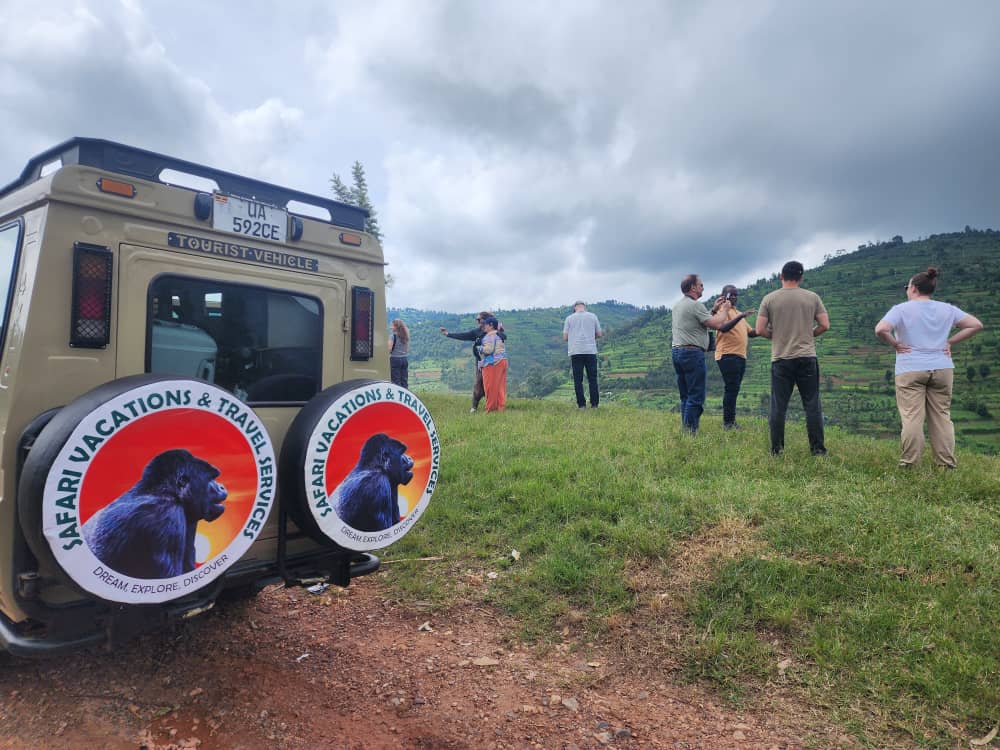
Ultimate Family Gorilla Trekking in Uganda: The Complete Guide for an Unforgettable Safari

Imagine standing together as a family in the heart of Uganda’s ancient rainforest, surrounded by towering trees and the sounds of nature, when a gentle family of endangered mountain gorillas quietly emerges from the forest. Watching a playful baby gorilla tumble through the undergrowth, a protective silverback keeping watch over his family, and mothers caring for their young is an emotional experience that brings families closer together and creates memories that last a lifetime.

Uganda is one of the very few places on Earth where families can experience the extraordinary privilege of observing endangered mountain gorillas in their natural habitat. With over half of the world’s remaining mountain gorilla population living in the lush forests of Bwindi Impenetrable National Park and Mgahinga Gorilla National Park, Uganda offers the most authentic, affordable, and rewarding family gorilla trekking experience in Africa.

Whether you are travelling with teenagers, celebrating a milestone birthday, planning a multi-generational holiday with grandparents, or searching for an unforgettable educational adventure, gorilla trekking in Uganda is a journey unlike any other. Every trek is led by experienced Uganda Wildlife Authority ranger guides who ensure your family’s safety while sharing fascinating insights into gorilla behaviour, rainforest ecology, and the remarkable conservation efforts that have helped these magnificent primates recover from the brink of extinction.

At Safari Vacations and Travel Services, we specialize in designing tailor-made family gorilla safaris that combine adventure, comfort, and flexibility. From securing your gorilla permits and selecting family-friendly lodges to arranging comfortable private 4×4 safari vehicles and experienced driver-guides, we take care of every detail so your family can simply relax and enjoy one of the world’s greatest wildlife encounters.

Our family safaris are thoughtfully designed to suit different travel styles and budgets. Whether you prefer luxury lodges overlooking the rainforest, comfortable mid-range accommodation, or affordable family-friendly options, we ensure every member of your group enjoys a safe, comfortable, and memorable holiday. For families with varying fitness levels, we can also request gorilla groups that may involve shorter or less demanding treks, subject to Uganda Wildlife Authority allocation and gorilla movements.

Beyond the unforgettable gorilla encounter itself, a family safari in Uganda offers an incredible opportunity to explore one of Africa’s most beautiful and diverse destinations. Your adventure can easily be combined with chimpanzee tracking in Kibale National Park, thrilling game drives in Queen Elizabeth National Park, boat cruises along the Kazinga Channel, golden monkey trekking in Mgahinga Gorilla National Park, cultural visits with the Batwa community, relaxing canoe rides on Lake Bunyonyi, and many other enriching experiences that appeal to every generation.

A gorilla trekking holiday is more than just a vacation—it is an opportunity for families to disconnect from busy routines, spend meaningful time together, inspire young minds through wildlife conservation, and create stories that will be shared for generations. Few travel experiences can match the excitement of searching through an ancient rainforest before coming face-to-face with one of our closest living relatives.

Whether this is your family’s first African safari or another exciting wildlife adventure, Uganda promises an experience filled with wonder, learning, breathtaking scenery, and genuine hospitality. With careful planning and expert local guidance from Safari Vacations and Travel Services, your dream family gorilla safari can become a seamless, unforgettable reality.
Why Uganda Is Africa’s Best Destination for Family Gorilla Trekking

Planning a family holiday involves much more than choosing an attractive destination. Parents want a place that is safe, rewarding, educational, comfortable, and enjoyable for every member of the family. Teenagers often look for adventure and excitement, while grandparents appreciate comfort, well-organized experiences, and a relaxed pace of travel. Uganda offers all these qualities, making it one of Africa’s finest destinations for families dreaming of seeing endangered mountain gorillas in their natural habitat.

Known as the Pearl of Africa, Uganda combines extraordinary wildlife, breathtaking scenery, warm hospitality, and exceptional value for money. It is one of only three countries in the world where visitors can encounter mountain gorillas in the wild, but what truly sets Uganda apart is the variety of experiences available during a single holiday. Families can combine gorilla trekking with chimpanzee tracking, wildlife safaris, boat cruises, cultural encounters, scenic lakes, mountain adventures, birdwatching, and community experiences, ensuring that every member of the family enjoys an unforgettable journey.

For families seeking an authentic African safari that combines adventure, education, conservation, and quality time together, Uganda offers an experience unlike anywhere else on the continent.

Uganda Protects More Than Half of the World’s Mountain Gorillas

One of the biggest reasons families choose Uganda is its incredible mountain gorilla population. The country is home to more than half of the world’s remaining mountain gorillas, making it the leading destination for anyone wishing to experience these remarkable primates in the wild.

Uganda protects its mountain gorillas within two spectacular national parks: Bwindi Impenetrable National Park and Mgahinga Gorilla National Park. Bwindi is internationally recognised as a UNESCO World Heritage Site because of its ancient rainforest, outstanding biodiversity, and globally important conservation efforts. It is home to numerous habituated gorilla families that visitors can trek throughout the year.

Habituation is a carefully managed process during which wild gorillas gradually become accustomed to the presence of researchers and tourists while continuing to behave naturally. This allows visitors to observe gorillas at close range without interfering with their daily lives.

During your Family Gorilla Trekking in Uganda, watching a silverback calmly watch over his family, mothers nursing their infants, and playful young gorillas climbing trees or tumbling through the forest creates an emotional experience that few wildlife encounters can match. Unlike seeing animals in captivity, gorilla trekking allows families to witness these magnificent creatures behaving exactly as nature intended.

Uganda Offers Safe and Professionally Managed Gorilla Trekking

Family Gorilla Trekking in Uganda is one of the safest and most professionally managed wildlife experiences in Africa. Safety is naturally one of the biggest concerns for families planning an overseas holiday, and Uganda has built an outstanding reputation for responsible gorilla tourism.

Every Family Gorilla Trekking in Uganda adventure begins with a comprehensive briefing conducted by experienced Uganda Wildlife Authority ranger guides. During the briefing, visitors learn about gorilla behaviour, trekking procedures, conservation rules, photography guidelines, and safety measures that must be followed throughout the experience.

During Family Gorilla Trekking in Uganda, families are assigned to small trekking groups and accompanied by highly trained ranger guides and trackers who continuously monitor the movements of the gorilla families. Their experience ensures that visitors safely locate the gorillas while minimising disturbance to these endangered animals.

Strict conservation regulations help protect both visitors and gorillas throughout Family Gorilla Trekking in Uganda. Guests are required to maintain a safe viewing distance, avoid sudden movements, speak quietly, and follow all instructions provided by the ranger guides. These procedures have made Uganda one of the safest and most respected gorilla trekking destinations in the world.

Uganda Is Perfect for Multi-Generational Family Holidays

Family Gorilla Trekking in Uganda is one of the few travel experiences that naturally brings grandparents, parents, teenagers, and young adults together. It is common to find several generations sharing this extraordinary adventure.

Teenagers are captivated by the excitement of hiking through ancient rainforest during Family Gorilla Trekking in Uganda. Parents value the educational and emotional impact of the experience, while grandparents often fulfil a lifelong dream of seeing mountain gorillas in their natural environment.

Families sometimes worry that different fitness levels may prevent everyone from participating. However, Family Gorilla Trekking in Uganda offers several options to make the experience accessible. Visitors may request less demanding gorilla groups where possible, while trained porters are available to assist with backpacks and provide support on steep sections of the trail.

For elderly travellers or visitors with limited mobility, specially designed sedan chairs carried by experienced teams can be arranged, allowing many people who never imagined they could complete a gorilla trek to enjoy this once-in-a-lifetime experience.

This flexibility makes Family Gorilla Trekking in Uganda one of Africa’s finest experiences for multi-generational family safaris.

Gorilla Trekking Is One of the Best Educational Experiences for Families

Family Gorilla Trekking in Uganda provides one of the most valuable educational adventures available anywhere in Africa. Modern family travel is increasingly about creating meaningful experiences rather than simply visiting famous attractions.

During Family Gorilla Trekking in Uganda, families learn about mountain gorilla conservation, rainforest ecosystems, biodiversity, wildlife protection, and the importance of preserving endangered species. Experienced ranger guides explain gorilla behaviour, the challenges the species faces, and the conservation efforts that have helped mountain gorilla populations recover over recent decades.

Teenagers often develop a completely new appreciation for wildlife after observing gorillas in their natural habitat. Watching family interactions among gorillas, including mothers caring for infants, juveniles playing together, and silverbacks protecting the group, provides fascinating insights into the close relationship between humans and great apes.

For many young travellers, Family Gorilla Trekking in Uganda becomes one of the most inspiring learning experiences they have ever enjoyed outside the classroom.

Uganda Offers Outstanding Value for Family Gorilla Safaris

Family Gorilla Trekking in Uganda offers outstanding value compared to many of Africa’s leading wildlife destinations while maintaining a world-class gorilla trekking experience.

Families planning Family Gorilla Trekking in Uganda can choose from luxury forest lodges with spacious family cottages, comfortable mid-range properties offering excellent facilities, or budget-friendly accommodation that still provides convenient access to the trekking starting points.

Because Uganda offers so many different attractions, families can combine Family Gorilla Trekking in Uganda with chimpanzee tracking, wildlife viewing, cultural experiences, and lake excursions during one well-planned itinerary without travelling long distances or crossing multiple international borders.

The combination of exceptional wildlife, varied accommodation, and excellent safari infrastructure makes Family Gorilla Trekking in Uganda one of the best-value family adventure holidays in Africa.

Uganda Offers Much More Than Gorilla Trekking

While Family Gorilla Trekking in Uganda is the highlight for many visitors, Uganda offers countless other attractions that make a family safari even more rewarding.

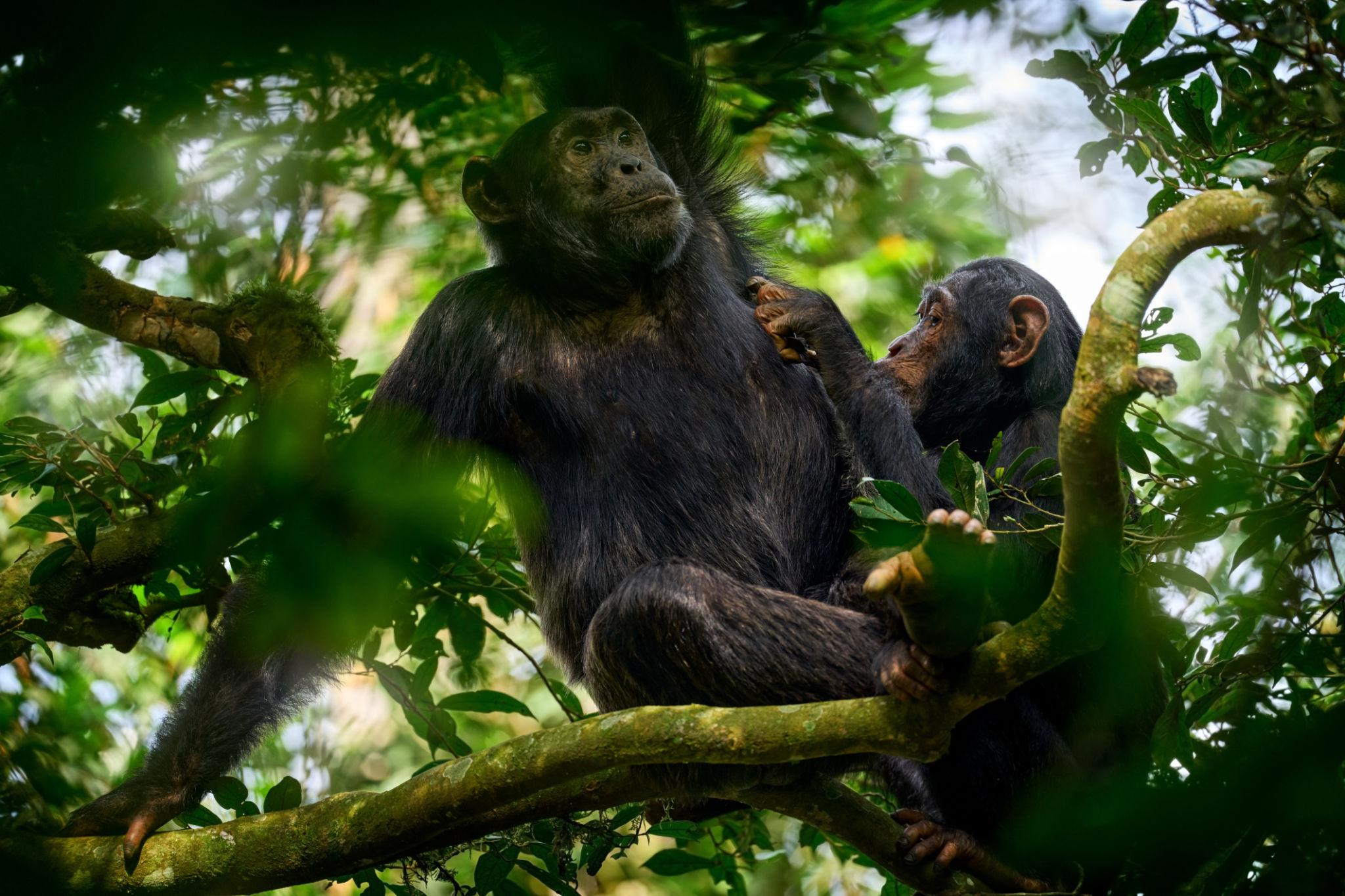
Families can visit Kibale National Park for chimpanzee tracking, where they have an excellent chance of observing our closest relatives in the wild.

Chimpanzees in Kibale National Park during a chimpanzee tracking safari in Uganda.Queen Elizabeth National Park offers exciting game drives where elephants, buffaloes, lions, leopards, antelopes, and many other animals can be seen in their natural habitats.
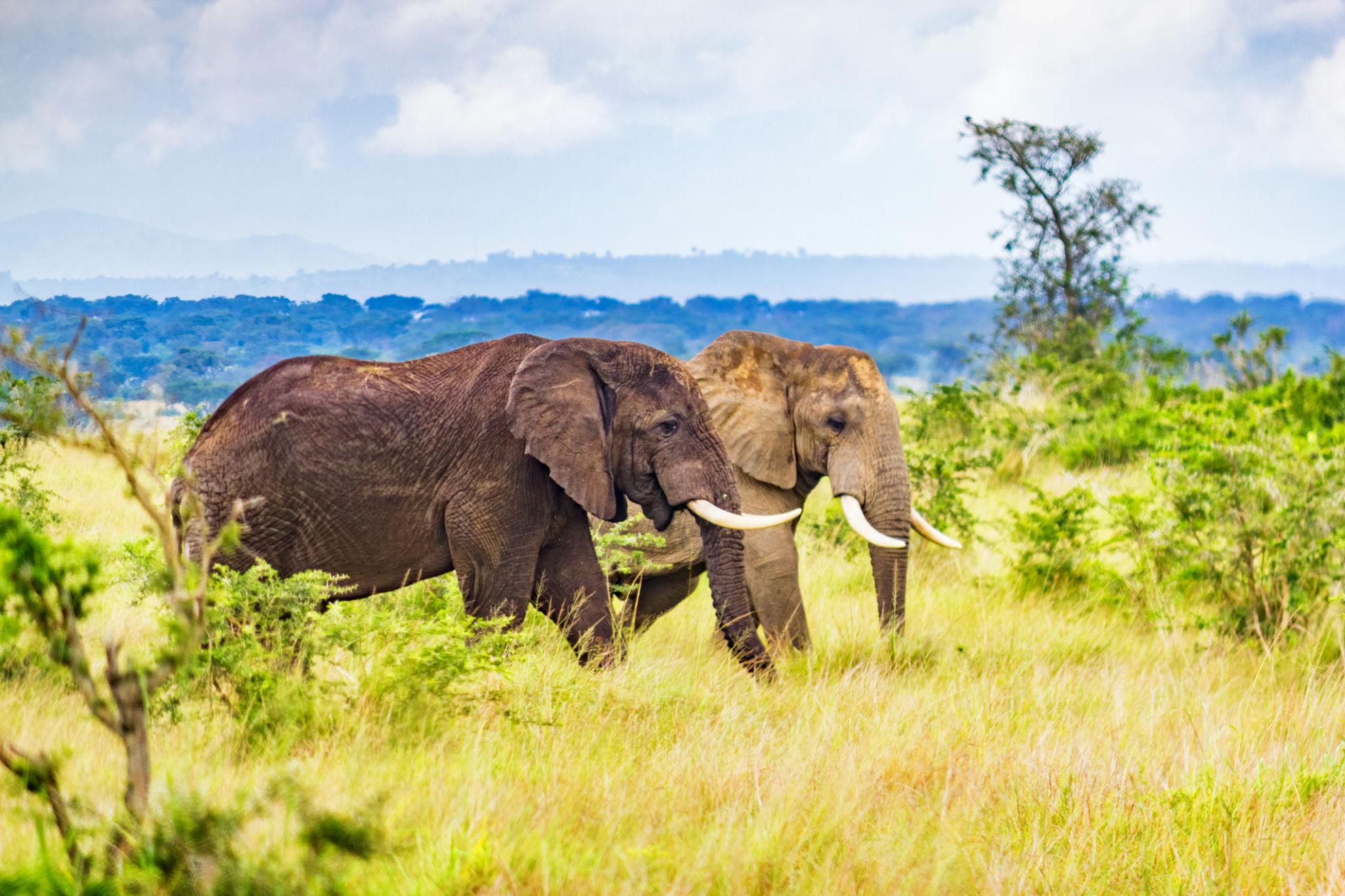
Elephants grazing in Queen Elizabeth National Park, Uganda.A boat cruise along the Kazinga Channel provides outstanding opportunities to observe hippos, crocodiles, elephants, buffaloes, and hundreds of bird species from the comfort of a boat.
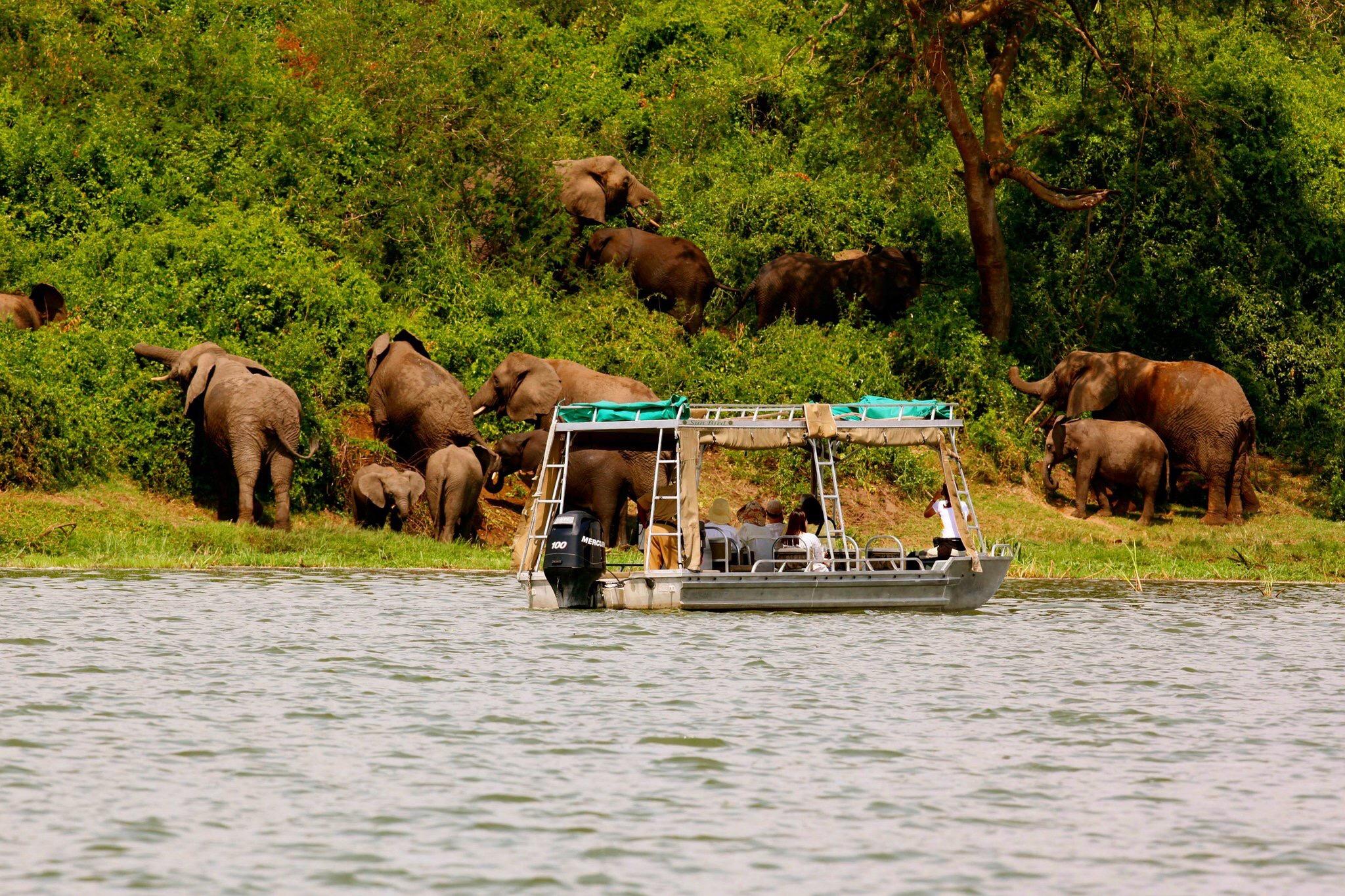
Boat cruise on the Kazinga Channel with hippos, elephants and buffaloes.Families can also relax beside Lake Bunyonyi, explore traditional communities, experience Batwa cultural tours, visit coffee farms, enjoy birdwatching, or simply appreciate Uganda’s spectacular scenery.
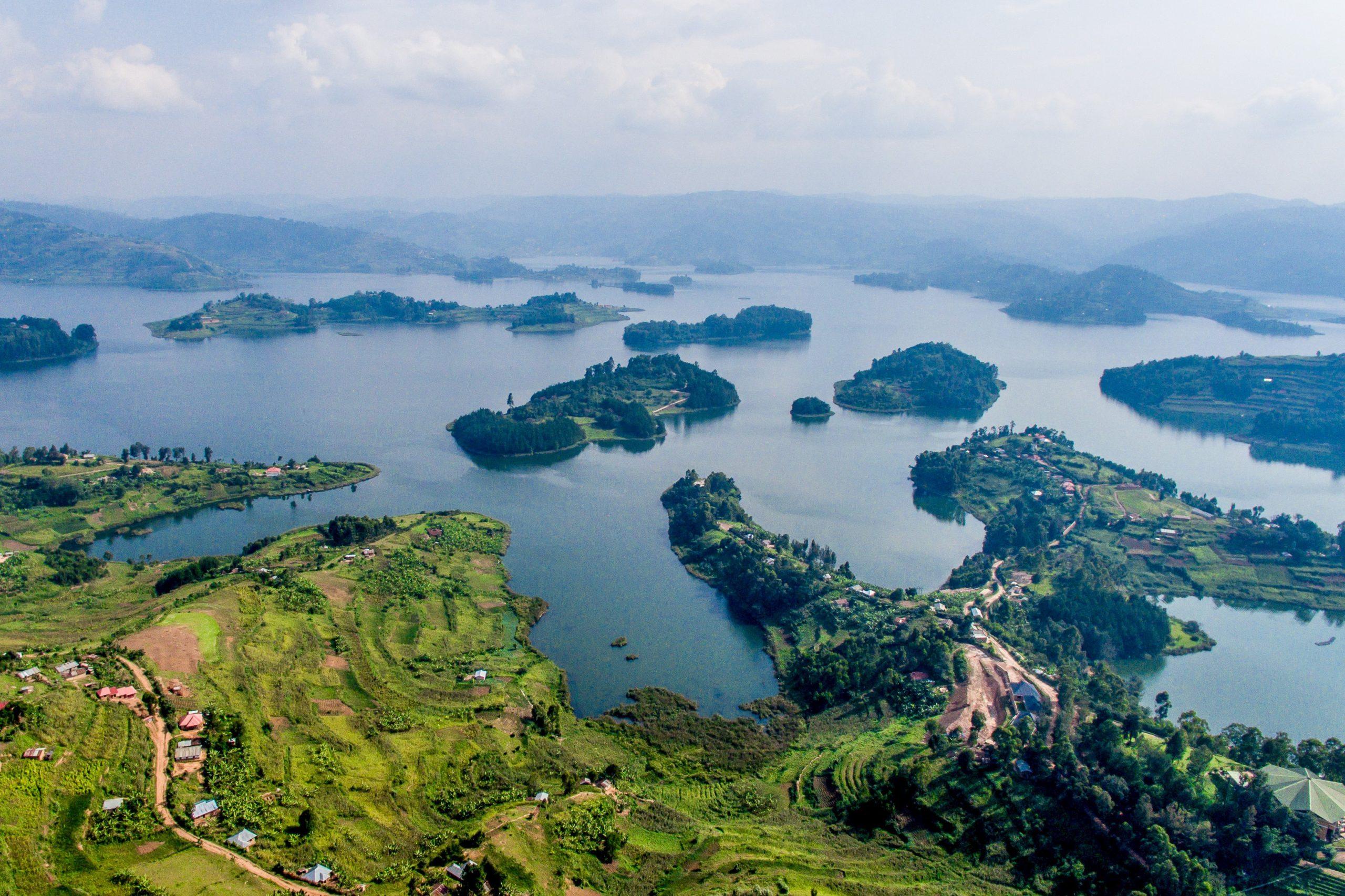
Scenic view of Lake Bunyonyi with its islands in southwestern Uganda.Combining these incredible attractions with Family Gorilla Trekking in Uganda creates one of Africa’s most diverse and unforgettable family holidays.
Comfortable Accommodation for Every Family

Uganda has an impressive selection of family-friendly safari lodges located near each gorilla trekking sector. Whether your family prefers luxury, mid-range comfort, or budget accommodation, there are excellent options to suit every travel style.

Many lodges offer spacious family cottages, interconnected rooms, beautiful gardens, children’s meal options, spectacular forest views, fireplaces, and warm Ugandan hospitality.

When planning Family Gorilla Trekking in Uganda, choosing accommodation close to your allocated gorilla trekking sector is extremely important because travelling between sectors can take several hours. Safari Vacations and Travel Services carefully selects lodges that match your trekking permits, budget, and family requirements, ensuring maximum comfort throughout your stay.

Private Safari Vehicles Provide Greater Comfort and Flexibility

Long road journeys become enjoyable when families travel in comfortable safari vehicles.

For Family Gorilla Trekking in Uganda, Safari Vacations and Travel Services operates well-maintained private 4×4 Toyota Land Cruisers equipped for East African safaris. Depending on the vehicle selected, features may include air conditioning, charging ports, spacious seating, refrigerators, Wi-Fi where available, and pop-up roofs for wildlife viewing.

Private transportation allows families to travel at their own pace, stop whenever they wish for photographs, visit interesting attractions along the route, and enjoy complete flexibility throughout their safari.

An experienced English-speaking driver-guide accompanies every Family Gorilla Trekking in Uganda safari, sharing fascinating information about Uganda’s wildlife, culture, landscapes, and history.

Warm Ugandan Hospitality Makes Every Family Feel Welcome

One of the greatest highlights of Family Gorilla Trekking in Uganda is experiencing the genuine warmth of the Ugandan people. Visitors are welcomed with friendly smiles, professional service, and authentic hospitality throughout their journey.

Whether interacting with lodge staff, ranger guides, local communities, or your safari guide, families quickly discover why Uganda is regarded as one of Africa’s friendliest countries.

These personal connections often become some of the most cherished memories of a Family Gorilla Trekking in Uganda holiday, adding a human touch that makes the safari even more meaningful.

Your Safari Supports Gorilla Conservation and Local Communities

Every family that chooses Family Gorilla Trekking in Uganda contributes directly to protecting one of the world’s most endangered species.

Revenue generated through gorilla permits helps fund anti-poaching patrols, veterinary care, habitat protection, scientific research, ranger training, and community development projects surrounding Uganda’s national parks.

Tourism also creates employment opportunities for local communities, including guides, trackers, porters, lodge staff, drivers, farmers, artisans, and cultural performers. As communities benefit from responsible tourism, they become active partners in protecting Uganda’s forests and wildlife for future generations.

Family Gorilla Trekking in Uganda therefore becomes far more than an unforgettable adventure—it also contributes to one of Africa’s greatest conservation success stories.

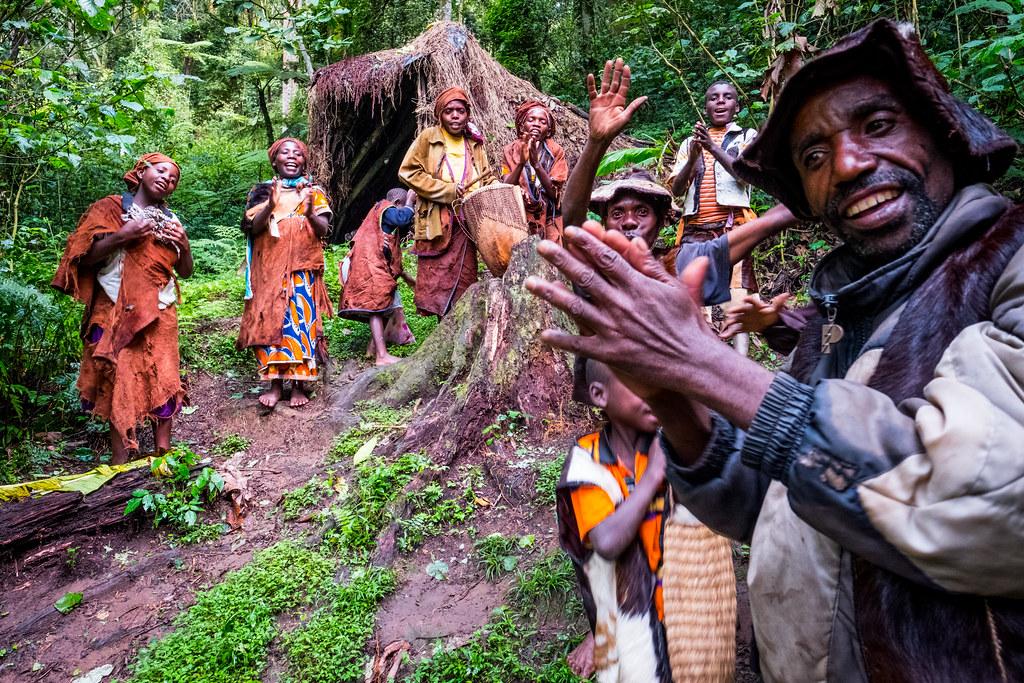
Batwa community members demonstrating traditional forest life near Bwindi.Expert Family Safari Planning with Safari Vacations and Travel Services

Planning Family Gorilla Trekking in Uganda requires experience, local knowledge, and careful attention to detail. Gorilla permits, accommodation, transportation, park regulations, and family interests all need to be carefully coordinated.

Safari Vacations and Travel Services specialises in tailor-made family safaris across Uganda. We work closely with every family to understand your travel dates, interests, preferred accommodation, fitness levels, and budget before designing a personalised itinerary.

From securing gorilla permits and selecting family-friendly lodges to arranging private transportation, domestic flights, airport transfers, and experienced driver-guides, we take care of every detail so your Family Gorilla Trekking in Uganda experience is seamless, safe, and unforgettable.

Why Uganda Should Be Your Family’s First Choice

Family Gorilla Trekking in Uganda combines adventure, education, wildlife, culture, and family bonding better than almost any other travel experience in Africa.

From standing only a few metres away from a family of wild mountain gorillas to tracking chimpanzees through tropical rainforest, watching elephants on the savannah, cruising alongside hippos, meeting welcoming communities, and relaxing beside beautiful lakes, Uganda offers experiences that appeal to every generation.

Choosing Family Gorilla Trekking in Uganda means choosing meaningful adventures instead of ordinary holidays. It is an opportunity for your family to reconnect with nature, discover one of Africa’s richest wildlife destinations, support conservation, and create memories that will be shared for decades to come.

With expert planning from Safari Vacations and Travel Services, your Family Gorilla Trekking in Uganda holiday becomes far more than a vacation. It becomes one of the greatest journeys your family will ever experience.

Quick Facts About Family Gorilla Trekking in Uganda

Planning a family gorilla-trekking holiday raises many questions. How old do children need to be? How long is the trek? Which national park is best for families? What is the likelihood of seeing mountain gorillas? How much do permits cost? Understanding these essential details before booking helps families prepare for a smooth, enjoyable, and unforgettable adventure.

Uganda has earned a global reputation as one of the world’s premier gorilla trekking destinations. Home to more than half of the world’s remaining mountain gorillas, the country offers exceptional trekking experiences in Bwindi Impenetrable National Park and Mgahinga Gorilla National Park. Every trek is carefully organized by the Uganda Wildlife Authority (UWA), ensuring visitor safety while protecting these endangered primates and their fragile habitat.

The following quick facts provide an overview of everything families should know before planning a gorilla trekking safari with Safari Vacations and Travel Services.

Quick Facts at a Glance

FeatureDetails
Best DestinationBwindi Impenetrable National Park is regarded as the best destination for family gorilla trekking in Uganda, while Mgahinga Gorilla National Park offers a quieter alternative with spectacular volcanic scenery.
Mountain Gorilla PopulationUganda protects more than half of the world’s remaining mountain gorillas.
National ParksBwindi Impenetrable National Park and Mgahinga Gorilla National Park.
Success RateMore than 95% chance of locating your allocated gorilla family.
Minimum Age15 years, as required by the Uganda Wildlife Authority.
Time with GorillasUp to one hour after the gorillas are located.
Total Trek DurationApproximately 2–8 hours depending on the location and movement of the gorilla family.
DifficultyModerate to challenging depending on terrain and gorilla movements. Easier gorilla groups may be requested, although allocation depends on availability.
Fitness LevelSuitable for most healthy travelers with reasonable mobility. Preparation through regular walking is recommended.
AltitudeApproximately 1,160 to 2,607 metres (3,806–8,553 feet) above sea level.
TemperatureAverage daytime temperatures range between 11°C and 28°C depending on season and elevation.
Best Time to VisitAvailable all year. June–September and December–February are generally the driest months for trekking.
Permit RequirementEvery trekker must hold a valid gorilla trekking permit issued by the Uganda Wildlife Authority.
Recommended Safari Length4–8 days for families wishing to combine gorilla trekking with other wildlife experiences.
AccommodationLuxury, mid-range, and budget family lodges are available near every trekking sector.
PhotographyExcellent wildlife photography opportunities. Flash photography is strictly prohibited.
Professional GuidesEvery trek is led by experienced Uganda Wildlife Authority ranger guides and trackers.
PortersAvailable at the park headquarters to assist with carrying backpacks and providing support on steep sections of the trail.
Senior TravelersSedan chairs carried by trained porters can be arranged for visitors who need additional assistance.
Nearest AirportsKisoro Airstrip and Kihihi Airstrip for domestic flights, with Entebbe International Airport serving as Uganda’s main international gateway.
Starting PointsFamilies can begin their safari from either Entebbe, Kampala, or Kigali in Rwanda.
Tour OperatorSafari Vacations and Travel Services specializes in tailor-made family gorilla trekking safaris across Uganda.

Can Families Go Gorilla Trekking in Uganda?

One of the most common questions families ask when planning a gorilla safari is whether every member of the family can participate in the trek. The answer is yes, but with one important condition: participants must meet the minimum age requirement established by the Uganda Wildlife Authority (UWA). Understanding these regulations before planning your trip helps ensure a smooth, enjoyable, and memorable safari for everyone.

Uganda is one of the world’s leading destinations for family wildlife holidays, welcoming thousands of families each year to experience the unforgettable adventure of mountain gorilla trekking. The activity is designed to be safe, educational, and inspiring while also protecting one of the world’s most endangered species. Every trek is carefully managed by experienced Uganda Wildlife Authority ranger guides, ensuring both visitor safety and gorilla conservation.

Whether you are travelling as parents with teenagers, as a multi-generational family, or celebrating a special occasion together, gorilla trekking offers an experience unlike any other. Standing just a few metres away from a family of wild mountain gorillas in their natural habitat is an emotional encounter that brings families together and creates memories that last a lifetime.

Families Are Welcome to Experience Gorilla Trekking

Gorilla trekking is one of Africa’s most rewarding family adventures. It is particularly well suited to families travelling with teenagers, young adults, parents, and grandparents who enjoy nature, wildlife, and outdoor exploration.

Unlike many tourist attractions, gorilla trekking is not simply about seeing wildlife. It is about sharing an unforgettable journey. Families hike through ancient rainforest, learn about one of the world’s greatest conservation success stories, and experience the thrill of meeting mountain gorillas in their natural environment.

Watching young gorillas play in the forest, mothers caring for their infants, curious juveniles observing visitors, and the dominant silverback calmly protecting his family creates an emotional connection that is difficult to describe. Many travellers say this single hour with the gorillas becomes the highlight of their entire African holiday.

For teenagers especially, gorilla trekking is an educational experience that combines adventure with conservation, helping them develop a deeper appreciation for wildlife and the importance of protecting endangered species.

What Is the Minimum Age for Gorilla Trekking in Uganda?

The Uganda Wildlife Authority requires every gorilla trekker to be at least 15 years old on the day of the trek.

This regulation applies to all visitors regardless of nationality and is strictly enforced throughout Uganda’s gorilla trekking destinations, including Bwindi Impenetrable National Park and Mgahinga Gorilla National Park.

While some parents may feel that younger children are physically capable of hiking, the minimum age is based on much more than physical ability. It has been carefully developed through years of experience to ensure the safety of visitors, the welfare of the gorillas, and the overall quality of the trekking experience.

Why Is the Minimum Age 15 Years?

The age restriction exists for several important reasons, all of which contribute to responsible tourism and successful gorilla conservation.

Physical Ability

Gorilla trekking takes place in dense tropical rainforest where trails can be steep, muddy, slippery, and uneven. Depending on where the assigned gorilla family is located, the hike may last anywhere between two and eight hours.

The terrain often involves climbing hills, crossing streams, navigating thick vegetation, and walking over exposed tree roots and rocky slopes. Teenagers aged 15 years and above generally have the stamina, coordination, and endurance needed to complete these hikes safely and comfortably.

Although some gorilla families are easier to reach than others, there is never a guarantee that the trek will be short. Visitors should therefore be prepared for varying levels of physical activity.

Emotional Maturity

Mountain gorillas are wild animals. Although they have undergone years of habituation and are accustomed to human presence, they still display natural behaviours.

A silverback may beat his chest, vocalise loudly, move rapidly through the vegetation, or perform a mock charge to demonstrate his authority. These behaviours are perfectly normal and rarely indicate aggression, but they can be intimidating for younger children.

Visitors must remain calm, avoid sudden movements, and follow every instruction given by their ranger guide. Teenagers generally possess the emotional maturity needed to remain composed during these encounters, ensuring a safe experience for both visitors and the gorillas.

Protecting the Health of Mountain Gorillas

One of the most important reasons for the minimum age requirement is conservation.

Mountain gorillas share approximately 98 percent of their DNA with humans, making them highly vulnerable to many common human illnesses, including influenza, colds, and other respiratory infections.

Every visitor is required to follow strict health guidelines while observing the gorillas. These include maintaining the required viewing distance, avoiding direct contact, following hygiene protocols, and immediately informing guides if they feel unwell before the trek.

Older visitors are generally better able to understand and comply with these regulations, helping to protect these critically important wildlife populations.

Can Teenagers Join Gorilla Trekking?

Absolutely. Teenagers who are 15 years of age or older are eligible to participate in gorilla trekking and often find it to be one of the most memorable experiences of their lives.

For many young travellers, seeing mountain gorillas in the wild changes the way they think about wildlife, conservation, and nature. It transforms what they have previously seen only in documentaries or textbooks into a real-life encounter.

Teenagers particularly enjoy photographing wildlife, learning about gorilla family dynamics, discovering the unique plants and animals of the rainforest, and experiencing an adventure that very few people in the world have the opportunity to enjoy.

Many families also appreciate that gorilla trekking encourages young people to disconnect from mobile devices and spend meaningful time together in one of Africa’s most spectacular natural environments.

What If Your Family Has Children Under 15?

Having younger children should never discourage your family from visiting Uganda.

Many families travel with both teenagers and younger children. While eligible family members participate in gorilla trekking, younger children can enjoy a variety of alternative experiences under the supervision of another responsible adult or caregiver.

Safari Vacations and Travel Services can help arrange enjoyable activities such as Batwa cultural experiences, guided nature walks, canoe excursions on Lake Bunyonyi, birdwatching, coffee farm visits, community tours, craft experiences, and wildlife viewing in nearby national parks.

These activities allow younger family members to discover Uganda’s culture, landscapes, and wildlife while the rest of the family completes the gorilla trek. By the end of the safari, everyone has enjoyed unique and memorable experiences tailored to their interests and age.

Gorilla Trekking Is Perfect for Multi-Generational Families

Uganda has become one of Africa’s most popular destinations for multi-generational travel.

It is common to see grandparents, parents, and teenagers travelling together to celebrate milestone birthdays, anniversaries, retirements, or family reunions.

Older travellers who maintain reasonable fitness levels regularly complete gorilla treks successfully. For visitors who require additional support, trained local porters are available to assist with backpacks, provide stability on steep sections of the trail, or carry visitors using specially designed sedan chairs.

This flexibility allows families with different levels of fitness to experience gorilla trekking together, making it one of the few wildlife adventures that truly brings multiple generations together.

Can Families Request an Easier Gorilla Trek?

Yes. Although gorilla permits are allocated by the Uganda Wildlife Authority, families may request a gorilla group that is generally known for involving a shorter or less demanding hike.

Safari Vacations and Travel Services communicates these requests when planning your safari. On the morning of the trek, park officials consider factors such as the age of participants, fitness levels, the daily location of gorilla families, weather conditions, and conservation requirements before assigning each group.

While specific gorilla families cannot be guaranteed in advance, the park authorities make every reasonable effort to match visitors with the most suitable trekking experience whenever possible.

Why Private Family Safaris Are the Best Choice

Private gorilla safaris offer families significantly greater comfort and flexibility than scheduled group tours.

Travelling in your own private 4×4 safari vehicle allows your family to move at a relaxed pace, stop whenever you wish for photographs, adjust travel times to suit children or older travellers, and enjoy a completely personalised itinerary.

Private safaris also make it easier to select family-friendly lodges, include additional activities, and accommodate different interests within the same holiday.

This level of flexibility helps ensure that every member of the family enjoys a comfortable, stress-free safari from beginning to end.

How Safari Vacations and Travel Services Help Families Plan the Perfect Gorilla Safari

Planning a successful family gorilla trekking holiday requires more than simply reserving permits. Choosing the right trekking sector, selecting suitable accommodation, arranging reliable transportation, planning realistic driving times, and including activities for younger family members all contribute to a memorable experience.

Safari Vacations and Travel Services specialises in tailor-made family gorilla trekking safaris across Uganda. Our experienced team works closely with every family to understand your travel goals, budget, preferred accommodation standard, and fitness levels before designing a personalised itinerary.

From securing gorilla permits and recommending the most suitable lodges to arranging private 4×4 safari vehicles, domestic flights where appropriate, experienced English-speaking driver-guides, and carefully selected family activities, we take care of every detail so that you can focus on enjoying your adventure.

A Family Adventure That Will Be Remembered Forever

During your Very few travel experiences compare to the excitement of walking through Uganda’s ancient rainforest before coming face to face with a family of wild mountain gorillas. The anticipation of the trek, the beauty of the forest, and the privilege of spending one unforgettable hour with these magnificent primates create memories that stay with families forever.

Whether you are introducing your children to Africa for the first time, celebrating a special family milestone, or fulfilling a lifelong dream, gorilla trekking in Uganda offers an experience unlike any other.

With expert planning, personalised service, and extensive local knowledge from Safari Vacations and Travel Services, your family can enjoy this extraordinary adventure with complete confidence, knowing that every aspect of your safari has been carefully planned to deliver comfort, safety, and memories that will be treasured for generations.

Best Places for Family Gorilla Trekking in Uganda

For your Family Gorilla Trekking in Uganda, choosing the right destination is one of the most important decisions when planning a family gorilla trekking holiday in Uganda. Although Uganda has only two national parks where mountain gorillas can be visited, each offers a unique experience, different landscapes, varying levels of trekking difficulty, and accommodation options suited to different family preferences and budgets.

The majority of family gorilla safaris take place in Bwindi Impenetrable National Park, which is home to the largest population of mountain gorillas in the world. Bwindi is divided into four trekking sectors, each offering its own habituated gorilla families, distinctive scenery, and carefully selected lodges. This variety allows families to choose a location that best matches their travel style, fitness level, and overall safari itinerary.

For families seeking a quieter and more exclusive experience, Mgahinga Gorilla National Park provides an excellent alternative. Located within Uganda’s section of the Virunga Mountains, the park combines gorilla trekking with breathtaking volcanic scenery and opportunities to enjoy additional activities such as golden monkey tracking and volcano hiking.

Understanding the differences between these destinations will help you select the perfect location for your family’s once-in-a-lifetime gorilla trekking adventure.

Bwindi Impenetrable National Park

Bwindi Impenetrable National Park is Uganda’s premier gorilla trekking destination and one of Africa’s most celebrated wildlife conservation areas. Covering approximately 331 square kilometres of ancient montane rainforest, the park protects more than half of the world’s remaining mountain gorillas and has been recognised as a UNESCO World Heritage Site because of its exceptional biodiversity and conservation significance.

For families, Bwindi offers the greatest choice of gorilla trekking experiences. The park is home to numerous habituated gorilla families spread across four different trekking sectors: Buhoma, Ruhija, Rushaga, and Nkuringo. Each sector has its own park headquarters, accommodation options, and gorilla groups, allowing families to choose the experience that best suits their needs.

Beyond gorillas, Bwindi is home to over 120 mammal species, approximately 350 bird species, more than 220 butterfly species, and over 1,000 flowering plant species. As families walk beneath towering trees covered with moss, vines, orchids, and ferns, they quickly realise they are exploring one of Africa’s oldest and most biologically diverse forests.

The cool mountain climate, spectacular scenery, fresh air, and remarkable wildlife make Bwindi an extraordinary destination for families who appreciate nature and adventure.

The Four Gorilla Trekking Sectors of Bwindi

One of Bwindi’s greatest advantages is that it is divided into four distinct trekking sectors. Each sector offers a unique experience while maintaining the same conservation standards and excellent opportunities to encounter mountain gorillas.

The four sectors are:

Buhoma Sector

Located in the northern part of the park, Buhoma is the original gorilla trekking sector and remains one of the most popular. It is known for its excellent road access, beautiful forest trails, and wide selection of luxury, mid-range, and budget accommodation.

Families who combine gorilla trekking with Queen Elizabeth National Park often choose Buhoma because of its convenient location. The journey between Queen Elizabeth National Park’s Ishasha Sector and Buhoma is relatively short, making itinerary planning easier.

Several habituated gorilla families are available for trekking from Buhoma, and the surrounding area also offers forest walks, birdwatching, community visits, and cultural experiences.

Ruhija Sector

Situated in the eastern part of Bwindi, Ruhija is famous for its beautiful mountain scenery, cool temperatures, and exceptional birdwatching.

Families looking for a quieter trekking experience often appreciate Ruhija because visitor numbers are generally lower than in some other sectors.

The area provides spectacular panoramic views over the Albertine Rift Valley, and the surrounding forest is home to numerous bird species, making it particularly attractive for nature-loving families.

Several well-established lodges provide comfortable accommodation with stunning views across the forested hills.

Rushaga Sector

Rushaga, located in southern Bwindi, has the largest number of habituated gorilla families in the entire park.

This gives visitors excellent permit availability throughout the year and provides greater flexibility when planning family safaris, particularly during peak travel seasons.

Rushaga is also the only sector where visitors can participate in the Gorilla Habituation Experience, allowing up to four hours with a semi-habituated gorilla family under the guidance of researchers and rangers.

The area offers an excellent range of luxury, mid-range, and budget accommodation, making it one of the most popular choices for families.

Nkuringo Sector

Located close to Rushaga in the southern part of the park, Nkuringo is renowned for its spectacular scenery and breathtaking mountain views.

Many lodges overlook the Virunga Volcanoes and the surrounding valleys, creating some of the most beautiful landscapes found anywhere in Uganda.

Although some treks from Nkuringo can be more physically demanding because of the mountainous terrain, the reward is an unforgettable wilderness experience with fewer visitors and exceptional photographic opportunities.

Families seeking tranquillity, luxury accommodation, and dramatic scenery often choose Nkuringo as their preferred trekking destination.

Mgahinga Gorilla National Park

Although smaller than Bwindi, Mgahinga Gorilla National Park offers an equally rewarding gorilla trekking experience.

The park forms part of the greater Virunga Conservation Area shared by Uganda, Rwanda, and the Democratic Republic of Congo. Its dramatic volcanic scenery, bamboo forests, and open mountain landscapes create an entirely different atmosphere from the dense rainforest of Bwindi.

Mgahinga is home to the famous Nyakagezi Gorilla Family, a well-known group that has remained within Uganda for many years, providing visitors with excellent trekking opportunities.

Families who enjoy mountain scenery often find Mgahinga especially appealing because the towering volcanoes provide a spectacular backdrop for photographs.

In addition to gorilla trekking, families can enjoy golden monkey tracking, guided nature walks, birdwatching, Batwa cultural experiences, and volcano hikes, making Mgahinga one of Uganda’s most diverse adventure destinations.

Which Destination Is Best for Families?

There is no single answer because every family has different interests, budgets, and travel styles.

Families looking for the greatest choice of gorilla families, accommodation, and itinerary flexibility usually prefer Bwindi Impenetrable National Park.

Families seeking a quieter experience surrounded by dramatic volcanic scenery may find Mgahinga Gorilla National Park more appealing.

At Safari Vacations and Travel Services, we carefully assess your family’s travel dates, fitness levels, accommodation preferences, budget, and overall safari plans before recommending the destination that best matches your expectations.

Our local knowledge allows us to design personalised family gorilla trekking safaris that maximise comfort, minimise unnecessary travel, and create unforgettable experiences for every member of your family.

Which Gorilla Trekking Destination Is Best for Families?

Every family is unique, so there is no single destination that suits everyone.

Families looking for the greatest variety of gorilla families, accommodation choices, and itinerary flexibility generally prefer Bwindi Impenetrable National Park.

Families who value dramatic volcanic scenery, quieter trekking trails, and the opportunity to combine gorilla trekking with golden monkey tracking often choose Mgahinga Gorilla National Park.

At Safari Vacations and Travel Services, we carefully assess your travel dates, family size, fitness levels, accommodation preferences, and budget before recommending the most suitable trekking destination. Our local expertise allows us to design personalised family gorilla trekking safaris that maximise comfort, minimise unnecessary travel, and create unforgettable memories for every member of your family.

How to Choose the Best Gorilla Trekking Sector for Your Family

Selecting the right gorilla trekking sector is one of the most important decisions when planning a family safari in Uganda. While every trekking sector offers the unforgettable opportunity to encounter mountain gorillas in their natural habitat, each has its own advantages depending on your family’s travel plans, fitness levels, accommodation preferences, and the experiences you would like to include in your itinerary.

Many families assume that one trekking sector is better than another, but the truth is that all gorilla trekking sectors are managed by the Uganda Wildlife Authority under the same conservation standards. Every habituated gorilla family provides a remarkable wildlife encounter, and every trekking permit allows visitors to spend one unforgettable hour with the gorillas once they are located.

The key is choosing the sector that best matches your family’s overall safari goals.

Choose Buhoma if You Are Visiting Uganda for the First Time

For many first-time visitors, Buhoma is an excellent choice because it combines comfortable accommodation, good road access, beautiful rainforest scenery, and a variety of additional activities.

Families planning to combine gorilla trekking with a wildlife safari in Queen Elizabeth National Park often find Buhoma to be the most convenient option. The relatively short drive between the Ishasha Sector and Buhoma allows travellers to enjoy both destinations without spending unnecessary hours on the road.

Buhoma also offers some of the widest accommodation choices in Bwindi, making it suitable for luxury, mid-range, and budget family safaris.

Choose Ruhija for Peace, Birdwatching, and Spectacular Views

Families who enjoy quiet destinations surrounded by breathtaking scenery often prefer Ruhija.

This sector receives fewer visitors than some other parts of Bwindi, allowing families to enjoy a more peaceful rainforest experience. The cool mountain climate, panoramic viewpoints, and exceptional birdlife make Ruhija particularly attractive to photographers, birdwatchers, and nature lovers.

If your family enjoys slow-paced travel and beautiful mountain landscapes, Ruhija is an excellent choice.

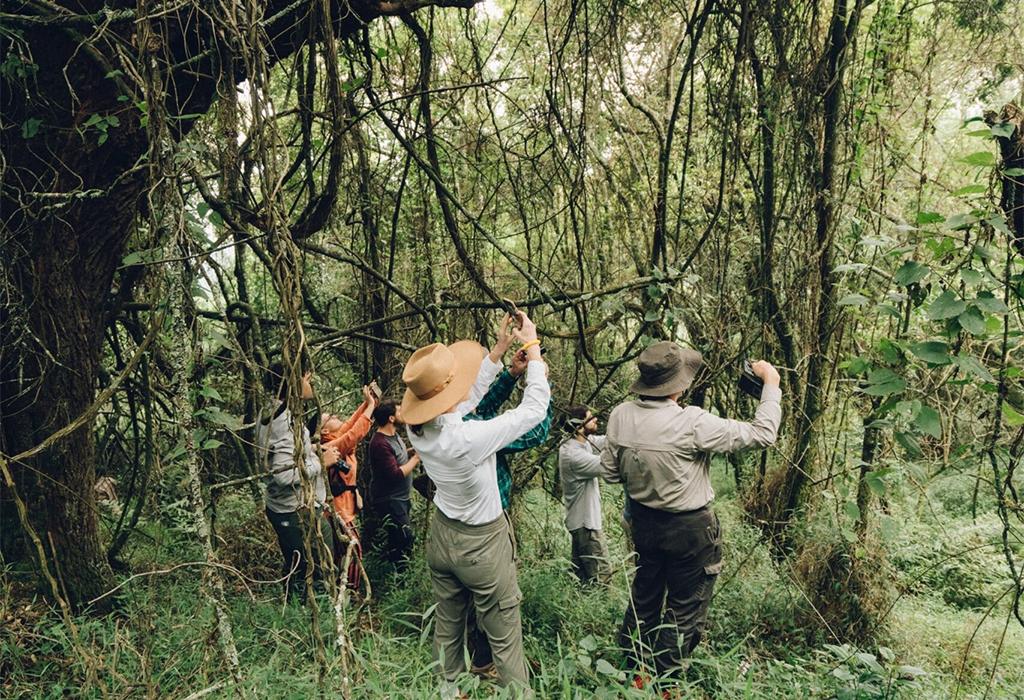
Birdwatchers exploring the Mubwindi Swamp Trail in the Ruhija sector of Bwindi Impenetrable National Park, Uganda.Choose Rushaga for Greater Gorilla Permit Availability
Rushaga is often the easiest sector for securing gorilla trekking permits because it has the largest number of habituated gorilla families in Bwindi Impenetrable National Park.

Families planning their safari during peak travel periods may find better permit availability in Rushaga compared to some other sectors.

Rushaga is also the only place in Uganda where visitors can participate in the Gorilla Habituation Experience, allowing up to four hours with a semi-habituated gorilla family instead of the standard one-hour trek.

The area offers an excellent selection of lodges and spectacular views of the Virunga Volcanoes, making it one of the most popular destinations for family safaris.

Choose Nkuringo for Luxury and Incredible Mountain Scenery

Families looking for exclusivity, privacy, and dramatic scenery often fall in love with Nkuringo.

This sector is famous for its luxury lodges perched high on mountain ridges overlooking the Virunga Volcanoes and the surrounding valleys. The scenery alone makes Nkuringo one of Uganda’s most photographed gorilla trekking destinations.

Some treks from Nkuringo can be more physically demanding because of the mountainous terrain. However, families seeking an authentic wilderness experience with fewer visitors usually consider the extra effort worthwhile.

Choose Mgahinga for Volcanoes and Golden Monkey Tracking

If your family wants more than gorilla trekking, Mgahinga Gorilla National Park offers an outstanding combination of wildlife and adventure.

Besides tracking the famous Nyakagezi Gorilla Family, visitors can enjoy golden monkey tracking, guided volcano hikes, Batwa cultural experiences, birdwatching, and scenic nature walks.

The park’s volcanic landscapes create a completely different atmosphere from Bwindi, making it an excellent choice for families interested in photography and mountain scenery.

Because visitor numbers are generally lower than in Bwindi, Mgahinga also offers a quieter and more intimate safari experience.

Consider Your Family’s Fitness Levels

One of the most common concerns among families is whether they are fit enough for gorilla trekking.

The truth is that mountain gorillas move freely through the forest, so no trekking sector can guarantee an easy or difficult hike. A gorilla family that is close to the trail one day may move much deeper into the forest the following day.

During the morning briefing, Uganda Wildlife Authority ranger guides usually try to allocate gorilla families according to visitors’ age and physical ability whenever possible. Families travelling with older adults or teenagers who prefer a shorter hike can discuss their preferences with the rangers before allocations are made.

Hiring a porter is highly recommended for every family member. Porters help carry backpacks, provide support on steep trails, and make the trek significantly more enjoyable. Their services also directly support local livelihoods around the national parks.

Consider Your Safari Itinerary

The best gorilla trekking sector also depends on where your family plans to travel before and after the trek.

Families visiting Queen Elizabeth National Park often choose Buhoma because of its convenient location.

Travellers arriving from Kigali in Rwanda frequently prefer Rushaga or Nkuringo because these sectors are closer to the Cyanika and Katuna border crossings.

Families combining gorilla trekking with golden monkey tracking naturally find Mgahinga Gorilla National Park to be an excellent option.

Choosing the right sector can reduce travel time, minimise long road journeys, and create a smoother safari experience.

Let Safari Vacations and Travel Services Help You Choose

Choosing the right gorilla trekking sector can seem confusing, especially for families visiting Uganda for the first time. With several trekking sectors, different accommodation options, and varying travel routes, expert advice can make a significant difference.

At Safari Vacations and Travel Services, we take time to understand your family’s travel dates, group size, fitness levels, budget, accommodation preferences, and the other destinations you wish to visit. Based on this information, we recommend the gorilla trekking sector that offers the most comfortable, enjoyable, and rewarding experience.

Our local knowledge allows us to secure the most suitable permits, recommend the best family-friendly lodges, plan efficient travel routes, and create a personalised itinerary that gives your family the adventure of a lifetime while ensuring every detail is professionally organised.

Is Gorilla Trekking Safe for Families?

Safety is naturally one of the first concerns for families planning a gorilla trekking holiday in Uganda. Parents want to know whether it is safe to hike through the rainforest with teenagers, whether mountain gorillas are dangerous, and whether Uganda provides a secure environment for international visitors.

The reassuring answer is yes. Gorilla trekking in Uganda is considered one of the safest wildlife experiences in Africa. The activity has been carefully managed for more than three decades by the Uganda Wildlife Authority, with strict safety protocols designed to protect both visitors and the endangered mountain gorillas.

Every gorilla trek is conducted under the supervision of highly trained ranger guides, trackers, and conservation staff who have extensive knowledge of gorilla behaviour, rainforest navigation, and visitor safety. Their experience allows families to enjoy this extraordinary adventure with confidence while ensuring that the gorillas remain protected in their natural habitat.

Uganda’s Gorilla Trekking Safety Record

Uganda has built an outstanding international reputation as one of the world’s leading gorilla trekking destinations. Thousands of visitors from around the world participate in gorilla trekking every year, including families, senior travellers, honeymooners, photographers, wildlife enthusiasts, and first-time visitors to Africa.

The trekking programme is professionally organised from beginning to end. Before entering the forest, every visitor receives a comprehensive safety briefing explaining what to expect during the trek, how to behave around gorillas, and what procedures should be followed while in the rainforest.

This careful preparation helps ensure that visitors understand the experience before setting off into the forest.

Experienced Ranger Guides Accompany Every Trek

One of the biggest reasons gorilla trekking is so safe is the presence of experienced Uganda Wildlife Authority ranger guides.

Every trekking group is accompanied by professional guides who know the forest exceptionally well. They understand gorilla behaviour, identify signs of movement, communicate with trackers already in the forest, and ensure that visitors follow all conservation guidelines throughout the experience.

Many ranger guides have spent years working with mountain gorillas and can interpret their behaviour with remarkable accuracy. They know when the gorillas are relaxed, feeding, resting, or moving, allowing visitors to enjoy the encounter safely without causing unnecessary disturbance.

Families can relax knowing they are in the hands of highly experienced conservation professionals.

How Trackers Help Ensure Your Safety

Long before visitors begin their trek, dedicated trackers enter the forest to locate the assigned gorilla families.

These trackers quietly follow the gorillas as they move through the forest while maintaining regular communication with the ranger guides at the park headquarters.

By the time visitors begin hiking, the guides usually have accurate information about the location of the gorilla family, making the trek more efficient and significantly increasing the chances of a successful encounter.

This coordinated system has been refined over many years and is one of the reasons Uganda consistently achieves excellent gorilla trekking success rates.

Are Mountain Gorillas Dangerous?

One of the biggest misconceptions is that mountain gorillas are aggressive animals that pose a danger to visitors.

In reality, the gorilla families visited during trekking are fully habituated. Habituation is a gradual process that takes several years and allows gorillas to become comfortable with the presence of humans without altering their natural behaviour.

Although mountain gorillas are incredibly powerful animals, they are generally calm, peaceful, and surprisingly gentle when treated with respect.

During the one-hour viewing period, visitors often observe silverbacks feeding quietly, mothers caring for infants, playful juveniles climbing trees, and family members grooming one another. These natural behaviours create an unforgettable wildlife experience while demonstrating the remarkable social structure of gorilla families.

Aggressive encounters are extremely rare because ranger guides carefully manage every visit and ensure that visitors behave appropriately around the animals.

Safety Rules Around the Gorillas

To protect both visitors and gorillas, everyone participating in the trek must follow several important rules.

Visitors are required to maintain a minimum viewing distance whenever possible, remain quiet while observing the gorillas, avoid sudden movements, and always follow the instructions of their ranger guide.

Flash photography is not permitted because it may disturb the animals.

Eating, drinking, or smoking near the gorillas is prohibited, and visitors should avoid direct eye contact with dominant silverbacks for extended periods.

If a gorilla approaches unexpectedly, the guide may instruct visitors to remain calm, avoid sudden movements, and slowly step back if necessary. In most cases, curious gorillas simply continue with their normal activities before moving away peacefully.

These simple guidelines have helped make gorilla trekking one of the safest wildlife encounters available anywhere in the world.

Health Measures Protect Both Visitors and Gorillas

Mountain gorillas share approximately 98 percent of their DNA with humans, making them vulnerable to many of the same diseases that affect people.

For this reason, Uganda Wildlife Authority has implemented strict health regulations to protect these endangered animals.

Visitors who are feeling unwell, particularly with flu, cough, fever, sore throat, or other contagious illnesses, are asked not to participate in gorilla trekking.

Hand sanitisation before entering the forest, maintaining appropriate distances, and following hygiene guidelines all help reduce the risk of disease transmission.

These measures protect the gorillas while ensuring that future generations will continue to enjoy this extraordinary wildlife experience.

Is Gorilla Trekking Safe for Teenagers?

Teenagers aged fifteen years and above are eligible to participate in gorilla trekking in Uganda.

For many young travellers, seeing mountain gorillas in the wild becomes one of the most memorable experiences of their lives. The adventure of hiking through ancient rainforest, learning from expert ranger guides, and observing gorilla families at close range creates a powerful appreciation for wildlife conservation.

Parents frequently describe gorilla trekking as one of the most educational experiences their teenagers have ever enjoyed outside the classroom.

Security in Uganda’s National Parks

Uganda’s national parks are professionally managed and receive visitors from all over the world throughout the year.

The Uganda Wildlife Authority works closely with tourism stakeholders and national security agencies to ensure that tourists enjoy safe and well-organised experiences in all gorilla trekking destinations.

Tourist activities are conducted within designated protected areas under the supervision of trained personnel, giving families additional confidence throughout their safari.

When travelling with an experienced tour operator such as Safari Vacations and Travel Services, every aspect of your journey from airport transfers and accommodation to transportation and park activities is carefully planned to ensure a smooth and secure experience.

Travel with Confidence

For families considering a gorilla trekking holiday, safety should never be a barrier to experiencing one of Africa’s greatest wildlife adventures.

Uganda’s long-standing conservation programme, highly trained ranger guides, experienced trackers, strict visitor regulations, and excellent tourism infrastructure have made gorilla trekking one of the safest and most professionally managed wildlife activities in the world.

At Safari Vacations and Travel Services, your family’s safety is our highest priority. We carefully plan every stage of your journey, provide expert guidance before and during your safari, and ensure that you enjoy an unforgettable gorilla trekking experience with complete peace of mind.

For families seeking adventure without compromising safety, Uganda remains one of the finest destinations on Earth to encounter endangered mountain gorillas in their natural home.
Is Gorilla Trekking Safe for Families?

Safety is naturally one of the first concerns for families planning a gorilla trekking holiday in Uganda. Parents want to know whether it is safe to hike through the rainforest with teenagers, whether mountain gorillas are dangerous, and whether Uganda provides a secure environment for international visitors.

The reassuring answer is yes. Gorilla trekking in Uganda is considered one of the safest wildlife experiences in Africa. The activity has been carefully managed for more than three decades by the Uganda Wildlife Authority, with strict safety protocols designed to protect both visitors and the endangered mountain gorillas.

Every gorilla trek is conducted under the supervision of highly trained ranger guides, trackers, and conservation staff who have extensive knowledge of gorilla behaviour, rainforest navigation, and visitor safety. Their experience allows families to enjoy this extraordinary adventure with confidence while ensuring that the gorillas remain protected in their natural habitat.

Uganda’s Gorilla Trekking Safety Record

Uganda has built an outstanding international reputation as one of the world’s leading gorilla trekking destinations. Thousands of visitors from around the world participate in gorilla trekking every year, including families, senior travellers, honeymooners, photographers, wildlife enthusiasts, and first-time visitors to Africa.

The trekking programme is professionally organised from beginning to end. Before entering the forest, every visitor receives a comprehensive safety briefing explaining what to expect during the trek, how to behave around gorillas, and what procedures should be followed while in the rainforest.

This careful preparation helps ensure that visitors understand the experience before setting off into the forest.

Experienced Ranger Guides Accompany Every Trek

One of the biggest reasons gorilla trekking is so safe is the presence of experienced Uganda Wildlife Authority ranger guides.

Every trekking group is accompanied by professional guides who know the forest exceptionally well. They understand gorilla behaviour, identify signs of movement, communicate with trackers already in the forest, and ensure that visitors follow all conservation guidelines throughout the experience.

Many ranger guides have spent years working with mountain gorillas and can interpret their behaviour with remarkable accuracy. They know when the gorillas are relaxed, feeding, resting, or moving, allowing visitors to enjoy the encounter safely without causing unnecessary disturbance.

Families can relax knowing they are in the hands of highly experienced conservation professionals.

How Trackers Help Ensure Your Safety

Long before visitors begin their trek, dedicated trackers enter the forest to locate the assigned gorilla families.

These trackers quietly follow the gorillas as they move through the forest while maintaining regular communication with the ranger guides at the park headquarters.

By the time visitors begin hiking, the guides usually have accurate information about the location of the gorilla family, making the trek more efficient and significantly increasing the chances of a successful encounter.

This coordinated system has been refined over many years and is one of the reasons Uganda consistently achieves excellent gorilla trekking success rates.

Are Mountain Gorillas Dangerous?

One of the biggest misconceptions is that mountain gorillas are aggressive animals that pose a danger to visitors.

In reality, the gorilla families visited during trekking are fully habituated. Habituation is a gradual process that takes several years and allows gorillas to become comfortable with the presence of humans without altering their natural behaviour.

Although mountain gorillas are incredibly powerful animals, they are generally calm, peaceful, and surprisingly gentle when treated with respect.

During the one-hour viewing period, visitors often observe silverbacks feeding quietly, mothers caring for infants, playful juveniles climbing trees, and family members grooming one another. These natural behaviours create an unforgettable wildlife experience while demonstrating the remarkable social structure of gorilla families.

Aggressive encounters are extremely rare because ranger guides carefully manage every visit and ensure that visitors behave appropriately around the animals.

Safety Rules Around the Gorillas

To protect both visitors and gorillas, everyone participating in the trek must follow a number of important rules.

Visitors are required to maintain a minimum viewing distance whenever possible, remain quiet while observing the gorillas, avoid sudden movements, and always follow the instructions of their ranger guide.

Flash photography is not permitted because it may disturb the animals.

Eating, drinking, or smoking near the gorillas is prohibited, and visitors should avoid direct eye contact with dominant silverbacks for extended periods.

If a gorilla approaches unexpectedly, the guide may instruct visitors to remain calm, avoid sudden movements, and slowly step back if necessary. In most cases, curious gorillas simply continue with their normal activities before moving away peacefully.

These simple guidelines have helped make gorilla trekking one of the safest wildlife encounters available anywhere in the world.

Health Measures Protect Both Visitors and Gorillas

Mountain gorillas share approximately 98 percent of their DNA with humans, making them vulnerable to many of the same diseases that affect people.

For this reason, Uganda Wildlife Authority has implemented strict health regulations to protect these endangered animals.

Visitors who are feeling unwell, particularly with flu, cough, fever, sore throat, or other contagious illnesses, are asked not to participate in gorilla trekking.

Hand sanitisation before entering the forest, maintaining appropriate distances, and following hygiene guidelines all help reduce the risk of disease transmission.

These measures protect the gorillas while ensuring that future generations will continue to enjoy this extraordinary wildlife experience.

Is Gorilla Trekking Safe for Teenagers?

Teenagers aged fifteen years and above are eligible to participate in gorilla trekking in Uganda.

For many young travellers, seeing mountain gorillas in the wild becomes one of the most memorable experiences of their lives. The adventure of hiking through ancient rainforest, learning from expert ranger guides, and observing gorilla families at close range creates a powerful appreciation for wildlife conservation.

Parents frequently describe gorilla trekking as one of the most educational experiences their teenagers have ever enjoyed outside the classroom.

Security in Uganda’s National Parks

Uganda’s national parks are professionally managed and receive visitors from all over the world throughout the year.

The Uganda Wildlife Authority works closely with tourism stakeholders and national security agencies to ensure that tourists enjoy safe and well-organised experiences in all gorilla trekking destinations.

Tourist activities are conducted within designated protected areas under the supervision of trained personnel, giving families additional confidence throughout their safari.

When travelling with an experienced tour operator such as Safari Vacations and Travel Services, every aspect of your journey—from airport transfers and accommodation to transportation and park activities—is carefully planned to ensure a smooth and secure experience.

Travel with Confidence

For families considering a gorilla trekking holiday, safety should never be a barrier to experiencing one of Africa’s greatest wildlife adventures.

Uganda’s long-standing conservation programme, highly trained ranger guides, experienced trackers, strict visitor regulations, and excellent tourism infrastructure have made gorilla trekking one of the safest and most professionally managed wildlife activities in the world.

At Safari Vacations and Travel Services, your family’s safety is our highest priority. We carefully plan every stage of your journey, provide expert guidance before and during your safari, and ensure that you enjoy an unforgettable gorilla trekking experience with complete peace of mind.

For families seeking adventure without compromising safety, Uganda remains one of the finest destinations on Earth to encounter endangered mountain gorillas in their natural home.

Gorilla Trekking Age Limit in Uganda: Can Children Join?

One of the most frequently asked questions by families planning a gorilla safari is whether children are allowed to participate in gorilla trekking. Understanding Uganda’s age requirements is essential before booking your holiday because the rules are strictly enforced by the Uganda Wildlife Authority (UWA).

At present, the minimum age for gorilla trekking in Uganda is 15 years. This regulation applies to all visitors, regardless of nationality, physical fitness, or previous hiking experience. Children under the age of fifteen are not permitted to participate in gorilla trekking, even when accompanied by their parents or guardians.

Although some families may initially find this restriction disappointing, the age limit exists for very important reasons. It protects both visitors and the endangered mountain gorillas while ensuring that every trekking experience is conducted safely and responsibly.

Why Is the Minimum Age for Gorilla Trekking 15 Years?

The minimum age requirement was established after many years of research and practical experience. Gorilla trekking is far more than a walk through the forest. It involves hiking over uneven terrain, following ranger instructions, and behaving calmly around wild animals that can weigh more than 200 kilograms.

Teenagers aged fifteen and above are generally considered mature enough to understand and follow safety instructions throughout the trek. They are also better able to appreciate the importance of wildlife conservation and the responsibility that comes with visiting one of the world’s most endangered species.

The age limit helps ensure that every visitor contributes to a safe and respectful environment for both people and gorillas.

Physical Demands of Gorilla Trekking

Another reason for the age restriction is the physical nature of the activity.

Mountain gorillas live in dense tropical forests where the terrain constantly changes. Some treks may involve walking for less than an hour, while others can last several hours depending on the location of the assigned gorilla family.

Visitors may hike through muddy trails, climb steep hills, descend valleys, cross small streams, and move through thick vegetation before reaching the gorillas.

Although many teenagers enjoy this adventurous experience, younger children may struggle with the physical demands, changing weather conditions, and long hours spent hiking through the rainforest.

Emotional Maturity Around Wild Gorillas

Mountain gorillas are peaceful animals, but they remain wild.

Visitors are expected to remain calm, quiet, and respectful throughout the one-hour viewing experience. Sudden movements, loud voices, crying, or running can disturb the gorillas and potentially change their behaviour.

Teenagers are generally better equipped to remain composed during these extraordinary encounters and to follow the guidance of the ranger guides without difficulty.

The age requirement therefore helps create a safe environment where both visitors and gorillas remain relaxed throughout the experience.

Protecting Mountain Gorillas from Human Diseases

One of the most important reasons behind the age restriction relates to gorilla conservation.

Mountain gorillas share approximately 98 percent of their DNA with humans, making them highly susceptible to many human illnesses, including influenza, colds, and respiratory infections.

Young children are generally more likely to carry contagious illnesses, even when they appear healthy. Because gorilla populations remain small and endangered, reducing the risk of disease transmission is an essential part of Uganda’s conservation programme.

Every rule governing gorilla trekking, including the minimum age requirement, plays an important role in protecting these remarkable animals for future generations.

Can Exceptions Be Made for Children Under 15?

Families occasionally ask whether younger children who are physically fit or experienced hikers can receive special permission to participate.

In almost all cases, the answer is no.

The Uganda Wildlife Authority strictly enforces the minimum age requirement, and visitors may be required to present identification before trekking. Tour operators cannot override this policy, and permits issued for children below the required age are generally not accepted.

Parents should therefore plan their family safari with this regulation in mind to avoid disappointment.

What Can Younger Children Do Instead?

The good news is that Uganda offers numerous family-friendly activities for children who are not yet old enough to trek mountain gorillas.

Families can enjoy wildlife game drives in Queen Elizabeth National Park or Lake Mburo National Park, where children can observe elephants, giraffes, zebras, buffaloes, antelopes, warthogs, and many other fascinating animals.

Boat cruises along the Kazinga Channel and the Nile River provide exciting opportunities to see hippos, crocodiles, elephants, and hundreds of bird species without strenuous hiking.

Nature walks, cultural village visits, coffee farm experiences, Batwa cultural encounters, canoe rides on Lake Bunyonyi, and visits to local communities all provide memorable experiences that younger children can safely enjoy.

These activities ensure that every member of the family has an enjoyable safari, even if only the older children and adults participate in gorilla trekking.

What Happens If Only Some Family Members Trek?

Many families travelling with younger children choose to split activities for one day.

Parents and teenagers who meet the minimum age requirement participate in gorilla trekking while younger children remain at the lodge under professional supervision or enjoy other organised activities.

Many lodges near Bwindi Impenetrable National Park and Mgahinga Gorilla National Park can help arrange babysitting services or age-appropriate activities, allowing parents to enjoy the trek with complete peace of mind.

After the trek, the family reunites to continue the rest of the safari together.

This arrangement has become increasingly popular with families travelling with children of different ages.

Is Gorilla Trekking Suitable for Teenagers?

For teenagers aged fifteen years and above, gorilla trekking is often one of the most rewarding experiences of their lives.

The adventure of hiking through an ancient rainforest, learning from expert ranger guides, and coming face-to-face with a family of wild mountain gorillas creates memories that last forever.

Many teenagers return home with a deeper appreciation for wildlife conservation, biodiversity, and the importance of protecting endangered species.

Parents frequently describe gorilla trekking as one of the most valuable educational experiences their children have ever enjoyed outside the classroom.

Planning the Perfect Family Gorilla Safari

If your family includes children below the age of fifteen, careful itinerary planning becomes especially important.

At Safari Vacations and Travel Services, we specialise in designing personalised family safaris that ensure every traveller enjoys an unforgettable experience. We carefully balance gorilla trekking with wildlife safaris, cultural encounters, boat cruises, scenic excursions, and family-friendly activities suitable for different age groups.

Our experienced travel consultants help you choose the best accommodation, organise suitable daily activities, and design an itinerary that allows every member of your family to experience the very best of Uganda.

With thoughtful planning and expert local knowledge, your family safari will be filled with adventure, learning, relaxation, and unforgettable moments that everyone can enjoy together, regardless of age.

How to Prepare for Family Gorilla Trekking in Uganda

Proper preparation is one of the keys to enjoying a successful family gorilla trekking adventure. Although seeing mountain gorillas in the wild is an unforgettable experience, it also takes place in a remote tropical rainforest where weather conditions, terrain, and hiking distances can vary considerably from one day to another.

Preparing your family well before departure ensures that everyone remains comfortable, safe, and fully able to enjoy every moment of the experience. From choosing the right clothing and footwear to maintaining good physical fitness and packing the necessary equipment, a little planning goes a long way in making your gorilla trekking adventure enjoyable and stress-free.

At Safari Vacations and Travel Services, we provide every family with detailed pre-departure information to ensure they arrive in Uganda fully prepared for this once-in-a-lifetime adventure.

Improve Your Fitness Before Travelling

During Family Gorilla Trekking in UgandaWhile gorilla trekking does not require professional hiking experience, a reasonable level of fitness will make the experience much more enjoyable.

Mountain gorillas roam freely through the rainforest, meaning the length and difficulty of each trek cannot be predicted in advance. Some families may locate their assigned gorilla family within an hour, while others may spend several hours hiking through valleys, hills, and dense vegetation.

Several weeks before travelling, it is advisable to begin regular walks, gentle hikes, cycling, or other cardiovascular exercises to improve endurance. Walking on uneven ground or climbing hills can also help prepare your body for the conditions found in Bwindi Impenetrable National Park and Mgahinga Gorilla National Park.

Teenagers usually adapt well to the trek, while older adults often benefit from light exercise before travelling.

Choose the Right Hiking Boots

Your footwear is one of the most important pieces of equipment for gorilla trekking.

The rainforest trails can become muddy and slippery, particularly after rainfall. Strong, waterproof hiking boots with good ankle support provide stability on uneven terrain and greatly reduce the risk of slipping.

It is also important to wear boots that have already been broken in before your safari. New boots may cause blisters and discomfort during the trek.

Comfortable hiking socks made from moisture-wicking materials also help keep your feet dry throughout the day.

Wear Appropriate Clothing

The weather in Uganda’s mountain rainforests changes quickly. Sunshine can easily be followed by light rain, cool temperatures, or misty conditions.

Families should wear lightweight, breathable clothing that covers both arms and legs. Long-sleeved shirts and long trousers help protect against scratches from vegetation, insect bites, and stinging nettles found in some parts of the forest.

Neutral colours such as green, brown, khaki, or grey are recommended because they blend naturally with the forest environment.

Bright colours and camouflage clothing should generally be avoided. Camouflage clothing is restricted in Uganda because it is reserved for the military and security forces.

Layering your clothing allows you to remain comfortable as temperatures change throughout the day.

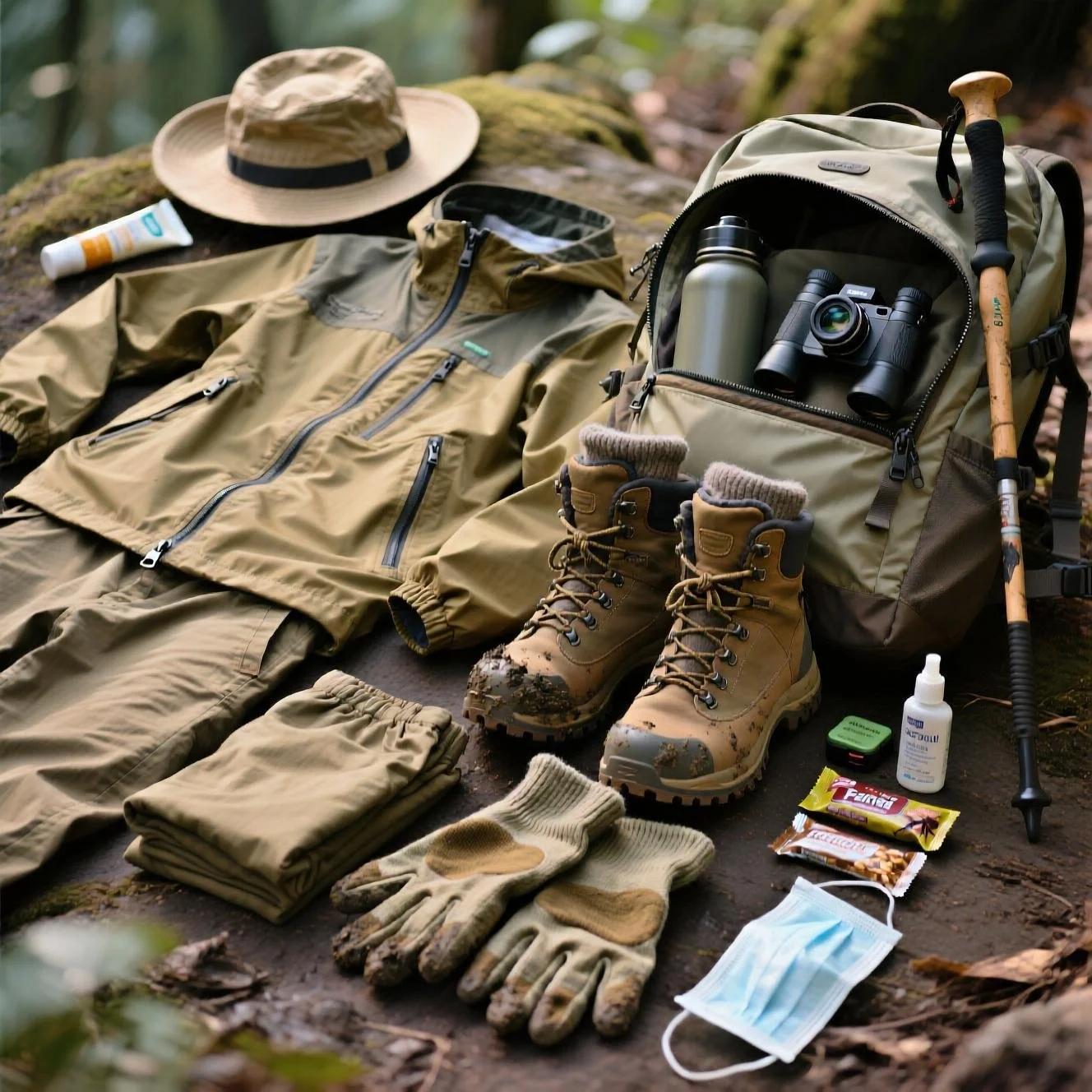
Gorilla Trekking Packing List for UgandaCarry a Waterproof Rain Jacket

Rain can occur at almost any time of the year in Uganda’s tropical rainforests.

Even during the dry seasons, short showers are possible. A lightweight waterproof rain jacket is therefore essential for every member of the family.

A good rain jacket keeps you dry without adding unnecessary weight to your backpack and allows you to continue enjoying the trek comfortably regardless of changing weather conditions.

Wear Gardening Gloves or Hiking Gloves

Many first-time visitors are surprised to learn that gloves are extremely useful during gorilla trekking.

The forest contains steep slopes, tree roots, vines, and dense vegetation. Visitors often hold onto branches or vegetation for balance while hiking.

Lightweight gardening gloves or hiking gloves protect your hands from thorns, rough bark, and stinging plants while making climbing easier and more comfortable.

This simple item is frequently overlooked but greatly appreciated during the trek.

Pack a Comfortable Day Backpack

A small day backpack allows you to carry everything you need during the trek without unnecessary weight.

Your backpack should comfortably hold drinking water, snacks, rain gear, camera equipment, sunscreen, insect repellent, and any personal medication.

A backpack with padded shoulder straps and a waterproof cover provides additional comfort throughout the hike.

Bring Plenty of Drinking Water

Staying hydrated is essential during gorilla trekking.

Depending on the duration of your hike, each visitor should carry at least two litres of drinking water.

Walking through humid rainforest conditions can be physically demanding, making regular hydration important throughout the day.

Many lodges provide packed lunches and bottled water before guests leave for the park headquarters each morning.

Carry Energy Snacks

During your Family Gorilla Trekking in Uganda, although gorilla trekking usually lasts only part of the day, the hike can require considerable energy.

Light snacks such as energy bars, nuts, dried fruit, biscuits, or fresh fruit help maintain energy levels during longer treks.

Visitors are not allowed to eat near the gorillas, but snacks can be enjoyed during rest breaks before reaching the gorilla family or after leaving the viewing area.

Protect Yourself from the Sun

Despite trekking beneath the rainforest canopy, visitors are often exposed to sunshine while walking through farmland or open areas before entering the forest.

Applying sunscreen before starting the trek helps protect your skin throughout the day.

A wide-brimmed hat and sunglasses are also useful during the sections of the hike outside the dense forest.

Use Insect Repellent

Uganda’s tropical forests are home to various insects, although they are generally not a major problem during gorilla trekking.

Applying insect repellent before entering the forest provides additional protection against mosquitoes and other biting insects.

Choosing a repellent suitable for tropical environments is recommended, particularly if you plan to spend several days exploring Uganda’s national parks.

Hire a Porter

For the best Family Gorilla Trekking in UgandaHiring a porter is one of the best decisions you can make during your gorilla trek.

Porters carry your backpack, assist you on steep or slippery trails, and provide a helping hand whenever needed.

Many visitors initially assume they do not require assistance, but almost everyone appreciates the extra support during the hike.

Beyond making your trek easier, hiring a porter directly benefits local communities surrounding the national parks by providing valuable employment opportunities.

For elderly travellers and families with varying fitness levels, porters can significantly improve the overall trekking experience.

Bring a Good Camera

The opportunity to photograph wild mountain gorillas is one of the highlights of any safari.

A camera with good low-light performance is highly recommended because the dense rainforest canopy often limits available sunlight.

Extra batteries and memory cards should also be packed, as charging facilities are not available inside the forest.

Visitors using smartphones can also capture excellent images, although dedicated cameras generally perform better in low-light conditions.

Flash photography is not permitted because it may disturb the gorillas.

Carry Personal Medication

Visitors should always carry any necessary prescription medication in their day backpack.

Basic items such as pain relievers, personal allergy medication, blister plasters, and any doctor-prescribed medicines should be easily accessible throughout the trek.

Families travelling with teenagers should ensure that everyone has any essential medication readily available before entering the forest.

Travel Insurance Is Highly Recommended

Comprehensive travel insurance provides valuable peace of mind during any international holiday.

Your policy should ideally include medical expenses, emergency evacuation, trip cancellation, personal belongings, and adventure activities such as gorilla trekking.

Although gorilla trekking is very safe, having suitable insurance allows families to travel with greater confidence throughout their Ugandan safari.

Let Safari Vacations and Travel Services Prepare You

Planning for Family Gorilla Trekking in Uganda can seem overwhelming, especially for families visiting Africa for the first time.

At Safari Vacations and Travel Services, we make preparation simple by providing detailed packing lists, practical travel advice, and personalised guidance before your departure. We answer all your questions, recommend the most suitable clothing and equipment, advise on fitness preparation, and ensure every member of your family knows exactly what to expect.

With proper preparation and expert support, your family can focus entirely on enjoying one of the most extraordinary wildlife experiences on Earth, knowing that every detail has been carefully planned for your comfort and success.

Let Safari Vacations and Travel Services prepare you for the best experience

Family Gorilla Trekking Costs in Uganda

For your Family Gorilla Trekking in Uganda, One of the most important considerations when planning a family gorilla trekking holiday is understanding the overall cost of the safari. Unlike many wildlife activities, gorilla trekking involves a limited number of permits issued each day to protect the endangered mountain gorillas and their habitat. As a result, permits form the largest portion of the safari budget, followed by accommodation, transportation, meals, and other travel services.

Although gorilla trekking is considered a premium wildlife experience, Uganda offers excellent value compared to many other destinations. Families can choose from luxury, mid-range, and budget safaris, allowing them to plan an unforgettable adventure that matches both their travel expectations and their budget.

The total cost of a family gorilla trekking safari depends on several factors, including the number of travellers, travel season, accommodation category, safari duration, mode of transport, and any additional activities included in the itinerary.

Accommodation Costs

Accommodation is another important component of the overall safari budget.

Uganda offers a wide variety of family-friendly accommodation close to the gorilla trekking sectors in both Bwindi Impenetrable National Park and Mgahinga Gorilla National Park.

Budget lodges provide clean, comfortable rooms with essential facilities and are ideal for families looking for an affordable safari.

Mid-range lodges offer spacious rooms, excellent meals, beautiful surroundings, and high levels of comfort while remaining reasonably priced.

Luxury safari lodges provide exceptional service, elegant family cottages, fine dining, spa facilities, fireplaces, panoramic forest views, and personalised experiences that create a truly memorable stay.

The accommodation you choose significantly influences the total cost of your family safari.

Transportation Costs

Transportation is another major factor when calculating the cost of a gorilla trekking holiday.

Most families travel in private 4×4 safari vehicles accompanied by an experienced English-speaking driver-guide. Private transportation offers flexibility, comfort, safety, and the opportunity to stop for sightseeing and photography along the journey.

Some travellers choose domestic flights to reduce driving time between destinations, while others enjoy travelling by road to experience Uganda’s beautiful countryside, traditional villages, tea plantations, rolling hills, and wildlife along the way.

Your choice of transport depends on your available time, budget, and preferred style of travel.

Meals and Safari Inclusions

Most family safari packages include full-board accommodation, meaning breakfast, lunch, and dinner are provided throughout your stay.

Many lodges also prepare packed lunches for visitors on the day of gorilla trekking, allowing families to enjoy refreshments before or after the hike.

A professionally organised safari package often includes accommodation, gorilla permits, private transportation, an experienced driver-guide, park entrance fees, bottled drinking water, airport transfers, and all scheduled activities listed in the itinerary.

Knowing exactly what is included in your quotation helps avoid unexpected expenses during your holiday.

Additional Activities That May Affect Your Budget

Many families choose to combine gorilla trekking with other unforgettable experiences during their visit to Uganda.

Popular additions include chimpanzee tracking in Kibale National Park, wildlife game drives in Queen Elizabeth National Park, boat cruises on the Kazinga Channel, golden monkey tracking in Mgahinga Gorilla National Park, canoeing on Lake Bunyonyi, Batwa cultural experiences, coffee tours, birdwatching excursions, and nature walks.

While adding more activities increases the total safari cost, it also creates a richer and more rewarding family holiday by allowing visitors to experience Uganda’s extraordinary diversity.

Best Value for Families

It is important to note that for your Family Gorilla Trekking in UgandaTravelling as a family often provides excellent value because several costs can be shared among family members.

Private safari vehicles, driver-guide services, fuel, and some accommodation arrangements become more economical when travelling as a family rather than individually.

Families staying together in family cottages or interconnected rooms may also enjoy lower accommodation costs compared to booking separate rooms.

Working with an experienced local tour operator ensures that your itinerary is carefully designed to maximise value without compromising the quality of your safari experience.

Why Early Booking Can Save You Money

Booking your family gorilla safari well in advance offers several advantages.

The most important benefit is securing gorilla permits before they sell out, particularly during the popular travel months.

Early reservations also provide access to a wider choice of accommodation, better flight availability, and greater flexibility when designing your itinerary.

Many families begin planning their gorilla safari six to twelve months before travel to ensure they secure their preferred trekking dates and accommodation.

Is Gorilla Trekking Worth the Cost?

Many travellers initially wonder whether gorilla trekking justifies its price.

For almost everyone who completes the experience, the answer is an overwhelming yes.

Standing quietly among an ancient rainforest while observing a family of endangered mountain gorillas in their natural environment is an experience that cannot be replicated anywhere else. The emotional impact of watching a silverback protect his family, mothers caring for infants, and playful juveniles interacting with one another leaves a lasting impression on visitors of all ages.

Unlike many holidays that fade from memory over time, gorilla trekking creates lifelong memories that families continue to share for decades.

When viewed not simply as a safari activity but as one of the world’s greatest wildlife encounters, most visitors consider gorilla trekking to be one of the best investments they have ever made in travel.

Book Your Family Gorilla Trekking Safari with Safari Vacations and Travel Services

At Safari Vacations and Travel Services, we believe every family deserves a personalised safari that matches their interests, travel style, and budget.

Whether you are looking for a luxury gorilla trekking holiday, a comfortable mid-range safari, or an affordable family adventure, our experienced travel specialists will design an itinerary that provides exceptional value while delivering an unforgettable experience.

During your Family Gorilla Trekking in Uganda, we handle every aspect of your journey, including gorilla permits, accommodation, private transportation, experienced driver-guides, airport transfers, domestic flights, and additional safari activities, allowing your family to relax and focus on creating memories that will last a lifetime.

Our transparent pricing, expert local knowledge, and personalised service have helped families from around the world discover the magic of Uganda’s mountain gorillas with complete confidence.

Gorilla Trekking Permit Prices in Uganda

Every person wishing to trek mountain gorillas in Uganda must obtain a valid gorilla trekking permit issued by the Uganda Wildlife Authority (UWA). The permit allows one guided gorilla trek and one unforgettable hour with a habituated mountain gorilla family after they have been located.

Permit fees directly support mountain gorilla conservation, anti-poaching patrols, veterinary care, habitat protection, scientific research, ranger salaries, and community development projects around Bwindi Impenetrable National Park and Mgahinga Gorilla National Park.

Because only a limited number of permits are issued each day, they often sell out several months in advance, particularly during the peak travel seasons. Families are therefore encouraged to reserve their permits as early as possible.

Every permit is valid for one specific date, one designated gorilla family, and one trekking sector. Once issued, permits cannot simply be transferred to another date without approval from the Uganda Wildlife Authority. It is therefore important to confirm your travel plans before making a reservation.
Visitor CategoryPermit Price (2026)What the Permit Includes
Foreign Non-ResidentUS$800One guided gorilla trek, one unforgettable hour with a habituated mountain gorilla family, professional Uganda Wildlife Authority ranger guides, conservation fees, and park entry for the gorilla trekking activity.
Foreign ResidentUS$700One guided gorilla trek, one unforgettable hour with a habituated mountain gorilla family, professional Uganda Wildlife Authority ranger guides, conservation fees, and park entry for the gorilla trekking activity.
East African CitizenUGX 300,000One guided gorilla trek, one unforgettable hour with a habituated mountain gorilla family, professional Uganda Wildlife Authority ranger guides, conservation fees, and park entry for the gorilla trekking activity.

Book Your Gorilla Permits Early

Mountain gorilla trekking is one of Africa’s most sought-after wildlife experiences, and permit availability is limited by strict conservation regulations. Only a small number of visitors are allowed to visit each habituated gorilla family every day to minimise human impact on these endangered primates.

During the peak travel months of June, July, August, September, December, January, and February, permits often sell out six to twelve months in advance. Families planning to travel during school holidays or festive seasons should reserve their permits as early as possible to secure their preferred dates and trekking sector.

At Safari Vacations and Travel Services, we handle the entire permit reservation process on your behalf. Once your booking is confirmed, we immediately secure your gorilla permits, recommend the most suitable trekking sector, and arrange accommodation that is conveniently located near your assigned trekking starting point.

This ensures your family enjoys a seamless, well-organised, and stress-free gorilla trekking experience from the moment you arrive in Uganda.

Best Time for Family Gorilla Trekking in Uganda

One of the most common questions families ask when planning a gorilla safari is, “When is the best time to visit Uganda for gorilla trekking?” The good news is that mountain gorilla trekking is available throughout the year, making Uganda one of the few wildlife destinations in Africa that offers exceptional experiences during every season.

Unlike many safari activities that depend heavily on rainfall or animal migrations, gorilla trekking takes place every day because mountain gorillas remain within the forests of Bwindi Impenetrable National Park and Mgahinga Gorilla National Park throughout the year. Visitors therefore have an opportunity to see these endangered primates regardless of the month they choose to travel.

However, each season offers its own advantages. Some months provide drier hiking conditions and easier photography, while others offer quieter trails, greener forests, and greater accommodation availability. Understanding these seasonal differences allows families to choose the period that best matches their travel preferences, budget, and holiday schedule.

Uganda’s Climate for Gorilla Trekking

Uganda enjoys a pleasant tropical climate throughout the year because of its location near the Equator. Despite being an equatorial country, the high altitude of the gorilla parks creates cooler temperatures than many visitors expect.

Bwindi Impenetrable National Park sits at elevations ranging from approximately 1,160 metres to more than 2,600 metres above sea level, while Mgahinga Gorilla National Park lies between 2,227 and 4,127 metres above sea level. These elevations create a cool, comfortable climate that is ideal for hiking.

Daytime temperatures in the gorilla parks generally range between 15°C and 25°C, while mornings and evenings are often much cooler. Rainfall can occur during any month because these ancient rainforests generate their own microclimate, which helps maintain the lush vegetation that supports mountain gorillas.

For this reason, visitors should always be prepared for occasional showers, regardless of the season.

Dry Season: The Most Popular Time for Gorilla Trekking

The dry seasons are widely regarded as the best periods for family gorilla trekking in Uganda. They occur from June to September and from December to February.

During these months, rainfall is generally lower, forest trails are less muddy, and hiking conditions become more comfortable for visitors of all fitness levels.

Families often prefer travelling during the dry season because walking through the rainforest is easier, especially for teenagers, older travellers, and first-time hikers. Photography also becomes more rewarding as brighter skies allow better natural lighting beneath the forest canopy.

The dry season coincides with school holidays in many countries, making it particularly popular with families travelling together.

Because demand is extremely high during these months, gorilla permits and accommodation often sell out many months in advance. Early booking is therefore highly recommended.

June to September

The period between June and September is considered the peak gorilla trekking season in Uganda.

The forests remain green and beautiful, rainfall is relatively low, and trekking conditions are generally excellent.

Families travelling during the Northern Hemisphere summer holidays frequently choose these months because they combine favourable weather with long vacation periods.

This is also one of the busiest times of the year, creating a lively atmosphere in the national parks and surrounding lodges.

December to February

The second dry season extends from December through February.

This period attracts many families travelling during Christmas, New Year, and winter holidays.

The weather is usually pleasant for trekking, wildlife viewing throughout Uganda is excellent, and photography conditions remain favourable.

Because international demand increases significantly during the festive season, permits should ideally be reserved at least six to twelve months before travel.

Rainy Season: A Hidden Gem for Families

Many travellers assume that the rainy season is not suitable for gorilla trekking. In reality, some experienced visitors deliberately choose these months because they offer numerous advantages.

The rainy seasons generally occur between March and May and again from October to November.

Although rainfall is more frequent, it rarely rains continuously throughout the day. Showers are often followed by sunshine, leaving the rainforest fresh, vibrant, and incredibly beautiful.

Mountain gorillas remain active throughout the year, and visitors continue to enjoy excellent trekking success rates.

March to May

The period between March and May is the wettest season in Uganda.

The rainforest becomes exceptionally lush, waterfalls flow more strongly, and the scenery reaches its most spectacular appearance.

Trails may become muddier and hiking slightly more demanding, but many visitors appreciate the quieter atmosphere and reduced tourist numbers.

Families looking for a peaceful experience often enjoy travelling during this period.

October and November

October and November represent Uganda’s shorter rainy season.

Rainfall is generally less intense than during April and May, while the forests remain beautifully green and full of life.

Visitor numbers are lower than during the peak months, creating a more intimate gorilla trekking experience.

Accommodation availability is also much better, allowing families greater flexibility when selecting their preferred lodges.

Advantages of Travelling During the Dry Season

Families choosing the dry season enjoy several important benefits.

Trails are generally firmer and less slippery, making hiking more comfortable.

Photography conditions improve because brighter skies allow more natural light inside the rainforest.

Roads leading to the national parks are usually easier to navigate.

Wildlife viewing in other national parks such as Queen Elizabeth National Park and Murchison Falls National Park is also excellent because animals gather around permanent water sources.

For first-time visitors, the dry season often provides the easiest overall safari experience.

Advantages of Travelling During the Rainy Season

The rainy season also offers unique advantages that many travellers overlook.

The rainforest appears at its most beautiful, with vibrant green vegetation, colourful flowers, mist-covered hills, and flowing streams creating breathtaking scenery.

Visitor numbers are lower, allowing families to enjoy a quieter experience at the park headquarters and lodges.

Photographers often appreciate the dramatic mist and rich colours created by the rain.

Some lodges may also offer attractive seasonal rates, providing better value for families travelling during these months.

Can Families Trek Gorillas All Year Round?

Absolutely.

Mountain gorilla trekking operates every day of the year, including weekends and public holidays.

Uganda Wildlife Authority ranger guides conduct treks regardless of the season, and experienced trackers locate the gorilla families every morning before visitors enter the forest.

Whether you visit in January, April, August, or November, your chances of successfully seeing mountain gorillas remain extremely high.

The primary difference between seasons lies in trekking conditions rather than gorilla sightings.

Which Season Does Safari Vacations and Travel Services Recommend?

At Safari Vacations and Travel Services, we tailor our recommendations to each family’s individual needs rather than suggesting the same travel period for everyone.

Families travelling with older adults, first-time hikers, or young teenagers often prefer the dry seasons because of the easier trekking conditions.

Families seeking quieter trails, greater accommodation availability, and lush rainforest scenery may find the rainy seasons equally rewarding.

Regardless of when you choose to travel, our experienced team carefully plans every detail of your safari, secures the most suitable gorilla permits, recommends the best accommodation, and designs an itinerary that allows your family to experience Uganda at its very best.

With expert planning and local knowledge, every month of the year offers the opportunity for an unforgettable family gorilla trekking adventure.

Where to Stay During a Family Gorilla Trekking Safari in Uganda

Choosing the right accommodation is one of the most important decisions when planning a family gorilla trekking holiday in Uganda. While the mountain gorillas are undoubtedly the highlight of the journey, the quality, location, comfort, and atmosphere of your lodge can greatly influence the overall experience. After an exciting day of hiking through the rainforest, families appreciate returning to a peaceful lodge where they can relax, enjoy delicious meals, share stories from the trek, and prepare for the next adventure.

Uganda offers an impressive range of accommodation near both Bwindi Impenetrable National Park and Mgahinga Gorilla National Park. Whether you are looking for affordable guesthouses, comfortable mid-range lodges, or world-class luxury safari retreats, there are options to suit every budget and travel style. Many lodges have been thoughtfully designed to blend into the surrounding rainforest, offering spectacular views of the forest canopy, mist-covered hills, and nearby villages.

When selecting accommodation, one of the most important considerations is proximity to your assigned gorilla trekking sector. Staying close to the correct park gate reduces early morning travel, minimizes fatigue, and allows families to begin their trekking day feeling rested and relaxed.

Why Staying Near Your Gorilla Trekking Sector Matters

Bwindi Impenetrable National Park is divided into four gorilla trekking sectors: Buhoma, Ruhija, Rushaga, and Nkuringo. Each sector has its own park headquarters where visitors report for the morning briefing before beginning their trek.

Families who mistakenly book accommodation in the wrong sector may have to wake up several hours earlier and drive long distances before reaching the briefing point. This can be particularly tiring for children over fifteen years, senior family members, and travellers who have already spent several days exploring Uganda.

At Safari Vacations and Travel Services, we always secure your gorilla permit first before recommending accommodation. This ensures that your lodge is located close to your allocated trekking sector, saving valuable time and allowing you to enjoy a more relaxed safari.

Luxury Gorilla Safari Lodges

Families seeking exceptional comfort, personalised service, and unforgettable rainforest views will find Uganda’s luxury lodges among the finest safari accommodations in Africa. These properties combine elegant design with outstanding hospitality, spacious family cottages, gourmet dining, private balconies, fireplaces, spa facilities, and breathtaking forest scenery.

Luxury lodges are particularly suitable for honeymooners travelling with family, multi-generational groups, photographers, and visitors celebrating special occasions.

Many luxury lodges also provide private guides, nature walks, cultural experiences, massage treatments, and exclusive dining experiences that enhance the overall safari.

Although luxury accommodation represents a larger investment, many families consider it worthwhile because it transforms the gorilla trekking holiday into a complete luxury safari experience.

Mid-Range Gorilla Lodges

Mid-range accommodation offers an excellent balance between comfort, quality, and affordability. These lodges are extremely popular with families because they provide comfortable rooms, private bathrooms, hot showers, delicious meals, beautiful gardens, and friendly service without the premium price tag associated with luxury properties.

Most mid-range lodges are strategically located close to the trekking sectors and provide excellent value for money. They are ideal for families who wish to enjoy comfortable accommodation while allocating more of their travel budget towards additional safari experiences such as chimpanzee tracking, wildlife safaris, or cultural encounters.

Budget Accommodation

Budget accommodation near the gorilla parks has improved significantly over the past decade. Many budget lodges now offer clean rooms, private bathrooms, reliable hot water, comfortable beds, and freshly prepared local and international meals.

These lodges are particularly suitable for backpackers, students, younger families, and travellers who prioritise the gorilla trekking experience over luxury accommodation.

Although facilities may be simpler than those found in higher-end lodges, visitors continue to receive warm Ugandan hospitality and enjoy convenient access to the national parks.

Family-Friendly Lodges

Not every safari lodge is equally suited for families. The best family-friendly properties offer spacious rooms, interconnected cottages, family suites, flexible meal times, beautiful gardens, secure surroundings, and welcoming staff who understand the needs of travellers with children and teenagers.

Several lodges also provide larger cottages capable of accommodating parents and children together, reducing the need to reserve multiple rooms.

Some properties organise cultural entertainment, campfires, guided village walks, coffee experiences, and nature activities that keep family members engaged before and after gorilla trekking.

When planning a family safari, choosing accommodation that caters specifically to families helps create a more relaxed and enjoyable holiday.

Accommodation Around Buhoma Sector

Buhoma is the oldest and most established tourism centre within Bwindi Impenetrable National Park. The area offers the widest selection of accommodation, ranging from budget guesthouses to internationally recognised luxury lodges.

Families staying in Buhoma enjoy easy access to restaurants, community tourism projects, forest walks, waterfalls, birdwatching excursions, and cultural performances.

Its well-developed tourism infrastructure makes Buhoma an excellent choice for first-time visitors to Uganda.

Accommodation Around Ruhija Sector

Ruhija is famous for its peaceful atmosphere, spectacular mountain scenery, and exceptional birdwatching opportunities. Accommodation here is generally quieter than in Buhoma, making it an excellent destination for families seeking privacy and relaxation.

The cooler temperatures at higher elevations also create pleasant evenings, particularly after a rewarding day of gorilla trekking.

Accommodation Around Rushaga Sector

Rushaga has become one of the most popular trekking sectors because it is home to the highest number of habituated gorilla families in Uganda.

The growing popularity of this sector has encouraged significant investment in accommodation, resulting in numerous high-quality budget, mid-range, and luxury lodges.

Families staying in Rushaga also benefit from relatively short transfer times to the trekking briefing point, depending on their allocated gorilla family.

Accommodation Around Nkuringo Sector

Nkuringo is renowned for its dramatic scenery and panoramic views across the Albertine Rift Valley. Many lodges here overlook rolling hills, tea plantations, and distant volcanoes, creating some of the most spectacular landscapes in Uganda.

The peaceful surroundings make Nkuringo particularly attractive for travellers seeking tranquillity and luxury away from larger tourist centres.

Although some gorilla treks in this sector may involve steeper terrain, the rewarding scenery and exclusive atmosphere make Nkuringo a favourite among experienced safari travellers.

Accommodation Near Mgahinga Gorilla National Park

Families trekking gorillas in Mgahinga Gorilla National Park can choose from a variety of comfortable lodges located around Kisoro Town and the park entrance.

Many accommodations provide magnificent views of the Virunga Volcanoes, creating a spectacular backdrop throughout your stay.

This area also serves as an excellent base for travellers wishing to combine gorilla trekking with golden monkey tracking, volcano hiking, Batwa cultural experiences, and excursions into nearby Rwanda.

How Safari Vacations and Travel Services Selects Your Accommodation

Choosing accommodation is about much more than selecting the most expensive lodge or the cheapest room. At Safari Vacations and Travel Services, we carefully match each family’s accommodation to their gorilla permit location, travel budget, fitness level, group size, and personal preferences.

We only recommend lodges that consistently deliver excellent service, high standards of cleanliness, comfortable facilities, delicious cuisine, and warm Ugandan hospitality. Our long-standing relationships with lodge owners also allow us to secure the best available rooms and offer valuable advice based on first-hand experience.

Whether you dream of relaxing in a luxury rainforest lodge with panoramic forest views or prefer a comfortable mid-range property offering excellent value, we ensure your accommodation becomes an integral part of your unforgettable family gorilla trekking experience rather than simply a place to spend the night.

Best Family Gorilla Trekking Itineraries in Uganda

Planning the right itinerary is one of the most important parts of a successful family gorilla trekking holiday. While seeing mountain gorillas is the highlight of every visit, Uganda offers so much more than a single trekking experience. The country is blessed with incredible wildlife, diverse landscapes, welcoming communities, tropical forests, crater lakes, waterfalls, and unforgettable cultural encounters that can easily be combined into one remarkable safari.

The best itinerary depends on several factors, including the amount of time available, your family’s interests, fitness levels, budget, arrival airport, and whether you wish to visit Uganda only or combine your trip with neighbouring Rwanda. Some families simply want a short gorilla trekking adventure over a long weekend, while others dream of spending two weeks discovering Uganda’s spectacular national parks, tracking chimpanzees, searching for the famous tree-climbing lions of Queen Elizabeth National Park, cruising along the Nile at Murchison Falls National Park, or relaxing on the beautiful shores of Lake Bunyonyi.

At Safari Vacations and Travel Services, every itinerary is tailor-made to suit your family. We carefully consider children’s ages, the interests of parents and grandparents, preferred accommodation standards, travel pace, and international flight schedules before designing a safari that maximises your experience while minimising unnecessary travel.

Below are some of the most popular family gorilla trekking itineraries in Uganda.

3-Day Family Gorilla Trekking Safari

The three-day itinerary is the shortest and most affordable option for families whose main goal is to experience mountain gorilla trekking. It is particularly suitable for travellers already visiting Rwanda or Uganda for business, conferences, or holidays and who wish to add an unforgettable wildlife experience.

The safari normally begins with a pick-up from Kigali International Airport in Rwanda or Entebbe International Airport in Uganda. Families travelling from Kigali enjoy a much shorter transfer to Bwindi Impenetrable National Park, usually taking between four and five hours through beautiful rolling hills and traditional villages.

The second day is entirely dedicated to gorilla trekking. After an early breakfast, families attend the Uganda Wildlife Authority briefing before entering the rainforest with experienced ranger guides. Following the trek, visitors receive gorilla trekking certificates before returning to the lodge to celebrate one of Africa’s greatest wildlife experiences.

On the final day, the journey returns to Kigali or Entebbe depending on the chosen route.

This itinerary is perfect for families with limited holiday time who still wish to enjoy a once-in-a-lifetime gorilla encounter.

4-Day Family Gorilla Trekking and Lake Bunyonyi Safari

Families with an extra day often choose to combine gorilla trekking with a relaxing visit to Lake Bunyonyi, one of Uganda’s most beautiful freshwater lakes.

After the excitement of trekking mountain gorillas, Lake Bunyonyi offers a peaceful setting where families can unwind while enjoying spectacular scenery. The lake’s calm waters, dotted with numerous islands, create an ideal environment for canoeing, boat cruises, birdwatching, photography, and relaxation.

Children and teenagers particularly enjoy exploring the islands while parents appreciate the tranquil atmosphere after the physical demands of gorilla trekking.

This itinerary combines adventure with relaxation and is highly recommended for first-time family visitors.

5-Day Gorilla Trekking and Chimpanzee Tracking Safari

Many wildlife enthusiasts wish to see both of Africa’s great apes during one holiday.

A five-day safari combines mountain gorilla trekking in Bwindi Impenetrable National Park with chimpanzee tracking in Kibale National Park, widely recognised as the primate capital of East Africa.

Chimpanzees provide a completely different wildlife experience. Their energetic behaviour, loud vocalisations, playful interactions, and remarkable intelligence contrast beautifully with the calm, gentle nature of mountain gorillas.

Families also enjoy travelling through Queen Elizabeth National Park, where opportunities often arise to see elephants, buffaloes, antelopes, hippos, crocodiles, and numerous bird species.

This itinerary offers exceptional value while showcasing Uganda’s incredible primate diversity.

6-Day Family Gorilla, Chimpanzee and Wildlife Safari

One of the most popular family safaris combines gorilla trekking, chimpanzee tracking, and classic African wildlife viewing.

After visiting Kibale National Park and Bwindi Impenetrable National Park, families spend time exploring Queen Elizabeth National Park, Uganda’s most visited savannah national park.

A game drive across the Kasenyi Plains offers opportunities to spot lions, elephants, Uganda kobs, buffaloes, hyenas, and numerous antelope species.

The famous Kazinga Channel boat cruise is another highlight, bringing visitors remarkably close to hippos, crocodiles, elephants, and hundreds of waterbirds.

This itinerary perfectly balances rainforest adventures with traditional African safari experiences.

7-Day Ultimate Family Primate Safari

Seven days allows families to explore Uganda at a more comfortable pace while reducing long driving hours.

This itinerary usually includes Kibale National Park, Queen Elizabeth National Park, Bwindi Impenetrable National Park, and Lake Bunyonyi.

Families enjoy chimpanzee tracking, gorilla trekking, game drives, boat cruises, cultural encounters, and opportunities to relax between activities.

The slower pace makes this itinerary particularly suitable for multi-generational families travelling with grandparents or teenagers.

8-Day Family Gorilla and Wildlife Adventure

With eight days available, families can experience many of Uganda’s most celebrated attractions without feeling rushed.

In addition to gorilla trekking and chimpanzee tracking, visitors explore Queen Elizabeth National Park extensively, search for the famous tree-climbing lions in the Ishasha Sector, cruise along the Kazinga Channel, visit crater lakes, interact with local communities, and relax at carefully selected safari lodges.

This itinerary offers an excellent balance between adventure, education, photography, wildlife, and relaxation.

10-Day Complete Uganda Family Safari

Families wishing to experience the very best of Uganda should consider a ten-day safari.

This comprehensive journey typically includes Murchison Falls National Park, Kibale National Park, Queen Elizabeth National Park, Bwindi Impenetrable National Park, and Lake Bunyonyi.

Visitors enjoy game drives, boat cruises on both the Nile River and Kazinga Channel, chimpanzee tracking, mountain gorilla trekking, rhino tracking at Ziwa Rhino Sanctuary, spectacular waterfalls, cultural experiences, birdwatching, and scenic countryside drives.

This itinerary provides an outstanding introduction to Uganda’s incredible diversity while allowing families sufficient time to appreciate each destination without unnecessary rushing.

Many families describe this as the perfect balance between adventure and relaxation.

Can These Itineraries Be Customized?

Absolutely.

Every family travels differently, and no single itinerary is suitable for everyone. Some families prefer shorter driving distances, while others prioritise luxury accommodation, photography, birdwatching, hiking, or cultural experiences.

At Safari Vacations and Travel Services, we specialise in creating personalised gorilla trekking safaris that reflect your family’s interests, travel dates, fitness levels, budget, and available holiday time.

Whether you would like to begin your safari in Kigali or Entebbe, upgrade to luxury lodges, include golden monkey tracking, add a visit to the Batwa community, spend extra nights at Lake Bunyonyi, or extend your journey into Rwanda or Kenya, we can tailor every aspect of your holiday.

Our goal is not simply to organise a gorilla trek but to create a seamless family safari that becomes one of the most memorable travel experiences of your lifetime.

Safari DurationGorilla TrekkingChimpanzee TrackingWildlife SafariLake BunyonyiBest Suited For
3 DaysIncludedNot IncludedNot IncludedNot IncludedFamilies with limited holiday time who mainly want to see mountain gorillas.
4 DaysIncludedNot IncludedNot IncludedIncludedFamilies seeking gorilla trekking followed by relaxation at Lake Bunyonyi.
5 DaysIncludedIncludedLimitedOptionalFamilies interested in seeing both mountain gorillas and chimpanzees.
6 DaysIncludedIncludedIncludedOptionalFirst-time visitors wanting primates, wildlife, and a balanced itinerary.
7 DaysIncludedIncludedIncludedIncludedFamilies who prefer a comfortable pace with time for relaxation.
8 DaysIncludedIncludedIncludedOptionalFamilies seeking a more complete Uganda primate and wildlife experience.
10 DaysIncludedIncludedIncludedIncludedFamilies wanting the ultimate Uganda safari with primates, wildlife, scenery, and relaxation.

Family Gorilla Trekking Packing List for Uganda

Packing correctly for a family gorilla trekking safari in Uganda can make the difference between a comfortable rainforest adventure and a difficult day on the trail. Gorilla trekking takes place in a natural mountain forest where the weather can change quickly, vegetation can be thick, and trails may become wet or muddy even during the dry season. Families should therefore prepare for cool mornings, occasional rain, uneven terrain, insects, sunshine, and several hours of walking.

Uganda’s mountain gorillas live in Bwindi Impenetrable National Park and Mgahinga Gorilla National Park. Both destinations are located at relatively high elevations, which means temperatures are often cooler than many international visitors expect from an equatorial African country. Early mornings can feel chilly, while walking through the forest may become warm and humid. Layered clothing is therefore more practical than wearing one heavy garment.

The ideal gorilla trekking packing list should focus on protection, comfort, practicality, and keeping luggage reasonably light. Families do not need expensive technical hiking equipment, but every eligible trekker should have suitable footwear, long clothing, rain protection, drinking water, and a small daypack.

Comfortable Waterproof Hiking Boots

A strong pair of waterproof hiking boots is one of the most important items to pack for gorilla trekking in Uganda. The forest trails can be steep, slippery, muddy, rocky, or covered with exposed roots. Ordinary trainers may not provide sufficient grip or ankle support, particularly after rainfall.

Choose boots with a firm sole, deep tread, comfortable cushioning, and good ankle support. Waterproof boots help keep your feet dry when crossing wet ground, walking through damp vegetation, or trekking after a rain shower.

Every family member should wear their boots several times before travelling. New boots that have not been broken in can cause blisters and discomfort during the trek. Comfortable, familiar footwear is more valuable than an expensive pair worn for the first time on trekking day.

Long Lightweight Trousers

Long trousers protect the legs from stinging plants, insects, scratches, mud, and branches. Lightweight hiking trousers made from quick-drying material are usually the best choice because they remain comfortable in humid conditions and dry more quickly than heavy cotton clothing.

Jeans are generally not recommended for the trek. Once wet, denim becomes heavy, uncomfortable, and slow to dry. Loose trousers can also catch easily on vegetation, so travellers should choose a comfortable but reasonably fitted design.

Many trekkers tuck the bottoms of their trousers into their socks or gaiters. This helps prevent insects from entering the clothing and protects the ankles from mud and vegetation.

Long-Sleeved Shirt

A breathable, long-sleeved shirt provides important protection for the arms while walking through dense rainforest vegetation. It also reduces direct sun exposure and offers some protection against insects.

The shirt should be lightweight and made from a material that allows perspiration to evaporate. Neutral colours such as green, brown, khaki, grey, or beige are practical for forest activities and do not show dirt as easily as very bright or white clothing.

A long-sleeved base layer may also be useful on colder mornings, particularly for families trekking in Mgahinga Gorilla National Park or the higher areas of Bwindi.

Waterproof Rain Jacket

Rain can fall in Bwindi and Mgahinga at any time of the year, including during the recognised dry seasons. A lightweight waterproof jacket should therefore be carried by every trekker.

The jacket should be easy to fold and store in a daypack when not required. A breathable design is preferable because heavy plastic raincoats can become hot and uncomfortable during physical activity.

Ponchos can provide additional coverage for the body and backpack, but they may catch on branches in thick forest. A fitted rain jacket usually offers better freedom of movement.

Gardening or Trekking Gloves

Strong gardening gloves are extremely useful during gorilla trekking. Visitors sometimes need to hold branches, vines, tree trunks, or other vegetation for support while climbing or descending.

Gloves protect the hands from scratches, thorns, rough bark, mud, and stinging plants. They also improve grip when the forest is wet.

Simple gardening gloves are normally sufficient and are often more affordable than specialised trekking gloves. They should fit comfortably and allow the wearer to hold a camera, walking stick, or water bottle without difficulty.

Thick Hiking Socks

Comfortable hiking socks provide cushioning, reduce friction, and help prevent blisters. They also protect the lower legs when trousers are tucked into the socks.

Families should pack at least two suitable pairs for every trekker. A spare pair can be useful if the first pair becomes wet during the journey to Bwindi or Mgahinga.

Moisture-wicking socks are preferable to thin cotton socks because they manage perspiration more effectively and provide better comfort during long walks.

Small Waterproof Daypack

Each trekker should carry a small, comfortable daypack containing drinking water, snacks, a camera, rain jacket, sunscreen, insect repellent, medication, and other personal essentials.

The backpack should not be unnecessarily large. A compact bag with adjustable shoulder straps is easier to carry through dense vegetation and less likely to catch on branches.

A built-in waterproof cover is helpful. Alternatively, valuables can be placed inside waterproof pouches or strong resealable bags. Cameras, passports, phones, and medication should always be protected from rain and moisture.

Families can also hire porters to carry their daypacks and assist them during difficult sections of the trail.

Drinking Water

Gorilla trekking can last from a few hours to most of the day, depending on the location of the assigned gorilla family. Every trekker should therefore carry enough drinking water to remain properly hydrated.

Reusable bottles are strongly recommended. They reduce plastic waste and can be refilled at the lodge before departure.

The amount required varies according to the weather, trekking duration, and individual needs, but carrying approximately one and a half to two litres per person is generally sensible. Families should drink water regularly rather than waiting until they feel extremely thirsty.

Energy-Giving Snacks

Most lodges provide packed lunches for guests undertaking longer treks. Families should confirm this arrangement during dinner or at reception on the evening before the activity.

Useful snacks may include fruit, sandwiches, biscuits, energy bars, nuts, or other easy-to-carry foods. Snacks should be securely packed to prevent leakage inside the backpack.

Food must never be consumed near the gorillas. The ranger guide will advise when and where it is safe to stop for refreshments.

Hat and Sun Protection

Although much of the trek takes place beneath the forest canopy, visitors may spend time in open areas before entering the forest or while walking across farmland and community land.

A lightweight hat protects the face and head from direct sunlight. Sunscreen should also be applied before departure and carried in the daypack for reapplication when necessary.

Families should not underestimate the strength of the sun at high altitude. Even on cool or cloudy days, exposed skin can burn.

Insect Repellent

Bwindi and Mgahinga are tropical forest environments where insects are naturally present. A reliable insect repellent can help reduce discomfort from mosquitoes and other biting insects.

Repellent should be applied according to the manufacturer’s instructions, particularly around the ankles, wrists, neck, and other exposed areas.

Long trousers and long-sleeved shirts remain the primary protection against insects and vegetation. Repellent should complement suitable clothing rather than replace it.

Camera and Photography Equipment

A camera allows families to preserve the unforgettable moment they meet mountain gorillas. Modern smartphones can produce excellent photographs, while dedicated cameras provide greater flexibility in the low-light conditions beneath the forest canopy.

Travellers using larger cameras should bring a comfortable strap and ensure the equipment is protected from rain. Spare batteries and additional memory cards are advisable because charging opportunities are unavailable inside the forest.

Flash photography is strictly prohibited near mountain gorillas. Flash can disturb the animals and interfere with their natural behaviour.

Visitors should practise changing their camera settings before trekking day. The one-hour gorilla encounter passes quickly, and unfamiliar equipment may distract from the experience.

Binoculars

Binoculars are not essential for seeing mountain gorillas because encounters generally take place at relatively close range. However, they can enhance the wider forest experience.

Bwindi Impenetrable National Park and Mgahinga Gorilla National Park support an extraordinary variety of birds, monkeys, butterflies, and other wildlife. Binoculars allow families to appreciate species moving high in the canopy or across distant hillsides.

A compact, lightweight pair is generally sufficient for family travel.

Personal Medication and Basic First-Aid Supplies

Every family member should carry any essential personal medication needed during the trek. Medication should remain in its original packaging and be stored in a waterproof section of the daypack.

A simple first-aid kit may include blister treatment, adhesive plasters, pain relief, antiseptic wipes, and any medication recommended by a qualified medical professional.

Travellers with allergies, asthma, joint conditions, or other health concerns should consult their doctor before travelling and inform their safari planner about any needs that may affect the trek.

Ranger guides carry communication equipment and are trained to manage emergencies, but visitors remain responsible for carrying their prescribed medication.

Walking Stick

A walking stick can provide additional balance on muddy slopes, river crossings, and uneven forest paths. Basic wooden walking sticks are normally available at the trekking briefing point.

Travellers who prefer specialised trekking poles may bring their own. Collapsible poles are convenient because they fit easily inside checked luggage.

The stick is particularly helpful when descending, as this is when slippery ground places greater pressure on the knees and ankles.

Gaiters

Gaiters cover the lower legs and the tops of hiking boots. They help prevent mud, water, stones, and insects from entering the footwear.

They are especially useful during the rainy seasons, when forest trails may be wetter and muddier. However, they are not compulsory. Tucking long trousers into thick socks can provide a simple alternative.

Warm Sweater or Fleece

Morning temperatures around Bwindi and Mgahinga can be cool, particularly before sunrise and during the drive to the trekking headquarters.

A lightweight fleece, sweater, or warm jacket provides comfort during the early briefing. It can be removed and placed in the daypack once the trek begins and temperatures rise.

Families staying at higher-altitude lodges may also need warm clothing during the evenings.

Change of Clothes

A clean change of clothes should be left at the lodge or kept in the safari vehicle. After the trek, clothing and footwear may be muddy or wet.

Changing into dry clothes before returning to the lodge or continuing with another activity can make the journey much more comfortable.

Some lodges offer complimentary boot cleaning after the trek. This is a valuable service, although visitors should still pack footwear that can tolerate mud and regular cleaning.

Reusable Wet Bag or Plastic-Free Waterproof Pouch

A waterproof pouch is useful for separating wet or muddy clothing from clean belongings. It can also protect electronic equipment and travel documents.

Families should avoid bringing unnecessary single-use plastic bags because Uganda has restrictions concerning certain plastic materials, and responsible tourism encourages visitors to minimise waste.

Reusable dry bags, waterproof packing cubes, and resealable travel pouches are practical alternatives.

Passport and Gorilla Permit Documentation

Visitors are normally required to present identification during the registration process. The passport details must correspond with those used when booking the gorilla permit.

Your tour operator may carry the main permit documentation, but every traveller should keep their passport accessible on trekking morning. It should be protected inside a waterproof pouch.

Families should confirm all permit details, names, trekking dates, and assigned sectors before departing for the national park.

Cash for Hiring a Porter and Giving Gratuities

Porters can be hired at the trekking headquarters before the activity begins. Hiring a porter is highly recommended, even for visitors who consider themselves physically fit.

The porter carries the daypack, provides support on steep or slippery sections, and helps the trekker conserve energy for the gorilla encounter. Hiring porters also directly supports people living around the national parks and strengthens the economic benefits of gorilla tourism.

Families may also wish to carry cash for optional gratuities for the ranger guide, trackers, porter, lodge staff, and safari guide. Tipping is voluntary and should reflect the quality of service received.

What Families Should Not Carry During Gorilla Trekking

Families should avoid packing unnecessary heavy equipment. Large suitcases, hard-sided bags, umbrellas, formal clothing, and excessive camera equipment are unsuitable for forest trekking.

Bright white clothing quickly becomes stained by mud, while camouflage-patterned clothing may be restricted or culturally inappropriate in some destinations. Neutral outdoor clothing is the safest and most practical choice.

Strong perfumes should also be avoided on trekking mornings. Subtle personal-care products are more appropriate when visiting a sensitive wildlife environment.

Food should remain securely packed and must never be offered to wildlife. Littering inside the forest is strictly prohibited, and everything carried into the park should be carried back out.

Packing for Children and Teenagers

Only travellers who meet Uganda’s minimum gorilla trekking age requirement may participate in the activity. Eligible teenagers should have their own correctly fitting boots, long trousers, rain jacket, gloves, water, and daypack.

Parents should not assume that adult equipment will fit younger trekkers. Poorly fitting boots, oversized gloves, or heavy backpacks can make the experience unnecessarily difficult.

Teenagers should be involved in the preparation process so that they understand what to expect and why each item is important. Allowing them to practise walking in their trekking clothes and footwear can build confidence before the safari.

Packing Light for Domestic Flights

Families using domestic flights to reach airstrips near Bwindi should check the luggage limits before departure. Small aircraft often have stricter weight restrictions than international airlines and may require soft-sided bags.

Large hard-shell suitcases can be difficult to load into safari aircraft and vehicles. Soft duffel bags are generally more practical for Uganda safaris.

Safari Vacations and Travel Services advises each family about the applicable baggage limits and can help arrange secure storage for any luggage that is not required during the gorilla trekking portion of the journey.

Laundry Services at Gorilla Lodges

Many lodges around Bwindi and Mgahinga offer laundry services. Availability, turnaround time, and charges vary between properties.

Laundry services allow families to pack fewer clothes, particularly during longer safaris. However, undergarments may need to be washed personally at some lodges because of local cultural practices.

Quick-drying clothing is useful because weather conditions in the highlands can slow the natural drying process.

Final Family Gorilla Trekking Packing Advice

The best approach is to pack practical clothing that can be layered, dried quickly, and comfortably worn for several hours. The most important items are waterproof hiking boots, long trousers, a long-sleeved shirt, rain protection, gloves, drinking water, and a secure daypack.

Families should prepare for changing weather without carrying unnecessary weight. Every item taken into the forest should have a clear purpose.

At Safari Vacations and Travel Services, we provide detailed pre-departure information before your journey begins. We advise you on clothing, luggage limits, permits, accommodation, transport, weather, porter arrangements, and everything else required for a smooth family gorilla trekking safari.

Proper preparation allows your family to focus on the extraordinary moment when you finally enter the forest, follow the ranger’s quiet instructions, and come face to face with a wild mountain gorilla family in its natural home.

Gorilla Trekking Rules and Regulations for Families

Family Gorilla Trekking in Uganda is one of the most extraordinary wildlife experiences in the world, but it is also a privilege that comes with important responsibilities. Mountain gorillas are an endangered species, and although they have become accustomed to the presence of researchers and carefully managed tourism, they remain wild animals living in their natural habitat. Every visitor participating in Family Gorilla Trekking in Uganda plays a vital role in protecting these magnificent primates for future generations.

The Uganda Wildlife Authority has established strict gorilla trekking rules and regulations to safeguard both visitors and gorillas during Family Gorilla Trekking in Uganda. These guidelines reduce the risk of disease transmission, minimise stress on the gorillas, protect their natural behaviour, and ensure that every family enjoys a safe, respectful, and unforgettable encounter.

Before every Family Gorilla Trekking in Uganda experience, all visitors attend a mandatory briefing conducted by Uganda Wildlife Authority ranger guides. During this session, families receive detailed instructions about safety procedures, trekking etiquette, photography, and what to expect during the gorilla encounter.

Understanding and following these rules is essential for every member of your family during Family Gorilla Trekking in Uganda.

Only One Hour Is Allowed with the Gorillas

One of the most important rules during Family Gorilla Trekking in Uganda is that visitors are permitted to spend a maximum of one hour with the mountain gorillas after they have been located.

This one-hour limit begins once the ranger guide confirms that the group has reached the gorilla family. Although sixty minutes may seem short, it is carefully designed to balance visitor satisfaction with gorilla conservation during Family Gorilla Trekking in Uganda.

Limiting human contact reduces stress on the gorillas, allows them to continue their natural daily activities, and minimises the risk of disease transmission.

Families are encouraged to enjoy every moment of their Family Gorilla Trekking in Uganda experience by observing behaviour, taking photographs, and appreciating the incredible privilege of sharing the forest with one of the world’s rarest primates.

Maintain a Minimum Distance of Seven Metres

Visitors taking part in Family Gorilla Trekking in Uganda are expected to remain at least seven metres away from the gorillas whenever possible.

This distance helps protect both people and gorillas by reducing the likelihood of transmitting human illnesses. Mountain gorillas share approximately 98 percent of their DNA with humans, making them highly vulnerable to many of the same diseases that affect people, including influenza, colds, and other respiratory infections.

Occasionally, curious gorillas—particularly young juveniles—may approach visitors more closely. If this happens during Family Gorilla Trekking in Uganda, remain calm and follow the instructions of your ranger guide. Do not attempt to touch the gorilla or move suddenly.

The ranger guides understand gorilla behaviour exceptionally well and will ensure that every encounter remains safe.

Never Touch a Gorilla

Regardless of how close a gorilla comes to you during Family Gorilla Trekking in Uganda, visitors must never attempt to touch, feed, or interact physically with the animals.

Although mountain gorillas are generally gentle, they are extremely powerful wild animals that deserve respect. Physical contact also increases the possibility of transmitting diseases in either direction.

Families should remember that the goal of Family Gorilla Trekking in Uganda is to observe natural behaviour rather than interact with the animals.

Watching gorillas feed, groom one another, care for their infants, or simply relax within the forest is far more rewarding than attempting any form of direct interaction.

Keep Your Voice Low

The rainforest is naturally peaceful, and excessive noise can disturb the gorillas during Family Gorilla Trekking in Uganda.

Families should speak quietly throughout the encounter and avoid shouting, laughing loudly, playing music, or making unnecessary sounds.

Parents travelling with teenagers should remind them to silence mobile phones before entering the forest.

Maintaining a calm atmosphere allows everyone to enjoy the magical sounds of the rainforest, including birds, insects, distant monkeys, and the occasional vocalisations made by the gorillas themselves.

Never Use Flash Photography

Photography is one of the highlights of Family Gorilla Trekking in Uganda, but flash photography is strictly prohibited.

A camera flash may startle or disturb the gorillas, particularly infants and younger animals.

Visitors should disable the flash before entering the forest and become familiar with their camera settings in advance.

Modern cameras and smartphones often perform well in low-light conditions when appropriate settings are used.

Many photographers recommend increasing ISO sensitivity and using faster lenses rather than relying on flash.

Do Not Eat, Drink, or Smoke Near the Gorillas

Food and drinks should not be consumed while observing mountain gorillas during Family Gorilla Trekking in Uganda.

Meals, snacks, and refreshments are enjoyed before or after the gorilla encounter, usually at designated resting points during the trek.

Smoking is also strictly prohibited near the gorillas because smoke may affect their health and discarded cigarette materials present environmental hazards.

Any litter carried into the forest must be taken back out.

Uganda’s national parks follow a strict “Leave No Trace” conservation philosophy.

Do Not Visit if You Are Sick

One of the most important conservation rules for Family Gorilla Trekking in Uganda concerns visitor health.

Anyone experiencing symptoms such as a cough, flu, sore throat, fever, diarrhoea, or other contagious illness should not participate in Family Gorilla Trekking in Uganda.

Although cancelling a long-awaited trek can be disappointing, protecting the gorillas is always the highest priority.

Because mountain gorillas are genetically very similar to humans, diseases that cause only mild illness in people can have devastating consequences for gorilla populations.

If a family member becomes unwell before Family Gorilla Trekking in Uganda, the Uganda Wildlife Authority will advise on the most appropriate course of action.

Follow Your Ranger Guide at All Times

Every Family Gorilla Trekking in Uganda group is accompanied by experienced Uganda Wildlife Authority ranger guides and armed rangers.

These professionals have extensive knowledge of gorilla behaviour, forest navigation, safety procedures, and emergency response.

Visitors should always remain with the group, follow instructions immediately, and never attempt to leave the designated trail without permission.

The guides continually assess the behaviour of the gorillas and position visitors to maximise both safety and photography opportunities.

Their expertise allows families to relax and enjoy their Family Gorilla Trekking in Uganda experience with confidence.

Avoid Sudden Movements

When observing mountain gorillas during Family Gorilla Trekking in Uganda, visitors should move slowly and calmly.

Sudden movements, running, waving arms, or making abrupt gestures can cause unnecessary alarm.

If the gorillas begin moving, the ranger guide will advise when and how the group should reposition.

Remaining calm also allows photographers to capture better images and encourages the gorillas to continue their natural activities without interruption.

If a Gorilla Approaches You

One of the most unforgettable moments during Family Gorilla Trekking in Uganda occurs when a curious gorilla walks close to visitors.

This happens surprisingly often, particularly with playful juveniles or young adults.

If a gorilla approaches, remain completely calm.

Do not run.

Do not scream.

Do not attempt to touch the animal.

Avoid direct eye contact with a dominant silverback, as prolonged staring may be interpreted as a challenge.

Instead, remain still, follow your guide’s instructions, and allow the gorilla to move away naturally.

These encounters are usually peaceful and become lifelong memories for families enjoying Family Gorilla Trekking in Uganda.

Do Not Litter the Forest

Everything taken into the rainforest during Family Gorilla Trekking in Uganda should be brought back out.

Plastic bottles, food wrappers, tissues, fruit peels, and other waste should never be left inside the national park.

Responsible tourism helps preserve the fragile ecosystem that supports mountain gorillas and thousands of other plant and animal species.

Families should carry a small reusable bag for temporary storage of personal waste until it can be disposed of properly.

Teaching children and teenagers these conservation values helps create responsible future travellers while protecting the future of Family Gorilla Trekking in Uganda.

Incredible family gorilla trekking adventure in Uganda, creating lifelong memories in Africa's premier gorilla destination.

Respect Other Visitors

Each gorilla family is visited by only a small number of tourists each day.

Families should be considerate of fellow trekkers by allowing everyone opportunities to observe, photograph, and appreciate the gorillas.

Avoid blocking another visitor’s view for extended periods, speaking loudly, or moving unnecessarily during photography.

The shared experience becomes even more memorable when every visitor demonstrates patience, courtesy, and respect.

Children and Teenagers Must Follow the Same Rules

Although only visitors aged fifteen years and above may participate in gorilla trekking, teenagers should receive the same briefing and understand the importance of following every conservation guideline.

Parents should discuss the rules before the trek begins so that younger participants understand why quiet behaviour, patience, and respect for wildlife are essential.

For many teenagers, gorilla trekking becomes one of the most inspiring wildlife experiences of their lives and often strengthens their appreciation for conservation.

Why These Rules Matter

Every gorilla trekking regulation exists for a reason.

They protect endangered mountain gorillas from disease, minimise disturbance to their natural behaviour, preserve the rainforest environment, and ensure that future generations will continue to experience these remarkable animals in the wild.

The success of Uganda’s gorilla conservation programme is closely linked to responsible tourism. Revenue generated from gorilla permits supports anti-poaching patrols, veterinary care, scientific research, habitat protection, ranger training, and community development projects around the parks.

By following these simple guidelines, your family becomes an active participant in one of the world’s greatest conservation success stories.

Trek with Confidence

At Safari Vacations and Travel Services, we prepare every family thoroughly before the day of gorilla trekking. We explain all Uganda Wildlife Authority regulations, advise you on appropriate clothing and equipment, answer your questions, and ensure you feel fully prepared before entering the rainforest.

Our experienced safari guides accompany you throughout your journey, helping your family enjoy a safe, educational, and unforgettable gorilla trekking adventure while respecting the wildlife and supporting long-term conservation.

With proper preparation and guidance, you can relax, immerse yourself in the beauty of Uganda’s ancient rainforests, and experience one of the most extraordinary wildlife encounters anywhere on Earth.

Frequently Asked Questions About Family Gorilla Trekking in Uganda

Planning a family gorilla trekking safari in Uganda is exciting, but it also comes with many important questions. Families often want to understand the minimum age requirements, permit costs, fitness levels, safety precautions, accommodation choices, the best time to visit, and what to expect during the trek itself.

The following frequently asked questions provide detailed answers based on Uganda Wildlife Authority regulations, conservation best practices, and our extensive experience organising family gorilla trekking holidays. Whether you are travelling with teenagers, grandparents, or a multi-generational family, these answers will help you prepare confidently for one of Africa’s most extraordinary wildlife adventures.

What Is Family Gorilla Trekking in Uganda?

Family gorilla trekking in Uganda is a guided wildlife adventure that allows eligible family members to visit one of the habituated mountain gorilla families living in Bwindi Impenetrable National Park or Mgahinga Gorilla National Park. After experienced trackers locate the gorillas, visitors spend up to one unforgettable hour observing them in their natural rainforest habitat while accompanied by Uganda Wildlife Authority ranger guides.

Unlike visiting animals in a zoo, gorilla trekking is a genuine wilderness experience. Families hike through ancient rainforest, cross streams, climb hills, and follow fresh gorilla signs before finally meeting these incredible primates. Watching a dominant silverback protect his family, mothers caring for tiny infants, and playful juveniles interacting with one another creates memories that last a lifetime.

Beyond being an unforgettable adventure, family gorilla trekking directly supports conservation. Every gorilla permit contributes to protecting endangered mountain gorillas, funding ranger patrols, veterinary care, scientific research, habitat conservation, and community development projects around Uganda’s national parks. Families therefore leave with not only wonderful memories but also the knowledge that their visit has helped secure the future of one of the world’s rarest animals.

Is Uganda the Best Country for Family Gorilla Trekking?

Uganda is widely regarded as one of the world’s premier destinations for family gorilla trekking. The country is home to almost half of the world’s remaining mountain gorilla population and offers more habituated gorilla families than any other destination, giving visitors greater permit availability and a wider choice of trekking sectors.

Uganda also provides exceptional value because gorilla trekking can easily be combined with many other world-class attractions. Families can enjoy chimpanzee tracking in Kibale National Park, wildlife safaris in Queen Elizabeth National Park and Murchison Falls National Park, golden monkey tracking in Mgahinga Gorilla National Park, boat cruises on the Kazinga Channel, cultural encounters with local communities, birdwatching, crater lake excursions, and relaxation beside beautiful Lake Bunyonyi.

The country’s excellent tourism infrastructure, experienced safari guides, friendly people, outstanding accommodation, spectacular scenery, and remarkable biodiversity make Uganda an outstanding destination for families seeking an authentic African safari.

What Is the Minimum Age for Gorilla Trekking in Uganda?

The official minimum age for gorilla trekking in Uganda is fifteen years. Every participant must have reached their fifteenth birthday before the trekking date.

This regulation exists because gorilla trekking can involve several hours of hiking through steep mountain rainforest, muddy trails, dense vegetation, slippery slopes, and uneven terrain. Participants must also demonstrate sufficient maturity to remain calm around wild gorillas, follow ranger instructions immediately, and avoid behaviour that could place either themselves or the gorillas at risk.

The age requirement protects both visitors and the endangered mountain gorillas while ensuring that every participant is capable of enjoying the experience safely and responsibly.

Can Children Under Fifteen Go Gorilla Trekking?

Children younger than fifteen years are generally not permitted to participate in standard gorilla trekking in Uganda. This rule applies regardless of previous hiking experience or physical ability.

Families travelling with younger children can still enjoy an incredible holiday by organising alternative activities while older family members participate in the gorilla trek. Depending on the location, younger children can enjoy guided village walks, cultural performances, coffee tours, birdwatching, craft experiences, community visits, nature walks, or supervised activities at the lodge.

Safari Vacations and Travel Services can design customised itineraries that allow every family member to enjoy meaningful experiences, even if not everyone is eligible for gorilla trekking.

Why Is the Gorilla Trekking Age Limit Fifteen Years?

The age limit is based on both conservation and safety considerations rather than physical strength alone.

Mountain gorillas are wild animals whose behaviour can occasionally be unpredictable. Visitors must understand and follow ranger instructions immediately, remain calm during unexpected situations, and avoid sudden movements or loud noises.

Children may naturally become frightened if a large silverback approaches or if the trek becomes physically demanding. Younger visitors may also find it difficult to remain quiet for extended periods or resist the temptation to move closer to the gorillas.

By setting the minimum age at fifteen years, Uganda ensures that participants have the emotional maturity needed to behave responsibly throughout the encounter while protecting the wellbeing of these endangered primates.

Do Teenagers Enjoy Gorilla Trekking?

For many teenagers, gorilla trekking becomes the highlight of their entire African holiday. It combines adventure, exploration, wildlife, physical achievement, and conservation into a single unforgettable experience.

Walking through one of Africa’s oldest rainforests creates a genuine sense of discovery. Teenagers often enjoy following fresh gorilla tracks, listening to the sounds of the forest, spotting colourful birds and monkeys, and finally coming face-to-face with a family of mountain gorillas.

Many young travellers leave Uganda with a much deeper appreciation for wildlife conservation and the importance of protecting endangered species. The experience frequently inspires future interests in photography, biology, environmental science, or responsible tourism.

How Difficult Is Gorilla Trekking for Families?

The difficulty of gorilla trekking varies from day to day because mountain gorillas move freely through the rainforest.

Some gorilla families may remain relatively close to the trekking starting point, allowing visitors to reach them within an hour or two. On other days, the gorillas may travel further into the forest, requiring several hours of walking over steeper and more challenging terrain.

The trek may involve muddy trails, exposed tree roots, bamboo thickets, river crossings, dense undergrowth, and occasional steep climbs. Weather conditions can also influence the level of difficulty.

Most families with average fitness complete the trek successfully. Walking at a comfortable pace, taking regular breaks, hiring a porter, wearing suitable hiking boots, and listening carefully to the ranger guides all contribute to a safe and enjoyable experience.

Do We Need to Be Very Fit to Trek Gorillas?

No. Gorilla trekking is not a race or an endurance competition.

Visitors do not need to be marathon runners or experienced mountaineers. However, a reasonable level of fitness makes the experience more enjoyable because the trek may involve several hours of walking through uneven terrain.

Preparing by taking regular walks, climbing stairs, hiking local trails, cycling, or swimming before travelling can significantly improve comfort during the trek.

Families should remember that ranger guides adjust the walking pace to suit the group, and frequent rest stops are provided whenever necessary.

Can Older Parents or Grandparents Go Gorilla Trekking?

Yes. Many travellers in their sixties, seventies, and even eighties have completed gorilla trekking in Uganda.

Age itself is not a barrier. What matters most is the traveller’s general health, mobility, and willingness to walk over uneven ground.

Older family members are encouraged to discuss any health concerns with their doctor before travelling. Hiring a porter, using a walking stick, trekking during the drier months, and selecting accommodation close to the trekking headquarters can all make the experience considerably easier.

Many grandparents describe gorilla trekking as one of the greatest adventures of their lives and enjoy sharing the experience with children and grandchildren.

Can People With Limited Mobility Participate?

Some travellers with limited mobility may still be able to experience mountain gorillas with additional assistance, depending on their individual circumstances.

Special support may include additional porters, assistance teams, walking aids, or locally available transport solutions where appropriate. Every situation is unique, and arrangements depend on the traveller’s medical condition, mobility, and the terrain on the day of trekking.

Families should discuss mobility requirements with Safari Vacations and Travel Services well before booking. Early planning provides the greatest opportunity to explore suitable options and organise the necessary assistance.

Where Does Family Gorilla Trekking Take Place in Uganda?

Uganda offers gorilla trekking in two protected areas: Bwindi Impenetrable National Park and Mgahinga Gorilla National Park.

Bwindi is the larger and more popular destination. It contains four main trekking sectors: Buhoma, Ruhija, Rushaga, and Nkuringo. Each sector has several habituated gorilla families, its own visitor centre, and a wide range of accommodation options.

Mgahinga Gorilla National Park, located near Kisoro, is Uganda’s smallest national park but offers equally rewarding gorilla encounters within the spectacular Virunga Mountains. Families often combine Mgahinga with golden monkey tracking and visits to Lake Mutanda.

Both destinations provide exceptional opportunities to observe mountain gorillas in their natural habitat while supporting long-term conservation.

The lush rainforest canopy of Bwindi Impenetrable National Park protects nearly half of the world's remaining mountain gorillas

Which Gorilla Trekking Sector Is Best for Families?

There is no single “best” sector for Family Gorilla Trekking in Uganda because every family has different priorities, travel styles, and expectations.

Buhoma is ideal for families seeking Family Gorilla Trekking in Uganda with excellent accommodation, easier access, and well-developed tourism facilities. Ruhija appeals to birdwatchers and travellers looking for quieter surroundings during their Family Gorilla Trekking in Uganda adventure. Rushaga offers the largest number of habituated gorilla families, providing greater permit availability for Family Gorilla Trekking in Uganda, while Nkuringo is famous for breathtaking scenery and luxury lodges but often involves steeper terrain. Mgahinga Gorilla National Park offers spectacular volcanic landscapes and the opportunity to combine Family Gorilla Trekking in Uganda with golden monkey tracking.

The most suitable sector for Family Gorilla Trekking in Uganda depends on your family’s ages, fitness levels, travel route, preferred accommodation, available permits, and overall safari itinerary.

Rather than choosing a lodge first, families planning Family Gorilla Trekking in Uganda should secure their gorilla permits before selecting accommodation near the assigned trekking headquarters.


How Early Should We Book Our Family Gorilla Trekking in Uganda Safari?

Families should book their Family Gorilla Trekking in Uganda safari as early as possible, especially if they intend to travel during school holidays, Christmas, New Year, Easter, or the popular dry-season months.

Booking your Family Gorilla Trekking in Uganda between six and twelve months in advance provides the greatest choice of permits, accommodation, safari vehicles, and experienced guides.

Large families should book their Family Gorilla Trekking in Uganda even earlier because several permits need to be secured for the same trekking date. Early reservations also provide greater flexibility when designing the overall itinerary and selecting preferred lodges.

By planning Family Gorilla Trekking in Uganda well in advance, families enjoy a smoother booking process and avoid disappointment caused by limited permit availability.


Can We Book Gorilla Permits Before Booking Our Flights?

One of the most common mistakes families make when planning Family Gorilla Trekking in Uganda is booking international flights before confirming gorilla permit availability. Although airline tickets are often purchased months in advance, mountain gorilla permits are issued in limited numbers and are available strictly on a first-come, first-served basis. For this reason, families planning Family Gorilla Trekking in Uganda should always confirm permit availability before finalising flights whenever possible.

Each habituated gorilla family can only be visited by a limited number of people each day. This carefully controlled system helps minimise disturbance to the gorillas while providing visitors with a more intimate and rewarding Family Gorilla Trekking in Uganda experience. Once permits for a particular date and trekking sector have been sold, they are no longer available.

Families travelling for Family Gorilla Trekking in Uganda during school holidays, Christmas, New Year, Easter, or the peak dry seasons should be especially careful because permits often sell out many months in advance. Waiting too long may result in the desired trekking dates becoming unavailable, forcing changes to the overall itinerary.

Safari Vacations and Travel Services always recommends checking permit availability before purchasing non-refundable international airline tickets for Family Gorilla Trekking in Uganda. Once permits have been secured, flights, accommodation, transportation, and the remainder of the safari can be planned around the confirmed trekking date.

Early planning provides greater flexibility, better accommodation choices, and a much smoother Family Gorilla Trekking in Uganda experience for the entire family.


How Far in Advance Should We Book Family Gorilla Trekking in Uganda?

The ideal booking time for Family Gorilla Trekking in Uganda depends on your intended travel period, group size, and accommodation preferences. However, families should generally begin planning their Family Gorilla Trekking in Uganda holiday between six and twelve months before departure.

Early booking is particularly important for families travelling for Family Gorilla Trekking in Uganda during school vacations because these periods coincide with the highest international demand. Larger family groups should also reserve earlier since multiple permits must be available for the same day.

Booking Family Gorilla Trekking in Uganda well in advance provides several important advantages. Families enjoy the widest selection of trekking dates, preferred gorilla sectors, accommodation options, experienced safari guides, and domestic flights where required. It also allows sufficient time to arrange visas, travel insurance, vaccinations, fitness preparation, and international flights without unnecessary pressure.

Although last-minute Family Gorilla Trekking in Uganda bookings are sometimes possible, they depend entirely on permit availability. Families with fixed travel dates should therefore avoid relying on last-minute reservations.

Planning your Family Gorilla Trekking in Uganda early ensures a relaxed booking process and greatly increases the likelihood of securing the ideal gorilla trekking experience.


What Is Included in a Family Gorilla Trekking in Uganda Safari Package?

A Family Gorilla Trekking in Uganda safari package can vary depending on the tour operator, itinerary length, accommodation standard, and level of customisation. Most professionally organised Family Gorilla Trekking in Uganda safaris are designed to provide a seamless travel experience from arrival until departure.

A typical Family Gorilla Trekking in Uganda package generally includes gorilla permits, accommodation, meals as specified in the itinerary, private transportation in a comfortable 4×4 safari vehicle, fuel, a professional English-speaking safari guide, park entrance fees where applicable, and airport transfers.

Many Family Gorilla Trekking in Uganda packages also include bottled drinking water during road transfers, game drives, boat cruises, chimpanzee tracking, cultural visits, and other activities depending on the chosen itinerary.

However, some items are usually excluded from the Family Gorilla Trekking in Uganda package price. These commonly include international flights, visas, travel insurance, personal shopping, alcoholic beverages, porter fees, laundry services, optional activities, gratuities, and personal expenses.

Before confirming any Family Gorilla Trekking in Uganda booking, families should carefully review the list of inclusions and exclusions. A reputable safari company will explain every cost clearly, ensuring there are no surprises during the journey.

At Safari Vacations and Travel Services, we provide transparent quotations with detailed itineraries so families planning Family Gorilla Trekking in Uganda know exactly what is included before making any payment.


Is Gorilla Trekking Worth the Cost for Families?

For many travellers, Family Gorilla Trekking in Uganda becomes the highlight of their entire African holiday and one of the most memorable travel experiences of their lives.

Unlike many wildlife encounters where animals may be viewed from a distance, Family Gorilla Trekking in Uganda places visitors remarkably close to one of humanity’s closest living relatives in their natural rainforest home. Watching a silverback quietly observe his surroundings, mothers gently caring for their babies, and playful juveniles tumbling through the vegetation creates an emotional experience that photographs alone cannot fully capture.

Beyond the extraordinary wildlife encounter, every Family Gorilla Trekking in Uganda permit directly contributes to conservation. Revenue supports anti-poaching patrols, veterinary care, scientific research, habitat protection, ranger salaries, and community development projects surrounding Uganda’s national parks.

Families often describe Family Gorilla Trekking in Uganda as far more than simply another safari activity. It is an educational journey, a conservation experience, and a rare opportunity to witness one of the world’s most endangered mammals in the wild.

Many travellers say that although Family Gorilla Trekking in Uganda represents a significant investment, the memories, photographs, and personal connection to nature make it worth every dollar spent.

Why Should Families Book Through Safari Vacations and Travel Services?

Choosing an experienced local safari company is one of the most important decisions when planning Family Gorilla Trekking in Uganda. A knowledgeable local operator understands the destination better than anyone else and ensures that every aspect of your safari is carefully organised from beginning to end.

Safari Vacations has direct knowledge of Uganda’s national parks, accommodation, road conditions, weather patterns, permit availability, and seasonal travel considerations. Our extensive experience in organising Family Gorilla Trekking in Uganda allows us to provide practical advice that helps families plan with confidence. We also maintain close relationships with lodges, ranger stations, and conservation authorities, allowing us to respond quickly if itinerary adjustments become necessary.

Families booking Family Gorilla Trekking in Uganda with us benefit from personalised service before, during, and after their safari. Questions are answered promptly, itineraries can be customised to suit different ages and interests, and any unexpected travel changes can often be handled much more efficiently by a company based within Uganda.

Booking your Family Gorilla Trekking in Uganda through Safari Vacations and Travel Services also ensures that a larger portion of your tourism investment remains in Uganda, supporting local employment, conservation initiatives, community projects, professional safari guides, experienced drivers, and family-owned accommodation providers. By choosing a local operator for your Family Gorilla Trekking in Uganda, you directly contribute to sustainable tourism and the long-term protection of Uganda’s mountain gorillas and surrounding communities.

Safari Vacations and Travel Services specialises in tailor-made Family Gorilla Trekking in Uganda and family safaris across Uganda and Rwanda. From securing gorilla permits and recommending family-friendly lodges to arranging transportation, airport transfers, and experienced guides, we manage every detail to ensure your Family Gorilla Trekking in Uganda is safe, comfortable, seamless, and truly unforgettable.

Can Gorilla Trekking Be Combined With Other Family Adventures?

Absolutely. One of Uganda’s greatest strengths is the opportunity to combine gorilla trekking with a wide variety of wildlife, cultural, and adventure experiences.

Many families begin their journey in Kibale National Park for chimpanzee tracking before travelling to Queen Elizabeth National Park for exciting game drives and a boat safari along the Kazinga Channel. Others include Lake Bunyonyi for relaxation after gorilla trekking, or visit Murchison Falls National Park to see giraffes, elephants, lions, hippos, crocodiles, and the spectacular waterfall.

Families entering Uganda through Kigali can also combine gorilla trekking with golden monkey tracking in Mgahinga Gorilla National Park, cultural tours around Kisoro, or sightseeing in Rwanda before crossing into Uganda.

Combining several destinations creates a richer safari experience while reducing long-distance travel on any single day. It also ensures that every member of the family enjoys activities that match their interests, making the holiday more rewarding for everyone.

How Do We Book Our Family Gorilla Trekking Safari?

For Family Gorilla Trekking in Uganda, booking your family gorilla trekking safari is a straightforward process when working with an experienced safari company.

The first step is to contact Safari Vacations and Travel Services with your preferred travel dates, the number of family members, and any special requirements such as accommodation preferences, mobility considerations, dietary needs, or additional safari activities.

We will then check gorilla permit availability for your preferred dates and recommend the most suitable trekking sector based on your itinerary and family profile. Once availability has been confirmed, we prepare a personalised itinerary together with a detailed quotation outlining every included service.

After the required deposit has been received, we immediately reserve your gorilla permits, accommodation, transportation, and other safari services. You will receive confirmation documents together with comprehensive pre-travel information covering visas, packing recommendations, weather, health advice, luggage guidelines, and arrival arrangements.

From the moment you arrive in Uganda until your departure, our experienced safari team remains available to ensure your family enjoys a smooth, safe, and unforgettable gorilla trekking experience.

Why Book Your Family Gorilla Trekking Safari with Safari Vacations and Travel Services?

For your Family Gorilla Trekking in Uganda, choosing the right safari company is one of the most important decisions you will make when planning a family gorilla trekking holiday in Uganda. While mountain gorillas are undoubtedly the highlight of the journey, the quality of your overall experience depends greatly on the expertise, professionalism, and reliability of the team organising your safari.

A well-planned Family Gorilla Trekking in Uganda means more than simply securing gorilla permits. It involves choosing the right trekking sector, selecting family-friendly accommodation, arranging comfortable transportation, planning realistic travel times, providing knowledgeable guides, and ensuring every family member feels safe and well cared for throughout the journey.

At Safari Vacations and Travel Services, we specialise in creating unforgettable family safari experiences across Uganda and Rwanda. From your first enquiry until your flight home, our goal is to make every part of your adventure seamless, enjoyable, and truly memorable.

Whether you are travelling as a couple with teenagers, a multi-generational family, or a large private group, our experienced team takes care of every detail so you can focus entirely on enjoying one of Africa’s greatest wildlife experiences.

We Are a Local Ugandan Tour Operator

Safari Vacations and Travel Services is proudly based in Uganda, giving us firsthand knowledge of the country’s national parks, wildlife, road conditions, accommodation, weather patterns, and conservation areas.

Unlike companies that sell Uganda safaris from overseas without operating locally, we work within the destinations every day. Our team regularly visits the parks, inspects lodges, monitors road conditions, and stays informed about permit availability, seasonal changes, and travel updates.

This local presence enables us to provide practical advice based on real experience rather than second-hand information.

When you book with us, you benefit from genuine destination expertise delivered by people who live and work in the region.

Gorilla Trekking Is Our Speciality

Family gorilla trekking is not simply one of many tours we offer—it is one of our core areas of expertise.

Every year we assist travellers from around the world in planning gorilla trekking holidays that match their travel style, budget, fitness level, and family requirements.

Because we understand the differences between Bwindi’s four trekking sectors and Mgahinga Gorilla National Park, we can recommend the location that best suits your family.

Our knowledge helps families avoid common planning mistakes such as booking accommodation far from their assigned trekking sector or selecting itineraries that involve unnecessary long drives.

Every recommendation is made with your family’s comfort, convenience, and overall experience in mind.

Guaranteed Gorilla Permit Assistance

Securing gorilla permits can be one of the most challenging parts of planning a Family Gorilla Trekking in Uganda, particularly during the peak travel seasons.

Our experienced reservations team monitors permit availability closely and assists families in obtaining permits for their preferred travel dates whenever possible.

If your preferred dates have limited availability, we suggest suitable alternatives and adjust the itinerary accordingly.

We aim to make the permit booking process straightforward, transparent, and stress-free.

Once your permits have been secured, we proceed with accommodation reservations and complete the remaining safari arrangements.

Personalised Family Safari Itineraries

No two families are exactly alike.

Some families travel with teenagers eager for adventure, while others include grandparents who prefer a slower pace. Some want luxury accommodation, while others prioritise wildlife experiences within a moderate budget.

Rather than offering identical safari packages to every traveller, we design personalised itineraries that reflect your family’s interests, travel style, available time, and budget.

Whether you are planning a three-day gorilla trekking holiday or a two-week Uganda safari combining gorillas, chimpanzees, wildlife, cultural experiences, and relaxation, we customise every journey to suit your family’s needs.

This personalised approach ensures that every safari feels unique rather than mass-produced.

Comfortable Family-Friendly Safari Vehicles

Long road journeys are an important part of many Uganda safaris, making comfortable transportation essential.

Our Family Gorilla Trekking in Uganda is conducted using spacious 4×4 safari vehicles specifically designed for African travel.

Our vehicles provide comfortable seating, excellent visibility for sightseeing, air conditioning where applicable, charging ports for electronic devices, and sufficient luggage space for family holidays.

The elevated seating position also offers excellent wildlife viewing opportunities during game drives.

Our professional drivers prioritise safety while ensuring that every journey is relaxed and enjoyable.

Professional and Knowledgeable Safari Guides

A safari guide can transform an ordinary holiday into an unforgettable educational experience.

Our experienced guides possess extensive knowledge of Uganda’s wildlife, birds, plants, cultures, geography, and conservation efforts.

During your journey, they do far more than drive between destinations. They explain animal behaviour, identify bird species, introduce local traditions, recommend photography opportunities, answer questions, and ensure every family member feels comfortable throughout the safari.

Many children and teenagers finish their safari having learned far more about Africa’s wildlife than they ever expected.

Our guides are patient, friendly, professional, and passionate about sharing their country with visitors from around the world.

Family Safety Is Our Highest Priority

When travelling with children or elderly family members, safety becomes the most important consideration.

Every Family Gorilla Trekking in Uganda itinerary is carefully planned to ensure comfortable driving distances, reliable accommodation, safe activities, and appropriate pacing throughout the journey.

We work only with trusted accommodation providers and experienced ranger-guided activities that meet professional tourism standards.

Our guides remain available throughout the safari to assist with any unexpected situations, ensuring that your family always has reliable local support.

From airport arrival until departure, your wellbeing remains our highest priority.

Carefully Selected Family-Friendly Accommodation

During your Family Gorilla Trekking in Uganda, accommodation plays a significant role in the success of any family holiday.

We carefully select lodges that combine comfort, excellent hospitality, beautiful surroundings, good food, and convenient access to the national parks.

Depending on your preferences, we can recommend luxury lodges overlooking the rainforest, comfortable mid-range properties, eco-lodges surrounded by nature, or budget-friendly accommodation offering excellent value.

Many family-friendly lodges feature spacious rooms, family cottages, gardens, fireplaces, panoramic viewpoints, and welcoming staff experienced in hosting international visitors.

Every recommendation is based on quality, location, guest satisfaction, and overall value.

Transparent Pricing with No Hidden Costs

During your Family Gorilla Trekking in Uganda, we believe every family deserves complete clarity before making a booking.

Our quotations clearly explain what is included, what is excluded, payment schedules, cancellation policies, accommodation standards, transportation arrangements, and gorilla permit costs.

We do not believe in hidden charges or unexpected extras.

If optional activities or upgrades are available, we explain them openly so that families can make informed decisions based on their interests and budget.

Transparency builds trust, and trust is the foundation of every successful safari.

Excellent Customer Service Before, During, and After Your Safari

For your Family Gorilla Trekking in Uganda, our relationship with clients begins long before they arrive in Uganda.

From your first enquiry, we answer questions promptly, provide honest advice, suggest suitable itineraries, and help you prepare for every aspect of your journey.

After your booking is confirmed, we continue assisting with visa information, packing recommendations, weather advice, travel insurance guidance, luggage limits, airport arrival procedures, and final travel preparations.

During your safari, our team remains available to provide support whenever needed.

Even after your holiday has ended, we are delighted to hear about your experiences and remain available for future travel planning or recommendations.

Our team remains available to provide support whenever needed.

Authentic Local Experiences Beyond Family Gorilla Trekking in Uganda

Family Gorilla Trekking in Uganda introduces visitors not only to incredible wildlife but also to the people, traditions, and cultures that make Uganda one of Africa’s most rewarding travel destinations.

As part of your Family Gorilla Trekking in Uganda safari, we incorporate meaningful cultural experiences into your itinerary wherever appropriate.

Families may visit local communities, coffee farms, craft markets, cultural centres, schools, or community tourism initiatives that provide genuine insight into everyday life while directly benefiting local people.

These authentic experiences often become some of the most memorable moments of a Family Gorilla Trekking in Uganda holiday, allowing travellers to connect with Uganda’s rich heritage beyond the rainforest.

Supporting Conservation and Local Communities Through Family Gorilla Trekking in Uganda

Choosing Family Gorilla Trekking in Uganda with Safari Vacations and Travel Services means contributing directly to responsible and sustainable tourism.

By working with local guides, community enterprises, family-owned lodges, conservation organisations, and Uganda Wildlife Authority programmes, your Family Gorilla Trekking in Uganda holiday helps create employment opportunities while supporting the long-term protection of mountain gorillas and their rainforest habitat.

Responsible tourism ensures that wildlife conservation benefits both the endangered mountain gorillas and the communities living alongside them.

When local communities receive direct economic benefits from Family Gorilla Trekking in Uganda, they become valuable partners in protecting Uganda’s natural heritage for future generations.

Your family therefore contributes to a conservation success story that extends far beyond your holiday.

Flexible Travel Planning for Family Gorilla Trekking in Uganda

Planning Family Gorilla Trekking in Uganda should be exciting and stress-free, but travel plans can sometimes change.

International flight schedules may be adjusted, family circumstances may evolve, or travellers may wish to extend their Family Gorilla Trekking in Uganda holiday after discovering additional attractions.

Whenever possible, we work closely with our clients to adjust itineraries, recommend suitable alternatives, and provide practical solutions.

Our flexibility allows families to enjoy a smoother Family Gorilla Trekking in Uganda experience while maintaining confidence that local support is always available throughout their journey.

Trusted by Travellers from Around the World

Over the years, we have welcomed families and travellers from Europe, North America, Australia, Asia, and many other parts of the world to experience Family Gorilla Trekking in Uganda.

Families consistently appreciate our professionalism, honest communication, personalised service, knowledgeable guides, comfortable safari vehicles, and attention to detail.

Many of our guests recommend us to friends and relatives or return for future safaris after enjoying their Family Gorilla Trekking in Uganda adventure, choosing to explore even more of Uganda and East Africa.

There is no greater compliment than welcoming returning travellers who trust us to create another unforgettable African adventure.

Let Us Create Your Dream Family Gorilla Trekking in Uganda Adventure

Every family dreams of a different Family Gorilla Trekking in Uganda safari.

Some imagine standing quietly before a mountain gorilla family deep inside Bwindi’s ancient rainforest. Others dream of combining Family Gorilla Trekking in Uganda with chimpanzee tracking, wildlife safaris, cultural encounters, boat cruises, or relaxing beside the beautiful shores of Lake Bunyonyi.

Whatever your vision, Safari Vacations and Travel Services is ready to transform your Family Gorilla Trekking in Uganda dream into reality.

From securing your gorilla permits to selecting the perfect accommodation, arranging comfortable transportation, and guiding you through every stage of your journey, we take pride in creating Family Gorilla Trekking in Uganda holidays that exceed expectations.

Your adventure deserves more than a standard itinerary.

Family Gorilla Trekking in Uganda deserves expert planning, personalised attention, genuine local knowledge, and a dedicated team that cares about making every moment unforgettable.

Contact Safari Vacations and Travel Services today and allow us to design the perfect Family Gorilla Trekking in Uganda safari that your family will treasure for a lifetime.

Uganda vs Rwanda: Which Is Better for Family Gorilla Trekking in Uganda?

One of the most common questions families ask while planning Family Gorilla Trekking in Uganda is whether they should choose Uganda or Rwanda for their gorilla trekking adventure.

Both countries offer exceptional opportunities to see endangered mountain gorillas in their natural habitat, and both protect the same species within the Virunga-Bwindi ecosystem. However, the experience differs considerably in terms of cost, accessibility, scenery, accommodation, additional wildlife activities, and the overall value offered to families.

The best destination ultimately depends on your travel priorities. Some families are looking for the shortest journey and luxurious accommodation, while others want Family Gorilla Trekking in Uganda combined with chimpanzee tracking, traditional wildlife safaris, boat cruises, birdwatching, and authentic cultural experiences.

Understanding these differences will help you choose the destination that best matches your family’s expectations, travel style, and budget.

The comparison below explains the major differences between Family Gorilla Trekking in Uganda and family gorilla trekking in Rwanda, helping you make an informed decision for your next unforgettable African adventure.

Comparison FeatureUgandaRwanda
Mountain Gorilla PopulationHome to almost half of the world’s remaining mountain gorillas.Mountain gorillas are protected within Volcanoes National Park.
National ParksBwindi Impenetrable National Park and Mgahinga Gorilla National Park.Volcanoes National Park.
Number of Gorilla FamiliesUganda has more habituated gorilla families across several trekking sectors, generally providing greater permit availability.Rwanda has fewer habituated gorilla families than those in Volcanoes National Park.
Gorilla Permit CostMore affordable, making Uganda excellent value for families, groups and longer safari holidays.Higher permit cost, positioning Rwanda as a premium gorilla trekking destination.
AccessibilityAccessible by road from Entebbe or Kigali, with domestic flights available to Kihihi and Kisoro.Volcanoes National Park is approximately two and a half hours by road from Kigali International Airport.
Safari CombinationsExcellent for combining gorillas with chimpanzees, wildlife game drives, boat cruises, birdwatching and cultural tours.Commonly combined with golden monkey tracking, Kigali tours, Akagera National Park and Nyungwe National Park.
AccommodationLuxury lodges, mid-range properties, eco-lodges, family cottages and budget accommodation are widely available.Rwanda is particularly known for luxury and premium lodges, with selected mid-range options available.
Value for MoneyOutstanding overall value, especially for families and travellers planning longer wildlife and primate safaris.A highly accessible premium experience, but with a considerably higher overall cost.
Best ForFamilies seeking affordability, wildlife variety, flexible accommodation and a complete African safari.Luxury travellers with limited time who prioritise short transfers and premium accommodation.

Conclusion: Your Family’s Greatest Wildlife Adventure Begins in Uganda

Why Uganda Is the Perfect Destination for Family Gorilla Trekking

There are very few travel experiences in the world that can bring a family together as powerfully as standing quietly in the heart of an ancient rainforest while a family of wild mountain gorillas goes about its daily life just a few metres away. It is a moment that words can hardly describe. The excitement of hiking through the misty forests of Bwindi Impenetrable National Park or Mgahinga Gorilla National Park, the anticipation of tracking fresh gorilla signs with experienced Uganda Wildlife Authority rangers, and finally the unforgettable encounter with one of the world’s most endangered great apes create memories that remain with families long after the journey has ended.

Uganda offers far more than simply an opportunity to see mountain gorillas. It offers an authentic African adventure where families can reconnect with nature, experience different cultures, discover incredible wildlife and share meaningful moments away from the distractions of everyday life. Whether you are travelling with teenagers, adult children, grandparents or as a multi-generational family, Uganda provides a remarkable combination of adventure, education, relaxation and unforgettable wildlife encounters that few destinations anywhere in the world can match.

More Than Gorilla Trekking—A Complete Family Safari Experience

One of Uganda’s greatest advantages is the diversity of experiences that can easily be combined into one memorable safari. After spending time with mountain gorillas, your family can track wild chimpanzees in Kibale National Park, enjoy exciting game drives in Queen Elizabeth National Park or Murchison Falls National Park, cruise along the Kazinga Channel while watching elephants and hippos, relax beside the tranquil waters of Lake Bunyonyi, meet local communities, learn about traditional Ugandan culture, or search for the iconic shoebill stork in the country’s beautiful wetlands. Instead of visiting a destination for a single activity, your family can experience the very best of East Africa within one carefully planned itinerary.

Uganda is also recognised as one of the best-value gorilla trekking destinations in Africa. Gorilla permits are more affordable than in several neighbouring countries while still providing the same once-in-a-lifetime opportunity to spend a magical hour with a habituated mountain gorilla family. Combined with an excellent range of accommodation, from comfortable budget lodges to luxurious rainforest retreats, Uganda offers exceptional value without compromising on the quality of the experience.

Travel with Purpose While Supporting Gorilla Conservation

Safety, conservation and sustainability remain at the heart of every gorilla trekking experience. Strict regulations established by the Uganda Wildlife Authority ensure that every trek protects both visitors and the mountain gorillas themselves. The limited number of permits issued each day preserves the natural behaviour of the gorillas while providing every visitor with an intimate and exclusive wildlife encounter.

Every gorilla permit purchased directly contributes to wildlife conservation, anti-poaching patrols, habitat protection, scientific research and community development projects that benefit the people living alongside these endangered primates. Your family safari therefore becomes much more than a holiday—it becomes a meaningful contribution to protecting one of Africa’s greatest conservation success stories for future generations.

Plan Early to Secure Your Gorilla Trekking Adventure

Planning a Family Gorilla Trekking in Uganda safari requires careful preparation because gorilla permits are strictly limited and are allocated on a first-come, first-served basis. During the peak travel seasons, permits and the best lodges are often reserved several months in advance.

Booking early gives your family the greatest flexibility to choose preferred trekking dates, select the most suitable gorilla, secure the accommodation that matches your budget, and enjoy a relaxed, well-organised safari without unnecessary last-minute compromises.

Why Travel with Safari Vacations and Travel Services Ltd?

At Safari Vacations and Travel Services Ltd, we believe that every family deserves a safari designed around their unique interests, travel style and expectations. Whether you are planning a short gorilla trekking holiday or an extended East African adventure, our experienced safari specialists carefully personalise every itinerary to suit your family’s needs.

From securing gorilla permits and reserving hand-picked lodges to arranging comfortable 4×4 safari vehicles, domestic flights, professional driver-guides and every logistical detail in between, we manage every aspect of your journey so you can simply focus on creating unforgettable memories together.

Throughout your Family Gorilla Trekking in Uganda, our experienced local team remains available to ensure everything runs smoothly from the day you arrive until your departure. Our knowledgeable guides are passionate about Uganda’s wildlife, culture, and conservation and are dedicated to providing an exceptional travel experience that exceeds your expectations.

Start Planning Your Family Gorilla Trekking Safari Today

If your family has always dreamed of coming face-to-face with mountain gorillas in their natural habitat, there has never been a better time to begin planning. Every trek is different, every gorilla family has its own personality, and every encounter creates memories that will remain with your family for a lifetime.

Years from now, when you look back through your photographs and share stories of your African adventure, your hour spent with a family of wild mountain gorillas will almost certainly remain one of your most treasured travel experiences.

Contact Safari Vacations and Travel Services Ltd today to check gorilla permit availability, receive a personalised quotation and begin planning your unforgettable family gorilla trekking safari in Uganda. We look forward to helping your family experience one of the world’s greatest wildlife adventures.