Kibale Forest National Park: Uganda’s Chimpanzee Capital

Kibale Forest National Park

Kibale National Park introduces Malaysian travelers to Uganda’s rich tropical forest environment.
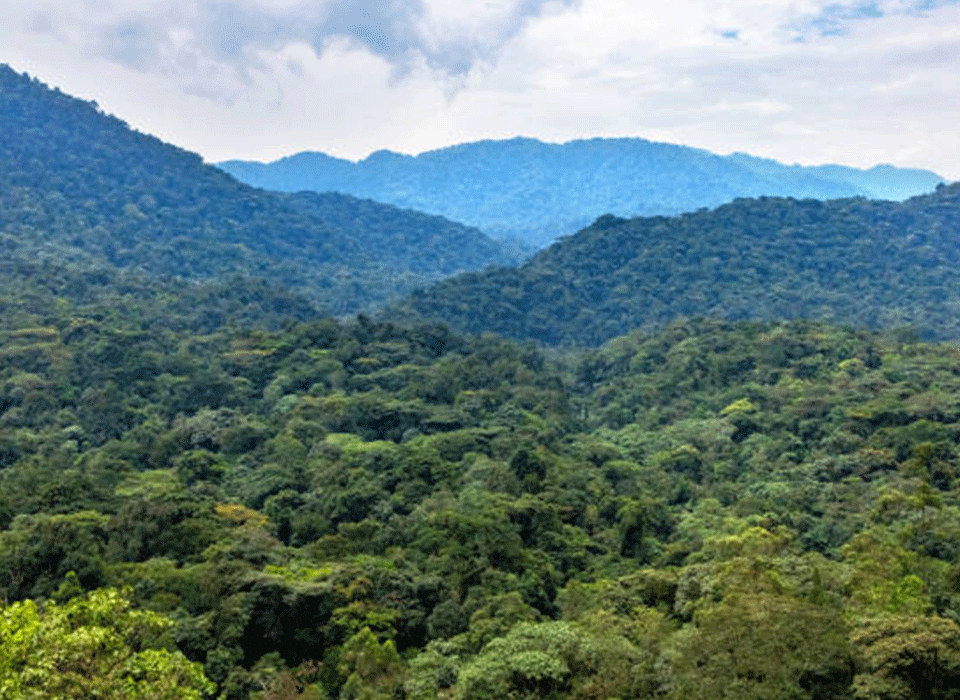
Deep in the hills of western Uganda, Kibale Forest National Park holds a remarkable distinction: it is home to one of the highest concentrations of primates anywhere on the planet. Thirteen primate species live within its approximately 795 square kilometres of forest and surrounding habitats, making Kibale one of Africa’s outstanding destinations for watching primates in their natural environment.
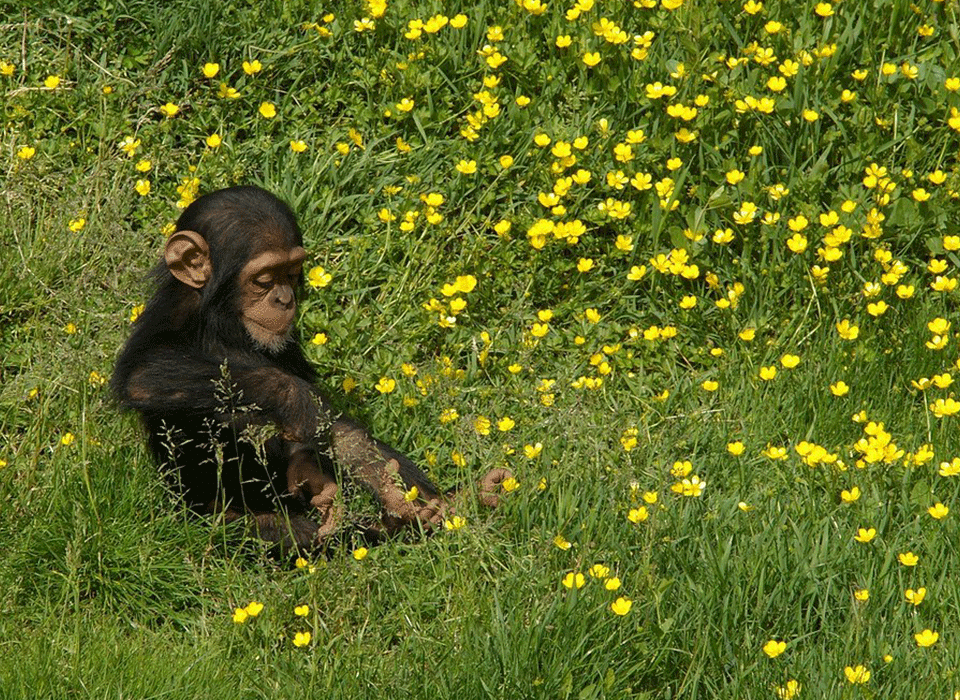
At the heart of Kibale’s primate world are approximately 1,500 chimpanzees. These are our closest living relatives, sharing approximately 98.7 percent of our DNA, and watching them in the wild is one of the most intellectually and emotionally stirring wildlife experiences available anywhere.
For travellers combining Kibale with Bwindi gorilla trekking, the contrast between the two encounters is part of what makes a Uganda primate safari so extraordinary.
Chimpanzees bring noise, movement and unpredictability to the forest. Mountain gorillas generally provide a quieter encounter. Experiencing both on the same journey provides two very different perspectives on Uganda’s remarkable primate diversity.
Where Is Kibale Forest National Park?
Kibale Forest National Park is located in western Uganda, within one of the country’s most rewarding safari regions.
The park is relatively close to Fort Portal and can be incorporated naturally into a longer western Uganda safari.
Its location makes it particularly convenient for travellers planning to continue south towards Queen Elizabeth National Park and eventually Bwindi Impenetrable National Park.
This geographic relationship is one reason Kibale appears in so many longer Uganda itineraries.
Rather than making a long detour purely for chimpanzees, visitors can incorporate the forest into a logical journey through western Uganda’s national parks.
The surrounding region is also exceptionally scenic, with crater lakes, tea plantations, villages, farmland and distant views towards the Rwenzori Mountains adding variety to the journey.
Why Is Kibale Famous for Chimpanzees?
Chimpanzees are found in several parts of Uganda, but Kibale has developed an international reputation as the country’s premier chimpanzee destination.
The park protects a substantial population of chimpanzees, and selected communities have been habituated to the presence of researchers, ranger guides and visitors.
Habituation is important because wild chimpanzees naturally respond to humans differently from individuals accustomed to controlled human presence.
The habituated communities allow regulated tourism encounters while maintaining strict conservation rules.
Chimpanzee tourism also contributes to the broader economic value of conserving Kibale’s forest ecosystem.
For visitors, the result is an opportunity to enter a genuine tropical forest and search for free-ranging chimpanzees accompanied by experienced guides.
What Is Chimpanzee Trekking?

Chimpanzee trekking in Kibale National Park offers Malaysian travelers an opportunity to observe wild chimpanzees in their natural forest habitat.
Chimpanzee trekking in Kibale follows a similar basic structure to gorilla trekking.
Visitors report for a briefing before joining a group accompanied by experienced Uganda Wildlife Authority ranger guides.
The guides explain trekking procedures, forest rules, safety considerations and appropriate behaviour around the chimpanzees.
The group then enters the forest to search for a habituated chimpanzee community.
Unlike animals confined to a particular area, chimpanzees move naturally through the forest. The amount of walking required therefore varies from one trek to another.
Guides use their knowledge of chimpanzee movements, vocalisations, feeding trees and recent locations to help find the community.
Sometimes the first indication that chimpanzees are nearby is not visual.
You may hear them.
Their calls can carry remarkable distances through the forest.
What Is the Chimpanzee Encounter Like?
Once the chimpanzees are located, standard tracking allows visitors a regulated observation period with them.
This is when the experience becomes particularly memorable.
Chimpanzees may be feeding, grooming, resting, playing or moving rapidly between trees.
Sometimes they remain high in the canopy. At other times, individuals descend to the forest floor and move surprisingly close to observers.
Their behaviour can change quickly.
A peaceful group may suddenly erupt into vocalisations and movement, particularly when social dynamics change or individuals communicate across the forest.
That unpredictability is a major part of the experience.
Visitors interested in spending considerably more time observing chimpanzee behaviour can also consider a chimpanzee habituation experience.
Chimpanzee Trekking Versus Gorilla Trekking
Many visitors naturally compare chimpanzee trekking with gorilla trekking.
The two experiences have similarities.
Both involve entering natural forest habitat with trained guides. Both are strictly regulated, and both provide opportunities to observe some of humanity’s closest living relatives in the wild.
But the atmosphere can be very different.
Mountain gorillas are often relatively calm during observation. They may feed quietly, rest or interact with other members of the family.
Chimpanzees tend to be much more mobile.
They climb quickly, move through vegetation, call loudly and sometimes travel rapidly through the forest.
Photography can consequently be more challenging.
Instead of expecting one experience to be better than the other, travellers should view them as complementary.
Combining both is one of the defining attractions of a Uganda primate safari.
Kibale Chimpanzee Tracking Permit
A chimpanzee tracking permit in Kibale Forest costs USD 250 per person for foreign non-resident international visitors in 2026.
The permit is required to participate in the regulated chimpanzee tracking experience.
Because availability is controlled, travellers should arrange permits in advance, particularly when travelling during popular safari periods.
Safari Vacations and Travel Services can secure chimpanzee permits alongside gorilla permits as part of combined Uganda primate safari arrangements.
Travellers considering more than one encounter can also explore a double chimpanzee trekking experience.
Permit prices and regulations can change, so the applicable tariff should always be reconfirmed for the exact travel date before payment.
The Uganda Wildlife Authority is the official authority responsible for Uganda’s national parks and wildlife conservation areas.
Chimpanzee Habituation Experience
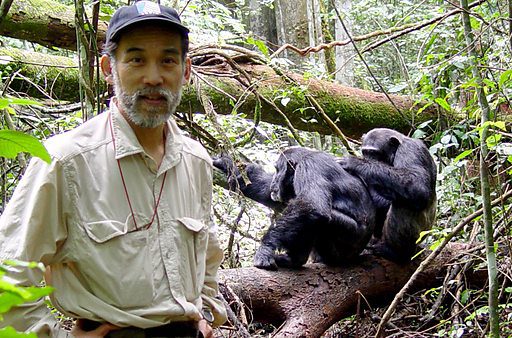
A client with Chimpanzees on a habituation experience in kibale forest national park
Visitors who want a more intensive primate experience can consider chimpanzee habituation.
Habituation is the gradual process through which wild chimpanzees become accustomed to the controlled presence of researchers and visitors without fundamentally changing their natural behaviour.
A habituation experience generally provides considerably more time around chimpanzees than standard tracking.
This can be particularly valuable for photographers, wildlife enthusiasts and travellers interested in primate behaviour.
The additional time creates opportunities to observe interactions that may not occur during a shorter encounter.
Chimpanzees may feed, travel, communicate, groom or interact socially over the course of the experience.
However, habituation can also involve more walking and requires greater patience.
It is therefore best suited to travellers who genuinely want a longer forest experience.
How Difficult Is Chimpanzee Trekking?
The physical difficulty of a Kibale chimpanzee trek varies.
Chimpanzees are mobile animals, so their location influences how far visitors need to walk.
Forest conditions can also change with rainfall.
Trails may become muddy or slippery during wetter periods, making appropriate footwear particularly important.
Travellers should wear comfortable walking shoes or hiking boots with good grip.
Lightweight long trousers are useful for protecting the legs from vegetation and insects, while a light waterproof jacket is sensible because rain can occur even when the morning begins clear.
Water and a small daypack are also useful.
Visitors should follow the advice given during the ranger briefing because conditions and chimpanzee locations vary from day to day.
Beyond Chimpanzees: Kibale’s Other Primates
Kibale’s primate diversity extends far beyond chimpanzees.
Visitors may encounter red colobus monkeys, red-tailed monkeys, black-and-white colobus monkeys, olive baboons, L’Hoest’s monkeys and grey-cheeked mangabeys.
Each species occupies the forest differently.
Some are easier to see in the canopy, while others may appear along forest edges or during guided walks.
The grey-cheeked mangabey is particularly noticeable because of its appearance, social behaviour and vocalisations.
For travellers interested in primates generally rather than chimpanzees alone, these additional species make Kibale particularly rewarding.
A morning chimpanzee trek can therefore produce numerous wildlife encounters before the main chimpanzee community is even located.
Birding in Kibale Forest
Kibale is also an important destination for birdwatchers.
The wider forest ecosystem supports hundreds of recorded bird species, making the park an excellent addition to a specialised Uganda birding safari.
Among the species associated with the region are highly sought-after forest birds, including the green-breasted pitta.
Hornbills, sunbirds and numerous other forest species contribute to the diversity.
Birding in dense tropical forest can require patience.
Calls are often heard before birds are seen, and experienced guides become especially valuable when identifying species hidden among leaves and branches.
For serious birders, additional time around Kibale and Bigodi is worthwhile rather than treating the area exclusively as a chimpanzee destination.
The Bigodi Wetland Sanctuary
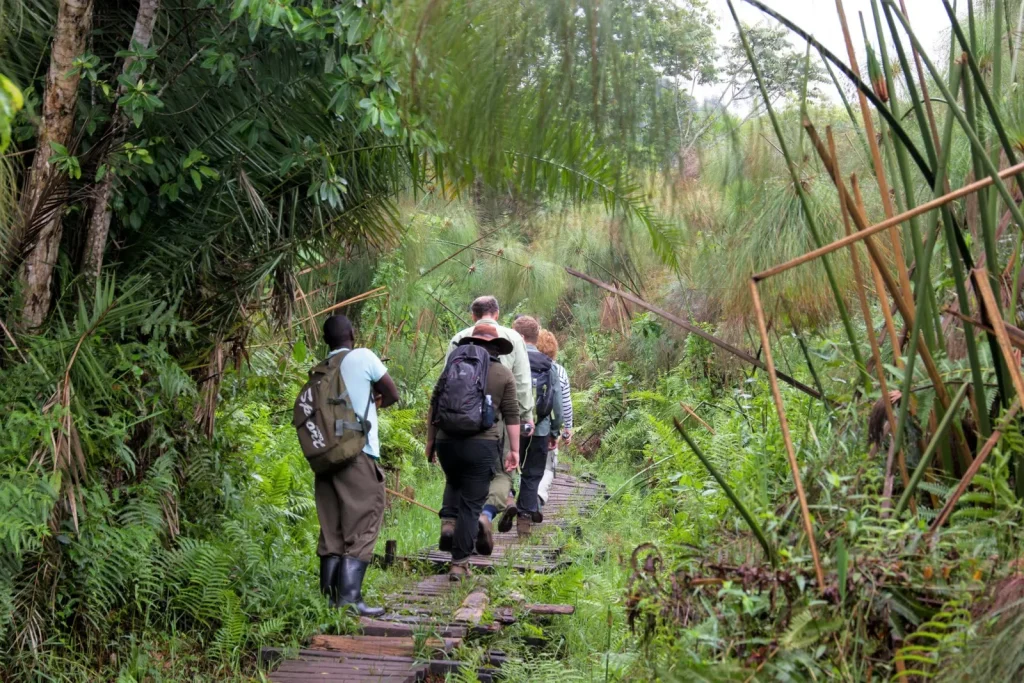
Travelers explore the lush Bigodi Wetland Sanctuary on a guided nature walk, a popular addition to chimpanzee trekking experiences around Kibale National Park.
Directly adjacent to the Kibale area is the Bigodi Wetland Sanctuary, a community-based conservation and tourism initiative.
A guided walk through Bigodi provides a different experience from trekking inside Kibale Forest.
The wetland, forest patches and surrounding community landscape create habitat for primates, birds and other wildlife.
Sitatunga antelope occur in wetland habitats, although wildlife sightings should never be treated as guaranteed.
Birdlife is another major attraction.
A Bigodi walk can therefore complement a morning chimpanzee trek particularly well.
The experience also has an important community dimension because tourism contributes to local conservation and community initiatives.
This demonstrates how tourism around protected areas can create benefits beyond park boundaries.
Combining Kibale and Bigodi
One of the easiest ways to structure a day in the Kibale region is to combine chimpanzee tracking with Bigodi.
Visitors may undertake chimpanzee tracking during one part of the day and then explore the wetland during another, depending on permit times and the final itinerary.
The experiences are sufficiently different that they do not feel repetitive.
Kibale provides dense tropical forest and a strong focus on chimpanzees.
Bigodi introduces wetland habitats, community conservation, birdlife and rural landscapes.
Together they create a broader understanding of the region.
Travellers with more time can spend an additional night in the area rather than immediately continuing towards Queen Elizabeth National Park.
Best Time to Visit Kibale Forest
Kibale can be visited throughout the year.
The generally drier periods from June to September and December to February are popular because forest trails may be easier to negotiate.
However, Kibale is a tropical forest environment, so rain remains possible at any time.
The wetter months create lush vegetation and can appeal to photographers and travellers who prefer greener landscapes.
Trail conditions may be muddier, so good footwear becomes even more important.
Rather than choosing dates solely around Kibale, most travellers plan according to the requirements of their entire Uganda itinerary.
If the journey also includes gorilla trekking, wildlife safaris and other activities, the best travel period should reflect all of these experiences.
Where to Stay Near Kibale
The Kibale region offers accommodation across different comfort levels.
Travellers can choose from simpler properties, comfortable mid-range lodges and higher-end forest accommodation.
The best choice depends on budget, itinerary and preferred atmosphere.
Location is particularly important.
Staying conveniently positioned for the scheduled chimpanzee activity reduces unnecessary driving early in the morning.
Some travellers prefer lodges surrounded by forest and nature, while others may prioritise comfort, views or easy access to other attractions.
Accommodation should therefore be selected as part of the complete itinerary rather than independently.
Combining Kibale With Queen Elizabeth National Park
Kibale and Queen Elizabeth National Park work exceptionally well together.
After exploring Kibale, travellers can continue south towards Queen Elizabeth for a completely different wildlife environment.
The dense primate forest gives way to savannah, crater landscapes and wetlands.
Game drives provide opportunities to search for large mammals, while a boat cruise on the Kazinga Channel introduces another dimension to the safari.
This contrast is one of the strengths of western Uganda.
Within a relatively compact regional journey, visitors move from tropical forest to classic African safari landscapes.
Travellers can compare the country’s major wildlife areas through our guide to Queen Elizabeth or Murchison Falls.
Combining Kibale With Bwindi
Continuing farther south brings travellers towards Bwindi Impenetrable National Park.
This creates the classic primate combination: chimpanzees in Kibale and mountain gorillas in Bwindi.
For many travellers, experiencing both is a major reason to choose Uganda.
Kibale provides the energetic world of chimpanzees, while Bwindi provides the opportunity to trek through mountain rainforest in search of habituated gorilla families.
Travellers wanting a deeper gorilla encounter can also investigate gorilla habituation.
Permit availability should be checked before finalising accommodation and transport because primate activities are often the fixed points around which the rest of the itinerary is constructed.
The Classic Kibale, Queen Elizabeth and Bwindi Circuit
The three-park western Uganda circuit — Kibale, Queen Elizabeth and Bwindi — is the backbone of many Uganda safari itineraries.
The geographic logic is straightforward.
Travellers can begin with chimpanzees in Kibale, continue towards Queen Elizabeth for game drives and a boat safari, and then travel south to Bwindi for mountain gorilla trekking.
The experiences change dramatically along the way.
Forest primates give way to savannah wildlife before the journey returns to dense mountain forest.
A well-paced itinerary should allow sufficient time in each destination rather than treating the journey as a race between parks.
Examples of longer combinations include an 8-day gorilla, chimpanzee and Murchison safari or a more comprehensive 13-day classic Uganda safari.
How Many Days Do You Need for Kibale?
The minimum practical stay depends on where you are travelling from and where you are going next.
Two nights around Kibale often work well because they provide time for arrival, chimpanzee tracking and onward travel without excessive rushing.
Additional time is worthwhile for birdwatchers, photographers or travellers interested in Bigodi and the surrounding landscapes.
A longer stay also provides flexibility.
Instead of spending every day transferring between destinations, visitors have time to appreciate the forest and surrounding communities.
For travellers whose primary interest is primates, a dedicated Uganda chimpanzee safari can place even greater emphasis on Kibale and related experiences.
Responsible Chimpanzee Tourism
Chimpanzee tourism depends on maintaining appropriate boundaries between humans and wildlife.
Visitors should follow all instructions provided by ranger guides.
Rules concerning distance, food, behaviour, photography and illness exist to protect both people and chimpanzees.
Because humans and great apes are biologically closely related, disease transmission is an important conservation concern.
Travellers who are unwell should disclose this before participating.
Visitors should also avoid leaving rubbish in the forest and should remain with their assigned group.
The purpose of responsible chimpanzee tourism is not simply to create a close wildlife encounter.
It is to make that encounter possible while protecting the animals and habitat that make it extraordinary.
The Uganda Wildlife Authority provides official information about Uganda’s protected areas and conservation activities.
Why Kibale Belongs on a Uganda Safari
Kibale Forest National Park offers something that Uganda’s savannah parks cannot.
It brings visitors into the complex world of tropical forest primates.
Chimpanzees are the headline attraction, but the experience extends far beyond a single species.
Monkeys move through the canopy. Forest birds call from dense vegetation. Bigodi adds wetlands and community conservation, while the surrounding landscapes connect naturally with the rest of western Uganda.
Most importantly, Kibale combines exceptionally well with Queen Elizabeth National Park and Bwindi.
The result is a journey that can include chimpanzees, savannah wildlife, boat safaris and mountain gorillas within one country.
That diversity is one of Uganda’s greatest safari strengths.
Final Thoughts
Kibale Forest National Park deserves its reputation as Uganda’s chimpanzee capital.
Walking into the forest and hearing chimpanzees calling before you can see them creates a sense of anticipation that is difficult to reproduce elsewhere.
When the community is finally located, the movement, vocalisations and complex social behaviour make the encounter completely different from a conventional game drive.
Yet chimpanzees are only part of Kibale’s appeal.
The park’s other primates, remarkable birdlife, tropical forest and proximity to Bigodi make it a destination worth exploring rather than simply visiting for a single activity.
Combine Kibale with Queen Elizabeth National Park and Bwindi, and the experience becomes even stronger.
You move from chimpanzees in tropical forest to wildlife on the savannah and finally to mountain gorillas in the highlands — three distinct environments and some of Africa’s most memorable wildlife experiences within one journey.
Contact Safari Vacations and Travel Services today to build your combined Uganda primate and wildlife safari. We handle permits, accommodation, private transport and safari logistics so you can concentrate on experiencing the best of Uganda.