
Gorilla Trekking for Solo Travellers: A Complete Uganda and Rwanda Guide

Gorilla trekking for solo travellers is one of the most rewarding, personal and unforgettable wildlife experiences available in Africa. Standing quietly inside a mist-covered rainforest while a family of mountain gorillas feeds, rests and interacts only a few metres away can be deeply moving, especially when the journey has been planned around your own interests, travel pace and preferred level of comfort. Travelling alone does not mean that you must enter the forest without assistance, organise every detail independently or spend the entire safari without meeting other people. A well-planned solo gorilla trekking safari combines personal freedom with the support of professional driver-guides, park rangers, trackers, lodge staff and other travellers assigned to the same trekking group.
Many people interested in gorilla trekking for solo travellers hesitate because they are concerned about safety, cost, loneliness, physical difficulty or the process of securing a gorilla permit. Some wonder whether they can book a gorilla trek without a travel partner, while others worry that they may have to pay for an entire vehicle, room or trekking group. Solo female travellers may have additional questions about airport pickups, border crossings, lodge security and travelling through unfamiliar rural areas. These concerns are understandable, but they can usually be addressed through careful planning, realistic budgeting and the selection of a reliable safari company.
A solo traveller can experience mountain gorilla trekking in Uganda or Rwanda, with each destination offering a different style of journey. Uganda is home to Bwindi Impenetrable National Park and Mgahinga Gorilla National Park, while Rwanda offers gorilla trekking in Volcanoes National Park. Uganda is often attractive to travellers who want to combine gorilla trekking with chimpanzee tracking, wildlife safaris, boat cruises, cultural experiences and scenic lakes. Rwanda is frequently chosen by travellers who prefer a shorter journey from Kigali, a compact itinerary or a premium gorilla trekking experience. The best destination depends on the traveller’s budget, available time, fitness level, preferred accommodation and the other activities they would like to include.
One of the greatest advantages of gorilla trekking for solo travellers is flexibility. When travelling alone, you can select the travel dates that work best for you, choose your preferred accommodation category and decide how much time you want to spend in each destination. You can stop for photographs during road transfers, extend your stay at a forest lodge, include a relaxation day after the trek or add other activities without having to negotiate with a large group. A solo gorilla safari can be arranged as a short two- or three-day journey, a longer primate safari or a complete East African wildlife adventure.
Solo travel also allows the itinerary to be designed around your personal interests. A photographer may prefer additional time in the rainforest and a lodge close to the trekking headquarters. A wildlife enthusiast may combine gorilla trekking with Queen Elizabeth National Park, Murchison Falls National Park, Akagera National Park or another major safari destination. A traveller interested in primates may add chimpanzee trekking, golden monkey tracking or a gorilla habituation experience. Someone looking for a slower and more reflective holiday may include Lake Bunyonyi, Lake Mutanda, cultural visits or an extra night at a peaceful forest lodge.
Although the safari may be private, the actual gorilla trek is normally conducted in an organised group. Visitors report to the park headquarters in the morning, attend a detailed briefing and are assigned to a habituated gorilla family. They then enter the forest with trained guides, rangers and trackers. This means that a person travelling alone does not usually trek through the rainforest alone. The traveller becomes part of a small group of permit holders who share the same goal of finding and observing a mountain gorilla family. This group environment can make the experience feel social and supportive while still allowing each participant to enjoy the encounter personally.
Gorilla trekking for solo travellers can also be an excellent way to meet people from different parts of the world. Travellers often begin conversations during the morning briefing, along the forest trail, at the lodge or while waiting for the trekking group to depart. The shared excitement of entering the rainforest and seeing mountain gorillas creates a natural connection between people. Some solo travellers enjoy socialising with others, while some prefer quiet moments and personal reflection. A private safari makes it possible to enjoy both experiences because the road journey can remain personalised even when the gorilla trek is shared.
Safety is one of the most important considerations when planning a solo gorilla trekking safari. A properly organised journey should include confirmed airport transfers, a professional driver-guide, carefully selected accommodation, clear emergency contacts and an itinerary that avoids unnecessary late-night travel. The gorilla trek itself is led by trained park personnel who understand the forest, the terrain and the behaviour of the gorillas. Visitors are briefed on the rules they must follow, including how to behave during the encounter, how to protect the gorillas from human illness and how to respond if a gorilla moves close to the group.
Solo female gorilla trekking is also increasingly popular. Women travel independently to Uganda and Rwanda for wildlife safaris, cultural experiences and primate adventures. The key to a comfortable journey is choosing dependable transport, established lodges and a trustworthy travel company. A solo female traveller should be met at the airport or hotel by an identified driver-guide, receive clear contact details before arrival and have all major services confirmed in writing. Travelling with a private guide can provide additional reassurance because the same professional remains responsible for the daily transfers, activity timings and communication throughout the safari.
The cost of gorilla trekking for solo travellers depends on the destination, permit price, accommodation category, transport arrangement and duration of the safari. Solo travel can sometimes cost more per person because transport and accommodation are not shared with a companion. However, there are several ways to manage the cost. Travellers can choose budget or midrange lodges, travel during quieter periods, join a scheduled departure, share selected transfers or select an efficient route that avoids unnecessary driving. A carefully designed itinerary can provide a high-quality experience without requiring the traveller to choose the most expensive accommodation or transport option.
Choosing the correct gorilla trekking sector is particularly important for solo travellers visiting Bwindi Impenetrable National Park. Bwindi has several trekking regions, and the permit location must match the lodge and transport route. Booking accommodation in the wrong sector can lead to long, uncomfortable transfers on the morning of the trek. A reliable safari planner should first confirm permit availability, identify the trekking sector and then recommend suitable accommodation. This order of planning can reduce unnecessary travel time and prevent expensive booking mistakes.
Physical preparation is another important part of gorilla trekking for solo travellers. The forests are mountainous, and the trails can be muddy, steep or slippery. The amount of walking required cannot be predicted because the gorillas move freely within their natural habitat. Some groups may find the gorillas after a relatively short walk, while others may trek for several hours. Travellers should prepare with regular walking, light hiking, stair climbing and basic endurance exercises before the journey. Hiring a porter can also make the trek more comfortable by providing support on difficult sections and carrying a daypack, drinking water, camera equipment and rain gear.
A solo gorilla trekking safari should never be designed as a rushed activity that simply moves a traveller from the airport to the forest and back again. The journey is more enjoyable when there is enough time to recover from international travel, appreciate the countryside and prepare properly for the trek. Adding a night before the activity can reduce stress caused by delayed flights, border procedures or long road transfers. An extra night after the trek can also provide time to relax, reflect on the experience and enjoy the surroundings before continuing to another destination.
Gorilla trekking for solo travellers is therefore not only possible but can also be one of the best ways to experience Uganda and Rwanda. It offers freedom, personal attention, flexible planning and the opportunity to connect with both nature and other travellers. Whether you choose a private safari from Kigali, an extended Uganda wildlife journey, a luxury stay near Volcanoes National Park or a budget-friendly adventure in Bwindi, the experience can be adapted to suit your travel style.
This complete guide explains everything you need to know about gorilla trekking for solo travellers, including safety, permit booking, costs, single supplements, accommodation, transportation, physical preparation, packing, solo female travel, private and shared safari options, recommended itineraries and the differences between Uganda and Rwanda. With the right planning, travelling alone can become an advantage rather than a limitation, allowing you to experience mountain gorillas in a way that feels personal, comfortable and deeply memorable.
What Is Gorilla Trekking for Solo Travellers?
Gorilla trekking for solo travellers refers to a professionally organised journey for a person travelling without a friend, partner, family member or pre-arranged group. The traveller may arrive in Uganda or Rwanda alone, stay in a private room, use a private safari vehicle and follow a personalised itinerary designed around their preferred dates, budget and travel interests. However, travelling alone does not usually mean walking into the rainforest without guides, rangers or other permitted visitors. Gorilla trekking is a controlled wildlife activity, and every visitor enters the forest under the direction of trained park personnel.
This distinction is important because many first-time visitors misunderstand what gorilla trekking for solo travellers involves. Some people imagine that they will be completely alone from the moment they arrive at the airport until the end of the trek. Others assume that they must find another traveller before they can buy a permit or participate in the activity. In reality, solo travellers can book gorilla permits individually, arrange complete safaris for one person and join an organised trekking group at the park headquarters on the morning of the activity.
A solo gorilla trekking safari can therefore provide both independence and social interaction. The road journey, accommodation and additional safari activities can be arranged privately, while the forest experience is shared with other registered trekkers, guides, trackers, rangers and porters. This arrangement allows solo travellers to maintain control over their overall itinerary without losing the safety, organisation and companionship provided during the actual gorilla trek.
Travelling to Uganda or Rwanda Alone
The first meaning of gorilla trekking for solo travellers is simply travelling to East Africa without a companion. The traveller books an international flight, arrives at an airport and continues the journey alone. This type of traveller may be single, married, widowed, divorced or simply travelling independently because friends and relatives are unavailable or interested in different destinations.
Travelling alone can be a deliberate choice rather than a last resort. Many people choose solo gorilla trekking because they want more control over their time. They may prefer to travel during specific dates, remain longer in a destination, select a particular accommodation category or combine gorilla trekking with activities that may not interest their usual travel companions.
A solo traveller may also be celebrating a personal milestone such as a birthday, retirement, graduation, career achievement or recovery from a difficult period. For some visitors, seeing mountain gorillas is a lifelong dream that they do not want to postpone while waiting for another person to become available. Gorilla trekking for solo travellers makes it possible to pursue that experience independently while still receiving professional assistance throughout the safari.
Travelling alone begins with careful organisation. Airport transfers should be confirmed before arrival, and the traveller should receive the name and contact details of the driver-guide. Accommodation, permits, transport routes and activity times should also be documented clearly. The more organised the journey is before departure, the more comfortable and confident the solo traveller is likely to feel.
A well-planned solo gorilla safari should remove unnecessary uncertainty. The traveller should know where they will be met, which vehicle will be used, where they will stay, which trekking region they will visit and what services are included in the price. They should also have a reliable contact person who can answer questions and assist if a flight is delayed, luggage is lost or travel plans change.
Taking a Private Gorilla Safari as a Solo Traveller
The second meaning of gorilla trekking for solo travellers is taking a private safari designed for one person. A private solo safari generally includes a dedicated vehicle, professional driver-guide, personalised route and private accommodation arrangements. The traveller does not have to follow a fixed group schedule unless they have intentionally joined a shared departure.
A private safari is one of the most comfortable ways to experience Uganda or Rwanda as a solo traveller. The vehicle is reserved for the individual guest, allowing greater flexibility during road transfers. The traveller can request photography stops, take breaks when needed, ask questions freely and adjust the pace of the journey within the limits of the itinerary.
The driver-guide becomes an important part of the experience. In addition to driving, the guide explains the landscapes, communities, wildlife, culture and history encountered along the route. The guide also coordinates lodge check-ins, activity departures, border procedures and communication with park authorities. For a person travelling alone, this consistent professional support can make the safari feel organised, secure and personal.
A private gorilla trekking safari can be particularly valuable for photographers, older travellers, solo women, first-time visitors to Africa and travellers with specific dietary, mobility or medical requirements. It allows important details to be discussed privately and managed carefully. For example, a traveller who needs additional rest stops can plan a slower road journey, while a photographer carrying valuable equipment can request suitable luggage space and additional time for scenic stops.
The main disadvantage of a private solo safari is cost. Transport expenses such as the vehicle, fuel and driver-guide are paid by one traveller instead of being shared between two or more people. Accommodation may also be more expensive per person because a solo guest occupies an entire room. However, the higher cost provides privacy, flexibility and personal attention that may not be available on a shared safari.
Travellers can reduce the overall price by selecting budget or midrange lodges, avoiding unnecessary one-night stops and choosing an efficient itinerary. Starting a Uganda gorilla safari from Kigali may shorten the road journey to some trekking regions, while using a domestic flight from Entebbe may save time for travellers with limited holiday days. The best arrangement depends on the individual’s budget, arrival airport, available time and preferred comfort level.
Joining a Shared Gorilla Safari
Not every person interested in gorilla trekking for solo travellers wants a completely private journey. Some travellers prefer a shared safari because it reduces costs and provides more opportunities to meet other people. A shared safari usually involves travelling with other guests who have booked the same route and travel dates.
The vehicle, driver-guide and some transport expenses are divided among the participants. Each traveller may still have a private room, although some companies may offer room-sharing options when two solo guests agree. No traveller should be required to share a room without clear consent before booking.
Shared safaris can be suitable for sociable travellers, younger adventurers, budget-conscious visitors and people who enjoy meeting others from different countries. Conversations during the road journey, meals and lodge stays can become an enjoyable part of the safari. Guests often exchange travel stories, photographs and recommendations while sharing the excitement of the gorilla trekking experience.
However, shared departures offer less flexibility than private safaris. Arrival times, lodge choices, activity schedules and road stops must suit the entire group. A traveller cannot easily change the itinerary after the safari begins, and delays caused by one participant may affect everyone. Solo travellers considering a shared gorilla safari should therefore confirm the route, accommodation, vehicle capacity, luggage allowance and group size before making payment.
A shared safari should not be confused with the shared trekking group inside the national park. Travellers who book private road transport may still join other permit holders during the gorilla trek. Similarly, guests who travel in the same safari vehicle may occasionally be placed in different trekking groups depending on permit allocation, fitness, gorilla family location and instructions from park officials.
The Gorilla Trek Is Usually a Group Activity
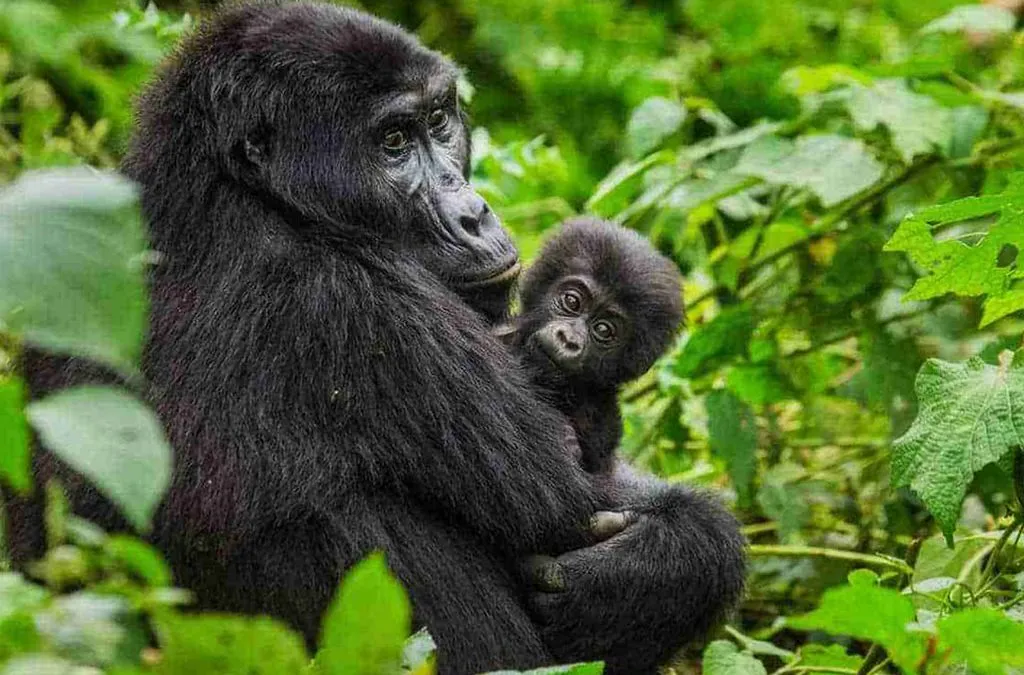
The third meaning of gorilla trekking for solo travellers concerns the actual walk through the rainforest. Although a traveller may have booked a private vehicle and private accommodation, the regular gorilla trek is normally conducted as a group activity. Visitors gather at the park headquarters, register, attend a briefing and are allocated to a habituated gorilla family.
The group enters the forest with professional park guides and other authorised personnel. Trackers may already be in the forest searching for the gorilla family and communicating its approximate location. Rangers guide the visitors along the trail, explain the environment and provide instructions on how to behave when the gorillas are found.
This means that solo travellers do not normally wander through the forest independently. They are part of an organised and supervised activity. The group structure improves safety, protects the gorillas and ensures that visitor behaviour is controlled. It also provides support when the terrain becomes steep, muddy or difficult.
Before entering the forest, the guides explain important rules. Visitors are instructed to remain together, follow the established route, avoid unnecessary noise and listen carefully to the ranger’s directions. The briefing also covers photography, distance, illness precautions, food, sudden gorilla movements and what to do if an animal approaches.
For many people considering gorilla trekking for solo travellers, learning that the trek is organised as a group provides reassurance. They can enjoy a private safari while still sharing the most demanding part of the experience with others. This can be especially helpful when crossing slippery ground, navigating dense vegetation or walking for several hours.
The trekking group often develops a strong sense of shared purpose. Participants encourage one another during difficult sections, celebrate when the gorillas are located and exchange photographs after returning to the park headquarters. The experience may begin with strangers, but the excitement of seeing mountain gorillas can create a memorable connection between the travellers.
Solo Travel Does Not Mean Being Unsupported
One of the most important things to understand about gorilla trekking for solo travellers is that independence does not mean a lack of support. A professionally arranged safari involves several people working together behind the scenes. These may include a safari consultant, reservations officer, driver-guide, lodge staff, park rangers, trackers, porters and border officials.
The safari consultant helps design the route, confirm permit availability and select suitable accommodation. The driver-guide manages transport and daily logistics. Lodge staff provide meals, accommodation and local assistance. Park personnel manage the trekking activity, while porters can carry equipment and assist visitors on difficult terrain.
This network of support allows the solo traveller to enjoy independence without being responsible for every operational detail. The traveller remains free to choose the type of safari they want, but experienced professionals manage the complicated parts of the journey.
Support is particularly important when the itinerary includes international border crossings. A traveller combining Rwanda and Uganda may pass through the Katuna or Cyanika border, depending on the route and trekking location. A professional driver-guide can explain the process, direct the traveller to the correct immigration points and wait while the required checks are completed.
The same support becomes useful when unexpected situations occur. Flights can be delayed, roads may become slower after heavy rain and permit arrangements may require reconfirmation. Solo travellers should book with a company that can communicate quickly, provide alternative arrangements and remain reachable throughout the safari.
The Difference Between Travelling Solo and Travelling Independently
Gorilla trekking for solo travellers may be organised through a safari company or planned independently. These two approaches should not be treated as the same.
A solo traveller is simply a person travelling without a companion. They may still use a full-service tour operator to arrange permits, transport, accommodation and park activities. An independent traveller may choose to organise each service separately, communicate directly with lodges and arrange local transportation without a complete safari package.
Independent planning may suit experienced travellers who understand the region and have enough time to coordinate several bookings. However, gorilla trekking requires careful attention to permit dates, trekking sectors, lodge locations, transfer times and national park procedures. A mistake in one booking can affect the entire itinerary.
For example, a traveller may reserve a gorilla permit in one Bwindi sector and accidentally book accommodation in another. Although the lodge may appear close on a general map, mountain roads can make the transfer much longer than expected. The traveller may then face an extremely early departure or risk arriving late for the compulsory trekking briefing.
A safari company can reduce this risk by arranging the services in the correct order. Permit availability should normally be checked before non-refundable accommodation and flights are confirmed. Once the trekking date and sector are secured, the route, lodge and transport can be selected accordingly.
Independent travel can also involve using public transport between major towns before arranging private transport to the national park. Although this may reduce costs, it can increase journey time, require several transfers and create difficulty for travellers carrying luggage. Public transport may not arrive near the lodge or park headquarters, making additional local transportation necessary.
For many first-time visitors, an organised solo gorilla trekking safari provides a more comfortable balance between independence and professional support. The traveller retains control over their itinerary while avoiding the stress of coordinating permits, remote lodges, road transport and activity schedules separately.
Different Types of Solo Gorilla Travellers
Gorilla trekking for solo travellers attracts people with different ages, backgrounds, interests and travel styles. There is no single type of person who chooses to travel alone.
Some solo travellers are experienced backpackers who have visited several African countries and prefer budget accommodation. Others are luxury travellers who want private transfers, high-end lodges and personalised service. Some visitors are retired and finally have the time to complete a lifelong travel dream. Others are younger professionals using a limited holiday period to experience one of the world’s most remarkable wildlife encounters.
Solo photographers may travel alone because they want to spend more time preparing equipment and selecting photography locations. Birdwatchers may extend the journey to explore specialised forest habitats. Wildlife enthusiasts may combine gorilla trekking with game drives, boat safaris and chimpanzee trekking.
There are also travellers who arrive alone but enjoy social experiences. They may choose lodges with communal dining, join group activities or request a scheduled departure. Other solo travellers value privacy and prefer quiet accommodation, private meals and a slower itinerary.
The safari should reflect the traveller’s personality. A person who enjoys meeting others may benefit from a shared road safari, while someone seeking peace and reflection may prefer a private vehicle and a small forest lodge. A traveller with limited time may choose Rwanda, while someone interested in a broader wildlife journey may select Uganda or combine both destinations.
Is a Solo Gorilla Trek Completely Private?
A standard solo gorilla trekking safari should not be advertised as a completely private gorilla encounter unless special official arrangements have been confirmed. Paying for private transport and accommodation does not automatically reserve an entire gorilla trekking group for one person.
The permit normally gives the individual traveller the right to participate in the trekking activity on a specified date and within the allocated destination or sector. Other permit holders may be assigned to the same gorilla family. The guides and rangers then manage the group as one trekking unit.
Solo travellers who value privacy should understand this before booking. The shared trek does not usually reduce the quality of the experience because the group is managed carefully and each visitor has an opportunity to observe and photograph the gorillas. However, photographers should communicate politely with the guide and other participants so that everyone can enjoy clear views.
The social nature of the trek can also become one of the highlights. Many solo travellers appreciate having others nearby during the forest walk while returning to the privacy of their own vehicle and lodge room after the activity.
What a Solo Traveller Should Expect
A traveller booking gorilla trekking for solo travellers should expect a combination of independence, professional organisation and shared wildlife activity. They should expect to have control over the overall itinerary but also understand that park rules and activity schedules cannot be changed for individual convenience.
The morning briefing starts at a set time, and late arrival can affect participation. The trek may last longer or shorter than expected because the gorillas move freely. Weather conditions can change quickly, and forest trails may become muddy. Travellers must therefore remain flexible even when the safari is privately arranged.
Solo travellers should also expect moments of quiet. Road journeys can be long, and evenings at remote forest lodges may be peaceful. Some people find this relaxing, while others prefer accommodation with communal areas where they can interact with guests and staff. The chosen lodge should match the traveller’s social preferences.
Travellers should expect to make some decisions independently. They may need to choose whether to hire a porter, add an optional activity, upgrade a room or extend a stay. A professional guide can provide advice, but the final choice remains with the traveller.
Most importantly, solo travellers should expect the experience to feel personal. Without the distractions of a large private group, they can concentrate on the forest, the sounds of birds, the work of the trackers and the behaviour of the gorillas. Many travellers describe the encounter as emotional because it provides a rare opportunity to observe powerful wild animals in their natural environment.
Gorilla trekking for solo travellers is therefore not about being isolated. It is about travelling independently while receiving the support required to explore a remote destination responsibly. The traveller may begin the journey alone, but they become part of a wider team that includes safari professionals, conservation personnel, local communities and fellow trekkers. This balance of independence and connection is one of the reasons a solo gorilla trekking safari can become such a meaningful and unforgettable adventure.
Can You Go Gorilla Trekking Alone?
Yes, you can go gorilla trekking alone as a solo traveller, but this does not usually mean entering the forest without professional guides, rangers or other permitted visitors. A person does not need a partner, friend, family member or pre-arranged travel group to purchase a gorilla permit or join a gorilla trekking experience. Gorilla trekking for solo travellers is therefore completely possible in Uganda and Rwanda, provided the traveller has a valid permit, arrives at the correct park headquarters on time and follows the regulations established by the responsible wildlife authority.
The phrase “gorilla trekking alone” can be confusing because it may describe several different travel arrangements. A traveller may arrive in East Africa alone, use a private safari vehicle, stay in a private room and follow a personalised itinerary. However, during the actual forest trek, the traveller will normally be assigned to an organised group led by authorised park personnel. The group may include other solo travellers, couples, friends or family members who hold permits for the same trekking date.
This means that gorilla trekking for solo travellers offers independence without requiring a person to face the rainforest alone. The traveller can enjoy the freedom of a private safari while receiving professional support during the most physically demanding and carefully controlled part of the experience. For many solo travellers, this arrangement provides the ideal combination of privacy, safety and social interaction.
Can One Person Book a Gorilla Permit?
A gorilla permit is purchased for an individual traveller, which means that one person can book and participate without another traveller. You do not need to purchase two permits simply because you are travelling alone, and you do not need to wait until a group is formed before confirming your place.
The permit is linked to a specific trekking date and destination. In Uganda, the permit may also be connected to a particular trekking region, especially in Bwindi Impenetrable National Park, where the location affects the lodge, transport route and morning reporting point. In Rwanda, the permit allows the traveller to report for gorilla trekking in Volcanoes National Park on the confirmed date, after which park officials allocate participants to available gorilla families.
A solo traveller should provide the correct personal information during the booking process. The details should match the traveller’s passport to avoid unnecessary complications during registration. Depending on the booking procedure, a passport copy or full passport information may be requested before the permit is secured.
The most important issue is permit availability rather than the number of people travelling together. If one permit is available on the traveller’s preferred date, the individual can book it. However, solo travellers should avoid assuming that single permits will always be easy to find at the last minute. Demand can be high during popular travel periods, and some trekking dates may become fully booked several months in advance.
It is therefore advisable to confirm permit availability before paying for non-refundable international flights, lodges or domestic transfers. Once the trekking date and destination have been secured, the remaining safari arrangements can be built around the permit.
Do You Need a Travel Companion for Gorilla Trekking?
You do not need a travel companion to go gorilla trekking in Uganda or Rwanda. The national park authorities do not require every participant to arrive with another private traveller. Solo visitors join the same regulated trekking process as couples, families and organised groups.
On the morning of the trek, all registered visitors report to the designated park headquarters or briefing area. Their documents are checked, and they receive important instructions about the forest, wildlife behaviour, health precautions, photography and safety. The participants are then allocated to trekking groups and introduced to the professional guides who will lead them into the forest.
This organised system means that the absence of a personal travel companion does not prevent the activity from taking place. The solo traveller will have guides, rangers, trackers and other participants nearby throughout the trek.
Some people postpone their dream of seeing mountain gorillas because they are waiting for a friend or relative to become available. However, gorilla trekking for solo travellers allows a person to complete the journey independently rather than delaying it for several years. Travelling alone may require careful planning and a realistic budget, but it should not be viewed as a barrier to participating in the activity.
Will a Solo Traveller Trek Completely Alone?
A solo traveller will not normally trek completely alone during a standard gorilla trekking experience. The traveller is usually placed in a small organised group with other permit holders. The exact group arrangement depends on the park authorities, the number of visitors, the available habituated gorilla families, the location of the gorillas and the conditions on the day.
The group enters the forest with an experienced guide and other authorised personnel. Trackers may begin searching for the gorillas before the visitors start walking, and they communicate with the trekking team when they identify the family’s location. Rangers guide the visitors through the forest, manage the group’s movement and explain how everyone should behave when the gorillas are found.
This approach protects both the visitors and the gorillas. It prevents uncontrolled movement through the forest and limits disturbance around habituated gorilla families. It also ensures that visitors receive accurate instructions during the encounter.
A traveller should not expect to leave the park headquarters alone with only a porter or personal guide. Gorilla trekking is not an independent hiking activity. It is a highly regulated wildlife experience in which the national park authorities control access, group allocation and conduct within the forest.
For solo travellers, this structure provides important reassurance. The traveller may be alone during international flights or private road transfers, but they become part of a supported group during the trek. The physical challenge, anticipation and eventual gorilla encounter are shared with people who may have travelled from many different countries.
What Happens When Only One Traveller Books a Safari?
When only one person books a gorilla safari, the safari company can arrange the entire journey for that individual. The traveller may have a private vehicle, private driver-guide, private room and personalised travel schedule. The cost is calculated for one person instead of being divided among several guests.
The safari company should confirm the gorilla permit, organise suitable accommodation and arrange the necessary road or air transfers. The driver-guide usually meets the traveller at the airport, hotel or agreed location and remains responsible for transportation throughout the itinerary.
The fact that only one person has booked does not normally affect participation in the gorilla trek. The traveller reports to the park headquarters and joins the standard allocation process. Other visitors who booked through different operators may be assigned to the same gorilla family.
This is one reason private solo safaris are popular. The traveller enjoys personal attention during the road journey while still sharing the gorilla trek with others. After the activity, the solo traveller returns to the private vehicle and continues the itinerary at their preferred pace.
The main difference is cost. Because there is only one guest, the traveller pays the full transport cost instead of sharing it with a companion. The lodge may also charge a single-room rate. However, the gorilla permit itself is normally priced per person, meaning the solo traveller does not pay for unused places in the trekking group.
Can a Solo Traveller Request a Private Gorilla Trek?
A solo traveller may request a private gorilla trekking arrangement, but this should not be confused with booking a private safari vehicle. A private road safari is relatively straightforward because the vehicle and driver-guide can be reserved for one guest. A private gorilla trek, where no other permit holders are assigned to the same gorilla family, would require special approval and payment arrangements through the relevant authorities.
Standard gorilla permits do not automatically provide exclusive access to a gorilla family. The permit allows an individual to participate in the regulated trekking activity on the confirmed date. Other visitors may be allocated to the same group.
Travellers seeking privacy for photography, filming, research or a special occasion should discuss their requirements before booking. Special arrangements may be subject to availability, conservation rules and significantly higher costs. No safari company should promise an exclusive gorilla encounter unless that arrangement has been officially confirmed.
For most solo travellers, a private trek is unnecessary. Standard trekking groups are carefully managed, and visitors are usually able to observe and photograph the gorillas without the experience feeling overcrowded. The guide helps position participants, manages movement and ensures that everyone receives a fair opportunity to see the animals.
The shared experience may also add value. Participants often help one another along difficult sections, exchange photographs and celebrate together when the gorillas are located. A traveller who begins the day alone may finish the trek with several new international connections.
Can You Travel Independently to a Gorilla Trekking Destination?
It is possible for an experienced solo traveller to arrange parts of the journey independently, but reaching a gorilla trekking destination requires careful logistical planning. The traveller must obtain the permit, identify the correct trekking location, reserve nearby accommodation and arrange reliable transport to the park headquarters.
Independent travel can be more complicated in Bwindi Impenetrable National Park because the park has several trekking regions. A permit confirmed for one region should be matched with accommodation and transportation in the same part of the park. A lodge may advertise itself as being near Bwindi, but that does not necessarily mean it is close to the traveller’s assigned briefing point.
Mountain roads, weather conditions and limited direct public transport can make transfers between trekking regions slower than expected. A solo traveller who books the wrong lodge may face a very early departure, a long drive or the possibility of arriving late for the compulsory briefing.
Travellers using public transport may reach a nearby town but still require private transportation to the lodge and trekking headquarters. Public vehicles usually follow fixed routes and schedules, while gorilla trekking requires punctual arrival early in the morning. Managing luggage, several transfers and remote road connections may also be stressful for someone unfamiliar with the destination.
An organised safari removes many of these difficulties. The operator confirms the permit location, selects appropriate accommodation and provides a vehicle that remains available throughout the journey. This can be especially valuable for first-time visitors, solo female travellers, older guests, photographers carrying expensive equipment and travellers with limited time.
Can You Meet Other Solo Travellers During the Trek?
Gorilla trekking for solo travellers provides several opportunities to meet other people. The most natural meeting point is the morning briefing, where visitors gather before being allocated to gorilla families. A solo traveller may find that other participants in the same trekking group are also travelling independently.
The forest journey creates an easy environment for conversation. Participants discuss where they come from, how long they have been travelling and what other destinations they plan to visit. During difficult sections, people often encourage one another and help maintain a positive atmosphere.
The shared excitement becomes stronger when the trackers announce that the gorillas are nearby. After the encounter, trekkers frequently exchange photographs, contact details and travel recommendations. Some continue socialising at their lodges or meet again during other activities.
Solo travellers may also meet people during lodge meals, community visits, golden monkey tracking, chimpanzee trekking, boat cruises and shared transfers. Choosing accommodation with a communal dining area or social lounge can make it easier to interact with other guests.
However, no solo traveller should feel pressured to socialise. Some people choose gorilla trekking alone because they value privacy, silence and personal reflection. A private safari allows the guest to decide when they want company and when they prefer quiet time.
Can a Solo Traveller Join a Group Tour?
A solo traveller can join a scheduled or shared gorilla safari when a suitable departure is available. This arrangement can reduce the cost because vehicle, fuel and guide expenses are divided among several guests.
Group tours may include fixed travel dates, predetermined lodges and an established route. Participants should be comfortable following a shared schedule because individual changes may not be possible after the journey begins.
Joining a group can be a good choice for travellers who want companionship or need to manage costs. It may also be suitable for people who feel nervous about travelling completely alone in a new destination.
Before joining, the traveller should confirm the number of participants, vehicle type, luggage space, accommodation arrangement, room policy and included activities. A single traveller may still pay a supplement for a private room, even when transport is shared.
The traveller should also confirm whether all participants will trek on the same date and in the same location. In some cases, the group may stay at one lodge but hold permits in different trekking sectors or participate in different activities. A well-organised shared safari should communicate these details clearly before payment.
Can Solo Female Travellers Go Gorilla Trekking Alone?
Solo female travellers can go gorilla trekking in Uganda and Rwanda, and many women complete the experience independently. The same permit and trekking procedures apply regardless of whether the traveller arrives alone or with companions.
The most important consideration is not gender but the quality of the planning. A solo female traveller should have confirmed airport transportation, clearly identified guides, reliable accommodation and a detailed itinerary. She should receive the driver-guide’s contact information before arrival and know whom to contact if the flight is delayed or the meeting point changes.
Private transportation can provide additional comfort because the traveller avoids negotiating with several unknown drivers or arranging transfers after dark. The same guide may remain with the guest throughout the safari, creating consistency and trust.
Established lodges usually have professional staff, organised dining areas and secure guest accommodation. Travellers should still use ordinary precautions, such as protecting valuables, avoiding isolated night walks and informing the guide before leaving the lodge grounds.
A solo female traveller should also feel comfortable communicating preferences and concerns. She can request additional rest stops, ask for help with luggage, discuss dietary needs and clarify room-security arrangements. A professional safari company should respond respectfully and without making the traveller feel that her questions are unreasonable.
Is Gorilla Trekking Alone Lonely?
Gorilla trekking alone does not necessarily feel lonely. The experience includes regular interaction with the driver-guide, lodge staff, park personnel, porters and other trekkers. Even a private solo safari involves several people who contribute to the journey.
The amount of social interaction depends partly on the itinerary and accommodation. A small lodge with communal meals may create opportunities to speak with other guests, while a private luxury lodge may offer a quieter experience. A shared safari provides more continuous company, while a private vehicle allows greater personal space.
Long road transfers may include quiet periods, but many solo travellers value this time. The scenery, conversations with the guide and freedom to stop for photographs can make the journey enjoyable. Travellers can also bring books, music or a journal for relaxed evenings.
For some visitors, solitude is an important part of the experience. Gorilla trekking takes place in remote mountain landscapes that encourage reflection. Travelling alone allows a person to process the encounter without immediately adapting to another traveller’s emotions or schedule.
The most memorable moment is rarely defined by whether the traveller arrived with a companion. Once the gorillas are found, attention turns to their behaviour, expressions and interactions. The experience becomes absorbing, and many solo travellers feel deeply connected to the environment rather than isolated.
Is Gorilla Trekking Alone More Expensive?
A solo gorilla safari may cost more per person than the same itinerary booked by two travellers. The main reason is that transport and accommodation expenses cannot be shared.
A private safari vehicle requires fuel, maintenance and a professional driver-guide regardless of whether it carries one person or several guests. When two travellers book together, these expenses are divided between them. A solo traveller pays the full transport cost.
Accommodation can also increase the individual price. Lodges often calculate rates based on two people sharing a room. A single guest occupies the entire room, while the property continues to provide housekeeping, utilities, meals and other services. This may result in a single supplement or a higher single-room rate.
The gorilla permit is generally charged per person, so the solo traveller does not usually pay more for the permit simply because they are alone. Optional activities, visas and personal expenses are also normally calculated individually.
There are several ways to manage the cost. The traveller can join a shared departure, choose midrange or budget accommodation, travel during a quieter period or select a shorter route. Starting from Kigali may be practical for some Uganda gorilla itineraries, while combining gorilla trekking with other destinations can provide better overall value for travellers flying into Entebbe.
The cheapest itinerary is not always the best choice. Extremely rushed journeys may involve long driving hours, inadequate rest and poor lodge locations. A well-designed solo safari should balance affordability with safety, comfort and sufficient time for the experience.
Does Travelling Alone Affect Gorilla Family Allocation?
Travelling alone does not automatically result in a less desirable gorilla family allocation. Park officials make group assignments based on operational and conservation considerations. These may include visitor numbers, trekking conditions, fitness levels, gorilla locations and the number of habituated families available.
Solo travellers attend the same morning briefing as everyone else and should communicate honestly about their fitness, age, medical concerns and preferred trekking difficulty. Although officials may consider visitor ability when organising groups, a particular trek cannot always be guaranteed to be easy or short because gorillas move freely.
A solo traveller should not assume that travelling alone means being placed at the end of a group or receiving less attention. Professional guides are responsible for the entire trekking team and should make reasonable efforts to help every participant observe the gorillas.
Photographers can mention their interests politely, but they should understand that the guide must balance the needs of all visitors. Respectful communication is more effective than demanding a particular position.
What Happens When No Other Tourists Are Assigned?
On some quieter dates, a solo traveller may be assigned to a very small trekking group. However, the activity will still be led by authorised park personnel, and the traveller will not be sent into the forest alone.
The park authority determines whether the trek proceeds and how guides, rangers and trackers are allocated. A traveller should not assume that low visitor numbers create an informal or unregulated experience. The same rules concerning briefing, distance, photography, illness and behaviour continue to apply.
A smaller trekking group may provide more space and flexibility during the encounter, but it may also mean fewer fellow trekkers to share the physical challenge. Hiring a porter becomes especially useful because the traveller receives direct assistance while carrying equipment or navigating difficult sections.
Can Older Solo Travellers Go Gorilla Trekking?
Older travellers can participate in gorilla trekking when they are physically prepared and medically fit for the activity. Age alone should not automatically prevent someone from booking, provided they meet the minimum age requirement and understand the potential difficulty.
An older solo traveller should discuss mobility, balance, endurance and medical concerns before confirming the safari. The itinerary can then include enough rest, suitable accommodation and manageable transfer times.
Travellers should prepare through regular walking, stair climbing and gentle strength exercises. Waterproof hiking boots, walking sticks and porter assistance can reduce the physical strain.
During the morning briefing, the traveller should communicate honestly with the park officials. They may consider fitness when allocating trekking groups, although an easy trek cannot be guaranteed.
A private safari is often a good choice for older solo travellers because road stops, meal times and daily transfers can be adjusted more easily. The traveller can add a rest day before or after the trek and avoid the pressure of keeping pace with a fixed road-tour group.
Can Solo Travellers with Limited Mobility Participate?
Travellers with limited mobility should seek detailed advice before booking. Gorilla trekking takes place in natural mountain rainforest, where trails may be steep, muddy, narrow and uneven. Conditions vary daily, and no standard trek can be guaranteed to remain easy.
The traveller should provide accurate information about mobility limitations, balance, recent surgery, joint problems or other conditions that may affect participation. This allows the safari planner and park authorities to provide realistic guidance.
In some destinations, additional assistance may be available through porters or specialised carrying arrangements. Availability, procedures and costs should be confirmed in advance rather than assumed. Travellers should also consult a qualified medical professional before participating in a physically demanding activity.
The itinerary should include nearby accommodation, enough recovery time and a private vehicle. A rushed border transfer or long drive immediately after the trek may be uncomfortable.
Can You Book Gorilla Trekking Alone at the Last Minute?
A solo traveller may occasionally find a single permit close to the travel date, particularly when another visitor cancels or when demand is lower. However, last-minute availability should never be assumed.
Popular months, holiday periods and convenient weekends can fill early. Accommodation near the correct trekking region may also become unavailable even when one permit remains.
Last-minute solo travellers should remain flexible about dates, trekking sectors, lodge categories and departure airports. A person who can adjust the itinerary by one or two days may have a better chance of securing a permit than someone restricted to one exact date.
Before making payment, the traveller should confirm that the permit is genuine and that the lodge and transport can be arranged. Urgency should not lead to careless payment through an unknown person or unverified company.
Why Gorilla Trekking Alone Can Be a Positive Experience
Going gorilla trekking alone can create a sense of achievement that is difficult to experience on an ordinary holiday. The traveller takes responsibility for pursuing a meaningful goal, entering an unfamiliar environment and completing a demanding forest trek.
Solo travel creates freedom. The guest can decide how long to remain in Uganda or Rwanda, which accommodation style to choose and which additional activities to include. There is no need to compromise with a companion who may have a different budget, fitness level or travel interest.
The journey can also strengthen confidence. Navigating an international trip, crossing borders, trekking through the rainforest and observing mountain gorillas can become a powerful personal milestone.
Many solo travellers discover that they are rarely truly alone. They interact with guides, lodge staff, porters, community members and other visitors throughout the safari. The experience becomes a balance between personal space and human connection.
Most importantly, travelling alone allows the gorilla encounter to feel deeply personal. The traveller can focus on the sounds of the forest, the movement of the gorilla family and the emotional impact of being close to one of the world’s most remarkable wild animals.
Gorilla trekking for solo travellers is therefore not only possible but highly rewarding when the journey is planned correctly. A person can buy an individual permit, arrange private or shared transport and join an organised trekking group without requiring a personal companion. The traveller may start the journey alone, but professional guides, park rangers, trackers, porters and fellow trekkers provide support throughout the experience.
Why Gorilla Trekking Is Ideal for Solo Travellers
Gorilla trekking is particularly well suited to solo travellers because it combines personal freedom with a highly organised wildlife experience. A traveller can arrive alone, follow a private itinerary and make independent decisions about accommodation, transport, travel dates and additional activities, while still benefiting from professional support throughout the journey. During the actual trek, the traveller joins an authorised group led by trained park guides, rangers and trackers, which means the experience provides both independence and companionship.
For many people, gorilla trekking for solo travellers is not simply a substitute for travelling with a partner. It is a deliberate choice that allows the journey to become more personal, flexible and reflective. Mountain gorilla trekking often represents a lifelong travel goal, and solo travel makes it possible to complete that dream without waiting for friends, relatives or colleagues to become available. A person can choose the dates that suit them, travel at their preferred pace and design the safari around their individual priorities.
Some solo travellers want a short and efficient gorilla safari from Kigali. Others prefer a longer Uganda journey combining Bwindi Impenetrable National Park with chimpanzee trekking, wildlife viewing, boat cruises and scenic lakes. A private solo itinerary can accommodate either preference without requiring compromises with another traveller who may have a different budget, fitness level or travel interest.
The experience also allows solo travellers to move between moments of social interaction and quiet personal reflection. The traveller can talk with a driver-guide during road transfers, meet other guests at lodges and join fellow trekkers in the forest, while still having a private room and time alone at the end of the day. This balance is one of the main reasons gorilla trekking for solo travellers can feel both adventurous and comfortable.
Complete Freedom When Choosing Travel Dates
One of the greatest advantages of gorilla trekking for solo travellers is the freedom to select travel dates without coordinating with another person. Organising an international journey with friends or relatives can be difficult because everyone may have different work schedules, family responsibilities, budgets and preferred travel periods.
A solo traveller only needs to consider personal availability, permit availability, flight options and the desired travel season. This can make it easier to take advantage of a suitable gorilla permit, a favourable airfare or an available room at a preferred lodge.
Travelling alone can also provide flexibility when a particular trekking date becomes unavailable. A solo traveller may be able to move the trip forward or backward by one or two days more easily than a couple, family or group. This flexibility can be especially useful during popular travel periods when permits and nearby accommodation are limited.
Solo travellers may also find it easier to visit during quieter months. Someone who does not need to coordinate school holidays or another person’s annual leave may choose a period with fewer visitors. A quieter journey can provide greater lodge availability, less pressure on transport arrangements and a more peaceful atmosphere.
The freedom to travel on personally convenient dates is particularly valuable for people planning around birthdays, retirement, work breaks, international conferences or other African travel arrangements. A gorilla safari can be added before or after a business trip, wildlife safari, volunteer programme or visit to another East African country.
A Personalised Itinerary
Gorilla trekking for solo travellers allows the itinerary to be designed around one person’s interests. The traveller does not need to compromise with a companion who prefers different activities or a different travel pace.
A traveller interested mainly in mountain gorillas may choose a short two- or three-day journey. Someone interested in primates may combine gorilla trekking with chimpanzee trekking in Kibale National Park, golden monkey tracking in Mgahinga or Volcanoes National Park, and forest walks in other protected areas.
A wildlife enthusiast may add Queen Elizabeth National Park, Murchison Falls National Park, Lake Mburo National Park or Akagera National Park. A birder may prefer more time in Bwindi, Mgahinga or another forest destination. A photographer may add extra nights to increase opportunities for landscape, community and wildlife photography.
The itinerary can also reflect the traveller’s preferred level of activity. An energetic guest may include hiking, cycling, canoeing and cultural walks, while someone seeking a slower holiday may choose scenic drives, comfortable lodges and additional rest days.
A personalised solo safari can also accommodate personal requirements more easily. Dietary preferences, medication schedules, mobility concerns and specific room needs can be communicated clearly and incorporated into the plan. The safari does not need to satisfy several people with conflicting requirements.
This level of personalisation makes gorilla trekking for solo travellers attractive to people who want more than a standard package. The journey can be designed as an adventure, photography holiday, wellness escape, conservation-focused trip or complete wildlife safari.
Greater Control Over the Travel Pace
Travelling alone provides greater control over the speed of the journey. During a private safari, the traveller can request reasonable stops, ask the guide to explain an interesting location and take time to appreciate the scenery.
Road transfers through Uganda and Rwanda pass through changing landscapes that may include hills, farmland, tea plantations, forests, towns, lakes and rural communities. A solo traveller can often stop for photographs or refreshments without needing approval from several other guests.
The daily schedule can also be organised around the traveller’s comfort. Someone recovering from a long international flight may prefer a later departure or an additional night near the airport. An older traveller may need more road breaks, while a photographer may want an early start to capture the morning light.
Although park activities and briefing times remain fixed, other parts of the safari can be adjusted more easily. A traveller may choose to leave the lodge earlier, spend more time at a scenic viewpoint or return directly to the accommodation after the trek instead of adding another activity.
This control is valuable because gorilla trekking can be physically demanding. The duration and difficulty of the forest walk cannot be predicted, so the itinerary should allow time for rest. A solo traveller can add a relaxed afternoon, massage, quiet dinner or additional lodge night without negotiating with another guest.
Personal Attention from a Driver-Guide
A private driver-guide can significantly improve gorilla trekking for solo travellers. When only one guest is travelling, the guide can focus closely on that person’s interests, comfort and daily requirements.
The traveller can ask questions throughout the journey without feeling that they are interrupting a group. The guide can explain the history, culture, landscapes and wildlife in greater detail, creating an experience that feels more educational and personal.
The driver-guide also becomes an important source of practical support. They coordinate departure times, lodge check-ins, border crossings, park activities and communication with local service providers. For someone visiting East Africa alone, this consistent assistance can reduce stress and uncertainty.
A good guide will also learn the traveller’s preferences during the journey. They may notice whether the guest prefers long conversations or quiet road time, frequent photography stops or a direct journey, adventurous meals or familiar food.
This personalised relationship can make the safari more comfortable. The traveller does not need to explain the same preferences repeatedly to different drivers and service providers. The guide becomes the main point of contact throughout the itinerary.
For solo female travellers, older guests and first-time visitors to Africa, having a dedicated professional nearby can provide additional reassurance. The guide can advise on local customs, help manage luggage and assist if unexpected changes occur.
Easier Photography Planning
Gorilla trekking for solo travellers can be ideal for photographers because the journey can be planned around photographic priorities. A private vehicle provides space for equipment and allows the traveller to organise camera bags without competing for luggage room.
The traveller can request scenic stops during road transfers, spend time photographing forest landscapes and choose accommodation with attractive views. Additional nights can be included near the trekking destination to reduce pressure and provide more opportunities for photography.
A solo photographer can also prepare carefully on the morning of the trek. There is no need to wait for another traveller who may have a different routine. Batteries, lenses, memory cards, rain protection and camera settings can be checked before departure.
During the trek, the photographer still needs to respect the group and follow the ranger’s instructions. The shared nature of the experience means no participant can control every viewing position. However, travelling alone can make the rest of the photographic journey more flexible.
A solo traveller may also choose to hire a porter specifically to carry camera equipment and provide assistance on difficult terrain. This allows the photographer to conserve energy and protect valuable gear from rain, mud and sudden movement.
After the trek, the traveller can return to the lodge, review images and rest without being required to follow another person’s schedule. A second gorilla trek or gorilla habituation experience may also be added when the traveller wants more time for photography.
Freedom to Choose the Accommodation Style
Accommodation preferences can vary greatly, and solo travel removes the need to compromise. One traveller may prefer a simple guesthouse near the trekking headquarters, while another may want a luxury forest lodge with private views, fireplaces, spa services and personalised dining.
Gorilla trekking for solo travellers can be arranged at budget, midrange or luxury level. The most important consideration is choosing a lodge in the correct location, especially when trekking in Bwindi Impenetrable National Park.
A solo guest who enjoys meeting people may choose a lodge with communal dining, a shared lounge and organised evening activities. Someone seeking privacy may prefer a quieter lodge with private cottages and in-room dining.
The traveller can also choose accommodation based on physical comfort. After a demanding trek, features such as hot water, comfortable bedding, boot cleaning, laundry service and massage may become more important than decorative luxury.
A photographer may select a lodge with forest views, while a birder may prefer accommodation surrounded by natural vegetation. A traveller concerned about early morning transport may choose a property close to the park headquarters.
Solo travel makes these decisions easier because the accommodation only needs to satisfy one person’s priorities.
Opportunity for Personal Reflection
Gorilla trekking is often an emotional experience, and solo travel provides space to process it personally. Observing a mountain gorilla family in the forest can create feelings of wonder, humility and connection with nature.
Travelling alone allows the visitor to experience these emotions without immediately responding to the expectations of a companion. The traveller can remain quiet after the trek, write in a journal, review photographs or simply sit at the lodge and reflect.
The road journey also provides time for thought. The landscapes of Uganda and Rwanda, combined with the anticipation of the trek, can make the safari feel different from a fast-paced group holiday.
Some travellers choose gorilla trekking after a major life event such as retirement, career change, bereavement, recovery, birthday or personal achievement. The experience becomes part of a wider journey of reflection and renewal.
This does not mean the safari must be serious or silent. Solo travellers can enjoy conversations, laughter and social activities while still having private time when they need it.
The freedom to move between connection and solitude is one of the most meaningful benefits of gorilla trekking for solo travellers.
An Opportunity to Build Confidence
Planning and completing a solo gorilla trekking safari can strengthen personal confidence. International travel requires organisation, decision-making and the willingness to enter an unfamiliar environment.
A traveller may begin the journey feeling uncertain about arriving alone, meeting a driver, crossing a border or entering the rainforest. Completing these experiences successfully can create a strong sense of achievement.
The trek itself may involve steep terrain, mud, humidity and several hours of walking. Reaching the gorillas after a demanding hike can feel like a personal accomplishment.
The traveller also learns that being alone does not mean being helpless. Professional support is available, and asking for assistance is part of responsible travel. Hiring a porter, communicating concerns and following the guide’s advice demonstrate preparation rather than weakness.
Many people return from a solo gorilla safari with greater confidence in their ability to travel independently. The experience may encourage them to explore other destinations or pursue goals they previously postponed.
The Chance to Meet Other Travellers Naturally
Solo travel does not prevent social interaction. Gorilla trekking for solo travellers provides natural opportunities to meet people without requiring participation in a large organised tour.
The morning briefing brings together visitors from different countries and travel backgrounds. Group allocation creates an immediate connection because everyone is preparing for the same experience.
Conversation often begins naturally during the trek. Participants discuss where they come from, how they prepared and what other destinations they plan to visit. During difficult sections, group members may encourage one another and share the excitement of tracking the gorillas.
The moment the gorillas are found creates a powerful shared memory. After the trek, travellers may exchange photographs, social-media contacts or travel recommendations.
Lodges also provide opportunities to meet people. Communal meals, lounges, campfires and guided walks can create relaxed social environments. A solo traveller can join conversations when interested and return to a private room when ready for quiet time.
This flexible social experience can be more comfortable than travelling with the same group throughout an entire holiday. The traveller meets people naturally while retaining control over their personal space.
Easier Communication of Personal Needs
Solo travel makes it easier to communicate preferences directly. The traveller does not need to consider whether a request will inconvenience a companion or group.
Dietary requirements can be explained clearly to the safari company and lodge. The traveller can request vegetarian meals, food-allergy precautions, early breakfasts or packed lunches suited to specific needs.
Medical and mobility concerns can also be discussed privately. A traveller who needs frequent stops, a slower walking pace or additional luggage assistance can communicate these requirements before the journey.
Solo female travellers may wish to discuss room location, airport pickup, guide identification or other safety concerns. Older guests may prefer accommodation with fewer steps or easier vehicle access.
The safari can also accommodate religious practices, work commitments or communication needs. A traveller may require internet access, private time for calls or specific meal timings.
When the itinerary serves one guest, these details are easier to manage consistently.
Flexible Budget Choices
Gorilla trekking for solo travellers can be adapted to different budgets. Although travelling alone may increase some costs, the traveller has complete control over where to spend and where to save.
A budget-conscious visitor may choose simple accommodation, shared transfers or a scheduled departure. A midrange traveller may prioritise comfortable lodges and private road transport. A luxury traveller may include fly-in transfers, premium accommodation and additional private experiences.
A solo traveller can decide whether convenience is worth the extra cost. A domestic flight may reduce driving time, while a road safari may provide more scenery and cultural interaction. A lodge close to the briefing point may cost slightly more but reduce stress on trekking morning.
The traveller can also decide which optional activities are genuinely important. There is no need to include an expensive activity simply because a companion wants it.
This control allows the budget to reflect personal priorities. Some travellers prefer to spend more on a second gorilla trek, while others prioritise accommodation, photography equipment or a longer safari.
Easier Last-Minute Adjustments
Unexpected changes can occur during international travel. Flights may be delayed, weather may affect road conditions and personal circumstances may require itinerary adjustments.
A solo traveller’s arrangements may be easier to modify because only one person’s schedule and services are involved. A lodge may have one available room even when it cannot accommodate a group, and a single permit may occasionally become available after a cancellation.
This does not mean solo travellers should rely on last-minute planning. Gorilla permits and suitable accommodation can become fully booked. However, when changes are necessary, an individual booking may provide more flexibility than a large group reservation.
The traveller can also make small adjustments during the safari. An optional activity may be removed if the guest feels tired, or an additional lodge night may be added when availability allows.
A private driver-guide can help coordinate these changes and explain the practical and financial implications.
Suitable for Different Ages and Travel Styles
Gorilla trekking for solo travellers is not limited to one age group. Younger backpackers, working professionals, retirees and older adventurers can all enjoy the experience when the itinerary is designed appropriately.
A younger traveller may prefer a budget lodge, shared safari and additional hiking. A mature traveller may choose private transport, comfortable accommodation and more rest time.
Some travellers want constant activity, while others prefer a slow and peaceful journey. A solo itinerary can reflect either style.
The experience can also suit first-time travellers to Africa when professional arrangements are in place. The driver-guide, lodge staff and park personnel provide structure throughout the journey.
Experienced travellers may appreciate the freedom to combine gorilla trekking with less common destinations or additional independent travel before and after the safari.
The flexibility of the experience makes it possible to adapt gorilla trekking for solo travellers to different levels of comfort, confidence and adventure.
Freedom to Extend the Safari
A solo traveller can decide how the gorilla trek fits into a wider African journey. There is no need to limit the itinerary to the preferences or time restrictions of another person.
In Uganda, gorilla trekking can be combined with chimpanzee tracking in Kibale National Park, game viewing in Queen Elizabeth National Park, boat safaris on the Kazinga Channel, wildlife experiences in Murchison Falls National Park or relaxation at Lake Bunyonyi.
In Rwanda, travellers may add golden monkey tracking, Kigali city experiences, Akagera National Park, Nyungwe Forest or Lake Kivu.
Cross-border safaris can combine Uganda and Rwanda, allowing the traveller to compare destinations and include several primate activities.
A solo traveller may also continue to Kenya or Tanzania for a savannah safari or travel to another regional destination. The itinerary can be designed around personal flight plans and travel interests.
This freedom is particularly valuable for people taking a once-in-a-lifetime journey. Instead of following a standard package, they can create a safari that reflects everything they want to experience.
Greater Focus on the Gorilla Encounter
Travelling alone can make the gorilla encounter feel more immersive. The traveller is less distracted by conversation, group photography requests or another person’s reactions.
During the trek, attention can remain on the sounds of the forest, the work of the trackers and the signs that the gorillas may be nearby. When the family is located, the traveller can focus fully on observing behaviour, expressions and interactions.
A silverback resting in the vegetation, a mother caring for an infant or juveniles playing nearby can create an extraordinary sense of connection. Without the pressure to discuss every moment immediately, the solo traveller can absorb the experience quietly.
The encounter remains shared with other trekkers, but the emotional response is personal. Many people find that travelling alone deepens their awareness of the environment.
Afterward, the traveller can decide how to remember the experience. They may review photographs, write about the day, speak with lodge staff or simply enjoy the silence of the forest.
A Strong Sense of Achievement
Completing gorilla trekking for solo travellers can become one of the proudest moments of an African journey. The traveller has planned the trip, travelled to a remote region, prepared physically and followed the trackers into the rainforest.
The trek may require patience, endurance and determination. Conditions can be muddy, steep and unpredictable. Reaching the gorillas after such effort creates a powerful reward.
The sense of achievement is not only physical. The traveller may have overcome nervousness about solo travel, international flights, border crossings or unfamiliar environments.
This achievement can be especially meaningful for people who have postponed the journey because they lacked a travel companion. Choosing to travel independently allows them to stop waiting and pursue an important goal.
The photographs and memories become reminders that meaningful travel does not always require someone else to accompany you.
A Balanced Experience of Independence and Support
The strongest reason gorilla trekking is ideal for solo travellers is that it provides independence without isolation. The traveller controls the overall journey but remains supported by professionals.
A safari consultant assists with planning and permits. A driver-guide manages transport and daily logistics. Lodge staff provide accommodation and meals. Rangers and trackers lead the forest experience. Porters can assist with equipment and difficult terrain.
The traveller is therefore independent in decision-making but does not have to manage every challenge alone. This balance can make the experience comfortable for both experienced solo travellers and people taking their first independent journey.
During social moments, the traveller can interact with guides, lodge guests and fellow trekkers. During quiet moments, they can enjoy privacy and reflection.
Gorilla trekking for solo travellers offers flexibility, personal attention, adventure, companionship and a deep connection with nature. It allows a person to experience one of Africa’s most remarkable wildlife encounters on their own terms while benefiting from the organisation and support required for a safe and responsible journey.
For travellers who have been waiting for a companion before booking, the experience demonstrates that travelling alone does not reduce the value of the adventure. In many cases, it makes the journey more personal, empowering and memorable.
Is Gorilla Trekking Safe for Solo Travellers?
Gorilla trekking for solo travellers can be a safe and well-organised experience when the journey is planned carefully, booked through reliable service providers and conducted according to the official regulations of the national park. Travelling alone does not automatically make the safari unsafe, but it does make preparation more important because the traveller is responsible for making independent decisions about transport, accommodation, communication, insurance and personal security.
A well-designed solo gorilla trekking safari should reduce unnecessary uncertainty from the beginning. The traveller should know who will meet them at the airport or hotel, which vehicle will be used, where they will stay, which national park they will visit, when the trek will begin and who they should contact if an unexpected situation occurs. These details create confidence and make it easier to identify problems before they affect the journey.
The actual gorilla trek is not an unsupervised walk through the forest. Visitors report to the designated park headquarters, attend a compulsory briefing and enter the rainforest with professional guides, rangers, trackers and other authorised personnel. This regulated structure is one of the reasons gorilla trekking for solo travellers can feel secure even when the traveller has arrived in the destination alone.
Safety should be considered across the entire journey rather than only during the time spent with the gorillas. Airport arrival, road transfers, border crossings, lodge selection, health precautions, communication, travel insurance, wildlife behaviour and personal decision-making all contribute to the quality and security of the experience.
Safety During Airport Arrival and Pickup
The first important safety consideration begins when the traveller arrives at the airport. A solo visitor should avoid landing without a clear transfer arrangement, especially when arriving late at night or visiting the destination for the first time.
A professional safari company should provide the traveller with the name and telephone number of the assigned driver-guide before arrival. The traveller should also receive clear instructions about the meeting point, vehicle identification and what to do if the guide is delayed.
The guide should normally carry a sign displaying the traveller’s name or the company name. The traveller should confirm the guide’s identity before leaving the airport. When there is uncertainty, the traveller should contact the safari company directly instead of accepting assistance from an unknown person.
Solo travellers should keep their luggage within sight and avoid displaying large amounts of cash in public areas. Passport, phone, travel documents and payment cards should remain in a secure handbag, money belt or zipped section of hand luggage.
When an international flight arrives late, it may be more comfortable to stay near the airport and begin the long road journey the following morning. This reduces fatigue and avoids unnecessary night driving. The best arrangement depends on the arrival time, destination and total driving distance.
A properly arranged airport pickup creates a positive beginning to gorilla trekking for solo travellers because the guest immediately connects with the professional who will support the journey.
Travelling with a Professional Driver-Guide
A professional driver-guide is one of the most important people on a solo gorilla trekking safari. The guide is responsible for transportation, route planning, daily departure times, communication with lodges and coordination with activity providers.
For a solo traveller, travelling with the same driver-guide throughout the safari can create consistency and trust. The guest does not need to arrange a different vehicle for every transfer or repeatedly explain the itinerary to unfamiliar drivers.
A reliable driver-guide should understand the road conditions, border procedures, park locations and appropriate stopping points. The guide should avoid unnecessary night travel, reckless driving and unrealistic transfer schedules.
The traveller should feel comfortable asking questions about the route and expected arrival time. If the journey is long, the guide should plan suitable rest stops for meals, toilets and stretching.
Seat belts should be used whenever available, and valuable items should not be left visibly unattended in the vehicle. Camera equipment, passports and money should be carried into the lodge rather than stored overnight in the safari vehicle.
The traveller should also avoid pressuring the guide to drive dangerously because of a delayed departure. It is better to adjust the schedule than to create unnecessary road risk.
A private driver-guide can make gorilla trekking for solo travellers feel more secure because the traveller has a dedicated professional who understands the complete itinerary and remains available throughout the road journey.
Road Safety During a Solo Gorilla Safari
Road transfers are a major part of many gorilla trekking itineraries. Bwindi Impenetrable National Park, Mgahinga Gorilla National Park and Volcanoes National Park are located in mountainous regions, and some routes involve winding roads, steep sections or rough surfaces.
Solo travellers should choose itineraries with realistic driving times. A programme that attempts to combine an international arrival, long border crossing and several hours of mountainous driving in one day may create unnecessary fatigue.
The condition of rural roads can change after rainfall, and travel may take longer than expected. The itinerary should therefore include enough time to reach the lodge before dark where possible.
A suitable safari vehicle should be mechanically maintained and appropriate for the selected route. Four-wheel-drive transport may be necessary on certain roads, particularly during wet conditions or when accessing remote lodges.
The traveller should keep drinking water, light snacks, medication and essential documents inside the vehicle. A small daypack is useful because the main luggage may be stored in the rear section.
Long journeys should include rest breaks. Remaining seated for many hours can be uncomfortable, especially after an international flight. A solo traveller should communicate openly when they need to stop.
Road safety also depends on responsible behaviour outside the vehicle. Travellers should avoid wandering alone along unfamiliar rural roads after dark and should follow the advice of the guide and lodge staff when walking outside the property.
Safety During Border Crossings
Some gorilla trekking for solo travellers itineraries involve crossing between Rwanda and Uganda. This may happen when a traveller arrives in Kigali and continues to Bwindi or Mgahinga, or when the safari combines gorilla trekking in both countries.
Border crossings are normally straightforward when the traveller has the correct documents and is accompanied by an experienced driver-guide. However, the process may involve passport checks, visa verification, luggage inspection and immigration procedures on both sides.
The traveller should keep the passport secure and only hand it to authorised officials. Copies of the passport, visa and travel insurance should be stored separately in both printed and digital form.
Visa requirements should be confirmed before travel. The traveller should not assume that entry rules are the same for every nationality or that a visa can always be obtained at the border.
The driver-guide should explain where the traveller needs to go and wait while the formalities are completed. Solo travellers should avoid accepting unnecessary assistance from unofficial individuals around the border.
The itinerary should include enough time for immigration procedures. Delays can occur, and the traveller should not be scheduled to arrive at the trekking lodge immediately before dinner or late at night after a long crossing.
Keeping communication calm and following official instructions helps make cross-border gorilla trekking for solo travellers more comfortable.
Safety at Safari Lodges
Accommodation selection plays an important role in the safety and comfort of solo travellers. A suitable lodge should have a clear reception process, professional staff, secure guest rooms and reliable communication with the safari company.
The traveller should be shown how the room locks, where emergency contacts are located and how to reach reception during the night. Some remote lodges may provide a staff escort between the main building and guest rooms after dark.
Solo travellers should follow the lodge’s guidance because wildlife may occasionally move near properties located close to national parks or forest areas. Walking alone outside designated paths at night should be avoided.
Valuable items such as passports, cash and electronic devices should be stored securely. When a room safe is available, it should be used according to the lodge’s instructions. Large amounts of cash should not be displayed unnecessarily.
The traveller should keep the room key secure and avoid giving detailed information about their room number to strangers. Doors and windows should be locked when leaving the room and before sleeping.
A solo female traveller may request a room closer to the main lodge area if that arrangement provides greater comfort. This request should be discussed during booking rather than after arrival when room options may be limited.
Remote lodges are often peaceful and professionally managed, but they operate in different environments from city hotels. Travellers should listen carefully to the safety briefing and ask questions when anything is unclear.
Safety During the Morning Gorilla Trekking Briefing
The compulsory morning briefing is an important part of gorilla trekking safety. Visitors receive instructions before entering the forest, including how to behave, how to remain with the group and what to do when the gorillas are found.
Solo travellers should arrive on time because the briefing explains information that cannot be replaced by casual advice from another guest. Late arrival may create stress and can affect participation.
During the briefing, the traveller should communicate honestly about fitness, mobility concerns, recent injury or health conditions. This information may help the park personnel organise the trekking groups more appropriately.
The traveller should also ask questions about photography, distance, food, water, toilets, porter services and the expected conditions. No question is too simple when it affects safety or comfort.
A solo traveller should not hide a physical limitation because of embarrassment. The forest can be steep and slippery, and the guides need accurate information to provide appropriate advice.
The briefing also introduces the professional team responsible for the activity. Knowing who the guides and rangers are can help the traveller feel more confident before entering the rainforest.
Safety Inside the Rainforest
The rainforest environment can be physically demanding. Trails may be muddy, steep, narrow or covered by vegetation. Rain can occur, and the surface may become slippery.
Solo travellers should wear suitable waterproof hiking boots with strong grip. Long trousers and long-sleeved clothing protect against vegetation, insects and minor scratches. Gloves can help when holding plants or using the hands for balance.
The group should remain together and follow the route chosen by the guides. Travellers should not leave the trail independently to search for a better photograph or move closer to the gorillas.
The pace may vary according to the terrain and the location of the gorilla family. A traveller who becomes tired should communicate with the guide instead of falling behind silently.
Water and food should be carried according to the park instructions. Eating may be restricted in certain areas, particularly when the gorillas are nearby.
The traveller should avoid carrying unnecessary weight. A porter can carry the daypack, water, packed lunch and camera equipment, allowing the guest to move more safely across difficult ground.
Falls are more likely when travellers rush, wear unsuitable shoes or attempt to protect heavy equipment while navigating slippery slopes. Slow, careful movement is usually safer than trying to keep pace through difficult sections.
Following the Ranger’s Instructions Near Gorillas
The most important safety rule during the gorilla encounter is to follow the ranger’s instructions immediately. The guides understand gorilla behaviour and will explain where visitors should stand or sit.
Travellers should remain calm, avoid sudden movement and speak quietly. Flash photography should not be used, and visitors should not attempt to touch the gorillas.
The required viewing distance should be respected, although a gorilla may sometimes move closer. In that situation, the traveller should not panic, run or make sudden gestures. The ranger will provide instructions based on the behaviour of the animal.
Food and drinks should not be consumed near the gorillas. Bags should remain closed, and nothing should be left in the forest.
A solo traveller may feel nervous when a large silverback moves nearby, but remaining calm and listening to the guide is essential. Mountain gorillas are wild animals, and the encounter should always be treated with respect.
Visitors should not imitate gorilla sounds, stare aggressively or attempt to attract the attention of juveniles. The goal is to observe natural behaviour without interfering.
Photography should never become more important than safety. Travellers should lower the camera when the ranger asks them to move or remain still.
Health Safety and Protecting the Gorillas
Human illness can pose a risk to gorillas because of their biological similarity to people. Travellers who are unwell should communicate honestly with the safari company and park authorities.
A person experiencing symptoms such as fever, persistent cough, flu-like illness or another infectious condition should not attempt to hide the problem simply because the permit was expensive. The welfare of the gorillas must remain the priority.
Travellers should follow hygiene instructions and avoid touching vegetation unnecessarily when close to the gorillas. Coughing or sneezing should be managed according to the ranger’s guidance.
Prescription medication should be carried in the hand luggage, together with a copy of the prescription where appropriate. The traveller should not place essential medication in checked luggage that may be delayed.
Solo travellers should discuss vaccinations, malaria prevention and other destination-specific health matters with a qualified travel-health professional before departure.
Travel insurance should include suitable medical coverage and, where possible, emergency evacuation. Remote forest destinations may be several hours from a major medical facility.
Hydration is also important. The trek may involve several hours of walking in humid conditions, and travellers should carry enough drinking water.
Eating a proper breakfast and carrying the provided packed lunch can help maintain energy during the trek.
Physical Preparation and Safety
Fitness does not guarantee an easy trek, but preparation can reduce fatigue and improve stability. Solo travellers should begin walking regularly several weeks before the journey.
Training can include hills, stairs, light strength exercises and longer walks while carrying a small daypack. The goal is to improve endurance rather than to become an athlete.
Travellers with knee, hip, back or balance concerns should seek medical advice and discuss the situation with the safari planner. The itinerary can then include suitable accommodation, rest days and porter support.
A walking stick may be provided or available for hire, depending on the destination. It can provide support on steep or muddy sections.
Hiring a porter is one of the most practical safety decisions. The porter carries the bag and may provide a steady hand during difficult parts of the trail.
Solo travellers sometimes avoid hiring a porter because they want to prove they can manage independently. However, accepting assistance can prevent exhaustion and allow the traveller to enjoy the experience more fully.
Travel Insurance for Solo Gorilla Travellers
Travel insurance is essential for gorilla trekking for solo travellers because the journey involves international flights, remote destinations and a physically demanding activity.
The policy should be reviewed carefully rather than purchased only because it is the cheapest option. Coverage should ideally include medical treatment, emergency evacuation, trip cancellation, travel delay, lost luggage and missed connections.
The traveller should check whether trekking at altitude or wildlife activities are included. Some policies exclude activities considered adventurous unless additional coverage is purchased.
Permit cancellation and refund conditions may be limited, so travellers should understand whether the insurance can cover losses caused by illness or another insured event.
A copy of the policy number and emergency contact details should be saved on the phone and stored in printed form. A trusted relative or friend should also have access to the information.
The traveller should understand the procedure for contacting the insurer. Some providers require approval before non-emergency medical treatment or evacuation is arranged.
Travel insurance does not prevent problems, but it can reduce the financial risk when an unexpected event occurs.
Communication and Emergency Contacts
Solo travellers should maintain a clear communication plan. Before departure, they should share the itinerary, lodge names, flight details and safari company contacts with a trusted relative or friend.
The traveller should keep the phone charged and carry a power bank. Mobile network coverage may be limited in some forest areas, so the absence of signal should be expected.
Important contacts should be stored both on the phone and on paper. These may include the safari company, driver-guide, lodge, travel insurer and emergency contact at home.
The traveller should inform someone when major changes occur, such as a delayed flight, changed lodge or revised travel date.
A simple daily message can reassure family members without requiring constant communication. The safari should still allow the traveller to disconnect and enjoy the destination.
The driver-guide should remain the first operational contact during the road safari. At the lodge, reception staff should be informed if the traveller feels unwell or needs assistance.
Communication is especially important for solo female travellers, older guests and people with medical conditions.
Managing Money and Valuable Items
Solo travellers should carry more than one payment method. A combination of cash and cards provides greater flexibility if one option fails.
Cash should be divided and stored in separate secure locations. The traveller should avoid keeping all money, cards and identification in one wallet.
Only the amount needed for the day should be carried during the trek. Unnecessary documents and valuables can remain secured at the lodge.
Camera equipment should be protected from rain and dust. A waterproof bag or dry sack can prevent damage during the forest walk.
The traveller should avoid leaving phones, cameras or wallets unattended in public areas. Remote destinations may feel relaxed, but normal precautions remain necessary.
When making payment to a safari company, the traveller should use the official bank account, secure payment link or approved method provided in writing. Payment instructions that suddenly change should be verified directly.
Receipts, invoices and permit confirmations should be retained. These documents provide evidence of what has been booked and paid.
Avoiding Unlicensed or Unreliable Operators
One of the greatest risks in gorilla trekking for solo travellers is booking through an unreliable or unverified provider. A low price may appear attractive, but it can hide missing permits, poor transport, unsuitable accommodation or incomplete services.
Travellers should verify the company’s registration, physical address, tourism credentials and recent independent reviews. The company should provide a detailed itinerary, clear inclusions, named lodges and written payment terms.
The traveller should ask how the gorilla permit will be secured and when confirmation will be provided. Vague answers or pressure to pay immediately without documentation should be treated cautiously.
The company should also explain cancellation, refund and rescheduling conditions. These policies should not be invented after payment.
A reliable operator should be able to explain the route, trekking sector, vehicle type, guide arrangement and emergency support.
Communication quality is an important sign. Delayed replies may occasionally occur, but repeated inconsistencies, changing prices and unclear payment instructions may indicate a problem.
Solo travellers should avoid sending money to a personal account unless there is a clear and verified business reason.
Safety for Solo Female Gorilla Travellers
Gorilla trekking for solo female travellers can be arranged comfortably with suitable planning. Many of the precautions are the same as those used by any independent traveller, but some women may prefer additional reassurance.
Airport pickup should be confirmed before arrival, and the traveller should know the guide’s identity. Late-night transport should be limited where possible.
The same driver-guide throughout the safari can create consistency. The traveller should feel free to communicate boundaries and raise concerns early.
Accommodation should be established and professionally managed. A room near the main lodge area may be requested, and staff escorts can be used when walking after dark.
The traveller should avoid sharing unnecessary personal information with strangers and should not publicly announce that she is carrying large amounts of money or expensive equipment.
Clothing should be practical for the destination and activity. During the trek, long trousers, long sleeves and supportive boots are more important than fashion.
Solo female travellers should trust their judgment. If a situation, person or arrangement feels uncomfortable, they should contact the safari company or lodge management immediately.
Professional staff should treat questions about privacy and safety respectfully.
Avoiding Unnecessary Night Travel
Night travel can increase risk because road visibility is reduced, animals may cross the road and assistance may be harder to access in remote areas.
Solo gorilla trekking itineraries should be designed to reach the lodge during daylight where possible. This is especially important on mountainous roads.
A flight arriving late in Kigali or Entebbe may require an overnight hotel instead of immediate transfer to the gorilla destination.
Similarly, a traveller should not schedule a long drive immediately after an exhausting trek if the destination can be reached more comfortably the following day.
Night travel cannot always be avoided, particularly when international flights depart early or arrive late. In those cases, transport should be pre-arranged with a trusted driver.
The traveller should not use an unknown taxi for a long rural transfer after dark without verifying the driver and route.
Alcohol and Personal Decision-Making
Travellers should manage alcohol responsibly, especially before the trekking day. Excessive drinking can affect sleep, hydration, balance and physical performance.
A solo traveller does not have a companion to monitor their condition, so personal judgment becomes more important.
Drinks should not be left unattended in unfamiliar social settings. The traveller should know how they will return to the room or hotel before joining evening activities.
The night before the trek should focus on rest, hydration and preparation. Equipment should be packed, clothing organised and the departure time confirmed.
A relaxed evening can be enjoyable, but the traveller should avoid decisions that could affect the next morning’s activity.
Managing Food and Water Safety
Solo travellers should drink safe bottled, boiled or filtered water as advised by the lodge and guide. Tap-water safety should not be assumed.
Meals provided by established lodges and safari operators are generally prepared for international guests, but travellers with sensitive stomachs should communicate their needs.
Fruit should be washed or peeled where appropriate. Street food can be enjoyable, but the traveller should use judgment regarding hygiene and preparation.
Food allergies, vegetarian requirements and other dietary concerns should be shared before the journey. Remote lodges may need advance notice to source suitable ingredients.
The packed trekking lunch should be stored securely and only eaten in the areas approved by the guides.
A small supply of familiar snacks can be useful during long road transfers.
Emotional Safety and Confidence
Safety is not only physical. Solo travellers may experience nervousness, loneliness or uncertainty, particularly during the first day.
A professional guide can make the journey feel less intimidating by explaining what will happen and answering questions clearly.
The traveller should allow time to adjust after arrival. A demanding itinerary immediately after a long flight can increase stress.
Choosing accommodation with welcoming communal spaces may help travellers who enjoy social interaction. Those who prefer privacy can select quieter lodges.
The traveller should not feel embarrassed about contacting family, asking for assistance or changing an optional activity because of fatigue.
Confidence often grows as the journey continues. Meeting the guide, completing the first road transfer and arriving at the lodge can quickly reduce anxiety.
What to Do If You Feel Unsafe
A traveller who feels unsafe should respond early rather than waiting for the situation to become worse.
The first step is to move to a secure public place such as the lodge reception, airport information desk, park office or established business.
The traveller should contact the safari company, driver-guide or lodge manager and explain the concern clearly.
If the issue involves a guide or staff member, the traveller should contact another responsible manager rather than confronting the person alone.
Important evidence such as messages, receipts, photographs or vehicle details should be saved.
In a medical emergency, the lodge or guide should contact the nearest appropriate facility and the travel-insurance provider.
The traveller should also keep a trusted person at home informed when a major issue occurs.
Can Safety Be Guaranteed?
No safari company, national park or travel guide can guarantee that a journey will be completely free from risk. Road accidents, illness, weather changes, flight delays and unexpected events can occur in any destination.
The purpose of careful planning is to reduce avoidable risk. Reliable transport, suitable accommodation, official permits, professional guides, travel insurance, appropriate clothing and responsible behaviour all contribute to a safer experience.
Travellers should be cautious of companies that describe gorilla trekking as entirely risk-free. Honest planning acknowledges the challenges while explaining how they are managed.
Gorilla trekking for solo travellers should be approached with confidence, but not carelessness. The traveller should remain aware, follow instructions and communicate concerns quickly.
Final Safety Advice for Solo Gorilla Travellers
The safest solo gorilla safari is one that has been designed with realistic travel times, confirmed permits, reliable transport and clear communication. The traveller should know exactly where they are going and who is responsible for each stage of the journey.
Airport pickups should be arranged in advance. Long road transfers should be completed with a professional guide. Accommodation should match the correct trekking location, and night travel should be limited.
During the forest trek, the traveller should remain with the group, follow the ranger’s instructions and accept assistance when needed. Suitable boots, rain protection, water and porter support can improve both safety and comfort.
Health concerns should be communicated honestly, and travel insurance should be purchased before departure. Copies of important documents and emergency contacts should be stored securely.
Solo female travellers, older visitors and first-time travellers to Africa can all enjoy gorilla trekking when the itinerary reflects their individual needs.
Gorilla trekking for solo travellers is therefore not dangerous simply because a person is travelling alone. The experience becomes safer when independence is supported by professional organisation, responsible decision-making and respect for the national park regulations. With proper preparation, a solo traveller can focus less on uncertainty and more on the extraordinary experience of walking through the rainforest and observing mountain gorillas in their natural environment.
Solo Traveller Destination Comparison: Uganda or Rwanda for Solo Gorilla Trekking?
Compare permit costs, accessibility, accommodation, trekking regions,
safari combinations and the overall experience before choosing the best
destination for gorilla trekking for solo travellers.
| Comparison Factor | 🇺🇬 Uganda Gorilla Trekking | 🇷🇼 Rwanda Gorilla Trekking |
|---|---|---|
| Main trekking destinations | Gorilla trekking takes place in Bwindi Impenetrable National Park and Mgahinga Gorilla National Park. Bwindi includes Buhoma, Ruhija, Rushaga and Nkuringo, giving solo travellers several accommodation and route options. | Gorilla trekking takes place in Volcanoes National Park in northwestern Rwanda. Visitors normally stay around Musanze and report to the park headquarters for briefing and group allocation. |
| Standard permit cost | Uganda generally offers a lower standard gorilla permit price, making it attractive to budget-conscious solo travellers. Always confirm the current official rate before booking. | Rwanda’s standard international visitor permit is more expensive, positioning the destination strongly within the premium gorilla trekking market. |
| Affordability for solo travellers | Uganda is usually more affordable because of its lower permit cost and wide selection of budget, midrange and luxury lodges. | Rwanda generally requires a higher budget, although its shorter itineraries may reduce the number of accommodation and transport days required. |
| Access from the international airport | Travellers arriving through Entebbe can travel by road or take a domestic flight to Kihihi or Kisoro. Uganda gorilla safaris can also begin in Kigali and continue across the border. | Volcanoes National Park is relatively easy to reach from Kigali International Airport, making Rwanda convenient for travellers with limited time. |
| Best arrival airport | Entebbe is ideal for travellers combining gorilla trekking with a longer Uganda safari. Kigali can be convenient for southern Bwindi and Mgahinga itineraries. | Kigali International Airport is the main gateway for Volcanoes National Park and short Rwanda gorilla trekking itineraries. |
| Recommended safari length | Uganda works well for three-day trips from Kigali, relaxed four- or five-day gorilla safaris and longer wildlife and primate journeys beginning in Entebbe. | Rwanda is particularly suitable for compact two- or three-day gorilla trekking trips, with optional extensions to other destinations. |
| Trekking landscape | Bwindi offers dense rainforest, steep valleys and thick vegetation. Mgahinga provides volcanic scenery and bamboo-covered slopes within the Virunga landscape. | Volcanoes National Park offers bamboo forest, montane vegetation and dramatic views of the Virunga volcanoes. |
| Trekking difficulty | Difficulty varies by trekking region, rainfall, terrain and the location of the allocated gorilla family. Some Bwindi routes can be steep and physically demanding. | Trekking difficulty also varies daily. The volcanic slopes may involve altitude, steep climbs and muddy trails. |
| Accommodation choices | Uganda provides a broad range of budget guesthouses, midrange lodges and luxury forest properties across its trekking regions. | Rwanda offers comfortable midrange accommodation and an exceptional collection of premium and luxury lodges. |
| Single-room affordability | Uganda’s wider range of accommodation can make it easier to find manageable single-room rates, although supplements should always be confirmed. | Single-room costs can be higher at premium properties, but shorter itineraries may help control the total accommodation cost. |
| Gorilla habituation experience | Uganda offers a specialised gorilla habituation experience in designated parts of Bwindi, subject to availability and current official regulations. | Rwanda’s standard experience concentrates on trekking fully habituated gorilla families in Volcanoes National Park. |
| Additional primate activities | Gorilla trekking can be combined with chimpanzees in Kibale, golden monkeys in Mgahinga and several other forest experiences. | Travellers can combine gorilla trekking with golden monkeys in Volcanoes National Park and chimpanzees in Nyungwe National Park. |
| Wildlife safari combinations | Uganda offers extensive combinations with Queen Elizabeth, Murchison Falls, Lake Mburo, game drives and boat cruises. | Rwanda gorilla trekking can be combined with a savannah wildlife safari in Akagera National Park. |
| Scenic extensions | Popular extensions include Lake Bunyonyi, Lake Mutanda, crater lakes, community experiences and peaceful forest stays. | Travellers may add Kigali, Lake Kivu, the Twin Lakes and scenic journeys through Rwanda’s mountainous countryside. |
| Cross-border requirements | Travellers beginning in Kigali and trekking in Uganda must complete immigration procedures and hold the correct travel documents. | Travellers arriving in Kigali and remaining in Rwanda avoid an international land-border crossing during the safari. |
| Solo female traveller suitability | Uganda can be comfortable for solo female travellers when private transport, professional guide support and suitable accommodation are arranged in advance. | Rwanda’s compact road network and shorter transfer from Kigali may appeal to solo women seeking a simple and efficient journey. |
| Photography suitability | Uganda suits photographers interested in dense rainforest, multiple trekking regions, additional treks and the possible habituation experience. | Rwanda suits photographers seeking volcanic scenery, premium lodge access and an efficient short photographic journey. |
| Best for budget travellers | Uganda is normally the stronger choice because of the lower permit price and greater selection of affordable accommodation. | Rwanda can work for travellers with limited time, but the permit cost makes it less suitable for a low-budget safari. |
| Best for luxury travellers | Uganda offers high-quality forest lodges, private fly-in safaris and longer luxury wildlife combinations. | Rwanda is particularly strong for premium gorilla travel, sophisticated lodges and efficient private transfers from Kigali. |
| Overall recommendation | Best for solo travellers seeking stronger permit value, varied accommodation and a longer safari combining gorillas, chimpanzees, wildlife and lakes. | Best for solo travellers seeking shorter transfers, premium accommodation and a compact gorilla trekking itinerary from Kigali. |

Gorilla Trekking from Kigali for Solo Travellers
Gorilla trekking from Kigali for solo travellers is one of the most convenient ways to organise a mountain gorilla adventure in Rwanda or southwestern Uganda. Kigali International Airport provides access to Rwanda’s Volcanoes National Park, Uganda’s Mgahinga Gorilla National Park and the different trekking regions of Bwindi Impenetrable National Park. This makes Kigali an excellent starting point for travellers who want a short gorilla safari, a private cross-border journey or a combined Rwanda and Uganda primate experience.
Starting in Kigali can be especially attractive to a person travelling alone because it simplifies the first part of the journey. A professional driver-guide can meet the traveller at Kigali International Airport, a city hotel or another confirmed location before beginning the road transfer. The traveller does not need to negotiate unfamiliar public transportation, arrange several separate taxis or carry luggage through multiple connections. Instead, the journey can be organised as one continuous private safari with the same guide and vehicle.
The most suitable route depends on where the gorilla permit has been booked. A traveller trekking in Rwanda will drive north from Kigali toward Volcanoes National Park. A traveller holding a Uganda permit may cross through the Cyanika border for Mgahinga, Rushaga or Nkuringo, or travel through the Gatuna–Katuna border for routes serving Kabale and some northern or eastern Bwindi itineraries. Because Uganda Wildlife Authority books gorilla permits according to designated entry points, the confirmed trekking sector must guide the choice of border, lodge and transport route. Uganda’s recognised gorilla entry points include Buhoma, Ruhija, Rushaga, Nkuringo and Ntebeko in Mgahinga.
Why Kigali Is a Convenient Starting Point
Kigali is a practical gorilla-safari gateway because it is positioned relatively close to Rwanda’s gorilla region and the southwestern Uganda border. Rwanda’s official tourism itinerary describes the journey from Kigali to Volcanoes National Park as an approximately three-hour scenic drive through the country’s green, hilly landscape. The same official itinerary recommends travelling to the park before the trekking day, staying overnight and reporting to park headquarters the following morning.
For Uganda gorilla trekking, the route from Kigali can be considerably shorter than travelling by road from Entebbe or Kampala, particularly when the permit is for Mgahinga, Rushaga or Nkuringo. Published route estimates commonly place Kigali-to-southern-Bwindi transfers at approximately three to five hours, but actual journey time varies according to the precise lodge, border procedures, road conditions, traffic, weather and comfort stops. The transfer should therefore be described as a half-day journey rather than guaranteed to take an exact number of hours.
Starting from Kigali is particularly useful for solo travellers who have limited holiday time. Instead of adding a full day of travel across Uganda before reaching the gorilla region, the traveller may arrive through Rwanda, cross into southwestern Uganda and reach the lodge on the same transfer day. This can make a three-day Uganda gorilla safari from Kigali realistic without forcing the visitor to complete the trek immediately after an international flight.
Kigali is also useful for travellers combining two countries. A solo traveller may trek gorillas in Volcanoes National Park, continue through Cyanika to Mgahinga or southern Bwindi, complete a second trek and return to Kigali. This type of journey provides different rainforest environments while keeping the itinerary concentrated within the Virunga and southwestern Uganda region.
Kigali to Volcanoes National Park for Solo Travellers
The simplest option for gorilla trekking from Kigali for solo travellers is a Rwanda-only journey to Volcanoes National Park. The traveller remains within one country and avoids an international land-border crossing. After arriving at Kigali International Airport, the guest can stay in the city or continue north toward Musanze and the park area, depending on the arrival time.
The official Visit Rwanda itinerary places the Kigali-to-Volcanoes transfer at approximately three hours. The journey passes through a hilly agricultural landscape before reaching the Virunga volcano region. Because the gorilla briefing begins early in the morning, the most comfortable arrangement is to stay near the national park on the night before the trek instead of attempting to travel from Kigali after waking on trekking day.
Visitors trekking in Rwanda gather at the Volcanoes National Park headquarters in Kinigi for registration, briefing and gorilla-family allocation. Visit Rwanda currently states that visitors gather at 7:00 a.m., that the hiking duration may range from approximately 30 minutes to four or more hours depending on the location of the allocated family, and that porters are available to carry bags and provide support.
A solo traveller should therefore spend at least one night in the Volcanoes National Park region before trekking. Arriving at the lodge during daylight provides time to check equipment, organise clothing, charge camera batteries, eat properly and sleep before the early start. It also protects the itinerary from traffic delays or late international flight arrival.
After the trek, the traveller can either remain near the park for another night or return to Kigali. Visit Rwanda’s published itinerary shows that returning to Kigali after the trek is possible, but the decision should depend on when the traveller leaves the forest, physical fatigue and the timing of the next flight.
A departure flight should not be scheduled too close to the expected end of the trek. The gorillas move freely, and the morning’s walking duration cannot be guaranteed. Even after the visitors find the family and complete the regulated encounter, they must still hike back to the trailhead, meet the driver and travel to Kigali. A post-trek night in Kigali creates a safer buffer before an international departure.
Kigali to Bwindi Impenetrable National Park
Gorilla trekking from Kigali for solo travellers can also take place in Uganda’s Bwindi Impenetrable National Park. Bwindi contains four principal trekking sectors: Buhoma, Ruhija, Rushaga and Nkuringo. Each sector has its own reporting point, nearby lodges and road-access considerations. The permit sector must therefore be confirmed before accommodation and transport are finalised.
A frequent planning mistake is to describe every lodge as simply being “in Bwindi.” Bwindi is a large forest landscape, and the roads between its trekking regions may be slow and mountainous. A property suitable for a Rushaga permit may be inconvenient for a traveller assigned to Buhoma. Gorilla trekking from Kigali for solo travellers should therefore be organised in the following order:
- Confirm the preferred trekking date.
- Check the available Uganda gorilla entry point.
- Secure the permit.
- Choose the most practical border route.
- Book accommodation near the confirmed reporting point.
- Arrange a suitable private transfer.
The road journey normally includes travel through Rwanda, immigration formalities at the border and continued driving through southwestern Uganda. The exact duration should never be promised without considering the chosen sector. Southern regions such as Rushaga and Nkuringo are commonly approached through Cyanika, while routes toward Kabale, Ruhija or Buhoma may use Gatuna–Katuna depending on the complete itinerary and road conditions.
A solo traveller should ideally use a private vehicle with a professional guide for this journey. Public transportation may reach a border town or regional centre, but it does not provide a direct, dependable connection to every forest lodge or compulsory morning briefing point. Separate transport arrangements can also become complicated when the traveller has luggage, camera equipment or limited knowledge of the local routes.
Kigali to Rushaga
Rushaga is located in southern Bwindi and is one of the most practical sectors for travellers beginning in Kigali. The route is frequently planned through the Cyanika border, followed by travel through the Kisoro area and onward to the lodge near Rushaga. Published travel estimates commonly place the total journey at approximately three to four hours, although border delays, stops and the final unpaved sections can extend the transfer.
Rushaga can suit solo travellers who want a short Uganda gorilla trekking safari from Kigali. The area provides access to standard gorilla trekking and is also associated with Uganda’s specialised gorilla habituation experience, depending on current permit availability and the entry point shown on the confirmation.
A three-day itinerary is normally more comfortable than an extremely rushed one-day trip. The traveller can leave Kigali on the first day, cross the border and settle into the lodge. The second day is dedicated to gorilla trekking, while the third day allows a relaxed return to Kigali.
Travellers should not book accommodation merely because it uses “Bwindi” in its name. The lodge must be checked against the Rushaga reporting point. Staying close to the correct headquarters reduces the risk of a stressful predawn drive on trekking morning.
Kigali to Nkuringo
Nkuringo is another southern Bwindi trekking sector that can be approached through the Cyanika border. The journey passes through the Kisoro region before continuing toward Nkuringo’s mountainous landscape. The final road sections can be slower than their distance suggests, especially after rain, so the transfer should include realistic time for careful driving.
Nkuringo can appeal to active solo travellers who appreciate dramatic scenery and do not mind a mountainous destination. However, the physical difficulty of the actual gorilla trek depends on the gorillas’ location and conditions on that day rather than the traveller’s choice of lodge alone.
A solo traveller staying in Nkuringo should arrive before the trekking day. Attempting to travel from Kigali and complete a gorilla trek on the same morning would not be practical because visitors must report for the compulsory early briefing.
The lodge should be selected with access, room comfort and proximity to the briefing area in mind. A higher room rate may be worthwhile when it removes an unnecessarily long morning transfer.
Kigali to Mgahinga Gorilla National Park
Mgahinga Gorilla National Park is particularly convenient for travellers approaching Uganda through Cyanika. The park lies in the Virunga Mountains near Kisoro and uses the Ntebeko or Muhavura visitor information area as the official gorilla entry point. Uganda Wildlife Authority identifies Mgahinga as one of Uganda’s two mountain-gorilla destinations and notes that permits are issued for its designated trekking arrangements.
Mgahinga can be an excellent choice for a solo traveller who wants to combine mountain gorillas with golden monkey tracking, Lake Mutanda, Kisoro or a Rwanda extension. Its position near the border makes it possible to create a compact itinerary beginning and ending in Kigali.
The traveller must still stay near the park before the trek and report on time for the briefing. Although the road journey from Kigali may appear short on a map, immigration procedures, road conditions and lodge location must be included in the schedule.
The choice between Mgahinga and Bwindi should be based on permit availability, itinerary design, accommodation preferences and the other experiences the traveller wants to include. Neither park should be presented as automatically easier because the location of the gorillas changes.
Kigali to Ruhija
Ruhija is located in the eastern part of Bwindi. Travellers approaching from Kigali may travel through the Gatuna–Katuna border and Kabale before continuing toward the forest, although the final route should be confirmed using current local road information.
Ruhija does not have a dedicated nearby commercial airstrip, so a Kigali road transfer can be a practical option for a short safari. However, the journey may take longer than a transfer to southern Bwindi, and the mountainous final sections should not be rushed.
The traveller should arrive during daylight where possible. This makes it easier to check into the lodge, understand the morning departure arrangement and prepare for the trek. Because the compulsory briefing takes place early, the lodge should be located in the Ruhija area rather than another distant part of Bwindi.
A solo traveller combining Ruhija with Queen Elizabeth National Park or Buhoma may use a different onward route after trekking instead of returning immediately to Kigali. The best road choice should therefore consider the complete safari rather than only the first transfer.
Kigali to Buhoma
Buhoma lies in northern Bwindi and is generally farther from Kigali than the southern sectors. The Gatuna–Katuna route through Kabale may be used, but journey time depends on the selected road, stops and prevailing conditions. General mapping estimates place Kigali-to-Buhoma driving at slightly over four hours under ideal conditions, but a safari itinerary should allow more time for border formalities and rural road sections.
Buhoma can be worthwhile for a solo traveller when the permit has been confirmed there, the desired lodge is located in the sector or the onward journey continues toward Queen Elizabeth National Park. It should not be rejected simply because Rushaga is closer to Kigali.
The best sector is the one that matches the traveller’s permit, accommodation, wider safari route and budget. Choosing Rushaga only to reduce the initial transfer may make little sense when the next destination is north of Bwindi. Similarly, booking Buhoma for a short return journey to Kigali may add unnecessary driving when a southern permit is available.
Cyanika Border for Gorilla Trekking from Kigali
The Cyanika crossing is commonly used for journeys from Kigali to Mgahinga, Kisoro, Rushaga and Nkuringo. It is positioned near Rwanda’s Musanze region and Uganda’s Kisoro area, making it particularly useful for southern gorilla itineraries.
A typical journey may follow Kigali, Musanze, Cyanika, Kisoro and the selected lodge near Mgahinga or southern Bwindi. However, the precise route can change according to road maintenance, rainfall and the location of the accommodation.
Solo travellers should keep their passport and travel documents accessible during the crossing. The driver-guide should explain where to complete the Rwanda exit and Uganda entry processes and should wait while the traveller passes through immigration.
The Cyanika route is especially suitable for a combined Rwanda and Uganda safari. A traveller may first stay near Volcanoes National Park, continue across the border to Mgahinga or southern Bwindi, complete another activity and return to Kigali through the same or an alternative crossing.
Gatuna–Katuna Border for Gorilla Trekking from Kigali
The Gatuna–Katuna crossing links Rwanda with the Kabale side of southwestern Uganda. It can be useful for itineraries involving Kabale, Lake Bunyonyi, Ruhija, Buhoma or other northern and eastern routes.
A traveller should not choose the border simply because it appears to be the most familiar crossing. The correct option depends on the permit sector and lodge location. Using Katuna for a southern Bwindi lodge may add unnecessary road time when Cyanika is more direct, while using Cyanika for a northern itinerary may not always be the most efficient choice.
The driver-guide should confirm the preferred border before leaving Kigali. Immigration documents, visa arrangements and passport validity should also be checked before travel rather than on arrival at the crossing.
Border processing time is unpredictable. Even when the offices are not crowded, document checks and luggage procedures take time. A responsible itinerary should avoid scheduling a fixed activity immediately after the expected crossing time.
Visa and Immigration Planning
Solo travellers crossing from Rwanda into Uganda must hold the correct immigration permission for both countries. Rwanda’s Directorate General of Immigration and Emigration states that nationals of all countries can receive a visa on arrival in Rwanda, although visa fees, permitted stays and special arrangements depend on nationality and visa class. Travellers should check the official requirements applicable to their passport before departure.
Travellers visiting Rwanda, Uganda and Kenya may consider the East Africa Tourist Visa. Official immigration information states that the joint visa covers those three countries, is valid for 90 days and permits multiple travel within the participating block. The issuing country must be the traveller’s first entry point. Leaving the participating block can end the visa’s usefulness, so a traveller combining another country should verify the implications before finalising flights.
A person beginning the safari in Kigali should normally apply through Rwanda when using an advance-issued East Africa Tourist Visa because Rwanda is the first entry country. Travellers should use official immigration channels and avoid unofficial visa agents. Rwanda’s immigration authority specifically warns that there is no single authorised outside agent required to apply on a visitor’s behalf.
The passport should remain valid for the period required by immigration authorities, and travellers should carry confirmation of accommodation, return or onward travel and sufficient funds when required. Health documentation may also be requested depending on current entry rules and disease-control measures.
Visa policies can change, so the page should avoid presenting one immigration arrangement as suitable for every nationality. Readers should be encouraged to check Rwanda and Uganda’s official immigration websites before booking non-refundable travel.
Private Transport from Kigali
Private transport is usually the most comfortable arrangement for gorilla trekking from Kigali for solo travellers. The guest can be collected directly from the airport or hotel and driven to the correct lodge without changing vehicles unnecessarily.
The vehicle cost is higher for one person because it is not divided among companions, but the arrangement provides several advantages. The traveller receives door-to-door service, luggage remains in one vehicle, border procedures are easier to coordinate and departure times can be adjusted around flights and personal comfort.
A four-wheel-drive safari vehicle may be necessary for some Bwindi lodge approaches, especially during wet conditions. The final road sections can be unpaved, steep or muddy even when the majority of the journey is on good roads.
Before booking, the traveller should confirm:
- The vehicle type
- Whether fuel is included
- The name and contact of the driver-guide
- Airport or hotel pickup time
- Border route
- Accommodation location
- Emergency contact
- Whether the vehicle remains with the traveller throughout the safari
The lowest transfer price should not be the only consideration. A dependable vehicle and knowledgeable guide are particularly valuable when one person is travelling through unfamiliar rural and cross-border areas.
Can Solo Travellers Use Public Transport?
Public transport may reduce costs, but it is usually less convenient for a short gorilla trekking itinerary. Buses and shared vehicles may connect Kigali with border towns or regional centres, but the traveller will still need transport from the final town to the forest lodge and from the lodge to the trekking headquarters.
Schedules may not correspond with the compulsory morning briefing, and the traveller may need to move luggage between several vehicles. This can be stressful for someone carrying camera equipment or arriving after a long international flight.
Public transport may suit an experienced independent traveller with flexible dates and enough time to solve onward connections. It is less suitable for a tightly scheduled two- or three-day gorilla safari where one delayed connection could affect the trekking permit.
A shared safari departure is often a better compromise. The traveller shares the vehicle cost with other guests while retaining an organised itinerary, confirmed lodge and dependable briefing transfer.
Arriving in Kigali Before the Safari
The best arrival plan depends on the flight schedule. A traveller arriving in Kigali in the morning can normally continue toward Volcanoes National Park or southwestern Uganda on the same day, provided the road transfer is realistic and the guide is waiting.
A traveller arriving in the evening should normally stay in Kigali. Beginning a cross-border mountain journey late at night can create fatigue and may lead to arrival at the lodge after reception, dinner or normal check-in hours.
A Kigali pre-safari night also gives the traveller time to recover from the international flight, obtain cash, reorganise luggage and address delayed baggage. It can be combined with a city tour or a visit to selected Kigali attractions before departing the following morning.
Solo travellers should provide the safari company with the correct flight number, arrival time and phone contact. The meeting instructions should explain what happens if immigration or baggage collection takes longer than expected.
One-Day Gorilla Trekking from Kigali
A one-day Rwanda gorilla trek from Kigali is physically possible only with a very early departure, but it is not the most relaxed arrangement for a solo traveller. Visitors must gather at the Volcanoes National Park headquarters around 7:00 a.m., while the official tourism itinerary estimates the drive from Kigali at approximately three hours. This would require leaving Kigali during the night or very early morning and would provide little protection against road delays.
Staying near Volcanoes National Park on the previous night is more comfortable. The traveller can arrive rested, eat breakfast properly and report without a long predawn transfer.
One-day Uganda gorilla trekking from Kigali is even more demanding because it requires an international border crossing before the compulsory briefing. Any border or road delay could cause the traveller to miss the activity. Although some packages may advertise this arrangement, a multi-day programme is safer and more enjoyable.
Gorilla permits are expensive and tied to confirmed dates. Saving one accommodation night is rarely worth placing the entire activity at risk.
Recommended Two-Day Rwanda Solo Gorilla Safari
Day 1: Kigali to Volcanoes National Park
The traveller is collected from Kigali International Airport or a city hotel and drives north to the Volcanoes National Park region. Depending on the starting time, the journey may include a Kigali activity, scenic stop or relaxed lunch. The traveller checks into a lodge near Musanze or Kinigi, organises trekking equipment and rests.
Day 2: Gorilla Trekking and Return to Kigali
After an early breakfast, the traveller reports for briefing and group allocation. The trek may last for several hours depending on the gorillas’ location. After returning to the trailhead, the guest meets the driver and travels back to Kigali. A late-evening international flight should only be considered when the schedule includes a sufficient buffer.
This itinerary is best for a traveller with limited time who does not want to cross an international land border.
Recommended Three-Day Uganda Solo Gorilla Safari from Kigali
Day 1: Kigali to Bwindi or Mgahinga
The traveller is collected from the airport or hotel, drives toward the appropriate border, completes immigration formalities and continues to the lodge near the confirmed Uganda trekking entry point. The afternoon or evening is used for rest and preparation.
Day 2: Gorilla Trekking
After breakfast, the traveller reports to the designated park headquarters for briefing and group allocation. The activity occupies most of the day because the forest walking time cannot be predicted. After trekking, the guest returns to the lodge for rest.
Day 3: Return to Kigali
The traveller checks out after breakfast and returns through the border to Kigali. Depending on the flight time, the safari may end at the airport or city hotel.
This itinerary is suitable for budget-conscious solo travellers who want Uganda’s gorilla experience while using Kigali as the international gateway.
Recommended Four-Day Gorilla Trekking and Lake Stay
Day 1: Kigali to Bwindi or Mgahinga
Private pickup, cross-border transfer and overnight near the trekking headquarters.
Day 2: Gorilla Trekking
Full gorilla trekking day followed by another night near the forest.
Day 3: Transfer to Lake Mutanda or Lake Bunyonyi
The traveller moves to a scenic lake destination for canoeing, walking, birdwatching or relaxation. This day provides recovery after the forest trek.
Day 4: Return to Kigali
The journey returns through the most suitable border and ends at the airport or Kigali hotel.
This option is ideal for solo travellers who do not want the safari to feel rushed. The lake stay creates time to rest and reflect before returning to the city.
Recommended Five-Day Rwanda and Uganda Gorilla Safari
Day 1: Kigali to Volcanoes National Park
The traveller is collected in Kigali and transfers to the Rwanda gorilla region.
Day 2: Rwanda Gorilla Trekking
The guest completes the Volcanoes National Park trek and stays another night nearby.
Day 3: Cross to Uganda
The traveller crosses through Cyanika and continues to Mgahinga, Rushaga or Nkuringo.
Day 4: Uganda Gorilla Trekking
A second gorilla trek provides another forest environment and the possibility of observing a different gorilla family.
Day 5: Return to Kigali
The traveller returns to Rwanda and concludes the safari in Kigali.
This itinerary is suitable for wildlife enthusiasts, photographers and travellers who want to compare gorilla trekking in the two countries.
Is Kigali the Best Starting Point for Every Solo Traveller?
Kigali is not automatically the best gateway for every Uganda gorilla safari. It is particularly effective for short itineraries to southern Bwindi or Mgahinga and for combined Rwanda–Uganda journeys.
Entebbe may be a better starting point when the traveller plans to include Murchison Falls National Park, Kibale National Park, Queen Elizabeth National Park, Lake Mburo or several other Uganda destinations. Beginning in Entebbe creates a natural route through the country and avoids returning to Rwanda simply for the international flight.
Buhoma permits may also fit better within a longer Uganda safari that approaches Bwindi through Queen Elizabeth National Park. In that case, starting in Kigali only because it appears geographically closer may not improve the overall itinerary.
The starting airport should therefore be chosen after considering:
- Gorilla permit sector
- Other safari destinations
- International flight price and schedule
- Visa requirements
- Desired itinerary length
- Preference for road travel or domestic flights
- Whether the trip ends in Uganda or Rwanda
Important Booking Advice
Gorilla trekking from Kigali for solo travellers should be confirmed in the correct sequence. The permit date and Uganda entry point or Rwanda trekking date come first. Accommodation, border route and transport follow after the permit has been secured.
International flights should not be purchased on the assumption that a gorilla permit will be available. Popular dates can sell out, and a solo traveller may need to adjust the programme by one or two days.
The final quotation should clearly identify:
- The country of trekking
- Permit cost
- Trekking sector or park
- Lodge names
- Single-room arrangement
- Vehicle and guide
- Border crossing
- Visa responsibility
- Meals
- Airport transfers
- Optional activities
- Services not included
The traveller should also receive written permit confirmation and emergency contact information before departure.
Final Thoughts on Gorilla Trekking from Kigali for Solo Travellers
Gorilla trekking from Kigali for solo travellers provides a flexible gateway to both Rwanda and Uganda. Rwanda’s Volcanoes National Park suits travellers seeking a short, straightforward journey with no land-border crossing. Uganda’s Mgahinga and southern Bwindi regions suit travellers seeking lower permit costs, additional route choices and opportunities to combine gorillas with lakes, golden monkeys and wider wildlife experiences.
The key to a successful journey is matching the route to the permit. Cyanika is commonly suitable for Mgahinga, Rushaga and Nkuringo, while Gatuna–Katuna may be more practical for routes through Kabale toward Ruhija or Buhoma. These are planning guidelines rather than fixed rules because road conditions, border operations and the wider itinerary can affect the best route.
Solo travellers should avoid extremely rushed programmes. A night near the gorilla park before trekking provides protection against flight, road and border delays. A night after the activity creates time to rest and prevents the traveller from immediately undertaking another demanding transfer.
With a confirmed permit, suitable lodge, professional driver-guide and realistic schedule, gorilla trekking from Kigali for solo travellers can be one of the easiest ways to reach the mountain gorilla region. It combines the convenience of Kigali International Airport with access to some of the most remarkable rainforest experiences in Rwanda and Uganda.
Conclusion: Is Gorilla Trekking for Solo Travellers Worth It?
Gorilla trekking for solo travellers is not only possible but can become one of the most personal, empowering and unforgettable wildlife experiences in Africa. Travelling alone gives you the freedom to choose your preferred dates, destination, accommodation, travel pace and additional safari activities without having to wait for a friend, partner or family member to become available. It allows you to create a journey that reflects your budget, interests, fitness level and preferred style of travel while still benefiting from the professional support of driver-guides, park rangers, trackers, porters and lodge staff.
A solo gorilla trekking safari does not mean walking through the rainforest without assistance. The actual trek is a regulated activity conducted under the direction of authorised park personnel. Visitors attend a compulsory briefing before being assigned to a habituated gorilla family and entering the forest with trained guides, rangers and other permit holders. This means that although you may arrive in Uganda or Rwanda alone, you will normally share the trekking experience with a small group of travellers who have come from different parts of the world to fulfil the same dream.
This combination of independence and professional support is one of the greatest advantages of gorilla trekking for solo travellers. You can enjoy a private safari vehicle, private room and personalised itinerary while still meeting other people during the morning briefing, forest trek, lodge meals and additional safari activities. Travellers who value social interaction can join shared transfers or scheduled departures, while those who prefer privacy can choose a fully private road safari and interact with others only during the regulated gorilla trek.
Uganda and Rwanda both provide exceptional opportunities for solo gorilla trekking, but each destination offers a different experience. Uganda is usually suitable for travellers seeking better permit value, a broader selection of budget, midrange and luxury lodges, several trekking regions and opportunities to combine gorillas with chimpanzees, golden monkeys, savannah wildlife, boat cruises and scenic lakes. Bwindi Impenetrable National Park and Mgahinga Gorilla National Park can be included in short journeys from Kigali or longer Uganda safaris beginning in Entebbe.
Rwanda is often preferred by solo travellers who have limited time and want a compact itinerary. Volcanoes National Park can be reached relatively conveniently from Kigali, making it possible to arrange a short two- or three-day gorilla trekking journey. Rwanda also provides premium accommodation, volcanic scenery, golden monkey tracking and opportunities to combine the gorilla trek with Kigali, Akagera National Park, Nyungwe National Park or Lake Kivu.
The best destination for gorilla trekking for solo travellers should not be chosen according to the permit price alone. The complete safari cost must include accommodation, transport, single-room arrangements, meals, guide services, border transfers, visas, optional activities and the number of nights required. Uganda may offer a lower permit cost, but the road itinerary may be longer depending on the arrival airport and trekking sector. Rwanda has a higher standard permit cost, but a shorter itinerary may reduce the number of transport and accommodation days. Comparing the complete journey will give you a more accurate understanding of value.
Safety is another important consideration, particularly for first-time solo travellers and women travelling independently. A properly organised solo gorilla trekking safari should include confirmed airport pickup, professional private or shared transport, suitable accommodation, emergency contact information and realistic travel times. Unnecessary night driving should be avoided, and the traveller should receive the driver-guide’s details before arrival.
Solo female gorilla trekking can be comfortable and rewarding when the arrangements are handled professionally. Women travelling alone should feel free to request a room near the main lodge area, private airport pickup, additional road stops or clear guide identification. A reliable safari company should treat these requests respectfully and provide enough information for the traveller to feel confident before departure.
Physical preparation is also essential. Gorilla trekking takes place in mountainous rainforest where trails may be steep, muddy, narrow and slippery. The duration of the trek cannot be predicted because the gorillas move freely within their natural habitat. Regular walking, hill training, stair climbing and basic strength exercises can improve comfort and endurance.
Hiring a porter is highly recommended for gorilla trekking for solo travellers. A porter can carry your daypack, drinking water, packed lunch and camera equipment while also helping you maintain balance on difficult sections. Using porter services can make the trek safer and more enjoyable while directly supporting local livelihoods.
Your clothing and equipment can also affect the quality of the experience. Waterproof hiking boots, long trousers, a long-sleeved shirt, rain jacket, gloves and a lightweight daypack are among the most important items. Camera equipment should be protected from rain, and flash photography should never be used during the gorilla encounter. Travellers should also carry sufficient water, essential medication, travel-insurance documents and copies of important identification.
Responsible behaviour is central to every solo gorilla trekking safari. Visitors must follow the ranger’s instructions, remain calm, avoid touching the gorillas, maintain the required viewing distance and avoid trekking when suffering from an infectious illness. These rules are designed to protect both the traveller and the gorillas. Mountain gorillas remain wild animals, and every encounter should be approached with patience, respect and appreciation for the conservation work that makes the experience possible.
Booking early is one of the best ways to protect your preferred dates and trekking location. Gorilla permits are limited, and nearby lodges may fill quickly during popular travel periods. The permit should be confirmed before non-refundable accommodation and transport arrangements are finalised. In Uganda, the trekking sector should guide the choice of lodge and route because Bwindi’s regions are separated by mountainous roads.
The safari company should provide a detailed quotation showing the permit, transport, accommodation, single-room arrangement, meals, included activities and exclusions. Travellers should avoid vague packages that do not name the lodge, trekking location or vehicle type. Extremely low prices should be examined carefully because important services may have been excluded.
Gorilla trekking for solo travellers can be arranged as a short adventure or part of a longer African safari. A two-day Rwanda itinerary may suit someone with very limited time, while a three-day Uganda gorilla safari from Kigali provides a practical cross-border option. Travellers who want a slower journey may add Lake Bunyonyi or Lake Mutanda, while those seeking a complete wildlife experience can include Kibale National Park, Queen Elizabeth National Park, Murchison Falls National Park, Akagera National Park or Nyungwe National Park.
A solo traveller may also choose two gorilla treks. A second trek can provide a different forest experience, another gorilla family and additional photography opportunities. Travellers with enough time and budget can combine Uganda and Rwanda, allowing them to compare Volcanoes National Park with Bwindi or Mgahinga.
The most important lesson is that you do not need to postpone your dream simply because no one is available to travel with you. Gorilla trekking for solo travellers gives you the opportunity to pursue a meaningful adventure on your own terms. You may begin the journey alone, but you will be supported by guides, lodge teams, park personnel, porters and fellow trekkers throughout the experience.
The moment you finally meet a mountain gorilla family can make every early morning, long drive, muddy trail and careful preparation worthwhile. Watching a silverback resting among the vegetation, a mother protecting her infant or young gorillas playing in the forest is an experience that is difficult to compare with any ordinary wildlife safari. It is quiet, emotional and deeply personal.
Safari Vacations and Travel Services can help organise gorilla trekking for solo travellers in Uganda and Rwanda, including permit reservations, private driver-guides, airport pickups, accommodation, cross-border transfers and personalised safari extensions. Whether you are seeking an affordable Uganda gorilla safari, a short Rwanda journey, a private solo female safari or a luxury multi-country experience, the itinerary can be adapted to your available time and preferred travel style.
With careful planning, realistic expectations and the right professional support, gorilla trekking for solo travellers can be safe, comfortable and exceptionally rewarding. Travelling alone should not be viewed as a limitation. It can become the reason the journey feels more flexible, reflective and memorable.
Begin by choosing your preferred travel period, destination and budget. Once permit availability has been confirmed, the transport, lodge and wider itinerary can be arranged around the trek. Your solo gorilla safari can then become more than a holiday; it can become a powerful personal achievement and a lifelong memory of standing quietly in the African rainforest in the presence of mountain gorillas.