Budongo Forest Reserve

Budongo Forest Reserve
Budongo Forest is one of the very few natural rainforests that still exist in Uganda, the Pearl of Africa. The forest is about a 3-4 hours drive from Kampala, in Northwestern Uganda. The forest is the largest of all the natural forests in Uganda occupying a land area of over 825sq.kms. Of the 825sq. km of Budongo Forest Reserve, 430sq. km is a continuous forest.
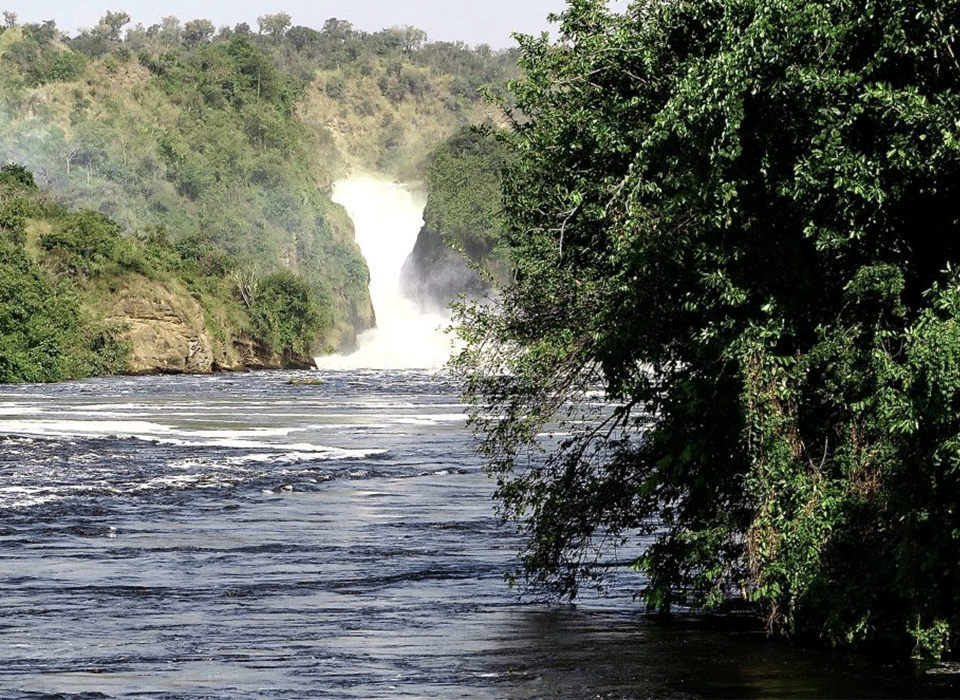
Budongo Forest lies on the top of the Albertine Rift, which also makes up part of the Great Rift Valley. The forest reserve is situated within Murchison Falls National Park boundaries. Hence, it makes up part of the vast Murchison Falls Conservation Area (MFCA). Budongo is largely a Mahogany Forest Reserve, a few of which still survive on the African continent.
Lying on an elevation range of 1110-1590m in Masindi District, the protectorate government established Budongo Forest in 1932. It is a moist, semi-deciduous rainforest reserve run by the National Forestry Authority– NFA. Budongo Forest prides itself on its 2 iconic tourist sites. These are the Kaniyo-Pabidi Eco-Tourism Site and the Busingiro Eco-Tourism Site. Kaniyo-Pabidi Site is at the Murchison Falls National Park boundaries and largely consists of Mahogany, Iron Wood Trees, etc.
History of Budongo Forest
The history of Budongo Forest dates back to the era of the Bunyoro King. He protected the forest and local chiefs could only go to hunt in the forest with his permission. Budongo comes from the local Bunyoro word meaning fertile soil. Officially, Budongo was designated as a forest reserve in 1932.
Fauna of Budongo
Budongo Forest is a vast natural forest protecting over 24 small mammal species. These include 9 primate species, 280 butterfly species, 465 species of trees, and 130 species of moths. Over 800 chimpanzees call Budongo Forest a home making it one of the most visited chimpanzee tracking destinations in Uganda and East Africa. About 80 of Budongo Forest’s chimpanzees have undergone habituation and are readily open for tracking. In addition to chimpanzees, Budongo Forest is also a host to varied species of primates. These include the red-tailed monkeys, grey-cheeked mangabeys, black and white colobus monkeys, blue monkeys, olive baboons, and others.
Avian Species
Budongo Forest is a host to all 360 bird species making it a special and important birding area in Uganda. They include a variety of forest bird species. The most important birding spot is the Royal Mile which stretches from Nyabyeya Forest College up to the Research Station.
Notable bird species in Budongo Forest Reserve include dusky long-tailed cuckoos, black-headed paradise flycatchers, lemon-bellied crombec, and Puvel’s Illadopsis. Also, you find the slender-billed greenbul, chestnut-crowned eremomela, forest robins, little green sunbirds, and white spotted flufftails. Other special bird species in Budongo include chocolate-backed kingfishers, Cassin’s hawk eagle, yellow-mounted weaver, African emerald cuckoo, grey long bill, Western black-headed oriole, yellow browned camaroptera, crested malimbe eagle, and many more.
Activities in Budongo Forest Reserve, Uganda.
Chimpanzee tracking experience is undeniably the major highlight of most visits to Budongo Forest. The 2-5 hours trekking adventure to see chimpanzees in Budongo starts early morning or afternoon with a briefing about chimpanzee tracking rules.
Upon finding a habituated chimpanzee community, you have a complete one hour to spend face-to-face with chimps. Along the way, there is an opportunity to keep an eye on the diversity. this may comprise floral species, butterflies, avifaunal species, other primates, and others.
Chimpanzee Habituation Experience.
Other than Kibale National Park, the chimpanzee habituation experience is also best done in Budongo Forest. Before a chimpanzee community is opened for tracking, chimpanzees undergo Chimpanzee Habituation. This process takes about 2 years or more. Researchers, scientists, environmentalists, conservationists, and other experts undertake this activity.
Birding
Birding in Budongo Forest Reserve takes you through a search for some of the 360 bird species. These bird species call this natural forest home. The most common ones include among others Puvel’s illadopsis, Cassin’s hawk eagles, chocolate-backed kingfishers, white spotted fluff tails, and flycatchers.
Guided nature/forest walks
Nature walks in Budongo introduce nature-loving holidaymakers to the forest reserve’s hidden habitats. The different habitats shelter a variety of faunal and floral species including primates, birds, butterflies, etc.
When is the best time to travel to Budongo Forest?
Budongo Forest is an all-year-round destination due to its favorable weather and climatic conditions. However, most safari activities such as chimpanzee tracking are best done during the dry season from June, July, and August to September and December, January to February.
The peak rainy months start from April to May and October to November, the months most visitors tend to avoid due to muddy grounds.
Accommodation.
Budongo Eco Lodge
Budongo Eco Lodge is the closest accommodation facility open for visitors to retire for a night or lunch. The Lodge is 30km North of Masindi town and it is accessible via the Kichumbanyobo Park gate in the South of Murchison Falls National Park.
Conclusively, a trip to Budongo forest will give you an experience of a lifetime. Why not consider planning a safari to Budongo? We’ll make sure that we meet your expectations.