
Why Does Mgahinga Have Only One Gorilla Family?

“`html
Why Does Mgahinga Have Only One Gorilla Family?
Mgahinga Gorilla National Park is one of Uganda’s two mountain gorilla destinations, yet only one habituated family—the Nyakagezi gorilla family—is normally available for tourist trekking. The reason lies in the park’s small size, its position within the wider Virunga ecosystem, gorilla ranging behaviour and Uganda’s conservation-first approach to habituation.
Why Is There Only One Habituated Gorilla Family in Mgahinga?
Mgahinga Gorilla National Park has one habituated mountain gorilla family normally available for tourist trekking: the Nyakagezi family. This does not mean that Nyakagezi represents every gorilla that can occur within the wider landscape. Mgahinga covers only about 34 square kilometres and forms Uganda’s portion of the much larger transboundary Virunga ecosystem. Mountain gorillas can use habitat across this connected volcanic landscape, while only carefully habituated groups are opened for tourism. The combination of Mgahinga’s small size, gorilla ranging patterns and conservation management explains why the park offers one regular habituated trekking family rather than the many groups found in Bwindi.
One Gorilla Family Does Not Mean a Lesser Gorilla Experience
Travellers comparing gorilla trekking in Uganda often notice a striking difference between Uganda’s two gorilla parks. Bwindi Impenetrable National Park has numerous habituated gorilla families distributed among several trekking sectors, while Mgahinga Gorilla National Park is principally associated with one habituated group: Nyakagezi.
At first this can make Mgahinga appear limited. Ecologically, however, the explanation is much more interesting. Mgahinga is a small piece of an international mountain ecosystem extending across Uganda, Rwanda and the Democratic Republic of Congo. Its mountain gorillas live within this wider natural landscape rather than within an isolated forest island.
For safari travellers, having one habituated family can actually contribute to Mgahinga’s appeal. Trekking here tends to feel intimate, the volcanic scenery is spectacular, and a visit can easily be combined with golden monkey trekking or volcano hiking.

Three Facts Explain Mgahinga’s Gorilla Story
A Small National Park
At roughly 34 square kilometres, Mgahinga is Uganda’s smallest national park. Its protected area is dramatically smaller than Bwindi, naturally limiting the amount of gorilla habitat lying inside Uganda’s park boundary.
Part of the Virungas
Mgahinga forms part of the Virunga volcanic ecosystem shared by Uganda, Rwanda and the Democratic Republic of Congo. Wildlife habitat continues beyond political borders.
Habituation Is Selective
A gorilla group existing in an ecosystem does not automatically make it available for tourism. Habituation is a careful, long-term conservation process, so the number of trekking families is not simply the number of gorilla groups in a landscape.

The Nyakagezi Gorilla Family
Nyakagezi is the habituated mountain gorilla family for which Mgahinga Gorilla National Park is famous. For travellers holding a Mgahinga gorilla permit, this is the family around which the regular trekking experience is organised.
Like other mountain gorilla groups, Nyakagezi is a social family whose composition can change naturally over time through births, deaths, maturation and movement. For this reason, travellers should avoid relying on old online articles for an exact current count of silverbacks, females and juveniles.
The important distinction is that Nyakagezi is a habituated family. Habituation gradually familiarises wild gorillas with the controlled presence of researchers, rangers and eventually tourists without turning them into captive or domesticated animals. They remain completely wild.
Up to 8 visitors
Up to 1 hour
15 years
Mgahinga, Uganda
Mgahinga Is Much Smaller Than Bwindi
The first explanation is geography. Mgahinga covers roughly 34 square kilometres, whereas Bwindi protects a much larger block of forest. A larger protected habitat can support more gorilla home ranges and therefore potentially more groups that conservation authorities can monitor and, where appropriate, habituate.
Mgahinga should not, however, be understood purely through its Ugandan boundary. Its ecological importance becomes much clearer when viewed as part of the Virunga landscape.

Mgahinga Is Part of a Transboundary Gorilla Ecosystem
National park boundaries are important for conservation management, but they are human boundaries. Mountain gorillas respond to vegetation, food, terrain, social relationships and suitable habitat—not immigration posts.
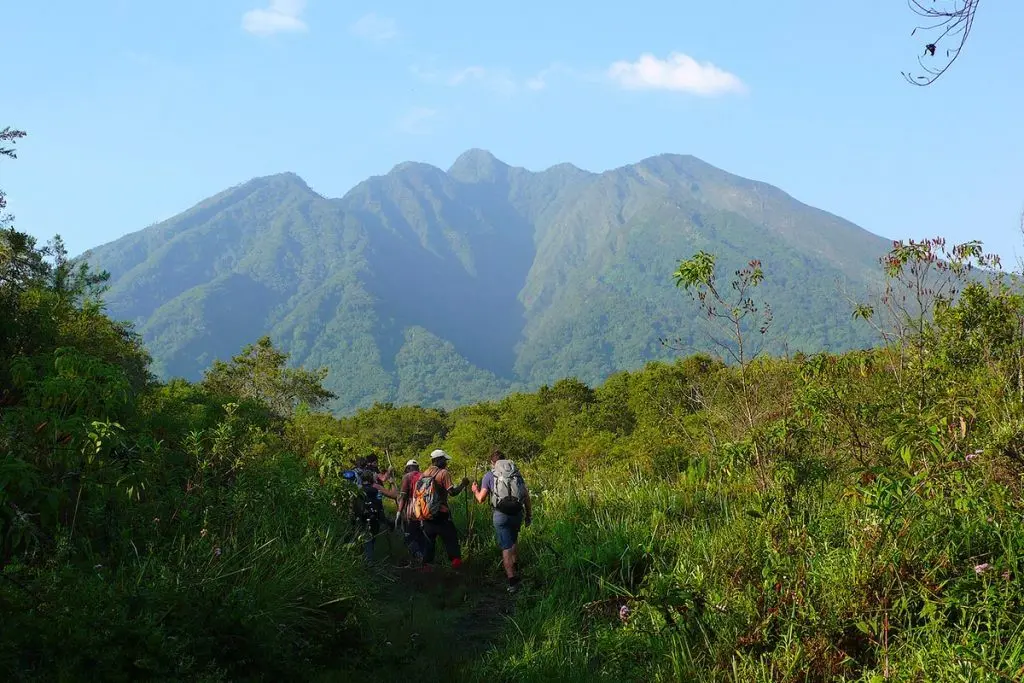
Mgahinga lies within the Virunga Conservation Area, an extraordinary chain of volcanic mountains and montane forest extending across parts of Uganda, Rwanda and the Democratic Republic of Congo.
On Uganda’s side, Mgahinga protects the slopes of Mount Muhabura, Mount Gahinga and Mount Sabyinyo. Beyond Uganda, the wider Virunga habitat continues into neighbouring protected areas.
This is one of the major ecological differences between Mgahinga and Bwindi Impenetrable National Park. Bwindi represents a separate mountain gorilla population within a comparatively large forest block, while Mgahinga forms one section of a wider international volcanic ecosystem.

Mountain Gorillas Can Move Through Their Natural Habitat
Mountain gorillas are not confined to one tiny location. A family occupies a home range and moves according to factors such as food availability, social dynamics and habitat conditions. Historically, Nyakagezi became particularly well known for movements associated with the wider Virunga landscape.
This history is one reason some older travel information portrays Mgahinga trekking as unpredictable. Travellers should be careful with such outdated descriptions. Modern safari planning should be based on current information from the Uganda Wildlife Authority and experienced local operators rather than historical assumptions about the family’s location.
The larger point remains important: gorillas experience the Virungas as connected habitat rather than as three separate countries.
Not Every Gorilla Family Should Be Habituated for Tourism
Another misconception is that conservation authorities should simply habituate additional groups so that Mgahinga can offer more permits. Gorilla tourism does not work that way.
Habituation is a conservation decision, not merely a tourism business decision. Researchers and conservation authorities have to consider the gorillas themselves, the suitability and stability of groups, habitat use, monitoring capacity, tourism pressure and long-term conservation objectives.
Habituation also takes considerable time. Rangers and researchers gradually expose a wild group to controlled human presence until the animals become sufficiently accustomed to observers. Even after habituation, strict trekking rules continue to protect the gorillas.
This conservation-first approach is precisely why travellers should see Mgahinga’s single regular trekking family as part of responsible wildlife management rather than as a tourism weakness.
“One gorilla family in Mgahinga” is commonly used in tourism to mean one habituated family available for regular visitor trekking. It should not be interpreted as a claim that only one gorilla group can ever occur anywhere within Mgahinga or the wider Virunga ecosystem.
Why Mgahinga Remains an Exceptional Safari Destination
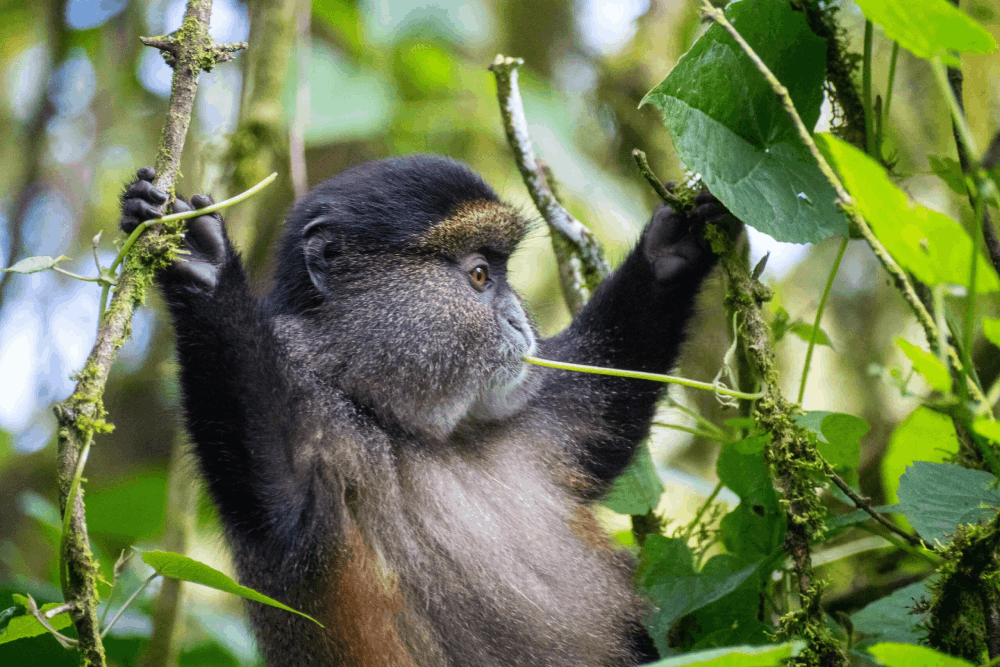
Nyakagezi may be the park’s only regular habituated gorilla trekking family, but Mgahinga offers several experiences that distinguish it from Uganda’s other protected areas.

Why Does Bwindi Have More Habituated Gorilla Families?
Bwindi and Mgahinga both protect mountain gorillas, but they are very different ecosystems from a tourism-planning perspective. Bwindi is much larger and has multiple trekking sectors, allowing a larger number of habituated groups to be distributed across the forest.
| Feature | Mgahinga | Bwindi |
|---|---|---|
| Gorilla trekking | Yes | Yes |
| Regular habituated families | One – Nyakagezi | Multiple families |
| Trekking areas | Mgahinga | Buhoma, Ruhija, Rushaga & Nkuringo |
| Landscape | Virunga volcanoes & montane forest | Ancient tropical rainforest & steep ridges |
| Golden monkey trekking | Yes | No |
| Gorilla habituation experience | No regular tourist experience | Available in southern Bwindi |
Neither park is automatically “better.” Travellers who want the widest choice of gorilla trekking sectors and accommodation often favour Bwindi, while those attracted by volcanic scenery, golden monkeys, hiking and a quieter park atmosphere may find Mgahinga Gorilla National Park particularly rewarding.
Is Having Only One Gorilla Family a Disadvantage?
Not necessarily. A traveller needs an available gorilla permit and a well-organised trek—not dozens of families to choose from. Once trekkers enter the forest, the emotional impact comes from encountering the gorillas themselves.
Mgahinga’s smaller scale can be attractive to visitors who prefer less busy destinations. The surrounding Virunga volcanoes give the park a completely different visual character from Bwindi, while golden monkey tracking offers an additional primate experience within the same park.
The practical limitation is permit capacity. With one regular habituated family, Mgahinga cannot accommodate the same number of gorilla trekkers as Bwindi. Travellers targeting specific dates should therefore secure permits early.
Mgahinga Gorilla Permit Prices
A gorilla permit is compulsory for trekking Nyakagezi. Uganda Wildlife Authority permits regulate visitor numbers and contribute to the conservation and management of mountain gorillas and their habitat.
For 2026, Uganda’s standard gorilla trekking permit rates are:
| Visitor Category | Permit |
|---|---|
| Foreign Non-Resident | USD 800 |
| Foreign Resident | USD 700 |
| Rest of Africa | USD 500 |
| East African Citizen | UGX 300,000 |
Note: Permit rates and promotional conditions can change. Confirm the applicable Uganda Wildlife Authority rate for your exact travel dates before payment.

Your permit authorises participation in the guided gorilla trek on the allocated date, including ranger guidance and up to one hour with the gorillas once they are located. Transport, accommodation, porter services and other safari arrangements are normally separate unless included in your tour package.
What Is Gorilla Trekking in Mgahinga Like?
Trekking normally begins with an early-morning briefing before visitors enter the forest with Uganda Wildlife Authority rangers. The duration of the search varies because gorillas move naturally through their habitat. Depending on the family’s location, terrain and conditions, the trek may be relatively short or take several hours.
Once Nyakagezi is located, trekkers normally receive up to one hour of observation time. This is the moment to slow down, follow ranger instructions and observe gorilla behaviour rather than focusing only on photographs.
Mgahinga’s terrain can involve steep volcanic slopes, bamboo zones and montane vegetation. Good hiking footwear, rain protection, gardening gloves, drinking water and appropriate long trousers are sensible. Hiring a local porter is also highly recommended: it provides practical assistance while directly supporting livelihoods around the park.
How to Get to Mgahinga
From Kigali
For shorter gorilla itineraries, Kigali can provide convenient access to southwestern Uganda. The journey involves crossing the Rwanda–Uganda border and continuing toward Kisoro and Mgahinga.
From Entebbe
Travelling overland from Entebbe or Kampala creates a longer Uganda safari journey through the southwest and works particularly well when combining gorillas with other parks and experiences.
Fly to Kisoro
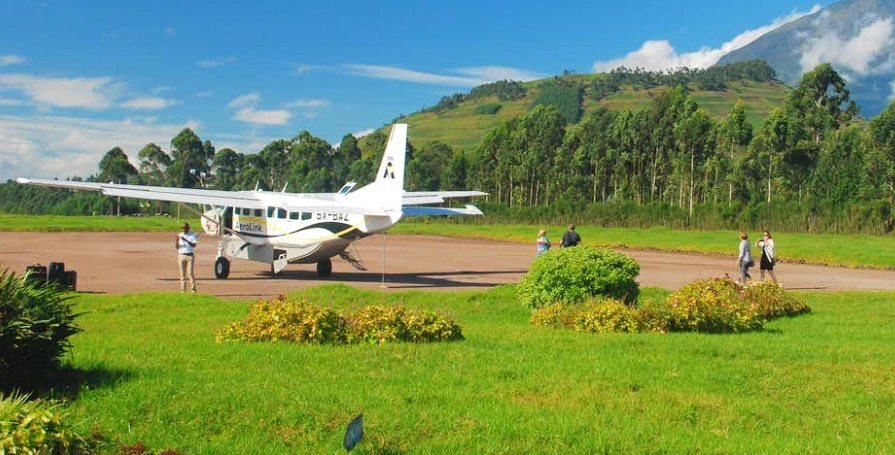
Domestic flights to Kisoro can substantially reduce road travel. A private road transfer then connects the airfield with accommodation around Kisoro and Mgahinga.
Where to Stay for Mgahinga Gorilla Trekking
Accommodation should be selected according to your budget, comfort preference and morning transfer time to the Mgahinga trekking briefing point. Travellers can stay close to the park or use Kisoro as a convenient base.
High-End Gorilla Stay
Luxury travellers can choose an upscale lodge in the Kisoro/Mgahinga region, prioritising mountain views, personalised service and easy safari logistics.
Comfort Near the Park
Mid-range properties work well for travellers who want comfortable rooms, meals and convenient access without paying premium luxury rates.
Stay in Kisoro
Kisoro offers additional accommodation choices and is useful for itineraries combining Mgahinga, Lake Mutanda, southern Bwindi or cross-border travel through Rwanda.
Who Should Choose Mgahinga?
Mgahinga can be particularly attractive if you want your gorilla trek to be part of a broader Virunga mountain experience rather than simply a single wildlife encounter.
Consider Mgahinga if you value quieter surroundings, dramatic volcanic scenery, golden monkey trekking, mountain hiking or convenient access through Kisoro and Kigali. It is also an excellent choice for repeat Uganda visitors who have already trekked gorillas in Bwindi and want to experience a different habitat.
Bwindi may be preferable if you want a broader choice of trekking sectors, more lodge options, multiple gorilla trekking dates or the specialised gorilla habituation experience.
For many travellers, the best park is therefore not determined by which has the greatest number of gorilla families. It is determined by permit availability, route, accommodation preference, desired activities and the overall safari itinerary.
A Simple 3-Day Mgahinga Gorilla Safari
Travel to Kisoro
Travel from Kigali or Entebbe toward southwestern Uganda and settle into your accommodation near Mgahinga.
Nyakagezi Gorilla Trek
Attend the morning briefing, enter Mgahinga with your ranger team and trek through the forest in search of the Nyakagezi family.
Golden Monkeys & Depart
Add golden monkey tracking where timing allows, or begin your onward journey to Rwanda, Bwindi or another Uganda safari destination.
Mgahinga Gorilla Family FAQs
Does Mgahinga really have only one gorilla family?
For tourism purposes, Mgahinga has one habituated gorilla family normally available for regular trekking: the Nyakagezi family. This should not be confused with saying that no other wild gorilla groups can ever occur within the wider Virunga landscape.
What is the name of the gorilla family in Mgahinga?
The habituated family trekked by visitors in Mgahinga Gorilla National Park is known as the Nyakagezi gorilla family.
Why doesn’t Mgahinga habituate more gorilla families?
Habituation is guided by conservation priorities rather than the desire to maximise visitor numbers. Mgahinga is also a small protected area within the wider transboundary Virunga ecosystem, making its ecological situation different from Bwindi.
Is Mgahinga better than Bwindi?
Neither park is universally better. Mgahinga stands out for its Virunga volcano scenery, smaller-scale atmosphere, golden monkeys and hiking, while Bwindi provides more gorilla families, trekking sectors and accommodation choices.
How many tourists can trek Nyakagezi?
A maximum of eight visitors normally trek a habituated gorilla family per day, subject to Uganda Wildlife Authority regulations and permit availability.
How long can I stay with the gorillas?
Once the gorillas are located, standard gorilla trekking permits normally allow visitors up to one hour with the habituated family while following ranger instructions.
Can I combine gorillas and golden monkeys in Mgahinga?
Yes. This is one of Mgahinga’s greatest advantages. With sufficient time, travellers can trek Nyakagezi on one day and track golden monkeys on another, creating an excellent short primate safari.
Should I book Mgahinga gorilla permits early?
Yes. Because only one habituated family is normally available for regular trekking, daily capacity is limited. Booking early is particularly important for peak travel periods and travellers with fixed dates.
Trek the Nyakagezi Gorilla Family in Mgahinga
Safari Vacations & Travel Services can arrange your Mgahinga gorilla permit, private 4×4 transport, accommodation, Kigali or Entebbe transfers and additional experiences such as golden monkey trekking, volcano hiking and Bwindi extensions.
“`


