
East Africa Safari Guide: Cost, Best Time & Routes 2026/2027
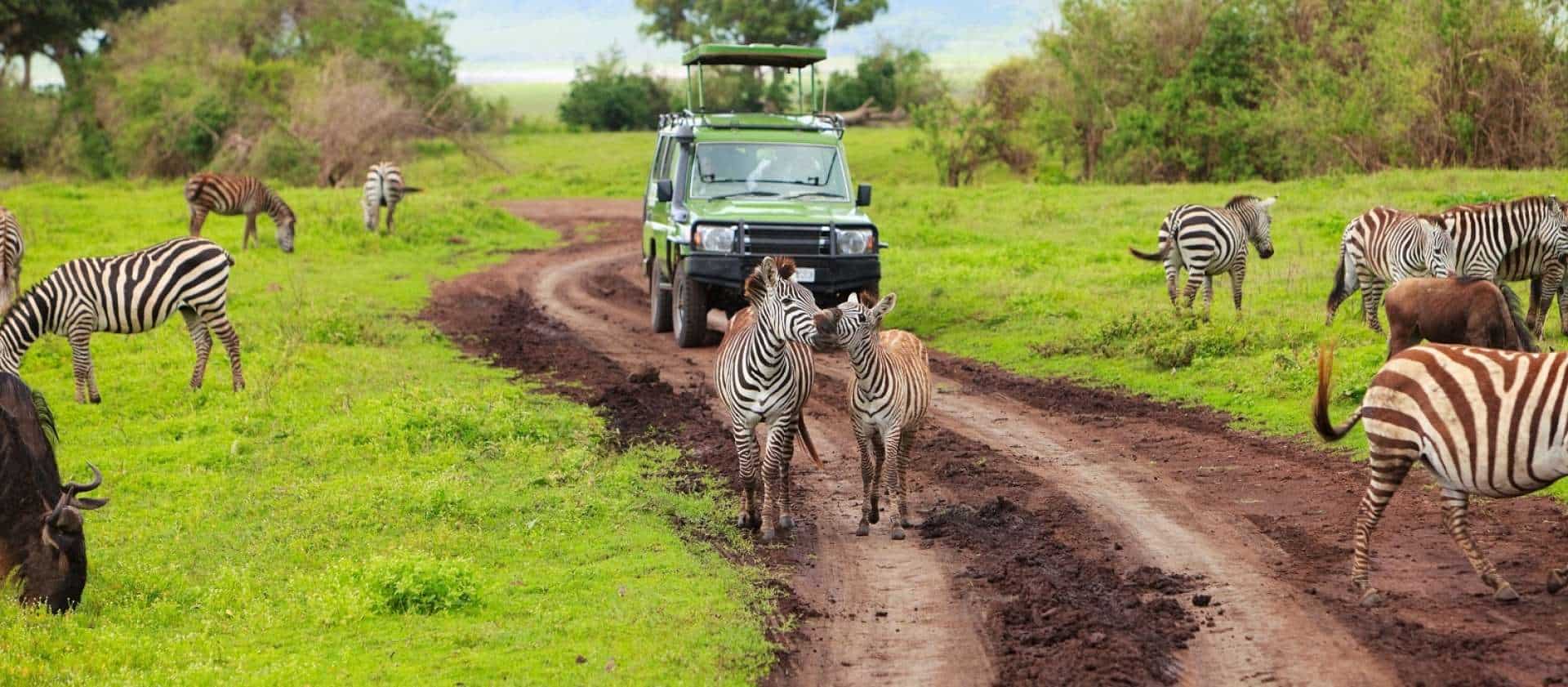
A classic game drive through East Africa, with zebras and other wildlife surrounding a safari vehicle in the open savannah.
An East Africa safari is one of the most rewarding ways to experience Africa’s extraordinary wildlife, landscapes, cultures and wilderness areas. From mountain gorillas hidden inside tropical rainforests to lions roaming open savannahs, elephants gathering around rivers and enormous herds crossing the Serengeti-Mara ecosystem, East Africa offers exceptional variety within one region. This Ultimate East Africa Safari Guide by Safari Vacations and Travel Services Ltd introduces the essential experiences, destinations and planning considerations travellers should understand before arranging an East Africa safari.
Uganda, Rwanda, Kenya and Tanzania form the core of many unforgettable East Africa safari packages. Each destination has a different character. Uganda combines mountain gorilla trekking, chimpanzee trekking, savannah wildlife, lakes and river adventures. Rwanda provides excellent primate experiences alongside wildlife viewing in Akagera National Park. Kenya is renowned for expansive wildlife reserves and classic savannah scenery, while Tanzania offers legendary destinations including Serengeti National Park, Ngorongoro and Tarangire. Combining two or more countries can create an exceptionally diverse East Africa safari itinerary.
Why Choose an East Africa Safari?
The greatest advantage of an East Africa safari is diversity. Within one journey, travellers can explore open grasslands, volcanic mountains, tropical forests, crater landscapes, freshwater lakes and wildlife-rich national parks. Safari experiences can include game drives, boat safaris, guided nature walks, gorilla trekking, chimpanzee tracking, birdwatching, cultural encounters and photography. Our guide to unforgettable adventures in East Africa demonstrates how easily wildlife, primates, landscapes and cultural experiences can be combined into one journey.
An East Africa safari can also be customized around different interests and travel styles. First-time visitors may concentrate on famous wildlife destinations, while repeat travellers can explore quieter parks and more specialized experiences. Couples may prefer private and romantic journeys, families can choose comfortable wildlife circuits, photographers can spend longer periods in productive wildlife areas, and adventure travellers can combine trekking with traditional game viewing. Travellers interested in responsible tourism can also learn more about sustainable wildlife watching in East Africa.
Uganda, Rwanda, Kenya and Tanzania Safari Experiences
Choosing where to travel depends on what you most want to experience. Uganda is particularly rewarding for travellers who want primates and traditional wildlife within one itinerary. A well-planned Uganda national park safari can combine Bwindi Impenetrable National Park, Kibale Forest, Queen Elizabeth National Park, Murchison Falls National Park and other remarkable destinations.
Rwanda is another important destination in an Ultimate East Africa Safari Guide, particularly for travellers interested in mountain gorillas, primates and shorter road connections between major attractions. A Rwanda gorilla trekking safari can be combined with Uganda or extended toward Kenya and Tanzania for a broader wildlife journey. Travellers comparing forest adventures can also explore this verified guide to an Uganda Rwanda gorilla safari.
Kenya and Tanzania provide the classic open-plains safari experience associated with East Africa. The Maasai Mara and Serengeti ecosystem is famous for large concentrations of wildlife, predators and seasonal movements of herbivores, while destinations such as Amboseli, Ngorongoro and Tarangire add further variety. Travellers who want both rainforest primates and savannah wildlife can combine Uganda with Tanzania, an option also discussed in this guide to gorilla trekking and Tanzania safari experiences.
Gorilla Trekking and Classic Wildlife Safaris
One feature that makes an East Africa safari particularly distinctive is the opportunity to combine classic game viewing with primate trekking. Uganda and Rwanda provide access to mountain gorilla experiences, while major savannah parks provide opportunities to search for lions, elephants, buffaloes, leopards, giraffes, zebras, antelopes and many other species. Travellers particularly interested in combining these experiences can explore our guide to gorilla trekking and Big Five safari planning.
For travellers whose main priority is mountain gorillas, there are numerous ways to build gorilla trekking into a longer East Africa safari itinerary. Uganda and Rwanda can be visited together, or a gorilla safari can be combined with wildlife destinations elsewhere in the region. Additional information about the different possibilities is available through this guide to gorilla safaris in Africa.
When Should You Plan an East Africa Safari?
East Africa can offer rewarding travel experiences throughout the year, but the ideal period depends on the destinations and activities included in your itinerary. Weather can influence trekking conditions, wildlife distribution, road conditions, visitor numbers and accommodation availability. Travellers planning around particular wildlife experiences should therefore consider the seasons carefully rather than choosing dates based only on price. Our detailed guide to the best time for an East Africa safari provides further planning information.
The best travel dates also depend on whether your priority is gorilla trekking, traditional game drives, birdwatching, photography, cultural experiences or a multi-country safari. Safari Vacations and Travel Services Ltd can create an itinerary around your preferred travel dates instead of forcing every traveller into the same route.
What Type of East Africa Safari Should You Choose?
East Africa safari tours range from comfortable budget adventures to private mid-range journeys and high-end luxury safaris. Your choice will influence accommodation, transportation, guiding, itinerary flexibility and overall safari cost. Travellers who value privacy, premium lodges and highly personalized arrangements may consider a luxury Uganda and Rwanda safari, while travellers prioritizing adventure can focus more of their budget on activities and national parks.
There is no single East African country that suits every traveller. The right choice depends on wildlife interests, available time, budget and preferred pace. Our comparison of the best East African wildlife safari destinations can help travellers begin narrowing down their options before requesting a customized itinerary.
Planning Your Ultimate East Africa Safari with Safari Vacations and Travel Services Ltd
A successful East Africa safari begins with a realistic itinerary. Trying to include too many parks within a short holiday can lead to excessive driving and less time enjoying wildlife. Safari Vacations and Travel Services Ltd focuses on creating practical routes that match the traveller’s interests, budget and available number of days. Depending on your preferences, your Ultimate East Africa Safari Guide itinerary can concentrate on Uganda and Rwanda or expand into Kenya and Tanzania for a complete multi-country adventure.
As this Ultimate East Africa Safari Guide continues, we will explore the best countries, national parks, wildlife experiences, safari costs, seasons, accommodation, transport, recommended routes and practical travel tips in greater detail. Whether you are planning your first African safari or returning for a deeper wildlife experience, the goal is to create an East Africa safari that balances adventure, comfort, responsible tourism and meaningful wildlife encounters.
Start Planning Your East Africa Safari
Tell Safari Vacations and Travel Services Ltd where you would like to travel, your preferred dates, number of travellers and safari interests. Our team will help you create a personalized East Africa safari itinerary covering Uganda, Rwanda, Kenya, Tanzania or a combination of destinations.
Best East African Safari Countries: Uganda, Rwanda, Kenya or Tanzania?
Choosing the best East African safari country depends on the wildlife, landscapes and activities you want to experience. Uganda, Rwanda, Kenya and Tanzania each offer a different style of African safari, which is why a well-planned Ultimate East Africa Safari Guide should compare them rather than simply declaring one destination the winner. Travellers interested in making the right choice can begin with this detailed guide to the best East African country for a wildlife safari. For many visitors, combining two or more countries creates an even richer journey.
Uganda stands out for combining rainforest primates with traditional savannah wildlife. Rwanda offers convenient gorilla trekking, beautiful highlands and wildlife viewing in Akagera National Park. Kenya is strongly associated with classic savannah safaris, the Maasai Mara and large concentrations of plains wildlife, while Tanzania provides extensive wilderness areas including Serengeti National Park, Ngorongoro Crater and Tarangire National Park. Travellers considering several destinations together can explore East Africa four-country safari packages covering Uganda, Rwanda, Kenya and Tanzania.
Uganda Safaris: Gorillas, Chimpanzees and Savannah Wildlife
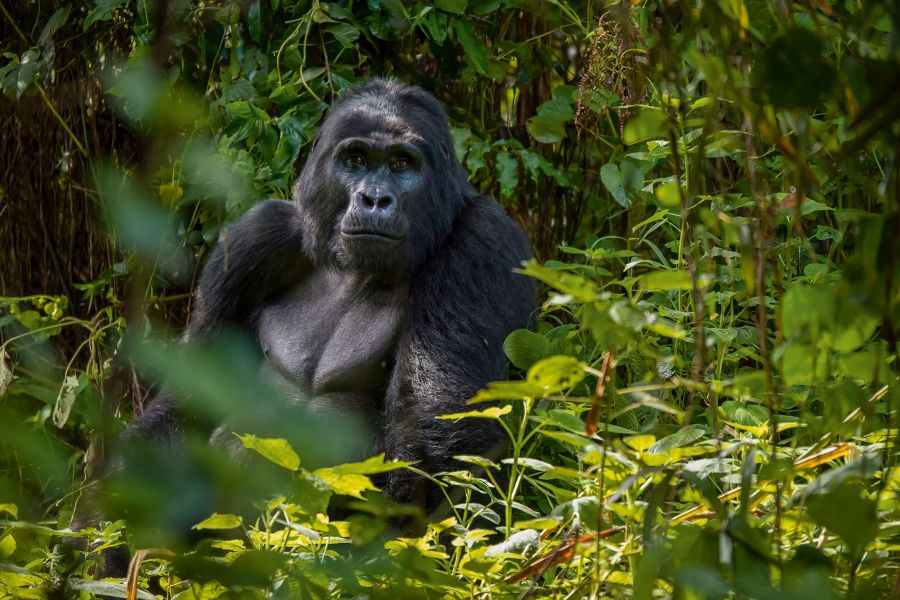
A mountain gorilla in Uganda’s lush rainforest, representing the unforgettable primate and wildlife experiences available on Uganda safaris.
Uganda is an excellent choice for travellers who want their East Africa safari to include both primate trekking and classic wildlife viewing. Mountain gorilla trekking takes place in Bwindi Impenetrable National Park and Mgahinga Gorilla National Park, while Kibale National Park is one of the country’s important chimpanzee destinations. Queen Elizabeth National Park, Murchison Falls National Park and Lake Mburo National Park provide game drives, boat safaris, birdwatching and opportunities to encounter a wide variety of African wildlife.
This mixture of forests, wetlands, lakes and savannahs makes Uganda particularly suitable for travellers who want variety within one country. A Uganda safari can move from chimpanzee forests to lion country and then into the mountain gorilla habitat of southwestern Uganda. Travellers comparing the wider region can read more about wildlife safaris in Uganda, Kenya and Tanzania, while those concentrating on primates can explore an additional guide to a Uganda gorilla and wildlife safari.
Rwanda Safaris: Gorilla Trekking and Accessible Wildlife Experiences
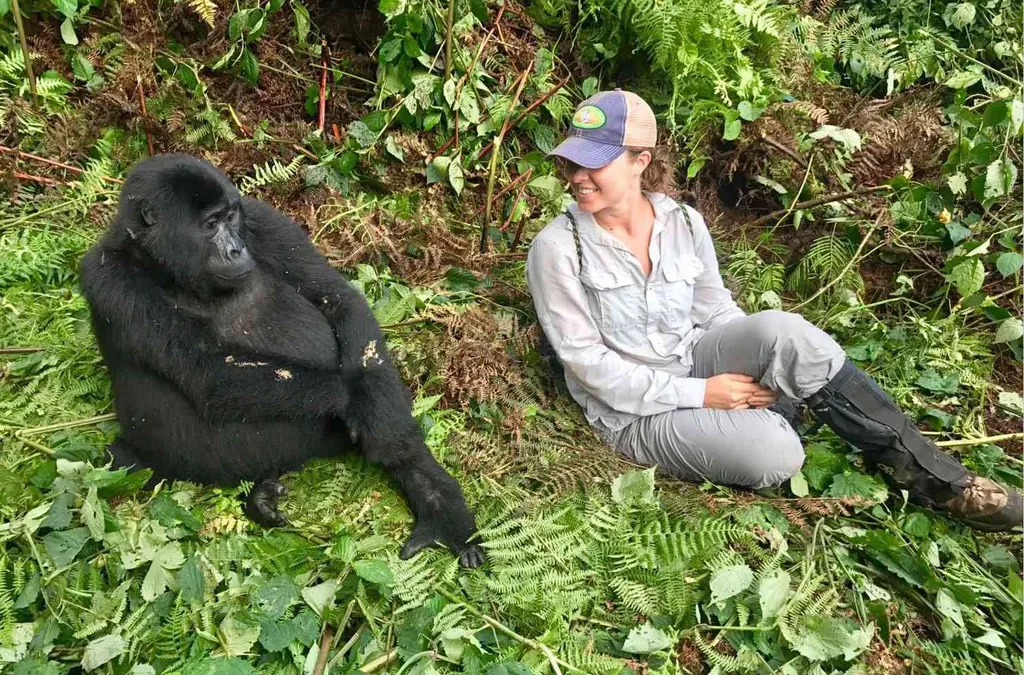
A traveler enjoying a memorable mountain gorilla encounter during a Rwanda safari and guided gorilla trekking experience.
Rwanda is especially attractive to travellers seeking a compact safari route with mountain gorillas as a major highlight. Volcanoes National Park is the country’s renowned mountain gorilla destination, while Nyungwe Forest provides primate and rainforest experiences. Akagera National Park adds a traditional savannah component with game drives, boat trips and diverse wildlife. Travellers wanting to include wildlife beyond gorilla trekking can explore this guide to Akagera National Park.
Uganda and Rwanda are frequently compared because both provide mountain gorilla trekking but offer different safari styles, road connections, accommodation choices and overall trip possibilities. Our guide to Uganda and Rwanda gorilla trekking experiences helps travellers understand those differences. Travellers considering both destinations within the same itinerary can also review this verified guide to an Uganda Rwanda gorilla safari.
Kenya Safaris: Maasai Mara and the Classic African Safari
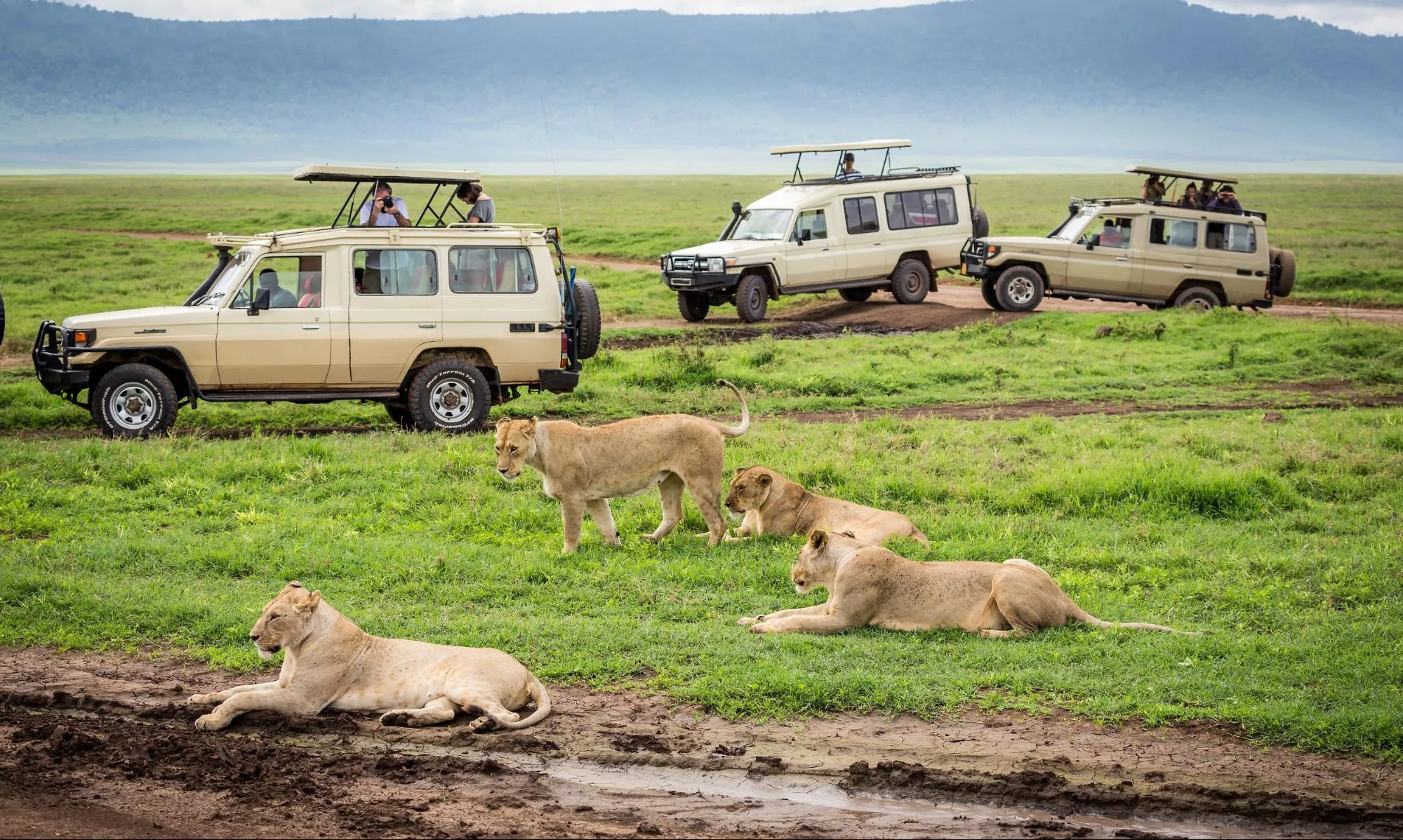
Safari vehicles observing a pride of lions on the open plains, capturing the classic wildlife experience of a Kenya safari.
Kenya is an excellent destination for travellers imagining wide grasslands, large herds, predators and traditional game drives. The Maasai Mara is its most internationally recognized wildlife destination and forms part of the wider Mara-Serengeti ecosystem. Amboseli National Park is another popular safari destination, particularly for elephant viewing and dramatic landscapes, while Kenya’s network of reserves and conservancies creates many possibilities for both first-time and repeat safari travellers.
Kenya can work particularly well for visitors who want to concentrate on savannah wildlife without adding extensive rainforest trekking. Short itineraries are possible, including a 3-day Kenya safari to the Maasai Mara, while longer journeys can combine several wildlife regions. Travellers deciding between East African destinations can also compare Kenya versus Uganda safari experiences to determine whether classic plains wildlife, primates or a combination of both better suits their interests.
Another powerful option is combining Kenya’s savannah wildlife with gorilla trekking in Uganda. This creates a safari that moves from open plains to dense tropical rainforest and provides two very different wildlife experiences within one holiday. Travellers considering this combination can read more about combining Uganda gorilla trekking with a Kenya safari.
Tanzania Safaris: Serengeti, Ngorongoro and Vast Wilderness
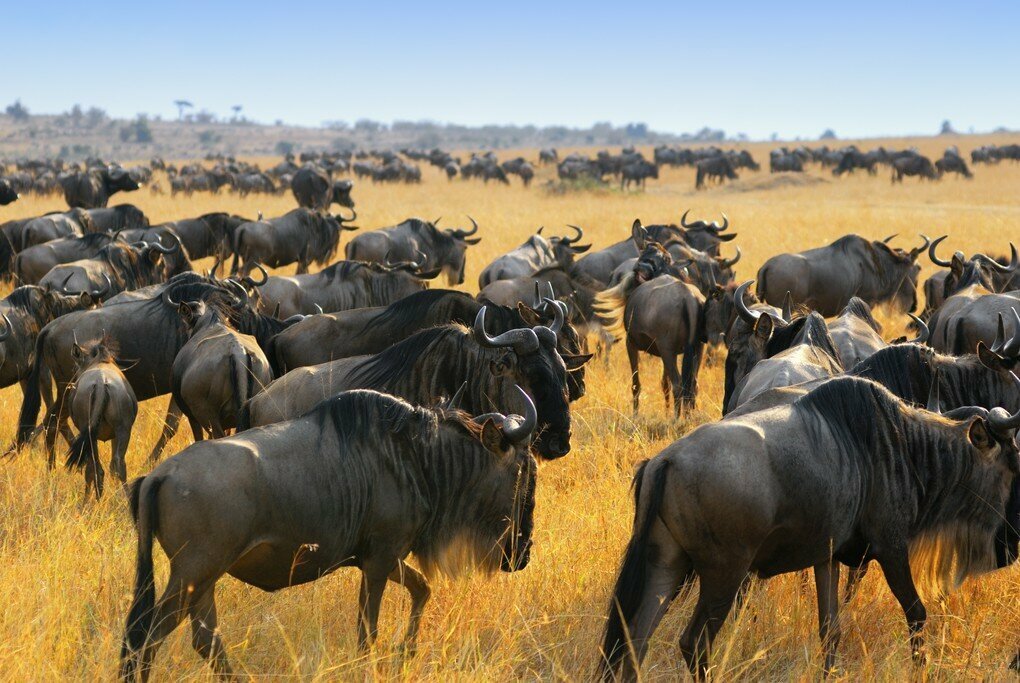
A vast herd of wildebeest on Tanzania’s open plains, showcasing the spectacular wildlife experiences of the Serengeti.
Tanzania is ideal for travellers seeking extensive wildlife areas and longer traditional safari circuits. Serengeti National Park is central to many Tanzania itineraries, while Ngorongoro Crater provides another highly rewarding wildlife experience. Tarangire National Park, Lake Manyara and other destinations can be added depending on the number of available travel days and the type of safari required.
Travellers wanting a broad introduction to Tanzania can consider an 8-day Tanzania safari covering major northern wildlife areas. Kenya and Tanzania are also natural partners for travellers who want to experience the wider Serengeti-Mara ecosystem. Our guide to combining Maasai Mara and Serengeti explains how the two destinations can form one comprehensive East Africa wildlife itinerary.
Tanzania can also be combined with Uganda for travellers who want a strong contrast between traditional game viewing and mountain gorilla trekking. A journey can begin among the savannah wildlife of northern Tanzania before continuing into Uganda’s forested southwest, or operate in the opposite direction depending on international flights and regional connections. This type of combination is explored further in this guide to Uganda gorilla trekking with a Tanzania safari.
Uganda vs Rwanda vs Kenya vs Tanzania Safari Comparison
| Country | Best Known For | Ideal For | Major Safari Areas |
|---|---|---|---|
| Uganda | Gorillas, chimpanzees and varied wildlife | Travellers wanting primates and savannah wildlife | Bwindi, Kibale, Queen Elizabeth, Murchison Falls, Mgahinga |
| Rwanda | Mountain gorillas, primates and compact safari routes | Shorter primate-focused and premium journeys | Volcanoes, Akagera and Nyungwe |
| Kenya | Classic savannah wildlife and Maasai Mara | First-time safari travellers and wildlife photographers | Maasai Mara, Amboseli, Samburu and Tsavo |
| Tanzania | Serengeti, Ngorongoro and extensive safari circuits | Long wildlife safaris and multi-park adventures | Serengeti, Ngorongoro, Tarangire and Lake Manyara |
Which East African Safari Country Should You Choose?
There is no single answer for every traveller. Choose Uganda if gorillas, chimpanzees and varied ecosystems are priorities. Choose Rwanda if you want mountain gorilla trekking combined with relatively compact travel routes. Kenya is especially suitable for a classic savannah safari centred on destinations such as the Maasai Mara, while Tanzania is excellent for travellers wanting extensive wilderness and major northern safari destinations. Travellers who do not want to choose only one country can combine several experiences within a customized East Africa itinerary.
An especially rewarding option is combining primates in Uganda or Rwanda with the savannahs of Kenya and Tanzania. Safari Vacations and Travel Services Ltd can arrange routes involving two, three or all four countries depending on your available days and interests. Travellers planning a longer regional journey can also explore gorilla trekking in Uganda and Rwanda as part of a broader East Africa safari.
Plan the Right East Africa Safari with Safari Vacations and Travel Services Ltd
The best East Africa safari is the one designed around what you genuinely want to see rather than simply visiting the largest number of destinations. Safari Vacations and Travel Services Ltd helps travellers compare Uganda, Rwanda, Kenya and Tanzania before developing a practical route with appropriate parks, accommodation and experiences. Whether your dream is mountain gorillas, chimpanzees, Big Five wildlife, the Serengeti-Mara ecosystem or a complete multi-country journey, careful planning can turn these different destinations into one memorable East African safari.
Best Safari Destinations and National Parks in East Africa
The best safari destinations in East Africa combine tropical forests, open savannahs, volcanic landscapes, wetlands and some of Africa’s most celebrated wildlife areas. Uganda, Rwanda, Kenya and Tanzania each contribute something different to an Ultimate East Africa Safari Guide, allowing travellers to combine mountain gorillas, chimpanzees, Big Five wildlife, spectacular scenery and classic game drives within one regional journey. Choosing the right national parks is important because a well-designed safari should focus on quality experiences rather than trying to visit too many destinations within a limited number of days.
Bwindi Impenetrable National Park, Uganda
Bwindi Impenetrable National Park is one of Uganda’s most important safari destinations and a major highlight for travellers interested in mountain gorilla trekking. Located in southwestern Uganda, the forest offers a completely different experience from the open savannah parks associated with traditional African safaris. Gorilla trekking takes visitors through thick vegetation and mountainous terrain in search of habituated mountain gorilla families accompanied by trained guides and rangers.
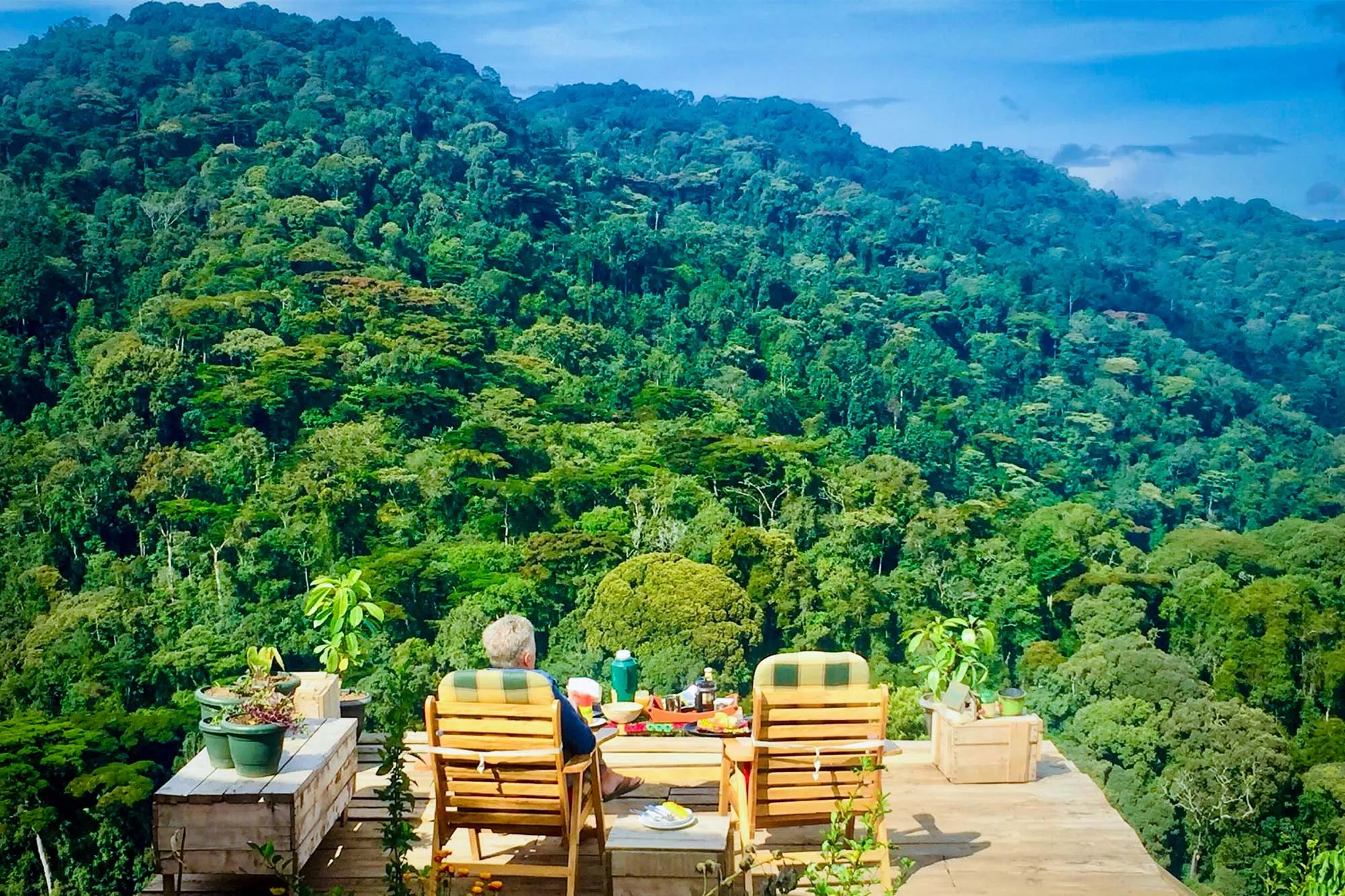
A peaceful lodge terrace overlooking the lush rainforest of Bwindi Impenetrable National Park, one of Uganda’s premier gorilla trekking destinations.
Bwindi works particularly well within a longer Uganda safari because it can be combined with Queen Elizabeth National Park, Kibale National Park, Lake Bunyonyi and other southwestern attractions. Travellers can also connect Bwindi with Rwanda through Kigali, making it an important destination on Uganda-Rwanda and wider East Africa safari itineraries.
Queen Elizabeth National Park, Uganda
Travellers looking for traditional wildlife viewing should consider Queen Elizabeth National Park. The park combines savannah landscapes, wetlands, lakes and forested areas, creating excellent opportunities for game drives, birdwatching and boat safaris. The Ishasha Sector is particularly associated with tree-climbing lions, while the Kazinga Channel provides rewarding opportunities to observe hippos, buffaloes, elephants, crocodiles and numerous water birds.
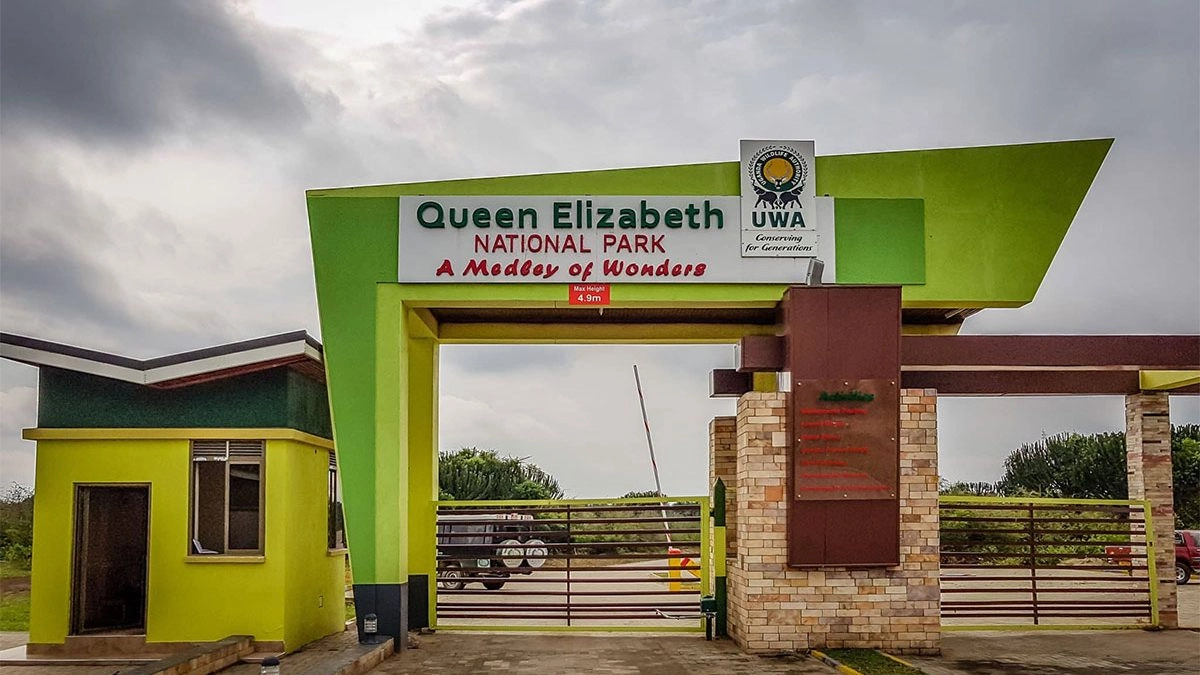
The entrance to Queen Elizabeth National Park, one of Uganda’s most popular wildlife safari destinations.
Queen Elizabeth National Park is especially useful when designing a Uganda safari that combines gorilla trekking and chimpanzee tracking because of its position between Bwindi and the Kibale region. This allows travellers to experience forest primates and savannah wildlife without unnecessary backtracking.
Murchison Falls National Park, Uganda
In northwestern Uganda, Murchison Falls National Park combines wildlife viewing with the dramatic scenery of the River Nile. Game drives through the park’s savannah areas can reveal elephants, giraffes, buffaloes, antelopes and predators, while boat journeys on the Nile add a different perspective to the safari experience.
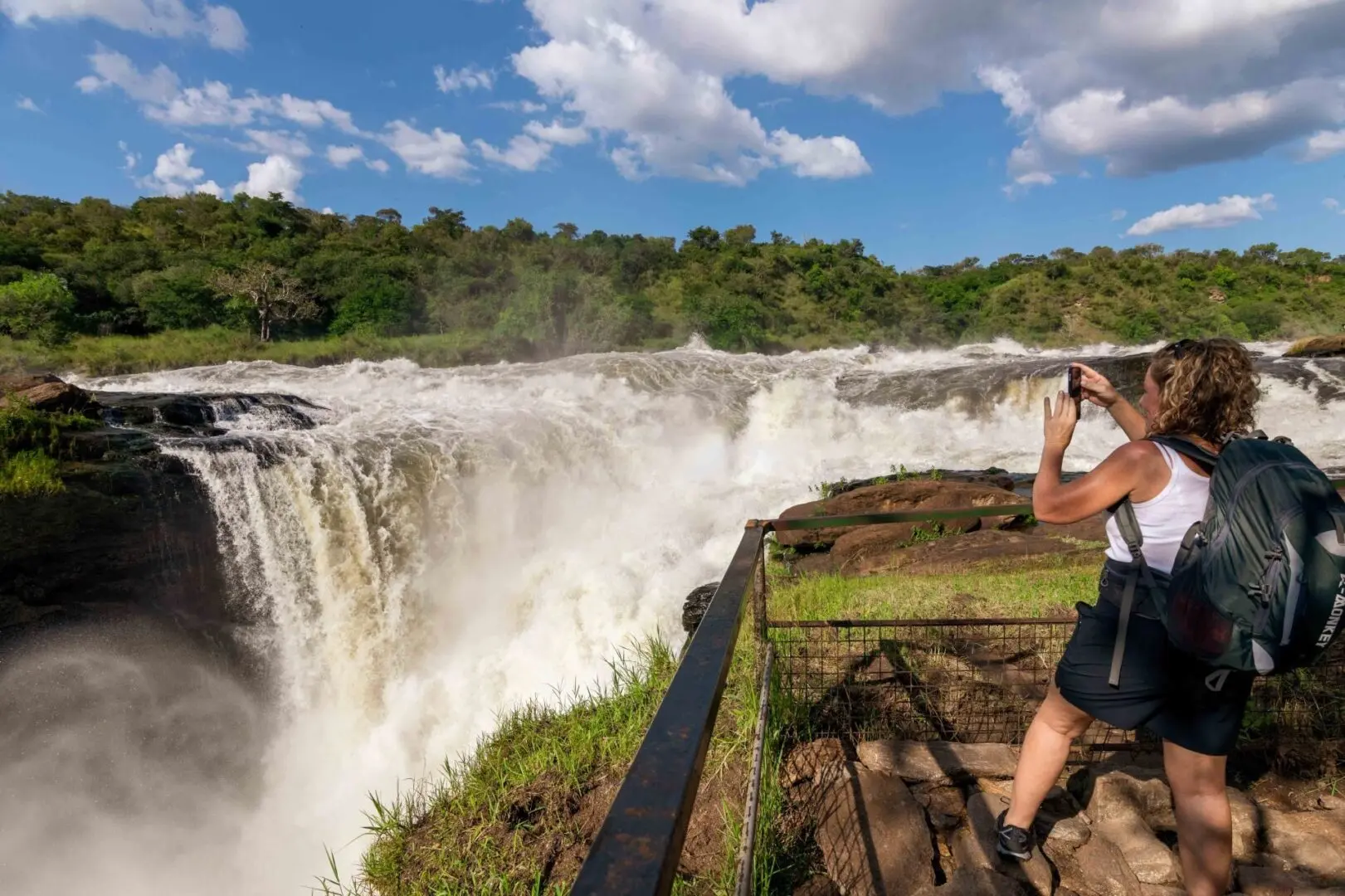
A traveler capturing the dramatic power of Murchison Falls, one of Uganda’s most iconic natural attractions.
Murchison Falls is particularly suitable for travellers who want a broader Uganda wildlife circuit. It can be combined with Ziwa Rhino Sanctuary, Kibale, Queen Elizabeth, Bwindi and other destinations to create a longer journey through Uganda. Visitors who want to compare major parks across the region can also explore this guide to the top East African safari destinations.
Kibale National Park, Uganda
For primate enthusiasts, the Kibale National Park safari experience is an important addition to an East Africa itinerary. Kibale is best known for chimpanzee tracking and forest-based activities, providing a strong contrast to Uganda’s savannah parks. Travellers can combine chimpanzee experiences with forest walks, birdwatching, community visits and exploration of the surrounding crater lake region.
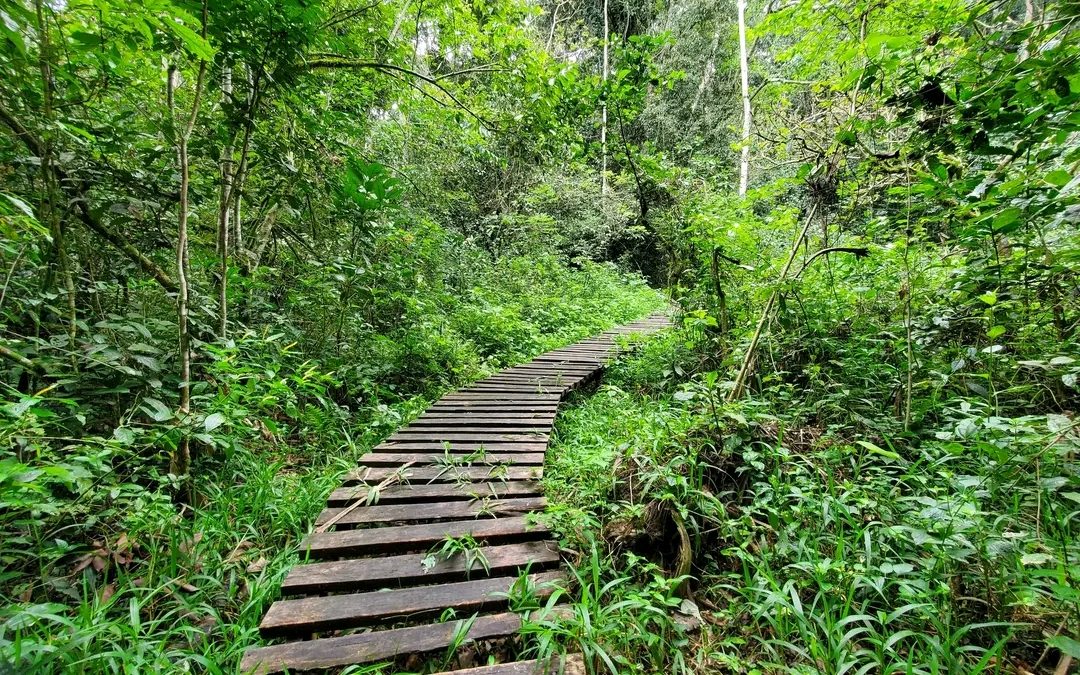
A peaceful forest trail through Kibale National Park, one of Uganda’s leading destinations for chimpanzee trekking and primate safaris.
Kibale works naturally with Queen Elizabeth National Park because the two destinations can be included within the same western Uganda safari circuit. A journey combining Kibale, Queen Elizabeth and Bwindi creates one of Uganda’s strongest safari routes by bringing chimpanzees, savannah wildlife and mountain gorillas into one itinerary.
Volcanoes National Park and Akagera National Park, Rwanda
Rwanda offers both forest and savannah safari experiences. Volcanoes National Park is the country’s principal mountain gorilla trekking destination and is also known for golden monkey tracking and volcanic scenery. It can be reached conveniently from Kigali and is often combined with Uganda’s Bwindi Impenetrable National Park for travellers interested in experiencing gorilla trekking in both countries.
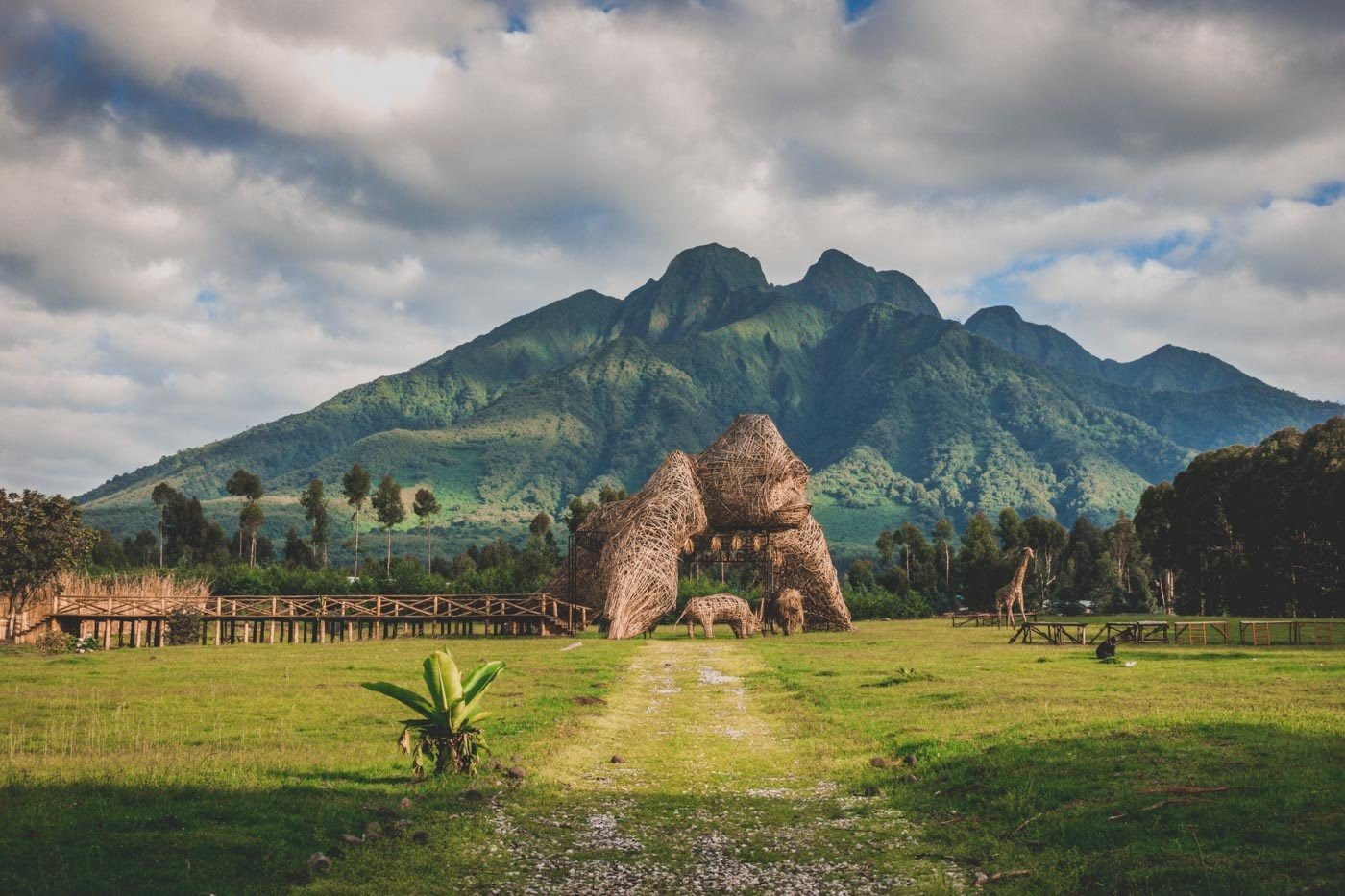
A scenic view of Volcanoes National Park and the dramatic Virunga Mountains, home to Rwanda’s famous mountain gorillas.
For classic wildlife viewing, Akagera National Park adds open savannah, woodland, lakes and wetlands to a Rwanda itinerary. Game drives and boat safaris make Akagera an excellent complement to gorilla trekking in Volcanoes National Park. A traveller can therefore experience Rwanda’s mountain forests and traditional African wildlife environments within the same holiday.
Nyungwe Forest National Park, Rwanda
Nyungwe Forest National Park is an important destination for travellers interested in chimpanzees, monkeys, birdlife, forest hiking and Rwanda’s montane rainforest landscapes. The park offers a quieter forest experience that complements the mountain gorillas of Volcanoes National Park and wildlife of Akagera.
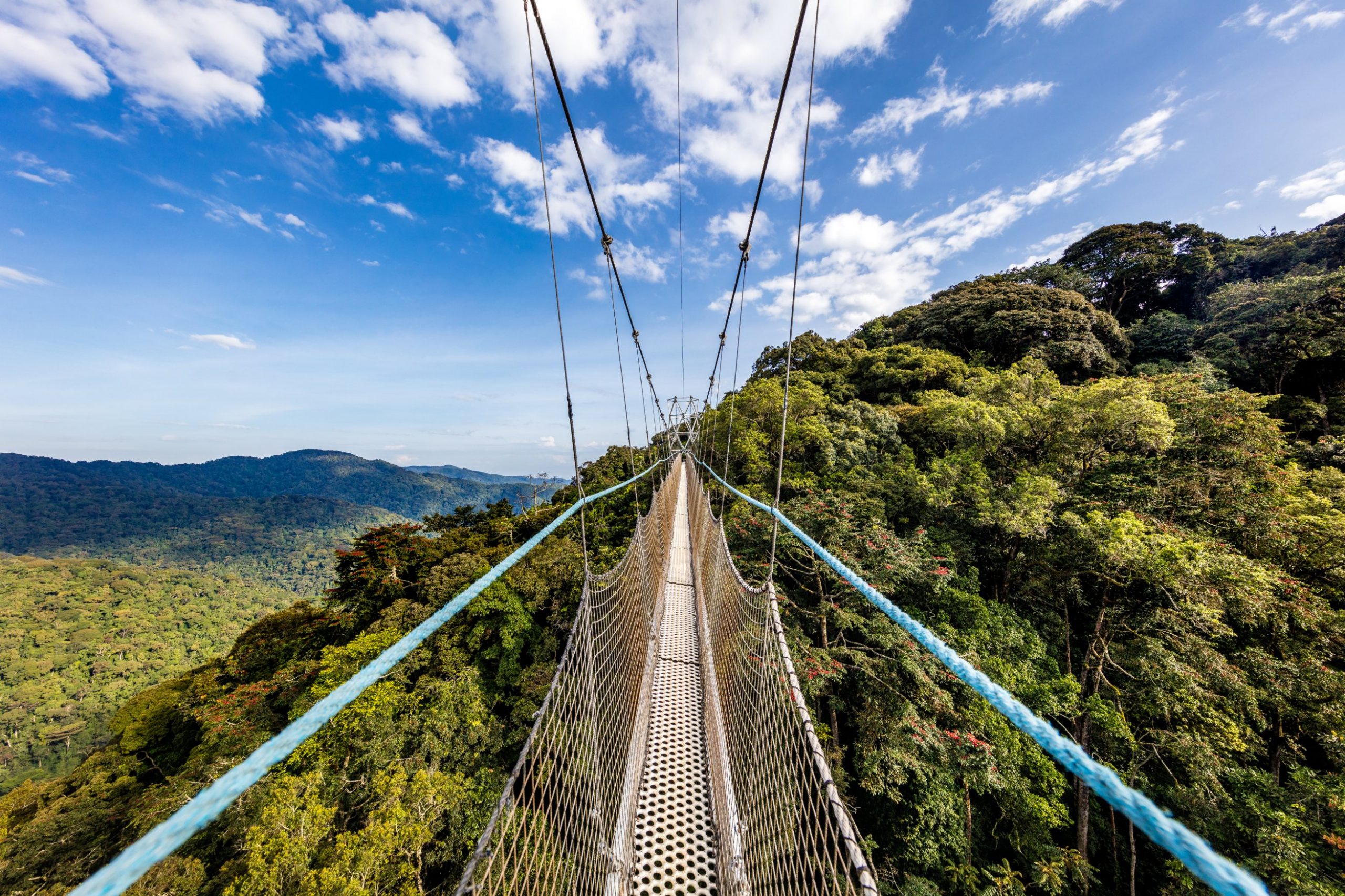
The famous canopy walkway stretching above the lush rainforest of Nyungwe Forest National Park in southwestern Rwanda.
A complete Rwanda safari can therefore combine Akagera, Volcanoes and Nyungwe to showcase three very different ecosystems. Travellers with additional time can continue across the border into Uganda, creating a broader primate and wildlife safari through both countries.
Maasai Mara National Reserve, Kenya
Kenya remains one of the most recognizable safari destinations in Africa, with the Kenya safari experience centred around famous wildlife regions such as the Maasai Mara, Amboseli, Samburu, Lake Nakuru and Tsavo. These destinations are particularly rewarding for travellers interested in game drives, large mammals, predators, photography and open savannah scenery.
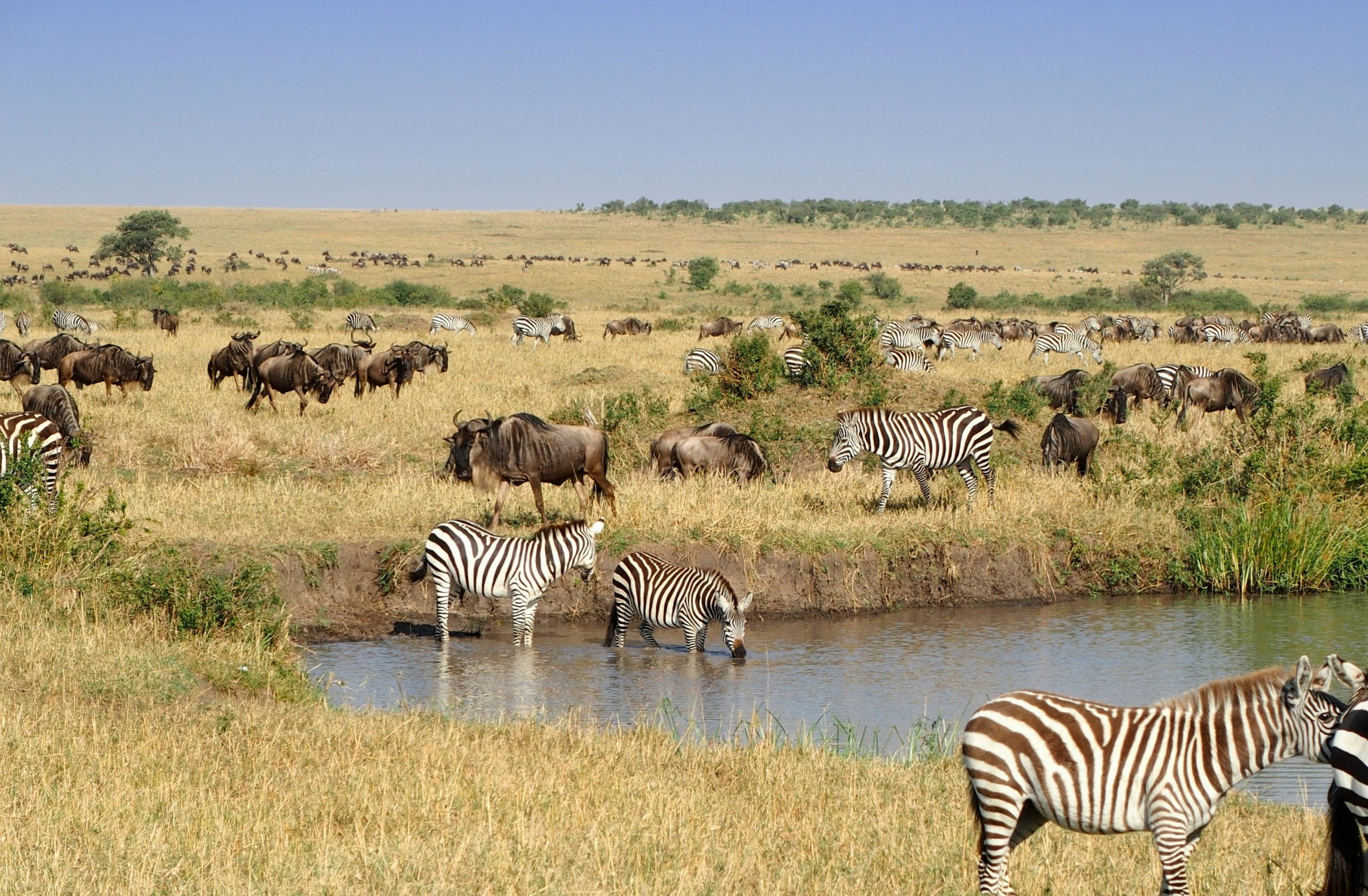
Zebras and wildebeest gather across the open savannah of Maasai Mara National Reserve, one of Kenya’s premier safari destinations.
The Maasai Mara is one of the country’s most sought-after wildlife areas and an important part of the wider Serengeti-Mara ecosystem. Travellers with limited time can explore the reserve through a Maasai Mara safari, while longer itineraries can combine it with Amboseli, Lake Nakuru or destinations in neighbouring Tanzania.
Kenya also combines extremely well with Uganda for travellers who want both classic wildlife viewing and mountain gorilla trekking. A combined Uganda and Kenya safari creates a striking contrast between the open savannahs of Kenya and Uganda’s tropical forests.
Serengeti National Park, Tanzania
Few East Africa safari destinations are as famous as Tanzania’s Serengeti. Well-planned Serengeti safari holidays provide opportunities to explore expansive plains, search for predators and observe large concentrations of herbivores. The park is central to the Serengeti-Mara ecosystem and forms part of the seasonal movement commonly known as the Great Migration.
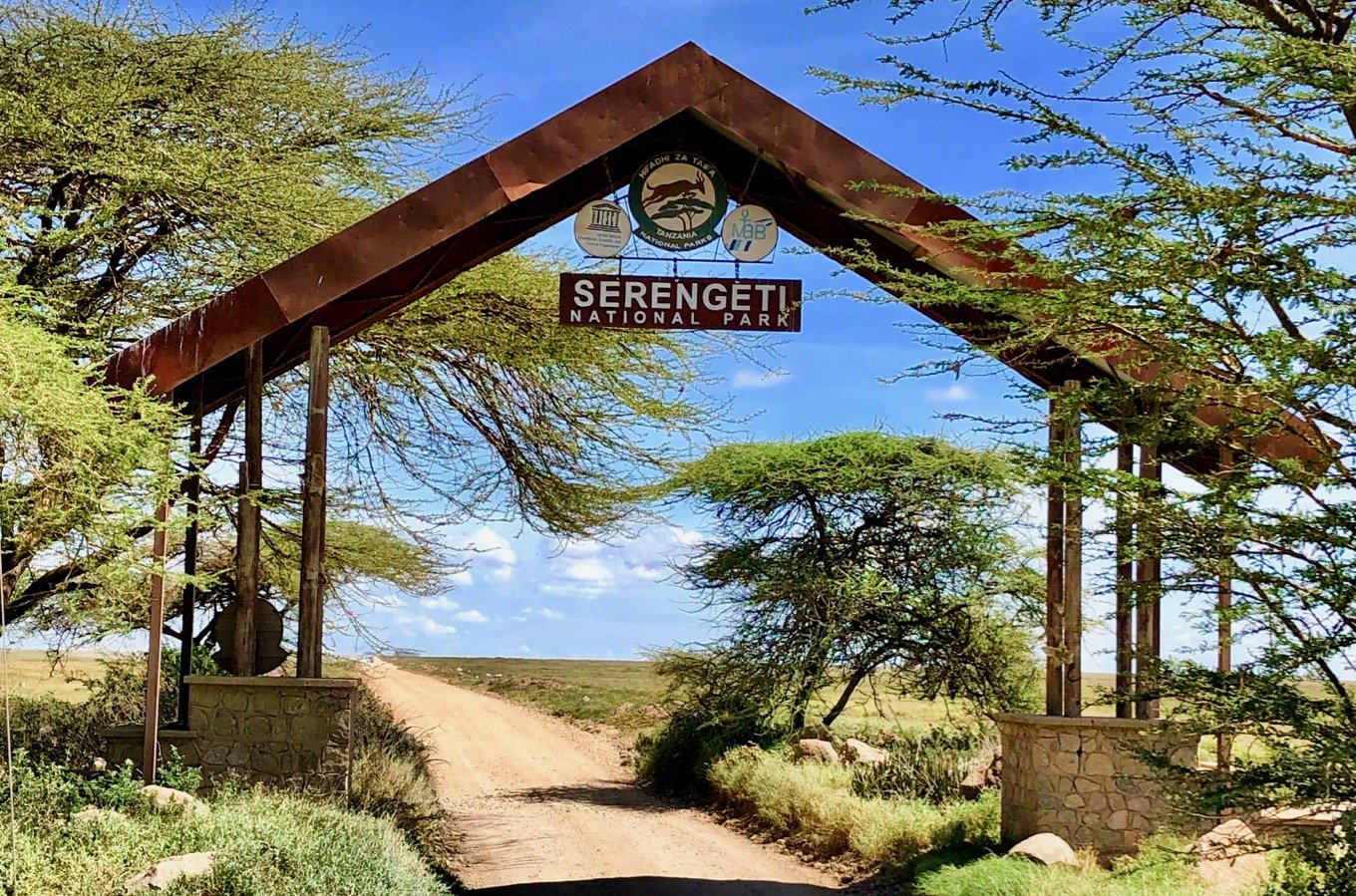
The iconic entrance to Serengeti National Park, one of Tanzania’s most famous wildlife safari destinations.
The Serengeti is extensive, so travellers should select safari areas according to their travel period and overall itinerary rather than trying to cover the entire park quickly. It combines naturally with Ngorongoro, Tarangire and other northern Tanzania destinations, creating one of East Africa’s strongest traditional wildlife circuits.
Ngorongoro Crater and Tarangire National Park, Tanzania
The Ngorongoro Conservation Area adds dramatic landscapes and concentrated wildlife viewing to a Tanzania safari, while Tarangire National Park is known for its expansive scenery, baobab-dominated landscapes and elephant viewing. These areas are regularly combined with Serengeti National Park through Tanzania Northern Circuit safaris.
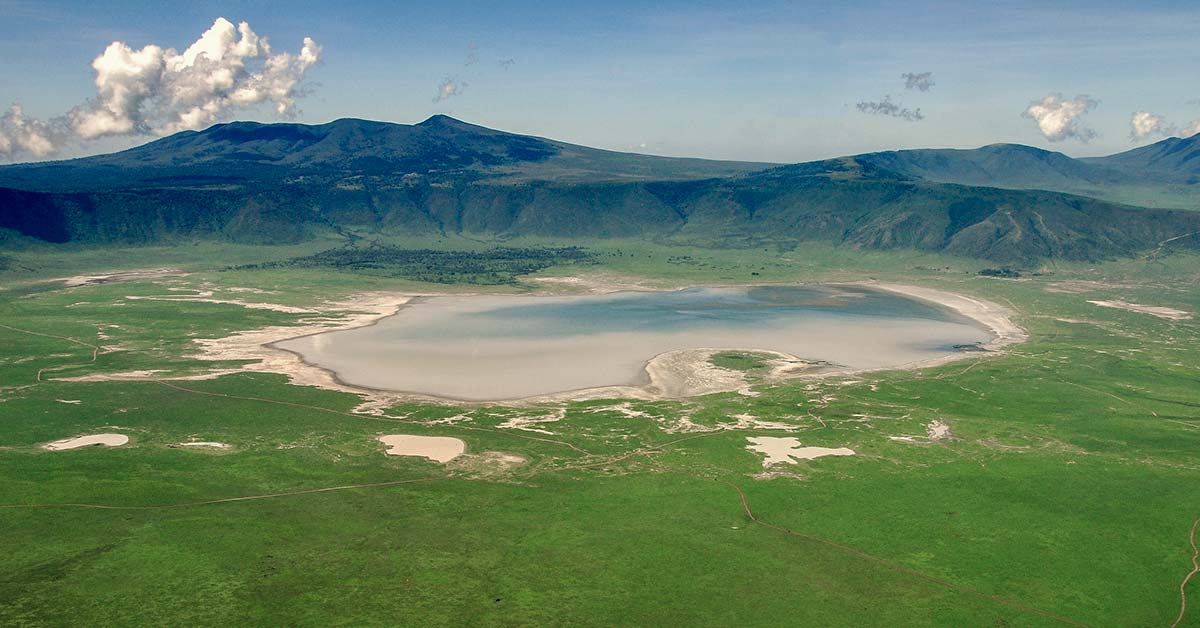
A spectacular panoramic view of Ngorongoro Crater, one of Tanzania’s most remarkable wildlife safari destinations.
Travellers seeking a traditional wildlife-focused East Africa safari can spend much of their journey exploring Tanzania’s northern parks before adding Kenya’s Maasai Mara. Those who want greater diversity can continue to Uganda or Rwanda for mountain gorilla trekking. Travellers considering Tanzania can also read more about Tanzania safari experiences when comparing destinations.
How to Choose the Best East Africa Safari Destinations
The best national parks for your East Africa safari should reflect your main interests. Travellers focused on mountain gorillas should prioritize Bwindi or Volcanoes National Park. Chimpanzee enthusiasts can include Kibale or Nyungwe. Those seeking classic savannah wildlife can concentrate on the Maasai Mara, Serengeti, Ngorongoro, Queen Elizabeth, Murchison Falls or Akagera. Photography enthusiasts may prefer slower itineraries with several nights in fewer parks rather than constantly moving between destinations.
Safari Vacations and Travel Services Ltd can also combine these destinations across international borders. Uganda and Rwanda work particularly well for primate safaris, Kenya and Tanzania create an excellent classic wildlife combination, while longer journeys can connect all four countries. Careful route planning reduces unnecessary transfers and gives travellers more time for wildlife viewing, relaxation and meaningful experiences.
Plan Your East Africa National Park Safari
The best East Africa safari itinerary does not need to include every famous park. A successful journey selects destinations that complement each other and match the traveller’s available time, budget and interests. Safari Vacations and Travel Services Ltd can design customized safaris covering Uganda, Rwanda, Kenya and Tanzania, from short gorilla and wildlife trips to extended multi-country adventures.
East Africa Wildlife Safari: Big Five, Great Migration, Gorillas and Chimpanzees
An East Africa wildlife safari offers far more than traditional game drives. Uganda, Rwanda, Kenya and Tanzania provide opportunities to experience mountain gorillas, chimpanzees, the Big Five, large herds of plains animals, spectacular birdlife and the Great Wildebeest Migration within one region. This extraordinary diversity is why the Ultimate East Africa Safari Guide should combine forest adventures with savannah wildlife rather than treating them as separate holidays. Travellers looking for the broadest possible experience can explore some of the best safari experiences in East Africa before deciding which wildlife encounters to include.
Big Five Safaris in East Africa
The African Big Five are the lion, leopard, elephant, Cape buffalo and rhinoceros. Today, seeing these animals in protected landscapes is one of the major attractions of an East Africa safari. Kenya and Tanzania are internationally famous for classic Big Five game viewing, while Uganda can combine large-mammal safaris with primate trekking and Rwanda provides Big Five viewing in Akagera National Park. Travellers comparing destinations can explore the best Big Five safari destinations in East Africa.
Kenya provides excellent opportunities for searching for iconic wildlife in areas such as the Maasai Mara and other reserves. Lions, elephants, buffaloes and leopards are among the species travellers often hope to encounter, although wildlife sightings are never guaranteed. Visitors planning a Kenya-focused itinerary can learn more about where to see the Big Five in Kenya.
Rwanda provides a different Big Five experience in Akagera National Park, where savannah, woodland, wetlands and lakes complement the country’s better-known mountain gorilla landscapes. This makes it possible to combine Volcanoes National Park with Big Five safari experiences in Akagera during one Rwanda journey.
Mountain Gorilla Trekking in Uganda and Rwanda
Mountain gorilla trekking is one of the experiences that separates an East Africa safari from many other wildlife holidays. Uganda offers gorilla trekking in Bwindi Impenetrable National Park and Mgahinga Gorilla National Park, while Rwanda offers trekking in Volcanoes National Park. Instead of observing wildlife mainly from a safari vehicle, gorilla trekking involves entering the forest with trained guides and trackers to search for habituated gorilla families.
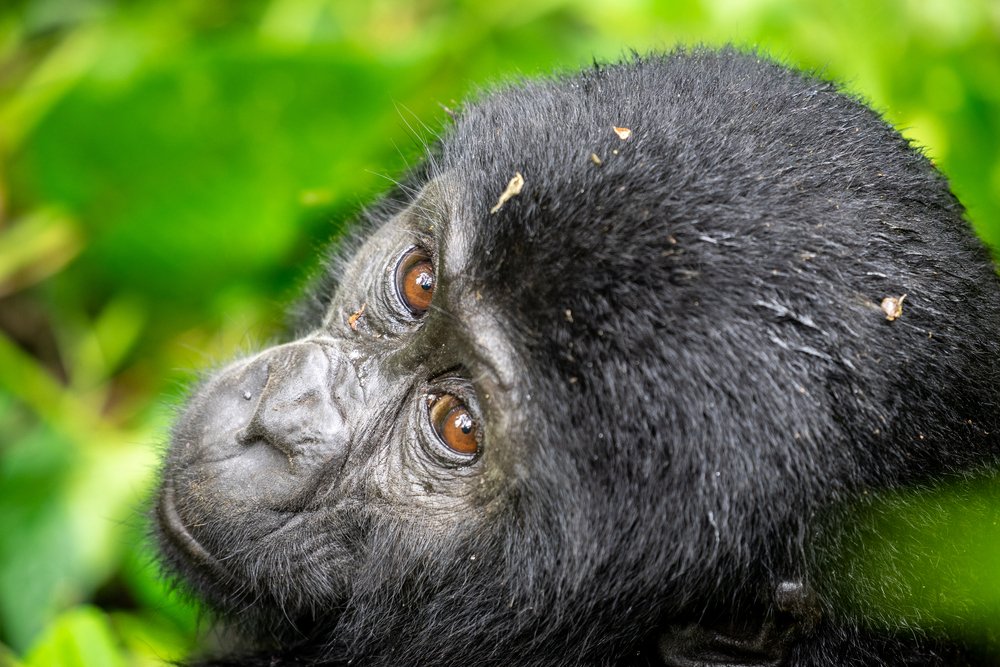
A close-up encounter with a mountain gorilla during a gorilla trekking experience in Uganda and Rwanda.
Uganda is particularly attractive to travellers who want to combine primates with conventional game viewing. A carefully planned itinerary can include gorilla trekking before continuing to savannah destinations for lions, elephants, buffaloes and other wildlife. This combination is explained further in our guide to gorilla trekking and Big Five safari experiences.
Travellers concentrating primarily on mountain gorillas can also explore gorilla safari experiences across the region. Those focusing specifically on southwestern Uganda can read more about planning an Uganda gorilla safari.
Chimpanzee Trekking in Kibale Forest
Chimpanzee tracking adds another important primate experience to an East Africa safari. Uganda’s Kibale National Park is especially well known for guided chimpanzee trekking through tropical forest. The experience differs considerably from a savannah game drive because travellers explore the forest on foot while listening for chimpanzee calls and following signs of their movements. A detailed guide to chimpanzee trekking in Kibale National Park can help travellers understand how the experience fits into a Uganda safari.
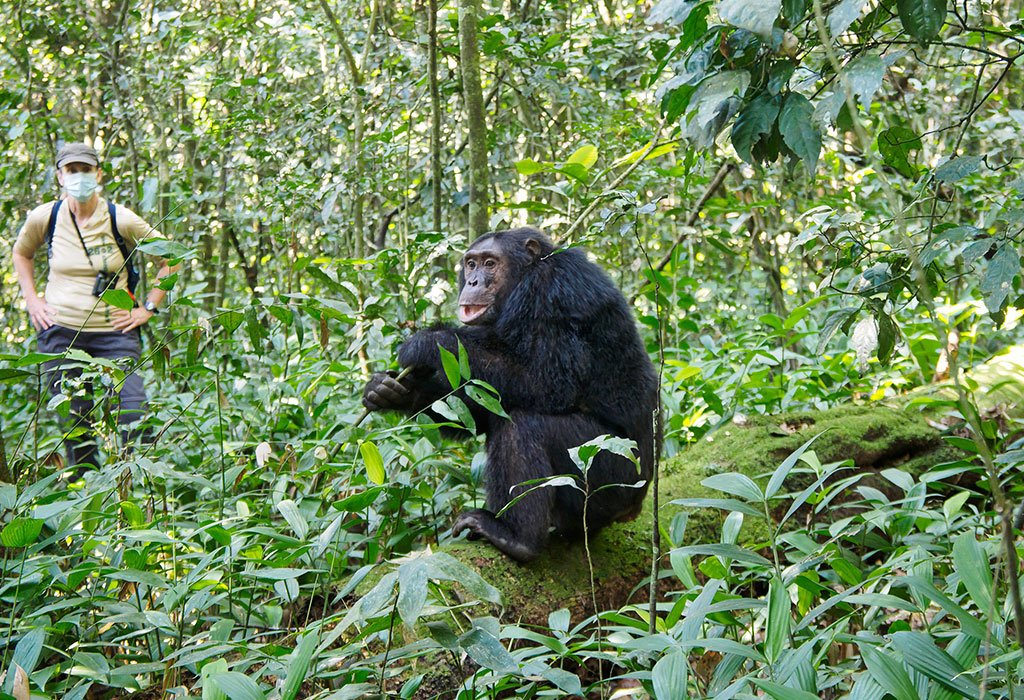
A traveler observing a chimpanzee in the lush rainforest during a guided chimpanzee trekking experience in Kibale Forest.
Kibale can be combined naturally with Queen Elizabeth National Park and Bwindi, creating an itinerary that includes chimpanzees, traditional savannah wildlife and mountain gorillas. Travellers who want a broader introduction to the destination can also explore Kibale Forest National Park when planning their East Africa primate safari.
The Great Wildebeest Migration in Kenya and Tanzania
The Great Migration is another major wildlife attraction of East Africa. Wildebeest, zebras and other grazing animals move through the wider Serengeti-Mara ecosystem following changing grazing and water conditions. Rather than occurring on a single fixed date, the migration is a continuing natural movement, and its location changes throughout the year. Travellers should therefore understand the broader Great Migration in Africa before selecting their safari dates and accommodation.
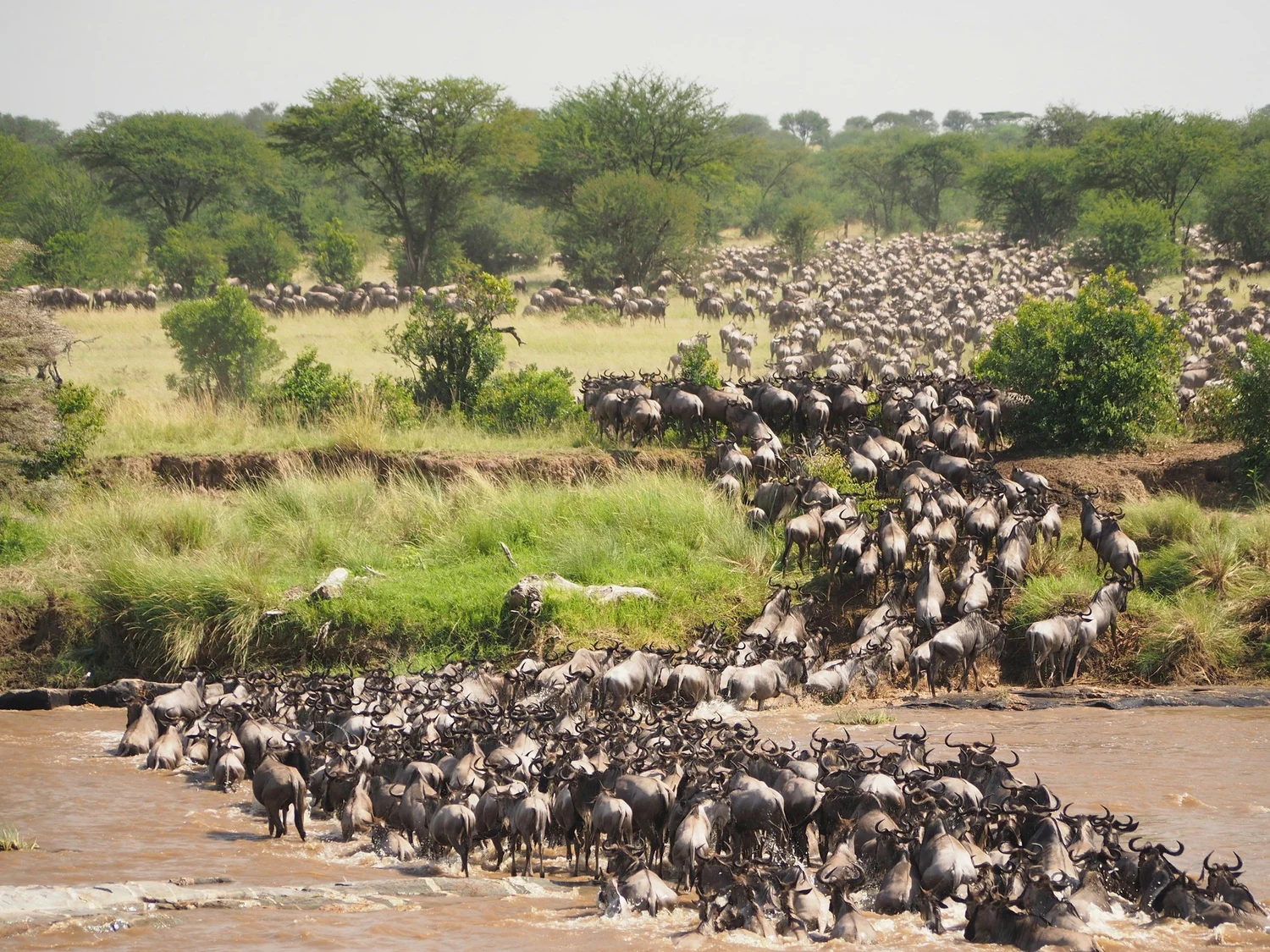
Thousands of wildebeest crossing a river during the spectacular Great Migration across Kenya and Tanzania.
Kenya’s Maasai Mara becomes particularly important during periods when migrating herds move into the northern part of the ecosystem. Wildlife viewing can include large herds together with predators such as lions, cheetahs and hyenas. Travellers considering Kenya can learn more about the Great Wildebeest Migration in Maasai Mara.
Tanzania provides extensive opportunities to experience the Serengeti ecosystem throughout different stages of the migration cycle. Travellers wanting a Kenya-Tanzania combination can consider an East Africa Kenya and Tanzania safari that connects some of the region’s most famous wildlife landscapes.
Combine the Great Migration with Gorilla Trekking
One of the most complete East Africa safari experiences is combining the savannah wildlife of Tanzania or Kenya with mountain gorilla trekking in Uganda. These experiences are dramatically different: one places travellers among vast open plains and large concentrations of wildlife, while the other leads them on foot through tropical mountain forest.
Regional flights and carefully planned road transfers can make this combination practical for travellers with sufficient time. A Tanzania wildlife safari can therefore be followed by a flight toward Uganda for gorilla trekking in Bwindi or Mgahinga. Travellers considering this type of itinerary can explore a verified guide to Uganda gorilla trekking with a Tanzania safari.
Birdwatching and Smaller Wildlife in East Africa
An Ultimate East Africa Safari Guide should not concentrate only on large mammals. The region contains exceptional birdlife across forests, wetlands, lakes, mountains and savannah ecosystems. Birdwatching can easily be combined with gorilla trekking, chimpanzee tracking and game drives, allowing travellers to appreciate species that are often overlooked during faster wildlife itineraries.
Uganda, Rwanda, Kenya and Tanzania all provide rewarding birding opportunities, although the habitats and species vary considerably between destinations. Dedicated bird enthusiasts can explore this East Africa birding safari guide when deciding which parks to include.
Which East Africa Wildlife Experiences Should You Combine?
Travellers with limited time should select a few complementary experiences instead of attempting to see everything. A Uganda itinerary can combine chimpanzees, gorillas and savannah wildlife. Rwanda can combine gorillas with Akagera wildlife. Kenya and Tanzania work exceptionally well for traditional game viewing and the wider Serengeti-Mara ecosystem, while longer journeys can connect these savannah destinations with Uganda or Rwanda for primate trekking.
The strongest East Africa wildlife safari is therefore not simply the itinerary with the greatest number of national parks. It is a journey that balances the traveller’s priorities, available days and preferred pace. Safari Vacations and Travel Services Ltd can combine gorilla trekking, chimpanzee tracking, Big Five game drives, migration experiences, birdwatching and cultural encounters into one practical East Africa itinerary.
Plan Your East Africa Wildlife Safari
Whether your priority is standing near mountain gorillas in a misty forest, following chimpanzees through Kibale, watching elephants cross an open savannah or experiencing the movement of wildebeest through the Serengeti-Mara ecosystem, East Africa provides exceptional wildlife diversity. Safari Vacations and Travel Services Ltd can customize your safari around the animals and experiences you most want to see while maintaining realistic travel distances and enough time in each destination.
Best Time to Visit East Africa for Safari, Gorilla Trekking and the Great Migration
June to October: Popular Months for East Africa Wildlife Safaris
June through October is one of the most popular periods for traditional wildlife safaris in East Africa. Much of Kenya and Tanzania experiences relatively dry conditions, while Uganda and Rwanda also generally have easier trekking conditions during much of this period. Travellers interested in combining several countries can explore East Africa four-country safari packages when planning a longer regional journey.
Dry conditions can make game drives particularly rewarding because animals may gather around permanent rivers, lakes and waterholes. Parks across Uganda, Kenya and Tanzania remain different in character, so travellers should consider individual destinations instead of treating East Africa as one uniform climate zone. Our guide to wildlife safaris in Uganda, Kenya and Tanzania provides additional information for comparing these safari regions.
Best Time for Gorilla Trekking in Uganda and Rwanda
Mountain gorilla trekking is possible throughout the year in Uganda and Rwanda. However, many travellers prefer the relatively drier periods because forest trails can be easier to navigate when there is less rainfall. June through September and the shorter dry period around December to February are commonly selected for gorilla trekking, although rain can occur at any time in tropical mountain forests.
Travellers planning their first primate safari can use this month-by-month gorilla trekking guide to compare conditions throughout the year. A more focused comparison of the best time for Uganda and Rwanda gorilla trekking can also help when choosing between Bwindi Impenetrable National Park and Volcanoes National Park.
Dry-season trekking does not mean completely dry forest conditions. Bwindi and Volcanoes are mountainous rainforest environments where weather can change quickly. Waterproof clothing, strong walking shoes and suitable trekking equipment remain important throughout the year. Travellers can find further planning advice through these seasonal tips for gorilla trekking.
For additional Rwanda-specific information, travellers can review this guide to the best time for gorilla trekking in Rwanda. Those concentrating on Uganda can also compare the gorilla trekking seasons in Uganda.
Best Time for the Great Wildebeest Migration
The Great Migration is a continuous wildlife movement through the Serengeti-Mara ecosystem rather than an event that happens on one exact date. Wildebeest, zebras and other herbivores move according to rainfall, grazing and water availability. This means travellers should select their travel period according to the particular stage of the migration they want to experience rather than relying on guaranteed crossing dates.
Travellers hoping to combine mountain gorillas with migration viewing should carefully coordinate Uganda or Rwanda trekking dates with time in Tanzania or Kenya. This detailed guide to the best time for gorilla trekking and the wildebeest migration explains how these two major East African wildlife experiences can fit into one safari.
The Serengeti generally plays the largest role throughout the migration cycle, while Kenya’s Maasai Mara becomes particularly important when herds move farther north within the ecosystem. Travellers interested specifically in Kenya can also read about the Great Migration in Kenya. Because wildlife movements respond to natural conditions, no responsible safari operator should promise an exact river crossing on a particular day.
December to February: Excellent for Safaris and Primate Trekking
December through February can be another attractive period for East Africa travel. Uganda and Rwanda often experience comparatively drier conditions during part of this period, which can provide comfortable trekking opportunities. Tanzania’s northern safari circuit can also offer productive wildlife viewing, while Kenya remains suitable for game drives in many destinations.
For Uganda travellers, this period can combine gorilla trekking, chimpanzee tracking and savannah wildlife. February can also be rewarding for photography and birdwatching in different areas of the country. Travellers considering an early-year safari can explore why February and March can be rewarding months in Uganda.
March to May: East Africa’s Green Season
March through May brings heavier rainfall to many parts of East Africa. These months are sometimes overlooked by travellers, yet they can provide lush scenery, dramatic skies, greener photography backgrounds and fewer tourists in some destinations. Rainfall can make certain unpaved roads more challenging and forest trekking trails muddier, so itineraries should be designed realistically.
Gorilla trekking remains possible during wetter months, and some travellers enjoy the quieter atmosphere. The important consideration is preparation: waterproof clothing, suitable footwear and flexibility are particularly valuable. Safari Vacations and Travel Services Ltd can advise whether travelling during this period fits your preferred activities and comfort level.
October and November: Short Rains and Quieter Safari Travel
October and November are transitional months in several East African destinations and can bring increased rainfall. However, wildlife safaris continue, gorilla trekking remains available and landscapes become greener. These months may suit travellers who prefer avoiding the busiest travel periods and are comfortable with occasional rain.
Conditions differ considerably between Uganda, Rwanda, Kenya and Tanzania, so a multi-country safari requires careful planning. Rather than assuming the same weather will occur everywhere, Safari Vacations and Travel Services Ltd can arrange the route according to the seasonal strengths of each destination.
Best Time for Big Five Wildlife Viewing
Travellers whose main priority is lions, leopards, elephants, buffaloes and rhinos often prefer drier safari periods when wildlife may become easier to locate around water sources. Kenya and Tanzania provide outstanding classic game-viewing opportunities, while Rwanda’s Akagera National Park and carefully planned Uganda itineraries can also contribute to a broader wildlife safari. Our guide to Big Five safari destinations in East Africa can help visitors compare where to travel.
However, wildlife exists throughout the year. Wet-season safaris can produce excellent sightings while providing greener scenery and fewer vehicles in certain areas. The best safari season should therefore be matched to your wildlife priorities rather than chosen only because it is labelled peak season.
Best Time for Chimpanzee Trekking and Birdwatching
Chimpanzee tracking in Uganda can be undertaken throughout the year, with Kibale National Park being one of the region’s major destinations. Wetter conditions can make forest trails more demanding, while drier periods may offer easier walking. Travellers combining chimpanzees with gorillas should consider the trekking conditions in both forests when choosing travel dates.
Birdwatching is also rewarding throughout East Africa. Different seasons bring breeding activity, changing plumage, migratory species and varying vegetation conditions. Dedicated birders should plan according to the habitats and target species they want to encounter rather than simply following the traditional peak wildlife season.
When Should You Book an East Africa Safari?
Travellers visiting during popular dry-season months should plan early, especially when the itinerary includes mountain gorilla permits, limited lodge availability or highly requested migration areas. Gorilla permits are limited each day, while popular safari camps can also fill well in advance during peak periods. Tanzania travellers can learn more from this guide on how to book a Tanzania safari.
Travelling outside peak periods may provide greater accommodation flexibility and a quieter experience, but seasonal conditions should always be considered. Safari Vacations and Travel Services Ltd can match your dates with the parks and activities most likely to provide a rewarding experience rather than forcing an unsuitable itinerary into a particular month.
Choose the Best Time for Your East Africa Safari
There is no single best time to visit East Africa for every traveller. June through October is popular for traditional wildlife viewing and can work well for gorilla trekking, while December through February is another attractive period for many safari and primate experiences. Wetter months can provide greener landscapes, fewer travellers and excellent photography opportunities despite more challenging road and trekking conditions.
The best approach is to identify your most important experience first. If mountain gorillas are your priority, choose dates around trekking conditions and permit availability. If the Great Migration is your focus, plan according to the part of the migration cycle you hope to encounter. If you want gorillas, chimpanzees and Big Five wildlife in one journey, build the itinerary around the seasonal conditions of several destinations rather than one individual park.
How Much Does an East Africa Safari Cost? Budget, Mid-Range and Luxury Prices
East Africa Safari Cost at a Glance
| Safari Style | Indicative Cost Per Person Per Day | Typical Experience |
|---|---|---|
| Budget Safari | US$150–US$300+ | Simple accommodation, shared or economical transport and carefully selected activities |
| Mid-Range Safari | US$300–US$600+ | Comfortable lodges, private or small-group safari vehicle and broader activity selection |
| Luxury Safari | US$600–US$1,500+ | Premium lodges, private guiding, fly-in options and personalized services |
The main difference between these safari categories is not the wildlife itself. Travellers staying in different accommodation categories may visit the same national parks, but their comfort, lodge location, dining, exclusivity, transportation and level of personalized service can differ substantially. Understanding the difference between mid-range and luxury safaris can help you decide where spending more genuinely improves your trip.
Budget East Africa Safari Cost
A budget East Africa safari is designed for travellers who prioritize wildlife experiences over expensive accommodation. Cost savings may come from using simpler lodges, travelling during quieter periods, sharing transportation where appropriate and concentrating on fewer destinations. Budget travellers can still enjoy game drives, boat safaris, primate trekking and cultural activities when the itinerary is carefully designed.
Multi-country travel is still possible on a controlled budget, although transport costs increase when several international borders are involved. Travellers considering Uganda, Rwanda, Kenya and Tanzania together can examine East Africa four-country safari packages before deciding whether a shorter two-country combination provides better value.
Mid-Range East Africa Safari Cost
Mid-range safaris are popular because they balance comfort and price. Accommodation normally provides private rooms, en-suite facilities and convenient locations near safari destinations, while transportation is usually arranged in an appropriate safari vehicle. This category works particularly well for couples, families and first-time travellers who want dependable comfort without moving into premium luxury pricing.
The final price still depends heavily on the destination. Kenya safari costs, for example, are influenced by park choice, accommodation, season, group size and transportation. Travellers considering the Maasai Mara, Amboseli and other destinations can review the main factors determining Kenya safari cost before comparing packages.
Luxury East Africa Safari Cost
A luxury East Africa safari can include premium lodges, private safari vehicles, exclusive camps, scenic flights, highly personalized guiding and carefully designed experiences. There is no practical upper limit because East Africa contains properties ranging from comfortable upscale lodges to extremely exclusive camps and private villas.
Luxury travel becomes particularly attractive on longer itineraries because domestic flights can reduce long road transfers and premium accommodation can provide a higher level of relaxation between demanding activities such as gorilla trekking. Travellers interested in primates and premium wildlife experiences can explore a luxury Uganda and Rwanda safari as an example of how high-end travel can be structured.
How Much Does a Uganda Safari Cost?
Uganda provides options for budget, mid-range and luxury travellers. Safari costs depend strongly on whether the itinerary includes gorilla trekking, chimpanzee tracking, domestic flights and the number of national parks visited. Road-based safaris can offer good value because several western and southwestern destinations can be connected within one circuit.
Customizing the route is one of the best ways to control costs. Instead of paying for activities that are not important to you, travellers can build custom Uganda safari packages around specific priorities such as gorillas, chimpanzees, wildlife photography or traditional game drives.
Uganda Gorilla Trekking Cost
Gorilla trekking is one of the largest individual expenses on many Uganda safari itineraries. For foreign non-residents, the standard Uganda gorilla trekking permit for 2026 is US$800 per person per trek. Accommodation, transportation, meals and other activities are additional costs, meaning the permit price should never be mistaken for the complete cost of a gorilla safari.
Permit prices and categories should always be checked when booking because official tourism charges can change. Travellers planning ahead can review the latest information about Uganda gorilla trekking costs in 2026 and 2027 before confirming their safari.
Budget-conscious travellers can reduce the overall trip price by choosing appropriate accommodation and designing a shorter road itinerary. This verified guide explains additional ways to reduce gorilla trekking safari costs without removing the main wildlife experience.
How Much Does a Rwanda Safari Cost?
Rwanda can accommodate different travel budgets, although gorilla trekking and high-end accommodation can raise the overall safari cost substantially. Akagera National Park, Nyungwe and Volcanoes National Park can be combined into one itinerary, while travellers with limited time can focus on one or two major destinations.
Accommodation has a major influence on the final price, particularly around Volcanoes National Park where properties range from simpler options to premium luxury lodges. Comparing budget, mid-range and luxury Rwanda safaris can help travellers choose the right level of comfort.
Travellers who want Rwanda without an extremely high overall budget can also consider shorter journeys, carefully chosen accommodation and fewer premium extras. Our guide to planning a Rwanda safari on a budget provides additional ideas for controlling expenses.
Rwanda Gorilla Trekking Cost
Rwanda’s standard gorilla trekking permit for most international visitors is US$1,500 per person. This makes the permit one of the most significant costs in a Volcanoes National Park itinerary. Travellers should additionally budget for accommodation, transfers, meals and any extra activities included before or after the trek.
Anyone comparing Uganda and Rwanda should therefore consider the complete trip rather than the permit alone. This detailed guide to gorilla trekking prices in Rwanda explains how the permit fits into the wider safari budget.
How Much Does a Kenya Safari Cost?
Kenya safari prices vary depending on whether travellers visit high-demand destinations such as the Maasai Mara during peak season or select quieter parks and travel periods. Accommodation inside or close to major wildlife reserves can also affect the price significantly. Private vehicles cost more per person for solo travellers and couples than for families or small groups sharing the same vehicle.
Travellers trying to control Kenya safari costs should compare travel dates, accommodation categories and the number of parks included. Spending more nights in fewer destinations can sometimes reduce unnecessary transfer costs while also creating a better wildlife experience.
How Much Does a Tanzania Safari Cost?
Tanzania safari prices are influenced by park fees, accommodation, vehicle costs, itinerary duration and whether domestic flights are required. Serengeti, Ngorongoro, Tarangire and Lake Manyara are frequently combined within the Northern Circuit, but visiting several remote areas can increase transportation expenses.
Travellers planning Serengeti and Ngorongoro journeys can begin with the broader Tanzania safaris and tours guide before selecting accommodation and activities. Combining Tanzania with Kenya can be efficient for travellers focused on traditional savannah wildlife, while adding Uganda or Rwanda introduces primate trekking and additional regional flight costs.
What Is Usually Included in an East Africa Safari Price?
A properly prepared safari quotation may include accommodation, meals according to the agreed meal plan, safari transportation, fuel, professional driver-guide services, scheduled game drives, relevant park entrance fees and activities specifically listed in the itinerary. Gorilla and chimpanzee permits may also be included when clearly stated in the quotation.
International flights, visas, travel insurance, personal purchases, gratuities, alcoholic drinks, optional activities and services not listed in the itinerary may be excluded. Because inclusions vary between packages, travellers should carefully read the quotation rather than comparing two safari prices based only on the final total.
What Makes an East Africa Safari More Expensive?
Safari prices normally increase when travellers choose premium accommodation, private flights, additional national parks, longer itineraries, peak-season travel and specialist wildlife activities. Gorilla trekking can substantially increase the cost because each traveller requires an individual permit. Private vehicles also become more expensive per person when the group is very small.
Luxury fly-in itineraries can cost considerably more than road safaris, but they reduce transfer times and can be worthwhile for travellers with limited vacation days. The right budget therefore depends not only on how much money you want to spend, but also on how you value time, comfort and exclusivity.
How to Reduce Your East Africa Safari Cost
Travelling with a partner, family or small private group can reduce vehicle costs per person because transportation expenses are shared. Choosing comfortable mid-range lodges instead of premium luxury properties can also create substantial savings without sacrificing the main wildlife experiences. Spending longer in fewer parks reduces transfers and can improve the quality of game viewing.
For gorilla-focused travellers, Uganda can offer a lower permit cost than Rwanda for many international visitors. Travellers who want to keep the overall experience affordable can explore budget gorilla trekking in Uganda and combine it with selected wildlife destinations rather than an extensive multi-country itinerary.
Get an Accurate East Africa Safari Price
The most reliable way to know how much your East Africa safari will cost is to request a personalized quotation. Two travellers visiting the same countries can pay very different prices depending on accommodation, season, activities, group size and transport. Safari Vacations and Travel Services Ltd can design an itinerary around your actual budget rather than providing a generic package that includes experiences you do not need.
When requesting a quotation, provide your expected travel dates, number of travellers, number of safari days, preferred accommodation category and the activities that matter most to you. This makes it easier to create a transparent East Africa safari price covering Uganda, Rwanda, Kenya, Tanzania or a customized combination of countries.
East Africa Safari Itinerary Comparison
Compare the best East Africa safari routes by trip duration, recommended countries and major wildlife experiences before choosing your ideal itinerary.
| Safari Duration | Recommended Countries | Best Experiences | Ideal For | Recommended Pace |
|---|---|---|---|---|
| 7 Days | Uganda & Rwanda | Gorilla trekking, golden monkeys, primates and selected wildlife | Short holidays and first-time primate travellers | Focused |
| 7–8 Days | Kenya & Tanzania | Maasai Mara, Serengeti, predators and classic savannah wildlife | Big Five and traditional safari enthusiasts | Active |
| 8 Days | Kenya & Uganda | Maasai Mara, gorilla trekking and chimpanzee tracking | Travellers wanting wildlife and primates | Moderate |
| 10 Days | Uganda, Kenya & Tanzania | Gorillas, Serengeti, Maasai Mara and Big Five wildlife | Travellers seeking maximum variety | Fast but rewarding |
| 10 Days | Uganda & Tanzania | Bwindi gorillas, Serengeti, Ngorongoro and savannah wildlife | Gorilla and classic safari combinations | Balanced |
| 10 Days | Rwanda & Kenya | Volcanoes gorillas and Maasai Mara wildlife | Luxury and shorter multi-country safaris | Comfortable |
| 14 Days | Uganda & Kenya | Gorillas, chimpanzees, Queen Elizabeth and Maasai Mara | Wildlife lovers and photographers | Relaxed |
| 14 Days | Kenya & Tanzania | Maasai Mara, Serengeti, Ngorongoro and extended game viewing | Classic safari and migration enthusiasts | Relaxed |
| 21+ Days | Uganda, Rwanda, Kenya & Tanzania | Gorillas, chimpanzees, Big Five, Serengeti, Maasai Mara and cultural experiences | Travellers seeking the ultimate East Africa safari | Comprehensive |
On mobile devices, swipe the table horizontally to view all safari itinerary details.
Planning an East Africa Safari: Flights, Visas, Transport, Accommodation and What to Pack
Planning an East Africa safari requires more than choosing national parks and wildlife activities. International flights, entry documents, regional transfers, accommodation, luggage and safari equipment should all be considered before departure. Uganda, Rwanda, Kenya and Tanzania have different travel systems, so a multi-country itinerary needs careful coordination. Travellers beginning their research can use these Uganda safari travel tips to understand practical preparations before arriving in East Africa.
The most important planning decision is to organize the safari route before purchasing complicated flight connections. Knowing whether your itinerary begins in Uganda, Rwanda, Kenya or Tanzania makes it easier to choose the correct international airport and arrange regional transportation. Travellers combining several countries should also leave sufficient time for airport procedures, border crossings and connections rather than designing an itinerary with unrealistic transfer times.
International Flights and Major East Africa Safari Gateways
East Africa is served by several important international gateways. Entebbe is the principal international arrival point for Uganda, Kigali serves Rwanda, Nairobi is the main gateway for many Kenya safaris, while Tanzania travellers frequently arrive through Kilimanjaro or Dar es Salaam depending on their itinerary. For travellers concentrating on Uganda, this guide to Entebbe International Airport provides useful information about beginning a safari from Uganda’s main aviation gateway.
Not every Uganda gorilla safari must begin in Entebbe. Travellers visiting southwestern Uganda may sometimes build their itinerary through Kigali, particularly when combining Rwanda and Uganda. The comparison of whether to fly into Kigali instead of Entebbe can help travellers understand how their chosen arrival point influences road transfers, border arrangements and the overall safari route.
Domestic Flights and Fly-In East Africa Safaris
Road safaris remain one of the best ways to experience East Africa because travellers see changing landscapes, communities and countryside between national parks. However, some distances are substantial. Domestic scheduled or charter flights can reduce long transfers and are particularly useful for travellers with limited vacation time or those choosing luxury itineraries.
Uganda provides good examples of how road and air travel can be combined. A Uganda fly-in safari can connect Entebbe with regional airstrips before travellers continue by safari vehicle to their lodge or national park. Flying usually costs more than travelling entirely by road, but it can significantly increase the amount of time available for wildlife activities.
Visa, Passport and Entry Requirements for East Africa
Visa and entry requirements depend on the traveller’s nationality, destination and route. Anyone visiting several East African countries should check the official immigration requirements for Uganda, Rwanda, Kenya and Tanzania individually before departure. Requirements can change, so travellers should not rely solely on old blogs, screenshots or information from a previous safari.
A passport should have sufficient validity for the journey, and travellers should keep secure copies of important documents such as passport information, approved travel authorizations, safari confirmations, insurance details and return or onward flight information. Travellers crossing between Uganda and Rwanda should pay particular attention to multiple-entry requirements and can review these Rwanda safari planning tips before finalizing their route.
Multi-country travellers should confirm whether a regional entry arrangement is appropriate for their exact nationality and itinerary rather than assuming one document automatically covers every East African country. Tanzania, for example, should be treated separately when checking entry requirements. Safari Vacations and Travel Services Ltd can help travellers understand the route, but final immigration eligibility should always be confirmed through the relevant official government authority.
Gorilla and Chimpanzee Trekking Permits
Travellers including mountain gorillas or chimpanzees should arrange trekking permits early because availability is limited for specific dates. Accommodation and transportation around gorilla destinations should ideally be organized once permit availability has been established. This is particularly important during popular travel periods when both permits and nearby lodges can sell out.
Before confirming a primate safari, travellers should understand the East Africa trekking permit requirements and ensure that names and travel details supplied during booking are accurate. An additional overview of the booking process is available in this verified gorilla trekking permit guide.
Getting Around East Africa by Safari Vehicle
A private 4×4 safari vehicle with a professional driver-guide is one of the most practical ways to explore national parks and connect destinations. Road conditions range from paved highways between major towns to unpaved roads inside wildlife areas and mountainous routes near gorilla destinations. Travel times should therefore be planned according to actual road conditions rather than distance alone.
First-time travellers sometimes underestimate the time required to move between parks. A well-designed safari includes reasonable transfer days, rest periods and enough time for game drives. These tips for first-time East Africa travellers can help visitors prepare for the realities of road travel, safari activities and changing conditions.
Choosing East Africa Safari Accommodation
East Africa offers accommodation ranging from simple guesthouses and budget camps to comfortable mid-range safari lodges, luxury tented camps and exclusive high-end properties. The best accommodation is not necessarily the most expensive. Location can be more important, especially when early-morning wildlife activities or gorilla trekking require travellers to reach a particular park entrance efficiently.
In gorilla destinations, travellers should confirm that their lodge matches the trekking area assigned to their permit. Staying in the wrong area can create unnecessary driving before an early forest activity. Travellers considering premium accommodation can compare options such as luxury gorilla lodges in Bwindi, while Rwanda offers accommodation ranging from comfortable properties to exceptional high-end lodges.
What Should You Pack for an East Africa Safari?
Safari packing should be practical rather than excessive. Lightweight comfortable clothing, closed shoes, sun protection, a hat, insect repellent, personal medication, binoculars, camera equipment and a small daypack are useful for most wildlife safaris. Travellers should also carry suitable rain protection because weather can change quickly in tropical and mountainous destinations.
Gorilla trekking requires additional preparation. Strong broken-in hiking footwear, long trousers, long-sleeved clothing, rain protection and protective gloves can make forest trekking more comfortable. Travellers preparing for Bwindi, Mgahinga or Volcanoes National Park can use this detailed gorilla trekking packing list before departure.
For another practical reference, this verified gorilla trekking packing guide explains the equipment commonly used for Uganda and Rwanda forest treks. Travellers should still keep luggage manageable, especially when their safari includes small aircraft where baggage restrictions may differ from international airlines.
Travel Insurance and Health Preparation
Comprehensive travel insurance is strongly recommended for an East Africa safari, particularly when an itinerary includes expensive permits, remote destinations, trekking or regional flights. Travellers should understand what their policy covers for medical treatment, evacuation, trip interruption, luggage and cancellation before leaving home.
Health requirements and recommendations can vary according to destination, nationality and travel history. Travellers should consult an appropriate travel-health professional and check current official government guidance before departure. Personal prescription medication should be carried in sufficient quantities for the entire trip, with essential medication kept safely accessible during travel days.
How Far in Advance Should You Book an East Africa Safari?
Early planning is particularly important when travelling during popular safari seasons or when mountain gorilla trekking is included. Permits, sought-after lodges and preferred flight connections can become limited. Travellers can review guidance on how far in advance to book a Uganda safari when deciding when to begin making reservations.
Booking early does not mean every detail must be complicated. The most important elements are confirming your travel dates, permit-dependent activities, route and accommodation category. From there, transportation and additional experiences can be arranged around the core itinerary.
Plan Your East Africa Safari in the Right Order
A practical planning sequence begins by deciding your travel dates and priority experiences, followed by confirming permit availability where necessary, designing the safari route, selecting accommodation and then coordinating flights and transfers. Travellers should avoid purchasing non-flexible travel arrangements before confirming activities that have limited availability.
Working with an experienced regional safari operator can simplify these arrangements because the same itinerary may involve accommodation providers, park authorities, guides, vehicles, domestic airlines and international borders. This additional guide on how to plan a Uganda safari provides further preparation advice for travellers beginning their East African journey.
Prepare for a Smooth East Africa Safari
The best East Africa safari planning is detailed without becoming unnecessarily complicated. Choose a realistic route, verify entry requirements, arrange permits early, pack according to your activities and avoid scheduling long transfers immediately before important wildlife experiences. Safari Vacations and Travel Services Ltd can coordinate Uganda, Rwanda, Kenya and Tanzania itineraries while allowing travellers to concentrate on enjoying the journey.
East Africa Safari Tips, Safety, Responsible Tourism and Common Mistakes to Avoid
A successful East Africa safari depends on good preparation, responsible behaviour and realistic expectations. Uganda, Rwanda, Kenya and Tanzania offer extraordinary wildlife experiences, but travellers are entering natural environments where conditions can change and wild animals must always be treated with respect. Understanding the most important East Africa safari safety tips before departure can help visitors enjoy their journey while reducing unnecessary risks.
Safari safety is a shared responsibility between travellers, professional guides, accommodation providers and wildlife authorities. Visitors should follow their guide’s instructions, respect park regulations and avoid taking unnecessary risks simply to obtain a photograph or closer wildlife sighting. Current travel conditions can also change, so international visitors should check relevant official government travel advice before departure.
Always Follow Your Safari Guide’s Instructions
Professional driver-guides and park rangers understand wildlife behaviour, local road conditions and protected-area regulations. During game drives, visitors should remain inside the vehicle unless the guide confirms that leaving is permitted. Wild animals should never be approached, fed, provoked or encouraged toward safari vehicles.
Responsible behaviour improves both visitor safety and animal welfare. Travellers preparing for their first journey can read more about planning a first African safari before arriving in the region.
Respect Wildlife and Keep a Safe Distance
Seeing lions, elephants, gorillas, chimpanzees or other wildlife at close range can be exciting, but a safari should never interfere with normal animal behaviour. Visitors should keep noise low, avoid blocking animals and allow wildlife sufficient space to move freely. Feeding wild animals should also be avoided because it can alter their natural behaviour.
Travellers who want their journey to have a smaller environmental impact can follow the principles of responsible wildlife tourism in East Africa. These practices help protect wildlife habitats while encouraging tourism that benefits conservation and surrounding communities.
Follow Gorilla Trekking Rules Carefully
Mountain gorilla trekking requires particularly careful behaviour because gorillas are protected primates living in sensitive forest environments. Visitors must listen to ranger briefings, keep voices low, avoid touching gorillas and follow instructions about distance, photography and behaviour during the encounter. Anyone planning Bwindi, Mgahinga or Volcanoes National Park should understand the official-style gorilla trekking rules before the trek.
Responsible gorilla tourism is designed to balance visitor experiences with conservation. Travellers interested in the wider conservation question can also explore whether gorilla trekking can support ethical tourism when properly managed.
Choose a Responsible Safari Operator
Choosing the right company is one of the most important decisions when organizing an East Africa safari. A reputable operator should provide a clear itinerary, explain what is included and excluded, arrange permits correctly, use suitable safari vehicles and communicate openly about accommodation, transportation and payment conditions.
Travellers should avoid choosing a company based entirely on the lowest advertised price. Extremely cheap quotations may exclude important costs or provide a significantly different level of accommodation and service. Our guide on how to choose the best safari tour explains important factors to consider before confirming a booking.
When gorilla trekking is involved, travellers can also review this guide to choosing a gorilla trekking tour operator before paying for permits or safari arrangements.
Avoid Trying to Visit Too Many Parks
One of the most common East Africa safari mistakes is trying to include too many destinations within a short holiday. Uganda, Rwanda, Kenya and Tanzania cover large areas, and transfers between national parks can take a significant part of the day. A slower safari with several nights in carefully selected destinations often provides better wildlife viewing than constantly moving between parks.
Travellers should therefore study common safari holiday mistakes to avoid before creating their itinerary. Allowing enough time for game drives, forest activities and rest can significantly improve the overall safari experience.
Do Not Book Without Understanding What Is Included
Before paying a safari deposit, travellers should understand exactly which accommodation, meals, park fees, permits, activities, transportation and airport transfers are included. It is also important to know which expenses remain personal, such as international flights, visas, travel insurance, optional activities, drinks or gratuities when these are not part of the package.
Many booking problems can be prevented by comparing the itinerary and inclusions rather than comparing only the final price. This guide to avoiding safari booking mistakes provides further advice for choosing a tour company and reviewing a safari quotation.
Practice Sustainable Wildlife Watching
Responsible safari travel means enjoying wildlife without unnecessarily damaging the environment that supports it. Visitors should avoid littering, minimize unnecessary plastic waste, conserve water where possible and respect designated roads and walking trails. Photography should never become more important than animal welfare or park regulations.
Travellers can learn more about sustainable wildlife watching in East Africa before visiting national parks. These principles are especially important in sensitive forests, wetlands and heavily visited wildlife areas.
Respect Local Communities and Cultures
An East Africa safari is also an opportunity to interact with people whose communities surround national parks and conservation areas. Travellers should approach cultural experiences respectfully, ask permission before photographing individuals where appropriate and avoid treating local traditions as entertainment without context.
Choosing locally guided activities, purchasing locally produced products and staying in properties that employ nearby residents can help tourism income reach communities. Uganda travellers interested in this approach can explore Uganda eco-tourism experiences that connect conservation with community participation.
Visitors combining gorilla trekking with community activities can also read this gorilla trekking cultural sensitivity guide for additional advice about respectful interaction.
Solo Safari or Group Safari?
Both solo and group travel can work well in East Africa. Solo travellers gain greater flexibility over their itinerary but may pay more per person for private transportation and accommodation. Small groups can divide vehicle and guiding costs while providing companionship during longer road transfers.
The better option depends on budget, personality and preferred level of independence. Travellers deciding between the two styles can compare solo and group East Africa safaris before selecting their travel arrangement.
Protect Yourself and Your Belongings
Normal travel precautions remain important during an East Africa safari. Travellers should keep passports, money and valuable electronics secure, avoid displaying large amounts of cash and follow hotel or guide recommendations in unfamiliar urban areas. Important travel documents should also be backed up digitally or stored separately from the originals.
Travellers should avoid political demonstrations or gatherings and stay informed about current conditions in the destinations they intend to visit. Safety circumstances can change, so current government travel advisories should be consulted in addition to advice from a safari operator.
Do Not Let Photography Disturb Wildlife
Photography is an important part of many East Africa safaris, but visitors should avoid shouting, sudden movements or attempts to manipulate wildlife behaviour for a better image. Flash photography may be restricted during sensitive wildlife encounters, particularly primate experiences, and travellers should always follow ranger instructions.
Watching animal behaviour patiently often produces better photographs than trying to force close encounters. Responsible photographers should prioritize wildlife welfare over social-media content or the desire for an unusually close image.
Travel Slowly and Safari Responsibly
Responsible travel is not only about environmental rules. It also means designing an itinerary that makes sense. Spending several nights in selected areas can reduce unnecessary driving, provide more meaningful wildlife experiences and allow tourism spending to remain longer within local destinations.
A carefully planned East Africa safari can support conservation, local employment and tourism businesses while giving travellers a deeper understanding of the region. Safari Vacations and Travel Services Ltd designs journeys around realistic routes instead of simply adding the largest possible number of destinations.
Enjoy East Africa with Realistic Expectations
Wildlife sightings are never guaranteed because animals move naturally through large ecosystems. Weather, vegetation and seasonal conditions can also influence what travellers see. The unpredictability of nature is part of what makes an authentic safari rewarding.
Travellers who prepare properly, listen to professional guides, respect wildlife and remain flexible are more likely to enjoy the complete safari experience rather than judging the journey only by a checklist of animals. Good preparation begins with understanding your priorities and avoiding common planning mistakes.
East Africa Safari FAQs: Everything to Know Before Booking Your Safari
Planning an East Africa safari often raises questions about destinations, costs, travel time, wildlife, gorilla trekking, seasons and multi-country itineraries. Uganda, Rwanda, Kenya and Tanzania offer very different experiences, so understanding the basics before booking can help you create a more practical journey. Travellers who want several countries within one trip can explore these East Africa four-country safari packages for ideas on combining the region’s major wildlife destinations.
Which Country Is Best for an East Africa Safari?
There is no single best country for every traveller. Uganda is particularly strong for mountain gorillas, chimpanzees and mixed primate-wildlife safaris. Rwanda offers accessible gorilla trekking and Akagera wildlife experiences. Kenya is famous for classic savannah safaris, while Tanzania offers extensive wildlife circuits around Serengeti, Ngorongoro and Tarangire. Comparing the best East African wildlife safari countries can help you decide which destination matches your interests.
How Many Days Do You Need for an East Africa Safari?
Approximately 7 to 10 days can work well for one or two countries, while around 14 days provides more flexibility for combining primates and traditional wildlife. Travellers wanting Uganda, Rwanda, Kenya and Tanzania should consider approximately three weeks or longer so the journey does not become dominated by transfers. A longer Uganda, Rwanda, Kenya and Tanzania safari shows how all four countries can be explored at a more comfortable pace.
What Are the Best Safari Experiences in East Africa?
East Africa offers mountain gorilla trekking, chimpanzee tracking, Big Five game viewing, the Great Migration, boat safaris, birdwatching, cultural experiences and scenic wilderness journeys. The right combination depends on your available days and interests. Travellers can compare some of the best safari experiences in East Africa before deciding which activities deserve priority.
Can I See Gorillas and the Big Five on One East Africa Safari?
Yes. Gorilla trekking in Uganda or Rwanda can be combined with savannah wildlife viewing in Uganda, Rwanda, Kenya or Tanzania. One itinerary might include Bwindi and Queen Elizabeth National Park, while a wider regional safari could combine Uganda gorillas with Kenya’s Maasai Mara or Tanzania’s Serengeti and Ngorongoro. Travellers interested specifically in gorillas across two neighbouring countries can also explore an Uganda and Rwanda gorilla safari.
Can Uganda, Rwanda, Kenya and Tanzania Be Combined in One Safari?
Yes. These four countries can form an exceptionally varied East Africa safari when enough time is available. Uganda and Rwanda work naturally together for primate experiences, while Kenya and Tanzania create a strong savannah wildlife combination. Regional flights can then connect the two areas. Travellers can learn more about cross-border East Africa safari experiences before planning a multi-country journey.
What Is the Best Time to Go on an East Africa Safari?
East Africa can be visited throughout the year, but relatively dry periods are popular for wildlife safaris and forest trekking. The best travel dates ultimately depend on your priority experience, destination, budget and tolerance for rainfall. Our guide to the best time to go on safari in East Africa explains how peak, shoulder and greener seasons compare.
When Is the Best Time to Combine Gorillas and the Great Migration?
Combining mountain gorilla trekking with the Great Migration requires more careful timing because the migration changes location within the Serengeti-Mara ecosystem throughout the year. Gorilla trekking remains available throughout the year, while migration conditions depend on seasonal rainfall and wildlife movement. Travellers planning both experiences can use this guide to the best time for gorilla trekking and wildebeest migration safaris.
How Much Does an East Africa Safari Cost?
East Africa safari costs depend on the number of days, destinations, accommodation level, group size, season, transport and activities included. Gorilla permits, premium lodges and domestic flights can significantly increase the total cost. Instead of relying only on an average daily rate, travellers should request a customized quotation based on their actual itinerary.
Is an East Africa Safari Suitable for First-Time Visitors?
Yes. A guided East Africa safari can be an excellent introduction to Africa because itineraries can be organized around professional driver-guides, pre-booked accommodation and planned wildlife activities. First-time travellers should avoid overcrowding their itinerary and choose destinations that match their priorities. This broader guide to East Africa safaris and tours provides additional information about the different experiences available across the region.
Is East Africa Good for Family Safaris?
East Africa can be excellent for families when the itinerary matches the ages and interests of the children. Shorter road transfers, family-friendly lodges, wildlife drives and sufficient relaxation time are particularly important. Some specialist activities have age restrictions, so these should be checked before paying deposits. Families can explore more ideas for East Africa family safaris before selecting destinations.
Should I Choose Uganda and Rwanda or Kenya and Tanzania?
Choose Uganda and Rwanda if your main priorities include mountain gorillas, chimpanzees, forest experiences and primates. Choose Kenya and Tanzania if classic savannah wildlife, large herds, predators and the Serengeti-Mara ecosystem are your main interests. Travellers with enough time can combine both safari styles. Our guide to wildlife safaris in Uganda, Kenya and Tanzania provides further insight into regional combinations.
Do I Need a Visa for an East Africa Safari?
Entry requirements depend on your nationality and the countries included in your itinerary. Travellers visiting several countries should check current immigration requirements for Uganda, Rwanda, Kenya and Tanzania separately before travel because visa and entry policies can change. Passports, travel authorizations and other required documents should be confirmed through official government immigration sources before departure.
How Far in Advance Should I Book an East Africa Safari?
Early booking is recommended when your safari includes mountain gorilla permits, popular migration camps, limited domestic flights or travel during peak seasons. Travellers with fixed dates usually benefit from planning several months ahead. This guide on how far in advance to book a safari explains why early planning can improve availability.
What Should I Pack for an East Africa Safari?
Useful safari items include lightweight clothing, comfortable closed shoes, sun protection, insect repellent, binoculars, camera equipment, personal medication and a light rain jacket. Gorilla trekkers should add strong hiking footwear, long trousers, long-sleeved clothing and suitable rain protection. Luggage should remain manageable, particularly when small regional aircraft are included.
Is Kenya Good for a First East Africa Safari?
Kenya is a strong choice for travellers wanting a traditional African wildlife safari with destinations such as the Maasai Mara, Amboseli and other reserves. The country can also be combined with Tanzania or Uganda depending on the available number of days. Travellers can use these Kenya safari planning tips before building their itinerary.
How Many Days Should I Spend in Rwanda?
A shorter trip can focus on Kigali and Volcanoes National Park, while additional days allow travellers to include Akagera, Nyungwe and Lake Kivu. Those combining Rwanda with Uganda may spend fewer days in Rwanda before crossing the border. This detailed Rwanda travel guide provides further information for planning a longer Rwanda itinerary.
Should I Book a Private or Group East Africa Safari?
A private safari provides greater control over travel pace, game-drive duration and accommodation choices. Group safaris can reduce certain shared transportation costs and suit travellers who enjoy meeting other visitors. Couples, families and photographers often value the flexibility of a private vehicle, while budget-conscious travellers may prefer small-group departures.
Can an East Africa Safari Be Customized?
Yes. A well-designed safari can be customized around travel dates, budget, number of travellers, accommodation category and preferred wildlife experiences. Travellers do not need to follow a fixed itinerary simply because it appears online. Safari Vacations and Travel Services Ltd can modify routes to emphasize gorilla trekking, chimpanzees, Big Five game viewing, the Great Migration, birdwatching, photography, culture or relaxation.
Why Book Your East Africa Safari with Safari Vacations and Travel Services Ltd?
Travel across East Africa with Safari Vacations and Travel Services Ltd in a comfortable, well-equipped safari vehicle.
Planning a multi-country East Africa safari involves coordinating accommodation, safari vehicles, professional guides, permits, park activities, regional flights and border logistics. Safari Vacations and Travel Services Ltd creates customized safari journeys across Uganda, Rwanda, Kenya and Tanzania, allowing travellers to combine the experiences that matter most without unnecessarily rushing between destinations.
Whether you are planning your first African safari, a private gorilla trekking adventure, a family holiday, a photography safari, a honeymoon or an extended multi-country journey, the itinerary can be designed around your available time and preferred level of comfort. The goal is not simply to visit as many places as possible, but to experience East Africa properly.
Start Planning Your Ultimate East Africa Safari
An Ultimate East Africa Safari Guide should help travellers understand how Uganda, Rwanda, Kenya and Tanzania fit together rather than treating every country as a separate holiday. Uganda brings mountain gorillas, chimpanzees and remarkably varied wildlife landscapes. Rwanda combines accessible primate adventures with Akagera’s savannahs. Kenya delivers iconic open-plains wildlife experiences, while Tanzania adds the Serengeti, Ngorongoro and some of Africa’s most extensive safari landscapes.
The strongest East Africa safari combines the right destinations with the right number of days. A short journey may focus on gorillas in Uganda and Rwanda or wildlife in Kenya and Tanzania, while a longer itinerary can connect forests, savannahs, primates, Big Five wildlife and the Great Migration across several countries.
Safari Vacations and Travel Services Ltd can help transform these possibilities into a practical personalized itinerary. Tell us when you want to travel, how many people are travelling, your approximate number of safari days and the experiences you most want to include. We can then recommend a route that matches your budget, travel style and expectations.