
Complete Guide to Tanzania Northern Circuit Safaris

What Are Tanzania Northern Circuit Safaris?
Tanzania Northern Circuit Safaris are classic wildlife journeys through the most famous national parks and conservation areas in northern Tanzania. The route usually begins in Arusha and links some of East Africa’s best-known safari destinations, including Tarangire National Park, Lake Manyara National Park, the Ngorongoro Conservation Area and Serengeti National Park. For many first-time visitors to Tanzania, this circuit offers the most complete introduction to the country’s wildlife, landscapes and safari culture.
One of the biggest strengths of Tanzania Northern Circuit Safaris is the extraordinary variety of habitats encountered within a relatively compact route. Travellers move from baobab-dotted savannahs and elephant country in Tarangire to the Rift Valley scenery of Lake Manyara, the volcanic landscapes of Ngorongoro and the vast open plains of the Serengeti. This diversity creates opportunities to see lions, elephants, buffaloes, giraffes, leopards, cheetahs, wildebeest, zebras, hippos, black rhinos and hundreds of bird species during one journey.
The Northern Circuit is also closely associated with the Great Migration, one of the most spectacular wildlife events on Earth. Depending on the season and itinerary, travellers may witness enormous herds moving through the Serengeti, calving on the southern plains or attempting dramatic river crossings farther north. This combination of year-round wildlife and seasonal migration action makes the circuit one of Africa’s most sought-after safari routes.
Where Is Tanzania’s Northern Safari Circuit?
The Northern Safari Circuit is located in northern Tanzania, stretching west and northwest from Arusha toward the Serengeti ecosystem. Arusha is the principal safari gateway because of its proximity to Kilimanjaro International Airport and its excellent road connections to the major parks. Most Tanzania Northern Circuit Safaris begin with an overnight stay in Arusha before continuing toward Tarangire, Lake Manyara, Ngorongoro or the Serengeti.

From Arusha, travellers typically drive south-west toward Tarangire National Park or Lake Manyara National Park before continuing through the Ngorongoro Highlands and onward to Serengeti National Park. This logical routing makes it possible to visit several major destinations without repeatedly returning to the same starting point. Travellers can also combine the route with Kenya and Tanzania safaris using border crossings such as Namanga or Isebania depending on the itinerary.
Why Is It Called the Northern Circuit?
The name “Northern Circuit” refers to the concentration of major safari destinations located in the northern part of Tanzania. These protected areas form a natural tourism route that can be connected efficiently by road or air. The term helps distinguish this region from Tanzania’s southern safari destinations such as Nyerere National Park and Ruaha National Park, as well as western wilderness areas such as Katavi and Mahale.
Tanzania Northern Circuit Safaris are especially popular because several world-renowned parks can be combined within one itinerary. Instead of flying long distances between isolated reserves, travellers can move progressively from one ecosystem to the next. This makes the Northern Circuit especially attractive for first-time safari travellers, families, photographers and visitors seeking a balance of convenience and exceptional wildlife.
What Makes Tanzania Northern Circuit Safaris Famous?
Tanzania Northern Circuit Safaris are famous for their concentration of iconic wildlife destinations and the consistency of their game viewing. Serengeti National Park is internationally recognised for the Great Migration and exceptional predator sightings, while Ngorongoro Crater offers one of Africa’s best opportunities to see a high concentration of large mammals within a relatively small area.
Tarangire is renowned for large elephant herds, ancient baobab trees and dry-season wildlife concentrations around the Tarangire River. Lake Manyara adds lush groundwater forest, primates, birdlife and dramatic Rift Valley scenery. Travellers interested in the Serengeti can explore more about what Serengeti National Park is famous for before deciding how many nights to dedicate to the park.
How Many Days Do You Need for a Tanzania Northern Circuit Safari?
The ideal length for Tanzania Northern Circuit Safaris depends on how many parks you want to visit and how deeply you want to explore each destination. A short safari of four to five days can combine Tarangire, Ngorongoro and parts of the Serengeti, but the pace will be relatively fast. Travellers wanting a more relaxed journey should consider seven to ten days.
A seven-day itinerary usually provides enough time for Tarangire, Lake Manyara or the Ngorongoro Highlands, Ngorongoro Crater and several nights in Serengeti National Park. Eight to ten days allow more time for photography, longer game drives and deeper exploration of different Serengeti regions. Dedicated migration safaris may require even more time because the itinerary should follow the seasonal location of the herds.
Birdwatchers may also want longer itineraries because Tanzania’s northern parks support exceptional species diversity. A typical Northern Circuit journey can include Arusha National Park, Lake Manyara, Tarangire, Serengeti and Ngorongoro, creating a highly rewarding Tanzania birding safari.
Who Should Choose Tanzania Northern Circuit Safaris?
Tanzania Northern Circuit Safaris are suitable for an exceptionally wide range of travellers. First-time safari visitors appreciate the reliable wildlife viewing and easy access to famous parks, while experienced safari enthusiasts enjoy the opportunity to explore different Serengeti regions and seasonal wildlife movements. Families benefit from flexible private itineraries, while honeymooners can combine luxurious lodges, tented camps and scenic fly-in transfers.
Photographers are particularly well served because the Northern Circuit offers everything from predator action and elephant herds to volcanic scenery and immense wildebeest concentrations. Luxury travellers can choose private 4×4 vehicles, premium lodges, exclusive-use camps and scheduled or charter flights. Travellers interested in combining Tanzania with primates can also create a Uganda and Tanzania safari that pairs Serengeti wildlife with gorilla and chimpanzee trekking.
Tanzania Northern Circuit Safaris for First-Time Visitors
For first-time safari travellers, few routes in Africa are easier to recommend than Tanzania’s Northern Circuit. The combination of Serengeti, Ngorongoro, Tarangire and Lake Manyara introduces visitors to different ecosystems without requiring complicated internal logistics. Wildlife sightings are generally varied, and each destination adds something different to the journey.
First-time visitors also benefit from the presence of well-established lodges, tented camps, safari guides and air services throughout the region. This infrastructure makes Tanzania Northern Circuit Safaris suitable for travellers who want an authentic wilderness experience without sacrificing comfort or organization. A professionally planned itinerary avoids unnecessary rushing and ensures enough time is allocated to the destinations most relevant to the traveler’s interests.
Northern Circuit vs Southern Tanzania Safari Circuit
The Northern and Southern safari circuits offer very different experiences. Tanzania Northern Circuit Safaris focus on internationally famous destinations such as Serengeti and Ngorongoro, with high concentrations of wildlife and a broad range of accommodation options. The circuit is ideal for travellers interested in the Great Migration, classic game drives and seeing several famous parks within one trip.
Southern Tanzania, by contrast, is generally more remote and often attracts repeat safari travellers searching for lower visitor densities and larger wilderness areas. Parks such as Nyerere and Ruaha can provide excellent wildlife encounters, walking safaris and boating experiences. The Northern Circuit is usually the stronger option for a first Tanzania safari, while the south may appeal to visitors prioritising remoteness and a less-travelled atmosphere.
Northern Circuit vs Western Tanzania Safari Circuit
Western Tanzania is dramatically more remote than the Northern Circuit and includes wilderness destinations such as Katavi National Park and Mahale Mountains National Park. These areas reward adventurous travellers with extraordinary landscapes, low visitor numbers and specialised experiences such as chimpanzee tracking in Mahale.
Tanzania Northern Circuit Safaris are easier to access, offer a greater concentration of famous wildlife destinations and provide far more accommodation choices. Western Tanzania generally requires scheduled or charter flights and is better suited to travellers who have already experienced traditional savannah safaris. Visitors wanting both classic wildlife and primates may alternatively combine Tanzania with Uganda through a regional East African safari.
The Serengeti and Great Migration Advantage
The Serengeti is arguably the greatest competitive advantage of Tanzania Northern Circuit Safaris. Its vast ecosystem supports enormous resident wildlife populations even when the migration herds are elsewhere. Lions, cheetahs, leopards, elephants, giraffes, buffaloes, hyenas and numerous antelope species can be seen throughout the year.
The Great Migration adds another dimension. Herd locations change seasonally, meaning successful migration planning requires selecting the correct Serengeti region rather than simply booking any camp inside the park. Southern areas and Ndutu become especially important around the calving period, while the Western Corridor and northern Serengeti become more important later in the migration cycle. A dedicated Tanzania Great Migration safari should therefore be built around travel dates and expected herd movements.
The Ngorongoro Crater Advantage
Ngorongoro Crater gives Tanzania Northern Circuit Safaris another extraordinary wildlife dimension. The crater floor supports a dense concentration of large mammals within a dramatic volcanic landscape. Visitors may encounter lions, buffaloes, elephants, wildebeest, zebras, hippos and the endangered black rhino during one crater game drive.
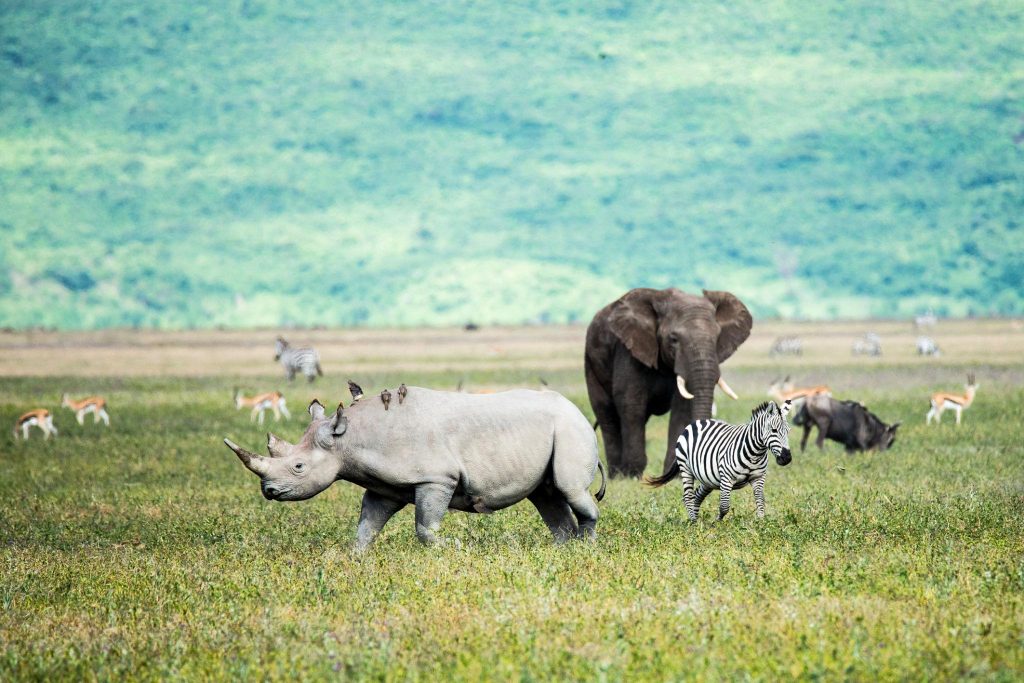 The Ngorongoro Conservation Area also links the Serengeti with the highlands around Karatu and Lake Manyara, making it an important geographical part of the circuit rather than an isolated attraction. Cultural landscapes, Maasai communities and archaeological sites such as Olduvai Gorge further increase the region’s appeal.
Tarangire and Lake Manyara Add Diversity
Tarangire and Lake Manyara prevent Tanzania Northern Circuit Safaris from becoming solely about Serengeti and Ngorongoro. Tarangire’s giant baobabs, elephant herds and seasonal wildlife concentrations create a distinctive safari atmosphere, particularly during the dry months. It often deserves at least one or two nights rather than being treated only as a quick stop.
Lake Manyara National Park is smaller but ecologically diverse. Groundwater forest, open floodplains, the alkaline lake and Rift Valley escarpment create habitats for elephants, baboons, blue monkeys, hippos and abundant birdlife. Travellers interested in exploring the park can review the safari activities in Lake Manyara National Park before deciding how to include it.
Road Safaris vs Fly-In Northern Circuit Safaris
Most Tanzania Northern Circuit Safaris can be completed entirely by road, especially when following the classic Arusha–Tarangire–Manyara–Ngorongoro–Serengeti route. Private 4×4 safari vehicles provide flexibility, allow wildlife viewing between destinations and give travellers access to scenic landscapes that would otherwise be missed.
Fly-in options become particularly useful when reaching remote Serengeti sectors or reducing the final return journey to Arusha. Travelers may drive through the circuit and then fly from the Serengeti back to Arusha, saving several hours. Luxury travelers can also use scheduled flights or private charters between selected destinations. The ideal balance between driving and flying depends on itinerary length, budget and preferred travel pace.
Are Tanzania Northern Circuit Safaris Worth It?
For travellers seeking the classic East African safari experience, Tanzania Northern Circuit Safaris are absolutely worth considering. Few safari regions combine so many iconic landscapes, large mammal populations, predator sightings and seasonal spectacles within one accessible route. The opportunity to see the Serengeti, Ngorongoro Crater, Tarangire and Lake Manyara during the same journey creates exceptional diversity.
The circuit can also be adapted to almost every travel style, from budget camping safaris to ultra-luxury fly-in journeys. It works equally well for families, honeymooners, photographers, birdwatchers and first-time visitors. Travellers wanting an even broader East African journey can combine the circuit with gorilla trekking, Kenya or Zanzibar through carefully planned multi-country safari itineraries.
Planning Tanzania Northern Circuit Safaris with Local East African Experts
A successful Northern Circuit safari depends on choosing the right route, allocating enough nights to each park and matching the Serengeti region to the season. Trying to include too many destinations in too few days often results in long drives and less time actually watching wildlife. A well-designed itinerary should prioritise quality game viewing rather than simply collecting park names.
Safari Vacations and Travel Services Ltd can design personalised Tanzania Northern Circuit Safaris based on travel dates, budget, accommodation preferences and wildlife interests. Travellers can choose private road safaris, luxury tented camps, fly-in options, migration-focused itineraries or combinations with Uganda and Rwanda. For broader East African planning, explore Safari Vacations and Travel Services Ltd and Anthill Gorilla Safaris for tailor-made safari journeys across the region.
Serengeti National Park- The Epitome of Tanzania Northern Circuit Safaris
Serengeti National Park is the heart of Tanzania Northern Circuit Safaris and one of Africa’s most iconic wildlife destinations. Famous for vast open plains, large predator populations and the annual Great Migration, Serengeti offers the classic safari experience most travellers imagine when they think of Tanzania. Covering approximately 14,750 square kilometres, the park forms part of the wider Serengeti-Mara ecosystem and supports exceptional wildlife viewing throughout the year.
For travellers planning Tanzania Northern Circuit Safaris, Serengeti usually deserves at least two to three nights, with longer stays recommended for photographers or Great Migration-focused itineraries. The park’s different regions offer distinct landscapes and wildlife experiences, so choosing where to stay is just as important as choosing when to travel. Learn more about what Serengeti National Park is famous for before designing your safari.
Serengeti National Park Overview
Serengeti lies in northern Tanzania and is typically reached by road through the Ngorongoro Conservation Area or by scheduled bush flight from Arusha. Its landscapes include open grasslands, acacia woodland, rocky kopjes, river systems and more wooded habitats in the western and northern regions.
This ecological variety supports a remarkable range of animals, including lions, leopards, cheetahs, elephants, giraffes, buffaloes, hippos, wildebeest, zebras and many antelope species. Even when the main migration herds are elsewhere, resident wildlife makes Serengeti a highly rewarding year-round destination. Travellers can explore this broader Serengeti National Park guide for more background.
Wildlife in Serengeti National Park
Wildlife diversity is one of the biggest reasons Serengeti dominates Tanzania Northern Circuit Safaris. Vast plains support large concentrations of herbivores such as wildebeest, zebra, topi, Thomson’s gazelle and Grant’s gazelle, while woodland areas provide habitat for elephants, giraffes and other browsers.
Predators are equally important. Lions are widespread, leopards are frequently associated with riverine and woodland habitats, and cheetahs favour open plains where visibility helps them hunt. Spotted hyenas, jackals and other carnivores add to the intensity of predator-prey interactions. Travellers who stay several nights have a much better chance of observing behaviour rather than simply recording sightings.
Lions in Serengeti
Lions are among the most sought-after species on Tanzania Northern Circuit Safaris, and Serengeti is one of the best places in Africa to see them. Prides may be found resting near kopjes, moving across open plains or watching nearby herds of wildebeest and zebra.
Early morning and late afternoon game drives are especially rewarding because lions are often more active during cooler periods. Visitors may observe females with cubs, territorial males or coordinated hunting behaviour. Every sighting is different, and this unpredictability is part of what makes a Serengeti safari experience so memorable.
Leopards in Serengeti
Leopards are more elusive, but Serengeti offers excellent opportunities to search for them, especially in central areas such as Seronera. They often rest in trees or remain concealed along riverine vegetation and rocky cover.
Experienced guides watch for alarm calls, tracks and the behaviour of nearby prey species. Private Tanzania Northern Circuit Safaris are especially valuable because guests can remain patient at promising sightings rather than following a fixed group schedule.
Cheetahs in Serengeti
Cheetahs are strongly associated with the open grasslands of southern and central Serengeti. Their need for visibility makes these areas ideal for spotting them scanning the plains or following gazelle herds.
For photographers, cheetahs are particularly rewarding because they are often seen in open environments with clean backgrounds. Mothers with cubs can sometimes be observed, although their movements remain highly unpredictable.
Elephants in Serengeti
Although Tarangire is more famous for elephants, Serengeti also supports substantial populations. Herds are commonly encountered in woodland and riverine areas, especially where water and browse are readily available.
Combining Serengeti with Tarangire gives travellers a broader elephant experience and adds visual diversity to Tanzania Northern Circuit Safaris. Watching a herd move beneath acacia trees or across open plains can be one of the quiet highlights of the journey.
The Great Migration
The Great Migration is the wildlife spectacle most closely associated with Serengeti. Huge numbers of wildebeest, accompanied by zebras and other grazers, move through the Serengeti-Mara ecosystem in response to rainfall, grass growth and water availability.
The migration does not follow a fixed calendar. This means successful Tanzania Northern Circuit Safaris must be planned according to broad seasonal patterns rather than exact dates. Visitors can review the monthly wildebeest migration patterns when selecting the correct Serengeti region for their travel period.
Central Serengeti – Seronera
Central Serengeti is one of the most reliable year-round safari regions. Permanent water and varied habitats support lions, leopards, cheetahs, elephants, giraffes, hippos and many other species even when the main migration is elsewhere.
Seronera also offers a wide range of permanent lodges and tented camps. For first-time visitors, spending two or three nights here provides excellent flexibility and reduces the pressure to move constantly between camps.
Northern Serengeti
Northern Serengeti is famous for rolling grasslands, rocky outcrops and the Mara River ecosystem. It becomes especially important when migrating herds move north and may attempt river crossings.
River crossings are natural events and can never be guaranteed. Travellers should therefore spend several nights in the area rather than planning a single-day visit. Even without a crossing, northern Serengeti offers excellent resident wildlife and a spacious wilderness atmosphere.
Western Corridor and Grumeti
The Western Corridor features woodland, open plains and the Grumeti River. Seasonal migration movements can bring major concentrations of wildebeest and zebra into this region as the herds progress northward.
Although Grumeti crossings receive less publicity than Mara River crossings, they can still produce dramatic safari experiences. Travellers should understand the broader Great Wildebeest Migration in Tanzania rather than relying on fixed dates.
Southern Serengeti and Ndutu
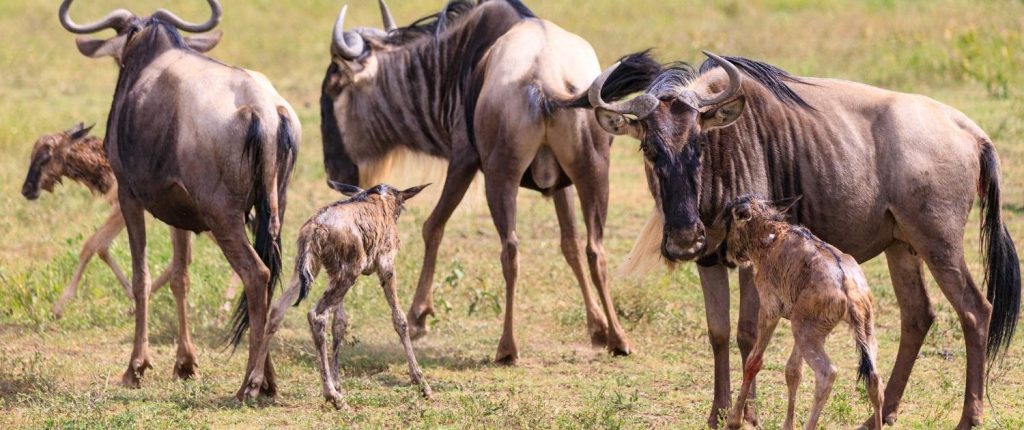 Southern Serengeti and the adjoining Ndutu region are especially important during the early part of the year, when seasonal rains create fresh grazing and large herds gather across the short-grass plains.
This period is closely associated with wildebeest calving and strong predator activity. Lions, cheetahs and hyenas are attracted by the abundance of newborn animals, making this one of the most dramatic times for photographers and wildlife enthusiasts.
Great Migration Calving Season
The calving period is one of the most rewarding times to include Serengeti in Tanzania Northern Circuit Safaris. Large concentrations of wildebeest typically gather on the southern plains, where thousands of calves are born over a relatively concentrated period.
Photographers appreciate the combination of large herds, young animals, dramatic skies and predator activity. Lodge location is critical, so visitors should consult a guide on where to stay for the Great Migration before confirming accommodation.
Mara River Crossings
Mara River crossings are among the most dramatic events on Tanzania Northern Circuit Safaris, but they are also highly unpredictable. Wildebeest may gather near the river for hours or even days before moving, retreating or suddenly crossing.
Travellers should stay several nights in northern Serengeti and remain flexible. The period most strongly associated with northern migration activity is covered further in this guide to the Great Migration from August to October.
Hot-Air Balloon Safaris
A Serengeti hot-air balloon safari provides a spectacular aerial perspective over the plains and is one of the most popular premium additions to Tanzania Northern Circuit Safaris. Flights normally take place around sunrise, with routes determined by wind direction.
Wildlife sightings vary, but the combination of early morning light, sweeping scenery and silent flight can be unforgettable. Honeymooners and photographers often reserve this activity in advance. Read more about hot-air balloon safaris in Tanzania.
Wildlife Photography
Serengeti is one of Africa’s finest photography destinations because animals are often observed against open landscapes with beautiful natural light. Early mornings and late afternoons are particularly attractive for warm light and active wildlife.
Private Tanzania Northern Circuit Safaris offer greater flexibility for photographers, allowing more time at sightings and better positioning where regulations permit. Telephoto lenses are useful for predators and birds, while wider lenses help capture the scale of the Serengeti plains.
Birdwatching
Birdwatching adds another layer to the Serengeti experience. Raptors, vultures, bustards, secretary birds, storks and many smaller species can be seen across grassland, woodland and wetland habitats.
Bird enthusiasts should carry binoculars and allow time for slower observation around river systems and wooded areas. Combining Serengeti with Tarangire and Lake Manyara creates an even stronger birding itinerary.
Best Time to Visit Serengeti
Serengeti is a year-round safari destination, but the best time depends on the traveller’s priorities. Central Serengeti offers reliable resident wildlife in every season, while migration-focused journeys should follow the expected location of the herds.
Southern areas are particularly relevant during calving season, western regions become important as herds move onward, and northern Serengeti is associated with the Mara River phase. Because rainfall controls migration movement, Tanzania Northern Circuit Safaris should always be planned around seasonal patterns rather than guaranteed dates. A broader Great Migration guide can help with planning.
Accommodation in Serengeti
Accommodation ranges from permanent lodges to intimate tented camps and luxury seasonal properties. Location is often more important than the level of luxury. A beautiful camp far from the wildlife activity a traveller hopes to see can lead to long daily drives.
Migration-focused seasonal camps are useful for following herd movements, while central Serengeti properties provide strong year-round access. Longer safaris may combine two regions for greater variety.
How Many Nights Should You Spend in Serengeti?
Most Tanzania Northern Circuit Safaris should include at least two to three nights in Serengeti. Three nights allow several game drives and greater flexibility when searching for predators or responding to wildlife activity.
Migration-focused or photography-heavy itineraries may benefit from four to six nights. Travellers wanting more time can consider a 4-Day Serengeti National Park Safari or a longer itinerary combining Serengeti with Ngorongoro and Tarangire.
Why Serengeti Is Essential on Tanzania Northern Circuit Safaris
Serengeti combines everything that makes Tanzania Northern Circuit Safaris extraordinary: enormous landscapes, exceptional predator viewing, abundant resident wildlife and one of the greatest migrations on Earth. Its real value lies not only in seeing famous animals, but in spending enough time to observe behaviour, landscapes and the rhythm of the wilderness.
Safari Vacations and Travel Services Ltd can tailor Serengeti itineraries around travel dates, migration expectations, preferred accommodation and safari style. Travellers seeking a broader route can also consider an 8-Day Best of Tanzania Safari combining Serengeti with other highlights of the Northern Circuit.
Ngorongoro Conservation Area
The Ngorongoro Conservation Area is one of the most important destinations on Tanzania Northern Circuit Safaris and one of the most visually dramatic wildlife landscapes in East Africa. Located between Lake Manyara and Serengeti National Park, the conservation area combines spectacular volcanic scenery, exceptional wildlife viewing, Maasai pastoral culture and important archaeological sites within a single destination. Its most famous feature is the Ngorongoro Crater, a vast volcanic caldera containing one of Africa’s greatest concentrations of large mammals.
For many travellers, Ngorongoro is an essential part of Tanzania Northern Circuit Safaris because it provides a completely different safari experience from the endless Serengeti plains or the baobab landscapes of Tarangire. A typical itinerary includes an overnight stay on or near the crater rim followed by an early descent onto the crater floor for a game drive. Travellers can read this detailed Ngorongoro Conservation Area travel guide when planning how the destination fits into a wider Northern Tanzania safari.
Ngorongoro Crater
Ngorongoro Crater is the centrepiece of the conservation area and one of the principal highlights of Tanzania Northern Circuit Safaris. The crater was formed when a massive volcano collapsed millions of years ago, leaving behind an enormous caldera surrounded by steep walls. Today, the crater floor contains grasslands, swamps, woodland, freshwater sources and seasonal wetlands that support an impressive diversity of wildlife.
From the rim, visitors look down across a spectacular natural amphitheatre before descending along designated roads for a game drive. Wildlife concentrations can be excellent because permanent water and grazing support animals throughout much of the year. A dedicated Ngorongoro Crater safari provides one of Tanzania’s most concentrated wildlife experiences.
Why Ngorongoro Crater Is So Special
Ngorongoro differs from most national parks because visitors descend from cool highland forest into a relatively compact wildlife-rich basin. The steep crater walls create a dramatic visual backdrop throughout the game drive, making the landscape itself almost as memorable as the animals.
The crater floor supports wildebeest, zebras, buffaloes, gazelles, hippos, hyenas and numerous predators. Elephants are also present, while the area remains one of Tanzania’s important places for the possibility of seeing endangered black rhinos. Wildlife remains completely wild, however, so sightings of particular animals should never be guaranteed during Tanzania Northern Circuit Safaris.
Big Five Wildlife
Ngorongoro is often included on Tanzania Northern Circuit Safaris because it provides opportunities to search for members of the famous Big Five: lion, leopard, elephant, buffalo and black rhino. Lions and buffaloes are commonly associated with the crater ecosystem, while elephants can be encountered in wooded areas and along migration routes.
Leopards are considerably more elusive and may be encountered around forested sections of the wider conservation area rather than reliably on the open crater floor. Black rhinos are rare, highly protected and never guaranteed. Visitors interested specifically in this wildlife group can explore a broader guide to Big Five safari parks in Tanzania.
Black Rhinos in Ngorongoro
The endangered black rhino is among Ngorongoro’s most sought-after wildlife species. The crater and surrounding conservation landscape support a carefully protected population, making the area one of Tanzania’s better-known destinations for travellers hoping to observe a rhino during their safari.
Rhinos are often seen at considerable distance across open grasslands, so binoculars and a camera with a telephoto lens can be useful. Safari guides monitor promising locations while respecting conservation regulations and viewing distances. Their rarity makes every confirmed sighting particularly meaningful during Tanzania Northern Circuit Safaris.
Lions in Ngorongoro Crater
Lions are among the most visible predators on the crater floor. Resident prides benefit from the abundance of wildebeest, zebras and other herbivores, creating excellent opportunities to observe natural predator-prey relationships. Early mornings can be particularly rewarding because lions may still be active after hunting during the cooler nighttime hours.
Visitors might encounter lions resting beside safari tracks, watching grazing herds or interacting within a pride. Because the crater receives significant visitor interest, responsible guiding is important to avoid crowding animals. A well-organised Tanzania Northern Circuit Safari prioritises respectful observation rather than rushing from one sighting to another.
Elephants
Ngorongoro supports African elephants, particularly mature bulls that can sometimes be observed on the crater floor and within forested areas of the conservation landscape. Lerai Forest is especially associated with elephants because its vegetation provides shade and browse.

Family herds may be more widely distributed across the surrounding highlands and connecting ecosystems. Travellers especially interested in elephants should also include Tarangire National Park, where large herds are one of the principal attractions. Combining both destinations creates stronger wildlife diversity on Tanzania Northern Circuit Safaris.
Buffaloes, Wildebeest and Zebras
Large herbivores form the foundation of the Ngorongoro ecosystem. Buffaloes, wildebeest and zebras graze across the crater grasslands, often accompanied by gazelles and other antelopes. These animals support healthy predator populations and contribute to the constant sense of wildlife activity on the crater floor.
Unlike the vast seasonal movements associated with Serengeti’s Great Migration, many animals within Ngorongoro remain in or around the crater ecosystem for extended periods because food and water are relatively reliable. This helps make Ngorongoro a dependable stop within Tanzania Northern Circuit Safaris at different times of year.
Hippos and Wetland Wildlife
Freshwater pools, marshes and wetlands on the crater floor support hippos and numerous aquatic birds. Hippo pools provide popular stopping points during game drives, allowing visitors to watch these enormous mammals resting in the water while birds forage around the shoreline.
These wet habitats add ecological variety to the crater and create a welcome contrast with the surrounding grasslands. Depending on seasonal conditions, visitors may also encounter water-associated antelopes, wading birds and other species concentrated near reliable water sources.
Flamingos and Birdlife
Ngorongoro is also an excellent birding destination. The crater and surrounding highlands support raptors, bustards, crowned cranes, storks, waterbirds and numerous smaller species. Flamingos may occur in suitable alkaline lake environments depending on water conditions and food availability, although numbers vary considerably.
Birdwatchers should carry binoculars throughout Tanzania Northern Circuit Safaris because Ngorongoro’s highlands, forests and crater floor all support different bird communities. Combining Ngorongoro with Lake Manyara, Tarangire and Serengeti creates an especially diverse birding itinerary.
Lerai Forest
Lerai Forest is one of the most distinctive habitats on the crater floor. Its woodland vegetation provides shade and feeding opportunities for elephants, monkeys, birds and other wildlife. Passing from open grasslands into this forested environment demonstrates the ecological diversity compressed within the crater.
Predators may also use forest edges for concealment, while herbivores move between wooded and open habitats throughout the day. Experienced guides understand how wildlife uses these transitions and can interpret tracks, calls and behaviour during the game drive.
Crater Game Drives
A crater game drive is the principal wildlife activity in Ngorongoro and usually begins early in the morning. Travellers descend from the rim along authorised routes before exploring the grasslands, woodland, wetlands and lake environments of the crater floor.
Most visitors spend several hours inside the crater before climbing back to the highlands. The compact environment means wildlife sightings can accumulate quickly, but the best experience comes from taking time to observe behaviour and scenery rather than attempting to race between animals. The top things to do in Ngorongoro Conservation Area extend beyond the crater itself.
Ngorongoro Highlands
The highlands surrounding the crater provide a striking contrast to Tanzania’s warmer savannah landscapes. Cool forests, rolling agricultural areas and dramatic viewpoints create an atmosphere that feels very different from Serengeti or Tarangire.
Travellers often stay in lodges around the crater rim or near Karatu, where elevated landscapes, coffee farms and highland scenery provide peaceful settings between safari drives. Morning temperatures can be surprisingly cool, so visitors should pack a light jacket or fleece even when travelling during warmer months.
Maasai Culture
The Ngorongoro Conservation Area is unusual because wildlife conservation exists alongside traditional pastoral land use. Maasai communities have long been associated with the wider landscape, and travellers may see livestock and herders while moving through parts of the conservation area.
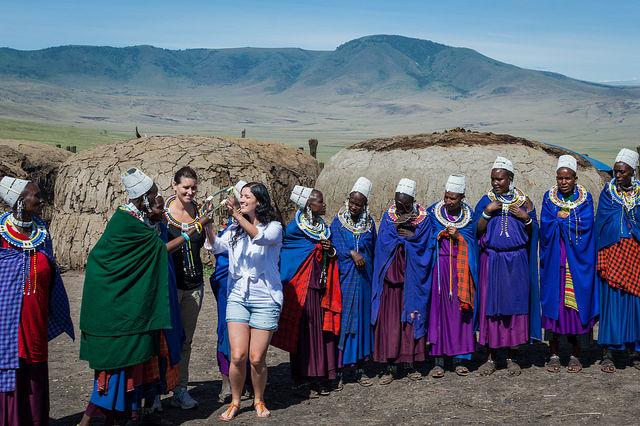
Responsible cultural experiences can help visitors understand pastoral traditions, livestock management, clothing, family structures and the relationship between people and wildlife. These encounters should be organised respectfully and should benefit participating communities rather than treating local culture as a staged attraction.
Olduvai Gorge
Olduvai Gorge is one of the most significant archaeological locations within the wider Ngorongoro-Serengeti landscape. Research in the area has contributed greatly to scientific understanding of early human evolution, making it an important stop for travellers interested in archaeology and natural history.
The gorge can be incorporated into the road journey between Ngorongoro and Serengeti, depending on itinerary timing. Adding the site gives Tanzania Northern Circuit Safaris an educational dimension beyond wildlife by connecting today’s dramatic landscapes with millions of years of human history.
Ngorongoro Crater Rim Walks
Guided walks along designated areas of the crater rim provide another way to experience Ngorongoro’s scenery. These walks focus on landscapes, vegetation and smaller wildlife rather than the traditional vehicle-based game drive. They can offer spectacular viewpoints across the caldera and surrounding highlands.
Walking activities must follow current conservation-area regulations and should always be arranged with authorised guides. They are particularly appealing to travellers who want to add an active element to Tanzania Northern Circuit Safaris after several days of vehicle-based wildlife viewing.
Best Time to Visit Ngorongoro
Ngorongoro can be visited throughout the year because the crater supports substantial resident wildlife. Drier periods generally provide easier road conditions and clearer landscapes, while wetter months transform the highlands into vibrant green scenery and can produce excellent photographic conditions.
Peak safari periods bring more vehicles, so luxury travellers seeking quieter conditions may prefer shoulder seasons. Unlike migration-focused Serengeti itineraries, Ngorongoro does not require visitors to follow a specific seasonal wildlife location, making it easier to incorporate into Tanzania Northern Circuit Safaris at almost any time of year.
Ngorongoro and Serengeti Safari Combination
Combining Ngorongoro Crater with Serengeti National Park creates one of the strongest wildlife itineraries in Africa. The two destinations are connected naturally through the Northern Circuit, allowing travellers to experience the crater’s concentrated wildlife before continuing into Serengeti’s vast open ecosystem.
The contrast between the two is a major part of their appeal. Ngorongoro provides a dramatic enclosed volcanic landscape, while Serengeti offers immense horizons and wide-ranging wildlife movements. Travellers with limited time can explore a 3-Day Serengeti and Ngorongoro Safari, although longer itineraries provide a more relaxed experience.
Combining Ngorongoro with Tarangire
Tarangire and Ngorongoro also complement each other extremely well. Tarangire introduces visitors to baobab landscapes, elephant herds and the Tarangire River ecosystem before the itinerary moves toward the cooler Ngorongoro Highlands.
A route that combines Tarangire, Serengeti and Ngorongoro covers three of the most important environments found on Tanzania Northern Circuit Safaris. Travellers looking for a balanced route can consider a 6-Day Tarangire, Serengeti and Ngorongoro Safari.
How Many Nights Should You Spend in Ngorongoro?
Most travellers need one or two nights in the Ngorongoro region. One night can work when the itinerary is tightly scheduled around a crater descent, while two nights provide greater flexibility for cultural visits, highland walks or a more relaxed safari pace.
Travellers staying near Karatu may also combine Ngorongoro with nearby Lake Manyara or agricultural and cultural experiences. Longer stays are particularly worthwhile for photographers, families and luxury travellers who prefer slower-paced Tanzania Northern Circuit Safaris.
Ngorongoro for Wildlife Photography
The crater is exceptionally photogenic because animals are frequently observed against dramatic volcanic walls, open grasslands and changing highland light. Wide-angle lenses help capture the scale of the landscape, while telephoto lenses are useful for rhinos, lions and distant wildlife.
Morning conditions can provide soft light and mist around the rim, while the crater floor offers broad views throughout the day. Photographers should remain patient and avoid focusing only on close animal portraits; the combination of wildlife and landscape is what makes Ngorongoro visually distinctive.
Why Ngorongoro Is Essential on Tanzania Northern Circuit Safaris
Ngorongoro Conservation Area brings together wildlife, geology, archaeology, highland scenery and living cultural traditions in a way few other safari destinations can match. Its location between Lake Manyara and Serengeti also makes it a natural component of the classic Northern Tanzania route.
Safari Vacations and Travel Services Ltd can incorporate Ngorongoro into short wildlife safaris, longer Great Migration journeys, luxury fly-in itineraries or complete Northern Circuit adventures. Travellers looking for a dedicated experience can consider a 4-Day Ngorongoro Crater Safari, while those seeking broader exploration can choose the Tanzania Complete Northern Circuit Safari.
Tarangire National Park
Tarangire National Park is one of the most distinctive wildlife destinations included on Tanzania Northern Circuit Safaris. Located southwest of Arusha, the park is particularly famous for its large elephant herds, ancient baobab trees, seasonal wildlife concentrations and the Tarangire River, which provides an important source of water during the dry season. Covering approximately 2,600 square kilometres, Tarangire offers a remarkably diverse safari environment and often feels quieter than Tanzania’s internationally famous Serengeti and Ngorongoro destinations.
For travellers following the classic Northern Tanzania route, Tarangire is usually visited near the beginning or end of the safari because of its convenient location between Arusha and the wider Lake Manyara–Ngorongoro region. Yet Tarangire deserves much more than a quick stop. Spending one or two nights allows visitors to explore deeper sections of the park, experience early morning and evening wildlife activity and appreciate the extraordinary landscapes that distinguish it from other destinations on Tanzania Northern Circuit Safaris. Travellers can explore this dedicated Tarangire National Park guide when planning their journey.
Tarangire National Park Overview
Tarangire lies within Tanzania’s northern safari region and is easily accessible by road from Arusha. Its landscapes combine open grasslands, acacia woodland, seasonal swamps, riverine vegetation and spectacular baobab-dominated scenery. These contrasting habitats support a wide variety of mammals and birds, making the park much more ecologically diverse than first-time visitors may expect.
Tarangire becomes especially impressive during the dry season when wildlife from surrounding areas moves toward reliable water sources within the park. This seasonal concentration can produce exceptional game viewing, with elephants, zebras, wildebeest, buffaloes, giraffes and antelopes gathering around the Tarangire River and other remaining water sources.
Large Elephant Herds
Elephants are the signature wildlife attraction of Tarangire and one of the principal reasons the park should be included on Tanzania Northern Circuit Safaris. Visitors frequently encounter family groups moving between woodland, grassland and water sources, while large bulls may be observed feeding independently or joining other elephants around the river.

The opportunity to spend extended periods observing elephants is particularly rewarding. Guests may watch calves playing, adults feeding beneath baobabs, family groups communicating or entire herds approaching water. During favorable dry-season conditions, substantial numbers of elephants can gather within the wider Tarangire ecosystem, producing some of Tanzania’s most memorable elephant-viewing opportunities.
Ancient Baobab Trees
Tarangire’s enormous baobab trees give the park one of the most recognizable landscapes in East Africa. Some appear almost sculptural, with thick trunks and branches extending dramatically toward the sky. Their unusual shapes create striking backgrounds for elephants, giraffes and other wildlife.
 Baobabs are more than photographic landmarks. They form an important component of the ecosystem and can store considerable amounts of water within their trunks. Elephants sometimes strip sections of bark or investigate the trees while searching for moisture and nutrients. The combination of elephants and baobabs has become one of the defining visual experiences of Tanzania Northern Circuit Safaris.
The Tarangire River
The Tarangire River is the ecological lifeline of the national park and becomes especially important during the long dry season. As temporary water sources disappear across the surrounding ecosystem, wildlife becomes increasingly dependent on the river and other permanent or semi-permanent sources inside the protected area.
This concentration creates excellent opportunities for game viewing. Elephants, wildebeest, zebras, buffaloes, giraffes and numerous antelopes may approach the river, while predators take advantage of the increased availability of prey. The importance of the Tarangire River is one of the main reasons the park becomes particularly productive between roughly June and October.
Wildlife in Tarangire National Park
Although elephants dominate Tarangire’s reputation, the park supports a much broader range of wildlife. Visitors may encounter giraffes, buffaloes, zebras, wildebeest, impalas, waterbucks, warthogs and several other herbivores during game drives. The mixture of open plains, woodland and riverine habitats provides feeding and shelter opportunities for many different species.
This diversity makes Tarangire an excellent complement to Serengeti and Ngorongoro. Rather than repeating exactly the same safari environment, travellers experience another distinctive ecosystem. Tanzania Northern Circuit Safaris that include multiple parks are particularly rewarding because each destination contributes different landscapes, wildlife concentrations and photographic opportunities.
Lions and Other Predators
Lions are among the major predators visitors may encounter in Tarangire. They can be found resting beneath trees during warmer hours, moving through grasslands or watching concentrations of herbivores near water sources. Early mornings and late afternoons are particularly interesting periods for searching for predator activity.
Leopards also occur in the park but are naturally more difficult to locate because of their solitary behaviour and preference for cover. Other carnivores contribute to Tarangire’s predator diversity, although sightings always depend on luck, guide experience and wildlife movement. Allowing more than a few hours inside the park significantly improves the overall safari experience.
Dry-Season Wildlife Concentrations
The dry season is one of the most important periods for Tanzania Northern Circuit Safaris visiting Tarangire. As water becomes increasingly scarce in the surrounding ecosystem, animals move toward the Tarangire River and remaining wetlands. This can create substantial concentrations of elephants and plains game within relatively accessible areas.
Reduced vegetation may also improve visibility, particularly around open grasslands and water sources. Predator-prey interactions can become more noticeable as animals gather around limited resources. July through October is particularly popular for this reason, although exact conditions vary according to annual rainfall patterns.
Tarangire During the Green Season
The wetter months create a very different Tarangire experience. Rain transforms dry landscapes into vibrant green scenery, seasonal wetlands expand and vegetation becomes lush. Wildlife may disperse more widely because water is available across a broader area, so the dramatic dry-season concentrations are generally reduced.
However, the green season has significant advantages. Landscapes are beautiful, photography can be excellent and birdwatching becomes particularly rewarding with seasonal migrants adding to the resident species. Visitor numbers can also be lower than during peak dry-season months, appealing to travellers who prefer a quieter atmosphere.
Birdwatching in Tarangire
Tarangire is one of the outstanding birding destinations on Tanzania Northern Circuit Safaris, with more than 500 bird species recorded in the wider park environment. Its mixture of wetlands, grasslands, woodland and riverine habitats supports an impressive range of birds.
Visitors may encounter raptors, hornbills, lovebirds, bustards, waterbirds and numerous smaller species. Birding is rewarding throughout the year, while the wetter period can be especially interesting when migratory species are present. Even travellers primarily focused on mammals often discover that Tarangire’s colourful and abundant birdlife becomes an unexpected highlight.
Game Drives in Tarangire
Game drives are the principal activity in Tarangire National Park and provide access to the park’s different habitats. A private 4×4 safari vehicle gives travellers flexibility to explore river systems, baobab landscapes, open plains and wildlife-rich areas according to current conditions.
Morning game drives are excellent for cooler temperatures and potentially active predators, while afternoon drives provide beautiful light and opportunities to watch animals gathering near water. Travellers spending two nights can enjoy a more relaxed combination of morning and afternoon drives rather than attempting to experience the entire park during a short visit.
Walking Safaris
Where currently permitted and arranged through authorized operators and guides, walking experiences can provide a different perspective on the Tarangire ecosystem. Rather than concentrating exclusively on large mammals, guided walks introduce visitors to tracks, plants, insects, birds and ecological details easily missed from a safari vehicle.
Walking activities should always be arranged according to current park regulations and safety requirements. They can be particularly attractive for experienced safari travellers seeking more variety during longer Tanzania Northern Circuit Safaris.
Night Game Drives
Where permitted under current regulations and authorized arrangements, night game drives can introduce travellers to a side of Tarangire that is largely invisible during daytime safaris. Nocturnal wildlife behaves differently after sunset, and species that spend much of the day hidden may become more active.
Because activity availability can depend on location, concession arrangements and regulations, night drives should be confirmed during safari planning rather than assumed to be included. They can add valuable diversity to longer Tarangire stays when available.
Tarangire for Wildlife Photography
Tarangire is one of Tanzania’s most visually distinctive destinations for wildlife photography. Giant baobabs provide natural framing, while elephants offer opportunities for both intimate portraits and wide environmental images. During the dry season, dusty conditions and golden evening light can create especially atmospheric scenes.
Photographers should carry both telephoto and wider lenses. A telephoto lens is useful for birds, predators and animal behaviour, while wider focal lengths capture elephants beneath baobabs and the scale of the surrounding landscapes. Tarangire is recognised for its combination of wildlife photography opportunities in Tanzania, particularly elephants against its characteristic scenery.
Best Time to Visit Tarangire National Park
Tarangire can be visited throughout the year, but the dry season generally provides the most concentrated wildlife viewing. From approximately June through October, animals increasingly depend on the Tarangire River and remaining water sources, bringing elephants and other mammals into relatively predictable areas.
The wetter months offer greener scenery, strong birdwatching and potentially fewer visitors. For Tanzania Northern Circuit Safaris focused primarily on large mammals, the dry season is often preferred. Travellers interested in landscapes, birdlife and a quieter experience may find the green season equally appealing.
Accommodation in Tarangire
Accommodation around Tarangire ranges from comfortable tented camps to high-end safari lodges. Some properties are located inside or close to the park, while others sit in surrounding wildlife areas and provide access to additional activities. Choosing accommodation should depend on budget, safari style and how much time travellers intend to spend exploring Tarangire.
Luxury camps can provide intimate settings, excellent dining and personalized service, while midrange properties allow travellers to experience Tanzania Northern Circuit Safaris comfortably without paying premium rates. Understanding the difference between midrange and luxury safaris can help travellers select the accommodation category that best matches their expectations.
How Many Nights Should You Spend in Tarangire?
One night can provide a useful introduction to Tarangire, particularly on shorter Tanzania Northern Circuit Safaris. However, two nights are preferable for travellers interested in elephants, photography, birdwatching or a more relaxed pace. This allows time for several game drives and reduces the pressure to immediately continue toward Ngorongoro or Serengeti.
Three nights may suit dedicated photographers, repeat safari visitors and travellers staying at properties offering additional experiences. The ideal duration should reflect the season and overall itinerary rather than treating every Northern Circuit park equally.
Tarangire vs Serengeti
Tarangire and Serengeti should generally be viewed as complementary rather than competing destinations. Serengeti is much larger and internationally famous for the Great Migration and exceptional predator viewing. Tarangire is more strongly characterised by elephants, baobabs, seasonal river concentrations and an intimate landscape.
Including both produces greater diversity on Tanzania Northern Circuit Safaris. Travellers move from Tarangire’s woodland and river environments to Serengeti’s enormous plains, making the journey feel progressively different rather than repetitive.
Tarangire and Ngorongoro Combination
Tarangire combines naturally with Ngorongoro because the destinations are connected through the classic Northern Circuit route. A safari may begin in Arusha, spend one or two nights around Tarangire and then continue through Lake Manyara or Karatu toward the Ngorongoro Conservation Area.
The contrast is remarkable. Tarangire offers warm, baobab-dominated landscapes and elephant herds, while Ngorongoro introduces cooler highlands and concentrated wildlife inside a volcanic caldera. Adding Serengeti afterwards creates one of Tanzania’s most complete wildlife journeys.
Tarangire for First-Time Safari Travellers
First-time visitors sometimes prioritise Serengeti and Ngorongoro and consider removing Tarangire when shortening an itinerary. While this can be necessary on extremely limited schedules, travellers with six or more safari days should seriously consider keeping Tarangire.
The park adds an environment that neither Serengeti nor Ngorongoro fully replicates. Elephant encounters, enormous baobabs and seasonal wildlife gatherings provide a memorable beginning to Tanzania Northern Circuit Safaris and help travellers appreciate how varied northern Tanzania’s ecosystems really are.
Why Tarangire Is Essential on Tanzania Northern Circuit Safaris
Tarangire National Park deserves its position among the major destinations on Tanzania Northern Circuit Safaris because it combines outstanding elephant viewing, extraordinary baobab landscapes, diverse wildlife, excellent birding and strong seasonal game concentrations. Its convenient location from Arusha also makes it relatively easy to integrate into itineraries continuing toward Lake Manyara, Ngorongoro and Serengeti.
Safari Vacations and Travel Services Ltd can tailor the amount of time spent in Tarangire according to travel season, budget and wildlife interests. Private 4×4 transportation also gives guests greater flexibility to explore at a comfortable pace. Travellers can begin by exploring the company’s Tarangire National Park safari information or contact Safari Vacations and Travel Services Ltd to incorporate Tarangire into a personalised Tanzania Northern Circuit Safari.
The Great Migration on Tanzania Northern Circuit Safaris
The Great Migration is one of the most spectacular natural events associated with Tanzania Northern Circuit Safaris. Every year, vast herds of wildebeest, zebras and other grazing animals move through the Serengeti-Mara ecosystem in search of fresh grass and water. Their movements are driven primarily by seasonal rainfall and grazing conditions, which means the migration does not follow an exact timetable. For travellers hoping to witness this phenomenon, careful planning is essential because the best Serengeti region changes throughout the year.
Tanzania Northern Circuit Safaris offer some of the best opportunities to experience the migration because a large portion of the annual cycle takes place within Serengeti National Park and the neighbouring Ngorongoro Conservation Area. Depending on the month, visitors may witness calving on the southern plains, large herds moving through central and western Serengeti, or dramatic river-crossing activity in the north. Understanding the monthly wildebeest migration patterns is therefore one of the most important steps when designing a migration-focused safari.
What Is the Great Migration?
The Great Migration is a continuous movement of grazing animals through the wider Serengeti-Mara ecosystem. Wildebeest form the largest part of the migration, but zebras, gazelles and other herbivores also move across the landscape. The animals follow seasonal rains because rainfall determines where fresh grass and surface water are available.
Rather than moving in a perfectly organised circle, herds often spread across large areas, divide into smaller groups and change direction according to local conditions. This makes the migration dynamic and unpredictable. A well-planned Tanzania Northern Circuit Safari should therefore use broad seasonal patterns rather than promising that the herds will be in one exact location on a specific date.

January
January generally finds significant migration activity across the southern Serengeti and Ndutu region, where fresh short grasses provide excellent grazing after seasonal rains. Large concentrations of wildebeest and zebra may spread across the open plains, creating superb game-viewing and photography opportunities.
This period is particularly appealing for travellers who prefer broad herd scenes rather than river crossings. Predators including lions, cheetahs and hyenas are also active around the large herbivore concentrations, making January an excellent month for Tanzania Northern Circuit Safaris focused on predator-prey interactions.
February
February is strongly associated with the wildebeest calving season on the southern Serengeti plains and around Ndutu. Large numbers of females give birth within a relatively concentrated period, producing one of the most dramatic phases of the Great Migration.
The abundance of newborn calves attracts predators, including lions, cheetahs and hyenas. This makes February particularly attractive to wildlife photographers. Travellers should stay close to the expected herd concentrations rather than automatically choosing central Serengeti. The southern plains are the strategic focus during this stage of Tanzania Northern Circuit Safaris.
March
During March, many herds remain across the southern Serengeti and Ndutu ecosystem, although their exact distribution depends on rainfall and the quality of grazing. Calves grow stronger, and the herds begin to spread more widely across the plains.
The landscape is usually green and highly photogenic, while predator activity remains strong. March can offer excellent wildlife viewing with fewer visitors than some peak-season months, making it appealing to travellers seeking a quieter Great Migration experience.
April
April falls within the wetter season, and migration herds begin moving gradually away from the southern plains as grazing conditions change. The Serengeti becomes lush, and afternoon showers can create dramatic skies and spectacular landscape photography.
Road conditions may become more challenging in some areas, but Tanzania Northern Circuit Safaris continue to operate. Visitor numbers are generally lower, and some lodges may offer attractive seasonal rates. Travellers comfortable with occasional rain can enjoy excellent wildlife experiences without peak-season crowds.
May
By May, many herds are generally moving toward central and western Serengeti. Long columns of wildebeest and zebra may stretch across the landscape as animals continue following fresh grazing. This is a fascinating transitional phase of the migration.
The experience is often more about large-scale movement than concentrated calving or river crossings. Travellers interested in understanding the full migration cycle may find May particularly rewarding because they witness the herds actively travelling through the ecosystem.
June
June is an important transition month as parts of the migration move toward the Western Corridor and Grumeti region. Drier conditions begin to establish themselves, and wildlife concentrations can increase around rivers and remaining water sources.
The Grumeti River becomes an important feature of some Tanzania Northern Circuit Safaris during this period. River interactions can occur, although they are less famous than the later Mara River phase. Because migration timing varies from year to year, travellers should remain flexible rather than expecting an exact event on a fixed date.
July
July often marks the beginning of the period when major herds progress farther north through the Serengeti. Depending on rainfall and herd movement, northern regions become increasingly important. The dry season also brings clearer skies, thinner vegetation and excellent general game viewing.
Late July can be associated with the migration reaching the Kogatende area in northern Serengeti, making this a popular month for travellers hoping to witness Mara River activity. However, crossings are never guaranteed and should be treated as a possibility rather than a scheduled event.
August
August is one of the most popular months for Tanzania Northern Circuit Safaris focused on northern Serengeti. Large migration herds may gather around the Mara River and surrounding grasslands, creating dramatic concentrations of wildlife.
Some herds may cross the Mara River toward Kenya, while others remain on the Tanzanian side or cross back and forth depending on grazing and water conditions. Because the exact timing is unpredictable, travellers should stay several nights in northern Serengeti. More details can be found in this guide to the Great Migration in August, September and October.
September
September remains one of the strongest months for northern Serengeti migration activity. Herds can continue moving through the Mara River ecosystem, while predator activity remains excellent throughout the region.
Dry conditions generally provide comfortable game-drive conditions and excellent photography. Demand for northern Serengeti accommodation is high, so Tanzania Northern Circuit Safaris should be booked well in advance. Travellers who allow several days in the area have a better chance of witnessing developing migration activity.
October
Early October can still provide strong migration activity in northern Serengeti, although herd locations begin changing as rainfall patterns shift. Some animals may remain in the north while others gradually begin moving southward through the ecosystem.
This makes October a transitional month with excellent general wildlife viewing even when the migration is dispersed. Travellers should avoid assuming that every herd will still be concentrated along the Mara River simply because they are visiting in October.
November
November often marks the beginning of the short rains, which encourage fresh grass growth farther south. Migration herds gradually begin moving through central Serengeti toward areas that will eventually support the next calving season.
The landscape becomes greener, visitor numbers may decline and birdlife becomes increasingly active. Tanzania Northern Circuit Safaris in November can provide excellent value for travellers who are less focused on dramatic crossings and more interested in broader migration movement and scenic landscapes.
December
By December, many herds may be moving toward southern Serengeti and the wider Ndutu ecosystem as seasonal rains create fresh grazing. The exact location depends heavily on rainfall, making local conditions particularly important.
This period begins another cycle of concentration on the southern plains and prepares the ecosystem for the approaching calving season. December combines strong wildlife viewing with festive-season demand, so permits, camps and private safari vehicles should be reserved early.
Great Migration Calving Season
The calving season is one of the most rewarding periods for Tanzania Northern Circuit Safaris. It is generally associated with southern Serengeti and Ndutu during the early months of the year. Large numbers of calves are born across the short-grass plains, creating an extraordinary concentration of new life.
This abundance also attracts predators, making the calving season one of the best periods for observing cheetahs, lions and hyenas. Photographers particularly value the combination of young animals, dramatic skies, open landscapes and predator activity.
Grumeti River Crossings
The Grumeti River in western Serengeti becomes important during the stage when migrating herds move through the Western Corridor. Some animals must negotiate river channels and surrounding woodland while continuing north.
These crossings tend to receive less international attention than Mara River crossings, but they can still provide dramatic wildlife experiences. Safari planning should focus on the broader western migration period rather than promising a specific crossing event.
Mara River Crossings
Mara River crossings are among the most famous moments of the Great Migration. Wildebeest may gather along the riverbanks before entering the water, where steep banks, strong currents and crocodiles create dangerous conditions.
However, crossings are highly unpredictable. Herds can wait for hours or days, retreat or suddenly begin crossing with little warning. Tanzania Northern Circuit Safaris focused on this experience should allocate several nights to northern Serengeti instead of expecting a crossing during a single game drive. The Serengeti planning guide also highlights the importance of timing and route selection.
Can a River Crossing Be Guaranteed?
No responsible safari operator should guarantee a Great Migration river crossing. Wildebeest are wild animals reacting to rainfall, grazing, water availability, herd pressure and local conditions. Even when thousands of animals gather near the river, they may decide not to cross.
The best strategy is to stay several nights in the correct region and remain flexible. A skilled guide monitors wildlife movement and positions the vehicle appropriately while respecting park regulations. The goal should be to experience the migration ecosystem, not to treat one dramatic event as the only measure of safari success.
Predator Action During the Migration
The Great Migration supports one of the most dynamic predator-prey systems in Africa. Lions, cheetahs, leopards, hyenas and other carnivores take advantage of the concentration of herbivores moving through the ecosystem.
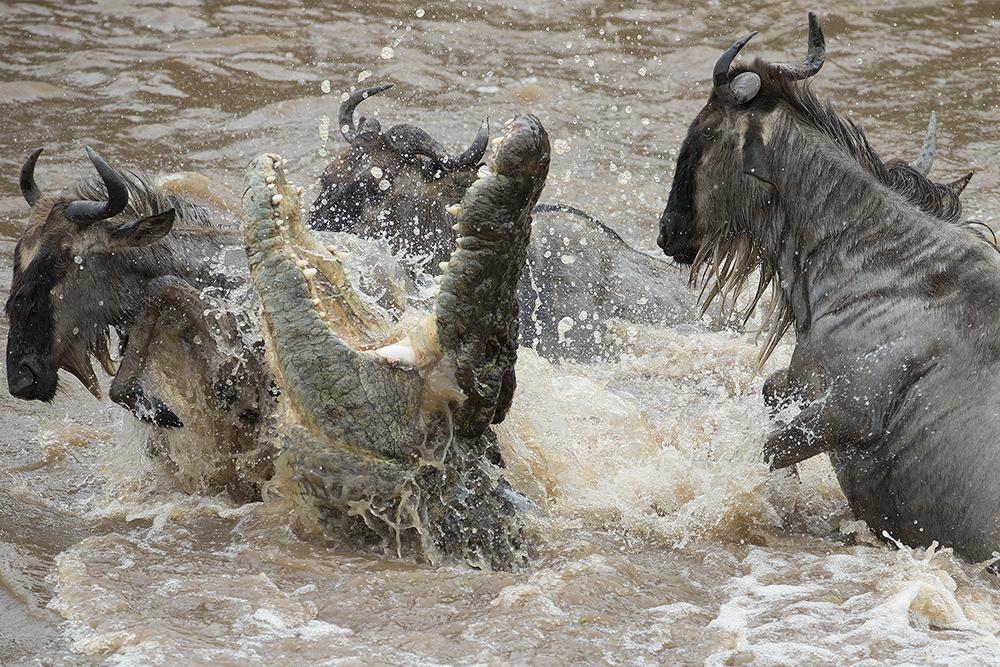
Predator activity is particularly noticeable during the calving season when young wildebeest are vulnerable, but excellent hunting behaviour can also be observed at other stages. A migration-focused Tanzania Northern Circuit Safari therefore offers far more than wildebeest alone.
Best Time for Great Migration Photography
The best time depends on the type of photography desired. February is excellent for calving, newborn animals and predator activity. May and June can provide long lines of migrating herds, while August and September are popular for northern Serengeti and potential Mara River action.
Photographers should use both telephoto and wider lenses. Wide shots are essential for capturing the scale of the migration, while telephoto lenses help isolate individual animals and behaviour. Early morning and late afternoon usually provide the most attractive natural light.
Choosing the Right Serengeti Camp
Camp location is one of the most important decisions on Great Migration Tanzania Northern Circuit Safaris. Staying in central Serengeti during a period when the herds are concentrated in the far north can result in long drives or missed opportunities.
Seasonal and mobile camps are often positioned strategically near expected migration routes. Permanent lodges in central Serengeti remain excellent for resident wildlife but may not always be ideal for migration-focused trips. Travellers should review where to stay to see the Great Wildebeest Migration before confirming accommodation.
How Many Nights Are Needed for the Great Migration?
For a serious migration-focused safari, at least three nights in the most relevant Serengeti region are recommended. Four or more nights provide greater flexibility, especially when targeting Mara River activity.
Travellers should also allow enough time for general wildlife viewing because the Serengeti supports exceptional resident animals throughout the year. A longer itinerary can combine migration areas with central Serengeti, Ngorongoro and Tarangire for a more complete Tanzania Northern Circuit Safari.
Why the Great Migration Is Essential on Tanzania Northern Circuit Safaris
The Great Migration adds an extraordinary seasonal dimension to Tanzania Northern Circuit Safaris, but it should be understood as a continuous natural process rather than a single event. Calving, long-distance movement, predator activity and river crossings are all different stages of the same ecological cycle.
Safari Vacations and Travel Services Ltd can design migration itineraries around travel dates, expected herd locations, accommodation availability and preferred safari style. Travellers can also explore a broader complete guide to the Wildebeest Migration before booking a personalised Northern Tanzania safari.
Best Tanzania Northern Circuit Safari Itineraries
Tanzania Northern Circuit Safaris can be designed for almost every travel style, from short wildlife escapes to extended Great Migration journeys and luxury safari combinations. The ideal itinerary depends on the traveller’s available time, budget, preferred accommodation and wildlife priorities. Short safaris usually focus on Tarangire, Ngorongoro and Serengeti, while longer journeys allow more time in different Serengeti regions, relaxed game drives and additional activities such as hot-air balloon safaris, cultural visits and Zanzibar extensions.
Safari Vacations and Travel Services Ltd customises Tanzania Northern Circuit Safaris around individual interests rather than forcing every traveller into a fixed route. Below are some of the strongest itinerary options for first-time visitors, couples, families, photographers and luxury travellers.
Detailed Tanzania Northern Circuit Safari Itineraries
4 Days Tanzania Northern Circuit Safari
Safari Overview
This 4 Days Tanzania Northern Circuit Safari is designed for travellers with limited time who still want to experience the highlights of northern Tanzania. The itinerary combines Tarangire National Park, Serengeti National Park and the Ngorongoro Crater, delivering elephants, predators, spectacular landscapes and opportunities to search for the Big Five. Starting and ending in Arusha, the safari is operated in a private 4×4 safari vehicle with a professional driver-guide. Although relatively fast-paced, this is one of the most rewarding short Tanzania Northern Circuit Safaris for couples, solo travellers and visitors combining Tanzania with another East African destination.
Day 1: Arusha to Tarangire National Park
After breakfast, meet your professional safari guide in Arusha and begin the journey to Tarangire National Park. The drive normally takes approximately two to three hours, passing rural communities and open landscapes before reaching the park.
Spend the remainder of the day exploring Tarangire, famous for its enormous baobab trees and impressive elephant populations. Search for giraffes, zebras, wildebeest, buffaloes, impalas and lions while following wildlife activity around the Tarangire River. During the dry season, the river becomes particularly important as animals gather around remaining water sources.
Enjoy a picnic or lodge lunch before continuing with an afternoon game drive. Later, leave the park and transfer toward Karatu for dinner and overnight.
Recommended Stay: Acacia Farm Lodge, Marera Valley Lodge or a similar comfortable safari lodge.
Day 2: Karatu to Serengeti National Park
After an early breakfast, travel through the beautiful Ngorongoro Highlands toward Serengeti National Park. Stop at scenic viewpoints before continuing across the Ngorongoro Conservation Area toward the Serengeti plains.
As you enter Serengeti, the journey gradually transforms into a game drive. Look for wildebeest, zebras, giraffes, elephants and predators while travelling toward the central Serengeti. Depending on wildlife activity, your guide may explore productive areas around Seronera before continuing to the lodge or tented camp.
The afternoon provides your first opportunity to experience the immense landscapes that make Tanzania Northern Circuit Safaris famous worldwide. Arrive at camp in the evening for dinner and relaxation.
Recommended Stay: Embalakai Authentic Camp, Kiriche Luxury Camp or a comparable property.
Day 3: Serengeti National Park to Ngorongoro Conservation Area
Begin the day with an early morning Serengeti game drive when temperatures are cooler and predators may still be active. Search for lions, cheetahs, leopards, elephants and large herds of plains game while enjoying the beautiful morning light.
After breakfast or a picnic meal, continue exploring Serengeti before gradually travelling toward the Ngorongoro Conservation Area. Wildlife viewing continues along the route, allowing the transfer to remain part of the safari experience.
Arrive around the Ngorongoro Highlands later in the day and enjoy spectacular views across the surrounding landscape before checking into your lodge.
Recommended Stay: Acacia Farm Lodge or a comparable facility.
Day 4: Ngorongoro Crater Game Drive and Return to Arusha
After an early breakfast, descend approximately 600 metres into Ngorongoro Crater for the final major wildlife experience of your Tanzania Northern Circuit Safari. Explore grasslands, woodland, wetlands and freshwater areas while searching for lions, buffaloes, elephants, wildebeest, zebras, hippos and the endangered black rhino.
Enjoy a picnic lunch inside the crater before completing the game drive and climbing back to the highlands. Continue by road to Arusha, arriving later in the afternoon or evening for drop-off at your hotel or onward travel arrangements.
Best For
This 4 Days Tanzania Northern Circuit Safari is best for travellers with limited holiday time, couples, solo travellers and visitors combining Tanzania with Uganda, Rwanda, Kenya or Zanzibar. It suits guests who want Serengeti, Ngorongoro and Tarangire within one compact, wildlife-focused itinerary.
5 Days Serengeti and Ngorongoro Safari
Safari Overview
This 5 Days Serengeti and Ngorongoro Safari concentrates on two of the most important destinations included in Tanzania Northern Circuit Safaris. By avoiding the temptation to include too many parks, the itinerary provides more time for game viewing in Serengeti National Park while still including an extensive Ngorongoro Crater experience. Travellers can search for lions, leopards, cheetahs, elephants, buffaloes, wildebeest and potentially black rhinos while exploring dramatically different ecosystems. The safari can be adapted around seasonal Great Migration movements, making it particularly attractive to first-time safari travellers, photographers and wildlife enthusiasts seeking a focused Northern Tanzania experience.
Day 1: Arusha to Ngorongoro Highlands
Meet your Safari Vacations and Travel Services Ltd driver-guide in Arusha after breakfast and begin the journey toward the Ngorongoro Highlands. The drive passes through northern Tanzania’s rural landscapes before climbing toward Karatu and the cooler highland region.
Depending on departure time, the afternoon can be spent relaxing at the lodge, enjoying the surrounding scenery or participating in an optional cultural or coffee experience around Karatu.
Starting with a relatively relaxed day allows international travellers to recover before several intensive wildlife-viewing days.
Recommended Stay: Acacia Farm Lodge, Ngorongoro Farm House or Ngorongoro Serena Safari Lodge.
Day 2: Ngorongoro Crater Game Drive and Transfer to Serengeti
After an early breakfast, enter the Ngorongoro Conservation Area and descend into the crater. Spend the morning exploring its grasslands, woodland and wetlands in search of lions, elephants, buffaloes, zebras, wildebeest, hippos and potentially black rhinos.
After the crater game drive, climb back to the rim and continue toward Serengeti National Park. The landscapes gradually open into the immense plains associated with the Serengeti ecosystem.
Wildlife viewing begins as you travel toward central Serengeti, arriving at your camp or lodge in the late afternoon or early evening.
Recommended Stay: Kubu Kubu Tented Lodge, Serengeti Serena Safari Lodge or similar.
Day 3: Full-Day Serengeti National Park Safari
Spend the entire day exploring Serengeti National Park with your private safari guide. An early start provides excellent opportunities to search for predators before temperatures rise. Lions may be found around kopjes and grasslands, while leopards are often associated with trees and riverine environments. Cheetahs favour open plains where they can use their speed to hunt.
Your guide will adapt the day’s route according to current wildlife activity. Enjoy a picnic lunch in the park or return to the lodge before continuing with an afternoon game drive.
Recommended Stay: Kubu Kubu Tented Lodge, Serengeti Serena Safari Lodge or similar.
Day 4: Second Full Day in Serengeti
A second full day provides one of the biggest advantages of this Tanzania Northern Circuit Safari. Instead of rushing onward, you have another opportunity to explore different parts of Serengeti and spend longer observing interesting wildlife behaviour.
Depending on the season, the day can focus on areas associated with Great Migration activity or remain within central Serengeti for resident predators and plains game. An optional sunrise hot-air balloon safari can also be arranged in advance, followed by further game viewing with your private guide.
Recommended Stay: Kubu Kubu Tented Lodge, Serengeti Serena Safari Lodge or similar.
Day 5: Serengeti to Arusha
Enjoy breakfast and, depending on arrangements, a final morning game drive before beginning the return journey. Travellers may return to Arusha by road or choose a scheduled bush flight from Serengeti to Arusha for greater comfort and additional time in the park.
Upon arrival in Arusha, transfer to your hotel or continue to Kilimanjaro International Airport according to your onward travel schedule. Guests continuing to Zanzibar can also connect with an appropriate domestic flight.
Best For
This 5 Days Serengeti and Ngorongoro Safari is best for first-time visitors, photographers, couples and wildlife enthusiasts who prefer quality time in fewer destinations. It is especially suitable for travellers whose main priorities are Serengeti predators, Great Migration possibilities and Ngorongoro’s concentrated wildlife.
7 Days Classic Northern Tanzania Safari
Safari Overview
This 7 Days Classic Northern Tanzania Safari provides one of the most balanced Tanzania Northern Circuit Safaris for first-time visitors. The itinerary combines Tarangire National Park, Lake Manyara National Park, Ngorongoro Crater and Serengeti National Park while providing enough time to appreciate the different landscapes and wildlife experiences. Travellers encounter elephant country, Rift Valley scenery, the extraordinary Ngorongoro caldera and the predator-rich Serengeti plains. Three nights associated with the Serengeti portion provide greater flexibility for wildlife viewing and photography. The itinerary can also be adjusted according to Great Migration movements, accommodation preferences and whether travellers prefer road transfers or a fly-back option.
Day 1: Arusha to Tarangire National Park
Depart Arusha after breakfast and travel to Tarangire National Park. Begin your first game drive among the park’s baobab trees, open savannah and riverine environments.
Search for elephants, giraffes, zebras, buffaloes, wildebeest, antelopes and predators. During the dry season, wildlife becomes increasingly concentrated around the Tarangire River, creating excellent viewing opportunities.
Continue to your lodge in the late afternoon for dinner and overnight.
Recommended Stay: Tarangire Safari Lodge, Tarangire Sopa Lodge or a comparable property.
Day 2: Tarangire to Lake Manyara and Karatu
After breakfast, travel toward Lake Manyara National Park for a game drive through groundwater forest, woodland and open areas near the lake.
Wildlife may include elephants, baboons, blue monkeys, giraffes, buffaloes, hippos and numerous bird species. The park’s Rift Valley setting provides a very different landscape from Tarangire. You may also have a chance of seeing tree-climbing lions depending on your luck of the day.

After the game drive, continue to Karatu in the Ngorongoro Highlands for an evening at your lodge.
Recommended Stay: Acacia Farm Lodge, Ngorongoro Farm House or similar.
Day 3: Ngorongoro Crater Safari
Leave the lodge early and travel to Ngorongoro Conservation Area. Descend into the crater for an extensive game drive across its grasslands, woodland and wetlands.
Search for lions, buffaloes, elephants, wildebeest, zebras, hippos, hyenas and black rhinos. Enjoy a picnic lunch before climbing back to the crater rim.
Depending on the final itinerary design, overnight near Ngorongoro or begin travelling toward the Serengeti.
Recommended Stay: Ngorongoro Serena Safari Lodge or a comparable highland property.
Day 4: Ngorongoro to Serengeti National Park
After breakfast, continue through the Ngorongoro Conservation Area toward Serengeti National Park. The drive provides spectacular scenery as highland landscapes gradually give way to expansive grasslands.
Enter Serengeti and enjoy an afternoon game drive while travelling toward your lodge or tented camp. Look for lions, elephants, giraffes, cheetahs, wildebeest and zebras along the way.
Recommended Stay: Kubu Kubu Tented Lodge, Serengeti Serena Safari Lodge or similar.
Day 5: Full-Day Serengeti Safari
Spend the full day exploring Serengeti with your private driver-guide. Begin early to take advantage of cooler temperatures and potential predator activity.
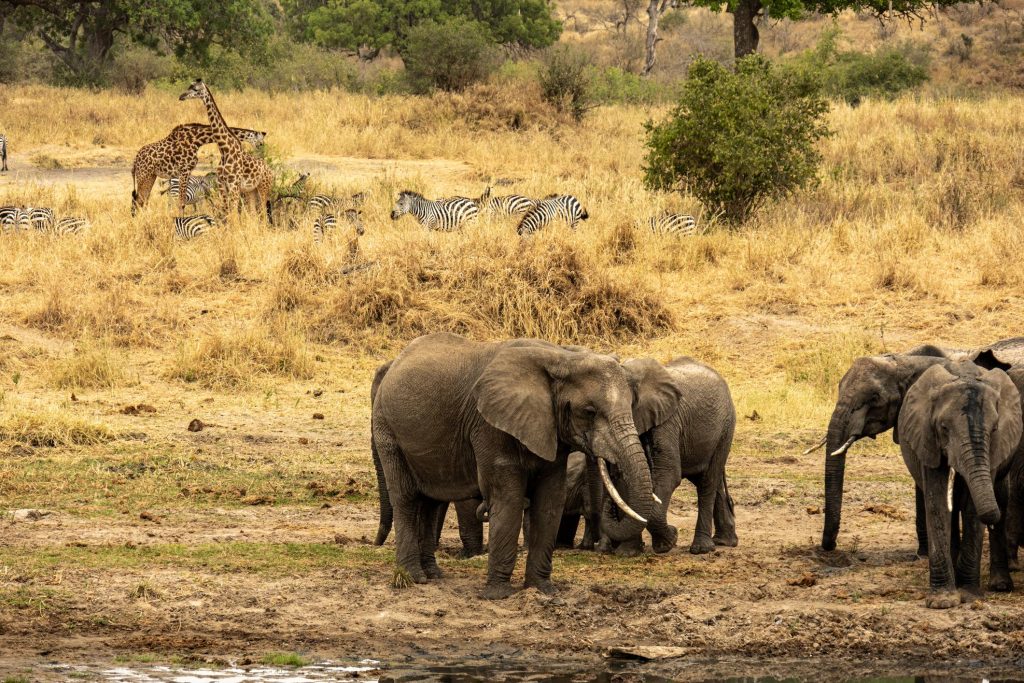
Your route will depend on current wildlife conditions. Central Serengeti is particularly reliable for resident lions, leopards, cheetahs and plains game, while seasonal itineraries can target areas associated with Great Migration activity.
Enjoy lunch in the park before continuing your afternoon game drive until sunset.
Recommended Stay: Kubu Kubu Tented Lodge, Serengeti Serena Safari Lodge or similar.
Day 6: Second Full Day in Serengeti
Enjoy another complete day in Serengeti, giving you the flexibility to explore areas missed on the previous day or return to locations where interesting wildlife activity was observed.
Travellers can also add an optional sunrise hot-air balloon safari, followed by further game viewing. Having a second full day significantly improves the experience because there is no need to rush between parks simply to complete the itinerary.
Recommended Stay: Kubu Kubu Tented Lodge, Serengeti Serena Safari Lodge or similar.
Day 7: Serengeti to Arusha
Enjoy your final breakfast overlooking the Serengeti before beginning the journey back to Arusha. A scheduled bush flight from Serengeti to Arusha is recommended for travellers who want to avoid a long return drive and maximise their final morning in the park.
Alternatively, return by road through Ngorongoro and Karatu. On arrival in Arusha, transfer to your hotel, Kilimanjaro International Airport or another agreed location. Zanzibar, Kenya, Uganda or Rwanda extensions can also be arranged.
Best For
This 7 Days Classic Northern Tanzania Safari is best for first-time visitors, couples, families, honeymooners, photographers and wildlife enthusiasts. It offers one of the strongest balances of wildlife diversity, comfortable pacing and destination variety among Tanzania Northern Circuit Safaris.
Which Tanzania Northern Circuit Safari Itinerary Is Best?
The best itinerary depends on how deeply you want to experience each destination. Three to five days work for travellers with limited time, while six to seven days provide a stronger first-time safari. Eight to ten days are ideal for Great Migration, photography and a more relaxed pace, while twelve to fourteen days allow luxury experiences or Zanzibar extensions.
Safari Vacations and Travel Services Ltd can customize Tanzania Northern Circuit Safaris around your travel dates, preferred accommodation, budget and wildlife interests. The strongest itinerary is not necessarily the one containing the most parks, but the one that gives you enough time to experience each destination properly without spending most of the journey driving.
Tanzania Northern Circuit Safari Cost
The cost of Tanzania Northern Circuit Safaris varies considerably depending on the length of the itinerary, number of travellers, accommodation category, season, national parks visited and whether the safari is private, shared or fly-in. There is therefore no single fixed price that accurately represents every Northern Tanzania safari. A three-day safari visiting Tarangire and Ngorongoro will naturally cost far less than a ten-day private Great Migration itinerary using luxury tented camps and scheduled bush flights.
For travellers comparing Tanzania Northern Circuit Safaris, it is important to look beyond the headline price. A properly prepared quotation should clearly explain accommodation, park fees, transportation, guiding, meals, game drives and any additional activities included. Tanzania National Parks currently lists adult non-resident conservation fees of USD 70.80 for Serengeti and USD 53.10 for Tarangire and Lake Manyara, inclusive of VAT where applicable. These are only part of the complete safari cost because vehicle, accommodation, concession and other applicable fees may also be involved.
What Determines the Cost of Tanzania Northern Circuit Safaris?
The final price is primarily determined by how many days travellers spend on safari and the destinations included. Every additional day normally adds accommodation, meals, professional guiding, vehicle use and applicable conservation fees. Serengeti can also increase the overall budget because travellers often spend several nights inside the park to obtain meaningful wildlife viewing rather than treating it as a quick overnight stop.
Accommodation is another major factor. Camping safaris can reduce costs significantly, while comfortable midrange tented camps provide private bathrooms, full-board meals and good locations at a higher price. Luxury and ultra-luxury properties can substantially increase the daily safari rate but may provide superior locations, larger suites, personalised service, premium cuisine and exclusive experiences.
Budget Tanzania Northern Circuit Safari Cost
Budget Tanzania Northern Circuit Safaris are designed for travellers who prioritise wildlife experiences over expensive accommodation. They commonly use public or basic campsites, simple lodges outside some national parks or scheduled group departures where transportation and guide costs are divided among several guests.

This style can provide excellent wildlife viewing because guests visit the same national parks as luxury travellers. The main differences are usually accommodation standards, privacy, meal presentation, vehicle sharing and flexibility. Budget travellers should check carefully whether park fees, camping charges, drinking water, airport transfers and meals are already included rather than selecting a safari based only on the lowest advertised amount.
Midrange Tanzania Northern Circuit Safari Cost
Midrange Tanzania Northern Circuit Safaris provide one of the best balances between comfort and overall value. Travellers typically stay in permanent lodges or quality tented camps with ensuite bathrooms, comfortable beds, full-board meals and attractive locations near or within the major safari areas.
A private midrange safari becomes particularly good value for couples, families and groups because the cost of the 4×4 safari vehicle and professional guide can be divided among several travellers. It also provides greater freedom than a shared departure because guests can spend longer at wildlife sightings, take photography stops and adjust daily routines where the itinerary permits.
Travellers comparing accommodation standards can review the difference between midrange and luxury safaris before deciding where additional spending will provide the greatest benefit.
Luxury Tanzania Northern Circuit Safari Cost
Luxury Tanzania Northern Circuit Safaris combine exceptional wildlife viewing with premium accommodation, private transportation and highly personalised service. Luxury camps and lodges are often selected not only for comfort but also for strategic locations that reduce driving time and provide better access to important wildlife areas.

A luxury itinerary may include spacious suites, gourmet meals, private dining, swimming pools, laundry services, premium wines, personalised hospitality and scenic properties overlooking wildlife areas. Scheduled bush flights are also frequently incorporated to reduce long overland transfers, especially between Serengeti and Arusha.
The overall price is therefore influenced by much more than the quality of the bedroom. Location, guiding, logistics, flight arrangements and exclusivity all contribute to the cost of premium Tanzania Northern Circuit Safaris.
Ultra-Luxury and Exclusive Tanzania Safaris
Ultra-luxury Tanzania Northern Circuit Safaris are designed for travellers seeking maximum privacy and flexibility. These journeys may feature some of Tanzania’s most exclusive safari camps, private villas, dedicated safari vehicles, private guides, charter flights and highly personalised dining and concierge services.
Instead of changing camps according to a fixed package, every part of the itinerary can be tailored around wildlife interests and personal preferences. Great Migration itineraries may use strategically positioned seasonal camps, while families can choose exclusive-use accommodation that provides greater privacy.
Private aircraft and helicopter arrangements can further increase costs considerably, so ultra-luxury safaris should always be individually quoted rather than advertised using a single standard price.
Safari Vehicle and Professional Guide Costs
A private 4×4 safari vehicle is one of the most significant operational expenses on Tanzania Northern Circuit Safaris. The daily rate normally needs to cover vehicle use, an experienced driver-guide, fuel and the costs associated with keeping a safari vehicle operational across demanding national-park roads.
Private vehicle pricing explains why safari cost per person generally decreases as the number of travellers increases. Two guests divide the vehicle expense between themselves, while four or six guests can spread the same basic operating cost more widely.
For wildlife photographers and families, paying for private transportation often provides excellent value because it allows substantially more control over game-drive pace and stopping time.
Accommodation Costs
Accommodation can be one of the largest variables in Tanzania Northern Circuit Safari pricing. Rates depend on property category, location and season. Camps located deep inside Serengeti may cost more than properties outside park boundaries because operating remote safari camps involves complex logistics and additional conservation-related charges.
Travellers should therefore compare what each property adds to the safari rather than looking exclusively at star rating. A strategically located tented camp can reduce hours of daily driving and provide better wildlife access, which may ultimately be more valuable than staying in a more luxurious lodge far from the areas being explored.
Peak Season and Low Season Prices
Travel season can significantly affect accommodation costs. Peak periods associated with favourable dry-season conditions and popular Great Migration phases often attract higher lodge rates and stronger demand. Christmas and New Year can also command premium pricing.
Green-season Tanzania Northern Circuit Safaris can sometimes provide excellent value. Landscapes become lush, birding is rewarding and visitor numbers may be lower. However, migration location and weather should be considered alongside the reduced accommodation rates rather than choosing dates solely because they are cheaper.
Great Migration Safari Costs
Great Migration Tanzania Northern Circuit Safaris may cost more than general wildlife itineraries because camp location becomes especially important. Seasonal camps positioned near expected wildebeest concentrations can carry premium rates during periods of strong demand.
Travellers hoping to experience the Mara River phase should ideally spend several nights in northern Serengeti rather than attempting a quick excursion from central Serengeti. More nights naturally increase accommodation and conservation costs, but they also provide a far more realistic chance of experiencing meaningful migration activity.
Hot-Air Balloon Safari Costs
A Serengeti hot-air balloon safari is an optional premium experience and is normally charged separately from the standard Tanzania Northern Circuit Safari package. Balloon activities operate in selected areas of Serengeti and should be reserved in advance, especially during popular travel periods. TANAPA identifies hot-air ballooning among Serengeti’s available tourism experiences.
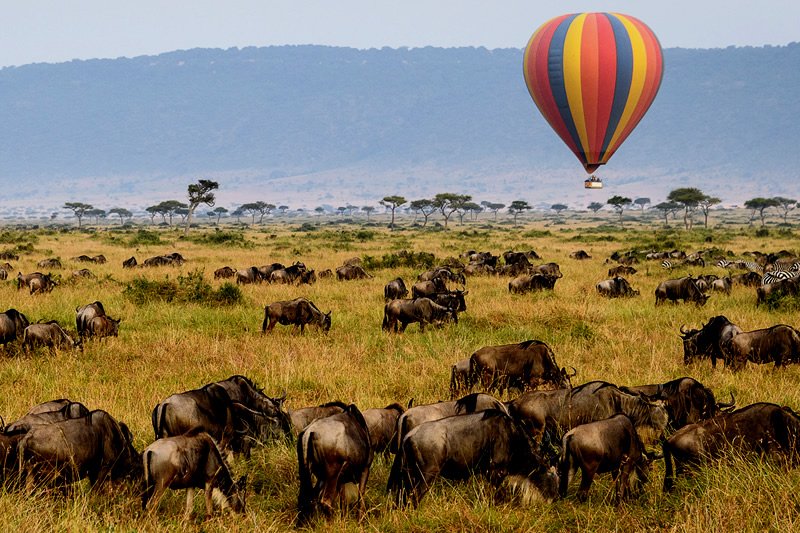
Because balloon prices and operating locations can change, travellers should request the current confirmed rate when booking rather than relying on an old figure found online. The current hot air balloon prices range from $480-580 per person depending on the balloon operator.
Domestic Flight Costs
Scheduled bush flights can significantly improve the comfort of Tanzania Northern Circuit Safaris by eliminating long return drives. A common arrangement is to travel by road from Arusha through Tarangire and Ngorongoro into Serengeti and then fly from the Serengeti back to Arusha.
The flight adds to the safari cost but can effectively provide an additional half or full day for wildlife viewing. It is therefore useful to compare the value of time saved against the ticket price, particularly on shorter luxury itineraries.
Private Safari vs Group Safari Cost
Group departures usually provide the lowest per-person cost because travellers share the safari vehicle, guide and some logistical expenses. This makes them attractive to solo travellers and visitors with strict budgets.
Private Tanzania Northern Circuit Safaris cost more for one or two guests but provide far greater flexibility. Families and groups of four to six travellers often find private safaris comparatively good value because the vehicle expense is shared while the group retains exclusive use of the guide and vehicle.
How Safari Duration Affects Price
Safari length has a direct effect on total cost. A four-day itinerary requires fewer accommodation nights and fewer park days than a seven- or ten-day safari. However, extremely short Tanzania Northern Circuit Safaris can sometimes create poor value if travellers spend too much of each day transferring between parks.
A six- or seven-day itinerary often provides a stronger balance by allowing meaningful time in Tarangire, Ngorongoro and Serengeti. Travellers can explore a complete Tanzania Northern Circuit Safari when comparing route length and destination combinations.
Number of Travellers and Safari Cost
Travelling as a couple is generally more expensive per person than travelling as a family or private group because vehicle and guide expenses are divided among fewer guests. Groups can therefore achieve a lower per-person rate without necessarily reducing accommodation quality.
Families should also ask about child accommodation rates and age-based conservation fees because these can materially affect the final quotation. TANAPA publishes separate child categories and notes that children below five years enter national parks free of conservation fees, while child tariffs apply from ages five to fifteen.
What Is Usually Included?
A professionally organised Tanzania Northern Circuit Safari will typically package the major land arrangements required by the confirmed itinerary. Depending on the quotation, this may include private or shared 4×4 transportation, professional driver-guide services, accommodation, specified meals, conservation fees, crater arrangements, airport transfers and scheduled game drives.
However, inclusions differ between operators and packages. Travellers should never assume that a low advertised rate includes every park fee or activity. A detailed quotation should state exactly what has already been paid for and what remains the traveller’s responsibility.
What Is Usually Excluded?
International flights, visas, travel insurance, optional gratuities, premium alcoholic drinks, personal shopping and optional activities are commonly separated from the main safari price unless specifically stated otherwise.
Domestic flights may also be excluded from road-based Tanzania Northern Circuit Safaris unless a fly-in or fly-back option has been requested. Reviewing exclusions before making a deposit prevents misunderstandings later in the booking process.
How to Reduce Tanzania Northern Circuit Safari Costs
The easiest way to reduce cost without weakening the wildlife experience is to choose comfortable midrange accommodation instead of premium luxury properties. Travelling with more companions can also lower the per-person vehicle cost, while visiting during selected shoulder or green-season periods may provide better lodge rates.
Another strategy is to avoid unnecessary park changes. Spending more time in strategically selected destinations can reduce long-distance driving while improving wildlife viewing. For example, a well-designed six-day Tarangire, Ngorongoro and Serengeti itinerary may provide better value than trying to visit five parks in the same period.
Where You Should Not Cut Costs
Travellers should be cautious about saving money by choosing poorly maintained vehicles, inexperienced guides or accommodation located excessively far from the wildlife areas they want to explore. A breakdown inside Serengeti or hours of unnecessary daily driving can quickly reduce the quality of an otherwise expensive holiday.
The professional safari guide is particularly important. An experienced guide understands wildlife behaviour, routes, seasonal conditions and responsible viewing practices. Excellent guiding can have a greater impact on Tanzania Northern Circuit Safaris than upgrading from one luxury lodge category to another.
Is a Tanzania Northern Circuit Safari Expensive?
Tanzania Northern Circuit Safaris can represent a substantial travel investment because guests are visiting protected wildlife areas that require conservation fees, specialist safari vehicles and remote accommodation logistics. However, travellers receive access to Serengeti, Ngorongoro, Tarangire and some of Africa’s richest wildlife environments within one journey.
Rather than asking only whether Tanzania is expensive, it is more useful to compare what the safari price includes, how much time is spent actually viewing wildlife and whether the itinerary matches the traveller’s priorities.
Getting an Accurate Tanzania Northern Circuit Safari Quote
The most accurate price can only be prepared after confirming travel dates, number of guests, accommodation preferences, safari duration and optional activities. These factors determine park fees, lodge availability, vehicle requirements and whether domestic flights are worthwhile.
Safari Vacations and Travel Services Ltd prepares tailor-made Tanzania Northern Circuit Safaris rather than relying on a single fixed package price. Guests can choose budget-conscious, midrange, luxury or premium itineraries while receiving a transparent breakdown of the services included.
Travellers can review the 8-Day Best of Tanzania Safari for itinerary inspiration or contact Safari Vacations and Travel Services Ltd for a personalised Northern Tanzania safari quotation based on their exact travel dates, group size and preferred level of comfort.
Best Time for Tanzania Northern Circuit Safaris
The best time for Tanzania Northern Circuit Safaris depends on what you want to experience, including the Great Migration, wildebeest calving, wildlife photography, birdwatching, lower safari prices or classic dry-season game viewing. Northern Tanzania is a year-round safari destination, and Serengeti National Park, Ngorongoro Conservation Area, Tarangire National Park and Lake Manyara offer rewarding wildlife experiences across different seasons. However, rainfall, vegetation, wildlife distribution, accommodation prices and visitor numbers change throughout the year, making careful timing important when planning your safari.
Dry Season: June to October
June through October is generally considered one of the best periods for Tanzania Northern Circuit Safaris. Rainfall is limited, vegetation gradually becomes thinner and animals increasingly gather around permanent water sources. These conditions make wildlife easier to locate, particularly in Tarangire, where elephants and other mammals concentrate around the Tarangire River.
Serengeti also provides excellent game viewing during this period. As the dry season progresses, Great Migration herds generally move toward western and northern parts of the ecosystem. Northern Serengeti becomes especially important for travellers hoping to experience large wildebeest concentrations and potential Mara River crossings.
July through September attracts particularly strong demand, meaning popular lodges and migration camps can sell out well in advance. Travellers seeking similar dry-season conditions with somewhat fewer crowds may consider June or later parts of the season.
Green Season: November to May
The green season transforms northern Tanzania into a lush and highly photogenic landscape. Short rains generally begin around November, while heavier rains are more associated with parts of March, April and May. Although some travellers avoid these months, green-season Tanzania Northern Circuit Safaris offer several important advantages.
Visitor numbers can be lower, accommodation may provide better seasonal value and landscapes become exceptionally beautiful. Birdwatching is particularly rewarding as resident birds are joined by migratory species. Rain normally occurs in periods rather than making wildlife viewing impossible throughout the day, although road conditions can become more challenging during heavier rainfall.
Best Time for the Great Migration
The Great Migration occurs throughout the year rather than during one specific month. Wildebeest continuously move through the Serengeti-Mara ecosystem according to rainfall, water and fresh grazing.
Southern Serengeti and Ndutu become especially important during the early part of the year, when large herds gather on nutrient-rich short-grass plains. As conditions change, the herds gradually move through central and western Serengeti before progressing north. Northern Serengeti becomes particularly significant during the dry-season phase when herds may encounter the Mara River.
Because migration movements are controlled by nature, Tanzania Northern Circuit Safaris should be designed around broad seasonal patterns rather than guaranteed dates.
Best Time for Wildebeest Calving
The early part of the year is particularly attractive for travellers interested in the wildebeest calving season. Southern Serengeti and the Ndutu ecosystem become the main focus as large numbers of calves are born across the open plains.
The abundance of newborn animals also attracts lions, cheetahs and hyenas, producing exceptional predator-prey interactions. This makes calving season particularly suitable for wildlife photographers and travellers interested in animal behaviour.
Best Time for Mara River Crossings
Northern Serengeti is generally the focus for travellers hoping to witness Mara River crossings during the main dry-season migration period. However, no safari operator can responsibly guarantee a crossing. Wildebeest may approach the river, wait for hours or days, retreat or cross unexpectedly.
Travellers targeting this experience should spend several nights in northern Serengeti rather than planning a single-day excursion. This provides greater flexibility to respond to changing herd movements.
Best Time for Lower Safari Prices
Parts of the green and shoulder seasons can provide excellent value for Tanzania Northern Circuit Safaris. Accommodation prices may be lower, visitor numbers decrease and popular wildlife areas feel considerably quieter.
Travellers willing to accept occasional rainfall can enjoy beautiful scenery, strong birdwatching and excellent resident wildlife. This can be particularly attractive to couples, photographers and repeat safari visitors who prefer quieter parks over peak-season conditions.
When Should You Book Tanzania Northern Circuit Safaris?
For peak dry-season travel, Great Migration safaris and festive holiday periods, booking well in advance is strongly recommended. Strategically located Serengeti camps have limited capacity and can fill quickly when wildlife activity is expected nearby.
Ultimately, there is no single best season for everyone. Safari Vacations and Travel Services Ltd can design Tanzania Northern Circuit Safaris according to your travel dates, budget, Great Migration interests and preferred wildlife experiences, ensuring that the route and accommodation match the season rather than relying on a fixed itinerary throughout the year.
Where to Stay on Tanzania Northern Circuit Safaris
Choosing where to stay is an important part of planning Tanzania Northern Circuit Safaris because lodge location can directly influence driving times, wildlife access, comfort and overall safari cost. Northern Tanzania offers everything from affordable safari camps and comfortable midrange lodges to luxury tented camps and exclusive properties overlooking some of Africa’s most remarkable wilderness areas.
The best accommodation is not always the most expensive. Location should be considered alongside comfort, particularly in Serengeti National Park, where staying close to seasonal wildlife activity can save several hours of driving. Safari Vacations and Travel Services Ltd can select accommodation according to your budget, travel dates, preferred comfort level and Great Migration interests.
Accommodation in Serengeti National Park
Serengeti offers one of the widest selections of safari accommodation on Tanzania Northern Circuit Safaris. Options include permanent lodges, intimate tented camps, seasonal migration camps and exclusive luxury properties. Central Serengeti is particularly suitable for year-round wildlife viewing because resident predators and plains game remain abundant even when the main migration herds are elsewhere.
Travellers specifically following the Great Migration should select accommodation according to the season. Southern Serengeti and Ndutu are strategically important around the calving period, while northern Serengeti becomes more relevant when the herds move toward the Mara River ecosystem.
Midrange Serengeti Lodges and Camps
Midrange properties provide an excellent balance between location, comfort and cost. Typical options include Kati Kati Tented Camp and similar well-positioned safari camps. These properties generally provide comfortable beds, private bathrooms, meals and easy access to game-drive areas without the premium pricing of exclusive luxury camps.
Midrange accommodation works particularly well for travellers who prefer to invest more of their safari budget in additional nights, private transportation or extra wildlife activities rather than expensive suites.
Luxury Serengeti Lodges
Luxury options include properties such as Four Seasons Safari Lodge Serengeti, Serengeti Serena Safari Lodge and high-end tented camps positioned across different areas of the ecosystem. Depending on the property, guests may enjoy spacious suites, swimming pools, premium dining, private decks and exceptional wilderness views.
For luxury Tanzania Northern Circuit Safaris, location remains essential. A strategically positioned tented camp near seasonal migration activity may provide a better wildlife experience than a more elaborate lodge several hours away.
Migration Camps in Serengeti
Seasonal and mobile camps are particularly useful for Great Migration safaris. These camps operate or reposition in areas expected to provide access to major wildebeest movements during particular periods of the year.
Travellers interested in calving may stay around southern Serengeti or Ndutu, while those targeting the northern migration phase should consider camps near Kogatende and other northern wildlife areas. Because migration camps have limited capacity, early booking is recommended.
Accommodation Around Ngorongoro Crater
Ngorongoro accommodation can generally be divided between properties located close to the crater rim and lodges around Karatu and the surrounding highlands. Crater-rim accommodation provides spectacular views and convenient access to descent roads, while Karatu offers a wider selection of properties and often stronger value.
Both options work well on Tanzania Northern Circuit Safaris. The decision usually depends on budget, preferred scenery and whether travellers value premium crater access or a more spacious highland lodge experience.
Ngorongoro Crater Rim Lodges
Ngorongoro Serena Safari Lodge is among the established options positioned close to the crater. Premium properties around the rim can provide extraordinary views across the caldera and convenient access for early morning crater descents.
These lodges are particularly suitable for honeymooners, photographers and luxury travellers. However, their strategic location often results in higher rates compared with accommodation farther away.
Accommodation in Karatu
Karatu is one of the most practical accommodation bases on Tanzania Northern Circuit Safaris. Properties such as Acacia Farm Lodge and Ngorongoro Farm House provide comfortable rooms, gardens and convenient access to Ngorongoro Conservation Area.
Karatu can also be useful when combining Ngorongoro with Lake Manyara. The highland setting provides cooler temperatures and a peaceful environment between wildlife activities.
Accommodation in Tarangire National Park
Tarangire offers permanent lodges, tented camps and properties located in surrounding wildlife areas. Staying inside or close to the park provides convenient access to early morning and late afternoon game drives, particularly during the dry season when wildlife concentrates around the Tarangire River.

Enjoy your stay at Tarangire Sopa Lodge
Tarangire Safari Lodge is a well-known option, while numerous tented camps cater to different budgets. Luxury travellers can choose smaller properties offering more personalised service and secluded wilderness settings.
Accommodation Around Lake Manyara
Accommodation around Lake Manyara ranges from affordable lodges near Mto wa Mbu to luxury properties overlooking the Rift Valley escarpment. Because Lake Manyara is relatively close to Karatu, travellers do not always need to change hotels simply to visit the national park.
Many Tanzania Northern Circuit Safaris use one strategically located lodge for both Lake Manyara and the onward journey toward Ngorongoro, reducing unnecessary packing and accommodation changes.
Budget Accommodation
Budget travellers can use simple lodges, campsites and affordable tented camps while still accessing the same national parks and wildlife areas as luxury guests. Accommodation standards are more basic, but savings can be significant on longer Tanzania Northern Circuit Safaris.
Travellers should check whether budget rates include meals, private bathrooms and applicable camping or concession fees. A low room rate does not necessarily represent the final safari accommodation cost.
Midrange Accommodation
Midrange accommodation is often the strongest choice for travellers seeking comfort without excessive expense. Rooms or safari tents generally include ensuite bathrooms, comfortable bedding and full-board meals, while many properties also provide swimming pools, lounges and attractive views.
For a seven- to ten-day Tanzania Northern Circuit Safari, choosing quality midrange lodges can leave more budget available for private transportation, additional Serengeti nights or a scheduled bush flight back to Arusha.
Luxury Safari Accommodation
Luxury accommodation focuses on location, privacy, service and atmosphere as well as room quality. Properties may include spacious tented suites, private decks, fine dining, swimming pools, personalised service and premium wilderness settings.
Luxury Tanzania Northern Circuit Safaris can combine different styles rather than using the same accommodation category every night. Travellers might choose a high-end crater lodge at Ngorongoro, an intimate tented camp in Serengeti and a secluded lodge in Tarangire.
Ultra-Luxury Safari Camps
Ultra-luxury camps provide the highest levels of privacy and personalised service. Some offer exclusive-use villas, private vehicles, dedicated guides, premium dining and highly customised activities.

Ultra-Luxurious stay at Singita Camps and Lodges
These properties are particularly attractive for honeymooners, celebrities, multigenerational families and travellers celebrating special occasions. Private charter flights can also be incorporated to connect exclusive camps while reducing road-transfer times.
Permanent Lodges vs Tented Camps
Permanent lodges generally provide more conventional hotel-style facilities, while tented camps create a stronger sense of immersion in the wilderness. Modern safari tents can still provide full ensuite bathrooms, comfortable beds, electricity and high-quality dining.
Neither option is automatically better. Many travellers combine both during Tanzania Northern Circuit Safaris, enjoying the facilities of a lodge in one destination and the atmosphere of a tented camp in another.
Should You Stay Inside or Outside the National Parks?
Staying inside a park generally reduces travel time to wildlife areas and can allow guests to experience the wilderness atmosphere from early morning until evening. However, accommodation inside protected areas can attract additional concession or camping charges.
Lodges outside park boundaries may offer better value and larger facilities. This works particularly well around Tarangire, Lake Manyara and Ngorongoro. In Serengeti, however, location deserves especially careful consideration because the park is enormous.
Choosing Accommodation for the Great Migration
Great Migration accommodation should be chosen primarily according to expected herd location. Staying in an excellent central Serengeti lodge when the main herds are concentrated far north can result in excessive driving and reduced wildlife-viewing time.
Safari Vacations and Travel Services Ltd can match camps to seasonal migration patterns while maintaining the traveller’s preferred comfort level. This is particularly important for river-crossing and calving-season Tanzania Northern Circuit Safaris.
How Many Nights Should You Stay at Each Lodge?
Changing accommodation every night can make a safari unnecessarily tiring. Wherever possible, travellers should spend at least two nights at important destinations, especially Serengeti. Three-night stays are even better for photographers and Great Migration travellers.
A comfortable Tanzania Northern Circuit Safari may include two nights in Tarangire, one or two nights around Ngorongoro and three or more nights in Serengeti. Longer itineraries can divide the Serengeti stay between two strategically selected regions.
How Safari Vacations and Travel Services Ltd Selects Your Lodges
Safari Vacations and Travel Services Ltd selects accommodation according to more than price alone. Location, season, wildlife access, guest reviews, comfort, meal arrangements and the overall route are considered when designing Tanzania Northern Circuit Safaris.
Whether travellers prefer affordable lodges, comfortable midrange tented camps, luxury properties or exclusive safari camps, accommodation can be matched to the overall budget without compromising the core wildlife experience. The goal is to create a logical route where every lodge contributes to a comfortable, efficient and memorable Northern Tanzania safari.
Why Book Tanzania Northern Circuit Safaris with Safari Vacations and Travel Services Ltd?
Tanzania Northern Circuit Safaris offer some of the most remarkable wildlife experiences in Africa, combining the endless plains of Serengeti National Park, the wildlife-rich Ngorongoro Crater, Tarangire’s enormous elephant herds and the scenic ecosystems around Lake Manyara. However, experiencing these destinations successfully requires much more than simply choosing several national parks. Safari timing, accommodation location, transportation, Great Migration movements and the number of nights allocated to each destination can significantly influence the quality of the journey.
Tailor-Made Tanzania Northern Circuit Safaris
Safari Vacations and Travel Services Ltd designs Tanzania Northern Circuit Safaris around each traveller’s interests, available time and budget. Rather than forcing guests into one standard itinerary, we can adjust the route for first-time visitors, families, honeymooners, photographers, solo travellers and private groups. Safaris can range from short four- or five-day wildlife journeys to longer Great Migration adventures combining several regions of Serengeti.
Expert Great Migration Planning
The Great Migration requires particularly careful planning because wildebeest movements change according to rainfall, grazing and water availability. Accommodation suitable for the calving season may not be strategically located for travellers visiting during the northern migration period. We help select the most appropriate Serengeti region according to the expected seasonal movements while remaining clear that wildlife and river crossings can never be guaranteed.
Professional Safari Guides and Private 4×4 Vehicles
A knowledgeable safari guide can transform Tanzania Northern Circuit Safaris from simple wildlife sightseeing into a deeper understanding of animal behaviour and ecosystems. Our itineraries can include professional driver-guides and comfortable 4×4 safari vehicles designed for wildlife viewing. Private safaris provide greater flexibility for photography, wildlife observation and rest stops while allowing travellers to enjoy the journey at a comfortable pace.
Carefully Selected Safari Accommodation
We select accommodation according to location, value, comfort and access to wildlife areas rather than simply choosing the most expensive property. Options range from affordable lodges and comfortable midrange tented camps to luxury safari lodges and exclusive Great Migration camps. In Serengeti especially, choosing the correct location can reduce unnecessary driving and increase valuable wildlife-viewing time.
Transparent Safari Planning
Safari Vacations and Travel Services Ltd aims to make safari planning clear from the beginning. Quotations can explain accommodation, transportation, guiding, meals, conservation fees and activities included in the itinerary, helping travellers understand what they are paying for. Routes can also be adjusted to meet a preferred budget without unnecessarily compromising the main wildlife experiences.
Combine Tanzania with the Rest of East Africa
Tanzania Northern Circuit Safaris can easily become part of a larger East African adventure. Travellers may combine Serengeti and Ngorongoro with Zanzibar, Kenya, Uganda or Rwanda. Safari Vacations and Travel Services Ltd can also arrange itineraries combining Tanzania’s Big Five wildlife with mountain gorilla trekking, chimpanzee tracking and other primate experiences in Uganda or Rwanda.
Start Planning Your Tanzania Northern Circuit Safari
Whether your dream is watching elephants beneath ancient baobabs in Tarangire, searching for black rhinos inside Ngorongoro Crater, photographing lions on the Serengeti plains or following the Great Migration across northern Tanzania, the right itinerary can make the experience significantly more rewarding.
Safari Vacations and Travel Services Ltd can create personalized Tanzania Northern Circuit Safaris based on your travel dates, number of travellers, preferred accommodation, wildlife interests and budget. From comfortable midrange adventures to private luxury safaris, every journey can be designed around the experiences that matter most to you. Contact us today to start planning your safari.