
Ultimate Uganda Wildlife Safari
An Ultimate Uganda Wildlife Safari is one of Africa’s most extraordinary travel experiences, taking you through a country celebrated for its remarkable biodiversity, breathtaking landscapes, and unforgettable wildlife encounters. Often referred to as the “Pearl of Africa,” Uganda offers an incredible combination of classic African game viewing, endangered mountain gorilla trekking, thrilling chimpanzee tracking, scenic boat safaris, rich birdlife, and authentic cultural experiences—all within a single destination. Whether you are planning your first African safari or returning to discover more of East Africa’s natural wonders, an Ultimate Uganda Wildlife Safari promises memories that will last a lifetime.
Unlike many safari destinations that focus primarily on game drives, an Ultimate Uganda Wildlife Safari combines multiple wildlife experiences into one seamless journey. Visitors can watch elephants roaming the vast savannahs of Murchison Falls National Park, witness the famous tree-climbing lions of Queen Elizabeth National Park, track endangered mountain gorillas deep within the ancient forests of Bwindi Impenetrable National Park, and come face to face with our closest relatives during chimpanzee tracking in Kibale National Park.
Adding to these extraordinary encounters are boat cruises along the Kazinga Channel and the Victoria Nile, rhino tracking on foot at Ziwa Rhino Sanctuary, and opportunities to explore remote wilderness areas like Kidepo Valley National Park, making Uganda one of the most diverse safari destinations on the African continent.
An Ultimate Uganda Wildlife Safari is also defined by the country’s incredible variety of ecosystems. Within a relatively short driving distance, travellers move from tropical rainforests and mist-covered mountains to expansive savannah plains, volcanic landscapes, papyrus wetlands, crater lakes, alpine vegetation, and the mighty River Nile. This exceptional ecological diversity supports more than 1,000 bird species, over 350 mammal species, 20 species of primates, countless reptiles, butterflies, amphibians, and an astonishing variety of plant life. Few destinations in the world offer such an impressive concentration of wildlife and natural beauty in one country.
One of the greatest highlights of an Ultimate Uganda Wildlife Safari is the opportunity to experience both the Big Five and the world’s remaining mountain gorillas during the same holiday. Uganda is among the few countries where travellers can track wild mountain gorillas, observe chimpanzees in their natural habitat, enjoy traditional game drives searching for lions, leopards, elephants, buffaloes, and rhinos, and still have time to discover hidden gems such as Lake Mburo National Park, Semuliki National Park, Mount Elgon National Park, and the spectacular Rwenzori Mountains. This incredible diversity makes every Ultimate Uganda Wildlife Safari unique, regardless of the length of your itinerary.
Beyond its wildlife, an Ultimate Uganda Wildlife Safari introduces visitors to some of Africa’s friendliest people and richest cultural traditions. Uganda is home to more than 50 ethnic groups, each with distinct languages, customs, music, dance, cuisine, and cultural heritage. Throughout your safari, you may visit traditional villages, interact with local communities, learn about conservation initiatives, and discover how tourism directly supports wildlife protection and community development. Experiences such as the Batwa Cultural Experience near Bwindi Impenetrable National Park, Karamojong cultural visits in northeastern Uganda, and community walks around Bunyonyi add meaningful depth to every safari.
Another reason why travellers choose an Ultimate Uganda Wildlife Safari is the exceptional value for money. Compared to many other African safari destinations, Uganda offers world-class wildlife experiences at highly competitive prices. Accommodation ranges from comfortable budget lodges and mid-range safari camps to luxurious eco-lodges overlooking rivers, forests, and savannahs. Whether you are travelling as a solo adventurer, couple, family, photographer, honeymooner, or private group, there are safari options tailored to every travel style and budget without compromising on the quality of the experience.
Accessibility is another major advantage of planning an Ultimate Uganda Wildlife Safari. Most of Uganda’s leading national parks are connected by well-established road networks, while domestic scheduled flights and private charter flights make it easy to reach more remote destinations quickly. Travellers can begin their Ultimate Uganda Wildlife Safari from either Entebbe International Airport or Kigali International Airport in neighbouring Rwanda, allowing for flexible itineraries that maximise wildlife viewing while reducing travel time to destinations such as Bwindi Impenetrable National Park and Mgahinga Gorilla National Park.
Conservation is at the heart of every Ultimate Uganda Wildlife Safari. Uganda has become one of Africa’s leading conservation success stories through the dedicated efforts of the Uganda Wildlife Authority, local communities, conservation organisations, researchers, and responsible tour operators. Revenue generated from wildlife tourism contributes directly to protecting endangered species, preserving national parks, supporting anti-poaching initiatives, and improving the livelihoods of surrounding communities. Every safari booked helps safeguard Uganda’s unique ecosystems for future generations while creating sustainable economic opportunities for local people.
Choosing the right safari company is equally important in ensuring a memorable experience. Safari Vacations and Travel Services is a locally owned Ugandan tour operator specialising in tailor-made wildlife safaris across Uganda and East Africa. With extensive knowledge of Uganda’s national parks, experienced multilingual driver-guides, reliable 4×4 safari vehicles, transparent pricing, and personalised service, the company designs every Ultimate Uganda Wildlife Safari around each traveller’s interests, schedule, and budget. From securing gorilla and chimpanzee permits to arranging luxury lodges, comfortable mid-range accommodation, or budget-friendly adventures, Safari Vacations and Travel Services ensures that every aspect of your journey is professionally managed from arrival to departure.
Whether your dream is to witness the thunderous power of Murchison Falls, photograph tree-climbing lions in Queen Elizabeth National Park, track endangered mountain gorillas in Bwindi, search for elusive leopards in Kidepo Valley National Park, cruise along the Kazinga Channel surrounded by hippos and elephants, or stand at the source of the Nile, an Ultimate Uganda Wildlife Safari delivers an unmatched combination of adventure, wildlife, scenery, and authentic African hospitality. This comprehensive guide explores everything you need to know—from destinations, wildlife, safari costs, accommodation, itineraries, travel tips, and the best time to visit—to help you plan the perfect Ultimate Uganda Wildlife Safari with Safari Vacations and Travel Services
Quick Facts About the Ultimate Uganda Wildlife Safari
Planning an Ultimate Uganda Wildlife Safari begins with understanding what makes Uganda one of Africa’s most rewarding safari destinations. From its exceptional biodiversity and abundant wildlife to its diverse landscapes and year-round safari opportunities, Uganda offers everything needed for an unforgettable wildlife holiday. Whether you are interested in tracking mountain gorillas, searching for the Big Five, enjoying boat cruises along the Nile, or discovering hundreds of bird species, these quick facts provide an excellent introduction to what awaits during your Ultimate Uganda Wildlife Safari.
| Feature | Details |
|---|---|
| Safari Destination | Uganda – The Pearl of Africa |
| Focus Experience | Ultimate Uganda Wildlife Safari featuring wildlife, primates, birdwatching, breathtaking landscapes, and authentic cultural experiences. |
| Capital City | Kampala |
| Main International Airport | Entebbe International Airport (EBB) |
| Alternative Arrival Airport | Kigali International Airport (KGL), Rwanda – ideal for accessing Bwindi Impenetrable National Park and Mgahinga Gorilla National Park. |
| Currency | Uganda Shilling (UGX) |
| Official Languages | English and Swahili, alongside more than 40 indigenous languages. |
| Time Zone | East Africa Time (EAT), GMT +3 |
| Total Land Area | 241,551 km² (93,263 sq mi) |
| National Parks | 10 National Parks |
| Wildlife Reserves | 12 Wildlife Reserves |
| UNESCO World Heritage Sites | Bwindi Impenetrable National Park and Rwenzori Mountains National Park |
| Best Time to Visit | June–September and December–February (dry seasons) |
| Rainy Seasons | March–May and October–November |
| Wildlife Viewing | Excellent throughout the year, with the best game viewing during the dry seasons. |
| Big Five Animals | Lion, Leopard, African Elephant, Cape Buffalo, and White Rhinoceros |
| Mountain Gorilla Population | Uganda protects more than half of the world’s remaining mountain gorillas. |
| Chimpanzee Population | More than 5,000 wild chimpanzees inhabit Uganda’s tropical forests. |
| Primate Species | More than 20 species, making Uganda one of Africa’s leading primate destinations. |
| Bird Species | More than 1,090 recorded species, representing nearly 11% of the world’s bird species. |
| Mammal Species | More than 350 species |
| Butterfly Species | More than 1,200 species |
| Reptile Species | More than 140 species |
| Highest Point | Margherita Peak (5,109 metres) in the Rwenzori Mountains National Park. |
| Longest River | The River Nile |
| Largest Lake | Lake Victoria – Africa’s largest freshwater lake. |
| Most Famous Waterfall | Murchison Falls |
| Top Wildlife Destinations | Murchison Falls National Park, Queen Elizabeth National Park, Kidepo Valley National Park, Lake Mburo National Park, Bwindi Impenetrable National Park, Kibale National Park, and Mgahinga Gorilla National Park. |
| Signature Safari Experiences | Game drives, gorilla trekking, chimpanzee tracking, boat cruises, rhino tracking, birdwatching, walking safaris, cultural experiences, and wildlife photography. |
| Minimum Age for Gorilla Trekking | 15 years |
| Minimum Age for Chimpanzee Tracking | 12 years (may vary slightly depending on the destination) |
| Visa Options | Uganda Tourist Visa or East Africa Tourist Visa (valid for Uganda, Rwanda, and Kenya). |
| Recommended Safari Duration | 7–14 days for a complete Ultimate Uganda Wildlife Safari or 15–21 days for an extensive Uganda safari experience. |
| Accommodation Options | Luxury safari lodges, boutique lodges, tented camps, mid-range lodges, budget lodges, and campsites. |
| Popular Safari Starting Points | Entebbe, Kampala, and Kigali (Rwanda). |
| Ideal For | Families, couples, honeymooners, solo travellers, photographers, birdwatchers, adventure seekers, and private safari groups. |
These quick facts highlight why an Ultimate Uganda Wildlife Safari is regarded as one of Africa’s most complete safari experiences. In a single journey, you can explore ancient rainforests, expansive savannahs, snow-capped mountains, crater lakes, wetlands, and the mighty River Nile while encountering an extraordinary diversity of wildlife. As you continue through this guide, you will discover Uganda’s spectacular national parks, iconic wildlife, carefully crafted safari itineraries, accommodation options, travel costs, and expert planning advice from Safari Vacations and Travel Services, helping you create an Ultimate Uganda Wildlife Safari that perfectly matches your interests, travel style, and budget.
An Ultimate Uganda Wildlife Safari is far more than a traditional African safari. It is an immersive journey through one of the continent’s most biodiverse destinations, where every day introduces new landscapes, remarkable wildlife encounters, and authentic cultural experiences. From tracking endangered mountain gorillas in ancient rainforests to watching lions stalk prey across the open savannah, an Ultimate Uganda Wildlife Safari offers an incredible diversity of experiences that very few countries can match.
Uganda is one of the few destinations in Africa where travellers can enjoy classic wildlife safaris, primate encounters, mountain adventures, birdwatching, boat cruises, and cultural tourism during a single holiday. This remarkable diversity makes an Ultimate Uganda Wildlife Safari suitable for first-time visitors, seasoned safari enthusiasts, photographers, honeymooners, families, solo travellers, and adventure seekers alike.
Incredible Wildlife Diversity
One of the greatest reasons to choose an Ultimate Uganda Wildlife Safari is the country’s exceptional wildlife diversity. Uganda is home to more than 350 mammal species, over 1,090 bird species, more than 20 primate species, countless reptiles, butterflies, and amphibians. Every national park offers unique ecosystems and wildlife viewing opportunities, ensuring that no two safari days are ever the same.
During an Ultimate Uganda Wildlife Safari, you may encounter elephants, lions, leopards, buffaloes, giraffes, zebras, hippos, crocodiles, hyenas, warthogs, Uganda kobs, waterbucks, topis, elands, bushbucks, and numerous other species. Uganda’s protected areas also provide sanctuary to endangered wildlife, including mountain gorillas, chimpanzees, white rhinos, and golden monkeys.
Experience the Big Five and Mountain Gorillas in One Holiday
Very few destinations in Africa allow travellers to combine a traditional Big Five safari with mountain gorilla trekking. An Ultimate Uganda Wildlife Safari makes this dream possible.
Visitors can begin their adventure by tracking white rhinos on foot at Ziwa Rhino Sanctuary before continuing to Murchison Falls National Park and Queen Elizabeth National Park to search for lions, leopards, elephants, and buffaloes. The journey can then continue into the mist-covered forests of Bwindi Impenetrable National Park or Mgahinga Gorilla National Park for the unforgettable experience of meeting endangered mountain gorillas in their natural habitat.
This unique combination is one of the defining features of an Ultimate Uganda Wildlife Safari and is a major reason why Uganda continues to attract wildlife enthusiasts from around the world.
Home to the World’s Largest Mountain Gorilla Population
Uganda protects more than half of the world’s remaining mountain gorillas, making it one of the best destinations on Earth for gorilla trekking. Bwindi Impenetrable National Park alone is home to numerous habituated gorilla families that visitors can track throughout the year.
For many travellers, spending one magical hour observing a gorilla family in the wild becomes the highlight of their Ultimate Uganda Wildlife Safari. Watching silverbacks protect their families, playful juveniles swing through the forest, and mothers gently care for their infants creates memories that last a lifetime.
One of Africa’s Best Chimpanzee Destinations
An Ultimate Uganda Wildlife Safari is not complete without experiencing Uganda’s incredible chimpanzee tracking adventures. Kibale National Park, often referred to as the “Primate Capital of the World,” offers one of Africa’s highest chimpanzee tracking success rates.
In addition to Kibale, visitors can track chimpanzees in Kyambura Gorge, Budongo Forest, Kalinzu Forest, and Toro-Semliki Wildlife Reserve. Observing chimpanzees as they communicate, feed, groom, and move rapidly through the forest canopy provides fascinating insight into our closest living relatives.
Spectacular and Diverse Landscapes
Every stage of an Ultimate Uganda Wildlife Safari reveals breathtaking scenery. Uganda’s relatively compact size allows travellers to experience extraordinary changes in landscape within a few hours of driving.
Your safari may take you through:
- Vast savannah plains teeming with wildlife.
- Dense tropical rainforests rich in biodiversity.
- Snow-capped Rwenzori Mountains.
- Rolling tea plantations.
- Volcanic highlands near the Virunga Mountains.
- Papyrus wetlands.
- Scenic crater lakes.
- The mighty River Nile.
- Lake Victoria, Africa’s largest freshwater lake.
- Beautiful lakes such as Bunyonyi, Mburo, and Albert.
This incredible variety keeps every day of an Ultimate Uganda Wildlife Safari fresh, exciting, and visually stunning.
Outstanding Birdwatching Opportunities
Uganda is widely recognised as one of the world’s premier birdwatching destinations. With more than 1,090 recorded bird species, the country offers exceptional opportunities for both casual bird enthusiasts and dedicated birders.
An Ultimate Uganda Wildlife Safari provides opportunities to search for iconic species including the Shoebill, Grey Crowned Crane, African Fish Eagle, Great Blue Turaco, Green Breasted Pitta, numerous kingfishers, bee-eaters, hornbills, rollers, and colourful sunbirds.
Whether exploring wetlands, forests, mountains, or savannahs, birdlife adds another unforgettable dimension to every safari.
Excellent Safari Value
Compared to many other African safari destinations, an Ultimate Uganda Wildlife Safari offers exceptional value for money. Travellers can enjoy world-class wildlife experiences while benefiting from competitive accommodation rates, affordable park fees, and flexible safari packages.
Uganda caters to every type of traveller by offering:
- Luxury safari lodges.
- Boutique eco-lodges.
- Comfortable mid-range accommodation.
- Budget-friendly lodges.
- Scenic tented camps.
- Community-owned accommodation.
This flexibility allows visitors to customise an Ultimate Uganda Wildlife Safari that suits both their interests and budget.
Authentic Cultural Experiences
Wildlife is only one part of what makes an Ultimate Uganda Wildlife Safari unforgettable. Uganda’s rich cultural heritage adds depth and authenticity to every journey.
Visitors can experience traditional dances, local cuisine, village walks, craft markets, coffee tours, and cultural performances while learning about the customs and traditions of more than 50 ethnic groups.
Popular cultural experiences include visits to the Batwa communities near Bwindi, the Karamojong people in northeastern Uganda, and local communities around Lake Bunyonyi, Kibale, and Queen Elizabeth National Park.
These encounters allow travellers to understand how wildlife conservation and community development work together to protect Uganda’s natural heritage.
Less Crowded Than Other Safari Destinations
One of the hidden advantages of an Ultimate Uganda Wildlife Safari is the opportunity to enjoy incredible wildlife viewing without the large crowds often found in some of Africa’s more heavily visited safari destinations.
Game drives are generally more relaxed, allowing visitors to spend longer observing wildlife and photographing animals without competing for viewing positions. Gorilla trekking groups are also strictly limited, creating intimate and responsible wildlife encounters that respect both visitors and the gorillas.
A Safari for Every Traveller
Whether you are planning a short holiday or an extended East African adventure, an Ultimate Uganda Wildlife Safari can be tailored to match your travel style.
Popular options include:
- Luxury private safaris.
- Family wildlife holidays.
- Honeymoon safaris.
- Fly-in safaris.
- Photography expeditions.
- Birdwatching tours.
- Self-drive adventures.
- Small group safaris.
- Budget camping safaris.
- Combined Uganda and Rwanda safaris.
Safari Vacations and Travel Services specialises in designing personalised itineraries that combine Uganda’s leading national parks, wildlife experiences, accommodation preferences, and travel interests into one seamless journey.
Travel with Local Experts
Choosing the right tour operator plays a significant role in the success of your Ultimate Uganda Wildlife Safari. Safari Vacations and Travel Services is a locally owned Ugandan safari company with extensive experience organising tailor-made wildlife adventures across Uganda and East Africa.
From arranging gorilla and chimpanzee permits to selecting the best safari lodges, experienced multilingual driver-guides, luxury 4×4 safari vehicles, airport transfers, and personalised itineraries, every aspect of your Ultimate Uganda Wildlife Safari is professionally planned to provide a smooth, safe, and memorable travel experience.
With local knowledge, transparent pricing, responsive customer service, and a commitment to responsible tourism, Safari Vacations and Travel Services ensures that every traveller enjoys the very best that Uganda has to offer while supporting conservation efforts and local communities.
Uganda at a Glance
Understanding Uganda’s geography, climate, landscapes, and natural environment is essential when planning an Ultimate Uganda Wildlife Safari. Situated in the heart of East Africa, Uganda is a country blessed with remarkable ecological diversity, making it one of the continent’s most rewarding wildlife destinations. Despite its relatively compact size, Uganda offers an astonishing variety of ecosystems, ranging from tropical rainforests and vast savannahs to snow-capped mountains, crater lakes, wetlands, and the world’s longest river.
This extraordinary diversity is one of the main reasons why an Ultimate Uganda Wildlife Safari offers experiences that are difficult to find anywhere else in Africa. Travellers can begin the day watching elephants graze on open grasslands, spend the afternoon tracking chimpanzees through lush forests, and finish with a sunset boat cruise surrounded by hippos, crocodiles, and hundreds of bird species.
Location
Uganda is a landlocked country located in East Africa and shares borders with Kenya to the east, South Sudan to the north, the Democratic Republic of Congo to the west, Rwanda to the southwest, and Tanzania to the south. Its strategic location places it within the Great Rift Valley, an area renowned for spectacular scenery, volcanic mountains, fertile soils, and exceptional biodiversity.
The country lies almost entirely within the tropical region but enjoys a pleasant climate due to its relatively high elevation. This makes an Ultimate Uganda Wildlife Safari comfortable throughout the year, with moderate temperatures that are ideal for outdoor activities.
Geography
Uganda covers approximately 241,551 square kilometres and is characterised by an impressive variety of landscapes. The central region consists mainly of rolling hills and fertile agricultural land, while the western part is dominated by mountain ranges, crater lakes, dense forests, and dramatic escarpments. Northern Uganda features expansive savannah plains that support abundant wildlife, while the eastern region is home to volcanic mountains, waterfalls, and extensive wetlands.
This geographical diversity allows an Ultimate Uganda Wildlife Safari to include multiple ecosystems without requiring long domestic flights between destinations. Visitors can easily combine savannah game viewing with rainforest adventures, mountain excursions, and lakeside relaxation within a single itinerary.
Climate
Uganda enjoys a pleasant tropical climate that makes it an attractive safari destination throughout the year. Temperatures remain relatively stable because of the country’s altitude, with most areas experiencing daytime temperatures ranging between 23°C and 30°C. Highland regions such as Bwindi Impenetrable National Park, Kibale National Park, and the Rwenzori Mountains are generally cooler, especially during the evenings and early mornings.
This comfortable climate allows travellers to enjoy an Ultimate Uganda Wildlife Safari in every season. Unlike destinations with extreme heat, Uganda provides excellent conditions for game drives, gorilla trekking, chimpanzee tracking, walking safaris, birdwatching, and cultural excursions.
Rainfall
Uganda experiences two primary rainy seasons and two relatively dry seasons each year. The main rainy periods usually occur between March and May, and again from October to November. Although rainfall can occasionally affect road conditions in some remote areas, wildlife viewing remains excellent because animals continue to gather around rivers, lakes, and open grasslands.
The dry seasons, from June to September and December to February, are generally considered the most popular times for an Ultimate Uganda Wildlife Safari. During these months, vegetation becomes less dense, making wildlife easier to spot, while roads and trekking trails are often in better condition.
Rainfall patterns can vary between regions because of Uganda’s diverse topography. Western rainforests receive more precipitation than the northern savannahs, contributing to the lush vegetation that supports mountain gorillas, chimpanzees, and countless bird species.
Landscapes
Few African countries offer landscapes as varied as those found during an Ultimate Uganda Wildlife Safari. Every national park presents a unique environment that contributes to the country’s extraordinary biodiversity.
Travellers will encounter vast golden savannahs in Murchison Falls National Park and Kidepo Valley National Park, where elephants, giraffes, buffaloes, lions, and antelopes roam freely. Queen Elizabeth National Park combines open plains with crater lakes, wetlands, forests, and the famous Kazinga Channel, creating one of Africa’s richest wildlife ecosystems.
In southwestern Uganda, Bwindi Impenetrable National Park protects one of Africa’s oldest tropical rainforests, while Mgahinga Gorilla National Park showcases the spectacular Virunga Volcanoes. Kibale National Park offers dense evergreen forest that shelters chimpanzees and numerous other primates, while Lake Mburo National Park features rolling acacia woodlands, lakes, and open grasslands that support zebras, impalas, and elands.
The mighty River Nile flows through northern Uganda, creating the dramatic Murchison Falls before continuing toward South Sudan and Egypt. Uganda is also home to Africa’s largest freshwater lake, Lake Victoria, as well as numerous crater lakes, alpine lakes, and scenic water bodies that add remarkable beauty to every Ultimate Uganda Wildlife Safari.
Vegetation
Uganda’s diverse vegetation is one of the key reasons for its incredible wildlife abundance. The country’s habitats range from tropical rainforests and montane forests to open savannah grasslands, acacia woodlands, papyrus swamps, riverine forests, bamboo forests, and alpine vegetation.
Each vegetation zone supports different wildlife species. Dense forests provide ideal habitat for mountain gorillas, chimpanzees, golden monkeys, forest elephants, and colourful birds, while expansive grasslands support large herds of buffaloes, elephants, Uganda kobs, topis, hartebeests, giraffes, and predators such as lions and leopards.
Wetlands and papyrus swamps are particularly important for birdwatchers, as they provide habitat for the iconic Shoebill and numerous other waterbirds that make Uganda one of the world’s premier birding destinations.
Altitude
Uganda’s altitude ranges from approximately 620 metres above sea level in the Albert Nile Valley to 5,109 metres at Margherita Peak in the Rwenzori Mountains. Most safari destinations lie between 900 and 1,600 metres above sea level, contributing to the country’s pleasant year-round climate.
Higher-altitude destinations such as Bwindi Impenetrable National Park, Mgahinga Gorilla National Park, and the Rwenzori Mountains are cooler than the surrounding lowlands, making them especially comfortable for hiking, gorilla trekking, and nature walks.
Travel Seasons
An Ultimate Uganda Wildlife Safari can be enjoyed throughout the year, but each season offers distinct advantages depending on your travel interests.
The dry seasons between June and September and from December to February are widely regarded as the best periods for wildlife viewing. During these months, animals gather around permanent water sources, vegetation is shorter, and game drives become more productive. Gorilla trekking and chimpanzee tracking are also generally easier because forest trails tend to be less muddy.
The rainy seasons transform Uganda into a lush green paradise. Landscapes become exceptionally beautiful, waterfalls flow more dramatically, migratory birds arrive, and photographers enjoy vibrant colours throughout the countryside. Travellers may also benefit from quieter parks and greater accommodation availability during these months.
Why Uganda’s Natural Diversity Makes It Exceptional
What truly distinguishes an Ultimate Uganda Wildlife Safari is the extraordinary concentration of natural attractions within one destination. Few countries allow visitors to experience the Big Five, endangered mountain gorillas, wild chimpanzees, spectacular waterfalls, snow-capped mountains, tropical rainforests, volcanic landscapes, vast savannahs, and more than 1,090 bird species during a single holiday.
This remarkable combination of geography, climate, biodiversity, and accessibility allows travellers to enjoy one of Africa’s most complete safari experiences. Whether you are seeking unforgettable wildlife encounters, breathtaking scenery, exceptional photography opportunities, or meaningful cultural interactions, an Ultimate Uganda Wildlife Safari offers a level of diversity that few destinations in the world can rival.
Wildlife Found on an Ultimate Uganda Wildlife Safari
One of the greatest reasons travellers choose an Ultimate Uganda Wildlife Safari is the astonishing diversity of wildlife that Uganda protects. Despite covering a relatively small area compared to many African countries, Uganda is recognised as one of the continent’s richest biodiversity hotspots. The country is home to more than 350 mammal species, over 1,090 recorded bird species, more than 20 primate species, over 140 reptile species, countless amphibians, and more than 1,200 butterfly species.
An Ultimate Uganda Wildlife Safari takes visitors through an extraordinary range of ecosystems, from the vast savannahs of Murchison Falls National Park and Kidepo Valley National Park to the ancient rainforests of Bwindi Impenetrable National Park and Kibale National Park. Every habitat supports unique wildlife, making each day of your safari a completely different experience.
Whether your dream is to watch lions stalking prey across golden grasslands, spend an unforgettable hour with mountain gorillas, photograph the rare Shoebill, or observe playful chimpanzees in the rainforest canopy, an Ultimate Uganda Wildlife Safari offers some of Africa’s most remarkable wildlife encounters.
The following sections explore the incredible wildlife you can expect to encounter during an Ultimate Uganda Wildlife Safari.
The Big Five
One of the highlights of an Ultimate Uganda Wildlife Safari is the opportunity to search for Africa’s legendary Big Five. Originally named by early hunters because they were considered the most difficult animals to hunt on foot, the Big Five are now among the continent’s most sought-after wildlife sightings for photographers and safari enthusiasts.
Uganda is one of the few African countries where visitors can see all five species during a single safari itinerary. White rhinos are protected at Ziwa Rhino Sanctuary, while lions, elephants, buffaloes, and leopards inhabit several national parks across the country.
Each species offers a unique wildlife encounter and contributes to making an Ultimate Uganda Wildlife Safari one of Africa’s most rewarding safari experiences.
African Elephant
The African elephant is the largest land mammal on Earth and one of the most impressive animals you will encounter during an Ultimate Uganda Wildlife Safari. Uganda supports thousands of elephants that roam freely across the country’s protected areas.
Elephants are highly intelligent and social animals that live in family groups led by experienced matriarchs. Watching these gentle giants interact with one another, protect their calves, communicate through low-frequency sounds, and move gracefully across the savannah is an unforgettable experience.
The best places to see elephants during an Ultimate Uganda Wildlife Safari include Murchison Falls National Park, Queen Elizabeth National Park, Kidepo Valley National Park, and Semuliki National Park.
African Lion
Lions remain one of the most exciting wildlife sightings on any Ultimate Uganda Wildlife Safari. Uganda is particularly famous for its population of tree-climbing lions found in the Ishasha Sector of Queen Elizabeth National Park. These remarkable lions frequently rest on large fig trees during the hottest hours of the day, creating one of Africa’s most iconic safari photographs.
Elsewhere, lions can be seen hunting Uganda kobs, buffaloes, and other antelope species across the open plains of Murchison Falls National Park and Kidepo Valley National Park.
Early morning and late afternoon game drives provide the best opportunities to observe lions while they are most active.
Leopard
Leopards are among Africa’s most elusive predators and are considered one of the most rewarding sightings during an Ultimate Uganda Wildlife Safari. Solitary by nature, leopards spend much of the day resting in trees or concealed within dense vegetation before becoming active after sunset.
Experienced safari guides know how to identify fresh tracks, alarm calls from antelope, and other signs that increase the chances of locating these magnificent cats.
Leopards are commonly sighted in Murchison Falls National Park, Queen Elizabeth National Park, Lake Mburo National Park, and Kidepo Valley National Park.
Cape Buffalo
Cape buffaloes are among the most numerous large mammals encountered during an Ultimate Uganda Wildlife Safari. Huge herds numbering hundreds of individuals can often be seen grazing across Uganda’s grasslands or cooling themselves in wetlands and rivers.
Despite their calm appearance, buffaloes are powerful and unpredictable animals that command respect from both predators and safari guides. Their impressive curved horns and muscular build make them one of the most recognisable members of the Big Five.
Queen Elizabeth National Park supports one of Africa’s largest buffalo populations, while excellent sightings are also common in Murchison Falls National Park and Kidepo Valley National Park.
White Rhinoceros
Although rhinos were once extinct in Uganda’s national parks, successful conservation programmes have reintroduced them through Ziwa Rhino Sanctuary. Today, white rhinos can be tracked safely on foot under the guidance of experienced rangers.
Walking quietly through the bush while observing these enormous animals at close range is one of the most memorable activities included in an Ultimate Uganda Wildlife Safari.
The continued success of rhino conservation represents one of Uganda’s greatest wildlife achievements and highlights the country’s commitment to protecting endangered species.
Primates
Uganda is internationally recognised as the Primate Capital of East Africa. An Ultimate Uganda Wildlife Safari provides opportunities to encounter more than 20 different primate species, making the country one of the world’s premier destinations for primate tourism.
From endangered mountain gorillas and wild chimpanzees to colourful monkeys and playful baboons, Uganda’s forests are alive with fascinating primates that attract visitors from every corner of the globe.
Uganda’s National Parks
Uganda is home to ten spectacular national parks, each offering a unique combination of landscapes, wildlife, ecosystems, and unforgettable safari experiences. Collectively, these protected areas form the backbone of every Ultimate Uganda Wildlife Safari, allowing visitors to experience everything from classic Big Five game drives and mountain gorilla trekking to chimpanzee tracking, birdwatching, boat safaris, mountain climbing, and cultural encounters.
Unlike many African safari destinations where wildlife is concentrated in only one or two parks, an Ultimate Uganda Wildlife Safari allows travellers to explore remarkably different habitats within a single itinerary. One day you may be cruising along the mighty River Nile surrounded by elephants and hippos, while the next you could be trekking through an ancient rainforest in search of endangered mountain gorillas or watching tree-climbing lions resting in giant fig trees.
Each national park has its own personality, distinctive wildlife, and signature experiences. Together, they create one of Africa’s most diverse and rewarding safari destinations.
The following sections explore each of Uganda’s national parks in detail, helping you understand what makes every destination unique and how each contributes to an unforgettable Ultimate Uganda Wildlife Safari.
Murchison Falls National Park
Murchison Falls National Park is Uganda’s oldest, largest, and most visited protected area, covering approximately 3,893 square kilometres in the northwestern part of the country. For many travellers, it serves as the starting point of an Ultimate Uganda Wildlife Safari because it perfectly combines spectacular scenery, abundant wildlife, thrilling game drives, and the world-famous Murchison Falls.
The park derives its name from the breathtaking waterfall where the River Nile forces itself through a narrow gorge only seven metres wide before plunging approximately 43 metres into the Devil’s Cauldron. The immense power of this waterfall creates one of Africa’s most dramatic natural spectacles and remains one of the defining highlights of an Ultimate Uganda Wildlife Safari.
Situated within the larger Murchison Falls Conservation Area, which also includes Bugungu Wildlife Reserve and Karuma Wildlife Reserve, the park protects an extraordinary variety of habitats including open savannah, riverine forest, woodland, wetlands, acacia grasslands, and the mighty Nile River. This diversity supports one of Uganda’s richest concentrations of wildlife.
History of Murchison Falls National Park
Murchison Falls National Park was officially established in 1952 and has grown into Uganda’s flagship wildlife destination. Over the decades, the park has recovered remarkably from periods of political instability and wildlife decline through dedicated conservation efforts led by the Uganda Wildlife Authority and conservation partners.
Today, wildlife populations continue to increase, making Murchison Falls National Park one of the finest places to experience an Ultimate Uganda Wildlife Safari.
Wildlife in Murchison Falls National Park
An Ultimate Uganda Wildlife Safari in Murchison Falls National Park offers exceptional opportunities to observe large mammals in their natural habitat. The park supports healthy populations of elephants, Rothschild’s giraffes, Cape buffaloes, lions, leopards, spotted hyenas, Uganda kobs, Jackson’s hartebeests, waterbucks, oribis, warthogs, bushbucks, and numerous smaller mammals.
The northern sector of the park is particularly renowned for its extensive wildlife-rich plains, where morning and evening game drives often produce outstanding sightings. Large herds of giraffes browse among acacia trees, elephants move slowly across the grasslands, while lions patrol territories in search of prey. Leopards, although more elusive, are regularly encountered by experienced guides during early morning or late afternoon safaris.
The River Nile itself supports enormous populations of hippos and Nile crocodiles, making every boat safari an exciting wildlife experience.
Birdlife
Birdwatchers regard Murchison Falls National Park as one of the premier birding destinations included in an Ultimate Uganda Wildlife Safari. More than 450 bird species have been recorded within the park, representing a remarkable diversity of habitats.
Among the most sought-after species is the prehistoric-looking Shoebill, often searched for in the Nile Delta where the river enters Lake Albert. Other notable species include the Grey Crowned Crane, African Fish Eagle, Goliath Heron, Saddle-billed Stork, Giant Kingfisher, Pied Kingfisher, Abyssinian Ground Hornbill, Carmine Bee-eater, Secretary Bird, and numerous raptors, hornbills, weavers, and sunbirds.
Whether you are an experienced birder or simply enjoy observing colourful wildlife, birdlife adds another unforgettable dimension to an Ultimate Uganda Wildlife Safari.
Top Experiences in Murchison Falls National Park
One of the reasons Murchison Falls National Park remains a favourite destination is the incredible variety of activities available. Visitors can enjoy classic game drives across the northern plains, scenic boat cruises to the base of the falls, guided hikes to the top of Murchison Falls, birdwatching excursions, nature walks, and cultural visits to nearby communities.
The launch cruise to the base of Murchison Falls is particularly memorable. As the boat slowly navigates upstream along the Nile, passengers enjoy close views of elephants drinking at the riverbank, buffaloes grazing near the water, basking crocodiles, pods of hippos, and an astonishing variety of birdlife before reaching the thunderous waterfall itself.
Hiking to the top of the falls provides spectacular panoramic views and allows visitors to appreciate the immense force of the Nile as it crashes through the narrow rock gorge.
Best Time to Visit
Murchison Falls National Park can be visited throughout the year, making it an excellent destination for an Ultimate Uganda Wildlife Safari regardless of the season.
The dry seasons between June and September and from December to February generally offer the best wildlife viewing. During these months, vegetation is less dense, animals gather around permanent water sources, and road conditions are usually excellent.
The rainy seasons transform the landscape into lush green savannah, creating exceptional photographic opportunities while still providing rewarding wildlife encounters.
Accommodation
Accommodation around Murchison Falls National Park caters to every traveller and budget. Visitors can choose from luxurious riverfront lodges with panoramic views, elegant tented safari camps, comfortable mid-range lodges, and affordable budget accommodation.
Many lodges are strategically positioned along the Nile or within easy reach of major game drive circuits, allowing guests to maximise wildlife viewing during their Ultimate Uganda Wildlife Safari.
Getting There
Murchison Falls National Park is located approximately 305 kilometres from Kampala and can be reached by road in about five to six hours, depending on traffic and the chosen route. Many visitors include a stop at Ziwa Rhino Sanctuary along the way, creating an excellent opportunity to complete the Big Five experience.
Domestic scheduled flights from Entebbe International Airport to Pakuba, Chobe, or Bugungu Airstrips offer a faster and more comfortable option for luxury travellers.
Why Include Murchison Falls National Park in Your Ultimate Uganda Wildlife Safari?
Few destinations combine such a remarkable variety of wildlife, dramatic scenery, and adventure in one location. Murchison Falls National Park offers exceptional game viewing, one of Africa’s most powerful waterfalls, unforgettable Nile boat cruises, outstanding birdwatching, and comfortable accommodation suitable for every budget.
Whether you are searching for lions on the northern plains, photographing giraffes against golden sunsets, cruising alongside hippos and crocodiles, or standing at the top of the world’s most powerful waterfall, Murchison Falls National Park delivers experiences that perfectly capture the spirit of an Ultimate Uganda Wildlife Safari.
 Queen Elizabeth National Park
 Queen Elizabeth National Park
 is one of the most spectacular destinations included in an Ultimate Uganda Wildlife Safari. Covering approximately 1,978 square kilometres in western Uganda, it is the country’s most popular savannah national park and one of Africa’s most biologically diverse protected areas. The park is famous for its incredible concentration of wildlife, scenic crater lakes, extensive savannah plains, tropical forests, wetlands, volcanic landscapes, and the world-renowned Kazinga Channel.
An Ultimate Uganda Wildlife Safari would not be complete without visiting Queen Elizabeth National Park. It is one of the few places in Africa where travellers can enjoy classic game drives, boat safaris, chimpanzee tracking, birdwatching, crater lake exploration, nature walks, and cultural experiences all within a single destination. Whether you are searching for the famous tree-climbing lions of Ishasha, photographing elephants along the Kasenyi Plains, or cruising beside hundreds of hippos on the Kazinga Channel, every moment spent in this remarkable park adds something special to your safari.
History of Queen Elizabeth National Park
Originally established in 1952 as Kazinga National Park, the protected area was renamed Queen Elizabeth National Park in 1954 following the visit of Queen Elizabeth II to Uganda. Over the decades, it has become one of East Africa’s premier wildlife destinations and plays a vital role in conserving Uganda’s rich biodiversity.
Today, Queen Elizabeth National Park forms part of the larger Queen Elizabeth Biosphere Reserve and remains one of Uganda’s greatest conservation success stories. Continuous wildlife protection and community conservation initiatives have helped restore many wildlife populations, making it one of the finest parks to include in an Ultimate Uganda Wildlife Safari.
Diverse Landscapes
One of the defining characteristics of Queen Elizabeth National Park is its extraordinary variety of landscapes. Few national parks in Africa offer such contrasting scenery within one protected area.
During an Ultimate Uganda Wildlife Safari, visitors will experience expansive savannah grasslands, acacia woodlands, tropical forests, papyrus swamps, crater lakes, volcanic cones, salt lakes, river channels, and spectacular views of the snow-capped Rwenzori Mountains. This incredible diversity of habitats supports an equally impressive variety of wildlife, making every game drive and excursion different from the last.
The park stretches from the foothills of the Rwenzori Mountains in the north to the Ishasha River along the border with the Democratic Republic of Congo in the south, creating one of Uganda’s richest ecological landscapes.
Wildlife in Queen Elizabeth National Park
Queen Elizabeth National Park is home to more than 95 mammal species, making it one of the richest wildlife areas featured in an Ultimate Uganda Wildlife Safari.
Large herds of African elephants roam the Kasenyi Plains, while Cape buffaloes gather in impressive numbers near wetlands and open grasslands. Uganda kobs, topis, waterbucks, bushbucks, warthogs, and giant forest hogs are frequently encountered during game drives.
Predators thrive throughout the park. Lions are commonly seen across the Kasenyi Plains, while elusive leopards are occasionally spotted resting in fig trees or moving silently through the savannah during early morning and evening drives. Spotted hyenas, side-striped jackals, and African civets also inhabit the park, contributing to its healthy predator population.
The southern Ishasha Sector has earned international recognition for its remarkable population of tree-climbing lions. Unlike most lions in Africa, these magnificent cats regularly climb large fig trees, where they rest during the hottest hours of the day. Observing this rare behaviour is one of the most memorable experiences of an Ultimate Uganda Wildlife Safari.

The Famous Kazinga Channel
The Kazinga Channel is one of the highlights of every Ultimate Uganda Wildlife Safari. This natural waterway stretches approximately 32 kilometres, linking Lake George and Lake Edward while supporting one of Africa’s highest concentrations of wildlife.
A boat safari along the Kazinga Channel offers exceptional opportunities to observe animals at close range. Massive pods of hippos spend much of the day submerged in the water, while enormous Nile crocodiles bask along the shoreline. Elephants, buffaloes, waterbucks, and Uganda kobs frequently visit the channel to drink, creating excellent photographic opportunities.
The channel is equally famous for its birdlife. Pelicans, African fish eagles, pied kingfishers, malachite kingfishers, saddle-billed storks, herons, cormorants, African jacanas, and numerous other waterbirds can be seen throughout the cruise. For many visitors, the Kazinga Channel boat safari becomes one of the unforgettable highlights of their Ultimate Uganda Wildlife Safari.
Chimpanzee Tracking in Kyambura Gorge
 Chimpanzee Tracking in Kyambura Gorge
Queen Elizabeth National Park offers more than traditional game viewing. The spectacular Kyambura Gorge, often referred to as the “Valley of Apes,” provides visitors with the opportunity to track wild chimpanzees in a unique underground rainforest.
The gorge cuts dramatically through the surrounding savannah, creating a lush forest ecosystem that shelters a habituated community of chimpanzees along with black-and-white colobus monkeys, red-tailed monkeys, vervet monkeys, olive baboons, and numerous bird species.
Although chimpanzee sightings vary because these primates move freely through the forest, the experience of descending into this hidden rainforest makes Kyambura Gorge one of the most fascinating activities during an Ultimate Uganda Wildlife Safari.

The Ishasha Sector
Located in the southern part of the park, the Ishasha Sector is one of Uganda’s most iconic safari destinations. This remote wilderness is famous for its tree-climbing lions and peaceful atmosphere, offering a quieter safari experience compared to many other wildlife areas.
Game drives through Ishasha often reveal elephants, buffaloes, topis, Uganda kobs, hyenas, and numerous bird species in addition to the celebrated lions resting high in ancient fig trees. The open landscapes and relatively low visitor numbers create outstanding opportunities for wildlife photography.
Many travellers combine Ishasha with Bwindi Impenetrable National Park, making it a natural addition to an Ultimate Uganda Wildlife Safari that includes gorilla trekking.
Birdwatching Paradise
Bird enthusiasts regard Queen Elizabeth National Park as one of Africa’s finest birding destinations. More than 620 recorded bird species have been documented within the park, giving it one of the highest bird counts of any protected area on the continent.
The park’s diverse habitats support an astonishing variety of species, including the African skimmer, martial eagle, African fish eagle, pink-backed pelican, shoebill, papyrus gonolek, flamingos that occasionally visit the crater lakes, numerous kingfishers, bee-eaters, hornbills, rollers, and weavers.
Whether you are an experienced birder or simply enjoy observing colourful wildlife, birdwatching greatly enriches an Ultimate Uganda Wildlife Safari.
Top Experiences in Queen Elizabeth National Park
Queen Elizabeth National Park offers an impressive range of activities suitable for every type of traveller.
Morning and evening game drives provide excellent opportunities to observe lions, elephants, buffaloes, antelopes, and leopards when wildlife is most active. Boat cruises along the Kazinga Channel bring visitors remarkably close to hippos, crocodiles, elephants, and countless bird species.
Chimpanzee tracking in Kyambura Gorge introduces visitors to one of Uganda’s most unique rainforest ecosystems, while guided nature walks, crater lake tours, community visits, birdwatching excursions, and photography safaris add further depth to an Ultimate Uganda Wildlife Safari.
Best Time to Visit
Queen Elizabeth National Park can be visited throughout the year, making it a reliable destination regardless of your travel dates.
The dry seasons from June to September and December to February generally provide the best wildlife viewing, as animals gather around permanent water sources and vegetation becomes less dense. These months also offer favourable conditions for game drives and photography.
The rainy seasons between March and May and October to November transform the park into a lush green landscape. Wildlife remains abundant, while birdwatchers benefit from the arrival of migratory species and vibrant breeding plumage.
Accommodation
Queen Elizabeth National Park offers one of Uganda’s widest selections of safari accommodation, making it suitable for every budget and travel style.
Visitors can choose from luxurious safari lodges overlooking the Kazinga Channel, elegant tented camps, boutique lodges surrounded by wilderness, comfortable mid-range accommodation, and affordable budget lodges located close to the park gates.
Many properties provide spectacular sunrise and sunset views, allowing guests to experience the beauty of the African wilderness throughout their Ultimate Uganda Wildlife Safari.
Getting There
Queen Elizabeth National Park is located approximately 400 kilometres from Kampala, with a driving time of about six to seven hours. The park is easily accessible by road from Kibale National Park, Lake Mburo National Park, Bwindi Impenetrable National Park, and Murchison Falls National Park, making it one of the most convenient destinations to include in a multi-park itinerary.
For travellers seeking greater comfort, scheduled domestic flights from Entebbe International Airport to Mweya or Kasese Airstrips significantly reduce travel time.
Why Include Queen Elizabeth National Park in Your Ultimate Uganda Wildlife Safari?
Queen Elizabeth National Park perfectly showcases Uganda’s extraordinary natural diversity. Few destinations combine classic African game drives, tree-climbing lions, boat cruises, chimpanzee tracking, over 620 bird species, volcanic crater lakes, and breathtaking scenery within a single protected area.
Whether you are watching elephants graze across the Kasenyi Plains, cruising among hundreds of hippos on the Kazinga Channel, searching for tree-climbing lions in Ishasha, or trekking chimpanzees through Kyambura Gorge, every experience highlights why Queen Elizabeth National Park remains one of the absolute highlights of an Ultimate Uganda Wildlife Safari.
Bwindi Impenetrable National Park
Bwindi Impenetrable National Park is the crown jewel of every Ultimate Uganda Wildlife Safari and one of the world’s most extraordinary wildlife destinations. Covering approximately 331 square kilometres in southwestern Uganda, this ancient rainforest is internationally celebrated as the best place on Earth to encounter endangered mountain gorillas in their natural habitat. Every year, thousands of travellers visit Bwindi to experience one of the most emotional and unforgettable wildlife encounters imaginable—standing just a few metres away from a wild gorilla family.
Recognised as a UNESCO World Heritage Site, Bwindi Impenetrable National Park is much more than a gorilla trekking destination. It is one of Africa’s oldest surviving tropical rainforests, estimated to be over 25,000 years old, and supports an astonishing variety of wildlife, plants, birds, butterflies, reptiles, and amphibians. The park’s exceptional biodiversity makes it an essential destination on any Ultimate Uganda Wildlife Safari, whether you are a wildlife enthusiast, photographer, birder, conservationist, or first-time visitor to Africa.
Its mist-covered mountains, dense rainforest canopy, crystal-clear streams, and spectacular viewpoints create a magical atmosphere unlike anywhere else in East Africa. Every walk through Bwindi feels like stepping into a prehistoric world where nature has remained virtually unchanged for thousands of years.
History of Bwindi Impenetrable National Park
Bwindi was officially gazetted as a national park in 1991 to protect its unique rainforest ecosystem and the critically endangered mountain gorillas that inhabit it. In 1994, the park was designated a UNESCO World Heritage Site because of its exceptional biodiversity and global conservation importance.
Today, Bwindi stands as one of Africa’s greatest conservation success stories. Careful wildlife management, responsible tourism, scientific research, and strong partnerships with surrounding communities have helped increase mountain gorilla numbers while ensuring that tourism directly contributes to conservation and local livelihoods.
Every Ultimate Uganda Wildlife Safari that includes Bwindi contributes to protecting one of the world’s most important natural ecosystems.
Home to More Than Half of the World’s Mountain Gorillas
The greatest attraction of Bwindi Impenetrable National Park is its population of endangered mountain gorillas. The park protects more than half of the world’s remaining mountain gorillas, making it the premier destination for gorilla trekking.
Several habituated gorilla families are open to tourism across the park’s four trekking sectors, allowing visitors to experience these magnificent primates responsibly while minimising environmental impact.
Spending one unforgettable hour with a gorilla family is often described as the highlight of an Ultimate Uganda Wildlife Safari. Watching a powerful silverback calmly protect his family, observing playful juveniles tumbling through the vegetation, and witnessing mothers gently caring for their infants creates an emotional connection that words can rarely describe.
Unlike zoo experiences, every gorilla encounter takes place entirely in the wild, where the gorillas continue their natural daily activities without interference.
The Four Gorilla Trekking Sectors
Bwindi Impenetrable National Park is divided into four distinct trekking sectors, each offering a unique experience during an Ultimate Uganda Wildlife Safari.
Buhoma Sector
Located in the northern part of the park, Buhoma is the original gorilla trekking sector and remains one of the most popular. It is known for its excellent accommodation options, relatively accessible trails, and proximity to Queen Elizabeth National Park’s Ishasha Sector.
Buhoma is ideal for travellers combining classic wildlife safaris with gorilla trekking.
Ruhija Sector
Situated in the eastern part of the park, Ruhija is famous for its breathtaking mountain scenery, peaceful atmosphere, and outstanding birdwatching opportunities. Gorilla treks here often pass through beautiful high-altitude forest with spectacular panoramic views.
Ruhija is an excellent choice for visitors seeking a quieter Ultimate Uganda Wildlife Safari while enjoying exceptional wildlife encounters.
Rushaga Sector
Rushaga, located in southern Bwindi, contains the largest number of habituated gorilla families. It is also the only sector where the Gorilla Habituation Experience is offered, allowing visitors to spend up to four hours with a semi-habituated gorilla family alongside researchers and conservation staff.
Because of its high number of gorilla groups, Rushaga offers excellent permit availability and is one of the most flexible sectors for itinerary planning.
Nkuringo Sector
Nkuringo lies in the southwestern corner of Bwindi and is widely regarded as the park’s most scenic trekking sector. The mountainous terrain provides breathtaking views of the Virunga Volcanoes and the Albertine Rift Valley.
Although some treks involve steeper terrain, the spectacular scenery and exclusive luxury lodges make Nkuringo a favourite destination for honeymooners, photographers, and luxury travellers enjoying an Ultimate Uganda Wildlife Safari.
Gorilla Trekking Experience
The gorilla trekking experience begins early in the morning with a briefing conducted by Uganda Wildlife Authority rangers. Visitors receive important safety instructions, learn about gorilla behaviour, and are assigned to specific gorilla families according to fitness levels and permit allocations.
After entering the rainforest, experienced guides and trackers lead visitors through dense vegetation while searching for signs of the assigned gorilla family. Trekking times vary considerably depending on the gorillas’ movements and may range from one hour to several hours.
Once the gorillas are located, visitors spend one unforgettable hour quietly observing them from a safe distance. During this time, travellers witness natural behaviours including feeding, grooming, resting, climbing, playing, and family interactions.
For many visitors, this magical encounter becomes the defining moment of their Ultimate Uganda Wildlife Safari.

Wildlife Beyond Gorillas
Although mountain gorillas are the park’s greatest attraction, Bwindi supports an extraordinary diversity of wildlife that many visitors overlook.
The rainforest is home to forest elephants, giant forest hogs, duikers, bush pigs, bushbucks, African golden cats, civets, and numerous small mammals. More than 120 mammal species have been recorded within the park, making it one of Africa’s richest rainforest ecosystems.
Several other primates also inhabit Bwindi, including black-and-white colobus monkeys, blue monkeys, L’Hoest’s monkeys, vervet monkeys, red-tailed monkeys, and olive baboons.
This incredible biodiversity makes every forest walk during an Ultimate Uganda Wildlife Safari an exciting wildlife adventure.
Birdwatching in Bwindi
Bwindi Impenetrable National Park is internationally recognised as one of Africa’s finest birdwatching destinations. More than 350 bird species have been recorded within the park, including numerous Albertine Rift endemics that are difficult to find anywhere else on Earth.
Bird enthusiasts visiting Bwindi may encounter the African Green Broadbill, Shelley’s Crimsonwing, Grauer’s Rush Warbler, Handsome Francolin, Rwenzori Batis, Regal Sunbird, Black Bee-eater, Great Blue Turaco, and many colourful forest species.
The Ruhija Sector is particularly famous among birdwatchers and is considered one of the highlights of any Ultimate Uganda Wildlife Safari focused on birding.
Nature Walks and Forest Trails
Bwindi offers much more than gorilla trekking. Several guided nature walks allow visitors to explore different parts of the rainforest while learning about medicinal plants, butterflies, birds, insects, and forest ecology.
Popular walking trails include the Munyanga Waterfall Trail, Rushura Hill Trail, Ivy River Trail, Habinyanja Trail, and Muzabajiro Loop. These walks provide excellent opportunities to appreciate the rainforest’s remarkable biodiversity at a slower pace.
Batwa Cultural Experience
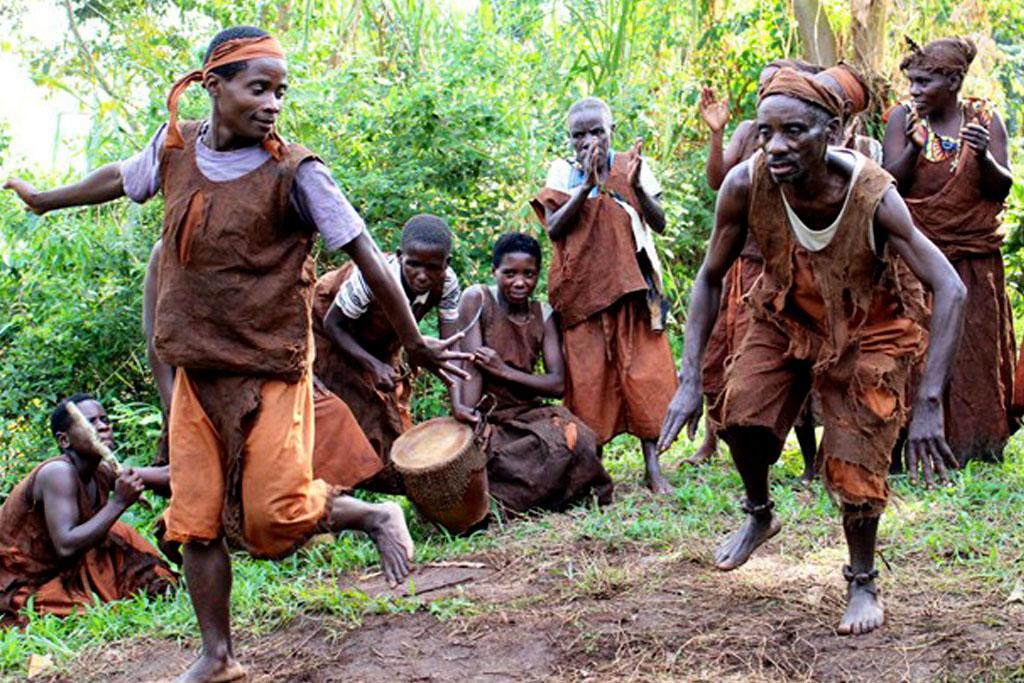
One of the most meaningful cultural activities during an Ultimate Uganda Wildlife Safari is the Batwa Cultural Experience. The Batwa people were the original inhabitants of the Bwindi rainforest before the area became a protected national park.
Today, guided cultural visits introduce travellers to traditional Batwa hunting techniques, medicinal plant knowledge, storytelling, music, dance, and ancient survival skills. These experiences provide valuable insight into the relationship between indigenous communities and rainforest conservation while supporting local livelihoods.
Best Time to Visit
Bwindi Impenetrable National Park welcomes visitors throughout the year, making it suitable for an Ultimate Uganda Wildlife Safari regardless of the season.
The dry seasons between June and September and from December to February generally offer the easiest trekking conditions because forest trails are less muddy.
The rainy seasons create lush green landscapes and exceptional photographic conditions. Gorilla trekking continues year-round, and many travellers appreciate the quieter atmosphere during these months.
Accommodation
Bwindi offers one of Uganda’s finest selections of safari accommodation. Visitors can choose from luxurious forest lodges with panoramic mountain views, boutique eco-lodges, comfortable mid-range properties, and budget-friendly guesthouses located near each trekking sector.
Many lodges provide spectacular views over the rainforest canopy, allowing guests to relax while listening to forest birds and occasionally observing monkeys moving through nearby trees.
Safari Vacations and Travel Services carefully selects accommodation based on each client’s budget, preferred trekking sector, and desired level of comfort to ensure an exceptional Ultimate Uganda Wildlife Safari.
Getting There
Bwindi Impenetrable National Park can be reached by road from Entebbe, Kampala, Queen Elizabeth National Park, Lake Mburo National Park, or Kigali in Rwanda.
Many international travellers choose to begin their Ultimate Uganda Wildlife Safari from Kigali because the drive to southern Bwindi takes only about four to five hours, significantly reducing travel time compared to the longer journey from Entebbe.
Domestic scheduled flights from Entebbe International Airport to Kihihi or Kisoro Airstrips provide a faster option for luxury travellers before short road transfers to the various trekking sectors.
Why Include Bwindi Impenetrable National Park in Your Ultimate Uganda Wildlife Safari?
Few places on Earth offer wildlife experiences as profound as those found in Bwindi Impenetrable National Park. From unforgettable encounters with endangered mountain gorillas and exceptional birdwatching to ancient rainforest walks and authentic Batwa cultural experiences, Bwindi represents the very heart of an Ultimate Uganda Wildlife Safari.
Whether you are fulfilling a lifelong dream of seeing mountain gorillas in the wild, exploring one of Africa’s oldest rainforests, or contributing to one of the world’s greatest conservation success stories, Bwindi Impenetrable National Park promises memories that will remain with you long after your Ultimate Uganda Wildlife Safari has come to an end.
Kibale National Park is widely recognised as the primate capital of East Africa and is one of the most rewarding destinations to include in an Ultimate Uganda Wildlife Safari. Covering approximately 795 square kilometres in western Uganda, the park protects one of Africa’s largest remaining tropical rainforests and is internationally celebrated for offering some of the world’s best chimpanzee tracking experiences.
While many travellers associate Uganda primarily with mountain gorillas, an Ultimate Uganda Wildlife Safari becomes even more memorable when combined with the incredible primate encounters found in Kibale National Park. The park is home to more than 1,500 wild chimpanzees and supports the highest diversity and density of primates in East Africa, making it a paradise for wildlife enthusiasts, photographers, researchers, birdwatchers, and nature lovers.
Beyond its famous chimpanzees, Kibale National Park offers lush rainforest scenery, colourful butterflies, rare forest birds, crater lakes, community experiences, and beautiful tea plantations that create a refreshing contrast to Uganda’s open savannah landscapes. Every walk through this ancient forest reveals the remarkable richness of Uganda’s natural heritage, making Kibale National Park an essential destination on an Ultimate Uganda Wildlife Safari.
History of Kibale National Park
Kibale Forest has long been recognised for its exceptional ecological importance. Initially managed as a forest reserve, the area was officially gazetted as Kibale National Park in 1993 to protect its rich biodiversity and globally significant chimpanzee population.
Today, the park forms part of a much larger conservation landscape that connects with Queen Elizabeth National Park through wildlife corridors, allowing elephants and other mammals to move naturally between ecosystems. Ongoing conservation efforts have made Kibale one of Africa’s leading examples of successful rainforest protection and sustainable tourism.
Every Ultimate Uganda Wildlife Safari that visits Kibale National Park contributes directly to conserving endangered primates and protecting one of Africa’s most valuable tropical forests.
The Primate Capital of East Africa
Kibale National Park is famous for its extraordinary primate diversity. More than 13 primate species have been recorded within the park, making it one of the richest primate habitats anywhere in Africa.
Chimpanzees are undoubtedly the main attraction, but visitors may also encounter black-and-white colobus monkeys, red-tailed monkeys, blue monkeys, olive baboons, L’Hoest’s monkeys, grey-cheeked mangabeys, red colobus monkeys, vervet monkeys, and several nocturnal primate species.
The opportunity to observe so many different primates in a single forest makes Kibale National Park one of the highlights of an Ultimate Uganda Wildlife Safari.
Chimpanzee Tracking Experience
Chimpanzee tracking is one of the signature activities during an Ultimate Uganda Wildlife Safari. Each morning and afternoon, experienced Uganda Wildlife Authority guides lead small groups into Kibale Forest in search of habituated chimpanzee communities.
The experience begins with a briefing at Kanyanchu Visitor Centre, where guides explain chimpanzee behaviour, tracking procedures, and conservation efforts before entering the forest.
Unlike mountain gorillas, chimpanzees are highly energetic and spend much of their time moving through the forest canopy. Visitors may observe them feeding on fruits, communicating through loud vocalisations, grooming each other, building nests, hunting, or swinging rapidly between towering trees.
Chimpanzee tracking usually lasts between two and five hours, depending on the location of the chimpanzee community, with visitors spending one hour observing them once they are located.
Because Kibale has one of Africa’s highest chimpanzee tracking success rates, exceeding 95% on most days, it has become an essential stop on every Ultimate Uganda Wildlife Safari.
Chimpanzee Habituation Experience
 Chimpanzee Habituation Experience
For travellers seeking a deeper understanding of chimpanzee behaviour, Kibale National Park offers the unique Chimpanzee Habituation Experience.
Unlike standard tracking, this specialised activity allows visitors to spend much longer with a semi-habituated chimpanzee community while accompanying researchers, trackers, and conservationists throughout the day.
Participants gain fascinating insights into chimpanzee social behaviour, communication, feeding habits, territorial movements, and scientific research methods.
For photographers and wildlife enthusiasts, the Chimpanzee Habituation Experience is often one of the most rewarding activities during an Ultimate Uganda Wildlife Safari because it offers extended observation time and more natural behavioural encounters.
Incredible Biodiversity
Although chimpanzees are the main attraction, Kibale National Park supports an astonishing variety of wildlife that contributes to its international conservation importance.
The rainforest shelters more than 70 mammal species, including forest elephants, buffaloes, bush pigs, giant forest hogs, duikers, bushbucks, civets, serval cats, and numerous smaller mammals.
The dense forest also supports hundreds of butterfly species, reptiles, amphibians, insects, and countless plant species that together create one of Africa’s richest rainforest ecosystems.
Every guided forest walk during an Ultimate Uganda Wildlife Safari offers opportunities to discover wildlife that often remains hidden beneath the rainforest canopy.
Birdwatching in Kibale National Park
Kibale National Park is a paradise for bird enthusiasts. More than 375 bird species have been recorded within the park, including numerous forest specialists and Albertine Rift endemics.
Some of the most sought-after species include the Green-breasted Pitta, African Pitta, Great Blue Turaco, Black Bee-eater, Yellow-spotted Barbet, African Grey Parrot, Crowned Eagle, White-naped Pigeon, Blue-headed Sunbird, and many colourful forest birds.
Birdwatching can be combined with chimpanzee tracking or dedicated forest walks, making Kibale an outstanding destination for nature lovers enjoying an Ultimate Uganda Wildlife Safari.
Bigodi Wetland Sanctuary
Located adjacent to Kibale National Park, Bigodi Wetland Sanctuary is one of Uganda’s finest community conservation projects and a highly recommended addition to an Ultimate Uganda Wildlife Safari.
The wetland protects an exceptional variety of birds, butterflies, monkeys, and plant species while generating sustainable income for surrounding communities through ecotourism.
Guided walks through Bigodi frequently reveal black-and-white colobus monkeys, blue monkeys, red-tailed monkeys, olive baboons, colourful butterflies, and numerous bird species, including the Great Blue Turaco, one of Uganda’s most spectacular forest birds.
The sanctuary demonstrates how wildlife conservation and community development can work together successfully, making it a meaningful stop during an Ultimate Uganda Wildlife Safari.
Crater Lakes and Scenic Landscapes
 Crater Lakes and Scenic Landscapes
The area surrounding Kibale National Park is renowned for its spectacular crater lakes and rolling tea plantations. These scenic landscapes provide beautiful viewpoints and excellent opportunities for photography, relaxation, and cultural exploration.
Many visitors enjoy short excursions to the crater lakes before or after chimpanzee tracking, adding another dimension to their Ultimate Uganda Wildlife Safari.
The combination of rainforest, volcanic landscapes, and traditional farming communities creates one of Uganda’s most picturesque regions.
Nature Walks
Kibale National Park offers several guided nature walks that introduce visitors to the rainforest’s extraordinary biodiversity beyond its famous chimpanzees.
Experienced guides explain medicinal plants, forest ecology, insects, fungi, birds, butterflies, and traditional uses of indigenous trees while helping visitors identify different primate species.
These walks provide an excellent opportunity to appreciate the complexity of one of Africa’s oldest tropical forests while enjoying a slower pace during an Ultimate Uganda Wildlife Safari.
Best Time to Visit
Kibale National Park can be visited throughout the year, and chimpanzee tracking operates every day regardless of the season.
The dry seasons between June and September and from December to February generally provide the most comfortable walking conditions because forest trails are less muddy.
The rainy seasons transform the forest into an exceptionally lush environment with abundant fruits, vibrant vegetation, and excellent photography opportunities. Chimpanzees remain active throughout the year, making every season suitable for an Ultimate Uganda Wildlife Safari.
Accommodation
Kibale National Park offers a wide variety of accommodation options suitable for luxury, mid-range, and budget travellers.
Luxury visitors can stay in elegant forest lodges surrounded by tropical vegetation, while comfortable mid-range lodges and affordable guesthouses provide excellent alternatives for different budgets.
Many lodges are located within or close to the forest, allowing guests to wake up to the sounds of birds and primates while enjoying easy access to chimpanzee tracking activities.
Safari Vacations and Travel Services carefully selects accommodation that matches each client’s travel style while ensuring maximum comfort and convenient access to the park.
Getting There
Kibale National Park is located approximately 320 kilometres from Kampala and can be reached by road in about five to six hours.
The park is ideally positioned between Queen Elizabeth National Park and Murchison Falls National Park, making it easy to include in a multi-park Ultimate Uganda Wildlife Safari itinerary.
Scheduled domestic flights to Kasese Airstrip, followed by a short road transfer, provide a faster option for luxury travellers seeking to minimise driving time.
Why Include Kibale National Park in Your Ultimate Uganda Wildlife Safari?
Kibale National Park offers one of Africa’s finest rainforest experiences and complements Uganda’s savannah parks perfectly. Its world-class chimpanzee tracking, exceptional primate diversity, rich birdlife, scenic crater lakes, beautiful rainforest trails, and successful community conservation projects make it an essential destination for wildlife lovers.
Whether you are listening to the echoing calls of wild chimpanzees deep within the forest, watching colourful birds among ancient trees, exploring the peaceful Bigodi Wetland Sanctuary, or discovering Uganda’s remarkable biodiversity, Kibale National Park delivers experiences that enrich every Ultimate Uganda Wildlife Safari and leave visitors with a deeper appreciation of Africa’s natural wonders.
Kidepo Valley National Park is Uganda’s most remote and arguably its most spectacular wilderness destination. Located in the far northeastern corner of the country along the borders with South Sudan and Kenya, the park covers approximately 1,442 square kilometres of unspoiled savannah, rugged mountains, seasonal rivers, and vast open plains. Often described as one of Africa’s last true wildernesses, Kidepo offers an authentic safari experience where wildlife roams freely across breathtaking landscapes with remarkably few visitors.
For travellers seeking an exclusive and off-the-beaten-path adventure, Kidepo Valley National Park is an unforgettable addition to an Ultimate Uganda Wildlife Safari. Its dramatic scenery, exceptional predator sightings, unique wildlife species, and rich cultural heritage distinguish it from every other national park in Uganda.
Unlike the busier safari destinations of East Africa, Kidepo provides a sense of solitude that allows visitors to immerse themselves fully in nature. It is not uncommon to spend an entire game drive without encountering another safari vehicle, creating an intimate wildlife experience that few destinations can match.
History of Kidepo Valley National Park
Kidepo Valley National Park was established in 1962 to protect one of Uganda’s most ecologically important savannah ecosystems. The park derives its name from the Kidepo River, a seasonal river that flows through the northern part of the park before crossing into South Sudan.
For decades, Kidepo remained one of Africa’s least-visited national parks due to its remote location. However, improved infrastructure, enhanced security, and successful conservation initiatives have transformed it into one of Uganda’s premier safari destinations while preserving its untouched wilderness character.
Today, Kidepo Valley National Park is widely regarded as one of Africa’s finest safari parks and is increasingly recognised as a must-visit destination on an Ultimate Uganda Wildlife Safari.

Spectacular Landscapes
The landscapes of Kidepo Valley National Park are among the most dramatic in Africa. Rolling golden grasslands stretch toward distant mountain ranges, while rocky outcrops, dry riverbeds, acacia woodlands, and seasonal wetlands create a constantly changing panorama.
The Narus Valley, located in the southern section of the park, serves as the primary wildlife viewing area because permanent water sources attract animals throughout the year. During the dry season, countless mammals gather around these waterholes, creating exceptional game-viewing opportunities.
In contrast, the Kidepo Valley in the northern section offers an even more remote wilderness characterised by expansive plains, iconic Borassus palm trees, and the seasonal Kidepo River. This region perfectly captures the feeling of exploring one of Africa’s last untouched frontiers.
The surrounding Morungole Mountains provide a dramatic backdrop and contribute to the park’s breathtaking scenery, making Kidepo one of the most photogenic destinations on an Ultimate Uganda Wildlife Safari.
Exceptional Wildlife
Kidepo Valley National Park supports one of Uganda’s richest concentrations of wildlife. More than 75 mammal species have been recorded within the park, including several species that are rarely seen elsewhere in Uganda.
Large herds of African elephants, Cape buffaloes, Burchell’s zebras, Rothschild’s giraffes, elands, Jackson’s hartebeests, oribis, waterbucks, bushbucks, Uganda kobs, warthogs, and bohor reedbucks roam freely across the open plains.
Because of the park’s relatively low visitor numbers, wildlife often behaves naturally, allowing photographers and nature enthusiasts to observe authentic animal behaviour without large crowds.
Every game drive in Kidepo offers new surprises, making it one of the most rewarding destinations during an Ultimate Uganda Wildlife Safari.
Predators of Kidepo
Kidepo Valley National Park is particularly famous for its impressive predator population. Lions are regularly encountered throughout the Narus Valley, where they prey upon the abundant antelope and buffalo populations.
Leopards are seen more frequently in Kidepo than in many other Ugandan parks, especially during early morning and evening game drives. Spotted hyenas are also common, while side-striped jackals patrol the open grasslands after sunset.
One of Kidepo’s greatest distinctions is the presence of predators that are either extremely rare or absent in other parts of Uganda. Visitors may have the rare opportunity to encounter cheetahs, bat-eared foxes, and caracals, making Kidepo unique among Uganda’s national parks.
These exceptional predator sightings elevate Kidepo Valley National Park into one of the premier destinations for wildlife enthusiasts seeking a truly comprehensive Ultimate Uganda Wildlife Safari.
Birdwatching Paradise
Birdwatchers will find Kidepo Valley National Park equally rewarding. More than 470 bird species have been recorded within the park, making it one of Uganda’s leading birding destinations.
The open savannah habitats support species that are uncommon elsewhere in Uganda, including the Abyssinian Ground Hornbill, Secretary Bird, Kori Bustard, Ostrich, Pygmy Falcon, Fox’s Weaver, Yellow-necked Spurfowl, and numerous raptors.
The combination of savannah birds, migratory species, and birds associated with rocky hillsides and riverine habitats makes Kidepo an essential destination for birdwatchers undertaking an Ultimate Uganda Wildlife Safari.
Game Drives
Game drives are the primary activity in Kidepo Valley National Park and consistently rank among the best wildlife experiences in Uganda.
Morning drives across the Narus Valley often reveal elephants, buffaloes, giraffes, lions, zebras, antelope, and numerous bird species. Late afternoon drives provide excellent opportunities to observe predators becoming active as temperatures begin to cool.
Because the park receives relatively few visitors, wildlife sightings are often enjoyed without crowds, creating an exclusive safari atmosphere rarely found elsewhere in East Africa.
For photographers, the golden evening light combined with Kidepo’s dramatic landscapes creates ideal conditions for capturing unforgettable images during an Ultimate Uganda Wildlife Safari.
Guided Nature Walks
Kidepo Valley National Park offers guided walking safaris that allow visitors to experience the African wilderness from a completely different perspective.
Accompanied by armed Uganda Wildlife Authority rangers, guests explore selected areas on foot while learning about animal tracks, medicinal plants, insects, birds, and the intricate relationships that sustain the savannah ecosystem.
Walking through the wilderness with experienced guides provides a deeper appreciation of the park’s biodiversity and adds an exciting dimension to an Ultimate Uganda Wildlife Safari.
Cultural Experiences with the Karamojong Community
A visit to Kidepo Valley National Park can be enriched by spending time with the indigenous Karamojong people, whose traditional pastoral lifestyle has remained remarkably resilient for generations.
Guided cultural visits introduce travellers to traditional homesteads known as manyattas, where visitors learn about cattle keeping, music, dance, beadwork, food preparation, and local customs.
Nearby, adventurous travellers may also visit the Ik community on the slopes of Mount Morungole. The Ik are one of Uganda’s smallest ethnic groups and maintain a unique cultural identity shaped by their mountainous environment.
These cultural encounters provide valuable insight into the human history of northeastern Uganda and make an Ultimate Uganda Wildlife Safari even more meaningful.
Best Time to Visit
Kidepo Valley National Park offers rewarding wildlife viewing throughout the year, but the dry seasons from June to September and December to February generally provide the best conditions.
During these months, animals concentrate around permanent water sources in the Narus Valley, making wildlife easier to locate. Roads are also more accessible, and the clear skies provide excellent opportunities for photography.
The rainy seasons bring fresh vegetation and greener landscapes, while birdwatchers benefit from increased activity and the arrival of migratory species.
Accommodation
Although Kidepo is remote, the park offers an excellent range of accommodation options suitable for different budgets.
Luxury travellers can stay in elegant safari lodges overlooking the Narus Valley, while comfortable mid-range lodges and budget camps provide excellent alternatives for those seeking affordable wilderness experiences.
Many accommodations offer panoramic views of the surrounding plains, allowing guests to observe wildlife directly from their verandas while enjoying the tranquillity of Uganda’s most remote national park.
Safari Vacations and Travel Services carefully selects accommodation that complements each traveller’s preferences while ensuring convenient access to the park’s main wildlife viewing areas.
Getting There
Kidepo Valley National Park is approximately 570 kilometres from Kampala, and the journey by road takes about 10 to 12 hours, depending on the chosen route and road conditions.
For travellers with limited time, scheduled domestic flights from Entebbe International Airport or Kajjansi Airfield to Kidepo Airstrip provide a fast and comfortable alternative, reducing travel time to approximately two hours.
Many visitors include Kidepo as part of an extended Ultimate Uganda Wildlife Safari that combines Uganda’s northern wilderness with destinations such as Murchison Falls National Park, Kibale National Park, Queen Elizabeth National Park, and Bwindi Impenetrable National Park.
Why Include Kidepo Valley National Park in Your Ultimate Uganda Wildlife Safari?
Kidepo Valley National Park represents the wildest side of Uganda. Its vast landscapes, exceptional predator sightings, unique wildlife species, rich birdlife, authentic cultural experiences, and remarkable sense of isolation create a safari unlike any other in East Africa.
Whether you are photographing lions against dramatic mountain backdrops, searching for cheetahs across the open plains, observing large elephant herds in the Narus Valley, or experiencing the traditions of the Karamojong people, Kidepo Valley National Park delivers an unforgettable wilderness adventure that perfectly complements an Ultimate Uganda Wildlife Safari.
Lake Mburo National Park
Lake Mburo National Park is Uganda’s smallest savannah national park, covering approximately 370 square kilometres in the country’s western region. Despite its modest size, the park offers one of the most rewarding and diverse wildlife experiences included in an Ultimate Uganda Wildlife Safari. Renowned for its beautiful rolling hills, scattered acacia woodlands, expansive wetlands, and a network of thirteen interconnected lakes, Lake Mburo provides a peaceful and scenic contrast to Uganda’s larger national parks.
Strategically located along the route between Kampala and Bwindi Impenetrable National Park, Lake Mburo is often the perfect first or final stop on an Ultimate Uganda Wildlife Safari. Its convenient location makes it an ideal destination for travellers wishing to break up the long journey to southwestern Uganda while enjoying excellent wildlife viewing, birdwatching, walking safaris, horseback safaris, cycling excursions, and relaxing boat cruises.
Unlike many other African safari destinations, Lake Mburo National Park allows visitors to experience wildlife from several unique perspectives beyond traditional game drives. This diversity of activities creates memorable encounters that appeal to families, honeymooners, photographers, birdwatchers, and first-time safari travellers alike.
History of Lake Mburo National Park
Lake Mburo National Park was officially gazetted in 1983 to protect its unique wetland ecosystem and the diverse wildlife that depends upon it. Although smaller than Uganda’s other savannah parks, it plays a vital role in conserving species that are uncommon elsewhere in the country.
Over the years, successful conservation initiatives and strong collaboration with neighbouring communities have allowed wildlife populations to recover significantly. Today, Lake Mburo National Park has become one of Uganda’s most accessible and enjoyable safari destinations, offering an exceptional introduction to an Ultimate Uganda Wildlife Safari.
Beautiful Landscapes
The scenery of Lake Mburo National Park differs greatly from Uganda’s larger savannah parks. The landscape is characterised by gently rolling hills, rocky outcrops, seasonal valleys, papyrus swamps, open grasslands, acacia forests, and numerous freshwater lakes that support abundant wildlife throughout the year.
The largest of these lakes, Lake Mburo, serves as the park’s focal point and provides an important source of water for animals and birds. The surrounding wetlands create rich habitats for aquatic wildlife while offering spectacular views that change dramatically throughout the day as sunlight reflects across the water.
The combination of lakes, woodland, and open savannah makes Lake Mburo one of the most picturesque destinations included in an Ultimate Uganda Wildlife Safari.
Wildlife in Lake Mburo National Park
Although predators are less numerous than in Uganda’s larger parks, Lake Mburo supports an impressive diversity of mammals. More than 68 mammal species have been recorded within the park, creating excellent opportunities for wildlife viewing.
One of the park’s greatest attractions is its large population of Burchell’s zebras. Thousands of these striking animals graze across the open plains, often alongside impalas, topis, buffaloes, elands, waterbucks, bushbucks, oribis, warthogs, and Defassa waterbucks.
Lake Mburo is also one of the few places in Uganda where visitors can reliably see impalas, making it an important destination for those wishing to observe all of Uganda’s major antelope species during an Ultimate Uganda Wildlife Safari.
Although lions are absent from the park, leopards have naturally returned in recent years and are occasionally seen during night game drives. Spotted hyenas, African civets, serval cats, genets, and side-striped jackals also inhabit the park, contributing to its rich biodiversity.
Lake Mburo Boat Safari
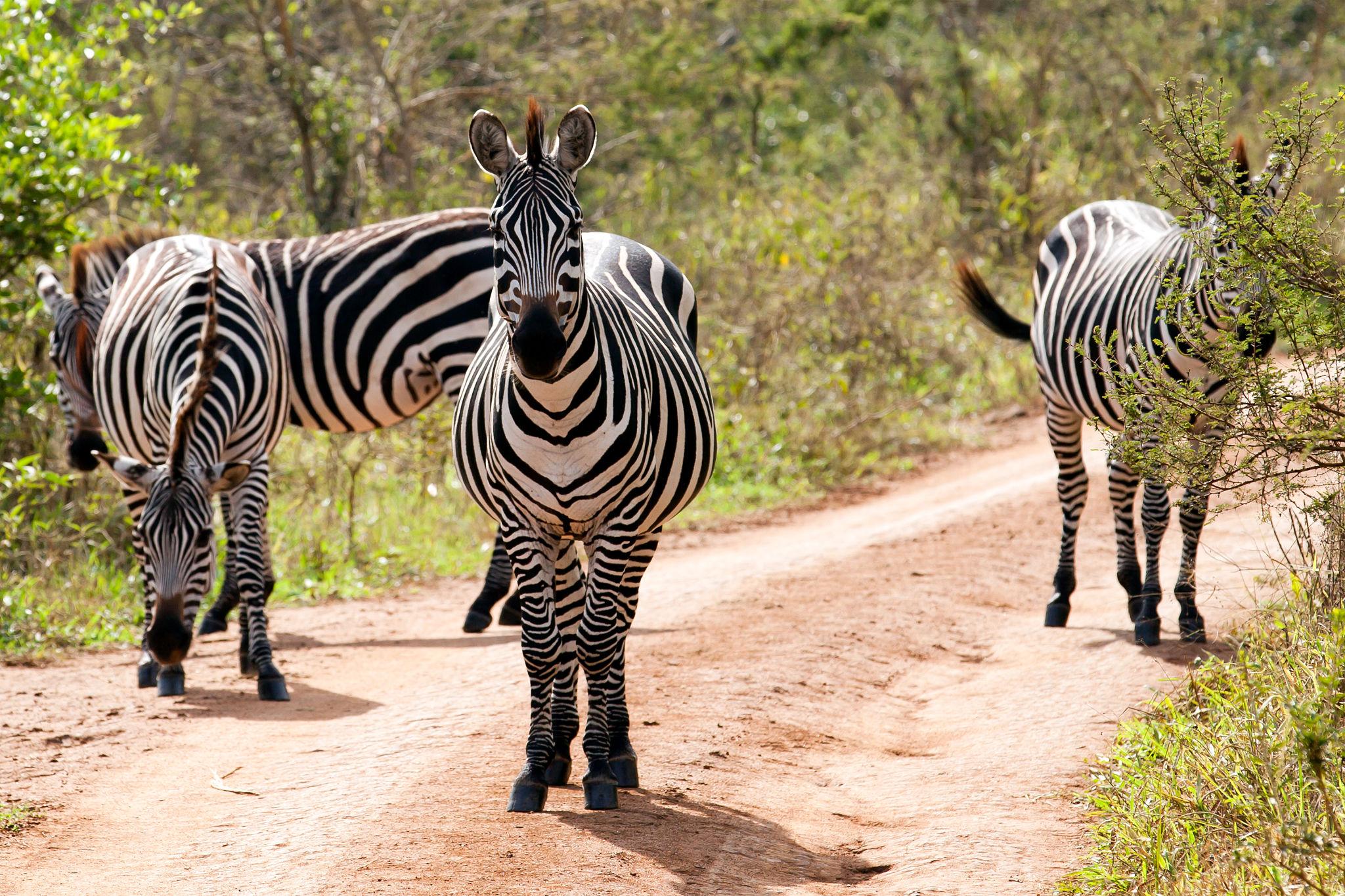 Lake Mburo Boat Safari
A boat cruise on Lake Mburo is one of the signature experiences during an Ultimate Uganda Wildlife Safari. Unlike the faster-flowing waters of the Nile or Kazinga Channel, Lake Mburo offers calm conditions that allow visitors to observe wildlife from close range in a peaceful setting.
As the boat glides across the lake, passengers frequently encounter pods of hippos resting in the water, enormous Nile crocodiles basking along the shoreline, buffaloes drinking at the water’s edge, and numerous antelope species grazing nearby.
The surrounding papyrus wetlands are alive with colourful birdlife, making every cruise a relaxing yet rewarding wildlife experience.
Walking Safaris
Lake Mburo National Park is one of the few protected areas in Uganda where guided walking safaris are offered on a regular basis.
Accompanied by experienced Uganda Wildlife Authority rangers, visitors explore the savannah on foot while learning to identify animal tracks, bird calls, medicinal plants, insects, and the ecological relationships that sustain the ecosystem.
Walking among freely roaming zebras, giraffes, antelopes, and buffaloes while maintaining a safe distance creates an entirely different perspective from traditional game drives. For many travellers, this becomes one of the most exciting activities of an Ultimate Uganda Wildlife Safari.
Horseback Safaris
One of Lake Mburo National Park’s most distinctive attractions is the opportunity to explore the wilderness on horseback.
Horseback safaris allow visitors to approach wildlife quietly without the noise of vehicle engines, often resulting in remarkably close encounters with zebras, impalas, elands, giraffes, warthogs, and other grazing animals.
Because horses blend naturally into the landscape, wildlife is generally less disturbed, making this activity particularly popular with photographers and returning safari enthusiasts seeking a unique experience during their Ultimate Uganda Wildlife Safari.
Cycling Safaris
Cycling through selected areas of Lake Mburo National Park offers another exciting way to experience Uganda’s wildlife.
Guided cycling excursions take visitors along designated trails through scenic landscapes where zebras, antelopes, giraffes, and numerous bird species can often be observed at close range.
The combination of physical activity, beautiful scenery, and wildlife viewing makes cycling one of the park’s most memorable adventure activities.
Birdwatching
Lake Mburo National Park is one of Uganda’s premier birdwatching destinations. More than 350 bird species have been recorded, representing a remarkable diversity of wetland, woodland, and savannah habitats.
Among the park’s most sought-after species is the rare African Finfoot, a secretive bird that attracts birdwatchers from around the world. Other notable species include the Papyrus Gonolek, African Fish Eagle, Pied Kingfisher, Malachite Kingfisher, Saddle-billed Stork, Grey Crowned Crane, Black Collared Barbet, Rufous-bellied Heron, and numerous bee-eaters, weavers, hornbills, and sunbirds.
Whether you are an experienced birder or simply appreciate nature, birdwatching greatly enhances an Ultimate Uganda Wildlife Safari.
Night Game Drives
Unlike many national parks in Uganda, Lake Mburo offers guided night game drives that reveal a completely different side of the African wilderness.
After sunset, experienced guides search for nocturnal wildlife including leopards, spotted hyenas, serval cats, bush babies, porcupines, civets, genets, and white-tailed mongooses.
These evening excursions provide a rare opportunity to observe animals that remain hidden during daylight hours, adding another unique experience to an Ultimate Uganda Wildlife Safari.
Best Time to Visit
Lake Mburo National Park can be visited throughout the year, with each season offering different advantages.
The dry seasons from June to September and December to February generally provide the best wildlife viewing because animals gather around permanent water sources and vegetation becomes less dense.
During the rainy seasons, the park transforms into a vibrant green landscape that offers exceptional photographic opportunities and increased bird activity, particularly among breeding and migratory species.
Accommodation
Lake Mburo National Park offers a wide variety of accommodation ranging from luxury safari lodges overlooking the lake to comfortable mid-range lodges, tented camps, and budget-friendly options.
Many properties enjoy panoramic views of the surrounding hills and lakes, allowing guests to observe wildlife directly from their rooms or restaurant terraces.
Safari Vacations and Travel Services carefully selects accommodation based on each traveller’s preferences, ensuring a comfortable and memorable stay as part of an Ultimate Uganda Wildlife Safari.
Getting There
Lake Mburo National Park is located approximately 240 kilometres from Kampala, making it the closest savannah national park to Uganda’s capital. The drive typically takes three and a half to four hours via the Kampala–Masaka–Mbarara highway.
Its strategic location makes it an ideal stop when travelling to or from Bwindi Impenetrable National Park, Mgahinga Gorilla National Park, Queen Elizabeth National Park, or Kibale National Park. This convenient positioning allows travellers to maximise wildlife viewing while reducing the fatigue of long-distance travel.
Why Include Lake Mburo National Park in Your Ultimate Uganda Wildlife Safari?
Lake Mburo National Park offers a safari experience unlike any other in Uganda. Its peaceful atmosphere, abundant zebras and impalas, scenic boat cruises, exceptional birdlife, horseback safaris, walking safaris, cycling adventures, and night game drives provide experiences that cannot easily be found elsewhere in the country.
Whether you are beginning your journey through Uganda or concluding an unforgettable adventure, Lake Mburo National Park provides the perfect blend of relaxation, wildlife, and adventure, making it an essential destination in a truly comprehensive Ultimate Uganda Wildlife Safari.
Mgahinga Gorilla National Park is Uganda’s smallest national park, covering approximately 33.7 square kilometres, yet it offers one of the country’s most extraordinary wildlife and adventure experiences. Nestled in the southwestern corner of Uganda where the borders of Uganda, Rwanda, and the Democratic Republic of Congo meet, the park forms part of the magnificent Virunga Conservation Area, one of Africa’s most important ecosystems for endangered mountain gorillas.
Despite its relatively small size, Mgahinga Gorilla National Park is an essential destination for an Ultimate Uganda Wildlife Safari. It combines mountain gorilla trekking, golden monkey tracking, volcanic hiking, spectacular mountain scenery, and rich Batwa cultural heritage into one unforgettable destination.
Dominated by the volcanic peaks of Mount Muhabura, Mount Gahinga, and Mount Sabinyo, the park offers some of Uganda’s most breathtaking landscapes. Dense bamboo forests, montane rainforests, Afro-alpine vegetation, volcanic craters, and panoramic viewpoints create a dramatic setting unlike anywhere else in the country.
For travellers seeking a quieter alternative to Bwindi Impenetrable National Park while enjoying equally rewarding wildlife encounters, Mgahinga Gorilla National Park is an outstanding addition to an Ultimate Uganda Wildlife Safari.
History of Mgahinga Gorilla National Park
Mgahinga Gorilla National Park was officially gazetted in 1991 to protect the Ugandan section of the Virunga Mountains and conserve its endangered wildlife, particularly mountain gorillas and golden monkeys.
The park forms part of the larger Virunga Massif, a transboundary conservation landscape shared by Uganda, Rwanda, and the Democratic Republic of Congo. This collaborative conservation effort has played a critical role in protecting endangered mountain gorillas and preserving one of Africa’s most biologically important mountain ecosystems.
Today, Mgahinga Gorilla National Park remains one of Uganda’s greatest conservation achievements and is an essential component of every comprehensive Ultimate Uganda Wildlife Safari.
Mountain Gorilla Trekking
Mountain gorilla trekking is the park’s most famous attraction and one of the defining experiences of an Ultimate Uganda Wildlife Safari.
Mgahinga is home to the Nyakagezi Gorilla Family, a well-habituated group known for its stability and fascinating social dynamics. Unlike in previous years when the family occasionally crossed international borders, the Nyakagezi group now remains largely within Uganda, providing reliable trekking opportunities throughout the year.
The trekking experience begins early in the morning with a briefing by Uganda Wildlife Authority rangers before visitors enter the forest in search of the gorillas. Guided by experienced trackers, guests hike through bamboo forests and mountain vegetation until the gorilla family is located.
Once found, visitors spend one unforgettable hour observing the gorillas as they feed, groom one another, care for their young, and interact naturally within their family group. This intimate wildlife encounter is widely regarded as one of the greatest highlights of an Ultimate Uganda Wildlife Safari.
Golden Monkey Tracking
In addition to mountain gorillas, Mgahinga Gorilla National Park is Uganda’s premier destination for golden monkey tracking.
Golden monkeys are among Africa’s most beautiful and endangered primates. Their striking golden-orange fur, energetic movements, and playful behaviour make them a favourite among photographers and wildlife enthusiasts.
Tracking these lively primates takes visitors through the park’s bamboo forests, where troops leap effortlessly between trees while feeding on bamboo shoots, fruits, leaves, and insects.
Unlike gorilla trekking, golden monkey tracking generally involves shorter hikes and faster-moving wildlife, creating an exciting and completely different primate experience during an Ultimate Uganda Wildlife Safari.
Volcano Hiking Adventures
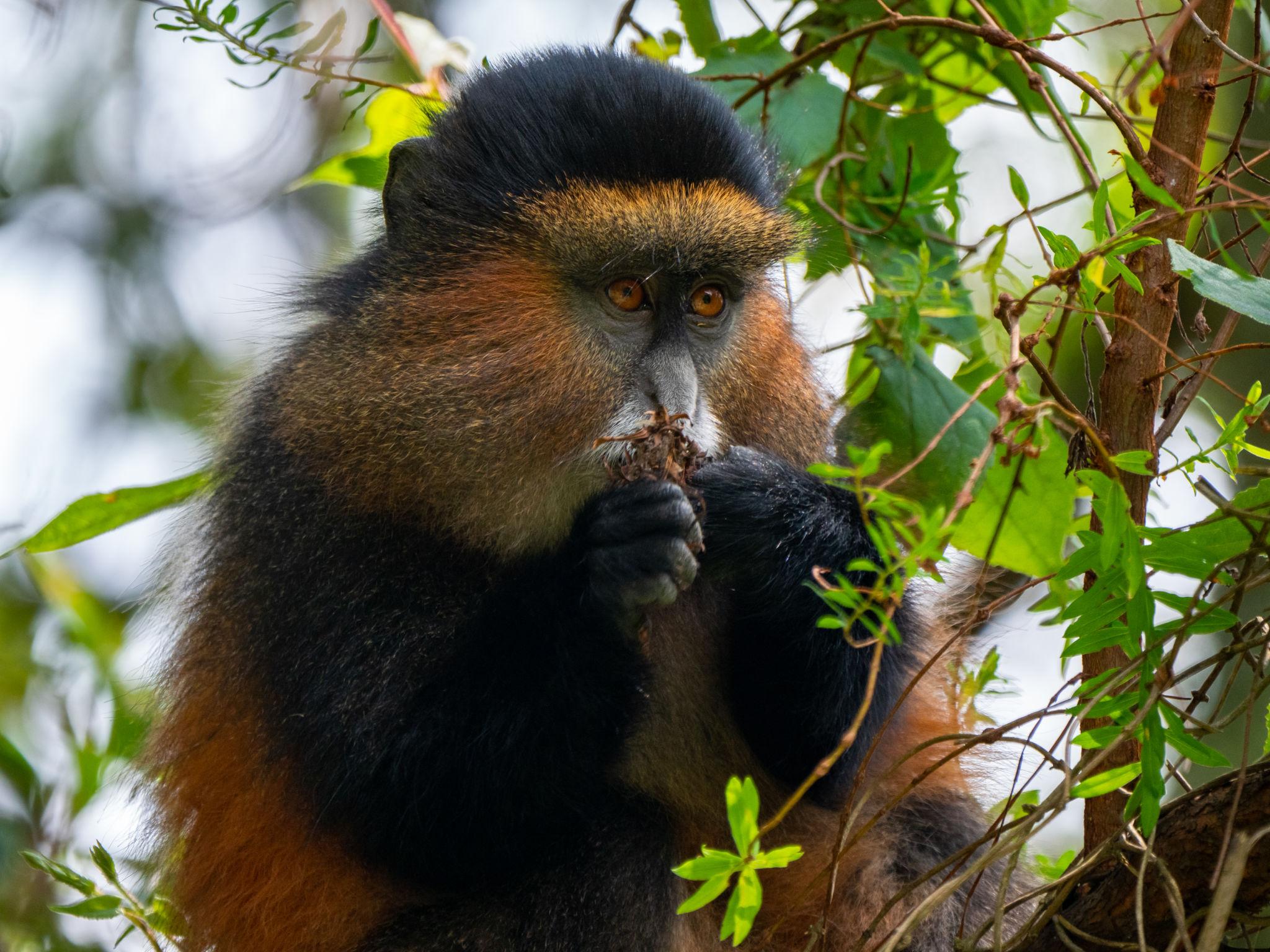 Volcano Hiking Adventures
Mgahinga Gorilla National Park offers some of Uganda’s finest mountain hiking experiences. Three extinct volcanoes dominate the landscape, each providing a unique trekking adventure.
Mount Sabinyo
Mount Sabinyo is perhaps the most famous volcano in the park because its summit marks the point where Uganda, Rwanda, and the Democratic Republic of Congo meet. Reaching the peak allows hikers to stand in three countries simultaneously while enjoying spectacular panoramic views of the Virunga Mountains.
The hike is physically demanding, with steep climbs, wooden ladders, and rugged terrain, but the breathtaking scenery makes the effort worthwhile.
Mount Gahinga
Mount Gahinga is the smallest of the three volcanoes and is characterised by dense bamboo forests, giant lobelias, and a beautiful swamp-filled crater at its summit. The hike offers excellent opportunities to observe birds, primates, and unique Afro-montane vegetation.
Mount Muhabura
Mount Muhabura is the highest volcano in Uganda’s section of the Virunga Mountains, rising to 4,127 metres above sea level. The challenging climb rewards hikers with magnificent views across Uganda, Rwanda, and the Democratic Republic of Congo.
These volcanic hikes make Mgahinga one of the most adventurous destinations included in an Ultimate Uganda Wildlife Safari.
Rich Biodiversity
Although relatively small, Mgahinga Gorilla National Park supports remarkable biodiversity.
In addition to mountain gorillas and golden monkeys, the park is home to forest elephants, buffaloes, bushbucks, giant forest hogs, duikers, bush pigs, serval cats, and several smaller mammals.
Numerous primate species, including black-and-white colobus monkeys, blue monkeys, and vervet monkeys, also inhabit the park, while its diverse vegetation provides important habitat for countless insects, amphibians, reptiles, and butterflies.
This rich biodiversity makes every guided walk through the park an educational and rewarding experience.
Birdwatching
Birdwatchers visiting Mgahinga Gorilla National Park can expect exceptional sightings within one of the Albertine Rift’s most important bird habitats.
More than 180 bird species have been recorded in the park, including several Albertine Rift endemics. Notable species include the Rwenzori Turaco, Scarlet-tufted Sunbird, Dusky Crimsonwing, Archer’s Robin-Chat, Kivu Ground Thrush, Rwenzori Batis, and numerous colourful sunbirds and forest species.
The park’s combination of bamboo forests, montane woodland, and Afro-alpine habitats provides excellent birdwatching opportunities throughout the year, making it an attractive destination for bird enthusiasts undertaking an Ultimate Uganda Wildlife Safari.
Batwa Cultural Trail
One of the most meaningful cultural experiences available in Mgahinga Gorilla National Park is the Batwa Cultural Trail.
Before the establishment of the national park, the Batwa people lived within the forest as hunter-gatherers for thousands of years. Today, former Batwa guides lead visitors through the forest while demonstrating traditional hunting methods, medicinal plant use, fire-making techniques, music, dance, storytelling, and ancient survival skills.
The experience offers valuable insight into the history of the Batwa community while supporting local livelihoods and preserving an important cultural heritage.
Including the Batwa Cultural Trail in an Ultimate Uganda Wildlife Safari creates a deeper appreciation of the relationship between conservation and indigenous communities.
Best Time to Visit
Mgahinga Gorilla National Park can be visited throughout the year, with each season offering memorable wildlife experiences.
The dry seasons between June and September and from December to February generally provide the best trekking conditions, as trails are less muddy and hiking is more comfortable.
During the rainy seasons, the forest becomes exceptionally lush and green, creating beautiful photographic opportunities while maintaining excellent gorilla and golden monkey viewing.
Accommodation
Although smaller than Bwindi, Mgahinga offers a growing selection of excellent accommodation options ranging from luxury lodges with panoramic volcano views to comfortable mid-range lodges and budget-friendly guesthouses.
Many properties are located close to the park headquarters, allowing easy access to gorilla trekking, golden monkey tracking, and hiking activities.
Safari Vacations and Travel Services carefully selects accommodation that matches each traveller’s budget, preferred activities, and desired level of comfort to ensure a seamless Ultimate Uganda Wildlife Safari.
Getting There
Mgahinga Gorilla National Park is located near Kisoro in southwestern Uganda, approximately 510 kilometres from Kampala. The journey by road takes about nine to ten hours, although many visitors combine the park with nearby Bwindi Impenetrable National Park as part of a longer safari.
International travellers frequently begin their Ultimate Uganda Wildlife Safari from Kigali, Rwanda, where the drive to Mgahinga takes approximately three to four hours, making it one of the most convenient entry points for visiting Uganda’s gorilla parks.
Scheduled domestic flights from Entebbe International Airport to Kisoro Airstrip provide a faster and more comfortable option for luxury travellers.
Why Include Mgahinga Gorilla National Park in Your Ultimate Uganda Wildlife Safari?
Mgahinga Gorilla National Park offers an exceptional combination of wildlife, adventure, culture, and spectacular mountain scenery. Few destinations allow travellers to trek endangered mountain gorillas, track playful golden monkeys, climb extinct volcanoes, and learn about the traditions of the Batwa people within a single protected area.
Whether you are standing face to face with the Nyakagezi Gorilla Family, watching golden monkeys race through bamboo forests, hiking to the summit of Mount Sabinyo, or exploring the rich cultural heritage of the Batwa community, Mgahinga Gorilla National Park provides unforgettable experiences that perfectly complement an Ultimate Uganda Wildlife Safari.
Semuliki National Park is one of Uganda’s most unique and least-explored protected areas, offering visitors an opportunity to experience a true Central African rainforest without leaving East Africa. Covering approximately 220 square kilometres in the western Albertine Rift Valley, the park lies on the floor of the Semuliki Valley between the towering Rwenzori Mountains and the eastern escarpment of Lake Albert. Its lush lowland rainforest, abundant birdlife, remarkable biodiversity, and famous hot springs make it an exceptional addition to an Ultimate Uganda Wildlife Safari.
Unlike Uganda’s better-known gorilla and savannah destinations, Semuliki National Park offers a completely different safari experience. Dense tropical rainforest, towering mahogany trees, winding forest trails, and rich wildlife create an atmosphere that feels more like the Congo Basin than East Africa. For travellers seeking to discover Uganda beyond its famous attractions, Semuliki provides an authentic wilderness experience that enriches an Ultimate Uganda Wildlife Safari.
History of Semuliki National Park
Semuliki Forest was originally protected as a forest reserve before being upgraded to national park status in 1993. The park was established to conserve one of East Africa’s only true lowland tropical rainforests, an ecosystem that extends westward into the vast forests of the Democratic Republic of Congo.
Because of its geographical location, Semuliki National Park shares many plant and animal species with the Congo Basin, making it one of Uganda’s most biologically distinctive protected areas. Conservation efforts continue to protect this exceptional rainforest while promoting sustainable tourism that benefits surrounding communities.
Today, Semuliki National Park is recognised as one of Uganda’s hidden gems and offers a rewarding alternative for travellers seeking something different during an Ultimate Uganda Wildlife Safari.
A Unique Lowland Rainforest
Semuliki National Park is unlike any other protected area in Uganda. While Bwindi and Kibale protect montane and medium-altitude forests, Semuliki preserves a true lowland tropical rainforest characterised by towering evergreen trees, dense undergrowth, numerous streams, and exceptionally high humidity.
Walking through the forest, visitors encounter giant mahogany trees, ironwoods, palms, climbing vines, colourful fungi, and a rich variety of medicinal plants. The atmosphere is filled with birdsong, insect calls, and the distant sounds of primates moving through the canopy.
This remarkable rainforest ecosystem provides a fascinating contrast to the savannah parks visited during an Ultimate Uganda Wildlife Safari.
Wildlife in Semuliki National Park
Although dense vegetation makes wildlife more challenging to observe than in open savannah parks, Semuliki supports an impressive variety of mammals.
More than 60 mammal species have been recorded, including forest elephants, buffaloes, bushbucks, water chevrotains, pygmy squirrels, flying squirrels, giant forest hogs, civets, genets, African clawless otters, and several bat species.
The rainforest is also home to numerous primates, including chimpanzees, black-and-white colobus monkeys, red-tailed monkeys, blue monkeys, olive baboons, vervet monkeys, and De Brazza’s monkeys in some areas.
Every forest walk offers opportunities to discover new species, making Semuliki a fascinating destination during an Ultimate Uganda Wildlife Safari.
Birdwatching Paradise
Semuliki National Park is internationally renowned for birdwatching and is considered one of Uganda’s premier destinations for forest birds.
More than 440 bird species have been recorded within the park, including many species that occur nowhere else in East Africa. Birdwatchers visit Semuliki specifically to search for rare Congo Basin species that have crossed into Uganda through this rainforest corridor.
Some of the park’s most sought-after birds include the Nkulengu Rail, Congo Serpent Eagle, White-crested Hornbill, Piping Hornbill, Black Dwarf Hornbill, Lyre-tailed Honeyguide, Blue-billed Malimbe, White-bellied Kingfisher, Yellow-throated Nicator, Maxwell’s Black Weaver, and numerous colourful forest specialists.
For serious birdwatchers, Semuliki National Park is an indispensable stop on an Ultimate Uganda Wildlife Safari.
The Famous Sempaya Hot Springs
The Sempaya Hot Springs are the most iconic attraction in Semuliki National Park and among the most unusual natural wonders in Uganda.
The park features two geothermal hot springs known as the Female Hot Spring and the Male Hot Spring. The Male Hot Spring is particularly impressive, with boiling water erupting several metres into the air at temperatures exceeding 100°C.
Visitors often demonstrate the incredible heat by placing eggs or bananas into the boiling water, where they cook naturally within a short time.
According to local traditions, the hot springs hold deep cultural and spiritual significance, adding an important cultural dimension to every visit.
A guided walk to the Sempaya Hot Springs is one of the highlights of an Ultimate Uganda Wildlife Safari.
Guided Nature Walks
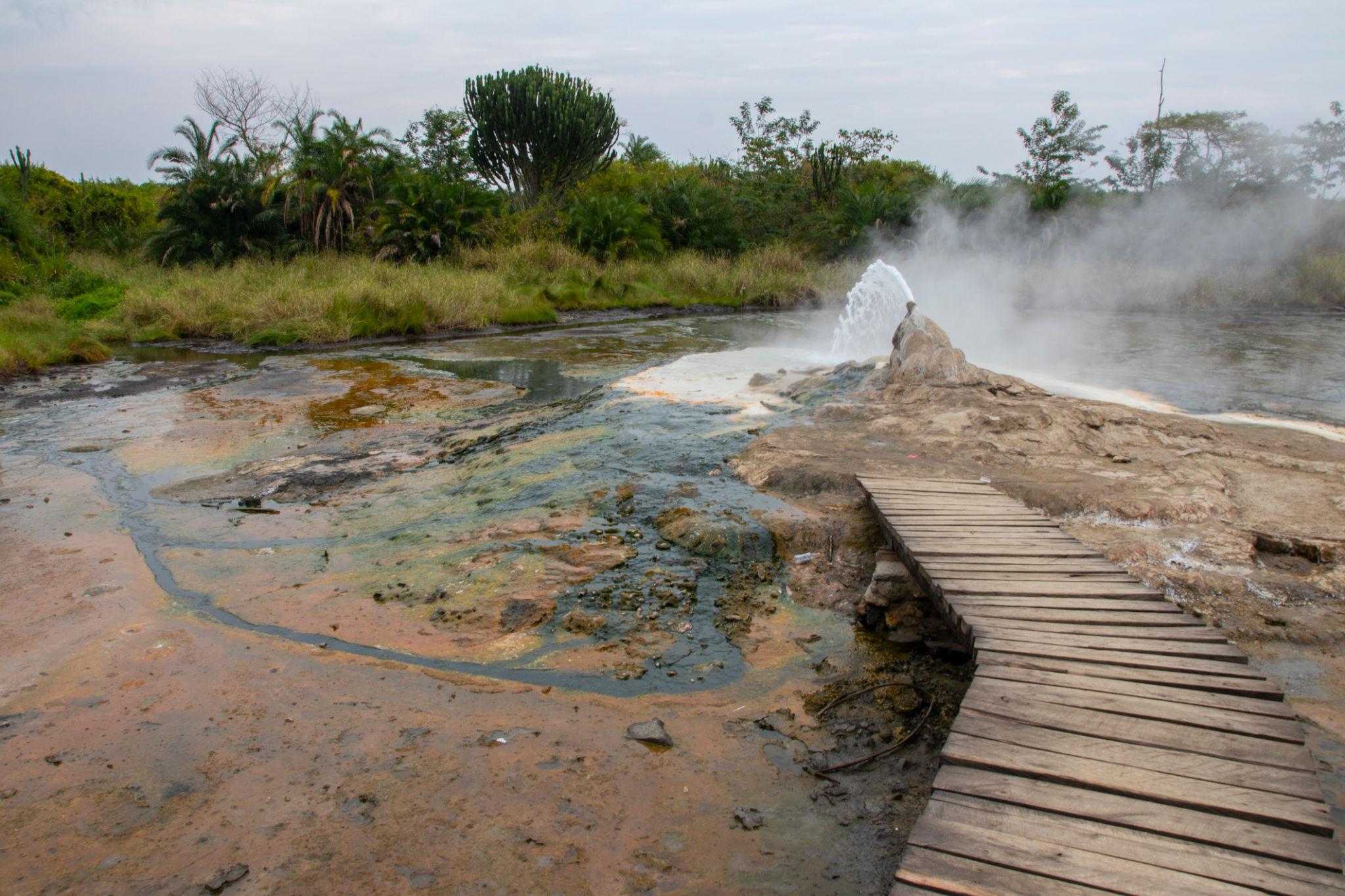 Guided Nature Walks
Semuliki National Park offers several well-maintained forest trails that introduce visitors to the rainforest’s remarkable biodiversity.
Experienced Uganda Wildlife Authority guides explain the ecological importance of the forest while helping visitors identify birds, primates, insects, medicinal plants, butterflies, reptiles, and fungi.
Popular walking routes include the Sempaya Nature Trail and longer forest excursions that explore deeper sections of the rainforest. These guided walks provide a slower, more immersive wildlife experience compared to traditional game drives.
Cultural Experiences
Communities surrounding Semuliki National Park include the Batuku and Bakonzo people, each with rich cultural traditions closely connected to the natural environment.
Visitors can participate in community tours that introduce traditional farming practices, local crafts, music, dance, storytelling, and indigenous knowledge of medicinal plants.
These experiences help travellers understand how conservation and local livelihoods work together while supporting sustainable community tourism.
Best Time to Visit
Semuliki National Park can be visited throughout the year, although the dry seasons between June and September and from December to February generally provide the most comfortable conditions for forest walks.
During the rainy seasons, the rainforest becomes even greener and more vibrant, while bird activity increases considerably. Waterproof hiking boots and rain gear are recommended regardless of the season due to the naturally humid environment.
Accommodation
Accommodation around Semuliki National Park includes luxury safari lodges, comfortable mid-range lodges, eco-lodges, and budget-friendly guesthouses located within easy reach of the park headquarters.
Many lodges enjoy peaceful forest surroundings and spectacular views of the Rwenzori Mountains, providing visitors with a relaxing base from which to explore the rainforest.
Safari Vacations and Travel Services carefully selects accommodation that complements each traveller’s itinerary while ensuring convenient access to the park’s major attractions.
Getting There
Semuliki National Park is located approximately 360 kilometres from Kampala, with a driving time of around six to seven hours. The park is easily combined with Kibale National Park, Queen Elizabeth National Park, and the Rwenzori Mountains National Park, making it a natural addition to a western Uganda circuit.
Travellers flying into Kasese Airstrip can also reach the park by road within a relatively short transfer, making it accessible for luxury fly-in safaris.
Why Include Semuliki National Park in Your Ultimate Uganda Wildlife Safari?
Semuliki National Park offers an experience unlike any other destination in Uganda. Its pristine lowland rainforest, exceptional birdlife, fascinating primates, geothermal hot springs, and authentic cultural experiences provide a refreshing contrast to the country’s savannah parks and mountain forests.
Whether you are searching for rare Congo Basin bird species, walking beneath towering rainforest trees, witnessing the boiling Sempaya Hot Springs, or learning about the traditions of local communities, Semuliki National Park adds remarkable ecological diversity and adventure to an Ultimate Uganda Wildlife Safari, making it one of Uganda’s most rewarding hidden treasures.
Rwenzori Mountains National Park
Rwenzori Mountains National Park is one of Africa’s most spectacular mountain wilderness areas and a UNESCO World Heritage Site. Covering approximately 996 square kilometres in western Uganda along the border with the Democratic Republic of Congo, the park protects the legendary Rwenzori Mountains, often referred to as the “Mountains of the Moon.” Rising to an elevation of 5,109 metres at Margherita Peak on Mount Stanley, the Rwenzori range contains Africa’s third-highest mountain after Mount Kilimanjaro and Mount Kenya.
For travellers seeking more than traditional game drives, Rwenzori Mountains National Park adds an extraordinary adventure component to an Ultimate Uganda Wildlife Safari. Its snow-capped peaks, glaciers, alpine meadows, giant heather forests, waterfalls, crystal-clear rivers, and unique vegetation create one of the world’s most beautiful mountain ecosystems.
Unlike volcanic mountains, the Rwenzori Mountains were formed by tectonic uplift, resulting in dramatic jagged peaks, deep valleys, glacial lakes, and breathtaking scenery that changes dramatically with altitude. Every hike through the park reveals landscapes unlike anywhere else in Africa.
History of Rwenzori Mountains National Park
Rwenzori Mountains National Park was established in 1991 to protect one of Africa’s most remarkable mountain ecosystems. Three years later, in 1994, the park was designated a UNESCO World Heritage Site because of its outstanding natural beauty and exceptional biodiversity.
The mountains have fascinated explorers for centuries. Ancient Greek geographer Ptolemy referred to the “Mountains of the Moon” as the legendary source of the River Nile more than 2,000 years ago. Modern explorers later confirmed the existence of these spectacular snow-covered peaks near the Equator, making the Rwenzori one of Africa’s most famous mountain ranges.
Today, the park is recognised as one of the continent’s premier trekking destinations and an increasingly popular addition to an Ultimate Uganda Wildlife Safari.
The Legendary Mountains of the Moon
The Rwenzori Mountains stretch for approximately 120 kilometres along Uganda’s western border and consist of several towering massifs separated by deep valleys.
The range includes six major peaks exceeding 4,500 metres:
- Mount Stanley (5,109 metres)
- Mount Speke (4,890 metres)
- Mount Baker (4,844 metres)
- Mount Emin (4,798 metres)
- Mount Gessi (4,715 metres)
- Mount Luigi di Savoia (4,627 metres)
The highest point, Margherita Peak on Mount Stanley, is permanently covered by snow and glaciers, making it one of the few places near the Equator where visitors can experience alpine conditions.
These remarkable mountains provide one of the most unforgettable landscapes encountered during an Ultimate Uganda Wildlife Safari.
Exceptional Biodiversity
Rwenzori Mountains National Park protects an extraordinary range of habitats that change dramatically with elevation.
Lower slopes consist of tropical rainforest filled with towering trees, vines, ferns, and colourful birds. As hikers climb higher, the forest gradually gives way to bamboo zones, giant heather forests, alpine meadows, moss-covered valleys, and Afro-alpine vegetation dominated by giant lobelias and giant groundsels.
These surreal plant communities are found almost nowhere else on Earth and are among the defining features of the Rwenzori Mountains.
The park supports more than 70 mammal species, including forest elephants, buffaloes, giant forest hogs, bushbucks, duikers, chimpanzees, blue monkeys, black-and-white colobus monkeys, L’Hoest’s monkeys, and numerous smaller mammals.
Although wildlife is generally less conspicuous than in Uganda’s savannah parks, every trek through the mountains offers opportunities to observe unique flora and fauna.
World-Class Mountain Trekking
The greatest attraction of Rwenzori Mountains National Park is its internationally renowned trekking experience.
Multi-day expeditions take visitors through spectacular mountain scenery while gradually ascending from tropical rainforest to snow-covered summits. Depending on the chosen route, treks can range from two-day scenic hikes to demanding eight-day summit expeditions to Margherita Peak.
The Central Circuit Trail remains the classic route, guiding hikers through forests, bogs, waterfalls, alpine valleys, glacial lakes, and rugged mountain passes before reaching the highest peaks.
For experienced mountaineers, reaching Margherita Peak is considered one of Africa’s greatest climbing achievements and represents the ultimate adventure within an Ultimate Uganda Wildlife Safari.
Day Hikes for Non-Climbers
 Day Hikes for Non-Climbers
Visitors do not need to climb the highest peaks to appreciate the beauty of the Rwenzori Mountains.
Several guided day hikes explore the park’s lower slopes, allowing travellers to experience waterfalls, rainforest trails, bamboo forests, birds, primates, and stunning mountain scenery without undertaking a multi-day expedition.
These shorter walks are ideal for families, photographers, birdwatchers, and travellers who wish to include mountain scenery in their Ultimate Uganda Wildlife Safari without the physical demands of high-altitude climbing.
Birdwatching
Rwenzori Mountains National Park is one of Uganda’s finest birdwatching destinations, with more than 220 recorded bird species.
Many of these are Albertine Rift endemics found only within this mountain region. Notable species include the Rwenzori Turaco, Handsome Francolin, Rwenzori Batis, Archer’s Robin-Chat, Strange Weaver, Lagden’s Bushshrike, Scarlet-tufted Sunbird, Blue-headed Sunbird, and numerous colourful forest birds.
The combination of high-altitude habitats and endemic species makes birdwatching in the Rwenzori particularly rewarding for serious bird enthusiasts.
Waterfalls, Rivers, and Glacial Lakes
One of the defining features of the Rwenzori Mountains is the abundance of crystal-clear rivers, cascading waterfalls, alpine streams, and glacial lakes.
As hikers move through the mountains, they cross wooden bridges, follow rushing rivers, and encounter spectacular waterfalls hidden within dense vegetation. Higher elevations reveal pristine alpine lakes surrounded by dramatic peaks and giant vegetation.
These beautiful water features contribute to the park’s breathtaking scenery and make every trek visually unforgettable.
Photography Opportunities
Few destinations in Uganda offer as many photographic opportunities as Rwenzori Mountains National Park.
Changing landscapes, mist-covered forests, snow-capped peaks, giant lobelias, colourful mosses, waterfalls, glaciers, and panoramic mountain views provide endless opportunities for landscape and nature photography.
Early mornings often produce dramatic cloud formations, while afternoon light highlights the rugged mountain ridges and lush valleys below.
Photographers undertaking an Ultimate Uganda Wildlife Safari frequently consider the Rwenzori one of Uganda’s most rewarding locations.
Best Time to Visit
Although the Rwenzori Mountains can be visited throughout the year, the drier months generally provide more favourable trekking conditions.
The periods from June to August and December to February usually offer less rainfall, clearer mountain views, and improved trail conditions. Nevertheless, mountain weather is highly unpredictable, and rain can occur at any time.
Visitors should always be prepared for rapidly changing weather conditions regardless of the season.
Accommodation
Accommodation around Rwenzori Mountains National Park ranges from luxury mountain lodges and boutique eco-lodges to comfortable mid-range hotels and budget guesthouses.
Many properties enjoy spectacular views of the mountain range and provide excellent bases for both day hikes and multi-day climbing expeditions.
Safari Vacations and Travel Services carefully selects accommodation based on each traveller’s itinerary, ensuring comfort before and after mountain adventures.
Getting There
Rwenzori Mountains National Park is located near Kasese in western Uganda, approximately 375 kilometres from Kampala. The journey by road typically takes six to seven hours.
The park is conveniently combined with Queen Elizabeth National Park, Kibale National Park, and Semuliki National Park, making it an excellent addition to a western Uganda itinerary.
Luxury travellers can also fly from Entebbe International Airport to Kasese Airstrip before transferring by road to the park headquarters.
Why Include Rwenzori Mountains National Park in Your Ultimate Uganda Wildlife Safari?
Rwenzori Mountains National Park offers an extraordinary blend of adventure, scenery, biodiversity, and world-class trekking. Its snow-capped equatorial peaks, ancient forests, alpine vegetation, endemic wildlife, waterfalls, and challenging mountain trails provide experiences found nowhere else in Africa.
Whether you are hiking through mist-covered forests, photographing giant lobelias, exploring alpine valleys, or standing on the summit of Margherita Peak, Rwenzori Mountains National Park adds an unforgettable mountain adventure to an Ultimate Uganda Wildlife Safari and showcases yet another remarkable side of Uganda’s incredible natural heritage.
Mount Elgon National Park is one of Uganda’s most scenic and least-crowded protected areas, offering visitors an exceptional combination of mountain adventure, waterfalls, caves, forests, wildlife, and rich cultural experiences. Covering approximately 1,279 square kilometres along the Uganda-Kenya border, the park protects the ancient Mount Elgon, one of the oldest extinct volcanoes in the world and home to the largest volcanic caldera in Africa.
For travellers seeking to experience another side of Uganda beyond the country’s famous wildlife parks, Mount Elgon National Park is a rewarding addition to an Ultimate Uganda Wildlife Safari. The park’s cooler climate, lush montane forests, spectacular hiking trails, dramatic cliffs, caves, waterfalls, and panoramic viewpoints create an unforgettable mountain experience suitable for both adventurous hikers and nature lovers.
Unlike the challenging snow-covered Rwenzori Mountains, Mount Elgon offers gentler trekking routes, making it accessible to a wider range of visitors while still delivering breathtaking scenery and remarkable biodiversity.
History of Mount Elgon National Park
Mount Elgon National Park was officially established in 1992 to protect the mountain’s unique ecosystems, watersheds, and extraordinary biodiversity. The mountain itself is estimated to be more than 24 million years old, making it one of the oldest extinct volcanoes on Earth.
Long before becoming a national park, Mount Elgon served as an important cultural and spiritual landmark for local communities, particularly the Bagisu and Sabiny people, whose traditions remain closely connected to the mountain.
Today, the park plays a vital role in protecting eastern Uganda’s forests while supporting sustainable tourism and community conservation initiatives. Its inclusion in an Ultimate Uganda Wildlife Safari allows visitors to appreciate Uganda’s remarkable geographical diversity beyond its savannahs and rainforests.
Africa’s Largest Volcanic Caldera
One of Mount Elgon’s most impressive geological features is its enormous volcanic caldera, measuring approximately 40 kilometres in diameter. Formed millions of years ago following the collapse of the volcano’s summit, the caldera is one of the largest of its kind anywhere in the world.
The mountain rises to Wagagai Peak at 4,321 metres above sea level, making it Uganda’s second-highest mountain after the Rwenzori Mountains.
As visitors ascend the mountain, they pass through several distinct vegetation zones, including montane forests, bamboo forests, giant heath, Afro-alpine moorlands, and open grasslands. Each altitude reveals different landscapes, plant species, and wildlife, creating one of the most diverse hiking experiences available during an Ultimate Uganda Wildlife Safari.
Spectacular Hiking Trails
Mount Elgon National Park is internationally recognised for its outstanding hiking opportunities. Unlike many high-altitude mountain destinations, most trails are less technically demanding, making them suitable for moderately fit hikers.
Several well-established trekking routes lead visitors to the summit while passing waterfalls, caves, cliffs, rivers, and panoramic viewpoints.
Popular routes include:
Sasa Trail
The Sasa Trail is the shortest and most direct route to Wagagai Peak. It begins near Budadiri and offers a challenging ascent through bamboo forests, heathland, and alpine vegetation before reaching the summit.
Sipi Trail
The Sipi Trail begins near the famous Sipi Falls and is known for its gradual ascent, spectacular scenery, and opportunities to explore waterfalls, caves, and local villages along the way. Many visitors consider this the most scenic route on Mount Elgon.
Piswa Trail
The Piswa Trail offers a longer but gentler climb through beautiful moorlands and open landscapes. Wildlife sightings are more common along this route, making it particularly attractive for nature enthusiasts.
Whether visitors choose a day hike or a multi-day summit expedition, Mount Elgon provides unforgettable mountain adventures that perfectly complement an Ultimate Uganda Wildlife Safari.
Wildlife in Mount Elgon National Park
Although Mount Elgon is primarily known for hiking, the park supports a surprising diversity of wildlife.
More than 300 mammal species have been recorded in and around the mountain ecosystem, including forest elephants, buffaloes, bushbucks, duikers, giant forest hogs, blue monkeys, black-and-white colobus monkeys, vervet monkeys, and several small carnivores.
The dense forests also shelter numerous reptiles, amphibians, butterflies, and insects, making every forest walk an opportunity to discover Uganda’s rich biodiversity.
While wildlife viewing is less predictable than in Uganda’s savannah parks, the peaceful mountain environment provides rewarding encounters for patient nature lovers undertaking an Ultimate Uganda Wildlife Safari.
Birdwatching
Mount Elgon National Park is one of Uganda’s finest highland birdwatching destinations. More than 300 bird species have been recorded, including several Albertine Rift and Afro-montane specialists.
Notable species include the Jackson’s Francolin, Tacazze Sunbird, Black-collared Apalis, Hartlaub’s Turaco, Cinnamon Bracken Warbler, Alpine Chat, Eastern Bronze-naped Pigeon, and African Goshawk.
The varied habitats found across different elevations ensure excellent birdwatching throughout the year, making Mount Elgon an attractive destination for both experienced birders and casual wildlife enthusiasts.
Sipi Falls
No visit to Mount Elgon National Park is complete without exploring the magnificent Sipi Falls, one of Uganda’s most iconic natural attractions.
Located on the mountain’s foothills, Sipi Falls consists of three spectacular waterfalls cascading down steep cliffs surrounded by coffee farms and lush green hills. The highest waterfall plunges approximately 100 metres, creating one of the country’s most photographed landscapes.
Guided walks around Sipi Falls offer breathtaking viewpoints, opportunities to meet local communities, and visits to Arabica coffee farms where visitors can learn about traditional coffee cultivation and processing.
Sipi Falls provides an ideal opportunity to relax before or after mountain trekking and is a highlight of many Ultimate Uganda Wildlife Safari itineraries.
Caves and Scenic Viewpoints
Mount Elgon National Park contains several fascinating caves formed by ancient volcanic activity.
Among the most famous are Khauka Cave and Kapkwai Cave, which have historically served as shelters for wildlife, including elephants that once entered the caves to lick mineral-rich salt deposits.
The park also features numerous scenic viewpoints overlooking the Karamoja plains, the Mount Elgon caldera, and eastern Uganda’s rolling countryside, offering outstanding opportunities for landscape photography.
Cultural Experiences
The slopes of Mount Elgon are home to the Bagisu and Sabiny communities, whose cultures are deeply intertwined with the mountain.
Visitors can participate in guided community experiences featuring traditional dances, storytelling, local cuisine, coffee tours, craft demonstrations, and insights into the famous Imbalu circumcision ceremony of the Bagisu people, one of Uganda’s most significant cultural traditions.
These authentic interactions add meaningful cultural depth to an Ultimate Uganda Wildlife Safari.
Best Time to Visit
Mount Elgon National Park can be visited throughout the year, although the drier months between June and September and from December to February generally provide the most comfortable hiking conditions.
The rainy seasons bring lush vegetation, flowing waterfalls, and vibrant landscapes but can also make trails slippery. Proper hiking boots and rain gear are recommended regardless of the season.
Accommodation
Accommodation around Mount Elgon National Park ranges from luxury lodges overlooking Sipi Falls to charming boutique lodges, comfortable mid-range hotels, eco-lodges, and budget-friendly guesthouses.
Many properties enjoy spectacular mountain views and provide excellent bases for hiking, birdwatching, and cultural excursions.
Safari Vacations and Travel Services carefully selects accommodation based on each traveller’s interests, ensuring a comfortable stay while exploring eastern Uganda.
Getting There
Mount Elgon National Park is located approximately 235 kilometres from Kampala, with a driving time of around four to five hours via Jinja and Mbale.
Its proximity to eastern Uganda’s attractions makes it easy to combine with Jinja, Sipi Falls, Pian Upe Wildlife Reserve, and other destinations. For visitors arriving by air, the nearest major access point is Mbale, followed by a short road transfer to the park.
Why Include Mount Elgon National Park in Your Ultimate Uganda Wildlife Safari?
Mount Elgon National Park offers a refreshing change of scenery from Uganda’s famous wildlife reserves. Its ancient volcanic landscapes, spectacular waterfalls, diverse hiking trails, rich birdlife, unique caves, vibrant cultural experiences, and cooler mountain climate create an unforgettable adventure for travellers seeking to experience Uganda’s remarkable natural diversity.
Whether you are trekking to Wagagai Peak, admiring the beauty of Sipi Falls, exploring volcanic caves, birdwatching in montane forests, or learning about the traditions of the Bagisu people, Mount Elgon National Park adds yet another extraordinary dimension to an Ultimate Uganda Wildlife Safari.
Best Time for an Ultimate Uganda Wildlife Safari
An Ultimate Uganda Wildlife Safari can be enjoyed throughout the year, thanks to Uganda’s pleasant equatorial climate and diverse ecosystems. However, the best time to visit depends on your interests, whether you are focusing on wildlife viewing, gorilla trekking, chimpanzee tracking, birdwatching, or photography.
Dry Season (June to September & December to February)
The dry seasons are generally considered the best time for an Ultimate Uganda Wildlife Safari. Roads are in better condition, hiking trails are less muddy, and wildlife is easier to spot as animals gather around rivers, lakes, and waterholes.
These months also provide excellent conditions for gorilla trekking in Bwindi Impenetrable National Park and Mgahinga Gorilla National Park, as well as chimpanzee tracking in Kibale National Park. The clear skies and golden light make this period ideal for photography.
Wet Season (March to May & October to November)
The rainy seasons transform Uganda into a lush, green paradise. Although some roads and forest trails become muddy, wildlife viewing remains rewarding, and the scenery is at its most beautiful.
These months are particularly attractive for birdwatchers, as migratory birds are present and many resident species display vibrant breeding plumage. The quieter parks and occasional seasonal accommodation offers also make this a good time for travellers seeking a more relaxed safari experience.
Best Time for Gorilla Trekking
Gorilla trekking is available throughout the year. The dry months offer more comfortable hiking conditions, while the wet months provide greener forests and fewer visitors. Regardless of the season, every trek offers the same unforgettable opportunity to spend one hour with a habituated mountain gorilla family.
Best Time for Chimpanzee Tracking
Chimpanzee tracking is excellent year-round. During fruiting seasons, chimpanzees may move deeper into the forest in search of food, while the dry seasons often provide easier walking conditions and better photography.
Best Time for Birdwatching
Uganda is one of Africa’s leading birding destinations throughout the year. Birdwatching is particularly rewarding between November and April, when migratory species arrive from Europe and northern Africa, adding to the country’s impressive resident bird population.
Best Time for Photography
Photographers can visit Uganda in any season. The dry months offer clear skies, soft morning and evening light, and easier wildlife viewing, while the rainy seasons provide dramatic landscapes, vibrant green vegetation, mist-covered forests, and stunning reflections around lakes and wetlands.
Month-by-Month Overview
| Month | Travel Conditions | Recommended Activities |
|---|---|---|
| January | Dry Season | Wildlife safaris, gorilla trekking, chimpanzee tracking, photography |
| February | Dry Season | Game drives, birdwatching, boat cruises, Big Five safaris |
| March | Beginning of Wet Season | Birdwatching, scenic photography, rainforest experiences |
| April | Wet Season | Gorilla trekking, birdwatching, fewer crowds, lush landscapes |
| May | Wet Season | Nature walks, photography, cultural experiences, discounted travel |
| June | Dry Season | Excellent wildlife viewing, gorilla trekking, chimpanzee tracking |
| July | Peak Dry Season | Big Five safaris, game drives, gorilla trekking, photography |
| August | Peak Dry Season | Boat cruises, wildlife viewing, birdwatching, chimpanzee tracking |
| September | End of Dry Season | Wildlife viewing, photography, nature walks |
| October | Short Wet Season | Birdwatching, rainforest trekking, cultural tours |
| November | Wet Season | Photography, birdwatching, gorilla trekking, quieter parks |
| December | Dry Season | Peak safari season, wildlife viewing, gorilla trekking, family holidays |
No matter when you choose to travel, an Ultimate Uganda Wildlife Safari offers exceptional wildlife encounters, breathtaking scenery, and unforgettable experiences. With careful planning and expert guidance from Safari Vacations and Travel Services, every season provides a unique opportunity to discover the incredible beauty of Uganda.
Planning an Ultimate Uganda Wildlife Safari is straightforward when you work with an experienced local tour operator. Careful planning ensures you secure permits, choose the right destinations, and enjoy a smooth and memorable safari.
Decide the Length of Your Safari
Choose a safari that matches your interests and available time. A 7-day safari is ideal for combining wildlife with gorilla trekking, while 10 to 14 days allows you to explore several national parks. Travellers looking for the most comprehensive experience should consider a 15 to 21-day safari covering Uganda’s major wildlife destinations.
Book Gorilla and Chimpanzee Permits Early
Gorilla and chimpanzee permits are limited and can sell out months in advance, especially during the peak travel seasons. Booking early guarantees availability and allows enough time to plan the rest of your itinerary.
Choose Your Entry Point
Most visitors arrive through Entebbe International Airport, which is ideal for safaris covering northern and central Uganda. Travellers focusing on Bwindi Impenetrable National Park or Mgahinga Gorilla National Park may choose to start from Kigali International Airport in Rwanda to reduce driving time.
Select the Right Accommodation
Uganda offers accommodation for every budget, including luxury safari lodges, boutique camps, mid-range lodges, and budget-friendly options. Select accommodation based on your comfort preferences, budget, and proximity to the activities in your itinerary.
Road Safari or Fly-In Safari
Road safaris allow you to enjoy Uganda’s beautiful scenery and visit multiple attractions along the way. Fly-in safaris significantly reduce travel time and are ideal for luxury travellers or those with limited time.
Prepare Your Travel Documents
Ensure your passport is valid for at least six months beyond your travel date. Most visitors require a Uganda Tourist Visa or an East Africa Tourist Visa if combining Uganda with Rwanda and Kenya.
Health and Travel Insurance
Consult your healthcare provider before travelling regarding recommended vaccinations and malaria prevention. Comprehensive travel insurance covering medical emergencies, cancellations, and adventure activities is strongly recommended.
Pack Appropriately
Bring lightweight clothing in neutral colours, comfortable walking shoes, a waterproof jacket, sunscreen, insect repellent, binoculars, a camera, and a reusable water bottle. If gorilla or chimpanzee trekking is included, sturdy hiking boots and gardening gloves are also recommended.
Book with a Trusted Local Tour Operator
Working with an experienced local company ensures professional planning, knowledgeable guides, reliable transport, quality accommodation, and prompt assistance throughout your journey. Safari Vacations and Travel Services specialises in tailor-made Ultimate Uganda Wildlife Safaris and handles every aspect of your trip, from permit reservations and accommodation bookings to transportation and personalised safari experiences, allowing you to travel with confidence and peace of mind.
Frequently Asked Questions About the Ultimate Uganda Wildlife Safari
What is an Ultimate Uganda Wildlife Safari?
An Ultimate Uganda Wildlife Safari is a comprehensive safari that combines Uganda’s top wildlife experiences, including game drives, mountain gorilla trekking, chimpanzee tracking, boat cruises, birdwatching, nature walks, and cultural encounters across the country’s leading national parks.
How many days do I need for an Ultimate Uganda Wildlife Safari?
A minimum of 7 days is recommended, while 10 to 14 days allows you to explore Uganda’s major national parks at a comfortable pace. Longer safaris provide an even more immersive experience.
What is the best time to visit Uganda?
Uganda is a year-round destination. The dry seasons from June to September and December to February generally offer the best conditions for wildlife viewing and gorilla trekking.
Can I see the Big Five in Uganda?
Yes. Uganda is home to all members of the Big Five—lion, leopard, elephant, buffalo, and rhinoceros. Rhinos can be seen at Ziwa Rhino Sanctuary, while the other four are found in Uganda’s national parks.
Where can I see mountain gorillas?
Mountain gorillas can be tracked in Bwindi Impenetrable National Park and Mgahinga Gorilla National Park.
Where is the best place for chimpanzee tracking?
Kibale National Park is widely regarded as Uganda’s premier chimpanzee tracking destination, although chimpanzees can also be tracked in Kyambura Gorge and Budongo Forest.
Is gorilla trekking difficult?
The difficulty varies depending on the location of the gorilla family. Treks may last between one and six hours and involve walking through forested and sometimes steep terrain. A reasonable level of fitness is recommended.
What is the minimum age for gorilla trekking?
The minimum age for gorilla trekking in Uganda is 15 years.
Can children join an Ultimate Uganda Wildlife Safari?
Yes. Children can participate in most safari activities, although age restrictions apply for gorilla trekking and chimpanzee tracking.
Is Uganda safe for tourists?
Yes. Uganda is one of East Africa’s leading safari destinations and is generally safe for visitors. Travelling with an experienced tour operator and following your guide’s instructions helps ensure a safe and enjoyable safari.
Do I need a visa to visit Uganda?
Most visitors require a Uganda Tourist Visa. Travellers visiting Uganda, Rwanda, and Kenya on the same trip may consider applying for the East Africa Tourist Visa.
What should I pack?
Pack lightweight clothing, comfortable walking shoes, hiking boots for trekking, a waterproof jacket, hat, sunscreen, insect repellent, binoculars, a camera, and any personal medications.
Can I combine Uganda with Rwanda or Kenya?
Yes. Many travellers combine Uganda with Rwanda, Kenya, or Tanzania to create a longer East African safari.
What accommodation options are available?
Uganda offers luxury safari lodges, boutique lodges, tented camps, mid-range accommodation, and budget-friendly lodges to suit every traveller.
How far in advance should I book?
Booking at least six to twelve months in advance is recommended if your safari includes gorilla trekking during the peak travel seasons.
Why should I book with Safari Vacations and Travel Services?
Safari Vacations and Travel Services is a locally owned Ugandan tour operator specialising in tailor-made wildlife safaris, gorilla trekking, chimpanzee tracking, birdwatching, and multi-country East African tours. The company provides experienced guides, carefully selected accommodation, reliable 4×4 safari vehicles, transparent pricing, and personalised service from your arrival to departure, ensuring a memorable Ultimate Uganda Wildlife Safari.
Why Book with Safari Vacations and Travel Services?
Choosing the right tour operator is one of the most important decisions when planning an Ultimate Uganda Wildlife Safari. Safari Vacations and Travel Services combines local expertise, personalised service, and years of experience to deliver unforgettable safari experiences across Uganda and East Africa.
Locally Owned Ugandan Tour Operator
As a Ugandan-owned company, Safari Vacations and Travel Services has extensive first-hand knowledge of the country’s national parks, wildlife, cultures, and hidden attractions. Every itinerary is designed to showcase the very best that Uganda has to offer.
Wildlife and Primate Safari Specialists
The company specialises in gorilla trekking, chimpanzee tracking, Big Five safaris, birdwatching, and tailor-made wildlife adventures. Whether you are travelling for a few days or several weeks, every safari is carefully planned to match your interests and budget.
Gorilla and Chimpanzee Permit Experts
Safari Vacations and Travel Services assists with securing gorilla and chimpanzee permits well in advance, helping travellers avoid disappointment during peak travel seasons while ensuring a seamless booking process.
Experienced Professional Guides
Every safari is led by knowledgeable, friendly, and experienced driver-guides who are passionate about Uganda’s wildlife, conservation, history, and culture. Their expertise enhances every game drive, forest walk, and cultural encounter.
Comfortable 4×4 Safari Vehicles
Travel in well-maintained 4×4 safari vehicles designed for comfort and excellent wildlife viewing. The vehicles are regularly serviced and equipped to handle Uganda’s diverse road conditions throughout the year.
Tailor-Made Safari Experiences
Every traveller is different. Safari Vacations and Travel Services creates fully customised itineraries that can be adapted to suit your travel dates, interests, accommodation preferences, and budget.
Transparent Pricing
All quotations are clearly itemised with no hidden costs, giving you confidence in exactly what is included in your safari package.
Reliable Customer Support
From your initial enquiry until the end of your safari, the team provides prompt communication, expert advice, and continuous support to ensure a smooth and enjoyable travel experience.
Responsible Tourism
The company promotes sustainable tourism by supporting conservation efforts, respecting local communities, and encouraging responsible travel practices that help protect Uganda’s unique natural heritage for future generations.
Regional Safari Expertise
In addition to Uganda, Safari Vacations and Travel Services organises expertly planned safaris in Rwanda, Kenya, Tanzania, and Burundi, making it easy to combine multiple destinations into one unforgettable East African adventure.
Trusted by Travellers Worldwide
Travellers from around the world choose Safari Vacations and Travel Services for its professionalism, attention to detail, personalised service, and commitment to delivering exceptional safari experiences. Many clients recommend the company to friends and family or return for future adventures across East Africa.
Whether you are planning your first African safari or returning to discover more of the continent’s incredible wildlife, Safari Vacations and Travel Services is committed to making your Ultimate Uganda Wildlife Safari seamless, memorable, and truly unforgettable.
An Ultimate Uganda Wildlife Safari is more than a holiday—it is an unforgettable journey through one of Africa’s most diverse and rewarding safari destinations. From tracking endangered mountain gorillas in the ancient forests of Bwindi Impenetrable National Park and observing playful chimpanzees in Kibale National Park to witnessing the spectacular wildlife of Murchison Falls, Queen Elizabeth, Kidepo Valley, and Lake Mburo National Parks, every day offers a new and memorable adventure.
Uganda’s remarkable biodiversity, breathtaking landscapes, rich cultural heritage, and warm hospitality make it the perfect destination for nature lovers, photographers, birdwatchers, families, honeymooners, and first-time safari travellers alike. Whether you are seeking thrilling game drives, scenic boat cruises, guided nature walks, or once-in-a-lifetime primate encounters, Uganda delivers experiences that few destinations in the world can match.
At Safari Vacations and Travel Services, we are passionate about showcasing the very best of Uganda. As a locally owned and experienced safari company, we design personalised itineraries that match your interests, travel style, schedule, and budget while providing professional guides, comfortable 4×4 safari vehicles, carefully selected accommodation, and dedicated support from the moment you contact us until your safari comes to an end.
Whether you are planning a short wildlife escape or an extended adventure across Uganda and East Africa, our team is ready to help you create a safari that exceeds your expectations.
Contact Safari Vacations and Travel Services today to start planning your Ultimate Uganda Wildlife Safari and discover why Uganda is proudly known as the Pearl of Africa. Your extraordinary African adventure begins here.