
Uganda Primate Safari – The Ultimate Guide to Gorilla, Chimpanzee & Monkey Trekking in Uganda
 A Uganda primate safari is one of Africa’s most extraordinary wildlife adventures, taking you deep into ancient rainforests where you can encounter mountain gorillas, chimpanzees, golden monkeys, and several other fascinating primate species in their natural habitat. From the mist-covered forests of Bwindi Impenetrable National Park to the vibrant chimpanzee communities of Kibale National Park and the rare golden monkeys of Mgahinga Gorilla National Park, Uganda offers unmatched opportunities for unforgettable primate encounters.
Whether you are planning your first Uganda primate safari or searching for a tailor-made itinerary that combines gorilla trekking, chimpanzee tracking, wildlife safaris, bird watching, and cultural experiences, this comprehensive guide covers everything you need to know. Discover the best destinations, permit prices, safari costs, recommended itineraries, accommodation options, the best time to visit, travel tips, conservation efforts, and expert advice to help you plan an unforgettable journey.
With over 20 species of primates, spectacular national parks, experienced guides, and some of Africa’s most rewarding trekking experiences, Uganda has earned its reputation as one of the world’s premier destinations for primate tourism. Whether you are looking for a luxury Uganda primate safari, a budget-friendly adventure, or a customized private safari, Uganda promises life-changing encounters with some of our closest relatives in the wild.
Uganda Primate Safari at a Glance
| Safari Overview | Details |
|---|---|
| Main Experience | Mountain gorilla trekking, chimpanzee tracking, golden monkey trekking, monkey watching, guided forest walks, wildlife viewing, bird watching, and cultural experiences. |
| Top Destinations | Bwindi Impenetrable National Park, Kibale National Park, Mgahinga Gorilla National Park, Budongo Forest, Kyambura Gorge, Kalinzu Forest, Semuliki National Park, and Mabira Forest. |
| Primate Species | Over 20 species including mountain gorillas, chimpanzees, golden monkeys, black-and-white colobus monkeys, L’Hoest’s monkeys, blue monkeys, vervet monkeys, olive baboons, grey-cheeked mangabeys, red-tailed monkeys, and more. |
| Ideal Safari Duration | 3–14 days depending on the parks, activities, and destinations included. |
| Best Time to Visit | Year-round, with the dry seasons from June to September and December to February offering excellent trekking conditions. |
| Suitable For | Solo travelers, couples, families, photographers, wildlife enthusiasts, birders, honeymooners, and private groups. |
| Accommodation | Luxury lodges, boutique safari camps, mid-range lodges, eco-lodges, and budget accommodations located close to Uganda’s major primate destinations. |
| Popular Combinations | Gorilla trekking, chimpanzee tracking, wildlife safaris, boat cruises, golden monkey trekking, bird watching, and cultural community visits. |
Why This Uganda Primate Safari Guide Is Different
Planning a Uganda primate safari involves much more than choosing a destination. Every traveler has different interests, budgets, fitness levels, and travel styles, which is why this guide goes beyond the basics. It provides detailed information about Uganda’s primate species, trekking destinations, permit requirements, accommodation options, transportation, safari costs, conservation efforts, photography tips, seasonal travel advice, and expertly designed itineraries. Whether your dream is to stand just a few meters from a mountain gorilla family, observe wild chimpanzees communicating in the forest canopy, photograph rare golden monkeys, or combine multiple primate experiences with a classic wildlife safari, this guide will help you plan every aspect of your journey with confidence while choosing the experience that best suits your travel goals.
What Is a Uganda Primate Safari?
 A Uganda primate safari is a wildlife adventure focused on observing and tracking Uganda’s remarkable primates in their natural forest habitats. Unlike traditional safaris that primarily feature game drives across open savannahs in search of lions, elephants, giraffes, or buffaloes, a Uganda primate safari takes you into lush tropical rainforests where you can experience some of the world’s closest living relatives. These guided adventures allow visitors to trek through ancient forests, follow experienced Uganda Wildlife Authority rangers, and spend unforgettable moments watching mountain gorillas, chimpanzees, golden monkeys, and many other primate species as they feed, play, groom, and interact in the wild.
Uganda is widely regarded as one of Africa’s premier primate destinations because it is home to more than 20 primate species, making it one of the most biologically diverse countries on the continent. A Uganda primate safari offers the rare opportunity to encounter endangered mountain gorillas in Bwindi Impenetrable National Park and Mgahinga Gorilla National Park, track habituated chimpanzees in Kibale National Park, Budongo Forest, Kyambura Gorge, Kalinzu Forest, and Semuliki Wildlife Reserve, and observe the playful golden monkeys that inhabit the bamboo forests of Mgahinga Gorilla National Park. Along the way, travelers also have excellent chances of spotting black-and-white colobus monkeys, L’Hoest’s monkeys, blue monkeys, red-tailed monkeys, grey-cheeked mangabeys, vervet monkeys, olive baboons, and several other fascinating primates.
One of the reasons a Uganda primate safari is considered a once-in-a-lifetime experience is the opportunity to observe these incredible animals behaving naturally in protected ecosystems. Every trek is different, as the location and movement of the primates change daily depending on weather conditions, food availability, and family activities. This makes each safari unique, offering new photographic opportunities and unforgettable wildlife encounters that cannot be replicated in zoos or wildlife parks.
A typical Uganda primate safari can range from a short three-day gorilla trekking adventure to an extensive two-week journey that combines gorilla trekking, chimpanzee tracking, golden monkey trekking, classic wildlife safaris, bird watching, cultural experiences, scenic lakes, waterfalls, and community visits. Many travelers choose to combine several national parks to create a well-rounded itinerary that showcases Uganda’s exceptional biodiversity and breathtaking landscapes.
Beyond the excitement of wildlife encounters, a Uganda primate safari also contributes directly to conservation and local communities. Revenue generated from gorilla permits, chimpanzee permits, park entrance fees, and responsible tourism helps fund wildlife protection, anti-poaching initiatives, habitat restoration, scientific research, ranger patrols, and community development projects surrounding Uganda’s protected areas. By choosing a responsible Uganda primate safari, visitors actively support the long-term survival of endangered primates while creating sustainable livelihoods for thousands of local people.
Today, Uganda continues to attract wildlife enthusiasts, photographers, researchers, bird watchers, families, honeymooners, solo travelers, and adventure seekers from around the world who come to experience its extraordinary primate diversity. Whether your goal is to witness the gentle presence of mountain gorillas, hear the energetic calls of wild chimpanzees echoing through Kibale Forest, photograph the colorful golden monkeys of Mgahinga, or simply immerse yourself in some of Africa’s oldest tropical forests, a Uganda primate safari promises an unforgettable journey into one of the richest primate habitats on Earth.
What Makes a Uganda Primate Safari Unique?
What Makes a Uganda Primate Safari Unique?
Explore the exceptional wildlife experiences, biodiversity and conservation value that make Uganda one of Africa’s leading primate safari destinations.
| Uganda Primate Safari Feature | Why It Makes the Experience Special |
|---|---|
| More Than 20 Primate Species | Uganda supports one of Africa’s greatest concentrations of primate species. Travelers may encounter mountain gorillas, chimpanzees, golden monkeys, colobus monkeys, L’Hoest’s monkeys, red-tailed monkeys, blue monkeys, grey-cheeked mangabeys, olive baboons and several other species during one Uganda primate safari. |
| Mountain Gorilla Trekking | Trek through Bwindi Impenetrable National Park or Mgahinga Gorilla National Park for a close encounter with habituated mountain gorilla families. This emotional wildlife experience is one of the main highlights of a Uganda primate safari. |
| Chimpanzee Tracking | Follow experienced ranger guides into Uganda’s tropical forests to observe wild chimpanzees feeding, grooming, communicating and moving through the canopy. Kibale National Park is the leading destination, although tracking is also available in Budongo Forest, Kalinzu Forest and Kyambura Gorge. |
| Golden Monkey Trekking | Explore the bamboo-covered slopes of Mgahinga Gorilla National Park in search of energetic golden monkeys. Their bright coats, quick movements and playful behavior make this an exciting addition to a Uganda gorilla and chimpanzee safari. |
| Exceptional Biodiversity | A Uganda primate safari can easily be combined with game drives, boat safaris, bird watching, nature walks, cultural encounters and visits to spectacular landscapes. This allows travelers to enjoy both rainforest primates and classic African wildlife during one journey. |
| Meaningful Conservation Impact | Primate permits, park fees and responsible tourism activities contribute to wildlife conservation, habitat protection, ranger operations, scientific research and community development around Uganda’s protected forests. |
| Year-Round Safari Opportunities | Uganda’s equatorial location makes primate trekking possible throughout the year. The drier months generally provide easier forest walking conditions, while the wetter months create greener scenery, rich photography opportunities and fewer visitors in some destinations. |
Combine gorilla trekking in Bwindi, chimpanzee tracking in Kibale and golden monkey trekking in Mgahinga to create a complete Uganda primate safari experience.
Why Choose Uganda for a Primate Safari?
Uganda is one of the best destinations in Africa for travelers who want close, responsible and unforgettable encounters with primates in the wild. A Uganda primate safari gives visitors the opportunity to track mountain gorillas, chimpanzees, golden monkeys and several other monkey species across some of the continent’s most biologically diverse forests. Instead of visiting different countries to enjoy separate primate experiences, travelers can combine several major primate adventures within one well-planned Uganda safari itinerary.
The country’s combination of ancient rainforests, protected national parks, experienced ranger guides, established primate-tracking programs and varied accommodation makes Uganda suitable for both first-time safari travelers and experienced wildlife enthusiasts. A Uganda primate safari can be designed as a short gorilla trekking trip, a complete gorilla and chimpanzee safari, a luxury primate holiday, a photography expedition or a longer wildlife journey combining forests, savannah parks, lakes, rivers and cultural experiences.
Uganda Wildlife Authority states that Uganda protects more than half of the world’s mountain gorilla population within Bwindi Impenetrable National Park and Mgahinga Gorilla National Park. Bwindi is also recognized by UNESCO for its exceptional biodiversity and its importance as habitat for endangered mountain gorillas.
Exceptional Mountain Gorilla Trekking Experiences
 Mountain gorilla trekking is one of the strongest reasons to choose a Uganda primate safari. The experience allows travelers to enter the forest with trained ranger guides and trackers in search of a habituated mountain gorilla family. Once the gorillas are located, visitors can observe their behavior, family relationships, feeding patterns and interactions from a carefully controlled distance.
Uganda offers mountain gorilla trekking in two protected areas: Bwindi Impenetrable National Park and Mgahinga Gorilla National Park. Bwindi is an ancient rainforest in southwestern Uganda and one of the country’s most important conservation areas. Uganda Wildlife Authority describes it as one of Africa’s oldest and most biologically diverse forests, while UNESCO recognizes it as a World Heritage Site of exceptional ecological importance.
Bwindi has several trekking regions, allowing Uganda primate safari itineraries to be planned around different accommodation categories, road routes and other safari destinations. The forest’s varied terrain, dense vegetation and mist-covered hills make every gorilla trek feel like a genuine wilderness adventure.
Mgahinga Gorilla National Park provides a different but equally rewarding experience. It forms part of the wider Virunga landscape and combines mountain gorilla trekking with volcanic scenery, bamboo forest, golden monkey trekking and Batwa cultural experiences. The park is particularly suitable for travelers who want to include gorillas, golden monkeys and hiking within one compact destination.
Outstanding Chimpanzee Tracking
Uganda is also one of Africa’s leading destinations for chimpanzee tracking. The country has several protected forests where visitors can search for habituated chimpanzee communities under the guidance of professional rangers.
Kibale National Park is the best-known chimpanzee destination in Uganda. The park protects an important forest ecosystem and supports a remarkable range of primates. Uganda Wildlife Authority reports that the Kanyanchu chimpanzee community has been monitored and habituated for decades, contributing to strong viewing opportunities for visitors.
A Uganda chimpanzee trekking safari in Kibale offers the chance to hear chimpanzees calling through the forest before seeing them moving between trees, feeding on fruit, grooming one another, resting on the forest floor or displaying complex social behavior. Their fast movements, vocal communication and active group relationships create a very different experience from mountain gorilla trekking.
Travelers looking for a deeper primate experience may also consider chimpanzee habituation. Uganda Wildlife Authority explains that chimpanzee habituation allows participants to spend an extended period following chimpanzees as they gradually become accustomed to controlled human presence.
Other destinations that can be included in a Uganda primate safari include Budongo Forest near Murchison Falls National Park, Kalinzu Forest, Kyambura Gorge in Queen Elizabeth National Park and Toro-Semliki Wildlife Reserve. These locations make it possible to combine chimpanzee tracking with game drives, boat cruises, bird watching and other wildlife experiences.
Mountain Gorillas, Chimpanzees and Golden Monkeys in One Country
One of Uganda’s greatest advantages is the possibility of seeing three highly sought-after primates within one safari. A carefully designed Uganda gorilla and chimpanzee safari can include mountain gorilla trekking in Bwindi, chimpanzee tracking in Kibale and golden monkey trekking in Mgahinga.
Golden monkeys are found in Uganda’s Mgahinga Gorilla National Park, which forms part of the Virunga Mountains. Uganda Wildlife Authority identifies the golden monkey as one of Uganda’s primate species and notes that it is associated with the Virunga ecosystem.
Golden monkey trekking differs greatly from gorilla and chimpanzee trekking. Golden monkeys are smaller, quicker and highly active. They often move rapidly through bamboo vegetation while feeding, jumping and communicating with one another. Their golden-orange coats and energetic behavior make them particularly interesting for wildlife photographers.
Combining all three experiences creates a complete Uganda primate safari and allows visitors to appreciate the differences between gorilla family life, chimpanzee social organization and the fast-moving behavior of golden monkeys.
Remarkable Primate Diversity
A Uganda primate safari is not limited to gorillas, chimpanzees and golden monkeys. Uganda’s forests, wetlands, savannahs and woodland habitats support a wide variety of primate species.
Depending on the destinations visited, travelers may encounter:
- Black-and-white colobus monkeys
- Red colobus monkeys
- L’Hoest’s monkeys
- Red-tailed monkeys
- Blue monkeys
- Grey-cheeked mangabeys
- Vervet monkeys
- Patas monkeys
- Olive baboons
- Bush babies
- Pottos
Some species are commonly seen near forest trails and safari lodges, while others require patient searching, specialized forest walks or night activities. This diversity makes Uganda especially rewarding for repeat visitors, researchers, photographers and travelers interested in more than the most famous great apes.
Kibale National Park is particularly important because it supports numerous primate species alongside chimpanzees. The protected forest landscape creates opportunities to observe several species during a single walk, especially around areas where forest, swamp and community-managed habitats meet.
Several Primate Destinations to Choose From
Uganda offers a wide selection of primate destinations, allowing safari itineraries to be adjusted according to budget, travel duration, fitness level and preferred activities.
Bwindi Impenetrable National Park
Bwindi is Uganda’s leading mountain gorilla trekking destination. It is also known for its ancient forest, dramatic hills, rich birdlife, butterflies and numerous plant species. UNESCO highlights the park’s exceptional biodiversity, including more than 160 tree species and over 100 fern species.
A visit to Bwindi can be combined with cultural walks, bird watching, forest hikes, community projects and visits to nearby Lake Bunyonyi.
Mgahinga Gorilla National Park
Mgahinga is ideal for mountain gorilla trekking, golden monkey trekking, volcano hiking and Batwa cultural experiences. Its location in southwestern Uganda also makes it convenient for Uganda primate safari itineraries beginning or ending in Kigali, Rwanda.
Kibale National Park
Kibale is Uganda’s leading chimpanzee tracking destination and one of the most important locations for a complete Uganda primate tour. It can be combined with Bigodi Wetland walks, crater lakes, bird watching and visits to Queen Elizabeth National Park.
Budongo Forest
Budongo Forest is commonly included in safaris visiting Murchison Falls National Park. This allows travelers to combine chimpanzee tracking with game drives, a Nile boat cruise, waterfall viewing and wildlife photography.
Kyambura Gorge
Kyambura Gorge is located within the Queen Elizabeth conservation landscape. Its forested gorge offers chimpanzee tracking and sightings of other primates while allowing visitors to combine the activity with classic savannah wildlife experiences. Uganda Wildlife Authority lists chimpanzees, colobus monkeys, vervet monkeys and olive baboons among the primates associated with Queen Elizabeth National Park.
Kalinzu Forest
Kalinzu Forest provides another chimpanzee tracking option near Queen Elizabeth National Park. It is often included in affordable Uganda primate safari packages and wildlife itineraries.
Toro-Semliki Wildlife Reserve
Toro-Semliki offers guided primate walks in a landscape where forest and savannah habitats meet. Uganda Wildlife Authority identifies chimpanzees, red-tailed monkeys, vervet monkeys, black-and-white colobus monkeys and baboons among the primates encountered during its guided walks.
Easy Combination with Classic Wildlife Safaris
Another major reason to choose Uganda is the ability to combine primate trekking with traditional African wildlife viewing. A Uganda wildlife and primates safari can include mountain gorillas and chimpanzees together with lions, elephants, buffaloes, leopards, giraffes, hippos, crocodiles, antelopes and many other animals.
After chimpanzee tracking in Kibale, travelers can continue to Queen Elizabeth National Park for game drives, a Kazinga Channel boat cruise and a visit to the Ishasha Sector, which is famous for its tree-climbing lions. Gorilla trekking in Bwindi can then be added before continuing to Lake Bunyonyi, Mgahinga or Kigali.
A longer Uganda primate safari may include Murchison Falls National Park, where visitors can enjoy game drives, a Nile boat safari and chimpanzee tracking in Budongo Forest. Other itineraries may add Lake Mburo National Park, Ziwa Rhino Sanctuary, Semuliki National Park or the source of the Nile in Jinja.
This combination of rainforest primates and savannah wildlife makes Uganda particularly attractive to travelers who want a varied safari rather than a trip focused on only one animal or ecosystem.
Uganda Primate Safaris Can Be Tailored to Different Budgets
Uganda primate safari packages can be arranged for budget, mid-range and luxury travelers. The main experiences remain similar, but accommodation, transport, meals, guiding arrangements and additional activities can be adjusted according to the traveler’s budget.
A budget Uganda primate safari may use simple but comfortable lodges, guesthouses or safari camps. Mid-range travelers can choose established lodges with private rooms, good meals and convenient locations near the parks. A luxury Uganda primate safari may include premium forest lodges, private guides, domestic flights, upgraded vehicles, personalized meals and exclusive activities.
Travelers can also choose between private safaris and small-group trips. Private safaris provide greater flexibility, while group departures may reduce some transport expenses.
The availability of different safari styles means Uganda can accommodate backpackers, couples, families, solo travelers, honeymooners, photographers and luxury travelers.
Flexible Safari Lengths and Routes
A Uganda primate safari can be planned for almost any reasonable travel period.
A short safari may include:
- A three-day Bwindi gorilla trekking safari
- A three-day Kibale chimpanzee safari
- A four-day gorilla and golden monkey safari
- A five-day gorilla and chimpanzee safari
A longer Uganda primate safari may include:
- Seven days combining Kibale, Queen Elizabeth and Bwindi
- Eight days combining gorillas, chimpanzees and wildlife
- Ten days visiting Kibale, Queen Elizabeth, Bwindi, Mgahinga and Lake Bunyonyi
- Fourteen days combining Uganda’s major primate and wildlife destinations
Travelers can begin their Uganda primate safari from Entebbe or Kampala and travel through western Uganda by road. Some itineraries may begin in Kigali and enter southwestern Uganda through the Katuna or Cyanika border, depending on the destinations included.
Domestic flights can also reduce long road journeys and make luxury or time-sensitive Uganda primate safari itineraries more convenient.
Primate Trekking Is Available Throughout the Year
Uganda’s primate experiences operate throughout the year. This gives travelers flexibility when choosing travel dates.
The drier seasons are generally preferred because forest trails may be less muddy and road conditions can be easier. However, primate trekking remains possible during the wetter months. Rainy periods bring lush vegetation, dramatic forest scenery, fewer visitors in some locations and excellent conditions for nature photography.
Uganda Wildlife Authority indicates that chimpanzee tracking and habituation take place throughout the year. Seasonal food distribution and rainfall may influence how far chimpanzees move within the forest, meaning every season offers a slightly different experience.
A knowledgeable safari planner can help travelers choose the best time for a Uganda primate safari based on trekking conditions, photography interests, budget, bird watching and preferred wildlife experiences.
Experienced Rangers and Established Tracking Programs
Primate trekking in Uganda is conducted under controlled conditions with trained guides, trackers and Uganda Wildlife Authority rangers. Before each trek, visitors attend a briefing explaining forest safety, responsible behavior, photography rules and how to act around the primates.
The rangers understand the forest environment, animal behavior and tracking techniques. They also help visitors identify plants, birds, insects and other wildlife encountered along the trail.
Habituated gorilla and chimpanzee groups are gradually introduced to carefully managed human presence. This allows visitors to observe wild primates while reducing disturbance and maintaining strict conservation standards.
The long history of primate research and monitoring in destinations such as Kibale has also improved understanding of chimpanzee behavior and forest ecology. Uganda Wildlife Authority notes that research on chimpanzee social behavior has been carried out in the Ngogo area of Kibale for more than three decades.
Strong Conservation Value
Booking a Uganda primate safari also supports conservation. Revenue from permits, entrance fees and tourism services helps finance wildlife protection, ranger patrols, research, habitat restoration and park management.
Tourism also creates employment for guides, trackers, lodge staff, drivers, porters, craftspeople, farmers and community tourism groups living near protected areas. Responsible tourism can therefore provide communities with economic reasons to support forests and wildlife.
Uganda Wildlife Authority works with surrounding communities and conservation partners to protect wildlife and sustainably manage protected areas.
Visitors can strengthen their positive impact by using licensed tour operators, following trekking rules, avoiding litter, respecting local communities, hiring porters and choosing responsible accommodation.
Excellent Opportunities for Primate Photography
Uganda is an outstanding destination for primate photography. Mountain gorillas offer powerful portrait opportunities because of their expressive faces, close family relationships and calm behavior. Chimpanzees provide more active photography, often requiring quick reactions as they move through the forest. Golden monkeys are even faster and challenge photographers to capture movement through bamboo vegetation.
Other monkeys may be photographed around forest trails, wetlands, lodge gardens and park boundaries. The country’s green landscapes, mountain scenery and dramatic forest light add atmosphere to primate images.
Photography-focused Uganda primate safari itineraries can include private transport, carefully selected lodges, multiple trekking permits and enough time in each destination to improve the chances of varied sightings.
Visitors should remember that flash photography is generally prohibited around gorillas and chimpanzees. Cameras should therefore be prepared before the encounter, with suitable settings for low-light forest conditions.
Rich Birdlife and Forest Biodiversity
A Uganda primate safari is also rewarding for bird watchers, botanists and general nature lovers. Bwindi and Mgahinga protect important Albertine Rift habitats, while Kibale, Semuliki and Budongo contain rich forest bird communities.
UNESCO describes Bwindi as an area of exceptional biodiversity with numerous species of birds, butterflies, trees and ferns in addition to endangered mountain gorillas.
While tracking primates, visitors may encounter colorful turacos, hornbills, forest robins, sunbirds and many other species. Smaller animals, butterflies, reptiles, forest elephants and unusual plants may also be seen depending on the destination.
This wider ecological richness makes the journey valuable even before the main primates are located.
Cultural and Community Experiences
Uganda primate safari tours can also include meaningful cultural encounters. Communities surrounding Bwindi, Mgahinga, Kibale and other protected forests offer guided village walks, traditional performances, craft demonstrations, farming experiences and storytelling.
In Mgahinga, visitors may learn about Batwa forest knowledge and the historical relationship between local communities and the forest. Uganda Wildlife Authority recognizes the important cultural connection between Mgahinga and the Batwa people.
Well-managed community tourism helps generate local income and gives travelers a deeper understanding of the people who live near Uganda’s primate habitats.
Warm Hospitality and Personalized Safari Service
Uganda is known for welcoming visitors with warmth and friendliness. On a private Uganda primate safari, travelers are usually accompanied by an experienced driver-guide who manages transportation, accommodation, park arrangements and daily activities.
Private guiding allows the itinerary to move at a comfortable pace. Stops can be made for photography, local markets, viewpoints, roadside wildlife and cultural experiences. This personalized approach makes Uganda particularly suitable for couples, families, older travelers and first-time visitors to Africa.
Convenient Combinations with Rwanda
Uganda’s southwestern primate destinations can be combined with Rwanda. Travelers may fly into Kigali and continue by road to Mgahinga or Bwindi, depending on border arrangements, route conditions and itinerary design.
A combined Uganda and Rwanda primate safari can include Kigali, Volcanoes National Park, Bwindi, Mgahinga, Lake Bunyonyi, Queen Elizabeth and Kibale. This creates a varied East African journey featuring primates, wildlife, scenery and cultural experiences.
Travelers should confirm current immigration requirements, visa rules and border procedures before planning a cross-border safari.
Main Reasons to Choose a Uganda Primate Safari
Why Uganda Is Perfect for a Primate Safari
Uganda combines world-class primate encounters, remarkable biodiversity, flexible safari routes and unforgettable wildlife experiences within one destination.
| Reason to Choose Uganda | What Travelers Can Experience |
|---|---|
| Mountain Gorilla Trekking | Track habituated mountain gorilla families in Bwindi Impenetrable National Park or Mgahinga Gorilla National Park. |
| Chimpanzee Tracking | Follow wild chimpanzees in Kibale, Budongo, Kalinzu, Kyambura Gorge and other protected forest environments. |
| Golden Monkey Trekking | Photograph active golden monkeys among the bamboo-covered slopes of Mgahinga Gorilla National Park. |
| Diverse Primate Species | Look for colobus monkeys, L’Hoest’s monkeys, red-tailed monkeys, blue monkeys, mangabeys, baboons, bush babies and other primates. |
| Wildlife Combinations | Combine primate trekking with game drives, boat cruises, bird watching, nature walks and encounters with Uganda’s savannah wildlife. |
| Flexible Safari Packages | Choose short, extended, budget, mid-range, luxury, private, fly-in or photography-focused Uganda primate safari packages. |
| Year-Round Travel | Plan a Uganda primate tour during any month, with different seasons offering varied trekking, photography and visitor conditions. |
| Conservation Benefits | Support habitat protection, wildlife monitoring, ranger work and community livelihoods through responsible tourism. |
Is a Uganda Primate Safari Worth It?
A Uganda primate safari is worth considering for travelers who want meaningful wildlife encounters rather than only distant animal sightings. Walking through a tropical forest and observing mountain gorillas or chimpanzees in their natural environment creates a personal connection that is difficult to experience on a standard game drive.
Uganda also offers excellent value because several primate activities, national parks and wildlife experiences can be combined in one country. Travelers can see mountain gorillas, chimpanzees, golden monkeys, forest monkeys, lions, elephants, hippos and numerous birds during a single journey.
The experience is especially suitable for nature lovers, photographers, couples, honeymooners, solo travelers, families with older children, researchers and visitors interested in conservation. With the right itinerary, accommodation and professional guidance, a Uganda primate safari can become one of the most memorable wildlife journeys in Africa.
Uganda Primate Safari Highlights
A Uganda primate safari brings together some of Africa’s most exciting forest experiences within one journey. The main highlights include mountain gorilla trekking, chimpanzee tracking, golden monkey trekking, guided forest walks, primate photography, bird watching, cultural encounters and opportunities to combine rainforest adventures with classic wildlife safaris.
Each activity offers a different experience. Gorilla trekking is slow, emotional and deeply personal. Chimpanzee tracking is energetic, noisy and unpredictable. Golden monkey trekking is fast-paced and especially rewarding for photographers. Other forest walks introduce travelers to smaller primates, rare birds, butterflies, trees and the rich ecosystems that support Uganda’s remarkable biodiversity.
A well-planned Uganda primate safari can focus entirely on primates or combine several experiences with game drives, boat cruises, scenic lakes, community visits and cultural activities. The flexibility of Uganda primate safari packages makes them suitable for first-time visitors, wildlife photographers, couples, families, solo travelers, honeymooners, researchers and experienced safari travelers.
Mountain Gorilla Trekking
Mountain gorilla trekking is the most famous experience on a Uganda primate safari. It takes place in Bwindi Impenetrable National Park and Mgahinga Gorilla National Park in southwestern Uganda.
The experience begins with a ranger briefing before visitors enter the forest in small groups. Each group is assigned a habituated gorilla family and guided by professional trackers who monitor the gorillas’ movements. The trek may pass through steep hills, dense vegetation, bamboo zones, streams and muddy forest trails before the gorillas are located.
Meeting mountain gorillas in the wild is a powerful experience. Visitors may observe silverbacks resting near their families, mothers caring for infants, juveniles playing, and younger gorillas climbing trees or moving through thick vegetation. The animals’ expressions, gestures and family relationships often create a strong emotional connection.
Gorilla trekking is carefully controlled to protect both visitors and the gorillas. Travelers are required to follow ranger instructions, maintain the recommended viewing distance, avoid flash photography and limit noise during the encounter.
For many travelers, gorilla trekking is the central reason for booking a Uganda primate safari. It can be included in short three-day itineraries or combined with chimpanzees, golden monkeys and wildlife parks on longer tours.
Gorilla Habituation Experience
The gorilla habituation experience is suitable for travelers who want a longer and more detailed encounter with mountain gorillas. Rather than visiting a fully habituated family for the standard trekking period, participants accompany researchers, trackers and rangers as they monitor a gorilla family that is gradually becoming accustomed to controlled human presence.
The experience usually involves spending more time in the forest and observing a wider range of behavior. Participants may see the gorillas feeding, resting, moving, communicating and responding to the researchers’ presence.
The gorilla habituation experience is more physically demanding than a standard trek because it may involve longer forest walks and more time following the gorillas through difficult terrain. It is especially suitable for wildlife photographers, researchers and travelers who want a deeper understanding of gorilla behavior and conservation.
This activity requires a special permit and is available only in selected areas of Bwindi Impenetrable National Park.
Chimpanzee Tracking
 Chimpanzee tracking is another major highlight of a Uganda primate safari. Uganda offers several chimpanzee destinations, with Kibale National Park being the most popular.
Chimpanzees are active, intelligent and highly social. They communicate through loud calls, gestures, facial expressions and physical contact. During a trek, visitors may hear their calls echoing through the forest before seeing them moving quickly through the canopy or feeding on the forest floor.
A chimpanzee trekking experience may include watching individuals groom one another, mothers care for young chimpanzees, dominant males display, juveniles play and groups move between feeding areas.
Chimpanzee tracking is generally faster and more energetic than gorilla trekking. Visitors often need to move quickly through the forest because chimpanzees can cover significant distances. The experience can also be noisy, with pant-hoots, screams and branch movements creating an exciting atmosphere.
Besides Kibale National Park, chimpanzee tracking may be included in Budongo Forest, Kalinzu Forest, Kyambura Gorge and Toro-Semliki Wildlife Reserve.
Chimpanzee Habituation Experience
The chimpanzee habituation experience allows visitors to spend an extended period following a chimpanzee community. It offers a deeper understanding of chimpanzee behavior, social structure, feeding habits and communication.
Participants may enter the forest early and remain with the chimpanzees for several hours. Because the activity involves longer observation, visitors may witness behaviors that are not always seen during standard chimpanzee tracking.
The experience is particularly valuable for wildlife photographers, researchers and travelers who want a more immersive Uganda chimpanzee safari. It requires patience, fitness and a willingness to move through the forest as the chimpanzees travel.
Kibale National Park is the main destination for chimpanzee habituation in Uganda.
Golden Monkey Trekking
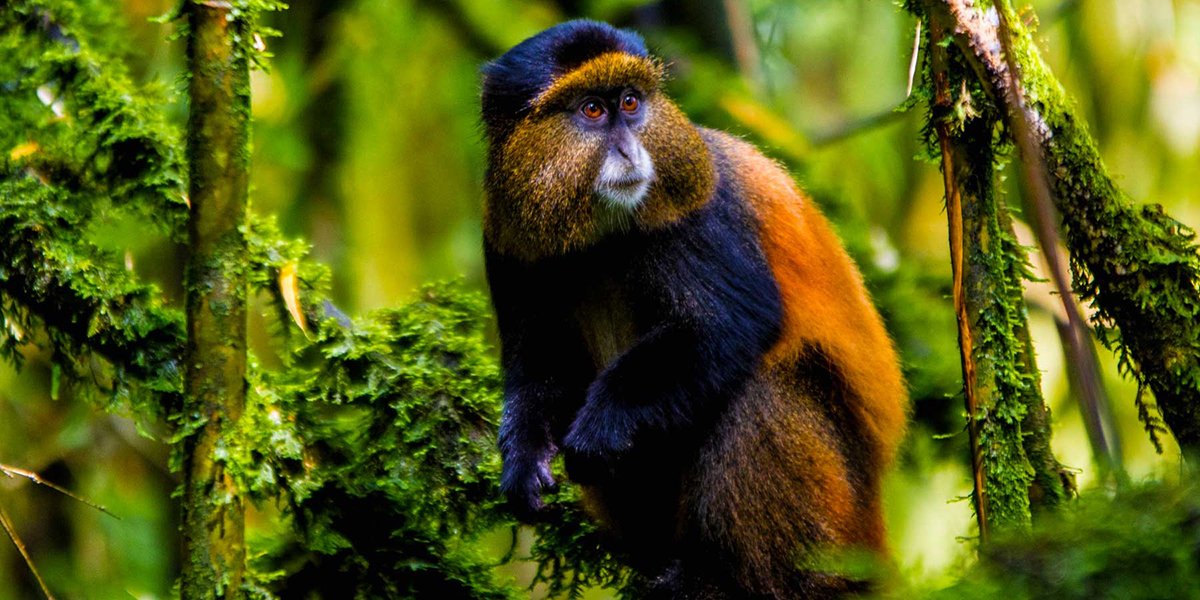 Golden monkey trekking is one of the most colorful and energetic activities on a Uganda primate safari. In Uganda, it takes place in Mgahinga Gorilla National Park.
Golden monkeys live in the bamboo forests of the Virunga Mountains. They are known for their bright golden-orange coats, expressive faces and fast movement through vegetation.
Unlike mountain gorillas, golden monkeys rarely remain still for long periods. They jump between bamboo stems, feed on leaves and shoots, and move quickly through the forest. This makes the trek exciting but also challenging for photography.
Golden monkey trekking can be combined with gorilla trekking, volcano hiking and cultural experiences in Mgahinga. It is an excellent addition to a Uganda gorilla and chimpanzee safari because it introduces visitors to a completely different type of primate behavior.
Golden Monkey Habituation
The golden monkey habituation experience is designed for travelers who want more time observing golden monkeys. Participants accompany researchers and trackers as they study a group that is becoming accustomed to human presence.
The longer observation period creates better opportunities to understand feeding behavior, social interactions and movement through the bamboo forest. It also gives photographers more time to adjust camera settings and wait for clear views.
Because golden monkeys move quickly, the habituation experience remains active and physically engaging. It is best suited for travelers who enjoy hiking and wildlife photography.
Other Monkey Species
A Uganda primate safari offers much more than gorillas, chimpanzees and golden monkeys. Uganda is home to many monkey species that can be seen in national parks, forests, wetlands, woodlands and around safari lodges.
Commonly encountered species include black-and-white colobus monkeys, red-tailed monkeys, blue monkeys, vervet monkeys and olive baboons. In some destinations, travelers may also look for L’Hoest’s monkeys, grey-cheeked mangabeys, patas monkeys, red colobus monkeys and De Brazza’s monkeys.
Each species has different habits and preferred habitats. Colobus monkeys often rest high in the trees and are easily recognized by their black-and-white coats. Red-tailed monkeys are active and curious, while blue monkeys usually remain in forest canopies. Olive baboons are frequently seen along roadsides and in savannah areas.
These additional species add variety to a Uganda primate safari and make forest walks rewarding even before gorillas or chimpanzees are located.
Guided Forest Walks
Guided forest walks are an important part of a Uganda primate safari. They allow visitors to explore the ecosystems that support primates and learn about the plants, insects, birds and smaller animals found within Uganda’s protected forests.
A forest walk may include sightings of monkeys, butterflies, colorful birds, forest antelopes, reptiles and unusual plant species. Guides also explain the traditional uses of trees, forest conservation, animal tracks and relationships between different species.
Popular destinations for forest walks include Kibale National Park, Bwindi Impenetrable National Park, Budongo Forest, Mabira Forest, Semuliki National Park and Kalinzu Forest.
Forest walks can be included as separate activities or combined with chimpanzee tracking, bird watching and community visits.
Primate Photography
Uganda is one of Africa’s best destinations for primate photography. Mountain gorillas provide opportunities for emotional portraits, family interactions and close views. Chimpanzees create energetic action scenes, while golden monkeys challenge photographers with their speed and movement.
Forest photography requires preparation because light conditions can be difficult. Dense vegetation creates shadows, changing light and limited visibility. Photographers should be ready to adjust camera settings quickly and protect equipment from rain and humidity.
A photography-focused Uganda primate safari may include multiple trekking permits, longer stays in each park, private transport and carefully selected accommodation near trekking points.
Visitors should avoid flash photography around primates and follow all ranger instructions. Silent camera settings are also recommended where possible.
Bird Watching
Uganda primate safari destinations are also excellent for bird watching. The forests that protect gorillas and chimpanzees support numerous forest birds, including Albertine Rift endemics, turacos, hornbills, flycatchers, sunbirds and forest robins.
Bwindi Impenetrable National Park and Mgahinga Gorilla National Park are especially important for birders interested in Albertine Rift species. Kibale National Park and Bigodi Wetland Sanctuary also offer rich birdlife alongside primate encounters.
Bird watching can be added before or after primate trekking, allowing travelers to enjoy a more complete forest experience.
A combined birding and Uganda primate safari is ideal for travelers who want to explore the country’s wider biodiversity rather than focusing only on large mammals.
Cultural and Community Experiences
Cultural activities add depth to a Uganda primate safari by introducing travelers to the communities living near protected forests.
Visitors may take part in guided village walks, traditional dance performances, craft demonstrations, coffee experiences, farming visits and storytelling. In areas near Bwindi and Mgahinga, some programs also explain the historical relationship between forest communities and the surrounding environment.
Responsible cultural tourism helps generate income for local communities and creates stronger support for conservation. It also allows travelers to understand how tourism, wildlife protection and community development are connected.
Cultural experiences should be respectful, community-led and designed to benefit local residents.
Batwa Cultural Experience
 The Batwa cultural experience is commonly included in itineraries visiting Mgahinga Gorilla National Park or Bwindi.
The Batwa are traditionally associated with the forests of southwestern Uganda. Guided cultural experiences may include demonstrations of traditional hunting techniques, medicinal plant knowledge, fire-making, music, dance and stories about life in the forest.
A well-managed Batwa experience helps preserve cultural knowledge while providing income and employment. It also gives travelers a deeper understanding of the human history connected to Uganda’s primate habitats.
Bigodi Wetland Walk
The Bigodi Wetland Sanctuary is often combined with chimpanzee tracking in Kibale National Park. It is a community-managed conservation area known for primates, birds, butterflies and wetland vegetation.
During a guided walk, visitors may see red-tailed monkeys, black-and-white colobus monkeys, vervet monkeys, baboons and several bird species. The activity offers a quieter and more relaxed experience than chimpanzee tracking.
Bigodi is also important because tourism revenue supports local conservation, education and community projects. Including it in a Uganda primate safari helps create a more complete and responsible itinerary.
Wildlife Safari Combinations
One of the greatest advantages of a Uganda primate safari is the ability to combine forest experiences with classic wildlife safaris.
Queen Elizabeth National Park is commonly added after chimpanzee tracking in Kibale. Visitors can enjoy game drives, a Kazinga Channel boat cruise and the chance to see lions, elephants, buffaloes, hippos and antelopes.
Murchison Falls National Park can be combined with chimpanzee tracking in Budongo Forest. Lake Mburo National Park may be added for zebras, giraffes, walking safaris and boat trips.
A longer Uganda wildlife and primates safari may include Ziwa Rhino Sanctuary, Murchison Falls, Kibale, Queen Elizabeth, Bwindi, Mgahinga and Lake Bunyonyi.
This combination allows visitors to experience different ecosystems and wildlife within one country.
Boat Safaris
Boat safaris are a popular addition to Uganda primate safari packages. They provide relaxed wildlife viewing after physically demanding forest treks.
The Kazinga Channel boat cruise in Queen Elizabeth National Park offers opportunities to see hippos, crocodiles, elephants, buffaloes and many water birds.
In Murchison Falls National Park, a Nile boat cruise takes visitors toward the base of the falls and passes areas where hippos, crocodiles, elephants and other animals gather near the river.
Boat safaris add variety to a Uganda primate tour and allow visitors to photograph wildlife from a different perspective.
Scenic Landscapes
Uganda primate safari routes pass through some of the country’s most beautiful landscapes. Travelers may see terraced hills, crater lakes, tropical forests, volcanic mountains, tea plantations, wetlands and rural villages.
Bwindi is surrounded by steep green hills and deep valleys. Mgahinga offers views of the Virunga volcanoes. Kibale is bordered by crater lakes and farmland, while Queen Elizabeth National Park provides views of the Rwenzori Mountains.
Scenic stops make road travel more enjoyable and create excellent photography opportunities throughout the safari.
Lake Bunyonyi Relaxation
Lake Bunyonyi is often included after gorilla trekking in Bwindi or Mgahinga. The lake is surrounded by green hills and dotted with many islands.
Visitors can relax, take canoe rides, enjoy boat trips, visit local communities, watch birds and recover after forest trekking.
Adding Lake Bunyonyi creates a slower and more peaceful ending to a Uganda primate safari. It is particularly suitable for couples, honeymooners, families and travelers who prefer a balanced itinerary.
Uganda Primate Safari Highlights at a Glance
Top Uganda Primate Safari Experiences
Compare the leading primate, wildlife, photography and cultural activities that can be included in a tailor-made Uganda primate safari.
| Safari Highlight | Best Destination | What Makes It Special |
|---|---|---|
| Gorilla Trekking | Bwindi and Mgahinga | Spend unforgettable moments observing a habituated mountain gorilla family in its natural forest habitat. |
| Chimpanzee Tracking | Kibale, Budongo, Kalinzu and Kyambura | Follow active chimpanzee communities and observe their communication, movement, feeding and social behavior. |
| Golden Monkey Trekking | Mgahinga Gorilla National Park | Track colorful and energetic golden monkeys through the bamboo-covered slopes of the Virunga Mountains. |
| Forest Walks | Kibale, Bwindi, Budongo and Mabira | Discover monkeys, birds, butterflies, plants and smaller forest wildlife with an experienced nature guide. |
| Primate Photography | Bwindi, Kibale and Mgahinga | Capture gorilla portraits, active chimpanzees, golden monkeys and atmospheric rainforest scenes. |
| Bird Watching | Bwindi, Mgahinga, Kibale and Bigodi | Look for forest birds, Albertine Rift species, turacos, hornbills, sunbirds and wetland birds. |
| Cultural Experiences | Bwindi, Mgahinga and Kibale | Join village walks, traditional performances, coffee experiences and community-led cultural activities. |
| Wildlife Safari Combinations | Queen Elizabeth and Murchison Falls | Combine Uganda primate trekking with game drives, boat cruises and encounters with lions, elephants, buffaloes, hippos and other wildlife. |
Best Uganda Primate Safari Combination
One of
the best Uganda primate safari routes begins with chimpanzee tracking in Kibale National Park, continues to Queen Elizabeth National Park for game drives and a boat cruise, and then travels to Bwindi for mountain gorilla trekking. The journey can be extended to Mgahinga for golden monkey trekking and finished with relaxation at Lake Bunyonyi.
This route brings together Uganda’s most important primate experiences while also including savannah wildlife, bird watching, scenic landscapes and cultural encounters. It can be completed as a mid-range, luxury or budget Uganda primate safari depending on the accommodation and transportation selected.
Travelers with more time can also add Murchison Falls National Park and Budongo Forest for another chimpanzee experience, a Nile boat cruise and game drives. This creates a complete Uganda wildlife and primates safari covering several of the country’s most diverse ecosystems.
Best Uganda Primate Safari Destinations
Uganda has several outstanding destinations where travelers can see mountain gorillas, chimpanzees, golden monkeys and many other primate species in their natural habitats. Each destination offers a different landscape, trekking experience, level of difficulty and combination of activities.
The best Uganda primate safari itinerary often includes more than one forest. Bwindi and Mgahinga are the main destinations for mountain gorillas, Kibale is the leading location for chimpanzees, while Budongo, Kalinzu and Kyambura Gorge provide additional chimpanzee tracking opportunities. Bigodi Wetland Sanctuary, Semuliki, Mabira Forest and Toro-Semliki also add smaller primates, bird watching and guided nature walks.
Choosing the right destinations depends on the length of the safari, travel budget, fitness level, preferred primates and whether the trip will include savannah wildlife, cultural experiences or relaxation.
Bwindi Impenetrable National Park
Bwindi Impenetrable National Park is Uganda’s most famous mountain gorilla trekking destination and one of the most important stops on a Uganda primate safari. The park is located in southwestern Uganda and protects an ancient tropical rainforest spread across steep hills and deep valleys.
The forest is known for its dense vegetation, mist-covered slopes and remarkable biodiversity. In addition to mountain gorillas, Bwindi supports black-and-white colobus monkeys, blue monkeys, red-tailed monkeys, L’Hoest’s monkeys, olive baboons and several smaller mammals.
Mountain gorilla trekking is the main activity. Visitors join a ranger-led group and enter the forest in search of a habituated gorilla family. The length and difficulty of the trek depend on the location of the gorillas, the weather and the terrain.
Once the gorillas are located, visitors can observe their family relationships, feeding habits, movements and interactions. A silverback may sit quietly while younger gorillas play nearby, or a mother may carry and protect her infant through the vegetation.
Bwindi is divided into several gorilla trekking regions, each offering its own lodges, routes and landscapes.
Buhoma Sector
Buhoma is located in the northern part of Bwindi and is one of the park’s oldest and best-known trekking regions. It has a wide range of accommodation, from budget lodges to luxury forest properties.
Buhoma is often combined with the Ishasha Sector of Queen Elizabeth National Park because the two areas can be connected by road. This makes it convenient for travelers combining gorilla trekking with wildlife viewing and tree-climbing lion searches.
The sector also offers community walks, bird watching and forest trails.
Ruhija Sector
Ruhija is located in the eastern part of Bwindi and is known for its high-altitude forest, peaceful atmosphere and excellent bird watching.
It is often suitable for travelers approaching Bwindi from Kabale, Lake Bunyonyi or Queen Elizabeth National Park. The area has several budget and mid-range accommodation options near the trekking point.
Ruhija is particularly attractive to visitors who want a quieter forest environment and opportunities to search for Albertine Rift bird species.
Rushaga Sector
Rushaga is located in the southern part of Bwindi and is one of the most active gorilla trekking regions. It has several habituated gorilla families and a broad range of lodges.
Rushaga is commonly used for Uganda primate safaris beginning in Kigali because it can be reached through the Katuna border and the Kabale route.
It is also associated with the gorilla habituation experience, making it an important destination for travelers who want a longer and more immersive encounter.
Nkuringo Sector
Nkuringo is located in the southern part of Bwindi and is known for steep terrain, dramatic views and challenging gorilla treks.
The sector overlooks forested hills and distant volcanic landscapes. It is suitable for physically active travelers and visitors who prefer quieter lodges with impressive scenery.
Nkuringo can be combined with Rushaga, Lake Mutanda, Kisoro and Mgahinga Gorilla National Park.
Why Include Bwindi in a Uganda Primate Safari?
Bwindi should be included because it offers:
Mountain gorilla trekking in an ancient rainforest, several trekking sectors, a wide choice of accommodation, excellent bird watching, community experiences and convenient combinations with Queen Elizabeth National Park, Lake Bunyonyi and Mgahinga.
It is the most important destination for travelers whose main goal is to see mountain gorillas in Uganda.
Mgahinga Gorilla National Park
Mgahinga Gorilla National Park is located in southwestern Uganda along the borders with Rwanda and the Democratic Republic of the Congo. It protects part of the Virunga Mountains and offers one of the most scenic settings on a Uganda primate safari.
The park is smaller than Bwindi but provides a diverse combination of mountain gorillas, golden monkeys, volcano hiking, bamboo forest, bird watching and cultural experiences.
Its dramatic scenery is dominated by Mount Muhabura, Mount Gahinga and Mount Sabyinyo.
Mountain Gorilla Trekking in Mgahinga
Mountain gorilla trekking in Mgahinga provides a peaceful alternative to Bwindi. The forest and bamboo habitats create a beautiful trekking environment, while the volcanic slopes add dramatic scenery.
The trek begins with a briefing before visitors follow ranger guides into the park. Depending on the gorillas’ location, the walk may pass through bamboo zones, open forest and mountain vegetation.
Mgahinga is suitable for travelers who want a compact primate itinerary combining gorilla trekking and golden monkey trekking.
Golden Monkey Trekking in Mgahinga
Mgahinga is Uganda’s main golden monkey trekking destination. Golden monkeys live in the bamboo forests of the Virunga Mountains and are easily recognized by their bright golden-orange coloring.
The trek is active because the monkeys move quickly between bamboo stems. Visitors may see them feeding on bamboo shoots, jumping between trees and communicating within the group.
Golden monkey trekking is an excellent addition to a Uganda gorilla safari because it offers a different pace and style of primate encounter.
Golden Monkey Habituation
Travelers who want more time with golden monkeys can consider the habituation experience. Participants accompany trackers and researchers as they observe the monkeys for an extended period.
This activity is especially suitable for wildlife photographers because golden monkeys move quickly and can be difficult to photograph during a shorter visit.
Other Activities in Mgahinga
Mgahinga also offers volcano hiking, bird watching, nature walks and cultural experiences. Visitors may hike Mount Sabyinyo, Mount Gahinga or Mount Muhabura depending on fitness, weather and available time.
Batwa cultural experiences help visitors learn about traditional forest knowledge, medicinal plants and the historical connection between local communities and the Virunga landscape.
Why Include Mgahinga in a Uganda Primate Safari?
Mgahinga is ideal for travelers who want to combine mountain gorillas, golden monkeys, volcanic scenery, hiking and cultural experiences within one destination.
It is also convenient for itineraries beginning or ending in Kigali, Kisoro or Lake Mutanda.
Kibale National Park
Kibale National Park is Uganda’s leading chimpanzee tracking destination and one of the most important locations on a complete Uganda primate safari.
The park protects a large tropical forest in western Uganda and is famous for its high concentration of primates. It supports chimpanzees, black-and-white colobus monkeys, red colobus monkeys, red-tailed monkeys, blue monkeys, L’Hoest’s monkeys, grey-cheeked mangabeys, olive baboons and other species.
The main tourism area is Kanyanchu, where chimpanzee tracking and habituation experiences begin.
Chimpanzee Tracking in Kibale
Chimpanzee tracking begins with a ranger briefing before visitors enter the forest. Guides follow signs such as calls, broken branches, feeding remains and fresh nests to locate the chimpanzee community.
The experience may involve walking through forest trails while listening for pant-hoots and other calls. Once located, the chimpanzees may be seen feeding in trees, grooming, resting, moving through the forest or interacting on the ground.
Chimpanzee tracking is more active than gorilla trekking because the animals can move quickly over long distances. Visitors may need to walk at a faster pace to maintain clear views.
Chimpanzee Habituation in Kibale
The chimpanzee habituation experience allows travelers to spend more time following a chimpanzee community.
Participants may observe feeding, movement, communication and social relationships over several hours. This gives photographers and primate enthusiasts more opportunities to witness different behavior.
The activity usually requires more time, patience and physical effort than standard chimpanzee tracking.
Other Primates in Kibale
Kibale’s primate diversity is one of its greatest strengths. Even when chimpanzees are the main target, travelers may also see colobus monkeys, red-tailed monkeys, blue monkeys and grey-cheeked mangabeys.
These species may be encountered along forest trails, near the park boundary or around nearby wetlands.
Bigodi Wetland Sanctuary
Bigodi Wetland Sanctuary is located close to Kibale National Park and is commonly included after chimpanzee tracking.
The community-managed wetland offers guided walks through forest edges, swamp vegetation and farmland. Visitors may see monkeys, birds, butterflies and local plant species.
Possible primate sightings include red-tailed monkeys, black-and-white colobus monkeys, vervet monkeys and olive baboons.
Tourism revenue from Bigodi supports community projects, education and conservation initiatives.
Why Include Kibale in a Uganda Primate Safari?
Kibale offers Uganda’s most established chimpanzee tracking experience, excellent primate diversity, chimpanzee habituation and convenient combinations with Bigodi Wetland, crater lakes and Queen Elizabeth National Park.
It is the best destination for travelers who want to make chimpanzees a central part of their safari.
Budongo Forest
Budongo Forest is located near Murchison Falls National Park in northwestern Uganda. It is one of the country’s largest natural forests and an important chimpanzee habitat.
Chimpanzee tracking is commonly conducted in the Kaniyo Pabidi area. The forest has tall mahogany trees, quiet trails and rich birdlife.
A visit to Budongo is especially valuable because it can be combined with game drives, a Nile boat cruise and a visit to Murchison Falls.
Chimpanzee Tracking in Budongo
Chimpanzee tracking in Budongo provides an opportunity to follow a habituated chimpanzee community through mature forest.
The experience may include loud calls, fast movement through trees, feeding behavior and social interactions. Because the forest has a different structure from Kibale, the atmosphere and photography conditions can also be different.
Budongo can be a good choice for travelers whose Uganda primate safari already includes Murchison Falls National Park.
Bird Watching in Budongo
Budongo is also an important birding destination. The forest supports several species associated with lowland and tropical forest habitats.
Guided birding walks can be arranged alongside chimpanzee tracking, making the forest suitable for travelers interested in both primates and birds.
Why Include Budongo in a Uganda Primate Safari?
Budongo is ideal for travelers who want to combine chimpanzee tracking with Murchison Falls, game drives, a Nile boat cruise and waterfall viewing.
It is especially useful for longer Uganda wildlife and primate safari itineraries.
Kyambura Gorge
Kyambura Gorge is located within Queen Elizabeth National Park. It is sometimes called the Valley of Apes because of its forested habitat and resident chimpanzees.
The gorge forms a green forest corridor below the surrounding savannah. The descent into the gorge creates a dramatic trekking experience.
Chimpanzee Tracking in Kyambura Gorge
Tracking begins at the edge of the gorge before visitors descend into the forest. The trails may be steep, and the terrain can be challenging.
Chimpanzees are not always as easy to locate as they may be in Kibale, but the experience is rewarding because of the setting. Visitors may also encounter black-and-white colobus monkeys, red-tailed monkeys, baboons and forest birds.
Combining Kyambura with Queen Elizabeth National Park
Kyambura is best included as part of a wider Queen Elizabeth National Park safari. Travelers can combine chimpanzee tracking with game drives, a Kazinga Channel boat cruise, bird watching and wildlife viewing.
Possible sightings in the wider park include elephants, lions, buffaloes, hippos, leopards, antelopes and crocodiles.
Why Include Kyambura Gorge?
Kyambura Gorge is suitable for travelers who want to add a short chimpanzee experience to a classic wildlife safari without traveling to another forest.
Its dramatic landscape also makes it one of Uganda’s most unusual primate destinations.
Kalinzu Forest
Kalinzu Forest is located near Queen Elizabeth National Park and is another popular chimpanzee tracking destination.
The forest contains several primate species, including chimpanzees, black-and-white colobus monkeys, blue monkeys, red-tailed monkeys, vervet monkeys and baboons.
Kalinzu is often included in budget and mid-range Uganda primate safari itineraries because it can provide a more affordable alternative to some other chimpanzee destinations.
Chimpanzee Tracking in Kalinzu
Tracking takes place along forest trails with local guides. Visitors listen for calls and follow movement signs through the vegetation.
The trek may involve slopes, streams and dense forest, but the atmosphere is peaceful and less crowded than some major destinations.
Kalinzu can be combined with Queen Elizabeth National Park, Bwindi and Lake Bunyonyi.
Why Include Kalinzu Forest?
Kalinzu is a good option for travelers seeking affordable chimpanzee tracking near Queen Elizabeth National Park.
It also adds forest diversity to itineraries that already include gorilla trekking in Bwindi.
Toro-Semliki Wildlife Reserve
Toro-Semliki Wildlife Reserve lies in western Uganda near the Rwenzori Mountains and Semuliki National Park.
The reserve contains a mixture of forest, woodland, grassland and wetland habitats. This habitat diversity supports chimpanzees, black-and-white colobus monkeys, red-tailed monkeys, vervet monkeys, baboons and other wildlife.
Guided primate walks may be arranged in selected areas of the reserve.
Why Include Toro-Semliki?
Toro-Semliki is suitable for adventurous travelers who want a less crowded primate destination and a combination of forest and savannah habitats.
It can be included in longer itineraries visiting Fort Portal, Kibale, Semuliki and the Rwenzori region.
Semuliki National Park
Semuliki National Park is located in the Albertine Rift in western Uganda. It protects a lowland tropical forest with ecological connections to the Congo Basin.
The park has a different environment from Uganda’s high-altitude gorilla forests. It supports several primate species, including black-and-white colobus monkeys, red-tailed monkeys, blue monkeys, vervet monkeys, baboons and nocturnal primates.
Primate and Nature Walks in Semuliki
Guided forest walks allow visitors to search for monkeys, forest birds, butterflies and unusual plant species.
Some walks may also include visits to the Sempaya hot springs, which are among the park’s best-known natural attractions.
Semuliki is especially attractive to bird watchers and travelers interested in lowland forest ecosystems.
Why Include Semuliki?
Semuliki adds a different rainforest environment to a Uganda primate safari and works well for travelers interested in rare birds, forest walks and less-visited destinations.
Mabira Forest
Mabira Forest is located between Kampala and Jinja. It is one of the most accessible forest destinations in central Uganda.
The forest supports red-tailed monkeys, grey-cheeked mangabeys, vervet monkeys and other smaller primates. It is also known for bird watching, butterflies, nature walks and forest cycling.
Guided Walks in Mabira Forest
Visitors can follow forest trails with local guides while searching for monkeys, birds and plant life.
Mabira is not usually the main destination on a Uganda primate safari, but it can be included at the beginning or end of a journey for travelers traveling between Entebbe, Kampala and Jinja.
Why Include Mabira Forest?
Mabira is suitable for short forest visits, day trips and travelers who want an accessible nature experience near Kampala or Jinja.
Ngamba Island Chimpanzee Sanctuary
Ngamba Island is located on Lake Victoria and provides sanctuary to rescued and orphaned chimpanzees that cannot be returned to the wild.
The experience is different from wild chimpanzee tracking. Visitors observe the chimpanzees from designated viewing areas and learn about rescue, rehabilitation, conservation and animal welfare.
Boat transfers to the island usually begin from Entebbe.
Why Include Ngamba Island?
Ngamba Island is suitable for travelers with limited time, families or visitors who want to learn about chimpanzee conservation without taking part in a forest trek.
It can be included before or after a longer Uganda primate safari.
Best Uganda Primate Safari Destinations at a Glance
Where to See Primates in Uganda
Compare Uganda’s leading primate destinations, the species found there and the additional experiences available in each location.
| Destination | Main Primate Experience | Other Primates | Best Combined Activities |
|---|---|---|---|
| Bwindi Impenetrable National Park | Mountain gorilla trekking and gorilla habituation | Colobus, blue, red-tailed and L’Hoest’s monkeys | Bird watching, community walks, forest hikes, Lake Bunyonyi and Queen Elizabeth National Park |
| Mgahinga Gorilla National Park | Mountain gorilla and golden monkey trekking | Golden monkeys and smaller forest primates | Volcano hiking, Batwa experiences, bird watching, Lake Mutanda and Kisoro |
| Kibale National Park | Chimpanzee tracking and habituation | Colobus, red-tailed, blue and L’Hoest’s monkeys | Bigodi Wetland, crater lakes, bird watching and Queen Elizabeth National Park |
| Budongo Forest | Chimpanzee tracking | Blue monkeys, red-tailed monkeys and baboons | Murchison Falls, game drives, Nile boat cruises and bird watching |
| Kyambura Gorge | Chimpanzee tracking | Colobus monkeys, red-tailed monkeys and baboons | Queen Elizabeth game drives, Kazinga Channel boat cruise and wildlife viewing |
| Kalinzu Forest | Chimpanzee tracking | Colobus, blue and red-tailed monkeys | Queen Elizabeth National Park, bird watching and forest nature walks |
| Semuliki and Toro-Semliki | Guided primate and nature walks | Colobus, red-tailed, blue and vervet monkeys | Sempaya hot springs, bird watching, Rwenzori scenery and wildlife viewing |
| Ngamba Island | Chimpanzee sanctuary visit | Rescued chimpanzees | Lake Victoria boat transfer, conservation education and an Entebbe city stay |
Which Uganda Primate Destination Should You Choose?
Travelers whose main priority is mountain gorilla trekking should choose Bwindi or Mgahinga. Bwindi provides more trekking sectors and accommodation options, while Mgahinga offers an excellent combination of gorillas, golden monkeys and volcanic scenery.
For chimpanzees, Kibale is the leading destination because of its established tracking program and high primate diversity. Budongo is best for travelers visiting Murchison Falls, while Kalinzu and Kyambura Gorge are convenient for itineraries that include Queen Elizabeth National Park.
Travelers interested in rare forest species and bird watching can include Semuliki, Toro-Semliki or Mabira Forest. Visitors with limited time may consider Ngamba Island for a conservation-focused chimpanzee experience near Entebbe.
The most complete Uganda primate safari normally combines Kibale National Park, Queen Elizabeth National Park, Bwindi Impenetrable National Park and Mgahinga Gorilla National Park. This route gives travelers the opportunity to see chimpanzees, mountain gorillas, golden monkeys, smaller primates and classic African wildlife during one carefully planned journey.
Primate Species Found in Uganda
Uganda is one of Africa’s richest primate destinations. Its tropical rainforests, montane forests, bamboo zones, wetlands, woodlands and savannah areas provide suitable habitats for many primate species. Uganda Wildlife Authority identifies the golden monkey as one of Uganda’s 20 primate species, while Kibale National Park alone is widely known for supporting an exceptional variety of primates.
The most famous primates seen during a Uganda primate safari are mountain gorillas, chimpanzees and golden monkeys. However, travelers may also encounter black-and-white colobus monkeys, red colobus monkeys, L’Hoest’s monkeys, grey-cheeked mangabeys, red-tailed monkeys, blue monkeys, vervet monkeys, patas monkeys, olive baboons, bush babies and pottos.
Some species are frequently seen during guided forest walks, game drives and lodge stays. Others are more secretive and require patient observation, specialized primate walks or night excursions.
A complete Uganda primate safari should therefore include enough time to appreciate both the famous great apes and the smaller monkey species that contribute to Uganda’s remarkable biodiversity.
Mountain Gorillas
Mountain gorillas are the main attraction on many Uganda primate safari itineraries. They are a subspecies of the eastern gorilla and survive only within a limited area of East-Central Africa.
In Uganda, mountain gorillas are found in Bwindi Impenetrable National Park and Mgahinga Gorilla National Park. Uganda Wildlife Authority reports that Uganda protects more than half of the world’s mountain gorilla population across these two protected areas.
Bwindi is especially important for mountain gorilla conservation. UNESCO describes the park as an area of outstanding biological richness and a major home for the world’s remaining mountain gorillas.
Mountain gorillas have large, powerful bodies covered with dark hair. Adult males develop a silver-grey area across their backs as they mature and are therefore called silverbacks.
A silverback normally leads and protects the family. A gorilla group may also include adult females, younger males, juveniles and infants. The silverback helps guide movement, settle conflict and respond to possible danger.
Despite their physical strength, mountain gorillas are usually calm when they are not disturbed. They spend much of their day feeding, resting, grooming and moving through the forest.
Their diet mainly consists of leaves, shoots, stems, roots and other plant material. Their movements depend on food availability, weather and the location of suitable resting areas.
Where to See Mountain Gorillas in Uganda
Travelers can see mountain gorillas in:
- Bwindi Impenetrable National Park
- Mgahinga Gorilla National Park
Bwindi offers gorilla trekking from Buhoma, Ruhija, Rushaga and Nkuringo. These sectors have different terrain, lodges, road connections and trekking groups.
Mgahinga offers gorilla trekking within the scenic Virunga Mountains. It can be combined with golden monkey trekking, volcano hiking and Batwa cultural experiences.
Gorilla trekking usually requires moderate fitness because the forest walk may last several hours. Uganda Wildlife Authority states that a trek may last between two and seven hours depending on the gorillas’ location and the trekking conditions.
What Makes Mountain Gorillas Special?
Mountain gorillas are highly intelligent and socially complex. Their facial expressions, gestures, family relationships and care for young gorillas often feel surprisingly familiar to human observers.
Visitors may see a mother carrying an infant, juveniles playing, family members grooming one another or a silverback resting while watching over the group.
The emotional nature of this encounter is one reason mountain gorilla trekking is often described as the highlight of a Uganda primate safari.
Chimpanzees
Chimpanzees are another major species encountered during a Uganda primate safari. They are intelligent great apes that live in communities with complex social relationships.
Uganda Wildlife Authority notes that chimpanzees share about 98 percent of their genetic material with humans. They have long arms, opposable thumbs, short legs and bodies covered with dark hair. Their faces, fingers, ears and toes are generally bare.
Chimpanzees are more active and mobile than mountain gorillas. They frequently travel between feeding areas, climb trees, call loudly and interact with other members of their community.
Their diet includes fruit, leaves, seeds, flowers, insects and occasionally meat. Fruit is especially important, and chimpanzee movements are often influenced by where seasonal fruits are available.
Chimpanzees communicate through facial expressions, gestures, touch and many different vocal sounds. Their loud pant-hoots may travel through the forest over long distances.
During chimpanzee tracking, visitors may observe grooming, feeding, climbing, territorial displays, play, tool use and interactions between mothers and young chimpanzees.
Where to See Chimpanzees in Uganda
Chimpanzees can be found in several Ugandan forests, but tourism experiences are concentrated in selected locations.
The leading chimpanzee destinations include:
- Kibale National Park
- Budongo Forest
- Kalinzu Forest
- Kyambura Gorge
- Toro-Semliki Wildlife Reserve
Kibale National Park is Uganda’s main chimpanzee tracking destination. Uganda Wildlife Authority estimates that the park supports more than 1,500 wild chimpanzees distributed across several communities. Some communities have been habituated for tourism and long-term research.
Chimpanzees also occur within Bwindi. A census completed in 2025 estimated that approximately 426 chimpanzees were distributed across Bwindi Impenetrable National Park, although chimpanzee tourism there is not organized in the same way as it is in Kibale.
Toro-Semliki Wildlife Reserve also supports chimpanzees alongside baboons, vervet monkeys, red-tailed monkeys and black-and-white colobus monkeys.
What Makes Chimpanzees Special?
Chimpanzees are known for their intelligence, problem-solving abilities and complicated social behavior.
They can use objects as tools, cooperate during selected activities, develop long-term relationships and learn behavior from other members of their community.
Chimpanzee communities may contain many individuals. However, all members are rarely together at the same time. They often separate into smaller temporary groups before joining other community members later.
This social system makes chimpanzee tracking exciting and unpredictable. Visitors may find a quiet group feeding in trees or encounter an active gathering filled with loud calls, fast movement and displays from adult males.
Golden Monkeys
Golden monkeys are among the most colorful primates seen during a Uganda primate safari. They are found in the Virunga Mountains and are associated with high-altitude bamboo forests.
In Uganda, golden monkeys are found in Mgahinga Gorilla National Park. Uganda Wildlife Authority describes Mgahinga as an important habitat for both mountain gorillas and endangered golden monkeys.
Golden monkeys have dark limbs, a dark upper body and striking golden-orange fur across parts of the back, sides and face.
They live in social groups and spend much of their time searching for food. Their diet includes bamboo shoots, young leaves, fruits, flowers and small invertebrates.
Golden monkeys move quickly through the vegetation. They jump between bamboo stems, feed in groups and regularly disappear behind dense leaves before returning to visible areas.
Where to See Golden Monkeys in Uganda
Mgahinga Gorilla National Park is the main destination for:
- Golden monkey trekking
- Golden monkey habituation
- Golden monkey photography
- Combined gorilla and golden monkey safaris
Golden monkey trekking is usually less physically demanding than some mountain gorilla treks, although the activity still involves walking at a high altitude and following fast-moving animals.
The golden monkey habituation experience offers more observation time and may be particularly useful for photographers.
What Makes Golden Monkeys Special?
Golden monkeys are highly photogenic because of their bright coloring and energetic behavior.
Unlike gorillas, which may remain in one place for an extended period, golden monkeys are often constantly moving. This creates an exciting activity but makes photography more challenging.
A safari combining mountain gorillas and golden monkeys allows visitors to compare two very different primates living within the same wider mountain ecosystem.
Black-and-White Colobus Monkeys
Black-and-white colobus monkeys are among the easiest forest primates to recognize. They have contrasting black-and-white coats, long tails and thick white hair around parts of the shoulders and face.
Unlike many other monkeys, colobus monkeys have reduced thumbs. Their name comes from a Greek word meaning shortened or mutilated, referring to this physical feature.
They spend much of their time in trees and feed mainly on leaves, although they may also eat fruit, flowers and seeds.
Black-and-white colobus monkeys often live in groups containing several females, young monkeys and one or more adult males.
Their long tails help with balance as they move through the canopy. Visitors may see them jumping between trees or resting together on high branches.
Where to See Black-and-White Colobus Monkeys
They can be encountered in several Uganda primate safari destinations, including:
- Kibale National Park
- Bwindi Impenetrable National Park
- Queen Elizabeth National Park
- Semuliki National Park
- Toro-Semliki Wildlife Reserve
- Bigodi Wetland Sanctuary
- Mabira Forest
Uganda Wildlife Authority lists black-and-white colobus monkeys among the primates found in Queen Elizabeth National Park and Toro-Semliki Wildlife Reserve.
Red Colobus Monkeys
Red colobus monkeys are among Uganda’s more restricted and conservation-sensitive primates.
They have dark or greyish upper bodies mixed with reddish coloring, although their appearance may vary according to age and individual characteristics.
Red colobus monkeys are mainly leaf eaters. They live in groups and spend much of their time in the forest canopy.
Kibale National Park protects an important population of red colobus monkeys and is considered their main destination in Uganda. Uganda Wildlife Authority’s Kibale management information identifies the park as a significant remaining habitat for the species in the country.
Where to See Red Colobus Monkeys
The best location is:
- Kibale National Park
They may be encountered during guided primate walks, chimpanzee tracking or other forest activities. However, sightings are never guaranteed.
Red colobus monkeys are vulnerable to habitat loss and are also hunted by chimpanzees in some forest areas. Their presence contributes to Kibale’s importance for primate conservation.
L’Hoest’s Monkeys
L’Hoest’s monkeys are attractive forest primates with dark coats, deep-set eyes and a noticeable white area around the throat.
They are mainly terrestrial compared with many other monkey species. Although they can climb trees, they often travel and feed near the forest floor.
L’Hoest’s monkeys usually live in groups led by females, with a smaller number of adult males. Their diet includes fruit, leaves, seeds, shoots and invertebrates.
They can be shy and may quickly disappear into thick vegetation when disturbed.
Where to See L’Hoest’s Monkeys
Possible destinations include:
- Kibale National Park
- Bwindi Impenetrable National Park
- Maramagambo Forest
- Selected forests in western Uganda
Kibale is especially important because L’Hoest’s monkeys form part of its well-known primate diversity.
Their secretive nature makes a sighting particularly rewarding for serious primate enthusiasts and wildlife photographers.
Grey-Cheeked Mangabeys
Grey-cheeked mangabeys are medium-sized primates with dark bodies, long tails and light grey hair around the cheeks and neck.
They live mainly in forests and spend time both in the canopy and lower vegetation. Their diet includes fruit, seeds, leaves, flowers and insects.
Grey-cheeked mangabeys are highly social and often communicate using loud calls. These calls can help guides locate a group before the animals become visible.
Where to See Grey-Cheeked Mangabeys
The best-known destinations include:
- Kibale National Park
- Mabira Forest
- Semuliki National Park
Kibale offers excellent chances of combining mangabey sightings with chimpanzees and several other monkey species.
Mabira Forest is also well known for grey-cheeked mangabeys and can be visited during a day trip from Kampala, Entebbe or Jinja.
Red-Tailed Monkeys
Red-tailed monkeys are attractive and active primates recognized by their long reddish tails and colorful facial markings.
They have white cheek patches and a white or light-colored area around the nose. Their bodies are usually greyish or brownish.
Red-tailed monkeys live in forest groups and spend much of their time in trees. Their diet includes fruit, leaves, flowers, insects and seeds.
They are curious, fast-moving and sometimes seen near lodges or forest boundaries. In areas where they have become accustomed to human presence, they may approach buildings or cultivated areas.
Where to See Red-Tailed Monkeys
They are widely distributed and may be encountered in:
- Kibale National Park
- Bwindi Impenetrable National Park
- Bigodi Wetland Sanctuary
- Budongo Forest
- Mabira Forest
- Semuliki National Park
- Toro-Semliki Wildlife Reserve
- Queen Elizabeth National Park
Toro-Semliki officially lists red-tailed monkeys among its resident primates.
Because they are active and colorful, red-tailed monkeys are enjoyable subjects for photography during guided forest walks.
Blue Monkeys
Blue monkeys are forest primates with dark grey or blue-grey coats. Despite their name, they are not bright blue. The blue appearance comes from the color and texture of their fur under certain light conditions.
They spend much of their time in trees and are usually found in forested habitats with reliable access to fruit, leaves and other food.
Blue monkeys often live in social groups containing females, young monkeys and one adult male. They communicate through calls, facial expressions and physical contact.
Where to See Blue Monkeys
Possible destinations include:
- Kibale National Park
- Bwindi Impenetrable National Park
- Mgahinga Gorilla National Park
- Kalinzu Forest
- Budongo Forest
- Semuliki National Park
Visitors may encounter them during chimpanzee trekking, forest walks or while staying at lodges near protected forests.
Vervet Monkeys
Vervet monkeys are among Uganda’s most adaptable and widely distributed primates. They live in savannahs, woodlands, forest edges, riverine areas and places close to human settlements.
They have grey bodies, black faces and lighter hair around the face. Their long tails help them balance when climbing and moving through trees.
Vervet monkeys eat fruit, leaves, seeds, insects, eggs and other available foods. Their adaptability allows them to survive in many habitats.
They are highly social and use different alarm calls when responding to possible predators.
Where to See Vervet Monkeys
Vervet monkeys may be seen in:
- Queen Elizabeth National Park
- Murchison Falls National Park
- Lake Mburo National Park
- Toro-Semliki Wildlife Reserve
- Semuliki National Park
- Forest edges and rural areas
They are frequently observed during game drives, boat safari transfers and lodge stays rather than during specialized primate trekking.
Patas Monkeys
Patas monkeys are built for life on the ground and are among the fastest-running primates.
They have long limbs, reddish-brown coats and pale underparts. Their body shape is more slender than that of many forest monkeys.
Patas monkeys prefer open savannah, dry woodland and grassland rather than dense tropical forest.
They spend most of their time on the ground, where they search for insects, seeds, fruit, gum and other food.
Where to See Patas Monkeys
They are mainly associated with northern Uganda and may be found in:
- Kidepo Valley National Park
- Pian Upe Wildlife Reserve
- Selected dry savannah areas
Patas monkeys are less commonly included in standard Uganda primate safari routes because the main gorilla and chimpanzee destinations are located in western and southwestern Uganda.
However, travelers interested in seeing the widest possible range of Uganda’s primates can include Kidepo or northeastern wildlife reserves in a longer itinerary.
Olive Baboons
Olive baboons are among the largest and most commonly seen primates in Uganda.
They have strong bodies, long dog-like muzzles and olive-grey coats. Adult males are much larger than females and may have prominent canine teeth.
Olive baboons live in large social groups called troops. These groups may contain many males, females and young baboons.
Their diet is highly varied and includes fruit, grass, roots, seeds, insects, small animals and human food when available.
Baboons are intelligent, curious and adaptable. However, visitors should never feed them because this can encourage aggressive behavior and dependence on human food.
Where to See Olive Baboons
Olive baboons may be encountered in:
- Murchison Falls National Park
- Queen Elizabeth National Park
- Kibale National Park
- Bwindi Impenetrable National Park
- Lake Mburo National Park
- Semuliki National Park
- Toro-Semliki Wildlife Reserve
Uganda Wildlife Authority lists olive baboons among the primates found in Queen Elizabeth National Park.
They are commonly seen along park roads, forest edges, lodge grounds and open woodland.
Bush Babies
Bush babies are small nocturnal primates with large eyes, rounded ears and powerful hind legs.
Their large eyes help them see in low light, while their strong legs allow them to jump quickly between branches.
Bush babies rest during the day and become active after sunset. Their diet may include insects, fruit, tree gum and small animals.
Their calls can be heard at night and are sometimes compared to the cries of a human baby.
Where to See Bush Babies
Possible locations include:
- Kibale National Park
- Semuliki National Park
- Lake Mburo National Park
- Murchison Falls National Park
- Selected safari lodges and forest reserves
Because they are nocturnal, bush babies are best searched for during guided night walks or night game drives in places where those activities are permitted.
A torch with a suitable low-impact light may help locate the reflection from their eyes.
Pottos
Pottos are slow-moving nocturnal primates that live in forest canopies.
They have rounded bodies, strong hands and thick fur. Unlike bush babies, which can jump quickly, pottos usually move slowly and carefully along branches.
Their diet includes fruit, insects, tree gum and small animals.
Pottos are secretive and difficult to observe. They are most active at night and may remain hidden within dense vegetation.
Where to See Pottos
Possible destinations include:
- Kibale National Park
- Bwindi Impenetrable National Park
- Budongo Forest
- Semuliki National Park
- Other mature forests in western Uganda
Seeing a potto requires patience and luck. Guided nocturnal forest walks offer the best opportunity where such activities are available.
Great Apes, Monkeys and Prosimians: What Is the Difference?
The primates seen in Uganda can be divided into several broad groups.
Great Apes
Great apes do not have tails and generally have larger bodies, advanced intelligence and complex social behavior.
Uganda’s wild great apes include:
- Mountain gorillas
- Chimpanzees
These species are the main focus of gorilla trekking and chimpanzee tracking experiences.
Monkeys
Most monkeys have tails and are generally smaller than great apes.
Examples found in Uganda include:
- Golden monkeys
- Colobus monkeys
- L’Hoest’s monkeys
- Red-tailed monkeys
- Blue monkeys
- Vervet monkeys
- Patas monkeys
- Grey-cheeked mangabeys
Monkeys occupy many different habitats, ranging from bamboo forests and rainforest canopies to wetlands and open savannah.
Nocturnal Primates
Nocturnal primates are mainly active at night.
Uganda’s nocturnal primates include:
- Bush babies
- Pottos
These species are harder to observe and normally require guided night activities.
Best Uganda Primate Safari Destinations by Species
Travelers who want to see mountain gorillas should visit Bwindi Impenetrable National Park or Mgahinga Gorilla National Park.
For chimpanzees and the highest diversity of forest primates, Kibale National Park is the leading destination. It supports chimpanzees, red colobus monkeys, black-and-white colobus monkeys, L’Hoest’s monkeys, red-tailed monkeys, blue monkeys, grey-cheeked mangabeys and other species.
Golden monkeys are found in Mgahinga Gorilla National Park, while Budongo, Kalinzu and Kyambura Gorge provide additional chimpanzee tracking opportunities.
Travelers interested in savannah primates can look for vervet monkeys, olive baboons and patas monkeys in Uganda’s wildlife parks and reserves.
Those interested in nocturnal primates should include a guided night walk in an appropriate forest or protected area.
Which Primates Are Easiest to See in Uganda?
The easiest primates to see depend on the destination and whether a permit-based tracking activity has been booked.
Mountain gorilla sightings are highly reliable during authorized trekking because ranger teams monitor the habituated families. However, finding the gorillas may require a physically demanding forest walk.
Chimpanzee sightings are generally strong in Kibale, although chimpanzees move quickly and may remain high in trees.
Golden monkey sightings are usually good during organized trekking in Mgahinga, but photographing them can be difficult because they move rapidly.
Vervet monkeys, olive baboons, red-tailed monkeys and black-and-white colobus monkeys may be seen without a specialized permit in several parks, forests and lodge areas.
Bush babies and pottos are among the hardest primates to see because they are nocturnal, secretive and often hidden in thick vegetation.
Responsible Primate Viewing
Every Uganda primate safari should follow responsible wildlife-viewing practices.
Visitors should never feed, touch, surround or chase primates. Food should be stored carefully because monkeys and baboons can become aggressive after learning to associate people with food.
Travelers should follow ranger instructions, maintain the required distance and avoid using flash photography around gorillas and chimpanzees.
Visitors who are sick should not participate in close great-ape experiences because gorillas and chimpanzees can be vulnerable to human illnesses.
Noise should be kept low, especially when observing resting animals, mothers with infants or primates that appear uncomfortable.
Travelers should also avoid leaving litter, damaging vegetation or blocking an animal’s movement route.
Responsible behavior protects the primates, improves the quality of the experience and supports the long-term future of Uganda primate tourism.
Why Uganda’s Primate Diversity Matters
Uganda’s primates are important for both conservation and healthy forest ecosystems.
Many primates eat fruit and later distribute seeds through the forest. This helps plants regenerate and supports wider biodiversity.
Primates also contribute to scientific research because their social behavior, communication, feeding patterns and relationships can provide valuable information about forest ecology and animal intelligence.
However, primates face threats from habitat loss, human-wildlife conflict, disease, illegal hunting and environmental change.
Protected areas such as Bwindi, Mgahinga and Kibale play an essential role in conserving these species and their habitats. Tourism revenue also supports monitoring, ranger patrols, research and community programs.
A carefully planned Uganda primate safari therefore offers more than wildlife viewing. It helps travelers understand the importance of protecting forests, supporting nearby communities and maintaining natural habitats for future generations.
Mountain Gorilla Trekking in Uganda
 Mountain gorilla trekking is the most famous and emotionally powerful experience included in a Uganda primate safari. It gives travelers a rare opportunity to walk through a protected tropical forest and observe a habituated mountain gorilla family in its natural habitat. Uganda offers gorilla trekking in Bwindi Impenetrable National Park and Mgahinga Gorilla National Park, two protected areas in the southwestern part of the country.
The activity is different from viewing animals during a normal game drive. Vehicles cannot enter the gorillas’ forest habitat, and there are no viewing platforms around the families. Visitors must walk into the forest with trained ranger guides, trackers and support staff. The route may pass through thick vegetation, muddy valleys, bamboo zones, streams and steep hills before the assigned gorilla family is located.
The search itself forms an important part of the experience. Travelers listen to forest sounds, observe birds and smaller primates, learn about plants and follow signs left by the gorillas. Once the family is found, the physical effort of the trek is often replaced by excitement as visitors watch the gorillas feeding, grooming, resting and interacting.
Uganda Wildlife Authority states that gorilla trekking can last approximately two to seven hours, depending on the location of the gorillas, terrain and other conditions. Standard tracking allows visitors one hour with a habituated gorilla family after it has been located.
Where Does Gorilla Trekking Take Place in Uganda?
Gorilla trekking in Uganda takes place in two national parks:
Bwindi Impenetrable National Park and Mgahinga Gorilla National Park.
Bwindi is the larger and more widely visited gorilla destination. It has four main trekking regions: Buhoma, Ruhija, Rushaga and Nkuringo. Mgahinga is a smaller park within the Virunga Mountains and provides a quieter alternative with striking volcanic scenery.
Both parks provide genuine mountain gorilla encounters. The better choice depends on permit availability, accommodation preferences, the route of the safari, the visitor’s fitness and any additional activities planned.
Gorilla Trekking in Bwindi Impenetrable National Park
Bwindi Impenetrable National Park is Uganda’s leading gorilla trekking destination. It protects a large ancient rainforest across steep hills and valleys in southwestern Uganda.
The forest is internationally recognized for its exceptional biological importance. UNESCO describes Bwindi as a highly diverse protected area covering approximately 32,000 hectares and supporting numerous plants, birds, butterflies and endangered animals, including mountain gorillas.
The park’s thick vegetation creates an adventurous trekking environment. Trails may be narrow, steep, wet and covered by roots or leaves. In some places, ranger guides may need to clear small sections of vegetation to help visitors move forward.
The difficulty of a Bwindi gorilla trek varies from one day to another. A family located close to the forest boundary may be reached relatively quickly. Another group may have moved deeper into the forest, requiring a longer and more demanding walk.
This natural unpredictability is part of the experience. Gorilla trekking is not a staged wildlife activity. Visitors enter a living forest and follow animals that move freely within their protected habitat.
Bwindi Gorilla Trekking Sectors
Bwindi is divided into four main gorilla trekking sectors. A gorilla permit is normally connected to a particular trekking area, so travelers should book accommodation within or reasonably close to the assigned sector.
The four main sectors are:
Buhoma Gorilla Trekking Sector
Buhoma is located in the northern part of Bwindi. It is one of the most established gorilla trekking areas and has a broad selection of accommodation.
The sector offers budget camps, mid-range lodges and high-end forest properties. This variety makes it suitable for many different Uganda primate safari budgets.
Buhoma is often included in itineraries arriving from Queen Elizabeth National Park through the Ishasha area. Travelers can enjoy wildlife viewing before continuing to Bwindi for gorilla trekking.
The area also offers community walks, cultural visits, bird watching and guided forest activities. Its long tourism history has supported the development of experienced guides, lodge staff and community tourism programs.
Buhoma is a good choice for travelers who want established tourism services and an easy combination with Queen Elizabeth National Park.
Ruhija Gorilla Trekking Sector
 Ruhija is situated in the eastern part of Bwindi. It is known for its high-altitude environment, beautiful forest views and quieter atmosphere.
The area is convenient for itineraries arriving through Kabale, Lake Bunyonyi or the eastern side of Bwindi. It can also be reached from Queen Elizabeth National Park, although road conditions and travel times should be considered during planning.
Ruhija is attractive to bird watchers because the surrounding forest supports many species associated with the Albertine Rift. Visitors may combine gorilla trekking with guided birding walks and other forest activities.
Some trails in Ruhija pass through hilly terrain, so travelers should prepare for climbing and uneven paths. The actual difficulty still depends on the location of the assigned gorilla family.
Ruhija is suitable for travelers who prefer a peaceful forest setting, scenic views and fewer nearby commercial developments.
Rushaga Gorilla Trekking Sector
Rushaga is located in southern Bwindi and is one of the most popular sectors for gorilla trekking.
The area has several accommodation choices and is often included in safaris beginning in Kigali. Travelers can enter Uganda through the Katuna border before continuing through Kabale toward southern Bwindi.
Rushaga is also important because selected gorilla habituation experiences have traditionally operated within the southern part of Bwindi. This makes it suitable for travelers who want either standard gorilla trekking or a longer gorilla experience, subject to permit availability and current Uganda Wildlife Authority arrangements.
The terrain includes hills, forest valleys and areas of thick vegetation. Some treks may be demanding, while others may be shorter.
Rushaga can be combined with Lake Mutanda, Lake Bunyonyi, Kisoro and Mgahinga Gorilla National Park. This makes it one of the most flexible bases for a longer Uganda primate safari.
Nkuringo Gorilla Trekking Sector
 Nkuringo is also found in southern Bwindi. It is known for steep landscapes, dramatic scenery and physically demanding routes.
The hills surrounding Nkuringo provide beautiful views across southwestern Uganda. On clear days, travelers may enjoy distant views toward the Virunga volcanic region.
The steep terrain can make trekking more challenging, so Nkuringo is often recommended for active travelers. However, the exact route and difficulty depend on the daily movement of the gorilla family.
The sector has a selection of scenic lodges and can be combined with Rushaga, Kisoro, Lake Mutanda and Mgahinga.
Nkuringo is a good option for visitors who enjoy hiking, quiet surroundings and memorable mountain landscapes.
Gorilla Trekking in Mgahinga Gorilla National Park
Mgahinga Gorilla National Park lies in the Virunga Mountains near Uganda’s borders with Rwanda and the Democratic Republic of the Congo.
The park is smaller than Bwindi, but it offers a beautiful combination of montane forest, bamboo vegetation and volcanic scenery. Its landscape is dominated by Mount Muhabura, Mount Gahinga and Mount Sabyinyo.
Uganda Wildlife Authority presents Mgahinga as an alternative gorilla trekking destination within the Virunga Mountains. The park can be reached through Kisoro, and a suitable vehicle is recommended for the road journey to the park area.
Gorilla trekking normally begins from the Ntebeko area after a briefing. Visitors then enter the forest with rangers and trackers.
The trek may pass through bamboo forest and mountain vegetation. Although some routes can be challenging because of the altitude and slopes, sections of the forest may feel more open than the thick vegetation found in parts of Bwindi.
Mgahinga is especially suitable for travelers who want to combine gorilla trekking with golden monkey trekking. It can also be included with volcano hiking, bird watching, Batwa cultural experiences, Lake Mutanda and visits to Kisoro.
Bwindi or Mgahinga: Which Is Better for Gorilla Trekking?
Neither park is automatically better for every traveler. Both provide opportunities to observe mountain gorillas in their natural habitat, but they offer different settings and safari combinations.
Bwindi usually offers more trekking sectors, a wider selection of accommodation and greater flexibility when building an itinerary. It is convenient for combinations with Queen Elizabeth National Park, Kibale National Park and Lake Bunyonyi.
Mgahinga provides a smaller and often quieter experience within the Virunga volcanic landscape. It is especially attractive to visitors who want to combine gorilla trekking with golden monkeys or mountain hiking.
Travelers beginning in Kampala or Entebbe can include either park in a longer road safari. Those arriving through Kigali may find southern Bwindi and Mgahinga convenient, depending on border procedures, road conditions and permit availability.
The final choice should be made before accommodation is confirmed because the lodge should match the trekking sector shown on the permit.
Uganda Gorilla Trekking Permit Prices
A gorilla trekking permit is required for every visitor participating in the activity. The permit provides access to a scheduled trek, ranger guidance and the authorized observation period with a habituated gorilla family.
As of July 2026, the normal Uganda gorilla trekking permit rate for a foreign non-resident is USD 800. Uganda Wildlife Authority has also introduced low-season rates for April, May and November. During those months, the foreign non-resident low-season gorilla tracking rate is USD 600, while the foreign resident rate is USD 500. UWA states that low-season permits cannot be rescheduled.
UWA has announced that the standard foreign non-resident gorilla tracking rate will remain USD 800 from January 1, 2027. The published 2027 structure lists USD 700 for foreign residents, USD 500 for visitors from the rest of Africa and UGX 300,000 for East African citizens.
Permit rates and conditions may be changed by Uganda Wildlife Authority. Travelers should therefore confirm the applicable price for their exact travel date before paying.
Current Uganda Gorilla Permit Overview
| Visitor category or season | Gorilla tracking rate |
|---|---|
| Foreign non-resident, normal rate | USD 800 |
| Foreign non-resident, April, May and November low season | USD 600 |
| Foreign resident, April, May and November low season | USD 500 |
| Foreign non-resident from January 1, 2027 | USD 800 |
| Foreign resident from January 1, 2027 | USD 700 |
| Rest of Africa visitor from January 1, 2027 | USD 500 |
| East African citizen from January 1, 2027 | UGX 300,000 |
The low-season discount can reduce the total price of a Uganda primate safari. However, visitors should consider rainfall, trail conditions and the rule that discounted low-season permits cannot be moved to another date.
What Does a Gorilla Permit Include?
A standard Uganda gorilla permit normally includes:
Access to the assigned gorilla trekking activity, ranger guides, trackers, park entry connected to the activity and one authorized observation period after the gorilla family has been found.
The permit does not normally cover transportation to the park, accommodation, meals, personal porters, gratuities, travel insurance or other safari activities.
A complete Uganda primate safari quotation should clearly separate the permit from accommodation, transportation and other costs so that travelers understand what is included.
How to Book a Uganda Gorilla Permit
Gorilla permits are limited and should be booked before accommodation and the final itinerary are confirmed.
A licensed tour operator can check availability, reserve the correct date and ensure that the permit matches the intended trekking sector. The traveler’s passport details are normally required during the booking process.
Uganda Wildlife Authority changed its reservation procedure in March 2026. The former seven-day unpaid reservation window was suspended, and permits now have to be secured through full payment at the time of booking.
This means travelers should be ready to pay for permits immediately after availability has been confirmed. Delaying payment may result in the spaces being taken by another traveler.
UWA’s published management guidelines also state that online gorilla and chimpanzee permit payments must be completed in full and that deposits are not accepted by UWA.
When Should You Book a Gorilla Permit?
Travelers should book as early as possible, especially when planning to travel during popular periods such as June, July, August, September, December, January or February.
Early booking is also important for:
Large groups, travelers who require a particular sector, visitors booking luxury lodges with limited rooms, photographers who want several trekking permits, and travelers combining Uganda and Rwanda.
Booking early helps the tour operator match the permit, lodge and transportation route correctly.
Last-minute permits may occasionally be available, but travelers should not depend on them. Availability can change quickly, especially during busy travel months.
What Happens on a Gorilla Trekking Day?
A gorilla trekking day normally begins with breakfast at the lodge before the traveler is transferred to the correct park briefing point.
Visitors should arrive with their passports or other required identification, trekking permits or booking details, drinking water, packed lunch and suitable equipment.
Registration and Briefing
At the park headquarters, visitors are registered and attend a ranger briefing.
The briefing explains the trekking process, forest conditions, gorilla behavior, safety requirements and rules that must be followed during the encounter.
Travelers are then divided into small groups and assigned to a habituated gorilla family.
The assignment may consider age, fitness, mobility and other practical factors, but a short or easy trek cannot be guaranteed. Gorillas move freely, and their location may change after assignments have been made.
Hiring a Porter
Visitors can hire a local porter before entering the forest.
The porter carries a backpack, water, camera equipment and packed lunch. Porters may also provide support on steep or slippery sections of the trail.
Hiring a porter is strongly recommended even for travelers who consider themselves physically fit. A light backpack can become uncomfortable after several hours of climbing.
Porter employment also creates direct income for people living near the protected forest. It therefore adds an important community benefit to the Uganda primate safari.
Entering the Forest
After the briefing, the group follows the ranger guides into the forest.
The route may begin directly from the briefing point or require a short vehicle transfer to the trailhead.
The guides communicate with trackers who may have entered the forest earlier to locate signs of the gorilla family. Information about nests, feeding sites, broken plants and recent movement helps the team plan the route.
The walk can involve steep climbs, descents, muddy ground, streams and thick vegetation. Visitors should move carefully and follow the instructions of the ranger.
Rest stops can normally be requested when needed, although the group must continue progressing toward the gorillas.
Finding the Gorilla Family
As the group moves closer, the ranger may ask visitors to leave walking sticks, food and large bags with the porters.
The guides then lead the visitors quietly toward the gorillas.
The first sighting may be a silverback resting among leaves, a female feeding, a juvenile climbing or an infant staying close to its mother.
The forest can be dense, so views may change as the gorillas move. Rangers help visitors find safe positions without surrounding the animals or blocking their route.
Time With the Gorillas
During a standard trek, visitors are generally allowed one hour with the habituated family after it has been located.
The hour begins when the official encounter starts, not when the trekking group first enters the forest.
Visitors may observe grooming, feeding, resting, playing and family interactions. Gorillas may remain in one place or move through the vegetation during the viewing period.
The ranger controls the encounter and may ask visitors to move, lower their voices or change position. These instructions protect the gorillas and help maintain a safe experience.
Returning to the Park Headquarters
After the observation period, the group leaves the gorillas and begins the return walk.
The return route may be shorter or longer depending on the group’s location. Visitors then return to the park area, where the trek is normally concluded.
Many travelers spend the rest of the day relaxing at the lodge. A light community walk or cultural activity may be included later, but the itinerary should remain flexible because the trek’s finishing time cannot be predicted.
How Difficult Is Gorilla Trekking in Uganda?
Gorilla trekking requires moderate fitness, but the difficulty varies greatly.
A trek may be relatively short and take place on manageable forest paths. Another may involve several hours of steep climbing, slippery ground and dense vegetation.
The main factors affecting difficulty include:
The daily location of the gorilla family, the selected trekking sector, rainfall, trail conditions, altitude, vegetation density and the visitor’s fitness.
Uganda Wildlife Authority advises that the activity may take approximately two to seven hours.
Travelers should not assume that one sector will always provide the easiest trek. Gorilla families move, and a group that was close to the starting point one day may travel deeper into the forest the next day.
Can Older Travelers Go Gorilla Trekking?
Many older travelers successfully complete gorilla trekking in Uganda.
Age alone should not automatically prevent someone from participating. The more important considerations are mobility, balance, endurance and any medical conditions.
Older visitors should discuss their needs with the tour operator before permits are booked. This helps the operator choose suitable accommodation, allow enough recovery time and communicate relevant information to the park team.
Hiring a porter is strongly recommended. In selected situations, additional support may be arranged locally, subject to availability and current park procedures.
Travelers should obtain medical advice before the trip when they have heart, breathing, joint or mobility concerns.
Can Travelers With Limited Fitness Trek Gorillas?
Travelers do not need to be professional hikers, but basic preparation is important.
Regular walking, climbing hills, using stairs and completing moderate hikes before the safari can improve endurance.
Visitors should begin preparing several weeks before departure. Consistent exercise is generally more useful than attempting one difficult workout shortly before traveling.
The itinerary should also include enough rest. Long road transfers immediately before or after the trek can make the experience more tiring.
What to Wear for Gorilla Trekking
Correct clothing makes the trek safer and more comfortable.
Travelers should wear lightweight, quick-drying clothes that protect the skin from vegetation, insects and mud.
Long-Sleeved Shirt
A long-sleeved shirt protects the arms from branches, insects and stinging vegetation.
The material should be breathable because the forest can become warm during physical activity.
Long Trekking Trousers
Long trousers provide better protection than shorts.
The trousers should allow easy movement and should not become extremely heavy when wet.
Waterproof Hiking Boots
Strong waterproof hiking boots with good grip are among the most important items.
The trails may be muddy and slippery even during months that are generally considered dry. Shoes should be worn before the safari to avoid blisters.
Long Socks or Gaiters
Long socks help protect the lower legs. Some travelers tuck their trousers into their socks to reduce the chance of insects entering the clothing.
Gaiters provide additional protection against mud, water and vegetation.
Gardening Gloves
Simple gardening gloves help protect the hands when holding vegetation or supporting the body on steep ground.
The gloves do not need to be expensive, but they should provide a good grip.
Rain Jacket
Rain can fall at any time in a tropical mountain forest.
A lightweight waterproof jacket should be carried even when the morning appears clear.
Hat
A hat can provide protection from rain, sun, falling leaves and small insects.
It should fit securely and should not interfere with photography.
What to Pack for Gorilla Trekking
A small waterproof backpack is useful for carrying essential items.
Recommended items include:
Drinking water, packed lunch, rain jacket, camera, spare batteries, insect repellent, sunscreen, tissues, personal medication and a waterproof cover or bag for electronics.
The backpack should not be overloaded. A porter can carry it during the trek.
Travelers should avoid carrying unnecessary valuables into the forest.
Gorilla Trekking Photography Tips
Mountain gorillas provide remarkable photography opportunities, but rainforest conditions can be difficult.
The forest may be dark, and the gorillas can move between bright and shaded areas. Photographers should understand their camera before the trek and be ready to adjust settings quickly.
A zoom lens can be helpful because visitors must maintain the required viewing distance. A very long and heavy lens may become difficult to carry unless a porter is hired.
Flash photography is not permitted around the gorillas. Visitors should disable automatic flash before the encounter begins.
A higher camera sensitivity and a wider lens opening may help in low light, although the exact settings depend on the equipment and conditions.
Photographers should also take time to watch the gorillas without looking through the camera throughout the entire encounter.
The experience is limited, and some of its most meaningful moments may be better appreciated directly.
Gorilla Trekking Rules in Uganda
Gorilla trekking rules protect the animals, visitors and forest environment.
Travelers must listen carefully during the ranger briefing and follow all instructions throughout the activity.
Maintain the Required Distance
Visitors should remain at the distance directed by the ranger.
Gorillas may sometimes move closer on their own. When this happens, visitors should remain calm and follow the ranger’s instructions rather than moving toward or touching the animal.
Do Not Touch the Gorillas
Mountain gorillas are wild animals.
Visitors must never attempt to touch, feed or attract them.
Even when a curious juvenile approaches, the traveler should remain still and allow the ranger to manage the situation.
Do Not Use Flash Photography
Flash can disturb the gorillas and is not permitted.
Camera settings should be checked before entering the observation area.
Do Not Eat or Drink Near the Gorillas
Food and drinks should remain packed away during the encounter.
Eating can attract attention, create litter and increase the risk of disease transmission.
Keep Voices Low
Visitors should speak quietly and avoid shouting.
A calm group creates a more respectful environment and may allow the gorillas to continue their normal behavior.
Follow Instructions When a Gorilla Moves Close
Visitors should not run.
The ranger may ask the group to remain still, lower their bodies or slowly move to another position.
Sudden movement may create confusion and should be avoided.
Do Not Trek When Sick
Gorillas can be vulnerable to illnesses carried by humans.
Travelers with flu, fever, a serious cough, diarrhea or another contagious illness should inform the guide or park authorities.
Missing a trek because of illness is disappointing, but protecting the gorillas is more important than completing the activity.
Travel insurance should be arranged before the safari to provide protection against unexpected medical problems and other covered disruptions.
Do Not Litter
All rubbish must be carried out of the forest.
Visitors should not leave food remains, plastic, tissues or any other waste behind.
Follow the One-Hour Viewing Limit
The standard observation period is limited.
Travelers should respect the ranger’s announcement when the viewing time has ended.
The limit reduces pressure on the gorillas and helps maintain responsible tourism.
Minimum Age for Gorilla Trekking
Gorilla trekking in Uganda is generally reserved for visitors who meet the official minimum-age requirement set by Uganda Wildlife Authority.
Families traveling with younger children should confirm the latest rule before purchasing permits.
Alternative activities can be arranged for children who cannot participate. These may include supervised lodge activities, village experiences, nature walks suitable for their age or time with a caregiver.
Parents should discuss childcare arrangements with the tour operator and lodge before the safari begins.
Gorilla Trekking During the Dry Season
The main drier periods generally occur from June to August and from December to February.
These months are popular because forest trails may be less muddy and road travel may be easier.
However, Bwindi and Mgahinga are tropical mountain environments where rain can fall during any month. A dry-season booking does not guarantee dry conditions.
Popular dates can sell out early, and accommodation prices may be higher because of demand.
Gorilla Trekking During the Wet Season
The wetter periods can bring heavier rainfall, muddy trails and more difficult road conditions.
However, the forest becomes especially green and atmospheric. Photographers may enjoy dramatic mist, rich vegetation and fewer visitors in some periods.
Uganda Wildlife Authority’s discounted low-season gorilla permit rates apply during April, May and November under the announced 2026 structure.
Travelers considering a low-season trek should pack good waterproof clothing, use suitable hiking boots and allow flexibility within the itinerary.
The discounted permits cannot be rescheduled, so the travel date should be chosen carefully.
Best Time for Gorilla Trekking in Uganda
Gorilla trekking takes place throughout the year.
The best time depends on the traveler’s priorities.
June to August and December to February are attractive for those who prefer generally drier trekking conditions.
April, May and November may appeal to travelers interested in lower permit rates, greener scenery and potentially fewer visitors.
March, September and October can offer a balance between the main dry and wet periods, although weather patterns are never completely predictable.
Permit availability, personal schedule and the wider safari route may be more important than trying to find a perfect weather month.
Gorilla Trekking From Kampala or Entebbe
Travelers can reach Bwindi or Mgahinga by road from Kampala or Entebbe.
The journey is long, so most itineraries include at least one full travel day. Scenic stops may be made along the way, depending on the route and schedule.
A road safari allows visitors to see rural landscapes, towns, farms and hills across western or southwestern Uganda.
Gorilla trekking can also be combined with Lake Mburo National Park, Queen Elizabeth National Park or Kibale National Park to divide the journey and add more wildlife experiences.
Domestic flights may be used for travelers who want to reduce driving time. Ground transfers are still required between the airstrip, lodge and trekking point.
Gorilla Trekking From Kigali
Gorilla trekking in Uganda can be arranged from Kigali, Rwanda.
Travelers normally cross into Uganda before continuing to southern Bwindi or Mgahinga.
This route may be useful for short itineraries because Kigali is relatively close to southwestern Uganda. It can also be included within a longer Uganda and Rwanda primate safari.
Border crossing requirements, visa rules and road conditions should be checked before travel because they may change.
Visitors should carry the required travel documents and allow enough time for immigration procedures.
A one-day gorilla trek from Kigali may be physically demanding because of the early departure, border crossing, trekking activity and return journey. A two-day or three-day itinerary usually provides a more comfortable experience.
Gorilla Trekking and Wildlife Safari Combinations
A Uganda gorilla trek can be combined with several other destinations.
Gorilla Trekking and Queen Elizabeth National Park
This combination includes mountain gorillas, game drives, a Kazinga Channel boat cruise and opportunities to see elephants, buffaloes, hippos, lions and antelopes.
Buhoma can connect conveniently with the Ishasha area of Queen Elizabeth National Park.
Gorilla Trekking and Kibale National Park
This itinerary combines mountain gorillas with chimpanzee tracking.
It is one of the strongest routes for travelers whose main interest is a complete Uganda primate safari.
Gorilla Trekking and Mgahinga Golden Monkeys
Travelers staying in southern Bwindi or Kisoro can combine a gorilla trek with golden monkey trekking in Mgahinga.
The two activities provide contrasting primate encounters.
Gorilla Trekking and Lake Bunyonyi
Lake Bunyonyi offers a peaceful place to rest after trekking.
Visitors can enjoy scenic views, canoeing, boat trips and community experiences.
Gorilla Trekking and Lake Mutanda
Lake Mutanda is close to Kisoro, Mgahinga and southern Bwindi.
It provides attractive volcanic views and can be included before or after the forest activities.
Gorilla Trekking and Murchison Falls
A longer itinerary can include gorillas, chimpanzees, rhinos, savannah wildlife, the Nile and Murchison Falls.
This route provides one of Uganda’s most complete wildlife experiences.
Standard Gorilla Trekking or Gorilla Habituation?
Standard gorilla trekking and gorilla habituation provide different experiences.
Standard tracking allows travelers to search for a fully habituated gorilla family and spend the authorized one-hour viewing period with it.
The gorilla habituation experience is longer and involves a family that is still undergoing a gradual process of becoming accustomed to controlled human observation.
Habituation may involve more time in the forest, longer movement and closer involvement with trackers or researchers. It is especially attractive to photographers and visitors who want a deeper experience.
It is normally more expensive and more physically demanding than standard trekking.
Uganda Wildlife Authority has announced a foreign non-resident gorilla habituation rate of USD 1,800 from January 1, 2027. The published 2027 rates also list USD 1,600 for foreign residents, USD 1,000 for the rest of Africa and UGX 750,000 for East African citizens.
Availability is much more limited than standard gorilla tracking, so the permit should be booked early.
Is Gorilla Trekking Safe?
Gorilla trekking in Uganda is managed by Uganda Wildlife Authority and conducted with trained rangers and trackers.
The gorilla families visited by tourists have undergone habituation, which means they have gradually become accustomed to controlled human observation.
However, they remain wild animals. Visitors must follow ranger instructions and avoid actions that may disturb them.
Rangers also understand the forest, animal behavior and approved trekking routes.
The greater practical risks for most visitors are slippery paths, falls, dehydration, tiredness and minor contact with vegetation rather than aggression from gorillas.
Suitable footwear, careful movement, enough water and honest communication about fitness help reduce these risks.
Why Gorilla Trekking Supports Conservation
Permit revenue helps fund protected-area management, ranger operations, wildlife monitoring and other conservation activities.
Tourism also creates employment for guides, trackers, porters, lodge workers, drivers, craftspeople and community tourism providers.
Uganda Wildlife Authority operates revenue-sharing arrangements through which funds connected to tourism are directed toward approved community projects around protected areas.
When local communities receive real benefits from tourism, conservation can become more meaningful to households living near the forest.
Responsible travelers can increase this positive impact by hiring porters, purchasing locally made products, staying in responsible lodges and joining genuine community-led activities.
Is Gorilla Trekking in Uganda Worth It?
Gorilla trekking in Uganda is worth considering for travelers who value rare wildlife encounters, forest adventure and conservation-based tourism.
The experience requires a significant budget, physical effort and careful planning. Visitors must travel to a remote part of the country, purchase a limited permit and accept that the forest conditions are unpredictable.
However, the opportunity to observe a mountain gorilla family in the wild is unlike a normal safari sighting.
Visitors do not simply stop beside the animals in a vehicle. They walk through the forest, follow their signs and enter their environment under controlled conditions.
The sight of a silverback protecting his family, a mother caring for an infant or young gorillas playing nearby often becomes the most memorable part of a Uganda primate safari.
For the strongest overall itinerary, travelers can combine gorilla trekking in Bwindi with chimpanzee tracking in Kibale, wildlife viewing in Queen Elizabeth National Park and golden monkey trekking in Mgahinga. This creates a complete journey through Uganda’s forests, wetlands, savannahs and mountain landscapes.
Uganda Primate Safari Route Maps
Understanding the different travel routes helps you plan a smooth and enjoyable Uganda primate safari. Whether you are arriving through Entebbe International Airport, Kampala or Kigali, several well-established road and domestic flight routes connect Uganda’s leading primate destinations. Most itineraries combine chimpanzee tracking in Kibale National Park, mountain gorilla trekking in Bwindi Impenetrable National Park, golden monkey trekking in Mgahinga Gorilla National Park and wildlife viewing in Queen Elizabeth National Park.
The maps below illustrate the most popular travel routes used by visitors during a Uganda primate safari. They provide a clear overview of driving distances and help travelers understand how Uganda’s major primate destinations are connected.
Kampala to Kibale National Park Route Map
This route connects Uganda’s capital city with Kibale National Park, the country’s leading destination for chimpanzee tracking. The journey passes through beautiful countryside, tea plantations and the Fort Portal tourism region before reaching the tropical rainforest of Kibale.
Kibale National Park to Queen Elizabeth National Park Route Map
Queen Elizabeth National Park to Bwindi Impenetrable National Park Route Map
This is one of Uganda’s most popular safari routes. Travelers leave the savannah plains of Queen Elizabeth National Park and drive toward the ancient rainforest of Bwindi. Many itineraries travel through the famous Ishasha Sector, offering the opportunity to search for the park’s tree-climbing lions before continuing to the gorilla trekking region.
Kigali to Bwindi Impenetrable National Park Route Map
Many visitors flying into Rwanda choose to begin their Uganda primate safari from Kigali. After crossing the Uganda-Rwanda border, the route continues to southern Bwindi, providing a convenient option for gorilla trekking and shorter safari itineraries.
Why These Route Maps Are Helpful
These route maps allow travelers to visualize their journey before arriving in Uganda. They make it easier to understand travel distances, identify the sequence of destinations and estimate driving times between parks. They also help travelers choose the most suitable arrival and departure points, whether flying into Entebbe International Airport or Kigali International Airport. For first-time visitors, these maps provide a practical overview of how Uganda’s world-famous primate destinations fit together to create one of Africa’s most rewarding wildlife adventures.
Conclusion: Plan Your Uganda Primate Safari
A Uganda Primate Safari offers one of the most complete and rewarding wildlife experiences in Africa. Uganda gives travelers the opportunity to meet mountain gorillas in Bwindi Impenetrable National Park or Mgahinga Gorilla National Park, track chimpanzees in Kibale National Park, observe golden monkeys in the Virunga Mountains and discover many other primate species in the country’s forests and protected areas.
Every destination provides a different experience. Bwindi is famous for mountain gorilla trekking and gorilla habituation, while Kibale is widely known for its large chimpanzee population and excellent chimpanzee tracking opportunities. Mgahinga allows visitors to combine gorilla trekking with golden monkey tracking, while Budongo Forest, Kyambura Gorge, Kalinzu Forest and Toro-Semliki Wildlife Reserve provide additional opportunities to observe chimpanzees and other primates.
A Uganda Primate Safari can also be combined with traditional wildlife experiences. Travelers can enjoy game drives in Queen Elizabeth National Park, search for tree-climbing lions in Ishasha, take a boat cruise along the Kazinga Channel, explore the crater lakes near Fort Portal or relax beside Lake Bunyonyi after gorilla trekking. These combinations make Uganda an ideal destination for travelers who want to experience primates, wildlife, landscapes, culture and adventure during one journey.
The route maps provided in this guide help travelers understand how Uganda’s major primate destinations are connected. Visitors can begin their journey from Kampala, Entebbe or Kigali and travel through Kibale National Park, Queen Elizabeth National Park, Bwindi Impenetrable National Park and Mgahinga Gorilla National Park. The best route will depend on the available number of days, preferred activities, accommodation level and arrival airport.
Planning early is important because gorilla and chimpanzee permits are limited and may sell out during popular travel months. Booking in advance also provides more accommodation choices and allows enough time to create a smooth itinerary with comfortable travel distances between destinations.
Whether you are planning a short gorilla trekking adventure, a chimpanzee-focused journey or a complete primate and wildlife circuit, Uganda offers experiences that can remain in your memory for a lifetime. The country’s ancient forests, diverse primates, welcoming communities and beautiful landscapes make it one of the best destinations for primate lovers, photographers, nature enthusiasts and adventure travelers.
Engage Safari Vacations and Travel Services to plan a personalized Uganda Primate Safari designed around your interests, travel dates and budget. Our team can help arrange primate permits, accommodation, transportation, professional safari guides, border transfers and additional wildlife activities. Start planning your journey today and prepare for an unforgettable experience with Uganda’s mountain gorillas, chimpanzees, golden monkeys and other remarkable primates.