
Uganda Big Five Safari: The Complete Guide to Seeing Africa’s Big Five in Uganda (2026–2027)
A Uganda Big Five Safari is one of Africa’s most rewarding wildlife adventures, offering travelers the rare opportunity to encounter lions, leopards, African elephants, Cape buffaloes, and rhinos in their natural habitats while exploring some of the continent’s most spectacular landscapes. From the thunderous Murchison Falls, where the mighty River Nile squeezes through a narrow seven-metre gorge, to the endless savannah plains of Queen Elizabeth National Park and the protected grasslands of Ziwa Rhino Sanctuary, Uganda combines exceptional wildlife viewing with breathtaking scenery, rich cultural heritage, and warm hospitality.
Unlike many traditional safari destinations, Uganda offers much more than the legendary Big Five. Visitors can complement their Uganda Big Five Safari with unforgettable experiences such as gorilla trekking in Bwindi Impenetrable National Park, chimpanzee tracking in Kibale National Park, boat cruises along the Kazinga Channel, rhino tracking on foot, nature walks, birdwatching, community visits, and scenic drives through diverse ecosystems. This incredible variety makes Uganda one of the few countries where travelers can enjoy both classic African wildlife safaris and extraordinary primate encounters within a single itinerary.
One of the greatest advantages of choosing a Uganda Big Five Safari is the country’s remarkable ecological diversity. Uganda is often referred to as the “Pearl of Africa” because it boasts snow-capped mountains, tropical rainforests, volcanic landscapes, vast wetlands, sparkling crater lakes, rolling savannahs, and one of the world’s longest rivers. These contrasting habitats support an extraordinary concentration of wildlife, including more than 1,000 bird species, over 340 mammal species, numerous reptiles, amphibians, butterflies, and countless plant species. Every game drive, boat safari, or guided walk presents new opportunities to witness nature at its finest.
Travelers seeking authentic safari experiences also appreciate that Uganda remains less crowded than many other African safari destinations. Instead of long queues of vehicles surrounding wildlife, visitors often enjoy peaceful game drives where they can spend quality time observing animals in their natural environment. This creates more intimate wildlife encounters, excellent photography opportunities, and a stronger connection with the surrounding wilderness.
A Uganda Big Five Safari can be tailored to suit every type of traveler. Whether you are planning a luxury honeymoon, a family holiday, a private photographic expedition, a birdwatching adventure, a solo safari, or a budget-friendly wildlife tour, Uganda offers accommodation and safari experiences that cater to every travel style. From elegant luxury lodges overlooking the Nile to comfortable mid-range safari camps and affordable budget accommodations close to national parks, visitors can enjoy memorable wildlife experiences without compromising comfort.
The country’s national parks each contribute something unique to a Uganda Big Five Safari. Murchison Falls National Park, Uganda’s largest protected area, is famous for its large elephant herds, lions, buffaloes, giraffes, crocodiles, hippos, and spectacular waterfall. Queen Elizabeth National Park combines outstanding game viewing with the iconic tree-climbing lions of Ishasha and the wildlife-rich Kazinga Channel. Ziwa Rhino Sanctuary provides the country’s only opportunity to track wild rhinos on foot, completing the Big Five experience while supporting one of Africa’s most successful rhino conservation initiatives. Travelers looking for even more wildlife can extend their safari to Kidepo Valley National Park, Lake Mburo National Park, or Pian Upe Wildlife Reserve.
Conservation plays a central role in every Uganda Big Five Safari. The country’s protected areas are managed through partnerships involving the Uganda Wildlife Authority, conservation organizations, local communities, tourism stakeholders, and responsible safari operators. Tourism revenue directly supports wildlife protection, anti-poaching initiatives, habitat restoration, scientific research, ranger patrols, and community development projects that encourage local people to benefit from conserving wildlife rather than exploiting it. Every safari contributes to safeguarding Uganda’s remarkable biodiversity for future generations.
Planning a successful Uganda Big Five Safari requires expert local knowledge. Factors such as seasonal wildlife movements, park conditions, accommodation availability, driving distances, photography opportunities, and activity timing all influence the quality of the safari experience. Working with an experienced local operator ensures that every aspect of the journey is carefully coordinated, allowing visitors to maximize wildlife sightings while enjoying a seamless and stress-free adventure.
Safari Vacations and Travel Services is a locally owned Ugandan tour operator specializing in tailor-made wildlife safaris across Uganda and East Africa. With extensive knowledge of Uganda’s national parks, experienced multilingual driver-guides, comfortable 4×4 safari vehicles, and a commitment to responsible tourism, the company creates personalized itineraries that match each traveler’s interests, schedule, and budget. Whether you dream of photographing lions at sunrise, tracking rhinos on foot, cruising the Nile in search of elephants, or combining wildlife viewing with gorilla trekking, Safari Vacations and Travel Services delivers authentic safari experiences backed by professional planning and exceptional local expertise.
This comprehensive guide explores everything you need to know before booking a Uganda Big Five Safari. From understanding the history of the Big Five and discovering the best national parks to comparing safari costs, choosing the ideal travel season, selecting accommodation, planning itineraries, and learning essential travel tips, every section is designed to help you plan an unforgettable wildlife adventure in one of Africa’s most extraordinary safari destinations.
What is a Uganda Big Five Safari?
A Uganda Big Five Safari is an unforgettable wildlife adventure that gives travelers the opportunity to see Africa’s five most iconic wild animals—lion, leopard, African elephant, Cape buffalo, and rhinoceros—within Uganda’s spectacular national parks and protected wildlife reserves. More than simply a game-viewing holiday, it is an immersive journey through some of Africa’s most diverse ecosystems, combining thrilling wildlife encounters, breathtaking landscapes, rich cultural experiences, and meaningful conservation efforts into one remarkable safari.
Uganda is one of the few countries in Africa where visitors can experience the complete Big Five while also enjoying world-famous primate adventures such as mountain gorilla trekking and chimpanzee tracking. This unique combination makes the country an exceptional safari destination for travelers seeking far more than traditional game drives. Whether exploring the vast savannahs of Murchison Falls National Park, cruising along the wildlife-rich Kazinga Channel in Queen Elizabeth National Park, or tracking rhinos on foot at Ziwa Rhino Sanctuary, every day of a Uganda Big Five Safari offers a different perspective on Africa’s extraordinary natural heritage.
Unlike many safari destinations where visitors spend hours driving across open plains searching for wildlife, Uganda provides an incredible diversity of habitats within relatively short travel distances. Dense riverine forests, expansive grasslands, papyrus wetlands, volcanic highlands, tropical rainforests, and the mighty River Nile all contribute to the country’s astonishing biodiversity. These varied ecosystems support not only the Big Five but also hundreds of other mammals, reptiles, amphibians, and more than 1,000 recorded bird species, making every safari rich in unexpected wildlife encounters.
One of the defining characteristics of a Uganda Big Five Safari is its authenticity. Uganda’s parks remain less crowded than many of Africa’s more established safari destinations, allowing visitors to enjoy peaceful game drives without large convoys of safari vehicles surrounding every wildlife sighting. This quieter atmosphere creates a more intimate connection with nature, allowing guests to observe animal behavior naturally while appreciating the sounds, scents, and beauty of the African wilderness.
For photographers, this means more opportunities to position vehicles for the perfect shot, wait patiently as wildlife behaves naturally, and capture dramatic landscapes without distractions. For families, honeymooners, and first-time visitors, it creates a relaxed safari experience where every wildlife encounter feels personal and memorable.
Another reason travelers choose a Uganda Big Five Safari is the country’s remarkable scenery. The journey itself becomes part of the adventure as travelers drive through lush countryside, traditional villages, rolling hills, tea plantations, crater lakes, and expansive savannahs. Each national park presents a completely different environment, ensuring that no two days of the safari ever feel the same.
Murchison Falls National Park introduces visitors to Uganda’s largest protected area, where elephants, giraffes, buffaloes, lions, and leopards roam the northern savannah while the River Nile cuts dramatically through the landscape before exploding through the famous Murchison Falls. Queen Elizabeth National Park offers equally impressive wildlife experiences, combining open plains with volcanic crater lakes, dense forests, and one of Africa’s highest concentrations of hippos along the Kazinga Channel. Ziwa Rhino Sanctuary completes the Big Five experience by allowing visitors to track endangered southern white rhinos on foot under the guidance of experienced rangers, creating one of Uganda’s most memorable wildlife activities.
Why Are They Called the Big Five?
The phrase “Big Five” originated during the late nineteenth and early twentieth centuries when professional hunters identified five animals as the most difficult and dangerous to hunt on foot. Contrary to popular belief, the term has nothing to do with the size of the animals. Instead, it refers to the immense challenge, intelligence, strength, and unpredictability of these species when approached without the protection of modern vehicles or equipment.
The five animals included in this historic classification are the lion, leopard, African elephant, Cape buffalo, and rhinoceros. Each animal earned its place because of its unique behavior and the risks it posed to hunters. Lions were admired for their courage and territorial instincts, leopards for their stealth and ability to disappear into dense vegetation, elephants for their enormous size and surprising speed, buffaloes for their unpredictable temperament, and rhinos for their powerful charges when threatened.
Today, the meaning of the Big Five has evolved significantly. Modern travelers no longer visit Africa to hunt these magnificent animals. Instead, the goal is to photograph them, observe their natural behavior, and contribute to their conservation through responsible tourism. Every Uganda Big Five Safari helps generate revenue that supports wildlife protection, anti-poaching patrols, habitat restoration, scientific research, ranger training, and community development projects surrounding Uganda’s protected areas.
Why Uganda Is One of Africa’s Best Big Five Destinations
Although countries such as Kenya, Tanzania, Botswana, Namibia, and South Africa are widely known for traditional safaris, Uganda has steadily become one of Africa’s most rewarding destinations for wildlife enthusiasts seeking a more diverse and authentic experience.
One of Uganda’s greatest advantages is the exceptional variety of experiences available within a single itinerary. Few destinations allow travelers to combine Big Five game drives with mountain gorilla trekking, chimpanzee tracking, boat safaris, rhino tracking, cultural encounters, birdwatching, and scenic nature walks without crossing international borders. This diversity creates outstanding value for visitors looking to experience multiple African ecosystems during one holiday.
Uganda also benefits from relatively low visitor numbers compared to many famous safari destinations. While wildlife sightings remain excellent, visitors rarely compete with large numbers of safari vehicles for the best viewing positions. This results in quieter game drives, more relaxed photography opportunities, and a deeper appreciation of the surrounding wilderness.
Accessibility has improved considerably in recent years. Well-maintained roads, scheduled domestic flights, upgraded safari lodges, and professional guiding standards have made planning a Uganda Big Five Safari easier than ever before. Travelers can choose between luxury fly-in safaris, comfortable road safaris, private tailor-made journeys, family holidays, photographic expeditions, or affordable group tours depending on their interests and budget.
Uganda also stands out because of its commitment to conservation. National parks and wildlife reserves are carefully managed to protect biodiversity while ensuring that local communities benefit from tourism. Visitor fees contribute directly to wildlife conservation, infrastructure improvements, ranger welfare, environmental education, and sustainable tourism initiatives that help preserve these ecosystems for future generations.
More Than Just the Big Five
While the Big Five remain the headline attraction, a Uganda Big Five Safari offers far more than five remarkable animals. Visitors regularly encounter Rothschild’s giraffes gracefully moving across the savannah, enormous pods of hippos relaxing along riverbanks, giant Nile crocodiles basking in the sun, playful warthogs running with their tails held high, elegant Uganda kobs grazing across open plains, and countless species of antelope including waterbucks, topis, bushbucks, and Jackson’s hartebeests.
Predator sightings often include spotted hyenas, while primate lovers can extend their safari to encounter mountain gorillas in Bwindi Impenetrable National Park or chimpanzees in Kibale National Park and Kyambura Gorge. Uganda is also internationally recognised as one of the world’s finest birdwatching destinations, with more than 1,000 bird species recorded across its forests, wetlands, rivers, and savannahs. From the prehistoric-looking shoebill to colorful kingfishers, bee-eaters, hornbills, and African fish eagles, birdlife adds another exciting dimension to every safari.
This extraordinary diversity means that every game drive offers something different. Even experienced safari travelers often discover new species, fascinating animal behaviors, and breathtaking landscapes each time they visit Uganda.
A Safari That Supports Conservation and Communities
Choosing a Uganda Big Five Safari is about more than creating unforgettable memories—it is also an opportunity to contribute to wildlife conservation and sustainable community development. Tourism plays a vital role in protecting Uganda’s national parks and the animals that call them home.
Every park entrance fee, guided activity, and safari booking helps fund conservation initiatives, including anti-poaching patrols, habitat management, wildlife monitoring, veterinary care, environmental education, and scientific research. Tourism also creates employment opportunities for guides, rangers, lodge staff, drivers, artisans, farmers, and local entrepreneurs living near protected areas.
By traveling with an experienced local company such as Safari Vacations and Travel Services, visitors directly support responsible tourism practices that prioritize conservation while creating meaningful economic benefits for surrounding communities. This ensures that future generations will continue to enjoy the same incredible wildlife experiences while helping protect Uganda’s natural heritage for decades to come.
A Uganda Big Five Safari is therefore much more than a holiday. It is an inspiring journey into one of Africa’s richest wildlife destinations, an opportunity to witness nature at its most spectacular, and a meaningful contribution to the long-term conservation of some of the world’s most iconic animals. As you continue through this guide, you’ll discover where to find each member of the Big Five, the best national parks to visit, the ideal time to travel, recommended itineraries, accommodation options, expert travel tips, and everything else you need to plan the safari of a lifetime.
Meet Uganda’s Big Five Animals
The highlight of every Uganda Big Five Safari is the opportunity to encounter Africa’s five most celebrated wild animals in their natural habitats. Known collectively as the Big Five, these remarkable species represent the pinnacle of African wildlife viewing and continue to inspire travelers from around the world. Each animal has its own unique characteristics, preferred habitat, behavior, and conservation story, making every sighting a memorable experience.
Uganda offers excellent opportunities to see all five members of the Big Five across its national parks and wildlife reserves. Lions patrol the vast savannahs of Queen Elizabeth National Park and Murchison Falls National Park, elusive leopards hide within woodlands and rocky outcrops, enormous African elephants roam in impressive family herds, Cape buffaloes gather in large numbers across grasslands and wetlands, while endangered white rhinos can be tracked on foot at Ziwa Rhino Sanctuary.
Unlike many safari destinations where visitors focus solely on ticking animals off a checklist, a Uganda Big Five Safari allows travelers to appreciate the fascinating ecology, behavior, and conservation significance of each species. Understanding these magnificent animals adds a deeper level of appreciation to every game drive, boat safari, and guided nature walk.
Lion – The King of Uganda’s Savannah
The African lion is undoubtedly one of the most sought-after animals during a Uganda Big Five Safari. Powerful, intelligent, and highly social, lions symbolize the wild beauty of Africa and remain one of the continent’s greatest predators.
Uganda is home to healthy lion populations, particularly within Queen Elizabeth National Park and Murchison Falls National Park. Queen Elizabeth National Park is internationally famous for its rare tree-climbing lions found in the Ishasha Sector. Unlike most lions that spend their days resting beneath trees, these remarkable cats frequently climb large fig trees to escape biting insects, cool themselves during hot afternoons, and gain better vantage points over the surrounding plains. Watching several adult lions relaxing on massive tree branches is one of Uganda’s most iconic wildlife experiences and attracts photographers from across the globe.
Murchison Falls National Park offers equally rewarding lion sightings. The park’s northern savannah provides ideal hunting grounds where lions prey upon Uganda kobs, buffaloes, warthogs, and other antelope species. Early morning game drives often reveal prides resting after a successful hunt or beginning their daily patrols across the open grasslands.
Lions live in family groups known as prides, which typically consist of related females, their cubs, and one or more dominant males. Female lions carry out most of the hunting while males defend the pride’s territory against rival coalitions. Cubs remain under the protection of the pride for several years before becoming independent.
Although lions are powerful predators, they spend much of the day resting to conserve energy. Visitors are most likely to observe active lions during the cooler hours of early morning and late afternoon, when temperatures are more comfortable for hunting and territorial patrols.
Photography enthusiasts should carry a telephoto lens to capture detailed portraits while remaining at a respectful distance. Patience is often rewarded as lions gradually become active after resting for long periods.

Leopard – Uganda’s Elusive Predator
Few wildlife sightings generate as much excitement as spotting a leopard during a Uganda Big Five Safari. Leopards are renowned for their remarkable camouflage, stealth, and solitary lifestyle, making them one of Africa’s most challenging predators to find.
Unlike lions, leopards prefer to hunt and travel alone. Their spotted coats blend perfectly with tall grass, woodland, rocky outcrops, and riverine vegetation, allowing them to remain virtually invisible even when only a short distance from safari vehicles.
Murchison Falls National Park offers some of Uganda’s best leopard viewing opportunities, particularly during dawn and dusk when these magnificent cats become most active. Queen Elizabeth National Park also supports a healthy leopard population, although sightings require patience and experienced guides who understand leopard behavior.
Leopards are exceptionally powerful climbers. After making a successful kill, they frequently drag prey into trees to protect it from scavengers such as hyenas and lions. Observing a leopard resting on a tree branch with its prey safely hidden above the ground is among the most rewarding moments of any African safari.
These adaptable predators feed on a wide variety of animals including antelope, monkeys, warthogs, birds, and even reptiles. Their incredible strength allows them to carry prey weighing more than their own body weight into elevated branches.
Because leopards are naturally cautious, remaining quiet during game drives greatly increases the chances of observing their natural behavior. Experienced driver-guides from Safari Vacations and Travel Services know the best habitats, recent sighting locations, and ideal times to search for these elusive cats, greatly improving the likelihood of memorable encounters.

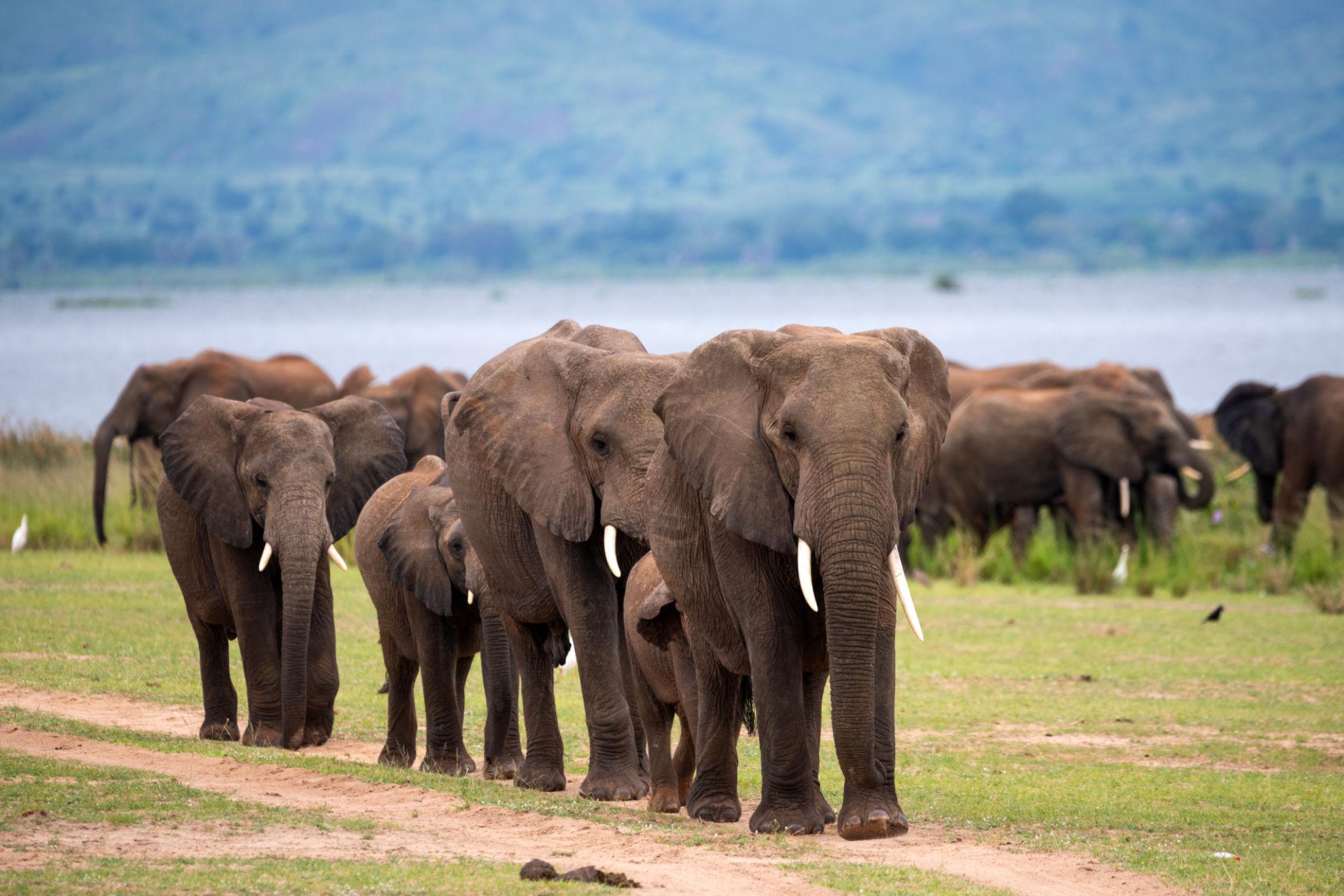
African Elephant – Uganda’s Gentle Giant
The African elephant is the largest land mammal on Earth and one of the most impressive animals encountered during a Uganda Big Five Safari. Standing over three metres tall and weighing several tonnes, elephants combine extraordinary strength with remarkable intelligence and complex social behavior.
Uganda supports thriving elephant populations in Murchison Falls National Park, Queen Elizabeth National Park, and Kidepo Valley National Park. Visitors frequently observe large family herds moving gracefully across open plains, drinking from rivers, or feeding beneath acacia trees.
Elephants live in close-knit matriarchal families led by an experienced female who guides the herd to food, water, and safe resting areas. Younger elephants learn survival skills by observing older family members, creating strong social bonds that may last for decades.
Using their versatile trunks, elephants drink water, gather vegetation, communicate through touch, and even greet one another. Their enormous ears help regulate body temperature while also allowing them to detect distant sounds across the savannah.
A mature elephant consumes hundreds of pounds of vegetation every day, playing an important ecological role by opening forest clearings, dispersing seeds, and creating habitats that benefit countless other species.
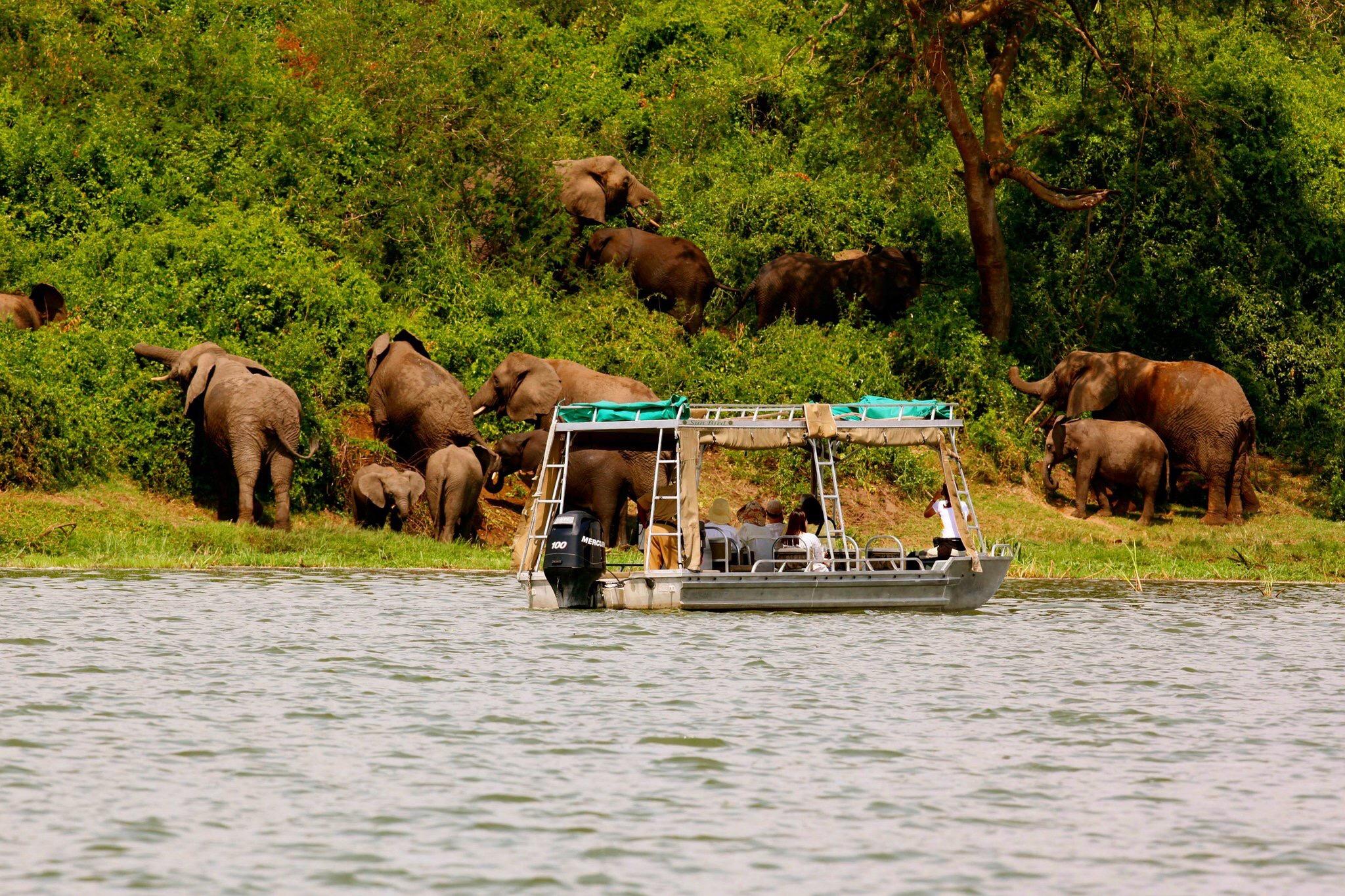
Boat cruises along the Victoria Nile and Kazinga Channel often provide spectacular close-up views of elephants drinking, bathing, and crossing riverbanks. These water-based perspectives allow photographers to capture unique images rarely possible during ordinary game drives.
Despite their immense size, elephants are generally peaceful animals when treated respectfully. Visitors should always follow the instructions of their guide, particularly when observing mothers with young calves, as protective females may become defensive if they perceive any threat.
Cape Buffalo – Africa’s Most Unpredictable Herbivore
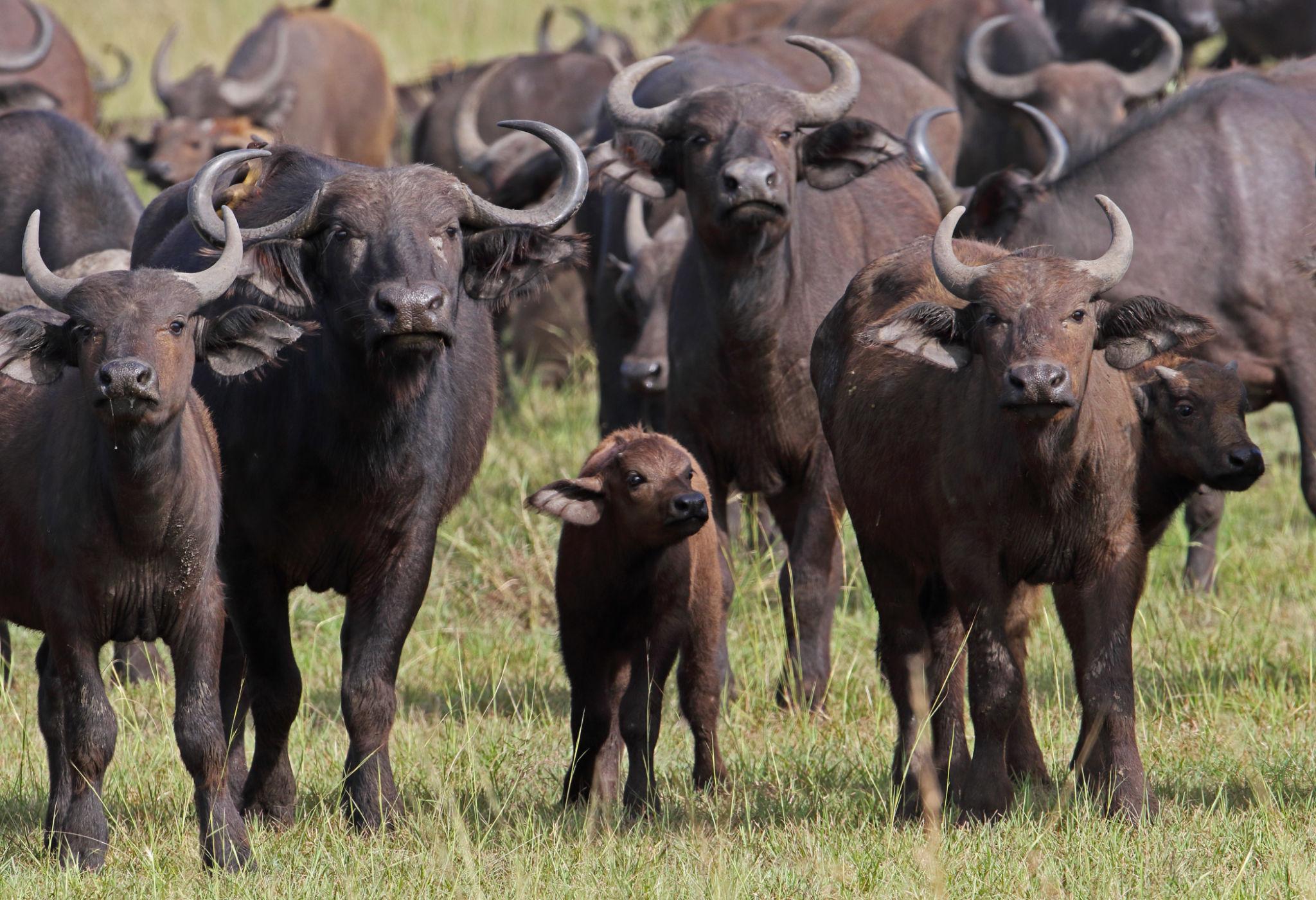
The Cape buffalo is often underestimated by first-time safari visitors, yet wildlife experts regard it as one of Africa’s most formidable animals. Strong, resilient, and highly protective, buffaloes have earned a reputation for their unpredictable nature and impressive ability to defend themselves against predators.
Large buffalo herds are commonly seen throughout Murchison Falls National Park and Queen Elizabeth National Park, where they graze across floodplains, wetlands, and open grasslands. Some herds contain several hundred individuals moving together in remarkable coordination.
Buffaloes rely on teamwork for survival. When threatened by lions, herd members frequently form defensive circles around vulnerable calves while adults confront predators using their powerful horns and sheer determination. There are numerous documented cases of buffaloes successfully driving lions away or rescuing injured members of the herd.
Male buffaloes often develop massive horn bases known as “bosses,” which provide additional protection during territorial battles. Older bulls may leave breeding herds and live either alone or in small bachelor groups.
Because buffaloes spend much of the day grazing, visitors enjoy frequent opportunities to observe their natural behavior during game drives and boat safaris. Their close association with water means they are particularly common near rivers, swamps, and seasonal wetlands.
Although herbivores, buffaloes deserve respect. Their strength, speed, and unpredictable responses make them one of Africa’s most respected members of the Big Five.
Rhinoceros – Uganda’s Conservation Success Story
No Uganda Big Five Safari is complete without seeing the rhinoceros. Today, the only place to observe wild rhinos in Uganda is Ziwa Rhino Sanctuary, located along the route to Murchison Falls National Park. The sanctuary has become one of East Africa’s greatest conservation success stories, restoring a species that was once completely lost from Uganda’s national parks.
Visitors explore the sanctuary on foot in the company of trained armed rangers and experienced guides. Walking quietly through the bush while tracking rhinos creates a completely different safari experience from traditional vehicle-based game drives. As fresh footprints, feeding signs, and ranger knowledge gradually lead visitors closer, the anticipation builds until the enormous animals finally come into view.
The southern white rhinoceros is an impressive herbivore capable of weighing more than two tonnes. Despite its size, it usually remains calm while feeding on grasses, allowing visitors to observe it safely from carefully controlled distances under ranger supervision.
Rhinos possess excellent hearing and an extraordinary sense of smell, although their eyesight is relatively poor. Rangers carefully monitor every tracking excursion to ensure both visitor safety and minimal disturbance to the animals.
The reintroduction of rhinos represents an important milestone for wildlife conservation in Uganda. Every visitor to Ziwa Rhino Sanctuary directly supports breeding programs, veterinary care, anti-poaching operations, habitat management, and future plans to return rhinos to Uganda’s national parks.
For many travelers, rhino tracking becomes one of the most emotional experiences of the entire Uganda Big Five Safari because it demonstrates how responsible conservation, local community support, and sustainable tourism can successfully restore endangered wildlife.
Why Seeing the Big Five in Uganda Is So Special
Encountering all five members of the Big Five during a single journey is a remarkable achievement, but the experience becomes even more rewarding in Uganda because of the country’s extraordinary diversity. Few destinations allow travelers to watch lions hunting across open plains in the morning, cruise alongside elephants and buffaloes in the afternoon, track rhinos on foot the following day, and then continue their adventure with chimpanzee tracking or mountain gorilla trekking in ancient rainforests.
This diversity transforms a Uganda Big Five Safari into far more than a traditional wildlife holiday. It becomes a complete exploration of Africa’s natural wonders, combining iconic mammals, spectacular landscapes, conservation success stories, vibrant cultures, and unforgettable adventures into one life-changing journey. Whether you are visiting Uganda for the first time or returning to discover new destinations, the Big Five remain the unforgettable heart of every safari experience.
Where to See the Big Five in Uganda
One of the greatest strengths of a Uganda Big Five Safari is the diversity of destinations where visitors can enjoy exceptional wildlife viewing. Unlike some African safari countries that rely on one or two flagship reserves, Uganda offers a network of spectacular national parks and protected wildlife areas, each contributing something unique to the overall safari experience. From vast savannahs and river valleys to wetlands and tropical forests, every destination introduces travelers to different landscapes, ecosystems, and wildlife encounters.
To see all five members of the Big Five, visitors typically combine Murchison Falls National Park, Queen Elizabeth National Park, and Ziwa Rhino Sanctuary. However, many travelers extend their safari to include Kidepo Valley National Park, Lake Mburo National Park, and other wildlife reserves that add even more diversity to their adventure.
Whether you are planning a short wildlife holiday or a two-week safari across Uganda, understanding what each destination offers helps you build an itinerary that matches your interests, budget, and available travel time.
Murchison Falls National Park – Uganda’s Premier Big Five Destination
Murchison Falls National Park is the crown jewel of Uganda’s wildlife tourism and one of the country’s most rewarding safari destinations. Covering approximately 3,893 square kilometres, it is Uganda’s largest national park and forms part of the vast Murchison Falls Conservation Area, which also includes Bugungu Wildlife Reserve and Karuma Wildlife Reserve.
The park stretches across northwestern Uganda, where the mighty River Nile divides the northern savannah from the southern forests before forcing its entire volume through a narrow seven-metre gorge to create the world-famous Murchison Falls. This dramatic combination of powerful waterfalls, open plains, riverine forests, and wetlands creates ideal habitats for an extraordinary variety of wildlife.
For anyone planning a Uganda Big Five Safari, Murchison Falls National Park is an essential destination. It offers outstanding opportunities to see four members of the Big Five—lions, leopards, elephants, and Cape buffaloes—while rhino tracking at nearby Ziwa Rhino Sanctuary completes the full collection.
The northern sector of the park is particularly renowned for its wildlife-rich game drive circuits. Early morning safaris often reveal lions resting after nighttime hunts, elephants feeding among acacia trees, giraffes crossing the open plains, buffaloes grazing in large herds, and leopards quietly moving through woodland habitats before the day’s heat arrives.
Besides the Big Five, visitors regularly encounter Rothschild’s giraffes, Uganda kobs, Jackson’s hartebeests, waterbucks, bushbucks, warthogs, hyenas, oribis, patas monkeys, olive baboons, vervet monkeys, and countless bird species.
One of the park’s signature experiences is the Victoria Nile boat cruise. As the boat slowly travels upstream toward the base of Murchison Falls, passengers enjoy spectacular close-up views of elephants drinking along the riverbanks, buffaloes cooling themselves in muddy shallows, enormous pods of hippos, giant Nile crocodiles basking on sandbanks, and an incredible variety of water birds.
The famous hike to the Top of the Falls provides another unforgettable experience. Here visitors witness the Nile compressing through an incredibly narrow rock passage before crashing over forty metres below with thunderous force. The viewpoint offers some of Uganda’s most iconic photography opportunities and showcases the immense power of Africa’s longest river.
Birdwatchers are equally rewarded. Murchison Falls National Park supports more than 450 recorded bird species, including the rare shoebill, African fish eagle, Goliath heron, Abyssinian ground hornbill, saddle-billed stork, secretary bird, bee-eaters, kingfishers, and numerous raptors.
Murchison Falls is ideal for first-time safari visitors because it combines excellent wildlife densities, dramatic scenery, outstanding accommodation choices, and a wide variety of safari activities within one destination.

Queen Elizabeth National Park – Home of Uganda’s Famous Tree-Climbing Lions
Queen Elizabeth National Park is Uganda’s most visited national park and one of East Africa’s most biologically diverse protected areas. Covering nearly 2,000 square kilometres, the park lies beneath the magnificent Rwenzori Mountains and encompasses volcanic crater lakes, open grasslands, wetlands, tropical forests, and the wildlife-rich Kazinga Channel.
The park plays a vital role in every Uganda Big Five Safari because it provides exceptional opportunities to observe lions, leopards, elephants, and buffaloes while introducing visitors to one of Africa’s most unique predator populations.
The Ishasha Sector, located in the southern part of the park, is internationally famous for its tree-climbing lions. Unlike most African lions that remain on the ground, Ishasha’s lions frequently climb enormous fig trees where they rest during the hottest hours of the day. Scientists believe this unusual behaviour helps them escape biting insects, avoid excessive ground heat, and monitor prey movements across the surrounding plains.
Seeing several adult lions comfortably resting high above the ground is one of Uganda’s most iconic safari experiences and often becomes the highlight of an entire Uganda Big Five Safari.
The Mweya Peninsula offers another outstanding wildlife viewing area. Here, game drives regularly produce sightings of elephants, buffaloes, Uganda kobs, waterbucks, giant forest hogs, hyenas, and occasionally leopards hidden within acacia woodlands.
The Kazinga Channel boat safari is regarded as one of Africa’s finest wildlife cruises. Stretching approximately thirty-two kilometres between Lake Edward and Lake George, the channel supports one of the highest concentrations of hippos anywhere on the continent. Buffaloes gather in large numbers along the shoreline, elephants frequently arrive to drink, crocodiles bask in the sun, while hundreds of bird species thrive in the surrounding wetlands.
Chimpanzee enthusiasts can also visit nearby Kyambura Gorge, where guided treks provide opportunities to search for one of Uganda’s habituated chimpanzee communities. This allows visitors to combine classic Big Five wildlife viewing with unforgettable primate encounters during the same safari.
With more than 600 bird species, Queen Elizabeth National Park is also one of Africa’s premier birdwatching destinations, attracting ornithologists and wildlife photographers throughout the year.
 Ziwa Rhino Sanctuary – Completing Uganda’s Big Five
 Ziwa Rhino Sanctuary – Completing Uganda’s Big Five
Located approximately three hours from Kampala on the route to Murchison Falls National Park, Ziwa Rhino Sanctuary is the only place where visitors can observe wild rhinos in Uganda.
Established in 2005, the sanctuary was created to restore southern white rhinos after decades of extinction within Uganda’s national parks. Through dedicated conservation efforts, careful breeding programmes, and continuous anti-poaching protection, the rhino population has steadily increased, making Ziwa one of East Africa’s leading wildlife conservation success stories.
Every Uganda Big Five Safari should include a visit to Ziwa Rhino Sanctuary because it provides the final member of the legendary Big Five.
Unlike traditional game drives, rhino tracking is conducted entirely on foot under the supervision of experienced armed rangers. Small groups quietly follow fresh footprints and feeding signs until the rhinos are located grazing peacefully across the sanctuary’s open grasslands.
Walking within safe viewing distances of these enormous animals creates an intimate wildlife experience that differs greatly from vehicle-based safaris. Visitors often spend considerable time observing rhino behaviour while learning about conservation challenges, breeding programmes, veterinary care, habitat management, and anti-poaching initiatives.
The sanctuary is also home to numerous other wildlife species including Uganda kobs, bushbucks, waterbucks, reedbucks, oribis, monkeys, crocodiles, and over 300 bird species, making it worthwhile beyond rhino tracking alone.
Many safari itineraries begin with rhino tracking at Ziwa before continuing north to Murchison Falls National Park, creating a seamless route that allows visitors to complete the Big Five within a single safari.

Kidepo Valley National Park – Uganda’s Untouched Wilderness
Although rhinos are not currently found in Kidepo Valley National Park, it remains one of Africa’s most spectacular wilderness destinations and an excellent extension to a Uganda Big Five Safari.
Situated in Uganda’s remote northeastern corner, Kidepo offers dramatic mountain scenery, vast golden plains, seasonal rivers, and remarkably low visitor numbers. Many experienced safari travelers consider it one of Africa’s last truly wild safari destinations.
The park supports healthy populations of lions, elephants, buffaloes, and leopards, together with wildlife rarely seen elsewhere in Uganda, including cheetahs, bat-eared foxes, striped hyenas, ostriches, caracals, and large herds of elands.
Game drives through the Narus Valley consistently produce excellent wildlife sightings throughout the year because permanent water sources attract animals even during the dry season.
For travelers seeking exclusive safari experiences away from busy tourist routes, Kidepo offers unmatched tranquillity and extraordinary photographic opportunities.

Lake Mburo National Park – Perfect for Safari Extensions
Lake Mburo National Park is Uganda’s smallest savannah national park, yet it offers a completely different safari experience that complements larger wildlife destinations.
Located between Kampala and western Uganda, the park is easily incorporated into longer Uganda Big Five Safari itineraries.
Although lions and elephants are absent, Lake Mburo supports large populations of zebras, giraffes, buffaloes, impalas, elands, topis, waterbucks, bushbucks, hippos, crocodiles, and numerous bird species.
One of the park’s greatest attractions is its wide range of activities. Visitors can enjoy guided walking safaris, horseback safaris, mountain biking, boat cruises, and traditional game drives, allowing them to experience wildlife from perspectives unavailable in most African parks.
Lake Mburo is particularly popular as a final overnight stop when returning to Entebbe after exploring Bwindi Impenetrable National Park or Queen Elizabeth National Park.
Pian Upe Wildlife Reserve – Uganda’s Hidden Safari Gem
For adventurous travelers looking to explore beyond Uganda’s traditional safari circuit, Pian Upe Wildlife Reserve offers an exciting wilderness experience.
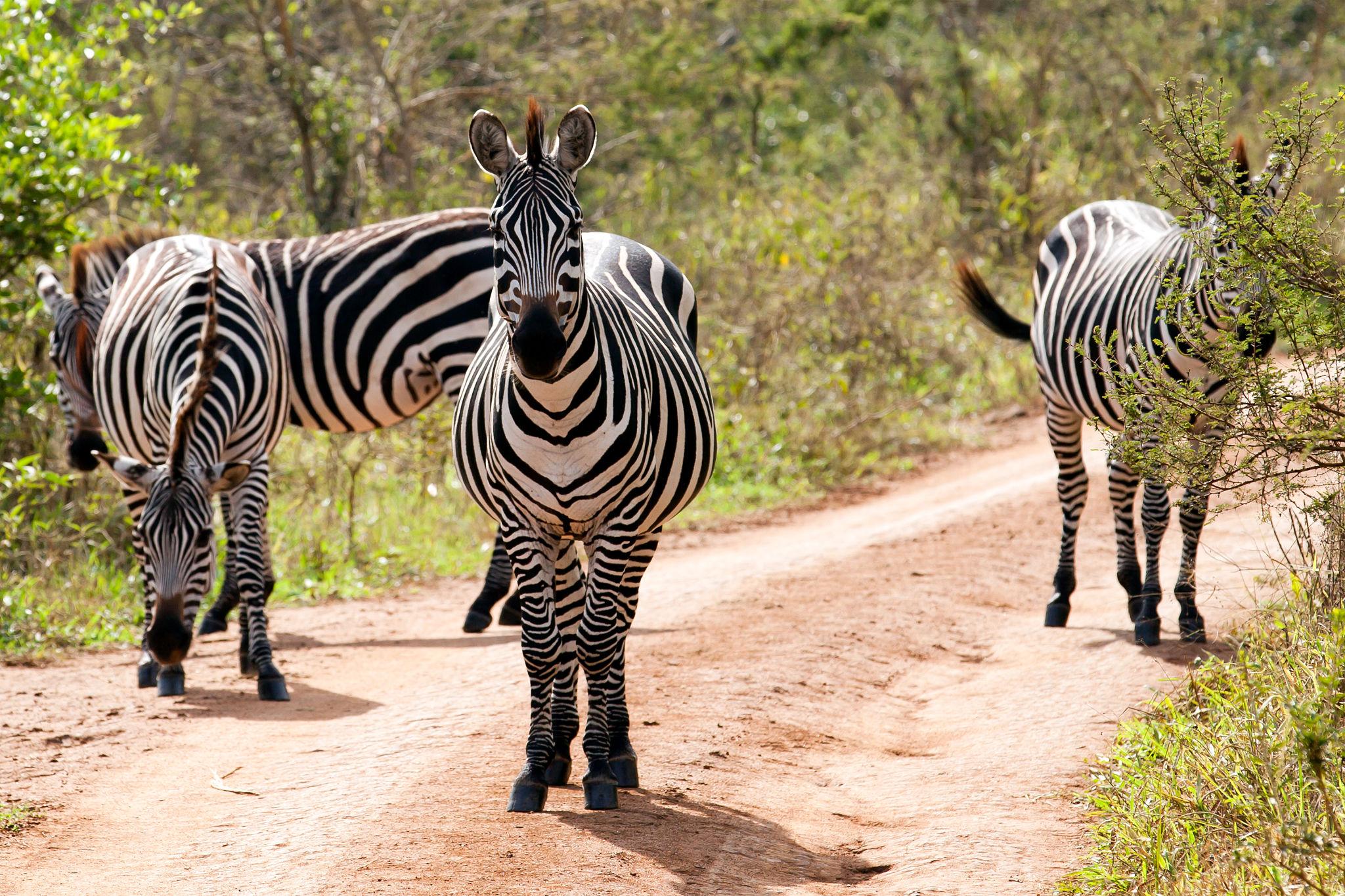
As Uganda’s second-largest protected area, Pian Upe supports cheetahs, buffaloes, giraffes, zebras, roan antelopes, elands, ostriches, hyenas, and numerous bird species across expansive open plains.
The reserve remains relatively undiscovered, making it ideal for travelers seeking peaceful wildlife viewing with very few other visitors.
Although not always included in standard Uganda Big Five Safari itineraries, Pian Upe pairs exceptionally well with Kidepo Valley National Park for those wishing to explore Uganda’s remote northeastern wilderness.

Which Parks Should You Visit for the Complete Big Five?
To experience the complete Uganda Big Five Safari, most visitors combine three key destinations:
Travelers with additional time can enrich their Uganda Big Five Safari by visiting Kidepo Valley National Park for remote wilderness adventures or Lake Mburo National Park for walking safaris, horseback riding, and exceptional scenery. Together, these destinations showcase the incredible diversity that has earned Uganda its reputation as one of Africa’s most rewarding wildlife safari destinations.
Whether your safari lasts four days or two weeks, choosing the right combination of parks ensures unforgettable encounters with Africa’s legendary Big Five while introducing you to countless other wildlife species, spectacular landscapes, and authentic Ugandan hospitality.
Where to See the Big Five in Uganda
One of the greatest strengths of a Uganda Big Five Safari is the diversity of destinations where visitors can enjoy exceptional wildlife viewing. Unlike some African safari countries that rely on one or two flagship reserves, Uganda offers a network of spectacular national parks and protected wildlife areas, each contributing something unique to the overall safari experience. From vast savannahs and river valleys to wetlands and tropical forests, every destination introduces travelers to different landscapes, ecosystems, and wildlife encounters.
To see all five members of the Big Five, visitors typically combine Murchison Falls National Park, Queen Elizabeth National Park, and Ziwa Rhino Sanctuary. However, many travelers extend their safari to include Kidepo Valley National Park, Lake Mburo National Park, and other wildlife reserves that add even more diversity to their adventure.
Whether you are planning a short wildlife holiday or a two-week safari across Uganda, understanding what each destination offers helps you build an itinerary that matches your interests, budget, and available travel time.
Murchison Falls National Park – Uganda’s Premier Big Five Destination
Murchison Falls National Park is the crown jewel of Uganda’s wildlife tourism and one of the country’s most rewarding safari destinations. Covering approximately 3,893 square kilometres, it is Uganda’s largest national park and forms part of the vast Murchison Falls Conservation Area, which also includes Bugungu Wildlife Reserve and Karuma Wildlife Reserve.
The park stretches across northwestern Uganda, where the mighty River Nile divides the northern savannah from the southern forests before forcing its entire volume through a narrow seven-metre gorge to create the world-famous Murchison Falls. This dramatic combination of powerful waterfalls, open plains, riverine forests, and wetlands creates ideal habitats for an extraordinary variety of wildlife.
For anyone planning a Uganda Big Five Safari, Murchison Falls National Park is an essential destination. It offers outstanding opportunities to see four members of the Big Five—lions, leopards, elephants, and Cape buffaloes—while rhino tracking at nearby Ziwa Rhino Sanctuary completes the full collection.
The northern sector of the park is particularly renowned for its wildlife-rich game drive circuits. Early morning safaris often reveal lions resting after nighttime hunts, elephants feeding among acacia trees, giraffes crossing the open plains, buffaloes grazing in large herds, and leopards quietly moving through woodland habitats before the day’s heat arrives.
Besides the Big Five, visitors regularly encounter Rothschild’s giraffes, Uganda kobs, Jackson’s hartebeests, waterbucks, bushbucks, warthogs, hyenas, oribis, patas monkeys, olive baboons, vervet monkeys, and countless bird species.
One of the park’s signature experiences is the Victoria Nile boat cruise. As the boat slowly travels upstream toward the base of Murchison Falls, passengers enjoy spectacular close-up views of elephants drinking along the riverbanks, buffaloes cooling themselves in muddy shallows, enormous pods of hippos, giant Nile crocodiles basking on sandbanks, and an incredible variety of water birds.
The famous hike to the Top of the Falls provides another unforgettable experience. Here visitors witness the Nile compressing through an incredibly narrow rock passage before crashing over forty metres below with thunderous force. The viewpoint offers some of Uganda’s most iconic photography opportunities and showcases the immense power of Africa’s longest river.
Birdwatchers are equally rewarded. Murchison Falls National Park supports more than 450 recorded bird species, including the rare shoebill, African fish eagle, Goliath heron, Abyssinian ground hornbill, saddle-billed stork, secretary bird, bee-eaters, kingfishers, and numerous raptors.
Murchison Falls is ideal for first-time safari visitors because it combines excellent wildlife densities, dramatic scenery, outstanding accommodation choices, and a wide variety of safari activities within one destination.
Queen Elizabeth National Park – Home of Uganda’s Famous Tree-Climbing Lions
Queen Elizabeth National Park is Uganda’s most visited national park and one of East Africa’s most biologically diverse protected areas. Covering nearly 2,000 square kilometres, the park lies beneath the magnificent Rwenzori Mountains and encompasses volcanic crater lakes, open grasslands, wetlands, tropical forests, and the wildlife-rich Kazinga Channel.
The park plays a vital role in every Uganda Big Five Safari because it provides exceptional opportunities to observe lions, leopards, elephants, and buffaloes while introducing visitors to one of Africa’s most unique predator populations.
The Ishasha Sector, located in the southern part of the park, is internationally famous for its tree-climbing lions. Unlike most African lions that remain on the ground, Ishasha’s lions frequently climb enormous fig trees where they rest during the hottest hours of the day. Scientists believe this unusual behaviour helps them escape biting insects, avoid excessive ground heat, and monitor prey movements across the surrounding plains.
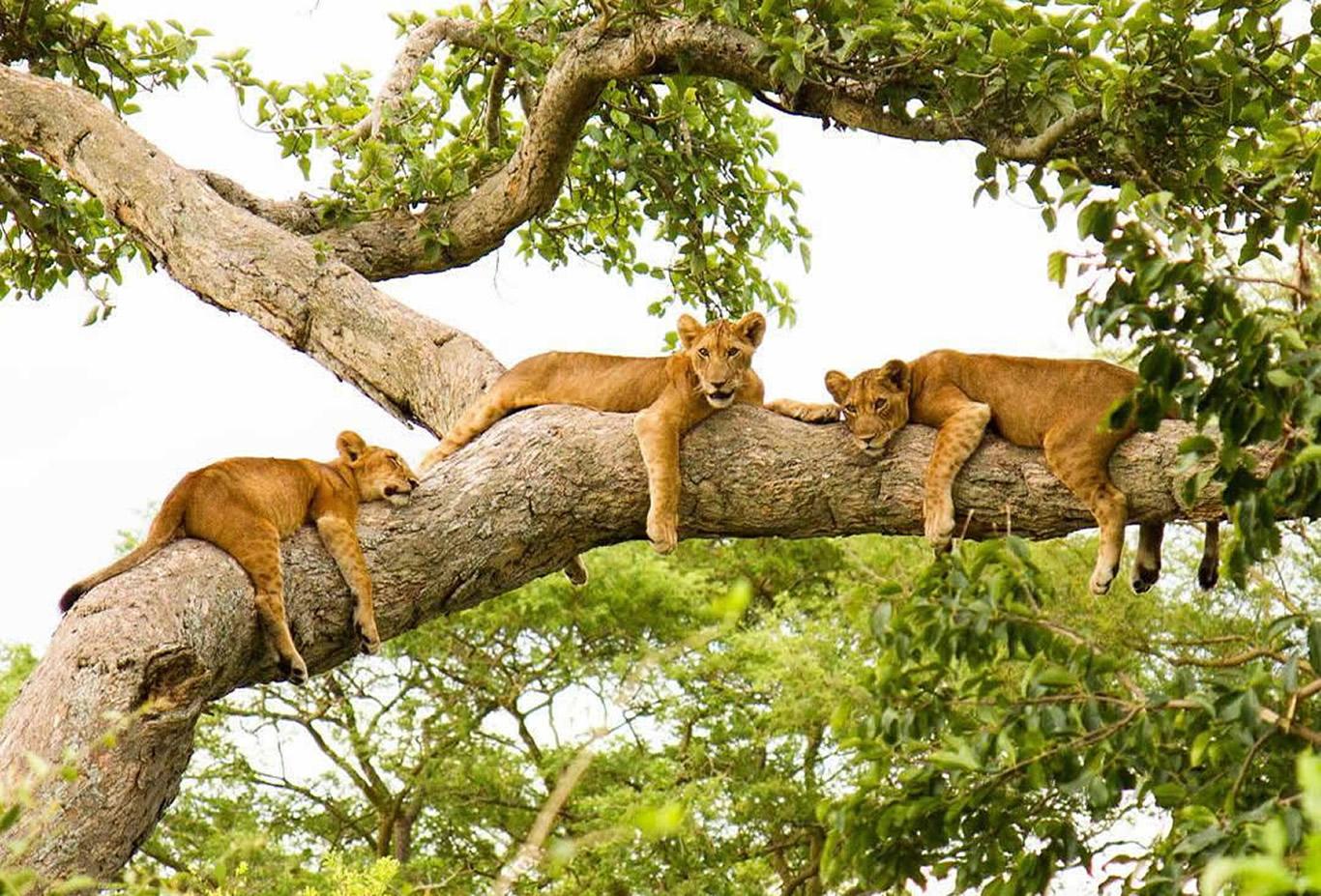 Seeing several adult lions comfortably resting high above the ground is one of Uganda’s most iconic safari experiences and often becomes the highlight of an entire Uganda Big Five Safari.
The Mweya Peninsula offers another outstanding wildlife viewing area. Here, game drives regularly produce sightings of elephants, buffaloes, Uganda kobs, waterbucks, giant forest hogs, hyenas, and occasionally leopards hidden within acacia woodlands.
The Kazinga Channel boat safari is regarded as one of Africa’s finest wildlife cruises. Stretching approximately thirty-two kilometres between Lake Edward and Lake George, the channel supports one of the highest concentrations of hippos anywhere on the continent. Buffaloes gather in large numbers along the shoreline, elephants frequently arrive to drink, crocodiles bask in the sun, while hundreds of bird species thrive in the surrounding wetlands.
Chimpanzee enthusiasts can also visit nearby Kyambura Gorge, where guided treks provide opportunities to search for one of Uganda’s habituated chimpanzee communities. This allows visitors to combine classic Big Five wildlife viewing with unforgettable primate encounters during the same safari.
With more than 600 bird species, Queen Elizabeth National Park is also one of Africa’s premier birdwatching destinations, attracting ornithologists and wildlife photographers throughout the year.
Ziwa Rhino Sanctuary – Completing Uganda’s Big Five
Located approximately three hours from Kampala on the route to Murchison Falls National Park, Ziwa Rhino Sanctuary is the only place where visitors can observe wild rhinos in Uganda.
Established in 2005, the sanctuary was created to restore southern white rhinos after decades of extinction within Uganda’s national parks. Through dedicated conservation efforts, careful breeding programmes, and continuous anti-poaching protection, the rhino population has steadily increased, making Ziwa one of East Africa’s leading wildlife conservation success stories.
Every Uganda Big Five Safari should include a visit to Ziwa Rhino Sanctuary because it provides the final member of the legendary Big Five.
Unlike traditional game drives, rhino tracking is conducted entirely on foot under the supervision of experienced armed rangers. Small groups quietly follow fresh footprints and feeding signs until the rhinos are located grazing peacefully across the sanctuary’s open grasslands.
Walking within safe viewing distances of these enormous animals creates an intimate wildlife experience that differs greatly from vehicle-based safaris. Visitors often spend considerable time observing rhino behaviour while learning about conservation challenges, breeding programmes, veterinary care, habitat management, and anti-poaching initiatives.
The sanctuary is also home to numerous other wildlife species including Uganda kobs, bushbucks, waterbucks, reedbucks, oribis, monkeys, crocodiles, and over 300 bird species, making it worthwhile beyond rhino tracking alone.
Many safari itineraries begin with rhino tracking at Ziwa before continuing north to Murchison Falls National Park, creating a seamless route that allows visitors to complete the Big Five within a single safari.
Kidepo Valley National Park – Uganda’s Untouched Wilderness
Although rhinos are not currently found in Kidepo Valley National Park, it remains one of Africa’s most spectacular wilderness destinations and an excellent extension to a Uganda Big Five Safari.
Situated in Uganda’s remote northeastern corner, Kidepo offers dramatic mountain scenery, vast golden plains, seasonal rivers, and remarkably low visitor numbers. Many experienced safari travelers consider it one of Africa’s last truly wild safari destinations.
The park supports healthy populations of lions, elephants, buffaloes, and leopards together with wildlife rarely seen elsewhere in Uganda, including cheetahs, bat-eared foxes, striped hyenas, ostriches, caracals, and large herds of elands.
Game drives through the Narus Valley consistently produce excellent wildlife sightings throughout the year because permanent water sources attract animals even during the dry season.
For travelers seeking exclusive safari experiences away from busy tourist routes, Kidepo offers unmatched tranquillity and extraordinary photographic opportunities.
Lake Mburo National Park – Perfect for Safari Extensions
Lake Mburo National Park is Uganda’s smallest savannah national park, yet it offers a completely different safari experience that complements larger wildlife destinations.
Located between Kampala and western Uganda, the park is easily incorporated into longer Uganda Big Five Safari itineraries.
Although lions and elephants are absent, Lake Mburo supports large populations of zebras, giraffes, buffaloes, impalas, elands, topis, waterbucks, bushbucks, hippos, crocodiles, and numerous bird species.
One of the park’s greatest attractions is its wide range of activities. Visitors can enjoy guided walking safaris, horseback safaris, mountain biking, boat cruises, and traditional game drives, allowing them to experience wildlife from perspectives unavailable in most African parks.
Lake Mburo is particularly popular as a final overnight stop when returning to Entebbe after exploring Bwindi Impenetrable National Park or Queen Elizabeth National Park.
Pian Upe Wildlife Reserve – Uganda’s Hidden Safari Gem
For adventurous travelers looking to explore beyond Uganda’s traditional safari circuit, Pian Upe Wildlife Reserve offers an exciting wilderness experience.
As Uganda’s second-largest protected area, Pian Upe supports cheetahs, buffaloes, giraffes, zebras, roan antelopes, elands, ostriches, hyenas, and numerous bird species across expansive open plains.
The reserve remains relatively undiscovered, making it ideal for travelers seeking peaceful wildlife viewing with very few other visitors.
Although not always included in standard Uganda Big Five Safari itineraries, Pian Upe pairs exceptionally well with Kidepo Valley National Park for those wishing to explore Uganda’s remote northeastern wilderness.
Which Parks Should You Visit for the Complete Big Five?
To experience the complete Uganda Big Five Safari, most visitors combine three key destinations:
Travelers with additional time can enrich their Uganda Big Five Safari by visiting Kidepo Valley National Park for remote wilderness adventures or Lake Mburo National Park for walking safaris, horseback riding, and exceptional scenery. Together, these destinations showcase the incredible diversity that has earned Uganda its reputation as one of Africa’s most rewarding wildlife safari destinations.
Whether your safari lasts four days or two weeks, choosing the right combination of parks ensures unforgettable encounters with Africa’s legendary Big Five while introducing you to countless other wildlife species, spectacular landscapes, and authentic Ugandan hospitality.
Best Time for a Uganda Big Five Safari
One of the most common questions travelers ask before planning a Uganda Big Five Safari is, “When is the best time to visit Uganda?” The good news is that Uganda is a year-round safari destination. Thanks to its equatorial location and varied altitude, the country enjoys a relatively stable climate throughout the year, making wildlife viewing possible in every season.
However, different months offer different advantages. Some periods provide easier wildlife viewing because vegetation is shorter and animals gather around permanent water sources, while others reward visitors with lush green landscapes, excellent birdwatching, fewer tourists, and more attractive accommodation rates.
Understanding Uganda’s seasons will help you choose the best time for your Uganda Big Five Safari based on your interests, whether your priority is seeing predators, photographing wildlife, enjoying pleasant weather, avoiding crowds, or combining your safari with gorilla trekking and chimpanzee tracking.
Uganda’s Climate
Uganda experiences a tropical climate that is moderated by altitude. Unlike many African countries with extreme temperatures, Uganda generally enjoys comfortable weather throughout the year.
Average daytime temperatures in most safari destinations range between 23°C and 30°C, while evenings and early mornings can be much cooler, especially in highland areas.
Rainfall varies depending on the region, but most safari parks remain accessible throughout the year. Wildlife does not migrate out of Uganda’s national parks, meaning visitors have opportunities to see the Big Five regardless of the season.
The year is generally divided into two dry seasons and two rainy seasons.
Dry Season (December to February)
The first dry season, running from December through February, is widely regarded as one of the best times for a Uganda Big Five Safari.
During these months, rainfall is minimal across most of the country. Roads remain dry, game drive tracks are easily accessible, and vegetation becomes less dense, allowing visitors to spot wildlife more easily.
Animals also spend more time near rivers, waterholes, and wetlands, making them easier to locate during morning and afternoon game drives.
This period is particularly rewarding for visitors hoping to observe:
- Lions hunting on open plains
- Large elephant herds
- Buffalo congregations
- Leopards resting in trees
- Hippos gathering in rivers
- Nile crocodiles basking on riverbanks
The dry weather also creates excellent photography conditions, with clear skies, warm golden light, and minimal rain interruptions.
Because this coincides with holiday travel in Europe and North America, accommodation and gorilla permits are often in high demand. Booking several months in advance is highly recommended.
Long Dry Season (June to September)
The longest and most popular safari season occurs between June and September.
Many wildlife experts consider this the absolute best period for a Uganda Big Five Safari because game viewing conditions reach their peak.
Grass becomes shorter, animals concentrate around permanent water sources, and road conditions remain excellent throughout Uganda’s major national parks.
Game drives during these months frequently produce outstanding sightings of:
- Lions
- Leopards
- Elephants
- Buffaloes
- Giraffes
- Hyenas
- Uganda kobs
- Warthogs
- Waterbucks
Boat safaris along the Victoria Nile and Kazinga Channel are equally spectacular as wildlife gathers along the riverbanks to drink and cool off.
The dry season also offers easier hiking conditions for visitors combining their Uganda Big Five Safari with mountain gorilla trekking or chimpanzee tracking.
Because this is Uganda’s busiest tourism season, luxury lodges often become fully booked several months ahead. Early reservations help secure preferred accommodation and travel dates.
Rainy Season (March to May)
Although many travelers mistakenly avoid Uganda during the rainy season, March to May can be an excellent time for a Uganda Big Five Safari.
Rainfall transforms Uganda’s landscapes into vibrant green wilderness, creating spectacular scenery for photographers and nature lovers.
Many animals remain active throughout the day because temperatures are cooler, while migratory birds arrive from Europe and Asia, dramatically increasing bird diversity.
Advantages of traveling during this season include:
- Beautiful green landscapes
- Fewer tourists
- Lower accommodation prices
- Quiet game drives
- Excellent birdwatching
- Dramatic photography opportunities
- More flexible safari bookings
Although occasional showers occur, they rarely last all day. Many mornings begin with clear skies before afternoon rainfall refreshes the landscape.
Experienced driver-guides adjust daily activities according to weather conditions to maximize wildlife viewing opportunities.
Short Rainy Season (October to November)
The second rainy season generally falls between October and November.
These months share many of the advantages found during the longer rainy season.
Wildlife remains abundant throughout Uganda’s parks, while landscapes become especially attractive for photographers.
The reduced number of visitors means game drives feel more private, allowing travelers to spend longer observing wildlife without competing with other safari vehicles.
This season is particularly appealing for repeat visitors who prefer quieter parks and more relaxed travel experiences.
Month-by-Month Uganda Big Five Safari Guide
| Month | Travel Conditions | Wildlife Viewing | Recommendation |
|---|---|---|---|
| January | Dry and sunny | Excellent | Highly recommended |
| February | Dry season | Excellent | Highly recommended |
| March | Beginning of rains | Very good | Excellent value |
| April | Rainy season | Good | Best for fewer crowds |
| May | Rain easing | Very good | Great photography |
| June | Dry season | Excellent | Peak safari season |
| July | Dry season | Excellent | Peak safari season |
| August | Dry season | Excellent | Peak safari season |
| September | Mostly dry | Excellent | Highly recommended |
| October | Short rains | Very good | Excellent value |
| November | Rainy season | Good | Quiet parks |
| December | Dry season begins | Excellent | Holiday travel season |
Best Time to See Each Member of the Big Five
Although the Big Five can be seen throughout the year, certain seasons improve the chances of exceptional sightings.
Lions are generally easier to locate during the dry seasons when prey animals gather around water sources. Early morning game drives in Murchison Falls National Park and Queen Elizabeth National Park often produce memorable predator sightings.
Leopards remain elusive throughout the year, but thinner vegetation during the dry months makes them slightly easier to spot. Experienced guides usually search wooded areas and riverine forests during dawn and dusk when leopards are most active.
Elephants can be seen in every season, although large family groups frequently gather near rivers and wetlands during dry weather. Boat cruises provide outstanding opportunities to photograph elephants drinking, bathing, and crossing riverbanks.
Cape buffaloes are abundant year-round and are commonly observed grazing across floodplains and open grasslands. Herds often become especially concentrated near permanent water sources during prolonged dry conditions.
Rhinos at Ziwa Rhino Sanctuary can be tracked successfully throughout the year because experienced rangers monitor their daily movements. Morning tracking excursions generally provide the most comfortable temperatures and excellent viewing conditions.
Best Time for Photography
Photographers often consider the dry seasons between December and February and June to September the ideal months for a Uganda Big Five Safari.
The combination of golden sunlight, clear skies, shorter grass, and reliable road access creates perfect conditions for wildlife photography.
Early morning light produces warm colors and soft shadows that beautifully illuminate lions, elephants, buffaloes, and other wildlife.
Late afternoon game drives provide equally dramatic lighting as the sun gradually sets across Uganda’s spectacular savannah landscapes.
Rainy seasons also have their own photographic advantages. Fresh green vegetation, dramatic storm clouds, reflections in wetlands, and newborn animals create unique opportunities that are unavailable during drier months.
Best Time for Birdwatching
Uganda is internationally recognised as one of Africa’s finest birdwatching destinations, with more than 1,000 recorded bird species.
While birdwatching is excellent throughout the year, November through April is particularly rewarding because migratory birds from Europe and Asia join Uganda’s resident species.
Visitors may encounter:
- Shoebills
- African fish eagles
- Grey crowned cranes
- Saddle-billed storks
- Goliath herons
- Abyssinian ground hornbills
- Kingfishers
- Bee-eaters
- Sunbirds
- Weavers
- Rollers
Many travelers choose to combine birdwatching with a Uganda Big Five Safari, creating an exceptionally diverse wildlife holiday.
Peak Season vs Low Season
Choosing between peak season and low season depends largely on your travel priorities.
Peak season offers the best wildlife visibility, excellent road conditions, and ideal weather, but it also attracts more visitors and requires earlier booking of accommodation and activities.
Low season offers quieter parks, greener landscapes, lower accommodation costs, and a more relaxed safari atmosphere, although occasional rainfall may affect some game drive schedules.
Both periods provide outstanding wildlife experiences because Uganda’s national parks support permanent resident animal populations throughout the year.
So, When Should You Visit?
If your primary goal is maximizing wildlife sightings, comfortable game drives, and ideal photography conditions, June through September and December through February remain the best times for a Uganda Big Five Safari.
If you prefer lush scenery, fewer tourists, excellent birdwatching, and attractive accommodation rates, March through May and October through November provide exceptional value while still delivering rewarding wildlife experiences.
Regardless of the month you choose, Uganda offers extraordinary biodiversity, breathtaking landscapes, and unforgettable encounters with Africa’s legendary Big Five. With expert planning from Safari Vacations and Travel Services, your itinerary can be carefully designed around seasonal wildlife movements, park conditions, and your personal interests to ensure an exceptional safari experience at any time of the year.
Uganda Big Five Safari Activities
A Uganda Big Five Safari is much more than simply driving through national parks in search of wildlife. While game drives remain the heart of every safari, Uganda offers an impressive variety of activities that allow visitors to experience the country’s wildlife, landscapes, cultures, and conservation efforts from many different perspectives. Whether you dream of watching lions at sunrise, cruising alongside elephants on the River Nile, tracking rhinos on foot, or enjoying a guided walk through the African bush, every activity adds a new dimension to your safari.
One of the reasons Uganda stands out among Africa’s leading safari destinations is the diversity of experiences available within a single itinerary. Visitors can combine traditional wildlife viewing with water-based adventures, guided nature walks, cultural encounters, birdwatching, and even unforgettable primate tracking, creating a safari that is both exciting and deeply immersive.
Safari Vacations and Travel Services carefully designs each Uganda Big Five Safari itinerary to include activities that match your interests, travel style, fitness level, and available time, ensuring every day offers a memorable and rewarding experience.
Game Drives
Game drives are the highlight of every Uganda Big Five Safari and provide the best opportunity to observe the country’s iconic wildlife in their natural habitats. Conducted in specially designed 4×4 safari vehicles, these excursions take visitors deep into Uganda’s national parks, where experienced driver-guides search for the legendary Big Five and countless other animals.
Morning game drives usually begin shortly after sunrise when temperatures are cooler, and wildlife is most active. Lions return from nighttime hunts, leopards move quietly through woodlands before seeking daytime shelter, elephants feed across the plains, and buffaloes begin grazing in large herds. The soft morning light also creates exceptional photography opportunities.
Afternoon game drives offer a completely different experience. As temperatures begin to fall, wildlife gradually becomes active again. Elephants often move toward rivers and waterholes, antelope emerge into open grasslands, and predators begin preparing for another night of hunting.
The most rewarding parks for game drives include:
- Murchison Falls National Park
- Queen Elizabeth National Park
- Kidepo Valley National Park
- Lake Mburo National Park
Every game drive is unique because wildlife moves freely throughout the parks. Even experienced guides never know exactly what the next bend in the road may reveal, making every excursion an exciting adventure.
Boat Safaris
Few safari experiences rival the beauty and tranquility of Uganda’s wildlife boat cruises. Unlike game drives, boat safaris allow visitors to observe wildlife from the water while enjoying spectacular scenery and excellent photographic opportunities.
Victoria Nile Boat Cruise
The Victoria Nile boat cruise in Murchison Falls National Park is considered one of Uganda’s finest safari experiences. The journey follows the Nile upstream toward the base of the powerful Murchison Falls.
Along the way, visitors regularly encounter:
- African elephants
- Cape buffaloes
- Hippos
- Nile crocodiles
- Waterbucks
- Uganda kobs
- Monitor lizards
- African fish eagles
- Kingfishers
- Bee-eaters
- Goliath herons
The cruise concludes beneath the dramatic waterfall, where the Nile explodes through a narrow seven-metre gorge before plunging into the river below.
Kazinga Channel Boat Cruise
The Kazinga Channel connects Lake George and Lake Edward inside Queen Elizabeth National Park and is famous for having one of Africa’s highest concentrations of hippos.
The shoreline attracts enormous numbers of wildlife, including elephants, buffaloes, crocodiles, antelope, and hundreds of bird species. The calm waters provide outstanding opportunities for wildlife photography while offering a completely different perspective from traditional game drives.
Rhino Tracking at Ziwa Rhino Sanctuary
One of the most unforgettable activities included in a Uganda Big Five Safari is rhino tracking at Ziwa Rhino Sanctuary.
Unlike other members of the Big Five, Uganda’s rhinos are observed on foot rather than from safari vehicles. Guided by experienced armed rangers, visitors quietly follow fresh footprints and feeding signs through open grasslands until the rhinos are located.
Standing only a safe distance away from one of Africa’s largest mammals creates an unforgettable wildlife experience while offering valuable insights into rhino behavior and conservation.
Rhino tracking usually lasts between one and three hours depending on the animals’ location and movement.
Every visit directly supports:
- Rhino conservation
- Anti-poaching operations
- Veterinary care
- Habitat management
- Environmental education
- Future rhino reintroduction programmes
For many visitors, this activity becomes one of the emotional highlights of their Uganda Big Five Safari.
Guided Nature Walks
Walking through the African wilderness provides an entirely different safari experience.
Unlike game drives, guided walks encourage visitors to appreciate the smaller details of nature that are often overlooked from a vehicle.
Professional guides explain:
- Animal tracks
- Bird calls
- Medicinal plants
- Insect life
- Reptiles
- Trees
- Ecological relationships
- Traditional uses of plants
Nature walks are available in several destinations including Lake Mburo National Park, Ziwa Rhino Sanctuary, Kidepo Valley National Park, and selected areas of Murchison Falls National Park.
Walking safaris allow visitors to experience the sights, sounds, and scents of the African bush while deepening their understanding of Uganda’s ecosystems.
Night Game Drives
While most safari activities occur during daylight hours, night game drives reveal a completely different side of Uganda’s wildlife.
Using powerful spotlights, experienced guides search for nocturnal animals that remain hidden throughout the day.
Possible sightings include:
- Leopards
- Hyenas
- Civets
- Genets
- Bush babies
- Porcupines
- White-tailed mongooses
- Nightjars
- Owls
Night game drives are particularly rewarding in Lake Mburo National Park and selected private concessions where they are permitted.
Because many predators become active after sunset, these excursions often offer opportunities to observe fascinating hunting behavior rarely seen on daytime safaris.
Birdwatching
Uganda is one of the world’s leading birdwatching destinations, with more than 1,000 recorded bird species.
Whether you are an experienced birder or simply enjoy observing colourful birds during your safari, birdwatching greatly enhances every Uganda Big Five Safari.
Some of Uganda’s most sought-after birds include:
- Shoebill
- Grey crowned crane
- African fish eagle
- Saddle-billed stork
- Abyssinian ground hornbill
- Great blue turaco
- Giant kingfisher
- Malachite kingfisher
- African jacana
- Secretary bird
- Martial eagle
- Woodland kingfisher
Excellent birdwatching locations include:
- Murchison Falls National Park
- Queen Elizabeth National Park
- Lake Mburo National Park
- Mabamba Swamp
- Semuliki National Park
- Kibale National Park
Many photographers choose to combine birdwatching with traditional wildlife safaris for a more complete African experience.
Wildlife Photography
Uganda offers extraordinary opportunities for wildlife photography throughout the year.
The country’s uncrowded parks allow photographers greater flexibility when positioning vehicles and waiting patiently for natural animal behavior.
Popular photography subjects include:
- Tree-climbing lions
- Leopards resting in trees
- Elephant family herds
- Buffaloes crossing rivers
- Rhinos on foot
- Murchison Falls
- Kazinga Channel wildlife
- African sunsets
- Birdlife
- Scenic landscapes
Experienced guides understand lighting conditions, animal behavior, and positioning techniques that help photographers capture exceptional images.
Private photographic safaris can also be arranged for enthusiasts requiring greater flexibility.

Cultural Experiences
A Uganda Big Five Safari becomes even more meaningful when combined with authentic cultural encounters.
Visitors have opportunities to meet local communities, learn about traditional lifestyles, and experience Uganda’s rich cultural heritage.
Popular cultural activities include:
- Traditional dance performances
- Village walks
- Craft markets
- Local food experiences
- Coffee farm visits
- Banana brewing demonstrations
- Storytelling sessions
- Community conservation projects
These experiences allow travelers to understand how local communities coexist with wildlife while supporting sustainable tourism initiatives.
Chimpanzee Tracking
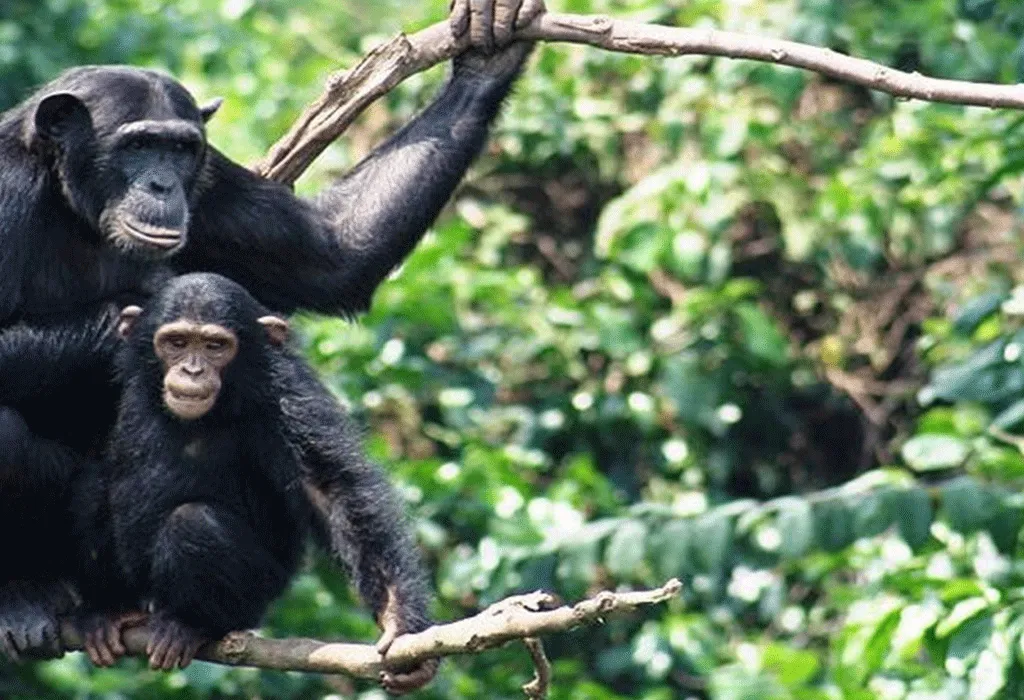
Many travelers extend their Uganda Big Five Safari by visiting Kibale National Park or Kyambura Gorge for chimpanzee tracking.
Following habituated chimpanzees through tropical rainforest creates an exciting contrast to savannah game drives.
Visitors often observe chimpanzees:
- Feeding
- Grooming
- Playing
- Calling across the forest
- Climbing trees
- Caring for young
Chimpanzee tracking transforms a traditional wildlife safari into a broader primate adventure.
Gorilla Trekking
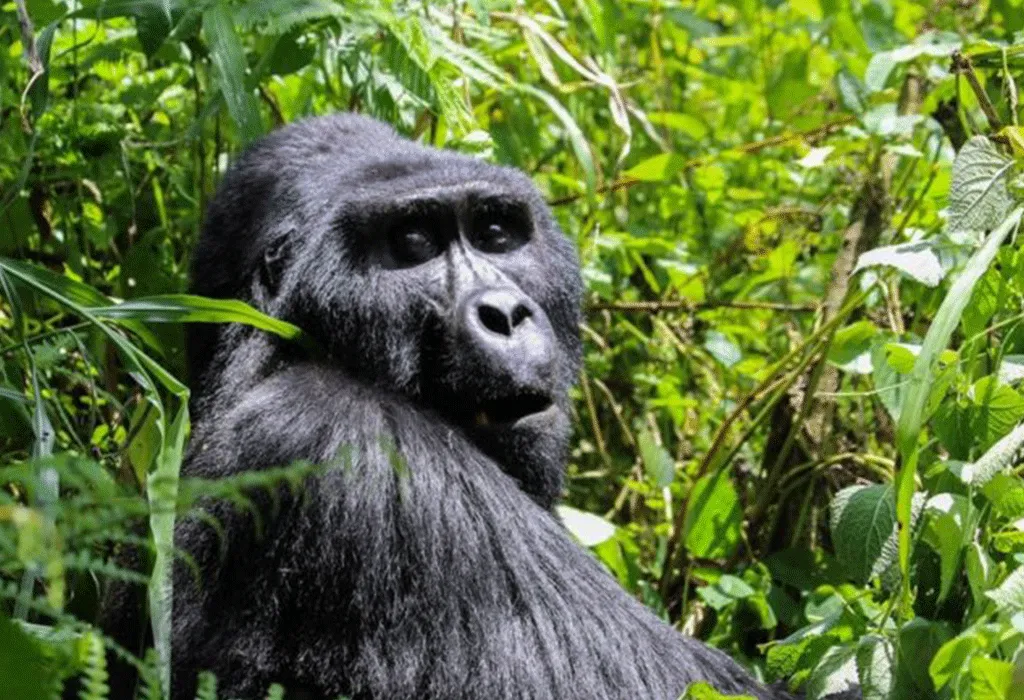
Although technically separate from the Big Five experience, mountain gorilla trekking is one of Uganda’s greatest wildlife attractions.
Many visitors combine their Uganda Big Five Safari with gorilla trekking in Bwindi Impenetrable National Park.
Watching a gorilla family in its natural habitat is often described as one of the world’s most extraordinary wildlife encounters.
Combining the Big Five with gorilla trekking creates one of Africa’s most comprehensive safari experiences and remains the most popular itinerary requested by international visitors.
Hot Air Balloon Safaris
For travelers seeking a unique perspective, hot air balloon safaris offer breathtaking aerial views of Uganda’s wildlife and landscapes.
Currently available in selected safari areas, these sunrise flights provide panoramic views of rivers, grasslands, forests, and wildlife below.
Floating silently above elephants, giraffes, buffaloes, and antelope creates an unforgettable experience before concluding with a traditional bush breakfast.
Hot air balloon safaris are especially popular among honeymoon couples, photographers, and luxury travelers looking to add something extraordinary to their Uganda Big Five Safari.
Why Include Multiple Activities?
The beauty of a Uganda Big Five Safari lies in its incredible variety. Every activity reveals a different side of Uganda’s wildlife and landscapes, ensuring that no two days are ever the same. A morning game drive may lead to a pride of lions preparing for a hunt, while an afternoon boat cruise offers close-up views of elephants drinking along the Nile. The following day could involve tracking rhinos on foot, exploring the bush during a guided nature walk, or listening to the calls of chimpanzees deep within a tropical rainforest.
By combining several carefully selected activities, travelers enjoy a richer understanding of Uganda’s ecosystems, wildlife, and conservation efforts while creating memories that extend far beyond simply seeing the Big Five. Safari Vacations and Travel Services carefully tailors every itinerary to include the most rewarding combination of experiences, ensuring that each Uganda Big Five Safari is as unique as the travelers embarking on it.
Uganda Big Five Safari Cost
The cost of a Uganda Big Five Safari varies depending on several factors, including the duration of the safari, the type of accommodation, the number of travelers, the season of travel, transportation preferences, and the activities included in the itinerary. One of Uganda’s greatest advantages is that it offers exceptional value for money, allowing visitors to enjoy world-class wildlife experiences at a lower cost than many other African safari destinations.
Whether you are looking for a budget-friendly adventure, a comfortable mid-range holiday, or an ultra-luxury safari, Uganda has options to suit every traveler. Unlike countries where luxury safaris are often the only practical choice, Uganda provides excellent flexibility without compromising the quality of the wildlife experience.
Safari Vacations and Travel Services creates tailor-made Uganda Big Five Safari packages that match your budget while ensuring outstanding wildlife viewing, professional guiding, carefully selected accommodation, and seamless travel throughout your journey.
What Determines the Cost of a Uganda Big Five Safari?
Several factors influence the final price of a Uganda Big Five Safari. Understanding these costs helps travelers choose an itinerary that offers the best value while meeting their expectations.
Safari Duration
The number of days is one of the biggest factors affecting the overall cost.
A three-day safari generally costs much less than a ten-day or fourteen-day itinerary because it includes fewer park entrance fees, accommodation nights, meals, fuel costs, and guide services.
However, longer safaris often provide better value per day because transportation costs are spread over a greater number of travel days while allowing visitors to experience more destinations and activities.
Accommodation Category
Accommodation significantly influences safari prices.
Budget lodges provide clean and comfortable rooms with essential facilities, making them ideal for travelers who spend most of their time exploring the parks.
Mid-range lodges offer spacious rooms, excellent food, beautiful surroundings, swimming pools, and personalized service.
Luxury safari lodges deliver exceptional comfort with premium suites, gourmet dining, private decks, infinity pools, spa facilities, fine wines, and spectacular wildlife views.
The choice of accommodation depends entirely on personal preference rather than wildlife quality. Regardless of where you stay, the same national parks and wildlife experiences remain accessible.
Number of Travelers
Private safaris become more affordable per person when several travelers share the same vehicle.
For example, two couples traveling together generally pay less per person than a solo traveler because transport, fuel, and guide costs are shared.
Families and small groups therefore enjoy excellent value while maintaining the flexibility of a private safari.
Travel Season
Safari prices may vary depending on the season.
During peak travel periods, accommodation demand increases, particularly between June and September and again from December to February.
Traveling during the rainy seasons often provides attractive discounts on accommodation while still offering rewarding wildlife experiences.
Visitors who are flexible with their travel dates can often save significantly without sacrificing the quality of their safari.
Transportation
Transportation choices also influence safari costs.
Options include:
- Private 4×4 Land Cruiser
- Safari van
- Scheduled domestic flights
- Charter flights
- Self-drive vehicle hire
Road safaris remain the most popular option because they allow travelers to experience Uganda’s changing landscapes while offering opportunities for scenic stops along the way.
Fly-in safaris reduce travel time considerably and are especially popular among luxury travelers or visitors with limited time.
Activities Included
Every Uganda Big Five Safari can be customized with additional activities.
Popular optional experiences include:
- Gorilla trekking
- Chimpanzee tracking
- Hot air balloon safari
- Night game drive
- Guided nature walks
- Cultural visits
- Birdwatching excursions
- Canoeing
- Horseback safaris
Adding these experiences naturally increases the overall safari cost but also creates a far richer and more diverse adventure.
Average Uganda Big Five Safari Prices
The following estimates provide a general guide for travelers planning a private Uganda Big Five Safari.
| Safari Category | Average Cost Per Person | Suitable For |
|---|---|---|
| Budget Safari | $250–$400 per day | Backpackers, students, budget-conscious travelers |
| Mid-Range Safari | $400–$700 per day | Couples, families, small groups |
| Luxury Safari | $700–$1,500+ per day | Luxury travelers, honeymooners, photographers |
These estimates generally include accommodation, transportation, guide services, meals, game drives, and park activities outlined in the itinerary.
What Is Usually Included?
A professionally organized Uganda Big Five Safari often includes almost everything required for a comfortable and enjoyable journey.
Typical inclusions are:
- Private 4×4 safari vehicle
- Professional English-speaking driver-guide
- Airport pickup and drop-off
- Accommodation
- Meals as specified in the itinerary
- Park entrance fees
- Game drives
- Boat cruises
- Rhino tracking
- Bottled drinking water during road transfers
- Government taxes where applicable
Some luxury itineraries may also include laundry services, complimentary beverages, private guides, premium park activities, and airport lounge access.
What Is Usually Excluded?
Although packages vary, travelers should budget separately for a few personal expenses.
These often include:
- International flights
- Visa fees
- Travel insurance
- Personal shopping
- Alcoholic beverages
- Tips for guides and lodge staff
- Optional activities not listed in the itinerary
- Laundry at some lodges
- Telephone charges
- Personal medical expenses
Before confirming your booking, Safari Vacations and Travel Services provides a detailed quotation clearly outlining all inclusions and exclusions to ensure complete transparency.
Is a Luxury Safari Worth the Cost?
Luxury Uganda Big Five Safari packages provide much more than elegant accommodation.
Guests enjoy:
- Spacious luxury suites
- Private verandas overlooking wildlife
- Gourmet dining
- Personalized service
- Premium safari vehicles
- Fewer guests
- Flexible schedules
- Exclusive wildlife experiences
- Exceptional photography opportunities
Luxury safaris are particularly popular among honeymoon couples, photographers, families celebrating special occasions, and travelers seeking maximum comfort.
Can You Enjoy a Budget Uganda Big Five Safari?
Absolutely.
Uganda is one of Africa’s best destinations for affordable wildlife safaris.
Budget travelers still enjoy:
- Excellent wildlife viewing
- Professional guides
- Comfortable accommodation
- Shared or private transport
- Boat cruises
- Rhino tracking
- Memorable game drives
The main differences usually involve accommodation standards and vehicle exclusivity rather than the wildlife itself.
Visitors staying in budget lodges still explore the same national parks and have excellent opportunities to see the Big Five.
How to Save Money on Your Uganda Big Five Safari
Travelers can reduce safari costs without compromising their experience by following several practical strategies.
Travel during the shoulder or rainy seasons when accommodation rates are often lower.
Travel as a couple, family, or small group to share transportation costs.
Book well in advance to secure preferred accommodation before high-demand periods.
Choose road transfers instead of domestic flights if time allows.
Combine several destinations into one itinerary to maximize value.
Work with a local Ugandan tour operator that offers transparent pricing and customized itineraries rather than fixed packages with unnecessary extras.
Safari Vacations and Travel Services helps travelers identify the best itinerary based on their available budget while ensuring exceptional wildlife experiences and professional service throughout the safari.
Is a Uganda Big Five Safari Worth the Investment?
Without question, yes.
A Uganda Big Five Safari offers far more than simply seeing five iconic animals. Visitors experience spectacular waterfalls, peaceful boat cruises, breathtaking savannahs, tropical forests, authentic cultural encounters, and some of Africa’s richest biodiversity—all within a single country.
Unlike many destinations where travelers only enjoy traditional game drives, Uganda also provides opportunities to combine the Big Five with chimpanzee tracking, mountain gorilla trekking, birdwatching, guided nature walks, and conservation experiences.
This extraordinary diversity means that every dollar invested creates exceptional value and unforgettable memories.
Whether you choose a budget adventure or an ultra-luxury safari, Safari Vacations and Travel Services carefully designs every Uganda Big Five Safari to provide outstanding wildlife viewing, comfortable accommodation, expert local guiding, and a seamless travel experience from arrival to departure. With transparent pricing, personalized service, and extensive local knowledge, travelers can book with confidence knowing they are receiving excellent value while supporting responsible tourism and wildlife conservation in Uganda.
Where to Stay on a Uganda Big Five Safari
Choosing the right accommodation is one of the most important parts of planning a Uganda Big Five Safari. The place you stay not only determines your level of comfort but also influences your overall safari experience. Uganda offers an excellent range of safari accommodation, from affordable budget lodges to luxurious safari camps overlooking rivers, savannahs, forests, and watering holes where wildlife frequently gathers.
Unlike many safari destinations where accommodation options are limited, Uganda has developed a diverse selection of lodges that cater to every type of traveler. Whether you are visiting as a solo adventurer, honeymoon couple, family, photographer, or private group, you can find accommodation that matches your travel style and budget.
Safari Vacations and Travel Services carefully selects accommodation based on location, service quality, comfort, food, safety, wildlife viewing opportunities, and guest reviews to ensure every Uganda Big Five Safari delivers an exceptional experience.
Budget Safari Accommodation
Budget accommodation provides excellent value without compromising your safari experience. These lodges and camps are ideal for travelers who prefer spending more time exploring Uganda’s national parks than relaxing in luxurious rooms.
Budget lodges typically offer:
- Comfortable private or twin rooms
- En-suite or shared bathrooms
- Restaurant serving local and international meals
- Hot showers
- Solar electricity or generator power
- Beautiful natural surroundings
- Friendly hospitality
- Secure parking
- Easy access to national parks
Many budget lodges are family-owned and provide a warm, authentic atmosphere where visitors can interact with local communities while enjoying comfortable accommodation at affordable prices.
These properties are particularly popular among backpackers, students, solo travelers, and budget-conscious couples.
Mid-Range Safari Lodges
Mid-range accommodation is the most popular choice for travelers on a Uganda Big Five Safari because it offers an excellent balance between comfort, quality, and affordability.
Guests enjoy spacious rooms, attractive surroundings, and personalized service without paying luxury prices.
Typical features include:
- Spacious en-suite cottages
- Comfortable beds
- Hot showers
- Swimming pools at many properties
- Restaurant and bar
- Free Wi-Fi in common areas
- Beautiful gardens
- Excellent customer service
- Scenic views
- Laundry services
Many mid-range lodges are located close to park entrances, reducing travel time before early morning game drives.
These lodges are ideal for couples, families, photographers, and travelers seeking comfortable accommodation without excessive costs.
Luxury Safari Lodges
Luxury accommodation transforms a Uganda Big Five Safari into a truly unforgettable holiday.
These exclusive properties combine exceptional comfort with spectacular natural settings and personalized service.
Luxury lodges often occupy prime locations overlooking rivers, escarpments, forests, or wildlife-rich plains.
Guests can expect:
- Spacious luxury suites
- Private verandas
- King-size beds
- Fine dining restaurants
- Infinity swimming pools
- Spa and wellness facilities
- Private lounges
- Premium wines
- Butler service at selected properties
- Daily housekeeping
- Spectacular wildlife views
Many luxury lodges offer unforgettable moments such as watching elephants from your private terrace, listening to lions roaring after sunset, or enjoying breakfast while giraffes wander nearby.
Luxury accommodation is especially popular among honeymoon couples, photographers, families celebrating special occasions, and travelers seeking maximum comfort.
Best Places to Stay in Murchison Falls National Park
Murchison Falls National Park offers accommodation on both the northern and southern banks of the River Nile, allowing visitors to choose locations that best suit their itinerary.
Popular accommodation areas include:
- Paraa
- Pakuba
- Tangi
- Bugungu
- Southern Nile Bank
- Bakers Lodges
Staying near Paraa provides quick access to game drives, the Victoria Nile boat cruise, and the Top of the Falls excursion.
Accommodation overlooking the Nile offers beautiful sunrise and sunset views while allowing guests to observe hippos, elephants, crocodiles, and numerous bird species from the lodge.

Best Places to Stay in Queen Elizabeth National Park
Queen Elizabeth National Park has one of Uganda’s widest selections of safari accommodation.
Visitors can choose to stay near:
- Mweya Peninsula
- Kasenyi Plains
- Ishasha Sector
- Katwe
- Kyambura Gorge
Lodges on the Mweya Peninsula provide excellent access to both game drives and the famous Kazinga Channel boat cruise.
Travelers focusing on tree-climbing lions often prefer accommodation in the Ishasha Sector, reducing driving time before morning game drives.
Those combining wildlife viewing with chimpanzee tracking may find accommodation near Kyambura Gorge especially convenient.
Best Places to Stay Near Ziwa Rhino Sanctuary
Most travelers visit Ziwa Rhino Sanctuary while traveling between Kampala and Murchison Falls National Park.
Accommodation near the sanctuary ranges from comfortable guesthouses to well-appointed safari lodges surrounded by peaceful countryside.
Staying overnight allows visitors to enjoy early morning rhino tracking before continuing north toward Murchison Falls National Park.
This relaxed schedule reduces driving time and creates a more enjoyable safari experience.
Accommodation Around Kidepo Valley National Park
Kidepo Valley National Park is one of Uganda’s most remote safari destinations, yet it offers surprisingly good accommodation options.
Visitors can choose from:
- Budget safari camps
- Mid-range lodges
- Luxury safari lodges
Many properties overlook the Narus Valley, where elephants, buffaloes, giraffes, zebras, and other wildlife are frequently visible from the lodge itself.
Because Kidepo receives fewer visitors than many African safari parks, guests often enjoy an exclusive wilderness experience.
Accommodation Near Lake Mburo National Park
Lake Mburo National Park offers charming accommodation surrounded by rolling hills, acacia woodland, and open grasslands.
Many lodges provide opportunities to observe zebras, impalas, warthogs, and other wildlife without leaving the property.
The park’s smaller size allows visitors to enjoy walking safaris, horseback safaris, cycling excursions, and boat cruises while staying in peaceful natural surroundings.
Accommodation near Lake Mburo is particularly popular as an overnight stop between Bwindi Impenetrable National Park and Entebbe.
Safari Lodges with Exceptional Wildlife Viewing
Some safari lodges provide remarkable wildlife encounters without guests even leaving the property.
Depending on the location, visitors may observe:
- Elephants drinking near the lodge
- Buffaloes grazing nearby
- Hippos emerging after sunset
- Crocodiles along riverbanks
- Monkeys in surrounding trees
- Colorful birdlife
- Antelope crossing open lawns
These natural encounters create memorable moments throughout the day, even between scheduled safari activities.
Family-Friendly Safari Accommodation
Uganda has become an increasingly popular family safari destination.
Many lodges now offer facilities designed specifically for families, including:
- Family cottages
- Interconnecting rooms
- Children’s meals
- Swimming pools
- Spacious gardens
- Flexible meal times
- Laundry services
- Secure environments
Some lodges also arrange cultural activities and nature walks suitable for children, making the safari enjoyable for all ages.
Honeymoon Safari Lodges
Couples celebrating a honeymoon often choose Uganda because it combines romance with extraordinary wildlife experiences.
Many luxury lodges offer honeymoon packages featuring:
- Private cottages
- Romantic candlelit dinners
- Bush breakfasts
- Couples’ spa treatments
- Champagne on arrival
- Private game drives
- Sunset cocktails
- Beautiful forest or river views
Combining a Uganda Big Five Safari with gorilla trekking and a relaxing stay at Lake Bunyonyi creates one of East Africa’s most memorable honeymoon experiences.
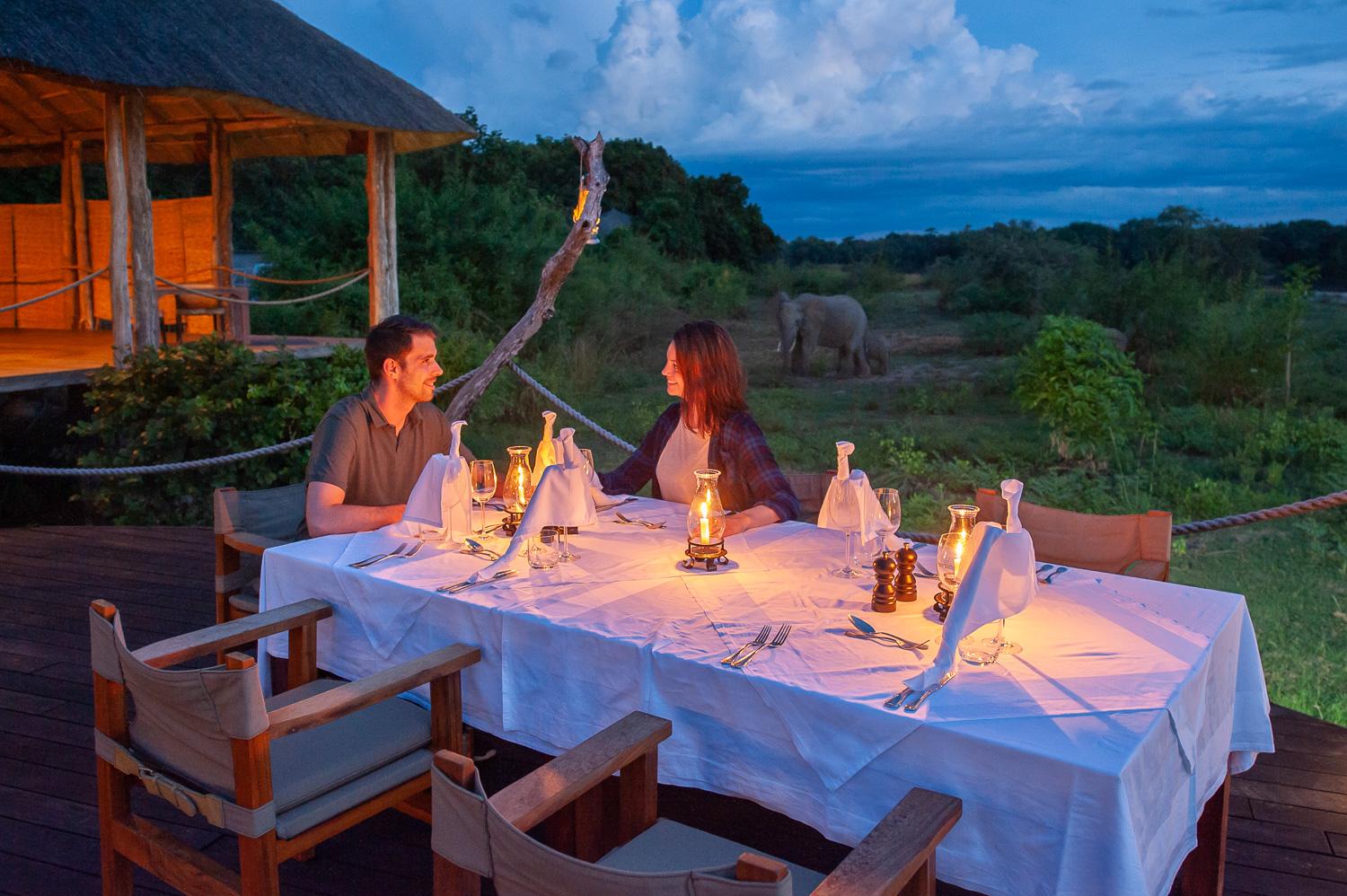
Combining a Uganda Big Five Safari with Gorilla Trekking and Chimpanzee Tracking
One of the greatest advantages of choosing a Uganda Big Five Safari is the opportunity to combine traditional African wildlife viewing with unforgettable primate encounters. While many safari destinations allow visitors to see lions, elephants, leopards, buffaloes, and rhinos, Uganda is one of the very few countries where travelers can also trek endangered mountain gorillas and wild chimpanzees during the same holiday. This remarkable combination makes a Uganda Big Five Safari one of the most complete wildlife experiences available anywhere in Africa.
This unique combination has made Uganda one of Africa’s fastest-growing safari destinations. Instead of choosing between a classic wildlife safari and a primate adventure, visitors can enjoy both in one carefully planned Uganda Big Five Safari itinerary. From the open savannahs of Murchison Falls National Park and Queen Elizabeth National Park to the ancient rainforests of Bwindi Impenetrable National Park and Kibale National Park, a Uganda Big Five Safari showcases an extraordinary diversity of landscapes, wildlife, and unforgettable experiences that few destinations can match.
Safari Vacations and Travel Services specializes in tailor-made Uganda Big Five Safari itineraries that seamlessly combine the Big Five with gorilla trekking, chimpanzee tracking, birdwatching, cultural experiences, scenic adventures, and luxury or budget accommodation, creating one unforgettable African safari.
Why Combine a Uganda Big Five Safari with Primates?
A Uganda Big Five Safari offers much more than traditional game viewing. While a classic safari focuses on Africa’s most iconic large mammals, gorilla trekking and chimpanzee tracking provide intimate encounters with our closest living relatives. Combining these experiences during a Uganda Big Five Safari allows travelers to enjoy two completely different ecosystems in a single holiday.
One day of your Uganda Big Five Safari may be spent watching lions resting beneath acacia trees, elephants crossing the savannah, buffaloes grazing across open plains, or leopards hiding among the branches. The next day, you could be hiking through the mist-covered rainforest in search of mountain gorillas or listening to the loud calls of chimpanzees echoing through Kibale Forest. This incredible variety ensures that every day of your Uganda Big Five Safari offers a completely new adventure.
Mountain Gorilla Trekking During a Uganda Big Five Safari
No Uganda Big Five Safari is complete without experiencing mountain gorilla trekking in Bwindi Impenetrable National Park. Home to more than half of the world’s remaining mountain gorillas, Bwindi is Uganda’s premier gorilla trekking destination and one of Africa’s greatest conservation success stories.
Your Uganda Big Five Safari begins with the gorilla trekking experience with an early morning briefing conducted by Uganda Wildlife Authority rangers. Visitors are assigned to habituated gorilla families according to fitness levels before entering the dense rainforest. The trek may last between one and six hours depending on the gorillas’ location, but once found, visitors spend one unforgettable hour observing these magnificent primates in their natural habitat.
During your Uganda Big Five Safari, you may witness silverbacks protecting their families, mothers caring for infants, playful juveniles climbing trees, grooming behavior, feeding, and gentle social interactions that leave lasting memories.
Gorilla Trekking in Mgahinga Gorilla National Park
Another exceptional highlight of a Uganda Big Five Safari is gorilla trekking in Mgahinga Gorilla National Park. Situated within the spectacular Virunga Mountains, Mgahinga offers breathtaking volcanic scenery together with one habituated gorilla family.
Many travelers choose to include Mgahinga in their Uganda Big Five Safari because of its smaller visitor numbers, scenic mountain landscapes, easier accessibility for some trekkers, opportunities for golden monkey tracking, and excellent hiking trails. The quieter atmosphere provides an intimate and rewarding wildlife experience.
Chimpanzee Tracking During a Uganda Big Five Safari
Chimpanzee tracking is another unforgettable addition to a Uganda Big Five Safari. Kibale National Park is widely recognized as Africa’s best destination for observing wild chimpanzees and protects approximately 1,500 individuals together with twelve other primate species.
Chimpanzee tracking begins with a morning briefing before visitors enter the forest alongside experienced guides. Unlike gorillas, chimpanzees move rapidly through the canopy, making every Uganda Big Five Safari exciting and dynamic. Visitors frequently observe chimpanzees feeding, grooming, playing, swinging through trees, calling loudly, and caring for their young. Tracking normally lasts between two and five hours, including one hour spent with the chimpanzees after they are located.
Chimpanzee Tracking in Kyambura Gorge
Many travelers extend their Uganda Big Five Safari by tracking chimpanzees in Kyambura Gorge within Queen Elizabeth National Park. Often referred to as the “Valley of Apes,” this beautiful forested gorge contrasts dramatically with the surrounding savannah and provides another unique primate experience during a Uganda Big Five Safari.
Gorilla and Chimpanzee Habituation Experiences
Travelers seeking a deeper wildlife experience can upgrade their Uganda Big Five Safari with the Gorilla Habituation Experience in Bwindi or the Chimpanzee Habituation Experience in Kibale National Park. These exclusive activities provide extended time with researchers, veterinarians, trackers, and the animals themselves, offering exceptional photography opportunities and fascinating insights into primate behavior.
Popular Uganda Big Five Safari Itineraries
Safari Vacations and Travel Services offers flexible Uganda Big Five Safari itineraries to suit different travel schedules and budgets, including:
- 5-Day Uganda Big Five and Chimpanzee Safari
- 6-Day Uganda Big Five and Gorilla Trekking Safari
- 8-Day Uganda Big Five, Gorillas and Chimpanzees Safari
- 10-Day Uganda Primates and Big Five Safari
- 12-Day Ultimate Uganda Wildlife Adventure
- 14-Day Complete Uganda Safari Experience
Every Uganda Big Five Safari itinerary can be fully customized according to your travel dates, accommodation preferences, budget, and personal interests.
Benefits of Combining a Uganda Big Five Safari with Primates
A combined Uganda Big Five Safari offers greater wildlife diversity, outstanding value for money, fewer international flights, richer photography opportunities, diverse ecosystems, memorable daily experiences, and a deeper appreciation of Uganda’s remarkable biodiversity. Rather than focusing only on savannah wildlife, a Uganda Big Five Safari allows visitors to experience forests, wetlands, rivers, mountains, and open grasslands within a single journey.
Conservation Benefits of a Uganda Big Five Safari
Every Uganda Big Five Safari contributes directly to wildlife conservation. Revenue generated through gorilla permits, chimpanzee permits, park entrance fees, and responsible tourism supports anti-poaching patrols, ranger training, veterinary care, habitat protection, scientific research, environmental education, and community development projects. Choosing a Uganda Big Five Safari therefore helps protect Uganda’s extraordinary wildlife for future generations.
Is a Uganda Big Five Safari Combined with Primates Worth It?
Without question, combining a Uganda Big Five Safari with mountain gorilla trekking and chimpanzee tracking creates one of the world’s greatest wildlife holidays. Very few destinations allow travelers to observe Africa’s Big Five before hiking through ancient rainforests to meet endangered great apes in their natural habitat.
This incredible diversity is what makes a Uganda Big Five Safari truly exceptional. Every day brings a different adventure—from thrilling game drives and peaceful boat cruises to rainforest treks and authentic cultural encounters. Safari Vacations and Travel Services carefully designs every Uganda Big Five Safari to minimize travel time, maximize wildlife viewing opportunities, and create seamless safari experiences. Whether you have five days or two weeks, a tailor-made Uganda Big Five Safari combined with gorilla trekking and chimpanzee tracking will provide memories that last a lifetime.
Uganda Big Five Safari vs Kenya, Tanzania, Rwanda, and South Africa
Choosing the right African safari destination is one of the biggest decisions travelers make when planning a wildlife holiday. While Kenya, Tanzania, Rwanda, South Africa, Botswana, and Namibia are world-famous safari destinations, Uganda has steadily become one of Africa’s most rewarding countries for wildlife enthusiasts.
A Uganda Big Five Safari offers a unique combination of classic game viewing, mountain gorilla trekking, chimpanzee tracking, spectacular landscapes, rich birdlife, and authentic cultural experiences—all within a single itinerary. This diversity makes Uganda stand out from many traditional safari destinations where visitors primarily focus on game drives.
Every destination has its own strengths, and understanding the differences will help you choose the safari that best matches your interests, travel style, and budget.
Uganda Big Five Safari vs Kenya
Kenya is one of Africa’s most iconic safari destinations and is internationally famous for the Maasai Mara National Reserve and the Great Wildebeest Migration. It offers vast open plains, excellent predator sightings, and an extensive tourism infrastructure.
Uganda, however, provides a much wider variety of wildlife experiences beyond traditional game drives.
While Kenya excels in open savannah wildlife viewing, Uganda allows visitors to combine the Big Five with:
- Mountain gorilla trekking
- Chimpanzee tracking
- Rhino tracking on foot
- Boat safaris
- Tropical rainforest exploration
- Exceptional birdwatching
- Community and cultural experiences
Uganda also tends to attract fewer visitors, creating a quieter and more exclusive safari experience.
For travelers looking for a combination of classic African wildlife and rare primate encounters, Uganda offers significantly greater diversity.
Uganda Big Five Safari vs Tanzania
Tanzania is renowned for Serengeti National Park, Ngorongoro Crater, Tarangire National Park, Ruaha National Park, and the Great Migration.
The country offers enormous wildlife populations and spectacular predator-prey interactions across vast landscapes.
Uganda differs by offering greater ecological diversity within a relatively compact geographical area.
During a single Uganda Big Five Safari, travelers can experience:
- Savannah grasslands
- Tropical rainforests
- River systems
- Wetlands
- Mountain landscapes
- Volcanic scenery
Uganda also offers mountain gorilla trekking and chimpanzee tracking, experiences that are unavailable in Tanzania.
Although Tanzania generally has larger concentrations of plains wildlife, Uganda delivers a broader range of wildlife experiences within one itinerary.
Uganda Big Five Safari vs Rwanda
Rwanda has become famous worldwide for luxury gorilla trekking in Volcanoes National Park.
The country offers outstanding infrastructure, excellent roads, and premium tourism services.
However, Rwanda is not traditionally considered a complete Big Five destination.
Although Akagera National Park now supports the Big Five, Uganda provides:
- Larger wildlife conservation areas
- More national parks
- Greater ecological diversity
- Better opportunities for multi-day wildlife safaris
- More chimpanzee tracking locations
- A wider variety of safari activities
Many travelers actually combine Uganda and Rwanda into one safari, beginning or ending their journey in Kigali while trekking gorillas in Bwindi Impenetrable National Park.
This combination provides excellent international flight connections while maximizing wildlife experiences.
Uganda Big Five Safari vs South Africa
South Africa offers highly developed tourism infrastructure, excellent road networks, luxury lodges, and famous wildlife destinations such as Kruger National Park.
It is particularly popular among first-time safari travelers because wildlife viewing is relatively easy and accommodation options are extensive.
Uganda offers a very different safari atmosphere.
Rather than emphasizing highly developed tourism, Uganda provides:
- Authentic wilderness experiences
- Smaller visitor numbers
- Greater biodiversity
- Tropical rainforests
- Gorilla trekking
- Chimpanzee tracking
- Spectacular boat safaris
- Rich cultural diversity
Travelers looking for luxury combined with accessibility often choose South Africa, while those seeking a more adventurous and varied wildlife experience frequently prefer Uganda.
Uganda Big Five Safari vs Botswana
Botswana is widely regarded as one of Africa’s premier luxury safari destinations.
Its tourism model focuses on low visitor numbers and high-quality experiences, particularly in the Okavango Delta.
Botswana excels in:
- Luxury safaris
- Mokoro canoe excursions
- Exceptional predator sightings
- Remote wilderness
Uganda, however, provides much greater diversity in wildlife activities.
Instead of focusing mainly on luxury game viewing, Uganda allows travelers to combine:
- Big Five safaris
- Gorilla trekking
- Chimpanzee tracking
- Rhino tracking
- Walking safaris
- Boat cruises
- Cultural experiences
Uganda also remains considerably more affordable for many international travelers.
Uganda Big Five Safari vs Namibia
Namibia offers extraordinary desert landscapes, dramatic scenery, and unique wildlife adapted to arid environments.
Etosha National Park is particularly famous for wildlife viewing around permanent waterholes.
Uganda presents almost the opposite ecological experience.
Visitors enjoy:
- Dense tropical forests
- Lush wetlands
- Flowing rivers
- Waterfalls
- Mountain ecosystems
- Savannah grasslands
Travelers seeking dramatic desert scenery often choose Namibia, while those interested in rainforest wildlife and primates generally find Uganda more rewarding.
Why Uganda Offers Exceptional Value
One of Uganda’s greatest strengths is the incredible variety of experiences available within a single holiday.
Few countries allow travelers to enjoy:
- The Big Five
- Mountain gorillas
- Wild chimpanzees
- Rhino tracking on foot
- Boat safaris
- Tree-climbing lions
- Powerful waterfalls
- More than 1,000 bird species
- Authentic cultural encounters
- Scenic mountain landscapes
This diversity means travelers spend less time flying between destinations while enjoying a wider range of wildlife experiences.
Which Destination Is Best for First-Time Safari Travelers?
The answer depends entirely on personal interests.
Uganda is ideal for travelers who want:
- Diverse wildlife experiences
- Gorilla trekking
- Chimpanzee tracking
- Scenic landscapes
- Birdwatching
- Authentic cultural encounters
- Excellent value for money
Kenya is ideal for travelers primarily interested in:
- The Great Migration
- Classic East African savannahs
- Large predator populations
- Traditional safari photography
Tanzania suits travelers looking for:
- Massive wildlife populations
- The Serengeti
- Ngorongoro Crater
- Luxury safari circuits
Rwanda is perfect for visitors whose main priority is:
- Luxury gorilla trekking
- Short safari holidays
- Excellent road infrastructure
South Africa appeals to travelers seeking:
- Self-drive safaris
- Luxury accommodation
- Family-friendly holidays
- Excellent infrastructure
Botswana is best for:
- Ultra-luxury safaris
- Exclusive wilderness experiences
- Okavango Delta adventures
Namibia is ideal for:
- Desert landscapes
- Scenic road trips
- Unique geological formations
- Photography-focused holidays
Destination Comparison
| Destination | Main Strength | Big Five | Gorilla Trekking | Chimpanzee Tracking | Best For |
|---|---|---|---|---|---|
| Uganda | Wildlife diversity and primates | Yes | Yes | Yes | Travelers seeking varied wildlife experiences |
| Kenya | Great Migration and classic safaris | Yes | No | No | Traditional savannah safaris |
| Tanzania | Serengeti and Ngorongoro | Yes | No | No | Large wildlife populations |
| Rwanda | Luxury gorilla trekking | Yes (Akagera) | Yes | No | Short luxury wildlife holidays |
| South Africa | Infrastructure and self-drive safaris | Yes | No | No | Families and first-time safari travelers |
| Botswana | Exclusive luxury safaris | Yes | No | No | Luxury wilderness experiences |
| Namibia | Desert wildlife and scenery | Yes | No | No | Scenic road trips and photography |
Uganda Big Five Safari Travel Tips
Planning ahead is one of the best ways to ensure your Uganda Big Five Safari is smooth, enjoyable, and memorable. Uganda is a welcoming and safe safari destination with excellent wildlife experiences, friendly people, and improving tourism infrastructure. However, like any international destination, proper preparation helps you make the most of your journey.
Whether you are visiting Uganda for the first time or returning for another African adventure, understanding local travel requirements, health recommendations, safari etiquette, and practical logistics will help you travel with confidence. From booking your safari at the right time to respecting wildlife and local communities, these travel tips will help you enjoy every moment of your Uganda Big Five Safari.
Safari Vacations and Travel Services provides every traveler with comprehensive pre-departure information and local support to ensure a safe, comfortable, and unforgettable safari experience.
Book Your Safari Early
Uganda has become one of Africa’s fastest-growing safari destinations, particularly during the dry seasons between June and September and from December to February.
Booking several months in advance provides several advantages:
- Greater accommodation availability
- Better lodge selection
- More itinerary flexibility
- Easier domestic flight reservations
- Better pricing for some accommodation providers
- More time to prepare travel documents
If your itinerary includes gorilla trekking or chimpanzee tracking, early booking is especially important because permits are issued in limited numbers each day.
Travel During the Right Season
Uganda is a year-round safari destination, but choosing the season that best matches your interests can enhance your experience.
The dry seasons generally provide:
- Easier wildlife viewing
- Better road conditions
- Comfortable trekking conditions
- Excellent photography opportunities
The rainy seasons offer:
- Greener landscapes
- Fewer visitors
- Excellent birdwatching
- Attractive accommodation rates
- Beautiful scenery for photography
Regardless of the season, Uganda’s wildlife remains resident throughout the year, providing rewarding safari experiences in every month.
Carry the Right Clothing
Comfortable clothing is essential for enjoying long game drives and outdoor activities.
Choose lightweight, breathable clothing in neutral colors such as khaki, olive green, beige, and grey.
Pack clothing suitable for both warm afternoons and cool early mornings.
Long-sleeved shirts and long trousers provide additional protection against insects and the sun, particularly during nature walks and forest activities.
Wear Comfortable Footwear
A Uganda Big Five Safari often includes more than game drives.
Visitors may participate in:
- Rhino tracking
- Guided nature walks
- Gorilla trekking
- Chimpanzee tracking
- Cultural village walks
Comfortable waterproof hiking boots or sturdy walking shoes are strongly recommended for these activities.
Protect Yourself from the Sun
Although Uganda enjoys moderate temperatures, the equatorial sun can still be strong during midday.
Carry:
- Wide-brimmed hat
- Sunglasses
- Sunscreen
- Lip balm
- Reusable drinking water bottle
Staying hydrated throughout the day is especially important during long game drives.
Bring Quality Binoculars
Many wildlife sightings occur at a distance.
A good pair of binoculars allows you to observe:
- Leopards resting in trees
- Birds
- Antelope
- Crocodiles
- Distant elephants
- Wildlife behavior
Binoculars greatly enhance every game drive and boat safari.
Follow Your Guide’s Instructions
Professional safari guides possess extensive knowledge of wildlife behavior and park regulations.
Always follow their instructions regarding:
- Wildlife safety
- Photography
- Vehicle positioning
- Walking safaris
- Rhino tracking
- Gorilla trekking
Their experience helps maximize wildlife sightings while ensuring visitor safety.
Respect Wildlife
Wild animals should always be observed from a safe distance.
Avoid:
- Feeding wildlife
- Making loud noises
- Standing inside the vehicle where prohibited
- Attempting to attract animals
- Littering
Respecting wildlife ensures natural animal behavior and protects both visitors and animals.
Practice Responsible Photography
Photography is one of the highlights of every Uganda Big Five Safari.
To protect wildlife:
- Turn off camera flash near animals
- Avoid sudden movements
- Remain patient
- Respect your guide’s advice
- Do not block other vehicles unnecessarily
Capturing natural animal behavior often requires patience rather than rushing for photographs.
Respect Local Communities
Many safari destinations border local villages where communities play an important role in wildlife conservation.
Visitors are encouraged to:
- Ask permission before photographing people
- Dress respectfully
- Support local crafts
- Learn about local traditions
- Respect cultural customs
Responsible tourism benefits both conservation and community development.
Carry Cash for Small Purchases
Although many lodges accept international credit cards, carrying a small amount of local currency can be useful.
Cash is helpful for:
- Tips
- Local markets
- Community projects
- Small souvenir purchases
- Refreshments during road transfers
Small denominations are often the most convenient.
Purchase Travel Insurance
Comprehensive travel insurance is highly recommended.
A suitable policy should ideally cover:
- Medical emergencies
- Trip cancellation
- Lost luggage
- Flight delays
- Emergency evacuation
- Personal belongings
Travel insurance provides peace of mind throughout your safari.
Stay Healthy During Your Safari
Simple health precautions can greatly improve your travel experience.
Remember to:
- Drink plenty of bottled or purified water
- Wash or sanitize your hands regularly
- Take any prescribed medication as directed
- Use insect repellent
- Get adequate rest after long travel days
Maintaining good hydration and proper nutrition helps you fully enjoy every safari activity.
Charge Electronics Whenever Possible
Some safari lodges rely on solar energy or generators.
Whenever electricity is available:
- Charge camera batteries
- Recharge power banks
- Charge mobile phones
- Download photographs if needed
Keeping backup batteries ensures you never miss memorable wildlife moments.
Be Patient During Game Drives
Wildlife viewing requires patience.
Even experienced guides cannot predict exactly where animals will be at any particular moment.
Some of the most exciting sightings occur after quietly waiting and allowing nature to unfold naturally.
Patience often rewards visitors with unforgettable encounters such as lions hunting, elephants interacting, or leopards emerging from dense vegetation.
Tip Your Safari Guide and Lodge Staff
Although tipping is voluntary, it is appreciated throughout Uganda’s tourism industry.
Many travelers choose to tip:
- Driver-guides
- Lodge staff
- Porters
- Rangers
- Boat crew
Tipping recognizes excellent service and supports the dedicated professionals who contribute to an exceptional safari experience.
Keep the Environment Clean
Uganda’s national parks are protected conservation areas.
Visitors should always:
- Dispose of waste responsibly
- Avoid single-use plastics where possible
- Stay on designated roads and trails
- Leave natural areas exactly as they were found
Protecting the environment ensures future generations can continue enjoying Uganda’s remarkable wildlife.
Quick Travel Tips Checklist
| Travel Tip | Recommendation |
|---|---|
| Book Early | Reserve your safari and accommodation several months in advance, especially during peak season. |
| Travel Documents | Carry your passport, visa, travel insurance, and printed itinerary. |
| Clothing | Pack lightweight neutral-colored clothing suitable for warm days and cool mornings. |
| Footwear | Bring waterproof hiking boots or comfortable walking shoes. |
| Health | Carry personal medication, insect repellent, sunscreen, and drink plenty of water. |
| Photography | Bring spare batteries, memory cards, and quality binoculars. |
| Wildlife Safety | Always follow your guide’s instructions and respect park regulations. |
| Responsible Tourism | Respect wildlife and local communities, and protect the environment. |
Final Travel Advice
A Uganda Big Five Safari is one of Africa’s most rewarding wildlife experiences, combining breathtaking scenery, abundant wildlife, warm hospitality, and unforgettable adventures. A little preparation before departure will allow you to relax and enjoy every moment, from sunrise game drives across the savannah to peaceful boat cruises along the Nile and unforgettable encounters with Uganda’s remarkable wildlife.
Safari Vacations and Travel Services supports every guest from the moment of booking until the end of the safari. With expert local knowledge, experienced driver-guides, carefully planned itineraries, and personalized service, the company ensures that every Uganda Big Five Safari is safe, comfortable, and filled with extraordinary memories that will last a lifetime.
Wildlife Beyond the Big Five
Although the Big Five are the headline attraction for many visitors, a Uganda Big Five Safari offers far more than encounters with lions, leopards, elephants, buffaloes, and rhinos. Uganda is one of Africa’s most biodiverse countries, supporting an extraordinary variety of mammals, birds, reptiles, amphibians, insects, and plant life across its national parks and protected areas.
From towering Rothschild’s giraffes roaming the savannah to massive pods of hippos along the Nile, colorful kingfishers darting across wetlands, and playful primates swinging through ancient forests, every safari reveals an incredible diversity of wildlife. Many travelers arrive hoping to see the Big Five but leave equally fascinated by Uganda’s countless other species that make every game drive, boat cruise, and nature walk unique.
Safari Vacations and Travel Services designs itineraries that maximize opportunities to experience Uganda’s full range of wildlife, ensuring that visitors appreciate not only the famous animals but also the remarkable ecosystems that support them.
Rothschild’s Giraffes
Uganda is one of the best places in Africa to see the endangered Rothschild’s giraffe.
Unlike other giraffe subspecies, Rothschild’s giraffes can be recognized by their lighter coat pattern and distinctive white lower legs.
The largest populations are found in:
- Murchison Falls National Park
- Kidepo Valley National Park
Watching these graceful animals feeding from tall acacia trees or walking slowly across the open plains is one of the highlights of any Uganda Big Five Safari.
Morning and late afternoon game drives often provide excellent photography opportunities when the soft light enhances their striking appearance.
Hippos
Uganda supports thousands of hippos, particularly along its rivers and lakes.
Some of the country’s best places to observe hippos include:
- Victoria Nile
- Kazinga Channel
- Lake Albert
- Lake Edward
During the day, hippos spend much of their time submerged in water to stay cool.
As evening approaches, they emerge from the water to graze on nearby grasslands.
Boat cruises provide outstanding close-up views while allowing visitors to observe fascinating social behavior within hippo pods.
Nile Crocodiles
The Nile crocodile is Africa’s largest reptile and one of the continent’s most impressive predators.
Large crocodiles are commonly observed:
- Along the Victoria Nile
- In the Kazinga Channel
- Around Lake Albert
- Near riverbanks throughout Murchison Falls National Park
Visitors frequently see crocodiles basking in the sun, floating almost motionless near riverbanks, or waiting patiently for unsuspecting prey.
These ancient reptiles have changed very little over millions of years and remain among Africa’s most successful predators.
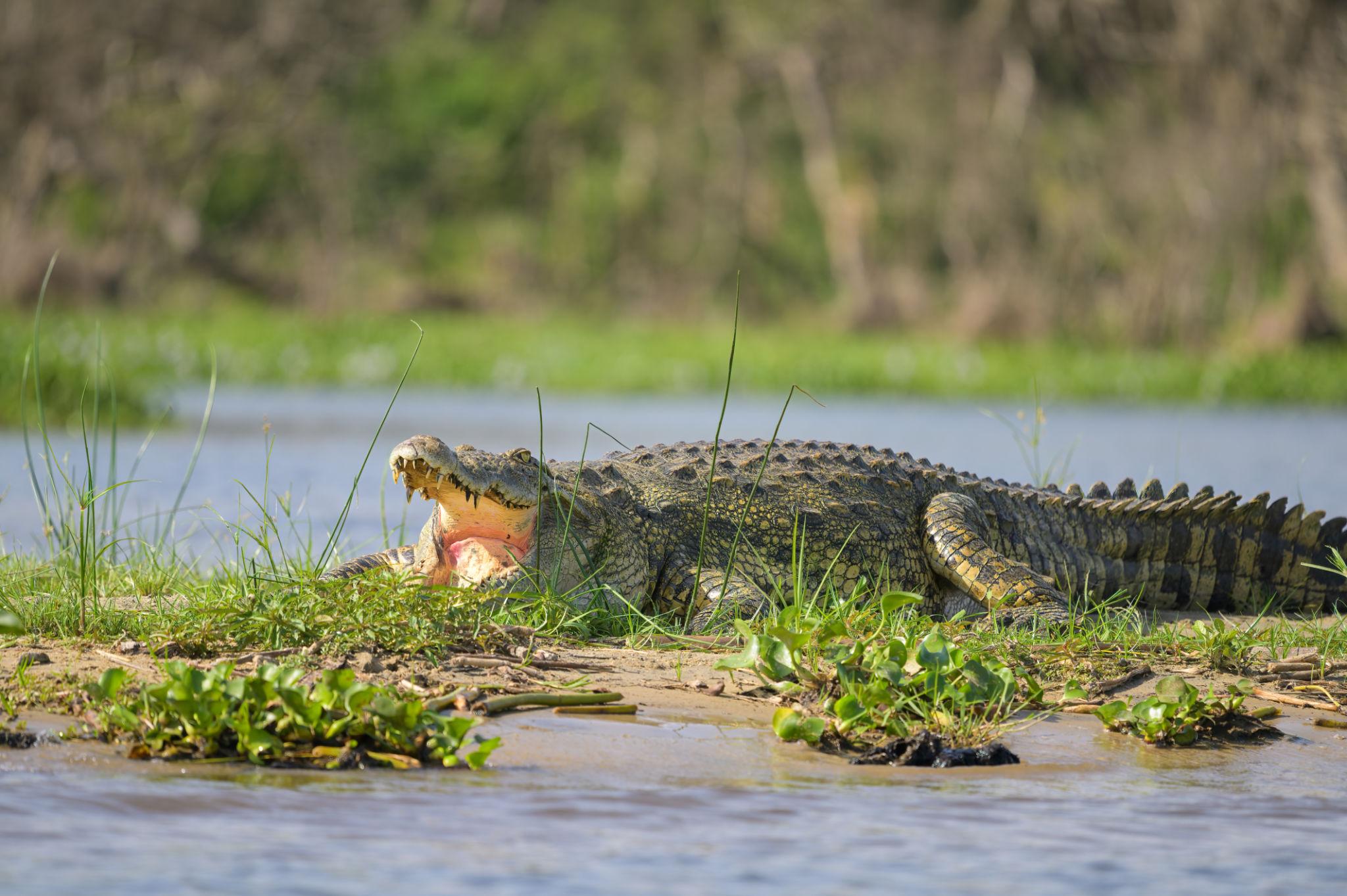
Antelope Species
Uganda supports an impressive diversity of antelope species, each adapted to different habitats.
Commonly encountered species include:
- Uganda kob
- Waterbuck
- Bushbuck
- Topi
- Oribi
- Jackson’s hartebeest
- Defassa waterbuck
- Reedbuck
- Impala
- Eland
The Uganda kob is especially significant because it serves as the national antelope and forms an important prey species for lions and leopards.
Large herds grazing across the savannah create spectacular wildlife scenes throughout the country’s national parks.
Zebras
Although zebras are not found in every Ugandan national park, they are abundant in several key wildlife areas.
The best places to see plains zebras include:
- Lake Mburo National Park
- Kidepo Valley National Park
Their distinctive black-and-white stripes make them among the easiest animals to identify during a safari.
Visitors often observe zebras grazing alongside impalas, buffaloes, giraffes, and other herbivores.
Warthogs
Often referred to as the comedians of the African savannah, warthogs are frequently seen during every Uganda Big Five Safari.
Their characteristic behavior includes:
- Grazing while kneeling on their front knees
- Running with tails held upright
- Resting inside abandoned aardvark burrows
Although sometimes overlooked, warthogs provide endless entertainment and excellent photography opportunities.
Hyenas
Spotted hyenas are highly intelligent predators and scavengers.
Despite their reputation, they are skilled hunters capable of bringing down large prey.
Hyenas are commonly encountered in:
- Murchison Falls National Park
- Queen Elizabeth National Park
- Kidepo Valley National Park
Early morning and evening game drives provide the best opportunities to observe them.
Their powerful jaws allow them to crush even large bones, playing an important ecological role by reducing waste within the ecosystem.
Primates Beyond Gorillas and Chimpanzees
Uganda is often called the “Primate Capital of the World” because of its exceptional primate diversity.
In addition to mountain gorillas and chimpanzees, visitors may encounter:
- Olive baboons
- Black-and-white colobus monkeys
- Red-tailed monkeys
- Blue monkeys
- Vervet monkeys
- L’Hoest’s monkeys
- Grey-cheeked mangabeys
- Golden monkeys (Mgahinga Gorilla National Park)
- Patas monkeys (Kidepo Valley National Park)
These fascinating primates inhabit forests, woodlands, and even lodge gardens throughout Uganda.
Birdlife
Uganda is internationally recognized as one of the world’s premier birdwatching destinations, with more than 1,000 recorded bird species.
Bird enthusiasts can expect to encounter an extraordinary variety of species throughout a Uganda Big Five Safari.
Highlights include:
- Shoebill
- Grey crowned crane
- African fish eagle
- Saddle-billed stork
- Goliath heron
- Great blue turaco
- Abyssinian ground hornbill
- Giant kingfisher
- Malachite kingfisher
- Pied kingfisher
- Secretary bird
- Martial eagle
- African jacana
- Bee-eaters
- Rollers
- Sunbirds
Whether on a game drive, boat cruise, or guided nature walk, colorful birdlife is never far away.
Reptiles
Uganda’s warm climate supports numerous reptile species beyond the famous Nile crocodile.
Visitors may also encounter:
- Monitor lizards
- Rock pythons
- Tree snakes
- Agamas
- Chameleons
- Skinks
- Geckos
Most reptiles avoid human contact, but experienced guides are skilled at locating and identifying them.
Butterflies and Insects
Uganda’s tropical forests and wetlands are home to hundreds of butterfly species, many displaying brilliant colors and intricate wing patterns.
Butterflies play a vital role in pollination and are especially abundant in:
- Bwindi Impenetrable National Park
- Kibale National Park
- Semuliki National Park
In addition to butterflies, visitors may observe fascinating beetles, dragonflies, praying mantises, stick insects, and countless other small creatures that contribute to the health of Uganda’s ecosystems.
Flora and Scenic Landscapes
Wildlife is only one part of Uganda’s natural beauty.
During a Uganda Big Five Safari, visitors also experience:
- Savannah grasslands
- Acacia woodlands
- Riverine forests
- Tropical rainforests
- Papyrus wetlands
- Volcanic mountains
- Waterfalls
- Crater lakes
- Rolling hills
- Scenic valleys
These varied landscapes support Uganda’s exceptional biodiversity while creating breathtaking scenery throughout the safari.
Why Uganda’s Biodiversity Makes Every Safari Unique
What truly sets a Uganda Big Five Safari apart is its remarkable biodiversity. Visitors rarely spend an entire day searching only for the Big Five. Instead, every game drive, boat cruise, and nature walk introduces new species and unforgettable wildlife interactions. A single morning may begin with elephants crossing the savannah, continue with giraffes browsing acacia trees, reveal a leopard resting in a fig tree, and conclude with hundreds of hippos along the Nile accompanied by colorful kingfishers and African fish eagles.
This incredible abundance means that every safari offers constant excitement, even between sightings of the Big Five. Safari Vacations and Travel Services carefully plans each itinerary to showcase Uganda’s extraordinary wildlife diversity, ensuring travelers return home with a deep appreciation for one of Africa’s richest and most rewarding natural destinations.
Responsible Tourism and Wildlife Conservation in Uganda
Choosing a Uganda Big Five Safari is about more than witnessing Africa’s legendary wildlife. It is an opportunity to support the conservation of endangered animals, protect some of the continent’s most valuable ecosystems, and improve the lives of communities that coexist with wildlife. Every park entrance fee, safari activity, and conservation permit helps fund programmes that preserve Uganda’s natural heritage for future generations.
Uganda has become one of Africa’s leading conservation success stories. Through the dedicated work of the Uganda Wildlife Authority (UWA), conservation organisations, researchers, local communities, and responsible tourism operators, the country has achieved significant progress in protecting mountain gorillas, rebuilding its rhino population, conserving elephants and lions, and safeguarding hundreds of other wildlife species.
Safari Vacations and Travel Services proudly supports sustainable tourism by designing safaris that respect wildlife, promote environmental responsibility, and create meaningful benefits for local communities while providing unforgettable safari experiences.
Conservation Challenges Facing Uganda’s Wildlife
Uganda’s extraordinary biodiversity faces several environmental and human-related challenges that require continuous protection and management.
The major conservation challenges include:
- Habitat loss caused by expanding agriculture.
- Illegal poaching of wildlife.
- Human-wildlife conflict around protected areas.
- Illegal wildlife trafficking.
- Climate change and changing rainfall patterns.
- Deforestation.
- Wetland degradation.
- Unsustainable natural resource use.
Without active conservation programmes, many of Uganda’s wildlife populations would face increasing pressure. Sustainable tourism provides essential financial support that enables conservation agencies to continue protecting these valuable ecosystems.
Uganda Wildlife Authority and Protected Areas
The Uganda Wildlife Authority is the government agency responsible for conserving and managing Uganda’s wildlife resources and protected areas.
Its key responsibilities include:
- Managing national parks and wildlife reserves.
- Conducting anti-poaching operations.
- Employing and training wildlife rangers.
- Monitoring wildlife populations.
- Supporting scientific research.
- Managing tourism activities.
- Protecting endangered species.
- Conserving habitats.
- Working closely with local communities.
- Promoting environmental awareness.
The success of Uganda’s national parks demonstrates the importance of long-term conservation planning supported by responsible tourism.
Mountain Gorilla Conservation
Uganda is home to one of the world’s most successful wildlife conservation programmes.
Mountain gorillas once faced a very uncertain future due to habitat destruction, illegal hunting, and political instability.
Today, thanks to strict conservation policies and carefully managed tourism, their population has steadily increased.
Gorilla trekking operates under strict guidelines that include:
- Limited permits each day.
- Small visitor groups.
- One-hour viewing time.
- Minimum viewing distance.
- Health screening measures.
- Professional ranger supervision.
Revenue generated through gorilla permits supports habitat protection, veterinary care, ranger patrols, scientific monitoring, and community development initiatives that benefit both people and wildlife.
Rhino Recovery Programme
Uganda’s white rhino population has been successfully re-established through the work of Ziwa Rhino Sanctuary.
After rhinos disappeared from the wild due to poaching, conservationists launched an ambitious breeding programme that continues to expand the country’s rhino population.
Income generated through rhino tracking supports:
- Rhino protection.
- Veterinary services.
- Security patrols.
- Habitat management.
- Scientific research.
- Community outreach.
- Future reintroduction into national parks.
This remarkable conservation effort is restoring Uganda’s complete Big Five heritage.
Conserving Uganda’s Iconic Wildlife
Wildlife conservation extends beyond the Big Five.
Uganda actively protects numerous important species including:
- Rothschild’s giraffes.
- Chimpanzees.
- Uganda kob.
- Hippos.
- Nile crocodiles.
- Hyenas.
- Antelope species.
- Over 1,000 bird species.
- Butterflies.
- Rare reptiles.
Researchers regularly monitor wildlife populations to understand migration patterns, breeding success, habitat use, and long-term population trends.
This scientific information helps guide effective conservation management.
Community Participation in Conservation
Communities living near Uganda’s national parks play a vital role in conservation.
Responsible tourism creates sustainable employment opportunities that encourage local people to protect wildlife rather than exploit natural resources.
Tourism benefits local communities through:
- Employment in safari lodges.
- Professional driver-guides.
- Community tourism enterprises.
- Traditional cultural performances.
- Handicraft production.
- Agricultural supply chains.
- Local transport services.
- Hospitality careers.
When conservation creates economic opportunities, communities become active partners in protecting wildlife.
Responsible Wildlife Viewing
Every visitor shares responsibility for protecting Uganda’s wildlife.
Responsible safari behaviour includes:
- Keeping a safe distance from animals.
- Following all guide instructions.
- Remaining quiet during wildlife encounters.
- Never feeding wild animals.
- Avoiding littering.
- Remaining inside safari vehicles where required.
- Respecting park regulations.
- Allowing wildlife to behave naturally.
These simple practices protect wildlife while providing safer and more rewarding safari experiences.
Sustainable Safari Accommodation
Many safari lodges throughout Uganda have adopted environmentally responsible practices to reduce their ecological footprint.
Common sustainability initiatives include:
- Solar energy.
- Rainwater harvesting.
- Recycling programmes.
- Plastic reduction.
- Water conservation.
- Tree planting.
- Local employment.
- Locally sourced food products.
Staying at eco-conscious lodges allows visitors to support businesses that actively contribute to conservation.
Supporting Local Communities
Visitors can strengthen conservation efforts by supporting local businesses during their safari.
Meaningful ways to contribute include:
- Purchasing locally produced crafts.
- Visiting community tourism projects.
- Hiring local guides.
- Employing local porters.
- Supporting women’s cooperatives.
- Buying locally grown produce.
- Participating in cultural experiences.
- Respecting local traditions.
These activities create sustainable livelihoods while encouraging long-term wildlife conservation.
Environmental Education
Education remains one of the most effective conservation tools.
Numerous conservation organisations provide education programmes covering:
- Wildlife conservation.
- Forest protection.
- Biodiversity.
- Climate change.
- Sustainable land management.
- Human-wildlife coexistence.
- Environmental stewardship.
Tourism revenue helps finance these programmes, inspiring future generations to protect Uganda’s wildlife.
How Visitors Can Support Conservation
Every traveller can contribute to conservation during a Uganda Big Five Safari.
Simple actions include:
- Choosing responsible tour operators.
- Respecting wildlife viewing guidelines.
- Avoiding wildlife products.
- Reducing plastic waste.
- Conserving water.
- Supporting conservation organisations.
- Purchasing locally made products.
- Sharing awareness about conservation after returning home.
Collectively, these actions have a significant positive impact on Uganda’s protected areas.
Tourism and Conservation Benefits
| Tourism Activity | Benefit to Conservation |
|---|---|
| National Park Entrance Fees | Support wildlife protection, ranger patrols, habitat conservation, and park management. |
| Gorilla Trekking Permits | Finance gorilla conservation, veterinary care, scientific research, and community development. |
| Rhino Tracking | Fund rhino security, breeding programmes, habitat restoration, and veterinary services. |
| Safari Lodges | Create employment while promoting environmentally sustainable tourism practices. |
| Community Tourism | Provides alternative income sources that reduce pressure on wildlife and natural habitats. |
| Hiring Local Guides | Supports local livelihoods while encouraging conservation education and responsible tourism. |
| Purchasing Local Handicrafts | Generates income for local artisans and strengthens community support for conservation. |
| Responsible Travel | Protects Uganda’s wildlife and ecosystems for future generations of visitors and local communities. |
A Safari That Creates a Lasting Legacy
Every Uganda Big Five Safari contributes to something much greater than an unforgettable holiday. It supports wildlife conservation, strengthens local economies, protects endangered species, and preserves Uganda’s spectacular natural landscapes. The continued survival of mountain gorillas, elephants, lions, rhinos, buffaloes, leopards, and countless other species depends on the success of sustainable tourism and the commitment of everyone involved.
Safari Vacations and Travel Services is proud to promote responsible tourism through carefully planned itineraries, environmentally conscious travel practices, support for conservation initiatives, and partnerships with local communities. By choosing a Uganda Big Five Safari with a responsible local operator, visitors become part of Uganda’s ongoing conservation journey while experiencing one of Africa’s richest and most rewarding wildlife destinations.
Frequently Asked Questions About Uganda Big Five Safari
Planning a Uganda Big Five Safari often raises many questions, especially for first-time visitors to Africa. From the best time to travel and the chances of seeing all five animals to accommodation, park fees, health requirements, and combining wildlife viewing with gorilla trekking, travelers naturally want reliable information before booking their Uganda Big Five Safari.
The following frequently asked questions answer the most common queries about a Uganda Big Five Safari. Whether you are planning a short wildlife holiday or a comprehensive Uganda Big Five Safari across Uganda’s national parks, these answers will help you prepare for an unforgettable adventure.
Safari Vacations and Travel Services is always available to provide personalized advice and tailor-made Uganda Big Five Safari itineraries to match your travel dates, budget, and interests.
What is included in a Uganda Big Five Safari?
Most Uganda Big Five Safari packages include airport transfers, private or shared 4×4 safari transportation, accommodation, meals as specified in the itinerary, national park entrance fees, professional English-speaking driver-guides, scheduled game drives, boat cruises where applicable, bottled drinking water during transfers, and government taxes. Depending on your itinerary, your Uganda Big Five Safari may also include rhino tracking at Ziwa Rhino Sanctuary, domestic flights, or optional gorilla trekking and chimpanzee tracking.
Can I see all of the Big Five during a Uganda Big Five Safari?
Yes. A well-planned Uganda Big Five Safari gives you an excellent opportunity to see all five members of the Big Five. Lions, elephants, buffaloes, and leopards are found in Murchison Falls National Park and Queen Elizabeth National Park, while rhinos can be tracked on foot at Ziwa Rhino Sanctuary. With experienced guides and a carefully designed Uganda Big Five Safari itinerary, sightings of all five animals are highly achievable.
Which national parks are best for a Uganda Big Five Safari?
The best destinations for a Uganda Big Five Safari include Murchison Falls National Park, Queen Elizabeth National Park, Ziwa Rhino Sanctuary, Kidepo Valley National Park, and Lake Mburo National Park. Many visitors also extend their Uganda Big Five Safari to Bwindi Impenetrable National Park or Kibale National Park for gorilla trekking and chimpanzee tracking.
How many days do I need for a Uganda Big Five Safari?
A 5-day Uganda Big Five Safari offers an excellent introduction to Uganda’s wildlife. However, a 7 to 10-day Uganda Big Five Safari allows you to explore several national parks at a relaxed pace. If you plan to combine your Uganda Big Five Safari with gorilla trekking or chimpanzee tracking, an itinerary of 8 to 14 days is highly recommended.
What is the best time for a Uganda Big Five Safari?
A Uganda Big Five Safari can be enjoyed throughout the year. The dry seasons from June to September and December to February generally provide the best wildlife viewing, while the rainy seasons offer greener landscapes, fewer tourists, and exceptional birdwatching. Every season offers a unique Uganda Big Five Safari experience.
What are my chances of seeing the Big Five on a Uganda Big Five Safari?
Although wildlife sightings can never be guaranteed because animals roam freely, a Uganda Big Five Safari offers excellent chances of seeing the Big Five. Elephants, buffaloes, giraffes, hippos, crocodiles, and antelope are commonly seen, while lions are regularly spotted in Murchison Falls and Queen Elizabeth National Parks. Leopard sightings require patience, and rhinos are reliably observed during guided tracking at Ziwa Rhino Sanctuary.
Can I combine a Uganda Big Five Safari with gorilla trekking?
Absolutely. One of the greatest advantages of a Uganda Big Five Safari is the opportunity to combine traditional wildlife safaris with mountain gorilla trekking in Bwindi Impenetrable National Park or Mgahinga Gorilla National Park. Many travelers also include chimpanzee tracking in Kibale National Park, creating one of Africa’s most complete wildlife itineraries.
Is Uganda safe for a Uganda Big Five Safari?
Yes. Uganda is one of East Africa’s leading safari destinations and welcomes thousands of international visitors every year. A Uganda Big Five Safari takes place within well-managed national parks and protected areas, accompanied by experienced professional guides who ensure your safety throughout the journey.
Do I need a visa for a Uganda Big Five Safari?
Most international visitors require a visa before entering Uganda. Many travelers choose the East Africa Tourist Visa, which allows travel between Uganda, Rwanda, and Kenya during the same trip. Before booking your Uganda Big Five Safari, it is advisable to confirm the latest visa requirements for your nationality.
What vaccinations are recommended before a Uganda Big Five Safari?
A valid Yellow Fever vaccination certificate is required for entry into Uganda. Travelers planning a Uganda Big Five Safari should also consult their healthcare provider regarding malaria prevention, routine vaccinations, and any additional health advice before traveling.
What type of accommodation is available on a Uganda Big Five Safari?
A Uganda Big Five Safari offers accommodation for every budget, including budget camps, comfortable mid-range lodges, luxury safari lodges, boutique hotels, and exclusive tented camps. Many safari lodges overlook rivers, lakes, forests, or open savannah, allowing guests to enjoy wildlife sightings directly from the property.
What vehicles are used during a Uganda Big Five Safari?
Most Uganda Big Five Safari tours use specially designed 4×4 Toyota Land Cruisers or safari vans with pop-up roofs, comfortable seating, charging ports, large windows, and ample luggage space. These vehicles provide comfort while maximizing wildlife viewing opportunities during game drives.
Is a Uganda Big Five Safari suitable for families?
Yes. A Uganda Big Five Safari is an excellent choice for families. Many lodges offer family rooms, child-friendly activities, swimming pools, and cultural experiences. However, parents should note that gorilla trekking has a minimum age requirement established by the Uganda Wildlife Authority.
What should I pack for a Uganda Big Five Safari?
For a comfortable Uganda Big Five Safari, pack lightweight neutral-colored clothing, waterproof hiking boots, a hat, sunscreen, insect repellent, binoculars, a camera, a reusable water bottle, personal medication, travel documents, and a light jacket for cool mornings and evenings. If your Uganda Big Five Safari includes gorilla trekking, gardening gloves and gaiters are also recommended.
Will I have internet access during my Uganda Big Five Safari?
Yes. Most safari lodges included in a Uganda Big Five Safari provide Wi-Fi in guest rooms or reception areas, although internet speeds may vary depending on the location. Mobile network coverage is available in most towns and many national parks, but some remote areas may have limited connectivity.
Can special dietary requirements be accommodated during a Uganda Big Five Safari?
Yes. Most lodges and hotels included in a Uganda Big Five Safari can cater for vegetarian, vegan, gluten-free, and other dietary requirements when informed in advance. Safari Vacations and Travel Services communicates your dietary preferences to each accommodation provider before your arrival.
Why book your Uganda Big Five Safari with Safari Vacations and Travel Services?
Safari Vacations and Travel Services is a locally owned Ugandan tour operator specializing in tailor-made Uganda Big Five Safari holidays. We provide experienced driver-guides, carefully selected accommodations, comfortable 4×4 safari vehicles, transparent pricing, personalized itineraries, and dedicated customer support from your first inquiry until the end of your Uganda Big Five Safari. Whether you are planning a luxury safari, family holiday, honeymoon, photography expedition, or a Uganda Big Five Safari combined with gorilla trekking and chimpanzee tracking, our experienced team is committed to creating an unforgettable African adventure.
Uganda Big Five Safari FAQs at a Glance
| Question | Quick Answer |
|---|---|
| Can I see all of the Big Five? | Yes, with visits to Murchison Falls National Park, Queen Elizabeth National Park, and Ziwa Rhino Sanctuary. |
| Best travel season? | June to September and December to February offer the best wildlife viewing. |
| Minimum recommended safari length? | Five days, although seven to ten days provides a more complete experience. |
| Can I combine gorilla trekking? | Yes, Uganda is one of the best destinations to combine the Big Five with mountain gorillas and chimpanzees. |
| Family friendly? | Yes, although some wildlife activities have minimum age requirements. |
| Is Uganda safe? | Yes, Uganda is a well-established safari destination with experienced guides and managed national parks. |
| Accommodation options? | Budget, mid-range, luxury lodges, boutique hotels, and tented camps are available. |
| Need a visa? | Most visitors require a visa before arrival, depending on nationality. |
The answers above cover the questions most frequently asked by travelers planning a Uganda Big Five Safari. If you have additional questions or require a customized itinerary, Safari Vacations and Travel Services is ready to assist with expert advice, permit reservations, accommodation bookings, and personalized safari planning to ensure your African adventure exceeds expectations.
Why Book Your Uganda Big Five Safari with Safari Vacations and Travel Services
Your choice of tour operator can make all the difference to your safari experience. Safari Vacations and Travel Services is a locally owned Ugandan tour company specializing in tailor-made Uganda Big Five Safari holidays and unforgettable wildlife adventures across East Africa. With extensive local knowledge, experienced professional driver-guides, and a passion for showcasing Uganda’s natural beauty, we ensure that every safari is carefully planned to exceed your expectations.
We offer customized itineraries, comfortable 4×4 safari vehicles, handpicked accommodation, transparent pricing with no hidden costs, reliable airport transfers, and dedicated support before, during, and after your trip. Whether you are looking for a budget, mid-range, or luxury Uganda Big Five Safari, we tailor every itinerary to match your interests, travel style, and budget.
As a responsible Ugandan tour operator, we are committed to sustainable tourism that supports wildlife conservation and local communities while delivering authentic and memorable safari experiences. When you book your Uganda Big Five Safari with Safari Vacations and Travel Services, you can travel with confidence knowing that every detail has been professionally arranged by a team that genuinely cares about your African adventure.
Conclusion
A Uganda Big Five Safari is the perfect way to experience the very best of Uganda’s incredible wildlife, breathtaking landscapes, and rich natural heritage. From tracking rhinos at Ziwa Rhino Sanctuary and searching for lions, leopards, elephants, and buffaloes in Uganda’s spectacular national parks to enjoying boat cruises, scenic game drives, and optional gorilla trekking or chimpanzee tracking, every day offers a new and unforgettable adventure.
Whether you are visiting Uganda for the first time or returning to explore more of the Pearl of Africa, a Uganda Big Five Safari promises extraordinary wildlife encounters, exceptional hospitality, and memories that will last a lifetime. With careful planning and the expertise of Safari Vacations and Travel Services, your safari will be seamless, rewarding, and tailored to your personal interests.
Contact Safari Vacations and Travel Services today and let us design a personalized Uganda Big Five Safari that showcases the very best of Uganda while creating an African adventure you will treasure forever.