Cultural Tourism in Uganda: Batwa Pygmies, Bakiga Traditions and Kampala City Tours

Cultural Tourism in Uganda: Batwa, Bakiga Traditions and Kampala City Tours

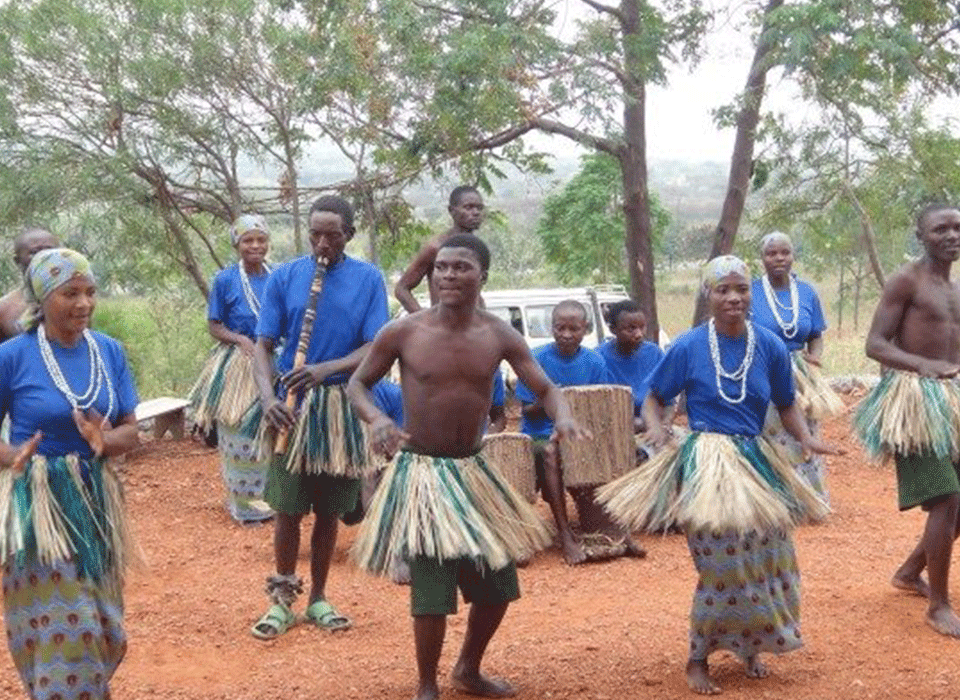
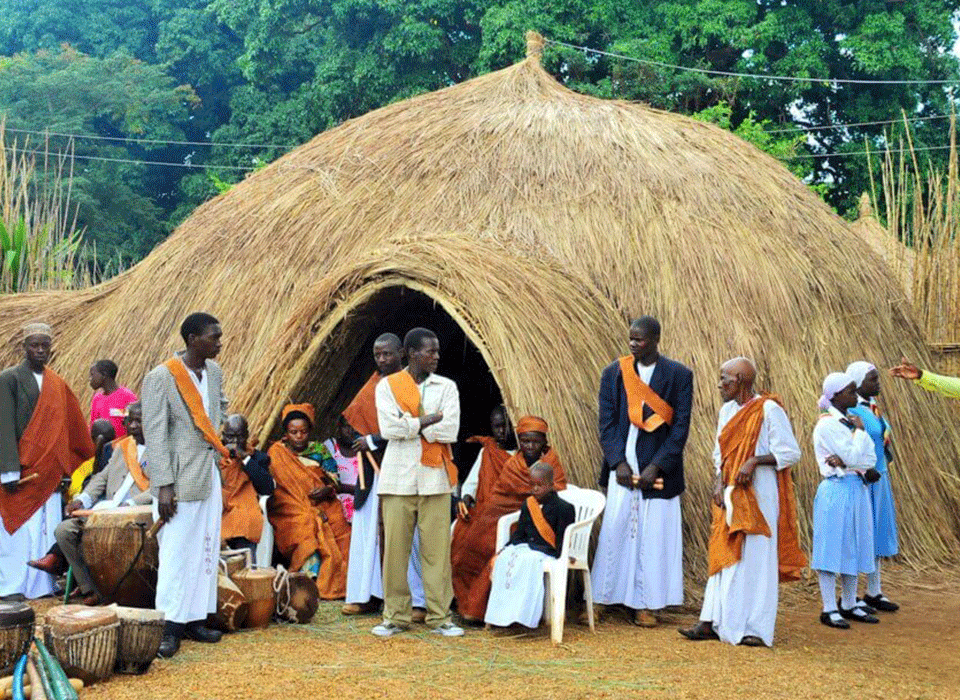
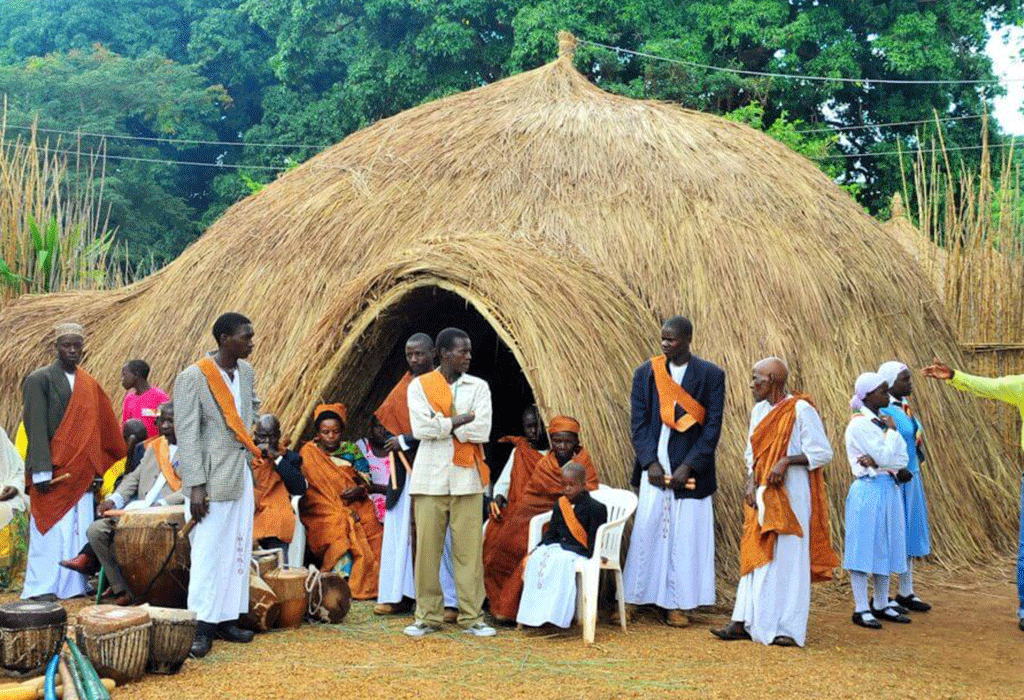
Traditional dancers perform in vibrant costumes, showcasing Uganda’s rich cultural heritage, music and community traditions.
A Uganda safari is not only about wildlife. The people, cultures, traditions and histories of this extraordinary country are just as important to the travel experience as its national parks and ecosystems.
Uganda is home to many different communities, languages and cultural traditions. Travelling through the country therefore provides opportunities to experience much more than gorilla trekking , chimpanzee tracking and game drives.
In southwestern Uganda, visitors can learn about Batwa heritage and Bakiga traditions while exploring the landscapes around Bwindi, Mgahinga and Lake Bunyonyi. In central Uganda, Kampala introduces travellers to Buganda history, religious landmarks, traditional institutions, markets and the fast-moving everyday life of Uganda’s capital.
These experiences fit naturally into a broader Uganda safari itinerary.
A cultural activity can be arranged after gorilla trekking, during a relaxing stay at Lake Bunyonyi, or as part of an arrival or departure day in Kampala.
For travellers interested in understanding the country rather than simply photographing its wildlife, cultural tourism adds an important human dimension to a Uganda safari.
Why Include Cultural Tourism in a Uganda Safari?
Uganda’s national parks are among its biggest tourism attractions, but the journeys between them pass through communities with distinct histories and traditions.
A traveller driving from Kampala towards Bwindi, for example, passes through several cultural regions before reaching the mountainous southwest. Farms, roadside markets, towns, villages and changing styles of settlement all form part of the journey.
Stopping to engage with communities provides context for the landscapes travellers see from their safari vehicles.
Cultural tourism can also help spread tourism income beyond lodges and protected areas when activities are responsibly organised and local communities participate meaningfully in their management and benefits.
The best cultural experiences are not simply performances created for photographs. They create opportunities to listen, ask questions, understand local history and learn how communities are adapting traditional practices to contemporary life.
For this reason, combining culture with wildlife can create a more complete Uganda travel experience.
The Batwa and Their Forest Heritage

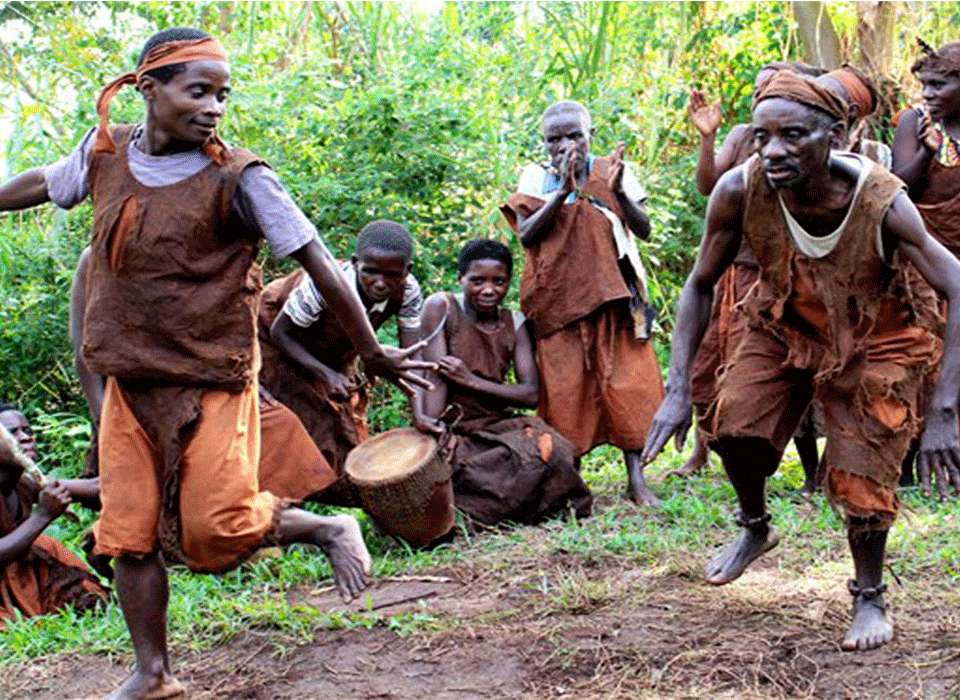
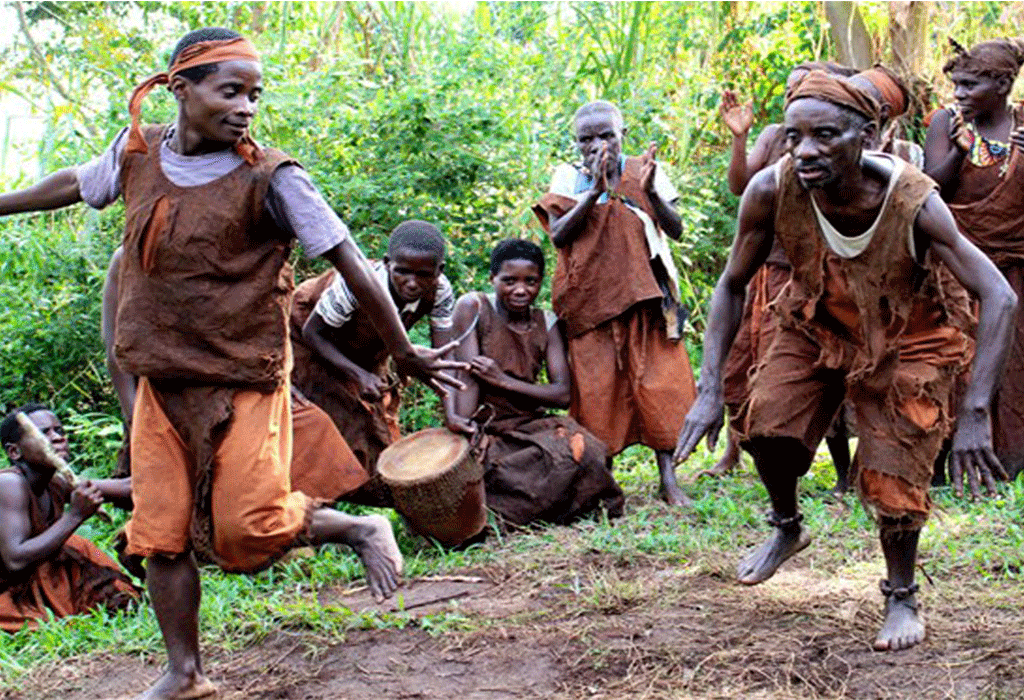
Batwa community members demonstrate traditional forest knowledge and practices, offering visitors insight into their deep historical connection with Uganda’s forests.
The Batwa are Indigenous people with a long historical connection to the forests of southwestern Uganda and the wider Great Lakes region.
Their traditional way of life was closely associated with forest environments. Knowledge of plants, hunting practices, honey gathering and forest ecology formed an important part of Batwa cultural heritage.
For generations, Batwa communities lived in and around forests that are now associated with protected areas such as Bwindi Impenetrable National Park and Mgahinga Gorilla National Park.
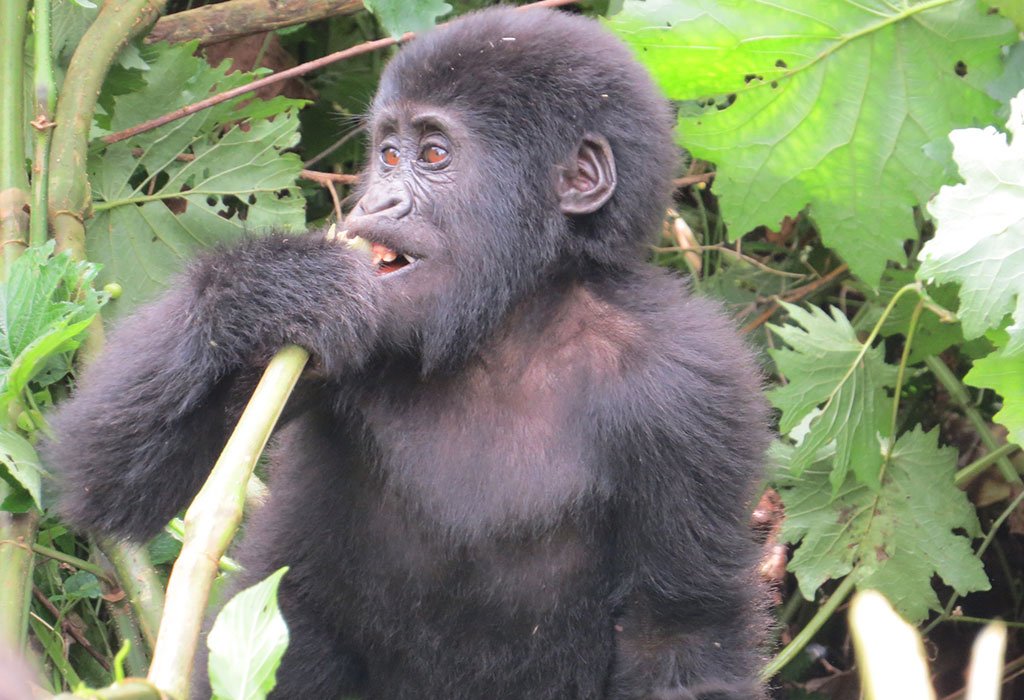
Today, these forests are internationally famous for protecting mountain gorillas and numerous other species.
The establishment and management of protected areas, however, also changed the relationship between Indigenous communities and the forests on which they had traditionally depended.
Understanding this history is important because it shows that conservation can involve difficult social questions alongside its wildlife successes.
A responsible cultural visit should therefore treat Batwa communities as living communities rather than as a historical attraction.
Batwa Cultural Experiences Near Bwindi
Several cultural experiences are available around the wider Bwindi region.
Depending on where travellers are staying, community visits may introduce aspects of Batwa forest knowledge, traditional songs, storytelling and historical ways of using plants.
Some experiences demonstrate how earlier generations identified medicinal plants or gathered food and honey from the forest.
Visitors may also learn about traditional shelters and hear stories explaining the community’s historical relationship with the forest.
These activities can be particularly meaningful after gorilla trekking in Bwindi.
During a gorilla trek, visitors experience the forest primarily as a protected wildlife habitat. A Batwa cultural experience introduces another layer of history by showing how people also developed deep relationships with these forests.
The experience should be approached with respect.
Visitors should listen to the community guides, follow local guidance regarding photography and avoid treating people or traditions merely as objects for photographs.
When organised responsibly, community tourism can create income while allowing local guides to present their own history and cultural knowledge.
The Batwa Trail and Mgahinga
Travellers visiting Mgahinga Gorilla National Park can also learn about Batwa heritage through cultural activities associated with the area.
The Batwa Trail is designed to introduce visitors to aspects of traditional forest life through Batwa guides.
The experience may include demonstrations of historical forest skills, explanations of plants, traditional stories, songs and other cultural knowledge.
This creates an interesting addition to a trip focused on Mgahinga’s gorillas or other activities in southwestern Uganda.
It can also encourage travellers to think more broadly about conservation.
Protecting endangered wildlife is essential, but understanding the historical relationship between local people and protected landscapes is also important.
This is one reason cultural tourism can add depth to a gorilla safari.
Combining Batwa Experiences With Gorilla Trekking
Batwa cultural experiences are relatively easy to combine with a Bwindi or Mgahinga gorilla safari.
Gorilla trekking normally occupies a substantial part of the day because the location of the gorillas determines how long visitors spend walking in the forest.
For that reason, it is often better to schedule a cultural experience separately rather than assuming it can always be fitted immediately after the trek.
Travellers spending two or more nights around Bwindi have greater flexibility.
One day can focus on gorilla trekking, while another can include community activities, forest walks or travel towards Lake Bunyonyi.
This slower approach can be particularly rewarding because southwestern Uganda deserves more than a rushed visit.
The region contains not only mountain gorillas but also communities, farmland, forests, lakes and mountain scenery.
Learning about local tribes and gorilla trekking can therefore help travellers understand the wider environment surrounding the protected areas.
The Bakiga: Highland Culture of Southwestern Uganda
Another important cultural group visitors encounter in southwestern Uganda is the Bakiga.
Bakiga communities have a strong historical presence in the highlands around Kabale and surrounding areas.
The steep hillsides of southwestern Uganda have influenced local farming practices and settlement patterns. Cultivation across the slopes creates the distinctive patchwork landscapes travellers see while driving towards Bwindi and Lake Bunyonyi.
Agriculture remains central to many rural communities.
Cultural visits may introduce travellers to traditional farming, food preparation, household life, local crafts, music and dance.
Banana-based drinks and other locally produced foods may also feature in demonstrations depending on the community programme.
Traditional dance is one of the most memorable elements for many visitors.
Performances are energetic and often encourage participation, creating a lively contrast to the quieter experience of trekking through the rainforest.
What to Expect on a Bakiga Community Walk
A community walk offers a more personal view of southwestern Uganda than simply driving through villages.
Activities vary according to the community and location.
Visitors may walk through farmland, meet residents, learn about crops and observe aspects of rural daily life. Some programmes include demonstrations of traditional food preparation, crafts or brewing.
Music and dance may also form part of the experience.
The purpose should not be to present rural life as something frozen in the past.
Bakiga communities are contemporary communities whose traditions continue alongside modern education, businesses, technology and changing lifestyles.
Good community tourism reflects this reality.
It gives travellers an opportunity to understand both cultural heritage and modern life.
This makes the experience particularly valuable for visitors who want more than a conventional wildlife itinerary.
Lake Bunyonyi and Cultural Tourism

Travelers paddle a traditional dugout canoe across Lake Bunyonyi while enjoying the terraced highlands and cultural landscapes of southwestern Uganda.
Lake Bunyonyi is one of southwestern Uganda’s most attractive landscapes and an excellent place to slow down after gorilla trekking.
The lake lies among steep cultivated hills and contains numerous islands.
Its setting makes it suitable for relaxation as well as cultural exploration.
Travellers can spend an extra night at a lakeside lodge, enjoy the scenery and explore nearby communities.
Canoe trips provide a different perspective on the surrounding hills and islands, while guided walks can introduce travellers to local life away from the main roads.
For visitors coming from Bwindi, Lake Bunyonyi can provide a welcome change of pace.
Instead of moving immediately towards another national park, travellers have time to rest, enjoy the landscape and interact with communities.
This combination of scenery, relaxation and culture is one reason Lake Bunyonyi works particularly well within longer Uganda itineraries.
Cultural Tourism Beyond Southwestern Uganda
Batwa and Bakiga experiences are only part of Uganda’s cultural diversity.
Travelling across the country introduces visitors to many communities with their own languages, histories and traditions.
Central Uganda is strongly associated with Buganda, while other regions have their own kingdoms, chiefdoms and cultural institutions.
Northern and eastern Uganda also provide distinctive cultural experiences that can be incorporated into longer journeys.
The important point is that Uganda cannot be represented by a single cultural tradition.
Travellers should therefore see cultural tourism as an opportunity to discover the country’s diversity rather than looking for one experience that supposedly represents all Ugandans.
Kampala: Uganda’s Capital City

An aerial view of Kampala captures the energy, transport networks and urban character of Uganda’s vibrant capital city.
Kampala introduces visitors to an entirely different side of Uganda.
The capital is busy, energetic and constantly changing.
Traffic fills major roads, boda boda motorcycle taxis move between vehicles, traders conduct business in crowded commercial districts, and restaurants, offices, religious buildings and residential neighbourhoods spread across the city’s many hills.
For travellers who spend most of their holiday inside national parks, Kampala can initially feel overwhelming.
But that energy is exactly what makes the city interesting.
A guided city tour helps visitors make sense of the capital while exploring selected historical, religious and cultural attractions.
Kampala is also closely connected to the history of the Buganda Kingdom, making it one of the most important places for understanding central Uganda.
What to See on a Kampala City Tour
A Kampala city tour can be adapted according to the traveller’s available time and interests.
The Kasubi Tombs are among the city’s most important cultural landmarks. The site is associated with the kings of Buganda and is recognised as a UNESCO World Heritage Site.
The Uganda Museum provides an introduction to aspects of Uganda’s cultural and natural heritage through collections and exhibitions.
The Namugongo Martyrs Shrine is an important Christian pilgrimage site associated with the Uganda Martyrs and attracts large numbers of pilgrims, particularly around the annual commemorations in June.
Visitors interested in Kampala’s commercial life may explore busy markets. These environments reveal another side of the city, although guided visits are advisable because major markets can be crowded and confusing for first-time visitors.
Religious and architectural landmarks can also form part of a city tour depending on the available time.
Kampala’s Markets and Everyday Life
Markets are among the best places to experience Kampala’s intensity.
Stalls sell food, clothing, household items, fabrics, shoes and countless other products.
The movement of traders, porters and customers creates an atmosphere very different from Uganda’s national parks.
For photographers, markets can be visually fascinating, but respectful behaviour is essential.
Visitors should ask before photographing individual traders at close range and follow their guide’s advice.
A market visit is most rewarding when travellers take time to understand what they are seeing rather than simply moving quickly through the crowds.
Local guides can explain foods, products and trading practices that may otherwise be unfamiliar.
The Buganda Kingdom: Uganda’s Cultural Heartland
The Buganda Kingdom is one of Uganda’s most historically influential traditional kingdoms.
Its cultural heartland includes Kampala and areas surrounding the Lake Victoria basin.
Understanding Buganda history provides useful context for understanding Kampala and central Uganda.
The Kabaka is the traditional king of Buganda, and several important sites around Kampala are connected to the kingdom.
The Lubiri, or royal palace, is one of these landmarks.
Bulange serves as the home of Buganda’s traditional parliament.
The Kasubi Tombs are another important component of Buganda heritage and provide visitors with insight into royal traditions and architecture.
Together, these places demonstrate how traditional institutions continue to form part of Uganda’s contemporary cultural landscape.
Ngamba Island and Lake Victoria

The entrance to Ngamba Island Chimpanzee Sanctuary welcomes visitors to one of Uganda’s important chimpanzee conservation experiences on Lake Victoria.
Travellers with additional time around Kampala and Entebbe may also consider experiences on Lake Victoria.
Ngamba Island Chimpanzee Sanctuary is located on the lake and is reached by boat.
It differs from chimpanzee tracking in Uganda’s natural forests because the island functions as a sanctuary.
Visitors primarily interested in seeing wild chimpanzees in their natural habitat should consider destinations such as Kibale National Park , while Ngamba Island offers a different conservation-focused experience.
Lake Victoria itself also provides opportunities for boat excursions and other activities.
These experiences can work well at the beginning or end of a Uganda safari, particularly for travellers with an extra day before an international flight.
Combining Culture With a Uganda Wildlife Safari
Cultural tourism does not need to replace wildlife activities.
In most cases, the two work best together.
A journey through southwestern Uganda might combine gorilla trekking in Bwindi with a Batwa cultural experience and a night at Lake Bunyonyi.
A longer itinerary could continue to Queen Elizabeth National Park for game drives and a boat safari before travelling towards other destinations.
Kampala cultural attractions can then be incorporated near the beginning or end of the trip.
This creates variety.
One day may involve tracking mountain gorillas through rainforest. Another might involve walking through a community, learning about farming or listening to traditional stories. Later, travellers may find themselves navigating the busy streets and markets of Kampala.
These contrasts are part of what makes Uganda such an interesting destination.
Responsible Cultural Tourism in Uganda
Responsible cultural tourism begins with respect.
Communities are not exhibits, and cultural traditions should not be treated merely as entertainment.
Travellers should choose organised experiences where local people participate meaningfully and receive appropriate benefits.
Photography should always be respectful.
Ask before photographing individuals, particularly children.
Visitors should also avoid making promises or distributing money and gifts indiscriminately. When travellers want to support a community initiative, it is usually better to do so through an established local organisation or community programme.
Listening is equally important.
Cultural tourism is most meaningful when travellers arrive prepared to learn rather than assuming they already understand the people they are visiting.
How Much Time Should You Allow for Cultural Experiences?
The amount of time depends on the itinerary.
Travellers on a short gorilla safari can add a few hours for a Batwa or community experience around Bwindi or Mgahinga.
Those with an extra night can combine gorilla trekking with Lake Bunyonyi and a Bakiga community experience.
In Kampala, half-day and full-day sightseeing programmes are possible depending on arrival and departure times.
Travellers with a deeper interest in history and culture should consider allocating a full day rather than trying to fit several attractions into a short airport transfer.
The best approach is to integrate cultural experiences naturally into the journey.
Final Thoughts
Cultural tourism in Uganda adds an important human dimension to a safari.
Mountain gorillas, chimpanzees, elephants, lions and Uganda’s remarkable landscapes may provide the initial inspiration for a journey, but the people encountered along the way often become equally memorable.
Batwa cultural experiences introduce visitors to the complex relationship between Indigenous heritage, forests and modern conservation.
Bakiga communities provide insight into life in Uganda’s southwestern highlands, while Lake Bunyonyi combines cultural exploration with one of the country’s most beautiful landscapes.
Kampala reveals another Uganda altogether: urban, energetic, historical and deeply connected to the Buganda Kingdom.
A well-designed Uganda safari can bring these experiences together.
Rather than travelling only from one national park to another, take time to understand the communities, histories and traditions that shape the country between them.
That is when a wildlife holiday becomes a more complete journey through Uganda.
Contact Safari Vacations and Travel Services to add Batwa cultural experiences, Bakiga community visits, Lake Bunyonyi and Kampala city tours to your Uganda safari itinerary. We believe that meeting Uganda’s people can be just as memorable as meeting its wildlife.