New Frontier of Wildlife Tracking Experiences in Uganda

Beyond the Big Five: New frontier of wildlife tracking experiences in Uganda
Have you already seen the Big Five? The new frontier of wildlife tracking experiences in Uganda still has much more to offer. Beyond lions, leopards, elephants, buffaloes and rhinos, the country combines primate tracking, researcher-linked experiential tourism, wetland wildlife, nocturnal species and expanding rhino conservation landscapes.
For repeat safari travelers, the appeal is increasingly about depth rather than a checklist. A Uganda wildlife safari can combine established specialist activities such as chimpanzee habituation, golden monkey tracking and experiential carnivore tracking with emerging conservation destinations such as Ajai Wildlife Reserve.
Planning note: Specialized wildlife products can change as conservation programs, animal movements and park operations evolve. Confirm the exact activity, location and availability with UWA or your safari operator before building an itinerary around it.
The Evolution of Uganda Safaris Beyond the Traditional Checklist
New frontier of wildlife tracking experiences in Uganda is already known for mountain gorillas in Bwindi and Mgahinga, chimpanzees in Kibale, and savannah wildlife in Queen Elizabeth, Murchison Falls and Kidepo. Longer journeys such as the 21 Days Uganda Ultimate Safari demonstrate how dramatically the ecosystems change across one country.
What makes specialist tracking different is the emphasis on behavior, conservation and field interpretation. Some experiences involve researchers or habituation teams, while others take visitors into habitats rarely emphasized on conventional game drives. Anthill Gorilla Safaris’ Uganda wildlife safari guide provides additional context for planning a multi-park route.
Rhino Conservation Enters a New Era at Ajai and Kidepo
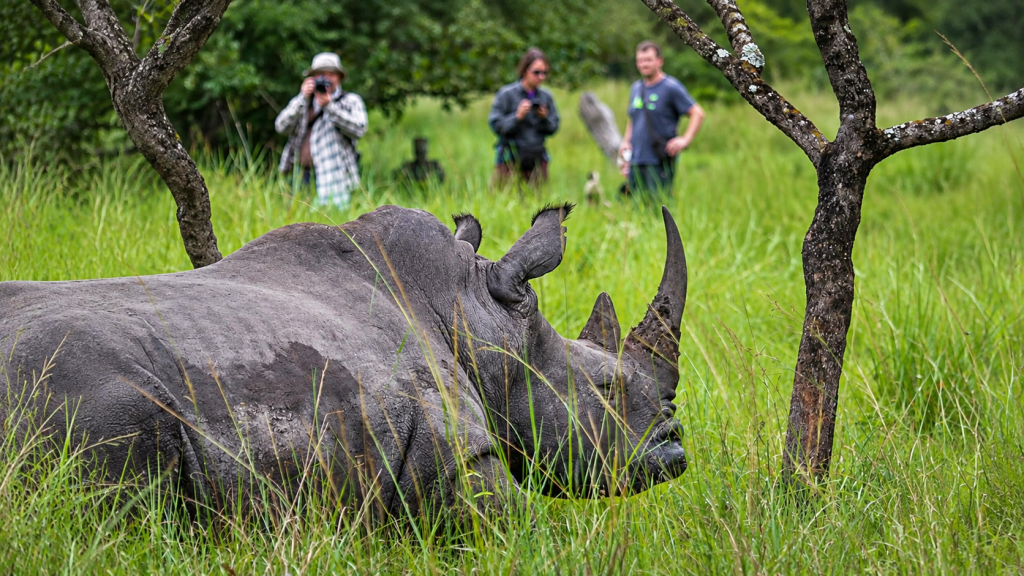 Uganda’s rhino recovery is expanding beyond the country’s long-established sanctuary-based conservation story.
White rhino conservation is now entering a new phase as animals are restored to additional protected landscapes in Uganda.
One of Uganda’s important conservation developments is the return of southern white rhinos to protected landscapes beyond Ziwa. Ajai Wildlife Reserve is part of this wider restoration story, while rhino conservation is also expanding into other protected landscapes such as Kidepo Valley National Park.
This makes Ajai especially interesting for repeat visitors, but travelers should distinguish a conservation milestone from a guaranteed commercial tracking product. Access, tracking arrangements and visitor protocols should be confirmed for the intended travel date rather than assumed from the presence of rhinos alone. For a broader route, see our Uganda wildlife and primates safari and Anthill’s Uganda Big Five safari guide.
New frontier of wildlife tracking experiences in Uganda Chimpanzee Habituation:

Kibale National Park is Uganda’s best-known destination for chimpanzee tracking and habituation experiences.
The Chimpanzee Habituation Experience is one of the clearest examples of going beyond a standard wildlife encounter. Participants accompany researchers and habituators as chimpanzees become accustomed to human presence, allowing a longer and more immersive forest experience than standard tracking.
Kibale fits naturally between Murchison Falls and Queen Elizabeth National Park. Safari Vacations’ Kibale, Semuliki and Queen Elizabeth safari shows how chimpanzee habituation can form part of a wider western Uganda journey.
Golden Monkey Tracking in Mgahinga
Mountain gorillas are not Uganda’s only high-altitude primate attraction. Mgahinga Gorilla National Park protects golden monkeys in the bamboo-rich Virunga landscape. Their fast movement and active feeding behavior create a very different encounter from gorilla trekking.
Golden monkey tracking works particularly well for travelers already visiting southwestern Uganda. Our 9 Days Uganda Primates and Hiking Safari combines golden monkeys with gorillas, chimpanzees and savannah wildlife.
Experiential Lion and Predator Tracking in Queen Elizabeth
Queen Elizabeth National Park offers more than conventional game drives. Experiential tourism has included predator tracking in the park, giving participants a conservation-focused perspective on large carnivores. New frontier of wildlife tracking experiences in Uganda activities are distinct from simply driving off-road in search of lions and should only be undertaken through the authorized program available at the time of travel.
A Uganda itinerary can combine this with Kazinga Channel wildlife viewing and the Ishasha sector before continuing to Bwindi. Our Uganda–Rwanda primates and wildlife tour illustrates how lion tracking can fit within a larger safari circuit.
Banded Mongoose Experiential Tourism
Banded mongooses may not have the celebrity status of lions or gorillas, but their social behavior makes them fascinating subjects for travelers interested in behavioral ecology. Queen Elizabeth National Park has offered mongoose experiential tourism, creating a niche alternative to conventional game viewing.
Because specialist programs depend on operational conditions and research schedules, availability should be confirmed before travel. This is exactly the type of experience that suits repeat safari visitors looking for a closer look at the smaller species that shape an ecosystem.
Sitatunga and Wetland Wildlife
Sitatunga are semi-aquatic antelopes adapted to swamp and wetland environments. Uganda’s wetlands provide habitat for them, but seeing one is never guaranteed. Travelers interested in sitatunga should approach the experience as patient wetland wildlife watching rather than a guaranteed close encounter.
Wetland excursions also broaden a safari through birding, primates and smaller wildlife. They can be especially rewarding for travelers who want to move beyond the large mammals that dominate conventional safari marketing.
Nocturnal Wildlife Experiences
After dark, Uganda’s forests and savannahs reveal animals that are easily missed during daytime activities. Where authorized night walks or night drives are available, guides may search for nocturnal primates, owls and other species active after sunset.
The precise activity varies by protected area. Travelers should not assume that night walking is permitted in every forest or national park; the correct activity and guide arrangements need to be confirmed locally.
What About African Golden Cat Tracking?
The African golden cat is one of Uganda’s most elusive forest predators and occurs in the country’s forest ecosystems. That makes it an exciting conservation subject, but travelers should be careful with claims that a regular public golden-cat tracking permit is available in Kibale. Treat any such specialist opportunity as something that requires direct confirmation rather than a standard bookable safari activity.
For travelers fascinated by rare forest mammals, Kibale remains highly rewarding through its established chimpanzee experiences, primate diversity, birding and forest ecology.
What About Pangolin Tracking Near Bwindi?
Pangolins are conservation-sensitive animals affected by illegal wildlife trade. Any visitor experience involving rescued or rehabilitating pangolins should put animal welfare and legitimate conservation authorization first. A claimed rescue center or tracking program should be independently verified before it is promoted as a regular tourism product.
Travelers wanting conservation-rich experiences around Bwindi already have established options through gorilla trekking, gorilla habituation, birding and community-based activities.
Why Specialist Wildlife Tracking Requires Careful Planning
Specialized tracking is more complicated than booking an ordinary game drive. Some activities have limited capacity, operate only in designated areas, depend on researchers or rangers, or change as conservation priorities evolve. Remote reserves also require realistic driving times, appropriate vehicles and carefully positioned accommodation.
Safari Vacations and Travel Services can build these activities into a wider route while confirming current access and availability before the trip. Travelers should avoid itineraries that promise rare-animal sightings or specialist programs without current operational confirmation.
Beyond the Big Five: Who Is This Safari For?
This style of Uganda safari is particularly suited to repeat Africa travelers, wildlife photographers, primate enthusiasts, birders and visitors interested in conservation. It can also appeal to first-time visitors who prefer a deeper itinerary instead of concentrating only on headline species.
For a broad introduction to the country’s established wildlife circuit, compare our 10 Day Uganda Wildlife Safari with the longer 21 Days Uganda Ultimate Safari.
Uganda Wildlife Tracking Experiences FAQs
Are Uganda’s specialist wildlife experiences guaranteed sightings?
No. These are wild animals in natural or managed conservation landscapes. Tracking improves the opportunity to locate target species but cannot ethically guarantee a sighting.
Can I track rhinos at Ajai Wildlife Reserve?
Rhinos have been returned to Ajai Wildlife Reserve as part of Uganda’s wider conservation efforts. Visitor tracking access and current operating arrangements should be confirmed directly for your intended travel date before the activity is included in an itinerary.
Is chimpanzee habituation available in Uganda?
Yes. Chimpanzee habituation is an established Uganda Wildlife Authority activity, notably associated with Kibale National Park.
Can I combine specialist tracking with gorilla trekking?
Yes. Uganda’s road network allows a longer itinerary to connect Kibale, Queen Elizabeth, Bwindi, Mgahinga and other destinations, although sufficient travel time should be allowed.
Should I book rare wildlife tracking far in advance?
For activities with limited capacity or researcher involvement, advance planning is sensible. Availability should still be reconfirmed because specialist programs can change with conservation and operational requirements.
Plan a Wildlife Safari Beyond the Big Five
Uganda’s greatest strength is diversity. Travelers can combine headline encounters with less conventional experiences that reveal how conservation, research and wildlife behavior fit together. The result is a safari that goes beyond simply collecting sightings.
Contact Safari Vacations and Travel Services to design a Uganda wildlife itinerary around the specialist experiences that are genuinely available for your travel dates.