
Shoebill Stork experience in Uganda

Shoebill Stork: 17 Ultimate Facts for an Amazing Uganda Encounter
The shoebill stork is one of Africa’s most unforgettable birds: enormous, silent, prehistoric-looking and perfectly adapted to papyrus wetlands. For travelers, the real questions are practical. Where can you see one reliably? What is the best time to visit? How does a canoe search at Mabamba work? What should photographers bring, and how can a short wetland excursion fit into a wider safari? This guide answers those questions while explaining the bird’s size, diet, behavior, breeding ecology, conservation and the places that make Uganda such a rewarding destination for a close but respectful encounter.
For most visitors, Mabamba Bird Watching Tour is the simplest dedicated search close to Entebbe. Go early, use an experienced local guide, allow a relaxed morning, and treat any wildlife sighting as a natural encounter rather than a guarantee.
What Is a Shoebill Stork? 17 Facts Travelers Should Know
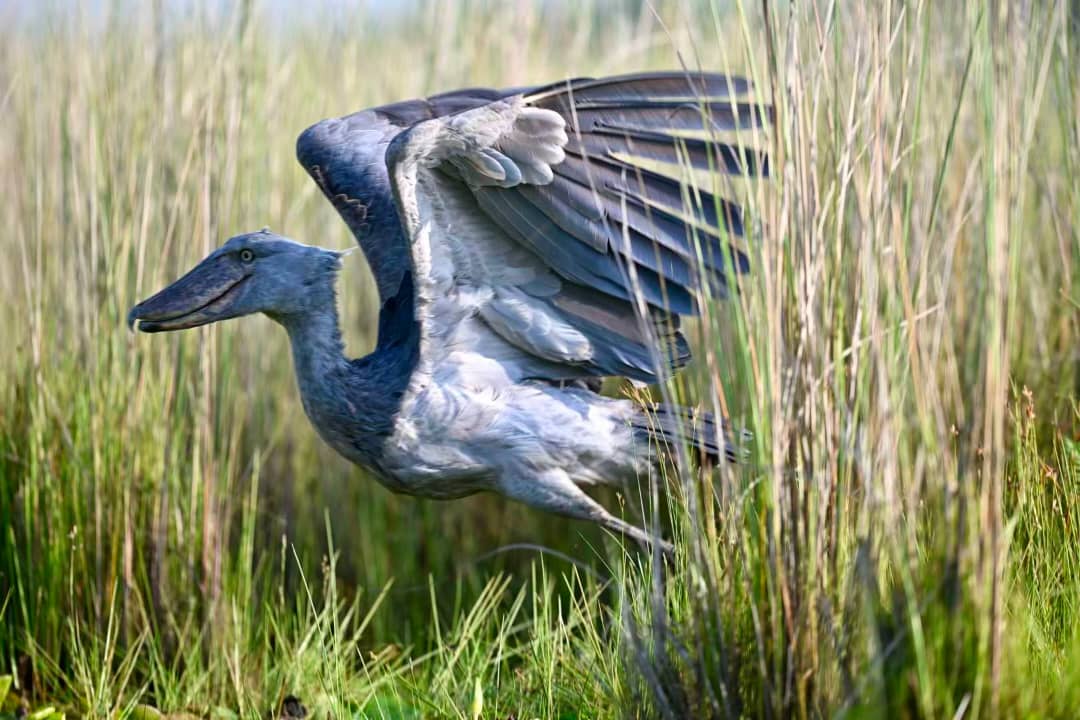
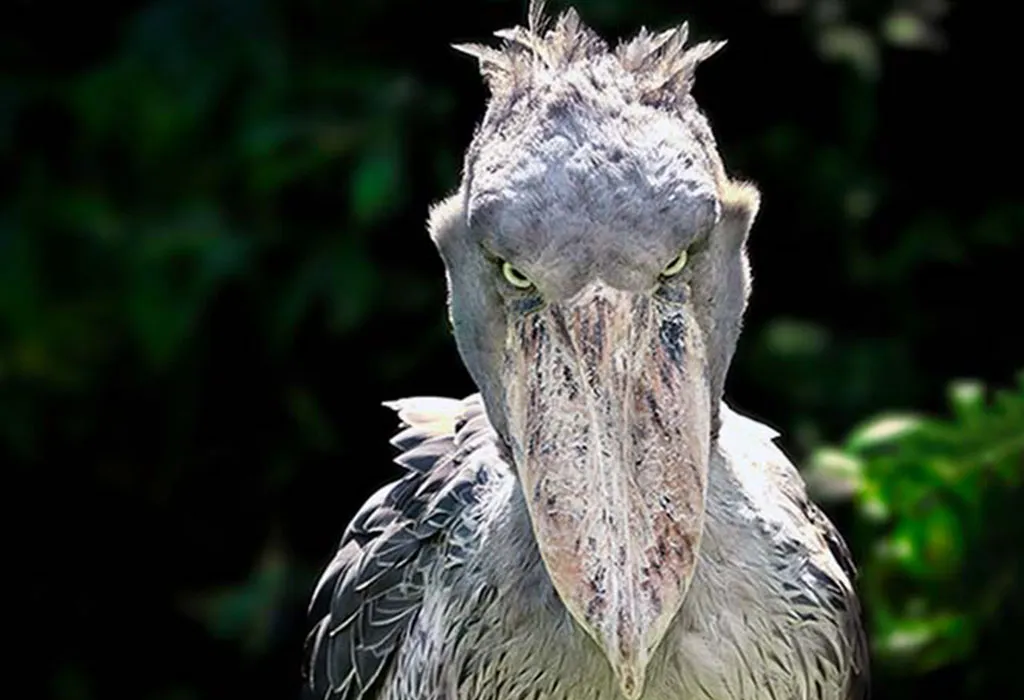
The shoebill stork, scientific name Balaeniceps rex, is a huge African wetland bird instantly recognized by its massive clog-shaped bill. Despite the familiar common name, it is not a true stork. Modern classification places the shoebill in its own family, Balaenicipitidae, and genetic evidence links it more closely with pelican relatives. For travelers this distinction matters less than the field impression: a tall slate-grey bird with broad wings, long dark legs, pale eyes and a bill that looks oversized even on a bird that can stand well over a meter high.
The shoebill stork is a patient ambush hunter. It may stand almost motionless for long periods before striking with explosive speed at fish or other aquatic prey. That stillness is why first-time observers sometimes miss the bird even when it is in open view. A good guide searches likely feeding edges, floating vegetation and gaps in papyrus rather than looking only for movement. On an Uganda Birding Safari, this hunting style becomes one of the most fascinating behaviors to watch.
How Big Is the Shoebill Stork?
Adults are among Africa’s largest wetland birds. Published measurements vary, but they are commonly around 110–140 centimeters tall, with a wingspan that can exceed two meters. The broad wings make a flying bird look surprisingly graceful after its statue-like posture on the ground. The bill is the defining feature: deep, wide, hooked at the tip and built to seize powerful prey in shallow water. The bird’s size is part of the attraction, but respectful viewing distance is essential because getting too close can change feeding behavior or cause an individual to retreat into cover.
How Long Does a Shoebill Live?
Shoebills are long-lived birds. Exact wild longevity is difficult to document across remote swamps, while captive records tend to be clearer. Travelers should therefore treat lifespan figures as broad biological estimates rather than a guarantee for any individual bird. What matters for conservation is that a slow-living species cannot quickly replace adults or chicks lost to habitat degradation, disturbance or illegal capture. Long life, slow breeding and specialized shoebill habitat make protection of productive wetlands especially important.
Where Do Shoebills Live? Shoebill Habitat and African Range
The natural range is centered on tropical East-Central Africa, where extensive freshwater swamps provide shallow hunting water, floating vegetation and dense emergent plants. Countries within the broader range include Uganda, South Sudan, western Ethiopia, Rwanda, eastern Democratic Republic of the Congo, Tanzania and Zambia. They are not evenly distributed across that map. The bird depends on very specific wetland structure, and large areas that look suitable at first glance may not hold regular shoebills.
Classic shoebill habitat combines papyrus, reeds, sedges, open channels and floating plant mats. This specialized shoebill habitat is the ecological reason the bird occurs in scattered strongholds rather than everywhere there is water. Slow or poorly oxygenated water can favor lungfish, one of the best-known prey items. The bird’s long toes help distribute its weight over unstable vegetation. For visitors, this explains why a narrow canoe in a papyrus maze can be more effective than a large boat: access to quiet, shallow channels is often central to the search. Uganda also makes these wetlands relatively easy to combine with African Safaris focused on mammals and primates.

Why Papyrus Wetlands Matter
Papyrus wetlands are living systems, not empty marshes. They filter water, support fish nurseries, buffer shorelines, hold carbon and provide resources for nearby communities. A shoebill stork depends on this network of water, plants, prey and nesting sites. When drainage, burning, unregulated harvesting or shoreline development changes the wetland, the effect can move through the food web. Bird tourism can help create economic value for intact wetlands when local guiding, canoe services and community enterprises benefit directly from visitors. Travelers building a longer Uganda birding safari can then carry the same low-impact approach into forests, savannahs and lakes.
Shoebill in Uganda: Where Are the Best Places to See One?
For a traveler searching specifically for a shoebill in Uganda, three names repeatedly appear in practical planning: Mabamba Swamp on Lake Victoria, the Nile–Lake Albert delta in Murchison Falls National Park, and wetland systems connected to other western and central Uganda reserves. For a first shoebill in Uganda search, Mabamba is usually the most convenient specialist option because it can be reached from the Entebbe area without building a multi-day safari around the bird. Murchison offers a broader experience because the search may be combined with river scenery, mammals and game drives.
1. Mabamba Swamp: The Classic Shoebill Search
Mabamba Swamp lies on the Lake Victoria wetland system and is famous among visiting birders for guided canoe searches through papyrus channels. It fits naturally at the beginning or end of a trip because Entebbe International Airport is the country’s main air gateway. For a shoebill stork encounter, the strongest plan is an early start, unhurried time on the water and a guide who knows current feeding areas. Bird locations change, so previous sightings are useful clues, not promises.
A typical morning at Mabamba Swamp is about more than one species, even when the shoebill stork is the headline target. Depending on season and water level, visitors can also look for herons, egrets, jacanas, kingfishers, African fish eagles, papyrus specialists and many other wetland birds. That broader perspective keeps the excursion rewarding even if the star bird remains distant or hidden. Travelers with extra time can pair the swamp with Entebbe Botanical Gardens or another local birding stop rather than rushing straight back to the city.

2. Murchison Falls and the Nile–Lake Albert Delta
Murchison Falls National Park is a strong option for travelers who want the shoebill stork as one objective within a larger wildlife itinerary. The lower Nile and delta near Lake Albert create broad shoebill habitat, and specialist boat trips can target areas where the bird is known to occur. This is very different from a tight papyrus canoe route: the landscape is larger, sightings may be more distant, and the experience can include hippos, crocodiles, waterbirds and the wider river ecosystem.
Because Murchison is a full safari destination, it works well for travelers already considering Activities in Murchison Falls National Park or a 3 Days Murchison Falls Safari. Ask specifically whether the itinerary includes a delta-focused birding outing; a standard launch cruise to the falls is not automatically the same as a specialist shoebill search.
3. Ziwa, Queen Elizabeth and Other Wetlands
Other Uganda wetlands can produce the shoebill stork, although reliability varies with local conditions. Ziwa Rhino Sanctuary in Uganda can add wetland birding to a northern route, while Queen Elizabeth National Park offers huge bird diversity around lakes, channels and marshes. Travelers using these places should view the shoebill as a possible specialist target, not the only reason to visit. The wider safari value remains strong even when a particular individual is elsewhere.
Want to Build a Shoebill-Focused Morning?
Share your travel date, arrival airport and wider safari route. A planner can help place Mabamba or another wetland into the trip without creating unnecessary transfers.
Email: info@ugandarwanda-safaris.com
Best Time to See a Shoebill Stork in Uganda
A shoebill stork can be searched for throughout the year in Uganda, and a well-planned shoebill in Uganda excursion does not depend on a single month because the key populations are resident rather than seasonal migrants. The most consistent advice from current travel guides is to prioritize the time of day: early morning is usually best for cooler conditions, softer light and active feeding. Seasonal rainfall still matters because it changes road access, water level, vegetation density and how easily canoes move through channels.
What Is the Best Time of Day at Mabamba Swamp?
Dawn and the first few hours after sunrise are the preferred window at Mabamba Swamp. For a shoebill stork search, morning water is often calmer, heat is lower and the wetland is quieter. The shoebill in Uganda may be standing at a feeding edge or moving from a roosting area before later activity increases. Photographers also benefit from lower-angle light. A very early departure from Top Things to do in Entebbe area accommodation is usually more productive than leaving Kampala after traffic has built.
Dry Season vs Rainy Season
The drier windows, broadly around December to February and June to September, are popular because road conditions are often easier and rain interruptions may be less frequent. Lower water levels can concentrate fish in accessible channels, but nature does not follow a fixed calendar. Rainier months can bring dramatic green scenery, breeding activity among many birds and fewer visitors. If the shoebill stork is your priority, choose an early morning with a skilled guide rather than obsessing over a single “perfect” month.
If the birding day is part of a longer Uganda birding safari or Uganda Safaris itinerary, set dates around the least flexible activity. Gorilla permits, chimpanzee permits or high-demand lodges can be harder to change than a Mabamba outing. The wetland search can then be placed on an arrival or departure morning with enough buffer for weather and traffic.
What Does the Shoebill Stork Eat?
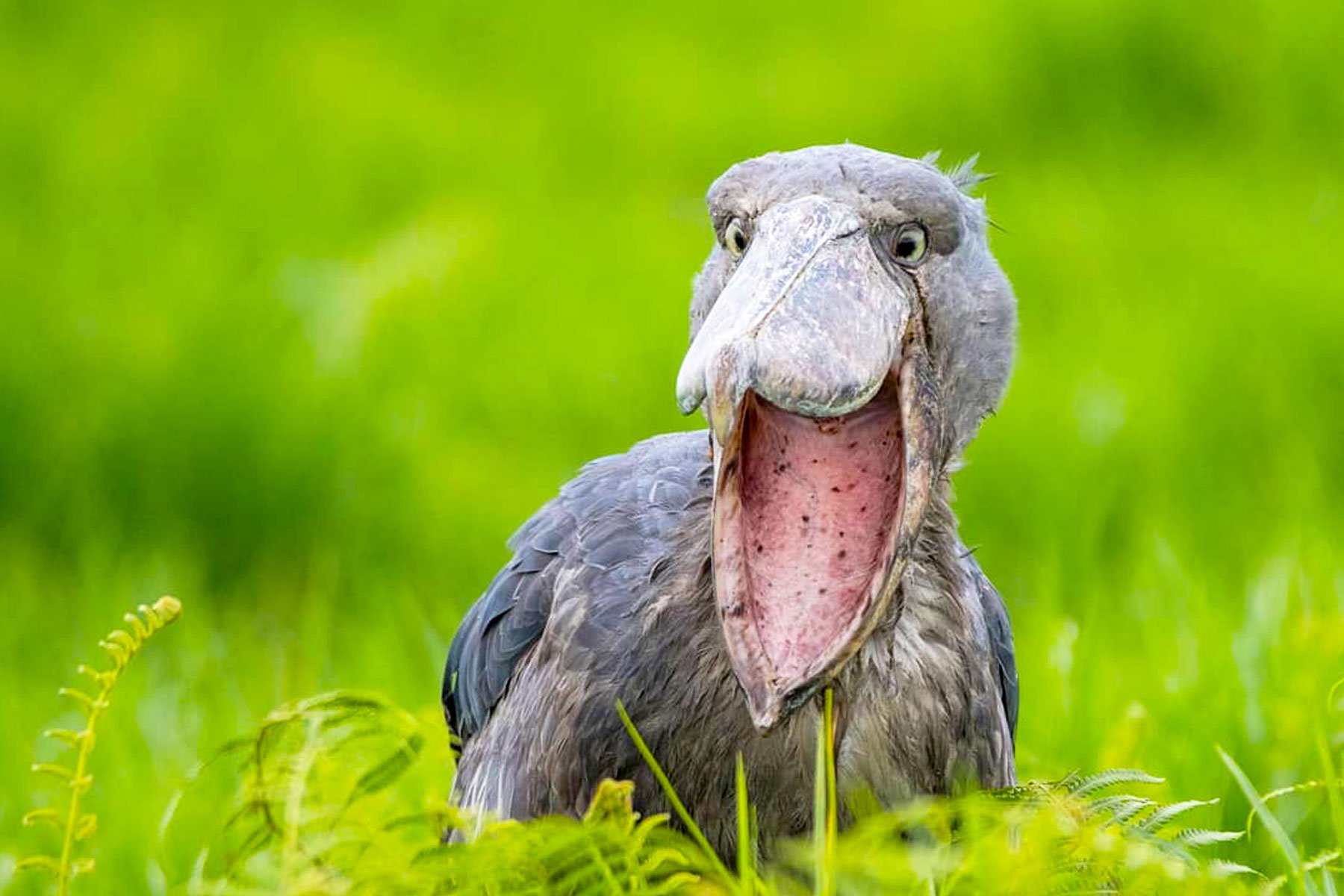
The shoebill stork is a carnivore and an ambush predator, and this feeding strategy is tightly linked to shoebill habitat with shallow, prey-rich water. Lungfish are strongly associated with its ecology, but the diet can also include catfish, tilapia and other fish, frogs, snakes and other aquatic animals. Reports sometimes mention young crocodiles or waterbirds; these are exceptional items rather than the best way to describe the daily diet. The safest field expectation is a large bird standing motionless at the edge of shallow water, waiting for a fish to move within striking range.
How Does a Shoebill Hunt?
The classic shoebill stork hunting sequence is slow and controlled. The bird watches the water, leans forward and may remain frozen for minutes. When prey appears, it lunges headfirst with enormous force, opening the bill and often taking water and vegetation with the target. It then regains balance, manipulates the catch and swallows. Observing this sequence is one reason a dedicated Uganda birding safari can be more satisfying than simply collecting a quick photograph. Time lets behavior unfold.
Good guides avoid pushing a canoe directly toward a feeding bird. Approaching from an angle, stopping at a respectful distance and letting the individual continue hunting produces better natural behavior. The same principle applies throughout Birding: patient observation is more valuable than forcing proximity.
Shoebill Behavior: Why Does It Stand So Still?
For the shoebill stork, stillness is an energy-efficient hunting strategy in dense wetlands. A shoebill stork does not need to chase every fish. Instead, it waits where prey must surface or cross an opening. The bird may look almost mechanical until the instant it attacks. Shoebills are generally solitary hunters, though pairs come together for breeding and individuals may share productive areas at a distance. Their slow movements and serious expression contribute to the “prehistoric” impression that makes them famous online.
Do Shoebills Make Sounds?
Adults are often quiet, but bill-clattering is a memorable sound, especially around breeding behavior. The bill can be snapped rapidly to produce a hollow machine-gun-like rattle. Chicks may make begging calls. Visitors should never imitate calls or use playback around sensitive birds unless a qualified local guide and site rules explicitly permit it; disturbance is unnecessary when careful visual searching works.
Can Shoebills Fly?
Yes. Their large wings carry them strongly across wetlands, though visitors more often encounter them standing or walking slowly. In flight the neck is typically retracted, similar to pelicans and herons, and the broad wings produce a heavy but graceful silhouette. Seeing a bird take off over papyrus can be one of the most impressive moments of a shoebill in Uganda outing, but no guide should pressure or flush a bird just to create a flight photograph.
Shoebill Breeding, Nests and Chicks
The shoebill stork builds large nests on floating or emergent vegetation in secluded wetland areas. Breeding timing varies with rainfall and water conditions across the species’ range. A pair may lay more than one egg, but typically only one chick survives to fledging. This low reproductive output makes shoebill habitat protection especially important and is one reason the shoebill stork needs careful conservation. This is important when thinking about conservation: repeated nest disturbance or loss of adult birds can affect a local population for years.
Nesting areas should be approached with exceptional care. Responsible guides keep away from active nests unless there is an authorized research or conservation reason to be nearby. A tourist photograph is never worth causing adults to leave eggs or chicks exposed. The best shoebill habitat is therefore not just feeding water—it includes quiet nesting zones where birds can complete the breeding cycle without repeated intrusion.
Is the Shoebill Stork Endangered? Conservation Status Explained
The shoebill stork is classified as Vulnerable, and any shoebill in Uganda tourism plan should recognize that conservation context on the IUCN Red List, and the global population is considered to be declining. Major pressures include wetland conversion, disturbance, fire, livestock and human activity in breeding areas, and illegal trade. Because the species is naturally sparse and reproduces slowly, local losses can be difficult to replace. The conservation message for travelers is practical: intact wetlands, responsible guiding and community benefit matter.
Choosing locally guided wetland trips creates a direct economic reason to keep birds and habitat valuable alive. Visitors can also follow simple field rules: keep noise low, avoid litter, do not request nest visits, do not ask guides to push closer than the bird tolerates, and never buy wildlife products. Travelers planning broader wildlife routes can extend the same ethics to Kazinga Channel Boat Cruise and other water-based experiences.

How to Plan a Uganda Birding Safari Around the Shoebill
A focused Uganda birding safari can be as short as one dedicated morning, while a specialist Uganda birding safari can continue for several weeks or as long as several weeks. The right design depends on whether the shoebill stork is your only target or one part of a larger list. First-time visitors often begin with Mabamba, then add forest birds in Kibale or Bwindi, savannah species in Murchison or Queen Elizabeth, and local specialties around Lake Mburo. That habitat contrast produces a much richer birding experience than repeating similar wetlands.
One-Day Birding Plan From Entebbe
For a simple shoebill in Uganda day, leave early, reach Mabamba before the heat builds, spend two or three hours on the water and return with time for lunch or a second local stop. This structure works well for travelers arriving through Entebbe and not yet ready for a long road transfer. An afternoon can include the gardens, lakeshore birding or rest before the safari begins. A Birdwatching experience in Entebbe can therefore complement the wetland morning without another hotel move.
Three-Day Birding Extension
A short Uganda birding safari extension can combine Mabamba Swamp with another ecosystem, such as Lake Mburo, a central forest or the route north toward Murchison. For a ready-made birding structure, compare a 3 Days Uganda Birding Safari or Uganda 3-day Birding Safari. The key is to avoid spending most of the three days in traffic. Choose two contrasting habitats that sit naturally along the same route.
Longer Birding and Primate Combinations
A Uganda birding safari is especially strong for combining birds with primates. After searching for the shoebill stork, travelers can continue to Kibale for Chimpanzee tracking experience, then move toward Bwindi for mountain gorillas and Albertine Rift birds. A 10 Days Uganda Birding Safari and Gorilla Trekking style route works because each stop has a clear ecological purpose.
If mammals matter as much as birds, a northern circuit can combine the shoebill in Uganda with rhino tracking and the Nile. 1 Day Ziwa Rhino Sanctuary tour or a multi-day Murchison route adds large mammals without abandoning birding. This is often more satisfying for mixed-interest couples or families than a trip built entirely around species lists.
Turn the Bird Into a Complete Uganda Route
Tell us whether you want a single Mabamba morning, a specialist Uganda birding safari, or a mixed birding-and-wildlife itinerary.
Design My Uganda Birding Safari →
Email: info@ugandarwanda-safaris.com
Shoebill Photography Tips: Camera, Lens and Canoe Technique
The best shoebill stork photograph usually comes from stability, patience and clean background separation rather than extreme closeness. In a canoe, keep equipment simple. A mid-to-long telephoto zoom is more flexible than carrying several heavy lenses, and image stabilization helps when the boat moves. Bring spare batteries, enough memory cards and a dry bag. A beanbag or small support may be useful if it can be handled quietly and safely.
Best Lens for Mabamba Swamp
For the shoebill stork, a lens reaching roughly 300–500mm on a full-frame camera gives useful flexibility for birds at varying distances, while shorter focal lengths can capture the surrounding shoebill habitat. Exact equipment matters less than handling speed: the bird may stand still for ten minutes and then strike in less than a second. Set a shutter speed that can freeze the lunge, use continuous autofocus and leave enough frame around the bill and wings.
Ask the guide to position the canoe without cutting off escape routes or entering dense vegetation around the bird. Morning light at Mabamba Swamp can be beautiful, but exposure can be tricky when grey plumage sits against bright water. Check highlights, use exposure compensation if needed and avoid firing endless bursts when the bird is resting. Ethical fieldcraft improves the image and the experience.
What to Wear and Pack for a Shoebill Stork Trip
Wear neutral, breathable clothing, a sun hat and footwear that can handle mud or wet landings. Bring sunscreen, insect repellent, drinking water, a light rain layer and binoculars. A dry bag is one of the most useful items for phones, passports and cameras. If the trip starts before sunrise, a light fleece can be comfortable on the drive or boat, even though the day may become hot later.
Birders extending into western parks should pack for greater variety. Forests can be wet and cool, savannah drives dusty, and boat trips sunny. If the itinerary includes Lake Mburo National Park or Bigodi Wetland Sanctuary, lightweight walking shoes and rain protection become even more useful. Keep valuable optics close rather than placing them in hard-to-reach luggage during transfers.
How Much Time Do You Need at Mabamba Swamp?
Allow at least a relaxed morning for a dedicated shoebill stork search. Two to three hours on the water is common, but transfer time, local conditions and bird movements can extend the outing. Do not schedule an international departure immediately after the expected return. Traffic near Entebbe and Kampala, road conditions, rain and boat logistics can all change the timing. If you have a same-day flight, build a conservative buffer.
Travelers with more time can use the morning as the first chapter of a wider Lake Victoria day. The Lake Victoria Uganda shoreline supports many birding and cultural possibilities, and the slower pace reduces pressure on the guide to “produce” a shoebill quickly. The goal is to enjoy the wetland even before the target species appears.
Can You Combine Shoebill Birding With Gorillas, Chimps or Big Game?
Yes, and this is one of the biggest strengths of a shoebill in Uganda itinerary. A shoebill stork morning near Entebbe can lead into completely different ecosystems over the following days. Travelers interested in primates can continue to Kibale and Bwindi, while big-game travelers can choose Murchison, Queen Elizabeth or Lake Mburo. The most efficient route depends on available nights, whether you prefer road or domestic flights, and which controlled permits have already been secured.
A popular contrast is birds plus primates. Compare Gorilla trekking Uganda-Rwanda with Chimpanzee Trekking Safari to decide how much forest trekking belongs in the itinerary. Another option is a north-to-south wildlife journey using 6 Days Gorillas and Murchison Falls Safari as a planning reference, then adding Mabamba before or after the main circuit.
Responsible Shoebill Viewing: Rules for a Better Encounter
The best shoebill stork sighting is one that leaves the bird behaving naturally. Keep voices low, follow the guide’s instructions and avoid surrounding an individual with several boats. Never feed wildlife, throw objects to make a bird move, play repeated calls, approach an active nest or ask a guide to flush a resting shoebill stork for a flight shot. If the bird begins moving away repeatedly, stretching its neck toward the canoe or abandoning a feeding position, give it more space.
Responsible behavior also extends to the community. Use authorized local guides, pay agreed fees fairly, ask before photographing people and buy refreshments or crafts where appropriate. A healthy tourism economy can reinforce wetland protection. Travelers who want broader ethical context can compare conservation-minded routes such as Private Uganda Safaris -African Wildlife Safari Tours rather than choosing purely on the cheapest headline price.
Frequently Asked Questions About the Shoebill Stork
Is a shoebill stork really a stork?
No. The common name is traditional, but the species belongs to its own family and is more closely related to pelican-line birds than to true storks. The name remains useful for travelers because it is the term most guides, search engines and safari companies use.
Why is the shoebill called the “whale-headed” bird?
Its scientific family name and older English names refer to the enormous head and deep bill. The bill resembles a wooden shoe or clog, which explains the modern common name. Both names describe its striking silhouette rather than separate species.
Where is the easiest place to see a shoebill in Uganda?
For many visitors, Mabamba Swamp is the most practical target because it is close to Entebbe and has a long-established local guiding system. Murchison Falls is excellent when the search is part of a multi-day wildlife safari.
What is the best time to see the shoebill in Uganda?
The species can be searched for year-round. Early morning is usually the strongest daily window at Mabamba wetland. Drier seasons can simplify access, while rainy months can still be productive and visually beautiful.
Are shoebill sightings guaranteed?
No ethical wildlife operator can guarantee a free-ranging bird. Experienced guides improve the odds by knowing current feeding areas and recent observations, but water levels, weather, disturbance and natural movements always influence the result.
What does the shoebill stork eat?
Fish are central to the diet, especially lungfish and catfish in suitable wetlands. It can also take frogs, snakes and other aquatic prey. Its huge bill is designed for a sudden, forceful strike rather than chasing prey over distance.
Is the shoebill dangerous to people?
A wild shoebill stork is not an animal tourists should approach or handle. In normal guided birding, they are observed from a respectful distance and are not considered a routine threat to visitors. Give every wild bird space and follow the guide.
Can children visit Mabamba wetland?
Families can enjoy wetland birding, but parents should consider canoe size, flotation equipment, sun exposure, sitting time and each child’s comfort around water. Ask the operator about age guidance and safety procedures before booking.
Can I see shoebills and rhinos on the same safari?
Yes. A northern route can combine Mabamba or another wetland with Ziwa and Murchison. This is useful for travelers who want both specialist birding and large mammals without adding a completely separate journey.
What other birds can I see at Mabamba?
The wetland supports a broad waterbird community, and sightings can include jacanas, herons, egrets, kingfishers, raptors and papyrus-associated species. Exact lists vary by season and the channels visited, which is why binoculars are useful even after the shoebill appears.
Shoebill Stork Trip Planning Checklist
Before you go:
- Choose whether the shoebill stork is the main target or one part of a wider route.
- Book an early Mabamba wetland start when possible.
- Confirm the meeting point, transfer time, canoe arrangement and safety equipment.
- Bring binoculars, rain protection, sun protection and a dry bag.
- Tell the guide if photography or a Uganda birding safari species list is your priority.
- Leave a generous airport buffer if birding on departure day.
- Respect feeding birds, breeding areas and local community rules.
- Keep expectations realistic: sightings are likely at good sites, never guaranteed.
For travelers still comparing trip structures, Frequently Asked Uganda Safari Questions can help with wider logistics, while Booking Uganda Safaris provides a natural next step once dates, interests and budget are clear.
Final Takeaway: Why the Shoebill Stork Is Worth the Journey
The shoebill stork earns its reputation not because it is constantly active, but because every detail rewards attention: the huge bill, pale stare, slow steps, absolute stillness and sudden hunting strike. Uganda gives travelers a particularly practical way to search for it, with Mabamba wetland near Entebbe and larger safari options in Murchison and other wetlands. The strongest experience is built around time, habitat and good guiding rather than a rushed checklist.
Treat the shoebill in Uganda as a doorway into wetland ecology and a reason to understand shoebill habitat rather than only the bird itself. Learn how papyrus supports fish, how communities use and protect the swamp, why water levels matter, and how patient birding differs from a game drive. Then connect that morning with forests, savannahs or primate trekking if your schedule allows. A thoughtful route can turn one famous bird into a much deeper understanding of Uganda’s landscapes and wildlife.
Ready to Search for the Shoebill Stork?
Send your dates, number of travelers, preferred trip length and whether you want birds only or a complete Uganda safari.
Start Planning My Shoebill Safari →
Email: info@ugandarwanda-safaris.com


