Explore the Ishasha Sector and the Kazinga Channel

Explore the Ishasha Sector and the Kazinga Channel

An elephant, hippo and abundant waterbirds gather along the Kazinga Channel, showcasing the exceptional wildlife viewing available in Queen Elizabeth National Park.
Queen Elizabeth National Park is one of Uganda’s most diverse wildlife destinations, and two of its most rewarding areas are the Ishasha Sector and the Kazinga Channel. Although both are part of the same national park, they offer remarkably different safari experiences.
The Kazinga Channel is famous for its extraordinary concentration of hippos, crocodiles, elephants, buffaloes and waterbirds. A boat cruise provides a relaxed way to observe wildlife gathering along the shoreline while enjoying views across one of Uganda’s most important aquatic ecosystems.
Ishasha, on the other hand, feels quieter and more remote. Its open savannah plains are internationally known for tree-climbing lions, while topis, elephants, Uganda kobs and other animals make the southern sector an excellent game-viewing destination.
Visiting both areas gives travelers a much broader understanding of Queen Elizabeth National Park. One day may involve cruising quietly past hippos and elephants, while the next can be spent searching the Ishasha plains for lions resting in fig trees.
Discovering Queen Elizabeth National Park
Queen Elizabeth National Park lies in western Uganda and contains an impressive mixture of savannah, wetlands, forests, lakes and volcanic landscapes.
The park’s varied habitats support a wide range of mammals and birds, making it suitable for travelers who want more than a conventional game drive.
One of its greatest attractions is the ability to experience different ecosystems without traveling enormous distances.
The northern and central parts of the park include the Kazinga Channel, Mweya Peninsula and surrounding game-viewing areas. Farther south, the landscape gradually leads into the remote Ishasha Sector before continuing toward Bwindi Impenetrable National Park.
This geography makes Queen Elizabeth particularly convenient for travelers combining a wildlife safari with mountain gorilla trekking.
The Kazinga Channel

Local fishermen prepare their nets beside traditional boats as a marabou stork stands nearby along the Kazinga Channel in Queen Elizabeth National Park.
The Kazinga Channel is one of the defining natural features of Queen Elizabeth National Park.
Stretching for approximately 32 kilometers, this natural waterway connects Lake George with Lake Edward.
Its permanent water attracts wildlife from the surrounding grasslands, making the shoreline an important feeding, drinking and resting area.
Unlike a game drive, where animals may disappear behind vegetation or move away from the road, a boat cruise provides a completely different perspective.
From the water, visitors can watch animals approaching the shoreline while the boat moves slowly along the channel.
Taking a Boat Cruise on the Kazinga Channel
A boat cruise is one of the most popular activities in Queen Elizabeth National Park.
Cruises generally operate at scheduled times and take visitors along productive sections of the channel where wildlife frequently gathers.
The experience normally lasts around two to three hours.
Because the boat travels slowly, passengers have plenty of time to observe wildlife, take photographs and enjoy the surrounding landscape.
One of the biggest advantages of the cruise is the opportunity to see several species within a relatively small area.
Instead of searching across large expanses of savannah, visitors can watch wildlife naturally gathering around an essential water source.
Hippos Along the Kazinga Channel
Hippos are among the most noticeable animals on a Kazinga Channel cruise.
Large groups can often be seen partially submerged in the water, particularly during the warmer parts of the day.
Some rest close together while others surface periodically before disappearing beneath the water again.
Their presence creates excellent opportunities to observe hippo behavior from a safe distance.
Visitors may hear their characteristic calls long before the boat reaches them.
The channel environment also provides opportunities to see hippos away from the crowded groups, particularly along quieter stretches of shoreline.
Although they may appear relaxed in the water, hippos are powerful wild animals. Observing them from a properly operated safari boat provides a much safer and more comfortable experience than attempting to approach them from land.
Crocodiles and Other Aquatic Wildlife
Nile crocodiles are another important species found around the Kazinga Channel.
They may be seen resting along exposed banks or lying almost completely concealed near the water’s edge.
Some individuals can grow to impressive sizes.
Their stillness makes them surprisingly easy to overlook, which is why experienced guides are useful for identifying animals hidden against muddy banks.
Waterbucks are also regularly associated with the shoreline, while other antelope may approach the water to drink.
The variety changes throughout the day as different animals move between grazing areas, woodland and water.
Elephants and Buffaloes at the Water
Some of the most memorable Kazinga Channel encounters involve elephants.
Herds may approach the shoreline to drink, bathe and cool themselves.
Watching elephants from the water provides a different perspective from seeing them during a game drive.
Young elephants may remain close to their mothers, while larger individuals stand partly submerged or spray themselves with water.
Cape buffaloes are also common around the channel.
Large herds sometimes gather near the water, particularly when conditions are dry and animals depend more heavily on permanent water sources.
The combination of buffaloes, elephants, hippos and waterbirds can make sections of the shoreline exceptionally active.
Wildlife movements remain natural and unpredictable, however, so every boat cruise is different.
Birdwatching on the Kazinga Channel
The Kazinga Channel is also an excellent destination for birdwatching.
The mixture of open water, marshes, muddy banks and surrounding vegetation creates suitable habitat for numerous aquatic and terrestrial bird species.
African fish eagles are among the most recognizable.
Their striking appearance and distinctive calls make them a favorite for many visitors.
Pied kingfishers can often be seen hovering over the water before diving in pursuit of fish.
Yellow-billed storks search shallow areas for food, while pelicans may gather along quieter stretches of shoreline.
Other species can appear throughout the cruise depending on water levels, season and local conditions.
For bird photographers, the boat provides opportunities to approach some species from a reasonable viewing distance without disturbing them.
A pair of binoculars can make the experience even more rewarding.
Photography on the Kazinga Channel
The Kazinga Channel offers excellent photography opportunities because much of the wildlife is viewed from an open position on the water.
Animals gathering at the shoreline can often be photographed with relatively uncluttered backgrounds.
Elephants entering the water, buffaloes standing along the banks and hippos surfacing near the boat can produce memorable images.
Bird photography is another major attraction.
Because the boat is constantly moving, photographers should keep their equipment ready and use suitable protection against water and changing weather.
The quality of light varies considerably during the day.
Morning departures can offer softer light, while afternoon cruises may provide dramatic scenes as animals gather near the water.
Exploring the Ishasha Sector
After experiencing the busy wildlife activity around the Kazinga Channel, traveling south to Ishasha reveals a very different side of Queen Elizabeth National Park.
The Ishasha Sector is characterized by open savannah, scattered trees, woodland and riverine vegetation.
It generally feels more remote than the park’s central areas.
The quieter atmosphere is one of Ishasha’s greatest attractions.
Game drives can involve long periods exploring the plains with relatively few other safari vehicles nearby.
For travelers who enjoy wilderness, photography and predator tracking, this can make Ishasha one of the most memorable parts of a Uganda wildlife safari.
The Famous Tree-Climbing Lions of Ishasha
The animals most closely associated with Ishasha are its tree-climbing lions.
Lions are capable of climbing trees in different parts of Africa, but regular tree-climbing behavior is particularly famous in a small number of destinations.
Ishasha is one of them.
The lions may be found resting on branches of large fig trees after moving through the plains.
Seeing a full-grown lion stretched across a branch several meters above the ground is an unusual sight.
Several explanations have been suggested for the behavior.
Resting above the ground may help lions avoid insects, escape some of the heat at ground level or simply provide a comfortable resting position and elevated view of the surrounding plains.
Whatever the reason, the behavior has become one of Uganda’s most recognizable wildlife experiences.
Finding the lions is never guaranteed.
They move naturally through a large ecosystem and may sometimes remain on the ground or in areas that are difficult to observe.
For this reason, visitors should view tree-climbing lion sightings as a special wildlife encounter rather than something that can be promised on every game drive.
Wildlife Beyond the Tree-Climbing Lions
Although lions receive most of the attention, Ishasha has much more to offer.
Topis are among the characteristic antelopes of the sector.
Their distinctive coloration and preference for open grasslands make them relatively easy to recognize.
Uganda kobs can also be encountered across the plains.
Elephants move through the sector, sometimes appearing in woodland areas or crossing open landscapes.
Buffaloes and other herbivores contribute to the diversity of wildlife.
Leopards also occur in the wider ecosystem, although their secretive behavior makes sightings much less predictable.
This variety means an Ishasha game drive should never focus exclusively on finding lions.
Taking time to appreciate the landscape and other wildlife often produces a much richer safari experience.
The Ishasha Landscape
Ishasha’s scenery is an important part of its appeal.
Open grasslands stretch toward patches of woodland and riverine vegetation, creating a classic East African safari landscape.
Large fig trees scattered across the plains provide both visual interest and important resting places for wildlife.
The openness of the landscape can make it easier to scan for animals over considerable distances.
It also creates excellent conditions for landscape and wildlife photography.
Early mornings and late afternoons can be particularly attractive because lower sunlight adds depth to the grasslands and trees.
Rather than rushing through Ishasha on the way to another destination, travelers with sufficient time should consider allowing at least one proper game drive.
Kazinga Channel vs Ishasha Sector
The Kazinga Channel and Ishasha Sector complement each other because they offer such different experiences.
Kazinga is centered on water.
The main attraction is the boat cruise, where wildlife can be observed gathering along the channel’s banks.
Hippos, crocodiles, elephants, buffaloes and waterbirds are among the major highlights.
Ishasha is a land-based wilderness experience.
Game drives explore open plains in search of tree-climbing lions, topis, elephants and other savannah wildlife.
Kazinga can feel relatively busy because it is one of Queen Elizabeth National Park’s most popular attractions.
Ishasha generally feels quieter and more remote.
Visiting both therefore provides a more complete safari than choosing only one.
Traveling Between the Kazinga Channel and Ishasha
The Ishasha Sector lies south of the main Kazinga Channel area.
Driving between them normally takes several hours depending on road conditions, wildlife stops and the exact starting point.
The journey should be treated as part of the safari rather than simply a transfer.
Wildlife can sometimes be encountered along the route, and the changing landscape reveals how diverse Queen Elizabeth National Park is.
Travel times may increase during wet conditions when some roads become rough or muddy.
A suitable safari vehicle is therefore important, especially when visiting during wetter months.
Best Time to Visit Ishasha and Kazinga Channel
Both areas can be visited throughout the year.
The generally drier periods from June to August and December to February are popular because roads are often easier to navigate.
Animals may also concentrate more predictably around permanent water sources during dry conditions.
The wetter months bring greener landscapes and can be rewarding for photography and birdwatching.
However, heavy rain may make some tracks more difficult, particularly in remote sections of Ishasha.
Even during the dry season, weather cannot be guaranteed.
Visitors should prepare for changing conditions and allow some flexibility in their itinerary.
Where to Stay
Several accommodation options can be used when exploring Queen Elizabeth National Park.
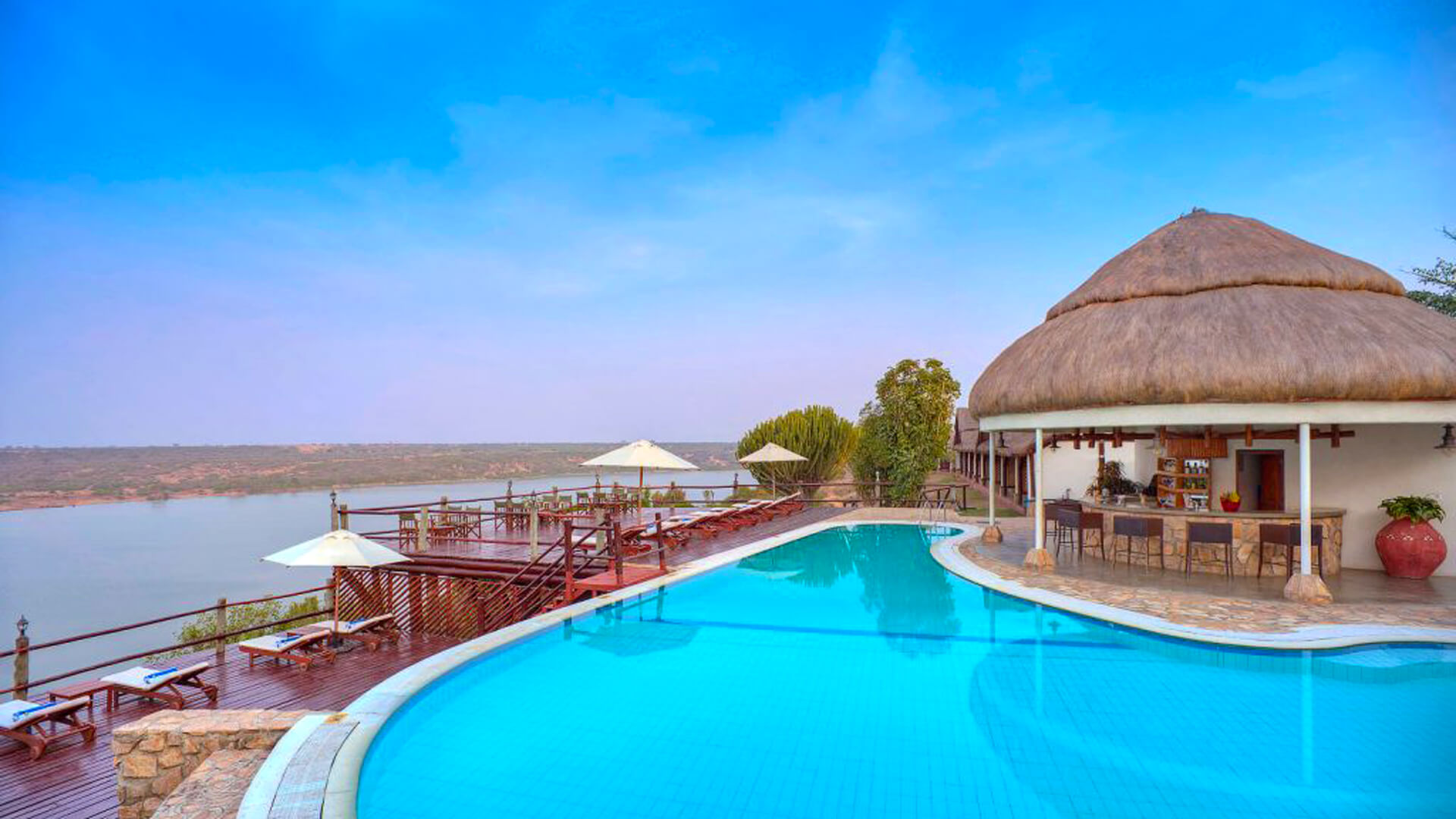

Budget and mid-range lodges are also available around the wider park.
The right accommodation depends on budget, itinerary and how much time you want to spend in each area.
Combining Ishasha With Gorilla Trekking
One of the biggest advantages of visiting Ishasha is its position between the main areas of Queen Elizabeth National Park and Bwindi Impenetrable National Park.
Travelers can enjoy the Kazinga Channel before driving south through Ishasha and continuing toward Bwindi.
This creates an excellent transition from savannah wildlife to rainforest primates.
A typical journey might begin with game drives and a Kazinga Channel cruise before moving to Ishasha for tree-climbing lions.
The safari can then continue to Bwindi for mountain gorilla trekking.
This route reduces unnecessary backtracking while combining several of southwestern Uganda’s strongest wildlife experiences.
How Many Days Should You Spend in Queen Elizabeth National Park?
Two or three days can provide a useful introduction to the park, although longer stays allow more relaxed wildlife viewing.
One day can focus on the central area, combining a morning game drive with an afternoon boat cruise on the Kazinga Channel.
The following day can be used to travel south toward Ishasha and take a game drive in search of lions and other wildlife.
Travelers continuing to Bwindi can then proceed south after their Ishasha experience.
Those with additional time can add another game drive, birdwatching, chimpanzee tracking in the wider Queen Elizabeth ecosystem or other activities.
The best itinerary depends on the overall length of the Uganda safari.
Responsible Wildlife Viewing
Both Ishasha and the Kazinga Channel are protected wildlife environments.
Visitors should follow park regulations and instructions from guides and rangers.
Vehicles should remain on designated tracks unless specific park rules allow otherwise.
Animals should never be surrounded, chased or pressured for photographs.
This is especially important when several vehicles locate lions.
Giving animals sufficient space helps reduce disturbance and allows visitors to observe more natural behavior.
During boat cruises, passengers should follow the instructions of the boat crew and avoid actions that could disturb animals along the shoreline.
Responsible tourism helps protect the wildlife that makes Queen Elizabeth National Park such an important safari destination. Visitors can also consult the Uganda Wildlife Authority for official information about Uganda’s protected areas.
Planning an Ishasha and Kazinga Channel Safari
The easiest way to experience both areas is to include them within a broader Queen Elizabeth National Park itinerary.
A well-paced trip can begin with a game drive in the central part of the park followed by an afternoon Kazinga Channel boat cruise.
The next stage can take you south into Ishasha.
Allowing enough time for a proper game drive is important because tree-climbing lions are wild animals and locating them may require patience.
From Ishasha, travelers can continue toward Bwindi or return north depending on the wider itinerary.
A Kazinga Channel and tree-climbing lion safari can also incorporate additional wildlife experiences elsewhere in western Uganda.
Final Thoughts
Exploring the Ishasha Sector and the Kazinga Channel reveals two very different sides of Queen Elizabeth National Park.
The Kazinga Channel provides close views of an aquatic ecosystem filled with hippos, crocodiles, elephants, buffaloes and numerous birds.
A boat cruise offers a relaxed contrast to the game drives that dominate most African safaris.
Ishasha changes the experience completely.
Its open plains, scattered fig trees and quieter atmosphere create a more remote wilderness setting. Searching for tree-climbing lions adds excitement, but the sector’s topis, elephants, antelopes, birds and landscapes are equally important parts of the experience.
Combining the two areas makes particular sense for travelers continuing south toward Bwindi.
Instead of treating Queen Elizabeth National Park as a short stop between destinations, spending enough time around Kazinga and Ishasha provides a deeper understanding of Uganda’s extraordinary wildlife diversity.
Whether you are watching elephants drink beside the Kazinga Channel, photographing hippos from a safari boat or scanning Ishasha’s fig trees for resting lions, these two destinations provide some of the most distinctive wildlife experiences in southwestern Uganda.