
Uganda Safari for Photographers: The Ultimate Introduction to Wildlife and Nature Photography in Uganda
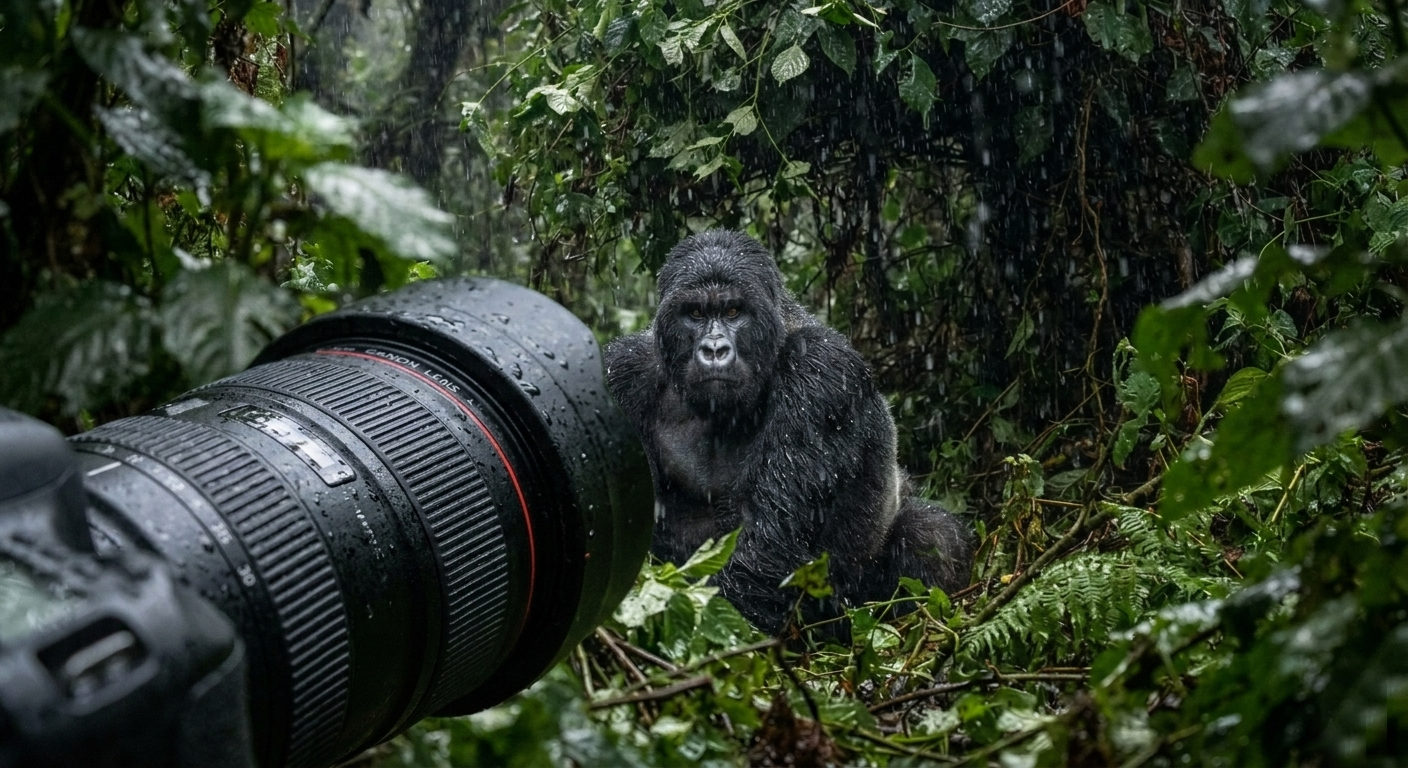
Capturing crisp images in the dark canopy of Uganda’s rainforests.
A Uganda Safari for Photographers offers an extraordinary opportunity to photograph some of Africa’s most compelling wildlife, primates, birds, landscapes and cultural scenes within one remarkably diverse destination. Uganda brings together mist-covered tropical forests, open savannahs, wetlands, volcanic mountains, crater lakes and the River Nile, giving photographers an impressive variety of subjects and environments without requiring several separate African trips. Whether your ambition is photographing a silverback mountain gorilla in the rainforest, capturing a lion moving through golden grass, freezing the wings of a kingfisher above a river or creating atmospheric landscape photographs at sunrise, Uganda provides exceptional possibilities.
Safari Vacations and Travel Services designs a Uganda Safari for Photographers around the needs of photographers rather than treating photography as an ordinary addition to a conventional safari. Photography changes how an itinerary should operate. Photographers often require earlier departures, longer observation periods, carefully selected vehicle positions, additional time with promising subjects and the flexibility to wait for changing light or animal behavior. Our Uganda safari specialists can build private journeys that combine these photographic priorities with comfortable transport, knowledgeable guiding and carefully selected destinations.
Uganda is particularly attractive because photographic opportunities change dramatically from one region to another. In Bwindi Impenetrable National Park, photographers enter a dense rainforest environment dominated by greens, shadows, mist and filtered natural light. In Queen Elizabeth National Park, the visual language changes to open plains, crater landscapes, waterways and large mammals. Murchison Falls National Park introduces the Nile, waterfalls, riverine wildlife and broad savannah scenery, while Kibale offers intimate forest photography focused on chimpanzees and other primates. This diversity allows a Uganda Safari for Photographers to become a complete visual journey rather than a safari centered exclusively on conventional game drives.
Why Uganda Is an Exceptional African Photography Safari Destination
One of Uganda’s greatest strengths for photographers is the extraordinary concentration of different ecosystems within the country. A carefully designed photography itinerary can move from wetlands and savannahs to tropical forests and highlands, giving photographers opportunities to create a varied portfolio. Instead of returning home with hundreds of visually similar photographs, travelers can capture wildlife portraits, environmental images, landscapes, birds, primates, waterways, forests and human-interest photographs.
Photographers researching a Uganda Safari for Photographers should therefore think beyond simply counting the number of animals they might encounter. The quality of photographic opportunities depends on habitat, light, viewing position, time available with subjects and the ability of guides to anticipate wildlife behavior. Uganda rewards patient photographers because its ecosystems offer opportunities for both classic wildlife images and more creative environmental compositions.
Our wider guide to Uganda attractions demonstrates how dramatically the country’s landscapes and experiences vary. This diversity is especially valuable to photographers interested in producing a visual story of Uganda rather than concentrating on one species.
A Uganda Safari for Photographers can also accommodate different levels of experience. Professional wildlife photographers may arrive carrying multiple camera bodies, long telephoto lenses and specialized support systems, while enthusiastic travelers may use a mirrorless camera with one versatile zoom lens. Some visitors simply want to improve the photographs they bring home. The itinerary should reflect those differences. Safari Vacations and Travel Services can tailor the pace, destinations and logistics according to the photographer’s equipment, interests and level of experience.
Mountain Gorilla Photography in Bwindi Impenetrable National Park
For many travelers, the defining moment of a Uganda Safari for Photographers is entering Bwindi Impenetrable National Park to photograph mountain gorillas. Gorilla photography differs fundamentally from photographing wildlife on open savannahs. Photographers work inside dense vegetation where light levels can change rapidly and subjects may appear against complicated backgrounds. The experience requires concentration, familiarity with camera controls and an ability to react quickly to subtle behavior.
Uganda’s mountain gorillas provide opportunities for powerful portrait photography. The expression of an adult silverback, interaction between a mother and infant, juveniles playing or a gorilla feeding quietly among vegetation can produce memorable images. Photographers can read our dedicated guide to gorilla photography when preparing specifically for these demanding rainforest conditions.
Bwindi contains different trekking sectors, and choosing where to stay and trek can influence the overall safari logistics. Understanding the Bwindi sectors is therefore important when building a photography-focused itinerary. Safari Vacations and Travel Services considers trekking arrangements, accommodation location, driving time and the wider safari route before recommending a particular sector.
Photographers who want considerably more time around gorillas may also investigate the primate habituation experience. Extended observation can be particularly valuable for serious photographers because more time increases the possibility of encountering varied behavior, changing compositions and different lighting conditions. However, forest photography always remains unpredictable, which is part of its attraction.
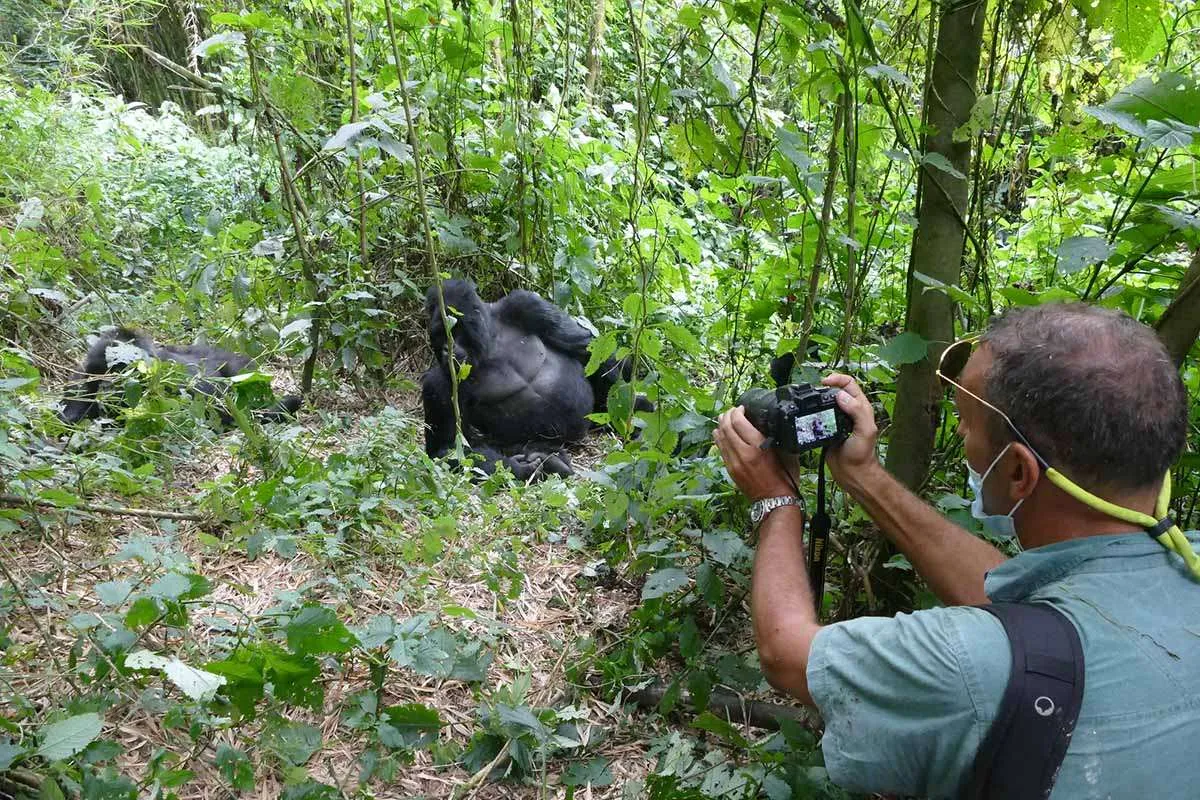
Gorilla trekking provides remarkable photography opportunities as visitors observe and photograph mountain gorillas in their natural forest habitat while following responsible trekking guidelines.
Photographing Lions, Elephants and Savannah Wildlife
A complete Uganda Safari for Photographers should balance rainforest photography with Uganda’s savannah environments. Queen Elizabeth National Park and Murchison Falls National Park provide excellent contrasts to Bwindi and Kibale. Here photographers can work with larger mammals, more open backgrounds and changing morning and evening light.
Queen Elizabeth National Park offers opportunities to photograph elephants, buffaloes, antelopes, hippos and numerous bird species, while predators can provide some of the most exciting encounters. The Ishasha area is particularly associated with tree-climbing lions, although wildlife sightings can never be guaranteed. A lion resting in a fig tree can create an environmental photograph that immediately communicates a sense of place rather than simply presenting a tightly cropped animal portrait.
Patience is important on a Uganda Safari for Photographers. An ordinary game drive may move on shortly after identifying an animal, but photographers often benefit from remaining with a promising subject. A resting lion may eventually stand, elephants may move into better light, or an antelope positioned against an unattractive background may walk into a cleaner composition. Private safari arrangements give photographers greater control over these decisions.
Murchison Falls provides another distinct photographic environment. Wildlife photography can be combined with river scenery and the immense visual character of the Nile. Elephants, giraffes, buffaloes and antelopes can be photographed across the savannah, while river excursions introduce hippos, crocodiles and water-associated birds. Photographers interested in comparing Uganda’s broader safari character can explore our Uganda safari comparison for additional perspective on what makes the destination distinctive.
 Chimpanzee and Primate Photography in Uganda
 Chimpanzee and Primate Photography in Uganda
A Uganda Safari for Photographers becomes even more rewarding when chimpanzee photography is included. Kibale National Park creates a completely different photographic challenge from savannah game viewing. Chimpanzees can move quickly, vegetation can obstruct compositions and light under the forest canopy may be limited. Photographers therefore need to balance shutter speed, aperture and ISO while remaining ready for sudden changes in behavior.
The challenge is precisely what makes primate photography so rewarding. Chimpanzees display complex social interactions and expressive behavior. Grooming, feeding, resting, climbing and communication can all create strong storytelling photographs. Instead of concentrating exclusively on tight portraits, photographers should look for opportunities to include the surrounding forest. These environmental compositions communicate something about the ecosystem in which the primates live.
Travelers interested in maximizing time with primates can learn more about Uganda’s habituation safaris. Combining gorillas and chimpanzees is particularly attractive to wildlife photographers because the two experiences demand different photographic techniques and produce distinctly different images.
Bird Photography on a Uganda Safari for Photographers
Bird photography deserves a significant place in a Uganda Safari for Photographers. Wetlands, forests, savannahs, lakes and river systems support an exceptional variety of birdlife, giving photographers subjects throughout the journey rather than only during dedicated birding excursions. Even photographers who arrive primarily interested in mammals often discover that birds become an important part of their Uganda portfolio.
Uganda offers opportunities to photograph everything from large waterbirds and raptors to colorful forest species. Locations such as Mabamba Wetland, Murchison Falls, Queen Elizabeth, Kibale, Bwindi, Semuliki and Lake Mburo provide different habitats and photographic possibilities. Our guide to Uganda birds introduces some of the species photographers may encounter.
Bird photography benefits greatly from experienced guiding. Locating a bird is only the beginning; photographers also need a usable angle, suitable background and enough time to anticipate movement. A knowledgeable guide can recognize calls, understand preferred habitats and help position the vehicle or photographer without unnecessarily disturbing the subject.
Landscape and Environmental Photography Across Uganda
Wildlife may be the principal reason for booking a Uganda Safari for Photographers, but landscapes provide essential visual context. Uganda’s scenery can be photographed as a subject in its own right and as the background to wildlife images. Mist drifting through Bwindi, the Virunga volcanoes rising beyond southwestern Uganda, crater lakes around Queen Elizabeth National Park and the Nile cutting through Murchison Falls all contribute to the country’s photographic identity.
Photographers should make deliberate use of early and late light whenever the itinerary allows. Sunrise can transform mist, grasslands and distant hills, while evening light can add depth and warmth to environmental wildlife photographs. Cloudy conditions should not automatically be considered disappointing. Soft light can be particularly useful for primates, forest scenes and portraits because it reduces harsh contrast.
Those interested in combining nature and people can also consider carefully planned cultural experiences. Respectful photography should always prioritize consent and genuine interaction rather than treating communities as photographic props.
Why a Private Safari Works Better for Serious Photographers
Flexibility can determine whether a photography safari produces ordinary snapshots or genuinely memorable images. Shared tours generally operate according to fixed schedules and the interests of several travelers. A private Uganda Safari for Photographers gives the photographer much greater influence over pacing. There may be opportunities to leave the lodge earlier, remain longer at productive sightings or concentrate on a specific subject rather than continuously searching for new animals.
Vehicle positioning also matters. Wildlife photography often depends on small differences in angle. Moving several meters can eliminate distracting vegetation, improve the relationship between subject and background or change the direction of light. Safari Vacations and Travel Services therefore recommends discussing photographic priorities before departure so that guides understand whether the traveler is concentrating on birds, mammals, primates, landscapes, video or a combination of subjects.
Accommodation selection should similarly support the photographic schedule. Staying conveniently located relative to activities can reduce unnecessary driving and make early starts easier. Travelers seeking a balance between comfort and price can explore our guide to Uganda safari lodges while developing their route.
Planning Your Uganda Safari for Photographers with Safari Vacations and Travel Services
The strongest Uganda Safari for Photographers begins with understanding what the photographer actually wants to create. A traveler primarily interested in gorillas requires a different itinerary from someone seeking lions, elephants and birds. A professional photographer carrying substantial equipment has different vehicle and luggage considerations from a traveler using one camera and a lightweight zoom lens. Safari Vacations and Travel Services can tailor the journey around these priorities rather than forcing every photographer into the same standard itinerary.
Planning may include private transport, carefully sequenced national parks, strategically located accommodation, gorilla or chimpanzee permits and enough time at each destination to avoid turning the journey into a race between parks. Photographers interested in additional filming considerations should also understand that specialized equipment and activities can involve separate regulations; our information about drone filming provides useful introductory guidance for travelers considering aerial or professional filming work.
Ultimately, a Uganda Safari for Photographers should be designed around light, wildlife behavior, patience and flexibility. Uganda gives photographers the unusual possibility of moving from intimate mountain gorilla portraits to chimpanzees beneath a rainforest canopy, lions on the savannah, elephants beside waterways, colorful birds, dramatic landscapes and meaningful cultural photographs within one journey.
Safari Vacations and Travel Services uses local knowledge to build photography-focused journeys around the traveler’s interests, available time, preferred comfort level and photographic ambitions. Whether you are planning your first dedicated wildlife photography trip or expanding a professional African portfolio, a carefully organized Uganda Safari for Photographers can provide an extraordinary range of subjects and visual stories. Explore our Uganda safaris, consider combining several photography destinations, and allow enough time for Uganda’s wildlife, forests, landscapes and changing light to become the foundation of a truly distinctive photographic journey.
Best Photography Destinations in Uganda for Wildlife, Primates, Birds and Landscapes
Choosing the right destinations is one of the most important parts of planning a Uganda Safari for Photographers. Uganda is unusually rewarding because photographers can work in several dramatically different environments during the same journey. Dense tropical forests provide intimate encounters with mountain gorillas and chimpanzees, open savannahs create opportunities for photographing lions, elephants and other large mammals, wetlands support remarkable birdlife, and lakes, rivers, mountains and volcanic landscapes provide countless opportunities for landscape photography. A well-designed Uganda Safari for Photographers should therefore combine destinations according to the photographer’s main subjects, available time, preferred pace and photographic style.
Safari Vacations and Travel Services designs photography itineraries with more than destination names in mind. Light, driving distances, wildlife activity, accommodation location and the amount of time available at sightings can all influence the quality of a photography safari. Serious photographers often prefer fewer destinations with more time in each location instead of rushing between national parks. This creates opportunities to revisit productive areas, wait for better light and spend longer observing animal behavior. Travelers beginning their research can explore our Uganda safaris while considering which combination of parks best matches their photographic ambitions.
Bwindi Impenetrable National Park for Mountain Gorilla Photography
Bwindi Impenetrable National Park should be high on the list for almost any Uganda Safari for Photographers focused on primates. The ancient rainforest protects mountain gorillas and creates one of Africa’s most distinctive wildlife photography environments. Unlike photographing mammals from a safari vehicle, gorilla photography takes place on foot inside dense forest. Photographers must work with changing light, vegetation, uneven terrain and unpredictable subject positions, making preparation especially important.
The photographic rewards can be extraordinary. A silverback sitting among lush vegetation can produce a powerful environmental portrait, while close facial expressions can reveal remarkable detail. Young gorillas playing, mothers carrying infants and family members grooming each other provide storytelling opportunities. Photographers planning this experience should study mountain gorilla photography before traveling so that camera settings and equipment choices are familiar before entering the forest.
Bwindi is divided into different trekking areas, and the location selected can influence the wider Uganda Safari for Photographers itinerary. Some travelers may want to combine gorilla trekking with Queen Elizabeth National Park, while others may continue toward Lake Bunyonyi, Mgahinga or Rwanda. Understanding the Bwindi trekking sectors helps photographers appreciate why accommodation and route planning should be completed together rather than independently.
Photographers should also consider whether one gorilla trek is sufficient. One trek can produce excellent photographs, but wildlife never follows a script. Lighting, gorilla movement and vegetation differ every day. Serious photographers may therefore prefer two trekking days when budget and time permit. Repeating the experience can provide another chance to work with different behavior, conditions and compositions.
Queen Elizabeth National Park for Classic Wildlife Photography
Queen Elizabeth National Park provides an excellent transition from rainforest photography to traditional African wildlife photography. It is one of the most useful destinations on a Uganda Safari for Photographers because it combines open wildlife areas, wetlands, crater landscapes and the Kazinga Channel. This mixture allows photographers to work with mammals, birds, landscapes and aquatic wildlife without changing destinations every day.
Morning game drives can provide opportunities to photograph elephants, buffaloes, Uganda kobs and other wildlife in softer light. Predators such as lions may also be encountered, although sightings are naturally never guaranteed. Photographers should avoid judging a game drive solely by the number of species recorded. Sometimes a single cooperative animal in excellent light produces stronger photographs than numerous hurried sightings.
The Ishasha sector is famous for its association with tree-climbing lions. When lions are located resting in fig trees, photographers can create unusual environmental compositions showing both the animal and the surrounding landscape. Longer focal lengths can isolate individual lions, while wider compositions can emphasize the distinctive behavior and habitat. Travelers combining gorillas with savannah wildlife can examine our gorilla and wildlife safari information when planning the route.
The Kazinga Channel adds another dimension to a Uganda Safari for Photographers. Boat-based viewing can provide lower perspectives on hippos, buffaloes, elephants, crocodiles and numerous waterbirds. Photographers should keep cameras ready because interactions can develop quickly along the shoreline. A zoom lens can be particularly useful because subjects may range from nearby birds to larger animals standing farther from the boat.
Murchison Falls National Park for Wildlife and Nile Photography
Murchison Falls National Park is another outstanding destination for a Uganda Safari for Photographers. Its broad savannah landscapes, wildlife, river environments and powerful waterfall provide an unusually varied collection of photographic subjects. Photographers can spend mornings exploring wildlife areas before changing perspective during a boat excursion on the Nile.
The park offers opportunities to photograph giraffes, elephants, buffaloes, antelopes, warthogs and other mammals, while predators may also be encountered. Giraffes are particularly effective subjects for environmental compositions because their height and distinctive shape work beautifully against open landscapes and dramatic skies. Photographers should consider both tight portraits and wider frames that communicate the scale of the surrounding environment.
The Nile is equally important photographically. Hippos, crocodiles and waterbirds can often be observed during boat excursions, while elephants and other mammals may appear along the banks. Approaching Murchison Falls by water also provides a completely different visual story from the wildlife photographs created during game drives.
Photographers considering longer itineraries can combine the park with Ziwa Rhino Sanctuary, creating opportunities to add rhino photography to the journey. Such combinations help make a Uganda Safari for Photographers more diverse without sacrificing the overall wildlife focus.
Kibale National Park for Chimpanzee and Forest Photography
Kibale National Park deserves a place on a Uganda Safari for Photographers centered on primates. Chimpanzee photography is faster and often more technically demanding than many photographers initially expect. Chimpanzees can move quickly through vegetation, climb trees, or change direction without warning. Forest light can also be limited, making fast camera operation and careful exposure management essential.
The challenge produces highly rewarding photographs. Chimpanzees grooming, feeding, communicating or resting can reveal complex social behavior. Instead of concentrating exclusively on faces, photographers should watch hands, gestures and interactions between individuals. These details can help build a stronger visual narrative.
Combining chimpanzees with mountain gorillas creates one of the most compelling versions of a Uganda Safari for Photographers. The two primates live in different photographic environments and behave differently, resulting in a much broader portfolio. Travelers interested in spending additional time around primates can investigate primate habituation options when developing their itinerary.
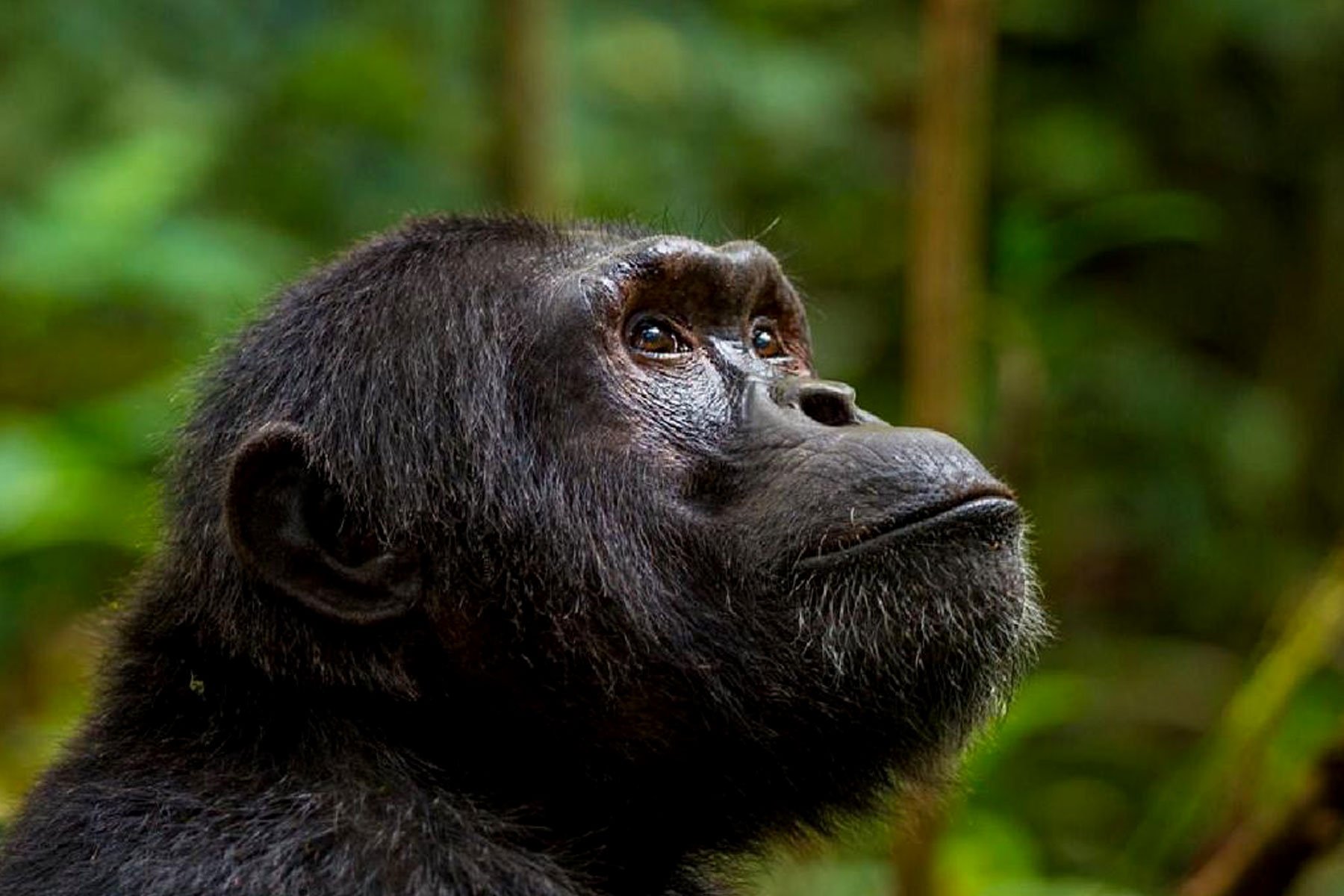
A chimpanzee in a lush tropical forest, highlighting the remarkable primate encounters visitors can experience while chimpanzee tracking in Kibale National Park, Uganda.
Lake Mburo National Park for Intimate Wildlife Photography
Lake Mburo National Park can be particularly useful for photographers who want a quieter wildlife environment and different perspectives. Its landscapes of woodland, grassland and lakes provide a contrast to Uganda’s larger savannah parks. Zebras are among the park’s most recognizable photographic subjects, while impalas and other wildlife add variety to a Uganda Safari for Photographers.
One of the advantages of Lake Mburo is the possibility of approaching wildlife photography differently from standard vehicle-based game drives where permitted and professionally guided. A walking safari can encourage photographers to think more carefully about habitat, tracks, smaller details and environmental compositions. The slower pace can help photographers notice elements that are easily overlooked from a vehicle.
Lake Mburo can also fit conveniently into longer overland itineraries between western Uganda and Entebbe or Kampala. Photographers researching a broader route can explore Uganda national parks to understand how each protected area contributes different photographic possibilities.
Mgahinga Gorilla National Park for Volcano and Primate Photography
Mgahinga Gorilla National Park offers a different visual character from Bwindi. Located within the Virunga landscape of southwestern Uganda, the park combines rainforest, bamboo vegetation, and dramatic volcanic scenery. For photographers, this creates opportunities to combine primate photography with mountain landscapes.
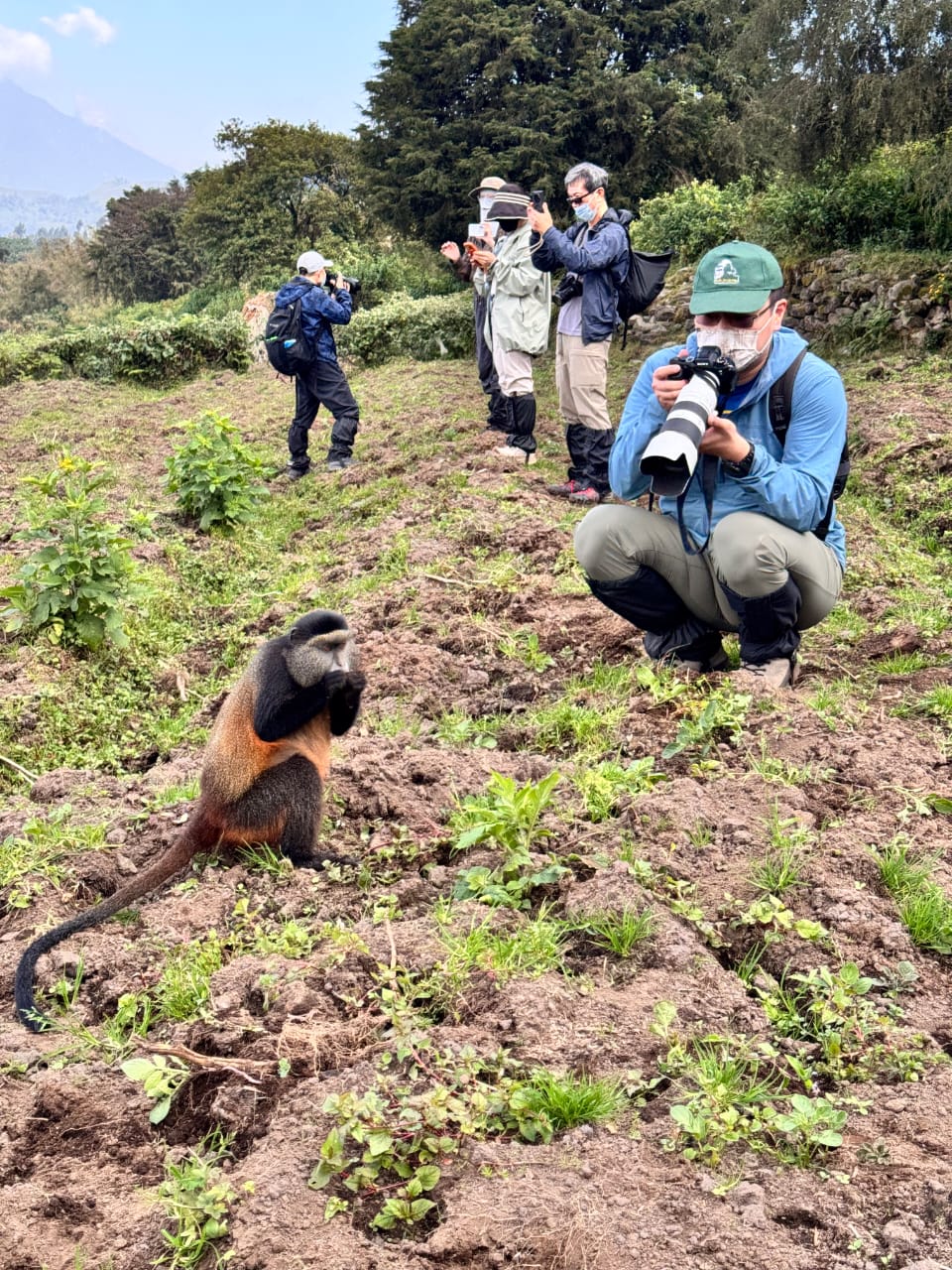
Mountain gorilla trekking is possible in Mgahinga, while golden monkey tracking introduces another highly photogenic primate. Golden monkeys can be challenging subjects because they move quickly through vegetation, but their distinctive coloring can produce striking images when lighting and positioning come together.
The Virunga volcanoes also provide strong landscape possibilities. Photographers who enjoy incorporating dramatic terrain into their Uganda Safari for Photographers should consider allowing time for scenic photography rather than treating Mgahinga only as a trekking location. Our Mgahinga gorilla trekking guide provides additional context for planning this part of the journey.
Mabamba Wetland for Shoebill and Bird Photography
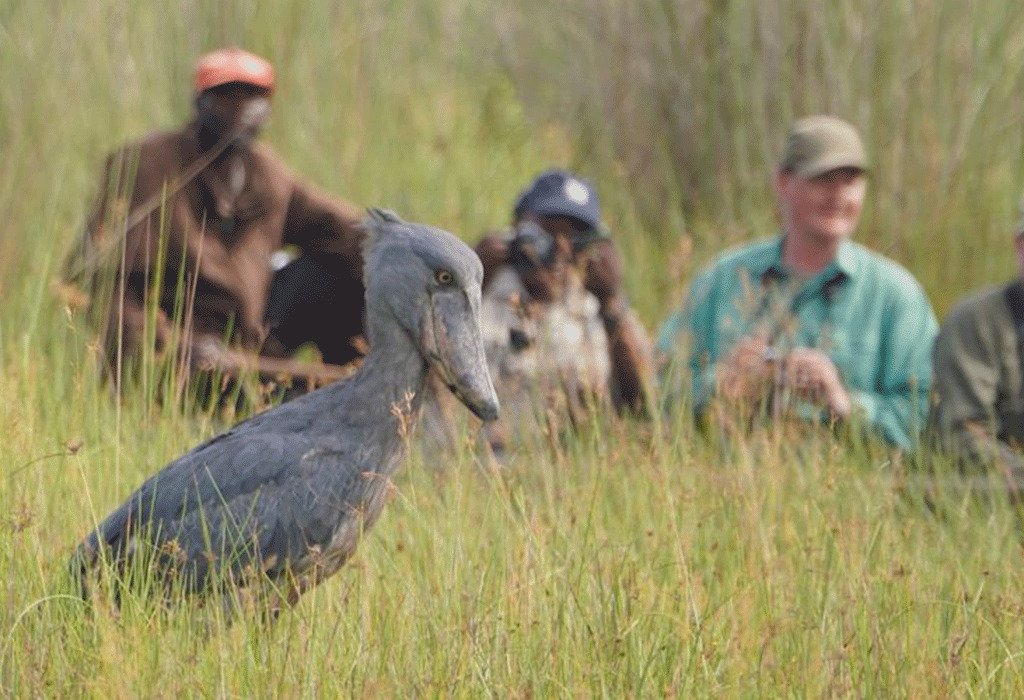
A Uganda Safari for Photographers can begin or end with one of Uganda’s most distinctive bird photography experiences: searching for the shoebill around Mabamba Wetland. The shoebill’s prehistoric appearance, enormous bill and patient hunting behavior make it one of Africa’s most recognizable bird photography subjects.
Wetland photography creates different compositional possibilities from forest and savannah environments. Reflections, aquatic vegetation, narrow channels and changing morning light can all become part of the photograph. Longer lenses are useful for isolating birds, while wider compositions can show the relationship between a shoebill and its wetland habitat.
Photographers should remember that a successful bird photography session is not simply about recording the species. Head angle, background, light direction, and behavior can transform an identification photograph into a compelling wildlife image. Travelers interested in expanding their bird photography opportunities can read more about birds in Uganda.
Rwenzori Mountains and Uganda’s Dramatic Landscape Photography
Not every Uganda Safari for Photographers needs to concentrate exclusively on animals. Landscape photographers can find exceptional subjects in the Rwenzori Mountains, volcanic southwestern Uganda, crater regions, lakes and highland scenery. The Rwenzoris offer an especially dramatic departure from conventional safari photography, with mountain vegetation, valleys, mist, streams and rugged peaks creating opportunities for more adventurous photographers.
Weather becomes part of the creative process in mountain photography. Clouds and mist can obscure distant views but also create atmosphere and depth. Photographers willing to work with changing conditions rather than waiting only for clear skies can produce images that communicate the character of Uganda’s mountain environments.
Lake Bunyonyi is another attractive landscape photography location, particularly when combined with gorilla trekking in southwestern Uganda. Its islands, cultivated hills, and changing morning atmosphere can provide a relaxing photographic contrast after physically demanding forest trekking.
How Safari Vacations and Travel Services Combines Uganda’s Best Photography Destinations
The ideal Uganda Safari for Photographers does not necessarily include every destination. Trying to photograph too much within a short itinerary can reduce the quality of the overall experience. Photographers need time. Wildlife behavior cannot be scheduled, weather changes unexpectedly, and the strongest photographs often emerge after waiting rather than constantly moving.
Safari Vacations and Travel Services therefore designs photography safaris according to the photographer’s priorities. A primate-focused journey might concentrate on Bwindi, Mgahinga and Kibale. A wildlife photography itinerary might emphasize Murchison Falls, Queen Elizabeth and Lake Mburo. A comprehensive Uganda Safari for Photographers can combine gorillas, chimpanzees, savannah wildlife, birds and landscapes over a longer journey.
Travelers can also consider the best time to visit Uganda when deciding how seasonal conditions may affect landscapes, vegetation, trails and photography. Different seasons can create different visual opportunities rather than simply producing a single universally perfect period.
Ultimately, destination selection should support the photographs you want to create. Bwindi delivers intimate gorilla encounters, Kibale introduces energetic chimpanzee photography, Queen Elizabeth combines wildlife and waterways, Murchison Falls provides the Nile and broad savannah scenery, Mgahinga adds volcanoes and primates, Mabamba creates specialized bird photography opportunities, and Uganda’s mountains and lakes provide essential landscape variety.
By combining these environments carefully, Safari Vacations and Travel Services can transform a conventional wildlife trip into a purpose-built Uganda Safari for Photographers. The objective is not simply to visit as many parks as possible, but to place photographers in promising environments with sufficient time, suitable logistics and knowledgeable local guiding to capture the wildlife, landscapes and moments that make Uganda visually extraordinary.
Best Time for a Uganda Safari for Photographers: Seasons, Weather, Light and Wildlife Photography
Choosing the best time for a Uganda Safari for Photographers depends on what you want to photograph rather than simply selecting the driest months of the year. Uganda is a year-round safari destination, and every season creates different photographic opportunities. Dry months generally offer easier road conditions, shorter vegetation in some savannah areas and more comfortable trekking conditions, while wetter periods can deliver greener landscapes, dramatic skies, atmospheric forest scenes and excellent conditions for photographers who prefer vibrant natural colors.
Safari Vacations and Travel Services recommends planning a Uganda Safari for Photographers around photographic priorities, destinations and the type of images a traveler wants to create. A photographer primarily interested in mountain gorillas may consider trekking conditions and forest light, while someone concentrating on lions, elephants and other savannah wildlife may prioritize vegetation, water availability and morning or evening game drives. Bird photographers may have completely different seasonal interests. Understanding these variations makes it easier to design a photography safari that goes beyond simply choosing between a wet and dry season.
Travelers beginning their seasonal research can explore our best time to visit Uganda guide before deciding when to travel. The most important point is that there is no single perfect month for every photographer. The best season is the one that matches your subjects, photographic style and tolerance for changing weather.
Photographing Uganda During the June to September Dry Season
June through September is one of the most popular periods for a Uganda Safari for Photographers. Rainfall is generally lower in many safari regions, although Uganda’s tropical climate means rain can still occur at any time, particularly around rainforest destinations. These months are popular with photographers combining mountain gorilla trekking, chimpanzee tracking and traditional wildlife safaris.
In savannah destinations, comparatively drier conditions can make wildlife viewing productive because animals may concentrate around dependable water sources. Vegetation can also become less dense in some areas, potentially providing cleaner views and backgrounds. Queen Elizabeth National Park and Murchison Falls National Park can therefore be rewarding components of a Uganda Safari for Photographers during this period.
Dry conditions can also make travel and trekking more manageable. Bwindi remains a humid rainforest, but trails may be less muddy than during wetter periods. This can be important when photographers are carrying camera bodies, telephoto lenses and other equipment through challenging terrain. Our Bwindi gorilla trekking information can help travelers understand the experience before choosing their travel dates.
However, popularity has consequences. Peak-season accommodation and permits can be in greater demand, so photographers planning a Uganda Safari for Photographers during these months should arrange important components well in advance. Early planning is particularly valuable when multiple gorilla treks or specific lodges are required.
December to February for Wildlife and Primate Photography
December through February is another attractive period for a Uganda Safari for Photographers. These months often fall within a comparatively drier period in many regions and can work well for travelers escaping the Northern Hemisphere winter. Photographers can combine gorillas, chimpanzees, game drives, boat safaris and bird photography within one itinerary.
Morning and evening sessions remain particularly valuable. Photographers should be prepared to start early because the first hours of daylight can provide softer illumination and more attractive shadows than the stronger midday sun. Late afternoon can produce another excellent window for environmental wildlife photography.
Photographers should nevertheless avoid assuming that dry season means completely dry weather. Bwindi and Kibale are rainforest environments where showers remain possible. Waterproof protection for cameras and lenses should therefore remain part of the packing strategy regardless of travel month. Travelers preparing for gorilla photography can review our gorilla trekking packing list when deciding what to carry into the forest.
March to May for Green Landscapes and Atmospheric Photography
The wetter period from roughly March through May can be highly rewarding for photographers willing to work with changing conditions. A Uganda Safari for Photographers during these months can reveal intensely green landscapes, dramatic cloud formations and atmospheric forest environments that differ significantly from drier-season imagery.
Rain should not automatically be regarded as an obstacle to photography. Wet vegetation can become saturated with color, cloud cover can soften harsh contrast, and moisture can add mood to rainforest photographs. Gorilla portraits surrounded by wet leaves, mist and dark forest backgrounds can communicate the environment beautifully.
The challenge is protecting equipment and remaining comfortable. Photographers should carry reliable rain covers for cameras and lenses, waterproof bags or dry sacks for sensitive equipment and suitable clothing for themselves. Trails can become slippery, and movement through the forest may be slower. Porters can be especially useful when carrying equipment through difficult terrain.
For photographers who value mood, texture and environmental storytelling, this wetter season can produce some of the most distinctive images of a Uganda Safari for Photographers. Travelers interested in understanding how conditions affect trekking can read more about the best time for gorilla trekking.
October and November Photography Safaris
October and November can bring wetter conditions to many parts of Uganda, but they should not be dismissed by photographers. Landscapes can become richly green, skies can be dramatic and forest photography can benefit from softer light. A Uganda Safari for Photographers during this period can suit travelers who appreciate atmospheric conditions and are comfortable preparing for rain.
Changing weather can also create interesting photographic transitions. A morning may begin under heavy clouds, followed by sunlight breaking through after rain. Such conditions can create shafts of light, reflections and more dramatic skies than continuously clear weather.
Photographers should maintain flexible expectations. Rain may temporarily change a game drive, trekking experience or photography session, but it rarely means that an entire safari becomes unproductive. In many cases, the conditions immediately before or after rain can be visually compelling.
Best Time for Mountain Gorilla Photography
Mountain gorilla trekking operates throughout the year, meaning a Uganda Safari for Photographers can include gorilla photography in virtually any month. The decision therefore comes down to the photographer’s priorities. Drier periods may provide somewhat easier trekking conditions, while wetter months can produce lush backgrounds and atmospheric rainforest images.
Forest light is one of the biggest technical considerations. Gorilla encounters frequently take place beneath a dense canopy, where available light can be limited. Photographers should be comfortable increasing ISO and maintaining sufficiently fast shutter speeds when animals move. A lens with effective stabilization can help, although stabilization cannot replace an appropriate shutter speed when the subject itself is moving.
Flash photography is not permitted during gorilla trekking, so photographers must work entirely with available light. Understanding this before traveling is important because the one-hour standard viewing period is not the ideal place to begin learning camera controls. Our gorilla photography guide provides further preparation for these conditions.
Serious photographers may consider booking more than one gorilla trek. Different days can provide different families, weather, backgrounds and behavior. While no photographic outcome can be guaranteed, additional trekking opportunities can increase the diversity of images produced during a Uganda Safari for Photographers.
Best Time for Chimpanzee Photography in Kibale
Chimpanzee photography adds movement and energy to a Uganda Safari for Photographers. Kibale National Park is one of Uganda’s leading locations for chimpanzee tracking, and photography conditions change with rainfall, forest vegetation and chimpanzee movement.
Unlike gorillas, which may sometimes remain relatively stationary while feeding or resting, chimpanzees can move rapidly through the forest. Photographers need to react quickly and should configure their cameras before approaching the animals. Continuous autofocus and burst shooting can be useful when behavior becomes active, while quieter moments provide opportunities for carefully composed portraits.
Travelers who want additional time around chimpanzees can explore chimpanzee trekking in Uganda when planning their photography itinerary. Combining Kibale and Bwindi is particularly rewarding because it provides two very different primate photography experiences.
Best Time for Bird Photography in Uganda
Bird photographers can find subjects throughout the year, making Uganda Safari for Photographers itineraries particularly attractive for travelers who want to combine mammals and birds. Uganda’s forests, wetlands, savannahs, lakes and river systems create a broad range of habitats within relatively manageable travel distances.
Mabamba Wetland is particularly appealing for photographers hoping to photograph the shoebill. Queen Elizabeth National Park and Murchison Falls National Park add waterbirds, raptors and savannah species, while forest destinations introduce an entirely different group of birds.
Bird photography often requires patience and specialized guiding. Photographers need more than simply identifying a species; they need appropriate positioning, background separation, favorable light and ideally interesting behavior. Our overview of Uganda birdlife can help photographers understand the variety they may encounter.
Morning and Evening Light on a Uganda Safari for Photographers
Season is important, but the time of day can have an even greater influence on individual photographs. Early morning is often particularly productive during a Uganda Safari for Photographers. Lower-angle light can add texture to landscapes, illuminate dust or mist and produce more attractive wildlife portraits than strong overhead sunlight.
Late afternoon provides another valuable photographic window. As the sun drops, warm light can transform ordinary scenes. An elephant crossing open grassland, giraffes moving along the horizon or antelopes standing against distant hills can become far more visually compelling when photographed in favorable light.
Midday should not necessarily be wasted. Boat excursions, lodge photography, environmental details and scouting can still be worthwhile. Cloud cover can also soften midday light enough to create excellent conditions. Photography itineraries should remain adaptable rather than relying rigidly on traditional assumptions about light.
Weather Protection for Cameras and Photography Equipment
Every Uganda Safari for Photographers should include a strategy for protecting equipment. Rain can occur unexpectedly, especially in forest regions, and dust can affect cameras during dry-season game drives. Simple protective measures can prevent equipment problems from disrupting an expensive safari.
Camera rain covers, dry bags, lens cloths and secure padded storage are valuable. Photographers carrying several lenses should organize equipment so that lens changes can be completed efficiently. Avoiding unnecessary lens changes in dusty conditions can also reduce the risk of contaminants reaching the camera sensor.
Travelers should consider luggage arrangements when planning their route, particularly if domestic flights form part of the safari. Photographic equipment can be heavy, and smaller aircraft may operate with more restrictive baggage allowances than international flights. Safari Vacations and Travel Services can consider these logistical requirements when designing fly-in Uganda safaris.
Choosing the Right Season with Safari Vacations and Travel Services
The best time for a Uganda Safari for Photographers ultimately depends on the photographs you want to create. Travelers seeking relatively easier trekking and conventional wildlife conditions may favor the drier periods. Photographers who enjoy green landscapes, softer light, dramatic clouds and atmospheric forests may find wetter months equally or even more appealing.
Safari Vacations and Travel Services can design the route around these priorities. A wildlife-focused photographer may spend more time in Murchison Falls and Queen Elizabeth National Park, while a primate photographer may prioritize multiple days around Bwindi and Kibale. Bird photographers may include wetlands and specialized birding locations, while landscape photographers can add Lake Bunyonyi, crater regions or mountain environments.
Understanding Uganda safari costs can also help when comparing seasons, accommodation categories and itinerary lengths. The objective should not simply be finding the cheapest or driest month, but identifying the period that gives the photographer the strongest combination of subjects, conditions and practical logistics.
A thoughtfully timed Uganda Safari for Photographers can reveal dramatically different versions of the same country. Dry-season savannahs, rain-darkened forests, mist-covered hills, dramatic skies, golden evening light and vivid green landscapes can all produce exceptional photographs. With careful seasonal planning, sufficient time in each destination and flexible private guiding, Safari Vacations and Travel Services can help photographers position themselves for Uganda’s constantly changing photographic opportunities rather than simply rushing from one attraction to another.
Best Camera Gear and Photography Equipment for a Uganda Safari for Photographers
Choosing the right camera equipment can make a significant difference on a Uganda Safari for Photographers because Uganda presents photographers with several completely different shooting environments within one journey. A single itinerary may involve photographing mountain gorillas beneath a dark rainforest canopy, chimpanzees moving rapidly through vegetation, lions across open savannah, elephants beside the Nile, small birds in wetlands and expansive landscapes around lakes and mountains. The best photography kit therefore needs to provide reach, low-light capability and flexibility without becoming unnecessarily difficult to carry.
Safari Vacations and Travel Services encourages photographers to think about equipment while the itinerary is being designed rather than immediately before departure. A photographer concentrating on birds may require significantly more telephoto reach than someone primarily interested in gorillas. A traveler using domestic flights must also consider baggage limitations, while photographers trekking in Bwindi need equipment they can comfortably carry through steep and sometimes muddy terrain. Our Uganda safari experts can help structure the journey around these practical requirements.
There is no single perfect camera system for a Uganda Safari for Photographers. Professional DSLR and mirrorless systems can both produce excellent results, while modern enthusiast cameras are increasingly capable of impressive wildlife photography. What matters most is understanding your equipment before traveling. A photographer who can operate a familiar camera quickly will usually achieve better results than someone carrying expensive new equipment they have barely practiced with.
How Many Camera Bodies Should You Carry?
Two camera bodies can be extremely useful on a Uganda Safari for Photographers, particularly for serious wildlife photographers. One body can carry a long telephoto lens while the second carries a shorter zoom. This reduces the need for constant lens changes and allows photographers to react quickly when subjects suddenly move closer or farther away.
For example, one camera might be paired with a 100–500mm, 100–400mm, 200–600mm or similar telephoto zoom, while another carries a 24–70mm or 70–200mm lens. The exact focal lengths depend on the camera system and photographic priorities. A second camera body also provides valuable backup if the primary camera develops a technical problem during the safari.
Travelers using only one body can still have an excellent Uganda Safari for Photographers. A versatile telephoto zoom combined with one wider lens can cover most situations. The priority should be keeping the equipment manageable and familiar.
Best Lenses for Uganda Wildlife Photography
A telephoto zoom is arguably the most versatile lens for a Uganda Safari for Photographers focused on wildlife. Zoom flexibility is extremely valuable because safari subjects do not remain at predictable distances. A lion may initially be far from the vehicle and later approach much closer. Elephants can fill the frame unexpectedly, while smaller antelopes and birds may require considerable reach.
Popular focal-length ranges around 100–400mm, 100–500mm or similar can work exceptionally well for general safari photography. Longer options extending toward 600mm can be particularly useful for bird photography and distant wildlife. Prime super-telephoto lenses can deliver excellent image quality and low-light performance, but their size, weight and fixed focal length require more careful consideration.
When photographing wildlife in destinations such as Queen Elizabeth National Park, photographers should avoid concentrating exclusively on tight portraits. Wider environmental photographs showing elephants, lions or antelopes within the surrounding savannah often communicate more about Uganda than close-up images alone.
Best Lens for Gorilla Photography in Uganda
Gorilla photography presents different requirements. Extremely long lenses are not always necessary because trekkers can encounter gorillas at relatively close viewing distances while maintaining the required instructions and distances given by park authorities and guides. A flexible mid-range zoom can therefore be particularly useful during a Uganda Safari for Photographers.
A lens around the 70–200mm range can be highly practical for portraits and behavioral photographs, while wider focal lengths can help when a gorilla is close or when photographers want to include the rainforest environment. A 24–70mm lens can also be valuable for environmental compositions. Longer telephoto zooms may still be useful when gorillas are positioned deeper in vegetation.
Low-light performance deserves serious consideration because Bwindi’s forest canopy can reduce available light considerably. A lens with a reasonably wide maximum aperture can help maintain usable shutter speeds. Photographers should nevertheless be comfortable increasing ISO rather than risking blurred photographs through excessively slow shutter speeds.
Those preparing for this experience can review our Uganda gorilla photography information before departure. Knowing how to change ISO, shutter speed, autofocus mode and exposure compensation without searching through menus can be invaluable during a limited gorilla encounter.
Best Lens for Chimpanzee Photography
Chimpanzees can be more challenging to photograph because they frequently move quickly and may appear at different heights within the forest. A versatile telephoto zoom is therefore particularly useful. Photographers may need to move rapidly from a relatively tight portrait to a wider composition showing several chimpanzees interacting.
Fast autofocus is valuable because behavior can change within seconds. A chimpanzee sitting quietly may suddenly climb, chase another individual or move through dense vegetation. Continuous autofocus and an appropriate burst rate can improve the chances of capturing these moments.
Kibale is an important addition to a primate-focused Uganda Safari for Photographers. Travelers can explore chimpanzee trekking in Uganda when deciding how to combine chimpanzees with gorillas and other photographic experiences.
Best Equipment for Bird Photography in Uganda
Bird photography generally benefits from more reach than large-mammal photography. A lens extending toward 500mm or 600mm can be particularly valuable, while teleconverters may be useful for experienced photographers whose equipment supports them effectively. The objective is not simply to make every bird fill the frame but to have enough reach to create clean compositions without disturbing wildlife.
Uganda’s birdlife can become an important component of a Uganda Safari for Photographers even for travelers who do not consider themselves dedicated birders. Large species such as the shoebill can be photographed in wetlands, while kingfishers, raptors, waterbirds and forest species create opportunities throughout the itinerary.
Photographers interested in building bird photography into their journey can explore our guide to birds to photograph in Uganda. A specialist birding guide can also significantly improve opportunities by recognizing calls and understanding where particular species are likely to occur.
Camera Settings for Wildlife Photography
Understanding camera settings is more important than carrying excessive equipment on a Uganda Safari for Photographers. Wildlife moves unpredictably, and photographers often have only seconds to react. Settings should therefore support quick changes rather than requiring complicated adjustments every time an animal moves.
Shutter speed is particularly important. Faster shutter speeds help freeze walking, running, flying or playing animals. Slower speeds may work for stationary subjects but increase the possibility of motion blur. Photographers should watch subject movement carefully rather than relying on one fixed shutter speed throughout the day.
Aperture affects both exposure and depth of field. Wider apertures can help isolate wildlife from distracting backgrounds, while smaller apertures may be useful when several animals need to remain sharp. ISO should be treated as a practical exposure tool rather than something that must always remain at its lowest setting. Modern cameras can often produce very usable images at higher ISO values, especially compared with the damage caused by subject movement at an excessively slow shutter speed.
Autofocus and Burst Shooting for Safari Photography
Modern autofocus systems can be extremely useful during a Uganda Safari for Photographers. Continuous autofocus is generally helpful for moving wildlife, and cameras offering reliable animal or eye detection can make tracking subjects easier. Photographers should test these functions extensively before traveling rather than assuming automated features will always recognize an animal correctly in complicated vegetation.
Burst shooting can help capture short sequences of behavior, but photographers should use it intentionally. Holding the shutter continuously throughout every sighting can generate thousands of nearly identical images and make editing unnecessarily difficult. Short controlled bursts during meaningful action are usually more productive.
Gorillas and chimpanzees deserve particular consideration because sound and behavior around primates matter. Photographers should follow all instructions given by rangers regarding appropriate behavior and equipment use. Learning more about gorilla trekking rules before traveling helps ensure photography remains respectful and responsible.
Memory Cards, Batteries and Data Backup
A Uganda Safari for Photographers can generate a substantial amount of data. High-resolution cameras, burst shooting and video can fill memory cards surprisingly quickly. Carrying multiple reliable memory cards is therefore essential. Many photographers prefer several medium-capacity cards rather than depending entirely on one extremely large card.
Battery management is equally important. Carry spare batteries each day and charge equipment whenever reliable power is available. Some remote lodges may operate on solar power or generators, so photographers should not assume unlimited electricity at all hours. Safari Vacations and Travel Services can advise about accommodation arrangements when designing a Uganda safari itinerary.
Backing up photographs during the trip is strongly recommended. A laptop and external solid-state drive can provide one solution, while photographers with dual-card cameras may record files simultaneously to two cards. Ideally, valuable photographs should exist in more than one location before memory cards are reformatted.
Bean Bags, Monopods and Tripods on Safari
Camera support can improve sharpness and reduce fatigue when using heavy lenses. A bean bag can be particularly useful from a safari vehicle because it provides stable support without occupying the space required by a full tripod. Photographers should discuss vehicle configuration before departure if they plan to use specialized supports.
Monopods can be helpful with heavy telephoto lenses, while tripods are more appropriate for landscapes, lodge photography and certain controlled situations. A tripod is usually less practical during conventional vehicle game drives because wildlife encounters develop quickly and space may be limited.
During gorilla trekking, carrying a large tripod may become cumbersome in steep forest terrain. A lightweight monopod may be more manageable for some photographers, although many will prefer shooting handheld with image-stabilized equipment.
Protecting Camera Equipment from Rain, Dust and Humidity
Environmental protection is essential on a Uganda Safari for Photographers. Rainforest destinations can be humid and wet, while savannah game drives can expose equipment to dust. Photographers should carry practical rain protection for cameras and lenses rather than relying entirely on manufacturer weather sealing.
Microfiber cloths, lens-cleaning equipment, dry bags and padded camera cases are useful additions. Silica gel packs can help manage moisture inside camera bags, particularly in humid regions. Photographers should also avoid leaving equipment unsecured inside vehicles or exposing cameras unnecessarily when moving between locations.
A suitable Uganda trekking packing list can help travelers prepare for the combination of forest conditions, wildlife activities and changing weather encountered during a photography safari.
Domestic Flights and Camera Equipment
Photographers considering fly-in safari arrangements should pay close attention to baggage limits. Domestic aircraft may have stricter luggage allowances than international flights, and heavy camera equipment can quickly consume much of the permitted weight. Large hard-sided suitcases may also be unsuitable for smaller aircraft.
Safari Vacations and Travel Services should be informed about significant photography equipment during the planning stage so that transport can be structured appropriately. In some cases, overland travel may provide greater flexibility for photographers carrying multiple bodies and long lenses. In other cases, Uganda fly-in safaris can reduce long road transfers and create more time for photography.
What Photographers Should Pack for a Uganda Photography Safari
The ideal equipment kit should remain focused on what will actually be used. A primary camera, backup body where possible, telephoto zoom, shorter zoom, sufficient batteries, multiple memory cards, rain protection, cleaning equipment and a reliable backup system cover the fundamental requirements for most photographers.
Serious bird photographers may add longer lenses, while landscape photographers may prioritize a wide-angle lens, filters and lightweight tripod. Video creators may require microphones, stabilization and additional storage. The correct kit depends on the objectives of the Uganda Safari for Photographers rather than a universal packing formula.
Designing a Camera-Friendly Safari with Safari Vacations and Travel Services
Equipment becomes most useful when the safari itself supports photography. Safari Vacations and Travel Services can design a Uganda Safari for Photographers around private transport, strategic accommodation locations, early departures and sufficient time in productive wildlife areas. Photographers should communicate equipment requirements, preferred subjects and shooting style before the trip so these needs can be considered when arranging transport and activities.
A photographer carrying a 600mm lens may require more vehicle space than a traveler using a compact camera. Someone photographing birds may want longer observation periods, while a gorilla specialist may prefer multiple trekking opportunities. Travelers interested in combining different experiences can explore gorilla and wildlife photography safaris when considering how to structure the journey.
The success of a Uganda Safari for Photographers ultimately depends less on owning the most expensive equipment than on being prepared when the moment arrives. Understanding your camera, choosing versatile lenses, protecting equipment from Uganda’s changing conditions and having enough storage and power are more important than carrying every lens you own. Combined with patient guiding and a carefully planned itinerary, the right equipment allows photographers to concentrate on what matters most: observing behavior, understanding light and creating memorable photographs of Uganda’s mountain gorillas, chimpanzees, wildlife, birds and extraordinary landscapes.
Uganda Safari for Photographers Itineraries, Photography Techniques and Practical Safari Planning
A successful Uganda Safari for Photographers requires more than selecting famous national parks and carrying professional camera equipment. The itinerary itself should be designed around photography. Driving times, sunrise and sunset, wildlife activity, trekking schedules, accommodation locations, vehicle space and the amount of time spent at individual sightings can all influence the photographs a traveler brings home. Safari Vacations and Travel Services therefore approaches photography safaris differently from conventional sightseeing itineraries, creating journeys that provide photographers with enough time to observe, wait, compose and react to changing wildlife behavior.
The strongest itinerary is not necessarily the one containing the greatest number of destinations. A rushed Uganda Safari for Photographers can result in too much time on the road and too little time behind the camera. Photographers often benefit from spending several nights in important destinations, allowing repeated morning and afternoon sessions. Returning to the same wildlife area can also produce completely different results because light, weather and animal behavior change constantly.
Travelers considering a photography-focused journey can explore our private Uganda safaris while deciding whether they want to concentrate on primates, traditional wildlife, birds, landscapes or a combination of all four.
7-Day Uganda Safari for Photographers
A seven-day Uganda Safari for Photographers works best when the itinerary remains focused rather than attempting to cover the entire country. One strong approach is combining Bwindi Impenetrable National Park with Queen Elizabeth National Park. This creates a compact photographic journey combining mountain gorillas, rainforest scenery, savannah wildlife, birds and the Kazinga Channel.
The journey can begin from Entebbe or Kampala before continuing toward western Uganda. Queen Elizabeth National Park can provide game-drive photography and a boat safari, while the Ishasha sector creates opportunities to search for its famous tree-climbing lions. The itinerary then continues toward Bwindi for mountain gorilla trekking.
Photographers with limited time should prioritize quality encounters instead of constantly changing parks. A private vehicle is particularly useful because it provides greater control over stops and observation time. Travelers considering this combination can read about gorilla and wildlife safaris when comparing possible routes.
10-Day Uganda Photography Safari
A ten-day Uganda Safari for Photographers provides considerably more flexibility. A strong itinerary can combine Kibale National Park, Queen Elizabeth National Park and Bwindi Impenetrable National Park, creating three dramatically different photography environments.
Kibale introduces chimpanzee and rainforest photography. Queen Elizabeth provides elephants, buffaloes, antelopes, predators, birds and boat-based photography along the Kazinga Channel. Bwindi then becomes the setting for mountain gorilla photography. This combination is particularly attractive to photographers who want a strong primate focus without sacrificing traditional African wildlife.
An additional night at an important destination can often be more valuable than adding another park. Photographers interested in chimpanzees can explore chimpanzee trekking before deciding how much time to dedicate to Kibale.
14-Day Uganda Safari for Photographers
For serious photographers, approximately two weeks provides an excellent framework for a comprehensive Uganda Safari for Photographers. The itinerary can include Murchison Falls National Park, Kibale National Park, Queen Elizabeth National Park, Bwindi Impenetrable National Park and potentially Lake Mburo National Park or Mabamba Wetland.
This longer journey creates opportunities to photograph giraffes and elephants in Murchison Falls, chimpanzees in Kibale, savannah wildlife and birds in Queen Elizabeth, mountain gorillas in Bwindi and zebras in Lake Mburo. Adding Mabamba can introduce shoebill photography and a wetland environment.
The advantage of a longer safari is not simply the number of species photographed. It is the ability to slow down. Photographers can schedule repeat game drives, dedicate time to landscapes and avoid turning every day into a long transfer. Travelers can compare Uganda’s different protected areas through our Uganda national parks guide before selecting the final route.
Gorilla-Focused Photography Safari
Some travelers planning a Uganda Safari for Photographers have one overwhelming priority: mountain gorillas. In this case, the itinerary should be designed around multiple trekking opportunities rather than treating gorilla trekking as a single activity within a larger wildlife circuit.
Booking two gorilla treks can be especially valuable for photographers. The first encounter helps the photographer become familiar with the practical challenges of forest photography. A second trek creates another opportunity to encounter different behavior, lighting and compositions. Wildlife can never be directed, so repetition increases photographic variety without guaranteeing any particular image.
Photographers should understand gorilla trekking rules before entering the forest. Respect for ranger instructions, viewing distances and the welfare of the gorillas always takes priority over obtaining a photograph.
Photographing Wildlife from a Safari Vehicle
Vehicle positioning is one of the most underestimated elements of a Uganda Safari for Photographers. A difference of a few meters can completely change the background, light and angle of a wildlife photograph. Photographers should communicate with the driver-guide instead of assuming the guide knows exactly which composition they are trying to achieve.
When conditions permit, explain whether you need the vehicle moved slightly forward or backward. A photographer may want to remove another vehicle from the background, position an animal against open grassland or change the relationship between two subjects. Communication should remain calm and realistic because vehicle movement is always subject to park regulations, road conditions, wildlife welfare and the presence of other visitors.
A private Uganda safari can be particularly useful because photographers are not competing with unrelated travelers who may want to leave a sighting immediately.
Photographing Wildlife Behavior Instead of Only Portraits
One of the best ways to improve the visual quality of a Uganda Safari for Photographers is to concentrate on behavior. Tight portraits are valuable, but a complete portfolio should show animals doing something. Elephants interacting, chimpanzees grooming, gorillas feeding, antelopes fighting, birds hunting or lions watching prey can tell stronger stories than static identification photographs.
Behavior requires patience. Instead of photographing an animal for several seconds and immediately asking to continue, observe it. Look for clues about what may happen next. A bird staring repeatedly toward the water may be preparing to hunt. Elephants approaching one another may interact. A resting lion may eventually stand and move as temperatures become cooler.
This patient approach is one reason a Uganda Safari for Photographers should not be scheduled like a checklist of attractions.
Using Backgrounds to Improve Uganda Wildlife Photography
Photographers naturally concentrate on the animal, but backgrounds can determine whether an image feels professional or distracting. Before pressing the shutter, examine what appears behind the subject. Bright sky, branches, vehicles or unrelated animals can compete with the main subject.
When possible, use vehicle position and focal length to simplify the background. A wider aperture can help separate wildlife from distant vegetation, while changing the photographer’s angle can sometimes remove distractions completely.
Forest photography is more difficult because vegetation surrounds the subject. During mountain gorilla photography, photographers should look carefully for openings through leaves and branches rather than firing continuously through obstructed vegetation.
Environmental Portraits on a Uganda Safari for Photographers
Long telephoto lenses encourage photographers to fill the frame with wildlife, but some of the most memorable images from a Uganda Safari for Photographers can be wider environmental portraits. A mountain gorilla surrounded by rainforest, a giraffe beneath a dramatic sky or an elephant beside the Nile immediately communicates where the animal lives.
Environmental photographs also provide variety when assembling albums, exhibitions or online galleries. A collection containing only tight animal portraits can become repetitive. Combining close portraits, medium compositions, behavior and wide landscapes produces a more complete visual story.
Photography from Boat Safaris
Boat safaris add an important perspective to a Uganda Safari for Photographers. The Kazinga Channel in Queen Elizabeth National Park and the Nile in Murchison Falls National Park provide opportunities to photograph hippos, crocodiles, elephants, buffaloes and numerous birds from the water.
A zoom lens is particularly valuable because subject distances change constantly. Image stabilization can help compensate for movement, but photographers still need appropriate shutter speeds because both the boat and wildlife may be moving.
Boat photography can also produce attractive low-angle perspectives that differ from vehicle-based photography. Travelers can learn more about Queen Elizabeth National Park when considering how the Kazinga Channel fits into their photography itinerary.
Landscape Photography During a Uganda Safari
A Uganda Safari for Photographers should leave room for landscape photography. Uganda’s forests, crater lakes, mountains, wetlands and savannahs provide important context for wildlife images and can become major subjects themselves.
Photographers should watch changing weather carefully. Rainstorms, mist and clouds can produce more interesting landscapes than completely clear skies. Early morning around highland areas can create layers of mist, while late-afternoon light can transform savannah grasslands.
Lake Bunyonyi can be particularly attractive after gorilla trekking because its islands and surrounding hills create a completely different visual atmosphere. Travelers interested in combining landscapes and primates can explore Lake Bunyonyi while planning southwestern Uganda.
Ethical Wildlife Photography in Uganda
Every Uganda Safari for Photographers should place wildlife welfare above photography. No photograph is worth disturbing an animal, ignoring ranger instructions or pressuring a guide to violate national park regulations. Photographers should maintain appropriate distances and avoid behavior that changes an animal’s natural activity.
This principle is especially important around primates. Gorilla and chimpanzee experiences operate according to specific regulations designed to protect both wildlife and visitors. Photographers should follow instructions immediately even when doing so means missing a potential photograph.
The same approach applies to birds and mammals. Avoid encouraging guides to chase wildlife or move vehicles into prohibited areas. Responsible photography produces images without compromising the subject.
Cultural Photography and Respectful Storytelling
Uganda’s people, communities and cultural experiences can add another dimension to a Uganda Safari for Photographers, but human photography requires respect and consent. A person should never be treated as an object simply because their clothing, work or surroundings appear visually interesting.
Ask permission before creating close portraits and respect anyone who does not wish to be photographed. When possible, spend time understanding the activity or community before reaching for the camera. Genuine interaction usually produces more meaningful photographs than immediately beginning to shoot.
Travelers interested in combining wildlife and people can explore our Uganda cultural experiences when building their itinerary.
Why Private Guiding Matters for Photography Safaris
A private vehicle and experienced driver-guide can substantially improve a Uganda Safari for Photographers. Photographers often need more time at sightings than conventional travelers. They may also request repeated visits to the same location, early departures or specific positioning for light.
Safari Vacations and Travel Services can design photography-focused journeys with these needs in mind. Photographers should communicate priorities before departure. A guide who knows that birds are the primary objective will approach the safari differently from one guiding a photographer primarily interested in big mammals or landscapes.
Accommodation should also support the route. Staying close to activity areas can reduce unnecessary driving and make early starts easier. Travelers can compare Uganda safari accommodation while balancing location, comfort and budget.
Building the Perfect Uganda Safari for Photographers
The ideal Uganda Safari for Photographers is ultimately a balance between ambition and patience. Uganda offers mountain gorillas, chimpanzees, lions, elephants, giraffes, hippos, birds, wetlands, forests, lakes and dramatic landscapes, but attempting to photograph everything in a few days can undermine the experience.
Safari Vacations and Travel Services recommends designing the itinerary around a clear hierarchy of priorities. Decide which subjects matter most, allow enough time in those destinations and then add complementary experiences. A photographer primarily interested in primates might devote more days to Bwindi and Kibale, while a wildlife photographer could spend longer in Queen Elizabeth and Murchison Falls.
Travelers researching budgets can review Uganda safari costs before deciding between seven, ten or fourteen days. Longer does not automatically mean better, but additional time can create the flexibility that serious photography often requires.
A thoughtfully designed Uganda Safari for Photographers provides something a rushed sightseeing tour cannot: time to wait for the silverback to turn toward the light, time to observe elephants interacting, time to follow a bird until it reaches a clean perch and time to watch the evening sun transform an ordinary landscape. With private guiding, carefully selected destinations and an itinerary built around photography rather than simply covering distance, Safari Vacations and Travel Services can help photographers create a visual record of Uganda that extends far beyond conventional safari snapshots.
Uganda Safari for Photographers Costs, Accommodation, Packing, FAQs and Why Travel with Safari Vacations and Travel Services
Planning a Uganda Safari for Photographers involves bringing together several important details: safari length, photography priorities, national parks, accommodation, permits, transport, camera equipment and the amount of flexibility required in the field. Unlike a conventional sightseeing safari, a photography-focused journey should create enough time to work with changing light and unpredictable wildlife behavior. This means the cheapest or fastest itinerary is not always the most productive option for photographers.
Safari Vacations and Travel Services designs each Uganda Safari for Photographers according to individual priorities. Some travelers want multiple mountain gorilla encounters, while others prioritize lions, elephants, birds or chimpanzees. Professional photographers may travel with several camera bodies and heavy telephoto lenses, while enthusiastic amateurs may prefer one versatile camera system. These differences influence everything from vehicle arrangements to accommodation and safari duration.
Travelers can begin by exploring our Uganda safari tours and then customize the journey according to photographic interests rather than relying on a rigid standard itinerary.
How Much Does a Uganda Safari for Photographers Cost?
The cost of a Uganda Safari for Photographers varies considerably according to the number of days, accommodation category, number of travelers, destinations visited, permits, transportation and whether domestic flights are included. Photography safaris can also cost more than standard group tours when photographers request private vehicles, additional game drives, multiple gorilla treks or longer stays in key wildlife areas.
Gorilla permits are one of the major expenses for itineraries that include Bwindi Impenetrable National Park or Mgahinga Gorilla National Park. Chimpanzee tracking in Kibale also requires a separate permit. These costs should be considered early because permits are limited and are normally arranged before the safari begins.
Photographers should avoid judging a Uganda Safari for Photographers exclusively by its initial price. A very inexpensive itinerary that spends excessive time transferring between parks may provide less useful photography time than a slightly more expensive journey with strategically located lodges and additional nights in productive areas.
For a broader explanation of expenses, travelers can consult our Uganda safari cost guide before requesting a personalized quotation.
Budget, Midrange and Luxury Photography Safaris
A Uganda Safari for Photographers can be designed at several accommodation levels. Budget travelers can use simpler lodges and camps while still concentrating expenditure on permits, private transportation and important activities. This can be an effective approach for photographers who care more about field time than luxury facilities.
Midrange accommodation offers a popular balance between comfort, location and price. A good midrange lodge can provide comfortable rooms, meals, charging facilities and convenient access to safari activities without the rates associated with high-end properties. Our guide to midrange safari lodges can help travelers understand this category.
Luxury photography safaris can incorporate premium lodges, fly-in transfers and highly personalized arrangements. However, photographers should still prioritize location. A beautifully appointed lodge that requires a lengthy transfer before every morning game drive may not always be preferable to accommodation positioned closer to the photography area.
Best Accommodation for Wildlife Photographers
Accommodation selection can have a surprisingly large influence on a Uganda Safari for Photographers. Photographers often leave before breakfast for early game drives and may return after evening photography sessions. Lodges that can accommodate early departures, packed breakfasts or flexible meal arrangements can therefore be particularly useful.
Electricity is another consideration. Photographers may need to recharge several camera batteries, laptops, phones, power banks and other equipment. Some remote safari lodges operate with solar power or generators, so charging arrangements should be understood in advance.
Photographers should also consider security and equipment storage. Camera equipment can represent a substantial investment, and sensible storage practices remain important throughout the journey. Safari Vacations and Travel Services considers location and practical safari logistics when recommending Uganda safari accommodation.
What to Pack for a Uganda Safari for Photographers
Packing for a Uganda Safari for Photographers requires balancing photographic equipment with ordinary safari clothing and trekking gear. Overpacking can become especially inconvenient when domestic flights or forest treks are included.
Photographers should carry their primary camera equipment, batteries and memory cards carefully and avoid placing essential photographic equipment in checked international luggage whenever airline regulations permit appropriate carry-on arrangements. Rain covers, microfiber cloths, cleaning tools and protective camera bags are valuable throughout Uganda because conditions can change from dusty savannah to humid rainforest within the same itinerary.
Clothing should generally be lightweight, comfortable and suitable for outdoor conditions. Long trousers and long sleeves can be useful during forest activities. A waterproof jacket is important for Bwindi and Kibale, while sturdy footwear with reliable grip becomes especially valuable on wet trekking trails.
Photographers preparing for primate trekking can review our gorilla trekking packing list before departure.
Should Photographers Hire a Porter for Gorilla Trekking?
Hiring a porter can be particularly valuable during a Uganda Safari for Photographers. Gorilla trekking terrain can be steep, muddy and physically demanding, and photographers may be carrying several kilograms of camera equipment in addition to water and personal belongings.
A porter can help carry a photography bag and provide practical assistance on difficult sections of the trail. This allows the photographer to conserve energy for the actual gorilla encounter rather than arriving exhausted after carrying heavy equipment through the forest.
Photographers should still keep important equipment organized so the required camera or lens can be accessed efficiently once gorillas are located. More information about the experience is available in our gorilla trekking porter guide.
Can Beginners Book a Uganda Safari for Photographers?
Absolutely. A Uganda Safari for Photographers does not need to be reserved for professionals carrying enormous telephoto lenses. Enthusiastic beginners can benefit enormously from an itinerary designed around photography because additional time at sightings provides opportunities to practice composition, exposure and understanding animal behavior.
Beginners should become familiar with basic camera controls before traveling. Knowing how to change shutter speed, ISO, aperture, autofocus mode and exposure compensation can make a significant difference when wildlife appears unexpectedly.
A versatile zoom lens can also be more useful to a beginner than carrying several unfamiliar specialist lenses. The objective should be enjoying photography and developing skills rather than feeling pressured to reproduce professional wildlife images immediately.
Can Professional Photographers Arrange Customized Safaris?
Yes. Professional photographers can request a highly customized Uganda Safari for Photographers built around specific species, locations and shooting requirements. This might include multiple gorilla treks, extended stays in wildlife parks, bird-focused excursions, private transport and carefully selected accommodation.
Professionals should discuss their equipment before finalizing transportation. Large super-telephoto lenses, several camera bodies and video equipment require additional space. Photographers considering air transfers should also pay close attention to baggage restrictions associated with smaller aircraft.
Our information about Uganda fly-in safaris can help photographers compare flying with overland transportation.
Is Uganda Good for Gorilla Photography?
Uganda is one of the world’s leading destinations for photographing mountain gorillas in their natural habitat. Bwindi Impenetrable National Park and Mgahinga Gorilla National Park provide trekking opportunities where permitted visitors can encounter habituated gorilla families under ranger supervision.
Forest photography can be technically demanding because light is often limited and vegetation can complicate compositions. However, these same conditions create distinctive images. Silverbacks surrounded by dense vegetation, infants interacting with mothers and gorillas feeding beneath the forest canopy can produce extraordinary photographic moments.
Anyone making gorillas a central part of a Uganda Safari for Photographers should prepare by reading our mountain gorilla photography guide.
Can You Use Flash When Photographing Gorillas?
No. Flash photography is not permitted during mountain gorilla trekking. Photographers must therefore work with natural available light. This makes preparation especially important because forest conditions can require higher ISO settings and careful management of shutter speed.
Photographers should disable automatic flash before the gorilla encounter begins rather than waiting until they are standing near the animals. Following ranger instructions is essential throughout the experience. Travelers should familiarize themselves with gorilla trekking regulations before entering the forest.
What Is the Best Lens for a Uganda Photography Safari?
There is no single best lens for every Uganda Safari for Photographers because subjects range from small birds to elephants and mountain gorillas. A versatile telephoto zoom covering approximately the medium-to-long telephoto range can be extremely useful for general wildlife photography. Bird photographers may prefer considerably longer reach.
For gorilla and chimpanzee photography, flexibility and low-light performance can become more important than extreme focal length. A medium telephoto zoom can work particularly well when primates are relatively close, while a wider lens can capture environmental photographs showing animals within the forest.
Landscape photographers should consider carrying a wider lens, but every additional lens adds weight. The most useful kit is therefore the one that covers the photographer’s main subjects without making travel unnecessarily difficult.
How Many Days Are Best for a Uganda Safari for Photographers?
Approximately seven days can work for a focused photography itinerary, but ten to fourteen days provides considerably more flexibility. A longer Uganda Safari for Photographers allows travelers to combine primates, savannah wildlife, birds and landscapes without spending every day transferring between destinations.
Photographers with ten days might combine Kibale, Queen Elizabeth and Bwindi. Two weeks can potentially include Murchison Falls, Kibale, Queen Elizabeth, Bwindi and additional destinations depending on the route.
The ideal duration depends on priorities rather than simply available attractions. Our Uganda safari planning guide can provide additional inspiration when considering trip length.
Is Uganda Suitable for Bird Photographers?
Uganda can be highly rewarding for bird photographers because its forests, wetlands, lakes, rivers and savannah ecosystems create a remarkable range of habitats. A Uganda Safari for Photographers can include dedicated bird photography while still providing opportunities for mammals and primates.
Mabamba Wetland is particularly well known among visitors interested in searching for the shoebill. Murchison Falls and Queen Elizabeth National Parks provide numerous water and savannah species, while forest destinations introduce a completely different bird community.
Photographers can learn more through our Uganda bird guide when deciding whether to include specialist birding days.
Is a Private Safari Better for Photographers?
A private Uganda Safari for Photographers generally provides significant advantages for serious photography. The main benefit is flexibility. Photographers can spend longer at promising sightings instead of leaving because other travelers have different priorities.
Private arrangements also improve equipment management. Camera bags, long lenses and support equipment require space. Fewer passengers can provide more freedom to move between viewing positions within the vehicle where permitted and safe.
Most importantly, a private safari makes communication with the driver-guide easier. Photographers can explain the type of angle, light or background they are looking for while respecting park regulations and wildlife welfare.
Can Uganda and Rwanda Be Combined for Photography?
Yes. A Uganda Safari for Photographers can be combined with Rwanda when photographers want additional primate, landscape or wildlife opportunities. Southwestern Uganda is geographically close to Rwanda, making cross-border itineraries possible with careful planning.
A combined journey might include Bwindi or Mgahinga in Uganda together with Volcanoes National Park in Rwanda. Depending on available time, photographers can also include additional destinations in either country.
Travelers interested in comparing possibilities can explore our Uganda and Rwanda gorilla trekking guide.
Why Book a Uganda Safari for Photographers with Safari Vacations and Travel Services?
Photography safaris work best when the tour operator understands that photographers travel differently from ordinary sightseeing visitors. Safari Vacations and Travel Services creates customized itineraries around the subjects travelers want to photograph, the amount of equipment they carry and the time they need in important locations.
Private transport can provide the flexibility to remain at productive wildlife sightings longer, subject to park rules and practical conditions. Routes can also be designed to reduce unnecessary transfers and place photographers closer to important morning activities. Gorilla and chimpanzee permits, accommodation, transportation and other safari logistics can be coordinated within the same itinerary.
Local knowledge is particularly valuable when connecting several ecosystems. Uganda’s photographic potential extends from mountain gorillas in Bwindi and chimpanzees in Kibale to elephants in Queen Elizabeth, giraffes in Murchison Falls, shoebills in wetlands and extraordinary landscapes across western and southwestern Uganda.
Plan Your Uganda Safari for Photographers
A Uganda Safari for Photographers is more than a conventional safari with a camera. It is a journey structured around patience, observation, changing light and wildlife behavior. Uganda’s remarkable ecological diversity allows photographers to work in rainforest, savannah, wetland, river and mountain environments within a single country.
Mountain gorillas provide intimate portrait and behavioral photography. Chimpanzees introduce movement and challenging forest conditions. Lions, elephants, giraffes and antelopes create classic African wildlife scenes, while the Nile and Kazinga Channel provide boat-based photography. Uganda’s extraordinary birdlife adds another layer of opportunity, and landscapes ranging from crater lakes to mist-covered highlands ensure that the camera rarely needs to remain packed away.
The strongest Uganda Safari for Photographers is built around priorities rather than a checklist. Photographers should identify the subjects that matter most, choose destinations accordingly and allow enough time for unpredictable moments to develop. Wildlife photography rewards patience, and a carefully paced safari creates opportunities that rushed itineraries often miss.
Safari Vacations and Travel Services can customize a photography safari in Uganda around your preferred destinations, accommodation category, available travel time and photographic interests. Whether your dream photograph is a silverback emerging from the vegetation, a chimpanzee portrait beneath the rainforest canopy, elephants beside the Nile, a shoebill hunting in a wetland or a lion illuminated by the last light of the afternoon, Uganda provides the environment for an extraordinary photographic journey.
With careful planning, responsible wildlife viewing, suitable camera equipment and experienced local support, a Uganda Safari for Photographers can become one of the most visually rewarding ways to experience the Pearl of Africa. The photographs may capture individual moments, but together they can tell a much larger story of Uganda’s wildlife, forests, people, waterways and landscapes.
Uganda Safari for Photographers FAQs: Everything Photographers Need to Know Before Booking
A Uganda Safari for Photographers raises different questions from an ordinary African safari. Photographers need to think about camera equipment, available light, wildlife viewing positions, weather protection, trekking conditions, vehicle space and the amount of time available with each subject. The following frequently asked questions are designed to help professional photographers, wildlife photography enthusiasts and first-time safari photographers prepare for a Uganda Safari for Photographers with Safari Vacations and Travel Services.
Is Uganda Good for Wildlife Photography?
Yes. Uganda is an outstanding destination for wildlife photography because a Uganda Safari for Photographers can combine several completely different ecosystems within one journey. Photographers can capture mountain gorillas in Bwindi Impenetrable National Park, chimpanzees in Kibale National Park, elephants and lions in Queen Elizabeth National Park, giraffes and other savannah wildlife in Murchison Falls National Park, zebras in Lake Mburo National Park and an enormous variety of birds across forests, wetlands and waterways.
This diversity makes a Uganda Safari for Photographers particularly attractive to travelers who want more than traditional savannah photography. Within the same safari, a photographer can create intimate primate portraits, action photographs, environmental wildlife images, bird photographs and dramatic landscapes.
What Makes a Uganda Safari for Photographers Different from a Normal Safari?
A Uganda Safari for Photographers should be slower and more flexible than a conventional sightseeing safari. Ordinary safari travelers may be satisfied after seeing and photographing an animal for a few minutes. Photographers frequently need additional time to observe behavior, wait for better light and find cleaner compositions.
Private transportation becomes especially useful because the photographer has greater control over how long to remain at productive sightings. Safari Vacations and Travel Services can design a private Uganda safari around these photographic priorities.
What Is the Best Time for a Uganda Safari for Photographers?
A Uganda Safari for Photographers can be undertaken throughout the year. The comparatively drier periods are generally associated with easier trekking and safari conditions, while wetter periods can provide lush vegetation, dramatic clouds and atmospheric forest photography. Safari Vacations and Travel Services’ current Uganda travel information identifies June to September and December to February as important drier travel periods, while the greener months can produce a distinctly different photographic atmosphere.
The best time therefore depends on what the photographer wants to capture. Photographers prioritizing easier trekking may prefer relatively dry conditions, while photographers attracted to saturated greens, rain, mist and softer forest light may deliberately choose greener periods. Read our Uganda travel seasons information when comparing different travel periods.
Where Is the Best Place for Gorilla Photography in Uganda?
Bwindi Impenetrable National Park is the principal destination for travelers building mountain gorilla photography into a Uganda Safari for Photographers. Its rainforest environment provides opportunities for portraits, behavioral photographs and environmental compositions showing gorillas surrounded by their natural habitat.
Mgahinga Gorilla National Park provides another option and adds the dramatic Virunga landscape to a photography itinerary. Photographers should select their gorilla destination according to the wider route rather than simply choosing a park in isolation.
Our detailed mountain gorilla photography guide discusses the practical challenges of photographing gorillas in Uganda’s forest environment.
How Much Time Do You Get to Photograph Mountain Gorillas?
Standard gorilla trekking provides a regulated period with the gorillas once the assigned family has been located. The trek required to reach them can vary substantially according to where the gorillas are moving on that particular day. This limited photography window makes preparation essential during a Uganda Safari for Photographers.
Camera settings should be prepared before the encounter begins. Photographers should know how to adjust shutter speed, ISO, exposure compensation and autofocus quickly without repeatedly entering complicated menus. Safari Vacations and Travel Services also recommends understanding the gorilla trekking schedule before planning the photography day.
Should Photographers Book Two Gorilla Treks?
For serious primate photographers, booking two gorilla treks can significantly improve the variety of a Uganda Safari for Photographers. Wildlife encounters are unpredictable. One day may provide excellent portraits while another may offer more interesting social behavior or environmental compositions.
A second trek also gives photographers another opportunity after learning from their first encounter. After experiencing forest light, terrain and gorilla movement firsthand, many photographers become better prepared to make quick decisions during a subsequent trek.
What Is the Best Camera for a Uganda Safari for Photographers?
There is no single camera that is essential for a Uganda Safari for Photographers. Modern mirrorless and DSLR cameras can both produce excellent wildlife images. Fast autofocus, good high-ISO performance, weather resistance and comfortable handling are more important than owning a particular brand.
The best camera is often the one the photographer already understands thoroughly. Wildlife behavior can change in seconds, so familiarity with camera controls is extremely valuable. A photographer should be able to change exposure settings quickly without taking attention away from the subject.
What Is the Best Lens for a Uganda Safari for Photographers?
A flexible telephoto zoom is extremely useful for a Uganda Safari for Photographers because wildlife can appear at unpredictable distances. Medium-to-long telephoto zooms can cover elephants, lions, giraffes, antelopes and many larger birds. Dedicated bird photographers may benefit from considerably longer focal lengths.
Gorilla photography presents different requirements. Safari Vacations and Travel Services’ existing photography guidance discusses combinations such as a 70–200mm lens and a shorter 24–70mm lens for forest photography. Photographers should prioritize flexibility because gorillas may appear at different distances and can be partly surrounded by vegetation.
Can I Use Flash When Photographing Mountain Gorillas?
Photographers should plan gorilla photography around available natural light rather than relying on flash. Forest light can be challenging, making higher ISO settings, suitable shutter speeds and lenses with useful low-light performance important considerations.
A Uganda Safari for Photographers should always place wildlife welfare and ranger instructions ahead of obtaining a particular photograph. Photographers should configure equipment before approaching gorillas so they can concentrate on composition and behavior during the encounter.
Can I Bring a Drone on a Uganda Photography Safari?
Drone photography requires separate consideration and should never be treated like ordinary handheld photography. Uganda has regulatory requirements governing drone importation and operation, and protected-area or wildlife filming can involve additional permissions. Safari Vacations and Travel Services has published specific information concerning drone filming in Uganda.
Anyone planning professional aerial photography or filming during a Uganda Safari for Photographers should discuss the project well before arrival rather than traveling with a drone and assuming it can automatically be operated around national parks.
Is Uganda Good for Bird Photography?
Yes. Bird photography can become one of the most rewarding parts of a Uganda Safari for Photographers. Wetlands, savannahs, forests, lakes and river systems create an enormous variety of bird photography environments.
Photographers can search for the iconic shoebill in wetland habitats while photographing kingfishers, raptors, waterbirds and numerous forest species elsewhere. Murchison Falls National Park, Queen Elizabeth National Park, Bwindi, Kibale and Mabamba Wetland can all contribute very different bird photography opportunities.
Is Queen Elizabeth National Park Good for Photographers?
Queen Elizabeth National Park is particularly valuable on a Uganda Safari for Photographers because several photography experiences can be combined in one destination. Game drives provide opportunities for mammals and savannah landscapes, while the Kazinga Channel introduces boat-based wildlife and bird photography.
The Ishasha area is particularly famous for its tree-climbing lions. When sightings occur, photographers should consider both close portraits and wider images showing lions within the distinctive landscape. A photograph that includes habitat often tells a stronger story than an image containing only the animal.
Is Murchison Falls National Park Good for Photography?
Murchison Falls is excellent for a Uganda Safari for Photographers because photographers can combine savannah wildlife, the Nile, river-based wildlife, birds and dramatic landscape photography. Giraffes, elephants and other mammals can provide excellent subjects during game drives, while boat excursions offer a completely different perspective.
The waterfall itself provides opportunities for landscape photography and adds visual variety to an itinerary dominated by wildlife portraits. Photographers should therefore consider carrying both telephoto and wider lenses when visiting Murchison Falls.
Can I Photograph Chimpanzees on a Uganda Safari for Photographers?
Yes. Chimpanzee photography is one of the strongest additions to a primate-focused Uganda Safari for Photographers. Kibale National Park is particularly important for travelers combining chimpanzees with mountain gorillas.
Chimpanzees can be challenging photographic subjects because they may move quickly through vegetation and forest light can be limited. Continuous autofocus, appropriate shutter speeds and fast control of ISO can be useful. Photographers should also watch for social interaction rather than concentrating exclusively on portraits.
Do I Need a Private Safari Vehicle for Photography?
A private vehicle is strongly recommended for photographers who want maximum flexibility from their Uganda Safari for Photographers. Shared safari travelers often have different interests and may not want to spend extended periods waiting for photographic conditions to improve.
Private arrangements allow the photographer and guide to coordinate more effectively around subjects, backgrounds and observation time, while always respecting park regulations. Additional vehicle space can also make handling camera bags and long telephoto lenses easier.
Should I Carry One or Two Cameras?
Two camera bodies can be extremely useful on a Uganda Safari for Photographers. One can carry a long telephoto lens while the second carries a shorter zoom. This reduces lens changes and allows photographers to respond quickly when wildlife moves closer.
A second body also provides backup if one camera develops a technical problem. However, carrying two cameras is not compulsory. Photographers using a single body with a versatile zoom lens can still create excellent images throughout Uganda.
How Do I Protect Camera Equipment from Uganda’s Weather?
A Uganda Safari for Photographers can move between dusty savannah and humid rainforest conditions, so equipment protection is important. Camera rain covers, weather-resistant bags, microfiber cloths, cleaning equipment and dry storage should form part of the photographer’s kit.
Bwindi can receive rain even during generally drier periods because it is a rainforest environment. Photographers should therefore never leave rain protection behind simply because the safari takes place during a dry season. Safari Vacations and Travel Services’ Bwindi travel guide also recommends spare batteries, memory cards and protective camera storage.
How Many Days Should a Uganda Safari for Photographers Be?
A seven-day Uganda Safari for Photographers can work for a focused itinerary, particularly when combining two or three destinations. However, approximately ten to fourteen days provides much greater flexibility for photographers who want gorillas, chimpanzees, savannah wildlife, birds and landscapes.
Photographers should resist the temptation to include too many destinations. Spending an additional night in a productive national park can provide more photographic value than adding another long road transfer simply to increase the number of places visited.
Can Beginners Join a Uganda Safari for Photographers?
Yes. A Uganda Safari for Photographers can be designed for beginners, enthusiasts and professional photographers. Beginners should not feel pressured to travel with extremely expensive equipment. Understanding a basic camera well can be more valuable than carrying a sophisticated system that is unfamiliar.
A photography-focused itinerary can actually help beginners because the slower pace provides additional opportunities to practice. Wildlife photography teaches patience, anticipation and composition, and Uganda offers an extraordinary variety of subjects on which to develop those skills.
Can Professional Wildlife Photographers Arrange a Specialized Uganda Safari?
Yes. Safari Vacations and Travel Services can customize a Uganda Safari for Photographers around specific photographic priorities. A professional may request repeated gorilla treks, extended stays in particular national parks, bird-focused days, private transportation or additional luggage considerations for professional camera equipment.
Professional photographers and filmmakers should disclose specialist equipment and filming requirements during the planning stage. This is particularly important when domestic flights, drones or commercial filming equipment are involved.
Can a Uganda Safari for Photographers Include Lake Bunyonyi?
Yes. Lake Bunyonyi can provide a relaxing landscape photography addition after gorilla trekking in southwestern Uganda. The combination of islands, cultivated hills, water and changing morning conditions provides a completely different visual environment from Bwindi.
A route combining Lake Mburo, Bwindi and Lake Bunyonyi is already featured among Safari Vacations and Travel Services’ southwestern Uganda safari options, illustrating how wildlife, primates and landscapes can be brought together.
What Should Be the Main Priority on a Uganda Safari for Photographers?
Patience should be one of the main priorities. Photographers sometimes become so focused on collecting species that they overlook the opportunity developing directly in front of them. A Uganda Safari for Photographers should provide enough time to observe animals rather than simply photographing them once and moving immediately to the next sighting.
Watch behavior. Study backgrounds. Pay attention to light. Photograph wide scenes as well as portraits. Look for relationships between animals and their environment. These decisions can transform a collection of wildlife records into a coherent photographic story of Uganda.
Why Choose Safari Vacations and Travel Services for a Uganda Safari for Photographers?
Safari Vacations and Travel Services can tailor a Uganda Safari for Photographers around the individual traveler’s photographic objectives instead of forcing photographers into a standard sightseeing itinerary. The route can combine mountain gorillas, chimpanzees, savannah wildlife, birds and landscapes according to the subjects that matter most to the photographer.
Private safari arrangements are particularly valuable because photography requires flexibility. Photographers may want to leave early for favorable light, spend longer with productive wildlife sightings or return to an area where conditions were particularly promising. Accommodation can also be selected with driving distances and activity locations in mind.
A Uganda Safari for Photographers can be designed around Bwindi Impenetrable National Park for mountain gorillas, Kibale National Park for chimpanzees, Queen Elizabeth National Park for savannah wildlife and the Kazinga Channel, Murchison Falls National Park for Nile and wildlife photography, Lake Mburo for zebras and landscapes, and wetlands for specialized bird photography.
Book Your Uganda Safari for Photographers with Safari Vacations and Travel Services
A Uganda Safari for Photographers is an opportunity to tell the story of Uganda through images. One morning may place you beneath the rainforest canopy photographing the expression of a mountain gorilla. Another may find you watching chimpanzees move through Kibale. Later in the journey, your camera may be focused on elephants crossing the savannah, giraffes against the horizon, hippos along a riverbank or a shoebill standing motionless among wetland vegetation.
The diversity is what makes a Uganda Safari for Photographers so compelling. Uganda does not restrict photographers to one style of African wildlife photography. Rainforest portraits, savannah action, bird photography, landscapes, waterways, primates and environmental storytelling can all become part of the same journey.
Safari Vacations and Travel Services can customize your Uganda Safari for Photographers according to your available days, photography experience, preferred accommodation, camera equipment and priority species. Whether you are an enthusiastic beginner, an experienced wildlife photographer, a content creator or a professional photographer building an African portfolio, the itinerary can be structured around the photographs you came to Uganda to create.
Start planning your Uganda Safari for Photographers with Safari Vacations and Travel Services and experience Uganda at the pace photography deserves. Give yourself time to wait for the light, observe behavior, compose carefully and capture the extraordinary wildlife, primates, birds, forests and landscapes that make Uganda one of Africa’s most diverse photographic safari destinations.