
What Makes Gorilla Habituation Worth 4 Hours

For many travellers, seeing a mountain gorilla in the wild is already one of Africa’s most memorable wildlife experiences. But Uganda offers another option for visitors who want substantially more time in the forest: the Gorilla Habituation Experiences. Instead of spending a maximum of one hour observing a fully habituated gorilla family during a conventional trek, the habituation experience allows visitors to spend up to four hours with the gorillas once they have been located.
The difference is not merely three extra hours. More time changes the pace of the entire encounter. Rather than concentrating on taking photographs quickly before the viewing period ends, visitors can settle into the rhythm of the forest, watch relationships within the gorilla family develop and observe behaviour that may change several times during the encounter.
This is one reason the experience attracts wildlife photographers, primate enthusiasts, repeat gorilla trekkers and travellers who place greater value on depth than on fitting as many activities as possible into a safari. If you are comparing different gorilla trekking experiences in Bwindi, understanding what those four hours actually offer is essential before choosing your permit.
The key difference:
Standard gorilla trekking offers a maximum of about one hour with the gorillas after locating them. Gorilla habituation provides a maximum of four hours of viewing.
What Is the Gorilla Habituation Experiences?
Gorilla habituation is the gradual process through which wild mountain gorillas become accustomed to the controlled presence of humans. This is not something that happens overnight. Conservation teams spend extended periods monitoring gorilla families and gradually introducing them to carefully managed human presence.
The traveller experience therefore differs from visiting a fully habituated family during an ordinary mountain gorilla tracking experience. Participants may accompany experienced guides, trackers and conservation personnel as they locate the gorilla group and spend an extended period observing the family.
Uganda’s Gorilla Habituation Experience takes place in Bwindi Impenetrable National Park, with the southern part of Bwindi, particularly the Rushaga area, strongly associated with the activity.
It is also important to understand that the phrase “four-hour gorilla habituation” does not mean the entire excursion lasts only four hours. The four hours refer to your permitted viewing period with the gorillas after the group has been located. Hiking to and from the gorilla family adds additional time.


Why Four Hours Makes Such a Difference
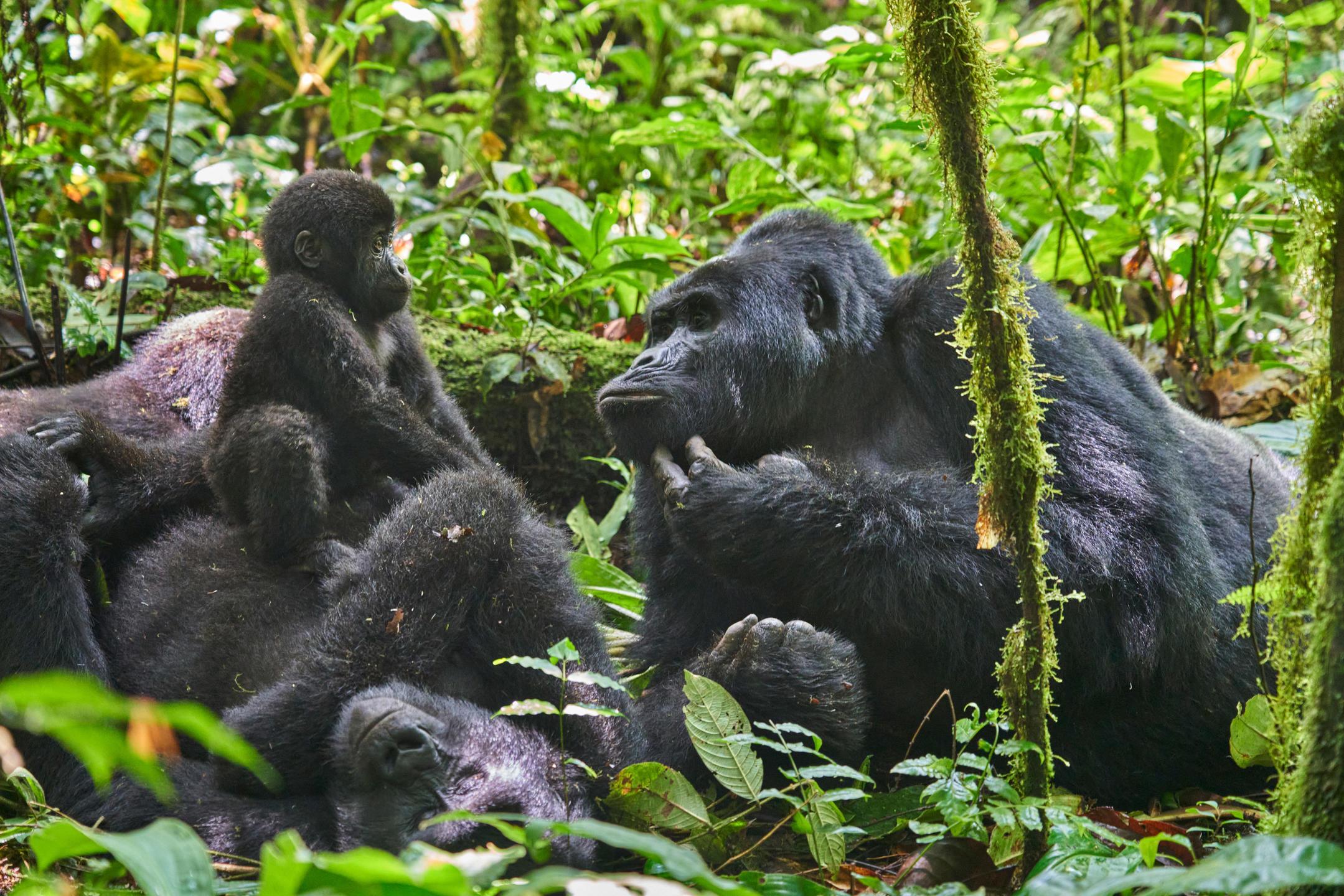
A standard gorilla trek can feel surprisingly short once the gorillas are found. The first few minutes may be spent adjusting to the surroundings, finding a comfortable position and understanding where different gorillas are sitting. Visitors then naturally begin taking photographs and observing the family, and the one-hour viewing period can pass quickly.
Gorilla habituation changes that rhythm. Four hours give you the opportunity to stop concentrating on the clock and begin concentrating on the gorillas themselves.
You Have Time to Watch Behaviour Develop
Mountain gorillas do not perform on demand. At one moment the group may be resting quietly. Later, juveniles may begin playing, adults may start feeding or the silverback may move the entire family to another part of the forest.
During a longer encounter you could potentially observe feeding, grooming, resting, climbing, infants nursing, juveniles wrestling, adults moving through vegetation or a silverback monitoring the rest of the family. None of these behaviours can be guaranteed, but additional time naturally gives you a broader window in which changing behaviour may occur.
You Begin to Notice Individual Personalities
During the first few minutes of any gorilla encounter, visitors tend to see the animals simply as “the gorillas.” With more time, individuals become easier to distinguish. You may begin recognising the dominant silverback, particular adult females, playful juveniles and infants that remain close to their mothers.
This gradual recognition is one of the less obvious reasons why four hours can feel fundamentally different from one hour. Instead of experiencing a brief wildlife sighting, you begin observing a functioning family.
Why Gorilla Habituation Appeals to Photographers
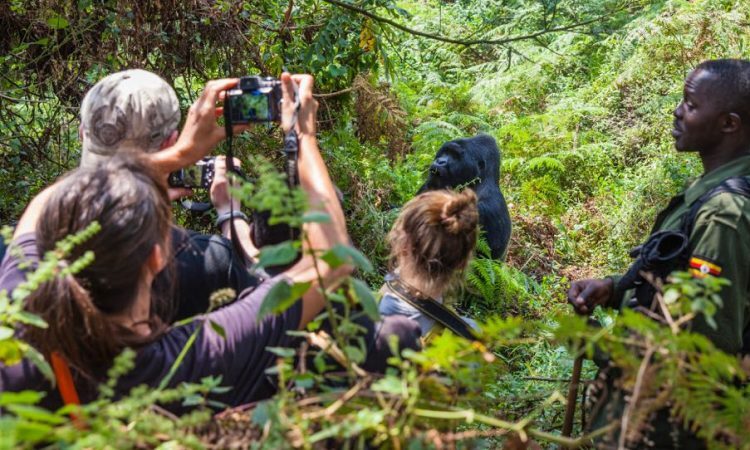
Rainforest photography can be challenging. Bwindi’s dense canopy creates constantly changing light. Vegetation may partially obscure the gorillas, subjects move without warning and backgrounds can quickly become cluttered.
During a one-hour trek, photographers must work with whatever conditions occur during that short period. With four hours, there is greater opportunity to wait for changing light, different positions and more varied behaviour.
A gorilla may move from dense shade into an opening. A mother may reposition her infant. Juveniles may begin playing. The silverback may turn toward the group after spending several minutes facing away.
Nothing is guaranteed in wildlife photography, but time is one of a photographer’s greatest advantages. This makes gorilla habituation particularly appealing for serious photographers and travellers who want a stronger visual record of their Bwindi gorilla safari.
Gorilla Habituation vs Standard Gorilla Trekking
Neither experience is automatically better for every traveller. The right choice depends on your budget, interests, physical ability and how important extended gorilla observation is to your safari.
| Feature | Gorilla Habituation | Standard Trekking |
|---|---|---|
| Viewing time | Up to 4 hours | Up to 1 hour |
| Pace | Slow and immersive | Concentrated encounter |
| Best suited to | Photographers, primate enthusiasts and repeat visitors | Most first-time gorilla travellers |
| Photography time | Considerably longer | Limited to the viewing hour |
| Permit cost | Higher | Lower |
Travellers primarily interested in fulfilling the dream of seeing mountain gorillas may find a normal trek completely satisfying. Habituation becomes especially attractive when extended observation, photography and understanding gorilla behaviour are major priorities.
Gorilla Habituation Permit Prices
Under the published UWA 2026–2028 tariff, the following Gorilla Habituation Experience rates are listed for the new tariff implementation.
| Visitor Category | Habituation Permit | Standard Gorilla Permit |
|---|---|---|
| Foreign Non-Resident | USD 1,800 | USD 800 |
| Foreign Resident | USD 1,500 | USD 700 |
| Rest of Africa | USD 1,000 | USD 500 |
| East African Community Citizen | UGX 750,000 | UGX 300,000 |
The published tariff indicates the new Gorilla Habituation Experience rate commences on 1 January 2027. Wildlife tariffs can change, so permit availability and the applicable rate should always be reconfirmed before payment.
Is Gorilla Habituation Worth the Extra Money?
This is ultimately the most important question for travellers comparing permits. Gorilla habituation costs substantially more than ordinary trekking, and the extra expenditure has to make sense within your overall safari budget.
It would be misleading to say that habituation is simply “four times better” because it offers four times the viewing period. Wildlife experiences cannot be measured that mechanically. The real value comes from what the additional time allows you to notice.
A traveller visiting Uganda primarily to see mountain gorillas and who considers the experience the centrepiece of a once-in-a-lifetime journey may place considerable value on having several hours rather than sixty minutes. A photographer may value opportunities created by changing light and behaviour. A primate enthusiast may appreciate being able to study interactions within the family for an extended period.
On the other hand, a traveller combining chimpanzee trekking, wildlife safaris, gorillas and several destinations within a fixed budget may prefer a normal gorilla permit and invest the saving elsewhere in the itinerary.
Think of the decision this way:
Choose standard gorilla trekking if your main goal is to see mountain gorillas. Consider habituation if your goal is to spend substantially more time observing and photographing them.
Who Gets the Most Value From Gorilla Habituation?
Wildlife Photographers
More time gives photographers opportunities to work with changing light, positioning and gorilla behaviour.
Primate Enthusiasts
Visitors especially interested in great apes can spend longer observing social relationships and daily activity.
Repeat Gorilla Trekkers
Habituation can provide a different experience for travellers who have previously completed an ordinary gorilla trek.
Slow Travellers
Ideal for travellers who prefer deeper wildlife encounters rather than moving quickly between many attractions.
How Difficult Is Gorilla Habituation?
Gorilla habituation requires reasonable preparation because the overall forest excursion can extend well beyond four hours. The exact hiking distance cannot be predetermined because the gorillas move freely through their habitat.
Bwindi can involve steep slopes, roots, thick vegetation, muddy sections and changing weather. Your level of difficulty therefore depends on the location of the gorilla family, weather conditions and your general fitness.
Anyone concerned about trekking difficulty should discuss their fitness and mobility with their safari operator before purchasing a permit. Travellers can also read our guide to gorilla trekking difficulty.
Should You Hire a Porter?
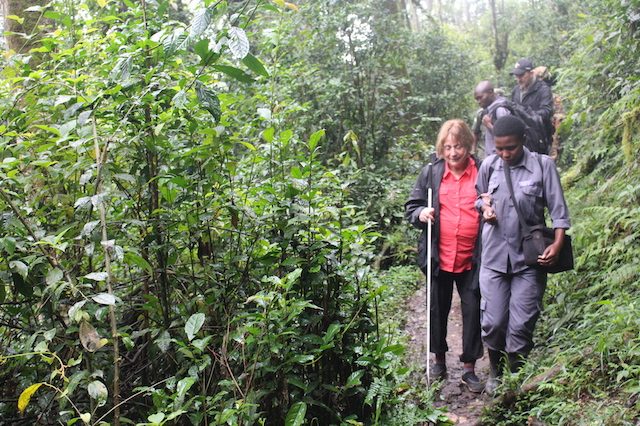
Hiring a porter is strongly worth considering for a gorilla habituation day. A porter can carry your backpack, drinking water, camera equipment and packed lunch while also providing useful assistance on slippery or steep sections of the trail.
This allows you to conserve energy for the prolonged forest experience rather than spending the day carrying unnecessary weight.
Porter employment also provides direct income to communities living around Bwindi, adding a useful local-economic benefit to your trekking experience.
Where Does Gorilla Habituation Take Place?
Uganda’s Gorilla Habituation Experience is associated with the southern part of Bwindi Impenetrable National Park, particularly the Rushaga gorilla trekking area.
Rushaga is one of Bwindi’s principal gorilla trekking sectors and can be reached from either Uganda or Rwanda. Travellers beginning in Kigali can cross into southwestern Uganda and continue by road toward southern Bwindi, making a Kigali-to-Bwindi gorilla itinerary an attractive option for certain trips.
Visitors beginning in Entebbe may drive through southwestern Uganda or use a scheduled domestic flight toward Kisoro, depending on their itinerary and budget.
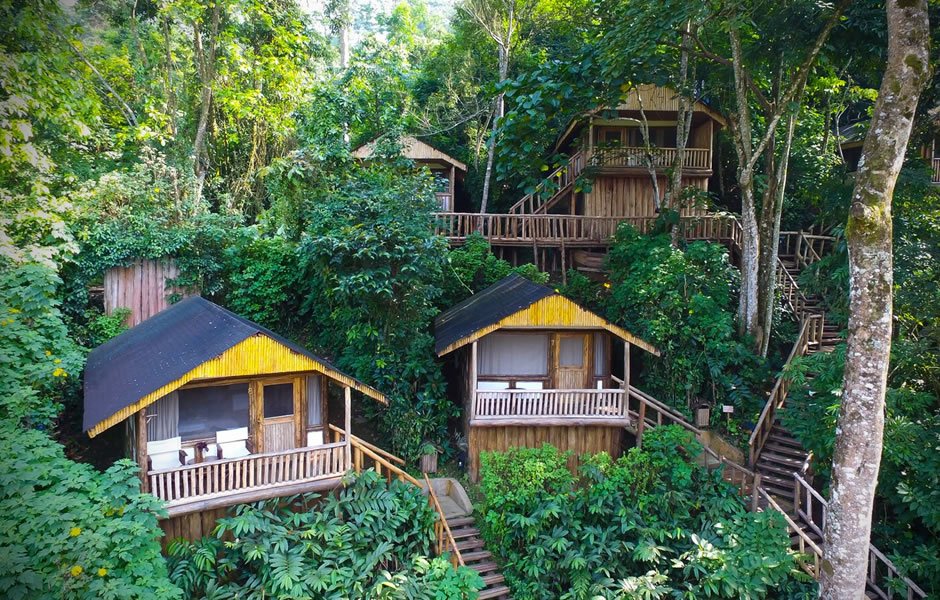
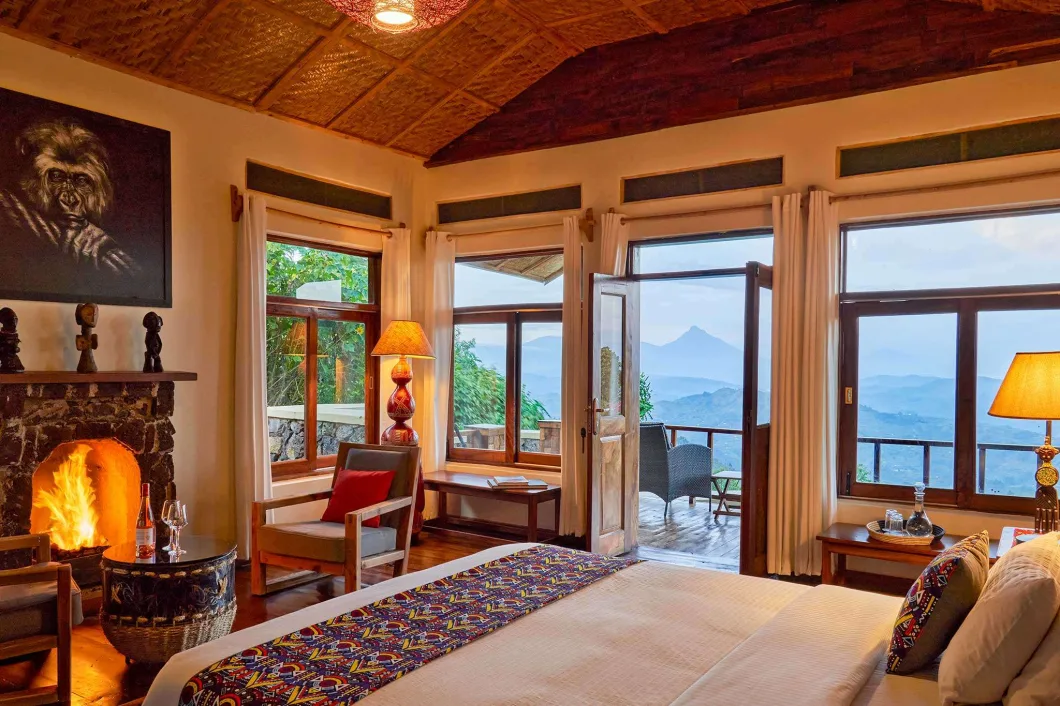
Where to Stay for Gorilla Habituation
Staying near the appropriate southern Bwindi briefing point is important because habituation days begin early. Accommodation can be selected according to your preferred comfort level and overall safari budget.

Can You Combine Gorilla Habituation With a Standard Gorilla Trek?
Yes. For travellers with sufficient time and budget, combining both experiences can create an outstanding gorilla-focused safari.
Habituation provides the longer observational experience, while a normal trek introduces you to a fully habituated gorilla family in the conventional one-hour format. Doing both also increases the chances of meeting different gorilla families and seeing different behaviour.
Example 5-Day Gorilla-Focused Safari
Day 1: Kigali or Entebbe – Transfer to Bwindi
Day 2: Gorilla Habituation Experience
Day 3: Rest, community visit or forest activity
Day 4: Standard Gorilla Trekking
Day 5: Return journey or continue your Uganda safari
Safari Vacations & Travel Services can also incorporate gorilla habituation into longer Uganda and Rwanda safari itineraries.
Combine Gorilla Habituation With Chimpanzee Trekking
Travellers interested in primates can combine Bwindi with Kibale National Park for one of Uganda’s most complete great-ape journeys.
A typical route can include gorilla habituation in Bwindi, wildlife viewing in Queen Elizabeth National Park and chimpanzee trekking in Uganda before returning to Entebbe.
This type of itinerary works particularly well for travellers who want more than a short gorilla-only safari and would like to experience Uganda’s forests, savannah wildlife and primates in one journey.
Best Time for Gorilla Habituation
Gorilla habituation can be undertaken throughout the year because mountain gorillas remain in Bwindi year-round. However, seasonal conditions can influence trail conditions and your overall hiking experience.
June to September
These months fall within one of Uganda’s generally drier periods. Trails may be more manageable than during prolonged wet weather, although Bwindi remains a tropical rainforest and rain is possible at any time.
December to February
Another popular travel period, particularly for visitors combining gorilla trekking with other East African wildlife destinations.
March to May
The wetter period can bring heavier rainfall, lush vegetation and muddier trails. Travellers should be well prepared with waterproof clothing and suitable hiking boots.
October and November
Rainfall can be more frequent, but the forest is beautifully green and visitor numbers may sometimes be lower outside the busiest international holiday periods.
For a broader seasonal comparison, see our guide on the best time to trek mountain gorillas.
What to Pack for Gorilla Habituation
Responsible Gorilla Habituation
Mountain gorillas are highly protected wildlife, and visitors must follow all instructions provided by Uganda Wildlife Authority personnel and guides.
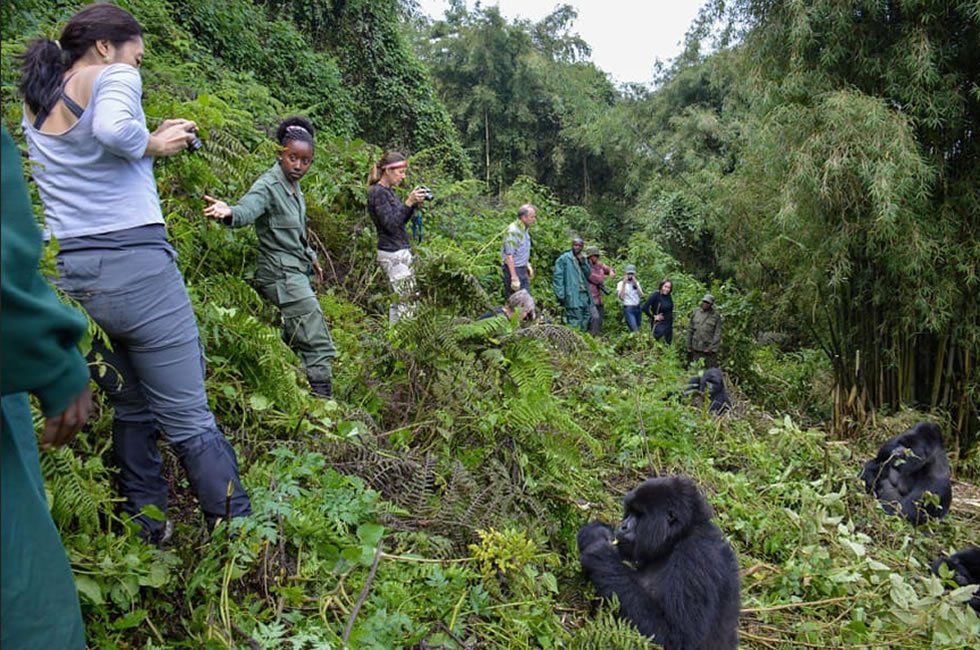
Visitors should maintain the prescribed distance whenever conditions allow, avoid touching gorillas, keep voices low, avoid flash photography and follow instructions immediately if a gorilla moves toward the group.
Travellers suffering from potentially transmissible illness should disclose this before trekking. Gorillas are closely related to humans and responsible disease-prevention practices form an important part of gorilla conservation.
Responsible behaviour helps protect both visitors and the gorillas while supporting the long-term sustainability of ethical gorilla tourism.
Gorilla Habituation FAQs
How long do you spend with the gorillas during habituation?
Visitors can spend a maximum of four hours observing the gorillas after the group has been located. Hiking time before and after the encounter is additional.
Is gorilla habituation better than normal gorilla trekking?
It depends on your priorities. Standard trekking is excellent for most visitors, while habituation particularly benefits travellers wanting much more observation time, photography opportunities and a slower experience.
Is gorilla habituation worth USD 1,800?
For travellers who place a high value on extended gorilla observation, photography or primate behaviour, four hours can justify the additional cost. Travellers working with a tighter budget may find the standard one-hour gorilla trek better suited to their overall itinerary.
Where is gorilla habituation done?
The experience takes place in Bwindi Impenetrable National Park in Uganda and is particularly associated with southern Bwindi around Rushaga.
Is the entire gorilla habituation trek only four hours?
No. Four hours refers to the maximum viewing time after reaching the gorillas. Hiking to find the family and returning from the forest increase the total duration.
Can I take photographs?
Yes. Photography is permitted subject to ranger instructions, but flash photography should not be used around mountain gorillas.
Should I hire a porter?
A porter is highly recommended, especially for travellers carrying cameras or other equipment. Porters can carry your backpack and assist on challenging sections of the trail.
Can I do gorilla habituation from Kigali?
Yes. Many travellers arrive in Rwanda and transfer by road through the border into southern Bwindi. The exact travel plan depends on border procedures, your arrival time and the location of your accommodation.
How early should I book?
Habituation permits are limited, so early booking is advisable, particularly for June to September, Christmas, New Year and other popular travel periods.
Can Safari Vacations arrange the permit?
Yes. Safari Vacations and Travel Services can check permit availability and arrange your gorilla permit together with accommodation, private transport, airport transfers and other elements of your Uganda or Rwanda safari.
So, What Makes Gorilla Habituation Worth Four Hours?
A standard gorilla trek is already one of Africa’s extraordinary wildlife experiences. Spending an hour near a mountain gorilla family can produce memories that remain with a traveller for life.
Gorilla habituation is different because it gives you something wildlife travellers rarely have enough of: time.
Four hours allow the initial excitement of finding the gorillas to settle. You begin watching rather than simply looking. You notice which youngsters repeatedly play together, how mothers respond to their infants, how the silverback positions himself within the group and how the family’s behaviour changes as they feed, rest and move through the forest.
For photographers, that extra time creates more possibilities. For primate enthusiasts, it enables deeper observation. For travellers who have journeyed halfway around the world specifically to see mountain gorillas, it can transform a short wildlife encounter into a much more immersive forest experience.
The experience is more expensive and potentially demanding, so it will not suit everyone. But if mountain gorillas are one of the principal reasons for your journey to Uganda, the additional time is precisely what can make the Gorilla Habituation Experience so valuable.
Plan Your Gorilla Habituation Safari in Uganda
We can arrange gorilla habituation permits, accommodation, private 4×4 transport, airport transfers, domestic flights and tailor-made Uganda and Rwanda safari extensions.


