
Gorilla Trekking in Rainy Season: 9 Essential Tips

Gorilla Trekking in Rainy Season: 9 Essential Tips
Gorilla Trekking In Rainy Season is a practical option for travelers who are prepared for muddy trails, changing cloud, wet vegetation and slower hiking. This guide compares Uganda and Rwanda, explains what rain changes, and shows how to prepare without assuming that a wet month means a poor gorilla experience.
Can You Go Gorilla Trekking in the Rainy Season?
Yes. Gorilla trekking operates through the wetter parts of the year in Uganda and Rwanda, and rain by itself does not make a normal trekking day impossible. The practical difference is underfoot: saturated soil, roots, steep slopes and clay can make a hike slower and more tiring. For travelers who arrive prepared, gorilla trekking in rainy season can be a rewarding choice rather than a compromise. The forest looks intensely green, mist can add atmosphere, and visitor pressure is often lower than during the busiest dry-season windows.
The phrase “rainy season” can also be misleading. These are mountain rainforests, so showers can occur in months that travel calendars label dry. Likewise, a wet-season morning can begin bright and remain workable for hours. The useful planning question is not “Will it rain?” but “Am I comfortable trekking when it does?” Understanding weather for a gorilla trek helps you choose footwear, clothing, camera protection and a realistic pace instead of expecting a guaranteed dry trail.
Travelers comparing gorilla trekking in Uganda and Rwanda should focus on route, permit availability, total trip cost, terrain and the wider safari they want. A rainy month does not change the basic encounter: trackers locate a habituated gorilla family, visitors hike with trained staff, and the group follows park rules during the observation period. What changes most is the effort required to reach the gorillas and the amount of weather protection you need.
Rainy Months in Uganda and Rwanda: What to Expect
Gorilla Trekking Weather and Trail Conditions
For trip planning, Uganda’s southwestern gorilla region is commonly described as having wetter periods around March to May and roughly September or October through November, while Rwanda’s highlands also receive heavier rain during broadly similar periods. Exact boundaries vary, and mountain conditions do not obey a fixed calendar. Gorilla trekking in rainy season therefore works best when you treat month labels as probabilities rather than promises.
During the long rains, expect softer ground, fuller streams, wet vegetation and a higher chance of sustained showers. During the shorter rains, conditions can swing between bright intervals and fast-moving showers. Wet season gorilla trekking is often most attractive to flexible travelers who value lush scenery, birdlife and a quieter feel more than firm trails. Checking an Uganda weather guide before departure is useful, but pack for rain regardless of the forecast.
If your dates are flexible, compare the best time to trek mountain gorillas with your personal priorities. A traveler with knee concerns may prefer a drier period, while a photographer who loves mist, saturated foliage and softer light may actively enjoy a wetter month. The strongest itinerary matches the season to the traveler rather than repeating a generic “best month” rule.
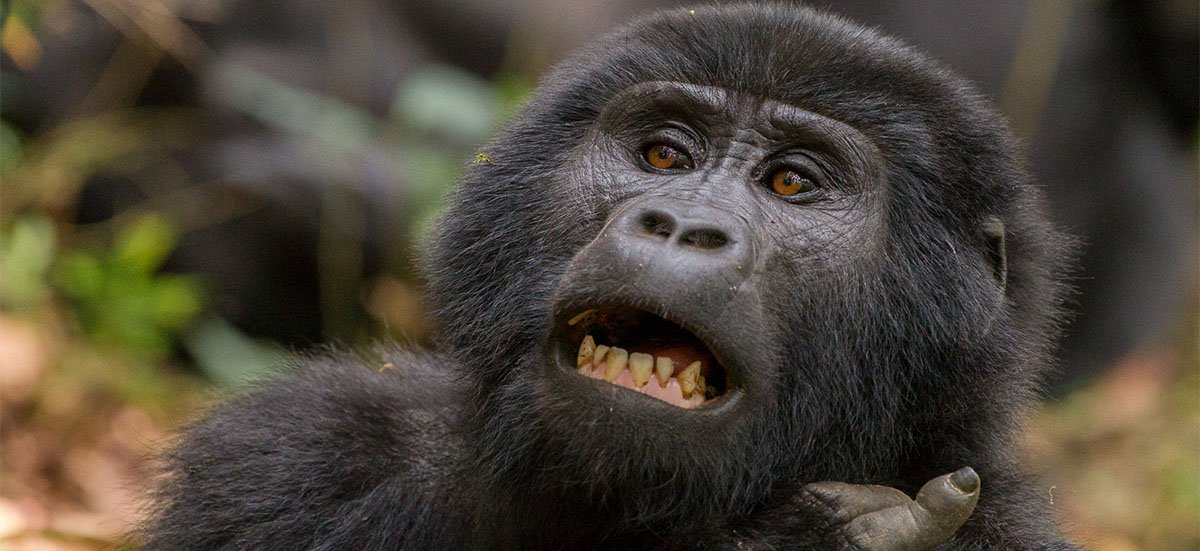
9 Reasons Gorilla Trekking in Rainy Season Can Be Worth It
First, the forest is exceptionally lush. Second, mist and cloud can create dramatic depth for landscape photography. Third, some dates may feel less crowded around lodges and trailheads. Fourth, availability can sometimes be easier than in peak holiday windows. Fifth, bird activity can add interest before and after the gorilla encounter. These advantages make gorilla trekking in rainy season particularly appealing to travelers who enjoy immersive forest conditions.
Sixth, cooler, cloudy conditions can feel comfortable during uphill walking. Seventh, a wet forest produces memorable sounds, from dripping canopy to rushing streams. Eighth, lower-season accommodation offers may appear at some properties, although they are never universal and should be checked for your dates. Ninth, the experience can feel adventurous in a way that polished dry-season imagery does not always convey. Budget gorilla trekking travelers should compare the total package rather than assuming every wet-season component is discounted.
The trade-off is straightforward: beauty and quieter travel can come with mud, slippery gradients and less predictable photography. That is why wet season gorilla trekking suits people who accept variable conditions. If your main priority is the easiest possible trail, a drier month may fit better. If your priority is a vivid rainforest experience and you are comfortable hiking carefully, the wet months can be highly satisfying.
Plan a Rain-Ready Gorilla Trek
Share your dates, group size and preferred country to shape a practical gorilla itinerary around permits, trailheads and seasonal conditions.
How Hard Are Muddy Gorilla Trails?
Rain changes trail difficulty more than it changes the gorilla encounter itself. A route that feels moderate on firm soil can become strenuous when each step needs deliberate placement. Gorilla trekking difficulty depends on the assigned gorilla family, where that family is located on the day, elevation, vegetation, trail condition and your fitness. No planner can guarantee a short or easy hike simply because you choose a particular month or sector.
For gorilla trekking in rainy season, train for steady uphill walking rather than speed. Practice on uneven paths, strengthen legs and core, and become comfortable walking for several hours. Gorilla trekking fitness matters because fatigue can reduce balance on slick descents. Travelers with mobility concerns should discuss them before permit allocation and ask what assistance is locally available rather than waiting until the morning briefing.
A porter can be one of the most useful additions to a wet trek. Carrying water, rain gear and a camera sounds easy at the trailhead, but a small pack feels heavier after repeated climbs. Free hands also help with balance. Gorilla trekking for elderly travelers can still be considered with advance planning, but suitability is individual and should be discussed with the operator and park team.

What to Wear: Boots, Gaiters and Rain Protection
Wet Season Gorilla Trekking Gear That Matters
Footwear is the foundation of gorilla trekking in rainy season. Choose broken-in hiking boots with a supportive sole and dependable tread. Waterproofing helps, but grip and comfort matter just as much. Gorilla trekking boots should be tested before travel; brand-new footwear can create blisters long before mud becomes the main problem. Gaiters are useful for keeping mud, water and plant debris away from socks and lower trousers.
For clothing, use long trousers and long sleeves that dry reasonably quickly. Add a breathable waterproof shell, not a heavy coat designed only for standing in rain. What to wear on a gorilla trek should also include a hat, light gloves where recommended, spare socks, and a small dry bag or waterproof liner. Avoid relying on a flimsy emergency poncho as your only protection if the forecast is consistently wet.
Gorilla trekking weather is changeable, so dress in layers. You may begin in cool mist, warm quickly on a climb, then stop and cool down while trackers assess the route. Pack water and a simple snack if allowed under local rules, keep valuables sealed, and protect medication from moisture. Good preparation makes wet season gorilla trekking far more comfortable without turning your daypack into an expedition load.
Bwindi Gorilla Trekking During the Wet Season
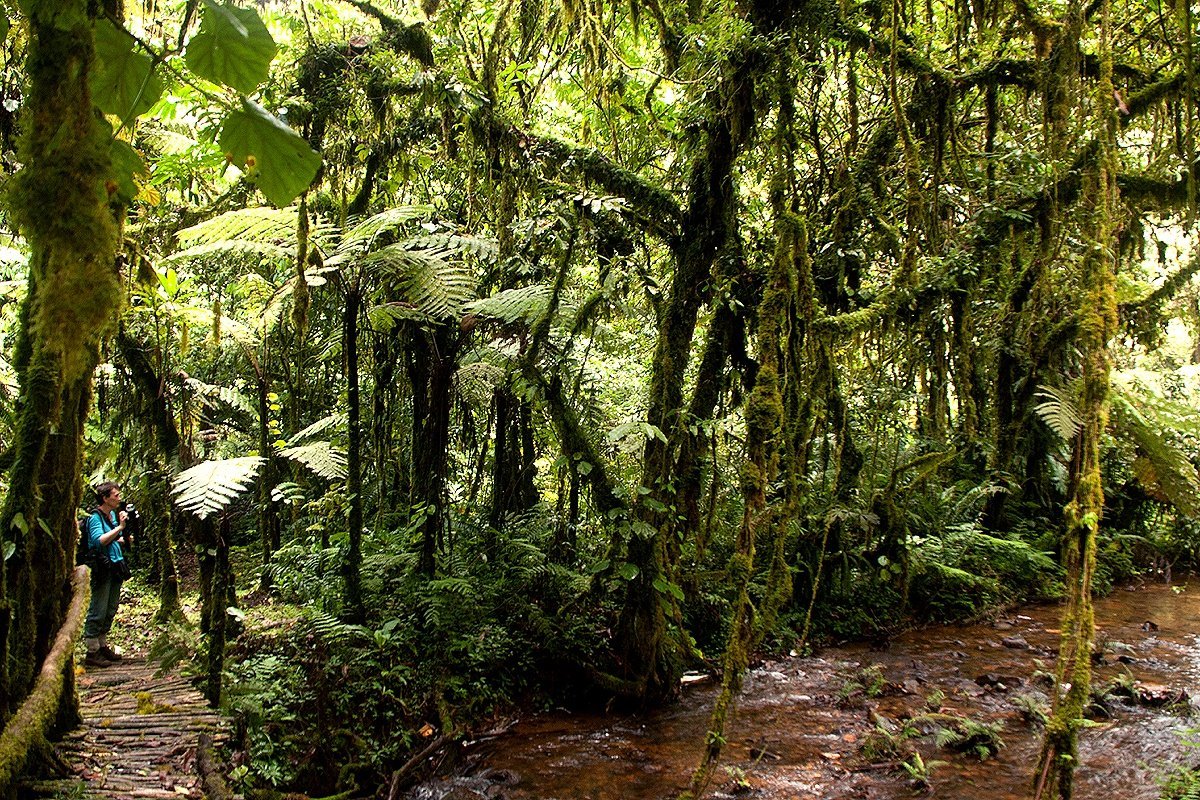
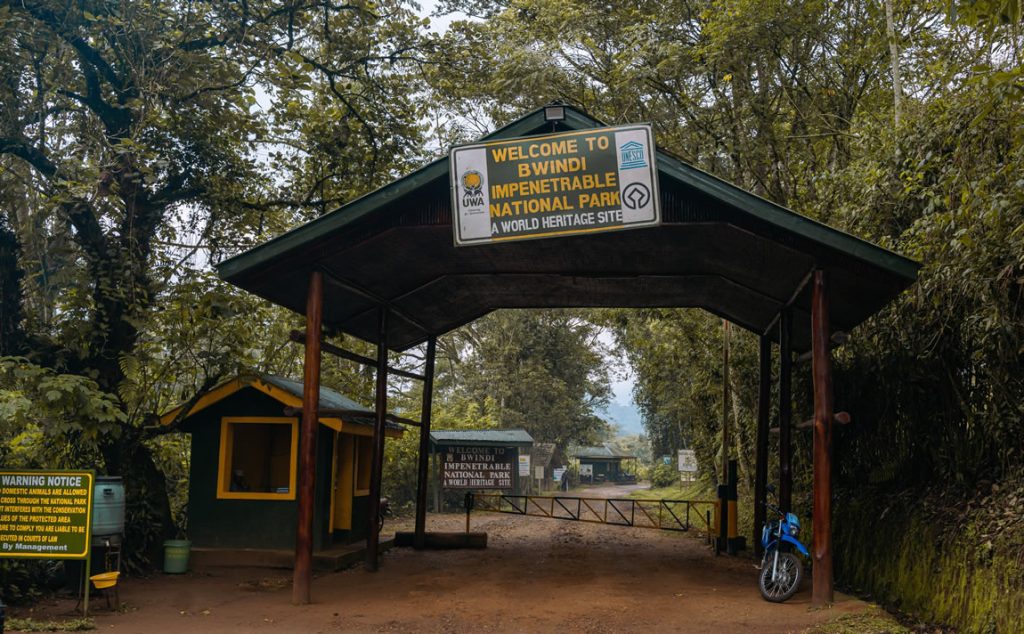
Bwindi gorilla trekking is the classic wet-forest experience: steep ridges, dense vegetation, high biodiversity and several trekking sectors. Rain can make red-earth paths slick, and different sectors have different access roads and accommodation patterns. When planning gorilla trekking in rainy season, confirm the exact sector attached to your permit before choosing a lodge. Staying on the wrong side of the forest can create an unnecessary early transfer.
Buhoma Sector is widely known among travelers, while Rushaga Gorilla Sector and other southern sectors support different route options. The gorilla sectors in Bwindi are not interchangeable on the morning of the trek, so logistics matter. Booking Bwindi gorilla permits should come before non-refundable accommodation if your dates are constrained. Once the permit date and sector are confirmed, build the rest of the itinerary around them.
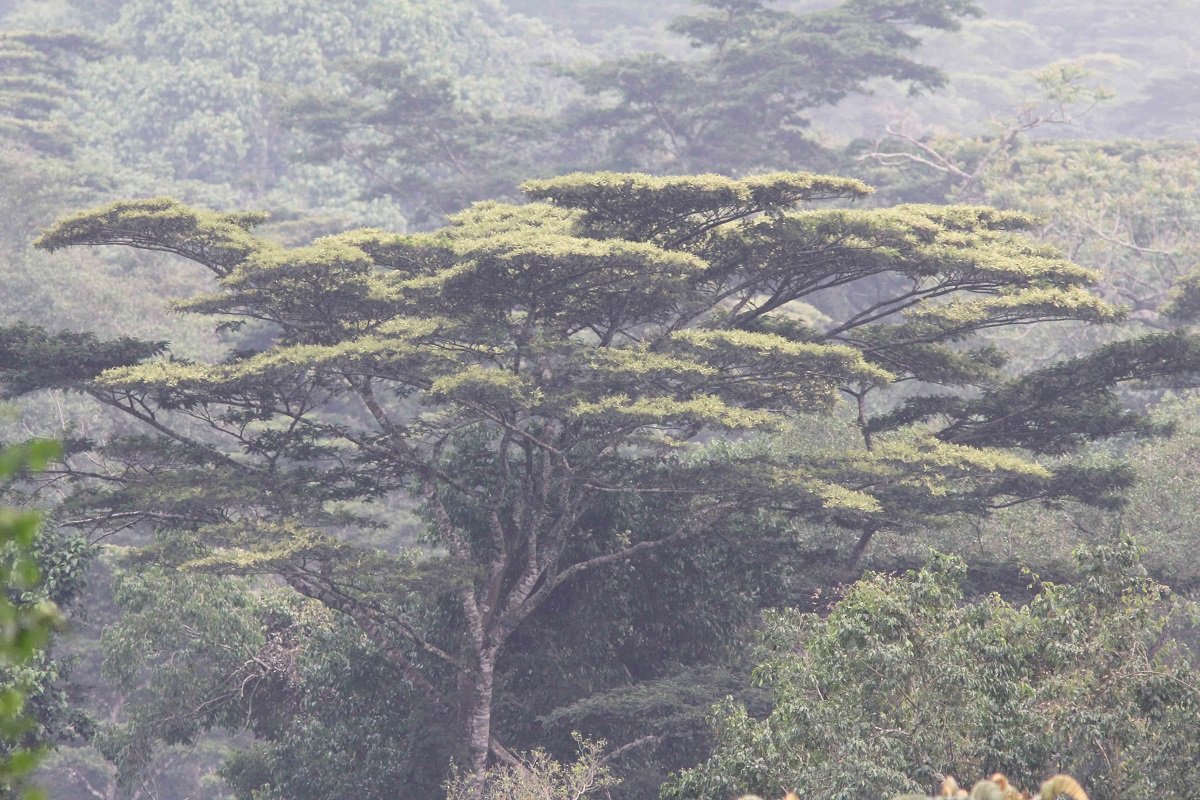
The attraction of Bwindi gorilla trekking in a rainy period is visual as well as practical: leaves shine after showers, valleys can fill with mist, and the forest feels intensely alive. The disadvantage is that vegetation can brush water onto clothing even when rain has stopped. Waterproof layers, a pack cover and patience are therefore useful from the first step to the final descent.
Mgahinga and Rwanda Gorilla Trekking in Wet Months
Rwanda Gorilla Trekking and Bwindi Gorilla Trekking Choices
Uganda’s Mgahinga Gorilla National Park offers a volcanic setting that can be combined with other southwestern Uganda experiences. Like Bwindi, it can be wet at any time, and rain increases the importance of sturdy footwear and a measured pace. Travelers choosing gorilla trekking in rainy season should compare transfer times, permit logistics and nearby accommodation rather than assuming one park is automatically easier.
gorilla trekking in Rwanda in Volcanoes National Park uses a compact tourism hub around the Virunga highlands. The landscape is beautiful in cloud and mist, but volcanic slopes and wet vegetation can still demand effort. Volcanoes National Park gorillas are visited year-round, and gorilla tracking guidelines in Rwanda should be followed exactly, particularly instructions from guides and rangers on spacing, movement and behavior around the animals.
For travelers deciding between Uganda and Rwanda, compare the full journey: international gateway, road time, permit cost, accommodation style, desired safari extensions and physical preferences. Gorilla trekking in Rwanda can be convenient for a shorter itinerary, while Uganda can fit naturally into a longer primate-and-wildlife circuit. Rain should be one factor, not the only factor.
Permits, Availability and Rainy-Season Value
Secure permits before treating a rainy-season trip as confirmed. Gorilla permits are date-specific and capacity-controlled, and policies can change. The gorilla permit in Uganda and Rwanda gorilla permits should be checked against current official or authorized booking channels at the time you reserve. Do not rely on an old blog post for a price, refund condition or rescheduling rule.
Gorilla trekking in rainy season may offer better accommodation availability on some dates, but permit supply still matters. School holidays, festivals, conferences and group departures can create local spikes in demand. If you have fixed flights, book the controlled activity first and then arrange lodging and transfers. If you have flexible dates, ask for several permit options before choosing the final itinerary.
Value is broader than price. A cheaper lodge far from your assigned trailhead can create a difficult pre-dawn drive on wet roads. A slightly higher room rate near the briefing point may protect sleep and reduce transfer risk. Luxury gorilla trekking safari travelers and budget travelers benefit from the same principle: spend where location, reliable transport and weather readiness materially improve the trek.
Plan a Rain-Ready Gorilla Trek
Share your dates, group size and preferred country to shape a practical gorilla itinerary around permits, trailheads and seasonal conditions.
Photography in Rain, Mist and Dense Forest
Photography is one of the strongest reasons some travelers enjoy gorilla trekking in rainy season. Cloud cover can soften contrast, wet leaves become richly saturated, and mist can separate layers of forest. Gorilla trekking for photographers still requires realistic expectations: gorillas may sit in deep shade, vegetation may block a clean angle, and rain can arrive during the encounter.
Use a camera and lens combination you can handle without frequent changes. Carry a rain cover, microfiber cloths and a dry bag. Keep spare batteries protected and avoid opening the camera bag unnecessarily in a downpour. If you use a phone, a waterproof pouch is helpful. Remember that park rules and animal welfare come before a photograph; never move closer or ignore ranger instructions for a clearer frame.
Wet season gorilla trekking rewards patience more than technical perfection. Watch behavior, hands, expressions and family interactions instead of only searching for a portrait. A few well-timed frames can tell the story better than constant shooting. If rain becomes heavy, protect equipment first and experience the moment rather than risking expensive gear.

Does Rain Cancel Gorilla Trekking?
A normal shower does not automatically cancel a trek. Gorilla trekking in rainy season is planned with the expectation that rain is possible. Guides assess local conditions, and safety decisions belong to park authorities and field staff. Travelers should therefore avoid guarantees such as “treks never cancel”; exceptional weather, unsafe trails or other operational issues can always affect an outdoor activity.
The more useful preparation is to build flexibility around the day. Sleep near the trailhead, avoid a tight flight immediately after the trek, and carry the right equipment. How long gorilla trekking takes varies because the gorillas move and terrain changes. Rain can slow progress, so do not schedule the rest of the day as if the hike has a fixed finish time.
If you are anxious about conditions, review gorilla trekking FAQs and ask your operator what happens if park authorities alter an activity for safety reasons. Read the booking terms before paying. Clear expectations are more valuable than a promise that every itinerary will run exactly as planned.
Health, Safety and Responsible Trekking
Gorilla trekking in rainy season requires the same respect for wildlife as any other month. Follow ranger instructions, keep the required distance, avoid eating near gorillas, control noise and never touch an animal. Great apes are susceptible to human illness, so health rules are not optional. If you are unwell, disclose it to the operator or park team and follow current guidance.
The gorilla trekking age limit and health requirements should be confirmed before booking for every participant. Parents should not assume that a fit child can join simply because they hike well at home. Travelers with medical conditions should obtain personalized advice and carry necessary medication in waterproof packaging. Travel insurance should cover the activities and destinations on the itinerary.
On muddy trails, safety is mostly about pace and attention. Use available handholds only when guides indicate they are safe, leave space between hikers on steep sections, and do not rush to keep up with the fastest person. Gorilla tracking in Uganda and Rwanda gorilla trekking both rely on professional field teams; listening to them is the simplest way to reduce avoidable risk.
A Practical Rainy-Season Packing Checklist
Pack light but deliberate. For gorilla trekking in rainy season, the core kit is broken-in waterproof hiking boots, gaiters, long trousers, long sleeves, a breathable rain jacket, light gloves where recommended, a small daypack, waterproof liners, water, sun protection, insect repellent and personal medication. Add spare socks and a dry shirt at the lodge or in the vehicle for after the trek.
Camera users should add a rain sleeve, lens cloths, spare batteries and sealed storage. Keep passport copies, permit details and insurance information available offline. Uganda travel tips are most useful when they reflect your exact route, because road transfers, baggage rules and lodge facilities vary. Ask whether walking sticks, gaiters or other equipment are provided locally before buying unnecessary gear.
Do not overpack the trekking bag. Wet season gorilla trekking becomes harder when you carry several kilograms of “just in case” items. A porter can carry essentials and support the local guiding economy. Keep the items you need immediately—waterproof shell, camera protection and water—easy to reach so you are not unpacking everything in the rain.
Plan a Rain-Ready Gorilla Trek
Share your dates, group size and preferred country to shape a practical gorilla itinerary around permits, trailheads and seasonal conditions.
How to Plan a 3–5 Day Rainy-Season Gorilla Trip
A short itinerary should protect the trek day from long transfers. For a three-day Uganda plan, arrive in the gorilla region on day one, trek on day two, and depart on day three. For gorilla trekking in rainy season, adding a fourth day can create more breathing room for road conditions and a slower post-trek evening. Travelers flying into Kigali or Entebbe should calculate real transfer times rather than map distance alone.
A four- or five-day trip can add a second forest activity, a lake stay, golden monkeys or a gentle cultural experience without making every day strenuous. Gorilla trekking for first timers is usually more enjoyable when the schedule includes recovery time. If you combine gorillas with a longer safari, place the trek where the route makes logistical sense instead of forcing it into the final morning before an international flight.
Rain also changes road planning. Use an appropriate vehicle, confirm pickup times, and stay close to the assigned sector the night before. Gorilla trekking in Bwindi is especially sensitive to sector logistics because the forest has multiple access areas. A thoughtful itinerary treats the permit, trailhead and accommodation as one connected booking decision.
Rainy-Season Gorilla Trekking: Small Decisions That Improve the Day
Rain changes the rhythm of a trek. Walk deliberately, keep a little distance from the person ahead, and use the pace set by guides rather than trying to stay perfectly dry or fast. For gorilla trekking in rainy season, this small planning choice can make the day more comfortable without changing the core wildlife experience.
Forest conditions can vary within the same morning. A bright trailhead does not guarantee a dry encounter, while a shower at breakfast does not mean the entire hike will be wet. For gorilla trekking in rainy season, this small planning choice can make the day more comfortable without changing the core wildlife experience.
Accommodation location matters more in poor weather. A lodge close to the correct briefing point can reduce an early drive on wet roads and make the morning calmer. For gorilla trekking in rainy season, this small planning choice can make the day more comfortable without changing the core wildlife experience.
Keep electronics in waterproof storage even when the sky looks clear. Water can fall from leaves long after a shower has passed, especially in dense forest. For gorilla trekking in rainy season, this small planning choice can make the day more comfortable without changing the core wildlife experience.
Ask about porter arrangements before the trek. Free hands, a lighter pack and local assistance can be especially valuable on slippery climbs and descents. For gorilla trekking in rainy season, this small planning choice can make the day more comfortable without changing the core wildlife experience.
Treat weather forecasts as guidance rather than certainty. Mountain forests create local conditions, and rainfall intensity can differ sharply across short distances. For a rainy-season gorilla trek, this small planning choice can make the day more comfortable without changing the core wildlife experience.
Do not choose a sector only because someone calls it easy. Gorilla movements, trail maintenance and daily conditions can change the physical demand of any trek. For trekking during the wetter months, this small planning choice can make the day more comfortable without changing the core wildlife experience.
Plan a relaxed evening after the trek. Wet boots, tired legs and a long shower are easier to enjoy when you are not immediately packing for another major transfer. For a wet-weather gorilla trek, this small planning choice can make the day more comfortable without changing the core wildlife experience.
What the Rainy Months Actually Feel Like
Season labels are useful for planning, but they are not weather guarantees. In the gorilla highlands, elevation and forest cover create local conditions that can change within a few kilometres. March, April and May are commonly associated with the longer wet period, while roughly September or October through November brings another wetter spell. April is often treated as one of the months when travelers should be most prepared for persistent rain. Even then, rain may arrive in bursts rather than falling continuously from breakfast to sunset.
For a traveler, the important distinction is between rainfall and trail condition. A shower lasting thirty minutes may be less consequential than several wet days that have already saturated a steep clay path. Conversely, a morning after overnight rain can still offer long dry intervals. This is why a forecast showing a rain icon should not be read as a prediction that the whole trek will be washed out. Ask instead how much rain has fallen recently, how access roads are holding up, and whether your lodge is close to the correct briefing point.
March to May: the long-rain period
During the longer rains, expect soft ground, water on foliage and a greater chance that boots will be muddy well before you reach the gorillas. April and May can demand patience on steep sections. The advantage is an intensely green forest, cooler walking conditions on cloudy days and dramatic mist after showers. Travelers choosing these months should put more emphasis on traction, waterproof storage and a conservative transfer schedule than on trying to predict the exact hour a shower will begin.
September to November: shorter, variable rains
The later wet period is often more variable. A day can move from bright sun to cloud, rain and back again, which makes layers especially useful. October and November should still be treated as wet-weather travel rather than as reliably dry shoulder months. If your wider itinerary includes game drives, boat trips or long road transfers, plan each activity for its own conditions instead of assuming that the weather at Bwindi or Volcanoes National Park represents the whole country.
What Happens on a Wet Gorilla Trek, Step by Step
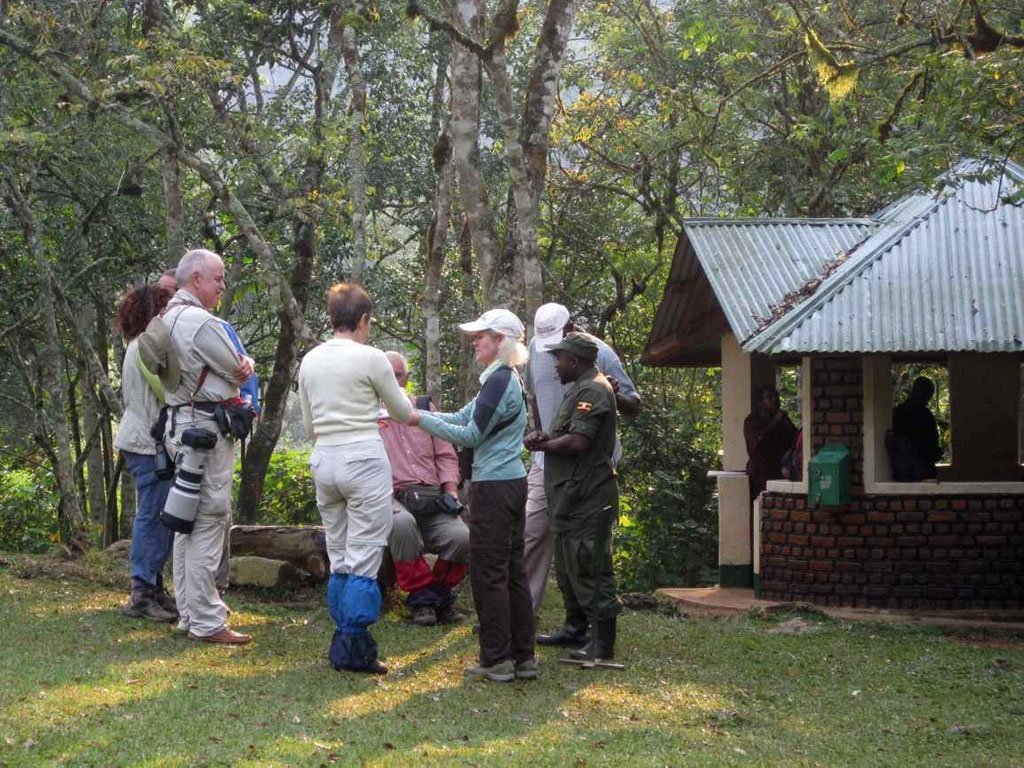
The day normally starts with an early briefing at the park meeting point. This is where rangers explain conduct around the gorillas and organize trekking groups. In wet weather, arrive already dressed for the trail rather than carrying your rain layer at the bottom of a tightly packed bag. Use the briefing time to adjust gaiters, waterproof your phone or camera, and decide whether you want porter assistance. Once the group leaves, changing equipment becomes less convenient on a narrow or muddy path.
The first part of the walk may follow a clearer path, farmland edge or established forest trail before trackers direct the group toward the gorillas’ current location. Conditions can then become rougher. Rangers may cut through vegetation, and wet leaves can soak trousers even when no rain is falling. Progress is intentionally steady rather than fast. If you are struggling, say so early; a guide can manage pace more effectively before fatigue affects your balance.
When the gorillas are located, the trekking effort gives way to a carefully managed wildlife encounter. Follow the ranger’s positioning instructions and resist the urge to move around independently for a photograph. Rain can make photography harder, but it can also produce soft light and rich forest color. Keep a lens cloth accessible, use a simple rain cover, and avoid changing lenses in exposed wet conditions. The priority is to keep equipment dry without creating noise or distracting from the animals.
The return walk deserves as much attention as the approach. Descents can be more slippery after rain, especially once legs are tired. Keep both hands as free as practical, take shorter steps on steep ground, and do not rush because you can see the trailhead or vehicle. Back at the lodge, remove wet insoles, loosen boot laces, hang rainwear where air can circulate and dry camera bags before sealing equipment away for the night.
Roads, Lodges and Transfers Matter More in Wet Weather
A successful gorilla trip is not only about the forest trail. Rain can also affect the roads that connect airstrips, towns, lodges and park sectors. In Bwindi especially, knowing the sector on your permit is essential because the forest has multiple trekking areas and driving around the park can take considerable time. Choose accommodation for the correct trailhead, not simply because a property describes itself as being “near Bwindi.” A shorter morning transfer reduces the number of things that weather can disrupt.
Avoid designing an itinerary with a long road transfer immediately before the briefing. Arriving the previous afternoon gives you time to absorb delays, check equipment and sleep properly. The same principle applies after the trek: a relaxed evening is preferable to a tightly timed connection after an activity whose finishing time cannot be guaranteed. Gorilla locations change daily, so the hiking duration is inherently variable before weather is even considered.
Choosing a lodge for a rainy-season trip
Ask three practical questions before booking: how long is the normal drive to the briefing point, what type of vehicle is used for transfers, and what happens when local roads are wet. Useful lodge features include a place to dry boots and clothing, reliable hot water, early breakfast, packed-lunch arrangements and staff who understand the timing of the correct trekking sector. These details are less glamorous than a view, but they can improve the experience considerably after a wet day in the forest.
Packing for Rain Without Overpacking
The aim is not to make yourself completely waterproof; in a humid mountain forest, that is rarely realistic. The aim is to stay warm, maintain grip and keep critical items dry. Wear supportive boots with tread, long quick-drying trousers and a long-sleeved top. Carry a breathable rain shell where you can reach it quickly. Gaiters are useful because they stop mud and plant debris entering the top of the boot, while light gloves can protect hands when moving through vegetation where local guides recommend them.
Inside the daypack, separate moisture-sensitive items rather than trusting a single outer pack cover. A waterproof liner or dry bag for a camera, documents and medication adds a second layer of protection when water runs down straps or enters around zippers. Carry a small cloth for lenses or glasses and one dry layer for use during stops. Cotton clothing tends to stay wet and cold, so fabrics that dry more quickly are generally easier to manage.
Frequently Asked Questions About rainy-season trekking
Is a rainy-season gorilla trek worth it? It can be, especially for travelers who enjoy lush scenery, atmospheric photography and quieter travel periods and who are comfortable with mud. The experience is not automatically better or worse than a dry-season trek; it is physically and visually different.
Which months are rainiest? March to May is commonly treated as a major wet period, with another wetter period around September or October to November depending on location and year. Gorilla trekking weather remains variable, so even a “dry” booking needs rain protection.
Is Bwindi gorilla trekking harder when wet? Usually the main difference is traction. Steep or clay-rich sections can become slippery, and progress may be slower. Fitness, the day’s gorilla location and the assigned route also matter.
Is Rwanda gorilla trekking easier than Uganda in rain? There is no universal answer. Terrain, gorilla location, individual fitness and daily weather all matter. Compare the specific itinerary and discuss mobility concerns before permits are allocated.
What is the single most useful item? Good boots are difficult to replace with anything else. A reliable waterproof shell, gaiters and a porter are also highly useful. For trekking during the wetter months, comfort comes from a system of small preparations rather than one magic piece of gear.
Final Planning Advice
Choose a wet-weather gorilla trek when its trade-offs match your travel style. Go for the saturated forest, the mist, the sense of immersion and the possibility of quieter surrounding travel—not because someone promises guaranteed discounts or an easier gorilla sighting. Rainforest wildlife trips remain unpredictable, and that uncertainty is part of the experience.
Confirm permits first, stay near the correct trailhead, use suitable footwear, train for uneven ground, protect electronics and leave enough time around transfers. Whether you choose Bwindi gorilla trekking, Mgahinga or Rwanda gorilla trekking, build the itinerary around current park rules and your own physical comfort. A well-prepared wet-season trek can be one of the most memorable ways to experience the mountain forests of Uganda and Rwanda.
Before travel, review background on mountain gorillas and confirm current park rules with your operator or the relevant authority.
For practical briefing details, read the site’s gorilla tracking information page before your departure date.
The evening before the trek, ask your lodge or driver to reconfirm the exact briefing point and pickup time. Bwindi has several trekking sectors, and a booking in the wrong area can mean a long road transfer on slow mountain roads. Lay out your boots, gaiters, waterproof jacket, gloves, drinking water and daypack before bed so an early departure does not become rushed.
Keep electronics inside a dry bag or a waterproof liner even when the sky looks clear at breakfast. A small lens cloth is useful because mist and droplets can collect on a camera while you move through vegetation. Pack only what you can carry comfortably; if you expect the terrain to be demanding, arranging a porter at the trailhead can make steep, muddy sections easier to manage.
Allow some flexibility after the trek. Wet roads can lengthen transfers, clothing and boots may need time to dry, and a demanding tracking day is better followed by a relaxed evening than a tightly timed journey. The most reliable rainy-season plan is not one that tries to predict every shower, but one that remains comfortable when conditions change.