
Gorilla Trekking FAQs at a Glance
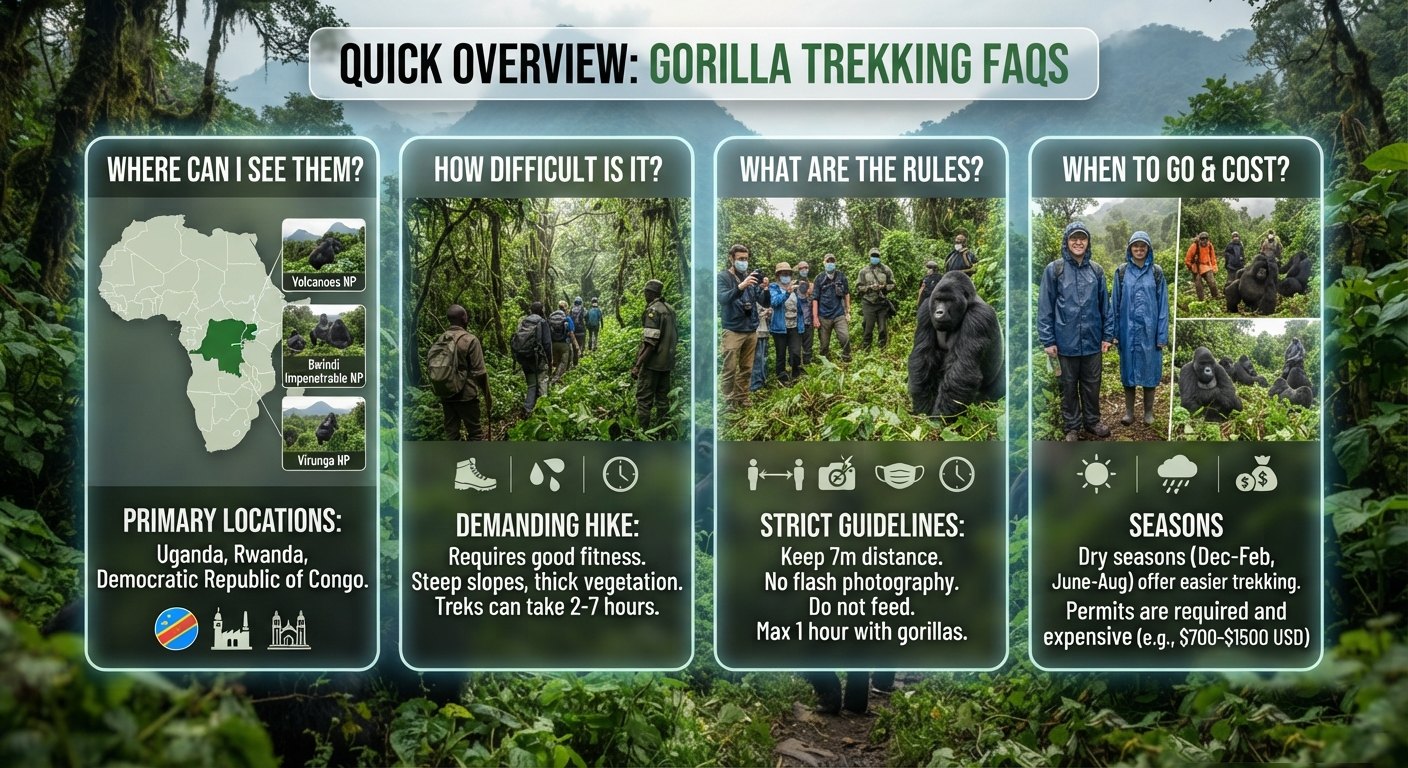
Essential facts and fast answers for your gorilla trekking trip.
Gorilla trekking is one of the most remarkable wildlife experiences in Africa, but planning the experience raises many practical questions. Travelers often want to know where gorilla trekking takes place, how the experience works, how close they can get to the gorillas, how long the trek lasts, whether gorillas are dangerous, and what they should expect when they enter the forest. These gorilla trekking questions are particularly important for first-time visitors who want to understand the experience before committing to a safari.
What is gorilla trekking?
Gorilla trekking is a guided wildlife activity in which visitors walk through the natural forest habitat of mountain gorillas in search of a habituated gorilla family. In Uganda, mountain gorilla trekking takes place in Bwindi Impenetrable National Park and Mgahinga Gorilla National Park. Visitors are accompanied by trained guides and rangers who lead the search and explain the rules that must be followed around the gorillas.
The experience is not simply a conventional forest hike. The location of the gorilla family can influence the amount of walking required on a particular day, and the terrain may include steep slopes, dense vegetation and muddy trails. Once the gorilla family is located, visitors observe the animals while following the applicable wildlife regulations and instructions from their guides.
Where can you go gorilla trekking in Uganda?
Uganda’s mountain gorilla trekking opportunities are concentrated in Bwindi Impenetrable National Park and Mgahinga Gorilla National Park. Bwindi is divided into several trekking sectors, including Buhoma, Ruhija, Rushaga and Nkuringo, while Mgahinga provides another setting for encountering mountain gorillas.
The choice of location can influence the logistics of a safari because accommodation, road access and the starting point for the trek depend on the selected area. Travelers planning a Uganda gorilla safari should therefore consider the trekking location when organizing accommodation and transportation rather than treating every part of Bwindi as though it were immediately adjacent.
Where are mountain gorillas found?
Mountain gorillas live in the forests of the Virunga region and the Bwindi ecosystem. Uganda protects mountain gorillas in Bwindi Impenetrable National Park and Mgahinga Gorilla National Park. Rwanda’s mountain gorillas are protected in Volcanoes National Park, while the Democratic Republic of the Congo also forms part of the mountain gorilla range.
Because mountain gorillas live in protected forest environments, visitors do not simply enter the forest independently and search for them. Gorilla trekking requirements include obtaining the appropriate authorization and following the regulations established for the activity.
Are mountain gorillas dangerous?
Mountain gorillas are powerful wild animals, so visitors should always treat them as wildlife rather than as domesticated animals. However, properly managed gorilla trekking is conducted under the supervision of trained guides and rangers, with visitors required to follow established rules designed to reduce disturbance and maintain safe interactions.
The correct approach is to remain calm, follow the guide’s instructions and avoid attempting to touch, feed or deliberately approach a gorilla. A gorilla’s behavior should never be interpreted using the same assumptions people might apply to domestic animals.
How close can you get to gorillas?
Visitors must maintain the required distance from mountain gorillas and follow the instructions given by the ranger guide. The purpose of the distance requirement is not only visitor safety but also gorilla conservation, particularly because humans and gorillas can transmit infectious diseases to one another.
Gorillas may sometimes move through the forest in ways that affect the distance between animals and visitors. When this happens, trekkers should not attempt to move closer for a photograph. Instead, visitors should follow the ranger’s instructions and allow the animals to determine their own movement.
How long does gorilla trekking take?
There is no single guaranteed trekking duration because the gorilla family may be in a different location each day. The search can involve walking through difficult forest terrain, and the total duration depends on where the gorillas are located and the conditions encountered along the trail.
Uganda Wildlife Authority information describes gorilla tracking as potentially lasting several hours, with the normal gorilla viewing period limited to one hour once the group has been located. This means the total safari activity should not be confused with the actual period spent observing the gorillas.
How long do you spend with the gorillas?
For standard gorilla trekking in Uganda, the normal viewing period is limited to one hour after the gorilla family has been located. The Gorilla Habituation Experience is a different activity with a longer permitted viewing period and involves gorillas that are still undergoing habituation.
Understanding this distinction is important when researching Uganda gorilla trekking costs. A standard trekking permit and a habituation experience permit provide different experiences and should not be treated as identical products.
What happens during a typical gorilla trek?
A typical trek begins with visitors reporting to the designated briefing location. Rangers and guides explain the relevant procedures and rules before the group enters the forest. The trekking party then follows the guide and trackers into the forest while searching for the assigned gorilla family.
The amount of walking varies because the gorillas are free-moving wild animals. After the family is located, visitors observe the gorillas from the permitted distance and follow instructions concerning movement, photography and behavior. Once the authorized viewing period ends, the group leaves the gorillas and returns through the forest.
Can you touch a gorilla?
No. Visitors should not deliberately touch mountain gorillas. Even when a gorilla appears calm or moves close to visitors, the correct response is to follow the ranger’s instructions rather than attempting physical contact.
Preventing physical contact also helps reduce the possibility of transferring infectious diseases between humans and gorillas. Responsible tourism therefore depends on allowing the animals to remain wild while visitors observe them respectfully.
Can you feed gorillas?
Visitors must not feed mountain gorillas. Wildlife tourism is based on observing animals in their natural environment rather than changing their natural feeding behavior. Food can also create unnecessary risks when humans and wild animals interact.
Travelers should therefore keep food and other personal activities under the control of their guide and comply with the specific park regulations governing the trek.
Can you take photographs of gorillas?
Photography is an important part of many gorilla trekking experiences, but photographs must never take priority over wildlife rules. Visitors should follow the guide’s instructions concerning distance, movement and camera use.
Flash photography should not be used if prohibited by the applicable regulations or ranger instructions because sudden flashes can disturb wildlife. Travelers should also avoid moving toward a gorilla simply to obtain a better photograph.
Is gorilla trekking physically difficult?
Gorilla trekking can be physically demanding because the activity takes place in mountainous and forested terrain. The actual difficulty varies from one trek to another because the gorilla family may be located at different distances from the starting point.
Fitness preparation can make the experience more manageable, particularly for travelers who are not accustomed to hiking on uneven or steep terrain. Visitors should also discuss individual physical limitations with a qualified professional before undertaking a demanding outdoor activity.
Do you need hiking experience to trek gorillas?
Previous hiking experience is not necessarily required, but travelers should be prepared for walking on uneven forest trails and potentially steep terrain. The important consideration is whether a visitor can safely manage the physical demands of the particular trek.
Ranger guides are present to lead visitors through the forest, while porters may also be available through local tourism arrangements. The presence of assistance does not eliminate the need to prepare appropriately for the conditions.
Can you trek gorillas throughout the year?
Gorilla trekking in Uganda is conducted throughout the year. Weather conditions can nevertheless influence the experience because forest trails may become wetter and more slippery during periods of rainfall.
Rather than assuming that one season guarantees a particular gorilla encounter, travelers should consider how weather may affect their own comfort, transportation and ability to walk through forest terrain.
What happens if it rains during gorilla trekking?
Rain does not automatically mean that a gorilla trek cannot take place. Bwindi and the surrounding mountain forests can experience changing weather conditions, so visitors should be prepared for rain even when traveling during a generally drier period.
Waterproof outer clothing, appropriate footwear and protection for cameras and other electronic equipment can make wet conditions easier to manage. The condition of trails may also change after rainfall, which can affect walking difficulty.
Do you need a gorilla trekking permit?
Yes. Gorilla trekking is a regulated wildlife activity, and visitors need the appropriate permit or authorization before participating. Permits are associated with specific trekking dates and regulated access to the gorilla experience.
The exact permit rules and prices can change, so travelers should verify current information with the responsible wildlife authority before making payment or finalizing travel arrangements.
How much does gorilla trekking cost?
The total cost of gorilla trekking is more than the price of the permit alone. A complete safari budget can include transportation, accommodation, meals, guide services, park-related expenses, porter services and other travel costs.
For Uganda, permit prices depend on visitor category and the type of gorilla experience. Because official tariffs can change, current prices should always be confirmed before publication or booking. A detailed gorilla permit price guide can provide additional planning context, but the latest official tariff should remain the final authority.
Is gorilla trekking worth it?
For travelers interested in mountain gorillas, conservation and rainforest wildlife, gorilla trekking provides an opportunity to observe these animals in their protected natural habitat. The experience combines a forest trek with a controlled wildlife encounter and contributes to the wider tourism system supporting gorilla conservation.
Whether it represents good value depends on the traveler’s priorities, budget, available time and interest in wildlife. It should be evaluated as a specialized wildlife experience rather than compared only with the price of an ordinary sightseeing excursion.
What should you know before your first gorilla trek?
First-time visitors should understand that gorilla trekking is a guided wilderness experience rather than a conventional wildlife drive. The gorillas determine where the encounter takes place, the forest terrain can be challenging, weather can change quickly, and visitors must follow strict wildlife guidelines.
Preparation should therefore cover permits, accommodation, transportation, suitable clothing, footwear, personal health considerations and photography equipment. Travelers can also review gorilla trekking preparation information before traveling, while using official conservation authorities for current regulations.
What is the difference between gorilla trekking and gorilla habituation?
Standard gorilla trekking involves visiting a habituated gorilla family for the permitted viewing period. Gorilla habituation is a separate experience involving gorillas that are undergoing the process of becoming accustomed to the presence of humans.
The two activities therefore differ in purpose, permit arrangements and the amount of time visitors may spend observing the animals. Travelers should confirm the current rules and pricing before selecting between them.
Why are gorilla trekking rules so strict?
Gorilla trekking rules exist to protect both the visitors and the gorillas. Mountain gorillas are wild animals, and excessive human contact can alter their behavior and increase risks associated with disease transmission and disturbance.
Rules governing distance, visitor behavior, photography, food and interaction help ensure that tourism remains compatible with conservation. Following these rules is therefore an essential part of responsible gorilla trekking rather than an optional addition to the experience.
What is the most important thing to remember about gorilla trekking?
The most important principle is to treat the gorillas as wild animals and follow the instructions of the ranger guide at all times. Visitors should arrive prepared, respect the forest environment, maintain the required distance and avoid actions that could disturb the gorillas.
Gorilla trekking is ultimately about observing mountain gorillas in their natural environment without changing their behavior. Good preparation allows travelers to concentrate on the experience while respecting the conservation measures that make the encounter possible.
General Gorilla Trekking FAQs
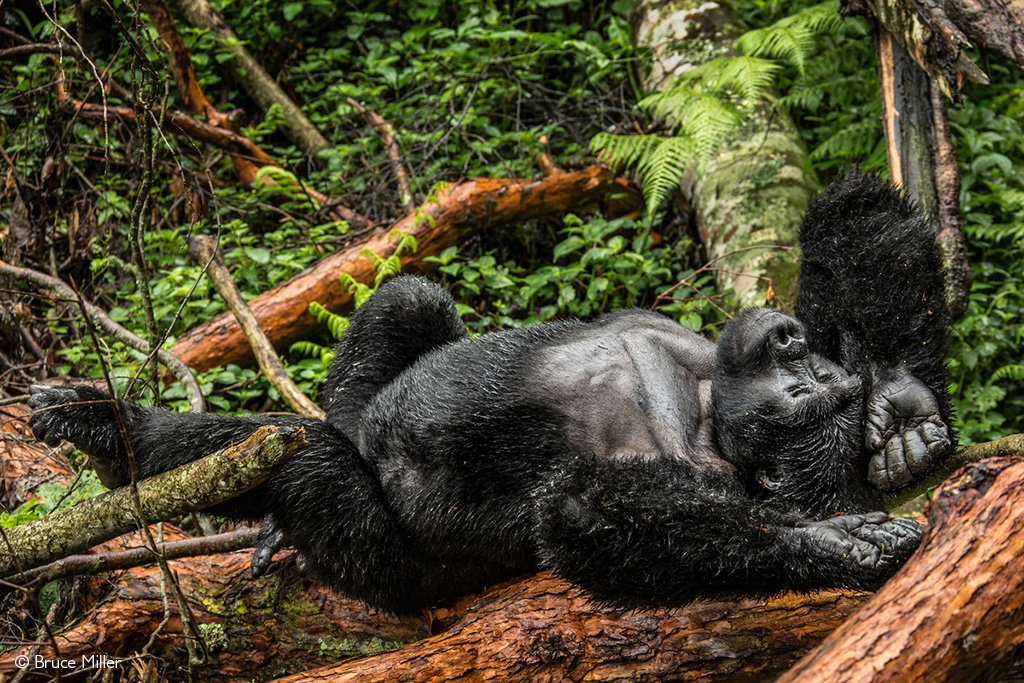
General questions answered about mountain gorilla behavior and trekking.
Gorilla trekking is a highly regulated wildlife experience that allows visitors to observe habituated mountain gorillas in their natural forest environment. For first-time travelers, understanding how the experience works is essential before booking a permit, choosing accommodation, or planning transportation. These general gorilla trekking FAQs answer the most important questions about the activity, including where gorilla trekking takes place, how habituation works, what visitors should expect, and why strict conservation rules apply.
What is gorilla trekking?
Gorilla trekking is a guided wildlife experience in which visitors walk through the forest in search of a habituated mountain gorilla family. In Uganda, gorilla trekking takes place in Bwindi Impenetrable National Park and Mgahinga Gorilla National Park. Visitors are accompanied by guides and trackers who help locate the gorillas and explain the rules governing the encounter.
Unlike a conventional game drive where wildlife may be observed from a vehicle, gorilla trekking takes place on foot within mountainous forest terrain. The gorillas are free to move through their natural habitat, meaning the amount of walking required can vary from one trekking day to another. A visitor therefore needs to prepare for an active outdoor experience rather than expecting a fixed walking route.
Travelers researching the experience can also review Uganda gorilla trekking safaris to understand how the country’s main trekking destinations are organized.
Where does gorilla trekking take place?
Mountain gorilla trekking in Uganda takes place in Bwindi Impenetrable National Park and Mgahinga Gorilla National Park. Bwindi is divided into four major trekking sectors: Buhoma, Ruhija, Rushaga and Nkuringo. Mgahinga is part of the larger Virunga mountain ecosystem and provides another opportunity to encounter mountain gorillas in Uganda.
The location selected for a trek is important when planning accommodation and transportation. Bwindi is a large forest with trekking sectors located in different areas, so travelers should not assume that accommodation in one sector will necessarily be convenient for a trek starting in another sector.
The Buhoma gorilla trekking sector is one of the established trekking areas in Bwindi and has a long history of gorilla habituation and tourism.
Which countries offer mountain gorilla trekking?
Mountain gorilla trekking is available in Uganda, Rwanda and the Democratic Republic of the Congo. Uganda protects mountain gorillas in Bwindi Impenetrable National Park and Mgahinga Gorilla National Park. Rwanda’s mountain gorilla trekking takes place in Volcanoes National Park, while the Democratic Republic of the Congo protects mountain gorillas in Virunga National Park.
Although the same subspecies of mountain gorilla is involved, the trekking experience differs between destinations because of differences in landscape, park access, accommodation, permit arrangements and travel logistics. Travelers comparing countries should therefore consider the complete safari experience rather than looking at permit prices alone.
Where are Uganda’s mountain gorillas found?
Uganda’s mountain gorillas are found in Bwindi Impenetrable National Park and Mgahinga Gorilla National Park. Bwindi forms part of the Albertine Rift ecosystem, while Mgahinga lies within the Virunga volcanic mountain range.
Gorilla trekking is conducted only with habituated gorilla groups that are available for tourism under regulated conditions. Visitors cannot simply enter the forest independently and search for wild gorillas because the activity is controlled for conservation, visitor safety and wildlife management.
What is a habituated gorilla family?
A habituated gorilla family is a gorilla group that has become accustomed to the controlled presence of humans through a gradual habituation process. Habituation allows researchers, trackers, rangers and eventually tourists to observe the animals without the gorillas immediately fleeing whenever humans are nearby.
Habituation does not turn gorillas into domesticated animals. They remain wild animals and must continue to be treated with respect. Their natural behavior, movements and social relationships remain important parts of the trekking experience.
What is gorilla habituation?
Gorilla habituation is the gradual process through which a gorilla group becomes accustomed to the presence of humans. Researchers and trackers carefully monitor the animals over an extended period while gradually increasing their tolerance of human observers.
Uganda also offers a specific Gorilla Habituation Experience in Bwindi. This differs from ordinary gorilla trekking because visitors participating in the habituation experience can spend a longer period observing a group undergoing habituation.
The gorilla habituation experience provides additional information about this specialized activity in Uganda.
What is the difference between gorilla trekking and gorilla habituation?
Standard gorilla trekking involves visiting a gorilla family that has already been habituated for tourism. The objective is to locate the assigned family, observe it for the permitted viewing period and return from the forest after the encounter.
Gorilla habituation is a separate experience involving gorillas that are still undergoing habituation. It provides a longer observation period and gives participants an opportunity to learn more about the process through which gorillas become accustomed to controlled human presence.
The two experiences should therefore not be treated as identical. They have different purposes, different visitor experiences and different permit arrangements.
Are mountain gorillas wild animals?
Yes. Mountain gorillas remain wild animals even when they have been habituated for tourism. Habituation simply allows them to tolerate carefully controlled human presence. It does not remove their natural instincts or make them domestic animals.
This distinction is important because visitors must never attempt to treat a gorilla like a pet. Touching, feeding, chasing or deliberately approaching a gorilla can create unnecessary risks for both people and wildlife.
Are gorillas dangerous?
Mountain gorillas are powerful wild animals and should always be treated with respect. However, gorilla trekking is conducted under controlled conditions with trained guides and trackers who understand gorilla behavior and direct visitors throughout the encounter.
The safest approach is to remain calm, maintain the required distance and follow the guide’s instructions. Visitors should never deliberately provoke, chase, touch or feed a gorilla.
Gorilla behavior can also change depending on the situation, which is why the ranger guide’s instructions take priority over a visitor’s attempt to obtain a photograph or closer view.
Can gorillas attack tourists?
Gorillas are wild animals and can respond defensively when they feel threatened. This is one reason why gorilla trekking is conducted under strict rules and why visitors are required to follow their ranger guide’s instructions.
Visitors should avoid sudden movements, loud behavior or attempts to interfere with gorilla activities. If a gorilla moves toward the trekking group, travelers should remain calm and allow the trained ranger to determine the appropriate response.
How close can tourists get to gorillas?
Visitors must follow the applicable minimum-distance rules established for gorilla tourism. The required distance is designed to reduce disturbance and help minimize the risk of disease transmission between humans and gorillas.
Because gorillas are free-moving animals, their movements can sometimes bring them closer to visitors. When this occurs, trekkers should not attempt to move closer or touch the animal. The correct response is to follow the ranger’s instructions and allow the gorilla to move naturally.
How long do you spend with gorillas?
For standard gorilla trekking in Uganda, the authorized gorilla viewing period is limited. The time spent searching for the gorillas is separate from the time spent observing the family after it has been located.
Gorilla habituation provides a longer observation experience than standard trekking. Travelers should therefore check which type of permit they are purchasing before planning their itinerary or estimating how much time they will spend with the gorillas.
How long does a gorilla trek take?
There is no universal trekking duration because gorilla families move through the forest and their location can change from day to day. Some groups may be located relatively close to the starting point, while others may require considerably more walking.
Terrain, weather, vegetation and the movement of the gorilla family can all affect the amount of time spent searching. Travelers should therefore prepare for several hours in the forest rather than expecting an exact fixed duration.
What happens before a gorilla trek begins?
Visitors normally report to the designated meeting or briefing location before entering the forest. Guides and rangers provide instructions concerning the trek, wildlife behavior, conservation requirements and visitor conduct.
The group is then organized for the trek before entering the forest. Depending on the location and arrangements for the day, trackers may already be monitoring the gorilla family’s movements and helping guides determine where the search should begin.
What happens during a gorilla trek?
During the trek, visitors walk through the forest under the direction of their guide and trackers. The group searches for its assigned gorilla family while maintaining appropriate behavior and respecting the surrounding environment.
Once the gorillas are located, visitors observe them from the permitted distance. The ranger determines where the group should stand and how visitors should behave. After the authorized viewing period ends, the group leaves the gorillas and begins the return journey.
Can you choose which gorilla family to see?
Travelers should not assume that they can freely select any gorilla family they want to visit. Gorilla trekking is organized according to the management system of the destination, and visitor allocation is handled according to the applicable park procedures.
The location and condition of gorilla families can also change because gorillas are wild animals. A family that is in one area on one day may move to another area later.
Can you choose a gorilla trekking sector in Bwindi?
Bwindi has four principal trekking sectors: Buhoma, Ruhija, Rushaga and Nkuringo. Travelers should identify their intended sector before finalizing accommodation and transportation because the sectors are geographically separated.
The sector can be an important part of itinerary planning, especially for travelers who want to minimize unnecessary driving before or after their trek.
Why are gorilla trekking rules strict?
Gorilla trekking rules are designed to protect both visitors and mountain gorillas. Gorillas are susceptible to human diseases, and excessive human disturbance can affect their natural behavior.
Rules concerning distance, movement, noise, photography, food and interaction help keep encounters controlled. Following these rules is therefore an essential part of responsible wildlife tourism.
Can you touch a gorilla?
Visitors should never deliberately touch a mountain gorilla. Even if a gorilla approaches the group, tourists should follow the instructions of their ranger rather than reaching toward the animal.
Physical contact is discouraged because gorillas are wild animals and because human contact can create unnecessary health and behavioral risks.
Can you feed gorillas?
No. Visitors must not feed mountain gorillas. Feeding wildlife can interfere with natural behavior and create inappropriate associations between wild animals and people.
Travelers should follow the instructions of their guide concerning food and other personal activities while inside the forest.
Can you take photographs during gorilla trekking?
Photography is generally an important part of the gorilla trekking experience, but visitors must follow the applicable photography rules and ranger instructions. Photographers should avoid disturbing the gorillas or attempting to move closer for a better image.
Visitors should also prepare their equipment for humid and potentially wet forest conditions. Extra batteries, weather protection and a secure way to carry camera equipment can be useful during a long forest trek.
Can you use a smartphone during gorilla trekking?
A smartphone can be useful for photography and other permitted purposes, but visitors should prioritize the instructions of their guide and responsible wildlife behavior. A phone should never become a reason to approach a gorilla or ignore a ranger’s instructions.
Visitors should also keep their devices secure because forest trails can be steep, muddy and uneven.
Is gorilla trekking physically demanding?
Gorilla trekking can be physically demanding because it takes place in forest terrain that may include steep slopes, uneven ground, mud and dense vegetation. The actual difficulty varies according to the location of the gorilla family and the conditions encountered on the day.
Travelers should prepare for sustained walking and should honestly consider their own physical abilities before booking. Anyone with an individual medical or mobility concern should seek appropriate professional advice before undertaking the activity.
Do you need previous hiking experience?
Previous hiking experience is helpful but is not necessarily a universal requirement for gorilla trekking. What matters most is being prepared for walking through uneven forest terrain and being able to follow the guide for the duration of the trek.
The presence of guides and trackers provides important assistance, but visitors should still arrive properly prepared with suitable footwear, clothing, drinking water and other necessary personal items.
Can gorilla trekking be done all year?
Gorilla trekking in Uganda is offered throughout the year. However, weather conditions can influence the practical experience because Bwindi and Mgahinga are forested mountain environments where rain can occur at different times.
Travelers should therefore prepare for changing weather regardless of the season. Waterproof clothing and appropriate footwear are particularly useful when trails become wet.
What happens if it rains during a gorilla trek?
Rain does not necessarily prevent a gorilla trek from taking place. The forest environment can remain wet even during periods generally regarded as drier, so visitors should be prepared for changing conditions.
Wet weather can make trails slippery and may increase the physical challenge of walking. Waterproof clothing and footwear with good traction can make the experience more manageable.
Why is gorilla trekking important for conservation?
Gorilla trekking creates a regulated form of tourism around mountain gorilla conservation. The activity provides an economic reason to protect gorilla habitats and creates employment and tourism opportunities around protected areas.
However, tourism must remain carefully managed. The value of gorilla trekking depends on maintaining appropriate visitor behavior and ensuring that tourism does not undermine the health, welfare or natural behavior of the gorillas.
Can gorilla trekking be combined with other Uganda safari activities?
Yes. Travelers can plan broader Uganda itineraries around their gorilla trekking experience, combining the trek with other wildlife, primate, cultural or nature activities depending on their available time and route.
Combining activities can make the journey more efficient because travelers can explore different parts of Uganda rather than making a trip exclusively for one forest experience. The itinerary should nevertheless allow enough time for transportation and recovery between demanding activities.
What makes Uganda’s gorilla trekking experience different?
Uganda offers gorilla trekking in both Bwindi Impenetrable National Park and Mgahinga Gorilla National Park. Bwindi provides several trekking sectors, giving travelers different geographical options within the broader gorilla habitat.
The combination of mountain forest landscapes, gorilla trekking sectors and other wildlife experiences makes Uganda suitable for travelers who want to build a broader safari itinerary around their gorilla experience.
Is gorilla trekking suitable for first-time wildlife travelers?
Gorilla trekking can be suitable for first-time wildlife travelers provided they understand that it is a guided forest trekking experience rather than a conventional vehicle-based safari. Preparation is important because the terrain and weather can be unpredictable.
First-time trekkers should learn the relevant rules before arriving, choose accommodation that is convenient for their trekking location, prepare suitable clothing and footwear, and follow their guide’s instructions throughout the encounter.
For additional preparation information, trek preparation guidance can help visitors understand the practical considerations involved.
What is the most important rule during gorilla trekking?
The most important rule is to follow the instructions of the ranger guide and respect the gorillas as wild animals. Visitors should maintain the required distance, avoid touching or feeding the animals, keep noise under control and avoid actions that could disturb the gorilla family.
Responsible behavior protects the animals and helps preserve the experience for future visitors. The objective of gorilla trekking is to observe mountain gorillas in their natural environment while causing as little disturbance as possible.
What should first-time visitors remember about gorilla trekking?
First-time visitors should expect a genuine wilderness experience rather than a predictable sightseeing activity. The gorillas determine where the encounter takes place, weather conditions can change, and the amount of walking depends largely on the location of the gorilla family.
Good preparation, realistic expectations and respect for conservation rules are therefore more important than trying to predict exactly what will happen. The most successful gorilla trekking experience is one in which visitors remain flexible, follow their guides and allow the animals to behave naturally.
Uganda Gorilla Trekking FAQs
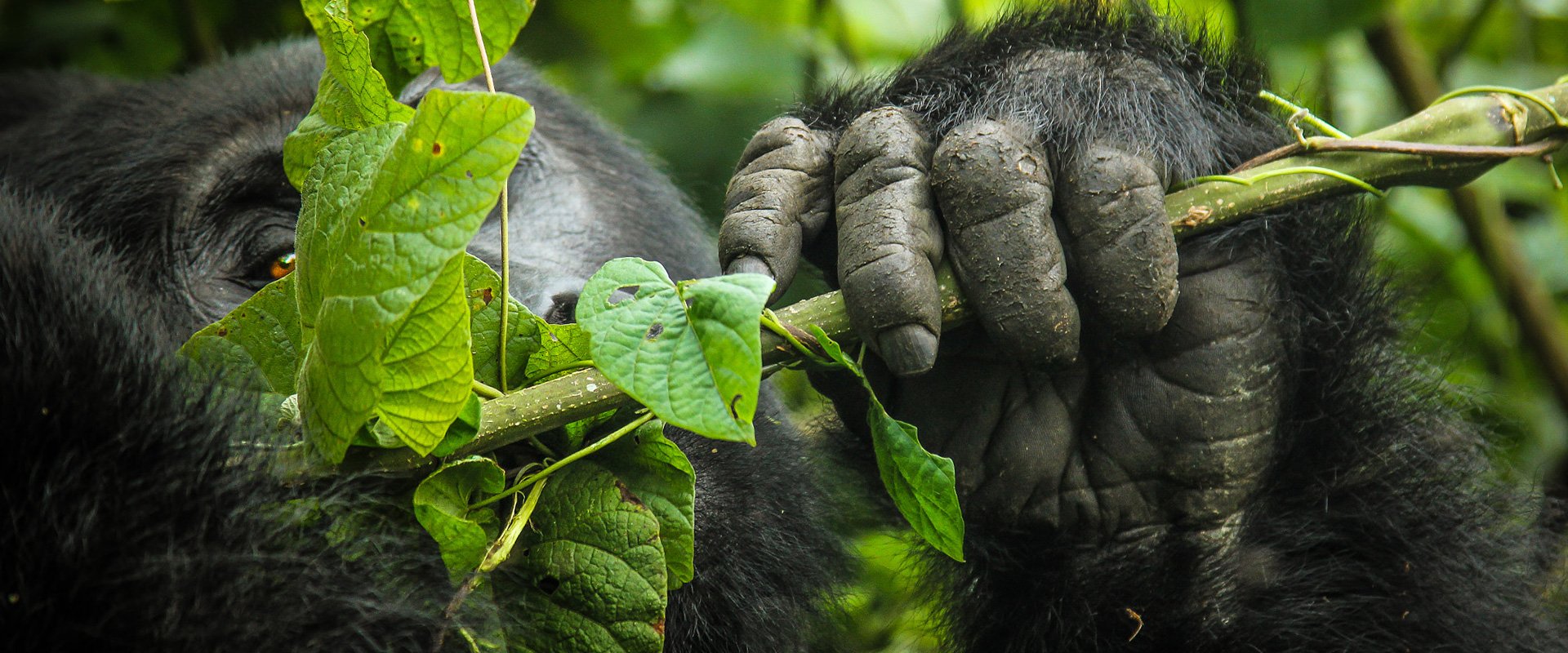
Gorilla trekking in Uganda’s lush tropical rain forests.
Uganda is one of the principal destinations for mountain gorilla trekking, with the experience taking place in Bwindi Impenetrable National Park and Mgahinga Gorilla National Park. Understanding the differences between these destinations, their trekking areas, and the practical arrangements involved is essential when planning a Uganda gorilla trekking safari. This section answers the most important questions travelers ask about Uganda gorilla trekking sectors, the parks, access, trekking locations, and the overall experience.
Where is gorilla trekking done in Uganda?
Gorilla trekking in Uganda takes place in Bwindi Impenetrable National Park and Mgahinga Gorilla National Park in southwestern Uganda. These protected areas form part of the habitat of the endangered mountain gorilla.
Bwindi is the larger and more frequently discussed gorilla trekking destination in Uganda. It has four principal trekking sectors: Buhoma, Ruhija, Rushaga and Nkuringo. Mgahinga is part of the Virunga ecosystem and provides another opportunity to trek mountain gorillas in Uganda.
The two parks offer different landscapes and trekking environments. Bwindi is characterized by dense forest and steep terrain, while Mgahinga forms part of the volcanic Virunga landscape. Choosing between them therefore depends on the traveler’s itinerary, preferred location and available accommodation.
Which national parks offer gorilla trekking in Uganda?
Uganda has two national parks where visitors can undertake mountain gorilla trekking: Bwindi Impenetrable National Park and Mgahinga Gorilla National Park.
Bwindi contains several trekking sectors distributed around the forest, while Mgahinga is a smaller park within the Virunga Mountains. Both destinations are managed as protected wildlife areas, and gorilla trekking is conducted under regulated conditions.
Travelers should select the park before booking accommodation and transportation because the location of the trekking activity directly affects the logistics of the safari.
What is Bwindi Impenetrable National Park?
Bwindi Impenetrable National Park is a protected forest in southwestern Uganda and one of the country’s principal destinations for mountain gorilla trekking. The forest is renowned for its biodiversity and provides habitat for mountain gorillas as well as numerous other species.
The park is divided into four principal gorilla trekking sectors: Buhoma, Ruhija, Rushaga and Nkuringo. Each sector has its own trekking starting points, accommodation options and habituated gorilla groups available for regulated tourism.
Visitors planning a Bwindi gorilla trekking experience should therefore identify their specific trekking sector before finalizing their accommodation and transportation arrangements.
What is Mgahinga Gorilla National Park?
Mgahinga Gorilla National Park is Uganda’s other protected destination for mountain gorilla trekking. It lies within the Virunga volcanic mountain range in southwestern Uganda and forms part of the wider transboundary ecosystem shared with Rwanda and the Democratic Republic of the Congo.
The park provides a different landscape from Bwindi, with volcanic mountains and forested slopes forming an important part of the trekking environment. Visitors who choose Mgahinga should consider the terrain and the location of their accommodation when planning their safari.
Is Bwindi or Mgahinga better for gorilla trekking?
There is no universally correct answer because Bwindi and Mgahinga provide different trekking environments. Bwindi offers four established trekking sectors and a broader range of locations from which visitors can organize their experience. Mgahinga provides a smaller-scale trekking environment within the Virunga Mountains.
The better destination depends on the traveler’s complete itinerary. Someone already traveling through southwestern Uganda may find one park more convenient, while another traveler may prefer the landscape or accommodation options associated with the other destination.
How many gorilla trekking sectors are in Bwindi?
Bwindi has four principal gorilla trekking sectors: Buhoma, Ruhija, Rushaga and Nkuringo. These sectors are located in different parts of the forest and have their own trekking trailheads and accommodation areas.
Travelers should not treat the four sectors as interchangeable locations. A permit associated with one sector affects where the traveler needs to report, making sector selection an important part of safari planning.
What are the four Bwindi gorilla trekking sectors?
The four principal sectors are Buhoma in the northern part of Bwindi, Ruhija in the eastern part, Rushaga in the south and Nkuringo in the southwestern part of the park.
Each sector has its own history, landscape, gorilla families and accommodation choices. The distance between sectors means that travelers should choose accommodation close to the sector where their trek is scheduled.
For a more detailed comparison, the Bwindi trekking sectors guide provides additional information about the principal trekking areas.
What is the Buhoma sector?
Buhoma is located in the northern part of Bwindi and is historically significant in Uganda’s gorilla tourism because it was the first area where gorilla tourism was established in the park.
The sector has several habituated gorilla families and a developed tourism infrastructure. It is also a popular base for travelers who want to combine gorilla trekking with other activities in the surrounding region.
Accommodation should be selected with the Buhoma trailhead in mind so that visitors can reach the briefing location on time on the morning of their trek.
What is the Ruhija sector?
Ruhija is located on the eastern side of Bwindi and is another important gorilla trekking sector. Its location makes it a practical option for itineraries that approach Bwindi from the eastern side.
The landscape around Ruhija includes forested hills and highland terrain. Travelers should expect a genuine forest trekking environment and should select accommodation that is convenient for the Ruhija trailhead.
What is the Rushaga sector?
Rushaga is located in southern Bwindi and is one of the principal areas for gorilla trekking. The sector is also associated with Uganda’s Gorilla Habituation Experience.
Travelers choosing Rushaga should arrange accommodation and transport according to the southern location of the sector. This can help reduce unnecessary transfers before the morning briefing.
What is the Nkuringo sector?
Nkuringo is located in the southwestern part of Bwindi and is known for its mountainous forest setting. The terrain around the sector can be challenging, making appropriate preparation particularly important.
Because Nkuringo is geographically distinct from the other Bwindi sectors, travelers should confirm the location of their accommodation and the exact meeting point before the trekking day.
Which Bwindi sector should I choose for gorilla trekking?
The best sector depends on the traveler’s route, accommodation preferences, physical considerations and overall safari itinerary. There is no single sector that is objectively best for every visitor.
Buhoma may suit travelers whose itinerary approaches from the northern side, while Ruhija can be convenient for routes approaching from the east. Rushaga and Nkuringo provide southern options and can work well with itineraries incorporating the Kisoro area.
The most important planning principle is to choose the sector first and then select accommodation close enough to the trekking starting point.
Can I choose my gorilla trekking sector?
Travelers should discuss their preferred trekking sector when arranging their safari and permit. The availability of permits and the applicable booking arrangements determine what can be selected for a particular date.
Once a traveler has a trekking location, accommodation and transportation should be organized around that location rather than assuming that all Bwindi lodges are equally convenient for every sector.
Can I change my gorilla trekking sector after booking?
Changes to gorilla trekking arrangements depend on the applicable permit and booking rules. Travelers should not assume that a sector can simply be changed after a permit has been issued.
Any requested alteration should be confirmed with the Uganda Wildlife Authority or the authorized booking agent handling the permit before making additional travel arrangements.
How many gorilla families can tourists visit in Uganda?
Uganda has multiple habituated gorilla groups available for regulated tourism across Bwindi and Mgahinga. The number of groups available to visitors can change as gorilla families naturally change composition and as conservation and management decisions evolve.
Travelers should therefore avoid relying on old lists of gorilla families as permanent information. Current group availability should be confirmed when arranging the trek.
Can I choose a particular gorilla family?
Visitors should not assume that they can freely select any individual gorilla family. Gorilla family allocation is part of the regulated trekking system, and the available arrangements can depend on the sector, permit and park management procedures.
Gorilla families also move naturally through their habitat, so the location of a group is not fixed. The trekking experience therefore requires some flexibility.
How many people can join a gorilla trekking group?
Gorilla trekking is conducted in controlled visitor groups to limit disturbance to the animals. Uganda’s established tourism rules have traditionally limited standard gorilla tracking groups to a maximum of eight visitors per gorilla family per day.
Visitors should confirm the current group-size rules with the responsible wildlife authority because tourism regulations can be revised.
Is gorilla trekking available every day?
Gorilla trekking is organized as a regular tourism activity in Uganda rather than being restricted to a particular short annual season. However, the availability of specific permits depends on the selected date, trekking sector and current booking arrangements.
Travelers should secure their permit before finalizing an itinerary because the availability of accommodation does not automatically mean that a gorilla permit is available for the same date.
Do gorillas stay in the same place?
No. Mountain gorillas are wild animals that move through their natural habitat. Their location can therefore change between trekking days and even during the period when trackers are monitoring them.
This movement is one reason why the duration of a gorilla trek cannot be guaranteed in advance. Visitors may need to walk farther depending on where the assigned family is located.
How are gorillas located before tourists see them?
Trackers and ranger teams monitor gorilla movements and help guide the trekking process. Information about the gorillas’ recent movements can help guides determine where to begin the search.
This system improves the organization of the trekking experience while still allowing the gorillas to move naturally through the forest. Visitors should remember that finding the animals is not equivalent to visiting a fixed wildlife enclosure.
What happens if the gorillas move deeper into the forest?
If the gorilla family has moved farther from the trailhead, the trekking group may need to walk for a longer period before reaching the animals. This is a normal part of tracking free-moving wildlife.
The guide and trackers determine the appropriate route based on the location and movements of the gorilla family. Visitors should therefore prepare for variable walking distances rather than expecting a fixed trek length.
Is Bwindi difficult to reach?
Bwindi is located in southwestern Uganda, and reaching the park can involve a substantial road journey depending on the traveler’s starting point and selected trekking sector. The journey should therefore be incorporated into the safari itinerary rather than treated as a short transfer.
Travelers arriving by road should allow sufficient time to reach their accommodation before the trekking day. Those considering air travel should also confirm the appropriate airstrip and onward ground transfer for their selected sector.
How should I plan accommodation for gorilla trekking?
Accommodation should be selected according to the exact trekking sector. This is particularly important in Bwindi because Buhoma, Ruhija, Rushaga and Nkuringo are geographically separated areas.
Staying close to the relevant trailhead reduces the risk of a long early-morning transfer and makes it easier to arrive for the mandatory briefing on time. Travelers should confirm the meeting location with their tour operator or the relevant park authority before the trekking date.
Can gorilla trekking be combined with other Uganda safari activities?
Yes. Gorilla trekking can form part of a broader Uganda itinerary that includes wildlife viewing, primate experiences, cultural activities and other nature-based attractions.
For example, travelers can combine gorilla trekking with other wildlife experiences when their route and available time allow it. A broader itinerary can provide a more comprehensive experience of Uganda rather than limiting the trip to one protected area.
A relevant example is gorilla and rhino trekking, which demonstrates how different wildlife experiences can be incorporated into one Uganda journey.
Is Bwindi only about gorilla trekking?
No. Although mountain gorilla trekking is the park’s best-known tourism activity, Bwindi is also important for biodiversity, forest ecosystems and other wildlife and cultural experiences.
Travelers with additional time can therefore consider activities beyond the gorilla trek, provided they fit the itinerary and local regulations.
Can I visit Mgahinga instead of Bwindi?
Yes. Mgahinga Gorilla National Park is an alternative Ugandan destination for mountain gorilla trekking. It is located within the Virunga Mountains and offers a different landscape from Bwindi.
The choice between Mgahinga and Bwindi should be based on permit availability, the traveler’s route, accommodation and the type of environment they want to experience.
Which is easier to access, Bwindi or Mgahinga?
There is no single answer because accessibility depends on the traveler’s starting point and the specific trekking sector or trailhead. Bwindi has four geographically separated sectors, while Mgahinga is located within the Virunga mountain region.
Travelers should compare the complete route from their arrival point to their accommodation and then to the trekking trailhead instead of comparing the parks only by their names.
What should I know before booking Uganda gorilla trekking?
Before booking, travelers should establish which park and trekking sector they want to visit, confirm current permit availability, identify suitable accommodation and plan transportation to the briefing point.
They should also understand that gorilla trekking is a physically active wildlife experience with variable trekking duration. Appropriate clothing, footwear and preparation are important, particularly because weather and forest conditions can change.
For practical background on the experience itself, the Bwindi trekking guide provides additional destination-specific information.
What is the biggest mistake to avoid when planning Uganda gorilla trekking?
One of the most important planning mistakes to avoid is treating Bwindi as a single compact trekking location. The four sectors are geographically distinct, and accommodation that is convenient for one sector may be unsuitable for another.
Travelers should also avoid relying on outdated permit prices, old gorilla-family lists or historical trekking regulations. Current information should be checked with the responsible authorities before booking and again before travel.
What makes Uganda gorilla trekking special?
Uganda provides the opportunity to encounter mountain gorillas within two protected national parks, with Bwindi offering four principal trekking sectors and Mgahinga providing a Virunga mountain environment.
The experience combines forest trekking, wildlife observation and conservation. Rather than being a predictable attraction where animals are kept in a fixed location, gorilla trekking requires visitors to enter a natural forest environment and observe the gorillas under carefully managed conditions.
What should I expect on my first Uganda gorilla trek?
First-time visitors should expect an early start, a ranger briefing, a guided walk through forest terrain and a search for the assigned gorilla family. The duration and difficulty of the walk can vary because the gorillas move through their natural habitat.
Once the family is found, visitors observe the gorillas while following the applicable distance and behavior rules. The experience ends with the group leaving the gorillas and returning through the forest.
Where can I find more information about Uganda gorilla trekking?
Travelers should prioritize information from the Uganda Wildlife Authority for current regulations, permit conditions and protected-area requirements. Destination and safari-planning resources can provide additional context about sectors, routes, accommodation and practical preparation.
For destination planning, the Uganda gorilla trekking guide can be used alongside current official information when developing a safari itinerary.
Gorilla Trekking Permit FAQs
Understanding gorilla trekking permits, availability, and validity.
A gorilla trekking permit is one of the most important requirements for anyone planning to see mountain gorillas in Uganda. The permit authorizes participation in the regulated gorilla trekking experience and is tied to a specific trekking date. Because permit availability is limited, travelers should understand the booking process, current pricing, payment requirements, cancellation conditions, and what the permit actually covers before making travel arrangements.
What is a gorilla trekking permit?
A gorilla trekking permit is an authorization that allows a visitor to participate in gorilla trekking in Uganda. It is issued within the regulated tourism system managed by the Uganda Wildlife Authority and is associated with a particular trekking date.
The permit should not be confused with a complete safari package. The cost of the permit is only one component of the overall trip, while accommodation, transportation, meals and other personal expenses may require separate arrangements.
Travelers researching Uganda gorilla permit prices should always verify the latest official tariff because permit rates and tourism regulations can change.
Do I need a permit to trek gorillas in Uganda?
Yes. A visitor needs the appropriate authorization to participate in gorilla trekking in Uganda. Gorilla trekking is a regulated activity conducted in Bwindi Impenetrable National Park and Mgahinga Gorilla National Park.
Visitors should arrange their permits before traveling to the trekking destination rather than arriving at the park without confirmed authorization. The number of permits available on a particular date is limited because gorilla tourism is managed to control visitor numbers and minimize disturbance to the animals.
How much is a gorilla trekking permit in Uganda?
For the UWA tariff covering July 2024 to June 2026, the listed gorilla tracking fee is US$800 for foreign non-residents, US$700 for foreign residents, US$500 for the Rest of Africa category and UGX 300,000 for East African Community citizens. The same tariff lists the Gorilla Habituation Experience at US$1,500 for foreign non-residents, US$1,000 for foreign residents, US$1,000 for the Rest of Africa category and UGX 750,000 for East African Community citizens.
However, the current UWA rates page now displays a downloadable current gorilla permit guide alongside UWA’s tariff information, while the older UWA tariff document specifically covers July 2024 to June 2026. Because the current date is August 2026, the applicable 2026–2027 tariff should be confirmed directly with UWA before publishing a definitive current price.
What does a gorilla permit include?
The UWA tariff for July 2024 to June 2026 states that the gorilla tracking rate included the guide fee, park entrance fee for the day and a community development contribution. The standard experience also provided one hour of gorilla observation after the gorilla family was located.
Travelers should distinguish these included services from the wider costs of a safari. Accommodation, transportation to and from Bwindi or Mgahinga, meals outside the specified arrangements, tips and personal expenses may require additional payment.
Does a gorilla permit include accommodation?
No. A gorilla permit should not be treated as an accommodation booking. Travelers need to arrange their own lodging or include accommodation within a separately purchased safari package.
The location of accommodation is particularly important in Bwindi because the park has four principal trekking sectors: Buhoma, Ruhija, Rushaga and Nkuringo. Choosing accommodation close to the correct sector can make the trekking morning considerably easier.
Does a gorilla permit include transportation?
A gorilla permit does not constitute a complete transportation package. Travelers need to arrange transportation to the destination and between their accommodation and other itinerary locations unless these services are included in a separately booked safari.
Because Bwindi’s trekking sectors are geographically separated, transportation planning should be based on the specific sector assigned for the trek rather than simply using “Bwindi” as the destination.
Does a gorilla permit include a ranger guide?
UWA’s July 2024–June 2026 tariff states that the gorilla tracking rate includes the guide fee. Ranger and tracking support form an important part of the regulated gorilla trekking experience because visitors enter a protected natural environment and must follow wildlife-management instructions.
The guide’s instructions take priority throughout the trek, particularly during the search for the gorilla family and the period of observation.
How do you book a gorilla permit in Uganda?
The booking process depends on the visitor’s category and the applicable UWA procedures. UWA maintains an official online booking system, and its published guidance provides information about permit purchasing procedures.
International travelers should confirm the current booking procedure directly with UWA or use a properly authorized tourism operator. The process should begin by identifying the preferred trekking date and checking whether permits are available for that date.
Current gorilla permit booking terms can also be reviewed when comparing the practical arrangements offered by a safari operator.
Can foreigners buy Uganda gorilla permits directly?
The applicable UWA purchase guidelines should be checked for the visitor’s specific category before booking. UWA published an advisory in July 2024 concerning adherence to its guidelines for purchasing gorilla and chimpanzee permits.
Because booking rules can change, travelers should not rely solely on older travel articles that describe previous purchasing procedures. The safest approach is to confirm the current process with UWA or an appropriately authorized operator.
Can Ugandan citizens buy gorilla permits directly?
Ugandan citizens should confirm the current purchasing procedure with UWA because the authority’s booking arrangements and eligibility procedures can be updated. The UWA booking system is active online, while UWA also publishes official contact information for tourism reservations.
Travelers should use the official UWA channels when confirming availability, payment procedures and current permit conditions.
How far in advance should I book a gorilla permit?
There is no single guaranteed booking period that applies equally to every travel date. Demand can be particularly important during popular travel periods, and permits for a desired date can become unavailable.
Travelers with fixed dates should therefore check availability as early as practical rather than waiting until they reach Uganda. This is especially important when accommodation, flights and other safari arrangements have already been organized around a specific trekking date.
Can gorilla permits sell out?
Yes. Gorilla trekking operates with controlled visitor numbers, so permits are limited for each trekking date. UWA’s published information describes gorilla tourism as a regulated activity with restricted access.
This means that having available accommodation does not guarantee that a gorilla permit will also be available. Permit availability should be checked before treating a particular date as confirmed.
Can I reserve a gorilla permit without paying?
Reservation and payment conditions depend on the booking channel and the applicable UWA procedures. Travelers should not assume that an informal hold guarantees a permit until the booking has been properly confirmed under the relevant terms.
If using a tour operator, travelers should request written confirmation of the permit status, trekking date, visitor category and amount paid.
Can I pay for a gorilla permit in installments?
Information about installment payments is not uniform across all booking arrangements. A safari company’s payment terms may differ from the official permit purchasing requirements.
Travelers should therefore confirm directly with UWA or the specific authorized operator whether installment payment is accepted and, importantly, whether the permit itself is considered secured before full payment.
Can gorilla permits be transferred to another person?
Travelers should not assume that a permit can be freely transferred to another person. Permit records contain visitor and booking information, and changes are subject to the applicable UWA procedures.
If a traveler can no longer participate, the correct approach is to contact the organization handling the permit rather than attempting to give the permit to another traveler independently.
Can I change my gorilla trekking date after buying a permit?
Date changes are subject to the applicable UWA rules and the conditions under which the permit was purchased. A traveler should request a date change through the official booking channel rather than assuming that the permit can automatically be moved.
The possibility of changing dates may depend on availability and the timing of the request. Written confirmation should be obtained before making new accommodation or transportation arrangements.
Are gorilla permits refundable?
Refund conditions depend on the applicable UWA rules and the terms governing the specific booking. Travelers should carefully check the cancellation and refund conditions before paying for a permit.
Do not assume that a permit is fully refundable simply because a traveler cannot travel. Cancellation timing and the reason for cancellation can affect what happens to the payment.
What happens if I miss my gorilla trekking date?
A permit is associated with the booked trekking date, so travelers should make every effort to arrive in the correct area before the scheduled trek. Missing the date can have financial consequences depending on the applicable permit terms.
Travelers should contact the permit-issuing authority or booking operator as soon as a problem becomes apparent rather than waiting until after the scheduled trekking date.
Can I buy a gorilla permit on the day of trekking?
Travelers should not plan a gorilla safari around the assumption that a permit will be available on the day of trekking. Gorilla tourism has limited daily capacity, and availability depends on the date and visitor category.
Last-minute availability may sometimes exist, but Uganda gorilla permit booking rules should be checked before relying on any last-minute arrangement.
What information is needed when booking a gorilla permit?
The booking process requires sufficient information to identify the visitor and the intended trekking date. The exact information required can depend on the visitor category and the booking channel.
Travelers should provide accurate personal and travel information because permit records need to correspond with the person who will participate in the trekking experience.
Can I book a gorilla permit without knowing my trekking date?
A permit is associated with a specific trekking date, so travelers need to establish the date before the permit can be properly secured. This is why gorilla trekking should be integrated into the wider safari itinerary during the planning stage.
Once the trekking date is established, accommodation and transportation can be arranged around the correct trekking sector and reporting point.
What happens after my gorilla permit is confirmed?
After confirmation, travelers should retain the booking documentation and verify the trekking date, visitor details and location. The permit information should be kept safely with other important travel documents.
The traveler should then finalize accommodation and transportation based on the assigned trekking location. It is also useful to reconfirm the meeting point and reporting time before the trekking day.
Should I book my accommodation before my gorilla permit?
For travelers whose dates are flexible, checking gorilla permit availability before committing to non-refundable accommodation can reduce planning risk. The permit is the essential authorization for the trekking activity, while accommodation can be selected afterward according to the confirmed trekking sector.
Once the permit date and sector are established, accommodation should be chosen as close as practical to the relevant trailhead.
Can a tour operator arrange my gorilla permit?
Yes. Authorized tour operators can assist travelers with gorilla permit arrangements as part of safari planning. The operator should clearly explain whether the quoted price includes the permit itself, booking services or other safari components.
Travelers should also request documentation confirming the permit booking rather than relying only on a verbal promise that a permit has been secured.
How should I choose a tour operator for gorilla permit booking?
Travelers should verify that the operator is properly authorized, provides transparent pricing and clearly explains what is included in the quoted amount. It is also important to distinguish between the official permit fee and any separate safari or administrative charges.
For additional booking context, permit booking information explains how a tour company can assist with the process.
Can a tour operator charge more than the official gorilla permit price?
A safari operator may quote a total amount that includes services beyond the official permit itself. These can include booking administration, transportation, accommodation or other safari services.
Travelers should request an itemized quotation so they can distinguish the official permit cost from the cost of the broader safari package or any additional service fees.
What is the difference between a gorilla trekking permit and a gorilla habituation permit?
They authorize different experiences. Standard gorilla trekking involves visiting a habituated gorilla family for the permitted observation period. The Gorilla Habituation Experience involves a group that is still undergoing habituation and allows a substantially longer observation period under the applicable rules.
The UWA tariff covering July 2024 to June 2026 listed different prices for the two experiences, with the habituation experience costing more than standard gorilla tracking.
Does a gorilla permit guarantee that I will see gorillas?
A permit authorizes participation in the gorilla trekking activity, but it should not be described as a guarantee of a particular wildlife encounter. Mountain gorillas are free-moving wild animals, and their location can change.
Guides and trackers work to locate the assigned gorilla family, but travelers should approach the activity as wildlife tracking rather than as a guaranteed encounter at a fixed location.
Does a gorilla permit guarantee an easy trek?
No. The permit provides authorization to participate in gorilla trekking but does not determine how far a visitor will need to walk. The gorilla family may be located at varying distances from the trailhead.
UWA states that gorilla treks may last between two and seven hours and require moderate fitness. Visitors should therefore prepare for variable forest conditions even after securing a permit.
How many people can use one gorilla permit?
A gorilla permit is issued for an individual visitor and should not be treated as a shared document. Each participant requires the appropriate authorization for the trekking experience.
Gorilla tourism also operates with controlled group sizes around individual gorilla families. These limits help manage visitor pressure and support conservation objectives.
Why are gorilla permits expensive?
The permit is part of a highly regulated wildlife tourism system involving protected-area management, ranger and guide services, conservation activities and community-related benefits. UWA’s tariff indicates that the gorilla tracking fee includes the guide fee, park entrance fee for the day and a community development contribution.
UWA also states that revenue-sharing arrangements provide benefits to communities surrounding protected areas, including a specific contribution associated with gorilla tracking at Bwindi.
Does gorilla permit money support local communities?
UWA states that its revenue-sharing program allocates a portion of park revenue to communities surrounding national parks and wildlife reserves. UWA’s community-conservation information also states that US$10 from each gorilla-tracking permit sold at Bwindi is shared under the specified arrangement.
This demonstrates that gorilla tourism has a community-development component in addition to its conservation and visitor-management functions.
What is the safest way to verify a gorilla permit?
Travelers should verify the permit through the organization responsible for the booking and retain official documentation confirming the reservation. UWA publishes its official tourism contact details and warns visitors about unofficial communication channels.
When working with a tour operator, travelers should request clear evidence that the permit has been secured for the correct date and visitor category before assuming that the booking is complete.
What should I check before paying for a gorilla permit?
Before payment, confirm the trekking date, visitor category, number of permits, trekking location, total amount payable and the applicable cancellation conditions. If a tour operator is involved, establish which portion of the quotation represents the official permit and which portion covers other safari services.
Travelers should also verify current prices with UWA because the official tariff for July 2024 to June 2026 does not automatically establish the tariff applicable after June 2026.
What is the most important gorilla permit booking advice?
The most important advice is to confirm the current official permit requirements and availability before committing to the rest of the safari. Gorilla trekking is date-specific and capacity is limited, so permit planning should be treated as a central part of the itinerary rather than an afterthought.
For a reliable booking process, travelers should use official UWA information or a properly authorized operator, keep written confirmation of the permit and verify the current rules before departure.
Gorilla Trekking Cost FAQs

Breakdown of gorilla trekking permit prices and related fees.
Understanding the cost of gorilla trekking is one of the most important parts of planning a Uganda gorilla safari. The total budget is not limited to the gorilla permit. Travelers may also need to account for accommodation, transportation, meals, porter services, travel insurance, visas where applicable, and other safari expenses. The most important distinction is between the official gorilla permit fee and the total cost of the complete safari.
How much does gorilla trekking cost in Uganda?
The official Uganda Wildlife Authority tariff currently available in the search results covers July 2024 to June 2026. It lists the standard gorilla tracking permit at US$800 for foreign non-residents, US$700 for foreign residents, US$500 for the Rest of Africa category and UGX 300,000 for East African Community citizens. The same tariff lists the Gorilla Habituation Experience at US$1,500, US$1,000, US$1,000 and UGX 750,000 respectively.
However, the current UWA rates page states that tariff changes for 2026–2027 are available for download, while the accessible tariff document in the current search results is still explicitly labeled July 2024–June 2026. Therefore, Information not found in current search results for the exact 2026–2027 gorilla permit prices. Travelers should confirm the applicable rate directly with UWA before making payment.
For additional planning context, Uganda gorilla trekking costs provides a detailed discussion of permit costs and related expenses.
What is included in the gorilla trekking permit?
According to the UWA tariff covering July 2024 to June 2026, the gorilla tracking rate includes the guide fee, park entrance fees for the day and a community development contribution.
The permit therefore represents more than simple access to the forest. It forms part of a regulated tourism system that supports park management, guided visitor experiences and community-related conservation benefits.
What is not included in the gorilla permit price?
The permit should not be confused with a complete safari package. Accommodation, transportation to and from the park, meals outside the applicable arrangements, flights, visas where applicable, personal expenses, tips and optional services may require separate payment.
This distinction is important when comparing safari quotations. Two operators may advertise different total prices even when the official permit component is the same because their accommodation, transportation and other included services differ.
How much does a complete Uganda gorilla safari cost?
There is no single price for a complete Uganda gorilla safari because the final amount depends on the number of days, accommodation category, transportation arrangements, trekking location and additional activities.
A short itinerary using budget accommodation and shared or efficiently arranged transportation will have a different total cost from a longer private safari using luxury accommodation and additional wildlife activities.
Travelers can compare the broader Uganda Rwanda safari value when deciding how much of their travel budget should be allocated to the gorilla experience.
Why is gorilla trekking expensive?
Gorilla trekking takes place in protected natural habitats and is subject to controlled visitor access. The permit contributes to the costs associated with managing protected areas, guiding visitors and supporting conservation and community-related programs.
UWA’s published tariff also identifies a community development contribution within the gorilla tracking rate. This means the permit should be viewed partly as a conservation and protected-area management fee rather than simply as an entrance ticket.
Is the gorilla permit the biggest safari expense?
For many international travelers, the gorilla permit is one of the largest individual costs of the trip, but it is not necessarily the only major expense. Long-distance transportation, accommodation and additional safari activities can substantially increase the final budget.
The correct way to calculate the cost is therefore to create a complete itinerary budget rather than multiplying the permit price by the number of travelers and treating that figure as the total safari cost.
Is gorilla trekking cheaper in Uganda or Rwanda?
Permit prices have historically been lower in Uganda than Rwanda for many international visitors. However, permit price alone does not determine the total safari cost.
Uganda’s gorilla destinations can require longer road transfers depending on the starting point and trekking sector, while Rwanda’s Volcanoes National Park is relatively close to Kigali. Travelers should therefore compare permits, transportation, accommodation and the amount of time available.
Does accommodation affect the cost of gorilla trekking?
Yes. Accommodation can significantly affect the total safari budget. Bwindi offers different accommodation categories around its trekking sectors, ranging from more basic options to high-end lodges.
Accommodation should also be selected according to the trekking sector. Staying close to the correct trailhead can reduce unnecessary transfers and make the overall itinerary more efficient.
How much does transportation add to the cost?
Transportation costs depend on the starting point, vehicle arrangement, number of travelers, route, duration of the safari and whether the trip uses road or domestic air travel. A private vehicle with a driver-guide will have different costs from a shared arrangement.
The distance to Bwindi also varies considerably depending on whether the traveler is going to Buhoma, Ruhija, Rushaga or Nkuringo. Transportation should therefore be quoted according to the actual trekking sector rather than a generic “Bwindi” destination.
Can I make gorilla trekking cheaper?
Travelers can control some parts of their total safari budget by selecting appropriate accommodation, limiting unnecessary transfers and choosing a practical itinerary. However, the official permit price itself is regulated and should not be confused with a negotiable tour-service charge.
It is also important not to choose accommodation or transportation solely because it is the cheapest option. The location, reliability and suitability for the trekking itinerary should also be considered.
Is there a budget gorilla trekking option in Uganda?
Yes, travelers can construct a lower-cost safari by choosing budget accommodation and keeping the itinerary focused on the gorilla experience. Uganda has accommodation options across different price levels around the major trekking sectors.
However, “budget” does not mean that the official gorilla permit can be substantially discounted outside the categories and offers authorized by UWA. Travelers should be cautious of claims that an operator can sell an official permit for dramatically less than the applicable authority tariff.
Is luxury gorilla trekking available in Uganda?
Yes. Uganda has luxury accommodation options around the principal gorilla trekking areas. A luxury itinerary can combine a premium lodge with private transportation, additional wildlife experiences and other personalized services.
The luxury component normally affects the safari services surrounding the permit rather than changing the nature of the regulated gorilla encounter itself.
Does the gorilla trekking permit price change by season?
The UWA tariff is structured according to visitor categories and activity rather than presenting the standard permit as a seasonal daily rate. Travelers should therefore verify the official tariff applicable to their intended travel period.
Seasonality can nevertheless affect other parts of the safari, particularly accommodation demand and transportation arrangements. The dry seasons are commonly considered favorable for trekking conditions, while wetter periods can bring muddier and more slippery trails.
The best time for gorilla trekking guide provides additional seasonal planning information.
Is gorilla trekking cheaper during the rainy season?
The official gorilla permit should not be assumed to become cheaper simply because a traveler visits during a wetter period. Other components of the trip, particularly accommodation, may sometimes offer different rates depending on demand and the property.
Travelers considering the rainy season should compare the complete package price rather than expecting a reduction in the regulated permit fee.
How much should I budget for accommodation?
There is no single accommodation price because Bwindi and Mgahinga have properties across different categories. The final price can depend on room type, meal plan, travel season, number of nights and the specific lodge or camp.
Travelers should request current accommodation rates for their exact travel dates rather than relying on old published prices.
Do I need to pay separately for a porter?
Porter services are separate from the standard gorilla permit. Visitors who want assistance carrying personal belongings or additional support during the trek should discuss porter availability and current charges with their operator or the local porter association.
Hiring a porter can also provide direct economic benefits to people living around the trekking destination, although the service should remain voluntary and appropriately arranged.
Does hiring a porter make gorilla trekking more expensive?
Yes, a porter is an additional expense, but it can provide practical assistance during a demanding forest trek. A porter may carry a backpack or help a visitor navigate challenging terrain.
Travelers should treat porter fees separately from the official gorilla permit and confirm the current local rate before the trek.
Do I need to budget for tips?
Tips are generally considered discretionary rather than part of the official gorilla permit. Travelers who are satisfied with the service provided by guides, trackers, porters or other safari staff may choose to give an appropriate tip.
Because tipping practices can vary, travelers should ask their operator for current guidance rather than assuming that a fixed amount is mandatory.
Does gorilla trekking cost the same for every nationality?
No. UWA’s July 2024–June 2026 tariff uses different categories, including foreign non-residents, foreign residents, Rest of Africa visitors and East African Community citizens.
Travelers should confirm which category applies to them and provide the required documentation. The applicable category can have a substantial effect on the official permit price.
Are East African citizens charged the same gorilla permit price as foreign visitors?
No. Under the UWA tariff covering July 2024 to June 2026, East African Community citizens were listed at a separate rate from foreign non-residents and foreign residents.
Because the current date is August 2026 and UWA has announced tariff changes for 2026–2027, travelers should verify the current EAC rate before relying on historical figures.
Are foreign residents charged less than foreign non-residents?
Under the July 2024–June 2026 UWA tariff, foreign residents were charged a lower standard gorilla tracking rate than foreign non-residents. Eligibility for the resident category depends on the applicable documentation and UWA’s rules.
Travelers should confirm their eligibility before assuming that they qualify for the resident rate.
Can a tour operator add charges to the gorilla permit price?
A tour operator can quote a total safari price that includes services beyond the official permit. These services may include accommodation, transportation, meals, booking assistance, guide services outside the permit arrangement and other itinerary components.
The important point is transparency. Travelers should ask for an itemized quotation showing the official permit component and the additional safari services.
How can I compare gorilla safari prices from different operators?
Compare the complete package rather than looking only at the headline price. Check the permit category, number of trekking days, accommodation standard, meals, transportation, vehicle type, airport transfers, guide arrangements and included activities.
A lower quotation may simply exclude services that another operator has already included. An accurate comparison requires the same itinerary and inclusions on both sides.
Can I book only the gorilla permit without a safari package?
Gorilla trekking authorization and safari arrangements are separate concepts. Travelers can arrange their broader travel independently where the applicable booking procedures permit, while others choose a tour operator to coordinate permits, accommodation and transportation as one package.
Regardless of the arrangement, the visitor must hold the appropriate authorization required for the trekking activity.
Is gorilla habituation more expensive than standard gorilla trekking?
Yes, under the UWA tariff covering July 2024 to June 2026, the Gorilla Habituation Experience had a higher permit price than standard gorilla tracking. The difference reflects the substantially longer permitted observation period and the different nature of the experience.
UWA listed the habituation experience at US$1,500 for foreign non-residents under that tariff, compared with US$800 for standard gorilla tracking. These figures should not be presented as the definitive August 2026 prices because the current 2026–2027 tariff should be confirmed.
For more background on the difference between the two experiences, gorilla habituation safari costs explains the additional observation time and experience.
Why does gorilla habituation cost more?
Gorilla habituation involves a different type of wildlife experience and a longer authorized observation period than standard gorilla trekking. The UWA tariff covering July 2024 to June 2026 priced it higher than ordinary gorilla tracking.
Travelers interested in habituation should therefore compare the cost according to observation time and experience rather than treating it simply as a more expensive version of the standard trek.
Does the gorilla permit contribute to conservation?
Yes. UWA’s published tariff states that the gorilla tracking rate includes a community development contribution, while UWA’s conservation and revenue-sharing information describes mechanisms through which tourism revenue supports communities around protected areas.
This makes the permit an important component of the wider conservation tourism system. The fee is not simply payment for a one-hour wildlife encounter.
Does gorilla tourism benefit local communities?
UWA’s revenue-sharing framework provides for tourism revenue to benefit communities surrounding protected areas. This creates a connection between tourism income and local development while supporting the broader objective of conservation.
Travelers can therefore view responsible gorilla tourism as part of a larger system involving protected-area management, conservation and surrounding communities.
What other costs should I consider before booking?
A complete budget should consider accommodation, transportation, meals, porter services, optional activities, travel insurance, visa requirements where applicable and personal expenses in addition to the gorilla permit.
International travelers should also consider the cost of reaching southwestern Uganda from their arrival point. The final amount can vary substantially according to whether they travel by road, domestic flight or a combination of transportation methods.
How can I avoid unexpected gorilla safari costs?
The best approach is to request a detailed written quotation before confirming the trip. The quotation should identify the gorilla permit, accommodation, transportation, meals, activities, taxes or service charges where applicable and any exclusions.
Travelers should also ask whether the quotation is based on current permit prices. This is particularly important in 2026 because UWA has announced tariff changes for the 2026–2027 financial year.
What is the cheapest way to go gorilla trekking in Uganda?
There is no single cheapest itinerary because the final cost depends on the traveler’s starting point, dates, accommodation, transportation and number of safari days. A practical budget strategy is to minimize unnecessary transfers, choose appropriate accommodation and avoid adding activities that are not important to the traveler.
The official permit should remain a separate consideration because its price is determined by UWA’s applicable tariff and visitor category.
Is gorilla trekking worth the cost?
Whether gorilla trekking is worth the cost depends on the traveler’s priorities. Someone specifically interested in mountain gorillas and conservation may consider the experience highly valuable, while someone with a very limited budget may prefer to compare it with other wildlife experiences.
The most useful comparison is not simply permit price against permit price. Travelers should consider the complete experience, conservation contribution, time commitment, accommodation and transportation involved.
What is the most important thing to know about gorilla trekking costs?
The most important point is that the gorilla permit is only one part of the total safari budget. Permit prices are regulated according to official tariffs, while accommodation, transportation and other services can vary significantly between itineraries and operators.
Because UWA has announced tariff changes for 2026–2027 and the exact new gorilla rates were not available in the current search results, travelers should verify the current official tariff before making a final payment.
For an additional independent reference on Uganda permit information, gorilla trekking costs provides another destination-specific overview, but the current UWA tariff remains the authoritative source for official permit prices.
Gorilla Trekking Cost FAQs
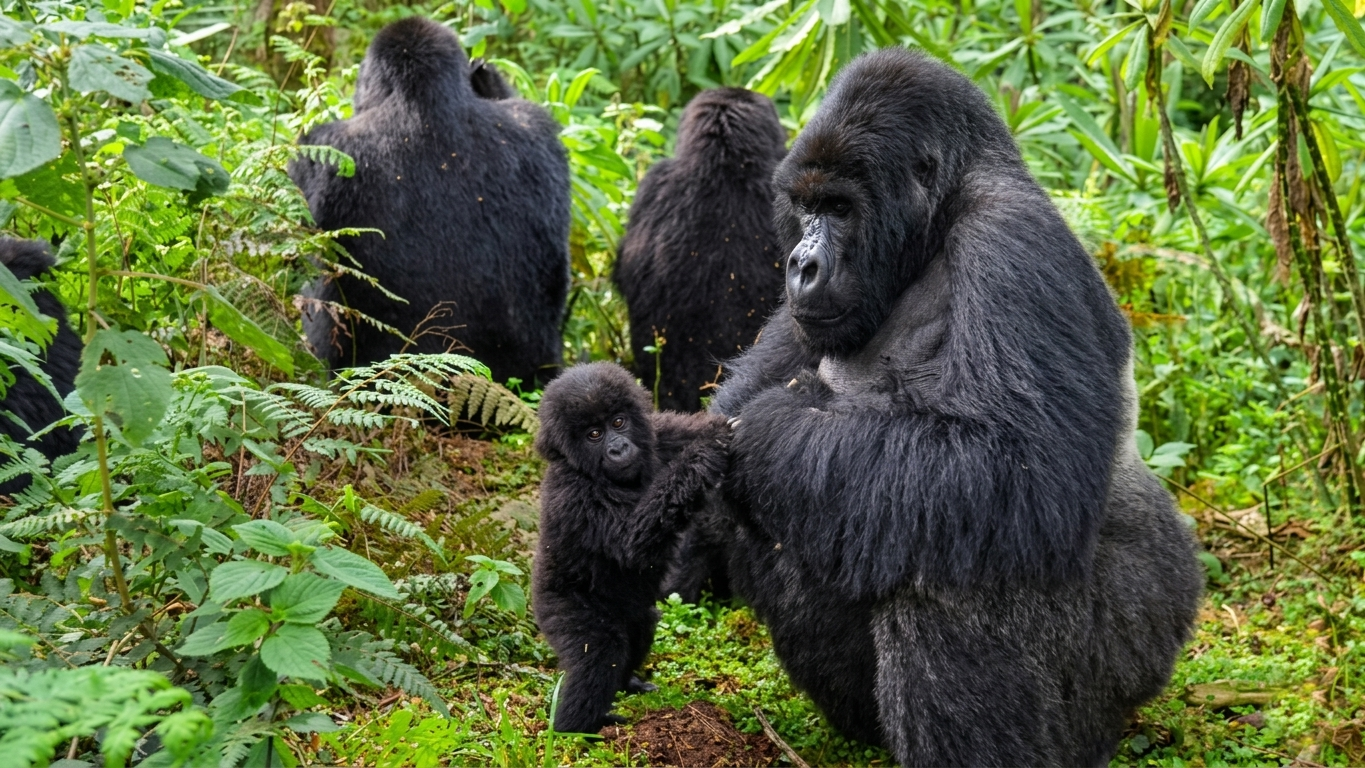
In-depth look at what is included in your gorilla permit fee.
Understanding the cost of gorilla trekking is one of the most important parts of planning a Uganda gorilla safari. The total budget is not limited to the gorilla permit. Travelers may also need to account for accommodation, transportation, meals, porter services, travel insurance, visas where applicable, and other safari expenses. The most important distinction is between the official gorilla permit fee and the total cost of the complete safari.
How much does gorilla trekking cost in Uganda?
The official Uganda Wildlife Authority tariff currently available in the search results covers July 2024 to June 2026. It lists the standard gorilla tracking permit at US$800 for foreign non-residents, US$700 for foreign residents, US$500 for the Rest of Africa category and UGX 300,000 for East African Community citizens. The same tariff lists the Gorilla Habituation Experience at US$1,500, US$1,000, US$1,000 and UGX 750,000 respectively.
However, the current UWA rates page states that tariff changes for 2026–2027 are available for download, while the accessible tariff document in the current search results is still explicitly labeled July 2024–June 2026. Therefore, Information not found in current search results for the exact 2026–2027 gorilla permit prices. Travelers should confirm the applicable rate directly with UWA before making payment.
For additional planning context, Uganda gorilla trekking costs provides a detailed discussion of permit costs and related expenses.
What is included in the gorilla trekking permit?
According to the UWA tariff covering July 2024 to June 2026, the gorilla tracking rate includes the guide fee, park entrance fees for the day and a community development contribution.
The permit therefore represents more than simple access to the forest. It forms part of a regulated tourism system that supports park management, guided visitor experiences and community-related conservation benefits.
What is not included in the gorilla permit price?
The permit should not be confused with a complete safari package. Accommodation, transportation to and from the park, meals outside the applicable arrangements, flights, visas where applicable, personal expenses, tips and optional services may require separate payment.
This distinction is important when comparing safari quotations. Two operators may advertise different total prices even when the official permit component is the same because their accommodation, transportation and other included services differ.
How much does a complete Uganda gorilla safari cost?
There is no single price for a complete Uganda gorilla safari because the final amount depends on the number of days, accommodation category, transportation arrangements, trekking location and additional activities.
A short itinerary using budget accommodation and shared or efficiently arranged transportation will have a different total cost from a longer private safari using luxury accommodation and additional wildlife activities.
Travelers can compare the broader Uganda Rwanda safari value when deciding how much of their travel budget should be allocated to the gorilla experience.
Why is gorilla trekking expensive?
Gorilla trekking takes place in protected natural habitats and is subject to controlled visitor access. The permit contributes to the costs associated with managing protected areas, guiding visitors and supporting conservation and community-related programs.
UWA’s published tariff also identifies a community development contribution within the gorilla tracking rate. This means the permit should be viewed partly as a conservation and protected-area management fee rather than simply as an entrance ticket.
Is the gorilla permit the biggest safari expense?
For many international travelers, the gorilla permit is one of the largest individual costs of the trip, but it is not necessarily the only major expense. Long-distance transportation, accommodation and additional safari activities can substantially increase the final budget.
The correct way to calculate the cost is therefore to create a complete itinerary budget rather than multiplying the permit price by the number of travelers and treating that figure as the total safari cost.
Is gorilla trekking cheaper in Uganda or Rwanda?
Permit prices have historically been lower in Uganda than Rwanda for many international visitors. However, permit price alone does not determine the total safari cost.
Uganda’s gorilla destinations can require longer road transfers depending on the starting point and trekking sector, while Rwanda’s Volcanoes National Park is relatively close to Kigali. Travelers should therefore compare permits, transportation, accommodation and the amount of time available.
Does accommodation affect the cost of gorilla trekking?
Yes. Accommodation can significantly affect the total safari budget. Bwindi offers different accommodation categories around its trekking sectors, ranging from more basic options to high-end lodges.
Accommodation should also be selected according to the trekking sector. Staying close to the correct trailhead can reduce unnecessary transfers and make the overall itinerary more efficient.
How much does transportation add to the cost?
Transportation costs depend on the starting point, vehicle arrangement, number of travelers, route, duration of the safari and whether the trip uses road or domestic air travel. A private vehicle with a driver-guide will have different costs from a shared arrangement.
The distance to Bwindi also varies considerably depending on whether the traveler is going to Buhoma, Ruhija, Rushaga or Nkuringo. Transportation should therefore be quoted according to the actual trekking sector rather than a generic “Bwindi” destination.
Can I make gorilla trekking cheaper?
Travelers can control some parts of their total safari budget by selecting appropriate accommodation, limiting unnecessary transfers and choosing a practical itinerary. However, the official permit price itself is regulated and should not be confused with a negotiable tour-service charge.
It is also important not to choose accommodation or transportation solely because it is the cheapest option. The location, reliability and suitability for the trekking itinerary should also be considered.
Is there a budget gorilla trekking option in Uganda?
Yes, travelers can construct a lower-cost safari by choosing budget accommodation and keeping the itinerary focused on the gorilla experience. Uganda has accommodation options across different price levels around the major trekking sectors.
However, “budget” does not mean that the official gorilla permit can be substantially discounted outside the categories and offers authorized by UWA. Travelers should be cautious of claims that an operator can sell an official permit for dramatically less than the applicable authority tariff.
Is luxury gorilla trekking available in Uganda?
Yes. Uganda has luxury accommodation options around the principal gorilla trekking areas. A luxury itinerary can combine a premium lodge with private transportation, additional wildlife experiences and other personalized services.
The luxury component normally affects the safari services surrounding the permit rather than changing the nature of the regulated gorilla encounter itself.
Does the gorilla trekking permit price change by season?
The UWA tariff is structured according to visitor categories and activity rather than presenting the standard permit as a seasonal daily rate. Travelers should therefore verify the official tariff applicable to their intended travel period.
Seasonality can nevertheless affect other parts of the safari, particularly accommodation demand and transportation arrangements. The dry seasons are commonly considered favorable for trekking conditions, while wetter periods can bring muddier and more slippery trails.
The best time for gorilla trekking guide provides additional seasonal planning information.
Is gorilla trekking cheaper during the rainy season?
The official gorilla permit should not be assumed to become cheaper simply because a traveler visits during a wetter period. Other components of the trip, particularly accommodation, may sometimes offer different rates depending on demand and the property.
Travelers considering the rainy season should compare the complete package price rather than expecting a reduction in the regulated permit fee.
How much should I budget for accommodation?
There is no single accommodation price because Bwindi and Mgahinga have properties across different categories. The final price can depend on room type, meal plan, travel season, number of nights and the specific lodge or camp.
Travelers should request current accommodation rates for their exact travel dates rather than relying on old published prices.
Do I need to pay separately for a porter?
Porter services are separate from the standard gorilla permit. Visitors who want assistance carrying personal belongings or additional support during the trek should discuss porter availability and current charges with their operator or the local porter association.
Hiring a porter can also provide direct economic benefits to people living around the trekking destination, although the service should remain voluntary and appropriately arranged.
Does hiring a porter make gorilla trekking more expensive?
Yes, a porter is an additional expense, but it can provide practical assistance during a demanding forest trek. A porter may carry a backpack or help a visitor navigate challenging terrain.
Travelers should treat porter fees separately from the official gorilla permit and confirm the current local rate before the trek.
Do I need to budget for tips?
Tips are generally considered discretionary rather than part of the official gorilla permit. Travelers who are satisfied with the service provided by guides, trackers, porters or other safari staff may choose to give an appropriate tip.
Because tipping practices can vary, travelers should ask their operator for current guidance rather than assuming that a fixed amount is mandatory.
Does gorilla trekking cost the same for every nationality?
No. UWA’s July 2024–June 2026 tariff uses different categories, including foreign non-residents, foreign residents, Rest of Africa visitors and East African Community citizens.
Travelers should confirm which category applies to them and provide the required documentation. The applicable category can have a substantial effect on the official permit price.
Are East African citizens charged the same gorilla permit price as foreign visitors?
No. Under the UWA tariff covering July 2024 to June 2026, East African Community citizens were listed at a separate rate from foreign non-residents and foreign residents.
Because the current date is August 2026 and UWA has announced tariff changes for 2026–2027, travelers should verify the current EAC rate before relying on historical figures.
Are foreign residents charged less than foreign non-residents?
Under the July 2024–June 2026 UWA tariff, foreign residents were charged a lower standard gorilla tracking rate than foreign non-residents. Eligibility for the resident category depends on the applicable documentation and UWA’s rules.
Travelers should confirm their eligibility before assuming that they qualify for the resident rate.
Can a tour operator add charges to the gorilla permit price?
A tour operator can quote a total safari price that includes services beyond the official permit. These services may include accommodation, transportation, meals, booking assistance, guide services outside the permit arrangement and other itinerary components.
The important point is transparency. Travelers should ask for an itemized quotation showing the official permit component and the additional safari services.
How can I compare gorilla safari prices from different operators?
Compare the complete package rather than looking only at the headline price. Check the permit category, number of trekking days, accommodation standard, meals, transportation, vehicle type, airport transfers, guide arrangements and included activities.
A lower quotation may simply exclude services that another operator has already included. An accurate comparison requires the same itinerary and inclusions on both sides.
Can I book only the gorilla permit without a safari package?
Gorilla trekking authorization and safari arrangements are separate concepts. Travelers can arrange their broader travel independently where the applicable booking procedures permit, while others choose a tour operator to coordinate permits, accommodation and transportation as one package.
Regardless of the arrangement, the visitor must hold the appropriate authorization required for the trekking activity.
Is gorilla habituation more expensive than standard gorilla trekking?
Yes, under the UWA tariff covering July 2024 to June 2026, the Gorilla Habituation Experience had a higher permit price than standard gorilla tracking. The difference reflects the substantially longer permitted observation period and the different nature of the experience.
UWA listed the habituation experience at US$1,500 for foreign non-residents under that tariff, compared with US$800 for standard gorilla tracking. These figures should not be presented as the definitive August 2026 prices because the current 2026–2027 tariff should be confirmed.
For more background on the difference between the two experiences, gorilla habituation safari costs explains the additional observation time and experience.
Why does gorilla habituation cost more?
Gorilla habituation involves a different type of wildlife experience and a longer authorized observation period than standard gorilla trekking. The UWA tariff covering July 2024 to June 2026 priced it higher than ordinary gorilla tracking.
Travelers interested in habituation should therefore compare the cost according to observation time and experience rather than treating it simply as a more expensive version of the standard trek.
Does the gorilla permit contribute to conservation?
Yes. UWA’s published tariff states that the gorilla tracking rate includes a community development contribution, while UWA’s conservation and revenue-sharing information describes mechanisms through which tourism revenue supports communities around protected areas.
This makes the permit an important component of the wider conservation tourism system. The fee is not simply payment for a one-hour wildlife encounter.
Does gorilla tourism benefit local communities?
UWA’s revenue-sharing framework provides for tourism revenue to benefit communities surrounding protected areas. This creates a connection between tourism income and local development while supporting the broader objective of conservation.
Travelers can therefore view responsible gorilla tourism as part of a larger system involving protected-area management, conservation and surrounding communities.
What other costs should I consider before booking?
A complete budget should consider accommodation, transportation, meals, porter services, optional activities, travel insurance, visa requirements where applicable and personal expenses in addition to the gorilla permit.
International travelers should also consider the cost of reaching southwestern Uganda from their arrival point. The final amount can vary substantially according to whether they travel by road, domestic flight or a combination of transportation methods.
How can I avoid unexpected gorilla safari costs?
The best approach is to request a detailed written quotation before confirming the trip. The quotation should identify the gorilla permit, accommodation, transportation, meals, activities, taxes or service charges where applicable and any exclusions.
Travelers should also ask whether the quotation is based on current permit prices. This is particularly important in 2026 because UWA has announced tariff changes for the 2026–2027 financial year.
What is the cheapest way to go gorilla trekking in Uganda?
There is no single cheapest itinerary because the final cost depends on the traveler’s starting point, dates, accommodation, transportation and number of safari days. A practical budget strategy is to minimize unnecessary transfers, choose appropriate accommodation and avoid adding activities that are not important to the traveler.
The official permit should remain a separate consideration because its price is determined by UWA’s applicable tariff and visitor category.
Is gorilla trekking worth the cost?
Whether gorilla trekking is worth the cost depends on the traveler’s priorities. Someone specifically interested in mountain gorillas and conservation may consider the experience highly valuable, while someone with a very limited budget may prefer to compare it with other wildlife experiences.
The most useful comparison is not simply permit price against permit price. Travelers should consider the complete experience, conservation contribution, time commitment, accommodation and transportation involved.
What is the most important thing to know about gorilla trekking costs?
The most important point is that the gorilla permit is only one part of the total safari budget. Permit prices are regulated according to official tariffs, while accommodation, transportation and other services can vary significantly between itineraries and operators.
Because UWA has announced tariff changes for 2026–2027 and the exact new gorilla rates were not available in the current search results, travelers should verify the current official tariff before making a final payment.
For an additional independent reference on Uganda permit information, gorilla trekking costs provides another destination-specific overview, but the current UWA tariff remains the authoritative source for official permit prices.
Gorilla Trekking Cost FAQs
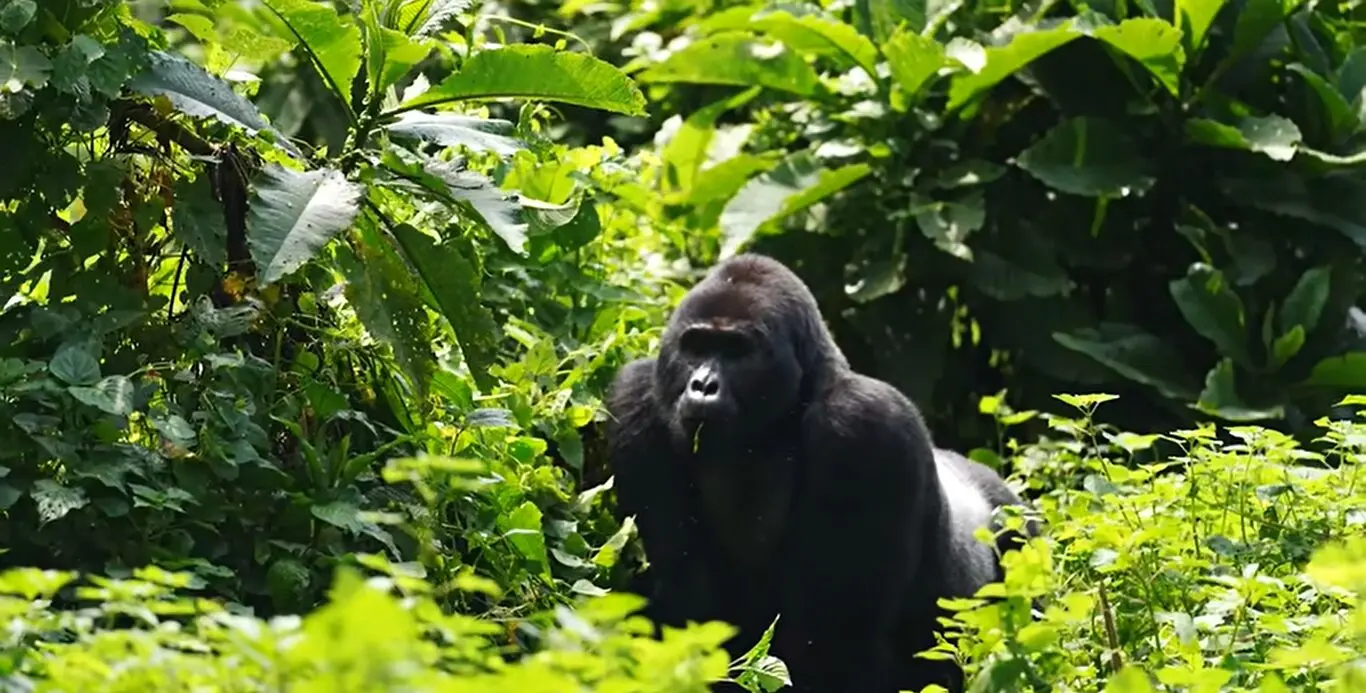
Budget planning and additional expenses for a gorilla safari.
Understanding the cost of gorilla trekking is one of the most important parts of planning a Uganda gorilla safari. The total budget is not limited to the gorilla permit. Travelers may also need to account for accommodation, transportation, meals, porter services, travel insurance, visas where applicable, and other safari expenses. The most important distinction is between the official gorilla permit fee and the total cost of the complete safari.
How much does gorilla trekking cost in Uganda?
The official Uganda Wildlife Authority tariff currently available in the search results covers July 2024 to June 2026. It lists the standard gorilla tracking permit at US$800 for foreign non-residents, US$700 for foreign residents, US$500 for the Rest of Africa category and UGX 300,000 for East African Community citizens. The same tariff lists the Gorilla Habituation Experience at US$1,500, US$1,000, US$1,000 and UGX 750,000 respectively.
However, the current UWA rates page states that tariff changes for 2026–2027 are available for download, while the accessible tariff document in the current search results is still explicitly labeled July 2024–June 2026. Therefore, Information not found in current search results for the exact 2026–2027 gorilla permit prices. Travelers should confirm the applicable rate directly with UWA before making payment.
For additional planning context, Uganda gorilla trekking costs provides a detailed discussion of permit costs and related expenses.
What is included in the gorilla trekking permit?
According to the UWA tariff covering July 2024 to June 2026, the gorilla tracking rate includes the guide fee, park entrance fees for the day and a community development contribution.
The permit therefore represents more than simple access to the forest. It forms part of a regulated tourism system that supports park management, guided visitor experiences and community-related conservation benefits.
What is not included in the gorilla permit price?
The permit should not be confused with a complete safari package. Accommodation, transportation to and from the park, meals outside the applicable arrangements, flights, visas where applicable, personal expenses, tips and optional services may require separate payment.
This distinction is important when comparing safari quotations. Two operators may advertise different total prices even when the official permit component is the same because their accommodation, transportation and other included services differ.
How much does a complete Uganda gorilla safari cost?
There is no single price for a complete Uganda gorilla safari because the final amount depends on the number of days, accommodation category, transportation arrangements, trekking location and additional activities.
A short itinerary using budget accommodation and shared or efficiently arranged transportation will have a different total cost from a longer private safari using luxury accommodation and additional wildlife activities.
Travelers can compare the broader Uganda Rwanda safari value when deciding how much of their travel budget should be allocated to the gorilla experience.
Why is gorilla trekking expensive?
Gorilla trekking takes place in protected natural habitats and is subject to controlled visitor access. The permit contributes to the costs associated with managing protected areas, guiding visitors and supporting conservation and community-related programs.
UWA’s published tariff also identifies a community development contribution within the gorilla tracking rate. This means the permit should be viewed partly as a conservation and protected-area management fee rather than simply as an entrance ticket.
Is the gorilla permit the biggest safari expense?
For many international travelers, the gorilla permit is one of the largest individual costs of the trip, but it is not necessarily the only major expense. Long-distance transportation, accommodation and additional safari activities can substantially increase the final budget.
The correct way to calculate the cost is therefore to create a complete itinerary budget rather than multiplying the permit price by the number of travelers and treating that figure as the total safari cost.
Is gorilla trekking cheaper in Uganda or Rwanda?
Permit prices have historically been lower in Uganda than Rwanda for many international visitors. However, permit price alone does not determine the total safari cost.
Uganda’s gorilla destinations can require longer road transfers depending on the starting point and trekking sector, while Rwanda’s Volcanoes National Park is relatively close to Kigali. Travelers should therefore compare permits, transportation, accommodation and the amount of time available.
Does accommodation affect the cost of gorilla trekking?
Yes. Accommodation can significantly affect the total safari budget. Bwindi offers different accommodation categories around its trekking sectors, ranging from more basic options to high-end lodges.
Accommodation should also be selected according to the trekking sector. Staying close to the correct trailhead can reduce unnecessary transfers and make the overall itinerary more efficient.
How much does transportation add to the cost?
Transportation costs depend on the starting point, vehicle arrangement, number of travelers, route, duration of the safari and whether the trip uses road or domestic air travel. A private vehicle with a driver-guide will have different costs from a shared arrangement.
The distance to Bwindi also varies considerably depending on whether the traveler is going to Buhoma, Ruhija, Rushaga or Nkuringo. Transportation should therefore be quoted according to the actual trekking sector rather than a generic “Bwindi” destination.
Can I make gorilla trekking cheaper?
Travelers can control some parts of their total safari budget by selecting appropriate accommodation, limiting unnecessary transfers and choosing a practical itinerary. However, the official permit price itself is regulated and should not be confused with a negotiable tour-service charge.
It is also important not to choose accommodation or transportation solely because it is the cheapest option. The location, reliability and suitability for the trekking itinerary should also be considered.
Is there a budget gorilla trekking option in Uganda?
Yes, travelers can construct a lower-cost safari by choosing budget accommodation and keeping the itinerary focused on the gorilla experience. Uganda has accommodation options across different price levels around the major trekking sectors.
However, “budget” does not mean that the official gorilla permit can be substantially discounted outside the categories and offers authorized by UWA. Travelers should be cautious of claims that an operator can sell an official permit for dramatically less than the applicable authority tariff.
Is luxury gorilla trekking available in Uganda?
Yes. Uganda has luxury accommodation options around the principal gorilla trekking areas. A luxury itinerary can combine a premium lodge with private transportation, additional wildlife experiences and other personalized services.
The luxury component normally affects the safari services surrounding the permit rather than changing the nature of the regulated gorilla encounter itself.
Does the gorilla trekking permit price change by season?
The UWA tariff is structured according to visitor categories and activity rather than presenting the standard permit as a seasonal daily rate. Travelers should therefore verify the official tariff applicable to their intended travel period.
Seasonality can nevertheless affect other parts of the safari, particularly accommodation demand and transportation arrangements. The dry seasons are commonly considered favorable for trekking conditions, while wetter periods can bring muddier and more slippery trails.
The best time for gorilla trekking guide provides additional seasonal planning information.
Is gorilla trekking cheaper during the rainy season?
The official gorilla permit should not be assumed to become cheaper simply because a traveler visits during a wetter period. Other components of the trip, particularly accommodation, may sometimes offer different rates depending on demand and the property.
Travelers considering the rainy season should compare the complete package price rather than expecting a reduction in the regulated permit fee.
How much should I budget for accommodation?
There is no single accommodation price because Bwindi and Mgahinga have properties across different categories. The final price can depend on room type, meal plan, travel season, number of nights and the specific lodge or camp.
Travelers should request current accommodation rates for their exact travel dates rather than relying on old published prices.
Do I need to pay separately for a porter?
Porter services are separate from the standard gorilla permit. Visitors who want assistance carrying personal belongings or additional support during the trek should discuss porter availability and current charges with their operator or the local porter association.
Hiring a porter can also provide direct economic benefits to people living around the trekking destination, although the service should remain voluntary and appropriately arranged.
Does hiring a porter make gorilla trekking more expensive?
Yes, a porter is an additional expense, but it can provide practical assistance during a demanding forest trek. A porter may carry a backpack or help a visitor navigate challenging terrain.
Travelers should treat porter fees separately from the official gorilla permit and confirm the current local rate before the trek.
Do I need to budget for tips?
Tips are generally considered discretionary rather than part of the official gorilla permit. Travelers who are satisfied with the service provided by guides, trackers, porters or other safari staff may choose to give an appropriate tip.
Because tipping practices can vary, travelers should ask their operator for current guidance rather than assuming that a fixed amount is mandatory.
Does gorilla trekking cost the same for every nationality?
No. UWA’s July 2024–June 2026 tariff uses different categories, including foreign non-residents, foreign residents, Rest of Africa visitors and East African Community citizens.
Travelers should confirm which category applies to them and provide the required documentation. The applicable category can have a substantial effect on the official permit price.
Are East African citizens charged the same gorilla permit price as foreign visitors?
No. Under the UWA tariff covering July 2024 to June 2026, East African Community citizens were listed at a separate rate from foreign non-residents and foreign residents.
Because the current date is August 2026 and UWA has announced tariff changes for 2026–2027, travelers should verify the current EAC rate before relying on historical figures.
Are foreign residents charged less than foreign non-residents?
Under the July 2024–June 2026 UWA tariff, foreign residents were charged a lower standard gorilla tracking rate than foreign non-residents. Eligibility for the resident category depends on the applicable documentation and UWA’s rules.
Travelers should confirm their eligibility before assuming that they qualify for the resident rate.
Can a tour operator add charges to the gorilla permit price?
A tour operator can quote a total safari price that includes services beyond the official permit. These services may include accommodation, transportation, meals, booking assistance, guide services outside the permit arrangement and other itinerary components.
The important point is transparency. Travelers should ask for an itemized quotation showing the official permit component and the additional safari services.
How can I compare gorilla safari prices from different operators?
Compare the complete package rather than looking only at the headline price. Check the permit category, number of trekking days, accommodation standard, meals, transportation, vehicle type, airport transfers, guide arrangements and included activities.
A lower quotation may simply exclude services that another operator has already included. An accurate comparison requires the same itinerary and inclusions on both sides.
Can I book only the gorilla permit without a safari package?
Gorilla trekking authorization and safari arrangements are separate concepts. Travelers can arrange their broader travel independently where the applicable booking procedures permit, while others choose a tour operator to coordinate permits, accommodation and transportation as one package.
Regardless of the arrangement, the visitor must hold the appropriate authorization required for the trekking activity.
Is gorilla habituation more expensive than standard gorilla trekking?
Yes, under the UWA tariff covering July 2024 to June 2026, the Gorilla Habituation Experience had a higher permit price than standard gorilla tracking. The difference reflects the substantially longer permitted observation period and the different nature of the experience.
UWA listed the habituation experience at US$1,500 for foreign non-residents under that tariff, compared with US$800 for standard gorilla tracking. These figures should not be presented as the definitive August 2026 prices because the current 2026–2027 tariff should be confirmed.
For more background on the difference between the two experiences, gorilla habituation safari costs explains the additional observation time and experience.
Why does gorilla habituation cost more?
Gorilla habituation involves a different type of wildlife experience and a longer authorized observation period than standard gorilla trekking. The UWA tariff covering July 2024 to June 2026 priced it higher than ordinary gorilla tracking.
Travelers interested in habituation should therefore compare the cost according to observation time and experience rather than treating it simply as a more expensive version of the standard trek.
Does the gorilla permit contribute to conservation?
Yes. UWA’s published tariff states that the gorilla tracking rate includes a community development contribution, while UWA’s conservation and revenue-sharing information describes mechanisms through which tourism revenue supports communities around protected areas.
This makes the permit an important component of the wider conservation tourism system. The fee is not simply payment for a one-hour wildlife encounter.
Does gorilla tourism benefit local communities?
UWA’s revenue-sharing framework provides for tourism revenue to benefit communities surrounding protected areas. This creates a connection between tourism income and local development while supporting the broader objective of conservation.
Travelers can therefore view responsible gorilla tourism as part of a larger system involving protected-area management, conservation and surrounding communities.
What other costs should I consider before booking?
A complete budget should consider accommodation, transportation, meals, porter services, optional activities, travel insurance, visa requirements where applicable and personal expenses in addition to the gorilla permit.
International travelers should also consider the cost of reaching southwestern Uganda from their arrival point. The final amount can vary substantially according to whether they travel by road, domestic flight or a combination of transportation methods.
How can I avoid unexpected gorilla safari costs?
The best approach is to request a detailed written quotation before confirming the trip. The quotation should identify the gorilla permit, accommodation, transportation, meals, activities, taxes or service charges where applicable and any exclusions.
Travelers should also ask whether the quotation is based on current permit prices. This is particularly important in 2026 because UWA has announced tariff changes for the 2026–2027 financial year.
What is the cheapest way to go gorilla trekking in Uganda?
There is no single cheapest itinerary because the final cost depends on the traveler’s starting point, dates, accommodation, transportation and number of safari days. A practical budget strategy is to minimize unnecessary transfers, choose appropriate accommodation and avoid adding activities that are not important to the traveler.
The official permit should remain a separate consideration because its price is determined by UWA’s applicable tariff and visitor category.
Is gorilla trekking worth the cost?
Whether gorilla trekking is worth the cost depends on the traveler’s priorities. Someone specifically interested in mountain gorillas and conservation may consider the experience highly valuable, while someone with a very limited budget may prefer to compare it with other wildlife experiences.
The most useful comparison is not simply permit price against permit price. Travelers should consider the complete experience, conservation contribution, time commitment, accommodation and transportation involved.
What is the most important thing to know about gorilla trekking costs?
The most important point is that the gorilla permit is only one part of the total safari budget. Permit prices are regulated according to official tariffs, while accommodation, transportation and other services can vary significantly between itineraries and operators.
Because UWA has announced tariff changes for 2026–2027 and the exact new gorilla rates were not available in the current search results, travelers should verify the current official tariff before making a final payment.
For an additional independent reference on Uganda permit information, gorilla trekking costs provides another destination-specific overview, but the current UWA tariff remains the authoritative source for official permit prices.
Gorilla Trekking Difficulty and Fitness FAQs
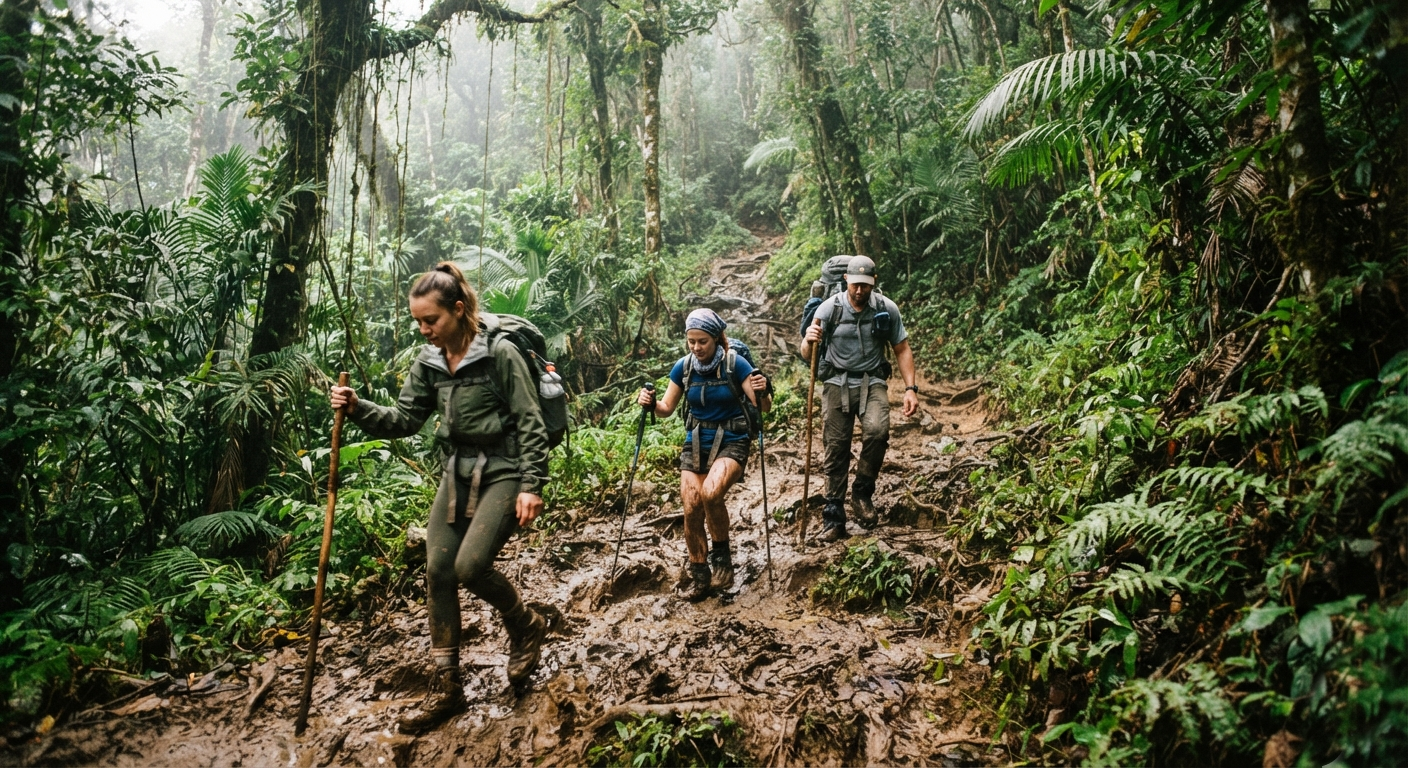
Physical fitness and hiking difficulty levels for gorilla trekking.
Gorilla trekking difficulty varies from one trek to another because mountain gorillas move naturally through their forest habitat. Uganda Wildlife Authority states that gorilla treks may last between two and seven hours and require moderate fitness. Terrain, weather, elevation, the location of the gorilla family and the individual trekker’s preparation can all influence how demanding the experience feels. :contentReference[oaicite:0]{index=0}
How difficult is gorilla trekking in Uganda?
Gorilla trekking in Uganda can range from moderately demanding walks to strenuous hikes through steep, muddy and densely vegetated forest. The exact difficulty cannot be guaranteed before the trek because the gorilla family being tracked may be located at different distances from the starting point.
UWA specifically describes gorilla trekking as requiring moderate fitness, with the activity potentially lasting two to seven hours. This means visitors should prepare for sustained walking rather than expecting a short wildlife-viewing excursion. :contentReference[oaicite:1]{index=1}
The Bwindi trekking sectors guide is useful when comparing the different environments in which trekking takes place.
How fit do I need to be for gorilla trekking?
You should have enough fitness to walk for several hours over uneven forest terrain, including slopes and potentially muddy sections. UWA describes the required fitness level as moderate, but individual experiences vary because trail conditions and gorilla movements are not fixed. :contentReference[oaicite:2]{index=2}
Good preparation should focus on comfortable walking, stamina, balance and the ability to manage gradual climbs and descents. Regular walking and appropriately supervised physical preparation can help visitors feel more comfortable during the trek.
Is gorilla trekking suitable for beginners?
Yes. Previous hiking experience is not an absolute requirement for gorilla trekking. A first-time trekker can participate provided they meet the applicable requirements and are physically prepared for the conditions.
Beginners should nevertheless avoid assuming that the trek will be easy simply because they have never hiked before. The forest environment can involve uneven ground, slopes, mud and vegetation, while the location of the gorilla family can make one trek longer than another.
Is gorilla trekking harder than normal hiking?
It can be, depending on the trekking conditions. Unlike a planned hiking route with a predetermined distance, gorilla trekking involves following the movements of wild animals. The group may therefore travel farther than initially expected.
The forest can also introduce conditions that are less predictable than an established hiking trail, including muddy ground, steep sections, dense vegetation and changing weather.
Travelers considering a more demanding itinerary can read about volcano hiking alongside gorilla trekking to understand how the two activities differ physically.
How long does a gorilla trek take?
UWA states that gorilla trekking may last between two and seven hours. This refers to the broader trekking experience, and the actual duration depends on the location and movements of the gorilla family being tracked. :contentReference[oaicite:3]{index=3}
The one-hour observation period is separate from the time spent walking through the forest. Visitors should therefore plan their day around the possibility of several hours in the forest rather than assuming that the entire activity will be completed quickly.
Why does gorilla trekking duration vary?
Mountain gorillas are free-moving animals, so their location changes within their habitat. Rangers and trackers work to locate the assigned family, but the group does not remain at a permanent viewing point.
Consequently, one trek can involve a relatively short walk while another can require substantially more walking. Weather, terrain and vegetation can also influence the pace of the group.
Does the location of the gorilla family affect trekking difficulty?
Yes. The distance between the trailhead and the gorilla family is one of the factors that can determine how long visitors remain on the trail.
A family located relatively close to the starting point can result in a shorter trek, while a family deeper in its habitat may require considerably more walking. This is why a particular sector cannot guarantee an identical trekking experience every day.
The Uganda gorilla trekking guide provides broader information about trekking destinations and preparation.
Which Bwindi sector is easiest for gorilla trekking?
There is no official UWA ranking that guarantees one Bwindi sector will always be the easiest. Trekking difficulty changes according to the terrain, weather and location of the gorilla family on the day of the trek.
Some travel sources describe Buhoma as comparatively accessible, but this should not be interpreted as a guarantee of an easy trek. Visitors should still prepare for variable forest conditions regardless of sector.
Which Bwindi sector is hardest for gorilla trekking?
Nkuringo is frequently described in tourism information as one of the more challenging sectors because of its mountainous terrain. However, difficulty remains variable because gorilla movements determine where the trek goes.
Ruhija can also involve demanding terrain. The important point for visitors is that choosing a particular sector does not eliminate the need for reasonable physical preparation.
A detailed sector difficulty guide provides additional destination-specific discussion, while UWA remains the authoritative source for park regulations and official trekking requirements.
Is Mgahinga gorilla trekking difficult?
Mgahinga involves trekking through the Virunga mountain environment, so visitors should expect elevation and uneven terrain. UWA describes gorilla trekking in Uganda as requiring moderate fitness, while its Mgahinga information identifies gorilla tracking as a forest and mountain activity. :contentReference[oaicite:4]{index=4}
The difficulty of an individual trek can still vary according to the location and movements of the gorilla family.
Does altitude make gorilla trekking harder?
Altitude can influence physical effort, particularly for visitors who are not accustomed to mountainous environments. Uganda’s mountain gorillas inhabit high-altitude forest environments, and the trekking routes can involve elevation changes.
Visitors should therefore allow themselves adequate rest before trekking and avoid treating gorilla trekking as a flat forest walk. The specific physical experience depends on the sector and route followed on the day.
Can someone with moderate fitness complete a gorilla trek?
Yes. UWA specifically states that gorilla trekking requires moderate fitness. This does not mean that every trek will feel equally easy, but it indicates that the activity is designed for visitors who can manage several hours of walking in a natural forest environment. :contentReference[oaicite:5]{index=5}
Visitors should be honest about their physical capabilities when discussing the trek with their safari operator and guide.
Can older travelers go gorilla trekking?
Age alone does not determine how difficult a trek will feel. Physical capability, mobility, stamina and the specific trekking conditions are more relevant considerations.
Older travelers should discuss their capabilities with their safari operator before booking and should prepare appropriately for uneven terrain, slopes and potentially prolonged walking. The trekking experience should be approached according to individual ability rather than age alone.
Can people who do not hike regularly go gorilla trekking?
People who do not regularly hike can still participate if they can safely manage the physical demands of the trek. However, beginning some appropriate walking preparation before the safari can make the experience more comfortable.
Preparation should build general endurance gradually rather than attempting an unusually demanding exercise routine immediately before travel.
How should I prepare physically for gorilla trekking?
A practical preparation approach is to build walking endurance gradually. Regular walks, gentle hill walking and other age-appropriate physical activities can help improve comfort during prolonged movement.
Balance and stability are also useful because forest trails can be uneven. Visitors should focus on consistent preparation rather than trying to complete an intense workout immediately before the safari.
How many weeks should I prepare before gorilla trekking?
There is no single preparation period that applies to every traveler. Someone who already walks regularly may require less preparation than someone who is unaccustomed to prolonged walking.
The goal should be to develop comfortable endurance gradually and safely. Visitors should avoid pushing themselves beyond their normal ability in an attempt to prepare quickly.
Can I hire a porter if gorilla trekking is difficult?
Porters are available around Uganda’s gorilla trekking destinations and can assist with carrying personal belongings and providing practical support during the trek.
A porter can be particularly useful for visitors who want to reduce the weight they personally carry. Porter arrangements should be made through the appropriate local or safari channels, and the current fee should be confirmed before the trek.
Do porters make gorilla trekking easier?
A porter can make the trek more manageable by carrying a backpack and other personal belongings. This allows the visitor to concentrate more fully on walking and maintaining balance on uneven terrain.
However, hiring a porter does not remove the need for reasonable physical preparation. The visitor still needs to walk through the forest and manage the terrain encountered during the trek.
Does rain make gorilla trekking more difficult?
Rain can make forest trails wetter and potentially more slippery. Bwindi is a rainforest environment, and UWA notes that trekking takes place in natural forest conditions.
Visitors should therefore be prepared for changing weather and should use suitable footwear and rain protection. Trek difficulty can increase when muddy or slippery sections require slower and more careful movement.
The gorilla trekking clothing guide covers practical clothing and footwear considerations for forest conditions.
Is gorilla trekking harder during the rainy season?
Wet conditions can make trails more slippery and muddy, which may increase the physical effort required to walk through the forest. However, the actual difficulty still depends on the specific trail and the location of the gorilla family.
Visitors should not assume that every rainy-season trek will be extremely difficult or that every dry-season trek will be easy. Weather is only one of several factors affecting the experience.
Can I trek gorillas if I have never been to a rainforest?
Yes. Previous rainforest experience is not required. The important consideration is being prepared for the environmental conditions, including dense vegetation, uneven ground, variable weather and prolonged walking.
The ranger and guide team provides direction throughout the trek, helping visitors follow the appropriate route and observe the applicable wildlife rules.
Do I need hiking experience for Bwindi gorilla trekking?
No specific hiking qualification is required. Nevertheless, visitors should have sufficient physical ability for the expected activity and should understand that Bwindi’s terrain can be steep and uneven.
UWA’s description of gorilla trekking as requiring moderate fitness provides a useful baseline for preparation. :contentReference[oaicite:6]{index=6}
What terrain should I expect during gorilla trekking?
Visitors should expect natural forest terrain rather than a smooth, paved walking route. Conditions can include uneven ground, slopes, vegetation and muddy sections, particularly after rainfall.
The exact route is determined by the location of the gorilla family and the guidance of the ranger and tracking team. This makes every trek somewhat different.
Can I stop and rest during gorilla trekking?
Short rest periods may be necessary during a physically demanding trek, and the guide can manage the group’s pace according to the circumstances. Visitors should communicate honestly when they need a short break rather than attempting to continue while excessively fatigued.
The purpose of the trek is to observe gorillas responsibly, not to compete with other visitors over speed or distance.
What if I cannot keep up with the trekking group?
Visitors should tell the guide if they are struggling rather than silently pushing beyond their safe limits. The guide is responsible for managing the group and can respond according to the conditions and applicable park procedures.
Physical preparation before the safari can reduce the likelihood of this happening, but the natural variability of gorilla trekking means that no visitor can predict the exact difficulty in advance.
Can children participate in gorilla trekking?
UWA’s published gorilla tracking information identifies a minimum age of 15 for participation. The age requirement should therefore be confirmed with UWA when planning a family safari because the applicable rules are the controlling authority. :contentReference[oaicite:7]{index=7}
Families should not rely on tour-company pages that give different or outdated age information without checking the current official requirements.
Does fitness determine which gorilla family I track?
Visitors are allocated to specific gorilla family groups on the day of tracking according to the applicable UWA procedures. UWA’s current guidelines state that permits are booked according to the date and designated entry point and that visitors are allocated to specific gorilla family groups on the tracking day. :contentReference[oaicite:8]{index=8}
Travelers should therefore discuss mobility or fitness concerns with their operator and follow the instructions of the ranger team rather than assuming that they can independently select a particular gorilla family.
Can I request a less difficult trek?
Travelers with physical limitations or concerns should communicate them during safari planning. The appropriate sector and allocation arrangements should then be discussed with the responsible operator and park authorities.
However, no sector can guarantee a specific difficulty level because gorillas move naturally through their habitat and trekking conditions can change.
What should I wear for a difficult gorilla trek?
Protective, comfortable clothing is important. Long trousers and long-sleeved clothing can provide protection from vegetation and insects, while suitable hiking footwear can improve stability on uneven ground.
A waterproof outer layer is also useful because forest weather can change. Clothing should allow comfortable movement rather than restricting the visitor during climbs and descents.
Are walking sticks useful during gorilla trekking?
A walking stick can provide additional stability on uneven or slippery terrain. Visitors should follow the guidance of the ranger team regarding appropriate use of walking sticks in the forest.
Stability is particularly useful when navigating slopes or muddy sections because careful movement is more important than speed.
What is the most important fitness advice for gorilla trekking?
The most important preparation is to develop comfortable walking endurance gradually and realistically. Gorilla trekking is not a race, and the ability to walk steadily for several hours is more useful than trying to achieve a particular speed.
Visitors should also prepare for changing terrain and weather and should communicate honestly with their guide about physical difficulties during the trek.
Can I enjoy gorilla trekking without being an experienced hiker?
Yes. Experience is less important than appropriate preparation, realistic expectations and the ability to manage moderate physical activity. UWA identifies moderate fitness as the requirement for gorilla trekking. :contentReference[oaicite:9]{index=9}
With suitable preparation and responsible pacing, first-time trekkers can approach the experience confidently while recognizing that the forest environment remains unpredictable.
What should I remember about gorilla trekking difficulty?
Gorilla trekking difficulty cannot be reduced to a single ranking because the experience changes according to terrain, weather, elevation, walking distance and gorilla movements. UWA’s official guidance gives a two-to-seven-hour potential trek duration and describes the activity as requiring moderate fitness. :contentReference[oaicite:10]{index=10}
The best preparation is therefore to arrive reasonably fit, wear suitable clothing and footwear, carry only what is necessary, follow ranger instructions and remain flexible about the amount of walking required.
Gorilla Trekking Photography FAQs
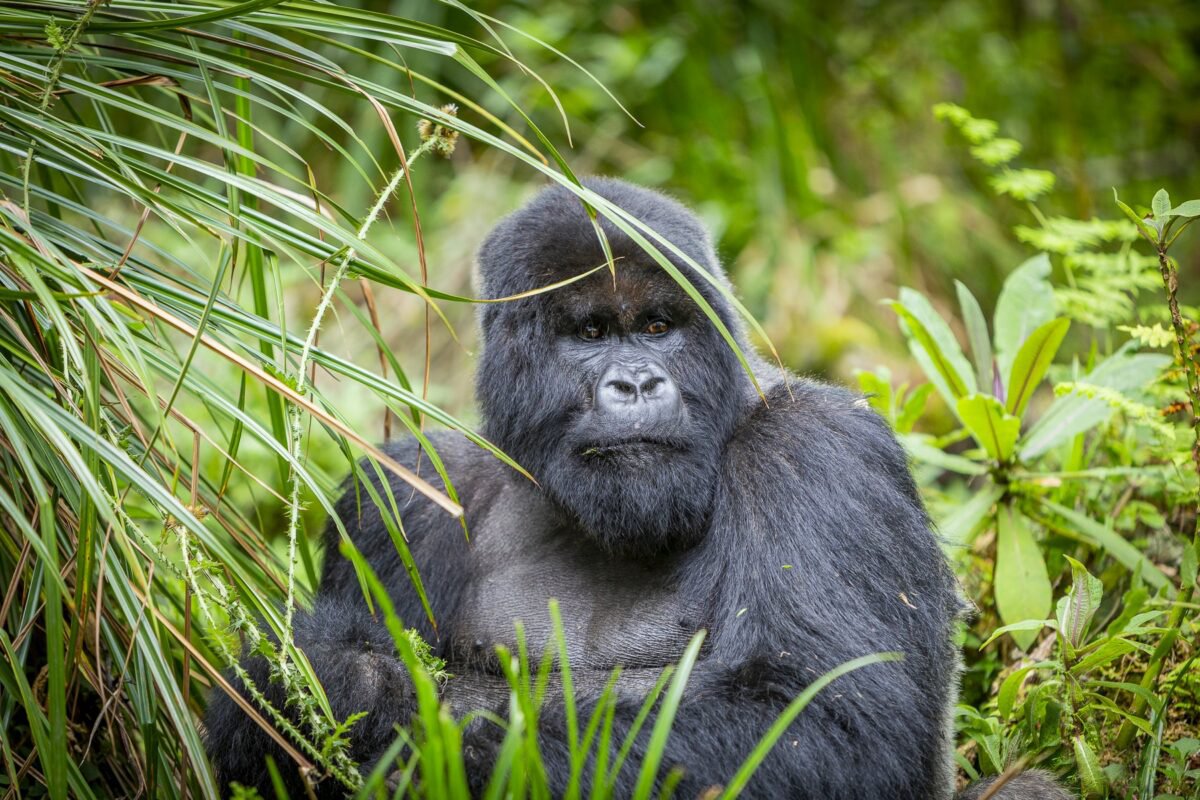
Guidelines and best practices for photographing mountain gorillas.
Photography is one of the most memorable parts of a gorilla trekking experience, but photographing mountain gorillas requires more than simply carrying a camera into the forest. The environment can be dark, humid and wet, while the gorillas may be partially hidden by vegetation. Visitors must also follow the applicable wildlife rules and prioritize the welfare of the gorillas over getting a particular photograph.
Can I take photos during gorilla trekking?
Yes. Photography is permitted during gorilla trekking, provided visitors follow the applicable park rules and instructions from their guides. UWA states that normal gorilla tracking provides a maximum of one hour of viewing time after the gorillas are reached, so photographers should use that period carefully without allowing photography to interfere with responsible wildlife observation.
The gorilla photography guide provides additional information about photographing mountain gorillas in Uganda.
Can I use a smartphone to photograph gorillas?
A smartphone can be used for photography, but the result depends heavily on the forest conditions, distance, available light and capabilities of the phone. Dense vegetation and low light can make distant subjects difficult to photograph with a basic phone camera.
Visitors who primarily want to record personal memories may find a smartphone useful, while dedicated wildlife photographers may prefer a camera with an appropriate zoom lens.
What camera is best for gorilla trekking?
There is no single camera model that is required for gorilla trekking. A camera that performs well in low light and allows appropriate focal-length flexibility can be useful in the forest.
The dense vegetation and changing distances make a versatile zoom lens practical. The camera should also be comfortable to carry because the equipment remains with the visitor during the trek.
What lens should I use for gorilla photography?
A telephoto or versatile zoom lens can be useful because it allows photographers to frame gorillas without needing to approach them. A zoom also provides flexibility when gorillas are partly hidden by vegetation or positioned at different distances.
Safari Vacations & Travel Services specifically discusses 70–200mm and 24–70mm lenses in its Uganda gorilla photography guide. The appropriate choice ultimately depends on the camera system and the photographer’s preferred style.
Do I need a long lens for gorilla trekking?
A longer lens can be useful for close wildlife portraits and for subjects partially obscured by vegetation. However, photographers should not use camera equipment as a reason to move closer to the gorillas.
The required viewing distance and the guide’s instructions always take priority. Equipment should help the photographer work within the permitted conditions rather than encourage closer approaches.
Can I take close-up gorilla photographs?
Yes, photographers can capture detailed images during the permitted viewing period, but they must maintain the required distance from the gorillas. UWA’s current gorilla and chimpanzee tracking guidelines specify a maximum viewing period of one hour for normal gorilla tracking.
A suitable telephoto lens can help create detailed photographs while allowing the photographer to remain within the required viewing conditions.
How far should I stay from gorillas when taking photos?
Visitors must follow the minimum-distance requirement established by the wildlife authorities. Current UWA guidance and published trekking information use a minimum distance of seven metres from the gorillas, subject to the applicable management rules and ranger instructions.
Photographers should never move toward a gorilla simply to improve composition. If a gorilla changes position, the visitor should follow the guide’s instructions rather than independently approaching the animal.
Is flash photography allowed during gorilla trekking?
Flash photography should not be used around the gorillas. Published Uganda trekking guidance identifies flash photography as prohibited because it can disturb or startle the animals.
Photographers should therefore learn how to work with available forest light and adjust their camera settings rather than relying on flash.
Why is flash photography prohibited?
Flash can create a sudden burst of light that may disturb wildlife. The purpose of restricting flash photography is to reduce unnecessary disturbance during the encounter.
Responsible photography means allowing the gorillas to behave naturally while visitors observe quietly and follow the instructions provided by the ranger and guide.
How do I photograph gorillas in low light?
Forest conditions can be relatively dark beneath dense vegetation, so photographers may need to use camera settings that allow more available light to reach the sensor. A wider aperture, appropriate shutter speed and higher ISO can be considered depending on the camera and the movement of the subject.
Photographers should test their equipment before the trek so they can adjust settings quickly without spending excessive time looking at the camera instead of observing the gorillas.
What camera settings are best for gorilla photography?
There is no single setting that works in every forest environment. Light levels can change quickly when clouds move, vegetation blocks sunlight or a gorilla moves between shaded and brighter areas.
A photographer can consider a relatively fast shutter speed for moving animals, an aperture suitable for the desired depth of field and an ISO level that provides sufficient exposure without excessive image noise. The exact settings depend on the camera, lens and lighting.
Should I shoot in automatic or manual mode?
Either approach can work. Automatic or semi-automatic modes can help travelers who are unfamiliar with manual exposure, while experienced photographers may prefer manual or aperture-priority control.
The important consideration is being able to react quickly to changing light while maintaining responsible behavior around the gorillas.
How can I photograph gorillas in dense vegetation?
Dense vegetation is part of the photographic challenge and can also create natural frames around the gorillas. Instead of trying to remove every leaf from the composition, photographers can use surrounding vegetation to communicate the forest environment.
Patience is particularly useful because a gorilla may move naturally into a clearer position. Visitors should wait for opportunities rather than disturbing vegetation or attempting to reposition themselves aggressively.
Can I photograph gorillas in the rain?
Yes. Rain is a realistic possibility in the rainforest, and photographs taken during wet conditions can show the texture of the gorillas’ fur and the atmosphere of the forest.
The greater concern is protecting the camera equipment. A waterproof camera cover, rain protection for the backpack and suitable protective storage can reduce exposure to moisture.
How do I protect my camera from rain?
Photographers should carry suitable waterproof protection for their camera and other electronics. A rain cover or weather-resistant camera protection can be useful when trekking through wet forest conditions.
Equipment should be stored securely when not being used, particularly during heavy rainfall. The Bwindi travel guide also discusses camera protection and spare equipment for gorilla trekking.
Should I carry spare camera batteries?
Carrying a spare battery is sensible because a gorilla trek can last several hours and battery performance can be affected by frequent camera use. The opportunity to photograph the gorillas is limited, so running out of power can prevent important moments from being recorded.
Spare batteries should be kept protected from moisture and carried in a secure part of the daypack.
Should I carry extra memory cards?
Yes. Extra memory capacity can be useful because photographers may take many images during the trek, particularly when gorillas are moving or when several members of a family are visible.
Additional cards should be stored safely and protected from moisture. It is also sensible to check available storage before leaving for the trek.
Can I change camera lenses during gorilla trekking?
Changing lenses in a humid rainforest environment can expose the camera sensor and internal components to moisture and condensation. Safari Vacations & Travel Services recommends avoiding unnecessary lens changes in the forest for this reason.
A versatile zoom lens can reduce the need to change lenses while moving through the forest.
Should I carry two cameras?
Professional or serious wildlife photographers may choose to carry two camera bodies to reduce the consequences of equipment failure or battery problems. However, carrying two cameras also increases weight and requires additional protection.
For most visitors, one reliable camera with a versatile lens, spare battery and adequate memory may be more practical than carrying a large amount of equipment.
Can I use binoculars during gorilla trekking?
Yes. Binoculars can be useful for observing wildlife and gorillas when individuals are positioned farther away or partly hidden by vegetation.
They can also allow visitors to watch the animals without constantly raising a camera. This can help create a more balanced experience between observing the gorillas and recording photographs.
Should I bring a tripod for gorilla photography?
A full-size tripod is generally impractical for a forest trek because visitors must walk through uneven terrain and carry their equipment throughout the activity. A lightweight support solution may be more practical for photographers who need additional stability.
However, equipment should remain compact enough that it does not interfere with walking or the group’s movement.
Is a camera bag necessary for gorilla trekking?
A protective camera bag can help shield equipment from rain, vegetation and accidental impacts. It should be comfortable enough to carry during several hours of trekking and should allow quick access to the camera when appropriate.
Waterproof protection is especially useful because Bwindi is a rainforest environment and weather conditions can change during the trek.
What should I pack for gorilla photography?
A practical photography setup can include a camera, suitable zoom lens, spare battery, additional memory card and waterproof protection. The equipment should be balanced against the physical demands of the trek.
The gorilla trekking packing guide provides additional information about protecting cameras and carrying photography equipment during the trek.
Can I record video during gorilla trekking?
Visitors should follow the same wildlife rules and guide instructions when recording video as they do when taking photographs. Video recording must not involve approaching the gorillas, creating noise or otherwise disturbing the animals.
Because the normal viewing period is limited, visitors should also avoid spending the entire encounter looking at a screen. Responsible observation should remain the priority.
Can I take selfies with gorillas?
Visitors should not attempt to move closer to gorillas for a selfie or any other photograph. The required viewing distance and ranger instructions apply regardless of the type of camera being used.
A responsible photograph should document the encounter without changing the visitor’s position simply to obtain a closer-looking image.
Can gorillas approach visitors during photography?
Wild animals can change their position, so a gorilla may move closer to the group. If this happens, visitors should remain calm and follow the instructions of the ranger or guide.
Visitors should not attempt to touch the gorilla or deliberately encourage closer interaction for photographs. The guide’s instructions should determine how the group responds.
How should I photograph a silverback?
Silverbacks can provide striking photographic subjects because of their size, posture and distinctive appearance. However, photographers should not focus exclusively on the dominant male.
Other members of the family can provide equally meaningful photographs, including social interactions, feeding, movement and resting behavior. A varied set of photographs can better document the entire encounter.
Should I photograph only the gorillas?
No. The surrounding forest is an important part of the experience and can provide context for the photographs. Images of vegetation, trails, forest atmosphere and other natural details can help tell the story of the encounter.
Photographing the environment can also reduce the temptation to continuously photograph the gorillas during every moment of the viewing period.
How can I take better gorilla portraits?
Focus on the eyes when conditions allow, watch the direction of available light and use the surrounding vegetation as part of the composition. Patience can help because gorillas naturally change position and expression.
Photographers should avoid forcing a composition by moving closer or disturbing vegetation. The strongest photograph is one obtained while respecting the animal and the applicable trekking rules.
How do I photograph gorillas through vegetation?
Vegetation can create a natural frame around the animal and communicate the forest setting. A photographer can wait for a clearer view rather than attempting to remove leaves or branches.
A longer focal length can also help isolate the gorilla visually without requiring the photographer to move toward the animal.
Is gorilla photography difficult?
It can be challenging because the environment combines low or changing light, dense vegetation, moving subjects and a limited observation period. The photographer must also work within wildlife rules and the position established by the guide.
Preparation therefore matters. Understanding the camera before entering the forest can save valuable time during the encounter.
What is the biggest photography mistake during gorilla trekking?
One of the biggest mistakes is allowing photography to become more important than responsible wildlife observation. Visitors should not ignore ranger instructions, move closer to the animals or create disturbance simply to obtain a photograph.
Another common practical problem is inadequate protection against rain or insufficient battery and memory capacity.
How can I photograph gorillas without disturbing them?
Remain at the required distance, avoid flash, keep noise to a minimum and follow the guide’s instructions. Photographers should also avoid sudden movements and should never attempt to touch or attract a gorilla for a photograph.
The objective is to record natural behavior rather than influence the behavior being photographed.
How much photography time do I get with gorillas?
For standard gorilla tracking, UWA’s current guidelines specify a maximum viewing time of one hour. The tracking activity itself begins after briefing and continues until the group returns for debriefing.
Gorilla Habituation Experience participants have a different maximum viewing period under the applicable UWA guidelines. Travelers should therefore distinguish standard gorilla tracking from habituation when planning photography expectations.
Can I take professional photographs during a gorilla trek?
Professional-quality photographs are possible, but professional equipment does not create an exception to wildlife rules. Commercial or professional photographers must follow the same applicable visitor and wildlife-management requirements unless they have separately obtained authorization for an activity requiring it.
Photographers should establish any special commercial requirements before traveling rather than assuming that a standard trekking permit automatically covers professional production.
Can I use a drone to photograph gorillas?
Visitors should not assume that drones are permitted during gorilla trekking. Drone use in protected areas can be subject to separate authorization and aviation or park regulations.
Because unauthorized drone use could disturb wildlife and conflict with protected-area rules, travelers should obtain explicit authorization from the relevant authorities before considering any drone operation.
What is the best camera for low-light gorilla photography?
A camera that performs well at higher ISO settings and can autofocus reliably in challenging light can be advantageous. However, the lens and the photographer’s familiarity with the equipment are also important.
There is no requirement to purchase a particular camera specifically for gorilla trekking. Visitors should choose equipment that they can safely carry and operate confidently.
Should I use a telephoto lens or a standard zoom?
A telephoto lens can provide detailed images from an appropriate distance, while a standard zoom can capture wider environmental compositions and groups. A versatile setup can therefore be useful when the photographer wants both portraits and environmental photographs.
The best choice depends on the camera system, budget, weight and photographic objectives.
How can I avoid blurry gorilla photographs?
Blurring can occur when the subject moves, the photographer moves or the shutter speed is too slow for the available conditions. Increasing shutter speed when light permits and maintaining stable camera handling can help.
Photographers should also check focus before taking a sequence of images, particularly when gorillas are moving through vegetation.
How should I photograph gorillas in bright sunlight?
Bright patches of sunlight can create strong contrast between illuminated and shaded areas. Photographers should watch the light on the gorilla’s face and adjust exposure according to the actual subject rather than the brighter background.
Waiting for a natural change in position or light can sometimes produce a more balanced photograph without requiring excessive camera adjustments.
How should I photograph gorillas when the forest is very dark?
In darker areas, photographers may need to increase ISO, open the aperture or reduce shutter speed depending on the movement of the subject. A faster lens can also help provide more available light.
Because gorillas can move unexpectedly, extremely slow shutter speeds may produce motion blur. Photographers should balance exposure with the need to freeze movement.
What should I do if my camera gets wet?
Protective equipment should be used before heavy rain begins rather than waiting until the camera is already exposed. If moisture reaches the equipment, minimize unnecessary handling and follow the camera manufacturer’s drying and care guidance.
Waterproof bags or protective cases can provide an additional layer of protection when moving through wet forest conditions.
Should I prioritize photography or the gorilla experience?
The gorilla encounter should remain the priority. Photographs are valuable reminders of the experience, but they should not prevent visitors from observing natural behavior or following conservation rules.
A balanced approach is to photograph selectively, lower the camera regularly and spend part of the viewing period simply observing the gorillas.
What are the best gorilla photography tips for first-time visitors?
Learn your camera before the trek, carry spare batteries and memory cards, protect equipment from rain, use an appropriate zoom lens and avoid unnecessary lens changes. During the encounter, remain at the required distance, do not use flash and follow the guide’s instructions.
Most importantly, do not measure the success of the trek by the number of photographs captured. A responsible encounter that leaves the gorillas undisturbed is more important than obtaining a particular image.
Is gorilla photography worth bringing a dedicated camera?
For travelers who enjoy wildlife photography, a dedicated camera can provide greater control and image quality than a basic phone. However, visitors who simply want a few personal memories may find a smartphone sufficient.
The decision should also consider the physical burden of carrying equipment through the forest. The best camera is ultimately one the traveler can operate confidently and carry comfortably.
What is the most important rule for gorilla photography?
The most important rule is to follow the instructions of the ranger and guide and never compromise the welfare of the gorillas for a photograph. Photography must remain within the applicable viewing distance, time limit and wildlife-conduct requirements.
For additional equipment considerations, photography equipment provides a destination-specific discussion of camera equipment for gorilla trekking.
What should I remember about gorilla trekking photography?
Successful gorilla photography depends on preparation, patience and responsible behavior. A suitable camera, versatile lens, spare power, adequate memory and rain protection can improve the practical side of photography, while knowledge of the wildlife rules protects the quality of the encounter itself.
The trek timing guide can also help photographers understand why they should allow sufficient time for the entire tracking experience rather than planning the day around photography alone.
Three newly verified links introduced in this section are the Mountain Gorilla Photography in Uganda guide, the Bwindi travel guide and the Gorilla Trekking start-and-end timing guide. The remaining Uganda links were reused from earlier sections to maintain the requested internal-link structure.
Gorilla Trekking Health, Safety and Rules FAQs
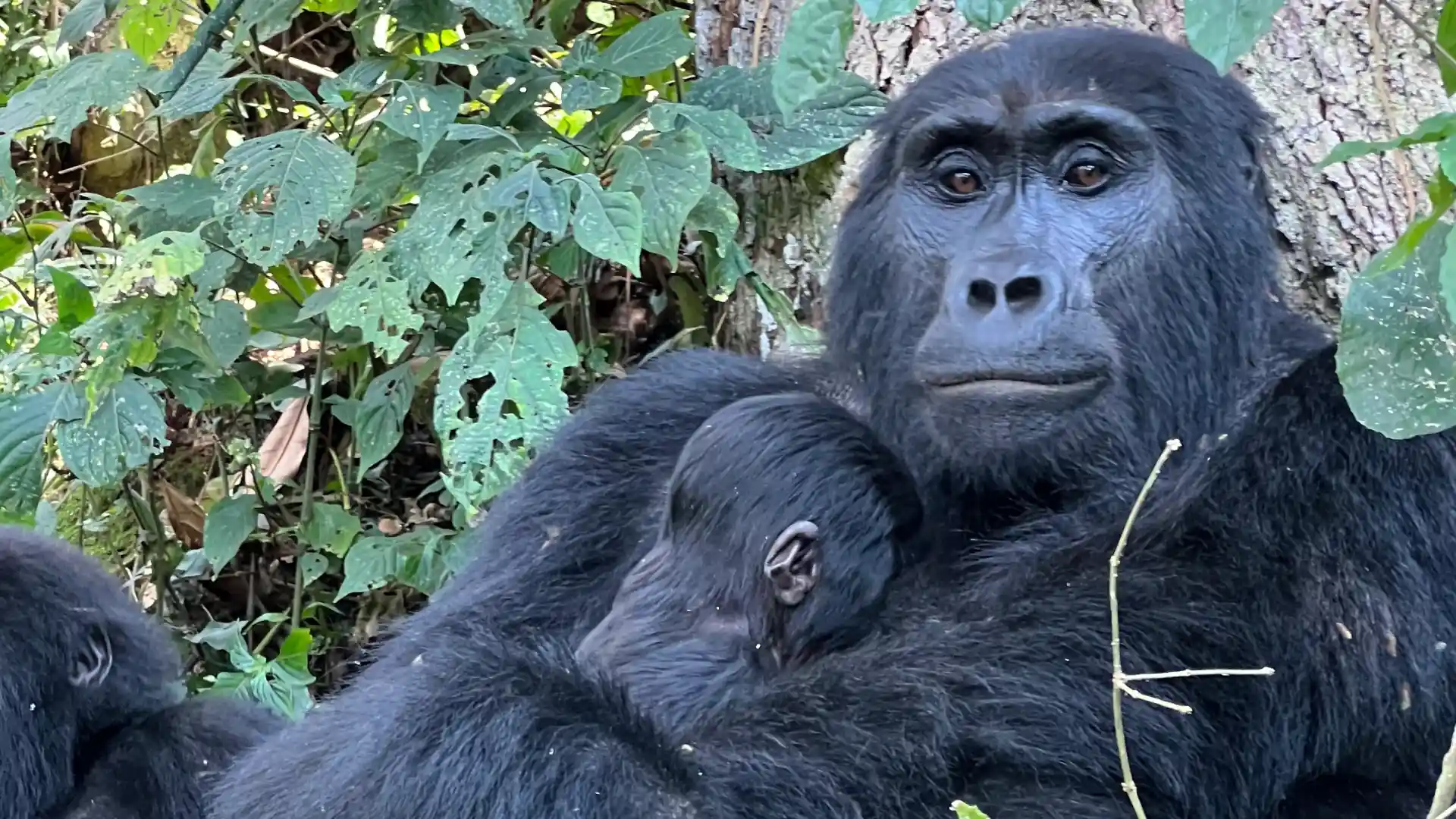
Keeping safe and healthy during your face-to-face encounter.
Gorilla trekking takes place in a sensitive wildlife environment where visitor safety, gorilla welfare and disease prevention are closely connected. Before entering the forest, travelers should understand the health requirements, visitor conduct rules, permitted distance, photography restrictions, group procedures and what to do if they become unwell.
UWA guidance emphasizes responsible behavior around mountain gorillas, while safari operators provide additional preparation information. The most important principle is to follow the instructions of the ranger guide and the applicable current park regulations.
What are the most important gorilla trekking safety rules?
Visitors should remain with their assigned group, follow the ranger guide’s instructions, maintain the required distance from the gorillas, avoid flash photography and avoid behavior that could disturb the animals. Visitors should also avoid approaching, touching or attempting to attract gorillas.
Wildlife encounters are unpredictable, so visitors should allow the ranger team to manage the encounter rather than attempting to control where the gorillas move.
The gorilla trekking safety rules guide provides additional preparation information.
What happens if I become sick before gorilla trekking?
Visitors who are unwell should inform their safari operator and the responsible park authorities before attempting to enter the gorilla habitat. This is particularly important when the illness could potentially be transmitted to the gorillas.
Gorillas are susceptible to some human respiratory illnesses, making responsible health decisions an important part of conservation. A visitor should not conceal symptoms simply to avoid missing the trek.
Can I trek gorillas when I have a cold?
Travelers experiencing respiratory symptoms should disclose their condition to the responsible ranger or park authority before trekking. The applicable health decision should be made according to current UWA rules and guidance.
Because mountain gorillas can be vulnerable to human-borne respiratory infections, visitors should prioritize gorilla welfare over completing a scheduled trek when they are unwell.
Can I trek gorillas if I have a fever?
A person with a fever should not simply assume that they can proceed with gorilla trekking. They should inform their safari operator and the responsible authorities and follow the current health instructions provided to them.
The purpose of health screening and health-related restrictions is to protect both visitors and the gorillas.
Why is human health important during gorilla trekking?
Mountain gorillas are closely related to humans and can be susceptible to certain human pathogens. This makes disease prevention particularly important during encounters between people and habituated gorilla families.
Visitors should therefore treat health precautions as part of responsible tourism rather than as unnecessary restrictions.
How far should I stay from gorillas?
Gorilla Trekking Health, Safety and Rules FAQs
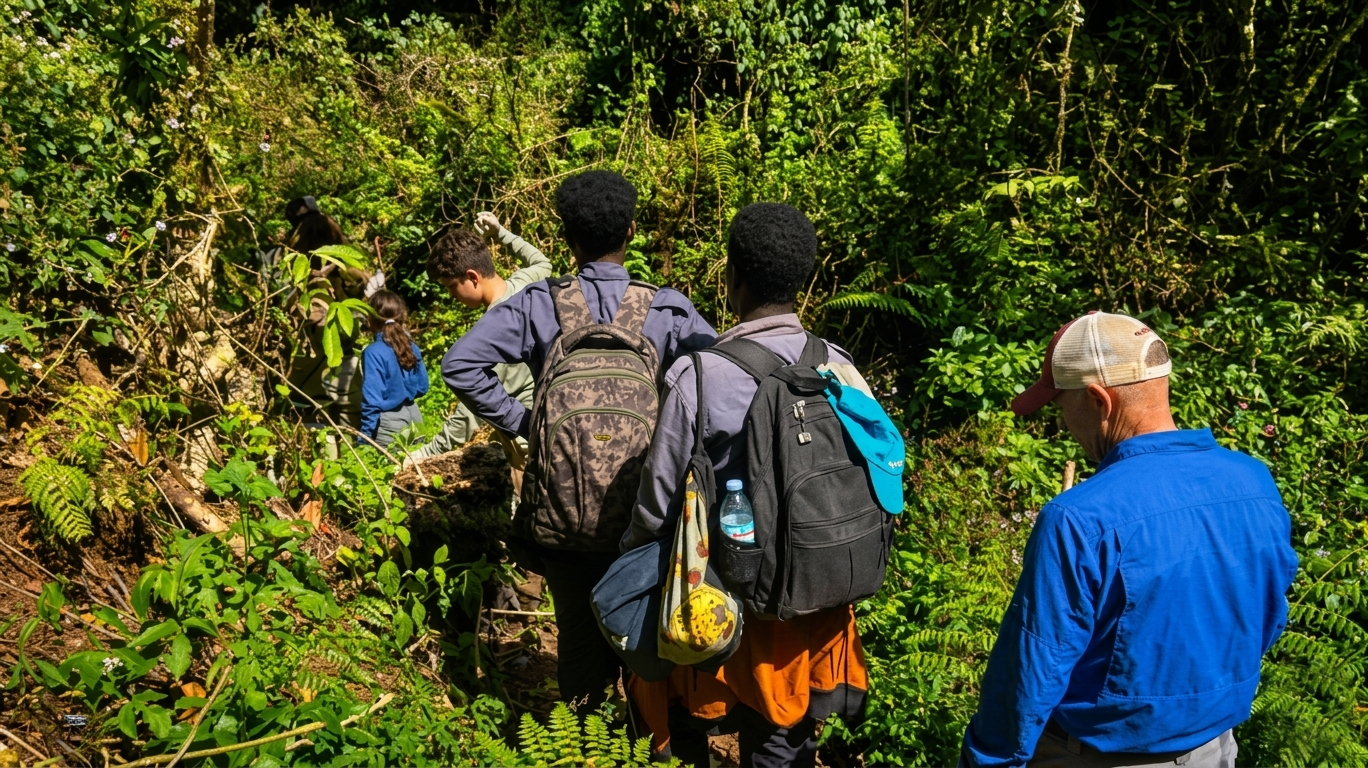
Strict safety rules and distance regulations during a trek.
Gorilla trekking takes place in a sensitive wildlife environment where visitor safety, gorilla welfare and disease prevention are closely connected. Before entering the forest, travelers should understand the health requirements, visitor conduct rules, permitted distance, photography restrictions, group procedures and what to do if they become unwell.
UWA guidance emphasizes responsible behavior around mountain gorillas, while safari operators provide additional preparation information. The most important principle is to follow the instructions of the ranger guide and the applicable current park regulations.
What are the most important gorilla trekking safety rules?
Visitors should remain with their assigned group, follow the ranger guide’s instructions, maintain the required distance from the gorillas, avoid flash photography and avoid behavior that could disturb the animals. Visitors should also avoid approaching, touching or attempting to attract gorillas.
Wildlife encounters are unpredictable, so visitors should allow the ranger team to manage the encounter rather than attempting to control where the gorillas move.
The gorilla trekking safety rules guide provides additional preparation information.
What happens if I become sick before gorilla trekking?
Visitors who are unwell should inform their safari operator and the responsible park authorities before attempting to enter the gorilla habitat. This is particularly important when the illness could potentially be transmitted to the gorillas.
Gorillas are susceptible to some human respiratory illnesses, making responsible health decisions an important part of conservation. A visitor should not conceal symptoms simply to avoid missing the trek.
Can I trek gorillas when I have a cold?
Travelers experiencing respiratory symptoms should disclose their condition to the responsible ranger or park authority before trekking. The applicable health decision should be made according to current UWA rules and guidance.
Because mountain gorillas can be vulnerable to human-borne respiratory infections, visitors should prioritize gorilla welfare over completing a scheduled trek when they are unwell.
Can I trek gorillas if I have a fever?
A person with a fever should not simply assume that they can proceed with gorilla trekking. They should inform their safari operator and the responsible authorities and follow the current health instructions provided to them.
The purpose of health screening and health-related restrictions is to protect both visitors and the gorillas.
Why is human health important during gorilla trekking?
Mountain gorillas are closely related to humans and can be susceptible to certain human pathogens. This makes disease prevention particularly important during encounters between people and habituated gorilla families.
Visitors should therefore treat health precautions as part of responsible tourism rather than as unnecessary restrictions.
How far should I stay from gorillas?
Visitors must follow the current minimum-distance rule issued by the relevant wildlife authority. Published Uganda gorilla trekking guidance has used a minimum viewing distance of seven metres, while some more recent operator materials refer to eight metres. Because these figures differ across published sources and rules can be updated, travelers should follow the distance stated by the ranger guide on the day of trekking.
The Uganda gorilla trekking guide provides broader information about the trekking experience and visitor procedures.
What if a gorilla approaches me?
If a gorilla moves closer to the group, visitors should remain calm and follow the ranger’s instructions. Visitors should not attempt to touch the animal, move toward it or deliberately encourage further interaction.
The appropriate response depends on the circumstances of the encounter, which is why the ranger team’s instructions should take priority over advice from other visitors or assumptions based on photographs and videos.
Can I touch a gorilla during trekking?
No. Visitors should not intentionally touch gorillas. Even when a gorilla approaches a visitor, the visitor should follow the ranger’s instructions and avoid initiating physical contact.
Maintaining appropriate separation helps reduce the possibility of disease transmission and prevents visitors from interfering with natural animal behavior.
Can I eat near gorillas?
Visitors should follow the applicable park rules concerning food and beverages around gorillas. Published Uganda trekking guidance has restricted eating and drinking close to gorilla groups because food can attract animals and increase unnecessary interaction.
The ranger guide should be consulted if a visitor needs to eat, drink or manage a personal need during the trek.
Can I smoke during gorilla trekking?
Smoking around gorillas is not appropriate. Visitors should follow the park’s current rules concerning smoking and other activities that could disturb wildlife or introduce unnecessary risks into the forest environment.
The forest is a protected wildlife habitat, so visitors should avoid activities that could affect animals, vegetation or other members of the trekking group.
Is flash photography allowed around gorillas?
Flash photography should not be used around gorillas because sudden flashes can disturb the animals. Photographers should instead work with available light and appropriate camera settings.
The gorilla photography guide provides additional information about photographing gorillas responsibly.
Can I use my phone during gorilla trekking?
A phone can be used for photography where permitted, but visitors should keep noise low and follow the same wildlife rules that apply to other photography equipment.
Visitors should also avoid spending the entire encounter looking at a screen. Observing the gorillas responsibly should remain more important than recording every moment.
Can I take a selfie with a gorilla?
Visitors should not move closer to a gorilla for a selfie. Photography must remain within the applicable viewing-distance and wildlife-conduct rules.
If a gorilla moves closer naturally, visitors should follow the ranger’s instructions rather than attempting to turn the encounter into a photograph involving physical proximity.
Can I use a drone during gorilla trekking?
Visitors should not assume that drones are permitted in protected gorilla habitat. Drone operations can be subject to separate authorization and applicable aviation and protected-area regulations.
Anyone considering aerial photography should obtain explicit authorization from the responsible authorities before using such equipment in or around a protected area.
What should I do if I need a toilet during the trek?
Visitors should tell the ranger guide if they need to use the toilet. The ranger can explain the appropriate procedure for managing personal needs in the forest while minimizing environmental and health risks.
Visitors should never leave human waste in an inappropriate location or ignore the instructions of the ranger team.
Can I leave the marked trekking route?
Visitors should remain with the trekking group and follow the route directed by the ranger and guide. Moving independently through protected gorilla habitat can create safety and conservation problems.
The ranger team determines how the group approaches and observes the gorillas based on the circumstances of the encounter.
What should I do if I get lost?
Visitors should not intentionally separate from the group. If someone becomes separated, they should remain in a safe location and follow the instructions of the guide or ranger team.
Staying with the group is one of the simplest ways to reduce avoidable risks during a forest trek.
Are gorilla trekking groups accompanied by guides?
Gorilla trekking is conducted under the supervision of ranger and guide teams. Their role includes helping visitors navigate the forest, locate the assigned gorilla family and follow the applicable wildlife rules.
Visitors should treat the guide’s instructions as authoritative during the encounter, particularly when gorillas change position or behave unexpectedly.
Why should visitors avoid making loud noises?
Loud noises can disturb wildlife and interfere with the calm conditions required for responsible gorilla observation. Visitors should therefore speak quietly and avoid shouting, sudden calls or unnecessary noise.
Quiet observation also gives visitors a better opportunity to watch natural gorilla behavior without influencing the animals unnecessarily.
Can I listen to music while trekking?
Visitors should not use headphones or play music in a way that prevents them from hearing ranger instructions or contributes to unnecessary noise in the forest.
Gorilla trekking is a wildlife observation experience, so visitors should remain attentive to their surroundings and the instructions of the trekking team.
Can I bring children on a gorilla trek?
Travelers should verify the current minimum-age requirement directly with UWA before booking because published tourism sources can contain conflicting or outdated age information.
One current operator booking page states a minimum age of 15 for gorilla tracking, while another operator page contains different age information. Because this is a regulated activity, the current UWA requirement should be treated as authoritative.
Can elderly travelers safely go gorilla trekking?
Older travelers can participate when they are physically capable of managing the demands of the trek and meet the applicable requirements. Age by itself does not determine the difficulty of an individual trek.
Travelers should communicate mobility or fitness concerns during planning so that the itinerary can be designed appropriately and expectations remain realistic.
Can someone with limited mobility go gorilla trekking?
Travelers with limited mobility should discuss their circumstances with their safari operator and the relevant park authorities before booking. The terrain is natural and can include uneven, steep or muddy sections.
Because conditions vary, no responsible operator should guarantee that a particular trek will involve a specific level of terrain or difficulty without confirmation from the responsible authorities.
Are there medical requirements for gorilla trekking?
Visitors should comply with the health and disease-prevention requirements in force at the time of their trek. These requirements can change as health circumstances and conservation protocols change.
Travelers should obtain current information from UWA or their safari operator before departure rather than relying on old travel blogs or outdated social-media advice.
Should I tell my guide about a health condition?
If a health issue could affect a person’s ability to trek safely, the traveler should discuss it with the appropriate medical professional and communicate relevant practical limitations to the safari operator.
Visitors should not conceal information that could affect their safety or the safety of the group.
What happens if I cannot complete the trek?
If a visitor becomes unable to continue, they should immediately inform the guide or ranger. The appropriate response depends on the location, circumstances and available park procedures.
This is another reason to prepare reasonably before the safari and to communicate physical difficulties early rather than waiting until they become severe.
Do I need travel insurance for gorilla trekking?
Travel insurance is strongly worth considering for an international safari because medical treatment, trip interruption, baggage problems and other unexpected events can create significant costs. The exact insurance requirements depend on the traveler’s circumstances and destination.
Travelers should read their policy carefully to understand what activities, medical situations and cancellations are covered rather than assuming every safari-related event is automatically included.
What should I do if the weather becomes bad?
Rain and changing weather are normal possibilities in the mountain forest. Visitors should carry suitable rain protection and follow the ranger’s instructions if conditions become difficult.
The trekking team may adjust its movement or procedures according to conditions. Visitors should not independently leave the group because of changing weather.
Is gorilla trekking safe?
Gorilla trekking is a regulated wildlife activity conducted with ranger and guide supervision. Nevertheless, it takes place in a natural forest environment with wild animals, uneven terrain and changing weather, so visitors must follow the established safety procedures.
No responsible source should describe a wildlife encounter as completely risk-free. The purpose of the rules is to reduce avoidable risks while protecting visitors and gorillas.
Are mountain gorillas dangerous?
Mountain gorillas are wild animals and should be treated with appropriate respect and caution. Visitors should not attempt to approach, touch, feed or provoke them.
The presence of trained rangers and established visitor rules helps manage encounters, but visitors must still follow instructions and avoid behavior that could disturb the animals.
What should I do if a gorilla displays unusual behavior?
Visitors should remain calm and follow the ranger’s instructions. The ranger team has the responsibility and experience to respond to gorilla behavior during the encounter.
Visitors should not shout, run toward the animal, attempt to touch it or make independent decisions intended to change the animal’s behavior.
Why should I avoid running around gorillas?
Sudden movement can contribute to disturbance and may produce an inappropriate response from wildlife. Visitors should move slowly and follow the instructions of the ranger guide.
The safest approach is to let the trained trekking team determine how the group should respond to changes in gorilla behavior.
What should I do if I accidentally sneeze near gorillas?
Visitors should follow current disease-prevention instructions and take reasonable measures to avoid exposing gorillas to respiratory droplets. Published operator guidance recommends covering coughs and sneezes appropriately and moving away from the gorillas when necessary.
If a visitor is experiencing significant respiratory symptoms, they should disclose this before trekking rather than attempting to conceal the illness.
Can I trek gorillas if I am sick?
Visitors who are sick should disclose their condition before the trek. Whether they may participate depends on the illness, current conservation protocols and the decision of the responsible authorities.
This is especially important for respiratory illnesses because of the close biological relationship between humans and mountain gorillas.
What happens if I am denied trekking for health reasons?
If the responsible authority determines that a visitor should not participate because of a health concern, the traveler should follow that decision. Refund or rescheduling consequences depend on the applicable permit and operator terms.
Travelers should therefore understand the current permit cancellation conditions before making payment.
Can I cancel a gorilla trek because I am sick?
Cancellation and refund conditions depend on the permit authority and the booking arrangement. Travelers should check the applicable current terms before assuming that illness automatically results in a refund.
Safari operators may also have separate booking and cancellation policies, so travelers should read those terms before paying deposits.
How far in advance should I prepare for health and safety?
Preparation should begin before the safari rather than on the morning of trekking. Travelers should review the current park rules, understand the physical demands, prepare suitable clothing and equipment and address any relevant health concerns before departure.
The Bwindi trekking sectors guide can help travelers understand why terrain and location should be considered when planning the trek.
What should I carry for a safe gorilla trek?
Travelers should carry practical items appropriate for several hours in a forest environment, including suitable walking footwear, rain protection, drinking water and a small backpack. Camera equipment should also be protected from rain.
The precise packing list should reflect the season, trekking sector and individual needs rather than following a generic list without considering the actual itinerary.
Are hiking boots necessary?
Suitable footwear is strongly advisable because forest trails can be uneven, muddy and steep. Shoes should provide good grip and be comfortable enough for several hours of walking.
Travelers should break in footwear before the safari rather than using completely new shoes for the first time on the trekking day.
Are gloves useful during gorilla trekking?
Protective gloves can be useful when visitors need to move carefully through vegetation or use natural support along a trail. They should be comfortable and appropriate for outdoor use.
Gloves should not be treated as a substitute for careful movement or as permission to touch gorillas or other wildlife.
Should I carry drinking water?
Yes. Trekking can involve several hours of walking, so visitors should carry sufficient drinking water for their planned activity according to their operator’s advice.
Water should be carried in a secure reusable bottle or suitable hydration system that can be accessed without creating unnecessary disturbance during the gorilla encounter.
Can I carry snacks during gorilla trekking?
Visitors should follow the ranger’s instructions concerning where and when food may be consumed. Food should never be used to attract wildlife, and visitors should not leave food waste in the forest.
Travelers should confirm the current park rules because regulations concerning food and proximity to gorillas can be updated.
What should I do with rubbish?
All personal waste should be handled responsibly and removed according to park procedures. Visitors should never leave plastic, food packaging or other rubbish in the forest.
Keeping the habitat clean protects the ecosystem and reduces the possibility of wildlife encountering inappropriate human materials.
Can I use insect repellent?
Insect repellent can be useful in forest environments, but visitors should apply it according to the product instructions and follow any park-specific guidance concerning products used around wildlife.
Travelers should avoid applying excessive products immediately before close wildlife encounters and should follow ranger instructions.
Can I wear perfume during gorilla trekking?
Visitors should avoid unnecessary strong fragrances during wildlife encounters. The goal is to minimize artificial disturbances and maintain a respectful natural environment.
Practical outdoor hygiene is important, but visitors should avoid assuming that strong perfumes or scented products are necessary for the trek.
Can I smoke, drink alcohol or use other substances during the trek?
Visitors should follow all park regulations and should not enter the forest under the influence of alcohol or other intoxicating substances. Such behavior could impair judgment and interfere with the ability to follow ranger instructions.
Gorilla trekking requires alertness, responsible behavior and respect for wildlife and other visitors.
Can I trek alone without a ranger?
Visitors should not independently enter gorilla habitat for a self-guided gorilla encounter. Gorilla tracking is a regulated activity conducted under the applicable park procedures and ranger supervision.
The guide and ranger team are essential for managing the wildlife encounter and helping visitors comply with conservation and safety requirements.
What should I do during the gorilla briefing?
Pay close attention to the briefing because it explains the rules that apply to the encounter. Visitors should understand the required distance, photography restrictions, appropriate behavior and what to do if a gorilla approaches.
Questions should be raised before entering the forest if any instruction is unclear.
Why are gorilla trekking rules so strict?
The rules protect both the gorillas and visitors. Mountain gorillas are endangered wild animals living in sensitive forest habitats, and close human contact creates potential behavioral and disease-related risks.
Rules concerning distance, noise, photography, food and health are therefore part of responsible conservation tourism rather than unnecessary obstacles to the visitor experience.
What is the most important health rule for gorilla trekking?
Do not enter a gorilla encounter while knowingly unwell without first disclosing the condition and receiving appropriate guidance. Disease prevention is particularly important because human illnesses can potentially affect mountain gorillas.
The gorilla trekking preparation guide provides additional information about health preparation, equipment and visitor responsibilities.
What is the most important safety rule during the encounter?
Follow the ranger guide’s instructions. The ranger team is present to manage the encounter and respond to changes in gorilla behavior, terrain or other circumstances.
Visitors should remain calm, avoid sudden movements and never attempt to create a closer or more dramatic interaction for photographs.
What should I remember before booking a gorilla trek?
Travelers should verify the current permit requirements, age requirements, health rules, minimum viewing distance, trekking procedures and cancellation conditions before paying for a safari. Rules can change, so older articles should not automatically be treated as current regulations.
For booking arrangements, booking terms can help travelers understand the operator’s stated payment and cancellation conditions, while the relevant wildlife authority remains the final source for official park regulations.
Gorilla trekking is safest and most responsible when visitors arrive prepared, disclose relevant health concerns, respect the required distance, follow ranger instructions and place gorilla welfare ahead of photography or personal convenience.
Gorilla Trekking Booking and Permit FAQs

Booking a gorilla trekking experience requires more than choosing a travel date. Visitors need to secure the appropriate gorilla permit, provide the required identification details, confirm availability, understand the payment and cancellation conditions, and make sure their permit is properly validated before entering the national park. Uganda Wildlife Authority guidance states that visitors must report to the designated entry point for permit validation, orientation and briefing before tracking begins. Tracking without validated documents and a UWA guide is not allowed.
Do I need a gorilla permit to go gorilla trekking?
Yes. A valid gorilla permit is required to participate in gorilla trekking in Uganda. The permit authorizes the holder to participate in the designated gorilla tracking activity on the booked date and at the applicable tracking location.
Travelers should not arrive at Bwindi Impenetrable National Park or Mgahinga Gorilla National Park expecting to obtain access simply by paying a park entrance fee. Gorilla tracking is a specifically regulated activity with limited visitor capacity.
For additional planning information, gorilla permit prices explains the distinction between a gorilla permit and the wider cost of a gorilla safari.
Who issues gorilla trekking permits in Uganda?
Gorilla permits in Uganda are managed by the Uganda Wildlife Authority. UWA is responsible for the protected areas where Uganda’s mountain gorilla trekking takes place and establishes the applicable permit-management procedures.
Travelers should therefore distinguish official permit requirements from the additional services provided by a safari company.
Can I book a gorilla permit directly through UWA?
The purchasing procedure depends on the visitor category and the current UWA permit-sale rules. UWA’s July 2024 public advisory states that gorilla and chimpanzee tracking permits for foreign non-residents are sold exclusively through tour operators licensed by the Uganda Tourism Board.
Travelers should verify the current UWA procedure for their particular nationality or residency category before making payment, because permit-purchase rules can change.
Can foreign non-residents buy Uganda gorilla permits themselves?
UWA’s published July 2024 advisory states that foreign non-resident gorilla and chimpanzee tracking permits are sold exclusively through Uganda Tourism Board-licensed tour operators. The advisory also instructs travelers to verify the validity of the operator’s license before proceeding.
This makes it important for international visitors to confirm that the company handling their permit is operating under the applicable licensing requirements.
Can a tour operator book my gorilla permit?
Yes. Licensed tour operators can assist eligible travelers with the permit-booking process. The operator can check availability, coordinate payment and incorporate the permit into the wider safari arrangements.
The traveler should request confirmation of the permit booking and retain the relevant documentation supplied by the operator.
How early should I book a gorilla permit?
There is no single booking period that guarantees availability for every date. Permit availability depends on the number of permits allocated, demand for the chosen date and the visitor category.
Booking well ahead of the intended trekking date is therefore prudent, particularly when travel dates are fixed or when the traveler wants a particular trekking sector.
The Uganda gorilla permit booking rules provide additional information about the regulated purchasing process.
Can I book a gorilla permit at the last minute?
Last-minute availability can occur when previously reserved spaces become available, but it should not be treated as a reliable booking strategy. Gorilla permits are limited, and availability depends on cancellations and the demand for the requested date.
Travelers with fixed flights, accommodation or leave dates should secure the permit before finalizing the rest of the itinerary where possible.
How many gorilla permits are available per day?
The number of permits available depends on the applicable gorilla families, park management arrangements and current UWA regulations. Published tourism information commonly refers to a maximum group size of eight visitors for a gorilla family, but travelers should confirm the current rule before relying on historical figures.
Permit availability is deliberately controlled because gorilla tourism is managed as a conservation activity rather than unlimited wildlife access.
Why are gorilla permits limited?
Visitor numbers are restricted to reduce pressure on habituated gorilla families and their habitat. Limiting the number of visitors also helps guides manage encounters responsibly and supports the conservation objectives of gorilla tourism.
The restricted supply is one reason travelers should not assume that a permit will automatically be available for any date they choose.
What information is needed to book a gorilla permit?
Travelers should expect to provide identification information required by the permit-management system. UWA’s guidelines require permit and ticket information to be cross-checked against UWA records during validation.
Travelers should therefore provide their details accurately and should immediately notify the booking company if passport or identification information changes.
Do I need my passport when booking a gorilla permit?
Passport and identification information may be required for international travelers during the booking and validation process. The exact documentation requirements depend on the visitor category and the current UWA procedures.
Travelers should ensure that the information supplied during booking corresponds accurately with their travel document.
What happens at the gorilla permit validation point?
UWA’s current tracking guidelines state that visitors report to the designated entry point reception for permit or ticket validation, orientation and briefing before tracking begins. Validation involves checking the client’s documents against UWA records in the booking system.
Once the documents have been successfully validated, visitors proceed to the UWA briefing and tracking arrangements.
Can I trek gorillas without my permit documents?
Travelers should carry the documentation required for validation. UWA specifically states that tracking without validated documents and a UWA guide is not allowed.
A traveler who has booked through an operator should therefore confirm before departure which permit documentation will be provided and what identification must be carried to the briefing point.
Can someone else use my gorilla permit?
Travelers should not assume that a gorilla permit can simply be transferred to another person. Permit records contain visitor information and are subject to validation against UWA’s booking records.
If a traveler can no longer participate, the appropriate procedure should be confirmed with UWA or the licensed operator rather than informally giving the permit to another person.
Can I change my gorilla trekking date after booking?
UWA’s July 2024 gorilla and chimpanzee tracking guidelines provide for permit and ticket rescheduling. The guidelines state that a client may be allowed up to two reschedules for one specific permit or ticket, subject to the applicable conditions.
Travelers should request a date change through the appropriate booking channel and should not assume that every requested date will be available.
Can I change my gorilla trekking location after booking?
UWA’s guidelines define rescheduling as a change of dates and/or locations for tracking under the applicable procedures. Whether a requested location change can be completed depends on availability and the rules governing the specific permit.
Travelers should therefore request changes as early as possible and confirm the new permit details before traveling.
Can I reschedule my gorilla permit more than once?
UWA’s July 2024 guidelines state that a client may be allowed up to two reschedules for one specific permit or ticket. The rescheduling provisions are subject to the conditions established in the guidelines.
Travelers should obtain confirmation of any approved rescheduling rather than relying on a verbal arrangement.
Can I cancel a gorilla permit?
Cancellation and refund arrangements depend on the applicable UWA rules and the terms under which the permit was purchased. Travelers should confirm the current cancellation provisions before paying.
A safari operator may also have separate cancellation terms for accommodation, transportation and other services included in the safari package.
Will I get a refund if I cancel my gorilla trek?
A refund should never be assumed. The amount, eligibility and timing of any refund depend on the applicable permit terms and the circumstances of the cancellation.
Travelers should distinguish between a refund for the official gorilla permit and refunds for other safari services. These may be governed by different conditions.
What happens if I miss my gorilla trekking date?
Missing the booked tracking date can have financial consequences because permits are tied to specific booking arrangements and are subject to the applicable cancellation and rescheduling rules.
Travelers should contact the permit provider or operator as soon as they know that they may miss the scheduled trek rather than waiting until after the tracking date.
Can I book accommodation before securing the gorilla permit?
You can plan accommodation first, but securing the gorilla permit before making a non-refundable commitment to other services is generally the safer planning sequence when the trekking date is fixed.
The permit determines the date and trekking location around which the rest of the itinerary should be organized.
Should I book flights before my gorilla permit?
Travelers should carefully consider the order of bookings because a fixed flight itinerary is difficult to change if the preferred gorilla trekking date is unavailable.
For a trip built specifically around gorilla trekking, confirming permit availability before committing to restrictive flight arrangements can reduce scheduling problems.
How do I know my gorilla permit is genuine?
The strongest verification method is to ensure that the permit information corresponds with the official UWA booking records and that the documentation is validated through the prescribed process.
UWA’s guidelines specifically state that permit validation involves cross-checking documents against UWA records in the booking system.
What should I do if my permit details are incorrect?
Contact the organization that handled the booking as soon as an error is discovered. Do not wait until the morning of trekking if the name, identification details, date or tracking location appears incorrect.
Corrections may require confirmation through the official permit-management process, so travelers should retain all booking correspondence and payment records.
Can I reserve a gorilla permit before paying?
Reservation and payment procedures depend on the applicable booking channel and the current UWA rules. Some operators may temporarily hold availability under their booking arrangements, while others may require payment before final confirmation.
Travelers should ask precisely whether a quoted permit is confirmed, held temporarily or merely being checked for availability.
What is the difference between a permit hold and a confirmed permit?
A temporary availability hold does not necessarily mean that the permit has been fully purchased and confirmed. Travelers should request clear confirmation showing that the permit has actually been secured.
This distinction is particularly important when several components of a safari depend on the same trekking date.
How do I book a gorilla safari through a tour operator?
The normal process involves providing preferred travel dates, number of travelers and relevant identification information. The operator can then check permit availability and prepare the safari quotation.
Once the booking terms are accepted and the required payment is made, the operator proceeds according to the applicable permit and tour-booking procedures.
The gorilla trekking booking guide contains additional information about coordinating permits with the safari itinerary.
What should a gorilla safari quotation include?
A detailed quotation should make it clear whether the gorilla permit is included, together with accommodation, transportation, meals, activities and other services. It should also identify important exclusions so the traveler understands the actual total cost.
Comparing itemized quotations is more useful than comparing only the headline price of two safari packages.
Why should I use a licensed tour operator?
UWA’s public advisory specifically instructs foreign non-residents purchasing gorilla and chimpanzee permits to use Uganda Tourism Board-licensed tour operators. The advisory also recommends verifying the operator’s license before proceeding.
Using an appropriately licensed operator can also simplify coordination between the permit, accommodation, transportation and other safari arrangements.
How can I verify a tour operator before booking?
Travelers should verify the operator’s current licensing status through the appropriate tourism authority rather than relying solely on a company’s website, social-media page or customer reviews.
UWA’s advisory specifically directs the public to verify the validity of the operator’s Uganda Tourism Board license.
Can a tour operator guarantee my preferred gorilla family?
Travelers should be cautious about guarantees concerning a specific gorilla family. Gorilla families move naturally, and allocation procedures are governed by the park authorities.
A responsible operator can help organize the permit and trekking arrangements but should not promise an encounter with a particular family unless the official authorities have explicitly established such an arrangement.
Can I choose my gorilla trekking sector?
Travelers can request a particular trekking sector when planning their safari, subject to permit availability and the applicable booking arrangements. Bwindi’s different sectors have their own trailheads and accommodation networks.
The final permit and tracking arrangements should be confirmed before the safari because availability can affect whether the requested sector is possible.
Can I change from Bwindi to Mgahinga after booking?
A location change may be possible under UWA’s rescheduling provisions, but it depends on availability and the applicable permit conditions. Travelers should request the change through the authorized booking channel rather than assuming that a permit automatically transfers between destinations.
The new location should be confirmed in the official booking record before the traveler changes accommodation or transportation arrangements.
Can I book gorilla trekking and accommodation together?
Yes. Many travelers choose to arrange the permit, accommodation and transportation as one safari package. This can simplify logistics because the itinerary is constructed around the confirmed trekking date and location.
Travelers should nevertheless request an itemized quotation so they understand which costs relate to the permit and which relate to other safari services.
What payment should I make when booking a gorilla safari?
The required payment depends on the booking terms of the operator and the permit arrangements. UWA’s official permit price should be distinguished from a tour company’s deposit, accommodation charges and transportation costs.
For example, the published booking terms of Safari Vacations & Travel Services state that a 20 percent tour deposit is required while full payment for applicable gorilla tracking permits is required. These are operator-specific terms and should not be treated as universal UWA payment rules.
Why should I keep my payment receipts?
Payment records provide evidence of what has been paid and can help resolve discrepancies concerning permit purchases, safari deposits or other services.
Travelers should retain invoices, receipts, booking confirmations and relevant correspondence until the safari has been completed.
What if a tour operator asks for full payment immediately?
Travelers should carefully review the company’s written booking terms before making payment. Payment requirements vary between operators and between permit and safari components.
A traveler should understand what portion of the payment is refundable, what portion is committed to the permit and what cancellation conditions apply before transferring funds.
Can I get my money back if permits are unavailable?
The answer depends on the payment arrangement and the written terms provided by the operator. Travelers should ask whether a payment is being held for a permit, transferred to another date or applied to other safari services.
Do not assume that every payment has identical refund conditions.
What happens after my gorilla permit is confirmed?
Once the permit is confirmed, the traveler should verify the trekking date, location, visitor information and any other details shown on the booking documentation.
The next step is to build the accommodation and transportation itinerary around the confirmed tracking arrangements.
Do I need to carry proof of booking on the trekking day?
Travelers should carry the required permit and identification documents for validation. UWA’s guidelines require permit information to be checked against the official booking records before tracking begins.
Keeping digital and physical copies of important booking documents can provide useful backup, subject to the documentation accepted by the responsible authorities.
What happens if my passport changes after booking?
Travelers should notify the organization handling the permit as soon as their identification information changes. Because permit records are checked against UWA’s booking system, incorrect information can create problems during validation.
The operator or UWA can advise whether the record needs to be amended and what supporting documentation is required.
Can I transfer my gorilla safari to another traveler?
Travelers should not assume that a safari or gorilla permit is freely transferable. The permit is connected to booking and identification information that is checked during validation.
Any change of traveler should therefore be discussed with the permit provider and handled according to the official procedures.
What happens if my flight is delayed and I miss the trek?
A delayed flight can create serious itinerary problems when the gorilla permit is tied to a specific date. Travelers should contact their safari operator immediately if a delay threatens the trekking schedule.
Whether the permit can be rescheduled depends on the applicable UWA provisions and availability. Travelers should also understand the separate cancellation terms of airlines, accommodation providers and safari operators.
Should I leave a free day around my gorilla trek?
Allowing flexibility around the gorilla trek can reduce the consequences of transportation delays, flight disruptions and unexpected itinerary changes. This is particularly useful when international flights and long road transfers are involved.
The exact amount of buffer time depends on the wider itinerary, but travelers should avoid constructing a schedule in which a minor delay causes them to miss the permit date.
Can I combine gorilla trekking with a wildlife safari?
Yes. Gorilla trekking can be combined with other wildlife experiences in Uganda, depending on the traveler’s available time and preferred destinations.
The permit date should normally serve as one of the fixed points around which the rest of the itinerary is organized. Transportation distances should then be considered when adding national parks or other activities.
Can I combine gorilla trekking with chimpanzee tracking?
Yes. Uganda offers both gorilla trekking and chimpanzee tracking, making it possible to construct a primate-focused itinerary.
However, each activity has its own permit, regulations, location and booking arrangements. Travelers should not assume that a gorilla permit covers chimpanzee tracking.
What are the biggest mistakes people make when booking gorilla trekking?
Common planning mistakes include delaying the permit booking until the last moment, failing to verify the operator’s licensing status, assuming an availability check is the same as a confirmed permit, overlooking cancellation conditions and providing inaccurate identification information.
Another mistake is booking flights and accommodation without first confirming the critical gorilla trekking date.
How can I avoid gorilla permit booking scams?
Travelers should verify the identity and licensing status of the company handling the booking, request written invoices, retain payment records and ask for clear confirmation that the permit has been secured.
UWA’s public advisory specifically recommends verifying the validity of a tour operator’s Uganda Tourism Board license when using an operator to purchase applicable permits.
What should I ask a tour operator before paying?
Ask whether the gorilla permit is confirmed, which trekking sector is booked, what date is secured, what visitor information is recorded, which services are included in the quotation, what is excluded and what cancellation or rescheduling conditions apply.
These questions make it easier to distinguish an actual confirmed booking from a preliminary quotation or availability inquiry.
Is it better to book a gorilla permit or the whole safari first?
For travelers whose main objective is gorilla trekking, the permit is the critical component because the trekking date and location determine much of the itinerary. Once permit availability is confirmed, accommodation and transportation can be organized around it.
This approach reduces the risk of paying for non-refundable services that cannot be used because the preferred gorilla date is unavailable.
Can I book a gorilla trek without knowing my exact accommodation?
Yes. The permit and accommodation are separate components of the trip. However, once the permit location is confirmed, accommodation should ideally be selected near the appropriate trekking sector to reduce unnecessary transfers.
The accommodation should also be checked for availability before the rest of the itinerary is finalized.
What is the safest way to confirm a gorilla trekking booking?
The safest approach is to obtain written confirmation of the permit, verify the booking details against the required identification information, confirm the trekking location and retain the payment documentation.
UWA’s official validation process provides an additional layer of confirmation because visitor documents are checked against UWA records at the designated entry point.
Where can I find additional gorilla permit booking information?
The Uganda permit information guide provides additional background on permit availability and booking. Travelers should use current UWA guidance to verify any information concerning prices, eligibility and booking procedures because official rules can change.
Another useful source is permit booking, which explains how a tour company can assist with the permit-booking process.
What is the most important thing to remember about booking gorilla trekking?
The most important point is that a safari quotation is not automatically the same thing as a confirmed gorilla permit. Travelers should confirm the permit, verify the relevant visitor information, understand the payment and cancellation terms and ensure that the permit will be validated through the official UWA process.
Because permit rules, tariffs and booking procedures can change, travelers should verify current requirements before payment rather than relying exclusively on older articles or historical prices.
The booking terms can help travelers understand operator-specific payment and cancellation conditions, while UWA remains the authoritative source for official permit-management requirements.
Gorilla Trekking Costs, Budget and Value FAQs
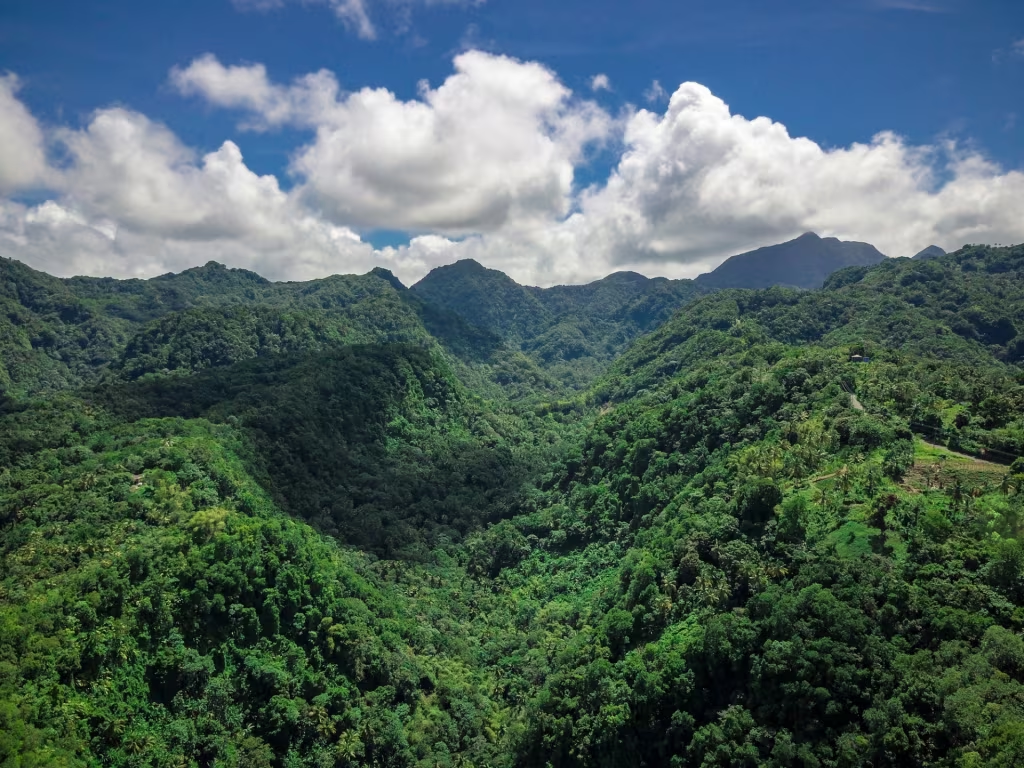
Evaluating the value and financial investment of a gorilla trek.
Gorilla trekking is a premium wildlife experience, but the total cost of a gorilla safari is determined by much more than the gorilla permit alone. Travelers need to consider permits, accommodation, transportation, meals, park-related services, guide arrangements, optional porters, international flights, visas and the number of days spent in Uganda or Rwanda.
How much does gorilla trekking cost in Uganda?
The gorilla trekking cost in Uganda depends on the traveler’s permit category and the other services included in the safari. For foreign non-residents, the currently published Uganda gorilla trekking permit price is US$800 per person. Other visitor categories have different published rates.
The Uganda gorilla trekking cost guide provides a detailed breakdown of the published 2026 permit prices and other safari expenses.
How much does a Uganda gorilla permit cost?
A gorilla permit is one of the largest individual expenses in a Uganda gorilla safari. The current published rate for foreign non-residents is US$800 per person for standard gorilla trekking. Permit prices differ according to visitor category, so travelers should verify the applicable current rate before making payment.
Does the gorilla permit cover the entire safari?
No. A gorilla permit should not be confused with the total cost of a gorilla safari. The permit covers the regulated gorilla tracking activity and applicable services specified by the wildlife authority, but travelers normally need to budget separately for accommodation, transportation, meals, international flights, visas and other personal expenses.
What is included in the Uganda gorilla trekking permit?
The permit provides authorization for the designated gorilla tracking activity and includes the services specified under the applicable wildlife authority arrangements. Travelers should check the current official terms because inclusions can change.
The current gorilla permit information explains the published permit structure for Uganda and Rwanda.
How much money should I budget for a Uganda gorilla safari?
There is no single price that applies to every traveler because safari duration, accommodation category, transportation arrangements and additional activities can substantially change the final cost.
A short budget-oriented trip can cost considerably less than a longer luxury itinerary. Travelers should therefore compare complete safari quotations rather than comparing permit prices alone.
What makes Uganda gorilla trekking expensive?
The gorilla permit is a major component, but the remote location of the parks also affects the total safari price. Transportation to southwestern Uganda, accommodation near the trekking sector, professional guiding and the number of nights included can all contribute significantly to the final cost.
Is Uganda gorilla trekking cheaper than Rwanda?
Based on the currently published permit rates, Uganda’s standard gorilla trekking permit is less expensive than Rwanda’s standard international non-resident permit. However, travelers should compare the complete safari cost rather than looking only at the permit because accommodation, transportation and other services differ between destinations.
The Uganda versus Rwanda comparison provides a broader comparison of the two destinations.
Why is the gorilla permit only part of the safari cost?
The gorilla permit covers access to the regulated tracking experience, while the traveler still needs to reach the park, stay somewhere, eat during the journey and return to the next destination. Depending on the itinerary, the safari can also include game drives, chimpanzee tracking, cultural experiences or other activities.
How much does accommodation add to a gorilla safari?
Accommodation costs vary according to location, season, room type and lodge category. A basic property near a trekking sector can have a substantially different price from a luxury lodge.
Travelers should choose accommodation according to both budget and proximity to the relevant trekking trailhead.
Is it cheaper to stay near Bwindi?
Staying close to the correct Bwindi sector can reduce unnecessary transportation and make it easier to reach the briefing point early in the morning. However, accommodation prices vary considerably between properties and seasons.
The most economical option is not necessarily the property with the lowest nightly rate if it creates additional transportation costs or logistical complications.
How much does transportation cost for gorilla trekking?
Transportation costs depend on whether travelers use a private safari vehicle, shared transportation or domestic flights, as well as the starting point and the trekking sector. The distance from Entebbe or Kampala to southwestern Uganda also means that road transportation can represent a significant portion of a safari budget.
Can I fly to Bwindi to reduce travel time?
Domestic flights can reduce road travel time, although the overall safari cost may increase because of airfare and transfers between the airstrip and accommodation.
Travelers should compare the complete cost and convenience of flying against a private road transfer rather than assuming that either option is automatically cheaper.
Is a budget gorilla safari possible in Uganda?
Yes. A traveler can reduce the overall cost by choosing practical accommodation, limiting the number of safari days, sharing certain transportation arrangements where appropriate and avoiding unnecessary premium services.
The gorilla permit itself remains a significant fixed expense, so the largest savings usually come from accommodation, transportation and the wider itinerary rather than from the permit.
What is the cheapest way to go gorilla trekking in Uganda?
The most economical approach is generally to keep the itinerary focused on gorilla trekking, choose reasonably priced accommodation near the trekking sector and use an efficient transportation arrangement. Travelers should still ensure that all permit and operator arrangements are legitimate and properly documented.
Can I do a one-day gorilla safari?
A one-day itinerary can be difficult for international visitors because the gorilla parks are far from Uganda’s main international gateway. A longer itinerary provides greater flexibility and reduces the pressure created by long-distance transportation.
Travelers should also consider the risk of trying to connect an international flight too closely with the gorilla trekking date.
How many days are ideal for a Uganda gorilla safari?
The ideal duration depends on what else the traveler wants to experience. A focused gorilla trip can be relatively short, while a broader Uganda safari may combine gorilla trekking with chimpanzees, savannah wildlife, birding or cultural activities.
The trekking date should remain the central fixed point when constructing the itinerary.
Does the season affect gorilla trekking costs?
Season can influence accommodation, transportation and other safari costs. Peak travel periods may experience stronger demand for accommodation and permits, while lower-demand periods can sometimes offer more favorable lodge rates.
Permit prices should always be checked separately because seasonal accommodation discounts do not necessarily mean that the official gorilla permit price has changed.
Is gorilla trekking cheaper during the rainy season?
The rainy seasons can sometimes provide lower accommodation rates or other travel discounts, although this varies by property and operator. Travelers should balance potential savings against wetter trail conditions and the possibility of more challenging trekking terrain.
Does Uganda offer better value for gorilla trekking?
Value depends on what the traveler wants from the experience. Uganda can offer a lower published standard gorilla permit price than Rwanda and provides opportunities to combine gorilla trekking with a wider range of safari experiences.
However, value should be assessed using the complete itinerary, not simply the price of the permit.
Can I combine gorilla trekking with a wildlife safari?
Yes. Uganda makes it possible to combine gorilla trekking with additional wildlife experiences, depending on the available travel time. A longer itinerary can include destinations such as Queen Elizabeth National Park or other protected areas.
Combining activities can increase the total price, but it may provide better overall value for travelers who want a broader Uganda safari rather than a gorilla-only trip.
Can I combine gorilla trekking with chimpanzee tracking?
Yes. Gorilla trekking and chimpanzee tracking can be combined in one Uganda itinerary. Each activity has its own permit and location, so the transportation and accommodation arrangements need to be planned carefully.
Travelers should compare the additional cost of extending the safari with the value of experiencing two different great-ape encounters.
Do I need to hire a porter during gorilla trekking?
A porter is not simply an optional luxury. Porters can help carry luggage and provide practical assistance on challenging forest trails. Hiring one also directly supports people living around the protected area.
The porter fee is an additional cost, but many travelers consider it worthwhile because it reduces the amount they personally carry during the trek.
Is hiring a porter included in the gorilla permit?
No. Porter services are separate from the gorilla permit. The traveler pays the porter according to the applicable local arrangement and agreed service.
Do I need to tip the gorilla trekking guide?
Tips are generally treated as discretionary rather than as a compulsory component of the gorilla permit. Travelers who believe the guide, ranger, porter or other service staff provided excellent assistance may choose to tip according to their own judgment and budget.
Travelers should avoid treating tipping as a mandatory government fee unless the specific charge is clearly identified as such.
Are meals included in a gorilla safari?
Meals depend on the accommodation and safari package. Some packages include meals at the lodge, while other arrangements may treat meals differently.
Travelers should check the quotation carefully so that they know which meals are included and which personal food expenses need to be paid separately.
Are drinks included in the gorilla safari price?
Included drinks vary between lodges and safari packages. Travelers should check the accommodation’s inclusions before assuming that bottled water, soft drinks or other beverages are included.
Are park entrance fees included in the gorilla permit?
The applicable permit structure can include specified park-related fees and services, but travelers should verify the current official terms rather than assuming that every fee associated with visiting a national park is covered.
Additional activities conducted outside the gorilla tracking experience may require separate payments.
Do I have to pay separately for chimpanzee permits?
Yes. Chimpanzee tracking is a separate wildlife activity and requires its own applicable permit. A gorilla permit does not automatically authorize chimpanzee tracking.
Do I need to pay for photography during gorilla trekking?
Normal personal photography is part of the visitor experience, subject to the applicable wildlife rules. Commercial filming or specialized photography may be subject to separate authorization or charges.
Travelers planning professional or commercial production should clarify the applicable requirements before arrival.
Does the gorilla permit guarantee that I will see gorillas?
The purpose of the permit is to participate in gorilla tracking, but wildlife encounters cannot be treated as an absolute guarantee of a particular animal’s behavior or location.
Ranger and tracker teams work to locate the assigned gorilla group, but gorillas remain wild animals moving through their natural habitat.
Does a more expensive safari guarantee a better gorilla encounter?
No. A higher safari price generally reflects differences in accommodation, transportation, service level or itinerary rather than a guarantee of superior gorilla behavior or a closer wildlife encounter.
The wildlife encounter remains governed by the applicable conservation rules regardless of whether the traveler chooses budget, mid-range or luxury accommodation.
Is luxury gorilla trekking worth the extra money?
Luxury accommodation can provide greater comfort, premium facilities, upgraded meals and additional service. Whether it is worth the additional expense depends entirely on the traveler’s priorities.
The gorilla tracking rules and permitted viewing experience remain the same conservation framework regardless of accommodation category.
Can I reduce costs by staying farther from the park?
Lower accommodation rates farther away from the trekking sector may sometimes appear attractive, but travelers should calculate the additional transportation time and cost before choosing the property.
For an early-morning gorilla briefing, proximity to the correct trailhead can be more valuable than a small reduction in the room rate.
Can I share a safari vehicle to reduce costs?
Shared transportation can sometimes reduce the individual cost of transfers, depending on the operator and itinerary. However, availability, departure times and route compatibility must be confirmed in advance.
Travelers should also consider whether sharing affects flexibility around the fixed gorilla trekking schedule.
Can I negotiate the price of a gorilla safari?
Safari package prices can sometimes be adjusted depending on accommodation, transportation, travel dates and itinerary length. However, travelers should distinguish negotiable operator services from official permit fees established by the responsible wildlife authority.
A quotation that is substantially cheaper than comparable offers should be examined carefully to determine which services have been excluded.
Why are some gorilla safari quotations much cheaper than others?
Large price differences can result from accommodation category, number of travelers, vehicle type, number of safari days, meal arrangements, transportation distance and included activities.
Travelers should compare the contents of the quotations line by line rather than selecting the cheapest headline price.
What should I check in a cheap gorilla safari quotation?
Check whether the quotation includes the gorilla permit, accommodation, transportation, meals, park-related fees, guide services and airport transfers. Also check whether international flights, visas, travel insurance and personal expenses are excluded.
A transparent quotation should make these inclusions and exclusions easy to understand.
Can I pay for only the gorilla permit?
Yes, the gorilla permit is a separate component from the broader safari package. However, international travelers still need to arrange transportation, accommodation and other practical requirements independently if they do not purchase a complete safari package.
Can I arrange my own accommodation and transport?
Travelers may make separate arrangements for different components of their trip, subject to the applicable permit booking and park procedures. However, independent planning requires careful coordination because the trekking date and location are fixed.
For visitors unfamiliar with southwestern Uganda, a complete safari package can simplify transportation and timing.
Is gorilla trekking worth the cost?
Whether gorilla trekking is worth the cost is a personal decision. The experience provides access to a highly regulated wildlife encounter with mountain gorillas in their natural forest habitat, while the permit revenue and broader tourism economy contribute to conservation and local livelihoods.
Travelers should judge value according to the importance they place on the experience, the quality of the overall itinerary and the level of service they want.
How can I get the best value from a gorilla safari?
The strongest value usually comes from balancing the permit with sensible accommodation, efficient transportation and an itinerary that matches the traveler’s priorities. Choosing a suitable trekking sector can also reduce unnecessary transfers.
Travelers should avoid paying for services they will not use simply to make a package appear more luxurious.
What is the difference between a cheap gorilla safari and a budget gorilla safari?
A budget safari is designed deliberately around essential services while maintaining appropriate standards. An unusually cheap safari may simply exclude important services or use lower-cost arrangements that create additional expenses later.
The correct comparison is therefore the final cost for equivalent services, not the initial advertised price.
Can I save money by traveling in a small group?
A small private group can sometimes reduce the individual cost of transportation and accommodation when compared with traveling completely alone. The exact savings depend on the operator’s pricing structure.
Travelers should request the per-person price for different group sizes before deciding.
Can solo travelers do gorilla trekking?
Yes. Solo travelers can participate in gorilla trekking, but private transportation and single-room accommodation can increase the cost per person because fewer travelers share the fixed safari expenses.
Solo travelers who want to reduce costs can ask operators about appropriate shared arrangements.
Is gorilla trekking expensive for families?
The total family cost depends heavily on the number of eligible participants and the applicable permit rates. Travelers should also remember that the minimum age requirement applies to gorilla trekking, so younger children cannot simply be added to the trekking group.
Families should plan alternative activities for children who do not meet the applicable trekking age requirement.
Can children under 15 go gorilla trekking in Uganda?
The current published UWA-related guidance used by safari sources states a minimum age of 15 for gorilla trekking. Travelers planning family trips should verify the current rule directly before booking because age requirements are regulated and can be updated.
The gorilla trekking age guidance also discusses age-related planning for the wider East African gorilla trekking experience.
What expenses should I budget for besides the permit?
Important additional expenses can include accommodation, road or air transportation, meals not included in the package, visas, travel insurance, porter services, tips, personal purchases and optional activities.
International airfare is normally one of the largest expenses outside the safari itself and should be budgeted separately.
Does the cost of international flights affect gorilla safari prices?
International flights are normally separate from the quoted land safari price. The traveler’s departure country, season, airline and booking date can therefore produce major differences in the final trip budget.
When comparing safari quotations, travelers should check whether the quoted figure is a land-only price or includes any flights.
Are visas included in gorilla safari packages?
Visa arrangements depend on the traveler’s nationality and the package purchased. Travelers should check the applicable immigration requirements and confirm whether visa costs are included or excluded from their safari quotation.
Does travel insurance add significantly to the cost?
Insurance costs vary according to the traveler’s age, destination, duration, coverage level and policy terms. It should be treated as a separate travel-planning expense rather than assumed to be included in the gorilla permit.
How can I compare two gorilla safari prices correctly?
Compare the same number of days, permit category, accommodation standard, transportation type, meals, activities and inclusions. Then check whether taxes, transfers, guide services and other mandatory costs are included.
The cheapest quotation is not necessarily the best value if important services are excluded.
What is included in an all-inclusive gorilla safari?
The phrase “all-inclusive” can mean different things between operators. Travelers should request an itemized list showing exactly what is covered rather than assuming that international flights, visas, insurance and personal expenses are included.
Can I book a gorilla safari on a fixed budget?
Yes. The most effective approach is to establish the maximum budget first and then adjust the number of safari days, accommodation category and additional activities while protecting the essential gorilla trekking component.
The permit should be treated as a core cost rather than the part of the itinerary to compromise through questionable booking arrangements.
What is the best way to reduce gorilla safari costs without reducing quality?
Focus savings on itinerary efficiency rather than cutting essential safety or conservation-related services. Choosing accommodation close to the trekking sector, reducing unnecessary transfers and selecting a suitable travel season can help control costs.
Travelers should never compromise the legitimacy of the permit or required park procedures simply to obtain a lower price.
Where can I find current Uganda gorilla trekking prices?
The current Uganda gorilla trekking cost guide provides published pricing information, while official Uganda Wildlife Authority information should be used to verify the applicable permit rates and regulations before payment.
What is the most important budgeting rule for gorilla trekking?
The most important rule is to calculate the complete safari cost rather than focusing only on the gorilla permit. A realistic budget should account for accommodation, transportation, meals, insurance, visas, porter services, tips and personal expenses where applicable.
Travelers who compare complete itineraries and verify current permit requirements are much more likely to understand the true cost of their gorilla trekking experience before committing to the trip.
Is there a single fixed price for a gorilla safari?
No. The official permit has a defined price for each applicable visitor category, but the total safari price varies according to the services selected. A two-day budget trip and a week-long luxury safari can therefore have dramatically different total costs even though both include gorilla trekking.
This is why a high-quality gorilla safari quotation should clearly separate official permit costs from accommodation, transportation and other operator services.
Gorilla Trekking Health, Safety and Responsible Trekking FAQs
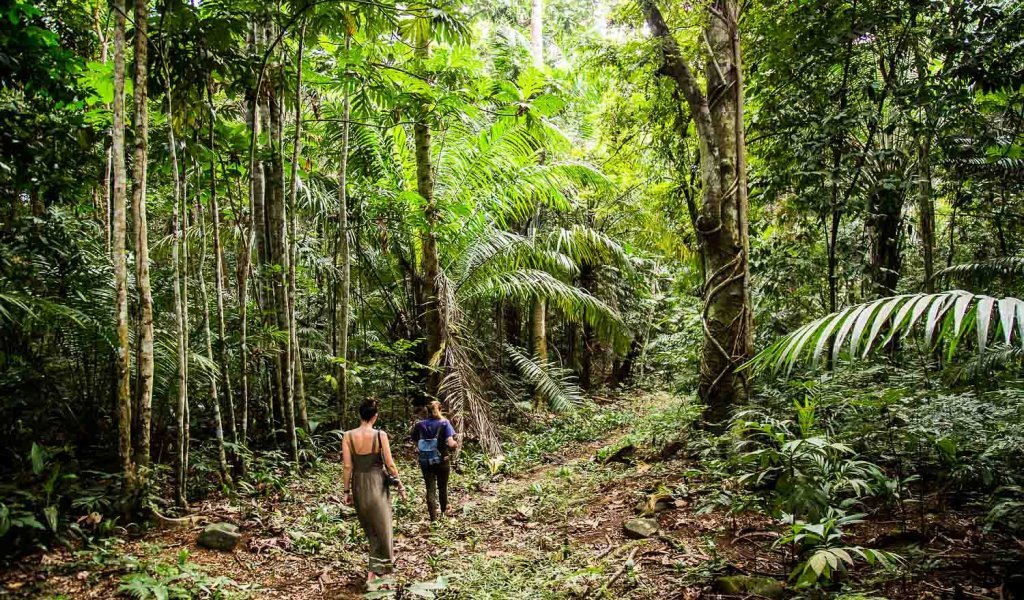
Practicing responsible and sustainable tourism with mountain gorillas.
Health, safety and responsible behavior are essential parts of gorilla trekking. Visitors enter a protected forest environment where both people and mountain gorillas must be protected from avoidable risks. Before entering the forest, trekkers receive a briefing covering the applicable rules, group arrangements and expected conduct. The following questions address the practical health, safety and responsible-tourism concerns that travelers should understand before a gorilla trek.
Is gorilla trekking safe?
Gorilla trekking is a regulated wildlife activity conducted with guides, trackers and ranger personnel. Visitors are briefed before entering the forest and are expected to remain with their assigned group and follow guide instructions throughout the trek.
Safety depends on respecting the park regulations, remaining with the group, using appropriate equipment and communicating honestly with guides about any difficulty encountered during the trek.
What happens if I become unwell before gorilla trekking?
Visitors who are unwell should inform their tour operator and the park authorities before trekking. This is particularly important when the illness could potentially be transmitted to gorillas.
Mountain gorillas are susceptible to human respiratory and other infectious diseases, making disease prevention an important part of responsible gorilla tourism. A traveler should not conceal symptoms simply to avoid missing the trek.
Can I go gorilla trekking if I have a cold?
Travelers with symptoms of communicable illness should report their condition before trekking. Current visitor guidance emphasizes preventing transmission of human diseases to mountain gorillas.
The appropriate decision should be made according to the current instructions of the wildlife authority and ranger team rather than by attempting to continue the trek while concealing symptoms.
Why is health screening important for gorilla trekking?
Health precautions protect both visitors and gorillas. Mountain gorillas share susceptibility to some human pathogens, meaning that an illness that may appear relatively minor to a traveler can create a serious conservation concern.
Health screening and disease-prevention procedures therefore form part of responsible wildlife tourism rather than being unnecessary formalities.
What should I do if I start feeling sick during the trek?
Tell your guide immediately. Guides need to know when a visitor is experiencing difficulty so they can determine the safest appropriate response.
Do not continue silently if you feel unable to maintain the group’s pace or if you develop symptoms that could affect other visitors or the gorillas.
Can gorillas transmit diseases to humans?
Wildlife encounters always involve potential disease considerations. This is one reason visitors are required to follow distance, hygiene and behavioral rules around gorillas.
Maintaining the required separation and following ranger instructions reduces unnecessary contact and helps protect both humans and gorillas.
Can humans transmit diseases to gorillas?
Yes. Human-to-gorilla disease transmission is an important conservation concern. This is why visitors who are sick may be prevented from participating and why distance and hygiene rules are emphasized.
The gorilla trekking health guidance explains several circumstances that can affect a visitor’s ability to trek.
How far should I stay from the gorillas?
Travelers should follow the distance requirement communicated during the official briefing. Published guidance from Uganda’s safari sector has used a minimum separation of approximately 7 to 8 metres, while current official instructions should always take precedence if the stated distance changes.
If a gorilla approaches the group, visitors should not attempt to touch it or deliberately move closer. Instead, follow the ranger’s instructions and remain calm.
What should I do if a gorilla approaches me?
Do not attempt to touch, feed or interact physically with the gorilla. Remain calm and follow the ranger’s instructions.
Gorillas are wild animals even when they are habituated to human observers. Visitors should allow the guides and trackers to manage the encounter.
Can I touch a gorilla during trekking?
No. Visitors must not deliberately touch gorillas. Maintaining respectful distance protects the animals from unnecessary human contact and reduces potential disease-transmission risks.
Can I feed gorillas?
No. Feeding gorillas is prohibited. Wild animals should not become dependent on human food, and food can create behavioral and health concerns.
Visitors should keep food and other personal items under control and follow the ranger’s instructions concerning eating and drinking during the trek.
Can I eat while watching gorillas?
Visitors should follow the specific instructions given by the ranger team. Eating near gorillas can create unnecessary attraction to human food and increase the possibility of unwanted interactions.
If you need food or water during the wider trek, ask the guide when and where it is appropriate to consume it.
Can I drink water near gorillas?
Follow the ranger’s instructions concerning drinking near the gorilla group. The purpose of these restrictions is to minimize unnecessary interaction and prevent human food or drink from becoming associated with the animals.
Is smoking allowed during gorilla trekking?
No. Smoking is prohibited during the gorilla trekking experience. Visitors should follow all park rules concerning smoking, waste and environmental protection.
Can I use flash photography during gorilla trekking?
Flash photography should not be used around gorillas. Flash can disturb or startle animals and can interfere with responsible wildlife observation.
Before taking photographs, confirm that the camera flash is disabled and follow the instructions of the guide.
Can I take videos while gorilla trekking?
Personal photography and video recording may be possible when conducted according to the applicable park rules. Visitors should keep their equipment under control and avoid movements that disturb the gorillas.
Commercial filming or professional production can involve additional permissions and should be arranged separately before the trip.
What camera settings are useful for gorilla photography?
Forest conditions can change rapidly because of shade, vegetation, cloud cover and occasional sunlight. A camera capable of performing well in lower light can therefore be useful.
The gorilla photography guide discusses camera equipment and photographic conditions encountered in Uganda’s gorilla habitat.
Should I bring a camera with a zoom lens?
A suitable zoom lens can help photographers frame wildlife without attempting to move closer than the permitted viewing distance. The most appropriate lens depends on the camera system and the photographer’s preferences.
Visitors should prioritize responsible positioning over obtaining a particular photograph.
Should I carry spare camera batteries?
Yes. A long forest excursion can make access to charging facilities impossible, so carrying sufficient battery capacity is sensible for photographers.
Memory-card capacity and weather protection are also practical considerations because rainforest conditions can change quickly.
How should I protect my camera from rain?
Use appropriate waterproof protection for cameras and electronic equipment. Bwindi is a rainforest environment where rain can occur even when the morning begins under clear or partly cloudy conditions.
A waterproof bag or protective camera cover can reduce the risk of equipment damage.
What clothes are safest for gorilla trekking?
Practical trekking clothing should protect the skin from vegetation, insects and changing weather. Long trousers, long-sleeved clothing, sturdy footwear and rain protection are commonly recommended for Bwindi trekking conditions.
Clothing should allow comfortable movement rather than being selected purely for appearance.
Do I need waterproof hiking boots?
Water-resistant or waterproof hiking boots with good traction are useful because forest trails can become wet, muddy and slippery. Boots should also be comfortable and properly broken in before the trek.
Should I wear gloves during gorilla trekking?
Lightweight trekking gloves can protect hands from vegetation, branches and rough surfaces. They are particularly useful where the trail passes through dense vegetation.
Gloves should not be used as a reason to touch plants, animals or other protected features unnecessarily.
Do I need a walking stick?
A walking stick can provide additional stability on uneven terrain. Depending on the location and current arrangements, walking sticks may be available through guides or local providers.
Visitors should use them carefully and avoid damaging vegetation while moving through the forest.
Should I hire a porter?
Hiring a porter can be useful for carrying a daypack and providing practical assistance on challenging sections of the trail. It also provides direct economic opportunities for people living around the protected areas.
Porter services are separate from the gorilla permit and should be arranged through the appropriate local system.
Can older travelers go gorilla trekking?
Age alone does not determine whether every older traveler can safely complete a trek. Fitness, mobility, medical advice where appropriate and the expected terrain should all be considered.
Travelers who anticipate difficulty should discuss their needs with their tour operator before booking so that suitable arrangements can be investigated.
Are mobility assistance options available?
Special arrangements can be available for visitors who require substantial mobility assistance. Safari operators have published information about sedan-chair services and porter assistance for travelers who cannot comfortably complete conventional trekking routes.
Such arrangements should be discussed and booked in advance because availability and suitability depend on the location and individual circumstances.
Can a person with limited mobility participate in gorilla trekking?
Possibly, depending on the individual’s circumstances and the arrangements available at the selected trekking sector. Travelers should disclose mobility requirements before booking so the operator and park authorities can determine what assistance is appropriate.
The sedan-chair information provides additional context about mobility assistance for gorilla trekking.
What happens if the trek becomes too difficult?
Tell the guide immediately if you are struggling. The guide can assess the situation and coordinate an appropriate response according to the circumstances.
Visitors should not feel pressured to hide exhaustion or other difficulties because doing so can create unnecessary risks for themselves and the rest of the group.
Can I leave the trekking group?
Visitors should remain with their assigned group and follow the guide’s instructions. Leaving the group independently can create safety, navigation and wildlife-management problems.
If you need to stop or require assistance, communicate directly with the guide rather than walking away alone.
What should I do if I lose sight of my group?
Stop and follow the established instructions from your guide rather than continuing deeper into the forest alone. The guide and ranger team are responsible for group management and navigation.
Are there toilets inside the gorilla forest?
Visitors should not expect conventional toilet facilities along forest trails. Where necessary, the ranger guide can explain the applicable procedure for using the forest environment responsibly.
Human waste must be handled according to the instructions provided by the ranger team to protect the environment and the gorillas.
Can I leave toilet paper in the forest?
No. Visitors should not leave waste behind. All waste-management instructions given by the ranger should be followed carefully.
Responsible trekking means leaving the forest without creating unnecessary pollution or introducing materials that can affect wildlife.
Can I litter during gorilla trekking?
No. Visitors should carry their waste with them according to the park’s waste-management instructions. Food wrappers, tissues, plastic and other materials should never be discarded on trekking trails.
Why is responsible waste management important?
The gorilla habitat is a protected ecosystem containing many plant and animal species. Waste can pollute the environment, attract wildlife to inappropriate food sources and degrade the quality of the forest.
Keeping the forest clean is therefore a basic responsibility of every visitor.
Can I use strong perfumes during gorilla trekking?
Travelers should avoid unnecessary products that could create strong odors around wildlife. The priority is to observe gorillas quietly and with minimal disturbance.
Follow the specific guidance provided during the pre-trek briefing.
Should I remain quiet around gorillas?
Yes. Visitors should keep their voices low and avoid unnecessary noise. Quiet observation reduces disturbance and makes it easier to observe natural behavior.
Can I shout when I see a gorilla?
No. Excitement should not result in shouting or sudden movements. Visitors should remain calm and follow the guide’s instructions when the gorilla group is located.
Can I use my phone during gorilla trekking?
A mobile phone can be useful for photography, communication and navigation outside the controlled wildlife encounter, but visitors should minimize unnecessary phone use around gorillas.
Phone sounds should be silenced, and visitors should avoid using the device in a way that distracts from ranger instructions or disturbs the animals.
Can I listen to music while trekking?
Music should not be played while tracking gorillas. Visitors need to remain aware of guide instructions and the surrounding forest environment.
Should I wear headphones during gorilla trekking?
Headphones can reduce awareness of the guide, other trekkers and environmental sounds. They are therefore inappropriate during the active wildlife encounter.
Can I use a drone during gorilla trekking?
Travelers should not assume that drones are permitted over protected wildlife areas. Drone use can be regulated separately from ordinary visitor photography and may require specific authorization.
Anyone intending to conduct aerial photography should obtain the necessary permission before bringing or operating such equipment in a protected area.
Can I bring food into the forest?
Travelers may need snacks for a long trek, but they must follow the ranger’s instructions regarding when and where food can be consumed. Food should never be offered to gorillas.
All packaging and waste should be managed responsibly.
How much water should I carry?
Carry enough drinking water for the expected trek and follow your operator’s packing advice. The amount required varies according to the duration of the hike, weather conditions and individual needs.
A refillable bottle or suitable reusable container can help reduce disposable plastic waste.
What first-aid items should I carry?
A small personal first-aid kit can be useful for minor needs during a forest excursion. Travelers should also carry any personal items they have been advised to bring for their own circumstances.
More serious problems should be reported to the guide rather than treated independently in the forest.
Do I need travel insurance for gorilla trekking?
Travel insurance is a prudent part of international travel planning. Travelers should check whether their policy covers the activities included in their itinerary and understand the policy’s exclusions, emergency procedures and cancellation provisions.
Insurance arrangements are separate from the official gorilla permit.
What should I do in an emergency during the trek?
Immediately notify the guide or ranger. The trekking team is responsible for coordinating the appropriate response according to the circumstances and the park’s established procedures.
Visitors should remain with the group unless the responsible personnel instruct otherwise.
What should I do if a gorilla behaves aggressively?
Remain calm and follow the ranger’s instructions. Visitors should never attempt to respond by approaching, touching, shouting at or provoking the animal.
Rangers and trackers are trained to manage wildlife encounters, so visitors should allow them to direct the group’s behavior.
Why should visitors avoid sudden movements?
Sudden movements can disturb wildlife and make the encounter less predictable. Slow, calm behavior helps create a respectful observation environment.
The guide may provide specific instructions depending on the behavior and location of the gorilla group.
Can gorillas charge at tourists?
Gorillas remain wild animals, so visitors should not interpret habituation as domestication. The correct response to unusual or threatening behavior is to remain calm and follow the ranger’s instructions.
The gorilla behavior guidance explains why visitors must respect the animals and follow ranger instructions.
What should I do if a gorilla blocks the trail?
Do not attempt to force the animal away or move around it independently. Wait for instructions from the guide or ranger.
Wildlife should always have priority over a visitor’s preferred route or photographic position.
Can I approach a gorilla for a better photograph?
No. Visitors must remain within the required viewing distance and should never approach a gorilla to improve a photograph.
Photographers should work with the position available to them rather than changing the animals’ behavior for a picture.
How can I take good photographs without disturbing gorillas?
Use the equipment you have from the permitted viewing position, turn off the flash and listen carefully to the guide. Patience is often more valuable than repeatedly moving for a different angle.
The luxury gorilla trekking guide provides additional destination information about trekking in Bwindi.
Is gorilla trekking environmentally responsible?
Gorilla trekking is managed as a conservation-linked tourism activity, but responsible outcomes depend on visitors, guides, park authorities and tourism businesses following the applicable rules.
Visitors contribute to responsible tourism by respecting distance requirements, avoiding disease transmission, managing waste, following guide instructions and minimizing disturbance.
How does gorilla tourism support conservation?
Gorilla tourism generates revenue associated with permits and tourism services, helping support protected-area management and the wider tourism economy. It also creates employment and business opportunities around gorilla destinations.
However, tourism must remain carefully managed because conservation depends on protecting the forest and maintaining appropriate limits on human interaction.
Does gorilla tourism benefit local communities?
Tourism creates opportunities for guides, trackers, porters, accommodation providers, drivers, craft producers and other businesses around gorilla destinations. The exact community-benefit mechanisms depend on the relevant protected area and current government and conservation programs.
Why should I hire a local porter?
Beyond carrying equipment, hiring a porter can provide direct income to people living near the protected area. It can also make difficult sections of the trail easier to manage for the visitor.
How can travelers reduce their environmental impact?
Use reusable water containers where practical, avoid littering, follow established trails and do not remove plants, rocks or other natural materials from the protected area.
Visitors should also avoid unnecessary noise and follow all instructions intended to reduce disturbance to wildlife.
What should I never do during gorilla trekking?
Visitors should never deliberately touch or feed gorillas, use flash photography, abandon their group, litter, provoke wildlife or ignore ranger instructions. Visitors should also take disease-prevention requirements seriously.
What are the most important gorilla trekking safety rules?
The essential principles are simple: attend the briefing, remain with the group, follow the ranger, maintain the required distance, keep noise low, avoid physical contact with gorillas, do not feed wildlife, do not use flash photography and report health or safety concerns immediately.
Where can I read more about gorilla trekking preparation?
The Bwindi travel guide covers practical preparation, clothing, equipment, trekking sectors and seasonal conditions.
What is the most important health and safety lesson for gorilla trekking?
The most important principle is to remember that the experience takes place in the natural habitat of wild animals. Visitors should protect their own safety while also minimizing disease transmission, noise, physical contact and environmental disturbance.
A successful gorilla trek is not simply about reaching the gorillas. It is about observing them responsibly, following the ranger team’s instructions and leaving the forest with as little unnecessary impact as possible.