
What to Pack for Kibale National Park: Quick Packing List and Essential Advice
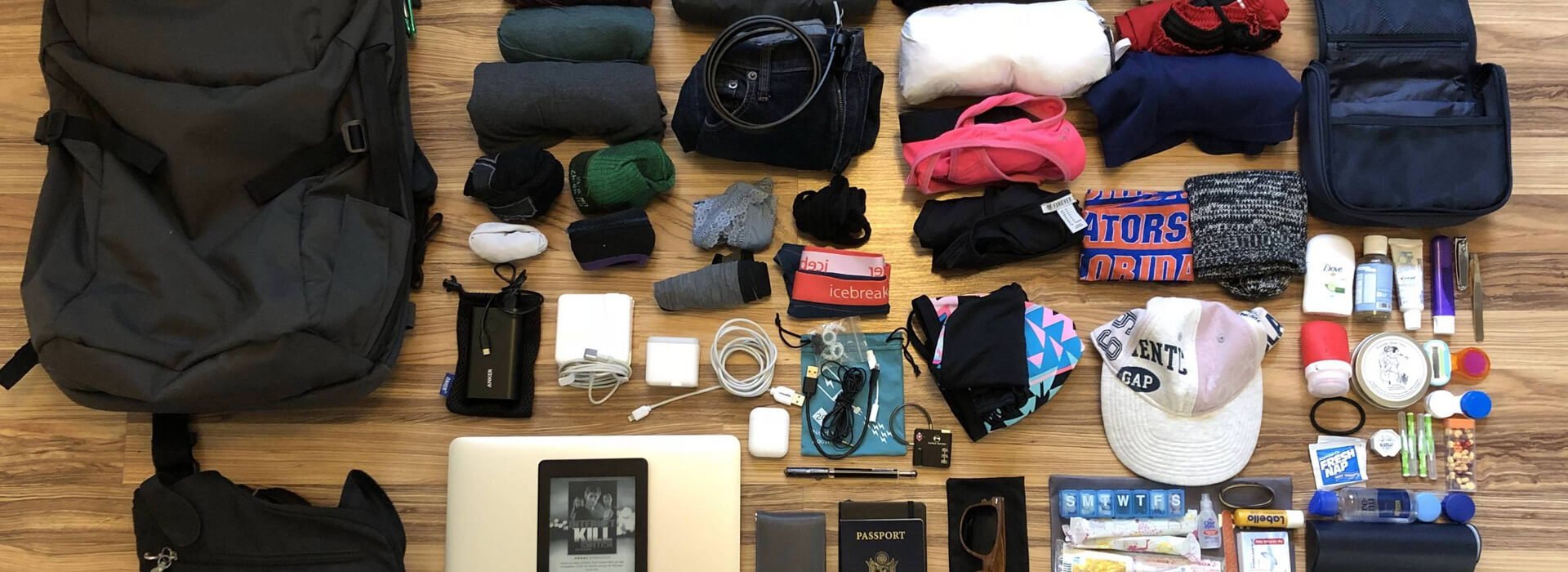 Knowing what to pack for Kibale National Park can make the difference between a comfortable chimpanzee trek and a day spent worrying about wet clothes, slippery footwear, an overloaded backpack or unprotected camera equipment. Kibale is a tropical forest destination in western Uganda, and packing for it requires a different approach from packing exclusively for vehicle-based wildlife viewing on Uganda’s open savannahs.
Your Kibale National Park packing list should be built around walking through a humid forest environment where rain and muddy ground can affect trail conditions. Lightweight long trousers, a long-sleeved shirt, reliable walking footwear, rain protection and a manageable daypack form a practical foundation. Travelers continuing elsewhere in Uganda can use this alongside a broader Uganda safari and trekking packing guide when preparing for a multi-destination itinerary.
Why Packing for Kibale National Park Is Different
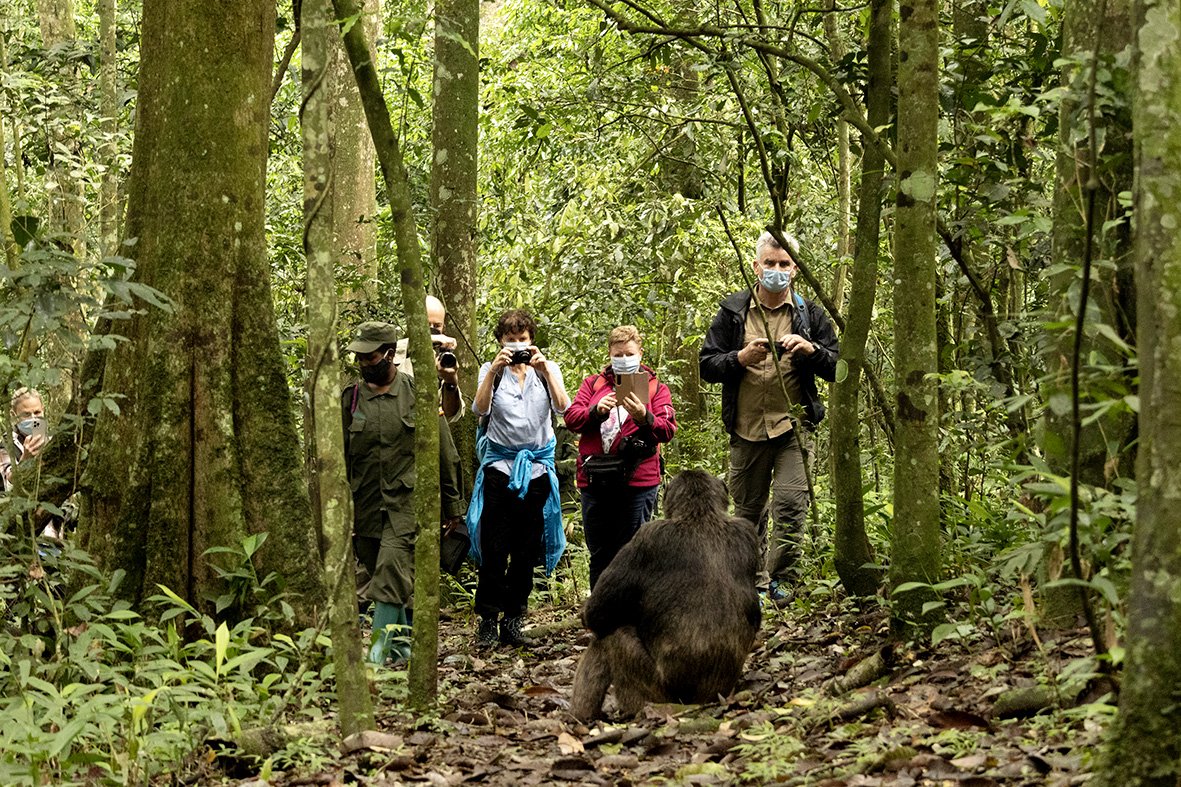
A common mistake is treating what to pack for Kibale National Park as identical to a conventional African safari packing list. Much of the standard safari equipment remains useful, but the central activity in Kibale is experienced on foot. Instead of spending the entire wildlife-viewing period inside a vehicle, chimpanzee trackers enter the forest with guides and follow trails in search of habituated chimpanzees.
This changes what deserves priority in your luggage. Footwear matters more because you are actually walking on forest ground. Rain protection needs to be accessible rather than buried at the bottom of your main suitcase. Long trousers and long sleeves become particularly useful around vegetation and insects. Camera equipment has to be light enough to carry, while anything vulnerable to moisture needs protection.
The forest itself is also the attraction. Kibale is renowned for its primates, and travelers interested in understanding what they may encounter can read this guide to the primates found throughout Kibale National Park. Knowing that the trek is a broader rainforest experience rather than simply a walk to one stationary animal helps explain why binoculars, rain protection and comfortable walking gear can all be valuable.
The Essential Kibale National Park Packing List at a Glance
The most useful way to approach a Kibale packing list is to think in layers rather than pack for one fixed set of conditions. Start with lightweight clothing that covers your arms and legs. Add footwear that provides dependable traction. Carry a lightweight waterproof outer layer where you can reach it quickly. Complete the setup with comfortable socks and a small daypack that holds only what you genuinely need in the forest.
Inside that daypack, prioritize drinking water, rain protection, insect repellent, essential personal medication, your camera or smartphone, spare power where needed, and a waterproof pouch or similar protection for electronics and documents. Binoculars can be useful because chimpanzees and other primates may be above you in the canopy rather than conveniently positioned beside a trail.
If your main reason for visiting Kibale is its flagship primate encounter, our detailed guide to chimpanzee trekking inside Kibale National Park provides additional context about the forest experience and practical preparation.
Start With Reliable Walking Footwear
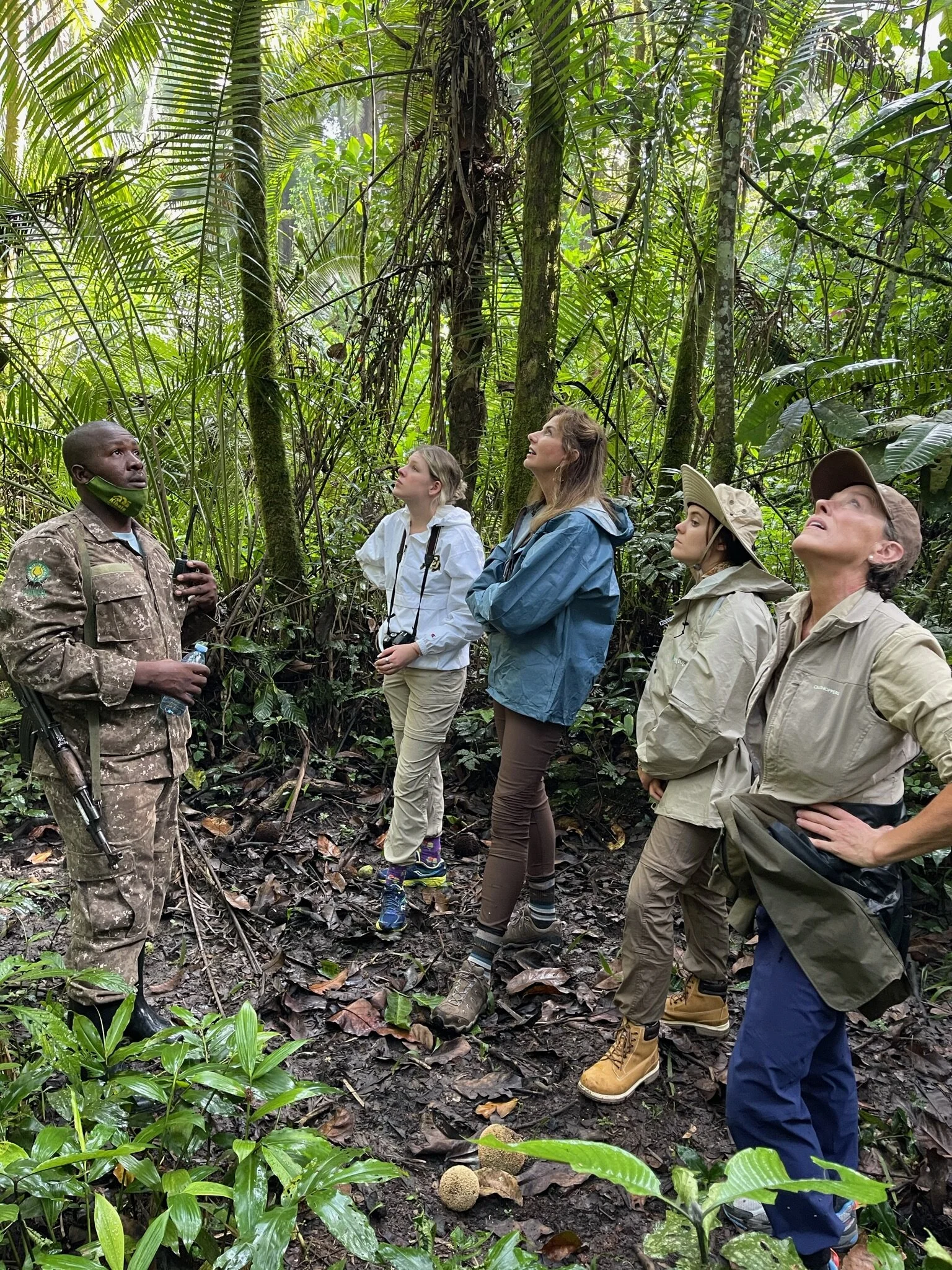
Footwear should sit near the top of any serious chimpanzee trekking packing list. The best option is footwear that you have already worn enough to know that it fits properly and remains comfortable after extended walking. Good traction becomes particularly valuable when forest ground is damp or muddy.
Do not wait until you arrive in Uganda to discover that new boots rub your heel or squeeze your toes. Break trekking footwear in before departure. Pair it with comfortable hiking socks and carry at least one spare pair in your main luggage. Wet or muddy socks are far less troublesome when you have a clean, dry replacement waiting at your accommodation.
Water resistance is useful, but comfort should not be sacrificed simply to obtain the heaviest trekking boot available. Your ideal footwear depends on your feet, the conditions during your visit and the amount of trekking elsewhere on your itinerary. A traveler combining Kibale with other forest activities may reasonably prioritize robust hiking footwear more highly than somebody whose remaining safari takes place largely by vehicle.
Wear Long Trousers and a Long-Sleeved Shirt
Long trousers and a lightweight long-sleeved shirt are among the most practical clothes to include when deciding what to wear in Kibale National Park. They provide a physical layer between your skin and surrounding vegetation while reducing exposed skin during a forest walk.
Choose fabrics that are comfortable in humid conditions and can dry reasonably quickly. Very heavy clothing can become uncomfortable once you begin walking. Clothing that restricts movement is equally inconvenient when stepping around roots, vegetation or uneven ground.
Pack at least one clean set of comfortable clothing for after the trek. You may return with damp or muddy trousers, particularly following rain. Being able to shower and change rather than wearing trekking clothes through the remainder of the day makes a substantial difference.
Always Make Space for Rain Protection
Rain protection belongs in a Kibale National Park packing list even when the weather forecast looks favorable before departure. The important consideration is not simply owning a rain jacket; it is being able to reach it when conditions change. A lightweight waterproof shell stored near the top of your daypack is far more useful than a raincoat left inside your main luggage at the lodge.
Your electronics need protection as well. A small waterproof pouch, dry bag or dependable internal bag can help isolate a phone, batteries, memory cards and documents from moisture. Travelers visiting during wetter conditions can explore additional preparation in this guide to a Uganda safari during the rainy season.
Choose a Small and Comfortable Trekking Daypack
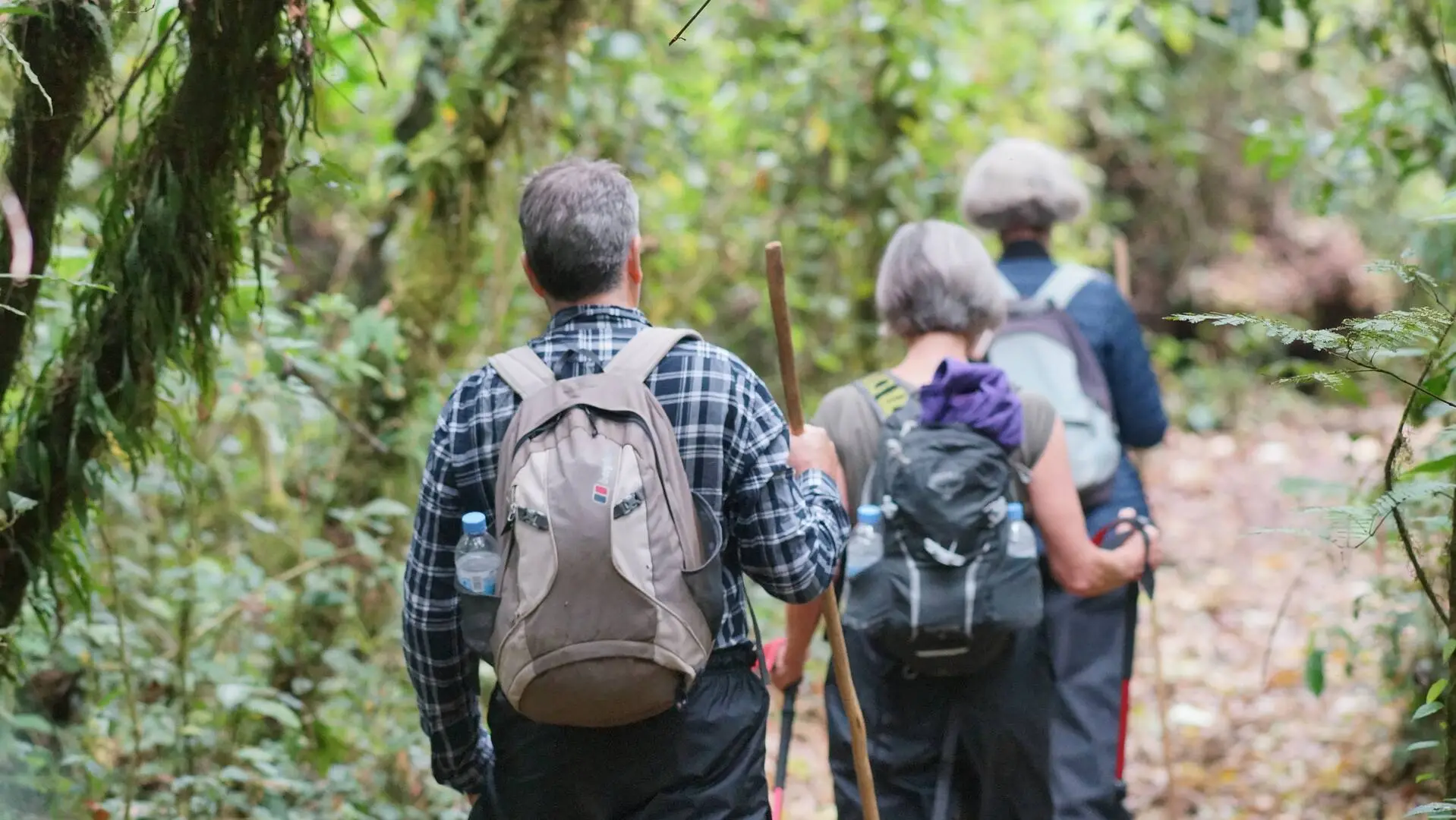
A daypack is one of the most useful pieces of equipment for chimpanzee trekking, but bigger is not automatically better. The purpose of your trekking pack is to carry what you need during the forest experience without turning your luggage into an additional physical burden.
Look for comfortable shoulder straps, sensible organization and enough space for water, rain protection, personal essentials and photography equipment. If the pack itself is not waterproof, use a rain cover or protect moisture-sensitive contents internally.
Avoid carrying items simply because there is spare room. Your full suitcase does not need to enter the forest. Leave unnecessary clothing, chargers, bulky toiletries, travel documents that are not required during the activity and other nonessential possessions secured at your accommodation where appropriate.
Carry Water Without Overloading Yourself
Water should be part of your chimpanzee trekking daypack. How much you personally need depends on the expected duration, conditions, your individual requirements and the arrangements made by your lodge or safari operator. Rather than relying on a universal quantity, confirm what will be supplied and what you should carry before leaving your accommodation.
A reusable bottle can be convenient for a wider Uganda journey. Check that it closes securely before placing it beside cameras or electronics. If you use a hydration reservoir, test it before the trip rather than using unfamiliar equipment for the first time on trekking morning.
Protect Yourself From Insects and the Sun
Insect repellent belongs among the practical personal items for a forest-based itinerary. Pack the product you intend to use before traveling rather than assuming your preferred formulation will be available near the park. Apply it according to its instructions.
A hat and sunscreen are also worth carrying on a wider Uganda safari, particularly for transfers, lodge time and activities outside dense forest cover. Sunglasses may be useful outside the forest even if you decide they are unnecessary while walking beneath the canopy.
Travelers building a wider primate itinerary can also compare the equipment requirements with chimpanzee trekking preparation elsewhere in Uganda.
Keep Camera Equipment Practical
Chimpanzee trekking creates exciting photography opportunities, but Kibale is not the place to carry every piece of photography equipment you own. Forest wildlife photography can involve low light, vegetation and moving subjects. At the same time, every camera body, lens and accessory you bring becomes additional weight that has to travel through the forest with you.
Choose equipment you can operate confidently and carry comfortably. Bring sufficient memory capacity and a charged spare battery if your camera consumes power quickly. Protect spare batteries and memory cards from moisture. A smartphone can serve as the primary camera for travelers who value simplicity over carrying a dedicated camera system.
Binoculars deserve consideration even if chimpanzees are your priority. Kibale’s forest supports numerous primates and birds, and some wildlife may be easier to observe through binoculars when it is high in the canopy.
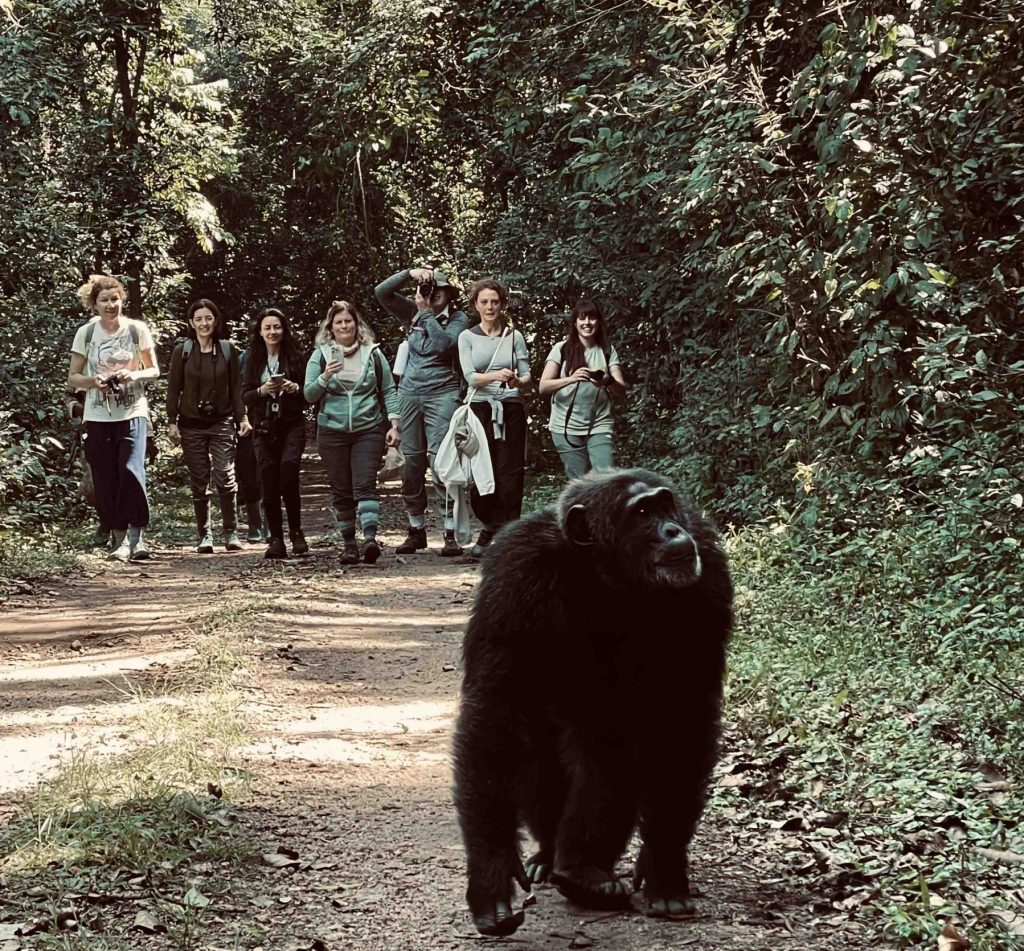
Pack Personal Medication and a Compact First-Aid Supply
Any medication you normally require should be packed before traveling to Kibale. Keep genuinely important medication accessible rather than placing all of it in luggage that may be separated from you during transfers. Travelers using prescription medication should discuss their personal travel needs with an appropriate healthcare professional before departure.
A compact personal first-aid supply can contain items appropriate to your own needs, such as blister protection and basic wound-care materials. The objective is not to carry a miniature hospital into the forest but to be prepared for minor issues that could make walking uncomfortable.
Health preparation should be completed separately from an ordinary packing checklist. Destination-specific vaccination, malaria prevention and other medical questions should be discussed using current professional travel-health advice rather than relying exclusively on safari packing articles.
Pack for the Trek and for Time at Your Lodge
What to pack for Kibale National Park is not limited to what enters the forest. Most visitors spend at least part of their trip relaxing at a lodge or continuing to other attractions, so your main luggage should include comfortable clothing for mornings, evenings and meals.
A light sweater or similar layer can be useful when you personally find mornings or evenings cool. Casual footwear gives your feet a break after trekking. Sleepwear, toiletries and a clean change of clothing complete the basic lodge setup.
There is rarely a reason to pack a completely different outfit for every day if laundry services are available during your itinerary, but availability and turnaround time vary between properties. Confirm laundry arrangements directly with your accommodation or safari planner rather than assuming same-day service.
Pack Differently for Chimpanzee Habituation
Travelers participating in a longer chimpanzee habituation experience should pay even closer attention to pack weight, hydration, battery capacity, food arrangements and rain protection because they may spend substantially more time in the forest than visitors on a standard tracking experience.
This does not mean filling a large backpack with every conceivable contingency. It means making each item earn its place. A comfortable pack, dependable footwear, rain protection and sufficient power for photography become increasingly valuable as time in the forest increases. This detailed guide to planning a Kibale chimpanzee habituation experience provides additional information for travelers choosing the longer activity.
Keep Your Kibale Packing List Light
One of the most useful pieces of advice is also one of the simplest: do not confuse preparedness with carrying excessive equipment. A well-designed Kibale National Park packing list contains enough to keep you comfortable and protect important belongings without forcing you to haul unnecessary weight through the forest.
Before closing your daypack, examine every item and ask whether you realistically expect to use it during the trek. Extra shoes, large toiletry bags, multiple changes of clothes, heavy books and unrelated safari equipment normally belong in your main luggage rather than on your back.
This becomes particularly important for travelers undertaking a longer Uganda itinerary. If Kibale is one part of a multi-park journey, divide your luggage mentally into forest equipment, general safari equipment and lodge or travel clothing. The same core trekking items can often serve multiple stages of the trip rather than packing duplicates.
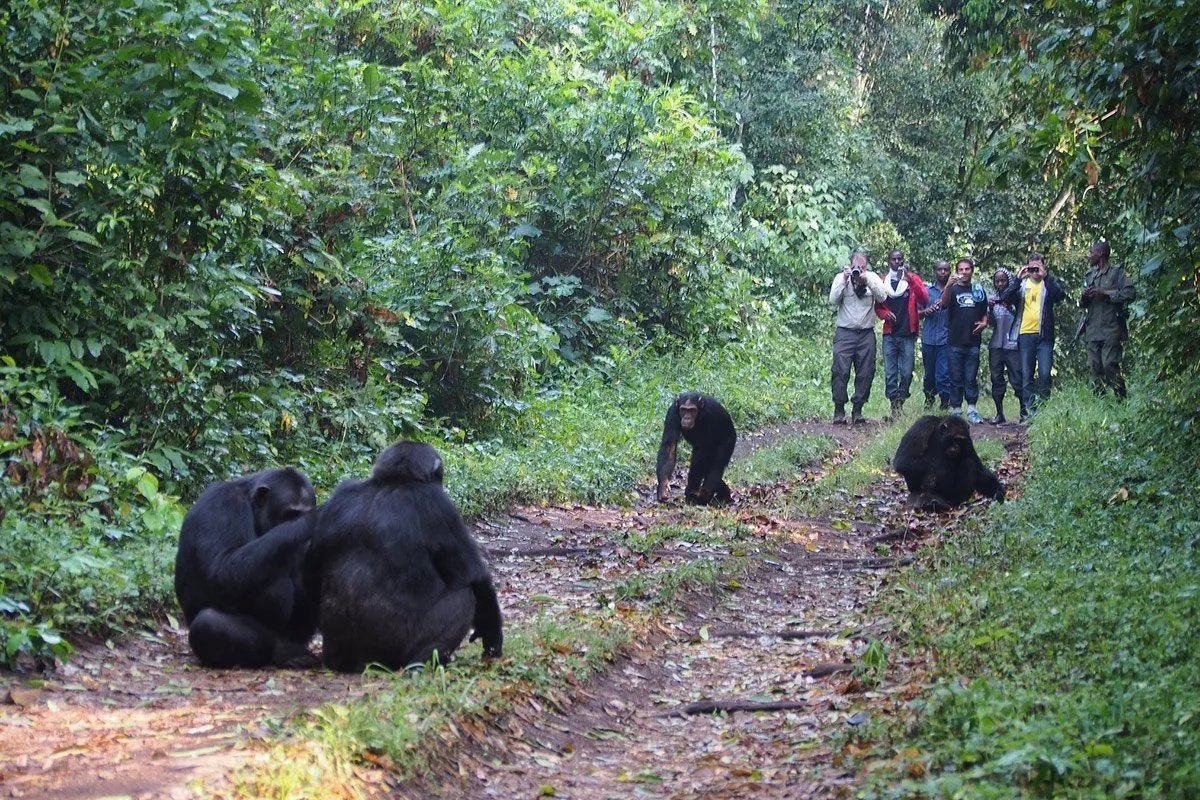
Five Items That Deserve Priority for Kibale
If luggage space is limited, prioritize the equipment that directly affects comfort in the forest. Reliable walking footwear comes first because the chimpanzee experience takes place on foot. Lightweight long trousers and a long-sleeved top provide practical coverage. A waterproof outer layer prepares you for changing forest conditions. A comfortable daypack keeps water and personal essentials close. Finally, waterproof protection for electronics prevents a rain shower from becoming an expensive problem.
These five categories do not represent the entire Kibale packing list, but they provide its foundation. Cameras, binoculars, hats, sunscreen, insect repellent, spare socks, personal medication and other accessories can then be added according to your itinerary and individual requirements.
What First-Time Visitors Often Forget
First-time visitors frequently concentrate on major purchases such as boots and cameras while overlooking inexpensive items that can be surprisingly useful. Spare socks, a waterproof electronics pouch, extra camera batteries, enough memory-card capacity, a reusable water bottle and a clean bag for separating damp or muddy trekking clothes all deserve consideration.
Another easily overlooked preparation step is testing your equipment together. Put on the clothes and footwear you plan to use, load your daypack and walk with it before departure. Make sure your rain jacket fits comfortably over your trekking clothes and verify that your camera is accessible without completely unpacking your bag.
This simple rehearsal can reveal uncomfortable boots, poorly adjusted backpack straps or equipment that is much heavier than expected while there is still time to correct the problem.
Preparing for Kibale as Part of a Longer Uganda Safari
Kibale is frequently combined with other Ugandan destinations, and the smartest packing strategy is therefore versatile rather than park-specific. Lightweight long trousers can work for forest trekking and other safari activities. A rain shell can serve throughout the trip. Binoculars are useful both under Kibale’s canopy and during wildlife viewing elsewhere.
The equipment that deserves special attention is whatever will encounter the forest directly: footwear, socks, rain protection and the daypack. After a wet trek, these items may need time to dry before the next activity. If your itinerary includes consecutive trekking days, plan accordingly.
Visitors who want additional background on the destination itself can use this Kibale guide alongside their packing preparations.
Quick Final Check Before Leaving for Kibale
Before departing for Kibale, confirm that your walking footwear fits, your rain jacket is accessible, your trekking clothes are comfortable, your daypack is not overloaded and your essential electronics have moisture protection. Charge cameras, phones and power banks before trekking day and verify that memory cards have enough available space.
Keep essential personal medication where you can access it. Confirm water and food arrangements with your lodge or safari operator. Check what documentation you need for the activity rather than relying on assumptions from another national park or another type of primate trek.
Most importantly, build your packing decisions around Kibale’s actual environment. What to pack for Kibale National Park is ultimately about being prepared to walk comfortably through tropical forest while carrying only what contributes to the experience. Good footwear, appropriate clothing, rain protection, a manageable daypack and carefully selected personal equipment create a far better foundation than an oversized suitcase full of safari accessories you never use.
Understanding Kibale Weather, Forest Conditions and Seasons Before You Pack
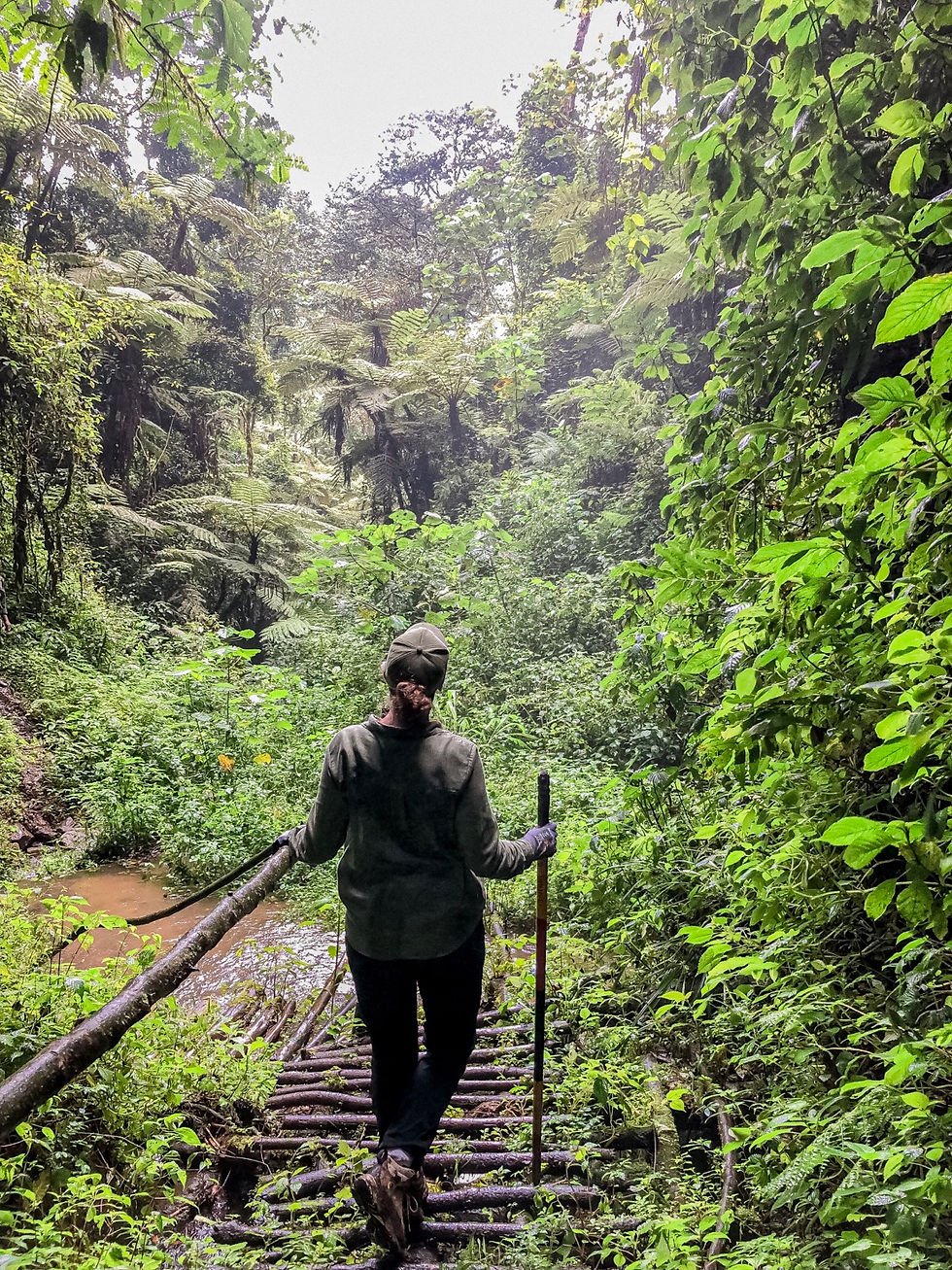
Understanding Kibale weather and forest conditions before you pack is one of the most important parts of preparing for chimpanzee trekking in Uganda. Kibale National Park is not a dry savannah destination where travelers can plan entirely around sunshine and vehicle-based game drives. Much of the visitor experience takes place inside tropical forest, where rainfall, damp vegetation, humidity and changing trail conditions directly influence what you should wear and carry.
Uganda Wildlife Authority describes Kibale’s climate as generally pleasant, with a mean annual temperature range of approximately 14–27°C. Official park information identifies the northern, forested portion of Kibale as the wettest part of the national park, receiving mean annual rainfall of up to approximately 1,700 mm. The principal rainfall peaks occur from March to May and again from September to November.
These conditions explain why a Kibale chimpanzee trekking safari requires thoughtful wet-weather packing throughout the year. Even travelers arriving during relatively drier periods should avoid treating rain protection as optional.
What Is the Weather Like in Kibale National Park?
Kibale has a tropical climate, but that description alone does not tell travelers enough about what they will experience on the ground. The national park contains variations in elevation and habitat, and conditions are not identical throughout its entire area. Uganda Wildlife Authority reports that rainfall is higher in northern Kibale than in the south, while the southern Rift Valley floor experiences the park’s highest temperatures.
For someone preparing a Kibale National Park packing list, the practical lesson is straightforward: do not pack exclusively for hot equatorial weather. Lightweight clothing remains important, but so do long layers, rain protection and clothing suitable for cooler periods of the day.
A trek may begin when conditions feel cool, become warmer as you walk, and encounter rainfall later. Layering therefore works better than relying on one heavy garment. A lightweight long-sleeved shirt, comfortable trousers and an accessible waterproof outer shell give you more flexibility than bulky clothing designed for consistently cold conditions.
How Much Rain Does Kibale National Park Receive?
Uganda Wildlife Authority’s management information gives Kibale a mean annual rainfall range of approximately 1,100–1,700 mm, with rainfall generally increasing toward the northern part of the park. The official Kibale park brochure similarly identifies the northern forest as the wettest area and reports rainfall of up to approximately 1,700 mm annually.
The rainfall pattern is particularly important because chimpanzee trekking occurs within this forest environment. Rain affects more than whether your shirt becomes wet. It can influence the condition of the trail, how slippery exposed roots become, how much mud accumulates underfoot, how quickly clothes dry and how carefully cameras and phones need to be protected.
Travelers interested in the wider forest environment can also read about the primates and rainforest habitats found throughout Kibale National Park in western Uganda.
When Are the Rainy Seasons in Kibale?
Official Uganda Wildlife Authority material identifies Kibale’s principal rainfall peaks as March through May and September through November. These periods should receive special attention when deciding what to pack for Kibale National Park.
However, describing these periods as the “rainy seasons” should never be interpreted to mean that rain occurs only during those months. Kibale is a tropical forest environment, and travelers should remain prepared for precipitation outside the principal rainfall peaks.
This distinction is important for packing. Someone visiting in July should not leave a rain jacket at home merely because July falls outside the major rainfall peaks. Likewise, someone visiting in April should not assume that every hour of every day will be rainy.
Seasonal patterns are useful for preparation, but individual weather conditions vary. Your Kibale packing strategy should therefore emphasize adaptable clothing and equipment rather than trying to predict the exact conditions of a particular trekking morning months in advance.
March to May: Packing for Kibale’s Major Wet Period
March, April and May fall within one of the principal rainfall peaks identified by Uganda Wildlife Authority. Travelers visiting during these months should pay particular attention to waterproofing, footwear traction, quick-drying clothing and keeping electronics protected.
A lightweight waterproof shell should be easy to reach. It does little good buried beneath everything else in your main suitcase. Keep it inside your trekking daypack or somewhere immediately accessible when entering the forest.
Footwear should provide dependable grip. Mud and wet vegetation can make forest walking more demanding, so this is not an ideal time to experiment with smooth-soled casual footwear. Shoes should also be broken in before arriving in Uganda.
Quick-drying trousers and shirts become particularly useful. Heavy cotton garments can remain uncomfortable after becoming wet, whereas appropriately selected trekking clothing is easier to manage during changing forest conditions.
Spare socks deserve space in your luggage as well. You may not need to carry multiple pairs during the trek itself, but having clean, dry socks available when you return to your accommodation can make the remainder of the day much more comfortable.
June to August: Preparing for Relatively Drier Conditions
June, July and August generally fall outside Kibale’s two principal rainfall peaks. These months can therefore offer comparatively drier trekking conditions, but “drier” should not be confused with guaranteed dry weather.
Kibale remains a tropical forest. Rain protection should still be included in your daypack, and footwear with good traction remains preferable to casual shoes with little grip.
Travelers visiting during these months sometimes make the mistake of packing as though they were going exclusively on a dry-season savannah safari. Kibale requires a different approach because you are entering forest on foot. Long trousers, comfortable walking footwear and a waterproof layer remain useful even when the wider weather forecast appears favorable.
If your trip combines Kibale with several destinations, this guide to planning five days around Kibale National Park and its surrounding attractions can help put your packing requirements into the context of a longer stay.
September to November: Preparing for Kibale’s Second Rainfall Peak
September, October and November form Kibale’s other major seasonal rainfall peak according to Uganda Wildlife Authority. Visitors traveling during this period should again prioritize waterproof outerwear, reliable walking shoes and moisture protection for electronics.
The forest can look particularly lush under wet conditions, but the same rainfall that contributes to that scenery can produce mud and slippery trail sections. This is where sensible footwear and clothing become more valuable than fashionable safari outfits.
Pack clothes that allow unrestricted movement. Long trousers should be comfortable enough for stepping over roots and negotiating uneven terrain. Your rain jacket should fit over your normal trekking clothes without making movement unnecessarily difficult.
Your camera strategy should also reflect the possibility of rain. Keep a waterproof pouch, dry bag or other suitable protective system inside the daypack. Spare batteries and memory cards should not be left loose in a compartment where moisture can reach them.
December to February: What to Pack During the Other Relatively Drier Period
December through February generally falls between Kibale’s principal rainfall peaks. These months are commonly treated as one of the relatively drier periods for visiting western Uganda, but visitors should still pack for a rainforest rather than assume completely dry conditions.
Your basic Kibale chimpanzee trekking packing list should remain largely unchanged: dependable walking footwear, long trousers, a long-sleeved shirt, rain protection, water, insect protection and a small comfortable daypack.
The main difference is that you may spend less time dealing with persistent wet conditions than during a particularly rainy visit. Nevertheless, leaving waterproof protection behind simply because you are traveling in January or February introduces an unnecessary risk.
Why Kibale Can Feel Different in the Morning and Afternoon
Travelers should avoid choosing their clothing based solely on an afternoon temperature reading. Forest trekking can begin under cooler morning conditions, and the physical effort of walking can then make the same clothing feel substantially warmer.
This is another reason layers are preferable. Instead of one thick garment, choose pieces that can be adjusted as your comfort changes. A light outer layer can be removed when you become warm and put back on when necessary.
Your daypack should have enough space to hold a removed layer without forcing you to carry it by hand. This seemingly small detail makes forest walking considerably easier.
Why Forest Conditions Matter More Than the Forecast Alone
A weather application can tell you whether rain is forecast, but it cannot fully describe the condition of the trail beneath your feet. Rain from the previous day can leave forest paths damp or muddy even if the morning itself is dry.
Dense vegetation can also remain wet after rainfall. Contact with leaves and undergrowth can transfer moisture onto clothing even when rain is no longer falling.
For that reason, preparing for Kibale should focus on environmental resilience rather than one day’s precipitation percentage. Good shoes, long trousers, sensible layers and moisture protection remain valuable whether rain begins during your trek or occurred several hours earlier.
Does Kibale Get Muddy?
Yes. Mud is a genuine consideration when preparing for Kibale, particularly during wetter periods. Uganda Wildlife Authority’s current Kibale information explicitly refers to chimpanzee tracking during the rainy season “despite the mud,” confirming that muddy conditions are not simply a theoretical concern.
This should influence several packing decisions. Footwear needs traction. Trousers should be something you are comfortable getting dirty. A separate bag for muddy or damp clothing can prevent trekking gear from contaminating clean clothes inside your main luggage.
Travelers planning several forest experiences should also think about drying time. Shoes that become saturated during one activity may not be completely dry the following morning. Your exact solution will depend on your itinerary, but it is worth considering before departure rather than after arriving with only one unsuitable pair of shoes.
Is Chimpanzee Trekking Better in the Dry or Rainy Season?
This question has a more interesting answer than many generic safari guides suggest. Drier conditions can make forest trails easier to negotiate, particularly for travelers who are uncomfortable walking through mud. However, Uganda Wildlife Authority specifically states that chimpanzee tracking can be particularly good during the rainy season despite muddy conditions because chimpanzees may move deeper into the forest looking for food during the dry season.
This means the wetter months should not automatically be described as a bad time for chimpanzee trekking. There is a tradeoff. Wetter conditions can create more challenging walking and require more careful rain preparation, while chimpanzee movements and forest conditions can make the season rewarding for wildlife observation.
Travelers comparing seasons should therefore consider both comfort and wildlife priorities rather than choosing dates solely because an article labels one period the “best.” A detailed Kibale guided forest walking experience changes considerably between wet and drier seasons, making adaptable equipment valuable year-round.
What Should You Pack for Muddy Kibale Trails?
Begin with walking footwear that provides good traction and that you already know is comfortable. Add long, quick-drying trousers and suitable socks. Keep waterproof outerwear accessible and consider internal waterproof protection for anything that cannot safely get wet.
A separate lightweight bag for damp clothing is useful after returning from the forest. If your trousers become muddy around the lower legs, separating them from clean lodge clothing prevents a relatively small amount of mud from spreading throughout your luggage.
Avoid solving every possible weather problem by adding more weight. You do not need an expedition-sized backpack simply because Kibale can be wet. The objective is to select appropriate equipment, not maximum equipment.
How Rain Changes Your Camera and Electronics Packing
Forest rain requires photographers to think beyond keeping themselves dry. Cameras, lenses, smartphones, power banks, batteries and memory cards all need appropriate moisture protection.
A waterproof internal pouch can be useful even when your backpack has a rain cover. A pack cover protects the exterior, while an internal layer provides additional protection for particularly sensitive equipment.
Keep a small cleaning cloth accessible for dealing with moisture on appropriate external surfaces. Avoid repeatedly opening camera bags unnecessarily during active rainfall, especially if doing so exposes spare equipment.
Photography can also be affected by forest light. Dense canopy and cloud cover can produce darker conditions than travelers expect from an equatorial destination. Photographers should understand their camera equipment before the trek rather than attempting to learn unfamiliar controls while following chimpanzees through the forest.
How Humidity Should Influence Your Kibale Packing List
Humidity is another reason to favor breathable and reasonably quick-drying clothing. Even without heavy rainfall, physical activity in a tropical forest can leave clothing damp from perspiration.
Pack enough clothing to change after trekking without carrying an excessive number of duplicate safari outfits. A clean shirt, dry socks and comfortable lodge clothing can be more valuable than several heavy “safari” garments that serve essentially the same purpose.
Keep moisture-sensitive items organized rather than scattered through your luggage. Passports, electronic accessories and paper documents should have appropriate protection during transfers as well as during trekking.
What to Wear on a Cool Kibale Morning
A lightweight removable layer is usually more versatile than a heavy winter garment. You may appreciate an extra layer before beginning your activity but want to remove it once walking raises your body temperature.
Wear your normal trekking shirt underneath and keep enough space in the daypack for the layer when it is no longer required. This avoids tying clothing around your waist or carrying it by hand while navigating forest terrain.
Travelers particularly interested in longer primate encounters can compare seasonal preparations with information about chimpanzee trekking before finalizing their forest equipment.
What to Pack When the Forecast Predicts Rain
If rain is forecast for your trekking day, move waterproof equipment from “somewhere in the suitcase” to the top of your immediate priorities. Wear footwear with dependable traction, keep your waterproof shell accessible and make sure electronics are protected before entering the forest.
Do not wait for heavy rain to begin before organizing the contents of your backpack. A camera wrapped securely before the trek is much easier to manage than one that must be repacked hurriedly while standing on a wet forest trail.
Consider what will happen after the activity as well. Have dry clothes available at your accommodation and a way to separate wet or muddy trekking gear from the rest of your luggage.
What to Pack When the Forecast Looks Dry
A dry forecast does not justify removing all rain preparation from your Kibale packing list. Carry the lightweight waterproof shell anyway. Keep basic moisture protection for electronics. Continue wearing footwear appropriate for forest trails rather than switching automatically to casual shoes.
The difference is that you may be able to reduce some wet-weather extras rather than eliminating your core protection. Packing light and packing unprepared are not the same thing.
Should Seasonal Weather Determine When You Visit Kibale?
Weather should be one factor rather than the only factor. Travelers who strongly prioritize easier walking may prefer relatively drier periods. Those comfortable with muddy conditions may find the wetter periods equally appealing, particularly given Uganda Wildlife Authority’s observation about chimpanzee tracking during the rainy season.
Other considerations include permit availability, the rest of your Uganda itinerary, accommodation preferences and which additional destinations you plan to combine with Kibale.
The best strategy is therefore to choose dates based on the complete trip and then build your Kibale National Park packing list around the conditions you are most likely to encounter.
The Most Important Weather Rule for Packing for Kibale
The single most useful principle is to prepare for variability. Kibale can be visited throughout the year, and Uganda Wildlife Authority advises visitors to be prepared for afternoon rain during wet months. Official climate data also confirms clear rainfall peaks without suggesting that all other months are completely rain-free.
Pack clothing that works in layers. Choose footwear that remains useful when trails are damp. Keep a lightweight waterproof jacket accessible. Protect cameras, phones and essential documents from moisture. Carry dry clothes in your main luggage for after the trek.
Once you understand Kibale weather and forest conditions, the logic behind the rest of the packing list becomes much clearer. You are not packing simply for Uganda’s latitude or for a generic African safari. You are preparing to walk through a living tropical forest where rain, vegetation, mud and changing temperatures are part of the environment.
What to Wear in Kibale National Park and for Chimpanzee Trekking
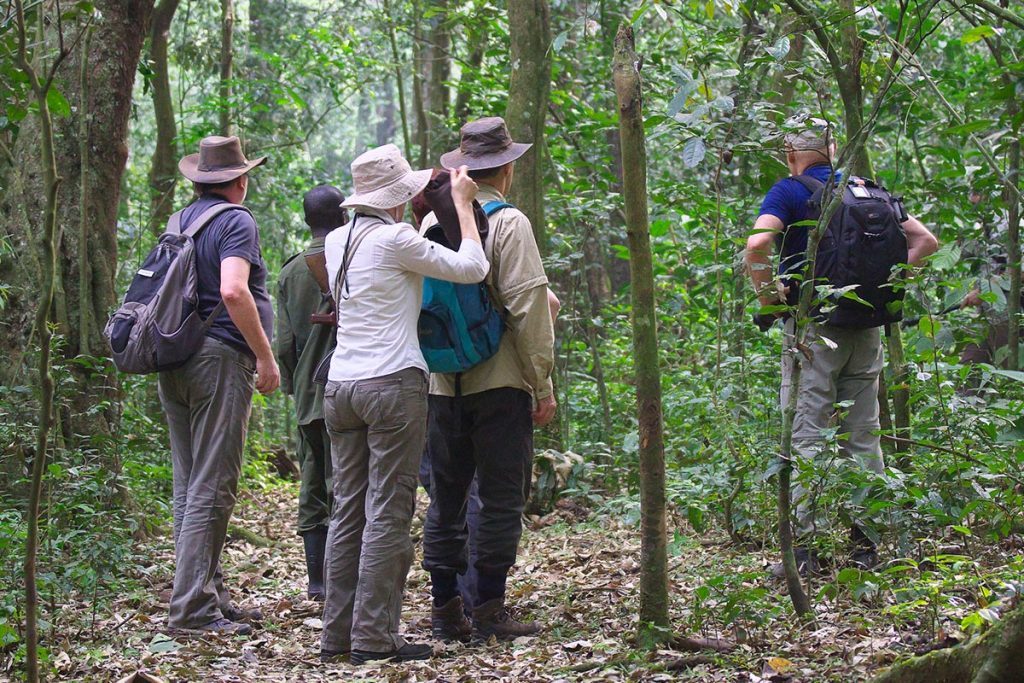
Deciding what to wear in Kibale National Park is an important part of preparing for chimpanzee trekking because the experience is very different from sitting in a safari vehicle. You will be walking through tropical forest where trails can be damp, muddy or uneven, vegetation can brush against your clothing, and weather conditions can change while you are in the forest. Your chimpanzee trekking outfit therefore needs to prioritize comfort, coverage, mobility and protection from rain rather than safari fashion.
A practical outfit normally begins with lightweight long trousers, a breathable long-sleeved shirt, comfortable hiking socks and sturdy closed walking footwear. A lightweight waterproof jacket should be accessible in your daypack rather than buried in your main luggage. Travelers preparing for several Ugandan wildlife destinations can use this complete Uganda safari and trekking adventure packing guide for first-time visitors to plan clothing that can work both in Kibale and elsewhere on their itinerary.
There is no need to dress as though you are undertaking a technical mountain expedition. The goal is to choose clothing that works for the actual environment. Kibale’s forest can be humid, rain can occur, and walking generates body heat. Heavy garments can consequently become uncomfortable, while shorts and very exposed clothing provide less protection from vegetation and insects.
The Ideal Chimpanzee Trekking Outfit for Kibale
A good Kibale chimpanzee trekking outfit can be assembled from relatively simple outdoor clothing. Wear a lightweight long-sleeved shirt on your upper body and full-length walking or hiking trousers on your lower body. Add comfortable hiking socks and closed footwear with reliable traction. Keep a lightweight waterproof jacket in your daypack and add a removable light layer if conditions are cool when you begin.
Each piece should work with the others. Your trousers should allow you to bend your knees and step comfortably over natural obstacles. Your shirt should remain comfortable when you become warm. Your rain jacket needs to fit over the shirt without restricting movement. Your socks need to work properly with your footwear rather than bunching or creating pressure points.
Travelers can understand why these clothing choices matter by reading more about chimpanzee trekking through Kibale National Park and its tropical rainforest environment. The activity involves following chimpanzees through their natural habitat, so clothing needs to work for walking rather than simply looking appropriate for safari photographs.
Wear Lightweight Long-Sleeved Shirts
A lightweight long-sleeved shirt is one of the most practical answers to what to wear chimpanzee trekking in Uganda. Long sleeves reduce the amount of exposed skin as you walk through vegetation and provide an additional physical barrier between your arms and insects, branches and plants.
The important word is lightweight. Kibale is a tropical environment, and you may become warm once you start walking. A thick shirt that feels comfortable while standing outside your lodge can become unpleasant after sustained movement through humid forest.
Look for a shirt that allows air circulation and dries reasonably quickly. Outdoor hiking shirts can work well, but travelers do not necessarily need to purchase expensive specialist safari clothing if they already own comfortable, lightweight long-sleeved clothing suitable for walking.
Test the shirt before traveling. Raise your arms, bend your elbows and wear it beneath the waterproof jacket you intend to carry. Clothing that restricts shoulder movement at home is unlikely to become more comfortable after several hours in the forest.
Are Short-Sleeved Shirts Suitable for Kibale?
A short-sleeved shirt may be comfortable around your lodge, during road transfers and during other parts of a Uganda safari, but long sleeves are generally more practical for the actual forest trek. The additional coverage is useful when moving around vegetation and reduces exposed skin.
This does not mean every shirt in your suitcase must have long sleeves. Pack according to your complete itinerary. Short-sleeved tops can be useful for lodge time and warmer activities elsewhere, while one or more suitable long-sleeved shirts can be reserved for forest walking.
Travelers spending several days around the park can combine their trekking clothing with the itinerary ideas in this five-day Kibale National Park itinerary covering forest activities and nearby experiences.
Choose Full-Length Trousers for Chimpanzee Trekking
Full-length trousers are preferable to shorts for chimpanzee trekking. They provide greater coverage against vegetation and insects while allowing you to move through the forest without continually worrying about exposed lower legs.
Choose trousers designed for movement. Lightweight hiking trousers are particularly practical because many models combine flexibility with relatively fast drying. You do not need extremely thick expedition trousers for an ordinary Kibale chimpanzee trek.
Avoid trousers that become restrictive when you take a large step or squat. Chimpanzees do not remain conveniently positioned beside a flat viewing platform, and forest terrain may require you to step around roots, negotiate muddy patches and change position while observing wildlife.
Can You Wear Jeans for Chimpanzee Trekking?
Jeans are not an ideal first choice for Kibale forest trekking. Denim can feel heavy, restrict movement depending on the cut, and take considerable time to dry after becoming wet. A pair that is comfortable for a road transfer can become much less comfortable after rain or prolonged walking.
If you have access to lightweight hiking or travel trousers, they are generally a more practical option. Their value becomes particularly obvious when the trail is damp or when rain begins during the trek.
Jeans can still be useful for other parts of a trip if you personally enjoy wearing them, but there is little reason to make them your primary chimpanzee trekking trousers when more adaptable clothing is available.
Can You Wear Shorts in Kibale National Park?
Shorts can be perfectly comfortable around some lodges and during appropriate leisure time, but they are not the most practical choice for chimpanzee trekking through forest vegetation. Full-length trousers provide substantially more lower-leg coverage.
This distinction is useful because “what to wear in Kibale National Park” has two answers. What you wear while relaxing at your accommodation does not have to be identical to what you wear when entering the forest.
Pack at least one comfortable pair of full-length trekking trousers even if shorts make up most of your normal warm-weather travel wardrobe.
Choose Quick-Drying Clothing Where Possible
Quick-drying fabrics are particularly useful in Kibale because clothing can become damp from rainfall, wet vegetation or perspiration. The faster a garment dries, the easier it is to reuse during a multi-day Uganda itinerary.
This becomes more important when you have consecutive activities or limited time for laundry. A lightweight trekking shirt that dries overnight may be much more useful than several bulky garments that occupy additional luggage space.
Quick drying does not mean sacrificing comfort. Fabric should feel comfortable against your skin and remain wearable in humid conditions. Try potential trekking clothes during a reasonably long walk before departure if possible.
What Colors Should You Wear in Kibale National Park?
Neutral, subdued colors such as khaki, olive, muted green, beige, brown and similar earth tones are common choices for forest and safari clothing. They are practical, easy to combine and less visually conspicuous than fluorescent or extremely bright garments.
However, it is important to distinguish a sensible clothing recommendation from an official regulation. Do not assume that every safari clothing convention represents a mandatory Uganda Wildlife Authority rule. Where an exact color requirement cannot be verified from current official guidance, it should be presented as practical advice rather than law.
Neutral colors also tend to hide ordinary dust and dirt more effectively than white or very pale clothing, which can be useful on a longer Uganda safari.
Do You Need Camouflage Clothing for Kibale?
No specialist camouflage pattern is necessary for an ordinary chimpanzee trekking wardrobe. Neutral outdoor clothing is sufficient from a practical packing perspective.
There is no need to make yourself look like a professional expedition guide or wildlife researcher. Comfortable, functional clothing is more valuable than an elaborate safari aesthetic.
If your wider itinerary includes multiple primate experiences, this guide to the best Uganda primate tour combining rainforest wildlife encounters across the country can help you identify clothing that can be reused across destinations rather than packing separate outfits for every forest.
Wear Proper Hiking Socks
Socks are easy to overlook when assembling a chimpanzee trekking packing list, yet uncomfortable socks can make otherwise excellent hiking footwear unpleasant. Choose socks that fit properly inside the shoes or boots you intend to wear.
They should not bunch around your toes or create pressure against the heel. Moisture management is valuable because feet can become warm during extended walking.
Pack spare trekking socks in your main luggage. If your first pair becomes soaked or muddy, having another dry pair available for the following activity is much more useful than trying to improvise.
Should You Tuck Your Trousers Into Your Socks?
Travelers frequently encounter advice telling them to tuck their trouser cuffs into their socks when trekking in East African forests. The idea is to reduce the amount of exposed skin around the ankle and make it more difficult for insects or debris to enter beneath the trouser leg.
Whether you personally find this comfortable depends on your trousers, socks and footwear. If you intend to use this approach, test the complete setup before traveling rather than discovering on trekking morning that your trousers continually pull free or your socks are too short.
Gaiters provide another option for covering the junction between trousers and footwear, particularly when trails are muddy.
Do You Need Gaiters for Kibale Chimpanzee Trekking?
Gaiters can be useful but should not automatically be presented as essential for every visitor. They cover the lower leg and the top of the footwear, which can help reduce the amount of mud, water and loose debris reaching socks and shoes.
Their value increases during wet and muddy conditions. Travelers visiting several forest destinations may find them more worthwhile because the same pair can potentially be used repeatedly.
If your trip includes a longer habituation activity, more detailed preparation is available in this guide to planning and preparing for Kibale’s extended chimpanzee habituation forest experience.
Wear Sturdy Closed Walking Shoes or Hiking Boots
Closed footwear with reliable traction is one of the most important components of what to wear chimpanzee trekking in Kibale. Forest trails can include damp soil, mud, leaves, roots and uneven sections, making smooth-soled casual footwear a poor choice.
Hiking boots are popular because they combine grip, foot protection and, depending on the design, ankle support. Waterproof or water-resistant models can be particularly useful in wet conditions.
However, the most expensive hiking boot is not automatically the best boot for you. Fit and comfort matter enormously. A technically impressive boot that creates blisters after an hour of walking is a bad choice for your feet.
Wear your trekking footwear repeatedly before traveling. Test it with the same socks you intend to use in Kibale and make sure your toes have adequate space during descents.
Can You Wear Trainers or Sneakers Chimpanzee Trekking?
Some sturdy trail-oriented shoes may perform adequately under favorable conditions, but ordinary smooth-soled lifestyle sneakers provide less traction and protection than footwear designed for hiking. Conditions can also change after rainfall.
Rather than asking whether a shoe is technically a sneaker or boot, examine what it actually provides. Does it grip wet ground? Is it comfortable after hours of walking? Does it remain secure on your foot? Can it handle mud? Have you already worn it on uneven trails?
Those questions provide a much better basis for deciding whether your footwear belongs on a Kibale chimpanzee trekking packing list.
Are Waterproof Hiking Boots Necessary?
Water-resistant or waterproof footwear is highly useful in Kibale, particularly during wetter conditions, but waterproofing is only one characteristic of good trekking footwear. Grip, fit and walking comfort remain equally important.
A waterproof boot with poor traction is not a good forest shoe. Neither is a waterproof boot that has never been broken in and causes painful pressure points.
Think about drying time as well. If your itinerary contains multiple trekking activities close together, footwear that becomes completely saturated may still be damp when you need it again.
Do You Need Gumboots for Kibale?
Gumboots or rubber boots can perform well in very muddy conditions, but they are not necessarily the most comfortable universal solution for every traveler. Their usefulness depends on trail conditions, fit and what you personally prefer to walk in.
Travelers should confirm current local arrangements with their lodge or safari operator if they are considering relying on locally available rubber boots. Availability and sizes should not be assumed without verification.
Carry a Lightweight Waterproof Jacket
A lightweight waterproof jacket is one of the most useful pieces of clothing to bring to Kibale. The forest can receive rain even when your trip falls outside the principal wetter periods, so rain protection should remain accessible during the trek.
The jacket should be large enough to fit comfortably over your trekking shirt without restricting your arms. At the same time, it should pack down small enough to fit easily inside your daypack.
Breathability matters because walking in a humid forest while wearing a completely impermeable heavy layer can become uncomfortable. Choose a jacket appropriate for active outdoor use where possible.
Rain Jacket or Poncho for Chimpanzee Trekking?
Both can provide rain protection, but they behave differently in dense vegetation. A fitted waterproof jacket generally provides greater freedom of movement and is less likely to catch on surrounding vegetation. A poncho can provide broader coverage and may cover part of a backpack, but loose material can be less convenient when walking through forest.
There is no need to carry both unless your particular itinerary gives you a reason to do so. Choose the system that provides adequate protection without adding unnecessary weight.
Should You Wear a Fleece or Sweater?
A light fleece, sweater or similar removable layer can be useful for cooler mornings and evenings, particularly for travelers who personally feel the cold easily. However, a thick insulating layer may quickly become uncomfortable once you begin walking.
Layering is more flexible. Start with a breathable trekking shirt, add a light layer if required and keep enough room in your daypack to store it once you warm up.
The same strategy works well for travelers combining Kibale with several destinations. It is more efficient to carry adaptable layers than a separate heavy outfit for every possible temperature.
Do You Need Gloves for Chimpanzee Trekking?
Light gardening or trekking gloves are frequently recommended for forest trekking because they can protect the hands when you need to steady yourself against vegetation or negotiate muddy terrain.
They can be particularly useful during wet conditions, but they should not be described as universally mandatory unless current official rules specifically require them. Treat gloves as a practical accessory whose value depends on trail conditions and personal preference.
If you bring them, choose a lightweight pair that provides grip and remains comfortable when damp. Heavy winter gloves are unnecessary for this purpose.
Should You Wear a Hat in Kibale?
A lightweight hat can be useful throughout a Uganda safari, particularly during transfers, lodge activities and walks with greater sun exposure. Beneath Kibale’s dense canopy, sun exposure may be less direct, but a hat can still provide useful coverage.
A wide-brimmed safari hat is not compulsory. A comfortable lightweight hat that stays securely on your head is sufficient if you choose to wear one.
Avoid bringing a bulky hat solely because it looks appropriate for safari. Every item should justify the space it occupies in your luggage.
What Should Women Wear for Chimpanzee Trekking?
The core recommendations are essentially the same regardless of gender: comfortable full-length trousers, a lightweight long-sleeved top, hiking socks, appropriate closed footwear and accessible rain protection.
Women may prefer a supportive sports bra or other comfortable active underwear for walking on uneven terrain. Choose garments you have already tested during physical activity rather than wearing unfamiliar clothing for the first time on trekking day.
Practical comfort is more important than buying gender-specific safari clothing. Ordinary hiking and active-travel garments can work perfectly well.
What Should Men Wear for Chimpanzee Trekking?
Men should similarly prioritize lightweight full-length trousers, a breathable long-sleeved shirt, appropriate hiking socks and sturdy walking footwear. Avoid extremely heavy trousers or shirts simply because they are marketed as rugged safari clothing.
The best outfit is one that protects exposed skin while allowing comfortable movement and temperature regulation.
What Should You Wear During the Rainy Season?
During Kibale’s wetter periods, place even greater emphasis on quick-drying clothes, dependable footwear traction, waterproof outerwear and spare dry socks. Your basic outfit does not need to change completely; it simply needs to perform better when wet.
Keep your waterproof layer within immediate reach rather than at the bottom of your backpack. Consider gaiters if you expect muddy conditions and make sure your footwear has been tested on wet or uneven ground.
Have a clean change of clothing waiting at your accommodation. Even excellent rain gear cannot guarantee that you will return completely dry after walking through wet tropical vegetation.
What Should You Wear During the Relatively Drier Months?
Relatively drier weather does not transform Kibale into a dry savannah. Continue wearing long trousers, suitable closed footwear and a lightweight long-sleeved shirt, and keep rain protection in your daypack.
You may encounter firmer trails and less mud, but forest conditions can still vary. Rainfall before your trekking day can leave sections damp even when no rain falls during the activity itself.
Travelers researching the park’s wider wildlife can also explore the many primates living within Kibale National Park’s diverse tropical forest habitats when planning clothing for a broader forest experience.
What to Wear for Chimpanzee Habituation in Kibale
The basic clothing principles for chimpanzee habituation are similar to those for standard chimpanzee tracking, but comfort becomes even more important because participants can spend considerably longer in the forest.
Wear lightweight long trousers, a breathable long-sleeved shirt, reliable trekking footwear and comfortable hiking socks. Carry waterproof outerwear and consider gaiters and lightweight gloves depending on conditions.
Do not wear an outfit that only feels comfortable for thirty minutes. Test your trousers, shirt, socks, boots and backpack together on a longer walk before traveling.
What to Wear After Chimpanzee Trekking
Your Kibale wardrobe should include clothing for after the forest as well as for the trek itself. Returning to your lodge and changing out of damp or muddy clothes is one of the simple comforts worth planning for.
Pack a clean shirt, comfortable trousers or shorts and casual footwear. Sandals or lightweight shoes can give your feet a welcome break from hiking boots once you have finished trekking.
A light evening layer can also be useful according to your personal temperature preference and the conditions during your stay.
How Many Trekking Outfits Should You Pack for Kibale?
The answer depends on the length and structure of your itinerary. Someone completing one chimpanzee trek during a two-night Kibale stay does not need the same quantity of forest clothing as someone combining standard chimpanzee tracking, habituation, birding and additional forest walks.
Instead of packing a completely unique outfit for every day, choose garments that can be reused after drying or laundering where practical. Two versatile trekking shirts and two pairs of suitable trousers can be more useful than numerous specialized safari outfits.
Check laundry arrangements with your actual accommodation before relying on them. Service availability and turnaround time vary between properties.
What Clothing Should Stay at the Lodge?
You do not need to carry your spare outfits into the forest. Additional shirts, casual trousers, sandals, sleepwear and other lodge clothing should remain with your main luggage.
The same applies to heavy jackets that you know you will not wear, unnecessary accessories and duplicate equipment. Your trekking outfit should be supported by a light daypack, not an extension of your suitcase.
Avoid Wearing Brand-New Clothes and Boots on Trekking Day
New footwear receives most of the attention, but other unfamiliar clothing can cause problems too. A new shirt may rub around the shoulders beneath backpack straps. New trousers may restrict your stride. Socks can slide or bunch unexpectedly.
Wear the complete chimpanzee trekking outfit before traveling. Ideally, take a reasonably long walk wearing your intended boots, socks, trousers and shirt while carrying the daypack you plan to use.
This simple preparation gives you time to correct uncomfortable clothing while you still have access to your normal wardrobe and outdoor shops.
Do You Need Expensive Safari Clothing?
No. Kibale requires functional clothing rather than a luxury safari wardrobe. If you already own comfortable hiking trousers, long-sleeved active clothing, good walking footwear and a lightweight waterproof jacket, much of your outfit may already be available at home.
Spend money where performance genuinely matters. Properly fitting footwear and effective rain protection usually deserve more attention than buying multiple shirts merely because they are labeled “safari.”
Travelers researching another perspective on chimpanzee trekking can compare practical preparations before finalizing what they intend to wear.
What Not to Wear Chimpanzee Trekking in Kibale
Avoid clothing that substantially restricts movement, footwear with poor grip, trousers that become excessively heavy when wet and garments you already know cause discomfort during walking. Very delicate clothes are also impractical because forest vegetation and mud can leave them dirty.
Open sandals are better reserved for the lodge than used as primary forest footwear. Similarly, a heavy fashion jacket should not replace a functional lightweight rain shell merely because it is warm.
The objective is not to create a rigid list of forbidden fashion choices. It is to eliminate clothing that makes walking through a potentially wet tropical forest unnecessarily uncomfortable.
What to Wear in Kibale if You Are Also Gorilla Trekking
Travelers combining Kibale chimpanzee trekking with gorilla trekking can reuse much of the same core forest clothing. Long trousers, long-sleeved shirts, hiking socks, dependable footwear and waterproof outerwear are useful across both activities.
However, do not assume that every rule or condition associated with gorilla trekking automatically applies to chimpanzee trekking. These are different wildlife activities, and current instructions from guides and wildlife authorities should always take priority.
Using the same practical clothing across several forest experiences can substantially reduce luggage volume on a longer Uganda safari.
Final Head-to-Toe Chimpanzee Trekking Outfit
When deciding what to wear in Kibale National Park, start at your feet. Wear broken-in closed hiking footwear with reliable traction and comfortable hiking socks. Cover your legs with lightweight full-length trousers that allow unrestricted movement. Wear a breathable long-sleeved shirt and keep a lightweight waterproof jacket within immediate reach.
Add a light removable layer if the morning feels cool. A hat, gaiters and lightweight gloves can be useful according to conditions and personal preference, but avoid adding accessories merely because they appear on generic safari packing lists.
Your finished outfit should feel comfortable before you even leave home. Walk in it, bend in it, wear it with your backpack and test your rain jacket over the top. Chimpanzee trekking is about following wildlife through a real tropical forest, so the best clothing is clothing that lets you concentrate on the chimpanzees rather than on sore feet, restrictive trousers or a rain jacket you cannot find.
Once your clothing is sorted, the next priority is choosing the footwear, rain equipment and trekking gear that will accompany you into the forest. Those items complete the practical foundation of a well-prepared Kibale chimpanzee trekking packing list.
Best Shoes, Rain Gear, Daypack and Trekking Equipment for Kibale

Choosing the best shoes, rain gear, daypack and trekking equipment for Kibale is less about buying specialist expedition equipment and more about preparing properly for a tropical forest walk. Chimpanzee trekking takes place on foot, and the condition of the forest floor can change considerably after rain. Damp soil, exposed roots, fallen leaves, vegetation and muddy sections all make traction, comfort and mobility more important than safari fashion.
The core equipment for most visitors is straightforward: comfortable closed walking footwear with dependable grip, suitable hiking socks, a lightweight waterproof jacket, a manageable daypack and waterproof protection for items that should remain dry. Additional equipment such as gaiters, trekking gloves and walking poles may be useful according to conditions and personal preference, but they should not automatically be treated as mandatory.
Travelers should also remember that the amount of equipment they carry matters. A carefully prepared Kibale chimpanzee trekking adventure requires comfortable practical forest equipment rather than excessive gear. Every unnecessary item placed inside your daypack becomes something you have to carry while following chimpanzees through the forest.
What Are the Best Shoes for Chimpanzee Trekking in Kibale?
The best shoes for chimpanzee trekking in Kibale are comfortable closed walking shoes or hiking boots that provide reliable traction on potentially wet and uneven forest ground. Grip should be one of your main considerations because rainfall can make soil, leaves and exposed roots slippery.
Fit is equally important. An expensive waterproof hiking boot is not useful if it causes blisters, squeezes your toes or becomes uncomfortable after an hour. Your footwear should already have been worn on substantial walks before you arrive in Uganda.
When comparing footwear, think about traction, fit, water resistance, ankle stability, weight and drying time. There is no benefit in choosing the heaviest boot available simply because it appears more rugged. Kibale chimpanzee trekking is a forest activity, not a technical mountaineering expedition.
Do You Need Hiking Boots for Kibale National Park?
Hiking boots are an excellent choice for Kibale because they are designed for walking over natural terrain. Models with a substantial tread can provide better grip than ordinary lifestyle footwear, while boots extending above the ankle may provide additional stability and coverage.
However, the term “hiking boot” alone does not guarantee suitability. A poorly fitting boot with an unsuitable sole can perform worse than a comfortable trail shoe with excellent traction. Evaluate the actual footwear rather than relying only on its product category.
If your Uganda itinerary includes several forest activities, investing in dependable hiking footwear becomes particularly worthwhile. The same pair can potentially be used during chimpanzee tracking, forest walks and other appropriate activities, reducing the need to carry several pairs of heavy shoes.
Can You Wear Sneakers for Chimpanzee Trekking?
Ordinary casual sneakers are not the strongest choice for chimpanzee trekking because many have relatively smooth soles, limited protection against wet ground and little ability to cope with mud. Some trail-running or hiking-oriented shoes are considerably more capable, however, so the distinction should be based on performance rather than terminology alone.
Ask whether the shoes grip wet and uneven ground, remain secure around your feet, protect your toes sufficiently and stay comfortable after prolonged walking. If the answer is yes, they may be practical under suitable conditions.
Do not choose your forest footwear solely because it is lightweight. A shoe that saves a few hundred grams but constantly slips on damp ground is a poor tradeoff.
Are Waterproof Hiking Boots Necessary for Kibale?
Waterproof or strongly water-resistant hiking footwear can be particularly useful in Kibale because rain and wet vegetation can leave trails damp. Waterproofing helps prevent relatively shallow moisture from immediately soaking your socks.
Nevertheless, waterproof footwear has limitations. Water can still enter from above, especially during heavy rain or when walking through wet vegetation. A waterproof membrane also does not compensate for poor grip or an uncomfortable fit.
The best approach is to treat water resistance as one desirable characteristic among several. Traction, comfort and familiarity with the footwear remain equally important.
Why Your Hiking Boots Should Be Broken In Before Kibale
Never make chimpanzee trekking morning the first time you wear new hiking boots for several hours. New footwear can create pressure points and blisters that were not obvious during a short fitting in a shop.
Wear your chosen boots on several walks before traveling. Start with shorter distances and gradually use them for longer walks. Test them with exactly the type of socks you plan to wear in Kibale.
Walk uphill and downhill where possible. Make sure your heel remains reasonably secure and your toes do not repeatedly strike the front of the footwear on descents.
This simple preparation costs nothing and can be more important than buying additional trekking accessories.
How Much Grip Do Your Kibale Trekking Shoes Need?
Good traction is one of the most useful characteristics of Kibale footwear. The forest floor can contain loose leaves, soil, mud, roots and other natural surfaces that behave differently from pavement.
Look underneath your footwear before traveling. A tread designed for outdoor walking is generally more appropriate than a nearly flat lifestyle sole. If the tread on an old pair of boots has become severely worn, consider whether they still provide the grip you need.
Visitors can learn more about the terrain and forest environment through this guide to the primates living throughout Kibale National Park and the rainforest habitat they occupy.
Do You Need Ankle Support for Chimpanzee Trekking?
Ankle support is a personal consideration rather than something every traveler needs to maximize. Mid-height hiking boots can provide additional stability and coverage, which some visitors appreciate on uneven ground.
Other experienced walkers may prefer lighter trail footwear that allows greater freedom of movement. The appropriate choice depends partly on what you normally walk in comfortably.
If you already know that your ankles benefit from additional support, Kibale is not the ideal destination for experimenting with minimalist footwear.
Should You Bring Gumboots to Kibale?
Rubber boots or gumboots can be effective in very muddy conditions because they provide substantial protection against wet ground. Their disadvantages include bulk, weight, heat and potentially lower comfort over longer walking distances if they do not fit properly.
For most international travelers, comfortable waterproof hiking footwear is generally more versatile across a wider Uganda safari. If you specifically want to use gumboots, ask your accommodation or safari operator whether suitable boots can be obtained locally before dedicating significant luggage space to them.
Do not assume that every lodge keeps every size available. Local equipment availability should always be confirmed directly.
Choose the Right Hiking Socks
Socks work as a system with your footwear. Even excellent hiking boots can become uncomfortable when paired with socks that bunch, retain excessive moisture or create friction.
Choose comfortable hiking or walking socks and test them with your actual trekking footwear. Make sure the combination does not become excessively tight around your toes.
Bring spare pairs in your main luggage. If your socks become damp or muddy, having a dry pair for another activity is extremely useful.
Travelers undertaking the longer habituation activity should be particularly careful about footwear and sock comfort because they may spend substantially more time in the forest. This guide explains how to prepare properly for Kibale’s longer chimpanzee habituation experience and forest conditions.
Do You Need Gaiters in Kibale?
Gaiters cover the area between your footwear and lower trousers. They can help prevent mud, water, loose vegetation and debris from easily entering the top of your shoes or boots.
They are particularly useful when conditions are muddy, but they are not necessarily essential for every visitor. Someone completing several forest treks may obtain more value from carrying gaiters than a traveler doing one short forest activity during an otherwise vehicle-based safari.
If you decide to bring gaiters, test them at home with the exact boots and trousers you plan to wear. Make sure the attachment system works properly and does not interfere with walking.
A Lightweight Waterproof Jacket Is Essential Rain Equipment
Rain protection deserves permanent space in your Kibale daypack. Kibale is a tropical forest, and rainfall should be considered possible rather than treated as a problem confined exclusively to the main wetter months.
A lightweight waterproof shell is generally more practical than a heavy insulated raincoat. You need protection against precipitation without creating excessive heat once you begin walking.
Choose a jacket that fits comfortably over your trekking shirt and any light layer you might wear. Move your arms while trying it on. You should be able to reach upward, operate a camera and adjust your backpack without the jacket becoming restrictive.
Waterproof Jacket Versus Poncho for Kibale
A waterproof jacket and poncho solve the same basic problem differently. A fitted rain jacket stays close to the body and generally interferes less with movement through vegetation. It can also be opened for ventilation when conditions become warm.
A poncho provides broad coverage and some designs can extend over part of a backpack. The disadvantage is that loose material may catch more easily on vegetation and can be cumbersome in confined forest sections.
There is no need to pack several rain systems unless your itinerary genuinely requires them. Choose the one that best combines protection, comfort and packability.
Do You Need Waterproof Trousers?
Waterproof over-trousers can be useful during persistent heavy rain, but many travelers prefer lightweight quick-drying trekking trousers for ordinary chimpanzee tracking because they are less cumbersome.
The decision depends partly on the season, forecast, duration of your forest activities and how comfortable you are walking in waterproof over-trousers.
If you already own a lightweight pair and expect significant wet-weather trekking, they can be worth considering. Buying heavy expedition rain trousers specifically for one ordinary Kibale chimpanzee trek may be unnecessary.
Protect Your Daypack From Rain
A rain jacket protects you but does nothing for a camera, phone, battery or travel document inside an unprotected backpack. Waterproofing your equipment should therefore use more than one layer where appropriate.
A backpack rain cover protects the exterior of the pack. Internal dry bags, waterproof pouches or secure resealable protection provide another barrier for particularly vulnerable items.
Do not rely on the word “water-resistant” without understanding what your pack can actually tolerate. A bag capable of handling a brief shower may not keep contents dry during sustained rain.
What Is the Best Daypack for Chimpanzee Trekking?
The best daypack for chimpanzee trekking is comfortable, light and large enough for essential equipment without encouraging you to carry unnecessary possessions. You do not need an expedition backpack for a standard Kibale trek.
Look for comfortable shoulder straps, secure closures and sensible internal organization. A pack that allows you to reach your rain jacket and water without unpacking everything is particularly useful.
Camera users should think about access as well. If taking a photograph requires removing half the contents of the bag, the system is poorly organized for wildlife trekking.
How Big Should Your Kibale Daypack Be?
There is no single mandatory daypack capacity that suits every visitor. A photographer carrying a camera body and additional lens may need more space than someone photographing exclusively with a smartphone.
Rather than selecting a backpack based solely on liters, assemble everything you genuinely expect to carry and determine how much room it occupies.
Your pack should hold water, rain protection, personal essentials, appropriate electronics and any other necessary items while leaving enough room to store a removable clothing layer.
If the pack is full before you add water or your rain jacket, it is either too small or you are carrying too much.
What Should Go Inside Your Chimpanzee Trekking Daypack?
Your daypack should contain only items with a realistic purpose during the forest activity. Drinking water, accessible rain protection, personal medication you may need, insect protection, a camera or phone and moisture protection for electronics form the core for many travelers.
Depending on your photography setup, you may also carry a spare camera battery, memory card and compact lens-cleaning equipment. Binoculars can be worthwhile for observing birds and primates above the forest floor.
Food or snacks should follow current guidance and arrangements for your particular activity. Confirm what is appropriate with your guide or safari operator rather than relying on assumptions from another park.
What Should Stay Out of Your Daypack?
Anything you have no realistic reason to use during the forest trek should normally remain secured with your main luggage where appropriate. Spare outfits, large toiletry bags, bulky chargers, guidebooks, multiple pairs of shoes and unrelated safari equipment only increase pack weight.
The same principle applies to photography. Carrying three lenses does not automatically produce better chimpanzee photographs than carrying one suitable lens you can operate confidently.
A lighter pack makes it easier to move, change direction and concentrate on wildlife rather than constantly adjusting uncomfortable shoulder straps.
Do You Need a Waterproof Daypack?
A genuinely waterproof backpack is useful but not absolutely necessary if you have a reliable system for protecting the contents. A rain cover combined with internal waterproof pouches can provide practical protection.
The important question is not whether the manufacturer’s label says “waterproof.” The important question is whether your camera, phone, passport or other vulnerable possessions will remain protected if rain begins while you are in the forest.
Should You Bring a Dry Bag?
A small dry bag can be one of the simplest pieces of rain equipment to add to a Kibale packing list. It provides an internal layer of protection for electronics and other moisture-sensitive possessions.
Several small pouches can sometimes be more convenient than one large dry bag because they keep batteries, documents and electronics organized separately.
Test closures before traveling and avoid overfilling bags beyond the point where they can seal correctly.
Should You Bring Trekking Poles?
Trekking poles can help some travelers with balance on muddy or uneven ground, but they are not automatically necessary for everyone. Experienced hikers who regularly use poles may appreciate having familiar equipment with them.
Others may find poles cumbersome when trying to operate binoculars or photography equipment. Forest terrain also differs from open mountain trails, so the usefulness of poles can change according to the route.
If you intend to bring your own trekking poles, check airline baggage rules and make sure you understand how they must be packed during flights.
Walking Sticks and Local Assistance
A walking stick can provide useful stability on slippery or uneven sections. Local arrangements can vary, so ask your lodge, safari operator or guide what assistance is currently available rather than assuming equipment will automatically be supplied.
The same principle applies to porter assistance. If you expect difficulty carrying your backpack or simply prefer to reduce the load you personally carry, discuss current porter arrangements before trekking day.
Do You Need Trekking Gloves?
Lightweight gardening or trekking gloves can protect your hands when you need to steady yourself or make contact with vegetation. They become particularly useful when trails are muddy and you instinctively reach for nearby support.
Choose gloves that provide grip without being unnecessarily heavy. Winter gloves designed primarily for insulation are poorly suited to this purpose.
Gloves are best treated as useful optional equipment rather than presented as a universal official requirement unless current instructions explicitly say otherwise.
Are Binoculars Worth Carrying?
Binoculars are highly useful for travelers interested in more than close chimpanzee encounters. Kibale contains a rich primate and bird community, and wildlife can be positioned high in the canopy or partly obscured by vegetation.
A compact pair can provide considerable viewing value without adding excessive weight. Heavy binoculars can become tiring around your neck during a long walk, so consider weight when choosing what to bring.
Visitors planning a broader primate-focused journey can compare equipment needs using this Uganda primate safari guide covering Kibale and other important rainforest trekking destinations.
Camera Equipment Should Be Kept Manageable
Wildlife photographers naturally want flexibility, but Kibale rewards a streamlined camera setup. Every camera body, lens and accessory adds weight and creates another object that requires protection from rain.
Select equipment you understand well enough to operate quickly. Forest wildlife can move, and time spent changing unfamiliar settings or repeatedly swapping lenses can mean missing photographs.
Carry spare power where appropriate and protect batteries and memory cards from moisture. A small microfiber cloth can also be useful for appropriate external cleaning when conditions are damp.
Should You Bring a Power Bank?
A compact power bank can be useful for keeping a smartphone charged, especially if the phone functions as your camera, navigation aid or storage location for travel information.
Charge the power bank before leaving your lodge and keep it protected from moisture. Travelers should also check current airline requirements governing how power banks and spare lithium batteries must be carried during flights.
Do You Need a Headlamp or Torch?
A small headlamp or torch can be useful for the wider safari itinerary, particularly around accommodations or during power interruptions, but it is not necessarily an item you need to carry throughout a standard daytime chimpanzee trek.
Keep one in your main luggage if it is useful for your trip. Only add it to the trekking daypack when there is a genuine reason.
How to Organize Your Daypack Before Trekking
Pack according to how quickly you may need each item. Rain protection should be near the top or in an easily accessible external compartment. Water should be reachable without emptying the bag. Frequently used photography equipment should have a logical place.
Items that need to stay dry should already be sealed before you leave the lodge. Do not wait for rainfall to begin before searching for your waterproof pouch.
Place heavier items reasonably close to your back rather than allowing them to move around loosely. Tighten compression straps where available so the load remains stable while you walk.
Test Your Fully Loaded Daypack Before Traveling
Many travelers test their boots but forget to test their backpack. Load the pack with approximately what you expect to carry in Kibale and take it on a substantial walk before departure.
Pay attention to shoulder pressure, strap adjustment, back comfort and how easily you can access water and rain gear. If the pack becomes uncomfortable after forty minutes at home, it is unlikely to become more comfortable after several hours in a tropical forest.
This test also reveals whether you are carrying too much. Remove equipment you cannot justify.
Equipment for Chimpanzee Habituation Versus Standard Tracking
Chimpanzee habituation can involve substantially more time in the forest than a standard tracking experience, making equipment comfort and pack weight even more important.
Footwear that is merely tolerable for a short walk can become problematic after several hours. The same applies to backpack straps, clothing and the weight of photography equipment.
Longer forest time also increases the importance of water arrangements, battery capacity, rain protection and careful organization. Confirm food and hydration arrangements before departure rather than guessing.
How Kibale Equipment Differs From a Vehicle Safari
On a conventional vehicle-based wildlife drive, heavy camera equipment, extra clothing and multiple water bottles can often remain in the vehicle. During chimpanzee trekking, the equipment you take into the forest has to move with you.
That changes the packing calculation. Weight matters more. Footwear matters more. Waterproofing matters more. Your backpack needs to be comfortable rather than simply large.
This is why travelers should not simply copy a generic African safari packing list and assume they are prepared for Kibale.
Preparing Equipment for Wet-Season Chimpanzee Trekking
During wetter conditions, prioritize footwear traction, rain protection and waterproof storage. Check the tread on your boots before departure and confirm that your rain jacket still performs adequately.
Place vulnerable electronics inside internal waterproof protection even if the backpack has a rain cover. Bring spare socks in your main luggage and have a plan for separating wet trekking clothing when you return.
Travelers should not automatically avoid Kibale because conditions may be wet. Instead, they should prepare their equipment appropriately for the forest they are visiting.
Preparing Equipment During Relatively Drier Conditions
Drier conditions may reduce the amount of mud you encounter, but they do not eliminate the need for suitable footwear and rain protection. Kibale remains a tropical forest and conditions can vary after localized rainfall.
Continue carrying the waterproof shell and protecting vulnerable electronics. There is little benefit in removing lightweight essential equipment merely because the morning forecast looks dry.
Common Footwear Mistakes to Avoid
The most common footwear problems are predictable: wearing brand-new boots, choosing shoes primarily for appearance, relying on worn-out tread, pairing good boots with uncomfortable socks and failing to test footwear on longer walks.
Another mistake is assuming that waterproof automatically means suitable. A waterproof shoe can still have inadequate traction or fit badly.
Your best Kibale trekking footwear is the pair that combines appropriate grip with comfort you have already verified.
Common Daypack Mistakes to Avoid
The most frequent backpack mistake is carrying too much. Travelers often pack for every imaginable scenario rather than the actual forest activity.
Another mistake is poor organization. Rain gear buried underneath camera accessories is difficult to reach quickly. Water packed beneath clothing requires unnecessary unpacking every time you need a drink.
Finally, failing to waterproof the contents can turn a perfectly adequate backpack into a liability when rain begins.
Common Rain-Gear Mistakes to Avoid
Do not assume that owning a rain jacket is enough. Make sure it fits, that its closures work and that you can move comfortably while wearing it with your trekking clothes and backpack.
Do not bury it inside your main luggage on trekking morning. Rain equipment only helps when it is actually with you.
And do not protect yourself while leaving expensive electronics exposed. Your rain system should account for both the traveler and the equipment being carried.
How to Keep Muddy Equipment Away From Clean Luggage
Pack a separate lightweight bag for footwear and damp clothing after the trek. This makes it much easier to keep mud away from clean clothes inside your main suitcase.
Allow wet footwear to dry appropriately whenever possible rather than sealing it immediately inside luggage for an extended period. If you have another forest activity the following day, organize drying as soon as you return to your accommodation.
Should You Buy New Trekking Equipment Specifically for Kibale?
Not necessarily. Many travelers already own much of what they need. Comfortable hiking footwear, a waterproof shell, a small backpack and outdoor clothing may already be sitting at home.
Replace or purchase equipment when there is an actual gap. Worn smooth-soled shoes may justify replacement. An old rain jacket that no longer keeps water out may need attention. A comfortable existing backpack does not need to be replaced merely because it lacks a safari label.
For another overview of the activity and the conditions involved, travelers can read about chimpanzee trekking facts before making final equipment decisions.
How to Keep Your Kibale Trekking Kit Lightweight
Choose equipment that performs more than one useful function. A lightweight waterproof jacket can serve in Kibale and elsewhere in Uganda. The same hiking footwear can be used on multiple forest activities. Binoculars can serve for chimpanzees, monkeys and birding.
Avoid unnecessary duplication. Most visitors do not need two rain jackets, several daypacks or numerous pairs of hiking boots.
Photography is often the category where weight increases fastest. Select a realistic camera setup rather than carrying equipment for every conceivable photographic situation.
Final Kibale Footwear and Trekking Equipment Check
Before leaving for Kibale, put on your hiking socks and footwear and confirm that both remain comfortable. Check the tread under your shoes and make sure laces and fastenings are in good condition.
Inspect your waterproof jacket and pack it where it can be reached quickly. Test the daypack with water and your actual equipment inside it. Confirm that camera gear, batteries, phones and documents have appropriate moisture protection.
Then remove anything you do not realistically expect to use. The best Kibale trekking equipment setup is not the one containing the greatest number of products. It is the one that keeps you comfortable, dry enough, stable on forest trails and free to concentrate on the chimpanzees and rainforest around you.
For visitors concerned about the physical demands of the activity, this guide to Kibale trekking difficulty provides additional context about terrain and preparation. Good shoes, sensible rain protection and a comfortable daypack cannot control the weather, but they can make changing forest conditions considerably easier to manage.
What to Carry on Chimpanzee Trekking Day in Kibale
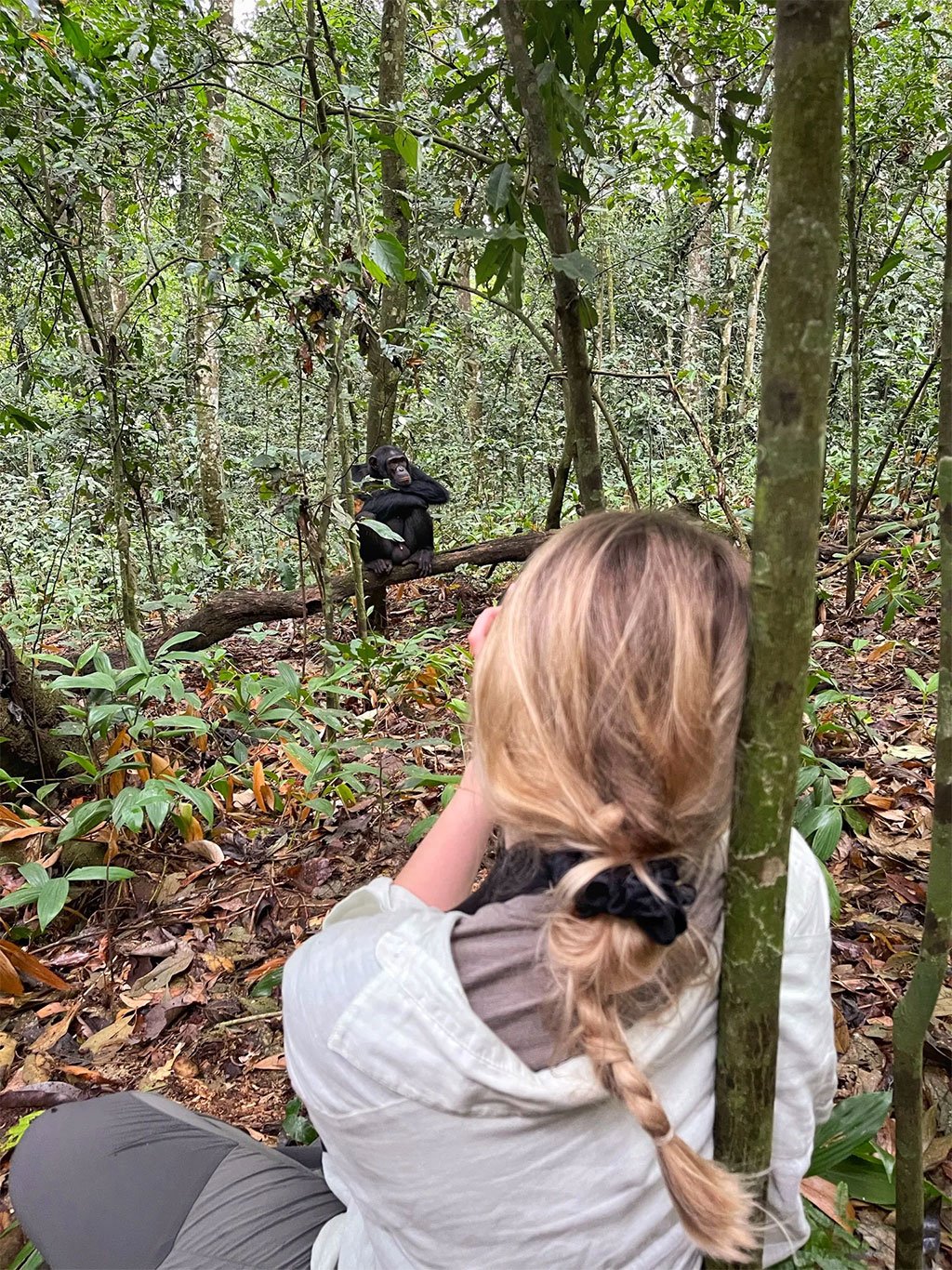
Knowing what to carry on chimpanzee trekking day in Kibale is different from deciding what belongs in your main Uganda safari luggage. Your suitcase stays behind at your accommodation or another appropriate secure location, while your chimpanzee trekking daypack goes into the forest with you. Everything inside it therefore adds weight that you may have to carry while walking on natural forest trails.
A practical chimpanzee trekking daypack should concentrate on a few priorities: drinking water, accessible rain protection, insect protection, essential personal medication, a camera or smartphone, moisture protection for electronics and any other items specifically required for your activity. Binoculars can also be extremely useful for watching primates and birds in the canopy. Travelers preparing for the activity can read this detailed guide to chimpanzee trekking in Kibale National Park and preparing properly for your forest experience.
The objective is not to prepare for every imaginable emergency by filling a large backpack. A well-organized Kibale chimpanzee trekking daypack should give you access to the things you need without becoming a burden. The longer you spend walking, the more you appreciate equipment that has been selected carefully.
Prepare Your Chimpanzee Trekking Daypack the Night Before
Do not wait until immediately before departure to decide what goes into your chimpanzee trekking daypack. Organize it the evening before your activity while you have time to check cameras, batteries, rain equipment and personal essentials properly.
Start by laying out everything you think you need. Then divide those items mentally into three categories: equipment you definitely need in the forest, equipment that might reasonably be useful, and possessions that can safely remain at your accommodation.
This process usually reveals unnecessary weight. A second pair of shoes, several spare shirts, a large toiletry bag, a laptop and bulky charging equipment have little reason to accompany you on an ordinary chimpanzee trek.
Once you have reduced the load, arrange the remaining equipment according to how quickly you may need it. Your waterproof jacket should be easy to reach. Water should be accessible. Camera equipment should be organized rather than buried underneath clothing.
Carry a Lightweight and Comfortable Daypack
The backpack itself is the foundation of your chimpanzee trekking day kit. It should be large enough for essentials without being so large that you are tempted to fill unused space with unnecessary equipment.
Comfortable shoulder straps matter because the pack moves with you throughout the forest experience. Adjust the straps before trekking begins rather than trying to solve an uncomfortable fit while walking.
A simple internal organization system is useful. Moisture-sensitive items can be grouped inside waterproof protection, while frequently needed equipment remains accessible.
Travelers undertaking the longer habituation experience should be especially careful about backpack comfort. This guide explains what to consider when preparing for Kibale’s longer chimpanzee habituation forest experience, including equipment suited to spending considerably more time in the rainforest.
Carry Drinking Water
Drinking water deserves a permanent place in your Kibale chimpanzee trekking daypack. Forest walking can be physically demanding, particularly in humid conditions, and you should not depend on finding drinking water after entering the forest.
How much water you personally need varies according to the expected duration of the activity, weather, individual requirements and what your safari operator or accommodation provides. Confirm arrangements before trekking morning rather than relying on a universal quantity.
A reusable water bottle is convenient if it closes securely. Test the lid before putting it next to electronics. A leaking bottle inside a backpack can damage camera equipment just as effectively as rain.
If you prefer a hydration reservoir, test it before traveling. Make sure the drinking hose and closure function correctly and confirm that the reservoir fits comfortably inside your chosen daypack.
Keep Your Rain Jacket Within Immediate Reach
A lightweight waterproof jacket is one of the most important things to carry chimpanzee trekking in Kibale. The important detail is where you put it.
Rain protection buried beneath camera equipment and several layers of clothing becomes difficult to reach when rain begins. Store the jacket near the top of your pack or inside an accessible compartment.
Make sure it fits comfortably over your trekking shirt before traveling. You should be able to put it on quickly without removing most of your clothing or struggling with a restrictive fit.
Even during relatively drier periods, carrying a lightweight rain shell is sensible because Kibale remains a tropical forest environment.
Protect Important Items Inside the Backpack
A backpack rain cover can help protect your bag, but sensitive equipment deserves additional protection inside it. Cameras, smartphones, spare batteries, memory cards and important documents should not depend entirely on one external layer.
A small dry bag or waterproof pouch creates an additional barrier. Several small waterproof compartments can be even more convenient because they separate electronics from other equipment.
Do this before entering the forest. Waiting until rain starts before searching for a waterproof pouch defeats much of its purpose.
Visitors interested in understanding the wider rainforest environment can explore this guide to the primates of Kibale National Park and the forest habitats encountered during trekking.
Carry Insect Repellent
Insect repellent is a practical addition to a chimpanzee trekking daypack. Apply your chosen product according to its instructions and keep it accessible if reapplication becomes necessary.
Do not assume your preferred product will necessarily be available near Kibale. If you have a particular formulation that you know works comfortably for you, purchase it before your trip.
Long trousers and a long-sleeved shirt complement insect protection by reducing exposed skin. Clothing and repellent work together rather than one completely replacing the other.
Carry Essential Personal Medication
Any essential medication that you may reasonably need during the activity should remain accessible. Do not place all essential personal medication inside a suitcase that stays behind while you enter the forest.
Prescription medication should remain in appropriate packaging, and travelers with individual medical requirements should obtain professional advice before traveling.
The purpose of your trekking daypack is not to carry an extensive pharmacy. It is to ensure that medication genuinely important to you is not inaccessible when you need it.
Carry a Small Personal First-Aid Supply
A compact personal first-aid supply can be useful, particularly for minor issues such as a blister or small abrasion. Keep it genuinely compact.
Blister protection deserves particular consideration because walking with an untreated hot spot can become progressively uncomfortable. Travelers using unfamiliar hiking boots are at greater risk, which is another reason footwear should be broken in before the trip.
Your safari operator and ranger team may have broader arrangements for emergencies, but that does not eliminate the usefulness of carrying the small personal items you normally rely upon.
Bring Your Camera or Smartphone
For many visitors, a camera is one of the most important things to carry on chimpanzee trekking day in Kibale. Chimpanzees can appear on the ground, among vegetation or high in trees, and the photographic conditions can change quickly.
You do not necessarily need professional camera equipment. A modern smartphone may be entirely adequate for a traveler who values convenience and does not want to carry a dedicated camera system.
Photographers using interchangeable-lens cameras should resist carrying every lens they own. Forest photography rewards mobility and familiarity with your equipment. One suitable camera setup that you understand well can be more useful than a heavy bag containing several unfamiliar options.
Carry Spare Camera Batteries
A spare camera battery occupies little space compared with the inconvenience of having your camera stop working during the wildlife encounter. Charge all batteries before trekking day.
Keep spare batteries protected from moisture rather than loose inside an external pocket. A small waterproof pouch provides useful organization and protection.
Longer chimpanzee habituation experiences can place greater demands on battery capacity because you may spend substantially more time using the camera.
Bring Enough Memory-Card Capacity
Check your camera’s available storage the night before trekking. Do not discover that a nearly full memory card has space for only a handful of photographs after you locate the chimpanzees.
If carrying spare memory cards, store them securely in a protective case. Their tiny size makes them easy to lose inside a backpack.
Photography enthusiasts should also check basic camera settings before entering the forest. Kibale’s canopy can create relatively low-light situations, while chimpanzees themselves can move quickly.
Should You Carry Binoculars Chimpanzee Trekking?
Binoculars are a valuable addition to a Kibale daypack, particularly for visitors interested in the complete forest ecosystem rather than chimpanzees alone. Primates and birds may be positioned high in the canopy where binoculars provide a much better view.
Choose a pair you can carry comfortably. Very large binoculars can become tiring when combined with a camera and other equipment.
If you already own compact wildlife-viewing binoculars, Kibale provides plenty of reasons to bring them. The forest contains much more to observe than the chimpanzees you initially came to find.
Should You Carry Food or Snacks?
Food arrangements should be confirmed for your specific activity before departure. This is an area where travelers should follow current ranger, operator and park guidance rather than assuming that practices from another safari activity apply automatically in Kibale.
Some longer forest experiences may involve arrangements for packed food or snacks, while standard tracking differs in duration. Ask your lodge or safari operator what is appropriate and what will be provided.
If food is supplied for an appropriate activity, make sure it is packed securely and follow all instructions concerning where and when it may be consumed around wildlife.
Standard Chimpanzee Tracking and Habituation Require Different Planning
A standard chimpanzee trek and a chimpanzee habituation experience should not automatically be packed for in exactly the same way. The core equipment overlaps substantially, but the amount of time spent in the forest can differ.
Longer forest time makes daypack comfort more important and increases the significance of water, food arrangements, battery capacity and weather preparation. Clothing that is merely tolerable for a short period can become uncomfortable after extended walking.
Travelers considering the longer activity can read about a Uganda primate habituation experience and spending extended time tracking chimpanzees in rainforest habitat before deciding what deserves space in their daypack.
Carry a Small Lens Cloth if You Are Photographing
A clean microfiber lens cloth occupies almost no space and can be useful in a humid or rainy forest environment. Keep it somewhere dry so it remains useful when you need it.
Avoid carrying a large photography cleaning kit unless your equipment genuinely requires it. Trekking day is not the time for extensive camera maintenance.
Should You Carry a Power Bank?
A compact power bank can be worthwhile if your smartphone is your primary camera or contains important travel information. Charge it fully before leaving your accommodation.
Keep the power bank protected from moisture. Do not leave charging cables loose throughout the bag where connectors can become wet or damaged.
If you are flying within Uganda or internationally with a power bank, check the current rules of the airline operating your flight because battery carriage requirements are separate from park packing considerations.
Carry Your Phone Even if You Have a Camera
A smartphone can serve several purposes beyond photography. It may contain copies of booking information, contact details, notes and other useful travel information.
Download anything essential before leaving your accommodation rather than assuming continuous mobile connectivity inside the forest.
Put the phone into waterproof protection when conditions require it. A phone in an exposed trouser pocket can become vulnerable during heavy rain.
Should You Carry Your Passport Into the Forest?
Do not automatically carry valuable original documents through the forest unless they are actually required for verification or another specific reason. Confirm what identification or documentation you need at the activity briefing with your safari operator or relevant authority beforehand.
Where an original passport is not required during the forest activity, leaving it securely stored as appropriate may reduce the risk of moisture damage or loss.
Never substitute assumptions for current instructions. Documentation requirements can change, and your operator should clarify what needs to be presented for your particular booking.
Keep Permit and Booking Information Accessible
Have the relevant chimpanzee trekking booking information available when needed. This might be held by your safari operator, supplied electronically or handled according to the arrangements for your booking.
Confirm this before trekking morning. You do not want to be searching through emails or luggage at the briefing point because nobody established who was carrying the necessary documentation.
Do You Need Sunscreen Inside Kibale Forest?
Sunscreen remains useful on a wider Uganda safari and can be relevant during transfers and periods spent outside dense forest cover. Whether you need to reapply it during the forest activity depends on exposure and your personal requirements.
A small container is more appropriate for the daypack than carrying a large bottle intended for the entire trip.
Should You Carry a Hat?
A lightweight hat can provide useful coverage during exposed parts of your day, although Kibale’s dense forest canopy can reduce direct sunlight during sections of the trek.
If you carry one, make sure it stays securely on your head and does not constantly interfere with binoculars or camera use.
Do You Need Gardening Gloves in Your Daypack?
Lightweight gardening or trekking gloves are commonly carried by forest trekkers because they provide hand protection when using vegetation for stability or negotiating muddy ground.
They are compact enough to fit easily inside a daypack. If you choose to bring them, select a pair that provides grip without becoming excessively hot or bulky.
Do not confuse a useful recommendation with an official requirement unless current park guidance specifically establishes one.
Should You Carry Gaiters or Wear Them From the Start?
If trail conditions are already muddy, wearing gaiters from the beginning may be easier than stopping to put them on after your footwear and lower trousers have become dirty.
During comparatively dry conditions, you may decide they are unnecessary. Ask your guide about current trail conditions when practical.
Gaiters are most useful when they fit properly over your actual trekking footwear, so test them before leaving home.
Should You Carry Trekking Poles?
Travelers who regularly use trekking poles may find them useful for balance on slippery or uneven terrain. Other visitors may prefer keeping their hands free for photography and binoculars.
If you are uncertain whether poles will be useful on the day’s route, seek current local guidance. Forest conditions can change following rainfall.
A walking stick may provide similar assistance in appropriate circumstances, but do not assume local availability without confirming it.
What Should You Leave at the Lodge?
Your main suitcase should not follow you into the forest. Spare lodge outfits, multiple pairs of shoes, laptops, full-size toiletry containers and unrelated travel equipment can remain securely stored according to your accommodation arrangements.
Jewelry and unnecessary valuables also have little practical purpose on a chimpanzee trek. Carrying fewer valuable items reduces both weight and the number of possessions you have to keep track of.
Large quantities of cash are similarly unnecessary for the forest walk unless you have a specific reason to carry them.
Do Not Carry Every Camera Lens You Own
Photographers are particularly vulnerable to overpacking. A second or third lens may sound useful while packing at home, but each piece of glass adds weight and requires additional moisture protection.
Think about the photographs you realistically want and choose a manageable setup. Kibale’s wildlife experience can move quickly, and repeatedly changing lenses can cost opportunities as well as expose camera equipment to humidity and debris.
Do Not Fill Empty Backpack Space Just Because It Exists
A large daypack can create a psychological temptation to fill every compartment. Resist it. Empty space is not a packing problem.
Leaving room inside your backpack can actually be useful because it gives you somewhere to place a light sweater or other removable layer after you become warm.
A partially filled comfortable backpack is usually preferable to a tightly packed bag that must be completely unpacked whenever you need something.
Organize Your Daypack for Fast Rain Protection
Imagine that rain begins while you are standing on a forest trail. Your ideal response should not involve removing a camera, binoculars, food, spare clothing and several pouches before finally reaching your waterproof jacket.
Put rain gear near the top or in an accessible compartment. Make sure sensitive electronics are already protected. Keep any pack cover where it can be deployed quickly.
This preparation is particularly valuable because rain can arrive while the group is moving rather than at a convenient stopping point.
Organize Photography Equipment for Fast Access
Chimpanzees can change position quickly. If your camera is buried inside multiple bags and straps, you may spend more time retrieving it than taking photographs.
Keep the camera protected but accessible. Make sure straps are secure and practice removing and replacing the camera before trekking day.
If using binoculars and a camera together, test how both sit on your body. Tangled straps become surprisingly irritating after repeated use.
What to Carry for an Afternoon Chimpanzee Trek
The fundamental daypack remains the same for an afternoon trek: water, rain protection, personal essentials, insect protection, photography equipment and appropriate waterproof storage.
Do not assume that an afternoon activity requires less preparation merely because you have already spent the morning at your lodge. Recharge electronics and refill water before leaving.
Travelers comparing sessions can consult this guide to morning versus afternoon chimpanzee trekking for additional planning context.
What to Carry During Wet-Season Chimpanzee Trekking
During wetter conditions, waterproofing moves even higher on the priority list. Keep your rain jacket immediately accessible, protect electronics internally and consider gaiters or other appropriate lower-leg protection.
Carry equipment that can tolerate the conditions rather than bringing delicate accessories you are afraid to expose to the forest. Have dry clothing waiting at your accommodation rather than trying to carry an entire spare wardrobe in the daypack.
What to Carry During Relatively Drier Conditions
Your core equipment should not change dramatically. Continue carrying rain protection because relatively dry does not mean rain is impossible in a tropical forest.
Water, personal essentials, camera equipment, binoculars and moisture protection remain useful. The objective is consistent preparedness rather than rebuilding the daypack from scratch according to every forecast.
What to Carry if You Are Primarily a Photographer
Photography-focused visitors need to make especially careful choices because cameras and lenses can quickly dominate backpack weight. Prioritize the camera body, an appropriate lens or compact lens selection, spare power, memory capacity and rain protection.
Consider whether you genuinely need a tripod, multiple bodies or several large lenses. Equipment that is useful from a vehicle may become cumbersome when carried on foot.
Do not allow photography equipment to displace basic personal needs such as drinking water and rain protection.
What to Carry if You Are Primarily a Birder
Birders will generally place greater importance on binoculars and may also want a camera suitable for birds in the forest canopy. Again, weight management matters.
A notebook can be useful if you record observations manually, although many travelers prefer keeping notes digitally. Protect whichever system you use from moisture.
Kibale’s value as a primate destination does not eliminate its wider biodiversity, so binoculars can significantly expand what you notice during the forest walk.
What to Carry if You Are Doing Chimpanzee Habituation
Chimpanzee habituation deserves more deliberate daypack planning because the experience can involve extended time in the forest. Confirm the day’s water and food arrangements, carry sufficient power for your electronics and make sure every item in the backpack is comfortable to carry for longer periods.
Rain protection remains essential. Spare camera batteries become more valuable. Comfortable backpack straps matter more. Heavy nonessential equipment becomes increasingly irritating as the day progresses.
A detailed explanation of the activity is available in this guide to chimpanzee habituation experiences in Uganda including Kibale and other important forest destinations.
Do a Final Daypack Weight Test Before Leaving Home
One of the best ways to improve your Kibale chimpanzee trekking packing list costs nothing. Load the backpack with everything you intend to carry and walk with it before your trip.
Wear your intended hiking footwear and trekking clothes at the same time. Walk for long enough to identify uncomfortable shoulder straps, excessive weight or equipment that moves around inside the bag.
Then remove anything you carried during the test but could not imagine genuinely needing during the forest activity.
Check Everything Again on Trekking Morning
Before leaving your accommodation, check that your water is packed, your waterproof jacket is accessible, your camera battery is charged and your phone has sufficient power. Make sure spare batteries and memory cards are protected from moisture.
Confirm that you have essential personal medication. Check that your insect repellent is accessible and that any documents or booking information required for the activity are being carried by the appropriate person.
Finally, close your backpack and assess its weight. If it already feels unnecessarily heavy while standing outside your lodge, reconsider what is inside.
The Ideal Kibale Chimpanzee Trekking Daypack
The ideal Kibale chimpanzee trekking daypack is not the one containing the greatest number of safari accessories. It is the one that contains the right essentials while remaining comfortable enough that you can largely forget about it once you enter the forest.
Prioritize drinking water, accessible rain protection, insect protection, essential personal medication, carefully selected photography equipment and waterproof storage for sensitive possessions. Add binoculars, lightweight gloves, gaiters or other practical equipment according to conditions and your individual needs.
Leave the rest with your main luggage. Chimpanzee trekking should be about listening to the forest, following your ranger and watching the chimpanzees rather than struggling with a backpack filled with equipment you never use.
For another perspective on preparing for chimpanzee trekking, travelers can compare practical considerations before finalizing their daypack. The most effective packing strategy remains simple: carry what protects your comfort, hydration, essential personal needs and equipment, and leave unnecessary weight behind.
Cameras, Phones, Binoculars and Electronics for Kibale
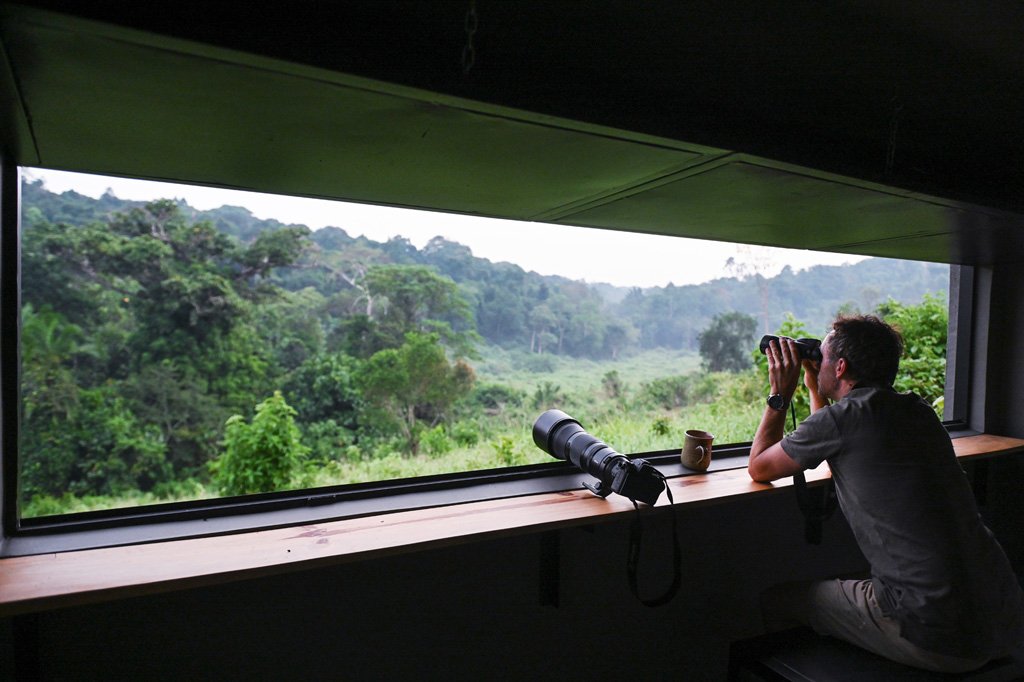
Cameras, phones, binoculars and electronics deserve careful consideration when deciding what to pack for Kibale National Park. Kibale offers outstanding opportunities for wildlife observation and photography, but rainforest conditions create challenges that are very different from photographing wildlife from a safari vehicle. Dense vegetation can limit available light, animals can move quickly between branches, humidity can affect equipment, and rain can arrive while you are carrying expensive electronics through the forest.
The best approach is therefore not to carry as much technology as possible. It is to select equipment that you understand, can protect from moisture and are comfortable carrying for several hours. For many visitors, a camera or smartphone, binoculars, spare power, sufficient storage and waterproof protection will cover the essentials. Travelers preparing specifically for chimpanzee trekking in Kibale National Park should prepare cameras for challenging rainforest light conditions rather than assuming the forest will provide the bright, open light associated with savannah wildlife photography.
Should You Bring a Camera to Kibale National Park?
Yes, a camera is worthwhile for travelers who enjoy wildlife and travel photography, but it does not need to be a professional interchangeable-lens system. Modern smartphones, compact cameras, mirrorless cameras and DSLRs can all be useful depending on your priorities and photography experience.
The important question is not whether you own the most expensive camera. It is whether you can operate your chosen camera quickly and confidently. Wildlife photography frequently gives you only a short opportunity to react, and unfamiliar equipment can become a distraction.
Practice before traveling. Know how to adjust exposure, shutter speed, ISO and autofocus without searching through menus for several minutes. Make sure you understand how to disable the flash before entering the forest.
Why Kibale Forest Photography Can Be Challenging
A tropical forest may look bright to your eyes while still providing surprisingly little light for a camera. Kibale’s canopy filters sunlight, vegetation creates deep shadows, and cloud cover can reduce illumination further.
At the same time, primates and birds may move rapidly. This combination of low light and moving subjects is one of the principal technical challenges of forest wildlife photography.
A camera capable of producing acceptable results at higher ISO settings can therefore be useful. A lens capable of admitting a reasonable amount of light can also help, although photographers should balance optical performance against the weight they have to carry.
The wider diversity of subjects is another reason to prepare properly. Kibale is not solely about one species. Travelers can learn about the many primates living throughout Kibale National Park and its remarkably diverse rainforest habitats before deciding which photography equipment deserves space in their bag.
Camera or Smartphone for Kibale?
A dedicated camera provides advantages for travelers who want greater control over focal length, shutter speed, autofocus and image quality under difficult light. Interchangeable-lens cameras can also use telephoto lenses when wildlife remains farther away or high in the canopy.
A smartphone offers a completely different advantage: simplicity. It is small, light and already familiar to most travelers. Modern phones can produce excellent travel photographs, particularly when subjects are reasonably close and sufficient light is available.
There is no reason every Kibale visitor needs to buy a dedicated camera. If photography is primarily a way of recording memories rather than a major purpose of your safari, a good smartphone may be the more practical choice.
If photography is one of the main reasons for your trip, a dedicated camera gives you substantially greater flexibility.
What Is the Best Camera for Kibale?
There is no single best camera for Kibale National Park. A professional wildlife photographer and a first-time safari visitor have completely different requirements.
For forest photography, useful characteristics include dependable autofocus, acceptable high-ISO performance, comfortable handling and a system that does not become excessively heavy once a suitable lens is attached.
Weather resistance can be valuable, but it should never replace proper rain protection. Even weather-sealed cameras should be protected rather than deliberately exposed to tropical rain.
Most importantly, bring a camera you already understand. Familiarity can produce better results than purchasing an advanced new body shortly before departure and trying to learn it while wildlife is moving around you.
DSLR or Mirrorless Camera for Kibale?
Both DSLR and mirrorless cameras can produce excellent results in Kibale. There is no need to replace a DSLR you already use confidently simply because mirrorless systems have become increasingly popular.
Mirrorless systems can provide useful advantages such as sophisticated autofocus and electronic viewfinders, while DSLRs remain highly capable wildlife cameras. The individual camera, lens and photographer matter more than the broad category.
Weight should be considered carefully. A camera that feels manageable during a ten-minute test at home may feel very different after several hours around your neck or inside a trekking backpack.
What Lens Should You Bring for Kibale?
A moderate telephoto or flexible telephoto zoom can be particularly useful because wildlife may appear at varying distances. Chimpanzees and monkeys may be relatively close at one moment and high in the canopy at another.
There is no universally correct focal length because camera sensor size, subject distance, vegetation and individual photographic style all affect what works best.
Rather than carrying several large lenses to cover every theoretical possibility, consider selecting a versatile lens that handles the majority of situations you realistically expect.
Travelers interested in a wider Uganda wildlife itinerary can also use this Uganda birding safari guide covering binoculars, cameras and equipment for serious wildlife observation when choosing optics that can serve both Kibale and other destinations.
Do You Need a Telephoto Lens for Kibale?
A telephoto lens can be extremely useful, especially when animals remain above you in the forest canopy. It allows photographers to isolate subjects without physically approaching wildlife.
However, extremely large super-telephoto lenses can become cumbersome during a forest trek. Equipment that works beautifully from a safari vehicle is not automatically ideal when you have to carry it yourself over uneven terrain.
Think carefully about the relationship between focal length and weight. The longest lens you own is not necessarily the best lens to take into Kibale.
Should You Bring a Wide-Angle Lens?
A wide-angle lens can be useful for telling the broader story of Kibale. The forest itself is visually impressive, and wide compositions can capture towering vegetation, trails, guides, landscapes and the atmosphere surrounding the wildlife experience.
However, changing lenses repeatedly inside a humid or dusty outdoor environment introduces inconvenience and potentially exposes the camera’s interior.
If you want both wide and telephoto perspectives, consider whether your camera system offers a practical zoom range or whether a smartphone can handle wider environmental photographs while your dedicated camera remains configured for wildlife.
Do Not Carry Every Lens You Own
Photography equipment can become the heaviest part of a Kibale daypack. A camera body, several lenses, binoculars, batteries and other accessories add weight quickly.
Ask what each lens genuinely contributes. If two lenses cover largely overlapping purposes, leave one behind. If you have never used a specialist lens confidently, Kibale is probably not the place to learn it.
A lighter setup makes it easier to move through the forest and reduces the number of expensive items requiring waterproof protection.
Prepare Your Camera for Low-Light Forest Conditions
Kibale’s dense canopy can create lower-light conditions than many first-time visitors expect. Your camera may need a higher ISO than you normally use outdoors in bright sunlight.
A faster shutter speed can be important when photographing active primates or birds. If the shutter speed becomes too slow, subject movement can produce blurred images even when the camera itself is held steadily.
Modern cameras frequently allow automatic ISO to be combined with a chosen shutter-speed range. Photographers should test whichever approach they intend to use before traveling rather than experimenting for the first time during the wildlife encounter.
Autofocus Matters in Dense Vegetation
Forest autofocus can be challenging because leaves, branches and vines may appear between the photographer and the animal. A camera may focus on foreground vegetation instead of the subject.
Learn how to change autofocus areas quickly. A smaller focus area can sometimes help when the animal’s face appears between branches, while subject-detection autofocus can be useful on cameras that perform reliably with wildlife.
No autofocus system is perfect. Understanding how your own camera behaves in cluttered environments is more useful than memorizing one universal setting.
Use Burst Shooting Selectively
Burst or continuous shooting can help when a primate is moving, jumping or displaying interesting behavior. Several frames captured in quick succession improve the chance of recording the precise expression or position you want.
However, continuous high-speed shooting can fill memory cards extremely quickly and create hundreds of nearly identical files that must later be reviewed.
Use bursts deliberately rather than holding the shutter button continuously throughout the encounter.
Flash Photography and Chimpanzee Trekking
Flash should not be used when photographing chimpanzees. Current Kibale trekking guidance published by Safari Vacations & Travel Services specifically notes that flash photography is prohibited because it can startle and stress the animals.
Before entering the forest, make sure you know how to disable automatic flash on your camera or smartphone. Do this during preparation rather than discovering that the camera activates its flash automatically when light levels drop.
Low-light capability, appropriate ISO settings and sensible shutter-speed choices are therefore much more useful than carrying a flash unit.
Bring Spare Camera Batteries
A charged spare battery is small compared with most camera equipment and can prevent a frustrating situation if your primary battery becomes depleted.
Charge all batteries the night before the trek. Do not assume that a battery showing partial charge will necessarily last throughout an extended forest activity.
Keep spare batteries protected from moisture. A small waterproof pouch is much better than allowing batteries to move loosely around an exposed backpack pocket.
Chimpanzee Habituation Requires More Battery Planning
Battery preparation becomes particularly important for travelers participating in chimpanzee habituation because the experience can involve substantially longer periods in the forest than standard tracking.
More time means more opportunities to photograph behavior, but it can also mean greater battery consumption and considerably more photographs.
Travelers planning the extended activity can read this guide to preparing for Kibale chimpanzee habituation including cameras binoculars rain protection and trekking equipment.
Carry Enough Memory-Card Capacity
Check available storage before leaving your accommodation. A memory card containing photographs from several previous safari days may have much less remaining capacity than you realize.
Wildlife photographers shooting RAW files or high-speed bursts can consume storage quickly. Carry additional capacity appropriate to your camera and shooting style.
Store spare cards in a dedicated case. Memory cards are extremely small and easy to lose inside a daypack.
Back Up Photographs During Your Safari
Travelers taking large numbers of photographs should consider a backup routine during the wider trip. Depending on your equipment, this could involve a laptop, tablet, portable storage device or cloud synchronization when reliable internet access is available.
You do not need to carry the backup equipment into the forest. Leave laptops and other unnecessary electronics securely at your accommodation where appropriate and transfer photographs after returning.
Keeping images on more than one storage device reduces the consequences of losing or damaging a memory card later in the trip.
Protect Your Camera From Rain
Rain protection should be planned before trekking morning. A camera does not need to be submerged in water to suffer moisture problems; sustained rainfall or an inadequately protected backpack can expose equipment to significant moisture.
Use a suitable camera cover, waterproof camera bag, internal dry bag or another protection system appropriate to your equipment.
If your camera is already wet, follow the manufacturer’s care instructions rather than improvising potentially damaging drying methods.
Protect Electronics Even When Your Backpack Has a Rain Cover
A backpack rain cover is useful, but it should not necessarily be the only moisture barrier protecting expensive electronics. Covers can shift, and rain can reach parts of a backpack that remain exposed.
Placing cameras, spare batteries, memory cards and power banks inside appropriate internal waterproof protection adds another defensive layer.
This approach also protects equipment if a water bottle leaks inside the pack.
Humidity Matters as Much as Rain
Kibale’s forest environment can be humid even when it is not actively raining. Photographers moving equipment between different temperature and humidity conditions should be aware of condensation.
Avoid unnecessary lens changes in damp conditions and keep equipment protected when not in use. Small moisture-management products designed for camera bags can be useful where appropriate, provided they are used according to their instructions.
Bring a Microfiber Lens Cloth
A clean microfiber cloth is one of the smallest useful camera accessories you can carry. It can help with appropriate external lens cleaning when moisture or fingerprints affect the front element.
Keep the cloth dry. A wet cloth stored loosely inside a humid backpack quickly loses much of its usefulness.
There is usually no reason to carry an extensive camera-cleaning kit into the forest. More substantial maintenance can be handled back at your accommodation.
Should You Bring a Tripod?
A full-size tripod is unlikely to be necessary for most ordinary chimpanzee trekking visitors. It adds considerable bulk, requires setup time and can be cumbersome on narrow forest trails.
Specialist photographers may have particular reasons for using support equipment, but this should be planned carefully around the activity and current guidance.
For most travelers, improving handholding technique and selecting appropriate camera settings will be considerably more practical.
Should You Bring a Monopod?
A monopod occupies less space than a tripod and can provide support for heavy camera equipment. However, it is still another item to carry and manage while moving through the forest.
If you regularly photograph wildlife with a monopod and already understand how to use one efficiently, it may be worth considering. If you have never used one before, there is little reason to introduce it solely for Kibale.
Should You Bring Binoculars to Kibale?
Yes, binoculars are one of the most useful pieces of optical equipment for Kibale National Park. They can improve views of chimpanzees, monkeys and birds when animals remain high in the forest canopy.
Binoculars also encourage visitors to appreciate wildlife beyond the primary chimpanzee encounter. Kibale’s forest supports a rich community of primates and birds, and many interesting observations occur away from the immediate trail.
Current Kibale guidance on Safari Vacations & Travel Services recommends compact, lightweight binoculars and specifically discusses 8x and 10x magnification as useful options for forest viewing.
8x or 10x Binoculars for Kibale?
Both 8x and 10x binoculars can work well. Eight-power binoculars generally provide a wider field of view and can feel easier to hold steadily, while ten-power binoculars provide greater magnification.
Which feels better is partly personal. If possible, try both before purchasing rather than choosing entirely from specifications online.
For a traveler interested primarily in forest birding, binocular performance may deserve greater investment than it would for someone carrying them only occasionally.
Choose Lightweight Binoculars for Forest Walking
Large binoculars may provide excellent optical performance but can become tiring when worn around the neck for several hours alongside a camera.
Weight matters because binoculars are only one component of your trekking equipment. Add a camera, water, rain jacket and daypack and the combined load can become substantial.
A comfortable binocular strap or harness can help distribute weight, particularly for keen birders.
Water Resistance Is Useful for Binoculars
Water-resistant or waterproof binoculars are particularly appropriate for a rainforest destination. They should still be treated carefully and protected from unnecessary exposure to heavy rain.
Keep lens caps available and carry an appropriate cleaning cloth. Avoid touching optical surfaces unnecessarily.
Do You Need a Spotting Scope in Kibale?
Dedicated birders may use spotting scopes during a wider Uganda birding safari, but a scope is much less convenient to carry through forest than ordinary binoculars.
Unless birding is a major purpose of your trip and your itinerary specifically supports scope use, binoculars are usually the more practical optical tool for forest walking.
Serious birdwatchers can compare equipment requirements in the complete Uganda birding safari guide for choosing binoculars cameras lenses and wildlife equipment.
Your Smartphone Is More Than a Camera
A smartphone can serve as a camera, document store, communication device, notebook and travel-information hub. This makes it one of the most useful electronics to bring to Kibale even if you also carry a dedicated camera.
Before entering the forest, download information you genuinely need rather than assuming continuous mobile connectivity. Store relevant contact information and booking details so they remain available offline where possible.
Prepare Your Phone Before Trekking
Charge your phone fully before leaving the lodge. Remove unnecessary applications running in the background if battery life is a concern and make sure sufficient storage remains available for photographs and videos.
Check the camera settings before the trek. If your phone automatically uses flash in low-light conditions, understand how to disable it.
Consider putting the phone into a protective case and keeping it inside waterproof protection when rain threatens.
Should You Put Your Phone in Airplane Mode?
If you do not need connectivity during the trek, airplane mode can help reduce battery consumption caused by repeatedly searching for a network. You can still use the camera and access information stored locally.
However, follow any communication arrangements established by your guide or safari operator. Do not disable functionality you may genuinely need simply to save a small amount of battery.
Carry a Power Bank
A compact power bank can be particularly useful for travelers relying heavily on smartphones. It provides backup power during long travel days as well as forest activities.
Keep it protected from moisture and carry an appropriate charging cable. A power bank is of little value if the required cable is sitting in your main suitcase.
Airline restrictions concerning lithium batteries and power banks should be checked directly with the carrier before flying.
Bring the Correct Charging Equipment
Your electronics kit should include the chargers required for your camera, smartphone, power bank, smartwatch and any other devices you genuinely intend to use.
Before traveling internationally, confirm the current electrical plug and voltage information for Uganda from an authoritative source and make sure your equipment is compatible.
A compact multi-device charging solution can reduce the number of individual adapters you need to carry, provided it is appropriate for your electronics.
Charge Everything the Night Before Trekking
Trekking morning should not begin with a camera battery at 32 percent and a nearly empty phone. Establish a simple evening charging routine during your Kibale stay.
Recharge the camera, smartphone and power bank. Check spare batteries. Confirm that memory cards have adequate space and return every device to the correct bag after charging.
This takes only a few minutes but eliminates several common trekking-day problems.
Should You Carry a Laptop Into Kibale?
A laptop may be useful during the wider trip for professional photography backups or work, but it does not belong inside an ordinary chimpanzee trekking daypack.
Leave it securely stored according to your accommodation arrangements while entering the forest. Carrying a laptop adds substantial weight and exposes an expensive device to moisture without providing a meaningful benefit during the trek.
Tablets and E-Readers
The same logic applies to tablets and e-readers. They can be pleasant to use during transfers and lodge downtime but have little practical purpose during chimpanzee tracking.
Keep them with your main luggage rather than filling your trekking backpack with electronics you will not use.
Do You Need a Smartwatch?
A smartwatch can be useful for travelers who already use one for timekeeping, activity tracking or other familiar functions, but there is no reason to purchase one specifically for Kibale.
If you wear one, make sure it is reasonably protected against moisture according to the manufacturer’s specifications and begin the activity with adequate battery charge.
GPS Devices and Offline Maps
Visitors are accompanied by appropriate guides during organized chimpanzee trekking, so a personal GPS device should not be treated as a substitute for official guidance.
Offline mapping on a phone can still be useful during the wider Uganda journey, particularly during transfers, but it does not replace following ranger instructions inside the national park.
Should You Bring a Drone to Kibale?
Do not assume that recreational drone use is permitted simply because you own a drone or have flown one in another country. Drone operations can be subject to aviation, security, wildlife and protected-area restrictions.
Because regulations and authorization procedures can change, verify current requirements directly with the relevant Ugandan authorities before bringing or attempting to operate a drone. Do not rely solely on an old travel blog or social-media post.
Keep Electronics Quiet During Wildlife Encounters
Turn off unnecessary notification sounds before entering the forest. Camera beeps, phone alerts and other electronic sounds can distract both visitors and potentially wildlife.
Learn how to silence your equipment without disabling functions you actually need. This is another small task best completed before trekking morning.
Photography Etiquette Matters More Than Getting the Shot
A photograph is never more important than ranger instructions or wildlife welfare. Follow the directions provided during the briefing and while you are with the animals.
Do not push past other visitors, leave the instructed area or ignore distance guidance simply to obtain a cleaner background. Wildlife encounters are shared experiences conducted under conservation rules.
Photography should document the experience rather than control it.
Remember to Look Away From the Camera
One of the easiest mistakes is experiencing the entire encounter through a viewfinder or phone screen. Take photographs, but also put the device down periodically and observe what is happening directly.
The sounds, movements and atmosphere of Kibale’s forest cannot be completely captured in a photograph.
Protect Equipment During Wet-Season Visits
During Kibale’s wetter periods, organize electronics protection before leaving your accommodation. Cameras should have appropriate rain protection, and spare batteries, memory cards and phones should already be inside waterproof storage.
Do not wait for rain to begin before reorganizing the entire backpack. A good wet-season camera system can be protected quickly without unpacking everything on the trail.
Electronics During Relatively Drier Months
Relatively drier conditions do not remove the need for rain preparation. Keep waterproof protection available because forest weather can change and trails can remain damp after earlier rainfall.
The advantage of lightweight protective equipment is that carrying it creates little inconvenience even when it is never used.
Electronics for Chimpanzee Habituation
Chimpanzee habituation requires greater attention to battery life, memory-card capacity and equipment weight because participants can spend substantially longer in the forest.
Carry enough power and storage for your realistic shooting habits without turning the backpack into a professional equipment case unless photography is specifically the purpose of your trip.
Longer observation time can produce excellent photographic opportunities because you may see a wider range of behavior, but patience remains more important than constantly pressing the shutter.
Electronics for Birdwatchers in Kibale
Birdwatchers should prioritize good binoculars and may want a camera capable of photographing small subjects at greater distances. This is one situation where a longer telephoto lens can provide substantial value.
However, bird photography equipment becomes heavy quickly. Decide whether your primary objective is observing birds or producing high-resolution photographs of them.
A traveler focused on observation can keep the equipment considerably lighter with a good pair of binoculars.
Electronics for Travelers Using Only a Smartphone
A smartphone-only setup can be extremely effective for travelers who value a light daypack. Bring the phone in a protective case, keep it charged and carry a compact power bank if battery life is a concern.
Free sufficient storage before the trek. Learn how to control exposure, zoom and video settings on your particular phone, and disable automatic flash.
Do not depend excessively on digital zoom. Moving closer to wildlife should only occur when permitted and directed by your guide, never simply to improve a photograph.
Electronics for Serious Wildlife Photographers
Serious photographers should think about Kibale as a low-light forest assignment rather than a conventional open-plains safari. Lens speed, autofocus performance, high-ISO image quality and weather protection can all matter.
At the same time, mobility remains essential. A professional setup that is comfortable inside a safari vehicle may become exhausting when carried through forest terrain.
Test the complete system before departure. Put the camera, lens, binoculars, water, rain jacket, spare batteries and everything else into the actual backpack and walk with it for several hours.
Back Up and Recharge After Returning to the Lodge
Your electronics routine should continue after the forest activity. Once back at your accommodation, deal appropriately with any damp equipment, recharge batteries and back up important photographs where your system allows.
Clear enough storage for the next activity but avoid deleting original files until you are confident that backups have completed successfully.
Return spare batteries and memory cards to their designated cases rather than allowing small accessories to become scattered through your luggage.
Create a Simple Kibale Electronics System
Organization is more useful than owning dozens of accessories. Keep charged batteries in one place and depleted batteries somewhere clearly different. Keep empty memory cards separate from used cards. Store charging cables together.
Give your camera and binoculars consistent locations inside the daypack. This reduces the chance of leaving small but important items behind when changing accommodation.
Final Camera, Phone and Binoculars Check Before the Trek
Before leaving for Kibale’s forest, confirm that the camera battery is charged, the memory card has sufficient capacity and flash is disabled. Check your smartphone battery and available storage. Pack your binoculars and make sure their lenses are clean.
Place spare batteries, memory cards, the power bank and other moisture-sensitive accessories inside waterproof protection. Keep the camera itself accessible enough that you can use it without completely unpacking the backpack.
Then assess the total weight. If your electronics dominate the backpack to the point that carrying water and rain protection becomes inconvenient, reduce the photography equipment.
For another perspective on preparing for chimpanzee trekking, travelers can compare forest equipment considerations before making final decisions. The best electronics setup for Kibale is ultimately one that helps you observe and record the rainforest without becoming a burden. A familiar camera or smartphone, useful binoculars, sufficient battery power, adequate storage and dependable rain protection will serve most visitors far better than an overloaded bag of technology.
Health, Insect Protection, Toiletries and Personal Safety Items for Kibale
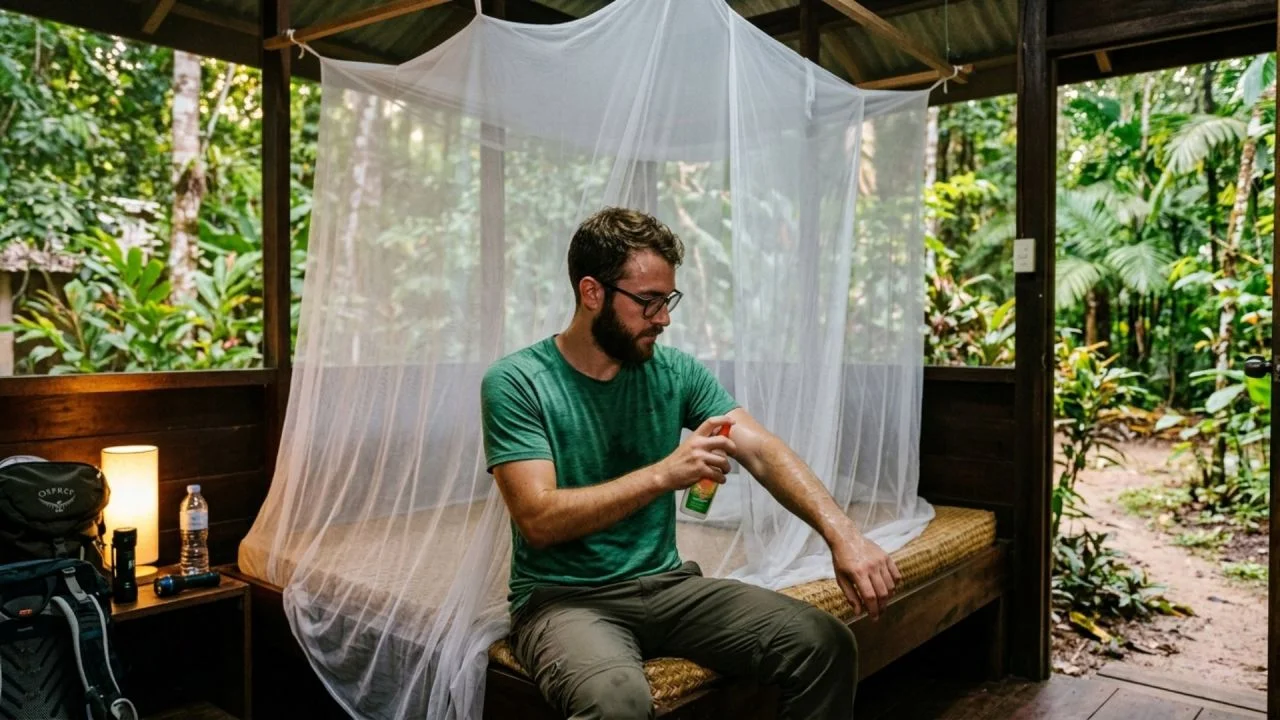
Health, insect protection, toiletries and personal safety items should receive the same attention as hiking boots and rain gear when deciding what to pack for Kibale National Park. Kibale is a tropical forest destination, and travelers spend considerable time outdoors while chimpanzee trekking, walking around lodges and traveling through western Uganda. Good preparation can help reduce preventable problems ranging from insect bites and blisters to discovering that an essential prescription medicine was left at home.
The health side of a Kibale packing list should be based on authoritative travel-health advice rather than safari folklore. Current CDC guidance for Uganda recommends that travelers discuss destination-specific vaccines and medicines with a healthcare professional before departure and specifically recommends prescription malaria-prevention medicine for travelers going to Uganda. CDC currently identifies malaria transmission areas as covering all of Uganda.
This section is designed to help you decide what physical health and hygiene items deserve space in your luggage. It does not replace individualized medical advice. Travelers should arrange an appropriate pre-travel medical consultation, particularly when vaccinations, prescription medicines, pregnancy, allergies or individual health conditions affect travel planning.
For the broader equipment needed alongside these health essentials, see our complete Uganda safari and trekking packing guide covering rainforest clothing footwear health and equipment.
Start Your Kibale Health Preparation Before You Pack
The most important health preparation for Kibale does not happen on trekking morning. It begins before departure. Travelers should review current destination-specific health information early enough to arrange vaccinations, prescription medication and other preventive measures where appropriate.
CDC currently advises travelers to Uganda to visit a doctor at least a month before travel where possible to discuss vaccines and medicines that may be needed. Individual recommendations vary according to age, medical history, vaccination history, itinerary, activities and other factors.
Do not wait until the final evening before your flight to begin researching travel-health requirements. Some preparations require professional consultation or advance timing.
Check Current Uganda Travel Health Notices Before Departure
Travel-health situations can change much faster than ordinary packing advice. A recommendation about socks or rain jackets may remain useful for years; an infectious-disease notice can change within days or weeks.
For that reason, travelers should check an authoritative travel-health source shortly before departure rather than relying exclusively on an article published months earlier.
As of August 2026, CDC’s Uganda traveler page currently carries a Level 2 notice advising enhanced precautions in relation to an Ebola Bundibugyo virus disease outbreak affecting Uganda and parts of the Democratic Republic of the Congo. This is time-sensitive information and should be rechecked before travel rather than assumed to remain unchanged.
The important packing lesson is broader: health preparation for Kibale should always include a final review of current official travel-health notices.
Malaria Prevention Should Be Discussed Before Traveling to Uganda
Malaria is one of the most important health considerations when preparing for Uganda. Current CDC guidance identifies malaria transmission throughout Uganda and recommends that travelers take prescription medicine to prevent malaria.
The appropriate medicine depends on individual circumstances and should be discussed with a qualified healthcare professional. Different preventive medicines have different dosing schedules, contraindications and potential side effects, so a generic Kibale packing guide should not choose medication on a traveler’s behalf.
If malaria medication is prescribed, obtain enough for the complete prescribed course. Some medicines need to be started before arriving in Uganda and continued for a specified period after leaving the malaria-risk area.
Follow the instructions supplied by your healthcare professional rather than changing the schedule because your forest trek has finished.
Pack Malaria Medication Where You Can Access It
Prescription malaria medication should not be treated like an optional toiletry. Keep it somewhere organized and accessible during the journey.
If you are flying, consider the consequences of placing all essential medicine in checked luggage that could be delayed. Follow airline security requirements, but keep genuinely essential medication under your control where possible.
Maintain the original or appropriately labeled packaging and carry documentation for prescription medicines where required.
Insect Repellent Is an Important Kibale Packing Item
Insect repellent belongs in a practical Kibale National Park packing list. CDC advises travelers in Uganda to take precautions against bug bites because mosquitoes, ticks and other biting insects can transmit disease.
CDC currently lists DEET, picaridin, IR3535, oil of lemon eucalyptus or para-menthane-diol, and 2-undecanone among active ingredients used in repellents for mosquito protection, with specific guidance varying according to the insect being targeted and the product.
Always use insect repellent according to the manufacturer’s directions rather than assuming that applying more provides better protection.
Travelers preparing for chimpanzee trekking in Kibale National Park should combine suitable clothing with practical insect protection when entering the forest.
DEET or Picaridin for Uganda?
Both DEET and picaridin are among the active ingredients identified by CDC for insect-bite prevention. The best choice for an individual traveler depends on factors such as concentration, expected exposure, personal preference and product instructions.
Instead of selecting a product simply because its label contains the word “tropical,” check the active ingredient and instructions.
Buy enough for the duration of your Uganda itinerary. A traveler spending two weeks moving through several national parks will naturally require more than someone visiting Kibale briefly.
Pack Repellent Before Arriving in Kibale
Do not depend on finding your preferred insect repellent after reaching the park. Travelers with a product they already know and tolerate well should bring an adequate supply from home or purchase it before traveling to a remote destination.
A smaller container can be carried during the forest activity while the remainder stays with your main luggage.
Make sure lids and spray mechanisms are secure before placing repellent beside clothing or electronics. Leaking toiletries can damage equipment even when rain does not.
Long Sleeves and Long Trousers Add Another Layer of Protection
Insect protection does not begin and end with a bottle of repellent. CDC recommends covering exposed skin with long-sleeved shirts, long trousers and appropriate clothing as part of reducing insect bites.
This aligns well with practical chimpanzee trekking clothing. Lightweight long sleeves and full-length trousers also provide coverage against forest vegetation.
Choose breathable fabrics so additional coverage does not make walking unnecessarily uncomfortable in humid conditions.
Consider Insect-Treated Clothing Where Appropriate
CDC advises travelers that permethrin-treated clothing and gear can be used as an additional insect-protection measure. This can include appropriate boots, trousers, socks and other equipment.
Permethrin should not be applied directly to the skin. Travelers choosing treated clothing or treating gear should follow the relevant product instructions carefully.
This is an optional additional layer rather than a replacement for the other preventive measures recommended for Uganda.
Use Mosquito Nets Correctly Where Needed
CDC recommends sleeping in screened or air-conditioned rooms where available and using a bed net when sleeping areas are exposed to the outdoors.
Many safari accommodations provide mosquito nets or other insect-control measures, but facilities vary. If this is particularly important to you, confirm arrangements with your actual accommodation rather than assuming every property uses the same setup.
If a mosquito net is supplied, use it properly. Make sure it is arranged so that insects cannot easily enter through large gaps.
Do You Need to Carry Your Own Mosquito Net?
Most travelers should first establish what their chosen accommodation provides before packing a bulky mosquito net. Many safari lodges already have mosquito-control measures in guest rooms.
If your itinerary involves basic accommodation, camping or sleeping spaces exposed to the outdoors, your requirements may differ.
Ask rather than assume. A packing list becomes more efficient when it reflects the actual places you will stay.
Remember Insect Protection Outside the Forest
Do not think of insect repellent as something used only during chimpanzee trekking. Mosquito exposure can occur around accommodations and during other stages of your Uganda journey.
Your insect-protection strategy therefore needs to cover the entire itinerary rather than one morning inside Kibale.
Travelers spending several days around the destination can use this five-day Kibale National Park itinerary for planning forest activities lodge time and nearby excursions when estimating how much personal-care equipment to bring.
Pack Sunscreen for Your Wider Kibale Trip
Kibale’s forest canopy can provide considerable shade, but sunscreen remains useful during transfers, lodge activities and time spent in more exposed locations.
CDC advises travelers to Uganda to protect themselves from ultraviolet radiation and recommends sunscreen alongside protective clothing and shade.
Pack a product that you already know works comfortably for your skin and use it according to the manufacturer’s instructions.
Apply Sunscreen and Insect Repellent in the Correct Order
CDC advises travelers using both products to apply sunscreen first, allow it to dry, and then apply insect repellent.
Follow the individual product instructions concerning reapplication. Do not assume that sunscreen and insect repellent have identical application schedules.
Pack a Small Personal First-Aid Kit
A compact first-aid kit is useful for a Kibale safari, particularly because forest activities involve walking on natural terrain. The objective is not to carry a complete medical cabinet but to have basic supplies appropriate to minor problems you can safely manage yourself.
Useful categories can include adhesive dressings, blister-care materials, appropriate antiseptic supplies and other simple items you normally use.
Individual travelers may need additional supplies according to their health needs and professional medical advice.
Blister Protection Deserves Special Attention
Blisters are a simple problem that can significantly reduce enjoyment of a forest trek. Prevention begins with well-fitting footwear and comfortable socks.
Bring blister-care products that you know how to use. If you notice a developing hot spot while walking, dealing with it early can be easier than waiting until significant friction damage develops.
This is another reason new hiking boots should be broken in before arriving in Kibale.
Pack All Essential Prescription Medication
Bring enough prescription medication for your planned trip and discuss additional supplies for possible travel delays with your healthcare professional where appropriate. CDC specifically advises travelers to bring the medicines they expect to need and extra medication in case travel is delayed.
Do not assume that an identical medicine, brand or formulation will be readily available near Kibale.
Keep medication clearly labeled and check whether any prescription you use is subject to restrictions when entering Uganda.
Check Whether Your Medication Is Legal in Uganda
Some prescription medicines that are routine in one country may be regulated differently elsewhere. CDC advises travelers to check whether prescription drugs they intend to bring are legal at their destination.
Travelers carrying controlled medicines or unusual prescriptions should verify requirements with the appropriate Ugandan authority or diplomatic mission before departure.
Do not hide or repackage prescription medication in unmarked containers simply to save luggage space.
Carry Copies of Important Prescriptions
A copy of a prescription or letter from an appropriate healthcare professional can be useful when traveling with important medication, particularly when the medicine has specific storage or administration requirements.
Keep relevant medical information accessible while protecting your privacy. A secure digital backup can supplement paper documentation.
Pack Medication in Your Carry-On Where Appropriate
Essential medication should generally remain accessible during flights and transfers rather than being placed exclusively in checked luggage. Lost or delayed baggage is inconvenient; lost essential medication can become a much more serious problem.
Follow airport and airline requirements for liquids, needles and other medical supplies.
Medication Requiring Refrigeration Needs Advance Planning
Travelers using medication that must remain within a particular temperature range should make arrangements before traveling. Do not assume every safari vehicle or lodge room contains suitable refrigeration.
Discuss transport and storage requirements with your healthcare professional and confirm relevant facilities with your safari operator and accommodation.
Yellow Fever Vaccination and Uganda
Yellow fever requires particular attention because it can involve both health recommendations and entry documentation. Current CDC guidance recommends yellow fever vaccination for travelers to Uganda aged nine months and older and currently lists Uganda’s country entry requirement as applying to arriving travelers aged one year and older.
Uganda’s Directorate of Citizenship and Immigration Control also lists a yellow fever vaccination certificate among documents required for online visa applications.
Because health and immigration requirements can change, verify the current requirements before departure rather than relying solely on a saved packing article.
Carry Your Yellow Fever Certificate Carefully
If you require proof of yellow fever vaccination, treat the certificate as an important travel document rather than placing it loosely inside your main suitcase.
Keep it accessible when passing through immigration and protect it from water and physical damage.
A digital copy can be useful as a backup, but travelers should not assume that a digital photograph will automatically replace an original document when an authority requires the certificate itself.
Review Routine Vaccinations Before Travel
Travel preparation is a useful opportunity to confirm that routine vaccinations are current. CDC’s Uganda traveler guidance also contains destination-specific recommendations that vary by disease and traveler circumstances.
Review these with an appropriate healthcare professional rather than attempting to build a vaccination schedule from safari blogs.
Do Not Travel for Chimpanzee Trekking When You Are Ill
Health preparation in Kibale is not only about protecting the traveler. Chimpanzees are susceptible to human illnesses, making responsible visitor behavior important for wildlife conservation.
Current Kibale trekking guidance emphasizes that visitors experiencing contagious illness, particularly respiratory symptoms, should not participate in close primate activities.
If you become ill before your scheduled trek, inform your safari operator and follow current park guidance rather than concealing symptoms because you do not want to miss the activity.
This issue becomes especially important for travelers participating in Kibale chimpanzee habituation where visitors spend extended periods around wild primates in rainforest habitat.
Pack Hand Sanitizer
A small container of alcohol-based hand sanitizer can be useful during transfers and outdoor activities when handwashing facilities are not immediately available.
Keep a small container accessible and the remainder with your main toiletries if you need more for a longer trip.
Hand sanitizer does not replace proper handwashing in every situation, but it can be a practical travel-hygiene item.
Carry Tissues or Toilet Paper
A small packet of tissues is useful during a wide range of travel situations and takes very little space. Some travelers also carry a modest emergency supply of toilet paper when traveling through rural areas.
Anything taken into the forest must be removed again when required. Do not leave tissues, wipes or other personal waste behind.
Avoid Relying on Flushable-Wipe Marketing
Wet wipes can be convenient during travel, but they create waste and should never be discarded in the forest. Even products marketed as biodegradable or flushable should be handled according to local waste systems rather than abandoned outdoors.
Carry a small sealable waste bag if you need a way to transport personal rubbish until it can be disposed of properly.
Pack the Toiletries You Actually Use
There is no need to carry full-size containers of every product in your bathroom. Choose travel-sized quantities appropriate to the length of your trip.
Useful basics may include toothbrush, toothpaste, deodorant, shampoo, conditioner where needed, soap or cleanser, moisturizer, sunscreen and personal grooming products.
Check what your accommodation provides before packing duplicates. Some lodges supply toiletries while others offer only basic products.
Use Leak-Proof Toiletry Containers
Safari travel can involve rough roads and frequent luggage handling. A shampoo bottle that stays closed inside a bathroom cabinet may behave differently after hours inside a moving vehicle.
Use secure containers and place liquids inside a separate toiletry pouch or leak-resistant bag. Keep them away from passports, camera equipment and electronics.
Pack Menstrual Products You Prefer
Travelers who menstruate should bring enough of their preferred products for the trip rather than assuming the exact brand or type will be easily available near Kibale.
Consider the complete itinerary and possible travel delays when deciding quantity.
Pack a small sealable bag for discreetly carrying used products until appropriate disposal is available. Never leave menstrual products or other hygiene waste in the forest.
Menstrual Cups and Reusable Products
Travelers who already use a menstrual cup or another reusable product comfortably may prefer continuing with their normal routine while traveling.
However, a remote safari is not necessarily the best time to experiment with an unfamiliar menstrual product for the first time. Consider access to appropriate cleaning facilities and potable water according to the requirements of the product you use.
Contact Lenses Versus Glasses in Kibale
Contact-lens users should carry sufficient lenses and appropriate cleaning supplies for the complete trip. Forest humidity, dust during road transfers and long days outdoors can make eye comfort particularly important.
Bring backup glasses even if you normally wear contacts exclusively. Losing a lens or developing irritated eyes is far easier to manage when you have an alternative.
Keep contact-lens solution securely sealed inside your toiletry bag.
Bring Spare Prescription Glasses
Travelers who depend heavily on prescription glasses should consider carrying a spare pair, especially on longer Uganda itineraries.
A damaged pair can be difficult to replace quickly near a national park. Keep the spare in a protective case inside your main luggage.
Pack Lip Balm and Moisturizer if You Use Them
Travel days, sun exposure and changing environmental conditions can leave some travelers with dry lips or skin. A small lip balm and familiar moisturizer occupy little luggage space.
There is no need to build an elaborate skincare routine specifically for Kibale. Familiar products are often preferable to trying new formulations while traveling.
Do You Need Water-Purification Equipment?
Most travelers on organized safaris rely on drinking water supplied by their lodge or safari operator rather than personally treating surface water in Kibale.
If your itinerary includes independent hiking, camping or situations where safe drinking water may not be reliably supplied, requirements can differ. Discuss this with your operator before departure.
CDC advises travelers in Uganda to pay attention to safe food and drinking water because contaminated food and water can cause illness.
Carry a Refillable Water Bottle
A durable refillable bottle is useful throughout a Uganda safari and reduces dependence on repeatedly purchasing small disposable bottles where safe refill arrangements exist.
Make sure it seals properly before placing it inside a backpack containing electronics.
Clean the bottle regularly according to the manufacturer’s recommendations.
Do You Need Electrolytes?
Some travelers choose to carry electrolyte products for strenuous or hot travel days, but individual requirements vary. They should not be treated as a substitute for adequate water or appropriate medical care.
Travelers with medical conditions affecting hydration or electrolyte balance should seek individualized professional advice rather than following generic safari recommendations.
Food and Water Hygiene Matters Beyond Your Packing List
No toiletry or medicine kit can compensate completely for poor food and water choices. CDC advises travelers to Uganda to take precautions with food and drinks.
Follow current authoritative guidance, particularly when eating away from established accommodation or traveling through areas where food-storage and water-treatment conditions are uncertain.
Pack a Small Waste Bag for the Forest
A small sealable bag is useful for carrying tissues, wrappers and other personal waste out of the forest. Nothing should be discarded along the trail.
Keeping waste contained also prevents used hygiene items from contaminating other equipment inside your backpack.
Personal Safety Starts With Carrying Less
Do not take unnecessary valuables into Kibale’s forest. Expensive jewelry, large quantities of cash, laptops and unrelated electronics can remain securely stored according to your accommodation arrangements.
A lighter daypack is easier to manage and gives you fewer valuable possessions to monitor during the activity.
Protect Important Documents From Moisture
Any important document carried during transfers or activities should have suitable water protection. A simple waterproof document pouch can protect papers from rain, leaking toiletries and accidental spills.
Keep digital copies of important documents in a secure location as a backup, but do not assume digital copies always replace originals where official documents are required.
Carry Emergency Contact Information Offline
Store important contact details somewhere that does not depend entirely on an internet connection. This can include your safari operator, accommodation, travel insurer and appropriate emergency contacts.
A smartphone note available offline can work, while a small paper backup adds redundancy if the phone becomes damaged or loses power.
Travel Insurance Details Should Be Accessible
Keep your travel-insurance policy information and emergency assistance details somewhere accessible. Understand how your insurer expects you to contact them if medical care is needed.
Travelers planning remote activities should review what their policy covers before departure rather than assuming every safari or trekking activity is automatically included.
Consider Medical Evacuation Coverage
CDC recommends travelers consider travel-health and medical-evacuation insurance. This is particularly worth reviewing when an itinerary includes rural or remote destinations where advanced medical care may not be immediately nearby.
Read the policy terms carefully. Coverage, exclusions and procedures vary substantially between insurers.
Do Not Pet or Feed Animals
Personal safety in Uganda includes avoiding unnecessary contact with animals. CDC advises travelers not to pet or feed animals because apparently healthy animals can still carry diseases, including rabies.
This applies beyond Kibale’s chimpanzees. Do not approach dogs, monkeys or other animals simply for a photograph.
Rabies Preparation Depends on Your Itinerary
CDC reports that dogs infected with rabies are commonly found in Uganda and that rabies also occurs in some terrestrial wildlife. Whether pre-exposure vaccination is appropriate depends on the traveler’s activities and access to post-exposure treatment.
This is a question to discuss with a healthcare professional before travel rather than something a packing article should decide for you.
Know What to Do After an Animal Bite or Scratch
Any bite or scratch from an animal deserves prompt attention. Travelers should obtain appropriate medical advice rather than assuming a small wound is harmless.
A pre-travel medical consultation is a good opportunity to understand what action you should take if an animal exposure occurs abroad.
Pack Appropriate Sun and Heat Protection for the Wider Safari
Kibale’s canopy provides shade, but your wider Uganda itinerary may include exposed roads, boat trips, savannah drives and outdoor lodge areas. A hat, sunscreen, water bottle and lightweight clothing therefore remain useful beyond the forest.
CDC advises travelers undertaking outdoor activities to stay alert to heat and hydration and to use appropriate sun protection.
Personal Hygiene After a Muddy Trek
After returning from the forest, change out of wet or muddy clothes rather than remaining in them unnecessarily. Wash and dry your feet, particularly if socks or shoes became saturated.
Deal with minor blisters or abrasions appropriately and allow footwear to dry before the next activity.
A separate bag for dirty clothing prevents muddy trekking gear from contaminating clean clothes inside your main luggage.
Do Not Seal Wet Shoes Away for Days
A plastic bag is useful for temporarily separating muddy footwear during transfers, but wet shoes should be allowed to dry appropriately when circumstances permit.
This becomes particularly important if another forest activity follows the next morning.
Health Preparation for Chimpanzee Habituation
The longer chimpanzee habituation experience requires greater attention to comfort, hydration, personal medication and insect protection because participants can spend considerably more time in the forest.
Bring only health supplies you realistically need during the activity while keeping the daypack manageable. Essential medication should remain accessible, and insect repellent and rain protection should not be buried beneath unnecessary equipment.
For additional planning, this guide explains chimpanzee habituation in Uganda including Kibale and preparation for extended rainforest tracking experiences.
Health Preparation for Travelers Visiting Multiple Uganda Parks
If Kibale is one stop on a longer safari, pack health supplies for the entire itinerary rather than just the number of nights spent near the forest.
Prescription medication, insect repellent, sunscreen, contact-lens supplies and menstrual products should account for transfers and reasonable travel delays.
A multi-park itinerary also makes organization more important. Keep daily-use health items accessible rather than unpacking your entire suitcase at every lodge.
Health Preparation for Older Travelers
Age alone does not determine whether someone can enjoy Kibale, but travelers using regular medication or managing individual health considerations should discuss the planned activity with an appropriate healthcare professional before departure.
Carry medications consistently and avoid making assumptions about local availability of a particular prescription.
For context about the walking involved, travelers can review information about Kibale trekking difficulty before discussing their itinerary with their own medical professional.
Health Preparation for Children and Families
Families should obtain child-specific travel-health advice rather than simply reducing adult medication doses or applying adult product recommendations automatically to children.
Age restrictions also apply to some wildlife activities, so verify current park rules before planning a child’s trekking equipment or health kit.
Pregnancy and Kibale Travel
Pregnant travelers should obtain individualized medical advice before planning travel to Uganda. Malaria, mosquito-borne infections, medication choices and the physical demands of trekking can all require pregnancy-specific consideration.
A general safari packing article cannot determine whether a particular itinerary or preventive medicine is appropriate during pregnancy.
Travelers With Allergies Should Pack Familiar Supplies
Anyone with significant allergies should carry the medication and documentation recommended by their healthcare professional. Do not assume an identical brand or product will be available near Kibale.
If a severe allergy affects food choices, inform the safari operator and accommodation before arrival rather than waiting until meals are being served.
Do Not Experiment With New Toiletries Before the Trek
A tropical safari is not the ideal time to discover that a new sunscreen, insect repellent or skincare product irritates your skin. Where practical, test products before departure.
Familiar toiletries also make it easier to distinguish ordinary irritation from a new problem requiring attention.
Avoid Strongly Scented Toiletries in the Forest
For trekking days, simple, functional personal-care products are preferable to heavily scented perfumes and cosmetic sprays. Strong fragrance provides no useful advantage during a wildlife trek and can attract unwanted attention from some insects.
Leave unnecessary perfume bottles with your main luggage rather than carrying them in the daypack.
Keep Your Trekking Health Kit Small
There is a difference between a complete travel-health kit for your Uganda journey and what needs to enter Kibale’s forest on your back.
Your main luggage can hold reserve toiletries, additional medication supplies and other items. The trekking daypack should contain only essentials such as necessary personal medication, insect repellent, basic blister care and other items you might realistically need during the activity.
What Should Stay at the Lodge?
Full-size toiletry bottles, reserve medication that is not needed during the activity, large first-aid kits, electric grooming equipment and other bulky personal-care items can remain secured with your main luggage where appropriate.
Reducing the daypack load makes forest walking more comfortable.
Check Your Health Kit the Night Before Chimpanzee Trekking
The evening before your trek, confirm that essential medication is accessible, insect repellent is packed and your water bottle is ready. Check that your small first-aid supplies have not been left in another bag.
Place toiletries and liquids in secure containers so they cannot leak onto camera equipment.
If you feel unwell, do not ignore symptoms simply because your permit has been booked. Contact your operator and follow current health and park guidance.
Final Health and Personal-Care Check Before Leaving for Kibale
A well-prepared Kibale health kit should be compact but deliberate. Bring essential prescription medication, the malaria-prevention medicine prescribed for you where applicable, insect repellent, sunscreen, basic first-aid and blister supplies, hand sanitizer, personal toiletries and any individual hygiene products you depend upon.
Carry appropriate yellow fever documentation and other health records where required. Keep important papers protected from moisture. Bring enough personal medication and specialist toiletries for the complete trip rather than assuming replacements will be easily available near the national park.
Combine these supplies with long clothing and other physical insect-protection measures. Follow current professional advice about malaria prevention, vaccinations and destination-specific health risks.
Most importantly, recheck official health information shortly before travel. Health conditions and travel notices can change much more quickly than Kibale’s basic packing requirements. A good packing guide tells you what to prepare; an authoritative current health source tells you whether anything important has changed since the guide was written.
Travelers can also review chimpanzee trekking information while planning their wider Uganda journey. Combining careful medical preparation with insect protection, sensible hygiene supplies and a small personal safety kit creates a much stronger foundation for a comfortable Kibale experience.
Documents, Money, Luggage and Packing for a Wider Uganda Safari
Knowing what to pack for Kibale National Park is only one part of preparing for a Uganda safari. Many travelers combine Kibale with Queen Elizabeth National Park, Bwindi Impenetrable National Park, Murchison Falls National Park, Lake Mburo or other destinations, which means luggage must work across rainforest trekking, wildlife drives, boat trips, lodge stays and long road transfers.
Documents and money require equally careful preparation. Your passport, immigration documents, travel insurance information, vaccination documentation where required, safari booking details and access to appropriate payment methods are considerably harder to replace than a forgotten shirt. They should therefore be organized before you begin worrying about optional safari accessories.
The best strategy is to divide your belongings according to purpose. Your main luggage carries the majority of your clothing and personal supplies. A small daypack carries what you need during activities. Your most important documents, essential medication and valuable electronics should remain accessible and appropriately protected during travel.
For the broader clothing and equipment considerations, use this complete Uganda safari packing guide for clothing footwear trekking equipment documents luggage and electronics.
Start With Your Passport
Your passport is the most important document in your Uganda travel preparation. Check its expiration date well before departure rather than discovering a validity problem while completing immigration arrangements or checking in for your flight.
Passport and entry requirements can change. Verify the current requirements through Uganda’s official immigration authorities and the relevant government travel advice for your nationality before departure.
Do not rely solely on a safari blog, an old forum discussion or advice from someone who traveled several years ago for current immigration requirements.
Check That Your Passport Has Suitable Blank Pages
International travel can require space for immigration stamps and, depending on the journey, visas or other endorsements. Travelers combining Uganda with Rwanda, Kenya, Tanzania or another country should consider the requirements of every border they intend to cross.
Inspect your passport well before traveling. If it is nearly full, investigate whether renewal is necessary rather than waiting until departure approaches.
Check Uganda Visa Requirements for Your Nationality
Visa requirements depend on nationality and can change. Some travelers require a visa while others may fall under different arrangements.
Verify the rules that apply specifically to the passport you will use for travel. Use Uganda’s official immigration information when determining current visa requirements and application procedures.
Do not assume that advice given to another member of an international travel group applies to you simply because you are taking the same safari.
Apply Through Official Channels
Travelers should be cautious about unofficial visa websites that resemble government portals. Before entering passport details or making a payment, confirm that you are using the current official Ugandan immigration system.
Save the appropriate application confirmation and approved travel documentation according to the instructions you receive.
Carry the Travel Documents Required for Entry
Your exact document requirements depend on your nationality and current Ugandan immigration rules. Prepare them before leaving home and keep essential entry documents accessible during your international journey.
Do not place every important document exclusively inside checked luggage. Checked baggage can be delayed or misdirected, while immigration documentation may be required before you ever retrieve your suitcase.
Yellow Fever Documentation Needs Special Attention
Yellow fever vaccination documentation can be important when entering Uganda. Requirements can depend on current regulations and traveler circumstances, so check authoritative health and immigration guidance before departure.
If you are required to carry an original vaccination certificate, protect it carefully. A waterproof document sleeve can prevent damage from spills and rain during the wider journey.
Do not assume that a photograph on your phone automatically substitutes for an original certificate when an authority requests official documentation.
Keep Your Travel Insurance Information Accessible
Carry the essential details of your travel insurance policy, including the policy number and instructions for contacting emergency assistance.
Read the policy before traveling. Do not assume that every wildlife, trekking or adventure activity is automatically covered merely because the policy is marketed as travel insurance.
If your Uganda itinerary includes chimpanzee trekking, gorilla trekking or other specific activities, confirm that your chosen coverage is appropriate for your plans.
Consider Medical Evacuation Coverage
Kibale and several other Uganda safari destinations are away from the country’s largest medical facilities. Travelers should therefore consider whether their insurance provides suitable emergency medical and evacuation coverage for their itinerary.
Coverage limits, exclusions and procedures vary between insurers. Understand what number you need to call and whether prior authorization is required for particular services.
Keep Safari Booking Information Organized
Save your safari itinerary, accommodation details, operator contact information and relevant booking confirmations somewhere easy to access.
A digital copy on your phone is convenient, but important information should be available offline because continuous internet access should not be assumed throughout a national park itinerary.
Travelers undertaking a multi-destination journey can see how frequently accommodations and activities change in this eight-day Uganda safari combining Kibale Bwindi Queen Elizabeth and major wildlife experiences.
Keep Important Contact Information Offline
Save your safari operator’s telephone number, accommodation details, insurer’s emergency contact and other essential information directly on your phone.
A small paper copy provides additional redundancy if your phone is lost, damaged or completely discharged.
Make Secure Copies of Important Documents
Copies of your passport identification page, insurance details and other important travel documents can be useful if originals are lost or damaged.
Store copies separately from the originals. Keeping the passport and its only photocopy in the same lost backpack provides little redundancy.
A secure digital backup can provide another layer of protection, provided you use a storage method you trust.
Do Not Carry Every Original Document Into Kibale Forest
Documents required for international travel do not necessarily need to accompany you during chimpanzee trekking. Confirm what identification or booking information is required for the activity and leave unrelated originals secured appropriately where possible.
Carrying a passport unnecessarily through a wet forest creates avoidable risk of loss or water damage.
Confirm How Your Chimpanzee Permit Is Being Handled
If your chimpanzee trekking arrangements are part of an organized safari, establish whether your operator handles the relevant permit documentation or whether you need to carry anything yourself.
Do this before trekking morning. You should arrive at the activity knowing how your booking is being managed rather than searching through emails at the briefing point.
Carry Both Digital and Practical Offline Information
Phones make travel documentation easier, but they also introduce dependence on battery power. A completely discharged smartphone cannot display an itinerary, insurance number or accommodation address.
Keep essential information available offline and consider carrying a concise paper backup of details you could genuinely need during a transfer.
Understanding Money for a Uganda Safari
Money planning for Uganda should account for several different situations. Major safari costs may have been paid before arrival, while local cash can remain useful for smaller purchases, tips and incidental expenses.
The Ugandan shilling is the local currency. Current exchange rates fluctuate, so check them close to your travel date rather than embedding an old conversion into your budget.
Travelers should confirm payment arrangements with their actual safari operator and accommodation because card acceptance and payment policies vary.
Carry Some Ugandan Shillings
Local currency is particularly useful for smaller everyday transactions. Depending entirely on foreign currency or card payments can create unnecessary inconvenience.
How much cash you need depends on what your safari package already includes. A fully organized trip covering accommodation, activities and meals can require much less spending cash than an independently arranged journey.
Do Not Exchange Your Entire Travel Budget at Once
Carrying an unnecessarily large quantity of cash increases risk. Estimate likely spending needs and use a sensible combination of payment methods.
Ask your safari operator about realistic opportunities to access cash along your itinerary. Remote park areas should not be treated like major urban centers with financial services available around every corner.
US Dollars Can Be Useful, but Verify Current Acceptance
US dollars are commonly relevant to East African tourism, but travelers should verify current payment requirements with the businesses they will actually use.
Foreign-currency acceptance can involve conditions concerning note age, denomination or physical condition. Do not assume every dollar note will automatically be accepted everywhere.
If an operator requests payment in US dollars, ask for its current requirements before leaving home.
Bring Clean, Undamaged Banknotes When Foreign Cash Is Required
Where foreign currency is part of your payment plan, keep notes in good physical condition. Torn, heavily marked or damaged banknotes may be more difficult to exchange or use.
Store cash somewhere protected from moisture and separate from leaking toiletries or water bottles.
Do Not Depend Entirely on Cards
Cards can be useful at some hotels, lodges, restaurants and businesses, but acceptance should not be assumed at every location on a Uganda safari.
Connectivity can also affect electronic payments. Carrying an appropriate amount of local cash provides useful backup.
Do Not Depend Entirely on Cash Either
Carrying your entire travel budget as physical currency creates unnecessary risk. A mixture of payment methods is generally more practical.
Keep reserve funds separate from the cash you use for everyday spending rather than repeatedly displaying everything you are carrying.
Check Your Bank’s International Card Settings
Before departure, confirm that the cards you plan to use will function internationally and understand any foreign-transaction or cash-withdrawal fees.
Make sure you know how to contact your card provider if a card is blocked or lost.
Consider Carrying More Than One Payment Card
Travelers who rely on cards may benefit from carrying a backup card stored separately from the primary card.
If one wallet is lost, keeping every payment method inside it creates a much larger problem.
Keep Emergency Money Separate
A modest reserve stored separately from your everyday wallet can be useful if the primary wallet is misplaced or a payment method unexpectedly fails.
There is no need to carry excessive hidden cash. The objective is redundancy rather than creating another valuable item to worry about.
Plan for Tips Before Reaching Remote Areas
If you intend to tip guides, lodge staff, porters or other service providers, ask your safari operator about current local expectations and appropriate currencies.
Obtaining suitable cash before reaching remote destinations can be easier than trying to find change immediately before departure from a lodge.
Keep a Small Amount of Accessible Spending Money
Do not repeatedly retrieve your entire cash reserve to pay for a small purchase. Keep a modest amount accessible for everyday transactions and store reserve funds more securely.
This also makes it easier to track spending during a longer safari.
What Is the Best Luggage for a Uganda Safari?
The best luggage depends on how you are traveling. A private road safari in a 4×4 may accommodate luggage differently from an itinerary involving domestic or charter flights.
Soft-sided duffel bags are popular for safari travel because they can be easier to fit into vehicle storage areas than large rigid suitcases. However, travelers should follow the actual luggage restrictions supplied by their airline or safari operator rather than assuming one bag style is mandatory.
Soft Duffel Bag or Hard-Shell Suitcase?
A soft-sided duffel is flexible and can be easier to load into safari vehicles. It can also compress slightly when it is not completely full.
A hard-shell suitcase provides structure and strong protection for contents but occupies a fixed amount of space regardless of how much is inside.
If your entire journey is by road and your operator confirms sufficient luggage capacity, either may be workable. If small aircraft are involved, check their baggage requirements before choosing.
Check Domestic Flight Baggage Limits Before Packing
Travelers using domestic or charter flights in Uganda should check the exact baggage allowance for the carrier and aircraft involved.
Small-aircraft limits can differ substantially from international airline allowances. Restrictions can concern total weight, bag dimensions and whether hard-sided luggage is accepted.
Do not copy a baggage limit from an unrelated airline or old travel article. Obtain the current allowance for your booked flight.
Your International Airline Allowance Is Not Your Safari Allowance
An international airline may permit significantly more baggage than a domestic safari flight or vehicle itinerary can conveniently accommodate.
Being allowed to fly into Uganda with two large suitcases does not mean carrying them around the country is practical.
Pack for the most restrictive important stage of your actual itinerary rather than the most generous allowance.
Road Safaris Still Reward Lightweight Packing
Even without domestic flights, lighter luggage makes a Uganda safari easier. Bags may be loaded and unloaded repeatedly as you change accommodation.
Large suitcases can also occupy substantial vehicle space, particularly when several travelers share a safari vehicle.
A longer itinerary such as this ten-day Uganda safari linking Kibale Bwindi Queen Elizabeth Murchison Falls and Lake Mburo demonstrates why versatile packing is more useful than carrying a separate wardrobe for every destination.
Use One Main Bag and One Practical Daypack
For many travelers, a simple luggage system works best: one main travel bag and one comfortable daypack.
The main bag contains clothing, toiletries, reserve medication and other items needed at accommodations. The daypack carries water, rain protection, camera equipment and personal essentials during activities.
This arrangement prevents your trekking backpack from becoming unnecessarily large.
Keep Your Daypack Small Enough to Carry Comfortably
Your daypack should be designed around what you genuinely need during an activity, not around everything you brought to Uganda.
A bag that feels almost weightless when empty can become surprisingly heavy after adding water, binoculars, a camera, batteries and rain equipment.
Consider a Small Personal Bag for Travel Days
Some travelers find a compact personal bag useful for passport, wallet, phone and other frequently accessed items during flights and transfers.
If you use one, make sure it works with your daypack rather than creating an awkward collection of multiple bags.
Use Packing Cubes if They Help You Stay Organized
Packing cubes can be useful on a multi-stop Uganda safari because they allow you to organize clothing by category rather than unpacking the entire duffel at every lodge.
For example, trekking clothes can remain separate from lodge clothing, while underwear and socks stay in another compartment.
Packing cubes do not reduce the actual weight of your belongings, however. Organization should not become an excuse to bring more.
Separate Clean and Dirty Clothing
Forest trekking can leave trousers, socks and other garments muddy or damp. Carry a separate lightweight bag for temporarily isolating dirty clothing from clean items.
A breathable or washable solution is useful for longer trips. Avoid sealing wet clothing inside an airtight bag for extended periods where possible.
Use a Separate Shoe Bag
Muddy hiking boots should not sit directly against clean shirts inside your luggage. A simple shoe bag keeps dirt contained during transfers.
Allow wet footwear to dry appropriately whenever circumstances permit before packing it for a long journey.
Do Not Pack Hiking Boots Deep Inside Checked Luggage if You Cannot Replace Them Easily
Your broken-in hiking footwear is one of the most difficult pieces of trekking equipment to replace immediately if baggage is delayed.
Travelers particularly concerned about baggage disruption may choose to wear their main trekking footwear during international travel or otherwise keep essential hard-to-replace items accessible, subject to airline and security requirements.
Keep Essential Medication Out of Inaccessible Luggage
Medication that you genuinely need should remain accessible during travel. Do not place your complete supply exclusively inside checked baggage.
Keep prescription medication appropriately labeled and follow airline rules concerning liquids, needles and other medical equipment.
Keep Valuable Electronics With You
Cameras, phones, spare batteries and other valuable electronics generally deserve greater protection than ordinary clothing.
Follow airline requirements concerning lithium batteries and electronic devices, and do not place prohibited battery types inside checked luggage.
Waterproof Important Items Inside Your Luggage
Rain is not the only threat to documents and electronics. A leaking shampoo bottle or water container can create the same problem inside a suitcase.
Use waterproof pouches for documents and sensitive equipment and place liquids inside secure toiletry bags.
Pack for Kibale and the Savannah Together
A wider Uganda safari often combines very different environments. Kibale requires clothing suited to walking through humid forest, while Queen Elizabeth, Murchison Falls and Lake Mburo can involve wildlife drives and more exposed conditions.
You do not need two entirely separate wardrobes. Lightweight long trousers, breathable shirts, a rain shell, comfortable casual clothing and sensible layers can work across multiple destinations.
A thirteen-day classic Uganda safari combines Kibale Bwindi Semliki Queen Elizabeth and Lake Mburo in one journey, illustrating why adaptable clothing is so valuable.
Pack for Kibale and Bwindi Together
Travelers combining chimpanzee trekking in Kibale with gorilla trekking in Bwindi can reuse much of the same forest clothing.
Hiking footwear, trekking socks, long trousers, lightweight long-sleeved shirts, rain protection and a practical daypack can all serve both destinations.
There is usually little reason to pack a completely separate trekking wardrobe for each forest.
Pack for Queen Elizabeth National Park
Queen Elizabeth National Park introduces more conventional savannah safari activities such as game drives and boat excursions. Comfortable lightweight clothing remains appropriate, while sun protection becomes especially useful during exposed activities.
Binoculars and cameras that you bring for Kibale can also be valuable for mammals and birds in Queen Elizabeth.
Pack for Murchison Falls National Park
A safari extending to Murchison Falls may include game drives, boat activities and visits around the falls. Your wider Uganda wardrobe should therefore include comfortable clothing for warm outdoor conditions as well as the layers and rain protection packed for forest destinations.
The goal is versatility rather than a destination-specific outfit for every day.
Pack for Lake Mburo National Park
Lake Mburo itineraries can include wildlife viewing and, depending on the booked program, activities on foot or water. Comfortable closed footwear and adaptable safari clothing can usually be reused.
Check the activities on your particular itinerary before deciding whether additional specialist equipment is necessary.
Pack for a Long Uganda Safari Without Overpacking
A two- or three-week Uganda journey does not require two or three weeks of unique outfits. Laundry opportunities can make a smaller wardrobe much more practical.
Choose clothing that mixes easily, dries reasonably quickly and can be reused across different activities.
The range of environments included in this twenty-one-day Uganda safari covering Kibale Bwindi Kidepo Murchison Queen Elizabeth and other destinations shows why versatility matters more than sheer clothing quantity.
Ask About Laundry Before Packing Too Many Clothes
Many safari accommodations may offer some form of laundry service, but availability, cost, turnaround time and restrictions vary.
Confirm the arrangements at your actual lodges rather than assuming every property provides same-day laundry.
Remember that some delicate garments may not be appropriate for lodge laundry systems.
Quick-Drying Clothes Reduce Luggage Requirements
Lightweight quick-drying shirts and trousers are particularly useful on longer itineraries because they can return to use faster after washing or rainfall.
This can significantly reduce the number of duplicate garments you need to carry.
Do Not Overpack Safari Clothing
Travelers sometimes buy an entirely new safari wardrobe and then discover that they repeatedly wear the same few comfortable garments.
Prioritize functionality. A few reliable trousers and shirts are more useful than numerous highly specialized outfits.
Bring Comfortable Lodge Clothing
Not everything you wear needs to be trekking equipment. After returning from the forest, clean comfortable clothing and casual footwear are welcome.
Light trousers, shirts, shorts where appropriate and sandals or casual shoes can cover most lodge downtime.
Pack a Light Layer for Cooler Periods
A light fleece, sweater or similar layer can be useful during cooler mornings, evenings and higher-elevation sections of an itinerary.
Layering is more versatile than carrying a large heavy jacket that is rarely used.
Rain Protection Should Remain Available Throughout Uganda
Do not pack your rain jacket exclusively for Kibale and then bury it after leaving the forest. Weather can vary across Uganda, and a lightweight waterproof shell is useful in several destinations.
Keep it accessible during road transfers and outdoor activities when conditions suggest rain is possible.
Pack a Swimsuit Only if Your Itinerary Makes It Useful
Some lodges have swimming pools, and particular itinerary stops may provide appropriate swimming opportunities. If this matters to you, check your accommodations before packing.
Do not assume that natural lakes or rivers are automatically safe for swimming. Follow local guidance concerning wildlife, water conditions and health risks.
Pack Sleepwear Suitable for Your Accommodation Style
Light comfortable sleepwear is sufficient for most lodge-based safaris. Travelers camping or staying in more basic accommodation may have different needs.
Check your itinerary rather than packing for accommodation conditions you will never encounter.
Bring a Reusable Water Bottle
A refillable water bottle can be useful during road transfers, lodge stays and trekking activities where safe drinking-water refills are available.
Make sure it closes securely. A bottle leaking onto passports or camera equipment can create serious inconvenience.
Carry a Small Laundry or Utility Bag
A lightweight utility bag has numerous uses during a Uganda safari. It can separate dirty clothing, hold damp rain gear temporarily or organize miscellaneous items during transfers.
Choose something lightweight rather than adding another bulky piece of luggage.
Leave Expensive Jewelry at Home
Expensive jewelry has little practical role on a Uganda wildlife safari and creates another valuable item to secure.
Travel with only the personal accessories you genuinely expect to use.
Do Not Bring Unnecessary Electronics
A laptop, tablet, e-reader, multiple cameras and several phones can turn a simple safari into an electronics-management exercise.
Bring devices that serve a realistic purpose. Every additional electronic item requires charging equipment, moisture protection and secure storage.
Keep Chargers Together
Use a dedicated pouch for charging cables, adapters and small electronic accessories. This reduces the chance of leaving a cable behind when changing lodges.
Check the pouch before every departure.
Check Uganda’s Plug and Electrical Requirements
Confirm the current plug type and voltage information for Uganda from an authoritative source before traveling and ensure that your devices are compatible.
An adapter changes plug configuration; it does not automatically convert voltage. Check the specifications printed on chargers before connecting equipment.
A Power Bank Can Be Useful on a Multi-Park Safari
A power bank provides useful backup for phones and other compatible electronics, especially during long road transfers or when charging opportunities are limited.
Follow current airline rules concerning lithium batteries and power banks when flying.
Use a Luggage Identification System
Place clear identification on your main bag without unnecessarily displaying sensitive personal information.
A distinctive luggage strap or other simple visual identifier can make a common black duffel easier to recognize.
Photograph Your Packed Luggage
A quick photograph of your main bag and its important contents can be useful if baggage is delayed or lost during air travel.
Keep receipts or records for particularly valuable equipment where appropriate for insurance purposes.
Weigh Your Bag Before Leaving Home
Do not estimate baggage weight by lifting the suitcase and deciding that it “feels fine.” Use a luggage scale if weight restrictions apply.
This becomes especially important when your Uganda itinerary includes a domestic or charter flight with a lower baggage allowance than your international journey.
Leave Some Space for Souvenirs
Filling your luggage completely before departure leaves no room for locally purchased crafts or other appropriate souvenirs.
A small amount of spare capacity is useful and also makes repacking easier throughout the trip.
Remember Airline Restrictions on Souvenirs
Before purchasing wildlife products, plants, food products or other regulated items, understand the customs and biosecurity requirements of your destination country.
Do not purchase products made from protected wildlife.
Do a Complete Packing Trial Before Departure
Several days before leaving home, place everything you intend to take into the actual luggage you will use.
Check the weight, organization and available space. Then remove items that duplicate another function or are unlikely to be used.
This is considerably more effective than discovering overpacking at the airport.
Use a Final Document Check Before Leaving Home
Immediately before departure, confirm that you have your passport and the current immigration documentation required for your journey. Check vaccination documentation where applicable, insurance details and safari booking information.
Make sure essential medication and valuable electronics are in the appropriate luggage rather than accidentally packed somewhere inaccessible.
Use a Final Money Check
Confirm that you have access to more than one suitable payment method where practical. Check that your cards are ready for international use and that you have an appropriate amount of accessible cash.
Separate reserve money from your everyday wallet.
Use a Final Luggage Check
Check the baggage limits for every flight on your itinerary, not only the international sector. Make sure your main bag complies with the most restrictive relevant requirements.
Confirm that liquids are secure, footwear is separated from clean clothing and important documents are protected.
Pack for Your Actual Uganda Itinerary, Not a Generic Safari
The biggest mistake travelers make when packing for a wider Uganda safari is preparing for an imaginary version of the trip rather than reading their own itinerary.
A journey containing Kibale chimpanzee trekking, Bwindi gorilla trekking, Queen Elizabeth game drives and Lake Mburo requires different preparation from a short lodge-based wildlife safari.
For example, this nineteen-day Uganda safari combines Kibale rainforest trekking with savannah parks community experiences and wildlife activities. The most efficient packing strategy is therefore to select clothing and equipment that can move between environments.
Final Documents, Money and Luggage Strategy for Kibale and Uganda
For a Kibale National Park trip within a wider Uganda safari, organize your packing around three priorities: documents that cannot easily be replaced, essential equipment that you genuinely need, and versatile clothing that works across several environments.
Keep your passport, required immigration documentation, vaccination documentation where applicable, insurance information and essential travel details organized and protected. Carry appropriate payment options rather than relying exclusively on one card or a large quantity of cash.
Choose luggage according to your actual transport arrangements. A lightweight soft-sided main bag can be convenient on safari, while a comfortable daypack carries essentials during chimpanzee trekking and other activities. If your itinerary involves small aircraft, obtain the current baggage restrictions directly from the relevant carrier or safari operator before packing.
Most importantly, resist packing separate wardrobes for Kibale, Bwindi and Uganda’s savannah parks. Hiking footwear, lightweight trousers, breathable shirts, rain protection, comfortable lodge clothing and a few adaptable layers can cover an enormous range of activities.
A carefully packed Uganda safari bag should become easier to manage as the trip progresses, not feel like an obstacle every time you change lodges. Protect the things that are difficult to replace, keep your trekking equipment practical, leave unnecessary possessions at home and preserve enough flexibility to move comfortably between Kibale’s rainforest and the rest of Uganda.
What Not to Pack, Common Kibale Packing Mistakes and Special Traveler Advice
Knowing what not to pack for Kibale National Park can make almost as much difference as knowing what to bring. First-time visitors often prepare for chimpanzee trekking as though they are joining a remote expedition requiring heavy boots, enormous backpacks, multiple jackets and every outdoor accessory they can find. Kibale requires sensible preparation, but excessive equipment can make the experience less comfortable rather than more comfortable.
The central principle is simple: pack for a humid tropical forest walk and for your actual Uganda itinerary, not for an imaginary wilderness expedition. Comfortable long clothing, dependable footwear, rain protection, drinking water, insect protection and a manageable daypack matter. Heavy luggage, duplicate equipment and clothing you cannot walk comfortably in generally do not.
The most useful starting point is this complete Uganda safari packing guide covering clothes footwear rain protection luggage and trekking equipment. Use it to build the core of your luggage and then remove anything that does not serve a realistic purpose.
Do Not Overpack for Kibale National Park
Overpacking is one of the most common Kibale packing mistakes. Travelers sometimes assume that because chimpanzee trekking takes place in a rainforest, they need technical expedition clothing and a large collection of outdoor equipment.
In reality, most visitors need a relatively simple forest outfit and a modest daypack. The more equipment you carry, the more weight you must manage while walking on natural terrain.
Overpacking also creates problems outside the forest. Large bags take up additional space in safari vehicles, require more effort during lodge changes and can create complications if your wider Uganda itinerary includes flights with restrictive baggage allowances.
Do Not Carry Your Main Safari Luggage Into the Forest
Your main travel bag belongs at your accommodation or another appropriate secure location during chimpanzee trekking. The forest daypack should contain only items you realistically need during the activity.
There is no reason to carry spare lodge outfits, a full toiletry kit, laptop, several pairs of shoes or your entire supply of medication into the forest.
A smaller load gives you greater freedom of movement and makes it easier to concentrate on wildlife and ranger instructions.
Do Not Buy an Entire Safari Wardrobe Just for Kibale
Specialist safari clothing can be useful, but it is not automatically necessary. Many travelers already own suitable lightweight trousers, long-sleeved shirts, rain protection and walking footwear.
Function matters more than branding. A comfortable hiking shirt you have worn repeatedly can be more useful than an expensive new “safari shirt” that you discover becomes uncomfortable in humid conditions.
Before shopping, lay out what you already own. Purchase equipment to fill genuine gaps rather than replacing perfectly functional clothing because it does not look stereotypically safari-like.
Do Not Wear Brand-New Hiking Boots
One of the worst times to discover that hiking boots rub your heels is after you have entered Kibale Forest. Footwear should be broken in before travel.
Wear your chosen shoes or boots on several substantial walks. Test them with the same socks you intend to use in Uganda and include uphill and downhill walking where possible.
Current Kibale trekking information emphasizes sturdy footwear suitable for potentially muddy and slippery forest conditions.
Do Not Pack Smooth-Soled Fashion Shoes for the Trek
Casual shoes may be perfectly suitable for airports, road transfers and lodge evenings, but they should not automatically become your trekking footwear.
Kibale trails can contain soil, leaves, roots and muddy sections. Footwear designed primarily for pavement may provide inadequate traction when these surfaces become wet.
Bring comfortable closed footwear with a sole designed for outdoor walking.
Do Not Trek in Open Sandals
Sandals are useful around a lodge after trekking, particularly when you want to give your feet a break from hiking footwear. They are not the strongest choice for the forest itself.
Closed footwear provides substantially more protection from mud, vegetation and natural trail surfaces.
Pack sandals if you enjoy wearing them during downtime, but keep them in your main luggage while entering the forest.
Do Not Assume Heavy Boots Are Automatically Better
At the opposite extreme, some travelers buy extremely heavy trekking boots because they assume more boot means more protection. Weight alone does not make footwear appropriate.
A lighter hiking boot with good grip, appropriate support and excellent fit may be far more comfortable than a heavy expedition boot designed for conditions you will never encounter.
Fit, traction and walking comfort should determine your choice.
Do Not Wear Jeans as Your First-Choice Trekking Trousers
Jeans can be comfortable for travel days, but denim is not an ideal first choice for humid forest trekking. Once wet, it can become heavy and slow to dry.
Lightweight hiking or travel trousers are generally more practical. They provide leg coverage without carrying as much moisture after rainfall or contact with wet vegetation.
Do Not Rely on Shorts for Chimpanzee Trekking
Shorts may be comfortable around your lodge, but full-length trousers provide more useful coverage inside Kibale Forest. Current Kibale packing guidance recommends long trousers and long-sleeved clothing for protection from vegetation and insects.
This does not mean shorts need to stay at home entirely. They can be useful during appropriate lodge downtime or other parts of your Uganda trip. They simply should not form the foundation of your forest trekking outfit.
Do Not Wear Restrictive Clothing
Trousers that fit perfectly while standing in front of a mirror can become uncomfortable when stepping over roots, climbing a slope or bending down.
Test trekking clothes through a full range of movement before departure. Squat, take large steps and walk uphill while wearing them.
Your clothing should move with you rather than forcing you to modify the way you walk.
Do Not Choose Extremely Heavy Clothing
Kibale is a humid tropical environment. Heavy shirts and thick trousers can become uncomfortable once you begin walking.
Choose lightweight clothing that provides coverage without trapping unnecessary heat. Quick-drying materials can be especially practical when rain or perspiration makes clothing damp.
Do Not Depend on White Clothing Staying White
Very pale clothing shows mud, dust and ordinary safari dirt quickly. This is not a safety issue, but it can make laundry management unnecessarily frustrating on a longer trip.
Neutral earth tones are practical because they combine easily and generally cope visually with outdoor use better than pristine white clothing.
Do Not Pack Only One Suitable Trekking Outfit for Multiple Forest Activities
If your itinerary includes several forest activities, think about drying and laundry time. A shirt or pair of trousers soaked during one activity may not be ready for another early the following morning.
You do not need a different outfit for every day, but having enough suitable clothing to rotate wet or dirty garments is useful.
This becomes particularly relevant on an itinerary combining Kibale and Bwindi, such as a seven-day Uganda chimpanzee and gorilla trekking safari requiring versatile rainforest clothing across both forests.
Do Not Leave Your Rain Jacket at the Lodge
Seeing blue sky at breakfast is not a good reason to remove rain protection from your daypack. Rain can occur in Kibale even outside the wetter periods.
A lightweight waterproof jacket occupies relatively little space and should remain accessible rather than buried inside your main luggage.
Current Kibale trekking guidance specifically recommends carrying rain protection because forest rain can occur unexpectedly.
Do Not Pack a Huge Umbrella for Forest Trekking
An umbrella can be useful in towns and around accommodation, but it is generally less convenient than a wearable waterproof layer when walking through forest vegetation.
Holding an umbrella occupies one hand and can interfere with binoculars, photography and balance on uneven terrain.
A compact waterproof jacket normally provides a more practical trekking solution.
Do Not Carry Several Rain Jackets
One dependable rain system is generally more useful than several overlapping waterproof garments. Carrying a rain jacket, heavy waterproof coat and multiple emergency ponchos simply adds weight unless your itinerary provides a specific reason for the duplication.
Test your chosen rain protection before travel and rely on equipment that you know works.
Do Not Assume a Backpack Rain Cover Protects Everything
A rain cover can protect much of the backpack exterior, but vulnerable electronics deserve internal moisture protection as well.
Cameras, smartphones, spare batteries and important documents can be placed inside suitable waterproof pouches or dry bags.
This also protects them against another surprisingly common problem: a leaking water bottle inside the backpack.
Do Not Carry an Oversized Daypack
A large backpack encourages overpacking. For ordinary chimpanzee trekking, you need enough room for water, rain protection, personal essentials and selected optical or photography equipment, not an expedition pack.
The ideal bag should remain comfortable when fully loaded and leave enough room to store a removable clothing layer.
Do Not Fill Empty Backpack Space
Empty space does not indicate poor packing. It can be extremely useful when you remove a fleece or other layer after warming up.
If you cannot identify a realistic use for an item, do not carry it simply because there is space available.
Do Not Bury Rain Gear at the Bottom of the Backpack
A waterproof jacket is most valuable when you can reach it before you become soaked. Store it near the top of the pack or in an accessible compartment.
The same principle applies to water and other frequently used items.
Do Not Carry Too Much Camera Equipment
Photography is one of the easiest ways to turn a light Kibale daypack into a heavy one. Several camera bodies, multiple large lenses, a tripod and numerous accessories may be manageable in a vehicle but cumbersome on foot.
Select equipment according to the photographs you realistically intend to make.
Kibale’s forest also contains numerous primates and birds beyond the main chimpanzee encounter, so a versatile optical setup can be more practical than highly specialized equipment. See this guide to the primates of Kibale National Park and practical equipment for exploring Uganda’s diverse rainforest wildlife.
Do Not Bring a Full-Size Tripod Without a Specific Reason
A large tripod adds weight and bulk and can be awkward on narrow forest trails. Most ordinary visitors do not need one for chimpanzee tracking.
Specialist photographers may have particular requirements, but equipment should be chosen deliberately rather than copied from a generic photography packing list.
Do Not Use Flash Around Chimpanzees
Flash photography is not appropriate during the chimpanzee encounter. Current Kibale guidance explicitly states that flash photography is not allowed.
Before entering the forest, understand how to disable automatic flash on both your camera and smartphone.
Do not wait until an animal appears to begin searching through menus.
Do Not Pack a Drone Assuming You Can Fly It
Owning a drone does not automatically give you permission to operate it inside a protected area or elsewhere in Uganda.
Drone use can involve aviation, security and protected-area restrictions. Anyone considering bringing one should verify current authorization requirements directly with the relevant authorities before travel.
If you cannot verify that your planned use is permitted, leave it at home rather than carrying expensive equipment you cannot legally operate.
Do Not Bring a Laptop Into the Forest
A laptop can be useful at your accommodation for professional photography backups or work, but it provides almost no practical benefit during chimpanzee trekking.
It adds weight, occupies substantial backpack space and creates another expensive device requiring rain protection.
Leave it securely stored according to your accommodation arrangements.
Do Not Carry Tablets and Other Unnecessary Electronics
The same principle applies to tablets, e-readers, large headphones and unrelated electronics. They may be useful during flights, transfers and lodge downtime but have no meaningful role on a forest trek.
Separating travel-day electronics from trekking-day electronics is an easy way to reduce backpack weight.
Do Not Depend on Internet Access in the Forest
Download essential information before leaving your accommodation. Save contact information, booking details and anything else you may genuinely need offline.
Your smartphone should remain useful even when a reliable data connection is unavailable.
Do Not Bring Every Valuable Item You Own
Expensive jewelry, unnecessary watches, multiple electronic devices and large quantities of cash have little purpose during a forest trek.
Carry what you need and leave unnecessary valuables securely stored according to your accommodation arrangements.
Do Not Carry Your Entire Cash Reserve on Trekking Day
You do not need your complete safari budget inside your chimpanzee trekking backpack.
Carry only money you have a realistic reason to need during the activity and keep the remainder secured appropriately.
Do Not Carry Original Travel Documents Without a Reason
Your passport and other important documents should only enter the forest when they are genuinely required.
Confirm documentation arrangements with your safari operator before the trek. Where originals are not needed during the activity, leaving them securely stored can reduce the risk of water damage or loss.
Do Not Pack Essential Medication Only in Checked Luggage
Essential prescription medicine should remain accessible during your international journey. Checked luggage can be delayed or misdirected.
Carry medication according to airline, security and destination requirements and keep appropriate documentation where needed.
Do Not Depend on Buying Specialist Medication Near Kibale
If you use essential prescription medication, bring an adequate supply based on professional medical advice. Do not assume the identical medication, dosage or brand will be readily available near the park.
The same principle applies to specialist personal-care products you cannot easily substitute.
Do Not Pack an Enormous First-Aid Kit for the Trek
A compact personal first-aid supply can be useful, but ordinary visitors do not need to carry a hospital-sized medical kit into the forest.
Prioritize personal medication, basic blister supplies and other small items relevant to your needs.
Reserve supplies can remain with your main luggage.
Do Not Forget Insect Protection
Leaving insect repellent behind is an avoidable Kibale packing mistake. Tropical forest conditions mean insect protection deserves a place in your wider luggage and, where appropriate, trekking daypack.
Long trousers and long sleeves provide another physical layer of coverage.
Do Not Rely Only on Insect Repellent
Repellent should complement rather than replace sensible clothing. Lightweight long sleeves and full-length trousers reduce the amount of exposed skin.
Current Kibale guidance recommends both appropriate covering clothing and insect repellent.
Do Not Pack Strong Perfume for Trekking
Heavy perfume and strongly scented cosmetic products provide no practical benefit during chimpanzee trekking. Current Kibale guidance also advises against heavy perfumes in the forest.
Keep trekking-day toiletries simple and functional.
Do Not Carry Full-Size Toiletries Into the Forest
A large shampoo bottle, complete skincare collection and electric grooming equipment belong with your main luggage, not in your trekking daypack.
Carry only small personal-care items that you realistically need during the activity.
Do Not Leave Toiletry Bottles Unprotected Inside Luggage
Rough roads, luggage handling and pressure changes during flights can cause liquids to leak.
Use secure closures and keep toiletries inside a separate leak-resistant bag. Protect documents and electronics independently.
Do Not Forget a Bag for Muddy Clothing
After a wet forest trek, you may return with muddy trousers, socks and footwear. A simple separate bag makes it easier to prevent dirty equipment from contaminating clean clothing.
Do not leave damp clothes sealed inside it for longer than necessary. Allow equipment to dry appropriately when circumstances permit.
Do Not Pack Wet Hiking Boots Away for Days
Wet footwear should be dried appropriately as soon as practical, particularly when another trek is scheduled soon afterward.
A shoe bag is useful during transfers, but it should not become long-term storage for saturated footwear.
Do Not Assume Lodge Laundry Will Solve Everything
Laundry availability, cost and turnaround time differ between accommodations. Some items may also require special handling.
If your packing strategy depends heavily on laundry, confirm the arrangements at the actual lodges on your itinerary.
Do Not Pack a Unique Outfit for Every Safari Day
A ten-day Uganda safari does not require ten completely different outfits. Versatile shirts, trousers and layers can be reused across destinations.
Quick-drying clothing is particularly useful because it makes a smaller wardrobe practical.
Do Not Pack for Kibale Without Considering the Rest of Uganda
If Kibale is part of a wider safari, your luggage must work beyond the rainforest. Savannah wildlife drives, boat activities, lodge evenings and road transfers may all be part of the same trip.
The solution is versatility rather than additional volume. A waterproof shell, lightweight trousers, breathable shirts, hiking footwear and comfortable lodge clothing can cover a large portion of the itinerary.
A practical example is this Uganda chimpanzee and gorilla safari combining Kibale forest activities with other destinations and trekking conditions.
Do Not Assume Kibale and Bwindi Require Completely Different Gear
Travelers combining chimpanzee trekking and gorilla trekking can reuse much of the same equipment. Hiking footwear, long trousers, long-sleeved shirts, rain protection and a daypack can serve both forests.
This overlap is one of the easiest ways to reduce luggage on a primate-focused Uganda safari.
Do Not Pack According to a Generic African Safari List Alone
A generic safari packing list may focus heavily on vehicle-based game viewing. Kibale is different because the primary wildlife experience takes place on foot in forest.
Footwear, rain protection and backpack comfort consequently deserve more attention than they might on a purely vehicle-based safari.
Do Not Ignore the Season When Packing
Your basic Kibale packing list remains similar throughout the year, but current conditions affect the usefulness of some items. Wetter periods increase the value of strong footwear traction, gaiters and effective waterproofing.
Relatively drier periods do not eliminate the possibility of rain, so rain protection should remain in your luggage.
Do Not Trust the Weather Forecast Too Literally
A forecast can help with planning, but it should not persuade you to leave essential lightweight rain protection behind.
Forest conditions can also remain muddy after rainfall that occurred before your trekking day.
Do Not Confuse Chimpanzee Trekking With Mountaineering
Kibale trekking can involve uneven and muddy forest terrain, but visitors should not automatically pack as though climbing a technical mountain.
Technical climbing equipment, extremely heavy alpine clothing and mountaineering boots generally have no place in an ordinary chimpanzee trekking kit.
Do Not Underestimate the Walking Either
Avoiding expedition equipment does not mean treating the experience like a short paved stroll. Chimpanzees move through a natural forest, so the duration and route can vary.
Appropriate footwear, water and comfortable clothing remain important.
Do Not Carry Equipment You Have Never Tested
Your trek should not be the first time you wear your boots, use your backpack, attach your gaiters or operate your camera.
Test the entire setup before traveling. Wear the intended clothing and footwear, load the daypack and take a substantial walk.
Do Not Assume a Walking Pole Will Automatically Help
Walking poles can assist some travelers, particularly those already comfortable using them. Other visitors may find them cumbersome when using a camera or binoculars.
Do not purchase poles simply because they appear on another traveler’s packing list. Consider your own walking habits and current trail advice.
Do Not Assume Gaiters Are Mandatory for Everyone
Gaiters can be useful in muddy conditions because they protect the area around the lower trouser leg and top of the footwear. They are not necessarily indispensable for every traveler on every trek.
Current Kibale guidance lists them particularly among useful equipment for extended habituation experiences.
Do Not Carry Gardening Gloves if They Make You Uncomfortable
Light gloves can provide useful hand protection when holding vegetation or negotiating muddy sections, and current Kibale guidance commonly recommends them.
However, choose a pair that fits properly and provides adequate grip. Bulky gloves that constantly need adjusting become another distraction.
Do Not Forget Drinking Water
Water is considerably more important than many optional safari accessories. Carry an appropriate amount based on the activity and current arrangements with your operator.
Current Kibale trekking information recommends bringing drinking water for the forest activity.
Do Not Carry a Leaking Water Bottle
Test the bottle before placing it beside camera equipment. A poorly sealed lid can soak the contents of a backpack even on a perfectly dry day.
Keep electronics inside additional moisture protection rather than relying entirely on the bottle never leaking.
Do Not Leave Food Wrappers in the Forest
Anything carried into the forest should be handled responsibly. Current Kibale guidance explicitly says litter and food wrappers should be carried out rather than discarded in the habitat.
A small sealable waste bag takes almost no space and gives you somewhere to store personal rubbish until proper disposal is available.
Do Not Pack Food Without Checking Current Trekking Guidance
Food arrangements can differ according to the activity, particularly between standard tracking and longer habituation experiences.
Confirm what is appropriate with your operator or ranger team. Do not assume that rules from another national park automatically apply in Kibale.
Do Not Ignore Your Own Fitness and Comfort
The best packing list is personal. Someone accustomed to hiking regularly may need different support equipment from a traveler who rarely walks on natural trails.
Be realistic about footwear, backpack weight and the amount of photography equipment you can comfortably carry.
Special Advice for First-Time Safari Travelers
First-time visitors often overestimate the amount of specialist equipment required. Begin with familiar clothing and footwear, then add only the items needed for forest conditions.
Your priorities should be comfortable walking footwear, long clothing, rain protection, insect protection, water and a manageable backpack.
Before departure, reading about five days in Kibale National Park including chimpanzee trekking forest walks and practical trip planning can help distinguish equipment needed for the trek from items useful during the rest of your stay.
Special Advice for Older Travelers
Age alone does not determine whether someone can enjoy Kibale. Individual mobility, fitness, balance and health matter far more.
Older travelers who prefer additional stability may consider a walking stick or pole where appropriate and should keep daypack weight modest.
Choose footwear based on reliable grip and personal comfort rather than appearance.
Special Advice for Travelers With Limited Mobility
Travelers with mobility limitations should discuss the specific activity with their safari operator before booking and again before trekking. Forest routes and chimpanzee locations vary, so exact walking conditions cannot be guaranteed in advance.
Ask what assistance may currently be available and explain relevant mobility requirements clearly rather than waiting until the morning of the activity.
Special Advice for Travelers With Knee or Joint Concerns
Travelers who already experience difficulty on uneven ground should discuss the planned activity with an appropriate healthcare professional and their safari operator.
Good footwear, reduced backpack weight and familiar walking support may improve comfort, but a packing guide cannot determine whether trekking is medically appropriate for an individual.
Special Advice for Families Traveling With Children
Families should verify the current minimum age for the specific Kibale activity directly with the relevant booking authority or safari operator before planning around a child’s participation.
Do not purchase a complete trekking kit for a child until eligibility for the booked activity has been confirmed.
If younger family members cannot participate, discuss alternative supervision and activities with your operator well before trekking day.
Special Advice for Teenagers
Teenagers who are eligible for the booked activity should have properly fitting equipment rather than borrowing oversized adult gear.
Footwear fit is particularly important. Boots that are too large can create friction and instability on uneven ground.
Let teenagers test the full outfit and loaded daypack on a substantial walk before travel.
Special Advice for Travelers Who Wear Glasses
Bring a protective glasses case and consider a spare pair if you depend heavily on prescription eyewear.
Humidity and rain can affect visibility, so a suitable lens cloth can be useful. Keep it dry inside your daypack.
Special Advice for Contact-Lens Wearers
Bring sufficient lenses and cleaning supplies for your entire Uganda itinerary rather than assuming your preferred brand will be available locally.
Carry backup prescription glasses even if you normally wear contact lenses throughout the day.
Special Advice for Travelers With Prescription Medication
Bring enough medicine for the planned journey and reasonable travel disruption according to professional advice.
Keep essential medication accessible and appropriately labeled. Travelers carrying medicines subject to special controls should verify entry requirements before departure.
Special Advice for Travelers With Allergies
Bring the medication and emergency supplies recommended by your healthcare professional. Do not assume the exact products you use at home will be readily available near Kibale.
Communicate serious food allergies to your operator and accommodations in advance rather than only mentioning them when meals are served.
Special Advice for Travelers Who Menstruate
Bring enough of your preferred menstrual products for the itinerary and possible delays. Remote safari destinations may not offer the same product selection available at home.
Carry a small sealable bag for used products until appropriate disposal is available and never leave hygiene waste in the forest.
Special Advice for Pregnant Travelers
Pregnant travelers should obtain individualized professional medical advice before planning travel to Uganda and before deciding whether a forest trekking activity is appropriate.
Health considerations including malaria prevention, medication choices and physical exertion require pregnancy-specific advice that a general Kibale packing list cannot provide.
Special Advice for Travelers Who Feel the Cold Easily
Pack a lightweight removable layer rather than an extremely heavy jacket. A fleece or similar layer can be useful during cooler mornings and evenings but may become too warm once you begin walking.
Make sure your daypack has room to store it after removal.
Special Advice for Travelers Who Overheat Easily
Prioritize breathable, lightweight fabrics while maintaining appropriate skin coverage. Thick shirts and unnecessarily heavy trousers can become uncomfortable in humid conditions.
Hydration and a manageable backpack are also particularly important.
Special Advice for Photographers
The principal packing mistake photographers make is treating a forest trek like a vehicle-based photography session. In a vehicle, several heavy lenses can remain beside you. In Kibale, someone has to carry them.
Choose a streamlined setup, protect it against moisture and practice operating the camera under lower-light conditions.
Special Advice for Smartphone Photographers
Free enough storage before trekking, charge the phone fully and understand how to disable automatic flash.
A small power bank can provide useful backup during the wider trip. Keep both phone and power bank protected from moisture.
Special Advice for Birdwatchers
Binoculars are particularly valuable for birders because many forest species can be difficult to appreciate properly with the unaided eye.
Balance optical quality against weight. Large binoculars and a large camera system together can become tiring on a long forest walk.
Special Advice for Chimpanzee Habituation Travelers
Chimpanzee habituation can involve considerably more forest time than standard tracking, which makes comfort and equipment weight even more important.
Water arrangements, rain protection, battery capacity and footwear comfort deserve particular attention. Current habituation guidance recommends lightweight trousers, long sleeves, waterproof rain protection, suitable footwear, gaiters, insect repellent, a backpack, camera and binoculars.
Travelers planning the longer activity should read these important things to know before booking Kibale chimpanzee habituation and preparing for extended forest trekking.
Special Advice for Travelers Combining Kibale and Gorilla Trekking
Reuse equipment wherever possible. The same hiking footwear, long trousers, long-sleeved shirts, rain jacket and daypack can serve across several forest activities.
The objective is to create one reliable rainforest trekking system rather than duplicate every garment for each park.
Special Advice for Travelers Continuing to Savannah Parks
Keep the wider itinerary in mind. Clothing suitable for Kibale can often be reused during game drives, but you may want lighter casual clothing for lodge time and warmer exposed conditions.
Your binoculars, camera, hat and rain jacket can also serve multiple destinations.
Special Advice for Travelers Using Small Aircraft
Do not pack according to your international airline allowance alone. Domestic and charter flights may have different baggage restrictions.
Verify the allowance for the exact carrier and flight you have booked before choosing luggage.
Special Advice for Travelers on Long Uganda Safaris
Do not multiply the packing list by the number of travel days. A two-week safari does not require fourteen trekking shirts.
Use laundry where appropriate, rotate versatile clothing and choose quick-drying fabrics.
Special Advice for Carry-On-Only Travelers
Kibale can be incorporated into relatively minimalist luggage if you choose multifunctional clothing carefully. Wear the bulkiest appropriate footwear during air travel, subject to personal comfort, and avoid unnecessary duplication.
However, always comply with airline rules concerning liquids, batteries, trekking poles and other restricted items.
Special Advice for Luxury Safari Travelers
Staying in high-end lodges does not change the fundamental equipment needed inside the forest. Comfortable footwear, long clothing and rain protection remain more important than formal safari clothing.
Bring comfortable lodge wear if you enjoy dressing differently in the evening, but there is rarely a reason for extensive formal clothing on a wildlife-focused itinerary unless your particular trip requires it.
Special Advice for Budget Travelers
Spend money where performance matters. Dependable footwear and effective rain protection deserve greater priority than purchasing numerous safari-branded shirts and accessories.
Use suitable clothing you already own wherever possible.
Special Advice for Solo Travelers
Keep documents, money and electronics organized so that you can manage them independently during transfers.
Maintain offline copies of essential contact information and make sure someone appropriate has access to your itinerary according to your normal travel-safety preferences.
Special Advice for Couples
Couples can reduce unnecessary duplication in shared luggage. Some toiletries, chargers and non-personal equipment may be shared, while each traveler should still have their own correctly fitting footwear, clothing and essential medication.
Do not put every essential item for both travelers into one checked suitcase where baggage disruption could affect both people simultaneously.
Special Advice for Travelers Carrying Expensive Camera Equipment
Keep a record of important equipment before departure and understand your insurance coverage. Protect cameras from rain and do not leave expensive equipment unsecured simply because you are staying at a safari lodge.
During the trek, carry only the camera equipment you genuinely expect to use.
Special Advice for Travelers Concerned About Mud
Do not pack delicate trekking clothes that you are afraid to get dirty. Kibale is a natural forest environment, and mud is possible.
Choose clothing and footwear that can be cleaned and used outdoors without causing anxiety every time you encounter a wet trail.
Special Advice for Travelers Visiting in Wetter Conditions
Prioritize footwear traction, quick-drying clothing, accessible rain protection and waterproof storage for electronics.
A separate shoe bag and dirty-clothing bag become particularly useful after the trek.
Special Advice for Travelers Visiting in Relatively Drier Conditions
Do not remove rain protection from the packing list simply because your travel dates fall within a relatively drier period.
The same basic forest clothing and footwear remain appropriate throughout the year.
Do a Complete Practice Pack Before Traveling
Several days before departure, pack your actual luggage. Do not merely create a checklist.
Put everything inside the bag, weigh it where necessary and examine how much space remains. Then remove duplicates and possessions with no clear purpose.
Next, load your trekking daypack with the equipment you expect to carry and take it on a substantial walk.
Do a Complete Trekking Outfit Test
Wear your boots, socks, trousers, long-sleeved shirt and backpack together. Put on your rain jacket over everything.
Walk uphill, walk downhill, bend down and take large steps. Check whether the backpack rubs, the trousers restrict movement or the rain jacket becomes uncomfortable over your clothing.
Problems discovered at home are much easier to solve than problems discovered in Kibale Forest.
Ask Yourself Whether Every Item Has a Purpose
Before closing your suitcase, examine every questionable item and ask when you expect to use it.
If the answer is vague, consider leaving it behind. Safari packing improves rapidly when every possession has a clear role.
The Biggest Kibale Packing Mistake Is Preparing for the Wrong Trip
The most important lesson is that your packing list should match your actual itinerary. Someone doing one standard chimpanzee trek has different requirements from a serious photographer completing chimpanzee habituation and several birding walks.
Likewise, a traveler continuing to Bwindi and Queen Elizabeth National Park needs a wardrobe that functions across rainforest and savannah environments.
Final What-Not-to-Pack Advice for Kibale National Park
Do not pack Kibale as though you are preparing for a technical expedition. Avoid unnecessary heavy clothing, uncomfortable new boots, oversized backpacks, duplicate rain equipment, excessive camera gear, unnecessary valuables and electronics that will remain unused.
Do not sacrifice essentials in the pursuit of minimalist packing either. Reliable footwear, long trousers, a long-sleeved shirt, rain protection, insect protection, water and appropriate personal medication remain important. Current Kibale guidance consistently emphasizes this core forest equipment.
Special travelers should adapt that core list rather than replace it. Photographers should prioritize manageable camera equipment. Birders should make room for binoculars. Travelers with prescription medication should ensure it remains accessible. Families should verify current activity age requirements. Travelers with mobility concerns should discuss the terrain and available assistance before arrival.
For another current perspective on chimpanzee trekking, travelers can compare practical forest preparation before completing their luggage. The best Kibale packing list is ultimately not the longest one. It is the one that gives you exactly what you need for a potentially wet tropical forest while eliminating the weight, clutter and inconvenience of equipment you will never use.
Complete Kibale National Park Packing Checklist and FAQ
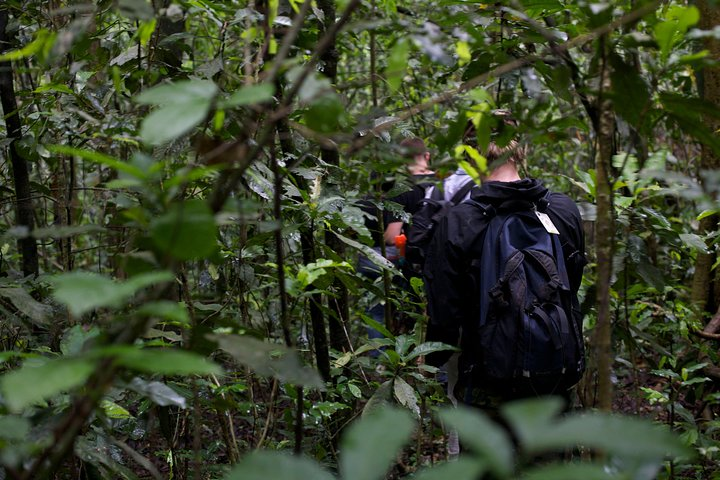
This complete Kibale National Park packing checklist brings together the most important clothing, footwear, trekking equipment, health supplies, electronics, documents and personal items covered throughout this guide. If you have been researching what to pack for Kibale National Park, what to wear for chimpanzee trekking in Uganda or what belongs in a Kibale chimpanzee trekking daypack, this section provides a final pre-departure reference.
The most important principle is to pack for a humid tropical forest rather than for a conventional vehicle-only safari. Chimpanzee trekking involves walking through natural forest conditions where rain, mud, vegetation, insects and uneven ground are possible. Your Kibale packing list should therefore prioritize footwear with dependable traction, lightweight clothing that covers your arms and legs, rain protection and a comfortable daypack.
At the same time, do not turn your Kibale National Park packing list into an expedition inventory. Most visitors do not need technical mountaineering equipment, enormous backpacks, several pairs of hiking boots or a professional photography studio. The best Kibale packing list is practical, relatively light and adapted to the activities you have actually booked.
Travelers who want to compare this final checklist with a broader safari list can use our complete Uganda safari packing guide for trekking clothing footwear luggage electronics and essential travel equipment.
Complete Kibale National Park Clothing Checklist
Start your Kibale National Park packing checklist with lightweight full-length trousers. Bring enough suitable pairs to allow for mud, rain and laundry arrangements during your stay. If you are doing only one chimpanzee trek, one primary trekking pair plus a suitable backup may be sufficient. If you are combining Kibale with Bwindi or undertaking several forest activities, additional rotation becomes more useful.
Pack lightweight long-sleeved shirts that are comfortable in humid conditions. Long sleeves provide useful coverage from vegetation and insects while still allowing you to move comfortably through the forest. Quick-drying fabrics are particularly practical if clothing becomes wet.
Include ordinary comfortable clothing for evenings, road transfers and time around your lodge. Your trekking outfit does not need to become your entire Uganda wardrobe.
Add underwear and enough suitable socks for the length of your itinerary. Good trekking socks are particularly important because damp feet and friction can contribute to blisters.
Bring a light fleece, sweater or other removable layer for cooler mornings and evenings. Avoid packing an unnecessarily heavy winter jacket unless another destination on your itinerary genuinely requires it.
Finally, include a lightweight waterproof rain jacket. Kibale is a rainforest environment, and rain protection should remain part of your packing list even when you are visiting during a relatively drier period.
Complete Kibale Footwear Checklist
Your main trekking footwear should be comfortable, broken in and suitable for natural forest trails. Current Kibale trekking guidance recommends sturdy waterproof hiking boots with good traction because forest surfaces can become muddy, uneven and slippery.
Do not arrive with hiking boots that have never been worn outside your home. Test them on several proper walks before traveling to Uganda.
Pack suitable trekking socks and consider carrying blister-care supplies. Optional gaiters can provide additional protection around the lower legs and footwear, particularly when conditions are wet or when you are participating in longer forest activities.
Bring a second pair of lightweight shoes, sandals or similar comfortable footwear for lodge time and travel days. This allows your feet to rest after trekking and gives hiking footwear time to dry if it becomes wet.
Complete Kibale Rain-Protection Checklist
Your rain kit does not need to be complicated. A dependable lightweight waterproof jacket should form the core of it. A suitable poncho is another option for travelers who prefer one.
Protect vulnerable equipment separately. A backpack rain cover can help, but cameras, phones, batteries, documents and other moisture-sensitive possessions are better protected inside suitable internal waterproof pouches or dry bags as well.
Do not wait for rain to begin before organizing your waterproofing system. Pack the daypack so that your jacket is easy to reach and electronics can be protected quickly.
Complete Chimpanzee Trekking Daypack Checklist
Your Kibale chimpanzee trekking daypack should remain compact. Carry drinking water, accessible rain protection, insect repellent, any essential personal medication, basic blister supplies where appropriate, your camera or smartphone, binoculars if you use them, and waterproof protection for sensitive equipment.
Depending on the activity arrangements and current guidance, appropriate snacks may also be useful. Longer chimpanzee habituation activities require more careful food and water planning than a standard trek.
Do not fill the daypack with your entire first-aid kit, full-size toiletries, lodge clothing, laptop or other possessions you have no realistic reason to use in the forest.
For a more detailed explanation of the activity itself, read our Kibale chimpanzee trekking guide covering rainforest conditions clothing equipment permits and practical preparation advice.
Complete Kibale Camera and Electronics Checklist
For most travelers, the electronics portion of a Kibale packing checklist can remain relatively simple. Bring your smartphone, its charging equipment and a suitable power bank if you expect to need additional battery capacity.
Photographers should bring the camera and lens combination they genuinely expect to use rather than every piece of equipment they own. Forest photography can involve low light and subjects moving through vegetation, making familiarity with your camera particularly valuable.
Pack charged spare camera batteries and sufficient memory-card capacity. Store spare batteries and cards somewhere dry.
Bring a microfiber lens cloth and suitable rain protection for your camera.
Make sure you know how to disable flash before entering the forest. Current Kibale guidance states that flash should not be used when photographing chimpanzees.
Complete Kibale Binoculars Checklist
Binoculars are not mandatory, but they are highly worthwhile for travelers interested in birds and primates. Kibale’s wildlife is distributed throughout different levels of the forest, and animals are not always conveniently positioned close to the trail.
Choose binoculars that are comfortable enough to carry for several hours. Compact or moderately sized binoculars often make more sense than extremely large optics when you are already carrying a camera and daypack.
Keep a suitable lens cloth available and protect binoculars against heavy rain.
Binoculars become particularly valuable once you appreciate that chimpanzees are only one component of the forest’s wildlife. Our guide to the primates of Kibale National Park explains the extraordinary diversity visitors can encounter throughout this rainforest.
Complete Kibale Health and Insect-Protection Checklist
Your personal health kit should reflect professional medical advice and your individual needs. Bring all essential prescription medication in sufficient quantity for the journey and reasonable travel disruption.
Pack insect repellent suitable for your needs and use it according to its instructions. Long trousers and long-sleeved clothing provide another physical layer of insect protection.
Include sunscreen for exposed periods during the wider safari, even though much of the chimpanzee trek takes place beneath forest canopy.
A compact personal first-aid kit can contain the simple supplies you know how to use, particularly blister-care materials. Keep the forest kit small and leave reserve medical supplies with your main luggage where appropriate.
Carry hand sanitizer and your normal personal hygiene products. Travelers who use specialist toiletries, menstrual products, contact lenses or other difficult-to-substitute items should bring enough for the trip rather than assuming their preferred products will be available near Kibale.
Complete Kibale Toiletries Checklist
Bring your toothbrush, toothpaste, deodorant, personal washing products, moisturizer where needed, sunscreen and other toiletries you genuinely use.
There is rarely a reason to carry full-size toiletry bottles into the forest. Keep the majority of your toiletries with your main luggage and take only genuinely useful personal items in your daypack.
Place liquids inside a secure toiletry pouch so that a leaking bottle cannot damage clothing, passports or electronics.
Complete Kibale Documents Checklist
Before leaving home, verify that your passport and current Uganda entry documentation meet the requirements that apply to your nationality and travel dates.
Carry required vaccination documentation where applicable, travel-insurance information, safari booking details and essential contact information.
Save useful documents digitally and make important information accessible offline. Appropriate paper backups can provide additional redundancy.
Protect important documents from moisture. Do not automatically carry every original document into Kibale Forest; confirm what you actually need for your activity and secure unnecessary originals appropriately.
Complete Kibale Money Checklist
Prepare an appropriate combination of payment methods for your wider Uganda safari rather than relying entirely on one card or a large quantity of cash.
Carry some local currency for appropriate everyday expenses and ask your safari operator what payments, if any, you should expect during your itinerary.
Keep reserve funds separately from your everyday wallet and avoid carrying your entire travel budget during chimpanzee trekking.
Complete Kibale Luggage Checklist
For many travelers, a practical luggage system consists of one main travel bag plus one smaller trekking daypack. A soft-sided main bag can be particularly convenient during road safaris because it is easier to fit into vehicle luggage areas than some large rigid cases.
If your Uganda itinerary includes a domestic or charter flight, verify the exact baggage allowance with the relevant carrier. Do not assume your international airline allowance also applies to a small safari aircraft.
Packing cubes are optional but can make a multi-lodge itinerary easier to organize. A separate bag for dirty clothing and another for muddy footwear can also be useful.
Complete Optional Kibale Packing Items
Some useful items depend heavily on personal preference and the activities you have booked. These can include gaiters, lightweight gloves, a walking pole, a binocular harness, a camera rain cover, a power bank, packing cubes and a small dry bag.
Optional means exactly that. Do not assume an item is essential simply because another traveler used it.
For chimpanzee habituation, where participants may spend considerably longer in the forest, additional preparation becomes more valuable. Current guidance specifically identifies items such as waterproof rain protection, suitable footwear, gaiters, insect repellent, a backpack, water, camera and binoculars among useful equipment.
Travelers booking the longer experience should therefore read our chimpanzee habituation preparation guide covering equipment forest conditions rules permits and practical trekking considerations.
What Can Stay at Your Kibale Lodge?
Your laptop, tablet, full toiletry kit, reserve clothing, main luggage, extra shoes, backup medication not required during the activity and other nonessential possessions can normally remain appropriately secured at your accommodation.
The purpose of your trekking daypack is not to transport your entire Uganda safari inventory into the rainforest.
What Should You Wear on Chimpanzee Trekking Morning?
A practical chimpanzee trekking outfit consists of lightweight full-length trousers, a comfortable long-sleeved shirt, suitable trekking socks and broken-in hiking footwear with dependable traction.
Carry your waterproof jacket rather than leaving it behind because the morning looks dry. Add a light removable layer if conditions are cool before departure.
A hat is optional but can be useful during more exposed portions of your day.
What Should You Put in Your Pockets?
Avoid stuffing trouser pockets with numerous objects. Bulky phones, wallets and accessories can become uncomfortable while walking and may fall out when moving through vegetation.
Use secure zipped pockets for small essentials or place possessions inside the daypack.
What Should You Pack the Night Before Chimpanzee Trekking?
Do not leave your entire Kibale packing routine until early morning. Pack the daypack the previous evening.
Check your rain jacket, water arrangements, insect repellent, essential medication and photography equipment. Charge your phone and camera batteries, check memory-card capacity and make sure flash is disabled.
Lay out your trousers, shirt, socks and hiking footwear so that nothing needs to be found in the dark or during an early departure.
What Should You Check on Trekking Morning?
Before leaving your accommodation, check the weather but do not remove essential rain protection solely because the forecast appears favorable.
Confirm that you have drinking water and required activity documentation according to the arrangements made with your operator.
Check that your footwear is properly fastened and that your daypack feels comfortable before beginning the activity.
What Should You Do After the Trek?
Remove wet or muddy clothing and allow it to dry appropriately. Clean footwear according to its care instructions and address any minor blisters or abrasions appropriately.
Recharge camera batteries and your phone. Back up important photographs where your system allows and reorganize the daypack before the next activity.
If your Kibale visit extends over several days, our five-day Kibale National Park guide helps match packing decisions with chimpanzee trekking birding and other activities.
What to Pack for Kibale National Park FAQ
The following frequently asked questions address the practical packing decisions travelers most often face when preparing for Kibale National Park and chimpanzee trekking in Uganda.
What Should I Pack for Kibale National Park?
Pack lightweight long trousers, long-sleeved shirts, broken-in hiking footwear with good traction, suitable socks, a lightweight waterproof jacket, insect repellent, essential medication, drinking water arrangements, a comfortable daypack and your preferred camera or smartphone.
Add binoculars if you enjoy wildlife observation, plus normal travel clothing and toiletries for your lodge stay and wider Uganda safari.
What Should I Wear for Chimpanzee Trekking in Kibale?
Wear full-length trousers, a lightweight long-sleeved shirt, suitable socks and sturdy hiking footwear. The objective is to protect your skin while remaining comfortable in a humid forest.
A lightweight rain jacket should remain accessible in your daypack.
Do I Need Hiking Boots for Kibale Chimpanzee Trekking?
Suitable outdoor footwear with dependable grip is strongly recommended. Current Kibale guidance specifically recommends sturdy waterproof hiking boots with good tread because trails can be muddy and slippery.
Whatever footwear you choose, make sure it fits correctly and is broken in before travel.
Can I Wear Trainers or Sneakers in Kibale?
Ordinary trainers may be less suitable when forest conditions become wet or muddy, particularly if their soles provide limited traction.
A trail shoe designed for natural terrain can be more appropriate than a smooth-soled urban sneaker. The important characteristics are grip, fit, protection and comfort rather than the label attached to the shoe.
Can I Wear Sandals for Chimpanzee Trekking?
Closed outdoor footwear is the more practical choice for forest trekking. Sandals can be useful around the lodge after the activity but provide less protection from mud, vegetation and uneven surfaces.
Can I Wear Shorts in Kibale National Park?
Shorts can be comfortable around lodges and during suitable parts of a wider safari, but long trousers are the stronger choice for chimpanzee trekking because they provide coverage from vegetation and insects.
Can I Wear Jeans for Chimpanzee Trekking?
You can physically walk in jeans, but denim is generally less practical than lightweight hiking trousers because it can become heavy and uncomfortable when wet and may take longer to dry.
Quick-drying full-length trousers are usually a better addition to a Kibale packing list.
What Colors Should I Wear in Kibale?
Neutral, subdued clothing is a practical choice for forest wildlife activities. Current Kibale trekking guidance recommends neutral shades such as khaki, brown and olive and advises against bright patterns around chimpanzees.
Comfort and function remain more important than assembling a perfectly color-coordinated safari wardrobe.
Do I Need Waterproof Trousers for Kibale?
They are not necessarily essential for every visitor. Lightweight quick-drying trekking trousers combined with a good rain jacket may be sufficient for many travelers.
People visiting during wetter conditions or spending much longer in the forest may value additional waterproof protection more highly.
Do I Need a Rain Jacket in Kibale During the Dry Season?
Yes, carrying lightweight rain protection remains sensible. Kibale is a tropical forest and rainfall can occur even during relatively drier periods. Current trekking guidance specifically recommends carrying rain protection throughout the year.
Do I Need Gaiters for Kibale?
Gaiters are useful but not universally essential. They can help keep mud and vegetation away from the gap between your trousers and footwear.
They become particularly attractive during wet conditions and longer chimpanzee habituation activities.
Do I Need Gardening Gloves for Chimpanzee Trekking?
Some travelers carry lightweight gloves to protect their hands when negotiating vegetation or muddy terrain. They are useful for some visitors but should not be treated as more important than proper footwear, clothing and rain protection.
If you take gloves, choose a pair that fits comfortably and allows good grip.
Do I Need a Walking Stick for Kibale?
Not every traveler needs one. A walking stick or trekking pole can provide additional stability for people accustomed to using one, particularly on slippery or uneven terrain.
Check current activity arrangements and transport restrictions if you intend to bring trekking poles on flights.
How Big Should My Kibale Daypack Be?
There is no universal capacity requirement. Choose a small or moderate daypack that comfortably holds your rain protection, water, personal essentials and selected camera equipment while leaving enough room for a removable clothing layer.
If the backpack is large enough to encourage you to carry unnecessary possessions, it is probably larger than you need.
Do I Need a Waterproof Backpack?
A waterproof or highly water-resistant backpack can be useful, but internal waterproofing remains valuable even when the bag itself provides protection.
Keep cameras, batteries, phones and other vulnerable possessions inside suitable protective pouches.
How Much Water Should I Carry for Chimpanzee Trekking?
Current Kibale trekking guidance recommends carrying at least one liter of water, although individual requirements and activity duration vary.
Confirm water arrangements with your safari operator, particularly for longer activities such as chimpanzee habituation.
Should I Bring Snacks Into Kibale Forest?
Current trekking guidance recommends energy-rich snacks for longer treks, but food must be managed according to park and ranger instructions, particularly around chimpanzees.
Never feed wildlife and never leave food packaging in the forest.
Do I Need Insect Repellent in Kibale?
Yes. Insect repellent is a sensible component of a Kibale National Park packing list. Combine it with lightweight long sleeves and full-length trousers rather than depending on repellent alone.
Do I Need Sunscreen in Kibale?
Yes, particularly for exposed periods during transfers, lodge activities and other parts of your Uganda itinerary. Forest canopy provides shade during portions of the trek, but it does not make sun protection irrelevant to the wider trip.
Do I Need a Hat for Chimpanzee Trekking?
A lightweight hat can be useful, particularly during exposed parts of the day. It is less critical beneath dense canopy than it would be on an open savannah activity, so choose something light and easy to store.
Should I Bring Binoculars to Kibale?
Binoculars are strongly worth considering. Kibale supports diverse primates and birds, and wildlife frequently occurs above ground level or some distance from the trail.
If you are interested in more than photographing chimpanzees, binoculars can become one of the most rewarding items in your daypack.
What Camera Should I Bring to Kibale?
Bring the camera you know how to operate confidently. A modern smartphone is sufficient for many visitors, while dedicated wildlife photographers may prefer a mirrorless or DSLR camera with a useful telephoto lens.
The forest can be relatively dark, so familiarity with autofocus, shutter speed and higher ISO settings is valuable.
Can I Use Flash Photography With Chimpanzees?
No. Current Kibale guidance states that flash should not be used around chimpanzees.
Disable automatic flash before entering the forest.
Should I Bring a Telephoto Lens?
A telephoto lens can be valuable because chimpanzees, monkeys and birds may remain some distance away or high in the canopy.
However, balance focal length against weight. The largest lens you own is not automatically the most practical lens to carry through a rainforest.
Do I Need a Tripod in Kibale?
Most ordinary chimpanzee trekking visitors do not need a full-size tripod. It adds bulk and can be cumbersome on forest trails.
Specialist photographers may have specific requirements, but equipment should be chosen according to a genuine photographic need.
Should I Bring a Power Bank?
A compact power bank is useful if you rely heavily on your smartphone, particularly during longer safari days.
Protect it from moisture and follow the current lithium-battery requirements of every airline you use.
Should I Bring a Drone to Kibale?
Do not assume drone use is permitted. Drone operations can be subject to aviation, security and protected-area restrictions.
Verify current requirements with the relevant Ugandan authorities before traveling with or attempting to operate a drone.
Do I Need a Mosquito Net?
Many safari accommodations provide mosquito-control measures, but facilities vary. Confirm what your actual lodge provides before packing a bulky personal net.
Your wider insect-protection strategy should still include suitable clothing and repellent.
Do I Need Malaria Medication for Kibale?
Malaria prevention is a medical matter rather than a decision that should be made from a generic packing checklist. Travelers should consult current authoritative Uganda travel-health guidance and an appropriate healthcare professional before departure.
If medication is prescribed, follow the prescribed schedule rather than taking it only on chimpanzee trekking day.
Do I Need a First-Aid Kit for Kibale?
A small personal kit is useful. Focus on supplies you know how to use, including basic blister care and any personal medication you genuinely need.
A large expedition medical kit is unnecessary for most ordinary visitors.
Should I Carry My Passport While Chimpanzee Trekking?
Confirm what documentation is required for your booked activity with your safari operator. Do not automatically carry irreplaceable original documents through a wet forest when they are not required.
Store important originals appropriately and protect any documents you do need from moisture.
How Much Cash Should I Carry Into Kibale Forest?
Only carry money you realistically expect to need during the activity. Your entire Uganda travel budget does not belong in a trekking backpack.
Keep reserve money appropriately secured elsewhere.
What Luggage Is Best for a Uganda Safari Including Kibale?
A manageable soft-sided travel bag can work particularly well for a road safari, combined with a smaller trekking daypack.
If small aircraft are part of the itinerary, follow the exact current baggage restrictions of the booked carrier rather than a generic safari recommendation.
Can I Pack Light for Kibale?
Yes. Kibale is particularly suitable for a relatively streamlined packing strategy because most essential trekking equipment is simple and reusable.
The same trousers, shirts, rain jacket, hiking footwear and daypack can often be used for other forest activities in Uganda.
Can I Use the Same Clothes for Kibale and Bwindi?
Yes. Travelers combining chimpanzee trekking in Kibale and gorilla trekking in Bwindi can reuse most of their forest clothing and equipment.
This is one of the easiest ways to keep luggage manageable on a primate-focused Uganda safari.
A practical example is our seven-day Uganda chimpanzee and gorilla safari combining Kibale and Bwindi rainforest trekking in one itinerary.
How Should I Pack for Kibale During the Rainy Season?
Prioritize footwear with strong traction, quick-drying clothing, accessible rain protection and dependable waterproof storage for electronics.
Bring a separate bag for muddy footwear and wet clothing after the activity.
How Should I Pack for Kibale During the Dry Season?
Use essentially the same core packing list. Do not remove your rain jacket simply because your trip falls during a relatively drier period.
Comfortable footwear, long clothing and insect protection remain important year-round.
What Should I Pack for Chimpanzee Habituation?
Chimpanzee habituation requires the same core equipment as ordinary chimpanzee trekking but deserves additional attention to water, food arrangements, rain protection, battery life, memory-card capacity and overall backpack comfort because participants spend considerably longer in the forest.
Current habituation guidance recommends lightweight trousers, long-sleeved shirts, waterproof rain protection, gaiters and socks, suitable hiking boots, insect repellent, water, basic first aid, camera and binoculars.
Is Chimpanzee Habituation Packing Different From Normal Chimpanzee Trekking?
The basic equipment is similar, but the longer duration makes weight and comfort more important. Carrying an uncomfortable backpack or heavy camera system becomes much more noticeable after several hours.
Habituation participants should therefore be especially disciplined about removing unnecessary items.
What Should Birdwatchers Pack for Kibale?
Birdwatchers should prioritize good binoculars and may want a field reference system they can access conveniently. Photographers interested in birds may also value a longer telephoto lens.
Balance optical equipment against weight because binoculars, cameras and long lenses can quickly dominate a trekking backpack.
What Should Serious Photographers Pack for Kibale?
Prioritize a camera body you understand, a practical lens or lens combination, sufficient batteries and memory cards, moisture protection and a lens cloth.
Think of Kibale as a low-light forest photography environment rather than an open savannah photography session.
What Should Smartphone-Only Travelers Pack?
A smartphone-only setup can be excellent for travelers who want to keep their daypack light. Bring the phone in a suitable protective case, ensure sufficient storage is available, charge it fully and carry a compact power bank if necessary.
Know how to disable flash before the trek.
What Should Older Travelers Pack for Kibale?
Older travelers should focus on footwear comfort, grip and minimizing unnecessary backpack weight. Those already accustomed to walking poles may find one useful depending on current conditions and activity arrangements.
Individual health or mobility questions should be discussed with an appropriate healthcare professional and safari operator rather than answered by a generic packing list.
What Should Travelers With Limited Mobility Know Before Packing?
Discuss your specific needs with your safari operator before booking. The precise route and location of wildlife cannot be guaranteed in advance, and natural forest conditions vary.
Understanding the likely activity requirements before buying equipment is more useful than simply purchasing additional trekking gear.
What Should Families Pack for Kibale?
Families should first confirm current age requirements for every booked activity. Once participation is confirmed, children or teenagers should have correctly fitting footwear and clothing rather than oversized adult equipment.
Bring any child-specific health and personal-care products you require rather than assuming they will be available near the park.
What Should Travelers With Prescription Medication Pack?
Bring an adequate supply of essential medication according to professional medical advice and keep it appropriately labeled and accessible.
Do not depend on finding an identical medication or formulation near Kibale.
What Should Contact-Lens Wearers Pack?
Bring sufficient contact lenses and cleaning supplies for your complete trip plus backup prescription glasses.
Keep lens supplies protected from leaks and contamination.
What Should Travelers Who Menstruate Pack?
Bring enough of your preferred menstrual products for the trip and reasonable travel delays. Carry a small sealable waste bag for situations where immediate appropriate disposal is unavailable.
Never leave personal hygiene waste in the forest.
Should I Pack Laundry Detergent?
This depends on your itinerary and accommodation arrangements. If lodge laundry is available and suitable for your clothing, detergent may be unnecessary.
Travelers who hand-wash small items may find a modest amount of suitable travel detergent useful, but there is no reason to carry a large container.
How Many Clothes Do I Need for a Week in Uganda?
There is no universal number because laundry arrangements and activities vary. The better strategy is to pack a small rotation of versatile, quick-drying clothing rather than seven completely different outfits.
If several forest activities are scheduled on consecutive days, make sure you have enough suitable trekking clothes to cope with one outfit remaining wet.
What Should I Leave at Home?
Leave unnecessary jewelry, excessive camera equipment, large quantities of clothing, formal outfits you will never use, multiple duplicate electronics, unsuitable fashion shoes and technical expedition gear that has no role in your itinerary.
Every item removed from your luggage creates additional space and reduces the amount of equipment you must manage between lodges.
What Are the Biggest Kibale Packing Mistakes?
The most common mistakes are wearing new footwear, packing too many clothes, forgetting rain protection, relying on shorts instead of full-length trekking trousers, carrying excessive camera equipment, failing to waterproof electronics and bringing a backpack that becomes uncomfortable once fully loaded.
Another major mistake is packing only for Kibale without considering the rest of your Uganda safari.
How Far in Advance Should I Start Packing for Kibale?
Begin planning several weeks before departure if you need to buy and break in hiking footwear. Medical preparation and travel documentation may require even more advance time.
The physical act of packing can happen much later, but important equipment and paperwork should not be left until the final evening.
Should I Test My Kibale Equipment Before Traveling?
Yes. Wear your complete trekking outfit and load your actual daypack with the equipment you expect to carry.
Take a substantial walk. Check whether the boots rub, the backpack straps become uncomfortable, the trousers restrict movement or your camera setup is heavier than expected.
What Is the Single Most Important Thing to Pack for Kibale?
No single item guarantees a comfortable trek, but suitable broken-in footwear is among the most important pieces of equipment because every minute of the forest activity happens on your feet.
Footwear should be combined with appropriate clothing, rain protection and water rather than considered in isolation.
What Is the Most Commonly Forgotten Kibale Item?
Small but important items are easiest to forget: spare camera batteries, memory cards, insect repellent, blister supplies, a dry bag, charging cables and a suitable rain layer.
A written final checklist can prevent these last-minute omissions.
What Is the Best Way to Organize a Kibale Packing List?
Separate the list into trekking clothing, footwear, rain protection, daypack essentials, electronics, health supplies, toiletries, documents and wider safari luggage.
Then divide possessions between what enters the forest and what remains with your main luggage.
Can I Buy Forgotten Trekking Equipment in Uganda?
Some general travel items may be available in larger towns and cities, but travelers should not depend on finding a specific boot size, technical rain jacket, prescription medicine, camera battery or preferred insect repellent close to Kibale.
Bring difficult-to-substitute essentials from home.
What Should I Double-Check Before Leaving Home?
Check your passport and required travel documents, essential medication, broken-in hiking footwear, rain jacket, camera equipment and charging system.
Confirm that your luggage complies with any restrictive flight allowances on the itinerary.
What Should I Double-Check Before Leaving the Lodge?
Check your hiking footwear, long trousers, long-sleeved shirt, rain protection, drinking water, insect repellent, essential medication, camera or phone and any documentation your operator has told you to carry.
Then check the weight of the daypack. If it contains several items you cannot imagine using during the trek, remove them.
What Is the Ultimate Kibale National Park Packing Checklist?
The ultimate Kibale National Park packing checklist is surprisingly straightforward: broken-in hiking footwear with good traction, comfortable trekking socks, lightweight long trousers, long-sleeved shirts, a waterproof rain jacket, a small comfortable daypack, drinking water arrangements, insect repellent, essential personal medication, basic health supplies, a smartphone or camera, binoculars if desired, spare power and waterproof protection for vulnerable equipment.
Your main luggage should then contain lodge clothing, additional trekking clothes where required, casual footwear, toiletries, reserve medication and the other items needed for your wider Uganda safari.
Final Kibale Packing Advice Before You Travel
What to pack for Kibale National Park ultimately depends on three things: the forest environment, the activity you have booked and the rest of your Uganda itinerary. Standard chimpanzee trekking requires less equipment than many first-time visitors expect, while chimpanzee habituation, specialist birding and serious wildlife photography can justify carrying additional gear.
Start with the essentials and build outward. Wear comfortable long clothing. Protect yourself from rain and insects. Use broken-in footwear with dependable traction. Keep the daypack light. Carry water and essential personal medication. Protect cameras and electronics from moisture, and make sure your most important travel documents are secure.
Do not allow packing to become more complicated than the experience itself. Kibale’s attraction is the opportunity to walk through an extraordinary tropical forest in search of wild primates, not the amount of equipment you can carry into it.
If Kibale is part of a longer primate itinerary, this Uganda chimpanzee and gorilla trekking itinerary shows how one carefully selected rainforest packing system serves multiple destinations.
Travelers comparing additional planning information can also review this guide to chimpanzee trekking in Uganda. Use these resources alongside current official entry, health, airline and park information immediately before travel, because requirements that involve permits, health, immigration or baggage can change.
Pack carefully, but pack lightly. If your boots fit, your clothing protects you without overheating, your rain jacket is accessible and your daypack contains only things you genuinely need, you have already solved most of the practical questions behind what to pack for Kibale National Park.