Gorilla Trekking vs Gorilla Habituation

Gorilla Trekking vs. Gorilla Habituation Experience: Which Should You Choose?

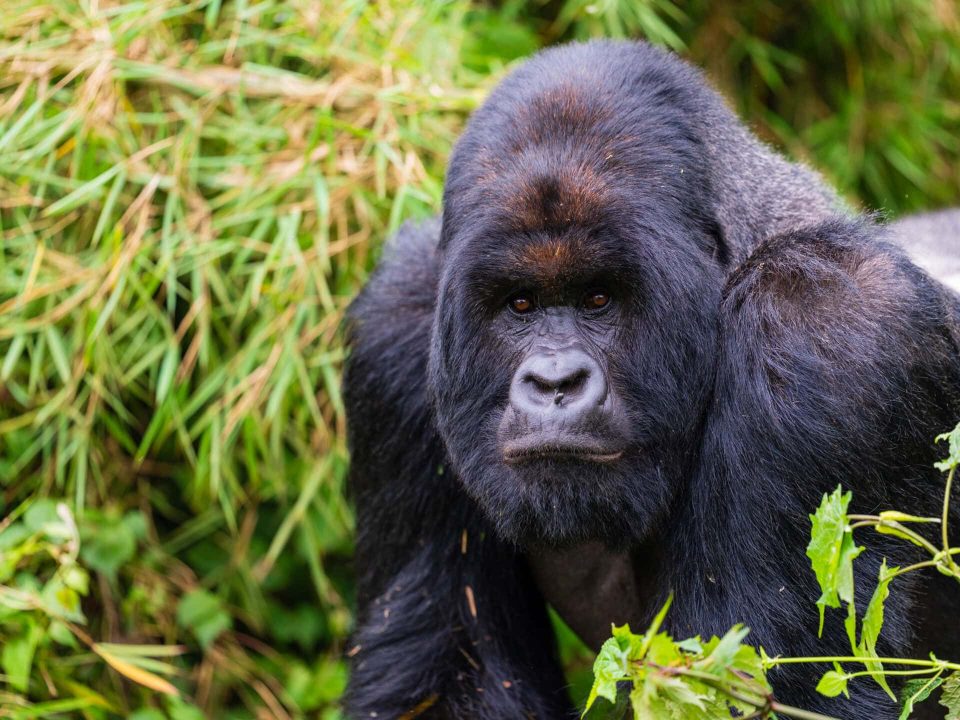
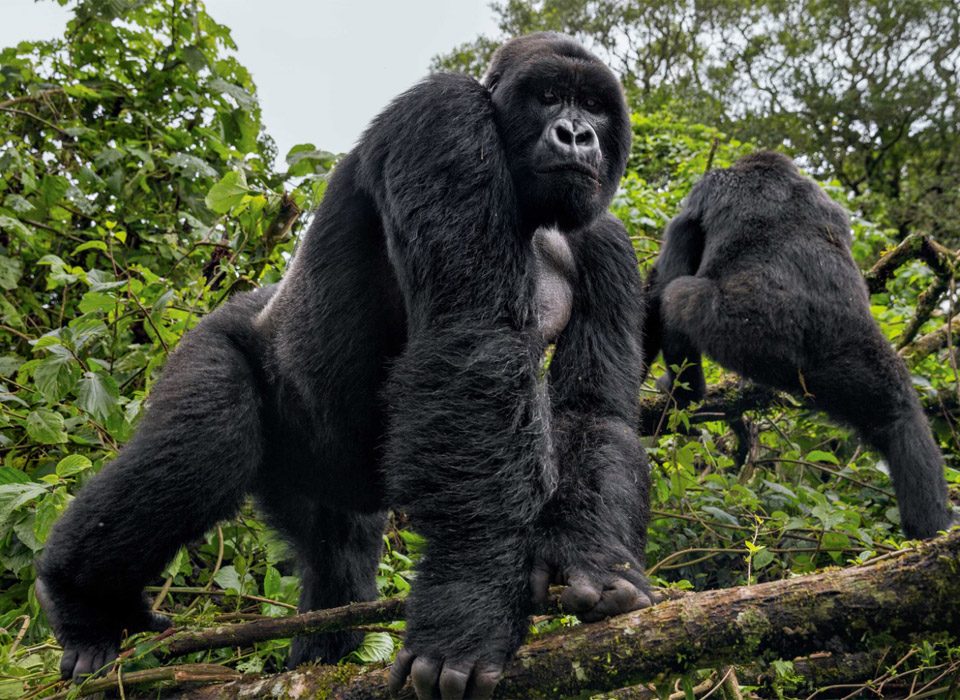
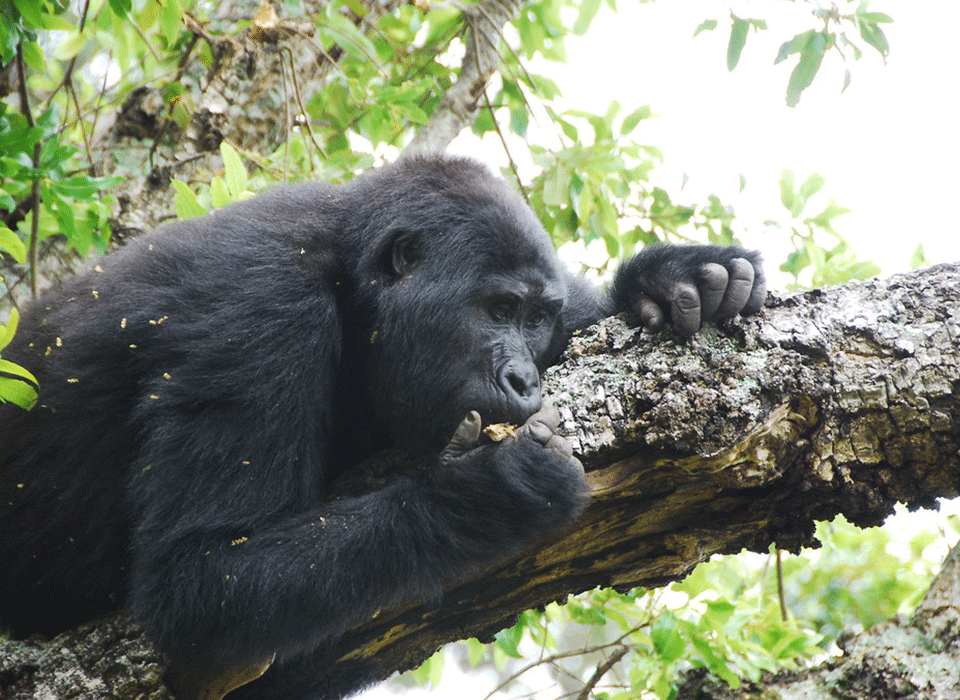
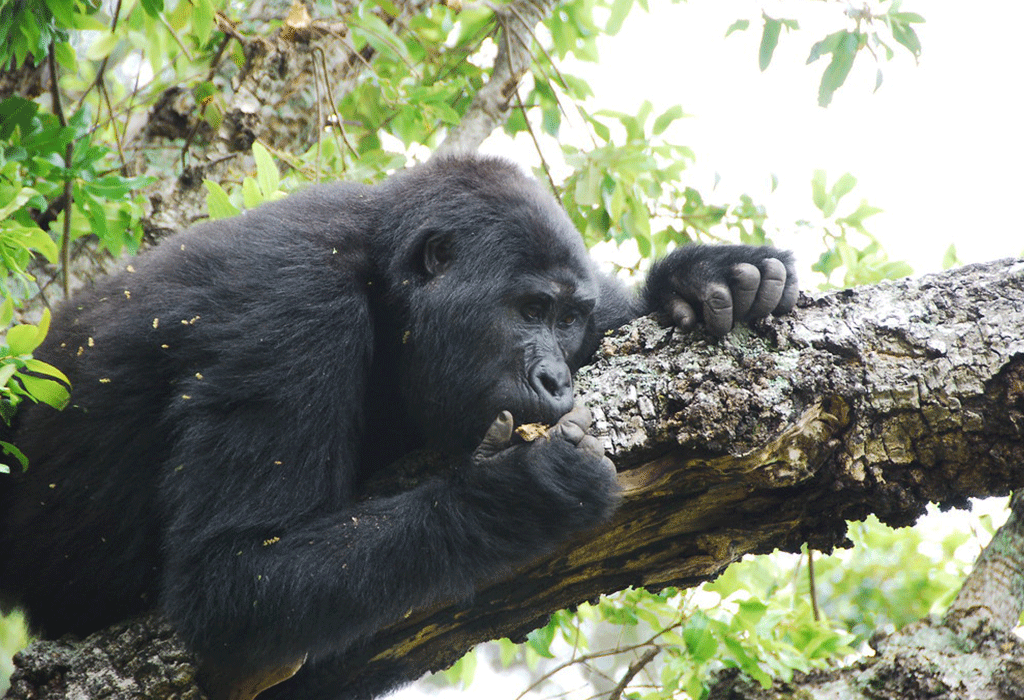
Young mountain gorillas feeding and relaxing in the dense rainforest of Bwindi during a Uganda gorilla experience.
Choosing between gorilla trekking and the Gorilla Habituation Experience is one of the most important decisions when planning a gorilla safari in Uganda. Both activities bring you into the extraordinary rainforest habitat of endangered mountain gorillas, yet the amount of time spent with the gorillas, group size, style of encounter, permit cost, photography opportunities, and overall depth of the experience are significantly different.
The focus keyword Gorilla Trekking vs Gorilla Habituation describes more than a comparison between a one-hour and four-hour wildlife encounter. Standard gorilla trekking introduces you to a gorilla family that has already completed the habituation process and is accustomed to carefully controlled tourist visits. The Gorilla Habituation Experience takes you a step deeper by allowing you to accompany researchers, trackers, and rangers while observing gorillas that are still progressing through habituation. Safari Vacations and Travel Services can arrange either experience according to your budget, interests, fitness level, available time, and preferred safari style.
For most travellers, neither option is automatically “better.” The right choice depends on what you want from your encounter with mountain gorillas.
What Is the Main Difference Between Gorilla Trekking and Gorilla Habituation?
The greatest difference in Gorilla Trekking vs Gorilla Habituation is the amount of permitted observation time after the gorillas have been located.
With standard gorilla trekking, visitors spend up to one hour with a fully habituated gorilla family. This is enough time to watch silverbacks, females, juveniles, and infants feeding, resting, grooming, playing, and interacting with one another. The experience is concentrated, emotional, and ideal for travellers who want the classic Uganda gorilla encounter.
During the Gorilla Habituation Experience, visitors can spend up to four hours observing a gorilla family involved in the habituation process. This provides substantially more time to watch behaviour unfold gradually rather than trying to experience everything within a single hour. Uganda Wildlife Authority distinguishes the habituation activity from ordinary tracking because participants accompany the field team working with gorillas that are becoming accustomed to controlled human presence.
For travellers researching Gorilla Trekking vs Gorilla Habituation because they want greater depth rather than simply a longer encounter, those additional hours can be extremely valuable.
Quick Gorilla Trekking vs Gorilla Habituation Comparison
Uganda Wildlife Authority’s published tariff changes state that from 1 January 2027 the foreign non-resident Gorilla Habituation Experience permit rises to US$1,800, while standard gorilla tracking remains US$800. Permit prices should always be reconfirmed when booking because official tariffs and promotional arrangements can change.
Gorilla Trekking: The Classic One-Hour Encounter
Standard gorilla trekking remains the most popular choice for travellers comparing Gorilla Trekking vs Gorilla Habituation. It is available across multiple trekking sectors of Bwindi and at Mgahinga Gorilla National Park, providing greater flexibility when designing a Uganda gorilla safari.
In Bwindi, visitors can trek from Buhoma, Ruhija, Rushaga, and Nkuringo. Each region offers different landscapes, accommodation choices, road connections, and trekking conditions. Our detailed guide to the gorilla trekking sectors of Bwindi can help you understand these differences before selecting where to stay.
Once your assigned gorilla family is located, the one-hour observation period begins. Although an hour may initially sound short, being surrounded by mountain gorillas in their natural rainforest habitat can be intensely rewarding. You may watch a silverback resting only metres away, juveniles climbing vines, mothers carrying infants, or family members feeding peacefully together.
For many first-time visitors, this is everything they hoped a gorilla safari would be.
Gorilla Habituation: A Deeper Four-Hour Experience
The Gorilla Habituation Experience is aimed at travellers who want considerably more than the standard encounter. Rather than simply reaching a gorilla family, observing it for an hour, and returning, participants spend extended time alongside the teams involved in monitoring and habituation.
Safari Vacations and Travel Services’ detailed guide to the Gorilla Habituation Experience explains the process and what travellers should expect in the forest.
The extra time allows you to observe changing patterns of behaviour. Gorillas may move between feeding areas, rest, groom one another, interact socially, respond to different members of the family, or move deeper through the vegetation. Instead of relying on what happens during one particular hour, you have a longer window in which natural behaviours can unfold.
This is why the Gorilla Trekking vs Gorilla Habituation decision is particularly important for photographers and serious wildlife enthusiasts.
Which Is Better for Photography?
If photography is one of your main reasons for travelling, the Gorilla Habituation Experience usually provides the stronger opportunity.
Standard trekking still offers extraordinary photographs. Mountain gorillas frequently remain on the forest floor, and a one-hour encounter can produce outstanding portraits of silverbacks, mothers, infants, and juveniles.
The difference is time. During habituation, four hours provide more opportunities for lighting conditions to change, gorillas to move into better positions, family interactions to develop, and photographers to alternate between portraits, wider environmental photographs, behavioural sequences, and video.
For anyone travelling specifically for professional wildlife photography, filmmaking, or an extensive gorilla portfolio, the additional time can justify the higher permit cost.
Which Experience Is More Exclusive?
Group size is another important consideration when comparing Gorilla Trekking vs Gorilla Habituation.
Standard trekking allows up to eight visitors with a habituated gorilla family. Gorilla habituation normally operates with a considerably smaller tourist group, commonly up to four visitors, creating a more intimate forest experience. Safari Vacations and Travel Services’ guide to gorilla trekking in Rushaga also explains how the smaller habituation groups contribute to the exclusivity of the experience.
For honeymooners, photographers, luxury travellers, and visitors who dislike larger groups, this can be a major advantage.
Which Experience Offers Better Value for Money?
Value depends on what matters most to you.
If your priority is simply to encounter mountain gorillas in the wild, standard gorilla trekking provides exceptional value. You receive the same emotional privilege of entering the rainforest, locating a gorilla family, and watching endangered mountain gorillas at remarkably close range without paying the premium required for habituation.
For travellers with limited time or a tighter safari budget, standard trekking is usually the logical choice.
The Gorilla Habituation Experience becomes more compelling when time with the gorillas is your highest priority. You are paying significantly more, but you receive up to four times the observation period, fewer tourists, greater interaction with the field team, and more opportunities to study and photograph gorilla behaviour.
Travellers who have already booked ordinary trekking but are considering extending their experience can also read our guide on how to upgrade from a one-hour gorilla permit to a habituation experience. Any upgrade remains dependent on Uganda Wildlife Authority approval and permit availability.
Should You Choose Gorilla Trekking or Gorilla Habituation?
Choose gorilla trekking if this is your first gorilla safari, you have limited time, want to control your overall safari cost, or would prefer to combine the gorilla encounter with Queen Elizabeth National Park, Kibale, Lake Bunyonyi, or other destinations. Standard trekking delivers the classic encounter that has made Uganda one of the world’s great primate destinations.
Choose the Gorilla Habituation Experience if spending as much time as possible with mountain gorillas is more important than keeping the permit cost down. It is particularly suitable for wildlife photographers, filmmakers, conservation enthusiasts, repeat gorilla trekkers, primate lovers, and travellers searching for a smaller and more immersive experience.
You may also choose both. A standard trek followed by a habituation experience allows you to compare a fully habituated gorilla family with the longer field-based experience. Safari Vacations and Travel Services can build this into a private itinerary, including accommodation in southern Bwindi, permits, transportation, and additional activities. Travellers considering this option can explore our Bwindi Gorilla Habituation Experience Tour and Primate Habituation Experience Safari in Uganda.
Ultimately, Gorilla Trekking vs Gorilla Habituation is not a question of which experience is universally better. It is about which experience better matches the way you want to encounter mountain gorillas. Standard trekking provides an extraordinary introduction; habituation provides more time, depth, exclusivity, and insight. Safari Vacations and Travel Services Ltd can help you compare permit availability, budget, accommodation, fitness considerations, and travel dates before deciding which experience deserves a place in your Uganda safari.
What Is Gorilla Trekking and What Actually Happens on the Day?
Understanding standard gorilla trekking is essential when comparing Gorilla Trekking vs Gorilla Habituation. Gorilla trekking is the classic mountain gorilla experience in Uganda, taking travellers deep into protected rainforest to locate a fully habituated gorilla family and spend up to one hour observing it in its natural habitat.
Unlike the Gorilla Habituation Experience, standard trekking focuses on gorilla families that have already undergone the lengthy habituation process and have become accustomed to carefully controlled human presence. This generally creates a more predictable encounter and makes standard gorilla trekking suitable for first-time visitors, couples, families with eligible teenagers, senior travellers, photographers, honeymooners, and anyone who wants to experience mountain gorillas without committing to the longer habituation experience.
Uganda offers standard gorilla trekking in both Bwindi Impenetrable National Park and Mgahinga Gorilla National Park. Bwindi is the country’s principal gorilla trekking destination, with habituated families distributed among several sectors. Safari Vacations and Travel Services can arrange permits, accommodation, private transport, domestic flights, professional driver-guides, and complete gorilla safari itineraries around the trekking sector allocated for your visit.
What Does Gorilla Trekking Mean?
Gorilla trekking involves entering the natural habitat of mountain gorillas with trained ranger guides and trackers and hiking until your assigned habituated gorilla family is located.
The word “trekking” is important because visitors are not taken to an enclosure or predictable viewing platform. Mountain gorillas remain completely wild and move freely through their natural rainforest habitat. Their location changes according to feeding patterns, weather, nesting areas, elevation, and daily movements.
This unpredictability is part of what makes gorilla trekking extraordinary.
Experienced trackers monitor the gorillas and help trekking groups locate them. Once the family is found, standard visitors are permitted up to one hour of observation. This one-hour period is one of the most important distinctions when considering Gorilla Trekking vs Gorilla Habituation.
During your hour, you may see the dominant silverback watching over his family, females feeding, mothers nursing infants, juveniles climbing branches, or young gorillas playing with one another. Sometimes a family remains relatively stationary, while on other days the gorillas continue moving slowly through the vegetation.
The experience is entirely natural, meaning no two gorilla treks are exactly alike.
Where Can You Go Gorilla Trekking in Uganda?
Uganda has two major mountain gorilla trekking destinations: Bwindi Impenetrable National Park and Mgahinga Gorilla National Park.
Bwindi is the larger and more widely used trekking destination. Its gorilla tourism areas are spread across different parts of the forest, providing travellers with multiple options for accommodation, accessibility, scenery, and wider safari combinations.
Mgahinga, in southwestern Uganda near Rwanda and the Democratic Republic of Congo, provides another excellent mountain gorilla trekking experience and can be particularly attractive to travellers combining gorillas with golden monkey tracking or volcano hiking.
For most visitors comparing Gorilla Trekking vs Gorilla Habituation, however, Bwindi becomes especially important because it provides standard gorilla trekking as well as the specialised habituation experience.
Safari Vacations and Travel Services provides a detailed overview of the gorilla trekking sectors of Bwindi Impenetrable National Park, helping travellers understand how the different regions affect accommodation, road transfers, trekking conditions, and overall safari planning.
Gorilla Trekking in Buhoma
Buhoma is situated in northern Bwindi and is historically important because it was the first sector developed for gorilla tourism in the park.
Today, Buhoma remains a popular base for standard gorilla trekking because of its established tourism infrastructure, accommodation choices, community activities, and convenient connections with the Ishasha region of Queen Elizabeth National Park.
This makes Buhoma particularly attractive for travellers who want to combine a gorilla encounter with a more extensive Uganda wildlife safari.
When comparing Gorilla Trekking vs Gorilla Habituation, Buhoma is primarily relevant to travellers choosing the classic standard trekking experience rather than the specialised habituation programme.
Gorilla Trekking in Ruhija
Ruhija lies in eastern Bwindi and provides a quieter forest atmosphere. The sector is particularly attractive to birdwatchers and travellers who appreciate remote mountain scenery.
Its position can also work well within itineraries connecting Bwindi with Queen Elizabeth National Park.
Ruhija’s terrain can be challenging depending on the location of the assigned gorilla family, so fitness should be considered when planning the trek. However, it remains an excellent option for visitors who want standard gorilla trekking in a peaceful part of Bwindi.
Gorilla Trekking in Rushaga
Rushaga is situated in southern Bwindi and is especially important when discussing Gorilla Trekking vs Gorilla Habituation.
The region supports standard gorilla trekking while also being strongly associated with the Gorilla Habituation Experience. Safari Vacations and Travel Services’ guide to mountain gorilla trekking in Rushaga explains why the sector is particularly attractive for travellers seeking different types of gorilla encounters.
Rushaga is also convenient for travellers beginning their safari in Kigali, Rwanda, before crossing into southwestern Uganda. Visitors focusing on the southern part of Bwindi can also use Kisoro as an access point when arriving by domestic flight.
For travellers who eventually decide they want to experience both standard trekking and habituation, staying in southern Bwindi can make itinerary planning considerably easier.
Gorilla Trekking in Nkuringo
Nkuringo is another southern Bwindi trekking region and is known for its dramatic highland scenery.
The mountainous terrain can make trekking physically demanding, but the scenery and sense of wilderness make the experience particularly rewarding. Nkuringo also provides access to excellent accommodation choices and can be combined with Lake Mutanda, Lake Bunyonyi, and other attractions in southwestern Uganda.
When Safari Vacations and Travel Services plans a Gorilla Trekking vs Gorilla Habituation itinerary, the trekking sector is coordinated carefully with permit availability and accommodation. Staying in the wrong sector can result in unnecessarily long early-morning transfers, so permits should ideally be confirmed before finalising your lodge.
What Happens on Gorilla Trekking Day?
Gorilla trekking day normally begins very early.
Visitors wake before sunrise, have breakfast at their lodge, prepare their trekking equipment, and travel to the relevant park briefing point. Your accommodation should therefore be located conveniently for the sector indicated by your gorilla permit.
Safari Vacations and Travel Services coordinates these details before arrival so that your accommodation, transport, and permit allocation work together rather than creating unnecessary transfers on trekking morning.
Visitors should carry drinking water, a packed lunch or snacks as arranged by the lodge, waterproof hiking boots, long trousers, a long-sleeved shirt, rain protection, gloves, insect repellent, and camera equipment.
Even during Uganda’s drier months, Bwindi is a tropical rainforest and showers can occur unexpectedly.
The Morning Gorilla Trekking Briefing
Before entering the forest, visitors attend a compulsory briefing conducted by the Uganda Wildlife Authority.
The briefing covers trekking procedures, gorilla behaviour, conservation, safety, and the rules visitors must follow when approaching the animals.
This is also when trekkers are organised into groups and allocated to particular gorilla families.
Age, fitness, mobility, and other practical considerations may be taken into account where possible, although the location of wild gorillas can never be guaranteed. A gorilla family considered relatively accessible one day may move considerably farther into the forest the following day.
Safari Vacations and Travel Services also recommends hiring a porter, particularly if you are carrying photography equipment or would appreciate assistance on steep and slippery sections. Hiring a porter additionally provides direct income to people living around the park.
Entering Bwindi Impenetrable Forest
After the briefing, the real adventure begins.
Depending on the location of the gorilla family, visitors may walk directly from the briefing area or travel by vehicle to a nearby trailhead before entering the rainforest.
Bwindi immediately explains why the word “Impenetrable” forms part of its name. Thick vines, giant ferns, dense vegetation, streams, steep hills, and ancient trees create an extraordinary trekking environment.
The hike itself is an important part of standard gorilla trekking. Visitors are not simply transported to the animals; they must enter their habitat and follow the forest trails with professional guides.
Along the way, ranger guides may identify birds, monkeys, medicinal plants, animal tracks, and other features of the ecosystem.
How Long Does Gorilla Trekking Take?
There is no fixed trekking duration because mountain gorillas move freely.
The complete experience can take several hours, and some treks are considerably shorter or longer than others. Safari Vacations and Travel Services’ guide to what time gorilla trekking starts and ends explains why travellers should generally keep the whole day available rather than scheduling another major activity immediately after the trek.
The gorillas’ location, terrain, weather, vegetation, and pace of the trekking group all influence the duration.
This is another important consideration in Gorilla Trekking vs Gorilla Habituation. A standard gorilla trek can already involve substantial time in the forest before the one-hour viewing period begins. Habituation adds a much longer observation period, which can make the total day more demanding.
What Happens When You Find the Gorillas?
The moment your ranger indicates that the gorillas are close is usually when excitement reaches its highest point.
Visitors follow the ranger’s instructions carefully and approach quietly. Once the gorilla family is located and the viewing period begins, the atmosphere changes completely.
After hours of hiking, you may suddenly find yourself watching a silverback resting among the vegetation only metres away.
A mother may be feeding while her infant clings to her body. Juveniles may chase one another through the undergrowth. Another gorilla may sit quietly pulling leaves from nearby plants.
Standard gorilla trekking allows visitors a maximum of one hour with the family once it has been located. Safari Vacations and Travel Services’ double gorilla trekking itinerary also demonstrates an alternative for travellers who want two separate one-hour encounters with different gorilla families rather than choosing habituation.
Is One Hour with the Gorillas Enough?
This question is central to Gorilla Trekking vs Gorilla Habituation. For many travellers, yes. One hour can provide an extraordinary range of observations, particularly if the gorillas are active and visible. First-time visitors frequently find that the emotional intensity of the encounter makes the hour feel remarkably rich.
However, photographers, primate enthusiasts, repeat visitors, and travellers who want to observe behavioural changes over a longer period may finish standard trekking wishing they had more time.
That is precisely where the Gorilla Habituation Experience becomes attractive.
Standard trekking provides a concentrated encounter. Habituation provides extended observation.
Neither automatically guarantees better gorilla behaviour or better photographs because the animals remain wild. The difference is that habituation gives you a much larger window in which different behaviours, movements, interactions, and photographic opportunities may occur.
How Physically Difficult Is Standard Gorilla Trekking?
Gorilla trekking can range from moderate to strenuous.
The difficulty depends largely on the gorillas’ location and the terrain encountered that particular day. Bwindi is mountainous, and sections of the forest can involve steep climbs, slippery descents, muddy ground, tangled vegetation, and stream crossings.
Good hiking boots and reasonable physical preparation can make a substantial difference.
Visitors do not need to be athletes. People of many different ages successfully complete gorilla treks every year. However, anyone with mobility concerns should discuss them with Safari Vacations and Travel Services before permits and accommodation are finalised so the itinerary can be planned appropriately.
Porters can provide valuable assistance, and walking sticks are useful on steep or muddy sections.
Who Should Choose Standard Gorilla Trekking?
When deciding between Gorilla Trekking vs Gorilla Habituation, standard trekking is particularly well suited to first-time gorilla visitors.
It is also an excellent choice for travellers who want to keep permit costs lower, have a limited number of days in Uganda, or want to combine gorillas with several other destinations.
For example, a broader itinerary can connect Bwindi gorilla trekking with Uganda’s wildlife safari circuit, including chimpanzee tracking in Kibale National Park and wildlife viewing in Queen Elizabeth National Park.
Standard trekking can also work particularly well for honeymooners, couples, solo travellers, photographers who do not require extended observation, and eligible families travelling with teenagers.
Ultimately, standard gorilla trekking should never be viewed as the “lesser” option in the Gorilla Trekking vs Gorilla Habituation comparison. Spending one hour with a wild mountain gorilla family in Bwindi or Mgahinga remains one of Africa’s most extraordinary wildlife encounters.
The real question is whether that classic experience gives you everything you want—or whether your interests in photography, gorilla behaviour, conservation, exclusivity, and extended observation make the four-hour Gorilla Habituation Experience worth the additional investment. That is what the next section will explore in detail.
What Is the Gorilla Habituation Experience?
The Gorilla Habituation Experience is one of Uganda’s most immersive mountain gorilla encounters and represents the biggest difference when comparing Gorilla Trekking vs Gorilla Habituation. While standard gorilla trekking allows visitors to spend up to one hour with a fully habituated gorilla family after locating it, the Gorilla Habituation Experience allows participants to spend up to four hours with a gorilla family undergoing habituation.
For travellers who want more than the classic one-hour encounter, the Gorilla Habituation Experience provides additional time to observe gorilla behaviour, photograph family interactions, learn from field teams, and understand how conservation professionals gradually familiarise wild mountain gorillas with carefully managed human presence.
The Gorilla Trekking vs Gorilla Habituation decision therefore involves much more than comparing one hour with four hours. The experiences differ in purpose, visitor numbers, predictability, physical commitment, photography opportunities, cost, and the type of gorilla family encountered.
Safari Vacations and Travel Services Ltd helps travellers determine whether the additional time and specialised nature of habituation justify the higher permit cost for their particular safari.
What Does Gorilla Habituation Mean?
Gorilla habituation is the gradual process of familiarising a wild mountain gorilla family with the controlled presence of humans.
Mountain gorillas are naturally wild animals. Before a family can receive regular tourist visits, conservation teams spend considerable time observing the group and gradually allowing the gorillas to become accustomed to researchers, trackers, rangers, veterinarians, and eventually carefully managed visitors.
The process is gradual because conservation and gorilla welfare must always come before tourism.
This is one of the fundamental distinctions in Gorilla Trekking vs Gorilla Habituation. During ordinary trekking, you visit a family that has already completed the habituation process. During the habituation experience, you encounter gorillas that are still progressing through that process.
Habituation does not mean domesticating, training, feeding, or taming gorillas. They remain wild animals living independently in their natural rainforest environment.
The objective is simply to reduce their fear of carefully controlled human presence so that conservation monitoring, research, veterinary interventions, and eventually responsible tourism can take place without causing excessive stress.
Travellers interested in the background of this process can read Safari Vacations and Travel Services Ltd’s detailed guide to the Gorilla Habituation Experience in Uganda.
How Does the Gorilla Habituation Experience Work?
A Gorilla Habituation Experience begins much like standard trekking, with an early morning start and a briefing before entering Bwindi Impenetrable National Park.
However, the purpose of the day is different.
Instead of simply locating a fully habituated family for the standard tourist viewing period, participants accompany professional teams involved in monitoring gorillas undergoing habituation. Depending on the circumstances, the field team may include Uganda Wildlife Authority rangers, trackers, researchers, and other conservation personnel.
The forest experience therefore has a stronger educational and observational element.
Participants may learn how trackers identify individual gorillas, recognise nesting sites, interpret feeding signs, follow movements through the forest, and monitor changes in behaviour.
This makes Gorilla Trekking vs Gorilla Habituation particularly relevant for travellers fascinated by primatology and conservation rather than simply wanting photographs of mountain gorillas.
Tracking Gorillas Undergoing Habituation
Finding a gorilla family undergoing habituation can be an adventure in itself.
Trackers rely on extensive knowledge of the forest and the gorillas’ previous movements. They may examine footprints, broken vegetation, feeding remains, dung, nests, and other signs to determine the direction in which a family has travelled.
Mountain gorillas move according to food availability, weather, nesting locations, family dynamics, and other natural factors. Their location can therefore change significantly from one day to another.
This unpredictability is an important consideration when comparing Gorilla Trekking vs Gorilla Habituation.
A fully habituated family is accustomed to regular controlled visits. A family still undergoing habituation may respond differently to human presence and may move more frequently or remain partly concealed within vegetation.
That does not make the Gorilla Habituation Experience inferior. In fact, for many wildlife enthusiasts, witnessing these more natural responses is precisely what makes the experience fascinating.
How Long Do You Spend with the Gorillas?
The headline difference between Gorilla Trekking vs Gorilla Habituation is the observation period.
Standard gorilla trekking provides up to one hour with the gorilla family once it has been located.
The Gorilla Habituation Experience provides up to four hours with the gorillas under the applicable programme rules.
Those additional hours can fundamentally change the nature of the encounter.
During a standard one-hour trek, you may encounter the family while it is feeding or resting and spend most of your viewing period observing that particular behaviour. During four hours, there is a greater opportunity to witness behavioural transitions.
A silverback that is initially resting may later begin feeding. Juveniles may become increasingly active. A mother may move with her infant. The family may change feeding locations, interact socially, groom, rest, communicate, or travel through different vegetation.
For travellers who want to study gorilla behaviour rather than simply see gorillas, this extended observation period is one of the strongest reasons to choose habituation.
Is Four Hours Really Much Better Than One Hour?
This depends entirely on what you want from your safari.
For many first-time travellers, the standard one-hour encounter is extraordinary and completely satisfying. Seeing a wild silverback or watching a mother hold her infant can make even a relatively short encounter profoundly memorable.
However, four hours provide something different: time.
You have more time to stop concentrating exclusively on taking photographs and simply watch.
You have more time to notice individual personalities.
You have more opportunities for the gorillas to change position.
You may observe several different behaviours instead of whatever happens during a single hour.
Photographers have more time to adjust camera settings, respond to changing light, wait for unobstructed views, and capture behavioural sequences.
This is why the answer to Gorilla Trekking vs Gorilla Habituation depends heavily on the traveller. Four hours are not necessary to appreciate mountain gorillas, but they can dramatically deepen the experience for someone particularly interested in wildlife behaviour, conservation, or photography.
Where Can You Do the Gorilla Habituation Experience?
Uganda’s Gorilla Habituation Experience is associated with Bwindi Impenetrable National Park, particularly the southern part of the park.
Rushaga is especially important for travellers researching Gorilla Trekking vs Gorilla Habituation because southern Bwindi provides access to both standard gorilla trekking and habituation activities.
Safari Vacations and Travel Services Ltd has a detailed guide explaining why travellers trek mountain gorillas in Rushaga, including the sector’s accessibility and wider gorilla tourism opportunities.
Rushaga can also be convenient for international visitors entering Uganda through Kigali. The road journey from Kigali to southern Bwindi is considerably shorter than travelling overland from Entebbe, although border formalities and road conditions influence actual journey times.
Travellers flying domestically from Entebbe can use Kisoro as an access point for southern Bwindi before continuing by road to their accommodation.
Because habituation locations and operational arrangements can change, Safari Vacations and Travel Services Ltd confirms the applicable Uganda Wildlife Authority allocation before arranging accommodation and transport.
How Many Visitors Participate in Gorilla Habituation?
Visitor numbers are another major difference in Gorilla Trekking vs Gorilla Habituation.
Standard gorilla trekking normally permits up to eight tourists to visit a habituated gorilla family at a time.
The Gorilla Habituation Experience is normally limited to a much smaller visitor group, commonly up to four participants.
For many travellers, this smaller group is almost as important as the additional observation time.
Fewer visitors can mean more space for photography, easier communication with the field team, and a quieter atmosphere while observing the gorillas.
This makes the Bwindi Gorilla Habituation Experience particularly attractive to photographers, honeymooners, conservation enthusiasts, luxury travellers, and visitors seeking a more exclusive gorilla experience.
What Can You Learn from Researchers and Trackers?
The educational element is one of the strongest reasons to choose habituation.
During standard trekking, ranger guides provide excellent information about mountain gorillas, forest ecology, conservation, and the family being visited. However, the principal objective is locating a habituated family and managing the one-hour tourist encounter.
The Gorilla Habituation Experience provides greater exposure to the process of monitoring gorillas.
You may learn how individual animals are recognised through physical characteristics, facial features, body size, scars, behaviour, and family relationships. Field teams can explain how they interpret vocalisations, feeding behaviour, movements, nesting patterns, and interactions between family members.
This transforms the Gorilla Trekking vs Gorilla Habituation comparison from a simple question of duration into a choice between two different styles of wildlife experience.
For students, primate enthusiasts, conservation-minded travellers, and anyone fascinated by animal behaviour, this educational dimension can be invaluable.
Is Gorilla Habituation Better for Photography?
For serious photographers, habituation usually has a significant advantage.
Rainforest photography can be difficult. Bwindi’s thick canopy creates low light, gorillas may sit behind vegetation, and photographic conditions can change quickly.
During standard trekking, photographers have only the permitted one-hour observation period. If the family spends much of that hour in thick vegetation, opportunities may be limited.
During habituation, additional time improves the chances of changing conditions.
A gorilla may move into clearer vegetation. Light may improve. An infant may emerge from behind its mother. Juveniles may begin playing. The silverback may change position.
Photographers can also spend more time observing before deciding when to raise the camera.
This does not guarantee perfect photographs. Mountain gorillas remain wild, rainforest lighting remains unpredictable, and vegetation can obstruct views regardless of how long you stay.
Nevertheless, when comparing Gorilla Trekking vs Gorilla Habituation specifically for photography, habituation generally provides the stronger opportunity because time is one of the photographer’s greatest advantages.
Is Gorilla Habituation More Physically Demanding?
Potentially, yes.
Both experiences require walking through mountainous rainforest, and the difficulty depends heavily on the gorillas’ location.
Bwindi contains steep slopes, muddy trails, dense vegetation, streams, roots, vines, and uneven ground. Rain can make sections particularly slippery.
The Gorilla Habituation Experience can require a greater physical commitment because visitors may spend considerably longer in the forest.
This does not mean that every habituation experience is harder than every standard gorilla trek. A standard trekking family located far from the trailhead can require a very demanding hike, while a habituation group may occasionally be found relatively quickly.
There is simply no way to guarantee the exact difficulty beforehand.
Travellers considering Gorilla Trekking vs Gorilla Habituation should therefore assess their fitness realistically. Regular walking and hill training before travelling can make the experience considerably more comfortable.
Safari Vacations and Travel Services Ltd also recommends hiring a porter. A porter can carry your backpack, drinking water, camera equipment, and other belongings while providing valuable assistance on steep or slippery terrain.
Who Should Choose the Gorilla Habituation Experience?
The Gorilla Habituation Experience is particularly suitable for travellers whose primary reason for visiting Uganda is mountain gorillas.
Wildlife photographers benefit from additional observation time. Primatology enthusiasts gain greater exposure to gorilla behaviour and field research. Repeat gorilla trekkers can experience something substantially different from their previous standard trek.
It is also attractive to conservation-focused travellers who want to understand what happens before a gorilla family becomes available for conventional tourism.
Luxury travellers may value the smaller visitor group and greater exclusivity, while filmmakers and serious wildlife enthusiasts can benefit enormously from the extended observation window.
Travellers planning a broader primate-focused holiday can also combine gorilla habituation with chimpanzee experiences. Safari Vacations and Travel Services Ltd offers information about a Primate Habituation Experience Safari in Uganda, allowing visitors to explore Uganda’s exceptional primate diversity in greater depth.
Who May Prefer Standard Gorilla Trekking?
Not everyone needs four hours with the gorillas.
Travellers visiting Uganda for the first time may find the standard one-hour encounter more than sufficient, especially when gorilla trekking is one component of a wider safari.
If your itinerary includes Queen Elizabeth National Park, Kibale National Park, Murchison Falls, Lake Mburo, or other destinations, choosing standard trekking can leave more of your safari budget available for additional experiences.
Standard trekking may also be preferable for visitors uncertain about spending an extended period hiking in mountainous rainforest.
This is why Gorilla Trekking vs Gorilla Habituation should never be presented simply as “basic versus premium.” They are different experiences designed for different travellers.
Is the Gorilla Habituation Experience Worth It?
For the right traveller, absolutely.
The additional cost buys something that cannot be added after the experience is over: more time.
For a traveller who has dreamed for years about studying mountain gorillas, four hours can be immensely valuable. For a professional photographer who has travelled thousands of kilometres specifically to photograph gorillas, the additional opportunities may easily justify the price difference.
For a traveller whose primary goal is simply to see mountain gorillas once before continuing to other destinations, standard trekking may provide better overall value.
Safari Vacations and Travel Services Ltd therefore recommends deciding based on your priorities rather than automatically choosing the more expensive option.
Travellers who have already considered standard trekking but would like a longer encounter can read our guide on upgrading from a one-hour gorilla permit to a habituation experience. Any change remains subject to permit availability and the applicable Uganda Wildlife Authority conditions.
Planning Gorilla Habituation with Safari Vacations and Travel Services Ltd
A successful Gorilla Habituation Experience requires more than purchasing a permit. Accommodation must be positioned correctly for the activity, transport needs to reach the briefing point early in the morning, and sufficient time should be allowed before and after the experience.
Safari Vacations and Travel Services Ltd coordinates these arrangements as part of a complete private Uganda safari.
We can check permit availability, arrange suitable accommodation in southern Bwindi, organise private 4×4 transport, provide professional driver-guides, arrange Entebbe or Kigali arrivals, coordinate domestic flights where appropriate, and combine the experience with other destinations.
Travellers can also combine habituation with chimpanzee tracking in Kibale, wildlife viewing in Queen Elizabeth National Park, relaxation around Lake Bunyonyi or Lake Mutanda, golden monkey tracking in Mgahinga, or additional standard gorilla trekking.
Ultimately, the Gorilla Trekking vs Gorilla Habituation decision comes down to the depth of experience you want. Standard trekking provides one extraordinary hour with a habituated mountain gorilla family. Gorilla habituation provides a longer, smaller-group and more research-oriented experience that allows you to observe the gorillas over several hours.
For travellers who want to go beyond seeing mountain gorillas and spend meaningful time understanding their behaviour, family relationships, conservation, and gradual habituation to controlled human presence, the Gorilla Habituation Experience can become one of the most rewarding wildlife encounters in Africa.
## Gorilla Trekking vs. Gorilla Habituation: Detailed Head-to-Head Comparison
For travellers trying to decide between Gorilla Trekking vs Gorilla Habituation, understanding the practical differences is essential. Both experiences take place in the natural habitat of endangered mountain gorillas and contribute to conservation, but they differ considerably in observation time, group size, type of gorilla family, photography opportunities, research involvement, physical commitment, permit cost, and overall style of experience.
Standard gorilla trekking is designed around a concentrated encounter with a fully habituated gorilla family. The Gorilla Habituation Experience is more immersive, providing additional time to observe gorillas that are still progressing through habituation while gaining greater exposure to the work of trackers, researchers, and conservation teams.
Neither experience should automatically be considered better. The purpose of this Gorilla Trekking vs Gorilla Habituation comparison is to help you determine which experience provides the greatest value for your interests, budget, fitness level, photography goals, and available time.
Safari Vacations and Travel Services Ltd can arrange either option as part of a tailor-made Uganda gorilla safari, including permits, accommodation, private transportation, and additional wildlife or primate experiences.
1 Hour vs. 4 Hours with Mountain Gorillas
The most obvious difference when comparing Gorilla Trekking vs Gorilla Habituation is the amount of time visitors can spend observing the gorillas after locating them.
Standard gorilla trekking allows up to one hour with a habituated mountain gorilla family. During that hour, visitors may observe feeding, resting, grooming, playing, movement through the vegetation, mothers caring for infants, and interactions between the dominant silverback and other family members.
One hour can be incredibly rewarding. Mountain gorillas often remain relatively calm, meaning visitors may enjoy excellent opportunities to observe and photograph them.
The [Gorilla Habituation Experience](https://www.ugandarwanda-safaris.com/what-to-know-about-gorilla-habituation-experience/) provides up to four hours of observation with a gorilla family undergoing habituation.
Those additional hours create a different type of encounter. Instead of seeing whatever behaviour occurs within a single hour, you have more time to observe changes in activity.
A family may initially be feeding before moving to another location. Juveniles may begin playing after resting. Mothers may interact with infants, while the silverback may move between different members of the group.
Therefore, the difference between Gorilla Trekking vs Gorilla Habituation is not simply three additional hours. Habituation gives visitors a wider window into the daily lives and social behaviour of mountain gorillas.
Fully Habituated vs. Gorillas Undergoing Habituation
Another major distinction involves the gorilla families themselves.
Standard gorilla trekking involves visiting fully habituated families. These gorillas have gradually become accustomed to carefully controlled human presence through a lengthy habituation process.
They remain completely wild and independent. Habituation does not mean that gorillas are domesticated, trained, fed, or handled by humans. It simply means they have become sufficiently accustomed to carefully managed human presence for tourism and conservation activities to occur with reduced disturbance.
The Gorilla Habituation Experience involves a family still progressing through this process.
This can make their behaviour somewhat less predictable. Some individuals may remain farther away, move through vegetation, or display greater awareness of the people accompanying the field team.
For wildlife enthusiasts, this distinction makes Gorilla Trekking vs Gorilla Habituation especially interesting because habituation provides insight into how conservation teams gradually establish tolerance between wild gorillas and carefully controlled human observers.
Group Size and Exclusivity
Visitor group size can significantly influence the atmosphere of a gorilla encounter.
Standard gorilla trekking generally allows a maximum of eight visitors with a particular habituated gorilla family.
Eight people is still a small group compared with many conventional wildlife activities, and Uganda Wildlife Authority rangers carefully manage visitors to minimise disturbance.
The Gorilla Habituation Experience normally operates with a smaller number of tourists, commonly up to four participants.
This smaller group is one reason habituation appeals strongly to travellers looking for exclusivity.
There is generally more room to position yourself for photography, communicate with the field team, and observe the gorillas without sharing the experience with as many tourists.
When considering Gorilla Trekking vs Gorilla Habituation for a honeymoon, private luxury safari, specialised photography trip, or repeat Uganda visit, this smaller-group atmosphere may justify some of the additional cost.
Travellers interested in experiencing southern Bwindi can learn more about [gorilla trekking in Rushaga](https://www.ugandarwanda-safaris.com/why-track-mountain-gorillas-in-rushaga-sector-of-bwindi/), an important area for both conventional gorilla tourism and the habituation experience.
Which Is Better for Photography?
Photography is one of the strongest reasons some travellers choose habituation when comparing Gorilla Trekking vs Gorilla Habituation.
Standard trekking already offers extraordinary photographic opportunities. Mountain gorillas are often encountered relatively close to the forest floor, allowing visitors to capture powerful portraits of silverbacks, mothers, infants, and juveniles.
The limitation is time.
During the standard one-hour viewing period, photographers must respond to whatever conditions are available. The gorillas may be positioned beautifully in open vegetation, or they may spend part of the hour surrounded by leaves and branches.
Rainforest light can also be difficult. Thick vegetation creates shadows, while changing weather can rapidly alter exposure.
With habituation, additional time gives photographers more opportunities to wait.
If a silverback is initially sitting behind thick vegetation, he may eventually move into a clearer position. An infant hidden against its mother may become active later. Juveniles may move from resting to playing.
The longer period also gives photographers more freedom to experiment with shutter speed, ISO, composition, focal length, video, portraits, and environmental images.
For professional photographers and serious enthusiasts, the Gorilla Trekking vs Gorilla Habituation comparison therefore often favours habituation.
However, four hours do not guarantee perfect photographs. The gorillas remain wild, weather is unpredictable, and rainforest vegetation can always create challenges.
Habituation simply gives you more time for conditions to change.
Which Is Better for Video and Filmmaking?
The same advantage applies to video.
A one-hour gorilla trek can provide beautiful footage, but filmmakers are working within a limited window.
Four hours can allow more opportunities to record complete behavioural sequences rather than isolated moments. You may be able to capture gorillas feeding, moving, communicating, grooming, resting, and interacting with different family members.
For travellers whose primary purpose is wildlife documentation, the extended observation period can therefore be one of the most persuasive reasons for choosing habituation.
Visitors planning professional filming should, however, confirm applicable permissions and filming requirements separately rather than assuming that an ordinary tourism permit automatically covers professional production.
Which Experience Is More Physically Demanding?
Physical difficulty is another important consideration in Gorilla Trekking vs Gorilla Habituation.
Both experiences take place in mountainous rainforest where conditions can include steep slopes, thick vegetation, exposed roots, streams, mud, and slippery trails.
The difficulty of standard gorilla trekking varies enormously according to the location of your assigned family. Some groups may be located relatively quickly, while others require several hours of hiking.
The Gorilla Habituation Experience can involve a greater overall physical commitment because visitors spend considerably longer with the field team and gorillas.
However, it would be misleading to say that habituation is always harder.
A distant fully habituated family can result in an exceptionally demanding standard trek, while a habituation family might sometimes be located sooner. Mountain gorillas are wild, so their exact location cannot be guaranteed in advance.
When deciding between Gorilla Trekking vs Gorilla Habituation, travellers should therefore consider not only fitness but also how comfortable they are spending an extended period in rainforest conditions.
Good hiking boots, rain protection, sufficient drinking water, suitable clothing, and a porter can make a substantial difference.
Which Experience Is Better for Senior Travellers?
Age alone does not determine whether someone can successfully participate in either experience.
Many older travellers successfully complete standard gorilla trekking. Fitness, mobility, balance, existing physical limitations, terrain, and the gorillas’ location are more important than a traveller’s age by itself.
When comparing Gorilla Trekking vs Gorilla Habituation for senior visitors, standard trekking may be more practical for someone who prefers a shorter overall forest experience.
Habituation may still be suitable for physically fit seniors who regularly hike and are comfortable spending several hours in mountainous rainforest.
Safari Vacations and Travel Services Ltd recommends discussing mobility considerations before permits are purchased so that the wider itinerary, accommodation, porter arrangements, and trekking location can be planned appropriately.
Researcher Interaction and Educational Value
One of the clearest advantages of habituation is its educational component.
During ordinary gorilla trekking, professional ranger guides provide information about the gorilla family, behaviour, vegetation, conservation, and rainforest ecosystem.
However, the primary objective is the trekking experience itself.
Habituation introduces visitors more closely to the monitoring process.
Participants may learn how trackers identify signs left by gorillas, recognise individual animals, interpret vocalisations, follow nesting locations, monitor movement patterns, and observe behavioural responses.
This makes Gorilla Trekking vs Gorilla Habituation particularly relevant for students, researchers, conservation enthusiasts, wildlife professionals, and travellers with a serious interest in primatology.
The Bwindi Gorilla Habituation Experience can therefore be viewed as both a wildlife encounter and an opportunity to better understand the conservation work behind sustainable gorilla tourism.
Which Experience Is More Predictable?
Standard gorilla trekking generally provides the more established tourism experience because visitors encounter families that are already habituated.
The gorillas remain wild, so their location, behaviour, visibility, and movements are never guaranteed. However, the family is already accustomed to controlled tourist visits.
Habituation is inherently different because the gorillas are still progressing through the process of becoming accustomed to human presence.
Individual gorillas may react differently. Some may be relaxed while others remain cautious. The family may move, change position, or spend time within dense vegetation.
This unpredictability can be a disadvantage for someone seeking the most straightforward encounter.
For another traveller, it may be one of the most fascinating aspects of the entire experience.
This is why Gorilla Trekking vs Gorilla Habituation depends heavily on personality and expectations.
Which Experience Is More Emotional?
Standard gorilla trekking is often intensely emotional.
After hiking through Bwindi’s rainforest, suddenly seeing a massive silverback only metres away can be overwhelming. The encounter is concentrated into one hour, which can make every minute feel valuable.
Many travellers describe watching a mother cradle an infant or making brief eye contact with a mountain gorilla as one of the most memorable moments of their lives.
Habituation creates a different emotional rhythm.
Because you have more time, the initial excitement can gradually transform into deeper observation. Instead of constantly thinking about how much time remains, you may eventually settle into the pace of the gorilla family.
You begin noticing smaller behaviours and individual personalities.
For this reason, Gorilla Trekking vs Gorilla Habituation can be described as a comparison between intensity and immersion.
Standard trekking is concentrated and powerful.
Habituation is extended and observational.
Both can be profoundly moving.
Conservation Value of Both Experiences
Both standard gorilla trekking and habituation contribute to mountain gorilla conservation.
Permit revenue supports the broader conservation system required to protect gorillas and their habitat, including ranger operations, monitoring, research, veterinary interventions, park management, and conservation programmes.
Tourism also creates employment around gorilla destinations through guiding, porter services, accommodation, transportation, crafts, food supply, and other businesses.
This economic connection between conservation and surrounding communities is essential for the long-term protection of mountain gorillas.
The Gorilla Habituation Experience has an additional educational dimension because participants gain greater exposure to the process required before wild gorillas can safely receive regular controlled tourism visits.
Travellers interested in combining conservation-focused primate activities can also explore a [Primate Habituation Experience Safari in Uganda](https://www.ugandarwanda-safaris.com/primate-habituation-experience-safari-in-uganda/).
Gorilla Trekking vs Gorilla Habituation: Which Offers Better Value?
Value should not be measured solely by dividing permit cost by the number of hours spent with gorillas.
Standard gorilla trekking provides extraordinary value for travellers who want the classic mountain gorilla encounter. One hour with a wild gorilla family can easily become the highlight of an entire African safari.
Choosing the standard trek can also leave more money available for other experiences.
Instead of spending more on habituation, a traveller might add chimpanzee tracking in Kibale National Park, a wildlife safari in Queen Elizabeth National Park, golden monkey tracking in Mgahinga, Lake Bunyonyi, or another day of gorilla trekking.
For photographers and serious primate enthusiasts, however, habituation can provide better personal value because the additional observation time is precisely what they are travelling for.
A traveller who has already completed standard gorilla trekking may also find the habituation experience more valuable on a second visit because it offers a different perspective.
Safari Vacations and Travel Services Ltd provides guidance for visitors considering whether to upgrade from a one-hour gorilla permit to the Gorilla Habituation Experience, subject to permit availability and applicable Uganda Wildlife Authority conditions.
Quick Decision: Which Experience Should You Choose?
| Traveller Type | Recommended Experience | Why |
|---|---|---|
| First-Time Gorilla Visitor | Gorilla Trekking | Provides the classic mountain gorilla experience at a lower permit cost. |
| Professional Photographer | Gorilla Habituation | More observation time creates greater opportunities for changing behaviour and photographic conditions. |
| Budget-Conscious Traveller | Gorilla Trekking | Lower permit cost leaves more budget for accommodation and additional safari destinations. |
| Primate Enthusiast | Gorilla Habituation | Provides greater behavioural and conservation insight. |
| Traveller with Limited Time | Gorilla Trekking | Easier to incorporate into shorter Uganda or Kigali-based itineraries. |
| Repeat Gorilla Trekker | Gorilla Habituation | Provides a substantially different experience from the standard one-hour encounter. |
| Wildlife Filmmaker | Gorilla Habituation | Longer observation can provide more opportunities to document behavioural sequences, subject to applicable filming permissions. |
| Conservation Enthusiast | Gorilla Habituation | Offers greater exposure to tracking, monitoring and the habituation process. |
| Traveller Combining Several National Parks | Gorilla Trekking | Provides the classic encounter while leaving more time and budget for other destinations. |
| Traveller Wanting Maximum Gorilla Time | Gorilla Habituation | Provides up to four hours of observation after locating the gorillas. |
Can You Do Both Gorilla Trekking and Gorilla Habituation?
Yes, and for travellers with sufficient time and budget, doing both can provide one of the most complete mountain gorilla experiences available in Uganda.
You might begin with standard gorilla trekking to experience a fully habituated family under the classic one-hour format. On another day, you can participate in habituation and experience the longer, research-oriented encounter.
This allows you to make your own Gorilla Trekking vs Gorilla Habituation comparison rather than choosing only one.
It can be particularly rewarding for photographers because two separate gorilla days provide different lighting conditions, different family behaviour, different individuals, and considerably more opportunities for photography.
Travellers interested primarily in standard trekking can alternatively consider double gorilla trekking in Bwindi, which provides two separate conventional trekking experiences.
Safari Vacations and Travel Services Ltd can coordinate accommodation, permits, private 4×4 transport, and other activities around either approach.
The Final Head-to-Head Verdict
There is no universal winner in Gorilla Trekking vs Gorilla Habituation.
Choose standard gorilla trekking when you want the classic experience, are visiting gorillas for the first time, have a more limited budget, prefer a shorter encounter, or want to spread your safari time and budget across several destinations.
Choose the Gorilla Habituation Experience when mountain gorillas are the central purpose of your trip and you value extended observation, smaller visitor numbers, photography, conservation insight, and a deeper understanding of gorilla behaviour.
For travellers who can afford both the time and cost, combining the two can be even more rewarding because they are complementary rather than repetitive.
Safari Vacations and Travel Services Ltd can help compare current permit availability, trekking locations, accommodation, transportation, and the wider safari cost before you make the final decision. The next step is understanding exactly how much each permit costs, what the permit covers, how far in advance it should be booked, and how availability can affect your choice between Gorilla Trekking vs Gorilla Habituation.
Gorilla Trekking and Gorilla Habituation Permit Costs, Booking and Availability
Permit cost and availability are among the most important factors when comparing Gorilla Trekking vs Gorilla Habituation. Both experiences require an official permit from the Uganda Wildlife Authority, and the permit must correspond with the specific activity and trekking date.
Standard gorilla trekking is considerably less expensive than the Gorilla Habituation Experience, making it the most practical option for many first-time visitors. Gorilla habituation costs more because it provides a longer encounter, accommodates fewer tourists, and has a stronger research and monitoring component.
However, price alone should not determine your choice. Travellers should consider how much time they want with the gorillas, photography interests, fitness, overall safari budget, available travel days, and whether gorillas are the primary reason for visiting Uganda.
Safari Vacations and Travel Services Ltd can help travellers check permit availability and coordinate permits with accommodation, transportation, and the wider Uganda safari itinerary.
How Much Is a Gorilla Trekking Permit in Uganda?
For foreign non-residents, the standard Uganda gorilla trekking permit is US$800 per person.
The permit allows the holder to participate in one gorilla trek on the allocated date and spend up to one hour observing a habituated mountain gorilla family once it has been located.
Permit rates vary according to visitor category, so travellers should ensure they are looking at the correct category when comparing Gorilla Trekking vs Gorilla Habituation.
| Visitor Category | Standard Gorilla Trekking Permit |
|---|---|
| Foreign Non-Resident | US$800 per person |
| Foreign Resident | US$700 per person |
| Rest of Africa | US$500 per person |
| East African Citizen | UGX 300,000 per person |
These rates make standard trekking especially attractive to travellers who want the classic Uganda mountain gorilla experience while keeping enough of their safari budget for other destinations.
For example, the savings compared with habituation can be used to add chimpanzee tracking in Kibale National Park, wildlife viewing in Queen Elizabeth National Park, Lake Bunyonyi, golden monkey tracking in Mgahinga, or an additional night near Bwindi.
How Much Is the Gorilla Habituation Experience?
The Gorilla Habituation Experience is the more expensive option in the Gorilla Trekking vs Gorilla Habituation comparison.
For foreign non-residents, the permit is US$1,800 per person under Uganda’s tariff effective from 1 July 2026. This is substantially higher than the US$800 standard gorilla trekking permit.
The difference reflects the specialised nature of the activity, extended observation period, smaller tourist group, and greater exposure to the habituation and monitoring process.
Travellers considering the experience can learn more from Safari Vacations and Travel Services Ltd’s guide to the Gorilla Habituation Experience.
Gorilla Trekking vs Gorilla Habituation Permit Cost
For a foreign non-resident traveller, the financial comparison is straightforward.
| Experience | Foreign Non-Resident Permit | Time with Gorillas | Typical Tourist Group Size |
|---|---|---|---|
| Standard Gorilla Trekking | US$800 | Up to 1 hour | Up to 8 visitors |
| Gorilla Habituation Experience | US$1,800 | Up to 4 hours | Up to 4 visitors |
The US$1,000 difference is significant, particularly for couples or families. Two foreign non-resident travellers would currently spend US$1,600 on standard trekking permits compared with US$3,600 for two habituation permits.
That is why the Gorilla Trekking vs Gorilla Habituation decision should be made as part of the complete safari budget rather than by considering the permit alone.
Why Does Gorilla Habituation Cost More?
It is tempting to assume that the higher price simply purchases three additional hours with mountain gorillas, but the difference is more substantial.
The Gorilla Habituation Experience is a specialised conservation-based activity involving a much smaller number of visitors. Participants gain greater exposure to the work of trackers and other field personnel involved in monitoring gorillas as they progress through habituation.
The four-hour observation window is the most obvious benefit, but exclusivity is equally important.
Standard trekking allows up to eight visitors to join a gorilla family visit. Habituation normally involves up to four tourists, making the experience considerably more intimate.
When comparing Gorilla Trekking vs Gorilla Habituation for professional photography, conservation interests, or a once-in-a-lifetime luxury safari, this combination of additional time and fewer visitors can justify the higher price.
What Does a Gorilla Permit Include?
A gorilla permit is not simply a national park entrance ticket.
For standard gorilla trekking, the permit authorises the visitor to join the organised trek on the specified date and visit the assigned habituated gorilla family. It also covers the ranger and tracking services associated with the activity and the permitted one-hour observation period after the family has been located.
For the Gorilla Habituation Experience, the permit covers participation in the specialised habituation activity and the applicable extended observation period.
Permit revenue also plays an important role in financing Uganda’s wider gorilla conservation system.
This helps support ranger operations, monitoring, habitat protection, research, park management, conservation programmes, and tourism management.
Consequently, whether you choose standard trekking or habituation, your Gorilla Trekking vs Gorilla Habituation decision contributes to protecting mountain gorillas and their rainforest habitat.
What Is Not Included in a Gorilla Permit?
One common mistake is assuming that purchasing a gorilla permit covers the entire safari.
It does not.
Your permit generally does not include your international flights, accommodation, transportation to Bwindi, airport transfers, meals outside your accommodation package, travel insurance, personal expenses, tips, porter services, or additional safari activities.
This is why travellers should compare the complete cost of Gorilla Trekking vs Gorilla Habituation rather than looking only at permit prices.
Safari Vacations and Travel Services Ltd can combine the permit with accommodation, private 4×4 transportation, professional driver-guide services, airport transfers, domestic flights where required, and other safari activities to create one complete itinerary.
How Far in Advance Should You Book a Gorilla Permit?
Early booking is strongly recommended for both experiences.
Uganda’s mountain gorilla encounters operate under strict daily visitor limits. This protects the gorillas from excessive human contact and ensures that tourism remains controlled and sustainable.
Standard gorilla trekking has more permit capacity because several habituated families can be visited across Bwindi and Mgahinga.
The Gorilla Habituation Experience has substantially more limited availability.
This means travellers specifically choosing habituation should not assume that permits will remain available simply because standard trekking permits can still be found for the same period.
For popular travel months, booking several months ahead is advisable. Travellers planning around fixed international flights, school holidays, honeymoons, Christmas, New Year, or the main June-to-September safari season should consider confirming even earlier.
Can Gorilla Habituation Permits Sell Out?
Yes. In fact, limited availability is one of the most important practical considerations when deciding between Gorilla Trekking vs Gorilla Habituation.
Because the habituation experience accommodates only a small number of tourists, fewer permits are available than for conventional gorilla trekking.
A traveller may therefore find standard gorilla trekking available on a preferred date while habituation is already fully booked.
This is particularly important for photographers and wildlife enthusiasts whose main reason for visiting Uganda is the four-hour experience.
If habituation is essential to your trip, Safari Vacations and Travel Services Ltd recommends checking permit availability before purchasing non-flexible accommodation or building the rest of the itinerary around Bwindi.
Can You Reserve a Permit Without Paying?
Travellers should not assume that an enquiry automatically reserves a gorilla permit.
Permit availability can change as other travellers and tour operators complete bookings. A permit should therefore only be regarded as secured once the required booking and payment procedures have been completed and confirmation has been received.
This is particularly important for Gorilla Habituation Experience permits because supply is much smaller.
Safari Vacations and Travel Services Ltd can check the applicable availability and explain the payment requirements before confirming the wider safari.
Can You Upgrade from Gorilla Trekking to Gorilla Habituation?
It may sometimes be possible to change from standard gorilla trekking to the Gorilla Habituation Experience, but travellers should never assume that an upgrade is automatic.
Habituation permit availability must first be confirmed, and any change is subject to Uganda Wildlife Authority rules and the conditions applicable to the original permit.
Safari Vacations and Travel Services Ltd has prepared a dedicated guide about how travellers may [upgrade from a one-hour gorilla permit to a habituation experience]If you are undecided between Gorilla Trekking vs Gorilla Habituation, it is usually better to make the decision before permits are purchased rather than relying on the possibility of changing later.
Does Your Gorilla Permit Determine Where You Should Stay?
Yes, and this is an extremely important part of planning.
Bwindi Impenetrable National Park is not a single trekking point where every visitor reports to the same headquarters. Gorilla activities operate from different areas of the park.
Standard gorilla trekking is available across Buhoma, Ruhija, Rushaga, and Nkuringo, while habituation arrangements are associated with southern Bwindi.
Travellers should therefore coordinate accommodation with the location of their activity.
Booking an attractive lodge without first considering your permit allocation can create an unnecessarily long transfer on trekking morning.
Safari Vacations and Travel Services Ltd’s guide to the gorilla trekking sectors of Bwindi provides useful information about the different trekking regions.
Safari Vacations and Travel Services Ltd coordinates the permit first and then recommends accommodation that works logically with the trekking location, budget, and wider route.
Can You Book Gorilla Trekking from Kigali?
Yes. Starting in Kigali can be particularly convenient for travellers focusing on southern Bwindi.
After arriving at Kigali International Airport, travellers can travel overland through Rwanda before crossing the border into Uganda and continuing to Bwindi.
This makes shorter gorilla itineraries possible and can significantly reduce road travel compared with beginning an exclusively gorilla-focused overland safari from Entebbe.
A Kigali start can work for both standard trekking and habituation, depending on permit availability and the allocated activity location.
Safari Vacations and Travel Services Ltd can arrange Kigali airport pickup, private transportation, border assistance, accommodation, gorilla permits, and onward travel within Uganda.
Can You Fly from Entebbe to Bwindi?
Yes. Domestic flights are an excellent option for travellers who want to minimise long road transfers.
For southern Bwindi, flights connecting Entebbe with Kisoro can be incorporated into an itinerary, followed by a road transfer to the lodge.
For northern Bwindi, Kihihi is commonly used.
The best flight arrangement depends on your gorilla permit, accommodation, season, baggage requirements, and the destinations you intend to visit afterwards.
Luxury travellers comparing Gorilla Trekking vs Gorilla Habituation may find that combining habituation with domestic flights creates an especially comfortable itinerary by reducing road travel while preserving maximum time around Bwindi.
Should You Spend the Extra US$1,000 on Habituation?
This is one of the most important questions for foreign non-resident travellers.
If you primarily want to see mountain gorillas once, standard trekking at US$800 can be the better-value choice. The encounter is still extraordinary, and the US$1,000 difference can fund a significant portion of another safari experience.
For example, that additional budget could contribute towards chimpanzee tracking, accommodation, transportation, wildlife activities, or another destination.
If mountain gorillas are the central reason for your African journey, the calculation changes.
A wildlife photographer may consider four hours far more valuable than one. A repeat visitor may want something different from the standard trek completed previously. A primate enthusiast may value access to the habituation process, while a luxury traveller may prioritise exclusivity over price.
Therefore, the correct Gorilla Trekking vs Gorilla Habituation decision is not simply:
“Is habituation worth US$1,000 more?”
A better question is:
“Would I personally value the additional time, smaller group, photography opportunities, and research-oriented experience enough to spend US$1,000 more?”
For some travellers, the answer will clearly be yes.
For others, standard trekking will provide much better overall safari value.
Can You Book Both Experiences?
Yes, subject to permit availability.
Travellers with sufficient time and budget can complete standard gorilla trekking on one day and the Gorilla Habituation Experience on another.
This creates an exceptional opportunity to experience a fully habituated family under the conventional one-hour format and then participate in the more extended habituation activity.
It is particularly attractive for serious photographers and travellers whose primary interest is primates.
Another possibility is completing two standard gorilla treks. Safari Vacations and Travel Services Ltd’s double gorilla trekking safari in Bwindi is useful for travellers considering multiple encounters without choosing the higher-priced habituation permit.
Booking with Safari Vacations and Travel Services Ltd
The permit is the foundation of your gorilla safari, but successful planning requires all the other arrangements to work around it.
Safari Vacations and Travel Services Ltd can coordinate your Gorilla Trekking vs Gorilla Habituation choice with permit availability, accommodation, transportation, international arrival point, domestic flights, trekking sector, and other destinations.
Travellers interested specifically in habituation can explore our Bwindi Gorilla Habituation Experience Tour
Travellers interested specifically in habituation can explore our Bwindi Gorilla Habituation Experience Tour or combine the activity with a broader Primate Habituation Experience Safari in Uganda.
Your itinerary can also combine Bwindi with chimpanzee tracking in Kibale National Park, game drives and the Kazinga Channel in Queen Elizabeth National Park, golden monkeys in Mgahinga, Lake Bunyonyi, Lake Mutanda, or additional Uganda wildlife destinations.
When deciding between Gorilla Trekking vs Gorilla Habituation, securing the correct permit early gives you the greatest freedom to choose suitable accommodation and build the rest of the safari efficiently.
Standard gorilla trekking remains the more affordable and widely available option, while the Gorilla Habituation Experience commands a premium for substantially longer observation and a smaller, more specialised encounter.
The next decision is therefore highly personal: which of these experiences best matches the type of traveller you are?
Which Experience Is Better for You? Gorilla Trekking vs Gorilla Habituation

A young mountain gorilla feeding among the lush vegetation of Bwindi, highlighting the remarkable Gorilla Trekking vs Gorilla Habituation experience in Uganda.
After comparing the experience, time with the gorillas, permit costs, group sizes, photography opportunities, and physical demands, the most important question remains: which option should you actually choose?
There is no single answer to Gorilla Trekking vs Gorilla Habituation because different travellers value different aspects of a mountain gorilla encounter. A first-time visitor may be completely satisfied with one unforgettable hour beside a habituated gorilla family, while a professional photographer may consider four hours essential. A budget-conscious traveller may prefer to spend the difference on chimpanzee tracking or a wildlife safari, while someone visiting Uganda primarily for mountain gorillas may want the longest possible encounter.
Safari Vacations and Travel Services Ltd recommends choosing according to your interests, budget, physical ability, available time, and the role mountain gorillas play in your overall Uganda safari.
Best for First-Time Gorilla Trekkers
For most first-time visitors, standard gorilla trekking is an excellent introduction.
One hour with a fully habituated mountain gorilla family provides enough time to observe silverbacks, females, juveniles, and infants while experiencing the excitement of trekking through Bwindi Impenetrable National Park.
The encounter may include gorillas feeding, grooming, resting, playing, climbing, or interacting socially. Because every family and every trekking day is different, even the standard experience can provide remarkable behavioural observations and photography.
When comparing Gorilla Trekking vs Gorilla Habituation for a first visit, standard trekking also allows you to discover whether gorilla encounters are something you would like to experience again.
Travellers who become fascinated by the experience can return for habituation on another safari or, when time and budget permit, include both experiences in the same journey.
Visitors planning their first trek can also explore the different gorilla trekking sectors of Bwindi before deciding where to base their safari.
Best for Wildlife Photographers
For serious wildlife photographers, the Gorilla Habituation Experience usually has the advantage.
Photography inside Bwindi presents several challenges. The forest canopy reduces available light, vegetation can obstruct subjects, and the gorillas constantly determine their own positions and movements.
During standard trekking, photographers must work within the one-hour viewing period. Sometimes conditions are excellent immediately. On another day, a silverback may remain partially concealed or an infant may spend much of the encounter close to its mother.
Four hours provide significantly more opportunities.
The light may change. Gorillas may move into clearer positions. Juveniles may become active. A resting silverback may begin feeding or walking. Photographers also have more time to alternate between close portraits, environmental compositions, behavioural sequences, and video.
Therefore, when Gorilla Trekking vs Gorilla Habituation is considered primarily from a photography perspective, habituation generally offers the greater creative opportunity.
It still cannot guarantee particular photographs because mountain gorillas remain wild animals, but additional observation time gives photographers more chances to work with changing conditions.
Best for Honeymooners and Couples
Both experiences can be exceptional additions to a Uganda honeymoon.
Standard trekking is ideal for couples who want gorillas to form part of a wider romantic safari that may also include luxury lodges, wildlife viewing, boat cruises, scenic lakes, and private transfers.
The money saved by selecting standard trekking instead of habituation can be invested in upgraded accommodation or additional safari experiences.
Habituation, however, can appeal to couples seeking something more exclusive. The smaller visitor allocation and extended time with the gorillas create a more intimate wildlife experience.
For couples whose honeymoon is centred around mountain gorillas, the higher cost may be worthwhile.
The Gorilla Trekking vs Gorilla Habituation decision for honeymooners therefore depends on whether the priority is a diverse luxury safari or maximum immersion in the gorilla experience.
Best for Luxury Travellers
The Gorilla Habituation Experience is particularly attractive to travellers for whom exclusivity and depth are more important than price.
A luxury safari is not simply about expensive accommodation. The most valuable luxury can be access, time, privacy, and exceptional wildlife experiences.
Habituation delivers several of these qualities.
The smaller tourist group creates a more intimate atmosphere, while the extended observation period allows travellers to experience the gorillas without feeling as pressured by the one-hour viewing limit.
A luxury itinerary can combine habituation with high-end accommodation in southwestern Uganda, private 4×4 transfers, or domestic flights that reduce lengthy road journeys.
Safari Vacations and Travel Services Ltd can incorporate the Bwindi Gorilla Habituation Experience into a private itinerary tailored around the traveller’s preferred pace and accommodation level.
Best for Senior Travellers
Standard gorilla trekking may be more suitable for many senior travellers, although age alone should never determine the decision.
Physical fitness, mobility, balance, hiking experience, and comfort on steep terrain are more important considerations.
A physically active traveller in their seventies may be better prepared for Bwindi than a much younger visitor who rarely walks.
When comparing Gorilla Trekking vs Gorilla Habituation, the main consideration is the amount of time potentially spent in the forest. Standard trekking may already require several hours of hiking before and after the gorilla encounter, but habituation adds a much longer observation period.
Senior travellers who regularly walk or hike and are comfortable spending much of the day outdoors may thoroughly enjoy habituation.
Those who prefer a shorter physical commitment may be happier with standard trekking.
Hiring a porter is strongly recommended. Porters can carry backpacks, water, rain gear, and camera equipment while also providing assistance on difficult sections of the trail.
Best for Families
Families travelling with teenagers who meet Uganda’s minimum gorilla trekking age can enjoy standard trekking together.
For many families, the standard experience provides the best balance between cost, adventure, and time in the forest.
Permit costs become particularly important when several family members are participating. The price difference between standard trekking and habituation multiplies quickly across a family group.
For example, four foreign non-resident standard permits currently cost considerably less than four habituation permits. The difference could instead support additional nights, wildlife activities, chimpanzee tracking, or upgraded accommodation.
Families with younger children must plan carefully because children below the applicable minimum trekking age cannot participate in ordinary gorilla trekking.
Safari Vacations and Travel Services Ltd can design itineraries where eligible family members trek while younger children participate in suitable alternative activities with appropriate arrangements.
Best for Budget-Conscious Travellers
Standard gorilla trekking is the clear choice for most travellers working within a defined safari budget.
Choosing the less expensive permit does not mean accepting an inferior wildlife encounter. You still enter the same extraordinary rainforest environment and spend an unforgettable hour observing a wild mountain gorilla family.
The difference in cost can significantly extend your Uganda safari.
Instead of allocating most of the budget to habituation, travellers may combine gorilla trekking with chimpanzees, wildlife, boat safaris, birdwatching, cultural activities, or scenic destinations.
For travellers interested in seeing more of the country, combining [Bwindi gorilla trekking with a wider Uganda wildlife safari](https://www.ugandarwanda-safaris.com/the-ultimate-uganda-wildlife-safari-and-bwindi-gorilla-trekking-guide/) can provide better overall value than concentrating the majority of the budget on a single activity.
Best for Conservation and Primatology Enthusiasts
The Gorilla Habituation Experience has a clear advantage for travellers particularly interested in conservation, primatology, and animal behaviour.
Standard trekking provides excellent interpretation from ranger guides, but the activity is primarily organised around finding and observing an already habituated family.
Habituation has a stronger connection with the monitoring process.
Participants have additional time to learn about how field teams follow gorillas, identify individuals, observe family relationships, interpret behaviour, and gradually familiarise gorillas with carefully controlled human presence.
For travellers fascinated by primate behaviour, those additional hours can transform the encounter from wildlife viewing into a deeper learning experience.
Safari Vacations and Travel Services Ltd’s guide to [what you should know about gorilla habituation](https://www.ugandarwanda-safaris.com/what-to-know-about-gorilla-habituation-experience/) provides additional background for travellers considering this specialised activity.
Best for Repeat Gorilla Trekkers
Repeat visitors are among the strongest candidates for habituation.
If you have already completed ordinary gorilla trekking, repeating the same activity can still be extraordinary because you may visit another family, encounter different behaviour, and trek through another part of the forest.
However, habituation introduces an entirely different dimension.
Instead of repeating a one-hour encounter, you can experience a smaller group, a longer observation period, and greater insight into monitoring and habituation.
For this reason, the Gorilla Trekking vs Gorilla Habituation decision often shifts toward habituation for second-time or third-time gorilla visitors.
Alternatively, travellers who particularly enjoy standard trekking can complete multiple conventional treks. Safari Vacations and Travel Services Ltd’s [double gorilla trekking safari in Bwindi](https://www.ugandarwanda-safaris.com/4-days-double-gorilla-trekking-in-bwindi/) is one option for visitors who prefer separate one-hour encounters.
Best for Travellers with Only Three Days
For a short three-day Uganda gorilla safari, standard trekking is often the most straightforward choice.
A typical itinerary may involve travelling to Bwindi on the first day, gorilla trekking on the second, and departing on the third.
This works particularly well for visitors beginning in Kigali because southern Bwindi can be reached by road through the Uganda–Rwanda border.
Habituation can also be included in a short itinerary, but travellers should consider the physical intensity of combining long transfers with an extended day in the rainforest.
If you have only three days and mountain gorillas are your sole priority, habituation can still make sense. If you simply want to experience gorillas as comfortably as possible within a tight schedule, standard trekking may be the better fit.
Best for Travellers with Four to Seven Days
With four to seven days available, the Gorilla Trekking vs Gorilla Habituation decision becomes much more flexible.
You have enough time to include habituation without making the itinerary feel rushed.
You may also be able to combine the gorilla experience with Lake Bunyonyi, Mgahinga Gorilla National Park, Queen Elizabeth National Park, or another destination.
A five- to seven-day itinerary can also combine gorillas with chimpanzees, creating one of Uganda’s strongest primate safaris.
Travellers with sufficient time and budget could even complete both standard trekking and habituation on separate days.
This is particularly attractive to photographers and dedicated wildlife enthusiasts.
Best for Travellers Combining Gorillas and Chimpanzees
If your main goal is to experience Uganda’s primates rather than mountain gorillas alone, standard gorilla trekking may provide better budget balance.
You can spend one hour with mountain gorillas and then travel to Kibale National Park for chimpanzee tracking, creating two dramatically different primate encounters.
Travellers wanting deeper immersion can take the concept further by combining gorilla habituation with chimpanzee habituation. Safari Vacations and Travel Services Ltd’s [Primate Habituation Experience Safari in Uganda](https://www.ugandarwanda-safaris.com/primate-habituation-experience-safari-in-uganda/) provides a useful starting point for planning this type of specialist journey.
This combination is particularly suitable for primate enthusiasts, photographers, researchers, and repeat African safari travellers.
Best for Travellers Combining Gorillas with Wildlife
Standard gorilla trekking often provides the strongest balance for travellers who also want Uganda’s savannah wildlife.
A complete itinerary can combine Bwindi with Queen Elizabeth National Park for game drives and the Kazinga Channel, Kibale for chimpanzees, Murchison Falls National Park for wildlife and Nile experiences, or Lake Mburo National Park for a contrasting savannah landscape.
In this situation, Gorilla Trekking vs Gorilla Habituation becomes partly a question of resource allocation.
Would you prefer four hours with one gorilla family, or one hour with gorillas plus additional money and time for lions, elephants, chimpanzees, hippos, boat safaris, and other experiences?
There is no wrong answer.
Travellers primarily interested in gorillas may choose habituation. Travellers seeking the broadest possible Uganda safari may prefer standard trekking.
Should Photographers Consider Doing Both?
Yes. For a dedicated wildlife photographer, doing both can be one of the strongest options available.
Standard trekking provides access to a fully habituated family and creates a concentrated one-hour photographic challenge.
Habituation then provides considerably more time to observe changing behaviour and photographic conditions.
Two gorilla days also reduce the risk of your entire photographic experience depending on the conditions encountered during a single trek.
Rain, heavy vegetation, difficult lighting, or an unusually inactive family can affect any particular day.
A second encounter creates another opportunity.
Safari Vacations and Travel Services Ltd can arrange the two experiences on separate days while allowing appropriate recovery time and accommodation in a convenient part of Bwindi.
Gorilla Trekking vs Gorilla Habituation Decision Guide
| Traveller Profile | Better Starting Choice | Main Reason |
|---|---|---|
| First-Time Gorilla Trekker | Gorilla Trekking | Classic experience with lower permit cost |
| Professional Wildlife Photographer | Gorilla Habituation | More time for photography and changing behaviour |
| Budget Traveller | Gorilla Trekking | Leaves more budget for other safari experiences |
| Luxury Traveller | Gorilla Habituation | Smaller group and extended encounter |
| Primate Enthusiast | Gorilla Habituation | Greater behavioural and conservation insight |
| Repeat Gorilla Visitor | Gorilla Habituation | Provides a different experience from standard trekking |
| Short-Stay Traveller | Gorilla Trekking | Easier to incorporate into a compact itinerary |
| Traveller Wanting Maximum Gorilla Time | Gorilla Habituation | Up to four hours of observation after locating the gorillas |
| Traveller Wanting Several National Parks | Gorilla Trekking | Balances gorillas with time and budget for other destinations |
| Conservation-Focused Traveller | Gorilla Habituation | Stronger exposure to habituation and monitoring |
Choose standard gorilla trekking if you want the classic mountain gorilla encounter without committing the additional money and time required for habituation.
It is particularly suitable if this is your first gorilla safari, your itinerary is short, you are travelling within a defined budget, or you want to experience several Uganda national parks.
Standard trekking is also an excellent choice if you are uncertain about your ability or desire to spend an extended period in mountainous rainforest.
Most importantly, choosing standard trekking does not mean compromising on the fundamental experience. You still have the extraordinary privilege of standing in Bwindi’s rainforest and observing endangered mountain gorillas living freely in their natural habitat
Choose the Gorilla Habituation Experience if mountain gorillas are one of the primary reasons for your journey to Uganda.
It is especially suitable if you want maximum observation time, are passionate about wildlife photography, have a strong interest in primatology or conservation, have already completed standard gorilla trekking, or value a smaller visitor group.
Habituation can also be an excellent choice for travellers taking a once-in-a-lifetime trip who know they may never return to Uganda and therefore want the longest possible permitted encounter.
Travellers leaning towards this option can explore the Bwindi Gorilla Habituation Experience Tour when considering how to structure the wider safari.
If your budget and schedule allow, you do not necessarily have to choose.
Completing standard gorilla trekking and habituation on separate days provides the most comprehensive answer to Gorilla Trekking vs Gorilla Habituation.
You experience a fully habituated family under the conventional tourism format and then gain a deeper perspective through the extended habituation activity.
For photographers, primate enthusiasts, repeat visitors, and travellers building a specialist Uganda gorilla safari, this can be particularly rewarding.
Safari Vacations and Travel Services Ltd can coordinate both permits with suitable accommodation, private transportation, professional driver-guide services, and additional destinations without unnecessarily moving between distant areas of Bwindi.
Let Safari Vacations and Travel Services Ltd Help You Decide If you are still undecided about Gorilla Trekking vs Gorilla Habituation, you do not need to make the decision based solely on permit price.
Safari Vacations and Travel Services Ltd can assess your travel dates, available days, fitness level, photography interests, budget, preferred accommodation, arrival airport, and wider safari plans before recommending the most suitable option.
We can then coordinate gorilla permits, accommodation near the appropriate trekking area, private 4×4 transportation, professional driver-guides, Kigali or Entebbe transfers, domestic flights where suitable, and extensions to Uganda’s other primate and wildlife destinations.
The best gorilla experience is ultimately the one that matches your reason for travelling. For some visitors, one unforgettable hour with a fully habituated family is exactly what they want. For others, four hours of deeper observation makes the Gorilla Habituation Experience worth the additional investment.
And for travellers who simply cannot choose, experiencing both can turn an already extraordinary Uganda safari into an exceptional exploration of mountain gorilla behaviour, conservation, and life in the forests of Bwindi.
Best Itineraries for Gorilla Trekking and Gorilla Habituation in Uganda
Choosing between Gorilla Trekking vs Gorilla Habituation becomes easier when you consider how each experience fits into a complete Uganda safari itinerary. Some travellers have only three days available and want to concentrate entirely on mountain gorillas, while others have a week or longer and want to combine Bwindi with chimpanzee tracking, wildlife viewing, scenic lakes, cultural experiences, or additional primate encounters.
The best itinerary depends on where you arrive, how much time you have, your budget, preferred accommodation level, and whether you choose the standard one-hour gorilla encounter or the four-hour Gorilla Habituation Experience.
Safari Vacations and Travel Services Ltd can customise any of the following itineraries rather than treating them as fixed packages. Private 4×4 transportation, accommodation, permits, professional driver-guides, airport transfers, and other activities can all be coordinated around your preferred Gorilla Trekking vs Gorilla Habituation experience.
3-Day Gorilla Trekking Safari from Entebbe
A three-day gorilla safari from Entebbe is one of the simplest ways to experience standard gorilla trekking in Uganda.
On the first day, you travel from Entebbe or Kampala toward Bwindi Impenetrable National Park. The overland journey is long but scenic, passing through central and southwestern Uganda before reaching the forested highlands around Bwindi.
Travellers wanting to reduce driving time can alternatively consider a domestic flight followed by a shorter road transfer to their lodge.
The second day is dedicated to gorilla trekking. After an early breakfast, you report to the appropriate Uganda Wildlife Authority briefing point before entering the rainforest with ranger guides and trackers.
Once your assigned habituated gorilla family has been located, you spend up to one hour observing the gorillas before returning from the forest.
The third day involves returning to Entebbe for your onward arrangements.
This itinerary is particularly suitable for first-time visitors comparing Gorilla Trekking vs Gorilla Habituation who want the classic gorilla experience without adding several other safari destinations.
3-Day Gorilla Trekking Safari from Kigali
Starting from Kigali is another practical option, particularly for travellers trekking in southern Bwindi.
After arriving at Kigali International Airport, travellers are collected by their Safari Vacations and Travel Services Ltd driver-guide and travel through Rwanda’s scenic highlands before crossing into Uganda and continuing toward Bwindi.
The second day is dedicated entirely to standard gorilla trekking.
After the trek, visitors return to their lodge to relax and reflect on the experience before travelling back toward Kigali on the third day.
The shorter road access to southern Bwindi is one reason Kigali-based itineraries are popular with travellers who have limited time.
When comparing Gorilla Trekking vs Gorilla Habituation for a short Kigali-based safari, standard trekking is particularly attractive because it provides the classic one-hour encounter while keeping the itinerary relatively compact.
3-Day Gorilla Habituation Experience from Kigali
Travellers whose main objective is spending maximum time with mountain gorillas can replace standard trekking with the Gorilla Habituation Experience.
The first day follows a similar route from Kigali into southwestern Uganda, with accommodation arranged conveniently for the following morning’s activity.
The second day begins early and is dedicated to the Gorilla Habituation Experience. Participants enter the forest with the relevant field team and can spend up to four hours observing the gorillas once the applicable viewing period begins.
Because the day can be physically demanding, Safari Vacations and Travel Services Ltd recommends keeping the remainder of the afternoon relatively relaxed rather than adding another strenuous activity.
On the third day, travellers return to Kigali.
This itinerary provides one of the clearest answers to Gorilla Trekking vs Gorilla Habituation for travellers with limited holiday time but a strong interest in photography, conservation, or extended gorilla observation.
Our [Bwindi Gorilla Habituation Experience Tour](https://www.ugandarwanda-safaris.com/bwindi-gorilla-habituation-experience-tour/) provides additional information for travellers considering this specialised encounter.
4-Day Gorilla Trekking and Lake Bunyonyi Safari
Adding Lake Bunyonyi creates a more relaxed alternative to a basic three-day gorilla safari.
The first day involves travelling to Bwindi, followed by standard gorilla trekking on the second day.
After completing the gorilla encounter, travellers can continue toward Lake Bunyonyi either later that day where practical or the following morning, depending on the trekking duration and itinerary design.
Lake Bunyonyi offers a dramatic contrast to the dense rainforest.
Its steep green hills and numerous islands create a peaceful environment where travellers can relax after their trek, enjoy scenic viewpoints, take a canoe or boat excursion, or simply spend time at their lodge.
The final day involves returning toward Entebbe or Kigali, depending on the safari route.
For first-time visitors, this combination offers an excellent balance between adventure and relaxation.
4-Day Gorilla Habituation and Lake Bunyonyi Safari
The same general itinerary can be designed around habituation.
The additional day becomes particularly valuable because the Gorilla Habituation Experience can occupy much of the day and may be more tiring than standard trekking.
After spending up to four hours with the gorillas, returning to a comfortable lodge and allowing time to recover can make the overall experience more enjoyable.
Lake Bunyonyi can then provide a slower-paced day before departure.
This itinerary is particularly attractive to couples, photographers, honeymooners, and travellers who want the depth of habituation without building a long multi-park safari.
Travellers can also explore other activities to combine with the Gorilla Habituation Experience(https://www.ugandarwanda-safaris.com/activities-to-combine-with-gorilla-habituation-experience/) when designing their itinerary.
4-Day Double Gorilla Trekking Safari
Another option in the Gorilla Trekking vs Gorilla Habituation debate is not choosing habituation at all but completing two standard gorilla treks.
A double trek provides two separate one-hour encounters, potentially with different gorilla families and different trekking conditions.
This can be particularly rewarding because no two gorilla encounters are identical.
One family may be highly active, while another may spend more time resting and feeding. Weather and photography conditions may also be completely different.
Two trekking days therefore provide additional photographic opportunities and reduce the chance that your entire gorilla experience depends on the conditions encountered during one day.
Safari Vacations and Travel Services Ltd has a dedicated 4-Day Double Gorilla Trekking in Bwindi 4-days-double-gorilla-trekking-in-bwindi itinerary for travellers considering this approach.
For some travellers, two standard treks may provide better value than habituation. For others, one four-hour habituation encounter offers greater behavioural continuity because the observation occurs during one extended session.
5-Day Gorilla Trekking and Chimpanzee Safari
A five-day itinerary allows travellers to begin exploring Uganda’s wider primate diversity.
Standard gorilla trekking in Bwindi can be combined with chimpanzee tracking in Kibale National Park or another suitable chimpanzee destination, depending on the route.
This creates two completely different primate experiences.
Mountain gorillas are largely terrestrial and often relatively calm. Chimpanzees are faster, more vocal, highly social, and frequently move between the ground and forest canopy.
For travellers interested in primates generally rather than mountain gorillas alone, this combination can offer better overall value than investing the additional permit cost entirely in habituation.
It also makes Gorilla Trekking vs Gorilla Habituation a broader question: would you rather spend four hours with gorillas, or experience standard gorilla trekking and use part of your remaining safari budget for chimpanzees?
For many first-time visitors to Uganda, the second option is extremely compelling.
5-Day Gorilla Habituation and Chimpanzee Safari
Travellers with a deeper interest in primates can upgrade the gorilla component to habituation.
The itinerary then combines extended mountain gorilla observation in Bwindi with chimpanzee tracking elsewhere in Uganda.
This is particularly suitable for wildlife photographers, primate enthusiasts, conservation-focused travellers, and repeat African safari visitors.
It allows you to observe two of humanity’s closest primate relatives within very different ecosystems and behavioural settings.
The Gorilla Habituation Experience provides the slower, extended encounter, while chimpanzee tracking introduces an energetic and often highly vocal forest experience.
Safari Vacations and Travel Services Ltd can arrange the permits, accommodation, private transportation, and route so that the itinerary remains practical rather than spending unnecessary hours driving between destinations.
6-Day Gorilla Trekking, Queen Elizabeth and Chimpanzee Safari

A large herd of African elephants, including young calves, gathering beneath the trees in Queen Elizabeth National Park, Uganda.
With approximately six days available, visitors can begin combining Uganda’s three major wildlife experiences: mountain gorillas, chimpanzees, and savannah wildlife.
A possible itinerary can connect Bwindi with Queen Elizabeth National Park and a chimpanzee destination.
After completing standard gorilla trekking, travellers continue toward Queen Elizabeth National Park for game viewing.
Depending on the route and itinerary, activities can include game drives and a boat cruise on the Kazinga Channel. The park provides opportunities to see elephants, buffaloes, hippos, antelopes, crocodiles, and numerous bird species, with predators possible depending on the area and conditions.
The journey can then continue toward a chimpanzee destination such as Kibale National Park.
This creates an exceptionally varied safari within less than a week.
Travellers interested in this style of journey can explore how [Bwindi gorilla trekking can be combined with a wider Uganda wildlife safari](https://www.ugandarwanda-safaris.com/the-ultimate-uganda-wildlife-safari-and-bwindi-gorilla-trekking-guide/).
For a first visit to Uganda, this type of itinerary often provides stronger overall diversity than concentrating exclusively on gorillas.
6-Day Gorilla Habituation, Wildlife and Chimpanzees
The same broad route can incorporate the Gorilla Habituation Experience instead of standard trekking.
This creates a more premium primate-focused safari without sacrificing Uganda’s savannah wildlife.
However, itinerary pacing becomes important.
Habituation can involve a long day in Bwindi, so Safari Vacations and Travel Services Ltd avoids unnecessarily demanding transfers immediately after the activity whenever the schedule permits.
A carefully paced itinerary provides enough time for the gorilla experience while still including Queen Elizabeth National Park and chimpanzees.
For travellers comparing Gorilla Trekking vs Gorilla Habituation but unwilling to sacrifice Uganda’s wider wildlife, this can offer an excellent compromise.
7-Day Uganda Primates and Wildlife Safari
Seven days provide considerably greater flexibility.
A well-designed itinerary can combine Bwindi Impenetrable National Park, Queen Elizabeth National Park, and Kibale National Park without making every day feel dominated by long transfers.
The journey can include gorilla trekking or habituation in Bwindi, wildlife viewing and a boat safari in Queen Elizabeth, and chimpanzee tracking in Kibale.
Depending on timing and interests, additional experiences can include community activities, nature walks, birdwatching, crater landscapes, or other forest activities.
For a first-time visitor, seven days can provide an excellent introduction to western Uganda.
The Gorilla Trekking vs Gorilla Habituation decision then depends largely on budget and priorities rather than itinerary feasibility because either activity can be incorporated.
7-Day Specialist Primate Safari

Young mountain gorillas feeding together in the lush rainforest, showcasing the intimate encounters possible during Gorilla Trekking vs Gorilla Habituation in Uganda.
Travellers whose primary interest is primates can design the seven days differently.
Instead of allocating substantial time to savannah game viewing, the itinerary can focus on gorillas, chimpanzees, and other primates.
One possibility is standard gorilla trekking followed by the Gorilla Habituation Experience on another day.
The safari can then continue toward Kibale for chimpanzee tracking or a longer chimpanzee experience.
Additional primate opportunities may include golden monkeys in Mgahinga and other monkey species encountered across Uganda’s forests.
Safari Vacations and Travel Services Ltd’s Primate Habituation Experience Safari in Uganda(https://www.ugandarwanda-safaris.com/primate-habituation-experience-safari-in-uganda/) is especially relevant for travellers seeking this deeper approach.
For primatologists, photographers, researchers, and dedicated wildlife enthusiasts, this type of itinerary can be more rewarding than a conventional multi-park safari.
Luxury Fly-In Gorilla Trekking Safari
Travellers wanting to minimise road travel can incorporate domestic flights into their Uganda gorilla safari.
Instead of spending most of a day driving from Entebbe toward Bwindi, travellers can fly to an airstrip serving the appropriate region and continue by road to their lodge.
Kihihi is commonly used for northern Bwindi, while Kisoro provides access to southern areas.
The following morning is dedicated to standard gorilla trekking before returning to a luxury lodge.
Depending on the available flight schedule and number of nights, travellers can then fly back toward Entebbe or continue to another destination.
This approach is particularly suitable for honeymooners, older travellers who prefer to minimise lengthy drives, business travellers adding gorilla trekking to a limited holiday window, and visitors prioritising comfort.
Luxury Fly-In Gorilla Habituation Safari
A luxury fly-in habituation safari combines two important advantages: reduced road travel and maximum time with the gorillas.
Travellers can fly from Entebbe toward southwestern Uganda and continue by private road transfer to suitable accommodation near the habituation activity.
The following day is reserved entirely for the Gorilla Habituation Experience.
Because the activity can be long and physically demanding, staying at a high-quality lodge nearby allows travellers to return directly for a comfortable evening rather than beginning another major transfer.
An additional night after habituation can make the itinerary even more relaxed.
When Gorilla Trekking vs Gorilla Habituation is considered by luxury travellers, this arrangement can strongly favour habituation because the safari is designed around exclusivity, time, comfort, and depth rather than minimising cost.
Gorilla Trekking and Gorilla Habituation in the Same Safari
For travellers who genuinely cannot decide, experiencing both is possible subject to permit availability.
A suitable itinerary should ideally allow separate days for each activity rather than attempting to compress the experience unnecessarily.
One day can be devoted to standard gorilla trekking with a fully habituated family.
After adequate rest, another day can be devoted to the Gorilla Habituation Experience.
The differences become immediately apparent.
Standard trekking provides a concentrated one-hour encounter within a well-established tourism format. Habituation provides substantially more observation time and greater exposure to the monitoring process.
For photographers, experiencing both also creates additional opportunities to work with different gorillas, behaviour, forest conditions, and lighting.
Travellers who already hold a standard permit but are considering changing their plans can read our guide about whether it may be possible to upgrade from one-hour gorilla trekking to the Gorilla Habituation Experience subject to availability and applicable permit conditions.
Which Itinerary Is Right for You?
| Available Time | Suggested Experience | Best For |
|---|---|---|
| 3 Days | Standard Gorilla Trekking | First-time visitors and short holidays |
| 3 Days | Gorilla Habituation | Short-stay travellers whose main priority is maximum gorilla time |
| 4 Days | Gorilla Trekking + Lake Bunyonyi | Couples and travellers wanting adventure plus relaxation |
| 4 Days | Double Gorilla Trekking | Travellers wanting two separate conventional encounters |
| 4–5 Days | Gorilla Habituation + Scenic Extension | Photographers, honeymooners and primate enthusiasts |
| 5 Days | Gorillas + Chimpanzees | First-time primate safari travellers |
| 6 Days | Gorillas + Wildlife + Chimpanzees | Travellers seeking safari diversity |
| 7 Days | Uganda Primates and Wildlife | First-time Uganda visitors wanting a broader safari |
| 7 Days | Specialist Primate Safari | Photographers, researchers and primate enthusiasts |
| 3–5 Days | Luxury Fly-In Gorilla Safari | Luxury travellers and visitors wanting minimal road travel |
Starting from Entebbe or Kigali: Which Is Better?
Your arrival point can significantly influence itinerary design.
Entebbe is ideal for travellers planning a longer Uganda safari because it connects naturally with the country’s domestic flight network and road safari circuit.
A journey can begin in Entebbe and progress through several national parks before reaching Bwindi, or travel in the opposite direction.
Kigali can be particularly convenient for shorter itineraries focusing on southern Bwindi. Travellers can arrive at Kigali International Airport, cross into Uganda by road, complete their gorilla experience, and either return to Kigali or continue through Uganda.
Neither arrival point is universally better.
Safari Vacations and Travel Services Ltd considers your international flights, total number of days, gorilla permit location, accommodation, additional destinations, and preferred amount of road travel before recommending the most efficient route.
Build Your Gorilla Safari Around the Experience You Want
The best itinerary should never be selected simply because it is the shortest or cheapest.
Your Gorilla Trekking vs Gorilla Habituation decision should determine how the safari is structured.
If you choose standard trekking, the lower permit cost and shorter observation period can make it easier to incorporate several additional destinations.
If you choose habituation, allowing more time around Bwindi can create a less rushed and more rewarding experience.
And if gorillas are the central reason for your journey, combining standard trekking and habituation can provide the most complete mountain gorilla safari.
Safari Vacations and Travel Services Ltd can tailor each itinerary around your exact travel dates, number of travellers, preferred accommodation category, arrival airport, physical ability, photography interests, and overall budget. From securing the correct gorilla permits to arranging private 4×4 transport, domestic flights, accommodation, chimpanzee tracking, wildlife extensions, and border transfers, the entire journey can be built around the Gorilla Trekking vs Gorilla Habituation experience that suits you best.
Gorilla Trekking vs Gorilla Habituation FAQs, Final Decision and Why Book with Safari Vacations and Travel Services Ltd
Choosing between Gorilla Trekking vs Gorilla Habituation can be difficult because both provide extraordinary opportunities to encounter endangered mountain gorillas in Uganda. Standard gorilla trekking offers the classic one-hour encounter with a fully habituated family, while the Gorilla Habituation Experience provides up to four hours with gorillas undergoing habituation and gives participants greater exposure to tracking, monitoring, and conservation work.
The following Gorilla Trekking vs Gorilla Habituation FAQs answer the most important questions travellers ask before choosing and booking their experience.
What Is the Difference Between Gorilla Trekking and Gorilla Habituation?
The main difference between Gorilla Trekking vs Gorilla Habituation is the amount of time spent observing the gorillas and the type of gorilla family visited.
Standard gorilla trekking involves tracking a fully habituated gorilla family and spending up to one hour observing it after locating the group. Gorilla habituation involves visiting a family undergoing the habituation process and provides up to four hours of observation.
Habituation also normally involves fewer tourists and greater exposure to the work of trackers, researchers, and other field personnel.
For a deeper explanation, read our guide to the Gorilla Habituation Experience
Is Gorilla Habituation Worth the Extra Money?
It can be, particularly if mountain gorillas are the main reason for your journey to Uganda.
The additional cost provides considerably more observation time, a smaller tourist group, greater opportunities for photography, and deeper insight into gorilla behaviour and habituation.
However, travellers who simply want the classic mountain gorilla encounter may find standard trekking provides better overall value. The money saved can be used for chimpanzee tracking, wildlife safaris, accommodation upgrades, or additional destinations.
Therefore, Gorilla Trekking vs Gorilla Habituation should be evaluated according to what you personally value rather than permit price alone.
How Long Do You Spend with Gorillas During Habituation?
The Gorilla Habituation Experience provides up to four hours of observation after locating the gorillas under the applicable programme rules.
This extended period gives visitors time to watch behavioural changes that might not occur within the standard one-hour trekking encounter.
The family may feed, move through the forest, rest, groom, interact socially, or change locations during your observation period.
How Long Do You Spend with Gorillas During Standard Trekking?
Standard gorilla trekking permits visitors to spend up to one hour with their assigned habituated gorilla family once it has been located.
The trek itself can take considerably longer because the time required to locate the gorillas depends on their movements, terrain, weather, and forest conditions.
Travellers should therefore generally keep the entire trekking day available rather than assuming the activity lasts only one hour.
Our guide to [what time gorilla trekking starts and ends](https://www.ugandarwanda-safaris.com/blog/at-what-time-does-gorilla-trekking-start-and-end/) provides more information about planning your trekking day.
Where Can I Do the Gorilla Habituation Experience?
The Gorilla Habituation Experience takes place in Bwindi Impenetrable National Park in Uganda, with southern Bwindi particularly important for the activity.
Rushaga is closely associated with habituation and also offers standard gorilla trekking, making southern Bwindi especially useful for travellers who want to compare the two experiences.
Read more about [gorilla trekking in Rushaga](https://www.ugandarwanda-safaris.com/why-track-mountain-gorillas-in-rushaga-sector-of-bwindi/) when deciding where to base your safari.
Operational arrangements and participating gorilla groups can change, so the applicable location should always be confirmed when permits are booked.
Can I Do Gorilla Habituation in Rwanda?
Rwanda offers outstanding standard mountain gorilla trekking in Volcanoes National Park, but Uganda is the destination associated with the specialised four-hour Gorilla Habituation Experience discussed on this page.
Travellers specifically interested in Gorilla Trekking vs Gorilla Habituation should therefore consider Uganda if the habituation experience is an essential part of their safari.
A cross-border itinerary can also combine Rwanda and Uganda, depending on your available time and interests.
Can I Do Gorilla Habituation in Mgahinga Gorilla National Park?
Mgahinga Gorilla National Park offers standard gorilla trekking, but the specialised Gorilla Habituation Experience covered here is associated with Bwindi Impenetrable National Park.
Mgahinga can nevertheless be an excellent addition to a primate safari because travellers can combine gorilla trekking with golden monkey tracking and hiking experiences within the Virunga landscape.
Is Gorilla Habituation Harder Than Gorilla Trekking?
It can be more physically demanding because participants may spend substantially longer in the forest.
However, difficulty varies from day to day.
A standard gorilla family located far from the trailhead can result in a very strenuous trek, while a habituation family might sometimes be reached more easily.
When comparing Gorilla Trekking vs Gorilla Habituation, travellers should therefore consider both hiking difficulty and the total amount of time they are comfortable spending in rainforest conditions.
Do I Need to Be Very Fit for Gorilla Habituation?
You do not need to be a professional athlete, but reasonable fitness is recommended.
Walking regularly before your safari, particularly on hills and uneven terrain, can make the experience more enjoyable. Bwindi can involve steep slopes, mud, roots, dense vegetation, and slippery trails.
Hiring a porter is also highly recommended. Besides carrying your backpack and photography equipment, a porter can provide useful support on difficult sections of the trail.
Is Gorilla Habituation Safe?
Yes, when conducted according to Uganda Wildlife Authority procedures and ranger instructions.
Mountain gorillas remain wild animals, and visitors must always follow the directions given by professional field personnel.
The purpose of habituation is gradually to familiarise gorillas with carefully controlled human presence. It does not involve taming or domesticating them.
Visitors should remain calm, avoid sudden movements, respect the required distance, and follow ranger instructions throughout the experience.
Are Gorillas Undergoing Habituation Dangerous?
They should be treated as wild animals and respected accordingly.
Gorillas are immensely powerful, but the field teams involved in habituation understand the families they monitor and manage visitor behaviour carefully.
A gorilla may occasionally display, vocalise, or demonstrate dominance. Visitors should never attempt to interpret or respond independently; simply follow the ranger’s instructions.
How Many People Can Participate in Gorilla Habituation?
The Gorilla Habituation Experience normally accommodates a much smaller number of tourists than standard trekking, commonly up to four visitors.
Standard gorilla trekking generally allows up to eight visitors per habituated gorilla family.
This difference in visitor numbers is one reason habituation appeals to photographers and travellers seeking a more exclusive encounter.
Which Experience Is Better for Photography?
For serious photography, the Gorilla Habituation Experience generally has the advantage.
The principal reason is time.
Four hours provide more opportunities for gorillas to change position, lighting conditions to improve, infants to become active, juveniles to play, and family interactions to develop.
Standard trekking can still produce exceptional photographs, particularly when the gorillas are well positioned.
Therefore, Gorilla Trekking vs Gorilla Habituation for photography is not about access to “better” gorillas. Habituation simply provides a longer window for photographic opportunities.
Can I Use Flash Photography?
No. Flash photography should not be used during gorilla encounters.
Bwindi’s rainforest can be dark, so photographers should understand their camera’s low-light settings before trekking. A camera capable of handling higher ISO values and a reasonably fast lens can be particularly useful.
Visitors should also protect photographic equipment from rain and humidity.
Can I Photograph Gorillas with a Smartphone?
Yes. Modern smartphones can produce excellent photographs, particularly when the gorillas are visible at relatively close range and lighting is favourable.
However, dedicated cameras generally provide greater flexibility in difficult rainforest light.
Whatever equipment you use, avoid spending the entire encounter looking through a screen. Taking time simply to watch the gorillas often produces the most memorable part of the experience.
What Happens If It Rains?
Gorilla activities continue in rainy conditions unless park authorities determine otherwise for safety or operational reasons.
Bwindi is a tropical rainforest, meaning rain can occur even during months normally described as dry.
Visitors should carry a lightweight waterproof jacket, protect cameras and electronics, and wear waterproof hiking boots with good traction.
Rain can make trails muddy and slippery, but it also creates beautiful atmospheric conditions for forest photography.
What Should I Wear for Gorilla Trekking or Habituation?
Wear long trousers, a long-sleeved shirt, sturdy waterproof hiking boots, comfortable hiking socks, and a lightweight waterproof jacket.
Gardening or trekking gloves can protect your hands when holding vegetation for balance.
Neutral, practical outdoor clothing is preferable.
You should also carry drinking water, sun protection, insect repellent, and any personal medication you may require.
For habituation, comfort becomes particularly important because you may spend much longer in the forest.
What Is the Minimum Age for Gorilla Trekking?
Uganda generally requires gorilla trekking participants to be at least 15 years old.
Families travelling with younger children should plan alternative activities and appropriate supervision while eligible family members participate in the gorilla experience.
Safari Vacations and Travel Services Ltd can help design family itineraries around these requirements.
Can Senior Travellers Do Gorilla Habituation?
Physically fit senior travellers can participate, but individual mobility and endurance matter more than age alone.
Habituation can involve prolonged time in mountainous forest terrain. Travellers with concerns about mobility should discuss them before booking.
For some senior visitors, standard gorilla trekking may provide a more comfortable balance. For others who regularly hike and remain physically active, habituation can be entirely suitable.
What Happens If I Don’t See Gorillas?
Mountain gorillas are wild animals, so responsible operators should avoid presenting wildlife sightings as an absolute guarantee.
Trackers and rangers monitor habituated groups closely, however, and gorilla trekking generally achieves very high success rates.
Any applicable procedure following an unsuccessful trek depends on the circumstances and current Uganda Wildlife Authority rules.
Can I Do Gorilla Trekking and Habituation on the Same Day?
No. They should be planned as separate activities on separate days.
Each can require substantial time in the forest, and trying to combine them into one day would not provide a practical or responsible itinerary.
Travellers who want both experiences should allow at least two separate gorilla activity days.
Can I Book Both Gorilla Trekking and Habituation?
Yes, subject to permit availability.
This is one of the best options for serious primate enthusiasts and photographers.
One day allows you to visit a fully habituated family through standard trekking, while another provides the longer habituation experience.
Instead of merely reading about Gorilla Trekking vs Gorilla Habituation, you experience the differences yourself.
Should I Trek First and Do Habituation Afterwards?
This can be an excellent sequence.
Starting with standard trekking introduces you to Bwindi, ranger procedures, rainforest conditions, and mountain gorilla behaviour.
The subsequent habituation experience then expands on that introduction by giving you substantially more observation time.
However, the order is not mandatory. Permit availability and itinerary logistics may determine which activity comes first.
Can I Do Two Standard Gorilla Treks Instead?
Absolutely.
This is an important alternative to habituation.
Two standard treks provide two separate gorilla encounters and may allow you to visit different families. Weather, behaviour, terrain, lighting, and photographic conditions may differ completely between the two days.
Travellers considering this approach can explore our 4-Day Double Gorilla Trekking in Bwindi
The choice then becomes two one-hour encounters versus one longer habituation encounter, each offering different advantages.
Can I Upgrade My Gorilla Trekking Permit to Habituation?
It may sometimes be possible, but it should never be assumed.
The change depends on habituation permit availability and the applicable Uganda Wildlife Authority rules and booking conditions.
Read our guide about upgrading from a one-hour gorilla permit to a habituation experience if you are considering changing your existing plans.
It is generally better to decide between Gorilla Trekking vs Gorilla Habituation before purchasing permits.
How Far in Advance Should I Book?
Booking several months ahead is advisable, particularly when travelling during popular periods.
Habituation deserves especially early attention because the number of visitor places is considerably smaller than for standard trekking.
Travellers with fixed dates should ideally check gorilla permit availability before committing to non-refundable accommodation and other arrangements.
Safari Vacations and Travel Services Ltd can coordinate availability with the rest of your itinerary.
Is Rushaga the Best Place for Gorilla Habituation?
Rushaga in southern Bwindi is particularly important for habituation and provides convenient access to other attractions in southwestern Uganda.
It is also relatively practical for travellers arriving through Kigali or using Kisoro for domestic air access.
However, accommodation should always be selected according to the confirmed activity location rather than choosing a lodge first and trying to fit the permit around it.
Can I Combine Gorilla Habituation with Chimpanzee Tracking?
Yes, and this is one of Uganda’s most rewarding primate combinations.
Gorillas and chimpanzees provide dramatically different encounters.
Mountain gorillas are primarily terrestrial and often relatively calm, whereas chimpanzees are highly energetic, vocal, intelligent, and frequently move through both the forest floor and canopy.
Travellers seeking a deeper primate itinerary can consider a Primate Habituation Experience Safari in Uganda
Can I Combine Gorillas with Queen Elizabeth National Park?
Yes. Bwindi combines particularly well with Queen Elizabeth National Park, allowing travellers to contrast rainforest trekking with classic African wildlife viewing.
Depending on the itinerary, visitors can enjoy game drives and the Kazinga Channel boat cruise before or after travelling to Bwindi.
This combination is especially attractive to first-time Uganda visitors who want more than a primate-only safari.
Can I Start My Gorilla Safari from Kigali?
Yes. Kigali is a practical starting point for many southern Bwindi itineraries.
Travellers can arrive at Kigali International Airport, travel through Rwanda, cross the international border into Uganda, and continue toward Bwindi.
Safari Vacations and Travel Services Ltd can arrange private transfers and border logistics as part of the safari.
Kigali-based itineraries can work for both standard trekking and habituation, depending on permit availability and the confirmed activity location.
Can I Fly from Entebbe to Bwindi?
Yes. Domestic flights can significantly reduce the amount of time spent travelling by road.
Kihihi is commonly used for northern Bwindi, while Kisoro provides access to southern areas.
The correct airport depends on your trekking location, accommodation, flight schedule, and overall itinerary.
For luxury Gorilla Trekking vs Gorilla Habituation itineraries, combining domestic flights with private road transfers can make the journey considerably more comfortable.
How Many Days Do I Need?
Three days can be enough for a simple gorilla safari, particularly when using Kigali as the starting point or designing the journey specifically around one gorilla activity.
Four or five days provide more flexibility and allow time for Lake Bunyonyi, another gorilla experience, or other nearby attractions.
Six or seven days can combine Bwindi with Queen Elizabeth National Park, chimpanzee tracking, or a broader Uganda safari.
Travellers wanting both standard gorilla trekking and habituation should allow separate activity days.
Gorilla Trekking vs Gorilla Habituation: Final Comparison
| Factor | Gorilla Trekking | Gorilla Habituation Experience |
|---|---|---|
| Observation Time | Up to 1 hour | Up to 4 hours |
| Gorilla Family | Fully habituated | Undergoing habituation |
| Typical Maximum Tourist Group | Up to 8 visitors | Commonly up to 4 visitors |
| Photography Opportunity | Excellent | Excellent with considerably more observation time |
| Physical Commitment | Variable | Potentially greater because of extended forest time |
| Research Exposure | Limited | Greater |
| Best for First-Time Visitors | Excellent | Excellent for travellers wanting deeper immersion |
| Best for Photographers | Very Good | Excellent |
| Best for Budget-Conscious Travellers | Better Choice | Higher Cost |
| Best for Repeat Gorilla Visitors | Excellent | Often the more distinctive second experience |
| Overall Style | Classic and concentrated | Extended, immersive and educational |
Final Verdict: Gorilla Trekking or Gorilla Habituation?
The final answer to Gorilla Trekking vs Gorilla Habituation depends on what you want from your time in Uganda.
Choose standard gorilla trekking if you want the classic mountain gorilla encounter, are visiting for the first time, have limited safari time, want to manage your budget carefully, or plan to combine Bwindi with several other destinations.
One hour with a fully habituated gorilla family can be profoundly rewarding. Standard trekking should never be viewed as a lesser version of habituation. It is the iconic gorilla experience that brings travellers from around the world to Uganda.
Choose the Gorilla Habituation Experience if mountain gorillas are a central reason for your journey and you want substantially more observation time. It is particularly attractive to wildlife photographers, conservation enthusiasts, primate lovers, repeat gorilla trekkers, filmmakers, and travellers seeking a smaller and more immersive encounter.
The four-hour viewing period provides more time for behaviour to change, photography conditions to improve, and visitors to appreciate the relationships between individual gorillas.
And if your time and budget allow, consider doing both.
Standard trekking and habituation are complementary rather than repetitive. Experiencing both provides a rare opportunity to compare a fully habituated gorilla family with a family progressing through habituation while enjoying two separate days inside one of Africa’s most remarkable rainforests.
Why Book Your Gorilla Safari with Safari Vacations and Travel Services Ltd?
Planning a successful gorilla safari involves considerably more than purchasing a permit.
Your permit must correspond with your travel date and activity. Your accommodation needs to be positioned conveniently for the correct area. Road transfers must allow sufficient time for the morning briefing. International arrival arrangements, border crossings, domestic flights, porter requirements, and additional safari destinations all need to work together.
Safari Vacations and Travel Services Ltd is a local Uganda tour operator specialising in tailor-made gorilla, chimpanzee, wildlife, and cultural safaris across Uganda and Rwanda.
We can help you compare Gorilla Trekking vs Gorilla Habituation according to your actual travel priorities rather than simply recommending the more expensive option.
For travellers choosing standard trekking, we can coordinate the appropriate permit with accommodation in Buhoma, Ruhija, Rushaga, Nkuringo, or another suitable location based on the confirmed trekking arrangements.
For travellers choosing habituation, we can arrange the applicable permit and build the itinerary around the correct area of Bwindi.
We can also arrange private 4×4 safari transportation, professional local driver-guides, airport transfers, Kigali-to-Bwindi journeys, Entebbe departures, domestic flight connections, accommodation ranging from comfortable budget properties to luxury lodges, and extensions throughout Uganda.
Your gorilla safari can be combined with chimpanzee tracking in Kibale National Park, game drives and the Kazinga Channel in Queen Elizabeth National Park, golden monkey tracking in Mgahinga Gorilla National Park, Lake Bunyonyi, Lake Mutanda, Murchison Falls National Park, birdwatching, cultural experiences, or additional gorilla trekking.
Most importantly, the itinerary can be tailored around you.
A photographer may need additional gorilla days and carefully positioned accommodation. A honeymoon couple may prefer luxury lodges and domestic flights. A family may need an itinerary that accommodates both trekking and non-trekking members. A senior traveller may prioritise comfortable transfers and porter arrangements. A budget traveller may prefer standard gorilla trekking combined with carefully selected mid-range accommodation.
There is therefore no single Gorilla Trekking vs Gorilla Habituation itinerary that works for everyone.
When contacting Safari Vacations and Travel Services Ltd, provide your preferred travel dates, number of travellers, approximate number of safari days, accommodation preference, arrival point—Entebbe or Kigali—and whether you are currently leaning towards standard gorilla trekking, the Gorilla Habituation Experience, or both.
From there, we can design a personalised Uganda gorilla safari around the experience that matters most to you.
Best Time to Choose Gorilla Trekking or Gorilla Habituation in Uganda
The best time for Gorilla Trekking vs Gorilla Habituation depends on more than simply choosing between Uganda’s dry and rainy seasons. Both experiences operate throughout the year, and mountain gorillas remain in Bwindi Impenetrable National Park regardless of the month. However, rainfall, trail conditions, visitor demand, photography priorities, permit availability, and your tolerance for challenging terrain can influence which experience is more suitable.
For travellers planning standard gorilla trekking, almost any month can provide an outstanding encounter. For visitors considering the Gorilla Habituation Experience, seasonal conditions deserve additional attention because the activity can involve substantially more time in the rainforest.
Safari Vacations and Travel Services Ltd recommends choosing travel dates according to your personal priorities rather than assuming that only the dry season is suitable for a Gorilla Trekking vs Gorilla Habituation safari.
Can You Do Gorilla Trekking and Gorilla Habituation Throughout the Year?
Yes. Gorilla trekking operates throughout the year in Uganda, and the Gorilla Habituation Experience can also be booked according to programme and permit availability.
Bwindi is a tropical rainforest, which means rainfall is possible during every month. Even in periods generally described as dry, visitors should be prepared for showers, mud, mist, and changing conditions.
Mountain gorillas do not migrate out of Bwindi during the rainy season. They continue feeding, nesting, resting, travelling, and interacting within their natural home ranges throughout the year.
Therefore, Gorilla Trekking vs Gorilla Habituation is not a choice that must be restricted to a particular season.
The important question is which conditions you personally prefer.
Gorilla Trekking During the June to September Dry Season
June through September is one of Uganda’s principal dry-season periods and one of the most popular times for mountain gorilla safaris.
Rainfall is generally lower than during the wetter months, although showers remain possible.
Drier conditions can make Bwindi’s steep forest trails easier to navigate. Mud is usually reduced, vegetation may be somewhat easier to move through, and the risk of slipping on steep sections can be lower.
These conditions make the period particularly attractive to first-time trekkers and travellers concerned about physical difficulty.
When comparing Gorilla Trekking vs Gorilla Habituation during these months, both experiences are excellent options.
Habituation participants may particularly appreciate the drier conditions because they can spend considerably longer in the forest.
However, June through September is also a high-demand safari period. Gorilla permits and popular accommodation can become limited, so early planning is advisable.
Gorilla Trekking During December to February
December through February provides another popular period for visiting Bwindi.
These months generally experience relatively drier conditions and can be particularly attractive to travellers escaping winter in Europe and North America.
December is also popular because of Christmas and New Year travel.
Standard trekking can be excellent during this period, while Gorilla Habituation Experience participants benefit from potentially more manageable trail conditions during their longer forest activity.
Photographers may also appreciate periods of brighter light, although Bwindi’s dense canopy means rainforest photography remains challenging regardless of season.
If you are considering Gorilla Trekking vs Gorilla Habituation between December and February, book early where possible, particularly when travelling around Christmas, New Year, or other fixed holiday dates.
What Is Gorilla Trekking Like During the Rainy Season?
Uganda’s wetter periods are generally associated with March through May and October through November, although rainfall patterns can vary.
The term “rainy season” should not be interpreted as continuous rain throughout every day.
A morning can begin with sunshine, experience a heavy shower, and become clear again later. Conversely, rain can sometimes continue for extended periods.
Bwindi receives rainfall throughout the year because it is a tropical rainforest.
During wetter months, vegetation becomes exceptionally green and forest conditions can be spectacular.
Mist hangs across the hills, streams carry more water, mosses and ferns become particularly vibrant, and the rainforest has an intensely atmospheric appearance.
For travellers interested in photography and natural landscapes, these conditions can be extremely rewarding.
Is Gorilla Trekking Harder During the Rainy Season?
Potentially. Rain can make Bwindi’s trails muddy, slippery, and physically demanding. Steep slopes become more difficult to negotiate, and waterproof footwear becomes especially important.
However, trek difficulty is influenced by far more than rainfall.
The location of the gorilla family can make a greater difference than the season itself.
A dry-season trek to a distant family may be significantly harder than a rainy-season trek where the gorillas are found relatively close to the starting point.
This unpredictability is fundamental to both Gorilla Trekking vs Gorilla Habituation because mountain gorillas are wild animals rather than animals living within fixed viewing locations.
Visitors should therefore prepare for variable conditions regardless of travel month.
Is Gorilla Habituation Difficult During the Rainy Season?
The Gorilla Habituation Experience can become more physically demanding during periods of heavy rainfall because visitors may spend substantially longer in forest conditions.
Waterproof hiking boots with strong grip become essential.
A good lightweight rain jacket, long trousers, gloves, waterproof protection for cameras, and a comfortable daypack are also highly recommended.
Hiring a porter can make an enormous difference.
Your porter can carry drinking water, camera equipment, lunch, rain gear, and other belongings while also assisting on difficult terrain.
For travellers comparing Gorilla Trekking vs Gorilla Habituation during wetter months, physical preparation should therefore form part of the decision.
If you are comfortable hiking in muddy conditions and value extended observation, habituation remains an excellent option.
If you would prefer to minimise your time on challenging trails, standard trekking may be more suitable.
Does Rain Affect Gorilla Sightings?
Rain does not mean you will not see gorillas.
Gorillas live permanently within this rainforest environment and are naturally adapted to its conditions.
Their behaviour may change according to weather, food availability, temperature, family movements, and other factors, but trekking continues during wet periods under normal operating conditions.
Sometimes gorillas may remain relatively sheltered during rainfall. On other occasions, they continue feeding or moving.
Wildlife behaviour can never be predicted precisely, which is part of what makes both Gorilla Trekking vs Gorilla Habituation authentic wildlife experiences.
Does Season Affect How Far Gorillas Travel?
Mountain gorilla movement is influenced by many factors, including food availability, family dynamics, weather, previous nesting locations, and habitat conditions.
During periods when suitable vegetation and food are abundant, gorillas may sometimes have less reason to travel long distances.
However, travellers should not use the season to predict trek duration.
Even experienced trackers cannot promise beforehand that a particular gorilla family will be close to the trailhead.
A trek might involve a relatively short search on one day and several hours of hiking on another.
For this reason, Safari Vacations and Travel Services Ltd recommends preparing physically for a potentially demanding trek regardless of your travel month.
Best Time for Gorilla Photography
There is no single perfect month for photographing mountain gorillas.
The dry season can provide brighter conditions, easier trails, and potentially more comfortable handling of camera equipment.
However, rainforest light remains relatively low because Bwindi has a dense canopy.
The wetter months offer a different visual advantage.
Rain produces saturated greens, dramatic mist, wet foliage, atmospheric backgrounds, and the unmistakable appearance of a tropical rainforest.
Professional and enthusiast photographers may actually prefer these conditions despite the additional challenge of protecting equipment.
When comparing Gorilla Trekking vs Gorilla Habituation specifically for photography, observation time often matters more than season.
Four hours provide more opportunities for changing light and gorilla behaviour than one hour, regardless of the month.
Best Time for First-Time Gorilla Trekkers
First-time visitors who are concerned about hiking difficulty may prefer June through September or December through February.
The possibility of relatively drier trails can make the experience more comfortable.
However, travellers should not postpone a safari simply because their available holiday falls within March, April, May, October, or November.
Thousands of successful gorilla experiences take place outside the main dry periods.
The correct clothing, footwear, physical preparation, and realistic expectations are often more important than attempting to select a completely rain-free month—which cannot be guaranteed in Bwindi.
Best Time for Senior Travellers
Senior travellers concerned about slippery terrain may also prefer relatively drier periods.
However, fitness and mobility should be assessed individually.
A physically active traveller in their seventies may be entirely comfortable trekking during wetter conditions, while another traveller may prefer the reduced physical commitment associated with standard trekking during the drier months.
Porters are strongly recommended, and other support arrangements can be discussed before the trekking day.
When comparing Gorilla Trekking vs Gorilla Habituation for older visitors, the expected length of the forest experience deserves particular consideration.
Best Time for Budget Travellers
Travelling outside the busiest safari periods can offer important advantages for budget-conscious visitors.
Accommodation may have better availability, some properties may offer seasonal rates, and itineraries can sometimes be easier to arrange at shorter notice.
Standard gorilla trekking is already the less expensive choice in the Gorilla Trekking vs Gorilla Habituation comparison.
Combining standard trekking with carefully selected accommodation during quieter periods can make an Uganda gorilla safari significantly more accessible.
Travellers should, however, confirm the applicable gorilla permit tariff for their exact dates and visitor category rather than assuming that a general low-season discount applies.
Uganda Low-Season Gorilla Permit Opportunities
Uganda periodically introduces special permit arrangements for specific periods and categories.
For example, applicable 2026 low-season arrangements have included reduced standard gorilla trekking permit rates during selected months such as April, May, and November for eligible visitor categories.
These special permits can make the wet season particularly attractive to price-conscious travellers.
However, low-season permits can have specific booking and rescheduling conditions.
Safari Vacations and Travel Services Ltd therefore recommends checking the current applicable tariff and conditions before making a decision based on a discounted permit.
Best Time for Gorilla Habituation
If your priority is the Gorilla Habituation Experience, the dry seasons generally offer the most comfortable conditions.
Spending an extended period with the gorillas after trekking through the rainforest means footwear, trail conditions, temperature, and rainfall can have a greater effect on overall comfort than during a shorter standard encounter.
June through September and December through February are therefore popular choices.
Nevertheless, the wetter months can be exceptionally rewarding for experienced hikers and photographers.
The smaller visitor numbers around the wider destination, lush vegetation, dramatic forest scenery, and atmospheric photography can outweigh the inconvenience of mud and rain.
The best time for Gorilla Trekking vs Gorilla Habituation ultimately depends on whether you prioritise physical comfort or atmospheric rainforest conditions.
Month-by-Month Gorilla Trekking vs Gorilla Habituation Guide
| Month | General Conditions | Gorilla Trekking | Gorilla Habituation |
|---|---|---|---|
| January | Relatively dry and popular | Excellent | Excellent |
| February | Generally relatively dry | Excellent | Excellent |
| March | Rainfall generally increasing | Very Good | Very Good for prepared travellers |
| April | Typically wetter and very green | Good for flexible travellers | Good for experienced hikers and photographers |
| May | Wet conditions with lush scenery | Good | Good with appropriate equipment |
| June | Beginning of major dry period | Excellent | Excellent |
| July | Popular dry-season month | Excellent | Excellent |
| August | Popular with international visitors | Excellent | Excellent |
| September | Generally favourable trekking conditions | Excellent | Excellent |
| October | Rainfall generally increasing | Very Good | Very Good for prepared hikers |
| November | Wetter, green and generally quieter | Good to Very Good | Good for photographers and experienced hikers |
| December | Generally drier with holiday demand | Excellent | Excellent |
Peak Season vs Low Season: Which Should You Choose?
Peak-season travel generally provides potentially drier trekking conditions but brings greater demand for permits and accommodation.
Quieter months may involve wetter trails but can provide greater flexibility, fewer visitors around lodges and tourism centres, and spectacular rainforest scenery.
The gorilla encounter itself remains highly controlled regardless of the wider tourist season.
Standard gorilla trekking groups remain limited, while habituation has an even smaller visitor allocation.
Therefore, travelling during peak season does not mean dozens of tourists will surround your assigned gorilla family.
When evaluating Gorilla Trekking vs Gorilla Habituation, permit availability is usually a more important consideration than general tourist numbers.
How Far in Advance Should You Book for Peak Season?
For June through September and the Christmas/New Year period, booking well in advance is strongly recommended.
This is especially important for Gorilla Habituation Experience permits because far fewer visitor spaces are available than for standard trekking.
Travellers with fixed dates should ideally confirm permits before making non-flexible accommodation arrangements.
Standard gorilla trekking has greater capacity across Bwindi’s trekking sectors and Mgahinga, but preferred dates and sectors can still become unavailable.
Early booking also provides a wider choice of accommodation near the correct trekking area.
What If Your Travel Dates Are Fixed?
Do not worry if your available dates fall during a rainy month.
Bwindi is a year-round destination.
Instead of changing your entire holiday, prepare correctly for the conditions.
Bring suitable boots and waterproof clothing, hire a porter, protect your electronics, and allow sufficient time around the activity.
A rainy-season gorilla encounter can be every bit as memorable as one during the dry season.
In fact, the misty rainforest environment can make the experience feel even more dramatic.
Should Weather Determine Gorilla Trekking vs Gorilla Habituation?
Weather should influence your decision, but it should not determine it completely.
Your primary interests matter more.
Choose standard trekking if you want the classic encounter, prefer a potentially shorter forest activity, have a limited budget, or want to combine gorillas with several other destinations.
Choose habituation if you value maximum gorilla time, photography, behavioural observation, conservation insight, and a smaller visitor group.
Then select the most suitable month within your available travel window.
This approach produces a much better Gorilla Trekking vs Gorilla Habituation decision than simply choosing whichever activity appears easier during a particular season.
Plan the Right Season with Safari Vacations and Travel Services Ltd
Safari Vacations and Travel Services Ltd can help coordinate your travel dates with your preferred gorilla experience, permit availability, accommodation, transport, and wider Uganda itinerary.
If you choose standard trekking, we can determine which Bwindi sector works best with your route and available dates.
If you choose habituation, we can arrange the itinerary around southern Bwindi and ensure your accommodation and transfers are positioned appropriately.
Your gorilla safari can also be combined with chimpanzee tracking, Queen Elizabeth National Park, Lake Bunyonyi, Mgahinga Gorilla National Park, golden monkey tracking, or other destinations according to the season and available time.
Ultimately, there is no bad month for Gorilla Trekking vs Gorilla Habituation. The dry seasons generally offer more comfortable hiking conditions, while the wetter seasons provide exceptionally lush rainforest scenery, potentially quieter surroundings, and rewarding photographic conditions.
The most important factors are choosing the experience that matches your interests, securing the correct permit, preparing for rainforest conditions, and designing an itinerary that gives you enough time to enjoy Bwindi rather than simply rushing through it.
- Conclusion: Gorilla Trekking vs Gorilla Habituation – Which Experience Is Right for You?
Choosing between Gorilla Trekking vs Gorilla Habituation ultimately depends on the kind of mountain gorilla experience you want in Uganda. Both offer an extraordinary opportunity to enter the ancient rainforest of Bwindi Impenetrable National Park and observe endangered mountain gorillas living freely in their natural habitat.
Standard gorilla trekking is an excellent choice for first-time visitors, travellers with limited time, and those who want to combine gorillas with other Uganda safari experiences. The one-hour encounter with a fully habituated gorilla family provides enough time to observe fascinating behaviours, take photographs, and experience one of Africa’s most memorable wildlife encounters.
The Gorilla Habituation Experience is better suited to travellers seeking greater depth. Spending up to four hours observing a gorilla family undergoing habituation creates more opportunities to appreciate individual personalities, family relationships, feeding patterns, movement, communication, and other natural behaviours. The smaller visitor group and extended observation period also make habituation particularly appealing to photographers, conservation enthusiasts, primate lovers, and repeat gorilla trekkers.
When considering Gorilla Trekking vs Gorilla Habituation, cost is important, but it should not be the only deciding factor. Think about how much time you want with the gorillas, your fitness level, photography goals, available safari days, and whether mountain gorillas are the main purpose of your journey.
If your budget and itinerary allow, you can even experience both. Combining standard gorilla trekking with the Gorilla Habituation Experience provides two different perspectives on mountain gorilla tourism and conservation in Bwindi.
Plan Your Gorilla Safari with Safari Vacations and Travel Services Ltd
Safari Vacations and Travel Services Ltd can help you turn your Gorilla Trekking vs Gorilla Habituation decision into a complete, carefully planned Uganda safari.
From securing the appropriate gorilla permits and selecting accommodation near your trekking location to arranging private 4×4 transportation, professional driver-guides, airport transfers, and domestic flights, we coordinate the essential details of your journey.
Your gorilla experience can also be combined with chimpanzee tracking in Kibale National Park, wildlife viewing in Queen Elizabeth National Park, golden monkey tracking in Mgahinga Gorilla National Park, Lake Bunyonyi, Lake Mutanda, cultural experiences, birdwatching, and other highlights across Uganda.
Travellers particularly interested in extended gorilla observation can explore our Bwindi Gorilla Habituation Experience Tour, while those wanting multiple encounters can consider double gorilla trekking in Bwindi.
There is no universal winner in Gorilla Trekking vs Gorilla Habituation. Gorilla trekking offers the classic encounter; gorilla habituation offers greater time and immersion. The right choice is the experience that best matches your interests, budget, available time, and expectations.
Whichever you choose, standing quietly in Bwindi’s rainforest while a mountain gorilla family feeds, rests, plays, and interacts nearby is likely to become one of the defining moments of your African safari.
Start planning your Gorilla Trekking vs Gorilla Habituation safari with Safari Vacations and Travel Services Ltd and experience Uganda’s mountain gorillas in a way tailored to you.