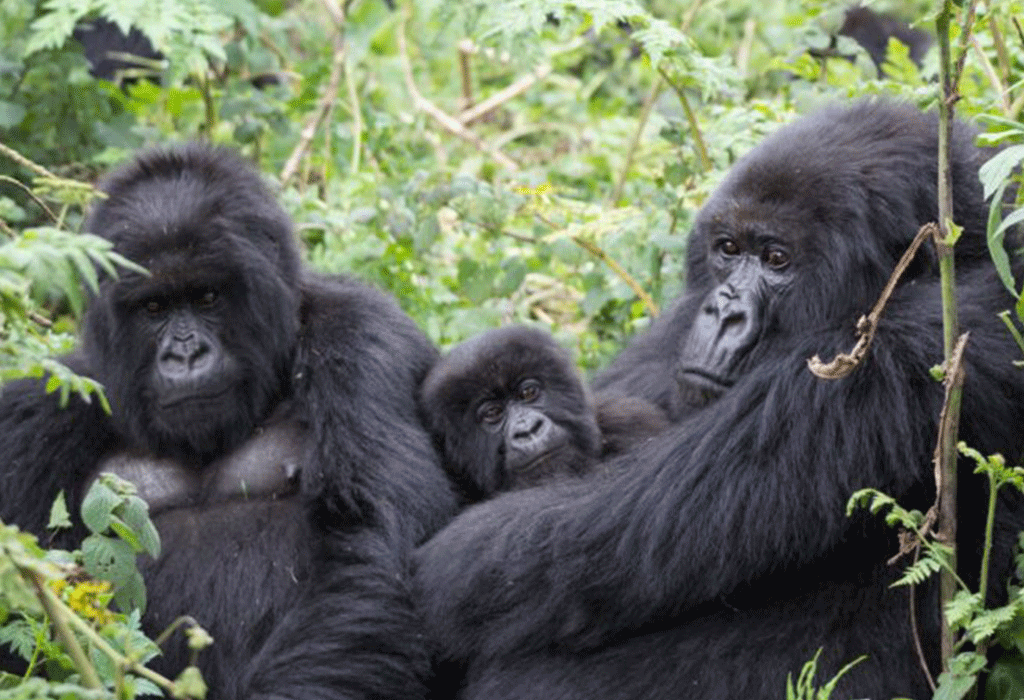
Why Track Mountain Gorillas in Rushaga Sector of Bwindi?

Why You Should Track Mountain Gorillas in the Rushaga Region of Bwindi
Why Track Mountain Gorillas in Rushaga Sector of Bwindi? Tracking mountain gorillas in the Rushaga sector of Bwindi Impenetrable National Park offers a truly exceptional wildlife experience. What sets this region apart is its large population of habituated gorilla families, making it one of the best areas in Uganda for gorilla trekking. With seven habituated families residing in the sector, visitors have greater chances of encountering these gentle giants up close.
The Rushaga sector stands out not only for its numbers but also for its exclusivity and uniqueness. It’s the only place in the world where the unique gorilla habituation experience is available. This rare opportunity allows you to spend up to four hours with a gorilla group that is still getting used to human presence. Consequently, the experience offers a deeper connection and understanding of their behavior.
Each day, the Uganda Wildlife Authority issues around 60 trekking permits for this region. This makes it more accessible to travelers, especially during peak seasons. In addition to the rich wildlife encounters, Rushaga also offers a variety of accommodation options. These range from budget lodges to luxury stays, all conveniently located near the trekking start points.
Whether you are seeking adventure, wildlife photography, or a once-in-a-lifetime encounter, the Rushaga sector offers an unparalleled gorilla trekking experience set against a backdrop of incredible natural beauty.
Some of the best Gorilla Safaris
2-Day Bwindi Gorilla Safari through Kigali
3-Day Gorilla Trekking in Uganda
4-Day Gorillas and Golden Monkey Safari
5-Day Tree-Climbing Lions and Gorillas in Bwindi
8 Days Uganda Rwanda Primates Safari
Reasons as to Why Track Mountain Gorillas in Rushaga Sector of Bwindi?
The High Gorilla Population in the Rushaga Sector
Why Track Mountain Gorillas in Rushaga Sector of Bwindi?- higher gorilla population and number of gorilla families. One of the key reasons to trek mountain gorillas in the Rushaga sector of Bwindi Impenetrable National Park is its high concentration of habituated gorilla families. With nine habituated groups, Rushaga offers one of the highest densities of mountain gorillas available for trekking in the park. Each group has its own unique history, social structure, and behavioral traits, giving visitors a wide variety of encounters to experience.
Bweza Gorilla Family
This group split from the larger Nshongi family due to internal conflict and is led by the silverback Kakono. Formed around 2013, it includes 11 members—two silverbacks, three blackbacks, three adult females, one sub-adult, and two infants.
Mishaya Gorilla Family
Also originating from Nshongi, Mishaya formed his group through dominance and battles, growing from seven to ten members by absorbing individuals from other families. It is based in the Mishaya area.
Nshongi Gorilla Family
Once one of the largest groups, Nshongi was named after a nearby river. It split from Bweza and currently consists of eight members after initially being reduced to seven before a new birth.
Kahungye Gorilla Family
Opened to visitors in 2011, Kahungye was once larger but shrank following internal disputes. Now led by silverback Rumanzi, it includes 12 members. The group split, leading to the formation of Busingye.
Busingye Gorilla Family
This playful and energetic group broke off from Kahungye. It now comprises 12 individuals, also under the leadership of Rumanzi. Tensions occasionally flare between Busingye and its parent group. The Uganda Wildlife Authority (UWA) office in Bwindi issues permits for this family.
Rwigi Gorilla Family
Formed in 2024 from a split with Kahungye, this newly habituated group is led by silverback Rwigi. It includes 10 members—one silverback, five females, two juveniles, and two infants—and is now open to tourism.
Bikingi Gorilla Family
Emerging from Mishaya in 2012, Bikingi includes members who once associated with unhabituated gorillas, prompting a new habituation effort. The group now consists of eight members: one silverback, two sub-adults, five adult females, three juveniles, and seven infants. Leadership is still being closely monitored.
Mucunguzi Gorilla Family
Led by silverback Mucunguzi, this group formed after he was forced out of Bweza. Once third in command, Mucunguzi later confronted the Bikingi group and established his own family by attracting several females. The group currently has 10 members.
Tindatine Gorilla Family
Also opened to tourists in 2024, the Tindatine group was created after disputes between dominant silverbacks. It now consists of eight individuals and is led by a single silverback.
Note: The composition and size of these gorilla families are dynamic and subject to change due to natural events such as births, deaths, territorial conflicts, and migrations. Park rangers and researchers regularly monitor the groups to maintain up-to-date records for conservation and tourism purposes.
The Gorilla Habituation Experience in Rushaga
Why Track Mountain Gorillas in Rushaga Sector of Bwindi?- Gorilla habituation. The gorilla habituation experience in the Rushaga sector of Bwindi Impenetrable National Park is a rare and unforgettable adventure that sets this region apart from others. Unlike the standard gorilla trek, which allows just one hour with a fully habituated gorilla family, the habituation experience offers visitors the unique chance to spend up to four hours with a group that is still becoming accustomed to human presence.
This process, famous as habituation, involves gradually familiarizing gorillas with humans in a calm and non-threatening way to ensure their comfort and safety. During the trek, visitors join researchers and park rangers in the forest to observe the gorillas. They study their behaviors and help them adjust to human presence. The experience provides a more in-depth look into gorilla life, including their social interactions, individual personalities, and daily activities.
The adventure begins with a briefing at the park headquarters early in the morning. Unlike the standard trek, habituation experiences allow only four participants per session, offering a quiet and more intimate encounter. As you spend extended time with the gorillas, you’ll have opportunities to ask questions, take photos, and witness their behavior in a more relaxed and natural state.
Once the gorilla group is fully habituated, it becomes available for standard trekking.
Permits for this exclusive experience cost $1,500 for international tourists. It also costs $1,000 for foreign residents and African nationals, and UGX750,000 for East African citizens. Bookings can be arranged through Safari Vacations and Travel Services Ltd, a trusted expert in Rushaga gorilla trekking.
This experience offers a deeply personal and meaningful way to connect with one of the planet’s most endangered species.
Accessibility of the Rushaga Sector
The Rushaga sector of Bwindi Impenetrable National Park is one of the most accessible regions for gorilla trekking, thanks to a well-developed transport network. Whether you prefer to travel by road or air, reaching Rushaga is convenient and flexible depending on your itinerary.
By road, the journey from Kampala to Rushaga takes approximately 8 to 9 hours, following the Masaka–Mbarara–Kabale route. Though long, the drive is scenic and offers glimpses of Uganda’s countryside. A reliable 4×4 safari vehicle is recommended, especially for the last stretch of the journey. The last stretch includes some rugged terrain as you approach the park.
For a faster and more comfortable option, domestic flights are available from Entebbe International Airport or Kajjansi Airstrip to either Kihihi Airstrip or Kisoro Airstrip. From there, it’s a short drive to the Rushaga region, making it an ideal choice for those on tighter schedules.
Alternatively, visitors can travel from Kigali, Rwanda, which is a shorter route than from Kampala. The drive from Kigali to Rushaga typically takes 4 to 5 hours. This makes it a popular option for travelers combining a visit to both countries. However, it’s important to ensure you have the correct border-crossing documentation for entry into Uganda and re-entry into Rwanda.
With multiple transport options and improved infrastructure, the Rushaga sector remains a convenient and attractive destination for gorilla trekking in Uganda.
The Cost of a Gorilla Safari in the Rushaga Sector
The cost of a gorilla safari in the Rushaga sector varies depending on the type of package you choose—budget, mid-range, or luxury. Your overall travel budget will largely determine which package suits you best, but several other factors also influence the final cost of your safari.
One of the main costs is the gorilla trekking permit, which is $800 per person for foreign non-residents. It also costs $700 for foreign residents with valid work or resident permits, and UGX 300,000 for East African citizens. This permit is mandatory for anyone participating in gorilla trekking.
Additional activities included in your itinerary, such as game drives, cultural tours, bird watching, and nature walks, can also increase the total cost of your safari. The number of people traveling in your group has an impact as well; typically, the larger the group, the lower the cost per person, and vice versa.
The season of travel is another major factor. During the peak season, demand for accommodation and services is high, which can drive up the cost of safari packages. In contrast, traveling during the low season often comes with more affordable rates and promotional offers.
Finally, the overall cost will vary depending on whether you opt for a luxury, mid-range, or budget safari experience. Each category offers different levels of comfort, service, and amenities, allowing you to tailor your trip to your personal preferences and financial plan.
Planning and understanding these variables will help you choose the right package and make the most of your gorilla trekking adventure in Rushaga.
What Are the Gorilla Trekking Rules in Rushaga Sector?
- Littering in Rushaga is prohibited because the rubbish alters the forest’s natural environment.
- Trekkers who are sick or with evidence of sickness can’t trek to see gorillas to protect them from infections.
- Feeding Mountain gorillas is prohibited, and therefore, you have to eat when you are 300 meters from the gorillas. This was set up so that the gorillas do not depend on humans for food and hunt on their own.
- Spitting and destroying any vegetation within the Rushaga sector is not allowed. Gorillas are highly susceptible to diseases, especially viral infections, which are dangerous to their body and entire families.
- Keep a distance of 7 to 10 meters to prevent spreading germs and infections to them.
- Trekking the mountain gorillas in Rushaga can only be done by visitors 15 years and above.
- Only an hour is allowed with the gorillas after you meet them.
- A flashless camera is the only one that is allowed when taking photos of mountain gorillas.
- After locating the gorilla family, stand close to each other and do not leave the group at any time. Mountain gorillas are sensitive and suspicious even after undergoing habituation.
- Never surround the gorillas as this will agitate them. Instead, ensure you keep your distance.
- Talk or communicate in low tones so that you do not scare them
- In case you fall sick with a communicable disease, volunteer to stay behind because you will not be allowed to trek the gorillas.
Best Time to Visit the Rushaga Sector in Bwindi
Gorilla trekking in the Rushaga sector is available year-round, but certain times of the year offer a more favorable experience depending on weather conditions and personal preferences.
The dry seasons—from July to September and December to January—are considered the best times for both gorilla trekking and the gorilla habituation experience. During these months, the trails are drier, less slippery, and easier to navigate. Vegetation is also less dense, which improves visibility and makes it easier to track the gorillas. The gorillas themselves tend to be more active and accessible during this time.
In contrast, the wet season, which falls between March to May and November, presents more challenging trekking conditions. Trails can become muddy and difficult to pass, and the gorillas often move to higher elevations, making them harder to find. However, the rainy months do come with some advantages. There are typically fewer visitors, meaning less crowded treks and a more intimate experience, especially for those interested in the longer habituation encounters.
Due to the high demand for gorilla trekking in Rushaga, especially during the dry months, it’s important to plan and book well in advance. For assistance with permits, accommodation, and personalized safari planning, Safari Vacations and Travel Services Ltd can provide expert guidance.
Whether you prefer the ease of the dry season or the quiet beauty of the off-peak months, Rushaga offers a memorable gorilla trekking adventure throughout the year. Contact us today to plan your gorilla safari in Rushaga sector.