
Filming the Batwa Pygmies in Uganda

Quick Answer
What Do You Need to Film the Batwa in Uganda?
For a professional foreign film or media project, start by defining your filming locations, production dates, crew size, equipment and intended subject matter. Foreign media workers may require Uganda Media Council accreditation, while filming inside national parks or other protected areas may require separate permission from the authority responsible for the location. Community access and consent should be arranged directly and respectfully with the Batwa participants or their representatives before filming begins.
- Confirmed filming dates and locations.
- Community access and informed consent.
- Media Council accreditation where applicable.
- Protected-area filming permission where applicable.
- Appropriate immigration authorization for media work.
- Equipment and customs planning.
- Local transport and production support.
- Accommodation close to the filming locations.
Three Important Parts of a Batwa Filming Project
Successful cultural filming requires the right location, respectful community coordination and proper production preparation.

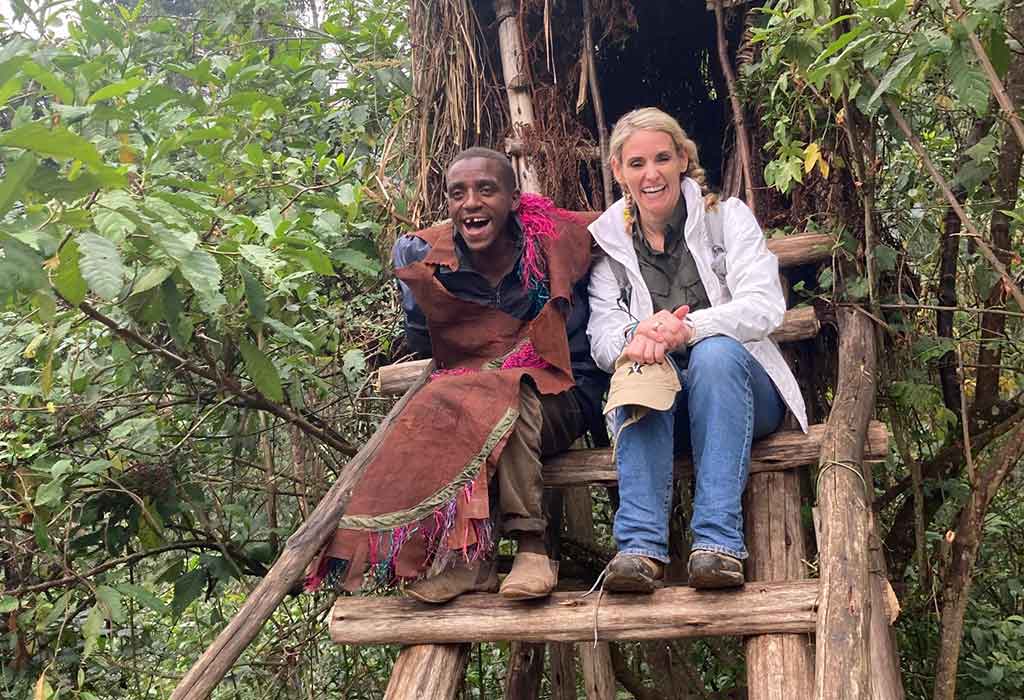

1. Filming the Batwa Around Mgahinga Gorilla National Park
Mgahinga in southwestern Uganda is one of the strongest locations for a Batwa-focused production because the area combines Batwa cultural interpretation with the dramatic Virunga landscape. Uganda Wildlife Authority documentation continues to reference the Garama Batwa Cultural Trail Experience, which involves Batwa participants and provides a structured setting for interpreting aspects of traditional forest knowledge and history.
A production here can combine interviews, landscape sequences, community-led demonstrations and wider footage of the Virunga environment. If the filming enters Mgahinga Gorilla National Park or uses park-controlled sites, obtain the relevant Uganda Wildlife Authority filming authorization before the shoot.
Productions that want to combine Batwa filming with wildlife or primate footage can also review our Mgahinga gorilla and golden monkey safari and our guide to primates viewable on guided walks.
2. Filming Batwa Communities Around Bwindi
Bwindi offers a different production context. Instead of concentrating only on historic forest skills, filmmakers can explore contemporary Batwa life, cultural preservation, tourism-related livelihoods, intergenerational knowledge and the relationship between communities and the protected forest landscape.
The wider Bwindi region includes Buhoma, Ruhija, Rushaga and Nkuringo. The most suitable location depends on your story, the individuals or organizations involved in the production and whether you also intend to film inside the national park.
For productions combining culture with mountain gorilla footage, our Uganda gorilla trekking guide explains the broader Bwindi experience, while filmmakers planning a longer primate shoot can review the Gorilla Habituation Experience.
3. Filming Batwa Communities Near Semuliki National Park
Semuliki provides a very different visual and cultural setting from Bwindi and Mgahinga. Uganda Wildlife Authority identifies Batwa communities among the cultural groups associated with the Semuliki area, and recent UWA project documentation discusses Batwa cultural preservation, forest access, medicinal plants, crafts and community livelihood priorities in the region.
This makes Semuliki potentially useful for productions seeking a broader national perspective rather than telling the Batwa story only through southwestern Uganda. It can also add lowland tropical forest imagery and a Central African ecological setting to the film.
If your project includes additional western Uganda locations, Semuliki can be combined with Kibale National Park or a wider western Uganda wildlife route.
4. Lake Bunyonyi and the Wider Kigezi Region
The hills and lakes of Kigezi can provide useful establishing shots, interview settings and transitional scenes for a documentary centred on southwestern Uganda. Lake Bunyonyi is particularly useful when a production wants open landscapes and community scenes that visually contrast with Bwindi’s dense rainforest and Mgahinga’s volcanic terrain.
Location access around the lake should still be arranged with the relevant community members, property owners or local representatives. Do not assume that a tourism visit automatically gives a film crew commercial filming rights.
For location planning, see our Lake Bunyonyi tour and our guide to activities around Lake Bunyonyi.
Community Consent Should Come Before the Camera
Government filming permission does not replace permission from the people appearing in your documentary. Before recording interviews, homes, ceremonies, children or personal stories, discuss the purpose of the production and obtain meaningful consent from the relevant participants.
Explain where the footage may appear, whether the film is commercial or editorial, whether names will be used and whether the material could be distributed internationally. Where releases are appropriate, prepare them in a form the participant can genuinely understand rather than treating consent as a signature-only exercise.
Compensation, location fees or community contributions should be agreed transparently before filming. The arrangement should reflect the actual nature of the project rather than assuming that the fee charged for an ordinary tourist visit covers professional documentary production.
Uganda Media Council Accreditation for Foreign Film Crews
Foreign journalists and media workers should check Uganda Media Council accreditation requirements before travelling. The Media Council currently lists journalists, freelance journalists, photojournalists, bloggers, camera operators and certain media students among those eligible for foreign-media accreditation.
The current application guidance requires applicants to complete Form G and provide supporting documentation. The listed requirements include a passport copy, photographs, employer or assignment documentation and other accreditation materials. The Media Council also states that the relevant immigration authorization must clearly indicate that the applicant is coming to Uganda to perform media work.
The Council currently advises applicants that processing can take approximately seven days after the application is received, so crews should not leave accreditation until immediately before the shoot.
Current Media Accreditation Fees
The Uganda Media Council’s current procedure page lists foreign-journalist accreditation at US$175 per person for a period not exceeding 30 days, US$225 for more than 30 days up to six months, and US$325 for more than six months up to two years.
Because production regulations and government fees can change, reconfirm the applicable category and payment instructions directly with the Media Council before transferring money or finalizing the production budget.
Filming Inside Uganda’s National Parks
Media accreditation and protected-area filming permission are separate matters. If your Batwa project includes filming inside Bwindi, Mgahinga, Semuliki or another Uganda Wildlife Authority-managed protected area, the production should obtain the applicable UWA filming permission in advance.
UWA’s published tariff material states that commercial filming fees are calculated in relation to the applicable activity and entrance fees and that prior booking is required. Because tariffs can be revised, ask for the current filming quotation for the exact park, activity, crew and equipment rather than budgeting from an old online figure.
Crews combining cultural filming with gorillas can read our guide to filming gorillas in Mgahinga.
Can You Use a Drone When Filming the Batwa?
A drone should never be treated as ordinary camera equipment. Drone importation and operation can involve additional aviation, security, location and protected-area approvals. Do not bring or launch a drone on the assumption that permission to film on the ground automatically includes aerial filming.
Where a drone is important to the production, begin the approval process early and provide the aircraft specifications, operator information, intended locations, dates and proposed purpose of the aerial footage.
For a broader explanation of drone planning around Uganda’s protected areas, see our guide on using a drone for filming in Uganda.
Professional Filming Equipment and Customs Planning
If your crew is travelling with cinema cameras, multiple lenses, lighting equipment, sound kits, tripods, drones or other high-value production equipment, prepare a detailed equipment list before departure. Confirm the current temporary-import and customs procedure that applies to your specific equipment rather than relying on an old production report from another crew.
Your equipment manifest should normally identify each major item clearly, including serial numbers where relevant. Keep copies of purchase, rental or ownership documentation available where practical, and make sure the equipment leaving Uganda can be matched to the equipment brought into the country.
Production crews should also plan for dust protection, waterproof covers, charging, data backup and secure overnight equipment storage. Our general Uganda safari packing guide can help with the non-production side of preparing for the journey.
Why Use a Local Fixer or Production Coordinator?
A Batwa documentary can involve several layers of coordination at the same time: government accreditation, community appointments, park permissions, interpretation, transportation, accommodation, equipment movement and changing filming schedules. A local production coordinator can keep these moving parts connected.
A good fixer does more than arrange transport. The role may include scheduling interviews, confirming community representatives, identifying interpreters, coordinating official appointments, scouting road access, arranging vehicles and helping the crew respond when weather or availability changes the filming plan.
Safari Vacations and Travel Services can combine production logistics with the wider Uganda itinerary. Crews that also want wildlife footage can examine our Uganda wildlife safari planning options.
Transport for a Batwa Film Crew
Most Batwa filming locations in southwestern Uganda require road transport, and production equipment can quickly make a standard vehicle impractical. The correct vehicle depends on crew size, baggage, camera cases and the roads included in the shoot.
A customized 4×4 Land Cruiser is useful for small crews and difficult road conditions, while a larger van or additional support vehicle may be required where the production carries extensive lighting, sound or grip equipment. Build enough time into the schedule for equipment loading and unloading rather than planning each filming day as though the crew were ordinary safari guests.
Productions travelling through several western destinations can use routes similar to a 6-day western Uganda safari, although professional filming generally requires more time at each location.
Choosing Accommodation for a Film Crew
For a production crew, accommodation should be selected according to logistics rather than luxury alone. Proximity to the filming location, reliable electricity, secure equipment storage, meal flexibility and parking can be more important than having the most expensive lodge.
Ask whether batteries can be charged overnight, whether early breakfasts or packed meals can be prepared and whether the property can accommodate changes in shooting schedules. Around Bwindi and Mgahinga, staying on the correct side of the mountains can save valuable production time each morning.
Accommodation Options for Batwa Film Crews
The best accommodation depends on where your production is filming. These examples cover three useful filming bases around Bwindi, Mgahinga and the Fort Portal–Semuliki region. Production crews should confirm specific operational requirements such as charging, storage, meals, parking and early departures directly before booking.
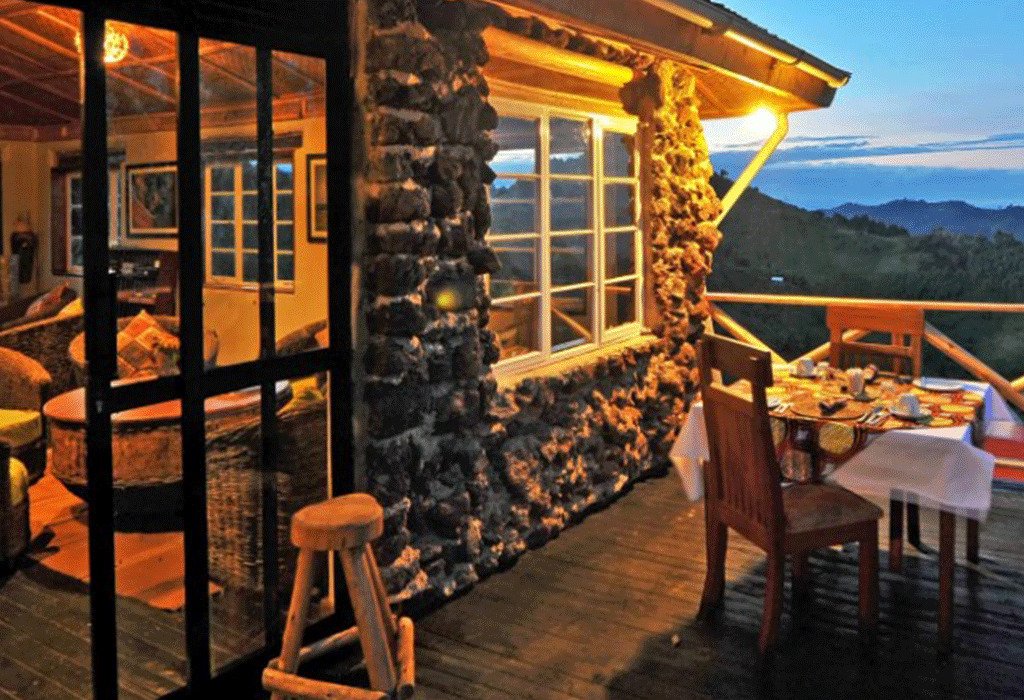
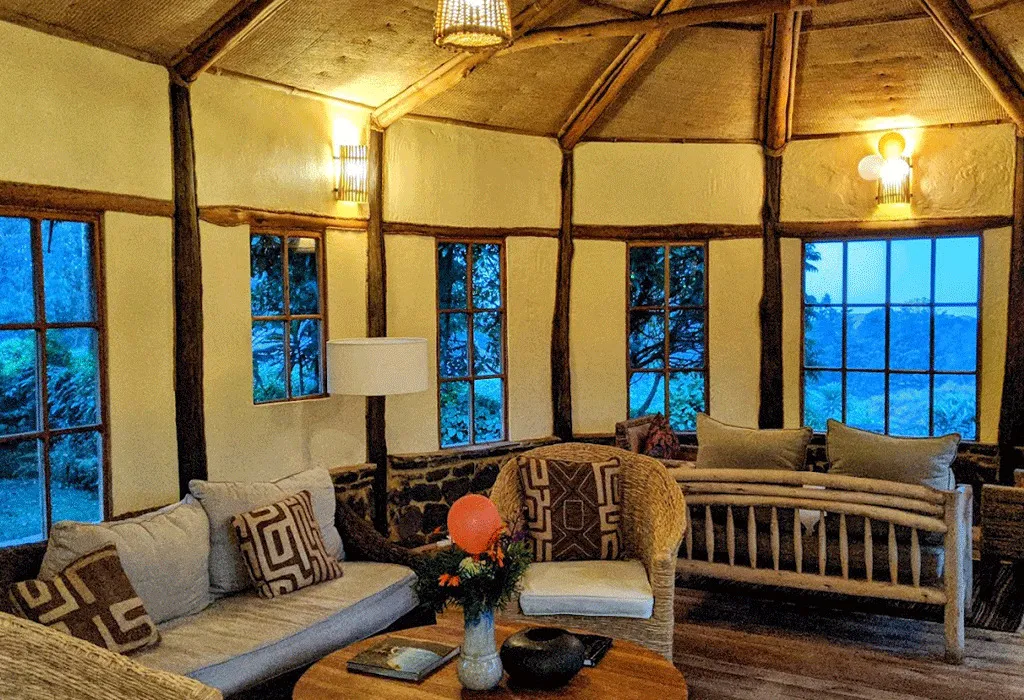
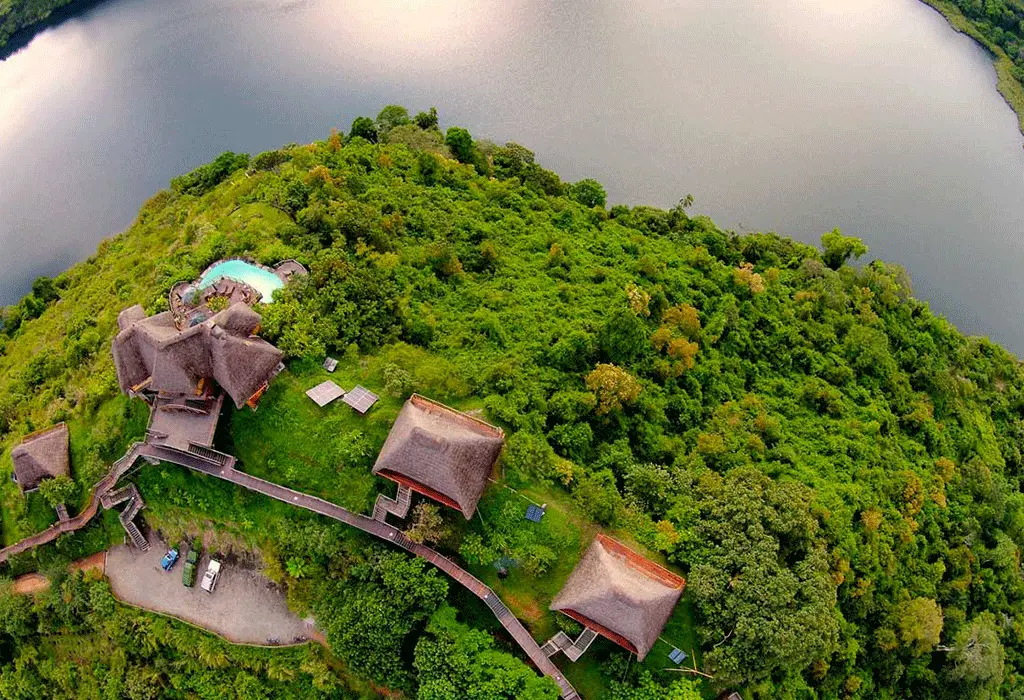
Production note: Lodge suitability should be checked against your crew size and technical requirements. Before confirming accommodation, verify electricity and charging arrangements, secure equipment handling, parking, meal timing and accessibility to the actual filming location.
Best Time for Filming the Batwa in Uganda
Uganda can support cultural filming throughout the year. The relatively drier periods, generally around June to September and December to February, can make movement on forest paths and unpaved roads easier, particularly when the production carries substantial equipment.
The wetter months should not automatically be avoided. Cloud, mist and rain can create visually powerful forest sequences, but the crew needs better weather protection and more flexible schedules. Heavy rain can slow vehicle movement and make steep walking routes more difficult.
Filmmakers combining Batwa footage with mountain gorillas can also review our guide to the best time for gorilla trekking in Bwindi.
Ethical Filming Practices
A strong documentary does not require presenting Batwa communities only through poverty, displacement or exotic imagery. Allow participants to explain their own experiences and perspectives rather than forcing every interview into a predetermined narrative.
Be particularly careful when filming children, private homes, sensitive ceremonies and personal stories. Obtain appropriate permission, avoid creating scenes that participants would not normally choose to perform and explain clearly when the production intends to use footage commercially.
Where cultural demonstrations are part of an organized tourism experience, describe them accurately as demonstrations or interpretations rather than automatically presenting every activity as an untouched continuation of daily historical practice.
Planning Batwa Interviews
Good interviews require more preparation than simply identifying an elder or community leader on arrival. Decide what perspectives your story needs, then schedule appropriate participants before the production day. Depending on the project, you may want elders, women, young people, cultural guides, artisans, community representatives or people involved in conservation and tourism.
Allow enough time for translation where necessary. A technically accurate word-for-word translation may still miss cultural meaning, so using an interpreter familiar with the community and the production topic can improve both the interview and later editing.
How Much Does Batwa Filming in Uganda Cost?
There is no single daily price that accurately covers every Batwa production. The budget depends on the filming location, number of crew members, number of shooting days, community arrangements, media accreditation, park permissions, transport, accommodation, equipment requirements, interpreters and whether additional wildlife or aerial filming is included.
For this reason, avoid using an old flat figure such as “US$400 per day” unless it comes from the specific community or organization involved in your current project. The better approach is to prepare a shooting brief and request quotations for the exact access and services required.
| Budget Item | What Affects the Cost |
|---|---|
| Accreditation | Crew size and accreditation period. |
| Community Access | Location, duration, participants and agreed compensation. |
| Protected-Area Filming | Park, activity, crew and filming requirements. |
| Transport | Vehicle type, mileage, fuel and number of production vehicles. |
| Production Support | Fixer, interpreter, location scouting and coordination requirements. |
Example Batwa Filming Schedule
The exact production schedule depends on the story, but a simple project in southwestern Uganda can be organized around several focused filming days rather than trying to cover every location quickly.
Day 1
Arrival, equipment organization, crew briefing and final location confirmation.
Day 2
Travel to southwestern Uganda and establish accommodation near the first filming location.
Days 3–4
Batwa community interviews, cultural sequences and establishing footage.
Day 5
Second community or landscape location, pickups and additional interviews.
Day 6
Optional protected-area, wildlife or scenic filming.
Day 7
Return transfer, data checks and preparation for departure or onward filming.
Crews wanting to add other cultural or wildlife components can use a route similar to our Lake Mburo wildlife and cultural itinerary or incorporate a longer custom Uganda itinerary.
What We Need to Plan Your Batwa Filming Project
Send enough information for us to understand the production before requesting permits, community appointments or accommodation. This reduces repeated correspondence and makes it easier to identify which authorities and locations need to be involved.
- Production company or media organization.
- Purpose and intended distribution of the film.
- Preferred filming dates.
- Number and roles of crew members.
- Preferred Batwa locations or story themes.
- Equipment list.
- Drone requirements, if any.
- Vehicle and accommodation requirements.
- Any wildlife or national-park filming required alongside the Batwa project.
Common Mistakes to Avoid
- Assuming a tourist community visit automatically includes commercial filming rights.
- Arriving before Media Council accreditation has been processed.
- Confusing community permission with national-park filming authorization.
- Bringing a drone without arranging the necessary approvals.
- Using old filming-fee figures without requesting a current quotation.
- Planning too many locations in too few filming days.
- Failing to allow time for translation and interview preparation.
- Choosing accommodation too far from the filming location.
- Using participants’ images without clearly explaining the intended use.
- Presenting cultural demonstrations as spontaneous daily life without context.
Frequently Asked Questions About Filming the Batwa in Uganda
1. Where can I film the Batwa in Uganda?
Potential locations include communities around Bwindi and Mgahinga in southwestern Uganda, the wider Kigezi region and Batwa communities associated with the Semuliki area. The best location depends on the subject and visual style of your production.
2. Do foreign filmmakers need media accreditation?
Foreign journalists and media workers should check the Uganda Media Council’s accreditation requirements. Camera operators and several other media categories are included in its current foreign-accreditation guidance.
3. How long does Media Council accreditation take?
The Uganda Media Council currently advises that an application can take about seven days to process once received, so apply before the crew’s filming dates.
4. How much is foreign media accreditation in Uganda?
The Media Council currently lists US$175 per person for up to 30 days, US$225 for more than 30 days up to six months and US$325 for more than six months up to two years. Confirm the current fee before applying.
5. Do I need UWA permission to film the Batwa?
Not simply because the subject is Batwa. However, if the filming takes place inside a Uganda Wildlife Authority-managed national park or uses activities or locations under UWA control, separate protected-area filming permission may be required.
6. Do I need permission from the community?
Yes, filmmakers should arrange access and informed consent with the people being filmed or their appropriate representatives. Government filming authorization does not replace participant consent.
7. Can I film the Batwa Trail in Mgahinga?
Potentially, but professional filming should be arranged in advance with the relevant community participants and authorities. Do not assume a standard visitor booking grants commercial filming access.
8. Can I use a drone?
Drone use can require additional approvals beyond normal filming permission. Begin drone planning early and provide the aircraft, operator, location and proposed filming details.
9. Can I bring professional camera equipment into Uganda?
Professional crews should prepare an equipment manifest and confirm the current temporary-import and customs procedures applicable to their equipment before travelling.
10. What is the best season for filming?
The relatively drier periods can make road and trail movement easier, while wetter months can produce atmospheric mist and forest imagery. The right season depends on the production style and equipment involved.
11. How much should we budget for community filming?
There is no universal Batwa filming price. Costs should be agreed for the specific community, access, participants, filming duration and production purpose rather than relying on an old flat daily rate.
12. Can we film gorillas during the same production?
Yes, but gorilla filming follows separate permit and protected-area procedures. Plan the gorilla component independently and build it into the overall production schedule.
13. Do we need a local fixer?
A fixer is not simply a driver. For a complex production, local coordination can substantially simplify community scheduling, official permissions, interpretation, transport, accommodation and location changes.
14. How many days should we allow?
A simple single-location project may require only a few filming days, while a documentary covering Bwindi, Mgahinga, Semuliki or multiple communities needs considerably more time. Include travel and weather contingency days.
15. Can Safari Vacations help organize the production?
Yes. Safari Vacations and Travel Services can help coordinate the Uganda itinerary, transport, accommodation, location logistics and relevant filming arrangements according to the requirements of the production.
Plan Batwa Filming as a Production, Not Just a Safari Activity
Filming the Batwa in Uganda can produce powerful cultural, historical and contemporary storytelling, but the strongest projects are built around preparation and respectful collaboration. Start by defining the story and locations, then identify the community representatives and authorities whose cooperation will be required.
Allow enough time for media accreditation, protected-area permissions where necessary, community consent, interviews, equipment handling and travel between locations. This approach protects the production from avoidable delays and gives the people being filmed a clearer understanding of the project in which they are participating.
Filmmakers who want to place the Batwa story within a wider Uganda context can combine the production with wildlife, primate or landscape filming. Our 9-day Uganda wildlife route, 6-day Uganda safari and Lake Mburo cultural safari provide examples of how other locations can fit into a Uganda journey.
Location Support • Transport • Accommodation • Filming Logistics
Planning a Batwa Filming Project in Uganda?
Send us your filming dates, crew size, production purpose, preferred locations, equipment requirements and whether you also plan to film inside Uganda’s national parks. Safari Vacations and Travel Services can help coordinate the local itinerary and production logistics around your project.


