
Rwanda Birding Safari: Best Birding Tours, Birds & Destinations
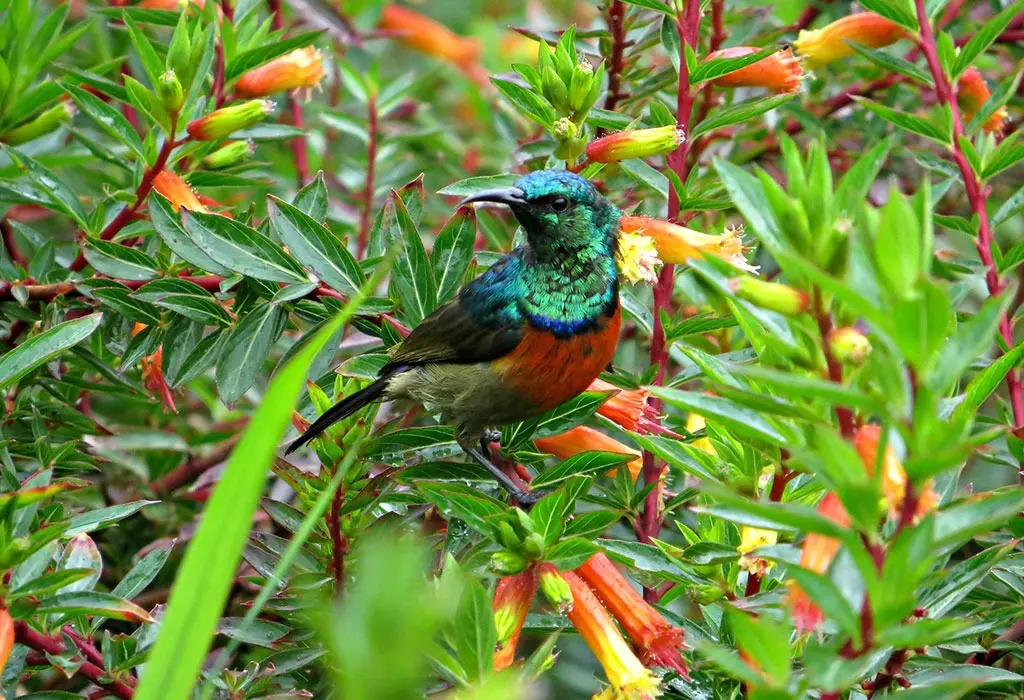
A colorful sunbird feeds among flowering vegetation, highlighting Rwanda’s remarkable bird diversity and excellent birdwatching opportunities.
A Rwanda Birding Safari introduces travelers to one of East Africa’s most rewarding combinations of tropical rainforest, high-altitude mountains, wetlands, lakes, savannah and cultivated countryside within a remarkably compact destination. Rwanda may be best known internationally for mountain gorilla trekking, but its birdlife is equally capable of creating an exceptional wildlife journey. From colorful forest specialists and Albertine Rift endemics to wetland birds, raptors, sunbirds, turacos, kingfishers and savannah species, birders can experience extraordinary habitat diversity without spending excessive amounts of time travelling between destinations. Our detailed guide to birding in Rwanda provides an excellent introduction for travelers considering a dedicated Rwanda Birding Safari.
Why Choose Rwanda for a Bird Watching Safari?
One of the greatest strengths of a Rwanda Birding Safari is the country’s concentration of different ecosystems within relatively short travelling distances. Birders can begin around Kigali, continue east toward the open landscapes and wetlands of Akagera National Park, travel southwest into the montane rainforest of Nyungwe Forest National Park and later explore the volcanic highlands of Volcanoes National Park. This variety allows travelers to search for dramatically different bird communities during one carefully planned journey. Those beginning their research can explore our broader guide to birdwatching in Rwanda and compare the country’s major habitats before deciding how many days to dedicate to each destination.
Rwanda also appeals to birders because the safari does not have to focus on only one type of habitat. The country presents opportunities for forest birding, wetland birding, savannah birding, mountain birding and roadside birding within a single itinerary. This makes a Rwanda Birding Safari attractive to experienced birdwatchers searching for specific species as well as first-time birders interested in discovering African birdlife. Travelers trying to identify the most productive locations can use our guide to the best birding sites in Rwanda when building a longer bird watching itinerary.
Nyungwe Forest and the Albertine Rift Birding Experience
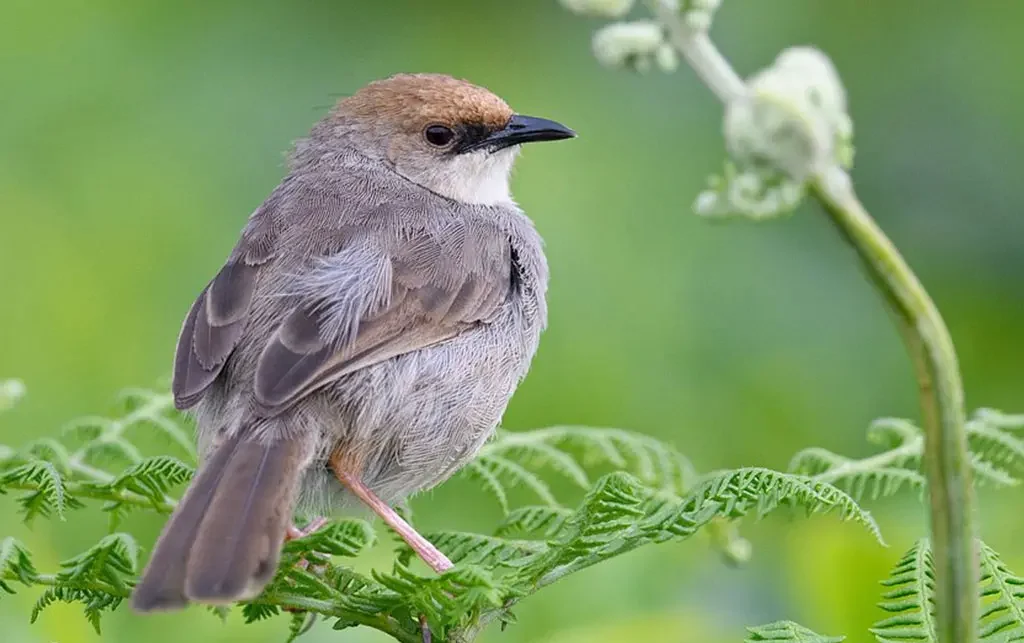
A forest bird rests among the ferns of Nyungwe, highlighting the exceptional birdwatching opportunities found within Rwanda’s Albertine Rift forests.
Nyungwe Forest National Park is one of the most important destinations to include on a serious Rwanda Birding Safari. Its montane rainforest, ridges, valleys, forest clearings and hiking trails create opportunities to search for distinctive highland and Albertine Rift species. Birding here is especially rewarding for travelers who enjoy walking through mature forest while identifying birds by both calls and visual sightings. The Karamba Birding Trail is one of the locations that can be incorporated into a specialized Nyungwe birding experience. Travelers can also learn more about Nyungwe Forest National Park and the wider selection of rainforest activities that can complement bird watching.
The value of Nyungwe goes beyond creating a long bird checklist. The forest gives a Rwanda Birding Safari a completely different atmosphere from the open plains of eastern Rwanda. Mornings can be spent listening for forest calls, watching activity around forest edges and walking established trails with an experienced bird guide. The surrounding landscape also provides excellent opportunities for nature photography, primate viewing and scenic exploration, allowing birders travelling with non-birding companions to create a balanced safari experience.
Birding in Volcanoes National Park

A striking forest bird perched among the vegetation, highlighting the rewarding birdwatching opportunities found in Volcanoes National Park.
Volcanoes National Park adds another important dimension to a Rwanda Birding Safari. Its bamboo zones, montane vegetation, volcanic slopes and high-altitude environment support a bird community that differs considerably from Rwanda’s eastern savannahs. Travelers interested in this region can read more about bird watching in Volcanoes National Park and our guide to an unforgettable Volcanoes birding safari. Bird watching here can also be combined with gorilla trekking, golden monkey tracking, nature walks and visits around the Virunga highlands, making the park particularly suitable for travelers who want a Rwanda Birding Safari with additional wildlife experiences.
Akagera National Park for Savannah and Wetland Birds
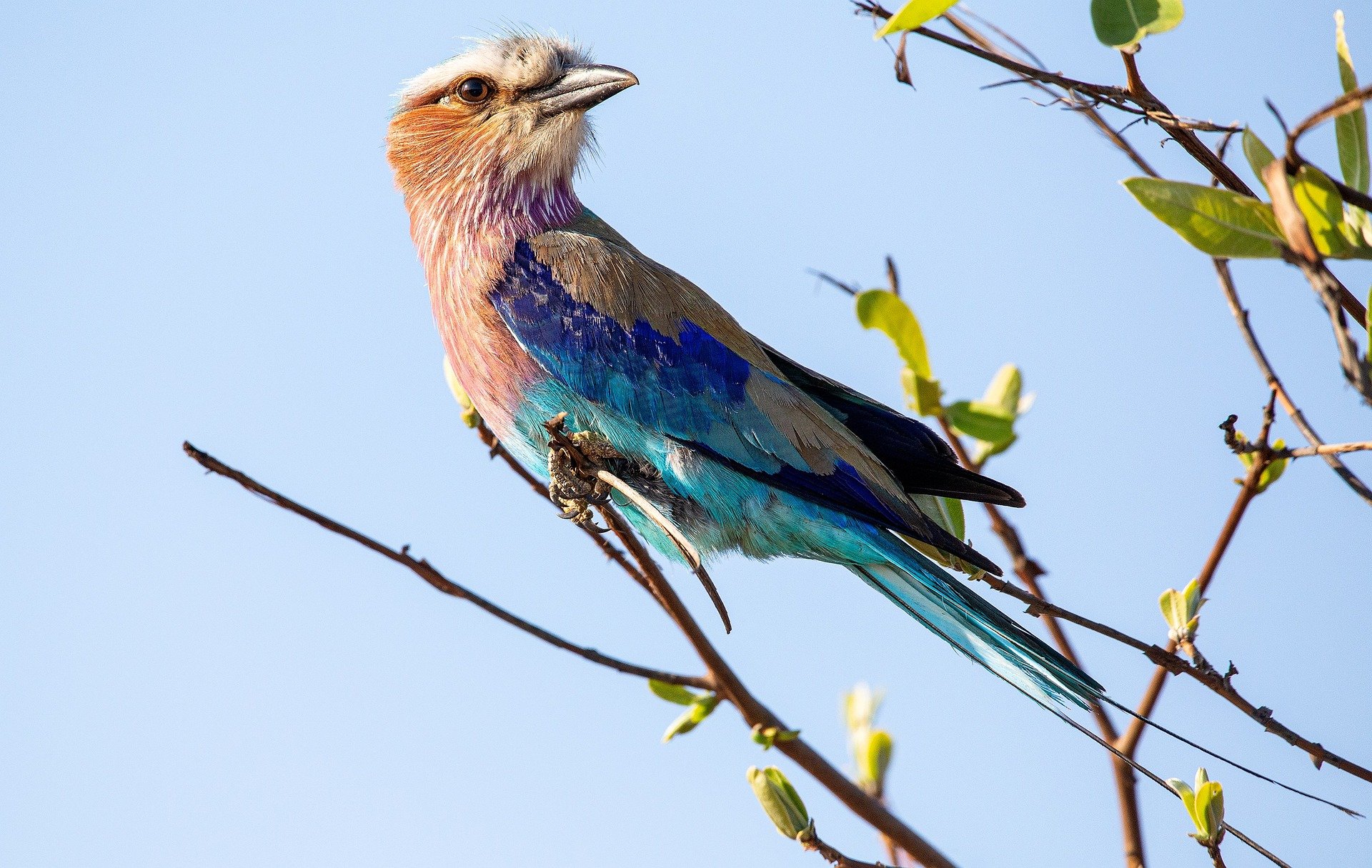
A colorful lilac-breasted roller perched in the savannah, highlighting the diverse birdlife found across Akagera National Park’s grasslands, woodlands and wetlands.
While Nyungwe and Volcanoes provide highland forest birding, Akagera National Park brings savannah, woodland, lakes, papyrus wetlands and open grassland into the Rwanda Birding Safari experience. This ecological contrast is extremely valuable because it allows birders to search for water-associated species, raptors, woodland birds and open-country species during the same national journey. Our guide to Akagera National Park activities explains how birdwatching can be combined with game drives and other wildlife experiences.
A dedicated birding program in Akagera can include slow game drives through different habitats and exploration around wetland areas where bird activity can be particularly rewarding. Travelers who want to understand the broader park experience can also explore our detailed Akagera safari guide. For additional destination information, Anthill Safaris provides useful background on travelling beyond gorillas to Akagera and Nyungwe, showing why Rwanda works particularly well for travelers interested in several ecosystems rather than a single wildlife activity.
A Compact Safari with Remarkable Habitat Diversity
The ability to connect several major ecosystems is one of the strongest reasons to choose a Rwanda Birding Safari. A carefully designed route can take travelers from Kigali to Akagera before continuing toward Nyungwe, Lake Kivu and Volcanoes National Park. This creates a natural progression between wetlands, savannahs, rainforests, lakes and mountain habitats. Travelers planning a comprehensive itinerary can explore our guide to combining Rwanda’s national parks to understand how these destinations can work together within one safari.
This compact geography is particularly useful for photographers and serious birders who want more time in the field and less time consumed by extremely long transfers. Different elevations and habitats can produce new birding opportunities as the journey progresses. A broader overview of the country’s protected areas is available in our guide to Rwanda national parks, helping travelers decide which destinations should receive the most time on their Rwanda Birding Safari.
More Than Bird Watching
A Rwanda Birding Safari can easily become a complete nature holiday. Bird watching can be combined with mountain gorilla trekking in Volcanoes National Park, chimpanzee tracking in Nyungwe, game drives and boat experiences in Akagera, scenic visits around Lake Kivu and cultural experiences throughout the country. This flexibility makes Rwanda particularly suitable when one traveler is a dedicated birder while another is more interested in mammals, primates, landscapes or photography. A wider overview of specialist bird watching experiences across the region also demonstrates how forests, wetlands and savannah environments can form part of one East African birding journey.
Planning Your Rwanda Birding Safari with Safari Vacations and Travel Services Ltd
Safari Vacations and Travel Services Ltd can design a private Rwanda Birding Safari around the traveler’s available days, preferred bird species, photography interests, accommodation level and additional activities. A shorter trip may concentrate on one or two productive birding destinations, while a longer safari can connect Akagera, Nyungwe, Volcanoes, Kigali birding areas and other habitats. Professional planning is especially important for dedicated birders because the pace of a birding safari differs from a conventional wildlife tour. More time may be required for early-morning walks, repeated searches for particular species, photography stops and slower drives through productive habitats.
Whether you are planning your first African bird watching holiday or developing a specialist Rwanda Birding Safari around Albertine Rift species, Safari Vacations and Travel Services Ltd can create an itinerary that balances birding time, comfortable transportation, accommodation and additional wildlife encounters. The following sections of this guide will explore Rwanda’s best birding destinations, important species, Albertine Rift endemics, the best time to travel, recommended itineraries, safari costs, equipment and practical planning information.
Best Birding Destinations in Rwanda for an Exceptional Bird Watching Safari
Choosing the right destinations is essential when planning a Rwanda Birding Safari because Rwanda’s birdlife changes considerably between montane forests, wetlands, savannah plains, lakeshores, bamboo zones and agricultural landscapes. A well-designed birding itinerary should therefore include several habitats rather than concentrating on only one national park. Travelers researching birdwatching in Rwanda can combine major protected areas with smaller wetlands and forest reserves to increase the variety of species encountered. Safari Vacations and Travel Services Ltd designs Rwanda Birding Safari itineraries around the traveler’s target species, available days, preferred walking intensity and interest in combining bird watching with gorilla trekking, chimpanzee tracking, wildlife viewing or photography.
Nyungwe Forest National Park for Albertine Rift Birding

Birdwatchers search the dense rainforest canopy of Nyungwe National Park, one of Rwanda’s premier destinations for Albertine Rift birding.
Nyungwe Forest National Park deserves a prominent position on almost every serious Rwanda Birding Safari. The ancient montane rainforest in southwestern Rwanda provides a completely different birding environment from the open savannahs of Akagera and the wetlands around Kigali. Birders explore forest trails, clearings, ridges and areas of dense vegetation where patience, listening skills and an experienced guide become especially valuable. Travelers comparing the country’s major birding locations can explore our guide to the best birding sites in Rwanda before determining how much time to allocate to Nyungwe.
Nyungwe is particularly appealing to travelers interested in forest specialists and Albertine Rift species. The park also allows bird watching to be combined with chimpanzee tracking, nature walks and the canopy experience, creating a varied safari without leaving the same general region. Our detailed Nyungwe Forest National Park guide explains more about the destination and its biodiversity. Birders who want a more focused experience can also consider the Karamba Birding Trail, where slow walking and careful observation can produce rewarding forest sightings. Further information about a specialist Nyungwe birding safari also illustrates why the forest is one of Rwanda’s most important destinations for dedicated birdwatchers.
Akagera National Park for Savannah and Wetland Birding
Akagera National Park should be included on a Rwanda Birding Safari when travelers want to experience open-country birds, woodland species, waterbirds and raptors. The park’s combination of savannah, acacia woodland, lakes, papyrus areas and wetlands creates excellent habitat diversity within one protected area. Bird watching can take place during slow game drives, along productive wetland zones and around the park’s lakes, allowing travelers to combine birding with sightings of Rwanda’s larger mammals. This makes Akagera particularly useful for mixed-interest groups where some travelers are serious birders while others are primarily interested in a traditional wildlife safari.
Birders can explore our guide to activities in Akagera National Park to understand how bird watching fits alongside game drives and other experiences. The park’s aquatic environments are equally important, and our information about the lakes of Akagera provides useful background for travelers interested in wetland birding. A Rwanda Birding Safari that combines Akagera with Nyungwe immediately creates a strong contrast between eastern savannah and western rainforest habitats.
Volcanoes National Park for High-Altitude Bird Watching
Volcanoes National Park is internationally associated with mountain gorillas, but its high-altitude vegetation also makes it an important destination for a Rwanda Birding Safari. Bamboo zones, montane forest and the slopes of the Virunga volcanoes create habitats that differ significantly from both Nyungwe and Akagera. Birders interested in highland species can explore our detailed guide to bird watching in Volcanoes National Park. Including this region is especially attractive for travelers who want to combine birding with gorilla trekking or golden monkey tracking while remaining focused on Rwanda’s natural diversity.
Volcanoes National Park, Nyungwe, Akagera and Gishwati-Mukura together demonstrate just how varied Rwanda’s protected landscapes can be. Travelers wanting additional information about the overall protected-area network can read about Rwanda’s four national parks. A carefully paced itinerary connecting several of these parks provides more habitat diversity than a safari based around only one destination.
Gishwati-Mukura National Park for Quiet Forest Birding
Gishwati-Mukura National Park provides an excellent alternative for birders who enjoy quieter forest environments and want to expand their Rwanda Birding Safari beyond the country’s most frequently visited parks. Its montane forest habitat supports forest birds and provides opportunities to combine bird watching with nature walks and primate experiences. The park is particularly valuable for travelers interested in exploring conservation areas that receive fewer safari visitors than Volcanoes, Akagera or Nyungwe.
Safari Vacations and Travel Services Ltd can incorporate a dedicated Gishwati-Mukura birding safari into a longer route between western and northern Rwanda. Travelers can also learn about other Gishwati National Park attractions when considering how bird watching can be combined with forest walks and broader nature experiences.
Rugezi Marsh for Wetland Birds

A colorful bird perched against the open sky, highlighting the variety of birdlife travelers can encounter while exploring Rwanda’s important birding areas.
Rugezi Marsh in northern Rwanda offers a completely different environment from the national parks and is worth considering when developing a specialist Rwanda Birding Safari. Wetlands are particularly important because they introduce bird communities associated with marshes, shallow water, reeds and surrounding grasslands. Rugezi can therefore complement nearby highland birding and can be particularly interesting for travelers who want to search for wetland specialists rather than concentrating entirely on forest birds.
A professionally guided visit is valuable because wetland birding often depends on knowing productive observation points and identifying species by calls, movement and habitat. Rugezi can be incorporated into northern Rwanda itineraries without turning the journey into an unnecessarily complicated route, making it a useful addition for serious birders with sufficient time.
Nyabarongo and Kigali Wetlands for Convenient Bird Watching
Not every rewarding Rwanda Birding Safari experience requires a long journey from Kigali. Wetlands and open habitats around the capital and the wider Nyabarongo system provide opportunities for travelers to begin bird watching soon after arriving in Rwanda or to add a final birding session before departure. These locations are particularly useful for travelers with limited time, conference visitors, photographers or birders who want to use arrival and departure days productively.
The wetland environments around Kigali can produce waterbirds, waders and species associated with papyrus and open water. Travelers especially interested in one of Africa’s most distinctive wetland birds can read our guide explaining where to see the Shoebill in Rwanda. Sightings of individual species can never be guaranteed, so a Rwanda Birding Safari should be designed around suitable habitat, sufficient observation time and experienced local guidance rather than promises of particular birds.
How to Combine Rwanda’s Best Birding Destinations
The strongest Rwanda Birding Safari itineraries are designed around habitat diversity rather than simply visiting as many locations as possible. A traveler with limited time may concentrate on Akagera and Nyungwe, combining savannah, wetlands and montane rainforest. A longer safari can add Volcanoes National Park, Gishwati-Mukura, Kigali wetlands, Rugezi Marsh and sections around Lake Kivu. Serious birders can spend additional time in productive areas and return to selected habitats when searching for difficult species.
Safari Vacations and Travel Services Ltd can customize the route according to the number of safari days, target birds, preferred accommodation, physical ability and additional activities. The objective is not to rush from destination to destination but to give each important habitat enough time to produce a rewarding bird watching experience. This approach makes a Rwanda Birding Safari suitable for specialist birders, wildlife photographers, first-time African birdwatchers and travelers combining birding with gorillas, chimpanzees and traditional wildlife viewing.
Bird Species to See on a Rwanda Birding Safari
A Rwanda Birding Safari offers an exceptional opportunity to search for colorful forest birds, Albertine Rift specialties, wetland species, savannah birds, raptors, kingfishers, turacos, sunbirds and many other remarkable species within a relatively compact destination. Rwanda’s combination of montane rainforest, papyrus wetlands, lakes, open grasslands and volcanic highlands allows birdwatchers to experience dramatically different bird communities during one journey. Travelers beginning their research can explore our detailed guide to birding in Rwanda to understand how these habitats can be combined within a carefully designed Rwanda Birding Safari.
Albertine Rift Birds of Rwanda
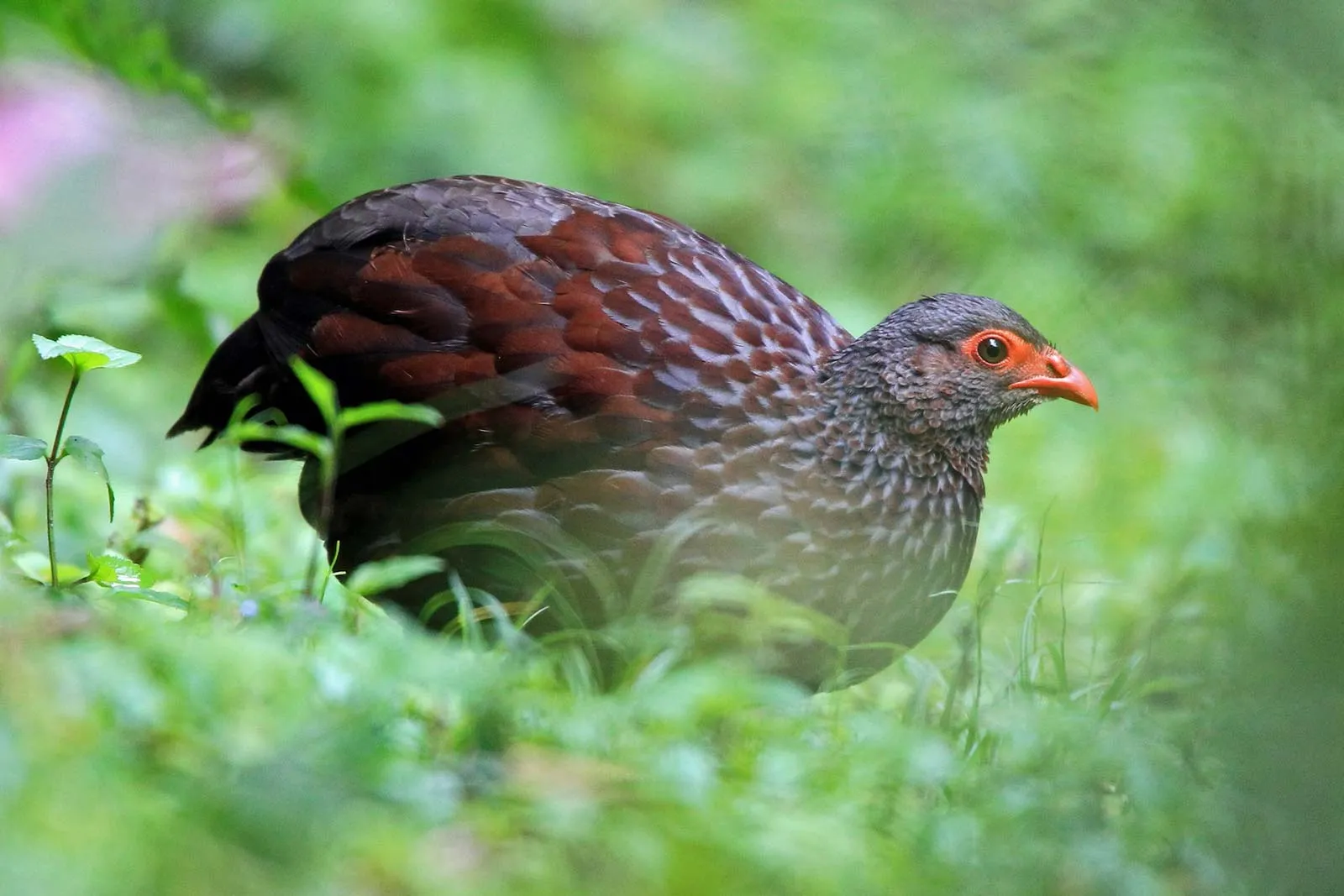
A forest bird moves through the lush vegetation of Rwanda’s Albertine Rift, highlighting the region’s exceptional bird diversity and specialist birding opportunities.
For serious birders, some of the most exciting targets on a Rwanda Birding Safari are species associated with the Albertine Rift. Rwanda’s western montane forests and volcanic highlands form part of this biologically important region, making destinations such as Nyungwe Forest National Park, Volcanoes National Park and Gishwati-Mukura National Park particularly valuable. Species that birders may search for include the Rwenzori turaco, red-throated alethe, Regal sunbird, Purple-breasted sunbird, Rwenzori batis, Strange weaver and other regional specialties. Our guide to the best birding sites in Rwanda explains where these high-value forest habitats can be incorporated into a longer birding route.
Seeing Albertine Rift species usually requires a different style of birding from watching open-country birds. Forest birding involves listening carefully to calls, moving slowly along trails and scanning different levels of vegetation. Some species can be secretive and sightings are never guaranteed, which is why an experienced bird guide is especially valuable. Travelers interested in the broader diversity of Rwanda’s birds can also explore our Rwanda birdwatching guide before selecting their priority species.
Rwenzori Turaco
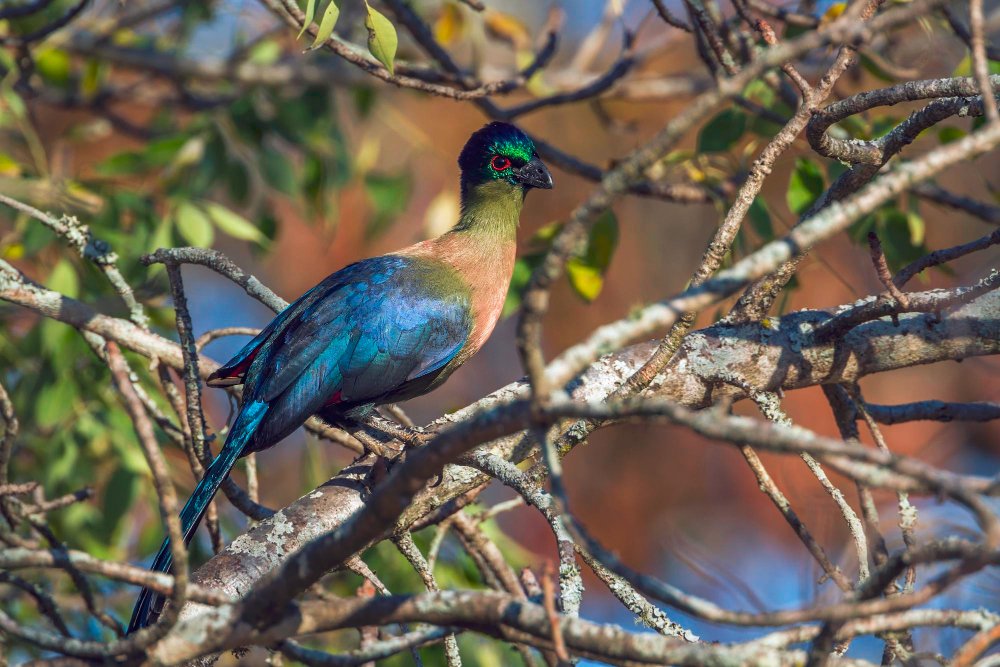
A striking Rwenzori turaco perched among forest branches, highlighting the colorful and highly sought-after birdlife of Rwanda’s Albertine Rift.
The Rwenzori turaco is one of the striking birds many enthusiasts hope to encounter during a Rwanda Birding Safari. Its association with montane habitats makes the forests of western and northern Rwanda important places to search for it. Turacos are particularly memorable because of their appearance, movement through the forest canopy and distinctive calls. Nyungwe and other highland forests give birders opportunities to search for the Rwenzori turaco while simultaneously looking for sunbirds, batises, warblers, babblers and other forest species.
Nyungwe is especially important for travelers whose Rwanda Birding Safari has a strong focus on forest species. The Karamba Birding Trail can be included in a dedicated birding program where guides carefully search forest edges and vegetation for different species. Anthill Safaris also highlights birds such as the Rwenzori turaco among the species associated with Rwanda’s major birding destinations in its guide to the best destinations for bird watching in Rwanda.
Red-Throated Alethe, Regal Sunbird and Other Forest Specialties
The red-throated alethe, Regal sunbird, Purple-breasted sunbird, Strange weaver and other forest specialists add considerable interest to a Rwanda Birding Safari. These are the kinds of species that encourage dedicated birders to spend several mornings within Rwanda’s montane forests rather than rushing between destinations. Different birds occupy different parts of the forest, so birdwatchers may search the undergrowth, forest edges, flowering vegetation and canopy during the same excursion.
Gishwati-Mukura National Park can be especially interesting for travelers seeking a quieter forest birding experience. Our guide to a Gishwati-Mukura bird-watching safari discusses several notable forest birds associated with this recovering montane ecosystem. Including Gishwati-Mukura can also broaden a Rwanda Birding Safari beyond the better-known Nyungwe, Akagera and Volcanoes National Parks.
Rare Birds of Nyungwe Forest National Park
Nyungwe is one of the most exciting destinations for birders interested in difficult and less frequently encountered forest species. A Rwanda Birding Safari through this vast montane forest may involve searching for birds such as the Kivu ground thrush, Kungwe apalis, Albertine owlet and other elusive species depending on location, season, conditions and luck. These birds should be treated as targets rather than guaranteed sightings because forest birding can be unpredictable.
This challenge is part of what makes specialist birding rewarding. Instead of simply collecting sightings quickly, serious birders may spend extended periods listening, waiting and following calls with a knowledgeable guide. Additional information about sought-after Rwanda forest species can be found in Anthill Safaris’ guide to a birdwatching safari in Rwanda.
Birds of Volcanoes National Park

Birdlife around the volcanic landscapes highlights the rewarding birdwatching opportunities available in Volcanoes National Park, Rwanda.
Volcanoes National Park adds high-altitude birdlife to a Rwanda Birding Safari. While mountain gorillas remain its best-known attraction, birdwatchers can explore bamboo and montane vegetation in search of species associated with the Virunga highlands and Albertine Rift. Birds of interest may include Rwenzori batis, turacos, sunbirds and other highland specialists. Our guide to an unforgettable Volcanoes birding safari provides additional information for travelers planning to dedicate time to bird watching in this region.
Volcanoes National Park is also ideal for travelers who want their Rwanda Birding Safari to include mountain gorilla trekking or golden monkey tracking. Birding can be planned on separate days so that travelers have sufficient time for observation instead of treating birds merely as incidental sightings during another activity.
Shoebill and Rwanda’s Wetland Birds
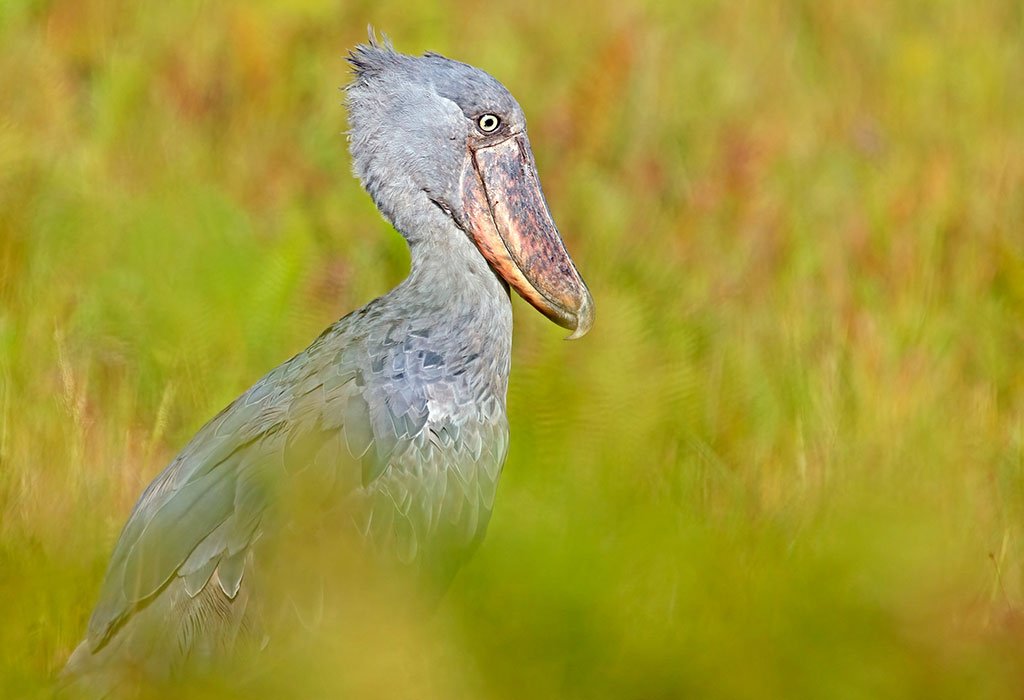
A shoebill stands among wetland vegetation, highlighting the distinctive birdlife that makes Rwanda rewarding for specialist birdwatching safaris.
The Shoebill is among the most distinctive birds sought by many visitors to East Africa. In Rwanda, suitable wetland habitats offer birders opportunities to search for this remarkable species, although sightings cannot be guaranteed. Travelers interested specifically in this bird can consult our guide explaining where to see the Shoebill in Rwanda. Wetland birding also introduces visitors to herons, egrets, storks, jacanas, kingfishers and numerous other species associated with open water, marshes and papyrus vegetation.
A Rwanda Birding Safari should therefore include wetland environments rather than concentrating entirely on forests. Marshes and lakes create important habitat diversity and provide photographers with opportunities to observe birds in more open surroundings. Wetland sessions can complement forest birding particularly well because observation conditions, bird behavior and photographic opportunities are completely different.
Bird Species of Akagera National Park
Akagera National Park is essential for travelers who want their Rwanda Birding Safari to include savannah, woodland and aquatic species. The park’s grasslands, acacia woodland, lakes and extensive wetland systems support a broad variety of birds. Travelers can search for African fish eagles, kingfishers, herons, egrets, hornbills, bee-eaters, raptors and other open-country species while simultaneously enjoying a conventional wildlife safari.
Our guide explaining what Akagera National Park is famous for provides useful information about the park’s combination of birding and wildlife. The park is particularly rewarding because a game drive can produce birds associated with grassland, woodland and wetland habitats within the same day. Boat excursions provide another perspective, allowing birders to scan lake margins and surrounding vegetation.
Anthill Safaris also describes Akagera’s birdlife in its guide to travelling beyond gorillas to Akagera and Nyungwe, including waterbirds around Lake Ihema and species associated with the park’s open plains and woodlands.
Raptors and Birds of Open Country

A powerful raptor displays its broad wings, highlighting the impressive birds of prey that can be encountered across Rwanda’s open landscapes and savannah habitats.
Raptors add excitement to a Rwanda Birding Safari because they can often be observed soaring above savannah, wetlands and agricultural landscapes or perched in exposed trees. Akagera is particularly useful for searching for birds of prey because of its open habitats. African fish eagles are closely associated with water, while other raptors may be encountered during game drives through the park’s grassland and woodland zones.
Open-country birding also produces a very different pace from forest birding. Visibility is generally greater, allowing birders to scan considerable distances from safari vehicles and observation points. This habitat contrast is one reason travelers should avoid designing a Rwanda Birding Safari around only one national park.
Kingfishers, Herons and Waterbirds

A kingfisher emerges from the water with its catch, highlighting the exciting wetland birdlife that can be encountered during birdwatching safaris in Rwanda.
Rwanda’s lakes, rivers, marshes and wetland systems provide productive environments for water-associated species. Kingfishers are particularly attractive photographic subjects, while herons, egrets, jacanas and other waterbirds can often be searched for around suitable aquatic habitats. Akagera’s lakes are among the most important areas to incorporate into a Rwanda Birding Safari for travelers interested in combining wetland birding with large mammal viewing.
Birdwatchers should allow sufficient time around productive water habitats rather than treating them merely as brief stops. Quiet observation can reveal birds feeding along shorelines, flying between reed beds or resting around exposed vegetation. The variety of aquatic habitats contributes significantly to the overall diversity available during a Rwanda Birding Safari.
Migratory Birds on a Rwanda Birding Safari
A Rwanda Birding Safari is not limited to resident species. Seasonal migrants can add further diversity to the birding experience, especially when travelers visit during periods when migratory species are present. The exact birds encountered vary according to season, habitat and annual conditions, which makes every birding journey slightly different. Birders with specific targets should discuss them during itinerary planning so that suitable destinations and enough observation time can be included.
Travelers considering a broader East African birding experience can also use our detailed guide for passionate bird lovers to understand how Rwanda’s forests, wetlands and savannah habitats fit into the wider regional birding experience.
Why a Professional Bird Guide Matters
The number of birds seen during a Rwanda Birding Safari depends on much more than visiting the correct national parks. An experienced bird guide can recognize calls, understand feeding behavior, identify productive habitats and distinguish similar-looking species. This becomes particularly valuable in dense montane forest where many birds may be heard before they are seen. A knowledgeable guide can also help photographers position themselves responsibly while reducing unnecessary disturbance to birds.
Safari Vacations and Travel Services Ltd can design a Rwanda Birding Safari around general bird watching or a more specialized target-species approach. First-time birders may prefer a relaxed itinerary combining birds with wildlife and primates, while experienced birdwatchers may require earlier starts, longer field sessions and repeated visits to particular habitats. By combining Nyungwe, Akagera, Volcanoes, Gishwati-Mukura and selected wetlands, travelers can experience an impressive cross-section of Rwanda’s birdlife during one journey.
Albertine Rift Endemic Birds and Rare Species of Rwanda
A Rwanda Birding Safari becomes especially rewarding for serious birdwatchers because Rwanda lies within the Albertine Rift, one of Africa’s most important regions for restricted-range and montane forest birds. The country’s western forests and northern volcanic highlands provide habitat for species that birders may struggle to encounter elsewhere in Africa. Nyungwe Forest National Park, Volcanoes National Park and Gishwati-Mukura National Park are particularly important for travelers interested in Albertine Rift endemics. Our detailed guide to birdwatching in Rwanda provides a useful introduction to these habitats and helps travelers understand why Rwanda deserves a place on a specialist African birding itinerary.
Why the Albertine Rift Is Important for a Rwanda Birding Safari
The Albertine Rift stretches through a mountainous region of East and Central Africa where elevation, forests and geographic isolation have created exceptional biodiversity. For a birder, this means an opportunity to search for species with relatively restricted distributions rather than concentrating only on widespread African birds. Rwanda’s compact size makes it possible to connect several important Albertine Rift habitats during one journey. Travelers researching the best birding sites in Rwanda will quickly discover that Nyungwe, Volcanoes and Gishwati-Mukura repeatedly appear among the country’s most important locations for specialist birding.
A successful Rwanda Birding Safari focused on endemic and rare birds requires patience. Dense montane forest can make birds difficult to locate even when they are calling nearby, and many sought-after species move through undergrowth, bamboo, forest edges or high canopy. Experienced guides therefore use calls, habitat knowledge, feeding behavior and previous sightings to improve the chances of finding target species. Travelers should approach these birds as possibilities rather than guaranteed sightings, which makes each successful observation considerably more rewarding.
Nyungwe Forest National Park and Albertine Rift Endemics
Nyungwe Forest National Park is one of the strongest destinations to include on a specialist Rwanda Birding Safari. Its extensive montane rainforest supports an impressive collection of Albertine Rift birds alongside many other forest species. Birders visiting Nyungwe may search for the Red-collared Babbler, Rwenzori Turaco, Handsome Francolin, Grauer’s Swamp Warbler, Rwenzori Batis, Regal Sunbird, Purple-breasted Sunbird, Blue-headed Sunbird, Neumann’s Warbler, Shelley’s Crimsonwing and several other highly desirable species. Travelers can explore our complete Nyungwe Forest National Park guide when planning how many days to dedicate to the forest.
Nyungwe deserves more than a brief stop when rare birds are the main objective. Different trails pass through different vegetation structures and elevations, meaning that spending several mornings in the forest can significantly broaden the birding experience. The Karamba Birding Trail is particularly attractive for bird enthusiasts because its relatively open areas can make observation easier than in sections of dense forest. Anthill Safaris also discusses the importance of Albertine Rift species when describing a specialist birding safari in Nyungwe Forest.
Red-Collared Babbler
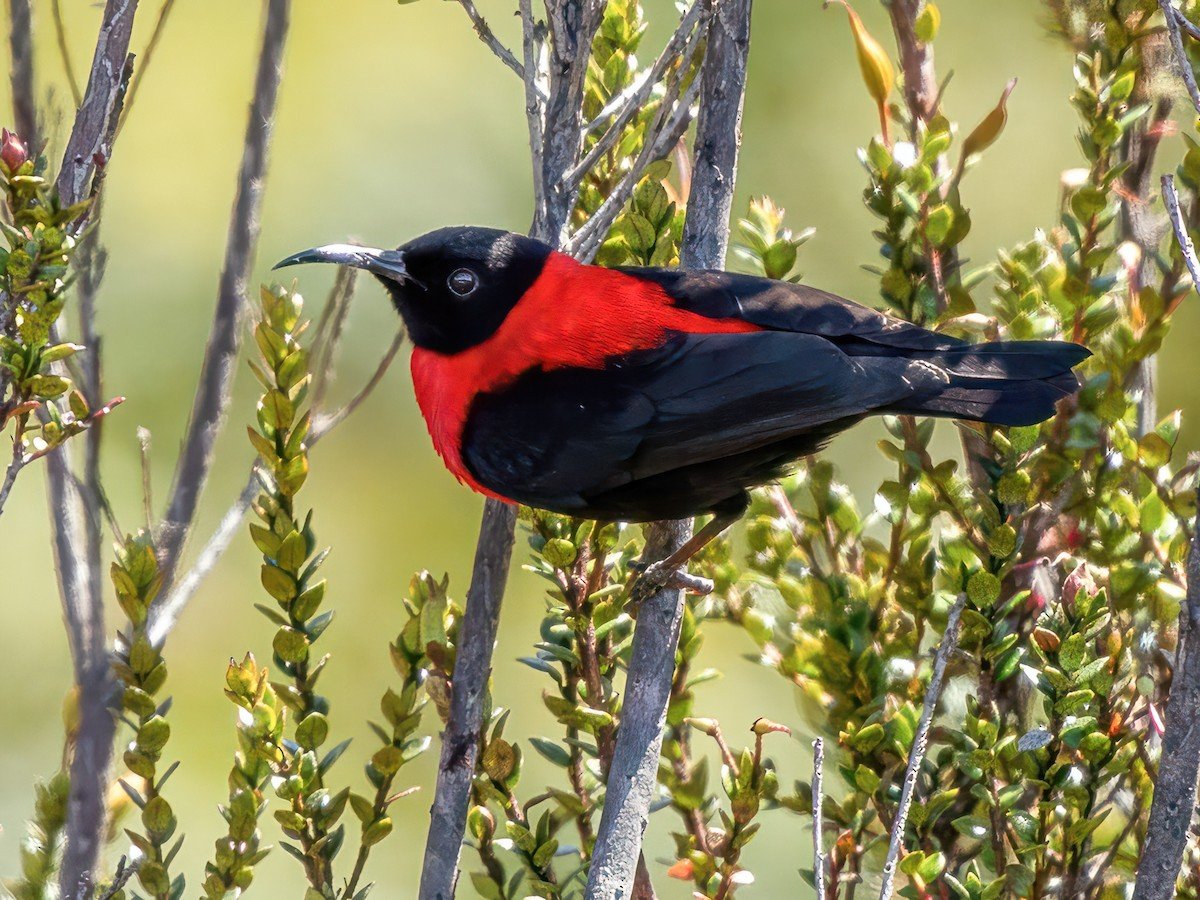
A striking red-collared babbler perched among highland vegetation, highlighting one of Rwanda’s sought-after Albertine Rift bird species.
The Red-collared Babbler is among the most sought-after birds associated with Nyungwe and is an excellent example of why dedicated birders travel to Rwanda. Locating forest birds such as this often involves listening carefully for vocalizations before attempting to obtain a clear visual sighting. Birders may spend considerable time moving slowly through suitable habitat with a knowledgeable guide rather than covering long distances quickly. This deliberate style of bird watching is very different from game-drive birding in Akagera and gives a Rwanda Birding Safari greater depth.
Rwenzori Turaco
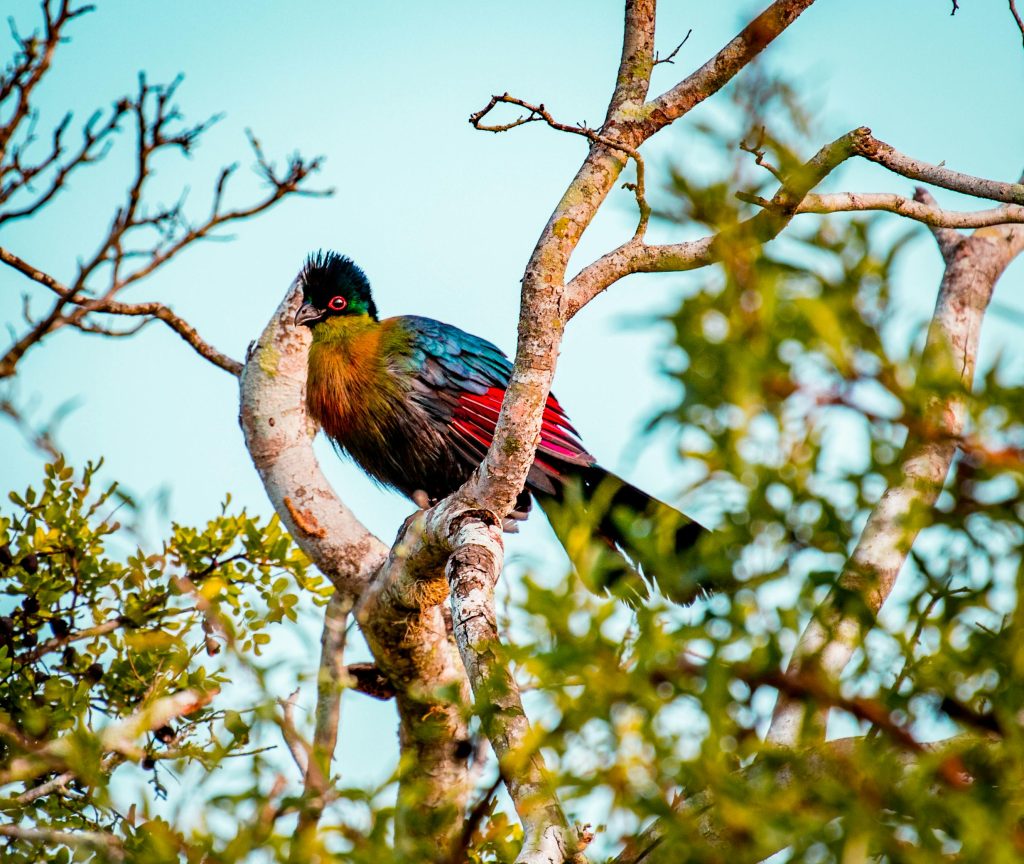
A striking Rwenzori turaco perched among forest branches, showcasing the colorful birdlife that makes Rwanda’s Albertine Rift a rewarding birding destination.
The Rwenzori Turaco is another spectacular target for birdwatchers exploring Rwanda’s montane environments. Its striking appearance and association with highland forests make it one of the species travelers often hope to photograph. Nyungwe, Volcanoes and other appropriate highland habitats can provide opportunities to search for this remarkable bird. Travelers interested in observing birds from different levels of the forest can also consider the experience described in our guide to Nyungwe canopy walking, where the elevated perspective can complement conventional trail birding.
Regal Sunbird and Purple-Breasted Sunbird

A brilliantly colored sunbird perched among flowers, highlighting the striking birdlife travelers can encounter on a Rwanda birding safari.
Sunbirds contribute some of the most brilliant colors encountered during a Rwanda Birding Safari. The Regal Sunbird and Purple-breasted Sunbird are especially interesting to birders searching the Albertine Rift highlands. Flowering vegetation, forest edges and suitable montane habitats can provide opportunities to observe these energetic birds as they move between feeding locations. Photographers should be prepared to work quickly because sunbirds rarely remain stationary for long periods.
Grauer’s Swamp Warbler and Other Wetland Specialists
Not all rare Albertine Rift birds are associated exclusively with dense forest. High-altitude swamps and marshy environments can support specialized species such as Grauer’s Swamp Warbler. This is why a Rwanda Birding Safari focused on rare species should consider microhabitats within the broader forest landscape rather than simply visiting the entrance of a national park. Guides who understand the relationship between bird species, altitude and vegetation can direct travelers toward habitats where particular targets are more likely to occur.
Shelley’s Crimsonwing and Elusive Forest Birds
Shelley’s Crimsonwing represents the kind of elusive forest species that makes Albertine Rift birding exciting and challenging. Some birds may remain hidden in thick vegetation or appear only briefly, requiring patience and careful observation. A serious Rwanda Birding Safari should therefore allow enough time to revisit productive areas when necessary. The objective is not simply to travel through the forest but to understand its sounds, movements and subtle changes in habitat that can reveal otherwise difficult species.
Gishwati-Mukura National Park for Albertine Rift Birding
Gishwati-Mukura National Park provides another valuable destination for travelers who want to extend their search for Rwanda’s rare and regional birds. Its recovering montane forests support species such as the Red-throated Alethe, Purple-breasted Sunbird, Rwenzori Turaco, Strange Weaver, Regal Sunbird and other forest birds. Our detailed guide to a Gishwati-Mukura birding safari explains why the park can be an important addition to a longer Rwanda Birding Safari.
One advantage of Gishwati-Mukura is that it can provide a quieter birding atmosphere than Rwanda’s more famous national parks. This is particularly attractive to specialist birders and photographers who prefer slow forest walks and extended observation periods. Anthill Safaris also identifies Gishwati-Mukura as an important birding destination within its overview of Rwanda’s four national parks.
Albertine Rift Birds of Volcanoes National Park
Volcanoes National Park adds another crucial high-altitude ecosystem to a Rwanda Birding Safari. Its bamboo forests, montane vegetation and volcanic slopes support species associated with the Albertine Rift and Virunga highlands. Birders may search for Rwenzori Batis, Rwenzori Turaco, Handsome Francolin, Archer’s Robin-chat and other highland species while exploring suitable sections of the park. Our specialist guide to bird watching in Volcanoes National Park provides additional information for travelers who want to dedicate part of their Rwanda Birding Safari specifically to northern Rwanda.
Volcanoes National Park can also be incorporated into an itinerary that combines specialist birding with mountain gorilla trekking. Birding should ideally receive dedicated time rather than being treated only as something to do while trekking for primates. Travelers who want a deeper birding experience can review our guide to an unforgettable Volcanoes birding safari before deciding how many days to spend in the Virunga highlands.
Rare Birds Beyond the Albertine Rift
Although Albertine Rift endemics are a major attraction, a Rwanda Birding Safari should not overlook other localized and highly desirable species found in the country’s savannahs and wetlands. Akagera National Park introduces an entirely different group of birds, including wetland specialists, savannah birds and species associated with papyrus environments. Combining western montane forests with eastern Rwanda therefore gives serious birders a much broader species range than concentrating exclusively on endemic birds.
This broader approach is particularly important for international birders travelling a long distance to East Africa. A carefully planned itinerary can devote several days to endemic-rich forests while still allowing time for Akagera, wetlands and other productive habitats. Our detailed guide for passionate bird lovers provides further information about creating a more comprehensive birding journey.
Photography of Rare Birds in Rwanda
A Rwanda Birding Safari can also be designed specifically for bird photography. Rare forest birds can be challenging photographic subjects because of low light, dense vegetation and rapid movement. A camera capable of working effectively at higher ISO settings, a telephoto lens and sufficient memory and battery capacity are particularly useful. Photographers should avoid disturbing birds, nests or feeding areas simply to obtain a photograph. Patient observation generally produces more natural behavior and a better overall wildlife experience.
Responsible Birding and Conservation
Albertine Rift birds depend on specialized habitats, making responsible bird watching an important part of every Rwanda Birding Safari. Travelers should remain on designated trails, follow park regulations, keep an appropriate distance from birds and avoid unnecessary disturbance. Excessive playback should also be avoided, particularly around sensitive or breeding species. Responsible birding ensures that the experience remains rewarding while respecting the birds and environments that make Rwanda internationally important to birdwatchers.
Travelers wanting a wider overview of the country’s specialist birding opportunities can also explore Anthill Safaris’ guide to a birdwatching safari in Rwanda. Combining responsible guiding, sufficient field time and carefully selected habitats creates the best foundation for searching for difficult Albertine Rift species.
Planning an Albertine Rift Birding Safari with Safari Vacations and Travel Services Ltd
Safari Vacations and Travel Services Ltd can develop a Rwanda Birding Safari around specific target species rather than using a standard wildlife itinerary. Experienced birders can provide a list of priority species so that the route emphasizes suitable habitats in Nyungwe, Gishwati-Mukura, Volcanoes National Park and other productive locations. Travelers who are new to African birding can instead choose a balanced itinerary combining endemic species with colorful forest birds, wetland species, savannah birds, primates and general wildlife. Additional practical information is available in our main Rwanda birding safari guide.
A well-designed Rwanda Birding Safari is ultimately about quality observation rather than rushing to produce the longest possible checklist. Allowing enough time in important habitats, using experienced bird guides and combining several ecosystems creates better opportunities to encounter Rwanda’s rare and remarkable birds while enjoying the landscapes in which they survive.
Best Time for a Rwanda Birding Safari and Seasonal Bird Watching Guide
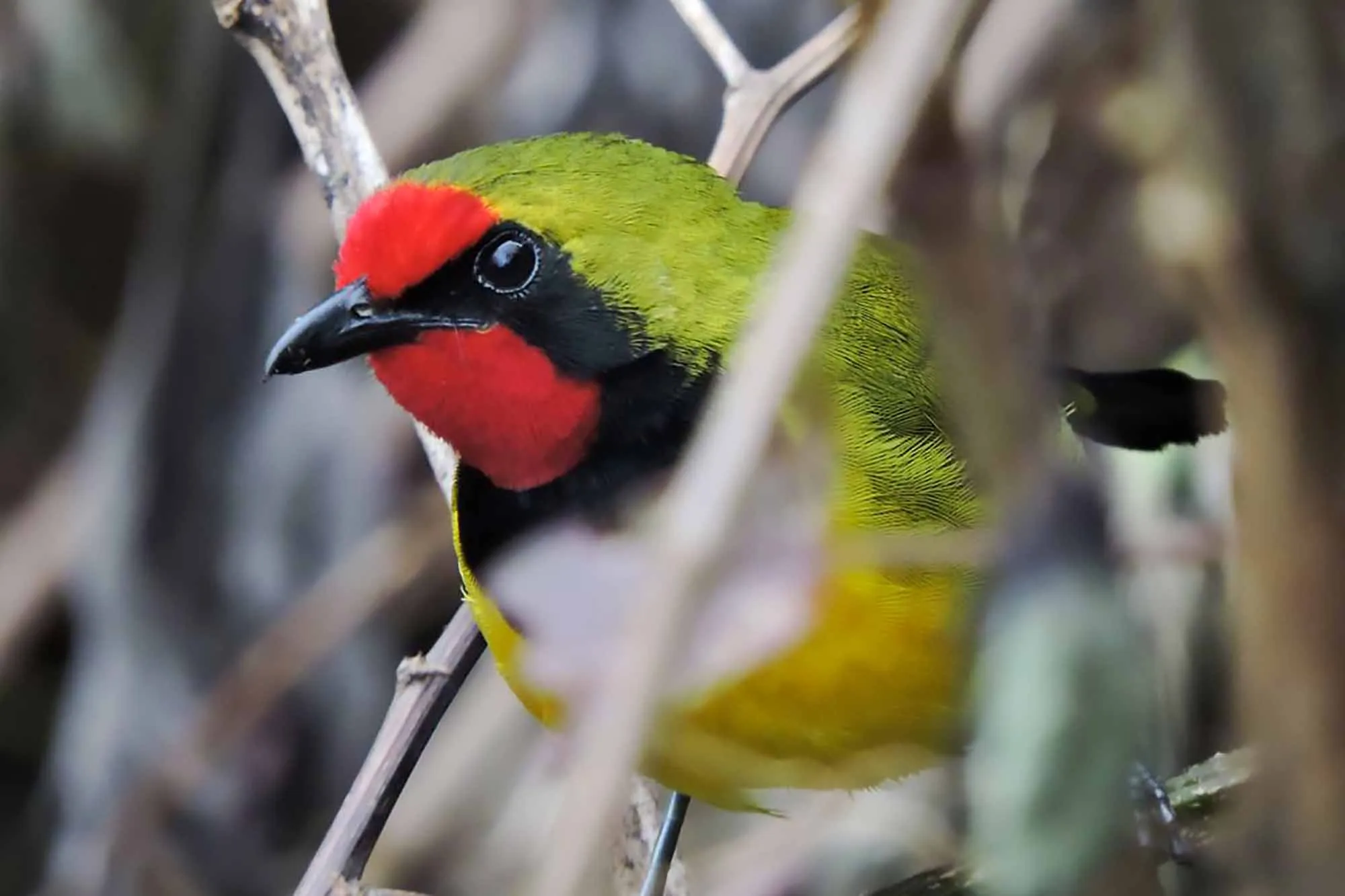
A colorful forest bird among dense vegetation highlights the rewarding birdwatching opportunities available across Rwanda throughout different seasons of the year.
A Rwanda Birding Safari can be enjoyed throughout the year because Rwanda supports resident forest, wetland, savannah and highland birds in every season. However, the best time to travel depends on the species you want to find, the destinations included in your itinerary and whether you prefer drier walking conditions or greener landscapes. Rwanda generally experiences drier periods from around June to September and again from December to February, while wetter conditions are more common from March to May and during October and November. Travelers planning a specialist birding journey can begin with our complete guide to birding in Rwanda to compare seasons, habitats and major birding destinations.
Can You Go Birding in Rwanda Throughout the Year?
Yes. A Rwanda Birding Safari does not depend on one short annual window. Resident species remain present throughout the year, which means destinations such as Nyungwe Forest National Park, Akagera National Park, Volcanoes National Park, Gishwati-Mukura and Rwanda’s wetlands continue to offer birding opportunities in different seasons. Weather affects trail conditions, vegetation, bird activity and photography, but it does not mean that birding completely stops during wetter months. Our guide to the best birding sites in Rwanda can help travelers choose destinations according to the habitats and species they want to experience.
Rwanda Birding Safari from June to September
June through September forms Rwanda’s principal dry period and is one of the most convenient times for a Rwanda Birding Safari that includes extensive walking, national park drives and several destinations. Lower rainfall generally makes forest trails easier to negotiate, while road conditions between major safari areas are usually more comfortable. Travelers combining bird watching with gorilla trekking, chimpanzee tracking, wildlife viewing or hiking often favor this period because several outdoor activities can be incorporated into one itinerary. Our best time to visit Rwanda guide provides a wider seasonal overview for travelers combining birding with other safari experiences.
Dry-season travel can be especially convenient in Volcanoes National Park, where high-altitude trails may be easier to walk when rainfall is reduced. Birders searching for montane and Albertine Rift species can explore our specialist guide to bird watching in Volcanoes National Park. Travelers should nevertheless carry waterproof clothing because Rwanda’s mountainous forests can receive rainfall even during periods normally described as dry.
December to February Birding in Rwanda
December through February is another attractive period for a Rwanda Birding Safari, particularly for travelers who want generally favorable outdoor conditions while searching for a mixture of resident and migratory birds. December and January can be especially interesting because seasonal migrants add to Rwanda’s resident birdlife. Wetlands, lakes, agricultural areas and other open habitats may become particularly rewarding when migratory species are present. This period can also work well for visitors combining bird watching with primate trekking or wildlife safaris.
Travelers who want to understand the diversity of habitats available during this season can review our detailed guide to birdwatching across Rwanda. Anthill Safaris also provides a broader seasonal overview in its guide to the best time to visit Rwanda, which is useful for travelers combining birding with several other activities.
Birding During the March to May Rainy Season
The wetter period from March to May should not automatically be dismissed when planning a Rwanda Birding Safari. Rainfall creates lush landscapes, fresh vegetation and productive forest environments, while birding can continue between showers. The main challenge is practical: forest paths can become wet and slippery, some birding walks may require more effort and photography can be more challenging under cloudy forest conditions. Travelers visiting during these months should carry waterproof protection for cameras, binoculars and personal equipment.
Nyungwe Forest remains particularly interesting because birding can be combined with other rainforest experiences. Travelers considering this season can read about the different activities in Nyungwe Forest and decide how bird watching can fit alongside chimpanzee tracking, nature walks and other experiences. Anthill Safaris also discusses seasonal conditions for travelers combining forest exploration with chimpanzee trekking in Rwanda.
October and November Birding Conditions
October and November normally bring another wetter period, but these months can still produce a rewarding Rwanda Birding Safari. Birders who are comfortable with changing weather can enjoy green landscapes and productive habitats while often encountering fewer safari vehicles and visitors than during some peak travel periods. Flexible daily planning is important because heavy showers may require birding sessions to be adjusted around weather conditions.
Gishwati-Mukura National Park is one destination where rain can make forest trails more challenging. Travelers interested in this less-visited montane ecosystem can explore our guide to a Gishwati-Mukura birding safari. Proper hiking footwear, light rain gear and waterproof protection for optical equipment become particularly important during wetter periods.
Best Time for Birding in Nyungwe Forest National Park
Nyungwe can be visited throughout the year, although travelers who prioritize easier trail conditions may prefer the drier months. Forest birding often requires slow walking, listening and spending considerable time in specific locations, so comfortable trail conditions can make longer field sessions easier. At the same time, wet periods should not be viewed as unsuitable because rainforest birds remain present and the forest becomes exceptionally lush.
The Karamba Birding Trail can be incorporated into a specialist Rwanda Birding Safari for travelers interested in forest species and Albertine Rift birds. Your itinerary should provide enough time for early starts and patient observation rather than trying to cover several forest trails in a single rushed day.
Best Time for Birding in Akagera National Park
Akagera National Park offers bird watching throughout the year, but the dry months are particularly convenient for combining birding with game drives and general wildlife viewing. Savannah vegetation can become less dense, while lakes and wetlands remain important observation areas for waterbirds. Early morning drives are especially useful because bird activity can be high before temperatures increase later in the day. Travelers planning this part of their Rwanda Birding Safari can explore our guide explaining what Akagera National Park is famous for.
Lake Ihema and the wider network of aquatic environments make Akagera valuable in every season because they support numerous water-associated species. Our guide to the lakes in Akagera National Park provides useful information for travelers interested in incorporating wetland birding and boat experiences into their Rwanda Birding Safari.
Best Season for Migratory Birds in Rwanda
Travelers particularly interested in migratory birds should consider a Rwanda Birding Safari during the northern winter period, especially around December and January. Migrants can supplement Rwanda’s already diverse resident birdlife and make wetlands, lakes and open habitats particularly interesting. Exact sightings change from year to year, so travelers should avoid building an entire itinerary around guarantees of individual migratory species. Instead, Safari Vacations and Travel Services Ltd can select habitats where a broad range of resident and seasonal birds may be encountered.
Best Time for Bird Photography in Rwanda
Bird photographers must balance weather, light, vegetation and target species when choosing when to travel. Drier months can simplify movement with expensive equipment and may provide more predictable opportunities for long field sessions. Wetter periods can create rich green backgrounds, dramatic landscapes and attractive forest photography conditions, although rain protection becomes essential. A Rwanda Birding Safari designed for photographers should also operate at a slower pace because obtaining quality images often requires waiting for birds to move into suitable positions.
Best Time to Combine Birding with Gorilla and Chimpanzee Trekking
Travelers who want birding, gorilla trekking and chimpanzee tracking within the same journey often favor Rwanda’s drier periods because walking conditions can be more comfortable. June through September and December through February are therefore popular periods for multi-activity safaris. However, the ideal timing should ultimately depend on the traveler’s priorities rather than a single universal recommendation. Anthill Safaris’ broader Rwanda birdwatching safari information also shows how birding can be combined with Rwanda’s forests, wetlands and other wildlife experiences.
Choosing the Best Month for Your Rwanda Birding Safari
The best month for a Rwanda Birding Safari depends on what matters most to you. Travelers wanting generally easier hiking conditions may favor June to September or December to February. Birders interested in migratory species can place greater emphasis on the northern winter months, while photographers who appreciate lush vegetation may deliberately choose wetter periods. Serious birders targeting Albertine Rift species should prioritize sufficient time in Nyungwe, Volcanoes and Gishwati-Mukura regardless of the month because difficult forest species often require patience and repeated searching.
Safari Vacations and Travel Services Ltd can match your travel dates with the most appropriate birding destinations rather than offering one fixed itinerary throughout the year. By considering rainfall, target species, migration, national park conditions, photography goals and additional safari activities, we can design a Rwanda Birding Safari that makes effective use of the season in which you travel.
Rwanda Birding Safari Itineraries from Short Trips to Extended Birding Tours
A Rwanda Birding Safari can be designed as a short introduction lasting only a few days or as an extended specialist journey covering several of Rwanda’s most productive birding habitats. The ideal duration depends on the traveler’s target species, experience level, photography interests and whether bird watching will be combined with gorilla trekking, chimpanzee tracking or traditional wildlife viewing. Rwanda’s relatively compact geography makes it possible to connect forests, wetlands, lakes, highlands and savannah habitats without spending the entire safari on long transfers. Travelers beginning their planning can explore our detailed guide to Rwanda birding before deciding how many days are appropriate for their journey.
Choosing the Right Rwanda Birding Safari Duration
There is no single ideal length for every Rwanda Birding Safari. A traveler with three days can concentrate on one major habitat, while five to seven days allow two or three important birding areas to be combined. Ten days or longer gives serious birdwatchers considerably more time to explore Nyungwe, Akagera, Volcanoes, Lake Kivu, Gishwati-Mukura and selected wetlands without rushing. Our detailed overview of birdwatching in Rwanda helps explain why visiting several habitats can produce a more complete birding experience.
3-Day Rwanda Birding Safari
A 3-day Rwanda Birding Safari is best designed around one principal destination rather than trying to cover the entire country. Travelers particularly interested in savannah and wetland birds can concentrate on Akagera National Park, while those whose main interest is montane forest species can devote the journey to Nyungwe Forest or the Volcanoes region. A short safari should emphasize quality birding time instead of unnecessary transfers, especially when early mornings and slow observation are important.
An Akagera-focused itinerary can begin with a transfer from Kigali followed by birding around suitable woodland, wetland and lakeside habitats. The following day can be dedicated to a slow game drive with frequent birding stops before returning toward Kigali after another morning of observation. Travelers researching this option can explore our detailed Akagera National Park safari guide. A short specialist itinerary can be especially suitable for travelers adding birding before or after another Rwanda safari activity.
5-Day Rwanda Birding Safari
A 5-day Rwanda Birding Safari provides enough time to introduce greater habitat diversity. One effective approach is to combine Akagera with another destination such as Nyungwe, giving birders access to both eastern savannah and western forest environments. This creates a much broader experience than spending all five days within one ecological zone. Travelers can see how these two major destinations can be linked through our existing Akagera and Nyungwe itinerary, which demonstrates a practical route between eastern and southwestern Rwanda.
For a dedicated birding version, more time would be allocated to morning and afternoon birding sessions rather than conventional safari activities. In Akagera, attention can concentrate on savannah, woodland and wetlands, while Nyungwe introduces montane forest birding and Albertine Rift targets. Travelers wanting an independent perspective on Rwanda’s specialist birding possibilities can also explore this Rwanda birdwatching safari guide.
7-Day Rwanda Birding Safari
Seven days offers a much stronger foundation for travelers who want a serious Rwanda Birding Safari while remaining within a one-week schedule. A well-designed route can begin around Kigali or eastern Rwanda, continue through Akagera and then move toward one of the country’s important forest destinations. The objective should be to select habitats strategically rather than adding too many destinations simply to make the itinerary appear longer.
Birders deciding which areas deserve priority can use our guide to the best birding sites in Rwanda. A seven-day program can include several full birding mornings, giving guides enough time to search for difficult species instead of depending on brief roadside sightings. It can also include selected afternoon sessions for photography, wetland birding or relaxed observation around accommodation areas.
8-Day Rwanda Birding Circuit
An 8-day Rwanda Birding Safari allows travelers to begin developing a more comprehensive circuit. Akagera, Volcanoes and Nyungwe can all be incorporated when travel is organized efficiently, although dedicated birders may choose to spend additional time in the forests and reduce conventional sightseeing. Our guide to combining Rwanda national parks demonstrates how these three major destinations can be connected within one journey.
The advantage of this itinerary is habitat contrast. Akagera introduces open savannah, woodland, lakes and wetlands; Volcanoes provides high-altitude vegetation and montane environments; Nyungwe offers extensive rainforest birding. Travelers interested in understanding how Akagera and Nyungwe complement Rwanda’s gorilla-focused tourism can also read about travelling beyond gorillas into these important natural areas.
10-Day Rwanda Birding Safari
A 10-day Rwanda Birding Safari is an excellent option for travelers who want to explore several of the country’s major ecosystems without maintaining an excessively fast pace. The journey can include Kigali-area birding, Akagera National Park, Nyungwe Forest, Lake Kivu, Gishwati-Mukura and Volcanoes National Park depending on individual priorities. Serious birders can spend several mornings in particularly productive areas and use afternoon sessions for additional species searches or photography.
The longer duration also makes it easier to adjust the itinerary when weather affects a particular birding session. Instead of depending entirely on one morning for an important forest target, there may be opportunities to revisit productive trails. Travelers researching a wider range of safari combinations can compare our Rwanda safari packages and then have Safari Vacations and Travel Services Ltd adapt the route specifically for bird watching.
12-Day Rwanda Birding Safari
A 12-day Rwanda Birding Safari suits enthusiasts who want a slower and more specialist approach. Rather than moving immediately after one morning in each destination, birders can dedicate multiple sessions to important habitats. Nyungwe can receive several days because forest birds are often more difficult to locate than open-country species. Akagera can receive enough time for different sections of the park, while Volcanoes and other highland areas can be explored without sacrificing the main birding sessions to transfers.
This itinerary can also incorporate Lake Kivu as a scenic transition between southwestern and northern Rwanda. Travelers can use our broader Rwanda travel guide to understand how Kigali, Akagera, Volcanoes, Lake Kivu and Nyungwe can work together geographically. A longer safari should still remain focused; adding extra days is most valuable when those days provide greater field time rather than unnecessary hotel changes.
14-Day Rwanda Birding Safari
A 14-day Rwanda Birding Safari is particularly suitable for experienced birders, photographers and travelers arriving with a substantial target-species list. Two weeks allows the itinerary to include Rwanda’s major national parks together with smaller wetlands and productive birding locations that are often excluded from conventional safari programs. Additional days create opportunities for repeat forest walks, extended photography sessions and slower searches for elusive species.
Travelers can combine Akagera, Nyungwe, Volcanoes and other protected environments after reviewing our complete guide to Rwanda national parks. The exact order should be determined by arrival arrangements, accommodation availability, additional permits and the birding priorities of the traveler rather than following a rigid itinerary used for every safari.
Combining Akagera, Nyungwe and Volcanoes for Birding
Akagera, Nyungwe and Volcanoes form one of the strongest foundations for an extended Rwanda Birding Safari because each introduces a noticeably different ecosystem. Akagera is especially valuable for open-country, woodland and aquatic birding, while Nyungwe is essential for travelers interested in montane forest and Albertine Rift species. Volcanoes adds another high-altitude environment and works particularly well when travelers also want to include mountain gorilla trekking.
Visitors planning time in northern Rwanda can explore our detailed Volcanoes National Park guide to understand how bird watching can fit alongside the park’s other nature experiences. Allowing separate days for birding and primate trekking is preferable for serious birders because the pace and objectives of the two activities are very different.
Combining Rwanda and Uganda Birding Safaris
Travelers with two weeks or longer may choose to extend a Rwanda Birding Safari into Uganda. The two countries complement each other well because a cross-border itinerary can add additional forests, wetlands, lakes and savannah ecosystems. Uganda can also provide destinations such as Bwindi, Queen Elizabeth, Kibale, Lake Mburo and important wetland birding areas depending on the duration available.
A combined journey is especially attractive to international birders who want to maximize the diversity of one East African trip rather than making separate long-distance journeys. Anthill Safaris provides additional background on combining Uganda and Rwanda, including birding opportunities in Rwanda’s forests and other protected landscapes.
How Safari Vacations and Travel Services Ltd Designs Your Birding Itinerary
Every Rwanda Birding Safari should begin with the traveler’s available time and primary interests. Safari Vacations and Travel Services Ltd can then select the most suitable habitats, organize private transport, recommend appropriate accommodation and arrange the route so that important birding sessions fall at productive times of day. The itinerary can remain entirely focused on birds or combine bird watching with gorilla trekking, chimpanzee tracking, Akagera wildlife, Lake Kivu and cultural experiences.
The best itinerary is not necessarily the one containing the greatest number of destinations. A successful Rwanda Birding Safari gives travelers enough time to observe birds properly, allows for changing forest and weather conditions and reduces unnecessary transfers. Whether you have three days, one week or two weeks, the route can be adapted to produce a focused birding experience while making effective use of your available travel time.
Combining Rwanda Birding Safaris with Gorilla Trekking, Chimpanzees and Wildlife
A Rwanda Birding Safari does not have to concentrate exclusively on birds. Rwanda is particularly suitable for travelers who want to combine specialist bird watching with mountain gorilla trekking, chimpanzee tracking, golden monkeys, Big Five wildlife, boat safaris and nature experiences within one carefully organized journey. The country’s contrasting ecosystems allow travelers to move from montane forests and volcanic highlands to tropical rainforest, lakes, wetlands and open savannah. This diversity makes it possible to create a Rwanda Birding Safari that satisfies dedicated birders while still offering memorable primate and wildlife encounters. Travelers beginning their planning can explore our detailed guide to birding in Rwanda before deciding which additional experiences should be included.
Rwanda Birding Safari and Gorilla Trekking

A young mountain gorilla in Rwanda’s lush forest highlights the unforgettable combination of gorilla trekking and specialist birdwatching experiences.
Combining a Rwanda Birding Safari with mountain gorilla trekking is one of the most rewarding ways to experience the forests of northern Rwanda. Gorilla trekking takes place in Volcanoes National Park, where the volcanic landscape and montane vegetation also provide birding opportunities. Instead of travelling to Volcanoes National Park for a single gorilla trek and immediately leaving, birdwatchers can spend additional time exploring the highland environment with a professional bird guide. Travelers preparing for this combination can read our complete guide to gorilla trekking in Rwanda.
Birding and gorilla trekking should ideally be scheduled as separate activities. Gorilla trekking follows the movements of a habituated gorilla family and can occupy a significant part of the day, while dedicated birding requires slower observation, listening and repeated stops. Allowing separate days gives travelers enough time to enjoy both experiences properly. Our detailed Volcanoes National Park guide provides additional information about organizing a longer stay in Rwanda’s northern highlands.
Birding Around Volcanoes National Park
Volcanoes National Park contributes much more than gorilla trekking to a Rwanda Birding Safari. Its high-altitude forest, bamboo vegetation and surrounding landscapes create opportunities to search for Albertine Rift and montane bird species. Birders can spend a dedicated day exploring productive habitats before or after their gorilla trek, creating a considerably richer experience than treating birds as occasional sightings during another activity.
This combination is particularly suitable for international travelers who want one major primate encounter alongside serious bird watching. The same northern Rwanda stay can also incorporate golden monkey tracking, scenic photography or selected cultural experiences without requiring another long transfer. A well-paced itinerary gives each activity enough time rather than attempting to complete several demanding experiences in a single day.
Combining Birding with Chimpanzee Tracking in Nyungwe Forest
Nyungwe Forest National Park is one of the strongest destinations for combining birding and primate experiences because the same extensive rainforest supports remarkable bird diversity and habituated chimpanzees. A Rwanda Birding Safari can therefore dedicate one morning to chimpanzee tracking and separate sessions to specialist forest birding. Travelers preparing for the primate experience can explore our Nyungwe chimpanzee trekking guide.
Chimpanzee tracking and bird watching require different approaches. Chimpanzees can move rapidly through the forest, while birding normally involves a quieter pace with frequent stops to listen and scan vegetation. Separating the activities gives travelers more time to appreciate Nyungwe’s biodiversity rather than allowing one experience to overshadow the other. Travelers who specifically want both major primate experiences can also review our guide to planning a gorilla and chimpanzee safari in Rwanda.
Gorillas, Chimpanzees and Birds in One Rwanda Safari
A longer Rwanda Birding Safari can connect Volcanoes National Park and Nyungwe Forest National Park to create a strong combination of birds and primates. Volcanoes provides mountain gorilla trekking and highland birding, while Nyungwe introduces chimpanzees and extensive montane rainforest birding. Travelers who prefer to add a relaxing scenic destination between active forest experiences can also incorporate Lake Kivu. Our existing chimpanzee and Lake Kivu safari demonstrates how Nyungwe can be connected with western Rwanda.
Anthill Safaris also provides useful information about combining chimpanzee and gorilla trekking in Rwanda. For birders, the same route can be expanded with dedicated birding sessions so that Volcanoes and Nyungwe contribute both primate encounters and specialist birding opportunities.
Combining Rwanda Birding with Akagera Wildlife Safaris
Akagera National Park creates one of the strongest contrasts on a Rwanda Birding Safari. After spending several days walking through montane rainforest, travelers can experience open savannah, woodland, lakes and wetlands while searching for both birds and large mammals. Akagera is Rwanda’s principal destination for traditional game drives, making it an excellent addition for travelers who want lions, elephants, buffaloes, rhinos and other wildlife alongside their birding experience. Our complete Akagera National Park Safari guide explains how wildlife viewing, birding and aquatic environments can be incorporated into the same stay.
Bird watching fits naturally into Akagera game drives because birders can scan grasslands, woodland, wetlands and lakes while travelling through the park. A slower private game drive is particularly useful because the vehicle can stop whenever interesting birds are observed. This approach is more suitable for serious birders than a fast conventional game drive focused only on large mammals.
Lake Ihema Boat Safari and Bird Watching
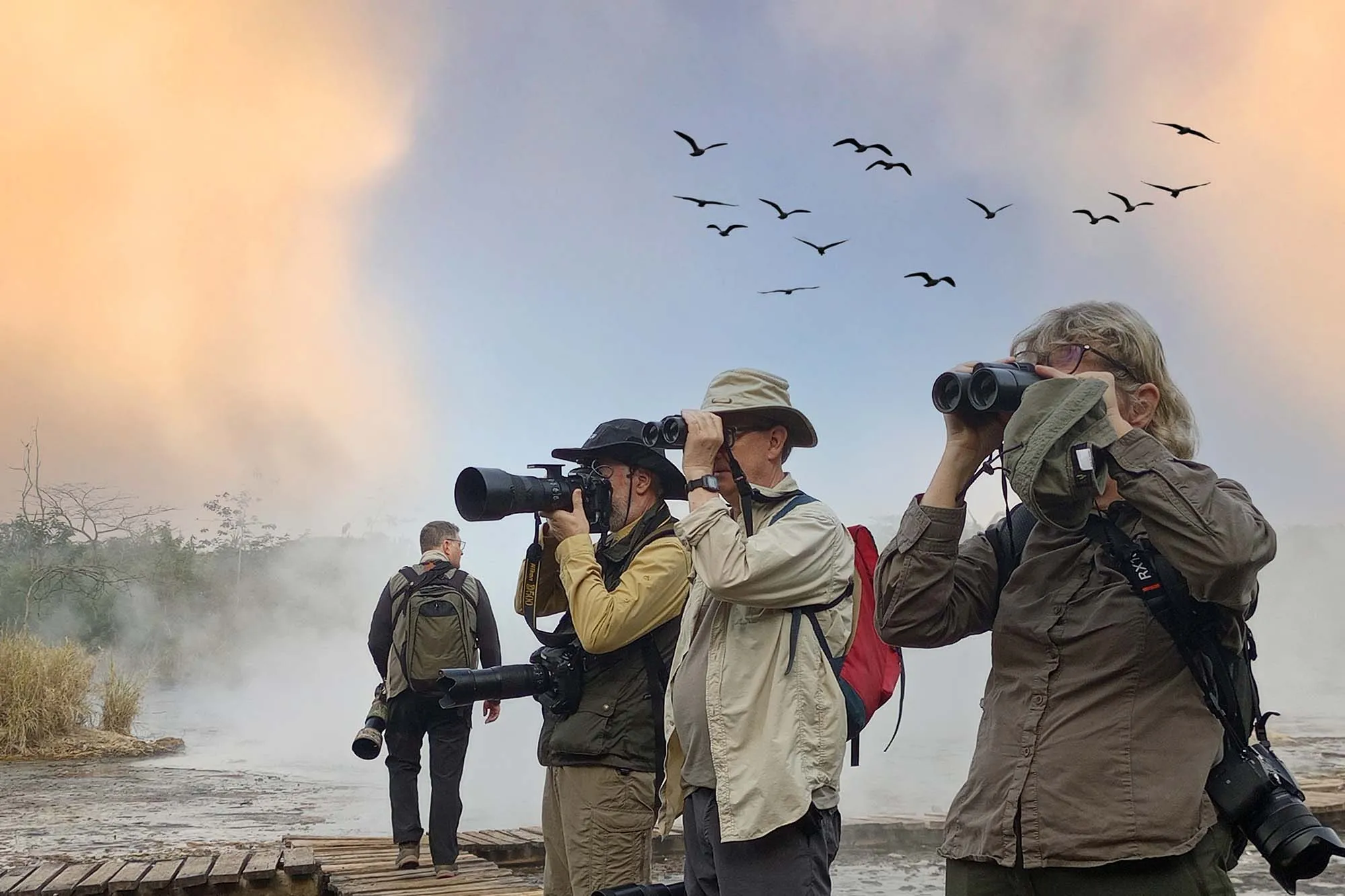
Birdwatchers scan the skies and wetlands around Lake Ihema, highlighting one of Akagera National Park’s most rewarding boat safari and birding experiences.
A boat experience on Lake Ihema can add another dimension to the Rwanda Birding Safari by providing opportunities to observe water-associated birds from a different perspective. Shorelines, vegetation and open water can produce kingfishers, African fish eagles, cormorants and other aquatic species while travelers may also encounter hippos and crocodiles. Anthill Safaris’ Akagera wildlife safari specifically incorporates game drives, Lake Ihema boating and bird watching, demonstrating how naturally these activities complement one another.
Birding, Big Five Wildlife and Primates
Travelers with sufficient time can create a Rwanda Birding Safari that covers the country’s three best-known safari environments: Akagera National Park, Volcanoes National Park and Nyungwe Forest National Park. This combination brings together savannah and wetland birds, Big Five wildlife, mountain gorillas, chimpanzees and Albertine Rift forest birding within one itinerary. Our guide to combining Nyungwe, Volcanoes and Akagera provides a useful foundation for developing this complete circuit.
The advantage of this journey is ecological diversity rather than simply the number of activities included. Akagera provides open-country wildlife and birds, Nyungwe provides rainforest primates and specialist forest birds, while Volcanoes introduces mountain gorillas and high-altitude birding. Anthill Safaris also discusses the wider experiences available when travelling beyond gorillas to Akagera and Nyungwe.
Rwanda Birding and Golden Monkey Tracking

A golden monkey rests among bamboo in Rwanda’s highland forest, highlighting the rewarding combination of primate tracking and birdwatching experiences.
Golden monkey tracking can be another useful addition for travelers staying around Volcanoes National Park. It provides a different primate experience from gorilla trekking while keeping travelers within the same general highland environment. Birders can schedule golden monkey tracking on one day and use another morning for dedicated bird watching, allowing the Volcanoes portion of the Rwanda Birding Safari to remain varied without requiring another major transfer.
Rwanda Birding and Wildlife Photography
Combining birding with wildlife photography works particularly well in Rwanda because photographers can encounter dramatically different subjects within one safari. Nyungwe and Volcanoes offer forest birds and primates, while Akagera provides mammals, raptors, waterbirds and open landscapes. A private safari vehicle can be especially valuable in Akagera because photographers and birders often need longer observation periods than travelers on a standard game drive.
Photography-focused Rwanda Birding Safari itineraries should avoid excessive daily mileage. Spending several nights in major destinations gives photographers time to work with changing light and animal behavior instead of constantly transferring between lodges. This slower approach can also improve birding because difficult species may require repeated searches.
Adding Lake Kivu Between Active Safari Experiences
Lake Kivu can provide a useful break between demanding trekking and birding activities. Travelers moving between Nyungwe and Volcanoes can incorporate lakeside relaxation, scenic photography and casual bird watching while reducing the feeling of rushing between forests. The lake is particularly valuable on longer Rwanda Birding Safari itineraries where travelers want a balance between intensive early-morning wildlife activities and slower scenic experiences.
How Many Days Are Needed for a Combined Rwanda Birding Safari?
A short Rwanda Birding Safari of four or five days should normally concentrate on birding plus one major additional experience, such as gorilla trekking or Akagera wildlife. Seven to ten days provides greater flexibility for combining birding with gorillas, chimpanzees and wildlife, while longer itineraries allow specialist birders to spend additional time searching for difficult forest species. Travelers comparing different safari durations can explore our Rwanda safari packages and then customize the route around birding priorities.
Why Private Safaris Work Well for Birders and Wildlife Travelers
A private Rwanda Birding Safari provides the flexibility required when birds, primates and wildlife are combined. Birders may want to stop unexpectedly when an interesting species is encountered, photographers may require additional observation time, and trekking activities have fixed briefing arrangements that must be incorporated carefully. Private transportation makes it easier to balance these different requirements without forcing travelers into an inflexible group schedule.
Safari Vacations and Travel Services Ltd can organize the journey around available days, target birds, primate permits, accommodation preferences and wildlife interests. Travelers can use our comprehensive Rwanda travel guide to understand how Kigali, Akagera, Nyungwe, Lake Kivu and Volcanoes National Park can be linked within one customized itinerary.
Planning a Complete Rwanda Birding and Wildlife Safari
The strongest combined Rwanda Birding Safari should not attempt to fit every activity into the shortest possible itinerary. Bird watching requires patience, gorilla and chimpanzee trekking can be physically demanding, and productive wildlife viewing is often best during selected parts of the day. Allowing several nights in major destinations creates a more comfortable safari while giving travelers sufficient time to appreciate Rwanda’s contrasting ecosystems.
Safari Vacations and Travel Services Ltd can customize a journey for dedicated birders travelling with non-birding partners, photographers interested in both birds and mammals, first-time African safari travelers or experienced wildlife enthusiasts seeking Albertine Rift species alongside Rwanda’s famous primates. By combining carefully selected destinations rather than rushing between attractions, a Rwanda Birding Safari can become a complete exploration of the country’s birds, primates, wildlife and landscapes.
Rwanda Birding Safari Costs, Accommodation, Transport and What Is Included
The cost of a Rwanda Birding Safari depends on the number of travel days, accommodation category, number of travelers, destinations visited, private transportation, professional bird guide services and additional activities included in the itinerary. A short birding trip around Kigali or one national park will naturally cost less than an extended journey connecting Akagera National Park, Nyungwe Forest, Volcanoes National Park, Gishwati-Mukura and other productive birding areas. Travelers should therefore consider the total experience rather than looking for one fixed Rwanda Birding Safari price. Our detailed guide to Rwanda safari costs explains the major expenses that influence safari pricing and can help travelers establish a realistic starting budget.
What Determines the Cost of a Rwanda Birding Safari?
The largest variables normally include safari duration, accommodation, vehicle use, guide services, park activities and the number of travelers sharing the journey. Birding safaris can also operate differently from conventional wildlife tours because serious birders often require longer field sessions, early departures and slower driving through productive habitats. A private vehicle is particularly valuable because the guide can stop immediately when an interesting bird is heard or seen. Travelers comparing different standards of travel can read about the difference between mid-range and luxury safaris before deciding where they would prefer to spend or save.
| Rwanda Birding Safari Cost Factor | How It Affects the Price | Planning Consideration |
|---|---|---|
| Safari Duration | More days increase accommodation, guide, vehicle and meal costs. | Choose enough days for your priority habitats without adding unnecessary transfers. |
| Accommodation | Budget, mid-range and luxury properties can create major differences in the final safari price. | Prioritize location and comfort around productive birding destinations. |
| Private Safari Vehicle | Vehicle, fuel and driver-guide services form an important part of multi-day safari costs. | Sharing with another traveler can reduce the per-person transport cost. |
| Bird Guide | Specialist guiding may cost more than a general sightseeing itinerary. | An experienced guide can significantly improve habitat selection and identification. |
| Park Activities | Entrance fees, guided walks, boat experiences and optional activities vary by destination. | Include only activities that support your birding and wider safari interests. |
| Gorillas and Chimpanzees | Adding regulated primate trekking permits can substantially increase the total safari budget. | Confirm permit availability and current official rates before finalizing the safari. |
| Number of Travelers | Solo travelers carry more of the vehicle and guide cost, while couples and small groups can share these expenses. | Request a quotation based on your exact group size. |
Budget Rwanda Birding Safaris
A budget Rwanda Birding Safari should reduce unnecessary luxury expenses without sacrificing the quality of the birding itself. Travelers can use comfortable guesthouses or simpler lodges, travel by road and concentrate on carefully selected birding destinations instead of trying to visit every national park. Sharing a vehicle between two or more travelers can also lower the per-person cost because transportation and driver-guide expenses are divided among the group. Our detailed Rwanda budget safari guide explains how accommodation, road transportation and carefully chosen activities can be used to control overall safari expenditure.
Budget does not necessarily mean rushing. For birdwatchers, it can often be more valuable to spend several nights at an affordable property near one productive forest than to book expensive accommodation while constantly transferring between destinations. Travelers comparing independent information about lower-cost travel can also explore Anthill Safaris’ guide to planning a Rwanda safari on a budget.
Mid-Range Rwanda Birding Safaris
A mid-range Rwanda Birding Safari is suitable for travelers who want comfortable accommodation, private transportation and professionally organized birding without choosing the highest-priced properties. Mid-range lodges generally provide private rooms, meals and convenient access to safari destinations, allowing birders to concentrate on early-morning field sessions rather than arranging daily logistics themselves. This category works particularly well for couples, photographers and small groups who want comfort while keeping the overall safari budget controlled.
For many birders, mid-range travel provides the strongest balance between price and experience. Money can be directed toward a specialist bird guide, additional field days and important destinations rather than premium lodge facilities that may receive little use during intensive birding days.
Luxury Rwanda Birding Safaris
A luxury Rwanda Birding Safari places greater emphasis on premium accommodation, privacy, highly personalized service and comfortable private transportation. Luxury travelers may select properties close to Volcanoes National Park, Nyungwe, Akagera or Lake Kivu and combine birding with private wildlife experiences, gorilla trekking and relaxation. Travelers comparing high-end properties can explore our guide to Rwanda luxury lodges.
Luxury is particularly useful when travelers want demanding birding or trekking days followed by a high level of comfort. It can also suit photographers carrying significant equipment, honeymoon travelers, senior birders and private groups. However, the most expensive lodge is not automatically the best property for a birding itinerary. Location should remain important because a lodge positioned close to the habitat being explored can reduce transfer time and make early departures considerably easier.
Accommodation During a Rwanda Birding Safari
Accommodation can have a major influence on the overall Rwanda Birding Safari cost. Kigali offers everything from simple hotels to premium properties, while destinations such as Volcanoes, Akagera, Nyungwe and Lake Kivu provide different lodge categories. Travelers should consider location, comfort, meals, early breakfast arrangements and proximity to birding areas rather than selecting accommodation solely by price. Our Rwanda travel guide provides additional information about how accommodation choices can influence the overall cost of a safari.
Where to Stay Near Volcanoes National Park
Accommodation around Volcanoes National Park ranges from simpler properties around Musanze to premium lodges positioned close to the park and Virunga landscapes. For a Rwanda Birding Safari, staying within convenient reach of birding locations becomes particularly important when early-morning sessions are planned. Travelers combining bird watching with gorilla trekking should also consider the location of their accommodation relative to the morning briefing area. Our guide to accommodation in Volcanoes National Park provides options for travelers comparing different comfort levels.
Accommodation Around Nyungwe Forest

Comfortable lodge accommodation near Nyungwe Forest offers peaceful surroundings and beautiful views, ideal for travelers exploring Rwanda’s rainforest and primate experiences.
Nyungwe deserves careful accommodation planning because dedicated forest birders may spend several consecutive mornings exploring different trails. Staying conveniently positioned reduces unnecessary driving and allows travelers to begin birding when forest activity is productive. Travelers should also consider whether the property can arrange early breakfasts or packed meals when morning birding sessions begin before normal restaurant hours.
Serious birders should normally prioritize additional field time over changing hotels repeatedly. Spending several nights around Nyungwe makes it easier to revisit productive locations and improves the chances of experiencing a wider selection of montane forest birds.
Accommodation and Birding in Akagera National Park
Akagera National Park offers a different accommodation environment because birding is frequently combined with vehicle-based exploration and wetland areas. Staying within or conveniently close to the park allows travelers to begin early game drives when bird and wildlife activity can be particularly rewarding. Travelers can explore our complete Akagera National Park Safari guide when planning accommodation, game drives and birding sessions.
Private Transportation for a Rwanda Birding Safari
Transportation is an important part of a Rwanda Birding Safari budget because a serious birding itinerary often connects several destinations. A private safari vehicle provides significantly greater flexibility than fixed public transportation because birders can stop at productive roadside wetlands, forest edges and open habitats whenever appropriate. The driver-guide can also adapt departure times to suit early birding sessions and changing conditions.
For serious birders, transport should be viewed as part of the experience rather than simply a way of travelling between hotels. Interesting sightings can occur between the major protected areas, and a private vehicle allows the itinerary to respond to those opportunities. Travelers comparing complete packages can review our best Rwanda safari packages to understand how transport, accommodation and activities can be combined within one organized journey.
Professional Bird Guide Costs
A professional bird guide is one of the most important investments in a Rwanda Birding Safari. Specialist guides understand bird calls, seasonal movements, habitat preferences and productive observation areas. This becomes particularly valuable in Nyungwe, Volcanoes and Gishwati-Mukura, where dense vegetation can make visual identification difficult. A general wildlife guide may identify many common birds, but travelers arriving with a serious target list should request specialist birding expertise when the safari is being planned.
Park Fees and Birding Activities
Park entrance fees and guided activities contribute to the overall Rwanda Birding Safari cost. The exact combination depends on the itinerary. Akagera may involve park entry, game drives and optional boating, while Nyungwe and Volcanoes involve different guided forest activities. Because official rates and activity structures can change, Safari Vacations and Travel Services Ltd can confirm the applicable charges when preparing a quotation instead of relying on outdated figures found in older online articles.
Adding Gorilla Trekking to a Rwanda Birding Safari
Mountain gorilla trekking can substantially increase the total cost of a Rwanda Birding Safari because it requires a separate regulated permit. Travelers who want gorillas should therefore mention this during the initial quotation so that permit availability, Volcanoes accommodation, transportation and dedicated birding days can all be organized correctly. Our guide on booking gorilla and chimpanzee safaris in Rwanda explains the importance of arranging permits alongside the rest of the itinerary.
Permit rates and conditions should always be reconfirmed at the time of booking. Anthill Safaris also maintains a detailed gorilla trekking permit guide covering the relationship between permits, accommodation, transport and the wider safari cost.
What Is Normally Included in a Rwanda Birding Safari?
A professionally organized Rwanda Birding Safari can normally be quoted to include private safari transportation, fuel, an experienced driver-guide, specialist birding guidance where arranged, accommodation according to the selected category, meals according to the itinerary, park-related services listed in the quotation and airport transfers where applicable. The exact inclusions should always be stated clearly before payment because one itinerary may include boat activities or additional wildlife experiences while another concentrates almost entirely on birding.
Travelers should also confirm whether drinks, international flights, visas, travel insurance, tips, personal expenses, optional activities and primate permits are included or excluded. A transparent quotation makes it much easier to compare Rwanda Birding Safari prices between different travel styles.
Why Two Rwanda Birding Safari Quotes Can Be Very Different
Two itineraries with the same number of days can have very different prices because accommodation, group size, activities and route design may differ substantially. A five-day Rwanda Birding Safari using comfortable guesthouses and concentrating on one or two destinations will not cost the same as a five-day private luxury safari involving premium lodges and additional activities. Anthill Safaris’ guide to Rwanda safari prices similarly identifies accommodation, transport, park activities and safari style as important pricing considerations.
Solo Travelers, Couples and Small Birding Groups
Group size influences the per-person cost because some expenses, particularly the safari vehicle, fuel and guide, can be shared. A solo traveler generally pays a higher per-person transport cost than two or four travelers sharing the same vehicle. Small private birding groups can therefore offer excellent value while still retaining the flexibility required for specialist observation and photography.
How to Reduce Rwanda Birding Safari Costs
The most effective way to reduce costs is to design the itinerary efficiently rather than simply selecting the cheapest available services. Travelers can choose comfortable mid-range or budget accommodation, avoid unnecessary hotel changes, share transportation where appropriate and concentrate on the destinations most relevant to their birding objectives. Booking ahead can also improve the choice of well-located accommodation and reduce the pressure associated with last-minute arrangements. Travelers considering a late trip can consult our guide on booking last-minute Rwanda safaris to understand the additional planning issues involved.
Request an Accurate Rwanda Birding Safari Price
The most reliable Rwanda Birding Safari price is one calculated specifically for your trip. Safari Vacations and Travel Services Ltd needs your travel dates, number of travelers, preferred safari duration, accommodation level, birding destinations and additional activities before preparing an accurate quotation. A traveler interested entirely in birds will require a different cost structure from someone combining bird watching with gorillas, chimpanzees, Akagera wildlife and luxury lodges.
Rather than choosing a generic package based only on price, travelers should compare what is actually included, the quality of bird guiding, vehicle arrangements, accommodation location and the amount of genuine field time available. A properly designed Rwanda Birding Safari should use the travel budget efficiently while giving birders sufficient time in the habitats that matter most.
How to Prepare for a Rwanda Birding Safari: Equipment, Clothing, Guides and Photography
Preparing properly for a Rwanda Birding Safari can greatly improve the quality and comfort of your bird-watching experience. Rwanda’s birding destinations range from humid montane forests and high-altitude volcanic landscapes to wetlands, lakes and open savannah, so equipment and clothing should be selected for changing terrain and weather rather than one environment. A good pair of binoculars, suitable walking shoes, lightweight clothing, rain protection, a camera, drinking water and basic bird identification resources are among the most useful items. Travelers preparing for their journey can begin with our detailed guide to birding in Rwanda, which explains several practical considerations for enjoying Rwanda’s birdlife responsibly.
Choose Good Binoculars for Your Rwanda Birding Safari
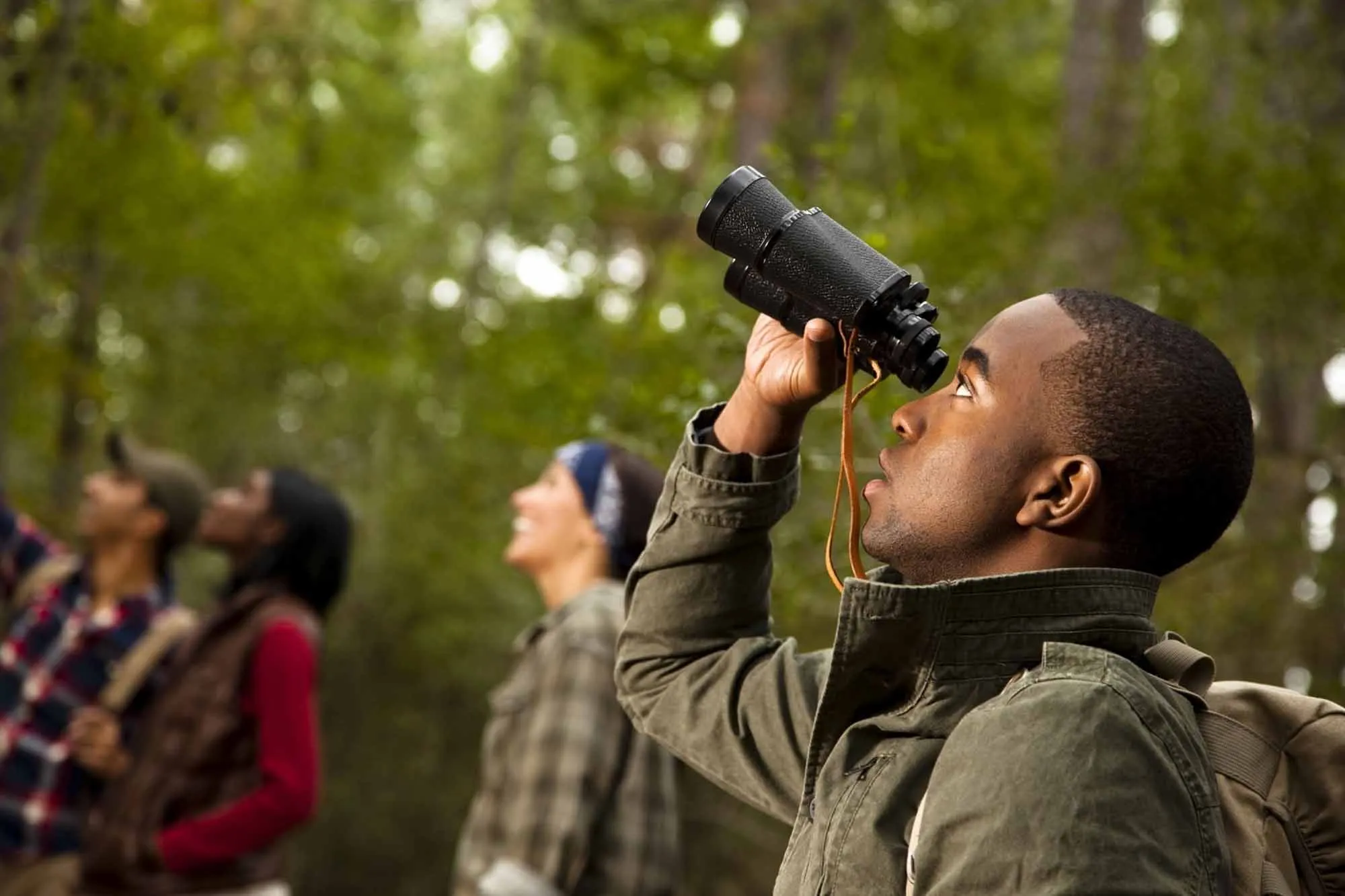
A birdwatcher scans the forest canopy with binoculars, highlighting the importance of good optics during a Rwanda birding safari.
Binoculars are among the most important pieces of equipment for a Rwanda Birding Safari because many species are observed at a distance, high in the canopy or within vegetation where approaching too closely would disturb them. A comfortable pair with good light transmission becomes especially useful in forest environments such as Nyungwe and Gishwati-Mukura. Travelers should become familiar with adjusting and focusing their binoculars before arriving in Rwanda so valuable observation time is not lost in the field. Our guide to birdwatching in Rwanda also emphasizes responsible use of binoculars and cameras while maintaining an appropriate distance from birds.
Carry a Bird Field Guide or Bird Identification App
A regional bird field guide can make a Rwanda Birding Safari more educational by allowing travelers to compare plumage, distribution and identification features after sightings. Digital birding applications can also be useful when they provide offline information, photographs and checklists. Internet access should not be assumed in every forest location, so important resources should be downloaded before entering remote areas. Travelers researching where different species occur can use our guide to the best birding sites in Rwanda when preparing a destination-specific target list.
Camera Equipment for Bird Photography in Rwanda
A camera with a telephoto or zoom lens is useful for travelers who want to document their Rwanda Birding Safari. Birds may remain high in trees, across wetlands or several meters away within forest vegetation, so additional reach can improve photographic opportunities without forcing the photographer to approach too closely. Carry sufficient memory cards and spare batteries because long birding days can involve hundreds of photographs. A lightweight lens-cleaning cloth is also useful in humid forests where moisture can affect equipment.
Photography should never come at the expense of responsible bird watching. Flash photography should be avoided around sensitive wildlife, and photographers should follow instructions from professional guides. Travelers interested in Rwanda’s seasonal photography conditions can also consult our best time to visit Rwanda guide when selecting travel dates.
What Clothing to Wear on a Rwanda Birding Safari
Comfortable, lightweight clothing in neutral or muted colors works well for most Rwanda Birding Safari activities. Long trousers and long-sleeved shirts provide additional protection when walking through forest vegetation and can help reduce exposure to insects. Bright or highly reflective clothing is generally less practical when quietly observing wildlife. Conditions can also change quickly between Rwanda’s lower savannah areas and high-altitude forests, so travelers should pack layers rather than depending on one type of clothing throughout the journey.
Volcanoes National Park requires particular preparation because birding can involve cool mountain conditions, vegetation and changing weather. Our guide to bird watching in Volcanoes National Park recommends items including long trousers, long sleeves, hiking shoes, a light rain jacket and a waterproof backpack for birding excursions.
Waterproof Hiking Shoes and Rain Protection
Strong walking shoes or lightweight waterproof hiking boots are important for a Rwanda Birding Safari that includes Nyungwe, Volcanoes or Gishwati-Mukura. Forest trails can become muddy after rain, while uneven terrain requires footwear with reliable grip. A compact rain jacket or poncho should remain easily accessible rather than being buried at the bottom of luggage because mountain weather can change quickly.
Travelers planning intensive highland birding can review our guide to an unforgettable Volcanoes birding safari, which also highlights waterproof hiking boots, binoculars, cameras, drinking water and field identification resources among useful birding essentials.
Protect Binoculars, Cameras and Electronics from Rain
Rain protection should extend beyond clothing. Cameras, binoculars, phones, memory cards, power banks and other electronics should be carried inside water-resistant bags or protective covers when birding in forests. Small waterproof pouches can protect batteries and memory cards without adding significant weight. A Rwanda Birding Safari often involves early starts and several hours away from the vehicle, so equipment should be organized in a way that allows important items to be reached quickly.
Spotting Scopes for Serious Birders
A spotting scope can be valuable for serious birdwatchers, particularly when observing distant birds in wetlands, lakes and open habitats. It can also help with canopy species when birds remain too distant for comfortable binocular viewing. However, scopes add weight and are not necessary for every traveler. Some specialist guides may have access to suitable equipment depending on the itinerary. Our guide to the Karamba Birding Trail explains how guides, binoculars and spotting scopes can support observation of difficult forest species.
Prepare for Different Birding Environments
Equipment requirements can change considerably during one Rwanda Birding Safari. Nyungwe and Gishwati-Mukura involve forest walking, Volcanoes introduces cooler high-altitude conditions, while Akagera allows much of the birding to take place from a safari vehicle around savannah, woodland, lakes and wetlands. Travelers should therefore avoid packing exclusively for forest hiking or exclusively for conventional game drives.
Visitors adding Gishwati-Mukura can review our Gishwati-Mukura birding safari information, which recommends binoculars, a bird field guide, camera equipment, muted clothing and comfortable hiking footwear. For eastern Rwanda, our Akagera National Park Safari guide explains how private vehicle-based exploration can provide greater flexibility for photographers and wildlife enthusiasts.
Essential Rwanda Birding Safari Packing Guide
| Item | Why It Is Useful | Best Use |
|---|---|---|
| Binoculars | Helps observe distant, canopy and shy birds without approaching too closely. | All Rwanda birding destinations |
| Camera and Telephoto Lens | Useful for photographing birds from a responsible distance. | Forests, wetlands and Akagera |
| Field Guide | Supports identification and recording of species. | Throughout the safari |
| Waterproof Hiking Shoes | Provides grip and protection on wet or uneven trails. | Nyungwe, Volcanoes and Gishwati-Mukura |
| Light Rain Jacket | Provides quick protection during changing mountain and forest weather. | Forest and highland birding |
| Insect Repellent | Useful during extended outdoor and forest sessions. | Forests and wetlands |
| Water and Snacks | Helps maintain energy during longer birding walks and field sessions. | All-day excursions |
| Spare Batteries | Prevents cameras and other equipment from becoming unusable during long sessions. | Photography-focused safaris |
Use an Experienced Rwanda Bird Guide
Professional guiding can make a significant difference during a Rwanda Birding Safari. Experienced bird guides recognize calls, understand habitat preferences and know productive trails, wetlands and observation points. This becomes especially important in montane forests where a traveler may hear several birds without being able to locate them visually. A knowledgeable guide can also help distinguish similar species and organize the daily birding schedule around productive periods.
Anthill Safaris also emphasizes binoculars, cameras and specialist preparation within its guide to a birdwatching safari in Rwanda, while its overview of the best Rwanda birding destinations provides additional packing guidance for travelers visiting the country’s forests, wetlands and national parks.
Carry Water, Snacks and Sun Protection
Long birding sessions can continue for several hours, particularly when searching for forest species, so travelers should carry enough drinking water and light snacks. A wide-brimmed hat, sunglasses and suitable sun protection can also be helpful when birding in open environments such as Akagera or wetlands. Anthill Safaris’ wider guide to Rwanda safari activities similarly recommends practical items such as comfortable walking shoes, rain protection, cameras, spare batteries and suitable safari clothing.
Record Your Rwanda Birding Safari Sightings
Keeping a daily checklist or simple birding notebook helps travelers remember where individual species were observed and makes it easier to review the safari afterward. Digital birding applications can perform the same role, but a notebook remains useful when batteries are low or phones are protected from rain. Serious birders travelling with a target list should share it with Safari Vacations and Travel Services Ltd before the safari so guides can understand which habitats and species deserve priority.
Responsible Bird Watching in Rwanda
Preparation also includes understanding how to behave around birds and wildlife. Travelers should avoid approaching nests, disturbing feeding birds or forcing wildlife into better photographic positions. Excessive noise should be minimized, and instructions from professional guides and national park authorities should always be followed. Good birding is based on careful observation rather than disturbance, particularly when searching for rare or restricted-range species.
Final Preparation Before Travelling to Rwanda
Before departure, travelers should check travel documents, luggage, camera equipment, batteries, binoculars, footwear and weather-appropriate clothing. Any medications or personally important items should be packed well before travelling into remote birding areas. Visitors combining birding with other Rwanda experiences can use our complete Rwanda Travel Guide to prepare for transportation, accommodation, climate, national parks and wider safari logistics.
Safari Vacations and Travel Services Ltd can advise travelers about equipment and clothing according to the exact destinations included in their Rwanda Birding Safari. A traveler concentrating on Akagera will prepare differently from someone spending several days walking the forests of Nyungwe and Volcanoes. Packing efficiently around the actual itinerary keeps luggage manageable while ensuring that the equipment required for serious bird watching and photography is available when needed.
Planning and Booking a Rwanda Birding Safari with Safari Vacations and Travel Services Ltd

A Safari Vacations and Travel Services Ltd safari vehicle travels through dense forest, highlighting professional transport and personalized planning for Rwanda birding safaris.
Planning a Rwanda Birding Safari begins with understanding the type of birding experience you want, the number of days available and the other activities you would like to combine with bird watching. Rwanda can support short birding extensions, dedicated birding holidays and longer journeys combining forests, wetlands, savannahs, gorilla trekking, chimpanzees and wildlife. Safari Vacations and Travel Services Ltd can customize the journey around your interests instead of placing every traveler on the same fixed itinerary. Before choosing destinations, travelers can explore our detailed guide to Rwanda birding safaris to understand the country’s major habitats and birding opportunities.
Start with Your Rwanda Birding Safari Interests
The first step is deciding what you expect from your Rwanda Birding Safari. Some travelers want a relaxed introduction to colorful African birds while others arrive with detailed target lists containing Albertine Rift species, forest specialists, wetland birds or photographic targets. Your interests determine how much time should be allocated to Nyungwe Forest, Volcanoes National Park, Akagera National Park, Gishwati-Mukura and smaller birding locations. Travelers who also want primates, wildlife and scenic experiences can compare our Rwanda safari packages before developing a specialist birding version.
Choose the Right Number of Safari Days
A short Rwanda Birding Safari can focus on one or two destinations, while a longer journey allows travelers to experience considerably greater habitat diversity. Serious birders should avoid trying to visit too many locations within a limited number of days because productive bird watching often requires early mornings, patient observation and repeated searches. Our comprehensive Rwanda travel guide provides useful information about the country’s major destinations and how they can fit together geographically.
Select Travel Dates According to Your Priorities
Rwanda offers bird watching throughout the year, although weather, trail conditions and seasonal bird movements can influence the experience. Travelers combining birding with forest trekking may prioritize generally drier conditions, while others may deliberately travel during greener periods. The best dates should therefore be selected according to birding interests, photography, trekking activities and accommodation availability. Our best time to visit Rwanda guide can help when comparing different travel periods.
Share Your Target Bird List Before Booking
Experienced birders should send their target-species list during the planning stage. This allows Safari Vacations and Travel Services Ltd to identify the most appropriate habitats and determine where additional birding time may be required. A traveler searching mainly for Albertine Rift species will require a different itinerary from someone interested in savannah and wetland birds. Sharing your target list also helps determine whether specialist bird-guiding arrangements should be included throughout the journey or concentrated in particular destinations.
Decide on Your Rwanda Birding Safari Budget
Budget should be discussed before accommodation and routing are finalized. The cost of a Rwanda Birding Safari depends on duration, number of travelers, accommodation category, private transportation, guide arrangements, park activities and optional primate experiences. Rather than choosing an itinerary only because it appears inexpensive, travelers should examine exactly what is included and how much genuine birding time the route provides. Our current Rwanda safari cost guide explains the principal factors that influence overall safari pricing.
Choose Accommodation Close to Birding Areas
Location matters considerably on a specialist Rwanda Birding Safari. Staying within convenient reach of productive habitats can reduce morning transfer times and allow travelers to begin birding when activity is strong. The most expensive lodge is not automatically the most practical choice for every birdwatcher. Safari Vacations and Travel Services Ltd can recommend budget, mid-range or luxury accommodation according to comfort preferences while considering access to Nyungwe, Akagera, Volcanoes and other locations included in the itinerary.
Combine Birding with Gorilla and Chimpanzee Trekking
Travelers who want mountain gorillas or chimpanzees should mention these activities during the initial planning process because permits and trekking dates influence the overall itinerary. Gorilla trekking takes place in Volcanoes National Park, while chimpanzee tracking can be incorporated around Nyungwe Forest. Our guide explaining the steps for booking gorillas and chimpanzees provides useful planning information for travelers combining these experiences with birding.
Birding and primate trekking should normally receive separate time so neither experience feels rushed. Travelers looking for additional information about the Volcanoes region can also explore Anthill Safaris’ live guide to a Volcanoes birding safari, which shows how bird watching can complement Rwanda’s best-known gorilla destination.
Secure Gorilla Permits Early When Required
If gorilla trekking forms part of your Rwanda Birding Safari, permit arrangements should be discussed before flights and accommodation are fully committed. Gorilla trekking operates on specific dates and limited availability can affect the order in which destinations are visited. Travelers can read our current guide explaining how to book gorilla trekking permits for additional permit-planning information.
Anthill Safaris also provides a live guide explaining how to book a Rwanda gorilla safari. Permit prices, eligibility conditions and booking rules can change, so travelers should confirm the applicable requirements when making their actual reservation rather than depending on old online information.
Private Transport for a Rwanda Birding Safari
Private road transportation works particularly well for birders because the vehicle can stop at suitable roadside habitats and the daily schedule can respond to sightings. Birding travelers frequently need earlier departures and slower drives than conventional sightseeing groups. Safari Vacations and Travel Services Ltd can organize transportation according to the itinerary, number of travelers, luggage and photography equipment while keeping major birding destinations connected efficiently.
Booking a Last-Minute Rwanda Birding Safari
Advance planning provides the strongest choice of accommodation and activities, but travelers already in East Africa may sometimes decide to organize a Rwanda Birding Safari at short notice. Birding itself can often be arranged more flexibly than limited permit-based activities, although lodge and guide availability still needs to be checked. Travelers considering a short-notice journey can review our guide to last-minute Rwanda safaris before making arrangements.
Understand the Booking Conditions
Before confirming a Rwanda Birding Safari, travelers should review the written itinerary, inclusions, exclusions, accommodation, activities, payment requirements and cancellation conditions carefully. This is particularly important when the journey contains separately regulated activities such as gorilla or chimpanzee trekking. Safari Vacations and Travel Services Ltd provides its current booking terms and conditions online so travelers can review the applicable arrangements before completing their reservation.
Consider a Rwanda and Uganda Birding Extension
Travelers with additional time can extend a Rwanda Birding Safari across the border into Uganda. This can introduce additional forests, wetlands, savannah parks and bird species while creating a more extensive East African birding journey. Bwindi, Mgahinga, Queen Elizabeth, Kibale, Lake Mburo and other areas can be considered according to the travel duration and target species. Anthill Safaris’ guide to combining Uganda and Rwanda safaris provides another perspective on creating a cross-border itinerary.
Why Plan with Safari Vacations and Travel Services Ltd?
Safari Vacations and Travel Services Ltd can coordinate the different elements required for a successful Rwanda Birding Safari, including itinerary design, private transportation, accommodation, bird-guiding arrangements and additional wildlife or primate experiences. The advantage of customized planning is that the journey can be structured around the traveler’s actual interests. A serious birder may need long field sessions and fewer conventional sightseeing stops, while couples or families may prefer birding combined with gorillas, wildlife, Lake Kivu and cultural experiences.
Good planning also reduces unnecessary movement between destinations. Instead of selecting locations because they appear on a standard itinerary, Safari Vacations and Travel Services Ltd can develop the route around habitats, travel time and the number of days available. This produces a Rwanda Birding Safari with more meaningful observation time and a better balance between birding, transportation and relaxation.
Send Your Rwanda Birding Safari Requirements
When requesting a quotation, provide your preferred travel dates, number of travelers, approximate number of safari days, accommodation preference and any specific bird species or destinations you want to prioritize. Mention whether you also want gorilla trekking, chimpanzee tracking, Akagera wildlife, Lake Kivu, photography or a Uganda extension. Travelers ready to begin planning can use our Rwanda safari inquiry page or complete the form below.
A Rwanda Birding Safari is most rewarding when the itinerary is built around habitat diversity and sufficient observation time rather than simply covering the greatest possible distance. Safari Vacations and Travel Services Ltd can help create a private journey ranging from a short birding extension to a complete Rwanda birding holiday covering the country’s montane forests, wetlands, highlands and savannah landscapes.
Conclusion: Plan an Unforgettable Rwanda Birding Safari
A Rwanda Birding Safari is one of the most rewarding ways to discover the remarkable natural diversity of Rwanda. Within a relatively compact country, birdwatchers can explore montane rainforests, volcanic highlands, papyrus wetlands, freshwater lakes, woodland and open savannah while searching for Albertine Rift specialties, colorful forest birds, waterbirds, raptors, sunbirds, turacos, kingfishers and many other species. Whether you are an experienced birder travelling with a detailed target list or a first-time birdwatcher looking for a relaxed introduction to African birdlife, Rwanda provides opportunities for a carefully customized journey.
The strongest Rwanda Birding Safari usually combines several habitats rather than concentrating on a single destination. Nyungwe Forest National Park is particularly important for montane forest birding and Albertine Rift species, while Volcanoes National Park adds high-altitude birding alongside the possibility of mountain gorilla trekking. Akagera National Park provides a completely different experience through its savannah, woodland, lakes and wetlands, while Gishwati-Mukura and smaller birding locations can add further diversity. Travelers can learn more about birding in Rwanda when comparing the habitats that should form part of their itinerary.
Good planning is particularly important for serious birders because successful bird watching requires time. Early mornings, slow forest walks, patient observation and repeated searches can be more productive than trying to visit too many destinations quickly. Travelers should therefore consider their available days, target species, preferred accommodation and physical ability before selecting an itinerary. Our guide to the best birding sites in Rwanda can help identify the destinations most suitable for different birding interests.
A Rwanda Birding Safari can also be combined easily with some of the country’s most memorable wildlife experiences. Travelers may include mountain gorilla trekking in Volcanoes National Park, chimpanzee tracking in Nyungwe Forest, game drives and boat safaris in Akagera, Lake Kivu relaxation or a longer Rwanda and Uganda birding journey. This flexibility makes Rwanda particularly attractive for couples, families and groups where not every traveler has the same wildlife priorities.
Safari Vacations and Travel Services Ltd can customize the safari around your travel dates, available days, preferred birding intensity and additional interests. Instead of following a standard itinerary, the route can emphasize the forests, wetlands and savannah habitats that provide the greatest value for your particular journey. Travelers planning a broader wildlife experience can also explore our Rwanda safari packages before adapting the itinerary specifically for bird watching.
Ultimately, the best Rwanda Birding Safari is not measured only by the total number of birds recorded. The experience also includes walking through ancient forests, listening to morning bird calls, watching colorful species move through the canopy, exploring Rwanda’s wetlands and savannahs and discovering how dramatically the bird community changes between different ecosystems. With suitable preparation, professional guidance and enough time in productive habitats, Rwanda can provide an exceptional birding experience for both dedicated birdwatchers and general nature enthusiasts.