
Introduction to Rwanda National Parks

Elephants moving through the savannah landscape of Akagera National Park.
Rwanda National Parks are among the country’s most important natural attractions, protecting a remarkable range of landscapes and wildlife within a relatively small area. From the savannah plains, wetlands and lakes of Akagera National Park to the volcanic mountains of Volcanoes National Park and the ancient rainforest of Nyungwe National Park, Rwanda offers a diverse collection of protected ecosystems. Gishwati-Mukura National Park adds another important forest landscape to the national park network.
For travellers searching for the best Rwanda National Parks, the country offers far more than a single wildlife experience. Akagera is the main destination for traditional safari game viewing and is home to the Big Five. Volcanoes National Park is internationally recognised for mountain-gorilla trekking and also offers opportunities to encounter golden monkeys within the Virunga landscape. Nyungwe is renowned for its rainforest biodiversity, chimpanzees and other primates, while Gishwati-Mukura protects additional forest habitat and wildlife.
This comprehensive Rwanda National Parks guide explores the country’s protected areas in detail, including wildlife, landscapes, safari activities, gorilla trekking, chimpanzee tracking, birdwatching, hiking, conservation, responsible tourism, travel planning and the best ways to combine different parks into one itinerary. Whether the main goal is a Rwanda safari, mountain-gorilla experience, chimpanzee encounter, Big Five game viewing or exploration of Rwanda’s forests, understanding the differences between the parks is essential for planning the right journey.
Rwanda’s national parks also have major conservation importance. Nyungwe National Park was inscribed on the UNESCO World Heritage List in 2023 and protects an extensive rainforest ecosystem containing exceptional biodiversity. The Rwanda Development Board reports that the park covers 101,900 hectares and contains more than a dozen primate species, 322 bird species, orchids and butterflies.
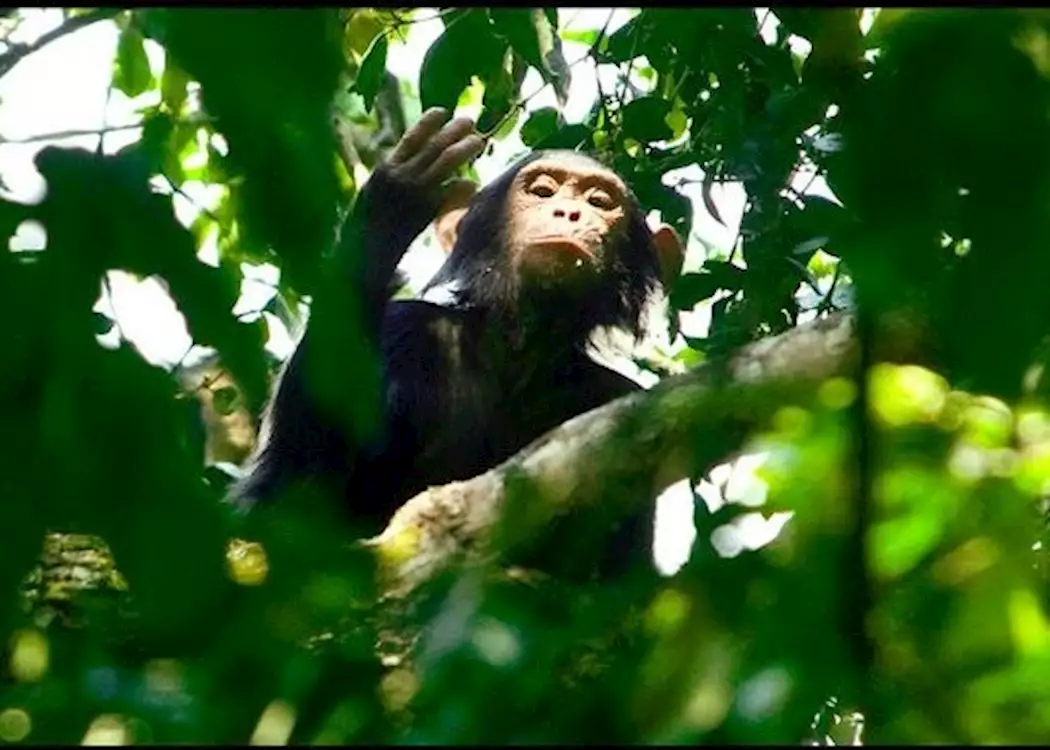
A chimpanzee in the dense rainforest of Nyungwe National Park.
Akagera demonstrates another side of Rwanda’s conservation story. The park combines savannah, woodland, wetlands and lakes, while restoration programmes have helped rebuild populations of major wildlife species. The official Visit Rwanda information identifies lions and eastern black rhinoceroses among the species reintroduced to the park and highlights its growing importance for Big Five safari experiences.
Volcanoes National Park provides an entirely different environment. Located in northwestern Rwanda, it protects steep volcanic slopes and a mosaic of montane ecosystems including evergreen and bamboo forests, grasslands, swamps and heath. It is particularly famous for its mountain gorillas and golden monkeys.

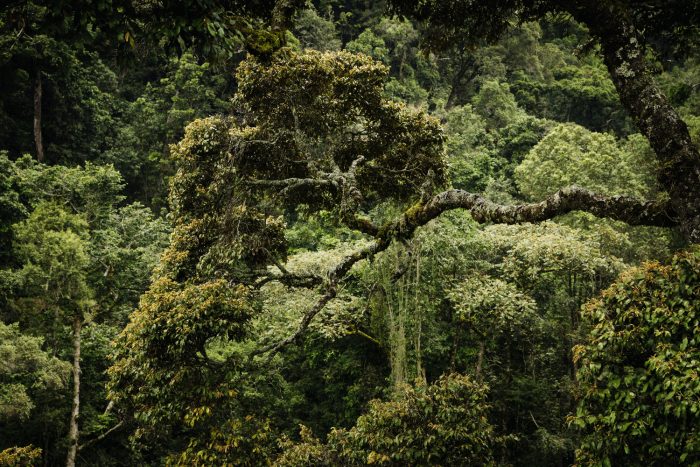
Dense forest habitat representative of Rwanda’s protected Albertine Rift ecosystems.
With four national parks representing different habitats and wildlife experiences, Rwanda National Parks provide an opportunity to design anything from a short specialist wildlife trip to a comprehensive multi-park safari. The sections that follow examine each destination and the experiences they offer, helping travellers understand where to go, what to see, how to combine the parks and how to plan a responsible Rwanda National Parks safari.
Akagera National Park: Rwanda’s Savannah Wildlife and Big Five Safari Destination

African elephants moving through the savannah landscape of Akagera National Park.
Akagera National Park is one of the four national parks that form the foundation of Rwanda’s protected-area tourism system, and it occupies a distinctive position within the country because of its savannah landscapes, wetlands, lakes, woodlands, and large mammal populations. For travellers researching Rwanda National Parks, Akagera provides an experience that is fundamentally different from the rainforest and mountain environments associated with Nyungwe National Park and Volcanoes National Park. It is the principal destination in Rwanda for conventional savannah game viewing, making it particularly important for visitors searching for a Rwanda wildlife safari or a Rwanda Big Five safari.
The park lies in eastern Rwanda close to the country’s border with Tanzania. Its landscape combines open grasslands, rolling terrain, woodland, wetlands, and a network of lakes that support both terrestrial and aquatic wildlife. This combination of habitats gives Akagera National Park an unusually varied character. A morning game drive can move through open savannah where large herbivores are visible, while a boat experience on Lake Ihema provides an entirely different perspective on the park’s wetland ecosystem.
For travellers planning a wider Rwanda safari, Akagera National Park can serve as the wildlife component of a journey that also includes Rwanda’s mountain and forest destinations. The park is especially significant because successful conservation and wildlife-restoration initiatives have helped rebuild populations of species that were previously lost or severely reduced.
Where Is Akagera National Park?
Akagera National Park is located in eastern Rwanda. Its geographical position gives it an ecological character that differs substantially from the mountainous western and northern parts of the country. The park’s landscapes are associated with the wider Kagera region, while the network of lakes, wetlands and savannah habitats creates conditions suitable for a wide range of wildlife.
Its location also makes Akagera strategically important for visitors who want to combine different forms of wildlife tourism during one Rwanda trip. Rather than concentrating exclusively on primates or montane forest species, visitors to Akagera can experience classic African savannah scenery and search for large mammals during game drives.
Information published by Uganda Rwanda Safaris describes Akagera as being in eastern Rwanda along the Tanzanian border and identifies its savannah grasslands, forests, plains, rolling hills and lakes as important components of the park landscape.
The Landscape and Ecosystems of Akagera National Park
The ecological diversity of Akagera National Park is one of the main reasons it deserves a prominent position in a comprehensive guide to Rwanda National Parks. The park is not simply an expanse of grassland. It contains a mixture of savannah, woodland, wetlands, lakes and other habitats that support different communities of animals and birds.
Open savannah areas provide important grazing and hunting grounds for herbivores and predators. Woodlands create additional cover and feeding opportunities, while wetlands and lakes support hippos, crocodiles, water-associated mammals and large numbers of birds.
The presence of water is particularly important to the character of Akagera. Lakes including Lake Ihema form part of a wider aquatic environment that can be explored through boat-based wildlife experiences. This creates a valuable contrast with a conventional land-based game drive.
The combination of land and water environments means that a visitor can experience several different wildlife-viewing environments without leaving the national park. This ecological variety is one of the strongest reasons to include Akagera when discussing the best national parks in Rwanda for wildlife viewing.
Akagera National Park and the Big Five
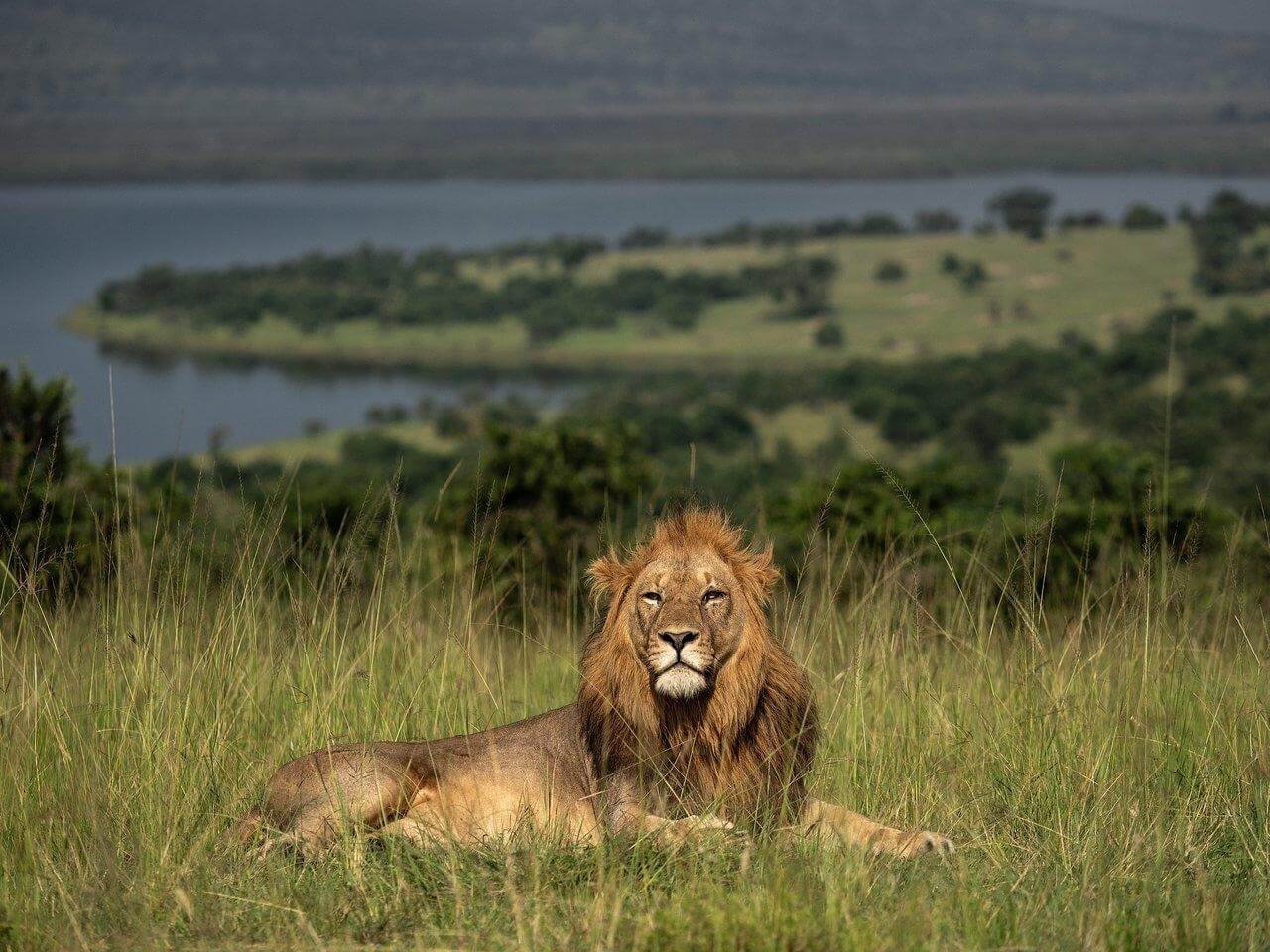
A lion resting in the savannah of Akagera National Park.
One of the biggest reasons travellers search for Akagera National Park is the opportunity to see the African Big Five. These are the African elephant, lion, leopard, rhinoceros and Cape buffalo. Akagera has become particularly notable for its conservation-driven restoration of large mammal populations, including lions and rhinoceros.
Current tourism information from Visit Rwanda describes Akagera as one of Rwanda’s national parks and highlights the park’s savannah, woodland, wetland and lake habitats. A separate current article from Anthill Safaris describes Akagera as Rwanda’s principal savannah destination and discusses its Big Five conservation story.
The presence of the Big Five does not mean that every safari will produce sightings of every species. Wildlife moves naturally through the landscape, and sightings depend on many factors. A responsible Rwanda safari should therefore present wildlife viewing as an opportunity to observe animals in their natural environment rather than as a guaranteed checklist.
Visitors researching Akagera wildlife can find information about the range of mammals recorded in the park, including elephants, buffalo, lions, zebras, giraffes, antelopes, hippos and crocodiles.
African Elephants in Akagera National Park
African elephants are among the major mammals that contribute to Akagera’s reputation as a Rwanda wildlife safari destination. Their presence adds another dimension to game drives because elephants can be encountered in different habitats as they move through the park in search of food and water.
Elephants are particularly interesting in a park such as Akagera because the landscape includes both terrestrial and aquatic environments. Depending on conditions and location, visitors may encounter elephants in open areas, woodland habitats or around water sources.
For photographers and wildlife enthusiasts, elephant encounters can provide opportunities to observe natural behaviour while maintaining an appropriate distance under the direction of trained safari guides.
Lions in Akagera National Park
The restoration of lions is one of the most important chapters in Akagera’s modern conservation history. Lions had disappeared from the park before conservation interventions helped restore the species. Their return transformed Akagera’s position as a safari destination and strengthened its ability to offer visitors a more complete savannah wildlife experience.
Today, lions form part of the predator community that visitors may search for during game drives. Finding a lion is never guaranteed because these animals are free-ranging wildlife, but the possibility of encountering them is one of the attractions that distinguishes Akagera from Rwanda’s forest and mountain parks.
Travellers looking specifically for information about Rwanda Big Five experiences can use Akagera as the central wildlife destination within a broader Rwanda itinerary. Anthill Safaris’ verified article specifically discusses the presence of the five Big Five species in Akagera.
Rhinoceros Conservation in Akagera

“Southern white rhinoceroses in Akagera
Rhinoceros conservation is another major part of Akagera’s transformation. The restoration of rhinoceros populations contributed to the park’s emergence as a destination where visitors can potentially encounter all five of Africa’s traditionally recognised Big Five species.
The conservation story is important because Akagera demonstrates that national parks are not simply places where wildlife is observed. They are also places where long-term habitat protection, wildlife management, monitoring and community relationships can influence the survival and recovery of important species.
When discussing Rwanda national parks and conservation, Akagera therefore provides an important case study of how a protected area can recover from periods of severe ecological pressure and develop into a significant wildlife tourism destination.
Buffaloes, Giraffes, Zebras and Antelopes
Akagera’s wildlife experience extends far beyond the Big Five. Large herds and groups of herbivores contribute strongly to the visual character of the savannah. Buffaloes, zebras, giraffes and several species of antelope can form part of the wildlife encountered during game drives.
Zebras are particularly well suited to open grassland environments, where their contrasting patterns make them highly visible against the savannah. Giraffes, meanwhile, provide an opportunity to observe one of Africa’s most recognisable large herbivores moving through woodland and open habitats.
Antelopes add further diversity to the park’s mammal community. Different species occupy different ecological niches, allowing visitors to observe how grazing, browsing and water-dependent wildlife coexist within the broader Akagera ecosystem.
The current Uganda Rwanda Safaris article on animals to look out for in Akagera identifies zebras, elephants, buffaloes, lions, cheetahs, leopards, giraffes, roan antelopes and elands among the wildlife visitors may encounter.
Hippos and Crocodiles in Akagera’s Wetlands

“Hippopotamuses in the waters of Lake Ihema
The aquatic side of Akagera is just as important as its savannah environment. Hippos and Nile crocodiles are among the wildlife associated with the park’s lakes and wetlands, creating opportunities for visitors to observe species that are less likely to be the focus of a conventional savannah game drive.
Lake Ihema is particularly significant for water-based wildlife viewing. A boat experience can provide a lower, water-level perspective across the lake while allowing visitors to observe animals and birds associated with the shoreline and aquatic environment.
For travellers building a detailed Rwanda national parks safari itinerary, the contrast between a morning game drive and a Lake Ihema boat experience can make Akagera considerably more diverse than a safari focused exclusively on driving through the savannah.
Uganda Rwanda Safaris provides specific information about Lake Ihema boat trips, including the wildlife and birdlife associated with the lake environment.
Birdwatching in Akagera National Park

An African fish eagle in the diverse wetland environment of Akagera National Park.
Birdwatching is another major reason to include Akagera in a complete Rwanda National Parks guide. The park’s combination of wetlands, lakes, savannah and woodland creates habitat for a diverse bird community.
Wetland areas are particularly valuable for water-associated birds, while woodland and savannah habitats support other groups. Lake Ihema and its surrounding wetlands are important areas for bird observation, and a boat trip can provide useful access to birds associated with the water environment.
Birders visiting Akagera may encounter species including fish eagles, kingfishers, cormorants, herons, egrets, African jacanas and other wetland and savannah birds. The park also provides opportunities to search for specialised species associated with papyrus and wetland vegetation.
Because bird numbers and species records can change as surveys are updated, exact species totals should only be quoted when supported by a current authoritative source. Information from the current Uganda Rwanda Safaris birding page discusses hundreds of species associated with Akagera and identifies Lake Ihema, islands, marshes and wetlands as important birding areas.
Game Drives in Akagera National Park
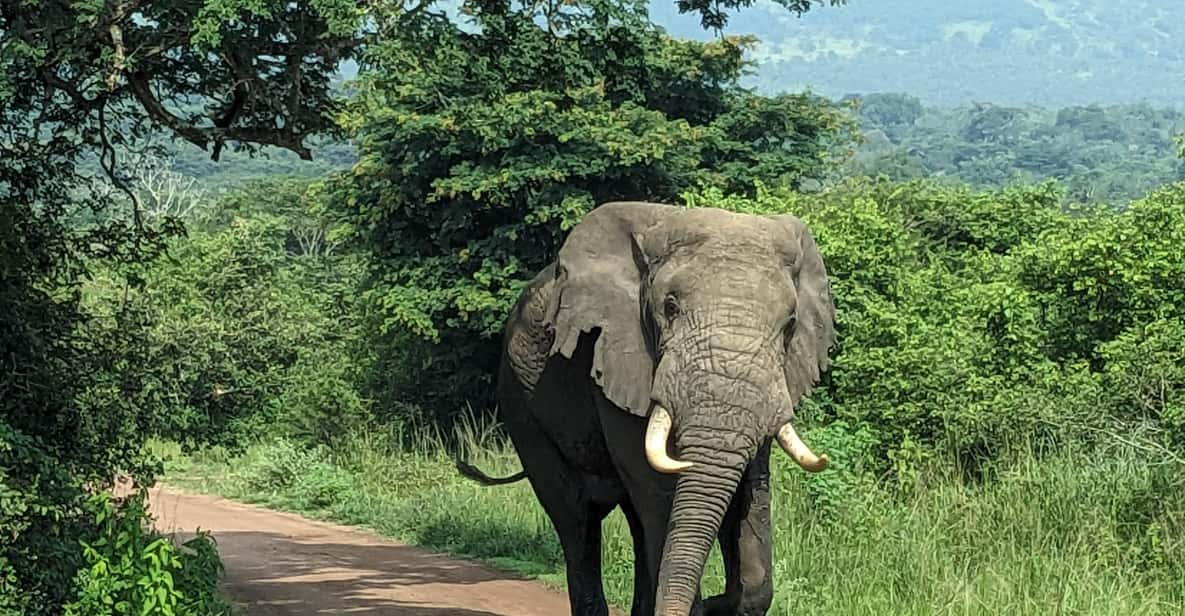
An African elephant encountered during a game drive in Akagera.
Game drives are the classic way to explore Akagera National Park. They allow visitors to travel across different habitats while searching for large mammals, predators, antelopes, birds and other wildlife.
A well-planned game drive should not be treated simply as a race to find the largest animals. The landscape itself is an important part of the experience. Savannah plains, woodland patches, wetlands, lakes and distant hills contribute to the visual identity of Akagera and help explain why the park supports such a broad range of species.
Morning and afternoon drives can offer different viewing opportunities because animal activity changes throughout the day. Night drives provide another perspective by allowing visitors to search for nocturnal species that are less active during daylight hours.
For visitors researching Rwanda wildlife safari combinations, Akagera can be paired with Rwanda’s forest and mountain experiences to create a multi-environment journey rather than a single-purpose safari.
Boat Safaris on Lake Ihema

“A guided boat experience on Lake Ihema
A boat safari on Lake Ihema is one of the defining experiences within Akagera National Park. The lake provides an opportunity to see the park from the water and to observe wildlife that gathers around aquatic habitats.
Hippos are among the most recognisable animals associated with the lake, while crocodiles can often be observed along suitable shorelines. Elephants may also approach water, and the surrounding wetlands provide habitat for numerous bird species.
The current Anthill Safaris Lake Ihema article describes the boat cruise as a major wildlife experience within Akagera and highlights hippos, crocodiles and elephants among the animals that can be encountered around the lake.
A boat experience also changes the rhythm of a safari. Instead of travelling through the landscape by vehicle, visitors move quietly across the water while observing shorelines, islands, wetlands and aquatic wildlife. This makes it a valuable complement to game drives.
Night Wildlife Experiences in Akagera

A safari vehicle preparing for a nocturnal wildlife drive in Akagera.
Akagera also provides opportunities for visitors interested in nocturnal wildlife. Night drives can reveal a different side of the ecosystem because some animals become active after sunset while others become more difficult to locate.
Nocturnal experiences can be particularly valuable for visitors interested in species that are rarely encountered during ordinary daytime drives. Uganda Rwanda Safaris notes that bush babies may be encountered during nocturnal game drives, illustrating the difference between daytime and nighttime wildlife viewing in the park.
Night wildlife experiences should always be conducted according to park regulations and with qualified guides. The objective is responsible observation rather than disturbing animals or attempting to approach them.
Sport Fishing in Akagera National Park

Fishing is another activity associated with Akagera’s aquatic environment. Lake Shakani has been identified as an area where visitors can participate in sport fishing, adding another dimension to the range of experiences available in the park.
Fishing also demonstrates the importance of Akagera’s lakes beyond their role as scenic features. The aquatic ecosystems contribute to the wider ecological network that supports birds, fish, reptiles, hippos and other wildlife.
Current information from Uganda Rwanda Safaris discusses sport fishing at Lake Shakani and identifies tilapia and catfish among the fish associated with the activity. Because activity rules, availability and fees can change, visitors should verify current arrangements before travelling.
Akagera’s Conservation Transformation

Wildlife restoration and rhino conservation are important parts of Akagera’s modern conservation story.
Akagera National Park is particularly important in discussions about conservation because its modern history demonstrates how wildlife populations can be restored through sustained management.
The park experienced severe pressure during and after the 1994 genocide and the resulting population displacement. Human pressure, settlement, livestock encroachment, poaching and habitat degradation created serious challenges for wildlife conservation.
The situation subsequently changed through stronger conservation management and partnerships. The current Uganda Rwanda Safaris account of Akagera’s history describes a major management transition beginning in 2010, followed by efforts to improve security, restore wildlife and strengthen protection of the park.
The restoration of lions and rhinoceros is especially significant because it changed the ecological and tourism profile of the park. Akagera moved from being a severely challenged protected area toward becoming a recognised destination for large-mammal safari experiences.
This transformation makes Akagera more than a place to see animals. It is also an example of the potential relationship between conservation, tourism and protected-area management.
Why Akagera Is Different from Rwanda’s Other National Parks
Akagera occupies a unique position among Rwanda National Parks because its dominant wildlife experience is based on savannah ecosystems and large mammals.
Volcanoes National Park is internationally associated with mountain gorillas and the volcanic landscape. Nyungwe is renowned for its rainforest biodiversity and primates. Gishwati Mukura protects important forest ecosystems and primate habitat. Akagera, by contrast, provides the clearest opportunity for a traditional African savannah safari within Rwanda.
This distinction is important when deciding which national park to visit. A traveller whose main interest is large mammals and classic game drives will have different priorities from someone whose primary objective is chimpanzee tracking, gorilla trekking or forest birding.
For this reason, the question of which is the “best” national park in Rwanda does not have one universal answer. The most suitable park depends on what the traveller wants to experience.
Akagera for a Rwanda Big Five Safari
For travellers specifically searching for a Rwanda Big Five safari, Akagera should be central to the planning process. It is the country’s savannah wildlife destination and provides opportunities to search for elephant, lion, leopard, rhinoceros and buffalo.
At the same time, visitors should understand that a Big Five safari is about wildlife observation rather than guaranteed sightings. Animals move freely, and their locations change. Skilled guides use their knowledge of the environment and recent wildlife movements to maximise viewing opportunities while maintaining responsible distances.
The conservation success of Akagera makes the park particularly significant within Rwanda’s safari industry. It demonstrates that Rwanda’s tourism offer extends beyond gorilla trekking and includes a substantial savannah wildlife component.
Akagera for Wildlife Photography

Akagera’s varied scenery makes it attractive to wildlife photographers. Open grasslands can provide expansive backgrounds, while woodland, lakes and wetlands create different photographic environments.
Large mammals such as elephants, buffaloes, giraffes and zebras can create strong wildlife subjects, while birds provide opportunities for photographers interested in smaller and more specialised species.
Boat-based photography on Lake Ihema can also produce a different perspective from vehicle-based photography. The water allows photographers to frame wildlife against reflections, shorelines and open aquatic landscapes, subject to safe and responsible operating conditions.
Akagera for Birdwatchers
Birdwatchers should not regard Akagera simply as a large-mammal destination. The combination of wetlands, lakes, woodland and savannah supports a broad range of bird habitats.
Lake Ihema and its surrounding wetlands are particularly relevant for birding. Waterbirds can be observed around the lake and marshes, while savannah and woodland areas offer opportunities to search for other species.
The park’s birding potential also complements Rwanda’s wider birdwatching opportunities. Visitors with more time can combine Akagera with forest destinations such as Nyungwe to experience substantially different bird habitats during the same national parks journey.
How Long Should You Spend in Akagera National Park?
The appropriate length of an Akagera visit depends on the traveller’s objectives. Someone primarily interested in adding a short savannah experience to a wider Rwanda itinerary may require less time than a dedicated wildlife photographer or birder.
A longer stay can provide more opportunities to explore different parts of the park, undertake multiple game drives and include a water-based experience. It also reduces the pressure to see everything during a single drive.
Visitors combining Akagera with Volcanoes National Park or Nyungwe National Park should also consider the time required for transfers between destinations. A balanced itinerary should allow enough time for wildlife experiences rather than treating the parks simply as stops between cities.
Combining Akagera with Other Rwanda National Parks
Akagera becomes particularly valuable when combined with Rwanda’s other protected areas. A multi-park itinerary can introduce travellers to savannah, rainforest and mountain environments within one country.
A journey combining Akagera and Volcanoes National Park can pair Big Five-style game viewing with mountain gorilla or golden monkey experiences. Adding Nyungwe introduces another ecological dimension through rainforest and primate experiences.
Anthill Safaris currently publishes a Akagera Lake Kivu itinerary that combines Akagera wildlife experiences with Lake Kivu, demonstrating one possible way of extending a safari beyond the national park itself.
Responsible Wildlife Tourism in Akagera
Responsible tourism is essential to the long-term future of Akagera National Park. Visitors should follow the instructions of their guides, remain within designated areas, avoid disturbing wildlife and respect the park’s regulations.
Wild animals should never be fed, chased or deliberately approached for photographs. The purpose of a national park is to protect wildlife and its habitat while allowing carefully managed tourism to take place.
Responsible behaviour also extends beyond wildlife encounters. Visitors can support conservation by using authorised tourism services, respecting local communities and treating the protected area as a conservation landscape rather than simply a recreational attraction.
Akagera National Park as a Core Rwanda Safari Destination
Akagera National Park is indispensable to any comprehensive discussion of Rwanda National Parks. Its savannah landscapes, wetlands, lakes, large mammals, birdlife and conservation history give it an identity that is fundamentally different from Rwanda’s forest and mountain parks.
Its importance has grown alongside the recovery of major wildlife populations and the development of tourism experiences centred on game drives, boat safaris, birdwatching and other forms of responsible wildlife observation.
For visitors searching for the best national parks in Rwanda, Akagera is therefore best understood according to its particular strengths. It is the park to prioritise when the goal is a savannah wildlife experience, large mammals and the possibility of encountering Rwanda’s Big Five.
For a broader Rwanda National Parks journey, however, Akagera is only one part of the country’s protected-area story. Its greatest value comes when its savannah ecosystem is considered alongside the rainforest biodiversity of Nyungwe, the volcanic mountain environment of Volcanoes and the forest conservation landscape of Gishwati Mukura.
Nyungwe National Park: Rwanda’s Ancient Rainforest, Primates and Biodiversity

The dense montane rainforest landscape of Nyungwe National Park in southwestern Rwanda.
Nyungwe National Park is one of the most important destinations within Rwanda National Parks and represents a completely different ecosystem from the savannah landscapes of Akagera National Park. Located in southwestern Rwanda, Nyungwe protects an extensive montane rainforest landscape containing exceptional plant, bird and primate diversity. For travellers researching national parks in Rwanda, Nyungwe is particularly important because of its chimpanzees, other primates, forest birds, hiking opportunities and canopy-walk experience.
The park’s importance extends beyond tourism. UNESCO recognises Nyungwe National Park as a World Heritage property because of its exceptional biodiversity and importance within the Albertine Rift. The World Heritage property covers 101,963.67 hectares and contains habitats ranging from montane rainforest to wetlands, moorlands and grasslands. UNESCO also identifies Nyungwe as an important habitat for threatened species and notes its high level of endemic biodiversity.
For visitors looking to understand Nyungwe National Park as part of a wider Rwanda safari, the forest offers a combination of wildlife observation, primate tracking, birdwatching, hiking and scenic experiences that cannot be replicated in Akagera’s savannah environment.
Where Is Nyungwe National Park?
Nyungwe National Park is situated in southwestern Rwanda near the country’s border with Burundi and forms part of the Albertine Rift’s highly biodiverse mountain landscape. Its position within Rwanda’s southwestern highlands contributes to the cool, wet conditions and dense vegetation that characterise the forest.
The park’s location also makes it an important stop on longer Rwanda itineraries. Visitors travelling between Kigali and the southwestern region can incorporate Nyungwe into journeys that combine rainforest experiences with chimpanzee tracking, birdwatching, hiking and canopy activities.
The forest is considerably different from Akagera National Park. Instead of open savannah plains and large lakes dominating the scenery, Nyungwe is characterised by dense vegetation, mountain terrain, forest trails, streams and extensive tree cover.
Current information published by Anthill Safaris places Nyungwe in southwestern Rwanda and describes it as one of Africa’s oldest rainforests, with extensive biodiversity and numerous forest activities. Nyungwe Forest information on the site also identifies chimpanzees and other primates among its major attractions.
Why Nyungwe Is Important to Rwanda National Parks
Nyungwe is essential to any comprehensive Rwanda National Parks guide because it protects a forest ecosystem that is fundamentally different from Rwanda’s savannah and volcanic environments. Its importance comes from the combination of forest habitat, biodiversity, water resources and wildlife.
The park supports numerous primate species, a large bird community, mammals, butterflies and extensive plant diversity. The variation in altitude and habitat contributes to the exceptional range of species found within the forest.
UNESCO identifies Nyungwe as one of Africa’s oldest forests and highlights its importance for the conservation of the Albertine Rift’s biodiversity. The World Heritage listing records significant numbers of endemic and threatened species associated with the forest.
This makes Nyungwe more than a chimpanzee destination. Chimpanzee trekking may be one of its best-known visitor experiences, but the broader ecological value of the forest is much greater.
Nyungwe Forest and the Albertine Rift
Nyungwe forms part of the Albertine Rift, a region known for high levels of biodiversity and endemism. The mountainous geography of the region has contributed to the development of distinctive habitats and species communities.
The Albertine Rift is especially significant for birdwatchers and primate enthusiasts because several species have restricted geographical ranges within the region. Nyungwe therefore provides opportunities to search for species that are not simply widespread African wildlife but are associated with particular montane forest environments.
The forest’s altitude also contributes to its ecological complexity. Different elevations create variations in temperature, vegetation and habitat structure, allowing a wide range of organisms to occupy different ecological niches.
Chimpanzees in Nyungwe National Park

“A chimpanzee in the forest canopy of Nyungwe
Chimpanzee trekking is one of the principal reasons travellers visit Nyungwe National Park. The forest supports Rwanda’s important wild chimpanzee population, and dedicated trekking experiences allow visitors to search for habituated groups under the supervision of guides and park personnel.
Chimpanzees are highly mobile forest primates. Unlike wildlife on open savannah, they can move rapidly through dense vegetation and spend considerable time in the forest canopy. This means that chimpanzee tracking is an active wildlife experience rather than a conventional vehicle-based safari.
The current Uganda Rwanda Safaris guide to chimpanzee permits in Rwanda identifies habituated chimpanzee communities in the Uwinka and Cyamudongo areas of Nyungwe. It also explains that chimpanzee trekking requires a permit and is conducted as a guided experience.
Visitors researching chimpanzee trekking permits should verify current permit rules, prices and availability with the Rwanda Development Board or their authorised safari operator before travel because these details can change.
Chimpanzee Tracking Experience in Nyungwe
A chimpanzee trek begins with preparation and briefing before visitors enter the forest. Trackers and guides work to locate the chimpanzee group, after which visitors follow the designated route through the forest.
The experience can involve uneven terrain, dense vegetation and changing trail conditions. The forest environment is very different from a vehicle safari in Akagera, and visitors should be prepared for an active nature experience.
Once a habituated chimpanzee group is located, visitors can observe the animals under the conditions established by the park authorities. The purpose of the encounter is to watch natural behaviour while minimising disturbance to the chimpanzees.
Current information from Uganda Rwanda Safaris states that chimpanzee trekking in Nyungwe involves habituated groups and that visitors are accompanied by guides. The same source describes Cyamudongo as another important area for chimpanzee tracking.
Other Primates in Nyungwe National Park

A black-and-white colobus monkey in the dense vegetation of Nyungwe National Park.
Chimpanzees are only one part of Nyungwe’s primate diversity. The forest supports numerous other primate species, making it one of the most important primate destinations within Rwanda National Parks.
Visitors may encounter colobus monkeys, L’Hoest’s monkeys, blue monkeys, red-tailed monkeys and other forest primates. Sightings vary according to location, season, vegetation and animal movements, so no individual species should be treated as guaranteed on every forest walk.
Colobus monkeys are particularly interesting because Nyungwe is known for large troops. Their movements through the forest canopy can create memorable wildlife encounters, especially when observed from suitable forest trails or elevated viewpoints.
Anthill Safaris’ current Nyungwe destination information highlights chimpanzees and several other primates, including L’Hoest’s monkey, while also describing dedicated colobus tracking experiences in the forest.
Colobus Monkeys in Nyungwe
Colobus monkeys are among the most distinctive primates that visitors can encounter in Nyungwe National Park. Their black-and-white appearance and preference for forest habitats make them particularly recognisable during primate-focused walks.
Nyungwe is notable for large colobus troops. Observing these monkeys moving through the canopy demonstrates the importance of protecting continuous forest habitat because arboreal primates depend heavily on trees for movement, feeding and shelter.
Colobus tracking also provides an alternative to chimpanzee trekking. Travellers who are especially interested in primates can therefore build a Nyungwe experience around several different species rather than concentrating exclusively on chimpanzees.
Birdwatching in Nyungwe National Park

Birdwatching is one of the strongest reasons to visit Nyungwe. The forest’s varied elevations, vegetation types and wetland habitats provide conditions suitable for a large number of bird species.
Nyungwe is particularly valuable to birders searching for Albertine Rift species. The forest contains species associated with montane habitats, including several birds that are difficult or impossible to find in Rwanda’s savannah environments.
Current Uganda Rwanda Safaris information identifies more than 300 bird species associated with Nyungwe and lists species such as Albertine owlet, Blue-headed Sunbird, Grauer’s Swamp Warbler, Handsome Francolin, Rwenzori Batis, Rwenzori Turaco and Red-collared Babbler.
The same source recommends experienced birding guides because dense vegetation can make forest bird observation challenging. A knowledgeable guide can help identify calls, locate suitable habitats and interpret bird behaviour.
Albertine Rift Endemic Birds

One of Nyungwe’s strongest attractions for specialist birdwatchers is its connection with the Albertine Rift. The region supports bird species with restricted ranges, making Nyungwe particularly important for visitors who want to explore Rwanda’s endemic and near-endemic birdlife.
Species associated with Nyungwe include the Red-collared Babbler, Rwenzori Turaco, Rwenzori Batis, Blue-headed Sunbird and Albertine owlet. The exact species encountered during a visit will depend on habitat, season, weather and the skill of the birding guide.
Birdwatching in Nyungwe is therefore different from birding in Akagera. Akagera’s open savannah and wetlands produce one set of bird communities, while Nyungwe’s dense montane forest produces another.
The Nyungwe Canopy Walk

The suspended canopy walkway provides an elevated view across Nyungwe’s ancient montane rainforest.
The canopy walk is one of Nyungwe National Park’s most recognisable visitor experiences. Instead of viewing the rainforest entirely from ground level, visitors can cross an elevated suspension walkway above the forest canopy.
The elevated viewpoint can provide a different perspective on the forest structure and may offer opportunities to observe birds and primates from an unusual angle. It also provides broad views across sections of the surrounding forest.
Current Uganda Rwanda Safaris information describes the Nyungwe canopy walkway as 160 metres long and suspended above the forest. Its current dedicated canopy-walk article describes the walkway as approximately 70 metres above the forest floor.
Visitors interested specifically in the experience can read the verified guide to Nyungwe canopy walks before planning their forest visit.
Hiking Trails in Nyungwe National Park

Forest trails lead visitors through dense vegetation and toward waterfalls such as Isumo.
Hiking is another major component of the Nyungwe experience. The forest contains trails that allow visitors to explore different landscapes, vegetation communities, viewpoints and natural features.
Walking through Nyungwe provides an opportunity to experience the forest at a slower pace than a conventional safari vehicle. Visitors can listen to bird calls, examine vegetation, look for primates and appreciate the changing structure of the forest.
Some trails lead toward waterfalls, wetlands, mountain viewpoints and other natural features. The difficulty of a particular walk varies according to its length, elevation and terrain, so visitors should select activities according to their abilities and the current advice of their guides.
Isumo Waterfall and Forest Scenery
Isumo Waterfall is one of the natural attractions associated with Nyungwe National Park. Hiking toward the waterfall provides an opportunity to experience the forest beyond chimpanzee tracking and birdwatching.
The journey through the forest is an important part of the experience. Rather than treating the waterfall as an isolated attraction, visitors can appreciate the vegetation, terrain, streams and wildlife encountered along the route.
Anthill Safaris’ current Nyungwe information identifies walks to Isumo Waterfall among the experiences available within the park.
Kamiranzovu Swamp
Kamiranzovu Swamp represents another important habitat within the Nyungwe landscape. Wetland environments contribute to the ecological diversity of the park and support plant and animal communities that differ from those found in the surrounding forest.
The swamp is also relevant to specialist birdwatching. Current Uganda Rwanda Safaris birding information identifies Kamiranzovu among the areas that visitors can explore while experiencing Nyungwe’s forest and wetland environments.
Including wetland areas in a Nyungwe itinerary can therefore provide a broader understanding of the park’s ecosystems rather than focusing exclusively on rainforest trails.
Plants and Botanical Diversity in Nyungwe
Nyungwe’s importance extends far beyond animals. The forest contains extensive botanical diversity, with numerous plant species forming the structural foundation of the ecosystem.
Tall trees create the canopy, while smaller trees, shrubs, vines, mosses, ferns and other plants occupy different levels of the forest. This layered structure creates habitats for birds, insects, mammals and primates.
Anthill Safaris’ current Nyungwe destination page reports more than 1,000 plant species and 140 orchid species. Such botanical diversity helps explain why Nyungwe is important not only for wildlife tourism but also for scientific research and conservation.
Butterflies and Smaller Forest Wildlife
Nyungwe’s biodiversity is not limited to large or easily recognisable animals. The forest also supports numerous butterflies, insects, amphibians and other smaller organisms.
These species play important ecological roles. Insects contribute to pollination and decomposition, while amphibians can provide useful indicators of forest and water-system health.
For nature enthusiasts, paying attention to smaller organisms can transform a forest walk into a much richer experience. The rainforest is a functioning ecosystem in which every layer contributes to the survival of other species.
Nyungwe as a UNESCO World Heritage Site
Nyungwe’s international conservation importance is reinforced by its UNESCO World Heritage status. The property was inscribed on the World Heritage List in 2023.
UNESCO describes the property as an exceptionally important Afromontane forest ecosystem within the Albertine Rift and highlights its range of habitats, endemic species and threatened wildlife.
The World Heritage designation strengthens Nyungwe’s importance within Rwanda National Parks because it places the forest within an internationally recognised framework of natural heritage conservation.
UNESCO also identifies the forest as an important habitat for species including the Eastern Chimpanzee and Golden Monkey and highlights the ecological importance of its mountain forests, wetlands, moorlands and grasslands.
Nyungwe and Rwanda’s Water Resources
Forest conservation has implications far beyond wildlife. Nyungwe’s extensive forest and wetland systems contribute to Rwanda’s water resources by protecting catchments and regulating water flows through the landscape.
This ecological function is one reason why protecting the forest is important even for people who never visit the park. Forest ecosystems help maintain water systems, reduce erosion and support wider landscapes surrounding protected areas.
Nyungwe therefore demonstrates why Rwanda National Parks should be understood not simply as tourist attractions but as protected ecological systems with functions extending into surrounding communities and landscapes.
Tea Plantations Around Nyungwe
Tea plantations occur around parts of the Nyungwe landscape and create a visible contrast between cultivated agricultural areas and protected forest.
The relationship between the forest and surrounding agricultural landscape is important for understanding conservation. Protected areas do not exist in isolation. They interact with farms, communities, tourism businesses, roads and other land uses around their boundaries.
The tea-growing landscape can also complement wildlife tourism. Current birding information from Uganda Rwanda Safaris notes that areas around Gisakura tea estate can provide birdwatching opportunities.
Birding Guides and Forest Exploration
Birdwatching in a dense rainforest can be challenging because many species remain high in the canopy or hidden within vegetation. This makes experienced guiding especially valuable.
A skilled birding guide can identify calls, recognise habitat preferences and direct visitors toward areas where particular species are more likely to be encountered. The guide also helps visitors navigate trails safely and understand the ecological context of what they see.
For serious birdwatchers, Nyungwe can therefore be approached as a specialist destination rather than simply an additional activity during a general Rwanda safari.
Nyungwe for Nature Photography
Photography in Nyungwe is very different from wildlife photography in Akagera. The dense forest creates more complex lighting, limited visibility and opportunities for atmospheric images of vegetation, mist, streams, birds and primates.
The canopy walkway provides another perspective that can reveal the scale and structure of the rainforest. Forest trails can produce intimate photographs of vegetation, insects and smaller wildlife.
Chimpanzee and primate photography requires patience and respect for wildlife. Visitors should follow guide instructions and avoid disturbing animals simply to obtain a photograph.
Nyungwe for Primate Enthusiasts
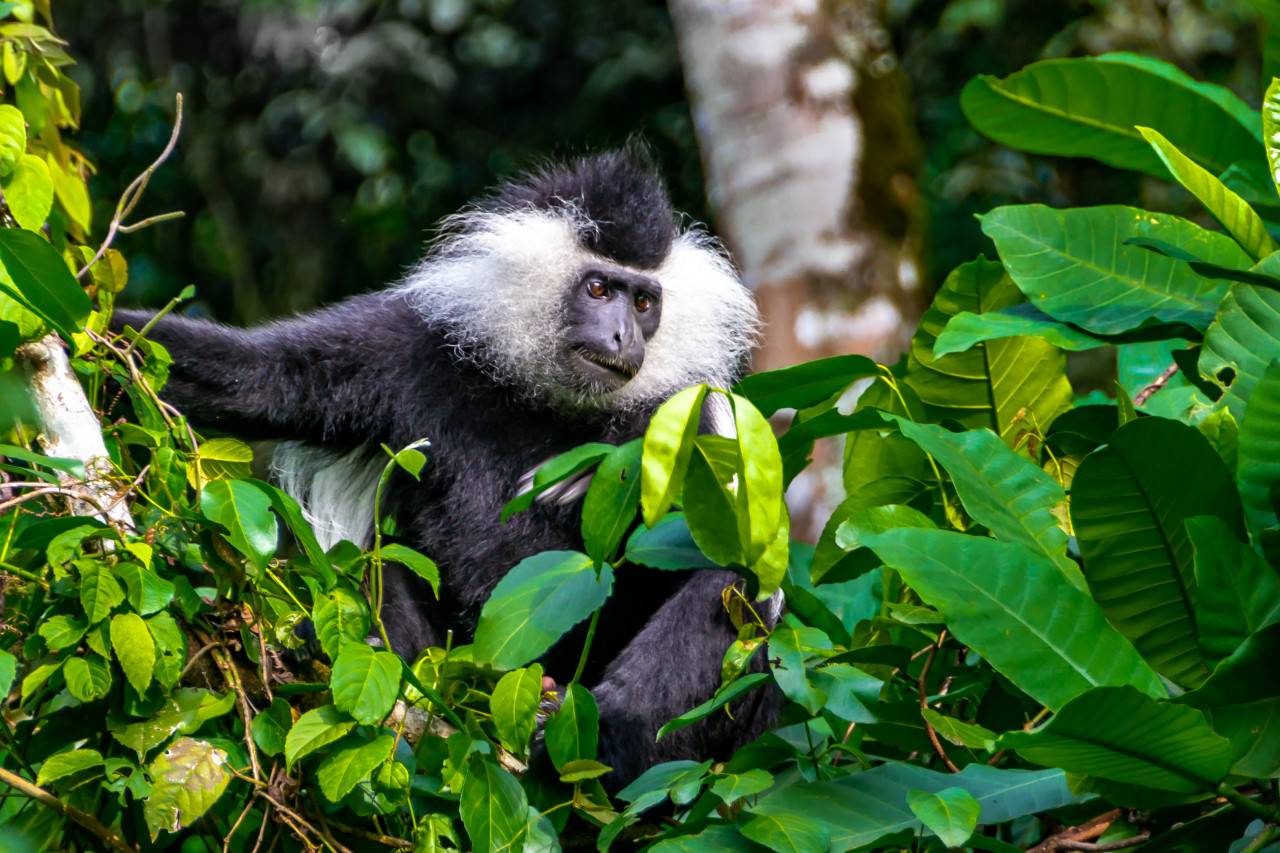
Colobus monkeys are among the primates that contribute to Nyungwe’s exceptional biodiversity.
Nyungwe is arguably one of the most important destinations within Rwanda National Parks for travellers whose primary interest is primates. Chimpanzees are the best-known attraction, but the forest contains a much broader primate community.
A primate-focused visit can combine chimpanzee tracking with colobus observation, general forest walks and canopy experiences. This allows visitors to appreciate the differences between ground-dwelling and arboreal species and the habitats they depend upon.
The forest’s primate diversity also illustrates the importance of continuous forest protection. Many primates depend on mature forest structure and connected habitats for feeding, movement and reproduction.
Nyungwe Compared with Akagera National Park
Akagera and Nyungwe offer two very different wildlife experiences within Rwanda. Akagera is primarily a savannah destination, while Nyungwe is a montane rainforest destination.
Akagera is particularly suited to visitors interested in large mammals, game drives, wetlands and boat experiences. Nyungwe is more appropriate for travellers interested in chimpanzees, forest primates, birds, hiking, rainforest biodiversity and canopy experiences.
This difference is important when planning a Rwanda National Parks itinerary. Travellers do not necessarily need to choose between the two. Combining them can create a much broader wildlife journey by connecting Rwanda’s savannah and rainforest ecosystems.
Nyungwe and Volcanoes National Park
Nyungwe and Volcanoes National Park are both forest destinations, but they should not be treated as identical. Volcanoes is dominated by the dramatic Virunga volcanic landscape and is internationally famous for mountain gorillas and golden monkeys.
Nyungwe, in contrast, is a vast montane rainforest ecosystem where chimpanzees, other primates, birds, botanical diversity and forest trails form the core of the visitor experience.
Travellers interested in Rwanda primates can therefore consider both parks according to the species and landscapes they want to experience. A journey incorporating both can provide a particularly broad introduction to Rwanda’s forest biodiversity.
Nyungwe as Part of a Multi-Park Rwanda Safari
Nyungwe can form the rainforest component of a multi-park Rwanda safari. A carefully planned itinerary can connect Nyungwe with Volcanoes National Park and Akagera National Park, creating a journey across three highly contrasting ecosystems.
The verified Uganda Rwanda Safaris seven-day itinerary covering Nyungwe, Volcanoes and Akagera illustrates this multi-park concept, combining chimpanzee tracking, canopy walks, gorilla trekking and savannah wildlife viewing.
Visitors with more time can build a slower itinerary around Nyungwe rather than treating it as a brief stop between destinations. This is particularly worthwhile for birdwatchers, photographers and travellers interested in forest hiking.
Volcanoes National Park: Rwanda’s Mountain Gorilla and Virunga Volcano Destination
Volcanoes National Park is one of the most important destinations within Rwanda National Parks and is internationally recognised for its mountain gorillas, golden monkeys, montane forests and dramatic volcanic landscapes. Located in northwestern Rwanda, the park forms part of the wider Virunga mountain ecosystem and provides Rwanda’s principal setting for mountain gorilla trekking.
For travellers researching national parks in Rwanda, Volcanoes National Park represents a very different experience from Akagera National Park’s savannahs and Nyungwe National Park’s extensive rainforest. The landscape is dominated by steep volcanic slopes, bamboo forests, montane vegetation and high-altitude environments. Wildlife experiences here are centred particularly on primates and forest biodiversity rather than conventional savannah game drives.
The park is therefore an essential component of any comprehensive Rwanda National Parks guide. Visitors can encounter mountain gorillas and golden monkeys, explore volcanic landscapes, hike through montane forest and learn about the conservation history associated with the Virunga region.
Where Is Volcanoes National Park?
Volcanoes National Park is situated in northwestern Rwanda, near the town of Musanze and close to the country’s borders with Uganda and the Democratic Republic of the Congo. Its position within the Virunga Mountains gives the park its distinctive mountainous character.
The park is relatively accessible from Kigali compared with some of Rwanda’s more remote wildlife destinations. Current information published by Uganda Rwanda Safaris places the road journey from Kigali to Volcanoes National Park at approximately two to three hours, although actual travel time depends on road conditions, traffic, weather and the exact destination within the park area.
The park headquarters are located in the Kinigi area, which serves as the principal starting point for gorilla trekking and other park activities.
Travellers planning a visit can explore this detailed Volcanoes National Park destination guide for additional information about the park, its attractions and activities.
The Virunga Mountains and Volcanoes National Park
The identity of Volcanoes National Park is inseparable from the Virunga Mountains. The park protects the Rwandan portion of this volcanic mountain landscape, where high peaks rise above forests, bamboo zones and cultivated land surrounding the protected area.
Five major volcanoes are associated with the Rwandan section of the Virunga landscape: Mount Karisimbi, Mount Bisoke, Mount Muhabura, Mount Gahinga and Mount Sabyinyo. Their slopes create a dramatic backdrop for wildlife experiences and contribute to the ecological diversity of the park.
Current Uganda Rwanda Safaris information describes Volcanoes National Park as covering approximately 160 square kilometres and extending across five Virunga volcano slopes. The same source identifies the wider Virunga conservation landscape as extending across Rwanda, Uganda and the Democratic Republic of the Congo.
The volcanic geography also influences the experience of visiting the park. Unlike a flat or gently rolling savannah reserve, Volcanoes National Park contains steep terrain, high elevations and forested mountain slopes.
Mountain Gorillas in Volcanoes National Park

Mountain gorillas in the lush forest environment of Volcanoes National Park.
Mountain gorillas are the defining wildlife attraction of Volcanoes National Park. Rwanda’s mountain gorilla trekking takes place exclusively in this park, making it one of the most important destinations for travellers interested in gorilla conservation and responsible wildlife tourism.
The gorillas live within the forested slopes of the Virunga Mountains, where they feed on vegetation and move through different sections of their habitat. Visitors do not simply drive to a fixed viewing point. Instead, gorilla trekking involves entering the forest with trained guides and rangers to locate an assigned habituated gorilla group.
The experience is carefully regulated because the health and welfare of the gorillas must remain the priority. Only habituated groups are available for ordinary tourism encounters, and visitors are required to follow instructions provided by the park authorities and ranger guides.
For visitors specifically researching Rwanda gorilla trekking, the verified Uganda Rwanda Safaris guide provides detailed background on the Volcanoes National Park gorilla experience, including the trekking process and park setting.
Gorilla Trekking in Volcanoes National Park
Gorilla trekking begins with a briefing before visitors enter the forest. The briefing is important because it explains the behaviour expected around mountain gorillas and the rules designed to protect both visitors and wildlife.
After the briefing, trekking groups travel toward the appropriate trailhead and enter the forest with ranger guides. The duration of the trek varies because gorilla families move naturally through their habitat. Some groups may be located relatively close to the starting point, while others can require a considerably longer hike.
Once the assigned gorilla family is located, visitors observe the animals under the conditions established by the park authorities. The encounter is deliberately limited and controlled to reduce stress and minimise the possibility of disease transmission or other disturbance.
Current information from Uganda Rwanda Safaris explains that visitors are allocated to habituated gorilla groups and that the gorilla encounter itself is limited to one hour. Because regulations and operational arrangements can change, visitors should confirm current rules with the Rwanda Development Board or their authorised safari operator before travel.
Mountain Gorilla Conservation

The conservation story of Volcanoes National Park is central to understanding its importance. Mountain gorillas are critically endangered, and the protection of their remaining habitat requires long-term cooperation between conservation authorities, researchers, communities and tourism stakeholders.
Gorilla tourism contributes to this conservation framework by creating an economic reason to protect the forest and by generating revenue associated with regulated wildlife experiences. The system also provides employment and supports services connected with tourism in the surrounding area.
The park’s conservation history is closely connected with scientific research and the work of researchers who studied mountain gorillas in the Virunga Mountains. This history helped bring international attention to the importance of protecting the species and its habitat.
Modern gorilla tourism therefore operates within a broader conservation framework. Visitors are not simply paying for an encounter with wildlife; they are entering a protected environment governed by rules designed to maintain the long-term survival of the gorilla population.
Dian Fossey and the Conservation History of Volcanoes

Dian Fossey is one of the most recognised historical figures associated with mountain gorilla research in the Virunga Mountains. Her research and conservation work helped draw international attention to the threats facing mountain gorillas and the importance of studying their behaviour.
Her former research area, Karisoke Research Center, was established between Mount Karisimbi and Mount Bisoke. The legacy of this research remains an important part of the cultural and conservation story surrounding Volcanoes National Park.
Visitors can undertake a hike associated with the Dian Fossey site, although this is a separate experience from gorilla trekking. It provides an opportunity to learn more about the history of mountain gorilla research and conservation in the Virunga landscape.
Current Uganda Rwanda Safaris information identifies hiking to Dian Fossey’s former camp and grave among the activities associated with Volcanoes National Park.
Golden Monkeys in Volcanoes National Park

A golden monkey among bamboo vegetation in the Volcanoes National Park ecosystem.
Golden monkeys are another important primate attraction within Volcanoes National Park. These distinctive primates are associated with the bamboo forests of the Virunga Mountains and are endemic to the Albertine Rift region.
Golden monkey trekking provides a different wildlife experience from gorilla trekking. The animals are smaller, highly active and often move rapidly through bamboo and forest vegetation. Observing them requires attention and patience rather than simply waiting for a large animal to appear.
Golden monkey tracking is particularly useful for visitors who want to experience another primate species during a Rwanda safari. A traveller can combine a gorilla trek with a separate golden monkey experience and thereby explore different aspects of the park’s primate diversity.
The verified Uganda Rwanda Safaris guide to golden monkey trekking discusses golden monkeys alongside gorilla trekking and other Volcanoes National Park experiences.
Golden Monkey Habitat
Golden monkeys are strongly associated with bamboo and montane forest habitats in the Virunga landscape. Their dependence on particular vegetation types makes habitat protection especially important for their continued survival.
Unlike mountain gorillas, which can use a wider variety of forest vegetation, golden monkeys are particularly associated with bamboo-rich areas. This difference provides an excellent example of how closely wildlife species can be linked to specific components of a mountain ecosystem.
Golden monkey trekking can therefore complement a broader wildlife itinerary by introducing visitors to a primate with different ecological requirements and behaviour from the mountain gorilla.
Other Primates in Volcanoes National Park
Although mountain gorillas and golden monkeys receive most of the attention, Volcanoes National Park supports other primates as well. Forest walks and trekking routes may provide opportunities to encounter species such as black-and-white colobus monkeys, blue monkeys, red-tailed monkeys and other forest wildlife.
Wildlife sightings vary, and no visitor should expect to see every species during one trek. Dense vegetation, changing weather and animal movements all influence what can be observed.
The presence of multiple primate species reinforces the importance of the park’s forest habitat. Protecting the ecosystem benefits not just the most famous species but the broader biological community living within the Virunga landscape.
Birdwatching in Volcanoes National Park
Volcanoes National Park is also relevant to birdwatchers. The combination of montane forest, bamboo zones, volcanic slopes and surrounding habitats creates opportunities to search for forest and high-altitude bird species.
Current information from Uganda Rwanda Safaris identifies more than 180 bird species in the park and notes the presence of Albertine Rift endemics. Because bird records and classifications can be updated, current species lists should be confirmed with a specialist birding guide or current authoritative source before publication of precise totals.
Birdwatching can be incorporated into broader wildlife activities, particularly for visitors who are interested in observing the wider ecosystem rather than focusing exclusively on gorillas.
The Five Volcanoes of the Park
The five volcanoes associated with the Rwandan park landscape give Volcanoes National Park much of its visual identity. Mount Karisimbi is the highest of the five, while Mount Bisoke is known for its crater lake. Mount Muhabura, Mount Gahinga and Mount Sabyinyo complete the group.
Each mountain contributes to the dramatic scenery of the Virunga region. Their slopes also contain different vegetation zones that change with altitude, producing a transition from cultivated and lower-elevation landscapes toward montane forest and higher volcanic environments.
Volcano hiking therefore provides a way to experience the park beyond primate tourism. Visitors interested in mountain landscapes can explore designated hiking routes under the relevant park regulations and guidance.
Mount Karisimbi
Mount Karisimbi is the highest of the Virunga volcanoes associated with Rwanda’s Volcanoes National Park. Its high elevation creates distinctive environmental conditions, with vegetation changing as the mountain rises.
The mountain is also historically associated with the Karisoke Research Center established by Dian Fossey. This gives Karisimbi importance not only as a geological feature but also within the history of mountain gorilla research.
Hiking Mount Karisimbi is a substantially different experience from gorilla trekking. It involves a mountain ascent rather than tracking a moving wildlife group, and visitors should follow current park guidance concerning route conditions and requirements.
Mount Bisoke

Mount Bisoke’s green crater lake is one of the distinctive volcanic features of the Virunga landscape.
Mount Bisoke is another prominent volcano within the Volcanoes National Park landscape. One of its best-known geographical features is its crater lake, which forms an important part of the mountain’s scenery.
Hiking Mount Bisoke allows visitors to experience the volcanic landscape more directly. The trail passes through changing vegetation zones as elevation increases, providing opportunities to appreciate the relationship between altitude, vegetation and climate.
Because mountain conditions can change, hikers should obtain current information about trail conditions and regulations before undertaking the climb.
Mount Muhabura
Mount Muhabura forms part of the eastern section of the Virunga volcanic chain and rises prominently above the surrounding landscape. Its slopes provide dramatic views across Rwanda and the neighbouring Virunga region when weather conditions permit.
The mountain is particularly attractive to visitors interested in hiking and panoramic landscapes. As with other volcano hikes, the experience is physically demanding and requires appropriate preparation and adherence to current park guidance.
Mount Gahinga
Mount Gahinga is one of the smaller Virunga volcanoes but remains an important feature of the landscape. Its name is associated with cultivated land and volcanic terrain, reflecting the relationship between the mountains and surrounding communities.
The mountain’s slopes contain forest and bamboo habitats that form part of the wider ecosystem used by wildlife. Its proximity to other Virunga peaks also demonstrates how closely connected the individual mountains are within the broader landscape.
Mount Sabyinyo
Mount Sabyinyo is one of the most distinctive volcanoes in the Virunga range. Its summit area is associated with the meeting point of Rwanda, Uganda and the Democratic Republic of the Congo.
The mountain’s rugged appearance and steep terrain make it particularly recognisable from surrounding areas. It forms part of the broader landscape that visitors experience while travelling through the Volcanoes National Park region.
Forest Habitats of Volcanoes National Park
The forests of Volcanoes National Park provide the foundation for its primate-rich ecosystem. Bamboo zones, montane forest and higher-elevation vegetation create different habitats used by mountain gorillas, golden monkeys, birds and other organisms.
Habitat variation is particularly important in mountainous ecosystems because vegetation changes with altitude. The result is a series of ecological zones rather than one uniform forest.
For visitors, this means that a trek through Volcanoes National Park can involve noticeable changes in vegetation and landscape. The forest itself is an important part of the wildlife experience, even before a particular animal is encountered.
Volcanoes National Park and the Wider Virunga Conservation Landscape
Volcanoes National Park forms part of a broader transboundary conservation landscape extending across Rwanda, Uganda and the Democratic Republic of the Congo. The Virunga Mountains do not stop at national borders, and wildlife populations move through connected habitats.
This makes international cooperation important for conservation. Protecting mountain gorillas and their habitat requires attention to the wider ecosystem rather than treating each national boundary as an ecological boundary.
The connection between Volcanoes National Park, Uganda’s Mgahinga Gorilla National Park and the Democratic Republic of the Congo’s Virunga National Park illustrates why the Virunga landscape is internationally significant.
Gorilla Trekking Regulations
Gorilla trekking is subject to strict regulations intended to protect the gorillas and visitors. These rules govern how groups approach wildlife, how long encounters last and how visitors behave during the experience.
Visitors should follow the ranger’s instructions at all times and should never attempt to move closer to gorillas independently. The welfare of the animals takes priority over photography or any other visitor objective.
Current Uganda Rwanda Safaris information states that trekking groups are limited in size and that visitors spend a maximum of one hour with a gorilla family. Because official rules can change, travellers should confirm the latest requirements with the Rwanda Development Board before their visit.
Gorilla Trekking Permits
A gorilla trekking permit is required for visitors participating in the regulated gorilla experience in Volcanoes National Park. The permit system controls access to habituated gorilla groups and helps manage the number of people entering the forest.
Permit prices and availability can change, so current prices should not be treated as permanent information. Information found in current third-party search results is not sufficient to establish a guaranteed current price for every traveller category.
Information not found in current search results: a current official 2026 permit price directly verified from the Rwanda Development Board. Visitors should confirm the current price and booking conditions directly with the Rwanda Development Board or an authorised operator before making travel arrangements.
How Difficult Is Gorilla Trekking in Volcanoes National Park?
Gorilla trekking in Volcanoes National Park can range from relatively manageable walks to demanding hikes through steep volcanic terrain. The exact difficulty depends heavily on where the assigned gorilla group is located on the day of the trek.
The park’s altitude, uneven ground, dense vegetation, mud and slopes can make the experience physically demanding. Trekkers should therefore approach the activity as a genuine forest hike rather than assuming that it will resemble an ordinary wildlife-viewing excursion.
Current information from Anthill Safaris describes the terrain as including steep inclines and descents, uneven trails and high-altitude conditions. It also recommends preparation appropriate for hiking in this environment.
Best Time to Visit Volcanoes National Park
Volcanoes National Park can be visited throughout the year, but weather conditions influence the trekking experience. Rain can make forest trails muddy and slippery, while dry conditions can make some routes more comfortable.
Visitors should avoid assuming that a particular month guarantees perfect weather or easy trekking. Mountain weather can change quickly, and conditions at altitude can differ from those in Kigali or other parts of Rwanda.
The best travel period therefore depends on the visitor’s priorities, availability and tolerance for changing mountain conditions. Current weather information should be checked close to the travel date.
Accommodation Around Volcanoes National Park
The main accommodation base for gorilla trekking is the area around Kinigi and Musanze. Staying relatively close to the park headquarters can simplify early-morning preparations for trekking activities.
Accommodation ranges from budget and mid-range properties to high-end lodges. The appropriate choice depends on the traveller’s budget and preferred style of travel.
Anthill Safaris’ current information about Volcanoes National Park lists several accommodation options around the park and notes that the park headquarters at Kinigi are the main starting point for trekking activities.
Getting to Volcanoes National Park from Kigali
Road travel is the principal way to reach Volcanoes National Park from Kigali. The route passes through Rwanda’s hilly countryside before reaching the Musanze area and the volcanic landscape.
Current Uganda Rwanda Safaris information estimates the drive from Kigali Airport to Volcanoes National Park at approximately two to three hours. Actual journey time can vary according to traffic, weather, road conditions and the location of the accommodation.
Because gorilla trekking activities begin early, visitors should normally plan to stay near the park before trekking rather than relying on a same-morning long-distance transfer.
Volcanoes National Park for Wildlife Photography
Volcanoes National Park offers photography opportunities that differ considerably from those in Akagera. Instead of open savannah scenes dominated by large mammals, photographers work in forest, bamboo and mountainous environments.
Mountain gorillas are naturally the most sought-after photographic subjects, but the surrounding volcanic scenery, golden monkeys, birds and forest vegetation provide additional opportunities.
Photography should always remain secondary to wildlife welfare. Visitors should follow ranger instructions and never attempt to move closer to animals simply to improve a photograph.
Combining Gorilla Trekking and Golden Monkey Tracking
A combined primate experience is one of the most effective ways to explore Volcanoes National Park. Gorilla trekking focuses on mountain gorillas, while golden monkey tracking introduces visitors to another important primate of the Virunga ecosystem.
The two experiences are different in character. Mountain gorillas are large terrestrial primates living in forest habitats, while golden monkeys are smaller and highly active animals associated particularly with bamboo-rich areas.
Visitors interested in combining the two should plan sufficient time in the region and confirm permit availability for each activity before finalising their itinerary.
Combining Volcanoes with Nyungwe National Park
Volcanoes National Park and Nyungwe National Park provide complementary forest experiences. Volcanoes is centred on the Virunga mountains, mountain gorillas and golden monkeys, while Nyungwe is a large montane rainforest known for chimpanzees, birds and broader forest biodiversity.
Combining the two parks can therefore produce a particularly rich primate-focused Rwanda safari. Visitors can experience two distinct forest ecosystems and observe different primate communities during the same journey.
Uganda Rwanda Safaris currently publishes a verified Rwanda gorilla and Nyungwe itinerary combining Volcanoes National Park with Nyungwe Forest.
Combining Volcanoes with Akagera National Park
Combining Volcanoes National Park with Akagera National Park creates an especially diverse Rwanda wildlife itinerary. Akagera introduces savannah landscapes, large mammals and wetlands, while Volcanoes introduces mountain forests and primates.
The contrast between the two parks is one of the strongest arguments for a multi-park Rwanda safari. Visitors can experience two radically different environments without leaving Rwanda.
Current information from Anthill Safaris also discusses combined Akagera and Volcanoes gorilla itineraries, highlighting the contrast between Akagera’s savannah wildlife and Volcanoes’ mountain gorilla habitat.
Volcanoes National Park and Responsible Tourism
Responsible tourism is particularly important in Volcanoes National Park because mountain gorillas are vulnerable to human disturbance and disease transmission. Visitors should follow every instruction provided by guides and rangers.
Visitors should not feed wildlife, attempt to touch animals or deliberately alter animal behaviour for photographs. The purpose of regulated gorilla tourism is observation while maintaining the highest possible standards of animal welfare.
Responsible tourism also involves respecting surrounding communities. Tourism contributes to the wider economy around the park, and positive relationships between conservation authorities, local communities and visitors are important for the long-term protection of the Virunga ecosystem.
Why Volcanoes National Park Is Essential to Rwanda National Parks
Volcanoes National Park is one of the defining destinations within Rwanda National Parks because it combines mountain gorilla conservation, golden monkey habitat, montane forests and spectacular volcanic landscapes.
Its importance extends beyond the opportunity to see mountain gorillas. The park forms part of the larger Virunga conservation landscape and protects habitat supporting several primate species, birds and other organisms.
For travellers interested in gorillas, Volcanoes is Rwanda’s central destination. For travellers interested in mountain landscapes, the five volcanoes provide a dramatic setting for hiking and photography. For primate enthusiasts, gorillas and golden monkeys provide two highly distinctive wildlife experiences.
When considered alongside Akagera National Park and Nyungwe National Park, Volcanoes completes another major part of Rwanda’s protected-area story. Akagera represents the savannah and large-mammal ecosystem, Nyungwe represents the extensive rainforest environment, and Volcanoes represents the volcanic montane ecosystem and Rwanda’s globally recognised mountain-gorilla conservation programme.
Gishwati Mukura National Park: Rwanda’s Restored Forests, Primates and Community Conservation
“Dense montane forest canopy in Gishwati Mukura National Park
Gishwati Mukura National Park is Rwanda’s fourth national park and one of the most distinctive protected areas within the Rwanda National Parks system. Unlike Akagera National Park, which is dominated by savannah, wetlands and large mammals, or Volcanoes National Park, which is internationally recognised for mountain gorillas and volcanic landscapes, Gishwati Mukura is centred on two forest blocks and their associated biodiversity.
The national park consists of the larger Gishwati Forest and the smaller Mukura Forest. Together, the two forests form a protected landscape in western Rwanda along the Albertine Rift. Current Visit Rwanda information gives the combined forest area as 34 square kilometres, excluding the buffer zone, and identifies chimpanzees, golden monkeys, L’Hoest’s monkeys, blue monkeys, birds and smaller wildlife among the park’s biodiversity. ([visitrwanda.com](https://visitrwanda.com/destinations/gishwati-mukura-national-park-2/))
For travellers exploring Rwanda birding destinations, Gishwati Mukura provides a forest environment that complements the country’s better-known wildlife parks. Its importance, however, extends well beyond tourism. The park represents an ongoing conservation and restoration effort designed to protect forests, improve environmental conditions and support communities living around the protected area.
Where Is Gishwati Mukura National Park?

The forested hills of the Gishwati-Mukura landscape in western Rwanda.
Gishwati Mukura National Park is located in western Rwanda, in the mountainous landscape above the Lake Kivu region. The forests lie along the Albertine Rift and on a ridge associated with the Congo and Nile water catchment areas.
This geographical position is important because the Albertine Rift is recognised for exceptional biodiversity and the presence of species with restricted ranges. Gishwati Mukura therefore contributes to the conservation of a wider ecological region rather than functioning as an isolated forest.
The park’s location also makes it possible to combine forest experiences with travel around the Lake Kivu region. Visit Rwanda identifies Gishwati Mukura as a destination offering wildlife and community-based activities, while its information about nearby Rubavu highlights access to Gishwati Mukura alongside Lake Kivu tourism.
Why Gishwati Mukura Is a National Park

Gishwati Mukura is especially important because its national-park status is closely connected to environmental restoration. The forests had experienced substantial pressure from human activities, including settlement, livestock farming and illegal mining.
According to current Visit Rwanda information, formalisation of national-park status in 2015 was intended to help reverse environmental degradation by increasing tree cover, improving soil fertility, stabilising slopes and regulating stream flow. The conservation programme also aims to improve livelihoods in surrounding communities.
This makes Gishwati Mukura particularly valuable as a case study in modern conservation. The objective is not simply to protect remaining forest but also to rehabilitate degraded areas and create conditions in which forests and surrounding communities can coexist more sustainably.
Travellers interested in Rwanda national parks should therefore understand Gishwati Mukura as both a wildlife destination and a restoration landscape.
The Two Forests of Gishwati Mukura
The name Gishwati Mukura reflects the two separate forest blocks that make up the national park. Gishwati is the larger forest, while Mukura is considerably smaller.
The distinction between the two forests is important because they have different ecological characteristics and wildlife records. Visit Rwanda reports 232 bird species recorded at Gishwati and 163 at Mukura, including Albertine Rift endemic species and forest specialists.
The two forests nevertheless form part of the same national-park conservation story. Protecting both helps preserve forest habitat within a region that has experienced considerable pressure from human land use.
Gishwati Forest

Gishwati Forest is the larger of the two forest blocks and contains much of the wildlife and tourism activity associated with Gishwati Mukura National Park.
The forest supports chimpanzees, golden monkeys, blue monkeys and L’Hoest’s monkeys, together with a diverse bird community. Its vegetation includes indigenous hardwoods and bamboo, creating different habitat layers for primates, birds and smaller forest organisms.
Gishwati’s ecological significance is also linked to its location within the Albertine Rift. Protecting this forest contributes to the wider effort to maintain habitats for species that are strongly associated with the region.
Mukura Forest
Mukura Forest is the smaller of the two forest blocks. Although it receives less tourism attention than Gishwati, it remains an important component of the national park.
The forest contributes to the protection of montane forest habitat and supports a significant bird community. Visit Rwanda records 163 bird species in Mukura, including Albertine Rift species and forest specialists.
Its inclusion within the national park demonstrates an important conservation principle: smaller forest blocks can remain highly valuable when they protect habitat within a biodiversity-rich landscape.
Chimpanzees in Gishwati Mukura National Park
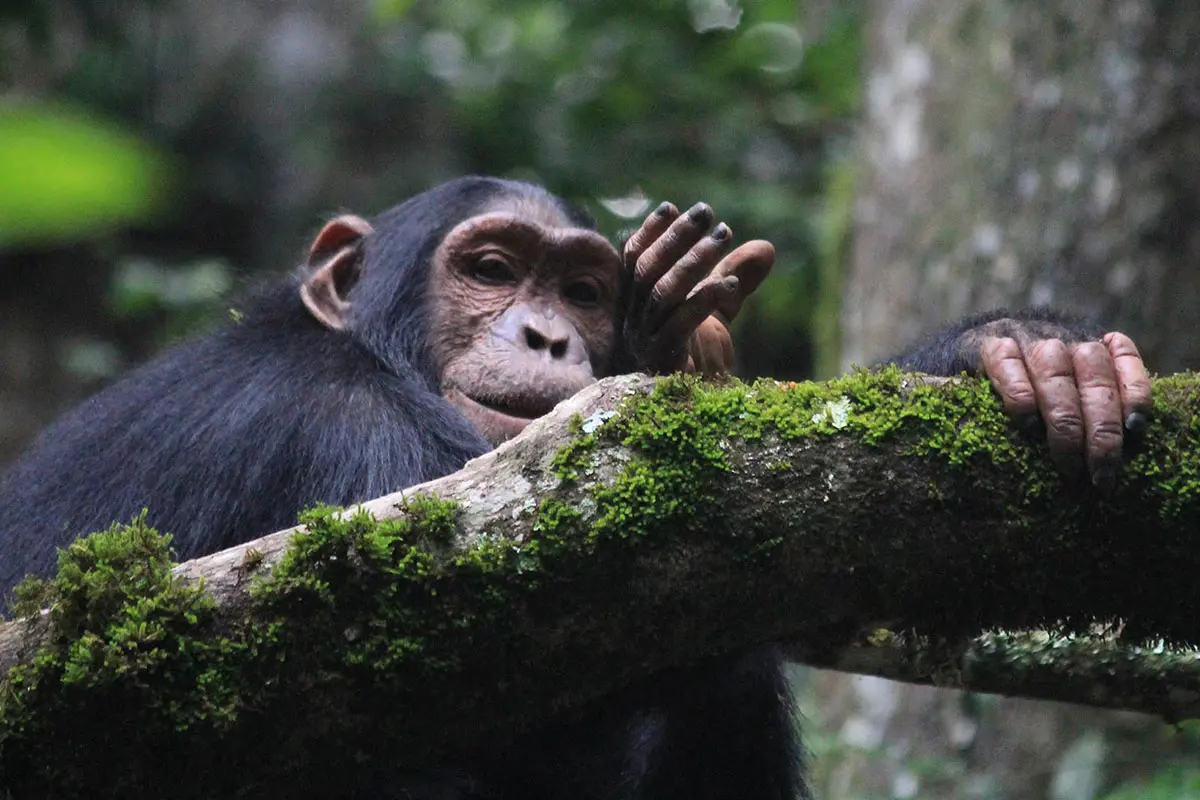
A chimpanzee photographed in the forest environment of Gishwati Mukura.
Chimpanzees are among the most important wildlife species associated with Gishwati Forest. Their presence gives the park significance for travellers interested in primates and great-ape conservation.
Current Visit Rwanda information reports a group of approximately 20 chimpanzees living in Gishwati. However, chimpanzee numbers can change as populations are monitored and updated, so precise population figures should always be attributed to the relevant current source rather than presented as permanent totals.
Chimpanzees require forest habitat containing sufficient food, shelter and connected areas through which they can move. Protecting Gishwati therefore contributes to the conservation of one of humanity’s closest living relatives while also protecting the broader forest ecosystem.
Anthill Safaris’ current Gishwati Mukura information also identifies chimpanzee tracking as the principal wildlife attraction in Gishwati Forest and describes the forest as supporting a chimpanzee population.
Chimpanzee Tracking in Gishwati Mukura
Chimpanzee tracking in Gishwati differs from the more established chimpanzee experience in Nyungwe. Current Anthill Safaris information notes that the chimpanzees in Gishwati are not habituated to humans in the same way as the chimpanzees tracked in Nyungwe and Cyamudongo.
This distinction is important for visitors because it affects expectations. Tracking a less habituated population can be more challenging, and sightings cannot be approached with the same expectations as a closely monitored tourist habituation programme.
The experience is therefore better suited to travellers who appreciate wildlife tracking and the uncertainty inherent in observing wild primates.
For broader information about Gishwati wildlife and bird habitats, the verified Uganda Rwanda Safaris birding guide includes Gishwati Mukura among Rwanda’s important birding destinations.
Golden Monkeys in Gishwati Mukura

A golden monkey in the forest canopy of Gishwati Mukura National Park.
Golden monkeys are among the primates associated with Gishwati Mukura National Park. Their presence adds to the park’s value for visitors interested in Rwanda’s primate diversity.
Golden monkeys are particularly associated with forest and bamboo habitats in the Albertine Rift region. Their conservation is therefore connected to maintaining appropriate forest vegetation and protecting the broader ecosystem.
Visit Rwanda identifies golden monkeys alongside chimpanzees, blue monkeys and L’Hoest’s monkeys among the wildlife found in Gishwati Mukura.
Blue Monkeys and L’Hoest’s Monkeys
Blue monkeys and L’Hoest’s monkeys contribute further to the primate diversity of Gishwati Mukura. Their presence demonstrates that the forest supports a community of primates rather than a single flagship species.
Blue monkeys can occupy forest habitats where they feed on fruits, leaves and other available food resources. L’Hoest’s monkeys are associated with forest environments and are another important component of the Albertine Rift primate community.
Observing these species requires patience because forest primates can move through dense vegetation and may remain partly concealed. Visitors should follow their guides and avoid disturbing animals during encounters.
Birdwatching in Gishwati Mukura National Park

A Great Blue Turaco in the forest habitat of Gishwati Mukura.
Birdwatching is one of the strongest reasons to visit Gishwati Mukura. The two forest blocks contain significant bird diversity, including Albertine Rift endemics and forest specialists.
Visit Rwanda currently records 232 bird species at Gishwati and 163 at Mukura. These figures demonstrate why the park is relevant to specialist birdwatchers even though it is much less internationally famous than Volcanoes National Park or Nyungwe.
The forest environment provides habitat for species associated with montane vegetation, bamboo and mature forest. Birding can therefore be combined with primate tracking and nature walks to create a broader forest experience.
The verified Uganda Rwanda Safaris birding guide identifies species associated with Gishwati Mukura including Rwenzori Batis, Rwenzori Turaco, Red-throated Alethe, Regal Sunbird, Strange Weaver, Stripe-breasted Tit and Grey Crowned Crane.
Albertine Rift Birds
Gishwati Mukura’s location within the Albertine Rift is particularly important for birdwatchers searching for regional specialities. The Albertine Rift contains numerous species with restricted distributions, making its protected forests valuable for bird conservation.
Current Visit Rwanda information specifically notes that both Gishwati and Mukura contain Albertine Rift endemic species and forest specialists.
Birdwatchers should nevertheless distinguish between species recorded in the broader region and species that are guaranteed to occur in a particular section of the park. Bird sightings depend on habitat, season, weather, guide knowledge and animal movements.
Forest Vegetation and Plant Diversity

Indigenous trees and dense montane vegetation form the foundation of Gishwati Mukura’s ecosystem.
Gishwati Mukura contains a mixture of indigenous hardwoods and bamboo. Visit Rwanda currently identifies approximately 60 tree species in the forests.
Forest vegetation forms the physical foundation of the park’s biodiversity. Trees provide food, nesting sites, shelter and movement routes for wildlife, while bamboo contributes important habitat for particular primates and other forest organisms.
Protecting plant diversity is therefore essential to protecting the animals associated with Gishwati Mukura. A forest cannot be conserved effectively by focusing only on its most visible wildlife species.
Gishwati Mukura and Forest Restoration
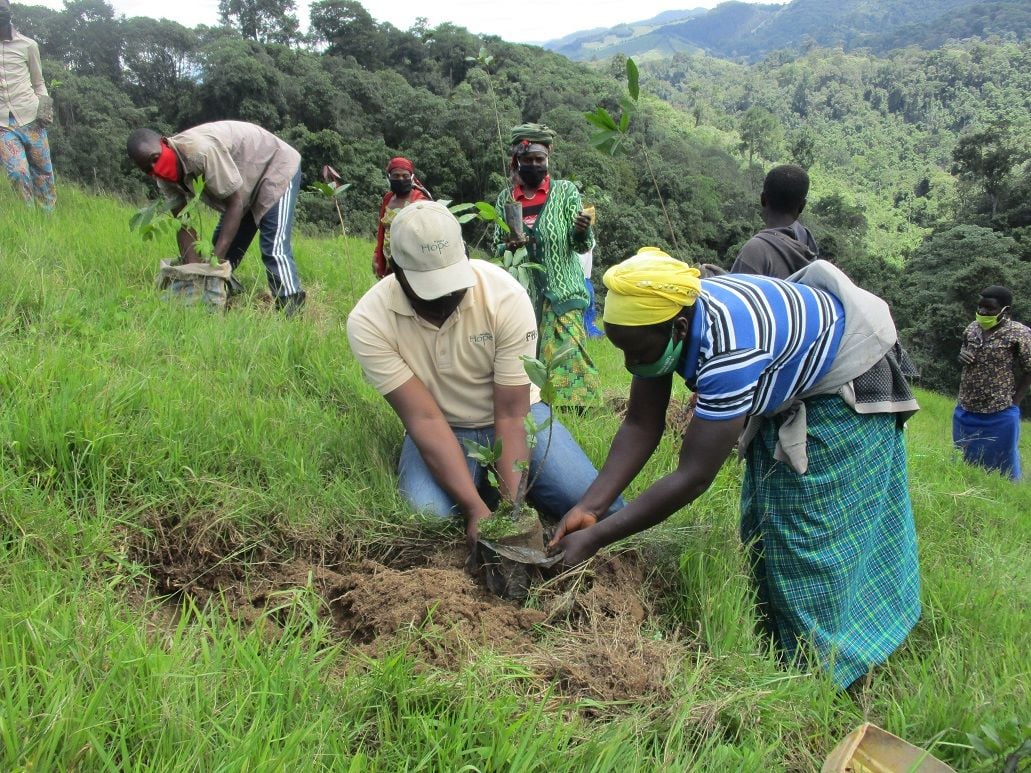
Tree planting is part of the wider forest restoration effort around Gishwati Mukura.
Forest restoration is one of the defining themes of Gishwati Mukura National Park. The area experienced substantial degradation before stronger conservation measures were introduced.
Current Visit Rwanda information identifies resettlement, illegal mining and livestock farming among the pressures that contributed to the depletion of the forest. The national-park framework was subsequently designed to improve forest conditions, increase tree cover, stabilise slopes and regulate stream flow.
This restoration work makes the park particularly relevant to discussions about conservation in Rwanda. It demonstrates that protected-area management can involve both preservation of existing habitat and rehabilitation of degraded landscapes.
Soil Conservation and Slope Stabilisation
The forests of Gishwati Mukura occupy mountainous terrain where vegetation plays an important role in stabilising slopes. Tree roots help hold soil, while forest vegetation can reduce the effects of heavy rainfall and surface erosion.
Maintaining forest cover therefore has benefits beyond wildlife. It contributes to the stability of the surrounding landscape and helps protect water systems.
Visit Rwanda specifically identifies improving soil fertility, stabilising slopes and regulating stream flow among the objectives associated with restoration of Gishwati Mukura.
Gishwati Mukura and Water Catchments
The location of Gishwati Mukura on the ridge separating the Congo and Nile catchment areas gives the forests additional ecological importance.
Forests within catchment areas help regulate water movement through the landscape. Maintaining vegetation can influence infiltration, runoff and stream flow, while reducing the loss of soil into waterways.
This means that protecting Gishwati Mukura benefits more than wildlife. The forest forms part of an environmental system connected to surrounding communities and water resources.
Community Conservation Around Gishwati Mukura

Community members and conservation personnel participating in activities within the Gishwati landscape.
Community participation is central to the conservation model around Gishwati Mukura. The long-term protection of a forest is difficult when surrounding communities do not benefit from or participate in conservation.
Visit Rwanda describes community-based activities associated with the park, including farm stays, cultural performances, handicraft activities, beekeeping, tea plantation visits and opportunities to learn about traditional plant knowledge.
These experiences create a connection between tourism and local livelihoods. They also provide visitors with an opportunity to understand the human landscape surrounding the national park rather than experiencing the forest in isolation.
Tea Tourism Around Gishwati Mukura
Tea is an important part of the landscape surrounding Gishwati Mukura. Tea plantations provide an agricultural contrast to the protected forest and form part of the wider economic environment around the park.
A tea plantation visit can complement wildlife activities by showing visitors how agriculture and conservation coexist within the broader landscape.
Visit Rwanda’s current Gishwati Mukura information specifically identifies a tea plantation tour as one of the community-based activities associated with the destination.
Cultural Experiences Around Gishwati Mukura
Akagera National Park: Rwanda’s Savannah Wildlife and Big Five Safari Destination

Akagera National Park is one of the most important destinations within Rwanda National Parks and provides the country’s principal savannah wildlife experience. Located in eastern Rwanda along the Tanzanian border, Akagera combines open grasslands, woodland, wetlands, lakes and rolling hills to create one of the most diverse wildlife landscapes in the country. Current published information from Uganda Rwanda Safaris describes Akagera as Rwanda’s main destination for conventional game viewing, while recent conservation-focused sources highlight its recovery and the return of species that had previously disappeared from the park.
For travellers researching Rwanda National Parks, Akagera is especially important because it provides a completely different experience from Volcanoes National Park and Nyungwe National Park. Instead of concentrating primarily on mountain forests and primates, visitors can explore savannah plains, wetlands and lakes while searching for elephants, lions, leopards, buffaloes, rhinoceroses, giraffes, zebras, antelopes, hippos and numerous bird species.
The park is also a major conservation success story. Recent information from Anthill Safaris describes Akagera as Rwanda’s only savannah park and notes its transformation from a heavily degraded ecosystem into a protected area supporting all five of Africa’s traditionally recognised Big Five species.
Where Is Akagera National Park?
Akagera National Park is situated in eastern Rwanda along the country’s border with Tanzania. Its location gives the park a landscape that differs markedly from the mountainous terrain found in northern and western Rwanda.
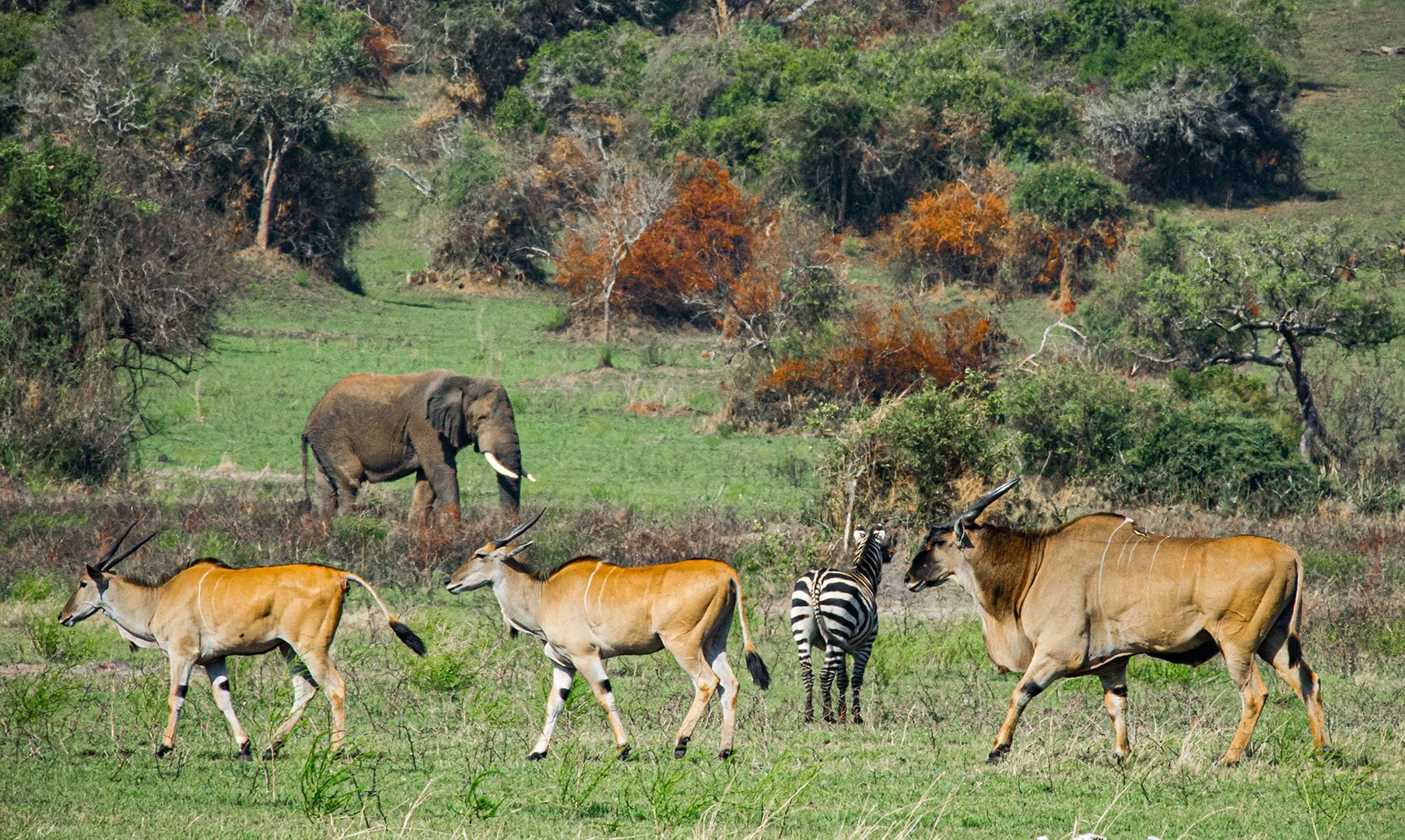
The park extends across a large area of savannah, woodland, wetlands and lakes. The River Kagera and numerous lakes form important components of the ecosystem, while the rolling terrain provides varied habitats for wildlife.
Current Uganda Rwanda Safaris information places Akagera approximately a few hours’ drive from Kigali, depending on the route, traffic and exact destination within the park. The same source notes that the final road approaching the park can be dusty and that roads inside the park can require suitable vehicles, particularly during wet conditions.
Travellers planning a broader Akagera National Park safari can use the verified destination guide for additional information about the park’s wildlife, landscapes and activities.
Why Akagera National Park Is Important to Rwanda National Parks
Akagera occupies a unique position within Rwanda National Parks because it is the country’s principal savannah wildlife destination. The park allows visitors to experience classic East African safari environments while remaining within Rwanda.
Its importance is not limited to tourism. Akagera protects a complex system of wetlands, lakes, grasslands and woodlands that supports mammals, birds, reptiles, fish and numerous smaller organisms.
The park also demonstrates how sustained conservation management can restore wildlife populations after periods of severe ecological pressure. Species that had disappeared from Akagera have been reintroduced, while strengthened protection has helped create conditions for wildlife populations to recover.
Akagera National Park and the Big Five
Akagera is particularly significant for travellers searching for a Big Five safari in Rwanda. The five traditionally recognised Big Five are African lion, African leopard, African elephant, Cape buffalo and rhinoceros.
Recent Anthill Safaris information confirms that all five are now represented in Akagera, making the park the principal destination in Rwanda for visitors specifically interested in this classic safari category.
The presence of these species does not mean that every visitor will see all five during one game drive. Wildlife sightings remain unpredictable because animals move naturally through a large protected ecosystem. A successful safari depends on factors including habitat, weather, time of day, animal movements and the knowledge of the guide.
The verified Big Five in Rwanda resource provides additional information about Akagera’s Big Five conservation story.
African Lions in Akagera National Park
African lions are among the most important predators in Akagera National Park. Their presence represents one of the park’s major conservation achievements because lions had disappeared from the park before being reintroduced.
Uganda Rwanda Safaris reports that seven lions were translocated into Akagera in 2015 and that the population subsequently increased. The return of lions restored an important predator to the savannah ecosystem and strengthened Akagera’s position as a genuine wildlife safari destination.
Lions can occur in open grasslands and woodland areas where suitable prey is available. Early morning and late afternoon game drives can provide useful opportunities for searching for predators, although sightings can never be guaranteed.
African Elephants in Akagera
African elephants are another major attraction in Akagera. They use a variety of habitats, including woodland, open savannah and areas around lakes and wetlands.
Elephants are particularly impressive to observe because of their size and social behaviour. Herds may move between feeding areas and water sources, making the park’s lakes and surrounding vegetation important components of their habitat.
Current Uganda Rwanda Safaris information identifies elephants among the major animals found in Akagera and notes opportunities to see them around lakes such as Lake Ihema and Lake Shakani.
Cape Buffalo in Akagera
Cape buffalo are one of the most numerous large herbivores associated with Akagera’s savannah ecosystem. They commonly occur in herds and use open grasslands, woodland and wetland environments.
Their importance extends beyond their status as one of the Big Five. Buffalo are large grazing animals that form part of the food web supporting large predators such as lions.
Uganda Rwanda Safaris cites a 2021 census figure of approximately 4,000 buffalo in Akagera. Population figures should always be associated with their survey date because wildlife populations naturally change over time.
Leopards in Akagera National Park
Leopards are among the more elusive predators of Akagera. Their secretive behaviour and preference for areas offering cover can make them more difficult to find than elephants, buffaloes or giraffes.
Leopards are generally more active during cooler periods and at night, making specialised night drives useful for visitors hoping to encounter nocturnal and crepuscular wildlife.
Uganda Rwanda Safaris reports leopard records within Akagera and notes that night game drives can improve opportunities for observing these elusive predators.
Rhinoceroses in Akagera National Park
Rhinoceroses are an important part of Akagera’s wildlife restoration story. Both black and white rhinoceroses are represented in the park, giving visitors an opportunity to encounter another major African conservation species.
Uganda Rwanda Safaris reports the translocation of black rhinoceroses into Akagera in 2017 and white rhinoceroses in 2021. These reintroductions were part of efforts to restore species and strengthen the park’s wildlife population.
Because rhinoceroses are closely monitored, sightings can sometimes be associated with specialised tracking activities rather than relying solely on ordinary game drives.
Giraffes, Zebras and Antelopes

Akagera’s large herbivore community extends well beyond the Big Five. Giraffes, zebras, topi, impala, waterbuck, eland, roan antelope, reedbuck and other antelope species contribute to the diversity of the savannah landscape.
These herbivores are important because they form the prey base and grazing community that supports the wider ecosystem. Their different feeding strategies also allow multiple species to share the same general landscape.
Open grasslands and woodland edges can be particularly productive areas for wildlife viewing because they provide feeding opportunities and visibility for both herbivores and predators.
Hippos and Crocodiles in Akagera

Hippopotamuses in the waters of Lake Ihema.
The lakes and wetlands of Akagera support an important aquatic wildlife community. Hippopotamuses are particularly associated with the park’s lakes, where they spend much of the day in water and emerge to feed on land.
Nile crocodiles are also found in the park’s waterways. A boat cruise provides a different perspective from a game drive and can bring visitors close to aquatic habitats where hippos, crocodiles, waterbirds and other wildlife may be observed.
Current Uganda Rwanda Safaris information identifies Lake Ihema as an important location for observing hippos and Nile crocodiles during boat safaris.
Lake Ihema and Boat Safaris

“Boat safari on Lake Ihema
Lake Ihema is one of the defining features of Akagera National Park. Its open water, surrounding wetlands and shoreline vegetation create habitat for aquatic wildlife and birds.
A boat safari on Lake Ihema provides a fundamentally different experience from a conventional game drive. Instead of travelling across savannah tracks, visitors observe wildlife from the water and can focus on animals using the lake and its shoreline.
Boat excursions can produce sightings of hippos, crocodiles, elephants near the shoreline and numerous waterbirds. The experience is particularly valuable for photographers and birdwatchers who want to explore Akagera from another perspective.
The verified Akagera lakes guide provides additional information about Lake Ihema and other water bodies within the park.
Akagera’s Wetlands
Wetlands are one of the features that distinguish Akagera from many other safari destinations. They include lakes, marshes, papyrus areas and associated waterways that support aquatic species and specialised birds.
Wetlands also provide important ecological functions by storing water, supporting plant communities and creating feeding and breeding habitats for wildlife.
The combination of wetlands and savannah makes Akagera particularly valuable for visitors who want to experience more than one ecosystem during a single national-park visit.
Birdwatching in Akagera National Park
Birdwatching is one of the strongest complementary activities in Akagera. The combination of wetlands, savannah, woodland and lakes supports a substantial bird community.
Uganda Rwanda Safaris’ current birding information identifies 310 bird species in Akagera and highlights Lake Ihema, its islands, marshes and wetlands as important birding locations.
The same source highlights species including Red-faced Barbet, Papyrus Gonolek, Ring-necked Francolin, Carruthers’s Cisticola, Grey Crowned Crane, Northern Brown-throated Weaver and White-winged Swamp Warbler.
Bird numbers and species lists can vary according to survey methods and updates, so individual species records should be confirmed against current specialist sources when precise bird inventories are required.
The Shoebill and Akagera’s Wetland Birds
The Shoebill is one of the most sought-after birds in Rwanda and can be associated with wetland habitats in and around Akagera. Its unusual appearance and specialised wetland ecology make it a major target for serious birdwatchers.
Akagera’s wetlands also support fish eagles, herons, egrets, cormorants, kingfishers, storks and other water-associated species.
Boat excursions can be particularly useful for birdwatching because they provide access to lake margins and wetland areas that may be difficult to explore from ordinary safari vehicles.
Game Drives in Akagera National Park
Game drives are the central activity for visitors seeking terrestrial wildlife in Akagera. Drives can explore different habitats depending on the route, season and wildlife movements.
Morning drives are useful for searching for animals that are active during cooler hours, while afternoon and evening drives can provide different wildlife-viewing conditions. The exact route taken should depend on current wildlife information and park guidance rather than following a fixed expectation.
Uganda Rwanda Safaris’ published Akagera information describes morning, afternoon and night game drives as available experiences and emphasises the importance of appropriate vehicles and guides for navigating the park.
Night Game Drives in Akagera
Night game drives provide a different perspective on Akagera’s ecosystem. Some animals that are difficult to observe during daylight hours become active after sunset.
Nocturnal or largely nocturnal species can include bushbabies, genets, some mongoose species, owls and nightjars. Predators such as leopards and hyenas may also be encountered during nighttime wildlife viewing.
Night drives should always be undertaken under authorised park arrangements and with experienced guides because wildlife behaviour and visibility differ significantly after dark.
Sport Fishing in Akagera
Sport fishing is another activity associated with Akagera’s lakes. Lake Shakani is particularly noted for fishing opportunities, with fish species including tilapia and catfish.
Fishing provides a quieter alternative to conventional game drives and allows visitors to experience another aspect of the park’s aquatic ecosystem.
Current Uganda Rwanda Safaris information identifies Lake Shakani as a location for sport fishing and notes that fishing activities require the appropriate clearance or permit. Because fees and regulations can change, visitors should confirm current conditions before travel.
Akagera’s Conservation Transformation
Akagera’s modern conservation story is central to its importance. The park experienced severe ecological pressure following the 1994 genocide and the associated displacement and resettlement crisis. Poaching, tree cutting, settlement and other pressures affected wildlife and habitat.
Conservation management subsequently changed substantially. Uganda Rwanda Safaris reports that a joint management arrangement involving the Rwanda government and African Parks began in 2010, followed by stronger conservation measures, improved security and wildlife reintroduction programmes.
Recent Anthill Safaris information likewise presents Akagera as a major conservation success story, emphasising the recovery of wildlife and the restoration of the park’s ecological value.
The Return of Lions and Rhinos
The reintroduction of lions and rhinoceroses is particularly important because these species had disappeared from Akagera before conservation interventions restored them.
Lions returned through a 2015 translocation programme, while black and white rhinoceroses were subsequently introduced through additional conservation programmes. These efforts restored major predators and large herbivores to the park and helped re-establish a more complete savannah ecosystem.
The return of these animals has also strengthened Akagera’s tourism appeal, creating opportunities for visitors to experience a broader range of African wildlife within Rwanda.
Akagera National Park for Wildlife Photography
Akagera offers excellent opportunities for wildlife photography because of its mixture of open savannah, woodland, wetlands and lakes.
Large mammals can sometimes be photographed against open landscapes, while boat excursions provide opportunities for aquatic wildlife and birds. Sunrise and sunset can also produce changing light across the hills and plains.
Wildlife photography should always be conducted without disturbing animals. Visitors should remain inside authorised vehicles or follow guide instructions during boat and walking activities.
Akagera National Park for Families and First-Time Safari Visitors
Akagera can be particularly attractive to visitors experiencing a traditional African safari for the first time because it combines a relatively compact national-park experience with diverse wildlife habitats.
The park also provides an opportunity to see large mammals without requiring a traveller to cross several international borders. This makes it a useful addition to a Rwanda itinerary focused on combining wildlife viewing with other experiences such as gorilla trekking or forest exploration.
Current Uganda Rwanda Safaris information describes Akagera as accessible from Kigali and suitable for both shorter and multi-day safari experiences.
Combining Akagera with Volcanoes National Park
Combining Akagera National Park with Volcanoes National Park creates one of the strongest contrasts available within Rwanda National Parks.
Akagera provides savannah game drives, wetlands and Big Five wildlife, while Volcanoes provides mountain gorilla trekking, golden monkey tracking and volcanic mountain landscapes.
A multi-park itinerary can therefore combine two very different wildlife experiences without requiring a traveller to leave Rwanda.
The verified Rwanda gorilla wildlife safari itinerary demonstrates how Akagera, Volcanoes and Nyungwe can be combined within one Rwanda journey.
Combining Akagera with Nyungwe National Park
Akagera and Nyungwe provide another strong ecological contrast. Akagera is characterised by savannah and wetlands, while Nyungwe is a major montane rainforest ecosystem.
A combined itinerary allows travellers to experience large mammals, aquatic wildlife and savannah birds in Akagera before exploring chimpanzees, forest primates, birds and canopy habitats in Nyungwe.
Uganda Rwanda Safaris currently publishes a Rwanda itinerary combining Akagera and Nyungwe, with game drives and Lake Ihema activities followed by forest experiences.
Combining Akagera with Lake Kivu
Akagera can also be combined with Lake Kivu for travellers who want to include wildlife and lakeside relaxation in the same Rwanda itinerary.
The contrast is particularly appealing because Akagera provides active wildlife viewing while Lake Kivu provides water-based recreation, scenery and opportunities to explore Rwanda’s western landscapes.
Anthill Safaris currently publishes a verified itinerary combining Akagera National Park and Lake Kivu, including game drives, a Lake Ihema boat ride and lakeside activities around Kibuye.
Where to Stay Around Akagera National Park
Accommodation around Akagera ranges from safari lodges and tented camps to other lodging options outside the immediate park area. Choosing accommodation should depend on the planned activities, budget and preferred location.
Staying close to the park can be useful for visitors planning early game drives because wildlife activity is often best during cooler parts of the day.
Current Anthill Safaris information provides a dedicated guide to accommodation around Akagera and identifies a range of lodging options for visitors planning Rwanda wildlife safaris.
Best Time for an Akagera Safari
Akagera can be visited throughout the year, but seasonal conditions influence wildlife viewing and road conditions.
During drier periods, vegetation can become thinner and animals may be easier to locate around remaining water sources. This can improve visibility during game drives.
Rainier periods can produce greener scenery and can change road conditions. Visitors should therefore consider both wildlife-viewing priorities and road accessibility when selecting travel dates.
How to Reach Akagera National Park from Kigali
Road travel from Kigali is the most common way of reaching Akagera National Park. Current Uganda Rwanda Safaris information states that the journey can take up to approximately three hours, depending on the starting point and conditions.
The route approaches the park through eastern Rwanda before reaching the park entrance. Visitors continuing into the interior should be prepared for unpaved and sometimes rougher roads, particularly under wet conditions.
Because travel times can vary, visitors should confirm current road conditions and park access arrangements before departure rather than relying on a fixed journey time.
Responsible Tourism in Akagera National Park
Responsible tourism is essential to maintaining Akagera’s conservation gains. Visitors should remain on authorised routes, avoid feeding wildlife, follow guide instructions and never attempt to approach animals independently.
Wild animals should be observed without interference, and visitors should maintain appropriate distances as instructed by park authorities or professional guides.
Supporting authorised tourism activities also contributes to the economic value of conservation and helps maintain the relationship between the protected area, surrounding communities and the wider Rwandan tourism industry.
Why Akagera National Park Belongs on a Rwanda National Parks Itinerary
Akagera National Park is indispensable to a complete Rwanda National Parks guide because it represents the country’s principal savannah ecosystem and its most important destination for traditional game viewing.
The park’s combination of lions, leopards, elephants, buffaloes and rhinoceroses gives Rwanda a genuine Big Five safari destination, while giraffes, zebras, antelopes, hippos, crocodiles and numerous bird species add substantial ecological diversity.
Its lakes and wetlands provide another dimension through boat safaris and birdwatching, while conservation programmes have transformed the park into one of Rwanda’s most significant wildlife recovery stories.
When combined with Volcanoes National Park, Nyungwe National Park and Gishwati Mukura National Park, Akagera demonstrates the extraordinary range of environments protected within Rwanda National Parks. From eastern savannahs and wetlands to western forests and northern volcanic mountains, Rwanda offers a remarkably varied protected-area system within a relatively compact country.
Nyungwe National Park: Rwanda’s Ancient Rainforest, Chimpanzees, Primates and Exceptional Birdlife

Nyungwe National Park’s extensive montane rainforest in southwestern Rwanda.
Nyungwe National Park is one of the most important destinations within Rwanda National Parks and is the country’s principal rainforest destination. Located in southwestern Rwanda near the border with Burundi, Nyungwe protects an extensive montane forest ecosystem renowned for primates, chimpanzees, birds, hiking trails, waterfalls and the Nyungwe canopy walkway. Current Uganda Rwanda Safaris information describes Nyungwe as the largest and oldest montane forest in Africa and records more than 300 bird species within the forest.
For travellers researching Rwanda National Parks, Nyungwe provides an experience fundamentally different from Akagera National Park and Volcanoes National Park. Akagera is primarily a savannah and wetland safari destination, while Volcanoes is internationally recognised for mountain gorilla trekking. Nyungwe is centred on ancient montane rainforest, chimpanzee tracking, forest primates, Albertine Rift birds, hiking and canopy exploration.
The park is particularly important for visitors searching for a Rwanda chimpanzee trekking experience. Current Uganda Rwanda Safaris information identifies two habituated chimpanzee communities used for trekking, one in the main Nyungwe Forest and another in the Cyamudongo forest area.
Where Is Nyungwe National Park?
Nyungwe National Park is located in southwestern Rwanda within the mountainous Albertine Rift region. Its position gives the park a distinctive combination of high-elevation rainforest, steep terrain, streams, wetlands and forested valleys.
The forest extends toward Rwanda’s southern and western borders, creating an important ecological connection within the Albertine Rift. Its location also places Nyungwe within a wider landscape containing tea plantations, rural communities and other natural areas.
For travellers planning a Nyungwe Forest safari, the park can be incorporated into longer Rwanda itineraries that also include Kigali, Volcanoes National Park, Akagera National Park and other destinations.
Why Nyungwe National Park Is Important
Nyungwe is important because it protects one of Rwanda’s most biologically diverse forest ecosystems. The forest provides habitat for chimpanzees, colobus monkeys, L’Hoest’s monkeys, blue monkeys, mangabeys and numerous other mammals and birds.
The park’s biodiversity is closely connected to its elevation, vegetation and location within the Albertine Rift. Different elevations and forest habitats create opportunities for many specialised species.
Current Uganda Rwanda Safaris information reports more than 300 bird species in Nyungwe and highlights numerous Albertine Rift birds, including Albertine owlet, Blue-headed Sunbird, Grauer’s Swamp Warbler, Handsome Francolin, Regal Sunbird and Rwenzori Turaco.
Nyungwe National Park and the Albertine Rift
Nyungwe forms part of the Albertine Rift, a biodiversity-rich region extending through parts of central and eastern Africa. The region is known for species with restricted geographic ranges, making forest conservation particularly important.
For birdwatchers, the Albertine Rift connection is one of Nyungwe’s strongest attractions. Several forest birds associated with the region can be encountered in the park, although sightings depend on habitat, season, weather and the skill of the birding guide.
The forest’s importance therefore extends beyond Rwanda itself. Protecting Nyungwe contributes to the conservation of a wider ecological region containing numerous specialised plants and animals.
Chimpanzee Trekking in Nyungwe National Park

A chimpanzee in the dense forest habitat of Nyungwe National Park.
Chimpanzee trekking is one of the principal activities in Nyungwe National Park. Visitors enter the forest with guides and trackers to search for habituated chimpanzee groups.
Current Uganda Rwanda Safaris information states that chimpanzee trekking mainly takes place in the Cyamudongo area and also involves a habituated group in the main Nyungwe Forest.
The trek can involve walking through dense vegetation and uneven terrain. Chimpanzees may move through the forest floor and canopy, meaning visitors need to remain attentive to both ground-level signs and sounds or movements above them.
The experience is fundamentally a wildlife observation activity rather than a guaranteed encounter. Even with experienced trackers, chimpanzees remain wild animals whose movements cannot be predicted precisely.
Chimpanzee Habituation and Tracking Areas
Nyungwe has two habituated chimpanzee communities used for tourism. Current information from Uganda Rwanda Safaris identifies one group in the main Nyungwe Forest and another in Cyamudongo.
Cyamudongo is a smaller forest patch associated with the eastern portion of the wider Nyungwe landscape. Its smaller area can provide a different tracking experience from the larger main forest.
Uganda Rwanda Safaris reports that the chimpanzee community in the main forest has approximately 60 individuals and the Cyamudongo group approximately 30, although such figures should be treated as source-specific population estimates rather than permanent totals.
Chimpanzee Trekking Permits in Rwanda
A chimpanzee trekking permit is required for visitors participating in the regulated chimpanzee trekking experience in Nyungwe National Park.
Current Uganda Rwanda Safaris information states that Rwanda has two habituated chimpanzee groups and that a maximum of ten visitors can visit an individual group per day, producing a reported total of 20 chimpanzee trekking permits per day.
Because permit arrangements, prices and operating rules can change, travellers should confirm the current requirements with the Rwanda Development Board or their authorised safari operator before making travel arrangements.
What to Expect During Chimpanzee Trekking
A typical chimpanzee trek begins early in the morning. Current Uganda Rwanda Safaris information states that visitors report to designated reception centres before entering the forest and that guides and trackers help locate the chimpanzees.
The forest terrain can be demanding because Nyungwe contains steep slopes, dense vegetation and uneven trails. Trekking duration can vary depending on where the chimpanzees are located and how far the group has moved.
Once the chimpanzees are located, visitors observe them under the applicable park rules. Current Uganda Rwanda Safaris information states that visitors may spend a maximum of one hour observing a habituated chimpanzee group.
Other Primates in Nyungwe National Park
Chimpanzees are not the only reason primate enthusiasts visit Nyungwe. The forest supports a remarkable variety of monkeys and other primates.
Current Uganda Rwanda Safaris information identifies 13 primate species in Nyungwe, including chimpanzees, L’Hoest’s monkeys, blue monkeys, red-tailed monkeys, owl-faced monkeys, black-and-white colobus monkeys and other forest primates.
The variety of primates makes Nyungwe particularly valuable for visitors who want a broader primate experience rather than focusing exclusively on one species.
Colobus Monkeys in Nyungwe

Black-and-white colobus monkey among the vegetation of Nyungwe Forest.
Black-and-white colobus monkeys are among the most visually striking primates found in Nyungwe. Their contrasting fur and social behaviour can make them a memorable sight during forest walks.
Colobus monkeys often move through the canopy, so visitors should pay attention to the treetops as well as the forest floor. Their movements can sometimes be detected before the animals become clearly visible.
Anthill Safaris currently maintains a dedicated Nyungwe colobus information resource, confirming the relevance of colobus monkeys to the park’s primate tourism experience.
L’Hoest’s Monkeys in Nyungwe

L’Hoest’s monkey in the montane forest environment of Nyungwe.
L’Hoest’s monkeys are another important primate species associated with Nyungwe. They are forest-dwelling monkeys that can sometimes be encountered while visitors are searching for chimpanzees or other wildlife.
Because several primate species occupy overlapping forest habitats, a chimpanzee trek can potentially produce sightings of other monkeys along the route. However, sightings are never guaranteed and depend on current animal movements.
Birdwatching in Nyungwe National Park

Birdwatching is one of Nyungwe’s strongest attractions. The forest contains a large number of bird species, including species associated with the Albertine Rift.
Current Uganda Rwanda Safaris information records more than 300 species and identifies Nyungwe as one of Rwanda’s important birding destinations.
Birding in dense rainforest can be challenging because many species remain within the canopy or dense vegetation. A specialist guide can help visitors identify calls, movement patterns, feeding behaviour and habitat preferences.
The verified Rwanda birdwatching guide provides additional information about birding in Nyungwe and other major birding destinations.
Albertine Rift Endemic Birds
Nyungwe is particularly valuable for birdwatchers searching for Albertine Rift species. Current Uganda Rwanda Safaris information identifies Albertine owlet, Blue-headed Sunbird, Grauer’s Swamp Warbler, Handsome Francolin, Neumann’s Warbler, Regal Sunbird, Rwenzori Batis, Rwenzori Nightjar and Rwenzori Turaco among birds associated with Nyungwe.
Birdwatchers should understand that an individual species appearing on a park checklist does not guarantee a sighting. Forest birds can be difficult to locate, especially in dense vegetation and poor visibility.
Birding Trails in Nyungwe
Nyungwe contains several trails that can be used for birdwatching and forest exploration. Current Uganda Rwanda Safaris information highlights the Bigugu, Karamba, Gisakura and Kamiranzovu areas among birding locations and describes different species associated with these habitats.
Bigugu can provide elevated forest views, while other trails offer opportunities to explore different vegetation communities. The diversity of trails allows birders to adapt their activities according to target species, weather and available time.
The Nyungwe Canopy Walk
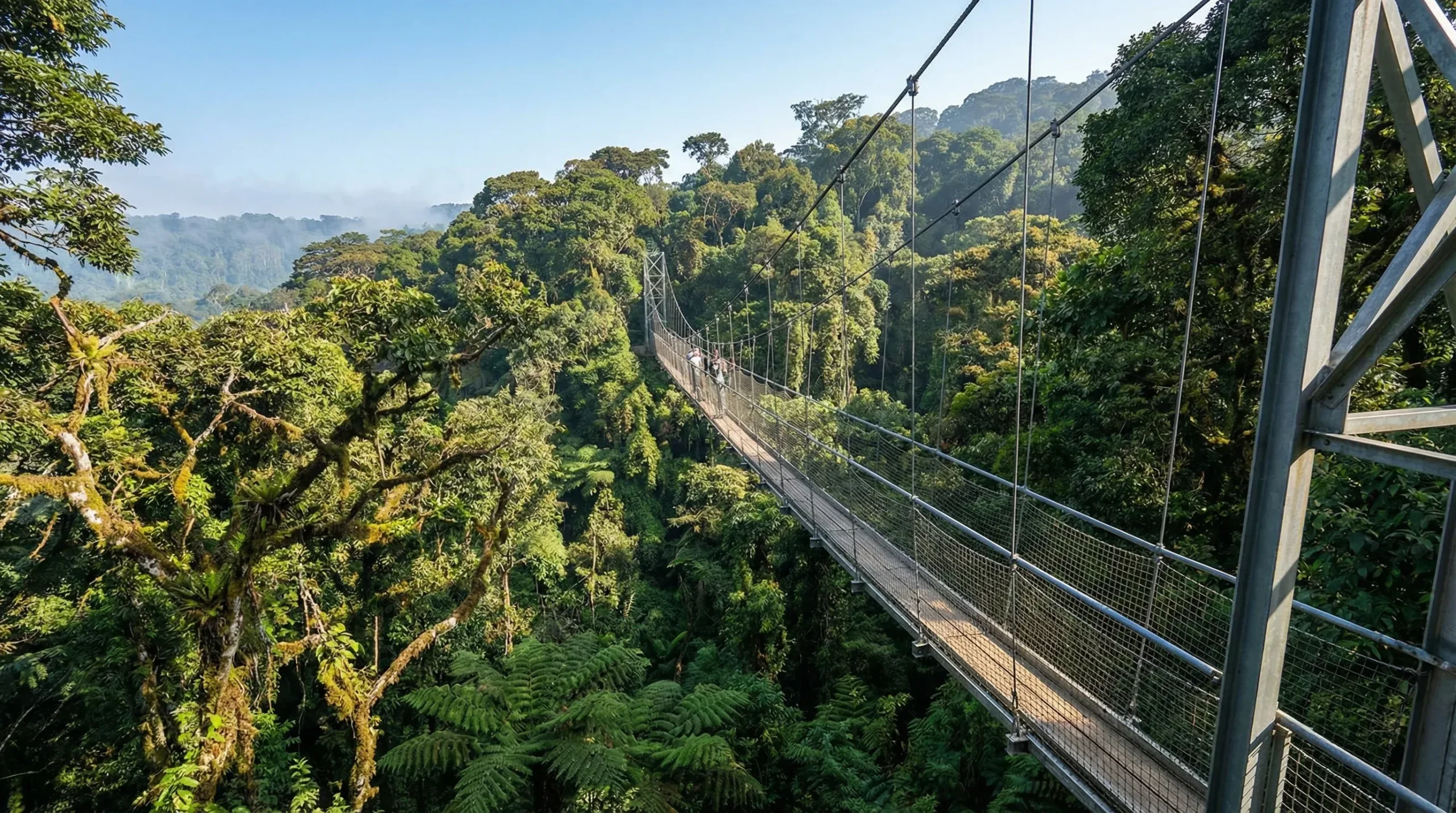
The Nyungwe canopy walkway provides an elevated perspective across the rainforest canopy.
The Nyungwe canopy walk is one of Rwanda’s best-known forest attractions. It provides visitors with an elevated perspective over the rainforest canopy.
Current Uganda Rwanda Safaris information describes the walkway as 160 metres long and approximately 70 metres above the ground.
The elevated viewpoint can provide opportunities to observe birds and primates from an angle that is impossible from ordinary ground-level trails.
The verified Nyungwe canopy walk experience guide explains the walkway and the forest activities that can be combined with it.
What Makes the Nyungwe Canopy Walk Different?
A conventional forest trail places visitors beneath the canopy, where vegetation can restrict visibility. The canopy walkway changes the viewing perspective by placing visitors above portions of the forest floor.
This can make it easier to appreciate the scale of Nyungwe’s forest and can create opportunities to observe canopy-level birds and primates.
The experience is therefore complementary to chimpanzee trekking rather than a replacement for it. Chimpanzee tracking focuses on locating a particular primate group, while the canopy walk provides a broader forest and landscape experience.
Hiking Trails in Nyungwe National Park

Hikers exploring one of the forest trails in Nyungwe National Park.
Nyungwe is also an important hiking destination. The forest contains trails leading through different elevations and vegetation zones.
Current Uganda Rwanda Safaris information identifies trails and activities associated with Bigugu Mountain, Kamiranzovu Swamp, waterfalls and other forest locations.
Hiking allows visitors to experience the forest at a slower pace and observe plants, insects, birds and smaller wildlife that may be overlooked during faster activities.
Mount Bigugu
Mount Bigugu is one of the notable high points within the Nyungwe landscape and provides an opportunity for visitors interested in more demanding forest hiking.
The higher elevations can provide changing vegetation and views across the surrounding forest. Birdwatchers also use the area because elevated forest habitats can produce different species and viewing opportunities.
Current Uganda Rwanda Safaris birding information specifically identifies Bigugu Mountain as one of the better areas for observing birds associated with the forest canopy.
Kamiranzovu Swamp

Kamiranzovu Swamp forms an important wetland landscape within the Nyungwe ecosystem.
Kamiranzovu Swamp is another distinctive feature within the Nyungwe ecosystem. It represents a wetland environment within the broader montane forest landscape.
The swamp provides an ecological contrast to the surrounding forest and can be incorporated into hiking and nature activities.
Current Uganda Rwanda Safaris information identifies Kamiranzovu Swamp as an additional attraction for visitors with sufficient time to explore beyond chimpanzee trekking and the canopy walkway.
Waterfalls in Nyungwe National Park
Nyungwe’s mountainous terrain creates streams and waterfalls that add another dimension to forest exploration. Hiking routes can lead visitors toward waterfalls while passing through dense vegetation and varied habitats.
Current Uganda Rwanda Safaris information identifies waterfall hikes, including routes associated with Isumo Falls, among the activities available in Nyungwe.
Waterfall hikes can be combined with birdwatching and botanical observation, making them suitable for visitors who want a broader forest experience rather than a single wildlife activity.
Nyungwe’s Forest Vegetation
Nyungwe contains a complex montane forest ecosystem with a wide variety of plant species. The forest structure creates multiple layers, from ground vegetation to shrubs and tall canopy trees.
This vertical structure is important because different wildlife species use different parts of the forest. Birds may occupy the canopy, monkeys may move between branches, while smaller animals and insects use the undergrowth and forest floor.
For visitors, this means that a walk through Nyungwe is not simply a search for large animals. The forest itself is the primary ecosystem to be observed.
Nyungwe for Nature Lovers
Nyungwe is particularly suited to travellers who enjoy immersive nature experiences. The dense forest, mountain terrain, birdlife, primates, streams and hiking routes create opportunities for exploration beyond conventional game drives.
Visitors who appreciate botanical diversity, bird calls, forest landscapes and wildlife tracking may find Nyungwe especially rewarding.
The park can also be incorporated into longer Rwanda itineraries that combine forest experiences with savannah wildlife and mountain gorilla trekking.
Nyungwe Compared with Akagera National Park
Nyungwe and Akagera represent two very different ecosystems within Rwanda National Parks.
Akagera is dominated by savannah, woodland and wetlands and is Rwanda’s main destination for traditional game drives and Big Five wildlife. Nyungwe is a montane rainforest destination where chimpanzees, monkeys, birds, hiking and canopy experiences are the major attractions.
A traveller visiting both parks can therefore experience two contrasting ecological systems during one Rwanda safari.
Nyungwe Compared with Volcanoes National Park
Nyungwe and Volcanoes are both forest destinations but offer different flagship wildlife experiences.
Volcanoes National Park is best known for mountain gorilla trekking and golden monkey tracking in the Virunga volcanic landscape. Nyungwe is best known for chimpanzee trekking, forest primates, birdwatching and rainforest exploration.
Combining both parks can provide a particularly strong primate-focused Rwanda itinerary.
Nyungwe Compared with Gishwati Mukura National Park
Nyungwe is considerably more established as a rainforest tourism destination than Gishwati Mukura. Both parks protect forest habitat and support primates and birds, but Nyungwe offers a wider range of established forest activities.
Gishwati Mukura is particularly associated with forest restoration, community conservation, chimpanzees and birdwatching, while Nyungwe offers chimpanzee trekking, the canopy walkway, numerous trails, birding and a broader forest tourism infrastructure.
For travellers with sufficient time, the two parks can complement each other rather than being treated as competing destinations.
Nyungwe and Rwanda Primate Safaris
Nyungwe is central to the concept of a Rwanda primate safari. The park protects numerous primate species and provides regulated chimpanzee trekking alongside forest walks and birding.
A multi-park primate itinerary can combine Nyungwe chimpanzee tracking with mountain gorilla trekking in Volcanoes National Park, creating opportunities to encounter two of Africa’s most famous great apes within one country.
The verified Rwanda primate safari itinerary demonstrates a route combining Nyungwe, Volcanoes and Akagera National Parks.
Nyungwe and Cross-Border Primate Tourism
Nyungwe can also form part of cross-border primate itineraries connecting Rwanda with neighbouring Uganda. Travellers interested in both gorillas and chimpanzees can combine different protected areas according to their interests and available time.
Uganda Rwanda Safaris currently publishes a Bwindi–Rwanda primate itinerary that combines gorilla trekking in Uganda’s Bwindi Impenetrable National Park with chimpanzee tracking in Nyungwe Forest National Park.
Such itineraries demonstrate the ecological connections between protected areas in the wider Albertine Rift, although border requirements and travel arrangements should always be checked against current regulations.
Bird Photography in Nyungwe
Nyungwe provides strong opportunities for specialist bird photography, although dense vegetation can make photographing forest birds technically challenging.
Birds may remain high in the canopy, move rapidly through branches or stay concealed among leaves. A knowledgeable guide can improve the chances of locating species by identifying calls and preferred habitats.
Photographers should prioritise responsible observation and avoid actions that disturb birds or other wildlife.
Wildlife Photography in Nyungwe
Nyungwe’s photography opportunities extend beyond birds. Primates, forest vegetation, waterfalls, misty mountain scenery and the canopy itself provide numerous subjects.
Because visibility is often restricted by dense vegetation, successful forest photography requires patience. Visitors should expect a different photographic experience from the open landscapes of Akagera, where large mammals can sometimes be photographed against unobstructed backgrounds.
Best Time to Visit Nyungwe National Park
Nyungwe can be visited throughout the year, but weather conditions influence hiking, chimpanzee trekking and road conditions.
Current Uganda Rwanda Safaris information identifies drier periods as useful for trekking and birdwatching because forest trails can be easier to navigate. However, rainfall remains an important part of the rainforest environment and conditions can change quickly.
Visitors should confirm current weather and trail conditions before travelling rather than assuming that a particular month will always produce identical conditions.
How Long Should You Spend in Nyungwe?
The appropriate length of stay depends on the activities planned. A visitor focused primarily on chimpanzee trekking may need less time than someone planning chimpanzee tracking, canopy walking, birdwatching and multiple hiking trails.
A longer stay also increases opportunities to experience different forest habitats and to adapt activities according to weather conditions.
Current Uganda Rwanda Safaris itineraries demonstrate both short Nyungwe visits and multi-day itineraries combining Nyungwe with Volcanoes and Akagera.
Accommodation Around Nyungwe National Park
Visitors to Nyungwe can choose from accommodation options around the forest and nearby communities. The most appropriate choice depends on budget, planned activities and the location of the intended trekking or hiking starting point.
Staying reasonably close to the relevant reception centre can be useful because chimpanzee trekking begins early and visitors need to arrive for the required briefing.
Current Uganda Rwanda Safaris itineraries mention accommodation options including Gisakura Guest House, Emeraude Kivu Resort and One&Only Nyungwe House, although availability and operating arrangements should be confirmed before booking.
Responsible Tourism in Nyungwe National Park
Responsible tourism is particularly important in a sensitive rainforest environment. Visitors should remain on authorised trails, follow ranger instructions, avoid feeding wildlife and maintain appropriate distances from animals.
Chimpanzee tracking requires additional care because visitors enter the habitat of wild primates. Following the instructions of guides and trackers helps minimise disturbance and supports responsible wildlife tourism.
Responsible birdwatching is equally important. Visitors should avoid disturbing nesting birds, damaging vegetation or using behaviour that unnecessarily stresses wildlife.
Why Nyungwe National Park Belongs in a Complete Rwanda National Parks Guide
Nyungwe National Park is essential to understanding the diversity of Rwanda National Parks. Akagera demonstrates Rwanda’s savannah and wetland conservation, Volcanoes represents the country’s mountain-gorilla and volcanic landscape, and Gishwati Mukura demonstrates forest restoration and community conservation.
Nyungwe adds an extensive montane rainforest ecosystem containing chimpanzees, numerous other primates, hundreds of bird species, specialised Albertine Rift wildlife, wetlands, waterfalls and high-elevation hiking routes.
Its chimpanzee trekking experience, canopy walkway, birding opportunities and forest trails make it one of the most diverse nature destinations in Rwanda. For visitors seeking a detailed Rwanda National Parks itinerary, Nyungwe should therefore be considered one of the country’s core protected-area experiences rather than simply an optional extension.
When combined with Akagera National Park, Volcanoes National Park and Gishwati Mukura National Park, Nyungwe completes a remarkably varied picture of Rwanda’s protected landscapes, from savannah plains and wetlands to volcanic mountains and ancient montane rainforest.
Nyungwe National Park: Rwanda’s Ancient Rainforest, Chimpanzees, Primates and Exceptional Birdlife

The spectacular mountainous rainforest landscape of Nyungwe National Park in southwestern Rwanda.
Nyungwe National Park is one of the most important destinations within Rwanda National Parks and is the country’s principal rainforest destination. Located in southwestern Rwanda near the border with Burundi, Nyungwe protects an extensive montane forest ecosystem renowned for primates, chimpanzees, birds, hiking trails, waterfalls and the Nyungwe canopy walkway. Current Uganda Rwanda Safaris information describes Nyungwe as the largest and oldest montane forest in Africa and records more than 300 bird species within the forest.
For travellers researching Rwanda National Parks, Nyungwe provides an experience fundamentally different from Akagera National Park and Volcanoes National Park. Akagera is primarily a savannah and wetland safari destination, while Volcanoes is internationally recognised for mountain gorilla trekking. Nyungwe is centred on ancient montane rainforest, chimpanzee tracking, forest primates, Albertine Rift birds, hiking and canopy exploration.
The park is particularly important for visitors searching for a Rwanda chimpanzee trekking experience. Current Uganda Rwanda Safaris information identifies habituated chimpanzee communities used for trekking in the Nyungwe landscape.
Where Is Nyungwe National Park?
Nyungwe National Park is located in southwestern Rwanda within the mountainous Albertine Rift region. Its position gives the park a distinctive combination of high-elevation rainforest, steep terrain, streams, wetlands and forested valleys.
The forest extends toward Rwanda’s southern and western borders, creating an important ecological connection within the Albertine Rift. Its location also places Nyungwe within a wider landscape containing tea plantations, rural communities and other natural areas.
For travellers planning a Nyungwe Forest safari, the park can be incorporated into longer Rwanda itineraries that also include Kigali, Volcanoes National Park, Akagera National Park and other destinations.
Why Nyungwe National Park Is Important

“Nyungwe’s forest habitat supports an exceptional diversity of birds
Nyungwe is important because it protects one of Rwanda’s most biologically diverse forest ecosystems. The forest provides habitat for chimpanzees, colobus monkeys, L’Hoest’s monkeys, blue monkeys, mangabeys and numerous other mammals and birds.
The park’s biodiversity is closely connected to its elevation, vegetation and location within the Albertine Rift. Different elevations and forest habitats create opportunities for many specialised species.
Current conservation information records hundreds of bird species in Nyungwe, including numerous species associated with the Albertine Rift.
Nyungwe National Park and the Albertine Rift

Nyungwe forms part of the Albertine Rift, a biodiversity-rich region extending through parts of central and eastern Africa. The region is known for species with restricted geographic ranges, making forest conservation particularly important.
For birdwatchers, the Albertine Rift connection is one of Nyungwe’s strongest attractions. Several forest birds associated with the region can be encountered in the park, although sightings depend on habitat, season, weather and the skill of the birding guide.
The forest’s importance therefore extends beyond Rwanda itself. Protecting Nyungwe contributes to the conservation of a wider ecological region containing numerous specialised plants and animals.
Chimpanzee Trekking in Nyungwe National Park

Chimpanzees are one of the principal wildlife attractions of Nyungwe National Park.
Chimpanzee trekking is one of the principal activities in Nyungwe National Park. Visitors enter the forest with guides and trackers to search for habituated chimpanzee groups.
Current Uganda Rwanda Safaris information states that chimpanzee trekking mainly takes place in the Cyamudongo area and also involves habituated groups in the wider Nyungwe landscape.
The trek can involve walking through dense vegetation and uneven terrain. Chimpanzees may move through the forest floor and canopy, meaning visitors need to remain attentive to both ground-level signs and sounds or movements above them.
The experience is fundamentally a wildlife observation activity rather than a guaranteed encounter. Even with experienced trackers, chimpanzees remain wild animals whose movements cannot be predicted precisely.
Chimpanzee Habituation and Tracking Areas
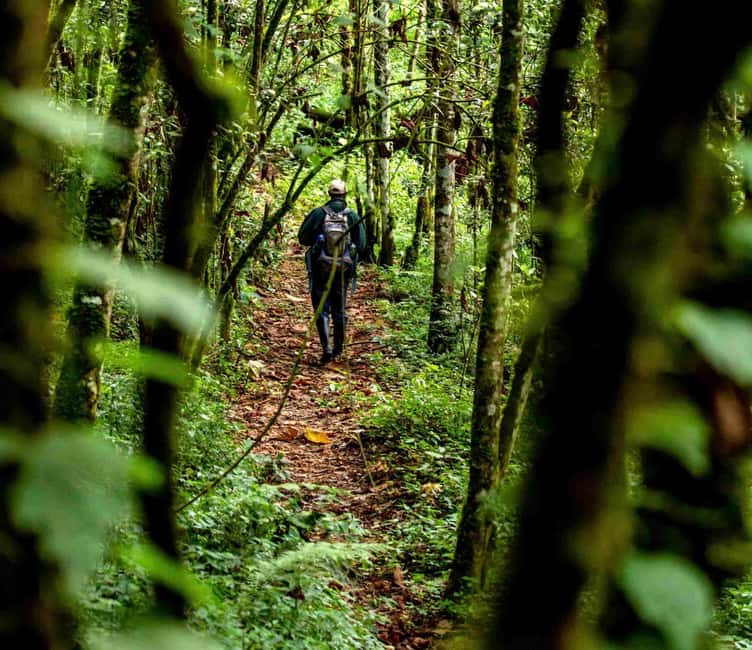
Forest trails provide access to the dense habitat where chimpanzee tracking and other guided activities take place.
Nyungwe has habituated chimpanzee communities used for tourism. Current information identifies chimpanzee tracking in areas including Cyamudongo and the main Nyungwe forest.
Cyamudongo is a smaller forest patch associated with the wider Nyungwe landscape. Its smaller area can provide a different tracking experience from the larger main forest.
Chimpanzee groups can move through different parts of their habitat, so the exact location of animals can change from one day to another. Trackers therefore play an important role in locating the animals before visitors enter the observation area.
Nyungwe Canopy Walkway

The Nyungwe canopy walkway provides a completely different perspective of the rainforest. Instead of viewing the forest only from ground level, visitors can experience the canopy from an elevated suspension bridge surrounded by the mountainous forest landscape.
The elevated viewpoint can provide opportunities to observe birds, trees and primates from an angle that is impossible from ordinary ground-level trails.
The canopy experience complements chimpanzee trekking rather than replacing it. Chimpanzee tracking focuses on locating a particular primate group, while the canopy walkway provides a broader perspective of Nyungwe’s forest ecosystem.
Volcanoes National Park: Rwanda’s Mountain Gorilla Sanctuary, Golden Monkeys and Virunga Volcanoes
Volcanoes National Park is one of the most important destinations within Rwanda National Parks and the country’s leading destination for mountain gorilla trekking. Located in northwestern Rwanda within the Virunga volcanic landscape, the park protects a remarkable combination of bamboo forests, montane vegetation, volcanic peaks and high-altitude habitats. Its international importance comes primarily from the protection of endangered mountain gorillas, but the park also supports golden monkeys, numerous bird species and a range of other forest wildlife.
For travellers researching Rwanda National Parks, Volcanoes National Park represents the strongest contrast with Akagera National Park and Nyungwe National Park. Akagera is Rwanda’s principal savannah and wetland destination, while Nyungwe is a montane rainforest known for chimpanzees, forest primates and birdlife. Volcanoes, by contrast, is dominated by the dramatic Virunga mountains and is best known for mountain gorilla trekking, golden monkey tracking and volcano hiking.
The verified Uganda Rwanda Safaris destination information describes Volcanoes National Park as covering approximately 160 square kilometres and identifies gorilla trekking, golden monkey tracking, birdwatching, Dian Fossey-related conservation tourism and mountain hiking among the major activities available in the park.
Where Is Volcanoes National Park?

Volcanoes National Park is located in northwestern Rwanda near the borders with Uganda and the Democratic Republic of Congo. Its location places it within the wider Virunga conservation landscape, where protected areas in Rwanda, Uganda and the Democratic Republic of Congo form an important transboundary ecosystem.
The park is centred on a chain of volcanic mountains and high-elevation forests. This mountainous environment creates conditions suitable for mountain gorillas and golden monkeys, while the surrounding vegetation provides habitat for numerous birds and other forest species.
Travellers visiting the park commonly base themselves around Kinigi and Musanze, with Kinigi serving as an important starting point for gorilla trekking activities.
The verified Volcanoes National Park destination guide provides additional information about the park’s location, attractions and major activities.
Why Volcanoes National Park Is Important to Rwanda
Volcanoes National Park is central to Rwanda’s conservation identity because it protects one of the world’s remaining populations of mountain gorillas. The park also preserves part of the wider Virunga ecosystem, making it important for biodiversity beyond gorillas alone.
The forest and volcanic landscape support golden monkeys, forest birds and other wildlife. The park’s location along the borders of three countries also makes regional cooperation important for maintaining ecological connectivity.
Its importance extends into Rwanda’s tourism economy because gorilla trekking has become one of the country’s most internationally recognised wildlife experiences.
Mountain Gorillas in Volcanoes National Park

Mountain gorillas are the flagship wildlife attraction of Volcanoes National Park. The gorillas live within the high-altitude forest of the Virunga volcanic region, where they feed on vegetation and move through a landscape of bamboo, montane forest and dense undergrowth.
Gorilla trekking is conducted through regulated visits to habituated gorilla groups. Visitors are accompanied by guides and trackers and must follow established rules designed to protect both visitors and gorillas.
Current Anthill Safaris information confirms that Rwanda’s Volcanoes National Park offers gorilla trekking involving habituated gorilla families, with the Rwanda Development Board responsible for gorilla permits.
Gorilla Trekking in Volcanoes National Park

Gorilla trekking is the principal tourism activity in Volcanoes National Park. A typical experience begins with an early-morning briefing before trekkers travel into the forest in search of their assigned gorilla family.
The duration of a trek varies because gorillas move naturally through their habitat. Some groups may be located relatively close to the trailhead, while others may require a longer hike through steep and sometimes muddy terrain.
Current Uganda Rwanda Safaris information describes trekking times ranging from approximately 30 minutes to several hours depending on the location and movement of the gorilla group.
The experience is not simply a wildlife viewing excursion. It also provides an opportunity to learn about mountain-gorilla conservation, habitat protection and the research that has helped improve understanding of these animals.
Planning a Rwanda National Parks Safari: Complete Itinerary Guide, Costs, Activities and Practical Travel Information

Planning a Rwanda National Parks safari requires understanding how different protected areas complement one another. Rwanda offers unusually varied wildlife experiences within a relatively compact country, with Akagera National Park providing savannah and wetland wildlife, Volcanoes National Park providing mountain gorilla and golden monkey experiences, Nyungwe National Park providing chimpanzee tracking and rainforest exploration, and Gishwati-Mukura providing another important forest ecosystem.
The best Rwanda National Parks itinerary depends on the traveller’s primary interests, available time, budget, preferred accommodation level and tolerance for long road transfers. A visitor interested primarily in mountain gorillas can build an itinerary around Volcanoes National Park, while a wildlife enthusiast may prefer combining Akagera with Volcanoes. Travellers interested in primates can combine Volcanoes and Nyungwe.
A comprehensive Rwanda safari can therefore be designed around wildlife diversity rather than simply visiting as many parks as possible. The most useful approach is to identify the experiences that matter most and then construct the route around them.
Choosing the Right Rwanda National Parks for Your Safari
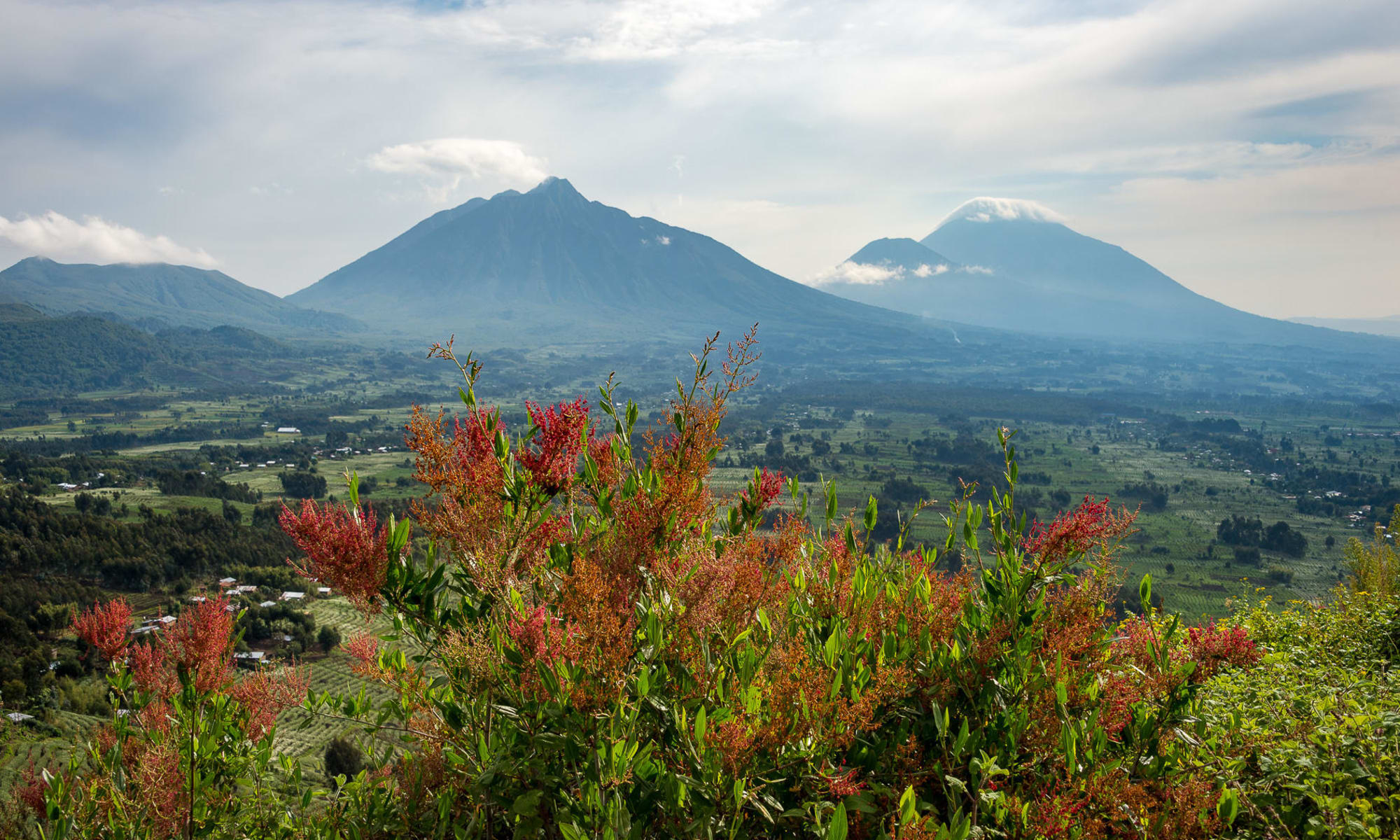
The first decision is determining which Rwanda National Parks best match your interests. Akagera National Park is the strongest choice for traditional game viewing because its savannah, wetlands and lakes support large mammals including elephants, lions, buffaloes, leopards and rhinoceroses. Current Uganda Rwanda Safaris information describes Akagera as Rwanda’s principal savannah safari destination and highlights its Big Five wildlife.
Volcanoes National Park is the obvious choice for travellers whose main goal is mountain gorilla trekking. The park also provides golden monkey tracking, volcanic hiking, birdwatching and conservation-related experiences.
Nyungwe National Park is particularly suitable for chimpanzee trekking, forest primates, birdwatching, hiking and the canopy walkway. Its rainforest environment provides a very different experience from both Akagera and Volcanoes.
Gishwati-Mukura National Park is more appropriate for travellers interested in forest conservation, primates, birds and a less extensively developed forest tourism environment.
Best Rwanda National Parks Itinerary for First-Time Visitors

For a first-time visitor with approximately one week, a three-park itinerary can provide an exceptionally broad introduction to Rwanda. A route combining Nyungwe, Volcanoes and Akagera allows travellers to experience rainforest, volcanic highlands and savannah during one trip.
One verified seven-day Rwanda itinerary begins with Nyungwe, continues to Volcanoes for gorilla trekking and concludes with Akagera for game drives and a Lake Ihema boat experience. This structure demonstrates how the country’s major ecosystems can be combined within one safari.
Travellers with less time should avoid attempting to include every destination. A shorter itinerary focused on Volcanoes and Akagera can provide mountain gorillas and traditional savannah wildlife without requiring the longer transfer to southwestern Rwanda.
The verified seven day Rwanda wildlife safari provides an example of combining three major national parks in one journey.
Best Rwanda National Parks Safari for Gorilla Trekking
Travellers whose primary objective is mountain gorilla trekking should place Volcanoes National Park at the centre of their itinerary. The park is the Rwandan destination for regulated mountain gorilla trekking and is located relatively close to Kigali compared with Nyungwe.
A gorilla-focused safari can include two or three nights around Volcanoes National Park, depending on whether the traveller wants additional activities such as golden monkey tracking, volcano hiking or the Dian Fossey experience.
Travellers seeking a broader primate experience can extend the journey southward to Nyungwe for chimpanzee trekking. This creates a safari focused on two different great-ape experiences within Rwanda.
Best Rwanda National Parks Safari for Wildlife and Big Five
Akagera National Park should be the priority for travellers interested in conventional African wildlife safaris. The park contains savannah, woodland, wetlands and lakes that support a broad range of species.
Current verified information from Uganda Rwanda Safaris identifies elephants, lions, rhinoceroses, buffaloes and leopards among the major wildlife attractions of Akagera. The same source highlights game drives and boat excursions on Lake Ihema as important safari activities.
Akagera is particularly useful for travellers who want to combine Rwanda’s famous primate experiences with a more traditional African game-drive safari.
Best Rwanda National Parks Safari for Primates

Rwanda is exceptionally attractive to primate enthusiasts because its protected areas offer several different primate experiences.
Volcanoes National Park provides mountain gorilla trekking and golden monkey tracking. Nyungwe provides chimpanzee trekking together with several other forest primates. This makes a Volcanoes-Nyungwe combination one of the strongest primate-focused Rwanda safari options.
The verified Rwanda primates safari demonstrates how chimpanzee tracking, gorilla trekking, golden monkey tracking and the Nyungwe canopy walk can be incorporated into one itinerary.
Best Rwanda National Parks Safari for Birdwatching
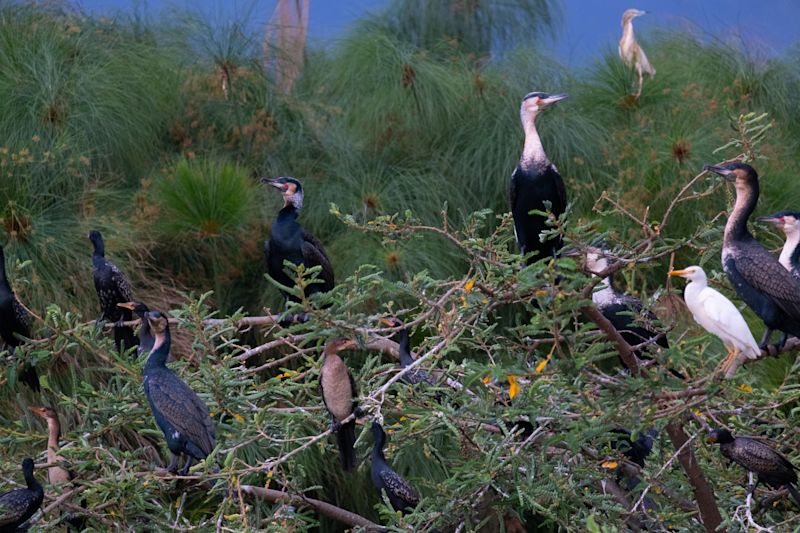
Birdwatchers should consider combining more than one ecosystem because Rwanda’s birdlife varies considerably between rainforest, wetlands, savannah and montane habitats.
Nyungwe is particularly important for forest and Albertine Rift bird species. Volcanoes provides high-elevation and Albertine Rift birding, while Akagera provides extensive wetland and savannah bird habitats.
Rwanda National Parks Wildlife, Conservation, Activities and the Future of Rwanda’s Protected Areas
Rwanda National Parks form the foundation of the country’s wildlife conservation and nature-based tourism sector. The country’s principal protected landscapes offer remarkably different experiences: Akagera National Park provides savannah, woodland and wetland wildlife; Volcanoes National Park protects high-altitude volcanic forests and mountain-gorilla habitat; Nyungwe National Park protects an extensive montane rainforest ecosystem; and Gishwati-Mukura National Park contributes additional forest habitat within the Albertine Rift.
Understanding Rwanda National Parks therefore requires looking beyond individual animals and safari activities. Rwanda’s protected areas represent different ecosystems, conservation histories, wildlife communities and tourism opportunities. A well-planned Rwanda National Parks safari can combine traditional game drives, boat excursions, chimpanzee tracking, mountain-gorilla trekking, golden-monkey tracking, birdwatching, forest hiking and conservation experiences.
The diversity of these parks is one of Rwanda’s greatest tourism strengths. A traveller can experience savannah wildlife in the east, volcanic mountains in the northwest and ancient rainforest in the southwest without leaving Rwanda. A verified seven-day Rwanda safari itinerary demonstrates how Nyungwe, Volcanoes and Akagera can be combined into one journey featuring chimpanzee tracking, canopy walking, gorilla trekking and game viewing.
The Four Principal Rwanda National Parks
Rwanda’s national-park system contains protected landscapes with distinctly different ecological characteristics. Akagera National Park occupies the eastern part of the country and is characterised by savannah, woodland, wetlands and lakes. Volcanoes National Park lies in the northwest within the Virunga volcanic landscape. Nyungwe National Park protects a large montane rainforest in southwestern Rwanda, while Gishwati-Mukura protects forest ecosystems in western Rwanda.
These differences are important when choosing where to travel. Visitors interested in Big Five wildlife and game drives should prioritise Akagera. Travellers seeking mountain gorillas should prioritise Volcanoes. Those interested in chimpanzees, forest primates and rainforest birding should consider Nyungwe, while Gishwati-Mukura can complement a forest-focused itinerary.
The verified Akagera wildlife guide provides additional information about the animals visitors can encounter in Rwanda’s principal savannah park.
Akagera National Park and Rwanda’s Savannah Wildlife
Akagera National Park is the most important destination within Rwanda National Parks for conventional African game viewing. The park contains a mixture of grasslands, woodland, wetlands and lakes, creating habitats for a broad range of mammals, birds and aquatic wildlife.
Current information from Uganda Rwanda Safaris identifies elephants, buffaloes, lions, leopards and rhinoceroses among Akagera’s major wildlife attractions. The park also supports giraffes, zebras, antelopes, hippos, crocodiles and numerous bird species.
The park’s conservation history is particularly significant. Akagera experienced severe wildlife losses and habitat pressure during periods of political and social upheaval, but subsequent conservation interventions helped restore important wildlife populations. Current information from Anthill Safaris describes Akagera as a major conservation success story and Rwanda’s only savannah national park.
Visitors researching a Rwanda National Parks safari should consider Akagera when traditional game drives, wetland scenery and boat safaris are priorities.
Big Five Wildlife in Akagera
Akagera is currently the Rwanda National Parks destination associated with all five traditional Big Five species: African elephant, African lion, African leopard, Cape buffalo and rhinoceros. Anthill Safaris specifically identifies Akagera as Rwanda’s only savannah destination where the Big Five can be encountered.
The presence of these species has transformed Akagera’s position within Rwanda’s tourism industry. The park is no longer simply an additional wildlife attraction for visitors coming primarily to see gorillas. It can serve as the main focus of a traditional safari itinerary.
Wildlife viewing remains unpredictable, however. The presence of a species within the park does not guarantee that every visitor will see it. Guides use knowledge of animal behaviour, habitat and recent sightings to improve viewing opportunities, but wildlife remains wild and mobile.
Game Drives in Akagera National Park
Game drives are the principal way to explore Akagera’s savannah and woodland habitats. Morning drives can provide opportunities to observe wildlife becoming active, while later drives can reveal different animal behaviour and changing light conditions.
Current Uganda Rwanda Safaris information also describes night game drives as an activity in Akagera, offering opportunities to search for nocturnal wildlife that may be difficult to observe during daylight hours.
The park’s varied terrain means that a game drive can involve open grasslands, wooded areas, wetland margins and lakeshores. This ecological variety is one reason Akagera remains an important component of comprehensive Rwanda National Parks itineraries.
Boat Safaris on Lake Ihema
Lake Ihema provides a different perspective on Akagera’s wildlife. A boat safari can reveal hippos, crocodiles and waterbirds while also providing opportunities to observe animals approaching the water.
Current Uganda Rwanda Safaris information identifies Lake Ihema boat trips as one of Akagera’s major activities and notes opportunities to see aquatic wildlife and birds around the lake.
A boat safari complements a game drive rather than replacing it. The two activities explore different habitats and provide different wildlife-viewing perspectives.
Akagera Birdwatching
Akagera is also an important birding destination. Its combination of wetlands, lakes, savannah and woodland creates habitat for many bird species.
Current information from Uganda Rwanda Safaris reports approximately 500 bird species in Akagera, while Anthill Safaris also describes the park as supporting more than 500 bird species.
The verified Rwanda safari itinerary demonstrates how Akagera game viewing can be combined with a later Nyungwe forest and canopy-walk experience.
Volcanoes National Park and Mountain-Gorilla Conservation
Volcanoes National Park occupies a fundamentally different ecological niche within Rwanda National Parks. Its high-altitude volcanic forests form part of the Virunga landscape and provide habitat for mountain gorillas and golden monkeys.
The park covers approximately 160 square kilometres according to current Uganda Rwanda Safaris destination information. The same source describes the park as containing woodland and bamboo forests and identifies mountain gorillas and golden monkeys among its major wildlife attractions.
Mountain-gorilla conservation is the park’s defining tourism and conservation story. Regulated trekking allows visitors to observe habituated gorilla groups while contributing to a tourism system built around protection of their habitat.
Gorilla Trekking as a Rwanda National Parks Experience
Gorilla trekking is one of the most internationally recognised activities associated with Rwanda National Parks. Visitors travel into the forest with guides and trackers to locate a habituated mountain-gorilla group.
The experience varies according to the location and movement of the assigned group. Some treks may involve comparatively short walks, while others can require several hours of hiking through steep and uneven terrain.
Gorilla trekking should therefore be planned as a genuine forest expedition rather than as a conventional game drive. Weather, elevation, vegetation and animal movements all influence the experience.
Golden-Monkey Tracking in Volcanoes
Golden-monkey tracking provides another important primate experience within Volcanoes National Park. These distinctive primates are associated with the bamboo and montane habitats of the Virunga region.
The activity differs from gorilla trekking because golden monkeys can move rapidly through vegetation and may require visitors to remain alert as they follow the troop.
Current Uganda Rwanda Safaris information identifies golden-monkey trekking as one of the principal activities available in Volcanoes National Park.
Volcano Hiking and Rwanda’s Virunga Landscape
The volcanic mountains surrounding Volcanoes National Park provide opportunities for visitors interested in hiking as well as wildlife. The landscape includes several prominent Virunga volcanoes, each offering different terrain and levels of physical challenge.
Mountain hiking adds geographical and ecological context to a Rwanda National Parks safari. Visitors can experience changes in vegetation with altitude while gaining broader views of the surrounding volcanic landscape when weather permits.
Travellers interested in combining gorilla trekking with additional activities can use the verified Rwanda safari planning resource to explore the range of activities associated with the country’s tourism destinations.
Nyungwe National Park and Rwanda’s Rainforest Ecosystem
Nyungwe National Park represents the rainforest component of Rwanda National Parks. Its montane forest ecosystem contains chimpanzees, numerous other primates, birds, plants and a network of hiking trails.
Anthill Safaris describes Nyungwe as one of Africa’s oldest rainforests and identifies chimpanzees and numerous other primates among its wildlife. The same source highlights the park’s extensive trail network, birdlife and canopy walkway.
Nyungwe is especially valuable for travellers who want a forest experience rather than a traditional savannah safari. The environment is dense, mountainous and biologically diverse.
Chimpanzee Tracking in Nyungwe
Chimpanzee tracking is one of Nyungwe’s principal tourism activities. Visitors enter the forest with guides and trackers to search for habituated chimpanzees.
Current Anthill Safaris information identifies the main Nyungwe Forest and Cyamudongo Forest as chimpanzee-tracking areas in Rwanda and notes that Gishwati-Mukura also has a chimpanzee population.
Chimpanzees can move rapidly through forest vegetation, making the activity different from gorilla trekking. Visitors should be prepared for a potentially demanding hike and should not assume that locating chimpanzees will require the same amount of time on every visit.
Nyungwe Canopy Walk
The Nyungwe canopy walkway provides an elevated perspective over the rainforest and is one of the park’s best-known attractions. It complements ground-level forest activities by allowing visitors to experience the ecosystem from above the forest floor.
The canopy experience can be particularly interesting for birdwatchers and photographers because many forest animals spend substantial amounts of time within the canopy.
The verified Rwanda gorilla and Nyungwe safari demonstrates how the canopy experience can be incorporated alongside gorilla trekking in a multi-park itinerary.
Nyungwe Birdwatching and Albertine Rift Species
Nyungwe is one of Rwanda’s most important destinations for forest birding. Its location within the Albertine Rift makes it particularly relevant for visitors searching for birds associated with this biodiversity-rich region.
Anthill Safaris currently lists 322 bird species in Nyungwe, including Albertine Rift endemics.
Birding in dense rainforest requires patience because many species remain concealed within vegetation or high in the canopy. Specialist guides can improve the experience by identifying calls and directing attention toward likely habitats.
Gishwati-Mukura National Park and Forest Conservation
Gishwati-Mukura National Park adds another forest ecosystem to Rwanda National Parks. It is particularly relevant to travellers interested in forest conservation, primates and birdlife.
Current Anthill Safaris information identifies Gishwati-Mukura as a newer chimpanzee-tracking destination in Rwanda with a smaller chimpanzee population than Nyungwe.
The park can therefore be considered when designing a specialist forest itinerary, although travellers should distinguish its tourism profile from the more established chimpanzee and canopy-walk experiences available in Nyungwe.
Getting Around Rwanda National Parks
Road travel is an important part of most Rwanda National Parks itineraries. The relatively compact geography of Rwanda allows travellers to combine several destinations, although the journey between Nyungwe in the southwest and Volcanoes in the northwest can require substantial travel time.
For Nyungwe specifically, Anthill Safaris reports that the park is approximately 225 kilometres from Kigali and describes private road travel as one of the principal access options, with the journey commonly taking several hours depending on conditions and stops.
Travellers planning multiple parks should therefore treat transportation as an integral part of itinerary design rather than an afterthought.
Choosing Between a Short and Long Rwanda National Parks Safari
A short Rwanda National Parks safari should focus on one or two destinations rather than attempting to cover every protected area. Volcanoes can work particularly well for a short gorilla-focused trip, while Akagera can provide a compact traditional wildlife safari.
Travellers with more time can add Nyungwe for chimpanzee tracking and rainforest exploration. A longer itinerary can also include Gishwati-Mukura or additional cultural and scenic experiences.
The seven-day itinerary published by Uganda Rwanda Safaris demonstrates one approach to combining Nyungwe, Volcanoes and Akagera within one structured trip.
Combining Rwanda National Parks with Lake Kivu
Lake Kivu can complement a Rwanda National Parks itinerary by providing a change from intensive wildlife activities. The lake landscape offers opportunities for relaxation, scenic exploration and boat-based experiences.
Anthill Safaris currently publishes a three-day Akagera and Lake Kivu itinerary combining game drives, a Lake Ihema boat experience and time around Kibuye.
This type of combination can be particularly useful for travellers who want to balance active wildlife activities with quieter landscape experiences.
Luxury Rwanda National Parks Safaris
Luxury travel within Rwanda National Parks can be organised around high-end accommodation, private transportation and carefully selected wildlife experiences. Volcanoes is particularly well suited to luxury itineraries because of the strong premium tourism market surrounding gorilla trekking.
Akagera can provide a luxury savannah component, while Nyungwe offers luxury rainforest accommodation and forest activities.
Anthill Safaris currently publishes a seven-day luxury Rwanda itinerary combining Akagera, Volcanoes and Kigali, with game drives, a Lake Ihema boat cruise, gorilla trekking and golden-monkey tracking.
The verified luxury Rwanda safari provides an example of this multi-destination approach.
Rwanda National Parks and Conservation Tourism
Tourism within Rwanda National Parks is closely connected to conservation. Protected areas require financial resources, trained personnel, infrastructure and long-term management systems.
Akagera provides a strong example of ecological recovery following major historical pressures. Volcanoes demonstrates the relationship between regulated tourism and mountain-gorilla conservation, while Nyungwe demonstrates the importance of protecting large montane rainforest habitats.
Visitors therefore contribute to more than a sightseeing economy when they participate responsibly in regulated park activities. Their expenditure supports the wider tourism system surrounding protected areas, although the precise distribution of tourism revenue depends on the applicable management and community programmes.
Community Tourism Around Rwanda National Parks
Communities surrounding national parks form an important part of Rwanda’s tourism environment. Accommodation providers, guides, drivers, craftspeople, restaurants and other businesses can all participate in the visitor economy.
Community-based experiences can also help visitors understand the relationship between protected landscapes and neighbouring settlements. Responsible travellers should respect local customs, use legitimate services and avoid activities that exploit communities or wildlife.
Responsible Wildlife Viewing in Rwanda National Parks
Responsible wildlife viewing requires visitors to follow the instructions of guides and park authorities. This is particularly important when observing mountain gorillas and chimpanzees because close interaction with people can create health and behavioural risks for wild primates.
Visitors should not feed wildlife, deliberately disturb animals, leave designated routes without authorisation or remove plants and other natural materials from protected areas.
Photography should also be conducted responsibly. Visitors should avoid behaviour intended to force animals into better positions and should prioritise the welfare of wildlife over obtaining a particular photograph.
Rwanda National Parks and Bird Conservation
Bird conservation is another major reason to protect Rwanda’s national parks. The country contains habitats ranging from wetlands and savannah to montane rainforest and volcanic forest, allowing different bird communities to coexist across relatively short geographical distances.
Nyungwe and Volcanoes are particularly important for Albertine Rift-associated species, while Akagera provides extensive wetland and savannah habitats.
A bird-focused Rwanda National Parks itinerary should therefore include more than one ecosystem if the traveller wants to maximise habitat diversity.
Rwanda National Parks and Photography
Each protected area offers a different photographic environment. Akagera provides open landscapes, large mammals, wetlands and lakes. Volcanoes offers volcanic mountains, forests and primates. Nyungwe provides rainforest scenery, birds, chimpanzees and elevated canopy perspectives.
Photographers should plan equipment according to the environment rather than assuming that one setup will be ideal for every park. Forest conditions can be darker and more enclosed than open savannah, while mountain weather can change quickly.
Seasonal Considerations for Rwanda National Parks
Rwanda National Parks remain tourism destinations throughout the year, but weather can influence trail conditions, visibility and wildlife-viewing experiences.
Volcanoes can become particularly challenging during periods of heavy rain because mountain trails may become slippery. Nyungwe is a rainforest environment where rainfall can occur throughout the year. Akagera’s road conditions and vegetation can also change seasonally.
Travellers should therefore confirm current conditions before departure instead of treating general seasonal descriptions as guarantees.
Accommodation Planning for Rwanda National Parks
Accommodation should be selected according to the activities planned for each park. Visitors undertaking early-morning gorilla trekking should consider staying close enough to the relevant briefing location to avoid unnecessary early transfers.
For Nyungwe chimpanzee tracking, staying close to the relevant forest access point can similarly simplify morning logistics. Akagera accommodation can be selected according to the preferred combination of game drives, boat trips and relaxation.
Anthill Safaris currently publishes information about luxury accommodation around Volcanoes National Park, illustrating the range of higher-end options available in the gorilla-trekking region.
How Rwanda National Parks Can Be Combined in One Safari
The strongest multi-park itineraries usually combine complementary ecosystems rather than simply adding destinations. Akagera and Volcanoes form a strong savannah-and-mountain combination, while Volcanoes and Nyungwe form a strong primate-focused itinerary.
Akagera, Volcanoes and Nyungwe together provide the widest ecological contrast. Travellers can experience Big Five wildlife, wetlands, mountain gorillas, golden monkeys, chimpanzees, forest birds and rainforest landscapes within one national tourism system.
The verified Rwanda primates itinerary demonstrates the combination of gorilla trekking, chimpanzee tracking, golden-monkey tracking and the Nyungwe canopy walk.
Why Rwanda National Parks Are Important for Rwanda’s Tourism Future
Rwanda National Parks give the country a tourism portfolio that extends well beyond a single wildlife attraction. The parks provide different reasons to visit throughout the year and appeal to different categories of travellers.
Akagera strengthens Rwanda’s conventional safari offering. Volcanoes anchors the country’s international reputation for mountain-gorilla tourism. Nyungwe strengthens Rwanda’s position as a primate, rainforest and birding destination, while Gishwati-Mukura adds another dimension to forest conservation and emerging wildlife tourism.
This diversity also creates opportunities for longer stays. Instead of spending an entire trip around one activity, travellers can construct journeys around several ecosystems and experiences.
The Future of Rwanda National Parks
The long-term value of Rwanda National Parks depends on maintaining healthy ecosystems while managing tourism responsibly. Wildlife populations, forests, wetlands and surrounding communities all form part of the wider conservation equation.
Continued investment in wildlife monitoring, habitat protection, community engagement, professional guiding and responsible tourism can help maintain the value of these protected areas.
For travellers, the most responsible approach is to view Rwanda National Parks as living ecosystems rather than entertainment venues. The objective should be to observe wildlife without unnecessary disturbance and to support conservation-oriented tourism practices.
Final Perspective on Rwanda National Parks
Rwanda National Parks collectively offer one of Africa’s most varied compact wildlife experiences. Akagera provides savannah and wetland wildlife, Volcanoes protects mountain-gorilla habitat within the Virunga landscape, Nyungwe provides exceptional rainforest biodiversity, and Gishwati-Mukura contributes additional forest and primate habitat.
The strongest Rwanda National Parks safari is therefore not necessarily the one that visits the greatest number of destinations. It is the itinerary that matches the traveller’s interests with the ecosystems and activities best suited to those interests.
For traditional game viewing, Akagera should be central. For mountain gorillas and golden monkeys, Volcanoes is essential. For chimpanzees, rainforest primates and Albertine Rift birding, Nyungwe is particularly important. For travellers interested in emerging forest tourism and conservation, Gishwati-Mukura deserves consideration.
When these destinations are combined thoughtfully, Rwanda National Parks provide a remarkably broad journey through sava