
Why Uganda and Rwanda Are Perfect for Senior Gorilla Trekking
Uganda and Rwanda are the leading destinations for gorilla trekking for seniors because both countries protect habituated mountain gorilla families, employ trained park rangers, and provide organised trekking experiences. Senior travellers can choose between Uganda’s extensive rainforest landscapes and Rwanda’s comparatively compact travel arrangements.
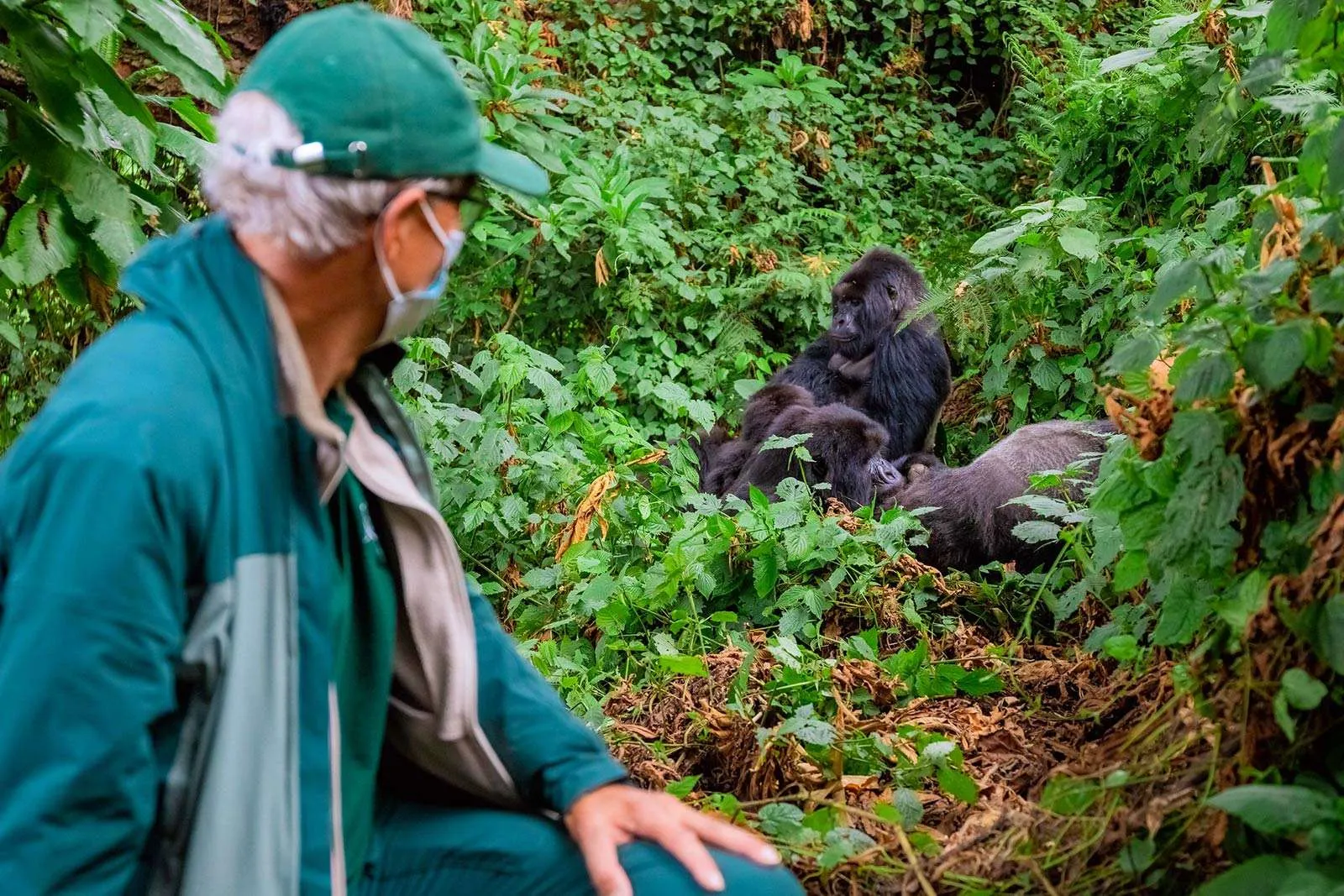
Senior travellers observing mountain gorillas in Uganda and Rwanda
Age alone does not prevent an older traveller from seeing mountain gorillas. The more important considerations are mobility, general health, fitness, balance, altitude tolerance and the ability to walk on uneven forest trails. With careful planning, suitable accommodation, a professional driver-guide and support from porters, many travellers in their sixties, seventies and eighties can participate in senior gorilla trekking.
Uganda offers gorilla trekking in Bwindi Impenetrable National Park and Mgahinga Gorilla National Park, while Rwanda offers the experience in Volcanoes National Park. Travellers should examine the terrain, transfer times, permit costs and accommodation locations before deciding between Uganda and Rwanda gorilla trekking.
Uganda Gorilla Trekking for Seniors
Uganda is an excellent destination for seniors who want a longer and more varied safari. Gorilla trekking can be combined with chimpanzee tracking, wildlife viewing, boat cruises, birdwatching, cultural encounters and relaxation at Lake Bunyonyi. This makes Uganda particularly suitable for retired travellers who have enough time for a carefully paced itinerary.
Mountain gorilla trekking in Uganda takes place in Bwindi Impenetrable National Park and Mgahinga Gorilla National Park. Bwindi is divided into Buhoma, Ruhija, Rushaga and Nkuringo trekking sectors. These sectors have different access roads, accommodation choices, elevations and trail conditions. A senior-friendly itinerary should therefore be designed around a specific trekking sector rather than simply mentioning Bwindi as one destination.
Visitors planning a broader journey can study a detailed Uganda wildlife and Bwindi guide before selecting their route. Combining gorilla trekking with other activities should not create an exhausting schedule. Rest periods and shorter driving days can make the safari more comfortable for older adults.
Uganda can be especially attractive to seniors who value flexibility. Travellers may enter through Entebbe and continue by road or domestic flight, or arrive in Kigali and travel across the border to southwestern Uganda. The best option depends on the available number of days, preferred level of comfort and tolerance for long road transfers.
Rwanda Gorilla Trekking for Seniors
Rwanda is frequently selected for luxury gorilla trekking for seniors because Volcanoes National Park is reached from Kigali without travelling across the entire country. This can reduce the number of long road days required before and after the trek.
Gorilla trekking in Rwanda begins at the park headquarters in Kinigi. Travellers attend a morning briefing before being assigned to a habituated gorilla family. Actual trekking conditions vary because mountain gorillas move freely through their natural habitat. No tour operator can truthfully guarantee a short or completely easy trek.
Senior travellers should understand the physical demands described in this guide to Volcanoes National Park trekking conditions. Trails may be muddy, steep or slippery, particularly after rainfall. Vegetation, volcanic slopes and altitude can also affect the walking experience.
Rwanda offers high-end lodges, private transfers and itineraries that can be completed within fewer days. It is therefore suitable for seniors who prefer a compact luxury journey, although the overall cost may be higher than a comparable Uganda itinerary. Travellers should review the complete Rwanda gorilla trekking guide before selecting accommodation and transport arrangements.
Bwindi Impenetrable National Park for Senior Travellers
Bwindi Impenetrable National Park is one of Uganda’s principal mountain gorilla destinations. Its forest contains hills, valleys, streams, dense vegetation and trails that can become slippery during wet weather. The physical difficulty of a trek varies according to the location of the allocated gorilla family, recent rainfall, trail conditions and the traveller’s personal fitness.
Buhoma is often considered during senior safari planning because it has a long-established tourism infrastructure and several lodges close to the park area. However, no sector should automatically be described as the easiest. Gorilla families move, and a trek that was short on one day may be considerably longer on another.
Ruhija is situated at a higher elevation and may involve cold or misty conditions. Rushaga provides access to several gorilla trekking opportunities but includes hilly terrain. Nkuringo is known for dramatic scenery and can involve physically demanding slopes. Seniors should read an honest assessment of Bwindi gorilla trekking difficulty rather than choosing a sector based only on promotional descriptions.
A responsible operator should communicate a senior traveller’s age, mobility concerns and general walking ability to park staff during the morning briefing. Rangers may consider these factors when allocating trekking groups, but an easier or nearby gorilla family cannot be guaranteed because daily decisions depend on the gorillas’ locations and park procedures.
Mgahinga Gorilla National Park for Senior Travellers
Mgahinga Gorilla National Park lies within Uganda’s Virunga landscape near the borders with Rwanda and the Democratic Republic of Congo. It is smaller than Bwindi and offers a combination of mountain gorilla trekking, golden monkey tracking, birdwatching and volcanic scenery.
Mgahinga can be considered for senior gorilla trekking, but visitors should not assume that its smaller size guarantees an easy walk. The park includes mountainous and volcanic terrain, and the gorillas’ position determines the distance and difficulty of the trek.
The surrounding Kisoro area provides access from both Uganda and Rwanda. Seniors arriving through Kigali may prefer this regional route because it can avoid the much longer road journey from Entebbe. Border procedures, road conditions and the location of the selected lodge must still be included in the itinerary planning.
Volcanoes National Park for Senior Travellers
Volcanoes National Park protects mountain gorillas within Rwanda’s Virunga Mountains. The landscape includes bamboo zones, montane vegetation and volcanic slopes. Some treks may be relatively manageable, while others require several hours of hiking over uneven or steep terrain.
One advantage for older travellers is that several accommodation properties are located within practical reach of the park headquarters. This can reduce early-morning transfer time. Seniors can also arrange private transport, porter assistance and additional nights near the park so that the experience is not rushed.
Travellers considering Rwanda should review the complete process for gorilla trekking in Volcanoes National Park. This helps clarify the morning briefing, trekking environment, permit requirements and expected conduct around the gorillas.
Which Country Is Better for Senior Gorilla Trekking?
Uganda may be better for seniors who want a longer safari, a wider selection of gorilla trekking sectors and opportunities to combine gorillas with wildlife and other primates. Rwanda may be better for travellers prioritising a shorter itinerary, convenient access from Kigali and luxury accommodation near Volcanoes National Park.
Permit price should not be the only deciding factor. Senior travellers should also compare transfer durations, lodge accessibility, altitude, trekking terrain, medical needs, rest days and the availability of private transport. The detailed comparison between Bwindi and Volcanoes National Park can help travellers evaluate the two main destinations.
Uganda is generally suitable for seniors who are comfortable with a more extensive journey or who are willing to use domestic flights. Rwanda is often practical for travellers with limited time or those who want to minimise long-distance road travel. Neither destination can guarantee an effortless trek because gorilla movements and weather conditions remain unpredictable.
Accessibility Comparison for Senior Travellers
Both Uganda and Rwanda allow trekkers to hire porters who can carry bags and provide support on difficult sections of the trail. Walking sticks are commonly available at trekking points or lodges, although travellers may prefer to bring adjustable trekking poles they have already practised using.
Visitors with substantial mobility limitations may ask their tour operator about specialised carrying-chair arrangements. Availability, advance-booking procedures and costs must be confirmed directly before travel. Information not found in current search results regarding a single fixed sedan-chair price applicable to every trekking sector in Uganda and Rwanda.
The best period for a senior traveller depends on personal priorities, but drier months often provide firmer trails than periods of frequent rainfall. Rain can occur at any time in tropical mountain environments, so seniors must still prepare for mud and changing conditions. Travellers can review seasonal considerations in this Bwindi trekking season guide.
A senior-friendly gorilla safari should include a comfortable lodge near the departure point, adequate recovery time, a private vehicle, an experienced driver-guide and realistic daily schedules. Travellers arriving through Kigali can also consider a carefully paced Bwindi gorilla tour from Kigali rather than attempting an exhausting same-day journey.
Ultimately, Uganda and Rwanda are both suitable for gorilla trekking for seniors when the itinerary is matched to the traveller’s health, mobility and comfort requirements. The most responsible approach is to disclose relevant limitations before booking, obtain medical guidance where necessary and avoid choosing a trekking destination solely because it has been described as easy.
Is Gorilla Trekking Difficult for Seniors?

Gorilla trekking for seniors can be physically demanding, but age alone does not determine whether an older traveller can complete the experience. A healthy and active traveller in their seventies may find the trek more manageable than a younger person who rarely exercises. The most important factors are walking endurance, leg strength, balance, mobility, general health and the ability to remain active for several hours.
The difficulty of senior gorilla trekking cannot be predicted with complete certainty before the trekking day. Mountain gorillas move freely through their natural habitat, and trackers must establish their location each morning. One group may encounter its allocated gorilla family after a relatively short walk, while another group may spend several hours crossing hills, streams, thick vegetation or muddy ground.
Older travellers should therefore prepare for a genuine forest hike rather than expect a short walk through a controlled wildlife enclosure. Understanding the possible gorilla trek difficulty helps seniors make realistic decisions about training, equipment, porter assistance and the type of safari itinerary they should book.
How Long Does Gorilla Trekking Take for Seniors?
The total duration of a gorilla trek varies according to the location of the gorilla family, the condition of the trails, the pace of the group and the time required for trackers to confirm the gorillas’ position. Some encounters require a relatively short approach, while others involve several hours of hiking before and after the permitted observation period.
A senior traveller should not book gorilla trekking on the assumption that the gorillas will be close to the starting point. Mountain gorillas build new nests and move through the forest in search of food. Their movements are influenced by feeding opportunities, family behaviour and natural conditions rather than the convenience of visitors.
The group normally moves at a pace considered safe and practical by the ranger guide. Seniors should communicate openly when they need a short rest, water or help crossing a difficult section. Trying to match the pace of faster trekkers without speaking to the ranger can cause unnecessary exhaustion.
Travellers who are worried about endurance should begin preparing several weeks or months before departure. Regular walking, controlled hill climbing and suitable strength exercises can improve stamina. The detailed gorilla trekking fitness guide explains how visitors can prepare for the physical demands of the forest.
What Terrain Should Seniors Expect?
Gorilla trekking takes place in natural mountain forests rather than on uniformly constructed tourist paths. The terrain may include narrow trails, exposed roots, loose soil, rocks, streams, fallen branches, dense vegetation and steep slopes. In some places, ranger guides may clear vegetation to create a safe passage towards the gorillas.
Bwindi Impenetrable National Park contains valleys, ridges and thick rainforest. Trail conditions differ among Buhoma, Ruhija, Rushaga and Nkuringo, but no sector can guarantee a completely flat or effortless walk. Even a relatively short trek can include slippery slopes or uneven ground requiring concentration and balance.
Mgahinga Gorilla National Park and Rwanda’s Volcanoes National Park occupy the Virunga landscape. Treks in these parks may involve volcanic ground, bamboo zones and gradual or steep climbs. A traveller who is comfortable walking long distances on level pavement may still find natural mountain terrain challenging.
Seniors should practise walking on surfaces that resemble the expected conditions. Training only on a treadmill does not fully develop the balance needed for rocks, slopes and uneven forest paths. Walking on safe outdoor trails, gentle hills and varied ground can provide more relevant preparation.
Visitors considering Bwindi should read an honest description of Bwindi trekking difficulty before deciding whether they need one porter, additional support or specialised mobility arrangements.
How Does Rain Affect Gorilla Trekking Difficulty?
Rain can occur in mountain-gorilla habitats at different times of the year, including during generally drier travel periods. Wet conditions may turn soil into mud, reduce traction and make exposed roots or rocks slippery. Trails can therefore become more physically demanding after prolonged or heavy rainfall.
Seniors with balance concerns, arthritis or previous knee and hip problems may find slippery descents more difficult than uphill sections. Descending places additional demands on the knees and requires controlled movement. Trekking poles, a walking stick and assistance from a porter can provide extra stability.
Waterproof outerwear is important, but clothing should remain light enough to avoid overheating. Long trousers, a long-sleeved shirt and protective gloves help protect the skin from vegetation, insects and stinging plants. Footwear should have reliable grip and should be broken in before the safari.
Heavy, unfamiliar boots may create blisters or discomfort, while smooth-soled footwear can increase the risk of slipping. Seniors should test their complete trekking outfit during practice walks rather than wearing new equipment for the first time on the morning of the trek. A verified gorilla trekking packing list can help travellers select appropriate clothing and walking equipment.
Does Altitude Make Gorilla Trekking Harder for Seniors?
Mountain gorilla trekking takes place at elevated forest locations. Altitude can make physical activity feel more tiring, particularly for visitors arriving from places close to sea level. Some travellers may notice faster breathing, reduced stamina, headaches or unusual fatigue when walking uphill.
Individual responses to altitude vary. Age alone does not predict how a traveller will react, but seniors with heart, lung or circulation concerns should obtain personalised medical advice before booking. A safari company cannot determine whether a traveller is medically fit to trek.
Arriving near the trekking destination at least one day before the activity can be more comfortable than completing a long road transfer immediately before the trek. A well-paced itinerary allows time to rest, hydrate and become familiar with the cooler mountain environment.
Rwanda’s Volcanoes National Park, Uganda’s Mgahinga Gorilla National Park and different areas of Bwindi have varying elevations and terrain. Travellers considering Rwanda can review the practical information on Rwanda gorilla trekking altitude while discussing any medical concerns with a qualified healthcare professional.
What Fitness Level Do Seniors Need?
There is no single fitness test that every senior must pass before gorilla trekking. However, a traveller should ideally be able to walk for an extended period, manage moderate slopes, stand safely on uneven ground and recover after physical effort. Balance, leg strength and cardiovascular endurance are particularly important.
Seniors do not need to be competitive athletes. Consistent preparation is generally more useful than intense last-minute exercise. Walking several times each week, gradually increasing distance and including safe hills can build useful endurance. Step exercises and controlled strength training may help develop the legs, hips and core.
Anyone who has been physically inactive should not suddenly begin a demanding programme without appropriate guidance. Travellers with existing medical conditions, recent surgery, joint replacements, chronic pain or breathing difficulties should consult their healthcare provider before training or travelling.
A senior who becomes tired during a practice walk should evaluate how quickly they recover, whether they experience pain and whether they can safely continue. These observations can help the traveller and safari planner decide whether to request an easier allocation, hire extra assistance or arrange a carrying chair.
Travellers can use the practical advice in gorilla trekking fitness preparation to create a gradual routine suited to their current ability.
Can Seniors with Knee, Hip or Back Problems Trek Gorillas?
Some older travellers with managed knee, hip or back conditions successfully complete gorilla treks, but suitability depends on the individual rather than the diagnosis alone. Forest trails may require climbing, controlled descending, stepping over roots and maintaining balance on uneven surfaces.
Previous joint replacement does not automatically exclude a traveller, but only a qualified medical professional familiar with the person’s health can assess the risks. The traveller should explain the expected activity accurately, including the possibility of several hours of hiking on steep or slippery ground.
Seniors with mobility concerns should disclose them to the tour operator before the gorilla permit, lodge and transport arrangements are finalised. This allows the itinerary to include suitable accommodation, adequate rest time and arrangements for porters or other assistance.
A porter can carry the traveller’s daypack and offer a steady hand on difficult sections. This support reduces unnecessary strain and allows the senior to concentrate on balance and safe foot placement. Hiring a porter should not be viewed as a sign of weakness; it is a practical way to improve comfort while supporting local livelihoods.
Travellers with substantial mobility limitations may consider a sedan-style carrying chair operated by a team of porters. Availability, cost and advance arrangements must be confirmed for the intended trekking location. The detailed guide to gorilla trekking for elderly travellers explains the main support options that may be considered.
How Weather and Temperature Affect Senior Trekkers
Mountain forests can feel cool during the early morning, especially at higher elevations, but physical activity may quickly make trekkers feel warm. Conditions can shift between mist, sunshine, and rain during the same trek. Seniors should wear layers that can be removed or replaced as conditions change.
Cold muscles and joints may feel stiff at the beginning of the walk. Gentle movement before departure can help some travellers feel more comfortable, provided it follows any personal medical guidance. The trekking group should avoid rushing during the first part of the hike.
Dehydration can contribute to fatigue, dizziness and headaches. Seniors should drink water regularly rather than waiting until they feel extremely thirsty. The amount required varies with the individual, weather and trek duration, so travellers should follow appropriate medical advice when fluid intake is restricted for health reasons.
Energy snacks may be useful during rest stops, but visitors should follow ranger instructions and should never leave food, packaging or other waste in the forest. Medication needed during the trek should be protected from rain and carried where it can be reached easily.
Mental Preparation for Gorilla Trekking
Mental preparation is almost as important as physical preparation. Seniors should understand that the duration, terrain and gorilla location cannot be controlled in advance. Approaching the activity with realistic expectations reduces anxiety when the trek is longer or more difficult than anticipated.
Travellers should not compare themselves with younger or faster group members. The objective is to reach the gorillas safely, not to complete the forest walk at the highest speed. Communicating clearly with the ranger and porter allows the support team to respond before tiredness becomes overwhelming.
Confidence can improve through regular practice walks using the same footwear, clothing and walking poles intended for the safari. Familiar equipment requires less concentration and reduces uncertainty during the actual trek.
Senior couples should also discuss what they will do if one person becomes tired or cannot continue. Park procedures and available assistance should be clarified before trekking day. Travellers should not assume that the entire group can always separate or that a companion can continue independently without ranger approval.
Can Seniors Request an Easier Gorilla Trek?
During the morning briefing, park staff may consider age, mobility, health information and apparent fitness when organising trekking groups. A senior traveller or their guide should respectfully communicate relevant limitations before allocations are completed.
However, requesting an easier trek does not guarantee a short, flat or uncomplicated route. Gorilla families move through the forest, and the group believed to be closest during the briefing may continue moving before visitors reach it. Weather and trail conditions can also alter the difficulty.
Safari companies should not advertise a guaranteed easy gorilla family. They can request consideration, communicate the traveller’s needs and organise support, but final allocations and field decisions remain under the authority of park personnel.
Travellers who need certainty because they cannot walk safely should discuss specialised carrying arrangements before booking rather than rely entirely on receiving a nearby gorilla allocation. Information not found in current search results regarding a guaranteed easy gorilla trek for senior visitors.
How Porters and Walking Sticks Reduce Difficulty
Hiring a porter is one of the most practical decisions a senior gorilla trekker can make. A porter can carry water, rainwear, a packed lunch and camera equipment, reducing the weight placed on the traveller’s shoulders and back.
Porters can also provide physical support on steep, muddy or uneven sections. They understand local trail conditions and can help the traveller identify safer places to step. Seniors should still move at a controlled pace and follow ranger instructions rather than depend entirely on being pulled or pushed.
A walking stick or adjustable trekking pole provides an additional point of contact with the ground. It can improve balance, test the firmness of muddy surfaces and reduce strain during climbs or descents. Travellers who bring their own poles should practise using them correctly before the safari.
The support options described in this senior gorilla trekking support resource can help older travellers understand how porters, walking sticks and carrying chairs may make the experience more accessible.
Realistic Expectations for Senior Gorilla Trekking
Gorilla trekking for seniors should be treated as a challenging but potentially achievable nature experience. It is not automatically unsafe because a traveller is over sixty, seventy or eighty, and it is not automatically easy because another older visitor completed it successfully.
Every senior has a different medical history, fitness level and tolerance for altitude, weather and uneven terrain. Responsible planning should therefore be personalised. A senior-friendly itinerary should include enough rest, a lodge near the appropriate trekking point, reliable transport, porter arrangements and honest communication about mobility.
Travellers should prepare for mud, hills, rain, dense vegetation and several hours of activity, even when hoping for a shorter trek. Preparing for the more demanding possibility makes a shorter encounter feel comfortable rather than allowing an unexpectedly long trek to become overwhelming.
With suitable medical guidance, gradual physical preparation, realistic expectations, and appropriate forest support, many older adults can enjoy an unforgettable encounter with mountain gorillas. The priority should always be completing the experience safely and comfortably rather than proving physical strength or keeping pace with other trekkers.
Health Considerations Before Booking Gorilla Trekking for Seniors

Health preparation is one of the most important parts of planning gorilla trekking for seniors. Mountain gorilla trekking takes place in remote, elevated forest environments where trails can be steep, muddy, slippery and uneven. Although many older adults successfully complete the experience, every traveller should assess their health, mobility, balance and physical endurance honestly before purchasing a permit.
A senior traveller’s chronological age does not provide a complete picture of their trekking ability. An active person in their seventies may be better prepared than a younger visitor with limited mobility or an unmanaged medical condition. The decision should be based on individual health, recent physical activity, medical history and the advice of a qualified healthcare professional.
Senior travellers should also explain important mobility limitations to their safari planner before accommodation, transport and trekking arrangements are confirmed. Early disclosure allows time to organise a porter, request consideration during group allocation, select a suitably located lodge or arrange a sedan chair where available. More information about available assistance is provided in this guide to senior trekking.
Arrange a Medical Check-Up Before Travelling
Seniors should consider arranging a medical consultation before committing to gorilla trekking, particularly when they have an existing medical condition, have undergone recent surgery or have not participated in sustained physical activity for a long period. The consultation should take place early enough to allow time for appropriate preparation rather than immediately before departure.
The traveller should describe the activity accurately to the healthcare professional. Gorilla trekking is not simply a short wildlife walk. It may involve several hours of walking through mountainous rainforest, climbing slopes, descending muddy trails, crossing streams, stepping over roots and remaining on uneven ground while observing the gorillas.
The healthcare professional may need to consider the traveller’s cardiovascular health, respiratory function, balance, joint stability, current medication and ability to cope with prolonged physical activity. Safari companies and park personnel cannot provide individual medical clearance.
Travellers should also discuss destination-specific health precautions, vaccinations, malaria prevention, travel medication and any personal health risks associated with international travel. Requirements can vary according to nationality, travel history and route, so medical and official entry advice should be checked for the traveller’s exact circumstances.
Heart Conditions and Gorilla Trekking
Gorilla trekking can place additional demands on the cardiovascular system because visitors may walk uphill at elevation for an extended period. Seniors with heart disease, previous cardiac surgery, chest discomfort, irregular heart rhythms or unexplained shortness of breath should obtain personalised medical advice before booking.
A traveller should not assume that feeling comfortable during normal daily activities means they will automatically cope with a mountain forest trek. Climbing, altitude, humidity, excitement and carrying equipment can increase physical effort. Travellers should explain these conditions clearly during their medical consultation.
Seniors who receive medical clearance should still plan conservatively. A porter can carry the daypack, water, camera equipment and rain gear, allowing the traveller to conserve energy. The group should maintain a controlled pace, and the traveller should tell the ranger immediately if they experience unusual chest discomfort, dizziness, weakness or breathing difficulty.
Anyone concerned about physical endurance can review the practical advice on trekking fitness before creating a gradual preparation programme.
High Blood Pressure and Senior Gorilla Trekking
High blood pressure does not automatically prevent an older adult from trekking gorillas, but it should be properly assessed and managed before travel. The physical demands of climbing, excitement, altitude and changing temperatures may affect individual travellers differently.
Seniors should continue prescribed medication according to their clinician’s instructions and carry enough for the entire safari, with additional supplies in case of travel disruption. Essential medication should remain in hand luggage during international travel rather than being packed only in checked baggage.
A written medication list can be useful. It should include the names of medicines, doses, timing and any known allergies. Travellers may also carry a copy of relevant prescriptions and a brief medical summary, especially when they have several health conditions.
Medication should be protected from rain and stored according to the manufacturer’s instructions. The traveller should keep urgently needed medicine accessible during the trek rather than placing it deep inside a porter’s bag.
Diabetes and Gorilla Trekking for Seniors
Seniors living with diabetes should discuss the trek, meal schedule, physical exertion and travel conditions with their healthcare professional. Several hours of walking can affect blood glucose levels, while delayed meals, unfamiliar food, heat, cold or illness may alter the traveller’s usual routine.
Diabetes medication, monitoring equipment and emergency supplies should be packed carefully and kept accessible. Travellers should bring enough supplies for the full journey and allow for possible travel delays. Equipment and medication that may be damaged by moisture should be placed in waterproof protective packaging.
The traveller should inform an appropriate companion about their condition and explain what assistance may be needed during a medical problem. They should also carry suitable snacks or glucose supplies according to their healthcare plan, while following ranger rules about food and waste inside the forest.
Senior travellers should not skip breakfast before trekking unless specifically instructed to do so for medical reasons. The morning can be long, and sufficient nutrition may help maintain energy during the hike.
Asthma and Other Breathing Conditions
Mountain gorilla destinations are located at elevation, and trekking involves physical exertion in humid forest conditions. Seniors with asthma, chronic respiratory disease, or a history of breathing difficulties should seek medical guidance before confirming the activity.
Prescribed inhalers and other essential medication should remain immediately accessible. They should not be placed only in the vehicle or at the bottom of a porter’s backpack. A spare inhaler may be appropriate when recommended by the traveller’s healthcare professional.
Cold morning air, pollen, physical exertion and altitude may affect breathing differently from conditions at home. Seniors should explain their usual warning signs and emergency plan to their travelling companion. Relevant medical information should also be communicated discreetly to the guide when necessary for safety.
A traveller who develops significant breathing difficulty should not continue solely because the permit has already been purchased. Personal safety must take priority over completing the trek.
Arthritis and Chronic Joint Pain
Arthritis is a significant consideration during gorilla trekking for seniors because forest trails require repeated bending, climbing, stepping and controlled descending. Wet weather can also make the ground slippery and may increase stiffness or discomfort for some travellers.
Knee pain may be more noticeable during descents, while hip, ankle or back discomfort may affect balance on uneven surfaces. Travellers should test their ability on safe hills and natural trails before departure rather than relying only on walking on flat roads or treadmills.
Adjustable trekking poles or a strong walking stick may improve balance and reduce strain, but seniors should practise using them correctly. A porter can provide additional stability and help the traveller cross muddy, steep or uneven sections.
The terrain differs among trekking locations and can change with weather and gorilla movements. Seniors considering Uganda should understand the potential Bwindi difficulty before choosing a sector or itinerary.
Gorilla Trekking After Knee or Hip Replacement
A previous knee or hip replacement does not automatically make gorilla trekking impossible. However, only a qualified healthcare professional who understands the traveller’s operation, recovery, strength and current mobility can determine whether the activity is appropriate.
The traveller should explain that trekking may involve steep slopes, mud, roots, rocks, prolonged walking and limited access to immediate medical facilities. They should not describe it merely as a wildlife-viewing activity because this could lead to an incomplete assessment of the physical demands.
Travellers who receive medical approval should prepare gradually and avoid testing their limits for the first time in the forest. Practice walks should include controlled ascents and descents, suitable footwear and the same trekking poles intended for the safari.
Anyone who cannot safely walk through uneven mountain terrain should discuss a carrying-chair arrangement well before arrival. Availability and cost must be confirmed for the selected trekking sector rather than assumed.
Back Problems and Balance Limitations
Chronic back pain can be aggravated by prolonged walking, climbing, twisting or carrying a heavy bag. Senior trekkers with back problems should avoid carrying unnecessary equipment and should consider hiring a porter even when they are generally fit.
Balance limitations deserve particular attention because trails may be narrow, muddy and crossed by exposed roots. A fall can create greater risk for an older traveller, especially when they have osteoporosis, previous fractures or reduced joint stability.
Supportive footwear, trekking poles, a careful pace and porter assistance can reduce some risks, but they cannot transform a natural forest route into a level path. Travellers with serious balance difficulties should obtain medical advice and investigate specialised assistance before buying non-refundable travel services.
Information about support for visitors with restricted mobility is available in this guide to accessible trekking.
Recent Surgery, Injury or Hospitalisation
Seniors recovering from surgery, a fracture, serious infection or hospitalisation should not assume that ordinary travel clearance automatically includes strenuous forest trekking. Recovery timelines differ, and a person may feel well during normal activities while remaining unprepared for several hours of mountain hiking.
The healthcare professional should consider the specific procedure, healing progress, medication, infection risk, blood-clot risk, and the traveller’s ability to access medical care in a remote destination. The traveller should disclose the planned journey honestly and avoid concealing symptoms to protect the cost of an existing booking.
When a health issue arises after a permit has been purchased, the traveller should contact the tour operator promptly. Refund, cancellation and rescheduling conditions depend on the permit authority, timing, booking terms and supporting documentation. No refund should be assumed unless it has been confirmed under the applicable written policy.
Medication Management During the Safari
Senior travellers should carry sufficient prescribed medication for the complete journey, plus a reasonable allowance for unexpected delays. Medication should remain in clearly labelled original packaging whenever possible.
Essential medicine should be divided safely between accessible travel bags where medically appropriate, rather than placing the entire supply in checked luggage. Travellers should also carry copies of prescriptions and the generic names of important medication because brand names may vary between countries.
Medicine that requires temperature control needs special planning. The traveller should discuss storage instructions with a pharmacist or healthcare professional before departure and confirm whether suitable refrigeration is available at the selected lodges and inside the safari vehicle.
During trekking, personal medication should be protected by a waterproof pouch. The visitor should be able to retrieve it quickly without unpacking the entire daypack. A practical trekking checklist can help seniors organise medication, rain protection, water and other essentials.
Illness Before or During Gorilla Trekking
Visitors should not participate in gorilla trekking when they have symptoms of a potentially contagious illness. Mountain gorillas are genetically close to humans and may be vulnerable to human respiratory infections and other diseases. Rangers may prevent a visibly unwell visitor from joining the trek to protect the gorillas.
Seniors should report symptoms such as fever, persistent coughing, influenza-like illness, vomiting or diarrhoea to the guide before travelling to the briefing point. Attempting to hide an illness can endanger the gorillas, other visitors and staff.
Travellers should understand possible health-related restrictions before booking. The site’s guide explaining what may prevent trekking provides additional preparation information.
Information not found in current search results regarding a universally guaranteed permit refund whenever a senior develops an ordinary illness before trekking. Travellers should verify the current written cancellation and illness policies applying to their specific permit and booking.
Travel Insurance for Senior Gorilla Trekkers
Comprehensive travel insurance is particularly important for seniors undertaking gorilla trekking. The policy should be purchased only after checking that it covers the traveller’s age, destination, declared medical conditions and the planned trekking activity.
Travel insurance policies differ significantly. A general holiday policy may exclude strenuous trekking, activities above a stated elevation, pre-existing medical conditions or emergency evacuation from remote locations. Seniors should read the policy wording rather than relying only on a verbal statement or a short product summary.
Appropriate cover may need to address emergency medical treatment, evacuation, hospitalisation, trip interruption, cancellation, delayed travel and repatriation. Travellers should declare pre-existing conditions accurately because incomplete disclosure can affect a future claim.
The insurer should confirm the cover in writing when any condition is unclear. General permit and insurance considerations are discussed in the site’s permit requirements resource.
Hydration and Nutrition for Older Trekkers
Senior travellers should begin the trek adequately hydrated and carry enough drinking water for the expected activity. Waiting until severe thirst develops may contribute to fatigue, headache or dizziness. However, anyone following a medically restricted fluid plan should obtain individual guidance from their clinician.
A proper breakfast can help sustain energy during the trek. Lodges commonly arrange early meals and packed food, but travellers with dietary restrictions should communicate them before arrival. Suitable snacks may also be carried for use during authorised rest stops.
Visitors must follow ranger instructions concerning food. Eating may not be appropriate near gorillas, and every wrapper or food remnant must be removed from the forest. Nothing should be discarded along the trail.
Choosing Suitable Clothing and Footwear
Correct clothing does not eliminate the physical demands of gorilla trekking, but it can prevent avoidable discomfort. Seniors should wear long trousers, a long-sleeved shirt, protective gloves, a waterproof outer layer and sturdy walking footwear with reliable grip.
Boots should be comfortable, supportive and already broken in. Wearing new footwear for the first time on trekking day can cause blisters and pain. Smooth-soled trainers, open shoes and sandals do not provide appropriate protection for muddy forest trails.
Layered clothing is useful because mornings can feel cool while climbing generates body heat. Heavy clothing that cannot be adjusted may cause overheating. Seniors can consult the site’s detailed trekking clothing guide while preparing their equipment.
When a Senior Should Reconsider Gorilla Trekking
A senior should reconsider or postpone gorilla trekking when a healthcare professional advises against strenuous activity, when an existing condition is unstable, or when the traveller cannot safely manage uneven terrain without assistance that has already been confirmed.
Warning signs should not be ignored simply because permits and accommodation have been paid for. Unexplained chest pain, fainting, severe breathing difficulty, a recent serious injury, or significant deterioration in mobility requires professional assessment.
Travellers who cannot walk the trail may still be able to experience gorilla trekking through a properly arranged sedan chair. However, this service must be requested and confirmed in advance. It should not be treated as an automatic last-minute option available at every destination.
Preparing a Personal Health Plan
Every senior gorilla trekker should prepare a simple personal health plan before travelling. It should include emergency contact information, medical conditions, allergies, prescribed medication, insurance details and instructions that may be important during an emergency.
A trusted travelling companion should know where this information is stored. The safari operator should be informed about mobility or health concerns that materially affect transport, accommodation or trekking support, while unnecessary private medical information does not need to be shared widely.
The traveller should also understand the limits of remote forest access. Immediate hospital-level medical care may not be available at the trekking point. Emergency response can take time, which makes honest preparation and appropriate insurance especially important.
General practical guidance for first-time visitors is available through these trekking tips.
Final Health Advice for Senior Gorilla Trekkers
Gorilla trekking for seniors can be safe and rewarding when the experience is matched to the traveller’s actual ability. The strongest preparation combines professional medical advice, gradual physical conditioning, suitable equipment, adequate insurance and honest communication with the safari operator.
Seniors should never be pressured to prove their fitness or keep pace with younger trekkers. Hiring a porter, using walking poles, requesting regular rests or arranging a sedan chair are practical safety decisions rather than signs of weakness.
No website, ranger or tour operator can guarantee that gorilla trekking is medically safe for a particular individual. That decision requires personal assessment by a qualified healthcare professional. Once medically cleared, the traveller should continue planning conservatively and remain prepared for changing forest conditions.
Accessibility Options for Seniors During Gorilla Trekking
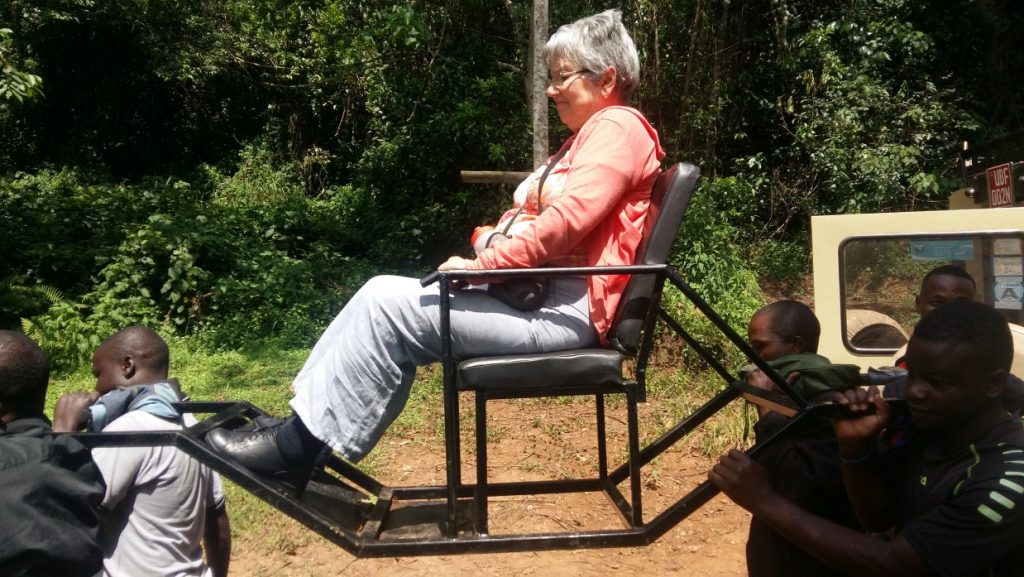
Accessibility support for senior gorilla trekkers
Gorilla trekking for seniors can be adapted for travellers with different levels of fitness and mobility. Although mountain gorilla trekking takes place in natural forests with steep, muddy and uneven terrain, practical support services can make the experience more manageable for older adults.
The most appropriate accessibility arrangement depends on whether the traveller can walk independently, requires occasional assistance or cannot safely complete the forest trail on foot. Seniors should describe their mobility honestly before booking so that porters, walking sticks, suitable accommodation and specialised carrying services can be organised in advance.
Accessibility support does not make every trek completely easy or remove all physical demands. Weather, terrain and the location of the allocated gorilla family can still affect the duration and difficulty of the experience. Travellers should review the available accessibility options before selecting a destination.
Sedan Chairs for Senior Gorilla Trekkers
A sedan chair is a specialised carrying arrangement for travellers who cannot comfortably or safely complete the gorilla trek on foot. The visitor sits in a supported chair or carrier that is transported through the forest by a coordinated team of experienced porters.
Sedan chairs can make gorilla trekking possible for elderly travellers, people with disabilities, visitors recovering from certain injuries and those with substantial mobility limitations. They may also provide reassurance to seniors who are uncertain whether they can complete a long or steep forest trek.
The carrying team must navigate hills, mud, roots, vegetation and narrow forest paths while maintaining the passenger’s safety and comfort. This requires several trained porters rather than one individual. The precise number of carriers may depend on the destination, terrain, traveller and local operating arrangements.
Travellers should not assume that a sedan chair will automatically be available on arrival. The service should be requested while planning the safari so that the operator can confirm availability, procedures and costs with the relevant local providers. The detailed guide to sedan chairs explains how this form of assistance supports visitors with reduced mobility.
Current published estimates on the verified website commonly place a round-trip sedan-chair service between approximately USD 300 and USD 500 per person. However, this should be treated only as a planning estimate. The final cost must be reconfirmed for the selected park, trekking sector, travel date and required carrying arrangement before payment.
Who Should Consider Using a Sedan Chair?
A sedan chair may be appropriate for a senior who cannot walk for several hours, has significant balance limitations or has been advised to avoid prolonged climbing and descending. It can also be considered when a traveller can walk short distances but cannot safely manage unpredictable forest terrain.
Older adults with severe arthritis, advanced mobility restrictions or previous joint problems may find the carrying option more practical than attempting the trek entirely on foot. A healthcare professional should still assess whether the traveller can safely sit in the carrier and participate in the wider safari.
The traveller should discuss comfort, body support, entry into the chair, rest arrangements and any special medical needs before the trekking day. A sedan chair provides transportation through the forest, but it does not replace medical clearance or guarantee immediate access to advanced healthcare.
Travellers can compare additional arrangements for travellers with disabilities when deciding whether porter support or a complete carrying service is more suitable.
Hiring a Porter for Gorilla Trekking
Hiring a porter is strongly recommended for senior gorilla trekkers, including those who are physically active. A porter can carry the traveller’s backpack, drinking water, rainwear, packed food and camera equipment, reducing strain on the shoulders, knees and back.
The value of a porter extends beyond carrying luggage. Porters understand the local terrain and can provide a steady hand when seniors cross streams, climb steep slopes or descend slippery sections. Their assistance allows the traveller to focus on safe foot placement and conserve energy for the return journey.
A senior should ideally hire a porter at the beginning of the trek rather than wait until exhaustion develops. Once the trekking group has entered the forest, arranging additional help may be difficult or impossible. Even a light daypack can become tiring after several hours of walking.
Visitors can review the process for arranging porters and carriers before departure. Advance communication is particularly important when several members of the same senior group require support.
How Porters Assist Seniors on Difficult Terrain
A porter can walk beside or slightly ahead of the traveller and offer support on challenging sections. This may include helping the senior step over roots, identify firm ground in muddy areas or maintain balance when climbing and descending.
The porter should not be expected to eliminate all risk or physically pull the traveller through every section. The senior must still follow ranger instructions, walk at a controlled pace and communicate immediately when they need to rest.
Travellers should avoid carrying unnecessary equipment. Large camera systems, multiple lenses and heavy water containers may increase the workload and slow the trek. A carefully packed day bag makes the experience more comfortable for both the traveller and porter.
Hiring a porter also contributes directly to local employment around gorilla trekking destinations. This makes porter assistance both a practical accessibility measure and a way for tourism income to reach neighbouring communities.
Walking Sticks and Trekking Poles
A walking stick or trekking pole can improve stability on muddy, steep and uneven forest trails. It provides an additional point of contact with the ground and allows the traveller to test the firmness of soil before placing their full weight on it.
Some trekking locations and lodges provide wooden walking sticks, but availability should be confirmed rather than assumed. Seniors who regularly use adjustable trekking poles may prefer to bring their own because they are already familiar with the grip, height and handling.
Trekking poles are most effective when the traveller has practised using them. Incorrect pole length or technique may reduce their usefulness and can interfere with balance. Seniors should include the poles during training walks before departure.
A walking stick does not replace a porter when substantial physical assistance is required. The two forms of support can be used together. Additional equipment recommendations are included in the verified trekking packing guide.
Suitable Footwear for Seniors with Mobility Concerns
Supportive footwear is essential because accessibility assistance cannot compensate for shoes with poor grip. Seniors should use comfortable hiking boots or suitable trail footwear with reliable traction, ankle support and protection from mud and vegetation.
Footwear should be broken in before travelling. New boots may cause blisters, pressure points or unexpected discomfort during a long trek. Seniors should test their boots on hills and uneven outdoor ground rather than only on smooth indoor surfaces.
Waterproof or water-resistant footwear can help during wet conditions, but breathability and comfort remain important. Heavy boots that restrict movement may become tiring, especially for travellers with joint stiffness or limited leg strength.
Clothing and footwear guidance for senior travellers is available in the verified trekking clothing guide.
Requesting Consideration for a Shorter Trek
Senior travellers can ask their safari guide to communicate their age, fitness and mobility concerns to park personnel during the morning briefing. Rangers may consider physical ability when organising trekking groups and allocating visitors to gorilla families.
However, no safari company or park employee can guarantee a short trek. Mountain gorillas move freely through the forest, and a family believed to be nearby can travel farther before the trekking group reaches it.
A request for a potentially more manageable trek should therefore be treated as a request for consideration rather than a confirmed service. Seniors must still prepare for changing weather, uneven terrain and a longer walk than expected.
Travellers who cannot safely manage an unpredictable walking distance should arrange a sedan chair rather than rely entirely on receiving a nearby gorilla family. Information not found in current search results regarding any officially guaranteed short-trek allocation for senior visitors.
Selecting an Appropriate Gorilla Trekking Sector
The location of the trekking sector affects accommodation, road transfers, altitude and the type of terrain encountered. In Bwindi Impenetrable National Park, gorilla trekking takes place in Buhoma, Ruhija, Rushaga and Nkuringo.
No Bwindi sector can truthfully be guaranteed as permanently easy because gorilla families change location. Terrain conditions can also vary after rain. However, choosing a lodge close to the correct briefing point can reduce unnecessary early-morning travel and make the day more comfortable.
Travellers should not book accommodation in one sector while holding a permit for another without confirming transfer feasibility. Crossing between sectors can require a substantial road journey, which may be tiring or impractical before the morning briefing.
Seniors considering Uganda should understand the potential Bwindi trekking terrain before selecting accommodation and accessibility support.
Accessibility in Mgahinga Gorilla National Park
Mgahinga Gorilla National Park is smaller than Bwindi, but its size does not mean every gorilla trek is short or easy. The park occupies mountainous volcanic terrain, and the walking distance depends on where the gorillas are located.
Older travellers may hire porters and request specialised support when required. A senior who cannot safely walk through the forest should confirm whether a sedan chair can be arranged for the intended trekking date.
Mgahinga may suit travellers entering southwestern Uganda through Kigali or those combining gorilla trekking with other experiences around Kisoro. The itinerary should include adequate rest and accommodation within practical reach of the trekking point.
The verified guide to Mgahinga gorilla trekking provides further information about the destination and support available to older travellers.
Accessibility in Volcanoes National Park
Rwanda’s Volcanoes National Park contains bamboo forest, volcanic slopes and mountain terrain. Some gorilla families may be reached after a relatively manageable walk, while others require a longer or steeper trek.
Senior travellers can hire porters and communicate their mobility concerns during the morning briefing. Requests for a more manageable allocation may be considered, but the movement of gorillas means that trekking duration cannot be guaranteed.
Visitors who require complete carrying assistance should arrange it before travelling. They should confirm whether the service is available for their date, what type of carrier will be used, how many porters are involved and what the total cost includes.
Rwanda may appeal to seniors who want to reduce long-distance road travel because Volcanoes National Park can be reached from Kigali without crossing the entire country. Accommodation close to the park headquarters can further reduce morning transfer time.
Hiring Extra Helpers
Some seniors may need more assistance than one porter can comfortably provide. An additional helper may be useful when a traveller requires support on both sides, has significant balance concerns, or carries specialised medical or photographic equipment.
The need for extra assistance should be discussed before trekking day. The operator can then determine what arrangements are locally available and whether additional costs apply.
A traveller should not assume that ranger guides can provide continuous personal physical support. Rangers are responsible for managing the entire trekking group, guiding the route, enforcing park regulations and protecting both visitors and gorillas.
Dedicated porters allow ranger guides to perform their responsibilities while the senior receives individual help. The verified guide to elderly gorilla tracking explains how local support can be incorporated into a senior-friendly trek.
Choosing Accessible Accommodation
Accessibility planning should continue beyond the forest. Seniors should confirm whether the selected lodge has steep pathways, numerous stairs, distant rooms or uneven access between guest rooms, dining areas and parking points.
Travellers with mobility limitations may request a room close to the restaurant or main lodge. They should also ask about walk-in showers, handrails, lighting, room heating, electricity, luggage assistance and vehicle access.
A property described as luxury is not automatically accessible. Some high-end forest lodges are built on steep hillsides to provide views, and reaching rooms may require climbing steps. The traveller’s specific needs should be discussed directly during the reservation process.
Accommodation should be located within practical reach of the correct park briefing point. A beautifully appointed lodge becomes less suitable when it requires an exhausting early-morning transfer over difficult roads.
Using Domestic Flights to Reduce Road Travel
Long road transfers can be tiring for seniors with back, hip or circulation concerns. Domestic flights may reduce the time spent travelling between Entebbe and southwestern Uganda, although road transfers are still required between the airstrip, lodge and trekking destination.
Flight schedules, baggage allowances, airstrip conditions and transfer arrangements should be confirmed before booking. Seniors who require assistance boarding small aircraft should communicate this to the airline and tour operator in advance.
Travellers entering through Kigali may also reach parts of southwestern Uganda by road. The suitability of this route depends on border procedures, the selected trekking sector and the traveller’s overall itinerary.
Private Safari Vehicles for Senior Travellers
A private safari vehicle gives seniors greater control over departure times, rest stops and the pace of road transfers. It can also provide more space for walking aids, medical equipment and luggage.
The vehicle should have safe entry steps, comfortable seats, functional seat belts and sufficient room for the traveller to change position during long journeys. Seniors with limited mobility should ask about the height of the vehicle and whether assistance is available when entering and exiting.
Regular stops can reduce stiffness and discomfort during long drives. However, the itinerary must still allow enough time to reach lodges and park briefing points safely before nightfall.
Emergency Support and Evacuation Planning
Mountain gorilla trekking occurs in remote forest environments where immediate hospital-level care may not be available. Seniors should understand that evacuation from the trail can take time, particularly in steep terrain or poor weather.
Travellers should carry comprehensive insurance that covers their age, declared medical conditions, trekking activity and emergency evacuation. Policy exclusions should be reviewed carefully before payment.
Essential medication should remain accessible and protected from rain. A travelling companion and the guide should know about any condition that could require urgent assistance.
A sedan chair or team of porters may help remove an exhausted or immobile visitor from the forest, but these services should not be treated as substitutes for medical preparation or appropriate insurance.
Booking Accessibility Services in Advance
Every required service should be recorded clearly in the safari arrangements. The traveller should confirm whether a porter, sedan chair, extra helper, walking stick, accessible room or special vehicle assistance has been requested and accepted.
Verbal assumptions are not sufficient when a traveller’s ability to participate depends on a particular service. Costs, payment procedures, cancellation terms and the point at which the service begins should be clarified before arrival.
The operator should also know the traveller’s approximate mobility level. Saying only that the visitor is elderly does not explain whether they can walk independently, use a cane, require support on stairs or need complete carrying assistance.
Final Accessibility Advice for Senior Gorilla Trekking
Accessible gorilla trekking begins with honest planning. Seniors should select support according to their actual mobility rather than trying to minimise assistance for reasons of pride or cost.
An active senior may need only a porter and walking stick. A traveller with moderate limitations may benefit from extra helpers and a carefully paced allocation request. Someone who cannot safely complete an unpredictable forest walk should consider a prearranged sedan chair.
Porters, walking sticks, carrying chairs, nearby accommodation and private transport can significantly improve comfort, but none can guarantee a flat trail, dry weather or a short trek. Mountain gorillas remain free-ranging animals living in natural forest habitats.
With suitable medical guidance, booking and properly confirmed accessibility services, gorilla trekking for seniors can become a realistic and rewarding wildlife experience for many older travellers.
Choosing the Best Gorilla Trekking Destination for Seniors

Choosing the right destination is one of the most important decisions when planning gorilla trekking for seniors. Uganda and Rwanda both offer carefully managed mountain gorilla encounters, but they differ in permit costs, road-transfer times, accommodation styles, trekking sectors and the overall length of the safari.
The best destination should not be selected solely because a park is described as easy. Mountain gorillas move freely through natural forests, so the walking distance and trail conditions can change from one day to another. A destination that produced a short trek yesterday may require a longer and steeper walk today.
Senior travellers should compare their fitness, mobility, available travel time, preferred accommodation standard and tolerance for road journeys. A useful starting point is this detailed comparison of Bwindi and Volcanoes, which examines Uganda’s leading gorilla destination alongside Rwanda’s principal trekking park.
Bwindi Impenetrable National Park
Bwindi Impenetrable National Park is Uganda’s best-known mountain gorilla destination. The forest lies in southwestern Uganda and contains several trekking areas, commonly referred to as sectors. These are Buhoma, Ruhija, Rushaga and Nkuringo.
The presence of several sectors gives senior travellers more accommodation and itinerary options. However, a permit is connected to a particular trekking area, so accommodation should be booked near the correct briefing point. Staying in the wrong sector can create an unnecessarily long and tiring early-morning transfer.
Bwindi contains steep ridges, valleys, streams, exposed roots and dense vegetation. Rain can make the trails muddy and slippery. Seniors should prepare for genuine rainforest hiking even when requesting consideration for a more manageable gorilla family.
Travellers should understand the possible Bwindi trekking difficulty before selecting a sector. No tour operator can guarantee that a particular part of Bwindi will always provide the shortest trek.
Buhoma Sector for Senior Gorilla Trekking
Buhoma is located in the northern part of Bwindi Impenetrable National Park. It is one of the park’s longest-established tourism areas and has a range of accommodation options close to the park entrance and briefing point.
This concentration of lodges can be helpful for seniors because it may reduce the transfer required on trekking morning. A nearby lodge also allows the traveller to return to their room more quickly after completing the forest experience.
Buhoma is sometimes promoted as an easier sector, but this description should be treated cautiously. The landscape remains hilly, and the difficulty depends on the location of the assigned gorilla family, recent rainfall, and the route selected by trackers and ranger guides.
Some seniors may prefer Buhoma because it can be incorporated into wildlife itineraries that continue through the Ishasha area of Queen Elizabeth National Park. The route should still be planned with realistic driving times and adequate rest stops.
Ruhija Sector for Senior Gorilla Trekking
Ruhija lies in the eastern part of Bwindi and is situated at a relatively elevated forest location. The area can feel cool, misty and wet, particularly during the early morning or after rain.
The elevated setting provides attractive forest and mountain scenery, but seniors should consider how they respond to altitude, cooler conditions and hilly terrain. Travellers arriving from low-altitude destinations may benefit from reaching the area before trekking day rather than travelling directly into the activity.
Ruhija can be reached from Kabale and other parts of southwestern Uganda. Road conditions and transfer times vary, so the lodge should be selected according to its practical proximity to the briefing point rather than its name or general description.
Seniors choosing Ruhija should carry layered clothing, rain protection and suitable footwear with reliable grip. A porter remains advisable even for travellers who normally walk independently.
Rushaga Sector for Senior Gorilla Trekking
Rushaga is located in southern Bwindi and provides access to several gorilla trekking opportunities. It is commonly used by travellers entering Uganda through Kigali because it can be incorporated into a cross-border itinerary through southwestern Uganda.
The sector contains hilly forest terrain, and trekking conditions depend on the assigned gorilla family. Seniors should not assume that the availability of several habituated groups guarantees a short or easy trek.
Rushaga has a growing selection of budget, midrange and luxury accommodation. Travellers with mobility limitations should confirm whether the chosen lodge has steep pathways, numerous steps or rooms positioned far from the restaurant and vehicle-access area.
Senior travellers interested in southern Bwindi should arrange porter assistance in advance and communicate mobility concerns during the park briefing. Requests for a potentially more manageable allocation may be considered, but they cannot be guaranteed.
Nkuringo Sector for Senior Gorilla Trekking
Nkuringo lies in the southwestern part of Bwindi and is known for dramatic views across the surrounding highlands. Its landscape can also involve steep slopes and physically demanding walking conditions.
Active seniors with good hill-walking experience may enjoy Nkuringo, but travellers with significant knee, hip or balance limitations should assess the terrain carefully. Descending steep or slippery ground can place considerable strain on the joints even when the uphill sections feel manageable.
A porter, walking stick or adjustable trekking poles can improve stability. Seniors who cannot safely walk unpredictable distances should discuss whether a carrying chair can be arranged rather than relying exclusively on a request for a nearby gorilla family.
Accommodation location is especially important. The itinerary should avoid adding unnecessary road travel immediately before or after the trek.
Which Bwindi Sector Is Easiest for Seniors?
No Bwindi sector can be guaranteed as permanently easiest for senior travellers. Gorilla families move throughout the forest, weather changes trail conditions, and individual routes differ from one trekking day to another.
Buhoma may appeal to some seniors because several lodges are situated close to the briefing area. Rushaga can be convenient for some journeys beginning in Kigali, while Ruhija and Nkuringo may suit physically active travellers who are comfortable with higher or steeper terrain.
The correct choice should be based on the traveller’s individual mobility, the location of available permits, lodge accessibility and the wider safari route. Marketing claims promising an effortless trek should not replace honest preparation.
Information not found in current search results regarding an official permanent designation of one Bwindi sector as the easiest sector for senior gorilla trekking.
Mgahinga Gorilla National Park
Mgahinga Gorilla National Park is Uganda’s other mountain gorilla trekking destination. It lies in the far southwest of the country within the Virunga volcanic landscape near Rwanda and the Democratic Republic of Congo.
The park is smaller than Bwindi, but its size does not guarantee a shorter or easier trek. The terrain includes mountain slopes, bamboo vegetation, and volcanic ground. Trekking duration still depends on the gorillas’ location and movements.
Mgahinga can be especially attractive to seniors staying around Kisoro or entering the region through Kigali. It can also be combined with golden monkey tracking, although travellers should avoid placing too many physically demanding activities on consecutive days.
A complete guide to Mgahinga gorilla trekking can help seniors understand the destination before selecting accommodation and transport.
Advantages of Mgahinga for Senior Travellers
Mgahinga offers a scenic, compact park environment and can work well within a carefully paced southwestern Uganda itinerary. Travellers may stay around Kisoro, Lake Mutanda or another nearby area, depending on the accommodation selected and the exact transfer arrangement.
The park also allows travellers to combine mountain gorillas with golden monkeys in the same general destination. Seniors should include a rest day when necessary rather than assuming that both activities must be completed on consecutive mornings.
Porters and walking support should be organised for travellers who need assistance. Anyone requiring a complete carrying service should obtain written confirmation that the service can be provided on the intended date.
Visitors comparing Uganda’s two gorilla parks can review this direct comparison of Bwindi and Mgahinga.
Limitations of Mgahinga for Senior Travellers
Mgahinga’s mountain environment may be challenging for seniors with reduced stamina, joint pain or poor balance. Some trail sections can be steep, muddy or covered by uneven volcanic material.
The park has fewer gorilla trekking options than the different sectors of Bwindi. This can reduce flexibility when permits are limited or when a traveller wants several possible trekking areas to compare.
Seniors should also examine the location and accessibility of nearby accommodation. A lodge with impressive scenery may still be unsuitable when it has steep paths, numerous stairs or limited vehicle access.
Mgahinga should therefore be chosen because its location, permit availability and wider itinerary suit the traveller, not simply because it is Uganda’s smallest national park.
Volcanoes National Park in Rwanda
Volcanoes National Park is Rwanda’s mountain gorilla trekking destination. It lies in the northwest of the country within the Virunga Mountains and is reached from Kigali by road.
Rwanda is often attractive to senior travellers who want a shorter safari or wish to reduce the number of very long road-transfer days. Visitors can travel from Kigali to the Volcanoes region, stay near the park and attend the morning briefing at Kinigi.
The park contains bamboo forest, volcanic slopes, thick vegetation and uneven trails. Some gorilla families may be reached after a relatively manageable walk, while others require longer and steeper hiking.
Seniors should examine the full process for Volcanoes gorilla trekking before choosing Rwanda solely for its convenient road access.
Advantages of Volcanoes National Park for Seniors
The relative proximity of the Volcanoes region to Kigali can make Rwanda suitable for travellers with limited time. It may also reduce the need for an internal flight or a full-day road journey across Uganda.
The region offers several high-end accommodation properties and private transfer options. Seniors can stay near the park headquarters, reducing the amount of driving required before the morning briefing.
Rwanda may therefore be appropriate for travellers who prioritise efficient logistics, luxury accommodation and a compact itinerary. These advantages relate mainly to reaching the park and organising the safari rather than guaranteeing an easy forest walk.
The trek itself remains physically unpredictable because the gorillas move naturally within a mountainous habitat.
Limitations of Volcanoes National Park for Seniors
Rwanda’s gorilla permits are generally more expensive for foreign visitors than Uganda’s standard foreign non-resident permits. Seniors should compare the complete safari cost, including accommodation, transport, porter assistance and any specialised mobility support.
The volcanic terrain and altitude may be challenging for some older travellers. A shorter road transfer does not necessarily mean the forest experience will be easier.
Weather can also change quickly. Rain may make trails muddy and slippery, while cool morning temperatures can increase joint stiffness. Appropriate clothing, footwear and physical preparation remain necessary.
The verified guide to Volcanoes trekking conditions provides a realistic explanation of the potential physical challenges.
Uganda or Rwanda for Senior Gorilla Trekking?
Uganda may be the better choice for seniors who want a longer and more varied safari, a lower standard foreign visitor permit price and the ability to choose between Bwindi and Mgahinga. It also works well for travellers combining gorillas with chimpanzees, wildlife viewing, boat safaris and Lake Bunyonyi.
Rwanda may be better for seniors who want a shorter itinerary, a relatively direct road journey from Kigali and access to luxury accommodation near Volcanoes National Park. The higher permit price should be included in the decision.
Neither country is universally better for every older traveller. The correct choice depends on mobility, budget, travel time, preferred comfort level and the senior’s ability to manage forest terrain.
A broader Uganda and Rwanda comparison can help travellers assess the complete experience rather than focusing only on the permit price.
Choosing According to Road-Transfer Tolerance
Seniors who experience back pain, joint stiffness or circulation problems during long drives should consider the amount of road travel carefully. Reaching Bwindi from Entebbe by road normally requires a much longer journey than travelling from Kigali to Volcanoes National Park.
Domestic flights can reduce travel time between Entebbe and southwestern Uganda, although road transfers are still required between the airstrip, lodge and trekking sector. Flight schedules, baggage limits and accessibility support should be confirmed before booking.
Some travellers reach southern Bwindi or Mgahinga from Kigali by road. This can reduce driving compared with beginning the journey in Entebbe, but border procedures and permit-country requirements must be considered.
A senior-friendly itinerary should avoid combining a long road journey, a late arrival and gorilla trekking the following morning whenever a more comfortable schedule is possible.
Choosing According to Permit Cost
Permit price is an important consideration, particularly for couples or families travelling with senior relatives. Uganda and Rwanda apply different permit tariffs, and these can change through official government decisions.
Travellers should obtain the current permit cost for their nationality and travel date before budgeting. They should also confirm what the permit includes and understand that accommodation, transport, porter services, tips and specialised carrying assistance are generally separate safari expenses.
A cheaper permit does not automatically produce a cheaper total safari. Domestic flights, lodge category, private transport and itinerary length can substantially affect the complete cost.
Seniors should compare complete quotations based on equivalent service levels rather than comparing only one headline price.
Choosing According to Accommodation Accessibility
The best gorilla trekking destination for a senior is partly determined by the available lodge. Travellers with limited mobility should ask about stairs, steep paths, room location, shower design, handrails, lighting and vehicle access.
A luxury lodge is not automatically senior-friendly. Mountain and forest properties may be constructed on hillsides, with guest rooms separated from the main building by long or steep pathways.
The lodge should also be located near the correct trekking departure point. A comfortable room cannot compensate for an exhausting early-morning transfer caused by booking accommodation in the wrong sector.
Accessibility requirements should be communicated before confirming the lodge so that the property can advise whether it can meet the traveller’s needs.
Choosing According to Available Mobility Support
Seniors who can walk independently may need only a porter and walking stick. Travellers with moderate limitations may require additional helpers, while those unable to complete the forest trail safely may need a sedan chair.
These services should be confirmed for the chosen destination and date. Travellers should not assume that every support arrangement is immediately available at every park entrance.
The safari operator should understand whether the senior uses a cane, requires assistance on stairs, can walk for several hours or needs complete carrying support. Describing the traveller only as elderly does not provide enough information for proper planning.
Information not found in current search results regarding a single accessibility service standard that applies identically across every gorilla trekking sector in Uganda and Rwanda.
Best Destination for Active Seniors
Active seniors who regularly hike and are comfortable with hills may choose any of the main mountain gorilla destinations, subject to medical suitability and permit availability.
Bwindi offers several sectors and can be combined with a longer Uganda wildlife safari. Mgahinga provides volcanic scenery and golden monkey tracking, while Volcanoes National Park offers convenient access from Kigali and a wide choice of premium accommodation.
Even experienced hikers should hire a porter because unfamiliar mud, vegetation and altitude can increase the difficulty. Fitness does not remove the risk created by slippery ground or changing weather.
Best Destination for Seniors with Moderate Mobility Limitations
Seniors who can walk but require regular support should prioritise a nearby lodge, private transport, porter assistance and a schedule that includes sufficient rest.
They may request consideration for a more manageable gorilla allocation during the briefing, but they must still prepare for an unpredictable route. The request cannot guarantee a short trek.
The destination should be selected only after confirming that the required walking support and accommodation arrangements are available.
Best Destination for Seniors Who Cannot Complete the Trek on Foot
A traveller who cannot safely walk through steep or uneven forest terrain should choose a destination where a specialised carrying arrangement has been confirmed in advance.
The operator should confirm the type of chair or carrier, estimated price, number of porters, payment procedure and whether any health or weight information is required to organise the service.
The traveller must still obtain medical advice because sitting in a carrier through a mountain forest can involve movement, cool temperatures and prolonged time away from immediate medical facilities.
A carrying service makes the gorilla encounter more accessible, but it does not transform the wider trip into a completely barrier-free experience. Vehicle access, lodge pathways and bathroom facilities must also be considered.
Final Advice on Selecting a Gorilla Trekking Destination
The best gorilla trekking destination for seniors is the one that matches the traveller’s health, mobility, budget, travel time and preferred level of comfort. No single park or trekking sector is automatically best for every older adult.
Bwindi provides several trekking sectors and extensive Uganda safari combinations. Mgahinga offers a compact volcanic destination with gorillas and golden monkeys. Volcanoes National Park provides comparatively convenient access from Kigali and strong luxury-travel options.
Seniors should avoid choosing a destination based on promises of a guaranteed easy trek. The most reliable approach is to prepare for variable terrain, stay close to the correct briefing point, hire a porter and confirm any specialised accessibility service before travelling.
With honest planning and a carefully paced itinerary, each of these destinations can provide a safe, comfortable and memorable gorilla trekking experience for suitable senior travellers.
Best Time for Gorilla Trekking for Seniors
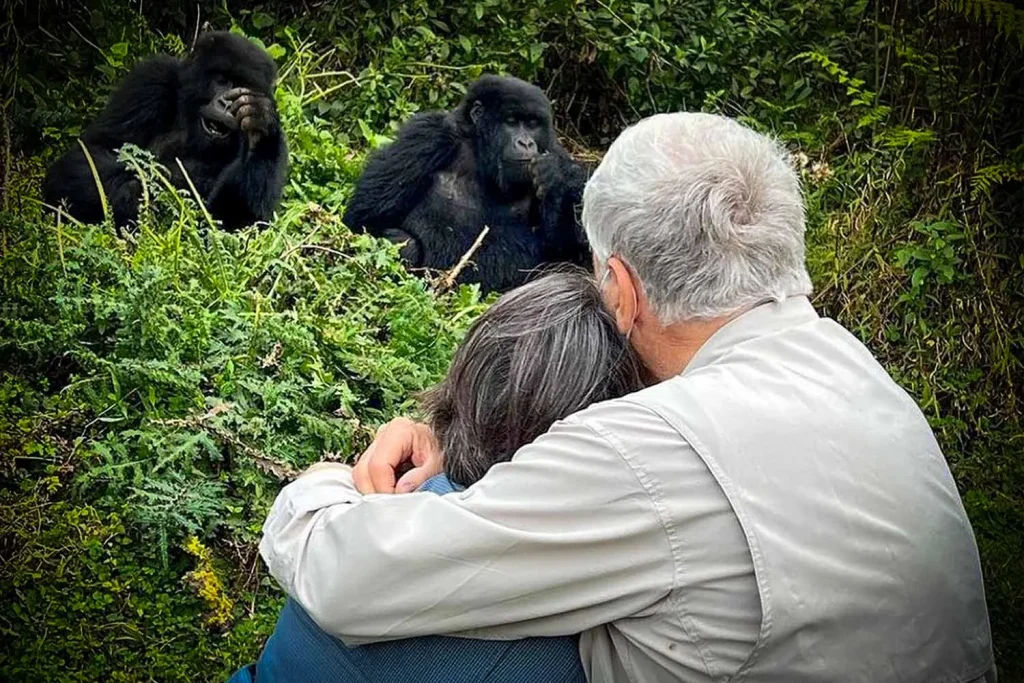
Dry season gorilla trekking for senior travellers
The best time for gorilla trekking for seniors is generally during the comparatively drier periods from June to September and from December to February. During these months, forest trails are often firmer and less slippery than they are during periods of frequent rainfall. These conditions can make walking more manageable for older travellers with concerns about balance, joint strain or reduced mobility.
Mountain gorilla trekking nevertheless operates throughout the year in Uganda and Rwanda. Rain can fall during any month because Bwindi Impenetrable National Park, Mgahinga Gorilla National Park and Volcanoes National Park protect humid mountain-forest environments. A dry-season booking therefore improves the probability of more favourable conditions but does not guarantee a rain-free trek.
Senior travellers should select their dates according to physical ability, budget, permit availability and tolerance for wet or crowded conditions. The detailed monthly guide explains how seasonal conditions can affect trekking in Uganda and Rwanda.
Why the Dry Season Is Usually Best for Seniors
The dry season is usually the most suitable period for senior gorilla trekking because reduced rainfall can make forest trails firmer. Mud, exposed roots and steep slopes remain present, but the risk of extremely slippery sections may be lower than during sustained wet weather.
Firmer ground can be particularly helpful for seniors with arthritis, previous knee or hip surgery, balance limitations or reduced confidence on muddy terrain. Descending a wet slope often places greater pressure on the knees and requires more controlled movement than walking uphill.
Dry-season conditions may also make road transfers more comfortable. Access roads leading to remote mountain lodges can become slower and rougher after heavy rainfall. Reduced rainfall does not eliminate challenging roads, but it may improve overall travel reliability.
The verified seasonal advice provides additional information about dry- and rainy-season trekking conditions.
June to September Dry Season
June, July, August and September form one of the most popular periods for gorilla trekking in Uganda and Rwanda. Rainfall is commonly lower than during the main wet seasons, and forest paths may be less muddy and easier to navigate.
These months are well suited to seniors who want to combine gorilla trekking with wildlife safaris in destinations such as Queen Elizabeth National Park, Murchison Falls National Park or Lake Mburo National Park. Drier conditions generally support game drives, boat trips and other outdoor activities.
The popularity of this period means gorilla permits, accessible rooms and experienced driver-guides can be reserved well in advance. Senior travellers requiring a lodge close to the trekking briefing point should book early rather than select accommodation only from the rooms that remain available.
Higher visitor demand can also increase accommodation prices. Seniors should compare the advantages of better trail conditions with the additional cost and reduced booking flexibility of peak-season travel.
December to February Dry Season
December, January and February provide another generally favourable period for gorilla trekking for seniors. Trails may be firmer than during the main rainy months, although local showers remain possible.
This season can suit retired travellers escaping winter conditions in Europe or North America. It also allows gorilla trekking to be combined with wildlife viewing, birdwatching and other safari activities in Uganda or Rwanda.
December includes holiday travel demand, so permits and preferred lodges may sell out early. January and February can sometimes offer greater planning flexibility, but availability should always be confirmed for the exact travel date.
Seniors considering these months can consult the verified guide to the best trekking period before finalising their itinerary.
Does Dry Season Mean There Will Be No Rain?
Dry season does not mean completely dry weather. Mountain gorillas live in tropical and montane forests where rain can occur unexpectedly throughout the year. Mist, drizzle and short rain showers may develop even on a day that begins with clear skies.
Seniors must therefore carry a lightweight waterproof jacket or poncho during every trek. A waterproof cover or dry bag should protect medication, documents, phones and camera equipment.
Boots should have strong tread and should already be broken in. Even during a drier month, shaded forest sections can remain damp, while streams, wet leaves and exposed roots may still create slippery surfaces.
Travellers should avoid interpreting seasonal averages as guarantees for an individual trekking day. Weather in mountainous areas can vary over short distances and change quickly.
March to May Rainy Season
March, April and May are commonly associated with the longer rainy season in Uganda and Rwanda. Rainfall can make gorilla trekking trails wetter, muddier and more slippery, increasing the physical demands for senior travellers.
April and May are often among the wettest months. Seniors with balance problems, chronic joint pain or limited hill-walking experience should assess these conditions carefully before choosing this period.
Rain does not usually mean continuous rainfall throughout every day. Some mornings may begin dry, and rainfall patterns can vary. However, the likelihood of difficult trail conditions is generally higher, so visitors should prepare for mud and changing weather.
Travellers considering this season should study the practical information on rainy-season trekking before booking.
October to November Rainy Season
October and November are commonly associated with another period of increased rainfall. Trails may become muddy, and access roads can be slower after heavy showers.
This period can still suit physically capable seniors who are comfortable with wet-weather walking and want to avoid peak-season demand. Fewer visitors may create a quieter atmosphere at some lodges and trekking destinations.
November can offer lower-season travel opportunities, but weather conditions should not be underestimated. A lower price has limited value when the traveller cannot safely manage slippery forest terrain.
Seniors travelling during October or November should hire a porter, wear suitable footwear and use a walking stick or trekking poles. Anyone with substantial mobility limitations should discuss a prearranged carrying chair rather than rely on receiving a short trek.
Advantages of Rainy-Season Gorilla Trekking for Seniors
The rainy season is not unsuitable for every older traveller. Active seniors with experience walking in wet conditions may appreciate the greener forest landscapes, fewer visitors and potentially greater accommodation availability.
Vegetation is particularly lush during wet periods, creating attractive scenery and rich colours for photography. Cloud cover can also reduce harsh sunlight, although low forest light and rainfall may make photography technically challenging.
Some lodges may provide seasonal offers during lower-demand months. Permit availability can also be easier than during popular dry-season dates, although this must be checked for the exact destination and travel period.
Seniors should base their decision on walking ability rather than price alone. Those who are comfortable using porters, poles and rain protection may still have a rewarding experience.
Disadvantages of Rainy-Season Trekking for Seniors
Mud and slippery ground are the principal disadvantages of rainy-season gorilla trekking for seniors. Wet roots, leaves, and rocks can reduce traction, while steep descents may place additional strain on knees, hips, and ankles.
Rainwear can become warm during strenuous climbs, and wet clothing may create discomfort during rest periods. Seniors should use lightweight, breathable layers instead of relying on one heavy garment.
Photography equipment requires stronger moisture protection. Medication and important documents must also remain dry and accessible throughout the trek.
Road transfers may take longer after heavy rain, particularly on remote mountain routes. A senior-friendly itinerary should avoid tightly scheduled connections and allow enough time for changing road conditions.
January Gorilla Trekking for Seniors
January commonly falls within a comparatively drier period and can provide favourable trail conditions for senior gorilla trekking. It is a practical month for combining gorillas with wildlife viewing elsewhere in Uganda or Rwanda.
Demand can remain high after the December holiday period, so permits and accessible accommodation should be secured early. Seniors should still pack complete rain protection because showers remain possible.
January may suit travellers who prefer warm daytime safari conditions while escaping winter in their home countries. Mountain mornings can nevertheless feel cool, particularly around Ruhija, Mgahinga and Volcanoes National Park.
February Gorilla Trekking for Seniors
February is often one of the favourable months for older travellers because rainfall may remain comparatively limited and trails can be firmer. It can also be less crowded than the late-December holiday period.
Senior visitors should not delay physical preparation simply because February is considered a drier month. Hills, roots and natural forest obstacles remain present regardless of the season.
February can work well for a combined gorilla, chimpanzee and wildlife safari. Rest days should be incorporated when the itinerary includes several physically active experiences.
March Gorilla Trekking for Seniors
March can be transitional, with rainfall generally increasing as the month progresses. Conditions during early March may differ considerably from those experienced later in the month.
Seniors travelling in March should prepare for both relatively dry periods and heavy showers. Flexible clothing, waterproof storage and boots with reliable traction are essential.
Because exact rainfall cannot be predicted months in advance, travellers should not rely on a guaranteed dry early-March trek. The final decision should consider fitness, balance and willingness to walk in mud.
April Gorilla Trekking for Seniors
April commonly falls within the main rainy period and can produce wet, muddy and slippery forest conditions. It may be less suitable for seniors with serious balance concerns or painful knee and hip conditions.
Active older travellers can still trek when properly equipped. Porter assistance becomes especially valuable because it reduces the weight carried and provides support on difficult sections.
Visitors should carry waterproof outerwear, protective gloves and secure footwear. Important medication must remain inside a waterproof pouch that can be reached easily.
May Gorilla Trekking for Seniors
May is generally associated with the later part of the long rainy season. Forests remain lush, and trails may still be wet even when rain is not falling during the trek itself.
Lower visitor demand can improve lodge availability and create a quieter safari experience. However, reduced demand does not make the terrain less physically challenging.
Seniors choosing May should avoid rushing between destinations. Road journeys may take longer, and extra time should be available for rest and unexpected delays.
June Gorilla Trekking for Seniors
June commonly marks the beginning of a popular drier travel period. Trail conditions may improve as rainfall reduces, making it one of the preferred months for senior gorilla trekking.
Demand for permits and accommodation begins to rise. Travellers requiring an accessible room or lodge close to the briefing point should reserve early.
June can also be an excellent month for combining gorilla trekking with a longer Uganda wildlife safari. Seniors should keep the itinerary balanced and avoid placing demanding activities on every day.
July Gorilla Trekking for Seniors
July is one of the most popular months for gorilla trekking in Uganda and Rwanda. Comparatively drier weather may produce firmer trails and more comfortable road-transfer conditions.
High demand is the principal limitation. Permits, flights, senior-friendly rooms and preferred guides can become unavailable when booking is delayed.
Although July is generally favourable, mountain weather remains unpredictable. Rain gear, gloves and reliable hiking boots are still required.
August Gorilla Trekking for Seniors
August commonly provides favourable conditions similar to July. It can be suitable for seniors who prioritise firmer trails and want to combine gorilla trekking with other wildlife experiences.
It remains a popular international travel month, so early planning is necessary. Seniors should ensure that the lodge is located near the correct sector rather than accepting distant accommodation because closer properties are full.
The traveller should also confirm porter and mobility-support arrangements before arrival. Peak-season demand can affect more than permits and rooms.
September Gorilla Trekking for Seniors
September can begin with comparatively dry conditions, while rainfall may increase as the month progresses. The timing and intensity of this transition vary from year to year.
Early September may appeal to seniors seeking dry-season conditions with slightly reduced demand after the busiest holiday weeks. Later September travellers should prepare carefully for wetter paths.
Seasonal transitions are not fixed to an exact day. Rainfall can occur throughout the month, so waterproof equipment remains essential.
October Gorilla Trekking for Seniors
October commonly brings increased rainfall. Forest trails can become muddy and more physically demanding, especially for seniors with limited balance or joint problems.
The month can still offer lush landscapes and lower visitor pressure than the main dry-season months. Physically active seniors who accept the possibility of wet trekking may find it rewarding.
Porter assistance and walking poles are strongly advisable. Seniors should also allow additional road-transfer time in case rain affects access conditions.
November Gorilla Trekking for Seniors
November is generally part of the shorter rainy period. Conditions can include wet trails, mist, and intermittent heavy showers.
Some travellers choose November because of lower demand and possible seasonal savings. The physical implications of slippery terrain should be considered before cost advantages.
Older visitors should use waterproof clothing that permits comfortable movement and should protect medication, cameras and travel documents from moisture. The verified rainy-season packing guide provides relevant preparation details.
December Gorilla Trekking for Seniors
December commonly marks the return of comparatively drier conditions, although the transition may vary and rainfall remains possible. It is a popular month for holiday travel.
Permits and accommodation can be heavily booked around Christmas and New Year. Seniors requiring particular room features, private transport or specialised mobility support should plan well in advance.
Travellers should avoid creating a rushed itinerary around international holiday flights. Arriving near the gorilla park at least one day before trekking allows time to rest after the journey.
Additional seasonal considerations are available in the verified guide to December trekking.
Best Time for Seniors with Knee or Hip Problems
Seniors with knee, hip or ankle concerns should generally prioritise the drier months because firmer ground can reduce slipping and make controlled descents more manageable. June to September and December to February are commonly preferred.
Drier conditions do not remove steep slopes or uneven surfaces. Travellers should still obtain medical advice, prepare physically and arrange porter support.
Trekking poles can help reduce strain and improve stability, particularly during descents. The traveller should practise with them before departure rather than learning how to use them inside the forest.
Best Time for Seniors with Balance Limitations
Older travellers with reduced balance should avoid choosing the wettest periods solely to obtain lower prices. Mud, wet roots and slippery rocks can substantially increase the challenge.
A dry-season date may provide more favourable walking conditions, but a porter and walking stick remain important. Anyone unable to manage unpredictable terrain safely should arrange a sedan chair in advance.
The traveller’s healthcare provider should assess whether forest trekking is appropriate. Seasonal selection cannot compensate for serious instability or an unmanaged medical condition.
Best Time for Senior Photographers
Senior photographers may prefer the drier months because there is a lower probability of prolonged rain affecting equipment and visibility. Trails may also be easier to navigate while carrying photographic gear.
Forest photography remains challenging because light levels can be low and vegetation may obstruct clear views. Cloud cover can provide softer light, while rain can produce rich colours and atmospheric images.
A porter should carry heavy camera equipment so that the senior can concentrate on balance. Only the essential camera body and lens should be taken when mobility is a concern.
Every camera bag should include reliable rain protection regardless of the travel month. The verified information about Rwanda trekking weather can assist travellers planning photography in Volcanoes National Park.
Best Time for Lower Visitor Numbers
March to May and October to November can receive fewer visitors than the main dry-season periods. This may create quieter lodges and greater accommodation availability.
Fewer visitors do not necessarily change the number of people permitted to visit one gorilla family during the organised encounter. Park rules and group limits continue to apply.
Seniors choosing a quieter period should determine whether they can safely manage wetter conditions. A peaceful lodge experience should not be prioritised over physical safety on the trail.
Best Time for Permit and Lodge Availability
Permit and lodge availability is generally more restricted during June to September and around the December holiday period. Travellers should book early when their dates are fixed.
Senior travellers often have more specific accommodation requirements than younger visitors. They may need a room close to the restaurant, minimal stairs, vehicle access or a walk-in shower. These rooms can be limited even when the lodge still shows general availability.
Lower-demand months may provide more choice, but the traveller must balance availability against weather and trail difficulty. Current permit availability must be checked for the exact destination and trekking date.
Does the Season Affect the Chance of Seeing Gorillas?
Mountain gorilla trekking is organised throughout the year, and trained trackers monitor habituated gorilla families. The season mainly affects trail conditions, rainfall, vegetation and visitor comfort rather than creating a simple guarantee that gorillas will be seen in one period and not another.
Gorillas move daily in search of food and suitable resting locations. Their position determines how long the trekking group must walk, regardless of whether the visit occurs during a dry or rainy month.
No responsible operator should guarantee a particular trekking duration or exact sighting outcome based solely on the season. Seniors must prepare for an unpredictable walking distance at any time of year.
Weather Differences Between Uganda and Rwanda
Uganda’s Bwindi and Mgahinga forests and Rwanda’s Volcanoes National Park all experience mountain weather influenced by elevation and local topography. Conditions can differ between parks and even between nearby trekking sectors.
The general drier periods are commonly identified as June to September and December to February, while March to May and October to November are usually wetter. These patterns are guides rather than exact guarantees.
Seniors should examine the forecast shortly before trekking but must pack for rain regardless of what it predicts. Mountain forecasts can change, and conditions inside the forest may differ from those at the lodge.
How Early Should Seniors Book Dry-Season Trekking?
Seniors travelling during June, July, August, September or the December holiday period should secure permits and suitable accommodation as early as practical. Booking early improves the opportunity to choose a lodge close to the correct briefing point.
Early planning also allows time to arrange porter assistance, a private vehicle, an accessible room or a sedan chair. These requirements should be confirmed rather than added as assumptions to a general safari reservation.
Best Accommodation for Senior Gorilla Trekkers

Comfortable accommodation for senior gorilla trekkers
Choosing suitable accommodation is essential when organising gorilla trekking for seniors. The quality of a lodge should not be judged only by its star rating, room design or forest views. Older travellers must also consider the property’s location, pathways, number of steps, bathroom layout, room temperature, vehicle access and distance from the correct gorilla trekking briefing point.
A lodge that is comfortable for a physically active traveller may be unsuitable for a senior with knee pain, reduced balance or limited walking ability. Many gorilla lodges are constructed on forested hillsides, and reaching a room may involve steep pathways or numerous stairs. Accessibility requirements should therefore be discussed before a reservation is confirmed.
Travellers should also ensure that their accommodation corresponds with the trekking sector shown on their gorilla permit. Bwindi Impenetrable National Park has four main trekking sectors, and travelling between them can require considerable time. The site’s guide to Bwindi trekking conditions helps seniors understand why location and terrain must be considered together.
Why Lodge Location Matters for Seniors
The best lodge for a senior gorilla trekker is normally one located within practical reach of the correct park briefing point. A short morning transfer allows the traveller to rest longer, eat breakfast comfortably and avoid spending unnecessary time on rough mountain roads before entering the forest.
Gorilla trekking briefings take place early in the morning. Seniors staying far from the departure point may need to wake considerably earlier and travel over winding or uneven roads. This can increase fatigue before the physically demanding part of the day has even begun.
Location also matters after the trek. An older traveller who has spent several hours walking through the forest will usually appreciate returning to the lodge without a lengthy additional transfer. Quick access to a shower, warm room, meal and comfortable bed can improve recovery.
Travellers should never select a lodge based only on the broad description “near Bwindi.” They must confirm whether it is near Buhoma, Ruhija, Rushaga or Nkuringo and whether that location matches the trekking permit.
Understanding Bwindi’s Accommodation Sectors
Bwindi Impenetrable National Park is not served by one central accommodation area. Its gorilla trekking operations are distributed across Buhoma in the north, Ruhija in the east, Rushaga in the south and Nkuringo in the southwest.
A lodge near Buhoma is not automatically suitable for someone trekking in Rushaga or Nkuringo. Transfers between sectors may involve long journeys on mountainous roads, and driving conditions can be slower after rain.
Senior travellers should first obtain or confirm the trekking sector and then choose accommodation in the same area. This order prevents a situation in which an attractive lodge is booked before the permit location is known.
The verified comparison of Bwindi and Mgahinga also helps travellers decide whether accommodation around Bwindi or the Kisoro and Mgahinga area is more suitable for their itinerary.
Accommodation in Buhoma for Seniors
Buhoma is one of Bwindi’s longest-established gorilla tourism areas and has a broad selection of budget, midrange and luxury accommodation. Several properties are situated within practical reach of the park entrance and briefing area.
This concentration of lodges can make Buhoma appealing to senior travellers. However, individual properties differ significantly in terrain and room access. Some lodges occupy elevated sites and may have steep pathways connecting rooms with the dining and reception areas.
Before booking, seniors should ask how many steps lead to the proposed room, whether the safari vehicle can approach it and whether staff members are available to assist with luggage. A room close to the main building may be more practical than one offering the most distant forest view.
Buhoma may also work well for itineraries connecting Bwindi with the Ishasha area of Queen Elizabeth National Park. Transfer plans should still include regular comfort stops and realistic driving times.
Accommodation in Ruhija for Seniors
Ruhija is located in eastern Bwindi at a relatively high elevation. Nights and early mornings can feel cool, so seniors should confirm that the lodge provides sufficient bedding, warm water and a comfortable way to heat the room where necessary.
Properties around Ruhija vary in access and terrain. Some rooms may be reached along uneven or sloping paths. Travellers with balance problems should request detailed information rather than rely on general photographs.
A suitable Ruhija lodge should allow the senior to reach the vehicle and dining area without unnecessary physical strain. Staff assistance with luggage is especially valuable because carrying bags on steep paths can increase the risk of falls.
Seniors should arrive in Ruhija before trekking day, allowing enough time to rest after the journey and adjust to the cooler mountain environment.
Accommodation in Rushaga for Seniors
Rushaga has a growing range of accommodation serving the southern part of Bwindi. Options include relatively simple camps, comfortable midrange lodges and higher-end properties with views over the surrounding hills and forest.
The area can be convenient for travellers entering Uganda from Kigali. However, seniors must still confirm the road transfer from the border to the lodge and from the lodge to the Rushaga briefing point.
Some properties are constructed on hillsides. Older travellers should ask about stairs, handrails, lighting, pathway surfaces and the distance between the room and restaurant. A room described as private or secluded may involve a longer walk than the traveller can comfortably manage.
Visitors considering a short regional itinerary can review this verified Kigali to Bwindi safari when assessing the time available for travel, rest and trekking.
Accommodation in Nkuringo for Seniors
Nkuringo offers dramatic views over the southwestern highlands, but the surrounding landscape can be steep. Lodge access should be examined carefully by seniors with knee, hip, back or balance limitations.
A property with outstanding scenery may require guests to walk along sloping paths or climb several steps. The traveller should ask whether a more accessible room is available close to reception, dining facilities and vehicle parking.
Bathroom access is particularly important after trekking. Seniors should request information about shower steps, floor surfaces, grab rails and whether hot water is consistently available.
Nkuringo may suit active older travellers who are comfortable with hills. Seniors requiring substantial mobility support should confirm both lodge accessibility and trekking assistance before making payments.
Accommodation Near Mgahinga Gorilla National Park
Travellers trekking in Mgahinga Gorilla National Park may stay near Kisoro, Lake Mutanda or within practical reach of the park. The best location depends on the exact itinerary and the traveller’s willingness to undertake a morning road transfer.
Senior travellers should check whether the access road is suitable for their comfort requirements and how long the drive to the park headquarters normally takes under current conditions. A scenic lakeside property may not be the most practical option when it requires a lengthy early transfer.
Lodges near Mgahinga can also support itineraries combining gorilla trekking with golden monkey tracking. Seniors should avoid scheduling two demanding activities consecutively unless they are confident in their fitness and recovery.
Further destination information is available in the verified guide to Mgahinga gorilla trekking.
Accommodation Near Volcanoes National Park
Rwanda’s Volcanoes National Park has a wide selection of accommodation, ranging from modest guesthouses to internationally recognised luxury lodges. Many properties are located around Musanze and Kinigi, but transfer times to the park headquarters differ.
Seniors should prioritise a property that reduces early-morning driving and provides convenient access to their room. The presence of luxury facilities does not automatically mean a lodge is suitable for a traveller with limited mobility.
Some premium properties have extensive grounds, separate villas and pathways that may involve slopes or steps. Guests should request a room near the restaurant, reception and vehicle drop-off point when walking distance is a concern.
The verified guide to Volcanoes National Park helps seniors understand the destination and the importance of staying within practical reach of the morning briefing.
Luxury Lodges for Senior Gorilla Trekking
Luxury accommodation can be valuable for seniors because it often provides spacious rooms, personalised service, attentive staff, high-quality meals and assistance with luggage. Some properties also offer massage treatments, fireplaces, private dining and laundry services that improve comfort before and after trekking.
However, the word luxury describes service level and price rather than guaranteed accessibility. A luxury forest lodge may still have steep stairs, distant villas, freestanding bathtubs or uneven outdoor pathways.
Seniors should request precise information about the proposed room. Useful questions include whether it is on the ground floor, whether the shower is walk-in, whether the vehicle can approach the entrance and how far it is from the dining area.
Luxury travellers should also consider private transfers and additional nights near the park. Arriving early and resting after the trek may provide more value than attempting to complete the experience within a rushed schedule.
Midrange Lodges for Senior Travellers
Midrange lodges can provide a strong balance between comfort and cost. Suitable properties may offer private bathrooms, warm bedding, hot showers, restaurant service and staff assistance without the higher price of luxury accommodation.
The physical layout remains more important than the category. A modest lodge with level pathways and rooms beside the main building may be more suitable for a senior than an expensive property constructed on a steep hillside.
Travellers should verify electricity schedules, hot-water arrangements, room heating and the availability of staff during early departures. These details can affect comfort in cool mountain destinations.
Midrange travellers should also confirm whether meals, packed lunch and drinking water are included. Seniors with special diets must communicate their requirements before arrival.
Budget Accommodation for Senior Gorilla Trekkers
Budget accommodation may suit healthy and independent seniors who do not require extensive facilities. However, low price should not take priority over safety, cleanliness, warmth or proximity to the trekking point.
Some budget properties have shared bathrooms, limited hot water or basic room access. Seniors should confirm exactly what is provided rather than assuming that every room has a private bathroom and continuous electricity.
A cheaper lodge located far from the briefing point may create additional transport costs and an uncomfortable early departure. The complete safari cost and physical impact should therefore be considered.
Information not found in current search results regarding a universal accessibility standard applying to every budget lodge around Uganda’s and Rwanda’s gorilla parks.
Ground-Floor Rooms and Step-Free Access
Seniors with reduced mobility should request a ground-floor room whenever stairs create difficulty. The request should be confirmed in writing because stating a preference does not always guarantee the required room category.
Travellers should also ask whether there are steps between the vehicle drop-off point, reception, restaurant and room. A property can describe a room as ground floor while still requiring guests to climb outdoor steps elsewhere.
Step-free access should include safe pathway surfaces, adequate lighting and space for a walking stick or mobility aid. During the rainy season, outdoor paths may become slippery even when they are not steep.
The site’s verified accessibility guide explains why accessible lodge planning must be completed before an elderly or mobility-limited traveller arrives.
Bathrooms Suitable for Older Travellers
Bathroom layout is a major consideration for seniors. Wet floors, high bathtub sides and poorly positioned steps can create a fall risk after a tiring trek.
A walk-in shower is generally more practical than a bathtub for someone with limited hip or knee movement. Travellers should ask whether grab rails, non-slip mats, shower seats or staff assistance can be provided when required.
Hot water should be confirmed, especially at remote properties where it may be heated at specific times. Seniors returning late from the forest should know whether a warm shower will be available immediately.
The route from the bed to the bathroom should be well lit and free from obstacles. A night light or easily accessible switch can improve safety during overnight movement.
Rooms Close to the Main Lodge
A room close to the restaurant and reception reduces walking and makes it easier to request assistance. This can be particularly useful after trekking, when leg muscles may feel tired or stiff.
Some lodges assign their most private rooms at the far end of the property. Seniors should explain that convenience is more important than seclusion when submitting room preferences.
Being near the main building can also make early-morning departures easier. Staff can assist with luggage, provide breakfast and escort the traveller to the safari vehicle without a long walk in darkness.
Travellers sensitive to noise can request a nearby but quiet room rather than automatically accepting the most distant unit.
Warm Rooms and Suitable Bedding
Bwindi, Mgahinga and Volcanoes National Park are mountain destinations where evenings and mornings can feel cool. Seniors who are sensitive to cold should ask about fireplaces, portable heaters, hot-water bottles and additional blankets.
A warm room can help reduce discomfort for travellers with arthritis or joint stiffness. The lodge should explain how heating works and whether it is available throughout the night.
Bedding should be comfortable and easy to enter. Very high beds may be difficult for short travellers or those with hip limitations, while extremely low beds can create difficulty when standing.
Seniors with specific requirements should discuss them directly with the operator before the room is confirmed.
Reliable Electricity and Medical Equipment
Travellers using rechargeable medical devices should confirm electricity availability and socket arrangements. Some remote lodges rely on solar systems or generators and may not supply power continuously throughout the night.
Anyone requiring constant electricity for essential medical equipment must obtain specific written confirmation that the property can meet that need. General statements about having electricity may not be sufficient.
Travellers should carry suitable adapters, backup batteries and manufacturer-approved alternatives where appropriate. Medical equipment should not be connected to an uncertain power supply without understanding the voltage and charging requirements.
Information not found in current search results regarding guaranteed continuous medical-grade electricity at every lodge near Bwindi, Mgahinga or Volcanoes National Park.
Refrigeration for Medication
Some senior travellers need refrigeration for medication. The required storage temperature should first be confirmed with a healthcare professional or pharmacist.
The lodge must then be asked whether it has reliable refrigeration and whether medicine can be stored securely at the correct temperature. A kitchen refrigerator should not automatically be assumed to meet every medical storage requirement.
Travellers should carry appropriate insulated containers and backup cooling arrangements recommended for their medication. International flights, border crossings and long road transfers must also be included in the storage plan.
The safari vehicle’s refrigerator, where available, should be confirmed before relying on it for essential medication.
Meal Services and Special Diets
Senior travellers may require low-salt, diabetic-friendly, gluten-free, vegetarian or other specialised meals. These requirements should be provided during booking rather than announced only after arrival at a remote lodge.
The lodge should also prepare an appropriate breakfast before trekking and a packed lunch when required. Seniors should confirm that the food is suitable for their medical and dietary needs.
Regular mealtimes can be important for travellers taking medication. The guide and lodge should know when early breakfast, snacks or a timely evening meal are needed.
Food allergies should be communicated clearly and distinguished from general preferences. Remote properties may require advance notice to obtain suitable ingredients.
Luggage Assistance at Gorilla Lodges
Seniors should not carry heavy suitcases along steep lodge pathways. Staff assistance should be requested on arrival and departure, particularly where rooms are separated from the parking area.
Travellers should keep medicine, documents and valuables in a smaller personal bag rather than sending every essential item with luggage staff. The personal bag should remain light enough to carry safely.
Large rigid suitcases can be difficult to transport through some hillside properties. Soft-sided luggage may be more practical, especially when the safari includes domestic flights with baggage restrictions.
On-Site Medical Assistance
Most remote gorilla lodges are not full medical facilities. Some may maintain basic first-aid supplies or have staff trained in first response, but this should not be confused with access to a doctor or hospital.
Senior travellers should ask how far the property is from the nearest clinic and what procedure is followed during a medical emergency. Transfer time can vary according to road and weather conditions.
Travellers must carry comprehensive medical and evacuation insurance suitable for their age, declared conditions and planned activities. Essential personal medication should remain accessible.
A lodge’s ability to call a vehicle or local health provider does not replace professional medical preparation before travel.
Private Cottages and Villas
Private cottages can offer quiet surroundings, extra space and personalised service. However, they may be positioned far from the central lodge facilities or connected by sloping outdoor paths.
Seniors should ask for the exact location of the cottage rather than choosing it solely because it provides privacy or a better view. Accessibility should take priority when the traveller has limited walking ability.
A private villa can be useful for a family travelling with an elderly relative because companions remain nearby. The layout should still be checked for internal stairs, bathroom access and the distance from the safari vehicle.
Choosing Accommodation for a Sedan-Chair User
A traveller requiring a sedan chair for the trek may also need significant support at the lodge. The property should have practical vehicle access, minimal stairs and enough space for safe movement.
The operator should not assume that organising forest carrying assistance solves accommodation accessibility. The traveller must still move between the vehicle, room, bathroom and dining area.
Detailed mobility information should be shared before booking. The verified guide to elderly gorilla trekking explains why transport, accommodation and forest support should be planned as one complete accessibility arrangement.
Accommodation Before and After the Trek
Seniors should ideally stay near the park on the night before gorilla trekking. Arriving on trekking morning after a long journey creates unnecessary fatigue and increases the risk of missing the briefing because of road or border delays.
An additional night after trekking can also be beneficial. It allows the traveller to rest, recover and enjoy the lodge rather than immediately beginning another long transfer.
Rushed one-day or two-day itineraries may suit fit travellers with limited time, but they are not automatically appropriate for every senior. The verified guide on recommended safari duration can assist with creating a more comfortable schedule.
Questions to Ask Before Confirming a Lodge
Before paying for accommodation, seniors should obtain clear information about room location, stairs, pathway gradients, bathroom design, hot water, heating, electricity, medication storage, meal arrangements and vehicle access.
Travellers should also confirm the distance from the lodge to the correct park briefing point and the expected morning transfer time. Answers should relate to the specific room and trekking sector rather than the destination generally.
Photographs can help, but they may not show slopes, steps or the full distance between facilities. Direct written confirmation is more reliable when accessibility determines whether the traveller can use the property safely.
Final Accommodation Advice for Senior Gorilla Trekkers
The best accommodation for senior gorilla trekking is not necessarily the most expensive lodge. It is the property that combines comfort, appropriate room access, suitable bathroom facilities, reliable service and close proximity to the correct trekking departure point.
Active seniors may be comfortable at a hillside lodge with several pathways, while travellers with reduced mobility may need a ground-floor room beside the main building. Accommodation choices must therefore be personalised.
Travellers should never assume that terms such as luxury, senior-friendly or accessible guarantee specific facilities. Every essential feature should be verified before booking.
When accommodation, private transport, porter assistance and trekking support are planned together, seniors can conserve energy, reduce avoidable discomfort and enjoy a safer gorilla safari experience.
Gorilla Trekking Packing Guide for Seniors
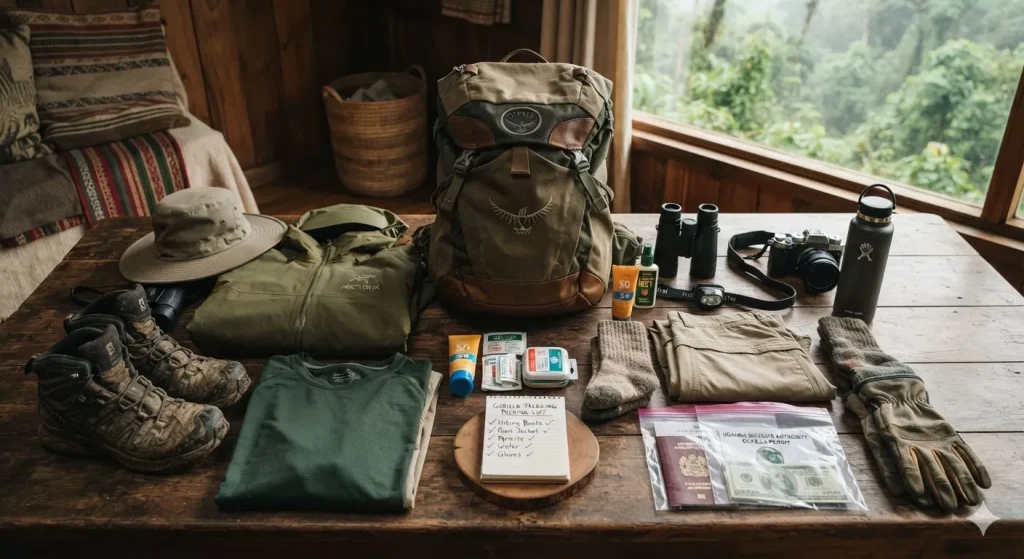
Packing essentials for senior gorilla trekking adventures
Preparing the correct clothing, footwear, medication and personal equipment is essential for comfortable gorilla trekking for seniors. Mountain gorilla trekking takes place in natural rainforest and mountain environments where visitors may encounter mud, rain, cool temperatures, thick vegetation, exposed roots and uneven trails. Senior travellers should therefore pack for safety, comfort and changing weather rather than fashion.
The best packing strategy is to carry protective but lightweight equipment. Heavy clothing, unnecessary camera gear and an overloaded backpack can increase fatigue during a long trek. Seniors should take only what they genuinely need inside the forest and hire a porter to carry their daypack.
Every item should be tested before the safari. New boots, unfamiliar trekking poles or an uncomfortable backpack can create avoidable problems on trekking day. Travellers can begin with this complete gorilla packing list and adapt it to their health, mobility and medical requirements.
What Should Seniors Wear for Gorilla Trekking?
Seniors should wear long trousers, a long-sleeved shirt, sturdy hiking boots, high socks, protective gloves and a lightweight waterproof jacket. Clothing should protect the body from vegetation, insects, mud and changing temperatures without restricting movement.
The trekking outfit should fit comfortably when climbing, bending and stepping over natural obstacles. Tight trousers can restrict movement, while excessively loose garments may catch on branches. Stretchable hiking trousers or durable outdoor trousers are generally more practical than heavy denim.
Older travellers should dress in layers. Early mornings around Bwindi, Mgahinga and Volcanoes National Park can feel cool, but walking uphill quickly generates body heat. Layers allow the traveller to remove or replace clothing as temperatures change.
The verified trekking clothing guide provides more detailed information about suitable protective clothing for Uganda and Rwanda.
Long-Sleeved Shirts
A lightweight long-sleeved shirt helps protect a senior traveller’s arms from scratches, stinging vegetation, insects and direct sunlight. The fabric should be breathable and comfortable when worn beneath a fleece or waterproof jacket.
Moisture-wicking outdoor shirts can be useful because they dry more quickly than thick cotton after perspiration or light rain. However, the most important factors are comfort, coverage and freedom of movement.
Seniors should practise walking in the selected shirt before travelling. The sleeves should remain comfortable when using trekking poles, carrying a camera or reaching for support.
A spare dry shirt can be left in the safari vehicle or at the lodge for use after trekking. Changing out of damp clothing helps the traveller remain warm and comfortable during the return transfer.
Long Trekking Trousers
Long trousers protect the legs from mud, branches, insects, nettles and other forest vegetation. Lightweight hiking trousers with some flexibility are generally suitable because they allow comfortable movement over roots and slopes.
Seniors should avoid trousers that become excessively heavy when wet. Thick jeans can absorb water, restrict movement and take a long time to dry. Very loose trousers may also catch on vegetation.
The waistband should remain comfortable during several hours of walking. Pockets should close securely so that personal items do not fall out along the trail.
Some trekkers tuck their trousers into long socks or gaiters to reduce the possibility of insects and debris entering the clothing. The arrangement should be tested beforehand to ensure it does not restrict circulation.
Waterproof Hiking Boots
Supportive hiking boots are among the most important items for gorilla trekking for seniors. Trails can be muddy, slippery, steep and uneven, even during comparatively dry months. Boots should provide reliable grip, foot protection and sufficient stability for the traveller’s ankles.
Footwear should be broken in before departure. New boots can cause blisters, pressure points and pain, while poorly fitting footwear can affect balance. Seniors should wear the boots during several progressively longer practice walks on natural terrain.
The sole should have a strong tread rather than a smooth surface. Sandals, open shoes and ordinary fashion trainers generally do not provide sufficient protection for rainforest conditions.
Water-resistant or waterproof boots can help keep feet dry, although no footwear should be assumed to remain completely dry during deep mud or sustained rain. Seniors can compare footwear and clothing recommendations in this verified gorilla trekking wear resource.
Choosing Boots for Seniors with Joint Problems
Seniors with ankle, knee, hip or back problems should prioritise stability, cushioning and correct fit. A boot that is too rigid may feel uncomfortable, while one without adequate support may allow excessive foot movement on uneven ground.
A healthcare professional, physiotherapist or qualified footwear specialist may provide personalised advice when the traveller has a history of joint surgery, chronic pain or significant balance problems.
Orthotic inserts should be tested inside the trekking boots well before travel. The traveller should not change footwear or inserts immediately before the safari unless medically necessary.
Boot weight also matters. Extremely heavy footwear can increase fatigue, particularly during long climbs. Seniors should seek an appropriate balance between protection, support and manageable weight.
Long Trekking Socks
Comfortable trekking socks help protect the feet from friction and can reduce the likelihood of blisters. Socks should fit properly without creating tight bands that restrict circulation.
Moisture-managing materials can improve comfort when the feet become warm or damp. Cotton socks may hold moisture for longer, while specialised hiking socks are designed to manage perspiration and cushion pressure areas.
Seniors should carry an extra pair in a waterproof bag. Changing into dry socks may be useful if water enters the boots during a long trek.
Travellers who tuck their trousers into socks should make sure the arrangement remains comfortable and does not place excessive pressure around the lower leg.
Gaiters for Mud and Vegetation
Gaiters cover the upper part of the boots and lower legs. They can help prevent mud, rainwater, stones and forest debris from entering the footwear.
They are not compulsory, but they may be useful for seniors who want additional protection during wet conditions. Lightweight waterproof gaiters are generally more practical than bulky designs intended for snow or extreme mountaineering.
Gaiters should fit securely without interfering with circulation or ankle movement. Seniors should practise putting them on and walking in them before departure.
A porter or guide can assist with adjustments on trekking morning, but the traveller should already understand how the gaiters attach to the boots.
Waterproof Rain Jacket
A lightweight waterproof jacket should be carried during every gorilla trek. Rain can occur throughout the year in mountain gorilla habitats, including during periods generally described as dry seasons.
The jacket should provide protection without becoming excessively hot during physical activity. Breathable waterproof materials and ventilation openings can improve comfort during uphill walking.
A long, heavy coat may restrict movement and become tiring. Seniors should select a jacket that allows them to move their arms freely, use trekking poles and access important pockets.
The jacket must remain easy to reach. It should not be buried beneath other equipment because forest weather can change quickly. Seniors travelling during wetter months should review this verified rainy-season packing guide.
Rain Poncho
A rain poncho can cover both the traveller and part of the daypack. It may provide practical protection during heavy rain, particularly when worn over a lightweight base layer.
However, a very loose poncho may catch on vegetation or restrict visibility around the feet. Seniors should select a design that can be secured properly and should practise walking in it.
Some travellers prefer a fitted rain jacket combined with a waterproof backpack cover. The best choice depends on personal comfort and mobility.
A poncho should never trail close to the ground because this can create a tripping risk on roots, mud and steep paths.
Warm Fleece or Sweater
Early mornings and evenings near the gorilla parks can be cool. A lightweight fleece or sweater helps seniors remain comfortable during the journey to the briefing point and while waiting for trekking groups to be organised.
The fleece may be removed once the traveller begins climbing. It should therefore be light enough to place inside the daypack without occupying excessive space.
Seniors who are sensitive to cold or who experience arthritis-related stiffness may appreciate an additional warm layer. The lodge can also be asked about blankets, fireplaces and hot-water bottles.
Heavy wool clothing may become uncomfortable when wet and can take a long time to dry. Lightweight, quick-drying layers are usually more practical.
Protective Gardening Gloves
Strong gardening or outdoor gloves protect the hands when a traveller holds branches, touches vegetation or uses the ground for support. They can also improve grip when using a walking stick.
Gloves should fit securely without restricting finger movement. Seniors should be able to operate trekking-pole straps, open a water bottle and reach medication without removing them repeatedly.
Water-resistant gloves may be useful during rain, but very thick gloves can become hot. A medium-weight pair with a textured palm generally provides a practical balance.
Visitors should avoid grabbing vegetation unnecessarily because some plants may sting or have thorns. The ranger and porter can help identify safer support points.
Wide-Brimmed Hat or Cap
A lightweight hat can protect the face and head from sunlight during exposed sections of the trail. It may also provide some protection from light rain and falling vegetation.
The hat should fit securely and should not obstruct the traveller’s vision. A loose hat may fall during windy conditions or when passing beneath branches.
Seniors who wear hearing aids should consider whether the hat interferes with their devices. Hearing aids and similar electronics should be protected from moisture according to the manufacturer’s guidance.
Lightweight Waterproof Daypack
A small daypack is useful for carrying water, medication, snacks, rain protection, a camera and personal documents. The pack should be lightweight, comfortable and no larger than necessary.
Wide padded straps can reduce pressure on the shoulders. A chest or waist strap may improve stability, although the traveller should make sure it does not interfere with movement or breathing.
Even when the daypack is light, seniors are advised to hire a porter. Carrying several kilograms over steep ground for several hours can increase fatigue and place strain on the back and joints.
The verified trekking equipment guide explains how to organise water, rainwear, food and personal supplies inside a practical daypack.
Waterproof Backpack Cover
A waterproof cover helps protect the daypack from rain, mud and moisture. The cover should fit securely so that it does not become detached while moving through thick vegetation.
Items that must remain completely dry should also be placed inside individual waterproof pouches. A backpack cover alone may not prevent moisture from entering during sustained rain.
Medication, travel documents, camera batteries and electronic devices require particular protection. Zip-seal bags or purpose-designed dry bags can provide an additional layer of security.
Personal Medication
Every senior traveller should carry essential medication in an accessible, waterproof pouch. Medicine should not be left exclusively at the lodge or placed at the bottom of a porter’s bag.
The traveller should bring enough medication for the full safari, with additional supplies for possible travel delays. Medicines should remain in labelled original packaging whenever practical.
A written medication schedule can help seniors maintain the correct routine while crossing time zones or leaving the lodge early. Travellers should consult their healthcare professional when changes in meal times, exertion or altitude may affect medication use.
Anyone carrying emergency medicine should explain its location and use to a trusted companion. The traveller does not need to disclose unnecessary private details, but information relevant to immediate safety should be accessible.
Prescription Copies and Medical Information
Seniors should carry copies of important prescriptions and a list showing the generic names, doses and timing of their medication. Brand names may differ between countries.
A brief medical summary can include allergies, significant health conditions, emergency contacts and insurance information. This document should be protected from rain and stored where it can be found quickly.
Travellers may also keep an electronic copy in secure storage, but the paper version remains useful when internet or battery power is unavailable.
Medical information should be accurate and current. Old medication lists can create confusion during an emergency.
First-Aid Supplies
A small personal first-aid pouch may contain adhesive dressings, blister treatment, antiseptic wipes and items recommended by the traveller’s healthcare professional. It should remain compact and easy to access.
Seniors should avoid packing unfamiliar medication for possible use without professional advice. Medicines that are safe for one traveller may interact with another person’s prescriptions or medical conditions.
The ranger team or lodge may carry general first-aid supplies, but visitors should not assume that every personal medication or preferred treatment will be available in a remote forest area.
Drinking Water
Seniors should carry adequate drinking water for the expected trekking duration. The amount required depends on personal health, weather and physical effort.
Travellers following fluid restrictions for heart, kidney or other medical conditions should obtain personalised advice from their healthcare professional. General trekking advice should not replace an individual medical plan.
A reusable bottle or hydration system can be used. The opening should be easy for the senior to operate while wearing gloves.
A porter can carry most of the water, but one small bottle may remain within easy reach when the traveller needs frequent sips.
Energy Snacks and Packed Lunch
A lodge may provide a packed lunch or snacks for trekking day. Seniors should communicate allergies, diabetes-related requirements and other dietary restrictions before arrival.
Suitable snacks may include items the traveller already knows they tolerate during exercise. Trekking day is not the best time to test unfamiliar energy products.
Food should only be consumed where ranger guides permit it. Visitors must not eat close to the gorillas, and every wrapper or food remnant must be carried out of the forest.
Travellers who take medication with food should plan the timing carefully and inform the guide when a scheduled stop may be needed.
Walking Stick or Trekking Poles
A walking stick or adjustable trekking pole can improve stability on steep, muddy and uneven trails. It provides an additional contact point with the ground and can help a senior test whether a muddy surface is firm.
Travellers who use two poles should practise coordinating them with their steps. Incorrect technique can create confusion or increase the risk of tripping.
Some trekking locations provide basic wooden walking sticks, but availability should be confirmed. Seniors with specific height or grip requirements may prefer to bring adjustable poles from home.
Walking aids should be packed in accordance with airline security and baggage rules. Collapsible poles may need to travel inside checked luggage.
Prescription Glasses and Spare Eyewear
Seniors who depend on prescription glasses should carry a secure case and a cleaning cloth. Rain, humidity and perspiration can reduce visibility during the trek.
An anti-fog product suitable for the lenses may be useful. The traveller should test it beforehand rather than apply an unfamiliar substance on trekking morning.
A spare pair of prescription glasses should remain at the lodge or inside protected luggage. Sunglasses may be useful on exposed roads and open trail sections but are less practical inside shaded forest.
Hearing Aids and Batteries
Travellers using hearing aids should protect them from rain, humidity and perspiration according to the manufacturer’s instructions. Spare batteries or a charged backup device may be appropriate.
The ranger briefing contains important safety information, so seniors should position themselves where they can hear clearly. A travelling companion can help repeat instructions when necessary.
The traveller should inform the guide discreetly if hearing limitations may affect their ability to respond to instructions in the forest.
Camera and Photography Equipment
A camera allows seniors to record the gorilla encounter, but heavy equipment can create unnecessary strain. Travellers should select one camera body and a practical lens rather than carrying an extensive professional kit unless they are accustomed to doing so.
A porter should carry heavy camera equipment during the approach. Once near the gorillas, the traveller can keep the camera accessible while following the ranger’s positioning instructions.
Camera straps should be secure and comfortable. Loose equipment can strike vegetation, affect balance or be dropped on steep ground.
Rain covers, spare batteries and memory cards should be protected inside waterproof pouches. The verified trekking preparation tips provide additional practical guidance for first-time visitors.
Smartphone Protection
A smartphone can be used for photography, communication and storing travel information. It should remain inside a waterproof case or pouch when not in use.
A wrist strap can reduce the chance of dropping the phone, but it should not interfere with walking poles or the traveller’s grip.
Seniors should download important information before travelling because mobile coverage may be limited inside remote forest areas. The phone should not be relied upon as the only location for prescriptions, insurance details or emergency contacts.
Portable Power Bank
A compact power bank can recharge a phone, camera or other small device. It should be fully charged before leaving the lodge and protected from moisture.
The traveller should check airline rules governing the transport of lithium batteries. Power banks are normally subject to cabin-baggage requirements and capacity restrictions.
Excessively large batteries add unnecessary weight. Seniors should carry only the capacity required for their devices.
Insect Repellent
Insect repellent can be useful during the wider safari and around forest lodges. Seniors should choose a product appropriate for their health, skin sensitivity and destination advice.
The repellent should be applied according to its instructions. Travellers with allergies, respiratory sensitivity or concerns about interactions with other products should seek professional advice.
Repellent should be kept away from the eyes and mouth. It should also be stored inside a sealed bag to prevent leakage onto medication or camera equipment.
Sunscreen
Although much of the gorilla trek takes place under forest cover, seniors may encounter direct sunlight during road transfers, briefings and exposed trail sections.
A broad-spectrum sunscreen suitable for the traveller’s skin may provide protection. It should be applied before leaving the lodge and reapplied according to the product instructions.
Sunscreen should not replace protective clothing and a hat. Seniors with dermatological conditions should follow personalised medical advice.
Face Mask
Gorilla trekking authorities may require or recommend face masks during close observation of mountain gorillas. Current requirements should be checked for the traveller’s park and trekking date.
Seniors should carry more than one suitable mask in a waterproof pouch. A mask that becomes wet or dirty may be uncomfortable and less practical.
Travellers with respiratory concerns should discuss mask use during physical activity with a healthcare professional before departure. Park health rules must still be followed.
Passport and Gorilla Permit Information
Travellers should carry the identification and booking documents requested by their safari operator and the relevant park authority. The required document may include a passport or another accepted form of identification.
The senior should confirm the requirements before leaving the lodge. Important documents should remain in a waterproof pouch rather than an unprotected pocket.
Original documents not required inside the forest may be stored securely at the lodge or according to the operator’s guidance. Travellers should also keep secure copies separately.
Travel Insurance Documents
Seniors should carry their insurance policy number, emergency-assistance contact details and any information required to begin a claim. The policy should cover the traveller’s age, declared medical conditions and planned trekking activity.
Common Mistakes Seniors Should Avoid When Planning Gorilla Trekking

Smart planning tips for senior gorilla trekkers
Gorilla trekking for seniors can be comfortable, safe and rewarding when the journey is planned around the traveller’s health, mobility and preferred pace. However, avoidable planning mistakes can make the experience unnecessarily tiring, expensive or physically difficult.
Older travellers should not treat gorilla trekking as an ordinary wildlife walk. The activity takes place in natural mountain forests where trails may be steep, muddy, slippery and uneven. Trekking duration also varies because mountain gorillas move freely through their habitat.
The following mistakes are particularly important for seniors, retired travellers, visitors with reduced mobility and families organising a gorilla safari for an elderly relative.
Booking Gorilla Permits Too Late
One of the most common mistakes is waiting until flights and accommodation have been confirmed before checking gorilla permit availability. Gorilla permits are issued for a specific destination and trekking date, and availability may become limited during popular travel periods.
Senior travellers frequently have more specific requirements than younger visitors. They may need an accessible room, a lodge near the briefing point, porter assistance, a private vehicle or a carefully paced itinerary. Booking late can reduce access to these preferred arrangements.
The safer planning sequence is to confirm permit availability, identify the trekking sector and then reserve suitable accommodation in the correct location. Travellers should not pay for a lodge near one Bwindi sector before knowing where their permit will be issued.
Seniors should also confirm the current permit category and price applying to their nationality and travel date. The verified permit prices page provides useful guidance, but the final amount should still be reconfirmed at the time of booking.
Assuming Every Gorilla Trek Is Short
Some travellers book gorilla trekking after seeing photographs or videos that make the activity appear to involve a short forest walk. This creates unrealistic expectations.
A gorilla family may be relatively close to the starting point on one day and several hours away on another. Weather, terrain, gorilla movements and the pace of the trekking group can all affect the total duration.
Seniors should prepare physically and mentally for a longer trek even when requesting consideration for a more manageable allocation. Preparing for difficult conditions makes a shorter trek feel comfortable, while preparing only for an easy walk can leave the traveller exhausted.
An honest explanation of trek difficulty helps older travellers understand why no responsible operator should guarantee an effortless route.
Ignoring Personal Fitness
Age alone does not determine whether a traveller can complete gorilla trekking. However, seniors should not assume that normal daily activities provide sufficient preparation for several hours of walking on hills and uneven ground.
Regular walking, controlled hill climbing, balance exercises and appropriate strength training can improve endurance and confidence. Preparation should begin gradually rather than through intense exercise immediately before departure.
Seniors who have been inactive, recently undergone surgery or live with heart, respiratory or joint conditions should obtain personalised medical advice before beginning a training programme.
The verified fitness preparation guide explains the physical abilities that can make mountain forest trekking more manageable.
Failing to Obtain Medical Advice
A safari company can explain terrain, trekking duration and available support, but it cannot determine whether an individual traveller is medically fit to participate.
Seniors with cardiovascular disease, breathing difficulties, diabetes, arthritis, balance limitations, recent surgery or previous joint replacement should describe the activity accurately to a qualified healthcare professional.
The medical consultation should explain that gorilla trekking may involve altitude, steep ground, mud, roots, prolonged exertion and limited access to immediate hospital-level care.
Travellers should not hide symptoms or ignore professional advice because permits and accommodation have already been paid for. Personal safety must remain more important than completing the planned activity.
Choosing a Destination Based Only on Price
Permit cost is important, but it should not be the only factor when selecting Uganda or Rwanda for senior gorilla trekking. Travellers must also compare road-transfer duration, lodge location, terrain, altitude, available support and the total number of days required.
A destination with a lower permit price may become more expensive after adding domestic flights, additional nights, private transport and specialised mobility assistance. Similarly, a higher permit price may be acceptable to a traveller who values a shorter overall itinerary.
Seniors should compare complete safari quotations based on similar accommodation, transport and support arrangements rather than comparing only headline permit prices.
Choosing the Wrong Bwindi Trekking Sector
Bwindi Impenetrable National Park has several separate trekking sectors. Buhoma, Ruhija, Rushaga and Nkuringo have different briefing points, access roads and accommodation areas.
Booking accommodation in the wrong sector can create a long early-morning transfer before the trek. This may increase fatigue, reduce breakfast time and create a risk of arriving late for the briefing.
Senior travellers should first confirm the sector printed on the permit and then select accommodation within practical reach of that briefing point. A lodge should not be accepted merely because it is described as being near Bwindi.
Assuming One Sector Is Always Easy
No Bwindi sector or Rwanda trekking route can be permanently guaranteed as the easiest option. Gorilla families move through the forest, and weather can change trail conditions overnight.
Some sectors may offer practical advantages such as accommodation near the briefing point, but this does not guarantee a short forest walk. Marketing statements describing one destination as effortless should be treated cautiously.
Seniors can request that mobility and fitness concerns be considered during group allocation. However, this remains a request rather than a guarantee because rangers must make decisions based on current gorilla locations and operational conditions.
Booking Accommodation Too Far from the Briefing Point
A beautiful lodge can become inconvenient when it requires a lengthy journey before sunrise. Seniors should prioritise practical location, safe room access and comfort rather than choosing accommodation solely for views or promotional photographs.
Travellers should ask for the expected transfer time from the lodge to the correct briefing point. They should also confirm road conditions, departure time and whether breakfast can be served before leaving.
Staying near the park allows the senior to sleep longer and return to the lodge sooner after trekking. This can make a significant difference to comfort and recovery.
Assuming a Luxury Lodge Is Automatically Accessible
Luxury describes service quality and facilities, but it does not guarantee step-free access. Many premium gorilla lodges are constructed on forested hillsides and may have steep pathways, separate villas or numerous stairs.
Seniors should ask about the exact room being proposed. Important considerations include the number of steps, distance from the restaurant, bathroom layout, shower access, lighting and whether the safari vehicle can approach the room.
A comfortable midrange lodge with level access may be more appropriate than an expensive hillside property. Accessibility should be confirmed in writing when it affects the traveller’s ability to use the accommodation safely.
Not Hiring a Porter
Declining porter assistance is one of the most avoidable mistakes during gorilla trekking for seniors. Even a small backpack becomes tiring after several hours of climbing and descending.
A porter can carry water, rainwear, food, and camera equipment. Porters can also offer a steady hand when crossing muddy ground, stepping over roots or descending slippery sections.
Seniors should hire a porter at the beginning of the trek rather than wait until they become exhausted. Additional assistance may not be readily available after the group has entered the forest.
Porter support also directs tourism income towards communities surrounding the gorilla parks.
Waiting Until Trekking Morning to Arrange a Sedan Chair
Seniors who cannot safely complete an unpredictable forest walk should not rely on finding a carrying chair after arriving at the park.
A sedan-chair arrangement requires a coordinated team of porters. Availability, price, payment procedure and the type of carrier should be confirmed before the travel date.
The traveller should explain whether they can walk short distances, enter the chair independently or require additional support. Medical advice remains important because being carried through mountain terrain can still involve prolonged sitting, movement and exposure to changing weather.
The verified guide to sedan chairs explains how specialised carrying arrangements may assist elderly travellers and visitors with limited mobility.
Wearing New Hiking Boots
New boots should never be tested for the first time on trekking morning. Even high-quality footwear can cause blisters, pressure points or pain when it has not been broken in.
Seniors should use their boots during several practice walks on hills and uneven surfaces. This confirms whether the fit, cushioning, ankle support and grip are suitable.
The boots should be worn with the same socks and orthotic inserts intended for the trek. Any discomfort should be addressed before travelling.
Wearing Inappropriate Footwear
Ordinary fashion trainers, sandals and open shoes generally provide inadequate protection on muddy forest trails. Smooth soles can increase the risk of slipping, while open footwear exposes the feet to vegetation, insects and sharp objects.
Seniors should select supportive hiking boots or suitable trail footwear with reliable tread. Footwear should balance protection and stability without being unnecessarily heavy.
Travellers with previous ankle, knee or hip problems may benefit from personalised footwear advice before departure.
Packing Too Much for the Trek
An overloaded backpack increases fatigue and can affect balance. Seniors should carry only essential medication, water, suitable food, rain protection, documents and necessary photographic equipment.
Large camera kits, unnecessary clothing and full-size toiletry containers should remain at the lodge. A porter can carry the carefully packed trekking bag.
The verified packing guide helps travellers distinguish essential equipment from items that add weight without improving safety.
Forgetting Rain Protection During the Dry Season
Gorilla habitats are mountain forests where rain can occur during any month. Travelling in a generally drier season does not guarantee a dry trekking day.
Every senior should carry a lightweight waterproof jacket or properly fitted poncho. Medication, documents, phones and cameras should be protected inside waterproof pouches.
Rain protection should remain easy to reach rather than being packed beneath every other item. Weather can change quickly inside the forest.
Choosing Wet-Season Travel Only for a Lower Price
Rainy-season travel can provide greener scenery, reduced demand and possible savings. However, mud and slippery trails may create additional challenges for seniors with joint pain or balance limitations.
A lower price should not take priority over the traveller’s ability to walk safely. Seniors considering wetter months should evaluate their fitness honestly and arrange porter or carrying assistance when needed.
The verified seasonal guide helps travellers compare likely trail conditions across the year.
Creating an Overly Rushed Itinerary
Attempting to fit gorilla trekking into the smallest possible number of days can create long drives, early departures and inadequate recovery time.
Seniors should ideally reach the trekking area before the day of the activity. Arriving after a full day of road travel and trekking the following morning may leave the traveller tired before entering the forest.
An additional night after the trek can provide time to rest, enjoy the lodge and recover before another long transfer. The best itinerary should reflect the senior’s comfort rather than only the minimum possible travel time.
Combining Too Many Demanding Activities
A gorilla safari may also include chimpanzee tracking, golden monkey tracking, nature walks and cultural experiences. These activities can enrich the journey, but placing them on consecutive days may exhaust an older traveller.
Rest days and lower-intensity activities should be included between demanding treks. A boat cruise, scenic drive or relaxed lodge stay may provide useful recovery time.
Seniors should not feel pressured to complete every available activity. A smaller number of well-paced experiences is often more enjoyable than a crowded itinerary.
Underestimating Road-Transfer Fatigue
Long road journeys can affect seniors with back pain, hip stiffness, circulation problems or limited bladder control. Transfer time should be considered part of the physical demands of the safari.
A private vehicle allows more flexibility for comfort stops, stretching and adjusting the pace. Seniors should communicate how frequently they need breaks.
Domestic flights may reduce some long-distance travel in Uganda, although road transfers remain necessary between airstrips, lodges and trekking sectors.
Failing to Disclose Mobility Requirements
Describing a traveller only as elderly does not give the operator enough information to plan appropriate support. The safari company needs to understand whether the person walks independently, uses a cane, struggles with stairs or requires complete carrying assistance.
Relevant information should be communicated before permits, lodges and transport are finalised. This allows the operator to recommend a suitable room, private vehicle, porter or sedan-chair arrangement.
Seniors should not conceal mobility limitations because they are concerned about being excluded. Accurate information generally improves the possibility of creating a suitable experience.
The verified guide to elderly trekking explains how different support levels can be incorporated into gorilla safari planning.
Assuming the Ranger Will Provide Personal Assistance
Ranger guides lead the trekking group, identify the route, enforce park rules, and manage safety around the gorillas. They cannot always provide continuous one-to-one physical assistance to one visitor.
A senior who needs individual help should hire a porter or arrange additional support. This allows the ranger to manage the entire group while the traveller receives dedicated assistance.
Mobility needs should be communicated during the morning briefing so that park staff understand the traveller’s limitations before entering the forest.
Trying to Keep Pace with Faster Trekkers
Seniors should not become exhausted by attempting to match younger or more experienced hikers. The objective is to reach the gorillas safely rather than complete the route at the fastest possible speed.
The traveller should tell the ranger when they need water or a brief rest. Communicating early is safer than waiting until exhaustion, dizziness, or pain becomes severe.
A porter can help the senior maintain a controlled pace while keeping the trekking group informed about any difficulty.
Ignoring Pain or Warning Symptoms
Chest discomfort, severe shortness of breath, dizziness, unusual weakness, or significant joint pain should not be ignored. Seniors must communicate concerning symptoms to the ranger immediately.
Continuing solely because the permit was expensive can create a medical emergency in a remote environment. Personal safety must take priority over completing the trek.
Travellers should carry essential medication where it can be reached quickly. A companion should know the location of emergency medicine and relevant medical information.
Travelling While Contagiously Ill
Visitors should not participate in gorilla trekking when they have symptoms of a potentially contagious illness. Mountain gorillas can be vulnerable to human infections, and park personnel may prevent a visibly unwell visitor from trekking.
Seniors should report fever, persistent coughing, influenza-like symptoms, vomiting or diarrhoea before travelling to the briefing point. Concealing illness can endanger gorillas, staff and other visitors.
The verified guide explaining what may prevent trekking provides further information about health and participation concerns.
Purchasing Inadequate Travel Insurance
A general holiday policy may not automatically cover gorilla trekking, emergency evacuation, older age groups or pre-existing medical conditions.
Seniors should read the complete policy wording and confirm that the destination, activity and relevant medical history are covered. Verbal assurances should be supported by written confirmation where the policy language is unclear.
Insurance should be arranged before making substantial non-refundable payments. Cancellation, medical treatment, evacuation, trip interruption and repatriation should all be considered.
Assuming Every Cancellation Produces a Full Refund
Gorilla permits, accommodation and transport services may have separate cancellation terms. A medical issue does not automatically create a guaranteed full refund.
Travellers should review written policies before payment and understand the dates at which cancellation charges increase. Insurance should be considered for costs that may not be recoverable directly from service providers.
Information not found in current search results regarding a universally guaranteed full refund for every senior who cancels gorilla trekking because of illness.
Failing to Confirm Special Services in Writing
A request for a porter, sedan chair, ground-floor room or accessible vehicle should not remain an informal assumption. The traveller should receive confirmation that the service has been requested and can be provided.
Costs and payment procedures should also be clarified. This reduces misunderstandings after arrival and allows time to make alternative arrangements when a service is unavailable.
Requirements should be described precisely. For example, requesting an accessible room is less useful than explaining that the traveller cannot climb stairs and needs a walk-in shower near the vehicle drop-off point.
Carrying Excessive Camera Equipment
Photography is an important part of the gorilla encounter, but large camera systems can become heavy and difficult to manage on steep ground.
Seniors should carry one practical camera body and lens unless they are accustomed to hiking with professional equipment. A porter can carry the camera bag during the approach.
The traveller should prioritise balance and ranger instructions over changing lenses or searching through equipment near the gorillas.
Failing to Practise with Trekking Poles
Trekking poles can improve stability, but they are most useful when the traveller already understands how to coordinate them with walking.
Using unfamiliar poles for the first time on slippery ground may create confusion. Seniors should practise adjusting the height, using the straps and positioning the poles during climbs and descents.
Walking sticks and porters can be used together when the traveller requires additional support.
Forgetting Essential Medication
Essential medication should remain in hand luggage during international travel and in an accessible waterproof pouch during the trek.
Seniors should carry enough medicine for the complete journey, with additional supplies for possible delays. A current prescription list and medical summary can assist during an emergency.
Medication requiring refrigeration needs advance planning for flights, road transfers and lodge storage. The traveller should not assume that every remote property provides continuous electricity or medically appropriate refrigeration.
Eating or Drinking Too Little Before Trekking
Skipping breakfast can leave a senior without enough energy for a long hike. Travellers should eat an appropriate meal before leaving the lodge unless their healthcare professional has provided different instructions.
Water should be consumed regularly according to the traveller’s health needs. Seniors following medical fluid restrictions require individual guidance rather than general hydration advice.
Dietary requirements and medication schedules should be communicated to the lodge so that breakfast, packed food and rest stops can be planned appropriately.
Expecting Mobile Coverage Throughout the Trek
Remote mountain forests may have unreliable or unavailable mobile coverage. Seniors should not rely on their phone as the only place where prescriptions, insurance details and emergency contacts are stored.
Important information should also be carried on paper in a waterproof pouch. Phones and power banks should be fully charged before departure.
The lack of constant communication is another reason to disclose relevant health information to a trusted companion and the guide before entering the forest.
Ignoring Gorilla Trekking Rules
Ranger instructions protect visitors and mountain gorillas. Seniors should listen carefully during the briefing and ask for clarification when hearing difficulties or language barriers affect understanding.
Visitors must follow instructions concerning distance, movement, photography, noise, food and appropriate behaviour when gorillas approach.
A traveller should never attempt to move closer for a better photograph or stand without checking the ground and the ranger’s guidance.
Planning Without Enough Recovery Time
Muscle stiffness and fatigue may become more noticeable several hours after trekking. Seniors should avoid beginning another long hike or road transfer immediately when the itinerary allows a more comfortable alternative.