
Gorilla Tracking
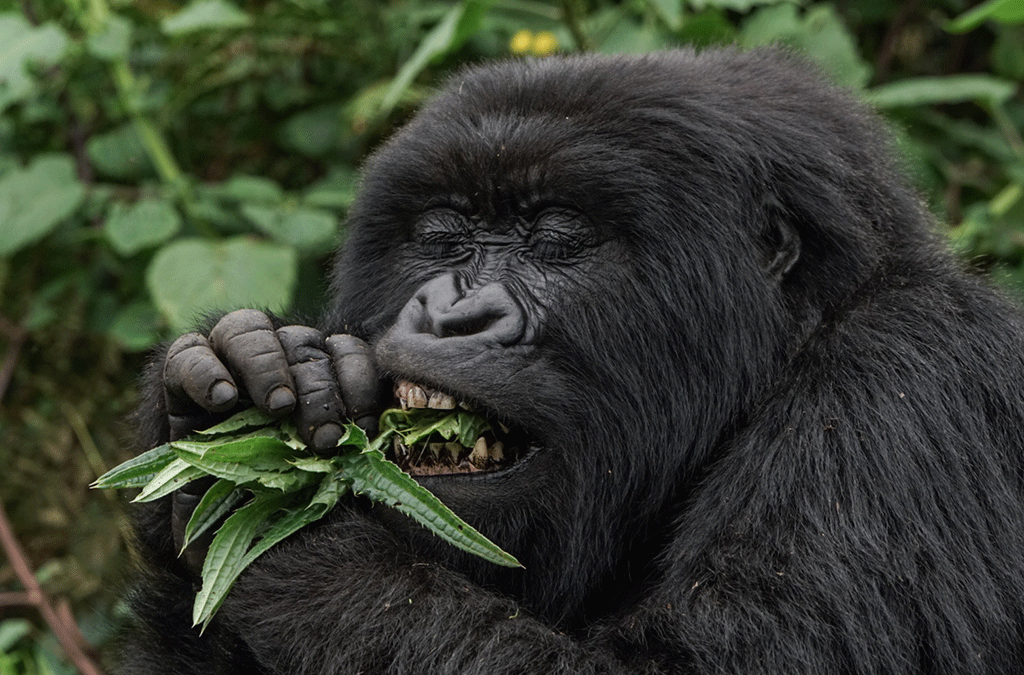
Gorilla Tracking
Gorilla Tracking Safari vacation and travel services avails the unique opportunity to see gorillas in their natural habitat something unforgettable, some even say life-changing. Expert trackers and guides carefully manage your encounter with gorillas as they go about their daily lives, leading small groups of tourists up bamboo-covered slopes to spend a precious and awe-inspiring hour just a few feet away from these gentle creatures.
Gorilla Tracking: See the largest living primates. Gorillas spread across much of the equatorial African rainforest, with the species broadly divided into lowland gorillas and mountain gorillas.
The volcanic range which spans Rwanda, Uganda, and the Democratic Republic of the Congo is home to the endangered mountain gorillas. Tracking gorillas in Rwanda is safe and relatively accessible.
At the latest count, there are approximately 1,000 mountain gorillas in the wild, with 604 in the Virunga Massif. The population is slowly increasing, thanks to concerted efforts between our governments, communities, and NGOs.
Gorilla Tracking in Rwanda
Gorilla Families in Rwanda.
There are twelve gorilla families living in the Volcanoes National Park, which are fully habituated, with a few others habituated solely for scientific research. The groups, or troops, consist of at least one silverback along with several females and youngsters.
The troops are somewhat fluid in composition but tend to stick to a preferred area. Park rangers constantly monitor and protect the gorillas, allowing each group a strict maximum of one hour of daily tourist interaction.
Visitors gather at the Volcanoes National Park headquarters in Kinigi at 7:00 AM. Park officials allocate a family group to each visitor on the day based on fitness levels and brief them on gorilla visitation protocols and rules.
The families are known as
- Susa
- Gisha
- Karisimbi
- Sabyinyo
- Amahoro
- Agashya
- Kwitonda
- Umubano
- Hirwa
- Bwenge
- Ugyenda and
- Muhoza.
The annual Kwita Izina gorilla-naming ceremony is a special time to visit the Volcanoes National Park, with guided tours leading up to the main event providing an opportunity to meet park staff and conservationists, attend cultural evenings,s and a celebration in Musanze. Gorilla Tracking
At the naming ceremony itself, there’s music, dancing, and discussion about Rwanda’s great strides in gorilla conservation and the great challenges that remain.
Conservation organizations currently working in Rwanda include Dian Fossey Gorilla Fund International, The Gorilla Organization, International Gorilla Conservation Organization, Gorilla Doctors, and Wildlife Conservation Society.
Gorilla tracking in Uganda
Gorilla families in Uganda
Interested in knowing about all the gorilla groups in Uganda? Or want to know which is the best Uganda gorilla group to Trek? Uganda has a total number of 14 habituated gorilla families with each group comprising 10 to 40 members of varying ages headed by a silverback gorilla (the oldest male) in the group. Bwindi’s impenetrable forest hosts 12 habituated Gorilla groups and 2 more families available for gorilla habituation experience. Only 8 Gorilla permits are available each day for each gorilla group. Gorilla families are given names depending on their formation history, group location, and name of the dominant silverback.
Mgahinga hosts just one Uganda gorilla family – the Nyakagezi group. Few visitors go to Mgahinga for gorilla tours despite having one of the largest gorilla families anywhere around. Mgahinga Gorilla Park is the best place to go for a Gorilla habituation experience. Detailed information for each of Uganda’s mountain gorilla groups is summarized in the following paragraphs. Briefly, the gorilla groups in Uganda are: –
- Mubare Gorilla Family in Buhoma
- Habinyanja Gorilla Family in Buhoma
- Rushegura Gorilla Family in Buhoma
- Bitukura Gorilla Family in Ruhija
- Oruzogo Gorilla Family in Ruhija
- Nkuringo Gorilla Family in Nkuringo
- Nshongi Gorilla Family in Rushaga
- Mishaya Gorilla Family in Rushaga
- Kahungye Gorilla Family in Rushaga
- Bweza Gorilla Family in Rushaga
- Busingye Gorilla Family in Rushaga
- Kyaguriro Gorilla Family in Ruhija and,
- Nyakagezi Gorilla Family in Mgahinga
Gorilla Families in Bwindi Impenetrable Forest Park
Mubare Gorilla Family – Buhoma (Bwindi)
Because of their location, this is the easiest family to track in Bwindi. The name Mubare originated from the first gorilla trackers in the area. The group currently contains 8 members led by Kanyonyi. This is the oldest gorilla group in Uganda and opened back in 1993. Initially, under the leadership of Ruhondeza, the group has decreased in number over the years from 18 members when first sighted. Infighting, death and member migration to other groups left about 5 by 2012.
Ruhondeza’s leadership ended when another group attacked and took away his females in 2012. Ruhondeza lived for over 50 years and continued to be monitored by researchers till his death. His grave is marked and can be located by a guide.
Habinyanja Gorilla Family – Buhoma (Bwindi)
This gorilla group is among the very first to be opened to tourists. The group contains 17 members and is led by Makara who replaced Habinyanja. Park rangers habituated this group in 1997, led by the silverback Mugurisi (old man). They named the group “Habinyanja” (place with water) in Rukiga, as they first spotted them near a Bwindi swamp. After Mugurisi passed away due to old age, his two brothers, Rwansigazi and Mwirima, with their distinct personalities, took over leadership. Mwirima liked staying within a specific range while Rwansigazi loved moving around different sections of the forest. In 2002, the two brothers separated peacefully. Rwansigazi left with part of the group and retained the “Habinyanja” name while the Mirimas group was named the Rushegura family.
Rushegura Gorilla Family – Buhoma (Bwindi)
The Rushegura group contains 19 members including one silverback. The Rwansigazi and Mwirima formed this group in 2002 by separating from the larger Habinyanja group. The Rushegura name comes from “Ebishegura,” a tree species common in the family’s territory. Mwirima’s ability to create a stable and calm family is admirable as the number of individuals increased from 12 to 19 by April 2010. At about 25 years of age, Mwirima is strong and dominant, never shying away from confronting wild groups threatening his authority. Because of the groups’ stability and calmness, they are not shy around people and can be seen around lodge gardens.
Bitukura Gorilla Family- Ruhija (Bwindi)
The Bitukura Family has 14 individuals from its original 24. The group is led by Ndahura who took over from the now retired Karamuzi. The group which also has three other silverbacks was named after a river near their territory. Whereas the habituation process for mountain gorillas takes 2 or more years, it took only 15 months with this family. Visitors were first allowed in October 2008 but the group had already had frequent encounters with park rangers whenever they mixed with the already habituated Kyaguriro family. gorilla tracking
Oruzogo Gorilla Family – Ruhija (Bwindi)
With 25, members, this is a large group by usual standards. It is the second family in the Ruhija area and includes two silverbacks. Tibirikwata leads the group that first opened to visitors in 2011. The group has grown and is much loved by visitors because of its playful youngsters resulting from several births from the females Ntamurungi (June 2011), Musi (October 2011), and Kakoba (March 2012).
Nkuringo Gorilla Family – Nkuringo (Bwindi)
Nkuringo the great silverback initially led this group that now includes 19 individuals. After he died in 2008, he left two silverbacks Rafiki and Safari. Safari, his son took over from him. The group was first spotted near a round hill hence the name “Nkuringo” in Rukiga. Because the group lived near the villages outside the park, they had frequent encounters with humans and often sneaked to eat crops hence creating conflicts. Park officials decided to habituate the group in 2008 to allow the community to benefit from tourism and recognize gorilla conservation as a source of economic opportunity.
Nshongi Gorilla Family – Rushaga (Bwindi)
At the time the group was opened to visitors and tourists in 2009, the Nshongi family had 37 individuals – the largest ever habituated. It currently has 26 individuals and 4 silverbacks. The family was first seen near a river hence the name Nshongi (referring to the deep honey-like color of the river). When it was opened for tourism in September 2009, the family was unique due to its large size. Before they split in 2010, the family lived in harmony despite the many silverbacks. The Nshongi group under the dominant silverback Nshongi remained with 26 individuals while silverback Mishaya moved away with 10 individuals.
Mishaya Gorilla Family – Rushaga (Bwindi)
When Mishaya left Nshongi in 2010, he developed a reputation for starting fights with other gorilla families not only to protect his own but to also steal females from neighbors. He gathered a few females but was injured in a fight with a wild, unhabituated gorilla family. Fortunately, nearby gorilla conservation doctors treated him. The group now has 12 individuals with Mishaya the only dominant silverback.
Kahungye Gorilla Family – Rushaga (Bwindi)
This group contains 13 members including 3 silverbacks led by Rumansi. Ruhamuka and Rwigi are the other old males. The group was only recently (2011) opened for visitors. The group had 27 members when habituated but split shortly after creating another group Busingye. The Kahungye group is led by “Gwigi” (door in the local dialect).
Bweza Gorilla Family- Rushaga (Bwindi)
This group was opened to visitors in 2012. The group evolved from the Nshongi gorilla family which was the largest family ever habituated in Bwindi. When Silverback Mishaya separated from Nshongi in 2010, Bweza left him two years later (2012) with six members. The group contains 9 individuals still led by Bweza.
Busingye Gorilla Family – Rushaga (Bwindi)
This group was opened to visitors in 2013. Busingye leads this group of 9 members after splitting away from the Kahungye family in 2012. Though his name means peace, Busingye is known for frequent fights and stealing females from neighboring Gorilla groups. He is very ambitious, and dominant and uses every opportunity to show his power.
Kyaguriro Gorilla Family
The Kyaguriro group contains 15 members led by Rukina who grabbed power from the old Zeus. The gorilla group has been set apart for research by conservationists and limited access is given to visitors. Researchers have come up with interesting findings from this group. Their findings show some differences in behavioral tendencies between Uganda’s Gorilla families, Rwanda and Congo’s gorilla families.
Gorilla Families in Mgahinga National Park
Nyakagezi Gorilla Family – (Mgahinga)
There is only one habituated Gorilla family group in Mgahinga Gorilla National Park. The group is unpredictable and often migrates to Rwanda and Congo led by Mark the dominant Silverback. Apart from Mark, there are 2 other silverbacks in a group of 10. Because of their unpredictable movements, viewing the family can be difficult. Although they have currently settled in Uganda, you need to contact the authorities through your tour operator to know their exact location.
Safari Vacations and Travel Services designs itineraries in Uganda, Rwanda, and the DRC with over 10 years of experience and we are proud of our reputation for executing some of the most highly-rated vacation experiences. Our local consultants plan your preferred itinerary using expert ground knowledge. We take care of all the local logistics like permits, accommodation, and transport. And also, manage your entire trip, from start to finish.
And for inquiries, advice on how to plan for this safari, booking the hiking permits; organizing transport and accommodation, getting in touch with safari vacations and travel services, we help you to avoid inconveniences after you have arrived for the safari.


