
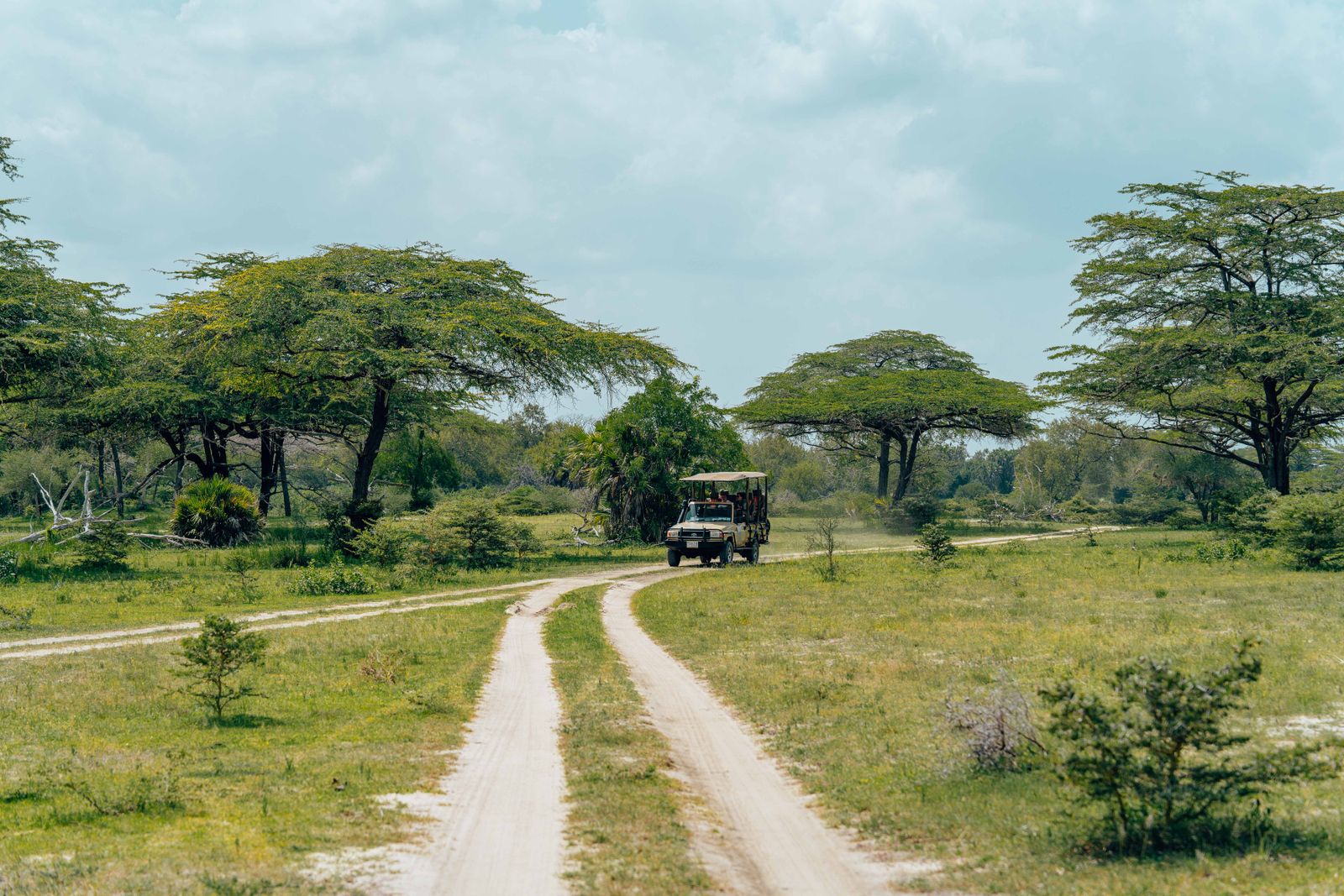
Uganda Driving Rules, Laws and Requirements
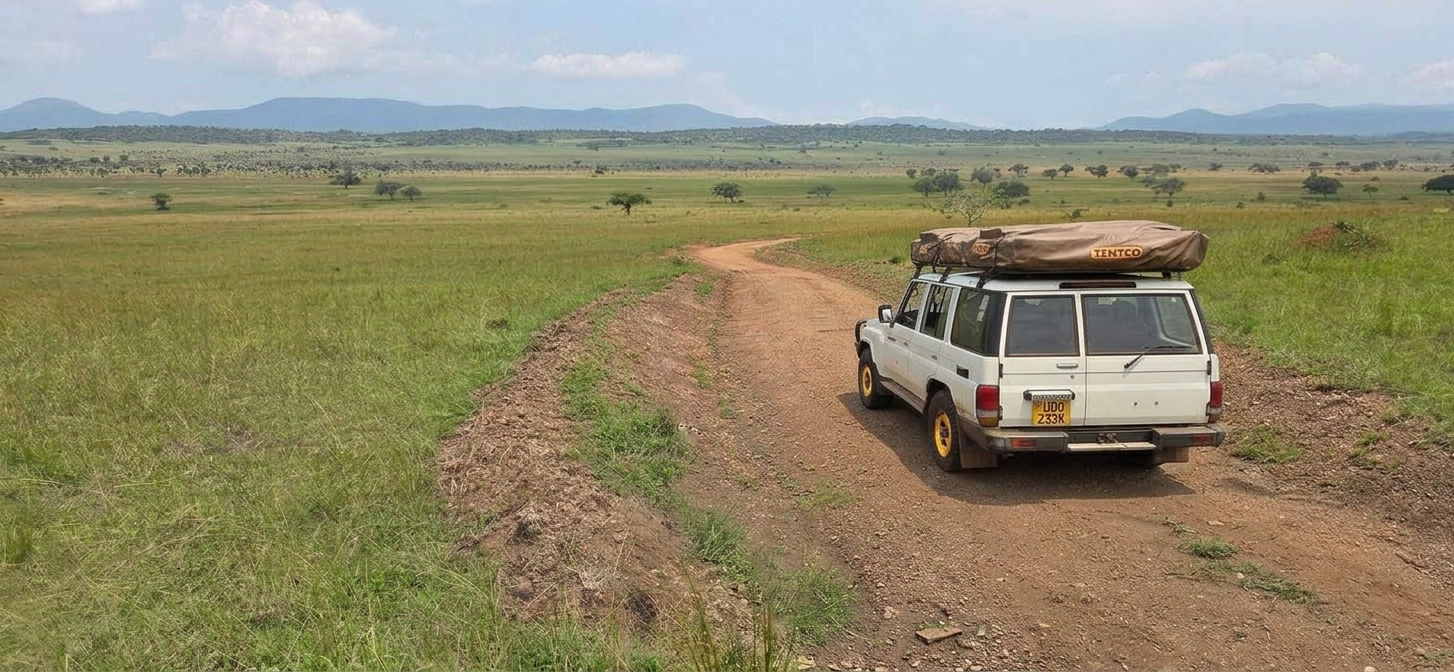
Understanding the rules before driving is one of the most important parts of any Uganda Driving Guide. Whether you are planning a short road trip around Kampala, a longer journey through western Uganda, or a self-drive safari to one of the country’s national parks, you should understand the legal requirements that apply to drivers and vehicles.
Uganda’s road traffic framework is governed principally by the Traffic and Road Safety Act and subsequent amendments and regulations. The current legal framework covers matters including driving licences, vehicle licensing, road traffic offences, road safety and other requirements affecting motorists.
Legal Preparation
Confirm your driving licence, vehicle documentation, insurance and rental agreement before departure.
Use Caution
Adjust driving to traffic, weather, road surface, visibility, pedestrians and changing road conditions.
Do Not Risk It
Do not drive while impaired, use a hand-held phone while driving, or knowingly operate an improperly documented vehicle.
For visitors, the most important principle is simple: do not begin a journey until you have confirmed that you are legally permitted to drive the vehicle you are using and that the vehicle itself has the required documentation and insurance. A good Uganda safari road trip planning process should therefore begin with documentation rather than with the itinerary.
Driving Licence Requirements in Uganda
A valid driving licence is a fundamental requirement for driving a motor vehicle on a public road in Uganda. The Traffic and Road Safety Act states that a person should not drive a class of motor vehicle, trailer or engineering plant on a road without the appropriate valid driving licence or learner driving licence for that group.
This is particularly important for travelers using rental vehicles. Having access to a vehicle does not itself give a visitor the legal right to drive it.
The Ugandan legal framework recognizes different driving licence groups for different categories of vehicles. A traveler using an ordinary passenger car should therefore make sure that their licence covers the type of vehicle they intend to operate.
Foreign Driving Licences and International Visitors
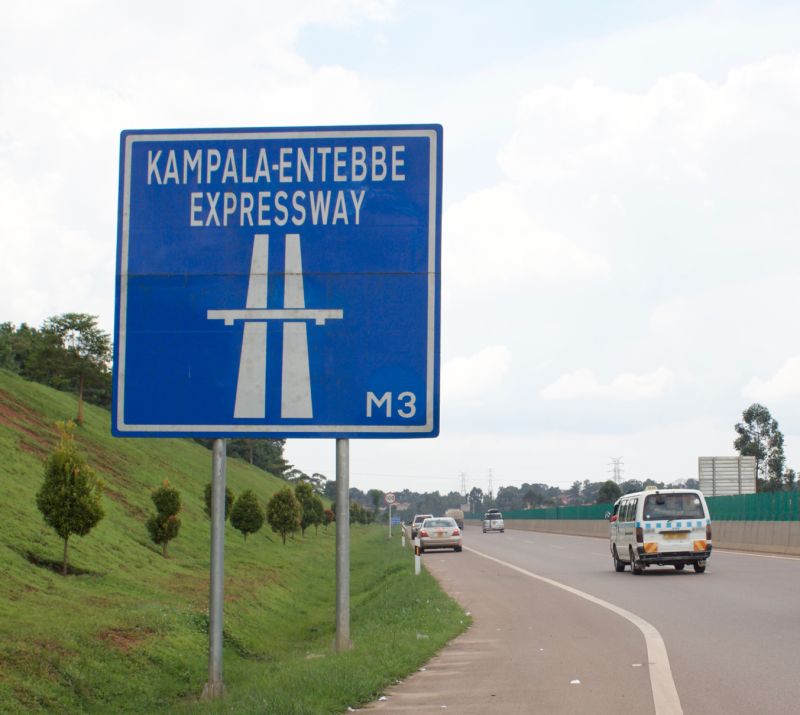
Visitors arriving in Uganda should establish in advance how their foreign driving licence is treated under the current Ugandan rules. The Traffic and Road Safety Act contains provisions concerning recognition and conversion of foreign driving licences.
Where a rental company has additional documentation requirements, those requirements should also be checked before payment or vehicle collection.
Driving Licence Validity and Verification
Ugandan driving licences may be issued for different validity periods. The Traffic and Road Safety Act provides for driving licences to be valid for twelve months, three years or five years, with renewal provisions established by law.
For travelers, the practical lesson is to check the validity of the licence before beginning a Uganda road trip.
Drivers should also keep the relevant documentation accessible during a journey.
Vehicle Documents and Rental Vehicle Checks
Driving in Uganda involves responsibilities relating not only to the driver but also to the vehicle. Before accepting a rental vehicle, travelers should establish that the vehicle has the documentation required for lawful operation.
A proper pre-departure check should establish the vehicle’s insurance arrangements, registration information, rental documentation, breakdown procedures and any restrictions imposed by the rental company.
Do not assume that a vehicle advertised for safari travel automatically gives permission to use it on every road or in every protected area. Access conditions, park rules and rental-company restrictions can differ according to the destination and vehicle.
Travelers planning routes through western Uganda can also study Kibale road access information when preparing a broader itinerary.
Seat Belt Requirements
Seat belts are an important part of Uganda’s road-safety framework. The Ministry of Works and Transport currently lists Traffic and Road Safety regulations concerning the wearing of safety belts.
Seat-belt use becomes particularly important on long road trips because fatigue, unfamiliar roads, changing traffic conditions and unexpected road users can increase the demands placed on a driver.
Speed Limits and Speed Management
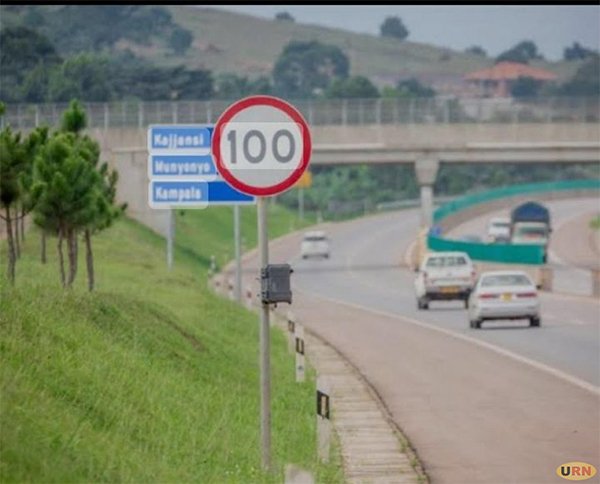
Drivers in Uganda are required to observe applicable speed restrictions. Speeding is treated as a road traffic offence, and Uganda Police Force road-safety information identifies excessive speed and reckless driving among significant road-safety concerns.
A useful Uganda Driving Guide should therefore avoid presenting one generic speed figure as though it applies to every road. Drivers should follow the applicable posted limit and current legal requirements for the road and vehicle concerned.
Mobile Phones and Distracted Driving
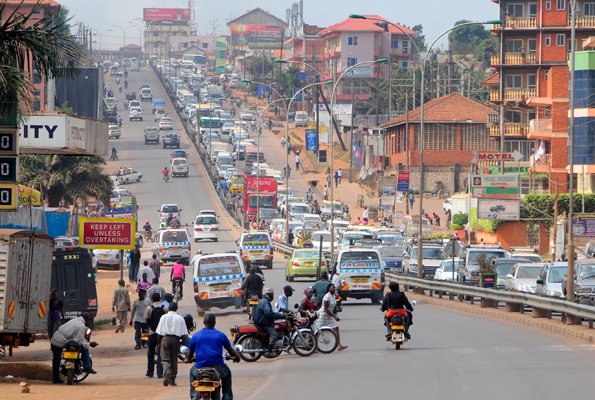
Drivers should not allow mobile-phone use to distract them from controlling the vehicle. Uganda Police Force’s published 2024 traffic data specifically record the use of a hand-held mobile telephone while driving as a traffic offence.
This is particularly relevant to visitors using navigation applications. If route changes are necessary, the safer approach is to stop in an appropriate location before interacting with the device.
Alcohol, Drugs and Driving
Alcohol and driving should never be combined. Uganda’s current traffic and road-safety regulatory framework includes specific regulations concerning prohibited drugs and alcohol limits.
For a tourist or self-drive traveler, the safest policy is to avoid driving after consuming alcohol or any substance that may impair alertness, reaction time, judgment or vehicle control.
Traffic Signs and Road Signals
Understanding traffic signs is an essential part of driving in Uganda. Visitors should familiarize themselves with warning signs, regulatory signs, directional signs, road markings and other signals before starting a long journey.
This is particularly important when moving from Kampala into rural areas. A traveler may encounter changing road environments, junctions, temporary roadworks, pedestrian activity and other situations requiring immediate recognition of signs and markings.
Overtaking and Safe Road Positioning
Overtaking should be approached conservatively, especially on unfamiliar roads. A driver should have adequate visibility, sufficient space and confidence that the maneuver can be completed safely.
Extra caution is appropriate around bends, hills, junctions, pedestrians, motorcycles, heavy vehicles and areas where visibility is restricted.
Motorcycles and Other Road Users
Motorcycles are an important part of Uganda’s road environment, particularly in urban and regional areas. Drivers should therefore remain alert for motorcycles approaching from different directions and should check mirrors and blind spots carefully before changing position or turning.
Pedestrians, cyclists, public transport vehicles and heavy trucks also share Uganda’s roads. A good Uganda Driving Guide should emphasize anticipation rather than simply reacting when another road user is already close.
Safety Regulations for Motorcycles and Tricycles
The Ministry of Works and Transport lists current regulations concerning motorcycles and motorised tricycles as part of Uganda’s traffic and road-safety regulatory framework.
For motorists, this reinforces the importance of giving motorcycles adequate space and remaining alert to their movement, especially in busy urban environments and on major highways.
Driving in Urban Areas
Driving in Kampala and other busy urban areas requires a different approach from driving on open rural highways. Traffic density, intersections, pedestrians, motorcycles, public transport vehicles and frequent changes in traffic flow can make urban driving demanding for visitors unfamiliar with Uganda.
A first-time visitor should avoid building a tightly timed itinerary around a specific arrival minute when passing through congested urban areas. A more realistic Uganda road trip allows additional time for traffic and unexpected delays.
Driving on Rural Roads
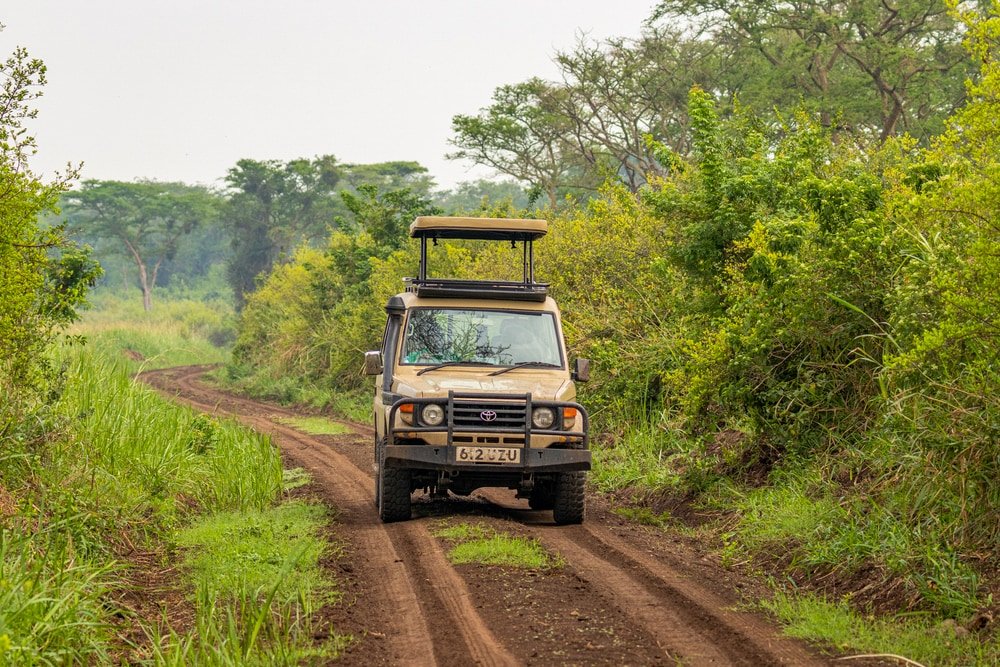
Once outside major urban centers, the driving environment changes. Travelers may encounter narrower roads, pedestrians, cyclists, motorcycles, livestock, roadside trading areas and sections where road conditions vary.
Drivers should therefore avoid assuming that a route will remain identical from beginning to end. The appropriate speed and driving technique should respond to the actual conditions encountered.
Rules for Long-Distance Uganda Road Trips
Long journeys require more than simply knowing the traffic laws. A responsible driver should combine legal compliance with practical preparation. This means checking the vehicle before departure, confirming the planned route, identifying suitable stopping points, monitoring weather conditions and avoiding excessive driving when tired.
Long-distance safari routes can involve substantial changes in terrain and road environment. Travelers heading toward northeastern Uganda should understand that the road journey to Kidepo can involve considerably different conditions from those encountered around Kampala.
What Drivers Should Check Before Starting the Journey
Licence
Confirm that the driver’s licence is valid and covers the vehicle category.
Vehicle
Check documentation, insurance, tyres, fuel and the vehicle’s general condition.
Route
Confirm the route, fuel stops, accommodation and emergency contacts before departure.
Before leaving with a rental or private vehicle, the driver should confirm that the driving licence is valid and appropriate for the vehicle, the vehicle documentation is in order, the insurance arrangements are understood, and the rental agreement permits the intended journey.
The driver should then inspect the vehicle, understand how to contact the rental company in the event of a breakdown, identify the planned route and consider where fuel and rest stops will be made.
Why Legal Compliance Matters on a Uganda Safari
Safari travelers sometimes focus heavily on accommodation, wildlife and park activities while giving insufficient attention to the driving requirements that make the journey possible. A self-drive safari remains a road journey, and the driver is responsible for complying with traffic laws as well as any additional rules applicable to the destination.
When traveling toward destinations such as Queen Elizabeth National Park, Bwindi, Kibale, Murchison Falls or Kidepo, travelers should distinguish between ordinary public-road rules and specific regulations that may apply inside protected areas.
Final Legal Checklist for Drivers
Uganda Driving Safety Summary
Prepare: Carry valid documentation, use seat belts, follow signs and posted limits, inspect the vehicle and plan the route before departure.
Use Caution: Slow down and exercise additional care in heavy traffic, poor weather, rural areas, near pedestrians and motorcycles, and on unfamiliar roads.
Do Not Risk It: Do not drive while impaired, do not use a hand-held phone while driving, and do not knowingly operate a vehicle without the required documentation or permission.
Before beginning any journey, a traveler should be able to confirm that the driver has the appropriate valid licence, the vehicle is properly documented, the insurance arrangements are understood, the rental agreement permits the intended use, and the driver is prepared to comply with current road-safety regulations.
The most important principle in this Uganda Driving Guide is that road rules should never be treated as optional travel advice. Uganda’s Traffic and Road Safety Act and associated regulations establish legal requirements for drivers and vehicles, while current road-safety guidance reinforces the importance of responsible behavior such as avoiding excessive speed and distracted driving.
Because traffic laws and regulations can be amended, travelers should verify the current requirements shortly before their journey. Information about a rental company’s policy, a national park’s access rules or a particular route should likewise be confirmed before departure rather than assumed from an older travel article.
Driving in Uganda for Tourists and First-Time Visitors
A practical guide for international visitors and first-time drivers exploring Uganda by road, from Kampala and Entebbe to national parks, rural communities and safari destinations.
Driving in Uganda for the first time can be a rewarding way to experience the country’s landscapes, towns, wildlife destinations and rural communities at your own pace. At the same time, visitors should understand that driving in Uganda can feel different from driving in their home countries. Traffic patterns, motorcycles, pedestrians, road conditions, distances, weather and safari routes all require careful attention.
This section of the Uganda Driving Guide focuses specifically on international visitors and first-time drivers. It explains what travelers should consider before hiring a vehicle, how to prepare for the first journey, what challenges are commonly encountered and how to decide between self-drive travel and using a professional driver.
Travelers interested in independent journeys can also review
Uganda self-drive safari options
before deciding whether independent driving fits their itinerary and experience.
Traffic Side
Uganda uses left-hand traffic.
Before Driving
Prepare documents, route, vehicle and fuel.
Road Awareness
Expect pedestrians, motorcycles and changing road conditions.
Flexible Itinerary
Allow extra time for traffic, weather and road conditions.
Can Tourists Drive in Uganda?
Tourists can arrange to drive in Uganda when they meet the applicable legal, documentation, vehicle and rental requirements. However, the fact that a traveler can legally drive does not necessarily mean that self-driving is the best option for every itinerary.
The suitability of self-drive depends on factors such as driving experience, familiarity with left-side traffic, confidence on unfamiliar roads, the planned destinations, the type of vehicle, the season, the expected road conditions and the length of the journey.
Someone planning a short journey between major towns may have a very different experience from a traveler planning several days of driving through rural areas and national parks.
What First-Time Visitors Should Know Before Driving
The first important step is to understand the driving environment before collecting a vehicle. Visitors should know which side of the road traffic uses, understand the basic road signs, confirm their driving documentation and become familiar with the vehicle’s controls.
Drivers should also understand the planned route before departure. A navigation application can provide directions, but it should not be treated as a substitute for understanding the general route, major towns, junctions and destination location.
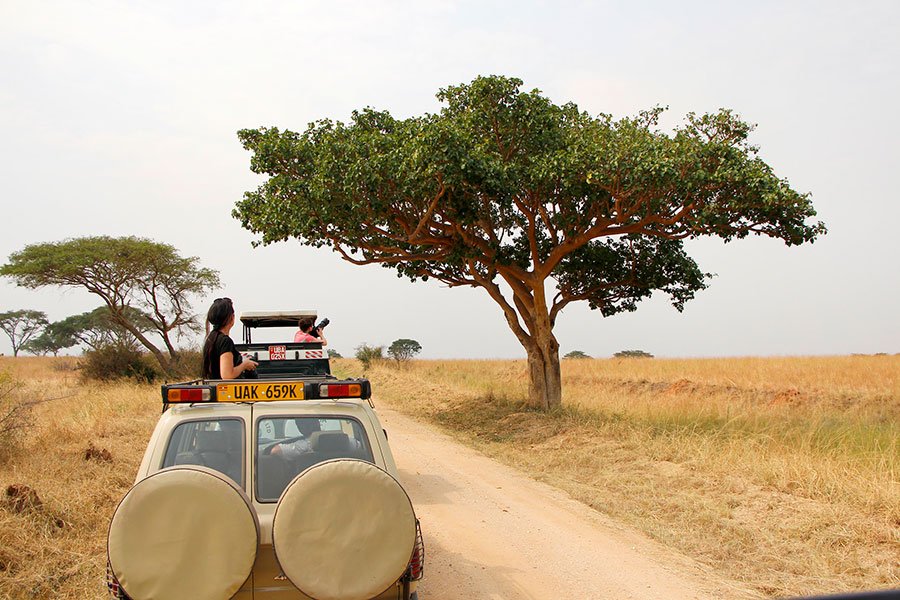 Road travel through Uganda’s safari landscapes offers scenic views and access to wildlife destinations such as Lake Mburo National Park.
Driving on the Left in Uganda
Uganda uses left-hand traffic. Visitors who normally drive on the right should take particular care during their first journeys because road positioning, turning procedures, lane selection and roundabout movements may initially feel unfamiliar.
Drivers should concentrate on maintaining the correct road position rather than relying on habit. This is particularly important when leaving a junction, entering a roundabout, turning onto another road or beginning a journey after stopping.
Travelers who normally drive on the left may find the traffic arrangement more familiar, but they still need to adjust to Uganda’s specific road environment and traffic conditions.
Getting Used to a Rental Vehicle
A rental vehicle may feel different from the vehicle a visitor normally drives at home. Before beginning a long journey, the driver should become familiar with the steering, brakes, indicators, mirrors, lights, windscreen controls and other essential controls.
The driver should also understand the vehicle’s dimensions. This is particularly important when navigating narrow roads, parking in busy towns, entering accommodation compounds or driving on uneven rural roads.
Before departure, inspect the vehicle and confirm that any existing damage has been recorded according to the rental company’s procedure. Also understand how to contact the rental company if the vehicle develops a problem.
Understanding Kampala Before Starting a Road Trip
Many international visitors begin their Uganda journeys in Kampala or Entebbe. The first driving experience may therefore involve urban traffic before the traveler reaches the open highway.
Kampala requires continuous attention because traffic can include cars, motorcycles, buses, pedestrians and other road users operating in a busy environment. Visitors unfamiliar with the city should avoid assuming that a short geographical distance will necessarily translate into a short driving time.
If the itinerary begins with an airport arrival followed by a long road journey, travelers should consider whether they are sufficiently rested and prepared to drive. Fatigue after an international flight can affect concentration even before the journey begins.
Driving from Entebbe
Entebbe provides an important starting point for many visitors because of its proximity to the country’s principal international airport. Travelers collecting a vehicle in the Entebbe area should use the opportunity to familiarize themselves with the vehicle before committing to a long journey.
Drivers should confirm their destination, understand the first part of the route and make sure that essential navigation information is available before setting off.
For visitors interested in nearby destinations before beginning a longer safari, day-trip planning from Kampala can provide ideas for shorter journeys and gradual familiarization with Uganda’s roads.
Is Driving in Uganda Difficult?
The difficulty of driving in Uganda depends heavily on the route and the driver’s previous experience. Driving between major destinations on established paved roads can be relatively straightforward for an experienced driver who is comfortable with left-side traffic.
The experience becomes more demanding when traffic is heavy, roads become narrower, surfaces change, weather deteriorates or the traveler enters unfamiliar rural or protected-area environments.
Is Driving in Uganda Safe?
Safety depends on responsible driving, route selection, vehicle condition, weather, road conditions and the driver’s ability to respond appropriately to other road users.
Visitors should use defensive driving principles throughout the journey. This includes maintaining appropriate following distances, controlling speed according to conditions, remaining alert for pedestrians and motorcycles, avoiding distracted driving and taking breaks when tired.
Why First-Time Drivers Should Avoid Overconfidence
A visitor may feel comfortable after successfully completing the first few kilometers and then become less cautious. This can be a problem because Uganda’s driving environment can change quickly between urban and rural areas.
A quiet road may contain pedestrians or animals, while a seemingly open highway may have motorcycles, heavy vehicles or sudden changes in traffic. Drivers should therefore maintain the same level of attention throughout the journey.
Planning Your First Uganda Road Trip
A first Uganda road trip should be designed around realistic driving days. Instead of trying to visit as many destinations as possible, travelers should consider how much time will actually be spent behind the wheel.
A practical itinerary should account for driving, meals, fuel, sightseeing, rest and possible delays. It should also allow flexibility where road conditions or weather may affect progress.
For travelers planning a southwestern circuit,
Bwindi travel planning information
can help illustrate why the final destination and exact sector should be identified before calculating the journey.
Understanding Journey Distances
One of the most common mistakes made by first-time visitors is treating distance as though it directly determines travel time. A route may cover a particular number of kilometers, but the actual journey can take longer because of traffic, roadworks, towns, stops, weather, terrain and road conditions.
This is especially important when connecting a road transfer to a fixed-time activity such as gorilla trekking, chimpanzee trekking, a boat cruise or a flight.
Driving Between Major Tourist Destinations
Uganda’s major tourism destinations are spread across different parts of the country. A traveler who wants to visit several national parks should therefore expect some substantial road transfers.
For example, an itinerary combining central Uganda, western Uganda and southwestern Uganda can involve several different road environments. The driver should plan the sequence carefully rather than simply connecting destinations in the order they appear on a map.
For travelers considering a short safari from the capital,
Lake Mburo National Park access
is particularly relevant because the park is positioned along a major route toward southwestern Uganda.
Self-Drive Versus Using a Professional Driver
Self-Drive
Self-drive provides independence. Travelers can control their departure times, stopping points and daily rhythm, subject to road, park and accommodation requirements.
It is generally more suitable for travelers who are comfortable driving in unfamiliar environments and are prepared to research their route before departure.
Professional Driver
A professional driver can reduce the workload associated with navigation, long-distance driving and route decisions. This can be especially valuable on complicated itineraries or for travelers who are unfamiliar with driving in East Africa.
A driver-guide may also be preferable for travelers who want to concentrate on sightseeing rather than vehicle operation.
Who Is Most Suitable for Self-Drive?
Self-drive is generally more suitable for travelers who are comfortable driving in unfamiliar environments, can remain attentive for extended periods and are prepared to research their route before departure.
It is also important that the driver is comfortable adapting to changing conditions. A traveler who expects every road to resemble the roads in their home country may find the experience more demanding than someone who approaches the journey with realistic expectations.
Who May Prefer a Driver-Guide?
A driver-guide may be preferable for travelers who want to concentrate on sightseeing rather than vehicle operation. It can also be useful when the itinerary includes several long transfers, complex safari routes or destinations where local route knowledge is particularly valuable.
Travelers who are uncomfortable with unfamiliar roads should not feel pressured to self-drive simply because rental vehicles are available. The purpose of a holiday is to have a safe and enjoyable experience, and using a professional driver can be a practical choice.
Understanding Safari Driving
Driving to a national park and driving inside a national park are not necessarily the same experience. The approach may use public highways and rural roads, while the interior may contain safari tracks with different surfaces and conditions.
Inside protected areas, drivers must follow the applicable park regulations. Wildlife should be given appropriate space, and visitors should never assume that a safari track can be driven like an ordinary public highway.
For example,
Lake Mburo safari rules provide destination-specific information about park behavior and restrictions, demonstrating why travelers should check the rules for each protected area rather than applying assumptions from another park.
 Safari driving requires additional awareness because wildlife and changing track conditions may be present.
Driving During a Uganda Safari
A self-drive safari requires additional awareness because wildlife can be present near roads and tracks. Drivers should remain observant and should follow the instructions and regulations applicable to the protected area.
Visitors should not drive off designated routes unless this is specifically permitted. They should also avoid disturbing wildlife through unnecessary noise, aggressive driving or attempts to approach animals too closely.
First-Time Visitors and Wildlife
Seeing wildlife can be exciting, but the presence of animals should never cause a driver to lose concentration. Drivers should maintain control of the vehicle and observe the applicable park rules at all times.
Animals may move unpredictably. Consequently, visitors should avoid sudden movements and should never assume that wildlife will behave like domestic animals.
Driving During the Rainy Season
Rain can change the driving experience considerably. Wet conditions can reduce visibility and affect braking and traction, while unpaved roads may become more challenging.
First-time visitors should therefore avoid setting rigid schedules that leave no flexibility for weather-related delays.
Driving During the Dry Season
Dry conditions can improve the usability of many rural roads, but they do not eliminate every driving challenge. Dust can reduce visibility, particularly when following another vehicle on an unpaved road.
Drivers should maintain an appropriate distance from vehicles ahead and should avoid driving faster simply because the road surface appears dry.
Night Driving for Tourists
First-time visitors should carefully consider whether night driving is necessary. Darkness reduces visibility and can make pedestrians, motorcycles, animals, road-edge hazards and changes in the road surface more difficult to identify.
Travelers should ideally structure their itinerary so that major transfers do not depend on driving late into the night. This is particularly relevant when traveling to rural accommodation or remote safari destinations.
Driving After an International Flight
Fatigue is an important consideration for international visitors. A traveler who has spent many hours traveling may not have the concentration required for a long road journey immediately after arrival.
Where possible, visitors should consider allowing time to rest before beginning a major self-drive journey. If a long transfer is unavoidable, using a professional driver can reduce the burden on the traveler.
Preparing Documents Before Vehicle Collection
Before collecting a rental vehicle, travelers should confirm that they have the documentation required to drive legally and that the rental company accepts their documentation.
The driver should also understand the rental agreement, insurance arrangements, vehicle restrictions and breakdown procedures before leaving the collection point.
Inspecting the Vehicle Before Departure
A careful vehicle inspection can help establish the condition of the car before the traveler takes responsibility for it. The traveler should follow the rental company’s inspection procedure and make sure existing damage is recorded where required.
The driver should also check the basic operating systems and make sure they understand the vehicle before leaving the rental location.
Choosing the Right Vehicle
Vehicle choice should be based on the actual route rather than on the assumption that every Uganda safari requires the same type of vehicle.
A traveler spending most of the journey on major paved roads may have different requirements from someone planning extensive travel on rural roads or safari tracks. Terrain, weather, road condition, park requirements and rental-company recommendations should all be considered.
For travelers planning remote routes,
Kidepo road-trip planning
demonstrates why vehicle suitability and route planning become particularly important when traveling long distances into northeastern Uganda.
Navigation for First-Time Drivers
Navigation should be prepared before departure. Drivers should save important destinations, understand the general route and know where they are expected to turn or leave the main road.
Mobile connectivity can vary, so travelers should not rely exclusively on a continuously connected navigation service. Offline route information can provide a useful backup.
If route changes are necessary, the safer approach is to stop in a suitable location before interacting with the device.
Asking Locals for Directions
Local directions can sometimes be useful when approaching rural destinations, particularly when the final road to accommodation is not obvious from the main highway.
However, travelers should confirm directions carefully and compare them with information supplied by their accommodation or tour operator. Names of villages and local landmarks can sometimes be unfamiliar to visitors, so having the accommodation’s contact information available can be helpful.
Fuel Planning for Tourists
Fuel planning should be part of every long Uganda road trip. Travelers should identify suitable refueling opportunities before beginning remote sections and should not assume that a fuel station will always be available at the next town.
This is especially important when traveling toward remote safari destinations. A driver should consider both the planned distance and possible detours or delays.
Food, Water and Rest Stops
Long journeys should include appropriate opportunities for food, water and rest. Drivers should not attempt to continue driving simply because they want to reach the destination as quickly as possible.
Regular breaks can help maintain concentration, particularly during long transfers between Kampala and western, northern or southwestern Uganda.
What to Do if the Vehicle Develops a Problem
Before departure, travelers should understand the rental company’s breakdown and recovery procedures. The relevant contact information should be easily accessible rather than stored somewhere that cannot be reached without an internet connection.
If a vehicle develops a problem, the driver should prioritize safety and follow the rental company’s instructions. Travelers should avoid attempting unfamiliar mechanical repairs on the roadside unless they are qualified to do so.
Driving With Passengers
Passengers can make a road trip more enjoyable, but they can also distract the driver. The driver should remain responsible for concentrating on the road and should not allow conversations, navigation requests or other passenger activities to interfere with vehicle control.
Passengers should use their seat belts and should follow the driver’s instructions, particularly when traveling on rough roads or within protected areas.
Driving With Children
Families traveling by road should plan around the needs of younger passengers. Long journeys can be tiring, so appropriate rest stops should be included.
Parents or guardians should ensure that children are properly secured and should follow the applicable vehicle safety requirements. The driver should not allow passenger activity to become a distraction while the vehicle is moving.
Planning a Comfortable Daily Distance
There is no single daily driving distance that is appropriate for every Uganda road trip. The practical limit depends on the road, traffic, terrain, weather, stops and driver’s experience.
A shorter journey on a busy or winding road can require more concentration than a longer journey on an open highway. Travelers should therefore judge daily driving requirements by the complete route rather than by kilometers alone.
Using Stopovers to Break Long Journeys
Stopovers can make long road journeys more manageable while also adding experiences to the itinerary. A stop can provide time to rest, eat, refuel or visit a destination along the route.
Travelers planning western Uganda circuits can consider appropriate stopovers rather than attempting to drive continuously from Kampala to the final destination. The exact stop should be selected according to the itinerary and current operating conditions.
Respecting Local Communities
Driving through rural Uganda means passing through communities, farms, trading centers and villages. Visitors should drive respectfully and avoid unnecessary horn use, excessive speed or behavior that could inconvenience local residents.
Responsible driving is not only about avoiding accidents. It also means recognizing that roads are shared spaces used by people traveling for work, school, business and daily activities.
Respecting Wildlife Areas
When driving near national parks and wildlife areas, travelers should recognize that the road environment may include animals. Drivers should follow the applicable protected-area rules and avoid disturbing wildlife.
Travelers should never treat a wildlife sighting as a reason to drive aggressively or leave an authorized route without permission.
Is Self-Drive Right for Your Trip?
When Self-Drive May Not Be the Best Choice
Self-drive may not be ideal when the itinerary involves extremely long daily transfers, difficult road conditions, complex park access or a driver who lacks confidence in unfamiliar traffic environments.
There is nothing wrong with choosing a professional driver when the journey is more comfortable or practical that way.
When Self-Drive Can Be Attractive
Self-drive can be attractive to travelers who value independence and want greater control over their daily schedule. It can provide flexibility for stopping at viewpoints, towns and attractions along suitable routes.
However, flexibility should always operate within the limits of traffic law, rental agreements, park regulations and safe driving practices.
Preparing for the First Day
The first day should be deliberately simple where possible. After collecting the vehicle, the driver should confirm the route, become comfortable with the controls and avoid immediately committing to an unnecessarily demanding journey.
If the first destination is nearby, the traveler can use the journey to become familiar with local traffic patterns. This can make subsequent long-distance driving more comfortable.
Preparing for a Long Safari Transfer
Before a long safari transfer, the driver should check the route, fuel requirements, accommodation location, weather and expected road conditions. The itinerary should also include realistic breaks.
Travelers should remember that reaching the general area of a national park is not necessarily the same as reaching their accommodation. The final approach can involve additional roads and turns.
Why Local Knowledge Can Matter
Digital maps provide valuable information, but local knowledge can sometimes provide additional context about the final approach to a destination, seasonal road conditions or suitable stopping points.
Travelers should therefore combine digital navigation with current information from accommodation providers, rental companies, tour operators or other reliable local sources where appropriate.
Common Mistakes Made by First-Time Drivers
Common planning mistakes include underestimating journey times, scheduling too many destinations in one day, beginning long drives while fatigued, failing to plan fuel stops, relying entirely on online navigation and assuming that all roads have similar conditions.
Another mistake is treating a safari track as though it were an ordinary highway. Protected areas have their own rules and wildlife considerations, and drivers must follow the applicable regulations.
Building a Realistic Uganda Driving Itinerary
A realistic itinerary begins with the destinations that matter most and then calculates the driving required between them. Travelers should consider whether each transfer is reasonable before adding another attraction to the same day.
For example, a journey involving Kampala, Lake Mburo, Bwindi and Queen Elizabeth National Park may look straightforward geographically, but the driver should account for the actual road sequence, accommodation locations, activities and time required at each destination.
A detailed
Lake Mburo to Bwindi road itinerary
can help illustrate how multiple southwestern destinations can be combined into a broader travel plan.
First-Time Visitors Should Plan for Flexibility
Flexibility is particularly valuable for visitors who have never driven in Uganda. A route may take longer than expected, weather may change, or the traveler may decide to spend additional time at an interesting stop.
A flexible itinerary provides room for changes without forcing the driver to travel too quickly or continue driving after becoming tired.
Final Advice for Tourists Driving in Uganda
Driving in Uganda for tourists is best approached with preparation, patience and realistic expectations. Visitors should understand the traffic environment, confirm their driving documentation, inspect their rental vehicle, plan fuel and navigation, research the exact route and allow sufficient time for rest.
First-time visitors should also recognize that Uganda is geographically diverse. Driving around Kampala is different from driving on a major highway, which is different again from driving on a rural road or safari track. The best driving strategy is therefore to adapt continuously to the environment.
A self-drive safari can provide independence and flexibility, but it also places responsibility for the vehicle, navigation and driving decisions on the traveler. A professional driver or driver-guide can be a better choice when the itinerary is particularly long, complex or demanding.
Successful driving in Uganda is not about covering the greatest distance in the shortest possible time. It is about reaching each destination safely, respecting other road users, following current laws and protected-area regulations, and allowing enough time to enjoy the journey itself.
Plan Your Uganda Road Journey Carefully
Choose realistic driving days, prepare your vehicle and documents, allow flexibility and select self-drive or professional driving according to your experience and itinerary.
Uganda Self-Drive Safari and National Park Driving
A practical guide to planning a self-drive safari across Uganda’s national parks, highways, rural roads and protected-area tracks.
A Uganda self-drive safari gives travelers the opportunity to explore the country’s national parks and surrounding landscapes independently, but it requires more preparation than an ordinary road trip. The driver must consider public-road conditions, vehicle suitability, navigation, fuel, weather, wildlife and the specific regulations that apply inside protected areas.
Self-driving can be suitable for travelers who are confident driving in unfamiliar environments and who are prepared to plan their routes carefully. It is not simply a matter of renting a vehicle and following a map. A successful Uganda Driving Guide must explain the difference between reaching a national park by public road and driving inside the protected area itself.
Uganda self-drive safari services
can therefore be considered as one option, provided travelers independently confirm the current rental terms and requirements before booking.
Plan the Route
Know your park entrance, lodge, activities and driving distances.
Choose Carefully
Match the vehicle to the roads, terrain and safari route.
Respect Wildlife
Follow protected-area rules and give wildlife appropriate space.
Prepare Ahead
Plan fuel, navigation, accommodation and rest stops before remote sections.
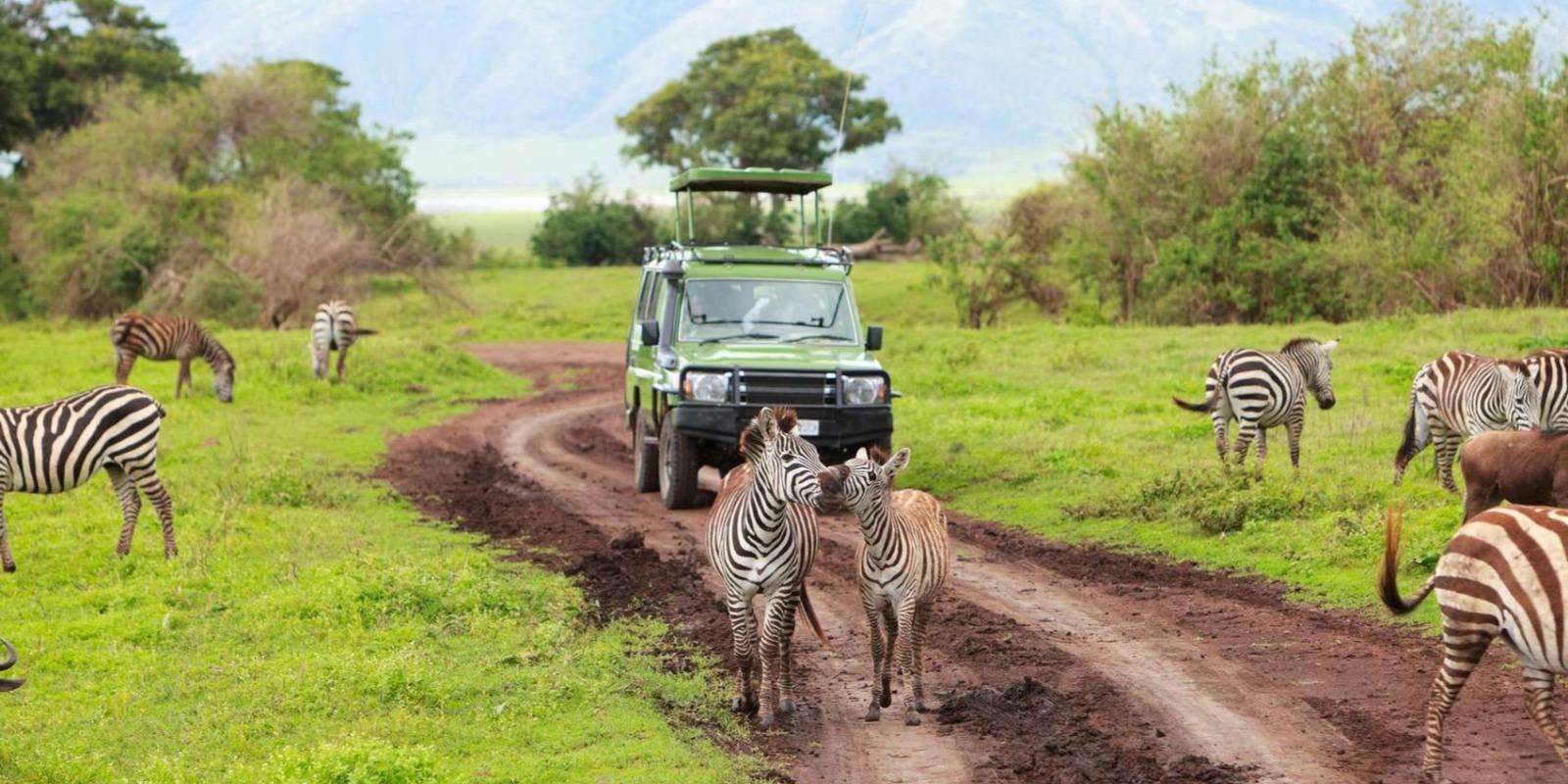
What Is a Uganda Self-Drive Safari?
A Uganda self-drive safari is a safari in which the traveler operates the vehicle rather than relying on a dedicated driver-guide for the road and safari portions of the trip. This can provide greater independence over departure times, stops and the pace of travel.
The experience can include driving on public highways between destinations and driving on authorized roads or tracks within national parks. These two environments should always be treated differently because protected areas have their own rules and wildlife considerations.
Is Self-Drive Suitable for Every Traveler?
Self-drive is not automatically the best choice for every visitor. The decision should take into account driving experience, familiarity with left-side traffic, confidence on unfamiliar roads, the length of the itinerary, road conditions, weather and the destinations being visited.
A traveler who is comfortable driving for several hours on unfamiliar roads may find self-drive attractive. Someone who is uncomfortable navigating long rural journeys may prefer a professional driver or driver-guide.
Planning Before Collecting the Vehicle
Preparation should begin before the vehicle is collected. The driver should confirm the applicable driving documentation, understand the rental agreement, verify insurance arrangements and establish which roads and destinations the rental vehicle may be used on.
The planned itinerary should also be discussed with the rental provider where necessary, particularly if the journey includes remote areas, national parks or roads with challenging conditions.
Choosing a Vehicle for a Self-Drive Safari
Vehicle choice should be based on the actual itinerary. A traveler using major paved highways has different requirements from someone planning extensive travel on rural roads and safari tracks.
Ground clearance, vehicle condition, luggage capacity, reliability and suitability for the planned route should all be considered. A vehicle should never be selected simply because it appears attractive in photographs or because another traveler used the same type of vehicle on a different itinerary.
Why Route Planning Matters
Uganda’s national parks are spread across different regions, so a self-drive safari can involve substantial distances. Travelers should establish the sequence of destinations before booking accommodation and should avoid creating unnecessarily long driving days.
For example,
Kibale safari route planning
demonstrates that access to western Uganda can involve different approaches and that the route selected can influence the overall journey.
Self-Drive to Lake Mburo National Park
Lake Mburo is particularly relevant to travelers considering a road-based safari because of its location along the southwestern Uganda corridor. Current destination information places the park approximately 240 kilometers by road west of Kampala and about 30 kilometers east of Mbarara. The park also has a network of game tracks used for wildlife viewing.
Because the park is relatively accessible from Kampala, it can form part of a shorter safari itinerary or a stop on a longer journey toward southwestern Uganda.
Travelers should nevertheless distinguish between the highway journey to the park and driving on the park’s game tracks. The latter requires attention to wildlife, park regulations and the condition of individual tracks.
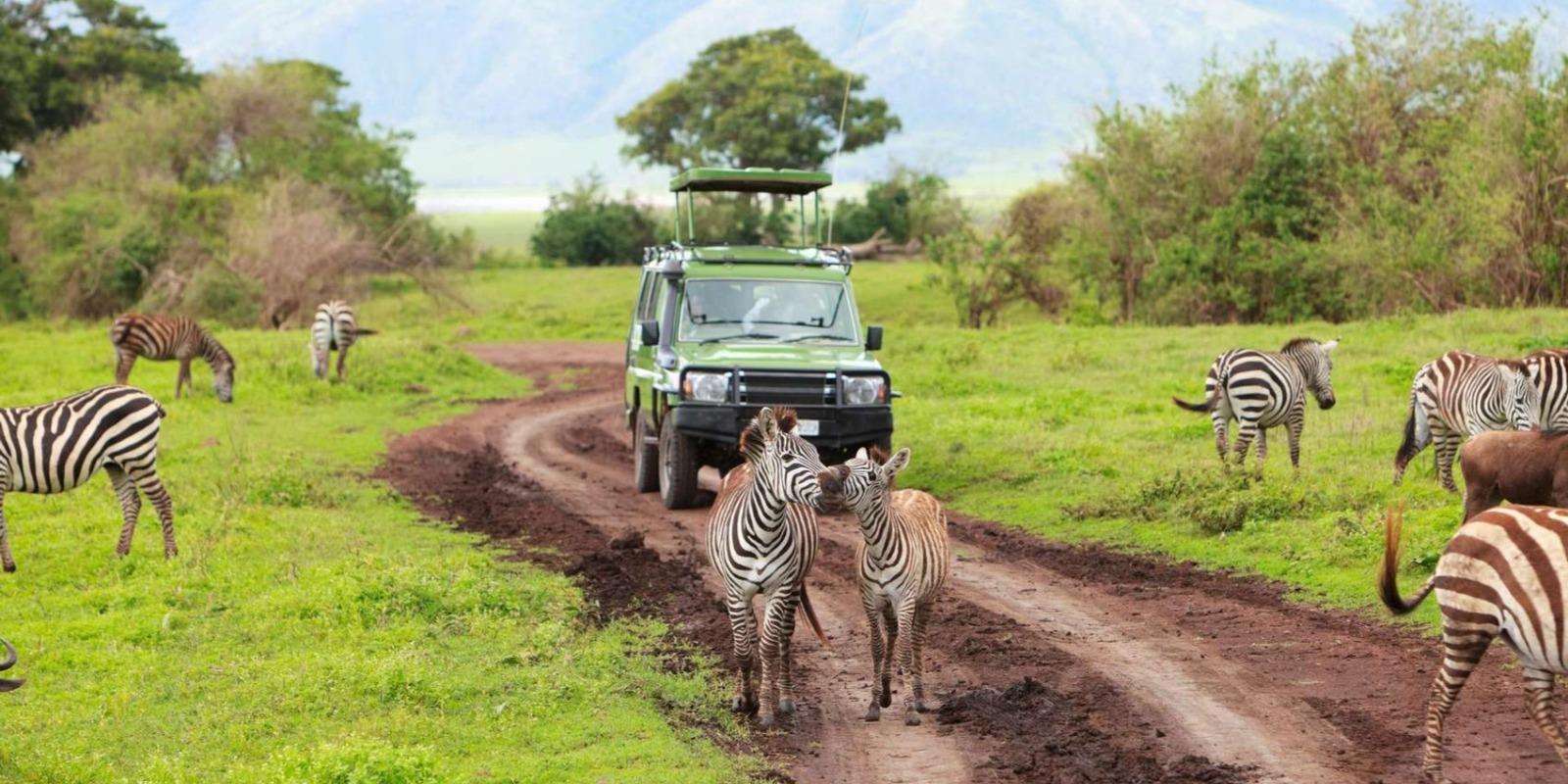 Lake Mburo’s wildlife tracks provide a practical setting for travelers interested in a road-based safari experience.
Game Drives in Lake Mburo
Lake Mburo’s game tracks pass through varied landscapes, including woodlands, wetlands, grassy areas and hills. Current destination information identifies game drives as an important activity and describes early morning and late afternoon as periods when wildlife activity can be favorable.
Self-drive visitors should follow the park’s current rules and should not assume that information published by a tourism website replaces instructions from the responsible park authorities.
Self-Drive to Queen Elizabeth National Park
Queen Elizabeth National Park is another major destination for travelers planning a self-drive safari. The park can be incorporated into western Uganda circuits that include Kibale, Bwindi and Lake Mburo.
The road journey to the park should be planned separately from the driving required inside the protected area. Once inside the park, visitors must comply with applicable park rules and remain alert to wildlife.
Travelers can also review
Kazinga Channel safari information
when planning activities around Queen Elizabeth National Park.
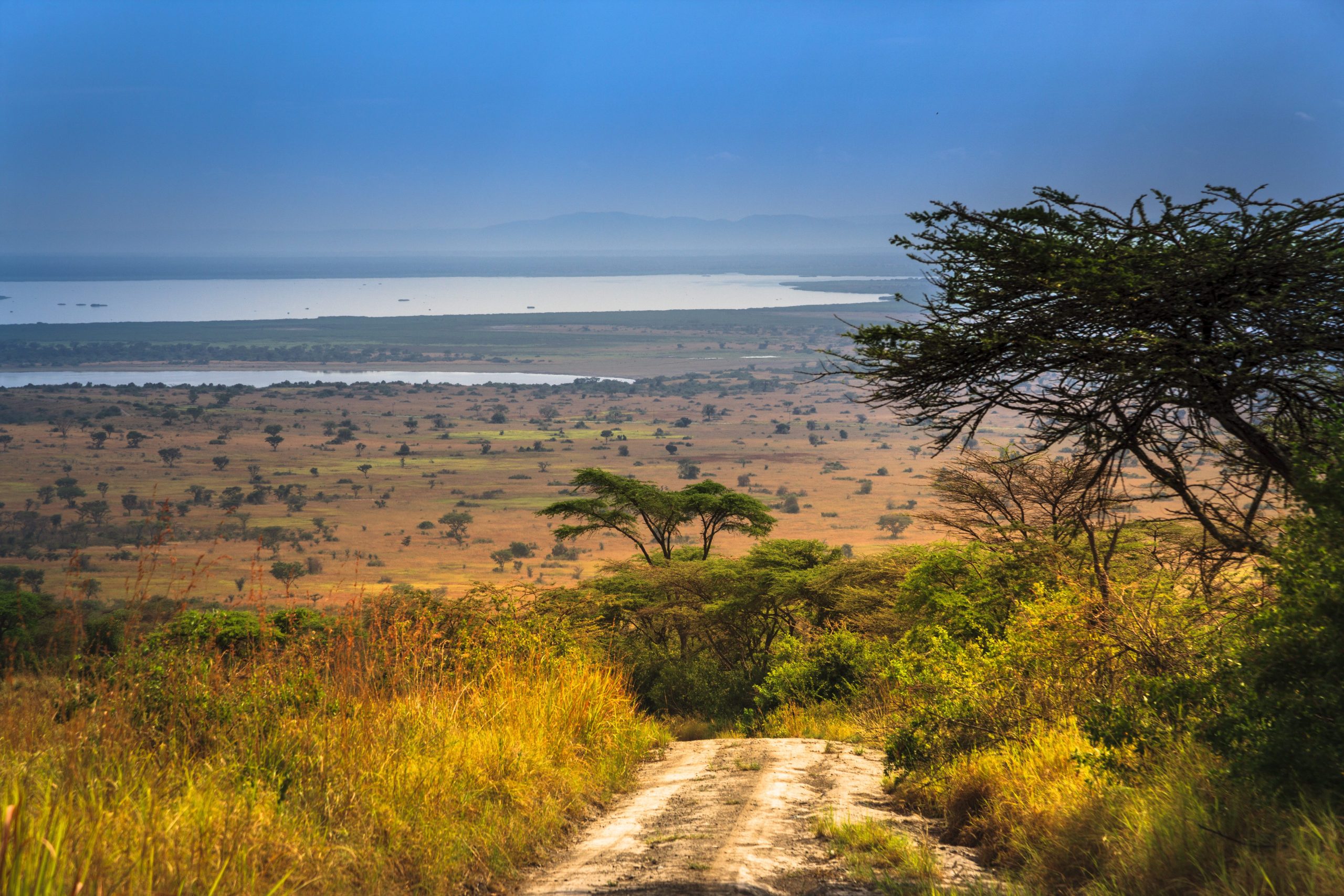
Wildlife Driving in Queen Elizabeth National Park
Wildlife can appear close to roads and tracks inside protected areas. Drivers should therefore maintain appropriate control of the vehicle and avoid sudden or aggressive movements.
A wildlife sighting should never become a reason to ignore park rules. Visitors should remain on authorized routes unless a particular activity or instruction specifically permits otherwise.
Self-Drive to Murchison Falls National Park
Murchison Falls National Park is another major destination that can be reached by road. The Uganda Wildlife Authority’s current park information places the park about 305 kilometers north of Kampala and gives approximately four to five hours for the drive to the southern entrance gate, while noting that additional time may be required to reach lodges from the gate.
This illustrates an important principle for self-drive planning: reaching a park entrance does not necessarily mean that the traveler has reached the accommodation or safari activity.
Travelers should therefore identify their exact entrance, lodge and planned activities before estimating the total driving required.
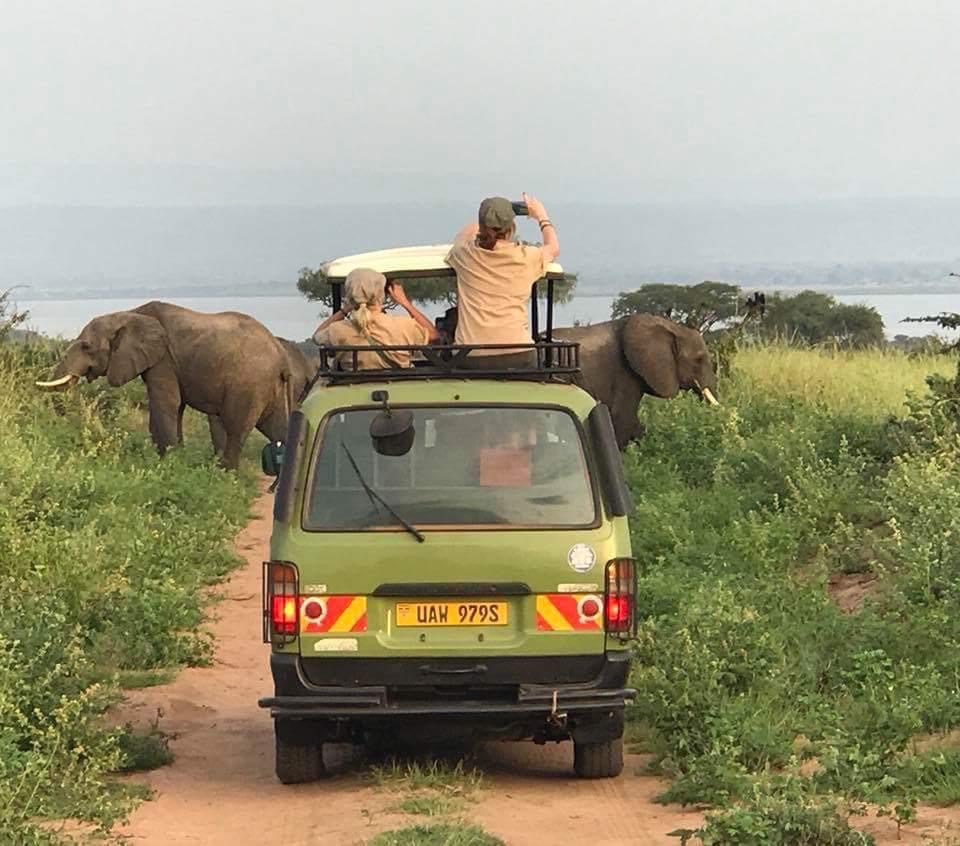 A safari vehicle observing elephants on a game track in Murchison Falls National Park.
Driving Inside Murchison Falls National Park
Once inside Murchison Falls National Park, the driving environment changes from ordinary public roads to protected-area roads and tracks. Drivers should follow the applicable park regulations and remain attentive to wildlife.
Travelers should also allow additional time for game drives because the purpose of the safari is wildlife observation rather than rapid transportation from one point to another.
Self-Drive to Kibale National Park
Kibale National Park is an important destination for travelers interested in chimpanzee trekking and other forest experiences. Current tourism information identifies two principal road approaches from Kampala, including the Kampala–Mubende–Fort Portal route and an alternative route through Mbarara and Kamwenge.
Because route conditions and itinerary requirements can change, travelers should confirm their exact accommodation and activity location before departure.
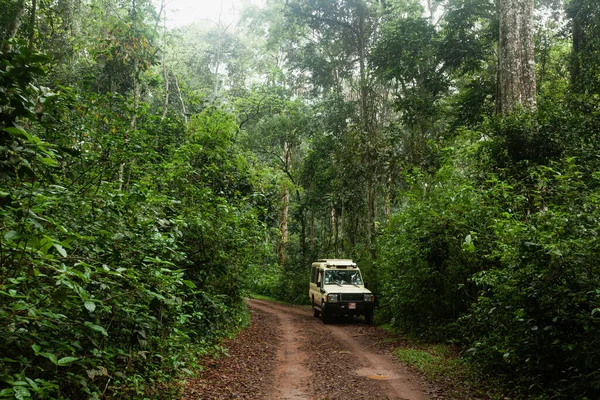
Self-Drive to Bwindi Impenetrable National Park
Bwindi requires particularly careful route planning because the park contains different sectors and the final driving approach depends on the specific area being visited.
Current tourism information describes road travel from Kampala to Bwindi as a substantial journey and notes that travelers may encounter rougher sections as they approach the park.
Travelers should therefore establish whether they are heading to Buhoma, Ruhija, Rushaga, Nkuringo or another specific location before calculating their journey.
For additional destination context,
Bwindi access information
explains the different approaches and sectors.
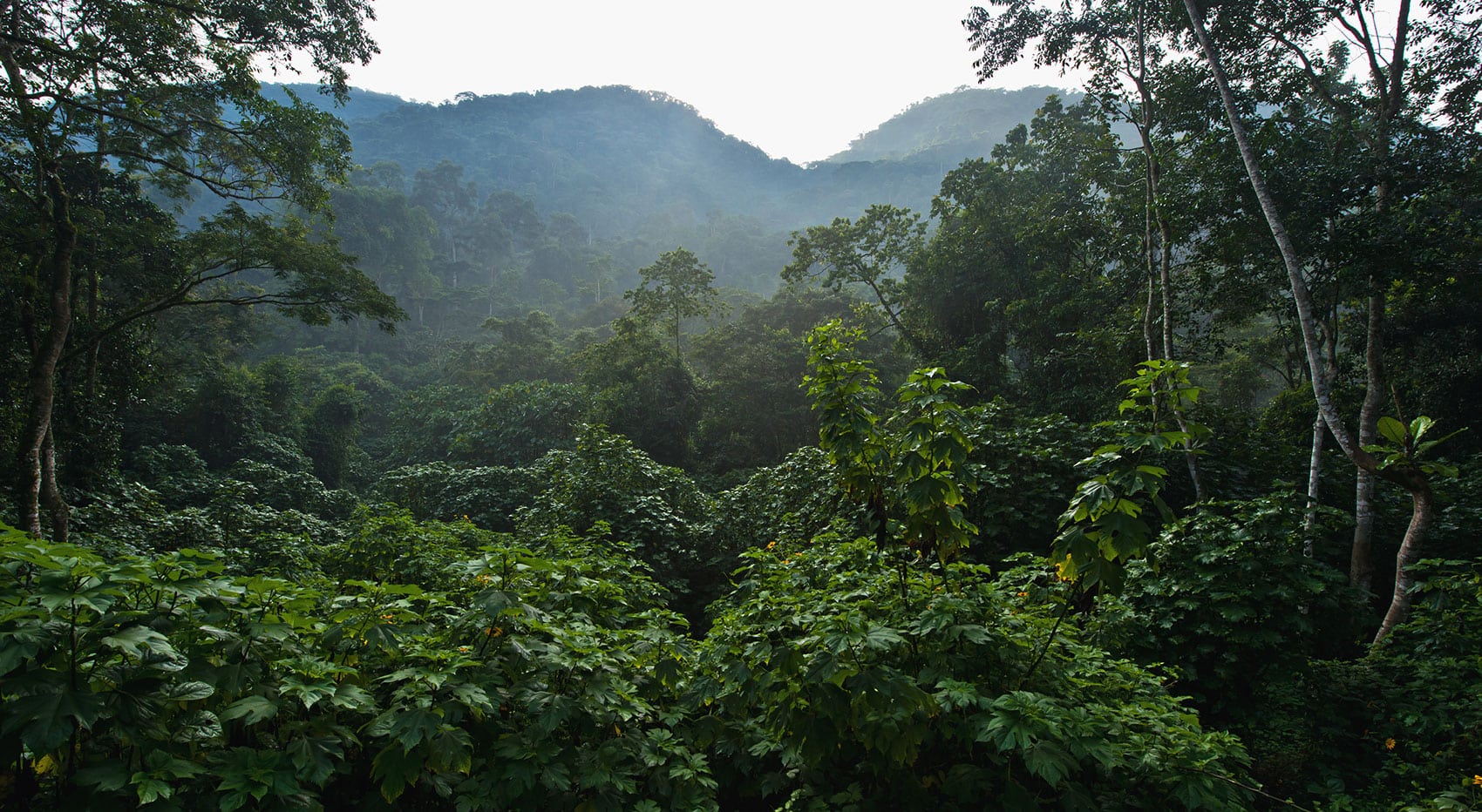 Bwindi’s mountainous rainforest landscape makes accurate route and accommodation planning particularly important.
Self-Drive to Kidepo Valley National Park
Kidepo Valley National Park requires particularly careful planning because it is located in northeastern Uganda and involves a much longer overland journey from Kampala than several other national parks.
Current route information describes an approximately 700-kilometer road journey from Kampala and explains that the final section beyond Kitgum can become more rugged. The same source recommends a sturdy 4×4 for the road journey.
Because conditions can vary, travelers should verify current road conditions and vehicle suitability immediately before departure rather than relying exclusively on older route descriptions.
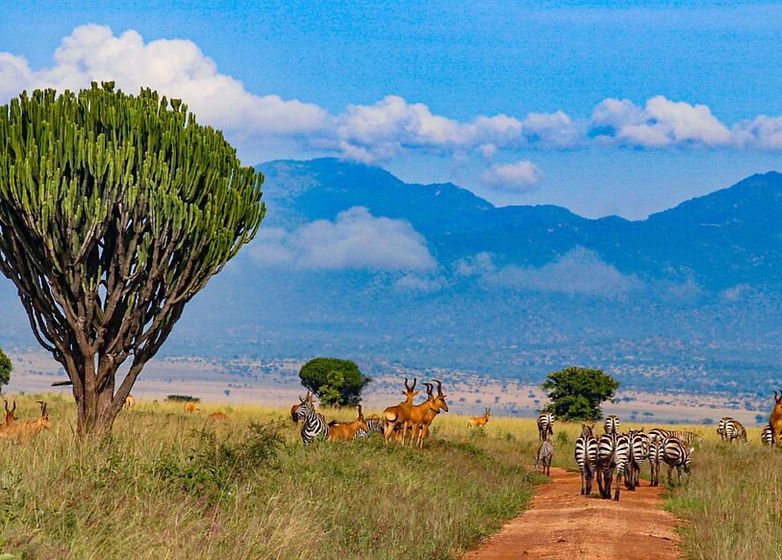 Kidepo Valley’s expansive savannah, wildlife and remote setting make vehicle preparation and long-distance planning especially important.
Breaking the Kidepo Journey Into Stages
A long journey to Kidepo can be divided into stages to reduce fatigue. Current route information describes Gulu as a common overnight stop and identifies the road beyond Kitgum as more demanding.
Breaking a long journey into manageable sections can make the trip more comfortable and can reduce the temptation to continue driving when tired.
Self-Drive in Mgahinga and the Southwestern Region
Travelers heading toward Mgahinga and the southwestern highlands should account for mountainous terrain and winding roads. The journey is substantially different from driving on open highways in central Uganda.
Current route information for Mount Muhabura describes road access from Kampala through Kabale toward Kisoro and emphasizes the importance of paying attention to directions around local trading centers and park access points.
Visitors should obtain precise directions for their accommodation or activity because the final approach can differ depending on the destination.
Driving to Safari Lodges
The location of the lodge should be considered when planning a self-drive safari. A map may show a national park as the destination, but accommodation can be located outside the park, near a particular gate or on a secondary road.
Travelers should request clear directions from their accommodation before departure and should confirm whether the final road is paved, unpaved or subject to seasonal changes.
Public Roads Versus Park Roads
One of the most important distinctions in a Uganda self-drive safari is between public roads and roads inside protected areas. Public roads are governed by Uganda’s traffic laws and normal road-safety requirements.
Park roads are subject to additional protected-area rules. Drivers must respect wildlife, remain within authorized areas and follow instructions from park authorities or rangers.
Wildlife Has Priority
Wildlife viewing requires patience. Animals can appear unexpectedly, and drivers should never approach wildlife aggressively or attempt to force an animal to move.
Visitors should maintain appropriate distances, avoid unnecessary noise and follow the instructions of authorized personnel. The objective is to observe wildlife without disturbing it.
Do Not Treat Safari Tracks Like Highways
Safari tracks can contain uneven surfaces, curves, vegetation, mud, loose material and other conditions that require careful driving. Drivers should adjust their speed to the track rather than attempting to maintain the speed they would use on a paved highway.
Road conditions can also change after rainfall. A track that was easy to navigate earlier may require greater care later in the season or after significant weather.
Self-Drive During the Rainy Season
Rain can affect both public roads and safari tracks. On unpaved surfaces, wet conditions may reduce traction and alter the condition of the route. Travelers should check current local information before beginning a remote journey.
Self-Drive During the Dry Season
Dry conditions can make many rural routes easier to navigate, but they introduce other considerations such as dust and reduced visibility behind vehicles traveling on unpaved roads.
Fuel Planning for Safari Routes
Fuel planning is particularly important when traveling toward remote destinations. Before leaving a major town, travelers should establish where reliable refueling opportunities are available along the route.
The driver should avoid assuming that a remote park or lodge will have the same fuel availability as a major urban center.
Navigation During a Self-Drive Safari
Navigation should be prepared before leaving. Travelers should save important destinations, accommodation locations and park entrances where possible.
Because mobile connectivity can vary, a self-drive traveler should have a backup plan for navigation. The driver should also avoid handling a phone while the vehicle is moving.
If navigation needs to be changed, stop in a safe and suitable location before interacting with the device.
Using Local Directions
Local directions can be useful when approaching accommodation or smaller destinations. However, travelers should cross-check information with their accommodation provider or rental company when possible.
Knowing the exact name of the lodge, park gate or activity center can make local navigation considerably easier.
Self-Drive and Gorilla Trekking
Driving to a gorilla trekking destination is different from driving on the trekking trail itself. The vehicle takes the traveler to the appropriate meeting or trailhead area, while the actual trekking activity is conducted under the rules and guidance of the responsible protected-area authorities.
Travelers should therefore plan the driving portion around the required reporting time and location rather than assuming that arriving somewhere in the general Bwindi area is sufficient.
Self-Drive and Chimpanzee Trekking
The same principle applies to chimpanzee trekking. Travelers should establish the exact briefing location and required reporting time before beginning the road journey.
For Kibale, current tourism information identifies Kanyanchu as a central area for tourism activities and describes different road approaches to the park.
Combining Several National Parks
A self-drive safari can combine several national parks, but the itinerary should be designed around realistic driving days. Trying to include too many distant parks can result in more time spent driving than enjoying the destinations.
Travelers should consider the geographical sequence of the parks and avoid unnecessary backtracking. A route that moves logically from one region to another can make the journey considerably more manageable.
A multi-destination example involving
Lake Mburo, Bwindi and Lake Bunyonyi
demonstrates how destinations in southwestern Uganda can be combined into a road-based itinerary.
Using Lake Mburo as a Stopover
Lake Mburo can be useful as part of a southwestern Uganda circuit because of its position along the route toward destinations farther west and southwest.
Current tourism information also identifies the park as accessible from Kampala and describes its network of game tracks and wildlife activities.
Combining Kibale and Queen Elizabeth
Kibale and Queen Elizabeth can be incorporated into a western Uganda itinerary because of their relative geographical proximity compared with combining destinations from widely separated regions. Travelers should nevertheless consider the exact location of accommodation and activity centers rather than planning solely around park names.
Combining Queen Elizabeth and Bwindi
Queen Elizabeth and Bwindi can form part of a southwestern safari circuit. The journey between them should be planned around the specific sector of Bwindi being visited and the location of the accommodation.
Road conditions, terrain and weather should be considered when deciding whether to drive the transfer on the same day as another major activity.
Combining Murchison Falls With Other Parks
Murchison Falls is located in northwestern Uganda, while many other major safari destinations are farther south or west. Combining it with distant parks can therefore create substantial road transfers.
Travelers should consider whether an overland connection is practical or whether a combination of road and air travel would create a more comfortable itinerary.
Combining Kidepo With Other Destinations
Kidepo’s remote location means that adding it to a multi-park road itinerary can significantly increase total driving time. Current route information describes the road journey from Kampala as approximately 700 kilometers and notes that many travelers divide the journey over two or three days.
For this reason, travelers should decide early whether Kidepo is a primary destination or one component of a much larger itinerary.
Self-Drive Versus a Driver-Guide
Self-Drive
Self-drive provides independence and greater control over departure times, stops and daily travel.
It is best suited to travelers who are comfortable driving in unfamiliar environments and who are willing to research and manage their own route.
Driver-Guide
A professional driver-guide can reduce the workload associated with long transfers, navigation and safari driving.
This can be especially useful when the itinerary contains several long transfers or when the traveler is unfamiliar with safari driving.
Safety During National Park Driving
Drivers should remain alert throughout a game drive. Wildlife may appear near roads, and conditions can change quickly.
Drivers should follow park speed limits and other regulations, remain on authorized routes and follow instructions from park personnel. They should also avoid attempting to approach wildlife simply to obtain a closer photograph.
Respecting Other Safari Vehicles
Responsible safari driving includes consideration for other visitors. Drivers should avoid unnecessary congestion around wildlife sightings and should follow any instructions governing vehicle positioning.
Patience is especially important during popular wildlife encounters. A good sighting does not require aggressive driving or competition between vehicles.
What to Do When Conditions Become Difficult
If road or track conditions become more difficult than expected, the driver should reduce speed and reassess the situation. Continuing simply because the itinerary says that the destination must be reached can create unnecessary risk.
When conditions are uncertain, current local advice from park authorities, accommodation providers or the vehicle provider can be valuable.
Self-Drive Safari and Driver Fatigue
Fatigue is one of the most important practical concerns on long road journeys. A traveler who has already spent many hours driving should not continue simply to complete an ambitious itinerary.
Breaking long transfers into stages can make the journey more comfortable. Current Kidepo route information, for example, describes two- or three-day overland travel as a practical approach for many travelers.
Planning a Responsible Self-Drive Safari
A responsible itinerary should balance driving, wildlife viewing, rest and accommodation. It should not require the driver to rush between destinations simply to fit everything into a limited number of days.
Travelers should prioritize the destinations they most want to experience and then build a practical route around them.
Final Advice for Uganda Self-Drive Safaris
A Uganda self-drive safari can provide independence and a strong sense of exploration, but it requires careful planning. The traveler must understand the driving environment, choose a vehicle appropriate for the route, plan fuel and navigation, allow sufficient time for long transfers and follow all applicable national park rules.
The most important distinction is between driving to a national park and driving within it. Public-road travel requires compliance with Uganda’s traffic laws, while protected areas introduce additional rules relating to wildlife, authorized routes and visitor behavior.
Travelers should also verify current road and park conditions before departure. Information from tourism websites can provide useful planning context, but current requirements from the responsible authorities should take priority when rules, access conditions or safety procedures may have changed.
A successful self-drive safari is not about covering the greatest distance in the shortest possible time. It is about planning realistically, driving responsibly, respecting wildlife and leaving enough time to enjoy Uganda.
Plan Your Uganda Self-Drive Safari Carefully
Choose a suitable vehicle, plan realistic driving days, confirm your exact destinations and allow flexibility for changing road and weather conditions.
Uganda Driving Rules, Road Signs, Licences and Legal Requirements
A practical guide to driving legally and responsibly in Uganda, covering road rules, traffic signs, licences, rental requirements, national park regulations and important self-drive safety considerations.
Understanding Uganda Driving Rules
Understanding Uganda driving rules is one of the most important parts of preparing for a self-drive journey. Visitors should not begin driving simply because they have a valid licence from their home country. They should first establish what documentation is accepted, understand the applicable traffic rules, become familiar with Uganda road signs and confirm the requirements of their vehicle-rental provider.
A good Uganda Driving Guide should also distinguish between general road rules and additional requirements that apply when driving inside national parks. Protected areas have specific wildlife and conservation rules, so ordinary highway driving practices cannot simply be transferred to safari tracks.
Information about a traveler’s exact licence requirements can depend on nationality, licence type, length of stay and the applicable current regulations. Where a specific current legal requirement cannot be independently verified, it is better to state
Information not found in current search results
than to present an assumption as law.
Drive on the Left
Uganda uses left-side traffic, so visitors should adapt before entering busy roads.
Watch Road Signs
Warning, regulatory, directional and temporary signs provide important information.
Drive Defensively
Expect pedestrians, motorcycles, traffic, animals and changing road conditions.
Know Park Rules
National parks have additional rules governing wildlife and vehicle movement.
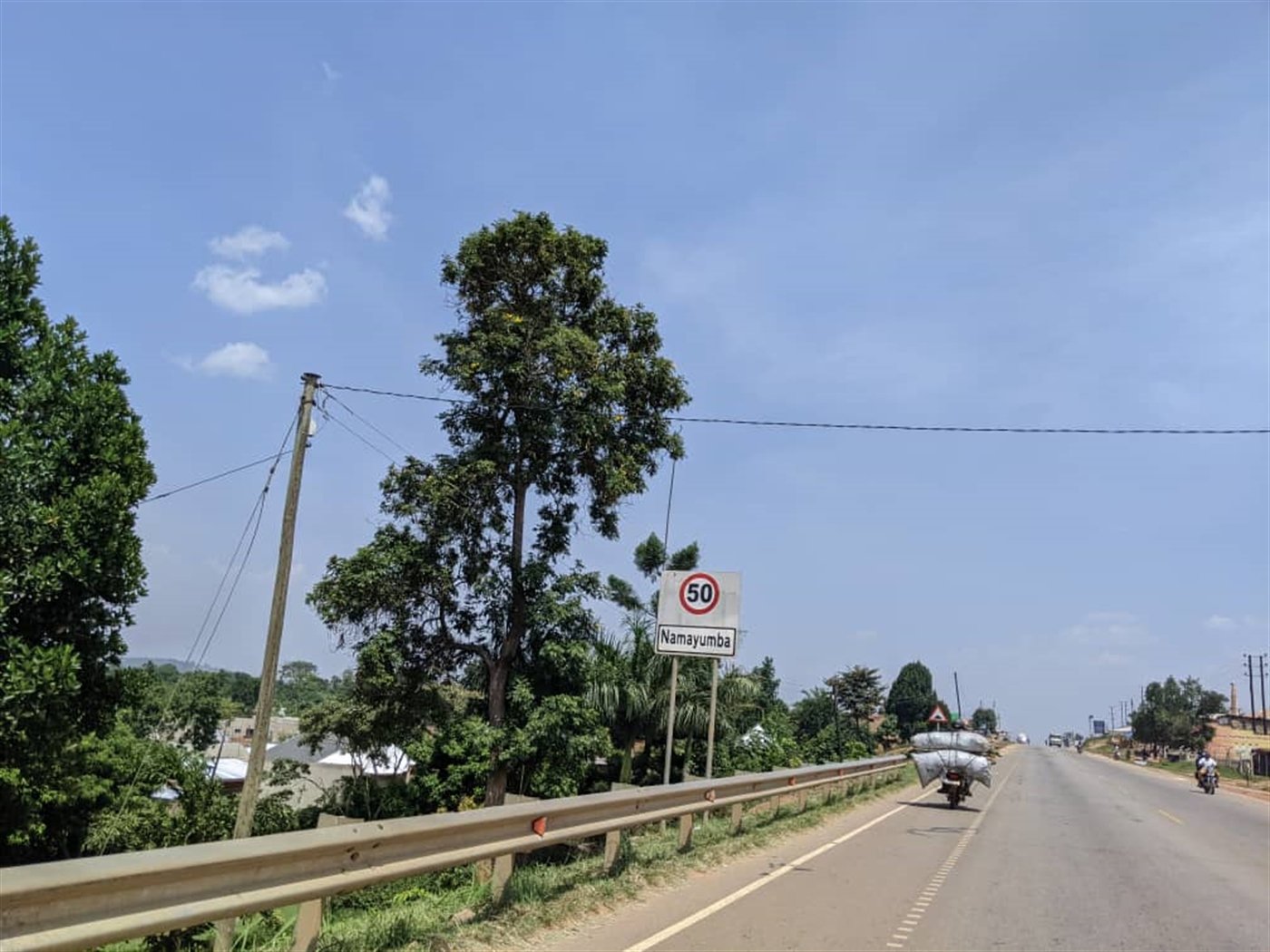 Drivers should pay close attention to posted speed restrictions and changing road conditions when travelling through Ugandan towns and rural areas.
Driving on the Left Side of the Road
Uganda drives on the left side of the road. Visitors who normally drive on the right should take particular care when beginning their journey because lane positioning and turning movements may initially feel unfamiliar.
The driver should consciously maintain the correct road position, particularly after stopping, leaving a junction, entering a roundabout or turning onto another road. Familiarity with left-side driving should never replace attention to the actual traffic environment.
Understanding Uganda Road Signs
Road signs are an essential part of safe driving in Uganda. Drivers should pay attention to warning signs, regulatory signs, directional information, speed restrictions and temporary signs associated with roadworks.
Visitors should not rely exclusively on navigation applications for road information. A navigation application can help identify a route, but physical road signs and instructions from authorized traffic personnel remain important.
WARNING SIGNS
Warn drivers about hazards or road conditions ahead.
REGULATORY SIGNS
Communicate restrictions, prohibitions and requirements.
GUIDANCE SIGNS
Help drivers identify routes, destinations and directions.
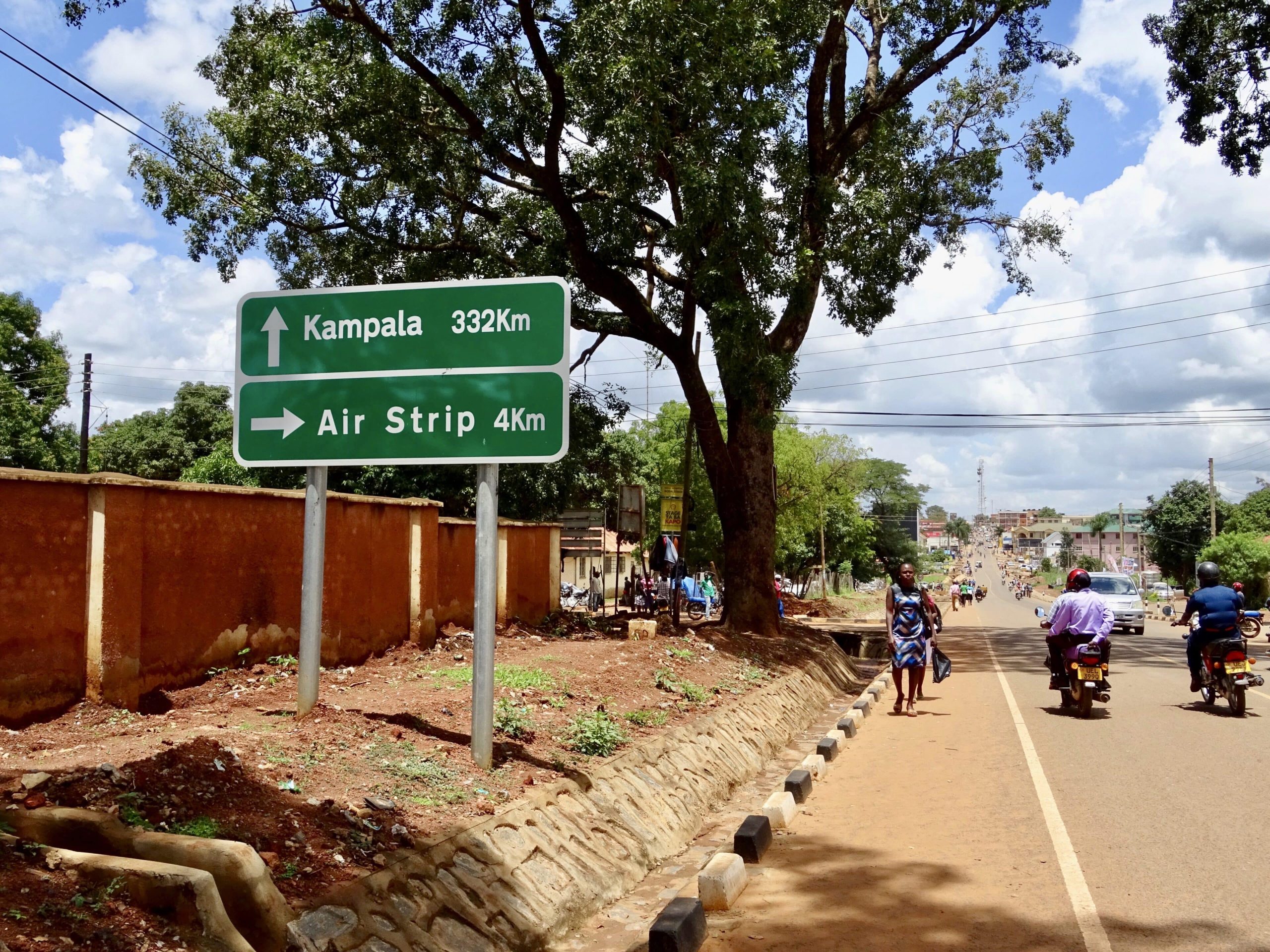 Directional signs help drivers identify towns, junctions and alternative routes when travelling through Uganda.
Speed and Driving Conditions
Drivers should always comply with applicable speed limits and adjust their speed to the conditions. The safest speed is not necessarily the maximum permitted speed. Rain, pedestrians, motorcycles, traffic, curves, roadworks, animals and poor surfaces can all require additional caution.
This becomes especially important when moving from a major highway onto a rural road or entering a protected area.
Overtaking on Uganda Roads
Overtaking should only be attempted when the driver has adequate visibility and sufficient space to complete the maneuver safely and legally. Visitors should be particularly cautious on roads with curves, hills, heavy traffic or limited visibility.
Drivers should never allow pressure from vehicles behind them to force an unsafe overtaking maneuver. Waiting for a suitable opportunity is preferable to taking unnecessary risks.
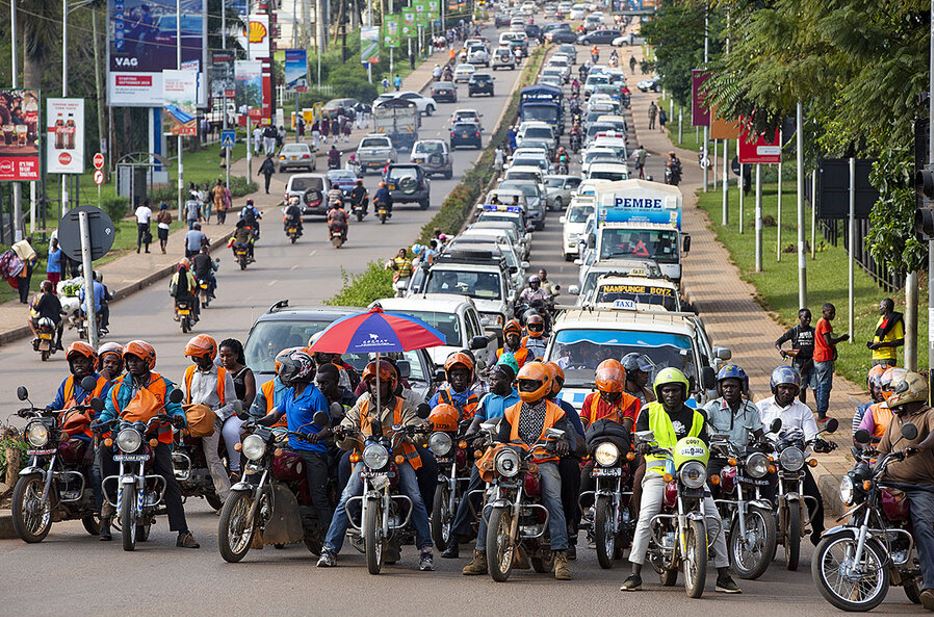 Motorcycles are a significant part of Uganda’s road environment, particularly in urban areas.
Motorcycles and Boda-Bodas
Motorcycles are an important part of Uganda’s road environment. Visitors should expect motorcycles in urban areas, towns and rural communities and should allow adequate space when passing or being passed.
Drivers should check mirrors regularly because motorcycles can approach from different directions and may occupy road space differently from larger vehicles.
Pedestrians on Uganda Roads
Pedestrians are another important consideration, particularly in towns and rural settlements. Roads can pass directly through communities, and people may walk alongside or cross the carriageway.
Drivers should reduce speed when approaching populated areas and remain alert for pedestrians who may enter the road unexpectedly.
Using Seat Belts
Drivers and passengers should use the vehicle’s seat belts and comply with applicable vehicle-safety requirements.
The driver should also ensure that passengers understand the importance of remaining properly secured throughout the journey.
Mobile Phones
Drivers should not allow mobile-phone use to distract them from controlling the vehicle.
Navigation should be prepared before departure and any necessary interaction with a phone should be handled safely when the vehicle is stopped.
Impaired Driving
Drivers should never drive while impaired by alcohol, drugs or any substance that affects their ability to operate a vehicle safely.
Alternative transportation should be arranged whenever a person is not fit to drive.
Carrying the Correct Driving Documents
Visitors should confirm the documents required before collecting a rental vehicle. These may include the traveler’s driving licence and other documentation required by the rental provider or applicable authorities.
The exact requirements should be confirmed from current official or rental-provider information rather than inferred from another traveler’s experience.
Licence requirements can depend on the visitor’s nationality, licence jurisdiction, length of stay and the rules applicable at the time of travel.
International Driving Permits
Some international travelers use an International Driving Permit alongside their domestic driving licence when driving abroad. However, the precise legal requirements applicable to a particular visitor should be confirmed before travel.
A traveler’s nationality and licence jurisdiction can affect the documentation that is accepted. Information not found in current search results should not be presented as a universal requirement for every foreign visitor.
Travelers should therefore verify their individual circumstances before relying on an International Driving Permit or any other international driving document.
Checking Rental Company Requirements
Rental companies may have their own documentation, age, vehicle-use and insurance requirements in addition to government requirements. Visitors should read the rental agreement before accepting the vehicle.
For travelers specifically considering self-drive,
Uganda self-drive arrangements
are described by Safari Vacations & Travel Services as being offered under its stated car-hire standards and procedures.
Vehicle Insurance and Rental Protection
Travelers should understand what insurance or protection is included with a rental vehicle before beginning their journey. They should establish what is covered, what exclusions apply and what procedures must be followed after an incident.
Insurance arrangements can vary between rental companies, so visitors should not assume that the terms of one provider apply to another.
Vehicle Inspection Before Driving
Before leaving the rental location, the driver should inspect the vehicle according to the rental company’s procedure. Existing damage should be documented as required, and the traveler should understand how to report a new problem.
The driver should also become familiar with the vehicle’s controls before entering busy traffic.
Understanding Fuel Requirements
The driver should know the vehicle’s fuel type and understand how the rental company expects refueling to be handled. This is especially important when traveling into remote areas where fuel availability can be limited.
Long journeys toward remote destinations should be planned around reliable refueling opportunities rather than assuming that fuel will always be available near the final destination.
Road Rules Inside National Parks
National parks require additional care because the roads and tracks exist within wildlife habitats. Visitors must follow the rules established by the responsible protected-area authority.
Current tourism information for Lake Mburo states that off-track driving is prohibited unless permission is obtained from the Uganda Wildlife Authority and emphasizes compliance with park speed restrictions.
The same principle applies across Uganda’s protected areas: travelers should follow the current rules for the specific park they are visiting rather than assuming that one park’s procedures automatically apply everywhere.
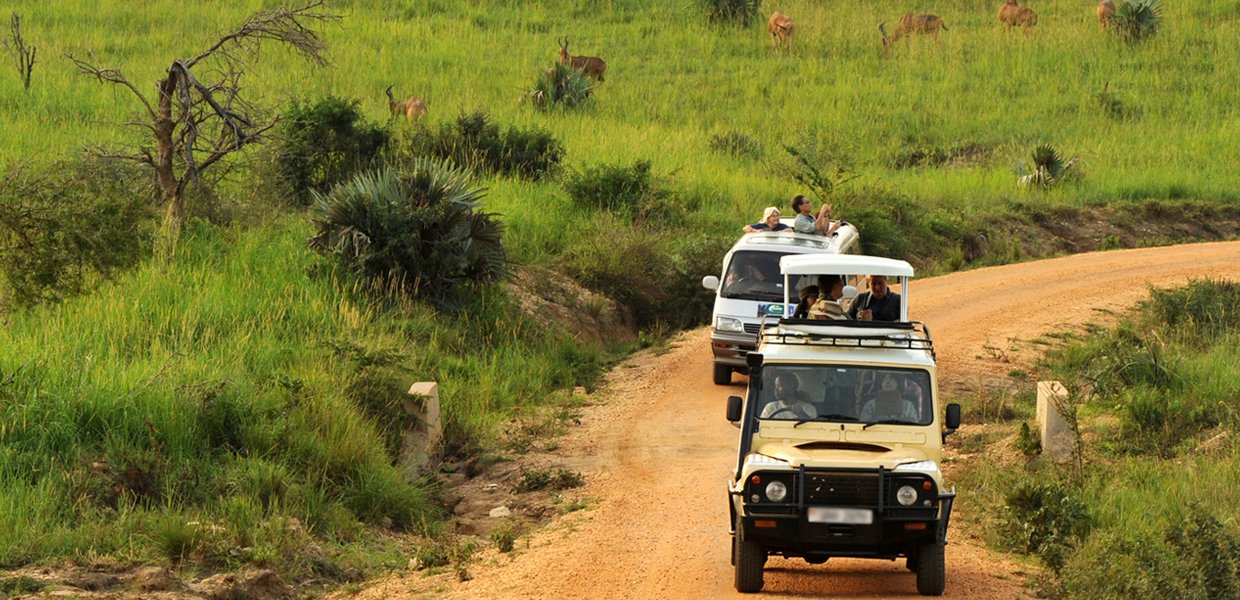 Driving inside a national park requires a different approach from driving on ordinary public roads because wildlife and protected-area regulations must be considered.
Off-Track Driving
Self-drive visitors should remain on authorized roads and tracks unless the responsible authority has specifically permitted another activity. Leaving established routes can damage habitats and disturb wildlife.
Current information from Kidepo Valley National Park similarly states that off-track driving is prohibited without permission from the Uganda Wildlife Authority.
Driving Near Wildlife
Wild animals should never be treated like predictable roadside obstacles. They can move suddenly, change direction or react unexpectedly to vehicles.
Drivers should reduce speed, maintain appropriate distance and follow park instructions when wildlife is near the road.
Do Not Feed Wildlife
Visitors should never feed wild animals. Feeding can alter natural behavior and create inappropriate dependence on people.
Remain in the Vehicle
Travelers should not leave a safari vehicle unless the location, activity or authorized personnel specifically permit it.
Avoid Excessive Noise
Loud music, shouting and unnecessary engine noise can disturb wildlife and reduce the quality of the safari experience.
Driving During Rain
Rain can affect visibility, braking conditions and traction. Drivers should reduce speed and increase their awareness of pedestrians, motorcycles and road-edge hazards.
On unpaved roads, heavy rain can create additional challenges. Current tourism information for Kidepo notes that wet-season conditions can make the final section of the route more difficult.
Driving in Dry and Dusty Conditions
Dry conditions can produce dust on unpaved roads and safari tracks.
Drivers following another vehicle should maintain adequate distance and avoid overtaking when visibility is reduced by dust.
Driving at Night
Night driving requires additional caution because visibility is reduced and pedestrians, motorcycles, animals and road-edge hazards can be more difficult to see.
Visitors planning long safari transfers should, where practical, structure their itinerary so that the most demanding rural sections are completed during daylight.
Roundabouts and Junctions
Drivers unfamiliar with Uganda should take time to understand how traffic moves through junctions and roundabouts before entering busy intersections.
Approaching slowly gives the driver more time to observe other road users and select the appropriate lane or exit.
Traffic Police and Roadside Instructions
Drivers should follow lawful instructions from authorized traffic officers. If a traveler is uncertain about a traffic instruction, the safest approach is to remain calm and seek clarification rather than attempting to ignore or bypass the instruction.
Travelers should also carry the relevant vehicle and driving documents required for the journey.
What to Do After a Road Incident
If a road incident occurs, the driver should first prioritize the safety of everyone involved and follow the applicable reporting and rental-company procedures.
Rental-company emergency contacts should be kept accessible throughout the trip. Travelers should understand these procedures before leaving the vehicle collection point.
Driving Between Uganda and Neighboring Countries
Cross-border road travel requires additional preparation because the traveler may need to comply with the entry, vehicle and driving requirements of more than one country.
Requirements should be verified for both sides of the border before departure. Travelers should never assume that documents accepted in Uganda automatically satisfy the requirements of another country.
Visitors combining Uganda with Kenya should verify the current requirements for both countries and ensure that their vehicle and driving documentation is acceptable for the planned journey.
Driving to Remote National Parks
Remote safari destinations illustrate why legal and practical preparation matter. Long-distance routes can involve changing road surfaces, limited services, rural settlements and more demanding final approaches.
Travelers should confirm the suitability of their vehicle and current road conditions before committing to a remote journey.
Driving to Kidepo Valley National Park
Kidepo illustrates why long-distance planning is important. Current route information describes approximately 700 kilometers of road travel from Kampala and notes that conditions become more rugged toward the park.
Travelers should confirm vehicle suitability and current road conditions before beginning the journey.
Driving to Kibale Forest
Kibale can be reached by road through different approaches. Current destination information describes routes from Kampala through Mubende and Fort Portal as well as another approach through southwestern Uganda.
Route planning should therefore be based on the actual itinerary rather than simply entering a destination name into a navigation application.
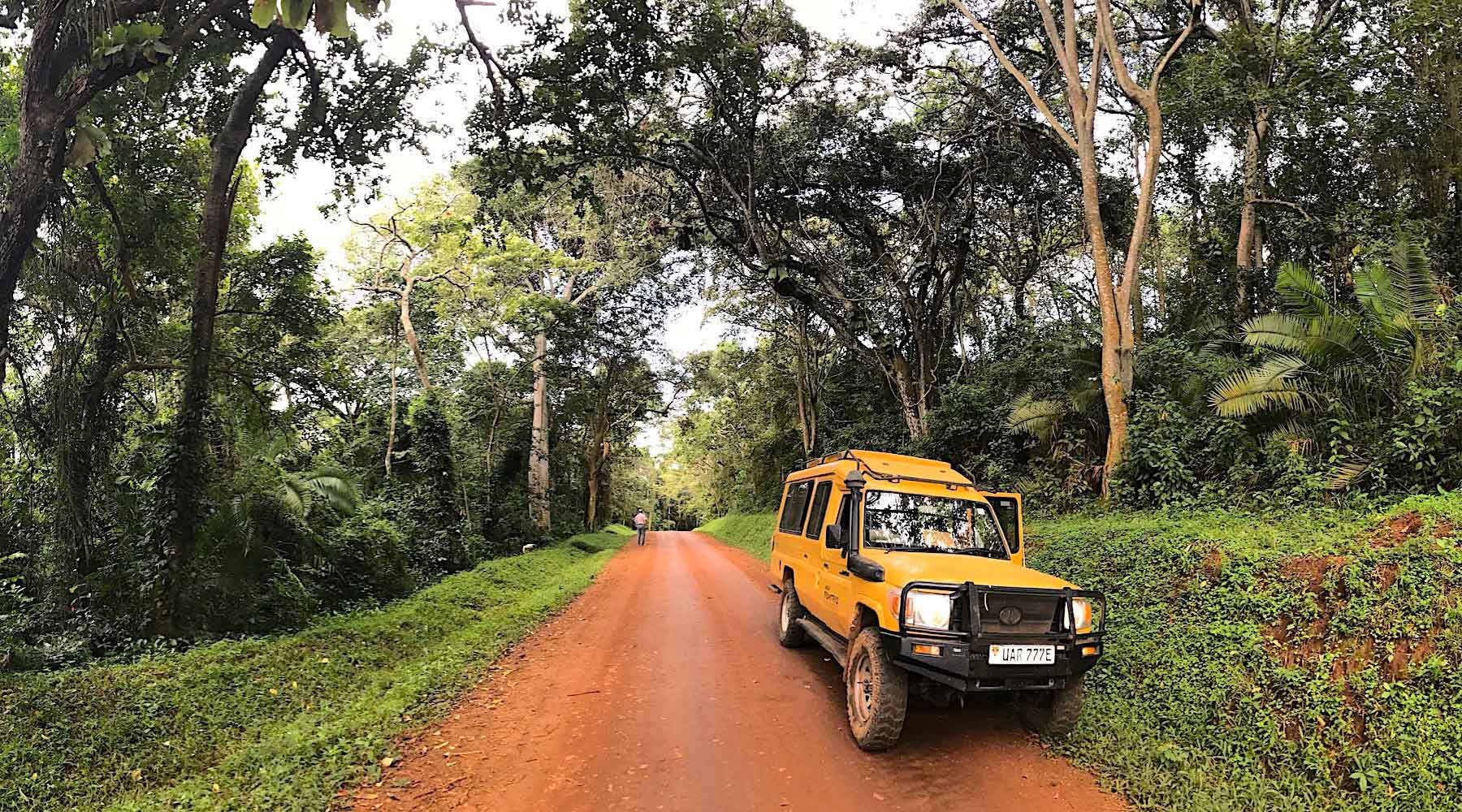 Rural and forest approaches can require slower, more attentive driving than major paved highways.
Driving to Queen Elizabeth National Park
Queen Elizabeth National Park can be reached by road through western Uganda. Current information for the Kazinga Channel describes road access from Kampala through Mbarara and Katunguru and also identifies a Fort Portal approach.
Travelers should establish their accommodation location and planned park activities before deciding which route is most appropriate.
Driving to Bwindi Impenetrable National Park
Bwindi has several tourism sectors, so visitors should identify the exact trekking or accommodation area before planning their final approach.
Road travel to the southwestern region can include long distances and mountainous sections. Travelers should therefore allow sufficient time and avoid planning important activities immediately after an exhausting transfer.
For additional destination context,
Bwindi access information
provides additional information about approaches and sectors.
Driving to Lake Mburo National Park
Lake Mburo is one of the more accessible national parks for travelers starting from Kampala. Current destination information describes a drive of approximately three to four hours from Kampala and identifies both guided and self-drive game-drive options.
This makes Lake Mburo a useful example of how a shorter self-drive safari can differ from a remote multi-day road expedition.
Three Important Rules for Safari Drivers
Respect Speed Restrictions
Adjust speed to posted limits and actual road conditions.
Stay on Authorized Routes
Do not leave established park tracks without permission.
Respect Wildlife
Observe animals responsibly without disturbing them.
Keeping a Local Contact Number
Reliable communication can be useful during a self-drive journey, particularly when traveling outside major urban areas. Current Uganda tourism information recommends obtaining a local number for travelers spending longer periods in Uganda and specifically notes its usefulness for self-drive visitors.
Safari communication information
can help travelers understand why connectivity planning matters.
Navigation and Legal Compliance
Navigation should never override traffic regulations. If a navigation application directs a driver toward a restricted road, unsuitable track or unauthorized route, the driver should not follow the instruction blindly.
Road signs, park regulations and instructions from authorized personnel should take priority over an application’s suggested shortcut.
Planning Around Official Requirements
Visitors should confirm the requirements applicable to their individual circumstances before travel. This includes driving documentation, vehicle rental conditions, insurance arrangements and protected-area rules.
Requirements can change, so information found in an older article should be treated as background information rather than proof that a rule remains unchanged.
Why Rules Matter on a Uganda Safari
Driving rules protect not only the driver and passengers but also pedestrians, other road users, wildlife and the environment. Responsible driving is particularly important in national parks because vehicle behavior can affect animals and habitats.
A successful Uganda self-drive safari is therefore not simply about reaching every destination. It is about traveling responsibly while respecting the legal and conservation framework that makes the journey possible.
Final Checklist Before Starting the Drive
Driving documents
Confirm the documents applicable to your circumstances.
Rental agreement
Understand vehicle-use and insurance conditions.
Vehicle condition
Inspect the vehicle before leaving the collection point.
Emergency contacts
Keep rental and emergency contacts accessible.
Fuel planning
Know where reliable refueling opportunities are available.
Park rules
Review the rules before entering a protected area.
Final Advice on Uganda Driving Rules
The most important part of learning Uganda driving rules is understanding that legal compliance and practical road awareness must work together. A valid driving document does not remove the need for defensive driving, careful route planning or respect for other road users.
For self-drive safaris, the responsibility becomes even greater once the vehicle enters a protected area. Drivers must follow park regulations, remain on authorized routes, respect wildlife and adapt their speed and driving style to the conditions.
Travelers should verify current requirements before departure and should obtain clarification whenever a legal or rental requirement is uncertain. This approach is more reliable than assuming that a rule described in an old travel article automatically applies to every visitor today.
The key principle:
Drive legally, drive defensively, follow road signs, respect traffic officers, remain alert around pedestrians and motorcycles, and follow the additional rules that apply inside Uganda’s protected areas.
Related Uganda Driving Information
Continue planning your Uganda road journey with destination-specific information about remote routes, national parks and accessibility.
Fuel planning, navigation and communication are essential parts of a successful Uganda Driving Guide. A road trip can become unnecessarily difficult when a driver begins a remote journey without enough fuel, does not know the location of the next reliable service point, loses mobile connectivity or reaches an unfamiliar destination after dark.
These considerations become even more important when traveling to national parks and remote safari destinations. Uganda has major highways connecting important towns, but some safari routes continue onto rural and unpaved roads where services may be less frequent. A sensible driver therefore prepares for the complete journey rather than relying only on the distance shown by a navigation application.
Treat fuel, navigation, communication and emergency preparation as one connected part of your journey plan. A route is not fully prepared until you know how you will reach it, refuel, communicate and respond if conditions change.
FUEL
Refuel before entering remote sections and know where reliable fuel services are available.
NAVIGATION
Prepare routes, offline maps, accommodation locations and backup directions.
COMMUNICATION
Keep important contacts accessible even when mobile internet is unavailable.
BACKUP
Prepare for breakdowns, delays, weather changes and difficult road conditions.
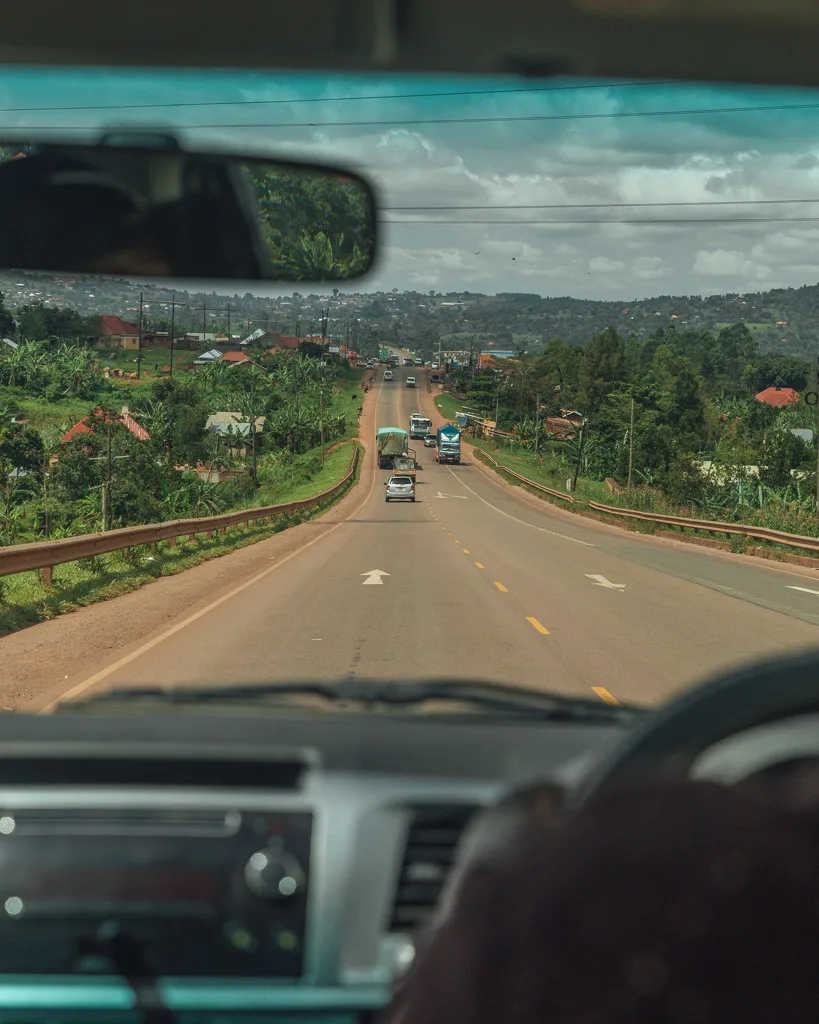 Uganda’s road network connects major towns with rural areas and safari destinations, making route preparation an important part of self-drive travel.
Planning Fuel Before a Uganda Road Trip
Fuel should be considered before every long-distance journey. Drivers should identify major towns along the route and use reliable opportunities to refuel before entering remote areas.
Travelers should not assume that every national park, lodge or rural destination will have a convenient fuel station nearby. The farther a journey moves from major towns, the more important advance fuel planning becomes.
Lake Chahafi access
provides destination-specific information.
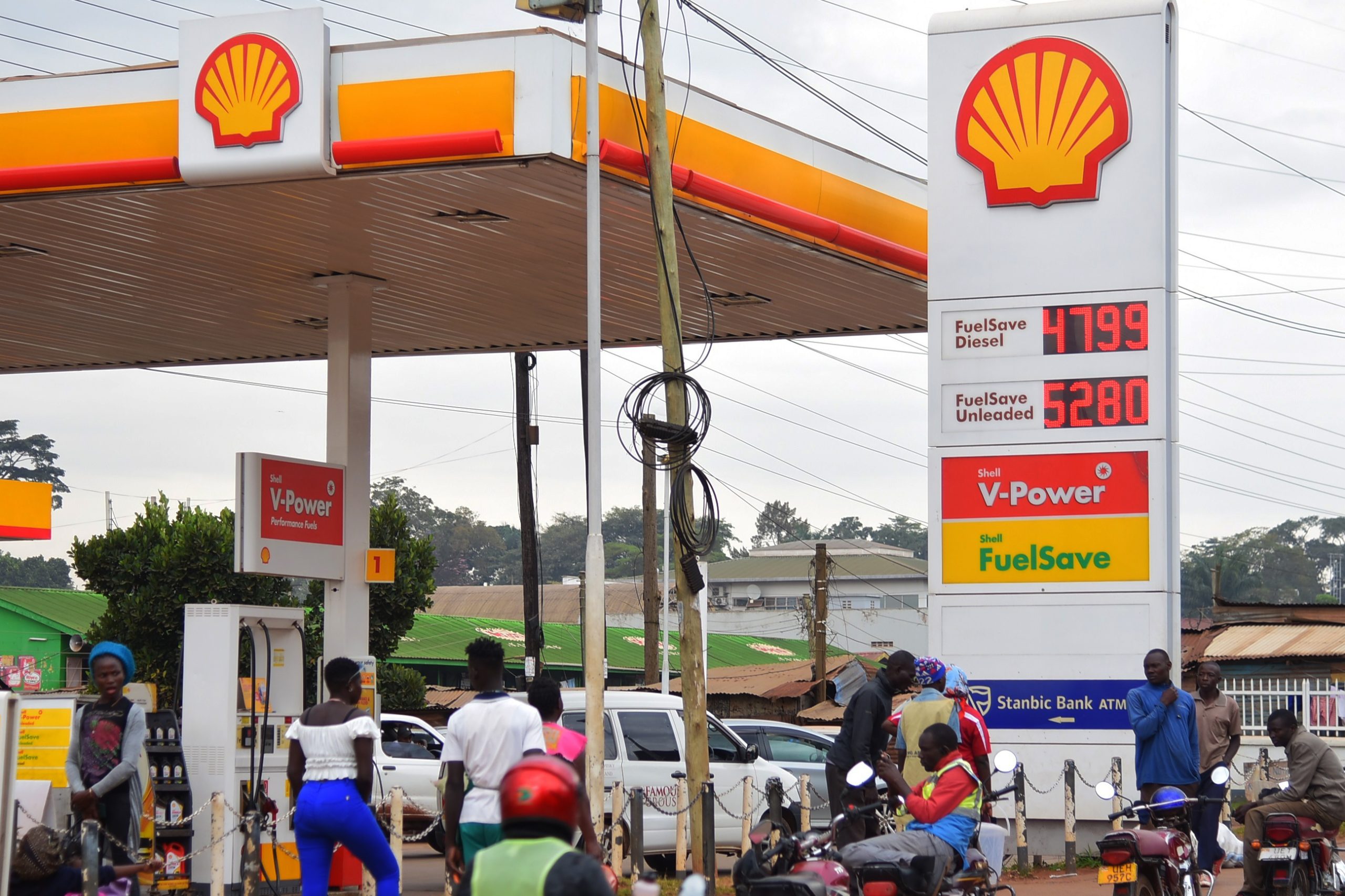 Refueling before remote sections is an important part of long-distance driving preparation.
Fuel Planning for Remote Safari Destinations
Remote destinations require more careful planning because the distance between reliable services can be substantial. Kidepo Valley National Park is a particularly important example. Current route information describes the journey from Kampala as approximately 700 kilometers and explains that the final section becomes more rugged, especially during wet conditions.
Drivers heading toward remote areas should therefore identify where they intend to refuel before departure and avoid beginning the remote portion of the journey with an unnecessarily low fuel level.
Checking the Vehicle Fuel Type
Before starting a rental journey, the driver should confirm whether the vehicle uses petrol or diesel. This should be established before leaving the rental location rather than relying on memory or assumption.
The driver should also understand the vehicle’s fuel gauge and estimated range, while remembering that the displayed range is only an estimate and can change according to road conditions, traffic and driving style.
Carrying Basic Vehicle Supplies
Drivers traveling into less-developed areas should understand what equipment is supplied with their rental vehicle and what the rental company expects the traveler to carry.
Current destination information for Lake Chahafi recommends basic vehicle supplies such as a spare tire, jack and jumper cables for travelers using less-traveled routes. The precise equipment supplied by a rental company can differ, so travelers should confirm the inventory before accepting the vehicle.
Checking the Spare Tire
A spare tire is particularly important on long road journeys. Before departure, the driver should establish whether a spare tire is present and whether the vehicle’s jack and wheel-changing equipment are available.
Travelers should also understand the rental company’s procedure for dealing with a puncture or mechanical problem rather than assuming that roadside assistance will always be immediately available.
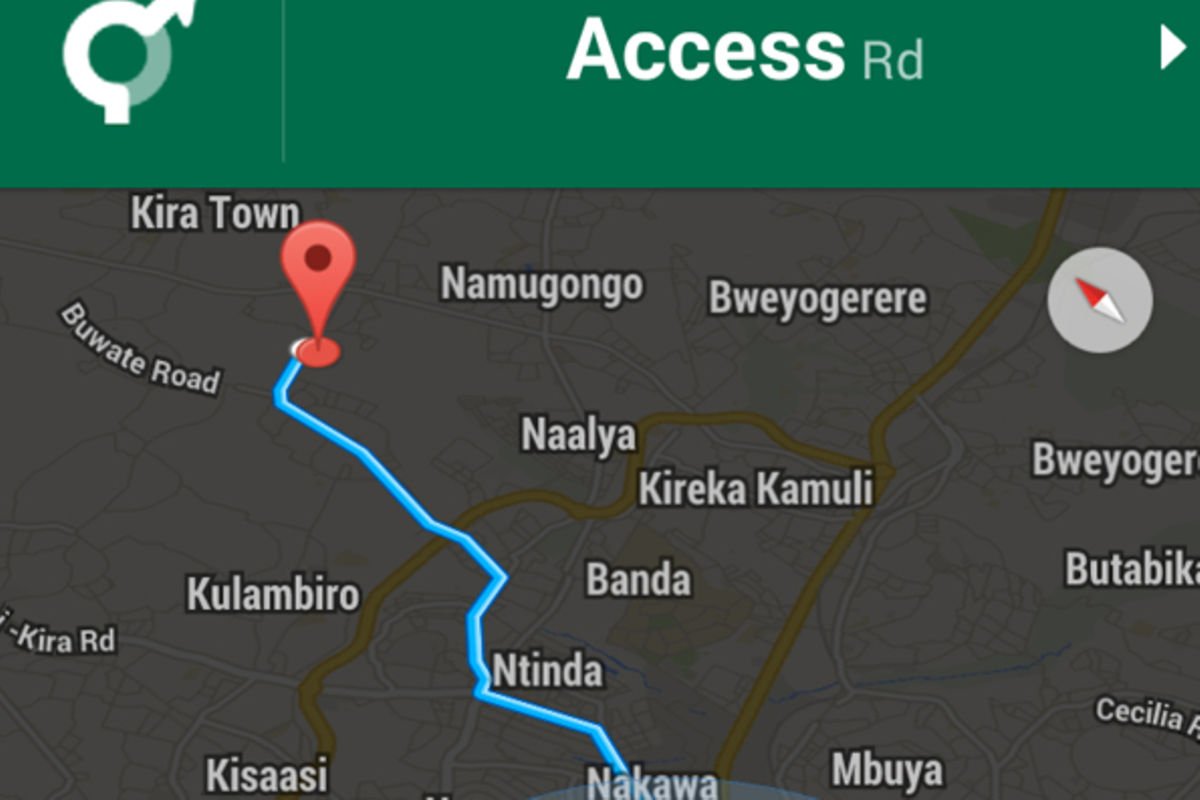 Digital navigation can help drivers plan routes, but it should be supported by physical road signs, local information and general route awareness.
Navigation for Driving in Uganda
Navigation should be prepared before the vehicle starts moving. Travelers should know the main route, important towns, major junctions, accommodation location and final approach to the destination.
Navigation applications can be extremely useful, but they should not be treated as infallible. A suggested route may not reflect temporary roadworks, seasonal conditions, restricted roads or the most appropriate route for a particular rental vehicle.
Using Offline Navigation
Offline navigation can provide useful backup when mobile connectivity becomes unreliable. Travelers should download or otherwise prepare the relevant route information before entering areas where network coverage may be limited.
The driver should also know the general direction of travel instead of depending entirely on turn-by-turn instructions. Understanding the major towns and road corridors makes it easier to recognize when the journey is progressing correctly.
Prepare your route before driving. If a route needs to be changed, stop in a safe location before interacting with the navigation device.
Physical Maps as a Backup
A physical map can provide a useful backup during remote journeys. This is especially relevant when traveling through mountainous or sparsely populated areas where mobile connectivity may vary.
Current information about Lake Chahafi specifically notes that physical maps of southwestern Uganda can provide a reliable backup and that signage toward the lake may be limited.
This illustrates a wider principle for the Uganda Driving Guide: digital navigation is useful, but drivers should maintain enough geographical awareness to continue planning when technology becomes unavailable.
Understanding the Final Approach to Your Lodge
One of the most common navigation mistakes is treating the national park as the final destination. A traveler may successfully reach the correct park area but still have additional driving to reach the lodge or activity center.
Before departure, travelers should obtain the exact location of their accommodation and identify the park gate or access road they are expected to use.
Navigation Around National Parks
Navigation inside national parks requires additional caution. Drivers should use authorized roads and tracks and follow the instructions and regulations of the responsible park authority.
A navigation application may identify an apparent shortcut that is unsuitable or unauthorized. Drivers should never use a digital route as justification for leaving an authorized park track.
Mobile Network Coverage
Mobile connectivity can vary according to location. Coverage is generally more dependable around major towns than in some remote rural and protected areas.
Travelers should therefore prepare important information before leaving an area with reliable connectivity. Accommodation details, rental-company contacts and essential travel information should be accessible even when the phone cannot connect to the internet.
Getting a Local Phone Connection
Travelers spending significant time in Uganda may find a local mobile connection useful for communication and navigation support. Current Uganda safari information specifically discusses staying connected while traveling and provides guidance relevant to safari visitors.
Travelers should ensure that any phone or SIM arrangement complies with current local requirements and should confirm the latest registration procedures before relying on a particular service.
Important Contacts to Keep Available
Rental Provider
Keep the vehicle provider’s contact details available offline.
Accommodation
Keep the lodge or hotel contact details accessible.
Travel Support
Keep your tour operator or travel-support information available.
Emergency Information
Store important emergency information before starting the journey.
Communication With Your Accommodation
Communication with the accommodation provider can be particularly useful before reaching remote destinations. The traveler can confirm the preferred route, expected arrival time and final approach.
This can prevent unnecessary navigation problems when the accommodation is located away from the main highway.
Communicating When Delayed
Long-distance driving can take longer than expected because of traffic, weather, roadworks, stops or changing road conditions. Travelers should communicate with their accommodation when a significant delay is likely.
This is especially important when the accommodation expects guests at a particular time or when the final section of the journey becomes difficult after dark.
Emergency Preparation Before Departure
Emergency preparation should begin before the journey. Drivers should know whom to contact if the vehicle breaks down and should understand the rental company’s recovery procedure.
Travelers should also know the location of their nearest major town when beginning a remote journey. This provides useful context if a mechanical or communication problem occurs.
Confirm fuel, vehicle condition, route, communication options, accommodation details and your rental company’s support procedure.
What to Do During a Vehicle Breakdown
If a rental vehicle develops a mechanical problem, the driver should first prioritize the safety of everyone in the vehicle and then contact the rental provider according to the agreed procedure.
Travelers should not attempt unfamiliar mechanical repairs simply because they are far from a town. The rental company’s instructions should guide the response.
Preparing for a Flat Tire
A puncture is one of the practical problems a long-distance driver should be prepared to encounter. Before leaving the rental location, the driver should know where the spare tire and tools are stored.
If the driver does not know how the equipment works, it is better to ask the rental provider for an explanation before starting a remote journey.
Preparing for a Dead Battery
Travelers should understand whether the vehicle is equipped with the equipment necessary for a battery problem and whether the rental company provides roadside assistance.
Drivers should avoid experimenting with electrical systems when they do not understand them. Following the rental company’s emergency procedure is the safer approach.
Emergency Preparation for Remote Routes
Remote routes require additional preparation because assistance may take longer to reach the traveler than it would in a major city.
Before entering a remote section, the driver should confirm fuel availability, vehicle condition, communication options, accommodation location and the expected route.
Driving Toward Kidepo Valley National Par
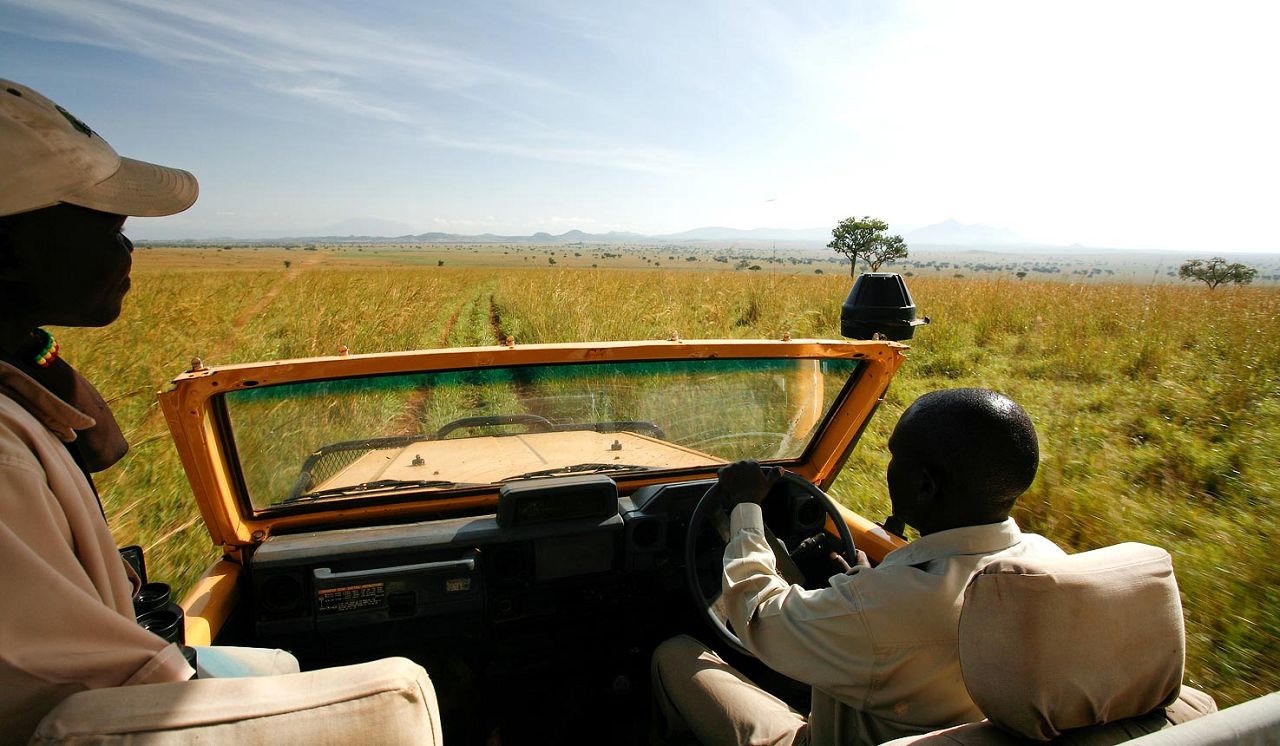
Kidepo provides one of the clearest examples of why remote-route preparation matters. Current information from Safari Vacations & Travel Services describes the route from Kampala as approximately 700 kilometers and notes that the final section can become more rugged, particularly during the wet season.
Kidepo road planning
provides detailed route information.
Anthill Safaris also describes multiple road approaches to Kidepo, including routes through Gulu and Kitgum and an eastern route through Jinja, Mbale, Nakapiripirit, Moroto and Kotido.
Breaking Long Journeys Into Stages
A long road journey should not automatically be completed in one continuous driving session. Breaking the trip into stages can reduce fatigue and create opportunities to refuel, eat and rest.
Current Kidepo access information describes travelers using overnight stops such as Gulu or Kitgum when traveling overland.
This approach is particularly useful for first-time visitors who may not be accustomed to long-distance driving in Uganda.
Navigation to Kibale Forest
Kibale Forest National Park has several road approaches. Current information identifies a route from Kampala through Mubende and Fort Portal and another through Masaka, Mbarara and Fort Portal.
Kibale access
provides route-specific information.
Travelers should choose their route according to their itinerary, accommodation and other planned destinations rather than simply selecting the shortest-looking line on a map.
Navigation to Queen Elizabeth National Park
Queen Elizabeth National Park can be incorporated into western Uganda road circuits. Current information about the Kazinga Channel describes road access from Kampala through Masaka, Mbarara and Bushenyi and also identifies routes connecting from Fort Portal and southwestern Uganda.
The precise route should depend on the traveler’s previous and following destinations, accommodation location and current road conditions.
Navigation to Lake Mburo National Park
Lake Mburo is relatively accessible from Kampala and is positioned along the southwestern corridor. Current information describes approximately 240 kilometers of road travel from Kampala and about three to four hours of driving under the conditions described by the source.
Because the park is relatively close to the capital, it can be a practical destination for travelers who want to begin their Uganda road experience with a shorter safari journey.
Fuel Planning Around Lake Mburo
Travelers heading toward Lake Mburo should still consider fuel before leaving major towns. Although the park is considerably more accessible than remote destinations such as Kidepo, responsible fuel planning remains important.
Drivers continuing beyond Lake Mburo toward western Uganda should also consider the remaining distance to their next reliable refueling point.
Fuel Planning Around Bwindi
Bwindi’s mountainous environment means that the final road journey can be very different from the earlier highway sections. Travelers should identify where they can refuel before entering more remote areas.
Those continuing to other destinations after gorilla trekking should also consider the fuel requirements for the next stage rather than focusing only on the journey to Bwindi.
Fuel Planning Around Lake Bunyonyi
Lake Bunyonyi is located in southwestern Uganda, where road journeys can include hilly terrain. Current destination information recommends a 4×4 for road travel in rainy conditions because of the possibility of slippery roads.
Travelers should therefore consider both fuel and vehicle suitability when planning journeys around the lake and surrounding highlands.
Navigation During Rainy Weather
Rain can affect both road conditions and the reliability of estimated journey times. A route that normally takes a predictable amount of time may take longer when heavy rain affects an unpaved section.
Drivers should slow down, allow additional time and obtain current local information when conditions appear significantly different from those expected.
Navigation During Dry Weather
Dry weather can make some rural roads easier to navigate, but dust can reduce visibility. Drivers should maintain adequate distance from vehicles ahead and should not overtake when dust prevents a clear view of the road.
Dry conditions should therefore not be interpreted as a reason to drive faster than is appropriate.
Planning for Limited Services
Remote journeys may involve long stretches without restaurants, fuel stations, repair facilities or reliable mobile connectivity. Drivers should understand the service limitations of the route before departure.
Planning around major towns can reduce the chance of reaching a remote section without the resources required to complete the journey comfortably.
Food and Water During Long Drives
Long road journeys should include appropriate food and drinking-water planning. Drivers should avoid allowing hunger, dehydration or fatigue to reduce concentration.
Travelers should also plan suitable stops rather than stopping randomly in unsafe locations.
Rest Stops and Driver Fatigue
Rest is a fundamental part of safe long-distance driving. A traveler who has driven for many hours should not continue simply because the destination is getting closer.
Breaking the journey into manageable stages can make the experience safer and more enjoyable.
Using Stopovers Strategically
Stopovers can serve several purposes at once. A suitable stop can provide fuel, food, rest and an opportunity to visit an attraction.
For example, current Kidepo access information identifies Ziwa Rhino Sanctuary and other northern towns as possible points of interest or stopping locations on particular routes.
Keeping a Backup Plan
Every long self-drive itinerary should have a backup plan. This does not mean creating a completely different holiday, but rather identifying what to do if a road becomes difficult, weather delays the journey or the vehicle develops a problem.
A flexible itinerary makes it easier to respond to unexpected conditions without forcing the driver to rush.
When to Reconsider a Planned Route
If current local information indicates that a planned route has become unsuitable for the vehicle or conditions, the driver should reconsider the route rather than relying on the original itinerary.
This is especially important on remote roads where recovery may be more difficult than on major highways.
Keeping the Rental Company Informed
Travelers should understand whether their rental provider requires notification when a vehicle is taken to particular national parks, border areas or remote destinations.
Rental agreements can contain restrictions that differ between providers, so travelers should read their individual agreement rather than assuming that another company’s rules apply.
Using Reliable Local Information
Local information can be valuable when planning the final stages of a road journey. Accommodation providers, vehicle-rental companies and authorized park personnel may have more current information about particular access conditions than an older online article.
Travelers should use such information to supplement, not replace, their own preparation.
Communication Before Entering a Remote Area
Before entering a remote section, travelers should inform the relevant accommodation or travel contact about their expected arrival where appropriate.
This is particularly useful when the final approach may involve limited connectivity or when accommodation staff need to provide specific directions.
Emergency Contacts and Offline Information
Emergency and support contacts should remain accessible without an internet connection. Travelers should not wait until a problem occurs to search for a rental company’s telephone number.
Important information should be stored securely and in a form that can be accessed when mobile data is unavailable.
Using Air Travel Instead of Long Road Transfers
Not every Uganda itinerary needs to be completed entirely by road. For travelers with limited time, flying to a remote destination can reduce the amount of long-distance driving.
Current information about Murchison Falls, for example, describes fly-in options from Entebbe and Kajjansi and explains that flying can substantially reduce the road-transfer time.
The choice between road and air should depend on itinerary length, budget, destination and personal preference.
Combining Road and Air Travel
A mixed itinerary can sometimes provide a practical balance between road exploration and time efficiency. Travelers may drive between nearby destinations and use domestic flights for particularly long transfers.
This approach can reduce fatigue while still allowing visitors to experience Uganda’s landscapes from the road.
Emergency Preparation for International Visitors
International visitors should ensure that they understand their travel insurance arrangements, rental-company assistance procedures and the documents they are expected to carry.
The precise requirements vary according to the traveler and provider. Information not found in current search results should not be presented as a universal legal requirement.
Preparing Before Leaving Kampala or Entebbe
Kampala and Entebbe are useful places to complete final preparations before beginning a major road journey. Travelers can confirm fuel, communication, navigation, vehicle condition and accommodation details before entering longer rural sections.
A careful preparation stage can prevent many avoidable problems later in the journey.
The Importance of a Full Journey Plan
The strongest Uganda Driving Guide should encourage travelers to plan the entire route rather than focusing only on the first destination. Fuel, accommodation, navigation, communication, rest and emergency procedures should all be considered together.
This is particularly important when an itinerary includes several national parks. Each transfer should be assessed independently because road conditions and available services can differ considerably.
Final Fuel and Navigation Strategy
A practical Uganda self-drive strategy is straightforward: refuel before remote sections, know the next reliable service point, prepare offline navigation, keep important contacts accessible, confirm the final accommodation approach and allow extra time for changing conditions.
Remote destinations such as Kidepo require substantially more preparation than accessible destinations such as Lake Mburo. Current information confirms that Kidepo involves long road approaches and more demanding final sections, while Lake Mburo is considerably closer to Kampala.
✓ Refuel
Before remote sections.
✓ Navigate
Prepare offline routes.
✓ Communicate
Save important contacts.
✓ Prepare
Have a backup plan.
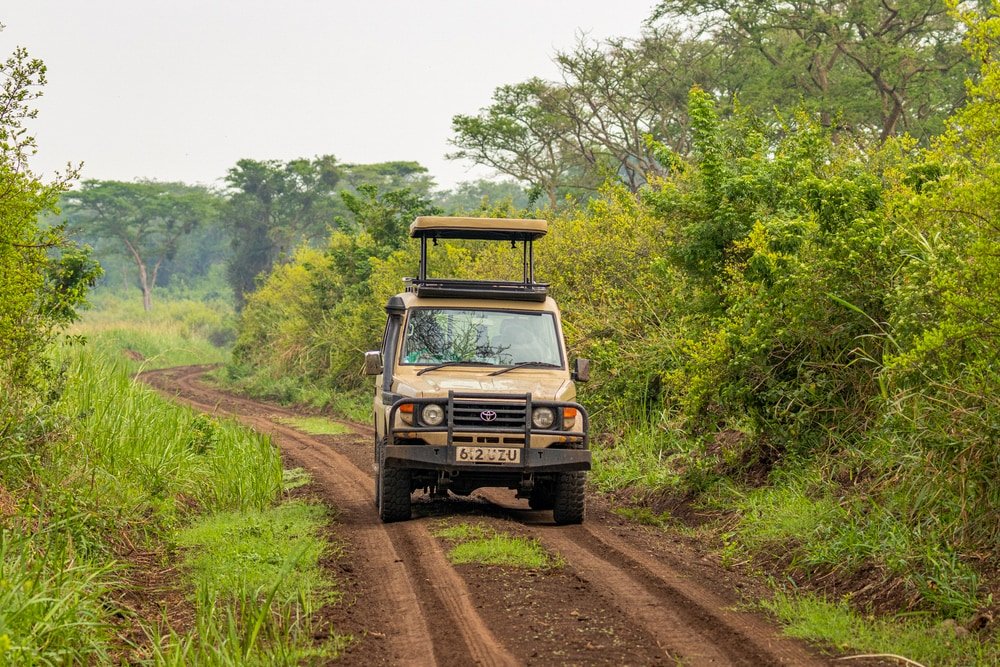 A capable vehicle and careful preparation are particularly important when a self-drive journey moves from paved roads onto rural or safari tracks.
Final Advice for Drivers in Uganda
Good preparation turns fuel, navigation and communication from potential problems into manageable parts of the journey. A driver who knows the route, understands the vehicle, has enough fuel, maintains communication options and has a backup plan is better prepared to respond when conditions change.
The goal of a Uganda road trip should not be to reach every destination as quickly as possible. It should be to travel responsibly, allow enough time for rest and changing road conditions, and enjoy the journey while respecting Uganda’s roads, communities, wildlife areas and protected-area regulations.
The key principle:
Prepare before leaving. Refuel before remote sections, keep navigation available offline, maintain communication options, understand your vehicle and allow enough time to respond safely when the road does not go exactly according to plan.
Prepare Your Uganda Self-Drive Journey
Check your fuel, vehicle, navigation, communication, accommodation and emergency arrangements before leaving for a long-distance or remote safari route.
Uganda Road Conditions, Terrain, Traffic and Driving Challenges
Road conditions are one of the most important subjects in any detailed Uganda Driving Guide because the driving experience can change significantly between major highways, urban roads, rural roads, mountain routes and national park tracks. A traveler planning a Uganda self-drive safari should not judge every road by the condition of the main highway connecting Kampala with major towns.
Uganda has an extensive road network, but road surfaces, traffic levels, terrain and accessibility vary considerably by location and season. A route that is straightforward on paved highway can become substantially slower once it reaches an unpaved rural road or a park access track.
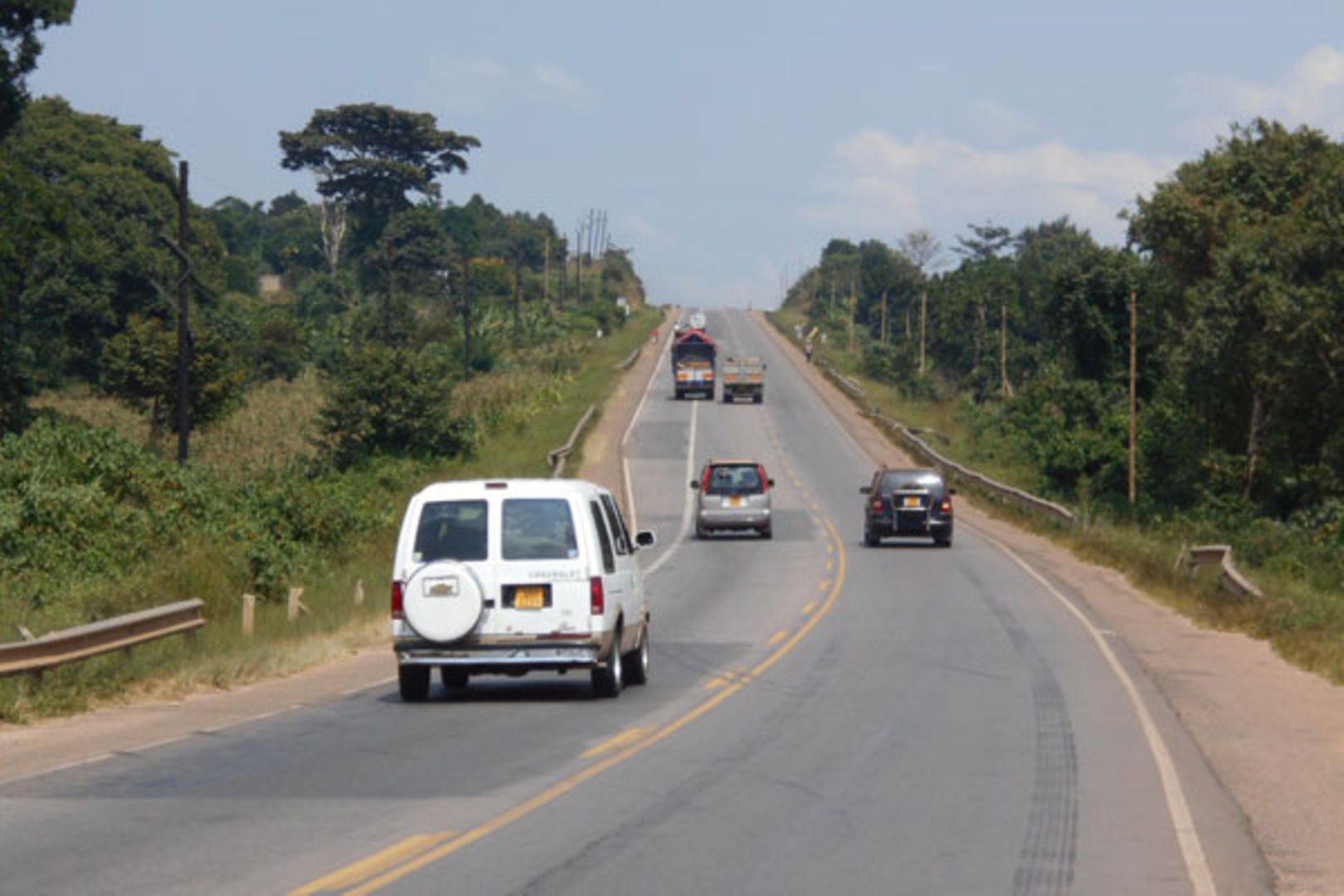 Uganda’s major highways can provide a very different driving experience from rural and national-park roads.
Understanding Uganda Road Conditions
Road conditions in Uganda should be considered according to the specific route rather than described as uniformly good or bad. Major corridors can provide relatively straightforward driving, while rural and remote sections may involve gravel, dirt, murram, potholes, uneven surfaces, steep sections or seasonal deterioration.
Current information for the Kampala-to-Kidepo route illustrates this difference. The Kampala-to-Gulu section is described as smooth tarmac, while the final section beyond Kitgum becomes more rugged and can develop muddy sections and washouts during the wet season.
This variation is one reason a Uganda Driving Guide should always explain the complete route instead of giving travelers a single general statement about Ugandan roads.
Paved Highways and Major Road Corridors
Major paved roads provide the backbone of many Uganda safari itineraries. They connect Kampala and Entebbe with regional centers and important tourism corridors.
However, reaching a destination by paved highway does not necessarily mean that the entire journey will remain on pavement. A traveler may spend most of a journey on tarmac and then encounter a substantially different road surface during the final approach to a lodge, community or protected area.
Current information about Lake Mburo describes the park as being positioned along the Kampala-Mbarara highway, making access relatively straightforward for visitors traveling from Kampala.
Rural Roads in Uganda
Rural roads can differ considerably from major highways. Some are paved, while others may consist of gravel, murram or compacted earth. The condition can also change after heavy rainfall.
Drivers should therefore avoid planning their journey solely according to the distance shown on a map. The road surface and terrain can have a significant effect on actual travel time.
Current information for Kibale National Park, for example, identifies different approaches from Kampala and notes that one route includes approximately 36 kilometers of murram road before reaching the park.
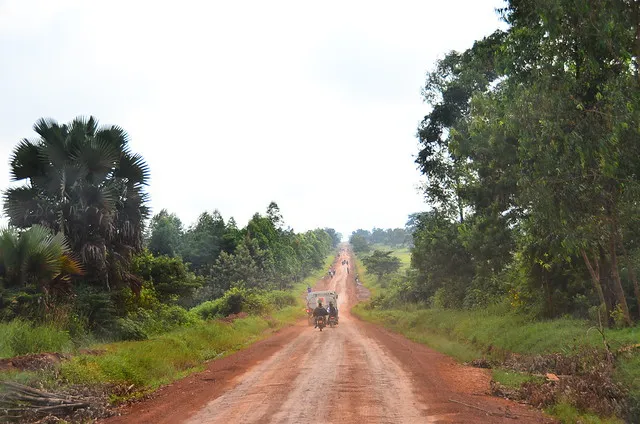 Murram roads in rural Uganda can change considerably according to weather, maintenance and location.
Driving on Murram Roads
Murram roads are common in parts of Uganda and can become an important consideration during safari travel. Their condition can range from firm and relatively easy to rough, corrugated or muddy depending on location and weather.
Drivers should reduce speed when the surface becomes uneven and should maintain enough control to respond to potholes, drainage channels and other changes in the road.
Driving on Gravel Roads
Gravel roads require careful speed management because loose stones can reduce traction and make steering less predictable. A driver following another vehicle should also allow additional distance because dust and loose material can affect visibility.
Overtaking on a dusty gravel road should only be considered when the driver has a clear view of the road ahead and can complete the maneuver safely.
Potholes and Uneven Road Surfaces
Potholes can appear on both paved and unpaved roads. Drivers unfamiliar with a route should avoid assuming that a smooth section will remain smooth for the entire journey.
Rather than making sudden steering movements, drivers should maintain an appropriate speed and leave sufficient space to respond to unexpected road damage.
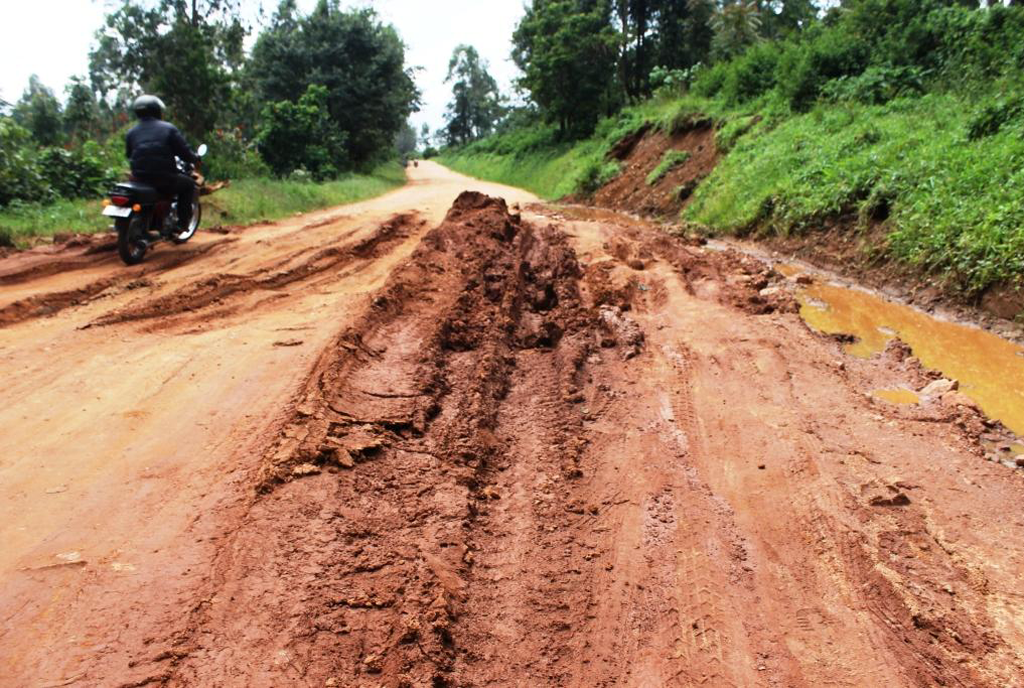 Heavy rainfall can create erosion, ruts, mud and other challenges on unpaved rural roads.
Driving During the Rainy Season
Rain can substantially change driving conditions on unpaved roads. Mud, standing water, erosion and washouts can slow vehicles and make some sections more difficult to negotiate.
Current information about the route to Kidepo specifically notes that wet-season conditions can create muddy sections and washouts and recommends a reliable 4×4 vehicle for the journey.
Travelers planning a self-drive safari should therefore consider the season when selecting both their vehicle and itinerary.
Driving During the Dry Season
Dry conditions can make many unpaved roads easier to use, but they do not eliminate driving challenges. Dust, loose gravel, corrugations and reduced visibility behind other vehicles can still affect the journey.
Current information about Lake Chahafi states that roads in the area are generally in better condition during the drier periods, while travelers should still prepare for changing conditions on unpaved sections.

Mountain Roads in Southwestern Uganda
Southwestern Uganda contains mountainous landscapes, particularly around destinations such as Bwindi, Mgahinga, Kisoro and Kabale. These journeys can involve winding roads, elevation changes and slower final approaches.
Current information about Bwindi describes the journey from Kampala or Entebbe as approximately eight to ten hours by road and notes that travelers should prepare for rough sections as they approach the park.
Travelers should therefore avoid scheduling a demanding activity immediately after an exceptionally long road transfer whenever the itinerary allows greater flexibility.
Driving on Steep and Winding Roads
Mountain roads require careful speed management, especially when descending. Drivers should avoid entering bends at excessive speed and should maintain adequate control throughout the turn.
Visitors accustomed to flat-country driving should take additional time to adapt to mountainous terrain before attempting long stretches of unfamiliar roads.
Driving Near Kabale and Kisoro
The Kabale-Kisoro region presents a different driving environment from central Uganda because of its mountainous terrain and winding roads.
Current information about Mount Muhabura describes the drive from Kampala through Kabale to Kisoro as approximately 510 kilometers and advises self-drivers to pay close attention to directions and road signs.
For travelers continuing toward Mgahinga or southwestern Bwindi, careful route planning is therefore particularly important.
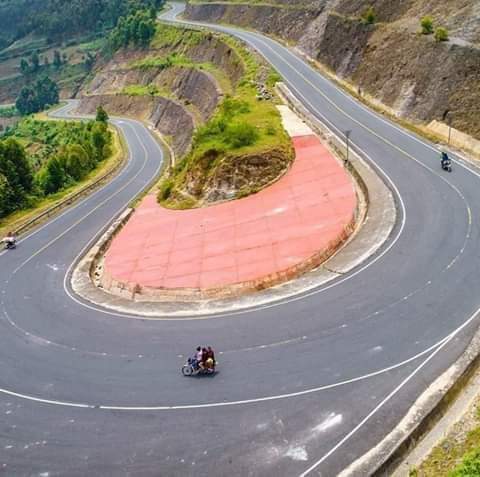 The winding roads around Kabale and Kisoro require careful speed control and attention to curves.
Driving Near Bwindi Impenetrable National Park
Bwindi requires special attention because the final approach depends on the sector being visited. Buhoma, Ruhija, Rushaga and Nkuringo are not interchangeable destinations from a driving perspective.
Travelers should identify their exact trekking sector and accommodation before selecting their route. Current information confirms that different sectors can be approached through different roads and nearby airstrips.
Detailed Bwindi travel information can therefore be useful when planning the road portion of a gorilla-trekking itinerary.
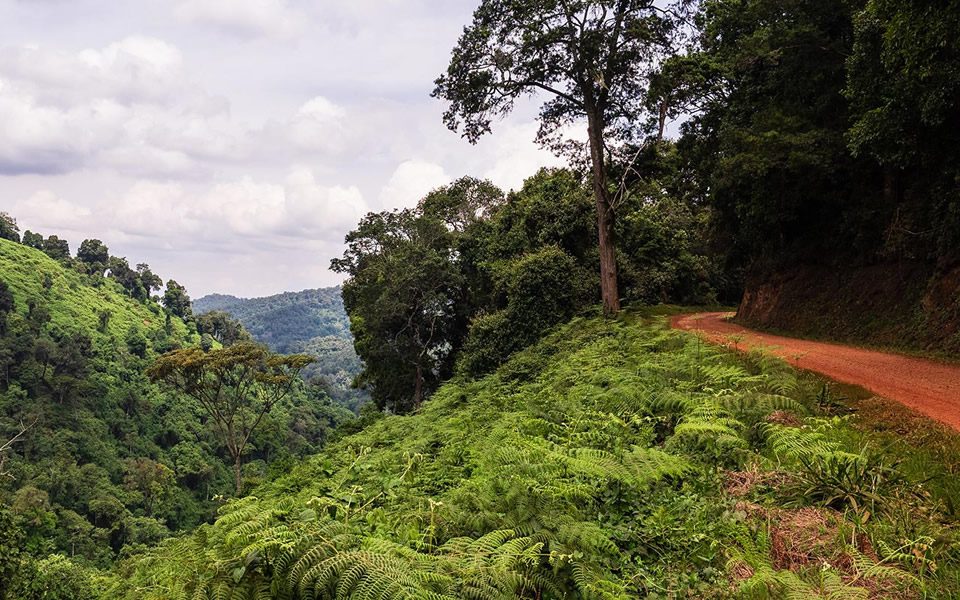 Road approaches to Bwindi can become narrow, winding and unpaved depending on the sector.
Driving Around Kibale National Park
Kibale is another destination where travelers should distinguish between the major approach road and the final route toward their particular accommodation or activity center.
Current route information identifies the Kampala-Mubende-Fort Portal approach as one major route and also describes a Kampala-Mbarara-Kamwenge-Fort Portal option involving a murram section.
This makes route selection important for travelers building a multi-destination western Uganda road circuit.
Driving Around Queen Elizabeth National Park
Queen Elizabeth National Park is connected to major western Uganda routes and can be approached from different directions depending on the itinerary.
Current information from Safari Vacations & Travel Services describes road access from Kampala or Entebbe through Mbarara to Katunguru and Mweya, while another approach passes through Fort Portal.
Drivers should identify the park sector and accommodation before selecting the final approach.
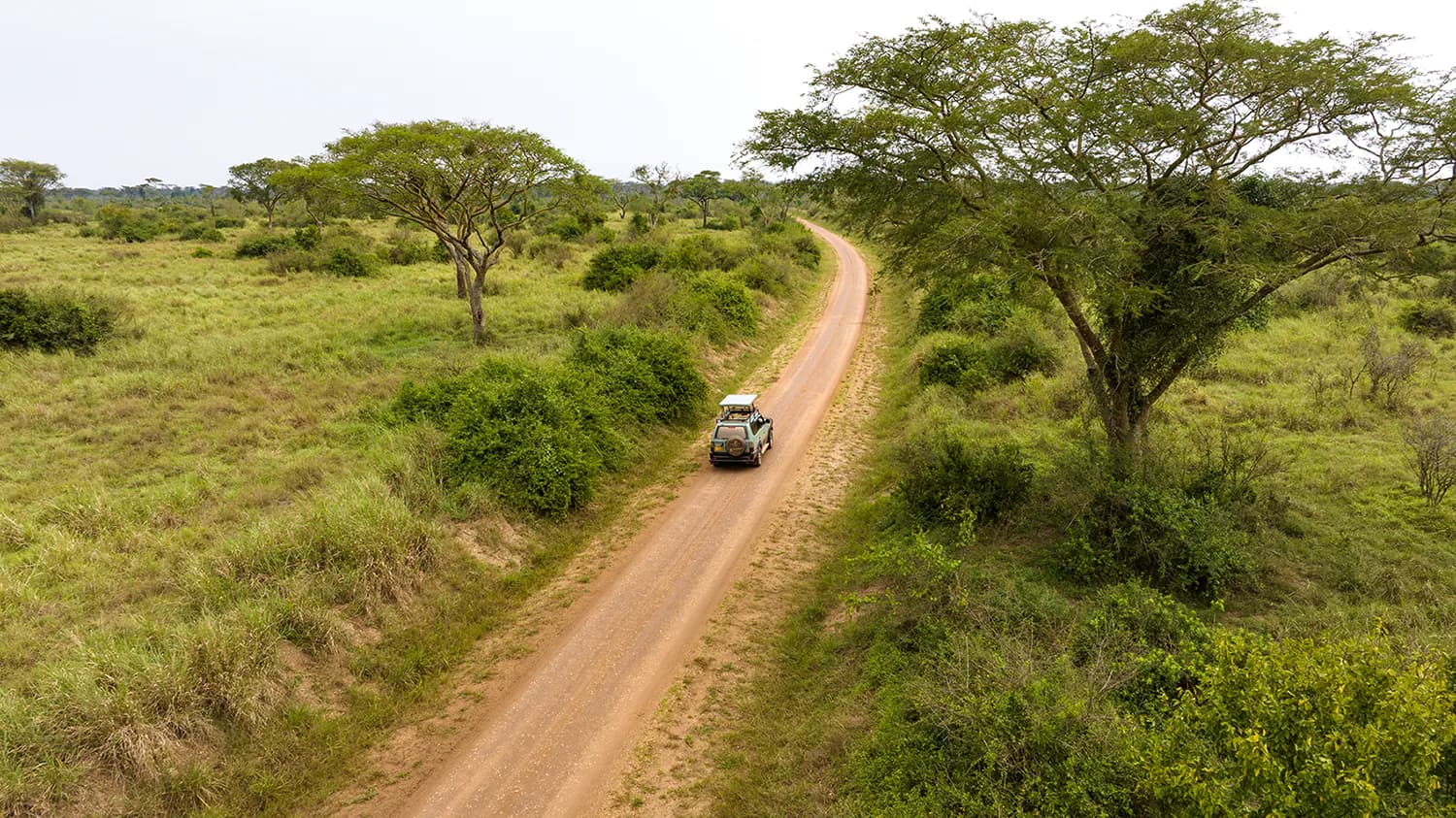 National-park tracks can differ significantly from the paved roads used to reach the park.
Driving Around Lake Mburo National Park
Lake Mburo is among the easier national parks to incorporate into a road itinerary from Kampala. Current information places the park approximately three to four hours from Kampala and describes its accessibility along the southwestern transport corridor.
The relatively accessible approach makes Lake Mburo particularly useful for travelers who want to gain experience with Uganda road travel before undertaking a much longer journey.
Driving to Kidepo Valley National Park
Kidepo requires a different level of road-trip preparation because of its distance from Kampala and the more remote nature of the final approach.
Current information identifies several road routes. One route through Karuma, Lira, Kotido and Kaabong is described as approximately 705 kilometers, while another route through Gulu and Kitgum is described as approximately 571 kilometers. An eastern route is described as approximately 740 kilometers, with another eastern variation exceeding 792 kilometers.
For a long-distance Kidepo road journey, travelers should allow enough time for road conditions, rest stops and unexpected delays rather than treating the route as a simple point-to-point transfer.
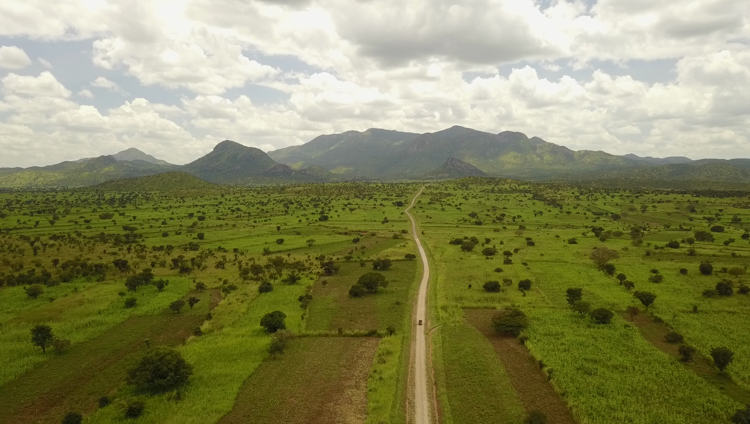 Kidepo’s remote landscape illustrates why long-distance safari road planning requires additional time and preparation.
Urban Traffic in Kampala
Driving in Kampala presents challenges that are different from rural safari driving. Traffic density, motorcycles, pedestrians, junctions and congestion require continuous attention.
Visitors beginning their Uganda self-drive experience in Kampala should allow additional time for urban traffic instead of assuming that the distance between two locations translates directly into driving time.
Motorcycles in Urban and Rural Areas
Motorcycles are an important part of Uganda’s road environment. Drivers should continuously monitor their mirrors and blind spots and should allow adequate space when passing or being passed.
Particular caution is required near junctions, markets, trading centers and busy urban streets where motorcycles and pedestrians may interact with vehicle traffic.
Pedestrians and Trading Centers
Rural roads frequently pass through villages and trading centers. Drivers should reduce speed when approaching populated areas because pedestrians may walk alongside the road or cross unexpectedly.
Children, cyclists, motorcycles and roadside businesses can make these sections particularly unpredictable for visitors who are accustomed to lower pedestrian activity.
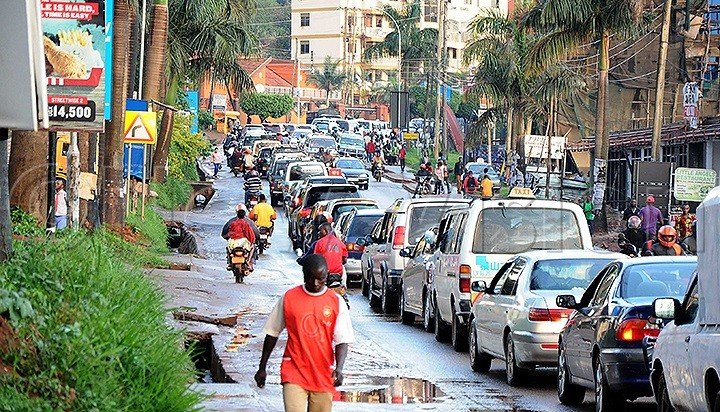 Kampala traffic requires a different driving approach from rural and safari-road conditions.
Animals and Livestock on Roads
Outside protected areas, livestock and other animals may sometimes be encountered near roads. Drivers should reduce speed whenever animals are close to the carriageway and avoid aggressive maneuvers that could startle them.
Inside national parks, wildlife creates an additional driving consideration because animals have priority in their natural environment and can move unexpectedly.
Driving Near Wildlife
Wildlife encounters require patience rather than speed. When animals are close to a road, drivers should slow down and follow applicable park instructions.
Current Kidepo guidance emphasizes following park speed limits and prohibits off-track driving without appropriate permission.
These rules are important not only for visitor safety but also for protecting animals and their habitats.
Road Conditions Inside National Parks
Park tracks should not be compared directly with paved public roads. Safari tracks may be uneven, dusty, sandy or muddy, and their condition can vary with rainfall.
A vehicle that performs well on a paved highway may not be equally suitable for every safari track. This is one reason vehicle selection should consider the complete itinerary.
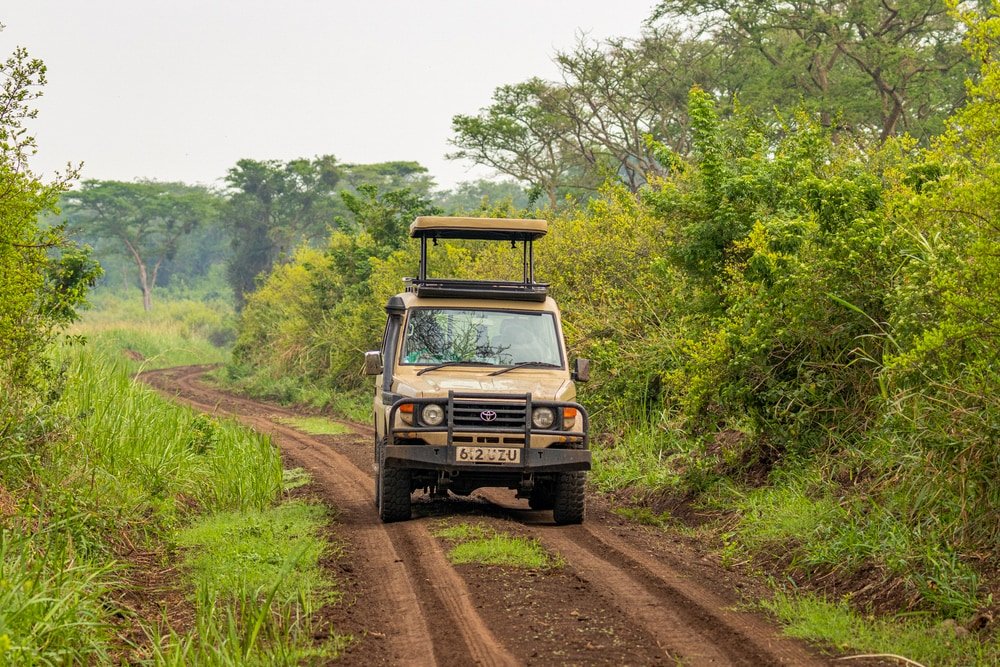 A capable safari vehicle can help on difficult tracks, but drivers must still adapt their speed and technique to actual conditions.
Why a 4×4 Can Be Important
A 4×4 can provide greater capability on challenging safari routes, particularly where roads become muddy, uneven or rough. However, having a 4×4 does not mean that every road can be driven at high speed or without preparation.
Current information for Kidepo specifically recommends a reliable 4×4 because of the more rugged sections of the route and wet-season difficulties.
Choosing Between a Car and a 4×4
The appropriate vehicle depends on the itinerary. A traveler driving primarily on paved highways may have different requirements from someone planning several days on rural roads and safari tracks.
The rental provider should be told the actual destinations and intended routes so that the traveler can determine whether the proposed vehicle is appropriate.
Road Conditions and Travel Time
Distance alone is a poor measure of how long a Uganda road journey will take. Surface quality, traffic, terrain, weather and stops can all affect travel time.
For example, the shortest route to Kidepo described by Anthill Safaris is approximately 571 kilometers and is estimated at around ten hours, while other routes are considerably longer.
This demonstrates why a Uganda Driving Guide should provide route-specific information rather than promising universal travel times.
Allowing Extra Time on Rural Roads
Travelers should build reasonable flexibility into rural road journeys. A road that is normally straightforward may take longer after rainfall or when roadworks, traffic or other delays occur.
Allowing extra time is preferable to rushing toward a lodge or activity because the original estimated arrival time has been exceeded.
Road Conditions and Safari Activities
Road-transfer planning should be coordinated with scheduled activities. Gorilla trekking, chimpanzee trekking and other wildlife activities often operate at specific times, so travelers should avoid treating long transfers as if they were short urban drives.
Current Bwindi information, for example, places the road journey from Kampala or Entebbe at approximately eight to ten hours.
Travelers should therefore consider arriving near the activity area in advance when an important early-morning activity is scheduled.
Road Conditions Around Lake Chahafi
Lake Chahafi provides another example of seasonal road variation. Current information states that roads are generally in better condition during dry periods but that travelers should still prepare for changes on unpaved sections.
Travelers visiting remote southwestern destinations should therefore consider both the season and the exact road leading to their accommodation.
Driving After Heavy Rain
After heavy rainfall, drivers should not assume that a route remains identical to its previous condition. Mud, standing water, erosion and washouts can alter accessibility.
If local accommodation staff or a reliable travel provider reports that a road has deteriorated, the driver should reconsider the planned route rather than relying exclusively on an older map or previous experience.
Dust on Unpaved Roads
Dust is a common consideration on dry unpaved roads. Drivers should maintain sufficient distance from vehicles ahead because dust clouds can temporarily reduce visibility.
Headlights and other vehicle equipment should be used appropriately according to the prevailing conditions and applicable road requirements.
Driving Behind Large Vehicles
Large trucks and buses can affect visibility on busy roads. Drivers should maintain an appropriate following distance and avoid making decisions based solely on what the vehicle ahead appears to be doing.
Maintaining a clear view of the road is particularly important when approaching junctions, bends and pedestrian areas.
Driving on Narrow Roads
Some rural roads can be narrower than the major highways travelers may be accustomed to. Drivers should reduce speed when approaching oncoming vehicles and allow adequate space for safe passing.
When road edges are soft or uneven, drivers should avoid moving abruptly toward the shoulder simply to create additional space.
Roadside Drainage and Culverts
Rural roads can contain drainage channels, culverts and uneven edges. These features can become harder to see in heavy rain or darkness.
Drivers should therefore reduce speed in areas where drainage infrastructure or road-edge conditions are difficult to identify.
Night Driving on Rural Roads
Night driving can make rural road hazards more difficult to identify. Pedestrians, cyclists, motorcycles, animals, potholes and unmarked road edges may be harder to see.
For long safari transfers, travelers should plan their itinerary so that the most remote sections are completed during daylight whenever practical.
Driving During Early Morning Hours
Early morning driving can provide good visibility once daylight has developed, but drivers should remain alert for pedestrians, cyclists and other road users beginning their daily activities.
Safari travelers should also coordinate departure times with park-entry procedures and planned activities rather than leaving excessively early without a clear reason.
Road Signs and Navigation Challenges
Road signs can assist with navigation, but travelers should not assume that every rural turn will have the same level of signage as a major urban road.
Current information about Mount Muhabura advises self-drivers to pay close attention to signposts and recommends having GPS installed in the hired vehicle.
When GPS and Mobile Data Fail
A navigation system is useful but should not become the only source of geographical awareness. Travelers should know the major towns along their route and retain accommodation contact information.
Current information about staying connected in Uganda recommends obtaining a local number for travelers undertaking longer stays and specifically identifies a local connection as useful for self-drive visitors.
Roadside Services and Remote Areas
Services become less predictable as travelers move farther from major towns. Fuel, vehicle repairs, accommodation and reliable mobile connectivity should therefore be considered before entering remote regions.
For remote safari routes, the driver should avoid assuming that the next town will necessarily provide every service required.
Using Local Road Information
Local information can be particularly valuable when road conditions have recently changed. Accommodation providers, vehicle-rental companies and authorized park personnel may have current knowledge about access routes.
This information should complement formal regulations and navigation tools rather than replace them.
Road Conditions Should Shape the Itinerary
A strong Uganda self-drive itinerary should be built around realistic road conditions. Travelers should avoid packing too many distant destinations into a short period simply because the map makes them appear relatively close.
Long-distance transfers can consume substantial portions of a safari day, particularly when routes include unpaved or mountainous sections.
Combining Accessible and Remote Destinations
Travelers who are new to self-driving in Uganda can consider beginning with more accessible destinations before undertaking the country’s longest remote routes.
Lake Mburo, for example, is described as approximately three to four hours from Kampala, while Kidepo requires substantially longer road travel.
This difference demonstrates why itinerary difficulty should be considered alongside attraction value.
Road Conditions and Accommodation Location
The location of accommodation can significantly affect driving time. Two lodges serving the same national park may require different approaches depending on the park gate and surrounding road network.
Current information about Queen Elizabeth National Park identifies Katunguru as a practical location along the main Mbarara-Kasese highway and notes its convenience for self-drive travelers.
Road Conditions and Park Gates
Travelers should know which park gate they need to use before beginning a safari drive. Entering a national park through the wrong access point can add unnecessary driving time.
This is particularly relevant to large parks and destinations with several sectors or access routes.
Responsible Driving on Safari Roads
Responsible driving means adapting speed to the road rather than attempting to maintain highway speeds on every surface. It also means respecting wildlife, avoiding unnecessary off-road driving and following park instructions.
Current Kidepo guidance explicitly states that off-track driving is prohibited unless permission is obtained from the Uganda Wildlife Authority.
Road Conditions and Vehicle Recovery
Travelers entering remote areas should understand what happens if the vehicle becomes stuck or develops a mechanical problem. This should be discussed with the rental provider before departure.
A capable vehicle reduces certain risks but does not eliminate the possibility of breakdowns, punctures or difficult road conditions.
Why Road Awareness Matters More Than Speed
The objective of a successful Uganda road trip is not to complete every transfer as quickly as possible. Safe progress requires continuous observation and adjustment to the actual road.
A driver who slows down for rough surfaces, populated areas, wildlife and poor visibility is better prepared to manage Uganda’s varied driving environments.
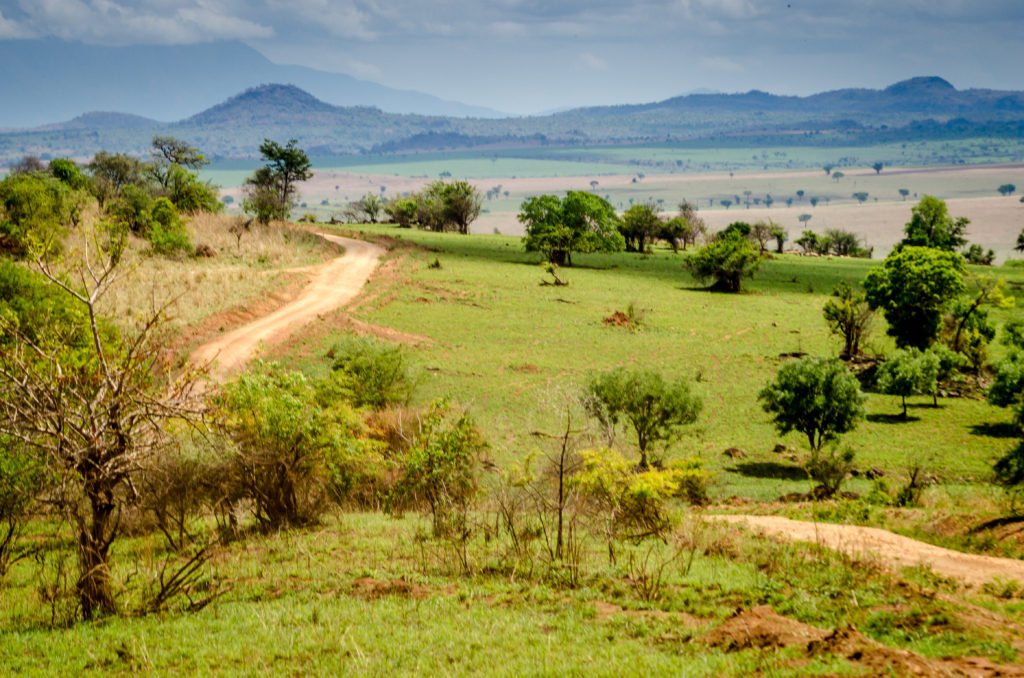 Remote safari roads can combine long distances, changing surfaces and limited roadside services.
Final Uganda Road-Condition Strategy
The most reliable approach to Uganda driving is to research each road section separately. Identify whether the route is paved or unpaved, determine the likely terrain, consider the season, select an appropriate vehicle and allow additional time for difficult sections.
Long-distance routes such as Kampala to Kidepo should be treated as substantial road journeys, while more accessible destinations such as Lake Mburo can require considerably less transfer time.
For southwestern Uganda, travelers should pay particular attention to mountainous approaches and the exact location of their accommodation. Current information for Bwindi confirms that rough sections can occur toward the park, while routes around Kabale and Kisoro require careful attention to directions and terrain.
Practical road-planning principle:
Do not judge a Uganda journey only by kilometers. Consider road surface, terrain, weather, traffic, accommodation location, park access and the amount of daylight available.
Final Advice for Driving on Uganda Roads
A detailed Uganda Driving Guide should prepare visitors for variety rather than presenting Uganda’s roads as having one uniform condition. Major highways, rural roads, mountain roads and national park tracks each require different levels of attention.
The safest strategy is to drive according to the actual conditions, allow realistic travel times, use an appropriate vehicle, monitor weather changes, remain alert around communities and wildlife, and obtain current local information when a route is uncertain.
Useful destination-specific resources include
Bwindi road planning,
Kibale route information,
Lake Chahafi access,
Kidepo road access,
Queen Elizabeth access,
and
Lake Mburo access.
For additional destination context,
Kidepo road guidance
provides route information for travelers considering the remote northeastern part of Uganda.
Road-Condition Checklist
✓ Check the surface of each major route before departure.
✓ Consider the rainy or dry season.
✓ Choose a vehicle appropriate for the complete itinerary.
✓ Allow additional time for rural and mountainous sections.
✓ Identify the correct national-park gate and accommodation approach.
✓ Expect pedestrians, motorcycles and livestock outside protected areas.
✓ Follow park rules and adapt driving to actual conditions.
Drive for the conditions, not for the clock.
Uganda’s roads can change from smooth highway to rural track, mountain road or safari trail within the same journey. Good preparation makes the difference.
Uganda Driving Guide: Essential Documents, Rules, Safety and Practical Travel Advice
Driving in Uganda becomes much easier when travelers understand the documents, road rules, vehicle requirements, journey planning and practical responsibilities that apply before starting a self-drive trip.
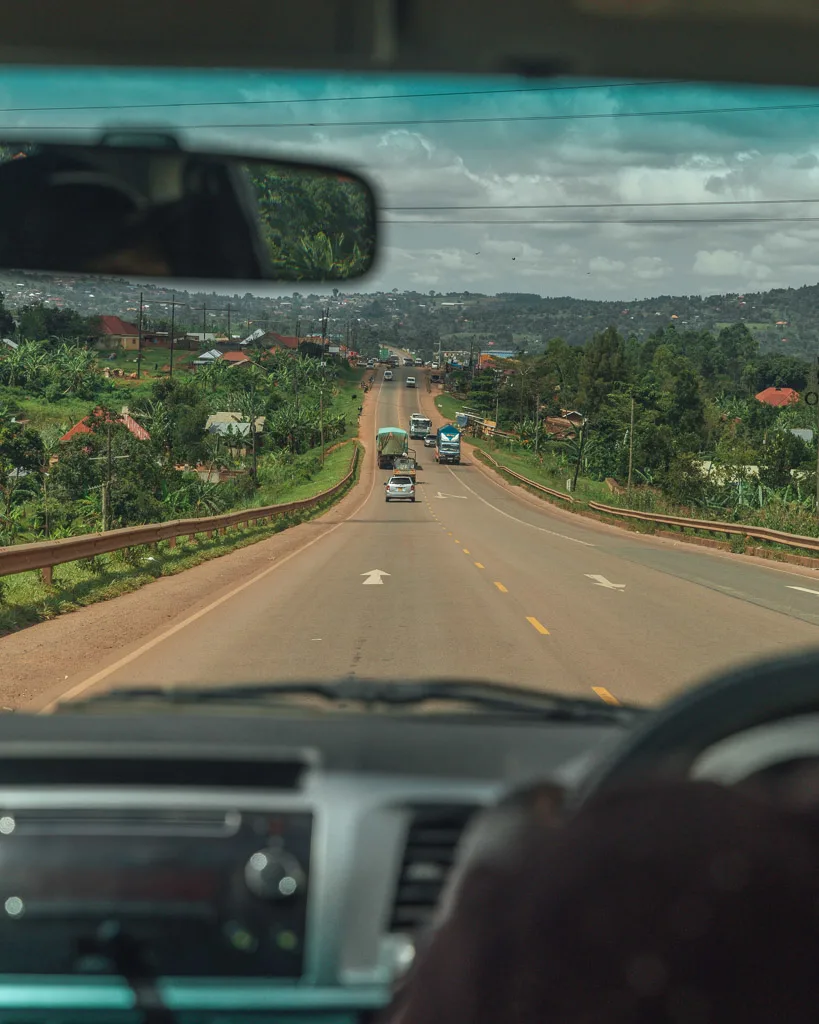 Uganda’s major roads can provide scenic and relatively straightforward connections between towns and safari destinations.
The final section of this Uganda Driving Guide brings these considerations together so travelers can prepare for a road journey without relying on assumptions.
Carry the Required Driving Documents
Before driving, travelers should ensure that they have the documents required for their particular situation, including their identification, driving licence and vehicle documentation. International visitors should also confirm the requirements applicable to their nationality and rental arrangement before collecting a vehicle.
Travelers using a rental vehicle should keep the rental agreement and relevant vehicle documents accessible during the journey. The precise documentation supplied by a rental company can differ, so it should be checked before departure.
Confirm Your Driving Licence Requirements
International travelers should establish in advance whether their existing driving licence is accepted for their intended period of driving in Uganda and whether an international driving permit or other documentation is required.
Do not assume that requirements applying in another African country automatically apply in Uganda. Where a legal requirement is uncertain, travelers should verify it with the relevant Ugandan authority or their rental provider before driving.
Check current documentation and licence requirements before collecting a rental vehicle. Requirements can depend on the traveler, licence and rental arrangement.
Understand the Rental Agreement
A rental agreement can contain important conditions concerning permitted destinations, vehicle use, insurance, mileage, damage, breakdown assistance and travel outside particular areas. Travelers should read these conditions before accepting the vehicle.
This is especially important for safari travelers planning to leave major highways and use rural or national-park roads. A vehicle suitable for one itinerary may not necessarily be authorized or appropriate for another.
Inspect the Vehicle Before Departure
A careful vehicle inspection should be completed before beginning a Uganda road trip. The driver should check the general condition of the vehicle and confirm that essential equipment supplied by the rental company is present.
Particular attention should be given to the tires, spare tire, lights, mirrors, windows, windscreen, fuel level and visible body damage. Existing damage should be documented according to the rental company’s procedure before departure.
✓ Tires
Check tires and the spare tire.
✓ Fuel
Confirm the fuel level and fuel type.
✓ Damage
Record existing visible damage.
✓ Equipment
Confirm supplied tools and equipment.
Check the Spare Tire and Tools
Travelers heading into remote areas should know whether the vehicle contains a usable spare tire and the equipment needed to change it. The location of the jack and other supplied tools should be confirmed before leaving the rental station.
This simple preparation is particularly useful when a journey includes long stretches away from major towns.
Understand Uganda’s Driving Environment
A Uganda Driving Guide should prepare visitors for a mixed road environment. Drivers may encounter busy urban roads, motorcycles, pedestrians, bicycles, trucks, buses, paved highways, rural roads and national-park tracks during the same itinerary.
The safest approach is to adapt speed and attention to the actual environment rather than attempting to maintain one driving style throughout the journey.
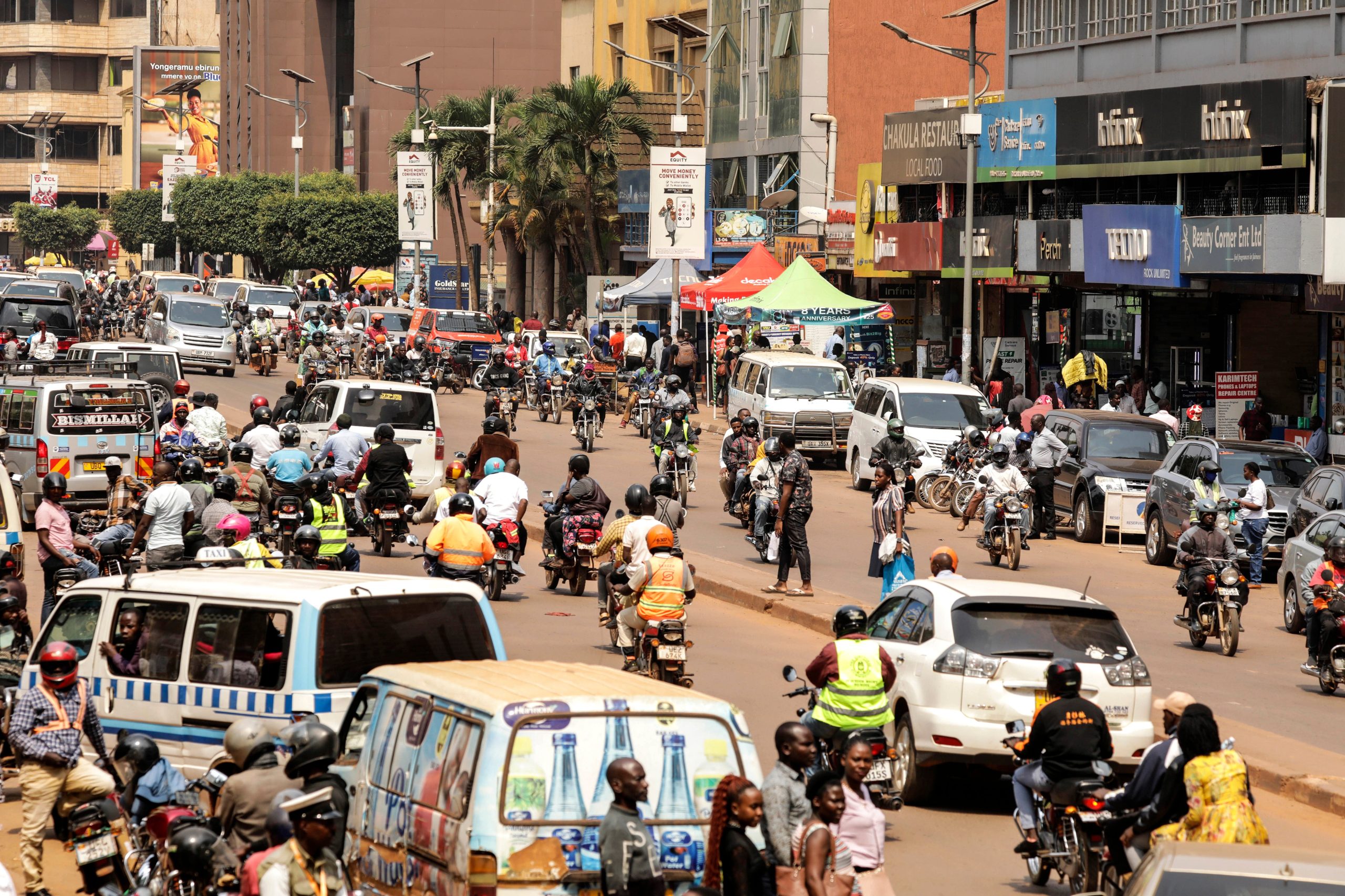 Urban driving in Kampala requires particular attention to motorcycles, pedestrians, vehicles and changing traffic conditions.
Drive Defensively
Defensive driving is particularly valuable for visitors who are unfamiliar with local traffic patterns. Drivers should continuously observe the road ahead, mirrors, intersections, pedestrians, motorcycles and vehicles approaching from different directions.
Maintaining an appropriate following distance gives the driver more time to respond when another road user brakes suddenly or changes direction.
Respect Speed Limits
Drivers should follow posted speed limits and any lower speed requirements applicable to particular roads or protected areas. Conditions can also require a driver to travel below the maximum permitted speed.
On rough roads, mountain roads, populated sections and wildlife areas, road conditions may make a lower speed appropriate even when the legal maximum is higher.
Never treat the posted maximum speed as a target. Road surface, traffic, visibility, terrain and wildlife can require slower driving.
Be Particularly Careful Around Motorcycles
Motorcycles are common on Ugandan roads and require continuous awareness. Drivers should check mirrors regularly and allow adequate space when motorcycles are traveling alongside or approaching the vehicle.
Extra attention is useful around junctions, markets, trading centers and densely populated areas where motorcycles, pedestrians and other vehicles frequently interact.
Give Pedestrians Adequate Space
Pedestrians may be present along both urban and rural roads. Drivers should reduce speed around populated areas and remain prepared for pedestrians crossing the road.
Children and pedestrians near schools, markets and settlements require particular caution because their movements may be less predictable than those of vehicles.
Drive Carefully Through Trading Centers
Trading centers can create sudden changes in traffic conditions. Vehicles may enter or leave roadside businesses while pedestrians and motorcycles move close to the carriageway.
Drivers should reduce speed before entering these areas and avoid overtaking when visibility is restricted.
Be Prepared for Rural Road Conditions
Rural roads can change significantly according to location and season. Some sections may be paved while others may involve gravel, murram, dirt, potholes or uneven surfaces.
Current information for Kidepo describes the final part of the journey beyond Kitgum as more rugged, with muddy sections and washouts possible during wet conditions. A reliable 4×4 is recommended for that route.
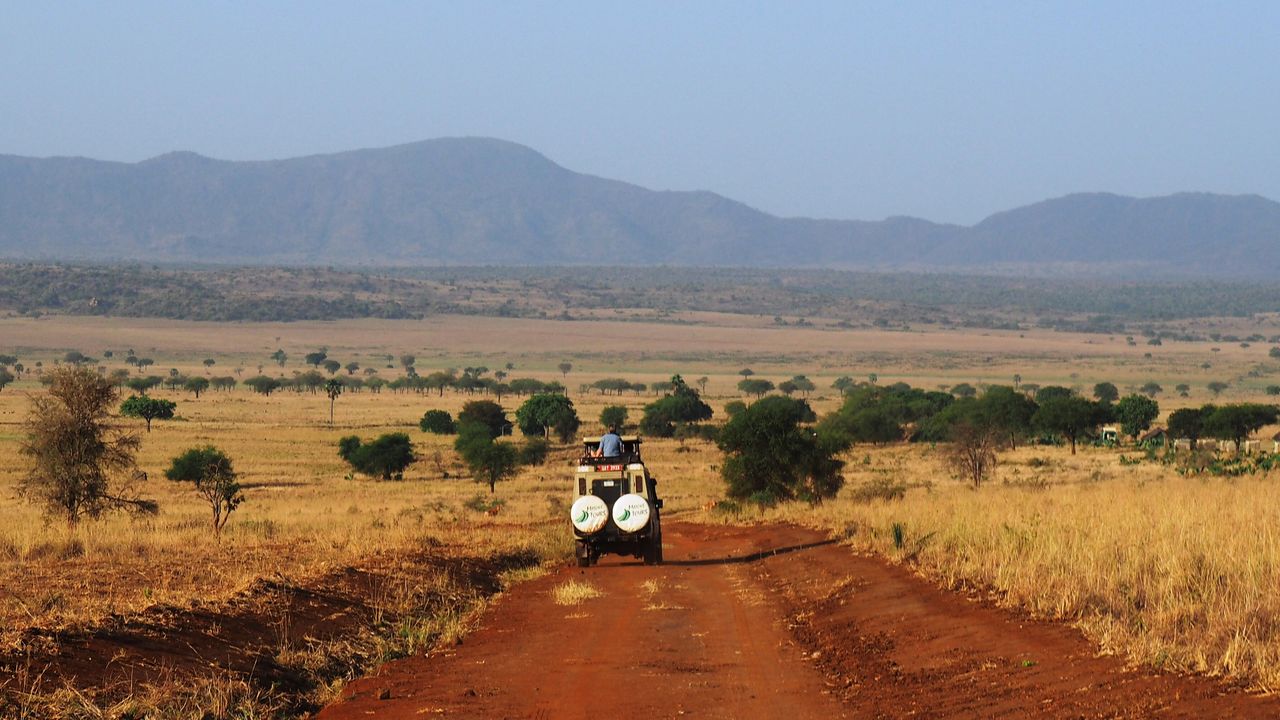 Remote northern Uganda demonstrates why road surface, terrain and vehicle capability should be considered together.
For travelers planning western Uganda routes, Queen Elizabeth road access can help with itinerary planning, while current destination information describes road approaches through Mbarara, Katunguru and Fort Portal.
Prepare for Mountain Driving
Mountain roads require careful speed control, particularly on bends and descents. Southwestern Uganda includes mountainous areas around Kabale, Kisoro and several gorilla-trekking destinations.
Drivers should allow additional time for winding roads and avoid planning a demanding activity immediately after an exceptionally long transfer when the itinerary can reasonably allow an earlier arrival.
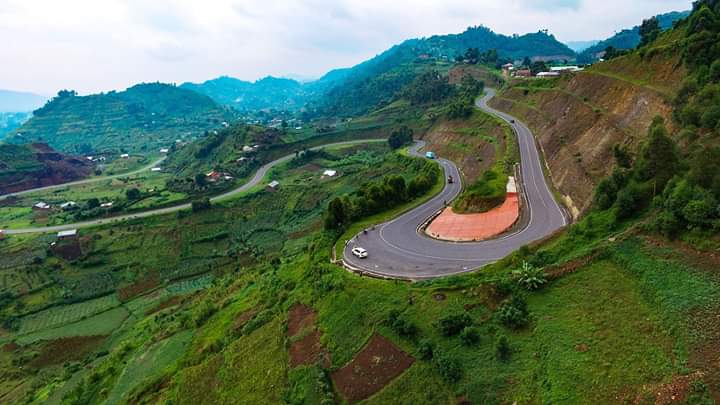 Mountain and forest roads in southwestern Uganda can require slower speeds and additional journey time.
Consider the Season When Planning a Road Trip
Weather can influence road conditions, particularly on unpaved routes. Travelers planning remote self-drive journeys should consider the expected conditions during their travel period and obtain current local information where necessary.
Current information for Lake Chahafi notes that the route includes mountain roads with curves and occasional rough patches, while road conditions can vary seasonally.
🌦️ Seasonal Road Awareness
Rain can change unpaved roads quickly. Build flexibility into the itinerary and obtain current local information before entering a remote route.
Do Not Treat GPS as the Only Navigation Method
Navigation applications are useful, but travelers should also understand the general route. Before departure, identify the principal towns, park entrance, accommodation and major junctions along the journey.
Offline navigation can provide additional resilience when mobile connectivity becomes unreliable. Travelers should also retain accommodation and rental-company contact information in a form that can be accessed without an internet connection.
Plan Fuel Stops
Fuel planning is especially important when traveling to remote safari destinations. Drivers should identify suitable refueling opportunities before entering areas where fuel services become less frequent.
A traveler should not wait until the fuel gauge is nearly empty before considering the location of the next reliable fuel station.
Refuel before entering remote areas whenever practical, particularly when the next reliable service point is far away.
Plan Long Transfers Realistically
Distance alone does not determine driving time in Uganda. Traffic, road surfaces, terrain, weather, stops and temporary delays can all affect the journey.
Kidepo provides a clear example. Current route information describes several road approaches, including a Kampala-Kitgum-Kidepo route of approximately 571 kilometers.
For longer safari journeys, travelers should therefore build flexibility into their itinerary instead of scheduling activities immediately after a long transfer.
Consider Breaking Long Journeys Into Stages
Long road transfers can be divided into manageable stages with suitable overnight stops. This can reduce fatigue and allow travelers to experience destinations along the route.
The Kampala-to-Kidepo route, for example, is commonly divided through northern Uganda rather than being treated as a single uninterrupted drive. Current route information identifies Gulu and Kitgum as possible stopping points.
Know When to Avoid Night Driving
Night driving can make rural hazards more difficult to identify. Pedestrians, cyclists, motorcycles, animals, potholes and poorly visible road edges can become harder to see.
For safari itineraries, travelers should generally organize their schedule so that the most remote sections are completed during daylight whenever practical.
Remote roads can be considerably harder to assess after dark. Where possible, schedule demanding rural and safari-road sections during daylight.
Respect National Park Driving Rules
Driving inside protected areas is different from driving on ordinary public roads. Drivers should follow park regulations, remain on authorized routes and observe applicable speed restrictions.
Current Kidepo information states that off-track driving is prohibited unless appropriate permission has been obtained.
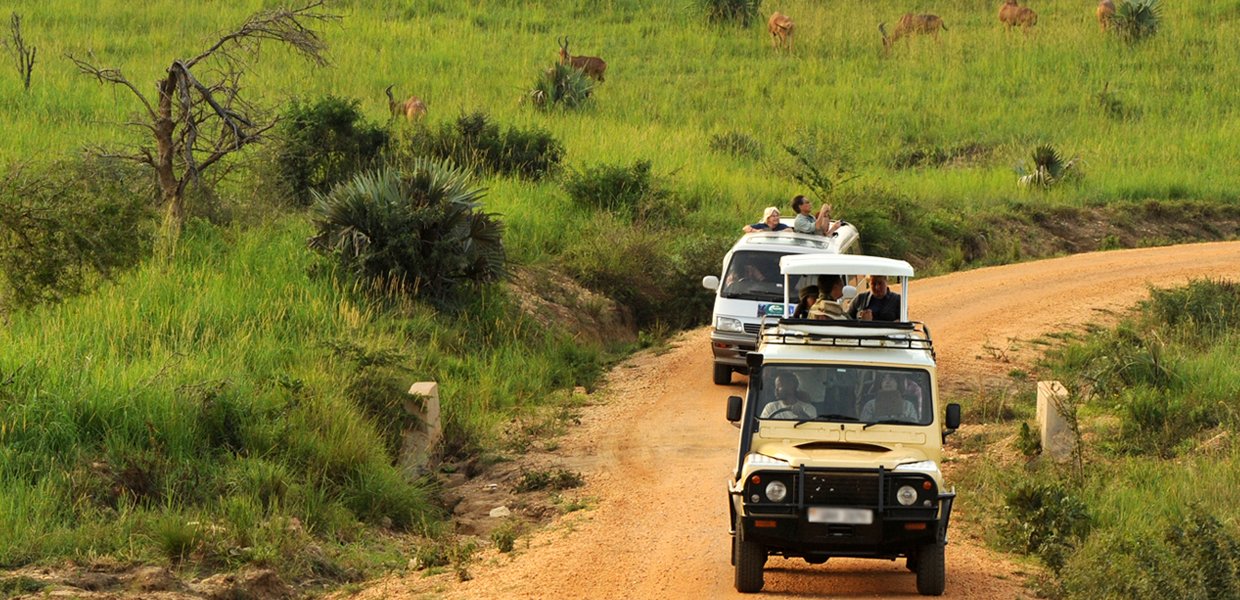 Safari tracks require drivers to adapt to wildlife, terrain, road conditions and protected-area rules.
Give Wildlife Priority
Wild animals can move unpredictably. When wildlife is close to the road, drivers should slow down, maintain a safe distance and follow instructions from park personnel or guides.
Drivers should never allow the excitement of a wildlife sighting to encourage unsafe positioning or unnecessary movement toward an animal.
Do Not Rush Wildlife Sightings
A safari is not a race. When an animal appears near the road, patience is more valuable than speed. Drivers should remain attentive to the surrounding environment and allow other vehicles adequate space.
Responsible driving helps protect both visitors and wildlife while contributing to a better safari experience.
Slow down, keep a safe distance from wildlife and follow the instructions applicable to the protected area.
Know Your Breakdown Procedure
Before leaving the rental company, travelers should understand exactly what to do if the vehicle develops a mechanical problem. The rental company’s emergency contact and recovery procedure should be readily available.
Travelers should not assume that every remote location has immediate roadside assistance. This is another reason to plan fuel, communication and vehicle condition carefully before leaving a major town.
Keep Communication Available
Mobile communication can be useful during long-distance travel, particularly for contacting accommodation providers or rental companies. However, connectivity can vary by location.
Important telephone numbers should therefore be stored before departure, while travelers should avoid depending entirely on mobile data for navigation or emergency communication.
Know Your Accommodation Location
Knowing the name of a national park is not always enough. Travelers should have the exact location of their lodge or campsite and understand which park gate or road provides the appropriate approach.
This is particularly important in destinations with several sectors or different access routes.
Plan for Remote Safari Areas
Remote destinations require more preparation than easily accessible locations. Kidepo is a good example because its distance from Kampala and the condition of parts of its approach roads make careful planning particularly important.
Travelers who prefer shorter road transfers can consider itineraries incorporating more accessible destinations. Current information describes Lake Mburo as being directly along the Kampala-Mbarara highway and relatively straightforward for self-drive visitors.
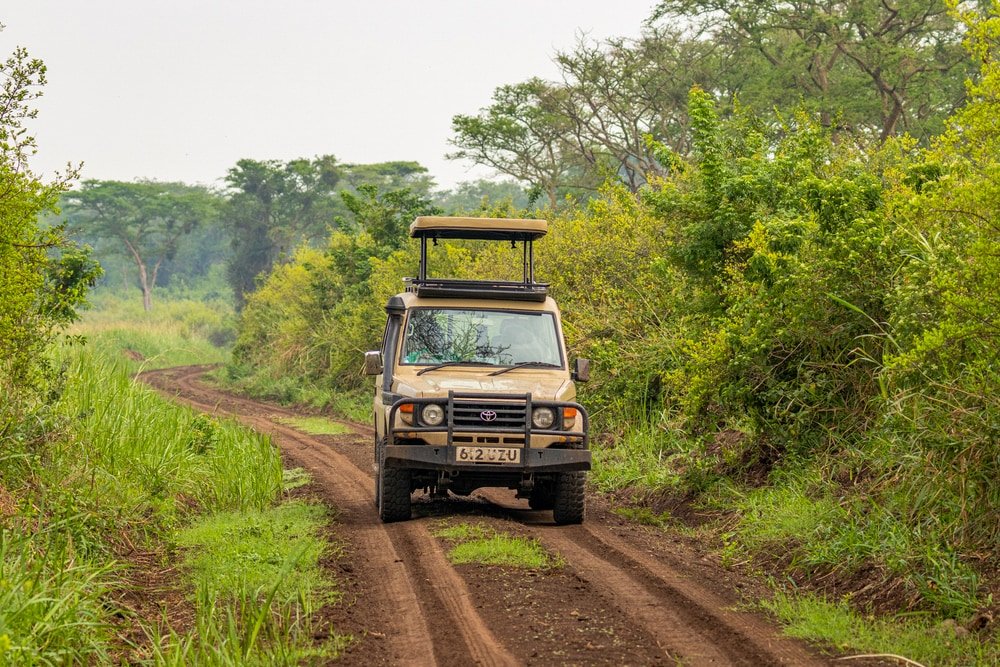 Unpaved safari routes can become more demanding after rainfall, making appropriate vehicle selection important.
Use Reliable Destination Information
Destination-specific information can help travelers understand access conditions before departure. For example, Sipi Falls driving information describes the Kampala-to-Sipi journey and the route through Jinja, Iganga and Mbale.
Likewise, travelers planning a Kidepo journey can consult Kidepo route information before deciding whether the road journey fits their available time.
Build a Practical Self-Drive Itinerary
A good Uganda self-drive itinerary balances attractions with realistic transfer times. Travelers should avoid adding distant destinations simply because they appear close together on a map.
Routes involving Kampala, Lake Mburo, Queen Elizabeth, Kibale, Bwindi and southwestern Uganda can be combined, but each transfer should be assessed according to road conditions and the location of accommodation.
Accessible Routes
Useful for travelers seeking shorter transfers and easier road access.
Mountain Routes
Allow additional time for curves, elevation and changing road surfaces.
Remote Routes
Require greater attention to fuel, vehicle capability, communication and timing.
Keep Important Information Offline
Travelers should save accommodation details, rental-company contacts, route information and other important travel information before leaving areas with dependable internet access.
This simple preparation can become valuable when mobile connectivity is temporarily unavailable.
Respect Local Communities
Driving through rural Uganda means passing through communities, farms, schools and trading centers. Drivers should reduce speed in populated areas and avoid creating unnecessary disturbance.
Responsible road travel is part of responsible tourism because the journey passes through places where people live and work.
Prepare for Changing Road Conditions
Road conditions can change during a journey. A route that was easy earlier in the day may become more difficult after heavy rain, while traffic or roadworks can introduce unexpected delays.
Drivers should respond to actual conditions instead of attempting to maintain an itinerary at the expense of safe driving.
Consider Air Travel for Very Long Transfers
Not every Uganda itinerary needs to be completed entirely by road. For particularly long transfers, domestic or chartered flights may provide an alternative depending on the destination, schedule and budget.
Current Kidepo information describes both road and air access, while noting that road travel provides an opportunity to experience changing landscapes and communities along the route.
Combine Road Travel With Strategic Stopovers
Stopovers can make a long journey more practical. Travelers can use them to rest, refuel, eat and explore destinations along the route rather than treating every transfer as a simple transportation exercise.
Current information about a Lake Mburo, Bwindi and Lake Bunyonyi itinerary demonstrates how several southwestern destinations can be connected within one road-based journey.
Final Uganda Driving Checklist
Before starting a Uganda road trip, confirm your driving documents, rental agreement, vehicle condition, spare tire, fuel level, navigation, accommodation details and emergency contacts. Check the route and consider whether the vehicle is suitable for every road included in the itinerary.
Before entering a remote region, confirm the next reliable fuel opportunity, communication arrangements and expected road conditions. During the journey, adapt speed to the actual surface, traffic, terrain and weather.
Uganda Driving Guide: Practical Final Advice
The best Uganda Driving Guide should leave travelers with one central principle: prepare for the specific journey rather than assuming that every Ugandan road is the same.
Major highways, rural roads, mountain routes and national-park tracks require different approaches. A responsible driver checks the vehicle, understands the route, plans fuel and rest stops, respects road users and wildlife, and allows enough time for changing conditions.
Travelers planning western Uganda can also review Queen Elizabeth road access, while those planning southwestern routes can review Lake Chahafi travel information.
For long northern journeys, Kidepo road planning and Kidepo access guidance provide additional route-specific context.
Drive Prepared. Drive Responsibly. Enjoy Uganda.
With careful preparation, realistic journey planning and responsible road behavior, travelers can make Uganda self-drive travel considerably more manageable while enjoying the country’s changing landscapes, communities and protected areas.