
Which Uganda Parks Offer the Best Birdwatching Safari?
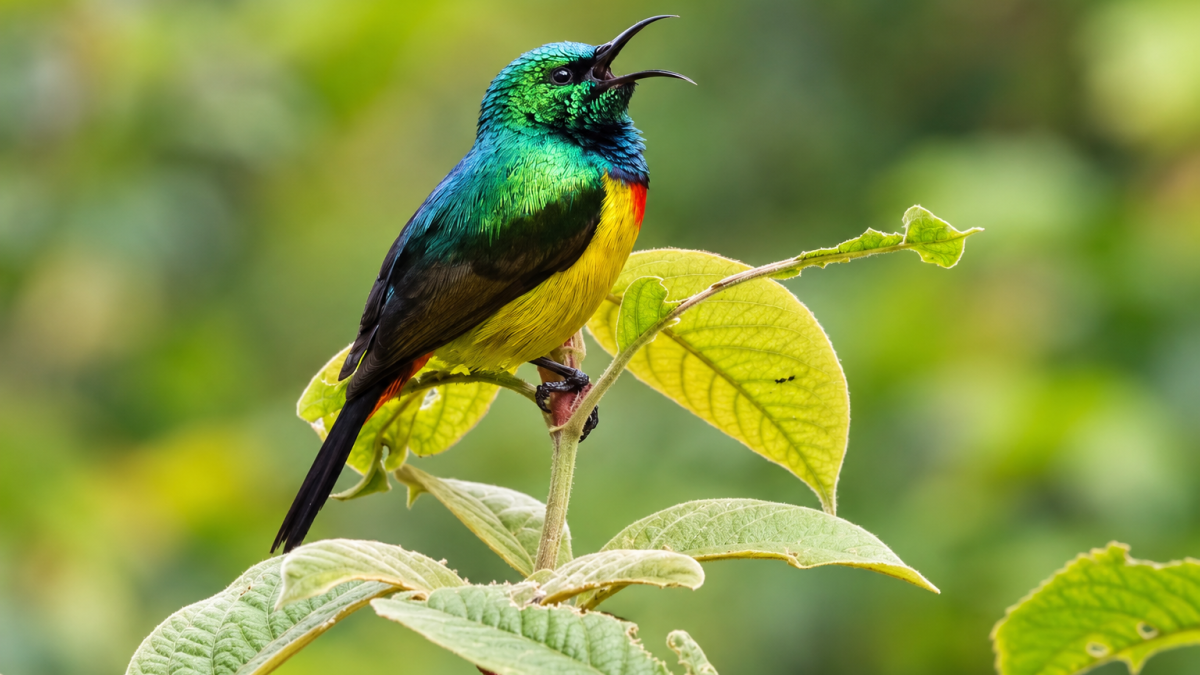
Which Uganda Parks Offer the Best Birdwatching Safari?
Which Uganda parks offer the best birdwatching safari? Uganda is one of Africa’s outstanding birding destinations, with more than 1,000 recorded bird species packed into a relatively small country. Its exceptional diversity comes from the meeting of East African savannah, Albertine Rift forests, wetlands, lakes, mountains and Guinea-Congo forest influences.
For most birders, the strongest national-park circuit combines Queen Elizabeth, Murchison Falls, Bwindi, Kibale, Semuliki and Lake Mburo. Each contributes a different habitat and target list, so the best Uganda birdwatching safari usually combines several destinations rather than relying on a single park.
Queen Elizabeth National Park: Exceptional Bird Diversity
Queen Elizabeth National Park is widely cited with more than 600 recorded bird species, making it one of Uganda’s richest protected areas for bird diversity. Its mosaic of savannah, woodland, wetlands, crater lakes and the Kazinga Channel creates productive birding across a relatively compact safari landscape.
A Kazinga Channel boat trip can reveal African fish eagles, herons, kingfishers, pelicans, cormorants and other water-associated birds. On the plains and around wetland edges, birders can search for raptors, lapwings, bee-eaters and numerous savannah species. The park is particularly useful for travelers who want serious birding alongside conventional wildlife viewing.
Murchison Falls National Park: Shoebills, Savanna Birds and the Nile
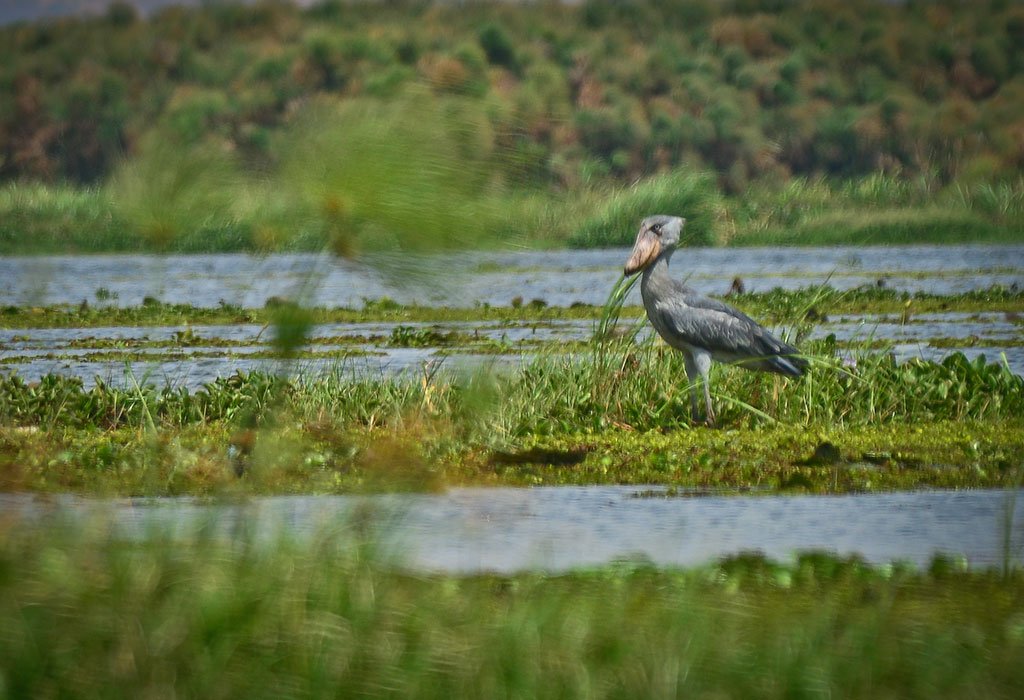
Murchison Falls National Park combines Nile wetlands, riverine habitat, woodland and broad savannah. More than 450 bird species are commonly reported for the wider conservation area, making it a strong choice for travelers combining birding with a classic Uganda wildlife safari.
Shoebills can be searched for around suitable Nile Delta wetland habitat, although sightings should never be described as guaranteed. Other highlights can include Abyssinian ground hornbills, red-throated bee-eaters, raptors and numerous waterbirds. Explore our Murchison Falls safari when building a northern Uganda birding route.
Lake Mburo National Park: Acacia and Woodland Specialists
Lake Mburo is smaller than Uganda’s major savannah parks, but its acacia woodland, grassland and lake habitats make it extremely useful on a birding itinerary. More than 300 species have been recorded, with targets including African finfoot and red-faced barbet alongside many woodland and water-associated species.
A boat trip adds aquatic birds to the species list, while game drives and walks explore drier habitats. Lake Mburo is also conveniently positioned on the road between central Uganda and the southwest, making it a natural addition to a Bwindi birding and gorilla itinerary.
Bwindi Impenetrable National Park: Albertine Rift Birding
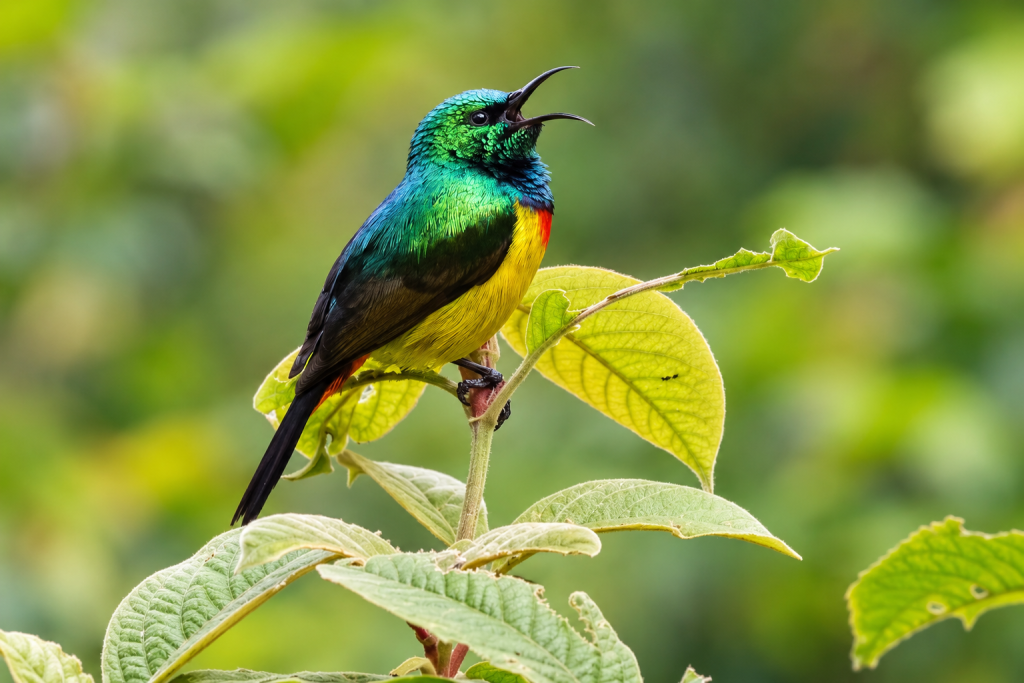
Which Uganda parks offer the best birdwatching safari for forest specialists? Bwindi Impenetrable National Park belongs near the top of the list. More than 350 species have been recorded in this UNESCO World Heritage forest, including many Albertine Rift endemics and restricted-range species.
Important targets include African green broadbill, regal sunbird and other montane forest birds. Birders can explore different elevations and sectors, while travelers interested in primates can combine birding with mountain gorilla trekking in Uganda.
Kibale National Park: Forest Birding and Pitta Searches
Kibale’s tropical forest supports roughly 375 recorded bird species and is particularly attractive to birders interested in forest species. The green-breasted pitta is among its most celebrated targets, but it is elusive and should be approached as a specialist search rather than an expected sighting.
Great blue turacos and numerous other forest birds add to the experience. Nearby Bigodi Wetland Sanctuary complements Kibale with community-based wetland and forest-edge birding.
Semuliki National Park: Uganda’s Guinea-Congo Specialists
Semuliki is one of Uganda’s most distinctive birding destinations because its lowland forest supports species associated with the Guinea-Congo biome. More than 400 bird species have been recorded, including species that are difficult to find elsewhere in East Africa.
Targets can include Nkulengu rail and several hornbills and forest specialists. Semuliki is particularly rewarding for experienced birders building a specialist life list, although forest birding can require patience, good guides and enough time.
Important Birding Hotspots Outside Uganda’s National Parks
Mabamba Bay
Mabamba Bay on Lake Victoria is one of Uganda’s best-known shoebill sites. Local canoe excursions explore papyrus channels and wetland habitat. The shoebill remains a wild bird, so responsible operators should describe Mabamba as a strong search location rather than promise a sighting.
Lutembe Bay
Lutembe Bay is an important Lake Victoria wetland and a valuable site for resident and migratory waterbirds. Palearctic migrants add variety during the northern winter migration period, making the wetland particularly interesting for birders combining Uganda’s parks with sites around Entebbe and Kampala.
10 Sought-After Birds to Look for in Uganda
A Uganda birding wish list often includes the shoebill, green-breasted pitta, African green broadbill, great blue turaco, Shelley’s crimsonwing, standard-winged nightjar, short-tailed warbler, Doherty’s bushshrike, bar-tailed trogon and other localized forest or savannah specialties.
Not every species occurs on the same route, and some are exceptionally difficult to locate. Target-based itineraries should therefore be designed around habitat, elevation, season and recent local observations rather than a generic national checklist.
Best Time for a Uganda Birdwatching Safari
Uganda offers worthwhile birding throughout the year. The best timing depends on target species and the regions being visited rather than on one universal “best” month. Migratory species increase the diversity during parts of the northern winter, while rainfall can influence breeding activity, forest conditions and road access.
Drier periods can make some safari travel and forest trails more comfortable, but birders should not assume that dry weather always produces the best bird activity. A specialist itinerary should balance seasonal birds with local rainfall patterns and target habitats.
Which Uganda Parks Should Birders Combine?
For a broad first birding safari, Queen Elizabeth, Bwindi and Kibale create a strong southwestern circuit combining savannah, wetlands and forest. Adding Lake Mburo expands the woodland component. Murchison Falls adds northern savannah and Nile habitats, while Semuliki is especially valuable for birders pursuing lowland forest specialists.
Travelers interested in combining birds with primates can also explore gorilla trekking and wider East African safari planning or our Lake Bunyonyi birdwatching guide.
Which Uganda Parks Offer the Best Birdwatching Safari FAQs
Which Uganda national park has the most recorded bird species?
Queen Elizabeth National Park is generally cited with more than 600 recorded species, giving it one of the country’s largest park bird lists.
Which park is best for Albertine Rift birds?
Bwindi is one of Uganda’s essential destinations for Albertine Rift endemics and other montane forest specialties.
Where can I look for shoebills in Uganda?
Mabamba Bay is a famous shoebill search site, while suitable wetland habitat around the Nile Delta in the Murchison Falls area can also provide opportunities.
Is Uganda good for beginner birdwatchers?
Yes. Uganda works well for beginners because conspicuous species occur alongside specialist targets, and birding can be integrated into game drives, boat safaris, forest walks and primate itineraries.
Can birdwatching be combined with gorilla trekking?
Yes. Bwindi is both a major mountain gorilla habitat and an outstanding forest birding destination, making the combination particularly practical.
Plan Your Uganda Birdwatching Safari
Which Uganda parks offer the best birdwatching safari ultimately depends on your target species. Queen Elizabeth excels in overall diversity, Bwindi in Albertine Rift forest birds, Kibale in tropical forest birding, Semuliki in Guinea-Congo specialists, Murchison Falls in Nile and savannah habitats, and Lake Mburo in acacia woodland birding.
Safari Vacations and Travel Services can build a route around your target birds, preferred parks, primate experiences and available travel time. Contact our Uganda safari team to plan a customized birdwatching itinerary.


