
Uganda Food Guide: An Introduction to Ugandan Food and Cuisine
Ugandan food is best understood as a collection of regional food traditions rather than a single style of cooking. Uganda has many cultural communities, agricultural zones and local ingredients, and those differences are reflected directly on the plate. Matooke, posho, cassava, millet, sorghum, sweet potatoes, beans, groundnuts, vegetables, freshwater fish, meat and chapati all have important places within the country’s food landscape. Uganda’s Ministry of Foreign Affairs describes the country’s cuisine as diverse and specifically identifies matooke, posho, groundnut sauce, luwombo, malakwang and the Ugandan Rolex among notable foods.
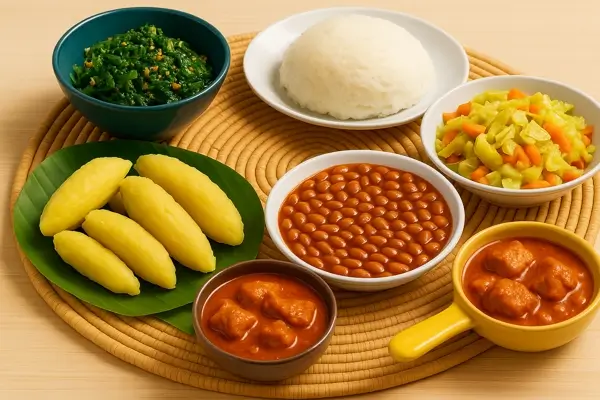
For travelers, discovering traditional Ugandan food during a safari adds an important cultural dimension to a journey through the country. A meal can reveal as much about a region as its landscapes: green cooking bananas are especially significant in parts of central and western Uganda, cereal staples such as millet have deep traditions in several communities, while freshwater fish is naturally important around Uganda’s lakes.
What Is Ugandan Food?
Ugandan food is the collective name for the dishes, staples, sauces, cooking techniques and eating traditions found throughout Uganda. There is no single plate that adequately represents every part of the country. Instead, the food changes according to region, community, agriculture, season, household and occasion.
A useful way to understand a traditional Ugandan meal is to start with its staple. A substantial food such as matooke, posho, cassava, sweet potatoes or millet preparation can be accompanied by beans, vegetables, groundnut sauce, fish, beef, chicken or another stew. The exact combination varies considerably. This staple-and-accompaniment pattern explains why visitors frequently encounter several different foods served together rather than one standalone dish.
Uganda’s official Ministry of Foreign Affairs cultural information specifically identifies matooke as steamed plantains, posho as maize meal and groundnut sauce among typical foods. It also associates luwombo with Baganda food traditions and malakwang with Acholi cuisine. These distinctions are important because an accurate Uganda Food Guide should identify the communities and regions connected with foods instead of describing every dish simply as universally “Ugandan.”
What Does Traditional Ugandan Food Taste Like?
There is no single flavor that defines Ugandan cuisine. The taste depends heavily on the staple and its accompaniment. Matooke has a relatively mild character that makes it particularly suited to sauces and stews. Posho is similarly mild and functions as a substantial accompaniment. Groundnut-based sauces contribute a rich, nutty character, while meat, fish and vegetable preparations create entirely different flavor profiles.
This means visitors should not approach Ugandan food expecting every dish to be heavily spiced. Some meals obtain much of their character from the sauce, meat, vegetables or cooking method accompanying a relatively neutral staple. Travelers planning a broader Uganda cultural and culinary journey should therefore try several combinations rather than judging the country’s cuisine from one meal.
Matooke: One of Uganda’s Best-Known Traditional Foods
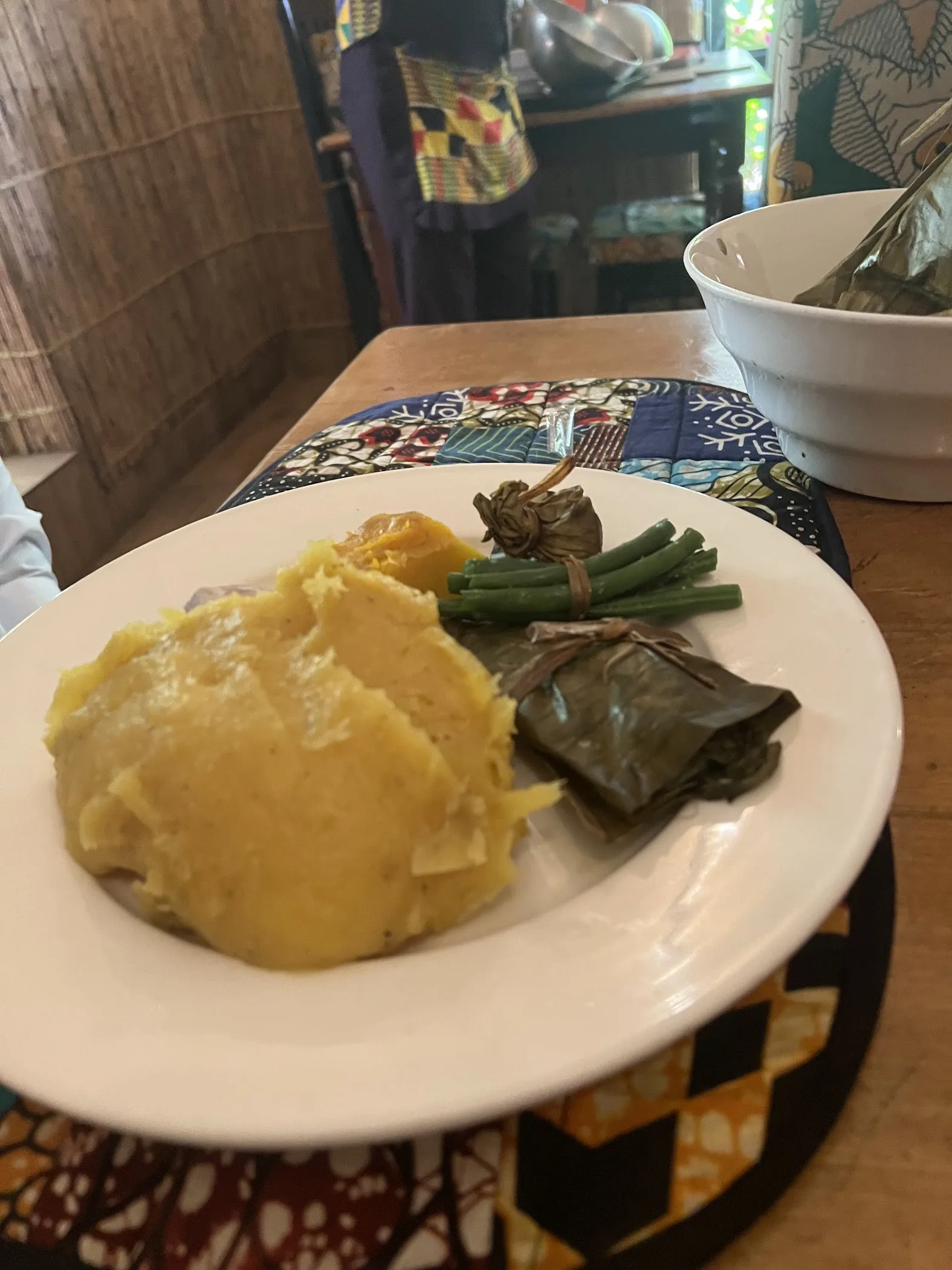
Matooke is one of the first foods a visitor is likely to hear about when researching Ugandan cuisine. It refers to green cooking bananas and, in everyday food contexts, commonly refers to the prepared banana dish as well. It should not be confused with the sweet yellow dessert banana eaten raw.
What Is Matooke?
Matooke uses green cooking bananas harvested while they are still unripe. Cooking changes their texture substantially, producing a soft staple that can accompany sauces, beans, meat, chicken, fish or vegetables. Matooke is especially important in central and western Uganda, although visitors can find it much more widely.
How Is Matooke Prepared?
Traditional preparation generally begins by peeling green cooking bananas. The bananas are cooked until soft, traditionally using steaming techniques that can involve banana leaves. They can then be mashed into a smooth, dense consistency and served hot with an accompaniment.
Preparation is not identical in every household or restaurant. Matooke may also appear in combination dishes such as katogo. Visitors particularly interested in understanding how staple foods fit into everyday life can combine food experiences with a wider Uganda food and local culture experience.
Where Can You Find Matooke in Uganda?
Matooke is readily encountered in Kampala and across much of central and western Uganda. Local restaurants are often more useful for experiencing everyday preparations, while established hotels can provide a convenient introduction for travelers who want to sample Ugandan specialties in a formal dining environment.
Markets are also valuable places to understand matooke before it reaches the plate. Large bunches of green cooking bananas are an everyday part of produce trading in areas where matooke is widely consumed. Seeing the raw ingredient helps visitors understand why bananas are much more than fruit within Uganda’s food culture.
Luwombo: Banana-Leaf Cooking from Buganda
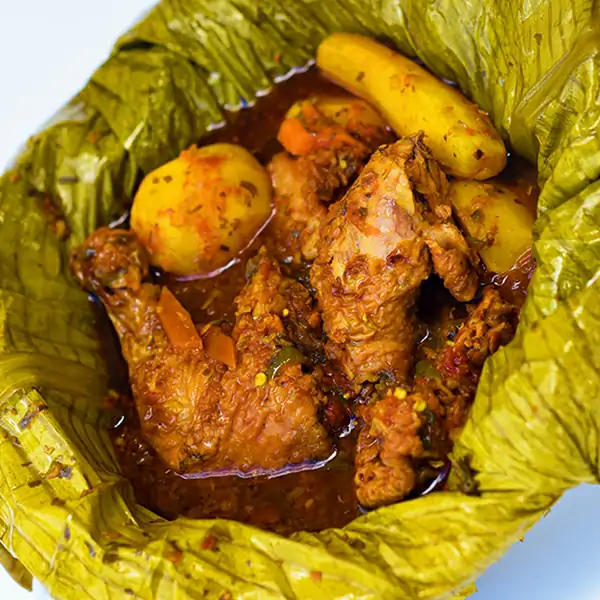
Luwombo is particularly important when discussing food associated with Buganda in central Uganda. Uganda’s Ministry of Foreign Affairs describes it as a Baganda preparation in which meat or groundnut sauce is steamed in banana leaves.
What Is Luwombo?
Luwombo is best understood as a traditional method and style of preparation rather than one rigid recipe. Different fillings can be enclosed within banana leaves and cooked, meaning visitors may encounter versions involving chicken, meat, fish or groundnut-based preparations.
The banana-leaf parcel is one of the dish’s defining characteristics. Cooking food inside the leaf creates an enclosed environment that retains moisture during preparation and gives luwombo its distinctive presentation when the parcel is opened at the table.
How Is Luwombo Prepared?
The food is prepared and placed within suitable banana leaves, which are carefully folded into a parcel. The enclosed parcel is then steamed until its contents are thoroughly cooked. Exact ingredients, seasoning and preparation techniques vary between cooks and versions of the dish.
Luwombo therefore provides visitors with more than another meal to taste. It demonstrates a cooking technique closely connected with Buganda’s food heritage. Travelers who deliberately include community and cultural experiences in their Uganda safari and cultural itinerary have a better opportunity to understand these connections between food, place and identity.
Where Can You Find Luwombo?
Kampala is one of the most accessible places for international visitors to look for luwombo because the capital has restaurants and hotels serving Ugandan specialties. It can also be encountered within Buganda and at traditional or ceremonial meals, although availability should always be confirmed rather than assumed.
Ugandan Rolex: The Country’s Famous Street Food
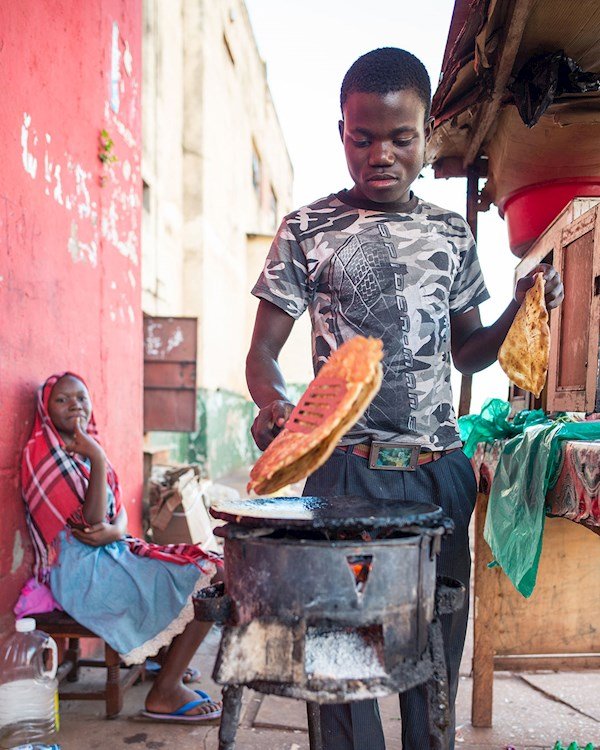
The Ugandan Rolex is one of the country’s most recognizable street foods. Despite the name, it has nothing to do with the Swiss watch. The food consists fundamentally of an egg-based filling combined with chapati and rolled into a convenient handheld meal. Uganda’s Ministry of Foreign Affairs describes Rolex as rolled chapati with eggs and vegetables and notes that it is widely enjoyed.
What Is a Ugandan Rolex?
A Rolex starts with chapati, an unleavened flatbread that has become deeply integrated into East African food culture. Eggs are cooked as an omelette, commonly with vegetables, before being combined with the chapati and rolled together.
The result is filling, portable and suited to preparation at small roadside food stands. That practicality is one reason Rolex is such a useful food for visitors who want to experience everyday street food and local dishes in Uganda rather than limiting themselves to hotel restaurants.
How Is a Rolex Prepared?
The vendor prepares an egg mixture, often incorporating vegetables such as onions, tomatoes or cabbage depending on the individual recipe. The eggs are cooked on a hot flat surface or pan. Chapati is paired with the cooked egg mixture and the combination is rolled tightly enough to be eaten by hand.
Variations are common, so there is no reason to expect every Rolex to contain exactly the same vegetables or proportions. Part of its appeal is watching it being assembled to order.
Where Can You Find Rolex in Uganda?
Kampala is an excellent place to encounter Rolex because roadside vendors operate throughout many parts of the city. It can also be found elsewhere in Uganda. For the most authentic street-food experience, look for a busy vendor preparing chapati and eggs to order rather than expecting the hotel version to represent every street preparation.
Posho: Uganda’s Maize-Flour Staple
Posho is another important food visitors should understand. Uganda’s Ministry of Foreign Affairs identifies it as maize meal. It is made by cooking maize flour with water until the mixture develops a firm consistency suitable for serving alongside sauces, beans, vegetables or meat dishes.
How Is Posho Prepared?
Water is heated before maize flour is progressively incorporated and vigorously mixed. The mixture thickens as it cooks, eventually becoming considerably firmer than a breakfast porridge. The finished posho can then be portioned alongside a sauce or stew.
Because the staple itself is relatively mild, the accompaniment becomes particularly important. Trying posho with beans and later with a meat or groundnut-based sauce demonstrates how one staple can form the base of quite different meals.
Where Can You Find Posho?
Posho is widely available in Uganda and can be encountered in everyday restaurants, institutional meals, local eateries and homes. Visitors spending time beyond luxury properties are especially likely to see it as part of affordable set meals.
Groundnut Sauce: A Rich Ugandan Accompaniment
Groundnuts, the term commonly used locally for peanuts, feature prominently in Ugandan cooking. Groundnut sauce can accompany matooke and other staples, providing richness and a distinctive nutty taste.
The preparation typically involves ground or processed groundnuts being cooked with liquid and other ingredients into a sauce. Recipes vary substantially between cooks. Because peanuts are a major allergen, travelers with peanut allergies should never assume that a sauce, stew or vegetable preparation is groundnut-free and should verify ingredients directly.
Groundnut sauce is particularly useful for understanding how Ugandan meals work: the staple does not need to carry all the flavor. Instead, matooke, posho or another base can be eaten together with a much richer accompaniment.
Katogo and Everyday Ugandan Breakfast
Katogo demonstrates another side of Ugandan cooking because it combines ingredients within a substantial one-pot meal. Recipes vary, but matooke can be cooked together with an accompaniment rather than prepared and served separately. Different versions may incorporate meat, offal, beans, vegetables, Irish potatoes, cassava or other ingredients.
Katogo is particularly associated with breakfast and is a useful choice for visitors wanting something more locally grounded than a standard international hotel breakfast. A traveler arranging a Ugandan food tasting experience can include katogo alongside matooke, luwombo and Rolex to experience very different preparation styles.
Malakwang and Northern Ugandan Food Traditions
A detailed Uganda Food Guide also needs to look beyond Kampala and Buganda. Uganda’s Ministry of Foreign Affairs specifically associates malakwang with the Acholi and describes it as a sour vegetable stew served with millet bread.
This is an important reminder that foods associated with northern Uganda can differ considerably from banana-centered meals commonly emphasized in general travel articles. Millet, cassava, sorghum and regional vegetables become increasingly important when examining different northern and eastern food traditions.
Travelers exploring the country geographically can therefore experience food as part of regional discovery. A journey through Uganda beyond Kampala creates opportunities to compare staples and preparation styles rather than assuming food in the capital represents every community.
Freshwater Fish in Ugandan Cuisine
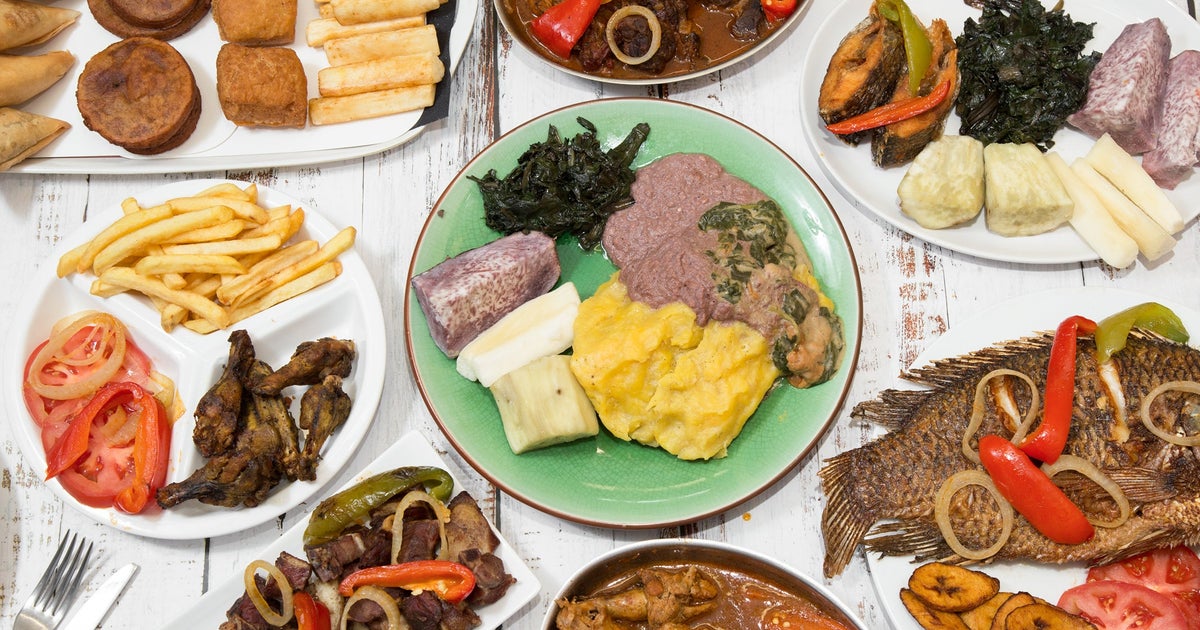
Uganda’s lakes make freshwater fish another important component of the national food landscape. Tilapia and Nile perch are among the best-known examples visitors may encounter, particularly around Lake Victoria and in urban restaurants supplied with freshwater fish.
Fish may be fried, grilled, cooked in sauce or prepared according to individual restaurant and household traditions. Preparation should therefore be described dish by dish rather than implying that Uganda has one universal way of cooking fish.
Where Is the Best Place to Start Exploring Ugandan Food?
Kampala is the easiest starting point for many international visitors. As Uganda’s capital and largest city, it provides access to traditional restaurants, everyday local eateries, markets, street-food vendors and luxury hotels. This variety makes it possible to try matooke in a restaurant, watch a Rolex being prepared on the street and sample refined Ugandan specialties within a hotel setting during the same stay.
Travelers should not stop with Kampala, however. Central Uganda provides important Buganda food traditions, western Uganda offers opportunities to understand banana, millet and other agricultural traditions, northern Uganda introduces different cereal and vegetable dishes, and communities in eastern and northeastern Uganda add further diversity.
Combining food with a wider Uganda travel and food experience is therefore more informative than searching for a single supposedly definitive national dish.
Hotels Where Visitors Can Explore Ugandan Food
Travelers wanting an accessible introduction to local cuisine can consider Kampala hotels with documented African or Ugandan dining options. Menus change, however, so anyone seeking a particular dish such as luwombo or matooke should confirm its availability with the hotel before visiting.
Kampala Serena Hotel
Kampala Serena Hotel is one of the strongest verified options for travelers who want luxury accommodation without abandoning local cuisine. The hotel’s official dining information explicitly states that its restaurants serve authentic Ugandan specialties alongside international food. Its dining venues include The Lakes Restaurant and The Pearl Restaurant & Champagne Bar, with The Lakes offering breakfast, lunch and dinner service.
This makes the property particularly practical for first-time visitors who want a controlled introduction to Ugandan food before exploring smaller restaurants and street-food environments elsewhere in Kampala.
Speke Resort Munyonyo
Speke Resort Munyonyo, on the Lake Victoria side of Kampala, is another verified hotel dining option. The resort’s official dining information states that guests can experience African cuisine alongside European and Indian food, while its dining facilities include multiple restaurants and bars. Its setting also makes it useful for travelers combining Kampala with time around Lake Victoria.
For a specific traditional Ugandan dish, guests should ask the resort directly what is currently available because hotel menus and buffet selections can change.
Munyonyo Commonwealth Resort
Nyanja Restaurant at Munyonyo Commonwealth Resort is documented by the resort as offering multi-cuisine dining that includes African food alongside continental and Indian cuisine. This makes it another option for travelers based around the Munyonyo area, although a particular dish should be confirmed before making a special trip solely to eat it.
How to Find the Most Authentic Ugandan Food
The word “authentic” needs to be used carefully. Hotel versions of Ugandan food are not automatically inauthentic, just as street versions are not automatically more traditional. The better question is what kind of food experience the traveler wants.
For polished service and an easy introduction, an established hotel serving Ugandan specialties is convenient. For everyday dishes, local restaurants can provide a broader view of how people actually combine staples and sauces. For Rolex, watching a busy street vendor cook the eggs and chapati to order provides context that a plated hotel version cannot reproduce. For regional foods, traveling outside Kampala provides the strongest connection between a dish and the community with which it is associated.
A well-designed Uganda cultural safari itinerary can therefore treat food as part of the journey instead of a separate restaurant activity.
How Ugandan Meals Are Prepared
Several cooking techniques recur across Ugandan cuisine. Steaming is particularly significant in traditional matooke and luwombo preparation. Boiling is important for many roots, cereals and legumes. Thick maize and millet preparations require sustained mixing as flour is incorporated into hot water. Frying is important in contemporary street food and restaurant cooking, while grilling and stewing are used for different meat and fish dishes.
Banana leaves deserve particular attention. In foods such as luwombo they function as cooking material rather than decoration. Traditional matooke preparation can also employ leaves during steaming. Understanding this technique helps explain why banana cultivation contributes not only an ingredient but also a cooking resource within some Ugandan food traditions.
What Should First-Time Visitors Eat in Uganda?
A first tasting should include contrasting foods rather than several similar meals. Matooke introduces the importance of cooking bananas. Luwombo demonstrates banana-leaf steaming and Buganda food traditions. Rolex reveals contemporary street-food culture. Posho demonstrates the role of maize as a staple, while groundnut sauce illustrates how rich accompaniments transform mild staple foods.
Visitors traveling north can add malakwang and millet-based foods where available. Travelers around Lake Victoria can explore freshwater fish preparations. Katogo is useful for understanding substantial breakfast cooking, while beans, cassava and sweet potatoes provide insight into everyday staple foods that receive less international publicity.
Those incorporating food into a Uganda safari food experience should ask guides, accommodation staff and local cooks what is characteristic of the particular region they are visiting instead of requesting the same familiar dishes everywhere.
Ugandan Food and Regional Identity
One of the biggest mistakes in describing Ugandan cuisine is presenting every food as equally traditional everywhere. Uganda’s culinary diversity is directly related to its cultural and geographical diversity. Official Ugandan cultural information distinguishes, for example, between luwombo associated with Baganda cuisine and malakwang associated with Acholi cuisine.
This regional approach creates a more rewarding way to travel. Instead of asking only “What is Uganda’s national food?”, visitors can ask what people traditionally prepare in Buganda, what foods are associated with western Uganda, how millet is used in northern and eastern communities, and how lakeside communities incorporate fish.
Travelers researching regional foods and traditional dishes across Uganda should consequently treat Kampala as the beginning of the food journey rather than its final destination.
Is There One National Dish of Uganda?
An official national dish designation was not found in the authoritative Ugandan government material reviewed for this introduction. It is therefore more accurate to describe matooke as one of Uganda’s most recognizable traditional staples rather than assigning it an unsupported official national-dish status.
The distinction matters. Uganda contains numerous communities with different staple foods and culinary traditions. Declaring one dish to represent everyone can obscure the very diversity that makes Ugandan cuisine worth exploring.
Why Food Should Be Part of a Uganda Journey
Ugandan food provides a direct connection between landscape, agriculture and culture. A bunch of matooke in a market becomes steamed food at the table. Groundnuts become sauces served with staples. Maize becomes posho. Millet becomes a substantial accompaniment in communities where it has long been important. Fish connects meals with Uganda’s lakes, while Rolex demonstrates how contemporary urban street culture continually adds new dimensions to the country’s food identity.
For visitors, the best approach is therefore to taste widely and ask questions. Find out what staple is being served, what sauce accompanies it, how it was cooked and whether the preparation is particularly associated with the region. Travelers building a complete Uganda holiday experience can use those conversations to understand far more than the name of a dish.
Planning Your First Ugandan Food Experience
Begin in Kampala if convenience is important. Try a traditional staple and sauce at an established restaurant or hotel, then compare that experience with a local eatery. Watch a Rolex being prepared rather than simply ordering one without seeing the process. Visit a produce market to identify matooke, cassava, sweet potatoes, maize, beans and groundnuts in their uncooked forms.
As the journey moves beyond the capital, change what you order. Ask about foods associated with the community or region you are visiting. That approach produces a much richer understanding of Ugandan cuisine than repeatedly ordering only matooke and Rolex because they are the dishes most familiar to international visitors.
The central lesson of any reliable Uganda Food Guide is simple: Ugandan food is diverse. Matooke, luwombo, Rolex, posho, groundnut sauce, katogo, malakwang, millet preparations, cassava, beans, sweet potatoes and freshwater fish represent different ingredients, techniques and regional traditions. Understanding where they come from, how they are prepared and where to try them transforms eating from a routine part of travel into an introduction to Uganda itself.
Visitors who want to build food discoveries into their Uganda safari and travel plans should leave enough flexibility to follow local recommendations as they move between regions. The best meal may not be the most famous dish in the country; it may be the food that most clearly explains the place in which it is being served.
Traditional Ugandan Food: 25+ Dishes and Foods You Should Know
Traditional Ugandan food reflects the country’s agricultural diversity, regional cultures and long-established cooking traditions. A Ugandan meal commonly combines a substantial staple with beans, vegetables, groundnut sauce, meat or freshwater fish. Matooke is particularly important in central and western Uganda, while cassava, millet, maize and sorghum have traditionally played major roles in northern and eastern parts of the country. The result is not one uniform national cuisine but a collection of regional food traditions worth exploring individually.
Travelers interested in understanding traditional Ugandan food should therefore try more than the most famous dishes. Matooke, luwombo and Rolex are excellent starting points, but foods such as kalo, malakwang, malewa, eshabwe, mukene and nsenene reveal considerably more about Uganda’s regional culinary identity.
Matooke
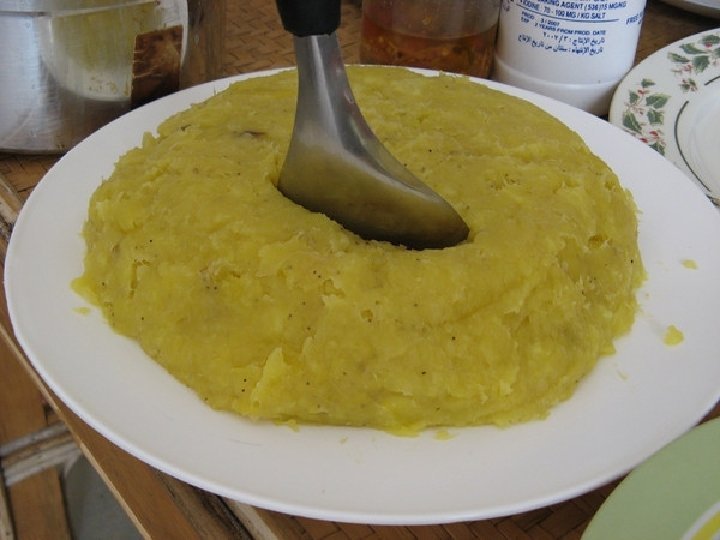
Matooke is made from green cooking bananas and is among the foods most strongly associated with Uganda. The bananas are different from sweet dessert bananas because they are harvested green and cooked as a starchy food. Matooke is especially significant in central and western Uganda, although it is available much more widely.
Traditional preparation involves peeling the bananas and steaming them, often while wrapped in banana leaves. When thoroughly cooked, the bananas become soft and yellowish and can be mashed before serving. Matooke is commonly eaten with groundnut sauce, beans, beef, chicken, fish or vegetables.
Visitors can find matooke in local restaurants, traditional-food restaurants, hotels and homes throughout Kampala and many other parts of Uganda. It is particularly worthwhile trying matooke in Buganda and western Uganda, where banana-growing traditions have deep cultural and agricultural importance.
Luwombo
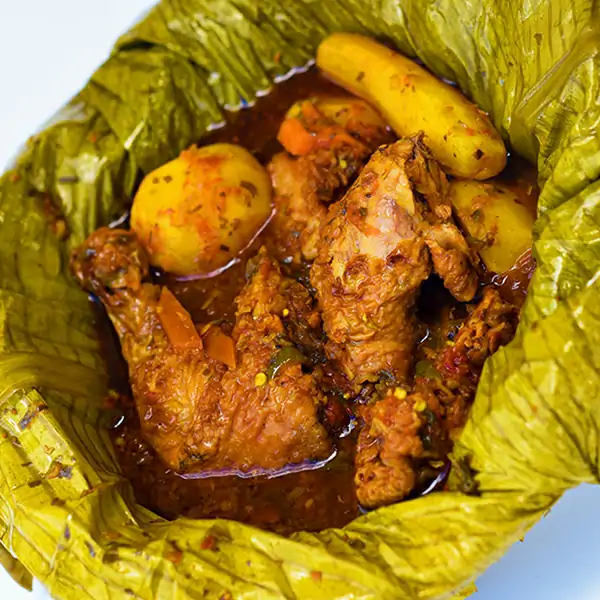
Luwombo, also written oluwombo in the singular, is one of the most distinctive traditional preparations associated with Buganda in central Uganda. The defining feature is the banana-leaf parcel in which ingredients are enclosed and steamed.
Chicken, beef, goat, fish, mushrooms or groundnut-based mixtures can be prepared using the luwombo technique. Ingredients are placed inside carefully prepared banana leaves, wrapped into a secure parcel and steamed. The enclosed cooking environment retains moisture and juices while the leaf contributes to the dish’s distinctive presentation.
Kampala is an accessible place to find luwombo, particularly at restaurants specializing in Ugandan cuisine and cultural dining venues. It is also associated with traditional gatherings and special meals in Buganda. Visitors combining food with Uganda cultural experiences should consider luwombo one of the most informative dishes to try.
Ugandan Rolex
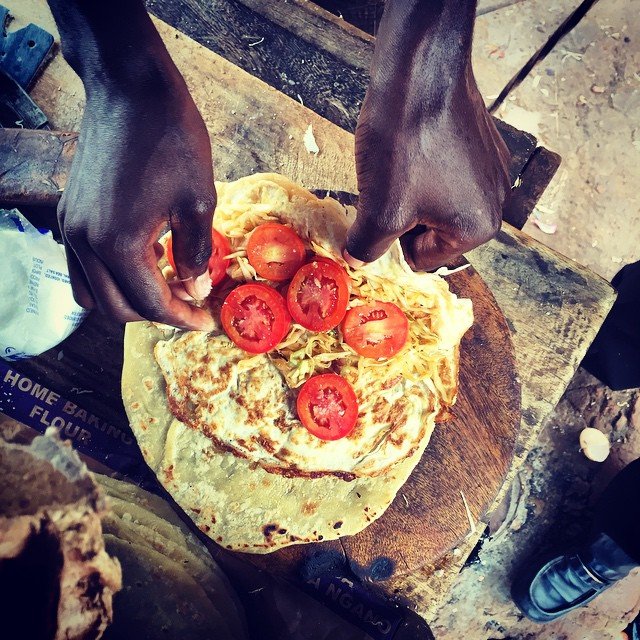
The Ugandan Rolex is one of the country’s best-known contemporary street foods. It combines chapati with an omelette containing vegetables such as tomatoes, onions and cabbage. The finished chapati and egg mixture is rolled together to create a portable meal.
Preparation normally happens directly at the roadside stall. Eggs and chopped vegetables are mixed and fried on a hot pan. A freshly prepared chapati is combined with the omelette before everything is rolled tightly together and served hot.
Rolex stalls can be found throughout Kampala and many other Ugandan towns. Wandegeya and other busy areas of Kampala are particularly associated with street-food culture. Rolex is inexpensive, filling and prepared quickly, making it an accessible introduction to everyday urban Ugandan food.
Katogo
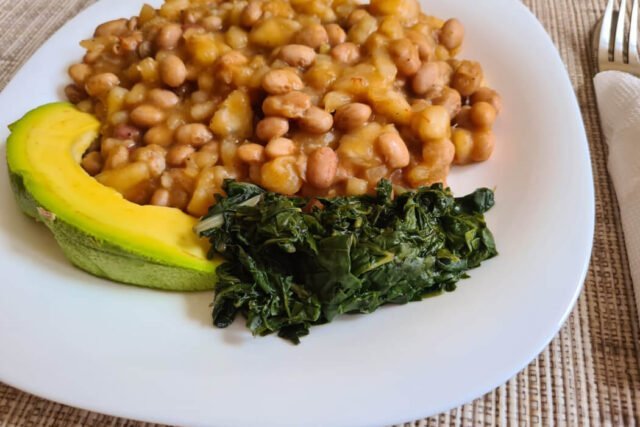
Katogo is a combination dish rather than a single fixed recipe. Matooke is frequently cooked together with beans, beef, offal or another sauce, although cassava, sweet potatoes, yams and Irish potatoes can also feature in different versions.
Preparation generally involves cooking the staple and accompaniment together in the same pot until the ingredients become tender and their flavors combine. This distinguishes katogo from meals where the staple and sauce are prepared independently.
Katogo is strongly associated with breakfast and can be found in many local restaurants in Kampala and other towns during the morning. Travelers wanting to move beyond hotel-style breakfast can look for freshly prepared katogo at a reputable local restaurant.
Posho
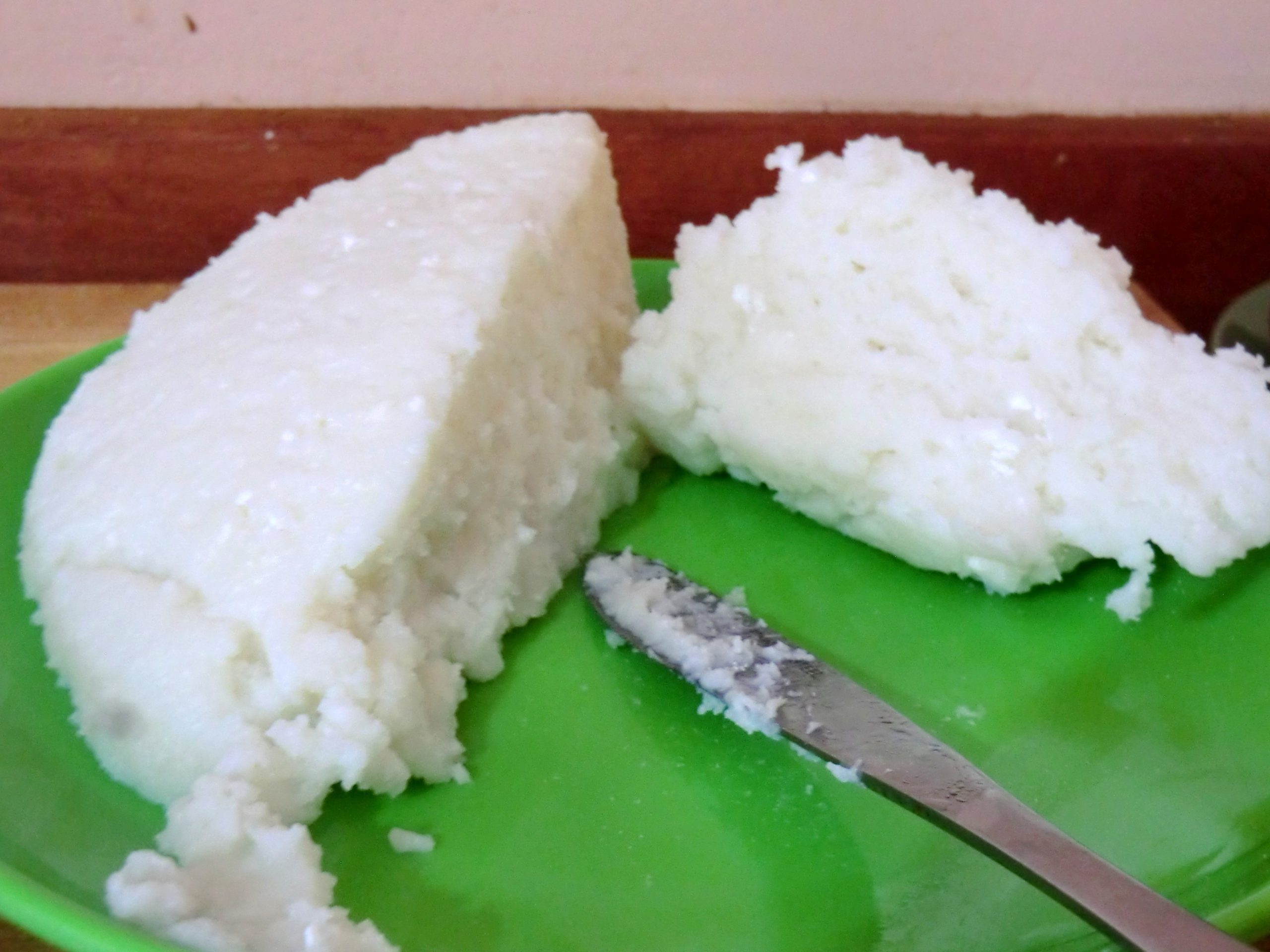
Posho is a firm maize-meal staple widely eaten in Uganda. Maize flour is incorporated into hot water and vigorously stirred until the mixture becomes smooth, thick and sufficiently firm to hold its shape.
The flavor is intentionally mild, allowing posho to work particularly well with beans, vegetables, meat stews and groundnut sauce. Its simplicity and filling character have helped make it an important everyday food.
Posho is widely available in local eateries and traditional restaurants across Uganda. It is particularly easy to encounter in Kampala and in set meals where it is paired with beans or another sauce.
Kalo
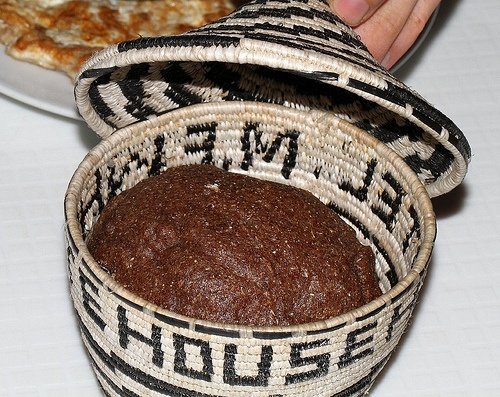
Kalo is a stiff preparation associated particularly with millet and, in some traditions, combinations of millet and cassava flour. Flour is progressively incorporated into hot water and worked until a dense, smooth consistency develops.
Kalo is particularly important when exploring northern, eastern and western Ugandan food traditions. The exact flour mixture, terminology and serving traditions can vary between communities, so it should not be treated as one universally identical recipe.
Travelers can look for kalo at restaurants specializing in regional Ugandan cuisine, cultural centers and lodges in areas where millet traditions remain prominent.
Groundnut Sauce
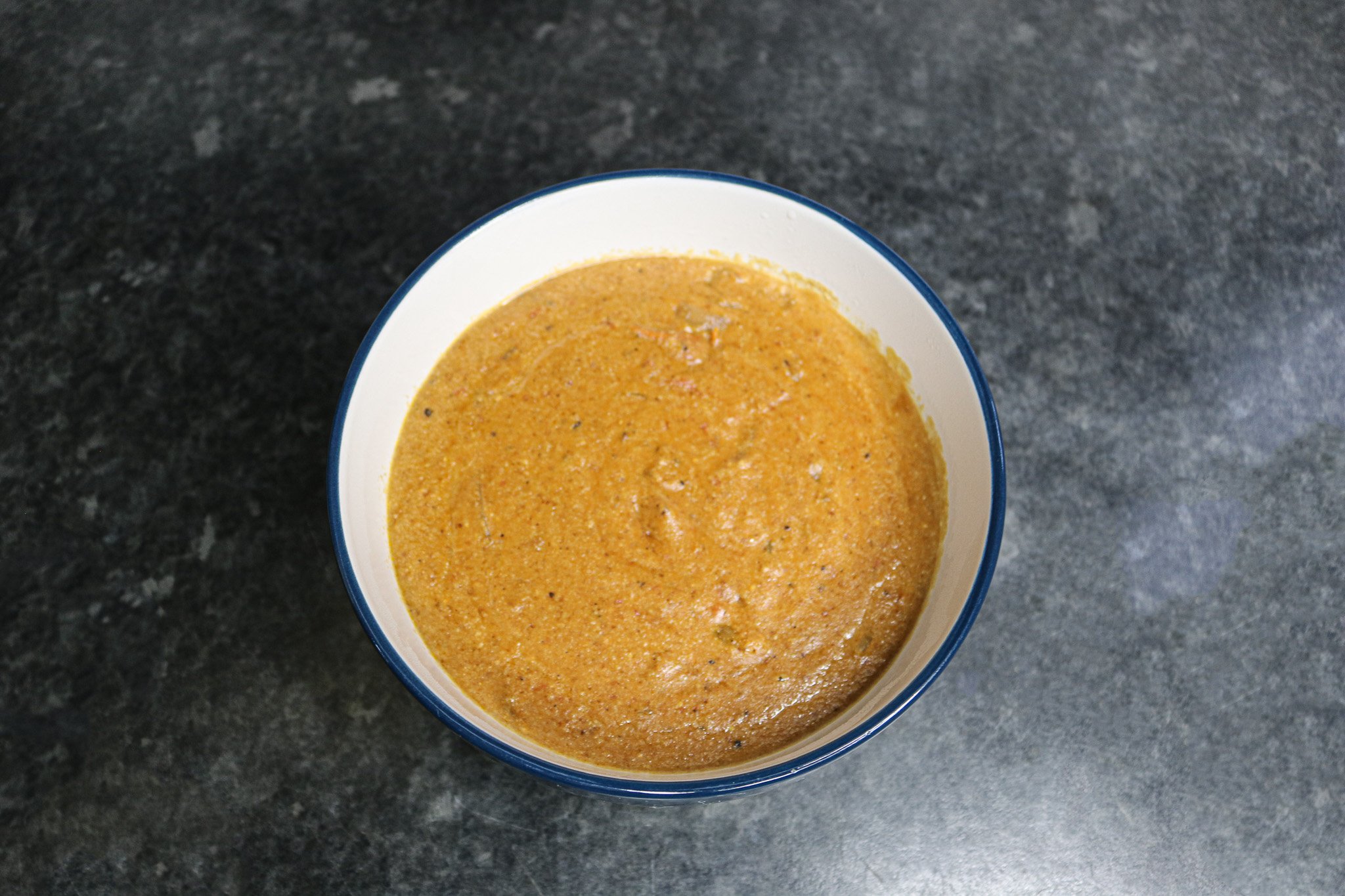
Groundnut sauce, often called g-nut sauce, is prepared from ground peanuts and is one of the most important sauces to understand when exploring Ugandan cuisine. It can accompany matooke, sweet potatoes, cassava, posho and other staples.
Groundnuts are processed into a paste or fine mixture and simmered with water and other ingredients until a smooth, rich sauce develops. Recipes vary between households and regions, so texture and additional ingredients are not always identical.
Groundnut sauce is widely available in Uganda, including Kampala restaurants serving local food. Anyone with a peanut allergy should explicitly confirm ingredients because groundnuts can also appear in preparations where they may not be visually obvious.
Ugandan Beans
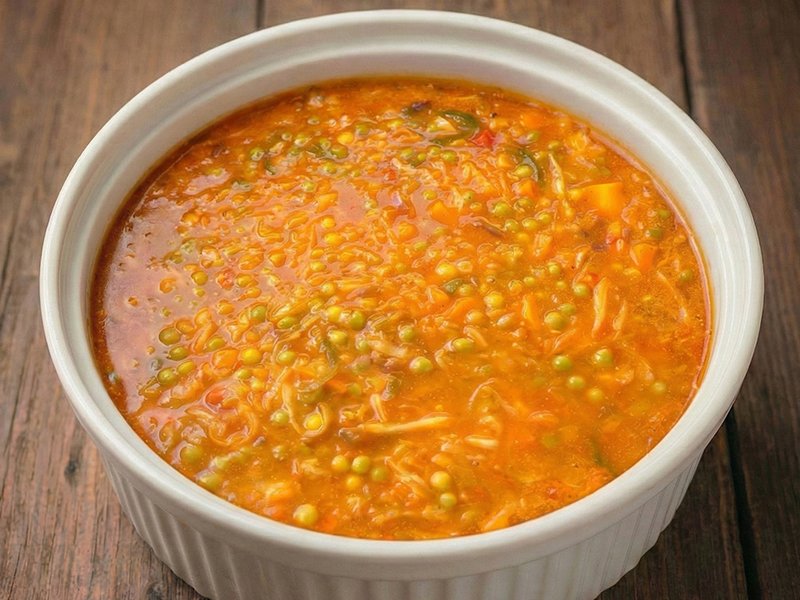
Beans are an important component of everyday food in Uganda and frequently appear alongside posho, matooke, cassava, sweet potatoes and rice. They provide an affordable sauce that pairs naturally with the country’s starch-based staples.
Preparation typically involves boiling dried beans until tender before cooking them into a sauce. Tomatoes, onions, vegetables or other ingredients can be incorporated depending on the recipe.
Beans are among the easiest foods to find at local restaurants throughout Uganda. Posho and beans is particularly common and provides visitors with an excellent example of a straightforward everyday meal rather than a ceremonial dish.
Cassava
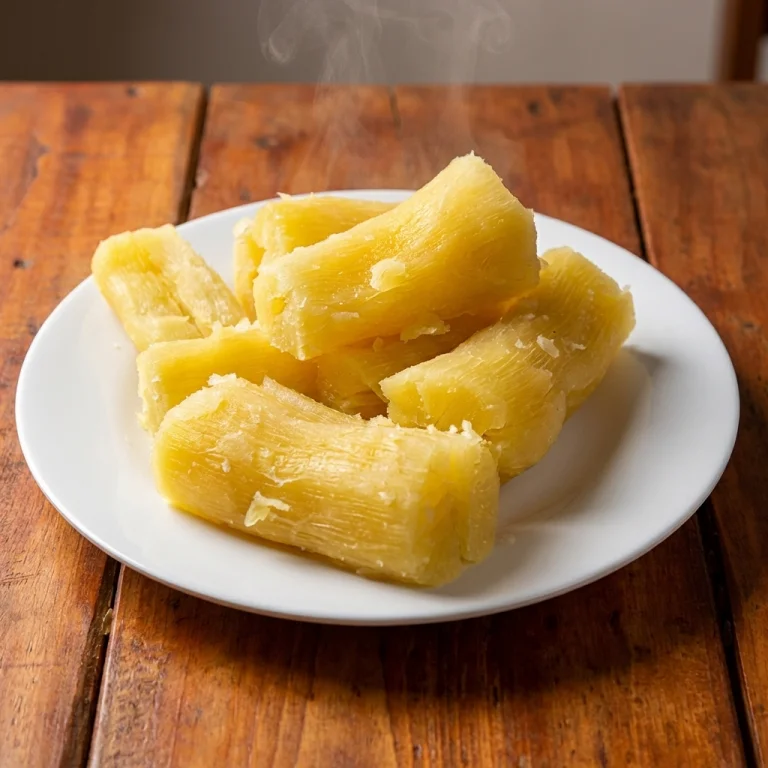
Cassava is an important staple crop in Uganda and has traditionally been particularly significant in northern and eastern regions. It can be boiled and eaten in pieces or processed into flour for other preparations.
Fresh cassava must be properly prepared before consumption. For ordinary boiled cassava, the root is peeled, washed, cut into pieces and thoroughly cooked until tender. Cassava flour can also be combined with cereal flours in regional staple preparations.
Visitors can find cassava in local markets, restaurants and roadside food settings. Exploring regional Uganda cuisine outside Kampala provides more opportunities to understand its importance.
Sweet Potatoes
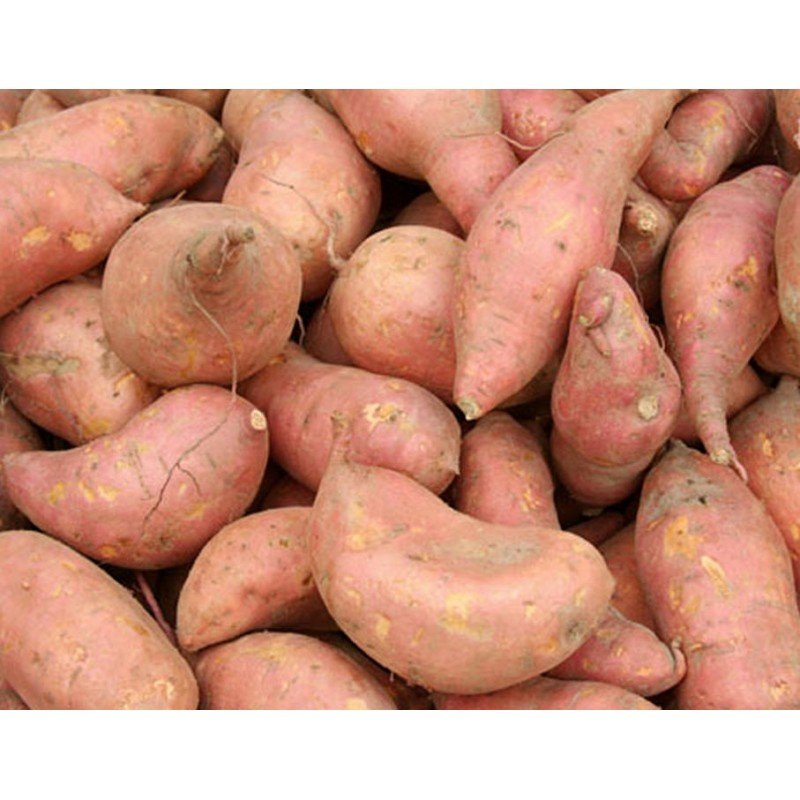
Sweet potatoes, including varieties locally referred to as lumonde in Luganda, are an important staple in Uganda. They can be boiled or steamed and served with beans, groundnut sauce, vegetables or meat.
Preparation can be extremely simple. The potatoes are cleaned and cooked until soft, either peeled or with their skins depending on the method being used. Their naturally sweet character contrasts effectively with savory sauces.
Sweet potatoes can be found in produce markets throughout Uganda and frequently appear in local-food restaurants and home cooking.
Irish Potatoes
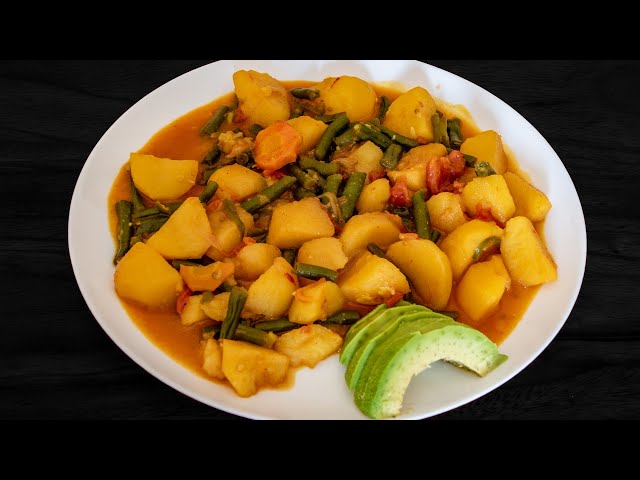
Irish potatoes are another familiar component of Ugandan meals. They are particularly associated with cooler highland agricultural areas but are widely distributed and eaten throughout the country.
They may be boiled, incorporated into stews, cooked as part of katogo or served alongside meat and vegetables. Their role in Uganda should be understood as part of a much wider collection of root and starch foods rather than as the country’s principal traditional staple.
Irish potatoes are widely available in Kampala and other urban centers, while highland regions provide the strongest connection with potato cultivation.
Malakwang
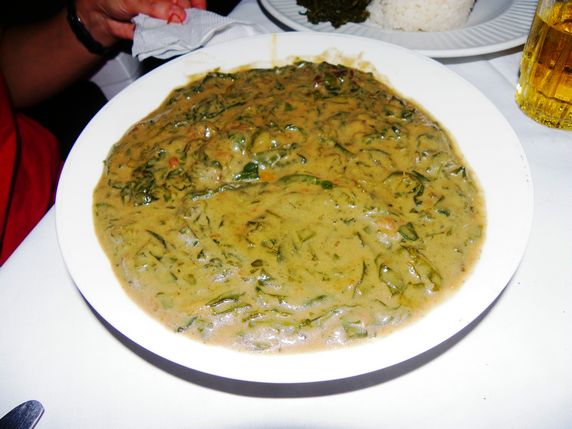
Malakwang is an important dish for understanding the culinary traditions of northern Uganda, particularly Acholi food culture. It is prepared from leafy greens and is commonly described as having a distinctive sour character.
Traditional preparations combine the greens with other ingredients, and groundnut or sesame components can contribute richness. Preparation varies, making it important not to treat one recipe as the definitive version for every household.
Travelers have the best contextual opportunity to encounter malakwang in northern Uganda and at restaurants or cultural dining establishments that deliberately serve Acholi food.
Tilapia
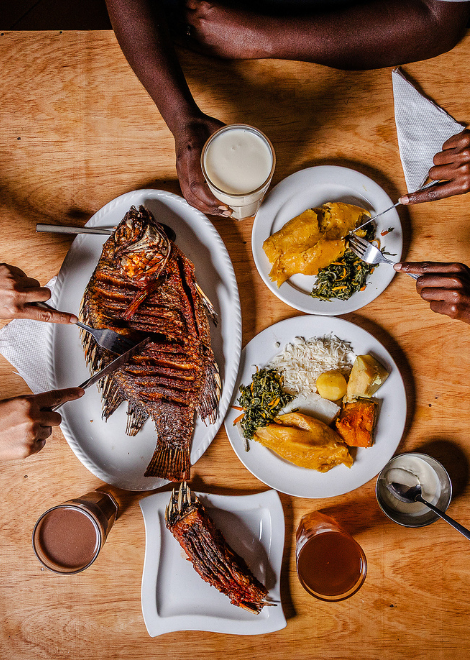
Tilapia is one of the freshwater fish visitors frequently encounter in Uganda. Lake Victoria and Uganda’s other freshwater systems contribute to the country’s fish-food traditions.
Tilapia may be fried whole, grilled or cooked in sauce. A whole fish can be accompanied by matooke, posho, cassava, rice, vegetables or chips depending on the restaurant and region.
Kampala, Entebbe, Jinja and communities around Lake Victoria are particularly convenient places for visitors to find tilapia. Travelers exploring Jinja food experiences can also encounter fish alongside the city’s other dining options.
Nile Perch
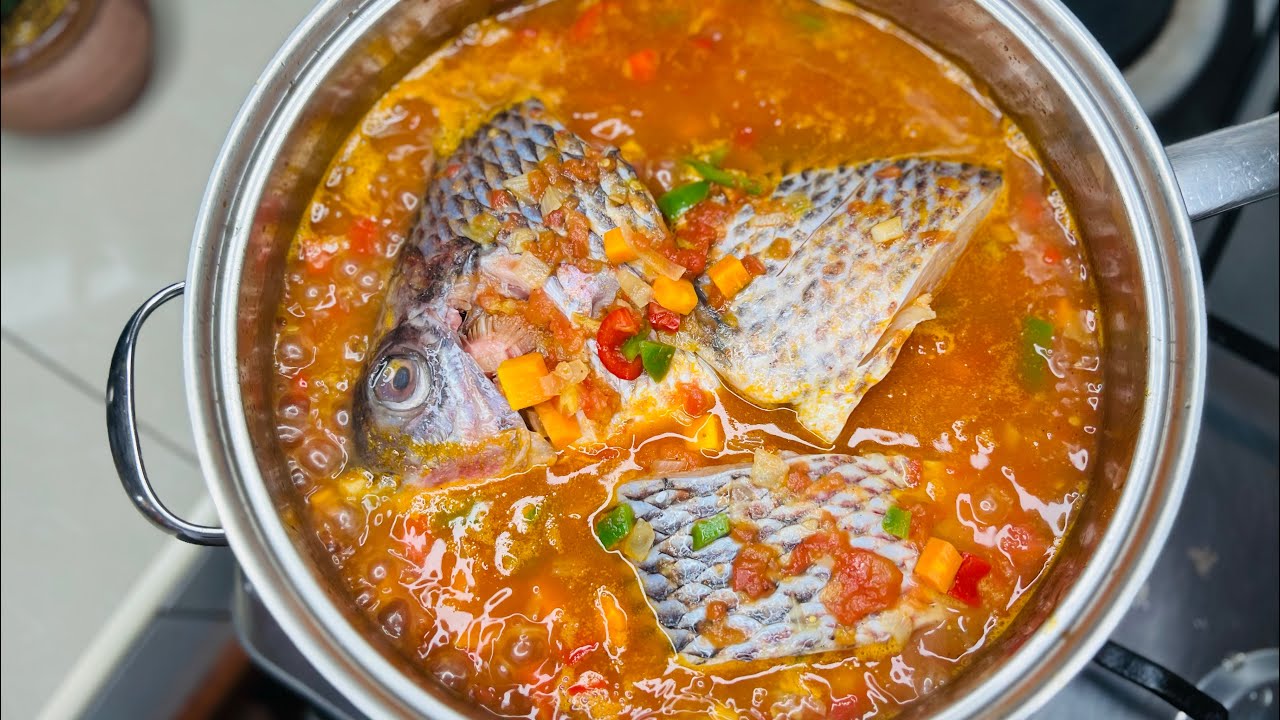
Nile perch is a major Lake Victoria fish and appears in restaurants, markets and fish-processing contexts around Uganda. Its large size means it is commonly portioned into steaks or fillets rather than necessarily served whole.
Preparation can include frying, grilling or simmering pieces in sauce. Visitors should distinguish the species from tilapia because the texture, size and presentation can be considerably different.
Entebbe and Kampala are convenient places to look for freshly prepared Nile perch, while lakeside destinations provide greater geographical context for Uganda’s freshwater fish culture.
Mukene
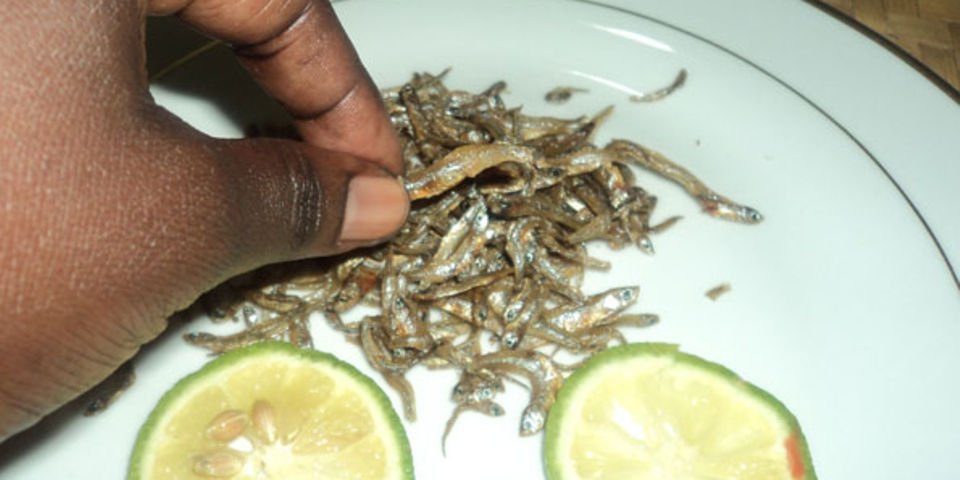
Mukene refers to tiny silver fish that form another distinctive part of Uganda’s fish-food traditions. Their small size and preservation methods make them very different from large tilapia or Nile perch.
Mukene may be sun-dried before being fried or cooked into sauce. Preparation varies, and the dried product is also a common sight in markets.
Markets around Kampala and communities connected with Lake Victoria are good places to see mukene being sold. Local restaurants may serve prepared versions, although availability varies.
Simsim
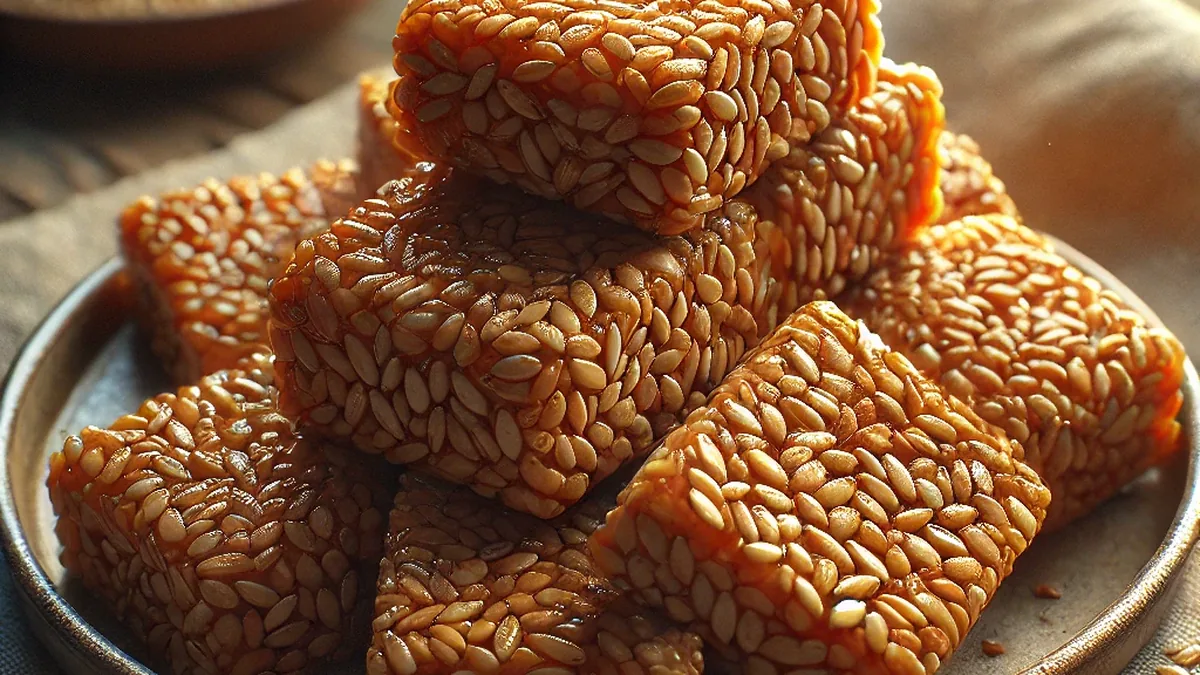
Simsim is sesame, an ingredient with an established place in Ugandan cooking. Sesame can be processed into sauces or incorporated into sweets and snacks.
A simple simsim sweet combines sesame seeds with a binding syrup to form compact pieces that can be eaten as a snack. Sesame paste can also contribute to savory preparations in regional cuisines.
Simsim products can be encountered in markets, shops and local food settings. Their preparation varies considerably depending on whether the sesame is being used for a sauce, paste or sweet snack.
Chapati

Chapati reflects the South Asian influence that became integrated into East African food culture. In Uganda it has developed into an everyday flatbread found at street stalls, restaurants and homes.
Wheat-flour dough is kneaded, divided, rolled and cooked on a hot flat pan with oil. Skilled preparation produces a soft bread with browned surfaces and layered texture.
Chapati is ubiquitous in Kampala and other towns. It can be eaten with beans and stews or used to make Rolex. Visitors interested in Ugandan safari food will encounter both chapati and Rolex regularly.
Pilau
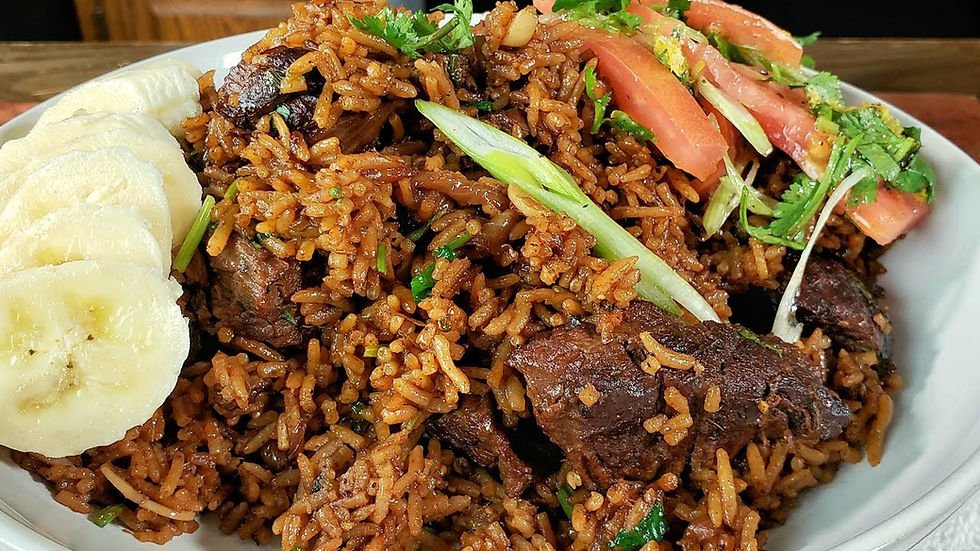
Pilau is a seasoned rice dish that reflects the broader historical exchange of ingredients and cooking techniques across East Africa and the Indian Ocean world. Ugandan versions commonly combine rice with meat and aromatic spices.
The rice is cooked with a seasoned base and spices, with beef or goat frequently incorporated. Recipes vary according to cook, household and occasion.
Pilau can be found in restaurants, at celebrations and in urban dining throughout Uganda. Kampala offers numerous opportunities to compare different versions.
Millet
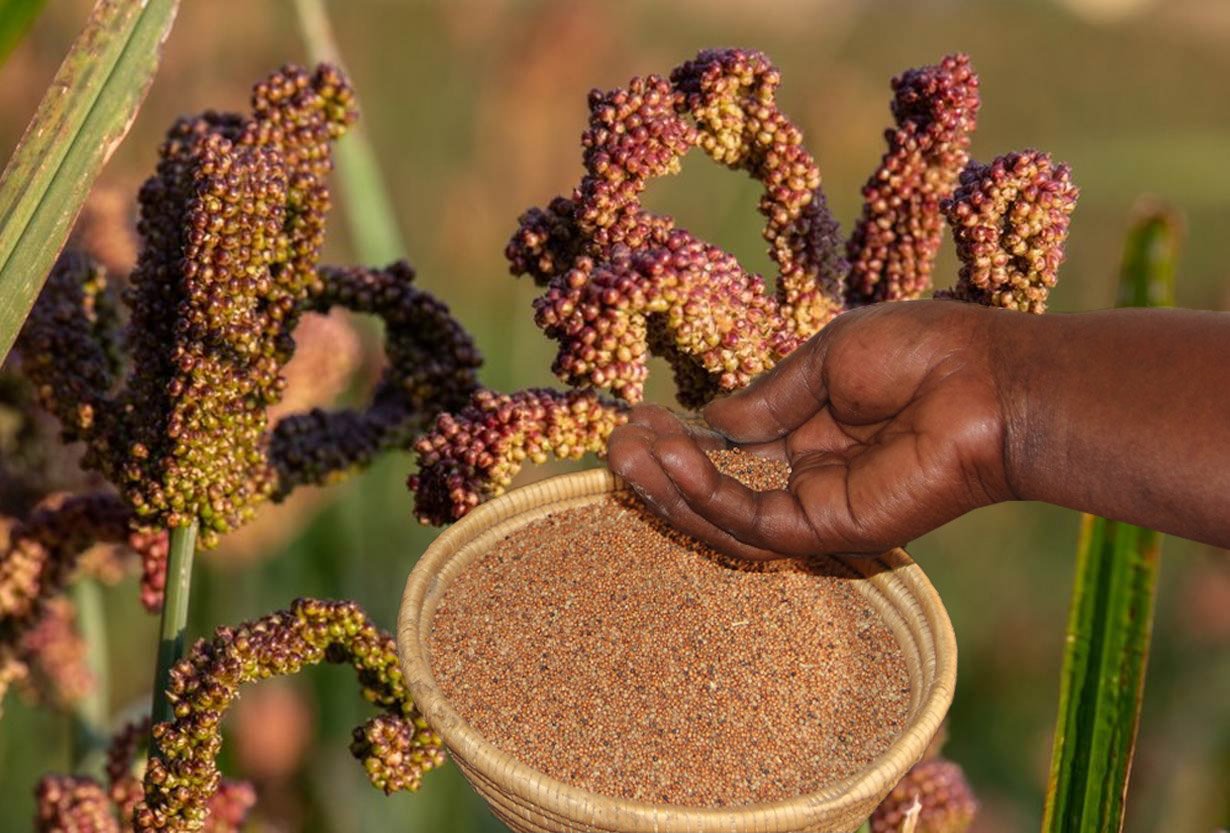
Millet is an important traditional grain in several parts of Uganda. It is particularly significant in regional food traditions in northern, eastern and western Uganda and can be made into stiff staple foods or porridge.
Millet flour is combined with hot water and worked into the required consistency. In some preparations it can be combined with cassava flour. Traditional varieties are also closely connected with agricultural heritage in communities such as those of Teso.
Regional restaurants and cultural centers offer better opportunities to experience millet in context than international hotel buffets.
Sorghum
Sorghum belongs to Uganda’s traditional cereal landscape and has historically been important in areas where environmental conditions favor hardy grain crops. It can be milled and incorporated into porridge and other cereal preparations.
Preparation depends on the final food being produced. Sorghum flour can be cooked with water into porridge or incorporated into regional cereal foods.
Visitors are more likely to understand sorghum’s traditional importance when traveling through northern, eastern and northeastern Uganda rather than relying solely on Kampala restaurant menus.
Millet and Sorghum Porridge
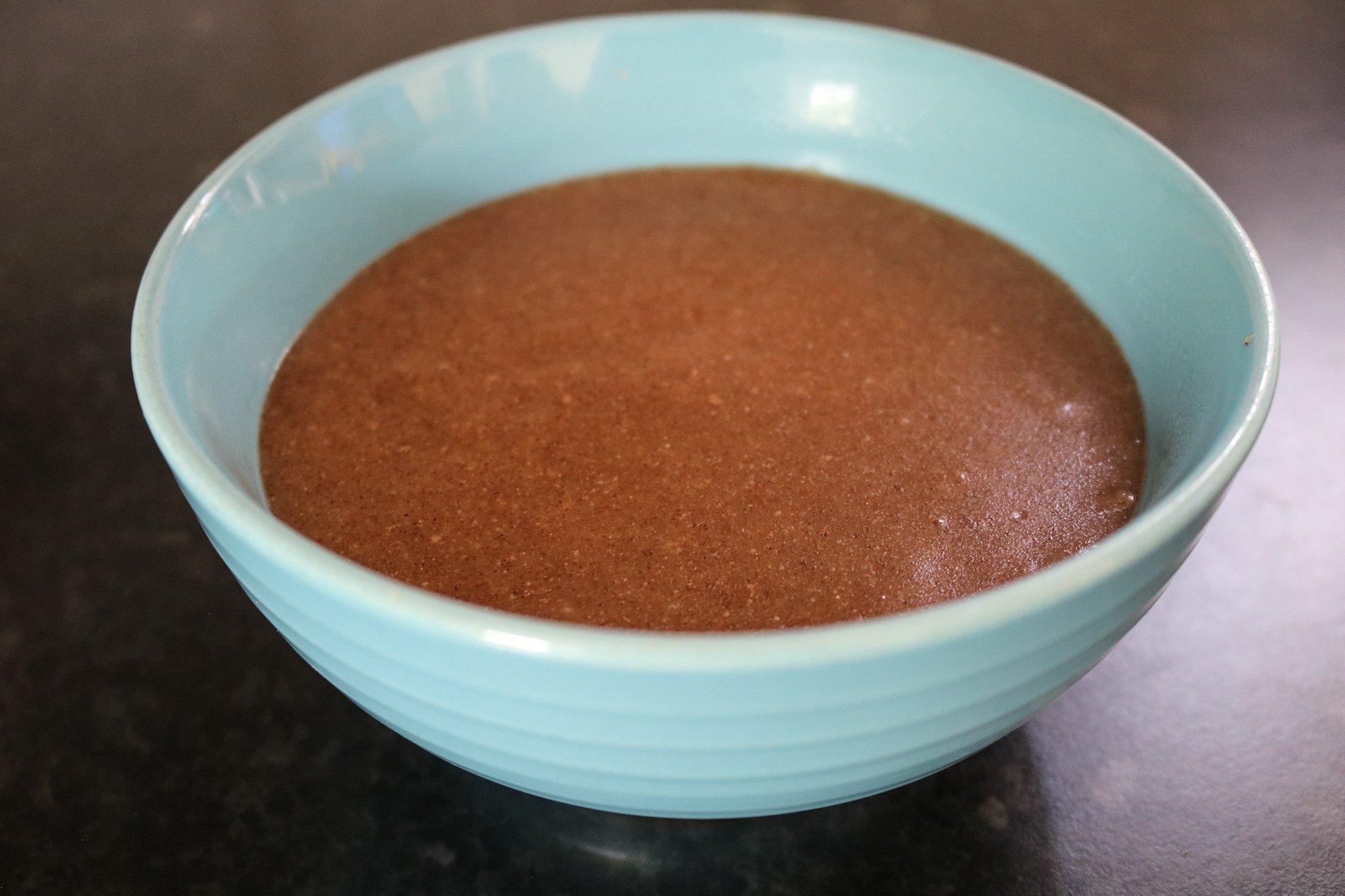
Millet and sorghum can be used to prepare porridge, particularly as a breakfast food. Unlike firm kalo, porridge contains substantially more liquid and is eaten from a cup or bowl.
Flour is mixed into water and cooked while being stirred to achieve a smooth consistency. Individual recipes may differ in thickness and may incorporate milk or sweetening depending on household preference.
Porridge can be encountered in homes, local restaurants and breakfast settings throughout different parts of Uganda.
Gonja
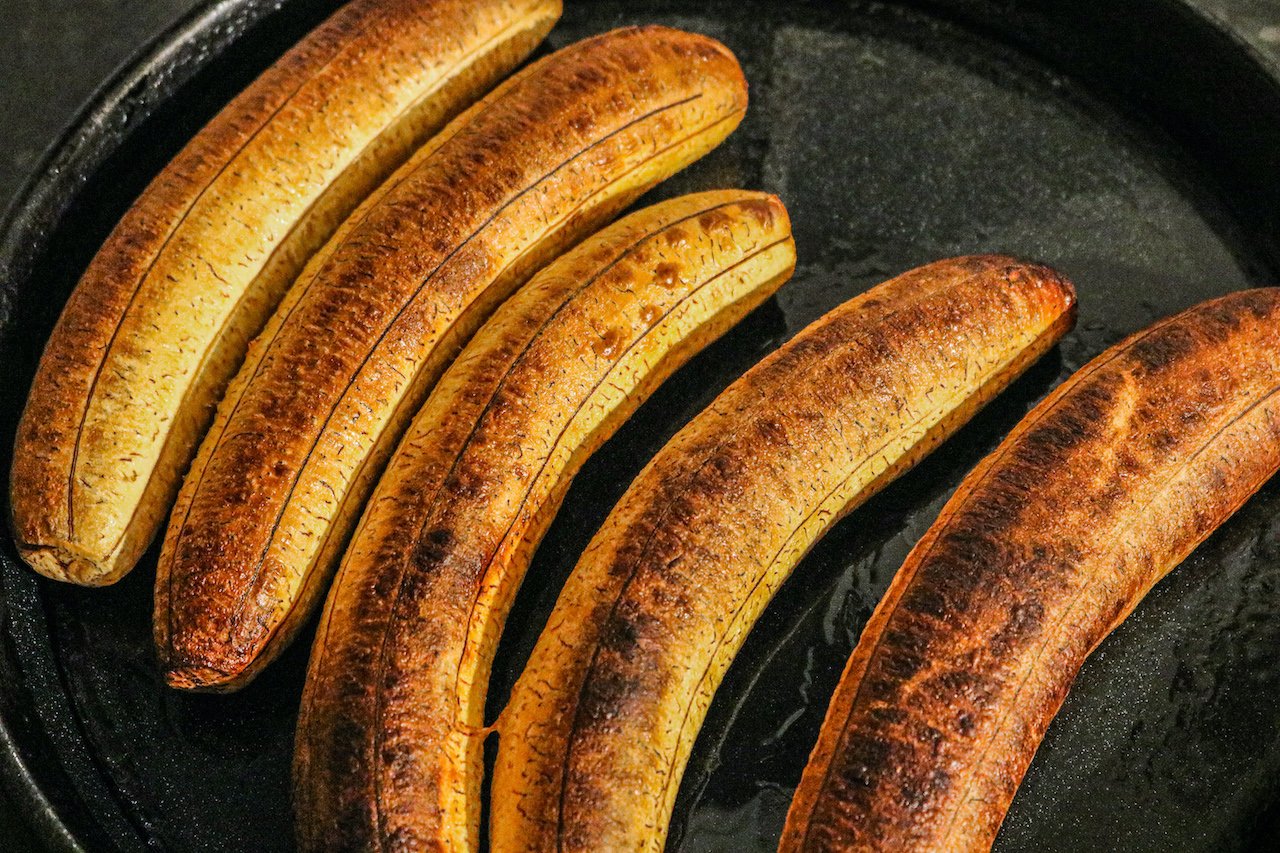
Gonja is a plantain eaten cooked rather than raw. It is different from the green cooking bananas used for matooke and becomes noticeably sweeter as it ripens.
In Uganda, gonja can be charcoal-roasted, fried, boiled or steamed. Charcoal roasting is particularly visible along roadsides, where vendors cook ripe plantains directly over small grills.
Roadside stops on major routes are good places to encounter freshly roasted gonja. It can also be found in Kampala and at restaurants and markets. This makes gonja an excellent food to try while traveling between destinations.
Muchomo
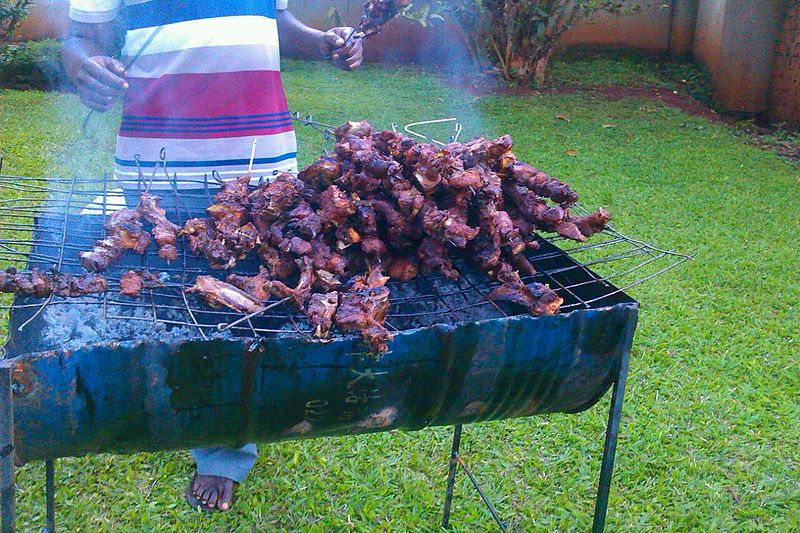
Muchomo refers to roasted or grilled meat and is among Uganda’s recognizable street and roadside foods. Beef, goat and chicken can all be prepared this way.
Pieces of meat are placed over charcoal or another direct heat source and cooked until browned and thoroughly done. Seasoning and marinades vary between vendors and restaurants.
Muchomo is found in Kampala, roadside trading centers and towns across Uganda. Busy established vendors are generally a better choice for travelers because high turnover means food is being prepared regularly.
Mandazi
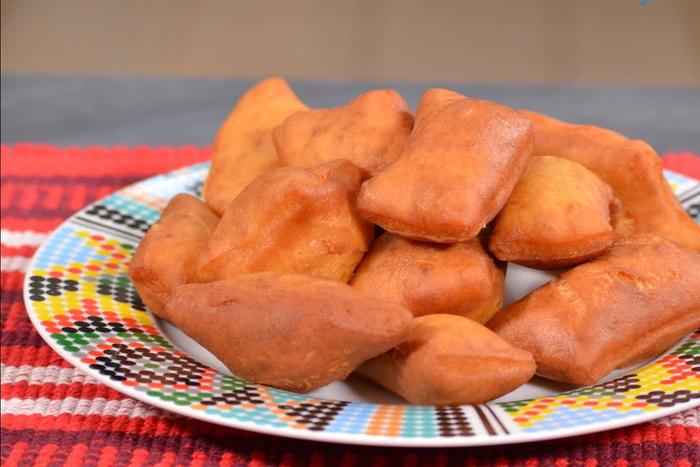
Mandazi is a fried dough food found across East Africa and widely eaten in Uganda. It can be consumed at breakfast, with tea or as an inexpensive snack during the day.
A flour-based dough is mixed, shaped into individual portions and fried until the exterior becomes golden brown. Recipes can differ in sweetness, richness and shape.
Mandazi is easy to find at bakeries, markets, tea shops, street-food stalls and local restaurants throughout Uganda.
Kikomando
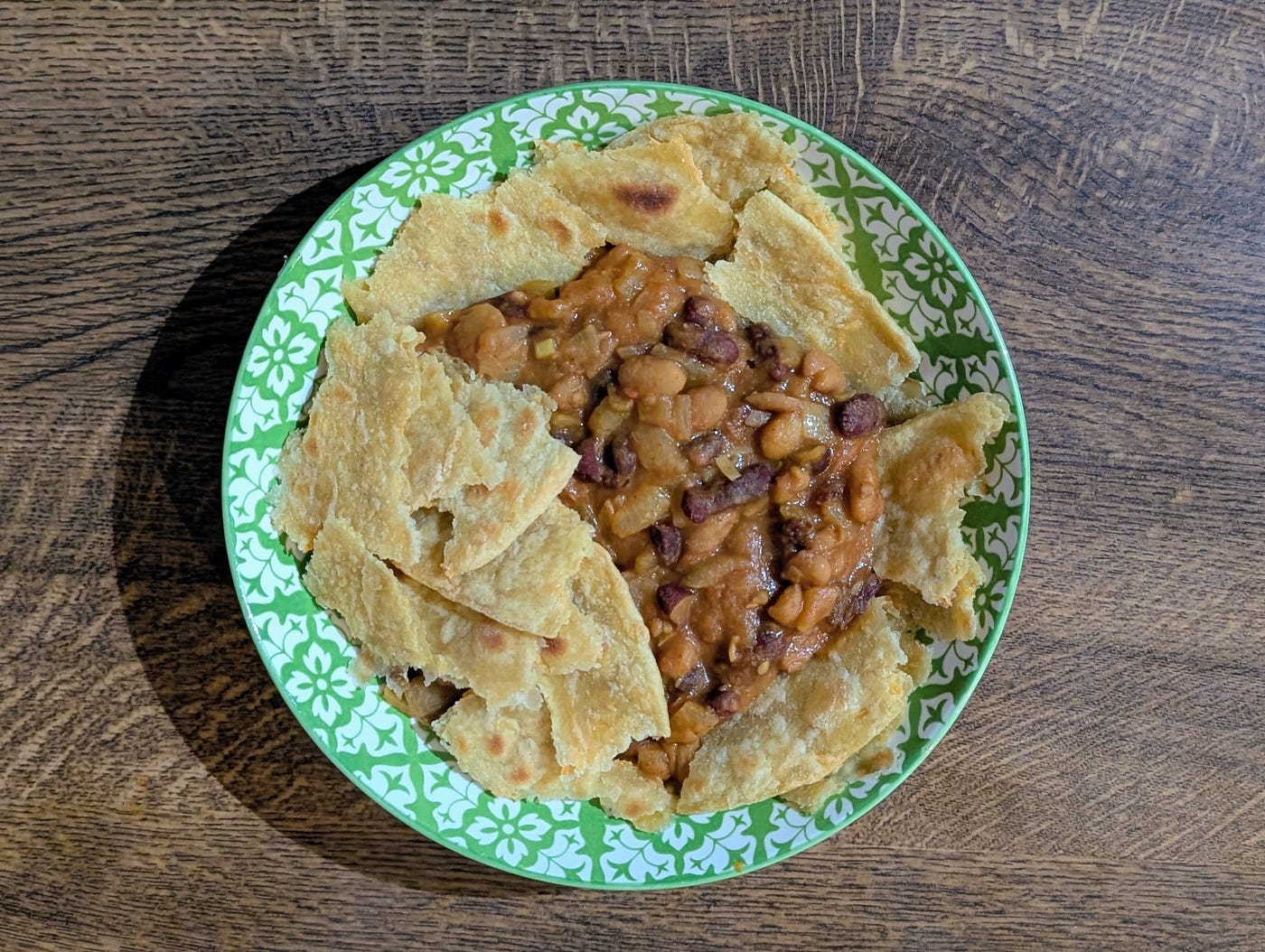
Kikomando is a straightforward Ugandan street-food combination made from chapati and beans. The chapati is cut or torn into pieces before bean sauce is added.
Its appeal lies in simplicity. The chapati absorbs the bean sauce, producing a substantial meal from two inexpensive foods. Individual vendors may offer additional ingredients or variations.
Kikomando is particularly easy to encounter around Kampala’s informal eateries, student areas and roadside food stalls. Visitors researching Uganda travel culture can use foods such as Kikomando and Rolex to understand the country’s contemporary urban cuisine alongside older regional dishes.
Nsenene
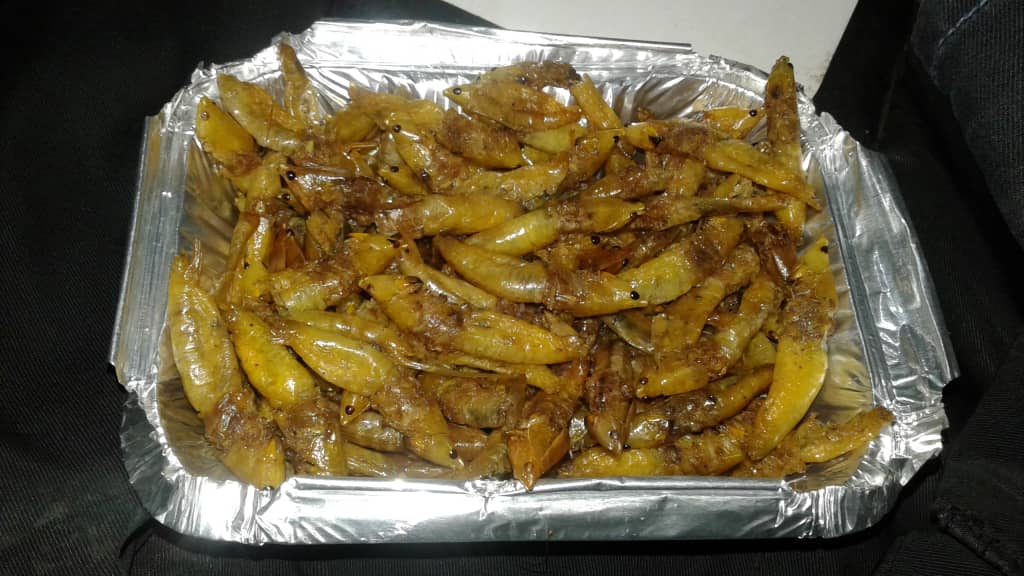
Nsenene are long-horned grasshoppers eaten as a seasonal delicacy, particularly in central Uganda. Their availability is strongly linked to seasonal emergence, which means travelers should not expect fresh nsenene throughout the entire year.
Preparation involves removing unwanted parts such as wings and legs before the insects are cooked. They can be fried, with salt and onions sometimes added according to the preparation.
During the season, nsenene become highly visible in markets and street-food trading in Kampala and other areas of central Uganda. Outside the season, availability can be much more limited.
Eshabwe

Eshabwe is a traditional sauce particularly associated with the Bahima and Ankole food traditions of western Uganda. It is notable because its principal ingredient is mature ghee rather than vegetables, meat or legumes.
Traditional preparation combines carefully handled ghee with a salt solution and works the mixture into a thick, pale sauce. Because methods can differ, visitors should regard restaurant versions as individual interpretations of a broader traditional preparation.
Western Uganda provides the strongest cultural context for eshabwe. Igongo and other cultural dining environments around the Ankole region are particularly relevant places to ask about it.
Malewa
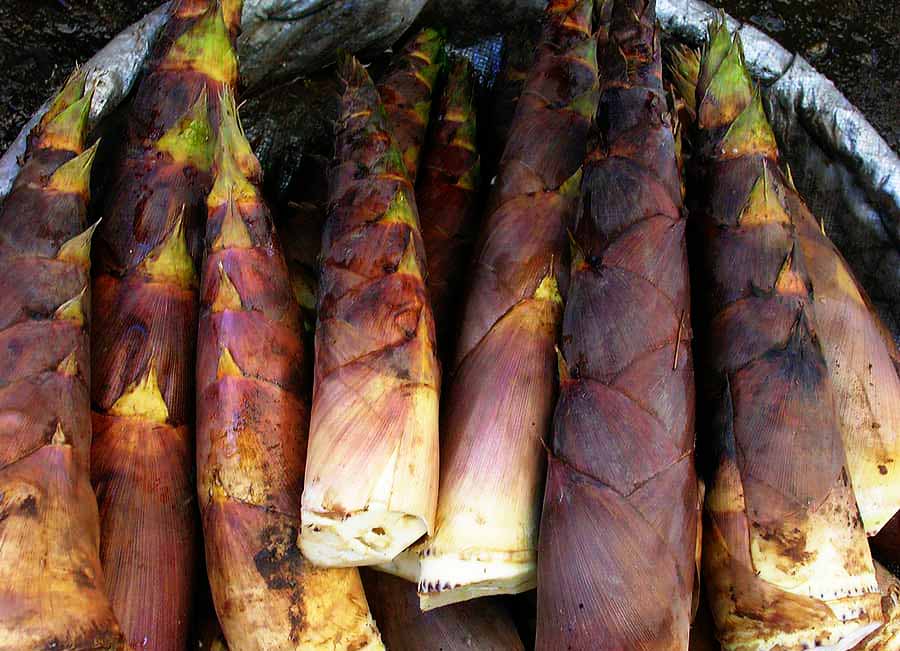
Malewa is one of Uganda’s most regionally distinctive foods. It is made from bamboo shoots and is particularly associated with the Bagisu of the Bugisu region around Mount Elgon in eastern Uganda.
Young bamboo shoots can be smoked and dried for preservation. During preparation, the shoots are boiled to soften and clean them, hard joints are removed, and the edible portions are cut into pieces. Groundnut paste can then be incorporated to produce a sauce.
Mbale and the wider Bugisu region provide the best geographical context for trying malewa. It is served in restaurants, homes and at cultural functions in the region. Travelers interested in Uganda’s regional cuisine should not restrict their food exploration to Kampala.
Goat Stew
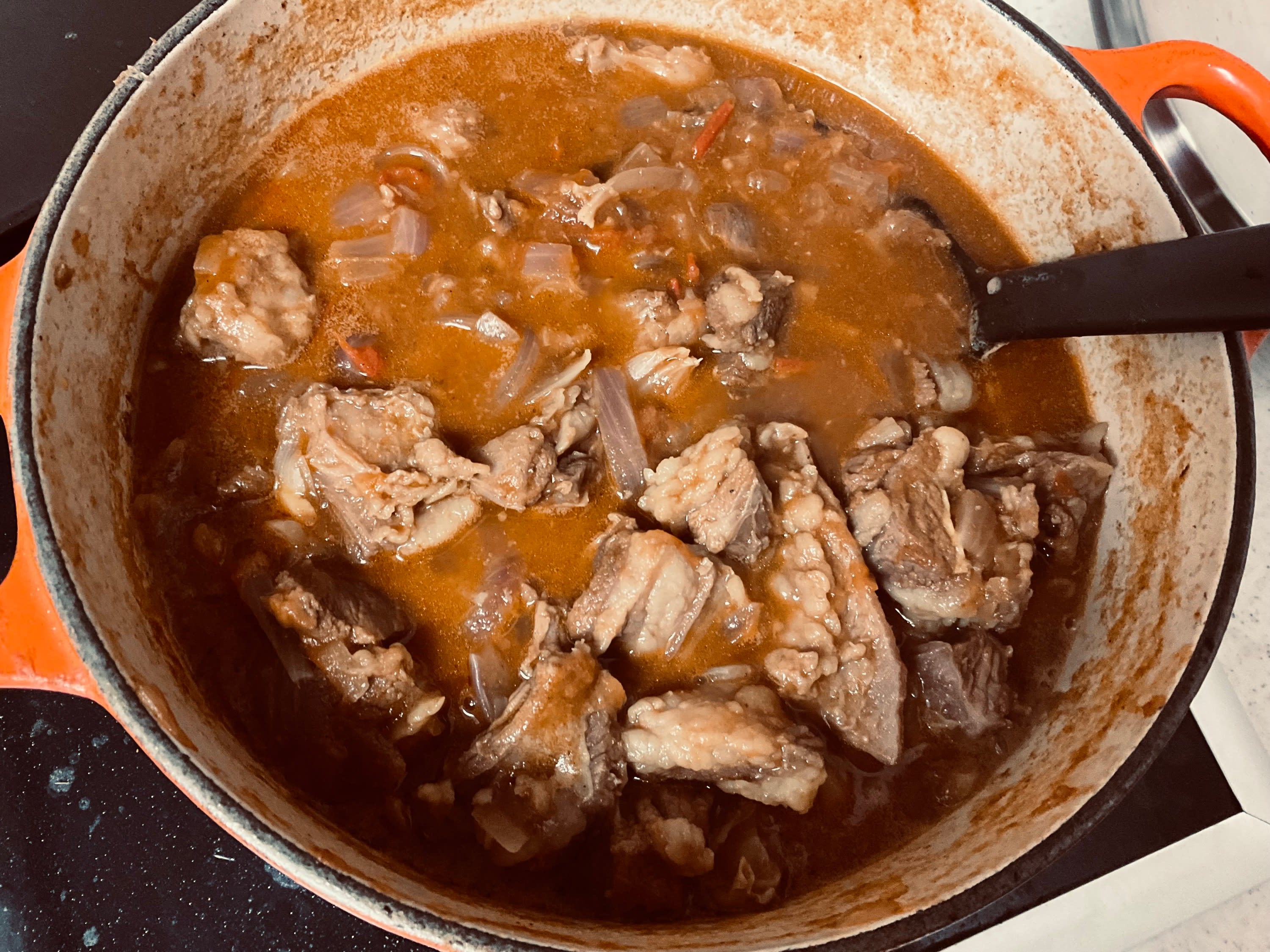
Goat meat appears in Ugandan restaurants, celebrations and roadside food culture. While muchomo is one common preparation, goat can also be simmered into stew.
Pieces of goat are cooked until tender with ingredients such as onions and tomatoes. Recipes can incorporate ginger, garlic and seasonings depending on the cook. The stew can then be served with matooke, posho, rice, cassava or potatoes.
Goat stew is available in Kampala and throughout many other Ugandan towns. Restaurants specializing in local food are the most straightforward places for visitors to find it.
Cowpeas
Cowpeas are part of Uganda’s broader legume food tradition and can be cooked into sauces or combined with other ingredients. They are less internationally famous than matooke or Rolex but illustrate the importance of pulses within everyday food.
The peas are cooked until tender and can be incorporated into tomato-based or vegetable sauces. Household methods and additional ingredients vary.
Visitors are more likely to encounter cowpeas in local-food settings than restaurants designed primarily around international cuisine.
Smoked Fish
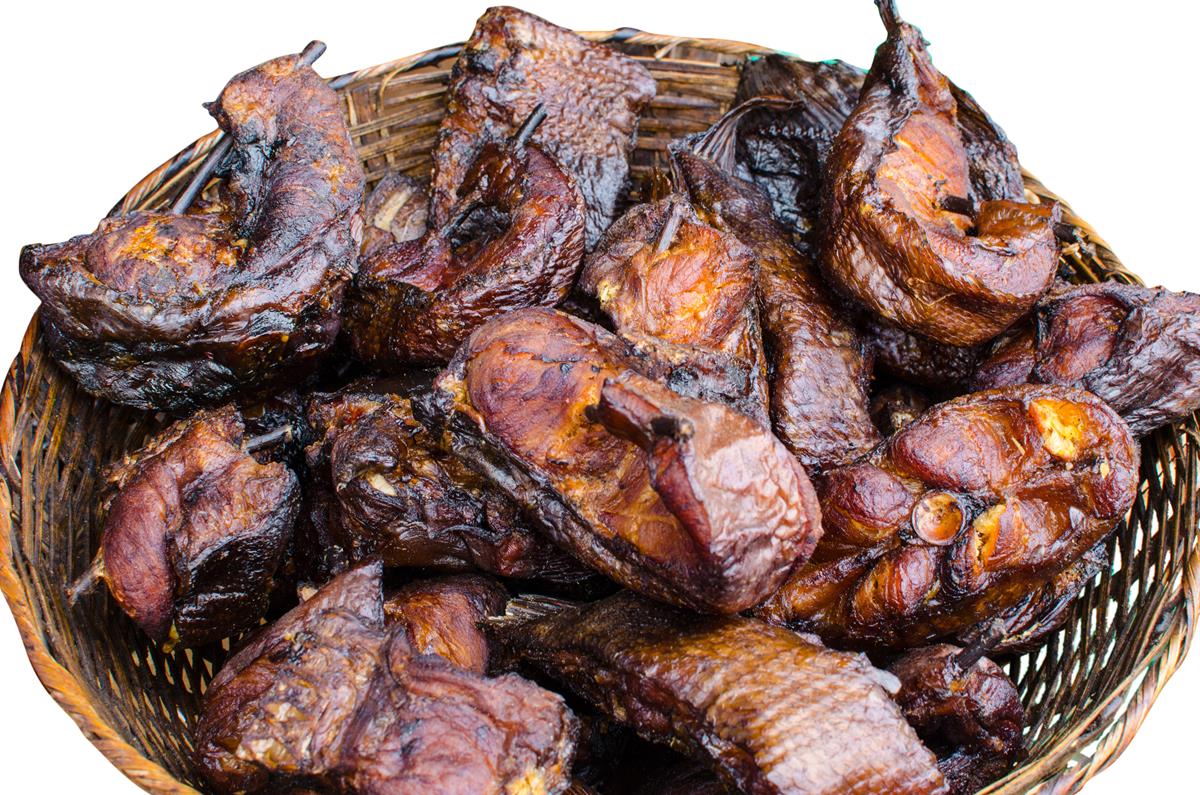
Smoked fish is another important expression of Uganda’s freshwater food traditions. Smoking extends the usable life of fish while creating a distinctive flavor that works particularly well in sauces.
The fish is exposed to smoke and heat until preserved, after which it can be stored or transported. Before serving, smoked fish may be simmered in a sauce or incorporated into other traditional preparations.
Markets and lakeside communities are particularly useful places for visitors to see smoked fish, while traditional restaurants may serve it in cooked sauces.
Roasted Maize
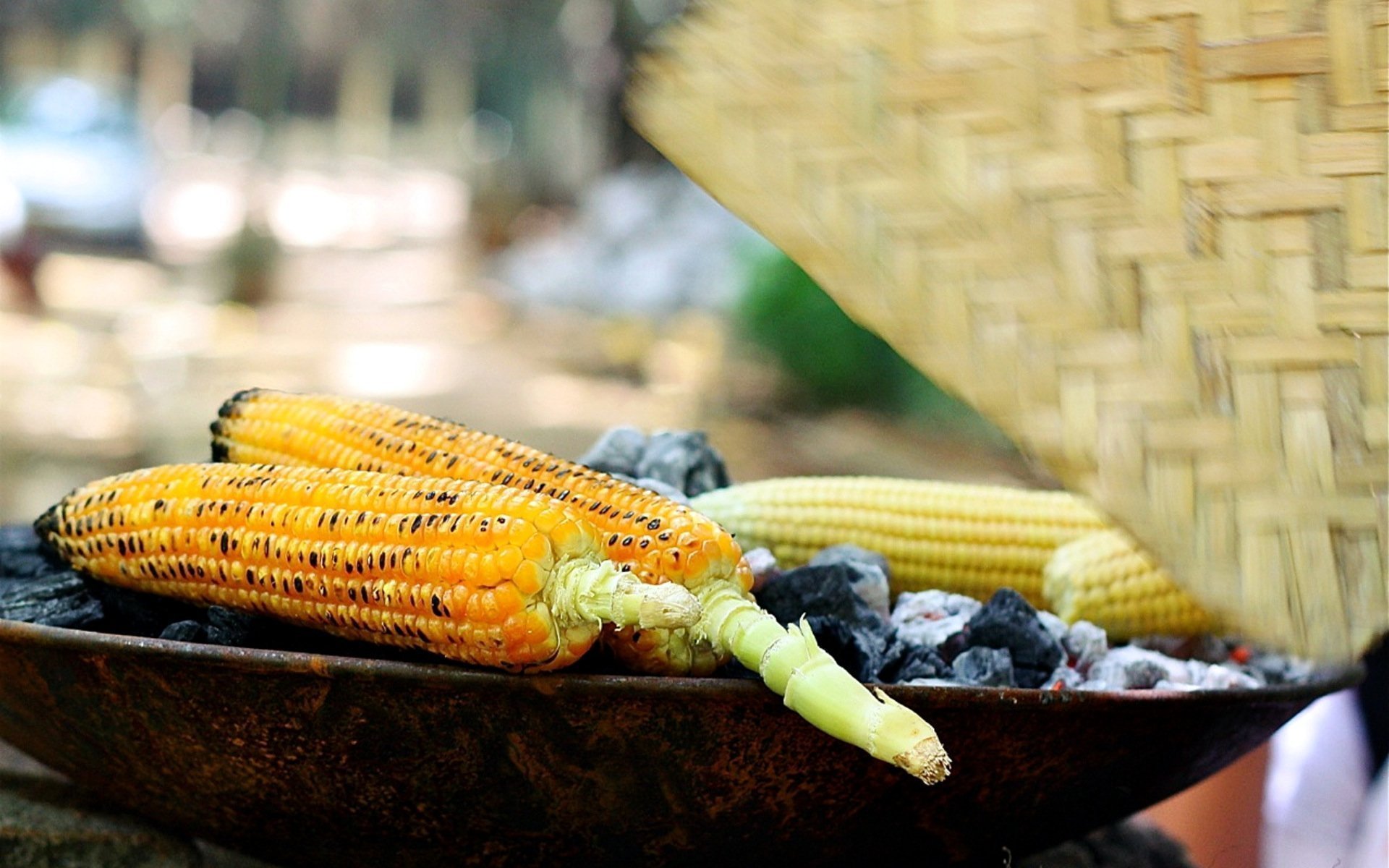
Fresh maize roasted over charcoal is one of the simplest foods travelers can encounter in Uganda. Unlike posho, which uses maize flour, roasted maize is cooked and eaten directly from the cob.
The fresh cob is placed over charcoal and turned repeatedly so that the kernels cook evenly and develop charred areas. It is normally eaten hot without requiring an elaborate sauce or accompaniment.
Roasted maize is commonly encountered at roadside stalls, markets and trading centers. It is especially convenient for travelers moving between towns and safari destinations.
Pumpkin and Groundnut Preparations
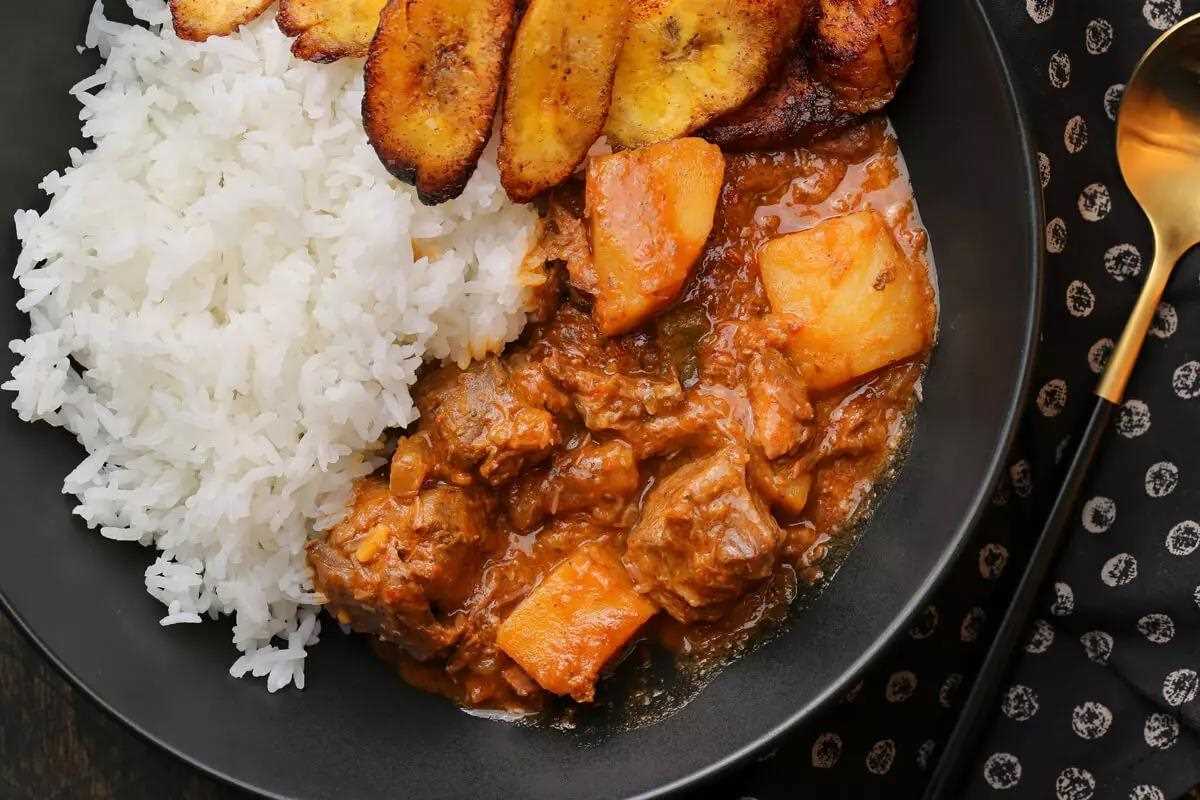
Pumpkin is among the vegetables cooked in Ugandan households and can be boiled, steamed or incorporated into sauces. Combining pumpkin with groundnuts illustrates how vegetables and legumes can produce a substantial accompaniment without meat.
Preparation generally involves cooking pumpkin until tender and combining it with a groundnut-based sauce. The finished dish can accompany rice, matooke, posho, cassava or sweet potatoes.
Availability depends heavily on the restaurant and season, making local restaurants and home-style food establishments better places to ask for pumpkin preparations than international hotel menus.
Traditional Ugandan Food Is Best Explored Region by Region
These foods demonstrate why a serious guide to traditional Ugandan cuisine needs to go considerably further than matooke and Rolex. Buganda contributes traditions such as luwombo and a particularly strong relationship with matooke. Northern Uganda introduces millet-based foods and dishes such as malakwang. Western Uganda adds traditions such as eshabwe and strong millet and banana food cultures. Eastern Uganda contributes distinctive foods including Bugisu’s malewa, while Uganda’s lakes support tilapia, Nile perch, mukene and smoked-fish traditions.
The most rewarding approach is therefore to ask what is local to each destination. Kampala provides perhaps the greatest concentration of choices because restaurants can bring together foods from different regions, but traveling outside the capital gives those dishes geographical and cultural context. A broader Uganda culinary journey can combine restaurants, produce markets, roadside stalls, cultural centers and regional travel.
Preparation is equally important. Steaming matooke in banana leaves, enclosing luwombo inside a leaf parcel, vigorously working millet or maize flour into kalo or posho, simmering groundnuts into sauce, smoking malewa, charcoal-roasting gonja and grilling muchomo all demonstrate different cooking techniques. Understanding those methods helps explain why Ugandan cuisine cannot be reduced to a simple list of ingredients.
For first-time visitors, a practical tasting sequence would begin with matooke and groundnut sauce, followed by luwombo, Rolex, katogo and posho. After that foundation, regional travel should determine what comes next. Malewa makes particular sense around Mbale and Bugisu, eshabwe in western Uganda, malakwang in northern Uganda and fresh fish around Lake Victoria and other fishing areas.
Visitors who deliberately include local food traditions in their itinerary gain a more complete understanding of Uganda because these dishes connect directly with farming, markets, regional identity, hospitality and everyday life.
Where to Find Traditional Ugandan Food
Kampala offers the widest practical selection for most international visitors. Local-food restaurants, cultural centers and established hotels provide opportunities to try matooke, luwombo, groundnut sauce, posho, fish and other staples. Street-food stalls add Rolex, chapati, Kikomando, gonja, roasted maize and muchomo.
For regional specialties, location matters. Mbale and the wider Bugisu region are particularly relevant for malewa. Western Uganda is important for eshabwe and regional millet traditions. Northern Uganda provides better cultural context for malakwang and cereal staples. Lake Victoria destinations such as Entebbe and lakeside areas provide convenient access to freshwater fish.
Food travelers can also include markets because they show the ingredients before cooking. Seeing bunches of green matooke, cassava roots, sweet potatoes, beans, groundnuts, millet, maize and dried fish makes restaurant dishes considerably easier to understand.
How to Choose Traditional Ugandan Food as a Visitor
Instead of searching for a single supposed national dish, choose foods that demonstrate different ingredients and techniques. Matooke shows banana-leaf steaming, luwombo demonstrates enclosed leaf cooking, posho demonstrates maize preparation, kalo introduces millet, groundnut sauce illustrates Uganda’s use of peanuts, and Rolex introduces contemporary street-food culture.
Then add something regionally distinctive. Malewa, eshabwe, malakwang, mukene or nsenene can make the experience considerably more informative. Travelers planning a wider Uganda food adventure should ask restaurant staff or local guides which dishes genuinely belong to the area being visited rather than expecting exactly the same menu everywhere.
Traditional Ugandan food ultimately makes the most sense when viewed as part of Uganda’s cultural geography. The country’s cooking bananas, cereals, roots, legumes, vegetables, freshwater fish and livestock are transformed through steaming, boiling, mingling, frying, smoking, roasting and slow cooking. From a banana-leaf parcel of luwombo to a freshly rolled street-side Rolex, each preparation tells a different part of Uganda’s food story.
Staple Foods in Uganda and How Ugandan Meals Work
Staple foods in Uganda form the foundation of everyday meals and provide one of the best ways to understand Ugandan cuisine. Rather than centering every meal around meat or fish, many Ugandan meals begin with a substantial carbohydrate-rich staple and combine it with a sauce, stew, beans, vegetables, groundnuts, meat or freshwater fish. The staple provides the body of the meal, while the accompaniment contributes moisture, richness and additional flavor.
There is no single staple food eaten uniformly throughout Uganda. Cooking bananas, maize, cassava, sweet potatoes, millet, sorghum, rice and Irish potatoes all have places within the country’s food system. Their importance varies considerably according to region, agriculture, household preferences and availability. Understanding these differences is essential when exploring traditional food in Uganda.
How Does a Traditional Ugandan Meal Work?
A useful way to understand many Ugandan meals is to think about the relationship between the staple and the accompaniment. A serving of matooke, posho, cassava, sweet potatoes, millet preparation or rice may occupy a substantial part of the plate. It can then be eaten with beans, groundnut sauce, vegetables, beef stew, goat, chicken or fish.
This structure means the staple does not necessarily need to have an intense flavor of its own. Foods such as posho and matooke work particularly well with sauces because they provide a mild base that absorbs or complements the accompaniment.
A plate of posho and beans demonstrates the idea simply. Posho supplies the substantial maize component while bean sauce contributes moisture and flavor. Matooke with groundnut sauce works in a similar way, although the ingredients, texture and flavor are completely different.
More elaborate meals can contain several staples and accompaniments at once. A restaurant plate might combine matooke, rice, sweet potatoes or posho with vegetables and a choice of sauce. This is why visitors should avoid assuming that a traditional Ugandan meal consists of one named dish served by itself.
Matooke as a Staple Food
Matooke is among the most recognizable staple foods in Uganda. It is made from green cooking bananas and is particularly important in central and western Uganda. These bananas are harvested while green and are cooked rather than eaten raw like sweet dessert bananas.
Traditional preparation involves peeling the green bananas and cooking them until tender. Steaming is particularly significant, and traditional techniques can involve wrapping the bananas in banana leaves before they are steamed. Once sufficiently soft, the cooked bananas can be mashed into a smooth, dense staple.
The mild character of matooke allows it to accompany richer foods. Groundnut sauce is an important pairing, while beans, vegetables, beef, chicken and fish can also be served with it.
Visitors can find matooke throughout Kampala and many other parts of Uganda. Central Uganda and western Uganda provide particularly useful cultural and agricultural contexts for understanding the food. Travelers exploring Uganda beyond Kampala can see how strongly banana cultivation influences food traditions in these regions.
Why Matooke Is Different From Ordinary Bananas
Visitors sometimes assume matooke is simply a sweet banana served with savory food. That is misleading. The varieties used for matooke are cooking bananas. They are harvested green and become a starchy staple after cooking.
The distinction is important because bananas occupy several different culinary roles in Uganda. Matooke is cooked as a staple, while ripe plantains such as gonja can be roasted or fried and have a noticeably sweeter character. Dessert bananas are another category again and can be eaten as fruit.
Understanding these distinctions helps visitors make sense of the extensive displays of bananas encountered in Ugandan produce markets.
Posho and the Importance of Maize
Posho is another major staple encountered throughout Uganda. It is made from maize flour cooked with water until it develops a firm consistency. Similar maize preparations exist elsewhere in East Africa under different names, but posho is the term visitors will commonly encounter in Uganda.
Preparation begins with hot or boiling water. Maize flour is gradually incorporated and continuously worked into the water. As more flour is incorporated and the maize cooks, the mixture becomes increasingly dense. The finished posho is substantially firmer than maize porridge.
Posho is typically eaten with a sauce rather than alone. Beans provide one of the most familiar accompaniments, but vegetables, groundnut sauce and meat stews can also be served with it.
Its accessibility and filling character make posho particularly important within everyday food. Travelers interested in the difference between celebratory cuisine and ordinary meals should therefore try posho rather than limiting themselves to famous dishes such as luwombo and Rolex.
Where to Find Posho in Uganda
Posho is widely available. Local restaurants in Kampala, roadside eateries and restaurants in towns throughout Uganda frequently serve it as one of several possible staples.
Visitors do not need to seek out an expensive specialist restaurant to experience it. In fact, an ordinary local restaurant serving freshly prepared posho with beans or stew can provide a more representative introduction to the role maize plays in everyday Ugandan meals.
Cassava as a Ugandan Staple
Cassava is one of Uganda’s important root crops and has traditionally been especially significant in northern and eastern parts of the country. It is valued because the root can be eaten after appropriate preparation and can also be processed into flour.
For a straightforward boiled preparation, cassava roots are peeled, cleaned, cut into manageable pieces and cooked thoroughly until tender. The cooked root can then accompany beans, vegetables, fish, meat or another sauce.
Cassava can also be dried and processed into flour. In some regional traditions, cassava flour is combined with cereal flour to create a stiff staple. This demonstrates why cassava should not be understood simply as a boiled root vegetable; it has multiple functions within Uganda’s food system.
Visitors can see fresh cassava in produce markets across Uganda. Regional travel in northern and eastern Uganda provides particularly useful context for understanding its importance.
Sweet Potatoes in Ugandan Meals
Sweet potatoes are another significant root staple. Uganda grows different varieties, and the food can be incorporated into breakfast, lunch or other meals depending on household and region.
One of the simplest preparations involves boiling or steaming sweet potatoes until soft. They can then be served with beans, groundnut sauce, vegetables, meat or another accompaniment.
The natural sweetness provides a different flavor profile from relatively neutral staples such as posho. A meal of sweet potatoes and groundnut sauce, for example, combines sweetness from the root with the richer, savory character of the groundnuts.
Sweet potatoes are widely sold in Ugandan markets and are commonly available in local food environments.
Millet and Traditional Ugandan Grain Foods
Millet has longstanding importance in several Ugandan communities and is particularly relevant when discussing northern, eastern and parts of western Uganda. It can be milled into flour and used for porridge or prepared as a dense staple eaten with sauce.
A stiff millet preparation requires flour to be incorporated into hot water and worked continuously until it develops the required texture. Depending on regional tradition, millet flour can also be combined with cassava flour.
The result is very different from matooke or posho in both ingredient and flavor. Millet contributes a stronger cereal character and is particularly informative for visitors exploring regional Ugandan cuisine.
Food traditions connected with millet are one reason a cultural journey through Uganda should extend beyond the capital. Kampala can offer examples of regional cuisine, but eating a food within the region where it has longstanding cultural importance adds valuable context.
Kalo and How It Is Eaten
Kalo is a term visitors may encounter for a firm staple associated with millet and, depending on the regional preparation, millet combined with cassava flour. Terminology and recipes vary between communities, so one recipe should not be presented as representing every form of kalo in Uganda.
The preparation generally requires flour to be worked vigorously into hot water until it forms a dense, cohesive mass. It is then served with an accompaniment rather than being eaten as a dry food by itself.
Kalo can accompany meat sauces, vegetables and other regional preparations. In northern Uganda, millet-based staples are particularly important for understanding traditional grain-centered meals.
Sorghum in Uganda
Sorghum is another cereal crop with an established place in Uganda’s agricultural and food traditions. Its importance is particularly relevant in areas suited to hardy cereal production, including parts of northern and northeastern Uganda.
Sorghum can be milled into flour and used in porridge and other cereal preparations. Its exact culinary use varies according to community and household, making it important to distinguish well-documented regional practices from generalized claims about all Ugandan meals.
Visitors are more likely to understand sorghum’s cultural context when traveling through the regions where it is grown and consumed rather than expecting it to dominate restaurant menus in central Kampala.
Rice in Ugandan Cuisine
Rice is widely eaten in contemporary Uganda and frequently appears alongside older regional staples. It can accompany beans, vegetables, chicken, beef, goat, fish and groundnut-based sauces.
Plain boiled rice provides a relatively neutral base for sauces, while seasoned preparations such as pilau create a much more aromatic dish. The distinction matters because rice itself is a staple ingredient that can participate in several different styles of meal.
Rice is readily available in restaurants and hotels throughout Kampala and other Ugandan towns. It is often one of the easiest staples for international visitors to recognize, but trying it alongside matooke, posho or millet provides a better understanding of the country’s broader food culture.
Irish Potatoes
Irish potatoes are another important starch in contemporary Ugandan meals. Production is particularly associated with cooler highland environments, while distribution means potatoes can be eaten throughout the country.
They can be boiled and served with sauce, incorporated into stews or used in variations of combination dishes such as katogo. Restaurants may also fry potatoes, although fried chips should not be treated as representative of Uganda’s traditional potato preparations.
Travelers visiting highland areas can gain additional insight into the relationship between altitude, agriculture and food production. This connection between landscape and cuisine is an important theme throughout Uganda food experiences.
Beans and Why They Matter
Beans occupy an important position because they can transform a relatively simple staple into a substantial meal. They are frequently served with posho, matooke, cassava, sweet potatoes or rice.
Dried beans need to be thoroughly cooked until tender. They can then be prepared with onions, tomatoes or other ingredients according to the cook’s recipe, producing a sauce that can be spooned over or eaten alongside the staple.
Posho and beans is one of the clearest examples of how Ugandan meals work. Neither component needs to be elaborate. Together they produce a filling meal in which the firm maize staple and moist bean sauce complement each other.
Groundnuts and Groundnut Sauce
Groundnuts, commonly known internationally as peanuts, have an important role in Ugandan cooking. Rather than appearing only as a snack, groundnuts can be processed and transformed into a rich sauce.
Groundnuts are ground or processed before being cooked with liquid and other ingredients. The resulting sauce can accompany matooke, cassava, sweet potatoes, posho and vegetables.
Groundnut sauce demonstrates the relationship between staple and accompaniment particularly clearly. Mild matooke becomes a considerably richer meal when combined with the nutty sauce.
Travelers with peanut allergies should explicitly ask about groundnuts before eating sauces and stews because the ingredient may be incorporated into a dish rather than remaining visually identifiable.
Vegetables and Leafy Greens
Vegetables provide another important component of Ugandan meals. Different leafy greens and locally available vegetables can be boiled, steamed, sautéed or cooked into sauces according to regional and household traditions.
Malakwang provides a particularly distinctive regional example. Uganda’s Ministry of Foreign Affairs associates this sour vegetable preparation with Acholi cuisine in northern Uganda and notes its relationship with millet bread.
Vegetable dishes should not be treated merely as side decorations. When combined with groundnuts, sesame or another substantial ingredient, vegetables can become an important accompaniment to a staple.
Freshwater Fish and Ugandan Staples
Uganda’s freshwater systems add fish to the staple-and-sauce structure of meals. Tilapia, Nile perch and smaller fish such as mukene are among the fish visitors may encounter.
Tilapia can be fried, grilled or cooked in sauce. Nile perch may be served in portions because of the fish’s size, while mukene can be dried before further preparation.
Fish can accompany matooke, posho, cassava, rice and other staples. Lake Victoria destinations such as Entebbe and lakeside areas around Kampala provide particularly convenient places for travelers to explore freshwater fish dishes.
Meat, Chicken and the Staple
Beef, goat and chicken can be incorporated into sauces and stews that accompany Ugandan staples. Meat does not necessarily occupy the majority of the plate. A substantial portion of matooke, posho or another starch may be combined with a smaller portion of meat and sauce.
Cooking techniques vary. Meat can be stewed, roasted or grilled, while chicken can be prepared in sauce or through traditional methods such as luwombo, where ingredients are enclosed inside banana leaves and steamed.
This flexibility means the same staple can produce very different meals. Matooke with groundnut sauce provides a plant-based combination, while matooke with beef stew creates a different flavor and nutritional profile without changing the underlying staple.
Why Sauces Are So Important
Visitors unfamiliar with Ugandan food sometimes focus entirely on identifying the starch. Yet the sauce is often what transforms the eating experience.
Posho without an accompaniment is intentionally simple. Add beans and it becomes a familiar everyday combination. Add a meat stew and the experience changes again. Matooke can similarly accompany groundnut sauce, vegetables, chicken, beef or fish.
This explains why asking “What sauce comes with it?” can be as useful as asking which staple is being served.
Can a Ugandan Meal Have More Than One Staple?
Yes. Restaurant meals, buffets and special meals can contain several starches at once. A plate may include portions of matooke, rice, sweet potato, cassava or posho alongside one or more sauces.
This should not be interpreted as a strict formula for every household meal. What appears on a plate depends on availability, household resources, location, occasion and personal preference.
For travelers, a mixed plate can be particularly useful because it allows direct comparison. Trying matooke, posho and sweet potato with the same sauce makes differences in texture and flavor immediately apparent.
How Breakfast Uses Uganda’s Staple Foods
Staples are not restricted to lunch and dinner. Substantial foods can appear at breakfast, particularly in dishes such as katogo.
Katogo combines a staple with an accompaniment during cooking. Matooke and beans are one possible combination, while other versions can involve meat, cassava, Irish potatoes or different ingredients.
The result is a substantial breakfast that contrasts strongly with the light continental breakfast international visitors may encounter at hotels. Trying katogo is therefore useful for understanding how the distinction between breakfast food and main-meal food can differ across cultures.
How Regional Agriculture Shapes Ugandan Meals
Uganda’s staple-food diversity is inseparable from agriculture. Different crops perform better in different environments, and those agricultural patterns have influenced regional food traditions over generations.
Cooking bananas have particular importance in central and western Uganda. Millet, sorghum, cassava and maize become especially important when examining several northern and eastern traditions. Highland conditions favor crops such as Irish potatoes in suitable areas.
These are broad patterns rather than rigid culinary borders. Modern transport, markets and migration mean foods move throughout the country. A person in Kampala can eat millet, while a person in western Uganda can eat rice or posho. Regional association does not mean regional exclusivity.
Travelers taking a journey across Uganda can nevertheless observe how landscapes and agriculture influence which foods are especially prominent in different destinations.
Where Can Visitors Find Traditional Staple Foods?
Kampala is the easiest starting point because the capital brings together people and foods from across Uganda. Local restaurants serving Ugandan cuisine commonly offer a choice of staples, allowing visitors to compare matooke, posho, rice, sweet potatoes and other foods with different sauces.
Markets provide another valuable perspective. Rather than seeing only the cooked meal, visitors can identify bunches of green cooking bananas, cassava roots, sweet potatoes, maize, beans, groundnuts and other ingredients before preparation.
Regional travel provides deeper context. Central Uganda is particularly important for understanding matooke and Buganda food traditions. Western Uganda has strong banana and millet traditions, while northern and eastern journeys introduce visitors to regions where cassava and cereal foods have historically been particularly significant.
Hotels and Restaurants Serving Ugandan Staples
Several established Kampala hotels include African or Ugandan cuisine within their dining offerings. Kampala Serena Hotel states through its official hotel information that its restaurants serve authentic Ugandan specialties alongside international cuisine. Speke Resort Munyonyo also advertises African cuisine among its dining choices.
Specific dishes should always be confirmed before making a special journey because hotel menus, buffets and seasonal selections change. A hotel that serves Ugandan cuisine does not necessarily offer matooke, kalo or groundnut sauce every day.
For a broader experience, travelers should combine hotel dining with established local restaurants. Hotel kitchens provide convenience and formal service, while local restaurants can expose visitors to everyday combinations and a larger range of regional staples.
How to Order a Traditional Ugandan Meal
A practical approach is to choose the staple first and then ask which sauces or accompaniments are available. For example, a visitor might choose matooke and ask whether it can be served with groundnut sauce, beans, beef or chicken.
Another approach is to ask what combination the restaurant recommends. This is particularly useful with an unfamiliar regional food because the cook or server may know which accompaniment is traditionally paired with it.
Visitors interested in Ugandan food experiences should also ask guides and accommodation staff about foods characteristic of the destination rather than ordering the same dishes throughout the trip.
What Staple Should a First-Time Visitor Try?
Matooke is an excellent starting point because it introduces the importance of cooking bananas in Uganda. Pairing it with groundnut sauce demonstrates the relationship between a mild staple and a richer accompaniment.
Posho should also be tried because maize plays a very different culinary role. Posho and beans provide a particularly straightforward example of an everyday meal.
Millet or kalo should follow when available, especially during regional travel. Cassava and sweet potatoes then add root crops to the tasting experience. Comparing these foods gives visitors a much deeper understanding of Ugandan cuisine than trying one famous dish and assuming it represents the country.
Understanding the Ugandan Plate
The most important principle is that Ugandan food should be understood through combinations. Matooke becomes one meal with groundnut sauce and another with beef stew. Posho changes depending on whether it accompanies beans, vegetables or meat. Cassava can be eaten with sauce or transformed into flour for other preparations. Millet can become porridge or a firm staple.
This flexibility is one reason Uganda’s food culture is so varied. Staples provide continuity, while sauces, vegetables, proteins, cooking techniques and regional traditions create differences.
Anyone exploring Uganda’s traditional cuisine should therefore look beyond the question of what Ugandans eat and consider how foods are combined, where particular staples are important and how agriculture shapes what reaches the plate.
Matooke, maize, cassava, sweet potatoes, millet, sorghum, rice and Irish potatoes together reveal a country with several staple traditions rather than one universal national food. Beans, groundnuts, vegetables, fish and meat then transform those staples into complete meals. Once visitors understand that relationship, Ugandan restaurant menus, market displays and home-style meals become considerably easier to appreciate.
Ugandan Food by Region: Central, Western, Eastern, Northern and Northeastern Uganda
Ugandan food changes considerably as you travel across the country. Climate, agriculture, cultural traditions, livestock keeping, lakes, locally available crops and generations of cooking knowledge have all influenced what people grow, prepare and eat. This regional diversity is one of the most important things to understand about Ugandan cuisine.
Uganda’s Ministry of Foreign Affairs describes the country as culturally diverse and notes regional differences in food traditions. The Baganda are concentrated primarily in central Uganda, the Banyankole in the southwest, the Basoga in the east, the Acholi and Lango in the north, and the Karamojong in northeastern Uganda. Official cultural information specifically identifies luwombo with Baganda cuisine and malakwang with Acholi cuisine.
This means there is no accurate way to describe every traditional dish as equally representative of every part of Uganda. Matooke may dominate conversations about food in central and parts of western Uganda, while millet, cassava, sorghum and distinctive vegetable preparations become increasingly important when exploring other regions. Travelers interested in regional food traditions in Uganda should therefore allow the destination itself to influence what they order.
Central Uganda and the Food Traditions of Buganda
Central Uganda is the region many international travelers encounter first because it contains Kampala, Entebbe and much of the historic territory of Buganda. Food traditions associated with the Baganda consequently receive considerable attention in discussions of Ugandan cuisine.
Matooke is one of the defining foods of the region. Green cooking bananas are peeled and traditionally steamed until tender, often using banana leaves during preparation. The cooked bananas can then be mashed and served with groundnut sauce, beans, vegetables, beef, chicken or fish.
The importance of bananas extends beyond simply having matooke on the plate. Banana leaves are themselves important cooking materials. They can be used during steaming and are fundamental to the preparation of luwombo.
Luwombo in Central Uganda
Luwombo is particularly associated with Buganda. Uganda’s Ministry of Foreign Affairs describes the Baganda as favoring luwombo and explains it as meat or groundnut sauce steamed in banana leaves.
The preparation demonstrates how a local agricultural resource becomes both food and cooking material. Ingredients are enclosed inside prepared banana leaves, secured into a parcel and steamed. Chicken, meat, fish or groundnut-based preparations can be cooked using the technique.
Luwombo is especially worthwhile for visitors because it demonstrates a cooking method rather than simply introducing another ingredient. When the banana-leaf parcel is opened, the diner encounters food that has cooked within its own enclosed environment.
Kampala provides one of the easiest places for international visitors to find luwombo. Traditional-food restaurants, cultural dining venues and some hotels offer versions of the dish, although availability should be confirmed before visiting a particular establishment.
Groundnut Sauce in Central Uganda
Groundnuts are another important component of meals in central Uganda. Groundnuts can be processed into a rich sauce that accompanies matooke, sweet potatoes, cassava and other staples.
The contrast between mild matooke and richer groundnut sauce illustrates how many Ugandan meals work. The staple supplies much of the substance of the meal, while the sauce provides moisture and a more concentrated flavor.
Groundnuts can also feature in luwombo-style preparations. Visitors with peanut allergies should always verify ingredients directly because groundnuts may be incorporated into sauces rather than remaining visually identifiable.
Fish and Lake Victoria
Central Uganda’s relationship with Lake Victoria also influences its food landscape. Tilapia, Nile perch and smaller fish can be encountered in Kampala, Entebbe and communities connected with the lake.
Fish can be fried, grilled or cooked in sauce and served with matooke, posho, cassava, rice or other staples. Entebbe provides particularly convenient access to lakeside fish dining because of its position on Lake Victoria.
Central Uganda therefore provides an unusually broad introduction to the country’s cuisine. A traveler can eat traditional Buganda food, freshwater fish and contemporary street food without traveling enormous distances.
Rolex and Contemporary Kampala Food Culture
Not everything important to central Uganda’s food scene is an old ceremonial or agricultural tradition. Kampala is also one of the country’s major centers of contemporary street-food culture.
The Ugandan Rolex combines chapati with an egg-based filling, commonly including vegetables, before the food is rolled together. Uganda’s Ministry of Foreign Affairs identifies Rolex as a popular street food enjoyed across the country.
Kampala is one of the easiest places to watch Rolex being prepared directly by street vendors. The experience contrasts strongly with luwombo: one is an enclosed steaming technique associated with older Buganda traditions, while the other is a fast, portable urban street meal.
Where to Experience Central Ugandan Food
Kampala is the most convenient starting point. Visitors can combine established restaurants, hotels, cultural dining venues, markets and street-food stalls. Entebbe adds lakeside dining and convenient access to freshwater fish.
Travelers interested in understanding the broader cultural context can also incorporate cultural sites across Uganda into their journey. Food becomes considerably more meaningful when it is connected with the people and places from which a tradition comes.
Western Uganda and the Food Traditions of Ankole, Tooro and Bunyoro

Western Uganda contains several distinct cultural areas, including Ankole, Tooro and Bunyoro. These should not be treated as one completely uniform culinary culture. Nevertheless, several ingredients and food traditions help distinguish western Uganda from other parts of the country.
Bananas remain highly important in many western areas, while millet, beans, sweet potatoes, cassava, dairy products and livestock-related foods contribute to regional cuisine. Uganda’s Ministry of Foreign Affairs identifies the Banyankole of southwestern Uganda with a strong cattle-keeping tradition.
Slow Food has also documented the Ankole Long-Horned Cattle as part of Uganda’s important food biodiversity, reinforcing the relationship between cattle keeping and the agricultural heritage of this part of the country.
Eshabwe in Ankole
Eshabwe is one of the most distinctive foods associated with western Uganda, particularly Ankole food traditions. It is a ghee-based preparation rather than a conventional meat, vegetable or groundnut stew.
The preparation uses mature ghee combined with other ingredients to create a pale, rich sauce. It can accompany foods such as matooke, millet preparations and sweet potatoes.
For visitors, eshabwe is particularly useful because it reveals the influence of cattle keeping on regional cuisine. The relationship between cattle, milk products and food traditions becomes much clearer when traveling through Ankole than it does when looking at Ugandan food only through restaurants in Kampala.
Firinda in Tooro and Bunyoro
Firinda is associated particularly with Batooro and Banyoro food traditions. The dish is made from beans that undergo more preparation than a simple boiled bean stew.
The beans are soaked and their skins removed before cooking. They are then boiled and mashed into a thick preparation. Depending on the recipe, ghee and other ingredients can be incorporated.
Firinda can be eaten with millet-based staples or matooke. The Uganda travel source previously reviewed for this guide describes firinda as a traditional dish of Batooro and Bunyoro communities and notes its use during occasions such as weddings and when hosting visitors.
Millet in Western Uganda
Millet is another important part of the western Ugandan food landscape. It can be milled and worked with hot water to produce a dense staple that accompanies sauces.
Regional terminology and flour combinations can differ, making it important not to present one preparation as universal across western Uganda. In some cases millet may be combined with other flour, while in other preparations millet itself dominates.
Millet provides a useful contrast with matooke. One comes from cooking bananas and the other from grain, yet both can perform the same basic function of providing a substantial staple alongside a sauce.
Matooke in Western Uganda
Matooke remains highly important across significant parts of western Uganda. Banana-growing landscapes are common in suitable areas, and travelers frequently encounter green cooking bananas in markets and roadside trading centers.
Visitors following Uganda’s regional food journey can compare matooke served in Kampala with versions encountered farther west. The staple may be familiar, while accompaniments and surrounding food traditions change.
Where to Experience Western Ugandan Food
Mbarara and the wider Ankole area provide a useful base for exploring southwestern food traditions. Travelers continuing toward national parks and other western destinations can ask lodges and local restaurants about matooke, millet preparations, eshabwe and locally characteristic dishes.
Fort Portal provides another useful food base for visitors interested in Tooro traditions, including opportunities to ask about firinda and regional staple foods.
Specific dishes should always be confirmed locally because a food associated with a region is not necessarily prepared by every restaurant every day.
Eastern Uganda and the Food Traditions of Bugisu, Busoga and Teso
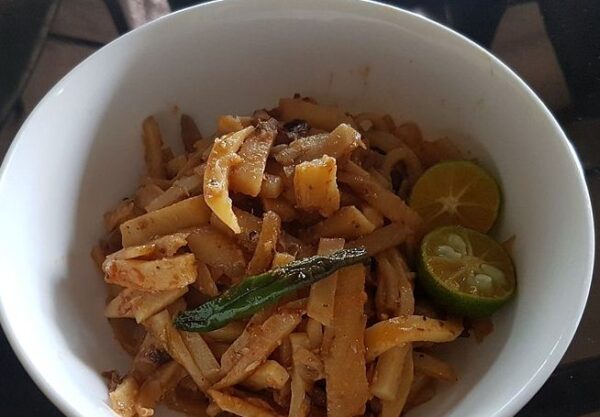
Eastern Uganda contains several important cultural and agricultural regions, including Bugisu around Mount Elgon, Busoga farther west and Teso farther north. Each contributes different ingredients and traditions, so eastern Ugandan food should not be reduced to a single dish.
Uganda’s Ministry of Foreign Affairs identifies the Basoga with eastern Uganda and notes the importance of agriculture and fishing within their cultural landscape. Meanwhile, Slow Food has documented traditional Teso finger millet varieties, demonstrating the importance of millet biodiversity within eastern Uganda.
Malewa and the Bagisu
Malewa is perhaps the most regionally distinctive food visitors can seek in the Bugisu area. Uganda’s Ministry of Foreign Affairs documented the tradition in 2025, describing malewa as an enduring Bugisu food made from fresh or dried bamboo shoots harvested on the slopes of Mount Elgon.
The bamboo shoots can be smoked and dried, allowing them to be preserved. Before cooking, dried malewa must be prepared and softened. The edible bamboo is then commonly incorporated into a sauce, including versions prepared with groundnuts.
Official Ugandan reporting describes malewa as culturally significant within Bagisu life and connected with weddings and communal gatherings. The same source records its production and trade in Sironko, Mbale, Manafwa and Bududa.
For travelers, this makes Mbale and the wider Mount Elgon region the logical place to experience malewa rather than simply ordering it in Kampala without understanding its geographical origin.
Millet and Teso Food Heritage
Millet deserves equal attention when discussing eastern Uganda. Slow Food has documented Teso Kyere finger millet varieties as part of Uganda’s agricultural biodiversity.
Finger millet can be milled into flour and prepared as porridge or worked into a much firmer staple. It can then be paired with vegetables, meat or other sauces.
These traditions demonstrate the importance of looking beyond Uganda’s famous banana dishes. Matooke is extremely important, but cereal-based food cultures provide an equally valuable window into the country’s agricultural history.
Busoga and the Lake Victoria-Nile Food Environment
Busoga’s position around the Nile and the northern reaches of Lake Victoria helps explain the relevance of fishing alongside agriculture. Uganda’s official cultural information specifically characterizes the Basoga as having traditions centered around agriculture and fishing along Lake Victoria.
Jinja is therefore an excellent eastern destination for visitors who want to combine regional travel with food exploration. Freshwater fish, staples, local restaurants and markets can all contribute to the experience.
Where to Experience Eastern Ugandan Food
Mbale is the strongest practical base for visitors specifically seeking Bugisu food and malewa. Trips toward Mount Elgon, Bududa, Manafwa and surrounding areas provide additional geographical context.
Jinja is more accessible for many travelers and offers a mixture of Busoga, urban Ugandan and freshwater fish traditions. Travelers continuing through eastern Uganda can make food part of a broader Uganda culture itinerary.
Northern Uganda and Acholi, Lango and Other Regional Food Traditions
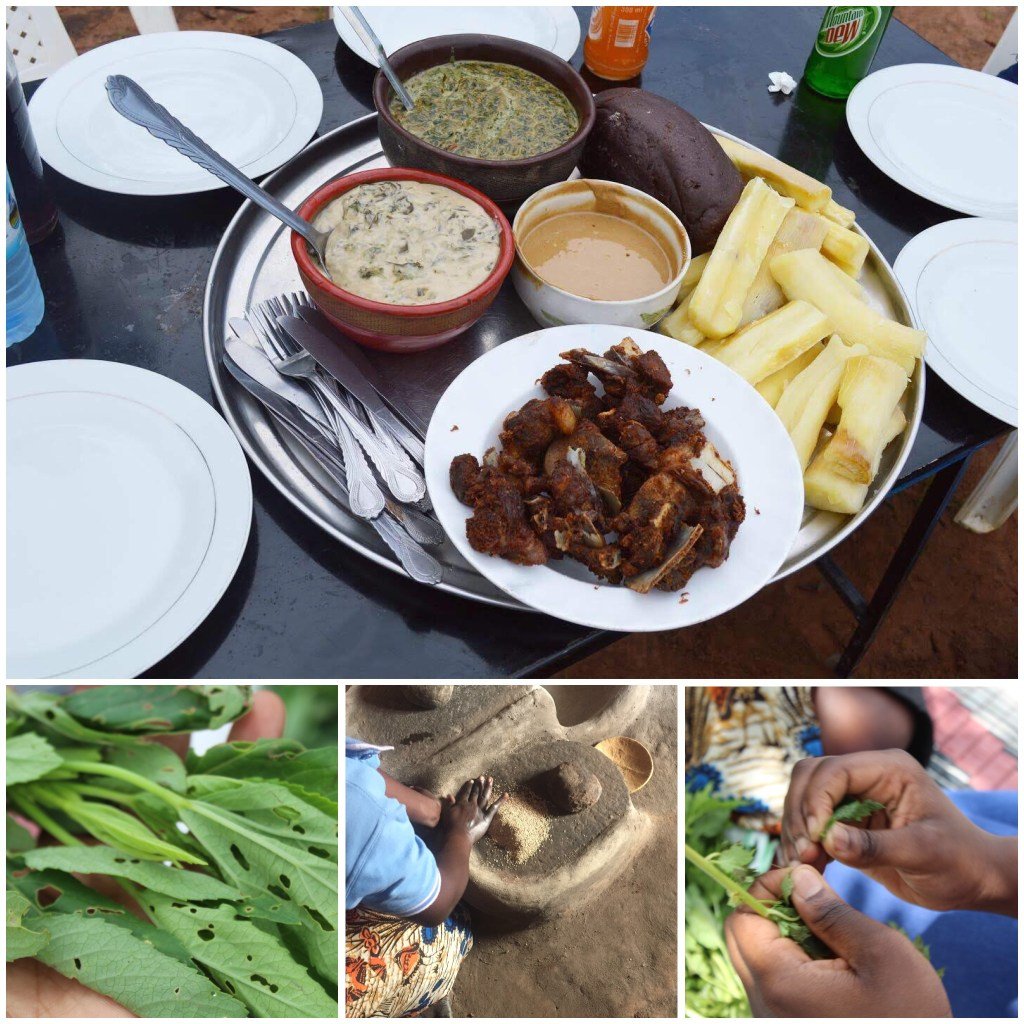
Northern Uganda introduces travelers to a food landscape in which millet, cassava, sorghum, maize and vegetables can become especially important. The region includes multiple communities, so Acholi cuisine should not be used as a synonym for all northern Ugandan food.
Uganda’s Ministry of Foreign Affairs identifies the Acholi and Lango as major communities in northern Uganda and specifically records malakwang as an Acholi food tradition.
Malakwang and Acholi Cuisine
Malakwang is a sour vegetable preparation particularly associated with the Acholi. Official Ugandan cultural information describes it as a sour vegetable stew served with millet bread.
Its importance goes beyond being another vegetable dish. Malakwang illustrates how leafy vegetables can become a defining component of a regional meal when combined with other ingredients and eaten with a substantial grain staple.
Recipes can vary between households, so visitors should avoid expecting every version to have exactly the same texture or ingredient proportions.
Millet Bread in Northern Uganda
Millet-based staples are particularly useful for understanding northern Ugandan cuisine. Flour is combined with hot water and worked until it develops a firm texture suitable for eating with sauces.
This produces a very different experience from steamed matooke. Millet has its own grain flavor and dense texture, making it well suited to vegetable and meat sauces.
The Ministry of Foreign Affairs specifically mentions millet bread as the accompaniment to Acholi malakwang.
Cassava in Northern Uganda
Cassava is another important staple encountered in northern Uganda. The root can be peeled, thoroughly cooked and eaten in pieces, while processed cassava flour can also contribute to other staple preparations.
Boiled cassava can accompany vegetables, beans, meat or fish. Its role within northern food traditions provides another contrast with the banana-centered image visitors may develop after spending their first days in Kampala.
Lira and Northern Food Markets
Food markets are especially useful for understanding northern Uganda because they allow visitors to see grains, legumes, cassava and vegetables before those ingredients become cooked meals.
Slow Food has established the Lira-Amach Earth Market in Lira District as one of its Ugandan Earth Markets, creating a connection between small-scale producers and consumers.
This type of market environment helps travelers understand that regional cuisine begins with farming and local food production rather than restaurant menus.
Where to Experience Northern Ugandan Food
Gulu is one of the most practical destinations for visitors interested in Acholi food traditions. Travelers can ask local restaurants about malakwang, millet preparations, cassava and other regional foods.
Lira provides a useful base for exploring Lango food culture and agricultural markets. Visitors should ask specifically which dishes are associated with the community they are visiting rather than describing every northern dish as Acholi.
Anyone building traditional food into a Uganda safari can use the journey north to compare cereal and cassava-based meals with the matooke-centered foods encountered farther south.
Northeastern Uganda and Karamoja Food Traditions
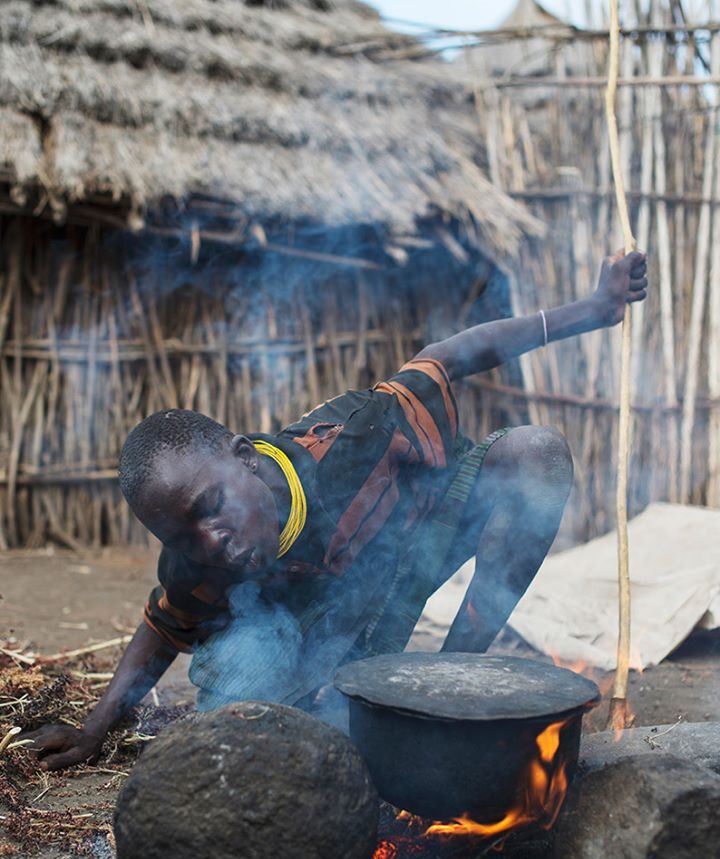
Northeastern Uganda deserves separate treatment because Karamoja has a distinctive environment and cultural history. Uganda’s official geographical information describes Karamoja as the country’s driest region and notes that it can experience drought. These environmental conditions are important when considering agriculture and traditional food production.
Uganda’s Ministry of Foreign Affairs identifies the Karamojong as a northeastern community with a strong cattle-herding tradition. The combination of pastoralism and crops adapted to comparatively dry conditions helps distinguish Karamoja’s food traditions from the wetter banana-growing landscapes farther south.
Sorghum in Karamoja
Sorghum is particularly relevant when understanding Karamoja’s cereal traditions. It is well suited to comparatively dry environments and can be processed into flour for porridge and firm staple preparations.
A stiff sorghum preparation can accompany vegetables or other sauces, performing a role similar to millet staples elsewhere in Uganda while retaining its own grain character.
For travelers accustomed to seeing matooke described as Uganda’s universal staple, eating sorghum-based food in Karamoja provides an important correction. Uganda has several staple-food systems, and their prominence changes geographically.
Cattle and Pastoral Food Culture
Cattle have cultural and economic importance in Karamoja. This pastoral background affects the region’s food story, although visitors should avoid assuming that every Karamojong household follows exactly the same diet or that livestock products dominate every meal.
Food traditions change over time and are influenced by markets, climate, agriculture, household circumstances and settlement patterns. A responsible regional food guide therefore describes established traditions without pretending they represent every contemporary meal.
How Traditional Food Is Prepared in Karamoja
Open-fire cooking remains an important visual and practical element in traditional rural food preparation. Pots can be positioned over wood fires while grain-based foods and sauces are prepared.
Sorghum and other cereals require processing before cooking. Grain can be milled into flour and then transformed into porridge or a dense staple by combining it with water and applying heat.
Visitors should experience these traditions through respectful community-based tourism rather than treating homes as informal tourist attractions. Food is part of everyday cultural life, and participation should occur through invited or organized experiences.
Where to Experience Food in Karamoja
Moroto is the most practical base for many visitors exploring Karamoja. Community tourism experiences can provide opportunities to learn about pastoral culture, agriculture and food preparation with appropriate local guidance.
The region should not be visited solely to photograph unusual foods. A stronger experience connects cooking with climate, livestock, grain cultivation, community life and the wider cultural landscape.
Travelers combining Karamoja with other Uganda cultural destinations can make particularly useful comparisons between northeastern pastoral traditions and the agricultural food cultures of central, western and eastern Uganda.
How Uganda’s Regional Foods Compare
The clearest difference between Uganda’s regions is not that one food suddenly disappears at an administrative boundary. Modern trade and migration mean matooke can be eaten in northern Uganda, millet can be purchased in Kampala and Rolex can be found across much of the country.
Regional food identity instead concerns historical prominence, agricultural suitability, cultural knowledge and established preparation traditions.
Central Uganda is particularly useful for understanding matooke, luwombo, groundnut sauces and the food traditions of Buganda. Kampala also adds contemporary street foods and an enormous variety of dishes brought into the capital from elsewhere.
Western Uganda combines strong banana traditions with millet, beans, livestock-related food culture and distinctive preparations such as eshabwe and firinda.
Eastern Uganda introduces important millet traditions, fishing and the distinctive bamboo-shoot food malewa associated with Bugisu and Mount Elgon. Official Ugandan reporting identifies malewa as a significant cultural food of the Bugisu region.
Northern Uganda brings millet, cassava and vegetable preparations into sharper focus. Malakwang and millet bread provide one of the clearest documented examples of an Acholi regional food pairing.
Northeastern Uganda and Karamoja reveal a different relationship between food, dryland agriculture and pastoralism, with sorghum and cattle keeping forming important parts of the regional food story.
Why Uganda’s Food Changes by Region
Geography provides part of the explanation. Uganda’s official geographical information notes significant climatic differences across the country. Southern Uganda is generally wetter, while Karamoja in the northeast has the driest climate.
Altitude also matters. Uganda contains highlands, mountains, plateaus, lake basins and comparatively dry plains. Crops that perform well in one environment may be less prominent in another.
Culture is equally important. More than 50 ethnic groups contribute their own languages, traditions and accumulated culinary knowledge. Foods therefore cannot be explained purely through climate.
Trade and movement complicate the picture further. Kampala brings together communities from across Uganda, meaning regional foods can travel far from their places of origin. Roads and markets distribute crops throughout the country, while restaurants adapt traditional dishes for urban customers.
How Travelers Should Explore Ugandan Food by Region
The most useful strategy is to avoid ordering the same famous dishes everywhere. Matooke and Rolex are worth trying, but they should be the beginning rather than the end of a Ugandan food journey.
In central Uganda, ask about matooke, luwombo and groundnut sauce. Around Lake Victoria, add freshwater fish. In western Uganda, ask about millet preparations, eshabwe and firinda alongside matooke. In eastern Uganda, look for malewa around Bugisu and millet traditions farther into Teso. In northern Uganda, ask about malakwang, millet and cassava. In Karamoja, learn about sorghum and the relationship between food and pastoral life.
Travelers planning a Uganda food and culture journey should also ask local guides and accommodation staff what is genuinely characteristic of the immediate area. A recommendation from someone who understands local food traditions can be more useful than arriving with a fixed list copied from a national food guide.
Where to Find Regional Ugandan Food
Kampala remains the easiest place to sample foods from several regions without traveling long distances. Traditional restaurants and cultural dining establishments can bring together matooke, luwombo, millet, groundnut sauce, fish and other foods on one menu.
However, regional travel provides context that Kampala cannot reproduce. Eating malewa around Mbale places the dish near Mount Elgon and Bugisu, where official Ugandan reporting documents the bamboo tradition. Eating malakwang in Gulu places the food within Acholi cultural territory. Trying eshabwe around Ankole connects the dish with a cattle-keeping region, while sorghum in Karamoja connects grain with the environmental conditions of northeastern Uganda.
This is why food can become an important part of exploring Uganda’s cultural heritage. The plate provides an entry point into agriculture, language, geography and community traditions.
Regional Food and the Modern Ugandan Table
Regional distinctions remain useful, but Ugandan cuisine is not frozen in the past. People move between regions, restaurants adapt recipes, ingredients travel through national markets and urban households combine foods from different cultural backgrounds.
A family in Kampala may therefore eat matooke on one day, posho and beans on another, rice on another and millet at another meal. A restaurant can serve luwombo alongside foods originating in completely different Ugandan regions.
The Ugandan government itself showcased this diversity at a 2025 cultural event where exhibitors represented Buganda, Karamoja, Bunyoro-Kitara/Tooro, Ankole, Busoga and northern Uganda, while the accompanying dinner included foods such as luwombo, matooke, malakwang, groundnut paste and katogo.
This provides a useful way to think about contemporary Ugandan food. Regional identity matters, but the country’s cuisine is also interconnected.
Understanding Uganda Through Its Regional Food
Ugandan regional cuisine ultimately reveals why searching for one definitive national plate can be misleading. Central Uganda’s banana and luwombo traditions, western Uganda’s cattle, millet and banana foods, eastern Uganda’s bamboo and millet heritage, northern Uganda’s millet, cassava and vegetable preparations, and Karamoja’s pastoral and sorghum traditions each contribute something different.
The strongest Uganda food journey therefore moves geographically as well as gastronomically. Travelers can begin with matooke and luwombo in central Uganda, encounter eshabwe or firinda in the west, explore malewa in Bugisu, learn about malakwang and millet in the north, and discover sorghum-centered traditions in Karamoja.
Seen this way, Ugandan food becomes much more than a collection of dishes. It becomes a map of the country’s agriculture, climate, communities and cultural history.
Uganda Street Food Guide: Rolex, Chapati, Snacks and Everyday Eating
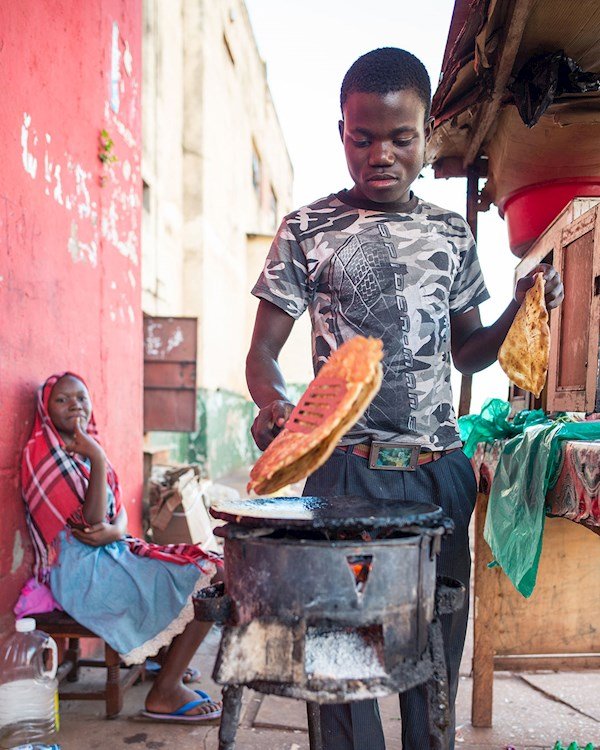
Uganda street food offers one of the easiest ways to experience everyday Ugandan cooking. While traditional restaurants introduce visitors to foods such as matooke, luwombo and groundnut sauce, roadside stalls and small neighborhood food stands reveal another side of the country’s food culture. Chapati is cooked on hot pans, eggs become freshly prepared Rolex, plantains are roasted over charcoal, maize is grilled beside busy roads, meat becomes muchomo, and inexpensive combinations such as kikomando provide substantial everyday meals.
Uganda Tourism Board has recognized food as part of the country’s tourism experience and describes Uganda’s varied cuisine as reflecting its culture and heritage. Its tourism reporting also documents support for the Rolex Festival as part of Uganda’s culinary tourism promotion. Visitors exploring Ugandan food and local cuisine should therefore make room for both traditional restaurant meals and street food.
Kampala provides the greatest concentration and variety for many international visitors, but Uganda street food is not confined to the capital. Chapati, Rolex, roasted maize, gonja and grilled foods can be encountered in towns and trading centers across the country. What is available changes according to location, time of day, season and individual vendor.
What Is Uganda Street Food?
Uganda street food refers broadly to ready-to-eat foods prepared and sold from roadside stands, market areas, small kiosks, informal restaurants and other quick-service food points. Some items are cooked directly in front of the customer, making the preparation itself part of the experience.
The category should not be confused with all traditional Ugandan food. Luwombo, for example, is an important traditional preparation associated with Buganda but is not primarily defined as street food. Rolex, on the other hand, is strongly identified with Uganda’s street-food culture.
Street food also overlaps with everyday eating. A plate of beans and chapati at a small neighborhood establishment may be less visually dramatic than a tourist-oriented restaurant meal, but it can reveal considerably more about affordable daily food combinations.
Rolex: Uganda’s Signature Street Food
Rolex is the food most international visitors associate with Uganda street food. Uganda Tourism Board has actively promoted the dish through culinary tourism initiatives, including support for the Rolex Festival. Official tourism reporting describes the festival as one of Uganda’s distinctive culinary tourism products.
The basic idea is simple: eggs and chapati are combined and rolled into a portable meal. Vegetables can be incorporated into the egg mixture or added during assembly. Exact recipes vary between vendors.
The name is commonly connected with the idea of “rolled eggs,” but colorful origin stories surrounding the precise invention of Rolex should be treated carefully unless supported by reliable historical evidence.
What can be established much more confidently is that Rolex has become a recognizable Ugandan street food and is widely available. It provides an inexpensive and convenient meal for students, workers, travelers and other customers looking for food prepared quickly.
What Is Inside a Ugandan Rolex?
A basic Rolex combines chapati and eggs. Depending on the vendor, chopped onions, tomatoes, cabbage, peppers or other vegetables may also be included.
The exact combination is not standardized. One vendor may prepare a simple egg-and-onion version while another incorporates several vegetables. Customers can sometimes request adjustments to the filling.
This flexibility is part of the Rolex experience. Rather than expecting every vendor to reproduce one definitive recipe, visitors should treat the basic chapati-and-egg combination as the foundation from which different versions are created.
How Is a Rolex Prepared?
The vendor begins by preparing the egg mixture. Eggs are cracked into a container and can be mixed with chopped vegetables and seasoning. The mixture is then poured onto a heated cooking surface or frying pan.
As the eggs cook, the vendor prepares or reheats the chapati. The cooked omelette and chapati are brought together, after which the food is rolled into a compact shape that can be held and eaten without cutlery.
Watching the preparation is one of the reasons Rolex is particularly interesting to travelers. Unlike a restaurant dish that arrives from a hidden kitchen, the customer can often watch each stage of the process from raw eggs and vegetables to the finished roll.
Where Can You Find Rolex in Uganda?
Kampala is one of the easiest places to find Rolex. Vendors operate in numerous neighborhoods and around busy areas where there is consistent pedestrian traffic.
Wandegeya is particularly well known for inexpensive food serving students and other customers, but visitors do not need to travel to one specific neighborhood to find Rolex. Stalls can be encountered throughout the capital and in many other Ugandan towns.
Jinja is another important destination in discussions of Rolex and Uganda’s wider street-food culture. Travelers combining food with a journey to Jinja and the Nile can look for freshly prepared Rolex while exploring the city.
Rolex can also be found in Entebbe, Mbarara, Fort Portal, Gulu and other urban centers. Availability at a particular stall naturally changes, so the better strategy is to look for active local food areas rather than traveling solely to a business named in an old online article.
How to Eat a Rolex
Rolex is designed to be convenient. The chapati keeps the egg filling together, allowing the finished roll to be eaten by hand.
It is generally best eaten shortly after preparation while the chapati and eggs are still warm. Depending on its size, a Rolex can function as breakfast, a snack or a substantial quick meal.
Visitors can ask what vegetables are available before ordering. Anyone with food allergies or dietary restrictions should also confirm ingredients directly with the vendor rather than relying on assumptions about a standard recipe.
Chapati: The Foundation of Several Street Foods
Chapati is one of the most important foods in Uganda’s everyday street-food environment. The flatbread has historical connections with South Asian cuisine and is found widely across East Africa, but it has become thoroughly integrated into Ugandan eating.
It can be eaten alone, used to scoop up beans or sauces, combined with beans in kikomando, or wrapped around eggs to create Rolex.
For visitors exploring Uganda’s food and cultural experiences, chapati provides an interesting example of how culinary traditions move between regions and eventually become embedded within local food culture.
How Ugandan Chapati Is Prepared
Chapati begins with wheat flour and water, with oil and other ingredients incorporated according to the cook’s recipe. The ingredients are mixed into dough and kneaded until workable.
The dough is divided into individual portions and rolled into flat rounds. Each piece is then cooked on a heated flat pan, usually with oil, until both sides develop browned areas and the bread is completely cooked.
Technique influences the finished texture. A well-prepared chapati can remain flexible enough to wrap around a Rolex filling while still developing browned, flavorful surfaces during cooking.
Where to Find Chapati
Chapati is among the easiest foods to find in Uganda. It is sold by street vendors, small restaurants, neighborhood eateries and roadside food stands.
In Kampala, chapati stalls frequently operate near busy roads, markets, taxi stages, commercial areas and neighborhoods with heavy pedestrian movement. Outside the capital, chapati remains common in towns and trading centers.
The widespread availability of chapati means visitors can compare preparations easily. Some are thinner, some thicker, some softer and others noticeably crisp around the edges.
Kikomando: Chapati and Beans
Kikomando demonstrates how two ordinary foods can be transformed into a substantial street meal. The basic combination consists of chapati cut or torn into pieces and mixed with bean sauce.
Instead of using the chapati to scoop the beans separately, the bread pieces sit directly in the sauce and begin absorbing it. The result is filling and straightforward.
Additional ingredients may be available depending on the vendor, but visitors should not assume every kikomando contains the same extras.
Kikomando is especially associated with inexpensive urban eating and can be found at small eateries and street-food establishments in Kampala. It is useful for travelers who want to understand everyday food rather than concentrating exclusively on dishes most frequently promoted to tourists.
How Kikomando Is Prepared
The beans and chapati are generally prepared independently. Cooked chapati is cut or torn into manageable pieces and placed on a plate or in a serving container. Hot bean sauce is then spooned over the bread.
The method is simple, but the combination works because the chapati absorbs the bean sauce while retaining some of its texture.
Kikomando also demonstrates a broader characteristic of Ugandan meals: starch and sauce frequently work together. The same relationship can be seen in posho with beans, matooke with groundnut sauce and millet preparations served with vegetable or meat sauces.
Gonja: Roasted Plantain
Gonja is another food travelers may encounter along Ugandan roads. It is made from ripe plantain and should not be confused with the green cooking bananas used to prepare matooke.
As plantain ripens, its sweetness increases. Cooking concentrates this character and produces a snack that is noticeably sweeter than steamed matooke.
One of the most recognizable preparations involves roasting gonja over charcoal. Vendors place peeled or partly prepared plantains over a small charcoal grill and turn them as they cook so that the surface develops browned or lightly charred areas.
Where to Find Roasted Gonja
Roadside trading areas are particularly good places to encounter roasted gonja. Vendors can sell it to motorists and passengers traveling between towns, making it a practical journey snack.
It can also be found in Kampala and other urban areas. Availability varies according to supply and individual vendor.
Travelers undertaking road trips through Uganda should watch for established roadside food areas where fresh produce and cooked snacks are being sold.
Roasted Maize
Fresh maize roasted over charcoal is another simple but recognizable roadside food. Unlike posho, which begins with maize flour, roasted maize uses the fresh cob directly.
The cob is placed over charcoal and turned repeatedly while the kernels cook. Direct heat creates dark roasted patches and a firmer texture than boiled maize.
Roasted maize is generally eaten directly from the cob. It does not require sauce or cutlery, making it particularly suitable for roadside eating.
Where to Find Roasted Maize
Roasted maize can appear at roadside stands, market areas and trading centers in different parts of Uganda. Availability depends partly on the agricultural season and local supply.
It is especially convenient for travelers moving between destinations because vendors frequently operate where vehicles stop or where there is consistent passing traffic.
The experience also provides a direct connection between Uganda’s agriculture and street food. Maize appears in one form as roasted cobs and in another as flour transformed into posho.
Muchomo: Uganda’s Grilled Meat
Muchomo refers broadly to roasted or grilled meat and is an important part of roadside and informal dining culture. Beef, goat and chicken are among the meats that can be prepared this way.
Pieces of meat are placed over charcoal or another heat source and cooked until done. Seasoning, marinades, cuts and serving styles vary between vendors.
Muchomo can be eaten by itself as a snack or accompanied by other foods. It is commonly associated with social eating, roadside stops and places where customers gather around active grills.
Where to Find Muchomo
Kampala has numerous establishments serving grilled meat, but muchomo is also commonly encountered outside the capital. Roadside trading centers and towns along major routes can have clusters of vendors preparing meat over charcoal.
Travelers should choose established vendors with visible food turnover and should make sure meat is thoroughly cooked before eating it.
Those incorporating local food into a Uganda safari experience will often encounter roadside grills while moving between destinations.
Mandazi
Mandazi is a fried dough food eaten in Uganda and elsewhere in East Africa. It can function as breakfast, a tea accompaniment or a quick snack.
The preparation begins with flour-based dough. Recipes vary, but the dough is portioned and fried in hot oil until cooked through and golden on the outside.
Mandazi can be relatively plain or slightly sweet depending on the recipe. Its portability makes it well suited to small shops, market stalls and quick-service food settings.
Where to Find Mandazi
Mandazi can be found at bakeries, tea shops, market areas, local restaurants and street-food stands. Morning is an especially useful time to look for freshly prepared batches because it is commonly eaten with tea or as part of breakfast.
It is not unique to Uganda, and a responsible Uganda food guide should not claim otherwise. Its importance lies in how thoroughly it has become integrated into everyday East African eating.
Samosas
Samosas provide another example of South Asian culinary influence becoming part of East African everyday food. In Uganda they are widely sold as snacks in restaurants, cafés, bakeries and street-food environments.
A thin pastry shell encloses a savory filling. Depending on the preparation, the filling may contain minced meat, vegetables, lentils or other ingredients. The filled pastry is then fried until crisp.
Because fillings vary, vegetarian visitors should confirm what is inside rather than assuming a samosa is meat-free.
Where to Find Samosas in Uganda
Samosas are easy to find in Kampala and other large towns. Cafés and established restaurants may serve them alongside tea, while small food businesses sell them as inexpensive takeaway snacks.
They are particularly useful when discussing Uganda’s urban food history because they show how migration and trade have influenced what people eat today.
Nsenene: Uganda’s Seasonal Grasshopper Delicacy
Nsenene are long-horned grasshoppers eaten as a seasonal food in Uganda and are particularly associated with central parts of the country.
Unlike Rolex or chapati, nsenene are not reliably available throughout the year. Their presence in markets and street-food settings increases during seasons when the insects emerge in large numbers.
Preparation generally involves removing unwanted parts before cooking. Nsenene can then be fried or otherwise cooked, with salt and additional ingredients incorporated according to the vendor or household recipe.
Where to Find Nsenene
Kampala markets and street-food areas can become particularly active with nsenene vendors during the appropriate season. The insects can also be sold in other parts of central Uganda.
Visitors should treat seasonal availability as part of the experience rather than expecting a restaurant to maintain nsenene permanently on its menu.
Trying nsenene can be incorporated into a broader Ugandan cultural food experience, particularly for travelers interested in foods that receive less attention internationally.
Fresh and Fried Cassava
Cassava is much more than a formal meal staple. Depending on preparation, it can also appear in quick-service and roadside food environments.
Fresh cassava must be properly prepared before eating. For boiled cassava, roots are peeled and thoroughly cooked until tender. Other preparations may involve further cooking or frying.
Visitors should buy cooked cassava from established food vendors rather than attempting to prepare unfamiliar raw cassava themselves.
Boiled Eggs
Boiled eggs are among the simplest quick foods sold in Ugandan urban and roadside environments. Their portability allows vendors to sell them without elaborate cooking facilities at the point of purchase.
They can be eaten plain or accompanied by seasonings and fresh additions depending on the vendor. Preparation styles around boiled eggs can change considerably, so visitors should watch how an individual vendor serves them rather than expecting one national formula.
Chips and Fried Foods
Fried potatoes are widespread in Uganda’s urban food scene. They can be eaten alone, with chicken, meat, fish, eggs or other accompaniments.
Chips represent the modern, internationally influenced side of everyday Ugandan food rather than an ancient regional staple. Their popularity nevertheless makes them part of the contemporary food environment visitors actually encounter.
Small restaurants, takeaway businesses, street-food vendors and larger restaurants throughout Kampala and other cities serve fried potatoes.
Street-Side Chicken
Chicken can be grilled, roasted or fried in street and roadside food environments. Preparation differs substantially between vendors, from small grilled pieces to larger portions served with chips or another staple.
Travelers should look for vendors cooking food thoroughly and maintaining a steady customer turnover. Chicken should be completely cooked before consumption.
Street Food for Breakfast
Uganda’s street-food environment begins early in many areas. Chapati, mandazi, tea, eggs and other breakfast foods can be available while people travel to work, school or markets.
Rolex is particularly suitable as breakfast because it combines bread, eggs and vegetables in one portable meal. Katogo, although more often associated with small restaurants and home-style cooking than portable street food, provides another substantial Ugandan breakfast option.
Visitors who eat only at international hotel breakfast buffets can easily miss this side of Uganda’s everyday food culture.
Street Food for Lunch
Lunch can range from a quick Rolex to a more substantial plate at a small local eatery. Chapati and beans, kikomando, grilled meat and other foods can provide inexpensive midday meals.
Small restaurants blur the boundary between street food and conventional dining. A customer may sit on a simple bench or chair while eating food prepared only a few meters away.
Street Food in the Evening
Some Ugandan street-food areas become particularly active in the evening as workers travel home and customers gather around food stands. Grilled meat, chapati, Rolex and fried foods can all form part of the nighttime food environment.
Availability depends strongly on neighborhood and city. Travelers unfamiliar with an area should follow sensible local guidance regarding where to walk after dark rather than choosing food stalls solely from an online recommendation.
Kampala Street Food
Kampala is the strongest starting point for travelers specifically interested in Uganda street food. The capital’s population, universities, markets, commercial districts and transport networks create constant demand for affordable ready-to-eat meals.
Rolex, chapati, kikomando, mandazi, samosas, roasted foods and grilled meat can all be found in different parts of the city.
Street-food exploration can be combined with Kampala’s traditional restaurants so that visitors experience both quick everyday meals and more elaborate dishes such as luwombo.
Street Food in Jinja
Jinja has its own busy urban food environment and is particularly convenient for travelers visiting the Nile. Chapati and Rolex are readily recognizable choices, while restaurants and markets provide opportunities to explore additional foods.
Visitors traveling on a Jinja and River Nile trip can incorporate local eating into the experience rather than relying exclusively on lodge or hotel meals.
Street Food in Entebbe
Entebbe provides a useful introduction for travelers arriving through Uganda’s main international airport. Local restaurants and informal food businesses operate beyond the international hotels and airport-oriented dining environment.
The city’s Lake Victoria location also makes fish particularly relevant to its wider food scene, although a restaurant fish meal should not automatically be classified as street food.
Street Food Outside Uganda’s Major Cities
Road travel exposes visitors to another important form of everyday eating. Trading centers along major routes frequently contain clusters of shops and vendors serving passengers, drivers and local residents.
Roasted maize, gonja, grilled meat, chapati and other quick foods can be encountered depending on route, season and location.
This is one reason food can add another dimension to travel across Uganda. Roadside stops reveal foods and ingredients that are easy to miss when traveling directly between airports and luxury accommodation.
How Much Does Uganda Street Food Cost?
Street-food prices change with location, ingredient costs, portion size and economic conditions. A permanent guide should therefore avoid presenting one old price as though it applies everywhere indefinitely.
Rolex is generally positioned as affordable everyday food, but prices vary according to the number of eggs, additional ingredients and vendor. Similar variation applies to chapati, meat, snacks and other street foods.
Travelers should ask the current price before ordering when it is not displayed. This is more reliable than planning around prices copied from an article published several years earlier.
Is Uganda Street Food Safe?
No street-food environment can be guaranteed risk-free, and it would be misleading to describe every vendor as either safe or unsafe. Visitors can make more informed choices by observing basic food-handling conditions.
Look for food that is cooked thoroughly and served hot. Vendors with consistent customer turnover may be preferable because ingredients and cooked food are moving quickly. Observe whether raw and cooked ingredients appear to be handled separately and whether the cooking area looks reasonably maintained.
For Rolex, watching the eggs cook completely provides useful reassurance. For chicken and muchomo, make sure meat is thoroughly cooked. Travelers with food allergies should communicate them clearly because street vendors may use shared cooking surfaces and utensils.
Vegetarian Uganda Street Food
Uganda’s street-food scene provides several possibilities for travelers who avoid meat. Chapati itself is commonly meat-free, although ingredients should be checked when dietary requirements are strict.
A Rolex can often be made with eggs and vegetables without meat. Kikomando combines chapati and beans. Roasted maize and gonja provide plant-based snacks, while vegetable samosas may also be available.
Vegan travelers need to ask more questions because recipes and cooking fats can vary. A dish that appears plant-based may share a cooking surface or contain ingredients not visible in the finished food.
Street Food and Food Allergies
Travelers with serious allergies need particular caution because small vendors may prepare multiple foods on the same surface and may not have formal allergen-management procedures.
Groundnuts deserve special attention in Uganda because peanuts are widely used in sauces and other preparations. Eggs and wheat are central ingredients in Rolex, while chapati is normally wheat-based.
Anyone requiring strict avoidance should confirm ingredients and cross-contact risks rather than relying on the appearance of a dish.
How to Order Street Food in Uganda
Ordering is generally straightforward when a vendor is preparing food in front of the customer. With Rolex, customers can indicate how many eggs they want and ask which vegetables or additions are available.
For grilled foods, ask about the portion and current price before ordering. With foods that are already cooked, choosing freshly prepared or hot portions is preferable.
Visitors should carry practical small-denomination payment options where appropriate and confirm the price instead of assuming it from an outdated online guide.
Why Travelers Should Try Uganda Street Food
Street food provides something that even excellent hotels cannot fully reproduce: direct access to the rhythm of everyday eating. The customer sees the charcoal stove, hears chapati cooking on the pan, watches vegetables being chopped and receives the meal moments after it is assembled.
Rolex is the clearest example. Uganda Tourism Board’s support for the Rolex Festival shows that the food has also become part of how Uganda presents its culinary identity to visitors.
Yet Rolex should not overshadow everything else. Chapati, kikomando, gonja, roasted maize, mandazi, samosas, muchomo and seasonal nsenene all reveal different aspects of everyday eating.
Visitors interested in authentic Uganda food experiences should combine street food with traditional restaurants, markets and regional cuisine. No single environment provides a complete picture.
Street Food and Uganda’s Wider Food Culture
Uganda street food demonstrates that cuisine continually evolves. Some foods have deep connections with traditional agriculture, while others reflect historical exchange and modern urban life.
Maize connects street-side roasted cobs with posho served at home. Plantains connect roasted gonja with Uganda’s wider banana-growing culture. Chapati reflects South Asian influence but has become an everyday Ugandan food. Rolex then takes chapati and transforms it again into something particularly associated with Uganda.
This interaction between older ingredients, imported influences and local innovation is one of the reasons Ugandan cuisine cannot be reduced to a list of supposedly ancient dishes.
Best Way to Experience Uganda Street Food
Begin with a freshly prepared Rolex and watch the entire cooking process. Try chapati independently afterward so that its texture and flavor are easier to understand. Follow that with a simple kikomando to see how chapati functions when combined with bean sauce.
During road travel, look for roasted gonja or maize at established stops. In the appropriate season, ask about nsenene. Try muchomo where meat is being freshly grilled and thoroughly cooked.
Most importantly, use local knowledge. Guides, accommodation staff and Ugandan hosts can often identify busy food areas and explain what is particularly popular in the destination you are visiting. Travelers incorporating food into Uganda cultural travel can learn considerably more by asking why people eat a particular food and when it is normally eaten.
Uganda Street Food Beyond Rolex
Rolex deserves its reputation as Uganda’s signature street food, but it is only the beginning. Chapati provides the foundation for multiple everyday meals. Kikomando demonstrates inexpensive urban ingenuity. Gonja and roasted maize connect roadside food directly with agriculture. Muchomo represents charcoal-grilled food culture, while mandazi and samosas reveal Uganda’s connections with the wider East African and Indian Ocean culinary world.
Together these foods make street eating an essential part of a complete Uganda Food Guide. They answer not only what Ugandans eat, but where people eat, how food is prepared quickly, how ingredients are combined and how modern Ugandan cuisine continues to develop.
Ugandan Breakfast, Lunch, Dinner, Snacks, Desserts and Drinks
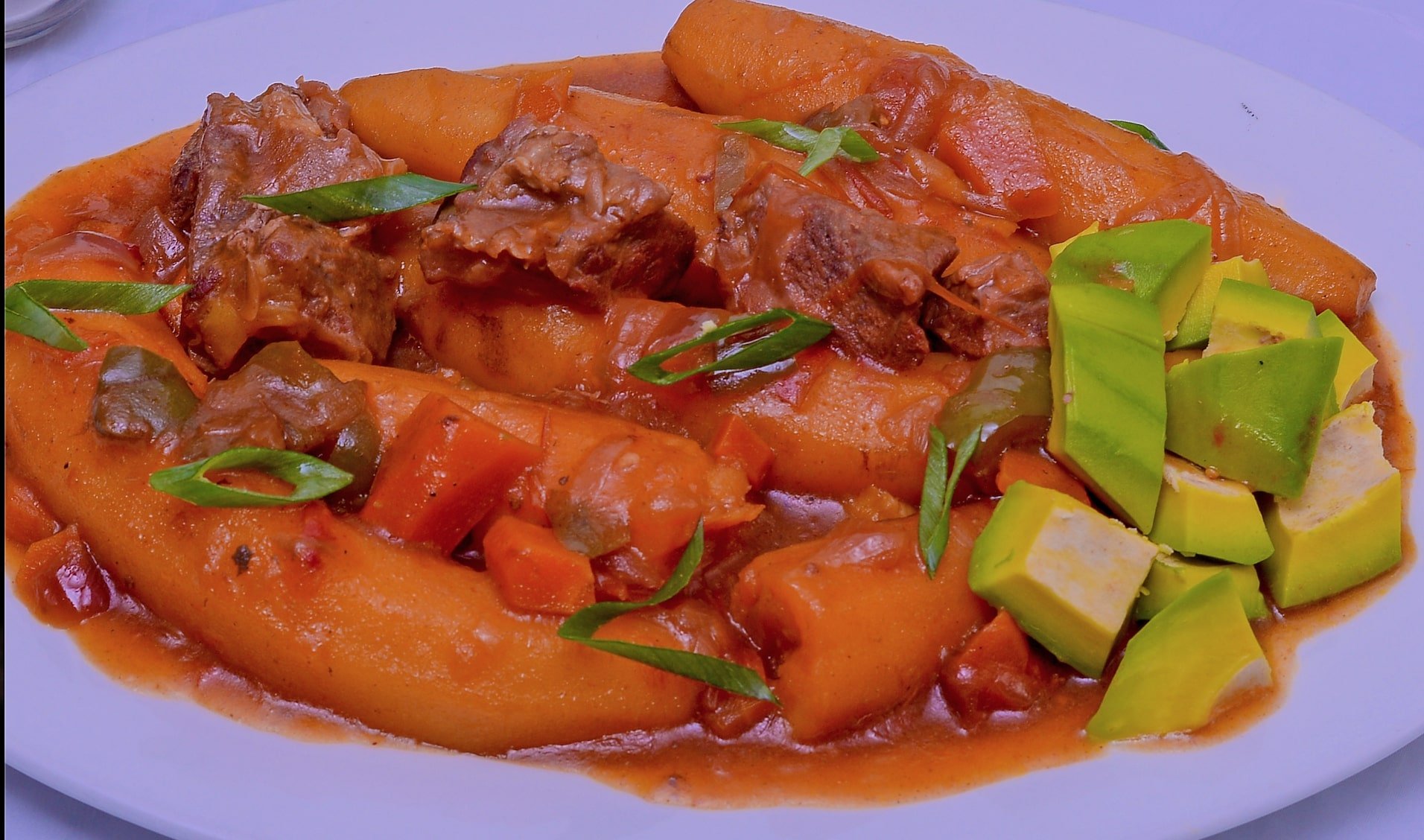
Ugandan breakfast, lunch and dinner reveal just how diverse everyday eating can be across the country. A visitor might begin the morning with katogo, chapati, porridge, tea or a freshly prepared Rolex, eat matooke with groundnut sauce or beans for lunch, and finish the day with grilled tilapia, luwombo, millet bread, posho or another substantial meal. Between meals, roasted maize, gonja, mandazi, samosas and seasonal foods provide convenient snacks, while tea, coffee, fruit juices and traditional beverages add another dimension to Uganda’s food culture.
There is no single menu that defines what Ugandans eat throughout the day. Uganda has more than 50 ethnic groups, and regional agriculture strongly influences food traditions. Uganda’s Ministry of Foreign Affairs identifies matooke, posho and groundnut sauce among typical foods while specifically associating luwombo with the Baganda and malakwang with the Acholi. It also describes the Ugandan Rolex as popular street food. This diversity means a useful Uganda food guide needs to explain both meals and the cultural context in which different foods are eaten.
What Do Ugandans Eat for Breakfast?
Breakfast in Uganda ranges from a quick cup of tea and a simple baked or fried food to a substantial plate capable of functioning almost like lunch. What is eaten depends on household, region, occupation, income, time available and whether someone is eating at home, at a roadside establishment, in a restaurant or at a hotel.
Common foods visitors may encounter in the morning include katogo, chapati, Rolex, mandazi, porridge, boiled cassava, sweet potatoes, bread, eggs and tea. Hotels generally provide a much broader breakfast selection and may combine Ugandan foods with eggs, bread, fruit, cereals and other international breakfast choices.
The important point is that travelers should not expect the distinction between “breakfast food” and “lunch food” to match European or North American conventions. A combination containing matooke, beans or meat can be entirely appropriate in the morning.
Katogo: One of Uganda’s Most Famous Breakfast Foods
Katogo is one of the best foods for understanding a substantial Ugandan breakfast. Rather than being one completely fixed recipe, katogo is a combination in which a staple and an accompaniment are cooked together.
Matooke is one common foundation. Green cooking bananas can be cooked with beans, beef, offal or another sauce. Versions using Irish potatoes, cassava or other ingredients also exist.
The name is closely associated with the idea of combining foods, and the result is usually substantial enough to provide considerable energy for the morning. Katogo is particularly easy to find in local restaurants serving breakfast in Kampala and other Ugandan towns.
Travelers interested in traditional Ugandan breakfast should consider katogo before defaulting to an international hotel breakfast. It demonstrates the country’s use of staple crops much more clearly than toast and eggs alone.
How Katogo Is Prepared
Preparation depends on the type of katogo. In a matooke version, green cooking bananas are peeled and placed into a pot with the chosen accompaniment. Onions, tomatoes or other ingredients may contribute to the sauce depending on the recipe.
The ingredients cook together until the bananas become tender and the sauce develops. This one-pot structure distinguishes katogo from a meal where separately prepared matooke is simply placed beside an independently cooked stew.
Recipes vary significantly between cooks, so visitors should not expect every plate of katogo to taste identical.
Where to Find Katogo
Kampala is one of the easiest places to find katogo, particularly during breakfast hours. Small restaurants and local-food establishments are generally more likely to serve it routinely than restaurants centered exclusively on international cuisine.
Katogo can also be encountered in towns throughout Uganda. Availability depends on the establishment, and visitors seeking a particular version should ask what has been prepared that morning.
Rolex for Breakfast
The Ugandan Rolex is another excellent breakfast option, particularly for travelers who want something portable. Uganda’s Ministry of Foreign Affairs describes Rolex as a popular street food consisting of rolled chapati with eggs and vegetables.
The vendor cooks an omelette, often incorporating chopped onions, tomatoes, cabbage or other available vegetables. The cooked egg is combined with chapati and rolled into a compact meal.
Rolex can be eaten at other times of day, so it should not be classified exclusively as breakfast. Its combination of eggs, chapati and vegetables nevertheless makes it particularly suitable for the morning.
Kampala has an enormous number of Rolex vendors, while the food is also found in towns throughout Uganda. Travelers can explore it as part of a wider Uganda cultural food experience.
Chapati at Breakfast
Chapati is one of the most versatile foods in Uganda. It can be eaten with tea, served with beans, incorporated into kikomando or wrapped around eggs to make Rolex.
To prepare chapati, wheat-flour dough is kneaded, portioned, rolled and cooked on a hot flat pan, generally with oil. The finished bread is flexible, slightly chewy and browned on the surface.
Fresh chapati is readily available from street stalls, neighborhood restaurants and small eateries in Kampala and other towns.
Mandazi and Tea
Mandazi is another common morning food and snack. It is a fried flour-based dough found across East Africa and widely eaten in Uganda.
The dough is shaped into individual pieces and fried until cooked through and golden. Recipes vary in sweetness and richness, meaning some mandazi are relatively plain while others have a sweeter character.
Mandazi works particularly well with tea and can be purchased from bakeries, tea shops, roadside vendors and small restaurants. Freshly prepared morning batches are preferable when available.
Porridge for Breakfast
Porridge is another important breakfast category. Millet, maize and other cereal flours can be cooked with water to create a drinkable or spoonable breakfast.
Preparation generally involves introducing flour into water and cooking while stirring to prevent lumps. The consistency can range from relatively thin to substantially thicker depending on household preference.
Milk or sweetening may be added in some preparations, but visitors should not assume that every Ugandan porridge follows one standardized recipe.
Sweet Potatoes and Cassava in the Morning
Ugandan breakfast does not need to resemble a Western breakfast. Boiled sweet potatoes and cassava can form part of the morning meal and may be accompanied by tea, beans, groundnuts or other foods.
Sweet potatoes are cooked until tender and have a naturally sweeter character than cassava. Cassava requires correct preparation and thorough cooking before consumption.
These foods are especially useful for travelers who want to understand the relationship between Ugandan agriculture and everyday eating.
Tea at Breakfast
Tea is a familiar breakfast drink in Uganda. It can be served black or with milk, and sugar may be added according to preference.
Milk tea can accompany chapati, mandazi, bread, eggs or a more substantial breakfast. Tea is available almost everywhere from hotels and restaurants to simple roadside establishments.
For visitors staying in lodges during travel around Uganda, tea and coffee are also common components of early breakfasts before morning activities.
What Do Ugandans Eat for Lunch?
Lunch often demonstrates the basic structure of a Ugandan main meal particularly clearly. A substantial staple can be accompanied by beans, groundnut sauce, vegetables, meat, chicken or fish.
Matooke, posho, rice, cassava, sweet potatoes, millet preparations and Irish potatoes can all appear. Restaurants may offer customers several staples from which to choose.
A simple lunch might consist of posho and beans. Another might combine matooke and groundnut sauce. A larger restaurant meal can provide two or more staples with vegetables and meat or fish.
Matooke for Lunch
Matooke is one of Uganda’s most recognizable main-meal staples. Green cooking bananas are peeled and traditionally steamed until tender. Banana leaves play an important role in traditional preparation methods.
The cooked bananas can be mashed and served with groundnut sauce, beans, vegetables, beef, chicken or fish. Matooke is particularly important in central and western Uganda but can be found far beyond those regions.
Kampala restaurants serving local cuisine provide easy access for visitors, while eating matooke in banana-growing areas of western and central Uganda adds valuable agricultural context.
Posho and Beans
Posho and beans provide one of the clearest examples of an uncomplicated everyday Ugandan meal. Posho is made by working maize flour into hot water until a firm, dense consistency develops.
The mild maize staple pairs naturally with bean sauce. Beans are cooked until tender and may be prepared with onions, tomatoes or other ingredients according to the cook’s recipe.
This combination is inexpensive, filling and widely available. Travelers who want to understand ordinary eating should try it rather than concentrating entirely on elaborate traditional dishes.
Groundnut Sauce at Lunch
Groundnut sauce is made from peanuts and is an important accompaniment to Ugandan staples. It can be served with matooke, sweet potatoes, cassava, posho and vegetables.
The groundnuts are processed and simmered into a rich sauce. Exact recipes vary, and other ingredients can be incorporated.
Travelers with peanut allergies need to ask specifically about groundnuts because the ingredient may be completely incorporated into a sauce.
Rice and Pilau
Rice is common in contemporary Ugandan meals and can accompany beans, vegetables, chicken, beef, goat or fish.
Pilau transforms rice into a more strongly flavored dish through the use of aromatic spices and, frequently, meat. The exact spice combination and preparation vary between cooks.
Pilau is especially common at restaurants, gatherings and celebrations. Its presence also illustrates the historical influence of wider East African and Indian Ocean culinary connections on food in Uganda.
Freshwater Fish for Lunch
Uganda’s lakes provide important fish foods. Tilapia and Nile perch are two of the best-known examples, while smaller fish such as mukene also contribute to the country’s cuisine.
Tilapia can be grilled, fried or cooked in sauce. A whole fish may be served with matooke, posho, rice, cassava, vegetables or chips.
Entebbe and other Lake Victoria destinations are particularly appropriate places to look for fish. Uganda Tourism Board also identifies tilapia and Nile perch among foods visitors can experience around the Ssese Islands.
What Do Ugandans Eat for Dinner?
Dinner can use many of the same staple foods and sauces served at lunch. There is no strict national rule that reserves particular traditional dishes exclusively for the evening.
Matooke, rice, posho, cassava, sweet potatoes, millet and potatoes can all form the base of dinner. Beans, vegetables, groundnut sauce, fish, beef, goat and chicken provide possible accompaniments.
Restaurants and hotels may make evening meals more elaborate, while home meals can be considerably simpler. Special occasions can introduce preparations requiring more time and labor.
Luwombo for a Traditional Dinner
Luwombo is among the most distinctive dishes visitors can seek when they want a more elaborate traditional Ugandan meal. Uganda’s Ministry of Foreign Affairs specifically associates the preparation with the Baganda and describes meat or groundnut sauce being steamed in banana leaves.
Ingredients are placed inside carefully prepared banana leaves, which are folded into a parcel and steamed. Chicken, beef, fish, mushrooms or groundnut-based fillings can be prepared using variations of the technique.
The enclosed cooking method helps retain moisture and creates the characteristic presentation of the dish. Luwombo is especially associated with Buganda and can be found at traditional-food restaurants and cultural dining establishments in Kampala.
Grilled Tilapia for Dinner
Whole grilled tilapia can provide one of Uganda’s most satisfying evening meals, especially near Lake Victoria. The fish is cleaned and cooked over heat until the flesh is done and the exterior develops roasted character.
It may be served with vegetables, matooke, rice, cassava, posho or chips depending on the establishment.
Entebbe, Kampala and lakeside destinations are convenient places to look for freshly prepared tilapia. Visitors should confirm the day’s fish and preparation directly with the restaurant.
Muchomo in the Evening
Muchomo refers to roasted or grilled meat and can include goat, beef or chicken. It is associated with roadside food, casual restaurants and social eating.
Pieces of meat are cooked over charcoal or another direct heat source until done. Marinades, seasoning and serving styles vary.
Muchomo can be eaten independently or alongside other foods. Kampala has many grilled-meat establishments, while roadside trading centers also provide opportunities to encounter it during Uganda food travel.
Millet Bread and Regional Dinner Foods
Travel outside central Uganda introduces visitors to grain traditions that receive less international attention than matooke. Millet can be milled and transformed into a dense staple designed to accompany sauces.
Uganda’s Ministry of Foreign Affairs specifically notes that the Acholi prepare malakwang, a sour vegetable stew served with millet bread. This makes northern Uganda particularly interesting for travelers seeking a meal distinctly different from banana-centered cuisine.
Millet preparations also occur in other regions, and recipes and terminology vary between communities.
Malakwang
Malakwang is a vegetable preparation particularly associated with Acholi cuisine in northern Uganda. Its sour character distinguishes it from many other vegetable accompaniments.
The greens are cooked and can be combined with other ingredients to create a substantial sauce or stew. It is traditionally paired with millet bread according to Uganda’s official cultural information.
Gulu and other parts of Acholi provide the strongest cultural context for trying malakwang.
Ugandan Snacks Between Meals
Snacking in Uganda can involve fried dough, roasted crops, fruit, street food or grilled foods. Some snacks are light, while others are substantial enough to replace a meal.
Chapati, mandazi, samosas, roasted maize, gonja and boiled eggs are among the foods travelers may encounter. Rolex can technically function as a snack, but larger versions are easily substantial enough to constitute breakfast or lunch.
Road travel is particularly good for discovering Ugandan snacks because vendors often sell food near markets, trading centers and established stopping points.
Gonja
Gonja is ripe plantain that can be roasted or fried. It should not be confused with matooke, which uses green cooking bananas as a starchy staple.
For roasted gonja, ripe plantains are cooked over charcoal and turned as their surfaces brown. The heat intensifies their sweetness and creates lightly caramelized or charred areas.
Roadside vendors are particularly associated with roasted gonja, making it a convenient snack during long drives through Uganda.
Roasted Maize
Fresh maize can be roasted directly over charcoal and eaten from the cob. The preparation is extremely simple but illustrates the close relationship between Uganda’s agriculture and everyday food.
The cob is repeatedly turned over the heat until the kernels cook and develop browned areas.
Roasted maize can be encountered at roadside stands, markets and trading centers, although availability can change with agricultural seasons.
Samosas
Samosas are another widely available snack. They reflect South Asian culinary influence that has become deeply integrated into East African urban food culture.
A thin pastry casing contains a savory filling that may include minced meat, vegetables, lentils or another mixture. The filled pastry is fried until crisp.
Kampala cafés, bakeries, restaurants and informal vendors frequently sell samosas. Vegetarian travelers should confirm the filling before purchasing.
Nsenene
Nsenene are long-horned grasshoppers eaten seasonally in Uganda and particularly associated with central Uganda. They are very different from foods such as chapati or mandazi because availability depends heavily on season.
Preparation involves removing unwanted parts before cooking. The insects may then be fried, with salt, onions or other additions depending on the preparation.
During the appropriate season, nsenene can become highly visible in markets and food-selling areas around Kampala and elsewhere in central Uganda.
Fresh Fruit as an Everyday Snack
Uganda’s agricultural environment provides visitors with access to a wide variety of fruit. Depending on season and location, markets and vendors may sell bananas, pineapples, mangoes, papaya, passion fruit, watermelon and other produce.
Fruit can be eaten independently or transformed into fresh juice. Travelers purchasing cut fruit should consider how it has been washed, handled and stored.
Markets are excellent places to see Uganda’s produce diversity even when visitors prefer to consume fruit prepared at their hotel or restaurant.
Does Uganda Have Traditional Desserts?
Travelers expecting every Ugandan dinner to conclude with a formal dessert course may be surprised. Traditional Ugandan food is generally better known internationally for staples, sauces, vegetables, meat and fish than for a large nationally standardized repertoire of plated desserts.
This does not mean Ugandans do not eat sweet foods. Fresh fruit, sweetened fried dough, sesame-based sweets, cakes and other desserts can all be encountered. Modern restaurants and hotels also serve international-style desserts.
The distinction matters for accuracy. Foods eaten as snacks or with tea should not automatically be reclassified as ancient Ugandan desserts simply to create a longer dessert list.
Mandazi as a Sweet Snack
Mandazi can occupy the space between breakfast food, tea accompaniment and sweet snack. Some recipes are only mildly sweet, while others use more sugar or aromatic ingredients.
Fresh mandazi pairs particularly well with tea or coffee. It is widely available and generally much easier to find than a specialized traditional dessert.
Simsim Sweets
Simsim is the East African term commonly used for sesame. Sesame seeds can be incorporated into sweet preparations by combining them with a sugary binding mixture and forming the result into compact pieces.
These sweets demonstrate how an agricultural ingredient used in savory regional cooking can also become a snack or confection.
Availability varies between markets, shops and vendors, so travelers should ask locally rather than expect simsim sweets on every restaurant dessert menu.
Fresh Fruit After a Meal
Fresh fruit provides one of the simplest ways to finish a meal in Uganda. Pineapple, papaya, watermelon, mango and banana can appear depending on season and establishment.
Hotels frequently include fruit in breakfast displays and may also offer fruit plates or fruit salads later in the day.
Choosing seasonal fruit also allows visitors to experience Ugandan agricultural products without requiring an elaborate recipe.
Cakes and Modern Ugandan Desserts
Kampala’s cafés, bakeries and hotels serve cakes, pastries, ice cream and international-style desserts. These foods are part of contemporary urban dining even when they cannot accurately be described as uniquely traditional Ugandan desserts.
This distinction is useful for visitors: a Uganda food guide can cover what people actually eat today without claiming that every popular modern food originated in Uganda.
What Do Ugandans Drink?
Ugandan drinks range from tea and coffee to water, soft drinks, fresh fruit juice and culturally significant traditional beverages. What is consumed varies enormously by household, region, occasion and individual preference.
Tea is particularly visible in everyday eating, while Uganda’s coffee production means visitors also have opportunities to taste locally grown coffee. Fresh tropical fruit provides the foundation for juices served by many hotels, restaurants and cafés.
Traditional fermented and alcoholic beverages also exist, but their preparation and terminology vary by community. Travelers should distinguish commercially packaged beverages from traditional household or community preparations.
Ugandan Tea
Tea is one of the most accessible drinks for visitors. It appears at breakfast, during breaks and as an accompaniment to foods such as chapati and mandazi.
Tea may be served black or with milk. Ginger or spices may be incorporated in some preparations, but recipes vary.
Hotels, lodges, restaurants and roadside establishments throughout Uganda serve tea, making it one of the easiest everyday drinks to experience.
Ugandan Coffee
Uganda is an important coffee-producing country, and coffee can add an agricultural dimension to a food-focused trip. Both Robusta and Arabica coffee are grown in Uganda, with growing conditions differing by region and altitude.
Kampala has a developed café culture where visitors can taste locally sourced coffee in espresso-based and filtered preparations. Coffee-growing regions provide a deeper experience by connecting the finished drink with farms and processing.
Travelers combining cuisine with Ugandan cultural experiences can consider a coffee-focused activity where it is available through a reputable local operator.
Fresh Fruit Juice
Fresh juice is common in hotels, restaurants and cafés. Passion fruit, pineapple, mango and mixed fruit combinations are among the possibilities visitors may encounter.
Availability depends on season and establishment. Some drinks are freshly squeezed or blended, while others may be prepared in larger batches.
Visitors concerned about water quality should favor reputable establishments and confirm that safe drinking water is used where water or ice is added.
Passion Fruit Juice
Passion fruit is particularly well suited to juice because of its strong flavor and aromatic pulp. The fruit is opened and the pulp processed with water before being strained or otherwise prepared according to the recipe.
Sugar may be added depending on the natural acidity of the fruit and the establishment’s recipe.
Passion fruit juice is widely encountered in restaurants and hotels and makes an excellent non-alcoholic accompaniment to Ugandan food.
Pineapple and Mixed Fruit Juice
Ugandan-grown pineapple can be exceptionally useful both as fresh fruit and juice. Restaurants may serve pure pineapple juice or combine it with passion fruit, mango, watermelon or other available fruits.
There is no single national recipe for mixed juice, so ingredients should be confirmed if a traveler has allergies or specific dietary requirements.
Traditional Fermented Drinks
Uganda has several traditions involving fermented beverages made from locally available crops. Ingredients and names vary between communities, and it would be inaccurate to describe one beverage as representing the whole country.
Bananas and cereal grains can be used in traditional fermented beverages in particular regions. Production methods can involve several stages of processing and fermentation.
Visitors interested in traditional beverages are best served by experiencing them through a reputable cultural program where the ingredients, preparation and cultural meaning can be explained accurately.
Banana-Based Traditional Beverages
Bananas occupy a much wider role in Ugandan food culture than matooke alone. Different banana varieties have different culinary purposes, and some are associated with beverage production rather than being steamed as a staple.
Traditional banana beverages can involve extraction of banana juice followed, depending on the beverage, by fermentation and other processing.
The exact process varies, so travelers should avoid treating every banana-based drink as identical.
Commercial Ugandan Beverages
Modern Uganda also has a substantial commercial beverage market. Bottled water, soft drinks, juices, beers and spirits are widely available in cities, hotels, restaurants and shops.
Commercial beverages should be treated separately from traditional household drinks because manufacturing, standardization and distribution are completely different.
What Do Uganda Safari Lodges Serve?
Safari lodges usually serve a mixture of Ugandan and international food rather than restricting visitors to one culinary tradition. Breakfast can include fruit, tea, coffee, eggs and bread alongside local foods where offered. Lunch and dinner frequently provide several courses or buffet selections.
Better food experiences include opportunities to try local staples and sauces rather than eating exclusively international dishes throughout the safari.
Travelers interested in local Ugandan foods on safari can ask their lodge which Ugandan dishes are being prepared during their stay.
What Do Kampala Hotels Serve?
Large Kampala hotels generally combine international cuisine with Ugandan or wider African dishes. Breakfast buffets can be particularly broad, while lunch and dinner menus may include local staples, grilled meat, fish and international options.
Travelers specifically seeking matooke, luwombo, groundnut sauce or another traditional preparation should confirm availability with the hotel rather than assuming a dish appears every day.
For the widest understanding of Uganda’s food culture, combine hotel dining with local restaurants and street-food experiences.
Best Ugandan Breakfast for First-Time Visitors
Katogo is an excellent choice for travelers who want a genuinely substantial introduction to Ugandan breakfast. A matooke-and-bean version also demonstrates how staples and sauces work together.
A freshly prepared Rolex provides a completely different experience and introduces contemporary street food. Chapati with tea or mandazi with tea offers a lighter alternative.
Trying several breakfasts during a trip is preferable to searching for one definitive national breakfast.
Best Ugandan Lunch for First-Time Visitors
A mixed local plate is particularly useful at lunch. Matooke, posho or sweet potato can be paired with groundnut sauce, beans, vegetables or meat.
The advantage of a mixed plate is comparison. Visitors can taste how the same sauce interacts differently with matooke and posho and can immediately understand why Uganda has multiple staple traditions.
Freshwater fish provides another excellent lunch, particularly around Lake Victoria.
Best Ugandan Dinner for First-Time Visitors
Luwombo is one of the strongest choices for a more elaborate dinner because both the ingredients and cooking method are culturally informative. A chicken or groundnut luwombo served with matooke provides a particularly strong introduction to Buganda cuisine.
Grilled tilapia is another excellent option around Lake Victoria. Travelers in northern Uganda should instead take advantage of the opportunity to try millet and regional vegetable preparations such as malakwang when available.
Best Ugandan Snacks for Visitors
Start with roasted gonja or maize during a road journey, then try mandazi with tea and a freshly fried samosa. Chapati can be eaten independently before trying it as part of Rolex or kikomando.
During nsenene season, adventurous visitors can ask locally about properly prepared grasshoppers. Seasonal availability should be respected rather than treating nsenene as a guaranteed year-round snack.
Eshabwe

Eshabwe is a traditional sauce particularly associated with the Bahima and Ankole food traditions of western Uganda. It is notable because its principal ingredient is mature ghee rather than vegetables, meat or legumes.
Traditional preparation combines carefully handled ghee with a salt solution and works the mixture into a thick, pale sauce. Because methods can differ, visitors should regard restaurant versions as individual interpretations of a broader traditional preparation.
Western Uganda provides the strongest cultural context for eshabwe. Igongo and other cultural dining environments around the Ankole region are particularly relevant places to ask about it.
Malewa
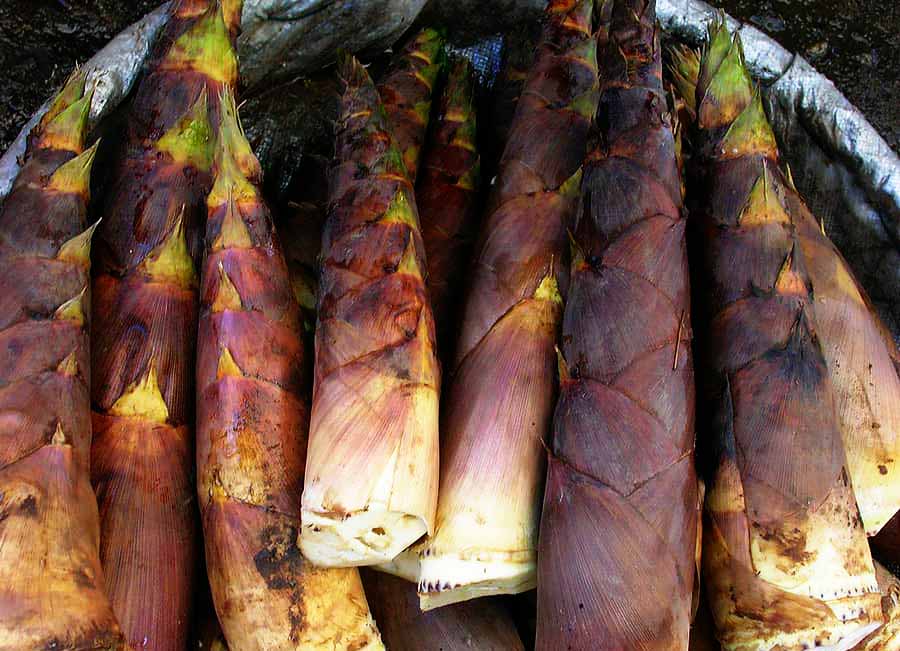
Malewa is one of Uganda’s most regionally distinctive foods. It is made from bamboo shoots and is particularly associated with the Bagisu of the Bugisu region around Mount Elgon in eastern Uganda.
Young bamboo shoots can be smoked and dried for preservation. During preparation, the shoots are boiled to soften and clean them, hard joints are removed, and the edible portions are cut into pieces. Groundnut paste can then be incorporated to produce a sauce.
Mbale and the wider Bugisu region provide the best geographical context for trying malewa. It is served in restaurants, homes and at cultural functions in the region. Travelers interested in Uganda’s regional cuisine should not restrict their food exploration to Kampala.
Goat Stew
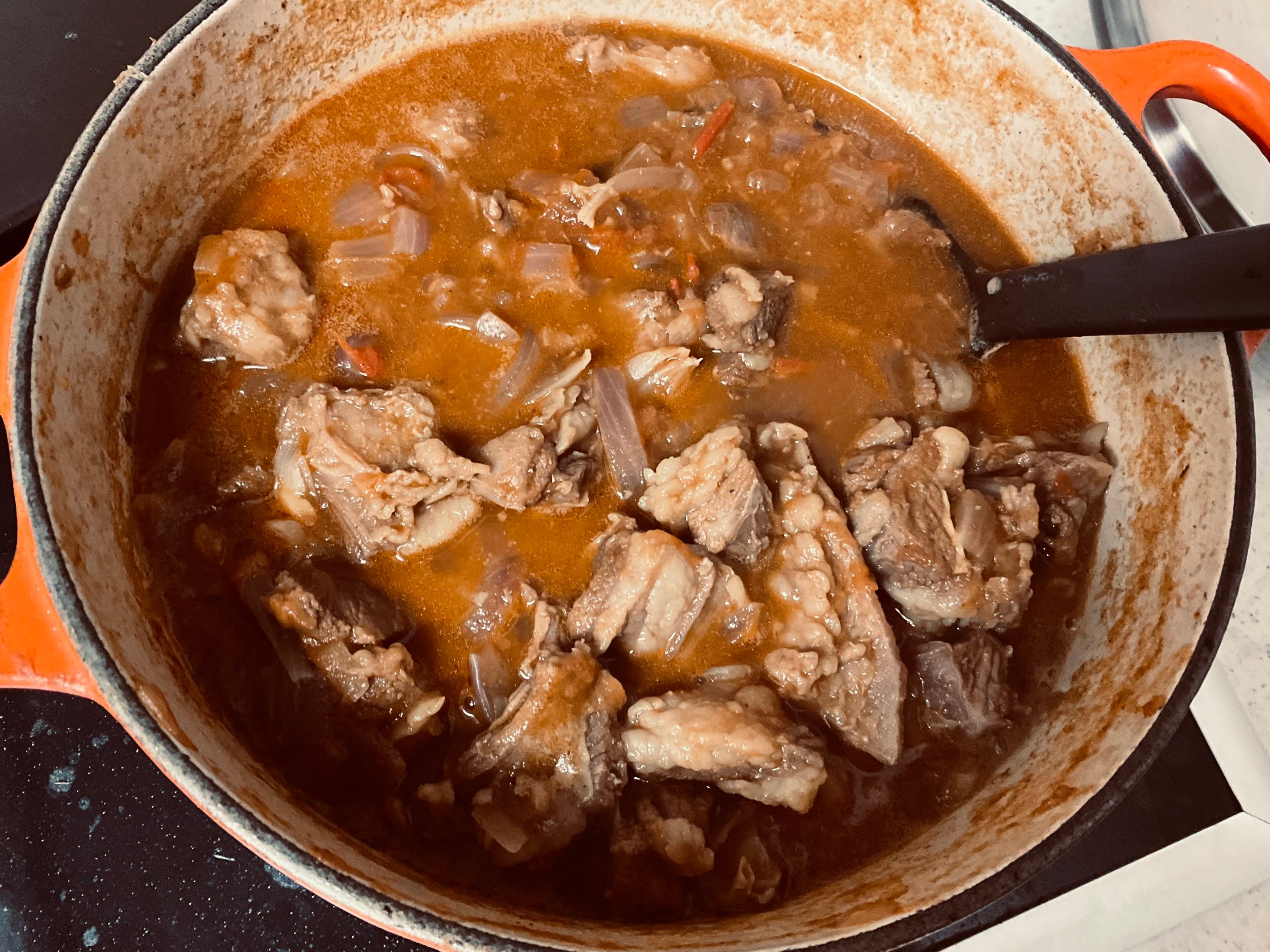
Goat meat appears in Ugandan restaurants, celebrations and roadside food culture. While muchomo is one common preparation, goat can also be simmered into stew.
Pieces of goat are cooked until tender with ingredients such as onions and tomatoes. Recipes can incorporate ginger, garlic and seasonings depending on the cook. The stew can then be served with matooke, posho, rice, cassava or potatoes.
Goat stew is available in Kampala and throughout many other Ugandan towns. Restaurants specializing in local food are the most straightforward places for visitors to find it.
Cowpeas
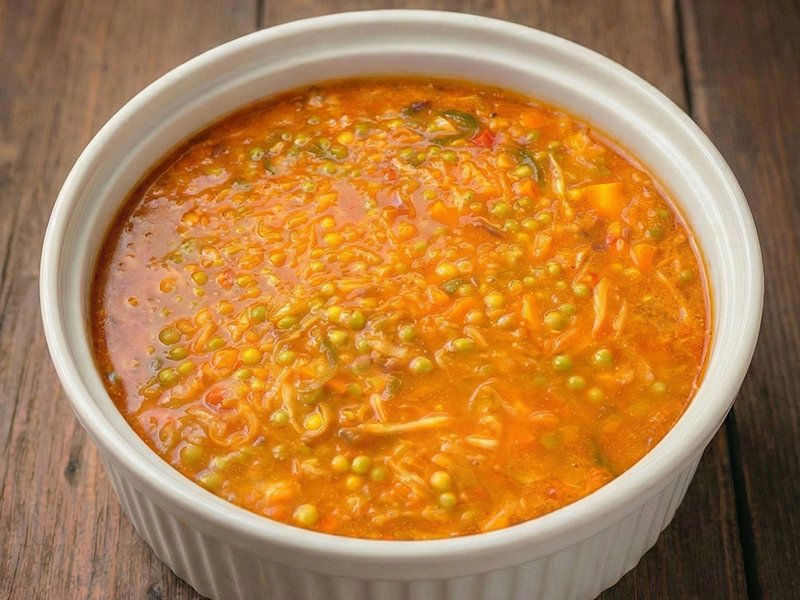
Cowpeas are part of Uganda’s broader legume food tradition and can be cooked into sauces or combined with other ingredients. They are less internationally famous than matooke or Rolex but illustrate the importance of pulses within everyday food.
The peas are cooked until tender and can be incorporated into tomato-based or vegetable sauces. Household methods and additional ingredients vary.
Visitors are more likely to encounter cowpeas in local-food settings than restaurants designed primarily around international cuisine.
Smoked Fish
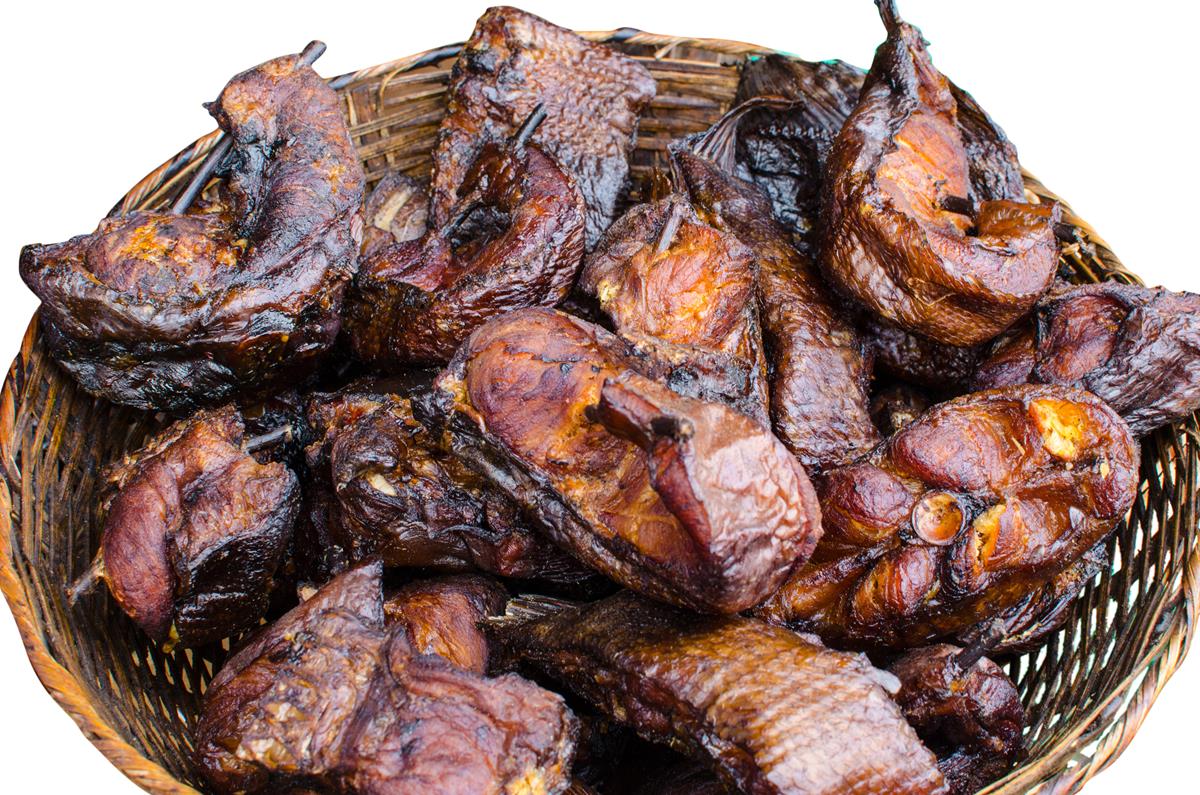
Smoked fish is another important expression of Uganda’s freshwater food traditions. Smoking extends the usable life of fish while creating a distinctive flavor that works particularly well in sauces.
The fish is exposed to smoke and heat until preserved, after which it can be stored or transported. Before serving, smoked fish may be simmered in a sauce or incorporated into other traditional preparations.
Markets and lakeside communities are particularly useful places for visitors to see smoked fish, while traditional restaurants may serve it in cooked sauces.
Roasted Maize
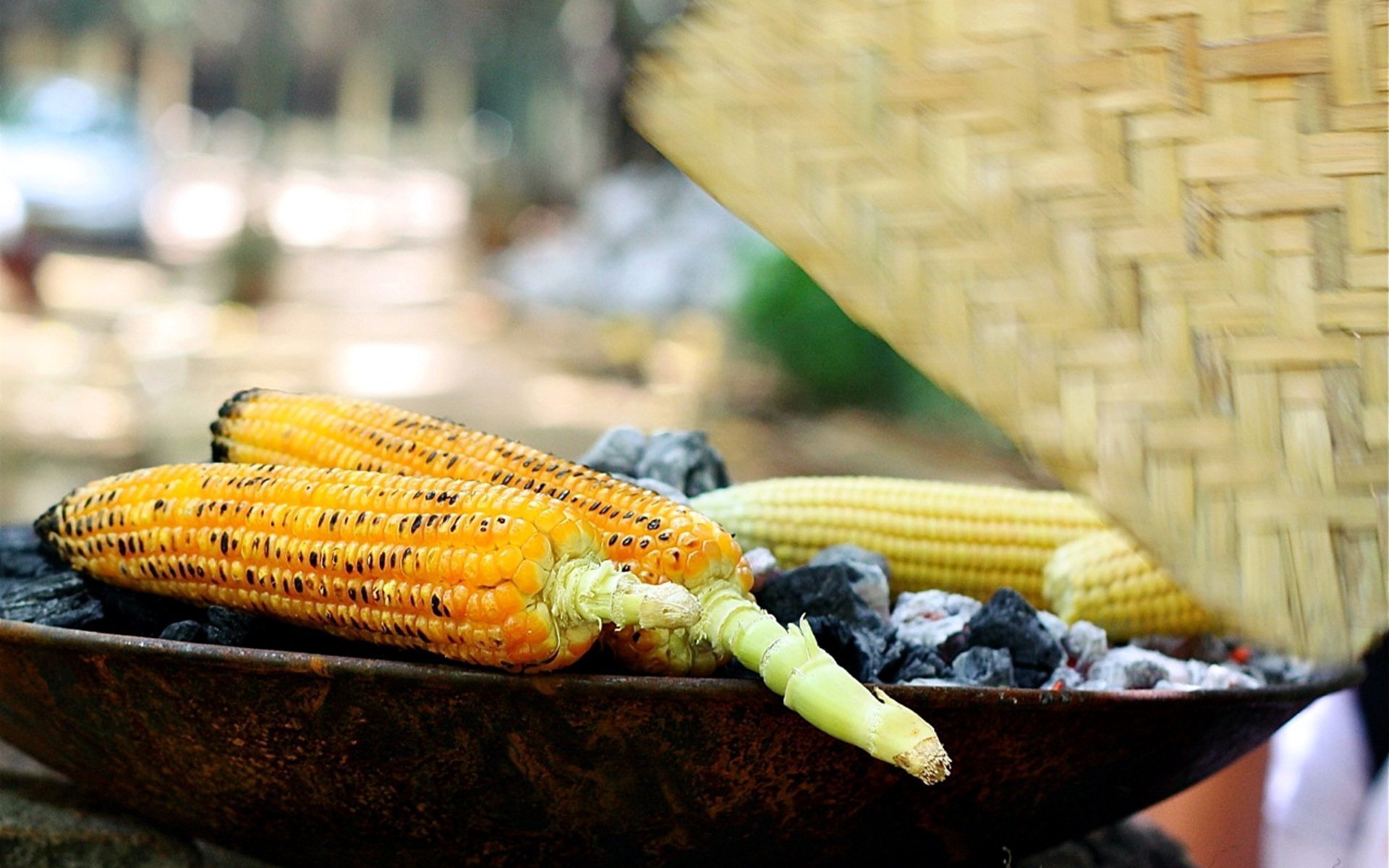
Fresh maize roasted over charcoal is one of the simplest foods travelers can encounter in Uganda. Unlike posho, which uses maize flour, roasted maize is cooked and eaten directly from the cob.
The fresh cob is placed over charcoal and turned repeatedly so that the kernels cook evenly and develop charred areas. It is normally eaten hot without requiring an elaborate sauce or accompaniment.
Roasted maize is commonly encountered at roadside stalls, markets and trading centers. It is especially convenient for travelers moving between towns and safari destinations.
Pumpkin and Groundnut Preparations
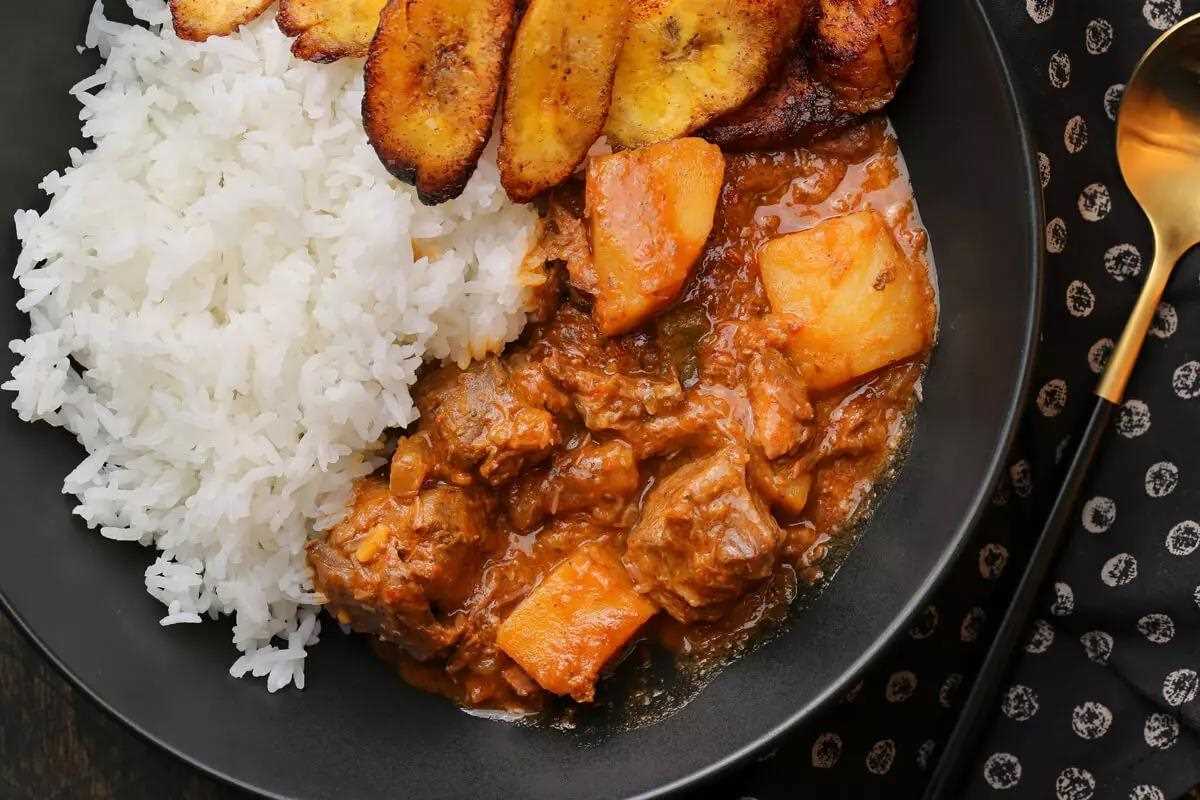
Pumpkin is among the vegetables cooked in Ugandan households and can be boiled, steamed or incorporated into sauces. Combining pumpkin with groundnuts illustrates how vegetables and legumes can produce a substantial accompaniment without meat.
Preparation generally involves cooking pumpkin until tender and combining it with a groundnut-based sauce. The finished dish can accompany rice, matooke, posho, cassava or sweet potatoes.
Availability depends heavily on the restaurant and season, making local restaurants and home-style food establishments better places to ask for pumpkin preparations than international hotel menus.
Traditional Ugandan Food Is Best Explored Region by Region
These foods demonstrate why a serious guide to traditional Ugandan cuisine needs to go considerably further than matooke and Rolex. Buganda contributes traditions such as luwombo and a particularly strong relationship with matooke. Northern Uganda introduces millet-based foods and dishes such as malakwang. Western Uganda adds traditions such as eshabwe and strong millet and banana food cultures. Eastern Uganda contributes distinctive foods including Bugisu’s malewa, while Uganda’s lakes support tilapia, Nile perch, mukene and smoked-fish traditions.
The most rewarding approach is therefore to ask what is local to each destination. Kampala provides perhaps the greatest concentration of choices because restaurants can bring together foods from different regions, but traveling outside the capital gives those dishes geographical and cultural context. A broader Uganda culinary journey can combine restaurants, produce markets, roadside stalls, cultural centers and regional travel.
Preparation is equally important. Steaming matooke in banana leaves, enclosing luwombo inside a leaf parcel, vigorously working millet or maize flour into kalo or posho, simmering groundnuts into sauce, smoking malewa, charcoal-roasting gonja and grilling muchomo all demonstrate different cooking techniques. Understanding those methods helps explain why Ugandan cuisine cannot be reduced to a simple list of ingredients.
For first-time visitors, a practical tasting sequence would begin with matooke and groundnut sauce, followed by luwombo, Rolex, katogo and posho. After that foundation, regional travel should determine what comes next. Malewa makes particular sense around Mbale and Bugisu, eshabwe in western Uganda, malakwang in northern Uganda and fresh fish around Lake Victoria and other fishing areas.
Visitors who deliberately include local food traditions in their itinerary gain a more complete understanding of Uganda because these dishes connect directly with farming, markets, regional identity, hospitality and everyday life.
Where to Find Traditional Ugandan Food
Kampala offers the widest practical selection for most international visitors. Local-food restaurants, cultural centers and established hotels provide opportunities to try matooke, luwombo, groundnut sauce, posho, fish and other staples. Street-food stalls add Rolex, chapati, Kikomando, gonja, roasted maize and muchomo.
For regional specialties, location matters. Mbale and the wider Bugisu region are particularly relevant for malewa. Western Uganda is important for eshabwe and regional millet traditions. Northern Uganda provides better cultural context for malakwang and cereal staples. Lake Victoria destinations such as Entebbe and lakeside areas provide convenient access to freshwater fish.
Food travelers can also include markets because they show the ingredients before cooking. Seeing bunches of green matooke, cassava roots, sweet potatoes, beans, groundnuts, millet, maize and dried fish makes restaurant dishes considerably easier to understand.
How to Choose Traditional Ugandan Food as a Visitor
Instead of searching for a single supposed national dish, choose foods that demonstrate different ingredients and techniques. Matooke shows banana-leaf steaming, luwombo demonstrates enclosed leaf cooking, posho demonstrates maize preparation, kalo introduces millet, groundnut sauce illustrates Uganda’s use of peanuts, and Rolex introduces contemporary street-food culture.
Then add something regionally distinctive. Malewa, eshabwe, malakwang, mukene or nsenene can make the experience considerably more informative. Travelers planning a wider Uganda food adventure should ask restaurant staff or local guides which dishes genuinely belong to the area being visited rather than expecting exactly the same menu everywhere.
Traditional Ugandan food ultimately makes the most sense when viewed as part of Uganda’s cultural geography. The country’s cooking bananas, cereals, roots, legumes, vegetables, freshwater fish and livestock are transformed through steaming, boiling, mingling, frying, smoking, roasting and slow cooking. From a banana-leaf parcel of luwombo to a freshly rolled street-side Rolex, each preparation tells a different part of Uganda’s food story.
Staple Foods in Uganda and How Ugandan Meals Work
Staple foods in Uganda form the foundation of everyday meals and provide one of the best ways to understand Ugandan cuisine. Rather than centering every meal around meat or fish, many Ugandan meals begin with a substantial carbohydrate-rich staple and combine it with a sauce, stew, beans, vegetables, groundnuts, meat or freshwater fish. The staple provides the body of the meal, while the accompaniment contributes moisture, richness and additional flavor.
There is no single staple food eaten uniformly throughout Uganda. Cooking bananas, maize, cassava, sweet potatoes, millet, sorghum, rice and Irish potatoes all have places within the country’s food system. Their importance varies considerably according to region, agriculture, household preferences and availability. Understanding these differences is essential when exploring traditional food in Uganda.
How Does a Traditional Ugandan Meal Work?
A useful way to understand many Ugandan meals is to think about the relationship between the staple and the accompaniment. A serving of matooke, posho, cassava, sweet potatoes, millet preparation or rice may occupy a substantial part of the plate. It can then be eaten with beans, groundnut sauce, vegetables, beef stew, goat, chicken or fish.
This structure means the staple does not necessarily need to have an intense flavor of its own. Foods such as posho and matooke work particularly well with sauces because they provide a mild base that absorbs or complements the accompaniment.
A plate of posho and beans demonstrates the idea simply. Posho supplies the substantial maize component while bean sauce contributes moisture and flavor. Matooke with groundnut sauce works in a similar way, although the ingredients, texture and flavor are completely different.
More elaborate meals can contain several staples and accompaniments at once. A restaurant plate might combine matooke, rice, sweet potatoes or posho with vegetables and a choice of sauce. This is why visitors should avoid assuming that a traditional Ugandan meal consists of one named dish served by itself.
Matooke as a Staple Food
Matooke is among the most recognizable staple foods in Uganda. It is made from green cooking bananas and is particularly important in central and western Uganda. These bananas are harvested while green and are cooked rather than eaten raw like sweet dessert bananas.
Traditional preparation involves peeling the green bananas and cooking them until tender. Steaming is particularly significant, and traditional techniques can involve wrapping the bananas in banana leaves before they are steamed. Once sufficiently soft, the cooked bananas can be mashed into a smooth, dense staple.
The mild character of matooke allows it to accompany richer foods. Groundnut sauce is an important pairing, while beans, vegetables, beef, chicken and fish can also be served with it.
Visitors can find matooke throughout Kampala and many other parts of Uganda. Central Uganda and western Uganda provide particularly useful cultural and agricultural contexts for understanding the food. Travelers exploring Uganda beyond Kampala can see how strongly banana cultivation influences food traditions in these regions.
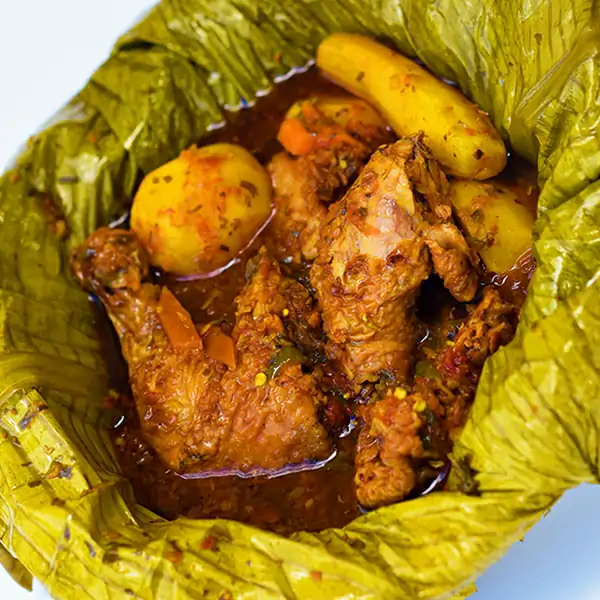
Why Matooke Is Different From Ordinary Bananas
Visitors sometimes assume matooke is simply a sweet banana served with savory food. That is misleading. The varieties used for matooke are cooking bananas. They are harvested green and become a starchy staple after cooking.
The distinction is important because bananas occupy several different culinary roles in Uganda. Matooke is cooked as a staple, while ripe plantains such as gonja can be roasted or fried and have a noticeably sweeter character. Dessert bananas are another category again and can be eaten as fruit.
Understanding these distinctions helps visitors make sense of the extensive displays of bananas encountered in Ugandan produce markets.
Posho and the Importance of Maize
Posho is another major staple encountered throughout Uganda. It is made from maize flour cooked with water until it develops a firm consistency. Similar maize preparations exist elsewhere in East Africa under different names, but posho is the term visitors will commonly encounter in Uganda.
Preparation begins with hot or boiling water. Maize flour is gradually incorporated and continuously worked into the water. As more flour is incorporated and the maize cooks, the mixture becomes increasingly dense. The finished posho is substantially firmer than maize porridge.
Posho is typically eaten with a sauce rather than alone. Beans provide one of the most familiar accompaniments, but vegetables, groundnut sauce and meat stews can also be served with it.
Its accessibility and filling character make posho particularly important within everyday food. Travelers interested in the difference between celebratory cuisine and ordinary meals should therefore try posho rather than limiting themselves to famous dishes such as luwombo and Rolex.
Where to Find Posho in Uganda
Posho is widely available. Local restaurants in Kampala, roadside eateries and restaurants in towns throughout Uganda frequently serve it as one of several possible staples.
Visitors do not need to seek out an expensive specialist restaurant to experience it. In fact, an ordinary local restaurant serving freshly prepared posho with beans or stew can provide a more representative introduction to the role maize plays in everyday Ugandan meals.
Cassava as a Ugandan Staple
Cassava is one of Uganda’s important root crops and has traditionally been especially significant in northern and eastern parts of the country. It is valued because the root can be eaten after appropriate preparation and can also be processed into flour.
For a straightforward boiled preparation, cassava roots are peeled, cleaned, cut into manageable pieces and cooked thoroughly until tender. The cooked root can then accompany beans, vegetables, fish, meat or another sauce.
Cassava can also be dried and processed into flour. In some regional traditions, cassava flour is combined with cereal flour to create a stiff staple. This demonstrates why cassava should not be understood simply as a boiled root vegetable; it has multiple functions within Uganda’s food system.
Visitors can see fresh cassava in produce markets across Uganda. Regional travel in northern and eastern Uganda provides particularly useful context for understanding its importance.
Sweet Potatoes in Ugandan Meals
Sweet potatoes are another significant root staple. Uganda grows different varieties, and the food can be incorporated into breakfast, lunch or other meals depending on household and region.
One of the simplest preparations involves boiling or steaming sweet potatoes until soft. They can then be served with beans, groundnut sauce, vegetables, meat or another accompaniment.
The natural sweetness provides a different flavor profile from relatively neutral staples such as posho. A meal of sweet potatoes and groundnut sauce, for example, combines sweetness from the root with the richer, savory character of the groundnuts.
Sweet potatoes are widely sold in Ugandan markets and are commonly available in local food environments.
Millet and Traditional Ugandan Grain Foods
Millet has longstanding importance in several Ugandan communities and is particularly relevant when discussing northern, eastern and parts of western Uganda. It can be milled into flour and used for porridge or prepared as a dense staple eaten with sauce.
A stiff millet preparation requires flour to be incorporated into hot water and worked continuously until it develops the required texture. Depending on regional tradition, millet flour can also be combined with cassava flour.
The result is very different from matooke or posho in both ingredient and flavor. Millet contributes a stronger cereal character and is particularly informative for visitors exploring regional Ugandan cuisine.
Food traditions connected with millet are one reason a cultural journey through Uganda should extend beyond the capital. Kampala can offer examples of regional cuisine, but eating a food within the region where it has longstanding cultural importance adds valuable context.
Kalo and How It Is Eaten
Kalo is a term visitors may encounter for a firm staple associated with millet and, depending on the regional preparation, millet combined with cassava flour. Terminology and recipes vary between communities, so one recipe should not be presented as representing every form of kalo in Uganda.
The preparation generally requires flour to be worked vigorously into hot water until it forms a dense, cohesive mass. It is then served with an accompaniment rather than being eaten as a dry food by itself.
Kalo can accompany meat sauces, vegetables and other regional preparations. In northern Uganda, millet-based staples are particularly important for understanding traditional grain-centered meals.
Sorghum in Uganda
Sorghum is another cereal crop with an established place in Uganda’s agricultural and food traditions. Its importance is particularly relevant in areas suited to hardy cereal production, including parts of northern and northeastern Uganda.
Sorghum can be milled into flour and used in porridge and other cereal preparations. Its exact culinary use varies according to community and household, making it important to distinguish well-documented regional practices from generalized claims about all Ugandan meals.
Visitors are more likely to understand sorghum’s cultural context when traveling through the regions where it is grown and consumed rather than expecting it to dominate restaurant menus in central Kampala.
Rice in Ugandan Cuisine
Rice is widely eaten in contemporary Uganda and frequently appears alongside older regional staples. It can accompany beans, vegetables, chicken, beef, goat, fish and groundnut-based sauces.
Plain boiled rice provides a relatively neutral base for sauces, while seasoned preparations such as pilau create a much more aromatic dish. The distinction matters because rice itself is a staple ingredient that can participate in several different styles of meal.
Rice is readily available in restaurants and hotels throughout Kampala and other Ugandan towns. It is often one of the easiest staples for international visitors to recognize, but trying it alongside matooke, posho or millet provides a better understanding of the country’s broader food culture.
Irish Potatoes
Irish potatoes are another important starch in contemporary Ugandan meals. Production is particularly associated with cooler highland environments, while distribution means potatoes can be eaten throughout the country.
They can be boiled and served with sauce, incorporated into stews or used in variations of combination dishes such as katogo. Restaurants may also fry potatoes, although fried chips should not be treated as representative of Uganda’s traditional potato preparations.
Travelers visiting highland areas can gain additional insight into the relationship between altitude, agriculture and food production. This connection between landscape and cuisine is an important theme throughout Uganda food experiences.
Beans and Why They Matter
Beans occupy an important position because they can transform a relatively simple staple into a substantial meal. They are frequently served with posho, matooke, cassava, sweet potatoes or rice.
Dried beans need to be thoroughly cooked until tender. They can then be prepared with onions, tomatoes or other ingredients according to the cook’s recipe, producing a sauce that can be spooned over or eaten alongside the staple.
Posho and beans is one of the clearest examples of how Ugandan meals work. Neither component needs to be elaborate. Together they produce a filling meal in which the firm maize staple and moist bean sauce complement each other.
Groundnuts and Groundnut Sauce
Groundnuts, commonly known internationally as peanuts, have an important role in Ugandan cooking. Rather than appearing only as a snack, groundnuts can be processed and transformed into a rich sauce.
Groundnuts are ground or processed before being cooked with liquid and other ingredients. The resulting sauce can accompany matooke, cassava, sweet potatoes, posho and vegetables.
Groundnut sauce demonstrates the relationship between staple and accompaniment particularly clearly. Mild matooke becomes a considerably richer meal when combined with the nutty sauce.
Travelers with peanut allergies should explicitly ask about groundnuts before eating sauces and stews because the ingredient may be incorporated into a dish rather than remaining visually identifiable.
Vegetables and Leafy Greens
Vegetables provide another important component of Ugandan meals. Different leafy greens and locally available vegetables can be boiled, steamed, sautéed or cooked into sauces according to regional and household traditions.
Malakwang provides a particularly distinctive regional example. Uganda’s Ministry of Foreign Affairs associates this sour vegetable preparation with Acholi cuisine in northern Uganda and notes its relationship with millet bread.
Vegetable dishes should not be treated merely as side decorations. When combined with groundnuts, sesame or another substantial ingredient, vegetables can become an important accompaniment to a staple.
Freshwater Fish and Ugandan Staples
Uganda’s freshwater systems add fish to the staple-and-sauce structure of meals. Tilapia, Nile perch and smaller fish such as mukene are among the fish visitors may encounter.
Tilapia can be fried, grilled or cooked in sauce. Nile perch may be served in portions because of the fish’s size, while mukene can be dried before further preparation.
Fish can accompany matooke, posho, cassava, rice and other staples. Lake Victoria destinations such as Entebbe and lakeside areas around Kampala provide particularly convenient places for travelers to explore freshwater fish dishes.
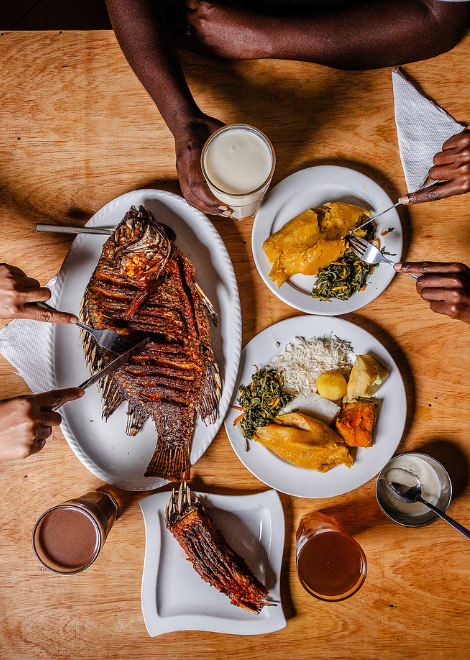
Meat, Chicken and the Staple
Beef, goat and chicken can be incorporated into sauces and stews that accompany Ugandan staples. Meat does not necessarily occupy the majority of the plate. A substantial portion of matooke, posho or another starch may be combined with a smaller portion of meat and sauce.
Cooking techniques vary. Meat can be stewed, roasted or grilled, while chicken can be prepared in sauce or through traditional methods such as luwombo, where ingredients are enclosed inside banana leaves and steamed.
This flexibility means the same staple can produce very different meals. Matooke with groundnut sauce provides a plant-based combination, while matooke with beef stew creates a different flavor and nutritional profile without changing the underlying staple.
Why Sauces Are So Important
Visitors unfamiliar with Ugandan food sometimes focus entirely on identifying the starch. Yet the sauce is often what transforms the eating experience.
Posho without an accompaniment is intentionally simple. Add beans and it becomes a familiar everyday combination. Add a meat stew and the experience changes again. Matooke can similarly accompany groundnut sauce, vegetables, chicken, beef or fish.
This explains why asking “What sauce comes with it?” can be as useful as asking which staple is being served.
Can a Ugandan Meal Have More Than One Staple?
Yes. Restaurant meals, buffets and special meals can contain several starches at once. A plate may include portions of matooke, rice, sweet potato, cassava or posho alongside one or more sauces.
This should not be interpreted as a strict formula for every household meal. What appears on a plate depends on availability, household resources, location, occasion and personal preference.
For travelers, a mixed plate can be particularly useful because it allows direct comparison. Trying matooke, posho and sweet potato with the same sauce makes differences in texture and flavor immediately apparent.
How Breakfast Uses Uganda’s Staple Foods
Staples are not restricted to lunch and dinner. Substantial foods can appear at breakfast, particularly in dishes such as katogo.
Katogo combines a staple with an accompaniment during cooking. Matooke and beans are one possible combination, while other versions can involve meat, cassava, Irish potatoes or different ingredients.
The result is a substantial breakfast that contrasts strongly with the light continental breakfast international visitors may encounter at hotels. Trying katogo is therefore useful for understanding how the distinction between breakfast food and main-meal food can differ across cultures.
How Regional Agriculture Shapes Ugandan Meals
Uganda’s staple-food diversity is inseparable from agriculture. Different crops perform better in different environments, and those agricultural patterns have influenced regional food traditions over generations.
Cooking bananas have particular importance in central and western Uganda. Millet, sorghum, cassava and maize become especially important when examining several northern and eastern traditions. Highland conditions favor crops such as Irish potatoes in suitable areas.
These are broad patterns rather than rigid culinary borders. Modern transport, markets and migration mean foods move throughout the country. A person in Kampala can eat millet, while a person in western Uganda can eat rice or posho. Regional association does not mean regional exclusivity.
Travelers taking a journey across Uganda can nevertheless observe how landscapes and agriculture influence which foods are especially prominent in different destinations.
Where Can Visitors Find Traditional Staple Foods?
Kampala is the easiest starting point because the capital brings together people and foods from across Uganda. Local restaurants serving Ugandan cuisine commonly offer a choice of staples, allowing visitors to compare matooke, posho, rice, sweet potatoes and other foods with different sauces.
Markets provide another valuable perspective. Rather than seeing only the cooked meal, visitors can identify bunches of green cooking bananas, cassava roots, sweet potatoes, maize, beans, groundnuts and other ingredients before preparation.
Regional travel provides deeper context. Central Uganda is particularly important for understanding matooke and Buganda food traditions. Western Uganda has strong banana and millet traditions, while northern and eastern journeys introduce visitors to regions where cassava and cereal foods have historically been particularly significant.
Hotels and Restaurants Serving Ugandan Staples
Several established Kampala hotels include African or Ugandan cuisine within their dining offerings. Kampala Serena Hotel states through its official hotel information that its restaurants serve authentic Ugandan specialties alongside international cuisine. Speke Resort Munyonyo also advertises African cuisine among its dining choices.
Specific dishes should always be confirmed before making a special journey because hotel menus, buffets and seasonal selections change. A hotel that serves Ugandan cuisine does not necessarily offer matooke, kalo or groundnut sauce every day.
For a broader experience, travelers should combine hotel dining with established local restaurants. Hotel kitchens provide convenience and formal service, while local restaurants can expose visitors to everyday combinations and a larger range of regional staples.
How to Order a Traditional Ugandan Meal
A practical approach is to choose the staple first and then ask which sauces or accompaniments are available. For example, a visitor might choose matooke and ask whether it can be served with groundnut sauce, beans, beef or chicken.
Another approach is to ask what combination the restaurant recommends. This is particularly useful with an unfamiliar regional food because the cook or server may know which accompaniment is traditionally paired with it.
Visitors interested in Ugandan food experiences should also ask guides and accommodation staff about foods characteristic of the destination rather than ordering the same dishes throughout the trip.
What Staple Should a First-Time Visitor Try?
Matooke is an excellent starting point because it introduces the importance of cooking bananas in Uganda. Pairing it with groundnut sauce demonstrates the relationship between a mild staple and a richer accompaniment.
Posho should also be tried because maize plays a very different culinary role. Posho and beans provide a particularly straightforward example of an everyday meal.
Millet or kalo should follow when available, especially during regional travel. Cassava and sweet potatoes then add root crops to the tasting experience. Comparing these foods gives visitors a much deeper understanding of Ugandan cuisine than trying one famous dish and assuming it represents the country.
Understanding the Ugandan Plate
The most important principle is that Ugandan food should be understood through combinations. Matooke becomes one meal with groundnut sauce and another with beef stew. Posho changes depending on whether it accompanies beans, vegetables or meat. Cassava can be eaten with sauce or transformed into flour for other preparations. Millet can become porridge or a firm staple.
This flexibility is one reason Uganda’s food culture is so varied. Staples provide continuity, while sauces, vegetables, proteins, cooking techniques and regional traditions create differences.
Anyone exploring Uganda’s traditional cuisine should therefore look beyond the question of what Ugandans eat and consider how foods are combined, where particular staples are important and how agriculture shapes what reaches the plate.
Matooke, maize, cassava, sweet potatoes, millet, sorghum, rice and Irish potatoes together reveal a country with several staple traditions rather than one universal national food. Beans, groundnuts, vegetables, fish and meat then transform those staples into complete meals. Once visitors understand that relationship, Ugandan restaurant menus, market displays and home-style meals become considerably easier to appreciate.
Ugandan Food by Region: Central, Western, Eastern, Northern and Northeastern Uganda
Ugandan food changes considerably as you travel across the country. Climate, agriculture, cultural traditions, livestock keeping, lakes, locally available crops and generations of cooking knowledge have all influenced what people grow, prepare and eat. This regional diversity is one of the most important things to understand about Ugandan cuisine.
Uganda’s Ministry of Foreign Affairs describes the country as culturally diverse and notes regional differences in food traditions. The Baganda are concentrated primarily in central Uganda, the Banyankole in the southwest, the Basoga in the east, the Acholi and Lango in the north, and the Karamojong in northeastern Uganda. Official cultural information specifically identifies luwombo with Baganda cuisine and malakwang with Acholi cuisine.
This means there is no accurate way to describe every traditional dish as equally representative of every part of Uganda. Matooke may dominate conversations about food in central and parts of western Uganda, while millet, cassava, sorghum and distinctive vegetable preparations become increasingly important when exploring other regions. Travelers interested in regional food traditions in Uganda should therefore allow the destination itself to influence what they order.
Central Uganda and the Food Traditions of Buganda
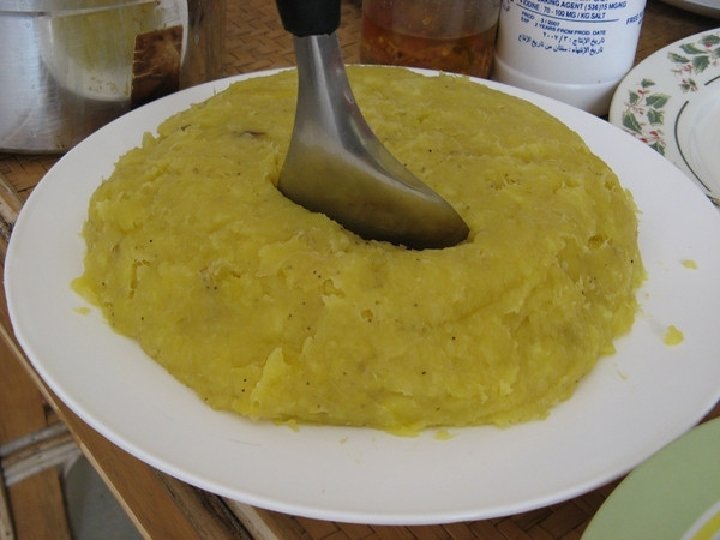
Central Uganda is the region many international travelers encounter first because it contains Kampala, Entebbe and much of the historic territory of Buganda. Food traditions associated with the Baganda consequently receive considerable attention in discussions of Ugandan cuisine.
Matooke is one of the defining foods of the region. Green cooking bananas are peeled and traditionally steamed until tender, often using banana leaves during preparation. The cooked bananas can then be mashed and served with groundnut sauce, beans, vegetables, beef, chicken or fish.
The importance of bananas extends beyond simply having matooke on the plate. Banana leaves are themselves important cooking materials. They can be used during steaming and are fundamental to the preparation of luwombo.
Luwombo in Central Uganda
Luwombo is particularly associated with Buganda. Uganda’s Ministry of Foreign Affairs describes the Baganda as favoring luwombo and explains it as meat or groundnut sauce steamed in banana leaves.
The preparation demonstrates how a local agricultural resource becomes both food and cooking material. Ingredients are enclosed inside prepared banana leaves, secured into a parcel and steamed. Chicken, meat, fish or groundnut-based preparations can be cooked using the technique.
Luwombo is especially worthwhile for visitors because it demonstrates a cooking method rather than simply introducing another ingredient. When the banana-leaf parcel is opened, the diner encounters food that has cooked within its own enclosed environment.
Kampala provides one of the easiest places for international visitors to find luwombo. Traditional-food restaurants, cultural dining venues and some hotels offer versions of the dish, although availability should be confirmed before visiting a particular establishment.
Groundnut Sauce in Central Uganda
Groundnuts are another important component of meals in central Uganda. Groundnuts can be processed into a rich sauce that accompanies matooke, sweet potatoes, cassava and other staples.
The contrast between mild matooke and richer groundnut sauce illustrates how many Ugandan meals work. The staple supplies much of the substance of the meal, while the sauce provides moisture and a more concentrated flavor.
Groundnuts can also feature in luwombo-style preparations. Visitors with peanut allergies should always verify ingredients directly because groundnuts may be incorporated into sauces rather than remaining visually identifiable.
Fish and Lake Victoria
Central Uganda’s relationship with Lake Victoria also influences its food landscape. Tilapia, Nile perch and smaller fish can be encountered in Kampala, Entebbe and communities connected with the lake.
Fish can be fried, grilled or cooked in sauce and served with matooke, posho, cassava, rice or other staples. Entebbe provides particularly convenient access to lakeside fish dining because of its position on Lake Victoria.
Central Uganda therefore provides an unusually broad introduction to the country’s cuisine. A traveler can eat traditional Buganda food, freshwater fish and contemporary street food without traveling enormous distances.
Rolex and Contemporary Kampala Food Culture
Not everything important to central Uganda’s food scene is an old ceremonial or agricultural tradition. Kampala is also one of the country’s major centers of contemporary street-food culture.
The Ugandan Rolex combines chapati with an egg-based filling, commonly including vegetables, before the food is rolled together. Uganda’s Ministry of Foreign Affairs identifies Rolex as a popular street food enjoyed across the country.
Kampala is one of the easiest places to watch Rolex being prepared directly by street vendors. The experience contrasts strongly with luwombo: one is an enclosed steaming technique associated with older Buganda traditions, while the other is a fast, portable urban street meal.
Where to Experience Central Ugandan Food
Kampala is the most convenient starting point. Visitors can combine established restaurants, hotels, cultural dining venues, markets and street-food stalls. Entebbe adds lakeside dining and convenient access to freshwater fish.
Travelers interested in understanding the broader cultural context can also incorporate cultural sites across Uganda into their journey. Food becomes considerably more meaningful when it is connected with the people and places from which a tradition comes.
Western Uganda and the Food Traditions of Ankole, Tooro and Bunyoro
Western Uganda contains several distinct cultural areas, including Ankole, Tooro and Bunyoro. These should not be treated as one completely uniform culinary culture. Nevertheless, several ingredients and food traditions help distinguish western Uganda from other parts of the country.
Bananas remain highly important in many western areas, while millet, beans, sweet potatoes, cassava, dairy products and livestock-related foods contribute to regional cuisine. Uganda’s Ministry of Foreign Affairs identifies the Banyankole of southwestern Uganda with a strong cattle-keeping tradition.
Slow Food has also documented the Ankole Long-Horned Cattle as part of Uganda’s important food biodiversity, reinforcing the relationship between cattle keeping and the agricultural heritage of this part of the country.
Eshabwe in Ankole
Eshabwe is one of the most distinctive foods associated with western Uganda, particularly Ankole food traditions. It is a ghee-based preparation rather than a conventional meat, vegetable or groundnut stew.
The preparation uses mature ghee combined with other ingredients to create a pale, rich sauce. It can accompany foods such as matooke, millet preparations and sweet potatoes.
For visitors, eshabwe is particularly useful because it reveals the influence of cattle keeping on regional cuisine. The relationship between cattle, milk products and food traditions becomes much clearer when traveling through Ankole than it does when looking at Ugandan food only through restaurants in Kampala.
Firinda in Tooro and Bunyoro
Firinda is associated particularly with Batooro and Banyoro food traditions. The dish is made from beans that undergo more preparation than a simple boiled bean stew.
The beans are soaked and their skins removed before cooking. They are then boiled and mashed into a thick preparation. Depending on the recipe, ghee and other ingredients can be incorporated.
Firinda can be eaten with millet-based staples or matooke. The Uganda travel source previously reviewed for this guide describes firinda as a traditional dish of Batooro and Bunyoro communities and notes its use during occasions such as weddings and when hosting visitors.
Millet in Western Uganda
Millet is another important part of the western Ugandan food landscape. It can be milled and worked with hot water to produce a dense staple that accompanies sauces.
Regional terminology and flour combinations can differ, making it important not to present one preparation as universal across western Uganda. In some cases millet may be combined with other flour, while in other preparations millet itself dominates.
Millet provides a useful contrast with matooke. One comes from cooking bananas and the other from grain, yet both can perform the same basic function of providing a substantial staple alongside a sauce.
Matooke in Western Uganda
Matooke remains highly important across significant parts of western Uganda. Banana-growing landscapes are common in suitable areas, and travelers frequently encounter green cooking bananas in markets and roadside trading centers.
Visitors following Uganda’s regional food journey can compare matooke served in Kampala with versions encountered farther west. The staple may be familiar, while accompaniments and surrounding food traditions change.
Where to Experience Western Ugandan Food
Mbarara and the wider Ankole area provide a useful base for exploring southwestern food traditions. Travelers continuing toward national parks and other western destinations can ask lodges and local restaurants about matooke, millet preparations, eshabwe and locally characteristic dishes.
Fort Portal provides another useful food base for visitors interested in Tooro traditions, including opportunities to ask about firinda and regional staple foods.
Specific dishes should always be confirmed locally because a food associated with a region is not necessarily prepared by every restaurant every day.
Eastern Uganda and the Food Traditions of Bugisu, Busoga and Teso
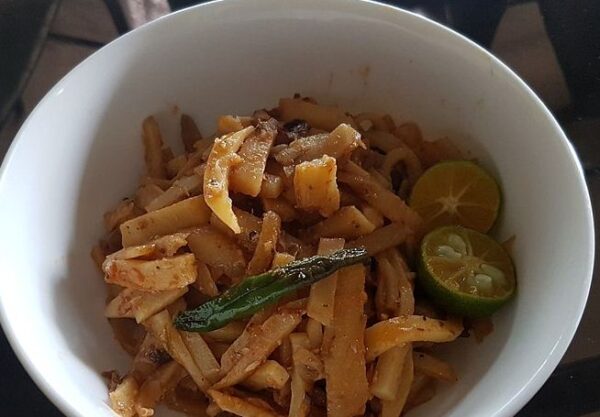
Eastern Uganda contains several important cultural and agricultural regions, including Bugisu around Mount Elgon, Busoga farther west and Teso farther north. Each contributes different ingredients and traditions, so eastern Ugandan food should not be reduced to a single dish.
Uganda’s Ministry of Foreign Affairs identifies the Basoga with eastern Uganda and notes the importance of agriculture and fishing within their cultural landscape. Meanwhile, Slow Food has documented traditional Teso finger millet varieties, demonstrating the importance of millet biodiversity within eastern Uganda.
Malewa and the Bagisu
Malewa is perhaps the most regionally distinctive food visitors can seek in the Bugisu area. Uganda’s Ministry of Foreign Affairs documented the tradition in 2025, describing malewa as an enduring Bugisu food made from fresh or dried bamboo shoots harvested on the slopes of Mount Elgon.
The bamboo shoots can be smoked and dried, allowing them to be preserved. Before cooking, dried malewa must be prepared and softened. The edible bamboo is then commonly incorporated into a sauce, including versions prepared with groundnuts.
Official Ugandan reporting describes malewa as culturally significant within Bagisu life and connected with weddings and communal gatherings. The same source records its production and trade in Sironko, Mbale, Manafwa and Bududa.
For travelers, this makes Mbale and the wider Mount Elgon region the logical place to experience malewa rather than simply ordering it in Kampala without understanding its geographical origin.
Millet and Teso Food Heritage
Millet deserves equal attention when discussing eastern Uganda. Slow Food has documented Teso Kyere finger millet varieties as part of Uganda’s agricultural biodiversity.
Finger millet can be milled into flour and prepared as porridge or worked into a much firmer staple. It can then be paired with vegetables, meat or other sauces.
These traditions demonstrate the importance of looking beyond Uganda’s famous banana dishes. Matooke is extremely important, but cereal-based food cultures provide an equally valuable window into the country’s agricultural history.
Busoga and the Lake Victoria-Nile Food Environment
Busoga’s position around the Nile and the northern reaches of Lake Victoria helps explain the relevance of fishing alongside agriculture. Uganda’s official cultural information specifically characterizes the Basoga as having traditions centered around agriculture and fishing along Lake Victoria.
Jinja is therefore an excellent eastern destination for visitors who want to combine regional travel with food exploration. Freshwater fish, staples, local restaurants and markets can all contribute to the experience.
Where to Experience Eastern Ugandan Food
Mbale is the strongest practical base for visitors specifically seeking Bugisu food and malewa. Trips toward Mount Elgon, Bududa, Manafwa and surrounding areas provide additional geographical context.
Jinja is more accessible for many travelers and offers a mixture of Busoga, urban Ugandan and freshwater fish traditions. Travelers continuing through eastern Uganda can make food part of a broader Uganda culture itinerary.
Northern Uganda and Acholi, Lango and Other Regional Food Traditions
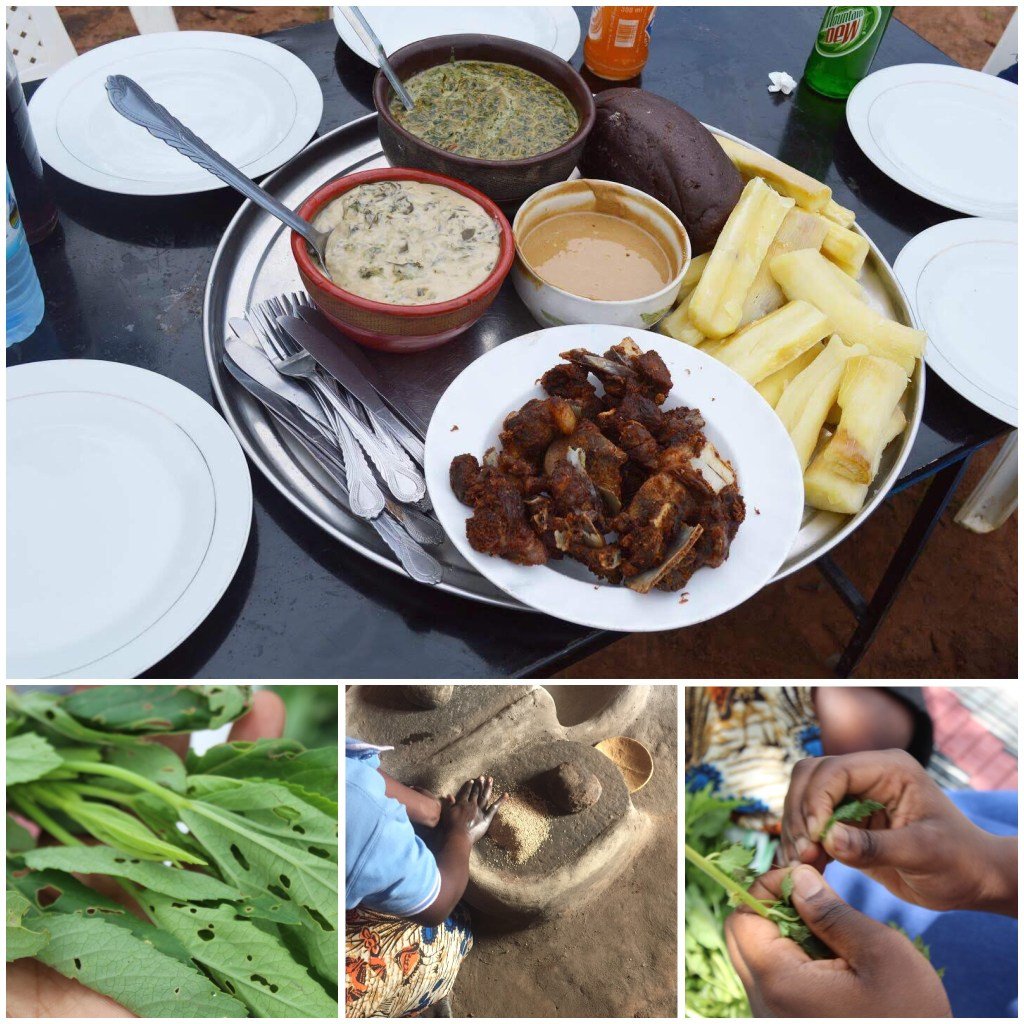
Northern Uganda introduces travelers to a food landscape in which millet, cassava, sorghum, maize and vegetables can become especially important. The region includes multiple communities, so Acholi cuisine should not be used as a synonym for all northern Ugandan food.
Uganda’s Ministry of Foreign Affairs identifies the Acholi and Lango as major communities in northern Uganda and specifically records malakwang as an Acholi food tradition.
Malakwang and Acholi Cuisine
Malakwang is a sour vegetable preparation particularly associated with the Acholi. Official Ugandan cultural information describes it as a sour vegetable stew served with millet bread.
Its importance goes beyond being another vegetable dish. Malakwang illustrates how leafy vegetables can become a defining component of a regional meal when combined with other ingredients and eaten with a substantial grain staple.
Recipes can vary between households, so visitors should avoid expecting every version to have exactly the same texture or ingredient proportions.
Millet Bread in Northern Uganda
Millet-based staples are particularly useful for understanding northern Ugandan cuisine. Flour is combined with hot water and worked until it develops a firm texture suitable for eating with sauces.
This produces a very different experience from steamed matooke. Millet has its own grain flavor and dense texture, making it well suited to vegetable and meat sauces.
The Ministry of Foreign Affairs specifically mentions millet bread as the accompaniment to Acholi malakwang.
Cassava in Northern Uganda
Cassava is another important staple encountered in northern Uganda. The root can be peeled, thoroughly cooked and eaten in pieces, while processed cassava flour can also contribute to other staple preparations.
Boiled cassava can accompany vegetables, beans, meat or fish. Its role within northern food traditions provides another contrast with the banana-centered image visitors may develop after spending their first days in Kampala.
Lira and Northern Food Markets
Food markets are especially useful for understanding northern Uganda because they allow visitors to see grains, legumes, cassava and vegetables before those ingredients become cooked meals.
Slow Food has established the Lira-Amach Earth Market in Lira District as one of its Ugandan Earth Markets, creating a connection between small-scale producers and consumers.
This type of market environment helps travelers understand that regional cuisine begins with farming and local food production rather than restaurant menus.
Where to Experience Northern Ugandan Food
Gulu is one of the most practical destinations for visitors interested in Acholi food traditions. Travelers can ask local restaurants about malakwang, millet preparations, cassava and other regional foods.
Lira provides a useful base for exploring Lango food culture and agricultural markets. Visitors should ask specifically which dishes are associated with the community they are visiting rather than describing every northern dish as Acholi.
Anyone building traditional food into a Uganda safari can use the journey north to compare cereal and cassava-based meals with the matooke-centered foods encountered farther south.
Northeastern Uganda and Karamoja Food Traditions
Northeastern Uganda deserves separate treatment because Karamoja has a distinctive environment and cultural history. Uganda’s official geographical information describes Karamoja as the country’s driest region and notes that it can experience drought. These environmental conditions are important when considering agriculture and traditional food production.
Uganda’s Ministry of Foreign Affairs identifies the Karamojong as a northeastern community with a strong cattle-herding tradition. The combination of pastoralism and crops adapted to comparatively dry conditions helps distinguish Karamoja’s food traditions from the wetter banana-growing landscapes farther south.
Sorghum in Karamoja
Sorghum is particularly relevant when understanding Karamoja’s cereal traditions. It is well suited to comparatively dry environments and can be processed into flour for porridge and firm staple preparations.
A stiff sorghum preparation can accompany vegetables or other sauces, performing a role similar to millet staples elsewhere in Uganda while retaining its own grain character.
For travelers accustomed to seeing matooke described as Uganda’s universal staple, eating sorghum-based food in Karamoja provides an important correction. Uganda has several staple-food systems, and their prominence changes geographically.
Cattle and Pastoral Food Culture
Cattle have cultural and economic importance in Karamoja. This pastoral background affects the region’s food story, although visitors should avoid assuming that every Karamojong household follows exactly the same diet or that livestock products dominate every meal.
Food traditions change over time and are influenced by markets, climate, agriculture, household circumstances and settlement patterns. A responsible regional food guide therefore describes established traditions without pretending they represent every contemporary meal.
How Traditional Food Is Prepared in Karamoja
Open-fire cooking remains an important visual and practical element in traditional rural food preparation. Pots can be positioned over wood fires while grain-based foods and sauces are prepared.
Sorghum and other cereals require processing before cooking. Grain can be milled into flour and then transformed into porridge or a dense staple by combining it with water and applying heat.
Visitors should experience these traditions through respectful community-based tourism rather than treating homes as informal tourist attractions. Food is part of everyday cultural life, and participation should occur through invited or organized experiences.
Where to Experience Food in Karamoja
Moroto is the most practical base for many visitors exploring Karamoja. Community tourism experiences can provide opportunities to learn about pastoral culture, agriculture and food preparation with appropriate local guidance.
The region should not be visited solely to photograph unusual foods. A stronger experience connects cooking with climate, livestock, grain cultivation, community life and the wider cultural landscape.
Travelers combining Karamoja with other Uganda cultural destinations can make particularly useful comparisons between northeastern pastoral traditions and the agricultural food cultures of central, western and eastern Uganda.
How Uganda’s Regional Foods Compare
The clearest difference between Uganda’s regions is not that one food suddenly disappears at an administrative boundary. Modern trade and migration mean matooke can be eaten in northern Uganda, millet can be purchased in Kampala and Rolex can be found across much of the country.
Regional food identity instead concerns historical prominence, agricultural suitability, cultural knowledge and established preparation traditions.
Central Uganda is particularly useful for understanding matooke, luwombo, groundnut sauces and the food traditions of Buganda. Kampala also adds contemporary street foods and an enormous variety of dishes brought into the capital from elsewhere.
Western Uganda combines strong banana traditions with millet, beans, livestock-related food culture and distinctive preparations such as eshabwe and firinda.
Eastern Uganda introduces important millet traditions, fishing and the distinctive bamboo-shoot food malewa associated with Bugisu and Mount Elgon. Official Ugandan reporting identifies malewa as a significant cultural food of the Bugisu region.
Northern Uganda brings millet, cassava and vegetable preparations into sharper focus. Malakwang and millet bread provide one of the clearest documented examples of an Acholi regional food pairing.
Northeastern Uganda and Karamoja reveal a different relationship between food, dryland agriculture and pastoralism, with sorghum and cattle keeping forming important parts of the regional food story.
Why Uganda’s Food Changes by Region
Geography provides part of the explanation. Uganda’s official geographical information notes significant climatic differences across the country. Southern Uganda is generally wetter, while Karamoja in the northeast has the driest climate.
Altitude also matters. Uganda contains highlands, mountains, plateaus, lake basins and comparatively dry plains. Crops that perform well in one environment may be less prominent in another.
Culture is equally important. More than 50 ethnic groups contribute their own languages, traditions and accumulated culinary knowledge. Foods therefore cannot be explained purely through climate.
Trade and movement complicate the picture further. Kampala brings together communities from across Uganda, meaning regional foods can travel far from their places of origin. Roads and markets distribute crops throughout the country, while restaurants adapt traditional dishes for urban customers.
How Travelers Should Explore Ugandan Food by Region
The most useful strategy is to avoid ordering the same famous dishes everywhere. Matooke and Rolex are worth trying, but they should be the beginning rather than the end of a Ugandan food journey.
In central Uganda, ask about matooke, luwombo and groundnut sauce. Around Lake Victoria, add freshwater fish. In western Uganda, ask about millet preparations, eshabwe and firinda alongside matooke. In eastern Uganda, look for malewa around Bugisu and millet traditions farther into Teso. In northern Uganda, ask about malakwang, millet and cassava. In Karamoja, learn about sorghum and the relationship between food and pastoral life.
Travelers planning a Uganda food and culture journey should also ask local guides and accommodation staff what is genuinely characteristic of the immediate area. A recommendation from someone who understands local food traditions can be more useful than arriving with a fixed list copied from a national food guide.
Where to Find Regional Ugandan Food
Kampala remains the easiest place to sample foods from several regions without traveling long distances. Traditional restaurants and cultural dining establishments can bring together matooke, luwombo, millet, groundnut sauce, fish and other foods on one menu.
However, regional travel provides context that Kampala cannot reproduce. Eating malewa around Mbale places the dish near Mount Elgon and Bugisu, where official Ugandan reporting documents the bamboo tradition. Eating malakwang in Gulu places the food within Acholi cultural territory. Trying eshabwe around Ankole connects the dish with a cattle-keeping region, while sorghum in Karamoja connects grain with the environmental conditions of northeastern Uganda.
This is why food can become an important part of exploring Uganda’s cultural heritage. The plate provides an entry point into agriculture, language, geography and community traditions.
Regional Food and the Modern Ugandan Table
Regional distinctions remain useful, but Ugandan cuisine is not frozen in the past. People move between regions, restaurants adapt recipes, ingredients travel through national markets and urban households combine foods from different cultural backgrounds.
A family in Kampala may therefore eat matooke on one day, posho and beans on another, rice on another and millet at another meal. A restaurant can serve luwombo alongside foods originating in completely different Ugandan regions.
The Ugandan government itself showcased this diversity at a 2025 cultural event where exhibitors represented Buganda, Karamoja, Bunyoro-Kitara/Tooro, Ankole, Busoga and northern Uganda, while the accompanying dinner included foods such as luwombo, matooke, malakwang, groundnut paste and katogo.
This provides a useful way to think about contemporary Ugandan food. Regional identity matters, but the country’s cuisine is also interconnected.
Understanding Uganda Through Its Regional Food
Ugandan regional cuisine ultimately reveals why searching for one definitive national plate can be misleading. Central Uganda’s banana and luwombo traditions, western Uganda’s cattle, millet and banana foods, eastern Uganda’s bamboo and millet heritage, northern Uganda’s millet, cassava and vegetable preparations, and Karamoja’s pastoral and sorghum traditions each contribute something different.
The strongest Uganda food journey therefore moves geographically as well as gastronomically. Travelers can begin with matooke and luwombo in central Uganda, encounter eshabwe or firinda in the west, explore malewa in Bugisu, learn about malakwang and millet in the north, and discover sorghum-centered traditions in Karamoja.
Seen this way, Ugandan food becomes much more than a collection of dishes. It becomes a map of the country’s agriculture, climate, communities and cultural history.
Uganda Street Food Guide: Rolex, Chapati, Snacks and Everyday Eating
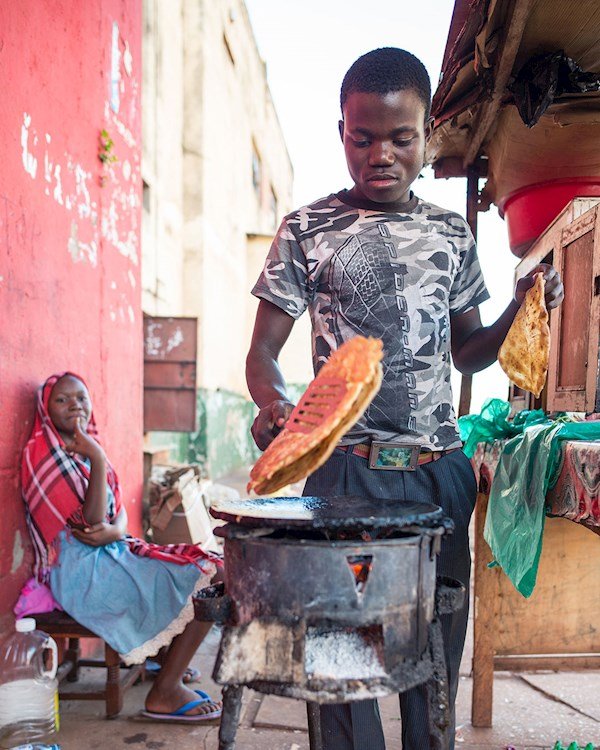
Uganda street food offers one of the easiest ways to experience everyday Ugandan cooking. While traditional restaurants introduce visitors to foods such as matooke, luwombo and groundnut sauce, roadside stalls and small neighborhood food stands reveal another side of the country’s food culture. Chapati is cooked on hot pans, eggs become freshly prepared Rolex, plantains are roasted over charcoal, maize is grilled beside busy roads, meat becomes muchomo, and inexpensive combinations such as kikomando provide substantial everyday meals.
Uganda Tourism Board has recognized food as part of the country’s tourism experience and describes Uganda’s varied cuisine as reflecting its culture and heritage. Its tourism reporting also documents support for the Rolex Festival as part of Uganda’s culinary tourism promotion. Visitors exploring Ugandan food and local cuisine should therefore make room for both traditional restaurant meals and street food.
Kampala provides the greatest concentration and variety for many international visitors, but Uganda street food is not confined to the capital. Chapati, Rolex, roasted maize, gonja and grilled foods can be encountered in towns and trading centers across the country. What is available changes according to location, time of day, season and individual vendor.
What Is Uganda Street Food?
Uganda street food refers broadly to ready-to-eat foods prepared and sold from roadside stands, market areas, small kiosks, informal restaurants and other quick-service food points. Some items are cooked directly in front of the customer, making the preparation itself part of the experience.
The category should not be confused with all traditional Ugandan food. Luwombo, for example, is an important traditional preparation associated with Buganda but is not primarily defined as street food. Rolex, on the other hand, is strongly identified with Uganda’s street-food culture.
Street food also overlaps with everyday eating. A plate of beans and chapati at a small neighborhood establishment may be less visually dramatic than a tourist-oriented restaurant meal, but it can reveal considerably more about affordable daily food combinations.
Rolex: Uganda’s Signature Street Food
Rolex is the food most international visitors associate with Uganda street food. Uganda Tourism Board has actively promoted the dish through culinary tourism initiatives, including support for the Rolex Festival. Official tourism reporting describes the festival as one of Uganda’s distinctive culinary tourism products.
The basic idea is simple: eggs and chapati are combined and rolled into a portable meal. Vegetables can be incorporated into the egg mixture or added during assembly. Exact recipes vary between vendors.
The name is commonly connected with the idea of “rolled eggs,” but colorful origin stories surrounding the precise invention of Rolex should be treated carefully unless supported by reliable historical evidence.
What can be established much more confidently is that Rolex has become a recognizable Ugandan street food and is widely available. It provides an inexpensive and convenient meal for students, workers, travelers and other customers looking for food prepared quickly.
What Is Inside a Ugandan Rolex?
A basic Rolex combines chapati and eggs. Depending on the vendor, chopped onions, tomatoes, cabbage, peppers or other vegetables may also be included.
The exact combination is not standardized. One vendor may prepare a simple egg-and-onion version while another incorporates several vegetables. Customers can sometimes request adjustments to the filling.
This flexibility is part of the Rolex experience. Rather than expecting every vendor to reproduce one definitive recipe, visitors should treat the basic chapati-and-egg combination as the foundation from which different versions are created.
How Is a Rolex Prepared?
The vendor begins by preparing the egg mixture. Eggs are cracked into a container and can be mixed with chopped vegetables and seasoning. The mixture is then poured onto a heated cooking surface or frying pan.
As the eggs cook, the vendor prepares or reheats the chapati. The cooked omelette and chapati are brought together, after which the food is rolled into a compact shape that can be held and eaten without cutlery.
Watching the preparation is one of the reasons Rolex is particularly interesting to travelers. Unlike a restaurant dish that arrives from a hidden kitchen, the customer can often watch each stage of the process from raw eggs and vegetables to the finished roll.
Where Can You Find Rolex in Uganda?
Kampala is one of the easiest places to find Rolex. Vendors operate in numerous neighborhoods and around busy areas where there is consistent pedestrian traffic.
Wandegeya is particularly well known for inexpensive food serving students and other customers, but visitors do not need to travel to one specific neighborhood to find Rolex. Stalls can be encountered throughout the capital and in many other Ugandan towns.
Jinja is another important destination in discussions of Rolex and Uganda’s wider street-food culture. Travelers combining food with a journey to Jinja and the Nile can look for freshly prepared Rolex while exploring the city.
Rolex can also be found in Entebbe, Mbarara, Fort Portal, Gulu and other urban centers. Availability at a particular stall naturally changes, so the better strategy is to look for active local food areas rather than traveling solely to a business named in an old online article.
How to Eat a Rolex
Rolex is designed to be convenient. The chapati keeps the egg filling together, allowing the finished roll to be eaten by hand.
It is generally best eaten shortly after preparation while the chapati and eggs are still warm. Depending on its size, a Rolex can function as breakfast, a snack or a substantial quick meal.
Visitors can ask what vegetables are available before ordering. Anyone with food allergies or dietary restrictions should also confirm ingredients directly with the vendor rather than relying on assumptions about a standard recipe.
Chapati: The Foundation of Several Street Foods
Chapati is one of the most important foods in Uganda’s everyday street-food environment. The flatbread has historical connections with South Asian cuisine and is found widely across East Africa, but it has become thoroughly integrated into Ugandan eating.
It can be eaten alone, used to scoop up beans or sauces, combined with beans in kikomando, or wrapped around eggs to create Rolex.
For visitors exploring Uganda’s food and cultural experiences, chapati provides an interesting example of how culinary traditions move between regions and eventually become embedded within local food culture.
How Ugandan Chapati Is Prepared
Chapati begins with wheat flour and water, with oil and other ingredients incorporated according to the cook’s recipe. The ingredients are mixed into dough and kneaded until workable.
The dough is divided into individual portions and rolled into flat rounds. Each piece is then cooked on a heated flat pan, usually with oil, until both sides develop browned areas and the bread is completely cooked.
Technique influences the finished texture. A well-prepared chapati can remain flexible enough to wrap around a Rolex filling while still developing browned, flavorful surfaces during cooking.
Where to Find Chapati
Chapati is among the easiest foods to find in Uganda. It is sold by street vendors, small restaurants, neighborhood eateries and roadside food stands.
In Kampala, chapati stalls frequently operate near busy roads, markets, taxi stages, commercial areas and neighborhoods with heavy pedestrian movement. Outside the capital, chapati remains common in towns and trading centers.
The widespread availability of chapati means visitors can compare preparations easily. Some are thinner, some thicker, some softer and others noticeably crisp around the edges.
Kikomando: Chapati and Beans
Kikomando demonstrates how two ordinary foods can be transformed into a substantial street meal. The basic combination consists of chapati cut or torn into pieces and mixed with bean sauce.
Instead of using the chapati to scoop the beans separately, the bread pieces sit directly in the sauce and begin absorbing it. The result is filling and straightforward.
Additional ingredients may be available depending on the vendor, but visitors should not assume every kikomando contains the same extras.
Kikomando is especially associated with inexpensive urban eating and can be found at small eateries and street-food establishments in Kampala. It is useful for travelers who want to understand everyday food rather than concentrating exclusively on dishes most frequently promoted to tourists.
How Kikomando Is Prepared
The beans and chapati are generally prepared independently. Cooked chapati is cut or torn into manageable pieces and placed on a plate or in a serving container. Hot bean sauce is then spooned over the bread.
The method is simple, but the combination works because the chapati absorbs the bean sauce while retaining some of its texture.
Kikomando also demonstrates a broader characteristic of Ugandan meals: starch and sauce frequently work together. The same relationship can be seen in posho with beans, matooke with groundnut sauce and millet preparations served with vegetable or meat sauces.
Gonja: Roasted Plantain
Gonja is another food travelers may encounter along Ugandan roads. It is made from ripe plantain and should not be confused with the green cooking bananas used to prepare matooke.
As plantain ripens, its sweetness increases. Cooking concentrates this character and produces a snack that is noticeably sweeter than steamed matooke.
One of the most recognizable preparations involves roasting gonja over charcoal. Vendors place peeled or partly prepared plantains over a small charcoal grill and turn them as they cook so that the surface develops browned or lightly charred areas.
Where to Find Roasted Gonja
Roadside trading areas are particularly good places to encounter roasted gonja. Vendors can sell it to motorists and passengers traveling between towns, making it a practical journey snack.
It can also be found in Kampala and other urban areas. Availability varies according to supply and individual vendor.
Travelers undertaking road trips through Uganda should watch for established roadside food areas where fresh produce and cooked snacks are being sold.
Roasted Maize
Fresh maize roasted over charcoal is another simple but recognizable roadside food. Unlike posho, which begins with maize flour, roasted maize uses the fresh cob directly.
The cob is placed over charcoal and turned repeatedly while the kernels cook. Direct heat creates dark roasted patches and a firmer texture than boiled maize.
Roasted maize is generally eaten directly from the cob. It does not require sauce or cutlery, making it particularly suitable for roadside eating.
Where to Find Roasted Maize
Roasted maize can appear at roadside stands, market areas and trading centers in different parts of Uganda. Availability depends partly on the agricultural season and local supply.
It is especially convenient for travelers moving between destinations because vendors frequently operate where vehicles stop or where there is consistent passing traffic.
The experience also provides a direct connection between Uganda’s agriculture and street food. Maize appears in one form as roasted cobs and in another as flour transformed into posho.
Muchomo: Uganda’s Grilled Meat
Muchomo refers broadly to roasted or grilled meat and is an important part of roadside and informal dining culture. Beef, goat and chicken are among the meats that can be prepared this way.
Pieces of meat are placed over charcoal or another heat source and cooked until done. Seasoning, marinades, cuts and serving styles vary between vendors.
Muchomo can be eaten by itself as a snack or accompanied by other foods. It is commonly associated with social eating, roadside stops and places where customers gather around active grills.
Where to Find Muchomo
Kampala has numerous establishments serving grilled meat, but muchomo is also commonly encountered outside the capital. Roadside trading centers and towns along major routes can have clusters of vendors preparing meat over charcoal.
Travelers should choose established vendors with visible food turnover and should make sure meat is thoroughly cooked before eating it.
Those incorporating local food into a Uganda safari experience will often encounter roadside grills while moving between destinations.
Mandazi
Mandazi is a fried dough food eaten in Uganda and elsewhere in East Africa. It can function as breakfast, a tea accompaniment or a quick snack.
The preparation begins with flour-based dough. Recipes vary, but the dough is portioned and fried in hot oil until cooked through and golden on the outside.
Mandazi can be relatively plain or slightly sweet depending on the recipe. Its portability makes it well suited to small shops, market stalls and quick-service food settings.
Where to Find Mandazi
Mandazi can be found at bakeries, tea shops, market areas, local restaurants and street-food stands. Morning is an especially useful time to look for freshly prepared batches because it is commonly eaten with tea or as part of breakfast.
It is not unique to Uganda, and a responsible Uganda food guide should not claim otherwise. Its importance lies in how thoroughly it has become integrated into everyday East African eating.
Samosas
Samosas provide another example of South Asian culinary influence becoming part of East African everyday food. In Uganda they are widely sold as snacks in restaurants, cafés, bakeries and street-food environments.
A thin pastry shell encloses a savory filling. Depending on the preparation, the filling may contain minced meat, vegetables, lentils or other ingredients. The filled pastry is then fried until crisp.
Because fillings vary, vegetarian visitors should confirm what is inside rather than assuming a samosa is meat-free.
Where to Find Samosas in Uganda
Samosas are easy to find in Kampala and other large towns. Cafés and established restaurants may serve them alongside tea, while small food businesses sell them as inexpensive takeaway snacks.
They are particularly useful when discussing Uganda’s urban food history because they show how migration and trade have influenced what people eat today.
Nsenene: Uganda’s Seasonal Grasshopper Delicacy
Nsenene are long-horned grasshoppers eaten as a seasonal food in Uganda and are particularly associated with central parts of the country.
Unlike Rolex or chapati, nsenene are not reliably available throughout the year. Their presence in markets and street-food settings increases during seasons when the insects emerge in large numbers.
Preparation generally involves removing unwanted parts before cooking. Nsenene can then be fried or otherwise cooked, with salt and additional ingredients incorporated according to the vendor or household recipe.
Where to Find Nsenene
Kampala markets and street-food areas can become particularly active with nsenene vendors during the appropriate season. The insects can also be sold in other parts of central Uganda.
Visitors should treat seasonal availability as part of the experience rather than expecting a restaurant to maintain nsenene permanently on its menu.
Trying nsenene can be incorporated into a broader Ugandan cultural food experience, particularly for travelers interested in foods that receive less attention internationally.
Fresh and Fried Cassava
Cassava is much more than a formal meal staple. Depending on preparation, it can also appear in quick-service and roadside food environments.
Fresh cassava must be properly prepared before eating. For boiled cassava, roots are peeled and thoroughly cooked until tender. Other preparations may involve further cooking or frying.
Visitors should buy cooked cassava from established food vendors rather than attempting to prepare unfamiliar raw cassava themselves.
Boiled Eggs
Boiled eggs are among the simplest quick foods sold in Ugandan urban and roadside environments. Their portability allows vendors to sell them without elaborate cooking facilities at the point of purchase.
They can be eaten plain or accompanied by seasonings and fresh additions depending on the vendor. Preparation styles around boiled eggs can change considerably, so visitors should watch how an individual vendor serves them rather than expecting one national formula.
Chips and Fried Foods
Fried potatoes are widespread in Uganda’s urban food scene. They can be eaten alone, with chicken, meat, fish, eggs or other accompaniments.
Chips represent the modern, internationally influenced side of everyday Ugandan food rather than an ancient regional staple. Their popularity nevertheless makes them part of the contemporary food environment visitors actually encounter.
Small restaurants, takeaway businesses, street-food vendors and larger restaurants throughout Kampala and other cities serve fried potatoes.
Street-Side Chicken
Chicken can be grilled, roasted or fried in street and roadside food environments. Preparation differs substantially between vendors, from small grilled pieces to larger portions served with chips or another staple.
Travelers should look for vendors cooking food thoroughly and maintaining a steady customer turnover. Chicken should be completely cooked before consumption.
Street Food for Breakfast
Uganda’s street-food environment begins early in many areas. Chapati, mandazi, tea, eggs and other breakfast foods can be available while people travel to work, school or markets.
Rolex is particularly suitable as breakfast because it combines bread, eggs and vegetables in one portable meal. Katogo, although more often associated with small restaurants and home-style cooking than portable street food, provides another substantial Ugandan breakfast option.
Visitors who eat only at international hotel breakfast buffets can easily miss this side of Uganda’s everyday food culture.
Street Food for Lunch
Lunch can range from a quick Rolex to a more substantial plate at a small local eatery. Chapati and beans, kikomando, grilled meat and other foods can provide inexpensive midday meals.
Small restaurants blur the boundary between street food and conventional dining. A customer may sit on a simple bench or chair while eating food prepared only a few meters away.
Street Food in the Evening
Some Ugandan street-food areas become particularly active in the evening as workers travel home and customers gather around food stands. Grilled meat, chapati, Rolex and fried foods can all form part of the nighttime food environment.
Availability depends strongly on neighborhood and city. Travelers unfamiliar with an area should follow sensible local guidance regarding where to walk after dark rather than choosing food stalls solely from an online recommendation.
Kampala Street Food
Kampala is the strongest starting point for travelers specifically interested in Uganda street food. The capital’s population, universities, markets, commercial districts and transport networks create constant demand for affordable ready-to-eat meals.
Rolex, chapati, kikomando, mandazi, samosas, roasted foods and grilled meat can all be found in different parts of the city.
Street-food exploration can be combined with Kampala’s traditional restaurants so that visitors experience both quick everyday meals and more elaborate dishes such as luwombo.
Street Food in Jinja
Jinja has its own busy urban food environment and is particularly convenient for travelers visiting the Nile. Chapati and Rolex are readily recognizable choices, while restaurants and markets provide opportunities to explore additional foods.
Visitors traveling on a Jinja and River Nile trip can incorporate local eating into the experience rather than relying exclusively on lodge or hotel meals.
Street Food in Entebbe
Entebbe provides a useful introduction for travelers arriving through Uganda’s main international airport. Local restaurants and informal food businesses operate beyond the international hotels and airport-oriented dining environment.
The city’s Lake Victoria location also makes fish particularly relevant to its wider food scene, although a restaurant fish meal should not automatically be classified as street food.
Street Food Outside Uganda’s Major Cities
Road travel exposes visitors to another important form of everyday eating. Trading centers along major routes frequently contain clusters of shops and vendors serving passengers, drivers and local residents.
Roasted maize, gonja, grilled meat, chapati and other quick foods can be encountered depending on route, season and location.
This is one reason food can add another dimension to travel across Uganda. Roadside stops reveal foods and ingredients that are easy to miss when traveling directly between airports and luxury accommodation.
How Much Does Uganda Street Food Cost?
Street-food prices change with location, ingredient costs, portion size and economic conditions. A permanent guide should therefore avoid presenting one old price as though it applies everywhere indefinitely.
Rolex is generally positioned as affordable everyday food, but prices vary according to the number of eggs, additional ingredients and vendor. Similar variation applies to chapati, meat, snacks and other street foods.
Travelers should ask the current price before ordering when it is not displayed. This is more reliable than planning around prices copied from an article published several years earlier.
Is Uganda Street Food Safe?
No street-food environment can be guaranteed risk-free, and it would be misleading to describe every vendor as either safe or unsafe. Visitors can make more informed choices by observing basic food-handling conditions.
Look for food that is cooked thoroughly and served hot. Vendors with consistent customer turnover may be preferable because ingredients and cooked food are moving quickly. Observe whether raw and cooked ingredients appear to be handled separately and whether the cooking area looks reasonably maintained.
For Rolex, watching the eggs cook completely provides useful reassurance. For chicken and muchomo, make sure meat is thoroughly cooked. Travelers with food allergies should communicate them clearly because street vendors may use shared cooking surfaces and utensils.
Vegetarian Uganda Street Food
Uganda’s street-food scene provides several possibilities for travelers who avoid meat. Chapati itself is commonly meat-free, although ingredients should be checked when dietary requirements are strict.
A Rolex can often be made with eggs and vegetables without meat. Kikomando combines chapati and beans. Roasted maize and gonja provide plant-based snacks, while vegetable samosas may also be available.
Vegan travelers need to ask more questions because recipes and cooking fats can vary. A dish that appears plant-based may share a cooking surface or contain ingredients not visible in the finished food.
Street Food and Food Allergies
Travelers with serious allergies need particular caution because small vendors may prepare multiple foods on the same surface and may not have formal allergen-management procedures.
Groundnuts deserve special attention in Uganda because peanuts are widely used in sauces and other preparations. Eggs and wheat are central ingredients in Rolex, while chapati is normally wheat-based.
Anyone requiring strict avoidance should confirm ingredients and cross-contact risks rather than relying on the appearance of a dish.
How to Order Street Food in Uganda
Ordering is generally straightforward when a vendor is preparing food in front of the customer. With Rolex, customers can indicate how many eggs they want and ask which vegetables or additions are available.
For grilled foods, ask about the portion and current price before ordering. With foods that are already cooked, choosing freshly prepared or hot portions is preferable.
Visitors should carry practical small-denomination payment options where appropriate and confirm the price instead of assuming it from an outdated online guide.
Why Travelers Should Try Uganda Street Food
Street food provides something that even excellent hotels cannot fully reproduce: direct access to the rhythm of everyday eating. The customer sees the charcoal stove, hears chapati cooking on the pan, watches vegetables being chopped and receives the meal moments after it is assembled.
Rolex is the clearest example. Uganda Tourism Board’s support for the Rolex Festival shows that the food has also become part of how Uganda presents its culinary identity to visitors.
Yet Rolex should not overshadow everything else. Chapati, kikomando, gonja, roasted maize, mandazi, samosas, muchomo and seasonal nsenene all reveal different aspects of everyday eating.
Visitors interested in authentic Uganda food experiences should combine street food with traditional restaurants, markets and regional cuisine. No single environment provides a complete picture.
Street Food and Uganda’s Wider Food Culture
Uganda street food demonstrates that cuisine continually evolves. Some foods have deep connections with traditional agriculture, while others reflect historical exchange and modern urban life.
Maize connects street-side roasted cobs with posho served at home. Plantains connect roasted gonja with Uganda’s wider banana-growing culture. Chapati reflects South Asian influence but has become an everyday Ugandan food. Rolex then takes chapati and transforms it again into something particularly associated with Uganda.
This interaction between older ingredients, imported influences and local innovation is one of the reasons Ugandan cuisine cannot be reduced to a list of supposedly ancient dishes.
Best Way to Experience Uganda Street Food
Begin with a freshly prepared Rolex and watch the entire cooking process. Try chapati independently afterward so that its texture and flavor are easier to understand. Follow that with a simple kikomando to see how chapati functions when combined with bean sauce.
During road travel, look for roasted gonja or maize at established stops. In the appropriate season, ask about nsenene. Try muchomo where meat is being freshly grilled and thoroughly cooked.
Most importantly, use local knowledge. Guides, accommodation staff and Ugandan hosts can often identify busy food areas and explain what is particularly popular in the destination you are visiting. Travelers incorporating food into Uganda cultural travel can learn considerably more by asking why people eat a particular food and when it is normally eaten.
Uganda Street Food Beyond Rolex
Rolex deserves its reputation as Uganda’s signature street food, but it is only the beginning. Chapati provides the foundation for multiple everyday meals. Kikomando demonstrates inexpensive urban ingenuity. Gonja and roasted maize connect roadside food directly with agriculture. Muchomo represents charcoal-grilled food culture, while mandazi and samosas reveal Uganda’s connections with the wider East African and Indian Ocean culinary world.
Together these foods make street eating an essential part of a complete Uganda Food Guide. They answer not only what Ugandans eat, but where people eat, how food is prepared quickly, how ingredients are combined and how modern Ugandan cuisine continues to develop.
Ugandan Breakfast, Lunch, Dinner, Snacks, Desserts and Drinks
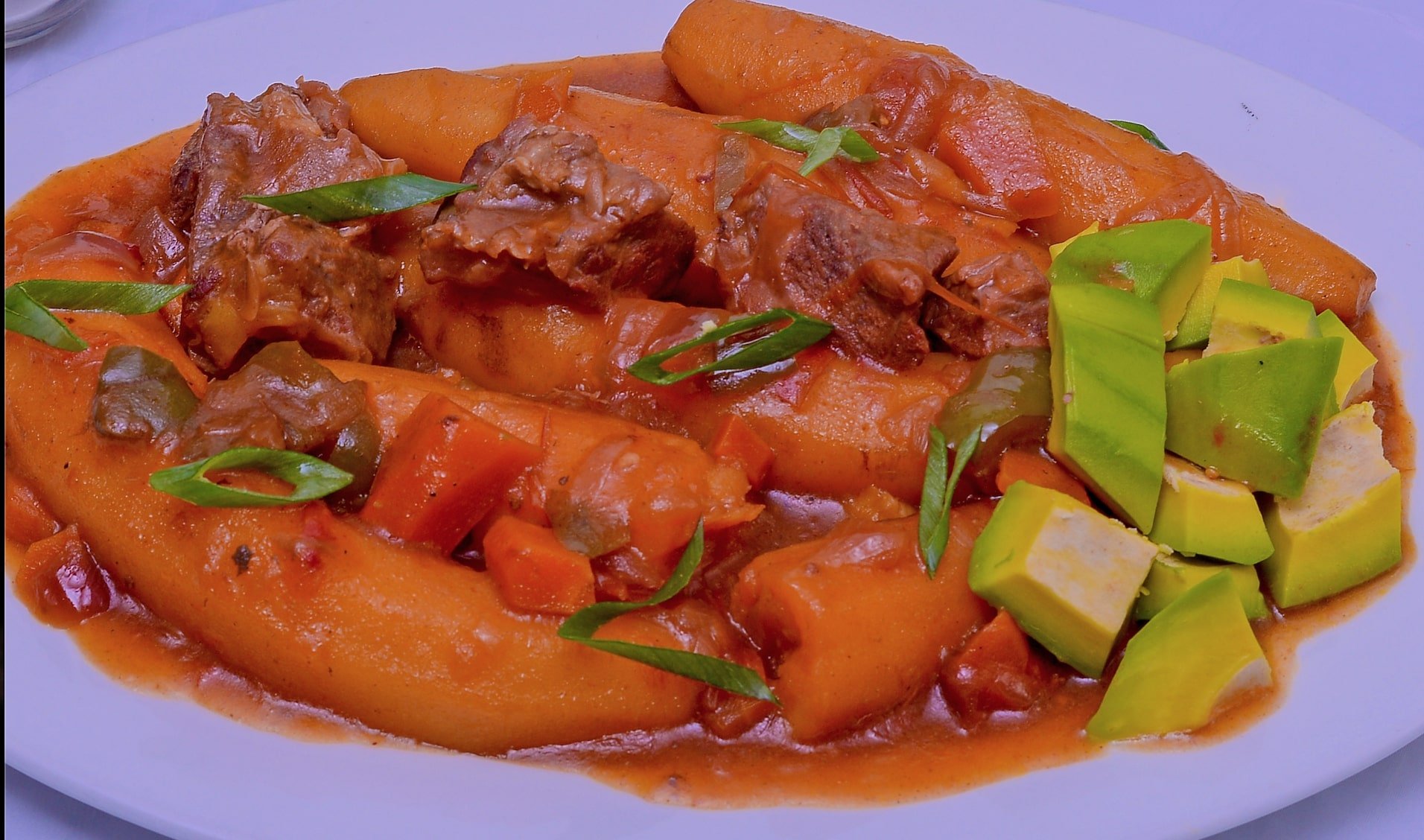
Ugandan breakfast, lunch and dinner reveal just how diverse everyday eating can be across the country. A visitor might begin the morning with katogo, chapati, porridge, tea or a freshly prepared Rolex, eat matooke with groundnut sauce or beans for lunch, and finish the day with grilled tilapia, luwombo, millet bread, posho or another substantial meal. Between meals, roasted maize, gonja, mandazi, samosas and seasonal foods provide convenient snacks, while tea, coffee, fruit juices and traditional beverages add another dimension to Uganda’s food culture.
There is no single menu that defines what Ugandans eat throughout the day. Uganda has more than 50 ethnic groups, and regional agriculture strongly influences food traditions. Uganda’s Ministry of Foreign Affairs identifies matooke, posho and groundnut sauce among typical foods while specifically associating luwombo with the Baganda and malakwang with the Acholi. It also describes the Ugandan Rolex as popular street food. This diversity means a useful Uganda food guide needs to explain both meals and the cultural context in which different foods are eaten.
What Do Ugandans Eat for Breakfast?
Breakfast in Uganda ranges from a quick cup of tea and a simple baked or fried food to a substantial plate capable of functioning almost like lunch. What is eaten depends on household, region, occupation, income, time available and whether someone is eating at home, at a roadside establishment, in a restaurant or at a hotel.
Common foods visitors may encounter in the morning include katogo, chapati, Rolex, mandazi, porridge, boiled cassava, sweet potatoes, bread, eggs and tea. Hotels generally provide a much broader breakfast selection and may combine Ugandan foods with eggs, bread, fruit, cereals and other international breakfast choices.
The important point is that travelers should not expect the distinction between “breakfast food” and “lunch food” to match European or North American conventions. A combination containing matooke, beans or meat can be entirely appropriate in the morning.
Katogo: One of Uganda’s Most Famous Breakfast Foods
Katogo is one of the best foods for understanding a substantial Ugandan breakfast. Rather than being one completely fixed recipe, katogo is a combination in which a staple and an accompaniment are cooked together.
Matooke is one common foundation. Green cooking bananas can be cooked with beans, beef, offal or another sauce. Versions using Irish potatoes, cassava or other ingredients also exist.
The name is closely associated with the idea of combining foods, and the result is usually substantial enough to provide considerable energy for the morning. Katogo is particularly easy to find in local restaurants serving breakfast in Kampala and other Ugandan towns.
Travelers interested in traditional Ugandan breakfast should consider katogo before defaulting to an international hotel breakfast. It demonstrates the country’s use of staple crops much more clearly than toast and eggs alone.
How Katogo Is Prepared
Preparation depends on the type of katogo. In a matooke version, green cooking bananas are peeled and placed into a pot with the chosen accompaniment. Onions, tomatoes or other ingredients may contribute to the sauce depending on the recipe.
The ingredients cook together until the bananas become tender and the sauce develops. This one-pot structure distinguishes katogo from a meal where separately prepared matooke is simply placed beside an independently cooked stew.
Recipes vary significantly between cooks, so visitors should not expect every plate of katogo to taste identical.
Where to Find Katogo
Kampala is one of the easiest places to find katogo, particularly during breakfast hours. Small restaurants and local-food establishments are generally more likely to serve it routinely than restaurants centered exclusively on international cuisine.
Katogo can also be encountered in towns throughout Uganda. Availability depends on the establishment, and visitors seeking a particular version should ask what has been prepared that morning.
Rolex for Breakfast
The Ugandan Rolex is another excellent breakfast option, particularly for travelers who want something portable. Uganda’s Ministry of Foreign Affairs describes Rolex as a popular street food consisting of rolled chapati with eggs and vegetables.
The vendor cooks an omelette, often incorporating chopped onions, tomatoes, cabbage or other available vegetables. The cooked egg is combined with chapati and rolled into a compact meal.
Rolex can be eaten at other times of day, so it should not be classified exclusively as breakfast. Its combination of eggs, chapati and vegetables nevertheless makes it particularly suitable for the morning.
Kampala has an enormous number of Rolex vendors, while the food is also found in towns throughout Uganda. Travelers can explore it as part of a wider Uganda cultural food experience.
Chapati at Breakfast
Chapati is one of the most versatile foods in Uganda. It can be eaten with tea, served with beans, incorporated into kikomando or wrapped around eggs to make Rolex.
To prepare chapati, wheat-flour dough is kneaded, portioned, rolled and cooked on a hot flat pan, generally with oil. The finished bread is flexible, slightly chewy and browned on the surface.
Fresh chapati is readily available from street stalls, neighborhood restaurants and small eateries in Kampala and other towns.
Mandazi and Tea
Mandazi is another common morning food and snack. It is a fried flour-based dough found across East Africa and widely eaten in Uganda.
The dough is shaped into individual pieces and fried until cooked through and golden. Recipes vary in sweetness and richness, meaning some mandazi are relatively plain while others have a sweeter character.
Mandazi works particularly well with tea and can be purchased from bakeries, tea shops, roadside vendors and small restaurants. Freshly prepared morning batches are preferable when available.
Porridge for Breakfast
Porridge is another important breakfast category. Millet, maize and other cereal flours can be cooked with water to create a drinkable or spoonable breakfast.
Preparation generally involves introducing flour into water and cooking while stirring to prevent lumps. The consistency can range from relatively thin to substantially thicker depending on household preference.
Milk or sweetening may be added in some preparations, but visitors should not assume that every Ugandan porridge follows one standardized recipe.
Sweet Potatoes and Cassava in the Morning
Ugandan breakfast does not need to resemble a Western breakfast. Boiled sweet potatoes and cassava can form part of the morning meal and may be accompanied by tea, beans, groundnuts or other foods.
Sweet potatoes are cooked until tender and have a naturally sweeter character than cassava. Cassava requires correct preparation and thorough cooking before consumption.
These foods are especially useful for travelers who want to understand the relationship between Ugandan agriculture and everyday eating.
Tea at Breakfast
Tea is a familiar breakfast drink in Uganda. It can be served black or with milk, and sugar may be added according to preference.
Milk tea can accompany chapati, mandazi, bread, eggs or a more substantial breakfast. Tea is available almost everywhere from hotels and restaurants to simple roadside establishments.
For visitors staying in lodges during travel around Uganda, tea and coffee are also common components of early breakfasts before morning activities.
What Do Ugandans Eat for Lunch?
Lunch often demonstrates the basic structure of a Ugandan main meal particularly clearly. A substantial staple can be accompanied by beans, groundnut sauce, vegetables, meat, chicken or fish.
Matooke, posho, rice, cassava, sweet potatoes, millet preparations and Irish potatoes can all appear. Restaurants may offer customers several staples from which to choose.
A simple lunch might consist of posho and beans. Another might combine matooke and groundnut sauce. A larger restaurant meal can provide two or more staples with vegetables and meat or fish.
Matooke for Lunch
Matooke is one of Uganda’s most recognizable main-meal staples. Green cooking bananas are peeled and traditionally steamed until tender. Banana leaves play an important role in traditional preparation methods.
The cooked bananas can be mashed and served with groundnut sauce, beans, vegetables, beef, chicken or fish. Matooke is particularly important in central and western Uganda but can be found far beyond those regions.
Kampala restaurants serving local cuisine provide easy access for visitors, while eating matooke in banana-growing areas of western and central Uganda adds valuable agricultural context.
Posho and Beans
Posho and beans provide one of the clearest examples of an uncomplicated everyday Ugandan meal. Posho is made by working maize flour into hot water until a firm, dense consistency develops.
The mild maize staple pairs naturally with bean sauce. Beans are cooked until tender and may be prepared with onions, tomatoes or other ingredients according to the cook’s recipe.
This combination is inexpensive, filling and widely available. Travelers who want to understand ordinary eating should try it rather than concentrating entirely on elaborate traditional dishes.
Groundnut Sauce at Lunch
Groundnut sauce is made from peanuts and is an important accompaniment to Ugandan staples. It can be served with matooke, sweet potatoes, cassava, posho and vegetables.
The groundnuts are processed and simmered into a rich sauce. Exact recipes vary, and other ingredients can be incorporated.
Travelers with peanut allergies need to ask specifically about groundnuts because the ingredient may be completely incorporated into a sauce.
Rice and Pilau
Rice is common in contemporary Ugandan meals and can accompany beans, vegetables, chicken, beef, goat or fish.
Pilau transforms rice into a more strongly flavored dish through the use of aromatic spices and, frequently, meat. The exact spice combination and preparation vary between cooks.
Pilau is especially common at restaurants, gatherings and celebrations. Its presence also illustrates the historical influence of wider East African and Indian Ocean culinary connections on food in Uganda.
Freshwater Fish for Lunch
Uganda’s lakes provide important fish foods. Tilapia and Nile perch are two of the best-known examples, while smaller fish such as mukene also contribute to the country’s cuisine.
Tilapia can be grilled, fried or cooked in sauce. A whole fish may be served with matooke, posho, rice, cassava, vegetables or chips.
Entebbe and other Lake Victoria destinations are particularly appropriate places to look for fish. Uganda Tourism Board also identifies tilapia and Nile perch among foods visitors can experience around the Ssese Islands.
What Do Ugandans Eat for Dinner?
Dinner can use many of the same staple foods and sauces served at lunch. There is no strict national rule that reserves particular traditional dishes exclusively for the evening.
Matooke, rice, posho, cassava, sweet potatoes, millet and potatoes can all form the base of dinner. Beans, vegetables, groundnut sauce, fish, beef, goat and chicken provide possible accompaniments.
Restaurants and hotels may make evening meals more elaborate, while home meals can be considerably simpler. Special occasions can introduce preparations requiring more time and labor.
Luwombo for a Traditional Dinner
Luwombo is among the most distinctive dishes visitors can seek when they want a more elaborate traditional Ugandan meal. Uganda’s Ministry of Foreign Affairs specifically associates the preparation with the Baganda and describes meat or groundnut sauce being steamed in banana leaves.
Ingredients are placed inside carefully prepared banana leaves, which are folded into a parcel and steamed. Chicken, beef, fish, mushrooms or groundnut-based fillings can be prepared using variations of the technique.
The enclosed cooking method helps retain moisture and creates the characteristic presentation of the dish. Luwombo is especially associated with Buganda and can be found at traditional-food restaurants and cultural dining establishments in Kampala.
Grilled Tilapia for Dinner
Whole grilled tilapia can provide one of Uganda’s most satisfying evening meals, especially near Lake Victoria. The fish is cleaned and cooked over heat until the flesh is done and the exterior develops roasted character.
It may be served with vegetables, matooke, rice, cassava, posho or chips depending on the establishment.
Entebbe, Kampala and lakeside destinations are convenient places to look for freshly prepared tilapia. Visitors should confirm the day’s fish and preparation directly with the restaurant.
Muchomo in the Evening
Muchomo refers to roasted or grilled meat and can include goat, beef or chicken. It is associated with roadside food, casual restaurants and social eating.
Pieces of meat are cooked over charcoal or another direct heat source until done. Marinades, seasoning and serving styles vary.
Muchomo can be eaten independently or alongside other foods. Kampala has many grilled-meat establishments, while roadside trading centers also provide opportunities to encounter it during Uganda food travel.
Millet Bread and Regional Dinner Foods
Travel outside central Uganda introduces visitors to grain traditions that receive less international attention than matooke. Millet can be milled and transformed into a dense staple designed to accompany sauces.
Uganda’s Ministry of Foreign Affairs specifically notes that the Acholi prepare malakwang, a sour vegetable stew served with millet bread. This makes northern Uganda particularly interesting for travelers seeking a meal distinctly different from banana-centered cuisine.
Millet preparations also occur in other regions, and recipes and terminology vary between communities.
Malakwang
Malakwang is a vegetable preparation particularly associated with Acholi cuisine in northern Uganda. Its sour character distinguishes it from many other vegetable accompaniments.
The greens are cooked and can be combined with other ingredients to create a substantial sauce or stew. It is traditionally paired with millet bread according to Uganda’s official cultural information.
Gulu and other parts of Acholi provide the strongest cultural context for trying malakwang.
Ugandan Snacks Between Meals
Snacking in Uganda can involve fried dough, roasted crops, fruit, street food or grilled foods. Some snacks are light, while others are substantial enough to replace a meal.
Chapati, mandazi, samosas, roasted maize, gonja and boiled eggs are among the foods travelers may encounter. Rolex can technically function as a snack, but larger versions are easily substantial enough to constitute breakfast or lunch.
Road travel is particularly good for discovering Ugandan snacks because vendors often sell food near markets, trading centers and established stopping points.
Gonja
Gonja is ripe plantain that can be roasted or fried. It should not be confused with matooke, which uses green cooking bananas as a starchy staple.
For roasted gonja, ripe plantains are cooked over charcoal and turned as their surfaces brown. The heat intensifies their sweetness and creates lightly caramelized or charred areas.
Roadside vendors are particularly associated with roasted gonja, making it a convenient snack during long drives through Uganda.
Roasted Maize
Fresh maize can be roasted directly over charcoal and eaten from the cob. The preparation is extremely simple but illustrates the close relationship between Uganda’s agriculture and everyday food.
The cob is repeatedly turned over the heat until the kernels cook and develop browned areas.
Roasted maize can be encountered at roadside stands, markets and trading centers, although availability can change with agricultural seasons.
Samosas
Samosas are another widely available snack. They reflect South Asian culinary influence that has become deeply integrated into East African urban food culture.
A thin pastry casing contains a savory filling that may include minced meat, vegetables, lentils or another mixture. The filled pastry is fried until crisp.
Kampala cafés, bakeries, restaurants and informal vendors frequently sell samosas. Vegetarian travelers should confirm the filling before purchasing.
Nsenene
Nsenene are long-horned grasshoppers eaten seasonally in Uganda and particularly associated with central Uganda. They are very different from foods such as chapati or mandazi because availability depends heavily on season.
Preparation involves removing unwanted parts before cooking. The insects may then be fried, with salt, onions or other additions depending on the preparation.
During the appropriate season, nsenene can become highly visible in markets and food-selling areas around Kampala and elsewhere in central Uganda.
Fresh Fruit as an Everyday Snack
Uganda’s agricultural environment provides visitors with access to a wide variety of fruit. Depending on season and location, markets and vendors may sell bananas, pineapples, mangoes, papaya, passion fruit, watermelon and other produce.
Fruit can be eaten independently or transformed into fresh juice. Travelers purchasing cut fruit should consider how it has been washed, handled and stored.
Markets are excellent places to see Uganda’s produce diversity even when visitors prefer to consume fruit prepared at their hotel or restaurant.
Does Uganda Have Traditional Desserts?
Travelers expecting every Ugandan dinner to conclude with a formal dessert course may be surprised. Traditional Ugandan food is generally better known internationally for staples, sauces, vegetables, meat and fish than for a large nationally standardized repertoire of plated desserts.
This does not mean Ugandans do not eat sweet foods. Fresh fruit, sweetened fried dough, sesame-based sweets, cakes and other desserts can all be encountered. Modern restaurants and hotels also serve international-style desserts.
The distinction matters for accuracy. Foods eaten as snacks or with tea should not automatically be reclassified as ancient Ugandan desserts simply to create a longer dessert list.
Mandazi as a Sweet Snack
Mandazi can occupy the space between breakfast food, tea accompaniment and sweet snack. Some recipes are only mildly sweet, while others use more sugar or aromatic ingredients.
Fresh mandazi pairs particularly well with tea or coffee. It is widely available and generally much easier to find than a specialized traditional dessert.
Simsim Sweets
Simsim is the East African term commonly used for sesame. Sesame seeds can be incorporated into sweet preparations by combining them with a sugary binding mixture and forming the result into compact pieces.
These sweets demonstrate how an agricultural ingredient used in savory regional cooking can also become a snack or confection.
Availability varies between markets, shops and vendors, so travelers should ask locally rather than expect simsim sweets on every restaurant dessert menu.
Fresh Fruit After a Meal
Fresh fruit provides one of the simplest ways to finish a meal in Uganda. Pineapple, papaya, watermelon, mango and banana can appear depending on season and establishment.
Hotels frequently include fruit in breakfast displays and may also offer fruit plates or fruit salads later in the day.
Choosing seasonal fruit also allows visitors to experience Ugandan agricultural products without requiring an elaborate recipe.
Cakes and Modern Ugandan Desserts
Kampala’s cafés, bakeries and hotels serve cakes, pastries, ice cream and international-style desserts. These foods are part of contemporary urban dining even when they cannot accurately be described as uniquely traditional Ugandan desserts.
This distinction is useful for visitors: a Uganda food guide can cover what people actually eat today without claiming that every popular modern food originated in Uganda.
What Do Ugandans Drink?
Ugandan drinks range from tea and coffee to water, soft drinks, fresh fruit juice and culturally significant traditional beverages. What is consumed varies enormously by household, region, occasion and individual preference.
Tea is particularly visible in everyday eating, while Uganda’s coffee production means visitors also have opportunities to taste locally grown coffee. Fresh tropical fruit provides the foundation for juices served by many hotels, restaurants and cafés.
Traditional fermented and alcoholic beverages also exist, but their preparation and terminology vary by community. Travelers should distinguish commercially packaged beverages from traditional household or community preparations.
Ugandan Tea
Tea is one of the most accessible drinks for visitors. It appears at breakfast, during breaks and as an accompaniment to foods such as chapati and mandazi.
Tea may be served black or with milk. Ginger or spices may be incorporated in some preparations, but recipes vary.
Hotels, lodges, restaurants and roadside establishments throughout Uganda serve tea, making it one of the easiest everyday drinks to experience.
Ugandan Coffee
Uganda is an important coffee-producing country, and coffee can add an agricultural dimension to a food-focused trip. Both Robusta and Arabica coffee are grown in Uganda, with growing conditions differing by region and altitude.
Kampala has a developed café culture where visitors can taste locally sourced coffee in espresso-based and filtered preparations. Coffee-growing regions provide a deeper experience by connecting the finished drink with farms and processing.
Travelers combining cuisine with Ugandan cultural experiences can consider a coffee-focused activity where it is available through a reputable local operator.
Fresh Fruit Juice
Fresh juice is common in hotels, restaurants and cafés. Passion fruit, pineapple, mango and mixed fruit combinations are among the possibilities visitors may encounter.
Availability depends on season and establishment. Some drinks are freshly squeezed or blended, while others may be prepared in larger batches.
Visitors concerned about water quality should favor reputable establishments and confirm that safe drinking water is used where water or ice is added.
Passion Fruit Juice
Passion fruit is particularly well suited to juice because of its strong flavor and aromatic pulp. The fruit is opened and the pulp processed with water before being strained or otherwise prepared according to the recipe.
Sugar may be added depending on the natural acidity of the fruit and the establishment’s recipe.
Passion fruit juice is widely encountered in restaurants and hotels and makes an excellent non-alcoholic accompaniment to Ugandan food.
Pineapple and Mixed Fruit Juice
Ugandan-grown pineapple can be exceptionally useful both as fresh fruit and juice. Restaurants may serve pure pineapple juice or combine it with passion fruit, mango, watermelon or other available fruits.
There is no single national recipe for mixed juice, so ingredients should be confirmed if a traveler has allergies or specific dietary requirements.
Traditional Fermented Drinks
Uganda has several traditions involving fermented beverages made from locally available crops. Ingredients and names vary between communities, and it would be inaccurate to describe one beverage as representing the whole country.
Bananas and cereal grains can be used in traditional fermented beverages in particular regions. Production methods can involve several stages of processing and fermentation.
Visitors interested in traditional beverages are best served by experiencing them through a reputable cultural program where the ingredients, preparation and cultural meaning can be explained accurately.
Banana-Based Traditional Beverages
Bananas occupy a much wider role in Ugandan food culture than matooke alone. Different banana varieties have different culinary purposes, and some are associated with beverage production rather than being steamed as a staple.
Traditional banana beverages can involve extraction of banana juice followed, depending on the beverage, by fermentation and other processing.
The exact process varies, so travelers should avoid treating every banana-based drink as identical.
Commercial Ugandan Beverages
Modern Uganda also has a substantial commercial beverage market. Bottled water, soft drinks, juices, beers and spirits are widely available in cities, hotels, restaurants and shops.
Commercial beverages should be treated separately from traditional household drinks because manufacturing, standardization and distribution are completely different.
What Do Uganda Safari Lodges Serve?
Safari lodges usually serve a mixture of Ugandan and international food rather than restricting visitors to one culinary tradition. Breakfast can include fruit, tea, coffee, eggs and bread alongside local foods where offered. Lunch and dinner frequently provide several courses or buffet selections.
Better food experiences include opportunities to try local staples and sauces rather than eating exclusively international dishes throughout the safari.
Travelers interested in local Ugandan foods on safari can ask their lodge which Ugandan dishes are being prepared during their stay.
What Do Kampala Hotels Serve?
Large Kampala hotels generally combine international cuisine with Ugandan or wider African dishes. Breakfast buffets can be particularly broad, while lunch and dinner menus may include local staples, grilled meat, fish and international options.
Travelers specifically seeking matooke, luwombo, groundnut sauce or another traditional preparation should confirm availability with the hotel rather than assuming a dish appears every day.
For the widest understanding of Uganda’s food culture, combine hotel dining with local restaurants and street-food experiences.
Best Ugandan Breakfast for First-Time Visitors
Katogo is an excellent choice for travelers who want a genuinely substantial introduction to Ugandan breakfast. A matooke-and-bean version also demonstrates how staples and sauces work together.
A freshly prepared Rolex provides a completely different experience and introduces contemporary street food. Chapati with tea or mandazi with tea offers a lighter alternative.
Trying several breakfasts during a trip is preferable to searching for one definitive national breakfast.
Best Ugandan Lunch for First-Time Visitors
A mixed local plate is particularly useful at lunch. Matooke, posho or sweet potato can be paired with groundnut sauce, beans, vegetables or meat.
The advantage of a mixed plate is comparison. Visitors can taste how the same sauce interacts differently with matooke and posho and can immediately understand why Uganda has multiple staple traditions.
Freshwater fish provides another excellent lunch, particularly around Lake Victoria.
Best Ugandan Dinner for First-Time Visitors
Luwombo is one of the strongest choices for a more elaborate dinner because both the ingredients and cooking method are culturally informative. A chicken or groundnut luwombo served with matooke provides a particularly strong introduction to Buganda cuisine.
Grilled tilapia is another excellent option around Lake Victoria. Travelers in northern Uganda should instead take advantage of the opportunity to try millet and regional vegetable preparations such as malakwang when available.
Best Ugandan Snacks for Visitors
Start with roasted gonja or maize during a road journey, then try mandazi with tea and a freshly fried samosa. Chapati can be eaten independently before trying it as part of Rolex or kikomando.
During nsenene season, adventurous visitors can ask locally about properly prepared grasshoppers. Seasonal availability should be respected rather than treating nsenene as a guaranteed year-round snack.
Best Ugandan Drinks for Visitors
Tea, locally grown coffee and fresh fruit juice provide three straightforward starting points. They are widely available and demonstrate different aspects of Uganda’s agricultural economy.
Travelers particularly interested in coffee should look beyond the finished cup and learn about cultivation and processing where responsible farm experiences are available.
Traditional fermented beverages are better approached through guided cultural experiences where their preparation and cultural context can be properly explained.
How Eating Changes During a Uganda Safari
A safari itinerary can expose travelers to very different styles of eating. Kampala provides restaurants, cafés and street food. Long road journeys introduce roadside produce and snacks. Safari lodges provide organized meals, while community and cultural experiences may introduce regional foods unavailable on standard lodge menus.
This variation is useful. A traveler might eat Rolex in Kampala, roasted gonja during a road transfer, a lodge lunch near a national park and a traditional regional dish during a cultural experience.
Building Uganda cuisine into a safari itinerary creates a more complete journey than treating food only as fuel between wildlife activities.
Vegetarian Breakfast, Lunch and Dinner in Uganda
Uganda’s dependence on staples, beans, groundnuts and vegetables creates several possibilities for vegetarian travelers. Matooke with groundnut sauce, posho and beans, sweet potatoes with beans, vegetable dishes, chapati and egg-based Rolex are among possible options.
Availability and ingredients must still be confirmed. Meat stock or other animal products may be used in preparations that appear vegetarian from the menu description.
Vegan travelers need additional care because eggs, dairy products and cooking fats may be incorporated into otherwise plant-focused foods.
Food Allergies and Ugandan Meals
Groundnuts are one of the most important ingredients for travelers with allergies to recognize. Peanut-based sauces are common and can be completely blended into a dish.
Wheat is central to chapati, Rolex and many baked or fried flour products. Eggs are a defining component of standard Rolex, while milk may appear in tea, porridge and modern desserts.
Travelers with serious allergies should explain their requirements clearly to hotels, restaurants and tour operators and should not rely solely on visual inspection of food.
How to Experience a Full Day of Ugandan Food
A food-focused day could begin with katogo and tea. Later in the morning, fresh fruit or mandazi provides a simple snack. Lunch could consist of matooke, groundnut sauce, vegetables and fish or beans.
During the afternoon, travelers could try locally grown coffee or fresh passion fruit juice. A roadside gonja or roasted maize provides another quick introduction to everyday eating.
Dinner could then focus on luwombo, grilled tilapia or a regional dish appropriate to the destination. This approach provides far more culinary variety than eating the same hotel menu throughout a trip.
Ugandan Meals Are About More Than Breakfast, Lunch and Dinner
The most useful way to understand Ugandan eating is not to force every food into rigid Western meal categories. Katogo is strongly associated with breakfast but can be substantial enough to resemble a main meal. Rolex can be breakfast, lunch or a snack. Chapati can accompany tea, beans or eggs. Fruit can appear at breakfast, between meals or after dinner.
Likewise, traditional main dishes are shaped as much by region and occasion as by time of day. Matooke and luwombo are especially important in Buganda, millet becomes more prominent in several northern, eastern and western traditions, and freshwater fish naturally has particular relevance around Uganda’s lakes.
This flexibility is what makes Ugandan cuisine and culture so interesting to explore. Breakfast, lunch, dinner, snacks, desserts and drinks are not isolated categories. Together they reveal the relationship between Uganda’s farms, markets, streets, homes, restaurants, cultural traditions and contemporary urban life.
Ugandan Food Culture, Cooking Methods and Dining Traditions
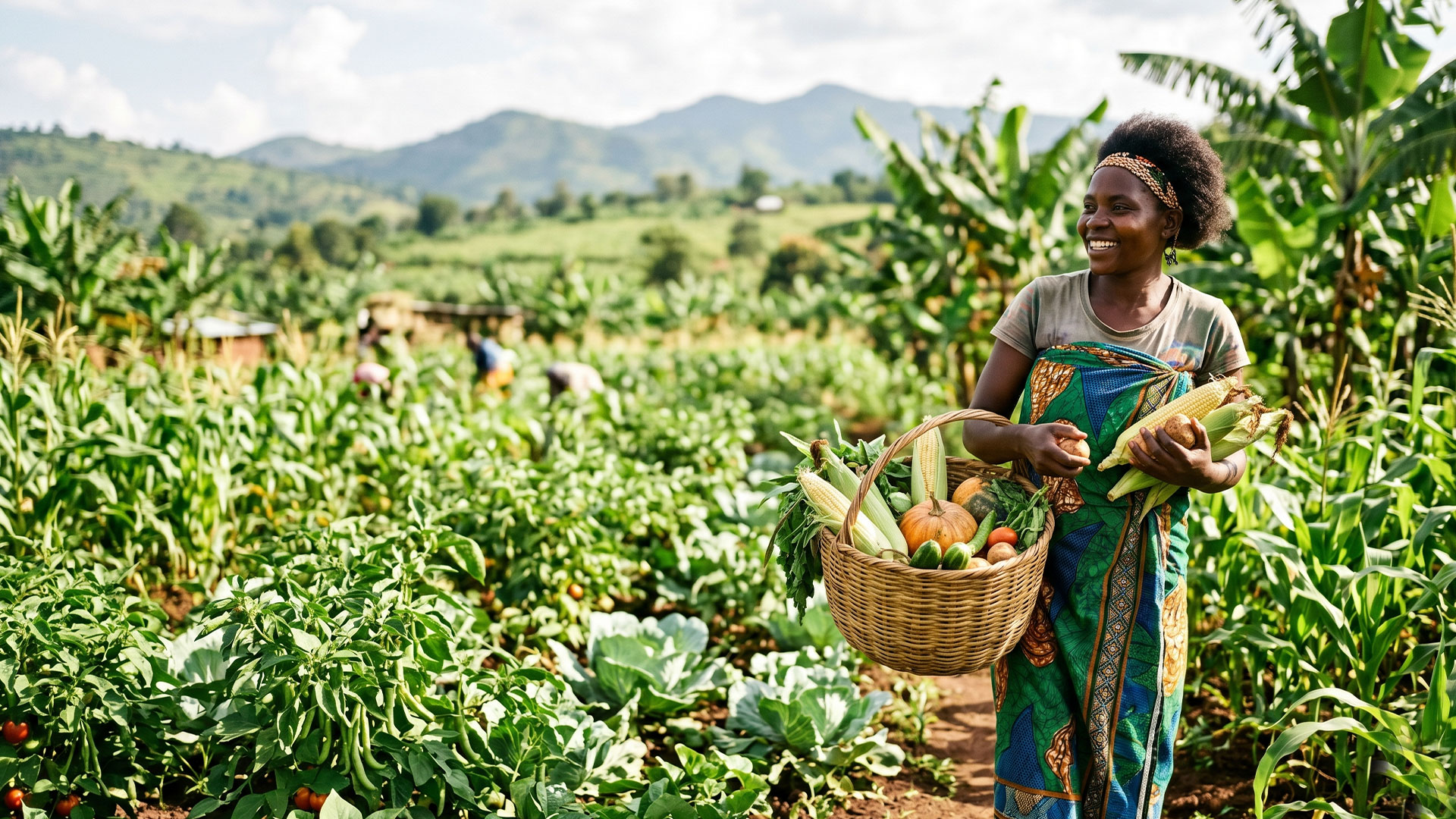
Ugandan food culture is about considerably more than a collection of famous dishes. Food connects agriculture, family life, hospitality, regional identity, ceremonies and everyday routines. The crops grown in a particular area influence what reaches the cooking pot, while generations of knowledge determine whether those ingredients are steamed, boiled, mashed, roasted, smoked, fried or slowly cooked into sauces and stews.
Uganda’s Ministry of Foreign Affairs has described food as an important showcase of the country’s heritage, way of life and cultural identity. Uganda Tourism Board similarly presents cuisine as part of the country’s wider cultural tourism experience. This cultural importance explains why understanding Ugandan food culture requires looking beyond what appears on the plate and examining how ingredients are prepared, shared and connected with particular communities.
There is no single cooking tradition shared identically by every Ugandan household. Uganda contains numerous cultural communities and markedly different agricultural environments. Banana-centered cooking is especially significant in parts of central and western Uganda, while millet, sorghum and cassava become particularly important in several northern and eastern food traditions. Fishing communities add freshwater fish, while pastoral areas have their own relationships with cattle and dairy products.
What Defines Ugandan Food Culture?
One of the defining characteristics of Ugandan food culture is the relationship between staple foods and accompaniments. A meal often combines a substantial staple such as matooke, posho, cassava, sweet potatoes, millet or rice with beans, vegetables, groundnut sauce, meat, chicken or fish.
This structure makes the combination more important than any individual ingredient. Posho is intentionally mild and becomes much more interesting when eaten with beans or stew. Matooke can accompany groundnut sauce, beef, chicken, vegetables or fish. Millet-based foods similarly work with regional vegetable and meat preparations.
The result is a cuisine in which texture and combination matter greatly. A dense staple absorbs or accompanies a moist sauce, while vegetables, groundnuts, meat or fish provide additional richness and flavor.
Ugandan Food Culture Begins With Agriculture
Traditional Ugandan cooking is inseparable from agriculture. Bananas, maize, millet, sorghum, cassava, sweet potatoes, beans, groundnuts, sesame, vegetables, fruit and livestock all connect the dining table with farms and gardens.
The Ugandan Ministry of Foreign Affairs stated in May 2026 that agriculture remains an important foundation of livelihoods and emphasized Uganda’s commitment to preserving indigenous knowledge systems and traditional practices that have sustained communities for generations.
This relationship can be seen directly in local markets. Bunches of green cooking bananas, piles of cassava, sweet potatoes, beans, groundnuts, maize and leafy vegetables are not simply commodities. They are the ingredients around which regional cooking systems have developed.
Travelers exploring Uganda’s traditional culture can therefore learn as much in a produce market as in a restaurant. Seeing ingredients before they are prepared makes the structure of Ugandan meals easier to understand.
Bananas and the Culture of Matooke
Few ingredients illustrate the connection between farming and food culture better than bananas. In central and western Uganda, cooking bananas have enormous culinary importance.
Matooke uses green cooking bananas rather than sweet dessert bananas. The bananas are harvested while green, peeled and cooked until soft. Traditional preparation frequently involves steaming, with banana leaves playing an important role in the cooking process.
Once tender, matooke can be mashed into a smooth staple and served with sauce. Groundnut sauce, beans, vegetables, beef, chicken and fish are all possible accompaniments.
Matooke is therefore more than a single recipe. It represents an agricultural system, a staple food and a set of cooking techniques that are particularly important within central and western Uganda.
Banana Leaves as Traditional Cooking Tools
Banana plants provide more than food. Their leaves have traditionally been used as cooking materials, particularly in banana-growing areas.
Leaves can help create an enclosed steaming environment. They are particularly important in luwombo, where ingredients are placed inside a carefully prepared leaf before being wrapped and steamed.
This is an excellent example of traditional cooking using materials available within the agricultural environment. The plant produces the staple crop while its leaves also contribute to the preparation of other foods.
Steaming in Ugandan Cooking
Steaming is one of the most culturally distinctive Ugandan cooking techniques, particularly in the preparation of matooke and luwombo.
For matooke, peeled cooking bananas can be wrapped and steamed until completely tender. The bananas can then be mashed while retaining a soft, dense consistency.
Steaming differs fundamentally from direct roasting or frying because the food cooks through heat and moisture rather than direct exposure to a flame or hot oil.
The technique is particularly valuable for visitors to understand because some of Uganda’s most culturally significant foods depend upon it.
Luwombo and Enclosed Banana-Leaf Cooking
Luwombo is one of the clearest examples of a traditional Ugandan cooking method carrying cultural significance of its own. The Ministry of Foreign Affairs has identified steamed luwombo as a signature element of Ugandan cuisine, while official cultural presentations continue to include luwombo among dishes representing Uganda.
The preparation is particularly associated with Buganda. Meat, chicken, fish, mushrooms or a groundnut-based mixture can be placed inside prepared banana leaves. The leaf is folded into a parcel and the food is steamed.
The enclosed environment helps retain moisture during cooking. Instead of being exposed directly to fire, the ingredients cook slowly inside the parcel.
For visitors exploring traditional cooking in Uganda, luwombo is therefore valuable not only because of its flavor but because it demonstrates a distinctive cooking technique.
Boiling in Ugandan Cooking
Boiling is among the most practical and widespread cooking methods in Uganda. It is used with beans, cassava, sweet potatoes, potatoes, vegetables and numerous other ingredients.
Beans require sufficient cooking to become tender before they are eaten or transformed into sauce. Cassava must be properly prepared and thoroughly cooked. Sweet potatoes can be boiled until soft and then served with beans, groundnut sauce or another accompaniment.
Boiling is also fundamental to many stews and sauces because ingredients need time to soften and combine.
Cooking Beans
Beans are important in everyday Ugandan food because they can transform a relatively plain starch into a substantial meal.
Dried beans are sorted, cleaned and cooked until tender. Depending on the recipe, onions, tomatoes or other ingredients can then be incorporated to create a sauce.
The beans may be served with posho, matooke, cassava, sweet potatoes or rice. Posho and beans is particularly useful for understanding everyday Ugandan eating because the meal does not depend on expensive ingredients or elaborate presentation.
Preparing Groundnut Sauce
Groundnut sauce demonstrates another important Ugandan cooking technique. Groundnuts, known internationally as peanuts, are processed and cooked into a rich sauce rather than being used only as a snack.
The groundnut mixture is combined with liquid and simmered carefully until the desired consistency develops. Individual recipes can include additional ingredients and vary between households.
The finished sauce works particularly well with relatively mild staples such as matooke. It can also accompany cassava, sweet potatoes, posho and vegetables.
Groundnut sauce is so important that visitors with peanut allergies should specifically ask whether a meal contains groundnuts rather than relying on visual inspection.
Mashing and Working Staple Foods
Ugandan cooking includes several foods whose final texture depends on physical working rather than simply boiling an ingredient and placing it on the plate.
Matooke can be mashed after steaming. Posho requires maize flour to be worked vigorously into hot water until it becomes dense and smooth. Millet preparations similarly require flour to be incorporated and worked into a firm consistency.
These techniques require experience because the cook needs to judge moisture, heat and texture. The desired result is cohesive rather than watery or lumpy.
How Posho Is Prepared
Posho begins with maize flour and water. Water is heated before maize flour is gradually incorporated.
The cook continuously turns and works the mixture as it thickens. Additional flour can be incorporated until the food develops the required dense consistency.
The finished posho can hold its shape and is designed to be eaten with a sauce or stew. Beans are one of its most familiar accompaniments.
How Millet Foods Are Prepared
Millet is important in several Ugandan regional cuisines. Millet flour can be used for porridge or transformed into a much firmer staple.
For a firm preparation, flour is incorporated into hot water and repeatedly worked until the mixture becomes smooth and dense. Regional traditions can involve different flour combinations, including mixtures involving cassava.
Millet-based foods are particularly informative for visitors traveling in northern, eastern and parts of western Uganda because they reveal staple traditions that differ significantly from matooke-centered meals.
Roasting Over Charcoal and Open Fire
Roasting provides a completely different flavor from steaming or boiling. Charcoal and open-fire cooking are visible in street-food areas, roadside trading centers and other informal food environments.
Gonja, maize and meat can all be cooked over charcoal. The direct heat produces browned or charred surfaces and gives the food a distinctive roasted character.
For travelers, roasting is one of the easiest cooking methods to observe because preparation often happens openly beside the road or directly in front of customers.
Roasting Gonja
Gonja is ripe plantain and should not be confused with the green cooking bananas used for matooke.
The plantain is placed over charcoal and turned repeatedly while cooking. Heat softens the interior while the exterior develops browned and sometimes lightly charred areas.
Because ripe plantain contains more natural sweetness than green matooke, roasting produces a noticeably sweeter food.
Roadside vendors are particularly associated with roasted gonja, making it a common food to encounter during road travel through Uganda.
Roasting Fresh Maize
Fresh maize is another ingredient transformed through direct heat. Whole cobs can be placed over charcoal and rotated while the kernels cook.
The resulting food is eaten directly from the cob. This differs completely from posho even though both foods originate with maize.
The comparison demonstrates how cooking technique changes an ingredient. Fresh maize becomes a portable roasted snack, while dried maize milled into flour becomes one of Uganda’s important staples.
Muchomo and Grilled Meat
Muchomo is associated with roasted or grilled meat and forms an important part of Uganda’s roadside and casual dining environment.
Beef, goat or chicken can be cooked over charcoal. Pieces of meat are exposed directly to heat and turned until cooked through.
Seasoning and marinades vary, so there is no single universal muchomo recipe. Some preparations emphasize the flavor of the meat and charcoal, while others incorporate additional seasoning.
Frying in Ugandan Cooking
Frying is particularly visible in contemporary street food and snack preparation. Chapati, mandazi, samosas and some fish preparations rely on oil and direct pan or deep-frying techniques.
This method provides textures very different from steamed foods. Chapati develops browned surfaces on a hot pan, mandazi develops a fried exterior, and samosas become crisp around their fillings.
Frying therefore represents an important part of contemporary Ugandan eating even though not every fried food originated exclusively within Uganda.
Cooking Chapati
Chapati has become thoroughly integrated into Uganda’s everyday food culture. Flour-based dough is kneaded and divided into portions before being rolled into flat rounds.
The bread is cooked on a heated flat surface with oil. Each side is cooked until browned and the interior is completely done.
Chapati can then be eaten with beans, transformed into kikomando or used to wrap eggs and vegetables in a Rolex.
Cooking a Ugandan Rolex
The Ugandan Rolex demonstrates how cooking methods and culinary influences can evolve into a distinctive local street food.
Eggs are beaten and commonly mixed with chopped vegetables such as onions, tomatoes or cabbage. The mixture is cooked on a hot surface to create an omelette.
The cooked egg is then combined with chapati and rolled into a portable meal. Preparation usually takes place directly in front of the customer.
Rolex is important to modern Uganda food culture because it demonstrates that national cuisine is not static. Newer foods can become culturally recognizable alongside older cooking traditions.
Smoking as a Preservation and Cooking Technique
Smoking is another traditional technique with important applications in Uganda. It can preserve ingredients while also developing flavor.
Fish can be smoked, allowing it to remain usable longer than fresh fish under appropriate conditions. The smoked product can later be incorporated into sauces and stews.
Smoking is also central to the preparation and preservation of malewa, the bamboo-shoot food associated particularly with Bugisu in eastern Uganda.
Malewa and Smoked Bamboo Shoots
Malewa is one of Uganda’s most distinctive regional foods and provides an excellent example of preservation techniques adapting a seasonal plant resource for later use.
Young bamboo shoots associated with the Mount Elgon region can be smoked and dried. Before being eaten, dried malewa is prepared and boiled until sufficiently tender, with inedible hard portions removed.
The prepared bamboo can then be combined with groundnut sauce or other ingredients depending on the recipe.
Uganda’s Ministry of Foreign Affairs has documented malewa as an important element of Bugisu cultural heritage and noted its growing presence at cultural events and on hotel menus.
One-Pot Cooking and Katogo
Katogo provides an important example of one-pot cooking. Instead of preparing a staple and sauce completely separately, ingredients are cooked together.
Matooke can be combined with beans, beef, offal or another accompaniment. Versions based on cassava, potatoes or other staples also exist.
The ingredients cook together so that flavors and liquids interact throughout the preparation.
Katogo is particularly associated with substantial breakfasts, although it should not be treated as a food that can only be eaten in the morning.
Slow Cooking and Stews
Stews allow meat, beans and vegetables to cook gradually until tender while creating a sauce suitable for eating with staples.
Beef and goat can both be prepared in this way. Onions, tomatoes and other ingredients may be incorporated depending on the cook’s recipe.
The finished stew can accompany matooke, posho, rice, millet, cassava or potatoes.
Slow cooking is particularly useful for tougher cuts of meat because sufficient cooking time allows them to become more tender.
Freshwater Fish Cooking Traditions
Uganda’s lakes and rivers contribute an important fish tradition. Tilapia, Nile perch and smaller fish such as mukene are among the species encountered in Ugandan food.
Different fish require different approaches. Tilapia can be grilled whole, fried or cooked in sauce. Nile perch is often portioned because of its size. Mukene can be dried before being fried or incorporated into sauce.
Uganda Tourism Board lists Nile perch, tilapia and traditional staples among foods visitors can experience around the Ssese Islands in Lake Victoria.
Cooking Tilapia
Whole tilapia is commonly cleaned and then fried or grilled. Grilling over charcoal develops roasted flavor while frying creates a different exterior texture.
Fish cooked in sauce provides another preparation. The finished fish can be accompanied by matooke, posho, cassava, rice, vegetables or potatoes.
Entebbe, Kampala and destinations around Lake Victoria provide convenient places for travelers to explore freshwater fish.
Traditional Cooking Fires
Wood and charcoal have long played important roles in Ugandan cooking, particularly where electric or gas cooking is unavailable or where cooks deliberately use fire for a particular preparation.
A traditional cooking arrangement can involve pots supported above a wood fire. Charcoal stoves provide another compact heat source and remain particularly visible in street-food preparation.
Heat management requires experience. Unlike an electric cooker where temperature can be adjusted with a control, the cook manages fuel, airflow and the distance between the food and heat source.
Modern Kitchens and Changing Cooking Methods
Ugandan food culture is not frozen in a historical moment. Urban households, restaurants and hotels increasingly use gas, electricity and modern kitchen equipment alongside older methods.
A traditional recipe can therefore be prepared using modern equipment while retaining its fundamental ingredients and culinary identity.
At the same time, some methods remain difficult to reproduce exactly without traditional materials. Banana-leaf steaming, charcoal roasting and smoking create experiences that differ from simply placing the same ingredients in an electric oven.
Food Preparation as Knowledge
Traditional cooking involves knowledge that cannot always be reduced to a short written recipe. A cook learns how much water a flour requires, when matooke has steamed sufficiently, how tightly a banana-leaf parcel should be wrapped and how to manage an open fire.
Much of this knowledge has historically been transmitted through observation and participation. Younger family members learn by watching experienced cooks and gradually taking responsibility for individual tasks.
This is one reason food is part of intangible cultural heritage. The ingredients themselves matter, but so do the skills required to transform them.
Hospitality and Sharing Food
Food has an important social role in Uganda. The Ministry of Foreign Affairs has explicitly described sharing food as a basic element of relationship building and has connected cuisine with heritage, way of life and cultural identity.
Offering food or drink can therefore carry meaning beyond satisfying hunger. Meals create opportunities for conversation, welcoming guests and reinforcing social relationships.
Visitors invited to eat in a home should recognize that the experience may represent hospitality rather than simply a transaction involving food.
Eating Together
Shared meals provide time for families and guests to gather. The precise dining arrangement varies enormously between urban and rural households, generations and communities, so there is no responsible basis for describing one rigid national dining ritual.
Some meals may involve dishes being placed centrally and portions distributed to individual diners. Other households and restaurants serve individual plates.
Modern Ugandan dining encompasses everything from traditional family meals to restaurant buffets, cafés, street stalls and formal hotel service.
Eating With the Hands
Some Ugandan foods can be eaten comfortably by hand, while spoons, forks and other utensils are also widely used. It would therefore be inaccurate to claim that Ugandans universally eat either with their hands or with cutlery.
Foods such as Rolex and roasted maize are naturally eaten by hand. Firm staple foods can also be eaten by hand in some settings.
Visitors should follow the practice of their hosts or ask when uncertain. When eating with the hands, washing beforehand is important.
Handwashing and Meals
Handwashing has practical importance whenever food is handled directly. In home and cultural settings, water may be provided for guests to wash before eating.
The exact practice varies by setting. Restaurants increasingly provide conventional washrooms or handwashing facilities, while traditional or rural dining arrangements may use portable water containers.
Travelers should treat handwashing as hygiene rather than as a performance of supposedly exotic dining etiquette.
Respecting Hosts and Local Dining Traditions
Visitors invited to a Ugandan home or community meal should approach the experience with curiosity rather than assumptions.
Wait for the host to indicate where to sit and how food will be served. If uncertain about how a food is eaten, asking politely is preferable to guessing.
Complimenting a meal and showing interest in its preparation can create useful conversation. However, visitors should avoid treating household cooking as a spectacle or photographing people without permission.
Food at Celebrations and Cultural Events
Food takes on additional importance during weddings, family gatherings, cultural events and other celebrations. Larger quantities and a wider range of dishes may be prepared than during an ordinary household meal.
Luwombo is particularly associated with special meals in Buganda. Pilau and meat dishes can also feature at gatherings, while regional foods reflect the communities involved.
In 2025, a Ugandan cultural exhibition documented by the Ministry of Foreign Affairs concluded with a dinner containing luwombo, matooke, malakwang, groundnut paste and katogo, demonstrating how foods from different parts of the country can collectively represent Uganda at cultural events.
Food and Regional Identity
One of the biggest mistakes a Uganda food guide can make is presenting every dish as equally traditional everywhere.
Buganda has particularly strong associations with matooke and luwombo. Ankole has cattle and dairy traditions as well as banana and millet foods. Bugisu is strongly associated with malewa. Acholi cuisine includes malakwang and millet-based foods. Karamoja has pastoral traditions and important relationships with hardy grains such as sorghum.
Modern migration and trade mean these foods can now be encountered far beyond their regions of origin, but their cultural histories remain geographically meaningful.
Travelers interested in Uganda cultural traditions should therefore ask where a dish comes from as well as what ingredients it contains.
Food Culture in Kampala
Kampala brings together people from across Uganda, making the capital one of the best places to experience several regional cuisines within a relatively small geographical area.
A visitor can eat Buganda dishes, northern foods, western Ugandan preparations, grilled fish, street food and international cuisine without leaving the metropolitan area.
The Ministry of Foreign Affairs has highlighted Kampala’s diverse restaurant scene while also emphasizing the importance of ensuring local Ugandan cuisine remains visible within that increasingly international environment.
Traditional Restaurants and Cultural Dining
Traditional-food restaurants can provide an accessible introduction for travelers who do not have an opportunity to eat in a Ugandan home.
These establishments may serve several staples and sauces together, allowing visitors to compare matooke, millet, posho, sweet potatoes, groundnut sauce, beans and meat dishes.
Cultural venues can add explanations, music or performance to the meal. Uganda Tourism Board has used food alongside dance and other cultural expressions at events promoting Uganda’s cultural diversity.
Food Markets and Ugandan Cooking Culture
Markets are among the best places to understand what Ugandan cooks work with before ingredients reach a kitchen.
Green cooking bananas, cassava, sweet potatoes, millet, maize, beans, groundnuts, vegetables, fruit, dried fish and spices can all reveal something about local eating patterns.
Availability changes according to region and season, which makes market visits particularly informative during longer journeys around the country.
Street Cooking as Part of Ugandan Food Culture
Street cooking provides a direct contrast with slow traditional steaming. A Rolex can be prepared in minutes, while luwombo requires much more time.
Chapati cooks rapidly on a hot surface. Eggs and vegetables become an omelette before being rolled inside the bread. Maize and gonja roast over charcoal. Meat cooks on roadside grills.
These foods demonstrate how cooking methods adapt to urban life, portability and the need for inexpensive meals.
How Ugandan Cooking Has Changed
Ugandan cuisine has continually absorbed new ingredients and influences. Chapati and samosas demonstrate historical South Asian influence within East African food culture, while rice and pilau reflect wider regional connections.
Urbanization has also changed how food is sold and eaten. Street vendors, takeaway businesses, cafés and supermarkets now exist alongside produce markets, home cooking and traditional restaurants.
Change does not necessarily erase tradition. A Kampala resident can eat Rolex for breakfast and matooke with groundnut sauce later in the same day.
Ugandan Food Culture and Contemporary Identity
Uganda Tourism Board continues to present cuisine as part of the country’s cultural identity. At a recent cultural gala at Ndere Cultural Centre, the organization highlighted dishes from different regions, including matooke and kalo, as part of a wider presentation of Ugandan culture.
This matters because culinary tourism can connect visitors with communities beyond wildlife tourism. Food provides an accessible way to begin conversations about farming, history, regional identity and daily life.
How Travelers Can Respectfully Experience Ugandan Cooking
The best approach is to combine several environments. Eat at a local restaurant, visit a produce market, try street food from an established vendor and participate in a reputable cultural or community experience where food preparation is explained by local hosts.
Ask questions about ingredients and cooking techniques. Find out whether a dish belongs particularly to the region being visited. Ask why banana leaves are used, how millet flour is worked or why bamboo shoots are smoked.
This approach turns Ugandan culinary experiences into opportunities for learning rather than simply collecting photographs of unfamiliar dishes.
Traditional Cooking Experiences for Visitors
Where available, an organized cooking experience can provide much greater insight than simply ordering from a menu. Visitors may be able to observe ingredient preparation, learn how staples are cooked and understand how sauces are combined with them.
The strongest experiences are those led by people with genuine knowledge of the local food tradition rather than demonstrations designed around stereotypes about African cooking.
Travelers should ask tour operators or accommodation providers whether community cooking or food-focused cultural experiences are available in the destination they are visiting.
Ugandan Food Culture on Safari
Safari lodges provide another opportunity to explore local food, although menus commonly combine Ugandan and international cuisine.
Travelers interested in traditional foods should ask which local dishes are available rather than assuming they will automatically appear on every buffet.
A safari passing through different regions can become a culinary journey as well. Matooke and luwombo make sense in central Uganda, western journeys introduce other banana, millet and dairy traditions, eastern travel creates opportunities to ask about malewa, and northern travel can introduce millet and malakwang.
Including Ugandan foods on safari can therefore add cultural depth to an itinerary otherwise centered on wildlife.
Food Etiquette for Visitors to Uganda
There is no single etiquette code covering every household and community in Uganda. Urban restaurant dining can resemble dining elsewhere in the world, while a home or cultural experience may follow the customs of the host community.
Visitors should therefore avoid memorizing supposed universal rules from generic travel articles. Observe what hosts do, wash hands when appropriate, ask before photographing food preparation in private settings and follow guidance when food is being shared.
When offered unfamiliar food, asking what it contains and how it is normally eaten is entirely reasonable.
Why Cooking Methods Matter to Understanding Ugandan Cuisine
Two foods made from similar agricultural ingredients can become completely different depending on preparation. Green cooking bananas become soft matooke through steaming, while ripe plantain becomes sweet roasted gonja over charcoal.
Fresh maize becomes roasted street food when cooked on the cob, but dried maize becomes posho after milling and intensive cooking with water.
Groundnuts can be eaten independently or transformed into a rich sauce. Fish can be grilled fresh, fried, cooked in sauce or preserved through smoking and drying.
These examples demonstrate why a serious guide to Ugandan cuisine and cooking must explain techniques rather than merely listing dish names.
Ugandan Dining Traditions Are Diverse Rather Than Uniform
Uganda’s cultural diversity means dining traditions should never be reduced to one universal description. A household in Kampala, a family in rural Buganda, an Acholi household in northern Uganda and a Karamojong community in the northeast may have different ingredients, routines and expectations.
Age, religion, occupation, income, urbanization and personal preference add further variation. Restaurants and hotels introduce another set of dining conventions.
The most accurate approach is therefore to describe documented regional traditions while recognizing that contemporary Ugandans live and eat in many different ways.
Food as Cultural Heritage
Uganda’s official institutions increasingly present cuisine as part of national cultural heritage. The Ministry of Foreign Affairs has described food as a way for a country to tell its story, while Uganda Tourism Board incorporates cuisine into cultural tourism promotion.
This is particularly important because cooking traditions preserve knowledge that might otherwise disappear as lifestyles change. Knowing how to prepare luwombo, process millet, smoke malewa or cook regional vegetables represents cultural knowledge as much as knowing a song, dance or oral history.
Uganda’s Ministry of Foreign Affairs has also emphasized preserving indigenous knowledge systems and traditional practices alongside agricultural modernization.
Understanding Uganda Through Food
Ugandan food culture provides a practical way to understand the country’s diversity. Banana leaves reveal the relationship between agriculture and cooking in banana-growing regions. Millet and sorghum reveal the importance of cereal traditions. Smoked fish reflects preservation knowledge, while malewa connects bamboo harvesting with Bugisu cultural identity.
Street food shows another side of the story. Chapati demonstrates historical culinary exchange, while Rolex shows how imported influences can be adapted into something now closely identified with Uganda.
Dining traditions then connect all of these foods with people. Meals welcome guests, bring families together and provide a setting in which cultural knowledge is shared.
Best Way to Experience Ugandan Food Culture
A visitor seeking a detailed understanding should avoid limiting the experience to one restaurant meal. Begin in Kampala with matooke, groundnut sauce and luwombo. Watch a street vendor prepare Rolex or chapati. Visit a market and identify the ingredients seen on the plate.
During regional travel, ask which foods belong particularly to the destination. Try millet where cereal traditions are important, malewa around Bugisu when available, malakwang in northern Uganda and locally prepared fish around Lake Victoria.
If a reputable community cooking experience is available, use it to learn how ingredients are transformed rather than simply tasting the final product.
Travelers building Uganda culture into their itinerary will gain much more from food when they understand the farming, cooking techniques and social traditions behind it.
The Meaning of Ugandan Cooking and Dining Traditions
Ugandan cooking methods reveal a cuisine built around adaptation to local ingredients and environments. Steaming makes extensive use of bananas and banana leaves. Boiling transforms roots, beans and grains. Mashing and vigorous working create dense staples. Smoking preserves fish and bamboo shoots. Charcoal roasting transforms meat, maize and plantain, while frying supports a vibrant contemporary street-food culture.
Dining adds the human dimension. Food can express hospitality, regional identity and cultural memory. It can be served in a Kampala restaurant, prepared over a rural cooking fire, sold beside a highway or shared during a celebration.
For travelers, understanding these connections makes Ugandan cuisine considerably more meaningful. Matooke is no longer simply mashed cooking banana; it becomes part of a banana-growing agricultural culture. Luwombo becomes more than a stew because the banana-leaf steaming method itself carries significance. Millet becomes part of regional agricultural history, and Rolex demonstrates how contemporary urban Uganda continues to create new food traditions.
That combination of agriculture, technique, regional identity and social meaning is what makes Ugandan food culture distinctive. Exploring those connections provides one of the most direct ways to understand everyday life in Uganda beyond the country’s famous wildlife and landscapes.
Vegetarian, Vegan, Halal and Special-Diet Food in Uganda
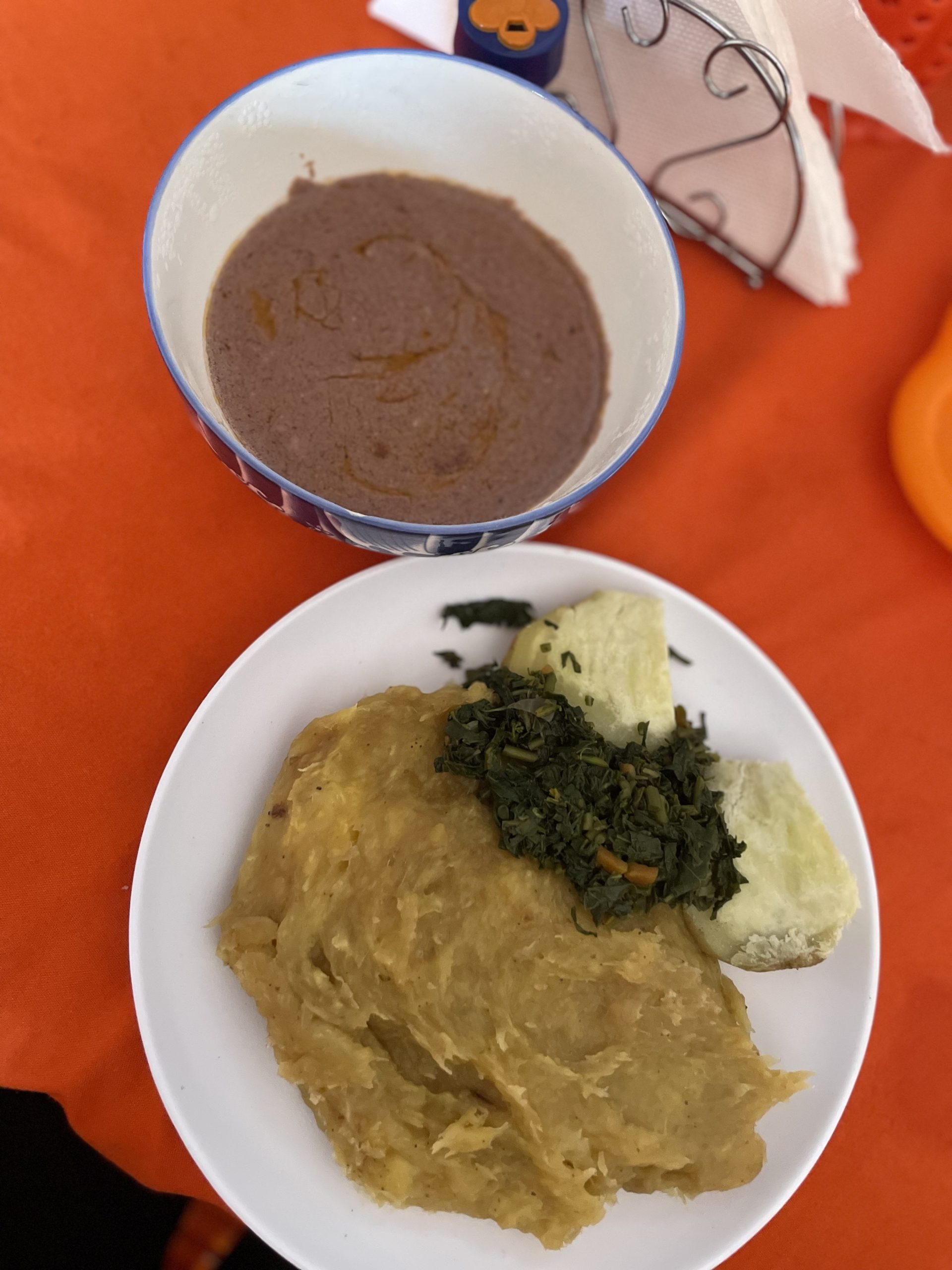
Traveling in Uganda with vegetarian, vegan, halal, gluten-free or other dietary requirements is possible, but the amount of planning required depends on the diet and where you travel. Kampala and larger tourism centers generally provide more choice, while remote safari lodges, small towns and rural restaurants may work from shorter menus and require advance notice.
Traditional Ugandan cuisine can be surprisingly useful for vegetarian travelers because many everyday ingredients are naturally plant-based. Matooke, posho, millet, cassava, sweet potatoes, rice, beans, groundnuts, vegetables, avocado and fresh fruit are widely used. The important qualification is that a plant-based ingredient does not automatically make the finished dish vegetarian or vegan. Meat stock, animal fat, milk, butter or shared cooking equipment can change whether a particular preparation meets someone’s dietary requirements.
The safest strategy is therefore to explain exactly what you do and do not eat instead of relying only on labels such as vegetarian. The currently published Uganda food guide for travelers makes the same practical point: visitors should be specific about their dietary restrictions because the meaning of “no meat” may not always be interpreted exactly as an international traveler expects.
Is Uganda Good for Vegetarian Travelers?
Uganda can work very well for vegetarian travelers, particularly those comfortable eating local staples, beans, groundnuts, vegetables and fruit. Several of the country’s most important staple foods contain no meat in their basic form.
Matooke is made from green cooking bananas. Posho is prepared from maize flour and water. Cassava, millet, sweet potatoes and rice provide additional staple choices. Beans and groundnut sauce can provide more substantial accompaniments.
The challenge is not necessarily finding plants. The challenge is confirming how a particular dish has been cooked.
A vegetable sauce could potentially have been prepared with meat stock. Beans might be cooked differently from one establishment to another. A hotel buffet can also introduce cross-contact between vegetarian and meat dishes.
For this reason, vegetarian travelers should ask whether a meal contains meat, chicken or fish rather than simply asking whether “vegetarian food” is available.
Traditional Vegetarian Food in Uganda
One of the advantages of eating traditional Ugandan food is the number of staple-and-sauce combinations that can potentially be prepared without meat.
Matooke with groundnut sauce is one of the most useful examples. The matooke provides a substantial banana-based staple while the groundnuts produce a rich sauce. When both components are prepared without animal-derived additions, the combination can suit many vegetarian and vegan travelers.
Posho and beans is another practical choice. Posho is made by working maize flour into hot water until a dense staple develops. Beans provide the sauce and additional substance.
Other possible combinations include cassava with beans, sweet potatoes with groundnut sauce, rice with beans, millet with vegetable sauce and cooked greens alongside one or more staples.
Matooke for Vegetarians
Matooke is one of Uganda’s most important foods and is particularly useful for vegetarian travelers because the staple itself is plant-based.
Green cooking bananas are peeled and traditionally steamed until tender, often using banana leaves. Once cooked, they can be mashed and served with sauce.
What determines whether the complete meal is vegetarian is the accompaniment. Matooke served with beef stew is obviously not vegetarian, while matooke served with an appropriately prepared groundnut sauce, beans or vegetables may be.
Travelers exploring traditional food in Uganda can ask restaurants to pair matooke with meat-free accompaniments rather than avoiding local cuisine altogether.
Groundnut Sauce for Vegetarians and Vegans
Groundnut sauce is one of the most valuable foods for plant-based visitors. Groundnuts are peanuts, which are processed and simmered to create a rich sauce.
The sauce pairs naturally with matooke, sweet potatoes, cassava, rice and other staples. It can turn a relatively plain starch into a much more substantial meal.
However, vegan travelers should still confirm all ingredients. A traditional name does not guarantee that every restaurant uses exactly the same recipe.
Groundnut sauce is obviously unsuitable for anyone with a peanut allergy. Travelers with severe allergies should also ask about shared utensils and preparation areas.
Beans and Ugandan Vegetarian Food
Beans are among the easiest ingredients for vegetarian travelers to find in Uganda. They can be cooked into a sauce and served with posho, matooke, cassava, sweet potatoes, rice or chapati.
A straightforward plate of posho and beans provides one of the simplest ways to eat an everyday Ugandan meal without depending on meat.
Beans can also be combined with chapati in kikomando. Because recipes and cooking methods vary, strict vegans should verify how both the beans and chapati were prepared.
Vegetables and Leafy Greens
Ugandan cooking incorporates a range of vegetables and leafy greens. The exact varieties available change according to region, market and season.
Greens can be cooked and served alongside matooke, millet, posho, sweet potatoes or other staples. Pumpkin, cabbage, tomatoes, onions, eggplant and other vegetables can also appear in contemporary Ugandan meals.
Vegetarians eating at buffet-style restaurants can often build a substantial plate by combining several staples with beans and vegetable dishes.
Sweet Potatoes and Cassava
Sweet potatoes and cassava are useful foods for travelers with several different dietary requirements because their basic boiled forms do not require wheat or animal ingredients.
Sweet potatoes are washed, prepared and cooked until tender. Cassava must be properly processed and thoroughly cooked before consumption.
Either can be served with beans, vegetables or groundnut sauce. They can also appear at breakfast rather than being restricted to lunch or dinner.
Millet and Plant-Based Eating
Millet is particularly relevant when traveling beyond Kampala because it forms part of several regional food traditions.
Millet flour can be prepared as porridge or worked with hot water into a dense staple. In some traditions millet may be combined with another flour, including cassava flour, so travelers avoiding particular ingredients should ask about the exact preparation.
Millet pairs well with vegetable dishes and sauces and provides an alternative to maize-based posho or matooke.
Is Ugandan Rolex Vegetarian?
A standard Ugandan Rolex commonly contains eggs and vegetables wrapped in chapati. It can therefore fit an ovo-vegetarian diet when prepared without meat, but it is not vegan because of the eggs.
Ingredients vary between vendors. Tomatoes, onions, cabbage and other vegetables may be incorporated into the omelette.
Vegetarian customers should tell the vendor not to add meat if optional additions are available. Travelers concerned about cross-contact should remember that street-food cooking surfaces can be shared between different foods.
Is Chapati Vegetarian?
Chapati may be suitable for vegetarians, but travelers with stricter diets should confirm ingredients rather than assuming every recipe is identical.
The basic preparation uses wheat flour, water and cooking fat or oil. Because recipes vary between vendors and restaurants, strict vegans should ask what fat or other ingredients were used.
Chapati is not suitable for a conventional gluten-free diet because wheat is its primary ingredient.
Is Kikomando Vegetarian?
Kikomando generally combines pieces of chapati with beans and can provide an inexpensive meat-free meal.
Whether an individual serving meets a strict vegetarian or vegan definition depends on the preparation of the beans and chapati. Ask about cooking fats and whether meat stock or other animal ingredients were added.
Because chapati contains wheat, kikomando is not normally suitable for someone avoiding gluten.
Vegetarian Breakfast in Uganda
Vegetarian breakfast can be relatively straightforward. Depending on the establishment, choices may include fruit, porridge, bread, chapati, mandazi, eggs, sweet potatoes, cassava, beans, tea and coffee.
Vegetarians who eat eggs can also order a Rolex without meat. Katogo may be suitable when prepared using matooke and beans rather than meat or offal.
At hotels, breakfast buffets usually provide the greatest flexibility because travelers can combine fruit, cereal, eggs, bread and cooked foods according to their requirements.
Vegetarian Lunch in Uganda
Lunch is often the easiest meal for building a traditional vegetarian plate. A restaurant serving local food may have several staples alongside beans, groundnut sauce and vegetables.
A combination of matooke, sweet potato, posho, beans and greens provides a much more representative Ugandan meal than relying exclusively on pizza, pasta or imported-style vegetarian dishes.
Travelers can ask which sauces contain no meat or fish before selecting their meal.
Vegetarian Dinner in Uganda
Dinner options depend heavily on accommodation and location. Kampala provides considerable choice, while safari lodges commonly work with set menus, buffets or a smaller selection.
At a lodge, advance notice can allow the kitchen to plan a vegetarian main course rather than simply removing meat from an otherwise complete dish.
Traditional staples can still form the foundation. Matooke, rice, potatoes or posho can be combined with beans, groundnuts and vegetables.
Vegetarian Food on a Uganda Safari
Vegetarian safari travel requires more communication than vegetarian dining in Kampala because some lodges are far from large markets and shops. Ingredients and menu options may need to be planned before guests arrive.
Inform the safari company about dietary requirements during booking rather than waiting until reaching a remote lodge.
When accommodation providers know in advance, they have a better opportunity to plan suitable breakfasts, packed lunches and dinners.
The existing guide to Ugandan foods during a safari describes common staples such as matooke and posho that can form part of meals during travel.
Vegan Food in Uganda
Vegan travel in Uganda is possible, but it generally requires more precise communication than vegetarian travel.
Several Ugandan staples are inherently plant-derived. Matooke, cassava, sweet potatoes, posho, rice, millet, vegetables, beans, groundnuts, avocado and fresh fruit can all contribute to a vegan diet.
The issue is preparation. A vegan traveler needs to establish whether animal fat, dairy products, eggs, meat stock or other animal-derived ingredients were used.
It is therefore more effective to explain the restriction explicitly than simply say “vegan” and assume every cook interprets the term identically.
Best Traditional Foods for Vegan Travelers
Matooke with a verified plant-based groundnut sauce can provide one of the most satisfying traditional options. Posho with beans is another straightforward combination when the bean sauce contains no animal products.
Boiled cassava, sweet potatoes and millet can provide additional staples. Cooked greens and other vegetable preparations expand the meal.
Fresh avocado is widely useful when available, while Uganda’s tropical fruits provide easy snacks and breakfast additions.
Vegan Ugandan Breakfast
A vegan breakfast might combine fresh fruit, boiled sweet potatoes, cassava, avocado or porridge prepared with water rather than milk.
Tea and coffee can be ordered without milk. Plant-based milk availability varies greatly between hotels and cafés and should not be assumed outside larger urban establishments.
Katogo made from matooke and beans may potentially be vegan, but ingredients should be verified. Standard Rolex is not vegan because it contains eggs.
Vegan Lunch and Dinner
A useful vegan lunch or dinner can be constructed around matooke, posho, cassava, rice or millet with beans, groundnut sauce and vegetables.
This style of eating has an important advantage: instead of asking a kitchen to invent a specialized Western vegan dish, the traveler can use foods already embedded within Ugandan cuisine.
Nevertheless, each preparation needs verification. Traditional food varies between households and restaurants, and the same dish name does not guarantee an identical ingredient list.
Vegan Street Food in Uganda
Some street foods may be plant-based in their basic form. Roasted maize and roasted gonja are among the simplest possibilities because they can consist almost entirely of the cooked crop itself.
Chapati requires more checking because ingredients and cooking fats vary. Kikomando requires confirmation of both the chapati and bean preparation.
Mandazi recipes can vary and may contain ingredients unsuitable for strict vegans. Standard Rolex contains eggs and therefore does not qualify.
Fresh Fruit for Vegan Travelers
Fruit is one of the easiest plant-based foods to find in Uganda. Depending on season and location, travelers may encounter pineapple, bananas, mangoes, papaya, watermelon, passion fruit and avocado.
Markets display an especially broad selection, while hotels and restaurants commonly serve fruit at breakfast.
Travelers concerned about foodborne illness should choose fruit that can be peeled personally or obtain prepared fruit from establishments where food handling is trusted.
Vegan Food in Kampala
Kampala provides the greatest flexibility for vegan travelers because it has supermarkets, cafés, international restaurants and establishments catering to diverse dietary preferences.
Traditional local restaurants remain useful because staples, beans and vegetables can form naturally plant-focused meals. More international restaurants can supplement these foods with salads, curries and other vegan-friendly dishes.
The current Uganda dining guide notes that vegetable stews, curries, beans and grains are among options vegetarian travelers may encounter, although fully vegetarian establishments are less common than restaurants offering some vegetarian dishes.
Vegan Food Outside Kampala
Outside Kampala, plant foods remain widely available, but specialized vegan menus become less dependable.
This distinction is important. A rural restaurant may have plenty of foods that can form a vegan meal even though the word “vegan” never appears on the menu.
Instead of asking only for a vegan menu, ask what beans, vegetables, matooke, cassava, posho, millet or fruit are available and how each has been prepared.
Halal Food in Uganda
Muslim travelers can find halal food in Uganda, particularly in Kampala and communities with significant Muslim populations. However, travelers who require formally certified halal food should distinguish between a restaurant informally describing its food as halal and an establishment whose halal status has been verified by an appropriate certification body.
The Uganda Muslim Supreme Council has a Directorate of Halal. Its registered constitution assigns the directorate responsibility for halal accreditation of products and services, certification and auditing, personnel training, and maintaining an up-to-date register of halal-compliant and accredited products and entities in Uganda.
The same institution’s current strategic plan includes developing, publicizing and enforcing halal standards for food, beverages and meat.
This makes direct certification verification preferable to assuming halal status because of a restaurant’s location, cuisine or ownership.
How to Verify Halal Food in Uganda
Ask whether the meat is halal-certified and which organization certified it. If strict halal compliance is required, ask to see current certification or verify the establishment against information supplied by the Uganda Muslim Supreme Council’s halal authorities.
Travelers should also ask about food preparation where cross-contact matters. A restaurant may serve halal meat while also preparing non-halal items in the same kitchen.
Certification status can change, so a permanent travel guide should not claim that a particular restaurant remains certified indefinitely unless its current status has been checked.
Halal Food in Kampala
Kampala provides the broadest range of possibilities for Muslim travelers because of the city’s large and diverse restaurant scene.
Areas with established Muslim communities and restaurants serving East African, Indian, Middle Eastern and other cuisines can provide useful options, but cuisine type alone does not prove halal certification.
Travelers who need certified halal food should confirm the establishment’s current status before dining rather than relying on an old travel article or online comment.
Halal Food on Safari
Halal requirements should be communicated to the safari company before accommodation is booked. Remote lodges may need advance notice to source appropriate meat or make alternative arrangements.
Specify whether you require halal-certified meat, separate preparation or simply meals containing no pork. These are not equivalent requirements.
If a lodge cannot verify halal meat, vegetarian meals can sometimes provide a practical alternative for an individual traveler, but this does not automatically resolve every religious requirement concerning preparation and cross-contact.
Pork and Halal Travelers
Muslim travelers should not assume that avoiding an obvious pork dish is sufficient for strict halal compliance. The origin and slaughter of meat, cooking ingredients and preparation procedures may all matter.
Ask questions before ordering and communicate strict requirements clearly to hotels and safari operators.
Gluten-Free Food in Uganda
Uganda has several traditional staples that do not inherently depend on wheat. Matooke, posho made from maize, cassava, sweet potatoes, rice and some millet preparations can provide useful starting points for gluten-free travelers.
However, anyone with celiac disease or a medically necessary gluten-free diet needs to consider ingredients and cross-contact rather than treating these foods as automatically safe.
Shared utensils, flour storage, sauces, seasonings and cooking surfaces can introduce gluten even when the main staple does not contain wheat.
Ugandan Foods That Contain Wheat
Chapati is wheat-based and is therefore unsuitable for a standard gluten-free diet. Rolex uses chapati and consequently contains wheat unless a specialized alternative is deliberately prepared.
Kikomando also contains chapati and is therefore normally wheat-based. Mandazi and samosas generally use wheat flour as well.
Bread, cakes, pastries and many hotel breakfast products should also be treated as containing gluten unless specifically identified otherwise.
Matooke and Gluten-Free Diets
Plain traditionally steamed matooke is made from cooking bananas rather than wheat and can provide a useful gluten-free staple.
The accompanying sauce needs separate evaluation. A meat stew, groundnut sauce or vegetable sauce may contain additional ingredients that need checking.
For people with celiac disease, kitchen cross-contact should also be discussed directly with the restaurant or lodge.
Posho and Gluten-Free Diets
Traditional posho made only from maize flour and water does not inherently require wheat.
This makes it a potentially useful staple for gluten-free visitors. However, commercially packaged flour, shared preparation equipment and accompanying sauces should still be checked when strict avoidance is medically necessary.
Millet and Gluten-Free Travelers
Millet itself is naturally gluten-free, but travelers should ask whether the local preparation contains only millet or is blended with another flour.
Cross-contact with wheat is another consideration in kitchens that prepare chapati and other wheat products.
For celiac disease, verbal confirmation that something is “millet” is therefore only the beginning of the conversation.
Dairy-Free Food in Uganda
Many Ugandan staples can be prepared without dairy. Matooke, posho, cassava, sweet potatoes, rice, beans and vegetables are obvious possibilities.
Milk becomes particularly relevant in tea, porridge, hotel breakfasts and some contemporary dishes and desserts.
Travelers avoiding dairy should ask whether milk, butter, ghee or other dairy ingredients were used in cooking.
Eshabwe and Dairy-Free Diets
Eshabwe deserves special attention because it is associated with western Uganda and is based on ghee. It is therefore unsuitable for someone avoiding dairy.
The dish is culturally significant precisely because it reflects the dairy traditions of cattle-keeping communities, particularly in Ankole.
A traveler seeking dairy-free food should choose another sauce rather than expecting eshabwe to be modified into something fundamentally different.
Egg-Free Food in Uganda
Many traditional staples are naturally egg-free in their basic preparation, including matooke, posho, cassava, sweet potatoes and millet.
Standard Rolex is not egg-free because eggs are one of its defining ingredients.
Baked goods, mandazi and other flour-based snacks require individual verification because recipes vary.
Peanut and Groundnut Allergies
Travelers with peanut allergies need particular caution in Uganda because groundnuts are an established component of local cuisine.
Groundnut sauce is an obvious source, but peanuts may also appear in other preparations. The safest approach is to explain clearly that even a small quantity can be dangerous if the allergy is severe.
Shared spoons, pots and preparation areas can also matter for severe allergies.
Do not rely only on asking whether a meal contains “nuts.” Specifically mention peanuts and groundnuts because groundnut is a commonly used term.
Tree-Nut Allergies
A peanut allergy and a tree-nut allergy are medically distinct, so travelers should state exactly which foods must be avoided.
Hotels serving international cuisine may use nuts in desserts, breakfast products and sauces even where a traditional Ugandan recipe would not contain them.
For severe allergies, discuss requirements with the chef or food-service manager rather than relying only on buffet labels.
Soy and Other Food Allergies
Soy is not as visibly central to traditional Ugandan cuisine as groundnuts, but it can occur in commercial products, sauces and contemporary restaurant cooking.
The same principle applies to sesame, shellfish and other allergens: do not assume absence simply because an ingredient is not traditionally associated with the dish.
Packaged foods should be checked individually, while restaurant meals require direct communication with staff.
Low-Salt and Low-Sodium Diets
Travelers limiting sodium should request food with little or no added salt where kitchens can accommodate the request.
Freshly prepared staples may be easier to adapt than packaged snacks or heavily seasoned sauces. Plain matooke, sweet potatoes, cassava, rice and vegetables can provide useful starting points.
Medical dietary restrictions should be communicated before a safari, especially where meals are prepared at remote lodges.
Diabetes and Ugandan Food
Travelers managing diabetes should follow the individualized guidance provided by their healthcare professional rather than relying on a generic travel-food article.
Ugandan meals can contain substantial portions of carbohydrate-rich staples including matooke, posho, cassava, sweet potatoes, rice and millet.
Because portion requirements and medication management are individual medical issues, this guide cannot safely prescribe which Ugandan foods or quantities are appropriate for a specific person.
Food for Travelers With Medical Diets
Anyone whose diet is medically necessary should distinguish preference from safety-critical restriction when communicating with a restaurant or safari operator.
Saying “I prefer not to eat peanuts” does not communicate the same urgency as explaining that peanut exposure can cause a severe allergic reaction.
Carry any medically necessary supplies and follow the advice provided by your healthcare professional for travel.
Special Diets at Uganda Safari Lodges
Safari lodges deserve special planning because they may be many hours from Kampala and cannot necessarily obtain specialist ingredients at short notice.
Dietary requirements should therefore be supplied when the safari is booked and repeated before arrival.
Specify exactly what must be excluded. “Vegetarian,” “vegan,” “halal,” “gluten-free” and “allergy-safe” describe different requirements and should never be treated as interchangeable.
Travelers planning special-diet meals during a Uganda safari should ask the tour operator to pass requirements to every accommodation on the itinerary.
Special Diets During Gorilla Trekking
Gorilla-trekking itineraries commonly involve early breakfasts and packed lunches because travelers may spend several hours in or around the forest.
This makes advance communication especially important. A traveler cannot depend on finding an alternative restaurant after beginning a trek.
Vegetarian, vegan, halal, gluten-free and allergy requirements should be communicated to the lodge responsible for preparing the packed meal before trekking day.
Uganda Wildlife Authority confirms that Bwindi Impenetrable National Park is accessed through several sectors and that many visitors stay in nearby lodge areas before trekking. Accommodation planning is therefore an important part of meal planning as well.
Special Diets Around Bwindi
Bwindi’s tourism areas contain lodges serving international visitors, but the park is geographically remote compared with Kampala. Specialized ingredients should not be assumed to be readily available.
Travelers should send requirements before arrival and ask the lodge to confirm what it can provide.
For vegan guests, traditional staples and vegetables may provide more dependable foundations than requesting specialized imported meat substitutes.
Special Diets Around Mgahinga
Mgahinga Gorilla National Park is reached through Kisoro, and Uganda Wildlife Authority notes that road travel from Kampala to Kisoro takes approximately nine hours.
That distance illustrates why travelers with strict diets should plan ahead. Waiting until arrival to request specialized products may leave a lodge with limited options.
Simple Ugandan staples, beans, vegetables and fruit can be particularly useful for plant-based travelers when prepared according to their requirements.
Special Diets Around Kibale
Kibale National Park can be reached through Fort Portal, with Uganda Wildlife Authority describing Fort Portal as roughly an hour from the park.
Access to an urban center can provide more flexibility than some remote destinations, but dietary requirements should still be communicated to the lodge.
This is particularly important when an early chimpanzee activity requires breakfast or a packed meal to be prepared before normal restaurant hours.
Special Diets Around Lake Mburo
Lake Mburo lies between Kampala and Mbarara, with Uganda Wildlife Authority placing the park approximately 228 kilometers from Kampala.
Its position on a major southwestern travel route can make meal planning more flexible than at some remote parks, but lodge kitchens still need advance notice for strict requirements.
Special Diets at Kampala Hotels
Kampala is the easiest location in Uganda for travelers with complex dietary preferences because larger hotels typically have broader menus, trained kitchen teams and access to a greater range of ingredients.
That does not guarantee that every hotel can safely accommodate every allergy or medical restriction.
For severe allergies or celiac disease, contact the hotel directly and ask about ingredients, preparation procedures and cross-contact before booking.
Special Diets at Small Local Restaurants
Small local restaurants can be excellent places for vegetarian and vegan travelers because everyday staples and beans may already meet much of what they need.
Communication becomes particularly important when the restriction concerns hidden ingredients or cross-contact.
Instead of asking a broad question such as “Do you have vegan food?”, it may be more effective to ask whether the available matooke, beans and vegetables contain meat, fish, milk, eggs or animal fat.
Special Diets and Ugandan Buffets
Buffets can make dietary choice easier because several foods are visible at once, but they also create cross-contact concerns.
Serving spoons can move between dishes. Sauces may contain ingredients that are not visually obvious. A vegetable dish positioned beside meat should not automatically be considered safe for someone with a severe allergy.
Ask a member of the kitchen team rather than relying entirely on appearance.
Vegetarian and Vegan Food at Markets
Uganda’s markets provide excellent access to fresh plant ingredients. Bananas, avocados, pineapples, mangoes, passion fruit, cassava, sweet potatoes, tomatoes and other produce can be available depending on region and season.
Markets are useful for travelers staying in self-catering accommodation, but food hygiene remains important. Produce eaten raw should be washed using safe water, and fruit that can be peeled personally can be a practical choice.
Self-Catering With a Special Diet
Travelers with complex dietary restrictions may benefit from self-catering for part of their journey, especially in Kampala or another city with access to supermarkets and produce markets.
Self-catering gives greater control over ingredients but does not eliminate the need to read packaged-food labels carefully.
Availability of specialist gluten-free, vegan or allergy-oriented products should not be assumed outside larger urban areas.
How to Explain Vegetarian Requirements
Be specific. Explain whether you eat eggs, dairy products and fish rather than using only the word vegetarian.
A useful request is to state that you do not eat meat, chicken or fish and then separately explain whether eggs and milk are acceptable.
This reduces ambiguity and gives the cook a much clearer idea of which local dishes can be served.
How to Explain Vegan Requirements
Explain that you do not eat meat, chicken, fish, eggs, milk, butter, ghee or other animal-derived ingredients.
Then ask which beans, vegetables and staples are prepared without those ingredients.
This ingredient-based conversation is usually more reliable than assuming every restaurant uses the same definition of vegan.
How to Explain Halal Requirements
State whether you require formally halal-certified meat and whether separate food preparation is important to you.
If certification is essential, request evidence of current certification rather than relying on a general statement that a restaurant serves Muslims.
The Uganda Muslim Supreme Council’s formal mandate includes halal accreditation, certification, auditing and maintenance of a register of compliant and accredited entities.
How to Explain Gluten-Free Requirements
Tell the kitchen whether avoiding gluten is a preference or medically essential because of celiac disease or another diagnosed condition.
Ask about wheat flour, bread, chapati, sauces and shared cooking equipment.
Plain matooke, rice, cassava, sweet potatoes and maize-based posho may provide useful alternatives when their preparation has been checked.
How to Communicate a Severe Food Allergy
Name the exact allergen and explain that even a small quantity can cause a serious reaction when that is true.
Ask about sauces, cooking oils, shared pans, utensils and serving spoons rather than checking only the obvious ingredients.
For medically significant allergies, discuss the diet with the safari company and every accommodation provider before traveling.
Foods Vegetarian Travelers Should Ask About
Katogo requires checking because it can contain beans but can also contain beef or offal. Luwombo requires checking because versions can contain chicken, meat, fish, mushrooms or groundnuts.
Rolex contains eggs. Eshabwe is dairy-based. Groundnut sauce contains peanuts. Chapati contains wheat and may require additional ingredient checking for vegans.
Learning these distinctions allows vegetarian travelers to explore Ugandan cuisine without incorrectly assuming that a traditional dish is either suitable or unsuitable based only on its name.
Foods Vegan Travelers Should Ask About
Beans, vegetable sauces, porridge and chapati all deserve ingredient checks because recipes vary.
Rolex should normally be excluded because of eggs. Eshabwe should be excluded because it is based on ghee.
Plain fruit, roasted maize and roasted plantain are among the simpler choices, although preparation conditions still matter for travelers with severe allergies.
Foods Gluten-Free Travelers Should Avoid or Verify Carefully
Chapati, Rolex, kikomando, mandazi, samosas, bread, cakes and conventional wheat pastries are unsuitable for a standard gluten-free diet unless specially reformulated.
Millet preparations require verification of flour blends. Sauces and processed foods should also be checked for hidden wheat ingredients.
Matooke, cassava, sweet potatoes, rice and maize posho can provide useful alternatives when their complete preparation is verified.
Special Diets and Street Food
Street food requires additional judgment for people with strict diets because the vendor may use one cooking surface for several products.
A vegetarian Rolex can still be cooked on a surface used for meat. Chapati may be cooked with an unsuitable fat for a strict vegan. A person with celiac disease may encounter wheat flour throughout a chapati stall.
For preference-based diets this may or may not be important to the individual traveler. For allergies and medically necessary diets, cross-contact can be critical.
Special Diets and Packed Safari Lunches
Packed lunches deserve specific attention because they are often prepared hours before they are eaten and alternatives may not be available once a safari activity begins.
Check the contents the evening before an early departure whenever possible.
A vegetarian packed lunch should not simply have meat removed without replacement. A vegan meal needs checking for eggs and dairy in sandwiches, baked products and snacks. Gluten-free travelers need alternatives to ordinary bread and wheat-based snacks.
What to Tell Your Uganda Tour Operator
Provide dietary requirements when requesting the safari and again when confirming the itinerary. Include every relevant restriction rather than simply saying “special diet.”
Explain whether the requirement is a preference, religious requirement, intolerance, celiac disease or severe allergy where that information is necessary for safe food preparation.
A tour operator can then communicate with hotels and lodges before arrival rather than trying to solve the problem during the trip.
What to Tell Your Uganda Lodge
Send the lodge the same precise information supplied to the tour operator. Ask it to confirm that the kitchen understands the requirement.
For severe allergies, ask specifically about cross-contact. For halal meals, ask about certification and meat sourcing. For gluten-free meals, ask about wheat and shared preparation equipment.
For vegan meals, specify all excluded animal products instead of assuming the label alone is sufficient.
Can Vegetarian Travelers Eat Traditional Ugandan Food?
Yes. In fact, relying entirely on international vegetarian food can mean missing some of Uganda’s most useful plant-focused dishes.
Matooke, posho, cassava, sweet potatoes, millet, beans, groundnuts and vegetables provide a strong traditional foundation.
The key is choosing appropriate combinations and verifying how sauces and accompaniments were prepared.
Can Vegan Travelers Eat Traditional Ugandan Food?
Yes, but more ingredient verification is necessary. Uganda’s agricultural staples create many possibilities, while animal products can enter recipes through cooking methods that are not immediately visible.
Plant-based travelers should concentrate on simple staples, beans, groundnut preparations, vegetables and fruit while asking exactly what was used in cooking.
Can Muslim Travelers Find Halal Food in Uganda?
Yes, particularly in Kampala and other areas with established Muslim communities. Travelers requiring strict certification should verify current halal status rather than assuming it.
The Uganda Muslim Supreme Council formally provides for halal accreditation, certification, audits and a register of compliant entities.
For remote safari accommodation, halal requirements should be arranged before arrival.
Can Travelers With Celiac Disease Visit Uganda?
Travel is possible, but celiac disease requires considerably more care than simply choosing foods that do not visibly contain bread.
Uganda has several potentially useful wheat-free staples, but cross-contact and hidden ingredients remain concerns.
Travelers should follow medical guidance, communicate with accommodation providers in advance and verify preparation rather than relying on generic “gluten-free” assumptions.
Best Strategy for Special-Diet Travel in Uganda
The most reliable approach combines advance planning with flexibility. Tell the tour operator about dietary requirements before accommodation is finalized. Repeat those requirements directly to lodges. Confirm ingredients when ordering and favor straightforward foods when communication is difficult.
Vegetarian and vegan travelers can make extensive use of Uganda’s traditional staples rather than depending entirely on specialist restaurants. Muslim travelers requiring halal certification should verify current certification. Gluten-free travelers should distinguish naturally wheat-free staples from dishes exposed to cross-contact. Travelers with severe allergies should treat ingredient and kitchen verification as a safety issue rather than merely a menu preference.
Anyone planning dietary-friendly travel in Uganda should also remember that Kampala and a remote safari lodge are very different food environments. Greater advance notice becomes more important as the itinerary moves farther from major urban centers.
Eating Well Without Missing Ugandan Cuisine
Having dietary restrictions does not necessarily mean missing Uganda’s food culture. A vegetarian traveler can experience matooke, beans, groundnut sauce, millet, cassava and sweet potatoes. A vegan traveler can explore many of the same foods when preparation is confirmed. Gluten-free travelers can investigate maize, banana and root-based staples, while Muslim travelers can seek appropriately verified halal meals.
The central principle is verification. A dish name alone does not establish whether a meal meets a special diet. Ingredients, cooking fats, stocks, meat sourcing and cross-contact can all matter.
With clear communication and sensible advance planning, vegetarian, vegan, halal and special-diet travelers can experience a meaningful range of Ugandan food rather than spending an entire safari eating generic substitute meals.
Where and How to Experience Ugandan Food as a Visitor
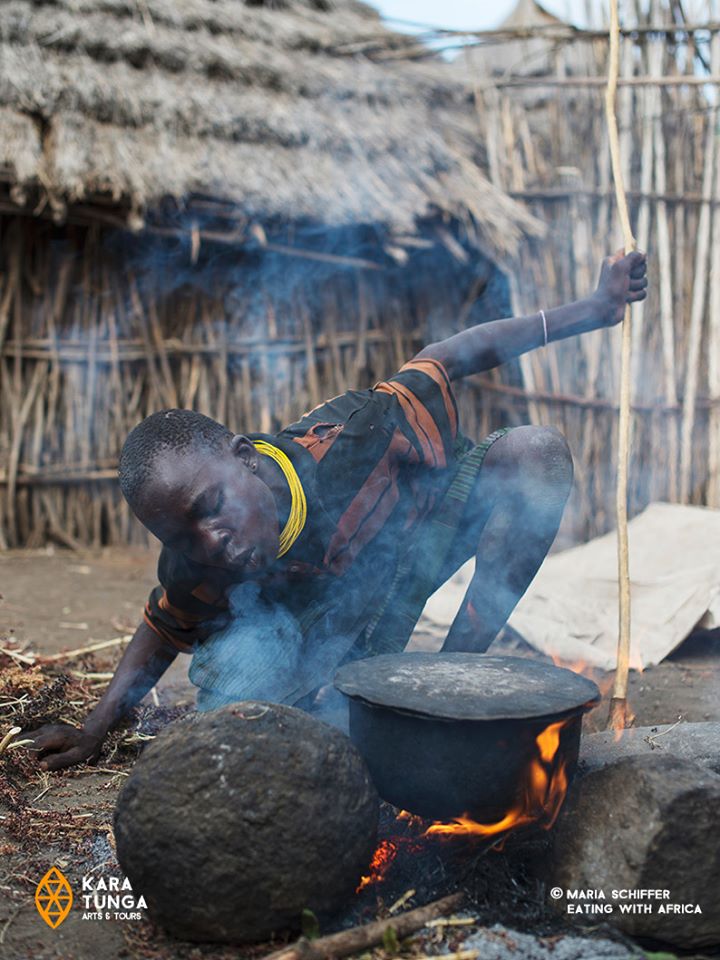
Experiencing Ugandan food as a visitor is about much more than ordering matooke once in Kampala. Uganda’s regional diversity means that the strongest food journey moves between traditional restaurants, markets, street-food stalls, cultural centers, safari lodges and the communities where particular dishes developed. A visitor can eat luwombo in Kampala, discover western Ugandan foods around Mbarara, look for malewa around the Mount Elgon region, experience northern food traditions around Gulu and learn about food preparation during carefully selected community experiences.
The most rewarding approach is to treat food as part of the journey rather than something that happens between safari activities. Uganda’s cuisine reflects agriculture, cultural identity, regional environments and historical exchange. Foods such as matooke, luwombo, eshabwe, firinda, malakwang, millet bread, malewa, Rolex and muchomo become considerably more meaningful when visitors understand where they come from and how they are prepared.
Travelers planning a Ugandan food experience should therefore combine several different types of dining. A traditional restaurant provides an accessible introduction, a market reveals the raw ingredients, street food demonstrates contemporary everyday eating, and regional travel connects individual dishes with the communities that developed them.
Where Is the Best Place to Start Exploring Ugandan Food?
Kampala is the most practical starting point for most international visitors. The capital brings together people from across Uganda, and its restaurants consequently offer foods associated with several regions of the country.
A visitor with only a short time in Uganda can still encounter matooke, luwombo, groundnut sauce, millet, sweet potatoes, cassava, freshwater fish, grilled meat, Rolex, chapati and numerous other foods without leaving the Kampala metropolitan area.
Kampala also provides several different styles of food experience. Visitors can eat at traditional Ugandan restaurants, explore produce markets, try street food, visit cafés serving Ugandan coffee and attend cultural venues where local food can be combined with music, dance and storytelling.
Travelers exploring Kampala on a city tour can therefore make food one of the main themes of the day rather than treating lunch as an unrelated stop.
Experience Traditional Ugandan Food in Kampala
Traditional-food restaurants are one of the easiest places for a first-time visitor to understand the basic structure of Ugandan meals. Many serve several staples alongside sauces, vegetables and proteins, allowing customers to compare foods within a single meal.
A useful first plate might include matooke, posho, sweet potatoes or cassava with groundnut sauce, beans, vegetables, beef, chicken or fish. Availability differs between establishments and from one day to another.
Visitors should ask what has been prepared rather than expecting every traditional dish to appear on every menu. Foods requiring longer preparation, including certain luwombo dishes, may not always be immediately available.
Try Luwombo in Kampala
Luwombo is particularly valuable for visitors because it introduces both a dish and a cooking method associated strongly with Buganda.
Meat, chicken, fish, mushrooms or groundnut-based ingredients can be enclosed inside banana leaves and steamed. The method produces a moist preparation and demonstrates the culinary importance of banana plants beyond matooke itself.
Kampala is one of the easiest places to seek luwombo because the city lies within Buganda and has restaurants specializing in traditional Ugandan cuisine.
Ask whether the luwombo is prepared traditionally in banana leaves and which filling is available that day.
Visit Ndere Cultural Centre for Food and Culture
Ndere Cultural Centre in Kampala provides an example of how visitors can combine food with a broader introduction to Ugandan culture. Current information published by Safari Vacations & Travel Services identifies the center as a place where visitors can experience traditional performances representing communities from across Uganda while also ordering traditional meals.
This makes a cultural center useful for travelers with limited time. Instead of experiencing food in isolation, visitors can place cuisine alongside music, dance and storytelling.
A Uganda cultural experience can therefore provide a broader introduction before travelers begin exploring specific regions.
Explore Kampala’s Markets
Markets reveal a completely different side of Uganda’s food culture. A restaurant presents ingredients after cooks have transformed them, while a market shows the agricultural products from which meals begin.
Depending on the market and season, visitors may encounter green cooking bananas, cassava, sweet potatoes, maize, millet, beans, groundnuts, tomatoes, onions, leafy vegetables, avocados, pineapples, mangoes, passion fruit and other produce.
Seeing an enormous bunch of green bananas before eating matooke makes the agricultural connection much easier to understand. The same is true of seeing dried beans before eating bean sauce or fresh maize before encountering roasted maize and posho.
Visit Owino Market During a Kampala Food Experience
St. Balikuddembe Market, commonly known as Owino Market, is one of the places where visitors can encounter Kampala’s intense commercial environment. A currently indexed Uganda safari itinerary specifically includes Owino Market as part of a Kampala city tour and describes its fresh-food section as an opportunity to interact with local vendors.
A large market can be crowded and overwhelming for first-time visitors. Going with a knowledgeable local guide can make the experience considerably more informative because the guide can identify ingredients, explain how they are cooked and help visitors understand market etiquette.
Try Uganda’s Street Food
Street food should form part of any serious attempt to understand everyday Ugandan eating. Restaurant dishes reveal one side of the cuisine, while street stalls reveal food designed around affordability, convenience and quick preparation.
Rolex is the most famous example. Chapati, eggs and vegetables are combined into a portable roll that can function as breakfast, lunch or a substantial snack.
Other foods visitors may encounter include roasted maize, gonja, samosas, mandazi, boiled eggs, grilled meat and kikomando.
Watch a Rolex Being Prepared
Rolex is particularly interesting because the cooking process often happens directly in front of the customer.
The vendor prepares an egg mixture, commonly with chopped vegetables, and cooks it on a heated surface. A chapati is then combined with the omelette before everything is rolled together.
Watching the process is more informative than simply receiving a completed Rolex at a restaurant. Visitors see how quickly the ingredients are transformed into one of Uganda’s best-known contemporary foods.
Rolex is not confined to Kampala. A currently verified Jinja and River Nile itinerary specifically recommends Uganda’s Rolex street food as an alternative during a local restaurant stop.
How to Choose a Street-Food Vendor
No guide can guarantee that every street-food vendor is safe. Visitors should therefore use observable food-handling conditions when deciding where to eat.
Choose vendors with active customer turnover and food that is being prepared freshly. Hot food should be cooked thoroughly and served hot. Meat and eggs should be completely cooked.
Travelers with allergies should be particularly careful because street-food stalls may use shared utensils and cooking surfaces.
Experience Ugandan Food in Entebbe
Entebbe is another practical starting point because most international visitors arrive through Entebbe International Airport.
The town’s position on Lake Victoria makes fish particularly relevant. Visitors can look for tilapia and other freshwater fish at restaurants serving local cuisine.
Entebbe also provides access to Ugandan staples, fruit and contemporary restaurant food, making it possible to begin exploring local cuisine before traveling to Kampala or Uganda’s national parks.
Eat Fish Around Lake Victoria
Lake Victoria is one of the most natural places to explore Uganda’s freshwater fish traditions. Tilapia can be grilled, fried or cooked in sauce and accompanied by matooke, posho, rice, cassava, vegetables or potatoes.
The exact preparation differs between restaurants. Visitors seeking grilled whole tilapia should confirm how the fish is being cooked and what accompaniments are available.
Lake Victoria dining is particularly useful because geography and food become directly connected. The visitor is eating a food associated with the enormous freshwater ecosystem visible nearby.
Experience Food in Jinja
Jinja combines urban food, street food and access to the Nile. It is a convenient destination for travelers already planning rafting, kayaking, sightseeing or other activities around the river.
Rolex and chapati are easy foods to look for, while local restaurants provide opportunities to try larger Ugandan meals.
Visitors traveling between Kampala and Jinja can make food part of the route rather than waiting until they reach their hotel.
Experience Food in Western Uganda
Western Uganda is particularly important for visitors who want to move beyond the foods most easily found in Kampala. The region includes Ankole, Tooro and Bunyoro, each with distinct food traditions.
Matooke remains important in much of western Uganda, but visitors can also encounter millet foods, beans, sweet potatoes and dishes associated with cattle-keeping and dairy traditions.
Eshabwe and firinda are particularly useful foods to ask about when traveling in western Uganda.
Stop at Igongo Cultural Centre
Igongo Cultural Centre near Mbarara is particularly relevant to a food-focused journey through western Uganda. Current information published by Safari Vacations & Travel Services describes Igongo as a cultural center with a museum, restaurant and craft shop and identifies it as a popular stop for travelers heading toward Queen Elizabeth National Park and Bwindi.
The same source specifically recommends Igongo for experiencing the culture of western Uganda.
This makes the center particularly useful because visitors can combine regional food with historical and cultural context rather than simply stopping at an anonymous roadside restaurant.
Travelers can incorporate Igongo into a broader Uganda cultural journey.
Try Eshabwe in Western Uganda
Eshabwe is associated particularly with Ankole and is based on ghee. Its dairy foundation reflects the historical importance of cattle within the region.
Visitors should ask whether eshabwe is available at establishments specializing in western Ugandan food rather than assuming every restaurant in Mbarara serves it every day.
Trying the dish within Ankole provides considerably more context than encountering it only on a mixed national menu in Kampala.
Try Firinda in Tooro and Bunyoro
Firinda is a bean-based preparation associated with Batooro and Banyoro food traditions.
The beans undergo more preparation than a simple bean stew. They can be soaked, peeled, cooked and mashed before other ingredients are incorporated.
Fort Portal and destinations connected with Tooro provide appropriate places to ask about firinda, while Bunyoro offers another regional context for the dish.
Experience Ugandan Food Around Fort Portal
Fort Portal provides a strong base for combining regional cuisine with travel to Kibale and other western Uganda attractions.
Local restaurants can introduce visitors to matooke, beans, millet and western Ugandan foods, while markets reveal the produce grown in the surrounding agricultural region.
Rather than eating every meal at a safari lodge, visitors spending a night in town can ask a local guide to recommend an established restaurant serving regional food.
Experience Traditional Food Around Kabale
Kabale and the wider southwestern highlands provide another useful setting for exploring food and culture.
A currently verified guide to attractions around Kabale and Lake Bunyonyi describes Kabale Cultural Village as offering hands-on traditional activities including cooking and storytelling.
This type of experience can help visitors understand preparation rather than simply identifying a dish after it reaches the table.
Travelers can explore cultural experiences around Kabale while traveling toward Lake Bunyonyi, Kisoro or Bwindi.
Experience Food Around Bwindi
Bwindi is internationally famous for mountain gorilla trekking, but the surrounding communities provide opportunities for visitors to learn about southwestern Ugandan food traditions as well.
Safari lodges commonly provide meals, but travelers who want a deeper cultural experience can ask whether reputable community cooking or cultural programs are available near their accommodation.
Advance arrangements are preferable because visitors should not simply enter communities expecting residents to provide demonstrations or meals.
Learn About Food During a Batwa Cultural Experience
A currently verified cultural experience near Nkuringo describes an opportunity to learn from Batwa women about preparing, cooking and serving food and to taste prepared dishes.
The same experience covers traditional forest knowledge, including historical approaches to obtaining food and using forest resources.
When conducted respectfully and with community participation, this type of experience can reveal dimensions of food culture that cannot be reproduced by a conventional restaurant.
Visitors can read about the Nkuringo Batwa cultural experience before deciding whether it fits their itinerary.
Combine Gorilla Trekking With Local Food
Gorilla trekking itineraries commonly pass through southwestern Uganda, creating opportunities to explore food in Mbarara, Kabale, Kisoro and communities around Bwindi.
A visitor should not expect every safari itinerary to include traditional-food activities automatically. If cuisine is important, request food experiences when planning the trip.
One currently verified gorilla and cultural safari combines Bwindi, Kisoro and a Batwa cultural experience, illustrating how cultural activities can be integrated into a wildlife itinerary.
Experience Eastern Ugandan Food
Eastern Uganda provides some of the country’s most distinctive regional foods. Bugisu around Mount Elgon is particularly associated with malewa, a food made from bamboo shoots.
Jinja and Busoga provide another food environment shaped partly by agriculture and access to freshwater fish, while Teso has important millet traditions.
Travelers should therefore avoid treating eastern Uganda as a single culinary region.
Look for Malewa Around Mbale and Mount Elgon
Malewa is one of the strongest reasons for food-focused travelers to pay attention to Bugisu. Bamboo shoots are harvested, traditionally smoked and dried, then prepared for cooking.
The bamboo can be cooked with groundnut sauce or other ingredients depending on the recipe.
Mbale provides the most practical urban base for visitors seeking Bugisu food, while travel around Mount Elgon places the dish within the landscape from which its bamboo tradition developed.
Combine Food With a Sipi Falls and Coffee Experience
The Mount Elgon region is also known for coffee production. Visitors traveling toward Sipi Falls can therefore combine regional food with a coffee-focused experience.
Coffee tours can introduce visitors to cultivation and processing before the final drink is prepared.
This is an important part of experiencing Ugandan food because beverages and agricultural products deserve attention alongside cooked dishes.
Experience Northern Ugandan Food
Northern Uganda provides an important contrast with the banana-centered food traditions visitors may first encounter in Kampala.
Millet, cassava, vegetables and other cereal-based foods become particularly useful for understanding regional cuisine.
Gulu is the most practical base for visitors interested specifically in Acholi food traditions.
Try Malakwang in Gulu
Malakwang is a sour vegetable preparation associated particularly with Acholi cuisine and is traditionally eaten with millet bread.
Visitors should ask restaurants or local guides where a well-prepared regional version is currently available rather than depending on a permanently named establishment in a travel article.
This strategy is useful throughout Uganda because restaurants change, dishes rotate and regional foods may be prepared only on particular days.
Experience Food in Lira
Lira provides another useful northern food destination, particularly for travelers interested in Lango culture and agricultural markets.
Markets can help visitors understand the importance of grains, cassava, legumes and vegetables within the wider northern food system.
As elsewhere in Uganda, the best experience comes from asking what is locally characteristic rather than simply ordering the same national dishes everywhere.
Experience Food in Karamoja
Karamoja offers one of Uganda’s most distinctive cultural and environmental settings. Its pastoral traditions and comparatively dry environment create a food story different from the wetter banana-growing areas of the south.
Sorghum and livestock traditions are particularly relevant to understanding the region.
Moroto is the most practical base for many travelers interested in combining Karamoja’s landscapes with community-based cultural experiences.
Experience Food Through Community Tourism in Karamoja
Community-based tourism can provide opportunities to learn about traditional cooking, livestock, grains and everyday life when activities are organized with local participation.
Visitors should choose structured experiences rather than entering villages independently to photograph cooking or ask residents for food.
The objective should be cultural exchange and learning, with local communities controlling how their traditions are presented.
Food and Cultural Encounters Around Kidepo
Travelers visiting Kidepo Valley National Park can also encounter northeastern Uganda’s cultural diversity.
A currently verified description of an Ik cultural encounter near Mount Morungole notes that visitors can interact with local communities and experience local foods during an organized cultural visit.
Food should be understood as part of the wider cultural encounter rather than as the sole reason for visiting a community.
Travelers interested in the area can review the Ik cultural encounter in northeastern Uganda.
Experience Food in Kasese and the Rwenzori Region
Kasese and the Rwenzori region introduce another regional food environment. Visitors can ask about Bakonzo foods and locally grown crops rather than assuming the western Uganda dishes encountered around Mbarara represent the entire west.
A currently verified description of Kiwa Heritage Site in Kasese states that the site serves regional foods including Ebbwanga, described as bread made from bananas and cassava, and Amatsayidongo, prepared from fresh maize.
This is exactly the type of regional specificity that makes food-focused travel valuable.
Visitors can learn more about the Kiwa Heritage Site cultural experience.
Eat at Safari Lodges but Ask for Ugandan Food
Safari lodges often serve a combination of Ugandan and international cuisine. This is convenient, but visitors interested in food should not assume traditional dishes will automatically dominate the menu.
Ask which Ugandan dishes are available and whether the kitchen can include regional food during the stay.
A lodge in southwestern Uganda may be able to provide foods appropriate to that region, while a lodge elsewhere may highlight completely different staples.
Advance notice can be especially helpful for dishes requiring longer preparation.
Do Not Eat Every Meal at the Lodge
Full-board safari packages make it easy to eat breakfast, lunch and dinner at accommodation properties throughout a trip. While convenient, doing this exclusively can limit exposure to everyday Ugandan food.
Where the itinerary and food-safety considerations allow, include a local restaurant, market visit or organized community meal.
The goal is not to reject lodge food but to add other environments to the experience.
Try Roadside Food During Long Transfers
Road travel is an important part of most Uganda safaris because major attractions are spread across the country.
Long transfers create opportunities to encounter roadside food such as roasted maize, gonja, chapati and other snacks.
Established stopping points with active customer turnover are preferable to purchasing cooked food indiscriminately.
A broader journey through Uganda can therefore become a food experience even on days primarily devoted to transportation.
Visit Produce Markets During Regional Travel
Markets change as travelers move through Uganda. This makes them useful indicators of regional agriculture.
Bananas may dominate visually in some areas, while grains, cassava or different vegetables become more prominent elsewhere.
Visitors do not need to purchase everything they see. Simply walking through a market with a knowledgeable guide can help explain ingredients that later appear at lunch or dinner.
Take a Ugandan Cooking Experience
A cooking experience provides one of the best ways to move beyond passive consumption.
Instead of simply eating matooke, visitors can learn how green cooking bananas are peeled and traditionally steamed. Instead of seeing groundnut sauce as an unidentified accompaniment, they can learn how groundnuts are processed and simmered.
A cooking experience can also demonstrate the physical work involved in preparing foods such as posho and millet staples.
Current information about cultural experiences in Uganda specifically recommends joining a cooking class as a way to learn how traditional dishes are prepared.
What to Look for in a Good Cooking Experience
A worthwhile cooking activity should be led by people with genuine knowledge of the cuisine being taught.
It should explain ingredients, preparation and cultural context rather than presenting food as an exotic performance.
Visitors should ideally participate in appropriate stages of preparation and have opportunities to ask questions about when the food is normally eaten and where the recipe originates.
Ask Where the Dish Comes From
One of the easiest ways to improve a Ugandan food experience is to ask about regional origin.
Luwombo has strong associations with Buganda. Eshabwe is associated particularly with Ankole. Firinda belongs particularly to Batooro and Banyoro traditions. Malewa is associated with Bugisu, while malakwang is strongly associated with Acholi cuisine.
These dishes may now be served outside their regions, but knowing their origins prevents Uganda’s many food cultures from being flattened into one generic national menu.
Ask How the Food Was Prepared
Preparation often reveals more than the ingredient list.
Ask whether matooke was steamed using banana leaves, whether the fish was grilled or fried, whether malewa was prepared from smoked bamboo and whether luwombo was actually steamed inside banana leaves.
These questions frequently lead to conversations that make the meal more memorable and educational.
Try the Same Staple With Different Sauces
A visitor does not need to eat a completely different staple at every meal. Comparing accompaniments can be equally useful.
Matooke with groundnut sauce tastes very different from matooke with beef stew. Posho with beans creates a different experience from posho with fish or vegetables.
These comparisons reveal how Ugandan meals are constructed around relationships between relatively mild staples and more strongly flavored accompaniments.
Try More Than Matooke
Matooke is essential, but it should not become the only staple a visitor associates with Uganda.
Try posho, cassava, sweet potatoes, millet and rice as well. In appropriate regions, ask about sorghum-based foods.
This provides a much more accurate picture of the country’s agricultural and cultural diversity.
Try More Than Rolex
Rolex deserves its reputation as Uganda’s signature contemporary street food, but visitors should not allow it to represent the entire street-food scene.
Chapati, roasted maize, gonja, mandazi, samosas, kikomando and grilled meat provide additional experiences.
During the appropriate season, visitors may also encounter nsenene.
Experience Ugandan Coffee
Coffee is one of the most important agricultural products visitors can explore in Uganda.
Kampala cafés provide the easiest opportunity to taste locally grown coffee, while growing regions allow visitors to learn about cultivation and processing.
Sipi and the Mount Elgon area are particularly useful for combining scenery with coffee-related experiences.
A complete Uganda food journey should therefore include what the country drinks as well as what it eats.
Try Ugandan Tea
Tea is part of everyday eating and is widely available in hotels, restaurants and small local establishments.
It may be served black or with milk, and some preparations incorporate ginger or spices.
Tea with chapati or mandazi provides a simple everyday experience that can be just as culturally informative as a more elaborate dinner.
Try Fresh Ugandan Fruit
Uganda’s tropical and subtropical agricultural environments produce a wide range of fruit.
Pineapple, mango, banana, passion fruit, papaya, watermelon and avocado are among the foods visitors may encounter depending on season and location.
Fruit markets provide excellent visual context, while hotels and restaurants offer convenient places to eat prepared fruit.
Try Fresh Juice
Passion fruit, pineapple, mango and mixed fruit juices are widely available in Uganda’s hotels, cafés and restaurants.
Visitors concerned about water quality should choose reputable establishments and confirm that safe water and ice are used.
Fresh juice provides a useful non-alcoholic complement to traditional meals.
How to Experience Ugandan Food Safely
Food safety should be part of decision-making without preventing visitors from exploring local cuisine.
Choose food that is freshly prepared and served hot. Use reputable restaurants and busy vendors. Meat, fish and eggs should be thoroughly cooked.
For raw fruit, produce that can be peeled personally is a practical choice. Travelers should use safe drinking water and follow current travel-health guidance applicable to their circumstances.
Food Allergies While Exploring Uganda
Groundnuts require particular attention because peanut-based sauce is important in Ugandan cuisine.
Travelers with severe allergies should specifically use the terms peanuts and groundnuts when explaining the restriction.
Wheat is important in chapati, Rolex, kikomando, mandazi and samosas. Eggs are central to Rolex, while dairy is particularly relevant to foods such as eshabwe.
Shared cooking surfaces and serving utensils should also be considered where cross-contact creates a medical risk.
Vegetarian Visitors
Vegetarian travelers can experience a considerable amount of traditional Ugandan food.
Matooke, posho, cassava, sweet potatoes, millet, beans, vegetables and groundnut sauce provide useful foundations.
The main requirement is verifying that sauces and vegetables have not been prepared with meat, fish or animal stock.
Vegan Visitors
Vegan travelers should explain their requirements specifically because the label alone may not communicate every excluded ingredient.
Matooke, posho, cassava, sweet potatoes, rice, beans, groundnuts, vegetables, avocado and fruit can provide a substantial plant-based diet when prepared without animal products.
Standard Rolex contains eggs, while eshabwe is dairy-based and therefore unsuitable.
Halal Visitors
Muslim travelers can find halal food, particularly in Kampala, but strict halal requirements should be verified directly.
Visitors who require certified meat should ask about current certification rather than assuming that a particular cuisine or neighborhood guarantees halal preparation.
Safari lodges should receive halal requirements before arrival, especially in remote areas.
Experience Food Respectfully in Local Communities
Community food experiences should benefit and respect the people sharing their knowledge.
Use organized experiences where communities have chosen to participate. Ask permission before photographing people, kitchens or private homes.
Do not treat ordinary household meals as tourist displays. Food becomes more meaningful when visitors listen to the people preparing it and understand why particular ingredients or techniques matter.
Combine Food With Cultural Heritage
Food becomes more informative when combined with museums, cultural centers, historical sites and community experiences.
Igongo can connect western Ugandan food with Ankole heritage. Ndere can combine a meal with performances representing different communities. Kabale cultural activities can include traditional cooking, while organized Batwa experiences can explain historical food practices.
A broader guide to places to experience Ugandan culture can help visitors connect cuisine with the communities behind it.
Build Food Into a Uganda Safari
Food does not require a separate culinary holiday. It can be incorporated into a conventional wildlife itinerary.
A traveler might begin with Kampala street food, stop at Igongo while heading southwest, try regional food near Bwindi, visit a market in Fort Portal and explore coffee around Sipi later in the journey.
Even one carefully chosen food experience in each region can create a much deeper understanding of Uganda.
Tell Your Tour Operator You Are Interested in Food
Safari itineraries are often designed around gorilla trekking, game drives, boat cruises and accommodation. Food experiences may not be included unless the traveler specifically requests them.
Tell the operator that local restaurants, markets, regional dishes or cooking experiences are important to you.
This allows meal stops to become part of the itinerary instead of being selected purely for convenience.
Do Not Depend on a Fixed Restaurant List
Restaurants open, close, relocate and change menus. A permanent Uganda food guide should therefore avoid pretending that one list of establishments will remain accurate indefinitely.
Use verified current recommendations shortly before travel and ask knowledgeable local guides where particular dishes are being prepared well at that time.
This approach is especially important for regional dishes that may not appear every day.
Ask Hotels About Traditional Meals
International hotels can sometimes provide an accessible introduction to Ugandan cuisine, particularly for travelers who are cautious about their first local meal.
Ask whether the restaurant serves matooke, groundnut sauce, luwombo, local fish or another Ugandan dish.
Hotels can also be useful for travelers with dietary restrictions because larger kitchens may be better equipped to discuss allergens and special requests.
Use Local Guides for Deeper Food Experiences
A knowledgeable guide can explain foods that a visitor would otherwise walk past without recognizing.
In a market, a guide can identify vegetables, grains and regional ingredients. At a restaurant, the guide can explain terminology and preparation. During road travel, a guide can identify reputable stopping places for local snacks.
The value is not simply translation. Local knowledge provides context.
What Should a First-Time Visitor Eat?
A useful introductory selection includes matooke, luwombo, groundnut sauce, posho, beans, Rolex, chapati, grilled tilapia, gonja and one regional dish appropriate to the part of Uganda being visited.
Visitors traveling west can add eshabwe or firinda. Those traveling east can look for malewa. Travelers in northern Uganda can ask about malakwang and millet, while visitors to Karamoja can learn about sorghum and pastoral food traditions.
A One-Day Kampala Food Experience
Begin with katogo or Rolex for breakfast. Visit a produce market with a guide during the morning and learn to identify matooke, groundnuts, cassava and other staples.
For lunch, choose a traditional restaurant where several Ugandan foods can be compared on one plate.
In the afternoon, try locally grown coffee or fresh fruit juice. Finish the day with luwombo or a cultural dining experience where food can be combined with Ugandan music and dance.
A Food Experience During a Southwestern Uganda Safari
Begin in Kampala before traveling toward Mbarara. A cultural stop around Mbarara can introduce Ankole heritage and regional foods.
Continue toward Kabale, Lake Bunyonyi, Kisoro or Bwindi and ask about local staples at the lodge or through a structured community experience.
Visitors incorporating a Uganda gorilla and cultural safari can therefore experience cuisine alongside wildlife and community activities.
A Food Experience in Eastern Uganda
Try Rolex or other urban food in Jinja before continuing toward Mbale and Mount Elgon.
Ask about malewa in Bugisu and consider combining regional food with a coffee experience around the Mount Elgon highlands.
This route demonstrates how quickly Uganda’s food traditions can change as travelers move between cultural and agricultural regions.
A Food Experience in Northern and Northeastern Uganda
In Gulu, ask about malakwang, millet and Acholi food traditions. Around Lira, explore markets and ask about Lango cuisine.
Farther northeast, organized cultural experiences around Karamoja can introduce visitors to sorghum, pastoral traditions and foods adapted to the region’s environment.
Travelers reaching Kidepo can incorporate a carefully organized cultural encounter rather than experiencing the region exclusively through wildlife viewing.
Why Regional Travel Produces the Best Ugandan Food Experience
Kampala can introduce visitors to foods from across Uganda, but geography adds context that a capital-city restaurant cannot reproduce.
Malewa makes more sense around Mount Elgon. Eshabwe becomes more meaningful in Ankole. Malakwang belongs within the cultural landscape of northern Uganda. Freshwater fish gains another dimension beside Lake Victoria.
The food itself may be available elsewhere, but experiencing it close to its cultural and agricultural origins provides a richer understanding.
How Long Should Visitors Spend Exploring Ugandan Food?
Even a short Kampala stay can provide a useful introduction, but a multi-region safari creates much greater diversity.
A week allows visitors to combine Kampala with one or two regional destinations. Two weeks or more can expose travelers to markedly different food cultures in central, western, eastern or northern Uganda.
There is no need to schedule a formal food activity every day. Markets, roadside stops and regional meals can be integrated naturally into the journey.
How to Make Every Meal More Informative
Ask three simple questions: what is the food called, where in Uganda is it particularly associated with, and how was it prepared?
Those questions transform an unfamiliar plate into a cultural experience.
A fourth useful question is what people normally eat with it. This reveals the relationship between staples and sauces that defines so many Ugandan meals.
Best Overall Way to Experience Ugandan Food
The strongest experience combines a traditional restaurant, street food, a produce market, regional travel and at least one organized cultural or cooking activity.
Start in Kampala, where Uganda’s culinary diversity is easiest to access. Try matooke, groundnut sauce and luwombo, then watch a Rolex vendor work. Visit a market and see the ingredients in their raw form.
As the safari continues, stop repeating the same foods. Ask what belongs to the region you have entered. Seek western dishes around Mbarara and Fort Portal, Bugisu food around Mbale, Acholi food around Gulu and northeastern traditions when traveling through Karamoja.
Where appropriate, learn directly from cooks and communities through structured experiences. Current information about Uganda’s leading cultural experiences specifically identifies traditional cuisine and cooking activities as part of cultural exploration.
Experiencing Uganda One Meal at a Time
For a visitor, Ugandan food can become one of the most accessible ways to understand the country. Wildlife may bring travelers to Uganda, but meals reveal how people use the landscapes in which they live.
Banana-growing regions produce matooke traditions. Lake communities contribute fish. Cattle-keeping cultures influence dairy and meat foods. Millet and sorghum connect cuisine with different agricultural environments, while street foods such as Rolex reveal contemporary urban life.
The best Uganda food experience therefore does not come from finding one supposedly perfect restaurant. It comes from eating in different settings, asking questions and connecting dishes with their places of origin.
Eat luwombo in Buganda, explore western food on the journey toward Bwindi, ask about malewa around Mount Elgon, learn about millet and malakwang in northern Uganda, drink locally grown coffee and stop for freshly prepared street food along the way.
Approached this way, food becomes part of the safari itself. Every market, roadside stall, restaurant, lodge and community experience provides another opportunity to understand Uganda through what people grow, cook, serve and share.
Uganda Food Guide FAQ, Glossary and Trip-Planning Answers
This Uganda Food Guide FAQ brings together the practical questions visitors commonly have before eating their way through Uganda. It explains what Ugandan food is like, which dishes first-time visitors should try, how meals are prepared, where regional specialties originate, what travelers with dietary restrictions need to consider and how food experiences can fit naturally into a Uganda safari.
Ugandan cuisine cannot accurately be reduced to one staple or one national dish. The country’s food reflects different agricultural zones and cultural traditions. Cooking bananas are especially important in parts of central and western Uganda, millet and other grains have major roles in several northern and eastern traditions, Lake Victoria supports freshwater fish cuisine, and cattle-keeping communities have distinctive relationships with milk, ghee and meat.
Visitors planning a Uganda food experience should therefore think regionally. Kampala is an excellent introduction, but traveling through western, eastern, northern and northeastern Uganda reveals a much broader culinary landscape.
What Is Ugandan Food?
Ugandan food is the collection of cooking traditions, ingredients, dishes and eating practices found among Uganda’s different communities. Common ingredients include cooking bananas, maize, millet, cassava, sweet potatoes, beans, groundnuts, vegetables, freshwater fish, beef, goat, chicken and tropical fruit.
Many traditional meals combine a substantial staple with a sauce, stew, beans, vegetables, meat or fish. The staple may be relatively mild, allowing the accompanying sauce to supply moisture, richness and additional flavor.
What Does Ugandan Food Taste Like?
There is no single flavor that defines all Ugandan cuisine. Matooke is mild and starchy, groundnut sauce is rich and nutty, grilled meat develops smoky flavors, malakwang is known for its sour character, ripe roasted plantain is naturally sweet, while dishes cooked with vegetables, onions and tomatoes develop their own savory profiles.
Ugandan food is not necessarily extremely hot with chili. Individual cooks and diners can add stronger seasonings, but visitors should not assume that every traditional Ugandan meal is heavily spiced.
What Is Uganda’s Most Famous Food?
Matooke is one of the foods most strongly associated with Uganda, particularly central and western Uganda. It is prepared from green cooking bananas rather than sweet dessert bananas.
The bananas are peeled and traditionally steamed until soft, frequently using banana leaves. They can then be mashed and served with groundnut sauce, beans, vegetables, beef, chicken or fish.
Calling matooke Uganda’s only important food would nevertheless ignore the country’s substantial regional diversity.
Does Uganda Have a National Dish?
Uganda has several foods frequently presented as representative of national cuisine, especially matooke and luwombo. However, Uganda’s regional and cultural diversity makes it more useful for visitors to think in terms of important national and regional foods rather than assuming every community historically ate one identical national dish.
Matooke has particularly strong associations with banana-growing areas, while millet, cassava, sorghum and other staples become more important in different parts of the country.
What Is Matooke?
Matooke refers to green cooking bananas and to the staple prepared from them. The bananas are peeled while unripe and cooked until tender.
Traditional preparation commonly involves steaming in banana leaves. The cooked bananas can then be mashed into a dense, soft staple.
Matooke is commonly eaten with a sauce or stew rather than by itself.
Is Matooke the Same as an Ordinary Banana?
No. Matooke uses varieties of banana intended for cooking and they are normally prepared while green. Their culinary role is closer to a starchy staple than to a sweet fruit eaten as dessert.
This distinction is important for first-time visitors who may see enormous bunches of green bananas in Ugandan markets and assume they are simply unripe dessert bananas.
How Is Matooke Traditionally Prepared?
The green bananas are peeled and can be wrapped using banana leaves before being steamed until thoroughly tender. The cooked bananas are then commonly mashed.
Preparation methods vary between households and restaurants, and modern kitchens may use equipment different from traditional cooking arrangements.
What Is Luwombo?
Luwombo is a traditional cooking preparation strongly associated with Buganda. Ingredients are enclosed in banana leaves and steamed.
Chicken, beef, fish, mushrooms or groundnut-based preparations can be used. The banana-leaf parcel creates an enclosed cooking environment that helps retain moisture.
Visitors interested in Ugandan cultural traditions should consider trying luwombo because the preparation method itself is an important part of the experience.
What Is Posho?
Posho is a dense maize-flour staple. Maize flour is incorporated into hot water and worked as it thickens until the desired consistency is reached.
Posho has a relatively mild flavor and is designed to accompany foods with more moisture and flavor, particularly beans, vegetables, meat or fish sauces.
Is Posho the Same as Ugali?
Posho belongs to the wider East African family of stiff maize-flour staples commonly known by names including ugali in neighboring countries and regions.
Terminology and preparation details vary geographically, but travelers familiar with ugali will recognize the basic idea of maize flour cooked with water into a firm staple.
What Is Kalo?
Kalo is a term used for a firm flour-based staple, particularly in parts of Uganda where millet and cassava traditions are important.
The exact flour composition can vary according to regional practice. Visitors with dietary restrictions should therefore ask which flours were used rather than assuming every serving has an identical recipe.
What Is Groundnut Sauce?
Groundnut sauce is a sauce made primarily from groundnuts, the term commonly used for peanuts in Uganda.
The groundnuts are processed and simmered with liquid to create a rich sauce. Recipes vary, and additional ingredients can be incorporated.
Groundnut sauce is commonly eaten with matooke, sweet potatoes, cassava, rice and other staples.
Is Groundnut Sauce Safe for Someone With a Peanut Allergy?
No. Groundnuts are peanuts. Anyone with a peanut allergy should avoid groundnut sauce.
Travelers with severe allergies should explicitly use both words, peanuts and groundnuts, when communicating with restaurants and accommodation providers. Shared cooking and serving equipment can also be relevant to severe allergies.
What Is Katogo?
Katogo is a one-pot preparation in which a staple is cooked with an accompaniment. Matooke can be combined with beans, beef, offal or other ingredients, while other versions use cassava, potatoes or different staples.
Katogo is particularly well known as a substantial breakfast, although it is not restricted exclusively to mornings.
What Is a Ugandan Rolex?
A Ugandan Rolex is a popular street food made by combining chapati with a cooked egg mixture, commonly including vegetables such as tomatoes, onions or cabbage.
The omelette and chapati are rolled together to create a portable meal.
The name is commonly explained as wordplay around “rolled eggs,” rather than having any connection with the Swiss watch company.
Where Can Visitors Try Rolex?
Rolex is widely associated with Uganda’s street-food culture and is particularly easy to encounter in Kampala, Jinja and other towns.
The best experience is often watching it being cooked to order. Choose a busy vendor with active turnover and observe whether ingredients are handled appropriately and the egg is thoroughly cooked.
What Is Chapati in Uganda?
Ugandan chapati is a wheat-flour flatbread cooked on a hot surface with oil or another cooking fat.
It can be eaten independently, served with beans, incorporated into kikomando or used as the wrapper for Rolex.
Chapati reflects wider South Asian influence on East African food culture but has become deeply integrated into everyday Ugandan eating.
What Is Kikomando?
Kikomando is a simple meal commonly made from chopped chapati mixed with beans.
It is associated particularly with inexpensive, filling everyday eating. Recipes and additions vary between vendors.
Because chapati contains wheat, conventional kikomando is not suitable for a gluten-free diet.
What Is Muchomo?
Muchomo refers to roasted or grilled meat. Beef, goat and chicken are common possibilities.
The meat is cooked over heat, frequently charcoal, creating browned and smoky characteristics. Preparation and seasoning vary by vendor and restaurant.
What Is Gonja?
Gonja is ripe plantain, commonly roasted over charcoal as a snack or roadside food.
It differs from matooke because gonja is ripe and naturally sweeter, whereas matooke is prepared from green cooking bananas as a savory staple.
What Is Malewa?
Malewa is a food associated particularly with Bugisu in eastern Uganda and is made from bamboo shoots.
The shoots can be smoked and dried for preservation. Before eating, they are prepared and boiled, with hard inedible portions removed. Malewa can then be cooked with groundnut sauce or other ingredients.
Travelers visiting Mbale and Mount Elgon can ask about malewa as part of a broader Uganda cultural experience.
What Is Malakwang?
Malakwang is a sour leafy vegetable preparation associated particularly with Acholi cuisine in northern Uganda.
It is traditionally paired with millet-based food and provides a useful example of how northern Ugandan cuisine differs from the banana-centered food traditions many visitors first encounter farther south.
What Is Eshabwe?
Eshabwe is a ghee-based preparation strongly associated with Ankole in western Uganda.
Its dairy foundation reflects the importance of cattle and milk products within Ankole cultural traditions.
Eshabwe contains dairy and is therefore unsuitable for vegan or dairy-free travelers.
What Is Firinda?
Firinda is a bean-based preparation associated particularly with Tooro and Bunyoro.
The preparation involves more processing than an ordinary bean stew. Beans can be soaked, peeled, cooked and mashed before additional ingredients are incorporated.
Fort Portal is a practical destination for visitors interested in Tooro food traditions.
What Is Nsenene?
Nsenene are edible grasshoppers that are seasonally consumed in Uganda and are particularly associated with central Uganda.
They are not continuously available throughout the year, so visitors should not assume they will encounter them during every trip.
What Fish Is Commonly Eaten in Uganda?
Freshwater fish plays an important role because Uganda contains major lakes and rivers. Tilapia and Nile perch are widely recognized examples, while smaller fish such as mukene are also consumed.
Fish can be grilled, fried, smoked, dried or cooked in sauce depending on species and preparation.
Where Should Visitors Try Ugandan Fish?
Entebbe and other destinations around Lake Victoria are natural places to explore freshwater fish. Kampala also has numerous restaurants serving fish.
Visitors can ask whether the fish is grilled, fried or cooked in sauce and which Ugandan staples accompany it.
What Is Mukene?
Mukene is the name commonly used in Uganda for small Lake Victoria fish that can be dried and used in local food preparations.
Because small fish are eaten differently from large tilapia or Nile perch, mukene offers visitors another perspective on Uganda’s freshwater food traditions.
Is Ugandan Food Spicy?
Ugandan food should not automatically be equated with extremely hot chili-based cuisine. Many staple dishes are mild.
Tomatoes, onions, groundnuts and other ingredients contribute flavor, while chili can be added according to the dish and individual preference.
Visitors sensitive to hot food should still ask because preparation varies between cooks.
What Do Ugandans Eat for Breakfast?
Breakfast varies considerably between households, regions and lifestyles. Possible foods include katogo, sweet potatoes, cassava, porridge, chapati, Rolex, bread, eggs, fruit and tea.
Hotels commonly provide a mixture of Ugandan and international breakfast options.
What Do Ugandans Eat for Lunch?
Lunch can combine one or several staples with beans, vegetables, groundnut sauce, meat, chicken or fish.
Matooke, posho, cassava, sweet potatoes, millet and rice are among possible staples. The exact meal varies by region, household and budget.
What Do Ugandans Eat for Dinner?
Dinner can follow a structure similar to lunch, although there is no universal national dinner menu.
Families may eat staples with beans, vegetables, meat, fish or groundnut sauce, while urban residents also eat a wide range of international and contemporary foods.
What Snacks Should Visitors Try in Uganda?
Popular possibilities include roasted gonja, roasted maize, chapati, mandazi, samosas and seasonal foods such as nsenene.
Rolex can function as a snack but is substantial enough to serve as a complete quick meal.
Does Uganda Have Desserts?
Ugandan meals do not depend on a formal dessert course in the same way as some international dining traditions. Fresh fruit provides one of the easiest naturally sweet endings to a meal.
Hotels, restaurants and bakeries also serve cakes, pastries, ice cream and other contemporary desserts.
What Fruit Should Visitors Try?
Depending on season and location, visitors may encounter pineapple, mango, banana, papaya, watermelon, passion fruit and avocado, among other produce.
Markets provide particularly good opportunities to see Uganda’s fruit diversity, while hotels and restaurants offer convenient prepared portions.
What Drinks Are Popular in Uganda?
Tea, coffee, bottled soft drinks, water and fruit juices are widely available. Uganda also produces alcoholic beverages, including commercial beer and traditional fermented drinks.
Visitors should use safe drinking water and make decisions about alcohol according to personal preference, health considerations and the activities planned for the day.
Is Uganda a Coffee-Producing Country?
Yes. Coffee is one of Uganda’s major agricultural commodities. Both Robusta and Arabica are produced in the country.
Visitors can experience Ugandan coffee in Kampala cafés or explore coffee-growing regions such as the Mount Elgon area, where coffee experiences can explain cultivation and processing.
Where Can Visitors Experience Ugandan Coffee?
Kampala offers the easiest introduction through cafés serving locally produced coffee.
For a more agricultural experience, visitors traveling toward Sipi Falls and Mount Elgon can look for organized coffee activities that explain how coffee moves from the farm to the cup.
Is Tea Popular in Uganda?
Yes. Tea is widely consumed and readily available at hotels, restaurants and homes.
It may be served black or with milk. Ginger and other flavorings can also appear depending on preparation.
Is Ugandan Food Good for Vegetarians?
Uganda offers many useful foods for vegetarians. Matooke, posho, cassava, sweet potatoes, millet, rice, beans, groundnuts and vegetables can form substantial meals.
The important step is confirming whether sauces, beans or vegetables were prepared using meat, fish, animal stock or other ingredients the traveler avoids.
Can Vegans Eat Traditional Ugandan Food?
Yes, provided preparation is checked carefully. Several important staples and ingredients are plant-derived.
Matooke, posho, cassava, sweet potatoes, beans, groundnuts, vegetables, rice, millet, avocado and fruit can provide useful choices.
Standard Rolex contains eggs, while eshabwe is based on dairy.
Is Halal Food Available in Uganda?
Halal food can be found, particularly in Kampala and communities with significant Muslim populations.
Travelers who require formally certified halal meat should verify current certification directly rather than assuming halal status from a restaurant’s cuisine, location or clientele.
Can Gluten-Free Travelers Eat Ugandan Food?
Several traditional staples do not inherently depend on wheat, including matooke, maize-based posho, cassava, sweet potatoes and rice. Millet itself is also gluten-free, although flour blends need to be checked.
Chapati, Rolex, kikomando, mandazi and conventional samosas normally contain wheat.
Anyone with celiac disease should also investigate cross-contact and hidden ingredients.
Is Ugandan Food Suitable for Travelers With Food Allergies?
This depends entirely on the allergen and preparation environment. Travelers with severe allergies should communicate directly with restaurants, hotels, lodges and tour operators.
Groundnuts deserve particular attention because peanuts are important in Ugandan cuisine. Wheat, eggs and dairy are also present in several popular foods.
For medically significant allergies, generic travel information cannot replace individualized medical advice and direct kitchen verification.
Where Is the Best Place to Experience Ugandan Food?
Kampala provides the greatest concentration of choices and is the easiest place for first-time visitors to compare several Ugandan dishes.
However, the best overall experience comes from combining Kampala with regional travel. Western Uganda, Bugisu, northern Uganda and Karamoja each add culinary traditions that cannot be represented adequately by one Kampala restaurant.
Where Can Visitors Find Traditional Food in Kampala?
Traditional Ugandan restaurants, cultural venues and selected hotel restaurants provide the most accessible options.
Because restaurant operations and menus change, visitors should verify current opening information and ask what traditional dishes are available on the day rather than relying on an old fixed list.
Are Kampala Markets Worth Visiting for Food?
Yes, especially for travelers interested in ingredients rather than only completed meals. Markets can reveal cooking bananas, cassava, sweet potatoes, beans, groundnuts, grains, vegetables and fruit before those ingredients reach the kitchen.
Large markets can be crowded, so a knowledgeable local guide can make the visit easier and more informative.
Should Visitors Try Street Food in Uganda?
Street food provides valuable insight into everyday Ugandan eating, but travelers should make sensible food-hygiene decisions.
Choose busy vendors preparing food freshly. Hot foods should be thoroughly cooked and served hot. Travelers with serious allergies should consider shared surfaces and utensils.
Is Street Food Cheap in Uganda?
Street foods such as chapati, Rolex and roasted produce are generally positioned as affordable everyday foods, but exact prices vary by location, portion, vendor and changing economic conditions.
A fixed nationwide price would become outdated quickly, so visitors should check current local prices when traveling.
How Much Does Food Cost in Uganda?
There is no useful single price for eating in Uganda. Costs differ substantially between street vendors, small local restaurants, cafés, international restaurants, hotels and remote safari lodges.
Prices also change over time. Travelers should use current restaurant menus and quotations from their accommodation or tour operator when budgeting.
Are Meals Included on Uganda Safaris?
Meal inclusion depends on the booked itinerary and accommodation basis. Many safari lodges are sold with breakfast, half-board or full-board arrangements, while Kampala hotels may operate differently.
Travelers should check the inclusions of the specific safari rather than assuming every Uganda tour includes the same meals.
What Does Full Board Mean on a Uganda Safari?
Full board generally means breakfast, lunch and dinner are included at the accommodation, although beverages, packed meals and special dining arrangements can be subject to individual property policies.
The booking terms of the specific lodge or safari package should always be checked.
What Food Is Served at Uganda Safari Lodges?
Safari lodges commonly combine Ugandan and international foods. Breakfast might include fruit, eggs, bread and hot dishes, while lunch and dinner can include soups, vegetables, meat, fish, rice, potatoes and Ugandan staples.
Menus vary greatly. Visitors interested in traditional food should ask which Ugandan dishes the kitchen can prepare.
Can Safari Lodges Handle Special Diets?
Many tourism-oriented lodges can accommodate common dietary requests when informed in advance, but this should never be assumed for a severe allergy or medically necessary diet.
Remote lodges have more limited access to specialist ingredients, making advance communication especially important.
When Should Dietary Requirements Be Reported?
Ideally, dietary requirements should be supplied while the trip is being booked. They should then be reconfirmed before travel and, when appropriate, directly with accommodation providers.
This is particularly important for vegan diets, halal requirements, celiac disease and severe food allergies.
What Food Is Provided for Gorilla Trekking?
The exact arrangement depends on the lodge and trekking schedule. Early breakfast is common, and a packed meal may be arranged when guests are expected to remain away from the lodge for an extended period.
Travelers should confirm their individual arrangement with the lodge or tour operator before trekking day.
Should I Carry Snacks for Gorilla Trekking?
Follow the instructions supplied by the tour operator, lodge and trekking authorities. Depending on the day’s arrangements, the lodge may provide a packed meal or snacks.
Visitors with strict dietary requirements may find it useful to discuss suitable packed foods before reaching a remote trekking destination.
Can I Take Food Into a National Park?
Rules depend on the park, activity and instructions issued by Uganda Wildlife Authority and guides. Visitors should follow current guidance and never leave food waste or packaging in protected areas.
For trekking and guided wildlife activities, follow the ranger’s instructions about when and where food may be consumed.
Can I Feed Wild Animals in Uganda?
No visitor should feed wild animals unless an authorized wildlife-management activity specifically instructs otherwise.
Feeding wildlife can alter animal behavior, create risks for people and animals and interfere with natural feeding patterns.
Can Visitors Join a Cooking Experience?
Cooking and community-based food activities are available in parts of Uganda, although exact offerings change.
A well-designed experience can teach visitors how staples are prepared, how sauces are made and why particular foods are culturally significant.
Travelers researching traditional Ugandan experiences can incorporate food preparation into a wider cultural itinerary.
Are Community Food Experiences Ethical?
They can be when communities participate voluntarily, control how their culture is presented and receive meaningful benefit from tourism.
Visitors should use organized experiences, respect privacy and ask before photographing people or private cooking spaces.
What Is the Best Food Experience Around Bwindi?
The answer depends on the traveler’s interests and the sector of Bwindi being visited. Safari lodges can serve Ugandan dishes, while some surrounding communities offer organized cultural experiences that include traditional food preparation.
One verified example described on the site is the Nkuringo Batwa cultural experience, which includes opportunities to learn about traditional food preparation within a broader cultural program.
What Food Should I Try Around Mbarara?
Mbarara lies within Ankole and is therefore a useful place to explore western Ugandan food traditions.
Visitors can ask about matooke, millet foods and dairy-related preparations such as eshabwe. Availability should be checked locally because not every restaurant serves every regional dish.
What Food Should I Try Around Fort Portal?
Fort Portal provides a practical introduction to Tooro cuisine. Firinda is one regional preparation worth asking about.
Matooke, millet, beans, vegetables and other western Ugandan foods may also be available.
What Food Should I Try Around Mbale?
Malewa should be high on the list for visitors interested in Bugisu food traditions. The dish’s use of bamboo shoots and smoking makes it one of Uganda’s more distinctive regional foods.
Mbale can also be combined with a journey toward Mount Elgon and Sipi, where coffee experiences provide another perspective on local agriculture.
What Food Should I Try Around Gulu?
Visitors to Gulu can ask about Acholi foods, particularly malakwang and millet-based staples.
This provides a useful contrast with matooke-centered meals in central and western Uganda.
What Food Should I Experience in Karamoja?
Food experiences in Karamoja should be understood within the region’s pastoral traditions and comparatively dry environment. Sorghum and livestock-related food traditions are particularly relevant.
Organized community experiences around Moroto and other parts of Karamoja can provide cultural context when they are locally led and responsibly structured.
What Food Should I Try in Entebbe?
Entebbe’s Lake Victoria setting makes freshwater fish an obvious choice. Visitors can ask about grilled or fried tilapia and the Ugandan staples served alongside it.
The town also offers ordinary Ugandan meals, fruit, coffee and contemporary international dining.
What Food Should I Try in Jinja?
Jinja provides easy access to street food such as Rolex and chapati as well as local restaurant meals.
Visitors combining cuisine with Nile activities can use meal stops to experience everyday Ugandan food rather than relying exclusively on hotel menus.
What Is the Best Ugandan Food for a First-Time Visitor?
Matooke with an appropriate sauce is the most useful starting point because it introduces one of Uganda’s major staple traditions.
Add luwombo for a traditional banana-leaf cooking method, Rolex for contemporary street food, grilled tilapia for freshwater cuisine and a regional specialty appropriate to the part of Uganda being visited.
What Are the Most Important Ugandan Foods to Try?
A strong introductory selection includes matooke, luwombo, groundnut sauce, posho, beans, millet-based food, cassava, sweet potatoes, Rolex, chapati, kikomando, gonja, muchomo and freshwater fish.
Regional travel can add malewa, malakwang, eshabwe, firinda and other foods tied more strongly to particular communities.
How Many Ugandan Dishes Should I Try?
There is no ideal number. Understanding combinations and regional differences is more useful than mechanically checking dishes off a list.
A traveler who compares several staples and sauces across different regions may learn more than someone who photographs twenty-five dishes during one Kampala buffet.
Should I Try Ugandan Food Before a Safari?
Kampala or Entebbe provides an excellent opportunity to become familiar with basic foods before entering more remote areas.
Learning the names of matooke, posho, groundnut sauce and common accompaniments makes later lodge and restaurant menus easier to understand.
Can Food Be Included in a Uganda Cultural Tour?
Yes. Food works naturally alongside markets, cultural centers, museums, community experiences and regional travel.
A Uganda cultural tour can use cuisine to connect visitors with agriculture, history, hospitality and regional identity.
Should I Book a Dedicated Food Tour?
A dedicated food experience can be valuable in Kampala or another city, but it is not the only way to explore Ugandan cuisine.
Food can also be incorporated into an ordinary safari through market visits, local restaurant stops, cultural centers, coffee experiences and regional meals.
Can a Uganda Gorilla Safari Include Food Experiences?
Yes. Southwestern safari routes pass through areas where travelers can experience Ankole, Kigezi and other regional food traditions.
Cultural activities can also be added around Bwindi or nearby destinations when appropriate experiences are operating.
A gorilla and cultural safari in Uganda demonstrates how wildlife and cultural activities can be combined within one itinerary.
Can I Experience Ugandan Food Without Leaving Kampala?
Yes. Kampala provides traditional restaurants, markets, street food, cultural venues and cafés.
A visitor can gain a strong introductory understanding without leaving the capital, although regional travel remains preferable for understanding the full diversity of Ugandan cuisine.
How Should I Plan a One-Day Uganda Food Experience?
Begin with a Ugandan breakfast such as katogo or Rolex. Visit a produce market during the morning with a knowledgeable guide. Eat a traditional lunch containing several staples and sauces.
Try Ugandan coffee or fruit juice in the afternoon and finish with luwombo or another traditional dinner.
How Should I Plan a Multi-Day Uganda Food Trip?
Use Kampala as the introduction, then connect food experiences with the safari route.
A southwestern itinerary can explore Ankole and Tooro foods. An eastern route can combine Jinja street food, Bugisu’s malewa and Mount Elgon coffee. Northern travel can introduce Acholi cuisine, while Karamoja adds another agricultural and pastoral food environment.
What Should I Ask Before Ordering an Unfamiliar Dish?
Ask what the dish contains, how it was cooked, what it is normally eaten with and which part of Uganda it is associated with.
Travelers with dietary restrictions should additionally ask about ingredients that are medically, religiously or personally important to avoid.
Should I Ask Before Photographing Food Preparation?
Yes when the preparation takes place in a private home, community setting or involves identifiable people who have not already consented to photography.
A market, street stall or cultural experience is not automatically permission to photograph every person present.
Do Ugandans Eat With Their Hands?
Some foods and meals may be eaten with the hands, while cutlery is also widely used. There is no accurate universal rule stating that all Ugandan food is eaten one way.
Rolex, roasted maize and gonja are naturally eaten by hand. In a home or cultural setting, visitors can simply observe their hosts or ask.
Is Handwashing Important Before Eating?
Yes, especially when food will be handled directly. Facilities vary between restaurants, hotels, homes and rural settings.
Visitors should maintain appropriate hand hygiene regardless of whether a meal is eaten with cutlery or by hand.
Is It Polite to Refuse Food in Uganda?
Hospitality practices vary between families and communities. If a visitor cannot eat something because of an allergy, dietary restriction or personal reason, a polite explanation is appropriate.
There is no reason to risk a medical problem simply to avoid declining a particular food.
How Can Visitors Show Respect During a Ugandan Meal?
Follow the host’s guidance, show interest in the food, ask questions respectfully and request permission before photographing people or private spaces.
Avoid describing unfamiliar food as strange or treating household cooking as entertainment.
What Is the Difference Between Traditional and Modern Ugandan Food?
The distinction is not absolute. Traditional foods continue to evolve, while contemporary foods can become important parts of national identity.
Rolex is an excellent example. Its chapati component reflects historical South Asian influence in East Africa, yet the completed street food is now strongly associated with modern Uganda.
Has Foreign Influence Changed Ugandan Cuisine?
Yes. Trade, migration, colonial history and regional interaction have influenced food throughout East Africa.
Chapati, samosas, rice dishes and other foods demonstrate these connections. Ugandan cooks have adapted outside influences to local ingredients and eating habits.
Why Are Bananas So Important in Ugandan Food?
Cooking bananas thrive in suitable parts of Uganda and have become central to agricultural and culinary traditions, especially in central and western regions.
Banana plants also provide leaves used in traditional cooking techniques such as steaming matooke and preparing luwombo.
Why Is Millet Important in Uganda?
Millet has deep importance in several regional food traditions and is particularly useful for understanding cuisines outside the banana-growing heartlands.
It can be prepared as porridge or worked into a firm staple eaten with vegetables, sauces or meat.
Why Is Cassava Important?
Cassava is a major starchy crop that can function as an alternative to bananas, maize, millet and other staples.
It can be boiled and served with sauces or processed into flour for particular preparations.
Cassava must be properly processed and prepared before consumption.
Why Are Groundnuts Important?
Groundnuts provide richness, flavor and a useful sauce for relatively mild staples.
Their culinary importance also means travelers with peanut allergies must take special care when exploring Ugandan cuisine.
Why Is Lake Victoria Important to Ugandan Food?
Lake Victoria supports fisheries and communities whose food traditions incorporate freshwater species.
Tilapia, Nile perch and smaller fish contribute to the diversity of Ugandan cuisine, particularly around lakeside destinations and urban markets connected with the lake.
Is Ugandan Food the Same as Rwandan Food?
No, although neighboring Uganda and Rwanda share some ingredients and broader regional food influences.
Both countries use bananas, beans, cassava, sweet potatoes and other East African staples, but individual dishes, terminology, regional traditions and preparation methods differ.
Is Ugandan Food the Same Everywhere in the Country?
No. Regional variation is one of the most important facts to understand about Ugandan cuisine.
Buganda, Ankole, Tooro, Bunyoro, Bugisu, Acholi, Lango, Teso, Karamoja and other cultural regions have their own food histories and characteristic ingredients or dishes.
Which Region Is Best for Matooke?
Matooke is particularly important in central and western Uganda, where cooking-bananas form a major part of agricultural and culinary life.
Kampala is nevertheless the easiest place for many international visitors to encounter well-prepared matooke.
Which Region Is Best for Malewa?
Bugisu in eastern Uganda is the region most strongly associated with malewa. Mbale and the wider Mount Elgon area provide the most relevant geographical context.
Which Region Is Best for Malakwang?
Malakwang is strongly associated with Acholi cuisine in northern Uganda. Gulu is a practical base for visitors interested in seeking Acholi food.
Which Region Is Best for Eshabwe?
Ankole in western Uganda has the strongest association with eshabwe because of the region’s cattle and dairy traditions. Mbarara provides a practical urban base for exploring Ankole culture.
Which Region Is Best for Freshwater Fish?
Lake Victoria destinations provide obvious opportunities, including Entebbe and other lakeside communities. Fish is also readily available in Kampala.
Uganda’s other lakes and rivers contribute additional regional fishing traditions.
What Is the Best Season for Ugandan Food?
There is no single food season that makes all Ugandan cuisine available at once. Staple foods and restaurant dishes can be found throughout the year, while individual fruits, vegetables and foods such as nsenene have seasonal patterns.
Availability also varies geographically.
Does Food Availability Change During the Year?
Yes. Agricultural harvests, rainfall patterns, market supply and seasonality affect fresh produce and certain specialty foods.
Travelers interested in a specific seasonal ingredient should check locally shortly before travel.
Should I Carry Cash When Buying Street Food?
Small food purchases may be easier with local currency, particularly where card payment is unavailable.
Payment methods change quickly and vary by vendor, so visitors should confirm current practices rather than assuming every restaurant or street stall accepts a particular method.
Should I Tip at Restaurants in Uganda?
Tipping practices vary by establishment and service arrangement. Some tourism businesses may have their own guidance or service-charge policies.
Visitors should check the bill and ask their tour operator or accommodation provider about current local expectations when uncertain.
Can I Drink Tap Water in Uganda?
Travelers should follow current health and accommodation guidance regarding drinking water rather than assuming untreated tap water is safe everywhere.
Hotels and safari operators commonly provide or recommend drinking-water options for guests.
Is Ice Safe in Ugandan Drinks?
Safety depends on the water used to make the ice and how it was handled. In reputable tourism establishments, visitors can ask whether ice is made using safe drinking water.
When uncertain, choose a drink without ice.
Can I Eat Raw Salad in Uganda?
Food-safety risk depends on how produce was washed, handled and stored. Travelers concerned about foodborne illness should use reputable establishments and follow current travel-health guidance.
Freshly cooked food served hot and fruit that can be peeled personally are often easier choices for cautious travelers.
What Should I Do if I Have a Severe Food Allergy?
Communicate the allergy to the tour operator and accommodation providers before travel. Name the exact allergen and explain the seriousness of cross-contact where relevant.
Follow individualized advice from a qualified healthcare professional regarding emergency medication and travel preparation.
How Can I Learn More About Ugandan Food Before Traveling?
Learn the names of the major staples and several regional dishes, then identify which parts of Uganda your itinerary visits.
The broader Uganda cuisine guide provides a starting point for understanding what travelers can expect to eat.
What Is the Best Way to Remember Ugandan Food Names?
Group foods by type rather than memorizing an unstructured list. Matooke, posho, millet, cassava and sweet potatoes are staples. Luwombo describes an important banana-leaf preparation. Groundnut sauce and beans are common accompaniments. Rolex, chapati and kikomando belong strongly to everyday and street-food eating.
Then learn regional names such as malewa, malakwang, eshabwe and firinda separately.
Uganda Food Glossary: Matooke
Green cooking bananas and the cooked staple made from them. Particularly important in central and western Uganda and commonly steamed before being mashed.
Uganda Food Glossary: Luwombo
A banana-leaf cooking preparation strongly associated with Buganda in which ingredients such as chicken, beef, fish, mushrooms or groundnut mixtures are enclosed and steamed.
Uganda Food Glossary: Posho
A dense staple made by cooking maize flour with water. Commonly served with beans, vegetables, meat or fish sauce.
Uganda Food Glossary: Kalo
A firm flour-based staple associated with regional millet and cassava traditions. Exact flour combinations can vary.
Uganda Food Glossary: Groundnuts
The term commonly used for peanuts. Groundnuts are eaten and processed into sauces used with Ugandan staples.
Uganda Food Glossary: Katogo
A one-pot dish combining a staple with another ingredient such as beans, beef or offal. Matooke-based versions are common.
Uganda Food Glossary: Rolex
A Ugandan street food consisting primarily of chapati rolled with cooked eggs and commonly vegetables.
Uganda Food Glossary: Chapati
A wheat-flour flatbread cooked on a hot surface. It is eaten independently and used in Rolex and kikomando.
Uganda Food Glossary: Kikomando
A filling everyday dish generally combining chopped chapati and beans.
Uganda Food Glossary: Muchomo
Roasted or grilled meat, commonly beef, goat or chicken.
Uganda Food Glossary: Gonja
Ripe plantain commonly roasted over charcoal and eaten as a snack or roadside food.
Uganda Food Glossary: Malewa
Bamboo shoots associated with Bugisu. Traditional preparation involves smoking and drying before later preparation and cooking.
Uganda Food Glossary: Malakwang
A sour leafy vegetable preparation associated particularly with Acholi cuisine and commonly paired with millet food.
Uganda Food Glossary: Eshabwe
A ghee-based food associated strongly with Ankole and the region’s cattle-keeping and dairy traditions.
Uganda Food Glossary: Firinda
A processed bean preparation associated particularly with Tooro and Bunyoro.
Uganda Food Glossary: Nsenene
Edible grasshoppers consumed seasonally in Uganda and particularly associated with central Uganda.
Uganda Food Glossary: Mukene
Small freshwater fish associated particularly with Lake Victoria and commonly preserved by drying before use.
Uganda Food Glossary: Mandazi
A fried flour-based food common across East Africa and eaten in Uganda as a breakfast food or snack. Recipes vary.
Uganda Food Glossary: Samosa
A filled pastry introduced through wider South Asian influence in East Africa and now common in Uganda. Fillings can include meat, vegetables or legumes.
Uganda Food Glossary: Millet Bread
A firm cooked staple made using millet flour, sometimes in combination with another flour according to regional practice. It should not be confused with a conventional oven-baked loaf.
Uganda Food Glossary: Sweet Potatoes
A widely eaten root crop that can be boiled and served as a staple with beans, groundnut sauce, vegetables or other accompaniments.
Uganda Food Glossary: Cassava
A major starchy root crop used boiled or processed into flour. Cassava requires correct processing and preparation before consumption.
Uganda Food Glossary: Tilapia
A freshwater fish widely eaten in Uganda and commonly grilled, fried or cooked in sauce.
Uganda Food Glossary: Nile Perch
A large freshwater fish harvested from Lake Victoria and used in Uganda’s fish trade and cuisine.
Uganda Food Glossary: Avocado
A widely available plant food that can accompany meals and is particularly useful for vegetarian and vegan travelers when in season and available.
Uganda Food Glossary: Passion Fruit
A fruit commonly used for fresh juice and available in markets, restaurants and hotels according to supply and season.
Uganda Food Glossary: Ugandan Coffee
Coffee grown in Uganda, including Robusta and Arabica. Visitors can experience it in cafés or through agricultural coffee activities in producing regions.
How Should a Food Lover Plan a First Uganda Trip?
Begin with at least a day in Kampala or Entebbe. Try matooke, luwombo, groundnut sauce and Rolex and visit a produce market if the itinerary allows.
Then use the safari route to add regional foods. A southwestern itinerary can introduce Ankole and Tooro traditions. Eastern travel can add malewa and coffee around Mount Elgon. Northern travel introduces Acholi food, while northeastern travel can provide insight into Karamoja’s agricultural and pastoral traditions.
How Can Food Be Added to a Kampala City Tour?
Combine sightseeing with a market, street-food stop and traditional Ugandan lunch rather than reserving food for the evening.
Visitors considering places to visit in Kampala can use the city’s cultural attractions and markets to create a broader food-focused day.
How Can Food Be Added to a Jinja Trip?
Try street food or a local meal before or after Nile activities. Rolex is particularly easy to incorporate because it is quick and portable.
A verified Jinja and Nile rafting trip provides an example of how local food can fit into an activity-focused itinerary.
How Can Food Be Added to a Bwindi Gorilla Trip?
Ask the tour operator to include a traditional-food stop during the journey southwest and inquire about locally led cultural activities near the booked Bwindi sector.
Food experiences should complement rather than replace the primary trekking arrangements and should be planned around the actual location of the lodge.
How Can Food Be Added to a Mount Elgon Trip?
Ask about malewa around Mbale and Bugisu, then combine regional food with a coffee experience around Mount Elgon or Sipi.
This provides a particularly strong connection between cuisine and agriculture because both bamboo and coffee are linked to the surrounding highland environment.
How Can Food Be Added to a Northern Uganda Trip?
In Gulu, ask about Acholi dishes including malakwang and millet foods. Visit a market with a knowledgeable guide if time permits.
Continue northeast and the food story changes again as travelers enter Karamoja.
Should Food Lovers Visit Several Ugandan Regions?
Yes, when the itinerary and budget permit. Regional travel is the most effective way to understand why Uganda does not have one uniform cuisine.
Even two contrasting regions can reveal major differences in staples, agricultural systems and cultural traditions.
What Is the Biggest Mistake Visitors Make With Ugandan Food?
One major mistake is trying only matooke and Rolex and concluding that they represent the whole country.
Another is eating every meal inside international-style hotels without asking for regional food.
A third is assuming that a dish has the same historical importance in every part of Uganda.
What Is the Best Question to Ask a Ugandan Cook?
Ask where the dish comes from and how it was traditionally prepared.
Those two questions often reveal the relationship between food, agriculture, family knowledge and regional identity.
What Should Visitors Know Before Their First Ugandan Meal?
Expect staples to play an important role. Do not judge a mild staple in isolation; combine it with the accompanying sauce or stew as intended.
Try several textures and preparations, ask what unfamiliar foods contain and allow regional context to guide what you order.
Is Uganda Worth Visiting Specifically for Food?
Uganda is not promoted internationally as a culinary destination to the same extent as its gorilla trekking and wildlife, but food can add substantial cultural depth to a trip already built around those attractions.
The strength of the experience lies in diversity: banana-based cooking in parts of the south and west, millet traditions farther north and east, freshwater fish, cattle-related foods, street food, coffee and highly regional preparations.
How Do I Get the Most From a Uganda Food Guide?
Use the guide as a framework rather than a checklist. Learn the major staples, identify the regions on your itinerary and then look for foods connected specifically with those places.
Verify current restaurants, food experiences, prices and opening information close to the travel date because commercial information changes more quickly than culinary history.
Final Trip-Planning Answer: What Should I Actually Do?
For a first visit, spend time in Kampala or Entebbe before beginning the safari. Eat matooke with a traditional accompaniment, try luwombo, watch a Rolex being prepared and explore a produce market with someone who can explain the ingredients.
During the safari, ask for regional food instead of repeatedly ordering international dishes. In western Uganda, investigate Ankole and Tooro foods. Around Mbale and Mount Elgon, ask about malewa and coffee. In Gulu, explore Acholi foods such as malakwang and millet. In Karamoja, learn about food within the region’s wider pastoral and agricultural culture.
Tell the tour operator about food interests and dietary restrictions before travel. A specialist can then incorporate markets, cultural experiences, traditional meals or appropriate restaurant stops into a wider Uganda cultural safari experience.
Most importantly, ask what each food is, where it comes from and how it was prepared. Those questions turn eating into a way of understanding Uganda rather than simply another part of the day’s schedule.