
Chimpanzee Permit Guide: Everything You Need to Know Before Booking

A wild chimpanzee in Uganda’s tropical forest, representing the chimpanzee trekking experiences covered in our complete chimpanzee permit guide.
What Is the Chimpanzee Habituation Experience?
Travelers researching a chimpanzee permit guide will frequently encounter another term: Chimpanzee Habituation Experience.
Chimpanzee habituation is different from ordinary chimpanzee tracking. This difference is important because a standard chimpanzee trekking permit and a chimpanzee habituation permit provide access to different experiences.
The habituation process gradually familiarizes chimpanzees with carefully managed human presence. Visitors participating in a habituation experience can spend considerably more time involved in the forest experience than travelers on a standard trek.
This can provide additional opportunities to observe chimpanzee behavior and social interactions.
Safari Vacations and Travel Services has a separate guide to the best places for chimpanzee habituation in Uganda for travelers particularly interested in this longer primate experience.
You can also explore our primate habituation experience safari in Uganda if your interest extends beyond ordinary primate trekking.
Later in this chimpanzee permit guide, we will compare chimpanzee tracking and chimpanzee habituation directly, including permit costs, time in the forest, photography opportunities, physical demands and which experience is better for different travelers.
Chimpanzee Tracking Permit vs Chimpanzee Habituation Permit
The two permits should never be treated as interchangeable. A comprehensive chimpanzee permit guide should make the distinction clear before travelers check chimpanzee permit availability or make payment.
A standard chimpanzee trekking permit is intended for the conventional tracking experience.
A chimpanzee habituation permit is for the extended habituation experience.
The habituation option is particularly attractive to serious primate enthusiasts, photographers and travelers who want chimpanzees to be a major focus of their Uganda safari. For these travelers, the additional depth associated with a chimpanzee habituation permit can be an important consideration.
Standard tracking, meanwhile, works extremely well for visitors combining several experiences within a limited itinerary. A standard Uganda chimpanzee permit may therefore be more practical for travelers balancing primates, wildlife and other safari activities.
Someone planning chimpanzees, Queen Elizabeth National Park and gorilla trekking within seven days, for example, may prefer the conventional tracking experience because it fits efficiently into a broader safari.
Our 7-day chimpanzee and gorilla trekking safari illustrates how Kibale can be combined with Queen Elizabeth National Park and Bwindi within one primate-and-wildlife journey.
How Long Is a Chimpanzee Trek?
Travelers should distinguish between trekking time and observation time when using a chimpanzee permit guide to understand the experience.
The total chimpanzee trek includes the time required to enter the forest, locate the chimpanzees, observe them and return.
Because chimpanzees are wild and mobile, the searching period is variable.
Sometimes the chimpanzees may be located relatively quickly. On another day, visitors may need to walk farther before reaching the community.
Terrain, weather and chimpanzee movements can all influence the experience.
Standard chimpanzee tracking therefore requires travelers to approach the activity as a genuine wildlife encounter rather than a scheduled one-hour forest walk. Purchasing a chimpanzee trekking permit does not mean the complete excursion will last for a fixed amount of time.
This is also why appropriate footwear, drinking water, suitable clothing and reasonable fitness are useful.
What Other Wildlife Can You Encounter During Chimpanzee Trekking?
Chimpanzees may be the primary objective, but Uganda’s forest ecosystems support much more. This broader biodiversity adds additional value to the experience associated with a Uganda chimpanzee permit.
Kibale in particular is famous for its diversity of primates.
Depending on the route and circumstances, visitors may encounter other monkeys, forest mammals, butterflies and numerous bird species.
The vegetation itself changes the character of the experience. Walking beneath a tropical forest canopy while listening for chimpanzee calls is fundamentally different from observing wildlife from a safari vehicle on the open savannah.
Travelers with additional time can spend several days exploring the region. Our guide to how to spend 5 days in Kibale National Park provides ideas for turning a single chimpanzee permit into a broader Kibale experience.
Can You Combine Chimpanzee Trekking With Gorilla Trekking?
Absolutely, and this is one of Uganda’s strongest advantages as a primate destination. Travelers researching a chimpanzee permit guide frequently consider combining a Uganda chimpanzee permit with a gorilla trekking permit.
Chimpanzees and mountain gorillas provide dramatically different encounters.
Chimpanzees can be energetic, vocal and fast-moving. Mountain gorillas tend to create a different type of forest encounter, often involving longer periods observing a family resting, feeding and interacting at relatively close range under ranger supervision.
Combining the two allows travelers to experience two of Africa’s most remarkable great apes within the same country.
A route can connect Kibale National Park with Queen Elizabeth National Park before continuing south to Bwindi Impenetrable National Park.
Travelers considering this combination can explore our 7-day chimpanzee and gorilla trekking safari as an example of how the destinations can be linked.
The permit dates become particularly important in this type of itinerary because both chimpanzee and gorilla activities need to fit logically within the route. A practical chimpanzee permit guide should therefore encourage travelers to coordinate chimpanzee permit availability and gorilla permit availability before finalizing restrictive safari arrangements.
Can Safari Vacations and Travel Services Arrange Your Chimpanzee Permit?
Yes. Safari Vacations and Travel Services Ltd specializes in primate and wildlife safari arrangements, including chimpanzee tracking and habituation experiences.
Travelers who want assistance securing permits can read our guide on how to book chimpanzee trekking permits.
We can incorporate the permit into a complete Uganda itinerary rather than treating it as an isolated activity. This can include arranging the appropriate Kibale chimpanzee permit, standard chimpanzee trekking permit or chimpanzee habituation permit according to the chosen experience.
This can include arranging private transportation, accommodation and additional experiences before and after chimpanzee trekking.
For travelers planning both chimpanzees and gorillas, we can structure the route around the available primate permits so that unnecessary backtracking and unrealistic driving days are avoided.
Why Your Chimpanzee Permit Should Be Planned Early
A chimpanzee permit may represent only one activity on a longer safari, but its date can influence almost everything around it. Early planning is therefore one of the most important recommendations in this chimpanzee permit guide.
If you are trekking in Kibale in the morning, you generally need to be staying within practical reach of the briefing point the previous night.
If you are continuing to Queen Elizabeth National Park afterward, that transfer needs to be considered.
If Bwindi follows Queen Elizabeth, your gorilla permit date must also fit the sequence.
The permit therefore becomes an anchor point around which accommodation and transportation are organized. For this reason, checking Uganda chimpanzee permit availability early can make the entire safari easier to structure.
Safari Vacations and Travel Services recommends arranging important primate permits early rather than assuming preferred dates will remain available indefinitely. Our own booking information also emphasizes advance planning for gorilla and chimpanzee permits.
Start With the Right Chimpanzee Permit
The most important lesson from the opening section of this chimpanzee permit guide is that there is no reason to treat a chimpanzee permit as simply another entrance ticket.
It determines the chimpanzee experience you will have, where you will have it and when it fits into your safari.
For travelers primarily interested in seeing chimpanzees, Kibale National Park is an obvious destination to investigate. Travelers with different routes can also consider Kyambura Gorge, Kalinzu Forest and Budongo Forest, while serious primate enthusiasts may prefer the additional depth offered by chimpanzee habituation.
Safari Vacations and Travel Services Ltd can help travelers identify the most suitable experience, arrange the required permit and connect chimpanzee trekking with the wider Uganda safari. A well-planned chimpanzee permit guide should ultimately help travelers choose the right Uganda chimpanzee permit according to destination, chimpanzee permit cost, chimpanzee permit availability, itinerary and preferred primate experience.
Chimpanzee Permit Prices in Uganda 2026–2027
The cost of a chimpanzee permit in Uganda depends on the trekking destination, type of chimpanzee experience and visitor category. For travelers using this chimpanzee permit guide to prepare a realistic safari budget, Kibale National Park is particularly important because it offers both standard chimpanzee tracking and the longer Chimpanzee Habituation Experience.
Chimpanzee permit prices should always be checked against the actual year of travel. Uganda’s applicable rates can change between tourism periods, and travelers planning a 2027 safari should not automatically rely on prices published for 2026.
Kibale Chimpanzee Permit Price 2026
For 2026, the standard Kibale chimpanzee permit costs USD 250 for foreign non-residents, USD 200 for foreign residents, and UGX 180,000 for East African citizens.
| Visitor Category | Kibale Chimpanzee Permit 2026 |
|---|---|
| Foreign Non-Resident | USD 250 |
| Foreign Resident | USD 200 |
| East African Citizen | UGX 180,000 |
Kibale remains Uganda’s principal chimpanzee trekking destination, making these rates especially important when budgeting for a chimpanzee trekking safari in Uganda.
The permit price applies to the chimpanzee experience rather than an entire Kibale safari. Accommodation, transportation and other activities need to be considered separately unless they are specifically included in your safari package.
Kibale Chimpanzee Permit Price 2027
From 1 January 2027, Kibale’s standard chimpanzee tracking rates change for some visitor categories.
| Visitor Category | Kibale Chimpanzee Permit 2027 |
| Foreign Non-Resident | USD 300 |
| Foreign Resident | USD 200 |
| Rest of Africa | USD 100 |
| East African Citizen | UGX 180,000 |
The foreign non-resident Kibale chimpanzee permit therefore increases from USD 250 in 2026 to USD 300 in 2027.
Travelers planning well ahead should use the rate applicable on the actual trekking date rather than the date on which they make their initial safari enquiry.
Chimpanzee Habituation Permit Price 2026
Travelers wanting a longer and more immersive chimpanzee experience can consider the Chimpanzee Habituation Experience in Kibale.
For 2026, the permit costs:
| Visitor Category | Chimpanzee Habituation Permit 2026 |
| Foreign Non-Resident | USD 300 |
| Foreign Resident | USD 250 |
| East African Citizen | UGX 250,000 |
The relatively small difference between the 2026 standard tracking and habituation prices can make habituation attractive to travelers whose main safari interest is primates.
Our guide to the best places for chimpanzee habituation in Uganda provides more information for travelers considering this extended experience.
Chimpanzee Habituation Permit Price 2027
The Kibale chimpanzee habituation permit also changes from 1 January 2027.
| Visitor Category | Chimpanzee Habituation Permit 2027 |
| Foreign Non-Resident | USD 400 |
| Foreign Resident | USD 300 |
| Rest of Africa | USD 250 |
| East African Citizen | UGX 250,000 |
For foreign non-residents, this represents an increase from USD 300 in 2026 to USD 400 in 2027.
When comparing ordinary tracking with habituation, price should not be the only consideration. The experiences differ significantly in duration and depth, which we will compare separately later in this chimpanzee permit guide.
Kyambura Gorge Chimpanzee Permit Price
Kyambura Gorge provides an alternative for travelers visiting Queen Elizabeth National Park.
For 2026, chimpanzee tracking costs USD 100 for foreign non-residents, USD 80 for foreign residents, and UGX 50,000 for East African citizens.
From 1 January 2027, the rates are:
| Visitor Category | Kyambura Permit 2027 |
| Foreign Non-Resident | USD 200 |
| Foreign Resident | USD 150 |
| Rest of Africa | USD 100 |
| East African Citizen | UGX 50,000 |
Kyambura can be particularly convenient for travelers already planning a Queen Elizabeth National Park safari because chimpanzee tracking can be incorporated into the wildlife itinerary without adding a separate Kibale stay.
What Is the Cheapest Chimpanzee Permit in Uganda?
Looking only at permit prices can be misleading when using a chimpanzee permit guide to compare the different chimpanzee trekking options in Uganda.
A cheaper chimpanzee permit does not automatically produce a cheaper safari. Transportation, accommodation and the direction of your overall itinerary can make a major difference. The total Uganda chimpanzee trekking cost should therefore be considered alongside the actual chimpanzee permit price.
For example, a Kibale chimpanzee permit may initially appear more expensive than another destination, but Kibale can fit efficiently into a western Uganda route connecting Queen Elizabeth National Park and Bwindi. For travelers planning a longer Uganda primate safari, this can make Kibale excellent value despite the higher initial chimpanzee permit cost.
Travelers considering alternatives can read more about chimpanzee trekking in Kalinzu Forest before deciding based solely on price.
What Does the Chimpanzee Permit Price Cover?
An important part of this chimpanzee permit guide is understanding exactly what the chimpanzee permit price covers. For travelers using a chimpanzee permit guide to compare Uganda chimpanzee trekking options, knowing the difference between a permit cost and a complete safari cost is essential.
The chimpanzee permit principally covers participation in the authorized chimpanzee tracking or habituation activity. The exact inclusions can depend on the destination and type of chimpanzee experience booked. A complete chimpanzee permit guide should therefore distinguish between a standard chimpanzee trekking permit and a chimpanzee habituation permit.
Travelers should not interpret the permit price as the complete cost of visiting Kibale or another chimpanzee destination. A Uganda chimpanzee permit is primarily associated with the designated primate experience rather than every component of your safari. This distinction is especially important when using a chimpanzee permit guide to plan a realistic Uganda primate safari budget.
Unless included within a safari package, additional expenses can include transportation, accommodation, meals, additional activities, gratuities and personal expenses.
This distinction explains why two Uganda chimpanzee safari quotations can differ substantially even when both include the same chimpanzee trekking permit.
When comparing safari prices, travelers should therefore look beyond the Uganda chimpanzee permit cost and consider everything included in the complete safari package. A useful chimpanzee permit guide should always help travelers separate the chimpanzee permit price from the overall Uganda chimpanzee safari cost.
Additional Costs to Budget for
A useful chimpanzee permit guide should explain the additional costs travelers need to consider beyond the chimpanzee permit itself.
Accommodation is one of the largest additional expenses. Kibale offers everything from relatively simple accommodation to high-end forest lodges. Your choice of accommodation can therefore significantly affect the total Kibale chimpanzee trekking cost. Travelers using a chimpanzee permit guide should therefore consider accommodation together with the Kibale chimpanzee permit price rather than budgeting for the permit alone.
Transportation is another major consideration. Travelers arriving through Entebbe generally need to reach western Uganda by road or through a combination of domestic flights and road transfers. These transport costs can significantly influence the total Uganda chimpanzee trekking cost.
Many visitors also add activities such as Bigodi Wetland Sanctuary, crater-lake exploration, community experiences or additional forest walks.
The realistic Uganda chimpanzee trekking cost is therefore:
Chimpanzee Permit + Accommodation + Transportation + Meals + Additional Activities + Personal Expenses.
When preparing your safari budget, use the chimpanzee permit price as one component of the overall Uganda chimpanzee safari cost rather than treating it as the complete price of chimpanzee trekking. This is one of the most important budgeting lessons in any chimpanzee permit guide.
Chimpanzee Permit vs Gorilla Permit Cost
 Uganda is particularly attractive because travelers can combine chimpanzees and mountain gorillas within the same safari. A chimpanzee permit guide can therefore also help travelers compare the cost of a Uganda chimpanzee permit with the cost of a gorilla trekking permit.
For a foreign non-resident traveling in 2026, the standard Kibale chimpanzee permit costs USD 250, while an Uganda gorilla trekking permit costs USD 800.
A traveler purchasing one of each therefore spends USD 1,050 on the two primate permits before accommodation, transportation and other safari expenses.
Although there is a significant difference between the chimpanzee permit cost and gorilla permit cost, the two experiences should not be considered substitutes for each other. A good chimpanzee permit guide should help travelers understand the value of both experiences rather than comparing them only on price.
For many visitors, the combination is worth considering because chimpanzees and gorillas provide very different forest encounters. A chimpanzee and gorilla trekking safari can incorporate both within one western Uganda itinerary.
Travelers using this chimpanzee permit guide to budget for a complete Uganda primate safari should therefore consider the combined cost of both permits when both experiences are priorities.
Should You Choose a Permit Based on Price?
Price matters, but the cheapest chimpanzee permit is not necessarily the best value. This is another important point to consider when using a chimpanzee permit guide to compare Uganda chimpanzee trekking destinations.
Travelers primarily visiting Uganda for chimpanzees may prefer Kibale because of the strength of the overall primate experience. Visitors already spending several days around Queen Elizabeth National Park may find Kyambura or Kalinzu more convenient, while travelers combining chimpanzees with Murchison Falls can consider Budongo.
The best approach is to compare the permit price with the complete safari route.
A reliable chimpanzee permit guide should help travelers identify the experience offering the best overall value rather than simply directing them toward the lowest chimpanzee permit price. The right Uganda chimpanzee permit should make sense both financially and logistically.
Safari Vacations and Travel Services Ltd can help determine which chimpanzee experience makes financial and logistical sense within your itinerary rather than simply selecting the lowest permit rate.
For travelers ready to secure their preferred experience, our guide on how to book chimpanzee trekking permits provides additional information.
How to Book a Chimpanzee Permit in Uganda
Once you have chosen your chimpanzee destination and understood the applicable chimpanzee permit price, the next step is securing your preferred trekking date.
This is one of the most practical parts of our chimpanzee permit guide because obtaining the correct Uganda chimpanzee permit can determine how the rest of your safari is organized. A detailed chimpanzee permit guide should therefore explain not only permit prices but also how to book a chimpanzee permit in Uganda correctly.
Booking early is particularly important for Kibale National Park because chimpanzee permit availability is limited and popular travel periods can fill in advance. Travelers searching for a Kibale chimpanzee permit should therefore check availability as soon as their travel dates begin to take shape.
This section of our chimpanzee permit guide focuses specifically on the booking process: where to start, what information to provide, how chimpanzee permit availability is checked, when payment is required and how Safari Vacations and Travel Services Ltd can coordinate your permit with the rest of your Uganda safari.
Step 1: Choose Your Chimpanzee Destination
Before checking chimpanzee permit availability, decide where you want to trek. This is one of the first decisions recommended in a practical chimpanzee permit guide.
Kibale National Park is the leading choice for travelers whose priority is chimpanzees. Its established trekking program and large chimpanzee population make chimpanzee trekking in Kibale Forest particularly attractive for first-time visitors.
Choosing Kibale means you will need the appropriate Kibale chimpanzee permit for your intended trekking date and experience. Travelers using this chimpanzee permit guide should therefore confirm whether they need a standard chimpanzee trekking permit or a different permit type.
However, your wider itinerary matters. Kalinzu and Kyambura can work well with Queen Elizabeth National Park, while Budongo is particularly convenient for travelers visiting Murchison Falls.
Choosing the destination first prevents you from securing a chimpanzee trekking permit that later creates unnecessary transfers.
The right Uganda chimpanzee permit should fit naturally into your complete safari itinerary. A strong chimpanzee permit guide should help travelers choose a permit based on destination, route and experience rather than price alone.
Step 2: Choose Chimpanzee Tracking or Habituation
The next decision in the chimpanzee permit guide is selecting the type of chimpanzee experience you want.
Most travelers book ordinary chimpanzee tracking. Travelers who want a longer and more intensive primate experience can consider chimpanzee habituation.
These activities use different permits, so tell your safari consultant exactly which experience you want. A standard chimpanzee trekking permit and chimpanzee habituation permit should not be treated as interchangeable.
Travelers interested in the extended experience can read more about the best places for chimpanzee habituation in Uganda.
Do not book standard tracking assuming you can simply convert it into habituation when you arrive.
Selecting the correct chimpanzee permit from the beginning makes the safari planning process much easier. This is why a detailed chimpanzee permit guide should explain the difference between chimpanzee tracking and chimpanzee habituation before travelers secure their permit.
Step 3: Select Your Preferred Trekking Date
Your permit is connected to a particular trekking date, making this one of the most important decisions in the chimpanzee permit guide.
Ideally, provide your preferred date together with one or two alternatives. This can improve your chances of finding suitable Uganda chimpanzee permit availability.
For example, if 15 July is your first choice but you could trek on 14 or 16 July, mentioning this flexibility can make finding chimpanzee permit availability considerably easier.
This becomes especially useful when organizing a multi-destination Uganda safari.
A traveler following a 7-day chimpanzee and gorilla trekking safari, for example, needs chimpanzee and gorilla permits to fit logically within the same route.
Your Uganda chimpanzee permit date can therefore influence accommodation, transportation, gorilla trekking dates and the order in which you visit different national parks. For this reason, a complete chimpanzee permit guide should treat the trekking date as one of the main building blocks of the entire Uganda primate safari.
Step 4: Check Chimpanzee Permit Availability
Checking chimpanzee permit availability and securing a permit are not necessarily the same thing. This is an important distinction in any detailed chimpanzee permit guide because travelers sometimes assume that seeing available spaces means the Uganda chimpanzee permit has already been reserved.
Availability can change while you are still considering the safari. Safari Vacations and Travel Services therefore recommends acting promptly once suitable spaces have been identified. The company advises travelers to arrange gorilla and chimpanzee permits well in advance, particularly when dates are important.
This is especially relevant for travelers looking for a Kibale chimpanzee permit during popular Uganda safari periods. A reliable chimpanzee permit guide should therefore emphasize both checking chimpanzee permit availability and completing the required booking process promptly.
Safari Vacations and Travel Services Ltd can check Uganda chimpanzee permit availability as part of the safari planning process. This makes it easier to coordinate the correct chimpanzee trekking permit with accommodation, transportation and other permit-controlled activities.
Our dedicated guide on how to book chimpanzee trekking permits provides additional information about permit arrangements.
The important lesson from this chimpanzee permit guide is that an availability check should not be confused with a confirmed chimpanzee trekking permit. Complete the required booking process before assuming your preferred trekking date has been secured.
Step 5: Provide Correct Traveler Information
When requesting your chimpanzee permit, provide accurate traveler details. Correct information is essential when booking a Uganda chimpanzee permit because permit categories, chimpanzee permit prices and eligibility can depend on the traveler.
These may include your full name as it appears in your passport, nationality, residency category, passport information where required, intended trekking date and the activity requested.
Accuracy is particularly important because Uganda chimpanzee permit prices can differ according to visitor category. A useful chimpanzee permit guide should therefore remind travelers to confirm the correct visitor category before payment.
Correct information also helps ensure that your Kibale chimpanzee permit or other chimpanzee trekking permit corresponds with the traveler who will participate in the activity.
Do not use nicknames or abbreviated names when official travel information is requested. Your safari consultant should receive the same identity details shown on your travel documents.
If several people are traveling together, provide the information for every participant.
Following these steps in the chimpanzee permit guide makes it easier for Safari Vacations and Travel Services Ltd to establish the correct chimpanzee permit price, visitor category and permit availability while coordinating your chimpanzee experience with the complete Uganda safari.
Step 6: Confirm the Correct Visitor Category
As discussed in Section 2 of this chimpanzee permit guide, Uganda chimpanzee permit prices can vary between foreign non-residents, foreign residents, Rest of Africa visitors and East African citizens.
Therefore, the correct category should be established before payment. This is especially important when comparing a Kibale chimpanzee permit price or another Uganda chimpanzee permit cost because the amount payable may depend on the traveler’s eligibility category.
Travelers claiming resident or citizen rates should be prepared to provide the appropriate documentation required to establish eligibility.
This avoids discovering later that the rate originally budgeted does not apply to the traveler.
A complete chimpanzee permit guide should therefore treat visitor category as an important part of both chimpanzee permit pricing and the permit booking process.
Step 7: Pay for Your Chimpanzee Permit
Once the correct permit is available, payment is required to secure the reservation according to the applicable booking arrangements.
This is where travelers should distinguish carefully between an enquiry and a confirmed booking. A chimpanzee permit guide should make this distinction clear because chimpanzee permit availability can change before payment is completed.
A consultant telling you that permits are currently available does not necessarily mean those permits have been permanently reserved.
Safari Vacations and Travel Services’ published booking terms state that full payment for chimpanzee tracking permits is required when applicable to a safari reservation.
Travelers should therefore avoid delaying once they have approved the itinerary and want particular trekking dates. Completing payment promptly can help secure the preferred Uganda chimpanzee permit before availability changes.
How Far in Advance Should You Book?
If chimpanzee trekking is one of the main reasons you are visiting Uganda, there is little benefit in waiting until the last minute. One of the most practical recommendations in this chimpanzee permit guide is to begin checking chimpanzee permit availability well before your intended safari.
Safari Vacations and Travel Services recommends arranging important primate permits several months before travel where possible. Its published travel information recommends purchasing gorilla and chimpanzee permits approximately four to five months ahead to improve the likelihood of securing preferred dates.
Booking a Uganda chimpanzee permit earlier becomes especially important if you are:
traveling during popular months, booking for a large group, combining chimpanzees and gorillas, requesting specific luxury lodges, or working with fixed international flight dates.
Flexible travelers may have more last-minute options, but chimpanzee permit availability should never be assumed.
Travelers using this chimpanzee permit guide should therefore view early booking as a way of protecting the entire safari itinerary, not simply the chimpanzee trekking activity.
Can You Book a Last-Minute Chimpanzee Permit?
Sometimes, yes.
If spaces remain available, a traveler may be able to arrange a chimpanzee permit relatively close to departure. A last-minute Uganda chimpanzee permit can therefore be possible, but it depends entirely on the destination, date and remaining availability.
However, a last-minute strategy is risky if chimpanzee trekking is an essential part of your trip.
The problem is not only permit availability. Accommodation near Kibale and the rest of the safari route must also work with the available date.
A traveler who secures a permit but cannot create a practical route around it may face unnecessary driving or additional nights.
For this reason, a practical chimpanzee permit guide should encourage travelers to treat last-minute chimpanzee permit booking as an option rather than a guaranteed strategy.
Booking Chimpanzee Permits for Couples and Groups
Couples should secure two spaces for the same preferred experience, while larger groups need enough chimpanzee permit availability for all participants.
This makes early booking increasingly important as group size increases. A group chimpanzee trekking permit request can be more difficult to accommodate than a single permit because all travelers usually need suitable spaces on the same date.
A solo traveler needs only one available place. A private group may require several places on the same date.
Groups should therefore avoid booking flights, accommodation and other non-refundable components before checking whether enough chimpanzee spaces are available for everyone.
A comprehensive chimpanzee permit guide should therefore encourage couples, families and private groups to check Uganda chimpanzee permit availability before making other restrictive safari commitments.
Should You Book Accommodation Before the Permit?
Ideally, establish chimpanzee permit availability before committing to restrictive accommodation arrangements.
Your permit date determines where you need to be on the morning of the trek. This is why a chimpanzee permit guide should treat the confirmed chimpanzee trekking permit as one of the fixed points around which accommodation is selected.
Once the date is secured, accommodation can be selected accordingly.
Travelers spending additional time in the area can also consider activities beyond chimpanzee trekking. Our guide on how to spend 5 days in Kibale National Park shows how chimpanzees can form the centerpiece of a longer forest stay.
Choosing accommodation after confirming the Kibale chimpanzee permit can therefore help create a more practical and efficient safari itinerary.
Booking Chimpanzees and Gorillas Together
If your Uganda safari includes both great apes, check both permits as part of the same planning process. This is particularly important for travelers using a chimpanzee permit guide to organize a complete Uganda primate safari.
Do not secure a chimpanzee permit first and assume a suitable gorilla permit will automatically be available later.
The two dates determine much of your western Uganda route.
Kibale can connect naturally with Queen Elizabeth National Park before continuing toward Bwindi, creating an efficient primate and wildlife circuit.
Once both permit dates are known, Safari Vacations and Travel Services Ltd can position accommodation, transportation and other activities around them.
Coordinating the Uganda chimpanzee permit and gorilla trekking permit together can reduce unnecessary backtracking and make the entire safari easier to organize.
What Happens After Your Permit Is Confirmed?
Once your chimpanzee permit is secured, the safari becomes much easier to structure.
Your consultant can finalize the appropriate lodge, transportation schedule and activities before and after trekking. A confirmed Uganda chimpanzee permit therefore becomes one of the main planning anchors for the safari.
For example, travelers staying around Kibale can combine their trek with chimpanzee trekking and birding in Bigodi Wetland Sanctuary.
Those continuing south can travel toward Queen Elizabeth National Park and eventually Bwindi, while travelers heading north may incorporate other western Uganda attractions.
This is why a complete chimpanzee permit guide should go beyond permit prices and explain how a confirmed chimpanzee trekking date affects the rest of the itinerary.
Book Your Chimpanzee Permit With Safari Vacations and Travel Services Ltd
Safari Vacations and Travel Services Ltd can coordinate the entire process, from checking chimpanzee permit availability to incorporating the confirmed trek into a customized Uganda safari.
The simplest way to begin is to provide your travel dates, number of travelers, nationality or applicable visitor category, preferred chimpanzee experience and other destinations you want to visit.
We can then determine how the chimpanzee permit fits into your itinerary and coordinate accommodation and private transportation around the confirmed date.
For travelers using this chimpanzee permit guide to plan a Uganda primate safari, Safari Vacations and Travel Services Ltd can help with Kibale chimpanzee permits, chimpanzee trekking permits, chimpanzee habituation arrangements and other safari logistics.
This is particularly useful for travelers combining chimpanzees with gorilla trekking, Queen Elizabeth National Park, Murchison Falls or other Uganda experiences.
Kibale Chimpanzee Permit Guide: Trekking in Uganda’s Primate Capital


Combining Kibale With Queen Elizabeth National Park
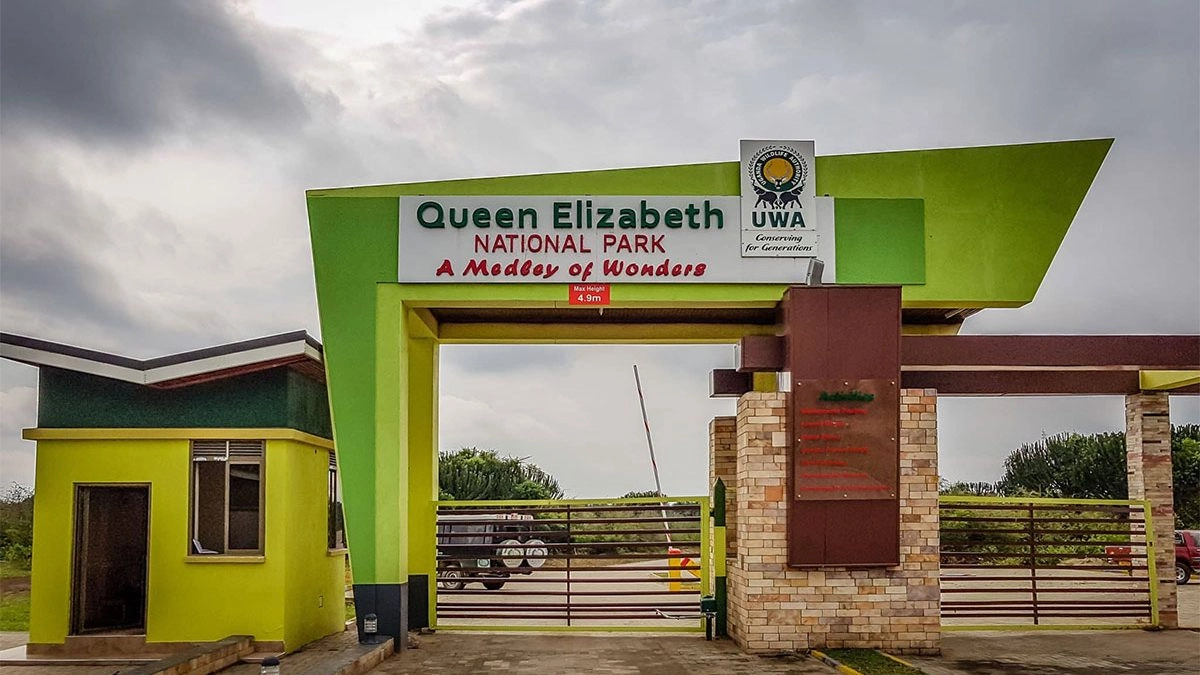
The entrance to Queen Elizabeth National Park, one of Uganda’s most popular wildlife safari destinations.
Kibale works exceptionally well within a western Uganda safari because Queen Elizabeth National Park lies farther south.
After experiencing forest primates, travelers can continue toward open savannah, game drives and the Kazinga Channel.
This creates a strong contrast between two ecosystems within the same safari.
A traveler might observe chimpanzees beneath Kibale’s forest canopy and, shortly afterward, encounter elephants, buffaloes, hippos and other wildlife during a Queen Elizabeth National Park safari.
This geographic relationship is one of the main reasons Kibale is so frequently incorporated into longer Uganda itineraries.
Combining Kibale With Gorilla Trekking
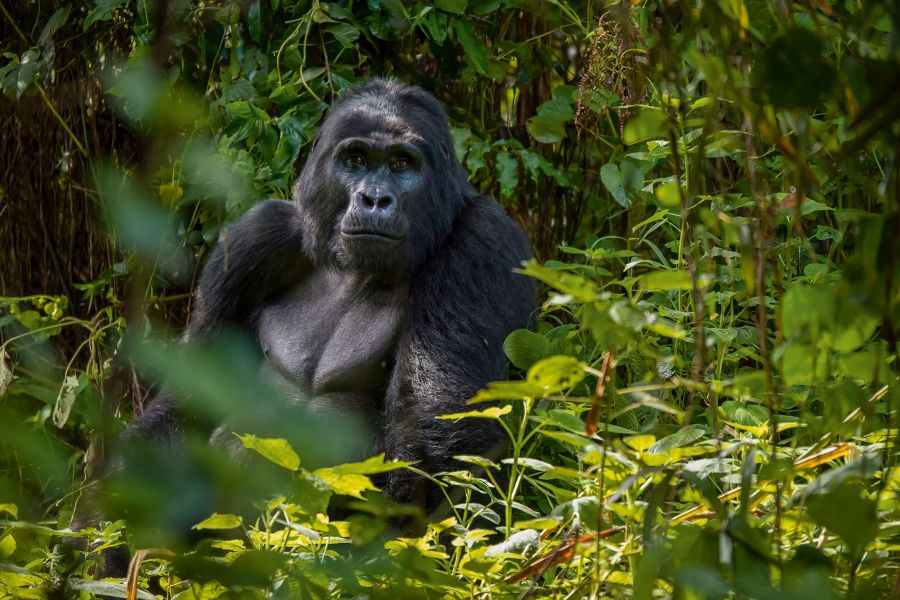
A mountain gorilla in Uganda’s lush rainforest, representing the unforgettable primate and wildlife experiences available on Uganda safaris.
Continue south from Queen Elizabeth National Park and the route can eventually reach Bwindi Impenetrable National Park.
This creates one of Uganda’s most rewarding primate circuits.
Chimpanzees and mountain gorillas are both great apes, but the trekking experiences can feel remarkably different. Combining them allows travelers to appreciate these differences within a single journey.
Travelers considering this route can explore our 7-day chimpanzee and gorilla trekking safari for an example of how the destinations can work together.
How Many Nights Should You Spend in Kibale?
For a straightforward chimpanzee trekking itinerary, two nights can often work well: arrive on the first day, trek the following day and continue your safari afterward.
However, staying longer provides more flexibility and allows travelers to appreciate the region beyond chimpanzees.
Three or more nights can accommodate additional forest walks, Bigodi, community activities or a more relaxed safari pace.
Travelers choosing chimpanzee habituation should also structure their itinerary around the longer forest experience rather than overloading the same day with other demanding activities.
Is Kibale Worth the Chimpanzee Permit Cost?
For travelers whose priority is chimpanzees, Kibale offers one of Uganda’s strongest primate experiences.
The value lies not simply in obtaining a permit but in the complete setting: tropical forest, diverse primates, established tracking activities and the ability to combine the destination naturally with other western Uganda attractions.
A well-planned Kibale stay can therefore become much more than a single chimpanzee trek.
Safari Vacations and Travel Services Ltd can arrange the Kibale chimpanzee permit, suitable accommodation, private transportation and onward connections to Queen Elizabeth National Park, Bwindi and other destinations.
Chimpanzee Tracking vs Chimpanzee Habituation Permits
One of the most important decisions when using a chimpanzee permit guide is choosing between standard chimpanzee tracking and the Chimpanzee Habituation Experience. Both activities allow travelers to encounter wild chimpanzees, but the amount of time in the forest, nature of the experience, permit cost and physical commitment can be very different.
For most first-time visitors, standard chimpanzee trekking in Kibale Forest provides an excellent introduction. Travelers wanting a deeper primate experience can choose chimpanzee habituation, which provides substantially more time observing chimpanzees alongside researchers and trackers.
What Is Standard Chimpanzee Tracking?
Standard chimpanzee tracking is the experience most travelers choose when purchasing a Uganda chimpanzee permit.
After a briefing, visitors enter the forest with ranger guides and track a habituated chimpanzee community. The search itself can take different amounts of time because chimpanzees move freely through the forest.
Once the chimpanzees are located, standard tracking normally allows approximately one hour with them. During this period, visitors may observe feeding, grooming, communication, play, movement through the canopy, and interactions between members of the community.
This makes standard tracking particularly suitable for travelers who want chimpanzees to form one part of a wider Uganda tour and safari.
What Is the Chimpanzee Habituation Experience?
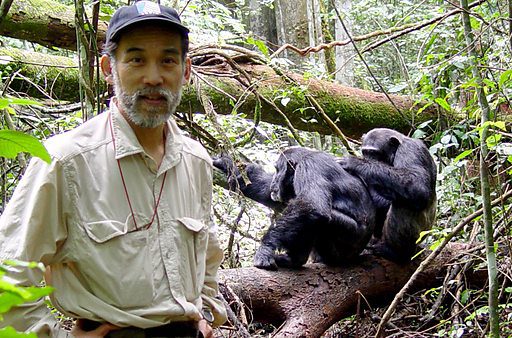
A client with Chimpanzees on a habituation experience in kibale forest national park
Chimpanzee habituation provides a more intensive experience.
Habituation is the gradual process through which wild chimpanzees become accustomed to carefully controlled human presence. Researchers and trackers spend extended periods studying particular communities before they become fully accustomed to visitors.
Tourists joining the experience accompany the field team and spend considerably more time observing chimpanzee behavior.
Safari Vacations and Travel Services’ guide to the best places for chimpanzee habituation in Uganda describes Kibale as the leading option and notes that the experience can provide up to four hours with the chimpanzees.
Chimpanzee Tracking vs Habituation at a Glance
| Feature | Standard Tracking | Chimpanzee Habituation |
|---|---|---|
| Main purpose | Find and observe habituated chimpanzees | Extended observation during habituation |
| Time with chimpanzees | About 1 hour after locating them | Up to 4 hours in Kibale |
| Forest commitment | Usually shorter | Longer |
| Chimpanzees | Habituated community | Community undergoing habituation |
| Photography opportunities | Good | Excellent for patient photographers |
| Physical demand | Moderate to demanding | Generally more demanding |
| Best for | Most safari travelers | Primate enthusiasts and photographers |
| 2026 FNR Kibale permit | USD 250 | USD 300 |
| 2027 FNR Kibale permit | USD 300 | USD 400 |
The right choice therefore depends on much more than price.

Kyambura Gorge: Best for Queen Elizabeth National Park Safaris
 Kyambura Gorge offers something very different.
The forested gorge lies within the Queen Elizabeth conservation landscape and allows travelers to add chimpanzee tracking to a traditional wildlife safari. For travelers using a chimpanzee permit guide to compare Uganda chimpanzee trekking destinations, Kyambura Gorge can be a practical option when Queen Elizabeth National Park is already part of the safari.
Its greatest strength is convenience. This can make a Kyambura chimpanzee permit particularly useful for travelers who want chimpanzee trekking without adding a separate Kibale stay.
If your itinerary already includes Queen Elizabeth National Park, you can combine chimpanzees with game drives and other park experiences without necessarily adding several nights around Kibale. A detailed chimpanzee permit guide should therefore consider route efficiency alongside chimpanzee permit price and chimpanzee permit availability.
Safari Vacations and Travel Services’ Queen Elizabeth content highlights chimpanzee tracking in Kyambura alongside other park activities.
This makes Kyambura particularly attractive for travelers with limited time and for visitors looking for a Uganda chimpanzee permit that fits naturally into a broader wildlife safari.
Who Should Choose Kyambura Gorge?
Choose Kyambura if your main objective is a Queen Elizabeth wildlife safari but you would also like to include chimpanzees. Travelers comparing options in a chimpanzee permit guide may find Kyambura especially useful when chimpanzee trekking is an addition rather than the main purpose of the safari.
It can be especially useful on shorter itineraries where adding Kibale would create an extra transfer or additional nights.
The experience also offers striking scenery. Descending into a forested gorge after exploring Queen Elizabeth’s open landscapes creates a dramatic change of environment.
However, someone traveling to Uganda primarily for chimpanzees may still prefer Kibale. This is why a chimpanzee permit guide should compare destinations according to safari priorities rather than chimpanzee permit cost alone.
Kyambura’s greatest selling point is how naturally it fits into a Queen Elizabeth National Park safari.
Kalinzu Forest: Best for Budget-Conscious Travelers
Kalinzu Forest Reserve lies near Queen Elizabeth National Park and offers another attractive chimpanzee trekking alternative. For travelers comparing Uganda chimpanzee permit options, Kalinzu can be especially interesting when budget and route efficiency are important.
Safari Vacations and Travel Services describes Kalinzu as a moist evergreen tropical forest covering about 137 square kilometers, with more than 200 chimpanzees and several other primate species.
The terrain is described as relatively moderate, which can also appeal to travelers concerned about strenuous trekking. A chimpanzee permit guide should therefore consider trekking difficulty as well as chimpanzee permit prices.
Its location is a major advantage.
Instead of traveling to Kibale specifically for chimpanzees, visitors staying around Queen Elizabeth can incorporate chimpanzee trekking in Kalinzu Forest into the same general safari region. This can make the Kalinzu chimpanzee trekking experience attractive to travelers who want a practical alternative to a Kibale chimpanzee permit.
Who Should Choose Kalinzu?
Kalinzu is particularly attractive to budget-conscious travelers and visitors who want chimpanzee trekking without making Kibale the centerpiece of their safari. For this reason, a chimpanzee permit guide comparing value-focused options should include Kalinzu.
It can also work for repeat visitors who have already experienced Kibale and want to explore another Ugandan forest.
The surrounding region provides additional possibilities, including Queen Elizabeth National Park, tea-growing landscapes and other nature experiences.
For travelers comparing Kibale vs Kalinzu, the decision should therefore be based on overall safari priorities rather than price alone. A Uganda chimpanzee permit should fit the route, budget and desired chimpanzee experience.
Choose Kibale for the stronger dedicated primate focus. Choose Kalinzu when value, route efficiency and proximity to Queen Elizabeth matter more.
Budongo Forest: Best for Murchison Falls Safaris
Budongo solves a completely different itinerary problem and deserves attention in a comprehensive chimpanzee permit guide.
Located within the wider Murchison Falls conservation landscape, Budongo allows travelers exploring northern Uganda to include chimpanzees without traveling south to Kibale. This makes Budongo an important alternative when comparing Uganda chimpanzee trekking permit options.
Safari Vacations and Travel Services reports that Budongo supports more than 800 chimpanzees, with a habituated population available for tracking. Chimpanzee tracking commonly takes approximately two to five hours, followed by the regulated observation period after locating the chimpanzees.
You can learn more in our dedicated Budongo Forest Reserve guide.
Who Should Choose Budongo?
Budongo is the logical option for travelers whose itinerary already includes Murchison Falls National Park. For such travelers, a Budongo chimpanzee permit can fit more efficiently than a Kibale chimpanzee permit.
A northern Uganda safari can therefore combine forest primates with game drives, Nile experiences and the dramatic Murchison Falls landscape.
Budongo is also attractive to travelers who prefer less conventional primate itineraries.
The forest offers more than chimpanzees, including rich birdlife and guided nature walks. Safari Vacations and Travel Services notes that Budongo contains nine primate species as well as hundreds of bird, butterfly and tree species. This wider biodiversity makes Budongo relevant to travelers using a chimpanzee permit guide to build a broader nature-focused safari.
Which Destination Is Best for Chimpanzee Habituation?
Kibale remains the obvious first choice for many travelers interested in habituation, but Budongo also provides opportunities for a deeper chimpanzee experience. A chimpanzee permit guide should therefore distinguish between standard chimpanzee trekking permits and chimpanzee habituation permits when comparing the two destinations.
Safari Vacations and Travel Services’ primate habituation experience safari identifies Kibale and Budongo as two outstanding options for extended chimpanzee experiences.
Travelers should choose according to the rest of their route.
Kibale pairs naturally with Queen Elizabeth and Bwindi. Budongo pairs naturally with Murchison Falls. The best chimpanzee habituation permit is therefore often the one that fits the wider Uganda safari most efficiently.
Which Is Best for Combining Chimpanzees and Gorillas?
Kibale wins this comparison. For travelers using a chimpanzee permit guide to plan a combined great-ape safari, Kibale offers the most natural routing toward southwestern Uganda.
A logical route can run through Kibale, Queen Elizabeth National Park and Bwindi Impenetrable National Park, allowing travelers to experience chimpanzees, savannah wildlife and mountain gorillas without unnecessary backtracking.
Our 7-day chimpanzee and gorilla trekking safari demonstrates this combination, moving from Kibale through Queen Elizabeth before continuing to Bwindi.
This makes Kibale especially attractive for first-time visitors wanting Uganda’s major primate experiences in one journey. In this case, the Kibale chimpanzee permit and gorilla trekking permit should be coordinated together.
Which Chimpanzee Destination Should You Choose?
There is no single winner for every safari. A reliable chimpanzee permit guide should help travelers choose according to destination, budget, route, chimpanzee permit availability and the type of chimpanzee experience they want.
Choose Kibale National Park when chimpanzees are a major priority, and you want Uganda’s strongest all-round primate destination.
Choose Kyambura Gorge when you are already visiting Queen Elizabeth National Park and want chimpanzees conveniently incorporated into your wildlife safari.
Choose Kalinzu Forest when you want a good-value chimpanzee experience close to Queen Elizabeth National Park.
Choose Budongo Forest when your safari focuses on Murchison Falls and northern Uganda.
Safari Vacations and Travel Services Ltd can evaluate your available days, budget and other destinations before recommending the most practical chimpanzee permit. This helps travelers use the chimpanzee permit guide not simply to compare prices, but to identify the most suitable Uganda chimpanzee trekking experience.
Chimpanzee Permit Rules, Age Limits, Cancellations and Refunds
Understanding chimpanzee trekking rules is an essential part of any chimpanzee permit guide. A permit gives you access to a regulated wildlife experience, but visitors must follow conservation, health and safety requirements while around wild chimpanzees. These chimpanzee permit rules are an important part of responsible Uganda chimpanzee trekking.
Safari Vacations and Travel Services Ltd recommends understanding these conditions before paying for a permit, particularly when traveling with children or when your itinerary could change. A comprehensive chimpanzee permit guide should therefore cover chimpanzee permit requirements as well as prices and availability.
What Is the Minimum Age for Chimpanzee Trekking?
Age restrictions apply to chimpanzee experiences, and families should confirm the current minimum age for their chosen destination and activity before purchasing permits. This is especially important when arranging a Uganda chimpanzee permit for a family safari.
This should be done early in the planning process. Do not organize an entire family safari assuming that every child can participate in chimpanzee trekking.
Families can still enjoy many other Uganda tours and safaris while appropriate arrangements are made for children who cannot join a particular primate activity.
A useful chimpanzee permit guide should therefore encourage families to confirm age requirements before paying for chimpanzee trekking permits.
What Are the Main Chimpanzee Trekking Rules?
Visitors receive a briefing before entering the forest. Instructions provided by guides should always take priority because conditions and operational requirements can vary. These regulations form part of the experience covered by a chimpanzee trekking permit.
Important rules generally include maintaining the required distance from chimpanzees, remaining with your guide, avoiding unnecessary noise and never attempting to touch or feed the animals.
Chimpanzees are wild animals. Visitors should never attempt to attract them for photographs or interfere with their movement.
These rules help protect both travelers and the chimpanzees. This conservation purpose is one of the reasons Uganda’s chimpanzee permit system is carefully managed.
Can You Trek Chimpanzees When You Are Sick?
Health precautions are particularly important around great apes because chimpanzees and humans are biologically closely related. Health requirements should therefore be taken seriously by every traveler purchasing a Uganda chimpanzee permit.
If you develop symptoms of a contagious illness before trekking, inform your guide or tour operator rather than concealing the condition.
Travelers planning chimpanzee trekking in Kibale Forest should remember that protecting chimpanzees takes priority over completing an activity when there is a significant health concern.
Travel insurance is strongly recommended because illness can affect expensive pre-booked safari arrangements, including chimpanzee trekking permits.
A complete chimpanzee permit guide should therefore consider health precautions as part of responsible chimpanzee tourism rather than treating the permit simply as an admission ticket.
How Close Can You Get to Chimpanzees?
Visitors must respect the minimum viewing distance explained during the briefing. A chimpanzee permit gives access to the regulated experience, but it does not allow visitors to approach chimpanzees freely.
Sometimes chimpanzees themselves may move closer than expected. If this happens, follow the ranger’s instructions rather than deliberately approaching the animal.
Never chase a chimpanzee to obtain a photograph.
A telephoto or zoom lens can help photographers capture close-looking images while respecting appropriate physical distance. Following these rules helps maintain responsible chimpanzee trekking in Uganda.
Can You Use Flash Photography?
Flash photography should not be used around chimpanzees. This is an important chimpanzee trekking rule for travelers researching photography through a chimpanzee permit guide.
Forest conditions can be dark, so photographers should prepare their cameras before trekking rather than relying on flash.
Higher ISO settings, suitable lenses, and image stabilization can help in low-light situations.
Visitors considering the longer chimpanzee habituation experience may have additional opportunities to photograph different behaviors because they spend more time following chimpanzees.
For photographers, the choice between a standard chimpanzee trekking permit and a chimpanzee habituation permit can therefore influence both observation time and photography opportunities.
Can You Eat Around Chimpanzees?
Visitors should not eat while observing chimpanzees. This is one of the practical chimpanzee trekking rules travelers should understand when using a chimpanzee permit guide to prepare for the forest experience.
Food can interfere with wildlife behavior and create unnecessary risks. A Uganda chimpanzee permit gives visitors access to a regulated primate experience, but responsible behavior remains essential throughout the trek.
If you are carrying snacks for a longer forest excursion, keep them packed away and follow your guide’s instructions regarding appropriate places and times to eat.
Never leave food wrappers, bottles or other rubbish in the forest. Responsible waste management is part of the conservation principles that support Uganda’s chimpanzee permit system and responsible chimpanzee trekking.
Can a Chimpanzee Permit Be Rescheduled?
Travelers should never assume that a chimpanzee permit can be freely transferred from one date to another. This is an important point in any detailed chimpanzee permit guide because confirmed permit dates can affect accommodation, transportation and the rest of the safari route.
Rescheduling is governed by the applicable terms and chimpanzee permit availability at the time of the requested change.
If your travel dates change, contact Safari Vacations and Travel Services Ltd as soon as possible so the available Uganda chimpanzee permit options can be checked.
Changes become more difficult when the safari also includes accommodation and other permit-controlled activities such as gorilla trekking. A practical chimpanzee permit guide should therefore encourage travelers to coordinate chimpanzee permits and gorilla permits carefully before making major itinerary changes.
Are Chimpanzee Permits Refundable?
Refund and cancellation conditions depend on the applicable authority, destination, and circumstances. Travelers using a chimpanzee permit guide should therefore understand that chimpanzee permit refund policies may differ from other safari cancellation terms.
Travelers should therefore check the current cancellation terms when making the reservation rather than relying on an old policy found online.
Safari Vacations and Travel Services publishes its wider booking terms and conditions, which travelers should review when booking a complete safari.
Chimpanzee permit payments can be subject to different conditions from accommodation and transportation, making travel insurance particularly important. This is especially relevant when a Uganda chimpanzee permit forms part of a larger primate safari involving several prepaid activities.
What Happens If You Miss Your Chimpanzee Trek?
Missing the scheduled briefing or trekking session can result in losing the experience. A confirmed chimpanzee trekking permit is linked to a scheduled activity, which is why punctuality is important.
Travelers should therefore stay close enough to the starting point the previous night and allow sufficient preparation time in the morning.
This is one reason Safari Vacations and Travel Services Ltd avoids planning long road transfers immediately before scheduled chimpanzee activities.
Your chimpanzee permit has a specific operational purpose; it should not be treated like an attraction ticket that can simply be used whenever you arrive. A complete chimpanzee permit guide should therefore remind travelers to plan accommodation and transfers around the confirmed trekking date and briefing time.
What Happens If You Don’t See Chimpanzees?
Chimpanzees are wild animals, so sightings should never be described as guaranteed. Purchasing a Uganda chimpanzee permit gives access to the organized tracking experience rather than a guaranteed wildlife sighting.
Experienced guides and trackers use their knowledge of chimpanzee movements, calls and feeding areas to locate habituated communities, and destinations such as Kibale are known for strong tracking opportunities.
Nevertheless, nature remains unpredictable.
The value of guided forest walks in Kibale National Park also extends beyond chimpanzees because visitors can encounter other primates, birds and forest wildlife. This broader forest experience is worth considering when using a chimpanzee permit guide to plan a Kibale safari.
Responsible Chimpanzee Trekking
The rules attached to a chimpanzee permit are ultimately about protecting wild chimpanzees while allowing travelers to experience them responsibly. Responsible chimpanzee trekking is therefore one of the most important principles behind Uganda’s chimpanzee permit system.
Listen to your guide, respect viewing distances, avoid flash photography, do not feed wildlife, disclose relevant illness and leave nothing behind in the forest.
Safari Vacations and Travel Services Ltd can explain the practical chimpanzee permit requirements before your safari so you arrive prepared. A well-planned Uganda chimpanzee permit experience should combine responsible tourism, realistic expectations and respect for the forest environment.
How Early Should You Book?
For popular periods, booking several months ahead is a sensible strategy. Travelers using a chimpanzee permit guide should consider chimpanzee permit availability as soon as their intended Uganda safari dates become reasonably certain.
Earlier planning becomes especially important for groups, fixed travel dates and safaris combining several permit-controlled activities.
If you intend to travel during June–September or around Christmas and New Year, do not wait for accommodation and flights to be completely finalized before checking chimpanzee permit availability. Kibale chimpanzee permits can be particularly important when chimpanzee trekking is one of the primary reasons for visiting Uganda.
Safari Vacations and Travel Services Ltd can coordinate the permit date with the wider itinerary.
A practical chimpanzee permit guide should therefore encourage travelers to secure the Uganda chimpanzee permit early enough to coordinate accommodation, transportation and any gorilla trekking permits required for the same journey.
What Is the Best Month Overall?
There is no universally best month for using a chimpanzee permit in Uganda.
Choose June–September or December–February if easier trekking conditions are your priority.
Consider March–May or October–November if you prefer greener scenery, potentially quieter travel and do not mind wetter forest conditions.
Chimpanzees remain wild throughout every season, so no month can guarantee a particular sighting or behavior. Likewise, purchasing a Kibale chimpanzee permit gives travelers access to the organized tracking experience rather than guaranteeing a particular chimpanzee encounter.
The best time to use your chimpanzee permit is ultimately the period that works with your overall Uganda safari. This chimpanzee permit guide therefore recommends considering weather, permit availability, budget and the other destinations included in your itinerary.
Planning a Uganda Safari Around Your Chimpanzee Permit
A confirmed chimpanzee permit should become one of the fixed points around which your Uganda safari is designed. Instead of booking lodges and transportation randomly and then trying to fit chimpanzee trekking into the journey, travelers can create a smoother route by positioning other destinations around the trekking date.
This is one of the most important planning principles in a chimpanzee permit guide because a confirmed Uganda chimpanzee permit can influence where you stay, how you travel and the order in which different national parks are visited.
Safari Vacations and Travel Services Ltd can coordinate the chimpanzee permit with private transportation, accommodation, gorilla permits, wildlife experiences and other activities to create an efficient Uganda itinerary.
How Many Days Do You Need for Chimpanzee Trekking?
For travelers visiting Kibale from Entebbe or Kampala, a 2–3 day itinerary provides a practical starting point. This gives travelers enough time to reach the chimpanzee trekking destination and use their Kibale chimpanzee permit without creating an unnecessarily rushed itinerary.
A two-night arrangement allows you to arrive in the Kibale region before trekking rather than attempting a long transfer immediately before your scheduled activity.
Travelers with more time can add guided forest walks in Kibale National Park, Bigodi Wetland, crater lakes and community experiences.
For a more comprehensive journey, chimpanzee trekking can form part of a 7–14 day Uganda safari. Travelers using this chimpanzee permit guide can therefore build their itinerary around the confirmed chimpanzee trekking permit and then add other wildlife and primate destinations.
Entebbe to Kibale Chimpanzee Safari
Many international Uganda safaris begin at Entebbe International Airport.
Travelers can journey west toward Kibale, usually making the transfer a dedicated travel day rather than attempting chimpanzee trekking immediately after arriving from Entebbe. This provides a more practical approach for travelers with a confirmed Kibale chimpanzee permit.
The goal should be to reach your accommodation with enough time to rest before the following day’s forest experience.
After chimpanzee trekking, travelers can either return toward Entebbe or continue south, which is usually the better option for a multi-destination safari.
A detailed chimpanzee permit guide should therefore consider the Uganda chimpanzee permit date together with realistic transfer times rather than treating the permit as an isolated booking.
Combine Kibale and Bigodi Wetland
Bigodi is one of the easiest additions to a Kibale itinerary and can add more variety to a safari organized around a Kibale chimpanzee permit.
After chimpanzee trekking, travelers can explore a different habitat while looking for birds, monkeys and other wildlife.
Our chimpanzee trekking and Bigodi Wetland experience demonstrates how the two activities complement one another.
This combination works particularly well for travelers interested in nature and photography. It also allows visitors to gain more from the Kibale region after using their Uganda chimpanzee trekking permit.
Combine Chimpanzees With Queen Elizabeth National Park
One of the most logical safari routes connects Kibale with Queen Elizabeth National Park.
The combination creates an immediate contrast between tropical forest and savannah wildlife.
After seeing chimpanzees in Kibale, travelers can continue to Queen Elizabeth for game drives and other wildlife experiences.
This route avoids unnecessary backtracking and creates an excellent transition toward southwestern Uganda.
For travelers using a chimpanzee permit guide to plan a complete Uganda safari, this combination demonstrates why the location of the chimpanzee permit matters. A Kibale chimpanzee permit can fit naturally into a western Uganda circuit combining primates and classic African wildlife.
Combine Chimpanzees With Gorilla Trekking
Adding Bwindi creates one of Uganda’s strongest primate itineraries. Travelers researching a chimpanzee permit guide often combine a Uganda chimpanzee permit with a gorilla trekking permit to experience both great apes during one safari.
A typical route can follow:
Entebbe → Kibale → Queen Elizabeth National Park → Bwindi Impenetrable National Park → Entebbe
This combines chimpanzees, traditional African wildlife, and mountain gorillas.
Travelers can examine our 7-day chimpanzee and gorilla trekking safari for an example of how these destinations can be connected.
The important planning consideration is securing chimpanzee and gorilla permits before finalizing restrictive accommodation bookings.
A comprehensive chimpanzee permit guide should therefore encourage travelers to check both chimpanzee permit availability and gorilla permit availability together when both activities are priorities.
Combine Chimpanzees With Murchison Falls
Travelers with additional time can incorporate Murchison Falls National Park.
One option is visiting Murchison Falls before continuing south toward Kibale. Another is choosing Budongo Forest Reserve for chimpanzees instead of Kibale when the safari is concentrated in northern Uganda.
This demonstrates why a chimpanzee permit guide should consider geography.
The best permit is often the one that fits your route most efficiently. Travelers should therefore compare a Kibale chimpanzee permit with other Uganda chimpanzee trekking options according to the complete safari itinerary rather than permit price alone.
Where Should You Stay for Chimpanzee Trekking?
Accommodation should be selected according to the trekking location, budget and desired level of comfort. The location of your accommodation becomes particularly important after the chimpanzee permit date has been confirmed.
A traveler holding a Kibale chimpanzee permit should ideally stay within practical reach of the appropriate chimpanzee trekking briefing point.
Choosing accommodation according to the confirmed Uganda chimpanzee permit can help avoid unnecessarily long transfers on the morning of the trek and create a more comfortable overall safari experience.
Contact Safari Vacations and Travel Services Ltd with your preferred travel dates, number of travelers and activities you would like to include. The team can then help check availability and develop a personalized Uganda primate safari. (ugandarwanda-safaris.com)