
Best Camera Equipment for Gorilla Trekking Photography

Professional camera equipment for gorilla trekking photography
Choosing the right camera equipment is one of the most important parts of successful
gorilla trekking photography.
The rainforest environment where mountain gorillas live presents unique challenges, including limited natural light, dense vegetation, unpredictable weather, and fast-moving wildlife. Having reliable photography gear helps travelers capture sharp, memorable images while enjoying their trekking experience.
Unlike traditional wildlife photography where photographers may have plenty of time to prepare, gorilla trekking photography requires equipment that is lightweight, durable, and easy to operate during a forest hike. Trekkers often walk through challenging terrain before reaching a gorilla family, making portability just as important as image quality.
Choosing the Best Camera for Gorilla Trekking
The best camera for gorilla trekking should perform well in low-light rainforest conditions and provide fast autofocus when photographing moving gorillas. Both mirrorless and DSLR cameras can produce excellent results when paired with suitable lenses.
Mirrorless cameras are becoming increasingly popular among wildlife photographers because they offer excellent image quality while reducing weight. Their advanced autofocus systems, electronic viewfinders, and compact designs make them practical for long forest treks.
DSLR cameras remain a strong choice because of their reliability, battery performance, and wide selection of professional lenses. Many experienced wildlife photographers still prefer DSLR systems because they provide excellent handling and dependable performance in demanding environments.
When selecting a camera body, photographers should prioritize features such as strong autofocus tracking, good high ISO performance, weather protection, and comfortable handling. A camera that feels easy to use allows photographers to focus more on observing gorilla behavior rather than struggling with settings.
Mirrorless Cameras for Gorilla Photography
Mirrorless cameras are ideal for travelers who want professional-quality images without carrying heavy equipment. Their lightweight construction makes them suitable for long hikes through forests such as Bwindi Impenetrable National Park and other mountain gorilla habitats.
Modern mirrorless cameras also provide excellent animal autofocus technology, helping photographers maintain focus on gorillas as they move, feed, interact, or change positions. This is especially useful when capturing natural behaviors during a limited viewing period.
DSLR Cameras for Gorilla Trekking Photography
DSLR cameras remain trusted tools for many wildlife photographers because they combine durability with excellent image quality. A professional DSLR paired with a suitable zoom lens can capture detailed portraits of silverbacks, mothers, and young gorillas.
The main advantage of DSLR systems is their extensive lens availability. Photographers can choose from many telephoto, zoom, and wide-angle lenses depending on the type of images they want to create during their gorilla trekking adventure.
Best Lens for Gorilla Trekking Photography
Selecting the right lens is often more important than selecting the camera body. The best lens for gorilla trekking photography should provide flexibility because photographers may encounter gorillas at different distances within the forest.
A versatile zoom lens is usually recommended because it allows photographers to capture both close-up portraits and wider environmental images without constantly changing equipment. This is especially useful when trekking conditions are wet or when gorillas move unexpectedly.
Telephoto lenses are valuable for creating detailed wildlife portraits. They allow photographers to capture facial expressions, eye contact, fur details, and family interactions while maintaining an appropriate distance from the animals.
Wide-angle lenses are also useful because they show the relationship between gorillas and their natural rainforest environment. These photographs tell a complete story by showing the habitat, vegetation, and atmosphere surrounding the gorilla family.
Recommended Lens Types for Gorilla Photography
A 70-200mm lens is a popular choice among wildlife photographers because it provides flexibility for close encounters. Longer lenses can also be useful when photographing animals from greater distances or capturing detailed portraits.
Photographers planning a gorilla trekking safari should consider carrying a combination of lenses rather than depending on only one option. A balanced setup may include a versatile zoom lens and a wider lens for environmental photographs.
Understanding the photography conditions before the trek can help travelers choose the right equipment. Those planning extended adventures can explore different gorilla trekking experiences and prepare their photography equipment according to the destination and itinerary.
Essential Gorilla Trekking Photography Gear Checklist
Besides a camera and lens, several accessories can greatly improve the photography experience. The rainforest environment requires preparation because weather conditions can change quickly.
Important photography accessories include extra batteries, additional memory cards, a waterproof camera cover, lens cleaning materials, and a comfortable camera bag. These items help protect valuable equipment during forest hikes.
Extra batteries are particularly important because cold temperatures, frequent autofocus use, and reviewing images can reduce battery life. Carrying enough storage space is also essential because wildlife photography often involves capturing multiple images of the same moment.
Protecting Camera Equipment During Gorilla Trekking
Mountain gorilla habitats are often humid and rainy, meaning photographers must protect their equipment from moisture. A waterproof camera bag or rain cover helps prevent damage caused by sudden rainfall or wet vegetation.
Lens cloths and cleaning kits are useful because rainforest conditions can create condensation and water droplets on camera equipment. Keeping lenses clean ensures sharper images throughout the trekking experience.
Travelers combining gorilla photography with wider safari adventures can also consider planning complete Uganda and Rwanda safari experiences that include different wildlife photography opportunities.
Lightweight Photography Setup for Gorilla Trekking
A common mistake among photographers is carrying too much equipment. A heavy camera bag can make trekking more difficult and reduce enjoyment during the forest journey.
The ideal setup balances image quality with comfort. Carry only equipment that will realistically be used during the trek. A simple but reliable camera body, one versatile lens, spare batteries, and weather protection are often enough for excellent gorilla trekking photography.
Professional results come from understanding camera settings, composition, and animal behavior rather than carrying excessive equipment. The photographer’s ability to observe and react quickly is just as important as the gear being used.
Camera Accessories That Improve Gorilla Photography Results
Small accessories can make a major difference when photographing gorillas. Memory cards with enough capacity, a comfortable strap, and protective covers improve convenience during long trekking sessions.
A stable camera setup helps photographers capture sharper images, especially in low-light rainforest conditions. However, bulky equipment should be avoided because mobility is essential when moving through dense forest environments.
For travelers preparing for their first experience, understanding the complete journey through mountain gorilla photography resources can help them select equipment that matches their goals.
Best Camera Settings for Gorilla Trekking Photography
 Mastering the right camera settings is one of the most important parts of achieving professional-quality images during gorilla trekking. The rainforest environment creates unique photography challenges because mountain gorillas are usually found beneath thick vegetation where natural light is limited and constantly changing. Understanding how to adjust your camera settings before entering the forest allows you to react quickly when a memorable wildlife moment appears.
The best gorilla trekking experience combines preparation, patience, and technical photography skills. A well-prepared photographer can capture sharp portraits, emotional interactions, and detailed images of gorillas without missing important moments during the limited viewing period.
Understanding Rainforest Lighting Conditions
One of the biggest challenges when photographing gorillas is the low-light environment of tropical forests. Dense trees, thick vegetation, and cloudy skies often reduce available light, meaning photographers must adjust their settings carefully.
Unlike open wildlife photography where sunlight is usually abundant, gorilla trekking photography requires cameras that perform well at higher ISO settings. Increasing ISO allows more light to reach the sensor, helping photographers maintain faster shutter speeds when gorillas are moving.
Photographers should regularly monitor the lighting conditions because the rainforest can change from bright areas to dark forest sections within minutes. Being comfortable with manual adjustments makes it easier to capture consistent results throughout the trek.
Best Aperture Settings for Gorilla Photography
Aperture controls how much light enters the camera and also determines how much of the image appears in focus. For gorilla trekking photography, wider apertures are often useful because they allow more light into the camera in challenging rainforest conditions.
Settings between f/2.8 and f/5.6 are commonly preferred by wildlife photographers because they provide a balance between brightness and image sharpness. A wider aperture can also create beautiful background separation, making the gorilla stand out from the surrounding vegetation.
When photographing groups of gorillas or environmental portraits showing the rainforest habitat, photographers may choose a smaller aperture to keep more elements in focus. This creates images that tell a complete story about the gorilla and its natural environment.
Choosing the Right Shutter Speed
Shutter speed is critical when photographing mountain gorillas because these animals can move unexpectedly. A slow shutter speed may create blurry images, especially when capturing feeding, walking, climbing, or social interactions.
For active gorilla behavior, faster shutter speeds help freeze movement and create sharper photographs. When gorillas are resting or sitting calmly, photographers can use slower shutter speeds while carefully maintaining camera stability.
Wildlife photographers should remember that capturing behavior is often more valuable than simply recording an image. A sharp photograph showing interaction between gorillas creates a stronger visual story than a technically perfect but uninteresting image.
Recommended ISO Settings for Gorilla Trekking Photography
ISO settings determine how sensitive the camera sensor is to light. During gorilla trekking, photographers often need higher ISO values because rainforest environments frequently provide limited illumination.
Modern cameras can produce excellent results at higher ISO levels, making it possible to capture sharp images without requiring extremely slow shutter speeds. However, photographers should avoid unnecessarily high ISO settings because excessive sensitivity can introduce digital noise.
The ideal ISO depends on the available light, camera model, lens capability, and desired shutter speed. Experienced photographers regularly check their exposure settings and adjust them as conditions change.
Autofocus Settings for Photographing Gorillas
Autofocus performance is extremely important when photographing wildlife. Gorillas can change position quickly, and photographers often have only a short opportunity to capture expressions, movement, and interactions.
Continuous autofocus modes are usually preferred because they allow the camera to track moving subjects. Animal eye autofocus features available on many modern cameras can also improve accuracy by maintaining focus on the gorilla’s face.
Photographers should practice using their autofocus system before traveling. Understanding focus points, tracking modes, and camera controls reduces the chance of missing important moments during the trek.
RAW vs JPEG Photography During Gorilla Trekking
Choosing between RAW and JPEG affects the amount of editing flexibility available after the trek. Many serious wildlife photographers prefer RAW files because they preserve more image information.
RAW photographs allow greater control over exposure adjustments, shadows, highlights, and colors during post-processing. This is especially useful when photographing gorillas in difficult rainforest lighting conditions.
JPEG files require less storage space and are convenient for quick sharing, but they provide less flexibility when making detailed corrections later.
Using Exposure Compensation in the Forest
Exposure compensation allows photographers to quickly adjust brightness without changing multiple camera settings. This feature is useful when moving between bright forest openings and darker areas under thick vegetation.
A photographer may need to increase exposure when the gorilla is surrounded by dark backgrounds or reduce exposure when sunlight creates bright patches through the trees.
Understanding exposure control helps create natural-looking images while preserving details in both shadows and highlights.
Recommended Camera Settings for Different Gorilla Situations
Different moments during a gorilla encounter require different approaches. Portrait photography, movement photography, and environmental shots may all require adjustments.
For close-up portraits, photographers usually prioritize a wide aperture and accurate focus on the gorilla’s eyes. For movement, faster shutter speeds become more important. For habitat images, balanced settings help capture both the animal and surrounding rainforest.
Travelers preparing their equipment should also consider the conditions described in a complete gorilla trekking packing guide, especially because protecting photography equipment is essential in humid forest environments.
Camera Settings Mistakes to Avoid
Many beginners make common photography mistakes during their first gorilla trek. Leaving the camera on unsuitable automatic settings can result in blurry images, poor exposure, or missed opportunities.
Another common mistake is failing to check battery levels, memory capacity, and camera settings before entering the forest. Wildlife encounters happen quickly, and preparation allows photographers to focus on capturing moments rather than fixing technical problems.
Photographers should also avoid constantly changing equipment during the encounter. Spending too much time adjusting gear can distract from observing gorilla behavior and enjoying the experience.
Practicing Gorilla Photography Settings Before Your Trip
The best way to improve gorilla trekking photography skills is to practice before arriving at the destination. Testing different aperture values, shutter speeds, and ISO combinations helps photographers understand how their camera responds in different conditions.
Practicing with wildlife, pets, or outdoor subjects can improve reaction speed and confidence. When the actual gorilla encounter happens, the photographer can concentrate on composition and storytelling instead of learning camera controls.
For travelers combining gorilla trekking with other adventures, understanding destinations through resources about gorilla trekking in Rwanda and Uganda helps with planning the right photography approach for each environment.
Final Tips for Perfect Gorilla Photography Settings
Successful gorilla trekking photography is not only about having expensive equipment. The most important factors are preparation, understanding light, choosing suitable settings, and being ready to capture natural behavior.
A photographer who understands aperture, shutter speed, ISO, autofocus, and composition will be better prepared to create memorable images of mountain gorillas in their natural habitat.
Combining technical knowledge with respect for wildlife ensures that every photograph captures both the beauty of the gorillas and the importance of protecting these incredible animals.
Gorilla Photography Composition Techniques

Gorilla photography composition techniques
Taking memorable gorilla photographs requires more than having an expensive camera and a powerful lens. Composition is what transforms a simple wildlife image into a powerful visual story. Good composition helps viewers understand the personality of the gorilla, the beauty of the rainforest environment, and the emotional connection between the animal and its habitat.
During a gorilla trekking experience, photographers have limited time to capture meaningful moments. Learning professional gorilla photography techniques before entering the forest helps you make quick decisions about positioning, framing, lighting, and camera angles.
Understanding Composition in Gorilla Photography
Composition refers to how different elements are arranged within a photograph. In wildlife photography, composition guides the viewer’s attention toward the main subject while maintaining a natural connection between the animal and its surroundings.
Mountain gorillas live in dense rainforest environments filled with trees, leaves, vines, and changing light conditions. Instead of removing the environment completely, skilled photographers use these natural elements to create images that tell a complete story.
A well-composed gorilla photograph should show not only the animal but also the atmosphere of the forest where it lives. Including elements such as vegetation, mist, and surrounding landscapes creates a stronger sense of place.
Using Eye-Level Photography for Gorilla Portraits
One of the most powerful gorilla photography composition techniques is capturing images from an eye-level perspective. Eye-level photographs create a stronger emotional connection because viewers feel closer to the animal.
When photographing gorillas, avoid shooting only from high angles. Instead, position yourself carefully and respectfully to capture the gorilla’s face, eyes, and expressions. Eye contact can create powerful portraits that communicate intelligence, emotion, and personality.
The silverback gorilla is often the main subject for photographers because of its size, strength, and leadership role within the family group. However, other gorillas, including mothers and young ones, also provide unique storytelling opportunities.
Applying the Rule of Thirds in Gorilla Photography
The rule of thirds is one of the most widely used photography composition methods. It involves dividing the image into nine sections using imaginary horizontal and vertical lines and placing important subjects near the intersections.
When photographing gorillas, placing the animal slightly away from the center can create a more balanced and natural-looking image. This technique also allows space for the viewer to see the surrounding rainforest environment.
For example, if a gorilla is looking toward one side of the frame, leaving additional space in the direction of the gaze creates a more dynamic photograph.
Creating Environmental Gorilla Portraits
Environmental portraits show the relationship between the gorilla and its natural habitat. Instead of focusing only on a close-up face shot, these images include the rainforest surroundings to tell a larger conservation story.
The dense forests of Uganda and Rwanda provide incredible backgrounds for photography. The vegetation, mountain atmosphere, and natural lighting conditions create unique opportunities for creative wildlife images.
Photographers planning their journey can better prepare for these environments by understanding different gorilla trekking destinations and how each location offers different photography opportunities.
Capturing Gorilla Behavior and Natural Moments
The most memorable wildlife photographs usually capture behavior rather than simple poses. A gorilla eating, interacting with family members, climbing, resting, or looking through vegetation creates a stronger connection with viewers.
Patience is essential when photographing gorillas. Instead of taking random photographs continuously, observe the animals and wait for meaningful moments. A single image showing emotion or interaction can be more valuable than hundreds of ordinary photographs.
Professional wildlife photographers often focus on storytelling by capturing sequences of behavior. A photograph showing a mother caring for a young gorilla can communicate more than a simple portrait.
Using Natural Frames in Gorilla Photography
Natural framing is a technique where surrounding objects are used to highlight the main subject. In rainforest photography, leaves, branches, and vegetation can create beautiful frames around gorillas.
Instead of seeing vegetation as an obstacle, photographers can use it creatively. Leaves in the foreground can add depth, while gaps between branches can naturally direct attention toward the gorilla.
Natural framing also creates a more authentic wildlife photograph because it shows the gorilla within the environment where it naturally lives.
Managing Backgrounds in Gorilla Photos
A distracting background can reduce the impact of an otherwise excellent photograph. Before pressing the shutter, photographers should consider what appears behind the gorilla.
Simple backgrounds help the subject stand out. Adjusting your position slightly can remove distracting branches, bright areas, or unwanted objects from the frame.
A wide aperture can also help blur backgrounds and create professional-looking wildlife portraits. This technique separates the gorilla from surrounding vegetation while maintaining a natural appearance.
Using Light Creatively in Gorilla Photography
Rainforest lighting can be challenging, but it also creates unique photographic opportunities. Soft filtered sunlight passing through trees can produce dramatic images with beautiful atmosphere.
Photographers should avoid fighting natural lighting conditions and instead use them creatively. Shadows, mist, and sunlight patterns can add depth and emotion to gorilla photographs.
Understanding the best timing and conditions for photography is important when planning your adventure. Many travelers combine photography with complete gorilla trekking adventures that include rainforest exploration and wildlife experiences.
Capturing Close-Up Gorilla Details
Close-up photographs reveal details that are often missed during normal observation. The texture of gorilla fur, facial expressions, eyes, hands, and interactions provide powerful subjects for wildlife photography.
When taking close-up images, photographers should maintain proper focus on important features such as the eyes. Sharp eyes create stronger emotional connections and make portraits more engaging.
Telephoto lenses are especially useful because they allow photographers to capture detailed images while respecting the recommended distance between humans and gorillas.
Photographing Gorilla Groups and Family Interactions
While individual portraits are impressive, photographs showing gorilla families often tell a deeper story. Capturing relationships between silverbacks, females, and young gorillas creates images full of emotion.
When photographing groups, consider the arrangement of subjects within the frame. Avoid cutting off important body parts and try to capture interactions naturally.
Family photographs also highlight the importance of conservation by showing the social structure and peaceful behavior of mountain gorillas.
Common Gorilla Photography Composition Mistakes
Many beginners focus only on getting the gorilla into the frame and forget about composition. This can result in images that are technically correct but visually weak.
Common mistakes include placing the subject too close to the edge of the frame, ignoring distracting backgrounds, cutting off important body parts, and photographing without considering the surrounding environment.
Another mistake is taking too many identical photographs instead of looking for different angles and storytelling opportunities. A creative approach produces more memorable results.
Improving Your Gorilla Photography Composition Skills
Improving composition requires practice and observation. Before your trek, practice photographing animals, landscapes, and people while experimenting with different angles and framing techniques.
Studying professional wildlife photography can also improve your understanding of storytelling, lighting, and subject placement. The goal is not only to capture a gorilla but to communicate the experience of encountering one in the wild.
Before traveling, photographers should also prepare the right equipment and accessories by reviewing a detailed gorilla trekking packing guide to protect their cameras and achieve better results in rainforest conditions.
Final Composition Tips for Stunning Gorilla Photos
Great gorilla photographs combine technical camera skills with creativity and patience. The best images usually come from photographers who take time to observe behavior, understand the environment, and compose each shot carefully.
Remember that every gorilla encounter is different. By applying composition techniques such as eye-level photography, environmental portraits, natural framing, and storytelling, photographers can create images that preserve the memory of one of the world’s most extraordinary wildlife experiences.
Photography Tips During Gorilla Trekking
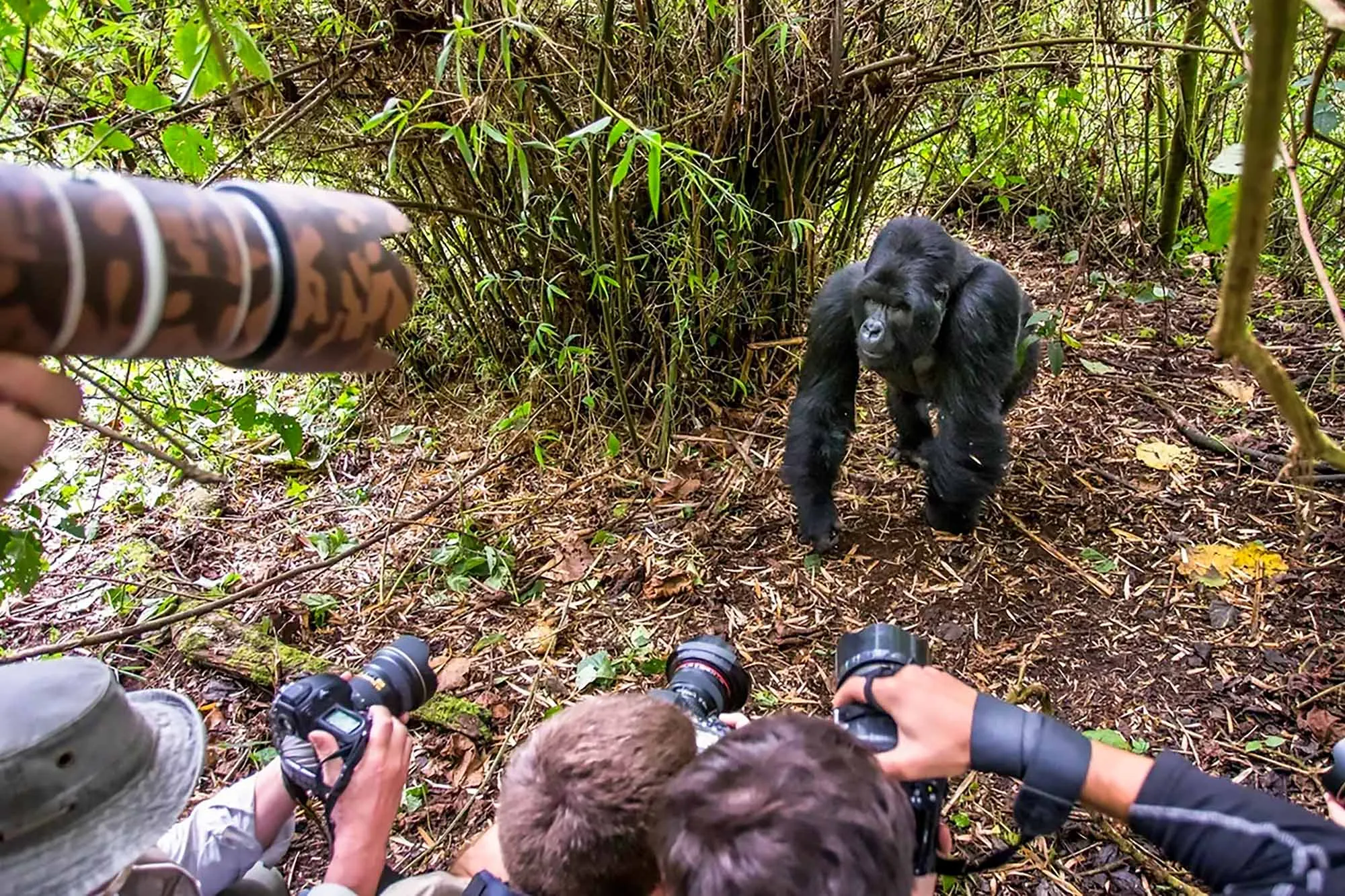
Gorilla trekking photography tips
Capturing unforgettable images during a gorilla trekking adventure requires more than carrying a good camera. Successful gorilla trekking photography depends on preparation, patience, understanding animal behavior, and knowing how to react quickly when unique moments happen. Unlike traditional wildlife photography where photographers may wait for hours from a fixed location, gorilla trekking provides a limited encounter period where every decision matters.
Before entering the forest, photographers should understand the environment, prepare their equipment, and develop a photography approach that balances creativity with respect for the animals. Learning professional mountain gorilla photography techniques before the trek increases the chances of capturing sharp, meaningful, and memorable images.
Prepare Your Camera Before Entering the Forest
One of the biggest mistakes photographers make during gorilla trekking is waiting until they reach the gorilla family before adjusting their equipment. The rainforest environment requires preparation because lighting conditions, terrain, and weather can change quickly.
Before beginning the trek, check your camera battery level, memory card capacity, autofocus settings, and exposure settings. Having your camera ready allows you to focus on observing gorilla behavior instead of making technical adjustments during important moments.
Photographers should also protect their equipment before entering the forest. Rainforest conditions can include humidity, rainfall, mud, and vegetation that may affect cameras and lenses. Carrying proper protection ensures that equipment remains functional throughout the experience.
Set Your Camera Settings Before the Gorilla Encounter
Once you locate a gorilla family, you may have limited time to adjust your camera. Setting your preferred photography mode before reaching the animals allows you to respond faster when opportunities appear.
Many wildlife photographers prefer aperture priority or manual mode because these options provide better control over exposure. Selecting suitable ISO, shutter speed, and aperture settings before the encounter helps create sharper images.
The forest environment can change from bright openings to dark areas beneath trees. Photographers should regularly monitor their settings and make adjustments when lighting conditions change.
Observe Gorillas Before Taking Photographs
One of the most important gorilla trekking photography tips is to observe before photographing. Spending a few moments watching the gorillas helps photographers understand their behavior and anticipate interesting moments.
Instead of immediately taking hundreds of photographs, study how the gorillas move, interact, feed, and communicate. This approach allows you to capture authentic moments rather than random snapshots.
Wildlife photography is about storytelling. A photograph showing a meaningful behavior, expression, or interaction often creates a stronger memory than a simple portrait.
Capture Gorilla Behavior Instead of Only Poses
The most powerful wildlife photographs usually show natural behavior. During a gorilla trekking experience, photographers should look for moments that reveal personality and social relationships.
Important behaviors to capture include feeding, grooming, resting, playing, climbing, and interactions between family members. These moments demonstrate the intelligence, emotions, and social structure of mountain gorillas.
Photographers visiting different destinations can prepare according to the environment by understanding different gorilla trekking destinations and how each location provides unique photography opportunities.
Use Burst Mode for Moving Gorillas
Gorillas can move unexpectedly, making burst shooting a useful technique for wildlife photographers. Continuous shooting allows cameras to capture multiple frames during important moments.
Burst mode is especially helpful when photographing movement such as walking, climbing, feeding, or interactions between gorillas. Instead of relying on a single image, photographers increase their chances of capturing the perfect expression or action.
However, photographers should avoid relying only on continuous shooting. Thoughtful composition and timing remain more important than taking large numbers of unnecessary images.
Respect Distance and Photography Guidelines
Responsible gorilla photography always begins with respect for wildlife. Photographers must follow instructions from guides and maintain appropriate behavior around gorillas.
The goal of wildlife photography is to document and appreciate these animals without causing disturbance. Avoid sudden movements, excessive noise, or actions that could make gorillas uncomfortable.
A responsible approach protects both the animals and the quality of the photography experience. Respectful photographers often capture more natural images because the gorillas remain relaxed.
Choose the Right Position During the Encounter
Your position can significantly influence the quality of your photographs. Moving carefully and selecting a good angle helps create stronger compositions.
Look for opportunities where vegetation does not block the subject and where natural light improves the image. A small change in position can transform an ordinary photograph into a powerful wildlife portrait.
Photographers should avoid focusing only on the closest gorilla. Sometimes a wider scene showing family interaction or the rainforest environment creates a more meaningful photograph.
Photograph Gorilla Faces and Expressions
The face of a gorilla contains incredible detail and emotion. Capturing eye contact, facial expressions, and unique features creates memorable wildlife portraits.
When photographing faces, ensure the eyes are sharp and properly focused. The eyes are often the strongest element in wildlife photography because they create an emotional connection with viewers.
Using suitable lenses and autofocus techniques makes it easier to capture detailed portraits even when gorillas are surrounded by dense vegetation.
Manage Rainforest Weather Conditions
Weather is one of the biggest challenges during gorilla trekking photography. Rain, moisture, and changing light conditions require preparation and flexibility.
Protect cameras with waterproof covers and keep cleaning materials available for removing moisture from lenses. A small amount of preparation prevents equipment problems during important moments.
Travelers should also prepare suitable clothing and equipment protection by reviewing a complete gorilla trekking packing guide before starting their journey.
Avoid Common Photography Mistakes During Gorilla Trekking
Many beginners make mistakes that reduce the quality of their images. Common problems include incorrect camera settings, poor composition, insufficient preparation, and focusing only on quantity rather than quality.
Another mistake is spending too much time looking through the camera instead of experiencing the encounter. Great wildlife photography requires balance between capturing images and appreciating the moment.
Photographers should also avoid constantly changing lenses in the forest because this increases the risk of exposing equipment to moisture, dust, and environmental conditions.
Take Wide Shots to Tell the Complete Story
While close-up portraits are impressive, wide photographs are equally important because they show the environment where gorillas live.
Environmental photographs capture the relationship between mountain gorillas and the rainforest ecosystem. These images help viewers understand the importance of conservation and habitat protection.
Including the surrounding landscape also creates variety in your photography collection and makes your travel story more complete.
Plan Your Photography Around the Trekking Experience
Successful gorilla trekking photography starts before entering the forest. Understanding the trekking route, destination conditions, and expected experience helps photographers prepare correctly.
Travelers exploring options such as gorilla trekking in Rwanda and Uganda should consider how different environments may influence photography conditions.
Preparation allows photographers to select suitable equipment, clothing, and camera settings based on the expected terrain and weather.
Balance Photography With Enjoying the Experience
The purpose of gorilla trekking photography is to preserve memories, but photographers should also enjoy the actual encounter. Spending the entire experience looking through a camera can reduce appreciation of the rare opportunity.
Take time to observe the gorillas directly, appreciate their behavior, and capture only the moments that truly matter. The strongest photographs often come from photographers who are patient, present, and connected with the experience.
Final Photography Tips for a Successful Gorilla Trek
Great gorilla photographs combine preparation, technical skills, creativity, and respect for wildlife. Before the trek, practice camera settings, prepare equipment, and understand how to work in rainforest conditions.
By applying these gorilla trekking photography tips, photographers can capture powerful images that showcase the beauty, intelligence, and importance of mountain gorillas while preserving memories of an extraordinary wildlife adventure.
For travelers planning a complete safari experience, additional preparation information is available through Uganda Rwanda safaris resources covering gorilla trekking and wildlife adventures.
Gorilla Trekking Photography Tips for Beginners

Beginner gorilla photography tips
Gorilla trekking photography can be one of the most rewarding wildlife photography experiences in the world, but beginners need the right preparation, techniques, and mindset to capture memorable images. Photographing mountain gorillas is different from ordinary travel photography because encounters happen in dense rainforest environments where lighting changes quickly and opportunities can appear for only a short time.
A beginner photographer does not need the most expensive equipment to create meaningful images. Understanding camera basics, preparing properly, and learning how to observe gorilla behavior are more important than carrying excessive gear. These mountain gorilla photography techniques help first-time visitors capture images that tell the story of their encounter.
Understand What Makes Gorilla Photography Different
Before starting your trek, it is important to understand that gorilla photography is a combination of wildlife photography, adventure photography, and conservation storytelling. Unlike photographing animals in a zoo or controlled environment, gorillas are encountered in their natural rainforest habitat.
The forest creates unique challenges because light levels can be low, vegetation can block views, and gorillas may move unexpectedly. Beginners should prepare for changing conditions and learn to adjust camera settings quickly.
The goal should not only be taking many photographs but capturing meaningful moments that show the personality, behavior, and environment of these incredible animals.
Choose Simple and Reliable Photography Equipment
Many beginners believe they need professional-level equipment before attempting gorilla trekking photography. While high-quality cameras can improve results, a simple and reliable setup is often enough when combined with good photography skills.
A camera with good autofocus, strong low-light performance, and the ability to use interchangeable lenses can provide excellent results. Mirrorless and DSLR cameras are both suitable choices depending on personal preference and experience.
Beginners should focus on learning their equipment before the trek. Knowing how to change settings, adjust focus modes, and manage exposure will help capture important moments during the gorilla encounter.
Learn Basic Camera Settings Before Your Trek
Understanding basic camera settings is one of the most important steps for beginner gorilla photographers. Automatic settings may not always perform well in rainforest conditions because the environment contains shadows, bright areas, and changing light.
Start by learning how aperture affects background blur and brightness. A wider aperture can help capture more light in darker forest areas while creating attractive portraits.
Learn how shutter speed affects movement. Gorillas can walk, climb, feed, and interact quickly, so using appropriate shutter speeds helps create sharper images.
Understanding ISO settings is also important because rainforest photography often requires higher ISO values to compensate for limited natural light.
Practice Wildlife Photography Before Traveling
One of the best ways to improve before a gorilla trek is practicing with other subjects. Photograph pets, birds, people, or outdoor scenes to become comfortable with your camera.
Practice changing settings without looking at the camera controls. During a gorilla encounter, photographers may need to react quickly, and familiarity with equipment saves valuable time.
Practicing composition techniques such as framing, focusing on eyes, and using different angles will improve your confidence before entering the rainforest.
Pack the Right Photography Accessories
Beginners should carefully select accessories that improve convenience without creating unnecessary weight. Gorilla trekking involves hiking through challenging terrain, so lightweight equipment is usually better.
Important accessories include extra batteries, additional memory cards, lens cleaning materials, and protection from rain or moisture. These items help prevent common problems during the trek.
A comfortable camera bag is also important because photographers may carry equipment for several hours. Protecting your gear while keeping it accessible makes photography easier.
Before your journey, reviewing a complete gorilla trekking packing guide can help you prepare clothing and accessories suitable for rainforest conditions.
Do Not Focus Only on Taking Photos
A common mistake among beginner photographers is spending the entire gorilla encounter looking through the camera. While capturing images is important, the experience itself should also be enjoyed.
Take time to observe the gorillas directly. Watch their movements, relationships, and behaviors before photographing. This observation helps you predict interesting moments and capture better images.
The strongest wildlife photographs usually come from patience and understanding rather than simply pressing the shutter repeatedly.
Capture Stories Instead of Random Pictures
Great gorilla photography tells a story. Instead of taking only close-up portraits, beginners should look for images that communicate emotion and behavior.
A photograph of a young gorilla playing, a family interacting, or a silverback observing its surroundings can create a stronger memory than a simple image of an animal looking at the camera.
Try to capture different types of photographs, including portraits, environmental images, and behavioral moments.
Use Composition Techniques for Better Images
Composition is what separates ordinary photographs from powerful wildlife images. Beginners should practice simple techniques such as keeping the subject well positioned, avoiding distracting backgrounds, and creating balance within the frame.
Photographing gorillas within their natural environment creates more meaningful images. Showing trees, vegetation, and rainforest surroundings helps viewers understand where the animals live.
The environment is part of the story, so do not always zoom in tightly on the gorilla.
Be Patient During the Gorilla Encounter
Patience is one of the most valuable skills in wildlife photography. Gorillas may not always be positioned perfectly when you first arrive, but waiting calmly often creates better opportunities.
Observe how the animals move and look for moments when they interact naturally. The best photographs often happen after spending time watching rather than immediately taking pictures.
A patient photographer is more likely to capture authentic behaviors and unique expressions.
Protect Your Camera in Rainforest Conditions
Rainforest weather can change quickly, and beginners should prepare for moisture, rain, and humidity. Protecting your camera helps avoid equipment problems and allows you to continue photographing.
Use rain covers, waterproof bags, and lens cloths to protect your equipment. Avoid unnecessary lens changes inside the forest because moisture can affect camera performance.
Travelers combining photography with broader adventures can also explore gorilla trekking adventures that include preparation information for different environments.
Learn From Professional Gorilla Photographers
Studying professional wildlife photography can help beginners understand how experienced photographers approach lighting, composition, and animal behavior.
Professional photographers often focus on storytelling rather than simply collecting images. They look for emotion, interaction, and unique moments that represent the complete experience.
Reading photography guides and studying examples before traveling can help beginners develop better expectations and techniques.
Beginner Mistakes to Avoid During Gorilla Photography
New photographers often make mistakes that reduce the quality of their images. These include forgetting to check camera settings, running out of battery power, using unsuitable lenses, and ignoring composition.
Another common mistake is trying to photograph everything instead of choosing meaningful moments. Quality is more important than quantity when documenting a rare wildlife encounter.
Beginners should also avoid disturbing the animals or ignoring instructions from guides. Responsible photography protects gorillas and creates a better experience for everyone.
Prepare Mentally for Your First Gorilla Photography Experience
A successful first gorilla photography experience requires realistic expectations. The forest environment is unpredictable, and not every photograph will be perfect.
Focus on enjoying the encounter, learning from the experience, and improving your photography skills. Every trek provides opportunities to create unique images.
Understanding the complete journey through resources about gorilla trekking destinations can help beginners prepare for different environments and photography conditions.
Final Advice for Beginner Gorilla Photographers
The best gorilla trekking photography tips for beginners focus on preparation, simplicity, patience, and respect. A good camera helps, but understanding light, composition, and animal behavior creates truly memorable photographs.
Before your adventure, practice your skills, prepare your equipment, and learn how to work in rainforest conditions. With the right approach, even first-time photographers can capture powerful images of mountain gorillas in their natural habitat.
For travelers planning their complete wildlife journey, exploring Uganda Rwanda safari experiences can provide additional inspiration for combining gorilla photography with other wildlife adventures.
Smartphone Gorilla Trekking Photography Tips

Smartphone gorilla photography tips
Smartphones have transformed travel photography by allowing more people to capture unforgettable moments without carrying large camera systems. While professional cameras still provide advantages in image quality, modern smartphones can capture impressive gorilla trekking photographs when used correctly. With the right techniques, preparation, and understanding of smartphone limitations, beginners can create meaningful images during their mountain gorilla encounter.
Successful smartphone gorilla photography depends on using the available features effectively, understanding lighting conditions, and focusing on composition rather than relying only on advanced equipment. A well-planned approach allows travelers to document their experience while enjoying the unique opportunity of seeing mountain gorillas in their natural habitat.
Can You Photograph Gorillas Using a Smartphone?
Yes, smartphones can be used for gorilla trekking photography, especially when conditions are favorable and the photographer understands how to maximize the device’s capabilities. Modern smartphones have improved cameras, advanced image processing, optical stabilization, and multiple camera lenses that can help capture high-quality travel images.
However, smartphone users should understand that phones have limitations compared to professional cameras. Limited optical zoom, smaller sensors, and reduced performance in very low light can make rainforest photography more challenging.
The goal should not be to compete with professional wildlife photographers but to capture meaningful memories while experiencing the gorilla encounter responsibly.
Understand Smartphone Camera Limitations
Before entering the forest, smartphone photographers should understand how their device performs in different conditions. Dense rainforest environments often create low-light situations where phone cameras may struggle.
The thick vegetation found in gorilla habitats can reduce available light, making it important to keep the phone steady and use available lighting effectively. Avoid unnecessary digital zoom because it can reduce image quality.
Moving closer is usually better than digitally enlarging an image. However, photographers must always respect wildlife guidelines and maintain appropriate distance from gorillas.
Clean Your Smartphone Camera Lens Before Trekking
One simple but effective smartphone photography tip is cleaning the camera lens before entering the forest. Fingerprints, dust, and moisture can reduce image sharpness and create blurry photographs.
Because smartphones are frequently handled during travel, the camera lens can easily collect dirt. Carrying a small microfiber cloth helps maintain clear images throughout the trekking experience.
A clean lens improves image quality without requiring any technical photography knowledge.
Use the Right Smartphone Camera Mode
Most modern smartphones include different camera modes designed for various situations. Understanding these features can improve results during gorilla trekking.
Portrait mode can help create attractive images by separating the gorilla from the background, while night or low-light modes may improve photographs in darker forest conditions.
Some smartphones also provide professional or manual controls that allow users to adjust exposure, focus, and brightness. Learning these features before traveling helps photographers react faster during the encounter.
Avoid Using Excessive Digital Zoom
Digital zoom is one of the most common mistakes made by smartphone photographers. Unlike optical zoom, digital zoom enlarges the image by reducing quality.
When photographing gorillas, try to capture images using the phone’s optical lens options where available. If the subject appears distant, focus on creating environmental photographs that include the rainforest surroundings.
Wide environmental images often tell a stronger story than low-quality zoomed photographs.
Improve Smartphone Photography With Good Composition
Composition remains important regardless of the camera being used. A smartphone photograph can become much more powerful when basic composition principles are applied.
Use techniques such as the rule of thirds, balanced framing, and including environmental details. Showing the gorilla within the rainforest creates a stronger connection between the animal and its habitat.
Avoid placing every subject directly in the center of the frame. Experiment with different angles and perspectives to create more interesting images.
Capture Gorilla Behavior With Your Phone
The most memorable smartphone gorilla photographs are usually those that capture behavior rather than simple poses. Watch for moments of interaction, feeding, movement, and family relationships.
A photograph showing a young gorilla interacting with its family can communicate more emotion than a basic portrait.
Patience is especially important when using a smartphone because reaction speed and preparation can determine whether important moments are captured successfully.
Use Burst Mode for Moving Gorillas
Many smartphones include burst photography features that allow multiple images to be captured quickly. This is useful when gorillas are moving or interacting.
Burst mode increases the chance of capturing a sharp image during unpredictable moments. After the encounter, select the strongest photographs and remove unnecessary duplicates.
However, avoid spending the entire experience taking continuous photographs. Observation and appreciation of the encounter should remain the priority.
Protect Your Smartphone in Rainforest Conditions
Rainforest environments can expose smartphones to moisture, rain, humidity, and accidental drops. Protecting your phone ensures that it remains functional throughout the trek.
A waterproof phone pouch or protective case can help prevent damage caused by changing weather conditions. Keeping the phone secure also reduces the risk of losing it during challenging hikes.
Travelers should also prepare suitable clothing and equipment protection by reviewing a detailed gorilla trekking packing guide before starting their adventure.
Use Smartphone Accessories for Better Results
Small smartphone accessories can improve photography convenience during gorilla trekking. Useful additions may include portable power banks, protective cases, lens cleaning cloths, and phone straps.
Battery life is especially important because photography, video recording, and navigation applications can quickly reduce smartphone power.
Carrying backup power ensures that you do not miss important moments during your gorilla encounter.
Record Videos During Your Gorilla Encounter
Smartphones are excellent tools for recording short wildlife videos. Video allows travelers to capture movement, sounds, and behaviors that photographs cannot fully communicate.
Short clips of gorillas walking, feeding, or interacting with family members can become valuable memories of the experience.
When recording videos, avoid excessive movement and focus on stable footage. Short, well-composed clips are usually more enjoyable than long recordings without a clear subject.
Balance Smartphone Photography With Wildlife Respect
Using a smartphone does not change the responsibility of respecting wildlife. Photographers should always follow instructions from guides and avoid actions that disturb gorillas.
The best photographs come from calm observation. Sudden movements, unnecessary noise, or focusing too much on getting the perfect image can affect the quality of the encounter.
Responsible photography helps protect mountain gorillas and supports sustainable tourism experiences.
Prepare Your Smartphone Before the Trek
Preparation improves smartphone photography results. Before starting your trek, charge your phone fully, clear storage space, adjust camera settings, and test important features.
Downloading offline travel information and reducing unnecessary applications running in the background can help preserve battery life.
Travelers comparing different destinations can also research gorilla trekking destinations to understand different environments and photography conditions.
Smartphone Photography Mistakes to Avoid
Beginner smartphone photographers often make mistakes that reduce image quality. These include using excessive zoom, forgetting to clean the lens, taking only close-up images, and ignoring composition.
Another mistake is focusing entirely on photography while missing the actual experience. The purpose of smartphone photography is to preserve memories, not replace the adventure itself.
Taking fewer but more meaningful photographs usually creates a better collection of memories.
Combining Smartphone Photography With a Complete Safari Experience
Gorilla trekking is more than a photography opportunity. It is a complete wildlife adventure involving rainforest exploration, conservation, and cultural experiences.
Smartphone photographers can enhance their journey by understanding the wider safari experience and preparing for different environments. Resources about gorilla trekking adventures can help travelers plan better.
A smartphone may not replace professional camera equipment, but with patience, creativity, and preparation, it can capture powerful images that preserve one of the world’s most unforgettable wildlife encounters.
Final Smartphone Gorilla Photography Tips
The best smartphone gorilla trekking photography tips focus on preparation, creativity, and responsible wildlife photography. Clean your lens, understand your camera features, avoid excessive zoom, and focus on capturing meaningful moments.
With the right approach, smartphones can become valuable tools for documenting mountain gorilla encounters while allowing travelers to enjoy the experience fully.
For travelers planning a complete wildlife journey, exploring Uganda Rwanda safari experiences provides additional information for combining gorilla trekking with other unforgettable adventures.
Professional Gorilla Wildlife Photography Techniques

Professional gorilla photography techniques
Professional gorilla wildlife photography requires more than advanced camera equipment. It combines technical camera knowledge, patience, understanding of animal behavior, and the ability to adapt quickly to changing rainforest conditions. Capturing powerful mountain gorilla images requires photographers to think beyond simple documentation and focus on creating photographs that communicate emotion, environment, and conservation importance.
Experienced wildlife photographers prepare carefully before entering the forest. They understand how light behaves in rainforest environments, how gorillas move, and how to anticipate moments before they happen. Learning advanced gorilla photography techniques helps photographers improve their ability to capture professional-quality wildlife images.
Understanding Professional Wildlife Photography Approach
Professional gorilla photography is based on observation, patience, and storytelling. Experienced photographers do not simply take photographs of animals; they create visual narratives that show behavior, relationships, and the connection between gorillas and their habitat.
A professional approach begins before entering the rainforest. Photographers research the environment, prepare suitable equipment, and understand possible challenges they may encounter during the trek.
The goal is to capture authentic moments while respecting wildlife and following responsible photography practices.
Mastering Manual Camera Settings for Gorilla Photography
Professional photographers often use manual camera settings because they provide complete control over exposure. Rainforest environments can confuse automatic camera systems because of changing shadows, bright openings, and uneven lighting.
Manual control allows photographers to adjust aperture, shutter speed, and ISO according to the situation. This flexibility is especially important when photographing gorillas moving between different areas of the forest.
Experienced photographers regularly monitor exposure and make quick adjustments rather than relying on fixed settings throughout the encounter.
Using Advanced Autofocus Techniques
Autofocus performance is critical in professional gorilla wildlife photography. Gorillas can move unexpectedly, and missing focus during an important moment can result in losing a once-in-a-lifetime image.
Professional photographers understand how to use continuous autofocus, tracking modes, and subject detection features available on modern cameras.
Focusing on the gorilla’s eyes is especially important because sharp eyes create stronger emotional connections between the subject and viewer.
Using the Right Lens Strategy
Professional photographers carefully select lenses based on the type of images they want to create. A combination of flexibility, image quality, and portability is important because gorilla trekking involves hiking through challenging terrain.
Telephoto lenses allow photographers to capture detailed portraits while maintaining respectful distance. Zoom lenses provide flexibility when gorillas change position or move through vegetation.
Wide-angle lenses are valuable for environmental photography because they show the relationship between gorillas and their rainforest surroundings.
Capturing Gorilla Behavior Like a Professional
The difference between ordinary wildlife photography and professional wildlife photography is often the ability to capture behavior. Experienced photographers wait for meaningful interactions instead of photographing randomly.
Important behaviors include feeding, grooming, communication, movement, and family interactions. These moments reveal the intelligence and social structure of mountain gorillas.
A professional photographer studies body language and predicts possible actions, increasing the chance of capturing powerful images.
Creating Storytelling Wildlife Images
Professional gorilla photographs should tell a story. A single image should communicate something about the animal, the environment, or the experience of encountering gorillas in the wild.
Environmental portraits, family interactions, and behavioral photographs often create stronger stories than isolated close-up images.
Showing the rainforest environment helps viewers understand the importance of protecting gorilla habitats and supporting conservation efforts.
Advanced Composition Techniques for Gorilla Photography
Professional photographers use composition techniques to guide the viewer’s attention and create visually balanced images. Techniques such as leading lines, natural framing, negative space, and careful subject placement improve the quality of wildlife photographs.
The rainforest provides many natural composition opportunities. Leaves, branches, mist, and vegetation can be used creatively to enhance images.
Experienced photographers also consider background elements before taking photographs because distracting objects can reduce the impact of an otherwise excellent image.
Working With Difficult Rainforest Lighting
Rainforest lighting is one of the greatest challenges for professional gorilla photographers. Thick vegetation creates deep shadows, while sunlight filtering through trees can create strong contrasts.
Professional photographers learn to work with available light rather than depending on perfect conditions. They adjust camera settings, position themselves carefully, and use natural light creatively.
Understanding lighting allows photographers to create dramatic images that represent the true atmosphere of the rainforest.
Professional Low-Light Photography Techniques
Low-light photography skills are essential because gorillas are often found beneath dense forest canopies. Professional photographers understand how to balance ISO, aperture, and shutter speed to maintain image quality.
Modern cameras provide excellent high ISO performance, allowing photographers to capture sharp images even when light levels are limited.
Noise reduction techniques during editing can further improve images captured in challenging conditions.
Using Burst Photography Effectively
Professional photographers use burst shooting strategically rather than continuously. The purpose is to capture important moments during movement while avoiding unnecessary photographs.
Burst mode is useful when gorillas are walking, interacting, feeding, or displaying interesting behaviors.
After the encounter, professional photographers carefully select the strongest images instead of keeping large numbers of similar photographs.
Posture and Positioning During Gorilla Photography
Professional photographers understand that physical positioning affects image quality. Choosing the correct angle, distance, and viewpoint can transform an ordinary photograph into a powerful wildlife image.
Photographers should move carefully, respect guide instructions, and avoid disturbing gorillas while searching for better compositions.
Small changes in position can improve background, lighting, and the overall story of an image.
Protecting Professional Photography Equipment
Professional camera equipment requires protection in rainforest environments. Moisture, rain, and humidity can affect cameras and lenses if proper precautions are not taken.
Experienced photographers carry protective covers, cleaning equipment, and suitable camera bags designed for outdoor conditions.
Travelers preparing for professional-level photography should also review a complete gorilla trekking equipment guide to understand important preparation requirements.
Professional Wildlife Photography Ethics
Professional gorilla photographers understand that wildlife protection comes before photography. The purpose of capturing images is to promote appreciation and conservation rather than disturb animals.
Responsible photographers follow all trekking guidelines, respect viewing limits, and avoid actions that create stress for gorillas.
Ethical photography creates more authentic images because animals behave naturally when they are not disturbed.
Preparing for Different Gorilla Trekking Environments
Professional photographers prepare differently depending on the destination and environment. Forest conditions, weather patterns, terrain, and trekking difficulty can influence equipment choices and photography strategies.
Understanding the differences between destinations helps photographers plan appropriate gear and expectations. Resources about gorilla trekking destinations can help photographers prepare for different experiences.
Professional Editing Techniques for Gorilla Images
Photography does not end when the trek finishes. Professional photographers use editing techniques to enhance images while maintaining natural appearance.
Common adjustments include exposure correction, color balance, contrast improvement, sharpening, and noise reduction.
The purpose of editing is to improve the photograph while preserving the authenticity of the wildlife encounter.
Combining Gorilla Photography With Complete Safari Experiences
Many professional wildlife photographers combine gorilla trekking with broader safari experiences to capture a wider range of wildlife and landscapes.
Planning a complete adventure allows photographers to practice different photography styles, from rainforest wildlife photography to landscape and cultural photography.
Travelers exploring gorilla trekking adventures can prepare for different environments and create a more complete photography collection.
Final Professional Gorilla Photography Advice
Professional gorilla wildlife photography is built on preparation, technical skill, patience, and respect for nature. The best photographers combine advanced camera knowledge with careful observation and storytelling ability.
A successful gorilla photograph is not only technically sharp; it captures emotion, behavior, and the incredible relationship between mountain gorillas and their rainforest home.
For photographers planning their journey, exploring Uganda Rwanda safari experiences provides additional information for creating unforgettable wildlife photography adventures.
Photographing Gorillas in Uganda

Photographing gorillas in Uganda
Uganda is one of the world’s most remarkable destinations for gorilla trekking photography because it offers the opportunity to photograph mountain gorillas in their natural rainforest environment. The combination of ancient forests, misty landscapes, diverse vegetation, and unique gorilla behaviors creates exceptional opportunities for wildlife photographers.
Successful gorilla photography in Uganda requires preparation, patience, and an understanding of the conditions found in Uganda’s gorilla habitats. Photographers must be ready for challenging terrain, changing weather, and limited time with gorilla families.
Why Uganda Is Excellent for Gorilla Photography
Uganda provides some of the most rewarding mountain gorilla photography experiences because of its natural landscapes and diverse trekking environments. The country’s forests create dramatic backgrounds that add depth and emotion to wildlife photographs.
Unlike traditional wildlife photography where animals may be observed from vehicles, gorilla trekking in Uganda involves entering the rainforest and experiencing gorillas within their natural habitat.
This close connection with nature allows photographers to capture more intimate images that show the personality, behavior, and social structure of mountain gorillas.
Best Locations for Gorilla Photography in Uganda
Uganda’s main gorilla photography destinations are located in protected rainforest areas where habituated gorilla families can be visited by travelers following conservation guidelines.
Each location offers different photography opportunities depending on terrain, vegetation, weather, and gorilla family movements.
Photographing Gorillas in Bwindi Impenetrable National Park
Bwindi Impenetrable National Park is one of the most famous destinations for mountain gorilla photography. The ancient rainforest provides a dramatic setting filled with thick vegetation, towering trees, and natural forest atmosphere.
Photographers visiting Bwindi should be prepared for challenging hiking conditions because gorilla families may be located in different areas of the forest.
The dense vegetation can create photography challenges, but it also provides opportunities for unique images showing gorillas surrounded by their natural environment.
Capturing the Rainforest Environment in Uganda
Professional wildlife photography is not only about photographing the animal. The surrounding environment plays an important role in telling the complete story.
Uganda’s rainforest landscapes provide opportunities to capture environmental portraits showing gorillas among trees, plants, and natural forest scenery.
Including habitat details helps viewers understand where mountain gorillas live and why protecting these forests is important.
Best Camera Approach for Uganda Gorilla Photography
Photographers visiting Uganda should prepare equipment that performs well in rainforest conditions. Cameras with strong autofocus, good low-light performance, and flexible lenses are ideal for gorilla trekking.
A versatile zoom lens allows photographers to capture both close portraits and wider environmental photographs without changing equipment frequently.
Because trekking involves walking through forests and uneven terrain, lightweight equipment is often more practical than carrying excessive gear.
Managing Uganda’s Rainforest Lighting Conditions
One of the biggest challenges when photographing gorillas in Uganda is managing changing light. Forest canopies create areas of deep shadow while sunlight may create bright patches.
Photographers should understand how to adjust ISO, shutter speed, and aperture to maintain image quality in different conditions.
Using RAW photography can also help preserve details and provide more flexibility when editing images after the trek.
Capturing Gorilla Behavior in Uganda
Uganda’s gorilla trekking experiences provide opportunities to photograph natural behaviors that reveal the social lives of mountain gorillas.
Photographers should look beyond simple portraits and focus on moments such as feeding, grooming, resting, communication, and interactions between family members.
These behavioral photographs often become the most meaningful images because they tell stories about gorilla families.
Photography Tips for Bwindi Forest Conditions
The rainforest environment of Bwindi requires photographers to be prepared for moisture, changing temperatures, and difficult walking conditions.
Protecting cameras and lenses is essential because rain and humidity can affect equipment performance.
Travelers should prepare suitable clothing and equipment by reviewing a detailed gorilla trekking preparation guide before beginning their adventure.
Photographing Gorilla Faces and Expressions
The face of a mountain gorilla contains incredible details that create powerful wildlife portraits. Capturing expressions, eye contact, and natural behavior creates emotional photographs.
When photographing gorilla faces, focus accuracy is extremely important. Sharp eyes help create a stronger connection between the subject and viewer.
Professional photographers often wait patiently for natural expressions rather than photographing only when the gorilla looks directly at the camera.
Respecting Wildlife During Uganda Gorilla Photography
Responsible photography is an important part of gorilla conservation. Photographers must always follow instructions from guides and avoid actions that disturb gorillas.
The best wildlife images are created when animals behave naturally. Remaining calm and respectful allows photographers to capture authentic moments.
Uganda’s conservation efforts depend on responsible tourism practices that protect mountain gorillas and their rainforest habitats.
Preparing for Different Gorilla Trekking Experiences in Uganda
Gorilla trekking conditions can vary depending on location, weather, and terrain. Photographers should research their chosen destination before traveling.
Understanding trekking difficulty, forest conditions, and expected environments helps photographers choose appropriate equipment and prepare mentally for the experience.
Travelers comparing different options can explore information about Uganda and Rwanda gorilla trekking experiences before planning their photography adventure.
Common Mistakes When Photographing Gorillas in Uganda
Beginner photographers often make mistakes such as carrying too much equipment, ignoring weather protection, or focusing only on taking many photographs.
Another common mistake is forgetting to enjoy the encounter. Photography should enhance the experience rather than replace it.
The strongest photographs usually come from photographers who observe carefully and wait for meaningful moments.
Combining Gorilla Photography With Uganda Safari Experiences
Many photographers combine gorilla trekking with other wildlife adventures in Uganda. This provides opportunities to photograph different landscapes, animals, and cultural experiences.
A complete safari experience allows photographers to develop different skills, including rainforest photography, wildlife photography, and landscape photography.
Travelers interested in broader adventures can explore gorilla trekking and wildlife experiences when planning their journey.
Final Tips for Gorilla Photography in Uganda
Photographing gorillas in Uganda requires preparation, patience, and respect for wildlife. The combination of technical photography skills and careful observation allows photographers to create unforgettable images.
The most successful gorilla photographers understand that every encounter is unique. They prepare their equipment, adapt to rainforest conditions, and focus on capturing authentic moments.
For travelers planning a complete wildlife adventure, exploring Uganda Rwanda safari opportunities can provide additional inspiration for combining gorilla photography with other memorable experiences.
Photographing Gorillas in Rwanda

Photographing gorillas in Rwanda
Rwanda is one of the most iconic destinations for gorilla trekking photography because of its accessibility, dramatic volcanic landscapes, and incredible opportunities to photograph mountain gorillas in their natural habitat. The mist-covered forests of Volcanoes National Park provide a unique environment where photographers can capture powerful wildlife images surrounded by the beauty of the Virunga Mountains.
Successful gorilla photography in Rwanda requires preparation, patience, and an understanding of the rainforest environment. Photographers must adapt to changing light, dense vegetation, and unpredictable gorilla movements while respecting conservation guidelines.
Why Rwanda Is a Great Destination for Gorilla Photography
Rwanda offers one of the most accessible mountain gorilla photography experiences in Africa. Volcanoes National Park is located close to Kigali, making it easier for travelers with limited time to combine city travel with a gorilla trekking adventure.
The landscape around Volcanoes National Park creates a dramatic background for wildlife photography. Misty mountains, bamboo forests, and volcanic landscapes add depth and atmosphere to photographs.
Unlike traditional wildlife photography from vehicles, gorilla trekking in Rwanda allows photographers to enter the rainforest and experience mountain gorillas within their natural environment.
Photographing Gorillas in Volcanoes National Park
Volcanoes National Park is Rwanda’s main destination for mountain gorilla trekking and photography. The park is located within the Virunga Mountain range and provides opportunities to photograph habituated gorilla families.
The forest environment presents unique photography conditions. Thick vegetation can create challenges, but it also provides opportunities for creative compositions that show gorillas surrounded by their natural habitat.
Photographers should prepare for changing terrain because reaching gorilla groups may involve hiking through forest paths, slopes, and areas with different lighting conditions.
Capturing Rwanda’s Volcano Landscape With Gorilla Photography
Professional wildlife photography combines animal portraits with environmental storytelling. Rwanda’s volcanic landscapes provide excellent opportunities to create images that show the connection between mountain gorillas and their ecosystem.
Including vegetation, mist, and forest surroundings helps create photographs that communicate the atmosphere of the gorilla habitat.
Wide-angle images can be especially powerful because they show both the gorilla and the dramatic environment where it lives.
Best Camera Equipment for Rwanda Gorilla Photography
Photographers visiting Rwanda should choose equipment that balances image quality with portability. Gorilla trekking involves hiking through forests, so carrying too much equipment can make the experience more difficult.
A camera with reliable autofocus, good low-light performance, and flexible lenses is ideal for photographing gorillas in Volcanoes National Park.
Zoom lenses are popular among wildlife photographers because they allow photographers to capture both close portraits and wider environmental images without changing lenses frequently.
Managing Rainforest Lighting in Rwanda
The rainforest environment of Volcanoes National Park creates challenging lighting conditions. Dense vegetation can reduce available light, while sunlight passing through trees can create strong contrasts.
Photographers should understand how to adjust ISO, shutter speed, and aperture to maintain image quality in changing conditions.
Using RAW photography provides greater flexibility when editing images captured in difficult lighting environments.
Capturing Gorilla Expressions and Portraits
One of the most rewarding parts of Rwanda gorilla photography is capturing facial expressions and unique personalities. Mountain gorillas have distinctive features that create powerful wildlife portraits.
Sharp focus on the eyes is important because eye contact creates emotional connections between the photograph and the viewer.
Professional photographers often wait patiently for natural expressions instead of photographing only when gorillas face directly toward the camera.
Photographing Gorilla Families and Social Behavior
Rwanda’s habituated gorilla families provide opportunities to photograph complex social behaviors. Capturing interactions between silverbacks, females, and young gorillas creates meaningful wildlife stories.
Important moments include feeding, grooming, resting, playing, and communication between family members.
Behavioral photography is often more valuable than simple portraits because it reveals the social lives and personalities of mountain gorillas.
Professional Photography Techniques in Volcanoes National Park
Professional photographers use careful observation and preparation to capture high-quality gorilla images. They study animal behavior, anticipate movement, and adjust camera settings quickly.
Techniques such as natural framing, environmental portraits, and careful subject placement help create stronger photographs.
Photographers should also avoid distractions in the background and use the rainforest environment creatively.
Preparing Photography Equipment for Rwanda’s Climate
Rwanda’s rainforest conditions require photographers to protect their equipment from moisture, rain, and humidity. Cameras and lenses should be protected throughout the trek.
Carrying rain covers, cleaning materials, extra batteries, and enough storage space helps prevent common photography problems.
Travelers preparing for their trek can also review a detailed gorilla trekking preparation guide to understand important equipment and clothing requirements.
Best Time for Gorilla Photography in Rwanda
Gorilla trekking in Rwanda is possible throughout the year, but weather conditions can influence photography experiences. Dry periods may provide easier hiking conditions, while wetter seasons can create beautiful misty rainforest scenes.
Each season offers different photography opportunities. Rain can create dramatic forest atmospheres, while clearer conditions may provide better visibility.
Photographers should prepare for changing weather regardless of travel dates because rainforest conditions can change quickly.
Responsible Gorilla Photography in Rwanda
Responsible photography is an essential part of gorilla conservation. Photographers should always follow instructions from guides and respect the animals’ natural behavior.
Avoiding disturbance allows gorillas to remain relaxed, creating more authentic photographs.
Ethical photography supports conservation by helping people appreciate mountain gorillas while protecting their natural environment.
Common Photography Mistakes During Rwanda Gorilla Trekking
Many beginner photographers make mistakes that affect image quality. Common problems include incorrect camera settings, poor preparation, and focusing only on taking many photographs.
Another mistake is ignoring the environment. The rainforest and volcanic landscape are important parts of the story and should be included in photographs.
Photographers should focus on meaningful images rather than simply collecting large numbers of photographs.
Combining Gorilla Photography With Rwanda Adventures
Many travelers combine gorilla photography with other experiences in Rwanda, including volcano hiking and cultural activities. This creates opportunities to photograph different landscapes and wildlife environments.
Understanding different activities helps photographers prepare appropriate equipment and expectations. Travelers can explore combined experiences through volcano hiking and gorilla trekking adventures.
A wider Rwanda safari experience allows photographers to capture a complete visual story beyond the gorilla encounter.
Planning Your Rwanda Gorilla Photography Adventure
Good planning improves photography results. Researching trekking conditions, preparing equipment, and understanding the destination helps photographers make the most of their experience.
Comparing different trekking options can also help travelers choose the experience that best matches their photography goals. Information about Rwanda and Uganda gorilla trekking options can assist with planning.
Final Tips for Photographing Gorillas in Rwanda
Photographing gorillas in Rwanda is a unique wildlife photography experience that combines technical skill, patience, and respect for nature. The best images come from photographers who understand their equipment, observe animal behavior, and appreciate the environment.
With proper preparation and responsible photography practices, visitors can create powerful images that preserve the memory of encountering mountain gorillas in Rwanda’s incredible rainforest habitat.
Travelers planning their complete safari journey can explore Uganda Rwanda safari experiences for additional wildlife adventure ideas.
Common Gorilla Photography Mistakes

Gorilla photography mistakes
Gorilla trekking photography is a once-in-a-lifetime opportunity, but many photographers make avoidable mistakes that reduce the quality of their images or affect their overall experience. Capturing beautiful mountain gorilla photographs requires preparation, patience, and an understanding of both photography techniques and wildlife behavior.
Many beginners focus only on camera equipment and forget that successful wildlife photography depends on planning, observation, and adapting to challenging rainforest conditions. Understanding common mistakes before your trek helps you avoid problems and capture more meaningful photographs during your encounter.
Learning from professional gorilla photography experiences can help travelers prepare better and improve their chances of creating memorable wildlife images.
Using the Wrong Camera Settings
One of the most common mistakes during gorilla trekking photography is entering the forest without understanding your camera settings. Rainforest environments often have low light, changing conditions, and unpredictable movement, making automatic settings unreliable.
Photographers who do not prepare their aperture, shutter speed, and ISO settings beforehand may miss important moments while trying to adjust their cameras.
Before the trek begins, practice using your camera and understand how to quickly change settings when lighting conditions change.
Carrying Too Much Photography Equipment
Many photographers assume that carrying more equipment automatically leads to better photographs. However, gorilla trekking involves hiking through forests, steep terrain, and challenging conditions where heavy equipment can become a burden.
A large camera bag may reduce comfort and make it harder to move quickly when gorillas change positions.
Professional photographers usually choose a practical setup with essential equipment that balances image quality, portability, and reliability.
Choosing the Wrong Lens for Gorilla Photography
Using an unsuitable lens can limit photography opportunities during a gorilla encounter. Some beginners carry lenses that are either too short for detailed portraits or too large for comfortable trekking.
A flexible zoom lens is often preferred because it allows photographers to capture different compositions without constantly changing equipment.
The right lens choice depends on personal photography goals, camera system, and the type of images you want to create.
Ignoring Rainforest Lighting Conditions
Rainforest lighting is one of the biggest challenges in gorilla photography. Dense vegetation creates shadows, while sunlight filtering through trees can produce uneven exposure.
A common mistake is assuming that the camera will automatically handle these conditions perfectly.
Photographers should learn how to adjust exposure settings and use available light creatively to produce natural-looking images.
Using Excessive Digital Zoom
Smartphone photographers and beginners using compact cameras often make the mistake of relying heavily on digital zoom. Digital zoom enlarges images electronically and usually reduces quality.
Instead of using excessive zoom, focus on composition and capturing the gorilla within its natural environment.
Environmental photographs often create stronger storytelling images than low-quality close-ups.
Taking Too Many Similar Photographs
Another common mistake is taking hundreds of almost identical photographs without considering quality. Wildlife photography is not about the number of images captured but the value of each photograph.
Professional photographers observe behavior and wait for meaningful moments rather than continuously pressing the shutter button.
After the trek, selecting the strongest images creates a better photography collection and preserves the most memorable moments.
Ignoring Composition Techniques
A technically sharp photograph can still be weak if composition is poor. Many beginners focus only on getting the gorilla into the frame and ignore background, positioning, and storytelling.
Good composition helps create balanced images that show both the animal and the environment.
Simple techniques such as the rule of thirds, natural framing, and careful positioning can significantly improve gorilla photographs.
Not Protecting Camera Equipment
Rainforest environments can be harsh on photography equipment. Humidity, rain, mud, and moisture can damage cameras and lenses if proper protection is ignored.
Some photographers make the mistake of assuming their equipment is waterproof when many cameras require additional protection.
Carrying rain covers, protective bags, and cleaning materials helps keep equipment safe throughout the trek.
Preparing correctly through a detailed gorilla trekking preparation guide helps travelers protect both personal items and photography equipment.
Forgetting Extra Batteries and Memory Cards
A photography mistake that can ruin an entire gorilla trekking experience is running out of battery power or storage space.
Wildlife encounters often involve taking multiple photographs and videos, which can quickly consume memory and battery resources.
Professional photographers always carry backup batteries and enough storage capacity to avoid missing important moments.
Changing Lenses Too Often in the Forest
Frequent lens changes during gorilla trekking can create several problems. Opening camera equipment in humid forest conditions increases the risk of moisture and dust entering the camera.
Changing lenses also takes valuable time that could be spent observing and photographing gorillas.
Using a versatile lens allows photographers to remain prepared while reducing unnecessary equipment handling.
Focusing Only on Close-Up Portraits
Close-up gorilla portraits are impressive, but focusing only on faces can limit the storytelling power of your photography.
The rainforest environment, family relationships, and natural behaviors are equally important parts of the experience.
Professional photographers combine portraits with environmental photographs to create a complete visual story.
Ignoring Gorilla Behavior
Some photographers concentrate so much on camera settings that they fail to observe gorilla behavior. Understanding animal movement helps predict moments worth capturing.
Watching feeding patterns, family interactions, and social behaviors allows photographers to create more meaningful images.
The best wildlife photographs usually come from patience and careful observation rather than technical equipment alone.
Disturbing Gorillas While Taking Photos
Responsible photography is essential during gorilla trekking. A major mistake is focusing on getting the perfect photograph while forgetting wildlife ethics.
Photographers should avoid sudden movements, unnecessary noise, or actions that may disturb gorillas.
Respecting guidelines protects the animals and allows photographers to capture more natural behaviors.
Failing to Prepare Physically for the Trek
Photography success begins before entering the forest. Some travelers underestimate the physical requirements of gorilla trekking and become too tired to focus on photography.
Hiking through rainforest environments can involve steep slopes, uneven paths, and long walking periods.
Proper preparation allows photographers to remain comfortable and alert during the gorilla encounter.
Not Researching the Destination
Every gorilla trekking destination offers different photography conditions. Failing to research the environment can lead to poor equipment choices and unrealistic expectations.
Understanding the forest, weather, terrain, and trekking experience helps photographers prepare effectively.
Travelers comparing different experiences can explore Uganda and Rwanda gorilla trekking options before choosing their destination.
Editing Photos Too Aggressively
Another common mistake happens after the trek during photo editing. Excessive adjustments can make wildlife images appear unnatural.
Professional editing should enhance photographs while preserving the authentic appearance of the gorillas and their environment.
Balanced adjustments to exposure, colors, contrast, and sharpness usually produce the best results.
Forgetting to Enjoy the Experience
Perhaps the biggest mistake is becoming so focused on photography that you forget to experience the encounter itself.
Gorilla trekking is a rare opportunity to observe one of the world’s most fascinating animals in the wild.
Photographs are valuable memories, but the experience of being near mountain gorillas is equally important.
Planning Without Considering the Full Safari Experience
Some photographers plan only for the gorilla encounter and ignore other opportunities available during their journey.
Combining gorilla trekking with other wildlife and cultural experiences can create a more complete photography adventure.
Travelers can explore additional activities through gorilla trekking adventure options when planning their safari.
Final Thoughts on Avoiding Gorilla Photography Mistakes
Avoiding common mistakes helps photographers create better images and enjoy a more rewarding gorilla trekking experience. Preparation, patience, responsible behavior, and technical knowledge are the foundations of successful wildlife photography.
The best gorilla photographs are created when photographers combine good equipment with careful observation and respect for the natural environment.
For travelers preparing their complete journey, exploring Uganda Rwanda safari experiences can provide additional planning information for wildlife photography adventures.
Gorilla Photography Equipment Guide

Gorilla photography equipment guide
Choosing the right photography equipment is one of the most important steps when preparing for a gorilla trekking adventure. The rainforest environment presents unique challenges including limited light, changing weather, dense vegetation, and unpredictable animal movement. Having suitable equipment allows photographers to capture high-quality images while remaining comfortable during the trek.
A successful gorilla photography setup does not necessarily require the most expensive gear. The best equipment is a balance between image quality, reliability, portability, and ease of use in challenging forest conditions.
Before traveling, photographers should understand their equipment and practice using it. Learning camera controls before entering the forest increases confidence and improves the chances of capturing important moments. A detailed gorilla photography guide can help travelers understand the techniques needed for successful wildlife photography.
Choosing the Best Camera for Gorilla Photography
The camera is the foundation of any gorilla photography setup. Modern DSLR and mirrorless cameras can both produce excellent results when used correctly.
A good gorilla photography camera should have reliable autofocus, strong performance in low light, good image quality at higher ISO settings, and a comfortable design for outdoor use.
Mirrorless cameras are increasingly popular among wildlife photographers because they are often lighter while providing advanced features. DSLR cameras remain popular because of their reliability and wide range of available lenses.
Camera Features That Matter Most
Not every camera feature is equally important for gorilla trekking photography. Photographers should focus on features that directly improve performance in rainforest environments.
Fast autofocus helps capture moving gorillas, while good low-light performance improves image quality under dense forest canopies.
Weather protection is also valuable because rainforest conditions can expose equipment to moisture, rain, and humidity.
Selecting the Right Lens for Gorilla Photography
The lens is one of the most important pieces of equipment for wildlife photography. The right lens determines how close, detailed, and creative your photographs can become.
A telephoto zoom lens is often preferred because it provides flexibility when gorillas move closer or farther away. It allows photographers to capture portraits, interactions, and environmental images without changing lenses frequently.
A wide-angle lens can also be useful for capturing gorillas within their rainforest environment and creating storytelling photographs.
Recommended Lens Range for Gorilla Trekking
Many professional wildlife photographers prefer versatile lenses that cover different situations. A medium telephoto zoom provides a practical balance between reach and portability.
Longer lenses can capture detailed portraits but may become difficult to carry during long forest hikes.
The ideal lens choice depends on the photographer’s style, camera system, and preference for portraits or environmental images.
Using Extra Batteries and Memory Cards
Battery and storage preparation are often overlooked but are essential for successful gorilla photography. A single trekking experience can involve taking many photographs and videos.
Cold, humidity, and heavy camera use can reduce battery performance. Carrying additional fully charged batteries prevents missing important moments.
Extra memory cards are equally important because high-resolution images and videos require significant storage space.
Camera Protection in Rainforest Conditions
Rainforest environments can be challenging for electronic equipment. Moisture, rain, mud, and humidity can affect camera performance if equipment is not protected properly.
A waterproof camera cover or protective bag helps protect equipment during unexpected weather changes.
Photographers should also carry lens cleaning materials because moisture and dust can reduce image quality.
Preparing suitable equipment and clothing through a complete gorilla trekking preparation guide helps protect photography gear throughout the adventure.
Camera Bags for Gorilla Trekking
The right camera bag improves comfort and protects equipment during hiking. A good photography bag should provide protection while allowing quick access to important gear.
Large professional bags may carry more equipment but can become uncomfortable during long treks.
Many experienced photographers prefer lightweight bags that carry essential equipment without adding unnecessary weight.
Using Tripods and Monopods During Gorilla Photography
Tripods and monopods can improve stability, but they are not always practical during gorilla trekking. Dense forests and limited movement areas may make large support equipment difficult to use.
Many photographers prefer handheld shooting because it provides greater flexibility when gorillas move.
Image stabilization features in modern cameras and lenses can also help reduce camera shake.
Smartphone Equipment for Gorilla Photography
Smartphones have become valuable photography tools for travelers who prefer lightweight equipment. Modern phones can capture impressive images when used correctly.
Useful smartphone accessories include protective cases, portable chargers, lens cleaning cloths, and waterproof protection.
Although smartphones have limitations compared to professional cameras, they are convenient and effective for documenting travel experiences.
Essential Photography Accessories
Small accessories can significantly improve the gorilla photography experience. These items help photographers solve common problems during trekking.
Important accessories include extra batteries, memory cards, lens cloths, rain covers, camera straps, and portable storage solutions.
Preparing these small items before traveling reduces stress and helps photographers focus on capturing meaningful images.
Cleaning and Maintaining Photography Equipment
Proper equipment maintenance is important before, during, and after gorilla trekking. Rainforest environments expose cameras and lenses to conditions that require careful handling.
Cleaning lenses regularly prevents blurry images caused by moisture or fingerprints.
After trekking, photographers should inspect equipment and allow cameras and accessories to dry properly.
Equipment Mistakes to Avoid
Many photographers make mistakes when selecting equipment for gorilla trekking. Carrying too much gear, choosing unsuitable lenses, or failing to protect equipment can reduce the quality of the experience.
The best setup is not always the largest one. Practical equipment that a photographer understands and can comfortably carry usually produces better results.
Preparing Equipment Before the Gorilla Trek
Preparation before entering the forest improves photography success. Photographers should charge batteries, format memory cards, test camera settings, and organize equipment before the trekking day.
Checking weather conditions and understanding the expected environment helps photographers make better equipment decisions.
Choosing Equipment Based on Destination
Different gorilla trekking destinations may require slightly different equipment approaches. Forest conditions, trekking difficulty, and weather patterns can influence photography preparation.
Travelers comparing different experiences can explore Uganda and Rwanda gorilla trekking options to understand how different environments may affect equipment choices.
Professional Gorilla Photography Setup
Professional wildlife photographers often use advanced cameras, multiple lenses, and specialized accessories, but the principles remain the same: reliability, preparation, and understanding the environment.
Professional equipment helps, but knowledge and experience are what create powerful wildlife images.
Balancing Equipment and Enjoyment
Photography equipment should improve the experience, not become a distraction. Carrying too much equipment can reduce enjoyment and make trekking more difficult.
A carefully selected photography kit allows travelers to capture memories while remaining focused on the incredible experience of observing mountain gorillas.
Combining Gorilla Photography With Safari Experiences
Many photographers combine gorilla trekking with broader wildlife adventures to capture different landscapes and animals.
A complete safari experience provides opportunities for rainforest photography, wildlife photography, landscape photography, and cultural photography.
Travelers can explore additional adventure options through gorilla trekking and volcano adventures when planning a photography journey.
Final Gorilla Photography Equipment Advice
The best gorilla photography equipment is the equipment that allows photographers to work confidently in challenging rainforest conditions. A reliable camera, suitable lens, protection accessories, and proper preparation create the foundation for successful wildlife photography.
Equipment is important, but patience, observation, and respect for gorillas remain the most valuable tools for creating unforgettable photographs.
Travelers planning their complete wildlife photography journey can explore Uganda Rwanda safari experiences for additional adventure planning information.
Gorilla Photography Composition Tips

Gorilla photography composition tips
Composition is one of the most important elements of successful gorilla trekking photography. A technically perfect image can still feel ordinary if the subject placement, background, lighting, and storytelling elements are not carefully considered. Good composition helps photographers create images that communicate emotion, environment, and the unique experience of seeing mountain gorillas in the wild.
When photographing gorillas, photographers must work quickly because encounters happen in natural environments where animals move freely. Understanding composition techniques before entering the forest allows photographers to make better decisions during the limited viewing time. Professional gorilla photography techniques focus not only on capturing the animal but also on telling the complete story of the encounter.
Understanding Composition in Gorilla Photography
Composition refers to how different elements are arranged within a photograph. In gorilla photography, composition determines how viewers connect with the subject and understand the environment where the image was created.
A strong composition balances the gorilla, rainforest surroundings, natural lighting, and other visual elements. Instead of simply placing the gorilla in the center of every image, photographers should consider how different positions create different emotions and stories.
The rainforest provides many natural composition opportunities, including trees, leaves, branches, mist, and vegetation that can enhance the final photograph.
Using the Rule of Thirds for Gorilla Images
The rule of thirds is one of the most widely used photography composition techniques. It involves dividing the image into nine sections and positioning important subjects along these lines or intersections.
When photographing gorillas, placing the animal slightly away from the center can create a more balanced and natural-looking image.
This technique is especially useful when including rainforest surroundings because it allows space for the environment while keeping the gorilla as the main subject.
Capturing Eye Contact and Facial Expressions
The eyes are one of the strongest elements in wildlife photography. A photograph showing a gorilla’s expression can create a powerful emotional connection with viewers.
Professional photographers often focus carefully on the eyes because sharp, expressive eyes make wildlife portraits more engaging.
Patience is important because the strongest expressions often appear during natural moments rather than when photographers try to force a pose.
Creating Environmental Gorilla Portraits
A common mistake in wildlife photography is focusing only on close-up portraits. While detailed images of gorilla faces are valuable, environmental portraits often tell a stronger story.
Environmental photography shows the relationship between gorillas and their rainforest habitat. Including trees, plants, and forest scenery helps viewers understand where these animals live.
A wide image showing a gorilla surrounded by its natural environment can sometimes be more powerful than a tightly cropped portrait.
Using Natural Frames in the Forest
The rainforest provides many opportunities to use natural framing techniques. Leaves, branches, and vegetation can surround the gorilla and guide the viewer’s attention toward the subject.
Natural frames add depth and create a feeling of being inside the forest with the animal.
Photographers should look carefully at their surroundings before pressing the shutter because small changes in position can significantly improve composition.
Managing Background Distractions
A distracting background can reduce the impact of an otherwise excellent gorilla photograph. Busy vegetation, bright areas, or unwanted objects may draw attention away from the main subject.
Professional photographers carefully consider what appears behind the gorilla before taking photographs.
Changing position slightly, adjusting the angle, or using a wider aperture can help create cleaner and more focused images.
Using Different Photography Angles
Changing the camera angle can completely transform a gorilla photograph. Shooting from different perspectives creates variety and allows photographers to capture unique images.
Eye-level photographs often create strong connections because they place viewers closer to the animal’s perspective.
Low-angle images can make gorillas appear powerful, while wider angles can emphasize the surrounding rainforest environment.
Capturing Gorilla Family Interactions
Some of the most memorable gorilla photographs are created by capturing interactions between family members. Social behaviors such as resting together, grooming, and caring for young gorillas create meaningful images.
Instead of photographing only individual animals, photographers should look for relationships and moments that tell a story.
These photographs provide insight into the social structure and behavior of mountain gorilla families.
Using Light Creatively in Gorilla Photography
Lighting plays a major role in photography composition. Rainforest environments often create soft, filtered light that can produce beautiful natural effects.
Photographers should avoid relying only on bright conditions. Shadows, mist, and soft forest light can create dramatic and emotional images.
Understanding how light interacts with the gorilla’s fur, surroundings, and background helps photographers create more professional results.
Creating Depth in Gorilla Photographs
Depth makes photographs appear more realistic and engaging. Photographers can create depth by including foreground elements, the gorilla as the main subject, and background scenery.
The rainforest naturally provides multiple layers through vegetation, trees, and changing distances.
Using these layers helps transform a simple animal photograph into a complete wildlife story.
Photographing During Rainy Conditions
Rainy conditions can create some of the most unique gorilla photographs. Raindrops, wet vegetation, and mist can add atmosphere and emotion to images.
Many photographers avoid rain, but experienced wildlife photographers understand that challenging weather can create special opportunities.
Proper equipment protection is important when photographing during wet conditions. A suitable preparation plan and equipment checklist can be found in this gorilla trekking preparation guide.
Balancing Gorilla and Habitat in the Frame
A strong wildlife photograph balances the animal with its environment. Showing only the gorilla may remove important context, while showing too much background may reduce the impact of the subject.
The best composition usually finds a balance where the gorilla remains the focus while the rainforest contributes to the story.
This approach creates images that communicate both wildlife beauty and conservation importance.
Avoiding Common Composition Mistakes
Many beginner photographers make composition mistakes such as placing subjects awkwardly, cutting off important features, or ignoring the background.
Another common mistake is taking every photograph from the same position. Changing perspectives and experimenting with different compositions creates more variety.
Reviewing photographs after practice sessions helps photographers identify weaknesses and improve before their gorilla trek.
Planning Composition Before the Gorilla Encounter
Preparation improves photography results. Before entering the forest, photographers should think about the types of images they want to create.
Understanding the destination, terrain, and possible conditions helps photographers make better decisions. Travelers comparing destinations can explore Uganda and Rwanda gorilla trekking experiences when planning their photography journey.
Combining Composition With Storytelling
The strongest gorilla photographs are not only visually attractive but also tell a story. Composition should help viewers understand the moment, the environment, and the importance of protecting mountain gorillas.
A photograph of a gorilla family in the rainforest communicates more than a simple animal portrait because it shows relationships and habitat.
Storytelling photography creates images that remain meaningful long after the journey ends.
Using Composition for Professional Gorilla Photography
Professional wildlife photographers combine technical skills with creative composition. They consider every element within the frame before capturing an image.
Good composition requires practice, observation, and patience. Even photographers using simple cameras can create powerful images by applying strong composition principles.
The camera is only a tool; creativity and understanding of the subject create memorable photographs.
Final Gorilla Photography Composition Advice
Great gorilla photography composition combines careful planning, observation, and creativity. Photographers should focus on capturing authentic moments while considering the environment, lighting, and storytelling elements within each image.
By mastering composition techniques, photographers can transform ordinary gorilla photographs into powerful wildlife stories that showcase the beauty of mountain gorillas and their rainforest home.
Travelers planning a complete wildlife adventure can explore Uganda Rwanda safari experiences for additional inspiration when combining gorilla photography with other safari activities.
Gorilla Photography Editing Tips and Post-Processing Guide

Gorilla photo editing guide
Capturing a great gorilla photograph does not end when the trek is finished. Professional wildlife photographers understand that post-processing is an important part of transforming raw images into powerful visual stories. Editing helps improve exposure, color balance, sharpness, and overall presentation while maintaining the natural appearance of mountain gorillas and their rainforest environment.
Successful gorilla photography editing requires a careful balance. The goal is not to create unrealistic images but to enhance the details, atmosphere, and emotions captured during the wildlife encounter.
Why Editing Matters in Gorilla Photography
Rainforest photography presents unique challenges because lighting conditions are often difficult. Dense vegetation, shadows, humidity, and changing weather can affect image quality even when the photographer uses good camera settings.
Post-processing allows photographers to correct minor issues and bring out details that may not be immediately visible in the original photograph.
Professional editing improves the final image while preserving the authenticity of the gorilla and its natural habitat.
Organizing Gorilla Photography Files Before Editing
Before beginning editing, photographers should organize their photographs properly. A well-organized workflow makes it easier to identify the strongest images and avoid wasting time editing poor-quality photographs.
Create folders based on dates, locations, or trekking experiences. Reviewing all images first helps photographers select the photographs with the best composition, focus, and storytelling value.
Professional photographers usually edit only their strongest images rather than processing every photograph captured during the trek.
Selecting the Best Gorilla Photographs
Image selection is one of the most important parts of professional wildlife photography. A large collection of photographs does not automatically create a strong portfolio.
Choose images that show interesting behavior, strong expressions, good composition, and emotional connection.
Photographs showing interactions between gorillas, unique poses, and environmental details often create the most memorable results.
Adjusting Exposure in Gorilla Photos
Exposure correction is one of the most common editing adjustments for rainforest photography. Images captured under forest canopies may appear too dark because available light is limited.
Increasing brightness carefully can reveal important details in the gorilla’s fur and surrounding environment.
However, excessive brightening can create unnatural results, so adjustments should always maintain realistic appearance.
Improving Contrast and Detail
Contrast adjustments can improve the visual impact of gorilla photographs. Proper contrast helps separate the subject from the background and creates a stronger sense of depth.
Increasing clarity or texture slightly can reveal details in gorilla fur, facial features, and rainforest vegetation.
Professional photographers avoid excessive sharpening because it can make wildlife images appear unnatural.
Correcting Colors in Gorilla Photography
Rainforest environments often create color challenges because green vegetation can influence the overall appearance of photographs.
Color correction helps restore natural skin tones, fur colors, and realistic forest atmosphere.
White balance adjustments are especially useful because different lighting conditions inside forests can create unwanted color effects.
Maintaining Natural Gorilla Appearance
One of the most important editing principles in wildlife photography is maintaining authenticity. Gorillas should always look natural and realistic.
Avoid extreme filters, unrealistic color changes, or heavy editing that changes the appearance of the animal or environment.
The purpose of editing is to enhance the photograph, not create a completely different scene.
Cropping Gorilla Photographs Effectively
Cropping can improve composition after the photograph has been captured. It allows photographers to remove distractions and create stronger visual balance.
A good crop should maintain image quality while improving the focus on the main subject.
Photographers should avoid excessive cropping because it reduces image resolution and removes important environmental details.
Enhancing Gorilla Portraits
Portrait editing requires careful attention to facial details, eyes, and expressions. The eyes are often the most important element in wildlife portraits.
Small adjustments to brightness and sharpness around the face can improve the emotional impact of the photograph.
Professional editing highlights personality while preserving the natural characteristics of the gorilla.
Editing Environmental Gorilla Photographs
Environmental photographs require a different editing approach because the rainforest plays an important role in the story.
Editors should balance the gorilla with surrounding elements such as trees, plants, mist, and forest textures.
The final image should communicate both the animal and the habitat where it lives.
Reducing Noise in Low-Light Gorilla Photos
Low-light conditions are common during gorilla trekking, and photographers may need to use higher ISO settings. Higher ISO can introduce digital noise into photographs.
Noise reduction tools can improve image quality while preserving important details.
Noise reduction should be applied carefully because excessive processing can remove natural texture from the image.
Using RAW Files for Better Editing
Professional photographers often capture images in RAW format because it provides greater editing flexibility compared to compressed formats.
RAW files contain more information about exposure, colors, and details, allowing photographers to make more accurate adjustments.
For serious gorilla photography projects, shooting RAW provides greater control during post-processing.
Creating Professional Wildlife Photography Styles
Every photographer develops a personal editing style. Some prefer dramatic images with strong contrast, while others prefer soft and natural wildlife photography.
The editing style should match the purpose of the photograph and respect the natural appearance of mountain gorillas.
Consistency in editing helps photographers create a professional-looking collection of wildlife images.
Preparing Photos for Online Sharing
Many travelers share gorilla photographs online through websites, social media platforms, and photography communities.
Before uploading images, photographers should resize photographs appropriately while maintaining quality.
Adding accurate descriptions and conservation-focused information helps educate viewers about mountain gorillas and their protection.
Editing Gorilla Photos for Printing
Printed wildlife photographs require additional preparation because colors and details appear differently on paper compared to digital screens.
Photographers should check image resolution, color accuracy, and sharpness before printing.
High-quality prints can preserve memories of gorilla trekking experiences for many years.
Avoiding Common Gorilla Photo Editing Mistakes
Over-editing is one of the biggest mistakes in wildlife photography. Excessive brightness, unrealistic colors, and heavy filters can reduce the quality of an image.
Another mistake is ignoring the original composition. Editing should improve a photograph, not completely change its meaning.
Natural-looking edits usually create the strongest and most professional results.
Backing Up Gorilla Photography Files
After editing, photographers should protect their images by creating backups. Wildlife photography trips often produce valuable photographs that cannot be recreated.
Using multiple storage methods helps prevent accidental loss of important memories.
A reliable backup system is especially important for photographers documenting rare wildlife experiences.
Preparing Photography Equipment Before Future Trips
Editing often reveals lessons that improve future photography. Reviewing completed images helps photographers understand what worked and what can be improved.
Future gorilla trekking adventures become more successful when photographers learn from previous experiences and prepare better equipment and techniques.
Travelers preparing for future trips can review a complete gorilla trekking preparation guide for important planning information.
Combining Edited Photos Into a Complete Story
A professional gorilla photography collection should tell a complete story rather than contain random individual images.
Combine portraits, environmental photographs, behavioral moments, and landscape images to create a complete visual journey.
A well-edited collection allows viewers to experience the adventure and understand the importance of gorilla conservation.
Planning a Complete Gorilla Photography Adventure
Photography success depends on preparation before, during, and after the trek. Editing is only one part of the complete wildlife photography process.
Choosing the right destination, preparing equipment, and understanding trekking conditions all contribute to better results.
Travelers comparing destinations can explore Uganda and Rwanda gorilla trekking experiences before planning their photography journey.
Final Gorilla Photography Editing Tips
The best gorilla photography edits enhance the original image while preserving the authenticity of the wildlife encounter. Professional results come from careful adjustments, good judgment, and respect for the natural environment.
Editing should highlight the beauty, emotion, and conservation message behind every photograph.
Travelers planning a complete wildlife experience can explore Uganda Rwanda safari experiences for additional inspiration when combining gorilla trekking with photography adventures.
Best Camera Settings for Gorilla Photography

Best camera settings for gorilla photography
Choosing the correct camera settings is one of the most important skills for capturing high-quality gorilla trekking photographs. Mountain gorillas live in rainforest environments where photographers must deal with low light, changing conditions, movement, and limited time with the animals. Understanding the right camera settings before entering the forest helps photographers capture sharp, detailed, and natural-looking images.
The best gorilla photography techniques combine proper camera settings with patience, observation, and knowledge of wildlife behavior. While modern cameras offer advanced automatic modes, professional wildlife photographers often prefer manual control to achieve consistent results.
Understanding Rainforest Photography Conditions
Before choosing camera settings, photographers must understand the environment where gorilla photography takes place. Volcano forests and other gorilla habitats usually have dense vegetation that blocks direct sunlight, creating challenging lighting situations.
Light levels can change quickly as gorillas move between open areas and shaded forest sections. A camera setting that works in one location may require adjustment a few minutes later.
Photographers should prepare to make quick changes while keeping attention on the gorilla encounter.
Best ISO Settings for Gorilla Photography
ISO controls how sensitive the camera sensor is to light. Because gorilla trekking often happens under forest canopies, photographers commonly need higher ISO settings than they would use in open environments.
A moderate ISO setting can provide a good balance between brightness and image quality. Modern cameras can handle higher ISO levels while maintaining acceptable detail.
Photographers should avoid using unnecessarily high ISO settings because excessive sensitivity can introduce unwanted noise into photographs.
Choosing the Right Shutter Speed
Shutter speed determines how motion is captured. Since gorillas can move unexpectedly, photographers need a shutter speed that prevents blurry images.
A faster shutter speed is useful when capturing walking, feeding, climbing, or social interactions between gorillas.
However, extremely fast shutter speeds may reduce available light, so photographers must balance shutter speed with ISO and aperture settings.
Using Aperture Settings Effectively
Aperture controls how much light enters the camera and affects the depth of field in photographs.
A wider aperture allows more light into the camera, which is useful in dark rainforest conditions.
A shallow depth of field can help separate the gorilla from the background, creating professional-looking wildlife portraits.
Autofocus Settings for Gorilla Photography
Autofocus performance is extremely important when photographing mountain gorillas. Animals can move quickly, and photographers often have limited time to capture important moments.
Continuous autofocus modes are useful because they allow the camera to track moving subjects.
Selecting the correct autofocus area helps maintain focus on the gorilla rather than surrounding vegetation.
Using Continuous Shooting Mode
Continuous shooting allows photographers to capture several images in quick succession. This is useful when photographing movement, expressions, or interactions between gorillas.
A sequence of photographs increases the chance of capturing the perfect moment.
However, photographers should avoid taking unnecessary numbers of images and focus on meaningful moments.
Shooting RAW Format for Better Quality
RAW files store more image information than compressed formats, giving photographers greater flexibility during editing.
Because rainforest lighting can be difficult, RAW photography allows better adjustments to exposure, shadows, and colors after the trek.
Professional wildlife photographers often prefer RAW because it preserves maximum detail from the original image.
White Balance Settings in the Forest
Rainforest environments can create unusual color conditions because vegetation reflects green tones onto surrounding subjects.
Using the correct white balance helps maintain realistic colors in gorilla fur, skin tones, and the surrounding environment.
Photographers can use automatic white balance or adjust settings manually depending on the lighting situation.
Using Manual Camera Mode
Manual mode gives photographers complete control over exposure settings. This is useful because rainforest lighting can change rapidly.
Experienced photographers often adjust aperture, shutter speed, and ISO together to maintain consistent image quality.
Beginners can practice manual settings before their trip to become comfortable making quick adjustments.
Best Settings for Gorilla Portraits
Portrait photography requires settings that highlight facial details and expressions. The eyes are especially important because they create emotional connections in wildlife images.
A wider aperture can create a softer background while keeping attention on the gorilla.
Accurate focus on the face helps produce sharp and powerful wildlife portraits.
Settings for Gorilla Family Interaction Photos
Photographing gorilla families requires different settings because multiple subjects may be moving at the same time.
A slightly wider depth of field can help keep several gorillas in focus.
Faster shutter speeds are useful when capturing playful young gorillas or social interactions.
Camera Settings for Low Light Conditions
Low light is one of the biggest challenges during gorilla trekking photography. Dense forests often require photographers to maximize available light without reducing image quality.
Increasing ISO, opening the aperture, and reducing shutter speed carefully can help capture usable photographs.
Photographers should always test settings before the trek to understand how their camera performs.
Using Image Stabilization Features
Many modern cameras and lenses include image stabilization technology. This feature helps reduce camera shake when shooting handheld.
Image stabilization is especially useful in rainforest conditions where photographers may not have space to use tripods.
It allows photographers to capture sharper images while carrying lightweight equipment.
Camera Settings for Different Weather Conditions
Weather changes can affect photography settings during a gorilla trek. Bright conditions, cloudy skies, rain, and mist each require different approaches.
Cloudy weather often provides soft lighting that is excellent for portraits.
Rainy conditions can create atmospheric images but require extra protection for cameras and accessories.
Travelers should prepare their equipment using a detailed gorilla trekking preparation guide before entering rainforest environments.
Common Camera Setting Mistakes
Many beginner photographers struggle because they rely completely on automatic settings without understanding how their cameras respond to changing conditions.
Other common mistakes include using slow shutter speeds, incorrect focus modes, and poor exposure choices.
Practicing before the trip helps photographers avoid these problems during the limited gorilla viewing time.
Testing Camera Settings Before Trekking
Before entering the forest, photographers should test their equipment and settings. Practice sessions help identify the best combinations for their camera system.
Testing different ISO levels, autofocus modes, and lenses provides confidence during the actual encounter.
Preparation reduces the time spent adjusting equipment and increases the time available for photography.
Balancing Quality and Equipment Weight
The best camera settings are only useful when combined with practical equipment choices. Gorilla trekking requires hiking, and carrying heavy equipment can become tiring.
Photographers should choose settings that work well with equipment they can comfortably carry throughout the trek.
A simple and familiar setup often produces better results than complicated equipment that is difficult to manage.
Professional Gorilla Photography Workflow
Professional photographers usually develop a workflow that begins with preparation and continues through shooting and editing.
They understand their camera settings, anticipate animal behavior, and adjust quickly when conditions change.
This approach allows them to capture authentic and technically strong gorilla photographs.
Preparing for Rwanda and Uganda Gorilla Photography
Different gorilla destinations may have slightly different trekking conditions. Understanding the environment helps photographers prepare appropriate settings and equipment.
Travelers comparing destinations can explore Uganda and Rwanda gorilla trekking experiences when planning their photography adventure.
Final Camera Setting Advice for Gorilla Photography
The best camera settings for gorilla photography depend on the environment, weather, equipment, and photography style. There is no single perfect setting for every situation.
Successful photographers understand their equipment, adapt quickly, and focus on capturing authentic moments rather than relying only on technical settings.
Travelers planning a complete wildlife photography journey can explore Uganda Rwanda safari experiences for additional adventure planning information.