Traveling for Gorilla Trekking in Bwindi from Nairobi Kenya offers various options. The quickest is by air. You can fly from Nairobi to Entebbe International Airport, then connect to Kihihi or Kisoro airstrips via domestic flights with airlines like Aerolink Uganda. Kihihi is ideal for accessing northern Bwindi sectors like Buhoma, while Kisoro serves southern sectors like Rushaga and Nkuringo. From these airstrips, it’s a scenic 1.5- to 2-hour drive to Bwindi. Alternatively, charter flights from Nairobi to Kisoro may be available through private aviation companies for a direct and convenient journey. This option is particularly suited for travelers prioritizing speed and comfort.
For those seeking adventure, road travel offers a scenic route. You can drive or take a bus from Nairobi to Kampala (12–14 hours) and continue to Bwindi (8–10 hours), requiring a 4WD for the final stretch. Another route passes through Rwanda, involving a drive or bus from Nairobi to Kigali (18 hours) before crossing into Uganda via Cyanika or Katuna and continuing to Bwindi (4–6 hours). A hybrid option combines air and road: fly to Kigali from Nairobi, then drive 4–5 hours to Bwindi. This route is popular due to the shorter road distance compared to the Uganda route.
Bwindi Impenetrable Forest National Park
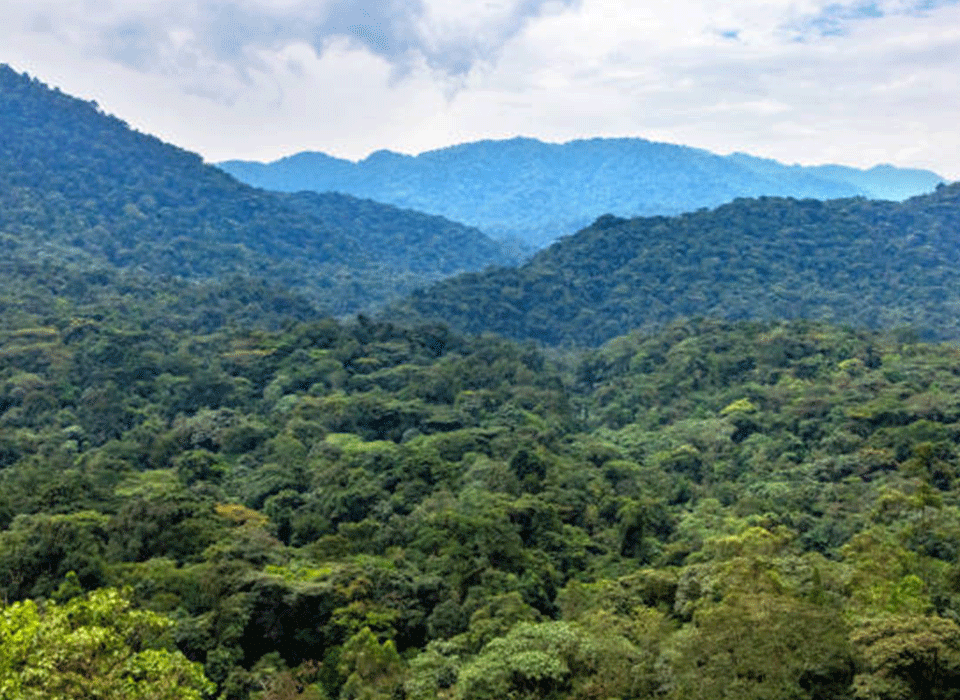
Bwindi Impenetrable National Park, located in southwestern Uganda along the border with the Democratic Republic of Congo, is a UNESCO World Heritage Site known for its biodiversity and stunning natural beauty. Covering about 331 square kilometers, the park sits on the edge of the Albertine Rift Valley, with elevations ranging from 1,160 to 2,607 meters. Its rugged terrain, steep ridges, and valleys enhance its appeal as one of Africa’s most biologically diverse areas.
The park’s history stretches back over 25,000 years, making it one of Africa’s oldest ecosystems. It was first gazetted as a forest reserve in 1932 and became a national park in 1991 to safeguard its endangered species, particularly the critically endangered mountain gorillas. Today, it serves as a vital conservation area, home to roughly half of the world’s mountain gorilla population, making it a top destination for gorilla trekking.
Bwindi’s vegetation primarily consists of tropical rainforests with dense undergrowth, giving it the “impenetrable” quality for which it is named. The park features over 200 tree species, including ferns, vines, and ancient hardwoods, many of which are endemic to the region. Bwindi’s diverse habitats support a variety of wildlife, including 120 mammal species, such as elephants, antelopes, and monkeys, along with 350 bird species, including endemics of the Albertine Rift.
Gorilla Trekking Experience in Bwindi
Gorilla trekking in Bwindi Impenetrable Forest National Park offers an unforgettable adventure, allowing visitors to observe endangered mountain gorillas in their natural habitat. Located in southwestern Uganda, Bwindi is home to nearly half of the world’s remaining mountain gorilla population. As a UNESCO World Heritage Site, the park provides a unique wildlife experience.
The trek begins early with a briefing by Uganda Wildlife Authority guides, who explain gorilla behavior and trekking protocols. Guides assign each group to a specific gorilla family, ensuring a more personal experience while minimizing human impact. The trek itself can last between 1 to 6 hours, taking visitors through dense forests and steep terrain. While physically challenging, the reward is a close encounter with gorillas in the wild. Visitors may witness silverbacks leading the group or mothers caring for their infants.
Besides gorillas, Bwindi is home to a wide variety of wildlife, including forest elephants and monkeys. The park’s lush forest and scenic views enhance the experience. Trekking fees directly support conservation efforts and benefit local communities by funding schools and health centers. This experience not only leaves lasting memories but also contributes to the protection of wildlife and the well-being of local people.
Gorilla Trekking Permit Cost in Uganda
A gorilla trekking permit in Uganda costs $800 for foreign non-residents, $700 for foreign residents, $500 for other Africans, and UGX 300,000 for East African citizens as of 2024. This fee provides access to Bwindi Impenetrable National Park or Mgahinga Gorilla National Park, where trekkers can observe mountain gorillas for up to one hour in their natural habitat. The fee contributes to funding conservation efforts, including ranger patrols, habitat protection, and community development initiatives benefiting local communities.
Travelers can book permits directly through the Uganda Wildlife Authority (UWA) or via licensed tour operators, such as Safari Vacations and Travel Services Ltd. Due to high demand, especially during peak seasons (June to September and December to February), early bookings are essential. For a more exclusive experience, Uganda offers Gorilla Habituation permits for $1,500 per person, which allow up to four hours with a gorilla group under habituation.
Best Time for Gorilla Trekking in Bwindi
The best time to trek gorillas in Bwindi Impenetrable Forest is during the dry seasons, from June to September and December to February. These months provide the most favorable conditions, with less rainfall, making trails less slippery and easier to navigate. The forest remains lush and vibrant, offering excellent opportunities for wildlife viewing and photography.
Though gorilla trekking is possible year-round, the rainy seasons (March to May and October to November) bring heavy rains, which can make trails challenging. However, the rains also enhance the forest’s beauty, and fewer tourists result in a quieter experience and better chances of securing permits.
It’s important to plan ahead, as permits are limited and in high demand, especially during the dry seasons. No matter when you visit, Bwindi’s unique ecosystem and the chance to see mountain gorillas in their natural habitat create an unforgettable adventure.
Gorilla Trekking Rules and Regulations
Gorilla trekking offers an unforgettable experience, but it comes with strict guidelines to ensure the safety of both the gorillas and visitors. These rules protect the gorillas from diseases and minimize human impact on their natural behavior.
Before the Trek
Only individuals who are healthy and free from illnesses like the flu or diarrhea can participate in gorilla trekking. Such diseases can be transmitted to the gorillas, which may harm them. Visitors must also secure a valid gorilla tracking permit to enter parks such as Uganda’s Bwindi Impenetrable Forest or Mgahinga Gorilla National Park. Groups are limited to a maximum of eight participants to reduce disturbance to the gorillas. Prior to trekking, all visitors attend a briefing to learn the proper behavior and safety protocols.
During the Trek
While tracking gorillas, always maintain a minimum distance of 7 meters (21 feet) to protect both yourself and the gorillas from disease transmission and stress. Visitors can spend no more than one hour with the gorillas to minimize their exposure to humans. Speak softly and avoid sudden movements to reduce stress for the animals. It is prohibited to eat, drink, or smoke near the gorillas, as these activities can disturb them. Flash photography is also banned to prevent startling the gorillas.
General Conduct
Respecting the environment is a key part of the experience, so visitors should avoid littering. Always follow the guide’s instructions to ensure a safe and respectful encounter. Touching the gorillas or attempting any physical contact is forbidden, even if they approach you. This helps ensure both the gorillas and visitors have a safe, respectful encounter in the wild.
What to Pack for Gorilla Tracking in Uganda
Clothing
- Long-Sleeve Shirt & Trousers: Wear lightweight, long-sleeve clothing to protect yourself from insects and thick vegetation. Moisture-wicking fabric will help you stay dry.
- Waterproof Jacket: The humid rainforest often brings rain. A breathable, waterproof jacket is essential to keep you comfortable and dry.
- Hat: A wide-brimmed hat shields you from both sun and rain.
- Gloves: Lightweight gloves protect your hands from thorns and branches while navigating the terrain.
- Sturdy, Waterproof Hiking Boots: The uneven, muddy ground requires sturdy, ankle-supporting boots that can handle the conditions.
Essential Gear
- Daypack: A small, comfortable backpack is crucial for carrying water, snacks, and extra clothing.
- Waterproof Bags: Use waterproof bags to protect your electronics and valuables from rain.
- Walking Stick: A walking stick provides extra balance and stability on uneven ground. While some trackers offer them, it’s helpful to bring your own.
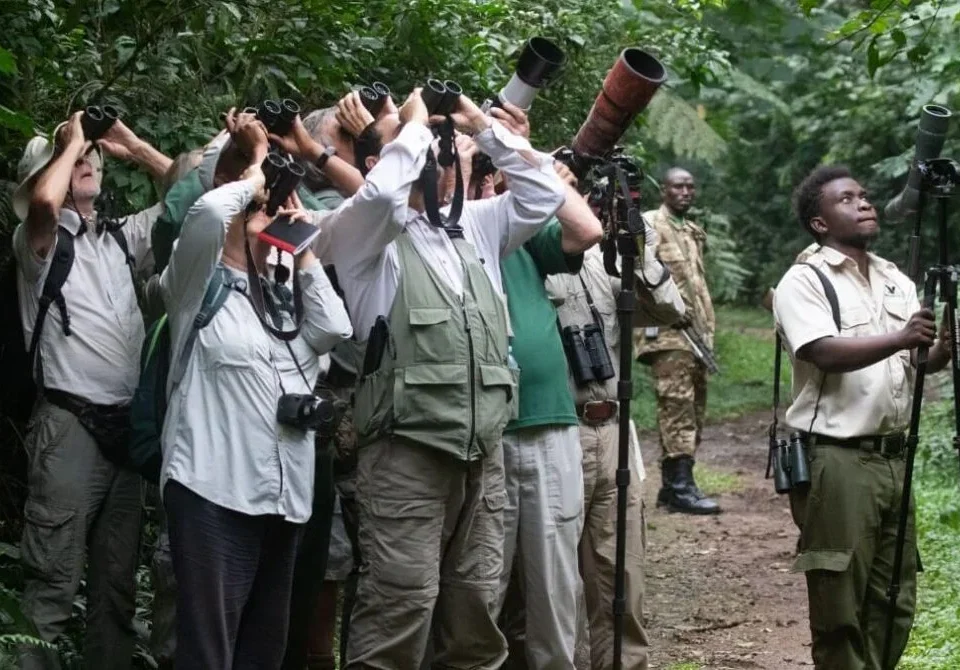
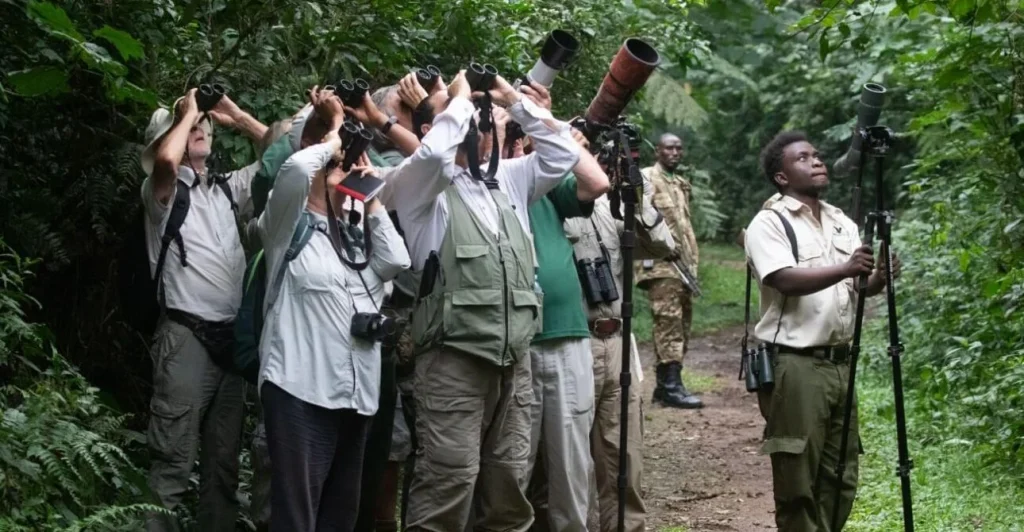
- Binoculars: Bring binoculars to observe wildlife from a distance, though you’ll get close to the gorillas.
Personal Items
- Water: Carry at least 2 liters of water to stay hydrated throughout your trek.
- Snacks: Pack high-energy snacks such as nuts and energy bars for quick breaks.
- Insect Repellent: Protect yourself from mosquitoes and other insects in the rainforest.
- Sunscreen: Apply sunscreen to safeguard against the strong equatorial sun.
Camera Gear
- Camera with Zoom Lens: A camera with a zoom lens allows you to capture moments without getting too close to the gorillas. Keep your gear light and follow the park’s rules regarding flash photography.
Request A Quote