
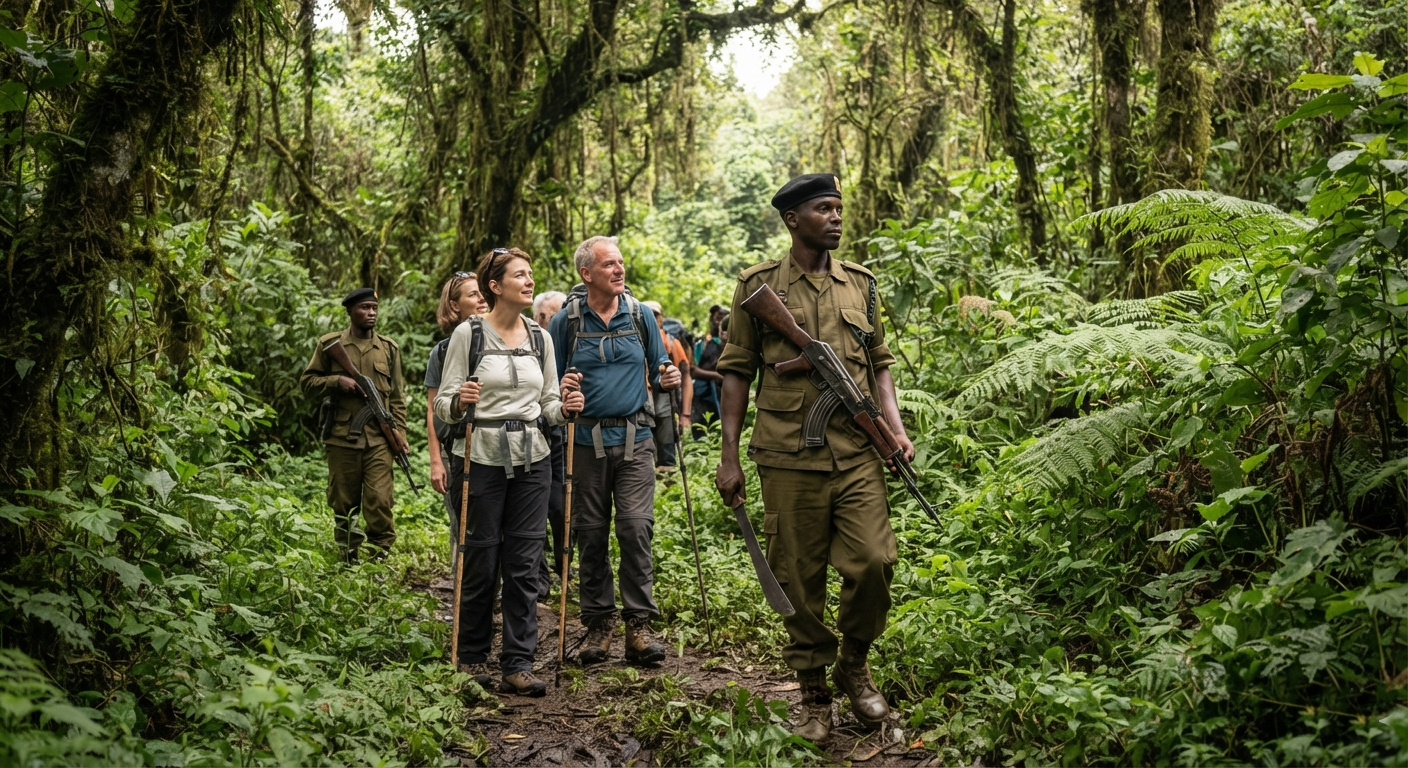
Armed UWA rangers ensure high safety standards for national park visitors.
Uganda Safety Guide: Is Uganda Safe for Tourists?
Uganda is a destination where travelers can experience gorilla trekking, chimpanzee tracking, wildlife safaris, mountain landscapes, lakes, rivers, cultural attractions and vibrant cities. For anyone planning a visit, however, an important question comes before choosing an itinerary: Is Uganda safe for tourists? A useful Uganda Safety Guide should not answer that question with a simple yes or no. Safety depends on where you travel, how you move around, which activities you choose, how well your trip is organized and how closely you follow local regulations and professional advice.
Uganda has established tourism infrastructure in many popular destinations, including safari areas and major visitor centers, but travelers should still understand the risks associated with transportation, personal security, wildlife encounters, weather, health and changing local conditions. Current foreign-travel advice also highlights risks including terrorism, crime, road travel, political demonstrations and localized security concerns in some border areas.
The purpose of this Uganda Safety Guide is therefore not to create unnecessary fear or to present Uganda as unsafe. Instead, it is to explain the practical precautions that can help tourists make informed decisions. Good travel safety is largely about preparation: understanding your route before departure, choosing appropriate transportation, protecting important belongings, respecting wildlife rules, listening to guides and park authorities, keeping emergency information available and checking current travel advice before moving into areas where conditions may change.
For a traveler preparing a Uganda safari, a well-planned itinerary can make safety easier to manage. Reputable tourism providers can help coordinate accommodation, transportation, guides and activities, while travelers should still take personal responsibility for understanding the conditions that apply to their particular journey. A useful starting point is to explore Uganda safari travel planning alongside independent safety research.
What Does Safety in Uganda Really Mean?
When people search for an Uganda Safety Guide, they may be thinking about very different concerns. One traveler may be worried about crime in Kampala, another may be thinking about road travel between national parks, while someone planning gorilla trekking may be more concerned about terrain, wildlife and following ranger instructions. Families may have questions about children, while solo travelers may focus on accommodation, communication and transportation.
That is why Uganda travel safety should be considered as a collection of different areas rather than as one single risk category. Personal security, road safety, wildlife safety, health preparedness, outdoor activity safety and emergency planning all require slightly different precautions.
For example, current UK government travel advice warns that road travel in Uganda can be hazardous, particularly outside major cities, and advises caution with public transportation. The same guidance recommends travelers take precautions with valuables, avoid walking after dark and remain alert to their surroundings. These are practical considerations that belong in any serious Uganda travel safety plan.
At the same time, safety should not be confused with avoiding all travel or avoiding normal interactions with Ugandan communities. Visitors can enjoy meaningful cultural and wildlife experiences while using sensible precautions. The strongest approach is informed travel: know your itinerary, understand the environment you are entering and use qualified professionals for activities where specialist knowledge is important.
Travelers researching Uganda safari destinations should therefore look at safety alongside the practical details of transportation, accommodation, park regulations and planned activities. This makes the Uganda Safety Guide more useful than a generic list of warnings because it connects each safety consideration to the actual travel experience.
Is Uganda Safe for Tourists and First-Time Visitors?
For first-time visitors, the most useful answer is that Uganda requires normal travel awareness plus additional preparation for the particular activities and regions included in an itinerary. Tourists should not assume that every part of the country has exactly the same conditions. Kampala, a rural community, a national park, a mountain trekking area and a border region can present very different travel considerations.
Current official travel advice identifies specific security concerns in some parts of Uganda, including areas close to the Democratic Republic of the Congo and South Sudan borders, as well as parts of northeastern Uganda. It also recommends additional care in some national parks near the DRC and Rwanda borders and advises travelers to use reputable, registered tour operators and seek current information from the Uganda Wildlife Authority where appropriate.
This geographic difference is important. A traveler visiting several established tourism destinations should not assume that information about one region automatically applies to another. A strong Uganda Safety Guide should therefore encourage visitors to review conditions for every major destination on their itinerary.
First-time visitors can also reduce avoidable problems by arranging important parts of the journey in advance. Airport transfers, accommodation, safari transportation, permits and guided activities should be planned with reliable providers. Travelers should keep copies of important documents and maintain access to emergency and insurance information.
A useful Uganda travel itinerary should therefore include not only attractions and activities but also realistic travel times, suitable transportation and appropriate contingency planning. This is particularly important when a safari involves long road journeys between destinations.
Understanding the Main Safety Risks in Uganda
A comprehensive Uganda Safety Guide should explain the main categories of risk without exaggerating them. The most useful approach is to identify what can happen, where it may be relevant and what sensible precautions travelers can take.
Personal security: Travelers should take care of cash, passports, phones and other valuables. Current travel advice recommends avoiding carrying large amounts of cash, taking care with ATMs, protecting passports and avoiding walking after dark.
Road safety: Road travel is an important part of many Uganda safaris, but road conditions, driving standards, traffic and journey length can create significant risks. Travelers should use suitable vehicles and experienced drivers and should take extra care when planning long-distance journeys.
Wildlife safety: Animals in national parks are wild animals and must be treated accordingly. Visitors should remain with their guides where required, follow park regulations and never attempt to approach, feed or provoke wildlife.
Health and medical preparedness: Travelers should research health requirements before departure and understand that medical facilities may be more limited outside Kampala. Current travel advice recommends appropriate travel insurance and preparation for possible medical treatment or evacuation.
Local and regional conditions: Political events, demonstrations, border conditions, weather and security alerts can change. Travelers should check current information rather than relying entirely on an old blog post or outdated itinerary.
Uganda Safety Depends on How You Travel
There is a major difference between asking whether Uganda is safe in general and asking whether a particular Uganda trip has been planned safely. Travel behavior can influence exposure to avoidable problems. A traveler who moves around at night without planning, carries unnecessary valuables or ignores instructions may face different risks from someone who uses organized transportation, follows local guidance and keeps their itinerary under control.
This is especially important for safari travel. A well-organized safari can include a professional driver-guide, planned accommodation, scheduled park activities and appropriate vehicles. Visitors should still remain alert, but much of the logistical planning is handled in advance. Travelers comparing Uganda safari experiences should therefore consider the quality of the operator and the way transportation and activities are organized, not only the advertised attractions.
For gorilla trekking and other guided activities, travelers should follow instructions from authorized guides and rangers. Outdoor environments can involve uneven terrain, changing weather and physical demands, making appropriate preparation an important part of safety.
The same principle applies to independent travel. Anyone traveling independently should have a clear route, reliable accommodation, dependable transportation and a way to communicate with someone who knows their itinerary. Official travel guidance recommends leaving an itinerary with someone at home and keeping copies of important documents when traveling independently.
Safety in Kampala and Uganda’s Major Tourist Areas
Kampala is a busy capital city with a very different environment from Uganda’s national parks. Visitors should expect urban traffic, crowded areas and the normal personal-security considerations associated with a large city. Current regional travel advice recommends taking appropriate precautions in Kampala and remaining alert to local security developments.
For tourists, practical Kampala safety includes keeping valuables secure, being careful with personal information, planning transportation and avoiding unnecessary movement in unfamiliar areas after dark. Visitors should also pay attention to traffic because crossing busy roads and moving around the city can present risks that are very different from those encountered during a safari.
Entebbe, Jinja and other tourism centers also require travelers to apply sensible precautions while recognizing that each destination has its own environment and activities. The right Uganda Safety Guide should therefore avoid broad statements that every tourist destination is identical.
Visitors planning a combination of city sightseeing and wildlife experiences can benefit from using Uganda safari specialists when arranging guided tourism activities. A properly planned itinerary can reduce uncertainty around transportation, accommodation and activity logistics.
Safety During Uganda Safaris and Wildlife Experiences
Uganda safari safety is one of the most important parts of this guide because wildlife tourism places visitors in environments where animals are not domesticated or controlled in the way they would be in a zoo. The safest approach is to treat every wild animal with respect and maintain the distance and behavior required by park authorities and professional guides.
Safari visitors should remain inside vehicles when instructed, avoid sudden movements around animals, never attempt to feed wildlife and follow the directions of their driver-guide. During walking activities, visitors should remain with the designated guide or ranger and follow instructions regarding movement, distance and behavior.
For travelers planning Uganda wildlife safaris, the quality of guiding and the suitability of the vehicle are important considerations. A professional guide can interpret animal behavior, explain park regulations and help travelers understand how to behave in different wildlife situations.
Current travel advice also emphasizes using reputable, registered tour operators for travel to certain national parks near Uganda’s international borders and recommends obtaining current information from the Uganda Wildlife Authority.
Travelers interested in guided gorilla trekking should also understand that gorilla trekking has its own rules and operational procedures. Those requirements should always be followed exactly as communicated by authorized park personnel and guides.
How Tourists Can Reduce Avoidable Safety Problems
The best Uganda Safety Guide should leave travelers with practical habits rather than fear. Many basic precautions are straightforward: keep important belongings secure, avoid unnecessary displays of wealth, use planned transportation, follow local instructions, protect travel documents and maintain awareness of changing conditions.
Travelers should also avoid assuming that advice from another country automatically applies to Uganda. Local regulations, transport conditions, park rules and security conditions can differ. Checking current information shortly before departure and during a longer trip is therefore important.
Insurance is another important part of preparation. Current official travel guidance recommends insurance that covers the itinerary, planned activities and emergency expenses. Travelers taking part in trekking, safari or adventure activities should check that their policy actually covers the activities they intend to undertake.
For visitors booking a safari, it is sensible to ask questions before confirming the trip. These can include who will provide transportation, whether activities are guided, what emergency procedures are available and how the operator handles unexpected changes. Planning a Uganda safari around these practical considerations can make the entire journey easier to manage.
What First-Time Visitors Should Know Before Traveling to Uganda
First-time visitors should approach Uganda with curiosity and preparation. Uganda is not a destination where every traveler will experience the same conditions, because a trip may involve cities, rural communities, forests, mountains, lakes, national parks and long road journeys. Each environment requires slightly different habits.
Before departure, travelers should review their complete itinerary and identify where they will stay, how they will move between destinations, which activities require guides or permits and what emergency arrangements are available. Important documents should be protected and copies should be accessible separately from the originals.
Visitors should also plan realistically for long journeys. A map may make two destinations appear relatively close, but road travel times can be substantially longer than travelers expect. Building sensible travel periods into the itinerary reduces pressure on drivers and travelers alike.
If a trip includes gorilla trekking, chimpanzee tracking, hiking or other outdoor activities, travelers should understand the physical and environmental conditions beforehand. If a trip involves multiple national parks, the itinerary should also account for road conditions, weather and changing local circumstances.
Travelers looking for gorilla trekking in Uganda should treat official park requirements and professional guide instructions as the final authority during the activity itself.
When Uganda Travel Conditions Change
A safety guide published online should never be treated as a permanent replacement for current travel advice. Security situations, demonstrations, border conditions, weather events, road conditions and public-health information can change after an article has been published.
This is particularly important for travelers visiting areas near international borders. Current regional guidance identifies specific concerns near the DRC and South Sudan borders and notes that border crossings can close at short notice. Travelers should therefore verify current conditions before entering regions where security conditions may change.
Political demonstrations should also be avoided. Current guidance states that protests and political rallies can occur without warning and can become violent. Travelers who encounter a demonstration should move away from the area and follow instructions from local authorities.
The same principle applies to severe weather. Flooding and landslides can occur in Uganda, particularly during rainy periods, so travelers should pay attention to local weather and road information when planning long-distance journeys.
The Bottom Line: How Safe Is Uganda for Tourists?
So, is Uganda safe for tourists? The most responsible answer is that Uganda can be visited with careful preparation, but travelers should understand the specific risks associated with their destinations and activities. There is no travel destination where every risk can be eliminated, and current official advice specifically identifies security, crime, transportation and regional risks that visitors should consider.
A strong Uganda Safety Guide should therefore focus on informed decision-making rather than making an absolute promise of safety. Travelers should research their itinerary, use appropriate transportation, protect their belongings, respect wildlife, follow park and guide instructions, prepare for health needs, maintain suitable insurance and monitor current information throughout the trip.
For safari travelers, safety is also connected to the quality of planning. Choosing experienced guides, suitable vehicles, reputable accommodation and properly organized activities can help reduce avoidable logistical problems. Travelers should still remain responsible for their own decisions, but good preparation provides a stronger foundation for a successful journey.
The rest of this Uganda Safety Guide will examine these subjects in greater depth, including safety in Kampala and other destinations, crime and personal security, road travel, wildlife and safari safety, health, different types of travelers, trekking and adventure activities, emergency preparation and practical safety advice.
For travelers beginning their planning process, Uganda safari planning and Uganda gorilla safari information can be considered alongside independent research and current official travel guidance.
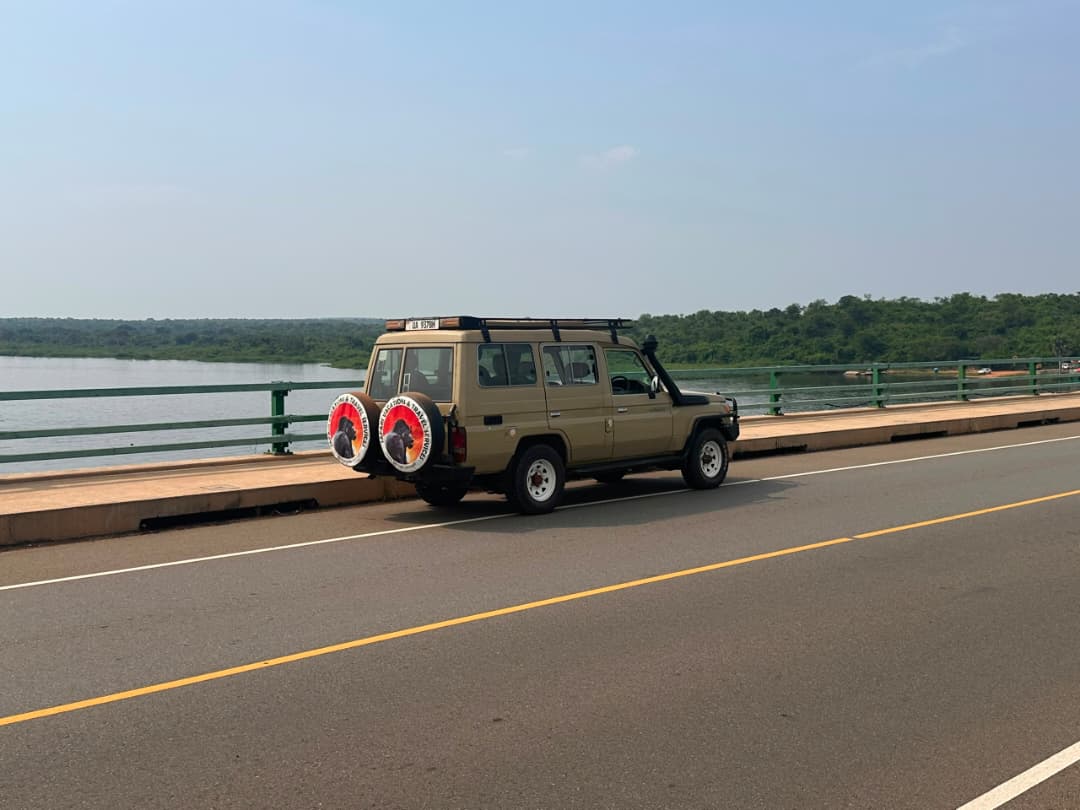
A reliable safari vehicle crossing a scenic bridge en route to a national park.
Uganda Safety by Destination: Kampala, Entebbe, Jinja, National Parks and Tourist Areas
Uganda should not be treated as one single safety environment. A visitor staying in Kampala, arriving through Entebbe, exploring Jinja, travelling through western Uganda or entering a national park can encounter very different surroundings and therefore different safety considerations. This is why a detailed Uganda Safety Guide needs to examine safety by destination rather than simply describing the country as safe or unsafe.
Current official travel advice gives specific regional guidance for Uganda. It identifies particular concerns around the Uganda-DRC border, the South Sudan border and parts of northeastern Uganda, while also advising travelers to take normal security precautions in Kampala. Conditions can change, so travelers should check current information for the specific destinations included in their itinerary before travelling.
The purpose of this section is to give travelers a destination-based framework for thinking about Uganda travel safety. It covers the main tourist locations and explains why the practical precautions required in a busy city may differ from those required during a safari, trekking experience or long-distance journey.
Travelers planning a safari can also use Uganda safari planning resources when organizing routes, accommodation and guided activities, while independently checking current official safety information.
Kampala Safety for Tourists
Kampala is Uganda’s capital and a major starting point for many international visitors. It is a busy urban environment, so the safety considerations are different from those encountered in a national park. Traffic, crowded public areas, personal belongings, demonstrations and movement after dark are among the issues tourists should consider.
Current FCDO guidance describes Kampala as a busy capital and advises travelers to take the same general precautions recommended elsewhere in its safety guidance. The guidance also records recent security incidents in the city, demonstrating why visitors should remain aware of current developments rather than assuming that an older travel experience represents today’s conditions.
For visitors, practical Kampala safety starts with knowing where they are going and how they will get there. Travelers should keep phones, wallets, passports and other valuables secure, avoid unnecessary displays of expensive belongings and be cautious when moving through crowded areas.
Night-time movement deserves additional planning. Visitors unfamiliar with Kampala should avoid wandering around unfamiliar areas at night and should arrange dependable transportation rather than making spontaneous journeys on foot.
Large gatherings also require caution. Current official guidance advises travelers to avoid large gatherings and demonstrations because they can become unpredictable or be targeted in security incidents.
Travelers beginning a city-and-safari itinerary can explore Uganda safari itineraries from Kampala while ensuring that transportation and accommodation arrangements are confirmed before departure.
Entebbe Safety for Travelers Arriving in Uganda
Entebbe is an important entry point for international visitors because it is home to Uganda’s main international airport. Many travelers begin their Uganda journey in Entebbe before continuing to Kampala, a national park, a safari lodge or another destination.
The most useful safety principle for new arrivals is to have the first stage of the journey organized. Travelers should know where they are staying, how they will reach their accommodation and who is responsible for any pre-arranged transfer. This is particularly helpful after a long international flight when travelers may be tired or unfamiliar with the local environment.
Entebbe also provides access to Lake Victoria and a range of tourism experiences. Safety considerations can therefore change depending on whether a visitor is simply transferring to another destination, staying in a hotel or participating in a water-based or outdoor activity.
For travelers arranging a safari immediately after arrival, Uganda safari trips from Entebbe can be planned around a confirmed transfer, appropriate accommodation and realistic travel times.
Jinja Safety for Tourists and Adventure Travelers
Jinja is one of Uganda’s best-known tourism destinations and is associated with the Nile, outdoor recreation and adventure activities. The safety considerations here can therefore be different from those in Kampala or a wildlife park.
Visitors should distinguish between general destination safety and activity-specific safety. Walking around a town, staying in accommodation and visiting ordinary attractions involve different considerations from rafting, boating or other outdoor activities. For activities involving specialist equipment or guides, travelers should use established providers and follow the instructions given by qualified activity staff.
Weather and water conditions can also affect outdoor activities. Visitors should not assume that an activity is appropriate simply because it was available on a previous day or during another season. Activity providers should be able to explain relevant operating conditions and safety procedures.
Travelers adding Jinja to a wider itinerary can review Uganda tour options including Jinja while checking the current conditions and requirements for each planned activity.
Western Uganda Safety: Queen Elizabeth National Park and Surrounding Areas
Western Uganda contains some of the country’s most important wildlife destinations, including Queen Elizabeth National Park, Kibale National Park and other protected areas. This region is especially important when discussing Uganda safari safety because some western areas are relatively close to the Democratic Republic of the Congo border.
Current official regional guidance advises travelers to exercise particular caution in areas near the Uganda-DRC border. It reports security incidents in western Uganda and notes the possibility of localized violence and border crossings closing at short notice.
This does not mean that travelers should apply one blanket safety statement to every part of western Uganda. Instead, the exact route and current conditions matter. Travelers should check current information before visiting destinations close to the border and should use reputable, registered tour operators where appropriate.
Queen Elizabeth National Park also requires visitors to follow wildlife safety procedures. Current official security advice notes that national parks can be potential targets for terrorist attacks, while Uganda Wildlife Authority is responsible for management and protection of Uganda’s protected areas.
Visitors arranging western Uganda safari experiences should confirm the current itinerary, transportation arrangements and applicable park guidance before departure.
Bwindi Impenetrable National Park and Gorilla Trekking Areas
Bwindi Impenetrable National Park is one of Uganda’s most important gorilla trekking destinations. It is located in the extreme southwest of Uganda near the borders with Rwanda and the Democratic Republic of the Congo, making destination-specific safety information particularly important.
Current FCDO regional guidance specifically advises travelers visiting Bwindi and Mgahinga to use reputable, registered tour operators and contact the Uganda Wildlife Authority for current advice and information. It also states that security personnel routinely accompany tourists on gorilla-tracking visits in this area.
Travelers should also distinguish between gorilla trekking inside Uganda and any itinerary that crosses an international border. Current official guidance warns against taking gorilla trekking tours that cross into the Democratic Republic of the Congo.
For the trekking experience itself, visitors should follow the instructions of authorized rangers and guides, remain with the designated group and comply with park regulations. Terrain, weather and physical demands should also be considered when preparing for the activity.
Travelers researching Bwindi gorilla trekking should combine operator information with current Uganda Wildlife Authority and government travel guidance.
Mgahinga Gorilla National Park and Southwestern Uganda
Mgahinga Gorilla National Park lies in southwestern Uganda close to both the Democratic Republic of the Congo and Rwanda. It is another important destination for gorilla trekking and mountain tourism, but its border location means travelers should pay particular attention to current regional information.
The official regional guidance places Mgahinga and Bwindi in the category of national parks near the DRC and Rwanda borders for which travelers should use reputable registered operators and obtain current information from the Uganda Wildlife Authority.
The appropriate approach is not to assume that historical conditions will remain unchanged. Travelers should check the current situation shortly before departure and follow instructions from local security authorities, park officials and authorized guides.
A carefully arranged Mgahinga and Uganda gorilla safari should clearly identify transportation, accommodation, trekking arrangements and the exact destinations being visited.
Kibale National Park and the Fort Portal Area
Kibale National Park and the wider Fort Portal area are important destinations for chimpanzee tracking, forest experiences and nature tourism. Safety here involves both normal travel precautions and activity-specific considerations associated with forest environments.
Visitors participating in chimpanzee tracking or other guided forest activities should follow the instructions of their guides and comply with the rules established for the protected area. Uganda Wildlife Authority manages Kibale National Park as part of Uganda’s national protected-area system.
The wider western region also requires travelers to remain informed about current security conditions because some parts of western Uganda are close to the DRC border. The exact location of a lodge or activity matters, so travelers should avoid assuming that a general statement about western Uganda applies equally to every destination.
Travelers planning Kibale chimpanzee tracking should confirm the current activity arrangements, guide requirements and transportation plan before starting the forest experience.
Murchison Falls National Park and Northern Safari Routes
Murchison Falls National Park is one of Uganda’s major wildlife destinations and is managed by the Uganda Wildlife Authority. Like other national parks, it should be approached as a protected wildlife environment rather than as an ordinary recreational space.
Visitors should follow instructions from their driver-guide and park authorities, remain appropriately separated from wildlife and respect the boundaries and regulations established for the protected area. UWA states that it manages Uganda’s national parks and provides guidance over wildlife activities within and outside protected areas.
Long-distance road travel should also be considered when planning a Murchison Falls itinerary. The journey may involve substantial time on the road, so travelers should use suitable transportation, plan realistic driving periods and avoid creating unnecessary pressure to reach destinations within unrealistic timeframes.
Travelers can review Murchison Falls safari planning information while separately checking current road and security conditions.
Kidepo Valley and Northeastern Uganda Safety
Kidepo Valley National Park offers a very different travel environment from Kampala and the central tourism corridor. It is located in northeastern Uganda, in an area where current official travel advice calls for additional caution.
Current FCDO guidance identifies increased security presence in the Karamoja sub-region and reports risks associated with cattle theft, armed raids and robberies. It advises travelers in the area to stay alert, exercise caution and avoid travel at night.
The same guidance notes that parts of northeastern Uganda can experience flooding during rainy seasons and recommends monitoring local media and using suitably equipped four-wheel-drive vehicles where conditions require them.
For travelers planning Kidepo, the lesson is clear: the remoteness of the destination makes route planning particularly important. Visitors should confirm transportation arrangements, accommodation, current security information and weather-related conditions before beginning the journey.
Travelers researching Kidepo Valley safari routes should build sufficient flexibility into the itinerary and confirm current local conditions before travel.
Eastern Uganda, Mount Elgon and Jinja-to-Mbale Routes
Eastern Uganda contains a mixture of urban centers, rural communities, mountains, waterfalls, cultural attractions and outdoor tourism destinations. Most areas do not require the same regional warnings associated with Uganda’s international borders, but travelers should still consider weather, road conditions and the requirements of individual activities.
Current official regional guidance states that travel to eastern Uganda is largely trouble-free but highlights a risk of landslides during heavy rains, particularly around Bulucheke sub-county in Bududa District near Mount Elgon National Park.
This illustrates why destination-specific safety planning matters. A traveler visiting a town may have relatively ordinary urban considerations, while someone hiking in a mountainous area needs to think about terrain, weather, physical preparation and the possibility of changing conditions.
For travelers combining eastern Uganda with other destinations, Uganda safari and trekking planning should include realistic travel times and appropriate arrangements for each activity.
Lake Mburo, Southwestern Routes and Other Safari Destinations
Lake Mburo National Park is another important safari destination and forms part of the wider southwestern tourism circuit. Uganda Wildlife Authority lists Lake Mburo among the country’s national parks and manages the protected area as part of its national wildlife conservation mandate.
Safety within a protected area should focus on wildlife behavior, guide instructions, park regulations and transportation. Travelers should also consider the conditions of the route leading to and from the park, particularly when combining several destinations in a single itinerary.
The same principle applies to other national parks, including Semuliki, Mount Elgon and the Rwenzori Mountains. Each environment has different terrain, wildlife, weather and activity considerations, so a Uganda Safety Guide should avoid treating all protected areas as identical.
Travelers can explore Uganda national park safari options while verifying the latest park information and conditions before departure.
How to Assess Safety Before Visiting Any Uganda Destination
Before visiting any destination in Uganda, travelers should ask several practical questions. What is the current security situation? How will I get there? Is the road journey appropriate for the season? Does the activity require an authorized guide? Are there special park rules? Is the destination close to an international border? What happens if weather or security conditions change?
These questions are particularly important when traveling to remote national parks. Uganda Wildlife Authority currently manages 10 national parks, including Bwindi Impenetrable, Mgahinga Gorilla, Kibale, Queen Elizabeth, Murchison Falls, Kidepo Valley, Lake Mburo, Mount Elgon, Rwenzori Mountains and Semuliki.
Travelers should also distinguish between information that is permanent and information that can change. The existence of a national park is stable; a temporary road closure, security alert, border condition or weather-related disruption may not be. This distinction is essential when using online travel guides.
When organizing a guided safari, Uganda safari tour planning can help with the logistical side of a journey, but travelers should still verify current government and park guidance before departure.
Why Destination-Specific Uganda Safety Advice Matters
A search for “Is Uganda safe?” can produce a misleadingly simple answer. A much better question is: “What safety considerations apply to the specific places and activities on my Uganda itinerary?” This approach recognizes that Kampala, Entebbe, Jinja, Bwindi, Mgahinga, Kibale, Queen Elizabeth, Murchison Falls, Kidepo and Mount Elgon are different travel environments.
Current official guidance demonstrates this distinction. Some regional areas have specific security warnings, while other areas are described differently. For example, the guidance specifically highlights border regions and northeastern Uganda, while describing travel to eastern Uganda as largely trouble-free but noting weather-related landslide risks in particular locations.
This is why responsible Uganda travel safety information should always include the date on which it was checked and should encourage travelers to verify conditions again before departure. A high-quality guide provides context, but current authorities remain the appropriate source for changing security conditions.
For travelers planning wildlife experiences, Uganda safari and gorilla trekking information can complement the broader safety research required before a trip.
Final Destination-Specific Safety Advice for Uganda Travelers
The most important lesson from destination-based Uganda safety planning is that location matters. Kampala requires urban awareness. Entebbe requires organized arrival and transportation planning. Jinja requires attention to activity-specific safety. National parks require wildlife awareness and compliance with park regulations. Mountain destinations require preparation for terrain and weather. Border regions require careful review of current security information.
Travelers should therefore avoid relying on a single general statement about Uganda. Instead, break the itinerary into individual destinations and check the current situation for each one. This is especially important when the route passes through western or northeastern areas where official travel advice identifies specific regional risks.
For national parks, Uganda Wildlife Authority remains a key source for park-related information. UWA is responsible for managing and protecting Uganda’s wildlife and protected areas and provides current information through its official channels.
A traveler who combines current official information with sensible personal precautions and reputable tourism arrangements is better positioned to make informed decisions. The goal of a Uganda Safety Guide is not to eliminate every uncertainty, but to help travelers recognize the important differences between destinations and prepare accordingly.
For those ready to plan their journey, Uganda safari planning and Uganda gorilla safari planning can be used as tourism resources alongside current official safety information.
Republic of the Congo Tours: Complete Introduction
Republic of the Congo Tours open the door to one of Central Africa’s most distinctive travel experiences, combining immense rainforest landscapes, remarkable wildlife, river systems, cultural experiences and some of the continent’s most specialized forest safaris. Often called Congo-Brazzaville to distinguish it from the Democratic Republic of the Congo, the Republic of the Congo offers travelers an opportunity to explore a destination where rainforest and wildlife are central to the travel experience.
For travelers researching Republic of Congo Tours, the attraction is not simply visiting another African country. The destination provides access to the Congo Basin, one of the world’s great tropical rainforest regions, together with wildlife experiences that differ significantly from the classic savannah safari associated with East and Southern Africa.
A well-planned Congo safari can focus on rainforest wildlife, western lowland gorillas, forest elephants, primates, birds, forest walks, waterways and the distinctive clearings known as bais where wildlife may gather. The result is an experience based more on discovering an intricate forest ecosystem than on driving across open grassland looking for large mammals.
Why Choose Republic of the Congo Tours?
The greatest strength of Republic of Congo Tours is the opportunity to experience African wildlife in a rainforest environment. Instead of concentrating primarily on open savannahs, Congo travel takes visitors into dense equatorial forests, wetlands, rivers and forest clearings.
The Republic of Congo is particularly relevant to travelers interested in western lowland gorillas. These gorillas are different from the mountain gorillas associated with Uganda and Rwanda. A Congo gorilla experience therefore provides a distinct wildlife opportunity for travelers who want to understand the diversity of Africa’s great apes.
Congo gorilla safari experiences can be combined with broader rainforest exploration, creating a journey that goes beyond a single wildlife encounter. Travelers may also be interested in forest elephants, chimpanzees, monkeys, antelope, buffalo and an extensive range of birdlife depending on the area and safari itinerary.
This combination makes Congo rainforest tours particularly attractive to experienced safari travelers, wildlife photographers, birdwatchers, primate enthusiasts, conservation-minded travelers and visitors looking for a less conventional African adventure.
Exploring the Congo Basin Through Republic of Congo Tours
The Congo Basin is central to understanding why Congo safari tours are so different from many other African safari holidays. The region contains enormous areas of tropical rainforest, interconnected waterways, swamp forests and forest-savannah landscapes.
A rainforest safari is fundamentally different from a conventional game drive. Visibility can be limited by vegetation, animals may move quietly through dense habitat, and wildlife encounters can depend on patient observation. Rather than expecting a predictable sequence of sightings, travelers should approach the forest as an ecosystem to be explored.
This is one reason Republic of Congo safari experiences appeal to travelers who value exploration and discovery. Forest walks, boat excursions, wildlife observation from strategic viewpoints and guided tracking can all contribute to a richer understanding of the environment.
The rainforest itself becomes part of the attraction. Trees, vines, waterways, insects, fungi, birds and smaller forest animals are not simply background scenery; they are essential elements of the Congo travel experience.
Odzala-Kokoua and the Wildlife Experience
For many travelers, Odzala-Kokoua safari tours represent the centerpiece of a Republic of Congo wildlife journey. The park is located in the north-western part of Congo-Brazzaville and encompasses a large and varied rainforest landscape.
Odzala-Kokoua is especially notable for its combination of forest, swamp habitats, rivers, savannah-forest mosaics and wildlife-rich bais. These habitats create opportunities to observe animals in settings that are very different from the open plains of the Serengeti, Maasai Mara or other classic safari destinations.
Congo gorilla tours can be particularly rewarding for travelers interested in western lowland gorillas, while broader wildlife itineraries may incorporate forest elephants, primates, antelope, buffalo and birds.
Travelers should understand that a Republic of Congo wildlife safari is an expedition into a rainforest environment. The experience is defined by habitat, biodiversity, specialist guiding and exploration rather than by guaranteed sightings of particular animals.
Gorilla Experiences on Republic of Congo Tours
Gorilla experiences are among the most distinctive reasons to consider Republic of Congo gorilla tours. The species associated with these rainforest experiences is the western lowland gorilla, which inhabits the forests of Central Africa.
This should not be confused with mountain gorilla trekking in Uganda and Rwanda. The habitat, species, trekking environment and overall safari setting are different. Travelers comparing gorilla destinations should therefore compare the actual experience rather than assuming that every gorilla trek in Africa operates in the same way.
A Congo gorilla safari can provide an opportunity to observe western lowland gorillas in a dense equatorial forest environment. The experience can involve walking through challenging rainforest terrain and following guidance from trained trackers and guides.
For travelers whose primary interest is gorillas, the gorilla component should be considered when selecting accommodation, travel dates, park access arrangements and the overall itinerary.
Wildlife Beyond Gorillas
Although gorillas receive much of the international attention, Republic of Congo wildlife tours should never be presented as a single-species experience. The rainforest supports a complex community of mammals, birds, reptiles, insects and other organisms.
Forest elephants are among the most important large mammals associated with Congo’s rainforest ecosystems. Visitors may also encounter forest buffalo, bongos, sitatunga, duikers, giant forest hogs, monkeys and other forest-adapted species depending on the location, season and conditions.
Birdwatching is another important part of Congo rainforest tours. Dense forest habitats can support an impressive variety of bird species, making binoculars valuable even for travelers whose main interest is mammals.
The best approach is to travel with realistic expectations. Rainforest wildlife is unpredictable, and the value of the safari comes from the overall ecosystem and the process of searching, tracking and learning as much as from individual sightings.
How Republic of the Congo Tours Differ From Classic African Safaris
Travelers who have previously visited Kenya, Tanzania, Botswana, South Africa or Uganda may notice a major difference when planning Republic of Congo Tours. The Congo experience is strongly shaped by rainforest ecology.
In a conventional savannah safari, open landscapes often provide long viewing distances. In the Congo rainforest, vegetation can be dense and visibility can change rapidly. Walking, boating, tracking and patient observation can therefore become just as important as vehicle-based wildlife viewing.
Congo safari experiences are consequently best suited to travelers who appreciate wilderness, biodiversity and exploration rather than those looking only for a checklist of famous African animals.
The destination can also appeal to repeat safari travelers who want something substantially different from the familiar East African and Southern African safari circuit.
Who Should Consider Republic of the Congo Tours?
Republic of Congo Tours can appeal to several different types of travelers. Wildlife enthusiasts may be attracted by the possibility of encountering forest elephants, gorillas, primates and other rainforest species.
Birdwatchers can explore a very different birding environment from the open habitats found elsewhere in Africa. Photographers can find opportunities for rainforest landscapes, wildlife, waterways and atmospheric forest scenes. Experienced safari travelers may appreciate the destination because it offers a distinctly different interpretation of African wildlife tourism.
Travelers should, however, understand that remote rainforest travel requires flexibility. Conditions can affect movement, wildlife encounters and daily activities. A carefully planned itinerary with experienced local logistics is therefore important.
Travelers looking specifically for a Congo gorilla trekking experience should also investigate the current requirements and operating arrangements for their selected destination before booking.
Republic of the Congo Tours for Different Travel Interests
There is no single way to experience Congo. Some visitors may want a dedicated wildlife safari, while others may prefer to combine Brazzaville with a rainforest expedition. Some travelers may prioritize gorillas, while others may want to spend more time exploring forests, rivers and wildlife-rich clearings.
Congo travel experiences can therefore be designed around the interests, available time and preferred level of comfort of the traveler.
A wildlife-focused itinerary may emphasize protected areas and guided observation. A photography itinerary may prioritize longer stays and locations with strong opportunities for wildlife viewing. A gorilla-focused itinerary may place greater emphasis on the forest areas where western lowland gorilla experiences are available.
The important point is to select the destination and itinerary first and then build transportation and accommodation around the experience rather than treating every Congo tour package as interchangeable.
Conservation and Responsible Republic of the Congo Tours
Responsible tourism should be an important consideration when choosing Republic of Congo safari tours. Rainforest destinations depend on functioning ecosystems, responsible wildlife management and positive relationships with surrounding communities.
Visitors should follow guide instructions, maintain appropriate wildlife distances, avoid feeding animals, respect park regulations and behave carefully around sensitive habitats. Photography should also be conducted responsibly, particularly when observing gorillas and other wildlife at close range.
Choosing legitimate tourism services and conservation-focused experiences can help ensure that tourism contributes positively to the protection of wildlife and the long-term value of the destination.
Planning Your Republic of the Congo Tour
Planning Republic of Congo Tours requires more preparation than simply choosing a hotel and arriving at a national park. Remote rainforest destinations require careful coordination of flights or road transfers, accommodation, park access, activities and local guiding.
Travelers should decide what they most want from the trip before selecting an itinerary. If gorillas are the priority, the itinerary should be designed around the relevant gorilla experience. If wildlife photography is the priority, the length of stay and accommodation location may be more important. If the main objective is experiencing the Congo Basin itself, a broader rainforest itinerary may be preferable.
Congo gorilla safari planning should also take into account current operational arrangements, seasonal conditions and any requirements associated with the chosen protected area.
The rest of this complete Republic of Congo travel guide should therefore build from this foundation by examining the best tour experiences, destinations, wildlife, seasons, itineraries, transportation, accommodation, costs, entry requirements, safety and responsible travel.
Republic of the Congo Tours at a Glance
Destination: Republic of the Congo, commonly called Congo-Brazzaville.
Main appeal: Congo Basin rainforest, wildlife, western lowland gorillas, forest elephants, primates, birds and wilderness experiences.
Major wildlife focus: Western lowland gorillas and a broad range of rainforest wildlife.
Major safari environment: Dense equatorial rainforest, forest-savannah mosaics, wetlands, rivers and wildlife-rich forest clearings.
Best suited to: Wildlife enthusiasts, gorilla enthusiasts, photographers, birdwatchers, experienced safari travelers and travelers seeking distinctive rainforest experiences.
Key planning principle: Choose the wildlife or rainforest experience first, then build the itinerary around current park access, transportation, accommodation and operating arrangements.
“`
Road Safety, Transportation and Getting Around Uganda Safely
Road safety is one of the most important subjects in a comprehensive Uganda Safety Guide because many visitors spend substantial amounts of time travelling between airports, cities, hotels, national parks and rural destinations. Understanding how to move around Uganda safely is therefore just as important as understanding accommodation, wildlife and personal security.
Current U.S. travel guidance reports a high rate of vehicular accidents in Uganda and recorded 25,808 road-crash casualties in 2024, including 5,144 reported deaths. It advises travelers to avoid nighttime travel whenever possible and highlights additional risks involving highways, pedestrians, poorly maintained vehicles and rural roads.
These statistics do not mean that every journey is unsafe. They demonstrate why transportation should be treated as an important part of Uganda travel safety. A well-planned journey considers the vehicle, driver, route, weather, time of day, road conditions and length of the trip.
Travelers planning a safari can use Uganda safari transportation planning as part of their preparation while independently checking current road and security conditions.
Why Road Safety Matters in Uganda
Road travel is central to many Uganda itineraries. Visitors may travel by road from Entebbe to Kampala, Kampala to Jinja, Kampala to Murchison Falls, Kampala to western Uganda or from one national park to another. Some journeys can take many hours, particularly when destinations are remote.
Current U.S. guidance states that vehicular accidents occur at a high rate in Uganda. It also reports that pedestrians frequently walk on roads and may be difficult for motorists to see, while large trucks can carry inadequately secured cargo and may have poor braking systems.
For travelers, this means road safety begins before entering a vehicle. Choosing an appropriate transportation provider, planning journeys during safer periods and allowing sufficient time for the route can all contribute to a better travel experience.
When arranging Uganda safari tours, transportation should be considered an integral part of the itinerary rather than an afterthought.
Choosing a Reliable Safari Vehicle and Driver
Choosing the right vehicle and driver is particularly important for travelers undertaking long safari journeys. A safari vehicle may spend many hours on highways, rural roads and uneven tracks, so reliability and appropriate maintenance are important considerations.
Current U.S. travel guidance specifically recommends selecting a reliable operator when renting a safari vehicle with a driver. It also advises travelers to assess vehicle maintenance and remind the driver to operate the vehicle safely. The guidance notes that U.S. citizens have been injured or killed in safari-vehicle accidents in remote areas.
Travelers should therefore pay attention to the overall quality of the transportation arrangement. A reputable operator should be able to explain the vehicle being used, the driver arrangements and the general itinerary.
Travelers arranging Uganda gorilla safari transportation should confirm the vehicle and transfer arrangements before beginning a long journey toward Bwindi or Mgahinga.
Driving in Uganda: What Visitors Should Know
Driving in Uganda requires familiarity with local traffic conditions and laws. Visitors who are not accustomed to the local road environment should think carefully before choosing self-drive travel, particularly for long-distance safari routes.
The U.S. Department of State advises travelers driving abroad to research local traffic laws, licensing requirements and insurance before driving. It also emphasizes seatbelt use and awareness of local driving conditions.
Uganda’s road environment can include busy urban traffic, pedestrians, motorcycles, heavy trucks, uneven road surfaces and rural roads that require more careful driving. Visitors should not assume that navigation apps alone provide enough information to determine whether a route is appropriate.
For visitors who prefer an organized itinerary, guided Uganda safari travel can reduce the need to manage unfamiliar long-distance driving themselves.
Night Driving and Long-Distance Travel
Avoiding unnecessary nighttime driving is one of the clearest recommendations in current Uganda travel guidance. The U.S. Department of State advises travelers to avoid nighttime travel whenever possible and specifically warns that highway travel at night can be dangerous, including on the road between Entebbe Airport and Kampala.
This is especially relevant to safari itineraries. A long journey should not be planned around an unnecessarily late arrival when the route can reasonably be completed during daylight.
Travelers should discuss departure times with their driver or tour operator before beginning long-distance journeys. If weather, traffic or road conditions cause delays, the itinerary should have enough flexibility to accommodate them.
When planning Uganda gorilla trekking journeys, travelers should allow realistic driving time rather than assuming that a long road journey will always take the minimum estimated time.
Kampala Traffic and Urban Road Safety
Kampala presents a different transportation environment from a remote national park. Traffic congestion, pedestrians, motorcycles, minibuses and other road users can make journeys more complicated, especially during busy periods.
Travelers should remain attentive when crossing roads and should not assume that vehicles will always behave as expected. The U.S. Department of State’s general guidance on driving abroad emphasizes that pedestrians should exercise extreme caution when crossing streets because local driving behavior can differ significantly from what visitors are accustomed to.
In Kampala, travelers should also consider where they will be picked up and dropped off. A clearly identified meeting point can reduce confusion, particularly around busy hotels, shopping areas and transport hubs.
Visitors beginning their journey in the capital can use Uganda tours from Kampala while confirming their transportation arrangements before departure.
Entebbe Airport Transfers and Airport Road Safety
Most international visitors arriving in Uganda begin their journey at Entebbe International Airport. The first road transfer is therefore an important part of Uganda travel safety.
Current U.S. guidance specifically advises caution on the Entebbe-Kampala road and recommends using a reliable taxi service to and from the airport. It also advises avoiding nighttime highway travel whenever possible.
Travelers should ideally know their accommodation and transfer arrangements before leaving the airport. This is particularly useful for first-time visitors who may be tired after an international flight and unfamiliar with the local transportation system.
Travelers arranging Uganda safari trips from Entebbe should confirm the airport pickup arrangements, destination and expected journey time in advance.
Boda-Bodas and Motorcycle Transportation
Boda-bodas are widely used in Uganda and can be an important part of local transportation. However, current travel guidance identifies both accident and crime risks associated with motorcycle taxis.
The U.S. Department of State reports that boda-bodas are common in Ugandan cities and that many drivers have limited training or may drive recklessly. It also states that U.S. embassy employees and their families are prohibited from using taxis and boda-bodas because of accident and crime risks.
Visitors should therefore make transportation choices based on current local guidance, their circumstances and the reliability of the provider rather than choosing a motorcycle taxi simply because it is convenient.
Travelers using Uganda tour transportation services can arrange planned transfers instead of relying on unfamiliar transport options for long or important journeys.
Minibuses, Buses and Public Transportation
Public transportation is widely used in Uganda, including minibuses commonly referred to as taxis and larger inter-city buses. These services can be useful for residents and independent travelers, but visitors should understand the limitations of unfamiliar public transportation.
Current U.S. guidance states that many drivers have limited training and may drive recklessly, while some vans and buses may be poorly maintained or travel at high speeds. It identifies these vehicles as common participants in deadly road accidents in Uganda.
Visitors should consider whether public transportation is appropriate for the particular journey, especially when carrying valuable luggage or travelling long distances. For remote safari destinations, organized transportation can simplify the logistics considerably.
Travelers researching Uganda safari travel options should consider the transportation requirements of the entire itinerary rather than only the individual activities.
Pedestrian Safety in Uganda
Travelers walking in Uganda should remember that pedestrians are an important part of the road environment. Current U.S. guidance states that pedestrians often walk in roads and may not be visible to motorists, and that pedestrian collisions account for a significant proportion of crashes.
Visitors should therefore use particular caution when crossing roads, walking alongside highways or moving around busy urban areas. Road conditions and lighting can vary, and travelers should avoid assuming that a marked crossing automatically guarantees that vehicles will stop.
Walking after dark also presents additional challenges. Current UK travel advice recommends travelers avoid walking after dark in Uganda. This recommendation is relevant both to personal security and to road safety.
Travelers staying at safari lodges should follow the property’s instructions about walking, particularly after dark or in areas where wildlife may be present.
Rural Roads and Remote Safari Routes
Rural Uganda can present a very different road environment from Kampala and other major towns. Roads may be unpaved, uneven or affected by weather, and some remote routes can require vehicles with greater ground clearance or four-wheel-drive capability.
Current U.S. travel guidance states that rural road conditions can be poor and that some routes require a four-wheel-drive vehicle. It also recommends selecting reliable operators for safari vehicles and assessing vehicle maintenance.
This is particularly relevant to journeys toward remote wildlife destinations. A route that appears short on a map may take considerably longer because of road surfaces, traffic, weather or stops along the way.
Travelers planning Uganda national park safaris should ask their operator about the expected road conditions and vehicle requirements for each major transfer.
Weather, Rain and Road Conditions
Weather can directly affect road safety. Heavy rainfall can reduce visibility, create slippery surfaces, cause flooding and make some rural routes more difficult to navigate.
Current U.S. travel guidance notes that heavy rainfall is common during Uganda’s rainy seasons and can lead to flash flooding and river overflow. It also notes that landslides can occur in mountainous eastern and western areas.
Travelers should therefore avoid treating travel times as fixed guarantees. If severe weather affects a route, a responsible driver or tour operator should prioritize safety rather than attempting to maintain an unrealistic schedule.
When planning Uganda gorilla trekking tours, travelers should allow flexibility for weather and road conditions, particularly when travelling through mountainous southwestern Uganda.
Seat Belts and Basic Passenger Safety
Seat belts are one of the simplest precautions travelers can take during road journeys. The U.S. Department of State’s international driving guidance recommends always wearing a seatbelt when travelling abroad.
Passengers should also remain seated appropriately while a vehicle is moving and should avoid distracting the driver. Long safari journeys can involve conversations, photography and sightseeing, but these should not interfere with safe vehicle operation.
If a vehicle appears unsuitable or a driver is operating it in an obviously unsafe manner, travelers should raise the concern with the tour operator rather than simply accepting the situation.
This is particularly important during Uganda safari journeys involving long distances and remote roads.
Avoiding Distracted Driving
Distracted driving can increase risk in any country. Drivers should remain focused on traffic conditions rather than using phones or becoming distracted by passengers.
Travelers should also avoid pressuring drivers to hurry because they want to reach the next lodge, attraction or airport quickly. A realistic itinerary should allow the driver sufficient time to operate the vehicle safely.
Travelers using navigation applications should remember that a GPS route is not automatically a safety recommendation. Current U.S. guidance specifically warns that the fastest GPS route is not always the safest route.
A good Uganda safari itinerary should therefore be based on realistic routes and local knowledge rather than map distance alone.
What to Do After a Road Accident
Travelers should know in advance what to do if a road accident occurs. Uganda’s traffic laws require drivers involved in an accident to stop, exchange information and assist injured people, according to current U.S. travel information.
However, the immediate priority for a traveler should be personal safety. Accidents can attract crowds, and current U.S. guidance warns that mob anger or violence against a driver perceived to be responsible can occur after traffic accidents.
If an accident occurs, travelers should follow the instructions of their driver and tour operator, move away from immediate danger where appropriate and seek medical or police assistance when necessary.
Travelers on a Uganda safari itinerary should keep their operator’s contact information accessible throughout the journey.
Transportation Safety for Families and Groups
Families and groups should establish simple transportation rules before beginning a journey. Everyone should know where they are going, where essential belongings are stored and who to contact if the group becomes separated.
Children should remain appropriately supervised around roads and vehicles, particularly at busy stops, petrol stations and roadside attractions. Travelers should also avoid allowing children to move around inside a moving vehicle.
Groups should also avoid creating pressure for a driver to maintain an unrealistic schedule. A safe itinerary should allow adequate time for meals, rest stops, traffic delays and changing road conditions.
Families planning family safaris in Uganda should discuss transportation arrangements with their operator before departure.
Transportation Safety for Gorilla Trekking Trips
Gorilla trekking itineraries often involve long road journeys because Bwindi Impenetrable National Park and Mgahinga Gorilla National Park are located in southwestern Uganda. Road safety therefore becomes an important part of the overall trekking experience.
Travelers should allow sufficient time for the journey and avoid building an itinerary that depends on completing a long transfer immediately before an important activity. Delays caused by traffic, weather or road conditions can occur.
The transportation provider should understand the route and the requirements of the journey. Current U.S. guidance specifically recommends reliable operators and appropriate vehicles for safari travel, particularly on rural routes.
Visitors researching Uganda gorilla trekking should consider the road journey as part of their overall safety preparation.
Choosing Between Self-Drive and a Guided Driver
One of the biggest transportation decisions for a visitor is whether to drive independently or use a professional driver. Self-drive can provide independence, but it also places responsibility for navigation, road conditions, vehicle management and traffic decisions on the traveler.
A guided journey transfers much of that responsibility to an experienced driver who is familiar with the route and local conditions. This can be particularly useful for first-time visitors and travelers undertaking long safari routes.
The best choice depends on the traveler’s experience, itinerary and comfort with local driving conditions. However, current official guidance emphasizes the importance of researching local laws and conditions and choosing reliable transportation providers.
Travelers can compare their logistical needs with guided Uganda safari options before deciding how they will travel between destinations.
Practical Road Safety Checklist Before Every Journey
Before leaving for a road journey, travelers should know the destination, expected route and approximate travel time. They should also confirm the vehicle, driver and accommodation arrangements where relevant.
Essential documents, phones and other important belongings should remain secure and accessible. Travelers should also have enough time in the itinerary to accommodate reasonable delays rather than encouraging unsafe driving.
Weather should be considered for long or remote journeys. If conditions deteriorate, the safest option may be to adjust the schedule rather than continue simply to maintain the original itinerary.
Visitors organizing Uganda safari itineraries should discuss these practical issues with their transportation provider before departure.
Road Safety and the Overall Uganda Safety Guide
Transportation is one of the areas where practical preparation can make a significant difference to Uganda travel safety. Current official information identifies road crashes as a serious concern and recommends avoiding unnecessary nighttime travel, selecting reliable safari operators and remaining cautious on rural roads.
Visitors should not interpret these recommendations as a reason to avoid road travel altogether. Road transportation is an essential part of tourism in Uganda. The goal is to make transportation decisions deliberately and to understand the conditions involved in each journey.
The safest approach combines a reliable vehicle, a responsible driver, appropriate travel times, realistic journey planning, seat-belt use and awareness of changing road and weather conditions.
Travelers preparing for Uganda gorilla safari travel should apply the same road-safety principles throughout the journey, from airport transfers to the final return trip.
Key Road and Transportation Safety Lessons for Uganda
Road safety deserves a prominent place in any detailed Uganda Safety Guide. Official information identifies road crashes as a significant danger and highlights risks involving nighttime travel, rural roads, pedestrians, motorcycles, buses, trucks and poorly maintained vehicles.
For visitors, the most useful approach is to plan transportation before travelling. Use reliable transportation providers, choose appropriate vehicles, wear seat belts, avoid unnecessary nighttime journeys and allow enough time for long-distance routes.
Travelers should also remain flexible. Traffic, weather and road conditions can change, and a responsible itinerary should allow plans to be adjusted when necessary.
Road safety should therefore be considered alongside crime prevention, health preparation, wildlife safety and regional security. Together, these areas provide a much more useful picture of Uganda travel safety than a simple statement that Uganda is safe or unsafe.
The next section of this Uganda Safety Guide will address health, medical care, food and wate+r safety and other important health precautions for travelers in Uganda.
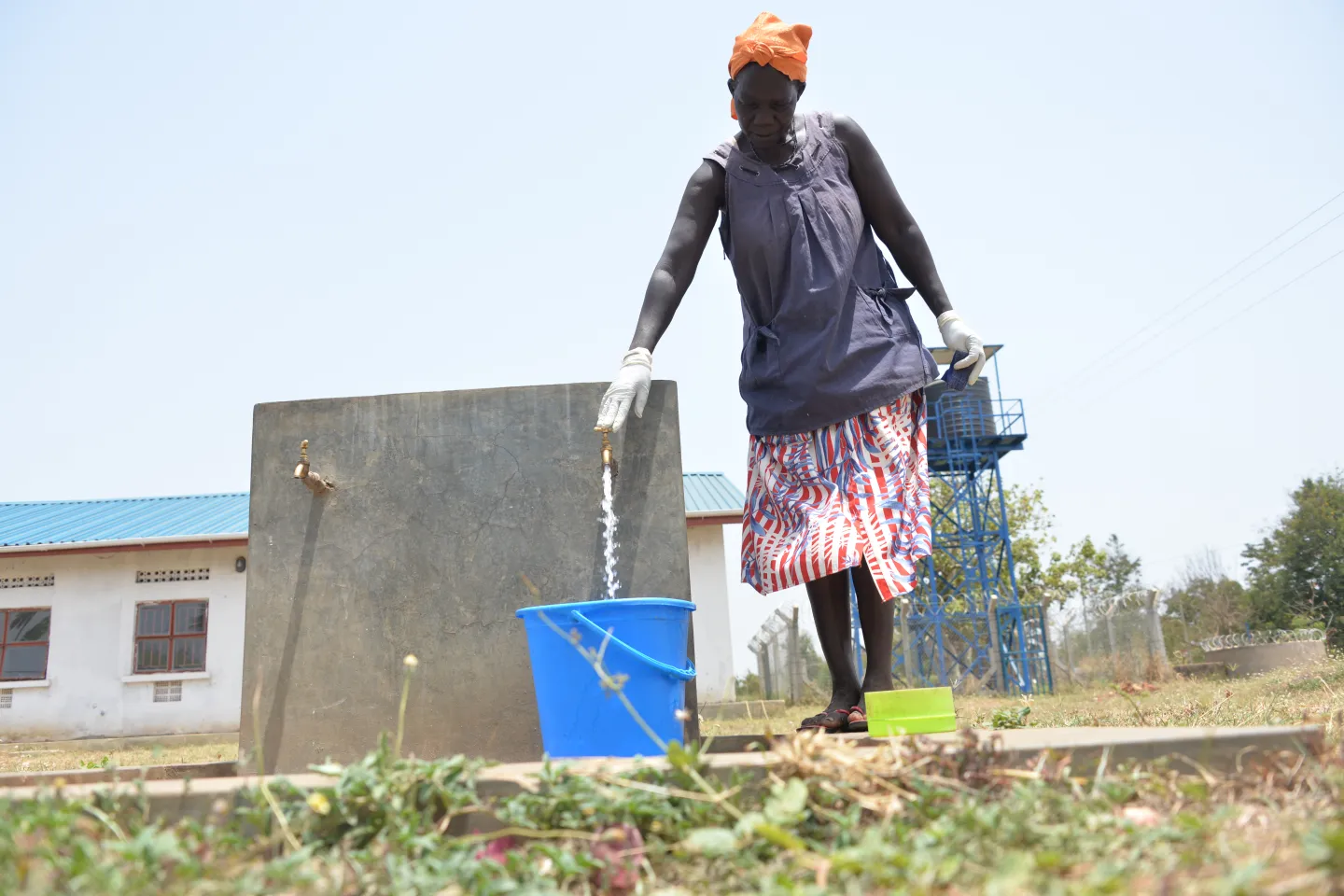
Communities in Uganda access clean water to prevent disease outbreaks.
Health, Medical Care, Food, Water and Disease Prevention in Uganda
Health preparation is an essential part of any comprehensive Uganda Safety Guide. Uganda offers diverse travel experiences, from wildlife safaris and mountain gorilla trekking to cultural tourism, city visits and journeys through rural communities. Each type of travel can involve different health considerations, so visitors should prepare before departure rather than waiting until they become unwell.
The World Health Organization recommends that travelers gather information about destination-specific health risks early in the planning process and, where possible, visit a travel clinic 4–8 weeks before departure or earlier. WHO also recommends carrying sufficient prescribed medicines and appropriate health documentation.
A good Uganda travel safety plan should therefore include mosquito-bite prevention, food and water precautions, vaccination review, appropriate medical insurance, personal medicines and a plan for obtaining medical assistance if necessary.
Travelers planning Uganda safari holidays should discuss their itinerary with a qualified healthcare professional before travel, particularly when the itinerary includes remote national parks or extended stays away from major towns.
Why Health Preparation Matters Before Visiting Uganda
Health preparation should begin before an international flight. Some preventive measures need to be completed before arrival, while others depend on the specific destinations, activities and length of stay included in the itinerary.
Travelers should not rely on a generic internet checklist to determine which vaccinations, medicines or preventive measures are appropriate for them. Health requirements can depend on individual circumstances, previous vaccination history, medical conditions, age, pregnancy status, medications and the exact countries visited before Uganda.
WHO advises travelers to obtain health information early and consult a travel clinic preferably 4–8 weeks before departure. Even when travel is arranged at short notice, seeking professional travel-health advice can still be useful.
Visitors preparing for Uganda safari tours should therefore treat health planning as part of the itinerary rather than as a separate issue.
Malaria Prevention in Uganda
Malaria is one of the most important health considerations for travelers visiting malaria-endemic areas. It is caused by Plasmodium parasites transmitted through the bites of infected female Anopheles mosquitoes. WHO describes malaria as preventable and curable but emphasizes that untreated malaria can progress to severe disease. Travelers from countries without malaria transmission can be particularly vulnerable because they do not have the same partial immunity that may exist in some populations living in endemic areas.
Preventing malaria therefore needs to be a central part of Uganda travel safety. Travelers should speak with a qualified medical professional about whether malaria prevention medication is appropriate for their itinerary and personal circumstances.
Medication alone should not be treated as complete protection. Travelers should also reduce mosquito exposure by using appropriate insect repellent, wearing suitable clothing and making sensible use of screened or protected sleeping areas.
Visitors traveling on Uganda gorilla trekking safaris should continue mosquito precautions throughout their journey because accommodation and travel conditions can vary considerably between destinations.
Mosquito-Bite Prevention
Mosquito protection is broader than malaria prevention alone. Mosquitoes can transmit several diseases, and different mosquito species can have different biting patterns. WHO specifically recommends mosquito-bite avoidance as part of yellow fever prevention and notes that yellow fever transmission can occur during the day and early evening.
Travelers should follow the instructions on any insect repellent they use and combine repellent with practical measures such as appropriate clothing and screened accommodation where available.
Mosquito protection should not stop simply because a traveler is leaving an urban area. Safari destinations, forest environments and rural areas can involve significant exposure to insects.
Travelers arranging Uganda wildlife safaris should include mosquito protection among the essential items discussed during pre-travel health preparation.
Yellow Fever Vaccination and Uganda Entry Requirements
Yellow fever is an important consideration when preparing for travel to Uganda. WHO identifies Uganda as a country where yellow fever transmission occurs and recommends vaccination for travelers visiting areas where there is a risk of transmission.
WHO’s recent information also confirms that Uganda has introduced yellow fever vaccination into its routine immunization programme and has conducted nationwide vaccination campaigns. In April 2025, a targeted campaign phase vaccinated more than 4.2 million people across 19 districts.
International travelers should check the current entry requirements before departure because vaccination documentation requirements can change. WHO explains that country requirements should be verified using current official travel-health information and relevant authorities.
Travelers booking Uganda safari packages should confirm their vaccination documentation independently before travelling rather than relying only on older travel information.
Food Safety in Uganda
Food safety is another important part of Uganda travel safety. Travelers can reduce the likelihood of foodborne illness by choosing food carefully and paying attention to hygiene, preparation and storage conditions.
Visitors should be particularly careful with food that has been stored at unsafe temperatures or handled under questionable hygiene conditions. Freshly prepared food that is properly cooked and served hot is generally a more sensible choice than food that has been sitting exposed for long periods.
Travelers should also wash their hands regularly, particularly before eating. Hand hygiene is a simple measure that can help reduce exposure to infections transmitted through contaminated hands, food and surfaces.
Visitors staying at safari lodges through Uganda gorilla safari arrangements should follow the hygiene guidance provided by their accommodation.
Drinking Water Safety in Uganda
Water safety should be considered throughout a Uganda trip, particularly when moving between cities, rural areas, lodges and remote safari destinations. Travelers should know what source their drinking water comes from and follow the recommendations of their accommodation and healthcare professional.
When the safety of untreated water is uncertain, travelers should choose a reliable treated or commercially sealed drinking-water source rather than assuming that clear-looking water is automatically safe to drink.
Travelers should also consider water used for brushing teeth and other activities where accidental ingestion may occur. The appropriate precautions depend on the location and the quality of the available water supply.
Visitors organizing Uganda travel packages should ask their accommodation provider about drinking-water arrangements, particularly when staying in remote locations.
Managing Diarrhea and Other Common Travel Illnesses
Changes in food, water, climate and daily routines can sometimes result in gastrointestinal illness during international travel. Travelers should pay attention to symptoms such as persistent diarrhea, vomiting or fever and should seek appropriate medical advice when symptoms are severe, persistent or accompanied by concerning signs.
Dehydration is an important concern when significant fluid loss occurs. Travelers should discuss appropriate oral rehydration products and other items for their personal travel-health kit with a qualified healthcare professional before departure.
WHO advises travelers to seek medical attention after returning home if they develop illness in the weeks following travel, including fever, persistent diarrhea, vomiting or jaundice. Travelers should tell healthcare professionals about their recent travel history.
Visitors on Uganda safari holidays should not ignore persistent illness simply because they are close to the end of their trip.
Carrying Prescription Medicines to Uganda
Travelers who take prescription medicines should plan carefully before departure. WHO recommends carrying sufficient prescribed medicines to cover the duration of the journey, including possible delays and changes in plans.
Medicines should be stored appropriately and travelers should know the generic or active ingredients of important medications in case medical assistance becomes necessary. It is also sensible to carry relevant medical documentation where appropriate.
Travelers should not make changes to prescribed medication solely because they are travelling. Any medication adjustment should be discussed with the healthcare professional who manages the medication.
Travelers preparing for Uganda gorilla trekking tours should account for remote travel days when deciding how much prescribed medication and medical documentation to carry.
Travel Insurance and Medical Evacuation Planning
Medical insurance is an important part of international travel planning. WHO strongly advises travelers to obtain comprehensive travel insurance as part of routine preparation.
Travelers should understand what their insurance covers before departure. Depending on the policy, important questions can include emergency medical treatment, hospitalization, evacuation, repatriation and activities included in the itinerary.
This becomes particularly important when an itinerary includes remote national parks or physically demanding activities. Travelers should read their policy conditions rather than assuming that every activity or destination is automatically covered.
Visitors booking Uganda adventure safaris should confirm their insurance coverage before leaving home.
Medical Care and Access to Healthcare
Healthcare availability can differ significantly between urban and remote areas. Travelers should not assume that a remote safari lodge has the same medical resources available in Kampala or another major urban centre.
This is one reason why itinerary planning matters. Visitors spending several days in remote regions should understand how their tour operator handles medical emergencies and where the nearest appropriate medical facility may be located.
WHO recommends carrying important health documents, including health insurance information and relevant vaccination or malaria-prevention records.
Travelers arranging Uganda safari tours from Kampala should clarify emergency communication arrangements before heading into remote areas.
Heat, Sun Exposure and Dehydration
Travelers should also consider environmental health risks. Long periods outdoors can result in significant sun exposure, heat stress and dehydration, particularly during wildlife viewing, walking activities and trekking.
WHO advises travelers to remain mindful of protection from extreme weather, including heat waves.
Travelers should drink appropriate amounts of safe fluids, protect themselves from excessive sun exposure and take sensible breaks during strenuous activities. The exact precautions should reflect the activity, weather and individual health circumstances.
Visitors planning Uganda gorilla trekking experiences should discuss fitness and health considerations with a healthcare professional if they have concerns about strenuous activity.
Health Considerations for Gorilla Trekking
Gorilla trekking can involve extended periods of walking on uneven terrain, steep slopes, muddy trails and forest environments. Health preparation should therefore account for the physical demands of the activity rather than focusing only on infectious diseases.
Travelers should follow the instructions of park authorities, guides and trekking staff throughout the activity. Appropriate footwear, hydration, weather protection and personal medication planning can all contribute to a safer experience.
Travelers who have an existing medical concern should discuss whether the planned activity is appropriate with a qualified healthcare professional before departure.
Anyone planning Uganda gorilla trekking holidays should include the physical demands of trekking in their pre-travel health assessment.
Health Safety in Uganda’s National Parks
Safari destinations require travelers to think about health in a broader way than simply access to a hospital. Wildlife areas can be remote, journeys can take several hours and activities can involve exposure to insects, sun, rain and changing terrain.
Travelers should follow the instructions provided by professional guides and accommodation staff. They should also avoid wandering away from designated areas or ignoring instructions about wildlife encounters.
Personal health supplies should be prepared before entering remote areas because replacement options may be limited compared with major cities.
Travelers planning Uganda wildlife and gorilla safaris should discuss the remote portions of their itinerary with their tour operator before departure.
What to Pack in a Uganda Travel Health Kit
A personal travel-health kit should be based on the traveler’s individual needs and professional medical advice. Important items may include personal prescription medicines, basic first-aid supplies, appropriate insect-repellent products, personal hygiene items and copies of important health documentation.
WHO recommends carrying sufficient prescribed medication for the trip, including additional supplies that may be needed if travel plans change or delays occur.
Travelers should keep essential medicines and important documents where they can be accessed easily rather than placing everything in checked luggage or a bag that may become inaccessible during transfers.
Visitors preparing for Uganda safari adventures should adapt their health kit to the length, destination and activities of their particular trip.
What to Do If You Develop a Fever During or After Travel
Fever after travel to a malaria-endemic area should be taken seriously. WHO explains that malaria can initially present with fever, headache and chills and that prompt diagnosis and treatment are important because malaria can progress rapidly to severe illness.
Travelers should not assume that every fever is malaria, but they should tell a healthcare professional about recent travel to Uganda and any malaria prevention measures they used.
WHO also recommends that travelers seek medical attention after returning home if they become ill in the weeks following travel, particularly when fever or persistent gastrointestinal symptoms occur.
Visitors returning from Uganda gorilla trekking trips should mention their recent travel history if they require medical attention after returning home.
Health Preparation for Children and Other Travelers With Special Needs
Health planning should be individualized for children, older travelers, pregnant travelers, travelers with disabilities and people with underlying health conditions. WHO specifically notes that these groups may require additional travel-health considerations.
Families should discuss vaccinations, medicines, food and water precautions, mosquito protection and the physical demands of planned activities with an appropriate healthcare professional before departure.
The itinerary should also reflect the needs of the group. A schedule involving long transfers, remote accommodation and strenuous activities may need additional planning when traveling with people who require specific health support.
Families considering family safari holidays in Uganda should discuss the complete itinerary with their healthcare provider before departure.
Current Health Information Should Always Be Checked Before Travel
Health information can change because of disease outbreaks, vaccination campaigns, changes in entry requirements and other public-health developments. Travelers should therefore check current official information shortly before departure rather than relying exclusively on an old Uganda Safety Guide or an outdated travel article.
WHO maintains current travel-health information, while the CDC Travelers’ Health service provides destination-specific information and current travel health notices. The CDC’s current global page also demonstrates why travelers should check recent notices before departure.
Uganda’s recent yellow fever vaccination campaigns demonstrate how public-health conditions and prevention programmes can evolve over time.
Travelers booking Uganda safari travel should therefore verify current health information independently before departure.
Health and Medical Safety Checklist for Uganda
Before travelling, visitors should review their routine vaccinations and obtain professional advice about destination-specific vaccines and preventive measures. They should arrange sufficient prescription medicines, organize appropriate travel insurance and prepare copies of important health documents.
Travelers should also make a plan for mosquito protection, safe food and drinking water, sun and heat exposure, and access to medical assistance. People planning strenuous activities should consider the physical demands of those activities before departure.
During the journey, travelers should maintain good hygiene, follow local and professional guidance, take mosquito precautions and pay attention to symptoms of illness. Persistent or serious symptoms should not be ignored.
Travelers preparing for Uganda gorilla safari holidays should apply these precautions before, during and after their journey.
Health Safety as Part of a Complete Uganda Safety Guide
Health preparation should be viewed as one component of a broader Uganda Safety Guide. Visitors need to consider transportation, personal security, wildlife safety, environmental conditions and health together rather than treating each subject independently.
Malaria prevention, mosquito protection, yellow fever vaccination, food and water safety, appropriate medical insurance and preparation for remote travel can all contribute to a more resilient travel plan. WHO emphasizes the importance of preparing before departure, carrying necessary medicines and documents, and paying attention to health risks during and after travel.
The most important principle is to avoid treating health advice as a one-size-fits-all checklist. Travelers should obtain current information and seek individualized advice from qualified health professionals, particularly when they have specific medical needs or are planning demanding activities.
With thoughtful preparation, travelers can approach Uganda travel safety in a practical and informed way while leaving room for changing conditions and individual circumstances.
Key Takeaways for Uganda Travel Health and Safety
A detailed Uganda Safety Guide should encourage travelers to prepare for health risks before arrival, not only respond to illness after it occurs. Travelers should obtain current travel-health advice, review vaccination needs, discuss malaria prevention with a qualified healthcare professional, protect themselves from mosquito bites, take food and water precautions and carry adequate personal medicines.
Travelers should also carry appropriate health documentation and obtain comprehensive travel insurance. WHO specifically recommends comprehensive travel insurance and sufficient medical supplies for the duration of travel, including possible delays.
For safari travelers, these precautions become especially relevant when the itinerary moves into remote areas. Good preparation allows visitors to enjoy Uganda’s wildlife, landscapes and cultural experiences while maintaining sensible Uganda travel safety practices.
This health section should be read together with the transportation and road-safety information elsewhere in this Uganda Safety Guide. The next section should address personal security, theft, scams, accommodation safety and practical precautions for visitors in Uganda.
Organized tourism and professional guides ensure a safe stay in Uganda.
Personal Security, Crime Prevention and Staying Safe in Uganda
Personal security is one of the most important components of a comprehensive Uganda Safety Guide. Uganda welcomes international visitors for wildlife safaris, gorilla trekking, cultural experiences, business travel and city breaks, but travelers should understand the practical security risks that can occur in different environments.
Current international travel advice identifies crime, terrorism and civil unrest among the security issues travelers should consider in Uganda. The UK Foreign, Commonwealth & Development Office advises visitors to remain aware of their surroundings, protect valuables, avoid unnecessary exposure after dark and follow local security guidance.
The purpose of Uganda travel safety planning is not to create unnecessary fear. It is to help visitors make sensible decisions about transportation, accommodation, valuables, nightlife, public spaces, communication and movement. Good preparation can make it easier to respond calmly when circumstances change.
Travelers arranging Uganda safari holidays should therefore consider personal security alongside health, road safety, wildlife safety and regional conditions.
Is Uganda Safe for Tourists?
The answer depends on where you are going, how you travel and the current security situation. Uganda is a large country with substantial differences between Kampala, established safari destinations, border regions and remote rural areas.
Travelers should therefore avoid treating the entire country as having exactly the same risk profile. Current official advice identifies particular concerns in some border regions and notes that security conditions can change.
For ordinary tourism, the most useful approach is practical risk management: choose reputable accommodation and transport providers, keep valuables secure, avoid unnecessary nighttime movement, remain alert in crowded areas and monitor current information.
Visitors planning Uganda safari tours should also understand the specific conditions of the regions included in their itinerary.
Common Security Risks Travelers Should Understand
Current official travel advice identifies several forms of crime that travelers may encounter, including pickpocketing, theft from vehicles and hotel rooms, robbery and theft involving pedestrians or motorcycle operators.
These risks do not mean that every traveler will experience crime. They do mean that visitors should avoid creating unnecessary opportunities for theft. Expensive-looking jewelry, large amounts of cash, unsecured phones and unattended bags can attract unwanted attention.
A strong Uganda Safety Guide should therefore emphasize prevention rather than attempting to predict exactly where a particular incident might happen.
Travelers on Uganda gorilla trekking safaris should also follow the security instructions provided by their accommodation and tour team.
Protecting Your Passport, Money and Valuables
A passport is one of the most important documents a traveler carries. Visitors should keep it secure and should avoid carrying unnecessary valuables when exploring busy areas.
FCDO advice recommends taking care of passports, avoiding large amounts of cash and avoiding expensive-looking jewelry or watches. It also advises travelers to use indoor ATMs where possible and to take precautions when withdrawing cash.
Travelers can also reduce the consequences of losing a document by keeping secure copies of important travel information. Copies should be stored separately from the originals and protected from unauthorized access.
Visitors booking Uganda safari packages should organize their documents before leaving for remote destinations.
ATM and Cash Safety in Uganda
Cash withdrawals are an ordinary part of travel, but visitors should approach ATMs carefully. Official travel advice recommends using indoor ATMs where possible and being particularly alert around banks and cash machines.
Travelers should avoid displaying large amounts of cash in public and should organize money discreetly. It is also sensible to avoid allowing unfamiliar people to handle bank cards, phones or financial information.
Travelers should monitor their accounts during an international trip and contact their financial institution through official channels if they notice suspicious activity.
Visitors traveling with Uganda safari itineraries should plan their cash needs before leaving major towns because access to financial services can become less convenient in remote areas.
Keeping Your Phone and Electronics Secure
Smartphones are useful for navigation, communication, photography and accessing travel documents, but they are also valuable personal possessions. Travelers should avoid unnecessarily displaying expensive devices in situations where doing so could attract unwanted attention.
Travelers should use strong device security, enable appropriate screen locks and keep important travel information backed up securely. Sensitive information should not be left openly visible on a device.
When using a phone for navigation, travelers should avoid becoming so focused on the screen that they stop paying attention to their surroundings.
Visitors on Uganda safari holidays should also protect cameras and other photography equipment when moving between vehicles, accommodation and public areas.
Walking Safely in Kampala and Other Urban Areas
Kampala is a busy capital city with heavy traffic, crowded commercial areas and constantly changing surroundings. FCDO advises visitors to take normal precautions appropriate to a busy capital and to remain aware of general security risks.
Travelers should choose routes and times carefully, especially when unfamiliar with an area. Avoiding poorly lit or isolated locations and avoiding unnecessary walking after dark can reduce exposure to avoidable risks.
When walking through crowded areas, keep personal belongings secure and maintain awareness of people around you. Do not leave phones, cameras or bags unattended.
Visitors beginning Uganda safari trips from Kampala should organize reliable transportation rather than assuming every journey is best completed on foot.
Safety When Using Taxis and Other Transport
Transportation is an important part of personal security. General UK guidance for solo and independent travelers recommends arranging airport transfers in advance where practical and using official, licensed and reputable taxis.
For Uganda specifically, FCDO warns about vehicle crime and advises travelers to keep vehicle doors locked and windows closed in towns and not to leave luggage or valuables visible inside parked vehicles.
Travelers should verify transport arrangements before getting into a vehicle and should be cautious when approached by unknown drivers offering unsolicited services.
Travelers using Uganda safari transportation should confirm their pickup arrangements and driver information in advance.
Boda-Boda Safety Considerations
Motorcycle taxis, commonly called boda-bodas, are widely used in Uganda. However, official travel advice warns that foreign nationals using boda-bodas have been victims of mugging and that road accidents involving motorcycles can be serious.
Travelers should therefore carefully consider whether a motorcycle taxi is appropriate for their journey. When a safer and reputable alternative is available, particularly for airport transfers, luggage-heavy journeys or unfamiliar routes, arranging appropriate transportation in advance may be preferable.
Visitors on Uganda gorilla safari tours should normally coordinate transfers with their accommodation or tour operator instead of improvising transportation during remote sections of the itinerary.
Hotel and Accommodation Security
Accommodation should be selected with location, security arrangements and access in mind. General travel guidance recommends researching accommodation carefully, checking its location and understanding its health and safety standards before arrival.
Travelers should use available room locks and follow accommodation security procedures. Valuable items should not be left unnecessarily exposed in a room or vehicle.
It is also useful to know the location of reception, emergency exits and other important facilities when checking into unfamiliar accommodation.
Visitors staying at properties arranged through Uganda safari accommodation packages should ask their provider about security procedures when necessary.
Avoiding Scams and Unwanted Financial Requests
Scams can occur in many tourist destinations, and current FCDO advice specifically warns that scammers may target foreign visitors and residents. It recommends caution when strangers approach travelers or contact them requesting personal information or financial assistance.
A useful principle is to avoid making financial decisions under pressure. If an unfamiliar person presents an urgent story and asks for money, personal information or access to a device, travelers should pause and verify the situation independently.
Travelers should also be careful with unsolicited offers of assistance involving accommodation, transportation, money exchange or other services.
Visitors researching safe Uganda safari operators should use established providers and verify arrangements before departure.
Food, Drink and Personal Security
Personal security also includes being careful about accepting food or drinks from strangers. FCDO reports incidents in which travelers have been drugged and robbed on public transport and in bars, and advises visitors not to accept food or drinks from strangers.
Travelers should keep their own belongings under control and should avoid leaving personal possessions unattended in public places.
If a traveler becomes concerned about their surroundings, the safest response is generally to move toward an appropriate secure environment and contact a trusted travel companion, accommodation provider or tour operator.
Visitors on Uganda wildlife safari holidays should maintain these precautions even when staying at reputable lodges.
Safety Around Public Gatherings and Demonstrations
Political demonstrations, rallies and large gatherings can change rapidly. Current FCDO guidance states that protests and violent demonstrations can occur without warning and advises travelers to avoid demonstrations and rallies where possible.
Visitors should not attempt to watch, photograph or approach an unfolding demonstration simply out of curiosity. If a gathering develops near their route, they should follow local instructions and move away from the area where appropriate.
Travelers should also monitor current local information because major political events, public holidays and other occasions can affect movement and security conditions.
Visitors beginning Uganda holiday safaris should keep their itinerary flexible enough to accommodate unexpected changes.
Terrorism Awareness and Tourist Areas
Current official advice warns that terrorist attacks are possible in Uganda and that locations frequented by tourists can be among potential targets. These include hotels, transport hubs, restaurants, shopping centres, places of worship, major gatherings and some national parks.
Travelers should therefore maintain general situational awareness and follow security instructions provided by local authorities and reputable accommodation or tour providers.
This does not mean visitors should spend their entire trip worrying about security. Instead, they should know where they are going, avoid unnecessary exposure to known risk situations and remain attentive to credible local information.
Travelers arranging Uganda gorilla trekking safaris should check current regional security information before traveling toward the country’s border areas.
Security in Western Uganda and Border Regions
Security conditions near international borders can differ from those in major tourist centres. Current FCDO regional advice identifies particular security concerns near the Uganda–Democratic Republic of the Congo border, including risks associated with armed groups, banditry and localized violence.
Bwindi Impenetrable National Park and Mgahinga Gorilla National Park are in southwestern Uganda near the borders with the Democratic Republic of the Congo and Rwanda. FCDO advises travelers to use reputable registered tour operators and contact the Uganda Wildlife Authority for up-to-date information before visiting these areas.
Travelers should not cross into restricted or higher-risk areas simply because an itinerary appears to offer an unusual experience. Regional security advice should always take priority over informal recommendations.
Visitors planning Uganda gorilla trekking tours should confirm the current security situation with their registered operator before departure.
Security in Karamoja and Northeastern Uganda
Northeastern Uganda requires additional awareness because current regional travel advice identifies security concerns in the Karamoja sub-region, including cattle-related conflict, armed raids and robbery.
Travelers visiting northeastern destinations should obtain current local advice and avoid nighttime travel where security conditions make it inappropriate. The situation can vary between districts and can change over time.
Visitors arranging Uganda cultural and wildlife safaris should discuss route planning with an experienced operator when their itinerary includes remote northeastern areas.
Photography and Security Awareness
Photography is an important part of many Uganda trips, but travelers should understand that not every location can safely or legally be photographed. Current FCDO guidance states that photographing military, official and diplomatic sites is forbidden. It also recommends asking people for permission before photographing them.
Travelers should avoid photographing security installations or restricted infrastructure unless they have clear authorization. When uncertain, it is better to ask before taking a photograph.
Visitors on Uganda safari photography trips should also listen to their guide when photographing wildlife and should prioritize safety over getting a particular image.
Respecting Local Laws and Security Instructions
A major part of Uganda travel safety is understanding that visitors are expected to comply with local laws. Travelers should carry appropriate identification documentation and should follow instructions from legitimate authorities.
FCDO states that officials may stop travelers and ask for identification and advises visitors to carry a copy of the photo page of their passport.
Travelers should also be careful about clothing and photography because some activities that appear harmless to visitors can have legal implications in Uganda.
Anyone traveling on Uganda safari vacations should familiarize themselves with relevant local laws before departure.
What to Do if You Are Robbed
If a traveler is confronted during a robbery, personal safety should take priority over property. Current U.S. travel advice specifically states that travelers should not physically resist a robbery attempt.
Once in a safe location, the traveler should contact the appropriate authorities and their travel provider or insurer as necessary. Important documents such as passports and insurance information can be especially important after a theft.
Travelers should also notify relevant financial institutions if bank cards or other financial information were stolen.
Visitors traveling through Uganda safari destinations should know how to contact their driver, accommodation and tour operator before entering remote areas.
Staying Safe When Traveling Alone
Solo travelers should take additional care with communication and itinerary planning because they do not have a companion immediately available to help if plans change.
General international travel guidance recommends arranging the first night’s accommodation in advance, researching the location carefully and considering transportation arrangements before arrival.
Solo travelers should keep a trusted person informed about their itinerary and maintain reliable communication where possible. This is particularly useful when traveling into areas with limited connectivity.
Travelers arranging solo Uganda gorilla safaris should provide their itinerary and accommodation details to someone they trust before departure.
Staying Safe as a Family
Families should establish simple safety routines before traveling. Children should know who to approach if they become separated from their family and should understand that they should not leave with unfamiliar people.
Parents and guardians should keep important documents, medications and emergency contact information accessible and should make sure that children understand basic travel rules.
Families planning family Uganda safari holidays should also make sure that every member of the group understands the guide’s instructions during wildlife activities.
Emergency Communication and Important Contacts
Travelers should know how to request emergency assistance before beginning their trip. Current FCDO guidance lists 999 for ambulance, fire and police emergency services in Uganda.
The exact emergency response available can vary depending on location. In remote safari areas, travelers should also know how to contact their tour operator, driver, accommodation and insurer.
Travelers should keep important contact details accessible rather than relying entirely on an internet connection or a phone that may lose power.
Visitors on Uganda safari adventures should receive emergency contact information from their tour provider before departure.
A Practical Daily Personal Security Routine
One of the easiest ways to improve Uganda travel safety is to create a simple daily routine. Before leaving accommodation, travelers can confirm their destination, transportation, phone battery, essential documents and emergency contacts.
During the day, travelers should remain aware of their surroundings, keep valuables secure and avoid unnecessarily displaying expensive belongings. Before returning to accommodation, they should confirm their transportation arrangements rather than improvising late at night.
This approach is particularly useful for first-time visitors because it turns Uganda Safety Guide recommendations into simple habits.
Travelers beginning their trip with Uganda safari planning can discuss these arrangements with their tour operator before arrival.
Personal Security Checklist for Uganda
Before leaving home, travelers should research their destinations, arrange their first accommodation, organize reliable transportation and obtain appropriate travel insurance. They should also make copies of important documents and establish a communication plan.
During the trip, travelers should protect their passport and valuables, avoid displaying unnecessary signs of wealth, use appropriate transportation, avoid unnecessary nighttime walking and remain cautious around unfamiliar people offering unsolicited assistance.
Travelers should avoid demonstrations and large gatherings when security conditions make them inappropriate, follow instructions from legitimate authorities and monitor credible local information. Current official advice emphasizes situational awareness and flexibility because security conditions can change.
For remote safari destinations, travelers should use reputable operators, understand their transportation arrangements and obtain current regional information before departure. This is particularly important in areas near Uganda’s international borders.
A well-prepared traveler does not need to be constantly anxious. The objective of Uganda travel safety is to make informed choices, reduce avoidable risks and know what to do if circumstances change.

Packing an essential medical kit ensures safety during your travels in Uganda.
Uganda Health and Medical Safety: Essential Health Advice for Travelers
Health preparation is a central part of any comprehensive Uganda Safety Guide. A safe Uganda trip involves more than choosing accommodation and transportation. Travelers should consider healthcare access, travel insurance, vaccinations, malaria prevention, food and water hygiene, insect protection, personal medication, emergency planning and the health requirements associated with different safari destinations.
Health conditions can differ considerably between Kampala, major towns, national parks and remote rural destinations. Medical facilities and emergency response can also be more limited outside major urban centres. Current UK travel advice specifically notes that medical help at the scene of an accident is likely to be limited, particularly outside Kampala.
Travelers should therefore plan their health arrangements before departure rather than waiting until they become ill or injured. The Centers for Disease Control and Prevention recommends destination-specific preparation, appropriate travel insurance and planning for healthcare before international travel.
Anyone arranging Uganda safari holidays should discuss the itinerary with a qualified healthcare professional or travel-health specialist when destination-specific medical advice is needed.
Start Your Uganda Health Preparation Before Departure
One of the most important principles in Uganda travel safety is preparing early. CDC guidance recommends consulting a healthcare provider or travel-health specialist before international travel, with the timing allowing enough opportunity to discuss the itinerary, planned activities, vaccination requirements and other destination-specific considerations.
This is particularly useful for travelers planning activities such as gorilla trekking, chimpanzee tracking, extended road journeys or visits to remote national parks. The healthcare discussion should reflect the actual destinations and activities included in the itinerary rather than treating every Uganda trip as identical.
Travelers booking Uganda safari tours can prepare a complete itinerary for their healthcare professional so that destination-specific advice can be considered.
Vaccinations and Travel Health Consultation
Vaccination requirements and recommendations can depend on the traveler’s circumstances, previous vaccination history and itinerary. Travelers should obtain current advice from an appropriate healthcare professional rather than relying on an old checklist found online.
UK travel guidance for Uganda advises travelers to check recommended vaccines before travel, while CDC guidance recommends reviewing destination-specific vaccine and medicine information and ensuring routine vaccinations are up to date.
Visitors organizing Uganda gorilla trekking safaris should mention all planned destinations and activities when seeking travel-health advice.
Malaria Prevention in Uganda
Malaria is an important health consideration for travelers to Uganda. Current UK travel advice lists malaria among the health risks travelers may face in Uganda.
Travelers should obtain individualized malaria prevention advice from a qualified healthcare professional before departure. The appropriate approach can depend on the itinerary, duration of travel and individual circumstances.
Preventive planning should also include measures that reduce mosquito exposure. Travelers should discuss suitable insect-repellent strategies, clothing and accommodation precautions with a healthcare professional.
Visitors preparing for Uganda wildlife safaris should consider malaria prevention before traveling into rural and protected-area environments.
Mosquito and Insect Protection
Insect protection should form part of everyday Uganda travel safety, particularly during outdoor activities and stays in areas where mosquitoes and other insects are common.
Travelers should follow current professional advice regarding insect repellents and other protective measures. CDC travel-health guidance includes insect repellent among items that may be useful in a travel health kit, depending on the destination.
Travelers should also pay attention to accommodation conditions and use the protective measures provided or recommended by their accommodation where appropriate.
Visitors on Uganda safari holidays should ask their healthcare professional about appropriate insect-borne disease prevention before departure.
Food and Water Safety in Uganda
Food and water hygiene should be treated as an important part of Uganda travel safety. Travelers should use sensible hygiene practices, particularly when eating away from established accommodation and restaurants.
Regular handwashing is one of CDC’s basic recommendations for preventing illness while traveling. CDC also advises travelers to take precautions when food, water and sanitation conditions may expose them to infection.
Travelers should pay attention to the source and handling of drinking water and food. When uncertain about a particular food or drink, it is sensible to ask the accommodation or tour provider for guidance.
Travelers using Uganda safari packages can ask their operator about meals, drinking water and food arrangements during remote sections of the itinerary.
Hand Hygiene and Everyday Illness Prevention
Simple hygiene practices can make a significant difference during international travel. CDC recommends regular handwashing with soap and water and using an alcohol-based hand sanitizer when soap and water are unavailable.
Travelers should avoid touching their eyes, nose and mouth with unwashed hands and should maintain sensible hygiene around meals and shared environments.
If a traveler becomes unwell during a trip, they should assess the situation carefully and seek medical attention when symptoms require professional evaluation. CDC advises travelers who become sick to stay at their accommodation unless they need medical care.
Visitors planning Uganda safari trips should carry appropriate personal hygiene supplies as part of their travel preparation.
Travel Insurance and Medical Evacuation
Travel insurance is a key part of a responsible Uganda Safety Guide because medical treatment, emergency transportation and evacuation can become expensive, particularly when a traveler is far from major medical facilities.
Current UK travel advice recommends appropriate travel insurance for Uganda, including cover relevant to the planned itinerary and unexpected medical evacuation.
CDC similarly recommends considering insurance that covers healthcare and emergency evacuation, particularly when traveling to remote areas.
Travelers booking Uganda gorilla safari tours should verify that their insurance covers the activities and remote destinations included in their itinerary.
Carrying Prescription Medicines and a Personal Health Kit
Travelers who regularly use prescription medicines should plan their medication supply before departure. CDC recommends carrying prescribed medicines as directed and taking enough for the trip, with additional supply where appropriate in case delays affect the itinerary.
A personal travel health kit can contain items appropriate to the traveler’s needs. CDC identifies items such as prescriptions, routine over-the-counter medicines, insect repellent and health-insurance information as possible components of a travel health kit.
Travelers should keep medication clearly identified and should follow professional instructions concerning its use. Anyone with specific medical needs should obtain individualized advice before departure.
Visitors arranging Uganda safari vacations should account for the possibility of delays when deciding what personal health supplies to carry.
Medical Care in Kampala and Outside Major Cities
Access to healthcare can vary depending on location. Travelers staying in Kampala may have access to a broader range of medical services than travelers staying in remote safari areas, although the appropriate facility depends on the nature and severity of the medical problem.
UK travel advice specifically warns that medical help at the scene of an accident is likely to be limited outside Kampala. This makes advance planning particularly important for travelers undertaking long road journeys or visiting remote destinations.
Before traveling to remote areas, visitors should know how their tour operator, accommodation provider and insurer would respond if medical assistance were required.
Travelers on Uganda wildlife tours should ask about emergency arrangements before entering areas where healthcare facilities are limited.
Current Health Alerts and Why Travelers Should Check Before Departure
Health conditions can change after a travel guide has been published. For that reason, a high-quality Uganda Safety Guide should encourage readers to check current health information shortly before departure rather than relying exclusively on static information.
As of August 2026, the CDC has a Level 2 Travel Health Notice concerning a Bundibugyo virus disease outbreak in Uganda and recommends enhanced precautions for travelers to Uganda. The notice was reviewed on July 15, 2026.
This is an important example of why health information should be checked close to the date of travel. Current alerts can change as health authorities receive new information and update their recommendations.
Visitors arranging Uganda gorilla trekking trips should review current health information before traveling and should discuss any relevant concerns with an appropriate healthcare professional.
Animal Encounters, Bites and Scratches
Wildlife encounters are one of the major reasons people visit Uganda, but animals should always be treated as wild animals. Travelers should never attempt to touch, feed or approach wildlife simply to obtain a photograph.
CDC notes that animal bites can cause bacterial infections and advises travelers to seek medical attention following an animal encounter when appropriate. It also highlights the importance of being up to date with tetanus vaccination.
Travelers should immediately inform their guide or responsible tour provider if an animal bite, scratch or other potentially significant animal exposure occurs so that appropriate medical advice can be obtained.
Visitors on Uganda gorilla trekking safaris must follow the instructions of their guides and wildlife authorities during encounters with gorillas, chimpanzees and other wildlife.
Heat, Sun Exposure and Dehydration
Travelers can underestimate the effects of heat and prolonged outdoor activity, especially when concentrating on wildlife viewing, hiking or photography. Uganda travel safety therefore includes sensible protection against excessive sun exposure and dehydration.
CDC advises travelers in hot climates to take measures to protect themselves from the sun and extreme temperatures.
Travelers should plan outdoor activities sensibly, take appropriate breaks and follow guidance from their guides and accommodation providers. Anyone who becomes significantly unwell should seek appropriate medical attention.
Visitors preparing for Uganda safari adventures should consider sun protection and hydration when packing for outdoor activities.
Road Travel and Medical Safety
Road transportation is an important part of many Uganda safari itineraries, and travelers should recognize that long journeys can create both fatigue and accident-related risks. CDC identifies motor vehicle crashes as a leading cause of death among travelers generally.
Travelers should use reputable transportation providers, follow their driver’s safety instructions and avoid unnecessary distractions while traveling.
If an accident occurs, travelers should seek appropriate medical assistance and contact their insurer and travel provider when required. Current Uganda travel-health guidance emphasizes the importance of having an appropriate insurance and emergency plan.
Visitors traveling with Uganda safari operators should understand the emergency procedures that apply during long-distance road transfers.
What to Do If You Become Sick During Your Uganda Trip
Travelers should not ignore significant or worsening illness simply because they are on holiday. The appropriate response depends on the symptoms and circumstances, but medical advice should be obtained when professional assessment is needed.
CDC advises travelers who become sick during travel to stay at their accommodation unless they need medical care. When medical attention is necessary, travelers should seek appropriate healthcare rather than attempting to manage a serious condition without professional assistance.
Travelers should also contact their insurance provider promptly if they are referred for medical treatment, particularly where the policy requires prior authorization or assistance.
Visitors on Uganda safari holidays should make sure their driver, guide or accommodation provider knows how to reach them if their condition affects the itinerary.
Emergency Medical Assistance in Uganda
Travelers should know how to obtain emergency assistance before they arrive. Current UK travel advice lists 999 as the emergency telephone number for ambulance, fire and police services in Uganda.
However, travelers should not assume that emergency response will be identical everywhere in the country. Remote safari areas can present different logistical challenges from Kampala and other major urban centres.
A good Uganda Safety Guide should therefore encourage visitors to keep several layers of support available: emergency services where applicable, accommodation contacts, tour operators, travel insurers and trusted personal contacts.
Travelers arranging Uganda gorilla safari packages should obtain emergency contact information before entering remote areas.
Health Preparation for Gorilla Trekking and Hiking
Gorilla trekking and other hiking activities require travelers to consider their own health, fitness, medication needs and ability to spend extended periods outdoors. The appropriate preparation varies from person to person.
Travelers should disclose planned hiking and adventure activities when seeking pre-travel health advice. CDC specifically recommends telling a healthcare provider about destinations, accommodations, travel type and planned activities because these factors can affect travel-health recommendations.
Travelers should also tell their guide about relevant health considerations that could affect the activity, while respecting personal privacy and sharing only information necessary for safe participation.
Visitors planning Uganda gorilla trekking tours should complete their health preparation before arriving at the trekking destination.
Health Planning for Travelers With Special Requirements
Travelers with specific medical, dietary or accessibility requirements should plan carefully before departure. CDC recommends discussing individual health circumstances and the planned itinerary with a healthcare provider when destination-specific advice is required.
Travelers should also communicate practical requirements to their tour operator and accommodation provider early enough for appropriate arrangements to be considered.
Visitors organizing Uganda wildlife safari trips should make sure their itinerary is compatible with their individual travel requirements.
Uganda Health and Medical Safety Checklist
A practical Uganda Safety Guide should encourage travelers to complete their health preparation before departure. Review current destination-specific health information, arrange professional travel-health advice where appropriate, check routine vaccinations and obtain any destination-specific recommendations that apply to the itinerary.
Travelers should arrange appropriate travel insurance, including suitable medical and emergency evacuation cover when required. This is particularly important when an itinerary includes remote safari destinations.
Prepare an appropriate personal health kit, carry necessary prescription medicines and maintain sensible hygiene and insect-protection practices. CDC recommends preparing for unexpected healthcare needs before departure.
Before departure, check the latest health alerts because disease situations and official recommendations can change. As of August 2026, CDC lists a Level 2 Travel Health Notice for Uganda concerning Bundibugyo virus disease and recommends enhanced precautions.
During the trip, travelers should follow professional medical advice, maintain good hygiene, protect themselves from relevant environmental and insect-related risks, exercise sensible food and water precautions and seek medical attention when necessary.
By incorporating medical preparation into the wider Uganda travel safety plan, visitors can approach Uganda’s cities, national parks, forests and safari destinations with better preparation and a clearer understanding of how to respond when health circumstances change.
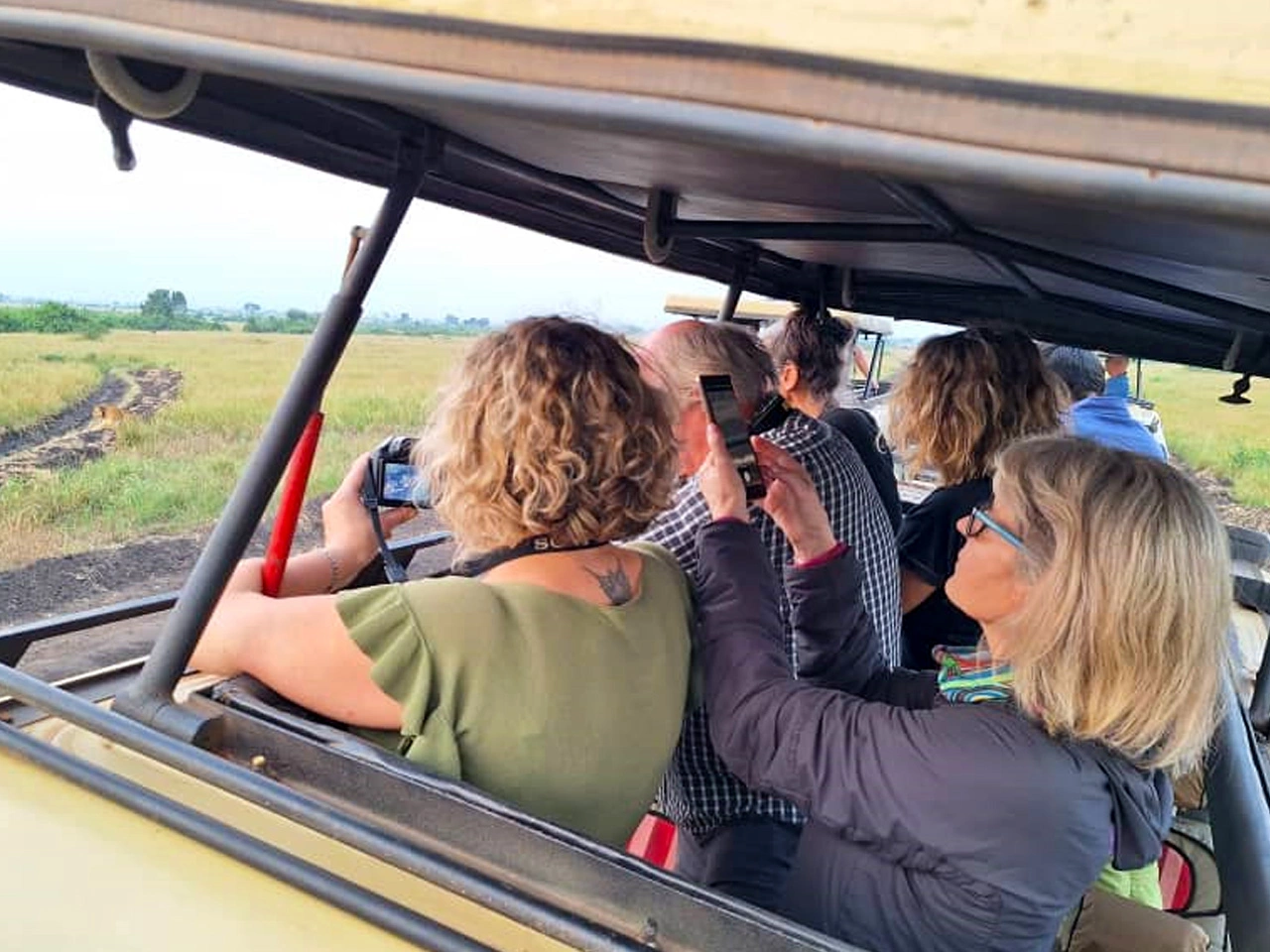
Visitors safely observe and photograph wildlife from a safari truck.
Uganda Safari and Wildlife Safety Guide: Staying Safe During Outdoor Adventures
Wildlife experiences are among the main reasons travelers visit Uganda, but enjoying a safari safely requires visitors to understand that national parks, forests, lakes, mountains and other natural environments have risks that are different from those found in cities. A comprehensive Uganda Safety Guide should therefore explain how to behave around wildlife, follow guide instructions, use designated routes, respect protected-area regulations and respond appropriately to changing environmental conditions.
Uganda Wildlife Authority (UWA) is responsible for managing and protecting wildlife in Uganda and manages national parks, wildlife reserves and other protected areas. UWA emphasizes sustainable wildlife management, conservation and visitor safety within protected areas.
Travelers arranging Uganda safari tours should treat their professional guide’s instructions as an essential part of their Uganda travel safety plan.
Follow Your Guide and Park Regulations
One of the simplest and most important Uganda safari safety rules is to follow the instructions of your guide and the regulations of the protected area you are visiting. Guides understand the environment, vehicle routes, wildlife behaviour and local operating procedures far better than a first-time visitor.
Visitors should remain within the areas and routes permitted by park authorities and should not attempt to create their own wildlife encounters. Uganda’s protected areas are managed environments where conservation, visitor safety and wildlife protection have to operate together.
Travelers booking Uganda wildlife safaris should ask their operator about the rules that apply to each park and activity before the safari begins.
Never Approach, Feed or Attempt to Touch Wild Animals
Wild animals can behave unpredictably, even when they appear calm or accustomed to vehicles. Visitors should never attempt to approach an animal, feed it, attract it closer or leave a vehicle to obtain a better photograph unless their guide and park regulations specifically permit the activity.
Keeping an appropriate distance protects both visitors and wildlife. It also reduces the likelihood that animals will associate people or vehicles with food or other rewards, which can contribute to problematic wildlife behaviour.
Visitors planning Uganda gorilla safaris should follow the specific instructions provided by their trekking guides and wildlife authorities throughout the encounter.
Safari Vehicle Safety
During game drives, remaining inside the safari vehicle when instructed is a fundamental part of Uganda travel safety. Animals may be difficult to judge from a visitor’s perspective, and a vehicle provides an important layer of separation between people and wildlife.
Passengers should remain seated when the vehicle is moving, keep doors and other openings secured as instructed, avoid sudden movements around wildlife and listen carefully when the driver or guide explains what is happening.
Travelers arranging Uganda safari packages should confirm that their guide will explain vehicle and wildlife-viewing procedures before entering a protected area.
Wildlife Photography Without Creating Unnecessary Risk
Photography is an important part of many Uganda safaris, but obtaining a photograph should never take priority over safety. Visitors should remain in the position specified by their guide and avoid leaning excessively outside a vehicle or making sudden movements to obtain a particular angle.
Long lenses or camera equipment should not be used as a reason to approach animals. A safe wildlife photograph is one that respects both the animal and the visitor’s surroundings.
Travelers enjoying Uganda safari holidays should listen to their guide when deciding where and when photography is appropriate.
Gorilla Trekking Safety in Bwindi and Mgahinga
Gorilla trekking requires a different approach from a conventional vehicle safari. Visitors enter forest environments where terrain can be steep, slippery and physically demanding, and where wildlife encounters occur on foot. Preparation, appropriate clothing, guide instructions and responsible behaviour are therefore essential components of Uganda travel safety.
Current FCDO guidance states that gorilla-tracking visits in Bwindi Impenetrable National Park and Mgahinga Gorilla National Park routinely involve security personnel accompanying tourists. It also advises travelers to use reputable, registered tour operators and obtain up-to-date advice from UWA before travel.
Visitors planning gorilla trekking in Uganda should follow the instructions of the trekking team throughout the activity.
Chimpanzee Tracking and Forest Safety
Chimpanzee tracking and other forest activities require visitors to stay with their assigned group and follow the instructions of trained guides. Forest environments can contain uneven ground, steep sections, slippery surfaces, dense vegetation and changing weather conditions.
Visitors should avoid wandering away from their group simply to obtain a closer view of wildlife. Staying together helps guides monitor the group and maintain appropriate wildlife-viewing procedures.
Travelers arranging Uganda chimpanzee trekking tours should wear suitable footwear and follow the activity leader’s instructions throughout the forest experience.
Hiking and Mountain Safety
Uganda offers hiking opportunities ranging from forest walks to challenging mountain expeditions. The safety requirements can vary significantly depending on altitude, distance, terrain, weather and the experience required for the activity.
Travelers should use qualified guides where required, remain with their group and avoid taking unnecessary shortcuts. Weather can change quickly in mountainous and forest environments, so visitors should be prepared to follow the guide’s decision if conditions make continuing unsafe.
Visitors planning Uganda hiking safaris should discuss the physical demands and expected conditions of their activity before departure.
Boat and Water Activity Safety
Uganda’s lakes and rivers provide opportunities for boat trips, wildlife viewing and other activities, but water-based travel requires careful attention to vessel condition, weather and operator procedures.
Current FCDO advice warns that ferry accidents have caused fatalities on Lake Albert and Lake Victoria and advises travelers to use reputable ferry companies, avoid overloaded or apparently unseaworthy vessels, learn emergency procedures and note the location of life jackets and emergency exits.
Travelers booking Uganda boat safari experiences should follow the operator’s safety briefing and use appropriate safety equipment.
Weather, Rain and Changing Trail Conditions
Weather is an important part of Uganda safari safety, particularly during hiking, trekking and long road journeys. Rain can make forest trails slippery and can affect driving conditions, while heavy rainfall can contribute to flooding or landslides in some areas.
Current FCDO advice identifies localized flooding and landslides as risks, particularly during Uganda’s rainy periods.
Visitors on Uganda safari adventures should allow their guides and drivers to adjust routes or schedules when weather conditions create safety concerns.
Road Safety During Safari Transfers
Many Uganda safaris involve substantial road travel between Kampala, Entebbe and national parks. Road safety should therefore be treated as a major part of any Uganda Safety Guide rather than as a minor logistical issue.
Current FCDO guidance describes road travel in Uganda as hazardous, particularly outside major cities, and reports poor driving standards and a high accident rate. It advises avoiding travel outside main towns after dark except on the road between Kampala and Entebbe International Airport.
Travelers booking Uganda safari trips should use reputable transportation providers and allow adequate time for journeys rather than encouraging unnecessary speeding.
Do Not Let Wildlife Viewing Distract You From the Vehicle
Exciting wildlife sightings can cause visitors to forget basic safety precautions. Travelers should avoid standing up suddenly, moving around the vehicle unnecessarily or distracting the driver while the vehicle is navigating difficult terrain or traffic.
The driver has to balance wildlife viewing with vehicle control, the position of other vehicles, terrain and the location of animals. Visitors should allow the driver and guide to manage the situation.
Travelers on Uganda wildlife tours can improve both safety and the quality of their experience by remaining attentive to their guide throughout wildlife encounters.
Children and Wildlife Activities
Families should discuss the suitability of each activity with their tour operator before booking. Different safari activities have different physical demands, age requirements and wildlife-viewing procedures.
Children should remain supervised and should follow the same wildlife and vehicle safety rules as adults. Parents and guardians should not allow children to approach animals, wander away from the group or leave a vehicle without permission.
Families considering Uganda family safari experiences should discuss the complete itinerary with their operator before confirming activities.
Security Considerations in and Around Protected Areas
Wildlife safety and general security are connected in some parts of Uganda. Travelers should use registered operators, remain aware of current local conditions and follow instructions from authorities.
Current FCDO guidance highlights particular security concerns in western Uganda near the Democratic Republic of the Congo border and advises travelers to maintain awareness of the security situation. It specifically recommends using reputable registered tour operators and contacting UWA for up-to-date advice before traveling to national parks near the DRC and Rwanda borders.
Visitors arranging Uganda gorilla safari holidays should check current regional advice shortly before travel because security circumstances can change.
Do Not Cross Into Restricted or Unauthorized Areas
Travelers should remain within the areas authorized by their tour operator and park authorities. A wildlife experience should never involve independently crossing a park boundary, entering a restricted zone or following an unofficial route.
This is especially important around Uganda’s international borders. Current FCDO advice warns against travel into parts of the DRC bordering Uganda and specifically advises against gorilla tours that cross into the DRC.
Travelers using Uganda gorilla trekking operators should verify the itinerary and ensure that all activities remain within authorized areas.
Respect Wildlife Even When an Animal Appears Calm
A relaxed-looking animal should not be interpreted as an invitation to approach. Wildlife can respond rapidly to unexpected movement, noise or perceived threats. The safest approach is to allow the animal to behave naturally and let the guide determine the appropriate viewing position.
This principle applies to large mammals as well as smaller animals. Visitors should avoid attempting to handle wildlife, attract animals for photographs or interfere with natural behaviour.
Travelers enjoying Uganda wildlife safari holidays can contribute to responsible tourism by observing wildlife without attempting to control the encounter.
Wildlife Safety Is Also Conservation Safety
Responsible wildlife behaviour protects more than individual visitors. It also contributes to conservation by reducing unnecessary disturbance and supporting the management systems used to protect Uganda’s wildlife.
UWA’s current conservation work emphasizes wildlife protection, community engagement, environmental education and sustainable management of protected areas.
Visitors planning Uganda safari vacations should understand that following safety rules is also part of responsible wildlife tourism.
What to Do If a Wildlife Situation Becomes Uncomfortable
Visitors should remain calm if an animal approaches unexpectedly or if their guide asks them to change position. Sudden independent actions can make a situation more difficult to manage.
The safest response is normally to listen to the guide and follow the instructions provided. Guides are responsible for interpreting the encounter and deciding how the group should respond within the applicable park rules.
Travelers on Uganda safari tours should prioritize following professional instructions rather than attempting to manage wildlife encounters independently.
Uganda Safari Safety Checklist for Wildlife and Outdoor Activities
Before starting a wildlife activity, confirm the instructions provided by the guide and understand where you are expected to remain. Keep your attention on the guide during wildlife encounters, remain in the vehicle when instructed, avoid approaching animals and never feed or deliberately attract wildlife.
For trekking and hiking, remain with the group, use suitable footwear, follow the designated route and take the guide’s instructions seriously when weather or trail conditions change. For boat activities, use reputable operators, follow safety briefings and pay attention to life jackets and emergency procedures.
For road transfers, use reputable transportation, avoid unnecessary night travel and allow the driver to make decisions based on road and weather conditions. Current FCDO advice identifies road travel as a significant safety consideration in Uganda and recommends particular caution outside major towns.
Most importantly, do not treat a Uganda safari as an environment where normal safety rules can be relaxed simply because the activity is organized. A professional operator, trained guide and responsible traveler all have important roles in maintaining safety.
By combining professional guidance, respect for wildlife, awareness of terrain and weather, responsible transportation and current security information, travelers can make wildlife and outdoor activities an important and enjoyable part of a well-prepared Uganda Safety Guide.
Travelers arrive securely at Entebbe Airport to begin a guided tour.
Uganda Safety for Solo, Family and Independent Travelers
A complete Uganda Safety Guide should recognize that travelers do not all move around the country in the same way. A visitor traveling independently has different planning needs from someone joining an organized safari, while families, first-time international travelers and people traveling alone may need additional preparation for transport, accommodation, communication and daily activities.
Uganda can be explored through organized safaris, guided activities and independent travel, but the level of preparation should match the itinerary. Travelers should research their destinations, understand local conditions, use appropriate transportation and maintain awareness of their surroundings.
Visitors arranging Uganda safari tours can reduce avoidable uncertainty by confirming transportation, accommodation, activity arrangements and emergency contacts before departure.
Uganda Safety for Solo Travelers
Solo travel requires travelers to make more decisions independently. This makes advance planning particularly important. A solo traveler should know where they are staying, how they will move between destinations and how they can contact someone if plans change.
Travelers should avoid unnecessarily revealing their accommodation details, travel plans or financial information to strangers. Current FCDO advice recommends protecting valuables, taking care of passports, avoiding walking after dark and being cautious about strangers requesting personal information or financial assistance.
Solo visitors booking Uganda safari holidays should provide a trusted person with their itinerary and accommodation details before beginning longer journeys.
Staying Connected While Traveling in Uganda
Communication is an important part of Uganda travel safety. Travelers should keep important contact information accessible rather than relying entirely on a single phone, application or internet connection.
A useful travel plan should include accommodation contacts, tour operator information, travel insurance details and emergency contacts. Travelers should also tell someone they trust when they are moving between destinations, particularly when entering areas where connectivity may be less reliable.
Visitors planning Uganda gorilla trekking should confirm how they will communicate with their operator before traveling into forest and remote areas.
Uganda Safety for Families Traveling With Children
Families should plan Uganda trips around the needs of every member of the group. Long road journeys, early departures, hiking activities and changes in accommodation can be demanding for children, so parents and guardians should discuss the itinerary with their tour operator before booking.
Children should remain supervised in busy public areas, around water, during road transfers and throughout wildlife activities. They should also understand simple rules such as staying with the group and following the instructions of parents, guardians and professional guides.
Families considering Uganda family safari trips should discuss the ages of children and planned activities with their safari provider before finalizing the itinerary.
Safety in Kampala and Other Busy Urban Areas
Kampala is a busy capital city, and travelers should use ordinary urban safety precautions while moving around. Current FCDO regional guidance advises visitors in Kampala to take the same general precautions described in its wider Uganda safety advice.
Travelers should remain aware of their surroundings, keep valuable belongings secure and avoid displaying unnecessary signs of wealth. Current FCDO advice specifically recommends not carrying large amounts of cash, using indoor ATMs where possible and avoiding expensive-looking jewelry or watches.
Visitors beginning their Uganda safari vacation in Kampala should organize their onward transportation rather than improvising unfamiliar journeys late at night.
Protecting Your Passport, Money and Important Documents
A lost passport or wallet can turn an otherwise enjoyable trip into a major logistical problem. Travelers should keep passports and important documents secure and should maintain accessible copies of essential information separately from the originals.
Current FCDO advice specifically advises travelers to take care of their passports and avoid carrying unnecessary amounts of cash.
Travelers using Uganda safari operators should keep their travel documents secure during road transfers, hotel stays and outdoor activities.
Uganda Safety When Using ATMs and Handling Money
Money management is part of everyday Uganda travel safety. Travelers should avoid unnecessarily displaying large amounts of cash and should take care when withdrawing money in unfamiliar areas.
Current FCDO guidance recommends using indoor ATMs where possible and arranging transport when withdrawing cash rather than unnecessarily walking with cash through unfamiliar areas.
Visitors booking Uganda safari packages should discuss practical payment arrangements with their operator before traveling to remote destinations.
Uganda Safety and Scams Targeting Visitors
Visitors should remain cautious when strangers approach them with unexpected requests for money, personal information or assistance. Current FCDO guidance warns that scammers may approach foreign visitors or residents in person or contact them by phone while requesting personal information or financial help.
Travelers should verify unexpected requests through an independent and trusted source. They should also avoid sharing passport details, banking information, passwords or other sensitive information with people whose identity they cannot establish.
Travelers arranging Uganda travel packages should use established contacts supplied by their accommodation or tour operator when confirming travel arrangements.
Public Transport and Getting Around Safely
Transportation deserves particular attention in a Uganda Safety Guide. Current FCDO advice reports serious accidents involving long-distance buses and warns that matatus and boda-bodas do not meet UK safety standards, with accidents being common and sometimes fatal.
Travelers should carefully consider their transportation choices and use reputable arrangements whenever possible. For organized safaris, the tour operator normally coordinates the vehicle and driver, allowing visitors to focus on the itinerary rather than arranging every long-distance transfer independently.
Visitors joining Uganda safari tours should ask who is responsible for transportation during every stage of the itinerary.
Uganda Safety for Women Travelers
Women traveling in Uganda should use the same general precautions described throughout this Uganda Safety Guide while also considering the specific circumstances of their accommodation, transportation and activities.
Travelers should choose accommodation carefully, use reliable transportation and avoid isolated areas when they are unfamiliar with the surroundings. Keeping trusted contacts informed about movements can provide an additional layer of preparedness.
Visitors planning Uganda safari holidays can request clear information about transfers, accommodation and planned activities before traveling.
Uganda Safety During Protests, Political Events and Large Gatherings
Political demonstrations and large public gatherings can create rapidly changing conditions. Current FCDO guidance states that protests and demonstrations in Uganda can happen without warning and advises travelers to avoid demonstrations and rallies where possible.
Travelers should monitor current local information and avoid moving toward crowds simply out of curiosity. If a demonstration develops nearby, the safest response is to move away from the area using a sensible route and follow instructions from local authorities.
Visitors on Uganda safari tours should ask their operator for current local guidance if demonstrations or major public events affect the planned route.
Uganda Safety and Terrorism Awareness
Travelers should remain aware that official security advice can identify terrorism as a risk. Current FCDO guidance states that terrorist attacks in Uganda may occur in places frequented by tourists and foreign nationals, including hotels, transport hubs, restaurants, shopping centres, places of worship, public gatherings and national parks.
This does not mean travelers should treat every public place as dangerous. Instead, a sensible Uganda Safety Guide should encourage situational awareness, attention to official warnings and avoidance of large gatherings when authorities advise against them.
Travelers planning Uganda gorilla safari holidays should review current security advice before departure and again when entering different regions.
Uganda Safety Near International Borders
Security conditions can differ substantially between regions. Current FCDO guidance identifies particular risks near Uganda’s borders with the Democratic Republic of the Congo and South Sudan and recommends heightened caution in specified areas.
Travelers visiting national parks close to international borders should use reputable, registered tour operators and obtain current information from the Uganda Wildlife Authority where appropriate. FCDO specifically recommends this approach for national parks near the DRC and Rwanda borders.
Visitors arranging Uganda gorilla trekking safaris should confirm the current itinerary and security situation before entering border regions.
Keeping Family and Friends Informed
Travelers do not need to report every movement, but maintaining a basic communication plan is useful. A trusted contact should know the broad itinerary, accommodation arrangements and expected travel dates.
For longer journeys, travelers can establish agreed check-in times. This is particularly useful when visiting rural areas or undertaking activities where mobile connectivity may be inconsistent.
Visitors using Uganda safari operators should keep their operator’s contact information accessible throughout the trip.
What to Do if Your Plans Change Unexpectedly
Delays, weather conditions, road problems, illness and other unexpected circumstances can change a travel itinerary. Travelers should avoid making rushed decisions simply to preserve the original schedule.
Contact the accommodation provider, tour operator or transportation provider when plans change. If the situation involves a serious incident, travelers should also contact their insurer where appropriate.
Current FCDO guidance recommends contacting your travel provider and insurer if you are involved in a serious incident or emergency abroad.
Emergency Contacts and Your Personal Safety Plan
Travelers should know how to request emergency assistance before beginning their journey. Current FCDO guidance lists 999 for ambulance, fire and police emergency services in Uganda.
The U.S. State Department’s current Uganda travel advisory lists 999 for police, 911 for ambulance and 112 for fire. Because emergency arrangements can change and different authorities publish different numbers, travelers should verify the appropriate emergency contacts close to departure and keep their tour operator’s emergency contact details available.
Travelers on Uganda safari packages should ask their operator how emergency communication is handled during remote sections of the itinerary.
Independent Travel Versus Organized Uganda Safaris
Independent travel gives visitors greater control over their schedules, but it also means that the traveler must personally manage transportation, accommodation, route planning, local information and emergency arrangements. Organized safaris provide professional coordination for many of these elements.
Neither approach eliminates risk. The most useful Uganda travel safety strategy is to understand the requirements of the chosen travel style and prepare accordingly.
Travelers who prefer coordinated Uganda safari holidays should still remain personally responsible for understanding their itinerary, insurance and emergency arrangements.
A Practical Uganda Safety Routine for Every Traveler
A simple daily routine can make Uganda travel safety easier to manage. Before leaving accommodation, travelers can confirm the day’s destination, transportation arrangements and expected return time. They should carry the items they actually need, secure important documents and keep essential contact information accessible.
During the day, travelers should remain aware of their surroundings, follow local instructions and avoid unnecessary risks. Before changing plans, they should consider whether the new arrangement has been properly verified.
Visitors enjoying Uganda wildlife adventures can use this simple routine alongside the more detailed safety recommendations throughout this guide.
Uganda Safety Checklist for Solo, Family and Independent Travelers
Before departure, research every destination on the itinerary and check current official travel and security information. Confirm accommodation, transportation, travel insurance and emergency contacts. Share your general itinerary with someone you trust.
During the trip, protect your passport and valuables, avoid displaying unnecessary signs of wealth, use reputable transportation and remain cautious when strangers request money or personal information. Current FCDO guidance specifically highlights risks involving theft, scams, vehicle crime and public transportation.
For families, supervise children closely and select activities that match their needs. For solo travelers, maintain stronger communication and itinerary-sharing habits. For wildlife travelers, follow guides and protected-area regulations. For travelers visiting border regions, check current regional security information before departure.
A good Uganda Safety Guide should never suggest that every destination or activity carries the same level of risk. Conditions can differ by location and can change over time. The safest approach is therefore informed preparation, responsible decision-making and attention to current official guidance.
With appropriate planning, travelers can approach Uganda with confidence while still respecting the country’s diverse environments, transportation conditions, wildlife, local communities and changing security circumstances. Uganda travel safety is strongest when preparation becomes part of the journey rather than something considered only after a problem occurs.
Uganda Safety Checklist: Essential Travel Preparation and Emergency Planning
The final part of a comprehensive Uganda Safety Guide should turn general safety information into a practical preparation system that travelers can use before departure and throughout their journey. Uganda travel safety is not based on a single rule. It involves understanding the itinerary, checking current official information, arranging appropriate transportation, protecting personal belongings, following wildlife regulations and knowing what to do if plans change.
Current FCDO guidance advises travelers to research destinations, obtain appropriate travel insurance and understand the risks associated with their itinerary before deciding to travel. It also emphasizes that no travel can be guaranteed completely safe.
Travelers arranging Uganda safari tours should therefore treat preparation as an essential part of the safari rather than something to consider only after arriving in Uganda.
Check Official Uganda Safety Information Before Departure
Safety information can change after an itinerary has been planned. Travelers should therefore check current official information shortly before departure rather than relying exclusively on older travel articles, social media posts or information from previous visitors.
The current FCDO Uganda travel advice was updated in July 2026 and includes information covering security, regional risks, insurance and emergency assistance.
Visitors planning Uganda travel packages should also ask their tour operator for destination-specific information when their itinerary includes national parks, trekking areas or border regions.
Verify Your Uganda Safari Operator and Activity Arrangements
Before paying for a safari or other organized activity, travelers should confirm who is responsible for the booking, transportation, accommodation and activities. They should retain booking confirmations and the direct contact details supplied by the operator.
Uganda Wildlife Authority warns visitors to verify official UWA contact information and states that it does not authorize communication through phone numbers, email addresses or social-media accounts that are not listed through its official channels. UWA also directs visitors seeking verification of licensed tourism operators to the Uganda Tourism Board.
Travelers booking Uganda safari experiences should keep the operator’s confirmed contact details accessible throughout the journey.
Prepare a Complete Uganda Travel Documents Folder
Travelers should organize important documents before leaving home. These can include a valid passport, required travel documents, accommodation confirmations, safari booking information, travel insurance details, transportation information and emergency contacts.
Important documents should be protected from loss or damage. Travelers can also keep secure copies of essential documents separately from the originals so that important information remains available if an original document is misplaced.
Visitors preparing for Uganda safari holidays should organize these documents before the journey instead of trying to reconstruct them while traveling.
Get Appropriate Travel Insurance
Travel insurance should match the actual activities included in the itinerary. This is particularly important when a trip involves trekking, mountain activities, wildlife activities or long-distance travel.
Current FCDO guidance recommends appropriate travel insurance and states that insurance should cover the itinerary, planned activities and expenses that may arise during an emergency.
Travelers planning Uganda gorilla trekking safaris should make sure their insurance arrangements are suitable for the activities they intend to undertake.
Create a Simple Emergency Contact Plan
Every traveler should know how to request emergency assistance. Current FCDO guidance lists 999 for ambulance, fire and police emergency services in Uganda.
Travelers should also retain the contact information for their accommodation, tour operator, insurer and relevant embassy or consular service. The tour operator’s emergency contact can be particularly important during remote safari or trekking activities.
Visitors arranging Uganda safari trips should ask the operator how emergency communication is handled during remote sections of the itinerary.
Uganda Safety Checklist Before Leaving Your Accommodation
Before beginning each day’s activities, travelers should know the day’s destination, planned transportation, expected return arrangements and the contact person responsible for the activity.
Personal belongings should be secured, essential documents should be protected and travelers should carry only what they reasonably need for the day’s activity. Those heading into wildlife areas should also confirm that they have followed the instructions provided by their guide or activity operator.
This simple routine makes Uganda travel safety easier to manage because potential problems can be identified before the traveler leaves the accommodation.
Uganda Safety Checklist for Road Journeys
Road travel is a major component of many Uganda safari itineraries. Travelers should confirm the day’s route, expected journey duration and planned stops with their driver or tour operator.
Current FCDO guidance identifies road travel as a significant safety concern in Uganda and advises particular caution outside major towns. Travelers should avoid unnecessary night travel and use reputable transportation arrangements.
Visitors joining Uganda safari tours should allow realistic travel time rather than encouraging drivers to take unnecessary risks to maintain an overly tight schedule.
Uganda Safety Checklist for Wildlife Viewing
Wildlife activities require travelers to follow instructions rather than improvise. Visitors should remain in designated areas, avoid approaching animals and never feed wildlife.
Uganda Wildlife Authority manages Uganda’s protected areas and is responsible for wildlife management and protection. Its official guidance includes regulations intended to protect visitors, wildlife and the environment.
Travelers enjoying Uganda wildlife safaris should treat every guide instruction as part of the safety procedure for the activity.
Uganda Safety Checklist for Gorilla and Primate Tracking
Gorilla and primate tracking requires visitors to follow the specific instructions of their guides and wildlife authorities. The forest environment can involve uneven terrain, changing weather and close encounters with wildlife.
UWA has emphasized the importance of visitor safety in protected areas and maintains procedures intended to protect both visitors and primates.
Visitors planning Uganda gorilla safaris should prepare according to the requirements supplied by their trekking operator and the relevant protected-area authorities.
Uganda Safety Checklist for Weather and Outdoor Conditions
Travelers should check the expected conditions before long drives, hikes, forest activities and other outdoor experiences. Weather can affect road conditions, walking surfaces and the timing of activities.
If a guide or driver recommends changing an itinerary because of weather or environmental conditions, travelers should take the recommendation seriously. A flexible itinerary is safer than forcing an activity to continue simply because it was originally scheduled.
Visitors booking Uganda adventure safaris should discuss weather-dependent activities with their operator before departure.
Uganda Safety Checklist for Personal Belongings
Travelers should keep passports, money, phones, cameras and other important belongings secure. Current FCDO guidance advises travelers not to carry large amounts of cash, to take care of passports and to avoid displaying expensive-looking jewelry or watches.
Travelers should also avoid leaving valuables visible inside vehicles. Current official guidance warns about theft from cars and taxis stopped in traffic and advises keeping vehicle doors locked and windows closed when driving in towns.
Visitors on Uganda safari vacations should keep valuable equipment secure during road transfers and accommodation stays.
Uganda Safety Checklist for Food, Drink and Daily Health Precautions
Travelers should use sensible food and drink precautions and follow the health advice appropriate to their itinerary. Food and drink safety can be particularly important during long road journeys and remote safari trips because access to services may be more limited than in major urban areas.
Travelers should also be cautious about accepting food or drinks from strangers. Current FCDO guidance specifically warns that travelers have been drugged and robbed on public transport and in bars and advises against accepting food and drinks from strangers.
Visitors arranging Uganda safari holidays should discuss any specific health or dietary requirements with their accommodation and tour operator before travel.
Uganda Safety Checklist for Kampala and Urban Travel
In Kampala and other busy urban areas, travelers should use ordinary city precautions: remain aware of their surroundings, protect personal belongings and avoid unnecessary movement through unfamiliar areas after dark.
Current FCDO regional guidance describes Kampala as a busy capital and directs travelers to follow the general safety precautions in its Uganda safety guidance.
Visitors beginning their Uganda safari journey in Kampala should plan their transfers and avoid unnecessary last-minute transportation decisions.
Uganda Safety Checklist for Regional Travel
Uganda is geographically diverse, and travelers should not assume that safety conditions are identical across the country. Regional security information should be checked whenever an itinerary includes remote areas or locations close to international borders.
Current FCDO regional guidance identifies specific risks around parts of Uganda’s borders with the Democratic Republic of the Congo and South Sudan. It advises travelers to check current regional information before visiting affected areas.
Travelers arranging Uganda safari itineraries should confirm current regional conditions with their operator before departure.
Uganda Safety Checklist for National Parks
Uganda Wildlife Authority currently manages 10 national parks, 12 wildlife reserves and other protected areas. Its mandate includes managing and protecting wildlife inside and outside protected areas.
Travelers visiting national parks should therefore follow the regulations of the specific protected area rather than assuming that rules are identical everywhere. Park opening hours, permitted routes, speed limits and other regulations can vary according to the activity and location.
UWA guidance for Murchison Falls National Park, for example, includes designated routes, park operating hours, speed restrictions and prohibitions on feeding animals and unnecessary stopping.
Uganda Safety Checklist for Responsible Wildlife Tourism
Responsible tourism and Uganda travel safety overlap in many ways. Travelers should avoid feeding animals, disturbing wildlife, leaving designated routes without authorization or attempting to create artificial wildlife encounters.
Following protected-area regulations helps protect visitors while also reducing unnecessary disturbance to wildlife. UWA’s mandate includes sustainable management of wildlife resources and supervision of wildlife activities.
Visitors enjoying Uganda wildlife adventures should consider responsible behaviour an essential part of the safari experience.
Uganda Safety Checklist for Families and Children
Families should confirm that each activity is appropriate for the children traveling with them. Parents and guardians should maintain direct supervision around roads, water, wildlife and unfamiliar environments.
Before booking a safari, families should tell the operator the ages of the children and discuss the proposed travel distances and activities. This allows the itinerary to be understood realistically before the trip begins.
Families considering Uganda family safaris should include child supervision and activity suitability in their overall Uganda Safety Guide planning.
Uganda Safety Checklist for Solo Travelers
Solo travelers should maintain a particularly clear record of their itinerary and accommodation. Someone they trust should know where they are expected to be, especially during longer journeys.
Current official guidance recommends general precautions such as protecting valuables, avoiding walking after dark and being cautious about strangers requesting personal information or financial assistance.
Visitors arranging Uganda solo safari travel should maintain reliable communication with their accommodation or tour operator.
What to Do if You Experience a Serious Emergency
In a serious emergency, travelers should prioritize immediate safety, contact the appropriate emergency service and then notify their tour operator, accommodation provider, insurer or relevant authorities as appropriate.
Current FCDO guidance lists 999 for ambulance, fire and police emergency services in Uganda and advises travelers involved in a serious incident to contact their travel provider and insurer.
Uganda Wildlife Authority also publishes official contact information for visitors requiring assistance related to protected areas and wildlife. Its current website lists a toll-free number of 0800 100 960 and official office contacts.
Uganda Safety Checklist: The Night Before Departure
The evening before a major transfer or activity is a useful time to review the next day’s plans. Confirm the departure time, destination, transportation, accommodation and activity arrangements.
Charge essential communication devices, secure important documents and confirm that the necessary contacts are accessible. Travelers should also review any updated instructions from their tour operator.
This simple preparation routine makes Uganda safari planning more organized and reduces avoidable confusion during early departures.
The Complete Uganda Safety Checklist
Before traveling, check current official Uganda travel advice, confirm your itinerary, obtain appropriate insurance, secure your documents and verify transportation and accommodation arrangements.
During the journey, protect valuables, remain aware of your surroundings, use reputable transportation, follow local instructions and avoid unnecessary risks. During wildlife activities, stay with your group and follow the instructions of guides and protected-area authorities.
For road travel, allow sufficient time and avoid pressuring drivers to compensate for delays. For trekking, respect the physical demands and environmental conditions. For water activities, follow operator safety procedures. For regional travel, check current security information.
A strong Uganda Safety Guide should ultimately encourage travelers to make informed decisions rather than create unnecessary fear. Uganda has a wide range of tourism environments, and responsible preparation allows visitors to approach those environments with greater awareness and confidence.
Final Uganda Safety Guide Summary
Uganda travel safety is best approached as a combination of preparation, awareness and responsible decision-making. Travelers should understand their itinerary before departure, check current official information, use appropriate transportation, protect their documents and belongings, obtain suitable insurance and maintain reliable emergency contacts.
Wildlife travelers should follow protected-area regulations and guide instructions. Uganda Wildlife Authority’s official mandate covers the management and protection of wildlife in and outside protected areas, making its guidance an important source for visitors undertaking wildlife activities.
Travelers should also recognize that security conditions can differ by location. Current official regional advice identifies particular considerations around parts of Uganda’s borders, so visitors should check the latest information when planning travel to those areas.
The most useful Uganda Safety Guide is therefore one that is practical, current and specific to the traveler’s itinerary. It should help visitors understand risks without exaggerating them and should encourage travelers to verify information through reliable official and professional sources.
By preparing carefully, respecting local rules, listening to professional guides and remaining attentive to changing conditions, travelers can make Uganda travel safety a normal part of responsible travel while enjoying the country’s wildlife, landscapes, cultural experiences and outdoor activities.