Uncovering East Africa’s Ancient Past
Uncovering East Africa’s Ancient Past
East Africa stands as one of the world’s most significant archaeological regions, often referred to as the “cradle of mankind.” This remarkable landscape has yielded some of the most important discoveries in human prehistory, revealing the deep roots of our species and the complex civilizations that flourished across the region. From ancient hominid fossils to sophisticated medieval trading cities, East Africa’s archaeological sites offer a captivating journey through millions of years of human history.
The Great Rift Valley: Where Human History Began
The East African Rift Valley system has proven to be an archaeological goldmine, preserving evidence of early human evolution in its sedimentary layers. The unique geological conditions here have created perfect preservation environments, allowing researchers to piece together the story of our earliest ancestors.
Olduvai Gorge, Tanzania: The Cradle of Mankind
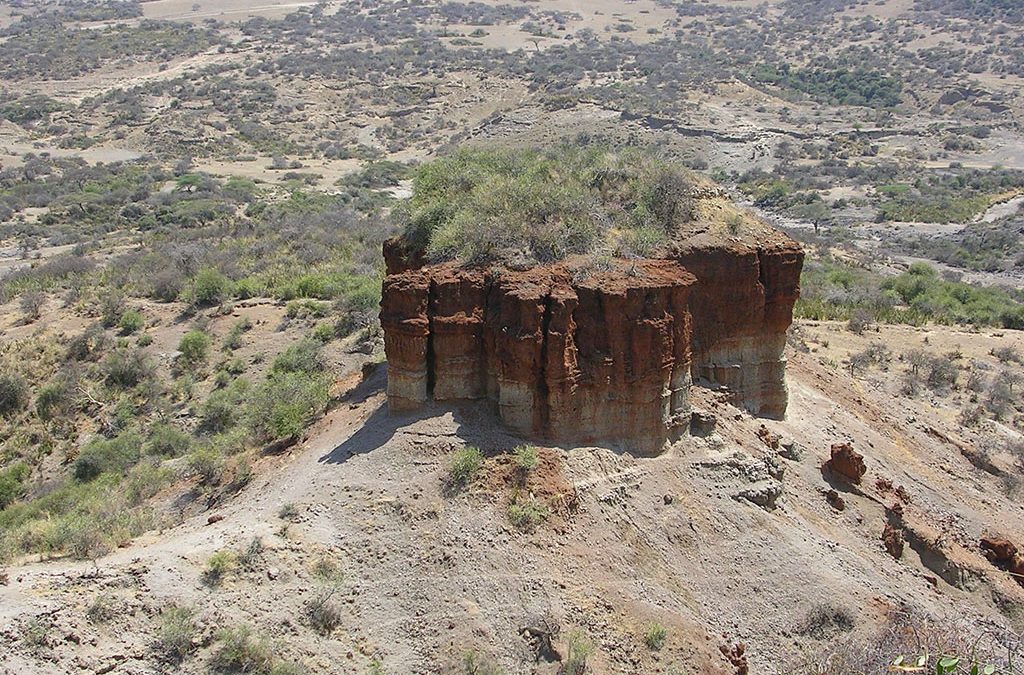
Perhaps no archaeological site is more famous than Olduvai Gorge, located in northern Tanzania within the Ngorongoro Conservation Area. This steep-sided ravine, stretching about 30 miles with branches reaching 295 feet deep, has yielded some of the most significant paleoanthropological discoveries in history.
The site gained international recognition through the work of Louis and Mary Leakey, who spent decades excavating here. Their discoveries revolutionized our understanding of human evolution. Key findings include:
- Zinjanthropus boisei (now Paranthropus boisei): Discovered by Mary Leakey in 1959, this 1.8-million-year-old skull provided crucial evidence of early hominid life
- Homo habilis remains: Dating back over 2 million years, these fossils represent some of our earliest tool-making ancestors
- Stone tools: Hundreds of Oldowan tools, representing the earliest known stone tool technology
- Evidence of early human behavior: Including tool use, hunting, and scavenging activities
Today, visitors can explore the Olduvai Gorge Museum, built adjacent to the excavation sites, which houses many of these remarkable discoveries and provides context for understanding early human development.
Koobi Fora, Kenya: East Turkana’s Fossil Treasures
Located on the eastern shore of Lake Turkana in northern Kenya, Koobi Fora is another world-renowned paleoanthropological site. Now part of Sibiloi National Park, this area has yielded an extraordinary collection of hominid fossils spanning millions of years.
The site is particularly famous for the discovery of “Turkana Boy,” a nearly complete Homo erectus skeleton dating to approximately 1.6 million years ago. This find provided unprecedented insights into early human anatomy and development. The ongoing Koobi Fora Research Project continues to make significant discoveries, collaborating with universities worldwide to expand our understanding of human evolution.
Laetoli, Tanzania: Footprints in Time
Just south of Olduvai Gorge lies Laetoli, home to one of the most poignant archaeological discoveries ever made. Here, in 1976, Mary Leakey’s team uncovered a series of fossilized footprints preserved in volcanic ash, dating to approximately 3.7 million years ago. These footprints, made by early hominids walking across the landscape, provide direct evidence of bipedalism in our ancient ancestors.
The preservation of these footprints was extraordinary – volcanic ash from a nearby eruption covered the prints shortly after they were made, creating a perfect mold that survived millions of years. The site includes tracks from at least three individuals, possibly a family group, walking together across the ancient landscape.
Medieval Trading Cities: East Africa’s Commercial Heritage
East Africa’s archaeological significance extends far beyond prehistoric sites. The region’s strategic location along the Indian Ocean made it a crucial hub for maritime trade, giving rise to sophisticated urban centers that connected Africa with the broader medieval world.
Kilwa Kisiwani, Tanzania: The Golden City
On a small island off the coast of Tanzania lie the ruins of Kilwa Kisiwani, once one of the most important trading cities in medieval East Africa. From the 13th to 16th centuries, Kilwa served as a major center for gold trade, connecting the gold fields of interior Africa with merchants from across the Indian Ocean.
The archaeological remains include:
- The Great Mosque: One of the finest examples of medieval Islamic architecture in East Africa
- Husuni Kubwa: A massive palace complex with an octagonal bathing pool, demonstrating sophisticated urban planning
- Stone houses and public buildings: Evidence of a thriving urban center with diverse architectural styles
- Coins and trade goods: Artifacts showing connections with India, China, and the Middle East
Gedi, Kenya: The Mysterious Forest City
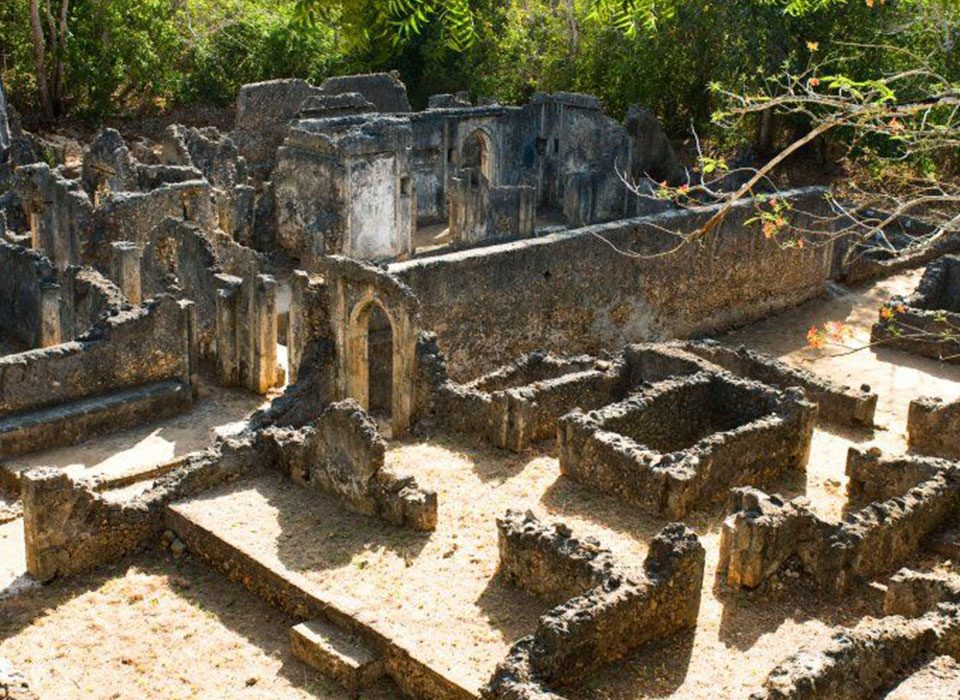
Hidden in the coastal forests of Kenya, the ruins of Gedi represent one of East Africa’s most intriguing archaeological mysteries. This Swahili city flourished from the 13th to 17th centuries but was mysteriously abandoned, leaving behind well-preserved stone structures surrounded by tropical forest.
The site includes mosques, houses, a palace, and a sophisticated water management system. What makes Gedi particularly fascinating is the questions it raises about medieval African urbanism and why such a successful city would be abandoned.
Lamu Old Town, Kenya: Living Archaeological Heritage
While not strictly an archaeological site, Lamu Old Town represents the oldest and best-preserved Swahili settlement in East Africa. This UNESCO World Heritage Site continues to function as a living town while preserving centuries of architectural and cultural heritage.
The narrow streets, traditional houses, and ancient mosques provide insights into medieval Swahili civilization, while the town’s continued occupation allows visitors to experience this heritage in its living context.
Ethiopian Highlands: Ancient Civilizations and Rock Art
Ethiopia’s highland regions contain some of East Africa’s most spectacular archaeological sites, ranging from ancient rock-hewn churches to prehistoric cave paintings.
Lalibela: The New Jerusalem
The medieval town of Lalibela in northern Ethiopia is home to eleven remarkable rock-hewn churches, carved directly into volcanic rock during the 12th and 13th centuries. These churches, still in active use today, represent one of the most extraordinary achievements in medieval architecture and engineering.
The churches were designed to represent a “New Jerusalem,” with symbolic geography connecting various structures. The complex includes underground passages, ceremonial pools, and intricate carved decorations that demonstrate the sophisticated artistic traditions of medieval Ethiopia.
Tiya, Ethiopia: Mysterious Stone Stelae
The Tiya archaeological site in central Ethiopia contains 36 decorated stone stelae (standing stones) that date to between the 10th and 15th centuries. These carved monuments, some reaching over 5 meters in height, are decorated with enigmatic symbols including swords, plants, and geometric patterns.
The purpose and meaning of these stelae remain largely mysterious, though they likely served as grave markers or ceremonial monuments. The site represents the southernmost example of the stela tradition that characterizes much of northern Ethiopia and Eritrea.
Lake Victoria Region: Iron Age Settlements
The Lake Victoria basin has yielded important evidence of Iron Age settlements and early metallurgy in East Africa.
Bigo, Uganda: Ancient Earthworks
In western Uganda, the Bigo archaeological site contains impressive earthwork enclosures dating to the 14th-15th centuries. These massive ditches and banks, extending for several kilometers, likely served as defensive structures for an important settlement.
The site provides evidence of sophisticated political organization and engineering capabilities among the region’s Iron Age communities. Archaeological excavations have revealed pottery, iron tools, and evidence of cattle keeping, painting a picture of a complex agricultural society.
Ntusi, Uganda: Early Urban Center
The Ntusi archaeological site, also in western Uganda, represents one of the earliest urban centers in the Lake Victoria region. Dating to the 11th-15th centuries, the site shows evidence of iron working, pottery production, and long-distance trade.
The archaeological remains suggest a hierarchical society with specialized craft production and connections to other parts of East Africa and beyond.
Rock Art: East Africa’s Ancient Gallery
Throughout East Africa, rock art sites preserve thousands of years of human artistic expression, providing insights into prehistoric life, beliefs, and practices.
Kondoa, Tanzania: The Painted Hills
The Kondoa Rock Art Sites in central Tanzania contain one of the richest collections of rock art in East Africa. These paintings, created over thousands of years by various groups, depict humans, animals, and abstract symbols in red and white pigments.
The art spans from the Late Stone Age to recent times, showing the continuity of artistic traditions and the changing relationships between humans and their environment. The sites are now protected as a UNESCO World Heritage Site.
Nyero, Uganda: Ancient Rock Paintings
In eastern Uganda, the Nyero Rock Paintings represent some of the country’s most important prehistoric art. These geometric and figurative paintings, created by hunter-gatherer communities, provide insights into the spiritual and cultural life of East Africa’s ancient inhabitants.
Modern Archaeological Research and Conservation
Contemporary archaeological research in East Africa employs cutting-edge technologies to reveal new insights about the past. Methods include:
- 3D scanning and modeling: Creating detailed digital records of sites and artifacts
- Geophysical surveys: Using ground-penetrating radar to detect buried structures
- Radiocarbon dating: Precisely dating organic materials
- DNA analysis: Extracting genetic information from ancient remains
- Isotope analysis: Understanding ancient diets and migration patterns
Visiting East Africa’s Archaeological Sites
Many of East Africa’s archaeological sites are accessible to visitors, offering unique opportunities to experience human history firsthand:
Planning Your Visit:
- Best time: Dry seasons (June-October and December-February) for most sites
- Guides: Local guides provide essential context and can enhance your understanding
- Permits: Some sites require advance permits, especially for photography
- Respect: Follow all guidelines to preserve these irreplaceable sites for future generations
What to Expect:
- Museum exhibits with original artifacts and interpretive displays
- Walking tours of excavation sites and ruins
- Visitor centers with educational materials
- Opportunities to meet researchers and conservators
The Future of East African Archaeology
Archaeological research in East Africa continues to evolve, with discoveries regularly reshaping our understanding of human history. Recent advances in technology, increased collaboration between international and local researchers, and growing investment in heritage tourism are creating new opportunities for both scientific discovery and cultural preservation.
As we continue to uncover East Africa’s archaeological treasures, we gain not only scientific knowledge but also a deeper appreciation for the region’s central role in human history. These sites remind us that East Africa has been home to human innovation, creativity, and cultural achievement for millions of years, making it one of the world’s most important archaeological regions.
Whether you’re interested in the deep history of human evolution, the sophistication of medieval African civilizations, or the artistic expressions of prehistoric communities, East Africa’s archaeological sites offer unparalleled opportunities to connect with our shared human heritage. Each site tells a unique story, but together they reveal the remarkable depth and continuity of human experience in this extraordinary region.