
What Are Tree Climbing Lions?

Tree climbing lions are African lions that have developed the unusual habit of climbing and resting in the branches of large trees. Although young lions and cubs may occasionally climb trees in different parts of Africa, it is uncommon to find fully grown lions regularly spending several hours above the ground. Uganda’s famous tree climbing lions have made this behaviour part of their daily life, creating one of the most fascinating wildlife experiences available on an African safari.
The most reliable place to observe this extraordinary behaviour in Uganda is the Ishasha Sector, situated in the southern part of Queen Elizabeth National Park. During a game drive, visitors may see individual lions or an entire pride resting across the strong branches of acacia and sycamore fig trees. The remarkable lions of Ishasha attract wildlife photographers, researchers, families and safari travelers who want to experience something rarely witnessed elsewhere in Africa.
Why Tree Climbing Lions Are So Unusual
Most adult lions spend their resting hours on the ground, usually beneath bushes, trees or other shaded areas. Their large bodies and heavy weight make climbing more difficult than it is for smaller cats such as leopards. Tree climbing lions are therefore unusual because they can lift their powerful bodies into trees, balance comfortably on branches and descend safely when they are ready to hunt, drink or move through their territory. Understanding the behaviour of Ishasha lions helps travelers appreciate how these predators have adapted to their environment.
Tree climbing is not believed to make the Ishasha lions a separate species or subspecies. They belong to the same African lion species found in other savannah ecosystems. What makes them special is their repeated and socially learned behaviour. Young cubs observe older pride members climbing trees and gradually learn to follow them. The habit can therefore pass from one generation to another, helping maintain Ishasha’s reputation as one of the best places to see lions during a Uganda wildlife safari.
Where Tree Climbing Lions Live in Uganda
Uganda’s best-known tree climbing lions live in the Ishasha Sector of Queen Elizabeth National Park. Ishasha is characterized by open savannah grasslands, scattered woodland, riverine vegetation and large fig trees that provide suitable resting places for lions. The area also supports Uganda kobs, topis, buffaloes, elephants, waterbucks, warthogs, hyenas, leopards and many bird species. This rich concentration of wildlife in Ishasha provides the lions with a productive hunting territory and gives visitors much more to see during their game drives.
The Ishasha Sector lies along the route connecting the northern areas of Queen Elizabeth National Park with Bwindi Impenetrable National Park. This location makes it easy to combine a tree climbing lions safari with gorilla trekking in Bwindi. Travelers can explore the open savannah, search for lions in the trees and later continue toward the misty forests inhabited by mountain gorillas. A professionally guided lion tracking experience can provide deeper knowledge about lion territories, pride structures, feeding patterns and conservation challenges.
Why Do Lions Climb Trees?
There is no single scientifically confirmed explanation for why the lions of Ishasha climb trees so frequently. Researchers and safari guides have proposed several reasonable theories. One explanation is that the lions climb to escape the heat of the ground during warm afternoons. Tree branches may offer better airflow and cooler resting conditions, particularly during dry periods. Travelers joining a tree climbing lion safari may therefore have a good chance of seeing lions resting above the ground when daytime temperatures increase.
Another common explanation is that tree climbing helps lions avoid biting insects such as tsetse flies and other pests found close to ground level. These insects can become uncomfortable when the grass is wet or when seasonal conditions support increased breeding. By moving onto higher branches, the lions may find a more peaceful place to rest. This unusual adaptation is one reason travelers include Ishasha in their Queen Elizabeth safari packages.
Lions may also climb trees to obtain a wider view of the surrounding plains. From an elevated position, they can observe Uganda kobs and other potential prey while remaining aware of competing predators and disturbances within their territory. However, lions normally hunt from the ground and should not be expected to attack prey directly from tree branches. Visitors can include this wildlife experience in carefully prepared custom Uganda safaris that match their preferred travel dates, accommodation level and safari duration.
Are Tree Climbing Lions Different from Other Lions?
Tree climbing lions are not physically different from other African lions. They have the same powerful bodies, strong jaws, retractable claws and social pride structure. Adult males are usually recognized by their manes, while females carry out much of the hunting and care for the cubs. The main difference is behavioural rather than biological. Travelers preparing their first wildlife journey can learn how to include these predators when they plan a Uganda safari covering the country’s leading national parks.
The lions use their sharp claws and muscular front legs to pull themselves onto suitable branches. Large fig trees are especially helpful because their wide trunks and strong, spreading branches can support several adult lions. Seeing an entire pride resting together above the savannah is an unforgettable sight and an excellent subject for wildlife photography. This encounter can be included in a gorilla and wildlife safari for travelers who want to experience Uganda’s forests and open plains in one journey.
The Importance of the Ishasha Tree Climbing Lions
The Ishasha tree climbing lions are important to Uganda’s tourism industry because they offer a wildlife experience that is rare, distinctive and easy to combine with other major attractions. Their presence encourages travelers to spend more time in the southern part of Queen Elizabeth National Park instead of only visiting the Kasenyi Plains, Mweya Peninsula and Kazinga Channel. Combining gorilla trekking and tree climbing lions creates one of the most rewarding primate and wildlife journeys in East Africa.
Tree climbing lions also play an essential ecological role as top predators. They help control populations of herbivores and contribute to the natural balance of the savannah ecosystem. Protecting lions requires conserving their habitat, reducing human-wildlife conflict, preventing illegal wildlife activities and supporting communities living near protected areas. Longer journeys such as an Uganda gorilla and Big Five safari help generate tourism income that supports national parks, guides, lodges and surrounding communities.
What to Expect When Seeing Tree Climbing Lions
A tree climbing lions game drive normally involves exploring the Ishasha plains in a four-wheel-drive safari vehicle with an experienced driver-guide. The guide searches known lion territories, studies tracks, listens to information from other guides and carefully checks suitable fig and acacia trees. Sightings cannot be guaranteed because the lions are wild and move freely, but spending enough time in Ishasha can significantly improve the experience. A comprehensive journey such as the Best of Uganda safari allows travelers to explore Ishasha without rushing between destinations.
Visitors should remain inside the safari vehicle, speak quietly and avoid disturbing resting lions. A camera with a zoom lens or a good pair of binoculars can provide a closer view while maintaining a safe and respectful distance. Travelers entering southwestern Uganda through Kigali can also reach Ishasha after crossing the Uganda–Rwanda border, making a Uganda tour from Rwanda a practical option for combining tree climbing lions, gorilla trekking and other wildlife experiences.
Experience Tree Climbing Lions with Safari Vacations and Travel Services
Safari Vacations and Travel Services creates personalized journeys to help travelers discover the tree climbing lions of Ishasha and the wider attractions of Queen Elizabeth National Park. The experience can be combined with the Kazinga Channel boat cruise, game drives in the Kasenyi Plains, chimpanzee tracking, gorilla trekking in Bwindi and visits to other protected areas. Through carefully organized Uganda safari packages, travelers receive professional transportation, knowledgeable safari guidance, suitable accommodation and an itinerary designed around their interests, budget and available travel time.
Where Can You See Tree Climbing Lions in Uganda?

Uganda is one of Africa’s most rewarding destinations for travelers interested in seeing lions in their natural habitat. However, the country’s famous tree climbing lions are most reliably observed in the Ishasha Sector, located in the southern part of Queen Elizabeth National Park. The wide savannah plains, scattered woodland and mature fig trees make Ishasha the leading destination for a tree climbing lions experience in Uganda.
Tree climbing lions may occasionally be reported in other African ecosystems, but Ishasha is particularly special because adult lions regularly climb and rest in trees. Visitors may see individual lions, mothers with cubs or several pride members lying across strong branches. The opportunity to observe this unusual behaviour makes Ishasha one of the most important places included in a detailed Ishasha lions guide.
Ishasha Sector of Queen Elizabeth National Park
The Ishasha Sector is the best place to see tree climbing lions in Uganda. It is situated in the remote southern part of Queen Elizabeth National Park, close to the route leading toward Bwindi Impenetrable National Park. Ishasha is quieter than the park’s busier northern tourism areas, giving visitors a peaceful and less crowded wildlife-viewing experience. Its famous Ishasha tree climbing lions are normally searched for during guided morning and afternoon game drives.
The landscape of Ishasha consists of open grasslands, riverine vegetation, woodland and scattered acacia and sycamore fig trees. These trees have wide trunks and strong horizontal branches that can support the weight of several adult lions. Travelers exploring the area should carefully scan large trees because the lions can blend into the branches and surrounding vegetation. Understanding the wider wildlife of Ishasha also makes the game drive more informative and rewarding.
Different lion prides move through the Ishasha plains, following prey and responding to changes in water, vegetation and territorial pressure. Their exact location cannot be guaranteed because they are wild animals living in an open ecosystem. Experienced safari guides understand the territories, commonly used tracks and preferred resting trees, which can improve the chances of a successful sighting during a well-planned tree climbing lion safari.
Southern Ishasha and Its Fig Trees
The southern areas of Ishasha contain numerous large fig trees that provide ideal resting places for lions. Their thick branches offer shade, an elevated view and enough space for several members of a pride. During warmer parts of the day, visitors may find lions stretched across the branches, sleeping or watching animals moving across the plains. A dedicated Ishasha wildlife adventure should allow enough time to search several parts of the sector instead of rushing through it.
Some lions rest close to the main game-viewing tracks, while others may move deeper into the plains or toward the Ishasha River. Visibility changes according to vegetation height, rainfall, prey movements and the lions’ recent hunting activity. Patience is therefore important when looking for them. Travelers should avoid treating Ishasha as a short transfer stop and instead allocate sufficient time for a proper Ishasha game drive.
Queen Elizabeth National Park
Queen Elizabeth National Park is the wider protected area in which the Ishasha Sector is located. The park stretches across a varied landscape of savannah plains, crater lakes, wetlands, woodland, forests and volcanic features. It supports lions, elephants, buffaloes, leopards, hippos, crocodiles, Uganda kobs and many other animals. Travelers can combine Ishasha with other attractions through carefully organized Queen Elizabeth safari packages.
A complete visit to Queen Elizabeth National Park should include more than one wildlife-viewing area. Ishasha is best known for tree climbing lions, while the northern region offers the Kasenyi Plains, Mweya Peninsula, Kazinga Channel and Kyambura Gorge. Exploring different habitats increases the variety of animals, landscapes and activities experienced during a Queen Elizabeth Park safari.
Kasenyi Plains
The Kasenyi Plains are situated in the northern part of Queen Elizabeth National Park and are among the best places to see lions on the ground. The open grasslands support large numbers of Uganda kobs, which attract lions and other predators. Although Kasenyi is not as closely associated with regular tree climbing as Ishasha, it offers excellent opportunities to observe hunting behaviour, pride interaction and territorial movement during lion viewing in Uganda.
Kasenyi is also an important location for research-supported lion tracking experiences. During this activity, trained teams use monitoring information to locate lions and explain their movements, pride structures, conservation challenges and feeding behaviour. This is different from an ordinary game drive because it provides a more educational and focused predator experience. Travelers interested in science and conservation can consider experiential lion tracking as part of their visit.
Ishasha Versus Kasenyi for Lion Viewing
Ishasha and Kasenyi provide different but complementary lion-viewing experiences. Ishasha is the stronger choice for travelers whose main objective is to see adult lions resting in trees. Its remote setting, fig trees and famous lion prides create the classic tree climbing lions safari experience. Kasenyi is better for observing lions moving or resting on open ground, especially near the Uganda kob breeding areas. Combining both places creates a more complete Queen Elizabeth wildlife safari.
Travelers with limited time may have to choose between the two sectors, but those with three or more days in Queen Elizabeth National Park can usually visit both. Kasenyi can be combined with a Kazinga Channel boat cruise, while Ishasha can be explored before continuing toward Bwindi. This arrangement works especially well for visitors taking a gorilla and lion safari through southwestern Uganda.
Other Places to See Lions in Uganda
Outside Queen Elizabeth National Park, travelers can see lions in Murchison Falls National Park and Kidepo Valley National Park. These destinations offer excellent conventional lion sightings, but their lions do not display the same regular tree climbing behaviour associated with Ishasha. Murchison Falls combines predator viewing with giraffes, elephants, buffaloes and Nile boat cruises, while Kidepo offers remote wilderness and dramatic savannah scenery. A comparison of Uganda wildlife destinations can help travelers select the right parks for their interests.
Reaching Ishasha from Kigali
Travelers arriving through Rwanda can reach Queen Elizabeth National Park by road from Kigali, normally crossing into Uganda before continuing toward Ishasha. This route is useful for visitors combining Rwanda with Uganda’s wildlife destinations or beginning their journey closer to southwestern Uganda. A professionally arranged Queen Elizabeth safari from Kigali can include border assistance, private transport, accommodation and guided game drives.
Combining Ishasha with Bwindi Impenetrable National Park
Ishasha is conveniently positioned between the northern areas of Queen Elizabeth National Park and Bwindi Impenetrable National Park. This allows travelers to search for tree climbing lions before continuing to Bwindi for mountain gorilla trekking. Combining these two destinations creates a journey featuring open savannah wildlife and rainforest primates. Safari Vacations and Travel Services can organize a gorilla and Queen Elizabeth safari based on the traveler’s time, budget and preferred accommodation standard.
Choosing the Best Lion-Viewing Location
Travelers whose priority is seeing lions resting in trees should spend more time in the Ishasha Sector, while those interested in ground-based lion activity and research experiences should include the Kasenyi Plains. Visiting both areas provides the strongest overall lion safari because each sector reveals different behaviours and habitats. Safari Vacations and Travel Services can prepare a personalized itinerary covering Ishasha, Kasenyi, the Kazinga Channel and nearby gorilla trekking destinations through a complete gorilla and tree climbing lions tour.
Why Do Tree Climbing Lions Climb Trees?
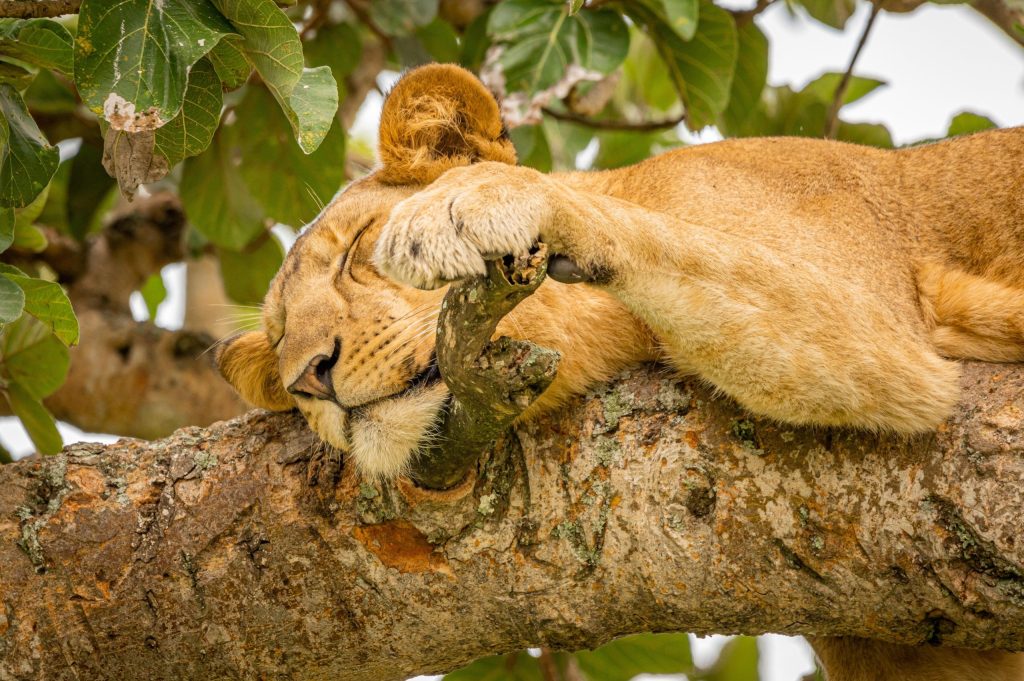
One of the most frequently asked questions by visitors planning a wildlife safari in Uganda is why tree climbing lions climb trees. Unlike leopards, which naturally spend much of their time in trees, lions are generally ground-dwelling predators. However, the famous tree climbing lions of the Ishasha Sector in Queen Elizabeth National Park have developed an extraordinary habit of resting high in large fig and acacia trees. This unusual behaviour has fascinated wildlife researchers, photographers and safari enthusiasts for decades, making a tree climbing lions safari in Uganda one of the country’s most sought-after wildlife experiences.
Although scientists have studied these lions for many years, there is still no single confirmed explanation for why they regularly climb trees. Instead, researchers believe several environmental and behavioural factors work together to encourage this remarkable adaptation. Travelers joining a guided Ishasha wildlife safari often learn about these different theories while observing the lions in their natural habitat.
Escaping the Heat of the Savannah
One of the most widely accepted explanations is that tree climbing lions climb trees to escape the intense heat of the African savannah. During the middle of the day, temperatures in Queen Elizabeth National Park can become very high, causing the ground to retain significant amounts of heat. By climbing into large fig trees, lions enjoy stronger breezes and cooler temperatures several metres above the ground. This allows them to rest comfortably while conserving energy for hunting later in the evening. Visitors planning a Queen Elizabeth National Park safari often have the best chance of seeing lions in trees during these warmer hours.
Avoiding Biting Insects
Another popular scientific theory suggests that tree climbing lions climb trees to avoid biting insects such as tsetse flies, mosquitoes and other pests that are more common at ground level. During rainy seasons and humid periods, insects can become extremely active across the grasslands of Ishasha. Resting high above the ground allows the lions to escape constant irritation while enjoying a quieter place to sleep. Many experienced guides explain this fascinating behaviour during a guided lion safari.
Improved Visibility Across the Plains
Large fig trees provide tree climbing lions with excellent panoramic views across the open savannah. From elevated branches, they can monitor movements of Uganda kobs, buffaloes, topis and other prey species without using unnecessary energy. Although lions normally hunt from the ground, resting in trees allows them to remain alert while observing their surroundings. Visitors interested in predator behaviour often include this experience within a comprehensive Uganda wildlife safari.
A Safe Place to Rest
Tree climbing lions spend nearly twenty hours each day resting. Finding a peaceful location where they can sleep without frequent disturbance is important for conserving energy. Large fig trees provide wide, stable branches capable of supporting several adult lions at the same time. Many visitors are amazed to see an entire pride stretched across the branches as though they were resting on comfortable platforms. These unforgettable moments are often included in professional Uganda safari packages.
Learning from Older Pride Members
Researchers also believe that tree climbing behaviour is learned rather than inherited genetically. Young cubs observe adult females and older pride members climbing into trees and gradually imitate the same behaviour as they mature. Over many generations, this social learning has become a common characteristic of the Ishasha lion prides. Visitors interested in understanding animal behaviour often enjoy combining wildlife viewing with educational lion tracking experiences.
Protection from Ground Disturbances
Although adult lions have very few natural predators, climbing trees provides additional security from ground disturbances. While resting above the grasslands, lions are less likely to be disturbed by passing elephants, buffaloes, hyenas or curious animals moving through their territory. Elevated resting positions also reduce unnecessary movement, allowing the lions to conserve valuable energy. Travelers can observe this remarkable adaptation during a carefully planned tree climbing lion safari itinerary.
Ideal Trees for Climbing
Not every tree is suitable for supporting adult lions. The lions of Ishasha usually select mature sycamore fig trees and large acacia trees because they have thick trunks and broad horizontal branches. These trees can comfortably support several heavy adult lions without breaking. Guides know many of the preferred trees used by different prides, increasing the chances of successful sightings during a Queen Elizabeth game drive.
Seasonal Changes in Tree Climbing Behaviour
Tree climbing behaviour may vary depending on weather conditions, rainfall and prey movement. During hotter months, lions often spend longer periods resting in trees because temperatures on the ground become uncomfortable. During cooler or rainy periods, they may spend more time resting beneath bushes or moving across the plains. This means that every game drive offers a unique experience, especially during a customized Uganda safari itinerary.
Scientific Studies and Ongoing Research
Wildlife biologists continue to study the tree climbing lions of Ishasha to better understand this extraordinary behaviour. Modern research uses GPS collars, behavioural observations and long-term monitoring to examine movement patterns, pride territories, hunting success and habitat use. These studies contribute to improved conservation planning while helping safari guides educate visitors about one of Africa’s most fascinating predators. Travelers interested in conservation tourism often appreciate learning about these efforts during a Queen Elizabeth National Park tour.
Myths and Facts About Tree Climbing Lions
Several myths surround Uganda’s famous tree climbing lions. Some people believe they climb trees to hunt from above or because they belong to a different species. Scientific evidence does not support these ideas. Tree climbing lions are ordinary African lions that have developed a unique behavioural adaptation influenced by their environment. They continue to hunt on the ground just like other lion populations across Africa. Visitors joining an educational Uganda wildlife tour quickly discover that the true story behind these lions is even more fascinating than the myths.
Why This Behaviour Makes Ishasha Unique
Very few places in Africa offer visitors a realistic opportunity to observe adult lions resting high in tree branches. This rare behaviour has made the Ishasha Sector internationally famous and has helped position Queen Elizabeth National Park among the continent’s leading safari destinations. Combining this extraordinary wildlife encounter with gorilla trekking, chimpanzee tracking and boat cruises creates one of East Africa’s finest safari experiences. Safari Vacations and Travel Services designs personalized journeys that allow travelers to discover the incredible world of Uganda’s tree climbing lions while exploring the country’s most spectacular national parks through a professionally guided gorilla trekking and tree climbing lions safari.
Best Time to See Tree Climbing Lions

The best time to see tree climbing lions in Uganda is throughout the year because the lions permanently live in the Ishasha Sector of Queen Elizabeth National Park. However, weather conditions, vegetation, road accessibility and animal movements can influence the quality of your wildlife viewing experience. Whether you travel during the dry season or the wet season, you still have an excellent opportunity to observe these remarkable predators resting on the branches of large fig and acacia trees. Planning your visit with Uganda safari packages allows you to choose the season that best matches your travel interests and photography goals.
The dry seasons are generally considered the best periods for seeing tree climbing lions because the vegetation becomes shorter, making it easier to spot wildlife across the open plains. During these months, animals also gather around permanent water sources, increasing the chances of successful game drives. Nevertheless, the green season offers beautiful scenery, fewer tourists and excellent photography opportunities. Travelers planning a tree climbing lions safari can enjoy unforgettable wildlife experiences regardless of the month they choose.
Month-by-Month Guide to Seeing Tree Climbing Lions
| Month | Season | Wildlife Viewing | Tree Climbing Lion Sighting | Photography | Recommendation |
|---|---|---|---|---|---|
| January | Dry | Excellent | Excellent | ★★★★★ | Highly Recommended |
| February | Dry | Excellent | Excellent | ★★★★★ | Highly Recommended |
| March | Wet | Very Good | Very Good | ★★★★☆ | Recommended |
| April | Wet | Good | Very Good | ★★★★☆ | Recommended |
| May | Wet | Very Good | Very Good | ★★★★☆ | Recommended |
| June | Dry | Excellent | Excellent | ★★★★★ | Highly Recommended |
| July | Dry | Excellent | Excellent | ★★★★★ | Highly Recommended |
| August | Dry | Excellent | Excellent | ★★★★★ | Highly Recommended |
| September | Wet | Very Good | Very Good | ★★★★☆ | Recommended |
| October | Wet | Very Good | Very Good | ★★★★☆ | Recommended |
| November | Wet | Good | Very Good | ★★★★☆ | Recommended |
| December | Dry | Excellent | Excellent | ★★★★★ | Highly Recommended |
Dry Season (June to August and December to February)
The dry season is widely regarded as the best time to see tree climbing lions because shorter grass improves visibility throughout the Ishasha plains. Wildlife gathers around rivers and permanent water sources, making game drives more productive. The roads are also generally in better condition, allowing visitors to explore larger areas of the park comfortably. Many travelers choose a Queen Elizabeth National Park safari during these months for the highest chances of exceptional wildlife encounters.
Wet Season (March to May and September to November)
The wet season transforms Ishasha into a lush green landscape filled with fresh vegetation and beautiful scenery. Although taller grass can sometimes make wildlife more difficult to spot, the tree climbing lions continue using their favourite trees throughout the year. Birdlife is especially abundant during these months, making the wet season an excellent choice for photographers and bird enthusiasts. Visitors combining wildlife viewing with birdwatching often enjoy a Uganda birding safari alongside their game drives.
Best Time of Day to See Tree Climbing Lions
Early morning and late afternoon are generally the most productive times for searching for tree climbing lions. During these cooler hours, lions may be active, moving through the plains, interacting with pride members or preparing to hunt. As temperatures rise later in the day, many lions climb into large fig trees where they spend several hours resting. Travelers on a professionally guided game drive in Queen Elizabeth National Park often enjoy both active and resting lion behaviour within the same day.
Best Season for Wildlife Photography
Photography enthusiasts can enjoy excellent opportunities throughout the year, although each season offers different advantages. Dry months provide clearer backgrounds and easier wildlife visibility, while the rainy season produces greener landscapes, dramatic skies and vibrant colours. Tree climbing lions resting on broad fig branches create spectacular compositions regardless of the season. Many photographers combine these experiences with a Uganda photographic safari to capture the country’s incredible biodiversity.
Best Time to Combine Tree Climbing Lions with Gorilla Trekking
Many travelers combine a visit to Ishasha with gorilla trekking in Bwindi Impenetrable National Park because the two destinations are located relatively close to each other. The dry seasons are especially popular since trekking trails are generally less slippery and road conditions are more reliable. However, gorilla trekking is available throughout the year, allowing visitors to enjoy both experiences regardless of the season. A carefully planned gorilla trekking and tree climbing lions safari offers one of East Africa’s most unforgettable wildlife adventures.
Peak Tourist Season
June, July, August, December and January attract the largest number of international visitors because they coincide with holidays and favourable weather conditions. Accommodation in and around Ishasha can fill quickly during these months, so early booking is highly recommended. Safari Vacations and Travel Services advises reserving accommodation and safari services several months in advance, particularly if luxury lodges are preferred. Travelers can secure their preferred itinerary through customized Uganda safari itineraries.
Low Season Advantages
The rainy seasons offer several advantages for travelers seeking quieter experiences. National parks receive fewer visitors, some lodges offer discounted rates and the landscapes become exceptionally green and scenic. Wildlife remains abundant, and experienced guides continue locating tree climbing lions throughout Ishasha. Visitors interested in relaxed wildlife viewing may appreciate a personalized private Uganda safari during these less crowded months.
Weather Conditions in Ishasha
Ishasha enjoys a tropical climate with warm daytime temperatures throughout the year. Rainfall occurs in two main wet seasons, while dry periods provide excellent road accessibility and wildlife viewing conditions. Travelers should pack lightweight clothing, a waterproof jacket, comfortable walking shoes, sunscreen, binoculars and a quality camera regardless of the season. Preparing properly ensures a comfortable experience during your Uganda wildlife safari.
Choosing the Right Time for Your Safari
The best time to see tree climbing lions ultimately depends on your travel preferences, photography interests and planned safari activities. If your priority is excellent wildlife visibility and easier road travel, the dry season is ideal. If you prefer lush scenery, fewer visitors and vibrant landscapes, the wet season is equally rewarding. Safari Vacations and Travel Services can help you choose the perfect travel period and design a personalized itinerary that combines tree climbing lions, gorilla trekking, chimpanzee tracking and other unforgettable wildlife experiences through a professionally guided Uganda safari holiday.
Tree Climbing Lion Safari Experience in Uganda

A tree climbing lion safari experience in Uganda offers much more than simply seeing lions resting in trees. It takes travelers into the remote Ishasha Sector of Queen Elizabeth National Park, where open savannah plains, fig trees, woodland and riverine habitats support a wide variety of wildlife. During a professionally guided tree climbing lion viewing experience, visitors explore different game tracks while searching for lions, elephants, buffaloes, topis, Uganda kobs, leopards, hyenas and numerous bird species.
The experience is especially memorable because tree climbing lions are wild animals that move freely across their natural territory. Their location changes according to prey movements, weather conditions, territorial activity and recent hunting patterns. Travelers may find the lions resting across wide fig-tree branches, walking through the grasslands or lying beneath shaded trees. Exploring the Ishasha tree climbing lion habitat therefore requires patience, careful observation and the guidance of an experienced safari driver.
Morning Game Drives in Ishasha
A morning game drive is one of the best ways to begin a tree climbing lion safari. The cooler conditions encourage wildlife activity, and visitors may see lions moving through the plains after hunting during the night. Some lions may still be feeding, while others may be returning toward their favourite resting areas. A guided search through the wildlife-rich Ishasha Sector can also reveal hyenas, buffaloes, elephants, topis, waterbucks, warthogs and large herds of Uganda kobs.
Morning game drives usually provide soft natural light, making them excellent for photography. The rising sun creates warm colours across the savannah while animals are often more active than they are during the hotter middle of the day. Safari guides carefully inspect known lion territories, animal tracks and large trees where the prides frequently rest. Travelers who want a focused experience can include a full morning search within a four-day tree climbing lion safari.
Afternoon Tree Climbing Lion Game Drives
Afternoon game drives offer a different opportunity because rising temperatures often encourage lions to climb into trees. During the warmer hours, visitors may find several pride members stretched across the broad branches of mature fig trees. Some lions lie with their legs hanging freely, while others carefully balance against the trunk. This remarkable sight is the main highlight of a tree climbing lions adventure in Queen Elizabeth National Park.
As the day becomes cooler, the lions may climb down and begin moving through the grasslands. Visitors can sometimes observe social interactions such as grooming, cubs playing, adults marking their territory or pride members greeting one another. A well-planned afternoon drive should not be rushed because lions may appear after several hours of searching. Combining repeated game drives through Ishasha and the Kazinga Channel creates a more complete Queen Elizabeth National Park experience.
Watching Lions Resting in Fig Trees
Seeing adult lions resting high in fig trees is the defining moment of the Ishasha safari experience. Their muscular bodies may appear surprisingly relaxed as they sleep along thick horizontal branches. Visitors can observe how the lions position themselves, maintain balance and use the height to watch the surrounding plains. Learning about the behaviour of tree climbing lions makes the sighting more educational and helps travelers understand why this population is so unusual.
Sometimes an entire pride may occupy one tree, creating an exceptional wildlife photography opportunity. At other times, the lions may be scattered across several trees or hidden behind leaves and branches. Safari guides position the vehicle at a safe distance and select viewing angles that allow visitors to observe the lions without disturbing them. Respectful viewing protects the animals and preserves the natural quality of every Ishasha lion encounter.
Experiential Lion Tracking
Experiential lion tracking provides a more focused and educational way to learn about lions in Queen Elizabeth National Park. The activity is conducted with trained researchers or authorized guides who use monitoring information to help locate selected lion prides. Visitors learn about pride structure, movement patterns, hunting behaviour, feeding habits and conservation challenges during a specialized lion tracking experience.
Lion tracking differs from an ordinary game drive because it is connected to long-term research and monitoring. Travelers may learn how individual lions are identified, how territories are recorded and how conservation teams study their relationship with surrounding communities. Participation normally requires advance arrangement because spaces can be limited. Including experiential lion tracking in Queen Elizabeth adds scientific and conservation value to the safari.
Wildlife Seen During an Ishasha Game Drive
Although tree climbing lions are the main attraction, Ishasha supports many other animals that make every game drive rewarding. Travelers may encounter elephants moving between woodland and open plains, large buffalo herds, topis standing on termite mounds and Uganda kobs grazing across the savannah. Warthogs, waterbucks and bushbucks are also regularly observed during a complete lion and wildlife safari in Uganda.
Leopards and spotted hyenas also inhabit Ishasha, although sightings depend greatly on luck and patience. Hyenas may be seen moving through the plains during the cooler morning hours, while leopards usually remain secretive within woodland and dense vegetation. The presence of predators and abundant prey makes Ishasha one of the most naturally balanced areas included in Uganda wildlife adventures.
Birdwatching During the Lion Safari
Queen Elizabeth National Park is also an outstanding birdwatching destination, and visitors can identify numerous species while searching for lions. Ishasha’s grasslands, woodland, wetlands and riverine vegetation support raptors, storks, hornbills, bee-eaters, kingfishers and many smaller birds. A traveler interested in both mammals and birds can combine tree climbing lion viewing with birding in Queen Elizabeth National Park.
Large birds of prey are particularly interesting because they frequently perch in trees or circle above the plains. Martial eagles, vultures and other raptors may be observed during game drives, while smaller birds add colour and sound to the landscape. Photographers can use the slower pace of an Ishasha game drive to capture both lions and birds during a Queen Elizabeth wildlife and birding tour.
Tree Climbing Lion Photography
Tree climbing lions provide some of the most distinctive wildlife photography opportunities in Uganda. Their position above the ground allows photographers to frame them against open skies, green leaves or wide savannah landscapes. A camera with a zoom lens is helpful because vehicles must remain at a responsible distance from the animals. Travelers interested in improving their images can prepare for a wildlife photography safari in Uganda.
Morning light is usually soft and warm, while afternoon light can create dramatic shadows around the lions and tree branches. Photographers should remain patient because lions may change position, raise their heads, interact with cubs or climb down from the tree. These natural moments often produce better images than forcing a rushed sighting. Carrying binoculars also helps visitors study distant animals before taking photographs during a photography experience in Uganda.
Kazinga Channel Boat Cruise
A tree climbing lion safari can be combined with a boat cruise along the Kazinga Channel in the northern part of Queen Elizabeth National Park. The channel connects Lake George and Lake Edward and attracts large numbers of hippos, crocodiles, elephants, buffaloes and water birds. Combining Ishasha game drives with a Kazinga Channel and tree climbing lion safari gives travelers both savannah and aquatic wildlife experiences.
The boat cruise allows visitors to view animals from a completely different perspective. Elephants may be seen drinking beside the water, buffaloes rest along the banks and hippos gather in large groups within the channel. Birdwatchers can also observe kingfishers, African fish eagles, pelicans, cormorants and many other species. This activity complements the land-based lion search and makes the overall Queen Elizabeth National Park safari more varied.
Combining Tree Climbing Lions with Gorilla Trekking
The Ishasha Sector is conveniently located along the route between Queen Elizabeth National Park and Bwindi Impenetrable National Park. Travelers can therefore search for tree climbing lions before continuing toward Bwindi for mountain gorilla trekking. This combination provides two very different wildlife encounters, with lions observed across open savannah and gorillas encountered within a dense tropical forest. A gorilla trekking and lion tracking safari is ideal for visitors with limited travel time.
Longer itineraries can also include chimpanzee trekking in Kibale National Park, game drives in Kasenyi and a boat cruise on the Kazinga Channel. These combinations allow travelers to experience Uganda’s major primates, predators and savannah animals in one journey. Safari Vacations and Travel Services can organize an Uganda gorilla, chimpanzee and wildlife safari according to the visitor’s preferred route and accommodation standard.
Safety During the Tree Climbing Lion Experience
Visitors must remain inside the safari vehicle when viewing tree climbing lions and should follow all instructions given by the safari guide. Lions may appear relaxed, but they remain powerful wild predators capable of reacting quickly when disturbed. Travelers should avoid loud noises, sudden movements, feeding animals or leaving the designated game-viewing tracks. Maintaining a respectful distance protects both the visitors and the lions.
The safari guide understands animal behaviour and knows how to position the vehicle without blocking the lions’ movement. Visitors should also avoid placing cameras or body parts outside the vehicle when lions are nearby. Following responsible wildlife-viewing practices helps preserve the natural behaviour of the lions and ensures that future travelers can enjoy the same remarkable experience.
What Makes the Tree Climbing Lion Safari Special?
A tree climbing lion safari is special because it combines rarity, adventure, conservation and outstanding wildlife viewing. Very few places in Africa offer consistent opportunities to see fully grown lions resting comfortably in trees. Ishasha’s uncrowded tracks and remote environment also create a more private safari atmosphere than many heavily visited wildlife destinations.
Safari Vacations and Travel Services designs personalized tree climbing lion safaris that include private transportation, knowledgeable guides, suitable accommodation and carefully selected wildlife activities. The experience can be combined with the Kazinga Channel, gorilla trekking, chimpanzee tracking and other national parks to create a complete Uganda safari based on the traveler’s budget, interests and available time.
How to Plan a Tree Climbing Lions Safari in Uganda

Planning a tree climbing lions safari in Uganda requires choosing the right travel season, selecting the ideal safari duration, arranging transportation, booking suitable accommodation and deciding which wildlife experiences to combine with your visit. The famous tree climbing lions are found in the Ishasha Sector of Queen Elizabeth National Park, one of Uganda’s most spectacular wildlife destinations. With proper planning, visitors can combine tree climbing lions with gorilla trekking, chimpanzee tracking, boat cruises and traditional game drives to create one unforgettable safari. Safari Vacations and Travel Services specializes in organizing customized itineraries that allow travelers to experience the very best of Uganda’s wildlife through carefully designed Uganda safari holidays.
Every traveler has different interests, travel dates and budgets. Some visitors wish to spend only one day searching for the famous lions, while others prefer longer safaris covering several national parks. Understanding transportation options, travel distances, accommodation choices and park activities helps visitors maximize their safari experience. Before confirming your journey, it is helpful to explore different custom Uganda safari packages that can be tailored to your specific requirements.
Choosing the Right Safari Duration
The amount of time you spend in Queen Elizabeth National Park has a significant impact on your chances of seeing the tree climbing lions. Although sightings are possible during a short visit, spending two or three nights around Ishasha allows guides enough time to search different lion territories while also enjoying other wildlife experiences. Longer safaris reduce the pressure of travelling quickly between destinations and allow visitors to fully appreciate Uganda’s remarkable biodiversity through carefully designed Ishasha wildlife safaris.
| Safari Duration | Recommended Activities | Best For |
|---|---|---|
| 2 Days | Game drives in Ishasha | Short wildlife getaway |
| 3 Days | Multiple game drives and wildlife viewing | Most popular safari |
| 4 Days | Tree climbing lions and Kazinga Channel | Wildlife enthusiasts |
| 5 Days | Tree climbing lions plus gorilla trekking | Adventure travelers |
| 7+ Days | Complete Uganda wildlife circuit | Comprehensive safari experience |
Getting to the Ishasha Sector
The Ishasha Sector lies in the southern part of Queen Elizabeth National Park, approximately midway between the Mweya Peninsula and Bwindi Impenetrable National Park. Visitors can reach Ishasha by road from Kampala, Entebbe or Kigali, depending on their arrival point. The route offers beautiful scenery including rolling hills, rural villages, crater lakes and wildlife-rich landscapes. Travelers planning their first visit often benefit from a professionally organized Queen Elizabeth National Park safari.
Travel Distances to Ishasha
| Starting Point | Approximate Distance | Estimated Driving Time | Recommended Route |
|---|---|---|---|
| Kampala | Approximately 420 km | 7–8 Hours | Kampala – Mbarara – Ishasha |
| Entebbe | Approximately 455 km | 8 Hours | Entebbe – Kampala – Mbarara – Ishasha |
| Kigali | Approximately 230 km | 5–6 Hours | Kigali – Katuna Border – Ishasha |
| Bwindi | Approximately 70 km | 2–3 Hours | Bwindi – Ishasha |
Road Transport or Domestic Flights?
Most visitors reach Ishasha using comfortable four-wheel-drive safari vehicles because the journey itself offers opportunities to enjoy Uganda’s countryside and wildlife. Domestic flights are available to nearby airstrips for travelers seeking shorter travel times and luxury experiences. Flying safaris reduce long driving hours and allow more time for wildlife viewing. Luxury travelers often choose professionally organized fly-in Uganda safaris for maximum comfort.
Choosing the Best Safari Vehicle
A reliable four-wheel-drive safari vehicle is highly recommended for exploring the Ishasha Sector. Most guided safaris use Toyota Land Cruisers equipped with pop-up roofs that provide excellent visibility during game drives. These vehicles comfortably handle both paved highways and park tracks while offering enough space for photography equipment and luggage. Travelers booking private Uganda safaris usually enjoy greater flexibility throughout their journey.
Estimated Safari Costs
The total cost of a tree climbing lions safari depends on the number of travelers, accommodation standard, transportation, travel season and activities included. Budget travelers can enjoy affordable experiences, while luxury visitors may choose premium lodges and domestic flights. Safari Vacations and Travel Services prepares personalized quotations based on each traveler’s requirements through customized Uganda tour packages.
| Safari Category | Approximate Cost Per Person | Accommodation Standard |
|---|---|---|
| Budget | US$250–450 per day | Budget Lodges |
| Mid-range | US$450–700 per day | Comfort Lodges |
| Luxury | US$700+ per day | Luxury Safari Lodges |
Combining Tree Climbing Lions with Other Destinations
The location of Ishasha makes it easy to combine tree climbing lions with some of Uganda’s most famous attractions. Many visitors continue to Bwindi Impenetrable National Park for gorilla trekking, while others include Kibale National Park for chimpanzee tracking or Lake Mburo National Park for walking safaris. Combining several destinations creates a richer wildlife experience through a professionally designed gorilla trekking and tree climbing lions safari.
Booking Accommodation Early
The lodges around Ishasha are limited compared to other parts of Queen Elizabeth National Park. During peak travel months, many accommodations become fully booked several months in advance. Reserving your preferred lodge early guarantees better availability and often provides more accommodation choices. Travelers planning well ahead usually benefit from carefully selected luxury Uganda safari experiences.
What to Pack for a Tree Climbing Lions Safari
Packing appropriately helps visitors remain comfortable throughout their safari. Lightweight clothing, neutral colours, comfortable walking shoes, sunglasses, sunscreen, binoculars, cameras, spare batteries and a light waterproof jacket are highly recommended. Travelers should also carry personal medications and travel documents when joining a professionally guided Uganda wildlife safari.
Booking with Safari Vacations and Travel Services
Planning a successful tree climbing lions safari becomes much easier when working with experienced local safari specialists. Safari Vacations and Travel Services organizes customized itineraries, quality accommodation, comfortable transportation, experienced driver-guides and unforgettable wildlife experiences throughout Uganda. Whether you wish to enjoy only the Ishasha Sector or combine it with gorilla trekking, chimpanzee tracking, the Kazinga Channel and other national parks, the company designs personalized journeys that suit every budget and travel style while delivering an exceptional Uganda wildlife adventure.
Best Tree Climbing Lion Safari Itineraries in Uganda

The best tree climbing lion safari itineraries are designed to give travelers enough time to explore the Ishasha Sector while combining it with other attractions in Queen Elizabeth National Park and southwestern Uganda. A short itinerary may focus entirely on game drives in Ishasha, while a longer journey can include the Kazinga Channel, gorilla trekking, chimpanzee tracking and Uganda’s Big Five. Safari Vacations and Travel Services creates flexible custom Uganda safari packages based on the traveler’s available time, interests, accommodation preference and budget.
Wildlife sightings are never guaranteed because lions move freely through their natural habitat. However, spending more time in Ishasha and including both morning and afternoon game drives improves the opportunity to observe lions walking across the plains or resting in large fig trees. The following tree climbing lion safari itineraries can be used as starting points when planning an unforgettable tree climbing lions experience in Uganda.
2-Day Short Tree Climbing Lions Safari
A 2-day tree climbing lions safari is suitable for travelers who have limited time but still want to experience the famous Ishasha Sector. The journey can begin from Bwindi, Kabale, Kampala or another destination in southwestern Uganda, depending on the traveler’s existing route. On arrival in Ishasha, visitors can join an afternoon game drive before spending the night at a lodge near the sector. This short Ishasha lion safari provides an introduction to the landscape, wildlife and unusual behaviour of the lions.
The second day can begin with another game drive through the open savannah before departure. During the search, travelers may also encounter elephants, buffaloes, topis, Uganda kobs, waterbucks, warthogs and several bird species. Because the itinerary is short, it is most suitable for visitors already traveling between Queen Elizabeth National Park and Bwindi rather than those beginning in Kampala or Entebbe.
3-Day Queen Elizabeth Tree Climbing Lions Safari
A 3-day tree climbing lions safari gives visitors more time to explore Ishasha without making the journey unnecessarily long. The first day normally involves travel to Queen Elizabeth National Park, followed by an evening game drive when arrival time permits. The second day can be dedicated to morning and afternoon searches for lions within the southern sector. Spending a full day exploring the wildlife of Ishasha increases the possibility of seeing different lion behaviours and other savannah animals.
The final day begins with an optional morning game drive before returning to Kampala, Entebbe, Kigali or another destination. This itinerary is well suited to couples, families and photographers who want a focused wildlife safari without adding gorilla trekking. Travelers may also customize the route by including Kasenyi, Mweya or another section of Queen Elizabeth National Park.
4-Day Tree Climbing Lions Safari to Queen Elizabeth National Park
A 4-day tree climbing lion safari offers a balanced experience with enough time for road travel, game viewing and relaxation. The first day usually includes a transfer from Kampala or Entebbe to Queen Elizabeth National Park. Travelers can enjoy scenery along the route and stop at selected locations before arriving at their lodge. The complete four-day tree climbing lion safari can then include several game drives through Ishasha.
The second and third days provide opportunities to search different lion territories during morning and afternoon game drives. Travelers may observe lions resting in trees during the hotter part of the day and moving through the grasslands during cooler hours. The fourth day is normally reserved for the return journey, although additional activities can be included if the safari ends in Bwindi or another nearby destination.
5-Day Kazinga Channel and Tree Climbing Lions Safari
A 5-day itinerary is one of the best options for travelers who want to explore both the northern and southern parts of Queen Elizabeth National Park. The journey can begin with a transfer from Kampala or Entebbe to the park, followed by a game drive in Kasenyi or around the Mweya Peninsula. The next day may include another game drive and a boat cruise before continuing toward Ishasha. A Kazinga Channel and tree climbing lion safari combines two of the park’s most rewarding wildlife experiences.
The Kazinga Channel boat cruise offers close views of hippos, crocodiles, buffaloes, elephants and numerous water birds. After exploring the channel, travelers continue south for game drives in Ishasha, where the focus changes to tree climbing lions and savannah wildlife. This itinerary is ideal for first-time visitors who want a complete Queen Elizabeth National Park experience.
5-Day Tree Climbing Lions and Gorilla Trekking Safari
A 5-day tree climbing lions and gorilla trekking safari combines Uganda’s famous savannah predators with endangered mountain gorillas. The journey may begin in Kampala, Entebbe or Kigali before continuing to Queen Elizabeth National Park. Travelers spend time searching for lions in Ishasha and then proceed to Bwindi Impenetrable National Park for a guided gorilla trekking experience. This combination creates an exciting gorilla and tree climbing lions tour through southwestern Uganda.
Gorilla trekking takes visitors into the rainforest to search for a habituated mountain gorilla family. Once the gorillas are located, travelers are normally allowed a regulated period in their presence while following the instructions of park guides. The contrast between open savannah game drives and rainforest trekking makes this itinerary particularly attractive to travelers visiting Uganda for the first time.
6-Day Uganda Gorilla and Tree Climbing Lions Safari
A 6-day safari provides a slower and more comfortable version of the gorilla and lion combination. The additional time can be used for more game drives, a Kazinga Channel boat cruise, cultural encounters or relaxation between activities. Travelers can visit the northern part of Queen Elizabeth National Park before proceeding to Ishasha and later continuing to Bwindi. The Uganda gorilla and tree climbing lion journey is suitable for couples, families, photographers and small private groups.
This itinerary can also be arranged in reverse, beginning with gorilla trekking before continuing to Ishasha and Queen Elizabeth National Park. The best direction depends on the arrival airport, available gorilla permit location and the traveler’s next destination. Safari Vacations and Travel Services can adjust the route to reduce unnecessary driving while protecting the quality of each wildlife experience.
7-Day Uganda Primates and Tree Climbing Lions Safari
A 7-day itinerary allows travelers to combine tree climbing lions with gorilla trekking and chimpanzee tracking. The safari may include Kibale National Park, Queen Elizabeth National Park and Bwindi Impenetrable National Park. In Kibale, travelers join a guided forest walk in search of chimpanzees before continuing to Queen Elizabeth for game drives and later heading south toward Ishasha and Bwindi. This creates a varied Uganda primate and wildlife safari.
The itinerary is especially suitable for travelers who want to see several of Uganda’s most important species within one week. Chimpanzees, tree climbing lions, mountain gorillas, elephants, buffaloes, hippos and numerous antelope species may all be encountered during the journey. The route also passes through changing landscapes that include tropical forests, crater regions, savannah plains and cultivated highlands.
8-Day Uganda Gorilla and Big Five Safari
An 8-day Uganda safari can combine the tree climbing lions of Ishasha with rhino tracking, game drives, boat cruises and gorilla trekking. Ziwa Rhino Sanctuary is normally included for rhino tracking, while Murchison Falls or Queen Elizabeth National Park provides opportunities to search for lions, elephants, buffaloes and leopards. The Uganda gorilla and Big Five safari is suitable for travelers seeking a broad wildlife experience.
Because the Big Five are distributed across different destinations in Uganda, careful route planning is necessary. Rhinos are tracked at Ziwa Rhino Sanctuary, while lions, leopards, elephants and buffaloes can be seen in national parks. Ishasha adds the special opportunity to search for lions resting in trees, making the journey different from a conventional African Big Five safari.
10-Day Best of Uganda Tree Climbing Lions Safari
A 10-day itinerary offers enough time to explore Uganda at a relaxed pace while including primates, savannah wildlife and scenic attractions. The journey may cover Murchison Falls National Park, Kibale National Park, Queen Elizabeth National Park, Ishasha and Bwindi Impenetrable National Park. Travelers can enjoy game drives, boat cruises, chimpanzee tracking, tree climbing lion viewing and gorilla trekking during a complete Best of Uganda safari.
This itinerary is recommended for travelers who do not want to rush between destinations. Additional time can be allocated to photography, cultural visits, nature walks or relaxation at selected lodges. It also provides more flexibility if weather or wildlife movements affect a planned activity.
14-Day Complete Uganda Wildlife and Primate Safari
A 14-day safari is ideal for visitors who want a deeper exploration of Uganda’s national parks. The route can include Murchison Falls, Kibale, Queen Elizabeth, Ishasha, Bwindi, Lake Bunyonyi and Lake Mburo. Travelers can search for lions in several ecosystems while also experiencing chimpanzees, gorillas, rhinos, giraffes and large herds of savannah animals. A longer Uganda gorilla tracking safari provides more time for wildlife observation and meaningful local experiences.
The longer duration also allows Safari Vacations and Travel Services to reduce long daily transfers by adding well-positioned overnight stops. This creates a more comfortable journey for senior travelers, families and photographers carrying professional equipment. The itinerary can be arranged using budget, mid-range or luxury accommodation.
Tree Climbing Lions Safari from Kigali
Travelers arriving in Rwanda can begin their tree climbing lions safari from Kigali and cross into southwestern Uganda by road. This option is especially convenient for visitors combining Rwanda with Bwindi and Queen Elizabeth National Park. Depending on the itinerary, travelers may visit Bwindi first before continuing to Ishasha or travel directly toward the park through the Katuna border. A professionally arranged Uganda safari from Rwanda includes border guidance, private transportation and accommodation planning.
Starting from Kigali may reduce travel time for itineraries focused on southwestern Uganda. It also allows travelers to add Kigali city experiences, Volcanoes National Park or other Rwanda attractions before entering Uganda. Passport, visa and vaccination requirements should be confirmed before travel because entry regulations may change.
Private Versus Group Tree Climbing Lion Itineraries
A private tree climbing lion safari provides greater flexibility because the vehicle and guide are dedicated to one traveler, couple, family or private group. Visitors can spend more time photographing lions, adjust game-drive durations and choose accommodation based on personal preferences. Private Uganda wildlife safaris are particularly suitable for honeymooners, photographers and families traveling with children.
Group safaris can reduce the per-person cost because transport and guide expenses are shared. However, the itinerary usually follows a fixed schedule, and travelers may have less control over stops and game-drive timing. The most suitable option depends on the traveler’s budget, preferred level of privacy and desired safari pace.
Choosing the Best Tree Climbing Lion Safari Itinerary
The best tree climbing lion safari itinerary depends on how much time a traveler has and which other experiences are considered essential. A short itinerary works well for visitors already staying near Bwindi or Queen Elizabeth National Park, while a five- or six-day safari is better for combining Ishasha with gorilla trekking. Travelers seeking a complete wildlife journey should consider an eight-day or longer itinerary that includes several protected areas and a wider variety of species.
Safari Vacations and Travel Services can personalize any itinerary by changing the starting point, accommodation category, safari duration and included activities. Whether the journey begins in Kampala, Entebbe or Kigali, careful planning ensures that travelers spend enough time in Ishasha while also enjoying Uganda’s other outstanding wildlife destinations through a professionally organized Uganda safari package.
Where to Stay During a Tree Climbing Lions Safari

Choosing where to stay during a tree climbing lions safari can strongly influence the quality of your experience in the Ishasha Sector. The best accommodation should provide comfortable access to the southern game-viewing tracks, suitable meals, secure rooms and enough time for both morning and afternoon wildlife drives. Travelers can choose from luxury tented camps, comfortable mid-range lodges and affordable properties located near the park gates. Safari Vacations and Travel Services can recommend suitable Ishasha Sector lodges according to each visitor’s budget, interests and preferred level of comfort.
Staying close to Ishasha reduces the amount of time spent driving before a game drive and allows travelers to begin searching for lions while wildlife is still active. Properties within or near the sector also provide a stronger wilderness atmosphere, with opportunities to hear birds, monkeys and other animals around the accommodation. Visitors who are still comparing different regions can use a detailed Uganda accommodation guide to understand the available lodge categories across the country.
Accommodation Categories Around Ishasha
Accommodation around the Ishasha Sector is generally divided into luxury, mid-range and budget categories. Luxury camps provide a high level of privacy, personalized service and exclusive wilderness settings. Mid-range lodges offer comfortable rooms, private bathrooms and reliable services at a more moderate cost. Budget accommodation focuses on essential comfort and is suitable for travelers who prefer to spend more of their safari budget on activities. A complete Queen Elizabeth safari package can be prepared using any of these accommodation levels.
| Accommodation | Category | Location | Best For | Main Experience |
|---|---|---|---|---|
| Ishasha Wilderness Camp | Luxury | Inside the southern sector | Luxury travelers, couples and photographers | Remote tented safari experience near the Ntungwe River |
| Ishasha Jungle Lodge | Mid-range | Near the southern area of the park | Couples, families and small groups | Comfortable eco-style accommodation close to Ishasha |
| Topi Lodge | Mid-range | Near the southern park gate | Travelers combining Ishasha and Bwindi | Convenient access to tree climbing lion game drives |
| At the River Ishasha Lodge | Budget to mid-range | Outside the southern sector | Budget-conscious travelers | Riverside surroundings and easy access to Ishasha |
| Mweya Safari Lodge | Luxury | Mweya Peninsula | Travelers exploring the wider park | Kazinga Channel views and northern game drives |
Luxury Accommodation in the Ishasha Sector
Luxury accommodation is ideal for travelers who want privacy, attentive service and an intimate connection with the surrounding wilderness. These properties normally provide spacious rooms or safari tents, en-suite bathrooms, quality meals and comfortable areas for relaxing after a game drive. Visitors planning a premium journey can compare suitable options through a guide to luxury accommodation in Queen Elizabeth.
Ishasha Wilderness Camp
Ishasha Wilderness Camp is one of the best-known luxury properties in the southern sector of Queen Elizabeth National Park. Its position within the wilderness makes it convenient for travelers who want to begin game drives without making a long transfer from another part of the park. The camp offers a traditional tented safari atmosphere and is surrounded by an environment where elephants, monkeys and numerous birds may sometimes be observed. Staying here complements a carefully planned Ishasha tree climbing lions experience.
The camp is particularly suitable for couples, honeymooners, photographers and travelers who appreciate quiet natural settings. Guests can relax after searching for lions and enjoy the sounds of the surrounding bush. Its location near the Ntungwe River contributes to the camp’s remote character and creates a strong sense of being immersed in the national park. Travelers interested in a premium journey can include this property within a customized luxury Uganda safari.
Luxury Lodges in the Northern Part of Queen Elizabeth National Park
Some travelers prefer to divide their stay between Ishasha and the northern part of Queen Elizabeth National Park. This arrangement makes it easier to combine tree climbing lion game drives with the Kazinga Channel, Kasenyi Plains and Mweya Peninsula. Luxury properties in the northern region may offer swimming pools, elevated views, restaurants and easier access to boat cruises. A combined Ishasha and Kazinga Channel safari normally works best when accommodation is selected according to the activities planned for each day.
Mweya Safari Lodge
Mweya Safari Lodge is positioned on the Mweya Peninsula and is more convenient for travelers exploring the Kazinga Channel and northern game-viewing areas than for those focusing only on Ishasha. It may be included before or after a stay in the southern sector, creating a varied experience within one national park. Guests can enjoy views across the surrounding landscape and continue to a Kazinga Channel and lion safari that covers both major regions.
Mid-Range Accommodation Near Ishasha
Mid-range lodges are suitable for travelers who want private rooms, comfortable beds, hot showers and reliable meals without paying luxury camp prices. These properties often provide the best balance between location, service and affordability. Mid-range accommodation is particularly popular with couples, families and private groups taking a multi-day tree climbing lion safari.
Ishasha Jungle Lodge
Ishasha Jungle Lodge offers eco-style accommodation near the southern part of Queen Elizabeth National Park. Its rooms or tents are designed to provide a natural atmosphere while still offering essential comforts such as private bathroom facilities and spaces for relaxing. The lodge is suitable for travelers who want to remain close to Ishasha without choosing the highest-priced luxury accommodation. It is among the properties discussed in the company’s complete guide to lodges near Ishasha.
Staying near the sector allows guests to leave the lodge early and begin searching for lions during the cooler morning hours. They can later return for meals or rest before joining another drive in the afternoon. This schedule provides more wildlife-viewing time and creates a better opportunity to experience the diverse wildlife found in Ishasha.
Topi Lodge
Topi Lodge is located near the southern entrance to the Ishasha Sector and is a convenient choice for travelers moving between Queen Elizabeth National Park and Bwindi Impenetrable National Park. Its location reduces unnecessary driving and makes it practical to combine an Ishasha game drive with a later transfer toward the gorilla trekking regions. The lodge is often considered by travelers planning a gorilla and tree climbing lions tour.
The property provides a comfortable base for travelers who value a peaceful environment and straightforward access to the park. Guests can enjoy the surrounding countryside before entering Ishasha to search the large fig trees commonly used by lions. Topi Lodge is especially practical for private safaris where the route, activities and departure times can be adjusted according to the traveler’s preferences.
Budget Accommodation Near the Ishasha Sector
Budget accommodation provides basic but comfortable services for travelers who want to control the total cost of their safari. These properties may be located outside the national park or farther from the main game-viewing tracks, but they can still provide access to Ishasha with an experienced driver-guide. Budget lodges are commonly included in affordable Uganda safari packages for solo travelers, students, small groups and families.
At the River Ishasha Lodge
At the River Ishasha Lodge offers a simple accommodation experience near the southern region of Queen Elizabeth National Park. Its riverside surroundings can provide opportunities to observe birds and primates around the property. The lodge is suitable for travelers who prioritize wildlife activities over luxury facilities and want a convenient base for visiting the Ishasha plains. It can be included within a private Queen Elizabeth wildlife safari.
Accommodation for Families
Families should choose lodges with suitable room arrangements, secure surroundings, flexible meal options and enough space for children to relax. Family cottages, interconnected rooms or additional beds may be available at selected properties, but they should be requested early. Parents should also consider the driving distance between the lodge and Ishasha because shorter transfers make the experience more comfortable for younger travelers. A personalized safari allows Safari Vacations and Travel Services to select accommodation that matches the ages and needs of every family member.
Accommodation for Couples and Honeymooners
Couples and honeymooners may prefer private tented camps, scenic verandas, quiet dining areas and rooms overlooking natural surroundings. A romantic stay can be combined with private game drives, sundowner experiences and a relaxed journey through Queen Elizabeth National Park. Travelers planning a special celebration can explore ideas for a Queen Elizabeth honeymoon safari.
Accommodation for Wildlife Photographers
Wildlife photographers should prioritize properties located close to the game-viewing tracks. Staying nearby allows photographers to enter the sector when the light is soft and wildlife is active. It also makes it easier to remain in the field during the afternoon without facing a long return journey. Photographers carrying several cameras, lenses and charging equipment should confirm that their chosen property provides secure storage and reliable charging facilities.
Staying in Ishasha Versus the Mweya Area
Staying in Ishasha is the best choice when the main objective is seeing tree climbing lions. Visitors can dedicate more time to searching different areas of the southern sector and avoid the long journey from the northern part of the park. Staying near Mweya is more convenient for the Kazinga Channel, Kasenyi Plains and northern game drives. Travelers who want a complete park experience should spend at least one night in each region during a well-organized Queen Elizabeth Park safari.
Booking Ishasha Accommodation Early
The number of accommodation properties around Ishasha is limited compared with the northern part of Queen Elizabeth National Park. Luxury and popular mid-range lodges can fill quickly during the main travel seasons, especially from June to August and around the December holiday period. Booking early provides a better chance of securing the preferred lodge, room type and safari dates. It is especially important when combining Ishasha with gorilla trekking because accommodation and permits must be coordinated carefully.
What Is Usually Included at an Ishasha Lodge?
Accommodation arrangements may include bed and breakfast, half board or full board, depending on the lodge and safari package. Full-board arrangements are commonly used because travelers spend most of their time inside or near the national park, where alternative restaurants may be limited. Drinks, laundry, cultural visits, private activities and park fees may not always be included, so the final quotation should clearly show what is covered.
Choosing the Best Lodge with Safari Vacations and Travel Services
The best lodge for a tree climbing lions safari depends on the traveler’s budget, preferred comfort level, itinerary and next destination. Visitors continuing to Bwindi may choose accommodation near the southern gate, while those combining Ishasha with the Kazinga Channel may divide their nights between the southern and northern parts of Queen Elizabeth National Park. Safari Vacations and Travel Services selects reliable accommodation and coordinates meals, transport and activities through a personalized custom Uganda safari itinerary.
Frequently Asked Questions About Tree Climbing Lions
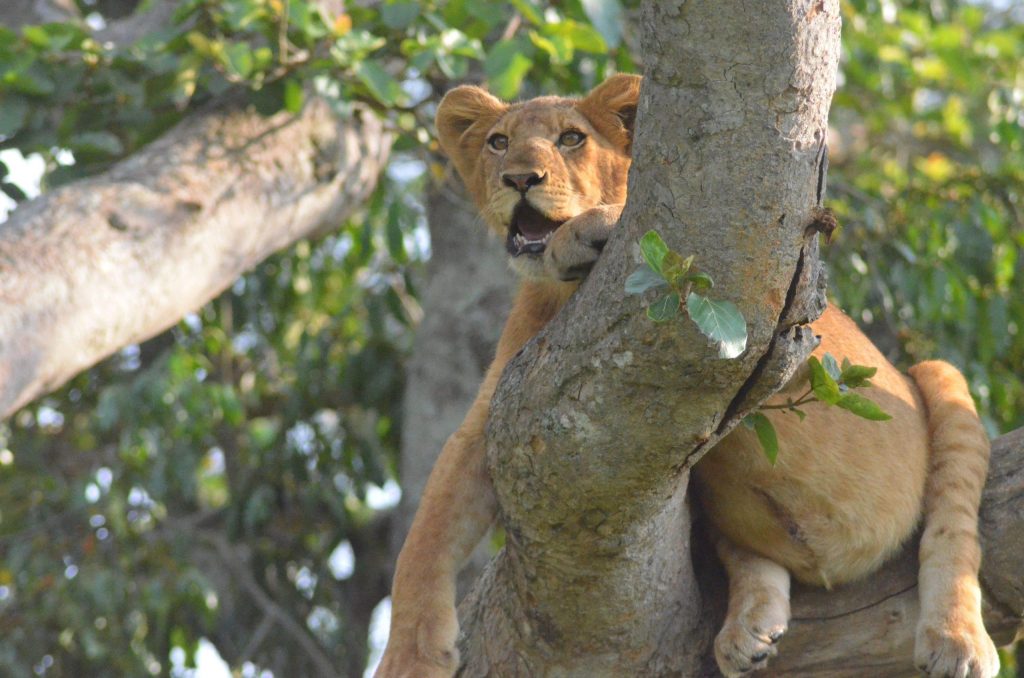
Planning a safari to see the famous tree climbing lions of Uganda often raises many questions. Visitors want to know where the lions are found, why they climb trees, when to visit, how much a safari costs and whether the experience can be combined with gorilla trekking or other wildlife adventures. The answers below provide detailed information to help you prepare for your journey with Safari Vacations and Travel Services. Whether you are visiting Uganda for the first time or returning for another wildlife adventure, these frequently asked questions will help you better understand one of Africa’s most extraordinary safari experiences while planning a memorable Uganda safari holiday.
Where are the tree climbing lions found in Uganda?
The tree climbing lions are found in the Ishasha Sector of Queen Elizabeth National Park in southwestern Uganda. This remote area is internationally famous because adult lions are regularly seen resting on the branches of large fig and acacia trees. Ishasha is the most reliable place in Uganda to observe this rare behaviour during a professionally guided tree climbing lions safari.
Why do tree climbing lions climb trees?
Although there is no single scientific explanation, researchers believe that the lions climb trees to escape ground heat, avoid biting insects such as tsetse flies, enjoy cooler breezes and gain a better view of their surroundings. This behaviour is also believed to be learned by younger lions from older pride members rather than inherited genetically. :contentReference[oaicite:0]{index=0} Visitors can learn more about this fascinating adaptation during an educational Ishasha wildlife experience.
Are tree climbing lions a different species?
No. Tree climbing lions are ordinary African lions that have developed an unusual behavioural adaptation. They have the same physical characteristics, hunting behaviour and social structure as other lions found across Africa. Their habit of climbing trees simply makes them unique among wild lion populations. Travelers can observe this remarkable behaviour during a guided lion safari.
How many tree climbing lions live in Ishasha?
The exact population changes over time because lions are born, migrate and naturally die. The Ishasha Sector supports several prides that move freely throughout the southern region of Queen Elizabeth National Park. Conservation organizations continuously monitor the lion population to understand their behaviour and improve protection efforts. :contentReference[oaicite:1]{index=1}
What is the best time to see tree climbing lions?
Tree climbing lions can be seen throughout the year, but the dry seasons from June to September and December to February generally offer the best wildlife viewing because vegetation is shorter and roads are easier to access. During warmer afternoons, lions are also more likely to rest in trees. :contentReference[oaicite:2]{index=2} Travelers planning a safari can compare different Uganda safari packages according to their preferred travel dates.
What time of day is best for seeing tree climbing lions?
Morning and late afternoon game drives generally provide the highest chances of seeing active lions. During the hotter hours of the day, visitors often find the lions resting comfortably in the branches of large fig trees, making midday and early afternoon excellent times for photography as well.
Can tree climbing lions be seen every day?
Although tree climbing lions are regularly seen in Ishasha, sightings can never be guaranteed because they are completely wild animals. Their location changes depending on weather conditions, prey movement and pride activity. Spending two or more game drives in the sector greatly improves the chances of a successful sighting.
Can I combine tree climbing lions with gorilla trekking?
Yes. One of the greatest advantages of visiting Ishasha is its proximity to Bwindi Impenetrable National Park. Many travelers combine game drives in Ishasha with mountain gorilla trekking because the two destinations are located only a few hours apart. This creates one of Uganda’s most rewarding gorilla and wildlife safaris.
Can I combine tree climbing lions with chimpanzee trekking?
Yes. Travelers can also include chimpanzee trekking in Kibale National Park or Kyambura Gorge within Queen Elizabeth National Park. Combining lions, chimpanzees and gorillas creates a complete Uganda primate and wildlife experience suitable for nature lovers and photographers.
How many days should I spend in Ishasha?
Most visitors should spend at least two nights around the Ishasha Sector. This allows enough time for multiple game drives while reducing the pressure of trying to locate lions during a single visit. Longer stays provide better wildlife viewing opportunities and a more relaxed safari experience.
What animals can I see besides tree climbing lions?
In addition to tree climbing lions, visitors regularly see elephants, buffaloes, Uganda kobs, topis, waterbucks, warthogs, spotted hyenas, leopards and hundreds of bird species. The Ishasha Sector is one of Uganda’s richest wildlife ecosystems and forms an important part of a complete Uganda wildlife safari.
Are tree climbing lions dangerous?
Like all wild lions, tree climbing lions are powerful predators and should always be viewed from the safety of a safari vehicle. Visitors must follow their guide’s instructions, remain inside the vehicle and avoid disturbing the animals during game drives.
Can children join a tree climbing lions safari?
Yes. Tree climbing lion safaris are suitable for families with children because most wildlife viewing takes place from comfortable safari vehicles. Parents should choose family-friendly accommodation and ensure children follow the guide’s safety instructions throughout the safari.
What should I pack for a tree climbing lions safari?
Visitors should pack lightweight neutral-coloured clothing, comfortable walking shoes, sunglasses, sunscreen, insect repellent, binoculars, a camera with extra batteries and a light waterproof jacket. Packing correctly makes the safari more comfortable regardless of the season.
Which vehicle is best for a tree climbing lions safari?
A four-wheel-drive Toyota Land Cruiser with a pop-up roof is the most recommended safari vehicle because it provides excellent visibility, comfort and reliable performance on both highways and park tracks. Travelers booking private Uganda safaris usually enjoy the greatest flexibility.
Can I visit Ishasha from Kigali?
Yes. Many visitors begin their safari in Kigali before crossing into Uganda and continuing to the Ishasha Sector. This route is especially convenient when combining Queen Elizabeth National Park with Bwindi Impenetrable National Park.
How much does a tree climbing lions safari cost?
The total cost depends on safari duration, accommodation category, transportation, number of travelers and activities included. Budget, mid-range and luxury options are all available, allowing travelers to choose an itinerary that matches their preferences and budget.
Is photography allowed?
Yes. Photography is encouraged throughout the safari. A camera with a telephoto lens or binoculars helps visitors capture excellent images while maintaining a safe distance from the animals. Afternoon light often produces particularly memorable photographs of lions resting in fig trees.
Can tree climbing lions be seen during the rainy season?
Yes. Tree climbing lions remain in the Ishasha Sector throughout the year. Although vegetation becomes greener during the rainy season, experienced guides continue locating the lions using their knowledge of the area and the prides’ movements.
Why book with Safari Vacations and Travel Services?
Safari Vacations and Travel Services provides professionally guided tree climbing lion safaris with experienced driver-guides, carefully selected accommodation, reliable transportation and personalized itineraries. Whether you want a short wildlife safari or a longer adventure combining gorilla trekking, chimpanzee tracking and Uganda’s national parks, every itinerary is customized to provide an unforgettable African safari experience through carefully planned tailor-made Uganda safaris.
Conclusion: Plan Your Tree Climbing Lions Safari with Safari Vacations and Travel Services

Uganda’s tree climbing lions offer one of the most unusual and memorable predator encounters available on an African wildlife holiday. Seeing a fully grown lion resting comfortably across the branches of a large fig tree is very different from an ordinary lion sighting on the ground. This remarkable behaviour, combined with the beautiful savannah landscape of the Ishasha Sector, makes a tree climbing lions adventure an essential experience for travelers visiting southwestern Uganda.
The Ishasha Sector provides the most reliable opportunity to search for Uganda’s famous tree climbing lions. Its open plains, scattered woodland, riverine vegetation and mature fig trees create an excellent habitat for lions and many other wild animals. Visitors who spend enough time exploring the sector may see lions resting in trees, walking across the grasslands, interacting with their pride or watching prey from an elevated position. A carefully organized visit to the famous lions of Ishasha gives travelers time to appreciate this unusual behaviour without rushing through the destination.
More Than a Tree Climbing Lion Experience
A tree climbing lions safari is not limited to searching for lions. Ishasha supports elephants, buffaloes, Uganda kobs, topis, waterbucks, warthogs, spotted hyenas, leopards and an impressive variety of birds. Every game drive therefore provides opportunities to observe different animals and understand the relationships between predators, prey and the surrounding ecosystem. Travelers can explore additional articles and safari ideas within the company’s collection of Ishasha lion travel resources.
Queen Elizabeth National Park also provides many experiences beyond Ishasha. Visitors can explore the Kasenyi Plains, enjoy a boat cruise along the Kazinga Channel, observe hippos and crocodiles, visit the Mweya Peninsula or take part in an authorized experiential lion tracking activity. Combining these activities creates a complete wildlife journey instead of visiting the park only for one attraction. A focused Queen Elizabeth lion tracking safari is particularly suitable for travelers interested in predator research and conservation.
Combine Tree Climbing Lions with Mountain Gorillas
The location of Ishasha makes it easy to combine tree climbing lion viewing with mountain gorilla trekking in Bwindi Impenetrable National Park. Travelers can explore the open savannah before continuing into the forest to search for a habituated mountain gorilla family. These two experiences reveal very different sides of Uganda and create a powerful combination of predator viewing and primate trekking. A professionally arranged gorilla and Queen Elizabeth flying journey can also reduce long road transfers for travelers who prefer additional comfort.
Gorilla trekking adds a deeply personal wildlife encounter to a tree climbing lion safari. The activity takes place on foot under the guidance of trained park rangers, while the Ishasha experience is enjoyed from a safari vehicle. Combining the two allows travelers to experience Uganda’s rainforest and savannah environments within one itinerary. Visitors seeking a balanced trip can consider a seven-day gorilla and wildlife itinerary covering several major attractions.
Add Chimpanzee Tracking to the Safari
Travelers with additional time can include chimpanzee tracking in Kibale National Park or another approved primate destination. This creates an itinerary featuring tree climbing lions, mountain gorillas, chimpanzees, elephants, buffaloes and many other animals. The combination is ideal for wildlife enthusiasts who want both forest and savannah experiences. A practical starting point is a professionally prepared gorilla and chimpanzee safari plan that can be extended to include Queen Elizabeth National Park.
Shorter itineraries can also combine chimpanzees with wildlife viewing without requiring a long holiday. Kibale National Park and Queen Elizabeth National Park are connected by road, allowing travelers to move from a primate experience to savannah game drives within the same journey. A chimpanzee and wildlife tour can be extended southward to include the Ishasha Sector and Bwindi Impenetrable National Park.
Choose the Right Tree Climbing Lion Itinerary
The right itinerary depends on the traveler’s available time, starting point and preferred activities. A short safari can concentrate on game drives in Ishasha, while a longer itinerary can include the Kazinga Channel, Kasenyi Plains, Bwindi, Kibale and other national parks. Travelers who want a focused experience may begin with a three-day Ishasha lion safari and add extra destinations according to their interests.
Visitors arriving through Rwanda can also begin their journey in Kigali before crossing into southwestern Uganda. This option is convenient for travelers focusing on Bwindi, Ishasha and Queen Elizabeth National Park because it can reduce the road distance compared with beginning in Entebbe. A Queen Elizabeth safari from Kigali can include border assistance, private transportation, accommodation and guided wildlife activities.
Responsible Tree Climbing Lion Tourism
Responsible wildlife tourism is essential for protecting Uganda’s lions and their natural habitat. Visitors should remain inside their safari vehicle, avoid loud noises, follow park regulations and maintain a respectful distance from all animals. Responsible viewing allows lions to continue resting, hunting and interacting naturally without unnecessary disturbance. Learning about the protected Ishasha lion population also helps travelers understand the importance of conserving the wider Queen Elizabeth ecosystem.
Tourism supports conservation by generating revenue for protected-area management, wildlife monitoring and local employment. Safari lodges, driver-guides, community enterprises and conservation programs all benefit when visitors choose properly managed safari experiences. Longer journeys such as a Big Five and primate expedition can distribute tourism benefits across several destinations and communities.
Book Early for the Best Safari Experience
Travelers should book early when planning to visit during the popular dry-season months or holiday periods. Accommodation around Ishasha is limited compared with the northern part of Queen Elizabeth National Park, and the most convenient lodges may fill several months in advance. Gorilla permits, domestic flights and selected wildlife activities may also have limited availability. Early planning provides more choices and makes it easier to create a smooth itinerary based on the traveler’s preferred travel dates.
Those planning a longer holiday should consider an itinerary that connects Uganda’s major primate and wildlife destinations. More time allows repeated game drives, relaxed transfers and better opportunities for photography. A comprehensive Uganda gorilla, chimpanzee and wildlife journey offers a deeper exploration of the country’s forests, savannahs, rivers and protected areas.
Why Travel with Safari Vacations and Travel Services?
Safari Vacations and Travel Services provides local destination knowledge, experienced driver-guides, reliable safari vehicles and carefully selected accommodation. Every journey can be adjusted according to the number of travelers, available days, preferred comfort level and wildlife interests. First-time visitors can review recommended Uganda safari journeys before selecting the most suitable route.
The company can organize budget, mid-range and luxury journeys beginning in Entebbe, Kampala, Kigali or another agreed location. Travelers can choose a road safari, a flying safari or a combination of both. Accommodation, meals, park activities, transportation and guide services can be clearly explained within the final itinerary and quotation. Visitors searching for comfortable value can also learn how to prepare a mid-range Uganda safari.
Start Planning Your Uganda Tree Climbing Lions Safari
A journey to see the tree climbing lions of Ishasha is an opportunity to experience one of Uganda’s most distinctive natural attractions. Whether you prefer a short lion-viewing trip, a gorilla and wildlife combination or a complete Uganda safari, Safari Vacations and Travel Services can design an itinerary around your budget, interests and available travel time.
Explore the company’s Uganda safari planning services and begin preparing for an unforgettable encounter with tree climbing lions, mountain gorillas, chimpanzees and the remarkable wildlife of the Pearl of Africa.