
Kibale Wildlife Guide: Introduction to Kibale National Park
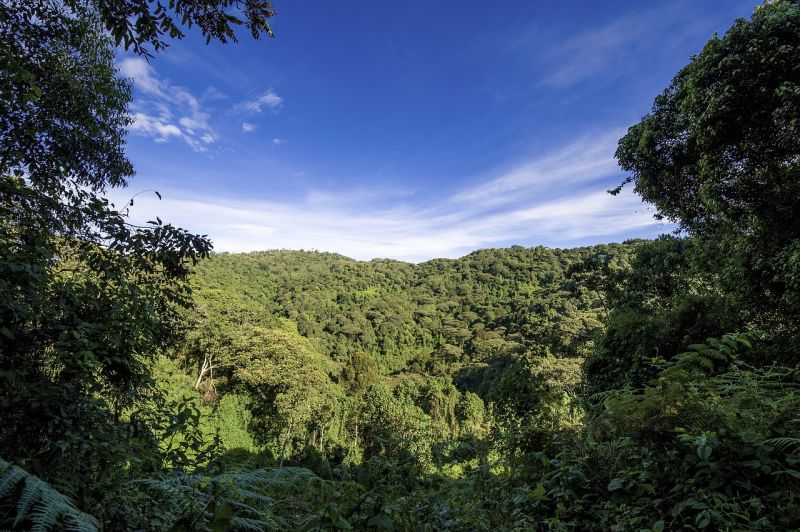
Kibale National Park’s lush rainforest landscape in western Uganda.
Kibale National Park is one of Uganda’s most important rainforest destinations and one of the country’s leading places for primate-focused wildlife experiences. This Kibale Wildlife Guide introduces the forest, its wildlife, ecological importance, chimpanzees, other primates, birds, habitats, conservation significance and the experiences that make the destination important within Uganda’s wider safari circuit. Located in western Uganda, Kibale protects a large tropical forest ecosystem whose biological richness extends far beyond chimpanzees. The forest supports numerous primate species alongside birds, mammals, butterflies, reptiles, amphibians and a remarkable diversity of plant life.
For travelers researching a Kibale Wildlife Guide, the most important point to understand is that Kibale is not simply a destination for seeing one animal. Its greatest attraction is the relationship between an extensive rainforest ecosystem and an exceptional concentration of wildlife. Chimpanzee trekking is the best-known experience, but a visit can also involve encounters with other primates, forest mammals, birds and other components of the tropical forest environment. The surrounding landscape also adds crater lakes, wetlands, agricultural areas and communities to the wider travel experience.
Current information published by Safari Vacations and Travel Services identifies Kibale as a major primate destination and reports approximately 1,500 chimpanzees together with numerous other primate species. The same source describes the park as supporting a wider mixture of forest wildlife, birds and other biodiversity.
What Makes Kibale National Park Important for Wildlife
Kibale National Park is particularly important because its forest provides habitat for a diverse collection of species within a relatively concentrated protected landscape. The forest canopy, understory, streams, wetlands and other habitats create different ecological niches that allow many species to coexist. This is especially evident among the primates, where several species occupy different parts of the forest and use different food resources.
The importance of Kibale therefore goes beyond tourism. A healthy forest provides food and shelter for wildlife, contributes to ecological processes such as seed dispersal and supports scientific research and conservation. The presence of chimpanzees is particularly significant because these great apes depend on functioning forest ecosystems for food, movement and social life.
A detailed understanding of Kibale wildlife requires looking at the forest as an interconnected ecosystem. A chimpanzee feeding in a fruiting tree, a monkey moving through the canopy, a bird searching for insects and a butterfly visiting vegetation are all participating in ecological processes that help maintain the forest. This broader perspective is what makes a comprehensive Kibale Wildlife Guide more useful than a simple list of animals.
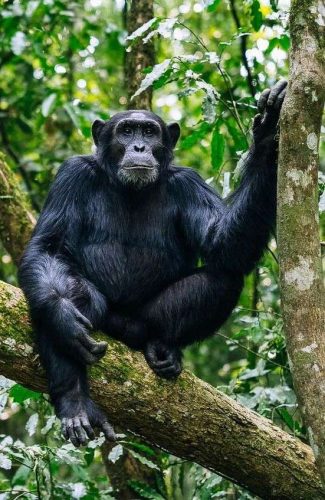
Chimpanzees are the flagship wildlife attraction for many visitors to Kibale National Park.
Kibale as Uganda’s Primate Destination
Kibale is widely associated with chimpanzees and other primates because of the exceptional diversity found within its forest. Published information from Safari Vacations and Travel Services identifies 13 recorded primate species in Kibale, including chimpanzees, black-and-white colobus monkeys, red colobus monkeys, grey-cheeked mangabeys, blue monkeys, red-tailed monkeys, L’Hoest’s monkeys, olive baboons, vervet monkeys and nocturnal primates.
This concentration gives Kibale a distinctive position within Uganda’s wildlife tourism landscape. While many African safari destinations are primarily associated with large savannah mammals, Kibale offers an experience built around rainforest biodiversity. The visitor is often surrounded by vegetation, bird calls, primate movements and forest sounds rather than the open landscapes associated with traditional game drives.
Travelers researching the destination can explore the Kibale Primate Wildlife Guide for additional information about the park’s primate diversity. This provides a useful internal resource for readers who want to move from the introductory information in this Kibale Wildlife Guide into a more specialized discussion of Kibale’s primate species.
Chimpanzees as the Flagship Wildlife Experience
Chimpanzees are the defining wildlife attraction for many visitors to Kibale National Park. The forest provides habitat for a large population of eastern chimpanzees, and guided chimpanzee trekking allows visitors to enter the forest in search of habituated chimpanzee communities. The experience combines wildlife observation with a walk through a functioning tropical rainforest.
Chimpanzees are highly active forest animals. Unlike wildlife that can often be observed from a vehicle in open savannah, chimpanzees may move through different levels of the forest, including the ground and canopy. Their movements, feeding behavior, vocal communication and social interactions can make every tracking experience different.
Information published by Safari Vacations and Travel Services describes chimpanzee trekking in Kibale as a guided forest experience involving rangers and interpretation of primates, forest fauna and flora. The source also reports approximately 1,500 chimpanzees in the park.
For this reason, a good Kibale Wildlife Guide should explain that chimpanzee trekking is not simply about reaching a predetermined viewing point. It is a forest-search experience in which guides and visitors follow signs and movements while learning about the ecosystem surrounding the chimpanzees.
The Wider Wildlife of Kibale Forest
Chimpanzees may receive the greatest attention, but they represent only one part of Kibale wildlife. The forest supports several other primates as well as mammals that are more difficult to encounter. Visitors may also experience a constantly changing combination of birds, butterflies, insects, reptiles and other forest organisms while moving through the trails.
The presence of less conspicuous wildlife is an important part of the Kibale experience. Forest environments can hide animals within vegetation, beneath leaves or high in the canopy. As a result, wildlife observation in Kibale depends heavily on patience, careful listening and the knowledge of experienced guides.
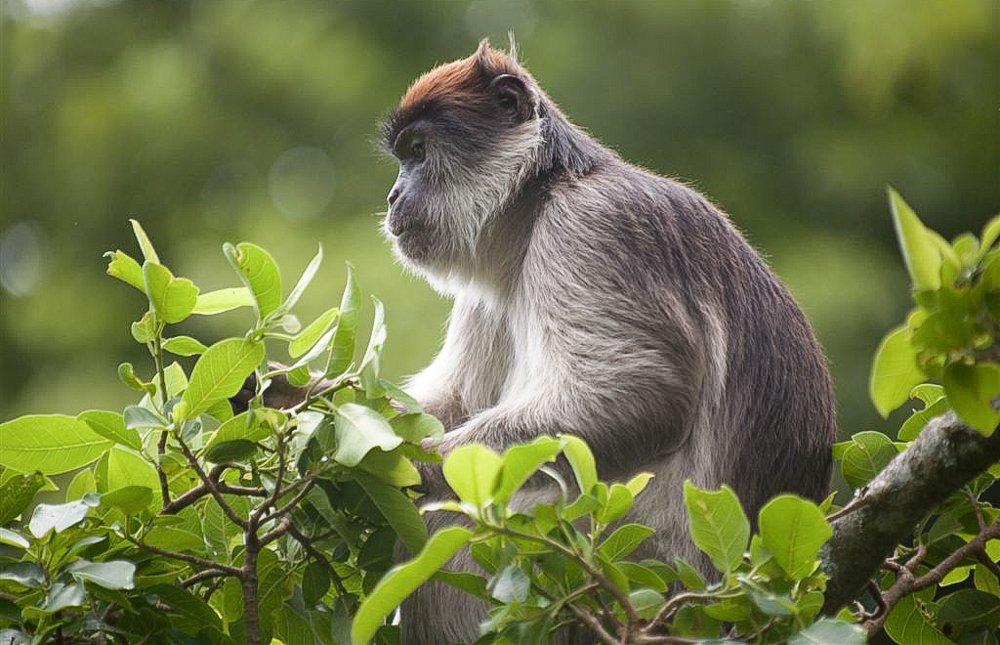
A red colobus monkey among the vegetation of Kibale’s rainforest.
The forest environment also changes the way wildlife is experienced. In a savannah ecosystem, long-distance visibility can make large mammals easier to identify. In a rainforest, vegetation can restrict visibility while creating opportunities for closer observation of smaller animals, primates and birds. This difference is central to understanding why Kibale should be approached as a specialist rainforest wildlife destination rather than as a conventional open-country game-drive destination.
Birdlife and Other Forms of Biodiversity
A comprehensive Kibale Wildlife Guide must include birds because the forest supports substantial bird diversity. Birdwatching can complement chimpanzee trekking and other forest activities, particularly for visitors interested in identifying forest species through calls, movements and feeding behavior.
Published information from Anthill Safaris states that Kibale National Park supports more than 370 bird species. This figure should be treated as the figure reported by that source rather than as a universal species total, because biodiversity inventories can change as research, classification and survey coverage develop.
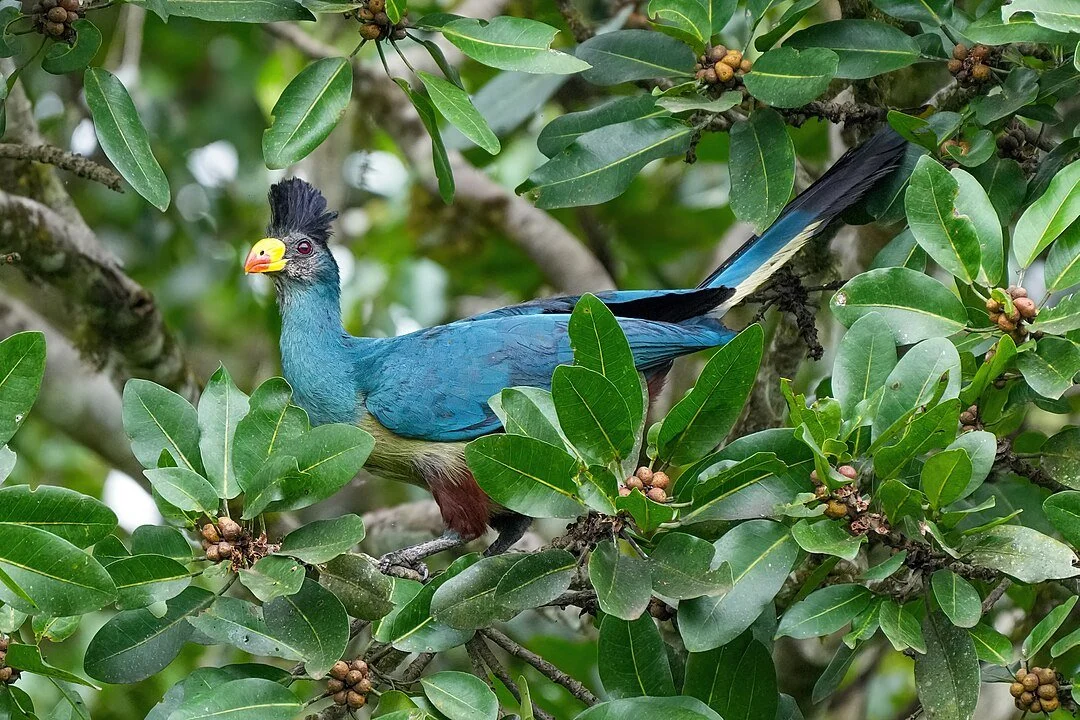
“Great Blue Turaco photographed in Kibale Forest National Park
Birds are particularly valuable indicators of the wider character of the forest. Some species occupy the canopy, others use the understory, while others depend on wetlands, forest edges or particular food sources. For visitors interested in biodiversity rather than a single target species, birdwatching adds another dimension to the Kibale experience.
Beyond birds and primates, Kibale’s biodiversity includes butterflies, insects, reptiles, amphibians and numerous plant species. These organisms may not always receive the same attention as chimpanzees, but they form an essential part of the ecosystem. Their presence helps demonstrate why protecting the forest means protecting an interconnected biological community rather than a single flagship species.
The Rainforest Environment Behind Kibale Wildlife
The forest itself is one of the most important attractions in Kibale. Visitors do not simply enter a landscape containing animals; they enter the habitat that makes those animals possible. Tall trees, dense vegetation, fruiting plants, streams and forest-floor environments create the conditions required by a wide variety of organisms.
The structure of the rainforest is especially important for primates. Different species can use different layers of the forest, allowing them to search for food and move through the ecosystem in different ways. Chimpanzees can travel through the canopy and descend to the ground, while other primates may spend more time in particular vegetation layers.
Information published by Safari Vacations and Travel Services describes Kibale as a tropical rainforest ecosystem containing forest wildlife and primates, while its published material also identifies the park as covering approximately 795 square kilometres.
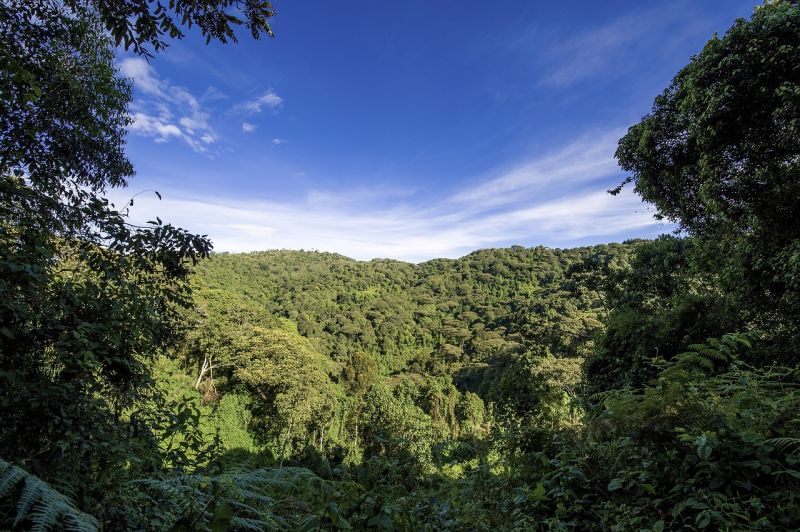
“The forest habitat provides the ecological foundation for Kibale’s primates
The wider landscape is also important. Kibale is surrounded by areas containing crater lakes, wetlands, farmland and local communities. These landscapes create additional experiences that can complement a forest-focused safari. Visitors interested in the wider physical geography can explore Kibale Crater Lakes Exploration as a related resource.
Kibale and the Wider Uganda Safari Circuit
Kibale becomes even more significant when considered as part of a wider Uganda safari. Its location in western Uganda makes it possible to combine rainforest experiences with other destinations offering different ecosystems and wildlife experiences.
One common approach is to combine Kibale with Queen Elizabeth National Park. This creates a strong ecological contrast between rainforest primate experiences and open savannah and wetland wildlife experiences. Safari Vacations and Travel Services publishes itineraries combining Kibale, Queen Elizabeth National Park and other major Ugandan destinations.
Kibale can also form part of longer primate-focused journeys involving Bwindi Impenetrable National Park. In such an itinerary, visitors can experience chimpanzees and other forest primates in Kibale before continuing toward the mountain gorilla habitat of southwestern Uganda.
For travelers planning a broader primate journey, the Uganda Primate Safari Planning resource provides additional context on combining Uganda’s major primate destinations.
Anthill Safaris similarly identifies Kibale as a major chimpanzee destination and describes the park as supporting chimpanzees alongside numerous other primate species.
Why Kibale Is More Than a Chimpanzee Destination
The phrase “chimpanzee destination” accurately describes one of Kibale’s principal attractions, but it does not fully describe the wildlife experience. The forest contains a much broader ecological story. A visitor may begin the day searching for chimpanzees and end the experience having observed several monkey species, birds, butterflies and other forest organisms.
This diversity is particularly important for photographers, birdwatchers, researchers, nature enthusiasts and travelers who want a deeper understanding of Uganda’s forests. Even when a particular animal remains hidden, the forest continues to provide an immersive wildlife experience through sounds, tracks, feeding signs, vegetation and encounters with other species.
A strong Kibale Wildlife Guide should therefore avoid promising that every visitor will see every species. Wildlife encounters are influenced by animal movements, weather, habitat conditions, food availability and other natural factors. The most accurate way to present Kibale is as a destination offering exceptional opportunities for wildlife observation while recognizing that wild animals remain unpredictable.
Conservation and the Future of Kibale Wildlife
The long-term value of Kibale depends on maintaining the forest ecosystem that supports its wildlife. Conservation protects not only chimpanzees and other primates but also birds, plants, insects, reptiles, amphibians and the ecological processes connecting them.
Anthill Safaris describes conservation activities in Kibale as involving the Uganda Wildlife Authority and conservation partners, while also highlighting the relationship between ecotourism, community livelihoods and forest protection.
Tourism can therefore contribute to the broader conservation system when it is responsibly managed. Visitors enter the forest under established rules and guidance, while local employment and tourism-related economic activity can provide additional incentives for protecting natural resources.
The conservation story also reinforces why a modern Kibale Wildlife Guide should discuss more than sightseeing. Understanding the forest’s ecological importance encourages visitors to treat wildlife, habitats, guides, local communities and protected-area regulations with respect.
What Readers Should Expect From This Kibale Wildlife Guide
This complete Kibale Wildlife Guide is designed to move from the broad character of Kibale National Park into increasingly detailed discussions of its wildlife and visitor experience. The following sections will examine Kibale’s mammals, chimpanzees and other primates in greater depth, followed by birds and wider biodiversity, habitats and ecology, the best periods for wildlife experiences, safari planning, photography and visitor considerations, conservation and community relationships, and finally practical questions frequently asked by travelers.
The objective is to create a comprehensive resource rather than a short promotional description. Readers should be able to use the guide to understand what makes Kibale special, which wildlife groups define the ecosystem, how chimpanzee trekking fits into the wider forest experience, why biodiversity conservation matters and how Kibale can fit into a broader Uganda safari.
Kibale National Park Wildlife: Animals and Mammals
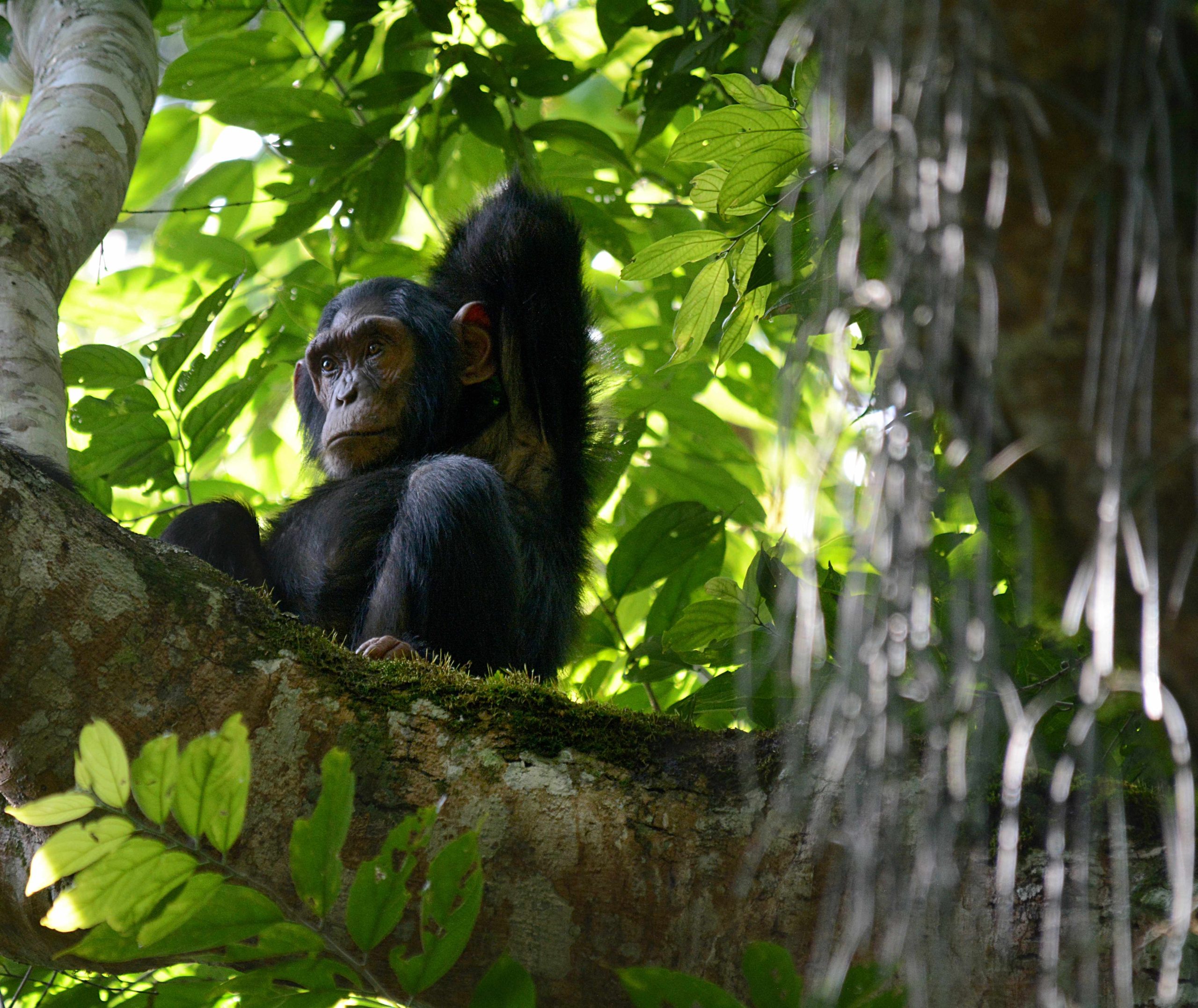
“Chimpanzees in Kibale National Park
Kibale National Park is best known for its extraordinary primate diversity, but the wildlife of Kibale extends far beyond chimpanzees and monkeys. The protected forest and its associated habitats support forest elephants, buffaloes, bushbucks, duikers, giant forest hogs, bush pigs, mongooses, civets, genets, rodents and numerous other mammals. Some species are encountered occasionally, while others are highly elusive and may be detected only through tracks, feeding signs, sounds or other evidence of their presence. This distinction is important when understanding the real wildlife experience offered by Kibale National Park.
A detailed Kibale wildlife overview shows why the forest is particularly important for primates while also supporting a much wider community of mammals, birds, butterflies, reptiles and other organisms. Current information published by Safari Vacations and Travel Services describes Kibale as covering approximately 795 square kilometres and identifies 13 recorded primate species in the ecosystem. The same source specifically identifies forest elephants, buffaloes, bush pigs, giant forest hogs, duikers, civets and mongooses among the wider wildlife associated with the park.
Why Kibale Wildlife Is Different From Savanna Wildlife
Understanding Kibale wildlife requires understanding its rainforest environment. Much of the wildlife is adapted to dense vegetation, limited visibility, layered forest habitats and the availability of fruits, leaves, seeds, insects and other natural foods. Animals that would be easy to spot in an open savanna can be considerably more difficult to locate beneath the forest canopy.
This means that wildlife viewing in Kibale is often based on patience and interpretation. A guide may notice movement high in a tree, identify a distant animal call, recognize freshly disturbed vegetation or follow evidence left along a trail. Visitors therefore experience wildlife differently from a conventional savanna game drive, where large animals can sometimes be seen across open plains.
The forest also creates different opportunities at different levels. Some animals spend much of their time in the canopy, others move through the middle layers of vegetation, while others remain close to the forest floor. This vertical structure helps explain why a short walk through Kibale can reveal several completely different wildlife encounters.
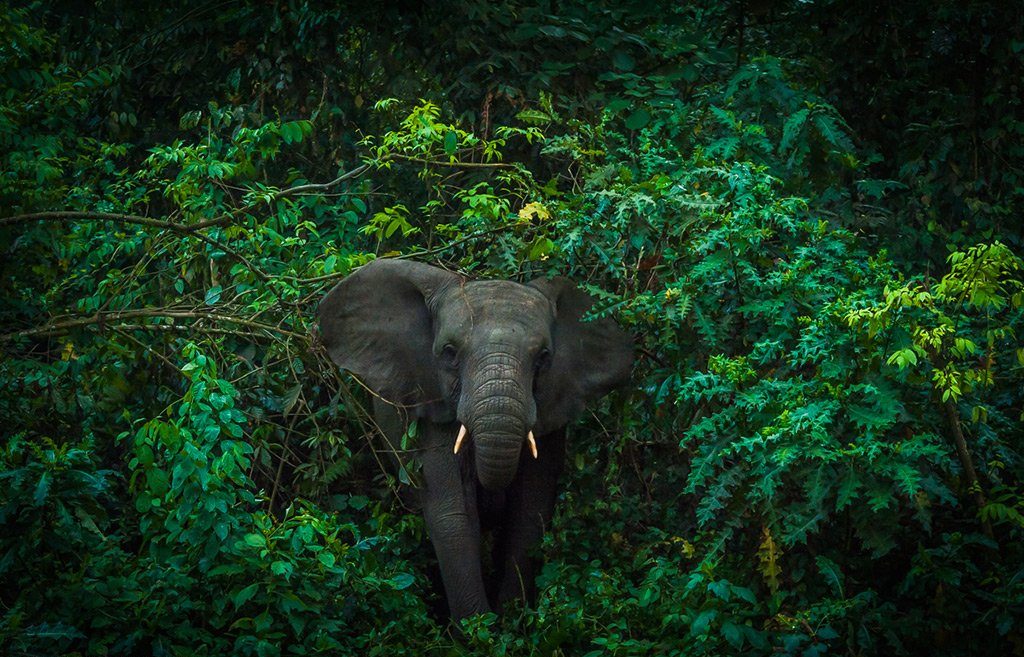
Forest elephant in the dense vegetation of Kibale National Park.
Chimpanzees: Kibale’s Most Famous Mammal
Chimpanzees are the flagship mammals of Kibale National Park and the principal reason many visitors choose the destination. Current information from Safari Vacations and Travel Services reports a population of approximately 1,500 chimpanzees in Kibale, while Anthill Safaris likewise reports more than 1,500 chimpanzees within the park. Because different sources may use different survey dates and methodologies, population figures should be understood as reported estimates rather than permanent numbers.
Chimpanzees are highly social forest mammals whose behavior makes them particularly fascinating to observe. They travel through the forest in communities, search for food, communicate using a wide variety of vocalizations and body signals, and use both the ground and trees as they move through their habitat.
The chimpanzee experience also illustrates why Kibale wildlife cannot be reduced to a simple checklist. Finding chimpanzees involves entering their environment and observing their natural behavior rather than visiting an enclosure or controlled attraction. Their movements can change from one day to another, and their position in the forest depends on food availability, social activity and other ecological conditions.
Anthill Safaris describes Kibale as Uganda’s leading chimpanzee destination and offers information specifically focused on chimpanzee trekking and habituation experiences.
Black-and-White Colobus Monkeys
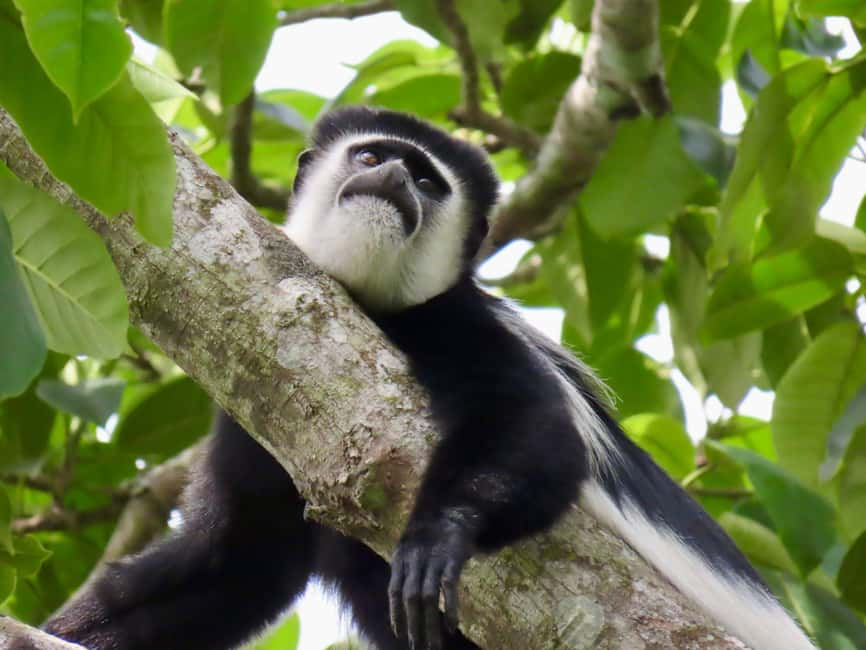
Black-and-white colobus monkey in Kibale Forest.
Black-and-white colobus monkeys are among the most recognizable primates in Kibale. Their contrasting black-and-white coats make them visually distinctive when they are resting or moving through the forest canopy. They are strongly associated with forest environments and can provide memorable sightings during guided walks.
These monkeys contribute to the wider ecological role of Kibale primates. Their feeding activities connect them with the vegetation on which they depend, while their movements through the forest contribute to the movement of seeds and other biological material.
Black-and-white colobus monkeys are particularly valuable to visitors because they can sometimes be observed while searching for other wildlife. Their presence demonstrates that a chimpanzee-focused excursion can simultaneously become a broader primate-watching experience.
Red Colobus Monkeys
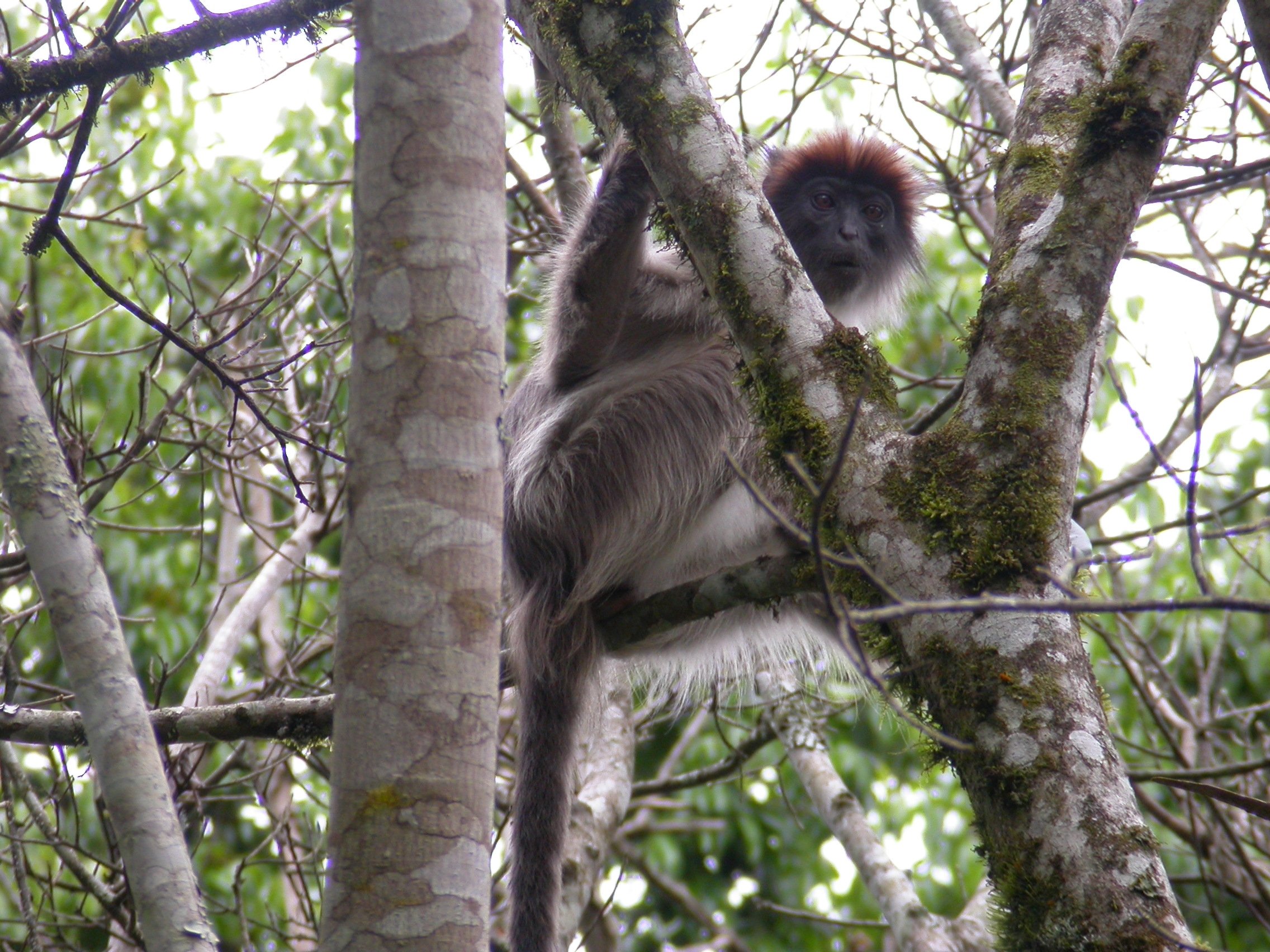
Ugandan red colobus in Kibale National Park.
Red colobus monkeys are another important component of Kibale’s primate community. They are associated with forest habitats and are among the species that make the park especially valuable to primate enthusiasts.
Red colobus monkeys can be difficult to distinguish from other forest wildlife when they are high in the canopy, particularly for first-time visitors. Experienced guides help visitors identify them through appearance, movement, location and behavior.
The presence of red colobus monkeys alongside chimpanzees, black-and-white colobus monkeys, red-tailed monkeys, blue monkeys and grey-cheeked mangabeys demonstrates the exceptional diversity of Kibale’s primate community. Safari Vacations and Travel Services identifies these species among the primates that visitors may encounter during guided forest experiences.
Red-Tailed Monkeys
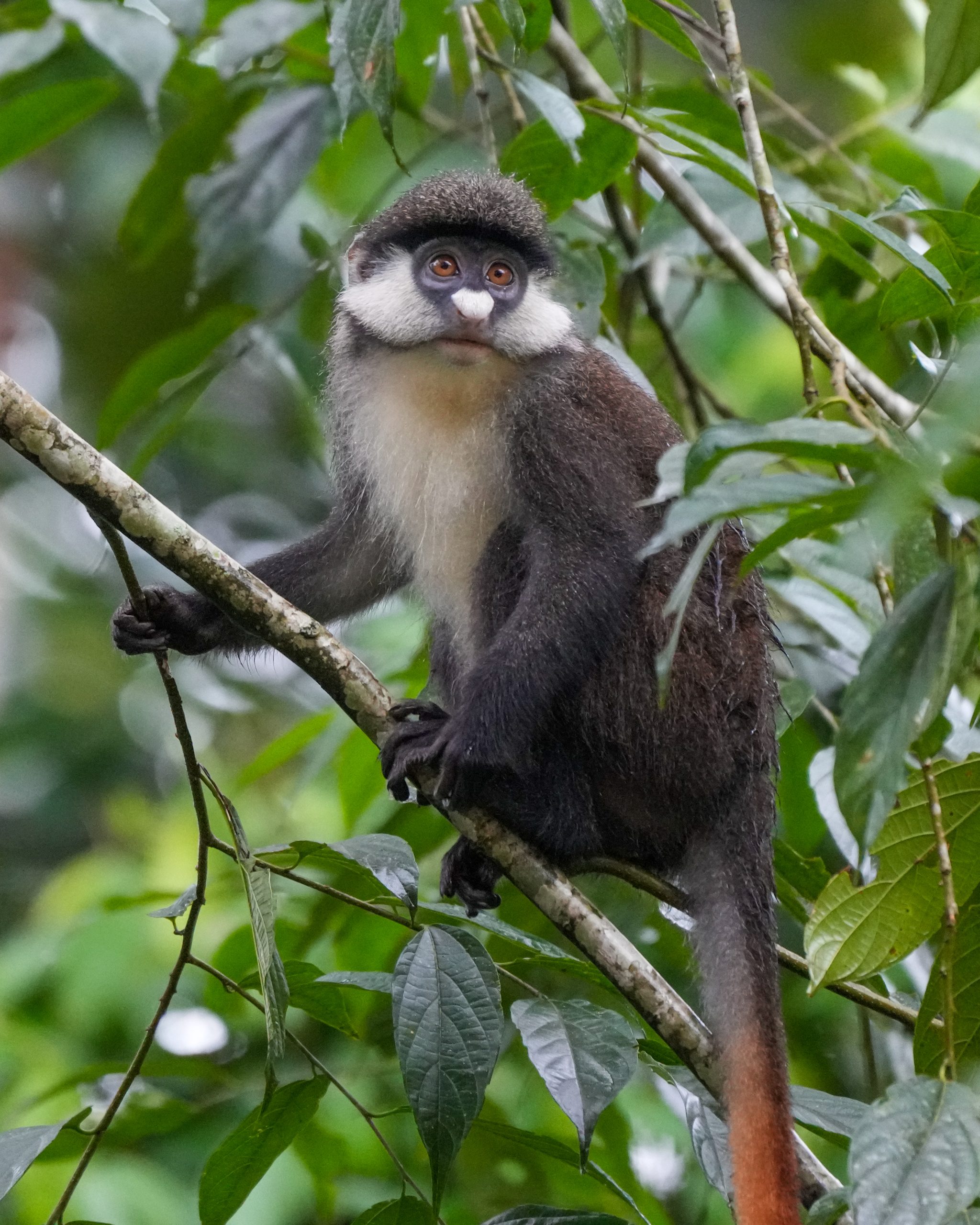
Red-tailed monkey in Kibale Forest National Park.
Red-tailed monkeys are active forest primates that can be observed moving through the middle and upper levels of vegetation. Their distinctive facial markings and reddish tail make them identifiable when good viewing conditions allow.
They feed on a variety of natural foods, including fruits, flowers, seeds and insects, and may sometimes occur in association with other forest primates. Their movements can be fast, making patience important when attempting to observe or photograph them.
The species is particularly relevant to a Kibale wildlife guide because it illustrates the diversity visitors can encounter beyond chimpanzees. Safari Vacations and Travel Services identifies red-tailed monkeys among the primates regularly observed during guided forest walks in Kibale.
Blue Monkeys
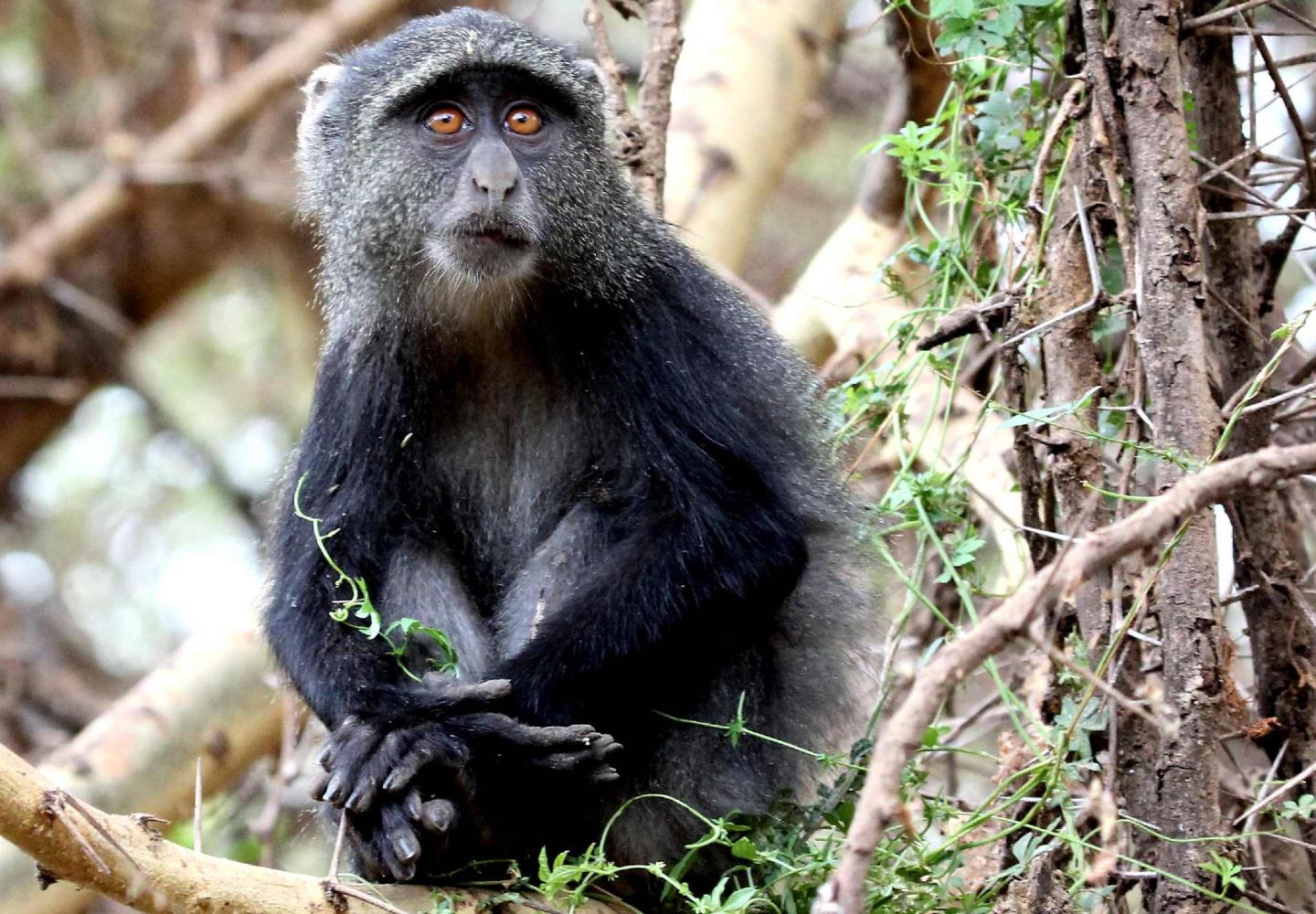
“Blue monkey in the forest habitat of Kibale
Blue monkeys are another forest primate found in Kibale. Despite their common name, their overall appearance is not simply bright blue. Their coloration and facial features can appear different depending on lighting, distance and viewing conditions.
Blue monkeys are agile forest animals that move through vegetation while searching for food. They can sometimes be encountered alongside other primate species, creating opportunities to observe several different animals within the same forest environment.
Information published by Safari Vacations and Travel Services identifies blue monkeys among the primates that visitors can encounter in Kibale, while its broader Uganda primate material describes the species as particularly associated with protected forests including Kibale.
Grey-Cheeked Mangabeys
Grey-cheeked mangabeys are another notable primate in Kibale National Park. Their behavior can be quite different from that of species that remain primarily high in the canopy because they may use both forest-floor and tree habitats while searching for food.
Their presence adds another layer to the primate diversity of Kibale. Visitors who spend time walking quietly through the forest may encounter groups moving through vegetation, calling to one another or searching for food.
Safari Vacations and Travel Services lists grey-cheeked mangabeys among Kibale’s recorded primates and notes that forest trails provide opportunities to observe them in their natural habitat.
L’Hoest’s Monkeys
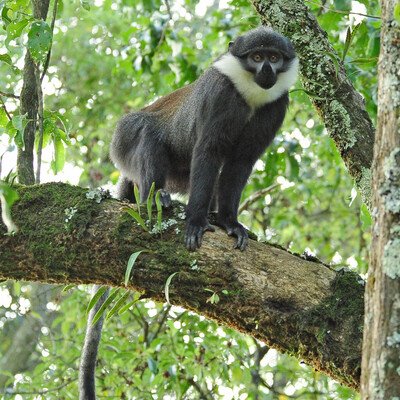
L’Hoest’s monkey in a Ugandan forest.
L’Hoest’s monkeys are among the more distinctive and sometimes elusive primates associated with Kibale. They have dark coloration and a conspicuous pale or white beard around the face, making them recognizable once a guide has helped visitors identify the species.
Unlike some highly arboreal monkeys, L’Hoest’s monkeys can spend considerable time close to the forest floor and in dense undergrowth. This behavior means that careful observation of the trail and vegetation can be just as important as looking into the canopy.
Safari Vacations and Travel Services identifies L’Hoest’s monkeys among Kibale’s primates and describes them as an elusive species whose dense-vegetation habits can make sightings less predictable.
Olive Baboons and Vervet Monkeys
Olive baboons and vervet monkeys add further variety to the primate community. Olive baboons are adaptable and can occur around forest edges and more open areas, while vervet monkeys are also capable of using a range of habitats.
Their presence illustrates an important characteristic of Kibale wildlife: not every species is restricted to deep rainforest. Ecological transitions between forest, open areas, wetlands and surrounding landscapes can provide additional habitat opportunities for different mammals.
Safari Vacations and Travel Services includes olive baboons and vervet monkeys among the primates recorded in Kibale.
Pottos and Bushbabies
Kibale’s wildlife experience does not end when daylight fades. Pottos and bushbabies are among the nocturnal primates associated with the forest. Their nighttime behavior makes them substantially harder to encounter during conventional daytime chimpanzee trekking.
Pottos move slowly through the forest and are adapted to nocturnal activity, while bushbabies are more agile and can move rapidly through vegetation. Specialized evening or night walks can provide opportunities to search for nocturnal wildlife under appropriate guidance.
Safari Vacations and Travel Services identifies pottos and galagos among the nocturnal primates that may be observed during evening or night forest experiences.
Forest Elephants
Forest elephants are among the most impressive non-primate mammals associated with Kibale National Park. Unlike elephants typically observed in open savanna landscapes, forest elephants live in a more enclosed environment where dense vegetation can restrict visibility and movement.
Visitors should not expect forest elephants to appear as predictably as elephants in open-country wildlife areas. Their presence in Kibale can instead be detected through signs such as footprints, dung, broken vegetation or sounds from deeper within the forest. Safari Vacations and Travel Services notes that forest elephants occasionally cross trails or reveal their presence through signs and vocalizations, while its dedicated Kibale wildlife material also identifies them among the park’s wider mammals.
The ecological importance of elephants extends beyond their value as a wildlife attraction. As large herbivores moving through forests, they interact with vegetation and can contribute to seed dispersal and changes in forest structure. Their presence therefore forms part of the ecological story that makes Kibale important.
Readers interested in seeing how wildlife fits into the wider Kibale landscape can explore Kibale forest mammals alongside the surrounding crater-lake environment. This is one of the three previously introduced Kibale resources retained here because it adds geographical context to the wildlife discussion.
African Buffalo
African buffalo are another large mammal associated with Kibale. Their presence is particularly significant because buffalo are more commonly associated with open savanna and woodland environments in many safari destinations.
In Kibale, forest conditions can make buffalo less visible than they are in open grassland. They may use forest clearings, wetlands and grassier sections of the ecosystem. Because buffalo are powerful wild animals, encounters require careful attention to the instructions of trained guides and park authorities.
The presence of buffalo reinforces the importance of viewing Kibale as a diverse wildlife ecosystem rather than a destination exclusively focused on primates. Safari Vacations and Travel Services identifies buffalo among the larger mammals that may occur in Kibale.
Bushbucks
Bushbucks are forest-associated antelopes that can occur in Kibale’s vegetation and edge habitats. Their quiet behavior and tendency to remain within cover can make them difficult to observe.
Unlike conspicuous savanna antelopes that may stand in open grasslands, bushbucks often rely on vegetation for concealment. A visitor may therefore see only a brief movement before the animal disappears into dense cover.
Previous information published by Safari Vacations and Travel Services identifies bushbucks among the wildlife that can occur in the Kibale landscape.
Duikers: Small Forest Antelopes
Duikers are among the smaller antelopes associated with Kibale. Several duiker species occur in forest environments, where their compact bodies and cautious behavior help them move through dense vegetation.
Duikers are often much harder to see than large mammals because they tend to remain close to cover. They may quickly disappear into the undergrowth when disturbed, making brief sightings particularly rewarding for attentive visitors.
Safari Vacations and Travel Services identifies various duikers among Kibale’s forest mammals and notes that these small antelopes can move through the undergrowth.
Giant Forest Hogs
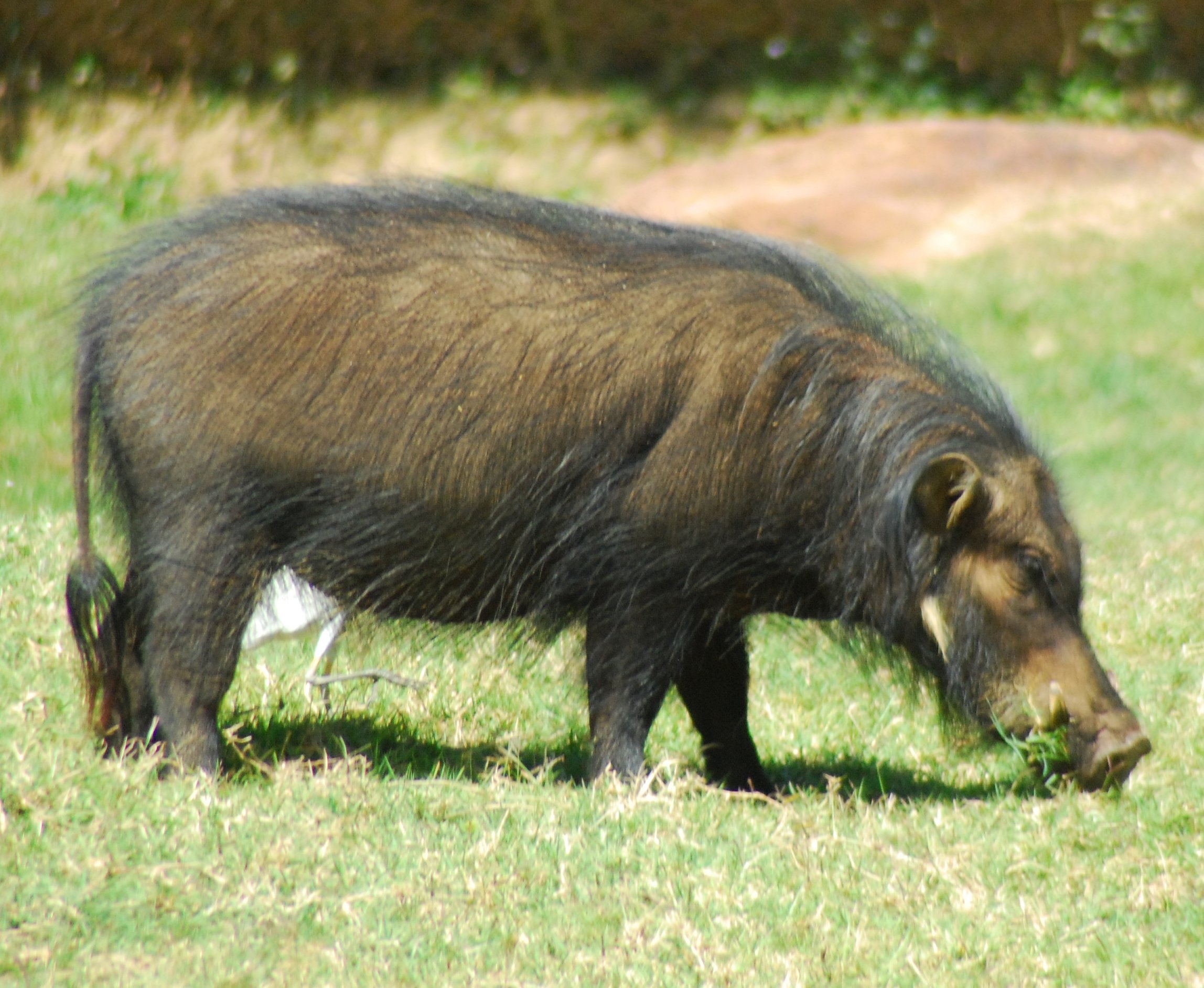
Giant forest hog.
The giant forest hog is one of the most impressive mammals that can be associated with Kibale’s forest environment. It is a large wild pig adapted to forest habitats and can be difficult to encounter because of its secretive nature.
Giant forest hogs are primarily herbivorous and feed on vegetation and other plant material. Their presence contributes to the diversity of larger mammals in Kibale and demonstrates that the forest supports species with very different ecological roles.
Safari Vacations and Travel Services specifically identifies giant forest hogs among the mammals inhabiting Kibale and describes sightings as uncommon because of their forest-dwelling behavior.
Bush Pigs
Bush pigs are another wild pig associated with the Kibale ecosystem. Their activity is often more difficult to observe during ordinary daytime excursions because they can be secretive and are frequently associated with dense vegetation.
They feed on a variety of natural foods available within forest habitats and contribute to the wider ecological community through their feeding and movement. Safari Vacations and Travel Services includes bush pigs among the non-primate wildlife recorded in Kibale.
Civets and Genets
Civets and genets represent another fascinating component of Kibale’s mammal diversity. These mammals are considerably more elusive than chimpanzees and the more visible monkey species, and their nocturnal or secretive habits mean that visitors may never encounter them during a standard daytime excursion.
They are nevertheless important predators and consumers within the forest ecosystem. Their diets can include insects, small vertebrates and other available foods, allowing them to occupy ecological niches that differ from those of primarily herbivorous mammals.
Safari Vacations and Travel Services identifies civets and mongooses among Kibale’s wider mammal community and notes that elusive carnivores and small predators can be present even when visitors do not see them directly.
Mongooses and Other Small Mammals
Mongooses are another group that contributes to Kibale’s mammal diversity. Their relatively small size, quick movements and preference for cover can make sightings brief. They are nevertheless important components of the forest food web.
Kibale also supports numerous smaller mammals, including rodents and other forest species that receive considerably less attention than chimpanzees or elephants. These animals play important ecological roles as herbivores, seed consumers, prey species and participants in nutrient cycling.
A complete Kibale wildlife guide should include these smaller mammals because rainforest biodiversity cannot be measured only by the animals that are easiest for visitors to see.
Wildlife Signs Are Part of the Kibale Experience
One of the most important skills when exploring Kibale is learning to recognize evidence of animals even when the animals themselves remain hidden. Footprints, dung, feeding remains, broken branches, vocalizations and movement through vegetation can all provide information about what is happening around a trail.
Guided forest walks are particularly valuable for this reason. Safari Vacations and Travel Services describes guided walks as opportunities to observe primates and other wildlife while learning about forest ecology and animal signs.
This makes a forest walk an educational experience rather than simply a search for photographs. A visitor who learns how guides interpret signs can begin to understand how much wildlife is present even when visibility is limited.
Wildlife Encounters Are Not Guaranteed for Every Species
Responsible wildlife information must distinguish between species that inhabit an ecosystem and animals that a visitor is likely to see. Chimpanzees and several monkey species are among the principal attractions of Kibale, but sightings of forest elephants, buffalo, giant forest hogs, duikers, civets, genets and other elusive mammals are less predictable.
This distinction is particularly important when planning a Kibale safari. A wildlife guide should never imply that every animal listed for the park will appear during a single walk. Forest wildlife is affected by movement, food availability, weather, vegetation density, time of day and many other natural factors.
The strongest Kibale wildlife experience therefore comes from approaching the forest with realistic expectations. The objective is not simply to collect a predetermined list of species but to understand and appreciate the animals that can be encountered within their natural environment.
Kibale Wildlife and Forest Walks
Guided forest walks provide an alternative way to experience Kibale beyond dedicated chimpanzee trekking. During these walks, visitors may encounter several primate species while also searching for forest mammals, birds, butterflies and other organisms.
Safari Vacations and Travel Services reports that guided forest walks can pass through different forest environments and provide opportunities to observe primates, forest mammals and other biodiversity with the assistance of trained guides.
Visitors interested in combining wildlife observation with a structured forest experience can explore Kibale forest walks. This is a newly introduced internal resource for this section and provides additional context about guided walking experiences in the park.
Wildlife Beyond the Main Forest Trails
The wider Kibale landscape also contributes to the region’s wildlife experience. Forest, wetlands, crater-lake environments and surrounding agricultural landscapes create different ecological conditions and can support different species.
Information published about the Ndali-Kasenda crater-lake region identifies primates, elephants, warthogs, pottos, birds and other wildlife around the wider Kibale landscape. The same source explains that crater-lake environments and surrounding vegetation can provide opportunities for additional nature-based experiences.
This wider perspective is useful because wildlife does not exist in isolation inside a national-park boundary. The surrounding landscape can influence animal movement, ecological connectivity, tourism activities and the relationship between protected areas and local communities.
Kibale Wildlife and the Broader Uganda Primate Experience
Kibale’s mammal diversity becomes even more meaningful when viewed as part of Uganda’s wider primate heritage. Uganda contains several important forest habitats, but Kibale is particularly notable for the concentration and diversity of primates within its protected rainforest.
Safari Vacations and Travel Services’ current Uganda primate material highlights species such as blue monkeys, red-tailed monkeys, L’Hoest’s monkeys, grey-cheeked mangabeys and pottos across Uganda’s protected forests, with Kibale being one of the most important destinations for observing these animals.
For travelers developing a broader itinerary, the Uganda primate safari resource provides additional information about primate-focused travel. This is the third link carried forward from the previous section, while the other previously used Kibale resources remain available for readers who want to explore specific aspects of the destination.
Kibale Chimpanzees and the Wider Mammal Community
Anthill Safaris describes Kibale as a premier chimpanzee destination while emphasizing that chimpanzees share the forest with numerous other primates and wildlife species. Its published material identifies Kibale as supporting chimpanzees together with red colobus monkeys, L’Hoest’s monkeys, blue monkeys and grey-cheeked mangabeys.
Readers seeking a more focused discussion can explore Kibale chimpanzees for additional information about chimpanzee trekking and the wider chimpanzee experience in Uganda.
How the Mammals of Kibale Fit Together
The true importance of Kibale wildlife lies in the relationships among species. Primates consume fruits, leaves and other plant material. Elephants move through vegetation and can disperse seeds. Antelopes browse through forest habitats. Smaller mammals consume seeds, fruits and insects. Carnivores and other predators interact with smaller animals. Birds, insects and other organisms contribute to pollination, decomposition and nutrient cycling.
These relationships form a functioning forest ecosystem. Protecting one species therefore requires maintaining the wider habitat on which many other species depend. This is why conservation of Kibale National Park has significance far beyond chimpanzee tourism.
The diversity of mammals also gives every visit a different character. One visitor may concentrate on chimpanzees and several monkey species, while another may become fascinated by a brief duiker sighting, a distant elephant call or evidence of a nocturnal mammal along the trail.
What Makes Kibale National Park a Major Wildlife Destination
Kibale National Park stands out because it combines exceptional primate diversity with a much broader community of forest mammals. Chimpanzees remain the flagship attraction, but black-and-white colobus monkeys, red colobus monkeys, red-tailed monkeys, blue monkeys, grey-cheeked mangabeys, L’Hoest’s monkeys, baboons, vervet monkeys, pottos and bushbabies create an unusually rich primate experience.
Beyond the primates, forest elephants, buffaloes, bushbucks, duikers, bush pigs, giant forest hogs, civets, mongooses and other small mammals contribute to the ecological richness of the park. Some are relatively difficult to observe, but their presence demonstrates the biological complexity of the rainforest.
The most accurate way to understand Kibale National Park wildlife is therefore to see the destination as a complete forest ecosystem rather than as a place designed around a single species. The chimpanzees may bring travelers into the forest, but the diversity of mammals and other organisms is what makes the wider Kibale wildlife experience exceptionally rich.
The next section of this Kibale Wildlife Guide will examine Kibale’s primates and chimpanzee trekking in much greater depth, including chimpanzee ecology, tracking, habituation, other primate species, forest behavior and the factors that shape encounters with these remarkable animals.
Kibale Primates and Chimpanzee Trekking
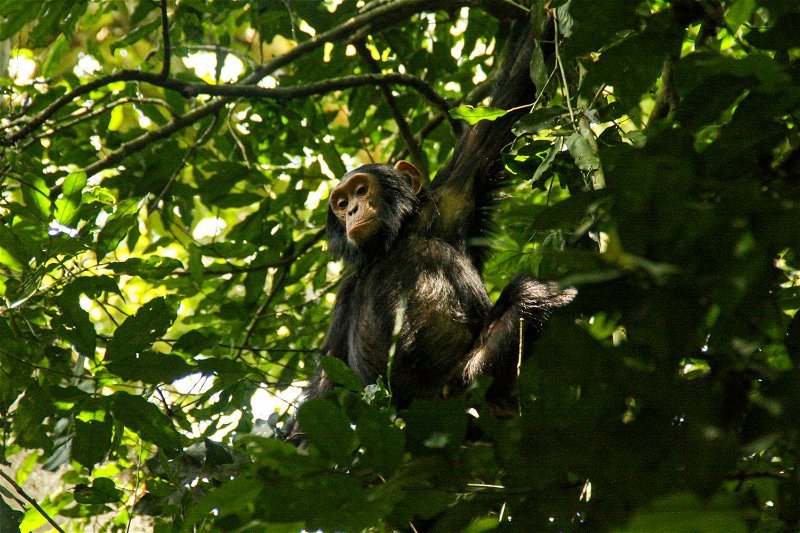
“Chimpanzee in the rainforest canopy of Kibale National Park
Kibale National Park is internationally recognized for its exceptional concentration of primates, making chimpanzee trekking one of the most important wildlife experiences in Uganda. The forest supports chimpanzees alongside numerous monkey species, creating an ecosystem where visitors can encounter several different primates during a single forest experience. A detailed Kibale primate experience begins with understanding that chimpanzees are only one component of a much larger primate community.
The attraction of Kibale chimpanzee trekking comes from the opportunity to observe wild chimpanzees within their natural rainforest environment. Instead of viewing animals in an enclosure, visitors enter the forest with trained guides and trackers and follow signs of chimpanzee movement until a habituated community is located. Current information published by Safari Vacations and Travel Services describes Kibale as supporting 13 recorded primate species and more than 1,500 chimpanzees. The exact population figure is an estimate and can change as new surveys and monitoring are undertaken.
Kibale chimpanzee trekking therefore combines wildlife observation, forest exploration and interpretation. The experience is not simply about reaching the chimpanzees. The journey through the forest can reveal other primates, birds, plants, insects and signs of wildlife activity, making the entire trek part of the experience.
Why Kibale Is Famous for Chimpanzees
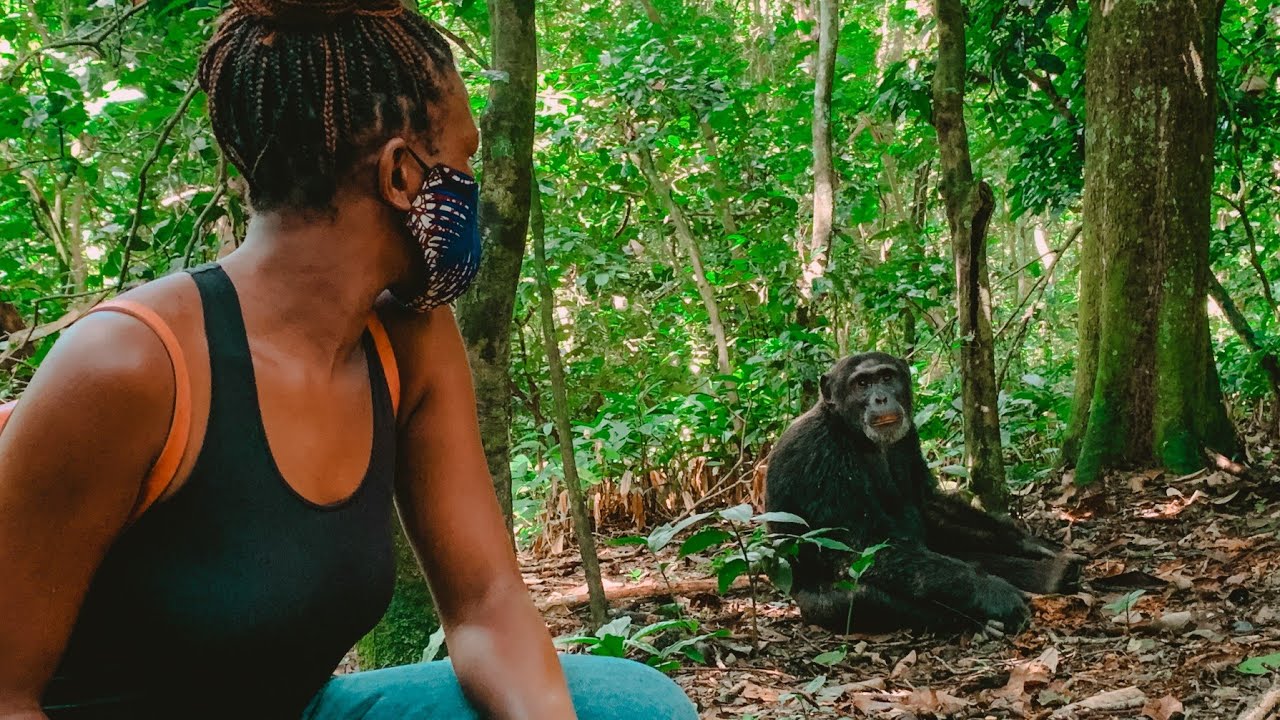
A chimpanzee encounter in the forest around the Kanyanchu area of Kibale National Park.
Kibale has developed a strong reputation for chimpanzee tourism because of its substantial chimpanzee population, established habituated communities and long history of research and conservation. Habituation allows selected chimpanzee communities to become accustomed to the controlled presence of researchers, rangers and visitors without turning the animals into captive wildlife.
Anthill Safaris reports that some chimpanzee communities around the Kanyanchu area have been observed by researchers for decades, providing a long history of human observation and habituation. This history is important because visitors are able to observe chimpanzees that are accustomed to the controlled presence of people while the animals continue to forage, travel, socialize and rest in their forest environment.
The long-term habituation process is also important scientifically. Researchers can follow individual animals and communities over extended periods, allowing them to learn more about social relationships, movement patterns, feeding behavior, reproduction and other aspects of chimpanzee ecology.
Understanding the Eastern Chimpanzee
The chimpanzees encountered in Kibale belong to the eastern chimpanzee population. They are great apes closely related to humans and possess complex social structures, communication systems and behavioral patterns.
Chimpanzees live in communities rather than as permanently isolated individuals. Their social organization can change throughout the day as individuals form smaller temporary groups and later reunite with other members of their wider community. This flexible social system is particularly interesting during trekking because the group encountered by visitors can vary according to food availability, social relationships and daily movement.
Chimpanzees may feed on fruits, leaves, seeds and other plant materials, while their broader diet can include animal foods. Their feeding behavior changes according to seasonal availability and the distribution of food within the forest.
They also communicate through vocalizations, gestures and physical interactions. Loud calls can travel through the forest and sometimes alert trackers to the approximate location of a community before the animals become visible.
The Chimpanzee Community and Social Structure
Chimpanzee communities contain individuals of different ages and sexes. Adult males, adult females, adolescents, juveniles and infants all contribute to the social structure of the group.
One of the most interesting characteristics of chimpanzee society is its fission-fusion structure. Instead of remaining in one large group throughout the day, individuals may divide into smaller parties and later reunite. The size and composition of these temporary parties can change depending on food resources, social relationships and other circumstances.
This behavior means that a chimpanzee trek does not necessarily involve watching an entire community together in one location. Visitors may encounter a smaller party feeding in a tree, several individuals moving through vegetation, mothers traveling with young or males displaying social behavior.
The dynamic nature of chimpanzee society is one reason repeat visits can produce completely different observations. The same forest can reveal different behaviors on different days because the animals determine what happens during the encounter.
What Is Chimpanzee Trekking in Kibale?
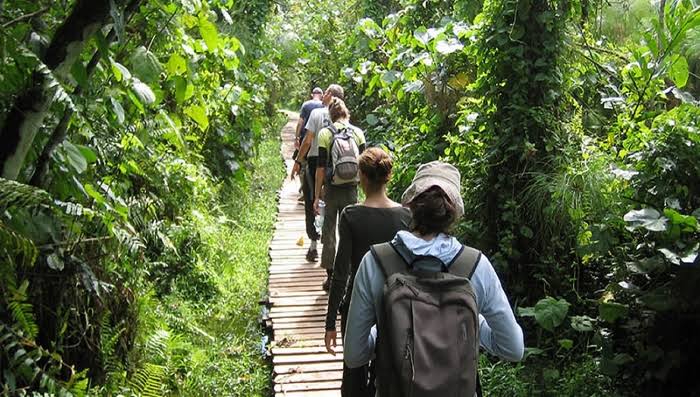
Guided walking through the lush rainforest environment of Kibale National Park.
Chimpanzee trekking in Kibale is a guided forest activity in which visitors search for habituated chimpanzee communities. The experience normally begins with a briefing before participants enter the forest with guides and, where required, ranger support.
The trek itself can vary considerably. Some chimpanzee groups may be located relatively close to the starting point, while others may require visitors to walk farther through the forest. Current information published by Safari Vacations and Travel Services states that chimpanzee trekking can involve several hours of walking depending on the movement and location of the chimpanzees.
The variability is part of the wildlife experience. Chimpanzees are not stationary attractions waiting at a fixed viewing point. They move through their habitat according to their own behavior, which means trackers must interpret signs and adjust their route.
The guided Kibale forest walks resource provides additional information about walking through the forest and observing wildlife beyond dedicated chimpanzee tracking. This is one of the previously used links retained in this section because it directly supports the broader forest-walking context.
What Happens Before the Trek?
Before entering the forest, visitors receive instructions concerning the activity, wildlife behavior and responsible conduct. This stage is important because visitors need to understand how to behave when chimpanzees are located.
Guides also explain what participants should expect during the forest walk. The briefing helps establish appropriate expectations because the duration of the search, the route and the behavior of the chimpanzees cannot be predicted with complete certainty.
Visitors should listen carefully to their guides throughout the experience. The guides understand the terrain, interpret wildlife signs and help maintain appropriate conduct around the chimpanzees.
Tracking Chimpanzees Through the Forest
Chimpanzee tracking requires observation and interpretation. Trackers may follow vocalizations, movements, feeding evidence, nests and other signs associated with the chimpanzee community.
Chimpanzees frequently move through the canopy, so visitors may need to look upward as well as along the forest floor. A chimpanzee may be visible only briefly before moving behind leaves or branches.
The forest itself can also make tracking challenging. Dense vegetation can reduce visibility, while rainfall can change trail conditions. At other times, fruiting trees or other food sources can influence where chimpanzees spend their time.
This makes the tracker and guide’s knowledge particularly valuable. An experienced team can interpret the available evidence and determine where the animals are likely to have moved.
Finding the Chimpanzees
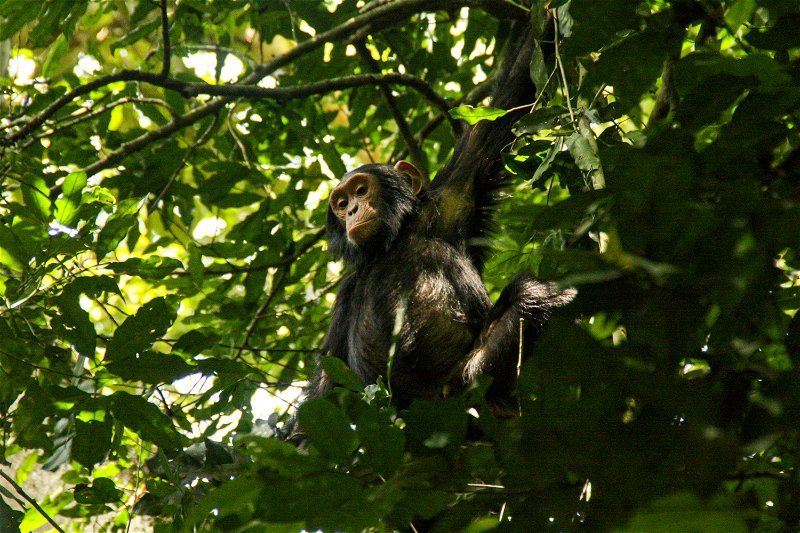
Chimpanzees may be encountered high in the forest canopy during a Kibale trek.
Once the chimpanzee community is located, the character of the trek changes. Walking becomes more controlled, voices are reduced and visitors concentrate on observing the animals.
The chimpanzees may be on the ground or high in the canopy. They may be feeding, resting, grooming, travelling or communicating. Their behavior determines what visitors see.
Safari Vacations and Travel Services reports that chimpanzee trekking around Kibale’s Kanyanchu area involves visiting habituated communities and observing them under the guidance of experienced personnel. The experience can therefore provide both wildlife viewing and interpretation of chimpanzee behavior.
The most valuable encounters are not necessarily those in which the animals are closest. Observing natural behavior, such as feeding, grooming, movement or communication, provides a better understanding of chimpanzee life than simply obtaining a photograph.
How Long Does Chimpanzee Trekking Take?
The overall duration of a chimpanzee trek varies according to the location and movement of the chimpanzees. Current information from Safari Vacations and Travel Services states that trekking can take between approximately two and five hours, depending on the circumstances of the day.
The time spent searching should be distinguished from the regulated observation period once the chimpanzees are found. Published information from Anthill Safaris states that standard chimpanzee trekking provides a maximum of one hour with a habituated chimpanzee community.
Because conditions can change, visitors should avoid assuming that every trek will follow an identical timetable. The animals determine much of the experience.
Chimpanzee Trekking Versus Chimpanzee Habituation
Chimpanzee trekking and chimpanzee habituation are related but distinct experiences. Understanding this difference is essential for anyone planning a Kibale wildlife safari.
Standard chimpanzee trekking focuses on finding a habituated community and observing the animals for the permitted viewing period. It is generally the more straightforward option for travelers who want an introduction to chimpanzee behavior without spending most of the day in the forest.
The Chimpanzee Habituation Experience, commonly abbreviated as CHEX, provides a substantially longer period with chimpanzee communities that are still undergoing habituation. Anthill Safaris states that Kibale National Park is the Ugandan national park where visitors can participate in a chimpanzee habituation experience and that a valid habituation permit is required.
Safari Vacations and Travel Services likewise describes chimpanzee habituation in Kibale as an extended experience involving researchers and rangers. The longer period allows participants to observe more of the chimpanzees’ daily routine.
What Makes Chimpanzee Habituation Different?
Chimpanzee habituation involves following chimpanzees that are still becoming accustomed to controlled human presence. Because these animals are not as accustomed to people as the communities used for standard trekking, their behavior can be less predictable.
Visitors participating in habituation may spend substantially more time in the forest and can observe behavioral changes across different parts of the day. Early morning activity, feeding, movement, social interaction, resting and nest-building can all become part of a longer observation period.
The longer format can be particularly valuable for photographers, researchers, students and serious wildlife enthusiasts who want a deeper understanding of chimpanzee behavior rather than a shorter encounter.
However, habituation should not be presented as simply a longer version of ordinary trekking. It serves a different conservation and research purpose because the animals are part of an ongoing habituation process.
The Chimpanzee Habituation Process
Habituation is gradual. Chimpanzees need time to become accustomed to the presence of researchers and controlled groups of people while maintaining normal behavior.
The process requires patience because the objective is not to force animals to accept human presence. Researchers and guides observe how the chimpanzees respond and work within established protocols designed to minimize disturbance.
Anthill Safaris explains that chimpanzee habituation in Kibale allows visitors to accompany communities that are still undergoing this process. The activity therefore provides an opportunity to observe both chimpanzee behavior and the broader conservation and research work associated with habituation.
Kibale’s Other Primates
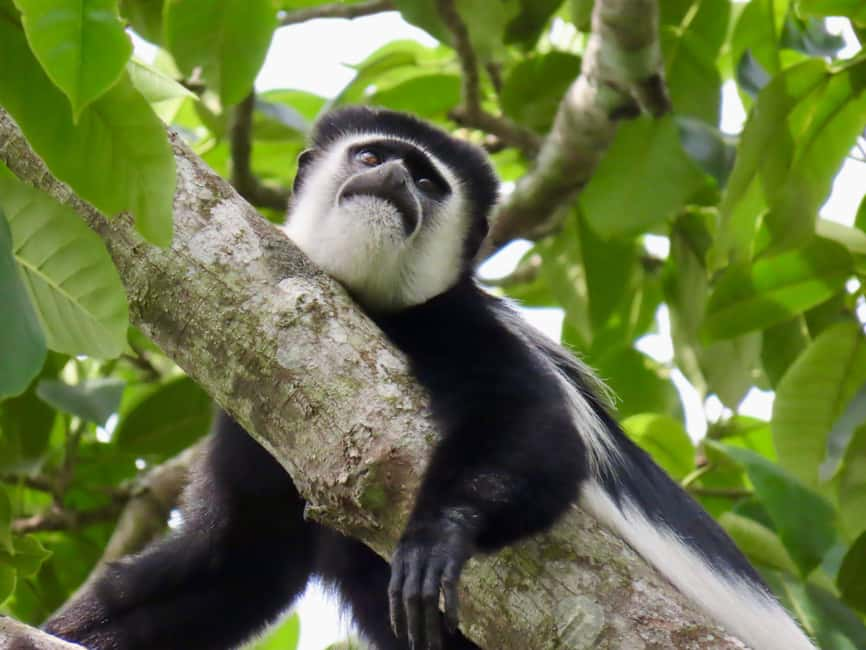
Black-and-white colobus monkey in the forest canopy of Kibale.
Chimpanzees are the best-known primates in Kibale, but the park’s reputation as a primate destination comes from its wider species diversity. Published information from Safari Vacations and Travel Services identifies 13 recorded primate species in Kibale.
These include black-and-white colobus monkeys, red colobus monkeys, red-tailed monkeys, blue monkeys, grey-cheeked mangabeys, L’Hoest’s monkeys, olive baboons, vervet monkeys and nocturnal primates such as pottos and galagos.
This diversity means that chimpanzee trekking can become a broader primate-watching experience. While the main objective may be to locate chimpanzees, the forest environment provides opportunities to observe other species before, during or after the chimpanzee encounter.
Black-and-White Colobus Monkeys
Black-and-white colobus monkeys are among the most distinctive primates encountered in Kibale. Their contrasting coloration makes them comparatively easy to recognize when they are visible in the canopy.
They are strongly associated with forest habitats and spend much of their lives in trees. Their movements through the canopy can provide spectacular wildlife observations, particularly when several individuals travel between neighboring trees.
They also demonstrate the ecological specialization that allows numerous primate species to share Kibale’s forest. Different primates use different food resources and forest levels, reducing direct competition between species.
Red Colobus Monkeys
Red colobus monkeys are another important component of Kibale’s primate community. They are forest-dependent primates and are among the species that make Kibale particularly important for primate conservation.
Their behavior can be very different from chimpanzees. Instead of the large social movements that may characterize chimpanzee communities, red colobus groups can be observed feeding and moving through the canopy while maintaining their own social organization.
Their presence reinforces the need to protect the forest as a whole. Conservation that maintains habitat for chimpanzees simultaneously benefits many other primate species that depend on the same ecosystem.
Red-Tailed Monkeys
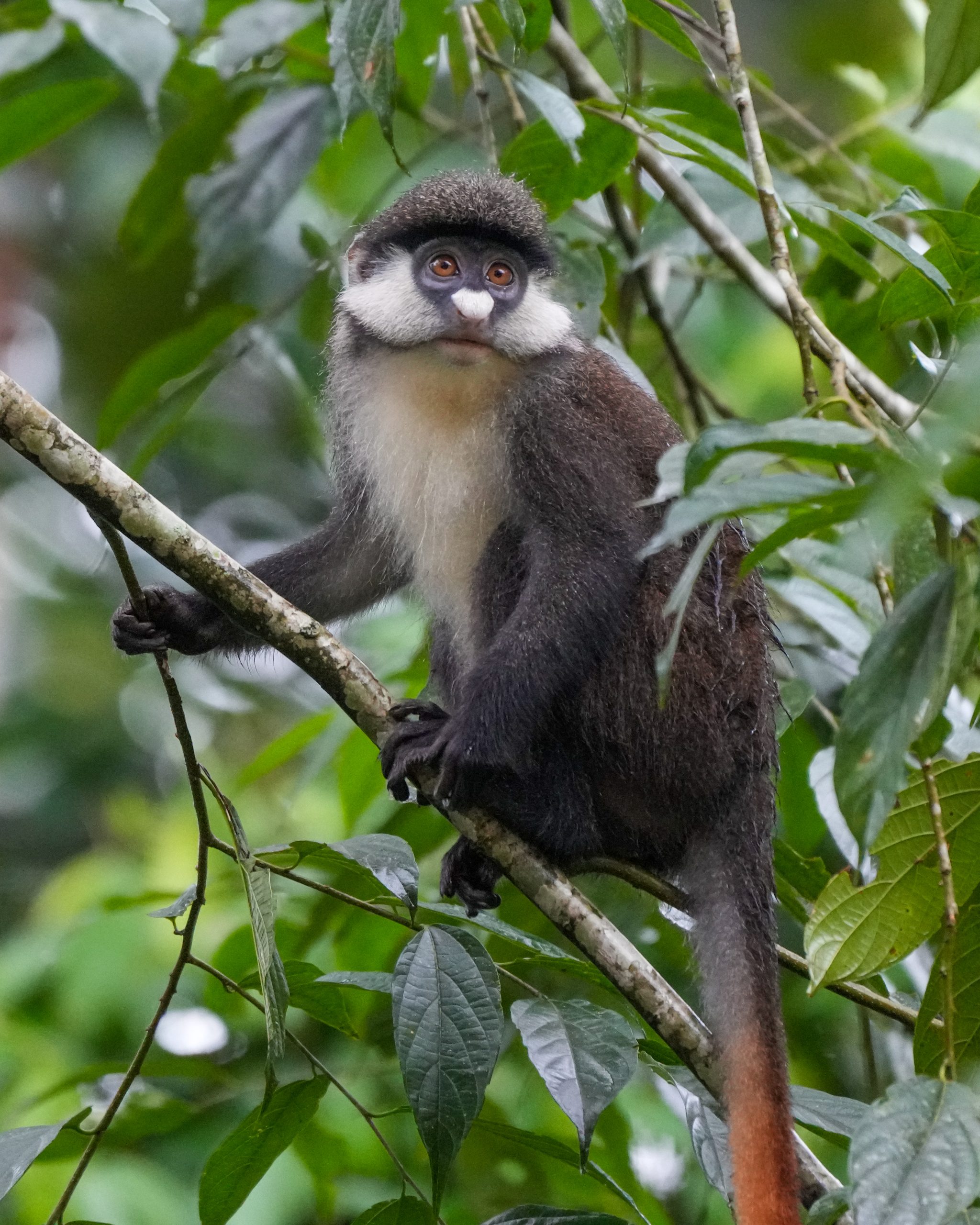
“Red-tailed monkey photographed in Kibale Forest National Park
Red-tailed monkeys are active forest primates that may be encountered during guided walks and chimpanzee excursions. Their distinctive facial features and tail markings can help experienced guides identify them quickly.
They may move through vegetation while searching for fruits, leaves and other foods. Their activity can provide additional wildlife encounters while visitors are moving between chimpanzee locations.
Because primates move quickly, visitors should remain attentive to the guide rather than looking in only one direction. A brief movement in the canopy can be the only indication that a monkey group is nearby.
Blue Monkeys
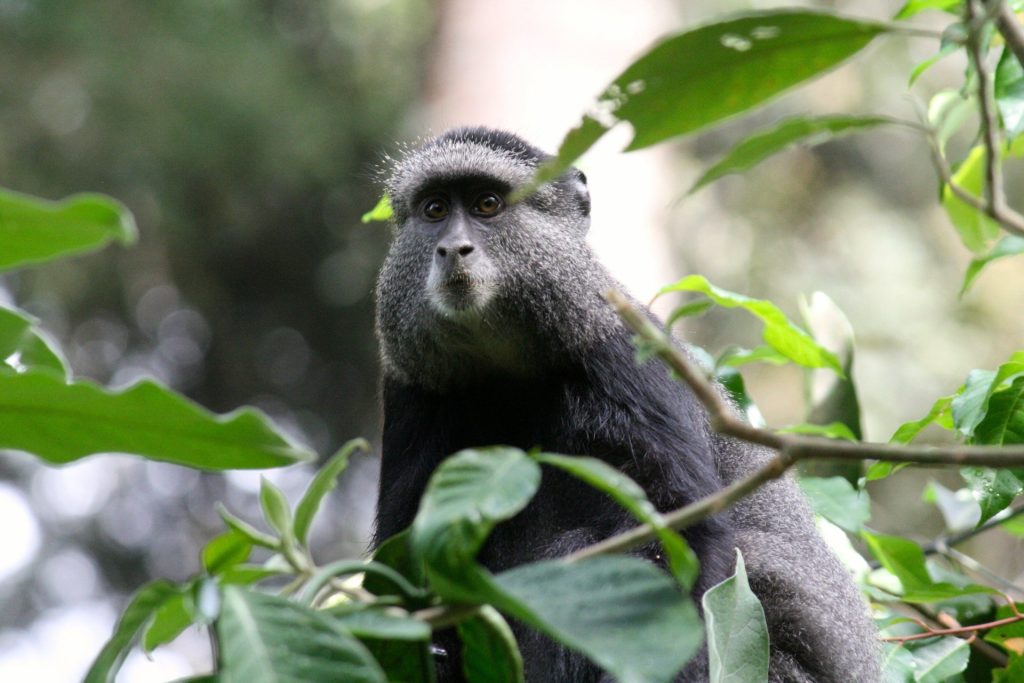
Blue monkey in a forest habitat in Uganda.
Blue monkeys are another forest primate associated with Kibale. Despite their name, their coloration is not simply bright blue, and identifying them accurately is easier when visitors are accompanied by knowledgeable guides.
They occupy forest habitats and may be observed moving through different vegetation layers. Their presence adds another example of how several primate species use the same forest in different ways.
For travelers interested in identifying multiple species during one trip, the Uganda primate safari resource provides additional information about primate-focused travel in Uganda.
Grey-Cheeked Mangabeys
Grey-cheeked mangabeys are another notable Kibale primate. They can be active and vocal, making their calls useful to guides and wildlife observers who are trying to locate them.
The species illustrates the importance of looking beyond the most famous animals. A visitor who spends time learning primate identification can discover a much wider range of wildlife than someone focused only on chimpanzees.
Guides can help distinguish grey-cheeked mangabeys from other monkeys by combining visual characteristics with behavior, calls and habitat.
L’Hoest’s Monkeys
L’Hoest’s monkeys are among Kibale’s more distinctive primates. They can spend time close to the forest floor and within dense vegetation, making them different from species that are primarily observed high in the canopy.
Their relatively secretive nature means that sightings may be brief. A careful guide can help visitors recognize the species and understand how its behavior fits into the forest ecosystem.
Olive Baboons and Vervet Monkeys
Olive baboons and vervet monkeys contribute further diversity to the Kibale primate community. These adaptable species can use habitats beyond the deepest forest, including areas influenced by forest edges and more open environments.
Their presence demonstrates that Kibale is not a uniform block of identical vegetation. Different habitat types create opportunities for different wildlife communities.
Nocturnal Primates of Kibale
Kibale’s primate diversity also includes nocturnal species. Pottos and galagos are among the primates associated with night activity, making them difficult to observe during normal daytime chimpanzee trekking.
Night forest experiences can provide opportunities to search for nocturnal wildlife under appropriate supervision. During such experiences, guides may use their knowledge of calls, movement and habitat to identify animals that remain hidden during daylight.
The presence of nocturnal primates demonstrates how much wildlife activity occurs outside the normal hours of a daytime safari.
Kanyanchu and Chimpanzee Tracking
Kanyanchu is the principal visitor area associated with chimpanzee tracking in Kibale. Current information published by Safari Vacations and Travel Services identifies Kanyanchu as one of the main access points for guided forest experiences.
The Kanyanchu area is particularly important because it provides access to established chimpanzee tracking activities and other guided forest experiences. Visitors can receive their briefing before entering the forest with guides and trackers.
Information published by Safari Vacations and Travel Services states that chimpanzee tracking groups are organized through the Kanyanchu area and that visitors follow trained guides into the forest to search for habituated chimpanzee communities.
Sebitoli and the Wider Primate Experience
Sebitoli is another important sector associated with Kibale National Park. It provides a different access point to the forest and contributes to the wider management and tourism experience of the protected area.
Visitors should distinguish between the existence of a sector and the availability of every specific tourism activity there at any particular time. Activity availability, regulations and visitor arrangements should always be confirmed with the responsible authorities or a licensed operator before travel.
Chimpanzee Behavior Visitors May Observe
Chimpanzees display a wide variety of behaviors that can make a trek particularly educational. Feeding is one of the most common activities, especially when chimpanzees locate productive fruiting trees.
Grooming is another important social behavior. Individuals may spend time grooming one another as part of their social relationships.
Visitors may also observe movement through trees, communication, resting, play among younger animals and interactions between different members of a community. However, no specific behavior should be guaranteed because wildlife behavior changes naturally from day to day.
Chimpanzee Communication
Chimpanzees communicate using vocalizations, gestures and body movements. Some calls can be remarkably loud and can travel considerable distances through the forest.
For visitors, chimpanzee vocalizations can become an important part of the tracking experience. A guide may hear calls before the group can see the animals, helping establish their approximate location.
Listening is therefore just as important as looking. A quiet forest walk can reveal information through sounds that would otherwise be missed.
Chimpanzee Feeding Behavior
Food availability has a major influence on chimpanzee movement. When fruiting trees provide abundant food, chimpanzees may spend significant periods in the surrounding area. When food is more dispersed, they may travel farther.
This helps explain why tracking conditions can vary between days and seasons. A chimpanzee community that was close to a trail on one day may be farther away on another.
The search for chimpanzees therefore provides an indirect lesson in forest ecology. Visitors learn that animal movement is connected to the distribution and seasonal availability of food.
Chimpanzee Nesting
Chimpanzees construct sleeping nests, generally using vegetation in trees or other suitable locations. These nests can provide trackers with valuable evidence about where a community has spent the night.
Researchers and guides can use nest locations together with other signs to understand chimpanzee movement. In habituation experiences, early morning observations can sometimes provide opportunities to follow the community as individuals begin their day.
Chimpanzee Photography
Photography is a major motivation for many visitors undertaking Kibale chimpanzee trekking. However, photographing chimpanzees should always remain secondary to responsible wildlife observation.
Forest conditions can be challenging for photography because vegetation may obstruct the view and light levels can change rapidly beneath the canopy. A chimpanzee can also move from a bright opening into deep shade within seconds.
Visitors should follow guide instructions concerning positioning and distance rather than moving independently to obtain a better photograph. Responsible photography protects both the animals and the quality of the wildlife encounter.
Why Responsible Chimpanzee Viewing Matters
Chimpanzees are wild animals, even when they are habituated to controlled human presence. Habituation does not mean that they should be approached without restrictions or treated like domestic animals.
Responsible viewing minimizes disturbance and helps maintain the natural character of the experience. Visitors should remain with their designated group, follow guide instructions and avoid behavior that could stress the chimpanzees.
The objective of habituation and tourism is controlled observation, not physical interaction. Protecting that principle is important for the long-term welfare of the chimpanzees and the credibility of the conservation program.
Health and Hygiene Around Chimpanzees
Because chimpanzees are closely related to humans, disease transmission is an important conservation consideration. Human illnesses can potentially affect great apes, which is why visitor health and hygiene rules are significant.
Anyone feeling unwell should follow the instructions provided by park authorities and tour operators rather than assuming that participation is appropriate. Visitors should also follow established hygiene and wildlife-viewing protocols throughout the experience.
These measures protect both people and chimpanzees and form an important part of responsible primate tourism.
How Guides Improve the Chimpanzee Experience
A knowledgeable guide can transform chimpanzee trekking from a simple forest walk into an educational wildlife experience. Guides help identify species, interpret animal behavior, explain forest ecology and communicate safety instructions.
Trackers can also help locate chimpanzee communities by interpreting recent signs and vocalizations. Their knowledge of the forest can significantly improve the quality of observation while ensuring that visitors remain within established procedures.
The value of a guide is therefore not limited to finding chimpanzees. Their interpretation helps visitors understand why the animals behave as they do and how their lives connect to the forest ecosystem.
Chimpanzee Trekking and Forest Ecology
A chimpanzee trek provides an opportunity to observe ecological relationships directly. Chimpanzees depend on forest plants for food, use trees for movement and nesting, and interact with other members of their community throughout the day.
Other primates occupy the same ecosystem but may use different food resources or forest levels. Birds interact with vegetation and insects, while smaller mammals contribute to seed movement and nutrient cycling.
This interconnectedness is why protecting chimpanzees requires protecting the forest. A population cannot remain healthy if its habitat becomes degraded or fragmented.
Kibale Primates Beyond the Main Trek
The primate experience can continue after the main chimpanzee trek. Guided forest walks and other nature experiences provide opportunities to observe additional species and learn about the forest without making chimpanzees the only objective.
Visitors interested in the wider landscape can also explore the Kibale crater lake landscape, which is the third unique link carried forward from the previous content. The crater-lake environment provides a complementary perspective on the landscapes surrounding Kibale and demonstrates how forest tourism can connect with broader nature and community experiences.
Chimpanzee Trekking and Bigodi Wetland Experiences
Bigodi Wetland Sanctuary can complement a Kibale chimpanzee itinerary by adding a community-based wetland experience to the rainforest visit. The wetland environment supports additional primates and birds and provides an opportunity to understand the relationship between local communities, tourism and natural habitats.
It is important, however, to distinguish Bigodi Wetland Sanctuary from Kibale National Park itself. They are connected through the wider tourism landscape but are not the same protected area.
Chimpanzee Trekking and Wider Uganda Safaris
Kibale is particularly valuable because chimpanzee trekking can be incorporated into a broader Uganda safari. Travelers can combine the rainforest experience with destinations containing savannah, wetlands, mountain ecosystems and other wildlife habitats.
A longer itinerary can therefore create a contrast between primate trekking in Kibale and traditional wildlife viewing elsewhere in Uganda. This makes Kibale an important component of multi-destination wildlife journeys rather than an isolated attraction.
Safari Vacations and Travel Services publishes Uganda safari itineraries that combine Kibale with destinations including Queen Elizabeth National Park, Bwindi Impenetrable National Park and other major wildlife areas.
When Is Chimpanzee Trekking Best?
Chimpanzee trekking can take place throughout the year, but weather can influence trail conditions and the overall comfort of the experience. Current information published by Safari Vacations and Travel Services describes drier periods as generally more favorable for walking because trails can be easier to navigate.
Wet periods can also provide valuable wildlife and forest experiences. Rain keeps the forest lush and can create different conditions for photography and birdwatching. Visitors choosing travel dates should therefore consider their priorities rather than assuming that one season is universally best for every traveler.
Seasonal claims should be checked against current official information when making a specific booking because weather patterns and tourism conditions can change.
How Difficult Is Chimpanzee Trekking in Kibale?
Kibale’s terrain is often described as more manageable than some steep mountain trekking environments, but visitors should still expect several hours of walking through a natural forest. Trail conditions can change with rainfall, and chimpanzees may move farther from the starting point.
The physical challenge therefore depends partly on the location of the chimpanzees on the day. Someone who is comfortable walking for several hours on uneven forest trails will generally be better prepared than someone expecting a short, flat walk.
Visitors should discuss mobility or other practical concerns with their tour operator before booking so that the activity can be planned appropriately.
What Should Visitors Expect During the Trek?
Visitors should expect an experience that combines walking, waiting, listening, observation and interpretation. There may be periods when the forest appears quiet before a guide identifies a call or movement indicating that chimpanzees are nearby.
Once the animals are located, the group may remain relatively still while observing them. The chimpanzees can then move away, climb higher into the canopy or continue feeding in another location.
The unpredictable nature of these encounters is part of what makes chimpanzee trekking a genuine wildlife experience.
Chimpanzee Trekking for Wildlife Enthusiasts
For wildlife enthusiasts, Kibale offers an unusual opportunity to focus on animal behavior rather than simply species identification. The experience can reveal social relationships, communication, feeding strategies, movement patterns and interactions with the forest environment.
Visitors who already have experience with wildlife observation may find chimpanzee trekking especially rewarding because there is considerable behavioral detail to interpret.
For first-time visitors, the experience can serve as an introduction to rainforest ecology and primate conservation.
Chimpanzee Trekking for Birdwatchers and Nature Enthusiasts
Although chimpanzees are the principal target, visitors should remain attentive to the wider forest. Bird calls, butterflies, insects and other primates can turn the walk into a broader biodiversity experience.
This is another reason not to measure a successful Kibale trek only by the number of chimpanzees photographed. The forest provides many layers of wildlife observation, and the guide’s interpretation can reveal species that would otherwise be overlooked.
The Conservation Importance of Chimpanzee Tourism
Chimpanzee tourism creates an economic reason to maintain forest habitat and support wildlife protection. Tourism also creates opportunities for guides, trackers and other local workers whose livelihoods are connected to the protected-area economy.
Responsible tourism must nevertheless operate within conservation rules. Revenue from tourism is valuable only when the activity itself is managed in a way that protects wildlife and maintains the ecological integrity of the forest.
Chimpanzee tourism should therefore be understood as one component of a much larger conservation system involving protected-area management, research, monitoring, community participation and responsible visitor behavior.
The Research Value of Kibale Chimpanzees
Kibale’s long-term chimpanzee research history gives the forest importance beyond tourism. Long-term observation allows researchers to understand individual animals and communities over extended periods.
Research can contribute to knowledge about social behavior, reproduction, feeding, disease, movement and conservation. Long-term data are particularly valuable because chimpanzee communities can be studied across many years rather than through isolated observations.
This scientific dimension adds another reason to protect Kibale. The forest is not merely a tourism destination but also a living research environment.
Why Chimpanzee Habituation Requires Patience
Habituation is a gradual process and cannot be rushed without potentially compromising animal welfare. Chimpanzees need time to become accustomed to controlled human presence while retaining their natural behavior.
Visitors who participate in habituation experiences should therefore approach the activity as a conservation and research-oriented experience rather than simply an extended wildlife viewing session.
Kibale Forest Ecosystem, Habitats and Wildlife Ecology
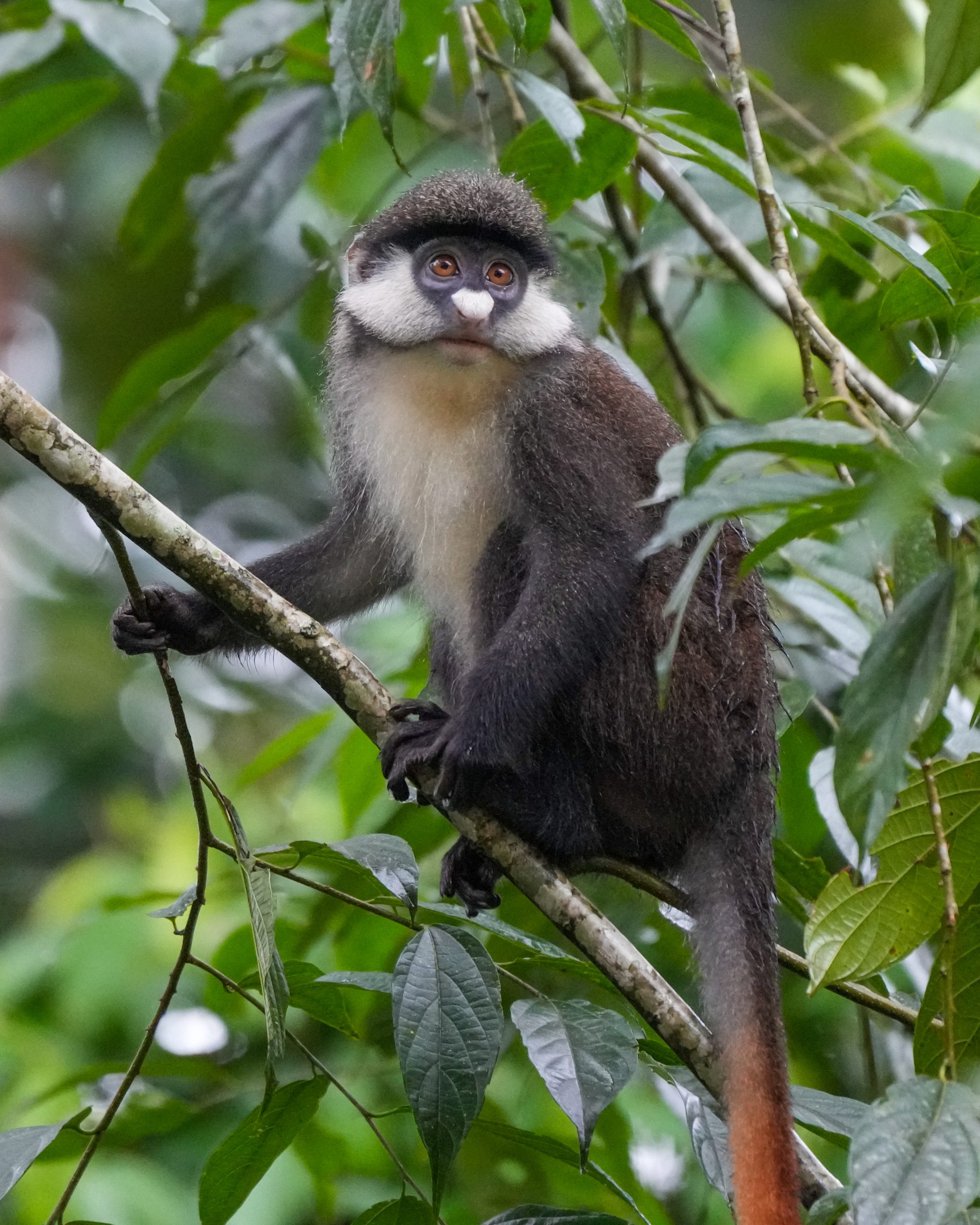
“Red-tailed monkey in the forest canopy of Kibale National Park. Photo by Giles Laurent
Kibale National Park is best understood as a complex tropical forest ecosystem rather than simply a destination for chimpanzee trekking. The wildlife of Kibale depends on the interaction between mature forest, regenerating vegetation, wetlands, streams, forest edges, open areas, fruiting trees and surrounding landscapes. These habitats create different ecological conditions that allow chimpanzees, monkeys, forest mammals, birds, insects, reptiles, amphibians and plants to coexist within the wider Kibale ecosystem.
The ecological importance of Kibale is closely connected to its forest structure. Different layers of vegetation provide food, shelter, nesting locations and movement routes for different species. The canopy supports many arboreal primates and birds, the understory provides cover and feeding opportunities, while the forest floor supports mammals, insects, fungi and decomposers. Wetlands and streams introduce additional habitats that increase the overall biological complexity of the landscape.
A detailed Kibale forest ecology guide therefore needs to examine more than individual animals. Understanding why Kibale supports exceptional wildlife requires examining the relationship between vegetation, water, elevation, climate, food resources, animal movement and ecological processes.
Kibale as a Tropical Forest Ecosystem
Kibale National Park protects a large area of tropical forest in western Uganda. Safari Vacations and Travel Services reports the park’s area at approximately 795 square kilometres and describes the northern section as particularly wet, with substantial annual rainfall. The forest environment supports numerous primates and other wildlife species, making it one of Uganda’s most important rainforest ecosystems.
The forest is not ecologically uniform. Vegetation composition changes across different locations, and areas can contain mature forest, regenerating vegetation, swamp environments, grassland and other habitat types. These differences are important because wildlife species have different ecological requirements.
For example, chimpanzees depend heavily on fruiting trees and other plant foods, while some antelopes are more closely associated with ground-level vegetation. Birds may occupy particular canopy layers, and amphibians are strongly influenced by moisture and water availability. A forest containing several habitat types can consequently support a much broader range of organisms.
The Structure of the Kibale Forest
A rainforest can be viewed vertically as several interconnected layers. The highest trees form the upper canopy, beneath which are smaller trees and vegetation forming lower canopy and understory environments. The forest floor contains fallen leaves, roots, seedlings, fungi, insects and decomposing organic material.
Each layer provides different opportunities for wildlife. Primates can move through the canopy while searching for fruit and young leaves. Birds can specialize in different levels of vegetation. Small mammals may travel through leaf litter and undergrowth, while insects exploit flowers, bark, leaves and decaying material.
This vertical structure helps explain why visitors walking through Kibale can hear or observe wildlife without immediately seeing the source. An animal may be directly above the trail, hidden behind foliage or moving through vegetation several meters away.
The Forest Canopy
The canopy is one of the most important habitats in Kibale. It consists primarily of the crowns and branches of mature trees and forms an extensive environment for arboreal wildlife.
Chimpanzees, colobus monkeys, blue monkeys and red-tailed monkeys can use the canopy for feeding, movement and resting. Numerous birds also depend on canopy vegetation for fruits, insects, nesting sites and shelter.
Fruiting trees are particularly important. When particular trees produce abundant fruit, they can attract several species simultaneously. This creates temporary concentrations of wildlife and can influence the movement patterns of primates and birds.
Fruiting Trees and Wildlife Movement
Food availability is one of the strongest ecological influences on animal movement in Kibale. Safari Vacations and Travel Services describes the forest as containing numerous fruiting trees that provide seasonal food resources for chimpanzees and other primates.
When food is abundant, chimpanzees may spend more time within productive feeding areas. When food is dispersed, individuals or temporary parties may travel farther in search of suitable resources.
This relationship between food and movement is important when understanding chimpanzee trekking. The location of animals is not fixed. Their movements reflect the ecological conditions of the forest and the resources available at that particular time.
The Understory of Kibale Forest
Beneath the canopy lies the forest understory, consisting of smaller trees, shrubs, vines, seedlings and other vegetation. This layer can be dense in some parts of Kibale and relatively open in others.
The understory provides food and shelter for many species. Some primates move through it while travelling between trees, while small mammals use dense vegetation as cover. Birds that specialize in lower forest levels can also depend heavily on understory vegetation.
For visitors, dense understory can make wildlife observation more difficult. However, it also provides essential habitat. A forest that appears visually difficult to explore may be extremely productive from an ecological perspective.
The Forest Floor
The forest floor is an important ecological zone containing fallen leaves, branches, seeds, roots, fungi and countless small organisms. It is also used by larger mammals and primates that periodically descend from the canopy.
Decomposition on the forest floor is fundamental to nutrient cycling. Fallen leaves and other organic matter are broken down by fungi, bacteria and invertebrates, returning nutrients to the soil and supporting future plant growth.
Small mammals, insects and other organisms also use the forest floor as a feeding environment. Their activities help move organic material and influence the distribution of seeds and nutrients.
Streams and Wet Areas
Water is an essential component of the Kibale ecosystem. Streams, drainage channels, swamp environments and other wet areas provide habitats for organisms that depend on moisture.
These environments can support amphibians, insects, aquatic organisms and vegetation adapted to wetter conditions. They also influence animal movement because wildlife may use water sources while travelling through the forest.
Wet areas create ecological transitions between forest habitats and can increase the number of species supported by the wider landscape.
Wetlands Around Kibale
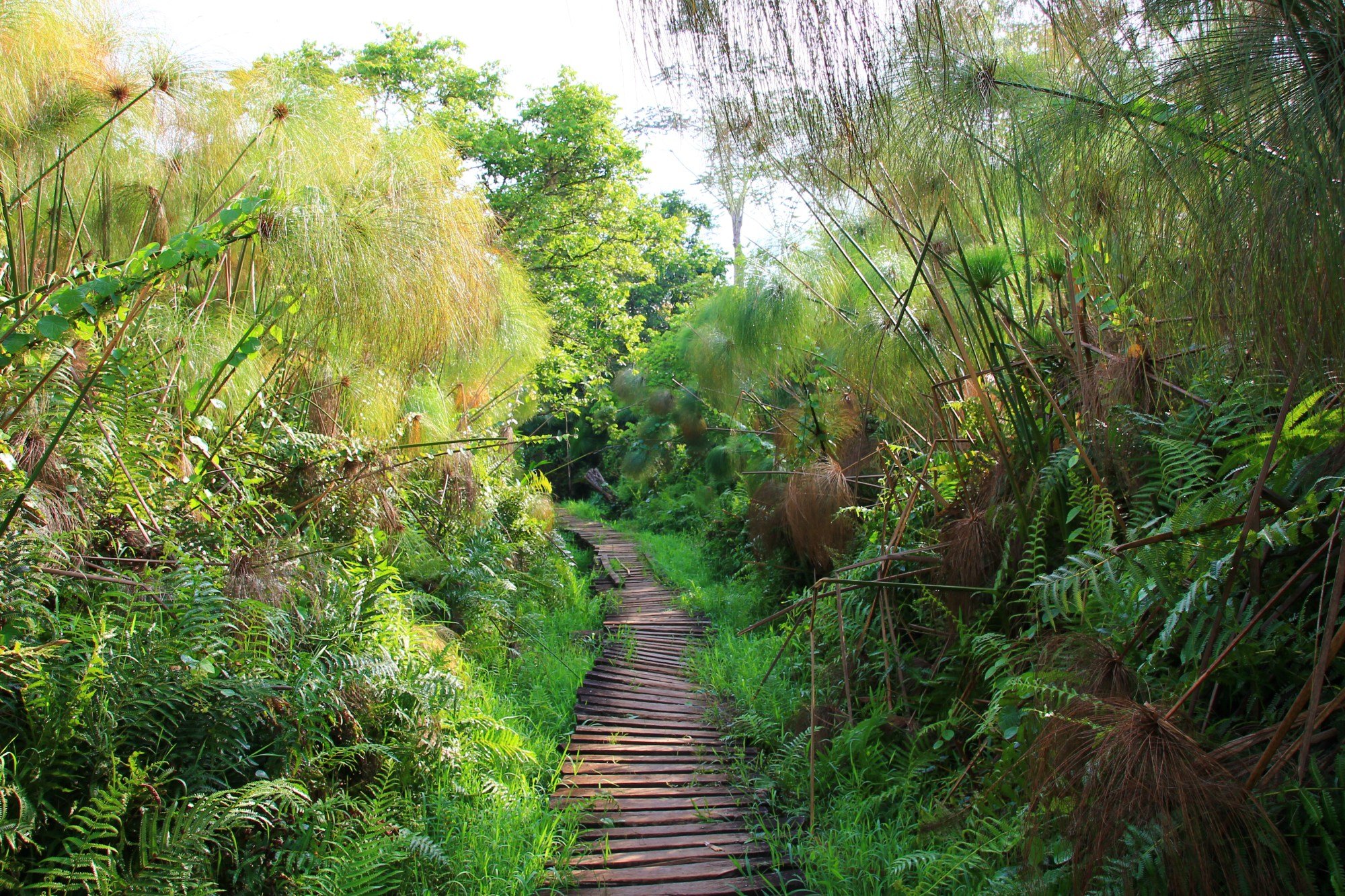
Boardwalk through the wetland vegetation at Bigodi Wetland Sanctuary near Kibale Forest.
The relationship between Kibale Forest and surrounding wetlands is particularly important. Bigodi Wetland Sanctuary, located outside the national park, provides an example of a community-managed wetland landscape closely associated with Kibale’s wider tourism and conservation environment.
Safari Vacations and Travel Services reports that Bigodi contains swamp forest, papyrus vegetation, woodland and grassland and supports more than 200 bird species. The wetland also provides habitat for several primates and other wildlife.
Visitors interested in understanding this forest-wetland relationship can explore the Bigodi wetland ecosystem resource, which provides additional information about the wetland’s birdlife and community management.
Bigodi Wetland and Community Conservation
Bigodi demonstrates that wildlife conservation does not always depend exclusively on national parks. Community-managed landscapes can also contribute to biodiversity protection while creating opportunities for local people.
Tourism activities in Bigodi connect visitors with wetland ecology, birds, primates and local community initiatives. This relationship creates an important example of how conservation and local economic activity can operate alongside one another.
The ecological value of the wetland is also connected to the forest. Wildlife does not necessarily remain within one habitat type throughout its life. Forest edges, wetlands and other adjacent environments can form part of larger movement and feeding systems.
Forest Edges and Habitat Transitions
Forest edges are ecological transition zones where forest vegetation meets more open landscapes, wetlands, cultivated land or other habitats. These areas can contain species associated with both forest and open environments.
Some adaptable mammals and birds may use these transition zones more readily than species dependent on deep forest. Edge environments can therefore increase local species diversity while also presenting conservation challenges if natural forest is progressively fragmented.
Maintaining connected forest habitat is important because excessive fragmentation can isolate wildlife populations and reduce access to food and breeding areas.
Grassland and Open Habitats Within the Wider Kibale Landscape
Kibale’s wider ecological landscape is not composed entirely of dense mature rainforest. Some areas include grassland and other more open habitats. Safari Vacations and Travel Services describes forest hikes that pass through tropical rainforest, riverine forest, swamp and grassland habitats.
These habitat differences provide opportunities for different wildlife species. Bushbucks, duikers and other mammals can use vegetation at the forest edge or in more open sections, while some bird species are associated with grassland or wetland environments.
The existence of these different habitats makes the wider Kibale landscape more ecologically diverse than a simple description of the area as rainforest alone would suggest.
Riverine Forest
Riverine forest occurs along waterways and areas influenced by regular water availability. These environments can differ from surrounding forest because soil moisture, vegetation and plant composition are influenced by the presence of water.
Riverine areas can provide movement corridors for wildlife and create feeding opportunities for species that depend on particular plants or moisture conditions. They can also provide habitats for birds, amphibians and insects.
For visitors, riverine vegetation can add another visual and ecological dimension to a forest walk. The vegetation may be denser or structurally different from nearby upland forest.
Elevation and the Kibale Ecosystem
Elevation influences temperature, rainfall, vegetation and ecological conditions. Kibale occupies a landscape where altitude changes across different areas of the park, creating variation in environmental conditions.
Safari Vacations and Travel Services reports that the northern part of Kibale reaches approximately 1,590 metres above sea level and is also described as the wetter part of the park.
These environmental differences contribute to variation in vegetation and habitat conditions. Elevation should therefore be considered alongside rainfall, soil, water availability and forest history when understanding the ecology of Kibale.
Rainfall and Forest Productivity
Rainfall is fundamental to Kibale because tropical forest productivity depends heavily on water availability. Rain supports plant growth, influences flowering and fruiting and maintains wetland and stream environments.
Safari Vacations and Travel Services reports annual rainfall of approximately 1,700 millimetres in the wetter northern section of Kibale. Such figures are useful for understanding the general climatic character of the forest, although rainfall varies geographically and from year to year.
Rainfall also influences visitor conditions. Wet trails can become more challenging, while periods of rainfall can maintain the lush vegetation that defines the rainforest environment.
Seasonality and Food Availability
Although Kibale remains a rainforest throughout the year, food resources change seasonally. Trees may flower and fruit at different times, creating shifting concentrations of food.
These changes can influence primate movements. Safari Vacations and Travel Services explains that chimpanzee food resources include fruits, young leaves, flowers, seeds, bark, mushrooms, wild honey and insects, with availability changing throughout the year.
Food availability can therefore influence the size and composition of temporary chimpanzee parties. When food is concentrated, more individuals may gather around productive feeding locations. When resources become dispersed, individuals can separate into smaller groups.
Chimpanzees as Forest Seed Dispersers
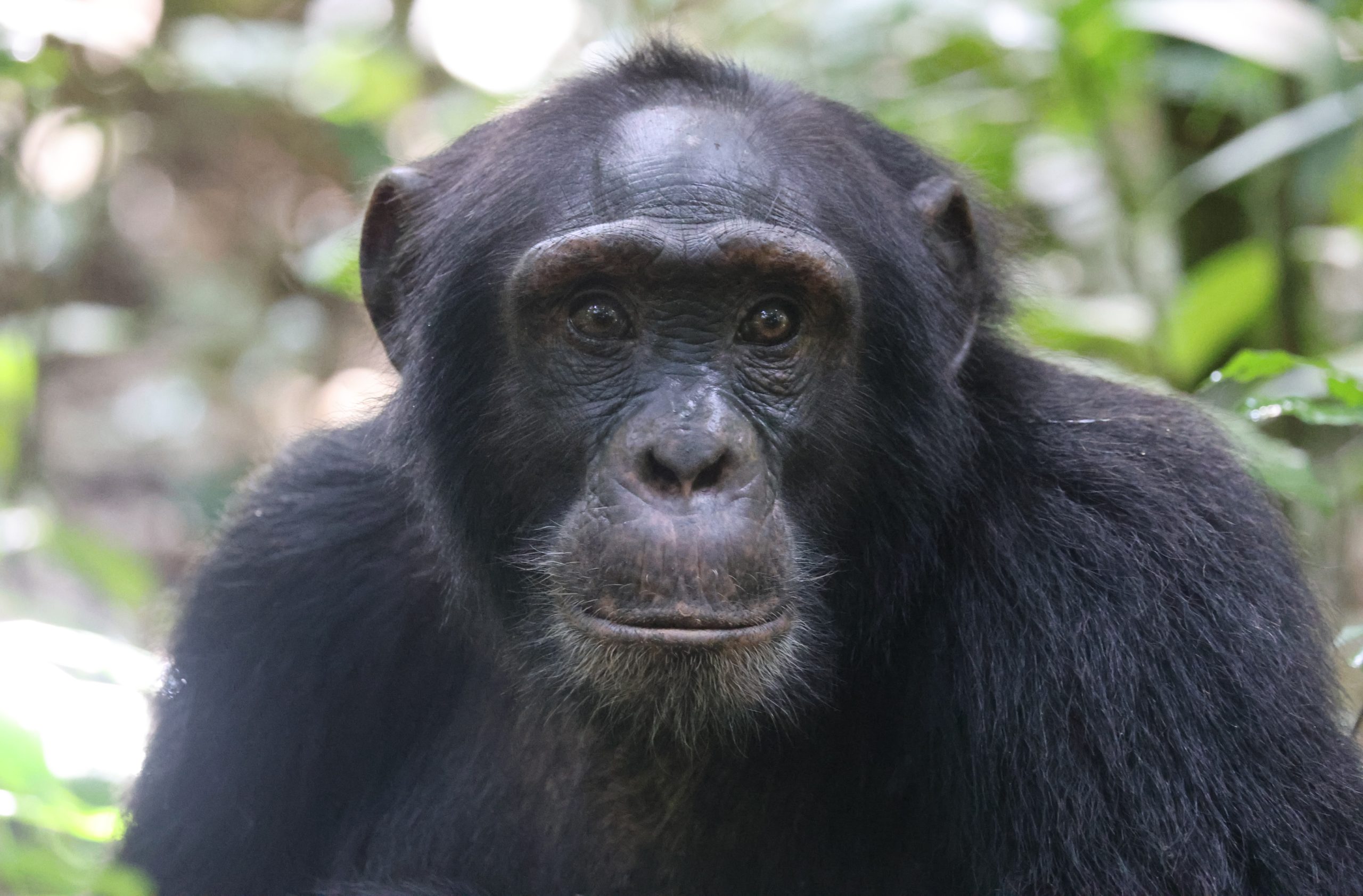
“Chimpanzee in Kibale National Park. Photo by flowcomm
Chimpanzees contribute to forest ecology through their feeding and movement. When they consume fruits, they can transport seeds away from the parent tree and deposit them elsewhere through their movements and waste.
Seed dispersal helps plants colonize new areas and contributes to forest regeneration. Chimpanzees are therefore not simply consumers of forest resources; they can also participate in processes that influence future vegetation.
This relationship demonstrates why the decline of an important animal species can affect ecological processes beyond the species itself.
Primates and Forest Food Webs
Kibale’s primates occupy different ecological niches. Some species consume large quantities of fruit, while others rely more heavily on leaves, seeds or other foods.
Chimpanzees have an especially varied diet. Safari Vacations and Travel Services reports that their food resources can include plant materials and insects, while also documenting occasional hunting behavior involving other primates.
Different feeding strategies allow numerous primate species to coexist within the same forest. Their interactions with vegetation and other animals contribute to the complexity of the Kibale food web.
Predators and Prey in Kibale
Every forest ecosystem contains relationships between predators and prey. Kibale’s food web includes larger carnivorous mammals, smaller predators, primates, rodents, birds, reptiles and numerous invertebrates.
Predation can influence animal behavior, movement and population dynamics. Prey species may respond to predators by changing where or when they feed, while predators depend on healthy populations of prey animals.
These interactions are often difficult for visitors to observe directly, but they are essential to understanding how the ecosystem functions.
Insects and the Hidden Biodiversity of Kibale
Insects are among the least visible but most important organisms in Kibale. Butterflies, beetles, ants, termites, bees, flies and countless other insects occupy specialized ecological roles.
Some insects pollinate plants, others consume vegetation, while others break down organic material or serve as prey for birds, reptiles, amphibians and mammals.
The abundance of insects also contributes to the richness of the forest food web. A visitor who sees only chimpanzees and monkeys is observing only a small fraction of the biological activity occurring around them.
Butterflies as Forest Indicators
Butterflies are particularly noticeable representatives of Kibale’s insect diversity. They depend on particular plants during different stages of their life cycles and can respond to changes in vegetation and habitat conditions.
Openings in the forest, streams, wet areas and forest edges can create favorable conditions for different butterfly species. Their presence adds another dimension to forest walks and demonstrates the importance of maintaining varied habitats.
Birds Within the Forest Ecosystem
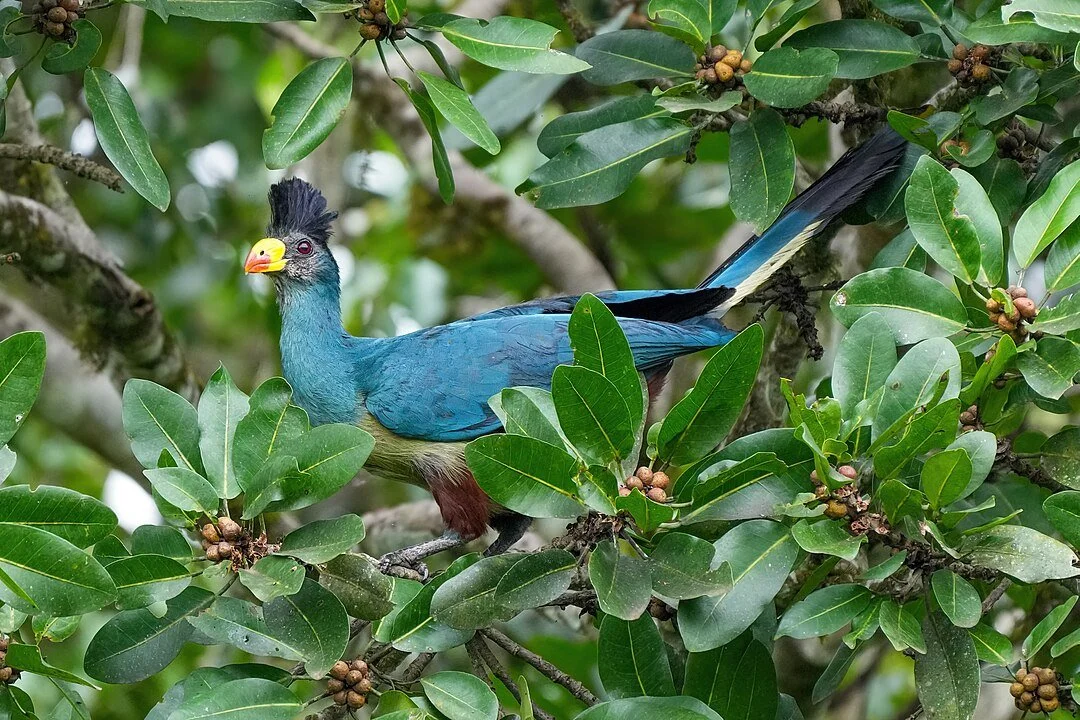
“Great Blue Turaco in Kibale Forest National Park. Photo by Giles Laurent
Birds occupy many ecological niches in Kibale. Some feed on fruits, others specialize in insects, while others consume seeds, nectar or small animals.
The forest canopy is particularly important for many bird species, but the understory, forest floor, wetlands and forest edges also provide valuable habitat.
Safari Vacations and Travel Services reports more than 375 bird species for Kibale in its birding material, while other pages on the same site provide different species totals. Because published figures vary by source and inventory, a single definitive number should not be presented without specifying the survey or source methodology.
This diversity makes birdwatching an important complementary activity to chimpanzee trekking and demonstrates that Kibale’s ecological value extends well beyond primates.
Birds and Seed Dispersal
Birds contribute to forest regeneration through their feeding and movement. Fruit-eating birds can transport seeds between different parts of the forest, while insectivorous birds help regulate insect populations.
Large forest birds can be particularly important because their feeding patterns can connect different tree species and habitats. Their movements demonstrate how animals help connect ecological processes across the forest.
Protecting bird habitat therefore contributes to maintaining the wider ecological functions of Kibale.
Reptiles and Amphibians
Reptiles and amphibians form another layer of Kibale’s biodiversity. Their ecological roles vary considerably, with some species feeding on insects and other small organisms while others become prey for larger animals.
Amphibians are particularly dependent on moisture because their life cycles are closely associated with wet environments. Streams, pools, leaf litter and wetlands can therefore be important habitats.
Reptiles can use forest floor, vegetation, water margins and other habitats depending on their ecological requirements.
Because these animals are often small and concealed, visitors may encounter fewer of them than primates or birds. Their ecological importance nevertheless remains significant.
Fungi and Decomposition
Fungi play a critical role in rainforest nutrient cycling. Fallen branches, leaves and other organic material need to be broken down so that nutrients can return to the ecosystem.
Fungi work alongside microorganisms and invertebrates to decompose organic matter. Without these processes, nutrients would remain locked in dead material instead of becoming available to living plants.
For this reason, the apparently simple process of a fallen leaf disappearing into the forest floor is part of a much larger ecological cycle.
Nutrient Cycling in Kibale Forest
Nutrients move continuously between plants, animals, soil, water and decomposing organic matter. Plants absorb nutrients from the soil, herbivores consume vegetation, predators consume other animals, and decomposition returns nutrients to the environment.
Rainfall and water movement also influence nutrient distribution. Streams and wet areas can transport organic material and connect different parts of the ecosystem.
This constant circulation helps maintain forest productivity and supports the plants that form the foundation of the Kibale food web.
Soils and Forest Growth
Soil provides the physical foundation for vegetation and supplies plants with water and nutrients. Soil conditions vary according to geology, vegetation, rainfall and topography.
The surrounding crater-lake region also contains fertile agricultural soils. Safari Vacations and Travel Services describes the Ndali-Kasenda crater landscape as supporting agriculture and coffee cultivation around several crater lakes.
These surrounding agricultural landscapes demonstrate the close relationship between protected forest and human land use. Conservation planning therefore needs to consider both ecological protection and the livelihoods of communities living around the park.
The Ndali-Kasenda Crater Landscape
The crater lakes surrounding Kibale form an important component of the wider landscape. The Ndali-Kasenda region contains numerous crater lakes surrounded by forest, farmland and other vegetation.
The crater-lake landscape adds ecological variation to the area and creates opportunities for nature-based activities. Some crater lakes are surrounded by vegetation that supports primates, birds and other wildlife.
The Kibale crater lake landscape article provides additional information about the physical environment surrounding the forest. This is one of the three unique links carried forward from earlier sections.
Forest Connectivity and Wildlife Movement
Wildlife populations depend on access to suitable habitat. Forest connectivity allows animals to move between feeding areas, resting sites and other important locations.
Large mammals can require extensive areas to move naturally, while primates may depend on continuous canopy connections and fruiting trees. Fragmentation can interrupt these movement patterns and reduce access to important resources.
Maintaining connected habitat is therefore an important part of long-term wildlife conservation.
Forest Regeneration
Forests are dynamic systems. Trees die, new seedlings emerge, gaps form in the canopy and vegetation changes over time.
Natural regeneration occurs when seedlings grow into young trees and eventually become part of the mature forest. Animals contribute to this process through seed dispersal, while insects and other organisms interact with flowering and fruiting plants.
Disturbance is not always negative. Small natural gaps can create opportunities for different plant species and contribute to forest structural diversity. Problems arise when human disturbance occurs at a scale or intensity that prevents natural recovery.
Chimpanzees and Forest Structure
Chimpanzees are closely connected to forest structure because they use trees for feeding, movement and nesting. A healthy forest containing mature trees and fruiting species provides important resources for chimpanzee communities.
Changes in forest composition can therefore influence chimpanzee behavior. If important food trees become less abundant, chimpanzees may need to travel farther to find suitable resources.
This relationship demonstrates why chimpanzee conservation cannot be separated from forest conservation.
Colobus Monkeys and Canopy Ecology
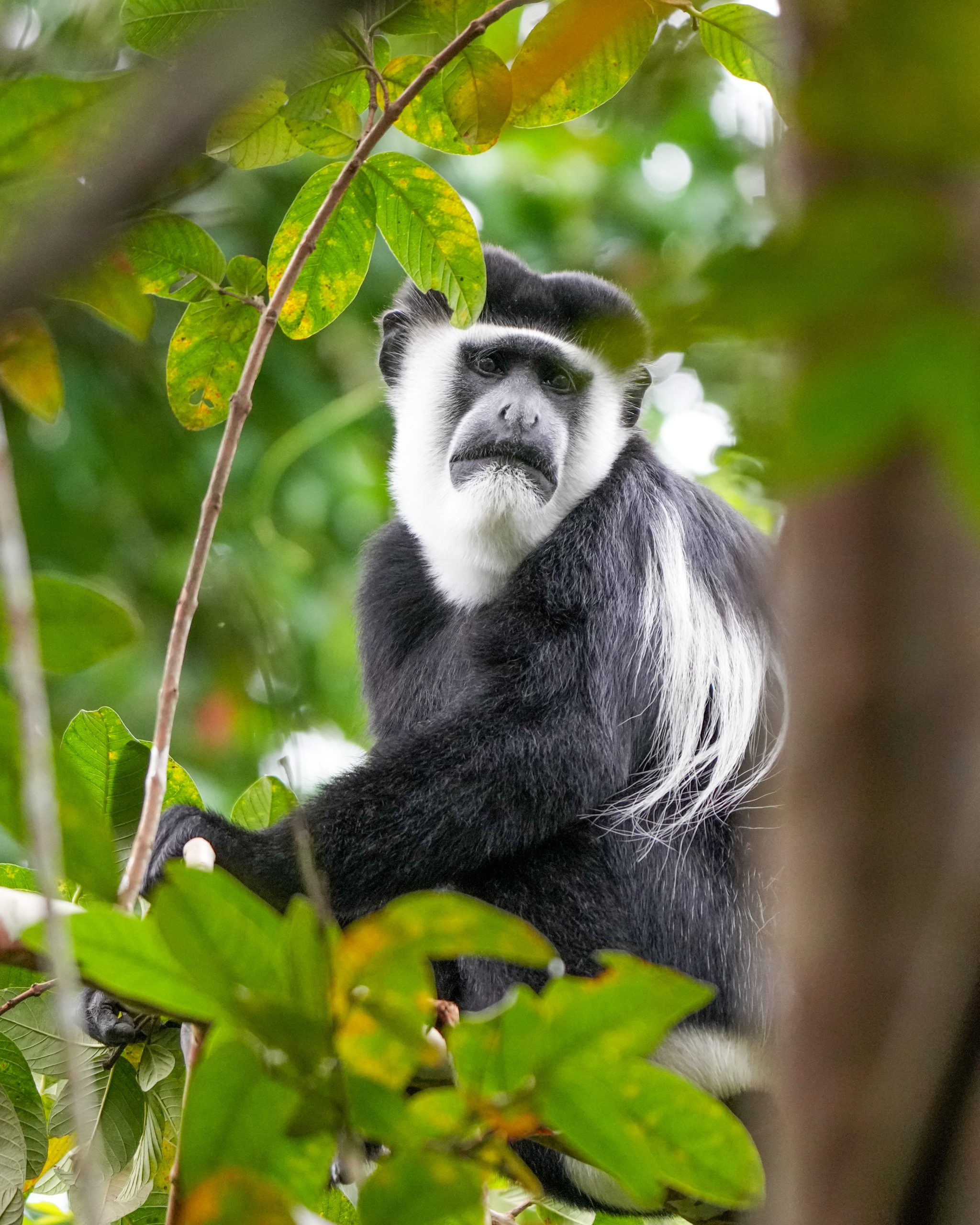
“Black-and-white colobus monkey in Kibale Forest. Photo by Giles Laurent
Colobus monkeys provide another example of the relationship between primates and forest vegetation. Their ability to use canopy habitats allows them to exploit resources that differ from those used by many ground-dwelling mammals.
Their feeding behavior can influence vegetation and seed movement, while their presence provides food opportunities for predators within the wider food web.
Maintaining mature canopy structure is consequently important for sustaining the primate community.
Forest Mammals and Ground-Level Ecology
Forest mammals such as bushbucks, duikers, bush pigs and giant forest hogs interact primarily with vegetation and resources closer to the forest floor.
They browse, graze, consume roots or search through leaf litter depending on the species. Their movements can disturb soil, move seeds and influence vegetation structure.
These mammals therefore occupy ecological roles that complement those of canopy-dwelling primates and birds.
Elephants and Forest Ecology
Forest elephants can influence vegetation through feeding, movement and physical disturbance. As large herbivores, they can consume substantial quantities of plant material and move seeds across considerable distances.
Their movements can also create openings and pathways through vegetation. Such disturbances may influence how plants regenerate and how smaller animals use the forest.
Forest elephants are therefore ecologically important even when visitors do not encounter them directly.
Wildlife Observation as Ecological Interpretation
A guided forest walk provides an opportunity to interpret ecological relationships rather than simply identify species. Safari Vacations and Travel Services describes guided Kibale forest walks as educational experiences involving wildlife identification, forest ecology, plant adaptations, animal signs and ecological relationships.
A guide may point out feeding remains, tracks, scat, territorial markings or damaged vegetation. These signs can reveal the presence of animals that remain hidden.
This approach changes the visitor experience from simply searching for photographs to understanding how the forest functions.
Why Wildlife Signs Matter
Tracks can indicate the movement of mammals across trails. Feeding remains can identify species that have recently used a particular area. Broken branches may reveal movement through vegetation, while calls can indicate the presence of birds or primates.
Experienced guides combine these observations with knowledge of habitat and animal behavior. The result is a more complete interpretation of the ecosystem.
Wildlife signs are particularly important in rainforest environments because dense vegetation can make direct sightings difficult.
Human Activity Around Kibale
Kibale does not exist independently of the communities surrounding it. Agriculture, settlements, tourism and other human activities occur around the protected forest.
The surrounding crater-lake region supports farming and coffee production, while community-based tourism initiatives such as Bigodi demonstrate how natural resources can generate local economic opportunities.
The relationship between communities and protected areas is therefore an essential part of conservation. Successful long-term protection depends partly on creating conditions in which local people can benefit from sustainable use and tourism without degrading critical habitats.
Community Conservation and Bigodi
Bigodi Wetland Sanctuary provides an important example of community involvement in conservation around Kibale. Safari Vacations and Travel Services describes the sanctuary as locally managed and identifies tourism revenue as supporting conservation and local development.
Community-based conservation can strengthen protection by giving local residents a direct stake in maintaining natural habitats. It can also provide visitors with opportunities to learn about local livelihoods, environmental management and cultural practices.
The experience demonstrates that conservation around Kibale extends beyond the formal boundary of the national park.
Threats to the Kibale Forest Ecosystem
Forest ecosystems can be affected by habitat loss, fragmentation, illegal resource use, climate variability, disease, invasive species and pressure from surrounding human populations. The significance of these threats varies by location and over time.
Habitat fragmentation is particularly important because wildlife requires suitable connected environments. When forest is divided into isolated patches, animal movement can become more difficult and ecological processes can be disrupted.
Protecting the integrity of Kibale therefore requires continued management of the protected forest as well as cooperation with communities and conservation organizations around it.
Climate and the Future of Kibale Wildlife
Climate conditions influence rainfall, plant growth, flowering, fruiting and water availability. Changes in these environmental factors can affect wildlife because many species depend on predictable relationships between food and habitat.
Chimpanzees and other primates are particularly influenced by the distribution of fruiting trees. If the timing or availability of food changes, animals may alter their movement patterns.
Long-term ecological monitoring is consequently important for understanding how Kibale’s wildlife responds to changing environmental conditions.
Research and Long-Term Monitoring
Kibale’s importance for scientific research extends beyond chimpanzees. Long-term observation can help researchers understand primate populations, forest regeneration, animal behavior, plant communities and ecological interactions.
Long-term research is especially valuable because tropical forests change gradually. A single survey provides a snapshot, while repeated observations reveal trends over time.
This scientific information can support conservation planning and help managers understand how wildlife populations respond to changes in habitat and environmental conditions.
Kibale as a Living Laboratory
The combination of diverse wildlife, long-term research, multiple habitat types and accessible forest environments makes Kibale particularly valuable for ecological study.
Researchers can examine relationships between primates and food resources, forest structure and animal movement, biodiversity and habitat condition, and conservation and community livelihoods.
The forest therefore functions as a living laboratory where ecological processes can be observed in a functioning natural environment.
The Importance of Protecting Habitat Rather Than Individual Species
Protecting a single species without protecting its habitat cannot provide a complete conservation solution. Chimpanzees need forest resources, primates need vegetation and canopy structure, birds need feeding and nesting habitats, and amphibians depend on suitable wet environments.
Protecting Kibale as an interconnected ecosystem therefore benefits many species simultaneously.
This ecosystem-based approach also protects ecological processes such as seed dispersal, pollination, decomposition and nutrient cycling.
Kibale and the Wider Albertine Rift Landscape
Kibale forms part of the biologically important western Ugandan landscape associated with the Albertine Rift. The wider region contains forests, wetlands, mountains, lakes and other ecosystems that support high levels of biodiversity.
Landscape-level conservation is important because wildlife and ecological processes do not always follow administrative boundaries. Rivers, forests, wetlands and agricultural landscapes can connect or separate wildlife populations.
Kibale’s conservation value should therefore be considered within the wider network of protected and community-managed landscapes in western Uganda.
Why Habitat Diversity Strengthens Kibale Wildlife
The strength of Kibale’s wildlife community comes partly from the coexistence of different habitats. Mature forest supports canopy-dependent species, understory provides cover and food, wetlands support aquatic and moisture-dependent organisms, while grasslands and forest edges create additional ecological opportunities.
Each habitat contributes something different to the overall ecosystem. Removing one component can affect species that depend on it directly or indirectly.
Maintaining habitat diversity is therefore essential for maintaining the richness that makes Kibale a major wildlife destination.
Kibale Wildlife and the Visitor Experience
Understanding ecology changes how visitors experience the forest. A fruiting tree becomes more than a plant when visitors understand that chimpanzees and birds may depend on it. A stream becomes more than scenery when visitors understand its importance to amphibians and insects. A fallen tree becomes part of the nutrient cycle rather than simply dead vegetation.
This ecological perspective makes guided forest experiences more meaningful. Visitors can begin to recognize relationships rather than isolated objects.
For travelers planning a broader primate itinerary, the Uganda primate safari experience resource provides additional context for understanding how Kibale fits into Uganda’s wider primate tourism landscape.
Kibale Forest Photography and Ecology
Photography can also be used to document ecological relationships. Instead of photographing only individual animals, visitors can capture animals within their habitats, forest structure, feeding environments and interactions.
Rainforest photography can be challenging because light changes rapidly beneath the canopy. Dense vegetation can also make composition difficult. These challenges can nevertheless produce photographs that communicate the character of the forest more effectively than isolated animal portraits.
Wildlife photography should always remain subordinate to responsible observation and established park rules.
Why the Forest Is the Main Attraction
Chimpanzees may be the most famous animals in Kibale, but the forest itself is the foundation of the entire wildlife experience. Without mature trees, food-producing vegetation, water, soil and ecological processes, the primates and other wildlife would not have the habitat they require.
The forest provides food, shelter, movement routes, nesting locations and breeding environments for countless species. It also supports ecological processes that maintain forest productivity.
For this reason, a true Kibale Wildlife Guide must treat the forest ecosystem as the central subject rather than merely as scenery surrounding wildlife.
The Ecological Story of Kibale
The ecological story of Kibale begins with vegetation and water and expands into a complex network of relationships. Trees capture energy and produce food. Herbivores consume vegetation. Primates disperse seeds. Birds transport seeds and regulate insects. Predators interact with prey. Fungi and microorganisms decompose organic material. Water moves nutrients through the landscape.
Every component contributes to the stability and productivity of the ecosystem.
This interconnected structure explains why the conservation of Kibale is so important. Protecting the forest protects an entire biological system rather than merely a collection of individual species.
Understanding Kibale Through Its Habitats
Visitors who understand Kibale’s habitats can appreciate why wildlife sightings differ from one trail or location to another. A mature forest may provide excellent opportunities for canopy primates, while a wetland can produce different bird and amphibian observations. Forest edges may attract adaptable mammals and birds, while riverine habitats create distinctive vegetation and moisture conditions.
These differences are part of the natural character of Kibale. The forest should not be expected to produce the same wildlife experience at every location or on every day.
Kibale Forest Ecosystem: A Complete Perspective
Kibale National Park is a functioning rainforest ecosystem containing multiple habitats and ecological processes. Mature forest, regenerating vegetation, canopy, understory, forest floor, wetlands, streams, grasslands and forest edges collectively provide the conditions required by a remarkable variety of wildlife.
Best Time to Visit Kibale National Park and Seasonal Wildlife Guide
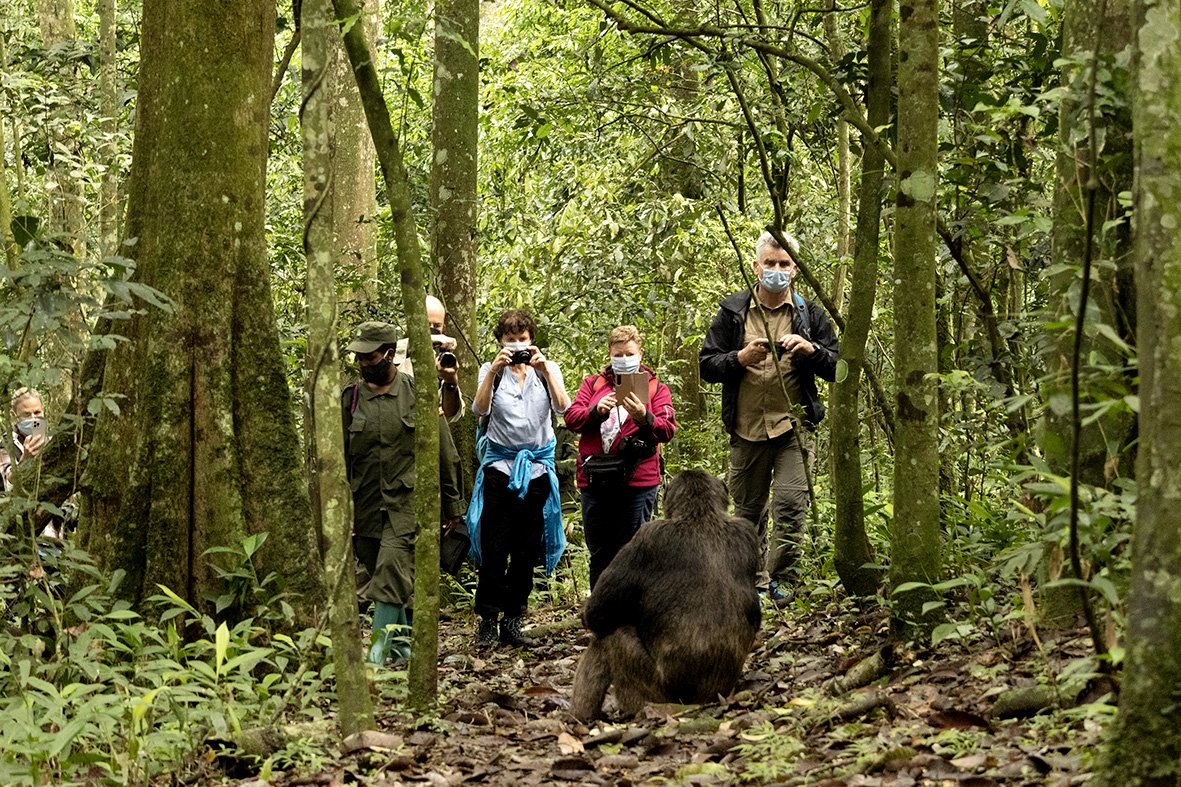
“Chimpanzee trekking through the rainforest of Kibale National Park
The best time to visit Kibale National Park depends on what you want to experience. Kibale can be visited throughout the year because its rainforest, chimpanzees and other primates remain present in every season. However, rainfall, trail conditions, visitor numbers, photography conditions and forest accessibility change during the year. Understanding these seasonal differences is essential when planning a Kibale Wildlife Guide, chimpanzee trekking experience or wider Uganda primate safari.
Current information from Safari Vacations and Travel Services identifies June to September and December to February as generally preferred periods because rainfall is often lower and forest trails can be easier to navigate. The same source notes that wetter periods can provide lush vegetation, fewer visitors and excellent birdwatching opportunities.
For travelers comparing seasons, the best Uganda primate safari information provides additional context about seasonal trekking conditions and how Kibale fits into Uganda’s wider primate destinations.
Is There a Best Time to Visit Kibale?
There is no single month that is objectively best for every visitor. The best time to visit Kibale depends on whether your priority is easier forest hiking, chimpanzee trekking, photography, birdwatching, quieter trails or combining Kibale with other Ugandan wildlife destinations.
For many visitors, the relatively drier periods from June to September and December to February offer the most convenient combination of trekking conditions and rainforest exploration. During wetter months, the forest can become muddy and trails can require more careful walking, but the rainforest remains biologically active and visually spectacular.
This distinction is important for a detailed Kibale Wildlife Guide because good travel planning should not describe the rainy season as simply a bad time to visit. Different seasons produce different experiences rather than making the destination unavailable.
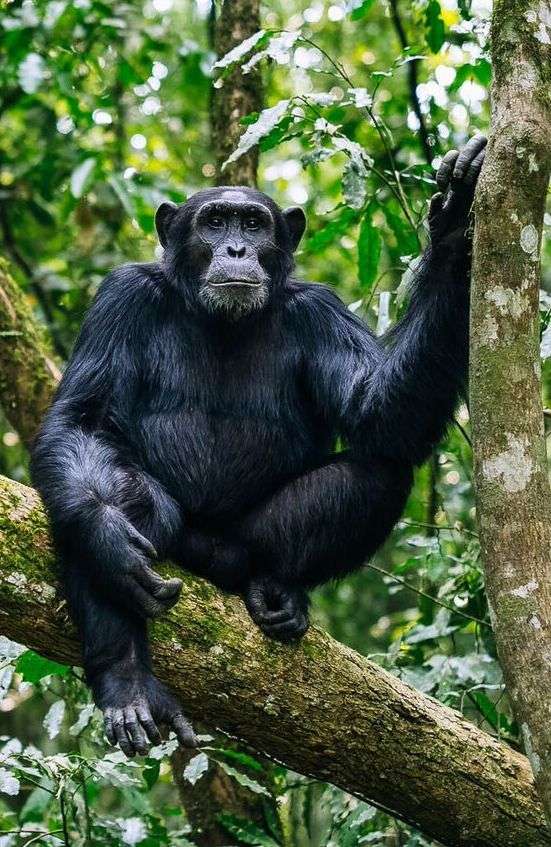
A chimpanzee in the lush rainforest habitat of Kibale National Park.
June to September: The Long Dry Season
June through September is generally regarded as one of the more favorable periods for visiting Kibale National Park. Rainfall is often lower than during the main rainy season, which can make forest trails easier to navigate.
For chimpanzee trekking, easier trails can make the walking component more comfortable, particularly for visitors who are not accustomed to rainforest terrain. However, chimpanzees remain wild animals whose movements are independent of tourism schedules, so a dry-season visit does not guarantee a particular encounter.
The drier conditions can also benefit photography. Less persistent rainfall can provide greater flexibility when carrying cameras and moving through the forest, although the dense canopy means lighting can remain challenging throughout the year.
The June-to-September period is also popular with international travelers. Consequently, visitors planning a Kibale chimpanzee trekking safari should organize permits and accommodation well in advance rather than assuming availability close to the travel date.
June Weather in Kibale
June marks the beginning of the longer relatively dry period. Forest conditions can become easier for walking, although rainfall remains possible because Kibale is a tropical rainforest.
Visitors should therefore avoid treating June as a completely rain-free month. Waterproof clothing remains useful, and appropriate footwear is important for forest trails.
Wildlife activity continues throughout the month. Chimpanzees remain in the forest, while other primates, birds and forest mammals continue their normal feeding and movement patterns.
July Conditions for Chimpanzee Trekking
July is within the long relatively dry period and can provide comfortable conditions for forest exploration. The combination of lower rainfall and active wildlife makes it a popular period for chimpanzee trekking.
For visitors concentrating on photography, July can provide opportunities for clearer forest scenes, although sunlight beneath the canopy can still be limited by dense vegetation.
Because July is a popular travel month, travelers should consider permit and accommodation availability when designing their Kibale itinerary.
August in Kibale National Park
August continues the relatively drier period. Forest trails may be more manageable than during wetter months, although conditions vary according to recent rainfall.
Visitors should still prepare for occasional showers because Kibale remains a rainforest environment. Lightweight waterproof clothing and suitable walking footwear can help make forest excursions more comfortable.
Chimpanzee trekking, primate walks and birdwatching remain available during August. The park’s dense vegetation continues to provide habitat for chimpanzees and numerous other primate and bird species throughout the season.
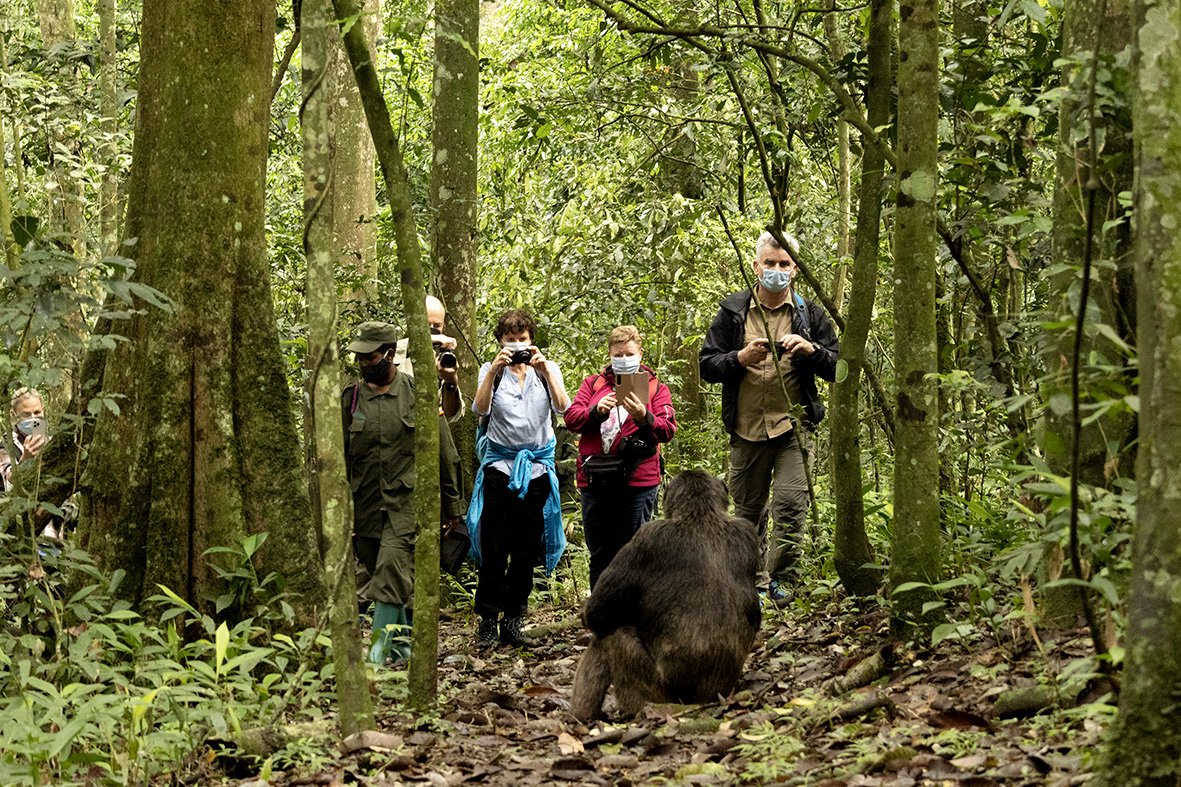
Visitors observing a chimpanzee during a guided forest trek in Kibale.
Chimpanzees of Kibale National Park — Behaviour, Social Life, Habitat and Conservation
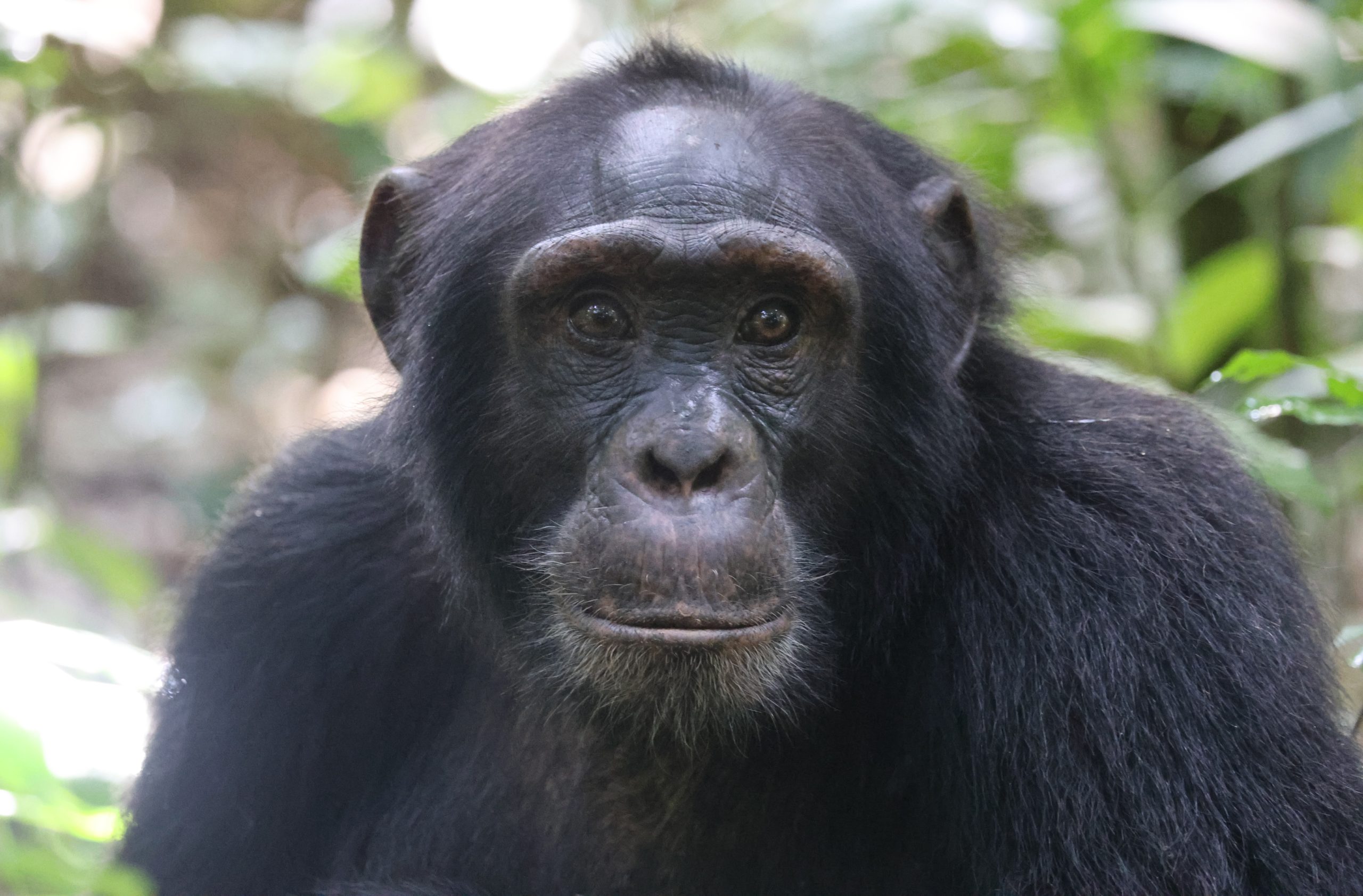
“Chimpanzees in Kibale National Park
Chimpanzees are the defining wildlife attraction of Kibale National Park and one of the main reasons travelers include the forest in a Uganda wildlife itinerary. However, a genuinely comprehensive Kibale Wildlife Guide should go beyond simply explaining where to see chimpanzees. It should examine their habitat, social organization, communication, feeding ecology, movement, nesting, reproduction, relationships with other wildlife, conservation and the experience of observing them responsibly in their natural rainforest environment.
Kibale is particularly important for chimpanzee conservation and research. Current information published by Safari Vacations and Travel Services describes the park as supporting approximately 1,500 chimpanzees alongside numerous other primate species, while Anthill Safaris identifies Kibale as Uganda’s leading chimpanzee trekking destination. These figures and descriptions should be treated as source-specific rather than as a universal population estimate.
For travelers beginning their research, Primates of Kibale National Park provides additional information about chimpanzees and the wider primate community. This is one of the verified links used for the current section.
Why Chimpanzees Are Central to the Kibale Wildlife Guide
Chimpanzees are particularly significant because they combine complex social behavior with a close evolutionary relationship to humans. Observing them in Kibale provides an opportunity to see wild animals communicating, feeding, grooming, travelling, resting and interacting within a natural forest environment.
The attraction is therefore not simply the sight of a chimpanzee. The deeper experience comes from understanding what the animal is doing and why it is behaving that way. A chimpanzee feeding in a fruiting tree, calling from the canopy, grooming another individual or moving between trees is participating in a complex social and ecological system.
This makes chimpanzee trekking both a wildlife activity and an opportunity for environmental interpretation.
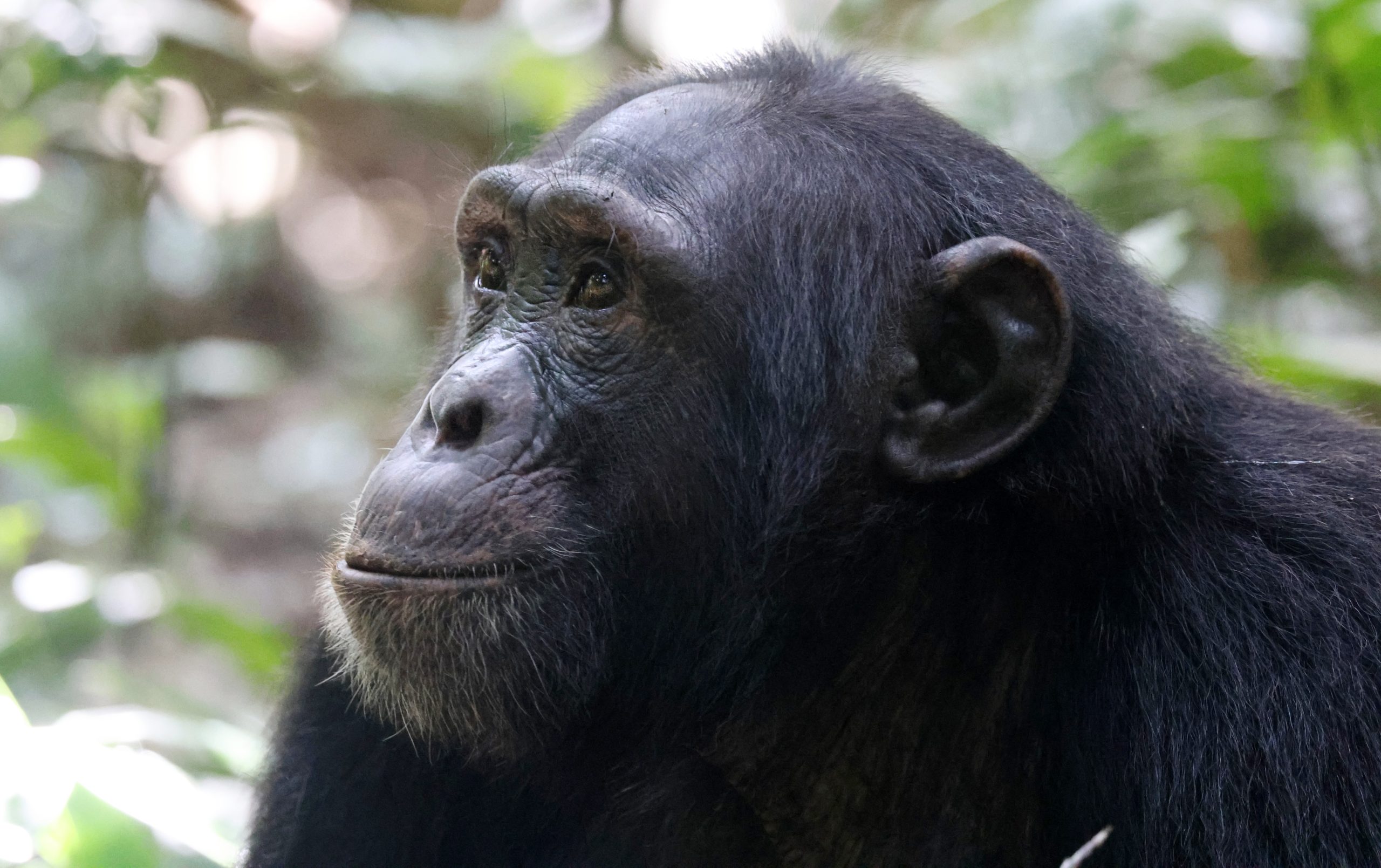
“A chimpanzee in the forest environment of Kibale National Park. Photograph by flowcomm
Where Chimpanzees Live in Kibale
Chimpanzees inhabit the tropical forest environment of Kibale National Park. They use different levels of the forest, including mature trees, canopy pathways, lower vegetation and sections of the forest floor.
The availability of fruiting trees is particularly important because fruit forms a major part of their diet. Their movements consequently change according to where food resources are available.
The forest itself provides more than food. Trees offer locations for resting and nesting, while continuous vegetation enables chimpanzees to move through their environment.
Kanyanchu and Chimpanzee Trekking
Kanyanchu is the principal visitor area associated with chimpanzee trekking in Kibale. Safari Vacations and Travel Services describes Kanyanchu Visitor Centre as the main tourism headquarters where visitors receive briefings and are organized into trekking groups before entering the forest.
The area also provides access to guided forest experiences beyond dedicated chimpanzee tracking. Visitors can therefore encounter other primates, birds and forest wildlife during the search for chimpanzees.
The forest journey itself is an important component of the experience because guides interpret animal signs, vegetation and ecological relationships while tracking the chimpanzee community.
How Chimpanzee Trekking Works
Chimpanzee trekking is a guided search for a habituated chimpanzee community. Visitors enter the forest with trained guides and trackers who use signs such as vocalizations, nests, feeding remains and other indications of chimpanzee movement.
The location of the chimpanzees can vary considerably from day to day. This means trekking is an active wildlife-search experience rather than a visit to a fixed viewing location.
Safari Vacations and Travel Services describes treks as potentially lasting from approximately two to five hours depending on the location and movement of the chimpanzees.
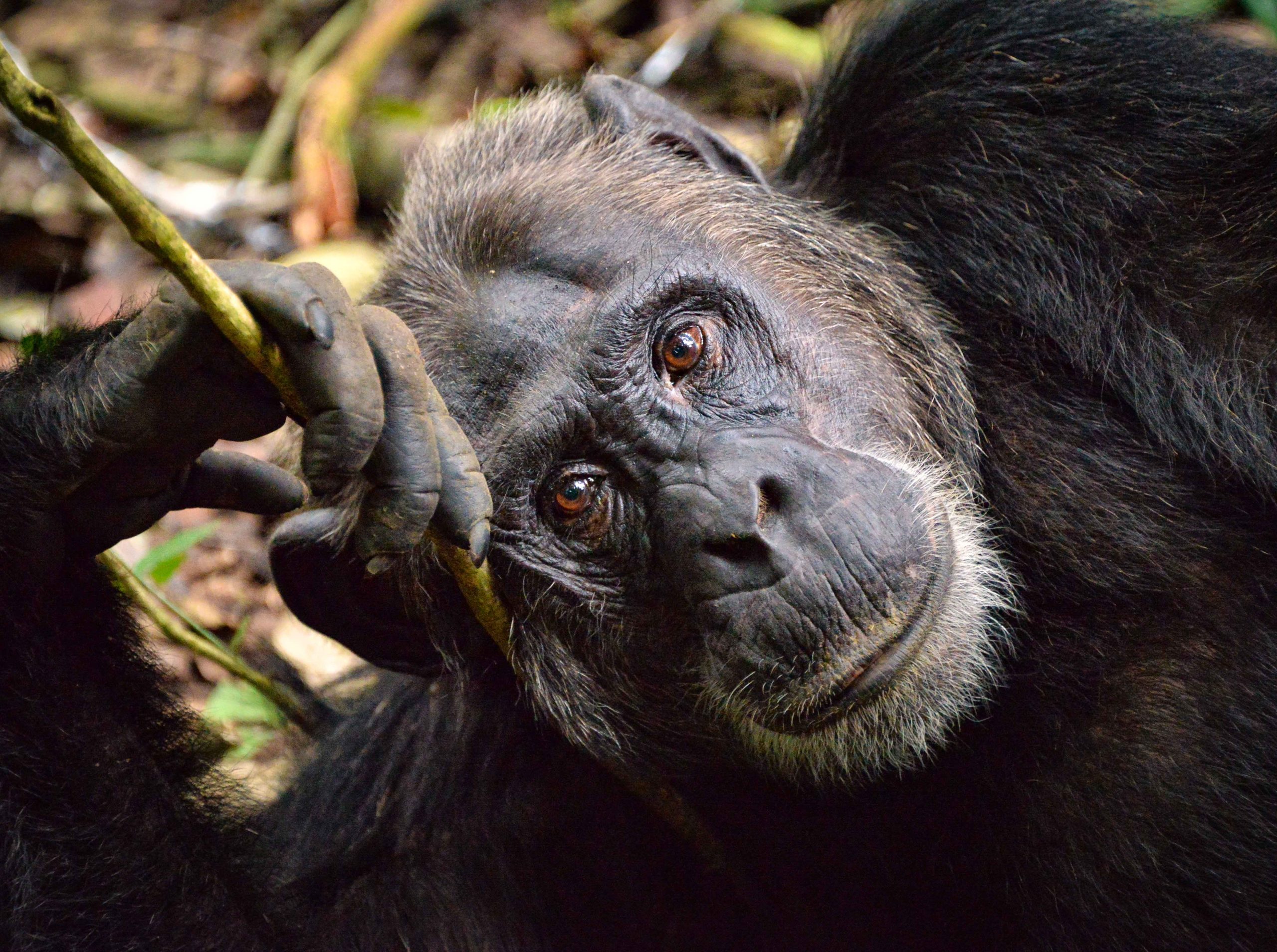
“A chimpanzee photographed in Kibale
The Chimpanzee Trekking Experience
A typical experience begins with registration and a briefing before visitors enter the forest. The guide explains the procedures that apply during the activity and then leads the group into the forest.
The search may involve following forest trails and then moving through vegetation as trackers determine where the chimpanzees have travelled. The experience is consequently influenced by natural animal behavior.
Once the chimpanzees are located, visitors observe them while following the applicable wildlife-viewing rules. The aim is to allow the animals to continue their natural activities with minimal disturbance.
Chimpanzee Habituation in Kibale
Wildlife in Kibale National Park Beyond Chimpanzees — Primates, Mammals, Birds, Butterflies and Forest Biodiversity
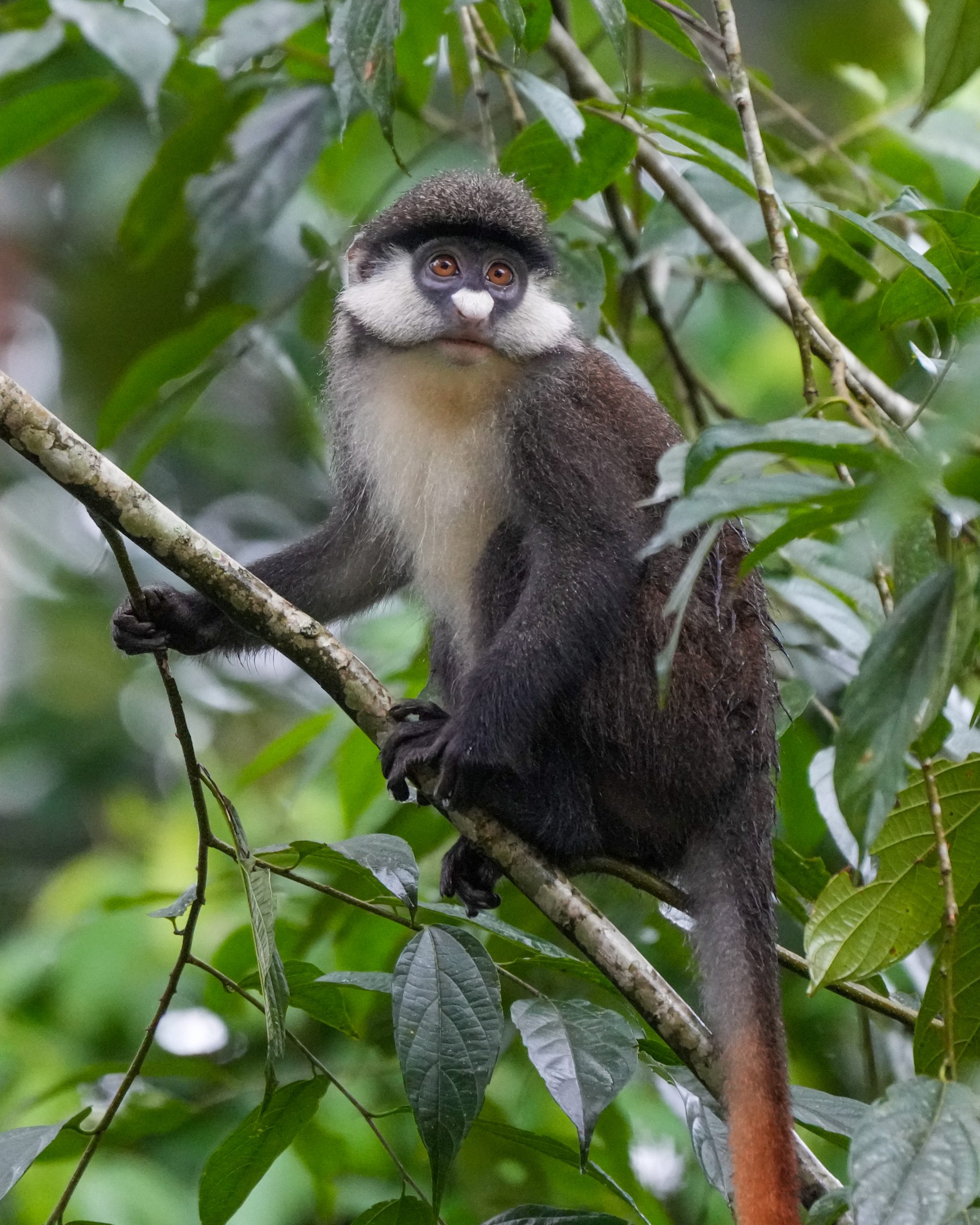
Red-tailed monkey in the forest canopy of Kibale National Park.
Kibale National Park is famous internationally for chimpanzee trekking, but chimpanzees represent only one part of an exceptionally diverse rainforest ecosystem. A complete Kibale Wildlife Guide must therefore examine the wider collection of animals, birds, primates, butterflies, reptiles, amphibians and other organisms that inhabit the forest and surrounding wetlands.
Kibale’s ecological importance comes from the interaction between its tropical rainforest, regenerating woodland, wetland habitats, forest edges and surrounding landscapes. These habitats support numerous species with different feeding strategies, movement patterns and ecological roles. Visitors who spend time looking beyond chimpanzees can encounter several other primates, forest birds and smaller wildlife during the same safari.
The park is particularly notable for its primate diversity. Uganda Wildlife Authority describes Kibale as supporting 13 primate species, including chimpanzees, black-and-white colobus monkeys, red-tailed monkeys, blue monkeys, grey-cheeked mangabeys, L’Hoest’s monkeys and other primates. The park also supports more than 120 other mammal species and approximately 370 bird species.
Visitors planning a broader rainforest experience can also review Kibale primate diversity guide for additional information about the park’s primates and their ecological importance.
Kibale National Park as a Biodiversity Destination
Kibale National Park should not be understood simply as a chimpanzee destination. Its rainforest contains a complex biological community in which trees, vines, fungi, insects, birds, mammals, reptiles and amphibians interact continuously.
The dense vegetation creates numerous ecological niches. Some animals spend most of their lives in the canopy, while others specialize in the understory, forest floor, streams, wetlands or forest edges.
This vertical and horizontal diversity explains why two visitors walking through different parts of Kibale can experience substantially different wildlife encounters.
The Primate Community of Kibale
Primates are among the most visible wildlife groups in Kibale. The park’s combination of mature forest and abundant vegetation provides habitat for a remarkable range of monkeys and other primates.
Chimpanzees are the largest and most famous primates encountered by visitors, but they share the forest with several monkey species. These animals differ in body size, diet, social structure, preferred forest level and daily activity.
A knowledgeable guide can help visitors distinguish between species that may initially appear similar when moving rapidly through dense vegetation.
Black-and-White Colobus Monkeys
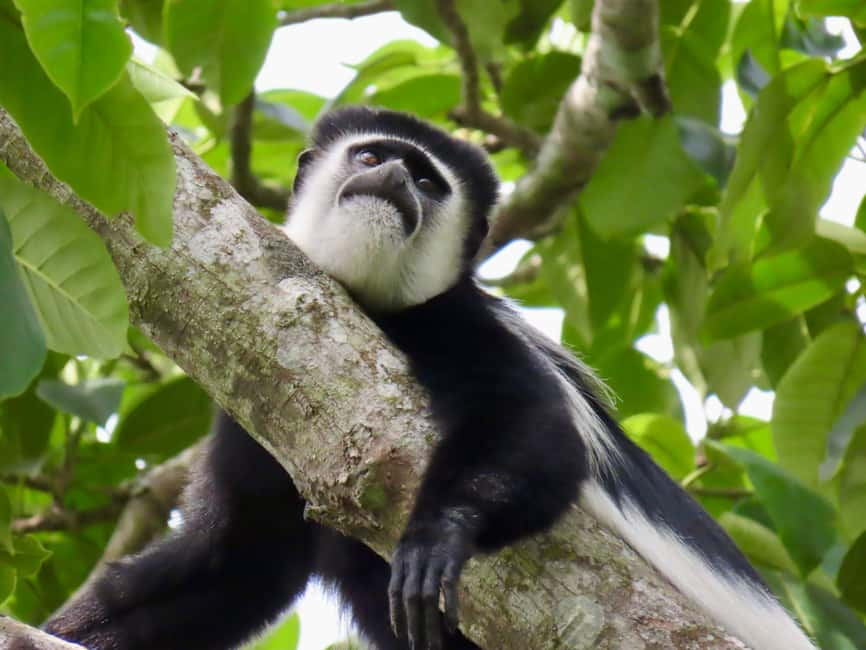
Black-and-white colobus monkey resting among the branches of Kibale’s rainforest canopy.
Black-and-white colobus monkeys are among Kibale’s most recognizable primates. Their contrasting black and white coats and long tails make them particularly striking when they move through the forest canopy.
They are strongly associated with arboreal habitats and have specialized digestive systems that allow them to process leaves efficiently. Their feeding strategy differs from that of chimpanzees, reducing direct competition for some food resources.
During forest walks, visitors may see colobus monkeys moving between branches, feeding in trees or resting above established trails.
Red-Tailed Monkeys
Red-tailed monkeys are another important member of Kibale’s primate community. They can be recognized by their distinctive facial features and reddish tail markings.
They are adaptable forest primates that feed on fruits, leaves, seeds and other available resources. Their movements can bring them into different sections of the forest throughout the day.
Red-tailed monkeys are commonly encountered during broader forest walks, making them an important part of the wildlife experience beyond chimpanzee trekking.
Blue Monkeys
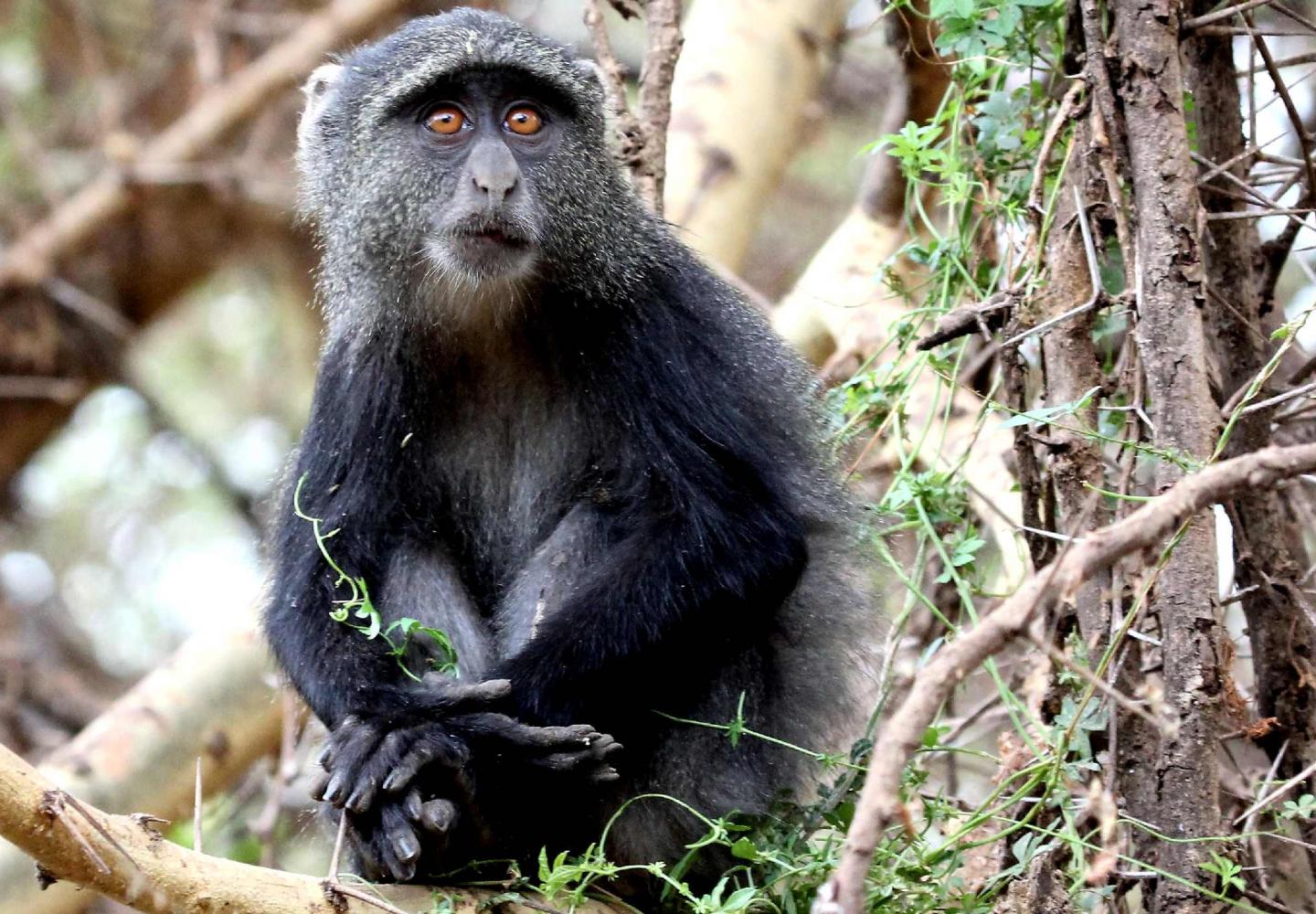
Blue monkey photographed in a Ugandan forest environment.
Blue monkeys occur in Kibale’s forest ecosystem and can sometimes be encountered during guided walks. Despite their common name, their appearance is not simply bright blue; their coloration is generally subtle and becomes more apparent under suitable lighting.
They feed on a variety of plant resources and may move through different levels of the forest.I
sKibale National Park Conservation, Community Tourism, Threats and the Future of Wildlife Protection
Community education can similarly help explain the economic and ecological value of maintaining forest habitats.
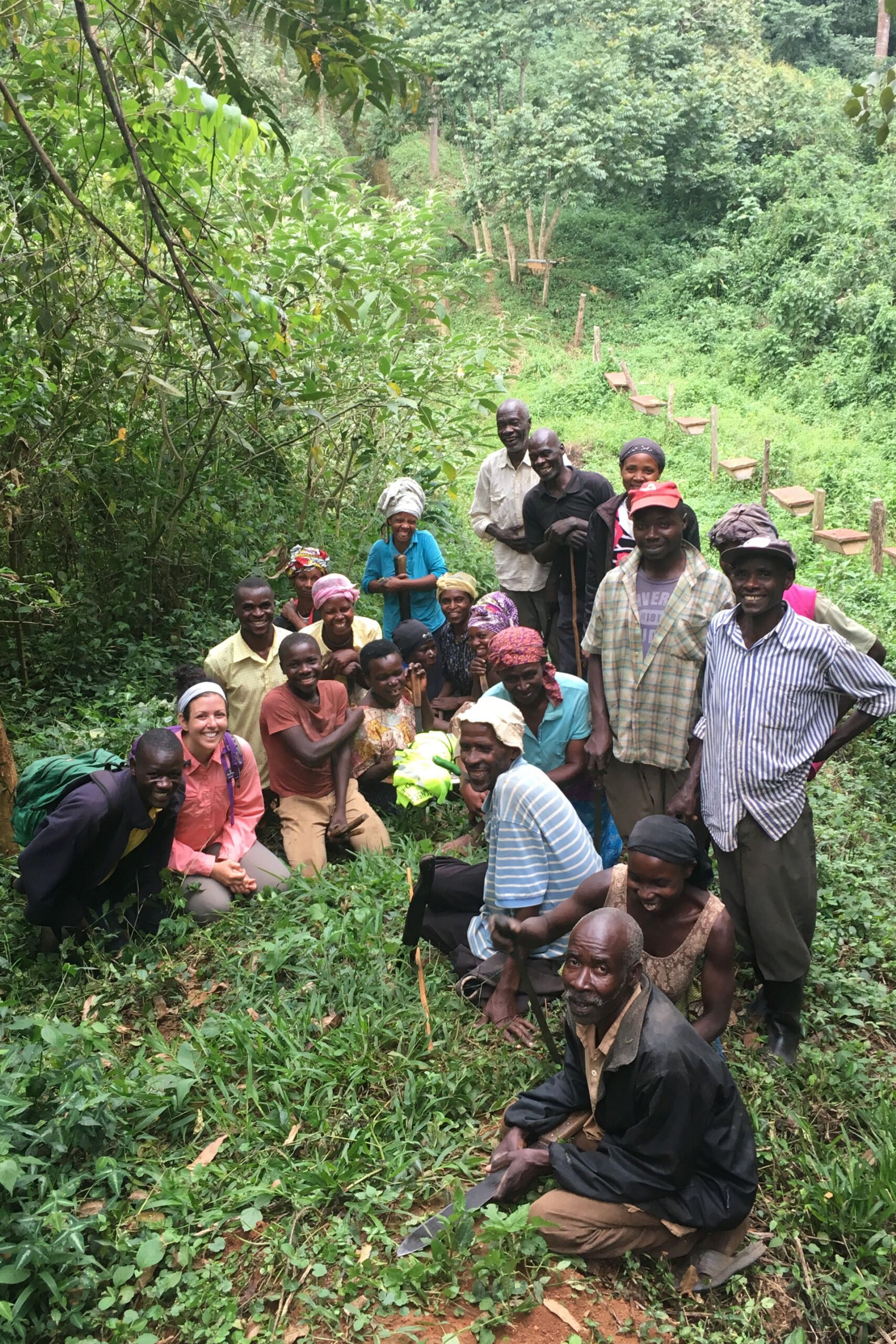
Community members participating in conservation work near Kibale National Park.
Local Employment and Conservation
Tourism can create employment for guides, drivers, accommodation workers, community tour operators and other service providers.
These economic opportunities can strengthen the relationship between local livelihoods and conservation when tourism is managed responsibly.
Current information on Kibale conservation specifically connects tourism with employment and economic benefits around the park.
Community-Based Tourism at Bigodi
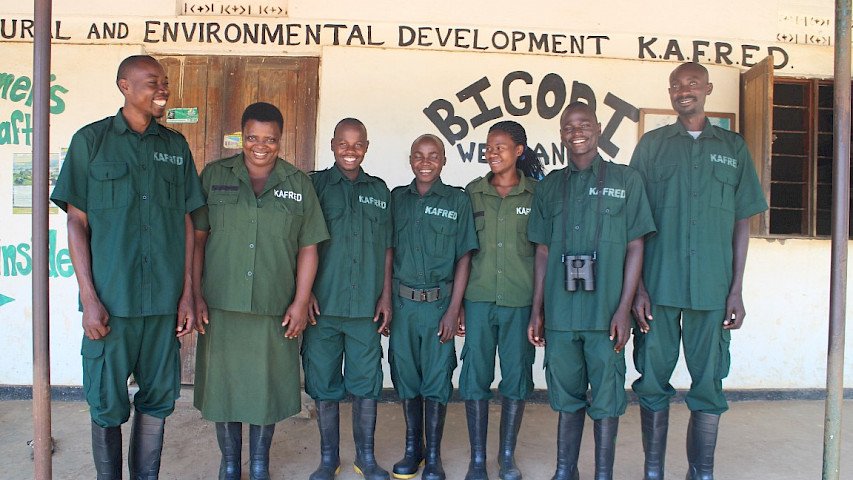
KAFRED community conservation team at Bigodi Wetland.
Bigodi demonstrates how local communities can participate directly in tourism and conservation.
Current information describes the sanctuary as managed through the Kibale Association for Rural and Environmental Development and states that tourism revenue supports schools, healthcare facilities and sustainable development projects.
This model gives visitors an opportunity to see how conservation can generate benefits beyond the protected forest itself.
Why Community Benefits Matter
Conservation is more sustainable when local communities can see tangible benefits from protecting natural resources.
Tourism revenue, employment and community development can help create positive incentives for maintaining wildlife habitats.
At the same time, community tourism should be managed transparently and responsibly so that conservation objectives remain central.
Supporting Local Conservation Initiatives
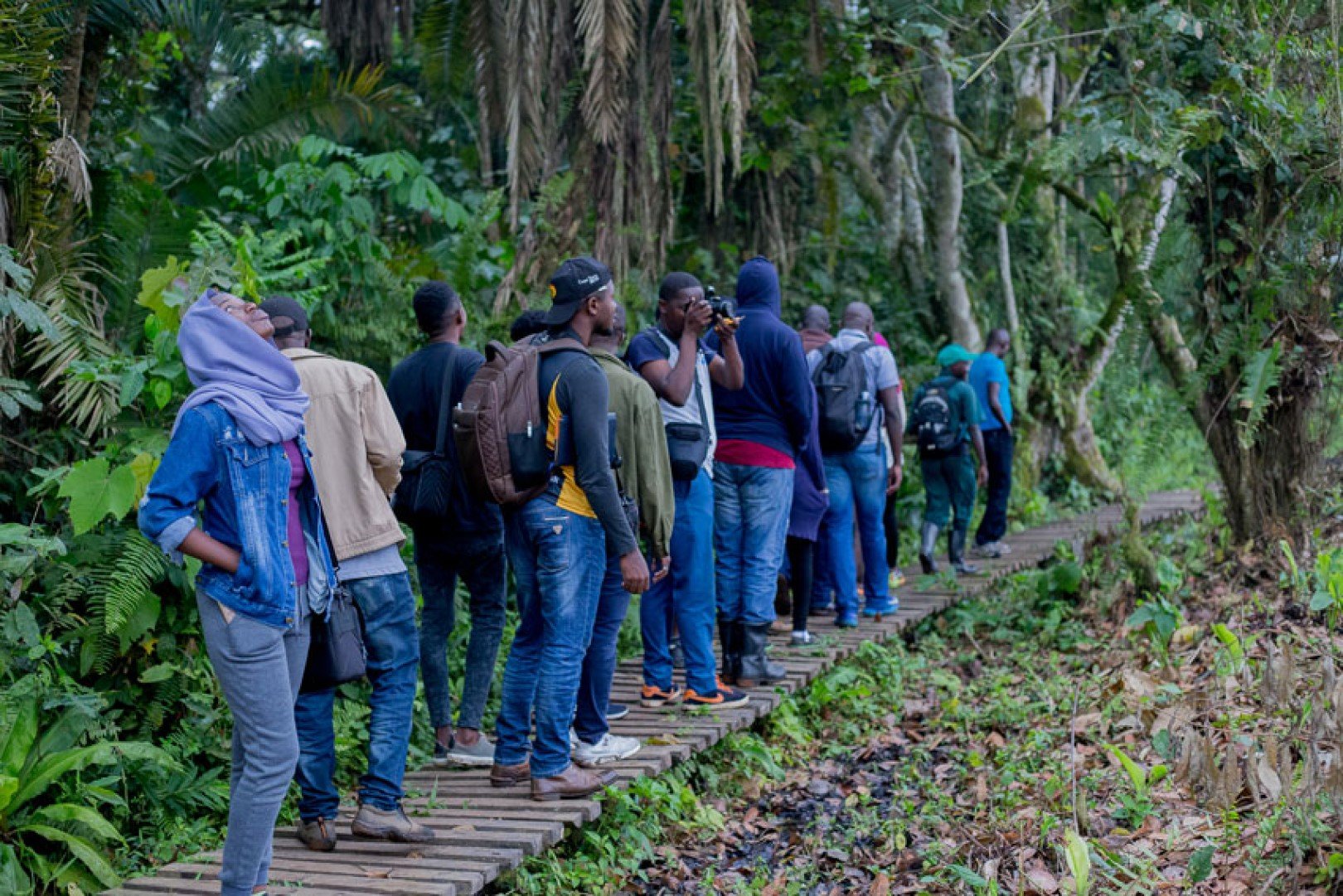
Visitors exploring Bigodi Wetland Sanctuary on a guided community nature walk.
Visitors can support conservation by participating in legitimate community activities, using local services and respecting community-managed conservation areas.
Supporting such initiatives can complement the conservation work carried out inside the national park.
The Bigodi conservation and birding experience provides a verified example of a community-managed wetland associated with conservation and tourism.
Conservation and Tourism Management
Tourism must be managed carefully so that visitor access does not undermine the ecosystem visitors have come to experience.
Group sizes, designated trails, wildlife-viewing rules and guide supervision are examples of measures that can help manage tourism pressure.
Current information on Kibale guided walks describes group-size restrictions designed to reduce ecological impact and preserve the wilderness character of the experience.
Why Small Groups Can Benefit Wildlife
Smaller groups can reduce noise, crowding and physical pressure on forest trails.
They can also improve the quality of interpretation because guides have more opportunity to explain wildlife behavior and forest ecology.
The objective is not simply to improve visitor comfort but to maintain a sustainable balance between tourism and wildlife protection.
Conservation Challenges Beyond the Park Boundary
The future of Kibale depends partly on what happens outside the official park boundary.
Agriculture, settlement, infrastructure development and habitat fragmentation can influence wildlife movement and ecosystem connectivity.
Conservation planning therefore benefits from landscape-level approaches that recognize the relationship between the national park and surrounding communities.
Forest Connectivity and Wildlife Movement
Forest connectivity can help animals move between suitable habitats and access seasonal resources.
For forest-dependent species, isolated patches may provide less ecological value than connected habitats of sufficient size.
Maintaining suitable corridors and protecting surrounding forest areas can therefore contribute to long-term biodiversity conservation.
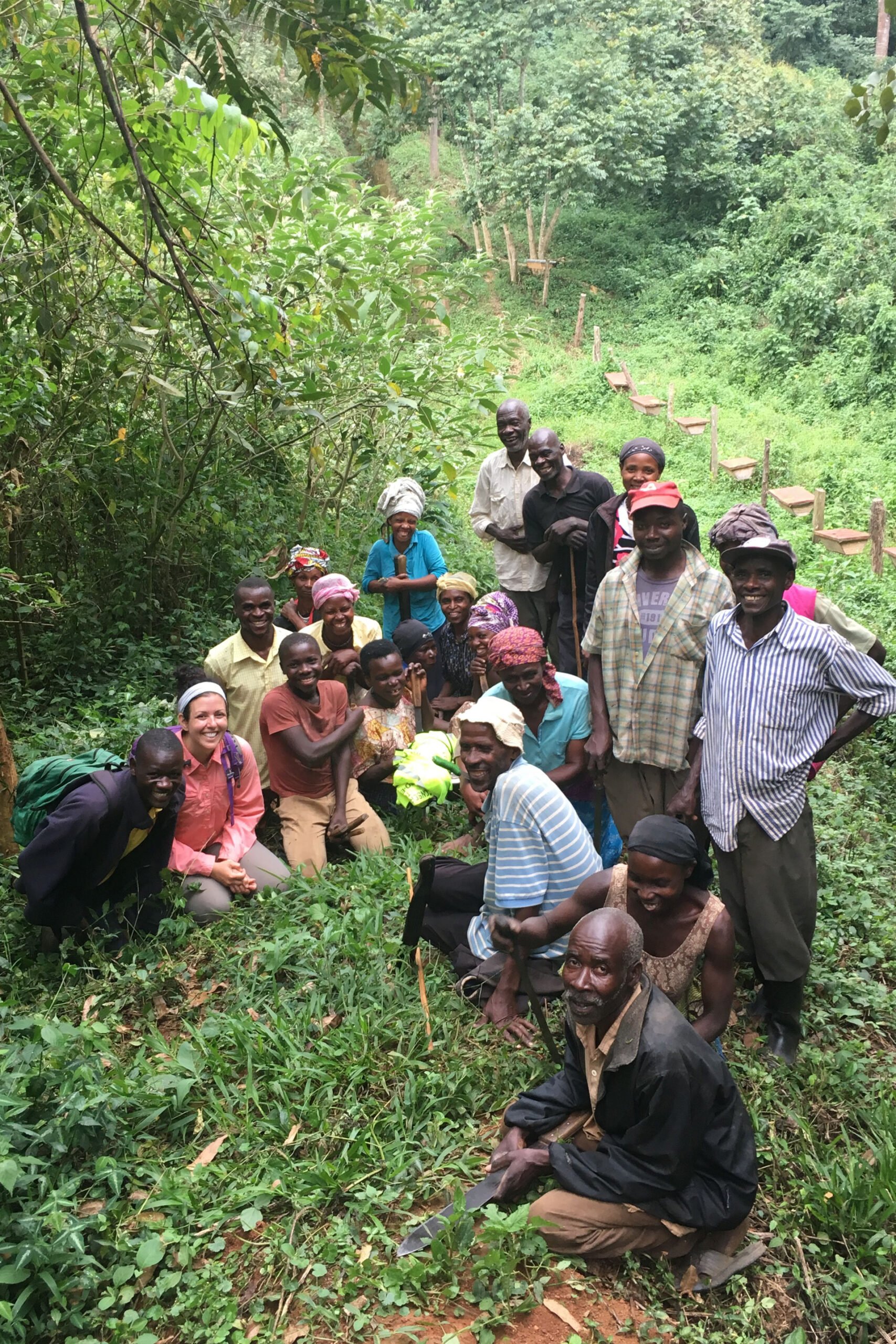
“Forest landscape and community conservation activity near Kibale National Park
The Role of Safari Operators
Planning the Ultimate Kibale Wildlife Safari — Best Time to Visit, Chimpanzee Trekking, Activities, Accommodation, Packing, Costs and Safari Itineraries
Planning a Kibale Wildlife Guide experience requires more than simply booking a chimpanzee trekking permit. Kibale National Park offers a combination of chimpanzee encounters, forest walks, primate watching, birdwatching, wetland exploration, crater-lake excursions and broader western Uganda safari experiences. A well-designed Kibale wildlife safari should therefore match the traveller’s interests, available time, accommodation preferences, budget and preferred wildlife activities.
For travellers building a detailed itinerary, the most useful approach is to treat Kibale as a complete rainforest destination rather than a single-activity stop. A chimpanzee trek can form the centrepiece, while Bigodi Wetland Sanctuary, guided forest walks, birdwatching and nearby crater lakes provide additional opportunities to experience the landscape.
Why Kibale Should Be Planned as a Multi-Activity Wildlife Destination
Kibale is best experienced at a pace that allows visitors to appreciate both its famous primates and the wider forest ecosystem. Chimpanzee trekking focuses specifically on habituated chimpanzee communities, whereas guided forest walks can introduce visitors to additional primates, mammals, birds and plant life.
Bigodi Wetland Sanctuary adds another habitat type, allowing visitors to experience wetlands, forest patches and open areas while looking for birds and primates. Current information from Safari Vacations and Travel Services describes Bigodi as a community-managed conservation area and highlights its birdwatching opportunities.
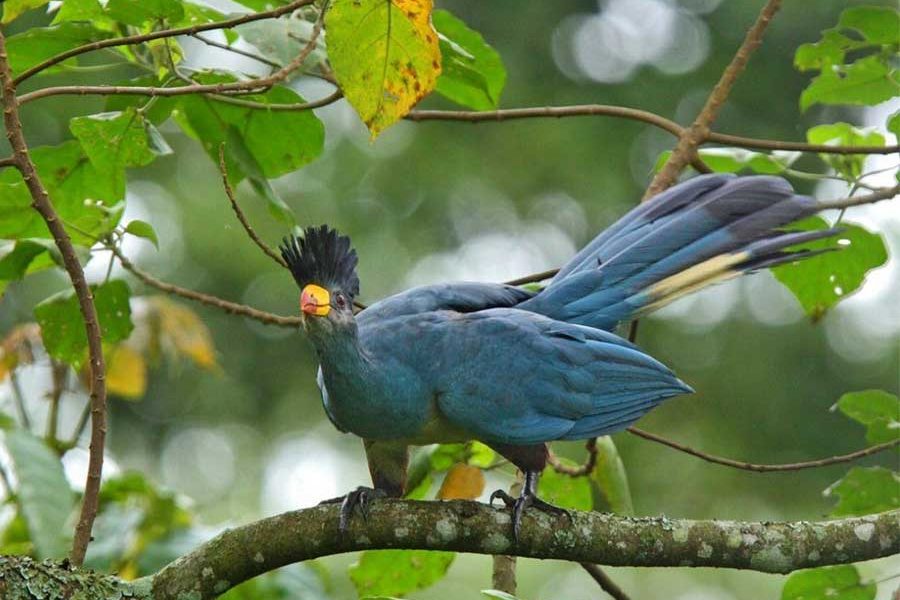
“Birdlife in Bigodi Wetland Sanctuary
Travellers researching a Kibale wildlife safari guide can therefore build an itinerary that combines several experiences instead of allocating an entire trip to chimpanzee trekking alone.
When Is the Best Time to Visit Kibale National Park?
Kibale can be visited throughout the year because it is a tropical rainforest, and rainfall is possible even during generally drier periods. The preferred travel period depends on the traveller’s priorities, including trekking comfort, birdwatching, photography and overall safari logistics.
Drier periods can make forest trails more comfortable for walking, while wetter periods can produce particularly lush vegetation and active forest conditions. Travellers should therefore avoid treating one season as universally superior for every type of Kibale wildlife experience.
The most important consideration is to prepare for changing rainforest conditions regardless of the month of travel. A rain jacket, suitable footwear and protection for photographic equipment remain useful throughout the year.
Dry Season Planning for a Kibale Wildlife Safari
During comparatively drier periods, forest trails may be easier to navigate and visitors may find longer walking activities more comfortable. This can be particularly useful for travellers planning chimpanzee trekking together with extended forest walks.
Dry conditions can also make photography equipment easier to manage, although rainforest weather remains unpredictable.
Visitors should still expect occasional rainfall because Kibale’s environment remains humid and forested rather than resembling an open savannah safari destination.
Rainy Season Planning in Kibale
Rain should not automatically discourage a Kibale visit. Rainforest conditions can produce spectacular vegetation, active insects, amphibians and birdlife.
The principal challenge is trail condition. Muddy or slippery sections can make walking slower, meaning travellers should allow sufficient time for activities and avoid planning overly tight connections immediately after forest excursions.
Waterproof clothing, sturdy footwear and protection for cameras and electronic equipment are particularly useful during wetter periods.
Chimpanzee Trekking as the Main Kibale Activity
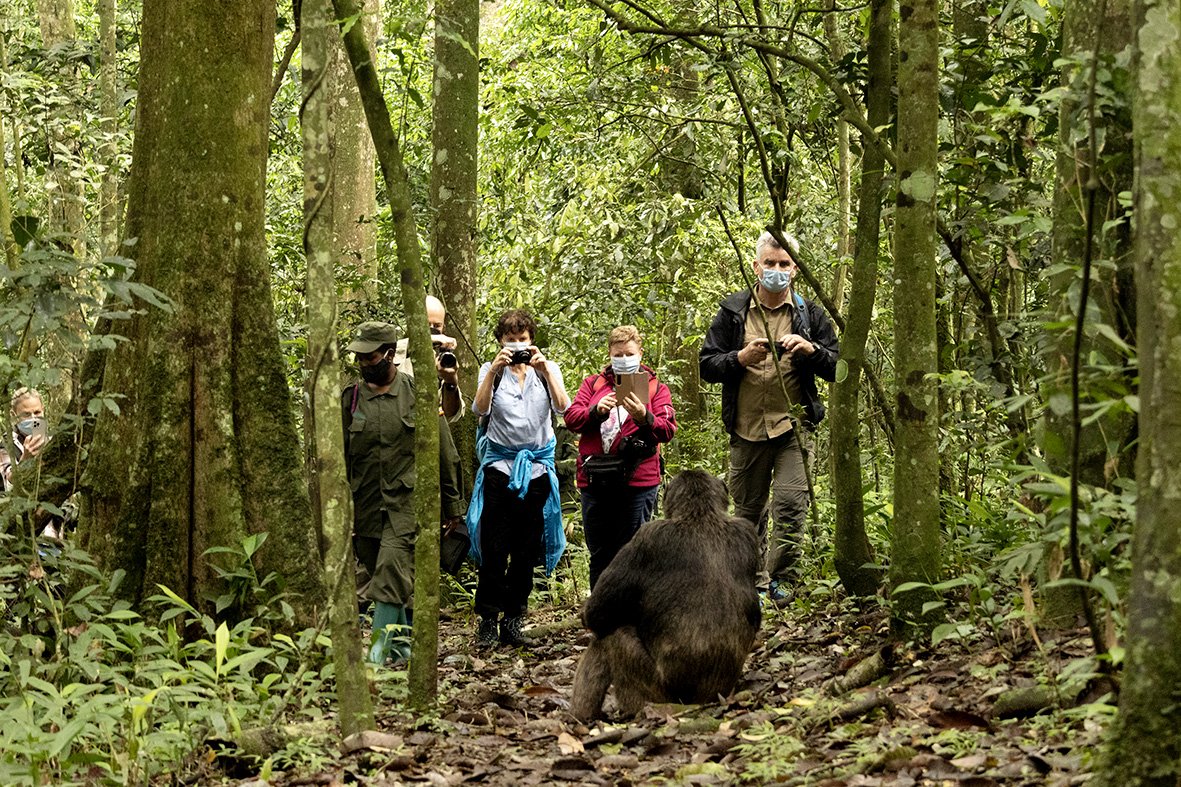
A guided chimpanzee trekking encounter inside Kibale’s forest habitat.
Chimpanzee trekking is the principal wildlife activity for many visitors to Kibale. The experience involves entering the forest with guides and trackers to locate a habituated chimpanzee community.
Current information from Anthill Safaris confirms that Kibale offers chimpanzee trekking and a separate Chimpanzee Habituation Experience. The habituation experience is designed around chimpanzee communities that are still undergoing habituation.
Visitors should distinguish between standard chimpanzee trekking and chimpanzee habituation when planning their safari because the two experiences have different structures and objectives.
A verified chimpanzee trekking resource provides additional information about the standard experience and Kibale’s position among Uganda’s chimpanzee destinations.