Behaviors of Tree-Climbing Lions in Ishasha
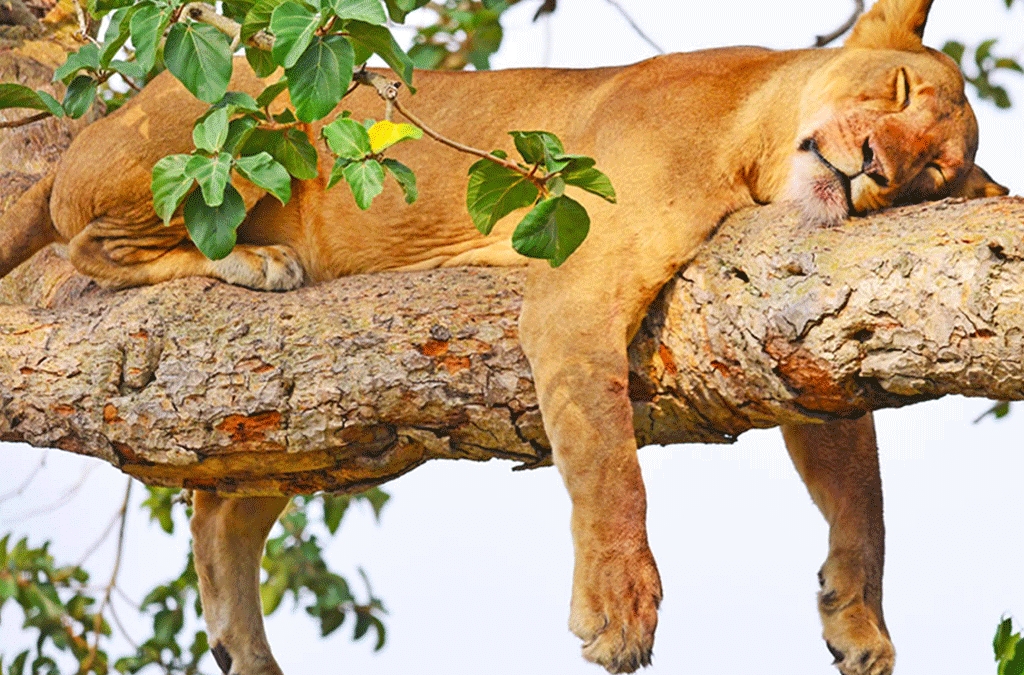
Behaviors of tree-climbing lions in Ishasha rank among Africa’s most remarkable wildlife wonders. These powerful predators rest high in tree branches in Uganda’s Queen Elizabeth National Park. This southern sector, called Ishasha, is one of only two places in the world where you can reliably witness this unusual habit. Lions across Africa typically rest on the ground. However, Ishasha’s lions have developed a very different lifestyle. They climb trees to escape heat, avoid biting insects, and watch for prey. This behavior has passed down through generations, making it a true cultural tradition.
How Behaviors of Tree-Climbing Lions in Ishasha Became a Tradition
Tree-climbing is not natural for most lions. Across Africa’s wide savannas and grasslands, lions rest on the ground under shaded bushes. They rarely, if ever, climb trees. So why do Ishasha’s lions behave differently?
The answer lies in social learning. Young cubs in Ishasha watch their mothers and other pride members climb trees every day. Over time, the cubs try it themselves. Through practice and imitation, they master the skill. As a result, each new generation grows up treating tree-climbing as completely normal behavior.
Furthermore, this knowledge passes from mothers to cubs repeatedly over many years. Therefore, tree-climbing has become deeply embedded in the identity of Ishasha’s lion prides. It is not written in their genes. Instead, it lives in their culture, passed down like a family tradition.
Why the Ishasha Environment Encourages This Behavior
The landscape of Ishasha plays a major role in this unique habit. This sector features open, flat savanna grasslands dotted with ancient fig trees and sturdy acacias. These trees have wide, strong branches that can hold the weight of even the largest male lion.
During the wet season, standing water collects across the plains. This creates perfect breeding conditions for tsetse flies and other biting insects. These pests swarm aggressively at ground level. They make resting on the ground both uncomfortable and disruptive. Consequently, the lions climb trees to escape the worst of the insect harassment.
In addition, the midday heat in Ishasha can become extreme. Ground temperatures rise sharply during peak afternoon hours. Higher up in the tree branches, air circulates more freely. The canopy provides shade and a noticeably cooler environment. As a result, lions who rest in trees conserve more energy and avoid heat stress more effectively.
Multiple Reasons for Behaviors of Tree-Climbing Lions in Ishasha
Researchers studying Ishasha’s lions have identified several connected reasons why tree-climbing continues to thrive in this population.
Escaping Biting Insects
The main reason appears to be pest avoidance. Tsetse flies cause constant irritation at ground level, especially after the rains. By climbing into the branches, lions move away from the densest insect activity. There, greater air movement reduces fly numbers significantly. This allows the lions to rest peacefully and conserve their energy for hunting.
Staying Cool
Beyond insects, the temperature difference between the ground and the treetops matters greatly. The canopy keeps lions significantly cooler during the hottest parts of the day. This helps prevent heat stress. It also reduces the amount of water the lions need to drink, which is important in a savanna environment where water sources can be far away.
Watching the Plains
Moreover, elevated positions give Ishasha’s lions a clear advantage when watching for prey. From high branches, they can scan large areas of open grassland. They can spot herds of Uganda kob moving in the distance. They can also observe competing predators and track any threats in the area. Although they descend to hunt using traditional ground-based methods, these elevated viewpoints help them plan better and strike at the right moment.
Finding Safety When Needed
Even apex predators occasionally need temporary shelter. Buffalo herds and elephant groups sometimes charge lions, especially when protecting their calves. In Ishasha’s open terrain, trees provide quick and effective escape routes. Lions can climb out of reach until the danger passes and then descend safely.
Carrying on a Cultural Legacy
Finally, tree-climbing has become part of who Ishasha’s lions are. Even if a young lion did not consciously think about the benefits, it would still climb trees because that is what its pride does. The behavior has transcended practical necessity and become a defining characteristic of this unique lion community.
Daily Life Above the Ground
Visitors to Ishasha most often spot tree-climbing lions during the afternoon hours. After a successful morning or overnight hunt, pride members retreat to their favorite trees. There, they spend hours sleeping, grooming each other, and digesting their meals. Lions naturally rest between 16 and 20 hours each day. Ishasha’s lions simply choose to do much of that resting above the ground rather than on it.
Despite their love of trees, these lions hunt using completely conventional techniques. They do not drop from branches onto prey or use any specialized arboreal hunting method. Instead, they stalk through tall grass and coordinate attacks with other pride members. They set up strategic ambushes and use powerful charges to bring down prey. Their main targets include Uganda kob, warthogs, buffalo, and other savanna herbivores. All of these animals are caught on the ground using methods that lions across Africa have perfected over thousands of years.
However, their tree habit does support hunting indirectly. By watching from high branches, Ishasha’s lions spot prey much earlier than they otherwise would. They descend at the right moment, already knowing where the prey is heading. This gives them a meaningful strategic edge.
Favorite Trees in Ishasha
Ishasha’s lions do not climb just any tree. They show clear and consistent preferences. Large sycamore fig trees are among their favorites. Sturdy acacias also attract them regularly. These trees share several important qualities. They have wide, horizontal branches strong enough to hold a fully grown male lion weighing up to 250 kilograms. They offer relatively easy access for climbing. Their spreading canopies provide generous shade. Additionally, their positions across the plains offer excellent sightlines in multiple directions.
Certain individual trees become favorites of specific prides. Lions return to these same trees month after month, year after year. Over time, these locations become central gathering points for the pride.
Social Life in the Trees
Tree-climbing does not change the fundamental social structure of Ishasha’s lion prides. Related females form stable groups at the core of each pride. Males in coalitions defend territories. Cubs grow and learn within the safety of the group. These social arrangements follow the same patterns seen in lion prides across Africa.
Nevertheless, the trees add a distinctive and photogenic dimension to social life in Ishasha. Visitors sometimes witness an entire pride distributed across the branches of a single large tree. More than a dozen lions, including massive adult males, several females, and cubs of different ages, lounge together above the ground. This shared arboreal space strengthens pride bonds. Lions groom each other in the branches, rest in physical contact, and spend hours together in communal comfort. These interactions reinforce the tight social connections that make a pride function effectively.
Conservation Challenges Facing Behaviors of Tree-Climbing Lions in Ishasha
Despite their fame as one of Africa’s great wildlife spectacles, Ishasha’s tree-climbing lions face serious threats. The population remains small, with fewer than 40 individuals estimated to live in the sector. This makes them especially vulnerable.
Human-wildlife conflict presents one of the biggest challenges. As communities surrounding Queen Elizabeth National Park continue to grow, lions sometimes prey on livestock from nearby villages. Retaliatory killings through poisoning and snaring can occur in response. Park authorities and conservation organizations work hard to reduce these conflicts. They run community education programs, offer livestock protection support, and respond quickly when conflicts arise.
Habitat loss adds further pressure. Agricultural expansion and settlement development encroach on the Ishasha sector’s boundaries. Deforestation removes not only the specific trees that Ishasha’s lions rely on but also reduces overall habitat quality. Prey populations decline when habitat degrades. When prey becomes scarce, lions must range farther for food. This increases their exposure to conflict and reduces their reproductive success.
Tourism, while vital for conservation funding, also requires careful management. Too many vehicles or disruptive visitor behavior can stress the lions and disturb their habitat. Park authorities enforce strict guidelines to ensure that tourism benefits both the lions and the local economy without causing harm.
The Road Ahead
The tree-climbing lions of Ishasha represent a genuinely irreplaceable natural treasure. They demonstrate nature’s remarkable capacity for adaptation. They also provide wildlife experiences that few places on Earth can match.
Protecting these lions requires a broad and sustained effort. It involves safeguarding their habitat, managing human-wildlife conflict, maintaining healthy prey populations, and regulating tourism thoughtfully. Community engagement remains essential. Local people must see real value in protecting the lions and the ecosystem around them.
With continued dedication from park authorities, conservation organizations, local communities, and responsible tourists, Ishasha’s tree-climbing lions can thrive for generations to come. Future visitors will still look up into those ancient fig trees and witness something genuinely extraordinary — massive, powerful lions resting peacefully among the branches of Uganda’s open savanna.