
Private Uganda Safari from Singapore
Plan a private Uganda safari from Singapore around mountain gorilla trekking, chimpanzee tracking, classic savannah wildlife, Nile cruises and carefully chosen lodges. This guide explains the route, ideal trip length, costs to plan for, permits, transport, seasons and a practical booking process from your first enquiry to your flight home.
What is the best private Uganda safari from Singapore?
Travel month, number of travellers, preferred safari duration and lodge level. Add gorilla trekking, chimpanzees or wildlife priorities if you already know them.
Gorillas, wildlife, primates and private guiding shaped around your flights from Singapore.
Short gorilla-focused journeys or complete 8–14 day private Uganda circuits.
Why Uganda works especially well for a private safari
Uganda is one of East Africa’s most varied safari destinations because very different experiences can be combined in a single overland journey. In the southwest, misty forest parks protect mountain gorillas and chimpanzees. In the west and north, open savannah, crater landscapes, river systems and wetlands support elephants, buffaloes, lions, hippos, crocodiles, antelopes and a remarkable variety of birds. This contrast is the reason a Uganda safari feels less repetitive than a route built around game drives alone.
A private safari amplifies that advantage. Your guide can adjust departure times, photography stops, meal breaks and the pace of game drives to your group rather than to a larger scheduled tour. Families can add rest time, couples can prioritise scenic lodges, photographers can leave earlier for softer light, and travellers with limited time can use domestic flights to reduce long transfers. The itinerary can also be shaped around the date of a gorilla permit, which is often the most important fixed element of the trip.
For a traveller flying from Singapore, this flexibility matters because the journey to East Africa is long enough that a rushed ground itinerary can quickly become tiring. A well-built programme normally protects the first day from unnecessary pressure, places the hardest trek after adequate rest, and avoids scheduling an international departure immediately after a long road transfer. Private planning lets the Uganda portion of the trip fit your real flight schedule instead of forcing your flights to fit a rigid group departure.
Gorilla trekking in Bwindi: the experience most travellers build around
Mountain gorilla trekking is the defining experience for many visitors to Uganda. Bwindi Impenetrable National Park is a forested mountain landscape in southwestern Uganda, and trekking days are guided and controlled through a permit system. The experience is not a zoo visit or a guaranteed short walk. The forest is natural, the gorillas move, and the length and difficulty of a trek vary. That unpredictability is part of what makes the encounter so memorable, but it is also why realistic planning is important.
On the trekking day, guests normally report for a ranger briefing before entering the forest with a small trekking group. Porters are widely useful because they can help carry a daypack and provide support on steep or slippery sections. Good footwear, long trousers, rain protection, water and a small pack are practical essentials. Travellers should discuss mobility concerns when booking so the safari planner can consider the most suitable trekking sector, accommodation and porter support available at the time.
Because gorilla permits are date-specific and limited, the permit should influence the safari sequence rather than being treated as an optional activity to arrange at the last minute. A quotation should clearly state whether the gorilla permit is included or excluded and which trekking date is being proposed. The company’s existing Uganda itineraries already use Bwindi as a central component, including its 5-day gorillas and game route and longer wildlife-and-primate circuits.
Chimpanzee tracking in Kibale Forest

Kibale National Park adds a different primate experience to a gorilla-focused journey. Chimpanzees are more active, vocal and socially dynamic, so the forest experience feels very different from a gorilla trek. The park also fits naturally into a western Uganda circuit between Murchison Falls and Queen Elizabeth National Park, which makes it efficient for longer private itineraries.
A typical stay can combine chimpanzee tracking with a wetland or community walk around the wider Kibale area. This creates variety after several hours in a safari vehicle and gives travellers a closer look at forest ecology and rural landscapes. Travellers especially interested in primates can allocate more time here, while a first-time visitor with only eight or nine days might choose one major chimpanzee activity and keep the rest of the schedule focused on gorillas and game viewing.
The practical lesson for Singapore travellers is to decide early whether chimpanzees are a must-have experience. If they are, an 8–12 day itinerary is usually more comfortable than trying to force Kibale into a very short gorilla trip. The site’s existing 7-day chimpanzee-and-gorilla safari demonstrates how the two primate parks can be paired, while longer circuits add Queen Elizabeth and Murchison Falls.
Queen Elizabeth National Park: game drives, Kazinga Channel and Ishasha

Queen Elizabeth National Park is often the best bridge between primate trekking and classic safari. The park offers open plains, crater scenery, wetlands and the Kazinga Channel, creating opportunities for game drives and boat-based wildlife viewing. It can be reached overland from both Kibale and Bwindi, which is why it appears in many of Uganda’s strongest private circuits.
The Kazinga Channel boat experience is particularly useful for travellers who want wildlife viewing without spending every safari hour in a vehicle. Hippos and water-associated animals are major attractions, while birdlife can be exceptionally diverse. Morning and evening game drives provide a different rhythm, with the guide selecting areas according to recent sightings, road conditions and seasonal movement.
The southern Ishasha sector is commonly associated with tree-climbing lions, although wildlife is never guaranteed. A good safari proposal should describe such sightings as possibilities rather than promises. That distinction is important: professional safari planning maximises your chances through timing and local knowledge, but wild animals determine the final encounter.
Murchison Falls National Park and the Nile
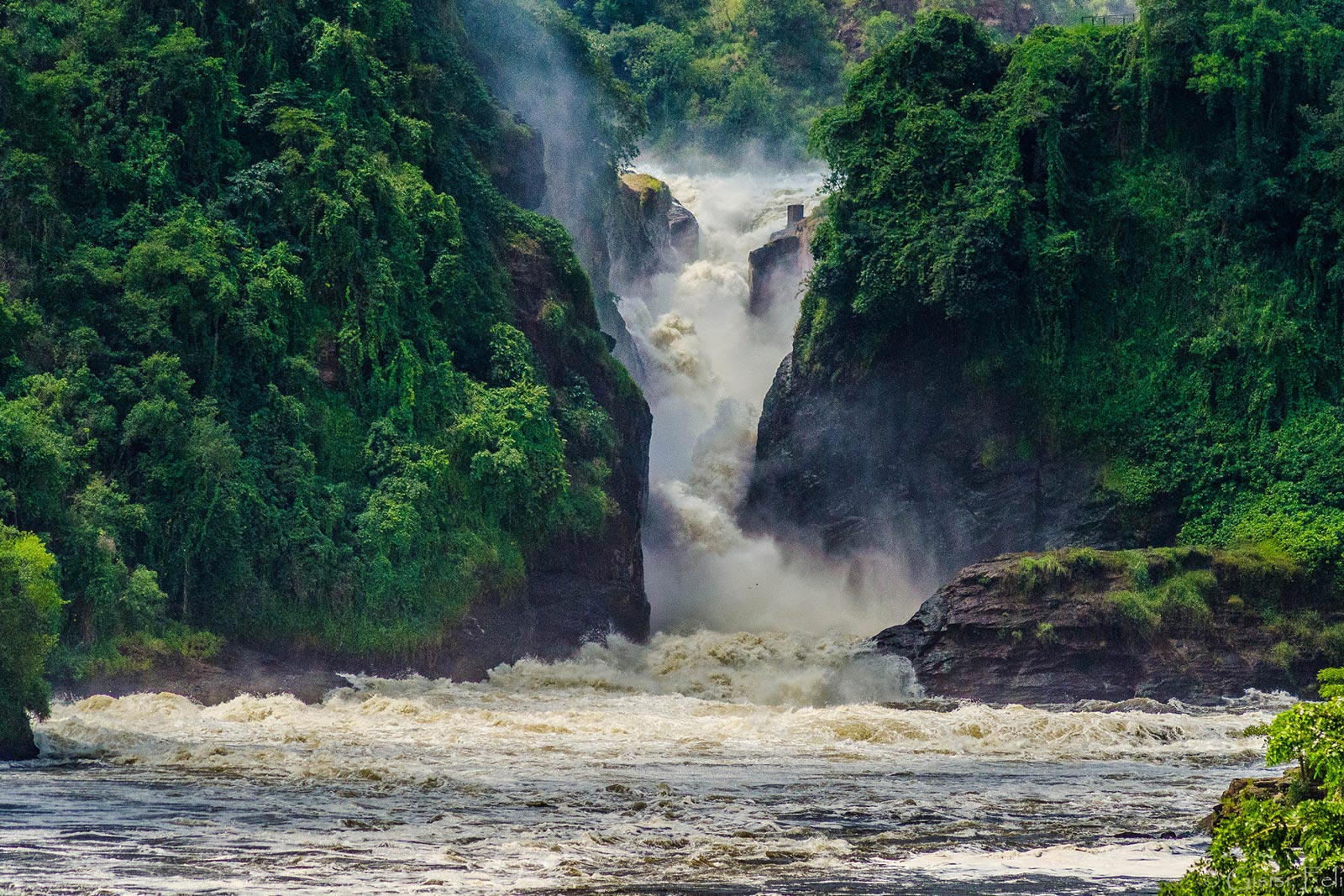
Murchison Falls National Park gives a longer Uganda safari a strong northern anchor. The Nile, broad savannah and the falls themselves create a landscape very different from the southwest. A private programme commonly combines game drives with a boat cruise and time to see the waterfall area, giving the park both a wildlife and scenic dimension.
The park is especially worthwhile when the traveller has ten days or more in Uganda. Adding Murchison to a very short trip can create too much road time, but on a longer itinerary it provides a natural progression from northern savannah to Kibale’s forests, Queen Elizabeth’s varied ecosystems and Bwindi’s mountains. Some routes also pair the drive north with rhino tracking at Ziwa, making the transfer part of the experience rather than simply a transport day.
For visitors arriving after a long international journey from Singapore, the planner should decide whether Murchison belongs at the beginning or end of the route based on flight time, lodge availability and the rest of the circuit. There is no universally correct direction; the better direction is the one that reduces unnecessary backtracking and protects the most time-sensitive activities.
Lake Mburo and when it belongs in your itinerary

Lake Mburo National Park is closer to Kampala and Entebbe than the major southwestern primate parks and can work as an elegant first or final safari stop. It is useful for travellers who want to break a long transfer, add a walking or boat activity, and experience another landscape without committing to the longer journey north to Murchison Falls.
On an eight-day itinerary, Lake Mburo can sometimes be a better fit than Murchison because it keeps the route compact. On a twelve-day itinerary, a traveller may have enough time for both Murchison and the southwest, depending on pacing. Private planning should therefore focus less on collecting park names and more on how each stop improves the journey.
The existing eight-day Uganda gorilla trekking and wildlife itinerary on the site uses Lake Mburo at the start before continuing to Bwindi, Queen Elizabeth and Kibale. That sequence is a good example of how a shorter national park stop can make a route feel more varied without requiring a major detour.
How many days should you spend in Uganda?
A four-to-six-day private safari is best for travellers whose priority is gorilla trekking and one complementary wildlife park. It can be arranged as an overland route or, at a higher budget, with a domestic flight to reduce driving. The shorter the programme, the more disciplined the itinerary must be. Attempting to add every famous park usually reduces quality because too much of the holiday is spent transferring.
Seven to nine days is a strong middle ground. It allows a gorilla trek, Queen Elizabeth, and either Kibale, Lake Mburo or another carefully chosen stop. The company’s existing eight-day wildlife-and-primate route illustrates this style of circuit. Travellers get several distinct experiences while still keeping the trip compact enough to pair with time elsewhere in East Africa if desired.
Ten to fourteen days is the sweet spot for a comprehensive first visit. With that amount of time, Murchison Falls, Kibale, Queen Elizabeth and Bwindi can be linked with reasonable pacing. Fourteen days also creates space for rest, a second trek, cultural experiences or a scenic extension. More than two weeks opens the door to Kidepo Valley, deeper birding, multiple chimpanzee experiences or a slower journey with fewer early starts.
Flying from Singapore to Uganda: planning the international journey
Travellers from Singapore will normally build the international journey around connections to Entebbe International Airport. Airline schedules and transit points change, so the booking process should begin by checking current flight options rather than relying on an old route assumption. The safest safari design leaves enough margin between the international arrival and any activity that cannot be moved, especially a gorilla trek or domestic flight.
An overnight near Entebbe can be valuable after a long journey. It gives you time to recover, handles modest flight delays more gracefully and allows the private road safari to start in daylight. If your arrival is early and you prefer to begin immediately, the guide can meet you at the airport and proceed according to the agreed itinerary, but the route should still be realistic for the arrival time.
On the way home, avoid building an itinerary that depends on a perfect full-day road transfer followed by a tight international check-in. Uganda’s road journeys are scenic but travel times can vary. A responsible plan either reaches Entebbe with a comfortable buffer or uses a final night nearby. This is one of the most important differences between a generic sample itinerary and a genuinely private programme designed around your flights.
Private road safari versus fly-in safari

A private 4×4 road safari is the classic way to see Uganda because the landscapes between parks are part of the journey. You pass towns, farms, tea-growing areas, crater landscapes and changing vegetation. Road travel also gives the itinerary flexibility: the guide remains with you, luggage handling is simple, and stops can be adjusted according to the day.
Fly-in safaris reduce some of the longest transfers. Domestic flights can be especially attractive for a short premium trip, for travellers who dislike long drives or for an itinerary that concentrates on Bwindi and Queen Elizabeth. The site already publishes a five-day gorillas and game fly-in safari using domestic connections, showing how this option can compress the route without removing the major experiences.
The trade-off is cost, luggage rules and reduced spontaneity around flight schedules. A hybrid itinerary can be excellent: fly to or from the southwest and use a private vehicle for the parks within that region. The best choice depends on your total number of days, budget, comfort preferences and the international flight schedule from Singapore.
Best time for a private Uganda safari
Uganda can be visited throughout the year, but weather affects road conditions, trekking trails, photography and the overall feel of the landscape. Rather than declaring one universal best month, it is more useful to match the season to your priorities. Drier periods can make forest trails and unpaved roads easier, while greener periods can deliver lush scenery and strong birding interest. Rain is still possible in a tropical destination even during relatively dry periods.
Gorilla trekking takes place in forested mountain terrain, so prepare for moisture at any time. A light rain layer, suitable boots and clothing that can handle mud are sensible. Safari vehicles provide shelter during game drives, but outdoor activities remain weather-dependent. For photographers, a little cloud or rain is not necessarily negative; soft light and dramatic skies can produce excellent images.
The most important booking-season issue is availability. Popular gorilla dates and sought-after lodges can fill before the travel month arrives. If your Singapore holiday dates are fixed by school calendars, public holidays or work commitments, enquire early enough that the planner can secure the important components before optimising the smaller details.
Choosing the right lodge level

Uganda offers a wide range of safari accommodation, from practical budget properties to intimate luxury lodges in exceptional locations. The words budget, mid-range and luxury are useful starting points, but they do not tell the whole story. Location, access road, room type, view, meal quality and proximity to the next morning’s activity can matter more than a simple category label.
For gorilla trekking, lodge location deserves special attention because Bwindi has different sectors and trailheads. A beautiful lodge in the wrong area for your permit can create an inconvenient early transfer. A private safari planner should align the permit sector and accommodation before confirming the final itinerary. In savannah parks, a lodge inside or close to the wildlife area can improve early-morning access and reduce unnecessary driving.
Singapore travellers who prefer a higher-comfort journey can mix standards instead of making every night ultra-luxury. Spending more at a spectacular forest or wilderness lodge and choosing strong mid-range options on transit nights can produce better value. Ask for the proposed lodges by name before paying, together with what happens if the first-choice property becomes unavailable.
What should be included in a private safari quotation?
A serious quotation should be specific enough that two travellers can understand what they are buying. It should state the number of safari days and nights, transport arrangement, private guide, proposed lodges, meal basis, park activities and whether important permits are included. If a domestic flight is proposed, the quote should identify the route and explain any luggage considerations that affect the trip.
Gorilla and chimpanzee permits deserve their own line of attention because they are limited, date-sensitive and meaningful parts of the overall trip cost. The quotation should not leave you guessing whether these are included. Likewise, clarify airport transfers, drinking water in the safari vehicle, boat cruises, park entry fees and any optional activities that require separate payment.
Exclusions should be equally clear. International airfares, visas or entry authorisations, travel insurance, personal expenses, tips, premium drinks, laundry and optional experiences may be excluded depending on the proposal. Clear exclusions are not a disadvantage; they help travellers compare offers accurately and budget for the entire journey rather than just the safari invoice.
Understanding the cost of a Uganda safari from Singapore
There is no single honest price for every private Uganda safari from Singapore because the cost changes with duration, lodge level, number of travellers, vehicle type, permits, domestic flights and travel season. Two people taking a private vehicle divide fixed transport and guide costs between fewer travellers than a family or small group, while high-end lodges and fly-in sectors can raise the budget substantially.
The most useful way to request a price is to provide a month or exact dates, party size, number of safari days and preferred accommodation level. If you have a target budget, share it as a planning parameter. A good safari planner can then decide whether to shorten the route, change lodge categories, use road transport instead of flights, or preserve the premium elements that matter most to you.
Do not compare quotations using the bottom-line number alone. Compare the exact gorilla permit treatment, park activities, lodge names, private versus shared services, meals, vehicle arrangement and transfer assumptions. A cheaper itinerary that excludes a major permit or uses an impractical lodge location can cost more once corrected. Value comes from the total trip design, not from the headline figure in isolation.
10 days: a balanced first private Uganda safari
Day 1
Arrive Entebbe, private welcome and overnight.
Day 2
Drive north toward Murchison Falls, optional rhino stop if suitable.
Day 3
Game drive and Nile boat safari.
Day 4
Scenic transfer toward Kibale Forest.
Day 5
Chimpanzee tracking and wetland or nature experience.
Day 6
Queen Elizabeth National Park and evening wildlife viewing.
Day 7
Morning game drive and Kazinga Channel boat cruise.
Day 8
Ishasha route to Bwindi Impenetrable National Park.
Day 9
Mountain gorilla trekking in Bwindi.
Day 10
Return or fly toward Entebbe for onward departure.
A sample 10-day private Uganda safari from Singapore

Day 1 is arrival at Entebbe, airport welcome and a relaxed first night. This protects the safari from international travel fatigue. Day 2 travels toward Murchison Falls, potentially combining the journey with a rhino experience if it fits current operations and your interests. Day 3 is dedicated to game viewing and a Nile boat experience in Murchison Falls National Park.
Day 4 transfers south toward Kibale with scenic stops and an arrival timed for rest. Day 5 focuses on chimpanzee tracking and a complementary nature or wetland experience. Day 6 continues to Queen Elizabeth National Park for an afternoon or evening wildlife activity. Day 7 combines a morning game drive with a Kazinga Channel boat cruise, giving you both land and water perspectives.
Day 8 travels through the Ishasha area toward Bwindi, with wildlife viewing where conditions permit. Day 9 is the mountain gorilla trekking day, deliberately positioned after an overnight near the appropriate trailhead. Day 10 returns toward Entebbe or uses a domestic flight depending on your budget and departure schedule. The sequence can be reversed, shortened or expanded; it is a planning model, not a rigid departure.
A sample 7-day private Uganda safari for a shorter holiday
A seven-day route needs tighter priorities. One effective version begins with arrival near Entebbe, then transfers toward the southwest. The next day reaches Queen Elizabeth National Park or another strategically placed stop. A full wildlife day follows with a game drive and boat safari. From there, the route proceeds to Bwindi for two nights, including the gorilla trekking day.
The final portion can return toward Entebbe through Lake Mburo or use a domestic flight from the southwest. If chimpanzees are more important than an additional savannah stop, Kibale can replace part of the wildlife circuit, but the route must be evaluated carefully to avoid excessive driving. Seven days can be excellent when the itinerary makes clear choices.
For travellers with only five days on the ground, consider a gorillas-and-game itinerary similar to the company’s existing five-day programme or a fly-in version. Short safaris work best when the planner is given your actual international arrival and departure times before confirming the sequence.
A sample 14-day Uganda itinerary for a deeper safari
Fourteen days allows the journey to breathe. You can spend two or three nights in major parks instead of continuously packing and moving. Murchison Falls can receive a full wildlife day and a separate scenic experience. Kibale can include chimpanzees plus a wetland walk. Queen Elizabeth can include both Kasenyi and the Ishasha sector, and Bwindi can be given enough time for the trek plus a slower final evening.
Additional days can be allocated to Lake Bunyonyi, Lake Mburo, a community experience, birding or a second primate activity. Travellers who value photography can build in repeat game drives rather than collecting more destinations. Luxury travellers may use domestic flights at one end of the circuit while still retaining the private vehicle through the main western parks.
The advantage of fourteen days is resilience. Weather, wildlife movement and minor delays have less power to dominate the holiday because the schedule is not balanced on a knife edge. For a journey that begins with a long flight from Singapore, that extra breathing space can meaningfully improve the experience.
Food, dietary needs and drinking water
Safari lodges typically provide meals according to the booked meal plan, and longer driving days may use packed lunches or scheduled stops. Travellers with dietary requirements should communicate them before the final bookings are made. Vegetarian, allergy-aware and other preferences are easier to support when lodges receive clear notice instead of learning about them after arrival.
Carry a few familiar snacks if you have strong preferences, especially for trekking days or long transfers. Hydration matters at altitude and during warm game drives. Your quotation should state what drinking water is supplied in the safari vehicle and whether other beverages are included at the lodges.
Singapore’s food scene may make travellers accustomed to enormous choice at any hour; remote safari lodges operate differently. Their strength is the wilderness setting and planned hospitality rather than urban convenience. Knowing this in advance helps you pack appropriately and enjoy the rhythm of the safari instead of expecting city-style access inside national parks.
Packing for gorillas, game drives and changing elevations
Pack for several environments rather than one temperature. Entebbe and lowland savannah can feel warm, while mornings in forested or higher-elevation areas can be cool. Lightweight layers are therefore more useful than a single heavy garment. Neutral, comfortable clothing works well for game drives, while gorilla trekking calls for sturdy footwear, long trousers, socks, rain protection and gloves that can help when moving through vegetation.
A small daypack should carry water, camera equipment, medication, sunscreen and rain protection. Keep valuables and essential medicine in hand luggage during international travel. Binoculars are highly useful even for non-birders because they transform distant wildlife sightings. Camera users should bring adequate storage and batteries; access to charging is common at lodges but the practical arrangements can vary.
Avoid overpacking. Domestic flights may apply stricter luggage limits than your international airline, and safari vehicles are easier to organise with soft-sided bags. If the itinerary includes a flight, ask for the current baggage rules before departure. A private planner can also explain laundry availability at proposed lodges so you can reduce clothing volume on longer trips.
Health, fitness and travel preparation
Gorilla trekking requires a reasonable level of mobility because trails can be steep, muddy and uneven. The exact trek varies according to the gorillas’ location, so prepare for more than a gentle stroll even if some visitors ultimately have a shorter walk. Regular walking, stairs and basic leg endurance in the weeks before the trip can make the day more comfortable.
Travel health requirements and recommendations can change, and they depend on your personal medical situation and route. Consult an appropriate travel-health professional and official government guidance before departure rather than relying on an old blog article. Bring any personal medication in sufficient quantity and keep key documentation accessible during international travel.
Travel insurance is strongly advisable for a significant safari holiday, particularly where costly permits, international flights and remote destinations are involved. Review coverage for medical care, evacuation, trip interruption and the activities in your itinerary. The safari operator can explain its booking terms, but insurance decisions should be based on the policy wording issued by the insurer.
Photography and responsible wildlife viewing
Uganda rewards photographers with forest portraits, open savannah, river landscapes and close behavioural moments. A moderate telephoto lens is valuable for wildlife, while a wider lens captures landscape and lodge scenes. In the forest, light can be limited, so know how to adjust ISO and shutter speed quickly. Protect equipment from rain and dust and carry spare batteries rather than relying on constant charging during activities.
Responsible wildlife photography puts the animal encounter before the image. Follow ranger and guide instructions, respect required distances, keep noise low and never pressure a guide to chase, crowd or block an animal for a photograph. Flash restrictions may apply during sensitive primate experiences, so understand the rules before entering the forest.
The best private guides understand that serious photography often requires patience. Tell the planner in advance if photography is a major priority because the vehicle seating, number of guests, departure times and activity selection can be adjusted accordingly. A private vehicle is particularly valuable here because you are not negotiating every stop with unrelated travellers.
Private safari for couples, families and small groups
Couples often value privacy, scenic accommodation and a schedule that does not feel rushed. Honeymoon-style trips can build in exceptional lodges, private meals where offered and slower afternoons between major activities. The key is to protect the gorilla and wildlife experiences while avoiding a schedule that turns a special holiday into a checklist.
Families need a more detailed conversation because age limits can apply to activities such as gorilla trekking, and long road transfers affect children differently. A planner can design alternative activities for family members who cannot join a trek, choose lodges with suitable room configurations and reduce unnecessarily early starts. Never assume that a sample adult itinerary automatically fits children.
Friends travelling together can obtain strong value from a private safari because vehicle and guide costs are shared across the group while the itinerary remains exclusive. Discuss rooming, luggage, photography priorities and fitness levels before final confirmation. A private trip still works best when the planner understands the needs of the least flexible member of the group.
Booking your Uganda safari from Singapore step by step
Start by sending your travel month or exact dates, number of travellers, approximate safari duration and preferred lodge level. Add your must-do experiences: gorillas, chimpanzees, classic wildlife, birding, photography or relaxation. If international flights are already booked, send the arrival and departure details because they can materially change the best safari sequence.
Next, review the proposed route rather than only the price. Check the number of nights in each destination, estimated transfer pattern, named lodges, meal plan and activities. Confirm how gorilla and chimpanzee permits are handled. Ask questions where the proposal is ambiguous; a private safari should become more precise as you move toward confirmation.
Once the itinerary and terms are accepted, follow the operator’s stated payment and permit-confirmation process. Keep copies of booking documents and insurance information. Before travel, reconfirm airport meeting arrangements, emergency contact information, packing guidance and any current entry requirements. The result should be a journey where the logistics disappear into the background and the safari itself becomes the focus.
Why book directly with an Uganda-based safari planner?
A local safari planner works close to the parks, guides, lodges and permit systems that shape the trip on the ground. This can make route design more practical because the person building the itinerary understands actual road relationships and the consequences of choosing one trekking sector over another. Direct communication also makes it easier to adjust the itinerary when your priorities change during planning.
The company behind ugandarwanda-safaris.com publishes a range of Uganda itineraries, including gorilla-and-game safaris, fly-in options, eight-day wildlife-and-primate circuits, ten-day national-park programmes and longer journeys. Those existing routes can serve as starting points, but a private Singapore itinerary should still be adapted to your dates, flights and comfort preferences.
Direct booking does not mean skipping due diligence. Review the written itinerary, terms, inclusions, lodge list, permit handling and payment instructions carefully. Good travel planning is a partnership: the operator contributes local execution and route knowledge, while you provide clear priorities, dates and expectations.
Common itinerary mistakes to avoid
The first mistake is trying to see too much. Uganda is larger on the road than a map can make it appear, and national parks are not city attractions that can be checked off in an hour. Every added destination has a transfer cost in time and energy. Choose fewer high-value stops if your holiday is short.
The second mistake is booking flights without considering the safari sequence. A late arrival followed by an ambitious cross-country transfer can make the first days unnecessarily difficult. Likewise, a tight international departure after a long drive creates avoidable risk. Share flight plans early and let them influence the route.
The third mistake is treating permits, lodge sectors and park activities as interchangeable. Gorilla trekking is tied to a particular date and area; a lodge that looks close on a general map may not be convenient for the assigned trailhead. A well-designed private itinerary coordinates these pieces before confirmation.
How to compare safari companies and proposals
Compare the quality of the itinerary logic, not the number of adjectives in the brochure. A strong proposal explains why the route is sequenced as it is, gives named accommodation options, identifies key inclusions and acknowledges realistic driving. It should answer your questions without hiding important cost items behind vague wording.
Look at how the company communicates about wildlife. Responsible operators describe likely opportunities but avoid guaranteeing wild animal sightings. Gorilla trekking has a highly managed framework, yet the trek itself still takes place in a natural forest. Savannah predators, tree-climbing lions and rare birds should never be marketed as appointments that nature has promised.
Finally, evaluate responsiveness and clarity during planning. The person handling your enquiry should be able to adapt the route when you change duration, lodge class or activity priorities. A private safari is a customised service, so the planning conversation is part of the product you are buying.
Request your private Uganda safari proposal
For the fastest useful quotation, send the details below. A customised itinerary can then be built around current permit, lodge and transport availability.
Travel month or exact dates
Number of adults and children, with ages where relevant
Approximate number of safari days
Budget, mid-range or luxury lodge preference
Gorillas, chimpanzees, wildlife or photography priorities
International flight details if already booked
Private Uganda safari from Singapore: frequently asked questions
How long should I book for a first Uganda safari from Singapore?
For most first-time visitors, 8–12 safari days provides the best balance. It is enough for Bwindi gorilla trekking, Queen Elizabeth and at least one additional destination such as Kibale, Murchison Falls or Lake Mburo without turning every day into a long transfer.
Can my Uganda safari be completely private?
Yes. A private itinerary can use an exclusive safari vehicle and guide for your travelling party, with accommodation and activities booked around your dates. Some park activities such as gorilla trekking are conducted under park authority arrangements with other permitted trekkers.
Should I book gorilla permits before international flights?
The two should be coordinated. If your dates are flexible, confirm the proposed safari and permit availability before purchasing inflexible flights. If flights are already booked, send the exact arrival and departure details immediately so the planner can work around them.
Is Uganda suitable for a luxury private safari?
Yes. Uganda has premium lodges in major safari regions and domestic flying options that can reduce selected road journeys. Luxury planning should still prioritise route efficiency and lodge location, especially around Bwindi trekking sectors.
Can I combine gorillas and chimpanzees in one trip?
Yes. Bwindi and Kibale are commonly combined, often with Queen Elizabeth National Park between them. Seven days can be possible with careful routing, while 8–12 days is more comfortable if you also want substantial wildlife viewing.
Do I need a private vehicle for the whole safari?
Not always. Many travellers use one private 4×4 throughout the overland circuit. Others combine domestic flights with private transfers and game drives. Your time, budget and tolerance for long drives should determine the mix.
What information gives me the fastest accurate quotation?
Send your travel month or dates, number of travellers, desired safari duration, lodge level and priority activities. If flights are booked, include the arrival and departure times. A target budget is also useful if you have one.
Are wildlife sightings guaranteed?
No. Wild animals move freely and sightings depend on natural conditions. Skilled guides, good timing and appropriate areas improve your chances, but responsible safari planning never guarantees a particular lion, leopard or rare bird encounter.
Can I add Rwanda to the trip?
A cross-border extension can be considered depending on your available days, interests and current travel requirements. Because border procedures and entry rules can change, the exact plan should be confirmed using current official information at the time of booking.
What is the best way to begin booking?
Use WhatsApp or email with your dates, party size, duration and lodge preference. The planner can then propose a route, verify key availability and refine the itinerary before confirmation.
Make the safari private. Make the route fit your flights.